
COASTLINING THE ZODIAC
|
|
|
- Scott Jennings
- 10 years ago
- Views:
Transcription
1 COASTLINING THE ZODIAC Astronomy books and skywatching guides offer a wide variety of charts for naked-eye observation of the skies. What works best for each person will depend on various factors such as the visual appeal of a particular format, or the ease of coordinating the map to the actual sky. These tools all have their relative advantages, but they are all misleading in one fundamental sense: they disregard the journey of the earth through the skies. The Earth in the Heavens Conventional skywatching charts are designed to show the skies from a particular latitude on earth, at certain hours, during certain seasons. They are all alike in presenting the perspective of the skies seen from earth, but they all omit the presence of the earth in the skies. In other words, they fail to indicate the annual journey taken by the earth relative to the stars. "The sky is not the atmosphere. Birds do not fly in the sky. The earth is in the sky." Patterns on the Rim The Rimsite Array shows the thirteen constellations on the path taken by the earth around the sun. This format is utterly simple: a circular projection of the threedimensional vista of the night skies seen through the course of the year. The star-patterns shown are the naked-eye constellations, the true Stellar Zodiac, to be distinguished from the tropical (seasonal) signs of popular astrology. This model is named the Rimsite because it situates or sites the constellations on the path of the earth as if on the rim of a wheel; also, these star-patterns are sights on the rim, the earthplane. The line marked ECL is the ecliptic, the apparent path of the sun through the skies. It is actually the edge of the orbital plane of the earth. The Zodiacal star-patterns touch this line and sprawl beyond, above and below. The 13 Ecliptic constellations are distinct from the remaining 75 constellations of the celestial sphere, beyond the Ecliptic rim. The patterns of the Stellar Zodiac are irregular in shape and extent. Cruising the Coast So much for the technicalities. The rest is pure dance, beauty in motion with the planet in mind, because "coastlining" involves us directly in the way the earth moves relative to the constellations in the course of the year. Normally, being situated on the earth, we ignore its movement in the cosmos. We are like passengers on a boat who pay no attention to its motion across the waters. If there is a

2 coastline to observe, we may be more inclined to stay on deck and take in the passing sights. This analogy fits the actual case for the earth, the cosmic vessel on which we sail, the mother ship. The starry shoreline is irregular, as the Rimsite model shows. Moment after moment, some part of the coastline is more clearly observable as the earth glides past it. Proximity draws our attention to the details of the coast that is, the features of the constellation we are gliding past. Further up and down the coast, the sights are less easy to observe. The entire vista changes, night by night, as we sail along it. South and UP (Standing in the Sky) The standard posture for looking at the Zodiac is to face south and look up. This puts east on your left and west on your right. (Think LEFT and EAST make LEAST, because this is the absolute least you have to know to orient yourself to the skies.) The angle at which you look up to see the arch of the Zodiac, the Ecliptic rim, will vary with the seasons. In summer the angle will be high, almost vertical; in winter, less steep and less straining for the neck. The angle also varies depending on the latitude of your place of observation. At the equator, the viewing angle is different from 30 north latitude or 55 degrees north latitude. You can find the latitude of your place of observation by looking at any map of the earth marked with latitude lines. Longitude lines on the earth denote measurement around the circumference. These lines follow the time zones which are longitudinal sectors of 15 degrees each. 25 X 24 (hours) = 360 degrees, the full round of the planet. In reality, the earth is not perfectly spherical but rather pear-shaped or teardrop-shaped, being flattened slighted and wider in the southern hemisphere. Sighting the Ecliptic or Earthplane By far the most disorienting factor in skywatching is the way the sky changes, hour after hour, night after night, season after season. No sooner are you at ease with spotting a prominent star or constellation, then it begins to shift away. The difficulty here vanishes when we look at the sky with a clear mental picture of the coastline in closest proximity to the earth at any moment. This is the key to confident and consistent skywatching. Using the Rimsite for this purpose eliminates the need for other charts until the Zodiac is learned. Later on, the extra-zodiacal constellations can be learned by making directional scans off the Ecliptic and back to it. This requires additional maps. By looking south and UP you insert yourself into the sky, making a mandala with the cosmic directions. This simple act orients you in space, but you have to be oriented in time as well, in order to recognize the signatures that appear prominently in each season.

3 The coastlining tool orients you to time in a few seconds. Note that it has certain dates written, indicating specific stars. In the section shown below, the dates run from December 16 through March 14. The format here is heliocentric, with the sun at the center (star). You see that the line for December 16 goes directly to the star on the tip of the southern horn of the BULL. Coming ahead in time to January 26, the alignment goes to a star in the inverted Y signature of the CRAB. Note that the direction of time here is counterclockwise, in the natural order of the Zodiac: BULL, TWINS, CRAB, etc. This is the direction the earth moves along the coastline of the Real-Sky Zodiac. Note also that if you rotate the coastlining model clockwise, the constellations on the earthplane with rise in their natural order on your LEFT (EAST). The sequence is counterclockwise and they rise clockwise. Get this counterpoint.

4 Now picture that you hold the coastlining wheel in two hands, vertically, in front of your face. Place your left thumb on the date closest to the moment of your observation - say, January 14th. Rotate that position of the wheel to your left, and the opposite point to your right, so that you hands holds the wheel like a steering wheel or helm of a boat, 180 degrees apart, firmly gripping the helm. Now, once you are positioned facing south and looking up, positioned IN SPACE, you now go out at sunset and position yourself IN TIME by placing your LEFT thumb on the date of your viewing, or a close approximation -- since not all 365 days of the year are indicated. When you do that, the coastlining wheel will present a semicircular arch from your left thumb (EAST) to your right thumb (WEST). The star pattern on your left will be rising at that moment, coming over the eastern horizon. The star-pattern on the left will be setting. The arch of the earthplane (ecliptic) will be directly in front of you, and up. By comparing what you see as it gets darker, you can match the signatures shown on the coastlining wheel with the observable constellations. In this way, you can single out the arch of the earthplane.

5 Ideally, you start this exercise by going out at the moment of sunset, before it is dark enough to see the sky well. But at the moment, you reckon on a remarkable fact: the star pattern rising to the earth is in closest proximity to the earth, while the sun is of course opposite, in the constellation that is setting. In other words, the earth is always coastlining the star pattern that rises at the moment of sunset. Halfway through the evening, the star pattern where the earth is coastlining will be viewed about 45 degrees off the eastern point, halfway to the meridian, the central highest point in the sky looking southward and up. At midnight, the star pattern the earth is coastlining will be directly overhead. Optimal View On any given day of the year, the earth is sliding past a region of the Zodiacal coastline. This spot is the optimal view of the entire coast. The trick is, to know how to find this spot, the area in closest proximity to the earth on the earthplane, the Ecliptic. The coastlining chart makes this easy. It gives 24 dates through the year when specific sights can be observed at maximum proximity. The chart is designed to start you off at sunset on any day. For instance, on November 22, the earth coasts past a spectacular star cluster, the Pleiades, located in the neck of the Bull. Holding the chart up in front of you with your left thumb on that spot, you will see the arch of the Ecliptic as it appears at sunset. The point of optimum view is always on the left (east) at sunset, reaches the meridian (overhead, south and up) at midnight, and sets in the west at dawn. Thus the chart rotates clockwise as night advances. With this device you can always tell where the earth is moving on its annual journey around the sun. Even if you do not watch the skies, you can track the journey in your imagination and move with the earth which is always located at the point of optimum view. The sun, our mother star, on any day is always opposite the coastlining earth. When the sun stands in the way, a constellation cannot be seen, of course. You never see the passage of the sun through the panorama of the Zodiacal constellations. You cannot observe the earth in the skies, either, but you can observe how it moves through the skies. "The sky is not the atmosphere. Birds do not fly in the sky, but in the atmosphere, the ambient. The earth is in the sky, i.e., interstellar space. Along with the moon, the mother star, and the other planets of the solar system. Coastlining is a rite of participation in Gaia s majestic journey. It shows you how to sail with the earth in the sky John Lash

6

CELESTIAL MOTIONS. In Charlottesville we see Polaris 38 0 above the Northern horizon. Earth. Starry Vault
 CELESTIAL MOTIONS Stars appear to move counterclockwise on the surface of a huge sphere the Starry Vault, in their daily motions about Earth Polaris remains stationary. In Charlottesville we see Polaris
Sun Earth Relationships
 1 ESCI-61 Introduction to Photovoltaic Technology Sun Earth Relationships Ridha Hamidi, Ph.D. Spring (sun aims directly at equator) Winter (northern hemisphere tilts away from sun) 23.5 2 Solar radiation
Tropical Horticulture: Lecture 2
 Lecture 2 Theory of the Tropics Earth & Solar Geometry, Celestial Mechanics The geometrical relationship between the earth and sun is responsible for the earth s climates. The two principal movements of
CELESTIAL CLOCK - THE SUN, THE MOON, AND THE STARS
 INTRODUCTION CELESTIAL CLOCK - THE SUN, THE MOON, AND THE STARS This is a scientific presentation to provide you with knowledge you can use to understand the sky above in relation to the earth. Before
The following words and their definitions should be addressed before completion of the reading:
 Seasons Vocabulary: The following words and their definitions should be addressed before completion of the reading: sphere any round object that has a surface that is the same distance from its center
Coordinate Systems. Orbits and Rotation
 Coordinate Systems Orbits and Rotation Earth orbit. The earth s orbit around the sun is nearly circular but not quite. It s actually an ellipse whose average distance from the sun is one AU (150 million
Stellarium a valuable resource for teaching astronomy in the classroom and beyond
 Stellarium 1 Stellarium a valuable resource for teaching astronomy in the classroom and beyond Stephen Hughes Department of Physical and Chemical Sciences, Queensland University of Technology, Gardens
Motions of the Earth. Stuff everyone should know
 Motions of the Earth Stuff everyone should know Earth Motions E W N W Noon E Why is there day and night? OR Why do the Sun and stars appear to move through the sky? Because the Earth rotates around its
1. In the diagram below, the direct rays of the Sun are striking the Earth's surface at 23 º N. What is the date shown in the diagram?
 1. In the diagram below, the direct rays of the Sun are striking the Earth's surface at 23 º N. What is the date shown in the diagram? 5. During how many days of a calendar year is the Sun directly overhead
Astrock, t he A stronomical Clock
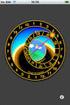 Astrock, t he A stronomical Clock The astronomical clock is unlike any other clock. At first glance you ll find it has similar functions of a standard clock, however the astronomical clock can offer much
Celestial Observations
 Celestial Observations Earth experiences two basic motions: Rotation West-to-East spinning of Earth on its axis (v rot = 1770 km/hr) (v rot Revolution orbit of Earth around the Sun (v orb = 108,000 km/hr)
Celestial Sphere. Celestial Coordinates. Lecture 3: Motions of the Sun and Moon. ecliptic (path of Sun) ecliptic (path of Sun)
 Lecture 3: Motions of the and Moon ecliptic (path of ) ecliptic (path of ) The 23.5 degree tilt of Earth s spin axis relative to its orbital axis around the causes the seasons Celestial Sphere Celestial
Reasons for Seasons. Question: TRUE OR FALSE. Question: TRUE OR FALSE? What causes the seasons? What causes the seasons?
 Reasons for Seasons Question: TRUE OR FALSE? Earth is closer to the Sun in summer and farther from the Sun in winter. Question: TRUE OR FALSE? Earth is closer to the Sun in summer and farther from the
EDMONDS COMMUNITY COLLEGE ASTRONOMY 100 Winter Quarter 2007 Sample Test # 1
 Instructor: L. M. Khandro EDMONDS COMMUNITY COLLEGE ASTRONOMY 100 Winter Quarter 2007 Sample Test # 1 1. An arc second is a measure of a. time interval between oscillations of a standard clock b. time
ASTRONOMY 161. Introduction to Solar System Astronomy
 ASTRONOMY 161 Introduction to Solar System Astronomy Seasons & Calendars Monday, January 8 Season & Calendars: Key Concepts (1) The cause of the seasons is the tilt of the Earth s rotation axis relative
The Celestial Sphere. Questions for Today. The Celestial Sphere 1/18/10
 Lecture 3: Constellations and the Distances to the Stars Astro 2010 Prof. Tom Megeath Questions for Today How do the stars move in the sky? What causes the phases of the moon? What causes the seasons?
1-2. What is the name given to the path of the Sun as seen from Earth? a.) Equinox b.) Celestial equator c.) Solstice d.
 Chapter 1 1-1. How long does it take the Earth to orbit the Sun? a.) one sidereal day b.) one month c.) one year X d.) one hour 1-2. What is the name given to the path of the Sun as seen from Earth? a.)
Solar System. 1. The diagram below represents a simple geocentric model. Which object is represented by the letter X?
 Solar System 1. The diagram below represents a simple geocentric model. Which object is represented by the letter X? A) Earth B) Sun C) Moon D) Polaris 2. Which object orbits Earth in both the Earth-centered
Newton s Law of Gravity
 Gravitational Potential Energy On Earth, depends on: object s mass (m) strength of gravity (g) distance object could potentially fall Gravitational Potential Energy In space, an object or gas cloud has
FIRST GRADE 1 WEEK LESSON PLANS AND ACTIVITIES
 FIRST GRADE 1 WEEK LESSON PLANS AND ACTIVITIES UNIVERSE CYCLE OVERVIEW OF FIRST GRADE UNIVERSE WEEK 1. PRE: Describing the Universe. LAB: Comparing and contrasting bodies that reflect light. POST: Exploring
Orientation to the Sky: Apparent Motions
 Chapter 2 Orientation to the Sky: Apparent Motions 2.1 Purpose The main goal of this lab is for you to gain an understanding of how the sky changes during the night and over the course of a year. We will
The ecliptic - Earth s orbital plane
 The ecliptic - Earth s orbital plane The line of nodes descending node The Moon s orbital plane Moon s orbit inclination 5.45º ascending node celestial declination Zero longitude in the ecliptic The orbit
Earth-Sun Relationships. The Reasons for the Seasons
 Earth-Sun Relationships The Reasons for the Seasons Solar Radiation The earth intercepts less than one two-billionth of the energy given off by the sun. However, the radiation is sufficient to provide
Astronomy 1140 Quiz 1 Review
 Astronomy 1140 Quiz 1 Review Prof. Pradhan September 15, 2015 What is Science? 1. Explain the difference between astronomy and astrology. (a) Astrology: nonscience using zodiac sign to predict the future/personality
Lesson 1: Phases of the Moon
 Lesson 1: Phases of the Moon The moon takes 29.5 days to revolve around the earth. During this time, the moon you see in the sky appears to change shape. These apparent changes, which are called phases,
Earth In Space Chapter 3
 Earth In Space Chapter 3 Shape of the Earth Ancient Greeks Earth casts a circular shadow on the moon during a lunar eclipse Shape of the Earth Ancient Greeks Ships were observed to disappear below the
Douglas Adams The Hitchhikers Guide to the Galaxy
 There is a theory which states that if ever anybody discovers exactly what the Universe is for and why it is here, it will instantly disappear and be replaced by something even more bizarre and inexplicable.
Cycles in the Sky. Teacher Guide: Cycles in the Sky Page 1 of 8 2008 Discovery Communications, LLC
 Cycles in the Sky What is a Fun damental? Each Fun damental is designed to introduce your younger students to some of the basic ideas about one particular area of science. The activities in the Fun damental
Motions of Earth LEARNING GOALS
 2 Patterns in the Sky Motions of Earth The stars first found a special place in legend and mythology as the realm of gods and goddesses, holding sway over the lives of humankind. From these legends and
Exam # 1 Thu 10/06/2010 Astronomy 100/190Y Exploring the Universe Fall 11 Instructor: Daniela Calzetti
 Exam # 1 Thu 10/06/2010 Astronomy 100/190Y Exploring the Universe Fall 11 Instructor: Daniela Calzetti INSTRUCTIONS: Please, use the `bubble sheet and a pencil # 2 to answer the exam questions, by marking
The Size & Shape of the Galaxy
 name The Size & Shape of the Galaxy The whole lab consists of plotting two graphs. What s the catch? Aha visualizing and understanding what you have plotted of course! Form the Earth Science Picture of
Which month has larger and smaller day time?
 ACTIVITY-1 Which month has larger and smaller day time? Problem: Which month has larger and smaller day time? Aim: Finding out which month has larger and smaller duration of day in the Year 2006. Format
Lunar Phase Simulator Student Guide
 Name: Lunar Phase Simulator Student Guide Part I: Background Material Answer the following questions after reviewing the background pages for the simulator. Page 1 Introduction to Moon Phases Is there
Activity 3: Observing the Moon
 Activity 3: Observing the Moon Print Name: Signature: 1.) KEY. 2.). 3.). 4.). Activity: Since the dawn of time, our closest neighbor the moon has fascinated humans. In this activity we will explore the
Observing the Constellations of the Zodiac
 Observing the Constellations of the Zodiac Activity UCIObs 3 Grade Level: 8 12 Source: Copyright (2009) by Tammy Smecker Hane. Contact [email protected] with any questions. Standards:This activity addresses
Motions of Earth, Moon, and Sun
 Motions of Earth, Moon, and Sun Apparent Motions of Celestial Objects An apparent motion is a motion that an object appears to make. Apparent motions can be real or illusions. When you see a person spinning
Essential Question. Enduring Understanding
 Earth In Space Unit Diagnostic Assessment: Students complete a questionnaire answering questions about their ideas concerning a day, year, the seasons and moon phases: My Ideas About A Day, Year, Seasons
Solstice and Equinox ( Suntrack ) Season Model
 Solstice and Equinox ( Suntrack ) Season Model Philip Scherrer & Deborah Scherrer, Stanford Solar Center Introduction This physical model simulates the Sun s tracks across the sky at summer solstice (longest
Full credit for this chapter to Prof. Leonard Bachman of the University of Houston
 Chapter 6: SOLAR GEOMETRY Full credit for this chapter to Prof. Leonard Bachman of the University of Houston SOLAR GEOMETRY AS A DETERMINING FACTOR OF HEAT GAIN, SHADING AND THE POTENTIAL OF DAYLIGHT PENETRATION...
Lab Activity on the Causes of the Seasons
 Lab Activity on the Causes of the Seasons 2002 Ann Bykerk-Kauffman, Dept. of Geological and Environmental Sciences, California State University, Chico * Objectives When you have completed this lab you
Produced by Billy Hix and Terry Sue Fanning. As part of the TeachSpace Program. For more ideas and an image of the current phase of the moon, visit:
 The Moon Phase Book Produced by Billy Hix and Terry Sue Fanning As part of the TeachSpace Program For more ideas and an image of the current phase of the moon, visit: www.teachspace.us Printing Date: 10/29/2010
Periods of Western Astronomy. Chapter 1. Prehistoric Astronomy. Prehistoric Astronomy. The Celestial Sphere. Stonehenge. History of Astronomy
 Periods of Western Astronomy Chapter 1 History of Astronomy Western astronomy divides into 4 periods Prehistoric (before 500 B.C.) Cyclical motions of Sun, Moon and stars observed Keeping time and determining
Stellar, solar, and lunar demonstrators
 Stellar, solar, and lunar demonstrators Rosa M. Ros, Francis Berthomieu International Astronomical Union, Technical University of Catalonia (Barcelona, España), CLEA (Nice, France) Summary This worksheet
Earth, Sun and Moon is a set of interactives designed to support the teaching of the QCA primary science scheme of work 5e - 'Earth, Sun and Moon'.
 is a set of interactives designed to support the teaching of the QCA primary science scheme of work 5e - ''. Learning Connections Primary Science Interactives are teaching tools which have been created
Phases of the Moon. Objective. Materials. Procedure. Name Date Score /20
 Name Date Score /20 Phases of the Moon Objective Working with models for the Earth-Moon-Sun system, the student will simulate the phases the Moon passes through each month. Upon completion of this exercise,
APPENDIX D: SOLAR RADIATION
 APPENDIX D: SOLAR RADIATION The sun is the source of most energy on the earth and is a primary factor in determining the thermal environment of a locality. It is important for engineers to have a working
Local Sidereal Time is the hour angle of the First Point of Aries, and is equal to the hour angle plus right ascension of any star.
 1 CHAPTER 7 TIME In this chapter we briefly discuss the several time scales that are in use in astronomy, such as Universal Time, Mean Solar Time, Ephemeris Time, Terrestrial Dynamical Time, and the several
Night Sky III Planetary Motion Lunar Phases
 Night Sky III Planetary Motion Lunar Phases Astronomy 1 Elementary Astronomy LA Mission College Spring F2015 Quotes & Cartoon of the Day Everything has a natural explanation. The moon is not a god, but
Users Guide to the Ecliptic Calendar by Damon Scott, Author of the Ecliptic System
 Users Guide to the Ecliptic Calendar by Damon Scott, Author of the Ecliptic System Introduction The currently prevalent method of marking time is called the Gregorian Calendar and is filled with arbitrary
The Lunar Phase Wheel
 The Lunar Phase Wheel A lunar phase wheel is a simple device to help you to visualize the positions of the Earth, Moon, and Sun at various times of the day or month, and then predict the phases and the
5- Minute Refresher: Daily Observable Patterns in the Sky
 5- Minute Refresher: Daily Observable Patterns in the Sky Key Ideas Daily Observable Patterns in the Sky include the occurrence of day and night, the appearance of the moon, the location of shadows and
6. The greatest atmospheric pressure occurs in the 1) troposphere 3) mesosphere 2) stratosphere 4) thermosphere
 1. The best evidence of the Earth's nearly spherical shape is obtained through telescopic observations of other planets photographs of the Earth from an orbiting satellite observations of the Sun's altitude
Basic Coordinates & Seasons Student Guide
 Name: Basic Coordinates & Seasons Student Guide There are three main sections to this module: terrestrial coordinates, celestial equatorial coordinates, and understanding how the ecliptic is related to
Activities: The Moon is lit and unlit too
 Activities: The Moon is lit and unlit too Key objectives: This activity aims to help student to: Identify the different phases of the Moon Know that the Moon does not produce its own light, but reflects
Explain the Big Bang Theory and give two pieces of evidence which support it.
 Name: Key OBJECTIVES Correctly define: asteroid, celestial object, comet, constellation, Doppler effect, eccentricity, eclipse, ellipse, focus, Foucault Pendulum, galaxy, geocentric model, heliocentric
Note S1: Eclipses & Predictions
 The Moon's Orbit The first part of this note gives reference information and definitions about eclipses [14], much of which would have been familiar to ancient Greek astronomers, though not necessarily
Astronomy Club of Asheville October 2015 Sky Events
 October 2015 Sky Events The Planets this Month - page 2 Planet Highlights - page 10 Moon Phases - page 13 Orionid Meteor Shower Peaks Oct. 22 nd - page 14 Observe the Zodiacal Light - page 15 2 Bright
ASTR 1030 Astronomy Lab 65 Celestial Motions CELESTIAL MOTIONS
 ASTR 1030 Astronomy Lab 65 Celestial Motions CELESTIAL MOTIONS SYNOPSIS: The objective of this lab is to become familiar with the apparent motions of the Sun, Moon, and stars in the Boulder sky. EQUIPMENT:
Moon Phases and Tides in the Planning the D-Day Invasion Part I: The Phases of the Moon
 The Science and Technology of WWII Moon Phases and Tides in the Planning the D-Day Invasion Part I: The Phases of the Moon Objectives: 1. Students will determine what causes the moon to go through a cycle
www.mhhe.com/fix Sunrise from Earth orbit by the crew of the STS-47 Space Shuttle Mission. I pray the gods to quit me of my toils,
 Confirming Proofs I pray the gods to quit me of my toils, To close the watch I keep this livelong year; For as a watch-dog lying, not at rest, Propped on one arm, upon the palace roof Of Atreus race, too
Earth, Moon, and Sun Inquiry Template Eclipses
 One Stop Shop For Educators The following instructional plan is part of a GaDOE collection of Unit Frameworks, Performance Tasks, examples of Student Work, and Teacher Commentary. Many more GaDOE approved
The changing phases of the Moon originally inspired the concept of the month
 The changing phases of the Moon originally inspired the concept of the month Motions of the Moon The Moon is in orbit around the Earth, outside the atmosphere. The Moon `shines via reflected light (12%)
Astronomy. Introduction. Key concepts of astronomy. Earth. Day and night. The changing year
 Astronomy Introduction This topic explores the key concepts of astronomy as they relate to: the celestial coordinate system the appearance of the sky the calendar and time the solar system and beyond space
Solar Angles and Latitude
 Solar Angles and Latitude Objectives The student will understand that the sun is not directly overhead at noon in most latitudes. The student will research and discover the latitude ir classroom and calculate
Science in the Elementary and Middle School
 15-0 Science in the Elementary and Middle School Naturally Occurring Inquiry Process, Which Can Be Made More Effective With Experience Uses Observable Data Science Search for Regularity Involves Information
Use WITH Investigation 4, Part 2, Step 2
 INVESTIGATION 4 : The Sundial Project Use WITH Investigation 4, Part 2, Step 2 EALR 4: Earth and Space Science Big Idea: Earth in Space (ES1) Projects: Tether Ball Pole Sundial Globe and a Light Indoors
Science Standard 4 Earth in Space Grade Level Expectations
 Science Standard 4 Earth in Space Grade Level Expectations Science Standard 4 Earth in Space Our Solar System is a collection of gravitationally interacting bodies that include Earth and the Moon. Universal
Pre and post-visit activities - Navigating by the stars
 Pre and post-visit activities - Navigating by the stars Vocabulary List Adult Education at Scienceworks Pre-visit Activity 1: What is longitude and latitude? Activity 2: Using the Southern Cross to find
Renewable Energy. Solar Power. Courseware Sample 86352-F0
 Renewable Energy Solar Power Courseware Sample 86352-F0 A RENEWABLE ENERGY SOLAR POWER Courseware Sample by the staff of Lab-Volt Ltd. Copyright 2009 Lab-Volt Ltd. All rights reserved. No part of this
The Four Seasons. A Warm Up Exercise. A Warm Up Exercise. A Warm Up Exercise. The Moon s Phases
 The Four Seasons A Warm Up Exercise What fraction of the Moon s surface is illuminated by the Sun (except during a lunar eclipse)? a) Between zero and one-half b) The whole surface c) Always half d) Depends
Today FIRST HOMEWORK DUE NEXT TIME. Seasons/Precession Recap. Phases of the Moon. Eclipses. Lunar, Solar. Ancient Astronomy
 Today FIRST HOMEWORK DUE NEXT TIME Seasons/Precession Recap Phases of the Moon Eclipses Lunar, Solar Ancient Astronomy How do we mark the progression of the seasons? We define four special points: summer
Seasons on Earth LESSON
 LESSON 4 Seasons on Earth On Earth, orange and red autumn leaves stand out against the blue sky. NATIONAL OCEANIC AND ATMOSPHERIC ADMINISTRATION (NOAA) PHOTO LIBRARY/NOAA CENTRAL LIBRARY INTRODUCTION Nearly
GETTING STARTED IN STAR GAZING. The fact you are here in this introductory session says you have an interest in the hobby of
 GETTING STARTED IN STAR GAZING by Nelson Tilden Sun City Oro Valley Astronomy Club The fact you are here in this introductory session says you have an interest in the hobby of astronomy, but please note
Relationship Between the Earth, Moon and Sun
 Relationship Between the Earth, Moon and Sun Rotation A body turning on its axis The Earth rotates once every 24 hours in a counterclockwise direction. Revolution A body traveling around another The Earth
Shadow vs. Horizon Archaeoastronomy
 Shadow vs. Horizon Archaeoastronomy R. T. Bailey NASS 2003 Banff Ages in Astronomy: Prehistoric Archaeoastronomy Model? Flat earth Point of reference: Horizon, 2 D, megalithic Observations? Sun, moon,
Moon. & eclipses. Acting out celestial events. (oh my)
 phasestides & eclipses Moon (oh my) Acting out celestial events Developed by: Betsy Mills, UCLA NSF GK-12 Fellow Title of Lesson: Moon Phases, Tides, & Eclipses (oh my)! Grade Level: 8 th grade Subject(s):
STUDY GUIDE: Earth Sun Moon
 The Universe is thought to consist of trillions of galaxies. Our galaxy, the Milky Way, has billions of stars. One of those stars is our Sun. Our solar system consists of the Sun at the center, and all
PROPOSAL Stalker Hall Sunwork and Garden A large outdoor sculpture and garden space
 PROPOSAL Stalker Hall Sunwork and Garden A large outdoor sculpture and garden space FOR: Indiana State University, Terre Haute, College of Arts and Sciences North entrance - newly renovated Stalker Hall
Outdoor Exploration Guide. A Journey Through Our Solar System. A Journey Through Our Solar System
 Outdoor Exploration Guide A Journey Through Our Solar System A Journey Through Our Solar System The Solar System Imagine that you are an explorer investigating the solar system. It s a big job, but in
Today. Solstices & Equinoxes Precession Phases of the Moon Eclipses. Ancient Astronomy. Lunar, Solar FIRST HOMEWORK DUE NEXT TIME
 Today Solstices & Equinoxes Precession Phases of the Moon Eclipses Lunar, Solar Ancient Astronomy FIRST HOMEWORK DUE NEXT TIME The Reason for Seasons Hypothesis check: How would seasons in the northern
Geometry and Geography
 Geometry and Geography Tom Davis [email protected] http://www.geometer.org/mathcircles March 12, 2011 1 Pedagogical Advice I have been leading mathematical circles using this topic for many years,
The Observed Calendar of the Second Temple Dates For 2014
 www.120jubilees.com The Observed Calendar of the Second Temple Dates For 2014 The Observed Calendar of the Second Temple Era was used by the official priests of the Second Temple from at least 520 BC to
Earth in the Solar System
 Copyright 2011 Study Island - All rights reserved. Directions: Challenge yourself! Print out the quiz or get a pen/pencil and paper and record your answers to the questions below. Check your answers with
CELESTIAL EVENTS CALENDAR APRIL 2014 TO MARCH 2015
 CELESTIAL EVENTS CALENDAR APRIL 2014 TO MARCH 2015 *** Must See Event 2014 ***April 8 - Mars at Opposition. The red planet will be at its closest approach to Earth and its face will be fully illuminated
An Introduction to Astronomy and Cosmology. 1) Astronomy - an Observational Science
 An Introduction to Astronomy and Cosmology 1) Astronomy - an Observational Science Why study Astronomy 1 A fascinating subject in its own right. The origin and Evolution of the universe The Big Bang formation
EARTH'S MOTIONS. 2. The Coriolis effect is a result of Earth's A tilted axis B orbital shape C revolution D rotation
 EARTH'S MOTIONS 1. Which hot spot location on Earth's surface usually receives the greatest intensity of insolation on June 21? A Iceland B Hawaii C Easter Island D Yellowstone 2. The Coriolis effect is
Misconceptions in Astronomy in WA High School students (in preparation)
 Misconceptions in Astronomy in WA High School students (in preparation) Michael Todd Department of Imaging and Applied Physics, Curtin University of Technology The purpose of this study was to examine
Homework Assignment #7: The Moon
 Name Homework Assignment #7: The Moon 2008 Ann Bykerk-Kauffman, Dept. of Geological and Environmental Sciences, California State University, Chico * Chapter 21 Origins of Modern Astronomy Motions of the
Does the Moon Turn Upside Down Below the Equator?
 Does the Moon Turn Upside Down Below the Equator? Ray Smith 21 September 2001 Two commonly held beliefs about the equator are (1) that the moon phase appears upside down below the equator using my Northern
Finding Stars and Constellations Earth & Sky
 Finding Stars and Constellations Earth & Sky Name: Introduction If you carefully watched the night sky over a period of time, you would notice that it s not always the same. There are certain changes that
Chapter 5 Astronomy 110 Motions of the Sun and the Moon 1
 Chapter 5 Positions of the Sun and Moon Objects in our Solar System appear to move over the course of weeks to months because they are so close. This motion caused ancient astronomers to use the name planets,
INDEPENDENT PROJECT: The Spring Night Sky
 INDEPENDENT PROJECT: The Spring Night Sky Your Name: What is the difference between observing and looking? As John Rummel said to the Madison Astronomical Society, January 11, 2002: Looking implies a passive
Content Area: Earth Science Grade(s) 4. Essential Question(s) and Enduring Understandings
 Content Area: Earth Science Grade(s) 4 Unit Plan Title: Objects in the Universe Overview of Unit Students will make observations and record data to understand patterns of movement and relationships among
The Analemma for Latitudinally-Challenged People
 The Analemma for Latitudinally-Challenged People Teo Shin Yeow An academic exercise presented in partial fulfillment for the degree of Bachelor of Science with Honours in Mathematics Supervisor : Associate
MULTI-LEVEL LESSON PLAN GUIDE Earth, Moon, and Beyond
 1 MULTI-LEVEL LESSON PLAN GUIDE Earth, Moon, and Beyond Jeni Gonzales e-mail: [email protected] SED 5600 Dr. Michael Peterson December 18, 2001 1 2 Unit Plan: Multi-level- Earth, Moon, and Beyond Theme:
Astrology: Fact or Fiction? 50-60 minutes, for 9th-12th grades
 Astrology: Fact or Fiction? 50-60 minutes, for 9th-12th grades Notice This lesson plan was created by Digitalis Education Solutions (DigitalisEducation.com) and is provided free of charge as a public service
Page. ASTRONOMICAL OBJECTS (Page 4).
 Star: ASTRONOMICAL OBJECTS ( 4). Ball of gas that generates energy by nuclear fusion in its includes white dwarfs, protostars, neutron stars. Planet: Object (solid or gaseous) that orbits a star. Radius
Measuring Your Latitude from the Angle of the Sun at Noon
 Measuring Your Latitude from the Angle of the Sun at Noon Background: You can measure your latitude in earth's northern hemisphere by finding out the altitude of the celestial equator from the southern