
CELESTIAL EVENTS CALENDAR APRIL 2014 TO MARCH 2015
|
|
|
- Lora Harrington
- 9 years ago
- Views:
Transcription
1 CELESTIAL EVENTS CALENDAR APRIL 2014 TO MARCH 2015 *** Must See Event 2014 ***April 8 - Mars at Opposition. The red planet will be at its closest approach to Earth and its face will be fully illuminated by the Sun. This is the best time to view and photograph Mars. A medium-sized telescope will show you some of the dark details on the planet's orange surface and you might even be able to see one or both white polar ice caps. April 15 - Full Moon. The Moon will be directly opposite the Earth from the Sun and will be fully illuminated as seen from Earth. This phase occurs at 15:42 hrs. April 15 - Total Lunar Eclipse. A total lunar eclipse occurs when the Moon passes completely through the Earth's dark shadow, or umbra. During this type of eclipse, the Moon will gradually get darker and then take on a rusty or blood red color. Not visible from Singapore. April 22, 23 - Lyrids Meteor Shower. The Lyrids is an average shower, usually producing about 20 meteors per hour at its peak. It is produced by dust particles left behind by comet C/1861 G1 Thatcher, which was discovered in The shower runs annually from April It peaks this year on the night of the night of the 22nd and morning of the 23rd. However, the last quarter moon will be blocking the less bright meteors from view. Best viewing will be from a dark location after midnight. Meteors will radiate from the constellation Lyra, but can appear anywhere in the sky. April 29 - New Moon. The Moon will be directly between the Earth and the Sun and will not be visible from Earth. This phase occurs at 14:14 hrs. This is the best time of the month to observe faint April 29 - Annular Solar Eclipse. An annular solar eclipse occurs when the Moon is too far away from the Earth to completely cover the Sun. This results in a ring of light around the darkened Moon. The Sun's corona is not visible during an annular eclipse. The path of the eclipse will begin off the coast of South Africa and move across Antarctica and into the east coast of Australia. Not visible from Singapore. ***May 5, 6 - Eta Aquarids Meteor Shower. The Eta Aquarids is an above average shower, capable of producing up to 60 meteors per hour at its peak. Most of the activity is seen in the Southern Hemisphere. In the Northern Hemisphere, the rate can reach about 30 meteors per hour. It is produced by dust particles left behind by comet Halley, which has known and observed since ancient times. The shower runs annually from April 19 to May 28. It peaks this year on the night of May 5 and the morning of the May 6. The first quarter moon will set just after midnight leaving fairly dark skies for what should be a good show. Best viewing will be from a dark location after midnight. Meteors will radiate from the constellation Aquarius, but can appear anywhere in the sky. ***May 10 - Saturn at Opposition. The ringed planet will be at its closest approach to Earth and its face will be fully illuminated by the Sun. This is the best time to view and photograph Saturn and its moons. A medium-sized or larger telescope will show you Saturn's rings and a few of its brightest moons. May 10 - Astronomy Day Part 1. Astronomy Day is an annual event intended to provide a means of interaction between the general public and various astronomy enthusiasts, groups and

2 professionals. The theme of Astronomy Day is "Bringing Astronomy to the People," and on this day astronomy and stargazing clubs and other organizations around the world will plan special events. May 15 - Full Moon. The Moon will be directly opposite the Earth from the Sun and will be fully illuminated as seen from Earth. This phase occurs at 03:16 hrs. ***May 24 - Possible Meteor Storm. In the early morning hours of Saturday, May 24, the Earth will pass through the debris field left behind by a small comet known as P/209 LINEAR. Astronomers are predicting that this interaction may result in a brief but intense burst of meteor activity that could range from dozens to hundreds of meteors per hour. Nothing is certain, but many mathematical models are predicting that this could be the most intense meteor shower in more than a decade. May 29 - New Moon. The Moon will be directly between the Earth and the Sun and will not be visible from Earth. This phase occurs at 02:40 hrs. This is the best time of the month to observe faint ***June 7 - Conjunction of the Moon and Mars. The Moon will pass within two degrees of the the planet Mars in the evening sky. The gibbous moon will be at magnitude and Mars will be at magnitude Look for both objects in the western sky just after sunset. The pair will be visible in the evening sky for about 6 hours after sunset. June 13 - Full Moon. The Moon will be directly opposite the Earth from the Sun and will be fully illuminated as seen from Earth. This phase occurs at 12:11 hrs. June 21 - June Solstice. The June solstice occurs at 18:51 hrs. The North Pole of the earth will be tilted toward the Sun, which will have reached its northernmost position in the sky and will be directly over the Tropic of Cancer at degrees north latitude. This is the first day of summer (summer solstice) in the Northern Hemisphere and the first day of winter (winter solstice) in the Southern Hemisphere. June 27 - New Moon. The Moon will be directly between the Earth and the Sun and will not be visible from Earth. This phase occurs at 16:08 hrs. This is the best time of the month to observe faint July 12 - Full Moon. The Moon will be directly opposite the Earth from the Sun and will be fully illuminated as seen from Earth. This phase occurs at 19:25 hrs. July 27 - New Moon. The Moon will be directly between the Earth and the Sun and will not be visible from Earth. This phase occurs at 06:42 hrs. This is the best time of the month to observe faint July 28, 29 - Delta Aquarids Meteor Shower. The Delta Aquarids is an average shower that can produce up to 20 meteors per hour at its peak. It is produced by debris left behind by comets Marsden and Kracht. The shower runs annually from July 12 to August 23. It peaks this year on the night of July 28 and morning of July 29. This should be a great year for this shower because the thin crescent moon will set early in the evening leaving dark skies for what should a good show. Best viewing will be from a dark location after midnight. Meteors will radiate from the constellation Aquarius, but can appear anywhere in the sky. August 11 - Full Moon. The Moon will be directly opposite the Earth from the Sun and will be fully illuminated as seen from Earth. This phase occurs at 02:09 hrs. This is also the closest and largest full Moon of the year, an annual event that has come to be known as a "supermoon" by the

3 media although it is only slightly larger and brighter than normal and most people are not really able to tell the difference. ***August 12, 13 - Perseids Meteor Shower. The Perseids is one of the best meteor showers to observe, producing up to 60 meteors per hour at its peak. It is produced by comet Swift-Tuttle, which was discovered in The Perseids are famous for producing a large number of bright meteors. The shower runs annually from July 17 to August 24. It peaks this year on the night of August 12 and the morning of August 13. The waning gibbous moon will block out some of the meteors this year, but the Perseids are so bright and numerous that it should still be a good show. Best viewing will be from a dark location after midnight. Meteors will radiate from the constellation Perseus, but can appear anywhere in the sky. ***August 18 - Conjunction of Venus and Jupiter. Conjunctions are rare events where two or more objects will appear extremely close together in the night sky. The two brightest planets will come unusually close to each other, only a quarter of a degree, in the early morning sky. Also, the beehive cluster in the constellation Cancer will be only 1 degree away. This rare, double-planet event is definitely one not to miss. Look for the bright planets in the east just before sunrise. August 25 - New Moon. The Moon will be directly between the Earth and the Sun and will not be visible from Earth. This phase occurs at 22:13 hrs. This is the best time of the month to observe faint ***August 29 - Neptune at Opposition. The blue giant planet will be at its closest approach to Earth and its face will be fully illuminated by the Sun. This is the best time to view and photograph Neptune. However, due to its extreme distance from Earth, it will only appear as a tiny blue dot in most amateur astronomer s telescopes. September 9 - Full Moon. The Moon will be directly opposite the Earth from the Sun and will be fully illuminated as seen from Earth. This phase occurs at 09:38 hrs. September 23 - September Equinox. The September equinox occurs at 10:29 hrs. The Sun will shine directly on the equator and there will be nearly equal amounts of day and night throughout the world. This is also the first day of fall (autumnal equinox) in the Northern Hemisphere and the first day of spring (vernal equinox) in the Southern Hemisphere. September 24 - New Moon. The Moon will be directly between the Earth and the Sun and will not be visible from Earth. This phase occurs at 14:14 hrs. This is the best time of the month to observe faint October 4 - Astronomy Day Part 2. Astronomy Day is an annual event intended to provide a means of interaction between the general public and various astronomy enthusiasts, groups and professionals. The theme of Astronomy Day is "Bringing Astronomy to the People," and on this day astronomy and stargazing clubs and other organizations around the world will plan special events. ***October 7 - Uranus at Opposition. The blue-green planet will be at its closest approach to Earth and its face will be fully illuminated by the Sun. This is the best time to view Uranus. However, due to its distance, it will only appear as a tiny blue-green dot in most amateur astronomer s telescopes. October 8 - Full Moon. The Moon will be directly opposite the Earth from the Sun and will be fully illuminated as seen from Earth. This phase occurs at 18:51 hrs.

4 ***October 8 - Total Lunar Eclipse. A total lunar eclipse occurs when the Moon passes completely through the Earth's dark shadow, or umbra. During this type of eclipse, the Moon will gradually get darker and then take on a rusty or blood red color. Visible from Singapore from about hrs to hrs. Note that the moon would already be in the Earth s umbra i.e. totally eclipsed, at moonrise. October 8, 9 - Draconids Meteor Shower. The Draconids is a minor meteor shower producing only about 10 meteors per hour. It is produced by dust grains left behind by comet 21P Giacobini-Zinner, which was first discovered in The shower runs annually from October 6-10 and peaks this year on the the night of the 8th and morning of the 9th. Unfortunately the glare from the full moon this year will block out all but the brightest meteors. Best viewing will be just after midnight from a dark location far away from city lights. Meteors will radiate from the constellation Draco, but can appear anywhere in the sky. ***October 22, 23 - Orionids Meteor Shower. The Orionids is an average shower producing up to 20 meteors per hour at its peak. It is produced by dust grains left behind by comet Halley, which has been known and observed since ancient times. The shower runs annually from October 2 to November 7. It peaks this year on the night of October 21 and the morning of October 22. This will be an excellent year for the Orionids because there will be no moon to interfere with the show. Best viewing will be from a dark location after midnight. Meteors will radiate from the constellation Orion, but can appear anywhere in the sky. October 24 - New Moon. The Moon will be directly between the Earth and the Sun and will not be visible from Earth. This phase occurs at 05:57 hrs. This is the best time of the month to observe faint October 23 - Partial Solar Eclipse. A partial solar eclipse occurs when the Moon covers only a part of the Sun, sometimes resembling a bite taken out of a cookie. A partial solar eclipse can only be safely observed with a special solar filter or by looking at the Sun's reflection. Not visible from Singapore. November 5, 6 - Taurids Meteor Shower. The Taurids is a long-running minor meteor shower producing only about 5-10 meteors per hour. It is unusual in that it consists of two separate streams. The first is produced by dust grains from Asteroid 2004 TG10. The second stream is produced by debris left behind by Comet 2P Encke. The shower runs annually from September 7 to December 10. It peaks this year on the night of November 5. Unfortunately the full moon will block out all but the brightest meteors. Best viewing will be just after midnight from a dark location far away from city lights. Meteors will radiate from the constellation Taurus, but can appear anywhere in the sky. November 7 - Full Moon. The Moon will be directly opposite the Earth from the Sun and will be fully illuminated as seen from Earth. This phase occurs at 06:23 hrs. November 17, 18 - Leonids Meteor Shower. The Leonids is an average shower, producing an average of up to 15 meteors per hour at its peak. This shower is unique in that it has a cyclonic peak about every 33 years where hundreds of meteors per hour can be seen. That last of these occurred in The Leonids is produced by dust grains left behind by comet Tempel-Tuttle, which was discovered in The shower runs annually from November It peaks this year on the night of the 17th and morning of the 18th. The waning crescent moon will not be much of a problem this year. Best viewing will be from a dark location after midnight. Meteors will radiate from the constellation Leo, but can appear anywhere in the sky. November 22 - New Moon. The Moon will be directly between the Earth and the Sun and will not be visible from Earth. This phase occurs at 20:32 hrs. This is the best time of the month to observe faint

5 December 6 - Full Moon. The Moon will be directly opposite the Earth from the Sun and will be fully illuminated as seen from Earth. This phase occurs at 20:27 hrs. ***December 13, 14 - Geminids Meteor Shower. The Geminids is considered by many to be the best shower in the heavens, producing up to 120 multicolored meteors per hour at its peak. It is produced by debris left behind by an asteroid known as 3200 Phaethon, which was discovered in The shower runs annually from December It peaks this year on the night of the 13th and morning of the 14th. The waning gibbous moon will block out some of the meteors this year. Best viewing will be from a dark location after midnight. Meteors will radiate from the constellation Gemini, but can appear anywhere in the sky. December 22 - December Solstice. The December solstice occurs at 07:03 hrs. The South Pole of the earth will be tilted toward the Sun, which will have reached its southernmost position in the sky and will be directly over the Tropic of Capricorn at degrees south latitude. This is the first day of winter (winter solstice) in the Northern Hemisphere and the first day of summer (summer solstice) in the Southern Hemisphere. December 22 - New Moon. The Moon will be directly between the Earth and the Sun and will not be visible from Earth. This phase occurs at 09:36 hrs. This is the best time of the month to observe faint December 22, 23 - Ursids Meteor Shower. The Ursids is a minor meteor shower producing only about 5-10 meteors per hour. It is produced by dust grains left behind by comet Tuttle, which was first discovered in The shower runs annually from December It peaks this year on the the night of the 22nd. This will be one of the best years to observe the Ursids because there will be no moonlight to interfere with the show. Best viewing will be just after midnight from a dark location far away from city lights. Meteors will radiate from the constellation Ursa Minor, but can appear anywhere in the sky January 3, 4 - Quadrantids Meteor Shower. The Quadrantids is an above average shower, with up to 40 meteors per hour at its peak. It is thought to be produced by dust grains left behind by an extinct comet known as 2003 EH1, which was discovered in The shower runs annually from January 1-5. It peaks this year on the night of the 3rd and morning of the 4th. Unfortunately, the nearly full moon will block out most of the meteors this year. Best viewing will be from a dark location after midnight. Meteors will radiate from the constellation Bootes, but can appear anywhere in the sky. January 5 - Full Moon. The Moon will be directly opposite the Earth from the Sun and will be fully illuminated as seen from Earth. This phase occurs at 12:53 hrs. January 20 - New Moon. The Moon will be directly between the Earth and the Sun and will not be visible from Earth. This phase occurs at 21:14 hrs. This is the best time of the month to observe faint February 4 - Full Moon. The Moon will be directly opposite the Earth from the Sun and will be fully illuminated as seen from Earth. This phase occurs at 07:09 hrs. ***February 6 - Jupiter at Opposition. The giant planet will be at its closest approach to Earth and its face will be fully illuminated by the Sun. This is the best time to view and photograph Jupiter and its moons. A medium-sized telescope should be able to show you some of the details in Jupiter's

6 cloud bands. A good pair of binoculars should allow you to see Jupiter's four largest moons, appearing as bright dots on either side of the planet. February 19 - New Moon. The Moon will be directly between the Earth and the Sun and will not be visible from Earth. This phase occurs at 07:47 hrs. This is the best time of the month to observe faint ***February 22 - Conjunction of Venus and Mars. Conjunctions are rare events where two or more objects will appear extremely close together in the night sky. The two bright planets will be visible within only half a degree of each other in the evening sky. Look to the west just after sunset. March 6 - Full Moon. The Moon will be directly opposite the Earth from the Sun and will be fully illuminated as seen from Earth. This phase occurs at 02:05 hrs. March 20 - New Moon. The Moon will be directly between the Earth and the Sun and will not be visible from Earth. This phase occurs at 17:36 hrs. This is the best time of the month to observe faint March 20 - Total Solar Eclipse. A total solar eclipse occurs when the moon completely blocks the Sun, revealing the Sun's beautiful outer atmosphere known as the corona. The path of totality will begin in the central Atlantic Ocean and move north across Greenland and into northern Siberia. Not visible from Singapore. March 21 - March Equinox. The March equinox occurs at 06:45 hrs. The Sun will shine directly on the equator and there will be nearly equal amounts of day and night throughout the world. This is also the first day of spring (vernal equinox) in the Northern Hemisphere and the first day of fall (autumnal equinox) in the Southern Hemisphere.

Astronomy Club of Asheville October 2015 Sky Events
 October 2015 Sky Events The Planets this Month - page 2 Planet Highlights - page 10 Moon Phases - page 13 Orionid Meteor Shower Peaks Oct. 22 nd - page 14 Observe the Zodiacal Light - page 15 2 Bright
CELESTIAL MOTIONS. In Charlottesville we see Polaris 38 0 above the Northern horizon. Earth. Starry Vault
 CELESTIAL MOTIONS Stars appear to move counterclockwise on the surface of a huge sphere the Starry Vault, in their daily motions about Earth Polaris remains stationary. In Charlottesville we see Polaris
Today. Solstices & Equinoxes Precession Phases of the Moon Eclipses. Ancient Astronomy. Lunar, Solar FIRST HOMEWORK DUE NEXT TIME
 Today Solstices & Equinoxes Precession Phases of the Moon Eclipses Lunar, Solar Ancient Astronomy FIRST HOMEWORK DUE NEXT TIME The Reason for Seasons Hypothesis check: How would seasons in the northern
Today FIRST HOMEWORK DUE NEXT TIME. Seasons/Precession Recap. Phases of the Moon. Eclipses. Lunar, Solar. Ancient Astronomy
 Today FIRST HOMEWORK DUE NEXT TIME Seasons/Precession Recap Phases of the Moon Eclipses Lunar, Solar Ancient Astronomy How do we mark the progression of the seasons? We define four special points: summer
1-2. What is the name given to the path of the Sun as seen from Earth? a.) Equinox b.) Celestial equator c.) Solstice d.
 Chapter 1 1-1. How long does it take the Earth to orbit the Sun? a.) one sidereal day b.) one month c.) one year X d.) one hour 1-2. What is the name given to the path of the Sun as seen from Earth? a.)
Reasons for Seasons. Question: TRUE OR FALSE. Question: TRUE OR FALSE? What causes the seasons? What causes the seasons?
 Reasons for Seasons Question: TRUE OR FALSE? Earth is closer to the Sun in summer and farther from the Sun in winter. Question: TRUE OR FALSE? Earth is closer to the Sun in summer and farther from the
Relationship Between the Earth, Moon and Sun
 Relationship Between the Earth, Moon and Sun Rotation A body turning on its axis The Earth rotates once every 24 hours in a counterclockwise direction. Revolution A body traveling around another The Earth
Motions of the Earth. Stuff everyone should know
 Motions of the Earth Stuff everyone should know Earth Motions E W N W Noon E Why is there day and night? OR Why do the Sun and stars appear to move through the sky? Because the Earth rotates around its
Asteroids. Earth. Asteroids. Earth Distance from sun: 149,600,000 kilometers (92,960,000 miles) Diameter: 12,756 kilometers (7,926 miles) dotted line
 Image taken by NASA Asteroids About 6,000 asteroids have been discovered; several hundred more are found each year. There are likely hundreds of thousands more that are too small to be seen from Earth.
Chapter 5 Astronomy 110 Motions of the Sun and the Moon 1
 Chapter 5 Positions of the Sun and Moon Objects in our Solar System appear to move over the course of weeks to months because they are so close. This motion caused ancient astronomers to use the name planets,
The changing phases of the Moon originally inspired the concept of the month
 The changing phases of the Moon originally inspired the concept of the month Motions of the Moon The Moon is in orbit around the Earth, outside the atmosphere. The Moon `shines via reflected light (12%)
Earth in the Solar System
 Copyright 2011 Study Island - All rights reserved. Directions: Challenge yourself! Print out the quiz or get a pen/pencil and paper and record your answers to the questions below. Check your answers with
The Earth, Sun & Moon. The Universe. The Earth, Sun & Moon. The Universe
 Football Review- Earth, Moon, Sun 1. During a total solar eclipse, when almost all of the Sun's light traveling to the Earth is blocked by the Moon, what is the order of the Earth, Sun, and Moon? A. Moon,
FIRST GRADE 1 WEEK LESSON PLANS AND ACTIVITIES
 FIRST GRADE 1 WEEK LESSON PLANS AND ACTIVITIES UNIVERSE CYCLE OVERVIEW OF FIRST GRADE UNIVERSE WEEK 1. PRE: Describing the Universe. LAB: Comparing and contrasting bodies that reflect light. POST: Exploring
Tropical Horticulture: Lecture 2
 Lecture 2 Theory of the Tropics Earth & Solar Geometry, Celestial Mechanics The geometrical relationship between the earth and sun is responsible for the earth s climates. The two principal movements of
Solar energy and the Earth s seasons
 Solar energy and the Earth s seasons Name: Tilt of the Earth s axis and the seasons We now understand that the tilt of Earth s axis makes it possible for different parts of the Earth to experience different
8.5 Motions of Earth, the Moon, and Planets
 8.5 Motions of, the, and Planets axis axis North Pole South Pole rotation Figure 1 s axis is an imaginary line that goes through the planet from pole-to-pole. orbital radius the average distance between
A Solar System Coloring Book
 A Solar System Coloring Book Courtesy of the Windows to the Universe Project http://www.windows2universe.org The Sun Size: The Sun is wider than 100 Earths. Temperature: ~27,000,000 F in the center, ~10,000
A SOLAR SYSTEM COLORING BOOK
 A SOLAR SYSTEM COLORING BOOK Brought to you by: THE SUN Size: The Sun is wider than 100 Earths. 1 Temperature: 27,000,000 F in the center, 10,000 F at the surface. So that s REALLY hot anywhere on the
Astrock, t he A stronomical Clock
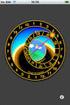 Astrock, t he A stronomical Clock The astronomical clock is unlike any other clock. At first glance you ll find it has similar functions of a standard clock, however the astronomical clock can offer much
Name Period 4 th Six Weeks Notes 2015 Weather
 Name Period 4 th Six Weeks Notes 2015 Weather Radiation Convection Currents Winds Jet Streams Energy from the Sun reaches Earth as electromagnetic waves This energy fuels all life on Earth including the
1. In the diagram below, the direct rays of the Sun are striking the Earth's surface at 23 º N. What is the date shown in the diagram?
 1. In the diagram below, the direct rays of the Sun are striking the Earth's surface at 23 º N. What is the date shown in the diagram? 5. During how many days of a calendar year is the Sun directly overhead
THE SOLAR SYSTEM - EXERCISES 1
 THE SOLAR SYSTEM - EXERCISES 1 THE SUN AND THE SOLAR SYSTEM Name the planets in their order from the sun. 1 2 3 4 5 6 7 8 The asteroid belt is between and Which planet has the most moons? About how many?
The Four Seasons. A Warm Up Exercise. A Warm Up Exercise. A Warm Up Exercise. The Moon s Phases
 The Four Seasons A Warm Up Exercise What fraction of the Moon s surface is illuminated by the Sun (except during a lunar eclipse)? a) Between zero and one-half b) The whole surface c) Always half d) Depends
Geometry and Geography
 Geometry and Geography Tom Davis [email protected] http://www.geometer.org/mathcircles March 12, 2011 1 Pedagogical Advice I have been leading mathematical circles using this topic for many years,
Lecture 12: The Solar System Briefly
 Lecture 12: The Solar System Briefly Formation of the Moonhttp://www.youtube.com/watch?v=WpOKztEiMqo&feature =related Formation of our Solar System Conservation of Angular Momentum Why are the larger,
The Light of the BY BOB BERMAN. The captivating crescent may be the Moon s most fascinating phase.
 The Light of the The captivating crescent may be the Moon s most fascinating phase. BY BOB BERMAN When first sighted each month, hovering in twilight, the Moon s slender crescent is mesmerizing. Early
Exam # 1 Thu 10/06/2010 Astronomy 100/190Y Exploring the Universe Fall 11 Instructor: Daniela Calzetti
 Exam # 1 Thu 10/06/2010 Astronomy 100/190Y Exploring the Universe Fall 11 Instructor: Daniela Calzetti INSTRUCTIONS: Please, use the `bubble sheet and a pencil # 2 to answer the exam questions, by marking
Which month has larger and smaller day time?
 ACTIVITY-1 Which month has larger and smaller day time? Problem: Which month has larger and smaller day time? Aim: Finding out which month has larger and smaller duration of day in the Year 2006. Format
Page. ASTRONOMICAL OBJECTS (Page 4).
 Star: ASTRONOMICAL OBJECTS ( 4). Ball of gas that generates energy by nuclear fusion in its includes white dwarfs, protostars, neutron stars. Planet: Object (solid or gaseous) that orbits a star. Radius
Answers for the Study Guide: Sun, Earth and Moon Relationship Test
 Answers for the Study Guide: Sun, Earth and Moon Relationship Test 1) It takes one day for the Earth to make one complete on its axis. a. Rotation 2) It takes one year for the Earth to make one around
Activities: The Moon is lit and unlit too
 Activities: The Moon is lit and unlit too Key objectives: This activity aims to help student to: Identify the different phases of the Moon Know that the Moon does not produce its own light, but reflects
The following words and their definitions should be addressed before completion of the reading:
 Seasons Vocabulary: The following words and their definitions should be addressed before completion of the reading: sphere any round object that has a surface that is the same distance from its center
Stellarium a valuable resource for teaching astronomy in the classroom and beyond
 Stellarium 1 Stellarium a valuable resource for teaching astronomy in the classroom and beyond Stephen Hughes Department of Physical and Chemical Sciences, Queensland University of Technology, Gardens
Douglas Adams The Hitchhikers Guide to the Galaxy
 There is a theory which states that if ever anybody discovers exactly what the Universe is for and why it is here, it will instantly disappear and be replaced by something even more bizarre and inexplicable.
Lab Activity on the Causes of the Seasons
 Lab Activity on the Causes of the Seasons 2002 Ann Bykerk-Kauffman, Dept. of Geological and Environmental Sciences, California State University, Chico * Objectives When you have completed this lab you
Homework Assignment #7: The Moon
 Name Homework Assignment #7: The Moon 2008 Ann Bykerk-Kauffman, Dept. of Geological and Environmental Sciences, California State University, Chico * Chapter 21 Origins of Modern Astronomy Motions of the
Produced by Billy Hix and Terry Sue Fanning. As part of the TeachSpace Program. For more ideas and an image of the current phase of the moon, visit:
 The Moon Phase Book Produced by Billy Hix and Terry Sue Fanning As part of the TeachSpace Program For more ideas and an image of the current phase of the moon, visit: www.teachspace.us Printing Date: 10/29/2010
Periods of Western Astronomy. Chapter 1. Prehistoric Astronomy. Prehistoric Astronomy. The Celestial Sphere. Stonehenge. History of Astronomy
 Periods of Western Astronomy Chapter 1 History of Astronomy Western astronomy divides into 4 periods Prehistoric (before 500 B.C.) Cyclical motions of Sun, Moon and stars observed Keeping time and determining
The sun and planets. On this picture, the sizes of the sun and 8 planets are to scale. Their positions relative to each other are not to scale.
 The solar system The solar system consists of our sun and its eight planets. The word solar means to do with the sun. The solar system formed 4½ billion years ago, when the universe was about two-thirds
The Sun-Earth-Moon System. Unit 5 covers the following framework standards: ES 9, 11 and PS 1. Content was adapted the following:
 Unit 5 The Sun-Earth-Moon System Chapter 10 ~ The Significance of Earth s Position o Section 1 ~ Earth in Space o Section 2 ~ Phases, Eclipses, and Tides o Section 3 ~ Earth s Moon Unit 5 covers the following
The Celestial Sphere. Questions for Today. The Celestial Sphere 1/18/10
 Lecture 3: Constellations and the Distances to the Stars Astro 2010 Prof. Tom Megeath Questions for Today How do the stars move in the sky? What causes the phases of the moon? What causes the seasons?
Celestial Sphere. Celestial Coordinates. Lecture 3: Motions of the Sun and Moon. ecliptic (path of Sun) ecliptic (path of Sun)
 Lecture 3: Motions of the and Moon ecliptic (path of ) ecliptic (path of ) The 23.5 degree tilt of Earth s spin axis relative to its orbital axis around the causes the seasons Celestial Sphere Celestial
Solar System. 1. The diagram below represents a simple geocentric model. Which object is represented by the letter X?
 Solar System 1. The diagram below represents a simple geocentric model. Which object is represented by the letter X? A) Earth B) Sun C) Moon D) Polaris 2. Which object orbits Earth in both the Earth-centered
Explain the Big Bang Theory and give two pieces of evidence which support it.
 Name: Key OBJECTIVES Correctly define: asteroid, celestial object, comet, constellation, Doppler effect, eccentricity, eclipse, ellipse, focus, Foucault Pendulum, galaxy, geocentric model, heliocentric
Moon Phases & Eclipses Notes
 Moon Phases & Eclipses Notes Melka 2014-2015 The Moon The Moon is Earth s one natural satellite. Due to its smaller size and slower speed of rotation, the Moon s gravity is 1/6 of the Earth s gravitational
NOTES: GEORGIA HIGH SCHOOL SCIENCE TEST THE SOLAR SYSTEM
 NOTES: GEORGIA HIGH SCHOOL SCIENCE TEST THE SOLAR SYSTEM 1.What is a Solar system? A solar system consists of: * one central star, the Sun and * nine planets: Mercury, Venus, Earth, Mars, Jupiter, Saturn,
Earth In Space Chapter 3
 Earth In Space Chapter 3 Shape of the Earth Ancient Greeks Earth casts a circular shadow on the moon during a lunar eclipse Shape of the Earth Ancient Greeks Ships were observed to disappear below the
CELESTIAL CLOCK - THE SUN, THE MOON, AND THE STARS
 INTRODUCTION CELESTIAL CLOCK - THE SUN, THE MOON, AND THE STARS This is a scientific presentation to provide you with knowledge you can use to understand the sky above in relation to the earth. Before
Outdoor Exploration Guide. A Journey Through Our Solar System. A Journey Through Our Solar System
 Outdoor Exploration Guide A Journey Through Our Solar System A Journey Through Our Solar System The Solar System Imagine that you are an explorer investigating the solar system. It s a big job, but in
Astronomy Notes for Educators
 Our Solar System Astronomy Notes for Educators Our Solar System 5-1 5-2 Specific Outcomes: Learning Outcome 1: Knowledge / Content and it place in the Milky Way Different types of bodies make up the Solar
ASTR 1030 Astronomy Lab 65 Celestial Motions CELESTIAL MOTIONS
 ASTR 1030 Astronomy Lab 65 Celestial Motions CELESTIAL MOTIONS SYNOPSIS: The objective of this lab is to become familiar with the apparent motions of the Sun, Moon, and stars in the Boulder sky. EQUIPMENT:
Cycles in the Sky. Teacher Guide: Cycles in the Sky Page 1 of 8 2008 Discovery Communications, LLC
 Cycles in the Sky What is a Fun damental? Each Fun damental is designed to introduce your younger students to some of the basic ideas about one particular area of science. The activities in the Fun damental
The Asteroid Belt. Composition and Classification. Where Different Asteroids are Found
 Asteroids The orbits of most of the asteroids lie between those of Mars and Jupiter Asteroid belt More than 10,000 asteroids have well-determined orbits Asteroids 2410 and 4859 are named for the two of
INDEPENDENT PROJECT: The Spring Night Sky
 INDEPENDENT PROJECT: The Spring Night Sky Your Name: What is the difference between observing and looking? As John Rummel said to the Madison Astronomical Society, January 11, 2002: Looking implies a passive
Noon Sun Angle = 90 Zenith Angle
 Noon Sun Angle Worksheet Name Name Date Subsolar Point (Latitude where the sun is overhead at noon) Equinox March 22 nd 0 o Equinox September 22 nd 0 o Solstice June 22 nd 23.5 N Solstice December 22 nd
STUDY GUIDE: Earth Sun Moon
 The Universe is thought to consist of trillions of galaxies. Our galaxy, the Milky Way, has billions of stars. One of those stars is our Sun. Our solar system consists of the Sun at the center, and all
Activity 3: Observing the Moon
 Activity 3: Observing the Moon Print Name: Signature: 1.) KEY. 2.). 3.). 4.). Activity: Since the dawn of time, our closest neighbor the moon has fascinated humans. In this activity we will explore the
Motions of Earth LEARNING GOALS
 2 Patterns in the Sky Motions of Earth The stars first found a special place in legend and mythology as the realm of gods and goddesses, holding sway over the lives of humankind. From these legends and
The Observed Calendar of the Second Temple Dates For 2014
 www.120jubilees.com The Observed Calendar of the Second Temple Dates For 2014 The Observed Calendar of the Second Temple Era was used by the official priests of the Second Temple from at least 520 BC to
Stellar, solar, and lunar demonstrators
 Stellar, solar, and lunar demonstrators Rosa M. Ros, Francis Berthomieu International Astronomical Union, Technical University of Catalonia (Barcelona, España), CLEA (Nice, France) Summary This worksheet
Meteors and their streams Seminar
 University of Ljubljana Faculty of Mathematics and Physics Meteors and their streams Seminar Figure 1: Leonid meteor storm in 001. [6] Author: Aleš Česen Adviser: prof. Tomaž Zwitter Kranj, October 007
Earth-Sun Relationships. The Reasons for the Seasons
 Earth-Sun Relationships The Reasons for the Seasons Solar Radiation The earth intercepts less than one two-billionth of the energy given off by the sun. However, the radiation is sufficient to provide
ASTRONOMY 161. Introduction to Solar System Astronomy
 ASTRONOMY 161 Introduction to Solar System Astronomy Seasons & Calendars Monday, January 8 Season & Calendars: Key Concepts (1) The cause of the seasons is the tilt of the Earth s rotation axis relative
Earth Is Not the Center of the Universe
 Earth Is Not the Center of the Universe Source: Utah State Office of Education Introduction Have you ever looked up at the night sky and wondered about all the pinpoint lights? People through the ages
GETTING STARTED IN STAR GAZING. The fact you are here in this introductory session says you have an interest in the hobby of
 GETTING STARTED IN STAR GAZING by Nelson Tilden Sun City Oro Valley Astronomy Club The fact you are here in this introductory session says you have an interest in the hobby of astronomy, but please note
Grade 6 Standard 3 Unit Test A Astronomy. 1. The four inner planets are rocky and small. Which description best fits the next four outer planets?
 Grade 6 Standard 3 Unit Test A Astronomy Multiple Choice 1. The four inner planets are rocky and small. Which description best fits the next four outer planets? A. They are also rocky and small. B. They
The following questions refer to Chapter 19, (PAGES 259 278 IN YOUR MANUAL, 7 th ed.)
 GEOLOGY 306 Laboratory Instructor: TERRY J. BOROUGHS NAME: Locating the Planets (Chapter 19) and the Moon and Sun (Chapter 21) For this assignment you will require: a calculator, colored pencils, a metric
galaxy solar system supernova (noun) (noun) (noun)
 WORDS IN CONTEXT DAY 1 (Page 1 of 4) galaxy A galaxy is a collection of stars, gas, and dust. We live in the Milky Way galaxy. One galaxy may contain billions of stars. solar system A solar system revolves
Where on Earth are the daily solar altitudes higher and lower than Endicott?
 Where on Earth are the daily solar altitudes higher and lower than Endicott? In your notebooks, write RELATIONSHIPS between variables we tested CAUSE FIRST EFFECT SECOND EVIDENCE As you increase the time
www.mhhe.com/fix Sunrise from Earth orbit by the crew of the STS-47 Space Shuttle Mission. I pray the gods to quit me of my toils,
 Confirming Proofs I pray the gods to quit me of my toils, To close the watch I keep this livelong year; For as a watch-dog lying, not at rest, Propped on one arm, upon the palace roof Of Atreus race, too
Phases of the Moon. Objective. Materials. Procedure. Name Date Score /20
 Name Date Score /20 Phases of the Moon Objective Working with models for the Earth-Moon-Sun system, the student will simulate the phases the Moon passes through each month. Upon completion of this exercise,
Digital STARLAB. Teacher s Manual. www.starlab.com
 Digital www.starlab.com STARLAB Teacher s Manual 2007 by Learning Technologies, Inc., 40 Cameron Avenue, Somerville, MA 02144. www.starlab.com. All rights reserved. Table of Contents About the Digital
Study Guide: Solar System
 Study Guide: Solar System 1. How many planets are there in the solar system? 2. What is the correct order of all the planets in the solar system? 3. Where can a comet be located in the solar system? 4.
EDMONDS COMMUNITY COLLEGE ASTRONOMY 100 Winter Quarter 2007 Sample Test # 1
 Instructor: L. M. Khandro EDMONDS COMMUNITY COLLEGE ASTRONOMY 100 Winter Quarter 2007 Sample Test # 1 1. An arc second is a measure of a. time interval between oscillations of a standard clock b. time
LER 2891. Ages. Grades. Solar System. A fun game of thinking & linking!
 Solar System Ages 7+ LER 2891 Grades 2+ Card Game A fun game of thinking & linking! Contents 45 Picture cards 45 Word cards 8 New Link cards 2 Super Link cards Setup Shuffle the two decks together to mix
INDEPENDENT PROJECT: The Spring Night Sky
 INDEPENDENT PROJECT: The Spring Night Sky Your Name: What is the difference between observing and looking? As John Rummel said to the Madison Astronomical Society, January 11, 2002: Looking implies a passive
So What All Is Out There, Anyway?
 So What All Is Out There, Anyway? Imagine that, like Alice in Wonderland, you have taken a magic potion that makes you grow bigger and bigger. You get so big that soon you are a giant. You can barely make
Astronomical Clocks. ~ 1 day ~ 1 hour
 Astronomical Clocks ~ 1 day ~ 1 hour Calendar A calendar is just a really slow clock ticks = days Assign some names/ patterns to days Allow predictions of future Question: How do you check the performance
AST 114 Spring 2016 Introduction to the Night Sky INTRODUCTION TO THE NIGHT SKY
 NAME: INTRODUCTION TO THE NIGHT SKY What will you learn in this Lab? This lab will introduce you to the layout of the night sky: constellations and stars, their names and the patterns they make, and the
2- The Top and bottom of the leaf is covered by thin layer of cells called epidermis that allow sunlight to easily pass into the middle of the leaf.
 Final exam summary sheet Topic 5, lesson 2 How leaf is adapted to carry on photosynthesis? 1- Waxy layer called the cuticle cover the leaf slow the water loss. 2- The Top and bottom of the leaf is covered
EARTH'S MOTIONS. 2. The Coriolis effect is a result of Earth's A tilted axis B orbital shape C revolution D rotation
 EARTH'S MOTIONS 1. Which hot spot location on Earth's surface usually receives the greatest intensity of insolation on June 21? A Iceland B Hawaii C Easter Island D Yellowstone 2. The Coriolis effect is
Related Standards and Background Information
 Related Standards and Background Information Earth Patterns, Cycles and Changes This strand focuses on student understanding of patterns in nature, natural cycles, and changes that occur both quickly and
Sun Earth Relationships
 1 ESCI-61 Introduction to Photovoltaic Technology Sun Earth Relationships Ridha Hamidi, Ph.D. Spring (sun aims directly at equator) Winter (northern hemisphere tilts away from sun) 23.5 2 Solar radiation
Science in the Elementary and Middle School
 15-0 Science in the Elementary and Middle School Naturally Occurring Inquiry Process, Which Can Be Made More Effective With Experience Uses Observable Data Science Search for Regularity Involves Information
ASTEROIDS, COMETS & METEORS TEACHER S GUIDE
 207-453-7668 [email protected] www.northern-stars.com Page 1 ASTEROIDS, COMETS & METEORS TEACHER S GUIDE This Teacher s Guide is designed to help you, the teacher, better prepare your students for
XXX Background information
 XXX Background information The solar system Our solar system is made up of the Sun, the planets, the dwarf planets, moons, asteroids and comets. The Sun is the star around which everything orbits. There
Cosmic Journey: A Solar System Adventure General Information
 Cosmic Journey: A Solar System Adventure General Information Imagine it a huge spiral galaxy containing hundreds of billions of stars, spiraling out from a galactic center. Nestled deep within one of the
Full credit for this chapter to Prof. Leonard Bachman of the University of Houston
 Chapter 6: SOLAR GEOMETRY Full credit for this chapter to Prof. Leonard Bachman of the University of Houston SOLAR GEOMETRY AS A DETERMINING FACTOR OF HEAT GAIN, SHADING AND THE POTENTIAL OF DAYLIGHT PENETRATION...
Study Guide: Sun, Earth and Moon Relationship Assessment
 I can 1. Define rotation, revolution, solstice and equinox. *Rotation and Revolution Review Worksheet 2. Describe why we experience days and years due to the rotation and r evolution of the Earth around
Sunlight and its Properties. EE 495/695 Y. Baghzouz
 Sunlight and its Properties EE 495/695 Y. Baghzouz The sun is a hot sphere of gas whose internal temperatures reach over 20 million deg. K. Nuclear fusion reaction at the sun's core converts hydrogen to
Out of This World Classroom Activity
 Out of This World Classroom Activity The Classroom Activity introduces students to the context of a performance task, so they are not disadvantaged in demonstrating the skills the task intends to assess.
ESCI 107/109 The Atmosphere Lesson 2 Solar and Terrestrial Radiation
 ESCI 107/109 The Atmosphere Lesson 2 Solar and Terrestrial Radiation Reading: Meteorology Today, Chapters 2 and 3 EARTH-SUN GEOMETRY The Earth has an elliptical orbit around the sun The average Earth-Sun
Note S1: Eclipses & Predictions
 The Moon's Orbit The first part of this note gives reference information and definitions about eclipses [14], much of which would have been familiar to ancient Greek astronomers, though not necessarily
Earth, Sun and Moon. Table of Contents
 Earth, Sun and Moon Table of Contents 0. Unit Challenge 1. Earth and Its Motion 2. Earth s Rotation and Revolution 3. Earth s Tilt and Seasons 4. Seasons 5. The Moon 6. The Lunar Cycle 7. Lunar Geography
Chapter 9 Asteroids, Comets, and Dwarf Planets. Their Nature, Orbits, and Impacts
 Chapter 9 Asteroids, Comets, and Dwarf Planets Their Nature, Orbits, and Impacts Asteroid Facts Asteroids are rocky leftovers of planet formation. The largest is Ceres, diameter ~1,000 km. There are 150,000