
Population Growth and Economic Development. Copyright 2012 Pearson Addison-Wesley. All rights reserved.
|
|
|
- Cora Green
- 9 years ago
- Views:
Transcription
1 Population Growth and Economic Development Copyright 2012 Pearson Addison-Wesley. All rights reserved. 1
2 Some Facts About World Population Total world population: 6.1 billion at beginning of 21st century About 75% of people live in developing countries About 60% of the population lives in Asia and Oceania About 40% of people live in only 15 countries World population estimated to reach 9.2 billion in 2050 and 11 billion by 2200 By 2200, over 90% of population will live in what today are developing countries 2
3 The Basic Issue: Population Growth and Six major issues: Quality of Life Will developing countries be able to improve levels of living given anticipated population growth? How will developing countries deal with the vast increases in their labor forces? How will higher population growth rates affect poverty? 3
4 The Basic Issue: Population Growth and Quality of Life Six major issues (cont d): Will developing countries be able to extend the coverage and improve the quality of health care and education in the face of rapid population growth? To what extent are low levels of living an important factor in limiting freedom of parents to choose a desired family size? i.e. Is there a relationship between poverty and family size? To what extent does affluence in the developed world affect the ability of developing countries to accommodate (provide for) their growing populations? 4
5 Population Growth: Past, Present, and Future World population growth through history 0.002% annual growth since human existence on earth until about 300 years ago 0.3% per annum by 1750; growth rate had accelerated by 150 times by 1950 growth rate had tripled to about 1% growth rate continued to accelerate peaking at 2.35% around 1970 current growth rate around 1.3% per annum but Africa s rate of growth relatively higher at 2.4% per year 5
6 Estimated World Population Growth 6
7 World Population Growth,
8 Population Growth: Past, Present, and Future Structure of the world s population Geographic region Rate of population increase Birth rates, death rates, Total fertility rates Age Structure and dependency burdens 8
9 Geographic Region: World Population Distribution by Region, 2010 and
10 Geographic Region: The Population Map: World Map with Country Sizes Proportional to Population,
11 Population growth rates in developed and developing countries,
12 Fertility Rate for Selected Countries, 1970 and
13 Population Growth: Past, Present, and Future Population growth rate equals natural increase plus net international migration Natural increase is birth rate minus death rate Net international migration negligible Difference between developing and developed nations in terms of growth rate is higher difference in birth (fertility) rates than in death (mortality) rates Total fertility rates higher in Sub-Saharan Africa (5.6) than in Western Asia (3.7) 13
14 Population Growth: Past, Present, and Future The Hidden Momentum of Population Growth tendency for population growth to continue, even after birthrates have declined substantially High birth rates cannot be altered overnight substantial changes in birthrates may take decades Age structure of developing country populations youthful when the young population is large, in the near future high-fertility population will be high, even if fertility levels are lower or declining 14
15 Population Growth: Past, Present, and Future children aged under 15 more than 31% in developing countries but just 18% in developed nations 46% Ethiopia; 44% Nigeria; 41% Pakistan; 33% India as at 2002 results in high youth dependency ratio (under 15/economically active) Dependency problems Old age structures and young age structures both create problems with supporting dependents; they are just different problems. Young age structure requires expanding labor markets, investments in education, etc. Investments in older people less likely to enhance productivity 15
16 Population Pyramids: All Developed and Developing Countries and Case of Ethiopia 16
17 The Demographic Transition The transition from high birth and death to low birth and death rates as a country develops from a pre-industrial to an industrialized economic system Stage I: High birthrates and death rates Stage II: Continued high birthrates, declining death rates Stage III: Falling birthrates and death rates, eventually stabilizing at low growth rates 17
18 The Demographic Transition in Western Europe 18
19 The Demographic Transition The present demographic transition in developing countries Stage II already occurred in most of the developing world, but with higher birthrates than in the developed world. Stage III: has been similar to developed countries for some developing countries like Taiwan, South Korea, China,Chile, Costa Rica has not occurred yet for other countries mainly in Sub- Saharan Africa and the middle east. 19
20 The Demographic Transition in Developing Countries 20
21 The Causes of High Fertility in Developing Countries: The Malthusian and Household Models Thomas Malthus 1798 Relationship between population growth and economic development Population tends to grow at a geometric rate, doubling every 30 to 40 years Food supplies only expand at an arithmetic rate due to diminishing returns to land (fixed factor) Hence, fall in per capita food production (or per capita incomes) to subsistence levels leading to chronic low levels of living (absolute poverty) Preventive and positive checks Need for moral restraint and limits to number of children else positive checks; hunger, disease and war 21
22 The Causes of High Fertility in Developing Countries: The Malthusian and Household Models The Malthusian Population Trap The idea that rising population and diminishing returns to fixed factors result in low levels of living (population trap) Countries would be trapped in low per-capita incomes (per capita food). 22
23 The Malthusian Population Trap 23
24 The Causes of High Fertility in Developing Countries: The Malthusian and Household Models Criticisms of the Malthusian Model Impact of technological progress not considered can offset growth-inhibiting forces of rapid population increase Assumes that national rates of population increase are directly related to per capita income There appears to be no clear correlation between population growth and levels of per capita income in the data Microeconomics of family size; individual and not aggregate variable (per capita income) as principal determinant of family size decision making 24
25 How Technological and Social Progress Allows Nations to Avoid the Population Trap 25
26 Fertility in Relation to Income in Developing Countries Birthrates seem to show no rigid relationship with per capita income levels 26
27 The Causes of High Fertility in Developing Countries: The Malthusian and Household Models The Microeconomic Household Theory of Fertility Family size is a decision taken at the microeconomic level by households based on a rational economic decision on demand for children Income effect: higher income allows for larger family size Substitution effect: higher cost of children implies smaller family size 27
28 Microeconomic Theory of Fertility: An Illustration 28
29 The Causes of High Fertility in Developing Countries: The Malthusian and Household Models Demand for Children Equation C d f ( Y, Pc, Px, tx), x 1,..., n Where C d is the demand for surviving children Y is the level of household income P c is the net price of children P x is price of all other goods t x is the tastes for goods relative to children 29
30 The Causes of High Fertility in Developing Countries: The Malthusian and Household Models Demand for Children Equation Cd f ( Y, Pc, Px, tx), x 1,..., n Under neoclassical conditions, we would expect: Y Cd 0 C P d x 0 C P d c 0 C t x d 0 30
31 The Causes of High Fertility in Developing Countries: The Malthusian and Household Models The Demand for Children in Developing Countries In many developing countries, there s strong intrinsic psychological and cultural determinant of family size First two or three children as consumer goods Additional children as investment goods : Work on family farm, microenterprise Old age security motivation For additional children parents assumed to weigh private economic benefits against private costs 31
32 The Causes of High Fertility in Developing Countries: The Malthusian and Household Models Some empirical evidence Strong statistical support for economic theory of fertility High female employment opportunities outside home and higher female school attendance associated with lower fertility Implications. Fertility lower if Raise women s education, role, and status More female nonagricultural wage employment Rise in family income levels Reduction in infant mortality Development of old-age and social security Expanded schooling opportunities 32
33 The Consequences of High Fertility: Some Conflicting Perspectives Is population a serious problem in developing countries? Two opposing views Population growth is Not a Real Problem Population Growth Is a Real Problem 33
34 The Consequences of High Fertility: Some Conflicting Perspectives (cont d) Population growth is Not a Real Problem : The real problem is not population growth but the following, Underdevelopment World resource depletion and environmental destruction less than ¼ of world population consume more than 80% of world s resources Population Distribution Subordination of women Overpopulation is a Deliberately Contrived False Issue Created by dominant rich-country agencies and institutions to keep LDCs in underdeveloped, dependent condition Population Growth is a Desirable Phenomenon Consumer demand; economies of scale; sufficient low-cost labor supply; noneconomic reasons (under-populated rural regions, plenty arable land, ethnic minorities, etc.) 34
35 The Consequences of High Fertility: Some Conflicting Perspectives (cont d) Population Growth Is a Real Problem Extremist arguments Population and global crisis; attributes all the world s economic and social evils to excessive population growth Theoretical arguments Growth theories (Harrod-Domar and Solow models) Empirical arguments Lower economic growth Poverty and inequality Adverse impact on education Adverse impact on health (of women) Food issues; feeding the world s expanding population Impact on the environment Frictions over international migration 35
36 Goals and Objectives: Toward a Consensus Despite the conflicting opinions, there is some common ground on the following: Population is not the primary cause of lower living levels, but may be one factor Problem is not simply numbers but quality of life and material wellbeing Population growth does serve to intensify problems of underdevelopment and makes prospects for development more remote Voluntary decreases in fertility is generally desirable for most developing countries with still-expanding populations 36
37 Goals and Objectives: Toward a Consensus Policy goals and objectives to population growth in developing countries must be realistic Where population growth is a problem, deal not only with population variable but also underlying social and economic conditions of underdevelopment Smaller families through development-induced motivations Family planning programs should provide both education and technological means to regulate fertility Developed countries should assist developing countries 37
38 Some Policy Approaches What Developing Countries Can Do Persuasion through education Family planning programs Address incentives and disincentives for having children through the principal variables influencing the demand for children Raise the socioeconomic status of women Increase employment opportunities for women (increases opportunity cost of having more children, as in microeconomic household theory) 38
39 Some Policy Approaches What the Developed Countries Can Do Generally Address resources use inequities More open migration policies How Developed Countries Can Help Developing Countries with Their Population Programs Research into technology of fertility control Financial assistance for family planning programs 39
World Population Growth
 3 World Population Growth Why is world population growing faster than ever before? Population dynamics are one of the key factors to consider when thinking about development. In the past years the world
Global Demographic Trends and their Implications for Employment
 Global Demographic Trends and their Implications for Employment BACKGROUND RESEARCH PAPER David Lam and Murray Leibbrandt Submitted to the High Level Panel on the Post-2015 Development Agenda This paper
III. World Population Growth
 III. World Population Growth Population dynamics are one of the key factors to consider when thinking about development. In the past 50 years the world has experienced an unprecedented increase in population
United Nations INTRODUCTION. The World at Six Billion 1
 INTRODUCTION According to the latest United Nations population estimates, world population reaches the six billion mark on 12 October 1999, an historic milestone in the growth of world population. The
NET INTERNATIONAL MIGRATION
 II. NET INTERNATIONAL MIGRATION A. GLOBAL TRENDS During the period 195-21, the developed regions experienced population gains from positive net international migration while the developing regions were
World Population to reach 10 billion by 2100 if Fertility in all Countries Converges to Replacement Level
 UNITED NATIONS PRESS RELEASE EMBARGOED UNTIL 3 MAY 2011, 11:00 A.M., NEW YORK TIME World Population to reach 10 billion by if Fertility in all Countries Converges to Replacement Level UNITED NATIONS, 3
The role of population on economic growth and development: evidence from developing countries
 MPRA Munich Personal RePEc Archive The role of population on economic growth and development: evidence from developing countries Akinwande A. Atanda and Salaudeen B. Aminu and Olorunfemi Y. Alimi Datatric
Critical Thinking ANALOGIES. Skills Worksheet
 Skills Worksheet Critical Thinking ANALOGIES In the space provided, write the letter of the pair of terms or phrases that best complete the analogy shown. An analogy is a relationship between two pairs
Global Urbanization: Trends, Patterns, Determinants, and Impacts. Abdullah Baqui, DrPH, MPH, MBBS Johns Hopkins University
 This work is licensed under a Creative Commons Attribution-NonCommercial-ShareAlike License. Your use of this material constitutes acceptance of that license and the conditions of use of materials on this
Challenges of the World Population in the 21st Century.
 Challenges of the World Population in the 21st Century. The changing age structure of population and its consequences for development Panel discussion Thursday, 12 October 2006 Dag Hammarskjold Library
Girls education the facts
 Education for All Global Monitoring Report Fact Sheet October 2013 Girls education the facts Millions of girls around the world are still being denied an education PRIMARY SCHOOL: There are still 31 million
IV. DEMOGRAPHIC PROFILE OF THE OLDER POPULATION
 World Population Ageing 195-25 IV. DEMOGRAPHIC PROFILE OF THE OLDER POPULATION A. AGE COMPOSITION Older populations themselves are ageing A notable aspect of the global ageing process is the progressive
Population Change and Public Health Exercise 1A
 Population Change and Public Health Exercise 1A 1. What is not true of demographic transition in European countries A. The pre-transition fertility and mortality rates were as high as seen in developing
III. CHANGING BALANCE BETWEEN AGE GROUPS
 Population Ageing 195-25 III. CHANGING BALANCE BETWEEN AGE GROUPS A. BROAD AGE GROUPS The young-old balance is shifting throughout the world The increasing proportions of aged persons have been accompanied,
1. TRENDS IN INTERNATIONAL MIGRATION
 1. TRENDS IN INTERNATIONAL MIGRATION This chapter provides a brief overview of global and regional patterns and trends in international migration since 199. It also describes selected characteristics of
Health and Longevity. Global Trends. Which factors account for most of the health improvements in the 20th century?
 8 Health and Longevity The health of a country s population is often monitored using two statistical indicators: life expectancy at birth and the under-5 mortality rate. These indicators are also often
THE DEMOGRAPHY OF POPULATION AGEING
 THE DEMOGRAPHY OF POPULATION AGEING Barry Mirkin and Mary Beth Weinberger* An inevitable consequence of the demographic transition and the shift to lower fertility and mortality has been the evolution
Congo (Democratic Republic of the)
 Human Development Report 2015 Work for human development Briefing note for countries on the 2015 Human Development Report Congo (Democratic Republic of the) Introduction The 2015 Human Development Report
2. Germany. (a) Past trends
 2. Germany (a) Past trends While the total fertility rate increased steadily from 2.1 to 2.4 children per woman between 15-155 and 1-15, Germany experienced a continuous decline afterwards, to 1. children
A Long-term Forecast of Demographic Transition in Japan and Asia
 A Long-term Forecast of Demographic Transition in Japan and Asia Takao Komine Professor, Hosei University Why is the Population Problem Important for Asia Today? 1. The uncertainty of population forecasts
UN World Population Prospects, the 2015 Revision
 UN World Population Prospects, the 2015 Revision Gerhard K. Heilig Presentation prepared for the International School on Energy Systems of the Forschungszentrum Jülich - organized at Kloster Seon, Germany
Summary. Accessibility and utilisation of health services in Ghana 245
 Summary The thesis examines the factors that impact on access and utilisation of health services in Ghana. The utilisation behaviour of residents of a typical urban and a typical rural district are used
WORLD POPULATION IN 2300
 E c o n o m i c & DRAFT S o c i a l A f f a i r s WORLD POPULATION IN 2300 Highlights United Nations ESA/P/WP.187 9 December 2003 DRAFT Department of Economic and Social Affairs Population Division WORLD
Chapter 1. The Development Gap
 Chapter 1 The Development Gap STORIES OF CATCH-UP AND DECLINE The development gap emerged because some countries developed earlier than others. In historical perspective the Industrial Revolution : The
I. DEMOGRAPHIC DETERMINANTS OF POPULATION AGEING
 World Population Ageing 9- I. DEMOGRAPHIC DETERMINANTS OF POPULATION AGEING Underlying global population ageing is a process known as the demographic transition in which mortality and then fertility decline
Economic Growth. (c) Copyright 1999 by Douglas H. Joines 1
 Economic Growth (c) Copyright 1999 by Douglas H. Joines 1 Module Objectives Know what determines the growth rates of aggregate and per capita GDP Distinguish factors that affect the economy s growth rate
Economic Growth Rates
 BEG_i-144.qxd 6/10/04 1:46 PM Page 23 4 Economic Growth Rates GDP growth rates in developing countries are on average higher than those in developed countries. Over the 1965-99 period, the average annual
Population, Health, and Human Well-Being-- Benin
 Population, Health, and Human Well-Being-- Benin Demographic and Health Indicators Benin Sub- Saharan Africa World Total Population (in thousands of people) 1950 2,046 176,775 2,519,495 2002 6,629 683,782
Summary. Developing with Jobs
 Do not publish or DiStribute before 00:01 Gmt on tuesday 27 may 2014 Summary Developing with Jobs World of Work Report 2014 Developing with jobs Executive Summary INTERNATIONAL LABOUR ORGANIZATION RESEARCH
Malawi. Country coverage and the methodology of the Statistical Annex of the 2015 HDR
 Human Development Report 2015 Work for human development Briefing note for countries on the 2015 Human Development Report Malawi Introduction The 2015 Human Development Report (HDR) Work for Human Development
CORRELATIONAL ANALYSIS BETWEEN TEENAGE PREGNANCY AND MATERNAL MORTALITY IN MALAWI
 CORRELATIONAL ANALYSIS BETWEEN TEENAGE PREGNANCY AND MATERNAL MORTALITY IN MALAWI Abiba Longwe-Ngwira and Nissily Mushani African Institute for Development Policy (AFIDEP) P.O. Box 31024, Lilongwe 3 Malawi
Investment in developing countries' food and agriculture: Assessing agricultural capital stocks and their impact on productivity
 Investment in developing countries' food and agriculture: Assessing agricultural capital stocks and their impact on productivity Gustavo Anriquez (FAO), Hartwig de Haen, Oleg Nivyevskiy & Stephan von Cramon
Sierra Leone. Country coverage and the methodology of the Statistical Annex of the 2015 HDR
 Human Development Report 2015 Work for human development Briefing note for countries on the 2015 Human Development Report Sierra Leone Introduction The 2015 Human Development Report (HDR) Work for Human
Hunger and Poverty: Definitions and Distinctions
 Hunger and Poverty: Definitions and Distinctions The Hunger Project 5 Union Square West New York, NY 10003 www.thp.org Hunger and poverty are powerful but familiar terms. Everyone knows what they mean,
Youth bulges and youth unemployment Youth bulges are not a major factor explaining current levels of youth unemployment
 David Lam University of Michigan, USA, and IZA, Germany Youth bulges and youth unemployment Youth bulges are not a major factor explaining current levels of youth unemployment Keywords: Youth labor market,
Briefing note for countries on the 2015 Human Development Report. Niger
 Human Development Report 2015 Work for human development Briefing note for countries on the 2015 Human Development Report Niger Introduction The 2015 Human Development Report (HDR) Work for Human Development
Population Aging in Developed Countries: Emerging Trends and Dynamics Wan He, Ph.D. Population Division U.S. Census Bureau
 Population Aging in Developed Countries: Emerging Trends and Dynamics Wan He, Ph.D. Population Division U.S. Census Bureau This presentation is released to inform interested parties of population aging
Briefing note for countries on the 2015 Human Development Report. Burkina Faso
 Human Development Report 2015 Work for human development Briefing note for countries on the 2015 Human Development Report Burkina Faso Introduction The 2015 Human Development Report (HDR) Work for Human
Tanzania (United Republic of)
 Human Development Report 2015 Work for human development Briefing note for countries on the 2015 Human Development Report Tanzania (United Introduction The 2015 Human Development Report (HDR) Work for
Nigeria: Population and Demographic trends
 Nigeria: Population and Demographic trends Bolatito Ogunbiyi Atlas Fellow, Population Action International Nigeria Beyond the Headlines: Population Health, Natural Resources, and Governance The Woodrow
INDICATOR REGION WORLD
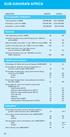 SUB-SAHARAN AFRICA INDICATOR REGION WORLD Demographic indicators Total population (2006) 748,886,000 6,577,236,000 Population under 18 (2006) 376,047,000 2,212,024,000 Population under 5 (2006) 125,254,000
Progress and prospects
 Ending CHILD MARRIAGE Progress and prospects UNICEF/BANA213-182/Kiron The current situation Worldwide, more than 7 million women alive today were married before their 18th birthday. More than one in three
Briefing note for countries on the 2015 Human Development Report. Mozambique
 Human Development Report 2015 Work for human development Briefing note for countries on the 2015 Human Development Report Mozambique Introduction The 2015 Human Development Report (HDR) Work for Human
Insurance market outlook
 Munich Re Economic Research 2 May 2013 Global economic recovery provides stimulus to the insurance industry long-term perspective positive as well Once a year, MR Economic Research produces long-term forecasts
Conference on Population and Development, Cairo, 5-13 September 1994 (United Nations publication, Sales No. E.95.XIII.7).
 EXECUTIVE SUMMARY The General Assembly, in its resolution 54/262 of 25 May 2, decided to convene the Second World Assembly on Ageing in 22, coinciding with the twentieth anniversary of the first World
INDICATOR REGION WORLD
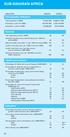 SUB-SAHARAN AFRICA INDICATOR REGION WORLD Demographic indicators Total population (2005) 713,457,000 6,449,371,000 Population under 18 (2005) 361,301,000 2,183,143,000 Population under 5 (2005) 119,555,000
Universal Health Coverage in Africa. Germano Mwabu University of Nairobi and Kobe University, June 1, 2013, TICAD V, Yokohama, Japan.
 Universal Health Coverage in Africa Germano Mwabu University of Nairobi and Kobe University, June 1, 2013, TICAD V, Yokohama, Japan. Introduction Health status in Africa has improved over the last two
Indicator 7: Mortality
 Mortality Cancer of the cervix is one of the few cancers for which there is an efficacious screening test for detection of the disease at an early stage, and most deaths due to cervical cancer are potentially
SOCIAL PROTECTION BRIEFING NOTE SERIES NUMBER 4. Social protection and economic growth in poor countries
 A DFID practice paper Briefing SOCIAL PROTECTION BRIEFING NOTE SERIES NUMBER 4 Social protection and economic growth in poor countries Summary Introduction DFID s framework for pro-poor growth sets out
Madagascar. Country coverage and the methodology of the Statistical Annex of the 2015 HDR
 Human Development Report 2015 Work for human development Briefing note for countries on the 2015 Human Development Report Madagascar Introduction The 2015 Human Development Report (HDR) Work for Human
PRESS RELEASE WORLD POPULATION TO EXCEED 9 BILLION BY 2050:
 PRESS RELEASE Embargoed until 12:00 PM, 11 March, 2009 WORLD POPULATION TO EXCEED 9 BILLION BY 2050: Developing Countries to Add 2.3 Billion Inhabitants with 1.1 Billion Aged Over 60 and 1.2 Billion of
Beef Demand: What is Driving the Market?
 Beef Demand: What is Driving the Market? Ronald W. Ward Food and Economics Department University of Florida Demand is a term we here everyday. We know it is important but at the same time hard to explain.
Population Issues in sub- Saharan Africa. John Cleland Oct 2011
 Population Issues in sub- Saharan Africa John Cleland Oct 2011 OUTLINE WHAT is happening to fertility & population growth? Why is fertility still so high? WHY does it matter? HOW can action most effectively
Agricultural Growth Is the Key to Poverty Alleviation in Low-Income Developing Countries
 International Food Policy Research Institute 2020 Brief 15, April 1995 Agricultural Growth Is the Key to Poverty Alleviation in Low-Income Developing Countries by Per Pinstrup-Andersen and Rajul Pandya-Lorch
Children in Egypt 2014 A STATISTICAL DIGEST
 Children in Egypt 2014 A STATISTICAL DIGEST CHAPTER 1 DEMOGRAPHY Children in Egypt 2014 is a statistical digest produced by UNICEF Egypt to present updated and quality data on major dimensions of child
Part 4 Burden of disease: DALYs
 Part Burden of disease:. Broad cause composition 0 5. The age distribution of burden of disease 6. Leading causes of burden of disease 7. The disease and injury burden for women 6 8. The growing burden
Economic Growth, Poverty and The Child*
 2 Economic Growth, Poverty and The Child* INTRODUCTION In spite of rapid economic growth in many Third World countries, a disturbingly high rate of death due to child malnutrition continues. The physical
Q&A on methodology on HIV estimates
 Q&A on methodology on HIV estimates 09 Understanding the latest estimates of the 2008 Report on the global AIDS epidemic Part one: The data 1. What data do UNAIDS and WHO base their HIV prevalence estimates
I. HEALTH ASSESSMENT B. SOCIOECONOMIC CHARACTERISTICS
 I. B. SOCIOECONOMIC CHARACTERISTICS 1. HOW FINANCIALLY SECURE ARE RESIDENTS OF DELAWARE? Delaware residents median household incomes are lower than comparison communities but higher than national norms.
Ageing OECD Societies
 ISBN 978-92-64-04661-0 Trends Shaping Education OECD 2008 Chapter 1 Ageing OECD Societies FEWER CHILDREN LIVING LONGER CHANGING AGE STRUCTURES The notion of ageing societies covers a major set of trends
HUMAN RESOURCES AND ECONOMIC DEVELOPMENT IN NIGERIA OGUNLEYE-ADETONA, C.I.
 Journal of Sustainable Development in Africa (Volume 12, No.3, 2010) ISSN: 1520-5509 Clarion University of Pennsylvania, Clarion, Pennsylvania HUMAN RESOURCES AND ECONOMIC DEVELOPMENT IN NIGERIA OGUNLEYE-ADETONA,
Tanzania: Population, Reproductive Health & Development. Photo credits: IFAD / Christine Nesbitt and Robert Grossman and USAID.
 Tanzania: Population, Reproductive Health & Development Photo credits: IFAD / Christine Nesbitt and Robert Grossman and USAID. Hosted by the Government Population Planning Section President s s Office,
MDG 4: Reduce Child Mortality
 143 MDG 4: Reduce Child Mortality The target for Millennium Development Goal (MDG) 4 is to reduce the mortality rate of children under 5 years old (under-5 mortality) by two-thirds between 1990 and 2015.
Pre-Test Chapter 16 ed17
 Pre-Test Chapter 16 ed17 Multiple Choice Questions 1. Suppose total output (real GDP) is $4000 and labor productivity is 8. We can conclude that: A. real GDP per capita must be $500. B. the price-level
Characteristics and Causes of Extreme Poverty and Hunger. Akhter Ahmed, Ruth Vargas Hill, Lisa Smith, Doris Wiesmann, and Tim Frankenberger
 The World s Most Deprived Characteristics and Causes of Extreme Poverty and Hunger Akhter Ahmed, Ruth Vargas Hill, Lisa Smith, Doris Wiesmann, and Tim Frankenberger Context Report was undertaken as part
4.0 3.5 3.0 M I L L I O N S 2.5 2.0 1.5 1.0 0.5 0.0. Figure 2.1 Number of people newly infected with HIV
 Figure 2.1 Number of people newly infected with HIV 4.0 3.5 3.0 M I L L I O N S 2.5 2.0 1.5 1.0 0.5 0.0 1990 1991 1992 1993 1994 1995 1996 1997 1998 1999 2000 2001 2002 2003 2004 2005 2006 2007 2008 2009
Ireland and the EU 1973-2003 Economic and Social Change
 Ireland and the EU 1973-2003 Economic and Social Change Table 1 Population, 1971-2002 viii Table 2 Population of the provinces ix Table 3 Births, deaths and life expectancy ix Table 4 Numbers in education
JAPAN. Past trends. Scenario I
 JAPAN Past trends The total fertility rate in Japan fell from 2.75 births per women in 195-1955 to 2.8 births in 1955-196. Total fertility remained at the near-replacement level between 196 and 1975, and
The Elderly in Africa: Issues and Policy Options. K. Subbarao
 The Elderly in Africa: Issues and Policy Options K. Subbarao The scene prior to 1990s The elderly were part of the extended family and as such enjoyed care and protection. The informal old age support
Education is the key to lasting development
 Education is the key to lasting development As world leaders prepare to meet in New York later this month to discuss progress on the Millennium Development Goals, UNESCO s Education for All Global Monitoring
10. European Union. (a) Past trends
 . European Union (a) Past trends The total fertility rate in the 15 countries that presently constitute the European Union was on a rising curve until 196-65, when it attained 2.69 births per woman. Since
Briefing note for countries on the 2015 Human Development Report. Philippines
 Human Development Report 2015 Work for human development Briefing note for countries on the 2015 Human Development Report Philippines Introduction The 2015 Human Development Report (HDR) Work for Human
Projections of the Size and Composition of the U.S. Population: 2014 to 2060 Population Estimates and Projections
 Projections of the Size and Composition of the U.S. Population: to Population Estimates and Projections Current Population Reports By Sandra L. Colby and Jennifer M. Ortman Issued March 15 P25-1143 INTRODUCTION
The Socio-Economic Impact of Urbanization
 The Socio-Economic Impact of Urbanization Mădălina DOCIU Anca DUNARINTU Academy of Economic Studies Bucharest, Romania E-mail: [email protected] Faculty of International Business and Economics Dimitrie
Strategic Roadmap Development for international education in the PTE sector
 Strategic Roadmap Development for international education in the PTE sector What are Strategic Roadmaps? Strategic Roadmaps are planning tools that identify strategic goals and pathways for growth in international
FARMING & RURAL SYSTEMS ECONOMICS edited ty Werner Doppler and Siegfried Bauer
 FARMING & RURAL SYSTEMS ECONOMICS edited ty Werner Doppler and Siegfried Bauer VOLUME 56 Land Property Rights and Agricultural Development in the Highlands of Madagascar: Economic and Environmental Implications
New South Wales State and Regional Population Projections 2001-2051. 2004 Release TRANSPORT AND POPULATION DATA CENTRE
 New South Wales State and Regional Population Projections 21-251 251 24 Release TRANSPORT AND POPULATION DATA CENTRE THE TRANSPORT AND POPULATION DATA CENTRE (TPDC) The TPDC is located in the NSW Department
World Population Ageing 2009
 E c o n o m i c & World Population Ageing 29 S o c i a l A f f a i r s United Nations ESA/P/WP/212 December 29 Department of Economic and Social Affairs Population Division World Population Ageing 29
National Insurance Fund - Long-term Financial Estimates
 Social Security Administration Act 1992 National Insurance Fund - Long-term Financial Estimates Report by the Government Actuary on the Quinquennial Review for the period ending 5 April 1995 under Section
Prospective immigration to Israel through 2030: methodological issues and challenges
 WP 21 23 April 2010 UNITED NATIONS STATISTICAL COMMISSION and ECONOMIC COMMISSION FOR EUROPE STATISTICAL OFFICE OF THE EUROPEAN UNION (EUROSTAT) CONFERENCE OF EUROPEAN STATISTICIANS Joint Eurostat/UNECE
Thailand. Country coverage and the methodology of the Statistical Annex of the 2015 HDR
 Human Development Report 2015 Work for human development Briefing note for countries on the 2015 Human Development Report Thailand Introduction The 2015 Human Development Report (HDR) Work for Human Development
Economic Growth and Poverty Reduction Strategies in Korea
 Economic Growth and Poverty Reduction Strategies in Korea 2006. 9. Korea Institute for Health and Social Affairs Contents I. Introduction II. Economic Growth, Poverty and Inequality in Korea III. Changes
Russian Federation. Country coverage and the methodology of the Statistical Annex of the 2015 HDR
 Human Development Report 2015 Work for human development Briefing note for countries on the 2015 Human Development Report Russian Federation Introduction The 2015 Human Development Report (HDR) Work for
Executive summary. Global Wage Report 2014 / 15 Wages and income inequality
 Executive summary Global Wage Report 2014 / 15 Wages and income inequality Global Wage Report 2014/15 Wages and income inequality Executive summary INTERNATIONAL LABOUR OFFICE GENEVA Copyright International
Canada and Africa: A Contrast
 Canada and Africa: A Contrast In this lesson, students will examine statistics pertaining to nations in Sub-Saharan Africa to which Canada contributes foreign aid. The students will be expected to summarize
Consumption Structure Evolutions in an Aging Society and Implications for the Social Security System
 Consumption Structure Evolutions in an Aging Society and Implications for the Social Security System Dr. Rui Mao School of Management, Zhejiang University, China PRI-ADBI joint conference, Tokyo Rui Mao
Chapter 11. Development Policymaking and the Roles of Market, State, and Civil Society. Copyright 2009 Pearson Addison-Wesley. All rights reserved.
 Chapter 11 Development Policymaking and the Roles of Market, State, and Civil Society Copyright 2009 Pearson Addison-Wesley. All rights reserved. Outline 1. Pendulum Swings in Theory and Practice 2. Some
Economic Growth. Chapter 11
 Chapter 11 Economic Growth This chapter examines the determinants of economic growth. A startling fact about economic growth is the large variation in the growth experience of different countries in recent
AP HUMAN GEOGRAPHY 2008 SCORING GUIDELINES
 AP HUMAN GEOGRAPHY 2008 SCORING GUIDELINES Question 3 Countries in the graph above have been chosen to illustrate an important trend in education patterns in the developing world. Part A (1 point) Identify
Rural and Agricultural Finance. Day 1: Block 1 What and Why of Rural Finance?
 Rural and Agricultural Finance Day 1: Block 1 What and Why of Rural Finance? Self Introduction 7 Questions 1. Name, institution, and current job title. 2. What activity are you working on now that is related
Child Marriage and Education: A Major Challenge Minh Cong Nguyen and Quentin Wodon i
 Child Marriage and Education: A Major Challenge Minh Cong Nguyen and Quentin Wodon i Why Does Child Marriage Matter? The issue of child marriage is getting renewed attention among policy makers. This is
2c. What has been happing to the gap between MDCs and LDCs in terms of GDP?
 Development: Key Issue 1 Why Does Development Vary Among Countries Rubenstein, p. 274-281 ECONOMIC INDICATORS OF DEVELOPMENT 1. What four different factors does the UN consider when determining a country
Nepal. Country coverage and the methodology of the Statistical Annex of the 2015 HDR
 Human Development Report 2015 Work for human development Briefing note for countries on the 2015 Human Development Report Nepal Introduction The 2015 Human Development Report (HDR) Work for Human Development