
NET INTERNATIONAL MIGRATION
|
|
|
- Rebecca Green
- 9 years ago
- Views:
Transcription
1 II. NET INTERNATIONAL MIGRATION A. GLOBAL TRENDS During the period , the developed regions experienced population gains from positive net international migration while the developing regions were losing population from negative net international migration. During the most recent decades, net international migration to the developed regions increased from 2.5 million per year in to 3.5 million per year in Europe and Northern America were gaining the most from net international migration, whereas Asia and Latin America and the Caribbean were losing the most (figure II.1) Figure II.1. Annual net migration by major area, and 2-21 (millions) Oceania NA LAC Europe Asia Africa Source: United Nations, Department of Economic and Social Affairs, Population Division (213). World Population Prospects: The 212 Note: LAC refers to Latin America and the Caribbean, while NA refers to Northern America. Net immigration to Northern America, however, declined from 1.4 million annually in to 1.3 million per year in 2-21, while it almost doubled in Europe from one million to 1.9 million per year over the same period. Latin America and the Caribbean experienced an increase in the annual number of net emigrants from.7 million in to 1.2 million in 2 and 21. These regional trends mask substantial variations at the country level. In 199-2, out of 232 countries or areas in the world, 94 countries or areas gained population from net immigration and 135 countries or areas lost population due to net emigration. By 2-21, the number of countries gaining population due to net migration had increased to 11, and the number of countries losing population had declined to 128 countries or areas (table II.1). Box II.1. Data considerations - Definitions Net international migration for a given country refers to the difference between the number of immigrants and the number of emigrants. If more people immigrate to a country than emigrate from it, the country gains population from positive net migration. When more people emigrate than immigrate, the country loses population through negative net migration. At the global level, population grows or declines due to natural change while international migration is necessarily zero. Whenever the world s constituent countries are divided into groups of mutually exclusive units such as the developed and the developing regions net migration flows to one group cancel out net migration flows from the other. In the developed regions, the majority of countries experienced net immigration and that number increased from 35 in to 4 in In the developing regions, the majority of countries experienced net emigration, both in and However, in the developing regions, the number of countries experiencing net emigration declined from 115 to 113 between and 2-21, whereas the number of countries gaining population due to net immigration increased from 59 to 61. Among the countries gaining population in both and 2-21 were traditional countries of immigration, such as Australia, Canada, New Zealand and the United States as well as countries which started to see an increase United Nations Department of Economic and Social Affairs/Population Division 11 International Migration Report 213
2 TABLE II.1: NUMBER OF COUNTRIES OR AREAS BY NET MIGRATION STATUS DEVELOPMENT GROUP AND MAJOR AREA, AND 2-21 Development group and major area Net immigration Net emigration Change in status (net emigration net immigration country) and 2-21 World Developed regions Developing regions Africa Asia Europe Latin America and the Caribbean Northern America Oceania Source: United Nations, Department of Economic and Social Affairs, Population Division (213). World Population Prospects: The 212 Note: Change in status refers to the number of countries which changed from net emigration status in to net immigration status in Countries with zero net migration in and 2-21 have been excluded from the analysis. Box II.2. Data considerations Data source The data used in this part of the report are from the latest population estimates and projections produced by the United Nations Population Division. 1 In estimating and projecting population net migration is often derived as a residual. Estimates are produced for the period and projections for the period Given the volatility of international migration flows, it is impossible to accurately project future migration levels and trends and their impact on population change and population structures. However, population projections including different migration scenarios can help assess the likely impact international migration might have on future populations. For the medium projection variant, the future path of international migration is set on the basis of past international migration estimates and migration policy considerations for the respective countries. Projected levels of net migration are generally kept constant over the next decades, starting in For countries with sizable refugee populations, it is assumed that refugees return to their country of origin within the next five to ten years. 1 United Nations, Department of Economic and Social Affairs, Population Division (213). World Population Prospects: The 212 in their levels of immigration in the 199s and 2s, such as Italy and Spain. In addition, countries in the developing regions recruiting labour migrants, such as Qatar, Singapore and the United Arab Emirates were among the countries experiencing net immigration in both periods. Interestingly, 23 countries in the developing regions changed their status from net emigration in to net immigration in Some of these countries repatriated refugees, such as Burundi, Eritrea and South Sudan, while others had recently begun to recruit foreign workers on a larger scale, such as Kuwait and Saudi Arabia. Among the group of countries experiencing net emigration were traditional countries of emigration, such as Bangladesh, China, India, Mexico, Pakistan and the Philippines. Many of these countries had long-standing ties with traditional countries of immigration, such as Australia, Canada and the United States, while others had newly established ties with countries in South-Eastern and Western Asia which were recruiting foreign workers. Between and 2-21, the number of countries with net immigration increased in Asia, Europe and Latin America and the Caribbean, decreased in Africa and Oceania and remained the same in Northern America. Furthermore, the number of countries that 12 United Nations Department of Economic and Social Affairs/Population Division International Migration Report 213
3 TABLE II.2: COUNTRIES AND AREAS WITH THE HIGHEST AND THE LOWEST LEVEL OF ANNUAL NET MIGRATION, AND 2-21 (THOUSANDS) A. Net immigration countries or areas Rank Country or area Country or area United States of America United States of America Russian Federation Spain Germany United Arab Emirates Afghanistan Russian Federation Canada Italy Spain South Africa Ethiopia Saudi Arabia South Africa Canada Australia United Kingdom United Arab Emirates Australia B. Net emigration countries or areas Rank Country or area Country or area Kazakhstan Bangladesh Mexico Mexico Egypt India Bangladesh China Iran (Islamic Republic of) Pakistan Pakistan Philippines Philippines Myanmar China Viet Nam Morocco Zimbabwe Republic of Korea Nepal Source: United Nations, Department of Economic and Social Affairs, Population Division (213). World Population Prospects: The 212 changed from net emigration countries in to net immigration countries in 2-21, the so-called status changes was highest in Asia (9), followed by Africa (7), Europe (6), Latin America and the Caribbean (6) and Oceania (1). During 2-21, the United States, Spain and the United Arab Emirates were the top net immigration countries, whereas Bangladesh, Mexico and India were the top net emigration countries (table II.2). Compared to 199-2, Italy, Spain, Saudi Arabia, South Africa, the United Arab Emirates and the United Kingdom moved up on the list of leading net immigration countries, whereas Afghanistan, Australia, Canada, Ethiopia, Germany and the Russian Federation moved down on that list. For the main net emigration countries, especially Bangladesh, China and India became more important as their levels of net emigration more than doubled. B. CONTRIBUTION OF INTERNATIONAL MIGRATION TO OVERALL POPULATION CHANGE In , the population both in the developed and the developing regions was primarily growing due to natural increase (figure II.2). By 2-21, net migration had become the primary source of population growth in the developed regions, whereas the developing regions were still growing due to a surplus of births over deaths (natural increase). Following the projection assumptions defined earlier (box II.2), the population of the developed regions will still be growing by 24-25, but at a declining rate with net migration being the only source of the projected population growth and natural increase having become negative. In the developing regions, the population is projected to continue to grow, albeit at lower rates, due to natural increase while net emigration will have a negligible effect on population size. United Nations Department of Economic and Social Affairs/Population Division 13 International Migration Report 213
4 Over the period , the populations of Africa, Asia and Latin America and the Caribbean grew due to natural increase, although at differing rates (figure II.3). Negative net migration was more than offset by natural increase, which will remain the major factor behind future population growth in these major regions. Box II.3. One factor contributing to population change Over time, a population grows or declines due to natural increase (births minus deaths) and net migration (immigrants minus emigrants). Migration affects population change directly by adding to or subtracting from the population. It also affects population indirectly by impacting, for example, the age structure of a population and related mortality and fertility patterns in the respective countries. This part of the report will focus on the direct impact of net migration and natural change on overall population change. In Europe, Northern America and Oceania, positive net migration has had an increasing impact on population growth since 195, while natural increase has become less important. In Europe, natural increase became negative in and net migration is projected to offset population decline until After 22, however, and despite continued positive net migration, the surplus of deaths over births is projected to dominate population change, leading to population decline in Europe. Between and 2-21, net migration increasingly contributed to population growth in Northern America and Oceania, while natural increase became less important. By 23-24, net migration in Northern America will, for the first time, contribute more to population growth than natural increase. From then on, net migration will drive population growth in Northern America. In Oceania, natural increase will remain the main driver of population growth, but at a declining rate. The impact of international migration on population growth or decline can also be assessed by comparing the results of the population projection of the medium variant with those obtained by projecting the population with zero international migration. In other words, the zero-migration scenario illustrates the effect natural population change alone would have on future population growth since migration is set to zero starting in 21. Comparing the projected Figure II.2. Contribution of natural increase and net migration to total population change by development group, to (millions) Developed regions Developing regions Source: United Nations, Department of Economic and Social Affairs, Population Division (213). World Population Prospects: The United Nations Department of Economic and Social Affairs/Population Division International Migration Report 213
5 6 4 2 Figure II.3. Contribution of natural increase and net migration to total population change by major area, to (millions) 1 Africa LAC Asia NA Europe 6 Oceania Source: United Nations, Department of Economic and Social Affairs, Population Division (213). World Population Prospects: The 212 Note: LAC refers to Latin America and the Caribbean, while NA refers to Northern America. United Nations Department of Economic and Social Affairs/Population Division 15 International Migration Report 213
6 Development group and major area TABLE II.3: PROJECTED POPULATION, MEDIUM VARIANT PROJECTION AND ZERO-MIGRATION SCENARIO BY DEVELOPMENT GROUP AND MAJOR AREA 25 Population in 25 (millions) Medium variant Zero-migration scenario Difference as percentage of medium variant World Developed regions Developing regions Africa Asia Europe Latin America and the Caribbean Northern America Oceania Source: United Nations, Department of Economic and Social Affairs, Population Division (213). World Population Prospects: The 212 populations of the medium variant with those of the zero-migration scenario helps assess the relative impact continued international migration is expected to have on population change. Table II.3 presents a comparison of these two types of projection results for 25. As expected, the zero-migration scenario produces a smaller population for the developed regions and a higher one for the developing regions. But the magnitude of the difference in relative terms is revealing: in the developed regions, zero-migration during is projected to result by 25 in a population about 1 per cent smaller than it would have been with a migration inflow. In the developing region immigration will increase the population by almost two per cent by the same year. This comparison confirms the important impact of international migration on population growth in the developed regions. The largest relative differences between the 25 population in the medium variant and the zero-migration scenario are found for Northern America and Oceania. Without any international migration the projected populations of Northern America and Oceania in 25 are projected to be 15 per cent smaller than according to the medium variant. The potential difference for the population of Europe is more modest, about seven per cent. The medium variant for Africa and Asia results in populations that are smaller than under the zero-migration scenario. For Latin America and the Caribbean the population projected without migration would be about four per cent smaller. Given the age selectivity of migration, migration affects the age and sex composition of a population. The dependency ratio is a commonly used measure of potential social and economic support needs. The total dependency ratio is calculated as the ratio of the dependent population (under 15 years of age and 65 years or older) to the working-age population (15 to 64 years of age). Table II.4 presents dependency ratios for the medium variant projection and the zero- migration scenario. In general, the higher this ratio, the more people each potential worker needs to support. According to the medium variant, the dependency ratio is projected to increase in the developed regions over the next 4 years from 48 to 72. In other words, for every 1 working adults, there were 4.8 dependent persons in 21 while there are projected to be 7.2 dependent persons in 25. Assuming no migration, the dependency ratio will increase to 76 in the developed regions in 25 with 7.6 dependent persons per 1 working adults. Northern America, followed by Oceania and Europe would be the most affected regions if there were no international migration. They would all experience higher dependency ratios in the zero-migration scenario compared to the medium variant. In Latin America and the Caribbean, the dependency ratio under the zero- 16 United Nations Department of Economic and Social Affairs/Population Division International Migration Report 213
7 migration scenario would decline to 57, from 58 in the medium variant, Africa s and Asia s dependency ratios would not be affected if there were no migration. TABLE II.4: DEPENDENCY RATIO UNDER THE MEDIUM VARIANT PROJECTION AND ZERO-MIGRATION SCENARIO BY DEVELOPMENT GROUP AND MAJOR AREA, 25 Development group and major area Dependency ratio in 21 Dependency ratio in 25 Medium variant Zero-migration scenario Difference between zero-migration scenario and medium variant Difference as percentage of medium variant World Developed regions Developing regions Africa Asia Europe Latin America and the Caribbean Northern America Oceania Source: United Nations, Department of Economic and Social Affairs, Population Division (213). World Population Prospects: The 212 United Nations Department of Economic and Social Affairs/Population Division 17 International Migration Report 213
1. TRENDS IN INTERNATIONAL MIGRATION
 1. TRENDS IN INTERNATIONAL MIGRATION This chapter provides a brief overview of global and regional patterns and trends in international migration since 199. It also describes selected characteristics of
World Population to reach 10 billion by 2100 if Fertility in all Countries Converges to Replacement Level
 UNITED NATIONS PRESS RELEASE EMBARGOED UNTIL 3 MAY 2011, 11:00 A.M., NEW YORK TIME World Population to reach 10 billion by if Fertility in all Countries Converges to Replacement Level UNITED NATIONS, 3
IV. DEMOGRAPHIC PROFILE OF THE OLDER POPULATION
 World Population Ageing 195-25 IV. DEMOGRAPHIC PROFILE OF THE OLDER POPULATION A. AGE COMPOSITION Older populations themselves are ageing A notable aspect of the global ageing process is the progressive
2. Germany. (a) Past trends
 2. Germany (a) Past trends While the total fertility rate increased steadily from 2.1 to 2.4 children per woman between 15-155 and 1-15, Germany experienced a continuous decline afterwards, to 1. children
PRESS RELEASE WORLD POPULATION TO EXCEED 9 BILLION BY 2050:
 PRESS RELEASE Embargoed until 12:00 PM, 11 March, 2009 WORLD POPULATION TO EXCEED 9 BILLION BY 2050: Developing Countries to Add 2.3 Billion Inhabitants with 1.1 Billion Aged Over 60 and 1.2 Billion of
Replacement Migration
 Population Division Department of Economic and Social Affairs United Nations Secretariat Replacement Migration United Nations ST/ESA/SER.A/206 Population Division Department of Economic and Social Affairs
Fall 2015 International Student Enrollment
 Fall 2015 International Student Enrollment Prepared by The Office of International Affairs Nova Southeastern University Nova Southeastern University International Student Statistics Fall 2015 International
List of tables. I. World Trade Developments
 List of tables I. World Trade Developments 1. Overview Table I.1 Growth in the volume of world merchandise exports and production, 2010-2014 39 Table I.2 Growth in the volume of world merchandise trade
III. CHANGING BALANCE BETWEEN AGE GROUPS
 Population Ageing 195-25 III. CHANGING BALANCE BETWEEN AGE GROUPS A. BROAD AGE GROUPS The young-old balance is shifting throughout the world The increasing proportions of aged persons have been accompanied,
Global Demographic Trends and their Implications for Employment
 Global Demographic Trends and their Implications for Employment BACKGROUND RESEARCH PAPER David Lam and Murray Leibbrandt Submitted to the High Level Panel on the Post-2015 Development Agenda This paper
JAPAN. Past trends. Scenario I
 JAPAN Past trends The total fertility rate in Japan fell from 2.75 births per women in 195-1955 to 2.8 births in 1955-196. Total fertility remained at the near-replacement level between 196 and 1975, and
I. World trade developments
 I. World trade developments The value of world merchandise exports increased by 20 per cent in 2011 while exports of commercial services grew by 11 per cent. Key developments in 2011: a snapshot Trade
10. European Union. (a) Past trends
 . European Union (a) Past trends The total fertility rate in the 15 countries that presently constitute the European Union was on a rising curve until 196-65, when it attained 2.69 births per woman. Since
Global Education Office MSC06 3850, 1 University of New Mexico Albuquerque, NM 87131-0001 Phone: (505) 277-4032, FAX: (505) 277-1867
 Global Education Office MSC06 3850, 1 University of New Mexico Albuquerque, NM 87131-0001 Phone: (505) 277-4032, FAX: (505) 277-1867 NEW INTERNATIONAL STUDENT ENROLLMENT FALL 2014 The following charts
WORLD POPULATION IN 2300
 E c o n o m i c & DRAFT S o c i a l A f f a i r s WORLD POPULATION IN 2300 Highlights United Nations ESA/P/WP.187 9 December 2003 DRAFT Department of Economic and Social Affairs Population Division WORLD
The big pay turnaround: Eurozone recovering, emerging markets falter in 2015
 The big pay turnaround: Eurozone recovering, emerging markets falter in 2015 Global salary rises up compared to last year But workers in key emerging markets will experience real wage cuts Increase in
The International Migrant Stock: A Global View. United Nations Population Division
 The International Migrant Stock: A Global View United Nations Population Division International migration is increasingly recognized as an important issue in the modern world where economic globalization
FDI performance and potential rankings. Astrit Sulstarova Division on Investment and Enterprise UNCTAD
 FDI performance and potential rankings Astrit Sulstarova Division on Investment and Enterprise UNCTAD FDI perfomance index The Inward FDI Performance Index ranks countries by the FDI they receive relative
Executive summary. Global Wage Report 2014 / 15 Wages and income inequality
 Executive summary Global Wage Report 2014 / 15 Wages and income inequality Global Wage Report 2014/15 Wages and income inequality Executive summary INTERNATIONAL LABOUR OFFICE GENEVA Copyright International
Australia s position in global and bilateral foreign direct investment
 Australia s position in global and bilateral foreign direct investment At the end of 213, Australia was the destination for US$592 billion of global inwards foreign direct investment (FDI), representing
Global Education Office University of New Mexico MSC06 3850, Mesa Vista Hall, Rm. 2120 Tel. 505 277 4032, Fax 505 277 1867, geo@unm.
 Global Education Office University of New Mexico MSC06 3850, Mesa Vista Hall, Rm. 220 Tel. 505 277 4032, Fax 505 277 867, [email protected] Report on International Students, Scholars and Study Abroad Programs
Migration and Remittances: Top Countries
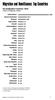 Migration and Remittances: Top Countries Top Immigration Countries a, 010 number of immigrants, millions United States b Russian Federation b Germany b Saudi Arabia b Canada b United Kingdom b Spain b
How many students study abroad and where do they go?
 From: Education at a Glance 2012 Highlights Access the complete publication at: http://dx.doi.org/10.1787/eag_highlights-2012-en How many students study abroad and where do they go? Please cite this chapter
2015 Country RepTrak The World s Most Reputable Countries
 2015 Country RepTrak The World s Most Reputable Countries July 2015 The World s View on Countries: An Online Study of the Reputation of 55 Countries RepTrak is a registered trademark of Reputation Institute.
International Education in the Comox Valley: Current and Potential Economic Impacts
 International Education in the Comox Valley: Current and Potential Economic Impacts FINAL REPORT March 2012 Prepared by: Vann Struth Consulting Group Inc. Vancouver, BC www.vannstruth.com Prepared for:
Bangladesh Visa fees for foreign nationals
 Bangladesh Visa fees for foreign nationals No. All fees in US $ 1. Afghanistan 5.00 5.00 10.00 2. Albania 2.00 2.00 3.00 3. Algeria 1.00 1.00 2.00 4. Angola 11.00 11.00 22.00 5. Argentina 21.00 21.00 42.00
Carnegie Mellon University Office of International Education Admissions Statistics for Summer and Fall 2013
 Carnegie Mellon University Admissions Statistics for and Fall 2013 New International Students and Fall 2012 Undergraduate 270 14.3% Master's 1301 68.7% Doctorate 192 10.1% Exchange 99 5.2% 31 1.6% Total
Population Aging in Developed Countries: Emerging Trends and Dynamics Wan He, Ph.D. Population Division U.S. Census Bureau
 Population Aging in Developed Countries: Emerging Trends and Dynamics Wan He, Ph.D. Population Division U.S. Census Bureau This presentation is released to inform interested parties of population aging
Chart 1: Zambia's Major Trading Partners (Exports + Imports) Q4 2008 - Q4 2009. Switzernd RSA Congo DR China UAE Kuwait UK Zimbabwe India Egypt Other
 Bank of Zambia us $ Million 1. INTRODUCTION This report shows Zambia s direction of merchandise trade for the fourth quarter of 2009 compared with the corresponding quarter in 2008. Revised 1 statistics,
Global Dynamism Index (GDI) 2013 summary report. Model developed by the Economist Intelligence Unit (EIU)
 Global Dynamism Index (GDI) 2013 summary report Model developed by the Economist Intelligence Unit (EIU) What is the Global Dynamism Index (GDI)? the GDI assesses the dynamism of 60 of the world's largest
United Nations INTRODUCTION. The World at Six Billion 1
 INTRODUCTION According to the latest United Nations population estimates, world population reaches the six billion mark on 12 October 1999, an historic milestone in the growth of world population. The
Open Doors 2013. Report on International Educational Exchange. Produced by the Institute of International Education. In partnership with the
 Open Doors 2013 Report on International Educational Exchange Produced by the Institute of International Education In partnership with the Bureau of Educational and Cultural Affairs U.S. Department of State
Appendix 1: Full Country Rankings
 Appendix 1: Full Country Rankings Below please find the complete rankings of all 75 markets considered in the analysis. Rankings are broken into overall rankings and subsector rankings. Overall Renewable
Consolidated International Banking Statistics in Japan
 Total (Transfer Consolidated cross-border claims in all currencies and local claims in non-local currencies Up to and including one year Maturities Over one year up to two years Over two years Public Sector
Cisco Global Cloud Index Supplement: Cloud Readiness Regional Details
 White Paper Cisco Global Cloud Index Supplement: Cloud Readiness Regional Details What You Will Learn The Cisco Global Cloud Index is an ongoing effort to forecast the growth of global data center and
2015 Growth in data center employment continues but the workforce is changing
 Published in Conjunction with MARKET BRIEFING GLOBAL DATA CENTER EMPLOYMENT 2015 2015 Growth in data center employment continues but the workforce is changing Globally, the number of people working in
Global Effective Tax Rates
 www.pwc.com/us/nes Global s Global s April 14, 2011 This document has been prepared pursuant to an engagement between PwC and its Client. As to all other parties, it is for general information purposes
Migration and mobility - A comparative perspective of Russia and Japan
 Migration and mobility - A comparative perspective of Russia and Japan Reiko Hayashi [email protected] National Institute of Population and Social Security Research, Japan < Draft Paper > I. Context
Open Doors 2015. Report on International Educational Exchange. Produced by the. Institute of International Education. In partnership with the
 Open Doors 2015 Report on International Educational Exchange Produced by the Institute of International Education In partnership with the Bureau of Educational and Cultural Affairs U.S. Department of State
International Higher Education in Facts and Figures. Autumn 2013
 International Higher Education in Facts and Figures Autumn 2013 UK Higher Education International Unit International higher education in facts and figures covers the majority of the UK higher education
Dividends Tax: Summary of withholding tax rates per South African Double Taxation Agreements currently in force Version: 2 Updated: 2012-05-22
 Dividends Tax: Summary of withholding tax rates per South African Double Taxation Agreements currently in force Version: 2 Updated: 2012-05-22 Note: A summary of the rates and the relevant provisions relating
89% 96% 94% 100% 54% Williams 93% financial aid at Williams. completion statistics $44,753 76% class of 2013 average four-year debt: $12,749
 financial aid at Average - $, financial aid is comprehensive, covering books, health insurance, study abroad costs, travel, and personal expenses % % % % cost met by average % of with demonstrated need
World Consumer Income and Expenditure Patterns
 World Consumer Income and Expenditure Patterns 2014 14th edi tion Euromonitor International Ltd. 60-61 Britton Street, EC1M 5UX TableTypeID: 30010; ITtableID: 22914 Income Algeria Income Algeria Income
Mineral Industry Surveys
 4 Mineral Industry Surveys For information contact: Robert L. Virta, Asbestos Commodity Specialist U.S. Geological Survey 989 National Center Reston, VA 20192 Telephone: 703-648-7726, Fax: (703) 648-7757
The Role of Banks in Global Mergers and Acquisitions by James R. Barth, Triphon Phumiwasana, and Keven Yost *
 The Role of Banks in Global Mergers and Acquisitions by James R. Barth, Triphon Phumiwasana, and Keven Yost * There has been substantial consolidation among firms in many industries in countries around
BT Premium Event Call and Web Rate Card
 BT Managed Event and BT Self-Managed Event (also referred to as Express, Plus and Premium) Conference Bridge and Call for Booked Audio Conferencing Services will comprise the following for each phone-conference:
Hotel Establishment Statistics
 Hotel Establishment Statistics Monthly report December & Full Year 49% 15% 7% Page 1 of 18 Executive Summary December December showed an increase of 25% in guest arrivals when compared to last year, with
Sulfuric Acid 2013 World Market Outlook and Forecast up to 2017
 Brochure More information from http://www.researchandmarkets.com/reports/2547547/ Sulfuric Acid 2013 World Market Outlook and Forecast up to 2017 Description: Sulfuric Acid 2013 World Market Outlook and
Economic and Social Council
 United Nations Economic and Social Council Distr.: General 27 February 2014 ECE/CES/2014/43 Original: English Economic Commission for Europe Conference of European Statisticians Sixty-second plenary session
I. World trade developments
 I. World trade developments World merchandise exports grew by 2 per cent in value terms in 2013 while exports of commercial services increased by per cent. Key developments in 2013: a snapshot Trade data
CMMI for SCAMPI SM Class A Appraisal Results 2011 End-Year Update
 CMMI for SCAMPI SM Class A 2011 End-Year Update Software Engineering Institute Carnegie Mellon University Pittsburgh, PA 15213 1 Outline Introduction Current Status Community Trends Organizational Trends
Carnegie Mellon University Office of International Education Admissions Statistics for Summer and Fall 2010
 Carnegie Mellon University Admissions Statistics for and Fall 2010 New International Students and Fall 2010 Undergraduate 208 16.1% Master's 799 61.7% Doctorate 177 13.7% Exchange 80 6.2% 31 2.4% Total
Global growth rates Macroeconomic indicators CEDIGAZ Reference Scenario
 Medium and Long Term Natural Gas Outlook CEDIGAZ February 215 Global growth rates Macroeconomic indicators CEDIGAZ Reference Scenario 4 3 %/year 199-213 213-235 6 Main consuming markets - %/year (213-235)
Brain Drain and Brain Gain: Selected Country Experiences and Responses
 Brain Drain and Brain Gain: Selected Country Experiences and Responses Manuel M. Dayrit MD, MSc Dean, Ateneo School of Medicine and Public Health Manila, Philippines [email protected] Australia,
Myanmar, Shan State. Opium farmers who sell raw opium paste in rural markets are paid in obsolete Indian rupee coins. Farmers use these coins to buy
 Key financial data Myanmar, Shan State. Opium farmers who sell raw opium paste in rural markets are paid in obsolete Indian rupee coins. Farmers use these coins to buy food within the same market Photo:
Development aid in 2015 continues to grow despite costs for in-donor refugees
 OECD Paris, 13 April 2016 Development aid in 2015 continues to grow despite costs for in-donor refugees 2015 Preliminary ODA Figures In 2015, net official development assistance (ODA) flows from member
HAS BRAZIL REALLY TAKEN OFF? BRAZIL LONG-RUN ECONOMIC GROWTH AND CONVERGENCE
 HAS BRAZIL REALLY TAKEN OFF? BRAZIL LONG-RUN ECONOMIC GROWTH AND CONVERGENCE COUNTRY PROFILE: A COUNTRY IN TRANSFORMATION POLICY RECOMENDATIONS COUNTRY PROFILE Brazilian Equivalent Population in The World
Foreign Taxes Paid and Foreign Source Income INTECH Global Income Managed Volatility Fund
 Income INTECH Global Income Managed Volatility Fund Australia 0.0066 0.0375 Austria 0.0045 0.0014 Belgium 0.0461 0.0138 Bermuda 0.0000 0.0059 Canada 0.0919 0.0275 Cayman Islands 0.0000 0.0044 China 0.0000
Senate Committee: Education and Employment. QUESTION ON NOTICE Budget Estimates 2015-2016
 Senate Committee: Education and Employment QUESTION ON NOTICE Budget Estimates 2015-2016 Outcome: Higher Education Research and International Department of Education and Training Question No. SQ15-000549
Asylum Levels and Trends in Industrialized Countries 2010
 Asylum Levels and Trends in Industrialized Countries 2010 Statistical overview of asylum applications lodged in Europe and selected non-european countries Division of Programme Support and Management 28
Global AML Resource Map Over 2000 AML professionals
 www.pwc.co.uk Global AML Resource Map Over 2000 AML professionals January 2016 Global AML Resources: Europe France Italy Jersey / Guernsey 8 Ireland 1 Portugal 7 Luxembourg 5 United Kingdom 1 50 11 Spain
Overview. Main Findings
 This Report reflects the latest trends observed in the data published in June. Remittance Prices Worldwide is available at http://remittanceprices.worldbank.org Overview The Remittance Prices Worldwide*
THE DEMOGRAPHY OF POPULATION AGEING
 THE DEMOGRAPHY OF POPULATION AGEING Barry Mirkin and Mary Beth Weinberger* An inevitable consequence of the demographic transition and the shift to lower fertility and mortality has been the evolution
Proforma Cost for international UN Volunteers for UN Partner Agencies for 2016. International UN Volunteers (12 months)
 Proforma Cost for international UN Volunteers for UN Partner Agencies for 2016 Country Of Assignment International UN Volunteers (12 months) International UN Youth Volunteers (12 months) University Volunteers
Metropolitan Locations in International High-Tech Networks
 Metropolitan Locations in International High-Tech Networks Collaboration and Exchange of Creative Labour as a Basis for Advanced Socio-Economic Development 1 Contents 1. Localisation and Networking in
Open Doors 2011 Report on International Educational Exchange
 Open Doors 2011 Report on International Educational Exchange Produced by the Institute of International Education with support from the Bureau of Educational and Cultural Affairs of the U.S. Department
Carnegie Mellon University Office of International Education Admissions Statistics for Summer and Fall 2015
 Carnegie Mellon University Admissions Statistics for and Fall 2015 New International Students and Fall 2015 Undergraduate 344 15.2% Master's 1599 70.6% Doctorate 167 7.4% Exchange 73 3.2% 81 3.6% Total
Burning Dollars Top Five Trends in US Telecom Spend
 white paper Burning Dollars Top Five Trends in US Telecom Spend Telecom costs are among the largest operating expenses for organizations worldwide. Yet, they re often the most inconsistently managed. So
Ageing OECD Societies
 ISBN 978-92-64-04661-0 Trends Shaping Education OECD 2008 Chapter 1 Ageing OECD Societies FEWER CHILDREN LIVING LONGER CHANGING AGE STRUCTURES The notion of ageing societies covers a major set of trends
Chapter 4A: World Opinion on Terrorism
 1 Pew Global Attitudes Project, Spring 2007 Now I m going to read you a list of things that may be problems in our country. As I read each one, please tell me if you think it is a very big problem, a moderately
41 T Korea, Rep. 52.3. 42 T Netherlands 51.4. 43 T Japan 51.1. 44 E Bulgaria 51.1. 45 T Argentina 50.8. 46 T Czech Republic 50.4. 47 T Greece 50.
 Overall Results Climate Change Performance Index 2012 Table 1 Rank Country Score** Partial Score Tendency Trend Level Policy 1* Rank Country Score** Partial Score Tendency Trend Level Policy 21 - Egypt***
Emerging Trends in Migration: Insights From Gallup. For the CSD of the Global Forum on Migration and Development Athens, November 2, 2009
 Emerging Trends in Migration: Insights From Gallup For the CSD of the Global Forum on Migration and Development Athens, November 2, 2009 In today s global environment, leaders need easy access to timely,
GLOBAL TRENDS IN HIGHER EDUCATION. David Stockley
 GLOBAL TRENDS IN HIGHER EDUCATION David Stockley Beijing May 2011 KEY TRENDS 1. Changing gglobal demographics 2. Increasing global student mobility 3. Higher education as a global market 4. Declining public
Long-term macroeconomic forecasts Key trends to 2050
 A special report from The Economist Intelligence Unit www.eiu.com Contents Overview 2 Top ten economies in 5 at market exchange rates 3 The rise of Asia continues 4 Global dominance of the top three economies
Abortion Policies and Reproductive Health around the World United Nations
 Abortion Policies and Reproductive Health around the World United Nations Department of Economic and Social Affairs Population Division DESA The Department of Economic and Social Affairs of the United
Progress and prospects
 Ending CHILD MARRIAGE Progress and prospects UNICEF/BANA213-182/Kiron The current situation Worldwide, more than 7 million women alive today were married before their 18th birthday. More than one in three
A Region by Any Other Name...
 A Region by Any Other Name.... Janet Hall Bethany Public Schools, Bethany, Oklahoma [email protected] OVERVIEW: It is often true that a place may be categorized as belonging to more than one region,
Global Media Report. Global Industry Overview
 Global Media Report 203 Global Industry Overview McKinsey & Company Global Media Report 203 McKinsey & Company s Global Media and Entertainment Practice Never before has an integrated view across the media
Brochure More information from http://www.researchandmarkets.com/reports/1339929/
 Brochure More information from http://www.researchandmarkets.com/reports/1339929/ The 2011 World Forecasts of Machine Tools That Remove Material by Laser or Light, Photon, Ultrasonic, Electro-Discharge,
DSV Air & Sea, Inc. Aerospace Sector. DSV Air & Sea, Inc. Aerospace
 DSV Air & Sea, Inc. Aerospace Sector DSV Air & Sea, Inc. Aerospace Introduction to DSV DSV is a global supplier of transport and logistics services. We have offices in more than 70 countries and an international
Chinese students and the higher education market in Australia and New Zealand.
 Chinese students and the higher education market in Australia and New Zealand. by Ma Xiaoying English Department North China Electric University, Beijing, China and Malcolm Abbott Centre for Research in
Student visa and temporary graduate visa programme trends
 Student visa and temporary graduate visa programme trends 2008-09 to 2014-15 This page is left blank intentionally. Table of Contents Page About this report 1 Enquiries 1 Definition of terms 2 Background
Monthly Report on Asylum Applications in The Netherlands and Europe
 Asylum Trends Monthly Report on Asylum Applications in The Netherlands and Europe November 2013 2014 November 2014 Colophon Title Subtitle Author Asylum Trends Monthly Report on Asylum Applications in
WORLD. Geographic Trend Report for GMAT Examinees
 2011 WORLD Geographic Trend Report for GMAT Examinees WORLD Geographic Trend Report for GMAT Examinees The World Geographic Trend Report for GMAT Examinees identifies mobility trends among GMAT examinees
TRENDS IN INTERNATIONAL MIGRANT STOCK: THE 2013 REVISION - MIGRANTS BY AGE AND SEX
 E c o n o m i c & S o c i a l A f f a i r s TRENDS IN INTERNATIONAL MIGRANT STOCK: THE 2013 REVISION - MIGRANTS BY AGE AND SEX CD-ROM DOCUMENTATION United Nations POP/DB/MIG/Stock/Rev.2013/Age December
EMEA BENEFITS BENCHMARKING OFFERING
 EMEA BENEFITS BENCHMARKING OFFERING COVERED COUNTRIES SWEDEN FINLAND NORWAY ESTONIA R U S S I A DENMARK LITHUANIA LATVIA IRELAND PORTUGAL U. K. NETHERLANDS POLAND BELARUS GERMANY BELGIUM CZECH REP. UKRAINE
U.S. Trade Overview, 2013
 U.S. Trade Overview, 213 Stephanie Han & Natalie Soroka Trade and Economic Analysis Industry and Analysis Department of Commerce International Trade Administration October 214 Trade: A Vital Part of the
AACSB International Accreditation and Joint Programs
 AACSB International Accreditation and Joint Programs Lucienne Mochel Assistant Vice President for Accreditation Services The AACSB Mission To advance quality management education worldwide through accreditation
Trends in International Education
 Trends in International Education 1 Presentation Objectives 1. International landscape the competitive environment for recruitment of international students 2. Key statistics 3. Key trends 4. Observations/Conclusions
Emerging Markets Value Stock Fund
 SUMMARY PROSPECTUS PRIJX March 1, 2016 T. Rowe Price Emerging Markets Value Stock Fund A fund seeking long-term growth of capital through investments in undervalued stocks of companies in emerging market
Herrengasse 7 I A-1010 Vienna I Austria I www.bmi.gv.at I [email protected]
 D e m o g r a p h y & M i g r a t i o n 2 0 1 5 Imprint Published by Mathias Vogl I Austrian Federal Ministry of the Interior Peter Webinger I Austrian Federal Ministry of the Interior Herrengasse 7 I
Population Change and Public Health Exercise 1A
 Population Change and Public Health Exercise 1A 1. What is not true of demographic transition in European countries A. The pre-transition fertility and mortality rates were as high as seen in developing
FOREIGN. RECOGNITION Occupation-specific approaches -physicians. M. Ian Bowmer Executive Director [email protected]
 FOREIGN QUALIFICATION RECOGNITION Occupation-specific approaches -physicians M. Ian Bowmer Executive Director [email protected] Medical Council of Canada was founded in 1912 by act of parliament Licentiate
GLOBAL. 2014 Country Well-Being Rankings. D Social (% thriving) E Financial (% thriving) F Community (% thriving) G Physical (% thriving)
 0 0 GLOBAL 0 Country Rankings 0 0 0 0 0 0 0 0 0 0 0 0 0 0 0 0 0 : >0.0% 0.% 0.0% 0.% 0.0% 0.% 0.0% 0.0% A Country s global rank B in three or more elements of well-being C (% thriving) D (% thriving) E
Unsafe abortion incidence and mortality
 Information sheet Information sheet Unsafe abortion incidence and mortality Global and regional levels in 08 and trends during 990 08 Unsafe abortion is defined by the World Health Organization (WHO) as
BIOMETRIC RESIDENCE PERMIT (BRP) OVERSEAS APPLICANT PROJECT FAQ
 BIOMETRIC RESIDENCE PERMIT (BRP) OVERSEAS APPLICANT PROJECT FAQ Why are you changing the visa process for overseas customers? BRPs provide a more secure, streamlined and faster method for applicants, businesses
Overview. Main Findings
 This Report reflects the latest trends observed in the data published in March 2014. Remittance Prices Worldwide is available at http://remittanceprices.worldbank.org Overview The Remittance Prices Worldwide*
OCTOBER 2010. Russell-Parametric Cross-Sectional Volatility (CrossVol ) Indexes Construction and Methodology
 OCTOBER 2010 Russell-Parametric Cross-Sectional Volatility (CrossVol ) Indexes Construction and Methodology SEPTEMBER 2010 Russell-Parametric Cross-Sectional Volatility (CrossVol) Indexes Construction
The Doing Business report presents
 Doing Business 2016 Distance to frontier and ease of doing business ranking The Doing Business report presents results for two aggregate measures: the distance to frontier score and the ease of doing business