
Briefing note for countries on the 2015 Human Development Report. Mozambique
|
|
|
- Philip Nash
- 9 years ago
- Views:
Transcription
1 Human Development Report 2015 Work for human development Briefing note for countries on the 2015 Human Development Report Mozambique Introduction The 2015 Human Development Report (HDR) Work for Human Development examines the intrinsic relationship between work and human development. Work, which is a broader concept than jobs or employment, can be a means of contributing to the public good, reducing inequality, securing livelihoods and empowering individuals. Work allows people to participate in the society and provides them a sense of dignity and worth. In addition, work that involves caring for others or voluntarism builds social cohesion and strengthens bonds within families and communities. These are all essential aspects of human development. But a positive link between work and human development is not automatic. The link can be broken in cases of exploitative and hazardous conditions, where labour rights are not guaranteed or protected, where social protection measures are not in place, and when unequal opportunities and work related discrimination increase and perpetuate socioeconomic inequality. Work can enhance human development when policies are taken to expand productive, remunerative and satisfying work opportunities; enhance workers skills and potentials; and ensure their rights, safety, and wellbeing. Measuring aspects of work, both positive and negative, can help shape policy agendas and track progress toward human development enhancing work. But many countries are missing international data at the country level on key indicators including child labour, forced labour, unpaid care work, time use, labour regulations, and social protection. This limits the ability of countries to monitor progress on these fronts. This briefing note is organized into seven sections. The first section presents information on the country coverage and methodology of the Statistical Annex of the 2015 HDR. The next five sections provide information about key indicators of human development including the Human Development Index (HDI), the Inequality-adjusted Human Development Index (IHDI), the Gender Development Index (GDI), the Gender Inequality Index (GII), and the Multidimensional Poverty Index (MPI). The final section presents a selection of additional indicators related to the topic of work. It is important to note that national and international data can differ because international agencies standardize national data to allow comparability across countries and in some cases may not have access to the most recent national data. We encourage national partners to explore the issues raised in the HDR with the most relevant and appropriate data from national and international sources. Country coverage and the methodology of the Statistical Annex of the 2015 HDR The Statistical Annex of the 2015 HDR presents the 2014 HDI (values and ranks) for 188 countries and UN-recognized territories, along with the IHDI for 151 countries, the GDI for 161 countries, the GII for 155 countries, and the MPI for 101 countries. Country rankings and values of the annual Human Development Index (HDI) are kept under strict embargo until the global launch and worldwide electronic release of the HDR. 1

2 It is misleading to compare values and rankings with those of previously published reports, because of revisions and updates of the underlying data and adjustments to goalposts. Readers are advised to assess progress in HDI values by referring to table 2 ( Human Development Index Trends ) in the Statistical Annex of the report. Table 2 is based on consistent indicators, methodology and time-series data and thus shows real changes in values and ranks over time, reflecting the actual progress countries have made. Small changes in values should be interpreted with caution as they may not be statistically significant due to sampling variation. Generally speaking, changes at the level of the third decimal place in any of the composite indices are considered insignificant. Unless otherwise specified in the source, tables use data available to the Human Development Report Office (HDRO) as of 15 April All indices and indicators, along with technical notes on the calculation of composite indices, and additional source information are available online at For further details on how each index is calculated please refer to Technical Notes 1-5 and the associated background papers available on the Human Development Report website: Human Development Index (HDI) The HDI is a summary measure for assessing long-term progress in three basic dimensions of human development: a long and healthy life, access to knowledge and a decent standard of living. A long and healthy life is measured by life expectancy. Knowledge level is measured by mean years of education among the adult population, which is the average number of years of education received in a life-time by people aged 25 years and older; and access to learning and knowledge by expected years of schooling for children of school-entry age, which is the total number of years of schooling a child of school-entry age can expect to receive if prevailing patterns of age-specific enrolment rates stay the same throughout the child's life. Standard of living is measured by Gross National Income (GNI) per capita expressed in constant 2011 international dollars converted using purchasing power parity (PPP) rates. To ensure as much cross-country comparability as possible, the HDI is based primarily on international data from the United Nations Population Division (the life expectancy data), the United Nations Educational, Scientific and Cultural Organization Institute for Statistics (the mean years of schooling and expected years of schooling data) and the World Bank (the GNI per capita data). As stated in the introduction, the HDI values and ranks in this year s report are not comparable to those in past reports (including the 2014 HDR) because of a number of revisions to the component indicators. To allow for assessment of progress in HDIs, the 2015 report includes recalculated HDIs from 1990 to 2014 using consistent series of data. Mozambique s HDI value and rank Mozambique s HDI value for 2014 is which put the country in the low human development category positioning it at 180 out of 188 countries and territories. Between 1980 and 2014, Mozambique s HDI value increased from to 0.416, an increase of 75.0 percent or an average annual increase of about 1.66 percent. Table A reviews Mozambique s progress in each of the HDI indicators. Between 1980 and 2014, Mozambique s life expectancy at birth increased by 13.2 years, mean years of schooling increased by 2.5 years and expected years of schooling increased by 4.5 years. Mozambique s GNI per capita increased by about percent between 1980 and

3 Table A: Mozambique s HDI trends based on consistent time series data and new goalposts Life expectancy Expected years Mean years of GNI per capita at birth of schooling schooling (2011 PPP$) HDI value , , , Figure 1 below shows the contribution of each component index to Mozambique s HDI since Figure 1: Trends in Mozambique s HDI component indices Assessing progress relative to other countries Long-term progress can usefully be compared to other countries. For instance, during the period between 1980 and 2014 Mozambique, Burundi and Sierra Leone experienced different degrees of progress toward increasing their HDIs (see figure 2). 3

4 Figure 2: HDI trends for Mozambique, Burundi and Sierra Leone, Mozambique s 2014 HDI of is below the average of for countries in the low human development group and below the average of for countries in Sub-Saharan Africa. From Sub-Saharan Africa, countries which are close to Mozambique in 2014 HDI rank and to some extent in population size are Côte d'ivoire and Congo (Democratic Republic of the), which have HDIs ranked 172 and 176 respectively (see table B). Table B: Mozambique s HDI indicators for 2014 relative to selected countries and groups Life Expected Mean years HDI value HDI rank expectancy years of of schooling at birth schooling GNI per capita (PPP US$) Mozambique ,123 Côte d'ivoire ,171 Congo (Democratic Republic of the) Sub-Saharan Africa ,363 Low HDI ,085 Inequality-adjusted HDI (IHDI) The HDI is an average measure of basic human development achievements in a country. Like all averages, the HDI masks inequality in the distribution of human development across the population at the country level. The 2010 HDR introduced the IHDI, which takes into account inequality in all three dimensions of the HDI by discounting each dimension s average value according to its level of inequality. The IHDI is basically the HDI discounted for inequalities. The loss in human development due to inequality is given by the difference between the HDI and the IHDI, and can be expressed as a percentage. As the inequality in a country increases, the loss in human development also increases. We also present the coefficient of human inequality as a direct measure of inequality which is an unweighted average of inequalities in three dimensions. For more details see Technical Note 2. 4

5 Mozambique s HDI for 2014 is However, when the value is discounted for inequality, the HDI falls to 0.273, a loss of 34.3 percent due to inequality in the distribution of the HDI dimension indices. Côte d'ivoire and Congo (Democratic Republic of the) show losses due to inequality of 38.0 percent and 36.2 percent respectively. The average loss due to inequality for low HDI countries is 32.0 percent and for Sub-Saharan Africa it is 33.3 percent. The Human inequality coefficient for Mozambique is equal to 34.1 percent. Table C: Mozambique s IHDI for 2014 relative to selected countries and groups Human Inequality in life IHDI Overall inequality expectancy at value loss (%) coefficient (%) birth (%) Inequality in education (%) Inequality in income (%) Mozambique Côte d'ivoire Congo (Democratic Republic of the) Sub-Saharan Africa Low HDI Gender Development Index (GDI) In the 2014 HDR, HDRO introduced a new measure, the GDI, based on the sex-disaggregated Human Development Index, defined as a ratio of the female to the male HDI. The GDI measures gender inequalities in achievement in three basic dimensions of human development: health (measured by female and male life expectancy at birth), education (measured by female and male expected years of schooling for children and mean years for adults aged 25 years and older); and command over economic resources (measured by female and male estimated GNI per capita). For details on how the index is constructed refer to Technical Note 3. Country groups are based on absolute deviation from gender parity in HDI. This means that the grouping takes into consideration inequality in favour of men or women equally. The GDI is calculated for 161 countries. The 2014 female HDI value for Mozambique is in contrast with for males, resulting in a GDI value of In comparison, GDI values for Côte d'ivoire and Congo (Democratic Republic of the) are and respectively (see Table D). Table D: Mozambique s GDI value and its components relative to selected countries and groups Life expectancy Expected years Mean years of GNI per capita HDI values at birth of schooling schooling Female Male Female Male Female Male Female Male Female Male F-M ratio GDI value Mozambique ,040 1, Côte d'ivoire ,146 4, Congo (Democratic Republic of the) ,597 0, Sub-Saharan Africa ,626 4, Low HDI ,983 4, Gender Inequality Index (GII) The 2010 HDR introduced the GII, which reflects gender-based inequalities in three dimensions reproductive health, empowerment, and economic activity. Reproductive health is measured by maternal mortality and adolescent birth rates; empowerment is measured by the share of parliamentary seats held by women and attainment in secondary and higher education by each gender; and economic activity is 5

6 measured by the labour market participation rate for women and men. The GII can be interpreted as the loss in human development due to inequality between female and male achievements in the three GII dimensions. For more details on GII please see Technical Note 4. Mozambique has a GII value of 0.591, ranking it 135 out of 155 countries in the 2014 index. In Mozambique, 39.6 percent of parliamentary seats are held by women, and 1.4 percent of adult women have reached at least a secondary level of education compared to 6.2 percent of their male counterparts. For every 100,000 live births, 480 women die from pregnancy related causes; and the adolescent birth rate is births per 1,000 women of ages Female participation in the labour market is 85.5 percent compared to 82.8 for men. In comparison, Côte d'ivoire and Congo (Democratic Republic of the) are ranked at 151 and 149 respectively on this index. Table E: Mozambique s GII for 2014 relative to selected countries and groups Female Population with at Maternal GII GII Adolescent seats in least some mortality value Rank birth rate parliament secondary ratio (%) education (%) Labour force participation rate (%) Female Male Female Male Mozambique Côte d'ivoire Congo (Democratic Republic of the) Sub-Saharan Africa Low HDI Maternal mortality ratio is expressed in number of deaths per 100,000 live births and adolescent birth rate is expressed in number of births per 1,000 women ages Multidimensional Poverty Index (MPI) The 2010 HDR introduced the MPI, which identifies multiple deprivations in the same households in education, health and living standards. The education and health dimensions are each based on two indicators, while the standard of living dimension is based on six indicators. All of the indicators needed to construct the MPI for a household are taken from the same household survey. The indicators are weighted to create a deprivation score, and the deprivation scores are computed for each household in the survey. A deprivation score of 33.3 percent (one-third of the weighted indicators), is used to distinguish between the poor and nonpoor. If the household deprivation score is 33.3 percent or greater, the household (and everyone in it) is classified as multidimensionally poor. Households with a deprivation score greater than or equal to 20 percent but less than 33.3 percent are near multidimensional poverty. Finally, households with a deprivation score greater than or equal to 50 percent live in severe multidimensional poverty. Definitions of deprivations in each dimension, as well as methodology of the MPI are given in Technical Note 5. The most recent survey data that were publically available for Mozambique s MPI estimation refer to In Mozambique 70.2 percent of the population (17,246 thousand people) are multidimensionally poor while an additional 14.8 percent live near multidimensional poverty (3,641 thousand people). The breadth of deprivation (intensity) in Mozambique, which is the average of deprivation scores experienced by people in multidimensional poverty, is 55.6 percent. The MPI, which is the share of the population that is multidimensionally poor, adjusted by the intensity of the deprivations, is Côte d'ivoire and Congo (Democratic Republic of the) have MPIs of and respectively. Table F compares income poverty, measured by the percentage of the population living below PPP US$1.25 per day, and multidimensional poverty. It shows that income poverty only tells part of the story. The multidimensional poverty headcount is 9.5 percentage points higher than income poverty. This implies 6

7 that individuals living above the income poverty line may still suffer deprivations in education, health and other living conditions. Table F also shows the percentage of Mozambique s population that lives near multidimensional poverty and that lives in severe multidimensional poverty. The contributions of deprivations in each dimension to overall poverty complete a comprehensive picture of people living in multidimensional poverty in Mozambique. Figures for Côte d'ivoire and Congo (Democratic Republic of the) are also shown in the table for comparison. Table F: The most recent MPI for Mozambique relative to selected countries Survey year MPI value Headcount (%) Intensity of deprivations (%) Near poverty Population share (%) In severe poverty Below income poverty line Contribution to overall poverty of deprivations in (%) Health Education Living Standards Mozambique Côte d'ivoire 2011/ Congo (Democratic Republic of the) 2013/ Work Indicators Table G collates the work related indicators that are available for Mozambique from the HDR 2015 Statistical Annex. The data provide a partial picture of the conditions surrounding work in the country and the areas that may benefit from policy attention. Note that not all indicators have sufficient country coverage for aggregate estimation. 7

8 Table G: Additional indicators related to work for Mozambique Mozambique Low HDI Developing countries Sub- Saharan Africa Employment to population ratio (% ages 15 and older) Labour force participation rate (% ages 15 and older) Female Male Share of employment in agriculture (% of total employment) Share of employment in services (% of total employment) Labour force with tertiary education (%) Vulnerable employment (% of total employment) Total unemployment (% of labour force) Long term unemployment (% of labour force) Youth unemployment (% of youth labour force) Youth not in school or employment (% ages 15-24) Labour productivity: output per worker (2011 PPP $) Child labour (% ages 5-14 years) Domestic workers (% of total employment) Female Male Working poor, PPP $2 per day (% of total employment) Unemployment benefits recipients (% of unemployed ages 15-64) Mandatory paid maternity leave (days) Old age pension recipients (% of statutory pension age population) Internet users (% of population) Mobile phone subscribers (per 100 people)

Sierra Leone. Country coverage and the methodology of the Statistical Annex of the 2015 HDR
 Human Development Report 2015 Work for human development Briefing note for countries on the 2015 Human Development Report Sierra Leone Introduction The 2015 Human Development Report (HDR) Work for Human
Congo (Democratic Republic of the)
 Human Development Report 2015 Work for human development Briefing note for countries on the 2015 Human Development Report Congo (Democratic Republic of the) Introduction The 2015 Human Development Report
Briefing note for countries on the 2015 Human Development Report. Burkina Faso
 Human Development Report 2015 Work for human development Briefing note for countries on the 2015 Human Development Report Burkina Faso Introduction The 2015 Human Development Report (HDR) Work for Human
Tanzania (United Republic of)
 Human Development Report 2015 Work for human development Briefing note for countries on the 2015 Human Development Report Tanzania (United Introduction The 2015 Human Development Report (HDR) Work for
Briefing note for countries on the 2015 Human Development Report. Niger
 Human Development Report 2015 Work for human development Briefing note for countries on the 2015 Human Development Report Niger Introduction The 2015 Human Development Report (HDR) Work for Human Development
Malawi. Country coverage and the methodology of the Statistical Annex of the 2015 HDR
 Human Development Report 2015 Work for human development Briefing note for countries on the 2015 Human Development Report Malawi Introduction The 2015 Human Development Report (HDR) Work for Human Development
Nepal. Country coverage and the methodology of the Statistical Annex of the 2015 HDR
 Human Development Report 2015 Work for human development Briefing note for countries on the 2015 Human Development Report Nepal Introduction The 2015 Human Development Report (HDR) Work for Human Development
Briefing note for countries on the 2015 Human Development Report. Philippines
 Human Development Report 2015 Work for human development Briefing note for countries on the 2015 Human Development Report Philippines Introduction The 2015 Human Development Report (HDR) Work for Human
Madagascar. Country coverage and the methodology of the Statistical Annex of the 2015 HDR
 Human Development Report 2015 Work for human development Briefing note for countries on the 2015 Human Development Report Madagascar Introduction The 2015 Human Development Report (HDR) Work for Human
Thailand. Country coverage and the methodology of the Statistical Annex of the 2015 HDR
 Human Development Report 2015 Work for human development Briefing note for countries on the 2015 Human Development Report Thailand Introduction The 2015 Human Development Report (HDR) Work for Human Development
Russian Federation. Country coverage and the methodology of the Statistical Annex of the 2015 HDR
 Human Development Report 2015 Work for human development Briefing note for countries on the 2015 Human Development Report Russian Federation Introduction The 2015 Human Development Report (HDR) Work for
Briefing note for countries on the 2015 Human Development Report. Palestine, State of
 Human Development Report 2015 Work for human development Briefing note for countries on the 2015 Human Development Report Palestine, State of Introduction The 2015 Human Development Report (HDR) Work for
United Kingdom. Country coverage and the methodology of the Statistical Annex of the 2015 HDR
 Human Development Report 2015 Work for human development Briefing note for countries on the 2015 Human Development Report United Kingdom Introduction The 2015 Human Development Report (HDR) Work for Human
El Salvador. Country coverage and the methodology of the Statistical Annex of the 2015 HDR
 Human Development Report 2015 Work for human development Briefing note for countries on the 2015 Human Development Report El Salvador Introduction The 2015 Human Development Report (HDR) Work for Human
India. Country coverage and the methodology of the Statistical Annex of the 2015 HDR
 Human Development Report 2015 Work for human development Briefing note for countries on the 2015 Human Development Report India Introduction The 2015 Human Development Report (HDR) Work for Human Development
Human Development Index (HDI)
 Human Development Report 2015 Work for human development Briefing note for countries on the 2015 Human Development Report Iraq Introduction The 2015 Human Development Report (HDR) Work for Human Development
Bolivia (Plurinational State of)
 Human Development Report 2015 Work for human development Briefing note for countries on the 2015 Human Development Report Bolivia (Plurinational Introduction The 2015 Human Development Report (HDR) Work
Explanatory note on the 2014 Human Development Report composite indices. United Kingdom
 Human Development Report 2014 Sustaining Human Progress: Reducing Vulnerabilities and Building Resilience Explanatory note on the 2014 Human Development Report composite indices United Kingdom HDI values
Explanatory note on the 2014 Human Development Report composite indices. Togo. HDI values and rank changes in the 2014 Human Development Report
 Human Development Report 2014 Sustaining Human Progress: Reducing Vulnerabilities and Building Resilience Explanatory note on the 2014 Human Development Report composite indices Togo HDI values and rank
Explanatory note on the 2014 Human Development Report composite indices. Spain. HDI values and rank changes in the 2014 Human Development Report
 Human Development Report 2014 Sustaining Human Progress: Reducing Vulnerabilities and Building Resilience Explanatory note on the 2014 Human Development Report composite indices Spain HDI values and rank
Norway. HDI values and rank changes in the 2013 Human Development Report
 Human Development Report 2013 The Rise of the South: Human Progress in a Diverse World Explanatory note on 2013 HDR composite indices Norway HDI values and rank changes in the 2013 Human Development Report
United Kingdom. HDI values and rank changes in the 2013 Human Development Report
 Human Development Report 2013 The Rise of the South: Human Progress in a Diverse World Explanatory note on 2013 HDR composite indices United Kingdom HDI values and rank changes in the 2013 Human Development
Ethiopia. HDI values and rank changes in the 2013 Human Development Report
 Human Development Report 2013 The Rise of the South: Human Progress in a Diverse World Explanatory note on 2013 HDR composite indices Ethiopia HDI values and rank changes in the 2013 Human Development
Turkey. HDI values and rank changes in the 2013 Human Development Report
 Human Development Report 2013 The Rise of the South: Human Progress in a Diverse World Explanatory note on 2013 HDR composite indices Turkey HDI values and rank changes in the 2013 Human Development Report
Tunisia s HDI value and rank
 Human Development Report 2013 The Rise of the South: Human Progress in a Diverse World Explanatory note on 2013 HDR composite indices Tunisia HDI values and rank changes in the 2013 Human Development Report
Calculating the human development indices graphical presentation. Life expectancy at birth. Female. Knowledge. Mean years of schooling
 HUMAN DEVELOPMENT REPORT 015 Work for Human Development Technical notes Calculating the human development indices graphical presentation Human Development Index (HDI) DIMENSIONS Long and healthy life Knowledge
SOCIAL DEVELOPMENT. Social Development is equality of social opportunities - Amartya Sen, 1995
 SOCIAL DEVELOPMENT Social Development is the promotion of a sustainable society that is worthy of human dignity by empowering marginalised groups, women and men, to undertake their own development, to
Calculating the human development indices graphical presentation. Life expectancy at birth
 Technical notes Calculating the human development indices graphical presentation HUMAN DEVELOPMENT REPORT 014 Sustaining Human Progress Reducing Vulnerabilities and Building Resilience Human Development
12th EU-China Round Table. Report on Surpassing GDP: The New Version of Human Development Index
 European Economic and Social Committee Brussels, 8 October 2012 12th EU-China Round Table Report on Surpassing GDP: The New Version of Human Development Index Rapporteur: He Chuanqi, China Center for Modernization
Annex 8: SDG Indicator Mapping
 Annex 8 SDG Indicator Mapping 1. Annex 8 responds to Executive Board decision below, regarding the refinement of indicators and targets of the Strategic Plan Integrated Results and Resources Framework
Summary. Accessibility and utilisation of health services in Ghana 245
 Summary The thesis examines the factors that impact on access and utilisation of health services in Ghana. The utilisation behaviour of residents of a typical urban and a typical rural district are used
Investing in Gender Equality: Ending Violence against Women and Girls. Investing in Gender Equality: Ending Violence against Women and Girls
 Investing in Gender Equality: Ending Violence against Women and Girls Investing in Gender Equality: Ending Violence against Women and Girls Violence against women is a global pandemic: Between and 76 per
Education is the key to lasting development
 Education is the key to lasting development As world leaders prepare to meet in New York later this month to discuss progress on the Millennium Development Goals, UNESCO s Education for All Global Monitoring
How s Life in Ireland?
 October 2015 How s Life in Ireland? Additional information, including the data used in this country note, can be found at: www.oecd.org/statistics/hows-life-2015-country-notes-data.xlsx HOW S LIFE IN IRELAND
Goal 1: Eradicate extreme poverty and hunger. 1. Proportion of population below $1 (PPP) per day a
 Annex II Revised Millennium Development Goal monitoring framework, including new targets and indicators, as recommended by the Inter-Agency and Expert Group on Millennium Development Goal Indicators At
INDICATOR REGION WORLD
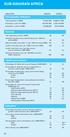 SUB-SAHARAN AFRICA INDICATOR REGION WORLD Demographic indicators Total population (2005) 713,457,000 6,449,371,000 Population under 18 (2005) 361,301,000 2,183,143,000 Population under 5 (2005) 119,555,000
Trinidad and Tobago Strategic Actions for Children and GOTT-UNICEF Work Plan 2013-2014 1
 Trinidad and Tobago Strategic Actions for Children and GOTT-UNICEF Work Plan 2013-2014 1 The Trinidad and Tobago Strategic Actions for Children and the Government of Trinidad and Tobago-UNICEF Work Plan
Gender Country Profile
 Gender Country Profile Maldives By Erin MacDonald and Rosanne Wong Edited by Dania Sheldon Contents General... 1 Health... 2 Education... 2 Economic Activity... 3 Decision-Making... 3 Human Rights... 3
How s Life in the United States?
 October 2015 How s Life in the United States? Additional information, including the data used in this country note, can be found at: www.oecd.org/statistics/hows-life-2015-country-notes-data.xlsx HOW S
G20 EMPLOYMENT WORKING GROUP COUNTRY SELF-REPORTING TEMPLATE ON IMPLEMENTATION OF G20 EMPLOYMENT PLANS
 G20 EMPLOYMENT WORKING GROUP COUNTRY SELF-REPORTING TEMPLATE ON IMPLEMENTATION OF G20 EMPLOYMENT PLANS Contents 1. Key economic and labour market indicators 2. Key policy indicators 3. Checklist of commitments
Population, Health, and Human Well-Being-- Benin
 Population, Health, and Human Well-Being-- Benin Demographic and Health Indicators Benin Sub- Saharan Africa World Total Population (in thousands of people) 1950 2,046 176,775 2,519,495 2002 6,629 683,782
GUIDE. MENA Gender Equality Profile Status of Girls and Women in the Middle East and North Africa
 GUIDE MENA Gender Equality Profile Status of Girls and Women in the Middle East and North Africa 1 IntroductIon The objective of the Middle East and North Africa (MENA) Gender Equality Profiles is to
INDICATOR REGION WORLD
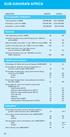 SUB-SAHARAN AFRICA INDICATOR REGION WORLD Demographic indicators Total population (2006) 748,886,000 6,577,236,000 Population under 18 (2006) 376,047,000 2,212,024,000 Population under 5 (2006) 125,254,000
LABOUR PRODUCTIVITY AND UNIT LABOUR COST Economic development Employment Core indicator
 LABOUR PRODUCTIVITY AND UNIT LABOUR COST Economic development Employment Core indicator 1. INDICATOR (a) Name: Labour productivity and unit labour costs. (b) Brief Definition: Labour productivity is defined
Therefore, AGE Platform Europe would be pleased if the Committee could take into account the following amendments.
 Suggestions for amending the Draft General Comment on the Right to just and favourable conditions of work (article 7 of the International Covenant on Economic, Social and Cultural Rights) (E/C.12/54/R.2)
It is important to understand child poverty as multidimensional. Income poverty in South Africa. Annie Leatt (Children s Institute)
 Income poverty in South Africa Annie Leatt (Children s Institute) It is important to understand child poverty as multidimensional and more than just a lack of income. Nevertheless, this essay specifically
CONCEPT NOTE. High-Level Thematic Debate
 CONCEPT NOTE High-Level Thematic Debate Advancing Gender Equality and Empowerment of Women and Girls for a Transformative Post-2015 Development Agenda 6 March 2015 Introduction The UN and the international
Capacity Statement Youth Enterprise and Vocational Training 1
 Capacity Statement Youth Enterprise and Vocational Training 1 Nearly 90% of today s youth, those aged 15 to 24, live in developing countries 2, and these youth represent more than 40% of the world s unemployed
How s Life in the United Kingdom?
 How s Life in the United Kingdom? May 2014 The OECD Better Life Initiative, launched in 2011, focuses on the aspects of life that matter to people and that shape their quality of life. The Initiative comprises
Fact Sheet: Youth and Education
 Fact Sheet: Youth and Education 11% of the world s youth (15-24 years old) are non-literate. Data from 2005-2008 indicates that in developing countries, the percentage of nonliterate youth is 13%, with
How s Life in Finland?
 October 2015 How s Life in Finland? Additional information, including the data used in this country note, can be found at: www.oecd.org/statistics/hows-life-2015-country-notes-data.xlsx HOW S LIFE IN FINLAND
Population, Health, and Human Well-Being-- Nigeria
 Population, Health, and Human Well-Being-- EarthTrends Country Profiles Demographic and Health Indicators Total Population (in thousands of people) 195 29,79 176,775 2,519,495 22 12,47 683,782 6,211,82
Girls education the facts
 Education for All Global Monitoring Report Fact Sheet October 2013 Girls education the facts Millions of girls around the world are still being denied an education PRIMARY SCHOOL: There are still 31 million
Population, Health, and Human Well-Being-- Kuwait
 Population, Health, and Human Well-Being-- EarthTrends Country Profiles Demographic and Health Indicators Total Population (in thousands of people) 195 152 111,647 2,519,495 22 2,23 423,296 6,211,82 225
Men in Charge? Gender Equality and Children s Rights in Contemporary Families
 International Day of Families 2015 Observance Men in Charge? Gender Equality and Children s Rights in Contemporary Families Background Note Gender equality and children s rights in family laws Fair legal
Gender inequality is not perpetuated exclusively through differential access to and control over material resources. Gender norms and stereotypes
 5 Gender inequality Gender inequality is not perpetuated exclusively through differential access to and control over material resources. Gender norms and stereotypes reinforce gendered identities and constrain
How s Life in Norway?
 How s Life in Norway? May 2014 The OECD Better Life Initiative, launched in 2011, focuses on the aspects of life that matter to people and that shape their quality of life. The Initiative comprises a set
Promoting Family Planning
 Promoting Family Planning INTRODUCTION Voluntary family planning has been widely adopted throughout the world. More than half of all couples in the developing world now use a modern method of contraception
Social protection and poverty reduction
 Social protection and poverty reduction Despite the positive economic growth path projected for Africa, the possibility of further global shocks coupled with persistent risks for households make proactive
SOCIAL PROTECTION LANDSCAPE IN GHANA. Lawrence Ofori-Addo Deputy Director, Department of Social Welfare LEAP Coordinator Ghana
 SOCIAL PROTECTION LANDSCAPE IN GHANA Lawrence Ofori-Addo Deputy Director, Department of Social Welfare LEAP Coordinator Ghana OUTLINE OF PRESENTATION BACKGROUND Poverty Trends in Ghana SOCIAL PROTECTION
49. INFANT MORTALITY RATE. Infant mortality rate is defined as the death of an infant before his or her first birthday.
 49. INFANT MORTALITY RATE Wing Tam (Alice) Jennifer Cheng Stat 157 course project More Risk in Everyday Life Risk Meter LIKELIHOOD of exposure to hazardous levels Low Medium High Consequences: Severity,
The Elderly in Africa: Issues and Policy Options. K. Subbarao
 The Elderly in Africa: Issues and Policy Options K. Subbarao The scene prior to 1990s The elderly were part of the extended family and as such enjoyed care and protection. The informal old age support
Research Report May 2016. Which Countries in Europe Have the Best Gender Equality in the Workplace?
 Research Report May 2016 Which Countries in Europe Have the Best Gender Equality in the Workplace? Foreword Despite improvements in gender equality in recent decades, much remains to be done. Around the
Executive summary. Global Wage Report 2014 / 15 Wages and income inequality
 Executive summary Global Wage Report 2014 / 15 Wages and income inequality Global Wage Report 2014/15 Wages and income inequality Executive summary INTERNATIONAL LABOUR OFFICE GENEVA Copyright International
Human Development Index (HDI) and the Role of Women in Development. Eric C. Neubauer, Ph.D. Professor, Social Sciences Department
 Human Development Index (HDI) and the Role of Women in Development Eric C. Neubauer, Ph.D. Professor, Social Sciences Department What is Development? Historically, associated with economic development
As of 2010, an estimated 61 million students of primary school age 9% of the world total - are out of school vi.
 YOUTH AND EDUCATION HIGHLIGHTS 10.6% of the world s youth (15-24 years old) are non-literate i. Data from 2011 indicates that in developing countries, the percentage of non-literate youth is 12.1%, with
Paid and Unpaid Labor in Developing Countries: an inequalities in time use approach
 Paid and Unpaid Work inequalities 1 Paid and Unpaid Labor in Developing Countries: an inequalities in time use approach Paid and Unpaid Labor in Developing Countries: an inequalities in time use approach
MDG 4: Reduce Child Mortality
 143 MDG 4: Reduce Child Mortality The target for Millennium Development Goal (MDG) 4 is to reduce the mortality rate of children under 5 years old (under-5 mortality) by two-thirds between 1990 and 2015.
Development of Social Statistics in Indonesia: a brief note
 Development of Social Statistics in Indonesia: a brief note Wynandin Imawan [email protected] BPS Statistics Indonesia 29 September 2011 1 Legal Setting Institutional: Statistics Law No 16 1997; BPS Statistics
Social Protection Committee
 Social Protection Committee Social Protection Committee Report on Indicators in the field of poverty and social exclusion October 2001 Report on Indicators in the field of Poverty and Social Exclusion
MALAWI YOUTH DATA SHEET 2014
 MALAWI YOUTH DATA SHEET 2014 2 of Every 3 People in Malawi Are Under Age 25 Age 80+ 75-79 70-74 65-69 60-64 55-59 50-54 45-49 40-44 35-39 30-34 25-29 Male Female 20-24 POPULATION 700,000 700,000 0 POPULATION
UNAIDS 2013 AIDS by the numbers
 UNAIDS 2013 AIDS by the numbers 33 % decrease in new HIV infections since 2001 29 % decrease in AIDS-related deaths (adults and children) since 2005 52 % decrease in new HIV infections in children since
Canada and Africa: A Contrast
 Canada and Africa: A Contrast In this lesson, students will examine statistics pertaining to nations in Sub-Saharan Africa to which Canada contributes foreign aid. The students will be expected to summarize
Health and Longevity. Global Trends. Which factors account for most of the health improvements in the 20th century?
 8 Health and Longevity The health of a country s population is often monitored using two statistical indicators: life expectancy at birth and the under-5 mortality rate. These indicators are also often
Fact Sheet: Girls and Young Women
 Fact Sheet: Girls and Young Women There are 1.8 billion young people in the world. Approximately half of them 900 million are adolescent girls and young women. Girls primary school completion rates are
Implementing Community Based Maternal Death Reviews in Sierra Leone
 Project Summary Implementing Community Based Maternal Death Reviews in Sierra Leone Background Sierra Leone is among the poorest nations in the world, with 70% of the population living below the established
SOS Children s Villages
 SOS Children s Villages Proposal of Targets for a Post-2015 Framework that Leaves No One Behind To build a better future, we must put children and young people first. A loving home for every child 2 Proposal
Children in Egypt 2014 A STATISTICAL DIGEST
 Children in Egypt 2014 A STATISTICAL DIGEST CHAPTER 1 DEMOGRAPHY Children in Egypt 2014 is a statistical digest produced by UNICEF Egypt to present updated and quality data on major dimensions of child
CHAPTER I INTRODUCTION. Here in the Philippines, we believe in the saying of our national hero Dr.
 1 CHAPTER I INTRODUCTION Background of the Study Here in the Philippines, we believe in the saying of our national hero Dr. Jose P. Rizal that Youth is the hope of our Mother land. In their hand lies the
Convention on the Elimination of All Forms of Discrimination against Women
 United Nations CEDAW/C/ETH/Q/6-7 Convention on the Elimination of All Forms of Discrimination against Women Distr.: General 4 November 2010 Original: English Committee on the Elimination of Discrimination
YOUTH AND MIGRATION HIGHLIGHTS
 YOUTH AND MIGRATION HIGHLIGHTS In 2010, there were 27 million international migrants aged 15 to 24 in the world, accounting for 12.4 per cent of the 214 million international migrants worldwide 1. In 2010,
Evolution of informal employment in the Dominican Republic
 NOTES O N FORMALIZATION Evolution of informal employment in the Dominican Republic According to official estimates, between 2005 and 2010, informal employment fell from 58,6% to 47,9% as a proportion of
Banjul Declaration on the Strategies for Accelerating the Implementation of the Dakar and Beijing Platforms for Action
 Distr.: GENERAL UNITED NATIONS ECONOMIC COMMISSION FOR AFRICA E/ECA/ARCW/8/11 15 December 2009 Original: ENGLISH Eighth Africa Regional Conference on Women (Beijing + 15) 19 20 November 2009 Banjul, The
Progress and prospects
 Ending CHILD MARRIAGE Progress and prospects UNICEF/BANA213-182/Kiron The current situation Worldwide, more than 7 million women alive today were married before their 18th birthday. More than one in three
HEALTH TRANSITION AND ECONOMIC GROWTH IN SRI LANKA LESSONS OF THE PAST AND EMERGING ISSUES
 HEALTH TRANSITION AND ECONOMIC GROWTH IN SRI LANKA LESSONS OF THE PAST AND EMERGING ISSUES Dr. Godfrey Gunatilleke, Sri Lanka How the Presentation is Organized An Overview of the Health Transition in Sri
A Social Protection Floor for all: The UN initiative, the ILO and the South-South dialogue
 A Social Protection Floor for all: The UN initiative, the ILO and the South-South dialogue Michael Cichon Social Security Department, ILO 16 June 2010 1 Structure of the presentation One: Two: Three: Four:
Chapter 1. The Development Gap
 Chapter 1 The Development Gap STORIES OF CATCH-UP AND DECLINE The development gap emerged because some countries developed earlier than others. In historical perspective the Industrial Revolution : The
Equality between women and men
 Equality between women and men Gender equality means an equal visibility, empowerment, responsibility and participation of women and men in all spheres of public and private life. It also means an equal
G20 LABOUR AND EMPLOYMENT MINISTERIAL DECLARATION MELBOURNE, 10-11 SEPTEMBER 2014
 Introduction G20 LABOUR AND EMPLOYMENT MINISTERIAL DECLARATION MELBOURNE, 10-11 SEPTEMBER 2014 Preventing structural unemployment, creating better jobs and boosting participation 1. We, the Ministers of