
Downtown Atlanta CONTEMPORARY HISTORIC RESOURCES SURVEY REPORT
|
|
|
- Stanley Strickland
- 10 years ago
- Views:
Transcription
1 Downtown Atlanta CONTEMPORARY HISTORIC RESOURCES SURVEY REPORT Karen Huebner Morrison Design, LLC Atlanta Preservation & Planning Services, LLC

2 City of Atlanta DOWNTOWN CONTEMPORARY HISTORIC RESOURCES SURVEY FINAL REPORT Submitted to CENTRAL ATLANTA PROGRESS ATLANTA DOWNTOWN IMPROVEMENT DISTRICT CITY OF ATLANTA OFFICE OF PLANNING GEORGIA DEPARMENT OF NATURAL RESOURCES, HISTORIC PRESERVATION DIVISION September 4, 2013

3 TABLE OF CONTENTS Acknowledgements Page iii Introduction Executive summary 1 Project Description 3 Survey Methodology 3 Developmental History of Downtown Atlanta between 1935 and 1985 Introduction 7 Business 7 Government 9 Arts and Recreation 11 Residential 12 Transportation 12 Conclusion 14 Survey Results Survey Areas 15 Construction Dates 15 Current Use of Buildings and Properties 18 Physical Condition and Integrity 20 Survey Character Areas 22 Architectural Analysis 29 National Register Eligibility 37 Bibliography 41 Appendix: Table of GNAHRGIS Identification Numbers 45 Downtown Atlanta Contemporary Historic Resources Survey Page i

4 Downtown Atlanta Contemporary Historic Resources Survey Page ii

5 ACKNOWLEDGEMENTS The following individuals and groups have provided invaluable assistance in the execution of the Downtown Atlanta Contemporary Historic Resources Survey. Jennifer Ball, Vice President for Planning and Economic Development, Atlanta Downtown Improvement District, Inc. (ADID), administered the project, and facilitated procedures, communications, and paper flow, ably assisted by Intern Sara Haas. ADID printed this final report. Doug Young, Assistant Director of the Atlanta Urban Design Commission (AUDC), graciously shared historic resources and GIS files, assisted by Paul Young, GIS Manager of the City of Atlanta s Bureau of Planning. The Bureau of Planning printed this project s final large-format survey map. Carole Moore, Tax Incentives and Grants Coordinator for the Historic Preservation Division (HPD) of the Georgia Department of Natural Resources, administered the grant, facilitated scheduling and communications, was the liaison with other HPD staff, and patiently answered many questions. Dean Baker, Transportation Enhancements Reviewer for the Historic Preservation Division of the Georgia Department of Natural Resources, provided substantive information on the architecture of John Portman, and was the liaison with Portman Holdings. Allison Duncan, Senior Planner, and George Rounds, Intern, of the Atlanta Regional Commission, provided National Register and Section 106 GIS map layers. Steven Moffson, former Architectural Historian and Centennial Farms Chair for the Historic Preservation Division of the Georgia Department of Natural Resources, was the knowledgeable architectural reviewer of the report s first draft, providing substantial feedback. Anita Russo, Georgia s Natural, Archaeological, and Historic Resources Geographic Information System (GNAHRGIS) Application Analyst Specialist for the Carl Vinson Institute of Government s Information Technology Outreach Services (ITOS), provided timely access to the online system. Downtown Atlanta Contemporary Historic Resources Survey Page iii

6 The Downtown Atlanta Contemporary Historic Resources Survey and this publication have been financed in part with Federal funds from the National Park Service, U.S. Department of the Interior through the Historic Preservation Division of the Georgia Department of Natural Resources. However, the contents and opinions do not necessarily reflect the view or policies of the Department of the Interior of the Georgia Department of Natural Resources, nor does the mention of trade names, commercial products, or consultants constitute endorsement or recommendation by these agencies. This program received Federal financial assistance for the identification and protection of historic properties. Under Title VI of the Civil Rights Act of 1964, Section 504 of the Rehabilitation Act of 1973, and the Age Discrimination Act of 1975, as amended, the U.S. Department of the Interior prohibits discrimination on the basis of race, color, national origin, age, gender, or disability in its federally-assisted programs. If you believe you have been discriminated against in any program, activity, or facility as described above, or if you desire further information, please write to: Office for Equal Opportunity, National Park Service, 1849 C Street, N.W., Washington, D.C., Downtown Atlanta Contemporary Historic Resources Survey Page iv

7 INTRODUCTION Executive Summary In May 2013, the Atlanta Downtown Improvement District (ADID), Central Atlanta Progress (CAP), and the City of Atlanta s Office of Planning contracted with Atlanta Preservation and Planning Services, LLC (APPS) to conduct a survey of the contemporary historic resources in the downtown area of the City of Atlanta. The purpose of the survey was for city planning purposes, to assist preservation activities, and to augment the Georgia Historic Resources Survey. All resources within the specified geographic area were investigated (see Map 1 on page 3). The survey area comprised 2115 properties, of which 266 resources met the survey criterion of being constructed between 1935 and Each of these was digitally photographed, documented, and entered into Georgia s Natural, Archaeological, and Historic Resources Geographic Information System (GNAHRGIS). GNAHRGIS is the database of the Georgia Department of Natural Resources, Historic Preservation Division, available online without charge to the public. In addition to the time frame of the survey, several other criteria were used to determine which properties would be excluded from the survey. No parking lots were included, although parking decks and garages were surveyed. Vacant parcels or properties under construction were obviously excluded. The surveyed area of the downtown commercial district encompasses about 508 acres, and contains some good examples of the Art Deco, Stripped Classical, International, Brutalism, and Late Modern s built between Predominant building types are tall office buildings, parking decks, hotels, and one-to-five story retail/professional buildings. Exceptional examples include the Olympia Building (1937), topped by the 1948 Coca-Cola sign, the Equitable Building (1968), the Atlanta-Fulton County Public Library (1980), the State of Georgia government building complex ( ), the Peachtree Summit Federal Building (1976), and 40 Marietta (1964). The tallest building is the 73-story Westin Peachtree Plaza Hotel (1976), and the deepest is the Peachtree Center Metropolitan Atlanta Rapid Transit Authority (MARTA) station (1982), whose 770-foot long vault is 100 feet below grade. It is difficult to have any discussion of downtown Atlanta s architecture without manifold mentions of John Portman and the impact of his designs on the city. From the Atlanta Merchandise Mart (now AmericasMart 1) in 1961, through the Atlanta Marriott Marquis in , Mr. Portman s work dominates the northern quadrant of the survey area. Peachtree Center, begun in 1961, encompasses fourteen blocks. Beyond the survey scope are other Portman creations: the 1989 Inforum (now the American Cancer Society Center), the To mention the earliest and latest Portman creations within the survey. Downtown Atlanta Contemporary Historic Resources Survey Page 1

8 One Peachtree Center (now SunTrust Plaza), the 1992 Atlanta Gift Mart (with a west wing expansion in 2008), and the 2000 SunTrust Plaza Garden Offices. Prior to this survey, a number of previous preservation projects were undertaken by various entities involving resources in the area covered by the Downtown Atlanta Contemporary Historic Resources Survey. Most of these projects resulted in publications. 1975: Atlanta Chapter of the American Institute of Architects, The American Institute of Architects Guide to Atlanta. 1976: Lynn Gomez-Graves, Sweet Auburn Historic District National Register of Historic Places Nomination Form. 1978: Atlanta Urban Design Commission, Atlanta Historic Resources Workbook. 1981: Atlanta Urban Design Commission, Atlanta Historic Resources Workbook. 1987, Atlanta Urban Design Commission, Atlanta s Lasting Landmarks, : Richard Cloues, Fairlie-Poplar Historic District National Register of Historic Places Nomination Form. 1984: Darlene Roth, The Heart of Atlanta: Historic Structures Survey. 1992: Isabelle Gournay, AIA Guide to the Architecture of Atlanta. No date specified: National Park Service, Catalog of Historic Structures; Martin Luther King, Jr., National Historic Site and Preservation District. There are four historic districts completely or partially within the survey boundaries that have been listed in the National Register of Historic Places (NRHP): Sweet Auburn, Underground Atlanta, Fairlie-Poplar, and Hotel Row Historic Districts. 2 There are only two buildings within the survey boundary that at least partially fall within the survey time frame. The Southern Bell Telephone Company Building was constructed in 1929, but has an eight-story addition on top, built in 1949, and the tower, built in The Capital City Club was constructed in 1911, but its New Formalism- parking deck was built in The City of Atlanta has a number of historic and landmark buildings and districts that meet the survey criteria. There are several survey buildings within the Martin Luther King, Jr. Landmark District (listed 06/19/1989). The 1937 Third National Bank Building, better known as the Olympia Building, located at 23 Peachtree Street NE, has a City of Atlanta Landmark Building Exterior designation (listed 06/13/1990). Concordia Hall, located at 201 Mitchell Street SW, was built in 1892, and is part of Hotel Row, which has a City of Atlanta Landmark District Exteriors designation (listed 12/23/1991). It is mentioned here because the Art Deco glass tiles on its facade were installed ca. 1935, and are included in the survey. 2 Sweet Auburn was listed 12/08/1976, NRIS # Underground Atlanta was listed 07/24/1980, NRIS # Fairlie-Poplar was listed 09/09/1982, NRIS # Hotel Row was listed 07/20/1989, NRIS # The Southern Bell Telephone Company Building was listed 12/01/1978, NRIS # The Capital City Club was listed 09/15/1977, NRIS # Downtown Atlanta Contemporary Historic Resources Survey Page 2

9 Other properties within the survey boundary are now, or are approaching, 50 years old that retain a high degree of historic integrity, that embody the distinctive characteristics of an architectural, or are significant in the history and development of the city. It is recommended that the City of Atlanta consider designating these, and seeking to nominate them to the National Register. Project Description This historic resources survey commissioned by ADID, CAP, and the City of Atlanta was funded through a Historic Preservation Fund grant provided through the U.S. Department of the Interior s National Park Service, and administered by the Georgia Department of Natural Resources Historic Preservation Division as part of its Certified Local Government (CLG) Survey and Planning Grant. The grant was matched with in-kind services provided by each of the three commissioning bodies. The survey was sponsored by ADID, CAP, and the City of Atlanta. The survey was conducted by preservation consultant Laura Drummond of Atlanta Preservation & Planning Services, LLC; architectural historian Brandy Morrison of Morrison Design, LLC, and preservation consultant Karen Huebner. The historic resources survey was to include approximately 250 buildings, structures, and objects, constructed between 1935 and 1985, and located within the survey boundaries inside the city limits of Atlanta. The specific survey area included those resources located within the perimeter described by: Ralph McGill Boulevard and Ivan Allen Boulevard to the north; Piedmont Avenue to the east; Memorial Drive to the south; and Spring Street/Mitchell Street/Centennial Olympic Parkway to the west. Properties on both sides of the streets were investigated, but only properties that also met the survey time frame of were included in the survey. On page 4 is a map of all the properties within the survey boundary. There are 2115 tax parcels within the defined survey area, but 1813 (86%) of these are outside the scope of the survey (that is, they were constructed before 1935 or after 1985). A total of 266 resources were surveyed, photographed, and entered into the GNAHRGIS database. Survey Methodology The survey began in the summer of 2012, when a class taught by Dr. Leslie Sharp of the Georgia Institute of Technology surveyed some of the downtown resources. Students were required to research and document their chosen buildings. Some photographs were included. Approximately 70 resources were surveyed, though a number of them did not meet the survey criteria. Downtown Atlanta Contemporary Historic Resources Survey Page 3

10 Downtown Atlanta Contemporary Historic Resources Survey Page 4

11 More students worked on the survey project during the fall semester 2012 in a class taught by Dr. Ray Luce at Georgia State University. Approximately 30 resources were documented, some of which were entered into the GNAHRGIS system by the students. The team of consultants was awarded the contract in late May At that time, a series of base map layers were provided by the City s Office of Planning and the Atlanta Regional Commission, after which the team created a map of the proposed survey area. All mapping was done in ArcGIS, a geographic information systems (GIS) software package. One team member had previous experience entering historic resources into GNAHRGIS, and had attended two GNAHRGIS webinars in July and August 2012, conducted by Information Technology Outreach Services (ITOS) of the Carl Vinson Institute of Government at the University of Georgia. The webinars provided an introduction to the beta version of GNAHRGIS, and instruction on inputting survey data into the new version of the system. ITOS wrote and maintains the software which runs GNAHRGIS. The team conducted preliminary research into the area to identify historic contexts, patterns of development, and significant historic properties within the survey scope. Following this, the intensive field survey began. The team conducted a parcel-by-parcel investigation of the entire survey area. Resources that met the survey criteria were photographed several times from the public right-of-way. All resources constructed between 1935 and 1985 were documented except paved parking lots and properties owned by the University System of Georgia. Information for each of the 266 surveyed resources will be entered into GNAHRGIS, including at least two photographs of each property. The Georgia Historic Resources Survey Manual was used as the basic guide directing this historic resources survey and for inputting data into GNAHRGIS. The architectural s referred to in this report are based on Marcus Whiffen s American Architecture Since 1780, A Guide to the Styles. This guide was chosen as it is on the National Park Service s list of recommended architectural guides and dictionaries, and it provided complete coverage of s within the survey scope. Other sources consulted in the preparation of this report are listed in the bibliography. Historical research for the preparation of this report was conducted at Georgia State University, the Atlanta Urban Design Commission, the Atlanta Downtown Improvement District, Central Atlanta Progress, the Atlanta History Center, the Architecture Library at Georgia Institute of Technology, and the Georgia State Historic Preservation Office. After gathering data about every property within the survey boundary, an Excel spreadsheet was prepared containing all relevant information on each resource. The spreadsheet was loaded into Microsoft Access to produce cross-tabulations and tables. A database file was created in Access, which was then input into ArcGIS to be merged with Downtown Atlanta Contemporary Historic Resources Survey Page 5

12 the parcel data obtained from the City and ARC. The survey maps were then created in ArcGIS. It should be noted that there is a discrepancy between the actual number of resources entered into GNAHRGIS and the number of tax parcels included in the survey scope. There were actually 302 properties that met the survey criteria. The discrepancy is a result of the fact that the base maps provided by the City of Atlanta are from the Fulton County Tax Assessor s office, and are keyed off the parcel identification number. Some tax parcels contain more than one resource. For example, the block bordered by Gilmer Street SE, Piedmont Avenue SE, Decatur Street SE, and Courtland Street SE, is a single tax parcel. However, it contains eight different historic resources, seven of which met the survey time frame criterion. Therefore, this tax parcel was subdivided so that each resource could be identified. In other instances, a single building may span several parcels. The parking deck at the northwest corner of Wall Street SW and Central Avenue SW stretches across six different parcels. Because it was a single resource, only one GNAHRGIS ID number was assigned to each of these six parcels, and instead of counting this as six resources, it counts as only one in the 266 total. As one of the project product outputs is a database keyed on tax parcel ID number, every effort has been made to insure that each tax parcel containing survey resources is correctly identified, and that the correct GNAHRGIS ID number is associated with every relevant parcel. A public meeting is presently scheduled for September 20, 2013, to inform the AUDC, ADID, CAP, city officials, and the general public of the findings of the historic resources survey. The majority of images used within this report were taken by Brandy Morrison or Laura Drummond. Exceptions are noted on the image. Downtown Atlanta Contemporary Historic Resources Survey Page 6

13 DEVELOPMENTAL HISTORY OF DOWNTOWN ATLANTA Between 1935 and 1985 Introduction Atlanta between 1935 and 1985 was a rapidly changing city. This period was characterized by strong growth in business, government and transportation. Atlanta s business environment saw the fruits of Forward Atlanta with the addition of many national companies, the rise of John Portman s developments, and the establishment of the City as a hotel and convention destination. Government also grew, adding buildings for both state and federal use, and adding many buildings to Georgia State University s campus. Socially and economically, Atlanta was heavily impacted by the Civil Rights movement and icons such as Dr. Martin Luther King, and by the impact of a growing black business class. Underlying all of this was Atlanta s continued dominance as a regional transportation hub. During the mid-twentieth century, the City s transportation emphasis shifted away from trains and toward the automobile, with the construction of interstates, parking decks and parking lots consuming more land than any other property type. Business Atlanta s business expansion was influenced largely by publicity campaigns and organizations created to make Atlanta a center for business. In 1925, the Forward Atlanta campaign was formed. It was an aggressive expansion effort launched in 1925 by the City to attract new growth and investment from around the country. In 1941 the Central Atlanta Improvement Association was created, and this became Central Atlanta Progress in This was complemented by the Atlanta Development Authority, developed in 1976 during the leadership of Mayor Maynard Jackson. As with most cities, growth in the 1930s-40s was slow due to the depression and subsequent war. There are a few notable exceptions, however. Kress built a new department store south of the railroad on Peachtree Street SW in The Olympia Building, constructed in 1937 at Five Points, is a triangular wedge of a building designed by Ivey & Crook. Atlanta Life Insurance Company expanded its 1905 building on Auburn Avenue in 1936, contributing to Auburn Avenue s reputation as Sweet Auburn, a hub of business activity for the African-American community (image at right). Postcard showing the original Atlanta 1905 Life Building (right) and its 1936 addition (left). From DiscoverBlackHeritage.com. Downtown Atlanta Contemporary Historic Resources Survey Page 7

14 While growth through the 1930s and 1940s was slow, in the early 1950s, all hell (broke) loose on Atlanta s skyline. 5 Skyscrapers lined Peachtree and Marietta streets, with vast parking decks on the back sides of the skyscrapers. The Fulton National Bank was constructed at 55 Marietta Street NW in The Atlanta Constitution built a streamlined building at the intersection of Alabama and Forsyth streets (Robert & Company, 1947), and a new Atlanta Journal-Constitution building at 72 Marietta Street in Georgia Power built a high-rise at 270 Peachtree Street NW (1961), and a later black glass office building in 1981 on Piedmont Avenue NE. In 1964, Tomberlin & Sheetz designed a curvaceous concrete skyscraper for the First Federal Savings & Loan (image at left) at 40 Marietta Street NW. The Equitable Building was constructed in 1968, designed by Skidmore, Owings & First Federal Savings & Loan Building, Tomberlin & Sheetz, Merrill of New York City. In 1969, the Citizens Trust Bank 1964, 40 Marietta Street NW. constructed a new From DOCOMOMO GA. office tower on Piedmont Avenue. Renewed business also activity brought about the replacement or renovation of Atlanta s older buildings. South of the railroad gulch many of Atlanta s oldest buildings were re-skinned, such as Mangel s (74 Peachtree Street SE, 1935, pictured at right). In 1968, Skidmore Owings & Merrill designed a bronze-toned skyscraper to replace Burnham & Root s historic Equitable Building (1892). In 1969, the old Trust Company of Georgia was replaced with the marbleclad SunTrust building, the historic columns retained as a sculptural element on the plaza. On Marietta Street, the Third National Bank Building (now the Metropolitan) was completely re-clad in metal sheathing so that the historic masonry building underneath is no longer visible. Mangel s in From Craig, Atlanta Architecture: Art Deco to Modern Classic. One renovation with particular cultural significant was the expansion of Rich s Department Store (1924, Philip Shutze), adding the 1948 Store for Homes and the 1952 Store for Men. The 1948 Crystal Bridge spanning over Forsyth Street SW became an icon featuring the Rich s Christmas tree lighting (see image on page 9). The bridge was also the first example of air rights sold by the City of Atlanta. In the Store for Homes, the Pink Pig, a porcine train 5 Kermit B. Marsh, ed., The American Institute of Architects Guide to Atlanta, (Atlanta, GA: Wtlanta Chapter of the American Institute of Architects, 1975) 45. Downtown Atlanta Contemporary Historic Resources Survey Page 8

15 for the children to ride in, was a holiday tradition. Furthering the building s significance, on October 19, 1960, Dr. Martin Luther King participated in a sit-in at Rich s Magnolia Tea Room, resulting in his arrest. Sympathetic assistance from the Kennedy campaign helped to result in John F. Kennedy s election to the Presidency 6. It was in this business climate that developer and entrepreneur John Portman began to develop his properties, changing downtown forever. Beginning with his Merchandise Mart in 1961 (today AmericasMart 1), he constructed a mini-city of his own. This was followed by more AmericasMart buildings, the office towers and shopping mall at Peachtree Center (image at left), and the distinctive glass cylinder of the Westin Peachtree Plaza and amorphous Atlanta Marriott Marquis. Postcard of Peachtree Center ca 1970, by John Portman. From cardcow.com Rich's Home Store with the traditional downtown Christmas tree in Carolers line the bridge. From Atlanta Time Machine. His buildings are characterized by formed concrete walls, expansive atriums and pedestrian bridges. Today, the portions of Atlanta north of Ellis Street NE, south of Baker Street NE, east of Spring Street NW, and west of Courtland Street NE are dominated almost entirely by Portman s designs. The impact of Portman s developments was so great that the American Institute of Architects (AIA) stated in 1975 that today Peachtree Center is downtown and Five Points has been turned into a park. 7 Government As the state capital, Atlanta s growth was accelerated by the construction of government buildings at all levels. The U.S. government built a new Federal Reserve building at 104 Marietta Street (1964), in the Late Modern. A large sculptural eagle was mounted in the front plaza, but this was relocated when the Federal Reserve moved to Midtown. Between the 1930s-1960s, the state was constructing a campus of marble-skinned buildings around the capital, housing departments of Justice, Agriculture, Transportation, 6 Martin Luther King, Jr. Research and Education Institute, Martin Luther King, Jr. and the Global Freedom Struggle: Sit-ins. The King Institute. kpp01.stanford.edu/index.php/encyclopedia/ encyclopedia/enc_sit_ins/. 7 Marsh, 7. Downtown Atlanta Contemporary Historic Resources Survey Page 9

16 Federal Emergency Relief Administration, Industry and Trade, and general offices. They were designed by notable architects such as A. Thomas Bradbury and A. Ten Eyck. Generally, they are consistent in design, with marble cladding and chrome and brass details, and feature decorative details such as bas relief sculptures by Julian Hoke Harris. Buildings which depart from this are the Georgia Building Authority, which is a small plain brick cube, and the James H. Sloppy Floyd Veterans Memorial Building, which is a twenty-story office building clad in brick and overlooking a landscaped plaza. At the municipal level, the City and Fulton County were also active in construction. The Atlanta-Fulton County public library built the Central Library in It is a Brutalist building, designed by Marcel Breuer, with massive textured concrete walls and minimal windows. It was his last major work. A plaza in front of the building has a sculpture, Wisdom Bridge by Richard Hunt (commissioned 1980, dedicated 1990). In , Fulton County built a Criminal and Civil Courts Building, designed by Bradbury and with similar detailing to his designs of state buildings. Grady Hospital, to the east of the survey area, built several medical buildings along Piedmont Avenue, including Piedmont Hall, Armstrong Hall, and the Thomas K. Glenn Memorial Building. Also in this period, Georgia State University was expanding its campus to the east of downtown. After multiple moves, the then-president George Sparks acquired the six-story 1925 Ivy Street Garage (also known as the Bolling Jones Building) in It was Atlanta s first parking garage and featured poured concrete ramps. Re-named Kell Hall for an early professor and dean, the ramps, still extant, were supposed to allow disabled veterans returning from World War II ease of movement via wheelchair and crutches throughout the building. Sparks Hall was added in1955 (image at right), and the Arts and Humanities Building (1969) cluster along Hurt Park, and display the common theme of marble cladding and sleek, modern detailing similar to what is found in the other governmental buildings. Later buildings depart from this early period stylistically, and reflect the trends of Urban Renewal. Library North (1966), Classroom South (1968), Langdale Hall (1971), GSU President George Sparks opening his namesake building in From GSU Making History, and Sports Arena (1973) are all monolithic brick structures with limited windows and entrances, connected by large plazas and pedestrian walkways 8. 8 Georgia State University, Making History: Georgia State 100; , Downtown Atlanta Contemporary Historic Resources Survey Page 10

17 Arts and Recreation Atlanta is the center for recreation and entertainment for the region, and many of its downtown venues were built in this time period. The oldest remaining downtown performing arts venues are on the east side of town, the Royal Peacock (1939, pictured at right) and the Atlanta Municipal Auditorium (1909, converted to GSU s Alumni Hall and renovated by Robert & Company in after a fire). One of the most notable events in Atlanta was the 1939 premiere of the movie, Gone With the Wind, held at the Lowe s Grand theater (destroyed by fire in 1978). Later venues include the Omni (Thompson, Ventulett, Stainback, 1973), the Rialto (1962), and the Boisfeuillet Jones Civic Center (1967). These venues together have hosted some of the world s most famous entertainment acts as well as global leaders. Between 1935 and 1985, downtown Atlanta was not only adding buildings, but artwork and parks as well. Two large parks were built in this time frame. In 1939, Hurt Park (100 Edgewood Ave SE) was dedicated in memory of Joel Hurt, featuring a circular marble fountain as its centerpiece. A block away, Woodruff Park (1973) is bordered by Peachtree Street, Edgewood Avenue, Park Place, and Auburn Avenue. It underwent significant changes in preparation for the 1996 Olympics. Several other smaller pocket parks can be found downtown, including the Marietta Street Islands (dedicated 1981), Margaret Mitchell Square (1986), and Hideo Sasaki s Georgia Plaza Park in front of the State Capitol Building ( ). Built on a subterranean parking deck by A. Thomas Bradbury, this plaza originally contained water features which have since been turned into planting areas. Additionally, many of the MARTA stations and major buildings in town have constructed public plazas, the largest of which is at the Five Points MARTA station, connecting it to Marietta Street via Broad Street. One location that has persistently been proposed for park space is the heart of Atlanta, the area around the historic railroad gulch. Architect Harrison Bleckley repeatedly offered a design for a grand piazza in the early twentieth century, hoped to be called Bleckley Royal Peacock. From discoverblackheritage.com Postcard of Plaza Park. From Georgia Archives postcard collection. Downtown Atlanta Contemporary Historic Resources Survey Page 11

18 Plaza. These were never constructed. One park from the time period which was executed was Plaza Park (since demolished, image at right). Plaza Park was constructed in 1949 over the railroad gulch and according to a period postcard created a resting place for many pedestrians. Today the area houses a new public space, Underground Atlanta. Underground was developed in as a shopping and entertainment venue surrounded by Atlanta s historic storefronts and railroad infrastructure. Adding to the culture of downtown are dozens of commissioned artworks, public and private. Many can be found on the numerous public buildings built in this time frame. Sculpted basreliefs by Julian Hoke Harris adorn the Agriculture Building, Federal Emergency Relief Building, and the CNN Center MARTA station (the latter taken from the nearby Atlanta Constitution building). There are two Phoenix sculptures celebrating Atlanta s rise from the ashes, one located on the MARTA plaza at Broad Street, the other at Woodruff Park. Many of the larger buildings in Atlanta feature commissioned artwork as well, such as Willi Gutmann s The Big One at Peachtree Center, and the repurposed columns from the historic Equitable Building that are The Pipe Corner of the now in the plaza of the SunTrust Bank building. A more South sign, installed in commercialized form of art can be seen with numerous historic signs, such as the Coca-Cola sign atop the Olympia building the 1950s, 44 Forsyth Street SW. (1948, rebuilt 2003) and the Pipe Corner of the South sign on the Forsyth-Walton building. Residential Prior to being the central business district for the state, much of Atlanta was residential, as evidenced by the one story residence located at 70 Ellis Street NE, still nestled between skyscrapers and parking decks. In the time period we are discussing emphasis was shifting to business development so little housing was constructed. What was constructed was multi-story condominium and apartment buildings. One such building was the Landmark Condominiums at 215 Piedmont Avenue NE (1963). The residential lofts at 300 Peachtree Street NE (1962) are another example. Transportation Little changed Atlanta s landscape more than transportation. Atlanta was born as a railroad hub, but by 1935 transportation was shifting toward the personal automobile. This can be clearly seen in the urban landscape. Three Interstates carve through the area, creating distinctive boundaries between downtown and its surrounding neighborhoods. To support this automobile-oriented transportation system, nearly nineteen percent of the structures built between 1935 and 1985 were parking decks, along with the numerous paved parking lots. As if to emphasize the transition away from the railroads, Atlanta s Union station and Terminal station in were both demolished in Downtown Atlanta Contemporary Historic Resources Survey Page 12

19 Early in Atlanta s automotive history, parking decks were built with care to resemble buildings and have architectural of their own. A noteworthy example is a modest garage and warehouse located at Edgewood Avenue NE (1939). It features a stylized automobile in decorative bas-relief (see image at right). Some office buildings, such as Tucker & Howell s Chamber of Commerce Building (1960) included parking on the lower levels. As time wore on, parking decks became less decorative and more utilitarian in purpose. One of the more common utilitarian enhancements included connecting parking garages to buildings via pedestrian bridges. Many hotels, such as the Westin Peachtree Plaza, emphasized these parking conveniences by creating distinctive covered drop-off zones with fountains and sculptural elements. To make way for these parking structures, Atlanta s downtown business landscape had to adjust, including the demolition of many occupied or usable buildings. Most cited of these, Atlanta s historic Kimball House Hotel, was razed in 1959 and replaced with a parking deck which still stands. Separate from parking decks, parking lots were built extensively to support the office and convention businesses. Little had a greater impact on downtown than the construction of the Interstates (see image below left). Begun circa 1948, Interstate 75/85 was constructed to the north and east of the survey area, and in the early 1960s, Interstate 20 was constructed, forming the southern boundary. These, along with their accompanying ramps and street modifications changed Atlanta s street grid and transportation patterns. Buildings along the interstates responded to these changes by aligning themselves to this new street Aerial photograph of Atlanta, Georgia, showing demolition for the Downtown Connector of Interstates 75/85. Edgewood and Auburn Avenues are seen in the foreground. Early 1950s. From Atlanta Journal Constitution Photographic Archives. Special Collections and Archives, Georgia State University Library An early parking deck with stylized automobile, Edgewood Avenue NE. grid. One such building is the Department of Transportation Building, with angled walls reflecting the neighboring interchange and ribbon windows looking toward the expressways the Department helped create (A. Downtown Atlanta Contemporary Historic Resources Survey Page 13

20 Thomas Bradbury, , demolished in 2012). In 1966, the Metropolitan Atlanta Rapid Transit Authority, MARTA, was formed, and by the 1970s construction was underway on several downtown train stations (see image at left). It was a colossal undertaking with dramatic ramifications for the heart of Atlanta s railroad district. The central hub was formed in the railroad gulch at Five Points, with spokes heading north-south along Peachtree and east-west along the gulch. Many buildings were removed in the process, including a building designed by I.M. Pei (46 Broad Street, 1951), and the Eiseman Building, which was recycled as artwork in the Five MARTA construction at Five Points in From Points MARTA station. MARTA AtlantaTimeMachine.com. construction was also significant enough that buildings in construction at the time began to orient themselves to transit stations and even incorporate them into the design. The Georgia State station is built into the Sloppy Floyd building; the Peachtree Center station is integral to Portman s Peachtree Center; and the Civic Center station is connected by a transit plaza to Toombs, Amisano & Wells Peachtree Summit building (1975). Conclusion Atlanta in 1935 was positioning itself to be a national city. Fifty years later, it was branding itself an international one. The transition was brief and dramatic, encouraged by explosive business growth, government services and transportation infrastructure. Many buildings were built and many were lost, some living their entire life in that fifty-year period. By 1985, Atlanta s landscape was a mixture of modern high rises and historic commercial buildings, with a web of parking structures and surface lots between them. This is the Atlanta that was constructed in the middle of the twentieth century. Downtown Atlanta Contemporary Historic Resources Survey Page 14

21 SURVEY RESULTS Survey Area The historic resources survey included buildings, structures, objects, and landscape features (such as public parks) constructed between 1935 and 1985, and located within the defined boundaries, as follows: Ralph McGill Boulevard and Ivan Allen Jr. Boulevard to the north; Piedmont Avenue to the east; Memorial Drive to the south; and Spring Street, Mitchell Street, and Centennial Olympic Park Drive to the west. See map on page 4 for the survey area boundaries. A total of 2115 properties were surveyed, of which 266 resources met the survey criteria. One exception was included, Margaret Mitchell Park, constructed in 1986 but designed in There were 302 tax parcels that met the survey criteria, but because several buildings spanned multiple parcels, the total unique resources which were entered into the GNAHRGIS system was 266. A total of 1813 properties were determined to be beyond the scope of the survey project, with construction dates before 1935 or after Also omitted from the survey were vacant parcels, buildings under construction, or parcels containing only surface parking. Construction Dates A summary of the construction dates, by decade, can be seen in the table at right. [Note: Margaret Mitchell Square is the resource built in 1986.] The sixties were the median decade, with more buildings constructed that decade than in either the three prior or three following survey time periods. Construction Decade Count TOTAL 266 The map on page 16 shows the surveyed buildings by construction date decade. None of the buildings from the 1930s survive north of Andrew Young International Boulevard, and only a few from the 1940s and 1950s. Buildings constructed in the 1960s are scattered throughout the survey area, with a large concentration on either side of John Portman Boulevard (formerly Harris Street), not surprisingly as this is the location of Peachtree Center. The railroad corridor also shows a concentration of 1960s resources. South of the rail line are relatively few resources, as buildings older than 1935 predominate in this area. Resources constructed in the latter years of the survey scope are also predominantly north of International, although a few buildings from the 1980s extend south along the Peachtree Street corridor. Exceptions south of the railroad are government buildings, Georgia State University buildings, and a number of small offices and retail stores along Memorial Drive. Downtown Atlanta Contemporary Historic Resources Survey Page 15
22 Downtown Atlanta Contemporary Historic Resources Survey Page 16
23 The map below shows surveyed objects by construction/installation decade. These points were added individually to the map as they do not correspond to existing tax parcels. The objects represented here include free-standing statuary, bas-relief sculptures affixed to buildings, signs, monuments, and one roadway viaduct (the Spring Street viaduct constructed in 1968). Few of the 35 surveyed objects were created before The largest concentration is south of Five Points, and includes the statuary on the grounds of the Capitol, plus a number of bas-relief sculptures on public buildings, including both state and county government buildings. A few of the objects are architectural facade elements salvaged from much older buildings that have fallen into disrepair or have been demolished. These architectural features have been re-installed in other locations, and they are included in the survey as their re-purposing occurred during the survey time frame. Downtown Atlanta Contemporary Historic Resources Survey Page 17
24 Current Use of Buildings and Properties The table at right shows the current use of the properties within the survey area that meet the survey criteria, and the map on page 19 shows the locations of the major building types. Not surprising for the downtown area, the predominant single building use is as a professional or office building. There are 45 parking decks that meet the survey criteria. Adding in the 144 paved parking lots not included in this table, there are 189 parking facilities within the survey area, the highest number devoted to any one property use. More than 108 acres of the survey area, nearly 19% of the 582 total acres, are devoted to parking lots or parking decks. This does not include the sometimes large parking lots that are part of another resource, such as the substantial parking areas at the Civic Center and the Georgia Power offices. A map of all the parking facilities within the survey area, regardless of year built, is on page The Georgia State University campus is a large presence in downtown Atlanta, with seventeen of its buildings meeting survey criteria. There are others which are too new, and a few which are too old for the survey, but the University is having, and will continue to have, a significant impact in the area as its student enrollment continues to increase. Amenities that meet the survey criteria include the Atlanta-Fulton County Public Library, the Boisfeuillet Jones Civic Center, the Rialto Center for the Performing Arts, six MARTA stations 10, and thirteen public parks or plazas, including Hurt Park (1940), Woodruff Park (1973), Peachtree Center Current Use Count Athletic Facility 2 Auditorium 1 /Storage Communications Facility 1 Condominiums 4 Entertainment Venue 1 Financial Institution 2 Flag Pole 1 Food Services 1 Gaslight 1 Government Office 13 Health Care Clinic 2 Hotel 13 Medical Office 3 Motel 1 Not in use 13 Pediatric Hospital 1 Professional/Office 50 Public Library 1 Public Park/Plaza 13 Rapid Transit Station 6 Religious 3 Restaurant 3 Restaurant/Bar 5 Roadway Viaduct 1 Sign 8 State Police Department 1 Theater 1 Traveler Services 5 University Building (various) 17 Utility Office 1 Various 2 Warehouse 3 Wholesale 2 Work of Art 22 TOTAL 266 Station Plaza (1982), Hardy Ivy Park (1966), and the Georgia Plaza Park (1969), to name a few. 9 It should be noted that paved parking lots were not included in the survey. The designation on the map of paved parking lots is derived from land use codes from the Fulton County Tax Assessor s office. 10 While there are technically only five MARTA stations within the survey area (Peachtree Center, Five Points, Georgia State, Garnett Street, and Dome/GWCC/Philips Arena/CNN), Peachtree Center has two different entrances in distinct locations and on different tax parcels, so is counted as another station. Downtown Atlanta Contemporary Historic Resources Survey Page 18
25 There are 22 documented works of art, including Expelled Because of Color on the Capitol grounds (John Riddle, 1976); Big White with Yellow Square in front of AmericasMart 2 (William Goodwin, 1964); Early Mace (Charles O. Perry, 1971, image at right), originally in front of the South Tower of Peachtree Center, now at SunTrust Plaza (image at right); and two bas-relief metal sculptures affixed to the Fulton County Department of Health and Wellness (artist unknown, ca. Early Mace, From the Charles O. Perry Studio. Downtown Atlanta Contemporary Historic Resources Survey Page 19
26 1961, image below). Unknown title or artist, ca. 1961, southern bas-relief on the Fulton County Department of Health and Wellness. The table at right shows the top five building types that meet the survey criteria. These five building types comprise 176 of the 220 total surveyed buildings, or about 80% of the surveyed buildings. The map on the next page shows the distribution of these five types of resources throughout the survey area. Not surprisingly, the greatest concentration of tall office buildings and hotels is in the northern section. Building Type Count Block 51 Structure 45 Building 40 Single Retail 24 Hotel 16 Total 176 Physical Condition and Integrity Most of the buildings in the survey area appear to be in very good to good condition. Many of the parking decks, however, are substandard. Only a few properties are empty and are consequently in very poor condition. The properties most in need of repairs are farther away from the Peachtree Street corridor, especially in the southwest sector of the survey area. Demolition by neglect is not the major preservation problem in downtown Atlanta; rather, the loss of historic integrity through inappropriate renovation is the greater threat. While many historic buildings have been lost to the wrecking ball, another common scenario is updating and modifying an existing structure. These changes include application of completely new facades, and often the addition of multiple stories to the top of the building. A number of the small businesses on the east, south, and southwest fringes of the survey area have fallen into disrepair, and many have been lost as paved parking expands. Downtown Atlanta Contemporary Historic Resources Survey Page 20
27 Downtown Atlanta Contemporary Historic Resources Survey Page 21
28 Survey Character Areas The survey area can be subdivided into sections with distinctive characters, attributable not only to the buildings, but the streetscapes and landscaping that surrounds them. These sections are: 1. Five Points and the Peachtree Street Corridor 2. Peachtree Center 3. Sweet Auburn 4. Georgia State University 5. Fairlie-Poplar 6. Downtown South 7. Southwest Corridor 8. Downtown West. Five Points and the Peachtree Street Corridor Five Points is the oldest of the character areas, and is the demarcation point of Atlanta s unusual street patterns. Because Atlanta s raison d etre was the railroad, it is not surprising that the roads follow the rail lines. While the entire survey area can be said to have a grid street layout, the grid shifts in proximity to the railroad lines that run along the southern border of the survey area and extend northwest along Marietta Street. From Five Points extending north two blocks is a one-block wide transition area with Robert W. Woodruff Park at its center. To the north and east is a north-south street grid pattern; to the west and south are the diamond-shaped grids (northwest/southeast-northeast/southwest) of Fairlie-Poplar and the heart of the Georgia State University campus. The park itself is almost encircled by newer, tall office buildings of concrete, marble, glass and metal, with a few, much earlier, brick and stone commercial block buildings preventing a canyon-like effect. Peachtree Street itself is four lanes, while most side streets at the southern end are 2-3 lanes; all are paved with asphalt. Peachtree runs along a granite ridge, and the land slopes gradually downward both east and west of the road. Streetscape features include sidewalks (usually concrete), street lights, street trees, and trash receptacles. Seating is virtually non-existent except in the parks and plazas. Peachtree Street is truly Atlanta s Main Street. It is a prestigious address, and many of the City s major buildings form the walls of the corridor. Office buildings and hotels are in the skyscraper category, while the majority of the commercial block buildings, ranging from three to six stories, house restaurants. The interspersed smaller buildings allow sunlight to reach the street most of the day. One block off Peachtree in either direction, however, the scene alters. Buildings are shorter; sidewalks are narrower; especially to the east are fewer street trees. These are the areas where the many parking decks and parking lots are located. Downtown Atlanta Contemporary Historic Resources Survey Page 22
29 The intersection of Peachtree Street and Andrew Young International Boulevard (another four-lane road) is covered with colored, hexagonal pavers forming a map of the world. The intersection also marks the beginning of John Portman s Peachtree Center. Peachtree Center A part of John Portman s Peachtree Center, the 1976 Westin Peachtree Hotel is at the southwest corner of the Peachtree-International intersection. The circular glass tower is a departure from the concrete-clad Brutalism the 1961 AmericasMart 1, but with it, Mr. Portman continued his design aesthetic of turning the traditional components of street life inward. 11 The architect s website claims that Peachtree Center is a pedestrianfriendly complex, 12 which is true inside the complex of buildings and towers, all interconnected via encapsulated walkways well above street level. The tall (20+ stories), concrete, zero lot line structures provide limited access and today there is no exterior ornamentation to those viewing them from the outside. Unfortunately, many of the original exterior public art works and landscaping have been removed by current owners. The complex 13 is comprised of five office buildings, three convention hotels (the Hyatt Regency and the Marriott Marquis in addition to the Westin), three trade mart buildings 14, a health club, a retail mall, and multiple parking decks. Peachtree Center extends from Williams Street in the west to Piedmont Avenue in the east, and from Ralph McGill Boulevard in the north to Andrew Young International Boulevard in the south. The building types map on page 21 demonstrates the number of hotels and parking structures surrounding the Center, most of which are full during market weeks. Sweet Auburn South of the Peachtree Center complex and east of the Peachtree Street corridor is a section of the survey area that marks the beginning of the Sweet Auburn Historic District, most of which extends east of the survey boundary. Auburn Avenue is a historic street with national, state, and local significance. This section has a more open feel, with fewer tall buildings. Trees are larger; some buildings are set back from the sidewalk; a few have small parking lots in front of the buildings. The one of the survey area s four gas stations is located here (1955 Shell station at 160 John Wesley Dobbs Avenue NE), as are the four car rental agencies. A large number of paved parking lots (as opposed to parking decks) contribute to the open feel. The sidewalks are not as wide as those in the previous two sections. An ongoing project causing major traffic disruptions is the installation of the new, 11 Isabelle Gournay, AIA Guide to the Architecture of Atlanta ( Athens, GA: The University of Georgia Press, 1993) John Portman & Associates website, Peachtree Center Project Description, n.d., p The complex as described here includes only those structures within the scope of this survey. However, the complex has continued to grow, and now also includes the Marquis Two office tower, the SunTrust Plaza office tower, and the SunTrust Garden Offices. 14 A fourth trade mart building, the Information Technology Mart or Inforum, was built in 1989; it is today the American Cancer Society Center. Downtown Atlanta Contemporary Historic Resources Survey Page 23
30 east-west Atlanta Streetcar line, running 2.7 miles along Peachtree Street, Luckie Street, Edgewood Avenue, and Auburn Avenue (image below). Atlanta Streetcar construction looking east along Auburn Avenue from Piedmont Avenue. The western boundaries of the Sweet Auburn National Register Historic District and the City of Atlanta s Martin Luther King, Jr. Landmark District both cross into the survey area, and several surveyed resources are contributing buildings to those districts. Georgia State University The area south of Sweet Auburn and extending west to Woodruff Park is the campus of Georgia State University, a significant and increasingly comprehensive presence in downtown Atlanta. There are important historic buildings within this area which are slated for demolition (e.g., Kell Hall, 1925) or extensive renovations under the new master plan. 15 Currently, University System holdings extend to Fairlie Street in the west, the north side of Ellis Street in the north, east of the Downtown Connector, and the south side of Decatur Street, with recent acquisitions along Auburn Avenue, Piedmont Avenue, and Park Place. The core of the campus is south of Edgewood Avenue in the diamond-grid street pattern. Some of this area has street trees, but many of the buildings are zero lot line with no landscaping. While the buildings are generally less than ten stories, many are massive, covering entire blocks. In addition to the tall, arched streetlights are smaller, straight streetlights that serve pedestrians rather than automobile traffic. Along Decatur Street, traffic calming concrete medians have been installed due to the large numbers of students crossing the street to get to parking decks and the MARTA station. Fairlie-Poplar This historic section of the survey area is perhaps the most distinctive. The Fairlie-Poplar Historic District is west of the Peachtree Corridor and begins at Five Points. This older neighborhood is generally characterized by narrower streets, some on-street parking, and much larger street trees. There are tall buildings (offices and government), but most are 3-5 stories, and many date from the late 1800s. Sidewalks are wide and pedestrian streetlights have been installed. Street level retail includes many restaurants and eateries as well as boutique shops. There are a number of parking decks, condominiums, three theaters, and a federal courthouse. 15 Sasaki Associates and Robert & Company, Georgia State University Master Plan Update, October Downtown Atlanta Contemporary Historic Resources Survey Page 24
31 Marietta Street, the southern boundary, is five lanes wide. The former sixth lane has been converted to the Marietta Islands, a line of wide, landscaped medians with trees, shrubbery, and statuary all fenced in to discourage jaywalkers. Marietta Street is home to a number of tall office buildings. The area farther west of Peachtree Street to Spring Street lacks the intimacy of scale of the core historic district. Downtown South This area south of the Georgia State University campus is characterized by the State of Georgia governmental buildings signifying Atlanta s Capital status. The Capitol (1889), Atlanta City Hall (1931), and three historic churches (all constructed well before 1935), are not included in the survey. However, their monumental presences, well-landscaped grounds, and large shade trees serve to anchor the sector and provide a stately ambience. Government-related structures surround the Capitol on three sides. To the south are the 1939 Federal Emergency Administration of Public Works Building (now the Paul D. Coverdell Legislative Office Building) and the State Law and Justice Building. Behind these are the Washington Street office buildings and the 1958 State Health Building. Further south is the 1966 Industry and Trade Building. To the southwest is the 1931 State Highway Board Building (now the Department of Transportation, too old for inclusion in the survey). Similarly, north of the Capitol is the 1963 State Agriculture Building. All of these buildings have marble-clad exteriors Farming bas-relief sculpture on the Agriculture Building, 19 MLK, Jr. Drive, 1954, Julian H. Harris. with brass and chrome details, and spare Stripped Classical styling. The legislative office building s three Capitol Square entrances, and the south entrance to the Agriculture building are each flanked by bas-relief sculptures by Julian Hoke Harris. See image at right, the eastern bas-relief at the main entrance to the Agriculture Building. Northwest of the Capitol is the 1980 Twin Towers State Office Building (now the James H. Sloppy Floyd Veterans Memorial Building), a 20-story Late Modern red-beige brick high rise set back from the roadway, creating an impersonal distance not noticeable further south. At the very south end of this section is Memorial Drive, which is flanked by small, midtwentieth century, single-story office/retail buildings, which today house a variety of businesses and offices. The tall, ca. 1950s Delta Airlines sign is located here, still visible from traffic traveling north on the Downtown Connector (I-75/(-75). Downtown Atlanta Contemporary Historic Resources Survey Page 25
32 Southwest Corridor McCrory s (now Metro Mall) and S. H. Kress, Peachtree Street SW. sections of this corridor. This character area begins just south of Five Points on the west side of the survey area. It includes Underground Atlanta, the Five Points MARTA Station, and the rows of small shops and businesses that flank the north-west roads, including Peachtree, Broad, and Forsyth streets. Many of these storefronts date from the early twentieth century and are not included in the survey, but some have had substantial, and now historic, renovations of their front facades. Two striking examples are the 1926 S. H. Kress and Company building at Peachtree Street SW, and the ca. 1890s McCrory s next door at Peachtree. Both received new Art Deco front facades within the survey time frame (see image left). Unfortunately, a number of the small stores are in disrepair, and the large number of paved parking lots contribute to a somewhat deserted feel along the central and southern Immediately east of the three-street-wide corridor are a number of prominent government buildings, including the Fulton County Court buildings and Government Center complex, the Atlanta Public Schools building, the City s Municipal Court complex, the Atlanta Police Department, and the City Detention Center. The majority of these were constructed after Immediately west of the corridor is the Martin Luther King, Jr. Federal Building at 77 Forsyth Street SW, and the Sam Nunn Atlanta Federal Center, both with construction dates outside the survey criteria. Downtown West This area is busy with traffic both automotive and pedestrian, with the convention and sporting events facilities, as well as the tourist attractions, and Centennial Olympic Park. The Georgia World Congress Center, the Dome, the Aquarium, the World of Coca-Cola, and the Atlanta Chamber of Commerce, as well as the park, as just west of the area covered by this survey, and most would not be included as their construction dates are post However, this area received an enormous boost from the 1996 Olympics, and is an ever-increasingly attractive location for new development. The Dome will be replaced by a new stadium for the Atlanta Falcons in a few years, and will be located in the general area. Downtown Atlanta Contemporary Historic Resources Survey Page 26
33 Buildings within this area included in the survey are the 1979 MARTA Station, appropriately named Dome/GWCC/Philips Arena/CNN; the CNN Center complex, including the Omni International, and the massive CNN Deck parking structure. There are very few street trees in this area, although the public parks and plazas just beyond the survey boundaries provide welcome relief to the pedestrians, many of whom, however, are hastening to the indoor attractions. Downtown Atlanta Contemporary Historic Resources Survey Page 27
34 Downtown Atlanta Contemporary Historic Resources Survey Page 28
35 ARCHITECTURAL ANALYSIS In analyzing the architectural s of the Atlanta buildings surveyed to date as a part of the Downtown Atlanta Contemporary Historic Resource Survey, Marcus Wiffen s American Architecture Since 1780: A Guide to the Styles, Revised Edition, 1992 has been used. Whiffen was selected based on its inclusion in a National Park Service recommended list of books. In that the time period for the Downtown Atlanta Contemporary Historic Resource Survey is 1935 to 1985, the chapters in American Architecture Sine 1780 that will be focused on are Chapter 5, Styles That Reached Their Zenith in and Chapter 6, Styles That Have Flourished Since At the same time there are s referenced in both chapters that do not appear in Atlanta s urban environment. Chapter 5 includes Art Deco, Streamline Moderne, and the International s of which Atlanta has some very good examples. Just outside the present boundaries of the survey area is the Atlanta Constitution Building as an example of the Streamline Moderne. It was designed by Robert and Company and completed in The rounded corner sits at the intersection of Forsyth and Alabama streets (143 Alabama Street SW) and also serves as the main entrance to the building. The International Style is still evident in what was once the home of Fulton National Bank Building (see image right) at 55 Marietta Street NW. The bank was designed by Wyatt C. Hedrick and completed in The red brick has since been clad with stone at the base and painted a matching shade on the upper floors. However, the ribbon window configuration remains and the new stone is level with the surrounding wall surface. Fulton National Bank Building, 1958 As to Styles that Have Flourished Since 1945, good examples were found of Miesian, New Formalism, Brutalism, and Late Modern in the survey area. There can be no mistaking the Equitable Building (see image page 30) at 100 Peachtree Street NW as an example of the Miesian. Designed by Skidmore, Owings & Merrill and completed in 1968, it has many attributes similar to New York s Seagram Building, the embodiment of the Miesian as conceived by Mies van der Rohe. Downtown Atlanta Contemporary Historic Resources Survey Page 29
36 Equitable Building, 1968 The New Formalism is evident in the Boisfeuillet Jones Atlanta Civic Center completed in Its design by Robert and Company is strictly symmetrical and the columns are carefully modeled. The walls only ornament is made by laying the brick in a flush and projecting pattern. The Atlanta Fulton County Central Library (see image below) was designed by Marcel Breuer and was his last major before his death. It was completed in 1977 and is the city s best example of Brutalism. Located on the site of the previous Carnegie Library (126 Carnegie Way NW), the new library is clearly related to Breuer s Whitney Museum in New York City. The building s massiveness, weight and the rough surface of the exposed concrete all denote it as a Brutalist design. However it should be noted that the original entrance to the library was subsequently changed to what was considered to be a more open and welcoming appearance. Atlanta-Fulton County Central Library, 1977 The 101 Marietta Street Building (see image page 31), also known as Centennial Tower, is an example of the Late Modern. It was built in 1975 and is essentially a rectangular box constructed of glass curtain walls. However it should be noted that the base of the building was re-clad with stone to give the building a more current look for the 1996 Centennial Olympics. Also, at the same time the roof line of the building was delineated by lighting in a triangular shape. Downtown Atlanta Contemporary Historic Resources Survey Page 30
37 101 Marietta, aka Centennial Tower, 1975 While there are clearly examples in Atlanta of the architectural s as set out by Marcus Whiffen, a great number of the buildings in the survey area do not easily fall into his classifications. Some buildings simply make references to or are a variation of a particular architectural. Other less distinctive or characteristic buildings have been classified as Late Modern or Plain- (early twentieth century) based on their date of construction. An example would be the ca. 1930s Good Food Building (Dailey s Restaurant and Bar) (see image at below) at 17 Andrew Young International Boulevard NE. Good Food Building, ca. 1930s An additional that has been included in the survey is Stripped Classical or Modern Classic, an architectural term as defined by Robert Craig in his book Atlanta Architecture: Art Deco to Modern Classic, The Capitol Hill buildings, many of which were designed by A. Thomas Bradbury between the years 1938 and 1965, called for a specific a that would be characterized by simplicity and the adaptation of ancient forms for modern purposes. All of which was further enhanced by the numerous bas reliefs of Julian Hoke Harris (see images page 32). Downtown Atlanta Contemporary Historic Resources Survey Page 31
38 State of Georgia Agriculture Building, 19 MLK, Jr. Drive, Animal Husbandry bas-relief on thestate of Georgia Agriculture Building, 1954, Julian Hoke Harris. Another issue that the use of the Whiffen book presents is the fact that there is no mention of John Portman, or any of his buildings in the book (see image page 33). Leland Roth in A Concise History of American Architecture writes: One architect who more than any other individual effected a change in attitudes toward public space has been John Portman, and though many critics claim his work has a certain kitsch quality, it is nonetheless true that he has shaped more actively used and commercially productive public spaces than any other single architect Leland M. Roth, A Concise History of American Architecture (New York: Harper & Row, Publishers, 1979), 353. Downtown Atlanta Contemporary Historic Resources Survey Page 32
39 It is also true that Portman was building more square footage in Atlanta s downtown business district than anyone else at the time. Peachtree Center buildings from left: North Tower (1967); South Tower (1970); International Tower in background (1974). Portman s building in Atlanta began with the construction of the Hyatt Regency Atlanta Hotel (originally the Regency Hyatt House Hotel) in 1967, at 265 Peachtree Street. The Edwards and Portman design introduced the open atrium form of hotel building, which has since been reconfigured in Portman s other Atlanta hotel, the Atlanta Marriott Marquis (at 265 Peachtree Center Avenue, completed in 1985) and duplicated around the world. Where building sites were more constrained, Portman used the cylindrical tower first to add on to the Hyatt Regency in 1971 and then to build the Westin Peachtree Plaza (originally the Peachtree Center Plaza Hotel), completed in 1976, at 210 Peachtree. Portman increased his total square footage of construction in the city by the building of two major projects AmericasMart and Peachtree Center. AmericasMart 1 (Atlanta Merchandise Mart), at 240 Peachtree Street, was completed in In addition to showroom display space, there were also two eating establishments in the building. In 1979, AmericasMart 3 (Atlanta Apparel Mart) was completed at 250 Spring Street. Development of Peachtree Center began in 1965 with construction on the east side of Peachtree Street at 231 and on the west side at 230. Edwards and Portman utilized precast concrete panels with slender floor to ceiling windows in these first buildings. This same basic concept, with some variations, would be used in the other towers of the Center, which rose between 25 and 35 stories. These towers include: the North Tower (Gas Light), 1968, Edwards and Portman; South Tower, 1970; International Tower (Cain), 1974; Harris Tower, 1975; Marquis One, 1985, and Marquis Two, 1988, John Portman and Associates. Portman arranged these towers around below-grade shopping and dining in the same manner as the architects for Rockefeller Center had done three decades earlier. Downtown Atlanta Contemporary Historic Resources Survey Page 33
40 Portman s 18.9 million square feet of construction in downtown Atlanta would ultimately encompass 14 blocks and include 3 convention hotels, 10 office buildings, 3 trade marts, a retail mall (Peachtree Center Shopping Gallery, completed in 1970), a health club and multiple parking decks (i.e. Trailways Bus Terminal and Deck, 104 John Portman Boulevard, completed 1964; and Courtland Street Garage, 227 Courtland Street, completed 1985; ), as well as interior and exterior plazas and a park, all featuring dozens of commissioned artworks, both public and private. Buildings designed by John Portman and Associates, but after the timeframe of this survey include: Peachtree Center Athletic Club, added to the top of the Courtland Garage, completed in 1989; American Cancer Society Center (formerly the Inforum) at 250 Williams Street, completed in 1989; AmericasMart 2 (Atlanta Gift Mart) at 230 Spring Street, completed in 1992; SunTrust Plaza (One Peachtree Center), 303 Peachtree Street, completed in 1992; and the SunTrust Plaza Garden Offices, completed in Tying all 14 blocks together is a series of skybridges that connect buildings, cross over streets and move buyers, conventioneers, shoppers and office workers from one location to another. The impact that John Portman has had in Atlanta s downtown cannot be overstated. Some additional considerations when analyzing the architectural s in Atlanta s central business district might include the following: The expansion of the time frame in which an architectural might be utilized as the city was not necessarily in the forefront of design as a New York or Chicago might be; The emergence of the city as a regional and then national and international headquarters site; The use of nationally known architects to design the headquarter buildings, sometime teaming up with local architects; The abandonment of corporate stock plans that might have been used for smaller projects in smaller cities; The proximity and abundance of certain building materials, both natural and manmade, to the greater Atlanta area; and The city s never ending urge to redo, modernize or update the existing urban landscape including its structures and parks. Seeing as the survey includes parking structures, some observations about this ubiquitous feature of Atlanta s urban landscape are in order. At present it seems that the City s parking structures can probably be divided into those that are independent operations and those that are constructed in conjunction with another building, whether they are physically attached or not. When free-standing parking structures were first constructed there seems to have been some attempt to give them a presence on the street. If a parking Downtown Atlanta Contemporary Historic Resources Survey Page 34
41 structure was constructed in conjunction with an office building there were often some architectural details that referenced it to the main building. As time went by, the free-standing parking structure no longer attempted to disguise its purpose. However, those parking structures connected to a major building generally continue to have more detail, higher quality building materials and some consideration given to the relationship between the two structures. Another type of parking structure found throughout the city is the combination structure that combines parking with another use. These usually consist of parking over the other use (e.g., retail, office), such as AAA at 31 Baker Street NW (see image below), built in 1962, but there are other instances of parking under the alternative use. Portman s 1968, five-story parking garage also housed the Continental Trailways Bus Terminal. The 13-story Atlanta Gift Mart was constructed on top in Downtown Atlanta Contemporary Historic Resources Survey Page 35
42 Downtown Atlanta Contemporary Historic Resources Survey Page 36
43 NATIONAL REGISTER ELIGIBILITY Current National Register Properties Of the historic resources that met the criteria of the Downtown Atlanta Contemporary Historic Resources Survey, only two are individually listed in the National Register of Historic Places. There are also four National Register Historic Districts within the survey area. 1. The Southern Bell Telephone Company Building, located at 51 Ivy Street NE (now 51 Peachtree Center Avenue NE), was originally a six-story commercial block building. It was built in 1929 in the Art Deco by the architectural firm of Marye, Alger, and Vinour. In 1947, a major expansion began which added eight stories to the building s height. Designed by Schutze and Armistead, the work was completed in The tower was added in Now called the AT&T Communications Building, it was listed in the National Register on 1 December 1978, NRIS # The later additions fall within the survey scope; therefore, the building was included here. 2. The Capital City Club, located at 253 Spring Street NW, is a four-story Neo-classical Revival building constructed in 1911, designed by architect Donn Barber. A fifth story was added later. The New Formalist parking deck was added in The Club was listed in the National Register on 15 September 1977, NRIS # The parking deck falls within the survey scope; therefore, the building was included here. 3. The Sweet Auburn Historic District has a period of significance from the 1890s through the 1940s. Its boundaries are generally the Auburn Avenue corridor between Courtland Street NE and Bell Street NE. Only seven of the district s resources are located within the survey area, and only four of those meet the survey criteria. The district was listed in the National Register on 8 December 1976, NRIS # The Fairlie-Poplar Historic District has a period of significance from the late nineteenth through the early twentieth century. Its boundaries are roughly Luckie Street, Peachtree Street, Marietta Street, and Cone Street. Only three of the district s resources meet survey the criteria. The district was listed in the National Register on 9 September 1982, NRIS # The Underground Atlanta Historic District has a period of significance from Its boundaries generally are by Martin Luther King, Jr., Drive, Central Avenue, Wall and Peachtree streets. None of the buildings in the district met the survey Downtown Atlanta Contemporary Historic Resources Survey Page 37
44 criteria. The district was listed in the National Register on 24 July 1980, NRIS # The Hotel Row Historic District has a period of significance from , and includes the buildings located at Mitchell Street SW. Concordia Hall, at 201 Mitchell Street SW, was built in Art Deco- glass tiles were added to the facade ca. 1935, and are included as architectural facade elements in the survey. The district was listed in the National Register on 2 July 1989, NRIS # Properties that Appear to be Individually Eligible There are a number of properties in the survey area that appear to be eligible for individual listing in the National Register. These were judged according to the criteria set forth in 36 CFR , which state that any building, site, structure, district, and object may be eligible for listing in the NRHP if it: a) is associated with events that have made a significant contribution to the broad patterns of our history; or b) is associated with the lives of persons significant in our past; or c) embodies the distinctive characteristics of a type, period, or method of construction, or that represent the work of a master, or that possesses high artistic values, or that represents a significant and distinguishable entity whose components may lack individual distinction; or d) has yielded, or may be likely to yield, information important in prehistory or history. For a property to qualify, it must meet one of the above four criteria by being associated with an important historic context, and by retaining historic integrity of those features necessary to convey its significance. 18 In the case of a historic resource survey, where resources could be evaluated only from the public right-of-way, it is difficult to assess their eligibility for listing in the NRHP. Because of that circumstance, the following judgments should be considered to be only preliminary. Of the 266 properties that met the survey criteria, 49 properties were judged to be individually eligible, most under Criterion C. Another 25 properties may be individually eligible. However, the majority (72%) were considered ineligible for individual listing in the NRHP. While many properties are not individually eligible, some of them are located in areas where there is a concentration of other buildings with which they share a common history, and with which they are linked by arrangement and by physical development. Such a group of properties could meet the requirements for a nomination to the NRHP as a 17 Code of Federal Regulations, Title 36: Parks, Forests, and Public Property, Chapter I: National Park Service, Department of the Interior, Part 60: National Register of Historic Places, Section 60.4: Criteria for Evaluation. 18 National Park Service, National Register Bulletin: How to Apply the National Register Criteria for Evaluation. (Washington, DC: U.S. Department of the Interior, National Park Services, Cultural Resources, 1997), p. 3. Downtown Atlanta Contemporary Historic Resources Survey Page 38
45 historic district. See the map on page 40 which shows all surveyed properties that are fifty years old, i.e., built between It should be noted that this historic resource survey report does not in any way change the Fairlie-Poplar, Sweet Auburn, Underground Atlanta, or Hotel Row Historic District nominations to the National Register of Historic Places. District boundaries, the period of significance, and the contributing/non-contributing status of properties within the districts are in no way affected by this survey report or any recommendations included herein. Any amendments to any of the above-mentioned Historic Districts must be made through the NRHP process in 36 CFR 60, as amended. Downtown Atlanta Contemporary Historic Resources Survey Page 39
46 Downtown Atlanta Contemporary Historic Resources Survey Page 40
47 BIBLIOGRAPHY Atlanta Journal-Constitution. Aerial Photo of Atlanta Georgia. 1950, Atlanta Journal- Constitution. AJCPov01-011, Atlanta Journal Constitution Photographic Archives. Special Collections and Archives, Georgia State University Library. Atlanta Public Arts Legacy Fund website. 2008, APAL Fund. Available online at: Atlanta Urban Design Commission. Atlanta Historic Resources Workbook. Atlanta, GA: Atlanta Urban Design Commission, Atlanta Historic Resources Workbook. Atlanta, GA: Atlanta Urban Design Commission, Atlanta s Lasting Landmarks. Atlanta, GA: Atlanta Urban Design Commission, Cardell, Will. Atlanta Telephone History. 2001, Will Cardell. Central Atlanta Progress website. Interactive Map of Downtown Central Atlanta Progress. City of Atlanta website. List of Parks City of Atlanta, GA. Atlanta Streetcar Project. Cloues, Richard. Fairlie-Poplar Historic District National Register of Historic Places Nomination Form. Atlanta, GA: Georgia Department of Natural Resources, Historic Preservation Section, Cloues, Richard and Timothy Crimmons. Underground Atlanta Historic District National Register Nomination Form. Atlanta, GA: Georgia Department of Natural Resources,Historic Preservation Section, Types in Georgia. Atlanta, GA: Georgia Department of Natural Resources, Historic Preservation Division, n.d. Atlanta Downtown Contemporary Historic Resources Survey Page 41
48 Craig, Robert. Atlanta Architecture: Art Deco to Modern Classic, Gretna, LA: Pelican Publishing Company, Crimmins, Timothy J. and Anne H. Farrisee. Democracy Restored: A History of the Georgia State Capitol. Athens, GA: The University of Georgia Press, Fulton County Board of Assessors website. Property Records Fulton County Assessors Office and qpublic.net. Gentry, Jerry. Grady Baby, A Year in the Life of Atlanta s Grady Hospital. Jackson, MS: University Press of the State of Mississippi, Georgia Historic Resources Survey Manual. Atlanta, GA: Georgia Department of Natural Resources, Historic Preservation Division, Georgia State University. Making History: Georgia State 100; Georgia State University. GeorgiaInfo. Fulton County Courthouse. 2013, Digital Library of Georgia. Gomez-Graves, Lynn. Sweet Auburn Historic District National Register of Historic Places Nomination Form. Atlanta, GA: Department of Natural Resources, Historic Preservation Section, Gournay, Isabelle. AIA Guide to the Architecture of Atlanta. Athens, GA: The University of Georgia Press, Halpern, Kenneth S. Downtown USA: Urban Design in Nine American Cities. New York: Watson-Guptill Publications, Howett, Catherine. Olympian Overhaul. Landscape Architecture Vol. 85, No. 8 (1995), p John Portman & Associates website. Marsh, Kermit B., ed. The American Institute of Architects Guide to Atlanta. Atlanta, GA: Atlanta Chapter of the American Institute of Architects, Martin, Howard H. Atlanta and Environs, A Chronicle of Its People and Events. Vol. 3: Years of Change and Challenge, Athens, GA: The University of Georgia Press, Atlanta Downtown Contemporary Historic Resources Survey Page 42
49 Martin Luther King, Jr. Research and Education Institute. Martin Luther King, Jr. and the Global Freedom Struggle: Sit-ins. The King Institute. National Park Service. Catalog of Historic Structures; Martin Luther King, Jr., National Historic Site and Preservation District. Atlanta, GA: U.S. Department of the Interior, National Park Service, n.d.. National Register Bulletin: How to Apply the National Register Criteria for Evaluation. Washington, DC: U.S. Department of the Interior, National Park Service, Cultural Resources, National Register Bulletin No. 24: Guidelines for Local Surveys: A Basis for Preservation Planning. Washington, DC: U.S. Department of the Interior, National Park Services, Cultural Resources, Perry, Charles O. Early Mace. Image taken at Peachtree Center in 1971, published by the Charles O. Perry Studio, Roth, Darlene. The Heart of Atlanta: Historic Structures Survey. Atlanta, GA: Atlanta Urban Design Commission, Roth, Leland M. A Concise History of American Architecture. New York: Harper & Row, Publishers, Saporta, Maria. 40-Year-Old Garage Is A Success Story. Atlanta Journal Constitution, 2 April , Atlanta Journal Constitution. Smithsonian American Art Museum website. Save Outdoor Sculpture! Home page last modified 11 July Temple, Randall. Telx Buys Atlanta Telecom Hub, Downtown Telecom Hotel Changes Hands. CoStar Group website. 29 June Whiffen, Marcus. American Architecture Since 1780, A Guide to the Styles. Rev. ed. Cambridge, MA: The MIT Press, Atlanta Downtown Contemporary Historic Resources Survey Page 43
50 Atlanta Downtown Contemporary Historic Resources Survey Page 44
51 GNAHRGIS ID Number Street No. Street Name Building Name(s)-oldest first Tax Parcel ID Year Built Building Type Architectural Style CurrentUse COURTLAND ST SE GSU Courtland Building Block Professional/Office CAPITOL SQ SW Federal Emergency Administration of Public Works Building, or the Federal Emergency Relief Administration (F.E.R.A.) Building; Paul D. Coverdell Legislative Office Building A 1939 Block Stripped Classical Government Office AUBURN AVE NE Atlanta Life Insurance Company Annex Block Classical Revival Not in use SPRING ST NW deck for the Capital City Club Structure New Formalism /Storage LOWER ALABAMA ST SW Part of Underground Atlanta Variety Variety Various PEACHTREE CENTER AVE NE PEACHTREE ST NW Table of GNAHRGIS Identification Numbers Southern Bell Telephone Company Building; AT&T Communications Building Building National Bank of Georgia; SouthTrust Bank; 34 Peachtree; One Park Tower Structure Art Deco Communications Facility Building Late Modern Professional/Office /Storage CARNEGIE WAY NW Lanier Public Late Modern Italian Renaissance PRYOR ST SW King & King Law Office Block Revival Professional/Office PEACHTREE ST SW Tax Solutions and Tara Bonding Block International Professional/Office Stripped PRYOR ST SW Building Classical Professional/Office
52 GNAHRGIS ID Number Street No. Street Name Building Name(s)-oldest first Tax Parcel ID Year Built Building Type Architectural Style CurrentUse LUCKIE ST NW Rialto Theater; Rialto Center for the Performing Arts (GSU) Theater Theater MEMORIAL DR SW Blue Bird Service Center; Alpha Bonding Company Gas/Service 1959 Station PRYOR ST SW Underground Structure /Storage MARIETTA ST NW Centennial Tower Building Late Modern Professional/Office JOHN WESLEY DOBBS NE Mack Scogin Merrill Elam, Architects Block Late Modern Professional/Office PRYOR ST SW Lawyer's Title Building; Trust Company Building; GSU College of Education Building University Departments / Classrooms DECATUR ST SE GSU William Russell Pullen Library; Library North B University 1966 Library Brutalism University Library LUCKIE ST NW Quality Hotel Hotel Hotel PEACHTREE CENTER AVE NE DECATUR ST SE University GSU Art and Music Building; Arts & Humanities E Classroom 1969 Building University GSU Business Administration Classroom Building; Classroom South Building Structure LUCKIE ST NW deck Thomas K. Glenn Memorial JESSE HILL JR DR SE Building JESSE HILL JR DR SE Brutalism University Departments / Classrooms University Departments / Classrooms /Storage Block International Medical Office Fulton County Department of Health and Wellness and Aldredge Health Center Medical Clinic International Health Care Clinic
53 GNAHRGIS ID Number Street No. Street Name Building Name(s)-oldest first Tax Parcel ID Year Built Building Type COURTLAND ST NE Harlem Nights Single Retail Atlanta Constitution Building; Georgia Power Atlanta Division ALABAMA ST SW Building Block ANDREW YOUNG INTL BLVD NE Holiday Inn Hotel AUBURN AVE NE deck Structure Architectural Style CurrentUse University DECATUR ST SE GSU Urban Life Building A 1971 Building Late Modern Departments / Classrooms BAKER ST NE Georgia PTA Building Block International Professional/Office MEMORIAL DR SW Childcare Single Retail MEMORIAL DR SW Warehouse Storage MEMORIAL DR SW DUI School and Bail Bonds Single Retail MEMORIAL DR SW Capitol Police Division, State of Georgia Department of Public Safety Building Single Retail Late Modern State Police Department MEMORIAL DR SW Limousine service Gas/Service 1953 Station COURTLAND ST NE Mingles Bar & Grill; Sol's Liquor Single Retail Plain Style Restaurant/Bar COURTLAND ST NE Budget Single Retail Traveler Services COURTLAND ST NE Enterprise Rent-a-Car Single Retail Plain Style Traveler Services Colonial Revival Restaurant/Bar Streamline Moderne Professional/Office Hotel /Storage
54 GNAHRGIS ID Number Street No. Street Name Building Name(s)-oldest first Tax Parcel ID Year Built Building Type Architectural Style CurrentUse AUBURN AVE NE Herndon Plaza; Atlanta Life Financial Group Block Late Modern Professional/Office BAKER ST NE Club Goose Bumps Single Retail Restaurant/Bar BAKER ST NW deck Structure Late Modern /Storage CARNEGIE WAY NW Atlanta Fulton County Library, Central Library and Library System Headquarters Public Library Brutalism Public Library CONE ST NW LAZ Structure /Storage Structure /Storage CONE ST NW Central Part of the addition to the JOHN WESLEY Ramada Inn at 80 John Wesley DOBBS NE Dobbs Hotel Late Modern Not in use COURTLAND ST NE Avis Single Retail Traveler Services COURTLAND ST NE Originally Marriott Motor Lodge; now Sheraton Atlanta Hotel Late Modern Hotel Structure / ELLIS ST NE deck Late Modern COURTLAND ST NE Hertz Single Retail Traveler Services COURTLAND ST NE Georgia Department of Labor Block Professional/Office COURTLAND ST NE deck ca. 1970s Structure /Storage COURTLAND ST NE Courtland Street Garage Structure Late Modern /Storage COURTLAND ST NE Hilton Atlanta Hotel Late Modern Hotel
55 GNAHRGIS ID Number Street No. Street Name Building Name(s)-oldest first Tax Parcel ID Year Built Building Type Architectural Style CurrentUse PIEDMONT AVE NE Hilton Hotel and office complex; Georgia Department of Labor Building Late Modern Professional/Office COURTLAND ST NE Travelodge Motel; Red Roof Inn;Motel Motel Streamline Moderne Motel DECATUR ST SE Walter's Shoe Store Single Retail Plain Style EDGEWOOD AVE NE Hartford Building; United Way Building; Robert W. Woodruff Volunteer Service Center Building Late Modern Professional/Office EDGEWOOD AVE SE Hurt Park Public Park N/A Public Park ELLIS ST NE Safe House Block Professional/Office ELLIS ST NE First Congregational Church office building Block International Religious FORSYTH ST NW Forsyth-Walton Building ca. 1930s Block FORSYTH ST NW The Pipe Corner of the South X ca. 1950s Sign Neon sign Sign Professional/Office HURT PLAZA SE Hurt Plaza Garage Structure / SPRING ST NW Atlanta Apparel Mart; AmericasMart Building Brutalism Wholesale JOHN PORTMAN BLVD NW LAZ Deck Structure /Storage JOHN WESLEY DOBBS NE Shell gas station Gas/Service 1955 Station Streamline Moderne Traveler Services LUCKIE ST NW ca. 1930s Block Professional/Office LUCKIE ST NW Stevens & Wilkinson offices; Company of America Block Late Modern Professional/Office
56 GNAHRGIS ID Number Street No. Street Name Building Name(s)-oldest first Tax Parcel ID Year Built Building Type Architectural Style CurrentUse MARIETTA ST NW First Federal Savings and Loan Building; Forty Marietta Building; U.S. Department of Housing and Urban Development (HUD) Building Late Modern Professional/Office MARIETTA ST NW Building Late Modern Professional/Office MARIETTA ST NW Fulton National Bank Building; Bank South Building; 55 Marietta Building Building International Professional/Office MARIETTA ST NW Western Union Building; Telecom Tower; Telx Building ca. 1970s Building Late Modern Professional/Office MARIETTA ST NW Atlanta Journal Constitution Building Building New Formalism Professional/Office MARIETTA ST NW AAA deck Structure /Storage MARIETTA ST NW Federal Reserve Bank of Atlanta; State Bar of Georgia Bar Center Building Late Modern Professional/Office NASSAU ST NW Centennial Towne ca. 1950s Block NASSAU ST NW ca. 1930s Single Retail NASSAU ST NW Keenan Law Firm ca. 1930s Single Retail NASSAU ST NW ca. 1930s Single Retail PEACHTREE CENTER AVE NE deck Structure PEACHTREE CENTER International Garage Peachtree AVE NE Center Structure Plain Style Colonial Revival Plain Style and Professional/Office Not in use Professional/Office Professional/Office /Storage /Storage
57 GNAHRGIS ID Number Street No. Street Name Building Name(s)-oldest first Tax Parcel ID Year Built Building Type Architectural Style CurrentUse PEACHTREE CENTER AVE NE Truva Restaurant House Restaurant PEACHTREE CENTER AVE NE Marquis One Office Tower Building Late Modern Professional/Office PEACHTREE CENTER Neo AVE NE Atlanta Marriott Marquis Hotel Expressionism Hotel Olympia Building; Third National Stripped PEACHTREE ST NE Bank Block Classical Professional/Office PEACHTREE ST NE Central City Park; Robert W. Woodruff Park Public Park N/A Public Park PEACHTREE ST NE "Atlanta From the Ashes" X 1969 Statuary N/A Work of Art PEACHTREE ST NE Georgia Pacific Center Building Late Modern Professional/Office PEACHTREE ST NE Peachtree Center MARTA Station South Entrance. North entrance is at 216 Peachtree St NW Rapid Transit 1982 Station Brutalism Rapid Transit Station PEACHTREE ST NE Ritz Carlton Atlanta Hotel Late Modern Hotel PEACHTREE ST NE Peachtree Center Station Plaza Public Park N/A Public Park PEACHTREE ST NW Deck Structure / PEACHTREE ST NE South Tower Building Late Modern Professional/Office PEACHTREE ST NE Cain Tower; International Tower Building Late Modern Professional/Office PEACHTREE ST NW 230 Peachtree Center Building Building Late Modern Professional/Office PEACHTREE ST NE Peachtree Center Shopping Gallery; Peachtree Center Mall Block Late Modern
58 GNAHRGIS ID Number Street No. Street Name Building Name(s)-oldest first Tax Parcel ID Year Built Building Type Architectural Style CurrentUse PEACHTREE ST NE Harris Tower; Peachtree Center Harris Building Building Late Modern Professional/Office PEACHTREE ST NE Gas Light Tower; North Tower Building Late Modern Professional/Office PEACHTREE ST NW Atlanta Merchandise Mart; AmericasMart Building Brutalism Wholesale PEACHTREE ST NE Georgia Federal Savings and Loan Building; SunTrust ca. 1970s Block Professional/Office PEACHTREE ST NE Part of the Hyatt Regency Atlanta Hotel Late Modern Hotel PEACHTREE ST NW Coastal States Building Building Miesian Professional/Office PEACHTREE ST NE Regency Hyatt House; Hyatt Regency Atlanta cylindrical tower addition: Ivy Tower; Radius Tower Hotel Late Modern Hotel PEACHTREE ST NW Georgia Power Company; 270 Peachtree; Building Late Modern Professional/Office PEACHTREE ST NE deck for the Hyatt Structure /Storage PEACHTREE ST NW Hardy Ivy Park Public Park N/A Public Park PEACHTREE ST NE Max Lager's and WoodFired Block Restaurant/Bar PEACHTREE ST NW Hyatt Place Hotel Late Modern Hotel PEACHTREE ST NW Equitable Building Building Miesian Professional/Office PEACHTREE ST NW Central Structure /Storage PEACHTREE ST NW Peachtree Center Plaza Hotel; Westin Peachtree Plaza Hotel Late Modern Hotel
59 GNAHRGIS ID Number Street No. Street Name Building Name(s)-oldest first Tax Parcel ID Year Built Building Type Architectural Style CurrentUse PEACHTREE ST NW Peachtree Center MARTA Station North Entrance. South entrance is at 171 Peachtree St NE Rapid Transit 1982 Station Brutalism Rapid Transit Station PIEDMONT AVE NE Gourmet Services Block New Formalism Food Services PIEDMONT AVE NE Dialysis Clinic Block Medical Office PIEDMONT AVE NE C.A.R.E. Building Block International Professional/Office PIEDMONT AVE NE Oxford Industries Building Building Brutalism Professional/Office PIEDMONT AVE NE Block Streamline Moderne Professional/Office PARK PL NE Candler Building Garage Structure PRYOR PL NE #REAR deck Structure / /Storage Environmental Protection RALPH MCGILL BLVD Agency Building; Renaissance NE Lofts; Renaissance Square Bldg Building Late Modern Condominiums RALPH MCGILL BLVD NE Apartments Late Modern Professional/Office RALPH MCGILL BLVD NE Block Late Modern Not in use RALPH MCGILL BLVD NE Georgia Power Headquarters Building Late Modern Utility Office SPRING ST NW garage Structure Not in use
60 GNAHRGIS ID Number Street No. Street Name Building Name(s)-oldest first Tax Parcel ID Year Built Building Type Architectural Style CurrentUse SPRING ST NW American Motor Hotel; Atlanta Marriott Downtown Hotel Hotel SPRING ST NW Continental Trailways Bus Terminal and Garage; Atlanta Gift Mart added on top in 1992; AmericasMart Structure /Storage and Wholesale SPRING ST NW garage ca. 1980s Structure /Storage SPRING ST NW Days Inn; Hotel ATL Hotel Hotel SPRING ST NW Butler Building Warehouse /Storage WALTON ST NW deck Structure Late Modern /Storage WALTON ST NW Subway Single Retail Restaurant WEST PEACHTREE ST Peachtree Towers NW Condominiums Apartments Late Modern Condominiums WEST PEACHTREE ST Best Western Inn at the NW Peachtrees Hotel Post Modern Hotel WEST PEACHTREE ST NW Atlanta Chiropractic Block Medical Office WEST PEACHTREE ST NW Peachtree Summit Federal Building Structure Boisfeuillet Jones Atlanta Civic Center LL Civic Center WILLIAMS ST NW deck PIEDMONT AVE NE Building Late Modern Professional/Office /Storage Brutalism New Formalism Auditorium PEACHTREE ST NE Coca-Cola Sign X 1948 Sign Neon sign Sign ANDREW YOUNG INTL BLVD NE Good Food Building ca Block Plain Style Restaurant/Bar
61 GNAHRGIS ID Number Street No. Street Name Building Name(s)-oldest first Tax Parcel ID Year Built Building Type Architectural Style CurrentUse PEACHTREE ST NE Georgia Pacific Plaza Public Plaza N/A Public Plaza PEACHTREE ST NW Margaret Mitchell Square Public Park N/A Public Park ANDREW YOUNG INTL BLVD NE Piedmont Building; Georgia Department of Labor Building Late Modern Professional/Office ANDREW YOUNG INTL BLVD NW Pittypat's Porch X 1967 Structure /Storage PARK PL NE Sign and Columns from the original Equitable Building, 1892, Burnham & Root X Architectural Façade 1969 Elements Beaux Arts Classicism Work of Art MARIETTA ST NW First National Bank; Andrew Young School of Policy Studies Bank Late Modern University Departments / Classrooms University Departments / Classrooms PARK PL NE Trust Company Bank Building; SunTrust Building; 25 Park Place Building Late Modern AT&T, MasterMind Graphics, COURTLAND ST NE other businesses ca Block Brutalism Professional/Office PARK PL NE 55 Park Place Building Late Modern Professional/Office PRYOR ST SW Block International Not in use SPRING ST NW Walton Spring Park ca Public Park N/A Public Park Gas/Service COURTLAND ST NE Thrifty Rental Cars Station Late Modern Not in use PEACHTREE ST NW Muse's neon sign X 1939 Sign Neon sign Sign ELLIS ST NE Warehouse International Warehouse CARNEGIE WAY NW "Emerging" Statuary N/A Work of Art CARNEGIE WAY NW "Wisdom Bridge" X 1982 Sculpture N/A Work of Art
62 GNAHRGIS ID Number Street No. Street Name Building Name(s)-oldest first Tax Parcel ID Year Built Building Type Architectural Style CurrentUse EDGEWOOD AVE SE Sculpture X 1969 Sculpture N/A Work of Art PEACHTREE CENTER AVE NE "Les Lions d'atlanta" X 1985 Statuary N/A Work of Art PEACHTREE ST NE "The Big One" X 1968 Sculpture N/A Work of Art PEACHTREE ST NE "Early Mace" X 1971 Sculpture N/A Work of Art PEACHTREE ST NE Unknown X 1985 Sculpture N/A Work of Art SPRING ST NW German Sundial X 1983 Sculpture N/A Work of Art SPRING ST NW "Big White with Yellow Square" X 1964 Sculpture N/A Work of Art Rapid Transit Rapid Transit ALABAMA ST SW Five Points MARTA Station Station Late Modern Station ALABAMA ST SW Architectural 1901 Eiseman Building Façade Elements X Façade 1979 Elements Beaux Arts Classicism Work of Art ARMSTRONG ST SE Armstrong Hall A 1951 Dormitory International Professional/Office BROAD ST NW Chamber of Commerce Building; GSU Bennett A. Brown Commerce Building Building University Offices BROAD ST NW State of Georgia Metal Sculpture X 1960 Sculpture N/A Work of Art MARTA Garnett Station--main Rapid Transit Rapid Transit FORSYTH ST SW building Station Brutalism Station GARNETT ST SW Part of MARTA Garnett Station Plaza Public Plaza N/A Public Plaza PEACHTREE ST SW S. H. Kress & Company Single Retail Art Deco
63 GNAHRGIS ID Number Street No. Street Name Building Name(s)-oldest first Tax Parcel ID Year Built Building Type Architectural Style CurrentUse PEACHTREE ST SW H. L. Green Company 5 -$1.00 store Block International Not in use BROAD ST SW Miller's Rexall Drugs ca Single Retail Art Deco PEACHTREE ST SW H. L. Green Company neon sign X 1951 Sign Neon sign Sign CAPITOL SQ SW 6 panels of bas-relief sculptures; 2 flanking each entrance X Bas-relief 1939 Sculpture N/A Work of Art CAPITOL SQ SW State Law and Justice Building; Judicial Building Block Neoclassical Revival Government Office TRINITY AVE SW State of Georgia Health Building D 1958 Building Stripped Classical Government Office WASHINGTON ST SW 244 Washington B 1954 Block Stripped Classical Government Office WASHINGTON ST SW 254 Washington C 1954 Block Stripped Classical Government Office WASHINGTON ST SW Trinity-Washington Building; Industry and Trade Building Block Stripped Classical Government Office WASHINGTON ST Campbell-Eagen Educational Church SW Building A ca Building Gothic Revival Religious WASHINGTON ST Church SW Oglesby Building B 1968 Building Religious WASHINGTON ST SW "Expelled Because of Color" X 1976 Sculpture N/A Work of Art WASHINGTON ST SW "Flame of Freedom" Z 1969 Monument N/A Work of Art WASHINGTON ST SW Replica Statue of Liberty Y 1951 Statuary N/A Work of Art WASHINGTON ST SW Georgia Plaza Park; Talmadge Plaza; sometimes called City Plaza Park or Steve Polk Plaza X 1969 Public Park N/A Public Park
64 GNAHRGIS ID Number Street No. Street Name Building Name(s)-oldest first Tax Parcel ID Year Built Building Type Architectural Style CurrentUse CENTRAL AVE SW Delta sign X ca. 1950s Sign Neon sign Sign CENTRAL AVE SE 90 Central Deck Structure Late Modern /Storage COURTLAND ST SE GSU J. C. Camp Student Center; University Center Block Stripped Classical University Offices DECATUR ST SE GSU Library Plaza C 1972 Public Plaza N/A Public Plaza DECATUR ST SE GSU Sports Arena B 1973 Sports Facility Late Modern Athletic Facility DECATUR ST SE GSU Urban Life Plaza B 1971 Public Plaza N/A Public Plaza DECATUR ST SE GSU Sports Annex A 1960s Sports Facility Brutalism Athletic Facility DECATUR ST SE GSU N Deck B 1973 Structure /Storage DECATUR ST SE GSU K Deck C 1973 Structure /Storage GILMER ST SE GSU S Deck A 1971 Structure /Storage PEACHTREE CENTER AVE NE GSU General Classroom Building; Langdale Hall D University Classroom 1971 Building University Departments / Classrooms PEACHTREE CENTER AVE NE GSU T Deck Structure /Storage EDGEWOOD AVE NE SunTrust Buildings; GSU 25 Park Place Annex Structure International /Storage EDGEWOOD AVE NE SunTrust Buildings; GSU 25 Park Place Annex Structure Art Deco /Storage and Professional/Office
65 GNAHRGIS ID Number Street No. Street Name Building Name(s)-oldest first Tax Parcel ID Year Built Building Type Architectural Style CurrentUse FORSYTH ST SW McDonald's Restaurant Block Restaurant FORSYTH ST SW LAZ Public Structure /Storage FORSYTH ST SW U.S. Post Office Block International Not in use FORSYTH ST SW Copitech Corporation; Magic City Single Retail Entertainment Venue GILMER ST SE Shining Light Award to Dr. George M. Sparks Y 1963 Gas light post N/A Gaslight GILMER ST SE GSU Sparks Hall A University Classroom 1955 Building Stripped Classical University Departments / Classrooms GILMER ST SE Blue Key National Honor Fraternity Flag Pole X 1957 Flag Pole N/A Flag Pole JESSE HILL JR DR SE JESSE HILL JR DR SE JESSE HILL JR DR SE Hughes Spalding Pavilion; Hughes Spalding Children's Hospital; Children's Healthcare of Atlanta at Hughes Spalding Hospital Pediatric Hospital Metal sculptures on front (east) façade Fulton County Department of Health and Wellness X Bas-relief 1961 Sculpture N/A Work of Art Garage for the Fulton County Department of Health and Wellness and Aldredge Health Center A 1961 Structure PIEDMONT AVE SE Piedmont Hall B 1951 Dormitory International Neoclassical Revival /Storage Professional/Office
66 GNAHRGIS ID Number Street No. Street Name Building Name(s)-oldest first Tax Parcel ID Year Built Building Type Architectural Style CurrentUse JESSE HILL JR DR SE Twin Towers State Office Building; James H. "Sloppy" Floyd Veterans Memorial Building Government 1980 Office Late Modern Government Office M L KING JR DR SW Georgia Building Authority Government ca. 1960s Office Stripped Classical Government Office M L KING JR DR SE No. 1 Deck (Georgia Building Authority) ca Structure /Storage M L KING JR DR SW Georgia Department of Agriculture Building Government 1953 Office Stripped Classical Government Office M L KING JR DR SW "Animal Husbandry" and "Farming" bas-relief sculptures X Bas-relief 1954 Sculpture N/A Work of Art M L KING JR DR SW Underground Atlanta Garage Structure /Storage M L KING JR DR SW Underground AtlantaGarage Structure /Storage MARIETTA ST NW Henry Grady Square; Marietta Islands; Marietta Street Pedestrian Corridor Public Park N/A Public Park MARIETTA ST NW Department of Watershed Management A 1968 Warehouse Storage CENTENNIAL OLYMPIC PKWY NW Omni MARTA Station; Dome/GWCC/Philips Arena/CNN MARTA Station Rapid Transit 1979 Station Structure structure Roadway Viaduct SPRING ST SW CNN Deck LL SPRING ST NW Centennial SPRING SW Spring Street Viaduct Stripped Classical Rapid Transit Station /Storage /Storage Roadway Viaduct
67 GNAHRGIS ID Number Street No. Street Name Building Name(s)-oldest first Tax Parcel ID Year Built Building Type Architectural Style CurrentUse SPRING ST SW Richard B. Russell Federal Building and U.S. Court House Courthouse Late Modern Federal Courthouse and Offices TRINITY AVE SW Georgia Municipal Association Block Professional/Office WALL ST SW deck spans 6 parcels Structure /Storage UPPER ALABAMA ST Plaza Park; Peachtree Fountains SW Plaza X 1943 Public Plaza N/A Public Plaza TRINITY AVE SW Atlanta Recovery Center ca Medical Clinic Health Care Clinic PRYOR ST SW Block New Formalism Not in use PRYOR ST SW Georgia Department of Education Block Jacobean Not in use PRYOR ST SW Fulton County Court Complex: Charles L. Carnes Building, aka the Justice Center Building B 1959 Block Government Office PRYOR ST SW "Agriculture" and "Commerce" X Bas-relief 1950 Sculpture N/A Work of Art PIEDMONT AVE SE MARTA Georgia State Station Rapid Transit 1980 Station Rapid Transit Station PIEDMONT AVE NE The Landmark C Apartments Late Modern Condominiums PIEDMONT AVE NE Wyndham Garden Hotel; GSU Piedmont North, Building B A 1972 Hotel University Student Housing PIEDMONT AVE NE Baymont Inn & Suites; GSU Piedmont North, Building A Hotel University Student Housing PIEDMONT AVE NE GSU J Deck X 1969 Structure /Storage PIEDMONT AVE NE Citizens Trust Building Building University Offices
68 GNAHRGIS ID Number Street No. Street Name Building Name(s)-oldest first Tax Parcel ID Year Built Building Type Architectural Style CurrentUse PIEDMONT AVE NE American Friends Service Committee Block Not in use PIEDMONT AVE NE Block International Not in use PEACHTREE ST SW McCrory's; Metro Mall Single Retail Art Deco PEACHTREE ST SW Pigeon Hole neon sign X ca. 1950s Sign Neon sign Sign PEACHTREE ST SW The Bootery ca Single Retail Art Deco PEACHTREE ST SW Lerner Shops; Rainbow Single Retail Art Deco PEACHTREE ST SW "The Phoenix" X 1981 Sculpture N/A Work of Art PEACHTREE ST SW First National Bank Building; Wachovia Bank of Georgia Building; State of Georgia Building Building Late Modern Professional/Office PEACHTREE ST SW Multiple retail, 5 storefronts Block PEACHTREE ST NE deck Structure /Storage University Departments / Classrooms PEACHTREE CENTER AVE SE GSU Science Annex and I-Deck Block PARK PL SE One Park Place Building Architectural Façade MITCHELL ST SW Glass tiles on Concordia Hall X 1935 ElementS Citizens & Southern Bank MITCHELL ST SW Mitchell Street Office Block MITCHELL ST SW Citizens & Southern Bank Mitchell Street Office A 1949 Block Art Deco University Offices Architectural Façade Elements Financial Institution Financial Institution
69 GNAHRGIS ID Number Street No. Street Name Building Name(s)-oldest first Tax Parcel ID Year Built Building Type deck for Citizens & Southern Bank Mitchell Street MITCHELL ST SW Office B 1968 Structure Rondo's Candles and Nita's MITCHELL ST SW Beauty Salon Block Architectural Style CurrentUse /Storage MITCHELL ST SW MEMORIAL DR SW Block and Professional/Office International Georgia Department of Transportation Central Office Annex West ca Block International Professional/Office MEMORIAL DR SW Blue Bird Service Center sign X 1959 Sign Neon sign Sign MEMORIAL DR SW State Patrol Building ca. 1950s Single Retail Government Office MARIETTA ST NW Third National Bank Building; Atlanta Federal Savings and Loan Building; The Metropolitan s Bank Late Modern Condominiums MARIETTA ST NW Omni International; CNN Center Building Late Modern Various PEACHTREE ST SW The Bootery neon sign (store name + parrot; hanging perpendicular sign gone) X ca Sign Neon sign Sign PIEDMONT AVE SE LUCKIE ST NW Georgia Building Authority Annex X Government ca. 1970s Office Peachtree and Broad Building; Helen M. Aderhold Learning Center (GSU) Building PEACHTREE ST SW AWA Africa Hair Braiding ca Single Retail Government Office University Departments / Classrooms
70 GNAHRGIS ID Number Street No. Street Name Building Name(s)-oldest first Tax Parcel ID Year Built Building Type PEACHTREE ST SW Secret Essence & Beauty ca Single Retail Architectural Style CurrentUse
Impact Analysis: The Atlanta Braves new Stadium Project. March 2014. A Cushman & Wakefield Research Publication
 Impact : The new Stadium Project A Cushman & Wakefield Research Publication March 2014 1 Executive Summary The new baseball stadium project will dramatically transform the Cumberland/Galleria area of Northwest
Trinomial NRHP Status Code 3CS Other Listings Review Code Reviewer Date Page 1 of 6 *Resource Name or #: (Assigned by recorder) 1101 Sutter Street
 HRI # PRIMARY RECORD Trinomial NRHP Status Code 3CS Other Listings Review Code Reviewer Date Page 1 of 6 *Resource Name or #: (Assigned by recorder) 1101 Sutter Street P1. Historic name of building (if
Nine Story, LEED Certified Class A Office Building ONE SUMMERLIN. 1980 Festival Plaza Drive, Las Vegas, Nevada 89135
 Nine Story, LEED Certified Class A Office Building ONE SUMMERLIN 1980 Festival Plaza Drive, Las Vegas, Nevada 89135 PROPERTY HIGHLIGHTS LEED Certified Silver, core and shell. Green building initiatives
CITY COUNCIL PACKET MEMORANDUM
 CITY COUNCIL PACKET MEMORANDUM DOCUMENT: Final Plan and Final Plat SUBJECT: City Center Lenexa The Domain at City Center CONTACT PERSON: Beccy Yocham, Director of Community Development DATE: December 3,
METROPOLITAN REDEVELOPMENT PLAN II OLD ALBUQUERQUE HIGH SCHOOL
 METROPOLITAN REDEVELOPMENT PLAN II OLD ALBUQUERQUE HIGH SCHOOL Preface This revised plan for redevelopment of the Old Albuquerque High School Metropolitan Redevelopment Area has been prepared pursuant
Near West Side Comprehensive Plan Executive Summary (Revised) April 2004 City of Milwaukee DCD
 Near West Side Comprehensive Plan Executive Summary (Revised) April 2004 City of Milwaukee DCD Boundaries The Near West Side Comprehensive Plan covers a broad area immediately west of Milwaukee s downtown.
For Historically Designated Homes & Buildings
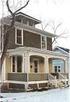 Ninth Street Historic Park Acknowledgements This project was paid for in part by a State Historical Fund grant from the Colorado Historical Society. The contents contained herein do not necessarily reflect
DENSITY AND PUBLIC SPACE AT BISHOP STREET
 DENSITY AND PUBLIC SPACE AT BISHOP STREET Niehoff Urban Studio Senior Planning Capstone Spring 2015 Justin M. Lightfield U N I V E R S I T Y O F C I N C I N N A T I Table of Contents Overview... 3 Design
Lincoln Downtown Master Plan Update
 Lincoln Downtown Master Plan Update Table of Contents Executive Summary........................................... 1 Complete Streets Framework.................................... 3 Promenade Creating
1 ATLANTA RAMBLE IN BRIEF DESCRIPTION. Directions GPS INFORMATION KEY AT-A-GLANCE INFORMATION
 18 60 hikes within 60 miles: atlanta 1 ATLANTA RAMBLE i KEY AT-A-GLANCE INFORMATION LENGTH: 5.4 miles CONFIGURATION: Loop DIFFICULTY: Easy SCENERY: Urban scenes, including high-rise buildings EXPOSURE:
Architectural Design Standards Example Guide DESIGN STANDARDS EXAMPLE GUIDE
 Architectural Design Standards Example Guide DESIGN STANDARDS EXAMPLE GUIDE Commercial, Professional Office, and Public Facility Developments Purpose This Guide offers examples to clarify and explain the
 Walkable Communities Florida Department of Transportation State Safety Office Pedestrian and Bicycle Program April 1995 www.dot.state.fl.us/safety Twelve Steps for an Effective Program Page 1 Twelve Steps
Welcome to our exhibition
 Welcome to our exhibition Welcome to this public exhibition for Cherry Park, Westfield, Stratford. This exhibition has been organised to update residents on Cherry Park, the next phase of development in
REFERENCES-COMMERCIAL. Montgomery County Community College. 60,000 Sq. Ft. Montgomery County Community College 12,000 Sq. Ft.
 Montgomery County Community College West Campus Expansion 60,000 Sq. Ft. Warehouse adaptive reuse of the former Vaughn Knitting Mill, a major architectural component of Pottstown s Industrial Heritage.
Fast Track A Successful Redevelopment: The Palm Beach Outlets Story
 Fast Track A Successful Redevelopment: The Palm Beach Outlets Story SPEAKERS Rick Greene, AICP City of West Palm Beach Brian Seymour, Esq. Gunster Ken Tuma, PE UDKS Josh Long, AICP Gunster Grand Opening
Location Amenities HVAC Parking Technology Security and Life Safety Elevators Ownership and Management
 MA A RR KK EE T T TOWER M R Location Market Tower is centrally located adjacent to Monument Circle in the heart of the Indianapolis Central Business District. Situated within a block of the State Capitol
SECTION 2 CORRIDOR A
 SECTION 2 CORRIDOR A 2.1 CORRIDOR A (HILLSBOROUGH RIVER TO 40 TH STREET IN TAMPA) The boundaries for Corridor A can be seen in Figure 2-1. They are as follows: North: I-4 South: Crosstown Expressway (now
5 March 12, 2014 Public Hearing
 5 March 12, 2014 Public Hearing APPLICANT: MOORE FARM, L.L.L.P. PROPERTY OWNER: MOORE FARM L.L.L.P. STAFF PLANNER: Kevin Kemp REQUEST: Change of Zoning (B-1A Limited Community Business to Conditional B-2
# U N I V E R S I T Y A V E N U E S P E C I F I C P L A N Page 1-1 # 1.0 INTRODUCTION. 1.1 University Avenue, Historical Context
 1.0 INTRODUCTION 1.1 University Avenue, Historical Context By the late 1880s, the role of University Avenue, then known as Eighth Street, was already well established as a link between the original Riverside
Downtown Public Spaces Improvement Program
 Coming together is a begining; keeping together is progress; working together is success. - Henry Ford Downtown Public Spaces Improvement Program a program funded by the Houston-Galveston Local Development
BROWNSVILLE STRUCTURES STUDY. July 2012. Prepared by. LDA ARCHITECTS 33 Terminal Way, Suite 317 Pittsburgh, Pennsylvania 15219 1208
 BROWNSVILLE STRUCTURES STUDY July 2012 Prepared by LDA ARCHITECTS 33 Terminal Way, Suite 317 Pittsburgh, Pennsylvania 15219 1208 TABLE OF CONTENTS I. SUMMARY OF BUILDING ANALYSIS.. 1 II. INDIVIDUAL BUILDING
PLANNING FOR NEW DEVELOPMENT AT THE COTTONWOOD MALL SITE
 APPENDIX F PLANNING FOR NEW DEVELOPMENT AT THE COTTONWOOD MALL SITE Table of Contents The Setting Background Planning Objectives Neighborhood Protection The Concept Plan Exhibits Cottonwood Mall Site 1
Technical Memorandum: Land Use Study
 2. Development Density The Lower East Side covers a large area, and so it is reasonable that it represents more than a third of all buildable surface area in the study area (Table 1). Looking at existing
FOR SALE. The Friedman Building 1701 18th Avenue South, Seattle 98144. Nicholas T. Gill 206.505.9410. Allan Friedman. 206.505.
 FOR SALE FOR MORE INFORMATION PLEASE CONTACT: The Friedman Building 1701 18th Avenue South, Seattle 98144 PRICE: $4,800,000 FEATURES: LAND SF: 40,000 SF + Fantastic Large Townhome Site BUILDING SF: 33,332
28.0 Development Permit Area #2 (Neighbourhood District)
 28.0 Development Permit Area #2 (Neighbourhood District) Goals and Objectives To provide a guide for infill and new development in the Neighbourhood District. To outline the nature, form and character
DADE COUNTY COURTHOUSE 73 WEST FLAGLER STREET
 DADE COUNTY COURTHOUSE 73 WEST FLAGLER STREET Designation Report City of Miami REPORT OF THE CITY OF MIAMI PLANNING DEPARTMENT TO THE HERITAGE CONSERVATION BOARD ON THE POTENTIAL DESIGNATION OF DADE COUNTY
DIVISION STREET CORRIDOR STRATEGY Arlington, Texas May 17, 2012
 DIVISION STREET CORRIDOR STRATEGY Arlington, Texas May 17, 2012 Project Review: DCAC Meeting #2 March 8, 2012 Reviewed stakeholder meetings Online survey findings Market Assessment Macro Market Factors,
Downtown Tampa Transportation Vision
 Downtown Tampa Transportation Vision Executive Summary August 1, 2006 Hillsborough County Metropolitan Planning Organization County Center, 18 th Floor Tampa, Florida 33602 813-272-5940 www.hillsboroughmpo.org
Executive Director s Recommendation Commission Meeting: March 5, 2015
 Executive Director s Recommendation Commission Meeting: March 5, 2015 PROJECT Curseen-Morris Processing and Distribution Center Parking Lot 900 Brentwood Avenue NE Washington, DC SUBMITTED BY United States
Downtown Core Sub-district
 3-10 Land Use Downtown Core Sub-district District development will be most intense and most urban in character in the Downtown Core. The objective is to establish this area as a citywide and regional retail
SELECTED SPECIAL EVENTS PROJECTS
 1 5 SELECTED SPECIAL EVENTS PROJECTS 3 1 DONNA AND MARVIN SCHWATZ CENTER FOR PERFORMING ARTS, ATLANTA, GEORGIA, USA. COBB ENERGY PERFORMING ARTS CENTRE, COBB COUNTY, GEORGIA, USA. 3 OLYMPIC AQUATIC CENTER,
GARFIELD BOULEVARD. concept planning 54TH PL CALUMET AVE ELLSWORTH DR CTA STATION STUDY AREA GAS STATION GARFIELD BLVD PRAIRIE AVE
 GARFIELD BOULEVARD concept planning PRAIRIE AVE CTA STATION CURRENCY EXCHANGE CAFE ARTS INCUBATOR CALUMET AVE 54TH PL GAS STATION GARFIELD BLVD MUFFLER SHOP 55TH PL DR MARTIN LUTHER KING JR DR STUDY AREA
IV. Environmental Impact Analysis I.2. Cultural Resources Archaeological Resources
 IV. Environmental Impact Analysis I.2. Cultural Resources Archaeological Resources 1. Introduction The following section addresses the potential for the Proposed Project to affect archaeological resources
STAFF REPORT. December 20, 2004. North District Community Council. Director of Community Planning - North
 STAFF REPORT December 20, 2004 To: From: Subject: North District Community Council Director of Community Planning - North Preliminary Report Respecting Revised Application OPA & Rezoning Application 01
DESIGN REVIEW CHECKLIST Chapter 6 Special Consideration Design Guidelines
 DESIGN REVIEW CHECKLIST Chapter 6 Special Consideration Design Guidelines A. Offices a. Office buildings should be built to the minimum required setback. b. Surface parking should be located towards the
3.1 Historical Considerations
 3. Recommended Scope of Bridge improvements 3.1 Historical Considerations In the fall of 2000, an outside consultant, Fraser Design, suggested that the existing 4 th St. Bridge is potentially eligible
Newburyport and a New Urban Renewal
 Newburyport and a New Urban Renewal Kind of By PAUL J. MCGINLEY EXECUTIVE DIRECTOR, NEWBURYPORT REDEVELOPMENT AUTHORITY NEW kind of urban renewal proj- more than 25 feet high in any other part ect is taking
Market Summary. prepared by FXM Associates 6.1. North River Canal Corridor
 Market Summary prepared by FXM Associates North River Canal Corridor 6.1 6.2 North River Canal Corridor Introduction In order to provide a context for planning within the North Canal Neighborhood Corridor,
Atlanta 2015 Infrastructure Bond
 Investing in a commitment today to meet the infrastructure challenges of the future. Richard Mendoza, Public Works James Shelby, Planning & Community Development July 2014 Key Events June 2014: Public
Glossop Design & Place Making Strategy
 Supplementary Planning Document to the High Peak Local Plan June 2011 Design Brief for the Town Hall Complex GILLESPIES I GERALD EVE Reproduced from the Ordnance Survey map with the permission of Ordnance
Schenk-Atwood Neighborhood Business District Master Plan
 Schenk-Atwood Neighborhood Business District Master Plan Prepared for the Schenk-Atwood Revitalization Association (SARA) and the City of Madison SCHREIBER/ANDERSON ASSOCIATES, INC. BEST Real Estate Group,
PHOTOGRAPHS WRITTEN HISTORICAL AND DESCRIPTIVE DATA
 Poletown Historic District Detroit Steel Products Company Plant 7610 Joseph Campau Ave. Detroit Wayne MI HABS No. MI-275-1 PHOTOGRAPHS WRITTEN HISTORICAL AND DESCRIPTIVE DATA HISTORIC AMERICAN BUILDING
Georgia Historical Society 501 Whitaker Street Savannah, GA 31401
 SAVANNAH-CHATHAM COUNTY HISTORIC SITE AND MONUMENT COMMISSION HISTORICAL MARKER RECOMMENDATION PETITIONER: FILE No.: LOCATION: Christy Crisp Georgia Historical Society 501 Whitaker Street Savannah, GA
Guiding Principles. McCauley Area Focused Urban Design Plan. 1 Connect: Chinatown and Little Italy with downtown and surrounding areas
 McCauley Area Guiding Principles 1 Connect: Chinatown and Little Italy with downtown and surrounding areas 2 Strengthen: Cultural character in Chinatown and Little Italy 3 Develop: Strong East West pedestrian
CITY OF MIAMI FIRE TRAINING TOWER 3700 NW 7 TH AVENUE
 CITY OF MIAMI FIRE TRAINING TOWER 3700 NW 7 TH AVENUE Designation Report City of Miami REPORT OF THE CITY OF MIAMI PRESERVATION OFFICER TO THE HISTORIC AND ENVIRONMENTAL PRESERVATION BOARD ON THE POTENTIAL
MANAGEMENT PLAN STONE BAY RIFLE RANGE HISTORIC DISTRICT MCB CAMP LEJEUNE
 MANAGEMENT PLAN STONE BAY RIFLE RANGE HISTORIC DISTRICT MCB CAMP LEJEUNE This management plan is to be used in association with procedures outlined in Chapter of the Historic Buildings Management Handbook.
TRANSPORTATION. Georgia s Strength in Transportation 4 TRANPORTATION SYSTEMS IN GEORGIA. Highways 2 Airport 3 Railroads 4 Ports 5. Inside this issue:
 TRANSPORTATION SS8G2 highway system, airport, deepwater ports, and railroads 4 TRANPORTATION SYSTEMS IN GEORGIA Georgia s Strength in Transportation Many teachers dig in to the stories of our state s history
Presentation: Proposed Plan Amendments
 Epstein s Rehabilitation Plan Presentation: Proposed Plan Amendments MORRISTOWN REDEVELOPMENT ENTITY March 14, 2013 Epstein s Rehabilitation Plan Presentation Part 1: Morristown Planning Division Neighborhood
05 AREA/SITE SPECIFIC GUIDELINES
 05 AREA/SITE SPECIFIC GUIDELINES Site 1 - Glass Yard The leisure centre that is currently located on this site should move to a more central location in the town centre close to the existing public squares.
Indianapolis SDAT. Neighborhood Restoration
 Neighborhood Restoration Working Toward a Sustainable Future live * work * play October 30 th, 2009 Message Hear concerns Build consensus Provide Recommendations Transition from Fragmentation/disconnect
TABLE OF CONTENTS. Executive Summary 1-3. Introduction 4-6. Illustrative Site Plan 7. East-West Streets 8. Cooper Street 9-10. Market Street 11-14
 TABLE OF CONTENTS Executive Summary 1-3 Introduction 4-6 Illustrative Site Plan 7 East-West Streets 8 Cooper Street 9-10 Market Street 11-14 Federal Street 15-16 MLK Boulevard 17-20 North-South Streets
Deep Ellum Crossroads Redevelopment Project
 Deep Ellum Crossroads Redevelopment Project Deep Ellum TIF District Economic Development Committee September 15, 2014 Office of Economic Development Overview Discuss the redevelopment and site improvements
Chapter 54. Real Property Management INTRODUCTION
 Chapter 54 Real Property Management INTRODUCTION Property management is one of the fastest growing areas of specialization in real estate. As more institutional investors diversify their portfolios, they
john jay college of criminal justice
 AIA NEW YORK CHAPTER 2013 DESIGN AWARDS ARCHITECTURE john jay college of criminal justice NEW YORK, NEW YORK FULL PROJECT NARRATIVE John Jay College of Criminal Justice s new building provides all the
TAMPA S UNIVERSITY MALL ANNOUNCES MAJOR REDEVELOPMENT PLANS. Construction is slated to begin as soon as first quarter 2016
 PRESS RELEASE FOR IMMEDIATE RELEASE Contact: Elizabeth Cross Daniel Jimenez +1 305 428 6373 +407.839.3191 [email protected] [email protected] TAMPA S UNIVERSITY MALL ANNOUNCES MAJOR REDEVELOPMENT
207 East Liberty Street Savannah, GA 31401
 SAVANNAH-CHATHAM COUNTY HISTORIC SITE AND MONUMENT COMMISSION PART 1: THEME AND LOCATION PART 2: DESIGN AND FUNDING MONUMENT AND PUBLIC ART RECOMMENDATION PETITIONER: Loretto Lominack Savannah, GA 31401
Industrial Suburban District Regulations City of St. Petersburg City Code Chapter 16, Land Development Regulations
 16.20.110 - Industrial Suburban District ( IS ) Figure REFERENCE Typical Buildings in the IS District Figure REFERENCE Site Plan of a typical development in the IS District Sections: 16.20.110.1 Composition
Saint Cloud Business Center
 Saint Cloud Business Center 14 7th Avenue North Saint Cloud, MN 56303 For Sale Located on 7th Avenue in the heart of downtown across from the Court House Square. A large professional reception area with
Opal Service District Plan
 8 The Opal Service District includes a variety of planned land uses including commercial, mixed-use, flex office, industrial, and hospitality. This Plan seeks to simplify the land use categories to allow
Motorcycle & Pedestrian Master Plans in Indianapolis, Indiana
 PROJECT PURPOSE The Warsaw + Winona Lake Bicycle and Pedestrian Master Plan establishes a comprehensive framework for a connected bicycle and pedestrian system that will be used for both recreation and
01/31/13 ACHIEVING THE VISION FOR RESTON. Reston Master Plan Special Study Task Force
 ACHIEVING THE VISION FOR RESTON Reston Master Plan Special Study Task Force The Reston Master Plan Special Study Task Force was appointed by Hunter Mill District Supervisor Catherine Hudgins to review
VISION, DESIGN PRINCIPLES & OVERALL PLANNING STRATEGY
 3 VISION, DESIGN PRINCIPLES & OVERALL PLANNING STRATEGY The overall planning strategy for the Bank Street CDP is to ensure that future development is undertaken in a coordinated and planned approach, supported
Historic Tax Credits in Texas: Combining the New State Credit with the Federal Investment Tax Credit. Downtown Amarillo 17 December 2013
 Historic Tax Credits in Texas: Combining the New State Credit with the Federal Investment Tax Credit Downtown Amarillo 17 December 2013 Ben Dupuy Anna Mod Stonehenge is a nationally respected finance company
1. Name of Property. 6. Function or Use Historic Functions (Enter categories from instructions) Current Functions (Enter categories from instructions)
 Site Inventory Form State Inventory No. 92-00505 New Supplemental State Historical Society of Iowa Part of a district with known boundaries (enter inventory no.) 92-00349 (November 2005) Relationship:
12-002159-PA Savannah Gardens Public Art Project
 SAVANNAH-CHATHAM COUNTY HISTORIC SITE AND MONUMENT COMMISSION PART 1: THEME AND LOCATION PART 2: DESIGN AND FUNDING PUBLIC ART RECOMMENDATION PETITIONER: FILE No.: LOCATION: 915 Waters Avenue Savannah,
BASSETT CREEK VALLEY MASTER PLAN OPEN HOUSE
 BASSETT CREEK VALLEY MASTER PLAN OPEN HOUSE February 23, 2006 PROJECT INTRODUCTION Project Area 230 acres $50 million estimated market value (approximately) 50 acres parkland 100 residences (estimated)
HARRIS TEETER AT LADY S ISLAND CITY OF BEAUFORT DRB CONCEPTUAL PROJECT NARRATIVE Submittal Date: September 2, 2015 Meeting Date: September 10, 2015
 HARRIS TEETER AT LADY S ISLAND CITY OF BEAUFORT DRB CONCEPTUAL PROJECT NARRATIVE Submittal Date: September 2, 2015 Meeting Date: September 10, 2015 PROPOSED REDEVELOPMENT The project consists of demolishing
TGRWA. Structural Engineers. Tylk Gustafson Reckers Wilson Andrews, LLC
 Tylk Gustafson Reckers Wilson Andrews, LLC 600 West Van Buren Street Suite 900 Chicago, Illinois 60607 Phone 312.341.0055 Fax 312.341.9966 www.tgrwa.com Tylk Gustafson Reckers Wilson Andrews, LLC was formed
Chapter 10 Historic / Cultural Preservation
 Chapter 10 Historic / Cultural Preservation...10-1 Actions since adoption of the 1997 Comprehensive Plan...10-1 Goals & objectives...10-2 Historic & cultural resource recognition and protection...10-2
"Description of the urban and architectural development conceptual design of the historical city centre of Gorzow Wlkp. R3DC4T
 "Description of the urban and architectural development conceptual design of the historical city centre of Gorzow Wlkp. R3DC4T Gorzów Wielkopolski Gorzów Wielkopolski is an important regional city centre
Property Tax Incentives Will Support Five Industrial and Commercial Projects
 FOR IMMEDIATE RELEASE June 25, 2014 CONTACT: Mayor s Press Office 312.744.3334 [email protected] Department Planning and Development (DPD) (312) 744-9267 Property Tax Incentives Will Support Five
DESIGN GUIDELINES FOR UTILITY METERS D.C. HISTORIC PRESERVATION REVIEW BOARD
 DESIGN GUIDELINES FOR UTILITY METERS D.C. HISTORIC PRESERVATION REVIEW BOARD Introduction Utility meters are a necessary component for any building. When older buildings were originally provided with utility
University Unveils Plans for New Gates Center for Computer Science
 http://www.carnegiemellontoday.com/article.asp?aid=341 Page 1 of 2 June 2006, Vol. 3 No. 2 SEARCH GO Feature Stories News Flash Alumni Columns Inspire Innovation Carnegie Mellon Today News Flash > University
COUNTY OF ALBEMARLE PLANNING STAFF REPORT SUMMARY. Staff: Claudette Grant
 COUNTY OF ALBEMARLE PLANNING STAFF REPORT SUMMARY Project Name: ZMA 2013-00004 Hollymead Town Center Block VI Planning Commission Public Hearing: July 29, 2014 Staff: Claudette Grant Board of Supervisors
REQUEST FOR RESPONSE
 Date: November 6, 2014 From: Staci Monroe, Land Use Services 503-823-0624 / [email protected] REQUEST FOR RESPONSE Case File: LU 14-215153 DZ Lloyd Center Remodel Pre App: PC # 14-155864
FLORIDA ATLANTIC UNIVERSITY
 3 Supporting Data The purpose of the Element is to develop an understanding of the overall physical form of the development within the University and its relationship to the surrounding community, and
Designer s NOTEBOOK DESIGN ECONOMY, PART 3
 Designer s NOTEBOOK DESIGN ECONOMY, PART 3 Design Economy Article XII (Part 3) PCI s Architectural Precast Concrete Services Committee offers insight on the architectural precast manufacturing process
COMBINING RESOURCES FOR DOWNTOWN REVITALIZATION
 COMBINING RESOURCES FOR DOWNTOWN REVITALIZATION Who We Are... Thoma Development Consultants Bernie Thoma, Senior Consultant Rich Cunningham,CMSM, Program Manager 34 Tompkins St. Cortland, NY 13045 (607)
PRESERVATION PLANNING ASSOCIATES 519 Fig Avenue, Santa Barbara, CA 93101 Telephone (805) 450-6658 Email: [email protected]
 PRESERVATION PLANNING ASSOCIATES 519 Fig Avenue, Santa Barbara, CA 93101 Telephone (805) 450-6658 Email: [email protected] June 17, 2015 Ms. Kimberley Heaton McCarthy Supervising Planner Building and Safety
CITY COUNCIL / PLANNING COMMISSION JOINT STUDY SESSION AGENDA REPORT
 CITY COUNCIL / PLANNING COMMISSION JOINT STUDY SESSION AGENDA REPORT MEETING DATE: SEPTEMBER 8, 2015 ITEM NUMBER: 1 SUBJECT: PROPOSED GENERAL PLAN LAND USE ALTERNATIVE FOR THE YEAR 2015-2025 GENERAL PLAN
Frederick. Frederick. Maryland. Smart Growth Successes. Frederick. Maryland Department of Planning
 Frederick Frederick Maryland Smart Growth Successes Frederick Maryland Department of Planning Smart, Green & Growing Martin O Malley Governor Anthony G. Brown Lt. Governor Maryland Department of Planning
Draft Goals and Objectives Wadena Comprehensive Plan City of Wadena, Minnesota. Land Use Goals:
 Draft Goals and Objectives Wadena Comprehensive Plan City of Wadena, Minnesota Land Use Goals: 1. Growth in Wadena will be undertaken in such a manner as to create a full range of living, working, shopping,
PROPERTY East Wetumpka Commercial Historic District (Boundary Increas NAME: e)
 REQUESTED ACTION: UNITED STATES DEPARTMENT OF THE INTERIOR NATIONAL PARK SERVICE EVALUATION/RETURN SHEET NOMINATION PROPERTY East Wetumpka Commercial Historic District (Boundary Increas NAME: e) MULTIPLE
Founder s Foresight Key to Courtlandt Place Preservation. By Sallie Gordon
 Founder s Foresight Key to Courtlandt Place Preservation By Sallie Gordon 1. Entrance to Courtlandt Place, 1908 The early 20th century brought unprecedented growth and startling change to Houston. Population
Slavic Village Building Condition Review
 Slavic Village Building Condition Review Slavic Village Development May 8, 2015 Page 1 EXECUTIVE SUMMARY City Architecture was commissioned by Slavic Village Development to review five existing facilities
DESIGN ASSISTANCE APPLICATION
 DESIGN ASSISTANCE APPLICATION for FY 2016 NEW RIVER MULTI USE PATH: PINNACLE PEAK ROAD TO HAPPY VALLEY ROAD CITY OF PEORIA APPLICATIONS ARE DUE VIA ONLINE SUBMITTAL BY 10:00 AM ON MONDAY, JUNE 29, 2015
2010 Salida Community Priorities Survey Summary Results
 SURVEY BACKGROUND The 2010 Salida Community Priorities Survey was distributed in September in an effort to obtain feedback about the level of support for various priorities identified in the draft Comprehensive
Proposed Program of High Capacity Transit Improvements City of Atlanta DRAFT
 I 20 West Heavy Rail Northside Drive Bus Rapid Contingent Multi Jurisdicitional Projects Atlanta Light Rail Clifton Light Rail * I 20 East Bus Rapid * Atlanta BeltLine Central Loop Irwin AUC Line Downtown