
Paper 1. Year 9 science test. Remember: First name. Last name. Class. Date
|
|
|
- Hugo Fox
- 9 years ago
- Views:
Transcription
1 Sc KEY STAGE 3 Year 9 science test TIER 3 6 Paper 1 First name Last name Class Date Please read this page, but do not open your booklet until your teacher tells you to start. Write your name, your class and the date in the spaces above. Remember: The test is 1 hour long. You will need a pen, pencil, rubber and ruler. You may find a protractor and a calculator useful. The test starts with easier questions. Try to answer all of the questions. The number of marks available for each question is given below the mark boxes in the margin. You should not write in this margin. Show any rough working on this paper. Check your work carefully. Ask your teacher if you are not sure what to do. For marker s use only TOTAL MARKS

2 1. The diagram below shows six pieces of equipment. A B C D E F (a) Linda investigates how quickly sugar dissolves in water. (i) Which piece of equipment does she use to weigh 5 g of sugar? Tick the correct box. A B C D E F 1ai (ii) Which piece of equipment does she use to measure out 90 cm 3 of water? Tick the correct box. A B C D E F 1aii Y9/Sc/Tier 3 6/P1 2

3 (b) Linda heats the water in a beaker. (i) Which piece of equipment shown is a beaker? Tick the correct box. A B C D E F 1bi (ii) Which piece of equipment shown is used to heat water? Tick the correct box. A B C D E F 1bii (c) Linda adds 5 g of sugar to the hot water. (i) She measures the time it takes for the sugar to dissolve. The equipment used for timing is not shown in the diagram. What piece of equipment is used to measure the time taken? 1ci (ii) The equipment used to measure the temperature of the water is not shown in the diagram. What piece of equipment is used to measure temperature? 1cii Y9/Sc/Tier 3 6/P1 3 maximum 6 marks Total 6

4 2. Susie cooked sausages on a barbecue. (a) Fat and water in the sausages changed state. Draw one line from each statement to the correct change of state. Draw only two lines. statement change of state liquid to gas 2a fat melted gas to liquid liquid to solid 2a water evaporated solid to liquid solid to gas Y9/Sc/Tier 3 6/P1 4

5 (b) Susie uses charcoal as the fuel for the barbecue. (i) Which statement is true about all fuels? Tick the correct box. All fuels are sources of energy. All fuels are black. All fuels are made from wood. All fuels are solid. 2bi (ii) Which gas in the air is needed for fuels to burn? Tick the correct box. water vapour oxygen nitrogen carbon dioxide 2bii (c) The metal grill of the barbecue is made of steel. Six properties of steel are given below. Which properties are needed for the metal grill? Tick two correct boxes. It conducts electricity. It is rigid. It has a very high melting point. It is shiny. It is magnetic. It rusts. 2c 2c Y9/Sc/Tier 3 6/P1 5 maximum 6 marks Total 6

6 3. The drawings below show eight different animals. sparrow cat dragonfly housefly lizard 3a 3a squirrel snake hawk not to scale Y9/Sc/Tier 3 6/P1 6

7 (a) Put a ring around the two animals on the opposite page that do not have a backbone. (b) What are the names of two mammals on the opposite page? b (c) (i) What are the names of two reptiles on the opposite page? ci (ii) From the drawings, what is one feature that all reptiles have? 3cii maximum 5 marks Y9/Sc/Tier 3 6/P1 7 Total 5

8 4. (a) John attaches a ball to a spring. The diagram below shows what happens. spring before ball attached spring after ball attached (i) Which arrow shows the direction of the force of the ball on the spring? Tick the correct box. 4ai (ii) Which arrow shows the direction of the force of the spring on the ball? Tick the correct box. 4aii (b) The diagram below shows three metal balls attached to identical springs. A B C A B C A B C 4b Which ball is the heaviest? Write the letter. Explain your answer. 4b Y9/Sc/Tier 3-6/P1 8

9 (c) John has another three identical springs. He puts a cube on each spring. Each cube has a different mass. The diagrams below show the springs before and after John added the cubes. R S T springs before adding the cubes springs after adding the cubes Which cube is the heaviest? Write the letter. Explain your answer. 4c 4c Y9/Sc/Tier 3-6/P1 9 maximum 6 marks Total 6

10 5. Joanne burnt four different crisps. She predicted that the bigger the crisp, the longer it will burn. (a) Look at the picture above. What did Joanne wear to protect herself? 5a (b) Joanne measured the time taken for each crisp to burn completely. The bar chart shows Joanne s results time taken for crisp to burn (seconds) b 0 Look at the bar chart. How much time did crisp D take to burn? seconds A B C D crisp Y9/Sc/Tier 3 6/P1 10

11 (c) The crisps Joanne used in her investigation are shown below. crisp A crisp B crisp C crisp D (i) Joanne predicted that the bigger the crisp, the longer it will burn. Do the results support Joanne s prediction? Tick one box. yes no Use Joanne s results to explain your answer. 5ci (ii) How can you tell that Joanne did not carry out a fair test? 5cii (d) Joanne wrote some conclusions for her investigation. Decide whether each conclusion is true, false, or you cannot tell. Tick the correct box for each conclusion. conclusion true false Two crisps took the same amount of time to burn. cannot tell 5d The smallest crisp burnt for the shortest time. Two of the crisps burnt with flames of the same size. 5d 5d Y9/Sc/Tier 3 6/P1 11 maximum 7 marks Total 7

12 6. Ben makes a series circuit using two identical cells, a bulb and a switch to turn the bulb on and off. cell cell bulb switch (a) Draw a circuit diagram of Ben s circuit. Use the correct symbols. The cells have been drawn for you. 6a 6a 6a Y9/Sc/Tier 3 6/P1 12

13 (b) Which part of the circuit supplies the energy? 6b (c) Ben adds another identical bulb to the circuit in series. How does the brightness of the first bulb change? 6c (d) How will the brightness of the bulbs change when the cells shown below are placed into Ben s circuit? (i) 6di (ii) 6dii Y9/Sc/Tier 3 6/P1 13 maximum 7 marks Total 7

14 7. Russell put ground-up coffee beans in a coffee maker and added hot water. He pushed the plunger down. This separated the coffee drink from the ground-up coffee beans. (a) How could Russell see that some coffee had dissolved in the water? 7a (b) The end of the plunger is a circle of wire mesh. A B C D (i) Which mesh would be best to separate the coffee drink from all the ground-up coffee beans? Write the letter. 7bi (ii) This method of making coffee uses a type of filter. The apparatus used for filtration in a school laboratory is drawn below. P Q R 7bii Which part of the apparatus above works in the same way as the wire mesh? Write the letter. Y9/Sc/Tier 3 6/P1 14

15 (c) Russell wanted to separate the water from the coffee drink. He set up the apparatus shown below. sleeve flask ice cubes glass tube coffee drink test tube heat water (i) Why did Russell put ice cubes around the glass tube? (ii) Choose words from the box below to fill the gaps in the following sentences. an acid a gas a liquid a solid condensation crystallisation evaporation filtration Russell heats the water. Water in the drink changes from into. This change of state is called. Water vapour changes into liquid. This change of state is called. 7ci 7cii 7cii 7cii 7cii Y9/Sc/Tier 3 6/P1 15 maximum 8 marks Total 8

16 8. Jack and Aneesa dropped a steel ball into trays of damp sand. They measured the depth of the craters made by the steel ball. Their results are shown in the table below. not to scale height the ball was dropped from (cm) depth of crater (cm) Jack s results Aneesa s results (a) Use information in the table to answer the questions below. 8ai (i) What was the independent variable that Jack and Aneesa changed in their investigation? (ii) Why was Jack s investigation better than Aneesa s? 8aii Y9/Sc/Tier 3 6/P1 16

17 (b) Look at the results in the table. What is the relationship between the height the ball was dropped from and the depth of the crater? 8b (c) Aneesa said that they made sure the investigation was fair. Suggest two variables they must have kept the same to make their investigation fair. 8c (d) (i) Jack removed the steel ball using his fingers. Then he measured the depth of the crater. Aneesa said he should use a magnet instead of his fingers. Explain why using a magnet to remove the ball would improve the investigation. 8c 8di (ii) Jack said that the ball could be dropped using an electromagnet instead of dropping it by hand. Explain why this would improve the investigation. 8dii Y9/Sc/Tier 3 6/P1 17 maximum 7 marks Total 7

18 9. The information below comes from a newspaper report. River Pollution Scientists from the Environment Agency were called to investigate a river. Local fishermen reported that they had not caught trout in the river at Pine Bridge for many months. There were more algae growing in the river and it had a bad smell. Scientists measured the oxygen levels in the water upstream and downstream from Pine Bridge.The results are shown below. water flow Pine Bridge 30 oxygen level (ppm) upstream downstream distance (km) 9ai 9aii (a) (i) What was the oxygen level in the river at Pine Bridge? ppm (ii) Describe what happens to the oxygen level in the river as you travel downstream from Pine Bridge. (b) Trout only live in water with oxygen levels higher than 20 ppm. How far downstream from Pine Bridge would you be likely to find trout? Write the unit. 9b Y9/Sc/Tier 3 6/P1 18

19 (c) The scientists collected samples of the river animals found at different places. animals collected 2.0 distance from Pine Bridge (km) stonefly nymphs mayfly nymphs freshwater shrimps caddis fly larvae rat-tailed maggots sludge worms water lice bloodworms Trout only live in water with oxygen levels higher than 20 ppm. Give the name of one other animal that only lives in oxygen levels above 20 ppm. Use the table above and the information opposite to help you. 9c (d) Use the information above and opposite. Name two animals that are only found when the oxygen level is below 10 ppm. 9d d (e) In the river, trout are predators. Near Pine Bridge, the number of trout decreased. Suggest one reason why pollution may cause the trout population to decrease. 9e Y9/Sc/Tier 3 6/P1 19 maximum 7 marks Total 7

20 10. A gannet is a type of sea bird. (a) When a gannet flies at a constant height above the sea, there is a downward force of 30N on the gannet. What is the size of the upward force on the gannet? Tick the correct box. less than 30N exactly 30N more than 30N 10a need more information (b) To catch food, the gannet dives down into the sea. What is the useful energy transfer when the gannet dives? Choose words from the box below. thermal gravitational potential sound kinetic light 10b When the gannet dives, energy is 10b transferred to energy. Y9/Sc/Tier 3 6/P1 20

21 (c) Label the arrows to show the names of the forces acting on the gannet as it dives. 10c 10c (d) Gannets have pockets of air between their muscles and their skin. Suggest how this is a good adaptation for gannets when they hit the water at fast speeds. 10d (e) The gannet releases energy through respiration. An aeroplane also releases energy when fossil fuels burn. Write two other ways that respiration and burning are similar. 10e e Y9/Sc/Tier 3 6/P1 21 maximum 8 marks Total 8
22 11. The diagrams below show the male and female human reproductive systems. male and female reproductive systems not to scale male female (a) The table below contains descriptions of parts of the human reproductive system. Complete the table to give the name of each part. 11a name of part description 11a 11a the tube that carries an egg to the uterus the organ that produces sperm the organ that produces the egg Y9/Sc/Tier 3 6/P1 22
23 (b) The diagram below shows an unborn baby. Complete the sentences below by filling in the gaps. In humans, normal pregnancy lasts for months. When the foetus is ready to be born, muscles in the uterus wall start to. 11b 11b After the baby is born, the the foetus to the mother is cut. connecting 11b maximum 6 marks Total Y9/Sc/Tier 3 6/P1 23 6
24 12. Jason wanted to find out if hair dye makes hair weaker. He used 5 hairs of equal length. He soaked each hair in a different concentration of hair dye for 15 minutes. He added masses to each hair until it broke. clamp hair hair hair dye mass not to scale (a) The table below shows Jason s results. (i) Plot a graph of Jason s results and draw a line of best fit. concentration of hair dye (%) mass needed to break the hair (g) ai 12ai mass needed to break the hair (g) ai concentration of hair dye (%) Y9/Sc/Tier 3 6/P1 24
25 (b) (ii) Use the graph to work out the mass needed to break hair soaked in water (0% hair dye). g What was the independent variable that Jason changed in this experiment? 12aii 12b (c) What was the dependent variable that Jason measured in this experiment? 12c (d) What is the relationship between the concentration of hair dye and the mass needed to break the hair? 12d (e) Jason wanted to investigate whether soaking hair in dye for different amounts of time affected the strength of the hair. Jason drew a table for his results. Add headings and units to the table below for Jason s investigation. heading 1 heading 2 12e 12e ( ) ( ) 12e 12e Y9/Sc/Tier 3 6/P1 25 maximum 1s Total 11
26 13. Matthew measured the ph of different soils. (a) Tick one box in each row to show if each soil is acidic, neutral or alkaline. soil ph of soil acidic neutral alkaline A 4.5 B 5.5 C a 13a D 7.0 E 7.8 (b) A hydrangea is a flowering plant. Matthew notices that the colour of hydrangea flowers is different for plants grown in different places. He records the colour of the flowers on each plant. His results are shown in the table below. hydrangea flower soil ph of soil colour of flowers blue violet light pink dark pink A 4.5 B 5.5 C 6.3 D 7.0 E 7.8 Y9/Sc/Tier 3 6/P1 26
27 Look at Matthew s results. Do his results support the statement that the colour of hydrangea flowers depends on ph? yes no Explain your answer. 13b (c) Matthew measured the ph of the soil near hydrangea plants found in different places. Suggest one other variable Matthew could not control in his investigation. 13c (d) Matthew wants to find out if the colour of blue hydrangea flowers depends on inherited factors or environmental factors. The flowers were growing in soil of ph 4.5. He plants them in soil of ph 6.3. Complete the table below to show the colours of the new flowers in soil of ph 6.3 (i) if the colour is due to inheritance (ii) if the colour is due to the environment Use the table on the opposite page to complete the table below. colour starting colour of hydrangea flowers colour of new flowers if only due to inheritance colour of new flowers if only due to environment blue 13d 13d END OF TEST Y9/Sc/Tier 3 6/P1 27 maximum 6 marks Total 6
28 QCDA/10/4347 (Pupil pack) Qualifications and Curriculum Authority 2010 QCDA/10/4346 (Teacher pack)
Paper 2. Year 9 science test. Remember: First name. Last name. Class. Date
 Sc KEY STAGE 3 Year 9 science test TIER 4 7 Paper 2 First name Last name Class Date Please read this page, but do not open your booklet until your teacher tells you to start. Write your name, your class
Paper 2. Science test. Remember. First name. Last name. School KEY STAGE 3 TIER 5 7
 Sc KEY STAGE 3 TIER 5 7 Science test Paper 2 First name Last name School 2008 Remember The test is 1 hour long. You will need: pen, pencil, rubber, ruler, protractor and calculator. The test starts with
Science. Year 7. Transition. Equipment allowed: calculator, pen, pencil, ruler, protractor or angle measurer, eraser. No other equipment allowed.
 Science Year 7 Transition Equipment allowed: calculator, pen, pencil, ruler, protractor or angle measurer, eraser. No other equipment allowed. Name Date WS: SA WS: ESI WS: AE 7 Year 7 1 The diagram below
Paper 1. Science test. First name. Last name. School KEY STAGE TIER
 Sc KEY STAGE 3 Science test Paper 1 TIER 5 7 2004 Please read this page, but do not open the booklet until your teacher tells you to start. Write your name and the name of your school in the spaces below.
Paper 1. Science test. Remember. First name. Last name. School KEY STAGE 3 TIER 5 7
 Sc KEY STAGE 3 Science test TIER 5 7 Paper 1 First name Last name School 2007 Remember The test is 1 hour long. You will need: pen, pencil, rubber, ruler, protractor and calculator. The test starts with
Cambridge International Examinations Cambridge Primary Checkpoint
 Cambridge International Examinations Cambridge Primary Checkpoint SCIENCE 0846/01 Paper 1 For Examination from 2014 SPECIMEN PAPER Candidates answer on the Question Paper. Additional Materials: Pen Calculator
ELEMENTARY-LEVEL SCIENCE TEST
 4THE UNIVERSITY OF THE STATE OF NEW YORK SPRING 2008 GRADE 4 ELEMENTARY-LEVEL SCIENCE TEST WRITTEN TEST Student Name School Name Print your name and the name of your school on the lines above. The test
Science test KEY STAGE 2 LEVELS 3 5. Test B. First name. Last name. School. For marker s use only 5 7 9 11 13 15 17 19 21 TOTAL
 Sc KEY STAGE 2 Science test LEVELS 3 5 Test B First name Last name School 2009 For marker s use only Page 5 7 9 11 13 15 17 19 21 TOTAL Marks INSTRUCTIONS Read this carefully. You have 45 minutes for this
Paper 2. Science test. Remember. First name. Last name. School KEY STAGE 3 TIER 3 6
 Sc KEY STAGE 3 Science test TIER 3 6 Paper 2 First name Last name School 2009 Remember The test is 1 hour long. You will need: pen, pencil, rubber, ruler, protractor and calculator. The test starts with
Paper 1. Calculator not allowed. Mathematics test. First name. Last name. School. Remember KEY STAGE 3 TIER 4 6
 Ma KEY STAGE 3 Mathematics test TIER 4 6 Paper 1 Calculator not allowed First name Last name School 2007 Remember The test is 1 hour long. You must not use a calculator for any question in this test. You
5 7 9 11 13 15 17 19 20 TOTAL SCIENCE KEY STAGE 2 2003 LEVELS TEST A TEST A. First Name. Last Name. School
 SCIENCE KEY STAGE 2 2003 TEST A LEVELS 3 5 PAGE 5 7 9 11 13 15 17 19 20 TOTAL MARKS TEST A First Name Last Name School INSTRUCTIONS Read this carefully. Answers This shows where you will need to put your
Mathematics Second Practice Test 1 Levels 4-6 Calculator not allowed
 Mathematics Second Practice Test 1 Levels 4-6 Calculator not allowed Please read this page, but do not open your booklet until your teacher tells you to start. Write your name and the name of your school
UNIVERSITY OF CAMBRIDGE INTERNATIONAL EXAMINATIONS Cambridge Primary Checkpoint
 UNIVERSITY OF CAMBRIDGE INTERNATIONAL EXAMINATIONS Cambridge Primary Checkpoint SCIENCE 0846/02 Paper 2 Examination from 2012 SPECIMEN PAPER Candidates answer on the Question Paper. Additional Materials:
Cambridge International Examinations Cambridge Secondary 1 Checkpoint
 Cambridge International Examinations Cambridge Secondary 1 Checkpoint SCIENCE 1113/02 Paper 2 For Examination from 2014 SPECIMEN PAPER Candidates answer on the Question Paper. Additional Materials: Pen
hij GCSE Additional Science 2 Foundation Tier Unit 6F SPECIMEN MARK SCHEME Version 1.0
 hij GCSE Additional Science 2 Foundation Tier Unit 6F SPECIMEN MARK SCHEME Version.0 Copyright 20 AQA and its licensors. All rights reserved. The Assessment and Qualifications Alliance (AQA) is a company
Paper 1. Calculator not allowed. Mathematics test. First name. Last name. School. Remember KEY STAGE 3 TIER 3 5
 Ma KEY STAGE 3 Mathematics test TIER 3 5 Paper 1 Calculator not allowed First name Last name School 2008 Remember The test is 1 hour long. You must not use a calculator for any question in this test. You
Specimen Paper. Chemistry 1F. Time allowed! 60 minutes
 Centre Number Surname Candidate Number Specimen Paper For Examiner s Use Other Names Candidate Signature Examiner s Initials General Certificate of Secondary Education Foundation Tier Question 1 Mark Science
4THE UNIVERSITY OF THE STATE OF NEW YORK
 4THE UNIVERSITY OF THE STATE OF NEW YORK GRADE 4 ELEMENTARY-LEVEL SCIENCE TEST WRITTEN TEST JUNE 6, 2011 Student Name School Name Print your name and the name of your school on the lines above. The test
Test B. Calculator allowed. Mathematics test. First name. Last name. School. DCSF no. KEY STAGE LEVELS
 Ma KEY STAGE 2 LEVELS 3 5 Mathematics test Test B Calculator allowed First name Last name School DCSF no. 2010 For marker s use only Page 5 7 9 11 13 15 17 19 21 23 TOTAL Marks These three children appear
MATHEMATICS TEST. Paper 1 calculator not allowed LEVEL 6 TESTS ANSWER BOOKLET. First name. Middle name. Last name. Date of birth Day Month Year
 LEVEL 6 TESTS ANSWER BOOKLET Ma MATHEMATICS TEST LEVEL 6 TESTS Paper 1 calculator not allowed First name Middle name Last name Date of birth Day Month Year Please circle one Boy Girl Year group School
Specimen Paper. Time allowed! 60 minutes
 Centre Number Surname Candidate Number Specimen Paper For Examiner s Use Other Names Candidate Signature Examiner s Initials General Certificate of Secondary Education Foundation Tier Question 1 Mark Chemistry
Cambridge International Examinations Cambridge Secondary 1 Checkpoint
 Cambridge International Examinations Cambridge Secondary 1 Checkpoint SCIENCE 1113/01 Paper 1 For Examination from 2014 SPECIMEN PAPER Candidates answer on the Question Paper. Additional Materials: Pen
First Grade Unit A: PHYSICAL SCIENCE Chapter 1: Observing Solids, Liquids and Gases Lessons 1 to 5
 First Grade Unit A: PHYSICAL SCIENCE Chapter 1: Observing Solids, Liquids and Gases Lessons 1 to 5 Physical Science Overview Materials (matter) come in different forms. Water can be rain falling (liquid)
Calculator allowed. School
 Ma KEY STAGE 3 Mathematics test TIER 6 8 Paper 2 Calculator allowed First name Last name School 2008 Remember The test is 1 hour long. You may use a calculator for any question in this test. You will need:
Paper 2. Year 9 mathematics test. Calculator allowed. Remember: First name. Last name. Class. Date
 Ma KEY STAGE 3 Year 9 mathematics test Tier 6 8 Paper 2 Calculator allowed First name Last name Class Date Please read this page, but do not open your booklet until your teacher tells you to start. Write
Year 9 mathematics test
 Ma KEY STAGE 3 Year 9 mathematics test Tier 6 8 Paper 1 Calculator not allowed First name Last name Class Date Please read this page, but do not open your booklet until your teacher tells you to start.
Friday 20 January 2012 Morning
 THIS IS A NEW SPECIFICATION H Friday 20 January 2012 Morning GCSE TWENTY FIRST CENTURY SCIENCE PHYSICS A A181/02 Modules P1 P2 P3 (Higher Tier) *A131500112* Candidates answer on the Question Paper. A calculator
Year 9 mathematics test
 Ma KEY STAGE 3 Year 9 mathematics test Tier 5 7 Paper 1 Calculator not allowed First name Last name Class Date Please read this page, but do not open your booklet until your teacher tells you to start.
2. What kind of energy is stored in food? A. chemical energy B. heat energy C. kinetic energy D. light energy
 Assessment Bank Matter and Energy in Living Things SC.8.L.18.4 1. What is energy? A. anything that takes up space B. anything that has mass C. the ability to conduct current D. the ability to do work 2.
GATEWAY SCIENCE B651/01 PHYSICS B Unit 1 Modules P1 P2 P3 (Foundation Tier)
 F GENERAL CERTIFICATE OF SECONDARY EDUCATION GATEWAY SCIENCE B651/01 PHYSICS B Unit 1 Modules P1 P2 P3 (Foundation Tier) *CUP/T63931* Candidates answer on the question paper A calculator may be used for
Printed Quiz Primary Schools KS2 Science For Class Use (2)
 Printed Quiz Primary Schools KS2 Science For Class Use (2) This printed quiz is for use with primary school students and is intended for use in class or as homework. The PDF file prints firstly the questions
Year 9 mathematics test
 Ma KEY STAGE 3 Year 9 mathematics test Tier 3 5 Paper 2 Calculator allowed First name Last name Class Date Please read this page, but do not open your booklet until your teacher tells you to start. Write
Additional Science. Biology BL2FP. (Jun15BL2FP01) General Certificate of Secondary Education Foundation Tier June 2015.
 Centre Number Surname Candidate Number For Examiner s Use Other Names Candidate Signature Examiner s Initials Question Mark Additional Science Unit Biology B2 Biology Unit Biology B2 General Certificate
Paper 1. Mathematics test. Calculator not allowed. First name. Last name. School KEY STAGE TIER
 Ma KEY STAGE 3 TIER 4 6 2005 Mathematics test Paper 1 Calculator not allowed Please read this page, but do not open your booklet until your teacher tells you to start. Write your name and the name of your
hij GCSE Additional Science Chemistry 2 Foundation Tier Chemistry 2F SPECIMEN MARK SCHEME Version 1.0
 hij GCSE Additional Science Chemistry 2 Foundation Tier Chemistry 2F SPECIMEN MARK SCHEME Version.0 Copyright 20 AQA and its licensors. All rights reserved. The Assessment and Qualifications Alliance (AQA)
Paper 1. Calculator not allowed. Mathematics test. First name. Last name. School. Remember KEY STAGE 3 TIER 5 7
 Ma KEY STAGE 3 Mathematics test TIER 5 7 Paper 1 Calculator not allowed First name Last name School 2009 Remember The test is 1 hour long. You must not use a calculator for any question in this test. You
Ecology Pre-Test (High School)
 Ecology Pre-Test (High School) Science is easier to understand if you can make connections between what you know now and the new ideas that you are studying. This is a test that will help us to understand
Mechanical Energy. Mechanical Energy is energy due to position or motion.
 Mechanical Energy Mechanical Energy is energy due to position or motion. Position: This means that matter can have energy even though it is not moving. If you knock something off of your kitchen counter,
Paper 1. Calculator not allowed. Mathematics test. First name. Last name. School. Remember KEY STAGE 3 TIER 4 6
 Ma KEY STAGE 3 Mathematics test TIER 4 6 Paper 1 Calculator not allowed First name Last name School 2009 Remember The test is 1 hour long. You must not use a calculator for any question in this test. You
reflect look out! organisms: living things
 reflect Imagine that a student in your school fell down and is having difficulty breathing. Sirens wail as an ambulance pulls into the school parking lot. The emergency workers rush over to help the student.
Chemistry Worksheet: Matter #1
 Chemistry Worksheet: Matter #1 1. A mixture (is/is not) a chemical combining of substances. 2. In a compound the (atoms/molecules) are (chemically/physically) combined so that the elements that make up
MAXIMUM MARK: 50. Cambridge International Examinations Cambridge Primary Checkpoint SCIENCE 0846/02
 Cambridge International Examinations Cambridge Primary Checkpoint SCIENCE 0846/02 Paper 2 For Examination from 2014 SPECIMEN MARK SCHEME 45 minutes MAXIMUM MARK: 50 This document consists of 10 printed
Chapter 16: Tests for ions and gases
 The position of hydrogen in the reactivity series Hydrogen, although not a metal, is included in the reactivity series because it, like metals, can be displaced from aqueous solution, only this time the
Mission 7: Saving Energy
 Mission 7: Saving Energy How can we save energy? Converting one type of energy to another often damages the environment. For example, burning coal to make electricity causes air pollution. That s why we
Metabolism: Cellular Respiration, Fermentation and Photosynthesis
 Metabolism: Cellular Respiration, Fermentation and Photosynthesis Introduction: All organisms require a supply of energy and matter to build themselves and to continue to function. To get that supply of
What do we mean by evidence?
 1 of 11 What do we mean by evidence? Background The following point needs to be made explicit to pupils Evidence is the outcome from measurements (data as in tables, graphs) and observations We use evidence
Specimen Paper. Biology 1F. General Certificate of Secondary Education Foundation Tier. Unit Biology B1. Unit Biology B1. Time allowed 60 minutes
 Centre Number Surname Candidate Number Specimen Paper For Examiner s Use Other Names Candidate Signature Examiner s Initials Question Mark General Certificate of Secondary Education Foundation Tier 1 2
Thursday 23 May 2013 Morning
 THIS IS A NEW SPECIFICATION H Thursday 23 May 2013 Morning GCSE TWENTY FIRST CENTURY SCIENCE PHYSICS A A181/02 Modules P1 P2 P3 (Higher Tier) *A137270613* Candidates answer on the Question Paper. A calculator
Paper 1. Calculator not allowed. Mathematics test. First name. Last name. School. Remember KEY STAGE 3 TIER 6 8
 Ma KEY STAGE 3 Mathematics test TIER 6 8 Paper 1 Calculator not allowed First name Last name School 2009 Remember The test is 1 hour long. You must not use a calculator for any question in this test. You
1/2/3. Finding out about the Water Cycle
 The Water Cycle 1/2/3. Finding out about the Water Cycle Aims: To enable pupils to learn and understand what happens at each stage of the Water Cycle To introduce specific vocabulary related to the Water
XVI. Science and Technology/Engineering, Grade 5
 XVI. Science and Technology/Engineering, Grade 5 Grade 5 Science and Technology/Engineering Test The spring 2013 grade 5 Science and Technology/Engineering test was based on learning standards in the four
PREPARATION FOR CHEMISTRY LAB: COMBUSTION
 1 Name: Lab Instructor: PREPARATION FOR CHEMISTRY LAB: COMBUSTION 1. What is a hydrocarbon? 2. What products form in the complete combustion of a hydrocarbon? 3. Combustion is an exothermic reaction. What
Year 8 mathematics test
 Ma KEY STAGE 3 Year 8 mathematics test TIER 4 6 Paper 1 Calculator not allowed First name Last name Class Date Please read this page, but do not open your booklet until your teacher tells you to start.
hij GCSE Science A 2 Foundation Tier Unit 6F SPECIMEN MARK SCHEME Version 1.0
 hij GCSE Science A 2 Foundation Tier Unit 6F SPECIMEN MARK SCHEME Version.0 Copyright 20 AQA and its licensors. All rights reserved. The Assessment and Qualifications Alliance (AQA) is a company limited
Chapter Test A. Elements, Compounds, and Mixtures MULTIPLE CHOICE. chemically combined? MIXs2 a. element b. compound c. mixture d.
 Assessment Chapter Test A Elements, Compounds, and Mixtures MULTIPLE CHOICE Write the letter of the correct answer in the space provided. 1. What is a pure substance made of two or more elements that are
THE PLANT KINGDOM: THE WATER CYCLE
 THE PLANT KINGDOM: THE WATER CYCLE Material: The Water Cycle Nomenclature The Water cycle Model Water Ice Heat Source (lamp with a clamp) Tables Presentation 1: Key Experience 1. Say, Today we are going
Unit 1 - Pure Substances and Mixtures Chapter 2: Solutions
 2.1 Solutes & Solvents Vocabulary: Unit 1 - Pure Substances and Mixtures Chapter 2: Solutions solvent the larger part of a solution - the part of a solution into which the solutes dissolve solute the smaller
Test A. Calculator not allowed. Mathematics test. First name. Last name. School. DfE no. KEY STAGE LEVELS
 Ma KEY STAGE 2 LEVELS 3 5 Mathematics test Test A Calculator not allowed First name Last name School DfE no. 2011 For marker s use only Page 5 7 9 11 13 15 17 19 21 23 TOTAL Marks These three children
2 MATTER. 2.1 Physical and Chemical Properties and Changes
 2 MATTER Matter is the material of which the universe is composed. It has two characteristics: It has mass; and It occupies space (i.e., it has a volume). Matter can be found in three generic states: Solid;
AQA CERTIFICATE Science: Double Award
 AQA CERTIFICATE Science: Double Award 8404/C/2H Mark scheme 8404 June 205 Version/Stage:.0 Final Mark schemes are prepared by the Lead Assessment Writer and considered, together with the relevant questions,
ANIMALS AND THEIR HABITATS: KS1 STUDENT RESOURCES
 ANIMALS AND THEIR HABITATS: KS1 STUDENT RESOURCES PLANT OR ANIMAL? (Lesson 1:1) Card sort task: print out and get the students to sort them into: Plants or Animals. Get the students to explain why they
 Questions Q1. Lithium, sodium and potassium are metals in group 1 of the periodic table. They are good conductors of heat and electricity. The freshly-cut metals are shiny. (a) (i) Give another physical
COMMON LABORATORY APPARATUS
 COMMON LABORATORY APPARATUS Beakers are useful as a reaction container or to hold liquid or solid samples. They are also used to catch liquids from titrations and filtrates from filtering operations. Bunsen
Physical and Chemical Properties and Changes
 Physical and Chemical Properties and Changes An understanding of material things requires an understanding of the physical and chemical characteristics of matter. A few planned experiments can help you
Physics PH1FP. (Jun15PH1FP01) General Certificate of Secondary Education Foundation Tier June 2015. Unit Physics P1. Unit Physics P1 TOTAL
 Centre Number Surname Candidate Number For Examiner s Use Other Names Candidate Signature Examiner s Initials Question Mark Science A Unit Physics P1 Physics Unit Physics P1 Friday 12 June 2015 General
Classifying Matter. reflect. look out!
 reflect Do you know what air, water, and an apple all have in common? They are all examples of matter. Matter is a word we use a lot in science. It means stuff. All of the stuff in the world that has mass
Minnesota Comprehensive Assessments-Series III
 Not for student use. Minnesota Comprehensive Assessments-Series III Science Item Sampler Script Grade 8 S ARE NOT SECURE TEST MATERIALS. THIS ITEM SAMPLER SCRIPT MAY BE COPIED OR DUPLICATED. MINNESOTA
UNIVERSITY OF CAMBRIDGE INTERNATIONAL EXAMINATIONS International General Certificate of Secondary Education
 *9282687787* UNIVERSITY OF CAMBRIDGE INTERNATIONAL EXAMINATIONS International General Certificate of Secondary Education BIOLOGY 0610/21 Paper 2 Core October/November 2012 1 hour 15 minutes Candidates
Additional Science 4408 / Chemistry 4402
 Version: 0/08/202 General Certificate of Secondary Education Additional Science 4408 / Chemistry 4402 Unit Chemistry 2 Mark Scheme 202 examination June series Mark schemes are prepared by the Principal
Respiration and Photosynthesis
 Respiration and Photosynthesis Topic Plants and animals carry out cellular respiration, but only plants conduct photosynthesis. Introduction Cellular respiration is the process in which a cell uses oxygen
S1 Topic 9. Energy and Generating Electricity. Level: S1. Topic: Energy (Unit 4) Introduction:
 S1 Topic 9 Energy and Generating Electricity Level: S1 Topic: Energy (Unit 4) Introduction: This set of ELA materials is designed for students whose academic ability is comparatively high. The whole unit,
Cambridge International Examinations Cambridge International General Certificate of Secondary Education
 Cambridge International Examinations Cambridge International General Certificate of Secondary Education *0123456789* CHEMISTRY 0620/03 Paper 3 Theory (Core) For Examination from 2016 SPECIMEN PAPER 1 hour
Oxygen Give and Take. Correlation to National Science Education Standards
 Chemistry and Environmental Sciences Oxygen Give and Take Summary This is a series of three activities followed by a worksheet. The concepts taught include gas production (O 2 and CO 2 ), chemical reactions,
1. The Kinetic Theory of Matter states that all matter is composed of atoms and molecules that are in a constant state of constant random motion
 Physical Science Period: Name: ANSWER KEY Date: Practice Test for Unit 3: Ch. 3, and some of 15 and 16: Kinetic Theory of Matter, States of matter, and and thermodynamics, and gas laws. 1. The Kinetic
What is Energy? What is the relationship between energy and work?
 What is Energy? What is the relationship between energy and work? Compare kinetic and potential energy What are the different types of energy? What is energy? Energy is the ability to do work. Great, but
Mixtures. reflect. How is seawater different from pure water? How is it different from rocky soil?
 reflect Everything around us is made out of tiny bits of matter. These particles may combine in different ways to produce new materials. Sometimes we need to separate the parts of a material. If we know
Teacher Demo: Photosynthesis and Respiration: Complementary Processes
 SNC1D/1P Sustainable Ecosystems/ Sustainable Ecosystems and Human Activity Teacher Demo: Photosynthesis and Respiration: Complementary Processes Topics photosynthesis and respiration gas tests for oxygen
Convection, Conduction & Radiation
 Convection, Conduction & Radiation There are three basic ways in which heat is transferred: convection, conduction and radiation. In gases and liquids, heat is usually transferred by convection, in which
Year 5 Rocks. Soils and Water Scheme of Work R Wales
 Session Objective Content and Activities Resources Assessment 1 To differences between solids, liquids and gases. To sort and group objects according to their physical state. 2 To carry out a practical
Chapter 3: Separating Mixtures (pg. 54 81)
 Chapter 3: Separating Mixtures (pg. 54 81) 3.2: Separating Mechanical Mixtures (PB Pg. 40 5 & TB Pg. 58 61): Name: Date: Check Your Understanding & Learning (PB pg. 40 & TB pg. 61): 1. What are four methods
GENERAL CERTIFICATE OF SECONDARY EDUCATION A211/02 TWENTY FIRST CENTURY SCIENCE SCIENCE A Unit 1 Modules B1 C1 P1 HIGHER TIER THURSDAY 14 JUNE 2007
 *CUP/T41180* H GENERAL CERTIFICATE OF SECONDARY EDUCATION A211/02 TWENTY FIRST CENTURY SCIENCE SCIENCE A Unit 1 Modules B1 C1 P1 HIGHER TIER THURSDAY 14 JUNE 2007 Afternoon Calculators may be used. Additional
Energy and Energy Transformations Test Review
 Energy and Energy Transformations Test Review Completion: 1. Mass 13. Kinetic 2. Four 14. thermal 3. Kinetic 15. Thermal energy (heat) 4. Electromagnetic/Radiant 16. Thermal energy (heat) 5. Thermal 17.
Final. Mark Scheme CH1FP. Science A / Chemistry. (Specification 4405 / 4402) Unit 1: Chemistry 1
 02.3 General Certificate of Secondary Education January 203 Science A / Chemistry CHFP (Specification 4405 / 4402) Unit : Chemistry Final Mark Scheme Mark schemes are prepared by the Principal Examiner
CLEANING WATER. Student Section
 National Aeronautics and Space Administration CLEANING WATER Student Section Student Name This lesson challenges you to create and test a water filtration system. During this lesson, you will design and
Making a Terrarium. fairchild tropical botanic garden 1
 Making a Terrarium What is a Terrarium? A terrarium is a collection of small plants growing in a transparent, sealed container. A terrarium is a closed environment, and can actually be used to illustrate
GOING FOR A SPIN: Making a Model Steam Turbine
 GOING FOR A SPIN: Making a Model Steam Turbine PLANNING OVERVIEW SUBJECT AREAS: Physical Science, Math, Language Arts TIMING: Preparation: 30-60 minutes Activity: 1-2 45-minute class periods Note: Going
Sept. 22, 2014. Dear Parents/Guardians,
 Sept. 22, 2014 Dear Parents/Guardians, Hurshel Antwine students in grades 2-5 will be participating in an Elementary Science Fair. This is an exciting event that encourages students to think like young
What is Energy? 1 45 minutes Energy and You: Energy Picnic Science, Physical Education Engage
 Unit Grades K-3 Awareness Teacher Overview What is energy? Energy makes change; it does things for us. It moves cars along the road and boats over the water. It bakes a cake in the oven and keeps ice frozen
PHYSICAL AND CHEMICAL PROPERTIES AND CHANGES
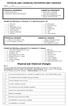 PHYSICAL AND CHEMICAL PROPERTIES AND CHANGES Name Key PHYSICAL PROPERTY CHEMICAL PROPERTY 1. observed with senses 1. indicates how a substance 2. determined without destroying matter reacts with something
Wednesday 16 January 2013 Afternoon
 Wednesday 16 January 2013 Afternoon A2 GCE PHYSICS B (ADVANCING PHYSICS) G494/01 Rise and Fall of the Clockwork Universe *G411660113* Candidates answer on the Question Paper. OCR supplied materials: Data,
Q1. A student studied the reaction between dilute hydrochloric acid and an excess of calcium carbonate.
 Q. A student studied the reaction between dilute hydrochloric acid and an excess of calcium carbonate. calcium carbonate + hydrochloric acid calcium chloride + water + carbon dioxide The student measured
Bounce! Name. Be very careful with the balls. Do not throw them DROP the balls as instructed in the procedure.
 Bounce 1 Name Bounce! Be very careful with the balls. Do not throw them DROP the balls as instructed in the procedure. Background information: Energy causes things to happen. During the day, the sun gives
Circuit symbol. Each of the cells has a potential difference of 1.5 volts. Figure 1. Use the correct answer from the box to complete the sentence.
 Q.(a) Draw one line from each circuit symbol to its correct name. Circuit symbol Name Diode Light-dependent resistor (LDR) Lamp Light-emitting diode (LED) (3) Figure shows three circuits. The resistors
Assessing safety in science experiments
 20 Health, safety and risk Assessing safety in science experiments Teachers notes Objectives To carry out a risk assessment, prior to doing an experiment. Outline This activity includes an example of how
Chapter 3 Student Reading
 Chapter 3 Student Reading If you hold a solid piece of lead or iron in your hand, it feels heavy for its size. If you hold the same size piece of balsa wood or plastic, it feels light for its size. The
Chapter. Biology & The Scientific Method. and the Experiment
 Biology Chapter and the Experiment 01 A Biology.ie publication 2007. Only available for download from www.biology.ie. Suitable for the Leaving Certificate Biology syllabus. Contact [email protected] for
Contents. Stage 7. Stage 8. Stage 9. Contents. Key: Enquiry / Extension / Review BOLD PAGE NO. = in this booklet
 Contents Contents Stage 7 1 1.1 Introduction to forces 8 1.2 Balanced forces 10 1.3 Friction 12 1.4 Gravity 14 1.5 Enquiry: Questions, evidence and explanations 16 1.6 Air resistance 18 1.7 Enquiry: Planning
Textbook pp. 148-153
 Textbook pp. 148-153 ENERGY is the ability to do WORK or cause change Name 2 things that ARE energy or that HAVE energy WORK is when a FORCE moves an object a FORCE is a push or a pull There are two main
PRE-LAB FOR YEAST RESPIRATION AND FERMENTATION
 PRE-LAB FOR YEAST RESPIRATION AND FERMENTATION PURPOSE: To identify the products of yeast cultures grown under aerobic and anaerobic conditions STUDENTS' ENTERING COMPETENCIES: Before doing this lab, students
Practical 1: Measure the molar volume of a gas
 Practical Student sheet Practical : Wear eye protection. Ensure the delivery tube does not become blocked. Ethanoic acid will sting if it gets into cuts in the skin. Equipment boiling tube stand and clamp