
A RESEARCH ON INCREASING THE EFFECTIVENESS OF DEGREASING PROCESS BY USING ENZYMES
|
|
|
- Gregory Paul
- 9 years ago
- Views:
Transcription
1 (REFEREED RESEARCH) A RESEARCH ON INCREASING THE EFFECTIVENESS OF DEGREASING PROCESS BY USING ENZYMES ENZİMLERİN KULLANIMIYLA YAĞ GİDERME ETKİNLİĞİNİN ARTIRILMASI ÜZERİNE BİR ARAŞTIRMA Altan AFŞAR Ege U. Department of Leather Engineering, Turkey [email protected]. Fatma ÇETiNKAYA Usak U.Vocational School Leather Department, Turkey ABSTRACT This research has been conducted for the purposes of enhancing the degreasing activity by making use of enzymes in order to remove natural fats in skins and hides, and to decrease the amount of degreasing chemicals used in the degreasing process, thus to minimize the harm of leather industry on the environment. In leather processing, in the processes of soaking, liming, bating and depickling, protease and lipase type enzymes were used that are appropriate for each step of process and then optimum degreasing treatment was realized. At the end of these processes, the amounts of the residual fats in the leathers were determined. After the completion of the studies, a decrease in the amount of fat remained in leathers processed with enzymes and an increase in the effectiveness in degreasing were observed. 0. % use of alkaline protease in liming stage was found the most effective. 0.1 % use of the same enzyme gives the similiar result which is more cost friendly. In addition, the remaining fat contents of the leathers after the applications of 0.5 % alkaline protease at soaking; 0.5 % alkaline lipase and combinations of alkaline protease / lipase at liming; 0.05 % and 0.5 % acid lipase in pickle leathers were found effective. Key Words: Leather, Enzyme, Natural Fat,, Environment. ÖZET Bu araştırmada, hamderilerdeki doğal yağın giderilmesinde enzimlerden yaralanılarak işlem etkinliğinin artırılması ve yağ gidermede kullanılan kimyasal niceliklerinin azaltılarak deri sanayinin çevreyi daha az kirletmesi amaçlanmıştır. Deri üretiminin; ıslatma, kireçlik, sama ve depikle işlem aşamalarında uygun enzimler kullanılmış ve deride kalan yağ nicelikleri saptanmıştır. Araştırma sonuçlarına gore; enzimlerin kullanıldığı tüm çalışmalarda, yağ niceliklerinin düşük ve yağ giderme etkinliğinin yüksek olduğu belirlenmiştir. Bulgular arasında; kireçlik işleminde % 0, oranında alkali proteaz kullanımının en etkin sonucu verdiği ortaya çıkmıştır. % 0,1 alkali proteaz da benzer sonucu vermekte ve uygulama için daha ekonomik kullanım sağlamaktadır. Yanısıra; ıslatmada % 0,5 alkali proteaz, kireçlikte % 0,5 alkali lipaz ve alkali proteaz/lipaz kombinasyonları ile pikle derilerde % 0,05 ve 0,5 asit lipaz kullanımlarının yağ gidermede etkili olduğu saptanmıştır. Anahtar Kelimeler: Deri, enzim, Doğal Yağ, Yağ Giderme, Çevre. Received: Accepted: INTRODUCTION In processing leather, a degreasing process is needed for pelts with high amount of fat content. Natural fat (lipids) in skin and hide exist in sebaceous gland, hair follicle, randomly between collagen fibers as fat cells and between connective tissue fibers in the subcutaneous layer as deposited fat tissue. The natural fat which is not removed sufficiently prevents the hydrophilic activities of the chemicals, and, therefore, some undesired quality problems occur in the finished goods such as; hardness, fatty spew, stains and bad smells. The industry has been striving to obtain the desired quality by using solvents, emulsifiers (degreasing agents) or their combinations (1-5). However, both solvents and emulsifiers loaded wastes have hazardous effects on human health and the environment. In recent years, the inventions of leather industry oriented enzyme compositions by making use of the developments in biochemistry have provided new opportunities of enzymatic uses in leather industry (6-11). When used under proper conditions, these products, which are effective on fat and especially globular proteins in the pelts, can be effective in hydrolyzing the undesired matters in the leather (1-15). While proteases are effective on globular proteins in the pelt such as; albumin, globulin, glycoprotein, lipoprotein; lipases hydrolyze triglycerides and convert them into free fatty acids and glycerol (16-19). Since enzymes decompose biologically they will probably be effective on mitigation of environmental pollution caused by the leather industry (-3). This study has been carried out in order to verify the use of enzymes in removing natural fat in pelts and throughout the processes of soaking, 78 TEKSTİL ve KONFEKSİYON /08

2 liming and bating and also in depickling phase of pickled pelts to enable the minimum use of solvents and emulsifiers at degreasing phase, therefore minimize the harms on the environment and reduce the cost of waste treatment.. MATERIAL AND METHOD The material used in the study is the wet-salted sheepskin of the Kıvırcık breed of western Turkey. In the study, 8 skins were used. The sheepskins were treated according to the garment leather processing methods. In doing so, together with common leather processing chemicals, enzymes such as; alkaline protease, alkaline lipase were used at the processes of soaking, liming and bating and acid lipase for pickled skins. It was taken into consideration that chemical materials and enzymes used in the research can cover the requirements of the industry. In this context, the enzymes used in the process were selected from among those commercial enzyme preparations that are easily obtained and used by the leather industry. Commercial grade of chemicals were used in processing of the skins. In the process; emulsifier, Marlophen NP 95 (Degussa); deliming agent, Decatel AB 5 (BASF); bating enzyme, Basozym T 00 (BASF); chrome, Tankrom AB (Kromsan) and solvent, kerosene were used. In enzymatic treatments, alkaline protease (Pellvit KAB-P TFL) for Table 1. Process recipe of garment leather soaking; alkaline protease (Erhavit DMC TFL) and alkaline lipase (Lederzim SG-s -Lamberti) for liming; alkaline lipase (Foreyzm DG LFT) for bating and acid lipase (Ledrzim AL Lamberti) for pickled skins were used. Dichloromethane was supplied as analytical reagent grade (Carlo Elba). In the research 8 skins were used for 1 experimental groups. Initially, the percentage of natural fat in the skin was determined. Then, in order to bring forward the degreasing combination, which might involve sufficient amount of fat in the skin that would determine the efficiency of the enzymes to be used, experiments and analysis were conducted. The experimental process was carried out on five Process Product Amount (%) Temp. ( C) Duration (min) Washing Drain Soaking Pre-fleshing Painting Unhairing Liming Fleshing- Trimming- Weighing (Marlophen NP Degussa) Na S Ca(OH) Kaolin Na S Ca(OH) Non-ionic emulsifie o Be 6 o Be 8 o Be 0 Washing 0 35 Deliming (NH) SO Deliming agent (Decaltel AB 5-BASF) Special Note 1 h (5min/h) run, drain 18 h (5min/h)run, drain 5 Control (phenolftalein colorless), drain Bating 0 37 Enzyme (Basozym T 00 - BASF) 1 5 Control,drain Washing 0 Kerosene X* X*= Washing Washing 0 Pickle Tanning Basification HCOOH H SO 33 % Basic chromium sulphate (Tankrom AB- Kromsan) HCOONa NaHCO Drain. Three times washing 1 ph= ph= Piling for days TEKSTİL ve KONFEKSİYON /08 79

3 Process Product Amount (%) Depickling Washing HCOONa NaHCO 3 Acid lipase (Lederzim AL- Lamberti) Kerosene (Marlophen NP Degussa Table. Depickling recipe for pickled skin 0 1 X* Tempt. ( o C) Duration (min) 1 Special Note 9 o Be Drain 3 times Drain Washing 0 Drain Pickling 6-7 o Be Tanning Basification HCOOH H SO 33 % Basic chromium sulphate (Tankrom AB- Kromsan) HCOONa NaHCO ph=5.0 Control. X*=0,0-0,05-0,05 ph= Control ph= Piling for days groups of the material processed according to garment leather process method (Table 1). At the degreasing stage, gradually decreasing amounts of solvent and a constant amount of emulsifier were used for each group. The solvent (kerosene) was used at %, 8 %, 6 %, %, and % respectively and non-ionic emulsifier was used at %. Following the trial process fat analyses were carried. The content of natural fat remaining in the skin after degreasing process at -% is enough in general assent. The results of the analyses were evaluated according to this acceptable residual amount of fat and the optimum combination of degreasing agents, which can cover the remaining amount of fat after enzyme activity was determined and used as the optimum degreasing method after all enzymatic applications. When pickled leathers were treated, the amounts of common salt and sulfuric acid at the pickle stage in Table 1 were increased by % and 1.5 % respectively, thus quality of pickled skin was obtained. They were then depickled after a 7 day piling period (Table ). In the main process, according to the recipe given in Table 1, proper enzyme combinations were used at the stages of soaking, liming, bating and depickling. For enzymatic applications, 15 trials were carried out. In determining the amounts of enzymes, limit values suggested by manufacturers were taken into consideration. Enzyme application stages, their compositions and amounts are given in Table 3. Table 3. Quntities and qualities of used enzymes at processes Processes Enzymes Soaking %0.3 Protease %0.5 Protease %0.1 Protease %0. Protease %0.05 Lipase %0.5 Lipase Liming %0.1 Protease + %0.05 Lipase %0.1 Protease + %0.5 Lipase %0. Protease + %0.05 Lipase %0. Protease + %0.5 Lipase %1.5 Lipase Bating %.5 Lipase %0 Lipase Depickling %0.05 Lipase %0.5 Lipase In the analysis of the skins and leathers, related official methods of International Union of Leather Technologists and Chemists (IULTCS) were used such as IUC Sampling, IUC 3 Preparation of Test Material by Grinding, IUC Determination of Substances (fats and other solubles) Soluble in Dichloromethane, IUC 5 Determination of Volatile Matter (). 3. RESULTS AND DISCUSSION Average natural fat content of the subject material, domestic Kıvırcık breed skins, was calculated at %. As a result of trials, with reduced amounts of solvents, carried out in order to determine the optimum degreasing level, an increase in the amount of residual fat in the leathers, and, therefore, a decrease in the effectiveness of degreasing activity was observed. After the trials conducted with reduced amounts of solvent in the order of %, 8 %, 6 %, % and %, the remaining fat ratios of the leathers were found as; 1. %, 1.89 %, 3.68 %, 5.9 % and 7.7 % in the same order. Results are shown in Figure 1 and degreasing activity in Figure. 80 TEKSTİL ve KONFEKSİYON /08

4 Fat (%) 16,00 1,00 1,00,00 8,00 6,00,00,00 0,00 15,05 0 1, 1,89 8 3,68 6 5,9 7,7 Solvent (%) After Before Figure 1. Fat contents of the skins and leathers before and after solvent and emulsifier applications Effectiveness(%) Table. Enzyme usage in processes and their results Process No Material Fat (%) Skin 0 Dichloromethane Optimum 1 % Kerosene and % Non- ionik emulsifier Effectivinness of (%) %0.3 Protease Soaking 3 %0.5 Protease %0.1 Protease %0. Protease %0.05 Lipase %0.5 Lipase %0.1 Protease +%0.05 Lipase %0.1 Protease +%0.5 Lipase %0. Protease +%0.05 Lipase Liming Bating Depickling 11 %0. Protease+%0.5 Lipase %1.5 Lipase %.5 Lipase %0 Lipase %0.05 Lipase %0.5 Lipase Solvent (%) Figure. The effectivennes of solvent amount on degreasing According to the results of these trials, the process of the trial, with % solvent and % non-ionic emulsifier, which resulted in 5.9 % residual fat ratio and % degreasing efficiency, was determined as the optimum degreasing method, through which, enzyme efficiency could be measured. Fat ratio of skin and residual fat ratios after the applications of optimum degreasing and enzymes, trial numbers; enzyme ratios used in the processes and effectiveness of degreasing are given in Table. In leather processing, proper enzymes were used at each stage of soaking, liming, and bating. After enzymatic applications, optimal degreasing method was used at degreasing phase. In order to be able to verify the effects of the enzymes on degreasing in pickled skins, first, skins were preserved by pickling and later at the stage of depickling enzymes were used. activity in pickled skins were conducted according to optimal degreasing method. Remaining fat ratios in the leathers after enzymatic applications are given in Figure 3 and degreasing effectiveness in Figure. As a result of our study, which aimed at reducing the amounts of chemicals used in degreasing, and therefore, mitigate their harms on the environment, together with producing good quality leather; a decrease in the amount of fat remained in leathers processed with enzymes thus an increase in the effectiveness in degreasing were observed. Between the optimal degreasing application, through which no enzymes were used, and all enzyme applications differences favoring enzyme applications were observed regarding degreasing effectiveness. After degreasing, 3- % residual fat in the skin is acceptable. In our trials to determine the optimal degreasing method, residual fat ratios of the skins following the trials with uses of solvent at %, 8 % and 6 % were found within acceptable limits. The trial with uses of % of solvent and % of nonionic emulsifier resulted in 5.9 % remaining fat and % degreasing effectiveness was determined as the optimal degreasing method through which the effectiveness was measurable. The comparatively lower residual fat results have been depended on the differences between lab and tannery conditions, especially careful washings. Slightly higher results in tannery conditions are probable. In soaking, low amounts of alkaline protease use proved ineffective in degreasing but after the increment in the amount of the enzyme from 0.3 % to 0.5 %, the effectiveness of decreasing increased and the result was found acceptable. However, the increment in the amount of enzyme causes a cost problem. In liming, 8 trials were conducted to investigate effectiveness of separate and combined uses of alkaline protease and alkaline lipase. As a result of trials, application of alkaline protease alone proved well effective on degreasing but the same result was obtained from their combined use. It has been reported that alkaline lipase has an inhibiting effect on alkaline protease (5). Our results also showed similarities to the reports. Our trials in liming showed that there has been no significant difference in degreasing effectiveness between the combinations of 0.1 % alkaline protease/ 0.05 % % alkaline lipase and 0. % alkaline protease/ 0.05 % % alkaline lipase. Therefore we can state that there is no necessity for increasing the amount of protease within combinations. The highest level of separate alkaline lipase use (0.5 %) was only able to cover the tolerated remaining fat contents; therefore, separate use of alkaline protease in liming is efficient and economic. TEKSTİL ve KONFEKSİYON /08 81

5 Figure 3 Fat ratios of the leathers after enzymatic applications sired degreasing is achieved. However, in our study, which aims at reducing the amounts of solvents and emulsifiers that have polluting effects on the environment, 0.1 % use of alkaline protease in liming stage was found the most effective. 0. % use of the same enzyme gives the same result but it is not cost friendly. In addition, the remaining fat contents of the leathers after the applications of 0.5 % alkaline protease at soaking; 0.5 % alkaline lipase and combinations of alkaline protease / lipase at liming; 0.05 % and 0.5 % acid lipase in pickle leathers, were found below %. And this result shows that these applications are feasible in terms of degreasing. In our trials, degreasing applications were conducted according to the optimal method that requires % solvent and % non-ionic emulsifier. Enzyme applications resulted in effective degreasing requiring % less solvent than the traditional method, in which % solvent and % non-ionic emulsifier is used. 0 kg solvent which is used to degrease 00 kg leather in the traditional method can be reduced to 0 kg by using alkaline protease in liming. The amount of enzyme that can cover the kg difference in solvent use will be 1- kg. Current price of kerosene is 1,81USD/l and the enzyme is 3,8 USD/kg, therefore, use of enzymes in liming will give an economical relief to the tannery. In addition, enzyme applications will reduce purification cost as well. Figure Effectiveness of enzyme use on degreasing activity Alkaline lipase use at bating phase proved ineffective in terms of degreasing. The inefficiency has been based on inhibiting effects of proteolitic bating enzymes on the efficiency of lipase. In order to see the effectiveness of lipase on degreasing, at depicle stage of pickled skins, one trial without lipase and two trials with two different dosages of acid lipases were carried out. As a result of the experiments it was observed that even small amounts of acid lipase improved the effectiveness of degreasing, and therefore, sufficiency. In leather industry, degreasing can be practiced either with % solvent / % emulsifier or -5 % emulsifier only. With both methods a de-. CONCLUSION By making use of enzymes in eradicating the undesired amount of fat from the leathers in production processes, not only will good quality in leathers be obtained but also possible harms of leather industry to the environment will be mitigated. Importance of environment-friendly technologies is increasing day by day. In this respect, it is obvious that national and international studies will continue with similar concerns. We hope our research will be contributive to such studies. ACKNOWLEDGEMENTS The authors wish to thank Ege University- EBILTEM for funding this study as project Bil-0. REFERENCES 1. Bienkiewicz, K., 1983, Physical Chemistry of Leather Making, Robert E. Krieger Publishing Company, New York. Afşar, A., 1986, İşlem Kontrolleri, Giysilik Deri Üretimi ve Sorunlari Semineri, Sınai Eğitim ve Geliştirme Merkezi, SEGEM, Ankara. s: Christner, J., 199, The Use of Lipases in The Beamhouse Process, J Am Leather Chem Assoc, Vol. 87 Issue, pp King, C., 1995 Commercial Application of an Aqueous System, World Leather, Vol. 8 Issue, pp Manzo, G., 03, Hot Treatment For Sheepskins, Leather International, Vol. 5 Issue 9, pp Galante, Y.M., 1995, Progress in Enzyme Technology and Applications Within The Tanning Industry, World Leather, Vol. 8 Issue, pp Martignone, G., Monteverdi, R., Roaldi, M. and Galante, Y.M., 1997, Progress For Leather Makers, Leather, Vol. 199 Issue 1, pp TEKSTİL ve KONFEKSİYON /08

6 8. Thanikaivelan, P., Rao, J.R.,Nair, B.U. and Ramasami, T., 0, Progress And Recent Trends in Biotechnological Methods For Leather Processing, Trends in Biotechnol. Vol. Issue, pp Choudhary, R.B., Jana, A.K. and Jha, M.K., 0, Enzyme Technology Applications in Leather Processing, Indian J Chem Technol. Vol. 11 Issue 5, pp Kanth, S.V., Venba, R., Madhan, B., Jawahar, M., Chitra, P., Yasothai, A., Chandrababu, N.K.and Sadulla, S., 06, Studies on The İnfluence of Proteolytic Enzymes in Leather Dyeing, J. Am. Leather Chem Assoc, Vol. 1 Issue 1, pp Madhumathi, M., Cheerla, S., Saravanabhavan, S., Thanikaivelan, P., Rao, J.R., Babu, N.K.C. and Nair, B.U., 07, Factors Influencing Activity of Enzymes and Their Kinetics - Bioprocessing Of Skin, Appl Biochem Biotechnol, Vol. 136 Issue 3,pp Christner, J., 1995, Modern Enzyme Applications in The Beamhouse, World Leather, Vol. 8 Issue, pp Büyükuslu, N., 1998, Deri Sanayinde Enzim Kullanımı, Deri Teknologları Teknisyenleri ve Kimyacıları Derneği Yayın Organı, Yıl:1(6), s: Palop, R., Marsal, A. and Cot, J., 00, Optimization of The Aqueous process With Enzymes and Its İnfluence on Reducing The Contaminant Load, J Soc Leath Tech Chem, Vol. 8 Issue, pp Addy, V.L., Covington, A.D., Langridge, D.A. and Watts, A., 01, Microscopy Methods To Study Fat Cells, Part 1: Characterisation of Ovine Cutaneous Lipids Using Microscopy, J Soc Leath Tech Chem., Vol. 85 Issue 1, pp Addy, V.L., Covington, A.D., Langridge, D.A. and Watts, A., 01, Microscopy Methods To Study Lipase, Part : A Study of The Interaction of Ovine Cutaneous Adipocytes With Lipase Enzymes Using Microscopy, J Soc Leath Tech Chem., Vol. 85 Issue, pp Thanikaivelan, P., Chandrasekaran, B., Bharath, C. K., Anandhi, C., Saravanabhavan, S., Rao, J. R. and Nair, B.U., 06, Single Step Hair Removal and Fiber Opening Process: Simultaneous and Successive Addition of Protease and Alpha-Amylase, J Am Leather Chem Assoc., Vol. 1 Issue 11, pp Foroughi, F., Keshavarz, T. and Evans, C.S., 06, Specificities of Proteases For Use in Leather Manufacture, J Chem Technol Biotechnol., Vol. 81 Issue 3, pp Langridge, D.A,. Long, A.J. and Addy, V.L., 06, The Impact of Sebaceous Grease on The Leather İndustry, J Am Leather Chem Assoc. Vol. 1 Issue, pp Roaldi, M., Peratello, S. and Galante, Y.M., 01, Production of Soft Leather For Furniture Upholstery, Leather International, Vol. 3 Issue 11, pp Saravanabhavan, S., Aravindhan, R., Thanikaivelan, P., Rao, J.R. and Nair, B.U., 03, Green Solution For Tannery Pollution: Effect of Enzyme Lime-Free Unhairing and Fibre Opening in Combination With Pickle-Free Chrome Tanning, Green Chem., Vol. 5 Issue 6, pp He, Q., Yao, K., Sun, D. and Shi, B., 06, Biodegradability of Wastewater From Enzymatic Soaking and Unhairing Processes in Leather Manufacture, J Am Leather Chem Assoc., Vol. 1 Isuue 6, pp Sivasubramanian, S., Manohar, B.M., Rajaram, A. and Puvanakrishnan, R., 08, Ecofriendly Lime and Sulfide Free Enzymatic Dehairing of Skins and Hides Using a Bacterial Alkaline Protease, Chemosphere, Vol. 70 Issue 6, pp The IULTCS Official Methods of Analysis., 05 Society of Leather and Chemists, Northampton, U.K. 5. İvanova, D., 00, Bating with Protease and Lipase, Leather, Vol. Issue 11, pp Bu araştırma, Bilim Kurulumuz tarafından incelendikten sonra, oylama ile saptanan iki hakemin görüşüne sunulmuştur. Her iki hakem yaptıkları incelemeler sonucunda araştırmanın bilimselliği ve sunumu olarak Hakem Onaylı Araştırma vasfıyla yayımlanabileceğine karar vermişlerdir. İYİ YETİŞMİŞ TEKSTİL TEKNİKERLERİ Mİ ARIYORSUNUZ? İplik Dokuma Örme - Tekstil Terbiyesi Boya Basma Kalite Kontrol ve Konfeksiyon ÇÖZÜM: MERKEZİMİZİN KARİYER SERVİSİNİ ARAMAKTIR Tel Fax: (03) TEKSTİL ve KONFEKSİYON /08 83

HANDLE PROPERTIES OF THE WOVEN FABRICS MADE OF COMPACT YARNS
 (REFEREED RESEARCH) HANDLE PROPERTIES OF THE WOVEN FABRICS MADE OF COMPACT YARNS KOMPAKT İPLİKLERDEN ÜRETİLMİŞ DOKUMA KUMAŞLARIN TUTUM ÖZELLİKLERİ Arif Taner ÖZGÜNEY Ege University, Textile Engineering
LAB 3: DIGESTION OF ORGANIC MACROMOLECULES
 LAB 3: DIGESTION OF ORGANIC MACROMOLECULES INTRODUCTION Enzymes are a special class of proteins that lower the activation energy of biological reactions. These biological catalysts change the rate of chemical
Do not put any wastes down the sink! All materials will be collected as-is at the end of class.
 Chemical and Physical Processes of Digestion Exercise 39A / 39 (begins page 597 in 9 th &10 th eds, page 595 in 11 th edition, page 599 in 12 th edition) Lab 7 Objectives Read lab Exercise 39A / 39 Do
INVESTIGATION OF AIR-JET TEXTURING OF TECHNICAL POLYESTER YARNS
 (REFEREED RESEARCH) INVESTIGATION OF AIR-JET TEXTURING OF TECHNICAL POLYESTER YARNS TEKNİK POLİESTER İPLİKLERİN HAVA-JETLİ TEKSTÜRE İŞLEMLERİNİN İNCELENMESİ Serpil KORAL KOÇ Uludag University Textile Engineering
Chemical Processes of Digestion
 Chemical Processes of Digestion Objective: To explain in short essays or diagrams how carbohydrates, proteins, and fats are digested into end products that can be absorbed into the blood, at the level
USE OF COMPUTER AIDED PATTERN PREPARATION METHOD IN CLOTHING DESIGNING
 (REFEREED RESEARCH) USE OF COMPUTER AIDED PATTERN PREPARATION METHOD IN CLOTHING DESIGNING GİYSİ TASARIMINDA BİLGİSAYAR DESTEKLİ KALIP HAZIRLAMA YÖNTEMİNİN KULLANIMI Nevbahar GÖKSEL 1, Emine UTKUN 2, Ziynet
DETERGENTS. Application Recommendations. Application/ Concerns. Recommended Detergent. Articles Cleaned/ Soil Removed. Cleaning Method.
 Application/ Concerns Application Recommendations Articles Cleaned/ Soil Removed Glass, metal, plastic labware, ceramics, tissue culture, porcelain, clean rooms, animal cages, bioreactors, tubing, benches,
A RESEARCH ON YARN LIVELINESS TENDENCY OF STAPLE YARNS
 (REFEREED RESEARCH) A RESEARCH ON YARN LIVELINESS TENDENCY OF STAPLE YARNS ŞTAPEL İPLİKLERİN İPLİK CANLILIĞI EĞİLİMLERİ ÜZERİNE BİR ARAŞTIRMA Pınar ÇELİK Ege University, Textile Engineering Department
HEXAVALENT CHROMIUM REMOVAL FROM INDUSTRIAL WATSEWATER BY CHEMICAL PRECIPITATION METHOD
 HEXAVALENT CHROMIUM REMOVAL FROM INDUSTRIAL WATSEWATER BY CHEMICAL PRECIPITATION METHOD Dr. C.R.Ramakrishnaiah P.G-Environmental Engineering Dept of Civil Engineering, B.M.S. College of Engineering Bull
PERFORMANCE EVALUATION OF THE TEXTILE AND CLOTHING ENTERPRISES IN BORSA İSTANBUL
 (REFEREED RESEARCH) PERFORMANCE EVALUATION OF THE TEXTILE AND CLOTHING ENTERPRISES IN BORSA İSTANBUL BORSA İSTANBUL DAKİ TEKSTİL VE HAZIR GİYİM İŞLETMELERİNİN PERFORMANSLARININ DEĞERLENDİRİLMESİ Turan
Organic Chemistry Lab Experiment 4 Preparation and Properties of Soap
 Organic Chemistry Lab Experiment 4 Preparation and Properties of Soap Introduction A soap is the sodium or potassium salt of a long-chain fatty acid. The fatty acid usually contains 12 to 18 carbon atoms.
PARAMETERS AFFECTING THE PROPERTIES OF THE S PLICED COTTON/ELASTANE BLENDED CORE YARNS
 (REFEREED RESEARCH) PARAMETERS AFFECTING THE PROPERTIES OF THE S PLICED COTTON/ELASTANE BLENDED CORE YARNS UÇ BİRLEŞTİRME İŞLEMİ GÖRMÜŞ PAMUK/ELASTAN KARIŞIMLI ÖZLÜ İPLİKLERİN ÖZELLİKLERİNİ ETKİLEYEN PARAMETRELER
Quality of Soaps Using Different Oil Blends
 Journal of Microbiology and Biotechnology Research Scholars Research Library J. Microbiol. Biotech. Res., 2011, 1 (1): 29-34 (http://scholarsresearchlibrary.com/archive.html) Quality of Soaps Using Different
Organic Molecules of Life - Exercise 2
 Organic Molecules of Life - Exercise 2 Objectives -Know the difference between a reducing sugar and a non-reducing sugar. -Distinguish Monosaccharides from Disaccharides and Polysaccharides -Understand
RBS detergents for laboratories
 RBS detergents for laboratories High performance solutions For reliable and reproducible results Competence & experience RBS products are mainly intended for water-based cleaning processes of glassware
Absorption and Transport of Nutrients
 Page1 Digestion Food travels from mouth esophagus stomach small intestine colon rectum anus. Food mixes with digestive juices, moving it through the digestive tract Large molecules of food are broken into
POINT SOURCES OF POLLUTION: LOCAL EFFECTS AND IT S CONTROL Vol. I - Industrial Wastewater-Types, Amounts and Effects - Hanchang SHI
 INDUSTRIAL WASTEWATER-TYPES, AMOUNTS AND EFFECTS Hanchang SHI Department of Environmental Science and Engineering, Tsinghua University, Beijing, China Keywords: Wastewater, industry, environment, pollution,
Metal Ion + EDTA Metal EDTA Complex
 Simplified Removal of Chelated Metals Sultan I. Amer, AQUACHEM INC. Metal Finishing, April 2004, Vol. 102 No. 4 Chelating agents are used in large quantities in industrial applications involving dissolved
1. Essay: The Digestive and Absorption Processes of Macronutrients
 Jenny Kim Professor Rosario Nutrition: Macronutrients Project June 26, 2014 1. Essay: The Digestive and Absorption Processes of Macronutrients Whenever we eat, the foods we ingest in our bodies undergo
EVALUATION OF GLOBALIZATION STRATEGIES AND INTERNAL ANALYSIS OF THE TURKISH CLOTHING INDUSTRY
 (REFEREED RESEARCH) EVALUATION OF GLOBALIZATION STRATEGIES AND INTERNAL ANALYSIS OF THE TURKISH CLOTHING INDUSTRY TÜRK KONFEKSİYON ENDÜSTRİSİ İÇ ANALİZİ VE KÜRESELLEŞME STRATEJİLERİNİN DEĞERLENDİRİLMESİ
Novel Press Fabric Cleaning Method Increases Productivity in a Sustainable Manner
 Novel Press Fabric Cleaning Method Increases Productivity in a Sustainable Manner Dave Kelso Senior Account Manager DuBois Chemical ([email protected]) John Schwamberger Paper Chemicals Division
Course Curriculum for Master Degree in Food Science and Technology/ Department of Nutrition and Food Technology
 Course Curriculum for Master Degree in Food Science and Technology/ Department of Nutrition and Food Technology The Master Degree in Food Science and Technology / Department of Nutrition and Food Technology,
Working With Enzymes. a world of learning. Introduction. How Enzymes Work. Types and Sources of Enzymes
 Working With Enzymes a world of learning Presented by Peter J Ball, Southern Biological. For further information, please contact the author by phone (03) 9877-4597 or by email [email protected].
The chemical components of detergents and their roles in the washing process
 The chemical components of detergents and their roles in the washing process Laundry detergents are formulated from six groups of substances :. surfactants. builders. bleachingagents. enzymes. fillers.
Acids, Bases, and ph
 CHAPTER 9 1 SECTION Acids, Bases, and Salts Acids, Bases, and ph KEY IDEAS As you read this section, keep these questions in mind: What properties do acids have? What properties do bases have? How can
http://faculty.sau.edu.sa/h.alshehri
 http://faculty.sau.edu.sa/h.alshehri Definition: Proteins are macromolecules with a backbone formed by polymerization of amino acids. Proteins carry out a number of functions in living organisms: - They
Honors Cup Synthetic Proposal
 onors Cup Synthetic Proposal Section: 230-IV Group Members: Alex yla, Lauren eath, Sahar Rahmani Title: Synthesis of Melatonin from 3-(3-phthalimidopropyl) ethyl acetacetate using Green Chemistry Introduction:
THE BASICS OF DECONTAMINATION
 THE BASICS OF DECONTAMINATION Objectives: Review the basic factors that impact cleaning and decontamination of surgical devices. Present the fundamentals of manual and automatic cleaning Review various
Test Methods for the Colour Fastness of Leather & Dyes. TFL Leather Technology Ltd. Quality and Environment February 2004 Version 1.
 Test s for the Colour Fastness of Leather & Dyes TFL Leather Technology Ltd. Quality and Environment February 2004 Version 1.0 Contents Colour Fastness of Dyed Leather 1. Grey scale for assessing change
10.2 The Human Digestive System pg. 411
 10.2 The Human Digestive System pg. 411 The human digestive system is made up of a group of organs working together. The digestive tract is made up of the mouth, esophagus, stomach, small intestine, and
TECHNICAL DATA SHEET DURO HARD CHROME PLATING PROCESS
 TECHNICAL DATA SHEET Duro hard chrome plating process is a high-speed bath which employs a special mixed soluble catalyst and has been developed to meet the modern hard chrome plating requirements. Its
Detergents in CSSD. Wim Renders
 Detergents in CSSD Wim Renders http://www.aqualitybv.eu Water is the solvent For pre-rinsing (cold): tap water In the ultra sonic cleaner: soft (preferably) or RO water; For manual cleaning: cold tap
1. The diagram below represents a biological process
 1. The diagram below represents a biological process 5. The chart below indicates the elements contained in four different molecules and the number of atoms of each element in those molecules. Which set
Planning, Designing, Monitoring and Inspection of Wastewater Treatment Systems of Industries
 International Journal of Chemistry and Chemical Engineering. ISSN 2248-9924 Volume 3, Number 3 (2013), pp. 225-230 Research India Publications http://www.ripublication.com Planning, Designing, Monitoring
Laboratory Hazardous Waste Disposal Guidelines
 Satellite Accumulation Area (SAA) For safety and environmental reasons, hazardous waste must be stored in a designated "Satellite Accumulation Area." These areas must be inspected weekly for container
Worksheet 13.1. Chapter 13: Human biochemistry glossary
 Worksheet 13.1 Chapter 13: Human biochemistry glossary α-helix Refers to a secondary structure of a protein where the chain is twisted to form a regular helix, held by hydrogen bonds between peptide bonds
BIOCHEMICAL TECHNOLOGY PROGRAM
 BIOCHEMICAL TECHNOLOGY PROGRAM The division of biochemical technology offers graduate program leading to a Master of Science in Biochemical Technology and a Doctor of Philosophy in Biochemical Technology.
Extran detergents the perfect solution for cleaning your laboratory utensils
 Extran detergents the perfect solution for cleaning your laboratory utensils Extran detergents Extran laboratory cleansers are the perfect solution for cleaning your laboratory utensils to Merck Millipore
Liquid. Detergents. Liquid. Cleaners. Liquid. Powder. Liquid. Enzymatic. Detergents & Cleaners. Neutral. Acidic. Ultrasonics. Acidic.
 Ready-to-use Detergents Acidic Ready-to-use Cleaners Concentrated Ready-to-use Detergents Cleaners Ultrasonics Alkaline Concentrated Manual Concentrated Neutral Comprehensive Product Information Powder
6 Characterization of Casein and Bovine Serum Albumin
 6 Characterization of Casein and Bovine Serum Albumin (BSA) Objectives: A) To separate a mixture of casein and bovine serum albumin B) to characterize these proteins based on their solubilities as a function
FACULTY OF VETERINARY MEDICINE
 FACULTY OF VETERINARY MEDICINE UNIVERSITY OF CORDOBA (SPAIN) E CORDOBA01 LLP ERASMUS ECTS European Credit Transfer System Degree in Food Science and Technology FIRST YEAR FOOD AND CULTURE 980048 Core 1st
HAIR-SAVE UNHAIRING METHODS IN LEATHER PROCESSING
 12 September 2000 UNITED NATIONS INDUSTRIAL DEVELOPMENT ORGANIZATION US/RAS/92/120 Regional Programme for Pollution Control in the Tanning Industry in South-East Asia HAIR-SAVE UNHAIRING METHODS IN LEATHER
MATERIAL SAFETY DATA SHEET Description: SAF DRAIN Revision Number: 00
 GRANULAR, ALKALINE DRAIN CLEANER GENERAL SAF-DRAIN is a powerful alkaline drain cleaner designed so that the product reaches the problem area before the reaction takes place. It effectively cleans organic
Factors Affecting Hydrogen Peroxidase Activity
 ESSAI Volume 7 Article 27 4-1-2010 Factors Affecting Hydrogen Peroxidase Activity Susan Kareska College of DuPage Follow this and additional works at: http://dc.cod.edu/essai Recommended Citation Kareska,
Bioremediation of contaminated soil. Dr. Piyapawn Somsamak Department of Environmental Science Kasetsart University
 Bioremediation of contaminated soil Dr. Piyapawn Somsamak Department of Environmental Science Kasetsart University Outline Process description In situ vs ex situ bioremediation Intrinsic biodegradation
Making Biodiesel from Virgin Vegetable Oil: Teacher Manual
 Making Biodiesel from Virgin Vegetable Oil: Teacher Manual Learning Goals: Students will understand how to produce biodiesel from virgin vegetable oil. Students will understand the effect of an exothermic
6.4 EXPLAINING ACIDS AND BASES
 Extension 5. Consumer contexts for measuring ph include fish tanks and hot tubs. ndicator solutions and ph test strips are the most appropriate technology because they are inexpensive and give results
conductivity emulsification saponification wetting peptizing dispersion rinsability controlling mineral deposits Sequestration chelation
 ENVH 441 FOOD PROTECTION DETERGENTS AND SANITIZERS Cleaning and sanitizing must both occur for dishware to be safe. These are accomplished by use of a (1) detergent to clean utensil surfaces (remove the
Running Head: ACTION OF CATALASE IN DIFFERENT TISSUES 1. Action of Catalase in Different Tissues. San Nguyen. [email protected]. Biol 1730.
 Running Head: ACTION OF CATALASE IN DIFFERENT TISSUES 1 Action of Catalase in Different Tissues San Nguyen [email protected] Biol 1730.537 October 12, 2012 Aswad Khadilka October 12, 2012; 8:00 am
NOTICE OF LOSS, DAMAGE AND DELAY UNDER THE HAGUE-VISBY RULES - ROTTERDAM RULES - NEW TURKISH COMMERCIAL CODE
 İstanbul Ticaret Üniversitesi Sosyal Bilimler Dergisi Yıl:13 Sayı:26 Güz 2014/2 s.1-8 NOTICE OF LOSS, DAMAGE AND DELAY UNDER THE HAGUE-VISBY RULES - ROTTERDAM RULES - NEW TURKISH COMMERCIAL CODE Didem
ENVIRONMENTAL BEST PRACTICE IN DYEING AND FINISHING OF TENCEL AND LENZING MODAL
 Lenzinger Berichte 89 (11) 3-36 ENVIRONMENTAL BEST PRACTICE IN DYEING AND FINISHING OF TENCEL AND LENZING MODAL Jim Taylor Lenzing AG, Werkstr. 1, 486 Lenzing, Austria Phone: (+43) 767 71-3488; Fax: (+43)
Fat Content in Ground Meat: A statistical analysis
 Volume 25: Mini Workshops 385 Fat Content in Ground Meat: A statistical analysis Mary Culp Canisius College Biology Department 2001 Main Street Buffalo, NY 14208-1098 [email protected] Mary Culp has been
Mechanical Systems Competency 1.20
 Competency 1.20 Mechanical systems personnel shall demonstrate a working level knowledge of the safety and health fundamentals of mechanical systems and/or components. 1. Supporting Knowledge and Skills
ECOLOGICAL LINE of bioexpert PRODUCTS
 Recommended application Product s name bioexpert BIOLOGICAL TABLES for septic tanks and sewage systems for cesspools, septic tanks and sewage systems: bioexpert BIOLOGICAL DEGREASER for sewage systems
Chemistry 20 Chapters 15 Enzymes
 Chemistry 20 Chapters 15 Enzymes Enzymes: as a catalyst, an enzyme increases the rate of a reaction by changing the way a reaction takes place, but is itself not changed at the end of the reaction. An
ACUSOL 820 Rheology Modifier and Stabilizer
 ACUSOL 820 Rheology Modifier and Stabilizer Description ACUSOL 820 is a Hydrophobically modified Alkali Soluble acrylic polymer Emulsion (HASE) with unusually high aqueous thickening and stabilising efficiency.
Consumer Products Made with Industrial Biotechnology
 s Made with Industrial Biotechnology Consumer Bread Potassium bromate, a suspected cancer-causing agent at certain levels, added as a preservative and a dough strengthening agent microorganisms produces
www.qalt.cz universal detergent
 universal detergent 10 kg EXCEL PROFESSIONAL Excel Professional is a concentrated laundry detergent. The main qualities of this product is using only biodegradable tenzids and other suitable components
FUNCTIONS OF THE SKIN
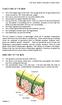 FUNCTIONS OF THE SKIN Skin is the largest organ of the body. The average adult has 18 square feet of skin which account for 16% of the total body weight. Skin acts as a physical barrier for you to the
Septic System Care & Maintenance
 Septic System Care & Maintenance A User s Guide for Home/Cottage Owners Spring 2003 Preventing Septic Failure & Malfunction How many of us know how our septic system works, or think we know? We expect
Acrylic and Styrenic Monomers from Biomass
 Acrylic and Styrenic Monomers from Biomass BPM-060 ACTION BPM Symposium, Wageningen, June 27, 2013 Jérôme Le Nôtre Biobased Commodity Chemicals Group Plastics Biobased Non biodegradable Bioplastics Bio-PE
COURSE TITLE COURSE DESCRIPTION
 COURSE TITLE COURSE DESCRIPTION CH-00X CHEMISTRY EXIT INTERVIEW All graduating students are required to meet with their department chairperson/program director to finalize requirements for degree completion.
Neutralizing an Acid and a Base
 Balancing Act Teacher Information Objectives In this activity, students neutralize a base with an acid. Students determine the point of neutralization of an acid mixed with a base while they: Recognize
IMO Approved Tank Cleaning Chemicals
 IMO Approved Tank Cleaning Chemicals IMO Approved Tank Cleaning Chemicals TC1 Aquamarine Aquawash T1080A Suitable for the removal of fatty acids, fish oils and other drying or semi-drying oil deposits.
INTRODUCTION. Such chemical substances which are added to food materials to prevent their spoilage are known as chemical preservatives.
 INTRODUCTION Growth of microorganisms in a food material can be inhibited by adding certain chemical substances. However the chemical substances should not be harmful to the human beings. Such chemical
Water Treatment & Purification Chemicals
 Lime-Out Extra Water Treatment Cleaning Chemicals Dissolves tough lime, calcium & rust stains Non-abrasive thick jelly like liquid clings to vertical surfaces Cleans tubs, sinks, shower doors, dishwashers
MIRANDA WATER TREATMENT SYSTEMS PROJECT IMAGES PORTFOLIO
 MIRANDA WATER TREATMENT SYSTEMS PROJECT IMAGES PORTFOLIO MIRANDA ENVIRONMENT AND WATER TREATMENT SYSTEMS INBOX İÇİNDEKİLER Company Şirket Profili Profile General Genel Özellikler Specifications Portfolio
Tavuk Nugget Hazırlamada Kullanılan Kaplama Malzemeleri ve Kızartma Sürelerinin Kızartma Yağı Oksidasyonuna Etkileri
 Gıda Teknolojileri Elektronik Dergisi Cilt: 5, No: 3, 2010 (56-60) Electronic Journal of Food Technologies Vol: 5, No:3, 2010 (56-60) TEKNOLOJİK ARAŞTIRMALAR www.teknolojikarastirmalar.com e-issn:1306-7648
Safety Safety glasses or goggles must be worn in the laboratory at all times.
 APPLE BROWNING: A STUDY OF OXIDATION OF FOODS 2005, 1997 by David A. Katz. All rights reserved. Reproduction permitted for education use provided original copyright is included. You are preparing for a
Texanlab Laboratories Pvt. Ltd. Colourfastness Testing Series
 COLOUR FASTNESS TO PERSPIRATION Color fading and alteration can be caused by the reaction between dyes on garments and the constituents of human perspiration, such as skin waste. It varies for different
Inside Hair: A Closer Look at Color and Shape
 Inside Hair: A Closer Look at Color and Shape For the past decade women and men alike have had chemical treatments preformed on their hair. Consumers spend millions of dollars on hair care products such
Journal of Innovations in Pharmaceuticals and Biological Sciences. www.jipbs.com. A study on ph indicator property of flowers of Ipomea nil
 Journal of Innovations in Pharmaceuticals and Biological Sciences www.jipbs.com JIPBS Original Article A study on ph property of flowers of Ipomea nil Sajin Kattuvilakam Abbas* Karavali College of Pharmacy,
TERMS OF REFERENCE FOR PROJECTS. INSPECTAN: environmental inspection guidelines for the tanning industry
 TERMS OF REFERENCE FOR PROJECTS ANNEX I Name of project INSPECTAN: environmental inspection guidelines for the tanning industry 1. Scope 1.1. Background Within the framework of the activities related to
ALL PURPOSE CLEANER. Active Ingredients. Description. Advantages. Remarkable products from Nature's own laboratory
 Remarkable products from Nature's own laboratory ALL PURPOSE CLEANER Active Ingredients Proprietary blend of biodegradable organic cleaning agents in aqueous base formulation. Description Organica's All
Biological Drain Maintenance Systems
 Biological Drain Maintenance Systems 2007 NCH Corporation HISTORY OF DRAINS MODERN SEWAGE SYSTEM Septic tanks were introduced; effluent water was largely untreated causing pollution of streams and rivers.
Austin Peay State University Department of Chemistry CHEM 1111. Empirical Formula of a Compound
 Cautions Magnesium ribbon is flammable. Nitric acid (HNO 3 ) is toxic, corrosive and contact with eyes or skin may cause severe burns. Ammonia gas (NH 3 ) is toxic and harmful. Hot ceramic crucibles and
Extraction: Separation of Acidic Substances
 Extraction: Separation of Acidic Substances Chemists frequently find it necessary to separate a mixture of compounds by moving a component from one solution or mixture to another. The process most often
Guide to Reverse Phase SpinColumns Chromatography for Sample Prep
 Guide to Reverse Phase SpinColumns Chromatography for Sample Prep www.harvardapparatus.com Contents Introduction...2-3 Modes of Separation...4-6 Spin Column Efficiency...7-8 Fast Protein Analysis...9 Specifications...10
FIRE RESTORATION PRODUCTS
 CLEANING SOLUTIONS Table of Contents Fire Restoration Products... 2 Emulsifier/Prespray Products... 3 Interim Cleaning Products... 2-3 Spotting Products... 4 Upholstery Care... 5 Deodorizers... 5 Green
Advantages and Disadvantages of Low VOC Vegetable Based Metalworking Fluids
 Advantages and Disadvantages of Low VOC Vegetable Based Metalworking Fluids John Burke, CMFS STLE Fellow Global Director of Engineering Services Alan Cross, Senior Project Engineer Houghton International
CHEMICAL PRECIPITATION: WATER SOFTENING
 CHEMICAL PRECIPITATION: WATER SOFTENING Submitted to: Dr. Hashsham Research Complex Engineering Department of Civil and Environmental Engineering Michigan State University East Lansing, MI 4884 Authors
Chem 405 Biochemistry Lab I Experiment 2 Quantitation of an unknown protein solution.
 Chem 405 Biochemistry Lab I Experiment 2 Quantitation of an unknown protein solution. Introduction: The determination of protein concentration is frequently required in biochemical work. Several methods
eco delphis our guide to... ecological cleaning products bio fizzy tablets www.delphiseco.com
 By Appointment to HRH The Prince of Wales Manufacturer of Environmentally Friendly Cleaning Products Delphis Eco, London delphis eco our guide to... ecological cleaning products bio fizzy tablets www.delphiseco.com
Acids and Bases. An Introduction. David A Katz Department of Chemistry Pima Community College, Tucson, AZ, USA
 Acids and Bases An Introduction David A Katz Department of Chemistry Pima Community College, Tucson, AZ, USA Properties of Acids 1. Sour taste (examples: vinegar, citric acid, lemon juice) 2. Turns litmus
Disaccharides consist of two monosaccharide monomers covalently linked by a glycosidic bond. They function in sugar transport.
 1. The fundamental life processes of plants and animals depend on a variety of chemical reactions that occur in specialized areas of the organism s cells. As a basis for understanding this concept: 1.
Chapter 6. Solution, Acids and Bases
 Chapter 6 Solution, Acids and Bases Mixtures Two or more substances Heterogeneous- different from place to place Types of heterogeneous mixtures Suspensions- Large particles that eventually settle out
Lecture 6: Cholesterol (Ch. 9.1e, 9.2b, 19.7b,c) & Lipoproteins (Ch. 10.3*, 19.1, 19.7b,c)
 Lecture 6: Cholesterol (Ch. 9.1e, 9.2b, 19.7b,c) & Lipoproteins (Ch. 10.3*, 19.1, 19.7b,c) Next lecture: Fatty Acid Oxidation (Ch. 19.2), Ketone Bodies (Ch. 19.3) and Fatty Acid Biosynthesis (Ch. 19.4)
Department of Microbiology Vidyasagar University Midnapore - 721 102 West Bengal
 S'yllabus for the I 'year FG Diploma Course in QUALITY CONTROL AND ASSURANCE IN MICROBIAL TECHNOLOGY (Semester Based: 400 marks in two semesters) Department of Microbiology Vidyasagar University Midnapore
Practical Lesson No 4 TITRATIONS
 Practical Lesson No 4 TITRATIONS Reagents: 1. NaOH standard solution 0.1 mol/l 2. H 2 SO 4 solution of unknown concentration 3. Phenolphthalein 4. Na 2 S 2 O 3 standard solution 0.1 mol/l 5. Starch solution
Hardness Comparisons
 Hardness Comparisons Hardness Adapted from: An original Creek Connections activity. Creek Connections, Box 10, Allegheny College, Meadville, Pennsylvania 16335. Grade Level: all Duration: 50 minutes Setting:
I The THREE types of LIPIDS
 LECTURE OUTLINE Chapter 5 The Lipids: Fats, Oils, Phospholipids and Sterols I The THREE types of LIPIDS A. Triglycerides (fats & oils)- the MAJOR type of lipid in food and humans. 1. 2 parts of triglyceridesa)
Extraction Theory. Org I Lab W. J. Kelly. Liquid-liquid extraction is a useful method to separate components (compounds) of a mixture
 Extraction Theory Org I Lab W. J. Kelly Liquid-liquid extraction is a useful method to separate components (compounds) of a mixture Let's see an example. Suppose that you have a mixture of sugar in vegetable
Enzymes: Practice Questions #1
 Enzymes: Practice Questions #1 1. Compound X increases the rate of the reaction below. Compound X is most likely A. an enzyme B. a lipid molecule C. an indicator D. an ADP molecule 2. The equation below
Nilüfer Bekleyen Accepted: January 2012. ISSN : 1308-7274 [email protected] 2010 www.newwsa.com Diyarbakir-Turkey
 ISSN:1306-3111 e-journal of New World Sciences Academy 2012, Volume: 7, Number: 1, Article Number: 1C0507 NWSA-EDUCATION SCIENCES Received: August 2011 Nilüfer Bekleyen Accepted: January 2012 Adnan Yılmaz
Laboratory Glassware Cleaning
 Laboratory Glassware Cleaning Laboratory glassware is valued for its durability, inertness, transparency and for presenting a simple, clean surface for a variety of applications. It is important that lab
Approved for use September 2015 August 2016 (VERSION 2 ISSUED 16 OCTOBER 2015) Guidance
 Assignment brief Qualification Unit code/title AM20530 VTCT Level 2 Certificate in Hairdressing and Beauty Therapy (VRQ) UV21582 Hair and beauty science Approved for use September 2015 August 2016 (VERSION