
Operation and Maintenance Manual
|
|
|
- Anabel Annabella Pearson
- 9 years ago
- Views:
Transcription
1 Operation and Maintenance Manual SETPOINT Machinery Protection System SETPOINT Vibration 2243 Park Place Suite A Minden, NV 89423, USA [email protected] Document

2 Trademarks and Copyrights All trademarks, service marks, and/or registered trademarks used in this document belong to SETPOINT Vibration, a division of Compressor Controls Corporation, except as noted below: Bently Nevada, Velomitor, REBAM, and Keyphasor are marks of the General Electric Company in the United States and other countries. Microsoft, Excel, Windows, and Outlook and their respective designs are marks of Microsoft Corporation in the United States and other countries. Modbus is a mark of Schneider Automation in the United States and other countries. Trademarks used herein are the property of their respective owners. Data and specifications are subject to change without notice. Copyright 2015, SETPOINT Vibration, a division of Compressor Controls Corporation. All rights reserved. Document Setpoint Machinery Protection System Operation and Maintenance Manual Page 2 of 238

3 Table of Contents 1 SETPOINT Components SETPOINT Rack Rack Connection Module (RCM) System Access Module (SAM) Display Monitoring Modules Universal Monitoring Module (UMM) Temperature Monitoring Module (TMM) Power Supplies Computer and Software Condition Monitoring Enabled Hardware Installation Installation Considerations Clearance Environment Mounting Orientation Mounting Methods Rack Mounting Panel Mounting Bulkhead Mounting Box Mounting Mounting the Display Remotely Reverse Mounting Power Supplies Power Supply Considerations SETPOINT AC Power Supply Option General Wiring Considerations Rack Connection Module Connections System Chassis Ground Single Point System Common to Chassis Connection Document Setpoint Machinery Protection System Operation and Maintenance Manual Page 3 of 238

4 2.5.3 Power Wiring Fault Relay Wiring Discrete Control Input Wiring Buffered Outputs Connectors System Access Module Connections SD Card Installation Modbus/TCP Ethernet Connection Ethernet Condition Monitoring System (CMS) Connection Serial Communication Connection Master to SETPOINT Point-to-Point RS-485 Multi-drop SAM RJ45 Serial Connector Monitor Module Connections Connecting to Relays Universal Monitoring Module (UMM) Sensor Wiring Temperature Monitoring Module (TMM) Sensor Wiring Configuration Software Installation Software Navigation Software Editing Functions Default Units Drop Lists Type in Numbers Enable Checkboxes Copy/Paste Multiple Cell Copy/Paste Copy/Paste to Excel Sorting Columns Multiple Column Sort Copy Across Multiple Cells Toolbar Views Properties List Document Setpoint Machinery Protection System Operation and Maintenance Manual Page 4 of 238

5 Errors Rack Configuration New/Existing Configurations Connecting to the Rack Getting the Configuration from the Rack Configuring Modules Configuring Channels Configuring Measurements Configuring Transducer Details Configuring Position Measurements Configuring Process Variables Configuring Temperature Channels Configuring Phase Triggers Configuring Discrete Inputs Analog Output Configuration Display Configuration Relay Configuration Configuring the System Access Module Password Setting the SAM Modbus TCP/IP Settings Serial Modbus Configuration Modbus Operation Configuration CMS (DAC) Settings Time Zone Setting Simulator Enabled Display Cursor Visible Modbus Configuration Supported Modbus Functions Input and Holding Registers Coils and Discrete Input Contacts Exporting the Modbus Map Creating a Custom Modbus Map Document Setpoint Machinery Protection System Operation and Maintenance Manual Page 5 of 238

6 3.7 Configuring a System without a System Access Module Saving the Configuration Sending the Configuration to the Rack Operation Display Machine at a Glance The Detail View Rack at a Glance View List View Alarm Events View System Event List Switchable BNC Connectors RCM Operation Input Power Protection and Indication Buffered Output Connections Fault Relay Discrete Control Signal Inputs The Reset Button SAM Operation System Level Configuration Modbus Communication System Event and Alarm Event Lists Dynamic Data Collection Operation without a SAM UMM and TMM Operation Data Measurement Operation Alarming Operation Relay Voting Operation Operation Modes Phase Trigger Diagnostics Verification and Troubleshooting Document Setpoint Machinery Protection System Operation and Maintenance Manual Page 6 of 238

7 5.1 LED fault indications RCM LED Indicators SAM LED Indicators UMM and TMM LED Indicators Event List Events RJ45 Buffered Out UMM Verification TMM Verification Maintenance Inserting and Removing Modules Removing or Installing the Door Removing or Installing the Display Cable Removing or Installing the Spring Loaded Door Hinge Removing or Installing the Pin Door Hinge Upgrading Firmware Downloading the Firmware Files Upgrading the Display Firmware Bypassing Channels Resetting Held Values Rebooting the SAM Saving Diagnostic Information Environmental Information Appendix SETPOINT Transducer Fault Limits Configuration Examples Ramp Differential Expansion Complementary Input Differential Expansion Difference and Average Temperature Measurements Aero-derivative Gas Turbine Measurements Rolling Element Bearing Solutions Zero Speed Measurements Reverse Rotation Measurements Document Setpoint Machinery Protection System Operation and Maintenance Manual Page 7 of 238

8 8.2.8 Eccentricity Discrete Inputs Valve Position Applications Case Expansion Applications Shaft Absolute Acoustic Sound Level Measurements Power Connection Module (PCM) Using Signals Powered by Another System Using Buffered Outputs Specifications Document Setpoint Machinery Protection System Operation and Maintenance Manual Page 8 of 238

9 1 SETPOINT Components The SETPOINT Machinery Protection System consists of these components: 1.1 SETPOINT Rack The SETPOINT rack provides protection and inter-module connections for the SETPOINT system modules. The SETPOINT rack is available in three sizes: A 19 full size rack with 16 slots An 8 slot half-sized rack A 4 slot, compact rack All rack sizes support panel, bulkhead, and weatherproof box mounting. The 19 full size rack also supports mounting in a 19 EIA rack. The SETPOINT rack has an optional locking door to prevent tampering with wiring and network lines. The door supports an optional color touchscreen display module. Figure 1: The SETPOINT Rack Document Setpoint Machinery Protection System Operation and Maintenance Manual Page 9 of 238

10 1.2 Rack Connection Module (RCM) The SETPOINT Rack Connection Module (RCM) installs in the first rack slot on the left and provides rack level connections and protection circuitry for: Primary Power Input Secondary Power Input Discrete contact control inputs Rack Fault Relay Reset Button LED indictors Buffered Transducer Outputs Discrete control contacts (to dry relay contacts or +5V TTL logic) Fault Relay Contacts. NC closes on fault. Latched Status Reset Pushbutton. LEDs Knurled captive screws (2 pos). +24 V power input connectors. (2 pos) Buffered Out connector to external device or patch panel. Figure 2: RCM Document Setpoint Machinery Protection System Operation and Maintenance Manual Page 10 of 238

11 1.3 System Access Module (SAM) The SETPOINT System Access Module (SAM) provides a convenient single point access for: Configuring all modules Connection to the control network Local display connection System Event and Alarm Event Lists Connection to condition monitoring host computer The primary SAM installs in Slot 2. An optional second SAM for redundant Modbus communication installs in Slot 3. Slots 2 and 3 also support monitoring modules if SAMs are not purchased. NOTE: Redundant Modbus connection from a second SAM in slot 3 requires an operating primary SAM in slot 2. The SAM is not in the safety path between sensor and relay and can be replaced without interrupting machine protection. Display and Dynamic Data options require installation of additional hardware. Order the SAM with Display and Dynamic Data Ready option if you plan to use these functions. Without a SAM in the Rack, all monitoring modules must be configured independently and events viewed independently. Older SAMs supported serial communication only with modifications. Starting with revision F (released Oct 2015), the standard SAM supports serial communication for: Point to Point over RS-232, RS-422, RS-485, Multi-drop RS-485 The RJ45 connector above the DISPLAY connector provides the required signals (See Figure 4). Document Setpoint Machinery Protection System Operation and Maintenance Manual Page 11 of 238

12 SD Card Modbus TCP 10/100 base T Ethernet Dynamic Data 10/100/1000 base T Ethernet LEDs Display connector Figure 3: SAM Document Setpoint Machinery Protection System Operation and Maintenance Manual Page 12 of 238

13 The RJ45 connector above the DISPLAY connector provides serial communication. Figure 4: SAM with Serial Communication Document Setpoint Machinery Protection System Operation and Maintenance Manual Page 13 of 238

14 1.4 Display The SETPOINT Rack optionally supports a color touchscreen display module mounted on the rack or remotely up to 10 ft (3 m) away. The display module shows: All data values collected by the SETPOINT monitoring modules All data statuses produced by the SETPOINT monitoring modules All Alarm set-points System Event List Alarm Event List The Display also supports acknowledging and resetting alarms and switchable buffered output BNC connectors. The switchable buffered output BNCs can output the buffered signals from any UMM channel when selected on the Display. Display modules shipped after Jan 2014 are high brightness units for outdoor visibility in bright sunlight. Contact SETPOINT Vibration for options for upgrading older displays to the brighter displays. NOTE: The brighter display requires the appropriate SAM firmware. Swapping a SAM between racks with old and new displays will cause the display to operate incorrectly. Contact SETPOINT Vibration for information on the correct firmware for your display. Document Setpoint Machinery Protection System Operation and Maintenance Manual Page 14 of 238

15 1.5 Monitoring Modules The SETPOINT Rack supports 1 to 15 Monitoring Modules depending on rack size and number of System Access Modules. Monitoring Modules will operate correctly when installed into any slot other than the first slot (reserved for the RCM). The Monitoring Modules: Power sensors Condition sensor signals Extract machine measurements from the signals Compare measurements to configured alarm set-points Perform alarm status voting logic Drive alarm relays Drive Analog 4 to 20 ma outputs Communicate data to the System Access Module for Display and Modbus Communication. The SETPOINT system supports two monitoring module types: The Universal Monitoring Module (UMM) and the Temperature Monitoring Module (TMM). The UMM performs many measurements for monitoring centrifugal and reciprocating machinery. The TMM supports Temperature and Process Variable measurements. Document Setpoint Machinery Protection System Operation and Maintenance Manual Page 15 of 238

16 1.5.1 Universal Monitoring Module (UMM) The SETPOINT Universal Monitoring Module is a 4-channel machine monitoring module that supports proximity, seismic, loop powered 4-20 ma transmitter, and phase trigger sensor inputs. Table 1 lists the channel types and associated measurements the UMM supports. The Type column lists when the measurements are available. A checkmark 3 indicates the measurement is always included. PT indicates that you must associate the channel with a Phase Trigger for the UMM to perform the measurement. Add indicates an optional measurement that you can add following the instructions in section The four UMM channels are independently configured. Composite measurements requiring two channels restrict channel assignments. You can assign single transducer channel types to any of the 4 channels. Table 1: UMM Channels and Measurements Channel Type Typical Uses Measurements Measurement Description Type Acceleration Casing acceleration Direct (primary) Overall dynamic amplitude measurement. 24 db/octave filter rollon, -24 db/octave roll-off. 3 Bias DC sensor bias for diagnostics. 3 1X Amplitude and Phase A synchronous amplitude and phase measurement at running speed. PT 2X Amplitude and Phase A synchronous amplitude and phase measurement at twice running speed. PT Band-pass Band-pass filtered dynamic amplitude measurement. 24 db/octave filter rollon, -24 db/octave roll-off. Add nx A synchronous amplitude and phase measurement at n times running speed. Add PT Acoustic Sound level measurements Direct (primary) A-weighted wideband sound level from 20 to 20 khz. 3 Bias DC sensor bias for diagnostics. 3 Band-pass filters 1 to 8 Typically used for sound level octave filtering. See section Document Setpoint Machinery Protection System Operation and Maintenance Manual Page 16 of 238

17 Aero-Derivative Accel Aero-Derivative Gas Turbines with high temperature accelerometers Aero 1X Tracking Filter (primary) Band-pass 1 Signal is band-pass filtered with -48dB roll-on/roll-off and then filtered around the 1X speed frequency. Integrated to velocity (configurable). Typically used for wideband velocity measurements. Band-pass filtered measurement. -48 db/octave roll-on, roll-off. Integrated to velocity (configurable) PT 3 Band-pass 2 Typically used for wideband acceleration measurements. Band-pass filtered acceleration -48 db/octave rollon, roll-off. 3 Bias DC sensor bias for diagnostics. 3 Aero-Derivative Velocity Tracking Aero-Derivative Gas Turbines with Aero Interface Modules using Tracking Filters 1X Tracking Filter Filtered around the 1X speed frequency. PT Band-pass Band-pass filtered dynamic amplitude measurement. -48 db/octave roll-on, roll-off. May be used for a wideband velocity measurement. Bias DC sensor bias for diagnostics. 3 3 Aero-Derivative Velocity Aero-Derivative Gas Turbines with Aero Interface Modules using Band pass Filters Band-pass Band-pass Band-pass filtered dynamic amplitude measurement. -48 db/octave roll-on, roll-off. Commonly used for a narrow band velocity measurement. Band-pass filtered dynamic amplitude measurement. -48 db/octave roll-on, roll-off. May be used for a wideband velocity measurement. 3 3 Bias DC sensor bias for diagnostics. 3 Axial Position Thrust position Axial Position Measures the position change in the axial direction. Commonly used for thrust position measurements. 3 Gap DC sensor gap voltage for diagnostics. 3 Axial Vibration Band-pass filtered Pk-Pk displacement Add Document Setpoint Machinery Protection System Operation and Maintenance Manual Page 17 of 238

18 -6dB/octave roll-on, roll-off Case Expansion Steam Turbine case expansion measurements using an LVDT transmitter Direct Single channel case expansion measurement from the LVDT displacement. 3 Case Expansion (2 ch) Steam Turbine case expansion measurements using two LVDT transmitters Differential Case Expansion Direct 1 Calculates the difference between two case expansion transducers. Single channel case expansion measurement from LVDT Direct 2 Single channel case expansion measurement from LVDT 2. 3 Diff Exp Single Probe Steam turbine single probe differential expansion Direct Differential Expansion position. 3 Gap DC sensor gap voltage for diagnostics. 3 Diff Exp Comp Input Steam Turbine Complementary Input Differential Expansion Composite Differential expansion measurement combining the measurements from sensors 1 and 2 to double the available range. 3 Diff Exp Dual Ramp Steam turbine dual ramp differential expansion Direct 1 Position measurement from sensor 1. 3 Direct 2 Position measurement from sensor 2. 3 Gap 1 DC sensor 1 gap voltage for diagnostics. 3 Gap 2 DC sensor 2 gap voltage for diagnostics. 3 Composite The differential expansion measurement using two probes to eliminate common errors. Direct 1 The position measurement for sensor 1. 3 Direct 2 The position measurement for sensor 2. 3 Gap 1 DC sensor 1 gap voltage for diagnostics. 3 Gap 2 DC sensor 2 gap voltage for diagnostics. 3 3 Document Setpoint Machinery Protection System Operation and Maintenance Manual Page 18 of 238

19 Diff Exp Single Ramp Steam turbine single ramp differential expansion Composite The differential expansion measurement using two probes to eliminate common errors. Direct 1 The position measurement for sensor 1. 3 Direct 2 The position measurement for sensor 2. 3 Gap 1 DC sensor 1 gap voltage for diagnostics. 3 Gap 2 DC sensor 2 gap voltage for diagnostics. 3 3 Discrete Input Switched input Digital State 100% if logic input is > 2Vdc or contact is open. 3 0% if logic input is < 1Vdc or contact is closed. Dynamic Pressure Cavitation, Humming Direct Bandpass filtered dynamic amplitude. 84 Db/octave roll-on, roll-off 3 Bias DC sensor bias voltage for diagnostics. 3 Pressure Bandpass 1 Pressure Bandpass 2 Pressure Bandpass 3 Bandpass filtered dynamic amplitude. 84 Db/octave roll-on, roll-off Bandpass filtered dynamic amplitude. 84 Db/octave roll-on, roll-off Bandpass filtered dynamic amplitude. 84 Db/octave roll-on, roll-off Add Add Add Eccentricity Steam turbine eccentricity PP Eccentricity Peak to peak eccentricity measurement. 3 Gap DC sensor gap voltage for diagnostics. 3 Min Max Ecc Position The minimum position measured during a single shaft rotation. The maximum position measured during a single shaft rotation. The shaft position. Below the crossover speed Ecc Position is the instantaneous measured position. Above the crossover speed Ecc Position is the average position Document Setpoint Machinery Protection System Operation and Maintenance Manual Page 19 of 238

20 Enveloped Acceleration Rolling element bearing fault detection Direct Overall dynamic amplitude before enveloping. Bias DC sensor bias voltage for diagnostics. 3 3 Cage Envelope demodulated and band-pass filtered amplitude. Can be used for rolling element bearing cage frequency measurement. 3 IRBP Envelope demodulated and band-pass filtered amplitude. Can be used for rolling element bearing inner race ball pass frequency measurement. 3 ORBP Envelope demodulated and band-pass filtered amplitude. Can be used for rolling element bearing outer race ball pass frequency measurement. 3 Ball Spin Envelope demodulated and band-pass filtered amplitude. Can be used for rolling element bearing ball spin frequency measurement. 3 2X Ball Spin Envelope demodulated and band-pass filtered amplitude. Can be used for rolling element bearing twice ball spin frequency measurement. 3 Hydro Radial Vibration Hydro turbines or other low speed machines with proximity transducers. Direct Gap Overall dynamic amplitude measurement. 84 db/octave roll-on, - 72 db/octave roll-off. DC sensor gap or bias voltage for diagnostics X Amplitude A synchronous amplitude measurement at running speed. PT 2X Amplitude A synchronous amplitude measurement at twice running speed. PT Bandpass 1 Band-pass filtered dynamic amplitude measurement. 84 db/octave roll-on, - 72 db/octave roll-off. 3 Document Setpoint Machinery Protection System Operation and Maintenance Manual Page 20 of 238

21 Bandpass 2 Bandpass 3 Bandpass 4 Bandpass 5 Bandpass 6 Bandpass 7 Bandpass 8 Band-pass filtered dynamic amplitude measurement. 84 db/octave roll-on, - 72 db/octave roll-off. Band-pass filtered dynamic amplitude measurement. 84 db/octave roll-on, - 72 db/octave roll-off. Band-pass filtered dynamic amplitude measurement. 84 db/octave roll-on, - 72 db/octave roll-off. Band-pass filtered dynamic amplitude measurement. 84 db/octave roll-on, - 72 db/octave roll-off. Band-pass filtered dynamic amplitude measurement. 84 db/octave roll-on, - 72 db/octave roll-off. Band-pass filtered dynamic amplitude measurement. 84 db/octave roll-on, - 72 db/octave roll-off. Band-pass filtered dynamic amplitude measurement. 84 db/octave roll-on, - 72 db/octave roll-off Hydro Velocity Hydro turbines or other low speed machines with velocity transducers. Direct Overall dynamic amplitude measurement. 84 db/octave roll-on, - 72 db/octave roll-off. Bias DC sensor bias voltage for diagnostics X Amplitude 2X Amplitude Bandpass 1 Bandpass 2 A synchronous amplitude measurement at running speed. A synchronous amplitude measurement at twice running speed. Band-pass filtered dynamic amplitude measurement. 84 db/octave roll-on, - 72 db/octave roll-off. Band-pass filtered dynamic amplitude measurement. 84 db/octave roll-on, - 72 db/octave roll-off. PT PT 3 3 Document Setpoint Machinery Protection System Operation and Maintenance Manual Page 21 of 238
22 Bandpass 3 Band-pass filtered dynamic amplitude measurement. 84 db/octave roll-on, - 72 db/octave roll-off. 3 Bandpass 4 Band-pass filtered dynamic amplitude measurement. 84 db/octave roll-on, - 72 db/octave roll-off. 3 Bandpass 5 Band-pass filtered dynamic amplitude measurement. 84 db/octave roll-on, - 72 db/octave roll-off. 3 Bandpass 6 Band-pass filtered dynamic amplitude measurement. 84 db/octave roll-on, - 72 db/octave roll-off. 3 Bandpass 7 Band-pass filtered dynamic amplitude measurement. 84 db/octave roll-on, - 72 db/octave roll-off. 3 Bandpass 8 Band-pass filtered dynamic amplitude measurement. 84 db/octave roll-on, - 72 db/octave roll-off. 3 Low Frequency Acceleration Fans or other low speed machinery. Direct Overall dynamic amplitude measurement. 24 db/octave filter rollon, -24 db/octave roll-off. Integrating results in velocity. The Low Frequency acceleration channel can be configured for integration as low as 1 Hz. 3 Bias DC sensor bias voltage for diagnostics. 3 Low Frequency Velocity Fans or other low speed machinery. Direct Overall dynamic amplitude measurement. 24 db/octave filter rollon, -24 db/octave roll-off. Integrating results in displacement. The Low Frequency Velocity channel can be configured for integration as low as 1 Hz. 3 Bias DC sensor bias voltage for diagnostics. 3 Phase Trigger Tachometer Speed Rotational speed. 3 Gap The average gap voltage for diagnostics. 3 Document Setpoint Machinery Protection System Operation and Maintenance Manual Page 22 of 238
23 Rotor Acceleration Peak Speed Change in rotational speed Maximum speed reached since the peak speed was reset. Add Add Process Variable Radial Vibration 4 to20 ma, 0 to +5 V, +1 to +5 V, or 0 to -10 V transmitters. Radial Vibration on fluid film bearings using proximity probes. Direct The transmitter output value converted to the configured full scale and units. Bias DC sensor bias voltage for diagnostics. 3 Direct Overall dynamic amplitude measurement. 6 db/octave roll-on, -6 db/octave roll-off. Gap DC sensor gap voltage for diagnostics X amplitude and phase A synchronous amplitude and phase measurement at running speed. PT 2X amplitude and phase A synchronous amplitude and phase measurement at twice running speed. PT nx An additional synchronous amplitude and phase measurement at the configured multiple of running speed. Commonly used for 0.5X or 3X measurements. Add PT Band-pass 1 An additional pk-pk bandpass filtered measurement. Add this band-pass filter to filter a different region, change units or subunits, or provide additional alarms. Add Band-pass 2 An additional pk-pk bandpass filtered measurement. Add this band-pass filter to filter a different region, change units or subunits, or provide additional alarms. Add REBAM Channel Rolling Element Bearings using a proximity probe. Direct Overall dynamic amplitude measurement. 6 db/octave roll-on, -6 db/octave roll-off. 3 Gap DC sensor gap voltage for diagnostics. 3 Document Setpoint Machinery Protection System Operation and Maintenance Manual Page 23 of 238
24 Rotor Region Band-pass filtered measurement typically used for rotor related information. 6 db/octave filter roll-on, - 36 db/octave roll-off 3 Prime Spike Band-pass filtered measurement typically used for bearing related information. 36 db/octave filter roll-on, -6 db/octave roll-off 3 REB Acceleration Rolling Element Bearings using an accelerometer Overall Overall dynamic amplitude measurement. 24 db/octave roll-on, -24 db/octave roll-off. 3 Prime Spike Band-pass filtered measurement typically used for bearing related information. 24 db/octave filter roll-on, -12 db/octave roll-off 3 HF Demodulated Filtered and peak-stretch demodulated measurement typically used for early warning of lubrication and bearing faults. 3 Bias DC sensor bias voltage for diagnostics. 3 Recip Crankcase Velocity Reciprocating Compressors Direct Similar to the standard Velocity channel except that Fault events are valid for alarming. This allows the channel to alarm in the event that a liquid slug causes an excessive amplitude spike. 3 Bias DC sensor bias voltage for diagnostics. 3 Recip Impact Detection of mechanical looseness on reciprocating machines Impact Count Maximum Count of mechanical impact events that exceeded the configured threshold occurring within the set time window. The maximum peak acceleration value measured. Used to set the Impact Count threshold. 3 3 Bias DC sensor bias voltage for diagnostics. 3 Recip Rod Drop Rider band wear measurements on non- Average Piston Position The piston position calculated from the measured probe gap at the average probe position over a stroke. 3 Document Setpoint Machinery Protection System Operation and Maintenance Manual Page 24 of 238
25 lubricated or lightly lubricated horizontal reciprocating compressors Average Gap Triggered Piston Position The probe gap at the average probe position over a stroke. The piston position as calculated from the probe to rod instantaneous gap measured at the configured trigger angle. 3 PT Triggered Gap The probe to rod instantaneous gap measured at the configured trigger angle. PT Reverse Rotation Determine shaft rotation direction using two Phase Trigger inputs. Rev Speed Num Rev Rotations Reverse Speed. The current measured speed in the reverse direction. Number of Reverse Rotations. A cumulative count of the number of rotations in the reverse direction. Reset using the peak hold reset button. 3 3 Rev Peak Speed Reverse Peak Speed. Holds the maximum speed read in the reverse direction. Reset using the peak hold reset button. 3 Forward Speed Forward speed reading for the first sensor. 3 Shaft Absolute RV Shaft vibration measurements where the absolute casing vibration is large. Replacement for shaft-riders. Gap 1 DC sensor gap voltage for diagnostics. 3 Gap 2 DC sensor gap voltage for diagnostics. 3 Shaft Abs Direct Direct Summation of the relative direct with the integrated case velocity to obtain the absolute vibration displacement. Shaft relative overall dynamic amplitude measurement. 6 db/octave roll-on, -6 db/octave roll-off. Gap DC sensor gap voltage for diagnostics X amplitude and phase Shaft relative synchronous amplitude and phase measurement at running speed. 3 Shaft Absolute Velocity Direct Casing velocity dynamic amplitude measurement. 24 db/octave roll-on, 3 Document Setpoint Machinery Protection System Operation and Maintenance Manual Page 25 of 238
26 Vel -24 db/octave roll-off. Intg Direct Casing velocity integrated to displacement dynamic amplitude measurement. 24 db/octave roll-on, - 24 db/octave roll-off. Used in the Shaft Absolute calculation. 3 Bias DC sensor bias voltage for diagnostics. 3 1X amplitude and phase Casing velocity integrated to displacement synchronous amplitude and phase measurement at running speed. 3 Valve Position Velocity Steam turbine valve position measurement using an AC LVDT and transmitter. Velocity measurements as measured from piezo-electric, or moving coil velocity transducers. Valve Position Measures the valve % open or % closed. 3 Bias The sensor bias voltage for diagnostics. 3 Direct Overall dynamic amplitude measurement. 24 db/octave filter rollon, -24 db/octave roll-off. Integrating results in displacement. Bias The sensor bias voltage for diagnostics. 3 1X amplitude and phase The velocity component occurring at the rotor speed. 3 PT 2X amplitude and phase The velocity component occurring at twice the rotor speed. PT Band-pass A band-pass filtered and amplitude detected measurement. May be used in conjunction with Direct to measure a different frequency region, integration, or units. Add nx amplitude and phase The velocity component occurring at n times the rotor speed. Add PT Zero Speed Turbine turning gear engagement Zero Speed Displays the machine rotational speed when below 100 rpm, both channels of a two channel pair are valid and agree within a configured percentage. Use the 3 Document Setpoint Machinery Protection System Operation and Maintenance Manual Page 26 of 238
27 Zero Speed measurement to indicate when the turning gear can be safely engaged. Speed The machine rotational speed. 3 Gap Peak Speed For proximity probes, the gap is the average distance between the probe face and shaft as measured in volts. For passive magnetic transducers the gap voltage is near zero. The maximum speed measured since the last held value reset. 3 Add The SETPOINT UMM conditions the transducer signals, performs filtering and vibration measurements, compares the measurements to configurable alarm set-points, cross votes the alarms with other channels and monitor modules, and activates relays. The UMM provides 4 independent relay outputs. Each relay output is programmable to trip independently, on bussed statuses, or using logical operation on internal statuses and shared status busses from other modules. Document Setpoint Machinery Protection System Operation and Maintenance Manual Page 27 of 238
28 BUFF OUT Mini USB Configuration Port MX2020/UMM PWR1 SIG/A1 COM/B1 SLD1 PWR2 SIG/A2 COM/B2 SLD2 PWR3 SIG/A3 COM/B3 SLD3 PWR4 SIG/A4 COM/B4 SLD4 Sensor Input Connector Buffered Out RJ45 Status LEDs USB OK R1 R2 BYP R3 R4 AN1 COM AN2 COM AN3 COM AN4 COM Analog Output Connector NC1 ARM1 NO1 NC2 ARM2 NO2 NC3 ARM3 NO3 NC4 ARM4 NO4 Relay Output Connectors Figure 5: UMM Document Setpoint Machinery Protection System Operation and Maintenance Manual Page 28 of 238
29 1.5.2 Temperature Monitoring Module (TMM) The SETPOINT Temperature Monitoring Module is a 6-channel machine monitoring module that supports these thermocouple, RTD, and Process Variable inputs: Type J Thermocouple Type K Thermocouple Type T Thermocouple Type E Thermocouple 100 ohm platinum RTD (alpha = ) 100 ohm platinum RTD (alpha = ) 120 ohm nickel RTD 100 ohm copper RTD 10 ohm copper RTD 4-20 ma process variable through and external 68 ohm resistor The TMM does not provide process variable transmitter power. The Type column lists when the measurements are available. A checkmark 3 indicates the measurement is always included. Add indicates an optional measurement that you can add following the instructions in section Table 2: TMM Channels and Measurements Channel Type Typical Uses Measurements Measurement Description Type Temperature Thermocouple or RTD temperature measurements Direct (primary) Temperature 3 Difference Difference between two temperature sensors or between a temperature sensor and an average. Add Average An average temperature taken across multiple channels. Add Process Variable 4 to 20 ma process variable transmitters Direct (primary) Process Variable Input 3 Each channel input is independently configurable allowing you to mix thermocouples, RTDs, and Process Variable inputs into the same TMM. Document Setpoint Machinery Protection System Operation and Maintenance Manual Page 29 of 238
30 CHANNEL 3 CHANNEL 6 CHANNEL 2 CHANNEL 5 CHANNEL 1 CHANNEL 4 The TMM conditions the transducer signals, performs filtering and noise rejection, compares the measurements to configurable alarm set-points, cross votes the alarms with other channels and monitor modules, and activates relays. The TMM provides 4 independent relay outputs. Each relay output is programmable to trip independently, on bussed statuses, or using logical operation on internal statuses and shared status busses from other modules. The TMM includes six analog 4 to 20 ma outputs that you can configure to be driven from any measurement performed in the TMM. MX2020/TMM A B C D S A B C D S A B C D S Sensor Input Connectors Mini USB Configuration Port LEDs USB OK R1 R2 BYP R3 R4 A 1 C A 2 C A 3 C Analog Output Connectors NC1 ARM1 NO1 NC2 ARM2 NO2 NC3 ARM3 NO3 NC4 ARM4 NO4 Relay Output Connector Figure 6: TMM Document Setpoint Machinery Protection System Operation and Maintenance Manual Page 30 of 238
31 1.6 Power Supplies The SETPOINT rack requires +24 Vdc power to operate. The SETPOINT system has several different power supply versions for AC and DC power inputs. The SETPOINT rack can also use a +24 Vdc power supply you provide. Refer to the datasheets for information on power supply input voltage tolerance and current requirements. 1.7 Computer and Software The SETPOINT system requires a computer and SETPOINT software. There are two components to the SETPOINT software: SETPOINT Setup software and SETPOINT Maintenance software. The SETPOINT Setup software provides: Programmable configuration for all modules Relay voting logic configuration The SETPOINT Maintenance software displays: All data values collected by the SETPOINT monitoring modules All data statuses produced by the SETPOINT monitoring modules All alarm set-points System Event List Alarm Event List Alarm acknowledgement Channel and relay bypass controls The minimum computer system will have at least a single core Pentium m 2.13 GHz processor with 2 GB of RAM and Windows XP, Windows 7 or Windows Condition Monitoring Enabled Hardware You must order the SETPOINT modules with the condition monitoring enabled hardware and firmware in order to provide data to the SETPOINT CMS machinery condition monitoring system. SETPOINT Vibration ships CMS enabled modules with CM enabled sticker located near the lower captive screw as shown in Figure 7. Figure 7: CM Enabled Sticker Document Setpoint Machinery Protection System Operation and Maintenance Manual Page 31 of 238
32 2 Installation 2.1 Installation Considerations Clearance SETPOINT racks require 4 inches of clearance between racks and any other components. This clearance is required for proper airflow for cooling. Figure 8: Clearance Environment Install the SETPOINT system in an environment compatible with the system specifications. Refer to the SETPOINT system datasheets for environmental specifications. When installing in hazardous areas, install the SETPOINT system in an enclosure or area protected to IP54 (splash protected). Document Setpoint Machinery Protection System Operation and Maintenance Manual Page 32 of 238
33 2.1.3 Mounting Orientation Mount the SETPOINT rack with the modules vertical as shown. Other mounting orientations are not advised. Figure 9: Mounting Orientation 2.2 Mounting Methods Rack Mounting The SETPOINT rack mounting option provides brackets for installation in an EIA 19 inch rack. Secure the rack using four 10/32 bolts and washers at the four locations shown in Figure 10. Rack mounting holes. Four places. Figure 10: Rack Mounting Holes Document Setpoint Machinery Protection System Operation and Maintenance Manual Page 33 of 238

34 2.2.2 Panel Mounting Panel-mount the SETPOINT rack in a cutout according to Figure 11: Mounting Holes and Cutout. Figure 11: Mounting Holes and Cutout in Inches (mm) The 8 slot and 16 slot SETPOINT rack heights and widths are the same as for Bently Nevada 7200 and 3300 series 4P and 8P monitor racks, respectively. SETPOINT racks will mount in these existing monitor cutouts without modification. The higher channel count of SETPOINT allows smaller racks to process all the channels from larger (10P, 12P, and 14P) 7200 and 3300 racks. A blank cover is required to fill the unused space. The SETPOINT rack does not come with Panel Clamps. Secure the rack using four 10/32 bolts through mounting holes at the locations shown. Document Setpoint Machinery Protection System Operation and Maintenance Manual Page 34 of 238
35 2.2.3 Bulkhead Mounting To bulkhead mount a SETPOINT rack, the mounting brackets are installed on the backside of the rack as shown. Bulkhead Mount Brackets Figure 12: Bulkhead Mounting The mounting hole pattern for bulkhead mounting is the same as for panel mounting. Refer to Figure Box Mounting The SETPOINT system s small, front-loading design lends itself well to mounting in weatherproof or explosion proof boxes. Be sure to consider heat dissipation to ensure the box interior stays within the SETPOINT ambient temperature rating. If possible, keep the box out of direct sunlight. Refer to the module datasheets for power dissipation information in order to calculate heat rise inside the box. Provide ventilation air if required Mounting the Display Remotely You can mount the SETPOINT door and display up to 3 meters (10 feet) from the SETPOINT rack using the remote display option. Anchor the display cable to a solid surface every 15 cm (6 inches). Refer to the remote display datasheet for part numbers and ordering information. Document Setpoint Machinery Protection System Operation and Maintenance Manual Page 35 of 238
36 2.2.6 Reverse Mounting For applications requiring the system wiring to terminate at the rack back, you can move the display to the rack back and install in panels or 19 inch EIA racks following the instructions in section or 0. Reverse mounting requires a longer display cable to reach from the System Access Module to the display. Refer to the datasheet for display cable part numbers and ordering information. Move the display brackets from the front to the back. Modules now insert from the rack back with sensor and relay wiring terminating on the back. Use a longer display cable to connect the display to the SAM display connector on the rack back. Figure 13: Reverse Mounting the Rack Document Setpoint Machinery Protection System Operation and Maintenance Manual Page 36 of 238
37 2.3 Power Supplies The SETPOINT system accepts two +24 VDC (nominal) power inputs. The SETPOINT modules generate all other needed voltages so SETPOINT does not require an internal power supply module Power Supply Considerations You can power the SETPOINT system from your existing cabinet power supplies or other power supply modules given the following considerations: Verify your power supplies have sufficient power remaining to power the SETPOINT rack. See the Module Datasheets for power draw. Brownout holdup. Verify your power supply has sufficient bulk capacitance to hold the supply voltage up during low line voltage conditions. Verify power supply temperature de-rating. Power supply output power specifications are typically much lower at elevated temperatures. The SETPOINT modules draw power from the supply with the highest voltage. To cause the system to draw power from a specific supply, adjust the voltage of that supply to be 1 V higher than the other. Document Setpoint Machinery Protection System Operation and Maintenance Manual Page 37 of 238
38 2.3.2 SETPOINT AC Power Supply Option SETPOINT Vibration offers an external universal AC power supply option for the SETPOINT system. SETPOINT Vibration has tested this supply to meet all SETPOINT CE mark, environmental specifications and hazardous area approval requirements. The SETPOINT system power supplies are mountable on a 35 mm DIN rail. Clip the top of the power supply onto the rail and push down on the bottom until the latch snaps under the rail as shown in Figure 14. 1) Clip in Back 2) Snap in Front. Figure 14: Attaching Power Supply to DIN Rail To remove the power supply from the DIN rail, pull out on the retaining clip with a screwdriver and rotate up. Follow the instructions included with the power supply when connecting the supply to the AC power mains. ELECTRICAL SHOCK HAZARD: The external power supplies are powered from high voltages. Only qualified personnel should make connections to the power supply. Refer to instructions included with the power supply module. Document Setpoint Machinery Protection System Operation and Maintenance Manual Page 38 of 238
39 2.4 General Wiring Considerations All SETPOINT connectors are a pluggable type with flange locking screws. To remove the connectors, loosen the two flange screws on either side of the terminal contacts and pull the connector straight out. Figure 15: Loosen Connector Flange Screws Figure 16: Pull Connector Plug Out Document Setpoint Machinery Protection System Operation and Maintenance Manual Page 39 of 238
40 Strip wires to 6.5 mm (0.25 in). 6.5 mm (.25 in) Fully open the connector by turning the terminal screw counterclockwise. Insert the wire and tighten the connector by turning the screw clockwise. Torque to 0.2 Nm. Document Setpoint Machinery Protection System Operation and Maintenance Manual Page 40 of 238
41 2.5 Rack Connection Module Connections The Rack Connection Module (RCM) installs in the SETPOINT rack slot 1 (left). The RCM provides connections for: System Chassis Ground Single Point System Common to Chassis Ground +24 V System Primary Power +24 V System Secondary Power Fault Relay Discrete Control Contacts Buffered Outputs System Chassis Ground Connect chassis ground wire to the rack at the RCM power connector chassis terminal. Follow electrical codes when selecting wire size, maximum wire length, and maximum earth ground resistance. When used in Zone 2 hazardous area applications, use a 4 mm 2 wire with crimp style lug to connect the chassis ground wire to earth ground. ELECTRICAL SHOCK HAZARD: The external power supplies are powered from high voltages. Only qualified personnel should make connections to the power supply. Refer to instructions included with the power supply module. Document Setpoint Machinery Protection System Operation and Maintenance Manual Page 41 of 238
42 2.5.2 Single Point System Common to Chassis Connection For normal installation, insert the jumper between COM and as shown. This connects the internal system ground to the chassis. You can install the jumper at either the Power 1 or Power 2 plugs. Both work the same. Jumper Installed Figure 17: Chassis Jumper Installation When using Zener safety barriers, or when the internal system ground is connected to another instrument ground, remove the jumper. Loosen screws and remove jumper Figure 18: Chassis Jumper Removal Document Setpoint Machinery Protection System Operation and Maintenance Manual Page 42 of 238
43 2.5.3 Power Wiring Select the power wiring gauge to be large enough to keep the input supply voltage within the normal range of +22 Vdc to +30 Vdc. The amount of cable resistance allowed is determined by the maximum SETPOINT rack current draw and the nominal power supply. Table 3 shows the maximum wire length for fully loaded racks when powered with a +24 Vdc power supply. Table 3: Maximum Power Wire Length at +24 Vdc Input Power Wire Size 16 slot rack 8 slot rack 4 slot rack 12 AWG 23 m (75 ft.) 61 m (200 ft.) 104 m (340 ft.) 14 AWG 18 m (50 ft.) 46 m (150 ft.) 76 m (250 ft.) 16 AWG 9 m (30 ft.) 24 m (80 ft.) 41 m (135 ft.) 18 AWG 6 m (20 ft.) 16 m (50 ft.) 26 m (85 ft.) 20 AWG 4 m (12 ft.) 9 m (30 ft.) 15 m (49 ft.) 22 AWG 2.5 m (8 ft.) 6.5 m (21 ft.) 11 m (36 ft.) Document Setpoint Machinery Protection System Operation and Maintenance Manual Page 43 of 238
44 2.5.4 Fault Relay Wiring The SETPOINT fault relay is a fault tolerant Single-Pole, Double-Throw (form C) relay. The fault relay activates whenever machine protection is compromised due to a detected failure. The fault relay labeling is in reference to the fault condition (i.e. when a fault occurs NC will be connected to ARM.). The fault relay is normally energized when the system is operating correctly and de-energizes to indicate a fault condition. Loss of rack power causes a fault indication. Connect to the fault relay using AWG 12 to 24 AWG wire (0.2 mm 2 to 4 mm 2 ). Refer to the specifications for the fault relay current and voltage rating shown in the datasheet. ELECTRICAL SHOCK HAZARD: High voltages may be present on relay wiring. Remove power before servicing relay connections NC. ARM NO System Unpowered or Fault No Fault NC NC ARM ARM NO NO Figure 19: Fault Relay Operation Document Setpoint Machinery Protection System Operation and Maintenance Manual Page 44 of 238
45 2.5.5 Discrete Control Input Wiring The discrete input connector provides control signal inputs from external devices, dry contact relays, or switches. All discrete inputs are active low and are asserted when the input is pulled to common. The discrete inputs are 5 V logic compatible and can be pulled low by logic gates. CAUTION! Connecting high voltage wetted relays to the discrete contacts can damage the module. Connect only dry contact relays or low voltage logic. Figure 20: Discrete Contact Inputs Connect to the discrete inputs using AWG 14 to AWG 28 wire. Document Setpoint Machinery Protection System Operation and Maintenance Manual Page 45 of 238

46 2.5.6 Buffered Outputs Connectors The buffered outputs connectors provide access to buffered analog signals from UMM modules installed in the rack. There are 56 dynamic signals and 4 COMMON signals are divided between two 30-pin connectors according to Table 4 and Table 5. NOTE: The RCM buffered output port was designed for permanent connection to a patch panel or data acquisition system. Use the RJ45 connectors on the modules for temporary connections. Connector on RCM: Molex Mating Connector: Molex Mating Connector Pin: Molex Figure 21: RCM Buffered Out Connectors NOTE: Limit the cable length to 15 ft (5 m) maximum when connecting to the RCM buffered out connectors. Longer cables will increase signal cross coupling and frequency attenuation. Document Setpoint Machinery Protection System Operation and Maintenance Manual Page 46 of 238
47 Table 4: Buffered Out Upper Connector Upper Connector Row 1 Pin Slot Channel Row 2 Pin Slot Channel Common Common 8 Common Common Table 5: Buffered Out Lower Connector Lower Connector Row 1 Pin Slot Channel Row 2 Pin Slot Channel Common Common 8 Common Common Document Setpoint Machinery Protection System Operation and Maintenance Manual Page 47 of 238
48 2.6 System Access Module Connections The System Access Module (SAM) installs in the SETPOINT rack slot 2. An optional second SAM for redundant Modbus communication installs in rack slot 3. The SAM provides connections for: SD Card Data Storage Ethernet Modbus/TCP connection to the controller Ethernet Data Acquisition computer connection Display connection Serial Modbus RTU connection to the controller (If provided. See Section 1.3) SD Card Installation The Dynamic Data option is required to activate the SD card functionality. The SD card is currently used for Display Module program updates. The SD card interface is SD 2.0 (SDHC) and supports cards up to 32 GB. Document Setpoint Machinery Protection System Operation and Maintenance Manual Page 48 of 238
49 Ethernet Switch Modbus/TCP Ethernet Connection The top port (DCS) provides static data and statuses to a control system via 10/100baseT Ethernet using a standard CAT5 or CAT6 cable with an RJ45 connector. The maximum length for twisted pair wiring without an interposing switch is 100 m (328 ft). SETPOINT System Rack Protocols: Modbus TCP (Ethernet) NTP Master Clock Modbus Client 1 Modbus Client 2 Modbus Client 3 Modbus Client 4 Modbus Client 5 Modbus Client 6 Figure 22: Connecting to Modbus Client 2 Document Setpoint Machinery Protection System Operation and Maintenance Manual Page 49 of 238

50 2.6.3 Ethernet Condition Monitoring System (CMS) Connection The lower Ethernet port provides dynamic data via 10/100/1000baseT Ethernet to a computer running the SETPOINT Condition Monitoring Software. When connecting to a 1000baseT (gigabit) Ethernet network, use CAT6 cable. Slower networks can use CAT5 or CAT6 cable. The connector is a standard RJ45. Refer to SETPOINT CMS manual for information on using the CMS connection. The maximum length for twisted pair wiring without an interposing switch is 100 m (328 ft). Computer with SETPOINT-to-PI Adapter SW Computer with OSIsoft PI System SW Computer with SETPOINT CMS Display Client SW Ethernet Switch SETPOINT open dynamic data protocol SETPOINT System Rack Figure 23: Connecting SETPOINT CMS with a Switch Document Setpoint Machinery Protection System Operation and Maintenance Manual Page 50 of 238
51 The dynamic data Ethernet port is MDIX compliant and can be connected directly to a computer using a straight through or crossover cable without an interposing hub or switch. Computer with SETPOINT-to-PI Adapter SW SETPOINT open dynamic data protocol SETPOINT System Rack Figure 24: Connecting SETPOINT CMS Directly Serial Communication Connection For SAMs with serial communication capability, this section describes the cable connections required for these serial network scenarios: Master to SETPOINT Point-to-Point using RS-232, RS-422, or RS-485 RS-485 Multi-Drop using CAT5/CAT6 cables RS-485 Multi-Drop using serial cables Master to SETPOINT Point-to-Point You can connect a SETPOINT rack point-to-point using RS-232, RS-422, or RS-485 physical interfaces as shown in Figure 25. The master to SETPOINT RS-232 connection requires a null-modem cable or adapter (eg. Phoenix Contact PSM-AD-D9-NULLMODEM). NOTE: If you are replacing a Bently Nevada 3300 monitoring system, the Bently Nevada cables perform the crossover and a null modem is not required. Document Setpoint Machinery Protection System Operation and Maintenance Manual Page 51 of 238
52 Figure 25: Direct Serial Connection NOTE: To convert the SETPOINT RJ45 connector to standard serial cables, use adapter SP for RS-232 and SP for RS-422/485. Document Setpoint Machinery Protection System Operation and Maintenance Manual Page 52 of 238
53 Table 6 shows the maximum cable length for reliable communication. Table 6: Protocol Maximum Cable Lengths Protocol RS-232 RS-422 RS-485 Maximum Length 30 m (100 ft) 1200 m (4000 ft) 1200 m (4000 ft) RS-485 Multi-drop The SAM with serial communication supports an RS-485 multi-drop network topology RS-485 Multi-drop using CAT5/CAT6 cables Figure 26 shows a multi-drop network using RJ45 T- Adapters. The advantage of using T-Adapters is that you can un-plug a rack for servicing while still maintaining the network connection to the other racks. NOTE: The adapter should be a simple T with both ports connected in parallel and not a splitter which electrically combines signals from two ports and sends them down a single port. NOTE: Cat 5/6 cables have a characteristic impedance of 100 ohms vs. the 120 characteristic impedance of standard RS-485 cable. This will cause a small reflection. If your network length exceeds the length shown in Table 7, use RS-485 cable and terminate with 120 ohms. Document Setpoint Machinery Protection System Operation and Maintenance Manual Page 53 of 238
54 Total Cable Length < 1200 m (4000 ft) Figure 26: RS-485 Multi-drop Cabling Using T-Adapters Maximum Racks on an RS-485 Network You can place up to 64 SETPOINT racks on an RS-485 multi-drop network Fail Safe Biasing Resistors SETPOINT does not require biasing resistors. The fail safe function is built in. Document Setpoint Machinery Protection System Operation and Maintenance Manual Page 54 of 238
55 Termination for RS-485 Networks Depending on the total network cable length, reliable RS-485 communication requires proper termination at each end of the network. If the cable length is short and the baud rate low, reflections are attenuated by the time the signal is read, so termination is not required. However, if your cable length exceeds the length shown in Table 7 for your baud rate, you will need to terminate your network as discussed in this section. Table 7: Maximum Cable Length without Termination Baud Rate (bits per second) Maximum Cable Length without Termination 1200, 2400, 4800 Termination not required up to maximum allowable length of 4000 ft m (2800 ft) m (1400 ft) m (700 ft) m (470 ft) m (234 ft) Terminate at both ends of the network as shown in Figure 27. Keep stubs between the main trunk and each rack as short as possible. To terminate, place external 120 ohm termination resistors between RX- and RX+ and between TX- and TX+. Terminate at the host and the last rack on the network. Figure 27: Terminating an RS-485 Network with Host on End Document Setpoint Machinery Protection System Operation and Maintenance Manual Page 55 of 238
56 Terminate at both ends when the host is not located on an end. Figure 28: Terminating an RS-485 Network with Host not on End Two-wire RS-485 Half Duplex networks. Externally connect the receive and transmit pairs together (RD+ to TD+, RD- to TD-) for half duplex RS-485 communication SAM RJ45 Serial Connector The SAM provides a single RJ45 connector for serial communication. The pinout is shown in Table 8. Table 8: SAM Serial Connector Pinout RJ45 Pin Signal DB9 PIN (RS-232) DB9 PIN (RS-422, RS-485) 4 RD RD+ Not used 4 6 COM TD TD+ Not used 3 Document Setpoint Machinery Protection System Operation and Maintenance Manual Page 56 of 238
57 SETPOINT requires a crossover cable to cross-over the receive and transmit lines from the host as shown in Figure 29. Host DB9 Femaie Pin 2 Setpoint DB9 Femaie Pin Figure 29: RS-232 Standard Crossover Cable Pin-out Host DB9 Femaie Pin 3 TD+ Setpoint DB9 Femaie Pin 3 TD+ 9 TD- 9 TD- 4 RD+ ` 4 RD+ 6 RD- 6 RD- 5 5 Figure 30: RS-422/485 Standard Crossover Cable Pin-Out When building RS-422 and RS-485 cables, the RD+ and RD- should be a twisted pair and the TD+ and TD- should be a twisted pair. Document Setpoint Machinery Protection System Operation and Maintenance Manual Page 57 of 238

58 2.7 Monitor Module Connections This section describes installation of the UMM and TMM monitor modules including: Relay Wiring Analog 4 to 20 ma output wiring UMM sensor wiring TMM sensor wiring Connecting to Relays UMM and TMM relay connectors support wire gauges between 16 AWG and 28 AWG. NC ARM NO NC ELECTRICAL SHOCK HAZARD: High voltages may be present on relay wiring. Remove power before servicing relay connections ARM NO NC ARM NO NC ARM NO APPLICATION ALERT: The De-Energize to Trip (Normally Energized) relay setting will cause a trip on loss of power, configuration change or firmware download. Externally disconnect relays or bypass when making system changes. Relay labeling NC (normally closed), NO (normally open), and ARM (armature) refer to the relay contacts in the de-energized state. Refer to Figure 31 for relay contact operation for de-energized to trip and energized to trip operation. Document Setpoint Machinery Protection System Operation and Maintenance Manual Page 58 of 238
59 De-Energize to Trip (Normally Energized) Energize to Trip (Normally De-Energized) System Unpowered or Relay Disabled System Unpowered or Relay Disabled NC NC ARM ARM NO NO System Powered, No Alarm or Relay Bypassed Energized to Trip, No Alarm or Relay Bypassed NC NC ARM ARM NO NO System Powered, Alarm System Powered, Alarm NC NC ARM ARM NO NO Figure 31: Relay Wiring Connecting the Analog Outputs The monitor modules provide 4 to 20 ma outputs proportional to the configured variable measurement. 4 ma corresponds to the configured bottom-scale, 20 ma corresponds to the configured full-scale. The 4 to 20 ma is self-powered (sourcing) and requires no external power source. Shielded wire is recommended to reduce electrical noise. Terminate shielding at the receiving device. Document Setpoint Machinery Protection System Operation and Maintenance Manual Page 59 of 238
60 Loop Resistance In the event of a sensor fault, the 4 to 20 ma output will drop to 2 ma or to a programmed clamp value depending on configuration. An output between 20 ma and 24 ma indicates an over-range condition Analog Output Cable Length The analog output maximum cable length is a function of the supply voltage and the total loop resistance as shown in Figure 32. Maximum Loop Resistance vs. Supply Voltage Supply Voltage Figure 32: Analog Output Maximum Loop Resistance The total loop resistance includes the sensing load and the total wire resistance. For wire runs longer than 1,500 m (5,000 ft.) 24 AWG is the minimum recommended wire size. Use 20 AWG wire for runs up to 3,000 m (10,000 ft.). Above 3,000 m (10,000 ft.) the cable capacitance may limit frequency response. Consult with SETPOINT Vibration if you need analog output wiring runs longer than 3,000 m (10,000 ft.) Document Setpoint Machinery Protection System Operation and Maintenance Manual Page 60 of 238
61 2.7.2 Universal Monitoring Module (UMM) Sensor Wiring This section describes installation of the Universal Monitoring Module including field wiring for: -24 V, 3-wire Proximity Transducers -24 V, 3-wire Acceleration Transducers +24 V, 2-wire IEPE Accelerometers +24 V, 2-wire IEPE Velocity Sensors Moving coil velocity sensors -24 V, 3-wire Proximity type speed sensors 2-wire loop powered process variable transmitters Externally powered process variable transmitters Wiring 3-Wire Proximity Transducers Connect standard, -24 V powered Proximity transducers as shown below: PWR1 SIG/A1 COM/B1 SLD1 PWR2 SIG/A2 COM/B2 SLD2 PWR3 SIG/A3 COM/B3 SLD3 PWR4 SIG/A4 COM/B4 SLD4 Figure 33: -24 V Proximity Sensor Wiring Wiring 3-Wire Accelerometers Connect 3-wire, voltage mode accelerometers as shown below: PWR1 SIG/A1 COM/B1 SLD1 PWR2 SIG/A2 COM/B2 SLD2 PWR3 SIG/A3 COM/B3 SLD3 PWR4 SIG/A4 COM/B4 SLD4 Figure 34: -24 V, 3-wire Accelerometer wiring Document Setpoint Machinery Protection System Operation and Maintenance Manual Page 61 of 238
62 Wiring IEPE Transducers The UMM provides +24 Vdc at 3 ma constant current to power typical IEPE 2-wire sensors. Connect the transducer A wire to the UMM Sig/A wire and the transducer B wire to the UMM COM/B terminal as shown in Figure 35: IEPE Transducer Wiring. PWR1 SIG/A1 COM/B1 SLD1 PWR2 SIG/A2 COM/B2 SLD2 PWR3 SIG/A3 COM/B3 SLD3 PWR4 SIG/A4 COM/B4 SLD4 Figure 35: IEPE Transducer Wiring NOTE: Sensors designed for negative voltage operation, such as the Bently Nevada Velomitor, typically have the A terminal connected to COM and the B terminal connected to a -24V constant current source. These sensors can be wired to +24 constant current using the same wiring as for positive voltage sensors shown above, however the sensor noise shielding may be impaired. Document Setpoint Machinery Protection System Operation and Maintenance Manual Page 62 of 238
63 Wiring Moving Coil Velocity Sensors Connect moving coil transducers such as the Metrix 5485 between the UMM SIG/A and COM/B terminals as shown below. When the sensor is properly connected, the bias is 0 Volts. If the transducer is disconnected, the input will change to -6 V and the UMM will set the channel as faulted. PWR1 SIG/A1 COM/B1 SLD1 PWR2 SIG/A2 COM/B2 SLD2 PWR3 SIG/A3 COM/B3 SLD3 PWR4 SIG/A4 COM/B4 SLD4 Figure 36: Moving Coil Velocity Sensor Wiring Wiring Proximity Transducer Speed Sensors Connect speed sensors to Channel 4 on any UMM module. If the speed sensors are shared between multiple modules, use UMM modules mounted in slots 4 through 9 according to Table 9. Table 9: Phase Trigger Channels Phase Trigger Slot, Channel 1 Slot 4, Channel 4 2 Slot 5, Channel 4 3 Slot 6, Channel 4 4 Slot 7, Channel 4 5 Slot 8, Channel 4 6 Slot 9, Channel 4 Document Setpoint Machinery Protection System Operation and Maintenance Manual Page 63 of 238
64 Phase Trigger input channels support -24 V proximity probes or switches, magnetic speed sensors, and +24 V proximity switches. You can adjust the thresholds and OK limits to support a wide variety of sensors. Figure 37 and Figure 38 show UMM wiring for -24 V proximity probes and magnetic speed sensors. PWR1 SIG/A1 COM/B1 SLD1 PWR2 SIG/A2 COM/B2 SLD2 PWR3 SIG/A3 COM/B3 SLD3 PWR4 SIG/A4 COM/B4 SLD4 Figure 37: Phase Trigger Proximity Probe Wiring Figure 38: Phase Trigger Magnetic Sensor Wiring The UMM can trigger from either magnetic speed sensor wiring polarity. However, for accurate phase measurements verify that the sensor polarity matches the configured trigger type (See Section ) Verify that the sensor wiring polarity results in the expected rising or falling signal on the phase trigger notch or projection. Document Setpoint Machinery Protection System Operation and Maintenance Manual Page 64 of 238
65 Wiring 4 to 20 ma Transmitters You can use the UMM to monitor 4 to 20 ma transmitter inputs. The UMM provides higher sampling rates, faster alarming, and buffered outputs not provided by the TMM Two-wire, Loop-Powered Transmitters Connect 4 to 20 ma 2-wire, loop-powered transmitters as shown in Figure 39. The UMM provides -24 Vdc power sufficient to power the transmitter. The 4 to 20 ma current signal passes through a 249 ohm sense resistor to create a -1.0 V to -5.0 V analog signal. Connect Loop- to PWR and Loop+ to SIG. Connect the transmitter shield to SLD. Figure 39: UMM two wire Transmitter Wiring Document Setpoint Machinery Protection System Operation and Maintenance Manual Page 65 of 238
66 APPLICATION ALERT: A transmitter that outputs a current > 24 ma on an over-range condition will cause the UMM to reduce the output voltage to limit the current. The reduced output voltage can cause erroneous readings. Make sure that your sensor does not output over 24 ma on an over-range condition Externally Powered Transmitters You can use externally powered 4 to 20 ma, 0 V to +5 V, +1 V to +5V, and 0 V to -10 V when wired as shown in Figure 40 with the transmitter loop+ connected to SIG and loop- connected to COM. Document Setpoint Machinery Protection System Operation and Maintenance Manual Page 66 of 238
67 Figure 40: Externally Powered Transmitter Wiring Document Setpoint Machinery Protection System Operation and Maintenance Manual Page 67 of 238
68 2.7.3 Temperature Monitoring Module (TMM) Sensor Wiring The TMM includes 5 connections per channel input (A, B, C, D, Shield) and can accept any combination of 2, 3, and 4-wire RTDs or thermocouples Connecting RTDs Figure 41: RTD Wiring Table 10: RTD Wiring Table TMM RTD wiring using IEC 751/ASTM Color Codes SETPOINT TMM Terminal RTD A B C D Shield 2-wire NC White NC Red Shield 3-wire NC White Red Red Shield 4-wire White White Red Red Shield NOTE: Some RTD manufacturers (e.g. Minco) have color codes other than IEC 751/ASTM. Be sure to verify wiring with the information provided with the RTD. Document Setpoint Machinery Protection System Operation and Maintenance Manual Page 68 of 238
69 The TMM compensates for the RTD wiring resistance. However, differences in resistance between the legs of 3-wire RTDs, or temperature drift of the 2-wire RTD extension wires will introduce errors. SETPOINT Vibration recommends a maximum of 25 ohms of field wiring resistance Connecting Thermocouples Thermocouple common lines are electrically isolated from the SETPOINT system allowing connection to grounded tip thermocouples on a machine at ground potential different from the SETPOINT system. All thermocouple inputs are on the same common plane so grounded tip thermocouples should be at the same ground potential. Figure 42: Thermocouple Wiring Table 11 - Thermocouple Color Coding ANSI/ASTM E-230 Color Coding IEC Color Coding B Terminal (+) C Terminal (-) B Terminal (+) C Terminal (-) J White Red Black White K Yellow Red Green White T Blue Red Brown White E Violet Red Violet White Document Setpoint Machinery Protection System Operation and Maintenance Manual Page 69 of 238
70 Connecting 4 to 20 ma Transmitters The TMM supports process variable 4 to 20 ma transmitter measurements from externally powered transmitters connected through a 68 ohm resistor. The resistor converts the current into a voltage range suitable for TMM measurement. APPLICATION ALERT: Do not connect TMM PV channels as listeners in loops connected to another device. This will cause errors in the readings. Figure 43: TMM Process Variable Transmitter Wiring SETPOINT Vibration sells a 35 mm DIN rail mount component terminal for conveniently mounting the 68 ohm resistor (part number ) as shown in Figure 44. Document Setpoint Machinery Protection System Operation and Maintenance Manual Page 70 of 238
71 Figure 44: TMM Process Variable Terminal Block Document Setpoint Machinery Protection System Operation and Maintenance Manual Page 71 of 238
72 3 Configuration The SETPOINT software package enables you to configure and view data from the SETPOINT Machinery Protection System. 3.1 Software Installation SETPOINT Vibration ships the SETPOINT software on a USB stick. You can also download the latest software from the SETPOINT Vibration website. Follow these steps to install the software: 1) Insert the USB stick into your PC. 2) Your PC should automatically detect the USB memory device and list a number of options. Open the USB memory device folder. 3) Double Click on Setpoint_MPS_Setup.exe. 4) Follow the instructions shown to complete installation. NOTE: Two DOS windows will open up on your desktop. Do not close these. They will automatically close when finished. NOTE: You must be an administrator on your computer in order to install the Setpoint software. See your Information Technology (I. T.) department if you get an administrator error. Click the Setpoint Rack Setup desktop shortcut to open the setup software. Figure 45: Starting the Rack Setup Software Document Setpoint Machinery Protection System Operation and Maintenance Manual Page 72 of 238
73 3.2 Software Navigation There are several simple menus and buttons that allow you to move between the SETPOINT configuration views as shown in Figure 46. Main Menus Main Buttons provide quick access to commonly used main menu functions. Detail Views: Use this drop list to access more detailed configuration. View Buttons. Click these buttons to navigate through the configuration levels. Main configuration Grid. Change configuration values here. Figure 46: Software Navigation Features Document Setpoint Machinery Protection System Operation and Maintenance Manual Page 73 of 238

74 3.3 Software Editing Functions This section describes the basic functions used to edit the configurations Default Units Set the default units you prefer to work in before performing configuration. Changing the default units only affects new module and channel types and does not affect channels that you have already configured. To set the default units, open the Default Units View from the File menu as shown in Figure 47 Under the File menu, select the Default Units option to open the Default Units View where you set the default units for each parameter. Select the desired units for each parameter from the drop lists. Figure 47: Setting Default Units Drop Lists Configuration settings with a limited set of options use drop selection lists. 1. Click on the cell to configure to select the cell. 2. Click again to activate the drop list. 3. Click on the down arrow to show the options in the list. 4. Click an option in the list to select the option and close the list. Document Setpoint Machinery Protection System Operation and Maintenance Manual Page 74 of 238
75 Figure 48: Drop List Type in Numbers You can easily type in numerical values by clicking on a cell to select it and then begin typing the number. The cell will automatically change to data entry mode. Alternatively, double clicking on a cell will enter data entry mode while preserving the cell value allowing you to change the existing value. Figure 49: Cell Data Entry Document Setpoint Machinery Protection System Operation and Maintenance Manual Page 75 of 238

76 3.3.4 Enable Checkboxes The check boxes at the left on the Channel view enable or disable the channels. Channels that are disabled do not provide machine protection, do not appear in the display, and do not affect the module Bypass or OK LED states. Figure 50 shows a configuration with some channels in slots 4 and 5 disabled. Figure 50: Disabling Channels Copy/Paste The SETPOINT software supports copy and paste functions 1. Select the item you want to copy. 2. Press CTRL+C, or from the Edit toolbar click Copy. 3. To paste the item in a new location, select the new location. 4. Press CTRL+V, or from the Edit toolbar click Paste Multiple Cell Copy/Paste You can copy and paste multiple cells at the same time provided the copy and paste areas are the same size. Figure 51 and Figure 52 show a case where there are two similar machines protected by the same rack. The configuration, consisting of 6 channels was selected, copied, and pasted into the channels into the 6 other channels in the same rack. The Asset Level 1 tag was then changed to Train 2 to complete the configuration. Document Setpoint Machinery Protection System Operation and Maintenance Manual Page 76 of 238
77 Figure 51: Multiple cell copy Figure 52: Multiple Cell Paste Document Setpoint Machinery Protection System Operation and Maintenance Manual Page 77 of 238
78 3.3.7 Copy/Paste to Excel You can copy multiple cells from Microsoft Excel and then paste into the SETPOINT software. In Figure 53 shows the channel configuration from Figure 51 pasted into Microsoft Excel and the train name changed in Excel to Train2. Figure 53: Editing in Microsoft Excel The configuration was copied in Excel and pasted into the SETPOINT software for the channels in slots 5 and 6. Figure 54: Pasting into SETPOINT software Document Setpoint Machinery Protection System Operation and Maintenance Manual Page 78 of 238
79 3.3.8 Sorting Columns Click on the header above any column to sort the grid according to the data in the selected column. This is useful when you want to group all similar channel types together. Figure 55 shows a configuration sorted such that all Radial Vibration channels are shown together. Figure 55: Sorting by Single Column Document Setpoint Machinery Protection System Operation and Maintenance Manual Page 79 of 238
80 3.3.9 Multiple Column Sort You can sort multiple columns to further order your data. To select multiple columns, select the first column then press the SHIFT key and click the second column. The data will then be sorted by the first and second selected columns. Figure 56 shows data sorted by channel type, then slot number, and finally channel number. This put all Radial Vibration channels contiguous and descending according to the channel position in the rack. This sort was performed by: 1) Click the Channel Type header to sort the grid by channel type. 2) Press SHIFT and click the Slot header to sort the Radial Vibration channels by slot. 3) Press SHIFT and click the Channel header to sort the slots by increasing channel number. Step 3: Shift - Click Step 1: Click Step 2: Shift - Click Figure 56: Multiple Column Sorted Data Document Setpoint Machinery Protection System Operation and Maintenance Manual Page 80 of 238

81 Copy Across Multiple Cells A quick way to fill in the same settings across multiple channels is to copy down across multiple cells. To do this, select the value you want to copy and press CTRL+C, or, from the Edit toolbar click Copy. Figure 57: Copying Across Multiple Cells Then select multiple cells to paste into: Figure 58: Selecting Multiple Cells for Pasting Press CTRL+V, or from the Edit toolbar click Paste to fill all the selected cells with the same values: Document Setpoint Machinery Protection System Operation and Maintenance Manual Page 81 of 238

82 Figure 59: Pasting Across Multiple Cells Toolbar Views You can maximize the working grid area by hiding the toolbars. Select and deselect toolbars from the View menu. Figure 60: Toolbar Views Document Setpoint Machinery Protection System Operation and Maintenance Manual Page 82 of 238
83 Properties List Some channels and measurements have additional configuration properties. Follow the steps in this section to open the properties list to view or change properties. Step 1: Click box at left to select the channel. Step 2: Shift Click the properties tab or expander. Properties information appears Figure 61: Opening the Properties List Click the expander to close the properties information Figure 62: Closing the Properties List Document Setpoint Machinery Protection System Operation and Maintenance Manual Page 83 of 238

84 Errors The SETPOINT software annunciates settings that are incorrect or incompatible. You can correct errors at any time but all errors must be corrected before sending to the rack. The software annunciates errors with a red indicator at the row containing the error. Click the red indicator to see the error cause in the bottom area of the setup window. Error Indication Error Cause Figure 63: Configuration Error Indication Figure 63 shows an error caused by configuring an alert set-point to be greater than the danger setpoint for a given channel. 3.4 Rack Configuration This section describes how to configure the SETPOINT monitors using the SETPOINT Setup software. You can create configuration files while connected to the rack or unconnected New/Existing Configurations You can open and save configurations at any time from the File menu or from the file buttons. File Menu Create and save configurations using the file buttons. Figure 64: File Buttons Document Setpoint Machinery Protection System Operation and Maintenance Manual Page 84 of 238

85 3.4.2 Connecting to the Rack Connect to the SETPOINT rack using any USB port on any monitor. If a System Access Module is installed in the rack the software will support configuration of all modules in the rack regardless of which module the USB cable is plugged into. The maximum USB cable length is 5 m (16.4 ft.) Figure 65: USB Connection If no System Access Module is installed, you can only configure the module that the USB cable is plugged into. The software will automatically detect the connected rack. Connection Status and identifier of connected Rack. Figure 66: Connection Indication Document Setpoint Machinery Protection System Operation and Maintenance Manual Page 85 of 238
86 3.4.3 Getting the Configuration from the Rack Click the Get button, select File -> Get Configuration, or use the F4 key to retrieve the current configuration from a connected rack. If there is no SAM installed in the rack, the Get button will only retrieve the configuration for the single module the USB cable is plugged into, information from the other modules is not retrieved. Click the Get Button to retrieve the configuration from the connected rack. Figure 67: Getting the Configuration from the Rack Configuring Modules Click the Modules view button to see the Module Configuration View shown in Figure 68. Add, remove, change, or move modules within the SETPOINT rack using the Module Configuration View. The Module Configuration View shows the rack slot and the type of module installed in that slot. The first slot is always a Rack Connection Module (RCM). A System Access Module (SAM), if installed, must be installed in slot 2. You can insert a second SAM for redundant Modbus communication in slot 3. The remaining slots can accept UMM or TMM modules. If the rack is an eight slot ½ rack, slots 9 through 16 must be configured as empty. For a four slot rack, slots 5 through 16 must be configured as empty. Document Setpoint Machinery Protection System Operation and Maintenance Manual Page 86 of 238
87 Figure 68: Module Configuration View Changing the Module Type for a Rack Slot Double Click on the Module Type to see a Drop list of Modules available for the slot. Click on the module name. Figure 69: Changing a Module Type Document Setpoint Machinery Protection System Operation and Maintenance Manual Page 87 of 238
88 3.4.5 Configuring Channels Click the Channels view button to see the Channel Configuration View shown in Figure 70. Add, remove, change, or move channels within the SETPOINT modules using the Channel Configuration View. If no SAM is installed, you can configure only the module that the USB cable is plugged into. Figure 70: Channel Configuration View On Checking the On checkbox enables the channel. If the checkbox is cleared, the channel is not enabled and is not included in alarm logic or shown on the display Slot Indicates which rack slot the module containing the channel resides in Channel Indicates which channel in the module the configuration applies to Channel Type Sets the channel function. See Table 1 for a list of available channel types. Document Setpoint Machinery Protection System Operation and Maintenance Manual Page 88 of 238
89 NOTE: When changing from a dual channel measurement, such as Ramp Differential Expansion, to a single channel measurement such as Acceleration, the second channel will default to Radial Vibration Transducer The SETPOINT system is pre-configured for many common machine protection transducers. Selecting the transducer type automatically configures the OK limits, scale factor and other parameters associated with the sensor Barrier If the Barrier check box is checked, the SETPOINT system will automatically alter the transducer scale factor and OK limits accordingly for the recommended barrier Name User assigned channel name. This is the name that appears on the display. Maximum name length is 25 characters Asset Level 1 and Asset Level 2 User assigned names that group the channels together. Use Asset Level 1 and Asset Level 2 names to organize the display layout and also to simplify relay voting logic. Maximum asset level name length is 25 characters. Setting Asset Level 1 to the machine case name (e.g. Turbine, Gearbox, Compressor, etc) and Setting Asset Level 2 to the bearing identified (e.g. Inboard, Outboard) results in an effective display layout Direction and Orientation Use Direction and Orientation to define the sensor position. Typically Direction and Orientation are defined when looking from driver to load and the number of degrees from vertical (horizontal machines) or from a selected direction such as North (vertical machines), either to the right or left Phase Trigger Phase Trigger sets the phase trigger signal that the channel will use for generating machine synchronous measurements such as the 1X and 2X tracking filters. After you configure your Phase Trigger channels, the Phase Trigger column will provide a drop list of the configured Phase Triggers to choose from. The Phase Trigger names that appear in the drop list correspond to the Name column entries for the Phase Triggers. Use unique names when you have multiple Phase Triggers. Document Setpoint Machinery Protection System Operation and Maintenance Manual Page 89 of 238
90 APPLICATION ALERT: Hydro channels are intended for low speed hydro turbines with speeds less than 600 rpm. Associating a hydro channel with a high speed Phase Trigger can result in abnormal operation Alert Latching Setting Alert Latching to Latching causes the SETPOINT system to continue to annunciate an Alert alarm until RESET (see section 4.2.5) even if the Alert alarm condition no longer exists. Non- Latching will cause the SETPOINT system to clear the Alert alarm annunciation immediately when the input is no longer violating the configured Alert set-point Danger Latching Setting Danger Latching to Latching causes the SETPOINT system to continue to annunciate an Danger Alarm until RESET (see section 4.2.5) even if the Danger condition no longer exists. Non- Latching will cause the SETPOINT system to clear the Danger alarm annunciation immediately when the input is no longer violating the configured Danger set-point Display Order The Display Order sets the order the channel bar graphs will be shown for the Asset Level 2 in the Machine View. Channels are displayed from lowest to highest, from left to right. Document Setpoint Machinery Protection System Operation and Maintenance Manual Page 90 of 238
91 3.4.6 Configuring Measurements Click the Measurement view button to see the Measurement Configuration View shown in Figure 71. Add, delete, or change measurements performed on channel transducer inputs. Figure 71: Measurement Configuration View Slot, Channel, and Channel Type are discussed in section Measurement The Measurement column lists the configurable measurements performed on a channel. There may be multiple measurements on a single channel. For example, Hydro Displacement channels will list Direct, Gap, 1X, 2X, and 8 Band-Pass filtered measurements X X specifies the orders of running speed for the tracking filters. For a 2X (twice rotational speed) tracking filter X will be set to Minimum The measurement s bottom-scale value as seen on the bar graph Maximum The measurement s top-scale value as seen on the bar graph. NOTE: The configuration software flags an error if the combined maximum and transducer scale factor results in an input signal range that is too small to measure accurately. Document Setpoint Machinery Protection System Operation and Maintenance Manual Page 91 of 238
92 Clamp The clamp value is the level that the monitoring module will drive the Modbus and Analog Output levels to when the channel is bypassed or faulted Two ma Clamp Checking the Two ma Clamp box causes the monitor to drive the Analog Outputs to 2 ma on a fault Unit The measurement engineering units displayed Subunits The subunits describe the signal processing done for the measurement such as rms, peak, peak-topeak Trip Multiply When Trip Multiply is active the UMM multiplies the set-points by this factor. 1X indicates no change. 3X will increase the set points by a factor of Alert Type, Alert, Under Alert Alert Type sets the way the monitor evaluates the measurement against the alert set points. Table 12: Alert Type Alert Type Active Set points Operation Disabled None The Alert set-point is disabled. Over Alert Alarms when the input is greater the Alert set point. Under Under Alert Alarms when the input is less than the Under Alert set point. Out of Band Alert, Under Alert Alarms when the input is greater than the Alert set point OR less than the Under Alert set point. In Band Alert, Under Alert Alarms when the input is less than the Alert set point AND greater than the Under Alert set point Alert Time Delay The amount of time the measurement must remain across the set point before an Alert alarm is annunciated Danger Type, Danger, Under Danger Danger Type sets the way the monitor evaluates the measurement against the danger set points. Document Setpoint Machinery Protection System Operation and Maintenance Manual Page 92 of 238
93 Table 13: Danger Types Danger Type Active Set points Operation Disabled None The danger set-points are disabled. Over Danger Alarms when the input is greater the Danger set point. Under Under Danger Alarms when the input is less than the Under Danger set point. Out of Band Danger, Under Danger Alarms when the input is greater than the Danger set point OR less than the Under Danger set point. In Band Danger, Under Danger Alarms when the input is less than the Danger set point AND greater than the Under Danger set point Danger Time Delay The amount of time the measurement must remain across the set point before a Danger alarm is annunciated Filter Configuration The SETPOINT monitor band-pass filters the transducer data before measuring the level and applying alarm set-points. High Pass The high-pass filter corner frequency. Low Pass The low-pass filter corner frequency. You can freely set the band-pass filter corners within the allowable range with only these restrictions: 1) The low-pass filter corner should be no more than 1000 x high-pass filter corner. 2) If the low-pass and high-pass filters are too close, there can be significant attenuation. The configuration does not enforce filter separation. As a guideline, maintain the filter separation shown in Table 14. Table 14: High-Pass and Low-Pass Filter Corner Separation Measurement Radial Vibration Filter separation Low-Pass Corner > 10*High-Pass Corner Shaft Absolute Radial Vibration Document Setpoint Machinery Protection System Operation and Maintenance Manual Page 93 of 238
94 Velocity Low-Pass Corner > 2.5*High-Pass Corner Acceleration Low Frequency Acceleration Low Frequency Velocity Shaft Absolute Velocity Hydro Displacement Low-Pass Corner > 1.1*High-Pass Corner Hydro Velocity Dynamic Pressure Aero Velocity (Tracking or Bandpass) Low-Pass Corner > 1.3*High-Pass Corner Aero Acceleration Acceleration Enveloped Adding Measurements to a Channel Many channel types allow you to add measurements to the sensor input such as band-pass filtered dynamic amplitude measurements and nx vector measurements. There are several reasons why you may want to add a measurement: Measure both integrated and non-integrated data from a seismic sensor Measure data in both rms and pk subunits. Monitor specific frequency bands To add a measurement, click the Add button on the Measurement Configuration View. Click the monitor module, and then the channel. A list of available added measurements will appear as shown in Figure 72. If the channel does not support added measurements, the channel will not have an arrow at the right. Document Setpoint Machinery Protection System Operation and Maintenance Manual Page 94 of 238
95 Clicking the Add button opens a list of channels and measurements you can add. Figure 72: Adding Measurements The new measurement will appear at the bottom of the measurement list. Sorting on Slot and Channel (see section 3.3.8) will regroup the added measurements with the other channel measurements Deleting Measurements from a Channel To delete a measurement, click on the blue square on the left to select the measurement and then click the Delete button. You cannot delete the primary measurement or gap/bias measurements. First, select the measurement you want to delete by clicking the blue square at the left. Second, click the Delete button. Figure 73: Deleting a Measurement Document Setpoint Machinery Protection System Operation and Maintenance Manual Page 95 of 238

96 Viewing the Primary Measurements The display shows the primary measurement bargraph on the Machine at a Glance and Rack at a Glance displays. You can quickly filter the Measurement Configuration View to show only the primary measurements by selecting Primary in the view drop list as shown in Figure 74. Selecting Primary from the view drop list filters the grid to show only the primary measurements. Figure 74: Primary Measurement Configuration Filter Viewing Vector Measurements This display filters the view to show just the vector measurements. This view also allows you to change the Revs Per Vector parameter. Choose NX from the drop list to only show vector measurements. Figure 75: NX Measurement View Changing Revs Per Vector allows you to tune the vector calculations for fast response or high discrimination. The default value is 20 revolutions, providing 0.05X resolution and good response time. You can increase this to 100 revolutions for discrimination to 0.01X. Sampling the signal for 100 shaft revolutions can delay the vector output causing significant shifts for machines that start up or slow down rapidly. Use 100 revs for steady state or for machines that start up slowly. Document Setpoint Machinery Protection System Operation and Maintenance Manual Page 96 of 238

97 3.4.7 Configuring Transducer Details The SETPOINT Setup software will automatically fill in transducer information depending on the transducer and barrier selections in the Summary view. The Customize Transducer View allows you to customize these settings for specific installations. Enter the Customize Transducer View by selecting Customize Transducer from the View drop list. Figure 76: Entering the Customize Transducer View NOTE: Temperature and Process Variable transducers are configured on the Temperature View and Process Variable View and not on the Customize Transducer View. Slot, Channel, Channel Type, Transducer, Barrier, Name, Unit, and Asset Levels also appear in the Channel Summary View. Refer to section for information on these parameters Scale Factor The transducer scale factor in mv per unit Max OK and Min OK When the transducer signal is outside the region between Min OK and Max OK the SETPOINT monitor flags the channel as faulted (not OK) and marks all channel data as invalid (except for Axial Position, Recip Crankcase Velocity, Recip Rod Drop, and Recip Impact channels which remain valid). Document Setpoint Machinery Protection System Operation and Maintenance Manual Page 97 of 238
98 Transducer Power Sets the internal UMM switches to provide the correct power supply to the sensor. Choose the Transducer Power option that matches your transducer wiring as discussed in sections and Fault Mode Table 15 summarizes the options for Fault Mode. Table 15: Fault Mode Options Fault Mode Latching Faults Non-latching Faults Timed Fault Defeat and No Latching Description Latches fault conditions. Channel will remain faulted until the user resets the latched statuses even if the sensor returns to normal operation. Does not latch fault conditions. Channel will return to valid when the sensor returns to normal operation. Defeats alarming for a set time interval after recovering from a fault. This time allows the peak detectors to discharge. Note: Axial Position alarming is not defeated on fault. Document Setpoint Machinery Protection System Operation and Maintenance Manual Page 98 of 238

99 3.4.8 Configuring Position Measurements The Position Configuration View provides configuration of parameters associated with Axial Position (or Thrust), Eccentricity, Rod Drop, and Differential Expansion measurements. NOTE: Case Expansion and Valve Position channels use transmitter inputs and are configured from the Process Variable View. Figure 77: Axial Position Configuration Enter the Position Configuration View by selecting Position from the View drop list. With the exception of Zero Position and Upscale Direction, the other parameters available on this view are also available on the Summary and Customize Transducer views. Refer to sections and for more information Zero Position For Axial Position measurements the zero position is typically the center of the thrust float zone. The Axial Position alarm levels are set in reference to a change in axial position from the set zero position. For Differential Expansion measurements, this is the distance between the rotating and stationary parts when at a known temperature. Long and Short Rotor measurement alarms are set in reference to a change from the zero position Upscale Direction The Upscale Direction sets whether the measurement indicates an increase or decrease in value depending on whether the target is moving towards or away from the probe. For example, depending on the side of the thrust collar the Axial Position probe is viewing, the normal thrust direction may be either toward the probe or away from the probe. Document Setpoint Machinery Protection System Operation and Maintenance Manual Page 99 of 238

100 3.4.9 Configuring Process Variables The Process Variable Configuration View provides configuration of parameters associated with process variable measurements. Use this view for process variable measurements performed either by the UMM or TMM. NOTE: Case Expansion and Valve Position channels use transmitter inputs and are configured from the Process Variable View. Enter the Process Variable Configuration View by selecting Process Variable from the View drop list. Figure 78: Entering Process Variable Configuration With the exception of Bottom Scale Input, Top Scale Input, Bottom Full Scale, and Top Full Scale the other parameters available on this view are also available on the Summary and Customize Transducer views. Refer to sections and for more information. Bottom Scale Input and Top Scale Input are set according to the transducer selected. For example, for a 4 to 20 ma transmitter these will default to 4 ma and 20 ma. Set the Units field to match the transmitter units then set the transmitter Bottom Full Scale corresponding to the transmitter Bottom Scale Input and the Top Full Scale corresponding to the transmitter Top Scale Input. For example, configure a 4 to 20 ma transmitter calibrated for 0 to 100 PSI output as shown in Figure 79. Figure 79: Process Variable Configuration Example Document Setpoint Machinery Protection System Operation and Maintenance Manual Page 100 of 238

101 Configuring Temperature Channels The Temperature configuration view provides configuration of parameters associated with temperature measurements. Temperature measurements are only available for TMM channels. Enter the Temperature Configuration View by selecting Temperature from the View drop list. Figure 80: Temperature Channel Configuration With the exception of Transducer Power, the other parameters available on this view are also available on the Summary and Customize Transducer views. Refer to sections and for more information Transducer Power Select whether the connected sensor is a Thermocouple, RTD (2, 3, or 4 wire) or Process Variable transmitter. The TMM will switch the inputs according to the transducer power to provide the correct sensor excitation. Use the Grounded Tip Thermocouple option for non-isolated thermocouples. The Grounded Tip Thermocouple option turns off the bias voltage that can interfere with readings when the tips are grounded but results in reduced wiring fault detection. APPLICATION ALERT: SETPOINT Vibration recommends isolated tip thermocouples for critical, shut-down applications. Setpoint cannot provide the same wiring fault detection levels with grounded tip thermocouples as with isolated tip thermocouples. Document Setpoint Machinery Protection System Operation and Maintenance Manual Page 101 of 238

102 Configuring Phase Triggers The SETPOINT rack supports up to 6 phase triggers shared between modules. You can assign Channel 4 on UMMs in slots 4 through 9 as a phase trigger. After assigning phase trigger channels on the Channel Summary View, select the Phase Trigger view to set the Phase Trigger parameters. Configure the Phase Triggers from the Phase Trigger View. Figure 81: Selecting the Phase Trigger View Sensor Signal Upper Trigger Threshold Hysteresis Lower Trigger Conditioned Signal Figure 82: Phase Trigger Processing Threshold The Threshold is the center of the triggering region as shown in Figure 82. Typically this is set at approximately at the midpoint of the signal change when the transducer passes over the notch or projection. When Auto Threshold is disabled, the threshold is set to the configured Threshold voltage. Document Setpoint Machinery Protection System Operation and Maintenance Manual Page 102 of 238
103 Auto Threshold Selecting Auto Threshold causes the UMM to measure the peak-to-peak Phase Trigger signal and to automatically set the triggering threshold at the midpoint. The UMM will update the auto threshold value each revolution Hysteresis Hysteresis is a dead-band region centered on the threshold that provides noise immunity. Half of the hysteresis is applied above the threshold and half below. Increasing the hysteresis level increases the immunity to noise on the Phase Trigger signal Event Ratio Event Ratio is the number of trigger pulses for each shaft revolution. For example, for a probe observing gear teeth on the shaft, the event ratio would be the number of gear teeth. The Event Ratio is a floating point number that you can set to non-integer values for cases where there are multiple gears between the speed measurement transducer and the shaft requiring the speed measurement. If the UMM Firmware revision is 3.80 or higher, you can set the event ratio to be between 0 and 1. Previous firmware revisions required the event ratio to be greater than or equal to Trigger Type (Notch/Projection) Setting the triggering to Notch causes the Phase Trigger event to occur on a falling sensor signal. Setting the triggering to Projection causes the Phase Trigger event to occur on a rising sensor signal Direction of Rotation Set the direction of rotation (Clockwise or Counterclockwise). SETPOINT displays the direction of rotation for information only. Direction of rotation does not affect signal processing. Direction of rotation is typically determined when viewing the shaft from the driver looking towards the load Enable Percent Change and Dual Probe Percent Change Only applicable to reverse rotation and zero speed channel types, enabling the percent change and setting the Dual Probe Percent Change value causes the UMM to invalidate the zero speed or reverse speed measurement when the two transducer speed differ by more than the configured percentage. The percentage is configured as a percentage of the zero speed or reverse speed full scale Lead Transducer Used with reverse rotation channels, the lead transducer indicates the transducer that will see the trigger notch or projection first when the shaft is turning in the forward direction. Document Setpoint Machinery Protection System Operation and Maintenance Manual Page 103 of 238
104 Max OK Max OK is a voltage level that if exceeded indicates a transducer fault. Typically this is set to the value the transducer outputs when the probe is open or shorted. For most probes, this level is more positive than V Min OK Min OK is a minimum voltage level that if violated indicates a transducer fault. Typically this is set to a level indicated by shorted wiring, such as if the transducer power was shorted to the signal. Since a Phase Trigger transducer often passes over a deep notch or high projection, the Min OK setting is typically not used and is set to -24V Fault Mode When Fault Mode is set to Latched Fault the monitor module will continue to annunciate a fault until RESET. When Fault Mode is set to Unlatched Fault the monitor module will clear the fault without user intervention as soon as transducer operation returns to normal. Setting Fault Mode to Timed Fault Defeat and No Latching causes the monitor module to hold the fault condition for a set time period after the transducer operation returns to normal. This time delay allows internal amplitude detectors and filters to settle after the fault is resolved Alert Latching Setting Alert Latching to Latching causes the SETPOINT system to continue to annunciate an Alert alarm until RESET (see section 4.2.5) even if the Alert alarm condition no longer exists. Non- Latching will cause the SETPOINT system to clear the Alert alarm annunciation immediately when the input is no longer violating the Alert set point Danger Latching Setting Danger Latching to Latching causes the SETPOINT system to continue to annunciate an Danger alarm until RESET (see section 4.2.5) even if the Danger condition no longer exists. Non- Latching will cause the SETPOINT system to clear the Danger alarm annunciation immediately when the input is no longer violating the Danger set point. Document Setpoint Machinery Protection System Operation and Maintenance Manual Page 104 of 238
105 Configuring Discrete Inputs You can configure UMM Discrete Input channels to perform Trip Multiply, Inhibit, and Bypass functions for groups of channels within the rack. When the rack is protecting multiple machine trains, this feature allows independent control functions for each train. After configuring the rack channels, open the Contacts View as shown in Figure 83. Configure the Contacts from the Contacts View. Figure 83: Contact Configuration View Group Name Select the Group Name the contact will apply to as shown in Figure 84. The Group Names show up in the drop list and are auto-populated from the Asset 1 setting (See Section ). Configure which group of channels the contact will affect by setting the Group Name. Figure 84: Setting the Contact Group Name Contact Function Select the function the contact will perform for the group as shown in Figure 85. The available functions are: None: The discrete input contact is not used for rack functions. Bypass: When active, the contact puts all channels in the group into bypass. (See Section ) Inhibit: When active, the contact inhibits alarming on all channels in the group. (See Section ) Document Setpoint Machinery Protection System Operation and Maintenance Manual Page 105 of 238

106 Trip Multiply: When active, the contact asserts trip multiply for all channels in the group that have trip multiply enabled. (See Section ) Figure 85 shows an example configuration where 3 fans and one pump are protected from the same rack using 4 discrete inputs to enable or disable the Trip Multiply function for each machine independently. Configure the contact function for the group. Figure 85: Setting the Contact Function Polarity Set with the contact function is active when the input contact is closed (logic low) or the contact is open (logic high) Analog Output Configuration You can assign any of the 4 to 20 ma analog outputs on a UMM or TMM to output any measurement performed by that UMM or TMM. There are no channel restrictions. Click the Analog Output button to enter the Analog Output Configuration View as shown in Figure 86. The Analog Output Configuration View allows you to assign measurements to the 4 to 20 ma analog outputs. Figure 86: Configuring an Analog Output Document Setpoint Machinery Protection System Operation and Maintenance Manual Page 106 of 238
107 The grid shows the available analog outputs for each slot: 4 for each UMM and 6 for each TMM. Click on the Measurement cell and then clicking on the drop list button provides a list of all the measurements available for analog output assignment. Select the desired measurement. The analog outputs are not restricted to specific channels. In Figure 87 the first two analog outputs are assigned to measurements performed on channel 1 and the last two analog outputs are assigned to measurements performed on channel 4. Figure 87: Analog Output Configuration Example Document Setpoint Machinery Protection System Operation and Maintenance Manual Page 107 of 238
108 Display Configuration Use the SETPOINT Setup software to configure the ordering of trains, cases, and bearings shown in the Machine at a Glance View. Set the Asset Level 1 order as shown in Figure 88 and Figure 89. Asset Level 1 can be used to identify machine trains or cases. In the example, Asset Level 1 was chosen at the train level. Figure 88: Setting the Asset Level 1 Order The display shows the assets from left to right with increasing order number. Figure 89: Displayed Asset Level 1 Order Set the Asset Level 2 order as shown in Figure 90 and Figure 91. You can use Asset Level 2 to separate machine cases on trains or bearings within machine cases. In the example, Asset Level 2 breaks out the machine cases. Document Setpoint Machinery Protection System Operation and Maintenance Manual Page 108 of 238
109 Figure 90: Setting the Asset Level 2 Order The display shows the machine cases from left to right with increasing order number. Figure 91: Displayed Asset Level 2 Order Document Setpoint Machinery Protection System Operation and Maintenance Manual Page 109 of 238
110 Set the Channel Order Figure 92: Setting the Channel Order The display shows the channels from left to right with increasing order number. Figure 93: Displayed Channel Order Document Setpoint Machinery Protection System Operation and Maintenance Manual Page 110 of 238
111 Relay Configuration The SETPOINT alarm logic configuration allows you to graphically diagram your logic using either your point tag names or instrumentation names. Programming uses terms similar to how you would describe your voting methodology. Below are some common machine voting methodologies described by the simple phrases: [Any RV Danger] [on Train A] = Trip [All Axial Danger] [on Thrust Bearing] = Trip NOTE: Configure modules and channels prior to configuring relay voting logic Open the Relay Editor View Enter the Relay Editor View by clicking the Relays view button. Figure 94 shows the Relay Editor View Select a Monitoring Module The drop list at the left lists the monitoring modules available according to the type (UMM or TMM) followed by the slot number in parenthesis. Select the monitor you want to configure for relay voting. The screen will show four relay blocks that represent the relay outputs as shown in Figure 94. Document Setpoint Machinery Protection System Operation and Maintenance Manual Page 111 of 238

112 Relay Output Blocks Select the module from the drop list. Figure 94: Relay Logic Editing View Relay Operation Configuration Follow these steps to configure the relay operation: 1) To enable a relay, click the check box labeled On. The relay is enabled when the On box is checked and disabled when unchecked. 2) Replace the default Relay Output 1 name with a more descriptive name that will help you better identify the relay on the display. 3) Set the normal operation relay state. Normally De-energized will un-power the relay under normal operating conditions and energize the relay on alarm. APPLICATION ALERT: Relays will transition to the deenergized state on loss of power, during configuration, or during firmware upgrade processes. Ensure the relays will not trip the machine when using Normally Energized relay operation during servicing. 4) Set the latching. Latched relays will hold their state until a RESET event occurs from either the RESET button on the RCM, the RESET contact on the RCM is closed, or command from the SETPOINT software. Document Setpoint Machinery Protection System Operation and Maintenance Manual Page 112 of 238
113 Set Relay Name, Mode, and Latching Enable or Disable the Relay Error Indication Figure 95: Relay Output Block If there are configuration errors after enabling the relay, the block border will turn red and a bug icon will appear with a description of the error Adding a Logic Input Block To perform a voting operation across multiple channels, click the Add buttons to create an input block as shown in Figure 96. Click the Add Button for list of input blocks. Logic Input Block Figure 96: Logic Input Block Buttons When you assign Asset Level 1 or Asset Level 2 names to channels the software will automatically organize them into groups. UMM channels 1, 2 and 3, 4 are automatically associated into XY pairs if Document Setpoint Machinery Protection System Operation and Maintenance Manual Page 113 of 238
114 they are the same channel type. The For Any, For All, For Any XY, and For Any XY Dependent blocks perform voting logic across all points in a group or pair. Groups provide the fastest way to configure your relays. Note that you can freely drag and drop the blocks to better organize the view For Any Logic Block The "For Any" block performs the logical OR function across all channels in the group. When any channel evaluates to true the output of the block is true For All Logic Block The "For All" block performs the logical AND function across all channels in the group. All channels must evaluate to true for the output of the block to be true For Any XY Pair The For Any XY Pair block performs the logical AND functions across the two channels in an XY pair and then the logical OR function across all pairs in the group. When both channels of any XY pair evaluate to true the output of the block is true. UMM channels 1,2 and 3,4 are automatically paired if they are the same channel type. Logically, the For Any XY Pair block performs the following for all pairs in the group: (X1 AND Y1) OR (X2 AND Y2) OR (X3 AND Y3) OR Some systems refer to this AND voting method as True AND For Any XY Pair (Dependent) The For Any XY Pair (Dependent) block performs the logical AND functions across the two channels in an XY pair and then the logical OR function across all pairs in the group but removes failed channels from the evaluation. When both channels of any XY pair are OK and evaluate to true the output of the block is true. If one channel of any XY pair evaluates to true and the other channel is not OK the output of the block is true. UMM channels 1,2 and 3,4 are automatically paired if they are the same channel type. Some systems refer to this AND voting method as Normal AND Configuring a Logic Input Block The Logic Input Block has 3 configuration values: With: Sets the channels included in the voting. For: Sets the severity used for the voting. On: Sets the measurement type used for the voting. Document Setpoint Machinery Protection System Operation and Maintenance Manual Page 114 of 238

115 Figure 97: Logic Input Block Configuration With Figure 97 shows a For Any Logic Input block with the With drop list expanded. The list always includes The Rack option which includes all channels in the rack. The drop list will also include any Asset Level 1 or Asset Level 2 assets you defined (see ). Selecting Turbine will apply the voting logic to all channels associated with the Turbine. Figure 98: Logic Input Block Configuration "For" Figure 98 shows a Logic Input Block with the For drop list expanded. There are three choices: Name Alarm Danger Alert Description Either an Alert level or Danger level alarm. The highest alarm level. Alert or warning level. Document Setpoint Machinery Protection System Operation and Maintenance Manual Page 115 of 238


116 Figure 99: Logic Input Block "On" Figure 99 shows the Logic Input Block with the On drop list expanded. On allows you to limit the voting to just one type of channel, such as Radial Vibration channels. The list is automatically filtered to only include channel types that are active in the rack Channel Input Blocks Channel Input Blocks provide a way to perform Boolean logic on individual channel statuses. Clicking the Channel button creates a Channel Input Block as shown in Figure 100. Figure 100: Channel Input Block Set the Slot, Channel Number, and Alarm Severity for the desired status Logic Blocks You can perform logical functions on the output of groups or individual channel statuses. Click the button And or OR for the desired logical function. This will cause a logic block to be placed on the diagram. Document Setpoint Machinery Protection System Operation and Maintenance Manual Page 116 of 238
117 Figure 101: Logic Block Connecting the Blocks Connect the blocks by simply clicking on the black square connectors and dragging them over to the input socket on a relay block or logic function. Hovering over the black square connector with the cursor changes the cursor into a hand icon. When the hand appears, click on the handle and drag to the next block handle to connect the blocks. When all blocks are properly connected, the error indications will be cleared. Figure 102 shows connected blocks for a relay configuration that will activate one relay if the two axial channels in the rack both are in Danger. A second relay is activated if any Radial Vibration XY pair or the Speed channel is in an alarm condition. Figure 102: Connecting the Blocks Deleting a Block To delete a block, click on the block to select the block and press the keyboard Delete key. Document Setpoint Machinery Protection System Operation and Maintenance Manual Page 117 of 238


118 Relay Voting Logic Examples Two out of Two Axial Voting Figure 103 shows logic for two out of two axial voting. There are two axial thrust position probes configured for GT Train. When all Axial Position channels on GT Train are in Danger, the Axial Danger relay will be activated and latched. Figure 103: Two out of Two Axial Danger Any Alert in the Rack A common voting arrangement is to activate a relay if any channel in the monitoring system rack enters Alert. The blocks shown in Figure 104 will perform this function. Figure 104: Any Alert Configuring DPDT Pairs Sometimes it is necessary to throw two sets of contacts based on the same voting logic. The SETPOINT system supports Double-Pole, Double-Throw (DPDT) relay outputs by driving two Single- Pole, Double-Throw relays from the same logic output. Simply connect a second relay to the logic output as shown in Figure 105. Document Setpoint Machinery Protection System Operation and Maintenance Manual Page 118 of 238

119 Figure 105: DPDT configuration Group Lines The SETPOINT system provides 16 group lines that provide voting across statuses from multiple monitors. Any logical operation that requires inputs from multiple monitors consumes one of the group lines. Group lines are handled by the software and generally require no user intervention. If the software indicates that there are not enough group lines available to perform the voting function, you can typically organize channels in the monitors to minimize cross monitor voting and free up group lines Viewing the Summary After you have configured relays, you can easily see a summary of the relay configurations by selecting Summary from the view drop list as shown in Figure 106. You can also change relay name, energization, and latching mode from the Relay Summary View. Document Setpoint Machinery Protection System Operation and Maintenance Manual Page 119 of 238
120 Choose the relay Summary view to see a list of all active configured relays. Figure 106: Viewing the Relay Summary Document Setpoint Machinery Protection System Operation and Maintenance Manual Page 120 of 238

121 3.5 Configuring the System Access Module Open the SAM configuration as shown in Figure 107. You can also click the Properties tab to see a vertical list of configuration values as shown in Figure 109. Configure the SAM from the SAM Configuration View. Figure 107: Opening the SAM Configuration View Password You can assign a password to restrict access to the SETPOINT system. The password is blank by default (no password) and there are no restrictions. Filling in a password causes SETPOINT to prompt the user for the password before allowing access to set time, download configuration, or upgrade firmware. To set a password, enter the same password in the Password and Confirm Password cells as shown in Figure 108. Other than change access, the password has no effect on normal monitor or Modbus communication operation. Enter the same password in the Password and Confirm Password columns to password protect the Setpoint system. Figure 108: Setting a Password The Password setting for a SAM installed in slot 3 is not used and is disabled Setting the SAM Modbus TCP/IP Settings You must set the SETPOINT Ethernet TCP/IP network communication parameters to be compatible with your DCS. The Modbus TCP/IP settings are highlighted in Figure 109. Document Setpoint Machinery Protection System Operation and Maintenance Manual Page 121 of 238

122 Figure 109: Ethernet Modbus Configuration Ethernet Modbus Enabled Check or clear this box to enable or disable Modbus communication from the DCS Ethernet Port on the SAM faceplate DCS IP The Internet Protocol (IP) address is used by the Ethernet switching equipment to route packets. Each device on a network subnet must have a unique IP address. Consult your network administrator for a static IP address. The default IP address is SETPOINT only uses static IP addresses. DHCP (dynamic address assignment) is not supported DCS Subnet The subnet mask is used to identify the IP address bits that define a subnet. Consult your network administrator for a valid subnet mask. The default subnet mask is DCS Default Gateway The default gateway is the address used when a client resides on a different subnet. Typically the default gateway is the address of a router used to route packets between the subnets. Consult your network administrator for a valid default gateway IP address. Document Setpoint Machinery Protection System Operation and Maintenance Manual Page 122 of 238

123 3.5.3 Serial Modbus Configuration Serial SAM communication is available only with SAM modification part number or newer SAMs with serial communication (See Section 1.3.) SAMs without this capability will ignore the configuration settings listed shown in Figure 110 and explained in this section. Figure 110: Serial Modbus Configuration Serial Modbus Enabled Check the box to enable serial Modbus from the serial connector. When not using serial communication, this check box should be cleared Baud Rate Select the baud rate. The SAM supports baud rates of , 57600, 38400, 19200, 9600, 4800, 2400, and 1200 baud Parity Configure the parity for None, Odd, or Even. The default is None Stop Bits Configure the number of stop bits. One or Two. The default is one. Document Setpoint Machinery Protection System Operation and Maintenance Manual Page 123 of 238
124 Format Configure the physical interface for RS-232 or RS-422/RS-485 differential voltage levels Modbus Operation Configuration The Modbus parameters listed in this section apply to either Ethernet or Serial Modbus operation. Figure 111: Modbus Operation Configuration Values Slave Address The Slave Address is the slave ID used with the standard Modbus map for serial Modbus. The SAM ignores the Slave Address setting when using Modbus/TCP or a custom Modbus map. When using a custom Modbus map, the slave address is set in the imported map (See Section 3.6.5). If you need the SETPOINT rack to support multiple slave addresses, you must configure these in a custom Modbus map Scaled Value Scaled Value is the full scale data range applied only to the Modbus scaled values. When the measurement value is 100% of the configured full scale, the Modbus scaled value will equal the configured Scaled Value. Table 16 shows typical applications for the Scaled Value. Document Setpoint Machinery Protection System Operation and Maintenance Manual Page 124 of 238
125 Table 16: Modbus Scaled Values Full Scale Data Range Bits Application Compatibility with Bently Nevada 3300 Monitoring System Configurations bit DCS systems Modbus Map Information only. This value indicates whether the SAM is using the standard Modbus map as described in section 3.6 or a custom map as described in section To revert back from a custom map to a standard map see instructions in section Comm Fault Time Delay If the SAM does not receive a valid Modbus command within the configured Comm Fault Time Delay, the SAM will indicate a Modbus error and log a failure event in the System Event list. Comm Fault Time Delay applies to both Ethernet and Serial Modbus connections when enabled. When both are enabled, if either network fails to receive a command within Comm Fault Time Delay, the SAM will flag an event Word Order For multi-word Modbus variables, the Word Order sets whether the SAM will put the higher or lower word first in registers. Not-Swapped: The lower (least significant) word is placed in the lower register address for a multiword Modbus value. Swapped: The higher (most significant) word is placed in the lower register address for a multi-word Modbus value Allow Invalid Address When Allow Invalid Address is checked, requests for a register with an undefined address will not generate a Modbus error. Undefined registers will return a value of zero. When not checked, the SAM follows the Modbus standard and returns an error response when a command addresses an undefined register CMS (DAC) Settings CMS (DAC) Enabled, CMS (DAC) IP Address, CMS (DAC) Default Gateway, and CMS (DAC) Subnet configure the SETPOINT CMS (Data ACquisition) interface. Refer to the SETPOINT CMS manual (document # ) for information on setting these parameters. Document Setpoint Machinery Protection System Operation and Maintenance Manual Page 125 of 238
126 The CMS (DAC) settings for a SAM installed in slot 3 are not used and are disabled Time Zone Set the time zone to the time zone you want the display to show. The time zone only affects the times shown in the SETPOINT Maintenance Application and on the front panel display. The time zone does not affect data stored in CMS Setting Simulator Enabled The SAM supports a display demonstration mode that is useful to demonstrate the display user interface. Display mode does not affect machine protection and does not make changes to UMM data, TMM data, or Modbus operation. This option does not turn on the simulator. It only enables you to enter simulation mode from the display. This checkbox should be unchecked for normal operation. The Simulator setting for a SAM installed in slot 3 is not used and is disabled Display Cursor Visible When checked, the Display Cursor Visible option places a cursor on the touch screen at the current cursor position. The cursor is necessary when using an external mouse or other pointing device (purchased through separate modification). In general, the visible cursor is not required when using the touch screen. Display Cursor visible does not apply to a SAM installed in slot 3. Document Setpoint Machinery Protection System Operation and Maintenance Manual Page 126 of 238
127 3.6 Modbus Configuration The SETPOINT System Access Module provides an option for communication via Modbus TCP protocol or via serial Modbus RTU (with serial capable SAM hardware, see document ). The SETPOINT system provides a default fixed register Modbus Map and can also use a custom register map imported from a spreadsheet. Other configurable parameters are set on the SAM Configuration View (section 3.5.2). The default map has been optimized to minimize the number of read operations required for most applications. This section lists the SETPOINT Modbus supported functions and registers and assumes the reader is experienced with programming the control system to access data via Modbus Supported Modbus Functions Table 17: Modbus Functions Code Name 01 Read Coils (Read Coil Status) 02 Read Discrete Inputs (Read Input Status) 03 Read Multiple Registers (Read Holding Registers) 04 Read Input Registers 07 Read Exception Status 15 Force Multiple Coils 16 Write Multiple Registers (Preset Multiple Registers) 22 Mask Write Register 23 Read/Write Registers Document Setpoint Machinery Protection System Operation and Maintenance Manual Page 127 of 238
128 3.6.2 Input and Holding Registers The SETPOINT system provides these data values in Input and Holding Registers: Measurement data as 32 bit floating point values in engineering units Alert and danger set-points as 32 bit floating point in engineering units Current system time Measurement data as 16 bit integer values scales 0 to 100% of full-scale You can use either the Read Input Registers function or the Read Holding Registers function to access the data. Table 18 lists the register order for the data values and alarm set-points. For each data type, the registers are ordered by slot and channel from Slot 3, Channel 1 to Slot 16, Channel 6 for a total of 84 channels. Refer to the exported Modbus map (See Section 3.6.4) for register locations for specific data. Data provided as 32 Bit Floating point values use two 16 bit registers. The data endian is configurable to have the low data word in the first register and the high data word in the second register or vice versa. The set-point registers contain the current set-points. The values shown do not change with Trip Multiply activity. Currently set-points are read only. Table 18: Modbus Input and Holding Registers Register Type Direct measurement value (84 channels) Gap measurement value (84 channels) Direct Alert Over Set-point (84 channels) Direct Danger Over Set-point (84 channels) Direct Alert Under Set-point (84 channels) Direct Danger Under Set-point (84 channels) Format 32 bit floating point 32 bit floating point 32 bit floating point 32 bit floating point 32 bit floating point 32 bit floating point Current Rack Time 64 bit unsigned integer 1 Direct Scaled Value 0 to 100% (84 channels) 16 bit unsigned integer 1 The timestamp value returned in these registers is an epoch timestamp and is the number of ticks that have elapsed since January 1, 1970 at midnight UTC/GMT, where 1 tick equals 100 nanoseconds (10-7 seconds). The following example shows how to convert the returned register values into a standard date and time. Document Setpoint Machinery Protection System Operation and Maintenance Manual Page 128 of 238
129 Example: With the SAM Word Order configuration option set to Swapped, the value in register is the most significant word of the timestamp value. An example timestamp is: : 0x : 0xDEC : 0x89E : 0xEEF0 The 64-bit hexadecimal timestamp value (in ticks) is 0x0031DEC689E2EEF0. The decimal equivalent is: Multiply this value by 10-7 to convert from 100 ns ticks to seconds. For the example, this is seconds. There are various converters on the Internet to convert a Unix hexadecimal timestamp to a human readable date such as For the example, the result is: Wed, 25 Jun 2014, 18:43:36 UTC/GMT With the Word Order configuration option on the SAM module set to Not Swapped, the value in register is the most significant word of the timestamp value and the example timestamp will read as: : 0xEEF : 0x89E : 0xDEC : 0x0031 Additional measurements, such as band-pass or tracking filter measurements, follow the Direct data registers, using the register order as shown in Table 19. These registers are repeated in sequential order for all available measurements. Table 19: Modbus Data for Additional Measurements Register Type Measurement n (84 channels) Measurement n Alert Over Set-point (84 channels) Measurement n Danger Over Set-point (84 channels) Measurement n Alert Under Set-point (84 channels) Measurement n Danger Under Set-point (84 channels) Measurement n Scaled Value (84 channels) Format 32 bit floating point 32 bit floating point 32 bit floating point 32 bit floating point 32 bit floating point 16 bit unsigned integer Using the Hydro Displacement channel as an example, there will be register blocks as shown in Table 19 for: 1X, 2X, and Band-Pass filtered values 1 through 8. Refer to the exported Modbus map (See Section 3.6.4) for register locations for specific data. Document Setpoint Machinery Protection System Operation and Maintenance Manual Page 129 of 238
130 3.6.3 Coils and Discrete Input Contacts The SETPOINT system provides these single bit (on/off) statuses as Coils and Discrete Inputs: Data Valid Channel Fault Alert Danger Trip Multiply Bypass Channel Relay State Rack Reset Rack Inhibit Rack Trip Multiply Rack OK Rack Power 2 Rack Power 1 You can access these statuses using the Read Coils or Read Input Status functions. NOTE: Currently all statuses are read only. Writing has no effect. Table 20 lists the coil order for the various status values. For each status type, the coils are ordered by slot and channel from Slot 3, Channel 1 to Slot 16, Channel 6. Refer to the exported Modbus map (See Section 3.6.4) for coil locations for specific data. Table 20: SETPOINT Modbus Coils and Discrete Inputs Register Type Measurement Name Data Format Channel Data Valid Direct 1 = Valid: 0 = Invalid Channel Fault Direct 1 = Fault: 0 = No Fault Channel Alert Direct 1 = Alert: 0 = No Alert Channel Danger Direct 1 = Danger: 0 = No Danger Channel Trip Multiply Direct 1 = TM Active : 0 = TM Inactive Channel Bypass Direct 1 = Bypassed : 0 = Not Bypassed Channel Relay Direct 1 = Active : 0 = Inactive Document Setpoint Machinery Protection System Operation and Maintenance Manual Page 130 of 238
131 Rack Reset Rack Inhibit Rack Trip Multiply Rack OK Rack Power 2 Rack Power 1 1 = Active : 0 = Inactive 1 = Active : 0 = Inactive 1 = TM Active : 0 = TM Inactive 1 = Not OK : 0 = OK 1 = Not OK : 0 = OK 1 = Not OK : 0 = OK Measurement statuses for individual measurements follow the rack and channel statuses as shown in Table 21. Using the Gap measurement as an example, there will be a block of coils where the first 84 coils correspond to Gap Valid for the 84 possible channels in the rack. This is followed by the Gap Alert and Gap Danger statuses for all 84 possible channels. Table 21: Additional Measurement Statuses Register Type Measurement n Valid (84 channels) Measurement n Alert (84 channels) Measurement n Danger (84 channels) Data Format 1 = Valid: 0 = Invalid 1 = Alert: 0 = No Alert 1 = Danger: 0 = No Danger Using the Hydro Displacement channel as an example, there will be measurement status blocks as shown in Table 21 for: 1X, 2X, and Band-Pass filtered measurements 1 through 8 sequentially Packing Coils and Discrete Inputs into Words You can pack single bit coils/discrete inputs into 16 bit registers for access using input and holding register functions. The standard map does not pack bits and defaults the bit field to 1. When the Address is in the coil or discrete input address range and Bit is set to 1 as shown in Figure 112, access the data with Read Coils or Read Input Status. Document Setpoint Machinery Protection System Operation and Maintenance Manual Page 131 of 238

132 Slave Id Address Bit Group Value Slot Channel Measurement Name Channel Name Asset 1 Asset 2 Data Format Unit Channel Channel Valid 4 1 Direct Acceleration 1 1 = Valid : 0 = Invalid Channel Channel Valid 4 3 Direct Aero Accel 3 1 = Valid : 0 = Invalid Channel Channel Valid 4 4 1X Tracking Filter Aero Velocity Tracking 4 1 = Valid : 0 = Invalid Channel Channel Valid 5 1 Direct Axial Position 1 1 = Valid : 0 = Invalid Channel Channel Valid 5 2 Direct Case Exp 2 1 = Valid : 0 = Invalid Channel Channel Valid 5 3 Diff Case Exp Case Exp Dual Ch 3 1 = Valid : 0 = Invalid Channel Channel Valid 5 4 Direct Case Exp 4 1 = Valid : 0 = Invalid Figure 112: Address and Bit Settings for Individual Coils To pack the bits, set the address to a value within the holding register or input register range. Then set the Bit field to the bit location within the word address between 1 (Least Significant Bit) and 16 (Most Significant Bit) as shown in Figure 113. You will set the same address for all coils or discrete inputs packed within a single register with unique bit locations for each Channel Channel Valid 4 1 Direct Acceleration 1 1 = Valid : 0 = Invalid Channel Channel Valid 4 3 Direct Aero Accel 3 1 = Valid : 0 = Invalid Channel Channel Valid 4 4 1X Tracking Filter Aero Velocity Tracking 4 1 = Valid : 0 = Invalid Channel Channel Valid 5 1 Direct Axial Position 1 1 = Valid : 0 = Invalid Channel Channel Valid 5 2 Direct Case Exp 2 1 = Valid : 0 = Invalid Channel Channel Valid 5 3 Diff Case Exp Case Exp Dual Ch 3 1 = Valid : 0 = Invalid Channel Channel Valid 5 4 Direct Case Exp 4 1 = Valid : 0 = Invalid Channel Channel Valid 6 1 Composite Diff Exp Comp Input 1 1 = Valid : 0 = Invalid Channel Channel Valid 6 2 Direct B Diff Exp Comp Input B 2 1 = Valid : 0 = Invalid Channel Channel Valid 6 3 Composite Diff Exp Dual Ramp 3 1 = Valid : 0 = Invalid Channel Channel Valid 6 4 Direct B Diff Exp Dual Ramp B 4 1 = Valid : 0 = Invalid Channel Channel Valid 7 1 Direct Diff Exp (single probe) 1 1 = Valid : 0 = Invalid Channel Channel Valid 7 2 Digital State Discrete Input 2 1 = Valid : 0 = Invalid Channel Channel Valid 7 3 Direct Dynamic Pressure 3 1 = Valid : 0 = Invalid Channel Channel Valid 7 4 PP Eccentricity Eccentricity 4 1 = Valid : 0 = Invalid Channel Channel Valid 8 1 Direct Enveloped Acceleration 1 1 = Valid : 0 = Invalid Figure 113: Address and Bit Settings for Packed Coils Exporting the Modbus Map The easiest way to view the SETPOINT system Modbus register map is to export the map as a.csv file and view it in Microsoft Excel. To export the Modbus map in a.csv format, click the Export Modbus Map under the File drop list. Under File, click the Export Modbus Map option to create a.csv version of the Modbus map. Figure 114: Exporting the Modbus Map Document Setpoint Machinery Protection System Operation and Maintenance Manual Page 132 of 238
133 The software will prompt you for a file name and location to save the exported map. Figure 115: Saving the Exported Modbus Map Software versions prior to 3.01 saved the file with a.xls extension but was saved in a modified format to support language translations. This resulted in the error message shown in Figure 116. Later versions store the files with a.csv extension which alleviates this problem. Figure 116: Modbus Map Exception Click Yes to continue opening the Modbus map. The Modbus Map appears as shown in Figure 117 when viewed as a spreadsheet: Figure 117: Example Modbus Map Export The columns in the exported map are: Document Setpoint Machinery Protection System Operation and Maintenance Manual Page 133 of 238
134 Table 22: Modbus Spreadsheet Entries Column Description Required for Import? Slave Id The identification of the slave device. Use Slave Id when combining multiple older racks into a single SETPOINT rack. Yes Address The data starting register address. Yes Bit The bit number within a word. Used when bit-packing status bits into words. Bit = 1 for non-packed statuses. Group Data is grouped at the Rack, Channel, or Measurement levels. Yes Value The returned value. Yes Slot Channel Measurement Name Channel Name The rack slot number corresponding to the module providing the data. See The channel number corresponding to the channel providing the data. See The measurement name corresponding to the value. The user assigned channel name corresponding to the value. See Yes Yes Yes No Asset 1 The user assigned Asset 1 name. See No Asset 2 The user assigned Asset 2 name. See No Data Format Unit Subunits Minimum Describes the format of the data in the register. See Table 18 and Table 20. Engineering units for the measurement. This will be blank when the Group is not equal to Measurement. Subunit (e.g. pp, rms, etc) for the measurement. This will be blank when the Group is not equal to Measurement. The bottom scale value for the measurement. This will be blank when the Group is not equal to Measurement. No No No No Maximum The top, full scale value for the measurement. This will be No Document Setpoint Machinery Protection System Operation and Maintenance Manual Page 134 of 238
135 blank when the Group is not equal to Measurement. IMPORTANT: The SAM firmware must be at the latest revision in order for the Setpoint Modbus Map to match the map exported from the configuration software. See section Creating a Custom Modbus Map You can create a custom Modbus map to simplify DCS programming or to match a map of a system you are replacing. Follow these steps to create a custom Modbus Map. Export the Standard Map Import and Change the Map in Excel Import the Custom Map Export the Standard Map In general, it is easier to create a custom Modbus Map by starting with a standard map exported into Microsoft Excel since the exported format is the same as the required import format. Follow the instructions in section to export the map Import and Change the Map in Excel Open the exported.csv file in Microsoft Excel to delete unwanted values and to edit the addresses for the desired values. The exported map has the correct fields in the correct order for importing (Refer to Table 22.) Do not change field organization. Only the values marked as Required for Import in Table 22 are required to successfully import the custom map. Other fields in the exported map are for information only. IMPORTANT: The fields shown in Table 22 and Figure 117 must be maintained in the order shown to correctly import into the Setpoint software. NOTE: A custom Modbus map is limited to 1000 registers. Delete unused registers from the standard map. Document Setpoint Machinery Protection System Operation and Maintenance Manual Page 135 of 238

136 Import the Custom Map Follow the steps shown in Figure 118 and Figure 119 to import a custom Modbus map. After importing, the software will validate the entries in the table. If there are no errors, the software will display the successful completion dialog shown in Figure 120. If there are errors, the dialog will include a list of the spreadsheet rows that contain the errors. Under File, click the Import Modbus Map option to import the.csv version of the custom Modbus map. Figure 118: Importing a Custom Modbus Map Select the.csv file to import. Figure 119: Select the Custom Modbus Map Document Setpoint Machinery Protection System Operation and Maintenance Manual Page 136 of 238

137 Figure 120: Import Completion Dialog Exporting the Custom Map After importing a custom map, following the export procedure of section will export the custom Modbus map. To recover the original standard map, see section Reverting Back to the Standard Map If you decide not to use the imported custom Modbus Map you can revert back to the original standard map as shown in Figure 121. Under the File menu, select the Revert to Standard Modbus Map option to stop using a custom map and to revert to using the standard map as defined in Section 3.6. Figure 121: Reverting Back to the Standard Map 3.7 Configuring a System without a System Access Module The SETPOINT monitor modules can operate without a System Access Module (SAM) installed in the rack. Operation without a SAM provides a cost effective solution when the monitors do not need to function as a system such as when monitoring many small machines. Because the SAM provides system level functions, operation without the SAM requires you to: Document Setpoint Machinery Protection System Operation and Maintenance Manual Page 137 of 238

138 1. Create a separate configuration file for each monitor module. 2. Connect the USB to each monitor module and download the configuration for the connected module. 3.8 Saving the Configuration Clicking the Save button opens the Save File dialog box. Figure 122: Saving the Configuration Type in a file name and click Save to save your configuration. Document Setpoint Machinery Protection System Operation and Maintenance Manual Page 138 of 238

139 3.9 Sending the Configuration to the Rack Clicking the Send button opens the Send File dialog box. If the configured module does not match the module in the rack, an error flag appears in this column. Figure 123: Sending the Configuration to the Rack IMPORTANT: Sending a configuration to a Setpoint monitor causes the monitor to reboot. The protection function is not performed while the module is rebooting. APPLICATION ALERT: Relays will transition to the deenergized state on loss of during configuration. Ensure the relays will not trip the machine when using Normally Energized relay operation during configuration. APPLICATION ALERT: Modbus communication is interrupted for approximately 30 seconds when reconfiguring the SAM Modbus Maps. After clicking the Send button, the software will build and validate the configuration. During this time a progress bar is shown. Document Setpoint Machinery Protection System Operation and Maintenance Manual Page 139 of 238

140 Figure 124: Configuration Progress Bar If your configuration has errors, the software shows the errors and prevents sending the configuration to the SETPOINT rack. Figure 125: Configuration Errors If the configuration is valid, the download process will begin automatically. You can abort the download process by clicking Cancel. Figure 126: Configuration Progress IMPORTANT: A download failure will prevent alarming on the failed module. This can prevent relays from activating when AND voted with other modules. Document Setpoint Machinery Protection System Operation and Maintenance Manual Page 140 of 238
141 4 Operation 4.1 Display The Display provides 4 different screens for viewing machine information, machine alarms, and system events. Display operation is the same whether performed using the rack front panel touchscreen or the SETPOINT Maintenance software running on a personal computer. The front panel does not include maintenance functions (Firmware Upgrade, Bypass). The screens shown in this section correspond to the SETPOINT Maintenance software. Switch between views using the buttons at the top of the screen. Display is available from front panel or from the SETPOINT Maintenance software. Enter the display on your computer by clicking the Display button in the Setpoint Setup software or by clicking the SETPOINT Maintenance software shortcut created on your computer desktop when the SETPOINT software was installed. Clicking the Display Button launches the Setpoint Maintenance software on your computer. Figure 127: Launching the Display Software Document Setpoint Machinery Protection System Operation and Maintenance Manual Page 141 of 238
142 4.1.1 Machine at a Glance Touching the Machine button opens the Machine at a Glance View. The Machine at a Glance View shows all points configured in the rack grouped according to the configured Asset Level 1 and Asset Level 2 (see ). Figure 128: Machine at a Glance The data values shown are scaled to a percentage of the Danger set-point which is represented by the red line. If no Danger set-point is configured for the point, the red line is the configured full scale. Measurements with Over and Under set-points, such as Axial Position, show the percentage of the set-point closest to the current value. Document Setpoint Machinery Protection System Operation and Maintenance Manual Page 142 of 238
143 Statuses The color and flash indicates the status of the measurement as shown below and in Table 23. Table 23: Bar graph Status Indications Green Valid Yellow Alert Red Danger Fault Color Acknowledgement Button Figure 129: Status Indication Table 23: Bar graph Status Indications Bar Color Activity Description Action Green Solid Channel is OK and not in alarm. No action required. Flashing The channel is now OK without a latched alarm but has an unacknowledged fault or alarm event. View the Event information from the Detail View or the Alarm Events View and acknowledge. Red Solid Channel is in Danger or has a latched Danger state. Danger state has been acknowledged. Clear latched alarms using the RESET button. Flashing Channel has an unacknowledged Danger event. View the Danger event information from the Detail View or the Alarm Events View and acknowledge. Yellow Solid Channel is in Alert or has a latched Alert state. Alert state has been Clear latched alarms using the RESET button. Document Setpoint Machinery Protection System Operation and Maintenance Manual Page 143 of 238

144 Flashing acknowledged. Channel has an unacknowledged Alert event View the Alert event information from the Detail View or the Alarm List and acknowledge. Gray Solid Channel is in Fault or has a latched Fault state. Fault state has been acknowledged. Clear latched alarms using the RESET button. Flashing Channel has an unacknowledged Fault event View the Fault event information from the Detail View or the Alarm List and acknowledge. Dark Blue Solid Indicates the channel selected for the Detail View. No action required. Information only Acknowledging and Resetting Alarms The display indicates new events by flashing the background behind the bar graph. Touching the acknowledge button stops the flashing until a new event occurs and also issues a reset command to the SETPOINT rack to reset any latched statuses. Click the Acknowledge button in the upper left corner to acknowledge the event, clear latched events, and to stop the flashing Figure 130: Acknowledging Alarms Learn information about the alarm conditions from the Detail View or the Alarm Events View. Document Setpoint Machinery Protection System Operation and Maintenance Manual Page 144 of 238
145 4.1.2 The Detail View The Detail View also shows numerical readouts of the set-points and other measurements associated with the channel. The last two events that occurred for the measurement appear under the numerical values. The blue highlighted channel corresponds to the data shown in the Detail View. Touching any bar will open the Detail View. The Detail View shows the traditional bar graph scaled to full scale with yellow and red indicators to show the Alert and Danger set-points respectively. Figure 131: The Detail View Touch anywhere inside the Detail View and slide your finger across the display to move the Detail View to a more convenient location. Touching the Close button hides the Detail View. The Rack and Machine views always show the primary measurement on the bar graph. If other channel measurements are in alarm, such as the case of a gap alarm, the display annunciates the alarm as shown in Figure 132. Document Setpoint Machinery Protection System Operation and Maintenance Manual Page 145 of 238

146 In the Rack or Machine Views, the background shows the channel status. The bar graph shows the primary measurement status. In the Detail View, the status bar shows the channel status. The bar graph shows the primary measurement status. Figure 132: Channel Status Indications Double clicking the Detail View or clicking on the More button shows all the channel measurements. The More View shows bar graphs and statuses for all channel measurements. Clicking on a bar graph shows the measurement information in the area at the bottom of the view. Document Setpoint Machinery Protection System Operation and Maintenance Manual Page 146 of 238

147 Touch a bar graph to select it. The selected measurement will have a blue border. Transducer and setpoint information is shown below. The More View shows the bar graphs and status for all channel measurements so you can determine which measurement is driving the channel status. Figure 133: More View Click the Close button to hide the More View. Document Setpoint Machinery Protection System Operation and Maintenance Manual Page 147 of 238
148 4.1.3 Rack at a Glance View The Rack at a Glance View shows the measurements in order of the rack slot and channel arrangement. Rack at a Glance is useful for verification or calibration in that the bar graph order corresponds to the physical location in the rack. Click on a relay indicator to open the Relay Detail View. Figure 134: Rack at a Glance The Rack at a Glance View also shows the status of the relays for each slot. Red indicates the relay is active. Click on the relay indicator to open the Relay Detail View. Figure 135: Relay Detail View Document Setpoint Machinery Protection System Operation and Maintenance Manual Page 148 of 238
149 The Relay Detail View shows the status of the relay and also the logic that path that caused the relay to trip RCM Indicators The RCM slot has three indicators that correspond to the LED indicators on the module front. Table 24: RCM Indicators Power Indicators P1 and P2 Description Action Off The power input is unconnected. No action required if system is single powered. If redundant power is desired, connect second supply. Green OK Power is connected an in the valid range No action required Table 25: OK Indicator Fault Indicator Description Action Green OK Gray Fault All modules are operating normally. One or more modules are in a fault condition. No action required View the system event list to determine the fault SAM Indicators Modbus Fault Indicator Description Action Gray OK The SAM is operating normally. No action required Yellow Fault The SAM detected a fault with the Modbus communication. View the system event list to determine the fault. Document Setpoint Machinery Protection System Operation and Maintenance Manual Page 149 of 238
150 NOTE: The SAM Modbus Indictor shows the status or all enabled Modbus connections (Ethernet and Serial). If the Modbus error indicator is active, and Modbus is working correctly, verify that the other Modbus port is not active Multiply Fault Indicator Description Action Gray Normal Green Multiplied The system is operating with the set-points at the normal levels. The system is operating with the set-points at multiplied levels. No action required No action required NOTE: The SAM Multiply Indictor will be active if any set-points in the rack are currently multiplied regardless of the source of the multiply command (e.g. RCM contact, discrete contact, etc.) Inhibit Fault Indicator Description Action Gray Normal Green Inhibited The system is operating with the set-points at the normal levels. The system is operating with one or more set-points inhibited. No action required No action required NOTE: The SAM Inhibit Indictor will be active if any set-points in the rack are currently inhibited regardless of the source of the inhibit command (e.g. RCM contact, discrete contact, etc.) Document Setpoint Machinery Protection System Operation and Maintenance Manual Page 150 of 238
151 UMM and TMM Indicators Relay Indication Each slot view displays the states of the module relays. Table 26 gives the relay state indication: Table 26: Relay State Indication Relay Indicator Dimmed Gray Red Description The relay has not been configured. The relay is configured but inactive. The relay is configured and active. The relay activity is in reference to the trip state and is independent of whether the relay is configured energize or de-energized to trip. Bar colors and detail view operate the same as for the Machine at a Glance View shown in Table List View The list view presents the primary values for each channel in a tabular list format as shown in Figure 137. Click on a List button to open the List View. Figure 136: Entering the List View Document Setpoint Machinery Protection System Operation and Maintenance Manual Page 151 of 238
152 Figure 137: The List View Document Setpoint Machinery Protection System Operation and Maintenance Manual Page 152 of 238

153 4.1.5 Alarm Events View Touching the Alarm Events button opens the Alarm Events View. The Alarm Events View shows up to the most recent 1000 alarms recorded by the SETPOINT system. Figure 138: Alarm Events List The default view shows the alarm events ordered by the time the events occurred with the most recent shown first. Unacknowledged alarms are shown in bold type. Touching the heading at the top of each column sorts the events according to that column. For example, touching the Severity heading will order the alarm events by Danger, Alert, and Fault events. The display shows several columns: Severity: Color code indicating the alarm event severity. Direction: In The measurement has entered the alarm condition Out The measurement left the alarm condition Date Time: The date and time the alarm event was logged Event Type: Danger, Alert, or Fault Document Setpoint Machinery Protection System Operation and Maintenance Manual Page 153 of 238
154 Source: The asset name and measurement that caused the event. Touching the event will show the full source under the event. Slot and Channel The physical slot and channel that reported the event. Channel Type: The configured channel type (e.g. Radial Vibration, Axial, Temperature) Alarm Event Messages Table 27 lists the entries that can show up in the Alarm Events View. Table 27 - Alarm Event Messages Event Name Direction Severity Description Alert Enter Yellow The measured value has entered the Alert condition. Alert Exit Blue The measured value has left the Alert condition. Danger Enter Red The measured value has entered the Danger condition. Danger Exit Blue The measured value has left the Danger condition. Relay Activated None Red The relay has been activated. Relay De-Activated None Blue The relay has been de-activated System Event List Touching the System Events button opens the System Events View. The System Events View is a log of activities performed on or by the system such as configuration updates, discrete contact activation, etc. The system events list records the last 1000 actions. Refer to Section 5.2 for a list of system events. Figure 139: System Event List Switchable BNC Connectors SETPOINT racks purchased with the display option provide three switchable BNC connectors. Switchable BNC connectors allow you to quickly change the buffered output signals into a portable data collector or other test equipment without connecting and reconnecting BNC cables. The Phase Trigger BNC connector can only be switched to a Phase Trigger signal. The other two connectors can be switched to any UMM channels in the rack. Document Setpoint Machinery Protection System Operation and Maintenance Manual Page 154 of 238
155 NOTE: The TMM does not support buffered outputs Selecting a BNC Channel To activate BNC selection, touch the BNC button in the button bar. Figure 140: BNC Selection Button When you have activated BNC selection, the Phase Trigger, BNC 1, and BNC 2 section buttons will appear as shown in Figure 141. Touch the BNC selection buttons to see the channel assigned to the BNC connector. Figure 141: BNC Selection Mode Touching the BNC 1 button opens up the BNC detail view. The BNC detail view provides more information about the output signal such as the scale factor, output impedance, and transducer orientation. Figure 142 shows the BNC detail view before you have selected a signal output. Document Setpoint Machinery Protection System Operation and Maintenance Manual Page 155 of 238
156 Figure 142: BNC Detail View - Not Selected Touch a channel bar graph to assign the channel signal output to the BNC connector. The display will place a BNC indicator above the bar graph to show which channels are driving the connectors. Figure 143 shows the UMM in Slot 5 has channel 2 driving BNC 2, channel 3 driving BNC 1, and channel 4 driving the Phase Trigger BNC. Figure 143: BNC Indicators After assignment, the BNC detail view shows information about the driven channel. Figure 144: BNC Detail View Selected Document Setpoint Machinery Protection System Operation and Maintenance Manual Page 156 of 238
157 Selecting a BNC Phase Trigger Select a Phase Trigger output by touching the Phase Trigger BNC icon. Touch the Phase Trigger BNC selection button to see the Phase Trigger assigned to the BNC connector. Figure 145: Phase Trigger BNC Selection Next, touch the channel bar graph to assign to the Phase Trigger output. The Phase Trigger BNC detail view will show the transducer information for the selected phase trigger as shown in Figure 146. Figure 146: Phase Trigger BNC Detail View If the channel touched is not a Phase Trigger channel and error message appears and the channel signal does not drive the BNC output. Document Setpoint Machinery Protection System Operation and Maintenance Manual Page 157 of 238
158 4.2 RCM Operation This section describes operation of the Rack Connection Module (RCM). The RCM performs these functions: Input power protection and indication Buffered output connections Fault Relay Discrete Control Signal input Reset button Input Power Protection and Indication The RCM includes power input fuse protection and reverse wiring protection. All other power supply voltages and conditioning circuits are distributed on the SAM and monitoring modules. The RCM has two LEDs that indicate the rack power status. The normal operation LED states are shown in Table 28. Refer to section for information on troubleshooting if the LEDs are not as shown. Table 28: RCM LED States LED Normal Condition Description P1 On (Green) Power1 is connected and is between 18 and 36 Vdc. P2 On (Green) Power 2 is connected and is between 18 and 36 Vdc Buffered Output Connections The RCM provides buffered, EMI protected output signals for the 56 dynamic channels. Refer to section for information on the signals available Fault Relay The fault relay is a redundant design that can withstand a relay failure and still indicate a fault. There are two relays connected such that either the SAM or Monitoring modules can indicate a fault. The fault relay mode is normally energized when the system is operating correctly and de-energizes to indicate a fault. This operation is fixed so that the system will always indicate a fault on power loss. The fault relay connections, Normally Closed (NC) and Normally Open (NO) are in reference to the fault conditions. When a fault occurs, the NC contact will make contact with the relay armature (ARM). Document Setpoint Machinery Protection System Operation and Maintenance Manual Page 158 of 238
159 4.2.4 Discrete Control Signal Inputs There are 4 discrete control input signals on the RCM. These signals are all active low which means the function is enabled when the signal is pulled to common. Table 29: Discrete Input Functions Input Name Description RST Reset Resets all latched status conditions. Active low. Edge sensitive: Resets on High to Low transition. INH Rack Inhibit Inhibits all alarming in the rack when low. TM Trip Multiply Causes vibration alarm set-points to be multiplied by the configured factor when low. SAI Special Alarm Inhibit SAI inhibits all alarms for Aero-derivative channel types. The UMM does not reset latched alarms on SAI and latched alarms are annunciated after SAI is deactivated. For channel types other than Aero-derivative, when SAI is active, all the non-primary Alert alarms are inhibited The Reset Button The Reset button clears and acknowledges latched alarm and fault conditions for all modules in the SETPOINT rack. If the current values are still violating the alarm set-points or are in the fault condition, pressing the reset button will have no effect. Document Setpoint Machinery Protection System Operation and Maintenance Manual Page 159 of 238
160 4.3 SAM Operation This section describes the System Access Module (SAM) operation. The SAM performs these functions: System Level Configuration Modbus communication System Event and Alarm Event Lists Local Display Dynamic Data Collection System Level Configuration When a SAM is installed in the rack, connecting to the USB port on any monitoring module gives you configuration access to any module in the rack. Configuration information sent from the software routes to the SAM which then distributes the appropriate configurations to all modules in the rack Modbus Communication The SAM supports the Modbus TCP communication protocol. All monitoring modules forward the latest data to the SAM for publishing via Modbus. Refer to section for information on supported Modbus functions and the register map System Event and Alarm Event Lists The SAM is the central storage location of system events and alarm events. Events generated by all modules are stored in lists available from the SAM. The SAM time tags the events and stores the events in non-volatile memory Dynamic Data Collection SD Card Slot The SD Card slot supports standard density secure digital (SD) cards and high capacity secure digital (SDHC) cards. The SD card is used only with the Dynamic Data option (future) and provides nonvolatile local storage of transient events. The SD card also allows you to remove the card to transfer machine dynamic data to another computer when the SETPOINT rack is not permanently networked to a data acquisition computer Operation without a SAM A SETPOINT rack can operate without a SAM installed. Without a SAM, the monitor modules continue to calculate measurements, evaluate alarm set-points, and drive relays but operate independently and are subject to the following limitations: Document Setpoint Machinery Protection System Operation and Maintenance Manual Page 160 of 238
161 1. Relay voting logic applies only to the channels in the monitor module. Cross monitor voting is not available. 2. Each monitor records only the events generated by that monitor. The monitor event lists are cleared when the monitor is rebooted. 3. Events are recorded in sequence but not time-stamped with the actual time. 4. The monitors record the results of system level actions, such as channels leaving alarm on a reset, rather than the reset event itself. 5. SAM Modbus, Display, and Dynamic Data functions are not available. Document Setpoint Machinery Protection System Operation and Maintenance Manual Page 161 of 238
162 4.4 UMM and TMM Operation During operation, the UMM and TMM s primary function is to perform measurements on the input data signals, compare the signals to alarm set-points, and to vote the alarms across channels to determine trip conditions. This section covers: Data Measurements Alarming Relay Voting Diagnostics Communication The SETPOINT system also provides several control inputs that change UMM Operation Modes Data Measurement Operation The UMM conditions and filters the transducer signals to create data measurement values. This section lists the basic measurement types. Refer to section for a complete list of channels and measurements Direct and Band-Pass Direct and band-pass measurements are filtered and amplitude detected measurements of dynamic input signals. Depending on the channel type, the processing can include peak to peak, zero-topeak, or RMS detection. The UMM provides integration to convert velocity to displacement or acceleration to velocity. The UMM does not support double-integration of acceleration to displacement. Refer to section for Direct measurement configuration options X, 2X, nx Vectors and Tracking Filters When assigned with a Phase Trigger, the UMM can extract the frequency components synchronous to the speed or at multiples or fractions of the speed. Both vectors and tracking filters automatically shift filters as the speed changes. Vectors measure both amplitude and phase while tracking filters only measure amplitude Position Position measurements include low pass filters to remove noise followed by mathematical calculation to determine the position shift from a configured zero position Gap The gap voltage is the average distance from a proximity probe tip to the shaft surface. Radial Vibration channels using proximity probes measure gap voltage. Document Setpoint Machinery Protection System Operation and Maintenance Manual Page 162 of 238
163 Bias Seismic velocity and acceleration sensors generate a DC bias voltage. The UMM measures and reports bias voltage for fault detection. Alarming is not supported on Bias measurements Speed Phase trigger channels support speed measurements. Speed measurements are available for alarming and may be routed to 4-20 ma outputs. Refer to section for phase trigger configuration options Alarming Operation During alarming operation, the UMM: Verifies data and set-point validity Compares valid data to configured set-points Qualifies alarms using a time delay Latches alarms if configured Alert The Alert status indicates if the measurement or channel is violating the Alert set-point. If latching is enabled, the alert status remains active unit the input signal is no longer violating the set-point and the user has asserted RESET Danger The Danger status indicates if the measurement or channel is violating the Danger set-point. If latching is enabled, the Danger status remains active unit the input signal is no longer violating the set-point and the user has asserted RESET Alarm Time Delay The measurement must remain in the alarm state for the configured Alarm Time Delay before the UMM will annunciate the alarm status Alarm Latching SETPOINT supports latching and non-latching alarms. Latched alarms remain in the alarm state until reset by the user even if the measurement is no longer violating the alarm set-point Speed Trigger Alarming Phase Trigger speed alarms do not meet the Over-speed requirements outlined in API670 4th edition and therefore are not recommended for machine over-speed protection. The shortest configurable alarm time delay is 1 second. Document Setpoint Machinery Protection System Operation and Maintenance Manual Page 163 of 238
164 APPLICATION ALERT: Phase Trigger speed alarms are not suitable for machine over-speed protection. Do not use the speed alarms for over-speed shutdown Relay Voting Operation The monitor module votes alarm statuses using internally generated statuses and signals from other monitoring modules. The monitor uses the results of the voting logic to drive the relays. Refer to section for information on configuring relay voting logic Operation Modes A SETPOINT monitor operates in one or more operational modes. These modes are described in the following sections Boot Up Upon applying power, the monitors will boot up. The boot up cycle last approximately 30 seconds. During this time the monitor is not protecting the machine. After the processor configures the inputs and the filters are settled, the monitor will begin normal operation if it has been configured. All LEDs will be illuminated for several seconds during the Boot Up process Configuration Mode The monitor is processing a new configuration. This occurs after a configuration has been downloaded from the software. After the configuration has been verified and loaded, the monitor module will reboot and resume machine protection using the new configuration Normal Operation In normal operation the SETPOINT system conditions the sensor input signals, filters and extracts the machine related measurements, compares the measured parameters to user configured alarm setpoints, performs alarm voting, and activates relays based on the voting. The machine is protected in this mode Fault Modes The UMM continuously performs sensor diagnostics and self-check hardware diagnostics. A fault will cause the UMM to disable alarming and bypass channel data in order to prevent false alarming Module Fault The module has detected a serious hardware problem and has disabled all alarming on all channels. Document Setpoint Machinery Protection System Operation and Maintenance Manual Page 164 of 238
165 Channel Fault A channel fault can occur on input sensor channels or output relay channels. When the UMM detects a faulted channel, the UMM bypasses the failed channel and disables all alarming for that channel Timed Fault Defeat After boot up, if the Timed Fault Defeat option is enabled the monitor will delay by the defeat time to allow the peak detectors to discharge from the jump in transducer output caused by power up. The Timed Fault Defeat cycle also occurs after the UMM detects a transducer fault. Alarming is inhibited and machinery protection is not enabled when the SETPOINT system is in Timed Fault Defeat Inhibit and Bypass Inhibit prevents alarm annunciation on the inhibited modules, channels, or relays. Bypass drives values to the clamp values and thereby also inhibits alarms but also inhibits data value changes on the Analog 4-20 outputs and Modbus output. The machine is not protected by Inhibited or Bypassed components Trip Multiply Trip Multiply temporarily increase the alarm set-points on vibration channels by a configured multiplier (e.g. 2X or 3X). Trip Multiply is typically used to allow the machine to pass through a high vibration transient condition such as passing through a machine critical speed during machine startup Phase Trigger Channel 4 on a UMM installed in slots 4 through 9 may be used as a Phase Trigger/Tachometer channel. Phase Trigger channels accept inputs from Proximity transducers or Proximity switches. The UMM supports alarming and 4 to 20 ma output for speed values measured on Phase Trigger channels. The six available Phase Triggers are shared on the backplane and may be accessed by any monitoring module in the rack Phase Trigger Analog Output The UMM outputs the Phase Trigger speed value at the Channel 4 analog 4 to 20 ma output. The analog output is scaled to the configured full-scale speed with 4 ma equal to 0 rpm and 20 ma equal to full scale. The Phase Trigger analog output does not meet API670 Overspeed requirements and should not be used for machine over-speed protection. Document Setpoint Machinery Protection System Operation and Maintenance Manual Page 165 of 238
166 APPLICATION ALERT: Phase Trigger analog 4 to 20 ma outputs are not suitable for machine over-speed protection. Do not use the speed analog outputs for over-speed shutdown Diagnostics The UMM creates statuses to indicate channel and measurement operation. View these statuses from the SETPOINT Setup software, Display Module, or through the Modbus interface OK OK indicates that the UMM is operating correctly. The UMM indicates a fault (not-ok) condition if it detects a hardware, firmware, or configuration error. The rack fault relay will indicate a fault condition if the UMM is not OK Bypass This indicates if any of the UMM channels or relays is currently bypassed. A channel will enter bypass if: The user requested a bypass from the configuration software A detected self-test failure is preventing alarming A channel is active, but has invalid configuration Rack Inhibit is active The transducer input is outside the OK range Channel Enabled Channel Enabled status indicates if the channel is active or inactive. Enable or Disable channels using the SETPOINT Setup software. Document Setpoint Machinery Protection System Operation and Maintenance Manual Page 166 of 238
167 5 Verification and Troubleshooting The SETPOINT monitoring system includes many internal self-tests that the system performs on boot up and periodically during operation. This section describes: LED fault indications Event list events Procedures for testing signal paths 5.1 LED fault indications The first step when verifying the SETPOINT system is to view the module LED status indicators. These statuses are also available from the Display Rack at a Glance view discussed in section RCM LED Indicators LED Condition Description Action P1 On (Green) Power1 is connected and is between 18 and 36 Vdc. No action required. Off Power is not connected or is outside the specified range. Verify +24 V power is plugged in and external supplies are powered. Verify that wiring is not reversed. Use a Voltmeter to verify that the voltage is within the specified range. P2 On (Green) Power 2 is connected and is between 18 and 36 Vdc. No action required. Off Power is not connected or is outside the specified range. If secondary power is not required then no action is necessary. Otherwise, verify +24 V power is plugged in and external supplies are powered. Verify that wiring is not reversed. Use a Voltmeter to verify that the voltage is within the specified range. Ok On (Green) The rack is functioning normally and the OK relay is inactive. No action required. Off One or more channels in the rack are faulted. Find the modules(s) that are indicating faults by changing their OK LEDs to a color other than green. Correct or bypass the faulted channels. Document Setpoint Machinery Protection System Operation and Maintenance Manual Page 167 of 238
168 5.1.2 SAM LED Indicators The System Access Module has 3 LEDs. The table below describes the LED functions: LED Condition Description Action OK Green Solid The module is operating normally. No action required Off The unit is unpowered Check the RCM power LEDs to verify the rack has power. (see section 4.2.1). If rack is powered, verify the SAM is fully seated in the slot (see section 6.1). If powered, and seated, SAM is faulty, replace. TM Green Solid The system is operating in Trip Multiply Mode No action if trip multiply mode is desired. If not, verify that the trip multiply contact input on the RCM is not shorted (see section 4.2.4). Off The system is using normal set-points. No action required. Display OK Green Solid The display module is connected No action required. Off The display module is not connected. No display module: No action required. Display module installed: Verify the cable between the display and SAM is properly installed. See section Document Setpoint Machinery Protection System Operation and Maintenance Manual Page 168 of 238
169 5.1.3 UMM and TMM LED Indicators Table 30 shows the LED states for the given UMM or TMM operating conditions Table 30: UMM and TMM LED States LED State Description Action OK On (Green) The UMM or TMM is operating correctly and no faults are detected. No action required. Off The UMM or TMM is unpowered and not protecting the machine. Check the RCM power LEDs to verify the rack has power. (See section 4.2.1). If rack is powered, verify the UMM or TMM is fully seated in the slot (see section 6.1). If powered, and seated, UMM or TMM is faulty, replace. On (Yellow) One or more channels are faulted. The monitor is only providing limited protection. View the system event list to determine which channels are faulted (see section 4.1.6). Troubleshoot sensors following the information in the sensor manuals. On (Red) The UMM or TMM is faulted and is not providing protection. Replace UMM or TMM. Blinking Red The UMM or TMM configuration is not compatible. Make sure the Setup software and UMM or TMM firmware have compatible major revisions. Re-download the configuration. If the problem persists, contact SETPOINT Vibration Service. Bypass (BYP) On (Red) One or more channels are bypassed and not protecting the machine. Verify that the inhibit contact input on the RCM is not shorted (see section 4.2.4). Verify that bypass or inhibit was not enabled via the software. (See section 6.5). View the system event list to determine if a fault occurred. (See section 4.1.6). Off (Red) No channels are bypassed. No action required. R1, R2, R3, R4 On (Red) The corresponding relay is active. View the alarm event list to determine the cause of the alarm. See section Off The corresponding relay is not active. No action required. Document Setpoint Machinery Protection System Operation and Maintenance Manual Page 169 of 238
170 5.2 Event List Events Table 31 - System Event Events lists the possible entries that can appear in the System Event List. Table 31 - System Event Events Event Name Direction Severity Description Recommended Actions Alarming Related Events In Blue The Inhibit contact is active. None Inhibit Rack Out Blue The Inhibit contact is no longer None active. Trip Multiply In Blue Trip Multiply is enabled. None Out Blue Trip Multiply is disabled. None Latched Statuses None Blue The reset contact or button was None Reset activated. Special Alarm Inhibit In Blue The Special Alarm Inhibit contact None is active. Out Blue The Special Alarm Inhibit contact None is no longer active. Maintenance Related Events Bypass Channel In Orange The channel is bypassed. None Out Blue The channel is enabled. None Failure Events Critical Hardware Failure In Red The module has failed a critical self-test. Verify module operating environment meets specification. Replace module immediately Out Blue The module is now operating Test monitor. normally. Module Rebooted None Orange The module processor has reset. None Configuration Slot does not match Actual Slot Power 1 Lost None Blue The module has detected a mismatch between its configured slot number and the slot it is currently located in. Operation is suspended. None Blue Power supply 1 went out of specification. Download the correct configuration to the monitor. Check Power Supply 1. Power 2 Lost Signal Processing Related Channel Fault (not OK) None Blue Power supply 2 went out of specification Check Power Supply 2. In Orange The channel signal is faulted. Check the sensor field wiring. Verify the sensor environment and operation. Replace the monitor module. Document Setpoint Machinery Protection System Operation and Maintenance Manual Page 170 of 238
171 System Access Module Related Module Inserted into System Module Removed from System Out Blue The channel signal is good. None None Orange An unexpected module has been inserted into the system. None Orange A configured module has been removed from the system. Remove the module or download new configuration. Replace the module or download new configuration. DCS Link Failure In Orange The Modbus Network has failed. Verify operation of the network client. Verify network connections. Out Blue The Modbus Network has been restored. Verify operation of the network client. Verify network connections. 5.3 RJ45 Buffered Out Buffered dynamic outs are available at an RJ45 connector on the UMM front faceplate. The RJ45 provides a quick connection to four dynamic signals and supports use of standard CAT5/CAT6 cables and couplers to extend cable lengths. Use Cable Assembly to convert from RJ45 signals to BNC connectors (See Accessory list in the UMM Datasheet). The maximum buffered out cable length is a function of the type of signals present in the cable. At typical vibration frequencies on large machines (below 200 Hz and 10 mils pp) the crosstalk is negligible to 500 ft. However, high amplitude and rapidly changing signals, such as phase triggers can result in higher crosstalk and cable length may need to be shortened accordingly. Table 32 shows the RJ45 connector pin-out. Table 32: UMM Buffered-Out RJ45 Pin-out RJ45 Pin Signal Name Conductor Color 1 Channel 1 Signal White/Orange 2 Channel 1 Common Orange 3 Channel 2 Signal White/Green 4 Channel 3 Common Blue 5 Channel 3 Signal White/Blue 6 Channel 2 Common Green (TIA/EIA-568-B T568B) Document Setpoint Machinery Protection System Operation and Maintenance Manual Page 171 of 238
172 7 Channel 4 Signal White/Brown 8 Channel 4 Common Brown WARNING: CAT5/CAT6 cables can build up static charge that can spark and ignite gasses in a hazardous area. Ensure that cables are discharged before inserting into the rack. APPLICATION ALERT: Buffered output cables are not compatible with Ethernet devices such as hubs or switches. Do not plug buffered out cables into Ethernet Devices. 5.4 UMM Verification This section describes how to verify the UMM measurements and alarms using function generators, power supplies, and digital multi-meters (DMM). Connect to the rack using a PC as described in section and start the Display software as shown in Figure 127. IMPORTANT: Test input signals will generate fault and alarm conditions. Bypass relays before performing tests. NOTE: Validation tests may require configuration changes. Save a copy of your configuration before making changes. NOTE: When using a function generator to validate an IEPE two wire sensor, change the configuration power option to High-Z Input (refer to Section ) to prevent the constant current from back-driving the function generator and distorting the signal. Document Setpoint Machinery Protection System Operation and Maintenance Manual Page 172 of 238
173 The test setup is different depending on the type of measurement you are verifying. Disconnect the sensor input wires and connect the test equipment as shown in the following sections that describe the method for verifying each measurement type. If using a DMM to monitor the signal input, connect the DMM+ to SIG and DMM- to COM at the UMM input connector. Set the DMM to measure voltage Verifying the Measurements Follow the steps in this section to verify the measurements. This section includes instructions for verifying these measurements: Measurement Type Position Dynamic Vector Process Variable Enveloped Shaft Absolute Dual Channel Differential Expansion Measurements Discrete Input Measurements Speed Measurements Reverse Rotation Measurements Recip Impact Measurements Rod Drop Measurements Measurements Gap, Axial Position, Differential Expansion (single probe), Eccentricity Position, Bias Radial Vibration, Velocity, Acceleration, Dynamic Pressure, PP Eccentricity, Rod Runout, Band-pass 1X amplitude, 2X amplitude, 1X phase, 2X phase, nx amplitude, nx phase Process Variable, Valve Position, Case Expansion Enveloped Acceleration Shaft Absolute RV Complementary Input Differential Expansion Measurements, Dual Ramp Differential Expansion Measurements, Single Ramp Differential Expansion Measurements Digital Input Speed, Peak Speed, Zero Speed Reverse Rotation Measurements Recip Impact Measurements Rod Drop Measurements Document Setpoint Machinery Protection System Operation and Maintenance Manual Page 173 of 238
174 Verifying Position Gap, and Bias Measurements Follow the instructions in this section to verify Axial Position Measurements Gap Measurements Differential Expansion (single probe) Measurements Eccentricity Position Measurements Bias Measurements Position and Gap measurements only require a DC power supply to test. Use the test setup shown in Figure 147. Set Power Supply to desired Gap, Bias or Position voltage. For positive voltage bias transducers, reverse the + and terminal wires. Figure 147: Position and Gap Verification Test Setup The bias and gap measurements will always match the power supply voltage. Position measurements are calculated from the Zero Position. The SETPOINT UMM Position measurement will be: Voltage ZeroPosition Position = 1000 ScaleFactor Where the Voltage is the input power supply voltage, the Zero Position is the configured zero position (Volts) and the Scale Factor is the transducer scale factor (mv/unit). The Upscale Direction setting determine the sign (+ or -) of the data. For a standard proximity probe, the equation above is for Upscale Direction = Towards Probe. Document Setpoint Machinery Protection System Operation and Maintenance Manual Page 174 of 238
175 For example, if the input signal is -9 Vdc, the Zero Position is set at -10 Vdc, the transducer Scale Factor is 200 mv/mil, and the Upscale Direction is Towards Probe, the position reading is: 9 Vdc ( 10 Vdc) mv = 5 mils mil If the Upscale Direction setting is Away From Probe the Position will be 5 mils Verifying Dynamic Measurements Follow the instructions in this section to verify Radial Vibration Direct or Band-pass Velocity Direct or Band-pass Acceleration Direct or Band-pass Dynamic Pressure Direct or Band-pass PP Eccentricity Rod Runout Hydro Displacement Band-pass Hydro Velocity Band-pass Aero Velocity Band-pass Aero Accel Band-pass Document Setpoint Machinery Protection System Operation and Maintenance Manual Page 175 of 238
176 Set up the test equipment as shown in Figure 148. Set the power supply to the transducer Center Gap or Bias voltage as shown in the tables in Section 8.1. Figure 148: Dynamic Measurement Test Setup Set the function generator for a frequency inside your band-pass filtered region with the desired amplitude. If you changed these from the default, be sure to set your function generator frequency inside your band-pass filtered region, sufficiently far from either the high-pass or low-pass filters so the filter does not significantly attenuate the signal. Table 33 lists recommended test frequencies when the filters are left at the default (API 670 recommended, where applicable) settings. Document Setpoint Machinery Protection System Operation and Maintenance Manual Page 176 of 238
177 Table 33: Dynamic Measurement Test Frequencies Measurement High Pass Low Pass Recommended Test Frequency Radial Vibration Direct 4 Hz 4000 Hz 100 Hz Velocity Direct 10 Hz 1000 Hz 100 Hz Acceleration Direct 1000 Hz Hz 3000 Hz Hydro Displacement Direct 0.3 Hz 200 Hz 25 Hz Hydro Velocity Direct 0.3 Hz 200 Hz 25 Hz Dynamic Pressure Hz 50 Hz PP Eccentricity None 15.6 Hz 1.5 Hz Recip Rod Runout None 600 Hz 10 Hz Aero Velocity Band-pass 3 Hz 3000 Hz 60 Hz Aero Accel Band-pass (acceleration units) 10 Hz Hz 200 Hz Aero Accel Band-pass (integrated velocity units) 25 Hz 350 Hz 100 Hz Set the function generator amplitude according to the desired measurement level. Set the amplitude according to the equation: Voltage = DesiredOutput ScaleFactor 1000 For example, if you want a the measurement to be 3 mils peak to peak with a 200 mv/mil transducer setting, set your function generator amplitude to: mv mils pp mil = 0.6 Vpp or Vrms 1000 When working with integrated units, use a conversion tool to calculate the non-integrated sensor signal at the required frequency. There are many internet websites that provide conversion tools. For example, if you want to test a velocity amplitude of 0.5 in/sec pk at 3,600 rpm, the tool provides a sensor input of g rms. When using a 100 mv/g accelerometer, the input would be 34.5 mv rms. Document Setpoint Machinery Protection System Operation and Maintenance Manual Page 177 of 238
178 Verifying Process Variable, Valve Position, and Case Expansion Measurements Follow the instructions in this section for verifying: Process Variable Measurements Valve Position Measurements Case Expansion Measurements Set Power Supply to desired Process Variable input voltage. Figure 149: Process Variable Test Set Up The UMM converts the input currents to voltages through a 249 ohm resistor. For the default transmitter ranges (e.g. Top Scale = 20 ma, Bottom Scale = 4 ma), vary the power supply input over the Process Variable input range according to Table 34. The measured value will be: (InputVoltage BottomScaleInput Voltage) Measured Value = ( (FullScale BottomScale)) + BottomScale FullScaleVoltageChange Where Input Voltage is the input power supply voltage, Full Scale is the maximum transmitter output in Engineering Units, Bottom Scale is the minimum transmitter output in Engineering Units and the Full Scale Voltage Changes is as shown in Table 34. For example, an Input Voltage of -3 Vdc is input into a UMM channel configured for a 4 to 20 ma transmitter that outputs 4 ma at 0 PSI and 20 ma at 100 PSI. 3 Vdc ( 1Vdc) Measured Value = (100 PSI 0 PSI) + 0 PSI = 50 PSI 4 Document Setpoint Machinery Protection System Operation and Maintenance Manual Page 178 of 238
179 Table 34: UMM Process Variable Input Voltage Ranges Transmitter Type Bottom Scale input voltage Top Scale Input Voltage Full Scale Voltage Change UMM Power 4 to 20 ma -1 V -5 V -4 V Externally Powered 4 to 20 ma +1 V + 5 V 4 V 0 to 5 V 0 V + 5 V 5 V +1 V to 5 V +1 V + 5 V 4 V 0 to -10 V 0 V - 10 V 10 V If you change Bottom Scale Input or Top Scale Input values, you will need to recalculate the FullScale VoltageChange and the BottomScaleInputVoltage For example, if you set 0% open to correspond to 5 ma and 100% open to correspond to 17 ma, the FullScaleVoltageChange is (17 ma 5 ma) * 249 = 2.988V. The BottomScaleInputVoltage would be 5 ma *249 = V. Where the 249 factor is the resistance the UMM uses to convert from current to voltage. Document Setpoint Machinery Protection System Operation and Maintenance Manual Page 179 of 238
180 Verifying nx Amplitude and Phase Follow the instructions in this section to verify: Radial Vibration 1X, 2X, nx Amplitude and Phase Velocity 1X, 2X, nx Amplitude and Phase Acceleration 1X, 2X, nx Amplitude and Phase Hydro Displacement 1X and 2X Amplitude Hydro Velocity 1X and 2X Amplitude Aero Velocity 1X Tracking Aero Accel 1X Tracking Use the measurement equipment set up shown in Figure 150. You will need a function generator capable of two outputs that are synchronized, with the ability to vary the frequency between the two waveforms. You can use the Sync output for the Phase Trigger input if the Phase Trigger channel is configured for +24V Proximity Switch. Set the DC bias on the function generator within the OK limits for the transducer (see Section 8.1). Connect one function generator channel to the Phase Trigger input and the other to the channel under test. If the function generator cannot support the offset required for the signal to be in the OK range, you can offset the function generator using a power supply as shown in Figure 148. Sync Out Figure 150: nx Vector Test Set Up Set the Phase Trigger frequency to the machine running speed/60 Hz. Set the channel input frequency n times the Phase Trigger frequency. Example: Document Setpoint Machinery Protection System Operation and Maintenance Manual Page 180 of 238
181 If the machine speed is 3600 rpm, set the Phase Trigger frequency to 60 Hz. Set the input frequencies as shown in Table 35. Table 35: nx Vector Test Frequencies Measurement Phase Trigger (example 3600 rpm) 1X 2X 3X Function generator frequency 60 Hz 60 Hz 120 Hz 180 Hz 0.5X 30 Hz NOTE: Use a sine wave to verify the nx vectors. Functions such as triangle or square waves are complex waveforms with multiple harmonics. For example, the 1X fundamental frequency of a square wave will be 1.27 times the set amplitude. NOTE: Machinery vibration phase measurements measure the lag between the phase trigger edge and the next highest vibration peak. Function generators set phase with 0 degrees at the zero crossing of the sine wave. Expect a 90 degree or 270 degree difference between the set function generator phase and the vector phase dependent on whether the Phase Trigger is set for Notch or Projection edge triggering. Document Setpoint Machinery Protection System Operation and Maintenance Manual Page 181 of 238
182 Verifying Shaft Absolute Measurements Follow the instructions in this section to verify the Shaft Absolute Direct measurement. To verify the individual Radial Vibration and Velocity measurements used with the Shaft Absolute Direct measurement, see Section Use the measurement equipment set up shown in Figure 151. You will need a function generator capable of two outputs that are synchronized, with the ability to vary the phase between the two waveforms. Set the DC bias on the function generator within the OK limits for the transducer (see Section 8.1). Connect one function generator channel to the Radial Vibration input and the other to the Velocity signal input. If the function generator cannot support the offset required for the signal to be in the OK range, you can offset the function generator using a power supply as shown in Figure 148. Adjust the function generator phase so that the Radial Vibration input lags the Velocity input by 90 degrees. The UMM integrates the Velocity waveform to displacement causing a 90 degree phase. When the two input signals are 90 degrees apart, the Shaft Absolute Direct measurement will be equal to the sum of the Radial Vibration Direct amplitude and the integrated Velocity Direct amplitude. Sync Out Figure 151: Shaft Absolute Direct Test Setup Document Setpoint Machinery Protection System Operation and Maintenance Manual Page 182 of 238

183 Verifying Acceleration Enveloped Measurements Acceleration enveloped measurements require an amplitude modulated input signal. Due to the enveloping filter signal attenuation the measured amplitude can vary widely with the input parameters. Use the measurement equipment set up shown in Figure 148 with a function generator capable of amplitude modulation. Step 1: Set the carrier frequency to the middle of the configured frequency range for the acceleration enveloped Direct measurement. Set the carrier frequency to the center of the configured Direct filter range. Set the amplitude modulation frequency to the center of the configured Bandpass filter range. Figure 152: Setting the Enveloped Signal Frequencies. Step 2: Set the function generator amplitude modulation frequency to the center of the configured acceleration enveloped band-pass filter you are verifying. For filter ORBP in Figure 152 the modulation frequency would be 100 Hz. Step 3: Set the amplitude modulation to 100%. Figure 153: Example o-f an Amplitude Modulated Signal Figure 153 shows an example of a sine wave carrier modulated by a lower frequency square wave function. For the example of an ORBP filter centered at 100 Hz, a modulating square wave a 100 Hz will cause the ORBP enveloped vibration to increase. Document Setpoint Machinery Protection System Operation and Maintenance Manual Page 183 of 238
184 BUFF OUT Verifying Dual Channel Differential Expansion Measurements Follow the instructions in this section to verify Dual Ramp Differential Expansion Measurements Single Ramp Differential Expansion Measurements Complementary Input Differential Expansion Measurements Dual channel differential expansion measurements require two negative DC voltage inputs. Connect two power supplies to the signal inputs for the channel pair (1 and 2) or (3 and 4). Figure 154 shows two power supplies connected for verifying channels 1 and 2. MX2020/UMM 10V Power Supply PWR1 SIG/A1 COM/B1 SLD1 PWR2 SIG/A2 COM/B2 SLD2 PWR3 SIG/A3 COM/B3 SLD3 PWR4 SIG/A4 COM/B4 SLD4 Power Supply USB OK R1 R2 BYP R3 R4 10V AN1 COM AN2 COM AN3 COM AN4 COM NC1 ARM1 NO1 NC2 ARM2 NO2 NC3 ARM3 NO3 NC4 ARM4 NO4 Figure 154: Equipment Set Up for Verifying Dual Channel Differential Expansion Measurements Verifying Dual Ramp Differential Expansion Measurements 1) Start by adjusting the power supply 1 to the zero position voltage for channel 1 and power supply 2 to the zero position voltage for channel 2. You can find the zero position configuration on the Position Configuration View (see section 3.4.8). Section provides information on calculating where the zero position should be. Document Setpoint Machinery Protection System Operation and Maintenance Manual Page 184 of 238
185 2) Decrease the power supply voltage for the towards transducer and increase the power supply voltage for the away transducer by the same amount. The composite value will be: Composite = (Ramp Transducer A Direct + Ramp Transducer B Direct) 2 sin (ramp angle) Verifying Single Ramp Differential Expansion Measurements 1) Start by adjusting the power supply 1 to the zero position voltage for channel 1 and power supply 2 to the zero position voltage for channel 2. You can find the zero position configuration on the Position Configuration View (see section 3.4.8). Section provides information on calculating where the zero position should be. 2) Change the power supply voltage for the ramp transducer. The Direct value will change be: Direct = (Input Voltage Zero Position Voltage) Transducer Scale Factor The composite value will be: Composite = (Ramp Transducer Direct) sin (ramp angle) Note that this equation is only valid when the flat transducer is at the zero position. 3) Return the ramp transducer voltage back to its zero position voltage. 4) Change the power supply voltage for the flat transducer. The Direct value for the flat transducer will be: Direct = (Input Voltage Zero Position Voltage) Transducer Scale Factor The composite value will be: Composite = (Flat Transducer Direct) tan (ramp angle) Note that this equation is only valid when the ramp transducer is at the zero position Verifying Complementary Input Differential Expansion Measurements 1) Start by adjusting the power supply 1 more negative than the zero position voltage for channel 1 and power supply 2 to a voltage between the zero position and range end for channel 2. You can find the zero position configuration on the Position Configuration View (see section 3.4.8). Section provides information on calculating where the zero position should be. Document Setpoint Machinery Protection System Operation and Maintenance Manual Page 185 of 238
186 2) When the channel 1 input is more negative than the zero position (cross-over voltage), the composite output will be equal to the displacement read from channel 2. Composite = (Zero Position Voltage Channel 2 voltage) Transducer Scale Factor Example: Transducer type = 11 mm, Scale Factor = 100 mv/mil, (0.1 V/mil) Channel 1 Upscale Direction: Towards Probe Channel 2 Upscale Direction: Away from Probe Zero Position = -17 V Full Scale Range = inches With the channel 1 input voltage set to -17.5V, the composite measurement will follow channel 2. If the channel 2 input voltage is set to -6.5 V, the composite differential expansion will be: 17 ( 6.5) Differential Expansion = ( 0.1 Volts = 105 mils = inches mil To verify channel 1, set the channel 2 input voltage more negative than the zero position, and set the channel 1 input voltage more positive than the zero position. The differential expansion composite value will now follow the channel 1 displacement. NOTE: If you are using an asymmetrical range (e.g. 0 to 0.5 inches), the zero position corresponds to the middle of the range (e.g inches). In this case, the composite = midscale value + Direct Verifying Discrete Input Measurements Logic High To verify a logic high input condition, set the power supply to +5 Vdc and connect between the signal and common terminals. If you configured an over alarm, the UMM will annunciate the over alarm condition Logic Low To verify a logic low input condition, short between signal and common. The discrete input measurement will go to 0%. If you configured an under alarm, the UMM will annunciate the under alarm condition. Document Setpoint Machinery Protection System Operation and Maintenance Manual Page 186 of 238
187 Relay Open To verify the relay open condition, disconnect the signal wire from the UMM. The discrete input measurement will go to 100%. If you configured an over alarm, the UMM will annunciate the over alarm condition Relay Closed To verify the relay closed condition, short between signal and common. The discrete input measurement will go to 0%. If you configured an under alarm, the UMM will annunciate the under alarm condition Verifying Zero Speed and Reverse Rotation Measurements Follow the instructions in this section to verify the Zero Speed or Reverse Rotation measurements. Use the measurement equipment set up shown in Figure 155. You will need a function generator capable of two outputs that are synchronized, with the ability to vary the phase between the two waveforms. Set the DC bias on the function generator within the OK limits for the transducer (see Section 8.1). Connect one function generator channel to the Zero Speed or Reverse Rotation A channel input and the other to the B signal input (either channel pairs 1, 2 or 3, 4). If the function generator cannot support the offset required for the signal to be in the OK range, you can offset the function generator using a power supply as shown in Figure 148. Figure 155: Zero Speed and Reverse Rotation Test Set Up For reverse rotation, set the phase shift between the two signals according to phase angles calculated in section The direction of rotation is determined by according to Figure 190. To verify zero speed measurements, set the frequency for both inputs to the same value. Document Setpoint Machinery Protection System Operation and Maintenance Manual Page 187 of 238
188 Verifying Alarms Follow the steps in this section to verify the operation of the SETPOINT system alarming. Use the test set up described previously for the measurement that you are verifying the alarms on. 1) Set the input signal according to section so that the measurement level is inside the normal operating region (not in alarm). 2) Press the Reset button on the RCM or the Display (see section ) to clear any latched alarm conditions. 3) Raise (for over alarms) or lower (for under alarms) the input amplitude until the measurement crosses the Alert set-point. 4) Wait the set configured alarm time delay. 5) Verify the channel entered the Alert condition. There will be an event in the Alarm Event List and the alarm will be annunciated on the display according to section ) Press the reset button on the RCM or the Display (see section ). Since the input is still outside the normal operating region, the bar graph will still indicate Alert. 7) Continue increasing (for over alarms) or lowering (for under alarms) the input amplitude until the measurement crosses the Danger set-point. 8) Wait the set configured alarm time delay. 9) Verify the channel entered the Danger condition. There will be an event in the Alarm Event List and the alarm will be annunciated on the display according to section ) Press the reset button on the RCM or the Display (see section ). Since the input is still outside the normal operating region, the bar graph will still indicate Danger. 11) Lower (for over alarms) or Raise (for under alarms) the input amplitude until the measurement is back in the normal operating range. NOTE: Alarm set-points have hysteresis (dead-band) of approximately 1.5% of full-scale. The alarm will continue to be annunciated until the measurement is back inside the normal operating region by at least the hysteresis value. 12) If the alarms are configured as non-latching the alarms should clear and an exit event will appear in the Alarm Event List. If the alarms are configured as latching, press the reset Document Setpoint Machinery Protection System Operation and Maintenance Manual Page 188 of 238
189 button on the RCM or the Display (see section ) to clear any latched alarm conditions. After reset the exit event will appear in the Alarm Event List. 5.5 TMM Verification Use a commercial temperature calibrator (such as manufactured by Omega Engineering Inc.) to verify the TMM. Connect the inputs as described in Section and follow the calibrator instructions to set the input value. Document Setpoint Machinery Protection System Operation and Maintenance Manual Page 189 of 238
190 6 Maintenance This section describes typical procedures for performing SETPOINT system maintenance including: Inserting an Removing Modules Upgrading Firmware 6.1 Inserting and Removing Modules Follow the procedures below when adding, removing, or replacing SETPOINT Modules. You may remove SETPOINT Modules while the system is powered (Hot Swap). While hot swapping modules does not damage modules, removing and inserting modules into a live system will cause the module statuses to become invalid and the Fault relay to activate. Depending on the voting logic, this can cause an alarm relay trip. IMPORTANT: Setpoint Modules can be damaged by electrostatic shock when removed from the rack. Take appropriate precautions such as grounding straps when removing or handling Setpoint modules. IMPORTANT: Modules removed from the system cause loss of machine protection. Depending on relay voting logic, loss of protection can cause relays to activate. Bypass relays before removing modules IMPORTANT: Removing and inserting cables and modules can cause sparking that can ignite hazardous gases. Verify the area is safe before performing maintenance. Modules inserted into a live rack will begin protection functions as soon as the module boots up and the filters settle. When hot inserting modules into a rack make sure the module configuration is correct before insertion or else inhibit rack alarming until the module is correctly configured. To remove a module: 1) If necessary, remove field wiring connectors (refer to section 2.4. Document Setpoint Machinery Protection System Operation and Maintenance Manual Page 190 of 238
191 2) Fully loosen the two captive screws located at the top and bottom of the module. The captive screws are spring-loaded and will spring out when fully disengaged. Figure 156: Loosen Captive Screws 3) Grasp the captive screw large knurled knobs and pull the module from the rack. Figure 157: Removing a Module Document Setpoint Machinery Protection System Operation and Maintenance Manual Page 191 of 238
192 To install a module: 1) Align the card edges with the card guide slots on the left. 2) Slowly push the card in until the connector alignment pins engage. 3) Firmly push the module to seat the connector pins. 4) Tighten the captive screws finger tight 5) Use a screwdriver to tighten an additional 1/8 turn. Figure 158: Module Installation Document Setpoint Machinery Protection System Operation and Maintenance Manual Page 192 of 238
193 6.2 Removing or Installing the Door Follow these steps to install or remove the rack front door. There are two hinge versions. Racks shipped before June 2014 use a spring loaded door hinge. Racks shipped after June 2014 have a pin hinge. Remove the display cable before removing the door Removing or Installing the Display Cable Unplug the display cable at the SAM. The display connectors have retention locks. Gently squeeze the two latches in toward the connector body and pull the connector straight out. Figure 159: Display Connector Retention Locks When inserting the display cable at the display board, be sure the cable connector gold contacts are facing up as shown in Figure 160. Document Setpoint Machinery Protection System Operation and Maintenance Manual Page 193 of 238
194 Figure 160: Inserting the Display Cable at the Display When inserting the display cable at the SAM, make sure the connector gold contacts face to the left (towards the RCM) as shown in Figure 161. Figure 161: Inserting the Display Cable at the SAM Document Setpoint Machinery Protection System Operation and Maintenance Manual Page 194 of 238
195 6.2.2 Removing or Installing the Spring Loaded Door Hinge Squeeze the two hinge levers inward to retract the hinge pins. Figure 162: Door Hinge Open To install, insert the hinge into the brackets and release the hinge levers so that the pins engage into the brackets. At the SAM, with the display connector pins facing toward the left of the rack (toward the RCM), align the display connector and gently press in until the locks click. SETPOINT Vibration recommends that you leave the cable connected to the display. Figure 163: Door Hinge Locked Removing or Installing the Pin Door Hinge Follow the steps shown in Figure 164 and Figure 165 to install the door. Reverse the steps for removal. Document Setpoint Machinery Protection System Operation and Maintenance Manual Page 195 of 238
196 1) Place the middle hinge mount. 2) Slide the pin through the lower hinge mount and through the middle and upper hinge mounts. 3) Install the screw and washer to secure the pin. Figure 164: Installing the Pin Door Hinge Document Setpoint Machinery Protection System Operation and Maintenance Manual Page 196 of 238
197 Align the door to the hinge and attach the hinge using two KEPS nuts. After attaching the door, close the door and verify that the lock operates correctly. If necessary, loosen the two KEPS nuts and adjust the alignment before re-tightening. Figure 165: Attaching the Door Document Setpoint Machinery Protection System Operation and Maintenance Manual Page 197 of 238
198 6.3 Upgrading Firmware SETPOINT processor controlled modules support upgrading firmware to latest revisions. SETPOINT Vibration periodically releases new firmware files to add functionality or correct problems. The latest firmware files ship with the SETPOINT software CSW-01. Upgrading your SETPOINT Setup and Maintenance software to the latest revision will automatically install the latest firmware revisions Downloading the Firmware Files Connect the computer USB port to the USB port on any monitor module. The SAM automatically distributes the firmware files to the correct monitor modules so it is not required to connect to each module. Start the SETPOINT Maintenance software. You can start the maintenance software either via the Start menu in Windows or by clicking the Display button in the SETPOINT Setup software. Click the Display button from the Metrix Setpoint Setup software to start the Metrix Setpoint Maintenance software. Figure 166: Opening the Maintenance Application Document Setpoint Machinery Protection System Operation and Maintenance Manual Page 198 of 238

199 Click the Upgrade Firmware button to see the Firmware Upgrade View. Figure 167: Opening the Firmware Upgrade View Click Apply to continue with the firmware download. Figure 168: Starting the Firmware Upgrade The Firmware Upgrade View shows the current revision in each module and the latest revision installed on the computer. Check the Apply check box for each module you want to upgrade then click the Apply button to start the download process. IMPORTANT: Machinery Protection Functions are disabled during the firmware upgrade process. IMPORTANT: Relays will transition to the de-energized state during the firmware upgrade process. Ensure the relays will not trip the machine when using de-energize to trip relay operation during a firmware upgrade. Document Setpoint Machinery Protection System Operation and Maintenance Manual Page 199 of 238

200 The software shows a progress bar that indicates the firmware upgrade status. When the upgrade process completes, the software shows if the upgrade was successful or not. If the upgrade was unsuccessful, try to upgrade again. If the upgrade fails multiple times contact your SETPOINT Vibration service representative. Figure 169: Firmware Upgrade Progress Bar 6.4 Upgrading the Display Firmware Upgrade the Display firmware using the SD card on the SAM. Copy the new firmware _0_08.bin file onto a SD 2.0 (SDHC) compatible card. Insert the SD Card into the SAM as shown in Figure 170. The SAM may take 5 to 20 seconds to detect the card. Follow the instructions on the front panel display to complete the installation. The display will reset on completion of the upgrade. This reset only affects the display and CMS interface and has no impact on machine protection or Modbus communication. NOTE: The _0_08.bin must be the only.bin file in the root folder on the SD card. NOTES: Remove the SD card when the display reboots. Figure 170: Inserting the SD Card Document Setpoint Machinery Protection System Operation and Maintenance Manual Page 200 of 238

201 6.5 Bypassing Channels If a channel is faulty, you can bypass the channel to prevent the channel from causing a false alarm. Bypassing a channel drives the channel output to the configured clamp value. Bypass channels using the Detail View in the SETPOINT Maintenance software. Click the Enable Bypass button to bypass a channel. Figure 171: Bypassing Channels 6.6 Resetting Held Values Peak Speed, Peak Reverse Speed, Number of Reverse Rotations values are held until reset. To reset the values back to zero, navigate to the Detail More View (See section ) and click the Reset Held Values button. Click the Reset Held Values button to reset the non-volatile values back to zero. Figure 172: Resetting Held Values Document Setpoint Machinery Protection System Operation and Maintenance Manual Page 201 of 238
202 6.7 Rebooting the SAM You may need to reboot the SAM after upgrading the display firmware. You reboot the SAM from the Firmware Upgrade view as shown in Figure 173. Click the Reboot button to reboot the SAM. Figure 173: Rebooting the SAM Newer hardware revisions of the SAM only require the display module to reboot. Older versions require a complete SAM reboot. Rebooting the SAM does not affect machine protection or relay operation but will cause loss of Modbus communication for approximately 1 minute. IMPORTANT: Rebooting the SAM can cause loss of Modbus data for up to one minute. Document Setpoint Machinery Protection System Operation and Maintenance Manual Page 202 of 238
203 6.8 Saving Diagnostic Information The rack must be connected to the computer in order to retrieve diagnostics information. Refer to section Click the Save button in the SETPOINT Maintenance software to save the rack configuration, system event list, alarm event list, and other rack diagnostic information in a file that you can send to SETPOINT Vibration Service for remote diagnostics. The software will open a dialog box where you will set the diagnostics file name and the folder where you want to store the diagnostics file information. Click Save to save the diagnostics information file or Cancel to exit without saving. Figure 174: Saving the Diagnostics Information Document Setpoint Machinery Protection System Operation and Maintenance Manual Page 203 of 238
204 7 Environmental Information This electronic equipment was manufactured according to high quality standards to ensure safe and reliable operation when used as intended. Due to its nature, this equipment may contain small quantities of substances known to be hazardous to the environment or to human health if released into the environment. For this reason, Waste Electrical and Electronic Equipment (commonly known as WEEE) should never be disposed of in the public waste stream. The Crossed-Out Waste Bin label affixed to this product is a reminder to dispose of this product in accordance with local WEEE regulations. If you have questions about the disposal process, please contact SETPOINT Vibration Customer Services. IMPORTANT: The MX2020/SAM includes a small lithium battery. Please follow proper disposal practices. Document Setpoint Machinery Protection System Operation and Maintenance Manual Page 204 of 238
205 8 Appendix 8.1 SETPOINT Transducer Fault Limits To see the fault limits for various channel types, transducer types, and barrier combinations, use the Customize Transducer View as shown in Figure 175. Section provides more information on the Customize Transducer View. After setting the channel and transducer type, open the Customize Transducer View to see or edit the OK limits. Figure 175: Viewing transducer Fault Limits Document Setpoint Machinery Protection System Operation and Maintenance Manual Page 205 of 238

206 8.2 Configuration Examples This section includes examples for configuring the SETPOINT MPS for various machine types and applications Ramp Differential Expansion The SETPOINT system supports ramp differential expansion measurements using single ramps or dual ramps as shown in Figure 176 and Figure 177. Figure 176: Single Ramp Differential Expansion Figure 177: Dual Ramp Differential Expansion Single and Dual Ramp: Setting the Zero Position Set the Differential Expansion zero position on the Position Configuration View (See section 3.4.8) or from the channel properties list (See section ). It is important to gap your differential expansion probes and set the zero position so that the probe displacement stays within the probe linear range over the full differential expansion measurement range. Document Setpoint Machinery Protection System Operation and Maintenance Manual Page 206 of 238
207 Symmetrical Full Scale When using symmetrical differential expansion full scales, such as mm or in, set the ramp probe zero positions as close as possible to the center gap voltage. The flat probe of a single ramp pair should also be gapped near the center gap voltage Zero Based Full Scale When the bottom scale is 0, such as for a 0 10 mm full scale range, use equations below to determine the required zero position voltages. Upscale direction is away from the ramp probe: Zero Position = CenterGapVoltage 0.5 FullScale XdcrScaleFactor sin(rampangle)) Upscale direction is toward the ramp probe: Zero Position = CenterGapVoltage FullScale XdcrScaleFactor sin(rampangle) Custom, Non-symmetrical Full Scale When using a non-symmetrical differential expansion full scale, such as mm, you will need to set the channel zero positions using the equations below. Upscale away from probe: Zero Position = CenterGapVoltage FullRange XdcrScaleFactor sin(rampangle)) + (XdcrScaleFactor BottomScale sin (RampAngle) Upscale toward probe: Zero Position = CenterGapVoltage 0.5 FullRange XdcrScaleFactor sin(rampangle)) + (XdcrScaleFactor BottomScale sin (RampAngle) Ramp DE Direct Measurement The single or dual ramp DE channels also return a direct measurement for each probe. SETPOINT Vibration does not recommend using this measurement for machine protection as it does not compensate for shaft radial movement as the composite measurement does. NOTE: Some systems display the Ramp DE Direct measurement after adjustment for the ramp angle. To convert the set-point value to this format, divide the ramp direct measurement by sine (ramp angle) and the flat transducer direct by tangent (ramp angle). These adjusted values do not truly reflect expansion as the two channels must be combined to get the actual expansion distance. Document Setpoint Machinery Protection System Operation and Maintenance Manual Page 207 of 238
208 8.2.2 Complementary Input Differential Expansion The complementary input differential expansion measurement extends the differential expansion measurement range by using two probes as shown in Figure 178. Figure 178: Complementary Differential Expansion Probe Arrangements The UMM switches from using one probe to the other when a probe gap voltage reaches the zero position (also known as crossover voltage). This is shown in Figure 179. The zero position voltage for each probe should be within 0.6 V of each other. Figure 179: Complementary Input Differential Expansion Zero Position The Composite measurement is the differential expansion as measured across the range of the two probes. The zero position (cross over) is the mid-point of the composite range. For zero-centered, Document Setpoint Machinery Protection System Operation and Maintenance Manual Page 208 of 238
209 symmetrical ranges such as , the zero position corresponds to zero. The Direct measurement on each channel shows the distance from the zero position (cross over) for each probe. For non-symmetrical ranges such a 0 to 0.5 inches, the zero position (cross over) corresponds to the center of the range (e.g inches. In general set the Zero Position voltage according to: Maximum Minimum Zero Position = ScaleFactor + LowerOKVoltage Where Maximum and Minimum are the measurement range (See and ), ScaleFactor is the transducer scale factor (See ). LowerOKVoltage is the minimum OK limit (See ) For example, a inch range ( mils) using an 11 mm probe with a scale factor of 100 mv/mil (0.1 V/mil) and a lower OK voltage of V, should be set with a zero position more negative than: 150 ( 150) Zero Position = V + ( 1.28) 0.05 = V mil Difference and Average Temperature Measurements The TMM supports calculated difference and average temperature measurements. You can also take a difference from an average. Differential temperature measurements are useful for subtracting out the ambient temperature or for determining if one temperature point is deviating from the average. Follow these steps to add a differential or average temperature measurement: From the Measurements View add the difference or average measurement to the temperature channel as shown in Figure 180. Click Add. Select the TMM module and channel you want to add the difference or average measurement to. Figure 180: Adding a Differential or Average Temperature Measurement Document Setpoint Machinery Protection System Operation and Maintenance Manual Page 209 of 238
210 The new measurement will initially show an error because you will need to configure the temperatures to difference or average. To configure the inputs, click the new measurement to select it and click the properties tab on the right side of the screen as shown in Figure 181. The measurement shows an error until you configure the inputs. Click the Properties tab to set the inputs. Figure 181: Differential Temperature Configuration On the Properties tab, choose the inputs to difference from the drop lists. Figure 182: Setting the Differential Temperature Inputs Document Setpoint Machinery Protection System Operation and Maintenance Manual Page 210 of 238
211 Configuring the Average Temperature inputs is similar to Differential Temperature. You can select up to six inputs to average. Figure 183: Setting the Inputs for an Average Temperature Measurement Document Setpoint Machinery Protection System Operation and Maintenance Manual Page 211 of 238
212 8.2.4 Aero-derivative Gas Turbine Measurements Aero-derivative machine manufacturers (General Electric, Rolls-Royce, Pratt and Whitney) specify the measurements required for properly monitoring their machines. The SETPOINT system supports the required measurements using standard and added measurements made from either velocity or acceleration transducers. Table 36 shows the SETPOINT channel type to use to properly monitor an aero-derivative gas turbine from a specific manufacturer. Table 36: Aero-derivative Channel Types and Interface Modules by Turbine Manufacturer Aero-derivative Machine Type Channel Type Interface Module General Electric Aero Velocity Tracking BN or Rolls Royce Aero Velocity Band-pass BN Using a High Temperature Accelerometer You can use a high temperature, voltage output accelerometer for monitoring aero-derivative gas turbines. When using an accelerometer, the UMM performs the required band-pass filtering and signal integration prior to extracting the tracking filter and additional band-pass measurements. Since the UMM can measure both the integrated velocity and non-integrated acceleration, only one monitor channel and sensor connection is required to measure both Using the Bently Nevada 86517, 86497, or Interface Module General Electric Aero-Derivative gas turbines may already be instrumented with the Bently Nevada (GE) interface module. This module provides the high temperature acceleration transducer interface, a 48 db/octave, 25 Hz to 350 Hz band-pass filter and signal integration to provide both velocity and acceleration output signals. General Electric Aero-Derivative gas turbines are typically protected using 1X tracking filters. Use the Aero Velocity Tracking channel type for GE Aero- Derivatives. Rolls-Royce engines may already be instrumented with the Bently Nevada (GE) interface module. This module provides the high temperature acceleration transducer interface, a 48 db/octave, 40 Hz to 350 Hz band-pass filter and signal integration to provide both velocity and acceleration output signals. Typically, only the B/P VEL (Band-pass Velocity) output is used for machine protection. Use the Aero Velocity Band-pass channel type. If you want to monitor the other signal outputs such as H/P VEL or ACC each or output must be connected to a unique UMM channel input. Wire the according to Figure 184 and the according to Figure 185 You can also connect the +Accel (ACC) signal to a separate UMM channel SIG input for monitoring the acceleration if desired. Document Setpoint Machinery Protection System Operation and Maintenance Manual Page 212 of 238
213 Figure 184: Bently Nevada Interface Module Wiring Figure 185: Bently Nevada Interface Module Wiring Document Setpoint Machinery Protection System Operation and Maintenance Manual Page 213 of 238
214 Setting the Aero Tracking Filter Bandwidth Differerent Aero-derivative Gas Turbines protected using the 1X tracking filter require different filter bandwidths. Set the bandwidth from the Properties list (Section ) on the Measurements View (Section 3.4.6). You can set the bandwidth between 3 Hz and 5 Hz at a set machine speed. The UMM will maintain this same filter quality as the speed changes. Select the tracking filter by clicking the left cell to highlight the measurement. Open the Properties and set the Tracking Filter bandwidth and Operating Speed. Figure 186: Setting the Aeroderivative Tracking Filter Bandwidth Document Setpoint Machinery Protection System Operation and Maintenance Manual Page 214 of 238
215 8.2.5 Rolling Element Bearing Solutions The SETPOINT UMM provides three channel types specifically designed for rolling element bearing machines as listed in Table 37: Rolling Element Bearing ChannelsTable 37. Table 37: Rolling Element Bearing Channels Channel Type Enveloped Acceleration REBAM* REB Acceleration Application Using an acceleration sensor input, the enveloped acceleration channel provides early warning of bearing related faults by demodulating the signal and monitoring the configured bearing fault frequencies. Machines with installed Bently Nevada high gain REBAM* proximity probes. Provides early warning by monitoring the demodulated amplitude while also providing protection against imminent failure by monitoring the overall and prime spike filtered regions in either acceleration or integrated to velocity. Provides an enhanced demodulated (peak stretched) waveform to CMS software for bearing fault frequency spectral analysis. *Rolling Element Bearing Activity Monitor. REBAM is a trademark of General Electric. This channel type in SETPOINT is designed to closely emulate the signal processing for a REBAM channel in Bently Nevada 7200 series, 9000 series, 3300 series, and 3500 series monitoring systems. It assumes the use of a high-gain eddy current proximity probe system with either 5X (1000 mv/mil) or 10X (2000 mv/mil) gain compared to a standard 200mV/mil API 670 system. This gain occurs in the transducer, not in the monitoring system. The probe observes micro-deflections of the bearing s outer race and the monitor filters this signal to three ranges of interest: direct (unfiltered), rotor region (centered around shaft running speed), and prime spike (centered around bearing defect frequencies). REBAM channels cannot be used with any other transducer type than the 1000 mv/mil or 2000 mv/mil models specified. For seismic transducers monitoring rolling element bearings, do not use a REBAM channel; instead, the Enveloped Acceleration channel type will often be most appropriate. Document Setpoint Machinery Protection System Operation and Maintenance Manual Page 215 of 238
216 Enveloped Acceleration Channels Enveloped acceleration is a commonly used measurement for determining the health of rolling element bearings. Enveloped acceleration may also be used for other machine faults where impact events occur at regular frequency intervals. Direct Filter Rectification and Enveloping Band-pass filter and Peak or RMS detection Band-pass filter and Peak or RMS detection Band-pass filter and Peak or RMS detection Band-pass filter and Peak or RMS detection Band-pass filter and Peak or RMS detection The first step of the enveloping signal processing is the Direct filter that separates the impact carrier frequencies from lower frequency rotor related components. While this filter is configurable, there are several commonly used frequency ranges: 5 Hz to 100 Hz 50 Hz to 1000 Hz 500 Hz to Hz 5,000 Hz to 25,000 Hz The lower frequency of each band should be set higher than highest frequency of interest. For a typical pump running at 1800 rpm, the 500 Hz to Hz range is appropriate. Lower speed machines will use lower ranges. Set the Direct filter from the Measurements Configuration View (see Section 3.4.6) as shown in Figure 187. Document Setpoint Machinery Protection System Operation and Maintenance Manual Page 216 of 238

217 Set the Direct filter corners for Enveloped Acceleration. Figure 187: Setting Enveloped Acceleration Filters After the Direct Filter, the UMM signal processing continues with rectification, enveloping and additional filtering to separate out the bands of interest. The UMM provides 5 band-pass measurements that default to rolling element bearing frequencies: IRBP: Inner Race Ball Pass Frequency ORBP: Outer Race Ball Pass Frequency Cage: Bearing Cage Frequency Ball Spin: The ball or element 1X spin frequency 2X Ball Spin: Twice the ball spin frequency These filters are fully configurable and can be renamed as appropriate for applications other than rolling element bearings. Configure these filter ranges similar to the Direct filter as shown in Figure REBAM Channel Applications Bently Nevada developed high gain drivers for measuring the very small displacements seen with rolling element bearings. This displacement signal is band-pass filtered to extract overall, rotorrelated, and element spike related frequency content. The SETPOINT UMM supports a REBAM channel that performs these filters Setting the REBAM Channel Rotor Region Filter The Rotor Region low pass filter is typically set at 3X the machine speed. Convert to Hertz (Hz) by dividing the running speed by Setting the REBAM Channel Prime Spike Filter The Prime Spike filter low-pass filter is typically set near 3X the outer race ball pass frequency. The high-pass filter is typically set near 7X the outer race ball pass frequency. Document Setpoint Machinery Protection System Operation and Maintenance Manual Page 217 of 238
218 Most bearing manufacturers have on-line calculators for determining the bearing frequencies. These tools allow you to select your bearing model, enter the running speed, and will calculate the fault frequencies at that speed REB Acceleration Channel The REB Acceleration Channel provides a wide range of machine protection from early warning signs to imminent failure as discussed in the following sections Early Warning High frequency acceleration signals can indicate developing faults such as caused by lubrication problems, static discharge problems, or bearing problems. Peak-stretching has been shown to enhance the ability to detect the peaks over standard enveloping techniques. The REB Acceleration channel provides a peak-stretch demodulated high frequency measurement. The UMM filters the acceleration signal to capture high frequency components, peak-stretches the peaks and measures the peak amplitude. Since lubrication and static discharge problems generally are not periodic and can occur over a wide frequency range, the high frequency demodulated measurement is wide-band filtered. In order to see specific periodic harmonics, the peak-stretched waveform is available in SETPOINT CMS for spectral analysis Prime Spike Once lubrication or other "fixable" items have been resolved, a bearing can operate for a long time without change in high frequency content. Eventually, the rolling elements passing over the flaw can peen out the flaw and actually reduce the high frequency content. For this reason, the High Frequency Measurement is not a good indicator of when the machine must be shut down and the bearing replaced. The bearing fault progression causes vibration content to move into the element passage (also called Prime Spike) region typically defined between 1 and 7 EPx (element pass frequency). This is filtered off as a separate region so that the rotor related faults do not swamp out the bearing related information. When bearings reach this point of failure, pump seal damage can occur quickly Overall Additional faults due to misalignment, unbalance, instability, etc will show up at frequencies 1/4 to 3X running speed. The overall measurement filters are fully configurable over the frequency range and can be configured as an overall measurement or filtered to the rotor related fault region depending on the user s methodology. Document Setpoint Machinery Protection System Operation and Maintenance Manual Page 218 of 238
219 8.2.6 Zero Speed Measurements Configure Zero Speed Measurements according to section There are two additional Zero Speed configuration parameters: Enable Percent Change and Dual Probe Percent Change that configure the % change comparison Setting the % Change Comparison The Zero Speed channel includes a function to compare the speeds read from the two zero speed phase trigger inputs. If these two speeds do not agree to within the configured percentage of the zero speed measurement full scale, the zero speed measurement is invalidated. Enabling this check provides an additional level of security against a false zero speed indication which may cause the turning gear engagement while the machine is running. Configure the % comparison from the Properties List on the Measurement Configuration View (See Sections and ). Click the check box to enable the percentage check. Set the % difference. Figure 188: Setting the Zero Speed Percent Comparison APPLICATION ALERT: Using a single event per revolution when combined with large changes in speed will result in a large % change and may invalidate the measurement. Use a multi-event per revolution speed input when you expect high ramp rates Inhibiting Zero Speed from a Contact Input Some installations require the Zero Speed event to be inhibited using an input from the control system. You can do this in SETPOINT using a discrete input. Document Setpoint Machinery Protection System Operation and Maintenance Manual Page 219 of 238
220 Figure 189 shows relay logic for gating the zero speed alarm using a discrete input. In this example, Channel 3 on the UMM in slot 4 is configured as a discrete gating input. This logic will cause relay 1 on the UMM in slot 4 to activate only if a there is a zero speed alarm active AND the discrete input alarm is active. Figure 189: Gating the Zero Speed Relay with a Discrete Input Document Setpoint Machinery Protection System Operation and Maintenance Manual Page 220 of 238
221 8.2.7 Reverse Rotation Measurements The UMM determines reverse rotation by comparing the events received from two Phase Trigger transducers that are oriented at different angular locations around the shaft. By determining which Phase Trigger sees the event first (leads), the UMM can determine whether the shaft is rotating forward or reverse. See Figure 190. T/4 Time Between Events (T) Lagging Transducer Signal (Forward Rotation) Lead Transducer Signal Lagging Transducer Signal (Reverse Rotation) Figure 190: Reverse Rotation Transducer Signals A minimum of two events are required to make a reverse rotation reading. If the rotation direction is forward, the reverse rotation value will be zero. If the rotation direction is reverse, the forward rotation value will be zero Probe Orientation If the orientation angle of the leading transducer is considered 0 degrees, the lagging transducer must be installed within a specific angular region in order for correct reverse rotation detection. For a single event per revolution, install the lagging probe between 1 and 89 degrees. Document Setpoint Machinery Protection System Operation and Maintenance Manual Page 221 of 238
222 Figure 191: Lagging Transducer Installation Region, One Event per Rev When there are n events per revolution, there are n acceptable lagging probe installation regions. However, these regions are narrower as seen in Figure 192 for the case of 4 events per revolution. Figure 192: Reverse Rotation Lagging Transducer Installation Regions, 4 Events per Revolution In general, for any n events per revolution > 1, the i (where i is 0,1 (n-1)) acceptable probe installation regions are given by: Region = [ 360 n i ] + 1 to [360 i ] + [90 n n 1] Document Setpoint Machinery Protection System Operation and Maintenance Manual Page 222 of 238
223 Table 38: Reverse Rotation Lagging Probe Installation Regions Number of Events (n) Lagging Probe Region (i) ⁰ to 89⁰ 2 1⁰ to 44⁰ 181⁰ to 224⁰ 3 1⁰ to 29⁰ 121⁰ to 149⁰ 241⁰ to 269⁰ 4 1⁰ to 21⁰ 91⁰ to 111⁰ 181⁰ to 201⁰ 271⁰ to 291⁰ 5 1⁰ to 17⁰ 73⁰ to 89⁰ 145⁰ to 161⁰ 217⁰ to 233⁰ 289⁰ to 305⁰ 6 1⁰ to 14⁰ 61⁰ to 74⁰ 121⁰ to 134⁰ 181⁰ to 194⁰ 241⁰ to 254⁰ 301⁰ to 314⁰ There are several important criteria to observe when using multi-event wheels with reverse rotation channels: The notches or projects must be evenly spaced around the shaft circumference. The total number of events per second must be less than 20,000 events per second. If the probes are observing the same notch or projection, be sure to maintain the distance between probes (refer to the transducer datasheet) to prevent crosstalk Setting the Lead Transducer Configure the Lead Transducer from the Properties List on the Measurement Configuration View (See Sections and ). For the lead transducer, check the Lead Transducer checkbox as shown in Figure 193. Document Setpoint Machinery Protection System Operation and Maintenance Manual Page 223 of 238
224 Choose the lead transducer from the drop list. Figure 193: Setting the Reverse Rotation Lead Transducer % Comparison The Reverse Rotation channel includes a function to compare the speeds read from the two reverse rotation phase trigger inputs. If these two speeds do not agree to within the configured percentage of the reverse rotation speed measurement full scale, the reverse speed measurement is invalidated. Enabling this check provides an additional level of security against a false reverse rotation indication. Configure the % comparison from the Properties List on the Measurement Configuration View (See Sections and ). APPLICATION ALERT: Using a single event per revolution when combined with large changes in speed will result in a large % change and may invalidate the measurement. Use a multi-event per revolution speed input when you expect high ramp rates. Document Setpoint Machinery Protection System Operation and Maintenance Manual Page 224 of 238
225 8.2.8 Eccentricity Eccentricity is a measure of shaft bow that is performed at very low speeds. The Eccentricity channel measures the peak to peak eccentricity and the minimum and maximum displacements reached each revolution along with the shaft position. The values are updated each revolution when the channel is associated with a Phase Trigger. If there is no Phase Trigger associated, the Eccentricity channel will default to an update rate of 30 seconds and is suitable for speeds as low as 2 rpm. Configure Eccentricity according to section There are two additional Eccentricity configuration parameters: Crossover Speed and Invalidate above 600 rpm Crossover Speed The crossover speed is the speed at which the UMM switches from displaying the Eccentricity Direct Position as the instantaneous position or average position. Above the crossover speed, the Eccentricity Direct Position is a filtered average position Invalidate above 600 rpm Since Eccentricity is a measure of shaft bow and should exclude the dynamic rotational vibration, the Eccentricity values are typically invalidated at higher speeds. Uncheck this box if you want to keep the Eccentricity values valid for speeds above 600 rpm. Document Setpoint Machinery Protection System Operation and Maintenance Manual Page 225 of 238
226 8.2.9 Discrete Inputs The SETPOINT UMM supports discrete inputs from external +3.3 V logic devices, +5V logic devices, or from a dry contact relay closure. Figure 194 shows how to wire logic devices and dry contact relays to the UMM inputs. Table 39 shows the Measurement value for the supported input states. Connect logic device outputs to the UMM SIG input. Connect UMM COM input to the logic device common. MX2020/UMM Connect relay armature to UMM COM input and either relay NC or NO contacts to the UMM SIG input. PWR1 SIG/A1 COM/B1 SLD1 PWR2 SIG/A2 COM/B2 SLD2 PWR3 SIG/A3 COM/B3 SLD3 PWR4 SIG/A4 COM/B4 SLD4 Figure 194: Wiring Discrete Inputs Table 39: Discrete Input Operation Input Source Level Measurement Value +3.3 V or +5 V Logic Device 0 V to +1 V 0% +3.3 V or +5 V Logic Device > 2 V 100% Relay Relay Closed 0% Relay Relay Opened 100% You can configure the UMM to alarm on either a high or low Discrete input by using under and over alarms in the alarm configuration. Configuring an Over alarm at 75% will cause an alarm event when the logic input is over +2V or the dry contact relay is open. Configuring an Under alarm at 25% will cause an alarm event when the logic input is less than +1 V or the when the dry contact relay is closed. Set the alarms on the Measurement Configuration View as shown in Figure 195. Document Setpoint Machinery Protection System Operation and Maintenance Manual Page 226 of 238
227 Set alarm type to Under to alarm when the digital input is low. Set alarm type to Over to alarm when the digital input is high. Figure 195: Configuring a Discrete Input to Alarm on High or Low Input Document Setpoint Machinery Protection System Operation and Maintenance Manual Page 227 of 238
228 Valve Position Applications Valve position measurements are typically made using an AC LVDT or rotary potentiometer sensor. The SETPOINT Vibration UMM accepts a 4 to 20 ma loop powered transmitter signals or linear rotary potentiometers Valve Position Using an AC LVDT Transmitter Wiring Valve Position AC LVDT Transmitter Due to the high temperatures of the steam turbine valve position sensor, an AC Linear Variable Differential Transformer (LVDT) is recommended. The AC LVDT wires to an interfacing transmitter module that powers the LVDT and converts the LVDT signal to a 4 to 20 ma output. Connect the AC LVDT transmitter to the UMM as described in section Adjusting the AC LVDT Valve Position Since it is unlikely that the valve fully open and closed positions align exactly with the limits of the sensor, you will need to adjust the sensor offset and gain. There are two ways to adjust the valve position. 1. Adjust the transmitter offset and gain 2. Adjust the SETPOINT Process Variable configuration Adjusting the Transmitter Offset and Gain If you can adjust the signal conditioning unit to output 4 ma when the valve is fully closed and 20 ma when the valve is fully open, no change to the SETPOINT Valve Position channel configuration is required. Refer to the instructions for the AC LVDT transmitter Adjusting the SETPOINT Process Variable Configuration Follow the steps in this section for configuring a valve position transmitter that outputs currents other than 4 and 20 ma at 0 and 100% of valve position. These steps assume you have already configured the valve position channel. Step 1: Connect an ammeter between the transmitter and the UMM input. Step 2: Move the valve position to fully closed (or open). Measure the transmitter output current. Step 3: Move the valve position to fully open (or closed). Measure the transmitter output current. Step 4: Open the Process Variable View as shown in section Step 5: Set the currents measured for fully closed and fully open as shown in Figure 196. Document Setpoint Machinery Protection System Operation and Maintenance Manual Page 228 of 238
229 Set the top and bottom scale input currents to the values measured with the valve fully open and closed. Figure 196: Setting Valve Position Scale This will cause the UMM to scale the data so that 0% corresponds to the Bottom Scale Input current and 100% corresponds to the Top Scale Input current Valve Position Using a Rotary Potentiometer Setpoint passes a constant 3 ma current through the rotary potentiometer. The voltage developed across the potentiometer is given by (0.003 A) * (Resistance). A 5 kohm potentiometer will develop 15 Vdc when at maximum resistance. Given that the maximum positive input range is +18 Vdc, the maximum allowed rotary potentiometer resistance is 6000 ohms Wiring Valve Position Rotary Potentiometer A typical potentiometer has three terminals: A wiper, and top and bottom ends of the resistor. The ends may be designated as CW (clockwise) and CCW (counter-clockwise) indicating that when the potentiometer is turned fully clockwise or counterclockwise the maximum resistance occurs between the wiper (S) and the given terminal. Since SETPOINT uses a constant current to measure the rotary position, you will connect only two terminals: the wiper (S) and either CW or CCW as shown below. Choose CW if you want increasing position when the potentiometer is turned clockwise and the CCW terminal for counterclockwise. Connect the Wiper (S) to the UMM SIG input. Connect either CW or CCW to the UMM COM input Adjusting the Rotary Potentiometer Valve Position It is most accurate to configure the potentiometer while it is connected to the SETPOINT rack. With the SETPOINT rack powered and connected to a computer running the SETPOINT Maintenance Software; open the detail view for the Valve Position channel (See Section 4.1.2). Document Setpoint Machinery Protection System Operation and Maintenance Manual Page 229 of 238
230 Fully close the valve and record the bias voltage as shown in Figure 197. Ignore the bar-graph at this time. Figure 197: Rotary Potentiometer Bottom Scale Bias Voltage Fully open the valve and record the bias voltage as shown in Figure 198. Figure 198: Rotary Potentiometer Full Scale Bias Voltage In the SETPOINT Setup Software, set the top and bottom scale voltages on the Process Variable View as shown in Figure 199. Figure 199: Setting the Rotary Potentiometer Scales Sending this configuration to the rack will cause the UMM to read 0% when the valve is full closed and 100% when fully open. Document Setpoint Machinery Protection System Operation and Maintenance Manual Page 230 of 238

231 Case Expansion Applications There are separate channel types for single channel and dual channel case expansion measurements. The single channel case expansion measures the linear case expansion from a single LVDT. The dual channel case expansion channel type uses two UMM channels and measures the difference between the two sensors while also measuring the case expansion from each individual sensor. You can place the LVDTs such that the case expansion moves toward the LVDT or away from the LVDT as shown in Figure 200. The direction must be the same for both sensors. Figure 200: Case Expansion LVDT Installation To configure a Case Expansion Measurement for the expansion direction away from the LVDT, configure the Top Full Scale as the fully extended length and the Bottom Full Scale as zero. To configure the Case Expansion Measurement for the expansion direction toward the LVDT, configure the Bottom Full Scale as the fully extended length and the Top Full Scale as zero. Figure 201 shows a configuration where channels 1 and 2 are set for case expansion direction toward the LVDT and channels 3 and 4 are set for case expansion away from the LVDT. Figure 201: Case Expansion Configuration Document Setpoint Machinery Protection System Operation and Maintenance Manual Page 231 of 238
232 Shaft Absolute The shaft absolute measurement determines the motion of the machine shaft relative to a fixed reference frame by summing the shaft relative vibration measured between the shaft and the machine case with the absolute case vibration. The shaft absolute measurement uses two transducer channels: 1) A displacement proximity probe 2) A velocity transducer The UMM integrates the velocity to displacement and then sums this signal with the proximity probe data to create the shaft absolute measurement. Follow the steps in this section to configure a shaft absolute measurement. Navigate to the Channels Configuration View by pressing the Channels button as described in section For either channel 1 or channel 2, select Shaft Absolute from the drop list as shown in Figure 202. Figure 202: Setting the Shaft Absolute Channel Type The configuration will automatically fill in the paired shaft absolute velocity channel. The channel pairs are shown in Table 40. Figure 203 shows an example shaft absolute channel pair. Document Setpoint Machinery Protection System Operation and Maintenance Manual Page 232 of 238

233 Table 40: Shaft Absolute Channel Pairs Pair Relative Vibration Channel Velocity Channel Setting Channel 1 type to Shaft Absolute (RV) automatically sets Channel 3 type to Shaft Absolute (Velocity). Figure 203: Example Shaft Absolute Channel Pair The shaft absolute measurement is tied to the Shaft Absolute RV channels (channel 1 or 2). This allows you to use the channel paired voting options in the relay voting. Document Setpoint Machinery Protection System Operation and Maintenance Manual Page 233 of 238
234 Acoustic Sound Level Measurements The SETPOINT UMM supports an acoustic channel type for performing sound level measurements from IEPE powered microphones. The acoustic channel type provides a Direct (overall measurement), a transducer bias measurement, and 8 band-pass filtered measurements. When configured at the default filter settings, the Direct measurement approximates an A-weighted wideband measurement between 20 and 20 khz. The 8 band-pass filters are typically used for octave filter non-weighted level measurements per IEC Class 1 filtering. All acoustic filters have are set for a slow response. All acoustic measurements are presented in db, referenced to 20 x 10-6 Pa Verifying an Acoustic Channel To verify an acoustic input channel, use the test setup shown in Section For each band, set the function generator frequency to the center of the band. Calculate the amplitude of the input signal from equation below: mvrms = SF ( ) 10 db 20 Where: mvrms: The mvrms you will set your function generator amplitude to. SF: The microphone scale factor in mv/pa. 20*10-6 : The standard reference level equal to the lowest level of human hearing. db: The output level in decibels Example: SF = 50 mv/pa microphone db = 90 mvrms = 50 ( ) = mvrms When configured for a microphone with a scale factor of 50 mv/pa, a test input signal of mvrms amplitude will read 90 db. Document Setpoint Machinery Protection System Operation and Maintenance Manual Page 234 of 238
235 8.3 Power Connection Module (PCM) The power connection module is an optional module that provides power connections to the backplane from any rack slot. In the unlikely event of an RCM failure, you can use the PCM to maintain rack power while hot swapping the RCM as shown in Figure 204. The PCM provides only power connections and does not provide OK relay, discrete contact inputs or buffered output connections. Figure 204: PCM Installation when Replacing an RCM Permanent installations should review the restrictions listed below. APPLICATION ALERT: The PCM is not approved for use in hazardous area installation.. You can connect power to both the RCM and the PCM as shown in Figure 205. However, the total power provided into either Power 1 or Power 2 must be fused or current limited at 10 A to prevent exceeding system ratings on an electrical failure. Document Setpoint Machinery Protection System Operation and Maintenance Manual Page 235 of 238
236 Figure 205: Connecting the Same Power Supply to RCM and PCM IMPORTANT: Each supply must be capable of powering the entire rack. Metrix does not recommend load sharing between the two supplies as this can result in rack shutdown if either supply fails. NOTE: The PCM OK LED shows the PCM OK state. The PCM does not have a rack OK relay and the PCM OK LED does not show the rack OK status. Document Setpoint Machinery Protection System Operation and Maintenance Manual Page 236 of 238

237 8.4 Using Signals Powered by Another System There are cases where an existing control system or protection system provides power and transducer input loading for the sensors but a SETPOINT MPS rack is needed for dynamic data collection into the SETPOINT CMS system. This section describes considerations and configuration when using a SETPOINT MPS rack to collect data from sensors powered from another system Using Buffered Outputs SETPOINT Vibration strongly recommends using buffered output signals from the existing system rather than paralleling the sensor wiring. Paralleling the wiring places additional loads on the sensor and increase the risk of a false trip. IMPORTANT: UMMs built before Sept 2013 cycle the sensor input loads on reset, power loss, or when firmware or a configuration is downloaded. When transducers are connected in parallel with another system, this may cause a false trip. Use buffered out signals when possible. If not possible, bypass shutdown relays when servicing older MPS systems. When connecting buffered outputs from an existing system, it is important to configure the UMM channels to a high impedance input to prevent the UMM from driving current back into the buffered output. To do this, navigate to the Customize Transducer View (See section ) and change the Transducer Power option to High Z Input as shown in Figure 206. Change transducer power to High Z Input. Figure 206: Setting Transducer Power for Buffered Inputs Document Setpoint Machinery Protection System Operation and Maintenance Manual Page 237 of 238
238 IMPORTANT: Check the configured OK Limits when collecting data from buffered outputs. Different systems power the transducers differently requiring OK Limit changes. Refer to Section and the manual for your monitoring system. 9 Specifications Refer to the product datasheets for specifications. Product Datasheets are included on the media with this manual. Document Setpoint Machinery Protection System Operation and Maintenance Manual Page 238 of 238
3500/40M Proximitor* Monitor
 3500/40M Proximitor* Monitor Bently Nevada* Asset Condition Monitoring Description The 3500/40M Proximitor Monitor is a 4-channel monitor that accepts input from Bently Nevada proximity transducers, conditions
MPC 4. Machinery Protection Card Type MPC 4 FEATURES. Continuous on-line Machinery Protection Card
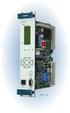 Machinery Protection Card Type FEATURES Continuous on-line Machinery Protection Card Real-time measurement and monitoring using state-of-the-art DSP techniques Fully VME-compatible slave interface Fully
1701/22 FieldMonitor Management Interface Module
 1701/22 FieldMonitor Management Interface Module Bently Nevada Asset Condition Monitoring Description The 1701/22 FieldMonitor Management Interface Module (FMIM) is a highlyintegrated module that provides
3500/22M Transient Data Interface
 3500/22M Transient Data Interface Bently Nevada* Asset Condition Monitoring Description The 3500 Transient Data Interface (TDI) is the interface between the 3500 monitoring system and GE s System 1* machinery
330505 Low Frequency Velocity Sensor
 330505 Low Frequency Velocity Sensor Bently Nevada* Asset Condition Monitoring Description The Bently Nevada Low Frequency Velocity Sensor is designed to measure absolute (relative to free space) bearing
Whale 3. User Manual and Installation Guide. DC Servo drive. Contents. 1. Safety, policy and warranty. 1.1. Safety notes. 1.2. Policy. 1.3. Warranty.
 Whale 3 DC Servo drive User Manual and Installation Guide Contents 1. Safety, policy and warranty. 1.1. Safety notes. 1.2. Policy. 1.3. Warranty. 2. Electric specifications. 2.1.Operation ranges. 3. Connections
INSTALLATION INSTRUCTIONS
 LIGHTING CONTROL PANELS 4 AND 8 RELAYS INSTALLATION INSTRUCTIONS INSTALLATION OVERVIEW The installation instructions contained in this document are provided as a guide for proper and reliable installation.
Part Number 129777-01 Revision A, January 1996. 3500 Monitoring System Rack Configuration and Utilities Guide
 Part Number 129777-01 Revision A, January 1996 3500 Monitoring System Rack Configuration and Utilities Guide Copyright 1995 Bently Nevada Corporation All Rights Reserved. No part of this publication may
1900/65A General Purpose Equipment Monitor
 1900/65A General Purpose Equipment Monitor -C:-' Description The 1900/65A General Purpose Equipment Monitor is designed to continuously monitor and protect equipment that is used in a variety of applications
MCR1900 Media Converter 19-Slot Chassis
 MCR1900 Media Converter 19-Slot Chassis Installation Guide Part #5500304-11 Copyright Statement This document must not be reproduced in any way whatsoever, either printed or electronically, without the
1900/65A General Purpose Equipment Monitor
 1900/65A General Purpose Equipment Monitor Bently Nevada* Asset Condition Monitoring Description The 1900/65A General Purpose Equipment Monitor is designed to continuously monitor and protect equipment
ABB Drives. User s Manual HTL Encoder Interface FEN-31
 ABB Drives User s Manual HTL Encoder Interface FEN-31 HTL Encoder Interface FEN-31 User s Manual 3AUA0000031044 Rev B EN EFFECTIVE: 2010-04-06 2010 ABB Oy. All Rights Reserved. 5 Safety instructions
3500/25 Enhanced Keyphasor*Module
 3500/25 Enhanced Keyphasor*Module Bently Nevada* Asset Condition Monitoring Description The 3500/25 Enhanced Keyphasor Module is a half-height, two-channel module used to provide Keyphasor signals to the
JNIOR. Overview. Get Connected. Get Results. JNIOR Model 310. JNIOR Model 312. JNIOR Model 314. JNIOR Model 410
 The INTEG is an Ethernet I/O (digital, analog) device that monitors and controls a small set of process signals. functions as both basic I/O for integration with another application or system AND as a
INSTALLATION AND OPERATING INSTRUCTIONS For Model GL1 Gate Locks
 Securitron Magnalock Corp. www.securitron.com ASSA ABLOY, the global leader Tel 800.624.5625 [email protected] in door opening solutions INSTALLATION AND OPERATING INSTRUCTIONS For Model GL1 Gate
WxGoos-1 Climate Monitor Installation Instructions Page 1. Connections. Setting an IP Address
 Instructions Page 1 Connections The WxGoos-1 is a self-contained web server and requires 6vdc of power at 300ma. A center-positive 2.1 mm plug is used. There are five ports: 1. 10/100 Ethernet RJ-45 receptacle
Zlinx Wireless I/O. Peer-to-Peer and Modbus I/O B&B ELECTRONICS PRODUCT INFORMATION
 Modular, Customizable Wire Replacement 128 / 256 Bit AES Encryption Software Selectable RF Transmit Power Software Selectable Over-the-air Data Rate Modbus ASCII /RTU Compatible Wide Operating Temperature
SKF Machine Condition Transmitters (MCT) Series
 SKF Machine Condition Transmitters (MCT) Series The CMSS 500 Series of SKF Machine Condition Transmitters (MCT) are 4-20 ma Transmitters. They convert part of the input signal to a 4-20 ma output proportional
NC-12 Modbus Application
 NC-12 Modbus Application NC-12 1 Table of Contents 1 Table of Contents... 2 2 Glossary... 3 SCADA...3 3 NC-12 Modbus in general... 3 4 Entire system... 4 4.1 PFC to PC connection alternatives...4 4.1.1
I nstallation. M100Q Series Proportional Actuator with R81Q Controller Board for Thermistor Sensor Applications. Tools Needed.
 FANs 268.1, 1628.3 Installation Bulletin M100Q Issue Date 1099 M100Q Series Proportional Actuator with R81Q Controller Board for Thermistor Sensor Applications I nstallation Parts Included M110QGA-1 and
Description. Dimensions. Features. www.pwb-encoders.com. precision works better
 Description The MEC22 is a high resolution optical hollow shaft encoder that can be fixed quickly and easily on different sizes of motor shafts. The encoder provides two square wave outputs in quadrature
The quadrature signals and the index pulse are accessed through five 0.025 inch square pins located on 0.1 inch centers.
 Quick Assembly Two and Three Channel Optical Encoders Technical Data HEDM-550x/560x HEDS-550x/554x HEDS-560x/564x Features Two Channel Quadrature Output with Optional Index Pulse Quick and Easy Assembly
PD 100A. Printing data system
 PD 100A Printing data system Operating instructions ENGLISH IMPORTANT: Read these instructions carefully before installing and using the device; do not forget following all additional information. Keep
OPTICAL HEADEND PLATFORM OTOHP-NMS NETWORK MONITORING MODULE INSTRUCTION MANUAL
 OPTICAL HEADEND PLATFORM OTOHP-NMS NETWORK MONITORING MODULE INSTRUCTION MANUAL Phone: (209) 586-1022 (800) 545-1022 Fax: (209) 586-1026 OTOHP-NMS Rev. X1 E-Mail: [email protected] www.olsontech.com
Automatic Transfer Switch FT-10 Network Control Communications Module (CCM-T) Kit 541 0811
 Instruction Sheet 1-2003 Automatic Transfer Switch FT-10 Network Control Communications Module (CCM-T) Kit 541 0811 PURPOSE OF KIT A CCM-T is used to monitor and control an automatic transfer switch. The
HMI display Installation Guide
 HMI display Installation Guide Product Description Specifications Important Information o Package Contents o Related Documents o Accessories Cautions and Warnings Mounting and Dimensions o BAC-DIS-ENC
IPX AUTOMATIC IP NETWORK LOSS BACKUP A/B SWITCH INSTRUCTION BOOK IB6444-02
 IPX AUTOMATIC IP NETWORK LOSS BACKUP A/B SWITCH INSTRUCTION BOOK IB6444-02 TABLE OF CONTENTS DESCRIPTION 2 MOUNTING INSTRUCTIONS 2 HOW TO CABLE THE IPX 2/3 POWER SUPPLY INSTALLATION 3 OPERATION 3 CARE
Automation System TROVIS 6400 TROVIS 6493 Compact Controller
 Automation System TROVIS 6400 TROVIS 6493 Compact Controller For panel mounting (front frame 48 x 96 mm/1.89 x 3.78 inch) Application Digital controller to automate industrial and process plants for general
5-port / 8-port 10/100BaseTX Industrial Ethernet Switch User Manual
 5-port / 8-port 10/100BaseTX Industrial Ethernet Switch User Manual Content Overview... 1 Introduction... 1 Features... 3 Packing List... 4 Safety Precaution... 4 Hardware Description... 5 Front Panel...
EMBEDDED ACCESS CONTROL Hardware Installation Guide
 EMBEDDED ACCESS CONTROL Hardware Installation Guide Lenel goentry Hardware Installation Guide, product version 1.00. This guide is item number DOC- ENHW-ENU, revision 1.003, April 2009 Copyright 2009 Lenel
THERMAL ANEMOMETRY ELECTRONICS, SOFTWARE AND ACCESSORIES
 TSI and TSI logo are registered trademarks of TSI Incorporated. SmartTune is a trademark of TSI Incorporated. THERMAL ANEMOMETRY ELECTRONICS, SOFTWARE AND ACCESSORIES IFA 300 Constant Temperature Anemometry
Modular I/O System Analog and Digital Interface Modules
 OPERATING INSTRUCTIONS Modular I/O System Analog and Digital Interface Modules Installation Operation Maintenance Document Information Document ID Title: Operating Instructions Modular I/O System Part
3500/93 System Display
 3500/93 System Display Bently Nevada* Asset Condition Monitoring Description The 3500/93 System Display is designed to meet the requirements of American Petroleum Institute (API) Standard 670 and provide
Digital and Analog I/O
 70072-0127-07 TECHNICAL NOTE 02/2007 Digital and Analog I/O This document discusses the application and configuration of digital and analog inputs/outputs (I/O). Details are for both onboard I/O and external
INSTALLATION & SERVICE MANUAL. Display Panel
 INSTALLATION & SERVICE MANUAL Display Panel The PowerLine EMS TM is a specialized power distribution and energy management system intended to be used in recreational vehicles. The Control Module is housed
Proximity Transmitters and Seismic Vibration Transmitters
 Proximity Transmitters and Seismic Vibration Transmitters TR1101 Seismic Vibration Transmitter The TR1101 is a cost-effective solution for monitoring case vibration on balance of plant machines. The TR1101
40.3. Control Relays and Timers
 .3 Contents EASY500/700/800 Intelligent Relays........ EASY/MFD Expansion Modules............ MFD Intelligent Relays................... EASY/MFD Communication Modules....... EASY/MFD Power Supplies, Accessories
HP UPS R1500 Generation 3
 HP UPS R1500 Generation 3 Installation Instructions Part Number 650952-001 NOTE: The rating label on the device provides the class (A or B) of the equipment. Class B devices have a Federal Communications
About the BitStorm 6051 POTS Splitter
 BitStorm 6051 Installation Instructions Document Number 6051-A2-GZ40-10 July 2002 About the BitStorm 6051 The BitStorm system enables simultaneous high-speed digital data access and analog voice service
HP ProLiant DL380 G6 Carrier-Grade Server Read Before Install
 HP ProLiant DL380 G6 Carrier-Grade Server Read Before Install Carrier-Grade Instructions HP Part Number: AM275-9001A Published: July 2012 Edition: 3 Copyright 2009, 2012 Hewlett-Packard Development Company,
TraceTek TTDM Series Leak Detection and Location Modules Replacement Parts Installation Instructions
 TraceTek TTDM Series Leak Detection and Location Modules Replacement Parts Installation Instructions TRACETEK TraceTek TTDM Replacement Parts General Information These instructions detail the steps to
PIEZOMETER AIRFLOW MEASURING RING
 PIEZOMETER AIRFLOW MEASURING RING M.K. Plastics is pleased to introduce The Piezometer Airflow Measuring Ring, now available as an accessory for our steel Axijet fans. The system consists of a Piezometer
EQUIPMENT SPECIFICATIONS
 EQUIPMENT SPECIFICATIONS IC-1600 Intelligent Controller The IC-1600 Intelligent Controller is a fully intelligent panel that has a complete database on board. It operates in conjunction with the Access
Application/Connection Examples
 This Quick Start Guide is designed to familiarize the user with the connection and configuration of the DTS-305 DIN rail mounted single / 3 phase power & energy meter with RS-485 or TCP communications.
SENSORS. Fiber Optic Sensors - S70. Advanced fiber optic amplifiers for high speed and low contrast applications
 Fiber Optic Sensors - S7 Advanced fiber optic amplifiers for high speed and low contrast applications DIN rail mountable models with dual digital displays speed models: 2 μs...5 ms Super high speed models:
2.0 Installation 1. Remove the cover using a small flat blade screwdriver. Figure 2: Cover Removal
 O N DS160/DS161 Installation Guide High Performance Request-to-Exit Sensors 1.0 Description The DS160/161 is a passive-infrared (PIR) detector designed for Request to Exit (REX) interior applications.
Positive-guided relay outputs: 3 safety contacts (N/O), instantaneous. 1 auxiliary contact (N/C), instantaneous
 Safety relay for monitoring E-STOP pushbuttons. Approvals Unit features Positive-guided relay outputs: 3 safety contacts (N/O), instantaneous 1 auxiliary contact (N/C), instantaneous Safe separation of
FIRERAY 2000 Installation Guide
 FIRERAY 2000 Installation Guide Features Range 33ft to 330 ft. 24Vdc operation Selectable alarm thresholds Low current consumption Ground level electronics Manual or Automatic reset System Description
How To Power A Power Control On An Ip40 (Ipl) With A Power Supply (Iplug) With An Ip20 Controller (Iphones) With Power Control (Power Control) With No Antenna) With The Ip20 (Power)
 MODEL NUMBER: ISC910-1-0-GB-XX ISC911-5-0-GB-XX IXP20 CONTROLLER SPECIFICATIONS Working Environment Plastic Housing... Power ImproX IXP20 Controller INSTALLATION MANUAL Designed to work in an indoor (dry)
Measurement Types in Machinery Monitoring
 February 2014 Measurement Types in Machinery Monitoring Online machinery monitoring for rotating equipment is typically divided into two categories: 1. Protection Monitoring 2. Prediction Monitoring This
CONNECTOR AMPLIFIER FOR PROPORTIONAL VALVES (4-20 ma Input Version)
 TECHNICAL DATASHEET #TD1102AX CONNECTOR AMPLIFIER FOR PROPORTIONAL VALVES (4-20 ma Input Version) Part Number: Connector Amplifier CAPV-H-4-20MA-x complete with cable CAPV-4C-yM Where: x = current output
TECHNICAL DATASHEET #TD1404AX PWM CONTROLLED SOLENOID DRIVER
 TECHNICAL DATASHEET #TD1404AX PWM CONTROLLED SOLENOID DRIVER (PWM Input, 1.2A or 2A Output, Metal Box or PCB) PCB Board - P/N: PWMC-PCB-2A, PWMC-PCB-1.2A Packaged Driver (metal box with 1.5 m (5 ft.) cable)
Vibration analysis and monitoring Compact. Powerful. Modern technology.
 Vibration analysis and monitoring Compact. Powerful. Modern technology. Maximum performance Vibration measurement with state of the art processor technology Expert Vibro is Delphin Technology's new device
Duct Humidity Transmitter
 SDC-H Duct Humidity Transmitter Features Replaceable sensor element Humidity measurement for air ducts Minimum and maximum value memory 0 0V, 0 0mA or 0V, 4 0mA measuring signals selectable with jumpers
Stuart Gillen. Principal Marketing Manger. National Instruments [email protected]. ni.com
 Stuart Gillen Principal Marketing Manger National Instruments stuart.gillen@ New Enterprise Solution for Condition Monitoring Applications NI InsightCM Enterprise NI History of Condition Monitoring Order
MODEL 5010 DUAL CHANNEL SMOKE/FIRE DETECTION MODULE
 DESCRIPTION MODEL 5010 DUAL CHANNEL SMOKE/FIRE DETECTION MODULE DESCRIPTION The SST Model 5010 Two Channel Smoke/Fire Detection Module provides two independent detection input channels for the NOVA-5000
Applied Electronics. Commercial Dimming System UPDATE NOTICE
 REV. A Applied Electronics Commercial Dimming System UPDATE NOTICE This notice is to inform the end user of an additional feature added to this DP12/2400 dimming unit. This unit has been outfitted with
TS93 EMR T/PT/TDE. Surface applied door closer
 TS EMR T/PT/TDE Surface applied door closer Installation instructions: Pull side track mount door closer with smoke detector (EMR T) Push side track mount door closer with smoke detector (EMR PT) Double
RMM2 Heat-Tracing Remote Monitoring Module for the Raychem NGC Control System Installation Instructions
 Heat-Tracing Remote Monitoring Module for the NGC Control System Installation Instructions Tools Required 3 mm slotted screwdriver 3/8 hex key (for -4X only) Approvals Nonhazardous locations Type NM LISTED
User manual Compact Web PLC WP240 series IEC-line
 User manual Compact Web PLC WP240 series IEC-line update: 09-01-2014 IEC-line by OVERDIGIT overdigit.com 1. General description The WP240 device is a PLC, programmable in IEC61131-3 language using CoDeSys
TCP/IP MODULE CA-ETHR-A INSTALLATION MANUAL
 TCP/IP MODULE CA-ETHR-A INSTALLATION MANUAL w w w. c d v g r o u p. c o m CA-ETHR-A: TCP/IP Module Installation Manual Page Table of Contents Introduction...5 Hardware Components... 6 Technical Specifications...
HMIGTO4310 advanced touchscreen panel 640 x 480 pixels VGA- 7.5" - TFT - 96 MB
 Product datasheet Characteristics HMIGTO4310 advanced touchscreen panel 640 x 480 pixels VGA- 7.5" - TFT - 96 MB Main Range of product Product or component type Display colour Display size Supply Magelis
EDI Distributor Control Interface Wiring and Setup Instructions
 Universal I/O EDI Distributor Control Interface Wiring and Setup Instructions EDI UNIVERSAL I/O INTERFACE MODULE The only interface needed for EDI-V5 controls Network compatible with all older EDI controls
Acano solution. Acano Solution Installation Guide. Acano. January 2014 76-1002-03-B
 Acano solution Acano Solution Installation Guide Acano January 2014 76-1002-03-B Contents Contents 1 Introduction... 3 1.1 Before You Start... 3 1.1.1 Safety information... 3 1.1.2 You will need the following
Directory chapter 02 - DIN Power (to 6 A) Types D, E, F, FM, 2F, F9, interface connectors I/U 02. 01. Technical characteristics types D and E... 02.
 Directory chapter 02 - () Types D, E, F, FM, 2F, F9, interface connectors I/U Page Technical characteristics types D and E.............................. 02.10 Type D connectors.................... 02.11
T0118 T2118 T3118. Instruction Manual
 Programmable indoor transmitter of temperature T0118 Programmable indoor transmitter of atmospheric pressure T2118 Programmable indoor transmitter of temperature, relative humidity and other derived humidity
Vibration Monitoring System Adash 3600
 " User's guide Application: Vibration Monitoring System Adash 3600! Vibration diagnostics, monitoring and protective on-line system! On-line vibration monitoring system of engines, fans, pumps, gearboxes,
IntesisBox KNX Mitsubishi Heavy Industries AC
 IntesisBox KNX Mitsubishi Heavy Industries AC Gateway for integration of Mitsubishi Heavy Indsutries (MHI) Air Conditioners with KNX control systems. 1. Main Features Direct connection to KNX TP-1 (EIB)
Series 7500 Torque Sensor
 Properties PTO (Power Take-Off) shaft with integrated torque and angle measurement Non-contact measurement system, high robustness Plug & Play solution, no additional electronics required Performance Measurement
Analog Servo Drive 25A8
 Description Power Range NOTE: This product has been replaced by the AxCent family of servo drives. Please visit our website at www.a-m-c.com or contact us for replacement model information and retrofit
Solid Core and Split Core Adjustable Current Status Switches CSS-O, CSS-C; CSP-O, CSP-C
 Solid Core and Split Core Adjustable Current Status Switches CSS-O, CSS-C; CSP-O, CSP-C DESCRIPTION FEATURES PRODUCT DATA Very low operating trip points LED status indication Integral DIN rail mounting
Advantium 2 Plus Alarm
 ADI 9510-B Advantium 2 Plus Alarm INSTALLATION AND OPERATING INSTRUCTIONS Carefully Read These Instructions Before Operating Carefully Read These Controls Corporation of America 1501 Harpers Road Virginia
ABB Drives. User s Manual. Pulse Encoder Interface Module RTAC-01
 ABB Drives User s Manual Pulse Encoder Interface Module RTAC-0 Pulse Encoder Interface Module RTAC-0 User s Manual 3AFE 64486853 REV A EN EFFECTIVE:.5.00 00 ABB Oy. All Rights Reserved. Safety instructions
TIMING SIGNALS, IRIG-B AND PULSES
 TIMING SIGNALS, IRIG-B AND PULSES Document No. PD0043200B July 2013 Arbiter Systems, Inc. 1324 Vendels Circle, Suite 121 Paso Robles, CA 93446 U.S.A. (805) 237-3831, (800) 321-3831 http://www.arbiter.com
Programmable Terminal. NPSeries. Easy Setup with the Low-cost, Compact NP Series
 Programmable Terminal NPSeries Easy Setup with the Low-cost, Compact NP Series Simpler and More Versatile.OMRON s Compact NP Series Connect! Easier connection to OMRON PLCs and Temperature Controllers,
Troubleshooting accelerometer installations
 Troubleshooting accelerometer installations Accelerometer based monitoring systems can be tested to verify proper installation and operation. Testing ensures data integrity and can identify most problems.
Contents. Document information
 User Manual Contents Document information... 2 Introduction... 3 Warnings... 3 Manufacturer... 3 Description... Installation... Configuration... Troubleshooting...11 Technical data...12 Device Scope: PCB
AMFA-27 AMFA-29. Operator s Manual & Installation Instructions. Rev. 2.5
 AMFA-27 AMFA-29 Operator s Manual & Installation Instructions Rev. 2.5 Date: 17 July, 2010 Permanently-connected, utility Interactive, single-phase, inverters Model AMFA-27 WIND TURBINE INVERTER (240 VAC
Short Range Wireless Switch System Handheld 8 Installation and Operations Guide
 Phone: (866) 701-1146 Fax: (425) 216-7558 www.remotecontroltech.com Short Range Wireless Switch System Handheld 8 Installation and Operations Guide Introduction... 2 Before Installation... 2 Receiver Installation...
Technical Specifications: The specifications represent a particular hardware platform. Application-specific software is provided.
 Preliminary TECHNICAL DATASHEET #TDAX020700 HYDRAULIC VALVE CONTROLLER 24 I/O 5 Analog and 6 Digital Inputs 1 Temperature Sensor and 1 RPM Sensor Interface 2 PWM Inputs 6 Proportional and 4 ON/OFF Current
Fiber Optic Selector Guide for Analog & Digital Data Links, Contact Closures & Multiplexers
 Fiber Optic Selector Guide for Analog & Digital Data Links, Contact Closures & Multiplexers Analog Data Links Multi-Channel Contact Closures Multiplexers Digital Data Links - Contact Closures Power Supply
Detector transparent with Color Inserts. FAA 500 TR P Trim Ring transparent with Color Inserts. FCA 500 / FCA 500 E Detector Bases
 Detector Color Detector transparent with Color Inserts FAA 500 TR W Trim Ring FAA 500 TR P Trim Ring transparent with Color Inserts FAA 500 BB Ceiling Mount Back Box FCA 500 / FCA 500 E Detector Bases
9000 Series Accelerometers Specifications
 Technical Data 9000 Series Accelerometers Specifications Catalog Numbers EK-43781I, EK-43782I, EK-46255I, EK-45890I, EK-43784I, EK-47086I, EK-43792I, EK-47090I, EK-43799I, EK-43794I, EK-43795I, EK-43797I,
UniStream CPU-for-Panel
 UniStream CPU-for-Panel Installation Guide USC-P-B10 Unitronics UniStream platform comprises control devices that provide robust, flexible solutions for industrial automation. This guide provides basic
8-Port PoE Network Switch
 Page 1 of 12 8-Port PoE Network Switch User s Guide Document Number 91I00-1 Rev A August, 2009 FCC Warning: Page 2 of 12 This devices has been tested and found to comply with the regulations for Class
OPL BASIC. Dosing System for Professional Laundry machines. Contents
 OPL BASIC Dosing System for Professional Laundry machines Contents 1 Getting Started. Page 2 2 Installation. Page 4 3 Set Up & Operation. Page 8 4 Maintenance & Accessories. Page 10 5 Troubleshooting Page
Table of Contents. TransformerIQ FAQs 1
 [12/12] FAQs Table of Contents FAQ 1. What size transformer will TransformerIQ monitor?... 2 FAQ 2. Are there different TransformerIQ versions?... 2 FAQ 3. How are the units powered?... 2 FAQ 4. What is
SECTION G2: CABLE PROCESSOR MODULE MAINTENANCE
 SECTION G2: CABLE PROCESSOR MODULE MAINTENANCE Cable Processor Module overview WARNING! When tipping the Cable Processor Module back, (after removing the toggle arm pin), use extreme caution not to drop
SolarEdge. RS485 Expansion Kit Installation Guide. Version 1.0
 SolarEdge RS485 Expansion Kit Installation Guide Version 1.0 Disclaimers Disclaimers Important Notice Copyright SolarEdge Inc. All rights reserved. No part of this document may be reproduced, stored in
LOXONE 12 Channel Amplifier
 LOXONE 12 Channel Amplifier Item no.: 200110 Thank you for purchasing the Loxone Twelve Channel Amplifier. The versatility of the Amplifier makes it the perfect choice for almost every type of custom multi-room
200350 and 200355 Accelerometers
 and Accelerometers Bently Nevada Asset Condition Monitoring Description The and Accelerometers are general purpose, casemounted seismic transducers designed for use with Trendmaster Pro Constant Current
Sierra Dual 24 Volt Brushless DC Motor Controller Product Specification
 Sierra Dual 24 Volt Brushless DC Motor Controller Product Specification Assembly 025A0215 600A0942 Rev. A May 14, 2012 025A0215 Brushless DC Motor Controller Page 1 Revision History ECN # Date Rev Description
MicroTech II McQuay Maverick II Rooftop Unit Controller BACnet Communication Module (MS/TP)
 Installation and Maintenance Manual IM 852 Group: Controls Part Number: IM 852 Date: June 2007 Supercedes: New MicroTech II McQuay Maverick II Rooftop Unit Controller BACnet Communication Module (MS/TP)
PCS0100en 02.2008. Persy Control Services B.V. Netherlands
 P-Bus Gateway PBGW2.128 Universal gateway between the P-bus protocol and open standard protocols. The variety of available electrical interfaces on the gateway offers a wide range of possibilities for
Phone: 800.894.0412 - Fax: 888.723.4773 - Web: www.clrwtr.com - Email: [email protected]
 Product description Wide rated operational voltage 208 600 V AC Wide rated control supply voltage 100 250 V, 50/60 Hz Rated operational current 18 to 370 A Wide ambient temperature range, -25 to +60 ºC
330450 High Temperature Acceleration System Bently Nevada* Asset Condition Monitoring
 330450 High Temperature Acceleration System Bently Nevada* Asset Condition Monitoring Description The standard 330400 Accelerometer has a limited temperature range it can be exposed to, due to its signal
Recommended Tools and Supplies: Small Flat Blade Screwdriver, 35mm x 7.5mm DIN Rail. Qwik Install
 TPDIN-Monitor-WEB Web Based Monitor and Control Remote Power Stations Backup Power Systems Solar Systems Wind Powered Systems Industrial Sense & Control Process Automation Congratulations! on your purchase
TEMON 8-C. Doc. N MO-0370-ING TEMPERATURE MONITOR DEVICE TYPE TEMON 8-C OPERATION MANUAL. Microener - Copyright 2010 FW 2.2 Date 01.12.2008 Rev.
 TEMPERATURE MONITOR DEVICE TYPE TEMON 8-C OPERATION MANUAL Microener - Copyright 2010 FW 2.2 Date 01.12.2008 Rev. 0 1. Generality 3 2. Introduction 3 3. Accessories and Options 3 4. Installation 3 5. Connection
Uninterruptible Power Supply. 500 kva - 750 kva
 9 315 Uninterruptible Power Supply 500 kva - 750 kva T1 and T3 Installation Addendum 164201244-001 Rev. A ------------------------------------------------------------------------ ------------------------------------------------------------------------
Pump_PT580. Optional. Optional. Modbus. Remote Reset Local Display PLC/DCS PT580-CFG PCM370 DTM96. Buffered Output. Dual Relay Output.
 Pump_PT580 Optional PT580-CFG PCM370 Optional DTM96 Buffered Dual Relay Remote Reset Local Display Condition Monitoring System PLC/DCS PT580 Digital Vibration Switch Introduction The PT580 Digital Vibration