
Recommendations for Marking Communication Facilities with Use of 3M EMS Electronic Markers
|
|
|
- Toby Nash
- 9 years ago
- Views:
Transcription
1 Recommendations for Marking Communication Facilities with Use of 3M EMS Electronic Markers Near-Surface Marker A small marker which is well-suited for bore holes in concrete or asphalt for marking flush-mount facilities prior to repaving. Full-Range Marker Designed for deep underground applications. Its large size makes it ideal for use as a digging shield over sensitive underground facilities. Mid-Range Designed for applications where less depth is required than with the Full-Range Marker. Marker spokes help stabilize it in the correct position after placement. Ball Marker Ideal for most applications, with a unique self-leveling feature. The core of the marker floats in a non-toxic, nonfreezing liquid inside the ball; so the marker can be dropped in a trench, and the self-leveling feature will assure a correct orientation. September

2 1.0 Overview The 3M electronic marker system helps make the job of precisely locating underground facilities easier and faster. The basic component of the system is a durable electronic marker which is buried above key underground elements during construction or maintenance. A stand-alone 3M Dynatel marker locator model 1420-iD, an integrated 3M Dynatel cable/marker locator 2500-iD series, or an integrated 3M Dynatel 2200M-iD series provides fast and accurate location of a marker many years after its placement. Depending on the resonant frequency and the color, electronic markers are used to mark a wide range of underground facilities such as cable television networks, telecommunication lines, power supply networks, water supply pipelines, wastewater pipelines, oil and gas pipelines, and so on. Two types of markers may be used for communications/ CATV applications. The first type is the solid orangecolored marker that is used for general communications applications. These are tuned to khz and are available in five different form factors for varying applications: Near Surface Marker, Ball Marker, Mid-Range Marker, Full Range Marker and Disk Marker. The second type is the orange/black-colored marker that is used specifically for CATV applications and is tuned to 77.0 khz. These are only available in the Near Surface (id version), Ball (id and Non-iD versions) and Disk (Non-iD version) markers. Communication applications use solid orange-colored markers exclusively. CATV can use both solid orangecolored and orange/black-colored marker types. If more marker form factor types are needed than the Near Surface, Ball or Disk marker types, it is recommended to use the solid orange-colored marker that is available in all five form factors. The marker consists of a sealed shell containing a passive antenna: a low-frequency resonance circuit tuned to a certain frequency. The locator sends a signal to the marker, energizing it. The signal is then reflected back to the locator. Electronic markers are tolerant to congestion and extremely reliable. Electronic markers are typically installed during construction or repairs when the facility is visible to the eye, making them one of the most trusted methods for positive identification of buried facilities. Signal from locator Soil Soil Return signal from marker Cable splice Marker Signal from locator energizes marker. Marker reflects signal at selected frequency. 2

3 2.0 General Recommendations for Electronic Marker Placement 2.1 Recommended Placement All Items of Plant (facility items) that are assigned unique reference numbers on facility maps and records. Handholes Buried splices of all types Repair points Buried service drops: Service stubs Slack loops Depth changes Laterals Bends: changes of direction, arcs Depth changes: lateral deflection Fiber optic facilities with no metallic conductor Conduit stubs Encasement ends: conduit ends of horizontally directional drilled facilities Manhole covers Water crossings Major road crossings Rail crossings Utility crossings: locations where the cable crosses over or under other utilities. Non-metallic facilities Other items of value or interest 2.2 Additional Marker Placement Information Using the GPS interface on the 3M Dynatel Locator model id, 2500 Series and 2200M-iD series also helps provide positive verification of marker placement during construction and direct data import capability to leading industry standard GIS systems for electronic map updating. 4-Way Cross Tee/Lateral Casing Ends Utility Crossings Service Drop Arc Place marker every 1 foot (300 mm) of deflection Road Crossings Ball in handhole or disk attached to lid Water Crossings Rail Crossings Path marking applications place markers adjacent to above ground landmarks such as telephone poles - must maintain line-of-sight between points - 400' (100 m) Max 400' (100 m) Max Bends Bends Splice Various Recommended Marker Locations 3

4 3.0 Recommended Ball Marker Spacing and Depth Note: See Section 4 for recommended depths of other marker form factors.) 3.1 Recommended Depth for Ball Markers Maximum distance from ground surface to ball marker: 3M Ball Marker model 1421-XR/iD (id version marker) 1401-XR (Non-iD (passive) version marker) Read/Detection Range 5 feet (1.5 m) (using U.S. 3M marker locator) 4 feet (1.2 m) (using CE-approved 3M marker locator) 5 feet (1.5 m) To increase the detection area at ground level, it is recommended to place the marker at half of its rated depth. This will produce a detection area of approximately 6 feet (2 meters) in diameter. If fill to finish grade is anticipated, place marker at a 2 foot (0.5 m) depth. This may vary depending on the amount of fill required. If a cut to finish grade is anticipated, place marker at its maximum rated distance. If it is anticipated that there will be a need to rewrite an id marker s information after it has been buried, place marker at a maximum depth of 1 foot (0.3 m). 3.2 Recommended Spacing to Utility Place ball marker at least 4 inches (104 mm) from the facility. 3.3 Spacing Between Ball Markers The minimum distance between markers should be at least 3.5 feet (1.06 m) for clear identification In straight sections for path marking applications, it is recommended to place markers adjacent to existing above ground landmarks such as telephone or power poles to simplify future locating. Markers should be placed where there is direct line of sight to the next marker. Recommended 200 feet (61 m) maximum distance between markers with a preferred distance of 100 feet (31 m) between markers. In bends or lateral pipe deflections, it is recommended to place one marker for every 1 foot (300 mm) deflection (arc) to accurately indicate cable position. 3.4 Standard Ball Marker Tie Down Procedure 1. Before placing the ball marker over the key point, decide if a tie down procedure is necessary to keep it in place. If so, secure the marker by inserting a cable tie through one or both tie-down tabs on the marker and attach to the key point. 2. If the key point is metallic, it is recommended that the ball marker be separated from it with a minimum of 4 inches (120 mm) of clean fill dirt. 3. If the key point is non-metallic, place the marker over the desired location. 4. Hand fill at least 6 inches (150 mm) of soil over the marker to prevent movement, or damage, during backfill. 5. Backfill the hole XR/iD 4 feet (1.2 m) (using CE-approved 3M marker locator) 5 feet (1.5 m) (using U.S. 3M marker locator) See inset cover with 6 in. (150 mm) of firm soil before backfill Inset tie-down tabs 1401-XR 5 feet (1.5 m) ID number tag minimum 4 in. (100 mm) separation from metallic surface* cable tie 4

5 3.5 Alternate Ball Marker Tie Down Procedure for Deeper Facilities 1. Tie the ball marker to a section of steel rebar using a cable tie. Attach ball marker using cable tie Rebar Communications Line Bedding 10 in (254 mm) nominal 3.6 Additional Placement Recommendations for 3M Ball Marker 1421-XR/iD Additional applications are possible with the XR/iD series of ball markers due to their ability to store specific facility information. Facility information that may be of value to write into the id ball marker includes: Facility owner Utility type Description of facility point Item of plant identification number (IPID) Depth (to facility, or from marker to facility) Size of cable --Fiber count (if fiber) --Number of pairs (if copper) Type of material of cable --Copper --PIC or Pulp --Fiber --Brand of manufacture or type Address: service drop Direction Distance or length Date of installation or repair Other description information that is of value 4.0 Form Factors 3M offers a complete line of electronic markers that provide solutions supporting a variety of communications applications M Ball Marker 1401-XR The unique self-leveling design of the 3M ball marker horizontally orients the marker coil inside the ball regardless of how it is placed in the ground. The marker shell is made from highstrength plastic, which protects the device from mechanical and weather damage. The marker contains an antenna molded inside a moisture-resistant plastic disk, which is free-floating on the surface of a non-freezing liquid. (The liquid is a mixture of propylene glycol and water which is approved for use in pharmaceuticals, cosmetics and as a food additive. The mixture is readily biodegradable and will not harm humans, wildlife or the environment in this application.) 3M Ball Markers 1401-XR are used to mark points of special interest that may need to be accessed in the future. For communications applications marking non-metallic fiber optic lines, the 1401-XR ball marker is additionally used for path marking due to reliability and maintenance issues with tracer wires or tapes. 3M Ball Markers 1401-XR and 1407-XR Shell diameter 4 inches (104 mm) Maximum installation/ 5 feet (1.5 m) detection depth Minimum horizontal and vertical distance from the facility being marked Minimum distance between markers 4 inches (104 mm) from the ball center 3.5 feet (1.06 m) 5

6 4.2 3M Ball Marker 1421-XR/iD and 1427-XR/ id (id Markers) This marker is similar to the 1401-XR ball marker in size and form. Additionally, the 1421-XR/iD ball marker contains an RFID microchip, which allows introduction and storage of facility data. Each marker comes pre-programmed with a unique 10-digit identification number. This preprogrammed number is also attached to the marker on a removable bar-coded tag, which can be peeled off before installation and attached to facility maps. (Refer to section 3.6 for a listing of applications.) In general terms, 1421-XR/ id ball markers are ideal for marking underground facilities in urban areas with a high density of underground networks, in rural areas where there are few physical landmarks that can be referenced on maps, and for marking facilities that cannot be located using traditional electromagnetic cable locating devices. Additionally, 1421 XR/iD ball markers are ideal for marking high-value facilities, lifeline facilities, or other points of special interest where service outages would have a significant impact and cost or hardship. 3M Ball Markers 1421-XR/iD and 1427-XR/iD Shell diameter 4 inches (104 mm) Maximum installation/ detection depth Minimum horizontal and vertical distance from the facility Minimum distance between markers 5 feet (1.5 m) (using U.S. 3M marker locator) 4 feet (1.2 m) (using CE-approved 3M marker locator) 4 inches (104 mm) from the ball center 3.5 feet (1.06 m) Spacing of ball markers to the buried facility: 4 in (104 mm) 4.3 3M Disk Markers (Do Not Direct Bury) 1411-XR and 1411-XR/iD 3M Disk Markers 1411-XR (non-id (passive) version marker) and 1411-XR/iD (id version marker) are used in hand hole applications where they are attached mechanically to the top cover of the hand hole XR disk markers are identical in performance to the 1401-XR ball markers. (See note.) 1411-XR/iD disk markers contain an RFID microchip and are identical in performance to the 1421-XR/iD ball markers. Note: 3M disk markers are not intended for direct bury applications or applications where they would be attached to solid metal manhole covers. 3M Disk Markers 1411-XR, 1411-XR/iD and 1417-XR Shell diameter 4 inches (104 mm) Shell height 0.7 inches (18 mm) Maximum installation/detection depth 5 feet (1.5 m) (1411-XR, non-id version) Maximum installation/detection depth (1411-XR/iD, id version) 5 feet (1.5 m) (using U.S. 3M marker locator) 4 feet (1.2 m) (using CE-approved 3M marker locator) Minimum distance between markers 3.5 feet (1.06 m) Attach disk marker mechanically to top cover in handhole 6

7 4.4 3M Near Surface Markers 1432 and 1432 XR/iD 3M Near Surface Markers 1432 Non-iD (passive) version marker and 1432-XR/iD (id version marker) are recommended for urban applications. Near-surface markers allow for convenient marking of facilities under asphalt or concrete or for marking facilities after construction has completed. The marker is installed vertically at a shallow depth in a hole drilled or gouged in soil or in street pavement. Near-surface markers are also ideal for path of facilities installed using trenchless (HDD) technology and for marking existing facilities. In recent years, near-surface markers have become increasingly popular for marking existing or legacy facilities due to their ease of installation. 3M Near Surface Markers 1432, 1432 XR/iD and 1437-XR/iD Case diameter 0.8 inches (20 mm) Case length 3 inches (76 mm) Maximum installation/detection depth 2 feet (610 mm) (1432, non-id version) Maximum installation/detection depth (1432-XR/iD, id version) 3 feet (915 mm) (using U.S. 3M marker locator) 2 feet (610 mm) (using CE-approved 3M marker locator) Minimum vertical distance from facility 12 inches (300 mm) Minimum horizontal distance from facility 2 inches (50 mm) Minimum distance between markers 3.5 feet (1.06 m) Spacing of near-surface markers to the buried facility: Minimum 2" (5 cm) horizontal separation 4.5 3M Mid-Range Marker 1255 Note: Mid-Range Markers are only available as Non-iD (passive) markers. 3M Mid-Range Marker 1255 is used in areas with lowdensity underground facilities as point markers for items of special interest such as splices, repair points, slack loops, service stubs and as guides for marking linear segments of the paths of long cables that are deeper than can be accommodated with ball markers. The 1255 mid-range marker is often used in larger point excavations but not typically used in narrow trench applications due to its larger diameter. 3M Mid-Range Marker 1255 Case diameter 8.4 inches (210 mm) Case height 1.2 inches (30 mm) Maximum installation/detection depth 6 feet (1.8 m) Minimum vertical distance from facility 4 inches (104 mm) Minimum horizontal distance from facility 4 inches (104 mm) Minimum distance between markers 3.5 feet (1.06 m) Minimum 4" (104 mm) vertical separation* Minimum 4" (104 mm) horizontal separation* Minimum 12" (30 cm) vertical separation from metallic objects* 7

8 4.6 3M Full-Range Markers 1250 and 1250 XR/iD The full-range marker is designed for marking deep underground facilities. Its large diameter is also valued by facility owners as a dig shield that can help protect the facility from damage by being cut or damaged by a shovel during excavation. When placed above the facility, the full-range marker serves as a cover which warns of encroachment to the underground facility. by a technician into the field to perform a locate. The id series and 2200M-iD series locators can communicate with selected GPS devices which can help enhance efficiencies in documenting as-built facilities and reduce the need for inspection. 3M Dynatel offers the following electronic marker and multipurpose locators: 3M Dynatel Marker Locator 1420-iD and 1420E-iD 3M Full-Range Markers 1250 and 1250 XR/iD Case diameter 15 inches (380 mm) 3M Marker Case height 0.7 inches (17 mm) Maximum installation/detection depth 8 feet (2.4 m) (using U.S. 3M Marker locator) 6.5 feet ( 2.0 m) (using CE-approved 3M Marker locator) Minimum vertical distance from facility 6 inches (152 mm) Minimum horizontal distance from facility 6 inches (152 mm) Minimum distance between markers 3.5 feet (1.06 m) Spacing of full-range markers to the buried facility: 3M Dynatel Cable/ Pipe and Marker Locator 2250M-iD 3M Dynatel Cable/ Pipe/Fault and Marker Locator 2273M-iD 3M Dynatel Cable/ Pipe and Marker Locator 2550-iD Maintain a minimum of 6" (152 mm) vertical separation* (and 6" (152 mm) horizontal separation if next to a buried facility) 5.0 3M Dynatel Electronic Marker Locators 3M Dynatel Electronic Marker Locators are recommended for locating 3M Electronic Markers. 3M offers stand-alone electronic marker locators: 3M Dynatel 1420-iD (US) and 1420E-iD (CE approved for export). Additionally 3M offers integrated cable locators with electonic marker locating capabilities: the 3M Dynatel 2200M-iD series and 2500-iD series. These locators provide a single integrated platform for what has previously been two separate test sets. This can reduce the initial capital expenditure, the number of pieces of equipment that need to be maintained, space requirements in the vehicle, and number of test sets that must be carried 3M Dynatel Cable/ Pipe/Fault and Marker Locator 2573-iD Additional information about 3M Dynatel cable and electronic marker locating products for communications applications is available at or from your local 3M sales professional. 8

9 6.0 3M Dynatel Electronic Marker Information 6.1 3M Electronic Marker Part Numbers & Descriptions Utility Marker Color Non-iD (Passive) Marker Part # Id Marker Part # Ball Markers Telephone Orange 1401-XR 1421-XR/iD CATV/Comm. Black/Orange 1407-XR 1427-XR/iD Disk Markers (Do Not Direct Bury) Telephone Orange 1411-XR 1411-XR/iD CATV/Comm. Orange 1417-XR Near-Surface Markers Telephone Orange XR/iD CATV/Comm. Black/Orange 1437-XR/iD Mid-Range Markers Telephone Black w/orange Printing 1255 CATV/Comm. Full-Range Markers Telephone Orange XR-iD CATV/Comm. Black/Orange 6.2 3M Electronic Marker Write & Read/Detection Ranges U.S. Model Marker Locators 3M id Markers Maximum Writing Range Maximum Reading/Detection Range Near-Surface id Markers 6 inches (15 cm) 3 feet (0.9 m) Ball id Markers 12 inches (30 cm) 5 feet (1.5 m) Disk id Markers (Do Not Direct Bury) 12 inches (30 cm) 5 feet (1.5 m) Full-Range id Markers 24 inches (61 cm) 8 feet (2.4 m) 3M Non-iD (Passive) Markers Near-Surface Non-iD Markers 2 feet (0.6 m) Ball Non-iD Markers 5 feet (1.5 m) Disk Non-iD Markers (Do Not Direct Bury) 5 feet (1.5 m) Mid-Range Non-iD Markers 6 feet (1.8 m) Full-Range Non-iD Markers 8 feet (2.4 m) 9

10 CE Approved (Export) Model Marker Locators 3M id Markers Maximum Writing Range Maximum Reading/Detection Range Near-Surface id Markers 15 cm (6 inches) 61 cm (24 inches) Ball id Markers 30 cm (12 inches) 1.2 m (48 inches) Disk id Markers (Do Not Direct Bury) 30 cm (12 inches) 1.2 m (48 inches) Full-Range id Markers 61 cm (24 inches) 2.0 m (78 inches) 3M Non-iD (Passive) Markers Near-Surface 0.6 m (2 feet) Non-iD Markers Ball Non-iD Markers 1.5 m (5 feet) Disk Non-iD Markers (Do Not Direct Bury) 1.5 m (5 feet) Mid-Range 1.8 m (6 feet) Non-iD Markers Full-Range Non-iD Markers 2.4 m (8 feet) 6.3 3M Electronic Marker Environmental Specifications Environmental Specifications Operating Temperature Storage Temperature -4 F to 122 F (-20 C to 50 C) -40 F to 158 F (-40 C to 70 C) * Target size and material dependent. Depth estimation may be adversely affected when placing the marker above a large metallic object, such as a manhole cover. To improve depth estimation accuracy, increase the vertical separation from the metallic object to at least 12 inches (30 cm) or perform a field test for accuracy. 3M and Dynatel are trademarks of 3M Company. 3 Track and Trace Solutions 6801 River Place Blvd. Austin, TX Please Recycle. Printed in USA. 3M All Rights Reserved.

Electrical for Detached Garages: Updated Feb 19, 2016 for 2015 CE Code in force Jan. 1, 2016. Underground branch circuit feeding a detached garage:
 Electrical for Detached Garages: Updated Feb 19, 2016 for 2015 CE Code in force Jan. 1, 2016 * Garage construction requires permits (electrical, building) * Permits must be applied for at the time. * Dial
Electric Engineering Division FIBER CONDUIT RULES AND REGULATIONS
 Electric Engineering Division FIBER CONDUIT RULES AND REGULATIONS TABLE OF CONTENTS I. RULES AND REGULATIONS A. TABLE OF CONTENTS... 2 B. TERMS AND DEFINITIONS... 3 C. DEVELOPER S/CONTRACTOR S RESPONSIBILITIES...
GUIDELINES FOR UTILITY INSTALLATIONS Part 1 - Wire Lines and Communications Cables
 Engineering Department SEPTEMBER, 2007 GUIDELINES FOR UTILITY INSTALLATIONS Part 1 - Wire Lines and Communications Cables General Requirements This section applies to all public and private utilities,
Guidelines for Fiber Optic Cable Permits
 Guidelines for Fiber Optic Cable Permits NOVA District (Fairfax/Arlington) Permits www.virginiadot.org/business/fairfax-permits-main.asp Email: [email protected] 14685 Avion Parkway
Optical Cable Pre-Construction Survey. Keywords Stationary Reel Method, empty innerducts, sub-ducts, microducts, Intermediate-feed manholes
 Optical Cable Pre-Construction Survey Author John Peters Issued December 2012 Abstract Pre-construction site survey is one of the most important steps in the engineering and placement of a new optical
3M xdsl Line Conditioners 3620
 3M xdsl Line Conditioners 3620 Instructions 1.0 General 1.1 Document Purpose This document provides general and installation information necessary to install the 3M xdsl Line Conditioner. 1.2 Description
SECTION 18370 SIGNAL WIRE AND CABLE
 SECTION 18370 PART 1 - GENERAL 1.01 DESCRIPTION A. Section includes requirements for all cable and wire required for signal and signal power system wiring to wayside shelters, junction boxes, and factory
FIBER-OPTIC CABLE PLAN CHECK
 Engineering Division 201 North Broadway, Escondido, CA 92025 (760) 839-4651, FAX (760) 839-4597 FIBER-OPTIC CABLE PLAN CHECK To: Date: Project: Project No. Address: Check No. Attn: Via: The attached plans
AT&T Specifications Trenching Conduit Boxes and M anholes Aerial Entrance Masts Service Cabinets Bonding and Grounding
 AT&T Specifications Trenching Conduit Boxes and M anholes Aerial Entrance Masts Service Cabinets Bonding and Grounding A Guide for California Developers of Com m ercial Property This guide consists of
APPLICATION PROCEDURES FOR PLACEMENT OF UNDERGROUND TELECOMMUNICATION CABLES IN THE VICINITY OF TRANSPORTATION FACILITIES
 APPLICATION PROCEDURES FOR PLACEMENT OF UNDERGROUND TELECOMMUNICATION CABLES IN THE VICINITY OF TRANSPORTATION FACILITIES UNDER THE JURISDICTION OF ALBERTA TRANSPORTATION 1.0 Application Procedures 2.0
3. Contractor shall ensure that all permits are obtained prior to any construction. Contractor shall be responsible for all utility fees.
 The following shall serve as the minimum requirements for contractors performing work in relation to the Authority s potable water and sanitary sewer system(s), appurtenances and service connections. General:
SANITARY SEWER SPECIFICATIONS
 SANITARY SEWER SPECIFICATIONS OCTOBER 2003 HARVEST-MONROVIA WATER, SEWER, AND FIRE PROTECTION AUTHORITY SECTION 1.00 1.10 Purpose The purpose of this document is to assemble the sewer specifications, policies,
For business. Wiring your business for broadband. What happens when copper is required?
 For business Wiring your business for broadband Your cabling requirements are dependent on the size and complexity of your business. Smaller businesses should follow the wiring recommendations for residential
Gas Meter Clearances and Service Installation Requirements
 March 2016 Gas Meter Clearances and Service Installation Requirements Builder/Owner/Developer Requirements Call PSE's Customer Construction Services 1 888 321 7779 or visit PSE.com/CustomerConstruction
DESCRIPTION OF WORK:
 DEPARTMENT OF PUBLIC WORKS COUNTY OF HENRICO P.O. BOX 27032 RICHMOND, VIRGINIA 23273 PERMIT NO. One (1) copy of application and four (4) copies of plans are hereby made to the Director of Public Works
APPLICATION PROCEDURES FOR PLACEMENT OF UNDERGROUND WATER AND SEWER PIPELINES IN THE VICINITY OF TRANSPORTATION FACILITIES UNDER THE
 APPLICATION PROCEDURES FOR PLACEMENT OF UNDERGROUND WATER AND SEWER PIPELINES IN THE VICINITY OF TRANSPORTATION FACILITIES UNDER THE JURISDICTION OF ALBERTA TRANSPORTATION 1.0 Application Procedures 2.0
FY08 SEWER POINT REPAIRS BID TABULATION
 6-07-831 Page 1 of 12 1 FOR CLEANING AND TELEVISING EXISTING SEWERS, AS SPECIFIED, ANY REQUIRED CLEANING, ANY LOCATION, ANY LENGTH OF SEWER, COMPLETE IN PLACE, FOR VARIOUS PIPE DIAMETERS. A. EXISTING "
TS 813 GROUNDING AND BONDING TTD 813.001 TRAFFIC SIGNAL INSTALLATION AND CONTROLLER CABINET GROUNDING SYSTEM TTD 813.005 CONTROLLER CABINET GROUNDING
 TORONTO TRANSPORTATION January 2012 TS 813 GROUNDING AND BONDING TABLE OF CONTENTS 1. DRAWINGS TTD 813.001 TRAFFIC SIGNAL INSTALLATION AND CONTROLLER CABINET GROUNDING SYSTEM TTD 813.005 CONTROLLER CABINET
32-02.05 Precast Manhole Sections and Castings. These items shall conform to Section 31, "Storm Drain Installation," of these Standard Provisions.
 SECTION 32: SANITARY SEWER INSTALLATION 32-01 SCOPE. The Work shall consist of furnishing and installing sewer mains, manholes, laterals, cleanout fittings and appurtenances; and testing, flushing and
Ontario Electrical Safety Code - Info Sheet
 Ontario Electrical Safety Code - Info Sheet The following are the Code requirements and explanatory material for buried electrical wiring that are applicable to most residential applications. 12-012 Underground
CONTENTS. Yale University Design Standards. Underground Electrical Duct Bank. A. Summary. B. System Design and Performance Requirements
 16600 Underground Electrical Duct Bank This document provides design standards only, and is not intended for use, in whole or in part, as a specification. Do not copy this information verbatim in specifications
Cable And Pipe Signal Receiver
 OPERATION AND SAFETY INSTRUCTION MANUAL Cable And Pipe Signal Receiver Part 17-300R Cable And Pipe Signal Receiver Part 17-300RTK Cable And Pipe Signal Receiver With Transmitter Part 17-500T Transmitter
State of Illinois Department Of Transportation CONSTRUCTION INSPECTOR S CHECKLIST FOR STORM SEWERS
 State of Illinois Department Of Transportation CONSTRUCTION INSPECTOR S CHECKLIST FOR STORM SEWERS While its use is not required, this checklist has been prepared to provide the field inspector a summary
AN INTRODUCTION TO MAGNETIC AND UTILITY LOCATING BASICS
 AN INTRODUCTION TO MAGNETIC AND UTILITY LOCATING BASICS TABLE OF CONTENTS AN INTRODUCTION TO PIPE AND CABLE LOCATING BASICS how to apply signal.................1 power levels.......................1 conductive
Dynatel 2273 Advanced Cable and Fault Locator
 Dynatel 2273 Advanced Cable and Fault Locator Operators Manual September 1999 78-8097-6517-1-B TABLE OF CONTENTS Introduction... 2 Installing or Replacing the Batteries... 2 Initial Receiver Configuration...
SUPPLEMENTAL TECHNICAL SPECIFICATIONS BI-DIRECTIONAL STATIC LOAD TESTING OF DRILLED SHAFTS
 July 14, 2015 1.0 GENERAL BI-DIRECTIONAL STATIC LOAD TESTING OF DRILLED SHAFTS This work shall consist of furnishing all materials, equipment, labor, and incidentals necessary for conducting bi-directional
REQUIREMENTS AND SPECIFICATIONS FOR HIGH VOLTAGE CUSTOMER BUILT FACILITIES PEPCO ENGINEERING
 REQUIREMENTS AND SPECIFICATIONS FOR HIGH VOLTAGE CUSTOMER BUILT FACILITIES PEPCO ENGINEERING Revised October, 2013 TABLE OF CONTENTS 1.0 INTRODUCTION... 3 2.0 REQUIRED DRAWINGS... 3 2.1 Site Plan... 3
San Antonio Water System Standard Specifications for Construction ITEM NO. 854 SANITARY SEWER LATERALS
 San Antonio Water System Standard Specifications for Construction ITEM NO. 854 SANITARY SEWER LATERALS 854.1 DESCRIPTION: This item shall govern sanitary sewer laterals installed in accordance with these
FY11 Sanitary Sewer Main Rehab and Point Repair Bid Tabulation
 644-10-569 Page 1 of 9 1 FOR CLEANING AND TELEVISING EXISTING SEWERS, AS SPECIFIED, ANY REQUIRED CLEANING, ANY LOCATION, ANY LENGTH OF SEWER, COMPLETE IN PLACE, FOR VARIOUS PIPE DIAMETERS. A. EXISTING
SHALLOW UTILITIES JOINT PROVISIONING GUIDELINES SCOPE
 AN INFORMATION GUIDE SCOPE PROJECT MANAGER Joint Provisioning Guidelines for Shallow Utility Services in Residential Areas where the Electric, Gas, Telephone & Cable TV facilities are Buried in the same
Trenching and Excavation Safety
 1.0 ACTIVITY DESCRIPTION 1.1 This document provides basic safety guidelines related to excavation and trenching in pipeline construction activities. These guidelines are applicable to the locating, marking
A. Contractor shall furnish, to the Engineer, all materials certifications available from the manufacturer for all required materials.
 PART 1 GENERAL 1.1 SCOPE A. This item shall include the work necessary for the installation of storm sewer line construction. B. Reference Section 3800 Trenching and Backfill and the General Conditions,
505.3.6 For a building with a crawl space, see Figure 10. 505-1
 505 WATER SERVICE INSTALLATION 505.1 DEFINITION A service line is comprised of the piping and related appurtenances including the connection installed from the Des Moines Water Works water main to the
Cable and Pipe Locating Techniques
 Cable and Pipe Locating Techniques for use with 3M Dynatel Cable and Pipe Locators August 1998 80-6108-6216-3-C 1 2 Table of Contents Section 1 The Basics of Cable Locating 1. Introduction... 7 2. Applying
SECTION 6 SANITARY SEWER MAIN 6.01 SCOPE
 6.01 SCOPE The work covered by this section of the specifications consists of the furnishing of all plant, labor, materials, equipment and supervision and performing all operations involved in the construction
SECTION 33 31 00.11 GRAVITY SANITARY SEWERS
 SECTION 33 31 00.11 GRAVITY SANITARY SEWERS PART 1: GENERAL 1.01 SCOPE A. Gravity sanitary sewers and appurtenances. 1.02 SUBMITTALS A. Conform to requirements of Section 01 33 00 Submittals. B. Submit
Gas Meter Clearances and Service Installation Requirements
 March 2015 Gas Meter Clearances and Service Installation Requirements Builder/Owner/Developer Requirements Call PSE s Customer Construction Services 1-888-321-7779 or visit PSE.com/CustomerConstruction
TECHNICAL NOTE Culvert Sliplining and Lining of Casings with HPPipe
 TECHNICAL NOTE Culvert Sliplining and Lining of Casings with HPPipe TN 5.14 February 2010 Introduction It may be at times necessary, in an aging infrastructure, to rehabilitate drainage and sanitary lines
San Antonio Water System Standard Specifications for Construction ITEM NO. 1103 POINT REPAIRS AND OBSTRUCTION REMOVALS
 ITEM NO. 1103 POINT REPAIRS AND OBSTRUCTION REMOVALS 1103.1 DESCRIPTION: 1. Repair of sanitary sewer lines by replacing short lengths of failed pipe with new pipe. 2. Repair of service laterals located
City of Regina Standard Construction Specification SECTION 1320 SEWERMAIN TESTING
 1.0 GENERAL 1.1 Scope 2.0 PRODUCTS 1.1.1 The work shall consist of testing wastewater and/or storm mains to ensure construction conforms to the proper line, grade, cross section and performance. 2.1 The
The Basics of Loop Vehicle Detection
 The Basics of Loop Vehicle Detection There are a number of ways to detect vehicles, ranging from hose style detection to ultra-sonic, to inductive loop. For traffic control or drive-thru, inductive loop
C. Section 014510 TESTING LABORATORY SERVICE.
 SECTION 014500 QUALITY CONTROL PART 1 GENERAL 1.01 RELATED REQUIREMENTS A. Drawings and General Provisions of Contract, including General and Special Conditions and other Division 1 Specification Sections,
SECTION 02150 REMOVAL OR ABANDONMENT OF EXISTING UTILITIES AND UNDERGROUND STRUCTURES. 1. Trench excavation, backfill, and compaction; Section 02250.
 02150-1 of 6 SECTION 02150 REMOVAL OR ABANDONMENT OF EXISTING 02150.01 GENERAL A. Description Removal or abandonment of existing utilities and underground structures shall include, but not necessarily
ENGINEERING COMMITTEE Construction and Maintenance Subcommittee
 z ENGINEERING COMMITTEE Construction and Maintenance Subcommittee AMERICAN NATIONAL STANDARD ANSI/SCTE 87-1 2003 (formerly CMS WG6-0001) Graphic Symbols For Cable Telecommunications Part 1: HFC Symbols
Guidelines for Excavations
 O c t o b e r 2 0 0 1 Guidelines for Excavations in the vicinity of gas lines Technical Standards & Safety Authority Putting Public Safety First Guidelines for Excavations in the Vicinity of Gas Lines
Leakage Management & Control
 Leakage Management & Control (An overview) Saroj Sharma April 2008 Delft, The Netherlands Contents Introduction Causes of leaks and benefits of leakage control Leakage management strategy Economic level
Specifications for Residential Property Owners Connection to New Public Sewer
 Specifications for Residential Property Owners Connection to New Public Sewer Spalding Tract property owners are required to connect to the community sewer system when construction is complete and the
Underground Service Requirements and Instructions
 This packet includes all FKEC underground service requirements, instructions, procedures and drawings. If you are considering underground power service please review this document in its entirety (3 page
Wastewater Capital Projects Management Standard Construction Specification
 CITY AND COUNTY OF DENVER ENGINEERING DIVISION Wastewater Capital Projects Management Standard Construction Specification 10.1 Precast Concrete Pipe 10.1.1 General This section covers material requirements,
Wind Direction Smart Sensor (S-WDA-M003)
 (S-WDA-M003) The Wind Direction smart sensor is designed to work with HOBO Stations. The smart sensor has a plug-in modular connector that allows it to be added easily to a HOBO Station. All sensor parameters
Storm Sewer Trenchless Upgrade Alternatives and Recommendations
 Storm Sewer Trenchless Upgrade Alternatives and Recommendations Background Approximately 1,930 feet of the 40-inch and 42-inch CMP storm sewer pipe from manhole M22 to manhole M12 will be evaluated for
STRUCTURES. 1.1. Excavation and backfill for structures should conform to the topic EXCAVATION AND BACKFILL.
 STRUCTURES 1. General. Critical structures may impact the integrity of a flood control project in several manners such as the excavation for construction of the structure, the type of foundation, backfill
LS 2540 SEWER LATERALS AND INSPECTION TEES
 LS 2540 SEWER LATERALS AND INSPECTION TEES A. Summary B. Submittals C. Site Information D. Sewer Pipe and Fittings E. Lateral Locations F. Lateral Installation G. Inspection Tee Installation H. Removal
How To Safely Dig For Natural Gas
 PNG DIAL B4-U-DIG book_final_nu 5/1/05 3:24 PM Page 2 Phoenix Natural Gas,197 Airport Road West, Belfast BT3 9ED. Tel. 08454 55 55 55. www.phoenix-natural-gas.com PNG DIAL B4-U-DIG book_final_nu 5/1/05
EXHIBIT "A. Technical Specifications for Water and Sewer Service Lines
 EXHIBIT "A Technical Specifications for Water and Sewer Service Lines Water and Sewer Line Bedding and Backfill: Drawings show cross-section of trench, pipe laid on top of 6" min. bedding material, bedding
Scepter PVC Molded Junction Boxes
 Scepter PVC Molded Junction Boxes ELECTRICAL SYSTEMS PVC MOLDED JUNCTION BOXES 4" to 12" We build tough products for tough environments Standing Still is Not an Option. We re proud to introduce the NEW
GAS INSTALLERS MANUAL CINERGY AND SUBSIDIARY COMPANIES CUSTOMER PROCEDURE FOR INSTALLING 3", 4", 6", AND 8" IPS PLASTIC GAS SERVICE PIPING
 CINERGY AND SUBSIDIARY COMPANIES CUSTOMER PROCEDURE FOR INSTALLING 3", 4", 6", AND 8" IMPORTANT TELEPHONE NUMBERS IPS PLASTIC GAS SERVICE PIPING Cinergy Gas & Electric Services For information regarding
TECHNICAL NOTE Lining of Casings with SaniTite HP Pipe
 TECHNICAL NOTE Lining of Casings with SaniTite HP Pipe TN 5.18 October 2015 In sanitary sewer, it is often necessary to use trenchless technology methods to install a casing pipe under high volume roads,
Merrimac Municipal Light Department. Residential Developments Policy
 Merrimac Municipal Light Department Residential Developments Policy General: This document provides specific instructions for the provision of underground electrical facilities associated with the construction
Operating Instructions
 VMD202 Vehicle Motion Detector Operating Instructions CAUTIONS AND WARNINGS Never use the VMD202 as a safety reversing or presence detection system. The VMD202 requires that a vehicle be moving for detection.
CP2 Buried Cable Pedestal Initial & Rehab Installation Instructions
 Printing 3 March 2008 CP2 Buried Cable Pedestal Initial & Rehab Installation Instructions This instruction is intended for CP2 cable pedestal installations and replacements. The following tools will be
Excavation Procedure. MIDGA Reviewed: 07/29/14 Effective: 06/20/09 Supersedes: Original Preparer: Owner: Approver: Safety Safety Safety
 Procedure No.: SOP-0203 Page: 1 of 5 Preparer: Owner: Approver: Safety Safety Safety 1. PURPOSE The purposes of this procedure is to ensure safe excavation, reduce the potential of damaging underground
Leica DIGISYSTEM TM Safe and fast location of underground services
 Leica DIGISYSTEM TM Safe and fast location of underground services Find it or avoid it the Leica DIGISYSTEM is your Key Why locate Brownfield sites have many and varied installed services and utilities
SEPTIC SYSTEM CONSTRUCTION REQUIREMENTS ST. MARY S COUNTY HEALTH DEPARTMENT
 SEPTIC SYSTEM CONSTRUCTION REQUIREMENTS ST. MARY S COUNTY HEALTH DEPARTMENT The following are minimum requirements for installation of conventional trench sewage disposal systems in St. Mary s County,
STREETLIGHT SYSTEM GROUNDING AND BONDING
 Page: 1 of 8 STREETLIGHT SYSTEM GROUNDING AND BONDING 1. Scope This Construction Standard covers the grounding and bonding requirements for single phase streetlight systems served by the Looped Radial
Requirements for the Attachment of Communication Cable Facilities on PPL Poles
 Page 99 of 137 Requirements for the Attachment of Communication Cable Facilities on Replaces: URS-3002 URS-3004 URS-101C-304 A-157649 Page 100 of 137 Reference Notes for Drawings: General 1. The term communication
CHAPTER VIII LINE PLANT SYSTEM COMMUNICATION THROUGH RE CABLE
 CHAPTER VIII LINE PLANT SYSTEM COMMUNICATION THROUGH RE CABLE 8.1 SYSTEM 8.1.1 Armoured, screened underground cables are used for control communication in electrified areas to limit induction effect. 8.2
PUBLIC WORKS DESIGN, SPECIFICATIONS & PROCEDURES MANUAL LINEAR INFRASTRUCTURE
 REGION OF PEEL PUBLIC WORKS DESIGN, SPECIFICATIONS & PROCEDURES MANUAL LINEAR INFRASTRUCTURE Storm Sewer Design Criteria REVISED July 2009 PUBLIC WORKS STORM SEWER DESIGN CRITERIA TABLE OF CONTENTS 1.0
SPECIALTY FIBER OPTIC CABLE. Downhole Sensing Subsea
 SPECIALTY FIBER OPTIC CABLE Specialty Fiber Optic Cable Customers around the world benefit from using AFL fiber optic cable and components for downhole sensing and subsea umbilicals. With its patented
3M Quick Connect System (QCS) 2810 Models 2810A and 2810B
 3M Quick Connect System (QCS) 2810 Models 2810A and 2810B Instructions October 2010 3 Contents 1.0 General...3 2.0 Recommended Installation Procedure for 3M Quick Connect Systems 2810A and 2810B...3 3.0
IRRIGATION PUMPING Table of Contents - Section 900
 IRRIGATION PUMPING Table of Contents - Section 900 PARAGRAPH 900.1 GENERAL 1 900.2 METERING REQUIREMENTS 1 900.3 CUSTOMER S CONTROL EQUIPMENT 2 900.4 SERVICE CONDUCTOR REQUIREMENTS 2 900.5 RECOMMENDATIONS
How To Retaining Wall Guide
 How To Retaining Wall Guide Before you start: Consents and Engineering Building Consent Retaining walls over 1.5m high will require a building consent from the Local Body Council. Walls that carry extra
3M Quick Connect System (QCS) 2814
 Communication Markets Division 3M Quick Connect System (QCS) 2814 Designed for your broadband network The 3M Quick Connect System 2814 is a terminal/cross-connect system featuring integrated protection
UNIFIED FACILITIES GUIDE SPECIFICATIONS
 USACE / NAVFAC / AFCEC / NASA UFGS-27 05 14.00 10 (April 2006) -------------------------------- Preparing Activity: USACE Superseding UFGS-27 05 14.00 10 (April 2004) UNIFIED FACILITIES GUIDE SPECIFICATIONS
SPECIFICATION FOR PIPE SUBSOIL DRAIN CONSTRUCTION
 SPECIFICATION FOR PIPE SUBSOIL DRAIN CONSTRUCTION 1. SCOPE Pipe subsoil drains shall be constructed in accordance with this specification and in conformity with the lines, grades and cross-sections shown
Specification Standards Communications Underground Ducts, Raceways and Structures 27 05 43
 PART 1: GENERAL 1.01 SCOPE OF WORK A. The work required under this Section consist of all primary, secondary, Information Technology underground ducts and raceway, including manholes and handholes for
SECTION 22 LIGHTNING PROTECTION SYSTEM
 SECTION 22 LIGHTNING PROTECTION SYSTEM 22.01 SCOPE: A. These Specifications shall form a part of the Contract Documents and shall govern construction work for all buildings to be built or modified for
CONSTRUCTION STANDARD ELECTRIC OPERATIONS ORGANIZATION
 Page 1 of 11 ****This Standard Supercedes BECo CS2.13-2.3 & ComElectric OH Construction Manual, System Grounding Section, drawings CGND, GRDSUM, and C2**** 1.0 Bill of Materials GROUNDING AND BONDING POLE-MOUNTED
Eric Six Heath Consultants Incorporated
 Eric Six Heath Consultants Incorporated 9030 Monroe Road Houston, TX 77061 www.heathus.com The contents of this manual are proprietary to Heath Consultants (HEATH). Reproduction in whole or in part of
CTI TECHNICAL BULLETIN Number 9: A publication of the Cable Tray Institute
 CTI TECHNICAL BULLETIN Number 9: A publication of the Cable Tray Institute Cable Tray Wiring Systems Have Many Cost Advantages Cost is usually a major consideration in the selection of a wiring system.
COMMERCIAL CONDUIT RULES AND REGULATION
 Electric Engineering Division COMMERCIAL CONDUIT RULES AND REGULATION S:\COO_ACM_US_Electric_Telecommunications\COO_ET_Engineering\Conduit Policies\Residential 1805 NE 30th Ave., Bldg. 400 Ocala, FL 34470-4875
Town House 11265 Center Highway North Huntingdon, PA 15642
 APPENDIX C SPECIFICATIONS FOR THE CONSTRUCTION OF BUILDING LATERAL SANITARY SEWERS DECEMBER 2004, INCLUDING AMENDMENTS ADOPTED ON FEBRUARY 6, 2008 AND APRIL 2, 2008; EFFECTIVE ON MAY 1, 2008 Town House
Guidelines for Rights of Way
 Guidelines for Rights of Way Guidelines for Statutory Rights of Way for Engineering and Public Works Infrastructure Rights of Way (Drainage, Sanitary, Water & Electrical Utilities) A Statutory Right of
Chapter 9. Bonding and Grounding
 Chapter 9 Bonding and Grounding Objectives Describe why the cable should be bonded Describe bonding and grounding procedures Define Bonding and Grounding Explain Safety Benefits and intent of bonding and
Operating Instructions
 CS101 CarSense Vehicle Motion Detector Operating Instructions CAUTIONS AND WARNINGS Never use the CS101 as a safety reversing or presence detection system. The CS101 requires that a vehicle be moving for
Embedded Parts Introduction - Anchors
 In the plant construction or process plants such as chemical, petrochemical, gas or power plants various disciplines are brought into contact and built on each other. Civil, mechanical, electro technical
ABB solar inverters. ABB solar inverters Application note Improving CDD wireless reception
 ABB solar inverters ABB solar inverters Application note Improving wireless reception Reader note This document is to be used in conjunction with the MICRO- 0.25-0.3-0.3HV-I product manual or Quick Installation
Appendix B: Uniform Color Code & Marking Guidelines
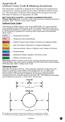 Appendix B: Uniform Color Code & Marking Guidelines The information contained in Appendix B is intended to be supplemental information for existing practices found within CGA Best Practices Version 2.0.
Session 14 Cable Support Systems
 Session 14 Cable Support Systems Cable Support Systems in the IEC World A new IEC Standard, IEC61537 2001 has been developed If full details of the cabling layout are available then the likely cable load
DIVISION 2 - SEWERAGE AND DRAINAGE SECTION 02720 - STORM DRAIN SYSTEMS PART 1 - GENERAL
 DIVISION 2 - SEWERAGE AND DRAINAGE SECTION 02720 - STORM DRAIN SYSTEMS PART 1 - GENERAL 1.01 DESCRIPTION A. Furnish and install all storm drains, including manholes, inlets, service lines and other appurtenant
1 Campus Cabling Systems Introduction
 1 Campus Cabling Systems Introduction This document represents the campus cable and infrastructure standards adopted and supported by the XXXX. All new construction and renovation should conform to these
CONCRETE SEGMENTAL RETAINING WALL SYSTEM
 CONCRETE SEGMENTAL RETAINING WALL SYSTEM PART 1: GENERAL SPECIFICATIONS 1.01 Work Included A. Work shall consist of furnishing and constructing a Rockwood Vintage TM unit segmental retaining wall (SRW)
HIGH SPEED COMMUNICATIONS PLENUM CABLE CATEGORY 5e CMP FEP JACKETED, PVC-FREE UNSHIELDED TWISTED PAIR (UTP)
 Cable Specification Category 5e CMP HIGH SPEED COMMUNICATIONS PLENUM CABLE CATEGORY 5e CMP FEP JACKETED, PVC-FREE UNSHIELDED TWISTED PAIR (UTP) This cable specification complies with the electrical transmission
LOW-VOLTAGE TRANSFORMER QUICK START GUIDE PLANNING GUIDE INSTALLATION GUIDE
 LOW-VOLTAGE TRANSFORMER QUICK START GUIDE PLANNING GUIDE INSTALLATION GUIDE Applies to Models: 75W, 150W, 300W, 600W, 900W, 1200W ATTENTION: Please read this guide carefully to ensure safe and efficient
RFID applied to the built environment: Buried Asset Tagging and Tracking System
 RFID applied to the built environment: Buried Asset Tagging and Tracking System K. Dziadak, J. Sommerville & B. Kumar School of the Built and Natural Environment, Glasgow Caledonian University, Glasgow,
SECTION 55 PIPE FOR STORM DRAINS AND CULVERTS (FAA D-701)
 SECTION 55 PIPE FOR STORM DRAINS AND CULVERTS (FAA D-701) 55-1 GENERAL The Contractor shall perform all work required by the plans for construction of pipe for storm drains, precast polymer trench drains