
SYSTEMS GUIDE VIZIA RF+
|
|
|
- Melissa Dawson
- 9 years ago
- Views:
Transcription
1 SYSTEMS GUIDE VIZIA RF+ Vizia RF+ System Guide This Vizia RF+ Systems Guide is for electrical and home automation installers and contractors in the electrical field. The intent of this systems guide is to educate the reader in Leviton s Vizia RF+ products when planning and installing your Vizia RF+ network. It is also the intent to provide Best Practices and Technical Tips once the network has been installed. Maximum and Optimum Performance Throughout this document we make reference to maximum and optimal performances. Maximum performance allows the Installer to design Leviton s Vizia RF+ systems according to maximum specifications: for instance you are able to include up to 128 devices in a Vizia RF+ network. Optimal performance specifications are simply recommendations an installer may use when specifying Vizia RF+ networks. Optimal performance takes into account the various forms of potential RF interference and obstacles that any given installation can encounter. These recommendations provide the installer a basis to specify and layout any Vizia RF+ network. N ON N Mesh Networking N Leviton s Vizia RF+ network is designed using N mesh network technology or topology. Mesh networking is a way to route instructions and information between devices when nodes can t reach each other directly. It allows for continuous connections and reconfiguration around blocked paths by hopping from device C to device until a connection can be established. Turn on node 4 This is very similar to how the Internet is designed, handing off packets of information from server to server until it reaches a web browser.

2 Page 2 of 21 If a device is unable to communicate directly (line of sight) with a controller it uses an alternate route. With routing, devices communicate with the closest neighboring device, (A to B) then subsequent next closest (B to C) until it reaches the target device such as a Vizia RF+ dimmer. Consideration should be taken when laying out your network. This is covered in more detail in the Best Practices section All Z-Wave certified products use this technology. Allowing them to communicate and transmit information between each other. However not all devices from all manufacturers communicate on every level. Best Practices Designing and Installing Your Vizia RF+ System for Best Performance Specifying your Vizia RF+ network: House Size Vizia RF+ networks perform best in 7,500 square feet or less for optimum performance. This is based on the distance a signal must travel when hopping between devices before it reaches its intended device. Vizia RF+ devices are able to hop up to 4 times between devices to reach a final device. However it is best to limit the amount of hops to 2 or less for increased performance and decreased latency when transmitting. Limiting the size of installation to 7500 square feet lessens the amount of hopping enabling a more reliable installation. Poor coverage can be due to an inefficient number of devices installed in your network, where the mesh degrades due to the distance between devices or interference from construction materials such as walls that block the RF signal from reaching its destination. Adding additional devices to increase communication will increase your RF coverage and eliminate RF signal loss due too interference. Coverage Area N NO Coverage Illustration of Bad Coverage NO Coverage NO Coverage Layout Concrete slab/steel beams etc between floors Coverage Area If you are specifying Vizia RF+ as a whole house solution, consider all lighting locations when determining where Vizia RF+ will be installed. Since not every light switch in the home requires home automation benefits, consider using non-rf Vizia+ devices in areas such as closets, pantries and garage lighting to compliment the Vizia RF+ installation. C Coverage Area NO Coverage 30+ feet away NO Coverage The RF signal travels approximately 30 ft distance through walls. If there is a node beyond this distance adding another node will increase RF distance. N N Node Dimmer/switch Plug-in C Controller

3 Page 3 of 21 If communication is slow or experiencing long lag time (latency) you may find that installing additional plug-in devices and using them as transceivers can increase communication strength,. You may be within 30 ft however you must factor in walls and open air RF loss when laying out your network. Detached Buildings or landscape lighting: Installing Vizia RF+ in a detached building can be done however depending on the distance between the main house and detached building communication may fail. If you are unable to send or receive communication to a detached building from the main house it is best to program the detached buildings as a separate network from the main house. Adding additional plug-in devices as transceivers to increase routing between these two buildings can greatly increase communication. If you are experiencing any communication issues install additional plug-in modules at the closest points between the two buildings. Remember when you install these plug-in devices you will need to run a Network Re-discovery to include these modules as possible routing devices between two buildings. Caution: Plug-in devices are not rated for outdoor use. Note: If contemplating this type of installation it is best to contact Leviton technical support. Not all remote structure installations are capable of control from a main house. There are many factors that must be considered when installing your network between two separate structures, such as a Main house and detached garage. Number of Devices While specifying a Vizia RF+ system, ensure that you will not exceed 128 devices including controllers. A typical 7,500 square feet house will average 72 devices. This number of devices as tested will deliver optimal performance. As long as devices do not exceed RF range distances beyond the specified limitations below Distance Vizia RF+ devices will communicate 75 feet in an open air environment. (See RF Signal Loss below when figuring actual communication distance between devices in your network.) In the common home, where RF interference obstacles (gypsum, metal, reinforced concrete, walls, screens, stainless steel, etc.), are frequently encountered, consideration should be given to installing one device per room this will ensure less distance between devices increasing communication within the network. (Typically, 30 feet apart). RF Signal Loss The presence of typical building construction materials, such as mentioned under construction considerations, in the Best Practices section further reduce RF signal strength. RF signal strength drops by 6dB for every incremental doubling of open field distance with no impairments or obstacles.

4 Page 4 of 21 An RF signal can drop inside a typical building with obstacles/impairments by about 25dB for every incremental doubling of distance. This is a similar effect experienced when driving through a parking garage or a tunnel while talking on a cell phone. When in a parking garage you encounter thick reinforced concrete and steel. This causes you to lose cell service due to the thick concrete blocking the Radio waves. Similarly in an RF system there are losses created as a result of various obstacles and impairments. Another way to look at RF Interference is to consider every obstacle between the transmitter and the receiver as a sponge. Every obstacle absorbs some of the signal. Multiple obstacles absorb much of the RF signal, weakening it to the point where the receiver can no longer see it. Some obstacles will absorb more of the signal, while others will have little effect. Another type of RF interference obstacle will actually attract and bend an RF signal away from a desired receiving point. This type of interference is often experienced in HDTV over-air broadcasts and can affect all RF signals. Crosstalk, multi-path interference and signal drop-out environments are indicators of this effect. Common causes of RF interference include: Cordless headsets/phones (900 MHz frequency) Wireless speaker expanders/extenders (900 MHz frequency) IR to RF Remote control extenders (900 MHz frequency) Construction Materials Considerations Building materials can decrease signal distance and block signal in an RF system. Below are some of the possible considerations: Metal foil insulation Metal foil wallpaper Reinforced concrete Masonry Tin or metal ceilings Metal plumbing and pipes Metal screens Screening materials for stucco applications Steel doors, studs, and metal boxes Metal Lath plaster and reinforcement If you encounter any of the above construction materials or electronic devices in the installation, you may need to add additional transceivers (plug-in) devices to improve performance. Electronic devices at 900 MHz may need to be removed or relocated. This is due to possible interference they introduce into a Vizia RF+ network. Replace them using devices on a different frequency, for example 2.4 or 5.8 MHz).

5 Page 5 of 21 Solutions for Common Applications Not every switch and dimmer in an installation needs to be automated using Vizia RF+. Implement Vizia RF where it has the strongest impact on lifestyle and performance in areas such as kitchens, hallways, landscape, master bedroom, home theater and porch lighting. Include standard Vizia+ products in non-automated locations. Not every dimmer and switch in the home needs to be automated, i.e.; closets, garage, etc. Use other Leviton products to provide automated solutions such as the Decora Manual-On Occupancy Sensor (IPP15) in closets, laundry rooms and similar locations. Room-based applications are easily done with Vizia RF+ products. In most cases strong RF communication is achieved when devices have a line of sight communication to and from the scene or zone controller. This allows for extremely fast communication with no latency because there is potentially no routing and or obstacles for the signal to travel through reducing RF range in the system. Design Considerations Extra care should be taken when installing a whole house application. You may have an installation that experiences RF interference or loss due to construction material used in the home, or RF loss from the distance between device and controllers or handheld remote. In either case this can cause communication errors resulting in poor user expectations. If this should occur, adding a network transceiver (Leviton Plug-in device either VRP15 or VRP03) strengthens the mesh building more routing options between the device and controller. 1. Distribute devices throughout the house using existing wall switch locations. 2. Do not install dimmer/switch devices all in one location. i.e.; electrical panel room on the wall. Doing this can result in poor communication. Remember Vizia RF+ is a mesh network and relies on its neighbor devices to communicate messages to controllers. When all devices are located in a cluster communication back to the controller may fail due to long RF distances traveled without the ability to rely on another device to relay the message to the intended controller. Consideration should be taken when designing a system within concrete walls, aluminum siding and interior or exterior metal materials. These are all materials that can significantly attenuate (reduce) RF signals. Best practices when installing and programming your network Update controllers when adding any new devices/controllers to the network. As systems increase in size, expect installation time to also increase. As routing tables grow, sending and receiving traffic will increase. The result can be interpreted as slow performance. However, good system design practices can have a dramatic impact on performance and should be factored in when designing a large Vizia RF+ system.

6 Page 6 of When setting up a network, include all dimmers, switches, and plug-in modules first. Then 4 button or single button controllers. This allows your controller to build a full routing table during its inclusion, giving each controller the most up-to-date information.. 2. Controllers must be updated after all devices are installed or as any changes in the network are implemented by adding/removing devices or changing the locations of any previously installed devices. 3. When removing a device from your system, using the exclusion procedure is critical to a Z- Wave system s reliability and response time. When a device is not excluded the routing device may assume it to be part of the network and continue to attempt to communicate with it. If not excluded from you network the result will degrade system performance. It should be noted that Z-Wave technology is designed with self healing ability, which after a few failed attempts will re-route the control signal through another device in the network, resuming Communication. However system performance may degrade and appear slow. In extreme circumstances you may even lose RF control to devices. 4. If there is difficulty including a device (dimmer, switch, plug-in) into your network first try excluding it if this does not work then reset the device to its default setting (see instructions for your device) and then attempt to include it again. 5. If a device fails in the network, your Primary Remote can be used to run a REMOVE FAILED command from the primary remote. This command scans the devices in a network allowing the user to remove any devices that show failed. This is a very useful programming tool and it can be helpful to locate device which are not communicating properly and allows the user to take the proper steps in troubleshooting the installation. Good system design and installation practices will increase Vizia RF system performance and reliability. 2-Way Status Updating Operation Leviton s scene and zone controllers receive information sent from a device in its network, by displaying its LED reflected by the action preformed by the scene or zone controller i.e. Light green when scene or zone is ON. LED is dark when scene or zone is OFF. Leviton s Primary Remote will also give real time information from a single device controlled from the primary remotes device list. When a controller initiates a command to one or more devices, it ensures the devices have received the command by getting a response back. This is reflected in the form of an LED change to each controller that device is associated to up to 5 if routing to all 5 controllers. On a scene controller this will only happen if buttons have the same devices and scene associated. In order to inform all other controllers on the network, the controller will follow up with an update request to each of the associated controllers. As mentioned above any one device in your network that is associated to a controller can update up to 5 controllers if routing is required to each controller. If a device is able to talk to a controller in a network without routing, that is, via line of sight, then it is capable of updating as many controllers as it can see through line of sight. 5 controller is a limitation of the dimmer/switch not a controller. A dimmer or switch is designed using the z-wave routing slave library which is only able to store 5 routes to any controller associated to it. This means if a dimmer or switch must report its status to 5 or more controllers, after 5 any additional controllers associated to that dimmer/switch must be in line

7 Page 7 of 21 of sight (direct range) or the dimmer will not be able to transmit the status information to that controller. However, there is no way of knowing due to Z-Wave proprietary protocol whether a controller is communicating with a device via line of sight. Therefore, it is recommended any one device not report its update to more than 5 controllers in a network, if implementing Leviton s 2-way operation. Leviton s Vizia RF+ lighting uses patent pending enhanced 2-way communication to reliably deliver scene and zone information to Vizia RF+ devices in a network. Enhanced two-way communication with other manufacturer s products is dependent on whether they have implemented Leviton s enhanced two-way protocols. Home ID The Home ID is programmed into each primary remote at the factory before it ships. There are 4 billion unique home IDs available for programming ensuring an ample supply of network IDs. The Z-Wave protocol uses a unique home ID to separate each independent network. This unique home ID allows for system design and installation in apartment and MDU applications. Because of the unique home ID in each network condos, apartments, and high rise MDU can install Vizia RF+ systems into any dwelling without interference from another network in the same building. The first Primary Remote will be the only Remote able to include or exclude devices from a network. Additional (secondary) Remotes will be assigned that same home ID when included into the network. This is accomplished through a process that leaves the initial controller as the Primary Remote and the other remotes as Secondary Remotes. All Dimmers/switches and controllers in the network will initially have a home ID that is set to zero. In order to communicate, the Primary Controller needs to assign all devices with its home ID. It is only a Primary Remote or that can assign home ID s to a device. Node ID: Node ID s are used to address individual devices in a network. A node ID is assigned to slave and controller devices by a Primary Remote. A node ID is assigned to each device within a network along with the unique home ID. A sequential progression is used when assigning node IDs to Z-Wave devices. Leviton s VRCPG Remote will start with ID 2, sequentially assigning devices an ID up to 128. Once a device has been included into the network, its node ID can then be named i.e.; Home Theater, Kitchen, Master Bedroom. This allows any installer to easily identify the location of the device and what it is controlling. Designing a basic Vizia RF+ lighting system is very simple. Advanced applications require further thought and planning to ensure a smooth and reliable installation. When designing a Vizia RF+ system consideration should be given when choosing the best location and layout of your network. Leviton s Vizia RF+ devices communicate at 908MHz radio wave signals within its network. Primary Remote Functions and troubleshooting:

8 Page 8 of 21 Note: Leviton has designed two Primary remotes: Basic remote VRCPG-BSG (battery operation only). The advanced VRCPG-OSG primary remote. Our VRCPG-OSG advanced remote has all the functions listed below in its menu. The basic remote does not include Events, or a Clock feature. Features System Setup VRCPG-BSG VRCPG-OSG Programmable Scenes and Zones Profiles (16 unique) Security Settings Clock Timed Events Inclusion/Exclusion within Network To create a Vizia RF+ network you must first include devices into the network. Your Programmer/Remote assigns the device a unique ID. This is done through the process of Inclusion. To do this, both the Programmer/Remote and device must activate the include initiator. On any of the Dimmer, Switch or Plug-in devices press the push pad or toggle button to include. The Programmer/Remote requires selecting the include option under system setup. Both Programmer/Remote and device must be initiated at the same time. Below is an illustration for including/excluding a device to a network. Exclusion is used to remove all information from the device setting it to factory defaults. Exclusion can be used to reset a device that is not including properly. If however your device will not include to your network it is best to reset the device (see device instruction sheet to reset) If your device was moved or part of any other network you will also need to reset the device to clear any previous information in the device. This clears all memory in the device and returns it to factory settings. Inclusion/Exclusion requires close range communication. Ensure your remote is within 3 ft of the device you are including or excluding.

9 Page 9 of 21 Leviton s SCENE and ZONE controllers include to a network by pressing buttons 1 and 3 until the LED s in the buttons begin to blink amber. See example below NOTE: It is important to update all controllers once you have included all devices and all controllers into your network. This ensures your network is up to date and virtually linked to all devices in your system. Controller Updates In order to maintain network integrity in a Vizia RF+ network controller updates are required to reorganize and efficiently build routes. Doing this updates each controller in the network with any changes or additions to the system. A network update should be done at the end of installation to Controllers only. Each controller requires an update. Once all controllers are updated, updates are then only required if additional devices get added to an existing network or to refresh to optimize performance. The update function is located within a sub menu of the system setup network screen in a Leviton primary remote. When you select update controller from the menu and select the controller you wish to update the update will start automatically. It works in low power which is the same as if you were including a device, so you will need to be near the controller you are updating Once the controller to update is selected by the primary remote, your controller will begin to flash amber on all LED s, which automatically starts the update process. The update process goes quickly depending on the amount of Vizia RF+ devices in your network and the amount of controllers to update.

10 Page 10 of 21 Areas Areas are defined as a group of selected devices (within the Primary Remote) who are joined together as a group. This group of devices can be used to quickly associate to a controller. Leviton s Vizia RF+ network is capable of creating 128 areas. These areas can be configured as a single device, all devices in a single room, or as a whole house area up to 32 devices per button on a controller. Once your areas have been created, you can easily associate a group of devices to a button on a scene or zone controller. Areas are also used when selecting profiles in the primary remote this allows your primary remote to control areas within a profile. Each profile can turn on an area assigned to a button. Areas can be assigned to a scene or zone controller. When associating your scene or zone controllers select the area option and assign the area you would like to control to that scene or zone. Creating an Area: >>MENU>>[CENTER BUTTON]>>AREA>>[CENTER BUTTON]>>NEW>>[CENTER BUTTON]>>ADD DEVICES>>[CENTER BUTTON]>>SELECT DEVICES TO ADD TO AREA USE [+] KEY>>[CENTER BUTTON]>>[SAVE] Your Area will now display under the area menu. Select New to create another area. Deleting an Area: 1. Select Area 2. Scroll to the Area to delete (Area 1 ) 3. Select (Delete Area) 4. Confirm delete Area (YES) If an area is not responding or showing RF fail when tying to toggle it ON or OFF, you may be outside of the range for the remote. The RF remotes must be within close range of the nearest device in the Vizia RF+ system. If a device did not include properly into the network it may cause RF failure also, try and re-include the device after excluding it and program the area again. Association To specify the relationships between the dimmers or switches and the controllers, Leviton uses a method called association. Associations can be created by using a primary controller, or a PC software program which has implemented Vizia RF+ association protocols. Associations can be set, removed, modified or reported back at any time. This creates a much greater level of flexibility and greatly speeds up installation. It is important to associate your network after all devices in your network are installed. Associating a device/ Area to a scene/zone controller is done through the Primary Remote. Each button on a scene or zone controller is able to associate an Area or device to its buttons. All information is stored in the dimmer or switch device. If a device/area has been associated to a

11 Page 11 of 21 button, let s say, button number 1, the associated device will react when button 1 is pushed. If you do not want a device or area to react to a button simply do not associate it to any button on your controller. The device or area will not react to the button being pushed if it is not associated. It is best to do your associations after all Vizia RF+ devices are installed into your network and all your areas are created as this allows the scene or zone controllers to build a complete information table to communicate reliably to each device. Another way to associate devices to a controller button is by associating an Area to the button. If you have built an Area in your network, i.e. bedroom lights, these can be associated to a button. Note: All devices in that area will automatically be associated to that button and will react when a button is pushed. Note: If you are having problems associating devices to controllers, ensure that the distance between the controller and device is not exceeded. Also take into account obstacles, walls and wall surfaces when diagnosing RF performance. Each networks signal loss may differ depending on the installed environment. Additionally sometimes association may fail when doing so with Leviton's two wire dimmers such as VRI06 and VRI10. This can often be because the load wattage for these dimmers is less than specified in the dimmer instructions. For Leviton's Vizia RF+ two wire dimmers minimum wattage requirements must be followed to ensure proper RF communication between the controller and dimmer in its network. Because these dimmers do not have a neutral wire there must be a constant minimum power supplied to the dimmer in order to maintain its RF communication range and supply power to it components. Creating an Area ON/OFF or Zone To create a zone associate any created areas or devices to your controller by selecting those areas or devices in the association list on the Primary Controller. This function is under the association menu from your selected zone controller. When an area or device has been associated with a button, that button will control the area or devices when it is pushed. Once all devices/area have been associated to that button, move to the next button. Each button on the zone controller is able to have 32 devices associated to a button. When an Area ON/OFF has been selected by the zone controller any devices in the association list will respond and turn on to the last level in the dimmer, switch or plug-in NOTE: If a device was not associated to the button being programmed it will not respond to any button push from the zone controller. All devices required to respond to a zone controller button must be associated with that zone button. Creating an Area in Leviton s 1 button scene or zone controllers is configured the same way as a 4 button controller. One button scene controllers can have a maximum of 32 devices associated to them. However it is important to note one button zone controllers will only allow an association of 1 device to its button. Leviton's 1 button scene and zone controllers can also be used as "virtual" matching remotes in a 3-way installation. Vizia RF+ 1 button scene controllers are replaced in a switch remote location allowing it to be a virtual 3-way to our VRS15-1L. Vizia RF+ 1 button zone controllers can be used as a matching dimmer remote for a 3-way application.

12 Page 12 of 21 Scenes Scenes are arguably one of the most beneficial advances that Vizia RF+ can bring to home control. The ability to conduct a group of lights to automatically change the appearance of a room, using a single stroke of a button is an amazing experience. Scenes differ from zones/area control in one important manner invoking a scene adjusts the light intensity states of one or multiple devices, whereby a zone only controls the ON/OFF state. All devices/areas must be associated to each button on your scene controller. Each button on the scene Controller can support a total of 32 Vizia-RF+ devices Associated to it. NOTE: If a device was not associated to the button being programmed, it will not respond to any scene activations from the scene Controller. All devices required to respond to a scene Controller button, must be Associated with that scene button. Programming a scene is done in a few simple steps. First you must put the scene controller into scene programming mode. Press and hold one of the scene buttons until it blinks green. This enables scene level programming, indicated by a blinking green LED in the button. (Each button requires its own scene programming). Next, walk through the house and set the lighting levels for each device in the area that is associated to that button (assigned to that scene). By adjusting the various intensities of each lighting load, you can create scenes for reading, entertaining, cleaning and even all off. After all light levels have been set (and each device has been associated to the appropriate button) Press the scene button a final time on the scene controller to learn the scene into a button on the controller. Scene 1 100% 100% 50% 10% OFF Scene 1 Scene 2 Scene 3 Scene 4 Leviton scene controllers can be set to 5 default scenes allowing for quick scene programming. Scenes 1-5 can be assigned to any scene controller button as default scenes. (I.e. scene one is defaulted to 100%, any devices associated to this scene will go to 100 %.) Scene two is set to 50%, scene three 10%, scene four OFF. 4 button scene controller, default scenes: NOTE: If a device was not associated to the scene button being programmed, it will not respond to any scene activations from the scene controller. All devices required to respond to a scene must be associated with the scene button desired. Scene 2 50% Scene 3 10% Scene 4 OFF

13 Page 13 of 21 Vizia RF+ 4-button scene and zone controllers also feature an IR port for control via IR remote controls. Both Scene and zone controllers come default with the IR port disabled. To enable simply remove button 5 (DIM/BRIGHT) the last button, and replace with clear plastic button to allow IR receiver to get signals. The 4 button controllers can receive a simple remote IR code to turn ON/OFF Bright/Dim or activate a scene or zone. When using IR features in the scene or zone controllers do not install two 4-button controllers that are using IR coding next to each other. This can cause both controllers to receive the IR remotes signals causing false scene or zone triggers. (See Vizia RF+ IR codes document) Scene and Zone control.what is the difference? What is the difference if I use a scene or zone controller? Scene and Zone operation are quite different. What makes scene and zone control different? First let s see how zone control operates. Zone Control When devices are associated to a zone controller they are simply added to a list. The controller remembers these devices and knows which ones to call should its button be pressed. When zone control is selected or GROUP ON/OFF in your association menu for a given controller, any time that button is pressed your devices (dimmer/switch and/or plug-ins) at the receiving end turn ON. These devices will turn ON to the last level the devices were previously at regardless if the device was changed locally at the device, or at the controller. A zone controllers LED s will change depending on the action programmed and condition of the device it is controlling. If a group of 3 devices are told to turn ON by the zone button and all devices acknowledge back that they are ON to the controller, the LED will light green (IN ZONE). Additionally any other controllers that have any of these same devices associated to them will also light green (or ON). If all 3 devices are turned OFF either from each device or controller then the LED will reflect OFF (LED will go dark) any other controllers with these same 3 devices will also reflect OFF. If any of the other controllers have additional devices associated to these same buttons as the 3 devices, the LED will remain ON until those additional devices have been turned OFF. If only one device in that group gets turned off the LED will stay lit, this is because the programmed group of devices for that zone have not turned off. The Zone controller also allows ability to toggle an area ON or OFF by the LEFT/RIGHT toggle button. Zone controllers receive true acknowledgement of a singe associated device or group of associated devices ON or OFF position. Scene Control When devices are associated to a scene controller they also are added to a list. The controller remembers these devices and knows which ones to call should its button be pressed, just as the zone controller. When a scene is selected as the action in your association menu for a given scene controller, and that button is pressed your devices (dimmer/switch and/or plug-ins) at the receiving end turn to the pre programmed scene levels. Each device is set to turn ON each time to the level your scene controller learned. When you press the scene controller button until it begins to blink green it is set to scene programming mode. You must then set each device associated to that button

14 Page 14 of 21 to a level. (On a dimmer 1-100% or on a switch ON or OFF). Once you have set all devices to there level you must again press the scene button to learn that scene. A scene controllers LED s will turn ON whether the scene was programmed to turn ON or OFF. This is because when the scene is actuated it sets each associated device to the pre programmed level set by the user. If any one device in that scene changes its level the LED on the scene controller will go out (dark) indicating that the scene is OFF, or no longer true. If that same device is turned ON locally again to the same level the scene LED does not change. The LED will only turn back ON after the scene button is pressed on the controller and sets all devices to its pre programmed levels. Note: If any device associated to either a scene or zone controller is removed or looses power, pressing a zone or scene button on that controller will still turn on the LED green. However when the button is pressed the indication that it is experiencing communication errors is indicated by a green blinking LED followed by the LED flashing red once. The communication errors would be a result of removing or loss of power to the associated device. Creating Events (Timed Event) (VRCPG-OSG Remote ONLY) Our primary remote allows for the programming of up to 64 events. Each one of the events can be programmed to set a device/area/scene, to an On/Off level at a programmed time. A recurrence can also be specified. The recurrence selects what days of the week or month the time clock will run. ON or OFF times can specify a particular time of day, or a value relative to the calculated sunrise or sunset times dusk or dawn. In order for this feature to work you must enter longitude, latitude and time zone settings into the location tab in the settings menu. Ensure event settings are enabled under the event setup tab. A time randomizer provides for some daily variations so that it does not appear to an outsider that the lights are controlled by a mechanical system. The default programmed state of the timers is that they are ENABLED. Completion of the Wizard will enable preferred events to be activated. Creating events based on dawn and dusk give a user the ability to turn ON or OFF scenes or zones according to each day s dawn and dusk time. In order for these settings to work properly you must input your location settings. At the end of this guide starting on page 25 there are Longitude and latitude settings for all major cities and locations in the USA. Change your latitude and longitude to match your location. You also need to locate your time zone and enable daylight savings mode. These settings must be input correctly in order for dawn dusk settings to trigger. (See Application Note: Setting Up an Event) Deleting an Event: 1. Select Event 2. Scroll to your Event to delete (press center button) 3. Scroll to option 2 and use the left or right arrow to select Delete. 4. Select Save 5. Confirm (Delete Event) by selecting YES.

15 Page 15 of 21 Profiles Profiles are a unique feature within the Leviton Primary Remote. Profiles can be created to control different rooms of the house all with one remote. When creating profiles each device in the network may be controlled also by assigning an Area to the four buttons of a profile. An area can be created by a primary remote and then assigned as a profile in your remote. Creating a profile is done after all devices have been included into your network and area has been created. Once the basic network is setup then select the Profile option in the primary remote associate one of the created areas to your profile and assign it a button (1-4) to control. Repeat to add up to 16 customizable profiles. Pressing the button you have programmed will bring all the devices in that scene to the scene level you had just created. (See Application note: Setting up a Profile) Delete a profile: 1. Select Profile 2. Scroll to your Profile to delete (press center button) 3. Scroll down to button 4. Press Left arrow until delete is selected 5. Your programmer will confirm DELETE PROFILE (YES) 6. This will remove your profile completely from your primary remote. Controlling Devices and Profiles Leviton s Primary remotes can also work as a stand alone controller to turn ON/OFF/dim/ brighten lights. There are two ways this is done in the remote. One way is to individually control a light through the device menu. The Device menu allows you to select an included node in your network and control it ON/OFF, dim/bright. When the node is selected you also receive confirmation that the device turned ON or OFF. Profiles allow you to control a group of lights at one time. Another way is setting up profiles in the primary to control your preset Areas. After creating an Area you can assign any area to each of the four buttons on the primary for up to 16 profiles. Each profile can control 4 areas. Simply scroll through each profile and assign it to a button on your primary remote. Once finished use left and right arrows to select the Profile you would like to control. Profiles can be very convenient when using a primary remote for whole house control. You can configure a profile for each room, selecting each room profile when in that room. Join as Secondary To add secondary remotes to your network, you must join your new remote to the primary remotes network. This is done by invoking the join network function (under network settings) on your new (secondary) remote and invoking the inclusion function on your primary. Once you have told your

16 Page 16 of 21 primary to include the new remote, and set your secondary to join its network you will see progress icons on the remotes while the transfer takes place. Your secondary remote is limited in its abilities, one being unable to include or exclude devices from your network. Any modifications to your network require the Primary controller to include/exclude devices. Once your remote has joined the network it will receive a home ID from your primary remote and the next available node ID. You will know if your secondary remote has joined your network by an X2 in the upper middle of the LCD screen on the remote. This is only available with Leviton VRCPG remotes. Network Re-Discovery Network Re-Discovery allows you to rebuild your networks routing table based on the power level specified. The default power level for network Re-Discovery is -3dB. This level can change from 9 to 0dB. Rediscovering at different power levels can change the performance of your system. If your network Vizia RF+ devices through out your installation are close together you may be able to rediscover at the lowest power level -9dB which it turn can reduce latency. If you are having communication errors and your devices are fairly spread out average 15+ feet through out the house rediscover your network starting at a few decibels above -3dB at -2 or -1dB. If it does not work at these settings then move up until you have reached the max 0dB. Note: increasing your power level will allow devices in your network to see other devices further away. This can be good and bad. If it sees these devices further away and can communicate with them reliably great, although sometimes a device may only see a far off neighbor sometimes which can result in intermittent performance. So it is always best to try and rediscover your network at a lower decibel than the default, or just leave it at -3dB. Network Re-Discovery can greatly increase your routed communications throughout your installation. Once you have done a rediscovery you must update all controllers in your network with the new routing information. Finally you will have to set routes to each node back to the controller. This process will start as soon as all your controllers have been updated in your network. As it sets routes you should see on your Primary remote each device setting its route back to the controller. This process can take a while depending on the size of your network. Reset Controller Resetting your Primary Remote sets it into a factory default state. This will clear out all devices in you remotes information table as well as any areas, event, or profiles created. Resetting your Primary remote will result in loss of control from your remote to any devices in your network. (Any scene controllers or zone controller in your network will still function as configured in the system.) If you lose your primary remote or it breaks your network will still function as mentioned above. If you decide to add additional devices you will need to purchase a new primary remote and reset your network To rebuild your network see Primary remote instruction sheet on configuring these settings. However this information can be transferred from a primary controller into a secondary controller after the installation has been completed for a backup. The secondary remote will not have certain functions i.e. inclusion, exclusion ability.

17 Page 17 of 21 Resetting devices to factory default Dimmers, switches and 1 button controller: (i.e. VRI06, VRS15, and VRCS1) Resetting your device will require pulling the push pad up until a (click) is heard engaging the air gap on the top. In the same motion push the paddle back into the frame and hold until the device Locator LED turns to RED. 4-Button Scene and Zone controllers: (i.e. VRCS4) Press and hold buttons one and three until the four LED s on the 4 button controllers turn red. You can verify that your device has reset its home ID and device ID by pressing one of the buttons on the controller. If the button illuminates RED when pushed it has been reset. Plug-in Devices Unplug the device, plug it back in- Press and hold the LED indicator button until the LED turns red. Advanced Features RS232 serial interface module: Leviton s RS232 module will interface to control equipment to communicate as a bridge between your Z-wave devices and RS232. Leviton and HAI have teamed to provide control of your Vizia RF lighting control system via an HAI interface using Leviton s Vizia RF serial module (VRC0P). The VRC0P is included into your Vizia RF network as a controller. Once all devices are included, your RS232 module is setup accessing the HAI setup menu in your Leviton Primary remote listing your RS232 serial interface in your network. Select the interface module using the center button and associate any installed devices to the module. Once your devices have been associated your will need to program the HAI system to operate your RF devices. See HAI instructions for programming. and Vizia RF serial Interface Protocol document found at our Leviton website for further setup and configuration of your RS232 module. VRCPG Utilities Send/Get Data is an enhanced feature of the VRCPG primary remote used to transfer setup programming information from a Leviton primary remote to a Leviton secondary remote. You must join your secondary remote into the network before you can use the Send/Get data utility. See Join as Secondary in this document. The VRCPG Utilities feature allows you to transfer system setup (i.e. node ID names etc.) events, areas, and profiles to your secondary remote with out manually configuring these steps. How is this done? Selecting Send data in the primary remote and selecting Get Data in the secondary remote. In the secondary remote Get Data screen you can choose what information to send system setup, areas, events, profiles. Select the center button and follow the on screen instructions. Leviton s Vizia RF+ system has two options if a device has failed or has been removed from a network. Remove Failed and Replace Failed allow a user to select a device that has appeared in its remove or replace list by scanning through existing nodes to verify network connections. At the end of it scan all nodes that could not be contacted will appear in the list.

18 Page 18 of 21 Select the node you wish to remove/replace and press center button. If remove failed, was selected after the process an updated list will appear. This list should be blank after all devices in the list have been removed. If replace failed option was used you will be prompted to prepare replacing device follow the steps prompted by primary remote. Replace Failed function will reassign your new device with the failed devices ID and update its routing tables. Sometimes RF performance in an installation may have communication errors. If this should happen Leviton has designed some advanced features into its system to increase performance and communication reliability. If an RF signal does not reach a device directly, it will try and route through another device, this is the beauty of a mesh network. However the device used to route may not always be the best or most direct node to communicate to the intended device. To help with routing Leviton has built some network optimization features into the Vizia RF+ system. These features are: Set Routes Set Hail Update Routes Set Routes provides the installer with the ability to define which device the controller will talk to when routing to the final device in the message. The Z-wave protocol will build a table automatically when you setup your network assigning a device the routing node to another. But sometimes the assigned node is not always the best choice. Z-Wave protocol does not tell you what device has been chosen to route through. If a device is sluggish or sometimes struggles to communicate assigning a Set Route may be desired by the installer. This Feature allows you to specifically assign the route device that will communicate to the intended end device having communication issues. From the Advanced menu: Select RTS Devices Select Set Routes Select the Device (i.e.; Dimmer/Switch/Plug-in) Select the Controller (i.e.; 4 button single button) Your primary remote will process the selected action and assign the manually Set Route to your device. Once you have selected the controller you are finished. Doing this may improve the communication to the intended device to control. Leviton s Vizia RF+ system can give levels from its dimmers switches and plug-ins for up to 5 routed controllers. Set Hail is a function designed into the Vizia RF+ system to optimize and arrange where a device acknowledges a controller. This rearrangement can assist with traffic congestion in a system. There may be a device geographically located far from its associated controller. In this instance it could make sense to change the controller its currently hailing by re-assigning the device to a new controller to hail. If a device is trying to hail beyond the recommended distance away, reassigning that controller to hail a closer controller can decrease traffic and improve performance on a network.

19 Page 19 of 21 Another case would be to offload the controller being hailed because one controller in the system might end up with a lot of dimmers/switches trying to hail the same controller again creating increased traffic. Update Routes is the final selection in the network optimization menu. Each device installed into the network is listed in the route update list. If you have a device that seems to respond intermittently or may take a long time to turn ON updating its route may optimize its performance. Updating routes does not hurt the network in any way. Update routes simply refreshes the association table already set into the device ensuring there are not association issues. Within the utilities menu of the Primary Remote there is an option called Re-discovery PL (Power Level). This setting is default -3dB. An installer has the ability to change this if needed. Why would you change Power level? When a Z-Wave network builds its routing tables it discovers devices within range based on the power level used. In other words it learns who its neighbors are based on its power level. The default setting is not always the ideal discovery of the network devices. In some cases you may want your devices to route through a device further away or closer to the device that is receiving the command. Adjusting the power level in the negative direction causes a lower power level in turn using the closet devices to the controller to route through. Adjusting the power level positive to a max of 0bB increases the power level allowing the network to possibly choose a device better suited to route through the desired device. In any situation if you are unsure of what effects adjusting the power level will have on your system contact Leviton technical support to determine if this setting should be used. Technical Tips: All dimmer/switch and controller devices are not part of another network. Exclude and or reset any devices that were part of another network. If all devices are reporting NO ID and the network does not work, on any dimmer/switch devices exclude the node using the exclude function in the primary remote. (Leviton 4 or single button controllers can not be excluded by a primary remote with a different home ID. The Primary controller must be reset. Finally (If exclusion does not work for the dimmer/switch) reset the devices following the reset steps in the devices instruction sheet. After Installation: Do a Rediscovery of the network to ensure all devices are still present in your system. Update all controllers. Manually operate each device from the primary controller to ensure that all devices are in the mesh network and hence can be addressed from the controller How do I do a Rediscovery of my devices? If a device is moved in your network to a different location, it must be rediscovered in your network to rebuild communication between devices. Rediscovery an option in your primary remote will rebuild routes in your network to include the moved device. It can also be used to recover from failing links due to changes in the RF environment

20 Page 20 of 21 How do I Replace a Failed Node? If a device fails, it is possible to replace it with a brand new device and assign it the same Node ID. This is done using the Replace Failed option on the primary controller. After searching for the failed device it will replace the node. If I forgot to exclude my device and my controller has been reset, how can I reset my devices? For all Leviton devices you may do a hard reset of the device. See instructions for device to reset. Why should I update my Controllers? This will ensure that both controllers and routing slaves are always updated with newest routing information.

21 Page 21 of 21 Index 2-Way, 3 4-button controller, 13, MHz frequency, 6 Areas, 11, 13, 16, 17 Basic Level, 3 battery, 8 Best Practices, 1, 2, 4, 6 Building materials, 7 communication, 5 Controller Updates, 10 controllers, 3, 4, 6, 7, 8, 10, 11, 12, 13, 14, 15, 17, 18, 19, 20, 21 Creating Events, 15 Deleting an Area, 11 Deleting an Event, 15 detached garage, 5 Detached Buildings, 5 Distance, 6 Exclusion, 9 Home ID, 3 House Size, 4 include, 1, 2, 4, 5, 6, 8, 9, 10, 11, 16, 17, 21 Inclusion, 9 insulation, 7 Interference, 6, 7 Interoperability, 2 latency, 5 Layout, 5 LED, 3, 10, 13, 14, 15, 18 Maximum and Optimum Performance Optimum Performance, 1 Mesh Networking. See Networking metal, 6, 7, 8 Metal foil, 7 Network Re-Discovery, 17 NO ID, 20 Node ID, 4, 21 Number of Devices, 6 Poor coverage, 4 primary controller, 4, 11, 17, 19, 20, 21 Primary Controller, 4, 12 Primary Remote, 3, 8, 11, 15 Pro Level 2, 2 Profiles, 15, 16, 17 Programmer/Remote, 9 Rediscovery, 20 Re-discovery PL, 20 Reinforced concrete, 7 Remove Failed, 19 Replace a Failed Node, 21 Replace Failed, 19, 21 Reset Controller, 17 Resetting devices to factory default, 17 RF interference, 6 RF Signal Loss, 6 routing table, 8, 17 RS232 serial interface module, 18 RZ106, 12 RZCPG, 4, 8, 9, 15, 17, 18 RZCPG-OSG, 9, 15 RZI10, 12 SCENE, 10 Scene and Zone control, 14 Scene Control, 14 Scenes, 13 Secondary, 4, 16, 17, 18 Set Hail, 19 Set Routes, 19 slow, 5 Specifying your Vizia RF network, 4 stucco, 7 transceiver, 5 update, 3, 10, 17, 19, 20, 21 Update controllers, 8 Update Routes, 19, 20 Vizia+, 5, 7 wireless communication, 4 ZONE, 10 Zone Control, 14 Z-Wave, 2, 3, 4, 8, 19, 20 Revision History: Version Date Author Revision /01/07 BH Original /15/07 GWS Reformatted /17/07 GWS Rebranded
Introduction to Z-Wave. An Introductory Guide to Z-Wave Technology
 Introduction to Z-Wave An Introductory Guide to Z-Wave Technology Table of Contents Z-Wave Overview and Functionality... 3 Z-Wave Technology Quick Overview... 3 Radio Specifications... 3 Network and Topology...
ZME_WALLC-S Z-Wave Secure Wall Controller
 ZME_WALLC-S Z-Wave Secure Wall Controller Firmware Version : 1.0 Quick Start S This device operates as Z-Wave sensor in two modes: the normal control mode (daily use) or in management mode for setup. Pushing
Battery Wall Controller. Manual
 Battery Wall Controller Manual 009303 Battery Wall Controller Manual Quick Start... 2 Product Description... 3 Installation Guidelines... 3 Behavior within the Z-Wave Network... 4 Operating the Device...
HomeSeer Technologies. HomeSeer Technologies LLC 35 Constitution Dr, Suite C Bedford NH, 03110 www.homeseer.com
 HomeSeer Technologies HomeSeer Z-Troller Z-Wave Computer Interface Installation guide HomeSeer Technologies LLC 35 Constitution Dr, Suite C Bedford NH, 03110 www.homeseer.com Description Thank for your
Quick start: Energy Switch EU
 Technical specifications Normal operating voltage Quick start: Energy Switch EU 230Vac/50Hz Recommended max. load 3000W 600W Frequency range Wireless range Energy measurement 868.42 MHz 30~100 meters in
Lynx Touch L5100 Technical Training. Z-Wave Setup
 Lynx Touch L5100 Technical Training Z-Wave Setup L5100-Z-wave Combines Home Automation and Security Controls up to: - 40 Devices (Lights, switches and lamp modules) - 3 Thermostats - 4 Door Locks Rules
ZME_05459 Wall Blind Control Set for Busch-Jaeger DURO 2000 Firmware Version : 1.8
 ZME_05459 Wall Blind Control Set for Busch-Jaeger DURO 2000 Firmware Version : 1.8 Quick Start A This device is a Z-Wave Actuator. Triple click one of the buttons on the device will include the device.
WPR400 Wireless Portable Reader
 P516-098 WPR400 Wireless Portable Reader User guide Para el idioma español, navegue hacia www.schlage.com/support. Pour la portion française, veuillez consulter le site www.schlage.com/support. Contents
LYNX Touch Series Security Systems
 LYNX Touch Series Security Systems Home Automation Guide 800-11309 3/12 Rev. A Z-Wave Programming The LYNX Touch control features Z-Wave technology that is designed to automate devices in a home control
ST815 Illumination Sensor with LCD
 ST815 Illumination Sensor with LCD The Illumination Sensor with LCD (refer to as Illumination Sensor hereafter) is a Z-Wave TM enabled device which is fully compatible with any Z-Wave TM enabled network.
ZME_RC2 Z-Wave Remote Control
 ZME_RC2 Z-Wave Remote Control Firmware Version : 1.1 Quick Start S This device is a Z-Wave Remote Control with the logical function of a sensor. Push the "Include" button behind the slider on the back
Bluetooth Installation
 Overview Why Bluetooth? There were good reasons to use Bluetooth for this application. First, we've had customer requests for a way to locate the computer farther from the firearm, on the other side of
Please refer to the chapters below for detailed information about all aspects of the products usage.
 EUR_STELLAZ Wall Radiator Thermostat Valve Control Firmware Version : 0.4 Quick Start S This device is a wireless sensor. All operation is performed using the little button behind the round hole in the
Preparing the Computers for TCP/IP Networking
 Configuration Preparing the Computers for TCP/IP Networking Configuring Windows 98, and ME for TCP/IP Networking Verifying TCP/IP Properties Configuring Windows 2000 or XP for IP Networking Install or
Z-Wave.Me Wall Controller
 Z-Wave.Me Wall Controller ZME_06443: Wall Controller Firmware Version 1.1 1 General Information about Z- Wave Safe: Generally radio systems build a direct link between the transmitter and the receiver.
Troubleshooting Tips Lifestyle SA-2 & SA-3 Amplifier. Troubleshooting Tips
 Troubleshooting Tips Lifestyle SA-2 & SA-3 Amplifier Refer to the Lifestyle SA-2 & SA-3 Amplifier service manuals, part number 271720 for schematics, PCB layouts and parts lists. Preventative Repair Measures
Table of Contents. Introduction. Radio Frequency Control. Initial setup Setting the time. Setting the temperature
 LHZ USER GUIDE LHZ User Guide LHZ would like to thank you for purchasing your LHZ radiator. You have purchased a high quality, German designed and manufactured heating device, which will give you soft
-Helping to make your life betterwww.person-to-person.net
 Household Telephone Management System Built on Interceptor ID Technology Owner/Operation Manual Telephone Management System- Model P2P101 Call Receiver - Model P2P301 (Receiver may be sold separately)
Quick start: Panic Watch EU
 Quick start: Panic Watch EU Technical specs Normal operating voltage Frequency range Wireless Range 1x CR2032 3V battery 868.42 MHz Min 150 meters in a mesh network Basic operations - The Panic Watch can
Ethernet Radio Configuration Guide
 Ethernet Radio Configuration Guide for Gateway, Endpoint, and Repeater Radio Units April 20, 2015 Customer Service 1-866-294-5847 Baseline Inc. www.baselinesystems.com Phone 208-323-1634 FAX 208-323-1834
PRORAE REMOTE HOST CONTROLLER: COMMUNICATION TROUBLESHOOTING GUIDE
 PRORAE REMOTE HOST CONTROLLER: COMMUNICATION TROUBLESHOOTING GUIDE INTRODUCTION This technical note provides simple procedures that can be performed in the field to help identify and correct the cause
Connecting to the Internet
 Connecting to the Internet Connecting the Gateway to the Internet Configuration of TCP/IP Protocol Installing the USB Drivers Connecting Ethernet Network Devices Connecting USB Network Devices Connecting
The basic mode for adjusting a time zone clock are primarily: 21, 24 and 51-1 (51-1 is for Alpha Characters) Entering Mode Programming
 Adjusting Time Zone Clocks The basic mode for adjusting a time zone clock are primarily: The basic mode for adjusting a time zone clock are primarily: 21, 24 and 51-1 (51-1 is for Alpha Characters) Mode
Home Wi-Fi Gateway Instructions
 Home Wi-Fi Gateway Instructions 1. Connect the gateway. Use the coaxial cable provided by BendBroadband to connect the cable port (A) to your cable outlet. 2. Connect your computer to the cable modem gateway
GSM Alarm System User Manual
 GSM Alarm System User Manual For a better understanding of this product, please read this user manual thoroughly before using it. Quick Guider After getting this alarm system, you need to do the following
New GSM Alarm System. User s Manual. Profile For a better understanding of this product, please read this user manual thoroughly before using it.
 New GSM Alarm System User s Manual Profile For a better understanding of this product, please read this user manual thoroughly before using it. Chapter 1. Features Chapter 2. Alarm Host Introduction Chapter
FAQs. Conserve package. Gateway... 2 Range Extender... 3 Smart Plug... 3 Thermostat... 4 Website... 7 App and Mobile Devices... 7
 FAQs Conserve package Gateway... 2 Range Extender... 3 Smart Plug... 3 Thermostat... 4 Website... 7 App and Mobile Devices... 7 FAQs Gateway Can I have someone install my system for me? If you are concerned
Security System Owner s Manual
 Security System Owner s Manual Interactive Technologies Inc. 2266 North 2nd Street North St. Paul, MN 55109 FCC Notices FCC Part 15 Information to the User Changes or modifications not expressly approved
Are apps available for Virtual Water Assistant? No. We use a mobile website.
 What is a battery backup unit (BBU) sump pump? A battery backup unit (BBU) sump pump is a secondary sump pump powered by a 12V deep cycle battery that automatically protects your basement if power goes
S&C IntelliTeam CNMS Communication Network Management System Table of Contents Overview Topology
 S&C IntelliTeam CNMS Communication Network Management System Operation Topology Table of Contents Section Page Section Page Overview.... 2 Topology Discovery... 4 Viewing the Network.... 4 Add Entire Network
NOQ_NQ-9121 Z-Wave Data Logger for Gas Meters Firmware Version : 2.55
 NOQ_NQ-9121 Z-Wave Data Logger for Gas Meters Firmware Version : 2.55 Quick Start S This device is a Z-Wave Sensor. Inclusion and Exclusion are confirmed by triple clicking the Z-Wave button on the device.
PRODUCTIVITY THROUGH INNOVATION 600 CONTROL DIRECT DRIVE TECHNICAL/OPERATION MANUAL
 Rev. D PRODUCTIVITY THROUGH INNOVATION 600 CONTROL DIRECT DRIVE TECHNICAL/OPERATION MANUAL 10 BORIGHT AVENUE, KENILWORTH NEW JERSEY 07033 TELEPHONE: 800-524-0273 FAX: 908-686-9317 TABLE OF CONTENTS Page
N300 WiFi Range Extender WN2000RPT User Manual
 N300 WiFi Range Extender WN2000RPT User Manual December 2013 202-11333-01 350 East Plumeria Drive San Jose, CA 95134 USA Support Thank you for selecting NETGEAR products. After installing your device,
mysensors mysensors Wireless Sensors and Ethernet Gateway Quick Start Guide Information to Users Inside the Box mysensors Ethernet Gateway Quick Start
 mysensors Information to Users mysensors Wireless Sensors and Ethernet Gateway Quick Start Guide This equipment has been tested and found to comply with the limits for a Class B digital devices, pursuant
Simon XT/XTi CDMA Module V4 Installation Instructions
 Simon XT/XTi CDMA Module V4 Installation Instructions Content Contact information... 1 Introduction... 1 Compatibility... 1 Account Creation... 1 Installation... 1 Power Up... 3 CDMA Phone Test (Module
Packet Tracer 3 Lab VLSM 2 Solution
 Packet Tracer 3 Lab VLSM 2 Solution Objective Create a simulated network topology using Packet Tracer Design an IP addressing scheme using a Class B subnetwork address and VLSM Apply IP addresses to the
AC750 WiF Range Extender
 Model EX3700 User Manual May 2015 202-11487-01 350 East Plumeria Drive San Jose, CA 95134 USA Support Thank you for selecting NETGEAR products. After installing your device, locate the serial number on
Nighthawk AC1900 WiF Range Extender
 Nighthawk AC1900 WiF Range Extender Model EX7000 User Manual December 2014 202-11469-01 350 East Plumeria Drive San Jose, CA 95134 USA Nighthawk AC1900 WiF Range Extender Support Thank you for selecting
Somfy RTS Trouble Shooting Guide
 Somfy RTS Trouble Shooting Guide Table of Contents: Updated: 4-19-2012 Understanding How RTS Motors Work Thermal Protection for Motors Understanding How RTS Motor Programming Works RTS Range Problems RF
contents Leading the way in intelligent automation INELS Wireless? Why Click Accessories Complete control
 Wireless Control Systems Accessories Leading the way in intelligent automation contents Range Overview Typical Installations Transmitters Combined Modules Accessories Programming Switching & Dimmer Functions
Table of Contents Function Keys of Your RF Remote Control Quick Setup Guide Advanced Features Setup Troubleshooting
 Congratulations on your purchase of the AT&T U-verse TV Point Anywhere RF Remote Control. This product has been designed to provide many unique and convenient features to enhance your AT&T U-verse experience.
Applying Mesh Networking to Wireless Lighting Control
 White Paper Applying Mesh Networking to Wireless Lighting Control www.daintree.net Abstract Recent advances in wireless communications standards and energy-efficient lighting equipment have made it possible
Application Note. Troubleshooting Communications
 ANX Application Note Troubleshooting Communications This document is a guide for basic troubleshooting of UPB communication issues. There are two things that can disturb UPB communications: noise and attenuation.
Error! Bookmark not defined. Error! Bookmark not defined. Error! Bookmark not defined.
 Remote Lighting Kit Table of Contents Lighting Kit Overview 2 System Requirements 3 Basic Concepts of Wireless Routers and Networks 4 Basic Concepts of Network Light Bulbs 8 Planning Your Lighting Network
Hardware Overview. Ooma Linx devices These are installed around the office and are used to connect phones and other devices to your Ooma Office system
 Quick Start Guide Introduction Installation Overview Setting up the Ooma Office system in your business is easy. You should have your first extensions up and running in about 20 minutes. Ooma Office blends
N300 WiFi Range Extender
 Model WN3000RP User Manual September 2014 202-11409-01 350 East Plumeria Drive San Jose, CA 95134 USA Support Thank you for selecting NETGEAR products. After installing your device, locate the serial number
Table of Contents. Hardware Installation...7 Push Button Security... 8. Using the Setup Wizard...10. Configuration...11 Main... 12 Security...
 Table of Contents Table of Contents Product Overview...3 Package Contents...3 System Requirements... 3 Introduction...4 Features... 4 Hardware Overview...5 LEDs... 5 Connection... 6 Hardware Installation...7
SYMBOL MC9060 HAND HELD TERMINAL USER MANUAL
 SYMBOL MC9060 HAND HELD TERMINAL USER MANUAL CORPORATE VERSION FEBRUARY 2007 TABLE OF CONTENTS Welcome... 3 Getting Started... 3 Equipment Setup... 3 Battery Installation... 4 About the Stylus... 5 Aligning
N600 Wireless Dual Band Gigabit Router WNDR3700v2 Setup Manual
 N600 Wireless Dual Band Gigabit Router WNDR3700v2 Setup Manual 2010 by NETGEAR, Inc. All rights reserved. NETGEAR, Inc. 350 E. Plumeria Drive San Jose, CA 95134 USA October 2010 208-10737-01 v1.0 Trademarks
Troubleshooting and Diagnostics
 Troubleshooting and Diagnostics The troubleshooting and diagnostics guide provides instructions to assist in tracking down the source of many basic controller installation problems. If there is a problem
User Manual GSM Alarm System. www.deltasecurity.cn. All rights reserved by Delta Security Co., Ltd
 User Manual GSM Alarm System All rights reserved by Delta Security Co., Ltd Dear Clients, Thank you for using our GSM Alarm System. We are committed to giving you the best home security available today
AC1900, N900, and N450 WiFi Cable Data Gateways
 AC1900, N900, and N450 WiFi Cable Data Gateways Models C6300BD, CG4500BD, and CG3000Dv2 User Manual March 2015 202-11434-03 350 East Plumeria Drive San Jose, CA 95134 USA Support Thank you for selecting
LiteKeeper 4 & 8 Programming Guide and User Manual
 LiteKeeper 4 & 8 Programming Guide and User Manual Table of Contents Safety Instructions... 3 Chapter 1: Introduction... 4 p1 How It Works... 4 What are relays?... 4 What are inputs?... 4 How do I program
Weather Direct Displays show Lost Forecast (blank boxes in the picture icons)
 Weather Direct Displays show Lost Forecast (blank boxes in the picture icons) Many routine events can cause a Lost Forecast situation. Examples include: Power outage Change batteries Internet down in your
Best Practices Guide for Obvius Data Acquisition Products
 Best Practices Guide for Obvius Data Acquisition Products Part I: Background/general information Obvius LLC provides industry-leading products for cost effective data gathering, storage and communications.
COMPLETE SETUP AND PROGRAMMING MANUAL FOR XT600i GPRS PANEL
 COMPLETE SETUP AND PROGRAMMING MANUAL FOR XT600i GPRS PANEL *A Videofied CMA601 Alphanumeric Keypad or Frontel TMTi is required for programming and maintenance CMA601 4455 White Bear Parkway 877-206-5800
Smarthome SELECT Bluetooth Wireless Stereo Audio Receiver and Amplifier INTRODUCTION
 Smarthome SELECT Bluetooth Wireless Stereo Audio Receiver and Amplifier INTRODUCTION The Smarthome SELECT Bluetooth Wireless Stereo Audio Receiver and Amplifier is a multi-functional compact device. It
AC1200 Smart WiFi Router with External Antennas
 AC1200 Smart WiFi Router with External Antennas Model R6220 User Manual November 2014 202-11443-01 350 East Plumeria Drive San Jose, CA 95134 USA Support Thank you for selecting NETGEAR products. After
Home Monitoring and Control service provided by Verizon Online LLC
 Home Monitoring and Control service provided by Verizon Online LLC A separate subscription to Verizon FiOS TV is required for use with FiOS TV service. About This Manual This manual is designed for online
Contents Contents Contents Overview Charging your headset Wearing the headset Powering on the headset Connecting your headset for dictation
 1 Contents Contents Contents 2 Overview 3 Charging your headset 4 Wearing the headset 4 Powering on the headset 4 Connecting your headset for dictation 5 The adapter 5 Adjusting your computer's audio settings
Table of Contents. Use. Troubleshooting. Setup. Welcome. 11 How to arm/disarm system/camera(s) 19 Sync Module setup issues. 3 Installing the Blink app
 User Guide Table of Contents Welcome Setup Use Troubleshooting 2 What s in the box 2 What you need 3 Installing the Blink app 4 Setting up the Sync Module 5 Connecting the Sync Module to Your Wi-Fi 7 Adding
Mini Timer Owner's Manual. Model MT13A
 Mini Timer Owner's Manual Model MT13A Contents Introduction...3 Quick Tour...5 How to program a timed event...6 Special programming buttons...6 Setting up the Mini Timer...7 Setting the clock...7 Controlling
Wi-Fi EOC Slave Quick Start Guide
 Wi-Fi EOC Slave Quick Start Guide Catalog 1. Hardware Setup... 3 1.1 Unpack Your EOC salve... 3 1.2 Hardware Features... 3 1.3 Position Your EOC Slave... 5 1.4 Cable Your EOC Slave... 5 2. Getting Started...
N900 WiFi Router. Model WNDR4500v3 User Manual. January 2015 202-11400-01. 350 East Plumeria Drive San Jose, CA 95134 USA
 Model WNDR4500v3 User Manual January 2015 202-11400-01 350 East Plumeria Drive San Jose, CA 95134 USA Support Thank you for selecting NETGEAR products. After installing your device, locate the serial number
Wireless LAN 802.11g USB Adapter
 Wireless LAN 802.11g USB Adapter User s Guide Version 1.0 User s Guide 0 Copyright statement No part of this publication may be reproduced, stored in a retrieval system, or transmitted in any form or by
Video Baby Monitor System. User Guide
 Video Baby Monitor System User Guide What s inside Welcome!... 2 Getting started... 3 Tour of the system... 7 Everyday use...13 Cameras... 14 Motion/Alerts... 18 Recording... 21 Playing Back Pictures and
AC1750 Smart WiFi Router
 Model R6400 User Manual June 2015 202-11508-01 350 East Plumeria Drive San Jose, CA 95134 USA Support Thank you for selecting NETGEAR products. After installing your device, locate the serial number on
AC1600 WiFi VDSL/ADSL Modem Router
 AC1600 WiFi VDSL/ADSL Modem Router Model D6400 User Manual May 2015 202-11485-03 350 East Plumeria Drive San Jose, CA 95134 USA Support Thank you for selecting NETGEAR products. After installing your device,
Baldwin, Kwikset, Schlage, Yale. 5.7 or newer required
 Manufacturer: Model Number(s): Core Module Version: Document Revision Date: 4/14/2014 OVERVIEW AND SUPPORTED FEATURES Baldwin, Kwikset, Schlage, Yale Integration Note Baldwin 8252.112.AC3, 8252.112.AC3X,
LP Series Lighting Control Panel Programming Instructions
 Help menu to scroll up to select to scroll down LP Series Lighting Control Panel Programming Instructions This guide leads you through programming the LP8 and LP24 series lighting control panels. Use this
JetStream RS-232 Bridge
 JetStream RS-232 Bridge User s Guide CentraLite Systems, Inc. 6420 Wall Street Mobile, AL 36695 877.466.5483 251.607.9119 Table of Contents Overview...1 Bringing the RS-232 Bridge into the Network...2
RouteFinder SOHO. Quick Start Guide. SOHO Security Appliance. EDGE Models RF825-E, RF825-E-AP CDMA Models RF825-C-Nx, RF825-C-Nx-AP
 RouteFinder SOHO SOHO Security Appliance EDGE Models RF825-E, RF825-E-AP CDMA Models RF825-C-Nx, RF825-C-Nx-AP Quick Start Guide RouteFinder RF825 Series Quick Start Guide RouteFinder SOHO Security Appliance
INSTRUCTION MANUAL All-In-One GSM Home Alarm System SB-SP7200-GSM
 INSTRUCTION MANUAL All-In-One GSM Home Alarm System SB-SP7200-GSM Revised: August 28, 2014 PRODUCT REFERENCE MOUNTING ACCESSORIES PIR / MOTION DETECTION UNIT MAIN UNIT POWER ADAPTER MOUNTING ACCESSORIES
880 Harmony Remote User Manual
 880 Harmony Remote Congratulations on the purchase of your Harmony remote! True system control is now at your fingertips. This will introduce you to the basic online setup process, customizations and main
DVR GUIDE. Using your DVR/Multi-Room DVR. 1-866-WAVE-123 wavebroadband.com
 DVR GUIDE Using your DVR/Multi-Room DVR 1-866-WAVE-123 wavebroadband.com Table of Contents Control Live TV... 4 Playback Controls... 5 Remote Control Arrow Buttons... 5 Status Bar... 5 Pause... 6 Rewind...
Frequently Asked Questions: Home Networking, Wireless Adapters, and Powerline Adapters for the BRAVIA Internet Video Link
 Frequently Asked Questions: Home Networking, Wireless Adapters, and Powerline Adapters for the BRAVIA Internet Video Link What is a home network? A home network is a way of connecting your BRAVIA Internet
How to setup a serial Bluetooth adapter Master Guide
 How to setup a serial Bluetooth adapter Master Guide Nordfield.com Our serial Bluetooth adapters part UCBT232B and UCBT232EXA can be setup and paired using a Bluetooth management software called BlueSoleil
Model: 616-146v2 Quick Setup Guide DC: 071015 Atomic Projection Alarm with Indoor and Outdoor Temperature
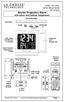 Model: 616-146v2 Quick Setup Guide DC: 071015 Atomic Projection Alarm with Indoor and Outdoor Temperature Snooze/Backlight BUTTONS Time, Alarm with Snooze, & Calendar Projection Arm Rotates 180 Indoor/Outdoor
On/Off Relay Switch and 3-Way Switch Kit
 45637/45638 Wireless Lighting Control On/Off Relay Switch and 3-Way Switch Kit marthome Control the On/Off status of permanently installed lighting, fans and more! www.lowes.com/iris 2012 JASCO Made in
User Manual. NETGEAR, Inc. 350 East Plumeria Drive San Jose, CA 95134, USA. December 2014 202-11380-01
 User Manual December 2014 202-11380-01 NETGEAR, Inc. 350 East Plumeria Drive San Jose, CA 95134, USA Support For product updates and web support, visit http://support.arlo.com. Trademarks NETGEAR, Inc.
Networking. General networking. Networking overview. Common home network configurations. Wired network example. Wireless network examples
 Networking General networking Networking overview A network is a collection of devices such as computers, printers, Ethernet hubs, wireless access points, and routers connected together for communication
product. Please read this instruction before setup your VenomXTM.
 Tuact Corp. Ltd. TM Venom X mouse controller combo Setup Software Instruction Thank you for purchasing our VenomXTM product. Please read this instruction before setup your VenomXTM. Introduction Venom
Application Note. Low Bandwidth Media Configuration V7.0
 Application Note Low Bandwidth Media Configuration V7.0 INTRODUCTION... 3 Network Overview... 3 Wireless Wide Area Networks (Cellular)... 3 Satellite... 3 Onsight Solution Architecture... 4 ONSIGHT BANDWIDTH
Security System. User Guide for the LED Command Center
 Security System User Guide for the LED Command Center MY SECURITY COMPANY IS: CALL BEFORE TEST: THIS SECURITY SYSTEM IS CONNECTED TO TELEPHONE NUMBER: THE SECURITY CONTROL PANEL IS CONNECTED TO THE PHONE
AC750 WiFi Range Extender
 Model EX6100 User Manual April 2014 202-11307-03 350 East Plumeria Drive San Jose, CA 95134 USA Support Thank you for selecting NETGEAR products. After installing your device, locate the serial number
Solar Powered Outdoor Siren Manual
 005107 Solar Powered Outdoor Siren Manual 1 Solar Powered Outdoor Siren Manual Quick Start... 2 Product Description... 2 Installation Guidelines... 3 Behavior within the Z-Wave Network... 3 Operating the
MAGICAR M871A. Car alarm with two-way remote User s guide
 MAGICAR M871A Car alarm with two-way remote User s guide EN MAGICAR M871A Car alarm with two-way remote User s guide TABLE OF CONTENTS Table of contents...2 1. Important notice...4 2. Introduction...4
N300 Wireless Router WNR2200 Setup Manual
 N300 Wireless Router WNR2200 Setup Manual NETGEAR, Inc. 350 E. Plumeria Drive San Jose, CA 95134 USA July 2010 208-10641-01 v1.0 Trademarks NETGEAR and the NETGEAR logo are registered trademarks, and Smart
Setup Guide. A Step-by-Step Guide for Programming and Operating a Complete Lutron RadioRA Wireless Central Home Lighting Control System
 Setup Guide A Step-by-Step Guide for Programming and Operating a Complete Lutron RadioRA Wireless Central Home Lighting Control System Note: Please leave this manual with homeowner. Important Application
It is important to install this product in accordance with the fitting instructions below. Failure to do so may render your guarantee void.
 LightwaveRF connect Wifi-Link Operation Manual Model No: JSJSLW500 It is important to install this product in accordance with the fitting instructions below. Failure to do so may render your guarantee
ProCurve Networking. Troubleshooting WLAN Connectivity. Technical White paper
 ProCurve Networking Troubleshooting WLAN Connectivity Technical White paper Introduction... 3 Identifying the Problem... 3 Troubleshooting Wireless Station Connection to AP... 4 Can Any Wireless Stations
EKON BMS HVAC system. Simply Smart. www.ekonhome.com. Touch Screen Controller. Going green. Wireless. Wireless Thermostat with Light Switch
 Going green EKON BMS HVAC system Wireless Thermostat with Light Switch Control Fan Coil or Central AirCon Wireless Touch Screen Controller Wireless Light or Motorized Blind Wall Switch www.ekonhome.com
GSM Home Alarm System User Manual. http://www.usmartbuy.com
 GSM Home Alarm System User Manual http://www.usmartbuy.com 1 1. Factory default Normally, all sensors in the big box have been coded (learnt) to the control host Operation Password: 0000 Long-Distance
Wireless Home Security System Product Manual (Model #80355)
 Wireless Home Security System Product Manual (Model #80355) Installation Instructions During set-up, if no key is pressed for 15 seconds it will come out of the setup mode and you will have to start over.
G-100/200 Operation & Installation
 G-100/200 Operation & Installation 2 Contents 7 Installation 15 Getting Started 16 GPS Mode Setup 18 Wheel Sensor Mode Setup 20 Fuel Calibration 23 Basic Operation 24 Telemetery Screen 27 Entering a Distance
Networking Guide Redwood Manager 3.0 August 2013
 Networking Guide Redwood Manager 3.0 August 2013 Table of Contents 1 Introduction... 3 1.1 IP Addresses... 3 1.1.1 Static vs. DHCP... 3 1.2 Required Ports... 4 2 Adding the Redwood Engine to the Network...
IDS. Users Guide to Keypad Functions S E C U R I T Y MANUAL NO. 700-171-01B ISSUED AUG 2002 VERSION 1.18
 INHEP DIGITAL IDS S E C U R I T Y Users Guide to Keypad Functions MANUAL NO. 700-171-01B ISSUED AUG 2002 VERSION 1.18 Summary of Operation A rm/ disarm [#] + [USER CODE] Quick Quick Quick Away Arm Stay
MFC7840W Windows Network Connection Repair Instructions
 Difficulty printing from your PC can occur for various reasons. The most common reason a networked Brother machine may stop printing, is because the connection between the computer and the Brother machine
Wireless Alarm System. Window/Door Sensor. User s Manual. Choice ALERT. Control all Sensors & accessories from one location
 45131 Wireless Alarm System Window/Door Sensor User s Manual Choice ALERT Control all Sensors & accessories from one location Table of Contents Important Safeguards 4 Introduction 5 Installation 6 Assigning
Allegion PIM-400/485 and AD-400 Installation Application Note. 1.0 Hardware Requirements. 2.0 Software/Licensing Requirements
 This document explains how to setup and use the Allegion AD-400 wireless locks with the NXT Mercury Powered controllers and the Doors.NET software. These locks have extensive functionality and operating