
Equipment and Room Requirements. Chairs (or desks & chairs) for students or comfortable floor space.
|
|
|
- Bruno Parker
- 9 years ago
- Views:
Transcription
1 SURVIVAL IN THE WILD Webbed feet, camouflaged fur, or spines on your back are all amazing ways that animals adapt to survive in the wild everyday. In this fun-filled hour, students will learn about adaptations, try on fun costumes, and see firsthand how three of our live non-releasable animals have adaptations that help them thrive in their specific habitats. After the presentation, students will be encouraged to create their own animals with adaptations that they make up! This program is designed for Kindergarten through 5 th grade. Equipment and Room Requirements Classroom or multi-purpose room space is fine. Chairs (or desks & chairs) for students or comfortable floor space. Multiple presentations can be done at a single location or in individual classrooms if 15 minutes is allowed between presentations No other equipment is needed. Group size maximum 30. Groups of 25 or fewer are recommended for pre-k and Kindergarten classes. Teachers must be present in the room during the program. It is helpful to have a rolling cart available to help move boxes into the building and between classes. It will help our instructors if your students are wearing the nametags provided in this packet. Note: Permits are required for most of the specimens (living and stuffed) that are used in Chewonki Traveling Natural History Programs and students are reminded of the legal limitations of private collections. All of our living animals are non-releasable because of prior injuries, confiscated, or were captive raised before arriving at Chewonki. No animals have been harmed or taken specifically for use in Chewonki programs.
2 Class Outline Each presentation takes one full hour and is broken down into several engaging activities. The instructor will match the class level of knowledge and adjust the level of the presentation accordingly. No specific preparation is needed. Any preparation or familiarity with animals and their adaptations will be incorporated into the presentation. A. Introduction 1. What is a habitat? 2. What is an adaptation? We will discuss three types of adaptations: mouthparts, feet, and body coverings B. Mouthparts Students will help demonstrate four different kinds of mouthparts using costumes. C. Live Animal Demonstration 1. Three of Chewonki s non-releasable animals will be shown throughout the program. It is the instructor s choice to decide which animals to bring. You can request a specific animal if it helps with your classroom learning goals. 2. With each animal we will discuss the mouthpart, feet and body covering of the animal and ask questions about where it lives, how it uses an adaptation to survive and what other specific adaptations we can observe. D. Feet Students will help demonstrate four different kinds of feet using costumes. E. Live Animal Demonstration F. Body Covering Students will help demonstrate five different kinds of body coverings using costumes. G. Live Animal Demonstration H. Wrap-up 1. We focus on continuing to investigate the adaptations of animals we see in the wild (or even at home). What adaptations can we observe? How do they help that animal to survive in its habitat? 2. Students will have the opportunity to handle the many specimens we bring to demonstrate the unique adaptations that different animals exhibit.
3 Animal Adaptations Survival in the Wild Chewonki s Animal Adaptations program explores the amazing ways that animals adapt to survive in the wild everyday like having webbed feet, camouflaged fur, and spines on their back. In this fun-filled hour, students will learn about adaptations, try on fun costumes, and see firsthand how three of our live non-releasable animals have adaptations that help them thrive in their specific habitats. Presented by: LOCATION: DATE: TIME:
4 PRESS RELEASE Date: Contact: Chewonki presents Animal Adaptations What: A one-hour program to explore the amazing adaptations that animals use to survive in their environment. When: Time: Where: Cost: Presenter: What is an adaptation? How do these adaptations help animals to survive in their specific habitats? Chewonki s Animal Adaptations program focuses on exploring and understanding the unique adaptations that animals use to survive in the wild every day. Through interactive activities using costumes and hands-on materials we will learn what an adaptation is and how it helps an animal to thrive in its specific habitat. Participants will also have the opportunity to observe and discuss the different adaptations of three of Chewonki s resident non-releasable animals.
5 Vocabulary Adaptation Amphibian Antennae Arthropods Camouflage Carapace Carnivore Constrictor Contour Feathers Crustacean Detritus Diurnal Downy Feathers A behavior, physical feature, or other characteristic that helps an animal survive and make the most of its habitat. For example, turtles have a hard shell for protection from predators. A cold-blooded vertebrate with moist, sensitive skin that typically lays eggs in the water. Amphibians (derived from the Greek amphibios meaning both kinds of life) typically begin life in the water, then become air-breathing land animals as adults (there are exceptions). Salamanders, newts, frogs, toads, and caecilians are all examples of amphibians. Jointed appendages on the heads of arthropods that are used to sense. Insects, millipedes, centipedes, crustaceans and arachnids all belong to the phylum Arthropoda. These invertebrate animals have jointed legs, a segmented body and an exoskeleton. Protective coloring or shape that helps an animal hide from its predators or prey. The top portion of a turtle s shell. An animal that eats meat. Wolves, snakes, and owls are examples of carnivores. A snake that suffocates its prey by coiling around it and preventing it from taking a breath. The outer layer of feathers that cover a bird's body, wings, and tail. These feathers give the bird its characteristic appearance and help to keep the down feathers underneath dry. Crustaceans have a body that is broken up into segments, a pair of jointed legs per body section, a hard exoskeleton made of chitin, and two pairs of antennae. Lobsters, crayfish, crabs and shrimp are examples of this aquatic group of arthropods. Organic matter or material such as decaying plants and animals. Often found on the forest floor or along a high tide line. Active and feeding during the day. Soft and fluffy feathers next to the body that provide insulation.
6 Echolocation The sonar-like system used by dolphins, bats, and other animals to detect and locate objects by emitting high-pitched sounds that reflect off the object and return to the animal's ears or other sensory receptors. Ectothermic Cold-blooded unable to internally maintain a constant body temperature. The body temperature of an ectotherm changes with the temperature of their surroundings. Reptiles, fish, amphibians and all invertebrates are ectothermic. Endangered A species of animal or plant whose population is very low and at risk of becoming extinct. Endothermic Warm-blooded able to maintain a constant body temperature independent of the outside temperature. Mammals and birds are endothermic and can utilize food and/or shiver to produce heat in their bodies. Environment Everything that surrounds and affects an animal. The environment includes nonliving things, such as water and air, and other living things. Exoskeleton Fur Flight Feathers Gills Habitat Herbivore Insectivore Jacobson s Organ Mammal Molt Nocturnal Omnivore A hard body covering (shell) found on the outside of arthropods. A thick covering of hair on many mammals that protects and insulates them. Long stiff feathers on the wings of a bird, which help with flying and steering. Respiratory organs of most aquatic animals that breathe water to obtain oxygen. An animal s home or area where it lives. An animal that eats only plant material. A moose is an example of an herbivore. An animal that eats only insects. A big brown bat is an example of an insectivore. A structure in the top of the snake s mouth that helps it smell its environment (scent is picked up with the tongue). An animal that is warm-blooded, has fur or hair, and bears live young and nourishes them with milk. Bears, mice, and whales are all examples of mammals. To shed and replace. A bird will molt old feathers and new ones will grow. Active and feeding at night. An animal that eats both plants and animals. Bears are examples of omnivores.
7 Pincers Proboscis Plastron Predator Prey Raptor Reptile Roost Scutes Talons Tomium Toxin Venom Webbed Feet Claws used to grasp or pinch. Animals like crayfish and crabs use their pincers to hold or catch food. The long protruding mouth part of certain insects adapted for piercing or sucking. A butterfly uses a proboscis to drink nectar. The bottom of a turtle s shell. An animal that hunts other animals for food. An animal that is hunted by another animal for food. A predatory bird, typically with sharp talons, strong feet (for grasping prey), and a pointed curved beak (for tearing meat). A cold-blooded, dry-skinned vertebrate that usually has scaly skin and typically lays eggs on land. Lizards, turtles, crocodilians, snakes, and tuataras are the five groups of reptiles. To sleep or a place where animals rest or sleep. An external horny plate or large scale (i.e. the belly scales of a snake or the scales on the carapace of a turtle). The sharply pointed and curved claws of a raptor. The cutting edge of the mouth of a turtle, similar to a bird s beak. A poisonous substance that is produced by a plant or animal. Toxins are often used as a defense against predators. For example a millipede will excrete a toxin if it feels threatened. A toxin (poison) that is used by animals for protection or hunting. Feet that have skin attaching the toes. Webbed feet are specialized for swimming. Ducks, frogs, and beavers are all animals that have webbed feet.
8 Adaptations: What Are They All About? Adaptations are any behavioral or physical characteristics of an animal that help it to survive in its environment. These characteristics fall into three main categories: body parts (e.g. feet, mouthparts), body coverings, and behaviors. Any or all of these types of adaptations play a critical role in the survival of an animal. Adaptations can be either physical or behavioral. A physical adaptation is some type of structural modification made to a part of the body. A behavioral adaptation is something an animal does how it acts - usually in response to some type of external stimulus. When you look at an animal, you can usually observe some of its adaptations -- like what it is able to eat, how it moves, or how it may protect itself. Different animals have many different ways of trying to stay alive. Their adaptations are matched to their way of surviving. A group of animals often has its own set of general adaptations. These animal groups include: arthropods, fish, amphibians, reptiles, birds, and mammals. Some of these adaptations make it easy to identify with which group an animal belongs. A good example of an animal adaptation is the way in which an animal moves from one place to another. Animals adaptations have evolved to be what they are today. This means a long period of slow change resulted in an animal's adaptation(s). The spots on the snow leopard, for example, did not emerge overnight. Instead, this process took generation upon generation of snow leopards physically adapting to their environment for characteristic spot patterns to evolve. Those snow leopards with spot patterns were able to hide more successfully, therefore surviving longer than those without spots. This allowed the longer surviving snow leopards to reproduce and create more snow leopards with spot patterns like their own. Indeed, this process of change over time is the key to how many organisms develop adaptations. Some adaptations can arise quickly through genetic mutations; these mutations also may be deadly. In the sections that follow, different types of distinctly visible adaptations and their importance will be discussed. Since behavioral adaptations are far more difficult to observe, they will not be focused on here. However, the visible adaptations mentioned are easy to recognize on most animals (even household pets) and should be identifiable and interesting to students. Body Parts Many animals have developed specific body parts adapted to survival in a certain environment. Among them are webbed feet, sharp claws, whiskers, sharp teeth, different beaks, wings, and hooves. Webbed Feet For most aquatic animals, swimming is a must. To aid swimming, many animals have adapted and evolved with webbed feet. Webbed feet help animals propel themselves through the water with ease. This can help the animal swim faster to catch prey or escape a predator. Also, if an animal has to swim long distances, webbed feet can help it save energy With permission Zoological Society of Milwaukee County
9 so it can swim farther. Some animals with webbed feet include ducks, penguins, alligators, and otters. Sharp Claws Many land and sea animals alike have developed sharp claws. Sharp claws can be used for many different purposes. For instance, many herbivores use their sharp claws for digging for berries, roots, and herbs or burrowing for shelter. Animals that eat meat may use their claws for killing their prey or tearing meat from their kills. Also, claws can be used to increase traction to run faster or to climb higher. Other times, sharp claws can be used for defense. For some animals, showing of claws is enough warning for their predators or competitors to back off. There are many animals that have sharp claws including bears, bobcats, hawks, and lizards. Hooves Hooves are another body part that is an important adaptation for many large animals. In most cases, animals with hooves use their specially adapted feet to maneuver in a rocky environment. Hooves, which are made of the same substance (keratin) that makes up our toenails, protect the feet of these animals and allow for greater mobility than unprotected feet. Many animals with hooves are very fast runners because they are effectively running on their tiptoes rather than their whole foot. Their speed helps them to outrun predators. Animals with hooves include deer, caribou, mountain goats, and horses. Sharp Teeth One of the most visible adaptations on many animals, sharp teeth helps an animal eat! Found primarily on meat-eating animals (carnivores and omnivores), sharp teeth are used mainly for the tearing and chewing of an animal's prey. These teeth are very different from the flat teeth that plant-eaters, or herbivores have developed to grind up plant matter. Sharp teeth can serve another purpose: defense. In some animals, bearing a large set of sharp teeth can show power or fear. Examples of animals with sharp teeth include bears, coyotes, raccoons, and alligators. Whiskers Although not usually thought of as an adaptation, whiskers serve an important purpose for many animals. In most cases, whiskers around the face, specifically the mouth area, help the animal feel its way through tight spots. In a way, they serve as "feelers," telling the animal whether or not it can fit into a specific area. One example is the Virginia Opossum, which has four rows of whiskers. The whiskers are used to help feel their way through narrow areas and to sense prey. Many mammals have whiskers from mice to beavers to walruses. Different Beaks Just as in the case of sharp teeth, beaks are often an adaptation used to help an animal eat. However, beaks can be a feature of birds that are carnivores, herbivores, insectivores, frugivores, nectarivores, and so on. For instance, the large beak of the toucan has been adapted to help it grab and crack open large nuts and fruits. In the case of the bald eagle, a With permission Zoological Society of Milwaukee County
10 large sharp, hooked beak is used to tear meat. Hummingbirds have long skinny beaks that they use to stick into the flutes of flowers and drink nectar. Wings/Flying Wings are another highly visible adaptation on many animals. Although most think of birds when it comes to wings, other animals like bats also have wings that help them fly around and hunt insects. Animals like the golden eagle and peregrine falcon can reach speeds up to and above 60 miles per hour in flight. This speedy flight is used to attack and catch prey. Other birds, like the belted kingfisher, do not reach such high speeds, but still use their wings to travel from place to place and to hunt for fish. Finally, the penguin does not use its wings to fly at all. Instead, it uses its wings as flippers to move through the water. Body Coverings An animal s body covering is one clearly visible adaptation. Body coverings help to protect animals in diverse environments -- from the land to the water, from the arctic to the desert. Mammals have hair, or fur, that helps insulate their bodies. It keeps them warm in winter and can protect specific areas of the body, like eyelashes protecting the eyes. Some mammals have different coverings: the armadillo has plates, the porcupine has quills, and naked skin covers the dolphin. All of these coverings help these mammals to survive in the different conditions in which they live. Birds also have a very protective covering: feathers. The feathers keep the bird warm in winter, help it fly or swim, and help it stay waterproof. Amphibians and reptiles have body coverings that protect them as well. Amphibians have moist, slick skin that is well suited for the water. Reptiles have tough, dry skin covered in scales. Insects, such as the cockroach, have a hard outer shell called an exoskeleton. These hard coverings enable cockroaches to squeeze into very small places, which helps them to find food and shelter. Many insects build nests (a behavioral adaptation) or cocoons (behavioral and structural adaptation) for the winter because their body coverings alone do not permit them to adjust to the cold. Many insects also have other adaptations included in their body coverings like cells that sense light and pigments that allow some insects to change colors in order to hide themselves from predators. Striped Fur Striped fur can be one variation of a special adaptation called camouflage. Striped fur, in most cases, helps animals blend into their environment. This helps the animal in several ways, including hiding from predators and sneaking up on prey. Striped fur, as in the case of a tiger's vertical stripes, serves the animal by helping it match the surrounding vegetation, thus making it nearly invisible to other animals. In other animals, like the skunk, the stripes serve as a warning to predators. In this way, the stripes serve as a defense mechanism. Brightly Colored Feathers Found mostly in tropical rainforests, birds have brightly colored feathers as an adaptive body covering. Brightly colored feathers can serve several purposes, including camouflage, defense, and attracting mates. In some parts of the rainforest, the macaw and its brightly With permission Zoological Society of Milwaukee County
11 colored feathers can hide among similarly brightly colored plants and flowers. The male mallard duck uses its bright feathers for another purpose: attracting a mate. In contrast to the male, the female mallard has very dull colored feathers. This feature, common among female birds of most species, helps females hide while guarding their nest and protecting their young. Spotted Fur Another adaptive type of body coloring is spotted fur. Spotted fur is similar to striped fur in that it serves as camouflage. Many animals with spotted fur live in heavily wooded forest areas. One example is the jaguar, which lives in the rainforest. The jaguar's spotted fur helps it blend in with the small patches of sun that reach the rain-forest floor. These patches, mixed in with the shade, produce an effect that highly resembles a jaguar's coat. Another animal with spotted fur is the snow leopard. The snow leopard, with a white coat and black spots, lives in wooded areas as well, using its coat to hide among the trees and snow. Scales One final type of body covering is scales. Scales serve a purpose different than that of fur and feathers. Scales serve mainly to protect a reptile from the environment. For instance, anacondas and other snakes have scales to protect their bodies from the variety of terrain they encounter. In the case of the anaconda, its habitat is largely made up of water. In the case of other snakes, the climate may be dry and the land sandy and rocky; so they cannot afford to lose water from their body. Scales help to keep that water inside their body. Scales help protect the body of the animal in an instance where skin, fur, or feathers would become damaged or destroyed. The scales on the underside of a snake are called scutes. These scutes are what allow the snake to slither from place to place. Other animals with scales include turtles, alligators, and lizards. (Source: Zoological Society of Milwaukee County With permission Zoological Society of Milwaukee County
12 Amazing Adaptations Word Search P R H Y R X T R S L S A S R S M R N G T Y O C J F U D R Q W A Y O K H T A I M C R A E H A K W A T A L Q S A S V P H N L H E J D E W H M W I I T T F C B T E S W C O N I O V A A Z T B R E D F U T P D L E T E W Z P T E E F D E B B E W I F E Z S L H L T S L L I G Q O C Q V Q H A Q I P R E Y U A N A R T M G K I O S R H A B I T A T W E O C F I P N A J U A C I F U F T N R K S X U H P B K T P J R U T E K Y K J M S G E I Y Z P L R R V V L X L F H P Y J F ADAPTATION BEAK CAMOUFLAGE CLAWS FEATHERS FUR GILLS HABITAT PROTECT SCALES SHARP TEETH SURVIVE VENOM WEBBED FEET PREDATOR PREY
13 Across 3. Some animals that are adapted to live in water use these to breathe 4. An adaptation is a behavior or physical feature that helps an animal to survive in its 5. This animal has a shell that it will hide inside when it feels threatened 9. Animals that have webbed feet are adapted to live in a habitat in or near 10. These kinds of teeth are adapted to eat plants 12. This mouthpart of a bird can come in many different shapes and sizes depending on what the bird eats 13. Arthropods have this hard outside body covering 14. Some animals have long sticky tongues that may use to eat this kind of food 16. Animals that have this protective body covering include snakes, turtles, and alligators Down 1. Animals that have sharp pointy teeth are adapted to eat this kind of food 2. Animals often hide from predators or prey by using 4. An animal that eats only plant material is called what? 6. These animals have fur on their body to keep them warm, dry, and help camouflage 7. Birds have many layers of to keep them warm, dry and help with camouflage 8. Some animals have quills or spikes on their body to against predators 11. Some animals inject their prey with by biting or stinging 15. Feet that have are good for climbing, digging, or catching slippery prey
14 Answers to Crossword Across 3. Gills 4. Habitat 5. Turtle 9. Water 10. Flat 12. Beak 13. Exoskeleton 14. Insects 16. Scales Down 1. Meat 2. Camouflage 4. Herbivore 6. Mammals 7. Feathers 8. Defend 11. Venom 15. Claws Answers to Word Search P R H Y R X T R S L S A S R S M R N G T Y O C J F U D R Q W A Y O K H T A I M C R A E H A K W A T A L Q S A S V P H N L H E J D E W H M W I I T T F C B T E S W C O N I O V A A Z T B R E D F U T P D L E T E W Z P T E E F D E B B E W I F E Z S L H L T S L L I G Q O C Q V Q H A Q I P R E Y U A N A R T M G K I O S R H A B I T A T W E O C F I P N A J U A C I F U F T N R K S X U H P B K T P J R U T E K Y K J M S G E I Y Z P L R R V V L X L F H P Y J F Diagonal in RED Horizontal and Vertical in BLUE
15 Creative Animal Adaptations Using both writing and drawing, students can create and describe their own imaginative animal. This activity can be adapted to be very basic for younger students or more challenging for older students. Materials: This activity requires paper and pencil, but markers, crayons, paints, sculpting clay, construction paper and glue, or papier maché could also be utilized to bring the created animals to life. Procedure: Explain to the students that they will each be designing their own original animal that is adapted to its habitat. Each student should consider the following Habitat (Where does it live?) Body Covering (What does it look like? Does it have fur, scales, feathers, quills?) Mouthparts (What does it eat? Does it eat with flat teeth, sharp teeth, a beak, a long tongue?) Movement (How does your animal travel? Does it have feet, wings, flippers?) Other questions could include: Is your animal male or female? How does it raise its young? How does it defend itself against predators? Once they have considered these questions, have the students name their animal and create their own original drawing (or painting, sculpture, mobile, collage, etc.).
16 Camouflage in the Classroom Objective: Students will demonstrate their understanding of camouflage by designing a butterfly that blends into a classroom "habitat." Materials: Colored toothpicks or paper clips An outdoor grassy area or large piece of fabric or Astroturf Paper butterfly patterns for each student Markers, crayons, or colored pencils Instructions: 1. Begin the lesson by presenting the students with a box of toothpicks or paper clips in assorted colors. 2. Count how many toothpicks or paper clips there are of each color. Write the total of each on the blackboard. (Be sure to have green toothpicks in your box.) 3. Spread the colored items randomly over a large area of green grass. (If you don't have a grassy area at your school, use a patch of bare earth with some tan toothpicks. OR, use a large piece of fabric that matches the color of the toothpicks.) 4. Give the students 10 seconds to collect as many colored items as they can find. 5. Count the number of each colored item that the students retrieved. Compare this to your original count. Which color items were the easiest to spot and collect? Which were less obvious? Why? 6. Introduce the concept of camouflage as an animal adaptation. Explain that many animals have colors or markings on their fur, feathers, scales, or skin that enable them to blend into their habitat (the place where the animal lives). Ask the students, "How might camouflage help an animal to survive?" Can they think of any examples? (A motionless green frog at the edge of a pond is almost impossible for predators and prey to spot. The drab feathers of most female birds help them go unnoticed as they sit on their eggs. The snowshoe hare changes color with the season, becoming white in winter and brown in summer.) continued on following page With permission Los Angeles Zoo Web site:
17 Student Activity: 1. Give each student a copy of the butterfly pattern. 2. Ask the students to pretend your classroom is a butterfly habitat. Have each student look around the room and select a specific home or habitat for his or her individual butterfly. 3. Have each student color his/her butterfly pattern with markers, crayons, or colored pencils so that it will be camouflaged in this habitat. 4. Ask your students to place the butterflies in their habitat without burying them. The butterflies must be out in the open, but well camouflaged. 5. Invite students from another class to see how many of your butterflies they can find. Extensions: Sometimes an animal's coloration does the opposite of camouflage. Instead, its markings or color patterns may call attention to the animal. Coloration may issue a warning to other species (for example, the bright colors of the South American poison arrow frog warns possible predators that these amphibians are not good to eat), or help advertise for a mate (male peacocks use their impressive tail display to attract females.) Repeat the Classroom Camouflage activity by having students design butterflies whose coloration does not blend into their surroundings. Since they cannot hide from view, what methods might each of these butterflies use to protect itself from predators? What are some of the advantages and disadvantages of camouflage compared to advertising or warning coloration? (Source: Los Angeles Zoo Web site: With permission Los Angeles Zoo Web site:
18
19 Box Turtle Name Tags Photocopy this page and cut out the Box Turtle nametags for your participants to wear! Nametags worn during a presentation help to excite students about animal adaptations and make it easier for the presenter to involve the participants by name.
20 Recommended Websites This list of recommended websites contains information pertaining to the program you have ordered. These websites are not associated with the Chewonki Foundation and we are not responsible for the content or advertising found therein. Brain Pop: Notes: This is a fantastic interactive website that offers informative videos, games, activities, and more. However, it does require either a membership or trial membership. DLTK s Crafts for Kids: Notes: Directory of animal crafts, activities, and projects that you can search by animal or habitat. The Educator s Reference Desk: Notes: Great hands-on activity focus on bird beaks designed to help students explore animal adaptations, namely the shape of a bird's beak in relation to the food they eat. National Geographic Animals: Notes: Great website for students who want to learn more about specific animals or cool new animal news. Smithsonian National Zoological Park: Notes: Fun online activities and animal facts as well as printable coloring pages. Teacher Vision: Notes: Wonderful website provides teacher resources including lesson plans, activities, projects and printables. University of Missouri ethemes: Notes: Great source for teachers to find lessons, activities, and games all related to animal adaptations. Utah Education Network: Notes: This website provides more links and resources to help teachers support a unit on animals and adaptations. Suggested Readings Anderson, Sheila, What Can Live in a Desert? Lerner Classroom: Minneapolis, MN. Notes: This book represents one in a series that looks at specific habitats and the animals that are adapted to live there. Great for students aged 4-8. Check out the forest, lake, grassland and others. Chinery, Michael, Animal Habitats. Southwater Publishing. Notes: This book brings to life the many different habitats around the world including grasslands, forests, rivers, and oceans and how animals have evolved to live in each special place.
21 Chinery, Michael, Birth and Baby Animals. Southwater Publishing. Notes: Explore the role of adaptation in birth and raising young. This book examines insects, reptiles, birds, and mammals and follows them from birth until young adulthood. Kalman, Bobbie and Walker, Niki, How Do Animals Adapt? Crabtree Publishing: New York, NY. Notes: Many colorful photographs in this book help to illustrate the creative adaptations that different animals use to survive. This is a great book to read aloud to younger students or for older students to read on their own. Includes a glossary of scientific terms in the back. Otto, Carolyn B. and Lloyd, Megan, What Color is Camouflage? Harper-Collins: New York, NY. Notes: This is a great book for younger students to understand camouflage and the different animals that use it. Settel, Joanne, Exploding Ants: Amazing Facts About How Animals Adapt. Atheneum: New York, NY. Notes: Exciting book for students aged 9-12 explains many amazing and surprising things animals do to survive. This book uses the gross-out factor to its advantage and draws readers in to learn about these unusual behaviors and strategies. Silverstein, Alan, Silverstein, Virginia B. Nunn, Laura Silverstein, Adaptation. 21 st Century: Brookfield, CT. Notes: If you are looking for a more comprehensive book that discusses adaptation this is it. Great for a teacher resource or for older students, this book uses more text to explain the how and why of animal adaptations while still including cool facts and examples.
Animal Adaptations -- Vocabulary
 Section 1 Objectives o Children will understand what animal adaptations are. o Children will be able to explain why animal adaptations are important. o Children will be able to explain different types
... Date Starting your search in the Rainforest if it s open, keep an eye out for:
 Museum-Wide Reptiles include turtles, lizards, snakes, crocodiles, and all of their relatives. There are over 9,000 different kinds of reptiles with amazing adaptations that help them find food and protect
Emerald Tree Boa: Emerald Tree Boas are bright green to blend in with their habitat. They are part of the boa family and are constrictors.
 Anaconda: The anaconda lives in the swamps and rivers. Anacondas can also climb trees. Adults can get as big as 20 feet long. Anacondas are good swimmers. They have scales and can swim quickly. They kill
Reptiles and Amphibians by Guy Belleranti
 Name: Take a look at the four animals pictures below. Do you know which ones are reptiles and which ones are amphibians? The chameleon is an unusual lizard that can change the color of its scaly body.
Name Class Date. Adapting to the Environment Adaptations and Survival
 CHAPTER 3 4 SECTIN Adapting to the Environment Adaptations and Survival EFRE YU READ After you read this section, you should be able to answer these questions: What adaptations help animals survive? What
Structures of animals
 Structures of animals Name: All animals have been designed with different parts, which we call structures, that make up their bodies. Each of these structures is important as it is used to perform a specific
World Oceans Day at ZSL Whipsnade Zoo
 World Oceans Day at ZSL Whipsnade Zoo Teachers notes KS 1 & KS 2 This booklet will help you to focus your self guided trail on ocean animals, looking at the adaptations of the species and focusing in on
Exhibit Inquiry. Rainforest. Aug 11
 Exhibit Inquiry Exhibit Inquiry Have students look for the following exhibits related to living things during their visit to the Ontario Science Centre: Where to go: (Level 6) What it's about: Tropical
Teacher s Manual Carnivore/Herbivore Week
 Teacher s Manual Carnivore/Herbivore Week This kit contains a week s worth of Lunch and Learn type activities that is, five half-hour lessons related to the theme of Carnivores and Herbivores. It contains
6. Which of the following is not a basic need off all animals a. food b. *friends c. water d. protection from predators. NAME SOL 4.
 NAME SOL 4.5 REVIEW - Revised Habitats, Niches and Adaptations POPULATION A group of the same species living in the same place at the same time. COMMUNITY-- All of the populations that live in the same
TLC Online Curriculum
 TLC Online Curriculum Lesson Title: Reptile Adaptations Grade level: 4-5 Subject Area: Animals Duration: Two or three class periods Objectives: Students will understand the following: 1. Adaptation describes
Everything You Wanted to Know About Spiders!
 Everything You Wanted to Know About Spiders! How do spiders fit into the Animal Kingdom? Spiders are arthropods, a group of invertebrates containing insects, crustaceans, millipedes, centipedes, arachnids
Animal Adaptations Investigation (K-3)
 Animal Adaptations Investigation (K-3) At a glance Students explore the Zoo in search of animals that fit certain categories and discover their adaptations. Time requirement One Zoo visit of at least 60
Frog Scavenger Hunt Activity
 Frog Scavenger Hunt Activity Materials: Frog questions worksheet (pages 2-3) 18 frog fact cards (pages 4-8) Scissors and scotch tape Preparation: Print the frog fact cards and cut them apart. Make copies
Grade Level Content Expectations addressed: Activities: Schedule of Field Trip Activities at the Detroit Zoo 8:15 am Board Bus at School
 Title: Comparing and Contrasting Ecosystem Biodiversity Submitted by: Tracy Ortiz Email: [email protected] School: Coffey K-8 Educational Learning Community Date: May 12, 2010 Target Grade: 6 Duration:
Animal Classification K-4
 Animal Classification K-4 Introduction: The theme of this self-guided experience is classification of animals. Students will learn to use body coverings as an aid to classification. As the group tours
Name That Adaptation. Background: Link to the Plan Read Section 5 (Whooping Crane Ecology and Biology) in the Management Plan
 Summary Students will explore structural, physiological, and behavioral adaptations of whooping cranes. Objectives: Students will be able to: Define an adaptation Describe several whooping crane adaptations
Pond Vocabulary Words and Meanings
 Pond Vocabulary Words and Meanings Adapt: to adjust to a use or situation Aquatic: from or in the water Bacteria: tiny organisms, too small to be seen with the naked eye Carnivore: an animal that eats
Mammal Scavenger Hunt Activity
 Mammal Scavenger Hunt Activity Materials: Mammal questions worksheet (pages 2-3) 18 Mammal fact cards (pages 4-8) Tape and scissors Preparation: Print the fact cards on card stock or brightly-colored paper
Animal Adaptations. Standards. Multiple Intelligences Utilized. Teaching First Step Nonfiction. Titles in this series: Reading.
 Teaching First Step Nonfiction Animal Adaptations K 2nd Grade Interest Level 1st Grade ing Level Titles in this series: What Can Live in a Desert? What Can Live in a Forest? What Can Live in a Grassland?
Activity 1 Exploring Animal Diets and Sizes
 Activity 1 Exploring Animal Diets and Sizes Objective & Overview: Using measurement and books, students will gain a better understanding of animal size, diversity, and diet through the fun study of wildlife.
www.irishseedsavers.ie Natural surface water on earth includes lakes, ponds, streams, rivers, estuaries, seas and oceans.
 www.irishseedsavers.ie POND LIFE FACT SHEET Natural surface water on earth includes lakes, ponds, streams, rivers, estuaries, seas and oceans. A pond is a small body of fresh water shallow enough for sunlight
How To Understand The Features And Behaviours Of Animals And Plants
 Childrenʼs Farmyard and Animal Nursery Teacher Resource Pack Curriculum linked worksheets and activities SACSA Band: Early Years Learning Area: Science Strand: Life systems Key Idea Children investigate
ANIMAL COVERINGS Lesson Plan
 ANIMAL COVERINGS Lesson Plan TARGET AUDIENCE Kindergarten through Second grade STANDARDS VA Grades K-1: Scientific investigation, reasoning and logic; Matter; Life processes; Earth patterns, cycles and
Animal Environmental Internal Response Types
 Animal Environmental Internal Response Types Stimuli Stimuli Panting (P) Sweating (S) 1. 2. 3. 4. 5. 6. 7. 8. 9. 10. What happens to you internally (in your body) when you run as fast as you can around
Silent, Nighttime Hunters By Guy Belleranti
 By Guy Belleranti Owls are raptors, or birds of prey. They are carnivores who quickly and silently swoop down on their prey from above. Most raptors such as eagles, hawks and falcons are day hunters. They
Pond Water Web Lesson Plan
 Pond Water Web Lesson Plan Purpose: As a result of this lesson, students will become familiar with common organisms found in a pond and discover their importance in a balanced aquatic habitat as they create
Is That Mammal a Carnivore, Herbivore or Omnivore?
 Name: Is That Mammal a Carnivore, by Guy Belleranti A mammal can be a carnivore (meat eater), herbivore (plant eater) or omnivore (meat and plant eater). By looking at the teeth, eye position and feet
The Wonderful World of Wetlands BINGO
 The Wonderful World of Wetlands BINGO Time: 10-15 minutes to create Bingo board; 5-10 minutes to play one-round of Bingo Scituate Reservoir Watershed Education Program 17 Smith Ave Greenville, RI 02828
Bird Scavenger Hunt Activity
 Bird Scavenger Hunt Activity Materials: Bird questions worksheet (pages 2-3) 18 Bird fact cards (pages 4-8) Tape and scissors Preparation: Print the fact cards on card stock or brightly-colored paper and
Grade 5 Standard 5 Unit Test Heredity. 1. In what way will a kitten always be like its parents? The kitten will...
 Grade 5 Standard 5 Unit Test Heredity Multiple Choice 1. In what way will a kitten always be like its parents? The kitten will... A. be the same color. B. learn the same things. C. have the same body structures.
Life Science Study Guide. Environment Everything that surrounds and influences (has an effect on) an organism.
 Life Science Study Guide Environment Everything that surrounds and influences (has an effect on) an organism. Organism Any living thing, including plants and animals. Environmental Factor An environmental
Learning expeditions
 Learning expeditions Same and different Where do I fit in? Introduction: On this Expedition, your students will explore the question, Where do I fit in? by learning how to compare identifying characteristics
Region of Georgia : Mountains
 Region of Georgia : Mountains Northern most region of GA Cold weather in the winter Brasstown Bald is the highest point in Georgia Lots of creeks and streams High above sea level Poor soil for farming
food chains reflect How are these organisms important to one another? organism: a living thing
 reflect Different plants and animals live together. Look at the picture of the garden. What organisms live there? Grass, trees, bugs, and birds live there. Fish and frogs live there, too. Can you think
Animals and Adaptation
 Animals and Adaptation From: http://www.learninghaven.com/science/articles/animals_and_adaptation.htm In order for animals to survive, they need to be able to adapt. In this lesson we will look at the
MARCH OF THE PENGUINS
 MARCH OF THE PENGUINS S C I E N C E M O V I E N I G H T The Academic Support Center @ Daytona State College (Science 127 Page 1 of 33) The Academic Support Center @ Daytona State College (Science 127 Page
Prairie Food Chains & Webs Producers, Consumers & Decomposers
 Kansas Prairies s, s & Decomposers Science, Life Science, Reading, Math Materials Vocabulary worksheet Food Chain worksheet Overview To explore the organisms found on a prairie and identify the various
Prairie Food Chains & Webs Producers, Consumers, & Decomposers
 Kansas Prairies Prairie Food Chains & Webs Producers, s, & Decomposers Life Science, Math, Reading, Science Materials Student Worksheet A: Vocabulary Student Worksheet B: Food Chain Overview To explore
In your last science lesson, you used posters to learn about five of the classes of vertebrates.
 Science 4 Physical Life Earth and Space LESSON 31 Identifying characteristics of classes of vertebrates Lesson Preparation Program Materials Child s Booklet C Investigating Characteristics of Animals (pp.
Cycles of life. You will be visiting the museum to see some baby animals and their parents. Here are some of their stories.
 Cycles of life Some animals die of old age, some die of disease, some are killed and eaten by other animals. But the world does not run out of animals because more are being born or hatched all the time.
Can You Tell a 'Gator From a Croc? by Guy Belleranti
 Can You Tell a 'Gator From a Croc? Look closely at the reptiles pictured below. Can you tell which one is the crocodile and which is the alligator? Many people confuse crocodiles and alligators, and it's
UNIT TWO TURTLE BIOLOGY
 UNIT TWO TURTLE BIOLOGY 43 44 Science Expectations met in this unit: UNIT TWO: TURTLE BIOLOGY Activity Number: Activity Name Strand Grade 2 Growth and Changes in Animals Grade 4 Habitats and 5: Camouflage
DOG Pets cat - dog - horse - hamster - rabbit - fish
 CAT Pets cat - dog - horse - hamster - rabbit - fish DOG Pets cat - dog - horse - hamster - rabbit - fish HORSE Pets cat - dog - horse - hamster - rabbit - fish HAMSTER Pets cat - dog - horse - hamster
Lesson. Essential Question What Are Some Animal Adaptations? Engage
 2 Lesson Objectives Describe physical adaptations of animals. Identify behavioral adaptations of animals. Describe some animal behaviors that are learned. Vocabulary camouflage.... p. 70 mimicry.......
food webs reflect look out! what do you think?
 reflect Imagine for a moment that you stay after school one day to clean up the classroom. While cleaning, you move some plants away from the sunny windows. A week later, you remember to move the plants
Lab #10 Invertebrates 2 and Vertebrates 1 (Exercises 39, 40)
 Name Bio 182-General Biology Lab #10 Invertebrates 2 and Vertebrates 1 (Exercises 39, 40) Answer the questions in the space provided. You need to turn this sheet at the end of the lab. In general know
reflect What about other living things? Do all animals look the same as their parents?
 reflect Look at the boy and his father. How do they look the same? They both have two arms and two legs. They both have eyes and a nose. They look a lot alike! People can look like their parents. We get
Zoo Connections Curriculum
 Zoo Connections Curriculum We Like to Move It, Move It: Classifying animals by features 1 st grade Curriculum is aligned with the Mississippi Academic Framework. Lessons and support material are provided
KS1 Animal Habitats. Scheme of Learning
 KS1 Animal Habitats 1 Scheme of Learning KS1 Animal Habitats Scheme of Learning This scheme of learning has been put together by Marwell Wildlife for teachers to use with their KS1 pupils. It is a complete
Grassland Food Webs: Teacher Notes
 Grassland Food Webs: Teacher Notes Alan Henderson ecosystem Objectives After completing this activity students will be able to: Create a food web and identify producers and consumers. Assign organisms
WEATHER, CLIMATE AND ADAPTATIONS OF ANIMALS TO CLIMATE
 7 WEATHER, CLIMATE AND ADAPTATIONS OF ANIMALS TO CLIMATE TEXTBOOK QUESTIONS AND ANSWERS Q.1. Why weather changes so frequently? Ans. All changes in the weather are caused by the sun. The movement of the
4. Which choice below lists the biomes in order from lowest precipitation amounts to highest precipitation amounts?
 Ecosystems and Biomes 1. All of the living organisms in a forest plus their environment is an example of A. a biome. B. a community. C. a population. D. an ecosystem. 2. Which of the following best describes
Desert Communities Third Grade Core: Standard 2 Objective 2 Describe the interactions between living and nonliving things in a small environment.
 Desert Communities Third Grade Core: Standard 2 Objective 2 Describe the interactions between living and nonliving things in a small environment. (Discovering Deserts NatureScope: page 40, 43, 44) Objective:
ANIMALS AND THEIR HABITATS: KS1 STUDENT RESOURCES
 ANIMALS AND THEIR HABITATS: KS1 STUDENT RESOURCES PLANT OR ANIMAL? (Lesson 1:1) Card sort task: print out and get the students to sort them into: Plants or Animals. Get the students to explain why they
2 nd Grade Science Unit B: Life Sciences Chapter 3: Plants and Animals in Their Environment Lesson 1: How are plants and animals like their parents?
 2 nd Grade Science Unit B: Life Sciences Chapter 3: Plants and Animals in Their Environment Lesson 1: How are plants and animals like their parents? offspring Offspring are young plants and animals. Offspring
Dinosaur Time-line. What other animals lived then? How long ago did the dinosaurs live? Did dinosaurs live at the same time as people?
 Dinosaur Time-line How long ago did the dinosaurs live? The Age of Dinosaurs began nearly 250 million years ago, but the first true dinosaurs appeared closer to 220 million years ago. Some dinosaurs evolved
Lesson Plan Two - Ecosystems
 Lesson Plan Two - Ecosystems Summary Students discuss what living things need to survive. They identify the abiotic and biotic components of an ecosystem and describe the roles and interactions of producers
Wetlands by Leslie Cargile
 Name: by Leslie Cargile What do the bogs in Ireland, the marshes in South Carolina, and the swamps of Louisiana have in common? If you said they re all wetlands, you d be right! are any land that is flooded
Talking About Penguins by Guy Belleranti
 Talking About Penguins Penguins are one of the world s most interesting birds. They waddle when they walk, and have flippers instead of wings. The bones in a penguin s flippers are heavier and more solid
My favourite animal is the cheetah. It lives in Africa in the savannah, It eats and gazel es. It is big and yel ow with black spots.
 The crocodile is big and green. It has got a long tail, a long body and a big mouth with big teeth. It has got four short legs. The crocodile eats fish and other animals. He lives in Africa and America,
NOTE TO TEACHER: It is appropriate to introduce the mitochondria (where energy is made) as a major structure common to all cells.
 5.2.1 Recall the cell as the smallest unit of life and identify its major structures (including cell membrane, cytoplasm, nucleus, and vacuole). Taxonomy level: 1.1 and 1.2-A Remember Factual Knowledge
This hands-on activity incorporates observing, classifying, predicting, sequencing, formulating models, and drawing conclusions.
 SCIENCE Science and the Environment 4 th Grade FOOD CHAINS Overview: All organisms, or living things, depend on other organisms for nutrients. The movement of nutrients through an environment is visualized
Matter and Energy in Ecosystems
 Matter and Energy in Ecosystems The interactions that take place among biotic and abiotic factors lead to transfers of energy and matter. Every species has a particular role, or niche, in an ecosystem.
Life processes. All animals have to carry out seven life processes. These are: 2. Respiration taking in one gas and getting rid of another
 Food chains Life processes All animals have to carry out seven life processes. These are: 1. Movement being able to move its body 2. Respiration taking in one gas and getting rid of another 3. Reproduction
Introduction and Pretest
 Introduction and Pretest PREPARATION It s recommended that the students complete the five proofreading lessons in the Writer s Guide before beginning this unit. The pretest in this introduction to the
Animal Classification. Contents. Preparation
 Animal Classification A collaborative sorting activity for Key stages 2 & 3 Teachers notes Contents Animal Cards: 8 Pictures per card (54 +2 blanks) Alphabetical list of pictured animals Group cards: VERTEBRATE/INVERTEBRATE
Kindergarten Science Unit B: Life Science Chapter 4: Plant and Animal Parts Lesson 1: What do plant parts do?
 Insert Photo or Graphic for Unit or Lesson Theme Kindergarten Science Unit B: Life Science Chapter 4: Plant and Animal Parts Lesson 1: What do plant parts do? Insert Photo/Graphic parts Insert Photo/Graphic
Classification. Living Things. bacteria and blue green algae: (single celled organisms without a nucleus)
 Teacher Discovery Card Classification Information There are millions different kinds plants and animals in the world Each different kind plant and animal is called a species We can group species together
The Mountain Ecosystem by Kimberly M. Hutmacher
 A habitat is where a plant or animal lives and grows. A habitat is part of an ecosystem where lots of different plants and animals live. Mountains, with their many levels are an ecosystem containing many
Kindergarten, What Animals Need 2005 Colorado Summer Writing Institute 1
 What Animals Need Grade Level or Special Area: Kindergarten Written by: Karla Burkhalter, Lincoln Academy, Arvada, CO Length of Unit: Eight lessons (seven 20-minute lessons, one lesson with a varying time
Food Web Crasher. An introduction to food chains and food webs
 Food Web Crasher An introduction to food chains and food webs Activity Students create a physical food web and watch what happens when an aquatic nuisance species is introduced into the ecosystem. Grade
nucleus cytoplasm membrane wall A cell is the smallest unit that makes up living and nonliving things.
 1 In nature there are living things and nonliving things. Living things depend on three basic life processes: nutrition, sensitivity and reproduction. Living things are made up of cells. 1. Match the two
Easy Peasy All-in-One Homeschool. Preschool Workbook. 2016 Edition
 Easy Peasy All-in-One Homeschool Preschool Workbook 2016 Edition Copyright 2015 Lee Giles All Rights Reserved ISBN-13: 978- Easy Peasy All-in-One Homeschool A a a Abraham the Alligator 1 Getting Ready
4THE UNIVERSITY OF THE STATE OF NEW YORK
 4THE UNIVERSITY OF THE STATE OF NEW YORK GRADE 4 ELEMENTARY-LEVEL SCIENCE TEST WRITTEN TEST JUNE 6, 2011 Student Name School Name Print your name and the name of your school on the lines above. The test
A Most Colorful Mammal by Guy Belleranti
 Name: In the tropical rainforests of western Africa lives a mammal with a most colorful face and rump. This mammal is the mandrill, the world's largest monkey. The skin on a male mandrill's face has a
Mini Dinosaurs. Grades K 1 2. Compiled by
 Mini Dinosaurs Grades K 1 2 Compiled by Leanne M. Burrow, Extension educator, 4 H/ Youth development, Purdue University Cooperative Extension Service Henry County Resources and References Exploring 4 H,
Crabs. Focus Question
 Topics Crabs, Adaptations Crabs Grades PreK-2 Site Indoors Duration 30 minutes (minimum) Materials Crab Cards Clay or foil Pipe cleaners Egg carton sections, small boxes, jars, lids, food cups, yogurt
Animal Colors and Shapes Teacher s Guide
 Teacher s Guide Grade Level: K 2 Curriculum Focus: Math, Science Lesson Duration: 1 2 class periods Program Description Animals come in all colors, shapes, and sizes. Learn about the shapes animals have
Rain Forests. America's. Web of Life. Rain Forest Ecology. Prince William Network's OVERVIEW OBJECTIVES SUBJECTS
 Rain Forest Ecology National Science Education Standards Standard C: Life Sciences Populations and ecosystems. Standard C: Life Sciences Diversity and adaptation of organisms. Standard F: Science in Personal
Bony Fish Anatomy Worksheet
 Educational Material Bony Fish Anatomy Worksheet Teacher Information This activity is designed to be team-taught by the classroom and art teacher. Use this guide in conjunction with fish-related art to
Roots & Shoots Raptor Care EcoTeam Lesson 4: Predator/Prey Relationships
 Roots & Shoots Raptor Care EcoTeam Lesson 4: Predator/Prey Relationships Time needed 30 minutes for journal page. Project is ongoing. Cost None Weather requirement None Advance preparation Locate and contact
Identifying Vertebrates Using Classification Keys
 Name Class Date Chapter 18 Classification Identifying Vertebrates Using Classification Keys Introduction Organisms such as vertebrates (animals with backbones) are classified into groups according to certain
Let s Learn About Plants and Animals!
 Grade Two Pre-Visit Activities Let s Learn About Plants and Animals! i. Teacher Introduction ii. Standards Addressed iii. Pre-Visit Activities 1. Identifying Parts of a Plant 2. Plant a Seed 3. Life Cycles
Fishy Adaptations. Adapted from: Fashion a Fish in Project Wild Aquatic Education Activity Guide. The Council for Environmental Education, 1992
 Fishy Adaptations Adapted from: Fashion a Fish in Project Wild Aquatic Education Activity Guide. The Council for Environmental Education, 1992 Physical Structure Grade Level: Basic Duration: 45 minutes
Lesson 1. Objectives: ocus: Subjects:
 Lesson 1 The Web of Life Objectives: 1. Understand the concept of an ecosystem. 2. Understand the interdependence of members of an ecosystem. Subjects: 1. Ecology 2. Language 3. Art MATERIALS: Copies of
Elementary School Sea Turtle Lesson Plan Developed by Cathy Payne
 Elementary School Sea Turtle Lesson Plan Developed by Cathy Payne Background: Elementary school-aged children are very drawn to stories, both fiction and nonfiction, about sea turtles, but there are limited
Ecology 1 Star. 1. Missing from the diagram of this ecosystem are the
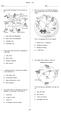 Name: ate: 1. Missing from the diagram of this ecosystem are the 5. ase your answer(s) to the following question(s) on the diagram below and on your knowledge of biology.. biotic factors and decomposers.
Materials For each student (or group of students): Caterpillar data sheets Pencil For teacher: Chart paper Markers
 Insects! Concepts Life cycles and metamorphosis are common to all insects. Butterflies, like most insects, go through complete metamorphosis involving four distinct phases egg, caterpillar (larva), chrysalis
ELEMENTARY-LEVEL SCIENCE TEST
 4THE UNIVERSITY OF THE STATE OF NEW YORK SPRING 2008 GRADE 4 ELEMENTARY-LEVEL SCIENCE TEST WRITTEN TEST Student Name School Name Print your name and the name of your school on the lines above. The test
Is That a Frog or Toad?
 Name: _ Is That a Frog or Toad? by Guy Belleranti What's the first thing you think of when you see or hear the words frog and toad? Loud "ribbits" or "croaking" calls? Tadpoles swimming in a pond? Long-legged
Owls. Choose words from the list at the end of the page to fill in the blank spaces.
 Owls Choose words from the list at the end of the page to fill in the blank spaces. Owls are _ of prey. A bird of prey is one that catches its food in its Owls hunt for their at night. A bird that hunts
Bountiful Beetles Lesson Plan
 Bountiful Beetles Lesson Plan Lesson Title: Bountiful Beetles Objectives: Students will identify the life cycle, anatomy and other characteristics of beetles. Students will conduct a simple research using
2. Identify each using the letters below using BD for the Bald Eagle, G for the Golden Eagle, H for the Harpy Eagle, and BT for the Bateleur Eagle.
 Eagle Quest Name SITE: American Eagle Foundation 1. How many species of eagles are found on Earth? 2. Identify each using the letters below using BD for the Bald Eagle, G for the Golden Eagle, H for the
Climate, Vegetation, and Landforms
 Climate, Vegetation, and Landforms Definitions Climate is the average weather of a place over many years Geographers discuss five broad types of climates Moderate, dry, tropical, continental, polar Vegetation:
Adapt to Your Habitat Complements Teacher Guide Adaptations: Secrets to Survival
 Adapt to Your Habitat Complements Teacher Guide Adaptations: Secrets to Survival Theme: and animals have many different adaptations that allow them to survive. Objectives: Understanding what adaptations
Wild About... Frogs and Frogspawn
 a Wild About... Rutland County Council Nature notes Frogs belong to a group of animals called amphibians, which also includes newts and toads. Amphibians live both on land and in water. Water is needed
Brownies. It s Your Planet Love It! WOW: Wonders of Water. Ice Cold (page 25) Extinct (page 39)
 Exhibit Guide WOW: Wonders of Water Ice Cold (page 25) The Earth has two poles, a North Pole and a South Pole. Both are extremely cold and covered in ice. Sometimes you might see huge masses of moving