
Chapter 1 LS1203. Product Reference Guide
|
|
|
- Rolf Ray
- 10 years ago
- Views:
Transcription
1 Chapter 1 LS1203 Product Reference Guide

2

3 LS1203 Product Reference Guide 72E Revision A January 2006

4 2006 by Symbol Technologies, Inc. All rights reserved. No part of this publication may be reproduced or used in any form, or by any electrical or mechanical means, without permission in writing from Symbol. This includes electronic or mechanical means, such as photocopying, recording, or information storage and retrieval systems. The material in this manual is subject to change without notice. The software is provided strictly on an as is basis. All software, including firmware, furnished to the user is on a licensed basis. Symbol grants to the user a non-transferable and non-exclusive license to use each software or firmware program delivered hereunder (licensed program). Except as noted below, such license may not be assigned, sublicensed, or otherwise transferred by the user without prior written consent of Symbol. No right to copy a licensed program in whole or in part is granted, except as permitted under copyright law. The user shall not modify, merge, or incorporate any form or portion of a licensed program with other program material, create a derivative work from a licensed program, or use a licensed program in a network without written permission from Symbol. The user agrees to maintain Symbol s copyright notice on the licensed programs delivered hereunder, and to include the same on any authorized copies it makes, in whole or in part. The user agrees not to decompile, disassemble, decode, or reverse engineer any licensed program delivered to the user or any portion thereof. Symbol reserves the right to make changes to any software or product to improve reliability, function, or design. Symbol does not assume any product liability arising out of, or in connection with, the application or use of any product, circuit, or application described herein. No license is granted, either expressly or by implication, estoppel, or otherwise under any Symbol Technologies, Inc., intellectual property rights. An implied license only exists for equipment, circuits, and subsystems contained in Symbol products. Symbol, Spectrum One, and Spectrum24 are registered trademarks of Symbol Technologies, Inc. Bluetooth is a registered trademark of Bluetooth SIG. Microsoft, Windows and ActiveSync are either registered trademarks or trademarks of Microsoft Corporation. Other product names mentioned in this manual may be trademarks or registered trademarks of their respective companies and are hereby acknowledged. Symbol Technologies, Inc. One Symbol Plaza Holtsville, New York Patents This product is covered by one or more of the patents listed on the website:

5 Revision History Changes to the original manual are listed below: Change Date Description -01 Rev A 1/2006 Initial Rev A Release.

6

7 Table of Contents Revision History... iii About This Guide Introduction... i Chapter Descriptions... i Notational Conventions... ii Related Documents... ii Service Information... iii Symbol Support Center... iii Chapter 1: Getting Started Introduction Unpacking Setting Up the Scanner Installing the Interface Cable Removing the Interface Cable Connecting Power (if required) Configuring the Scanner Chapter 2: Scanning Introduction Beeper Definitions LED Definitions Scanning Aiming Decode Zone Chapter 3: Maintenance & Technical Specifications Introduction Maintenance Troubleshooting Technical Specifications Scanner Signal Descriptions

8 Table of Contents 2 Chapter 4: User Preferences Introduction Scanning Sequence Examples Errors While Scanning User Preferences Parameter Defaults User Preferences Default Parameters Beeper Tone Beeper Volume Power Mode Scanning Mode Scan Line Width Laser On Time Beep After Good Decode Transmit Code ID Character Prefix/Suffix Values Scan Data Transmission Format FN1 Substitution Values Transmit No Read Message Chapter 5: Keyboard Wedge Interface Introduction Connecting a Keyboard Wedge Interface Keyboard Wedge Parameter Defaults Keyboard Wedge Host Parameters Keyboard Wedge Host Types Keyboard Wedge Country Types (Country Codes) Ignore Unknown Characters Keystroke Delay Intra-Keystroke Delay Alternate Numeric Keypad Emulation Caps Lock On Caps Lock Override Convert Wedge Data Function Key Mapping FN1 Substitution Send Make and Break Keyboard Maps ASCII Character Set for Keyboard Wedge Chapter 6: RS-232 Interface Introduction Connecting an RS-232 Interface RS-232 Host Parameters RS-232 Host Types Baud Rate Parity Stop Bit Select

9 Table of Contents 3 Data Bits (ASCII Format) Check Receive Errors Hardware Handshaking Software Handshaking Host Serial Response Time-out RTS Line State Beep on <BEL> Intercharacter Delay Nixdorf Beep/LED Options Ignore Unknown Characters ASCII Character Set for RS Chapter 7: USB Interface Introduction Connecting a USB Interface USB Parameter Defaults USB Host Parameters USB Device Type USB Country Keyboard Types (Country Codes) USB Keystroke Delay USB CAPS Lock Override USB Ignore Unknown Characters Emulate Keypad USB Keyboard FN 1 Substitution Function Key Mapping Simulated Caps Lock Convert Case ASCII Character Set for USB Chapter 8: Symbologies Introduction Scanning Sequence Examples Errors While Scanning Symbology Parameter Defaults UPC/EAN Enable/Disable UPC-A/UPC-E Enable/Disable UPC-E Enable/Disable EAN-13/EAN Enable/Disable Bookland EAN Decode UPC/EAN/JAN Supplementals UPC/EAN/JAN Supplemental Redundancy Transmit UPC-A Check Digit Transmit UPC-E Check Digit Transmit UPC-E1 Check Digit UPC-A Preamble UPC-E Preamble UPC-E1 Preamble Convert UPC-E to UPC-A

10 Table of Contents 4 Convert UPC-E1 to UPC-A EAN-8/JAN-8 Extend UCC Coupon Extended Code Code Enable/Disable Code Enable/Disable UCC/EAN Enable/Disable ISBT Code Enable/Disable Code Enable/Disable Trioptic Code Convert Code 39 to Code Code 32 Prefix Set Lengths for Code Code 39 Check Digit Verification Transmit Code 39 Check Digit Code 39 Full ASCII Conversion Code 39 Buffering (Scan & Store) Buffer Data Clear Transmission Buffer Transmit Buffer Code Enable/Disable Code Set Lengths for Code Code Code Set Lengths for Code Code 11 Check Digit Verification Transmit Code 11 Check Digits Interleaved 2 of 5 (ITF) Enable/Disable Interleaved 2 of Set Lengths for Interleaved 2 of I 2 of 5 Check Digit Verification Transmit I 2 of 5 Check Digit Convert I 2 of 5 to EAN Discrete 2 of 5 (DTF) Enable/Disable Discrete 2 of Set Lengths for Discrete 2 of Chinese 2 of Enable/Disable Chinese 2 of Codabar (NW - 7) Enable/Disable Codabar Set Lengths for Codabar CLSI Editing NOTIS Editing MSI Enable/Disable MSI Set Lengths for MSI MSI Check Digits Transmit MSI Check Digit(s) MSI Check Digit Algorithm

11 Table of Contents 5 RSS (Reduced Space Symbology) Convert RSS to UPC/EAN Symbology - Specific Security Levels Redundancy Level Security Level Symbology - Intercharacter Gap Chapter 9: 123Scan Introduction Communication with 123Scan Scan Parameter Appendix A: Standard Defaults Appendix B: Programming Reference Symbol Code Identifiers... B-1 AIM Code Identifiers... B-2 Appendix C: Sample Bar Codes Code C-1 UPC/EAN... C-1 UPC-A, 100%... C-1 EAN-13, 100%... C-1 Code C-2 Interleaved 2 of 5... C-2 RSS... C-2 RSS... C-2 RSS C-3 Appendix D: Numeric Bar Codes Numeric Bar Codes... D-1 Cancel... D-3 Appendix E: ASCII Character Sets

12 6 LS1203 Product Reference Guide

13 About This Guide About This Guide Introduction The LS1203 Product Reference Guide provides general instructions for setting up, operating, maintaining, and troubleshooting the LS1203 scanner. Chapter Descriptions Chapter 1, Getting Started provides a product overview, unpacking instructions, and cable connection information. Chapter 2, Scanning describes parts of the scanner, beeper and LED definitions, and how to use the scanner in triggered and Auto-Scan TM modes. Chapter 3, Maintenance & Technical Specifications provides information on how to care for the scanner, troubleshooting, and technical specifications. Chapter 4, User Preferences includes programming bar codes for selecting user preference features for the scanner and commonly used bar codes to customize how the data is transmitted to the host device. Chapter 5, Keyboard Wedge Interface provides information for setting up the scanner for Keyboard Wedge operation. Chapter 6, RS-232 Interface provides information for setting up the scanner for RS-232 operation. Chapter 7, USB Interface provides information for setting up the scanner for USB operation. Chapter 8, Symbologies describes all symbology features and provides the programming bar codes necessary for selecting these features for the scanner. Chapter 9, 123Scan (PC based scanner configuration tool) provides the bar code that must be scanned to communicate with the 123Scan program. Appendix A, Standard Defaults provides a table of all host devices and miscellaneous scanner defaults. Appendix B, Programming Reference provides a table of AIM code identifiers, ASCII character conversions, and keyboard maps. Appendix C, Sample Bar Codes includes sample bar codes. Appendix D, Numeric Bar Codes includes the numeric bar codes to scan for parameters requiring specific numeric values. Appendix E, ASCII Character Sets provides ASCII character value tables.

14 ii LS1203 Product Reference Guide Notational Conventions The following conventions are used in this document: Italics are used to highlight the following: - Chapters and sections in this and related documents - Dialog box, window and screen names - Drop-down list and list box names. Bold text is used to highlight the following: - Key names on a keypad. bullets ( ) indicate: - Action items - Lists of alternatives - Lists of required steps that are not necessarily sequential Sequential lists (e.g., those that describe step-by-step procedures) appear as numbered lists. Throughout the programming bar code menus, asterisks (*) are used to denote default parameter settings. * Indicates Default *Baud Rate 9600 Feature/Option Related Documents The LS1203 Quick Reference Guide (p/n xx) provides general information to help the user get started with the scanner. It includes basic operation instructions and start up bar codes. For the latest versions of the LS1203 Quick Reference Guide and the LS1203 Product Reference Guide go to:

15 About This Guide iii Service Information If you have a problem with your equipment, contact the Symbol Support Center for your region (see below for contact information). Before calling, have the model number, serial number, and several of your bar code symbols at hand. Call the Support Center from a phone near the scanning equipment so that the service person can try to talk you through your problem. If the equipment is found to be working properly and the problem is symbol readability, the Support Center will request samples of your bar codes for analysis at our plant. If your problem cannot be solved over the phone, you may need to return your equipment for servicing. If that is necessary, you will be given specific directions. Symbol Technologies is not responsible for any damages incurred during shipment if the approved shipping container is not used. Shipping the units improperly can possibly void the warranty. If the original shipping container was not kept, contact Symbol to have another sent to you. Symbol Support Center For service information, warranty information or technical assistance contact or call the Symbol Support Center in: Country/Region Address Telephone United States Canada United Kingdom Asia/Pacific Australia Austria/Österreich Denmark/Danmark Symbol Technologies, Inc. One Symbol Plaza Holtsville, New York Symbol Technologies Canada, Inc Orbitor Drive Mississauga, Ontario, Canada L4W 5L9 Symbol Technologies Symbol Place Winnersh Triangle, Berkshire RG41 5TP United Kingdom Symbol Technologies Asia, Inc. (Singapore Branch) 230 Victoria Street #12-06/10 Bugis Junction Office Tower Singapore Symbol Technologies Pty. Ltd. 432 St. Kilda Road Melbourne, Victoria 3004 Symbol Technologies Austria GmbH Prinz-Eugen Strasse 70 / 2.Haus 1040 Vienna, Austria (Inside Austria) Symbol Technologies AS Dr. Neergaardsvej Hørsholm (Inside Canada) (Outside Canada) (Inside UK) (Outside UK) Tel: Fax: (Inside Australia) (Outside Australia (Outside Austria) (Inside Denmark) (Outside Denmark)

16 iv LS1203 Product Reference Guide Country/Region Address Telephone Europe/Mid-East Distributor Operations Finland/Suomi France Germany/ Deutschland Italy/Italia Latin America Sales Support Mexico/México Netherlands/Neder land Norway/Norge Oy Symbol Technologies Kaupintie 8 A 6 FIN Helsinki, Finland Symbol Technologies France Centre d'affaire d'antony 3 Rue de la Renaissance Antony Cedex, France Symbol Technologies GmbH Waldstrasse 66 D Dietzenbach, Germany Symbol Technologies Italia S.R.L. Via Cristoforo Columbo, Trezzano S/N Navigilo Milano, Italy 2730 University Dr. Coral Springs, FL USA Symbol Technologies Mexico Ltd. Torre Picasso Boulevard Manuel Avila Camacho No 88 Lomas de Chapultepec CP Mexico City, DF, Mexico Symbol Technologies Kerkplein 2, 7051 CX Postbus AA Varsseveld, Netherlands Symbol s registered and mailing address: Symbol Technologies Norway Hoybratenveien 35 C N-1055 OSLO, Norway Symbol s repair depot and shipping address: Symbol Technologies Norway Enebakkveien 123 N-0680 OSLO, Norway Contact your local distributor or call (Inside Finland) (Outside Finland) (Inside France) (Outside France) (Inside Germany) (Outside Germany) (Inside Italy) (Outside Italy) (Inside United States) (Outside United States) (Fax) (Inside Mexico) (Outside Mexico) (Inside Netherlands) (Outside Netherlands)

17 About This Guide v Country/Region Address Telephone South Africa Spain/España Sweden/Sverige Symbol Technologies Africa Inc. Block B2 Rutherford Estate 1 Scott Street Waverly 2090 Johannesburg Republic of South Africa Symbol Technologies S.L. Avenida de Bruselas, 22 Edificio Sauce Alcobendas, Madrid Spain Letter address: Symbol Technologies AB Box 1354 S SOLNA Sweden Visit/shipping address: Symbol Technologies AB Solna Strandväg 78 S SOLNA Sweden (Inside South Africa) (Outside South Africa) (Inside Spain) (Outside Spain) Fax: Switchboard: (domestic) Call Center: (international) Support [email protected] If you purchased your Symbol product from a Symbol Business Partner, contact that Business Partner for service. For the latest version of this guide go to:

18 vi LS1203 Product Reference Guide

19 Chapter 1 Getting Started Chapter 1 Chapter 1 Getting Started Introduction The scanner combines excellent scanning performance and advanced ergonomics to provide the best value in a lightweight laser scanner. Whether used in triggered mode or Auto-Scan TM mode, the scanner ensures comfort and ease of use for extended periods of time. NOTE The scanner does not support PDF417 bar codes and its variants. Figure 1-1 LS1203 Scanner This scanner supports the following interfaces: Keyboard Wedge connection to a host. The host interprets scanned data as keystrokes. This interface supports the following international keyboards (for Windows environment): North America, German, French, French Canadian, Spanish, Italian, Swedish, UK English, Portuguese-Brazilian, and Japanese. Standard RS-232 connection to a host. Scan bar code menus to set up proper communication of the scanner with the host. USB connection to a host. The scanner autodetects a USB host and defaults to the HID keyboard interface type. Select other USB interface types by scanning programming bar code menus.this interface supports the following international keyboards (for Windows environment): North America, German, French, French Canadian, Spanish, Italian, Swedish, UK English, Portuguese-Brazilian, and Japanese.

20 1-2 LS1203 Product Reference Guide Unpacking Remove the scanner from its packing and inspect it for damage. If the scanner was damaged in transit, call the Symbol Support Center at one of the telephone numbers listed on page iii. KEEP THE PACKING. It is the approved shipping container and should be used if the equipment ever needs to be return for servicing. Setting Up the Scanner Installing the Interface Cable To connect the interface cable: 1. Insert the interface cable s modular connector clip into the cable interface port on the bottom of the scanner handle. (See Figure 1-2.). 2. Gently tug the cable to ensure the connector is properly secured. 3. Connect the other end of the interface cable to the host. (See the specific host chapter for information on host connections.) Cable interface port Interface cable modular connector Interface cable modular connector clip Interface cable strain relief To host Figure 1-2 Installing the Cable

21 Getting Started 1-3 NOTE Different cables are required for different hosts. The connectors illustrated in each host chapter are examples only. Actual connectors may be different than those illustrated, but the steps to connect the scanner remain the same. Removing the Interface Cable To remove the interface cable: 1. Unplug the installed cable modular connector by depressing the connector clip with the tip of a screwdriver, or a paper clip as shown in Figure 1-3. Figure Carefully slide out the cable. 3. Follow the steps for Installing the Interface Cable on page 1-2 to connect a new cable. Connecting Power (if required) If the host does not provide power to the scanner, an external power connection to the scanner is required. To connect power: 1. Connect the interface cable to the bottom of the scanner, as described in Installing the Interface Cable on page Connect the other end of the interface cable to the host (refer to the host manual to locate the correct port). 3. Plug the power supply into the power jack on the interface cable. Plug the other end of the power supply into an AC outlet. Configuring the Scanner To configure the scanner, use the bar codes included in this manual, or the 123Scan configuration program. See Chapter 4, User Preferences and Chapter 8, Symbologies for information about programming the scanner using bar code menus. Also see each host-specific chapter to set up a connection to a specific host type. See Chapter 9, 123Scan to configure the scanner using this configuration program. A help file is available in the program.
22 1-4 LS1203 Product Reference Guide
23 Chapter 2 Scanning Chapter 2 Chapter 2 Scanning Introduction This chapter provides beeper and LED definitions, techniques involved in scanning bar codes, general instructions and tips about scanning, and decode zone diagrams. LED Scan Window Trigger Button Figure 2-1 Parts
24 2-2 LS1203 Product Reference Guide Beeper Definitions The scanner issues different beep sequences and patterns to indicate status. Table 2-1 defines beep sequences that occur during both normal scanning and while programming the scanner. Table 2-1 Beeper Definitions Beeper Sequence Indication Standard Use Low/medium/high beeps Short high beeps Power up. A bar code symbol was decoded (if decode beeper is enabled). 4 long low beeps A transmission error was detected in a scanned symbol. The data is ignored. This occurs if a unit is not properly configured. Check option setting. 5 low beeps Conversion or format error. Low/high/low beeps High/high/high/low beeps Advanced Data Formatting (ADF) transmit error. (For information about ADF programming, refer to the Advanced Data Formatting Programmer Guide, p/n xx.) RS-232 receive error. Parameter Menu Scanning Short high beeps Low/high beeps High/low beeps High/low/high/low beeps Low/high/low/high beeps Correct entry scanned or correct menu sequence performed. Input error, incorrect bar code or Cancel scanned, wrong entry, incorrect bar code programming sequence; remain in program mode. Keyboard parameter selected. Enter value using bar code keypad. Successful program exit with change in the parameter setting. Out of host parameter storage space. Scan Default Parameters on page 4-3. Code 39 Buffering High/low beeps New Code 39 data was entered into the buffer. 3 Beeps - long high beeps Code 39 buffer is full. Low/high/low beeps Low/high beeps The Code 39 buffer was erased or there was an attempt to clear or transmit an empty buffer. A successful transmission of buffered data. Host Specific USB only 4 short high beeps Scanner has not completed initialization. Wait several seconds and scan again.
25 Scanning 2-3 Table 2-1 Beeper Definitions (Continued) Beeper Sequence Scanner gives a power-up beep after scanning a USB Device Type. This power-up beep occurs more than once. Indication Communication with the bus must be established before the scanner can operate at the highest power level. The USB bus may put the scanner in a state where power to the scanner is cycled on and off more than once. This is normal and usually happens when the host cold boots. RS-232 only 1 short high beep A <BEL> character is received and Beep on <BEL> is enabled. LED Definitions In addition to beeper sequences, the scanner communicates with the user using a two-color LED display. Table 2-2 defines LED colors that display during scanning. Table 2-2 Standard LED Definitions LED Indication Off Green Red No power is applied to the scanner, or the scanner is on and ready to scan. A bar code was successfully decoded. A data transmission error or scanner malfunction occurred. Scanning The scanner can operate in two scanning modes: triggered mode and Auto-Scan TM mode. In triggered mode the trigger button must be pressed to emit the scanner laser in order to a scan bar code. In Auto-Scan TM mode the scanner laser is in constant on state and no trigger button press is required to scan a bar code. To toggle between scanning modes, scan Triggered/Auto-Scan TM on page 4-5. If the scanner is in triggered mode, scan Triggered/Auto-Scan TM on page 4-5 to switch to Auto-Scan TM mode. If the scanner is in Auto-Scan TM mode, scan Triggered/Auto-Scan TM on page 4-5 to switch to triggered mode. NOTE When the scanner is not used for an extended period of time in Auto-Scan TM mode, it enters sleep mode. To wake the scanner, press the trigger button. To scan a bar code: 1. Install and program the scanner (see Setting Up the Scanner on page 1-2). For assistance, contact the local supplier or the local Symbol Support Center on page iii. 2. Ensure all connections are secure. (See the host chapter for the scanner.) 3. Aim the scanner at the bar code.
26 2-4 LS1203 Product Reference Guide 4. If the scanner is in triggered mode, press the trigger button. (In Auto-Scan TM mode, no trigger button press is required. The scanner laser is in constant on mode.) Triggered Mode Auto-Scan TM Mode Figure 2-2 Scanning - Triggered and Auto-Scan TM Modes 5. Upon successful decode, the scanner beeps and the LED turns green. (For more information about beeper and LED definitions, see Table 2-1 and Table 2-2.) Aiming NOTE Scan line lengths vary depending on the scan line width selected (see Scan Line Width on page 4-6). A full scan line width is the default. The medium scan line width is useful for scanning menus or pick-lists. On a typical UPC 100% hold the scanner between contact and 7 inches from the symbol (see Decode Zone on page 2-6). Ensure the scan line crosses every bar and space of the symbol. Figure 2-3 Acceptable and Incorrect Aiming The scan line is smaller when the scanner is closer to the symbol and larger when it is farther from the symbol. Scan symbols with smaller bars or elements (mil size) closer to the scanner, and those with larger bars or elements (mil size) farther from the scanner. Do not hold the scanner directly over the bar code. Laser light reflecting directly back into the scanner from the bar code is known as specular reflection. This specular reflection can make decoding difficult. NOTE Scan line lengths vary depending on the scan line width selected. A full scan line width is the default. The medium scan line width is useful for scanning menus or pick-lists. For more information about scan line widths, see page 4-6.
27 Scanning 2-5 The scanner can be tilted up to 65 forward or back and achieve a successful decode (Figure 2-4). Simple practice quickly shows what tolerances to work within. Figure 2-4 Maximum Tilt Angles and Dead Zone
28 2-6 LS1203 Product Reference Guide Decode Zone Figure 2-5 LS1203 Decode Zone
29 Chapter 3 Maintenance & Technical Specifications Chapter 3 Chapter 3 Maintenance & Technical Specifications Introduction This chapter provides suggested scanner maintenance, troubleshooting, technical specifications, and signal descriptions (pinouts). Maintenance Cleaning the exit window is the only maintenance required. A dirty window may affect scanning ability. Do not allow any abrasive material to touch the window Remove any dirt particles with a damp cloth Wipe the window using a tissue moistened with ammonia/water Do not spray water or other cleaning liquids directly into the window.
30 3-2 LS1203 Product Reference Guide Troubleshooting Table 3-1 Troubleshooting Problem Possible Causes Possible Solutions Beeper Indications ((Also see Beeper Definitions on page 2-2) The scanner emits frequent beeps. (USB host interface only.) The USB bus may put the scanner in a state where power to the scanner is cycled on and off more than once. This is normal and usually happens when the host cold boots. Scanner emits low/high/low beeps. ADF transmit error. Refer to the Advanced Data Formatting Programmer s Guide, p/n xx, for information about ADF programming. Scanner emits low/high beeps. Scanner emits low/high/low beeps. Scanner emits low/high/low/high beeps. Invalid ADF rule is detected. Input error, incorrect bar code or Cancel bar code was scanned. The Code 39 buffer was erased or there was an attempt to clear or transmit an empty buffer. Out of host parameter storage space. Out of memory for ADF rules. Refer to the Advanced Data Formatting Programmer s Guide, p/n xx, for information about ADF programming. Scan the correct numeric bar codes within range for the parameter programmed. Normal when scanning the Code 39 Buffering Clear Buffer bar code or upon attempt to transmit an empty Code 39 buffer. Scan Default Parameters on page 4-3. Reduce the number of ADF rules or the number of steps in the ADF rules. Scanner emits high/low beeps. The scanner is buffering Code 39 data. Normal. Scanner emits high/high/high/low beeps. Scanner emits four long low beeps. Scanner emits four short high beeps (USB only). Scanner emits a short low/high/low/high beep sequence while it is being programmed. RS-232 receive error. A transmission error was detected in a scanned symbol. The data is ignored. Scanner has not completed initialization. Out of ADF parameter storage space. Normal during host reset. Otherwise, set the scanner's RS-232 parity to match the host setting. This occurs if a unit is not properly configured. Check option setting. Wait several seconds and scan again. Erase all rules and re-program with shorter rules.
31 Maintenance & Technical Specifications 3-3 Table 3-1 Troubleshooting (Continued) Decoding Bar Codes Problem Possible Causes Possible Solutions Scanner emits the laser, but does not decode the bar code. Scanner decodes bar code, but does not transmit the data to the host. Scanner emits five long low beep after a bar code is decoded. Scanner is not programmed for the correct bar code type. Bar code symbol is unreadable. Distance between scanner and bar code is incorrect. The scan line is not crossing every bar and space of the symbol. Scanner is not programmed for the correct host type. Interface cable is loose. Conversion or format error was detected. The scanner s conversion parameters are not properly configured. Conversion or format error was detected. An ADF rule was set up with characters that can't be sent for the host selected. Conversion or format error was detected. A bar code was scanned with characters that can't be sent for that host. Program the scanner to read that type of bar code. See Chapter 8, Symbologies. Scan test symbols of the same bar code type to determine if the bar code is defaced. Move the scanner closer to or further from the bar code. See Decode Zone on page 2-6. Move the symbol until the scan line is within the acceptable aiming pattern. See Figure 2-3 on page 2-4. Scan the appropriate host type programming bar code. See the chapter corresponding to the host type. Check for loose cable connection and re-connect cable. Ensure the scanner s conversion parameters are properly configured. Change the ADF rule, or change to a host that can support the ADF rule. Change the bar code, or change to a host that can support the bar code.
32 3-4 LS1203 Product Reference Guide Table 3-1 Troubleshooting (Continued) Host Displays Problem Possible Causes Possible Solutions Host displays scanned data incorrectly. Trigger Nothing happens when the trigger button is pressed. Scanner is not programmed to work with the host. No power to the scanner. Interface/power cables are loose. Incorrect host interface cable is used. Ensure the proper host is selected. Scan the appropriate host type programming bar code. For RS-232, set the scanner's communication parameters to match the host's settings. For a USB HID keyboard or Keyboard Wedge configuration, program the system for the correct keyboard type and language, and turn off the CAPS LOCK key. Program the proper editing options (e.g., ADF, UPC-E to UPC-A Conversion). Check the scanner s host type parameters or editing options. Check the system power. If the configuration requires a power supply, re-connect the power supply. Check for loose cable connections and re-connect cables. Verify that the correct host interface cable is used. If not, connect the correct host interface cable. NOTE If after performing these checks the symbol still does not scan, contact the distributor or call the local Symbol Support Center. See page iii for the telephone numbers.
33 Maintenance & Technical Specifications 3-5 Technical Specifications Table 3-2 Technical Specifications Item Description Physical Characteristics Dimensions 2.4 in. H x 7.1 in. L x 2.4 in. W (6.2 cm H x 18 cm L x 6 cm W) Weight (without cable) Approximately 4.3 oz. (122 g) Voltage & Current Color ma (Stand by: <35 ma) Cash Register White or Twilight Black Performance Characteristics Light Source (Laser) Scan Rate Roll (Tilt) Tolerance 650nm laser diode 100 scans per second ± 30 from normal Pitch Tolerance ± 65 Skew (Yaw) Tolerance ± 60 Typical Working Distance Print Contrast Minimum 13 mil (100% UPC/EAN): 0 to 7 in. (17.78 cm) 5 mil (Code 39): 2.5 to 4.0 in. (6.35 cm to cm) (See Decode Zone on page 2-6) 30% minimum reflectance Decode Capability UPC/EAN, UPC/EAN with Supplementals, UCC/EAN 128, Code 39, Code 39 Full ASCII, Code 39 TriOptic, Code 128, Code 128 Full ASCII, Codabar, Interleaved 2 of 5, Discrete 2 of 5, Code 93, MSI, Code 11, IATA, RSS variants, Chinese 2 of 5 Interfaces Supported RS-232; Keyboard Wedge; USB User Environment Operating Temperature 32 to 122 F (0 to 50 C) Storage Temperature -40 to 158 F (-40 to 70 C) Humidity Drop Specifications Ambient Light Immunity Beeper Volume Beeper Tone Electrostatic Discharge 5% to 95% relative humidity, non-condensing Withstands multiple 5 ft./1.524 m drops to concrete Immune to direct exposure of normal office and factory lighting conditions, as well as direct exposure to sunlight User-selectable: three levels User-selectable: three tones Conforms to 15 kv air discharge and 8 kv of contact discharge
34 3-6 LS1203 Product Reference Guide Table 3-2 Technical Specifications (Continued) Item Description Regulatory Electrical Safety UL1950, CSA C22.2 No. 950, EN60950/IEC950 Laser Safety IEC Class 1 EMI/RFI FCC Part 15 Class B, ICES-003 Class B, European Union EMC Directive, Australian SMA, Taiwan EMC, Japan VCCI/MITI/Dentori Scanner Signal Descriptions Bottom of scanner Cable interface port PIN 10 PIN 1 Interface cable modular connector Figure 3-1 Scanner Cable Pin-outs
35 Maintenance & Technical Specifications 3-7 The signal descriptions in Table 3-3 apply to the connector on the scanner and are for reference only. Table 3-3 Scanner Signal Pin-outs Pin RS-232 Keyboard Wedge USB 1 Reserved Reserved Jump to Pin 6 2 Power Power Power 3 Ground Ground Ground 4 TxD KeyClock Reserved 5 RxD TermData D + 6 RTS KeyData Jump to Pin 1 7 CTS TermClock D - 8 Reserved Reserved Reserved 9 n/a n/a n/a 10 n/a n/a n/a
36 3-8 LS1203 Product Reference Guide
37 Chapter 4 User Preferences Chapter 4 Chapter 4 User Preferences Introduction If desired, program the scanner to perform various functions, or activate different features.if preferred, the 123Scan configuration utility is also available for programming the scanner (see Chapter 9, 123Scan). This chapter describes each user preference feature and provides the programming bar codes necessary for selecting these features. The scanner ships with the settings shown in the User Preferences on page 4-2 (also see Appendix A, Standard Defaults for all host defaults). If the default values suit requirements, programming may not be necessary. To set feature values, scan a single bar code or a short bar code sequence. The settings are stored in non-volatile memory and are preserved even when the scanner is powered down. If not using a USB cable, select a host type (see each host chapter for specific host information) after the power-up beeps sound. This is only necessary upon the first power-up when connected to a new host. To return all features to their default values, see User Preferences on page 4-2. Throughout the programming bar code menus, default values are indicated with asterisks (*). * Indicates Default *High Frequency Feature/Option Scanning Sequence Examples In most cases, scanning one bar code sets the parameter value. For example, to set the beeper tone to high, scan the High Frequency (beeper tone) bar code listed under Beeper Tone on page 4-4. The scanner issues a fast warble beep and the LED turns green, signifying a successful parameter entry. Other parameters, such as Serial Response Time-Out or Data Transmission Formats, require scanning several bar codes. See these parameter descriptions for this procedure. Errors While Scanning Unless otherwise specified, when an error is made during a scanning sequence, just re-scan the correct parameter.
38 4-2 LS1203 Product Reference Guide User Preferences Parameter Defaults Table 4-1 lists the defaults for user preferences parameters. To change any option, scan the appropriate bar code(s) provided in the User Preferences section beginning on page 4-3. NOTE See Appendix A, Standard Defaults for all user preferences, hosts and symbologies default parameters. Table 4-1 User Preferences User Preferences Parameter Default Page Number Beeper Tone Medium 4-4 Beeper Volume High 4-4 Power Mode Continuous On 4-5 Scanning Mode Triggered 4-5 Scan Line Width Full Width 4-6 Laser On Time 3.0 Sec 4-6 Beep After Good Decode Enable 4-7 Transmit Code ID Character None 4-7 Prefix Value 7013 <CR><LF> 4-8 Suffix Value 7013 <CR><LF> 4-8 Scan Data Transmission Format Data as is 4-9 FN1 Substitution Values Set 4-10 Transmit No Read Message Disable 4-10 Transmit Code ID Character None 4-10
39 User Preferences 4-3 User Preferences Default Parameters The scanner can be reset to two types of defaults: factory defaults or custom defaults. Scan the appropriate bar code below to reset the scanner to its default settings and/or set the scanner s current settings as the custom default. Restore Defaults - Resets all default parameters as follows: - If custom default values were configured (see Write to Custom Defaults), the custom default values are set for all parameters each time the Restore Defaults bar code below is scanned. - If no custom default values were configured, the factory default values are set for all parameters each time the Restore Defaults bar code below is scanned. (For factory default values, see Appendix A, Standard Defaults.) Set Factory Defaults - Scan the Set Factory Defaults bar code below to eliminate all custom default values and set the scanner to factory default values. (For factory default values, see Appendix A, Standard Defaults.) Write to Custom Defaults - Custom default parameters can be configured to set unique default values for all parameters. After changing all parameters to the desired default values, scan the Write to Custom Defaults bar code below to configure custom defaults. *Restore Defaults Set Factory Defaults Write to Custom Defaults
40 4-4 LS1203 Product Reference Guide Beeper Tone To select a decode beep frequency (tone), scan the Low Frequency, Medium Frequency, or High Frequency bar code. Low Frequency *Medium Frequency (Optimum Settings) High Frequency Beeper Volume To select a beeper volume, scan the Low Volume, Medium Volume, or High Volume bar code. Low Volume Medium Volume *High Volume
41 User Preferences 4-5 Power Mode This parameter determines whether or not power remains on after a decode attempt. When in reduced power mode, the scanner enters low power consumption mode after each decode. When in continuous power mode, power remains on after each decode. *Continuous On Reduced Power Mode Scanning Mode This parameter determines whether or not the scanner is in triggered mode or Auto-Scan TM mode. In triggered scanning mode, the scanner trigger button must be pressed to decode each scanned bar code. In Auto-Scan TM scanning mode, the scanner laser is in constant on state and no trigger button press is required to scan a bar code. If the scanner is in triggered mode, scan Triggered/Auto-Scan TM to switch to Auto-Scan TM mode. If the scanner is in Auto-Scan TM mode, scan Triggered/Auto-Scan TM to switch to triggered mode. NOTE When the scanner is not used for an extended period of time in Auto-Scan TM mode, it enters sleep mode. To wake the scanner, press the trigger button. *Triggered/Auto-Scan TM Mode
42 4-6 LS1203 Product Reference Guide Scan Line Width Scan a bar code below to set the scan line width. NOTE This feature applies to triggered mode only. *Full Width Medium Width Laser On Time This parameter sets the maximum time that decode processing continues during a scan attempt. It is programmable in 0.1 second increments from 0.5 to 9.9 seconds. The default Laser On Time is 3.0 seconds. To set a Laser On Time, scan the bar code below. Next, scan two numeric bar codes beginning on page D-1 in Appendix D, Numeric Bar Codes that correspond to the desired on time. Single digit numbers must have a leading zero. For example, to set an On Time of 0.5 seconds, scan the bar code below, then scan the 0 and 5 bar codes. If an error is made, or the selection needs to be changed, scan Cancel on page D-3. Laser On Time
43 User Preferences 4-7 Beep After Good Decode Scan a bar code below to select whether or not the scanner beeps after a good decode. If Do Not Beep After Good Decode is selected, the beeper still operates during parameter menu scanning and indicates error conditions. *Beep After Good Decode (Enable) Do Not Beep After Good Decode (Disable) Transmit Code ID Character A Code ID character identifies the code type of a scanned bar code. This may be useful when the scanner is decoding more than one code type. In addition to any single character prefix already selected, the Code ID character is inserted between the prefix and the decoded symbol. Select no Code ID character, a Symbol Code ID character, or an AIM Code ID character. For Code ID Characters, see Symbol Code Characters on page B-1 and Aim Code Characters on page B-2. Symbol Code ID Character AIM Code ID Character *None
44 4-8 LS1203 Product Reference Guide Prefix/Suffix Values A prefix and/or suffix can be appended to scan data for use in data editing. To set a value for a prefix or suffix: 1. Change the scan data format by scanning the appropriate Scan Data Transmission Format on page Scan the appropriate prefix/suffix bar code on page Scan a four-digit number (i.e., four bar codes from Appendix D, Numeric Bar Codes) that corresponds to that value. NOTE When using host commands to set the prefix or suffix, set the key category parameter to 1, then set the 3-digit decimal value. See Table E-1 on page E-1 for the four-digit codes. 4. To correct an error or change a selection, scan Cancel on page D-3. Scan Prefix Scan Suffix Scan Data Transmission Format To change the scan data format, scan Scan Options and one of the following four bar codes corresponding to the desired format: Data As Is <DATA> <SUFFIX> <PREFIX> <DATA> <PREFIX> <DATA> <SUFFIX>. Scan Enter on page 4-9 to complete the change. To set values for the prefix and/or suffix, see Prefix/Suffix Values on page 4-8. Scan Data Format Cancel on page 4-9 to cancel the change. If a carriage return/enter is required after each scanned bar code, scan the following bar codes in order: 1. Scan Options 2. <DATA> <SUFFIX> 3. Enter (on page 4-9).
45 User Preferences 4-9 Scan Data Transmission Format (continued) Scan Options *Data As Is <DATA> <SUFFIX> <PREFIX> <DATA> <PREFIX> <DATA> <SUFFIX> Enter Data Format Cancel
46 4-10 LS1203 Product Reference Guide FN1 Substitution Values The Wedge and USB HID Keyboard hosts support an FN1 substitution feature. When enabled any FN1 character (0x1b) in an EAN128 bar code is substituted with a value. This value defaults to 7013 (Enter Key). To select an FN1 substitution value via bar code menus: 1. Scan the bar code below. *Set FN1 Substitution Value 2. Look up the keystroke desired for FN1 Substitution in the ASCII Value - Code 39 Encode - Keystroke on page E-1 for the currently installed host interface. 3. Enter the 4-digit substitution value by scanning each digit in Appendix D, Numeric Bar Codes. To correct an error or change the selection, scan Cancel. To enable FN1 substitution for keyboard wedge, scan the Enable FN1 Substitution bar code on page 5-9. To enable FN1 Substitution for USB HID keyboard, scan the Enable FN1 Substitution bar code on page 7-8. Transmit No Read Message Scan a bar code below to select whether or not to transmit a No Read message. When enabled, the characters NR are transmitted when a bar code is not decoded. When disabled, if a symbol does not decode, nothing is sent to the host. Enable No Read *Disable No Read
47 Chapter 5 Keyboard Wedge Interface Chapter 5 Chapter 5 Keyboard Wedge Interface Introduction This chapter describes how to set up a Keyboard Wedge interface with the scanner. With this interface, the scanner is connected between the keyboard and host computer, and translates bar code data into keystrokes. The host computer accepts the keystrokes as if they originated from the keyboard. This mode adds bar code reading functionality to a system designed for manual keyboard input. Keyboard keystrokes are simply passed through. Throughout the programming bar code menus, default values are indicated with asterisks (*). * Indicates Default *North American Feature/Option Connecting a Keyboard Wedge Interface Male DIN Connector Keyboard Connector Female DIN Figure 5-1 Keyboard Wedge Connection with Y-cable
48 5-2 LS1203 Product Reference Guide To connect the Keyboard Wedge interface Y-cable: NOTE Interface cables vary depending on configuration. The connectors illustrated in Figure 5-1 are examples only. The connectors may be different than those illustrated, but the steps to connect the scanner remain the same. 1. Turn off the host and unplug the keyboard connector. 2. Attach the modular connector of the Y-cable to the cable interface port on the scanner. (See Installing the Interface Cable on page 1-2.) 3. Connect the round male DIN host connector of the Y-cable to the keyboard port on the host device. 4. Connect the round female DIN keyboard connector of the Y-cable to the keyboard connector. 5. If needed, attach the optional power supply to the connector in the middle of the Y-cable. 6. Ensure that all connections are secure. 7. Turn on the host system. 8. Select the Keyboard Wedge host type by scanning the appropriate bar code from Keyboard Wedge Host Parameters on page To modify any other parameter options, scan the appropriate bar codes in this chapter. Keyboard Wedge Parameter Defaults NOTE See Appendix A, Standard Defaults for all user preferences, hosts, symbologies, and miscellaneous default parameters. Table 5-1 lists the defaults for Keyboard Wedge host parameters. To change any option, scan the appropriate bar code(s) in the Keyboard Wedge Host Parameters section beginning on page 5-3. Table 5-1 Keyboard Wedge Defaults Parameter Default Page Number Keyboard Wedge Host Parameters Keyboard Wedge Host Type IBM PC/AT& IBM PC Compatibles Country Types (Country Codes) North American 5-4 Ignore Unknown Characters Send 5-5 Keystroke Delay No Delay 5-6 Intra-Keystroke Delay Disable 5-6 Alternate Numeric Keypad Emulation Disable 5-7 Caps Lock On Disable 5-7 Caps Lock Override Disable 5-8 Convert Wedge Data No Convert 5-8
49 Keyboard Wedge Interface 5-3 Table 5-1 Keyboard Wedge Defaults (Continued) Parameter Default Page Number Function Key Mapping Disable 5-9 FN1 Substitution Disable 5-9 Send and Make Break Send User selection is required to configure this interface and this is the most common selection. Keyboard Wedge Host Parameters Keyboard Wedge Host Types Select the Keyboard Wedge host by scanning one of the bar codes below. IBM PC/AT & IBM PC Compatibles 1 IBM AT Notebook NCR 7052 IBM PS/2 (Model 30) NOTE 1 User selection is required to configure this interface and this is the most common selection.
50 5-4 LS1203 Product Reference Guide Keyboard Wedge Country Types (Country Codes) Scan the bar code corresponding to the keyboard type. If the keyboard type is not listed, see Alternate Numeric Keypad Emulation on page 5-7. *North American German Windows French Windows French Canadian Windows 95/98 French Canadian Windows XP/2000 Spanish Windows Italian Windows
51 Keyboard Wedge Interface 5-5 Keyboard Wedge Country Types (continued) Swedish Windows UK English Windows Japanese Windows Portuguese-Brazilian Windows Ignore Unknown Characters Unknown characters are characters the host does not recognize. When Send Bar Codes With Unknown Characters is selected, all bar code data is sent except for unknown characters, and no error beeps sound on the scanner. When Do Not Send Bar Codes With Unknown Characters is selected, bar code data is sent up to the first unknown character, then the scanner issues an error beep. *Send Bar Codes with Unknown Characters Do Not Send Bar Codes with Unknown Characters
52 5-6 LS1203 Product Reference Guide Keystroke Delay This is the delay in milliseconds between emulated keystrokes. Scan a bar code below to increase the delay when hosts require a slower transmission of data. *No Delay Medium Delay (20 msec) Long Delay (40 msec) Intra-Keystroke Delay When enabled, an additional delay is inserted between each emulated key depression and release. This sets the Keystroke Delay parameter to a minimum of 5 msec as well. Enable Intra-Keystroke Delay *Disable Intra-Keystroke Delay
53 Keyboard Wedge Interface 5-7 Alternate Numeric Keypad Emulation This allows emulation of most other country keyboard types not listed in Keyboard Wedge Country Types (Country Codes) on page 5-4 in a Microsoft operating system environment. Enable Alternate Numeric Keypad *Disable Alternate Numeric Keypad Caps Lock On When enabled, the scanner emulates keystrokes as if the Caps Lock key is always pressed. Note that if both Caps Lock On and Caps Lock Override are enabled, Caps Lock Override takes precedence Enable Caps Lock On *Disable Caps Lock On
54 5-8 LS1203 Product Reference Guide Caps Lock Override When enabled, on AT or AT Notebook hosts, the keyboard ignores the state of the Caps Lock key. Therefore, an A in the bar code is sent as an A no matter what the state of the keyboard s Caps Lock key. NOTE If both Caps Lock On and Caps Lock Override are enabled, Caps Lock Override takes precedence. Enable Caps Lock Override *Disable Caps Lock Override Convert Wedge Data When enabled, the scanner will convert all bar code data to the selected case. Convert to Upper Case Convert to Lower Case *No Convert
55 Keyboard Wedge Interface 5-9 Function Key Mapping ASCII values under 32 are normally sent as control key sequences (see Table 5-2 on page 5-11). When this parameter is enabled, the keys in bold are sent in place of the standard key mapping. Table entries that do not have a bold entry remain the same whether or not this parameter is enabled. Enable Function Key Mapping *Disable Function Key Mapping FN1 Substitution When enabled, the scanner replaces FN1 characters in an EAN128 bar code with a keystroke chosen by the user (see FN1 Substitution Values on page 4-10). Enable FN1 Substitution *Disable FN1 Substitution
56 5-10 LS1203 Product Reference Guide Send Make and Break When enabled, the scan codes for releasing a key are not sent. *Send Make and Break Scan Codes Send Make Scan Code Only Keyboard Maps The following keyboard maps are provided for prefix/suffix keystroke parameters. To program the prefix/suffix values, see the bar codes on page Figure 5-2 IBM PC/AT Figure 5-3 IBM PS/2
57 Keyboard Wedge Interface 5-11 ASCII Character Set for Keyboard Wedge NOTE Code 39 Full ASCII interprets the bar code special character ($ + % /) preceding a Code 39 character and assigns an ASCII character value to the pair. For example, when Code 39 Full ASCII is enabled and a +B is scanned, it is interpreted as b, %J as?, and %V Scanning ABC%I outputs the keystroke equivalent of ABC >. Table 5-2 Keyboard Wedge ASCII Character Set ASCII Value Full ASCII Code 39 Encode Character Keystroke 1001 $A CTRL A 1002 $B CTRL B 1003 $C CTRL C 1004 $D CTRL D 1005 $E CTRL E 1006 $F CTRL F 1007 $G CTRL G 1008 $H CTRL H/BACKSPACE $I CTRL I/HORIZONTAL TAB $J CTRL J 1011 $K CTRL K 1012 $L CTRL L 1013 $M CTRL M/ENTER $N CTRL N 1015 $O CTRL O 1016 $P CTRL P 1017 $Q CTRL Q 1018 $R CTRL R 1019 $S CTRL S 1020 $T CTRL T 1021 $U CTRL U 1 The keystroke in bold is sent only if the Function Key Mapping is enabled. Otherwise, the unbolded keystroke is sent.
58 5-12 LS1203 Product Reference Guide Table 5-2 Keyboard Wedge ASCII Character Set (Continued) ASCII Value Full ASCII Code 39 Encode Character Keystroke 1022 $V CTRL V 1023 $W CTRL W 1024 $X CTRL X 1025 $Y CTRL Y 1026 $Z CTRL Z 1027 %A CTRL [ /ESC %B CTRL \ 1029 %C CTRL ] 1030 %D CTRL %E CTRL Space Space 1033 /A! 1034 /B 1035 /C # 1036 /D $ 1037 /E % 1038 /F & 1039 /G 1040 /H ( 1041 /I ) 1042 /J * 1043 /K /L, /O / The keystroke in bold is sent only if the Function Key Mapping is enabled. Otherwise, the unbolded keystroke is sent.
59 Keyboard Wedge Interface 5-13 Table 5-2 Keyboard Wedge ASCII Character Set (Continued) ASCII Value Full ASCII Code 39 Encode Character Keystroke /Z : 1059 %F ; 1060 %G < 1061 %H = 1062 %I > 1063 %J? A A 1066 B B 1067 C C 1068 D D 1069 E E 1070 F F 1071 G G 1072 H H 1073 I I 1074 J J 1075 K K 1 The keystroke in bold is sent only if the Function Key Mapping is enabled. Otherwise, the unbolded keystroke is sent.
60 5-14 LS1203 Product Reference Guide Table 5-2 Keyboard Wedge ASCII Character Set (Continued) ASCII Value Full ASCII Code 39 Encode Character Keystroke 1076 L L 1077 M M 1078 N N 1079 O O 1080 P P 1081 Q Q 1082 R R 1083 S S 1084 T T 1085 U U 1086 V V 1087 W W 1088 X X 1089 Y Y 1090 Z Z 1091 %K [ 1092 %L \ 1093 %M ] 1094 %N ^ 1095 %O _ 1096 %W A a B b C c D d E e F f 1 The keystroke in bold is sent only if the Function Key Mapping is enabled. Otherwise, the unbolded keystroke is sent.
61 Keyboard Wedge Interface 5-15 Table 5-2 Keyboard Wedge ASCII Character Set (Continued) ASCII Value Full ASCII Code 39 Encode Character Keystroke G g H h I i J j K k L l M m N n O o P p Q q R r S s T t U u V v W w X x Y y Z z 1123 %P { 1124 %Q 1125 %R } 1126 %S ~ 1 The keystroke in bold is sent only if the Function Key Mapping is enabled. Otherwise, the unbolded keystroke is sent.
62 5-16 LS1203 Product Reference Guide Table 5-3 Keyboard Wedge ALT Key Character Set ALT Keys Keystroke 2065 ALT A 2066 ALT B 2067 ALT C 2068 ALT D 2069 ALT E 2070 ALT F 2071 ALT G 2072 ALT H 2073 ALT I 2074 ALT J 2075 ALT K 2076 ALT L 2077 ALT M 2078 ALT N 2079 ALT O 2080 ALT P 2081 ALT Q 2082 ALT R 2083 ALT S 2084 ALT T 2085 ALT U 2086 ALT V 2087 ALT W 2088 ALT X 2089 ALT Y 2090 ALT Z
63 Keyboard Wedge Interface 5-17 Table 5-4 Keyboard Wedge GIU Key Character Set GUI Keys Keystrokes 3000 Right Control Key 3048 GUI GUI GUI GUI GUI GUI GUI GUI GUI GUI GUI A 3066 GUI B 3067 GUI C 3068 GUI D 3069 GUI E 3070 GUI F 3071 GUI G 3072 GUI H 3073 GUI I 3074 GUI J 3075 GUI K 3076 GUI L 3077 GUI M 3078 GUI N 3079 GUI O 3080 GUI P 3081 GUI Q 3082 GUI R
64 5-18 LS1203 Product Reference Guide Table 5-4 Keyboard Wedge GIU Key Character Set (Continued) GUI Keys Keystrokes 3083 GUI S 3084 GUI T 3085 GUI U 3086 GUI V 3087 GUI W 3088 GUI X 3089 GUI Y 3090 GUI Z Table 5-5 Keyboard Wedge F Key Character Set F Keys Keystroke 5001 F F F F F F F F F F F F F F F F F F18
65 Keyboard Wedge Interface 5-19 Table 5-5 Keyboard Wedge F Key Character Set (Continued) F Keys Keystroke 5019 F F F F F F24 Table 5-6 Keyboard Wedge Numeric Keypad Character Set Numeric Keypad Keystroke 6042 * undefined / Enter 6059 Num Lock
66 5-20 LS1203 Product Reference Guide Table 5-7 Keyboard Wedge Extended Keypad Character Set Extended Keypad Keystroke 7001 Break 7002 Delete 7003 Pg Up 7004 End 7005 Pg Dn 7006 Pause 7007 Scroll Lock 7008 Backspace 7009 Tab 7010 Print Screen 7011 Insert 7012 Home 7013 Enter 7014 Escape 7015 Up Arrow 7016 Dn Arrow 7017 Left Arrow 7018 Right Arrow
67 Chapter 6 RS-232 Interface Chapter 6 Chapter 6 RS-232 Interface Introduction This chapter describes how to set up the scanner with an RS-232 host. The RS-232 interface is used to connect the scanner to point-of-sale devices, host computers, or other devices with an available RS-232 port (e.g., com port). If the host is not listed in Table 6-2, refer to the documentation for the host device to set communication parameters to match the host. NOTE The scanner uses TTL RS-232 signal levels, which interface with most system architectures. For system architectures requiring RS-232C signal levels, Symbol offers different cables providing TTL-to-RS-232C conversion. Contact the Symbol Support Center for more information. Throughout the programming bar code menus, default values are indicated with asterisks (*). * Indicates Default *Baud Rate 57,600 Feature/Option Connecting an RS-232 Interface This connection is made directly from the scanner to the host computer.
68 6-2 LS1203 Product Reference Guide. Serial Port Connector to Host Interface Cable Power Supply Cable Figure 6-1 RS-232 Direct Connection NOTE Interface cables vary depending on configuration. The connectors illustrated in Figure 6-1 are examples only. The connectors may be different than those illustrated, but the steps to connect the scanner remain the same. 1. Attach the modular connector of the RS-232 interface cable to the cable interface port on the scanner (see Installing the Interface Cable on page 1-2). 2. Connect the other end of the RS-232 interface cable to the serial port on the host. 3. Connect the power supply to the serial connector end of the RS-232 interface cable. Plug the power supply into an appropriate outlet. 4. Select the RS-232 host type by scanning the appropriate bar code from RS-232 Host Types on page To modify any other parameter options, scan the appropriate bar codes in this chapter.
69 RS-232 Interface 6-3 RS-232 Parameter Defaults Table 6-1 lists the defaults for RS-232 host parameters. If any option needs to be changed, scan the appropriate bar code(s) provided in the Parameter Descriptions section beginning on page 6-4. NOTE See Appendix A, Standard Defaults for all user preferences, hosts, symbologies, and miscellaneous default parameters. Table 6-1 RS-232 Defaults Parameter RS-232 Host Parameters Default Page Number RS-232 Host Types Standard 6-6 Baud Rate Parity Type None 6-8 Stop Bit Select 1 Stop Bit 6-9 Data Bits (ASCII Format) 8-Bit 6-9 Check Receive Errors Enable 6-9 Hardware Handshaking None 6-11 Software Handshaking None 6-12 Host Serial Response Time-out 2 Sec 6-13 RTS Line State Low RTS 6-14 Beep on <BEL> Disable 6-14 Intercharacter Delay 0 msec 6-15 Nixdorf Beep/LED Options Normal Operation 6-16 Ignore Unknown Characters Send Bar Code 6-16
70 6-4 LS1203 Product Reference Guide RS-232 Host Parameters Various RS-232 hosts are set up with their own parameter default settings (Table 6-2). Selecting the ICL, Fujitsu, Wincor-Nixdorf Mode A, Wincor-Nixdorf Mode B, Olivetti, Omron, or terminal sets the defaults listed below. Table 6-2 Terminal Specific RS-232 Parameter Standard (Default) ICL Fujitsu Wincor-Ni xdorf Mode A Wincor-Nix dorf Mode B/OPOS Olivetti Omron Transmit Code ID No Yes Yes Yes Yes Yes Yes Data Transmission Format Data as is Data/Suffi x Data/Suffix Data/Suffix Data/Suffix Prefix/Data/Suffi x Data/Suffi x Suffix CR/LF (7013) CR (1013) CR (1013) CR (1013) CR (1013) ETX (1002) CR (1013) Baud Rate Parity None Even None Odd Odd Even None Hardware Handshaking None RTS/CTS Option 3 None RTS/CTS Option 3 RTS/CTS Option 3 None None Software Handshaking Serial Response Time-out None None None None None Ack/Nak None 2 Sec. 9.9 Sec. 2 Sec. 9.9 Sec. 9.9 Sec. 9.9 Sec. 9.9 Sec. Stop Bit Select One One One One One One One ASCII Format 8-Bit 8-Bit 8-Bit 8-Bit 8-Bit 7-Bit 8-Bit Beep On <BEL> Disable Disable Disable Disable Disable Disable Disable RTS Line State Low High Low Low Low = No data to send Low High Prefix None None None None None STX (1003) None *In the Nixdorf Mode B, if CTS is Low, scanning is disabled. When CTS is High, the user can scan bar codes. **If Nixdorf Mode B is scanned without the scanner connected to the proper host, it may appear unable to scan. If this happens, scan a different RS-232 host type within 5 seconds of cycling power to the scanner. Selecting the ICL, Fujitsu, Wincor-Nixdorf Mode A, Wincor-Nixdorf Mode B, OPOS terminal enables the transmission of code ID characters listed in Table 6-3 below. These code ID characters are not programmable and are separate from the Transmit Code ID feature. The Transmit Code ID feature should not be enabled for these terminals.
71 RS-232 Interface 6-5 Table 6-3 Terminal Specific Code ID Characters ICL Fujitsu Wincor-Nixd orf Mode A Wincor-Nixdorf Mode B/OPOS Olivetti Omron UPC-A A A A A A A UPC-E E E C C C E EAN-8/JAN-8 FF FF B B B FF EAN-13/JAN-13 F F A A A F Code 39 C <len> None M M M <len> C <len> Codabar N <len> None N N N <len> N <len> Code 128 L <len> None K K K <len> L <len> I 2 of 5 I <len> None I I I <len> I <len> Code 93 None None L L L <len> None D 2 of 5 H <len> None H H H <len> H <len> UCC/EAN 128 L <len> None P P P <len> L <len> MSI None None O O O <len> None Bookland EAN F F A A A F Trioptic None None None None None None Code 11 None None None None None None IATA H<len> None H H None None Code 32 None None None None None None
72 6-6 LS1203 Product Reference Guide RS-232 Host Types To select an RS-232 host interface, scan one of the following bar codes. *Standard RS-232 ICL RS-232 Wincor-Nixdorf RS-232 Mode A Wincor-Nixdorf RS-232 Mode B Olivetti ORS4500 Omron OPOS/JPOS Fujitsu RS-232
73 RS-232 Interface 6-7 Baud Rate Baud rate is the number of bits of data transmitted per second. Set the scanner's baud rate to match the baud rate setting of the host device. Otherwise, data may not reach the host device or may reach it in distorted form. Baud Rate 600 Baud Rate 1200 Baud Rate 2400 Baud Rate 4800 *Baud Rate 9600 Baud Rate 19,200 Baud Rate 38,400
74 6-8 LS1203 Product Reference Guide Parity A parity check bit is the most significant bit of each ASCII coded character. Select the parity type according to host device requirements. Select Odd parity and the parity bit value is set to 0 or 1, based on data, to ensure that an odd number of 1 bits are contained in the coded character. Select Even parity and the parity bit value is set to 0 or 1, based on data, to ensure that an even number of 1 bits are contained in the coded character. Select Mark parity and the parity bit is always 1. Select Space parity and the parity bit is always 0. Select None when no parity bit is required. Odd Even Mark Space *None Stop Bit Select The stop bit(s) at the end of each transmitted character marks the end of transmission of one character and prepares the receiving device for the next character in the serial data stream. The number of stop bits selected
75 RS-232 Interface 6-9 (one or two) depends on the number the receiving terminal is programmed to accommodate. Set the number of stop bits to match host device requirements. *1 Stop Bit 2 Stop Bits Data Bits (ASCII Format) This parameter allows the scanner to interface with devices requiring a 7-bit or 8-bit ASCII protocol. 7-Bit *8-Bit Check Receive Errors Select whether or not the parity, framing, and overrun of received characters are checked. The parity value of received characters is verified against the parity parameter selected above. *Check For Received Errors (Enable) Do Not Check For Received Errors (Disable)
76 6-10 LS1203 Product Reference Guide Hardware Handshaking The data interface consists of an RS-232 port designed to operate either with or without the hardware handshaking lines, Request to Send (RTS), and Clear to Send (CTS). If Standard RTS/CTS handshaking is not selected, scan data is transmitted as it becomes available. If Standard RTS/CTS handshaking is selected, scan data is transmitted according to the following sequence: The scanner reads the CTS line for activity. If CTS is asserted, the scanner waits up to Host Serial Response Time-out for the host to de-assert the CTS line. If, after Host Serial Response Time-out, the CTS line is still asserted, the scanner sounds a transmit error, and any scanned data is lost. When the CTS line is de-asserted, the scanner asserts the RTS line and waits up to Host Serial Response Time-out for the host to assert CTS. When the host asserts CTS, data is transmitted. If, after Host Serial Response Time-out, the CTS line is not asserted, the scanner sounds a transmit error, and discards the data. When data transmission is complete, the scanner de-asserts RTS 10 msec after sending the last character. The host should respond by negating CTS. The scanner checks for a de-asserted CTS upon the next transmission of data. During the transmission of data, the CTS line should be asserted. If CTS is de-asserted for more than 50 ms between characters, the transmission is aborted, the scanner sounds a transmission error, and the data is discarded. If the above communication sequence fails, the scanner issues an error indication. In this case, the data is lost and must be rescanned. If Hardware Handshaking and Software Handshaking are both enabled, Hardware Handshaking takes precedence. NOTE The DTR signal is jumpered to the active state. None: Scan the bar code below if no Hardware Handshaking is desired. Standard RTS/CTS: Scan the bar code below to select Standard RTS/CTS Hardware Handshaking. RTS/CTS Option 1: When RTS/CTS Option 1 is selected, the scanner asserts RTS before transmitting and ignores the state of CTS. The scanner de-asserts RTS when the transmission is complete. RTS/CTS Option 2: When Option 2 is selected, RTS is always high or low (user-programmed logic level). However, the scanner waits for CTS to be asserted before transmitting data. If CTS is not asserted within Host Serial Response Time-out, the scanner issues an error indication and discards the data. RTS/CTS Option 3: When Option 3 is selected, the scanner asserts RTS prior to any data transmission, regardless of the state of CTS. The scanner waits up to Host Serial Response Time-out for CTS to be asserted. If CTS is not asserted during this time, the scanner issues an error indication and discards the data. The scanner de-asserts RTS when transmission is complete.
77 RS-232 Interface 6-11 *None Standard RTS/CTS RTS/CTS Option 1 RTS/CTS Option 2 RTS/CTS Option 3
78 6-12 LS1203 Product Reference Guide Software Handshaking This parameter offers control of the data transmission process in addition to, or instead of, that offered by hardware handshaking. There are five options. If Software Handshaking and Hardware Handshaking are both enabled, Hardware Handshaking takes precedence. None: When this option is selected, data is transmitted immediately. No response is expected from host. ACK/NAK: When this option is selected, after transmitting data, the scanner expects either an ACK or NAK response from the host. When a NAK is received, the scanner transmits the same data again and waits for either an ACK or NAK. After three unsuccessful attempts to send data when NAKs are received, the scanner issues an error indication and discards the data. The scanner waits up to the programmable Host Serial Response Time-out to receive an ACK or NAK. If the scanner does not get a response in this time, it issues an error indication and discards the data. There are no retries when a time-out occurs. ENQ: When this option is selected, the scanner waits for an ENQ character from the host before transmitting data. If an ENQ is not received within the Host Serial Response Time-out, the scanner issues an error indication and discards the data. The host must transmit an ENQ character at least every Host Serial Response Time-out to prevent transmission errors. ACK/NAK with ENQ: This combines the two previous options. For re-transmissions of data, due to a NAK from the host, an additional ENQ is not required. XON/XOFF: An XOFF character turns the scanner transmission off until the scanner receives an XON character. There are two situations for XON/XOFF: - XOFF is received before the scanner has data to send. When the scanner has data to send, it waits up to Host Serial Response Time-out for an XON character before transmission. If the XON is not received within this time, the scanner issues an error indication and discards the data. - XOFF is received during a transmission. Data transmission then stops after sending the current byte. When the scanner receives an XON character, it sends the rest of the data message. The scanner waits up to 30 seconds for the XON. *None ACK/NAK ENQ
79 RS-232 Interface 6-13 Software Handshaking (continued) ACK/NAK with ENQ XON/XOFF Host Serial Response Time-out This parameter specifies how long the scanner waits for an ACK, NAK, ENQ, XON, or CTS before determining that a transmission error occurred. *Minimum: 2 Sec Low: 2.5 Sec Medium: 5 Sec
80 6-14 LS1203 Product Reference Guide Host Serial Response Time-out (continued) High: 7.5 Sec Maximum: 9.9 Sec RTS Line State This parameter sets the idle state of the Serial Host RTS line. Scan a bar code below to select Low RTS or High RTS line state. *Host: Low RTS Host: High RTS Beep on <BEL> When this parameter is enabled, the scanner issues a beep when a <BEL> character is detected on the RS-232 serial line. <BEL> is issued to gain a user's attention to an illegal entry or other important event. Beep On <BEL> Character (Enable) *Do Not Beep On <BEL> Character (Disable)
81 RS-232 Interface 6-15 Intercharacter Delay This parameter specifies the intercharacter delay inserted between character transmissions. *Minimum: 0 msec Low: 25 msec Medium: 50 msec High: 75 msec Maximum: 99 msec
82 6-16 LS1203 Product Reference Guide Nixdorf Beep/LED Options When Nixdorf Mode B is selected, this indicates when the scanner should beep and turn on its LED after a decode. *Normal Operation (Beep/LED immediately after decode) Beep/LED After Transmission Beep/LED After CTS Pulse Ignore Unknown Characters Unknown characters are characters the host does not recognize. When Send Bar Codes with Unknown Characters is selected, all bar code data is sent except for unknown characters, and no error beeps sound on the scanner. When Do Not Send Bar Codes With Unknown Characters is selected, bar code data is sent up to the first unknown character and then an error beep sounds on the scanner. *Send Bar Code with Unknown Characters Do Not Send Bar Codes with Unknown Characters
83 RS-232 Interface 6-17 ASCII Character Set for RS-232 The values in Table 6-4 can be assigned as prefixes or suffixes for ASCII character data transmission. Table 6-4 ASCII Character Set for RS-232 ASCII Value Full ASCII Code 39 Encode Character ASCII Character 1000 %U NUL 1001 $A SOH 1002 $B STX 1003 $C ETX 1004 $D EOT 1005 $E ENQ 1006 $F ACK 1007 $G BELL 1008 $H BCKSPC 1009 $I HORIZ TAB 1010 $J LF/NW LN 1011 $K VT 1012 $L FF 1013 $M CR/ENTER 1014 $N SO 1015 $O SI 1016 $P DLE 1017 $Q DC1/XON 1018 $R DC $S DC3/XOFF 1020 $T DC $U NAK 1022 $V SYN 1023 $W ETB 1024 $X CAN 1025 $Y EM
84 6-18 LS1203 Product Reference Guide Table 6-4 ASCII Character Set for RS-232 (Continued) ASCII Value Full ASCII Code 39 Encode Character ASCII Character 1026 $Z SUB 1027 %A ESC 1028 %B FS 1029 %C GS 1030 %D RS 1031 %E US 1032 Space Space 1033 /A! 1034 /B " 1035 /C # 1036 /D $ 1037 /E % 1038 /F & 1039 /G 1040 /H ( 1041 /I ) 1042 /J * 1043 /K /L, /O /
85 RS-232 Interface 6-19 Table 6-4 ASCII Character Set for RS-232 (Continued) ASCII Value Full ASCII Code 39 Encode Character ASCII Character /Z : 1059 %F ; 1060 %G < 1061 %H = 1062 %I > 1063 %J? A A 1066 B B 1067 C C 1068 D D 1069 E E 1070 F F 1071 G G 1072 H H 1073 I I 1074 J J 1075 K K 1076 L L 1077 M M 1078 N N 1079 O O 1080 P P 1081 Q Q 1082 R R 1083 S S
86 6-20 LS1203 Product Reference Guide Table 6-4 ASCII Character Set for RS-232 (Continued) ASCII Value Full ASCII Code 39 Encode Character ASCII Character 1084 T T 1085 U U 1086 V V 1087 W W 1088 X X 1089 Y Y 1090 Z Z 1091 %K [ 1092 %L \ 1093 %M ] 1094 %N ^ 1095 %O _ 1096 %W ` A a B b C c D d E e F f G g H h I i J j K k L l M m N n O o P p
87 RS-232 Interface 6-21 Table 6-4 ASCII Character Set for RS-232 (Continued) ASCII Value Full ASCII Code 39 Encode Character ASCII Character Q q R r S s T t U u V v W w X x Y y Z z 1123 %P { 1124 %Q 1125 %R } 1126 %S ~ 1127 Undefined 7013 ENTER
88 6-22 LS1203 Product Reference Guide
89 Chapter 7 USB Interface Chapter 7 Chapter 7 USB Interface Introduction This chapter covers the connection and setup of the scanner to a USB host. The scanner attaches directly to a USB host, or a powered USB hub, and is powered by it. No additional power supply is required. Throughout the programming bar code menus, default values are indicated with asterisks (*). * Indicates Default *North American Standard USB Key- Feature/Option Connecting a USB Interface USB Series A Connector Interface cable Figure 7-1 USB Connection
90 7-2 LS1203 Product Reference Guide The scanner connects with USB capable hosts including: Desktop PCs and Notebooks Apple imac, G4, ibooks (North America only) IBM SurePOS terminals Sun, IBM, and other network computers that support more than one keyboard. The following operating systems support the scanner through USB: Windows 98, 2000, ME, XP MacOS 8.5 and above IBM 4690 OS. The scanner will also interface with other USB hosts which support USB Human Interface Devices (HID). For more information on USB technology, hosts, and peripheral devices, visit NOTE Interface cables vary depending on configuration. The connectors illustrated in Figure 7-1are examples only. The connectors may be different than those illustrated, but the steps to connect the scanner remain the same. To set up the scanner: 1. Attach the modular connector of the USB interface cable to the cable interface port on the scanner (see Installing the Interface Cable on page 1-2). 2. Plug the series A connector in the USB host or hub, or plug the Plus Power connector in an available port of the IBM SurePOS terminal. 3. Select the USB device type by scanning the appropriate bar code from USB Device Type on page On first installation when using Windows, the software prompts to select or install the Human Interface Device driver. To install this driver, provided by Windows, click Next through all the choices and click Finished on the last choice. The scanner powers up during this installation. 5. To modify any other parameter options, scan the appropriate bar codes in this chapter. If problems occur with the system, see Troubleshooting on page 3-2.
91 USB Interface 7-3 USB Parameter Defaults Table 7-1 lists the defaults for USB host parameters. If any option needs to be changed, scan the appropriate bar code(s) provided in the Parameter Descriptions section beginning on page 7-4. NOTE See Appendix A, Standard Defaults for all user preferences, hosts, symbologies, and miscellaneous default parameters. Table 7-1 USB Defaults Parameter USB Host Parameters USB Device Type Default HID Keyboard Emulation 7-4 Page Number USB Country Keyboard Types (Country Codes) North American 7-5 USB Keystroke Delay No Delay 7-7 USB CAPS Lock Override Disable 7-7 USB Ignore Unknown Characters Send 7-8 Emulate Keypad Disable 7-8 USB FN1 Substitution Disable 7-8 Function Key Mapping Disable 7-9 Simulated Caps Lock Disable 7-9 Convert Case No Case Conversion 7-10
92 7-4 LS1203 Product Reference Guide USB Host Parameters USB Device Type Select the desired USB device type. NOTE When changing USB Device Types, the scanner automatically restarts. The scanner issues the standard startup beep sequences. *HID Keyboard Emulation IBM Table Top USB IBM Hand-Held USB USB OPOS Handheld
93 USB Interface 7-5 USB Country Keyboard Types (Country Codes) Scan the bar code corresponding to the keyboard type. This setting applies only to the USB HID Keyboard Emulation device. NOTE When changing USB country keyboard types the scanner automatically resets. The scanner issues the standard startup beep sequences. *North American Standard USB Keyboard German Windows French Windows French Canadian Windows 95/98 French Canadian Windows 2000/XP Spanish Windows
94 7-6 LS1203 Product Reference Guide USB Country Keyboard Types (Country Codes continued) Italian Windows Swedish Windows UK English Windows Japanese Windows (ASCII) Portuguese-Brazilian Windows
95 USB Interface 7-7 USB Keystroke Delay This parameter sets the delay, in milliseconds, between emulated keystrokes. Scan a bar code below to increase the delay when hosts require a slower transmission of data. *No Delay Medium Delay (20 msec) Long Delay (40 msec) USB CAPS Lock Override This option applies only to the HID Keyboard Emulation device. When enabled, the case of the data is preserved regardless of the state of the caps lock key. This setting is always enabled for the Japanese, Windows (ASCII) keyboard type and can not be disabled. Override Caps Lock Key (Enable) *Do Not Override Caps Lock Key (Disable) USB Ignore Unknown Characters This option applies only to the HID Keyboard Emulation device and IBM device. Unknown characters are characters the host does not recognize. When Send Bar Codes With Unknown Characters is selected, all bar code data is sent except for unknown characters, and no error beeps sound. When Do Not Send Bar Codes
96 7-8 LS1203 Product Reference Guide With Unknown Characters is selected, bar code data is sent up to the first unknown character, then the scanner issues an error beep. *Send Bar Codes with Unknown Characters Do Not Send Bar Codes with Unknown Characters Emulate Keypad When enabled, all characters are sent as ASCII sequences over the numeric keypad. For example ASCII A would be sent as ALT make ALT Break. *Disable Keypad Emulation Enable Keypad Emulation USB Keyboard FN 1 Substitution This option applies only to the USB HID Keyboard Emulation device. When enabled, this allows replacement of any FN 1 characters in an EAN 128 bar code with a Key Category and value chosen by the user (see FN1 Substitution Values on page 4-10 to set the Key Category and Key Value). Enable FN1 Substitution *Disable FN1 Substitution
97 USB Interface 7-9 Function Key Mapping ASCII values under 32 are normally sent as a control-key sequences (see Table 7-2 on page 7-10). When this parameter is enabled, the keys in bold are sent in place of the standard key mapping. Table entries that do not have a bold entry remain the same whether or not this parameter is enabled. *Disable Function Key Mapping Enable Function Key Mapping Simulated Caps Lock When enabled, the scanner will invert upper and lower case characters on the scanner bar code as if the Caps Lock state is enabled on the keyboard. This inversion is done regardless of the current state of the keyboard s Caps Lock state. *Disable Simulated Caps Lock Enable Simulated Caps Lock Convert Case When enabled, the scanner will convert all bar code data to the selected case.
98 7-10 LS1203 Product Reference Guide *No Case Conversion Convert All to Upper Case Convert All to Lower Case ASCII Character Set for USB Table 7-2 ASCII Character Set for USB ASCII Value Full ASCII Code 39 Encode Character Keystroke 1000 %U CTRL $A CTRL A 1002 $B CTRL B 1003 $C CTRL C 1004 $D CTRL D 1005 $E CTRL E 1006 $F CTRL F 1007 $G CTRL G 1008 $H CTRL H/BACKSPACE $I CTRL I/HORIZONTAL TAB $J CTRL J 1 The keystroke in bold is sent only if the Function Key Mapping is enabled. Otherwise, the unbolded keystroke is sent.
99 USB Interface 7-11 Table 7-2 ASCII Character Set for USB (Continued) ASCII Value Full ASCII Code 39 Encode Character Keystroke 1011 $K CTRL K 1012 $L CTRL L 1013 $M CTRL M/ENTER $N CTRL N 1015 $O CTRL O 1016 $P CTRL P 1017 $Q CTRL Q 1018 $R CTRL R 1019 $S CTRL S 1020 $T CTRL T 1021 $U CTRL U 1022 $V CTRL V 1023 $W CTRL W 1024 $X CTRL X 1025 $Y CTRL Y 1026 $Z CTRL Z 1027 %A CTRL [/ESC %B CTRL \ 1029 %C CTRL ] 1030 %D CTRL %E CTRL Space Space 1033 /A! 1034 /B 1035 /C # 1036 /D $ 1037 /E % 1 The keystroke in bold is sent only if the Function Key Mapping is enabled. Otherwise, the unbolded keystroke is sent.
100 7-12 LS1203 Product Reference Guide Table 7-2 ASCII Character Set for USB (Continued) ASCII Value Full ASCII Code 39 Encode Character Keystroke 1038 /F & 1039 /G 1040 /H ( 1041 /I ) 1042 /J * 1043 /K /L, /O / /Z : 1059 %F ; 1060 %G < 1061 %H = 1062 %I > 1063 %J? The keystroke in bold is sent only if the Function Key Mapping is enabled. Otherwise, the unbolded keystroke is sent.
101 USB Interface 7-13 Table 7-2 ASCII Character Set for USB (Continued) ASCII Value Full ASCII Code 39 Encode Character Keystroke 1065 A A 1066 B B 1067 C C 1068 D D 1069 E E 1070 F F 1071 G G 1072 H H 1073 I I 1074 J J 1075 K K 1076 L L 1077 M M 1078 N N 1079 O O 1080 P P 1081 Q Q 1082 R R 1083 S S 1084 T T 1085 U U 1086 V V 1087 W W 1088 X X 1089 Y Y 1090 Z Z 1091 %K [ 1 The keystroke in bold is sent only if the Function Key Mapping is enabled. Otherwise, the unbolded keystroke is sent.
102 7-14 LS1203 Product Reference Guide Table 7-2 ASCII Character Set for USB (Continued) ASCII Value Full ASCII Code 39 Encode Character Keystroke 1092 %L \ 1093 %M ] 1094 %N ^ 1095 %O _ 1096 %W ` A a B b C c D d E e F f G g H h I i J j K k L l M m N n O o P p Q q R r S s T t U u V v 1 The keystroke in bold is sent only if the Function Key Mapping is enabled. Otherwise, the unbolded keystroke is sent.
103 USB Interface 7-15 Table 7-2 ASCII Character Set for USB (Continued) ASCII Value Full ASCII Code 39 Encode Character Keystroke W w X x Y y Z z 1123 %P { 1124 %Q 1125 %R } 1126 %S ~ 1 The keystroke in bold is sent only if the Function Key Mapping is enabled. Otherwise, the unbolded keystroke is sent. Table 7-3 USB ALT Key Character Set ALT Keys Keystroke 2064 ALT ALT A 2066 ALT B 2067 ALT C 2068 ALT D 2069 ALT E 2070 ALT F 2071 ALT G 2072 ALT H 2073 ALT I 2074 ALT J 2075 ALT K 2076 ALT L 2077 ALT M 2078 ALT N
104 7-16 LS1203 Product Reference Guide Table 7-3 USB ALT Key Character Set (Continued) ALT Keys Keystroke 2079 ALT O 2080 ALT P 2081 ALT Q 2082 ALT R 2083 ALT S 2084 ALT T 2085 ALT U 2086 ALT V 2087 ALT W 2088 ALT X 2089 ALT Y 2090 ALT Z Table 7-4 USB GUI Key Character Set GUI Key Keystroke 3000 Right Control Key 3048 GUI GUI GUI GUI GUI GUI GUI GUI GUI GUI GUI A Note: GUI Shift Keys - The Apple imac keyboard has an apple key on either side of the space bar. Windows-based systems have a GUI key to the left of the left ALT key, and to the right of the right ALT key.
105 USB Interface 7-17 Table 7-4 USB GUI Key Character Set (Continued) GUI Key Keystroke 3066 GUI B 3067 GUI C 3068 GUI D 3069 GUI E 3070 GUI F 3071 GUI G 3072 GUI H 3073 GUI I 3074 GUI J 3075 GUI K 3076 GUI L 3077 GUI M 3078 GUI N 3079 GUI O 3080 GUI P 3081 GUI Q 3082 GUI R 3083 GUI S 3084 GUI T 3085 GUI U 3086 GUI V 3087 GUI W 3088 GUI X 3089 GUI Y 3090 GUI Z Note: GUI Shift Keys - The Apple imac keyboard has an apple key on either side of the space bar. Windows-based systems have a GUI key to the left of the left ALT key, and to the right of the right ALT key.
106 7-18 LS1203 Product Reference Guide Table 7-5 USB F Key Character Set F Keys Keystroke 5001 F F F F F F F F F F F F F F F F F F F F F F F F24
107 USB Interface 7-19 Table 7-6 USB Numeric Keypad Character Set Numeric Keypad Keystroke 6042 * undefined / Enter 6059 Num Lock Table 7-7 USB Extended Keypad Character Set Extended Keypad Keystroke 7001 Break 7002 Delete 7003 PgUp 7004 End 7005 Pg Dn 7006 Pause 7007 Scroll Lock 7008 Backspace 7009 Tab
108 7-20 LS1203 Product Reference Guide Table 7-7 USB Extended Keypad Character Set (Continued) Extended Keypad Keystroke 7010 Print Screen 7011 Insert 7012 Home 7013 Enter 7014 Escape 7015 Up Arrow 7016 Down Arrow 7017 Left Arrow 7018 Right Arrow
109 Chapter 8 Symbologies Chapter 8 Chapter 8 Symbologies Introduction This chapter describes symbology features and provides the programming bar codes for selecting these features. Before programming, follow the instructions in Chapter 1, Getting Started. The scanner is shipped with the settings shown in the Symbology Defaults on page 8-2 (also see Appendix A, Standard Defaults for all host device and miscellaneous defaults). If the default values suit requirements, programming is not necessary. To set feature values, scan a single bar code or a short bar code sequence. The settings are stored in non-volatile memory and are preserved even when the scanner is powered down. If not using a USB cable, select a host type (see each host chapter for specific host information) after the power-up beeps sound. This is only necessary upon the first power-up when connected to a new host. To return all features to default values, scan the appropriate default bar code on page 4-3. Throughout the programming bar code menus, default values are indicated with asterisks (*). * Indicates Default *Enable UPC-A Feature/Option Scanning Sequence Examples In most cases, scanning one bar code sets the parameter value. For example, to transmit bar code data without the UPC-A check digit, simply scan the Do Not Transmit UPC-A Check Digit bar code under Transmit UPC-A Check Digit on page 8-9. The scanner issues a fast warble beep and the LED turns green, signifying a successful parameter entry. Other parameters, such as Set Length(s) for D 2 of 5, require scanning several bar codes. See the individual parameter, such as Set Length(s) for D 2 of 5, for this procedure. Errors While Scanning Unless otherwise specified, to correct an error during a scanning sequence, just re-scan the correct parameter.
110 8-2 LS1203 Product Reference Guide Symbology Parameter Defaults Table 8-1 lists the defaults for all symbologies parameters. To change any option, scan the appropriate bar code(s) provided in the Symbologies Parameters section beginning on page 8-5. NOTE See Appendix A, Standard Defaults for all user preferences, hosts, symbologies, and miscellaneous default parameters. Table 8-1 Symbology Defaults Parameter Default Page Number UPC/EAN UPC-A Enable 8-1 UPC-E Enable 8-5 UPC-E1 Disable 8-6 EAN-8/JAN 8 Enable 8-6 EAN-13/JAN 13 Enable 8-6 Bookland EAN Disable 8-7 Decode UPC/EAN/JAN Supplementals (2 and 5 digits) Ignore 8-8 Decode UPC/EAN/JAN Supplemental Redundancy Transmit UPC-A Check Digit Enable 8-9 Transmit UPC-E Check Digit Enable 8-10 Transmit UPC-E1 Check Digit Enable 8-10 UPC-A Preamble System Character 8-11 UPC-E Preamble System Character 8-12 UPC-E1 Preamble System Character 8-13 Convert UPC-E to A Disable 8-13 Convert UPC-E1 to A Disable 8-14 EAN-8/JAN-8 Extend Disable 8-14 UCC Coupon Extended Code Disable 8-15 Code 128 Code 128 Enable 8-16 UCC/EAN-128 Enable 8-16 ISBT 128 (non-concatenated) Enable 8-16 Code 39
111 Symbologies 8-3 Table 8-1 Symbology Defaults (Continued) Parameter Default Page Number Code 39 Enable 8-17 Trioptic Code 39 Disable 8-17 Convert Code 39 to Code 32 (Italian Pharmacy Code) Disable 8-18 Code 32 Prefix Disable 8-18 Set Length(s) for Code 39 2 to Code 39 Check Digit Verification Disable 8-20 Transmit Code 39 Check Digit Disable 8-20 Code 39 Full ASCII Conversion Disable 8-21 Buffer Code 39 Disable 8-22 Code 93 Code 93 Disable 8-24 Set Length(s) for Code 93 4 to Code 11 Code 11 Disable 8-25 Set Lengths for Code 11 4 to Code 11 Check Digit Verification Disable 8-27 Transmit Code 11 Check Digit(s) Disable 8-27 Interleaved 2 of 5 (ITF) Interleaved 2 of 5 (ITF) Enable 8-28 Set Lengths for I 2 of I 2 of 5 Check Digit Verification Disable 8-29 Transmit I 2 of 5 Check Digit Disable 8-30 Convert I 2 of 5 to EAN 13 Disable 8-30 Discrete 2 of 5 (DTF) Discrete 2 of 5 Disable 8-31 Set Length(s) for D 2 of Chinese 2 of 5 Enable/Disable Chinese 2 of 5 Disable 8-32
112 8-4 LS1203 Product Reference Guide Table 8-1 Symbology Defaults (Continued) Codabar (NW - 7) Parameter Default Page Number Codabar Disable 8-33 Set Lengths for Codabar 5 to CLSI Editing Disable 8-34 NOTIS Editing Disable 8-35 MSI MSI Disable 8-35 Set Length(s) for MSI 2 to MSI Check Digits One 8-37 Transmit MSI Check Digit Disable 8-38 MSI Check Digit Algorithm Mod 10/Mod RSS (Reduced Space Symbology) RSS 14 Disable 8-39 RSS Limited Disable 8-39 RSS Expanded Disable 8-39 Convert RSS to UPC/EAN Disable 8-40 Symbology - Specific Security Levels Redundancy Level Security Levels Bi-directional Redundancy Disable 8-43
113 Symbologies 8-5 UPC/EAN Enable/Disable UPC-A/UPC-E To enable or disable UPC-A or UPC-E, scan the appropriate bar code below. *Enable UPC-A Disable UPC-A *Enable UPC-E Disable UPC-E
114 8-6 LS1203 Product Reference Guide Enable/Disable UPC-E1 UPC-E1 is disabled by default. To enable or disable UPC-E1, scan the appropriate bar code below. NOTE UPC-E1 is not a UCC (Uniform Code Council) approved symbology. Enable UPC-E1 *Disable UPC-E1 Enable/Disable EAN-13/EAN-8 To enable or disable EAN-13 or EAN-8, scan the appropriate bar code below. *Enable EAN-13 Disable EAN-13 *Enable EAN-8 Disable EAN-8
115 Symbologies 8-7 Enable/Disable Bookland EAN To enable or disable Bookland EAN, scan the appropriate bar code below. Enable Bookland EAN Decode UPC/EAN/JAN Supplementals *Disable Bookland EAN Supplementals are bar codes appended according to specific format conventions (e.g., UPC A+2, UPC E+2, EAN 13+2). Six options are available. If Decode UPC/EAN/JAN Only With Supplementals is selected, UPC/EAN symbols without supplementals are not decoded. If Ignore Supplementals is selected, and the scanner is presented with a UPC/EAN/JAN with a supplemental, the UPC/EAN/JAN is decoded and the supplemental bar code is ignored. An Autodiscriminate Option is also available. If this option is selected, choose an appropriate UPC/EAN/JAN Supplemental Redundancy, value from the next page. A value of 5 or more is recommended. Select Enable 378/379 Supplemental Mode to delay only EAN-13/JAN-13 bar codes starting with a 378 or 379 prefix by the supplemental search process. All other UPC/EAN/JAN bar codes are exempted from the search and are reported instantly upon decode. Select Enable 978 Supplemental Mode to delay only EAN-13/JAN-13 bar codes starting with a 978 prefix by the supplemental search process. All other UPC/EAN bar codes are exempted from the search and are reported instantly upon their decode. Select Enable Smart Supplemental Mode to delay only EAN-13/JAN-13 bar codes starting with a 378, 379, or 978 prefix by the supplemental search process. All other UPC/EAN bar codes are exempted from the search and are reported instantly upon their decode. NOTE To minimize the risk of invalid data transmission, select either to decode or ignore supplemental characters.
116 8-8 LS1203 Product Reference Guide Decode UPC/EAN/JAN Supplementals (continued) Decode UPC/EAN/JAN Only With Supplementals *Ignore Supplementals Autodiscriminate UPC/EAN/JAN Supplementals Enable 378/379 Supplemental Mode Enable 978 Supplemental Mode Enable Smart Supplemental Mode
117 Symbologies 8-9 UPC/EAN/JAN Supplemental Redundancy With Autodiscriminate UPC/EAN/JAN Supplementals selected, this option adjusts the number of times a symbol without supplementals is decoded before transmission. The range is from two to thirty times. Five or above is recommended when decoding a mix of UPC/EAN symbols with and without supplementals, and the autodiscriminate option is selected. The default is set at 7. Scan the bar code below to set a decode redundancy value. Next, scan two numeric bar codes in Appendix D, Numeric Bar Codes. Single digit numbers must have a leading zero. To correct an error or change a selection, scan Cancel on page D-3. UPC/EAN/JAN Supplemental Redundancy Transmit UPC-A Check Digit The check digit is the last character of the symbol used to verify the integrity of the data. Scan the appropriate bar code below to transmit the bar code data with or without the UPC-A check digit. It is always verified to guarantee the integrity of the data. *Transmit UPC-A Check Digit Do Not Transmit UPC-A Check Digit
118 8-10 LS1203 Product Reference Guide Transmit UPC-E Check Digit The check digit is the last character of the symbol used to verify the integrity of the data. Scan the appropriate bar code below to transmit the bar code data with or without the UPC-E check digit. It is always verified to guarantee the integrity of the data. *Transmit UPC-E Check Digit Transmit UPC-E1 Check Digit Do Not Transmit UPC-E Check Digit The check digit is the last character of the symbol used to verify the integrity of the data. Scan the appropriate bar code below to transmit the bar code data with or without the UPC-E1 check digit. It is always verified to guarantee the integrity of the data. *Transmit UPC-E1 Check Digit Do Not Transmit UPC-E1 Check Digit
119 Symbologies 8-11 UPC-A Preamble Preamble characters are part of the UPC symbol consisting of Country Code and System Character. Three options are given for transmitting UPC-A preamble to the host device: transmit System Character only, transmit System Character and Country Code ( 0 for USA), and no preamble transmitted. Scan a bar code below to match the host system. No Preamble (<DATA>) *System Character (<SYSTEM CHARACTER> <DATA>) System Character & Country Code (< COUNTRY CODE> <SYSTEM CHARACTER> <DATA>)
120 8-12 LS1203 Product Reference Guide UPC-E Preamble Preamble characters are part of the UPC symbol consisting of Country Code and System Character. Three options are given for transmitting UPC-E preamble to the host device: transmit System Character only, transmit System Character and Country Code ( 0 for USA), and no preamble transmitted. Scan a bar code below to match the host system. No Preamble (<DATA>) *System Character (<SYSTEM CHARACTER> <DATA>) System Character & Country Code (< COUNTRY CODE> <SYSTEM CHARACTER> <DATA>)
121 Symbologies 8-13 UPC-E1 Preamble Preamble characters are part of the UPC symbol consisting of Country Code and System Character. Three options are given for transmitting UPC-E1 preamble to the host device: transmit System Character only, transmit System Character and Country Code ( 0 for USA), and no preamble transmitted. Scan a bar code below to match the host system. No Preamble (<DATA>) *System Character (<SYSTEM CHARACTER> <DATA>) System Character & Country Code (< COUNTRY CODE> <SYSTEM CHARACTER> <DATA>) Convert UPC-E to UPC-A Enable this to convert UPC-E (zero suppressed) decoded data to UPC-A format before transmission. After conversion, the data follows UPC-A format and is affected by UPC-A programming selections (e.g., Preamble, Check Digit). When disabled, UPC-E decoded data is transmitted as UPC-E data, without conversion. Convert UPC-E to UPC-A (Enable) *Do Not Convert UPC-E to UPC-A (Disable)
122 8-14 LS1203 Product Reference Guide Convert UPC-E1 to UPC-A Enable this to convert UPC-E1 decoded data to UPC-A format before transmission. After conversion, the data follows UPC-A format and is affected by UPC-A programming selections (e.g., Preamble, Check Digit). When disabled, UPC-E1 decoded data is transmitted as UPC-E1 data, without conversion. Convert UPC-E1 to UPC-A (Enable) EAN-8/JAN-8 Extend When enabled, this parameter adds five leading zeros to decoded EAN-8 symbols to make them compatible in format to EAN-13 symbols. When disabled, EAN-8 symbols are transmitted as is. *Do Not Convert UPC-E1 to UPC-A (Disable) Enable EAN/JAN Zero Extend *Disable EAN/JAN Zero Extend
123 Symbologies 8-15 UCC Coupon Extended Code When enabled, this parameter decodes UPCA bar codes starting with digit 5, EAN-13 bar codes starting with digit 99, and UPCA/EAN-128 Coupon Codes. UPCA, EAN-13 and EAN-128 must be enabled to scan all types of Coupon Codes. Enable UCC Coupon Extended Code *Disable UCC Coupon Extended Code NOTE Use the Decode UPC/EAN Supplemental Redundancy parameter to control autodiscrimination of the EAN128 (right half) of a coupon code. Code 128 Enable/Disable Code 128 To enable or disable Code 128, scan the appropriate bar code below. *Enable Code 128 Disable Code 128
124 8-16 LS1203 Product Reference Guide Enable/Disable UCC/EAN-128 To enable or disable UCC/EAN-128, scan the appropriate bar code below. *Enable UCC/EAN-128 Enable/Disable ISBT 128 Disable UCC/EAN-128 ISBT 128 is a variant of Code 128 used in the blood bank industry. Scan the appropriate bar code below to enable or disable ISBT 128. If necessary, the host must perform concatenation of the ISBT data. *Enable ISBT 128 Disable ISBT 128
125 Symbologies 8-17 Code 39 Enable/Disable Code 39 To enable or disable Code 39, scan the appropriate bar code below. *Enable Code 39 Disable Code 39 Enable/Disable Trioptic Code 39 Trioptic Code 39 is a variant of Code 39 used in the marking of computer tape cartridges. Trioptic Code 39 symbols always contain six characters. To enable or disable Trioptic Code 39, scan the appropriate bar code below. Enable Trioptic Code 39 *Disable Trioptic Code 39 NOTE Trioptic Code 39 and Code 39 Full ASCII cannot be enabled simultaneously.
126 8-18 LS1203 Product Reference Guide Convert Code 39 to Code 32 Code 32 is a variant of Code 39 used by the Italian pharmaceutical industry. Scan the appropriate bar code below to enable or disable converting Code 39 to Code 32. NOTE Code 39 must be enabled for this parameter to function.. Enable Convert Code 39 to Code 32 *Disable Convert Code 39 to Code 32 Code 32 Prefix Scan the appropriate bar code below to enable or disable adding the prefix character A to all Code 32 bar codes. NOTE Convert Code 39 to Code 32 must be enabled for this parameter to function. Enable Code 32 Prefix *Disable Code 32 Prefix Set Lengths for Code 39 The length of a code refers to the number of characters (i.e., human readable characters), including check digit(s) the code contains. Set lengths for Code 39 to any length, one or two discrete lengths, or lengths within
127 Symbologies 8-19 a specific range. If Code 39 Full ASCII is enabled, Length Within a Range or Any Length are the preferred options. NOTE When setting lengths for different bar code types by scanning single digit numbers, single digit numbers must always be preceded by a leading zero. One Discrete Length - Select this option to decode only Code 39 symbols containing a selected length. Select the length using the numeric bar codes in Appendix D, Numeric Bar Codes. For example, to decode only Code 39 symbols with 14 characters, scan Code 39 - One Discrete Length, then scan 1 followed by 4. To correct an error or change the selection, scan Cancel on page D-3. Two Discrete Lengths - Select this option to decode only Code 39 symbols containing either of two selected lengths. Select lengths using the numeric bar codes in Appendix D, Numeric Bar Codes. For example, to decode only those Code 39 symbols containing either 2 or 14 characters, select Code 39 - Two Discrete Lengths, then scan 0, 2, 1, and then 4. To correct an error or change the selection, scan Cancel on page D-3. Length Within Range - Select this option to decode a Code 39 symbol with a specific length range. Select lengths using numeric bar codes in Appendix D, Numeric Bar Codes. For example, to decode Code 39 symbols containing between 4 and 12 characters, first scan Code 39 - Length Within Range. Then scan 0, 4, 1, and 2 (single digit numbers must always be preceded by a leading zero). To correct an error or change the selection, scan Cancel on page D-3. Any Length - Select this option to decode Code 39 symbols containing any number of characters within the scanner capability. Code 39 - One Discrete Length Code 39 - Two Discrete Lengths Code 39 - Length Within Range Code 39 - Any Length
128 8-20 LS1203 Product Reference Guide Code 39 Check Digit Verification When this feature is enabled, the scanner checks the integrity of all Code 39 symbols to verify that the data complies with specified check digit algorithm. Only Code 39 symbols which include a modulo 43 check digit are decoded. Enable this feature if the Code 39 symbols contain a Modulo 43 check digit. Enable Code 39 Check Digit Transmit Code 39 Check Digit *Disable Code 39 Check Digit Scan the appropriate bar code below to transmit Code 39 data with or without the check digit. Transmit Code 39 Check Digit (Enable) *Do Not Transmit Code 39 Check Digit (Disable) NOTE Code 39 Check Digit Verification must be enabled for this parameter to function.
129 Symbologies 8-21 Code 39 Full ASCII Conversion Code 39 Full ASCII is a variant of Code 39 which pairs characters to encode the full ASCII character set. To enable or disable Code 39 Full ASCII, scan the appropriate bar code below. Enable Code 39 Full ASCII *Disable Code 39 Full ASCII NOTE Trioptic Code 39 and Code 39 Full ASCII cannot be enabled simultaneously. Code 39 Full ASCII to Full ASCII Correlation is host-dependent and is described in the ASCII Character Set table for the appropriate interface. See ASCII Character Set for Keyboard Wedge on page 5-11, ASCII Character Set for RS-232 on page 6-17 and ASCII Character Set for USB on page 7-10 for the appropriate interface. Code 39 Buffering (Scan & Store) This feature allows the scanner to accumulate data from multiple Code 39 symbols. Selecting the Scan and Store option (Buffer Code 39) temporarily buffers all Code 39 symbols having a leading space as a first character for later transmission. The leading space is not buffered. Decode of a valid Code 39 symbol with no leading space causes transmission in sequence of all buffered data in a first-in first-out format, plus transmission of the triggering symbol. See the following pages for further details. When the Do Not Buffer Code 39 option is selected, all decoded Code 39 symbols are transmitted immediately without being stored in the buffer.
130 8-22 LS1203 Product Reference Guide Code 39 Buffering (Scan & Store) This feature affects Code 39 only. If selecting Buffer Code 39, we recommend configuring the scanner to decode Code 39 symbology only. Buffer Code 39 (Enable) While there is data in the transmission buffer, selecting Do Not Buffer Code 39 is not allowed. The buffer holds 200 bytes of information. To disable Code 39 buffering when there is data in the transmission buffer, first force the buffer transmission (see Transmit Buffer on page 8-23) or clear the buffer. Buffer Data To buffer data, Code 39 buffering must be enabled and a Code 39 symbol must be read with a space immediately following the start pattern. Unless the data overflows the transmission buffer, the scanner issues a low/high beep to indicate successful decode and buffering. (For overflow conditions, see Overfilling Transmission Buffer on page 8-23.) The scanner adds the decoded data excluding the leading space to the transmission buffer. No transmission occurs. Clear Transmission Buffer To clear the transmission buffer, scan the Clear Buffer bar code below, which contains only a start character, a dash (minus), and a stop character. The scanner issues a short high/low/high beep. The scanner erases the transmission buffer. No transmission occurs. *Do Not Buffer Code 39 (Disable) Clear Buffer
131 Symbologies 8-23 NOTE Because the Clear Buffer contains only the dash (minus) character, set the Code 39 length to include length 1 before scanning this bar code. Transmit Buffer There are two methods to transmit the Code 39 buffer. 1. Scan the Transmit Buffer bar code below which contains only a start character, a plus (+), and a stop character. - The scanner transmits and clears the buffer. - The scanner issues a low/high beep. Transmit Buffer 2. Scan a Code 39 bar code with a leading character other than a space. - The scanner appends new decode data to buffered data. - The scanner transmits and clears the buffer. - The scanner signals that the buffer was transmitted with a low/high beep. - Scanner transmits and clears the buffer. NOTE Because the Transmit Buffer contains only a plus (+) character, set the Code 39 length to include length 1 before scanning this bar code. Overfilling Transmission Buffer The Code 39 buffer holds 200 characters. If the symbol just read results in an overflow of the transmission buffer: The scanner indicates that the symbol was rejected by issuing three long, high beeps. No transmission occurs. The data in the buffer is not affected. Attempt to Transmit an Empty Buffer If the symbol just read was the Transmit Buffer symbol and the Code 39 buffer is empty: A short low/high/low beep signals that the buffer is empty. No transmission occurs. The buffer remains empty.
132 8-24 LS1203 Product Reference Guide Code 93 Enable/Disable Code 93 To enable or disable Code 93, scan the appropriate bar code below. Enable Code 93 *Disable Code 93 Set Lengths for Code 93 The length of a code refers to the number of characters (i.e., human readable characters), including check digit(s) the code contains. Set lengths for Code 93 to any length, one or two discrete lengths, or lengths within a specific range. One Discrete Length - Select this option to decode only Code 93 symbols containing a selected length. Select the length using the numeric bar codes in Appendix D, Numeric Bar Codes. For example, to decode only Code 93 symbols with 14 characters, scan Code 93 - One Discrete Length, then scan 1 followed by 4. To correct an error or to change the selection, scan Cancel on page D-3. Two Discrete Lengths - Select this option to decode only Code 93 symbols containing either of two selected lengths. Select lengths using the numeric bar codes in Appendix D, Numeric Bar Codes. For example, to decode only those Code 93 symbols containing either 2 or 14 characters, select Code 93 - Two Discrete Lengths, then scan 0, 2, 1, and then 4. To correct an error or to change the selection, scan Cancel on page D-3. Length Within Range - Select this option to decode a Code 93 symbol with a specific length range. Select lengths using the numeric bar codes in Appendix D, Numeric Bar Codes. For example, to decode Code 93 symbols containing between 4 and 12 characters, first scan Code 93 - Length Within Range. Then scan 0, 4, 1, and 2 (single digit numbers must always be preceded by a leading zero). To correct an error or change the selection, scan Cancel on page D-3. Any Length - Scan this option to decode Code 93 symbols containing any number of characters within the scanner s capability.
133 Symbologies 8-25 Set Lengths for Code 93 (continued) Code 93 - One Discrete Length Code 93 - Two Discrete Lengths Code 93 - Length Within Range Code 93 - Any Length Code 11 Code 11 To enable or disable Code 11, scan the appropriate bar code below. Enable Code 11 *Disable Code 11
134 8-26 LS1203 Product Reference Guide Set Lengths for Code 11 The length of a code refers to the number of characters (i.e., human readable characters), including check digit(s) the code contains. Set lengths for Code 11 to any length, one or two discrete lengths, or lengths within a specific range. One Discrete Length - Select this option to decode only Code 11 symbols containing a selected length. Select the length using the numeric bar codes in Appendix D, Numeric Bar Codes. For example, to decode only Code 11 symbols with 14 characters, scan Code 11 - One Discrete Length, then scan 1 followed by 4. To correct an error or to change the selection, scan Cancel on page D-3. Two Discrete Lengths - Select this option to decode only Code 11 symbols containing either of two selected lengths. Select lengths using the numeric bar codes in Appendix D, Numeric Bar Codes. For example, to decode only those Code 11 symbols containing either 2 or 14 characters, select Code 11 - Two Discrete Lengths, then scan 0, 2, 1, and then 4. To correct an error or to change the selection, scan Cancel on page D-3. Length Within Range - Select this option to decode a Code 11 symbol with a specific length range. Select lengths using numeric bar codes in Appendix D, Numeric Bar Codes. For example, to decode Code 11 symbols containing between 4 and 12 characters, first scan Code 11 - Length Within Range. Then scan 0, 4, 1, and 2 (single digit numbers must always be preceded by a leading zero). To correct an error or change the selection, scan Cancel on page D-3. Any Length - Scan this option to decode Code 11 symbols containing any number of characters within the scanner capability. Code 11 - One Discrete Length Code 11 - Two Discrete Lengths Code 11 - Length Within Range Code 11 - Any Length
135 Symbologies 8-27 Code 11 Check Digit Verification This feature allows the scanner to check the integrity of all Code 11 symbols to verify that the data complies with the specified check digit algorithm. This selects the check digit mechanism for the decoded Code 11 bar code. The options are to check for one check digit, check for two check digits, or disable the feature. To enable this feature, scan the bar code below corresponding to the number of check digits encoded in your Code 11 symbols. *Disable One Check Digit Two Check Digits Transmit Code 11 Check Digits This feature selects whether or not to transmit the Code 11 check digit(s). Transmit Code 11 Check Digit(s) (Enable) *Do Not Transmit Code 11 Check Digit(s) (Disable) NOTE Code 11 Check Digit Verification must be enabled for this parameter to function.
136 8-28 LS1203 Product Reference Guide Interleaved 2 of 5 (ITF) Enable/Disable Interleaved 2 of 5 To enable or disable Interleaved 2 of 5, scan the appropriate bar code below, and select an Interleaved 2 of 5 length from the following pages. *Enable Interleaved 2 of 5 Set Lengths for Interleaved 2 of 5 Disable Interleaved 2 of 5 The length of a code refers to the number of characters (i.e., human readable characters), including check digit(s) the code contains. Set lengths for I 2 of 5 to any length, one or two discrete lengths, or lengths within a specific range. One Discrete Length - Select this option to decode only I 2 of 5 symbols containing a selected length. Select the length using the numeric bar codes in Appendix D, Numeric Bar Codes. For example, to decode only I 2 of 5 symbols with 14 characters, scan I 2 of 5 - One Discrete Length, then scan 1 followed by 4. To correct an error or to change the selection, scan Cancel on page D-3. Two Discrete Lengths - Select this option to decode only I 2 of 5 symbols containing either of two selected lengths. Select lengths using the numeric bar codes in Appendix D, Numeric Bar Codes. For example, to decode only those I 2 of 5 symbols containing either 2 or 14 characters, select I 2 of 5 - Two Discrete Lengths, then scan 0, 2, 1, and then 4. To correct an error or to change the selection, scan Cancel on page D-3. Length Within Range - Select this option to decode an I 2 of 5 symbol with a specific length range. Select lengths using numeric bar codes in Appendix D, Numeric Bar Codes. For example, to decode I 2 of 5 symbols containing between 4 and 12 characters, first scan I 2 of 5 - Length Within Range. Then scan 0, 4, 1, and 2 (single digit numbers must always be preceded by a leading zero). To correct an error or change the selection, scan Cancel on page D-3. Any Length - Scan this option to decode I 2 of 5 symbols containing any number of characters within the scanner capability. NOTE Due to the construction of the I 2 of 5 symbology, it is possible for a scan line covering only a portion of the code to be interpreted as a complete scan, yielding less data than is encoded in the bar code. To prevent this, select specific lengths (I 2 of 5 - One Discrete Length - Two Discrete Lengths) for I 2 of 5 applications.
137 Symbologies 8-29 Set Lengths for Interleaved 2 of 5 (continued) I 2 of 5 - One Discrete Length I 2 of 5 - Two Discrete Lengths I 2 of 5 - Length Within Range I 2 of 5 - Any Length I 2 of 5 Check Digit Verification When this feature is enabled, the scanner checks the integrity of all I 2 of 5 symbols to verify the data complies with either the specified Uniform Symbology Specification (USS), or the Optical Product Code Council (OPCC) check digit algorithm. *Disable USS Check Digit OPCC Check Digit
138 8-30 LS1203 Product Reference Guide Transmit I 2 of 5 Check Digit Scan the appropriate bar code below to transmit I 2 of 5 data with or without the check digit. Transmit I 2 of 5 Check Digit (Enable) Convert I 2 of 5 to EAN-13 *Do Not Transmit I 2 of 5 Check Digit (Disable) Enable this parameter to convert 14-character I 2 of 5 codes to EAN-13, and transmit to the host as EAN-13. To accomplish this, the I 2 of 5 code must be enabled, and the code must have a leading zero and a valid EAN-13 check digit. Convert I 2 of 5 to EAN-13 (Enable) *Do Not Convert I 2 of 5 to EAN-13 (Disable)
139 Symbologies 8-31 Discrete 2 of 5 (DTF) Enable/Disable Discrete 2 of 5 To enable or disable Discrete 2 of 5, scan the appropriate bar code below. Enable Discrete 2 of 5 Set Lengths for Discrete 2 of 5 *Disable Discrete 2 of 5 The length of a code refers to the number of characters (i.e., human readable characters), including check digit(s) the code contains. Set lengths for D 2 of 5 to any length, one or two discrete lengths, or lengths within a specific range. One Discrete Length - Select this option to decode only D 2 of 5 symbols containing a selected length. Select the length using the numeric bar codes in Appendix D, Numeric Bar Codes. For example, to decode only D 2 of 5 symbols with 14 characters, scan D 2 of 5 - One Discrete Length, then scan 1 followed by 4. To correct an error or to change the selection, scan Cancel on page D-3. Two Discrete Lengths - Select this option to decode only D 2 of 5 symbols containing either of two selected lengths. Select lengths using the numeric bar codes in Appendix D, Numeric Bar Codes. For example, to decode only those D 2 of 5 symbols containing either 2 or 14 characters, select D 2 of 5 - Two Discrete Lengths, then scan 0, 2, 1, and then 4. To correct an error or to change the selection, scan Cancel on page D-3. Length Within Range - Select this option to decode a D 2 of 5 symbol with a specific length range. Select lengths using numeric bar codes in Appendix D, Numeric Bar Codes. For example, to decode D 2 of 5 symbols containing between 4 and 12 characters, first scan D 2 of 5 - Length Within Range. Then scan 0, 4, 1, and 2 (single digit numbers must always be preceded by a leading zero). To correct an error or change the selection, scan Cancel on page D-3. Any Length - Scan this option to decode D 2 of 5 symbols containing any number of characters within the scanner capability. NOTE Due to the construction of the D 2 of 5 symbology, it is possible for a scan line covering only a portion of the code to be interpreted as a complete scan, yielding less data than is encoded in the bar code. To prevent this, select specific lengths (D 2 of 5 - One Discrete Length - Two Discrete Lengths) for D 2 of 5 applications.
140 8-32 LS1203 Product Reference Guide Set Lengths for Discrete 2 of 5 (continued) D 2 of 5 - One Discrete Length D 2 of 5 - Two Discrete Lengths D 2 of 5 - Length Within Range D 2 of 5 - Any Length Chinese 2 of 5 Enable/Disable Chinese 2 of 5 To enable or disable Chinese 2 of 5, scan the appropriate bar code below. Enable Chinese 2 of 5 *Disable Chinese 2 of 5
141 Symbologies 8-33 Codabar (NW - 7) Enable/Disable Codabar To enable or disable Codabar, scan the appropriate bar code below. Enable Codabar *Disable Codabar Set Lengths for Codabar The length of a code refers to the number of characters (i.e., human readable characters), including check digit(s) the code contains. Set lengths for Codabar to any length, one or two discrete lengths, or lengths within a specific range. One Discrete Length - Select this option to decode only Codabar symbols containing a selected length. Select the length using the numeric bar codes in Appendix D, Numeric Bar Codes. For example, to decode only Codabar symbols with 14 characters, scan Codabar - One Discrete Length, then scan 1 followed by 4. To correct an error or to change the selection, scan Cancel on page D-3. Two Discrete Lengths - Select this option to decode only Codabar symbols containing either of two selected lengths. Select lengths using the numeric bar codes in Appendix D, Numeric Bar Codes. For example, to decode only Codabar symbols containing either 2 or 14 characters, select Codabar - Two Discrete Lengths, then scan 0, 2, 1, and then 4. To correct an error or to change the selection, scan Cancel on page D-3. Length Within Range - Select this option to decode a Codabar symbol with a specific length range. Select lengths using numeric bar codes in Appendix D, Numeric Bar Codes. For example, to decode Codabar symbols containing between 4 and 12 characters, first scan Codabar - Length Within Range. Then scan 0, 4, 1, and 2 (single digit numbers must always be preceded by a leading zero). To correct an error or change the selection, scan Cancel on page D-3. Any Length - Scan this option to decode Codabar symbols containing any number of characters within the scanner capability.
142 8-34 LS1203 Product Reference Guide Set Lengths for Codabar (continued) Codabar - One Discrete Length Codabar - Two Discrete Lengths Codabar - Length Within Range Codabar - Any Length CLSI Editing When enabled, this parameter strips the start and stop characters and inserts a space after the first, fifth, and tenth characters of a 14-character Codabar symbol. Enable this feature if your host system requires this data format. NOTE Symbol length does not include start and stop characters. Enable CLSI Editing *Disable CLSI Editing
143 Symbologies 8-35 NOTIS Editing When enabled, this parameter strips the start and stop characters from a decoded Codabar symbol. Enable this feature if your host system requires this data format. Enable NOTIS Editing *Disable NOTIS Editing MSI Enable/Disable MSI To enable or disable MSI, scan the appropriate bar code below. Enable MSI *Disable MSI
144 8-36 LS1203 Product Reference Guide Set Lengths for MSI The length of a code refers to the number of characters (i.e., human readable characters), including check digit(s) the code contains. Set lengths for MSI to any length, one or two discrete lengths, or lengths within a specific range. One Discrete Length - Select this option to decode only MSI symbols containing a selected length. Select the length using the numeric bar codes in Appendix D, Numeric Bar Codes. For example, to decode only MSI symbols with 14 characters, scan MSI - One Discrete Length, then scan 1 followed by 4. To correct an error or to change the selection, scan Cancel on page D-3. Two Discrete Lengths - Select this option to decode only MSI symbols containing either of two selected lengths. Select lengths using the numeric bar codes in Appendix D, Numeric Bar Codes. For example, to decode only MSI symbols containing either 2 or 14 characters, select MSI - Two Discrete Lengths, then scan 0, 2, 1, and then 4. To correct an error or to change the selection, scan Cancel on page D-3. Length Within Range - Select this option to decode a MSI symbol with a specific length range. Select lengths using numeric bar codes in Appendix D, Numeric Bar Codes. For example, to decode MSI symbols containing between 4 and 12 characters, first scan MSI - Length Within Range. Then scan 0, 4, 1, and 2 (single digit numbers must always be preceded by a leading zero). To correct an error or change the selection, scan Cancel on page D-3. Any Length - Scan this option to decode MSI symbols containing any number of characters within the scanner capability. NOTE Due to the construction of the MSI symbology, it is possible for a scan line covering only a portion of the code to be interpreted as a complete scan, yielding less data than is encoded in the bar code. To prevent this, select specific lengths (MSI - One Discrete Length - Two Discrete Lengths) for MSI applications.
145 Symbologies 8-37 Set Lengths for MSI (continued) MSI - One Discrete Length MSI - Two Discrete Lengths MSI - Length Within Range MSI - Any Length MSI Check Digits With MSI symbols, one check digit is mandatory and always verified by the reader. The second check digit is optional. If the MSI codes include two check digits, scan the Two MSI Check Digits bar code to enable verification of the second check digit. See MSI Check Digit Algorithm on page 8-38 for the selection of second digit algorithms. *One MSI Check Digit Two MSI Check Digits
146 8-38 LS1203 Product Reference Guide Transmit MSI Check Digit(s) Scan the appropriate bar code below to transmit MSI data with or without the check digit. Transmit MSI Check Digit(s) (Enable) MSI Check Digit Algorithm *Do Not Transmit MSI Check Digit(s) (Disable) Two algorithms are possible for the verification of the second MSI check digit. Select the bar code below corresponding to the algorithm used to encode your check digit. MOD 10/MOD 11 *MOD 10/MOD 10
147 Symbologies 8-39 RSS (Reduced Space Symbology) The variants of RSS are RSS 14, RSS Expanded and RSS Limited. RSS 14 and RSS Expanded include stacked versions. Scan the appropriate bar code below to enable or disable each variant of RSS. Enable RSS 14 *Disable RSS 14 Enable RSS Limited *Disable RSS Limited Enable RSS Expanded *Disable RSS Expanded
148 8-40 LS1203 Product Reference Guide Convert RSS to UPC/EAN This parameter only applies to RSS-14 and RSS Limited symbols not decoded as part of a Composite symbol. Enable this to strip the leading '010' from RSS-14 and RSS Limited symbols encoding a single zero as the first digit, and report the bar code as EAN-13. For bar codes beginning with two or more zeros but not six zeros, this parameter strips the leading '0100' and reports the bar code as UPC-A. The UPC-A Preamble parameter that transmits the system character and country code applies to converted bar codes. Note that neither the system character nor the check digit can be stripped. Enable Convert RSS to UPC/EAN *Disable Convert RSS to UPC/EAN Symbology - Specific Security Levels Redundancy Level The scanner offers four levels of decode redundancy. Select higher redundancy levels for decreasing levels of bar code quality. As redundancy levels increase, the scanner s aggressiveness decreases. Select the redundancy level appropriate for the bar code quality. Redundancy Level 1 The following code types must be successfully read twice before being decoded: Table 8-2 Redundancy Level 1 Code Types Code Type Codabar MSI D 2 of 5 I 2 of 5 Code Length 8 characters or less 4 characters or less 8 characters or less 8 characters or less
149 Symbologies 8-41 Redundancy Level 2 The following code types must be successfully read twice before being decoded: Table 8-3 Redundancy Level 2 Code Types All Code Type All Code Length Redundancy Level 3 Code types other than the following must be successfully read twice before being decoded. The following codes must be read three times: Table 8-4 Redundancy Level 3 Code Types Code Type MSI D 2 of 5 I 2 of 5 Codabar Code Length 4 characters or less 8 characters or less 8 characters or less 8 characters or less Redundancy Level 4 The following code types must be successfully read three times before being decoded: Table 8-5 Redundancy Level 4 Code Types All Code Type All Code Length
150 8-42 LS1203 Product Reference Guide Redundancy Level (continued) *Redundancy Level 1 Redundancy Level 2 Redundancy Level 3 Redundancy Level 4 Security Level The scanner offers four levels of decode security for delta bar codes, which include the Code 128 family, UPC/EAN, and Code 93. Select increasing levels of security for decreasing levels of bar code quality. There is an inverse relationship between security and scanner aggressiveness, so choose only that level of security necessary for any given application. Security Level 0: This default setting allows the scanner to operate in its most aggressive state, while providing sufficient security in decoding most in-spec bar codes. Security Level 1: Select this option if misdecodes occur. This security level should eliminate most misdecodes. Security Level 2: Select this option if Security level 1 fails to eliminate misdecodes. Security Level 3: If Security Level 2 was selected and misdecodes still occur, select this security level. Be advised, selecting this option is an extreme measure against mis-decoding severely out of spec bar codes. Selecting this level of security significantly impairs the decoding ability of the scanner. If this level of security is necessary, try to improve the quality of the bar codes.
151 Symbologies 8-43 Security Level (continued) *Security Level 0 Security Level 1 Security Level 2 Security Level 3 Bi-directional Redundancy Enable Bi-directional Redundancy to add security to linear code type security levels. When enabled, a bar code must be successfully scanned in both directions (forward and reverse) before reporting a good decode. Enable Bi-directional Redundancy *Disable Bi-directional Redundancy
152 8-44 LS1203 Product Reference Guide Symbology - Intercharacter Gap The Code 39 and Codabar symbologies have an intercharacter gap that is customarily quite small. Due to various bar code printing technologies, this gap may grow larger than the maximum size allowed, causing the scanner to be unable to decode the symbol. If this problem is encountered, scan Large Intercharacter Gaps to tolerate out-of-specification bar codes. *Normal Intercharacter Gaps Large Intercharacter Gaps
153 Chapter 9 123Scan Chapter 9 Chapter 9 123Scan Introduction 123Scan is a Windows -based utility that programs the scanner with all parameters including ADF rules. An ADF rule modifies bar code data before it is sent to the host to ensure compatibility between bar coded data and the host application. Scanners can be programmed via PC download or by scanning a sheet of bar codes generated by the utility. Scanner programming is saved in a file for electronic distribution. The 123Scan program includes a help file. Communication with 123Scan To communicate with the 123Scan program which runs on a host computer running a Windows operating system, use an RS-232 cable to connect the scanner to the host computer (see Connecting an RS-232 Interface on page 6-1). 123Scan requirements: Host computer with Windows 98, Windows NT, Windows 2000, or Windows XP Scanner RS-232 cable. 123Scan Parameter To communicate with the 123Scan program, load 123Scan, included in the documentation CD-ROM, onto the host computer, and scan the bar code below. Refer to 123Scan instructions for programming the scanner. Scan the bar code below to enable the 123Scan interface on the scanner. 123Scan Configuration
154 9-2 LS1203 Product Reference Guide
155 Appendix A Standard Defaults Appendix A Standard Defaults Table A-1 All Default Parameters User Preferences Parameter Default Page Number Set Default Parameter Restore Defaults 4-3 Beeper Tone Medium 4-4 Beeper Volume High 4-4 Power Mode Continuous On 4-5 Scan Line Width Full Width 4-6 Laser On Time 3.0 Sec 4-6 Beep After Good Decode Enable 4-7 Transmit Code ID Character None 4-7 Prefix Value 7013 <CR><LF> 4-8 Suffix Value 7013 <CR><LF> 4-8 Scan Data Transmission Format Data As Is 4-9 FN1 Substitution Values Set 4-10 Transmit No Read Message Disable 4-10 Keyboard Wedge Host Parameters Keyboard Wedge Host Type IBM PC/AT& IBM PC Compatibles Country Types (Country Codes) North American 5-4 Ignore Unknown Characters Send 5-5 Keystroke Delay No Delay User selection is required to configure this interface and this is the most common selection.
156 A - 2 LS1203 Product Reference Guide Table A-1 All Default Parameters (Continued) Parameter Default Page Number Intra-Keystroke Delay Disable 5-6 Alternate Numeric Keypad Emulation Disable 5-7 Caps Lock On Disable 5-7 Caps Lock Override Disable 5-8 Convert Wedge Data No Convert 5-8 Function Key Mapping Disable 5-9 FN1 Substitution Disable 5-9 Send and Make Break Send 5-10 RS-232 Host Parameters RS-232 Host Types Standard 6-6 Baud Rate Parity Type None 6-8 Stop Bit Select 1 Stop Bit 6-8 Data Bits (ASCII Format) 8-Bit 6-9 Check Receive Errors Enable 6-9 Hardware Handshaking None 6-10 Software Handshaking None 6-12 Host Serial Response Time-out 2 Sec 6-13 RTS Line State Low RTS 6-14 Beep on <BEL> Disable 6-14 Intercharacter Delay 0 msec 6-15 Nixdorf Beep/LED Options Normal Operation 6-16 Ignore Unknown Characters Send Bar Code 6-16 USB Host Parameters USB Device Type HID Keyboard Emulation 7-4 USB Country Keyboard Types (Country Codes) North American 7-5 USB Keystroke Delay No Delay User selection is required to configure this interface and this is the most common selection.
157 Appendix A: Standard Defaults A - 3 Table A-1 All Default Parameters (Continued) Parameter Default Page Number USB CAPS Lock Override Disable 7-7 USB Ignore Unknown Characters Send 7-7 Emulate Keypad Disable 7-8 USB FN1 Substitution Disable 7-8 Function Key Mapping Disable 7-9 Simulated Caps Lock Disable 7-9 Convert Case No Case Conversion 7-9 UPC/EAN UPC-A Enable 8-5 UPC-E Enable 8-5 UPC-E1 Disable 8-6 EAN-8/JAN 8 Enable 8-6 EAN-13/JAN 13 Enable 8-6 Bookland EAN Disable 8-7 Decode UPC/EAN/JAN Supplementals (2 and 5 digits) Decode UPC/EAN/JAN Supplemental Redundancy Ignore Transmit UPC-A Check Digit Enable 8-9 Transmit UPC-E Check Digit Enable 8-10 Transmit UPC-E1 Check Digit Enable 8-10 UPC-A Preamble System Character 8-11 UPC-E Preamble System Character 8-12 UPC-E1 Preamble System Character 8-13 Convert UPC-E to A Disable 8-13 Convert UPC-E1 to A Disable 8-14 EAN-8/JAN-8 Extend Disable 8-14 UCC Coupon Extended Code Disable User selection is required to configure this interface and this is the most common selection.
158 A - 4 LS1203 Product Reference Guide Table A-1 All Default Parameters (Continued) Code 128 Parameter Default Page Number Code 128 Enable 8-15 UCC/EAN-128 Enable 8-16 ISBT 128 (non-concatenated) Enable 8-16 Code 39 Code 39 Enable 8-17 Trioptic Code 39 Disable 8-17 Convert Code 39 to Code 32 (Italian Pharmacy Code) Disable 8-18 Code 32 Prefix Disable 8-18 Set Length(s) for Code 39 2 to Code 39 Check Digit Verification Disable 8-20 Transmit Code 39 Check Digit Disable 8-20 Code 39 Full ASCII Conversion Disable 8-21 Buffer Code 39 Disable 8-21 Code 93 Code 93 Disable 8-24 Set Length(s) for Code 93 4 to Code 11 Code 11 Disable 8-25 Set Lengths for Code 11 4 to Code 11 Check Digit Verification Disable 8-27 Transmit Code 11 Check Digit(s) Disable 8-27 Interleaved 2 of 5 (ITF) Interleaved 2 of 5 (ITF) Enable 8-28 Set Lengths for I 2 of I 2 of 5 Check Digit Verification Disable 8-29 Transmit I 2 of 5 Check Digit Disable User selection is required to configure this interface and this is the most common selection.
159 Appendix A: Standard Defaults A - 5 Table A-1 All Default Parameters (Continued) Parameter Default Page Number Convert I 2 of 5 to EAN 13 Disable 8-30 Discrete 2 of 5 (DTF) Discrete 2 of 5 Disable 8-31 Set Length(s) for D 2 of Chinese 2 of 5 Enable/Disable Chinese 2 of 5 Disable 8-32 Codabar (NW - 7) Codabar Disable 8-33 Set Lengths for Codabar 5 to CLSI Editing Disable 8-34 NOTIS Editing Disable 8-35 MSI MSI Disable 8-35 Set Length(s) for MSI 2 to MSI Check Digits One 8-37 Transmit MSI Check Digit Disable 8-38 MSI Check Digit Algorithm Mod 10/Mod RSS (Reduced Space Symbology) RSS 14 Disable 8-39 RSS Limited Disable 8-39 RSS Expanded Disable 8-39 Convert RSS to UPC/EAN Disable 8-40 Symbology - Specific Security Levels Redundancy Level Security Levels User selection is required to configure this interface and this is the most common selection.
160 A - 6 LS1203 Product Reference Guide Table A-1 All Default Parameters (Continued) Parameter Default Page Number Bi-directional Redundancy Disable Scan Configuration Tool 123Scan Configuration None User selection is required to configure this interface and this is the most common selection.
161 Appendix B Programming Reference Appendix B Programming Reference Symbol Code Identifiers Table B-1 Symbol Code Characters Code Character Code Type A UPC/EAN B Code 39, Code 39 Full ASCII, Code 32 C Codabar D Code 128, ISBT 128 E Code 93 F Interleaved 2 of 5 G Discrete 2 of 5, or Discrete 2 of 5 IATA H Code 11 J K L MSI UCC/EAN-128 Bookland EAN M Trioptic Code 39 N R Coupon Code RSS Family
162 B - 2 LS1203 Product Reference Guide AIM Code Identifiers Each AIM Code Identifier contains the three-character string ]cm where: ] = Flag Character (ASCII 93) c = Code Character (see Table B-2) m = Modifier Character (see Table B-3) Table B-2 Aim Code Characters Code Character Code Type A Code 39, Code 39 Full ASCII, Code 32 C E e F Code 128 (all variants), Coupon (Code 128 portion) UPC/EAN, Coupon (UPC portion) RSS Family Codabar G Code 93 H Code 11 I Interleaved 2 of 5 M MSI S D2 of 5, IATA 2 of 5 X Bookland EAN, Code 39 Trioptic The modifier character is the sum of the applicable option values based on Table B-3. Table B-3 Modifier Characters Code Type Option Value Option 0 No check character or Full ASCII processing. 1 Reader has checked one check character. 3 Reader has checked and stripped check character. Code 39 4 Reader has performed Full ASCII character conversion. 5 Reader has performed Full ASCII character conversion and checked one check character. 7 Reader has performed Full ASCII character conversion and checked and stripped check character. Example: A Full ASCII bar code with check character W, A+I+MI+DW, is transmitted as ]A7AIMID where 7 = (3+4).
163 Appendix B: Programming Reference B - 3 Table B-3 Modifier Characters (Continued) Code Type Option Value Option Trioptic Code 39 0 No option specified at this time. Always transmit 0. Example: A Trioptic bar code is transmitted as ]X Standard data packet, no Function code 1 in first symbol position. Code Function code 1 in first symbol character position. 2 Function code 1 in second symbol character position. Example: A Code (EAN) 128 bar code with Function 1 character FNC1 in the first position, AIMID is transmitted as ]C1AIMID 0 No check digit processing. I 2 of 5 1 Reader has validated check digit. 3 Reader has validated and stripped check digit. Example: An I 2 of 5 bar code without check digit, 4123, is transmitted as ]I No check digit processing. Codabar 1 Reader has checked check digit. 3 Reader has stripped check digit before transmission. Example: A Codabar bar code without check digit, 4123, is transmitted as ]F04123 Code 93 0 No options specified at this time. Always transmit 0. Example: A Code 93 bar code is transmitted as ]G Check digits are sent. MSI D 2 of 5 1 No check digit is sent. Example: An MSI bar code 4123, with a single check digit checked, is transmitted as ]M No options specified at this time. Always transmit 0. Example: A D 2 of 5 bar code 4123, is transmitted as ]S Standard packet in full EAN country code format, which is 13 digits for UPC-A and UPC-E (not including supplemental data). UPC/EAN 1 Two-digit supplement data only. 2 Five-digit supplement data only. 4 EAN-8 data packet. Example: A UPC-A bar code is transmitted as ]E
164 B - 4 LS1203 Product Reference Guide Table B-3 Modifier Characters (Continued) Code Type Option Value Option Bookland EAN 0 No options specified at this time. Always transmit 0. Example: A Bookland EAN bar code X is transmitted as ]X X 0 Single check digit Code 11 1 Two check digits 3 Check characters validated but not transmitted. RSS Family No option specified at this time. Always transmit 0. RSS-14 and RSS-Limited transmit with an Application Identifier 01.Note: In UCC/EAN-128 emulation mode, RSS is transmitted using Code 128 rules (i.e., ]C1). Example: An RSS-14 bar code is transmitted as ]e
165 Appendix C Sample Bar Codes Appendix C Sample Bar Codes Code ABC UPC/EAN UPC-A, 100% EAN-13, 100%
166 C - 2 LS1203 Product Reference Guide Code Interleaved 2 of RSS RSS NOTE RSS variants must be enabled to read the bar codes below (see RSS (Reduced Space Symbology) on page 8-39) (RSS Expanded Stacked)
167 Appendix C: Sample Bar Codes C hjio9900mnb (RSS Expanded) (RSS Limited) RSS (RSS-14 Truncated) (RSS-14 Stacked) (RSS-14 Stacked Omni-Directional)
168 C - 4 LS1203 Product Reference Guide
169 Appendix D Numeric Bar Codes Appendix D Numeric Bar Codes Numeric Bar Codes For parameters requiring specific numeric values, scan the appropriately numbered bar code(s)
170 D - 2 LS1203 Product Reference Guide Numeric Bar Codes (continued)
171 Appendix D: Numeric Bar Codes D - 3 Cancel To correct an error or change a selection, scan the bar code below. Cancel
172 D - 4 LS1203 Product Reference Guide
173 Appendix E ASCII Character Sets Appendix E ASCII Character Sets Table E-1 ASCII Value - Code 39 Encode - Keystroke ASCII Value Full ASCII Code 39 Encode Character Keystroke 1000 %U CTRL $A CTRL A 1002 $B CTRL B 1003 $C CTRL C 1004 $D CTRL D 1005 $E CTRL E 1006 $F CTRL F 1007 $G CTRL G 1008 $H CTRL H/BACKSPACE $I CTRL I/HORIZONTAL TAB $J CTRL J 1011 $K CTRL K 1012 $L CTRL L 1013 $M CTRL M/ENTER $N CTRL N 1015 $O CTRL O 1016 $P CTRL P 1017 $Q CTRL Q 1018 $R CTRL R 1019 $S CTRL S
174 E - 2 LS1203 Product Reference Guide Table E-1 ASCII Value - Code 39 Encode - Keystroke (Continued) ASCII Value Full ASCII Code 39 Encode Character Keystroke 1020 $T CTRL T 1021 $U CTRL U 1022 $V CTRL V 1023 $W CTRL W 1024 $X CTRL X 1025 $Y CTRL Y 1026 $Z CTRL Z 1027 %A CTRL [ 1028 %B CTRL \ 1029 %C CTRL ] 1030 %D CTRL %E CTRL Space Space 1033 /A! 1034 /B 1035 /C # 1036 /D? 1037 /E % 1038 /F & 1039 /G 1040 /H ( 1041 /I ) 1042 /J * 1043 /K /L, /o /
175 Appendix E: ASCII Character Sets E - 3 Table E-1 ASCII Value - Code 39 Encode - Keystroke (Continued) ASCII Value Full ASCII Code 39 Encode Character Keystroke /Z : 1059 %F ; 1060 %G < 1061 %H = 1062 %I > 1063 %J? A A 1066 B B 1067 C C 1068 D D 1069 E E 1070 F F 1071 G G 1072 H H 1073 I I 1074 J J 1075 K K
176 E - 4 LS1203 Product Reference Guide Table E-1 ASCII Value - Code 39 Encode - Keystroke (Continued) ASCII Value Full ASCII Code 39 Encode Character Keystroke 1076 L L 1077 M M 1078 N N 1079 O O 1080 P P 1081 Q Q 1082 R R 1083 S S 1084 T T 1085 U U 1086 V V 1087 W W 1088 X X 1089 Y Y 1090 Z Z 1091 %K [ 1092 %L \ 1093 %M ] 1094 %N ^ 1095 %O _ 1096 %W A a B b C c D d E e F f G g
177 Appendix E: ASCII Character Sets E - 5 Table E-1 ASCII Value - Code 39 Encode - Keystroke (Continued) ASCII Value Full ASCII Code 39 Encode Character Keystroke H h I i J j K k L l M m N n O o P p Q q R r S s T t U u V v W w X x Y y Z z 1123 %P { 1124 %Q I 1125 %R } 1126 %S ~ The keystroke in bold is sent only if the Function Key Mapping is enabled. Otherwise, the unbolded keystroke is sent.
178 E - 6 LS1203 Product Reference Guide Table E-2 ALT Key Standard Defaults ALT Keys Keystroke 2064 ALT ALT A 2066 ALT B 2067 ALT C 2068 ALT D 2069 ALT E 2070 ALT F 2071 ALT G 2072 ALT H 2073 ALT I 2074 ALT J 2075 ALT K 2076 ALT L 2077 ALT M 2078 ALT N 2079 ALT O 2080 ALT P 2081 ALT Q 2082 ALT R 2083 ALT S 2084 ALT T 2085 ALT U 2086 ALT V 2087 ALT W 2088 ALT X 2089 ALT Y 2090 ALT Z
179 Appendix E: ASCII Character Sets E - 7 Table E-3 Misc. Key Standard Defaults Misc. Key Keystroke 3001 PA PA CMD CMD CMD CMD CMD CMD CMD CMD CMD CMD CMD CMD CMD CMD 14
180 E - 8 LS1203 Product Reference Guide Table E-4 GUI Shift Keys GUI Shift Keys The Apple imac keyboard has an apple key on either side of the space bar. Windows-based systems have a GUI key to the left of the left ALT key, and to the right of the right ALT key. Other Value Keystroke 3048 GUI GUI GUI GUI GUI GUI GUI GUI GUI GUI GUI A 3066 GUI B 3067 GUI C 3068 GUI D 3069 GUI E 3070 GUI F 3071 GUI G 3072 GUI H 3073 GUI I 3074 GUI J 3075 GUI K 3076 GUI L 3077 GUI M 3078 GUI N 3079 GUI O 3080 GUI P
181 Appendix E: ASCII Character Sets E - 9 Table E-4 GUI Shift Keys (Continued) GUI Shift Keys The Apple imac keyboard has an apple key on either side of the space bar. Windows-based systems have a GUI key to the left of the left ALT key, and to the right of the right ALT key. Other Value Keystroke 3081 GUI Q 3082 GUI R 3083 GUI S 3084 GUI T 3085 GUI U 3086 GUI V 3087 GUI W 3088 GUI X 3089 GUI Y 3090 GUI Z
182 E - 10 LS1203 Product Reference Guide Table E-5 PF Key Standard Default Table PF Keys Keystroke 4001 PF PF PF PF PF PF PF PF PF PF PF PF PF PF PF PF 16
183 Appendix E: ASCII Character Sets E - 11 Table E-6 F key Standard Default Table F Keys Keystroke 5001 F F F F F F F F F F F F F F F F F F F F F F F F 24
184 E - 12 LS1203 Product Reference Guide Table E-7 Numeric Key Standard Default Table Numeric Keypad Keystroke 6042 * Undefined / Enter 6059 Num Lock
185 Appendix E: ASCII Character Sets E - 13 Table E-8 Extended Keypad Standard Default Table Extended Keypad Keystroke 7001 Break 7002 Delete 7003 Pg Up 7004 End 7005 Pg Dn 7006 Pause 7007 Scroll Lock 7008 Backspace 7009 Tab 7010 Print Screen 7011 Insert 7012 Home 7013 Enter 7014 Escape 7015 Up Arrow 7016 Dn Arrow 7017 Left Arrow 7018 Right Arrow
186 Index Numerics 123Scan configuration A ADF invalid rule rules transmit error , 3-2 advanced data formatting , 3-2, 9-1 aiming ASCII values keyboard wedge RS USB B bar code defaults keyboard wedge RS symbologies USB user preferences bar codes 123Scan beep after good decode beeper tone beeper volume cancel D-3 FN1 sub values keyboard wedge alternate numeric keypad emulation caps lock on caps lock override country keyboard types (country codes) host types ignore unknown characters intra-keystroke delay keystroke delay laser on time numeric bar codes D-3 power mode prefix/suffix values RS-232 baud rate beep on check receive errors data bits hardware handshaking host serial response time-out host types ignore unknown characters intercharacter delay Nixdorf Beep/LED options RTS line state stop bit select RS-232 parameters parity scan data transmission format scan line width scanning mode set defaults symbologies bi-directional redundancy bookland EAN, enable/disable Chinese 2 of 5, enable/disable codabar CLSI editing codabar lengths , 8-34 codabar NOTIS editing codabar, enable/disable code 11 check digit verification code 11 lengths code 11, transmit check digits code 128, enable/disable code 39 transmit buffer code 39 buffering , 8-22 code 39 check digit verification code 39 full ASCII conversion code 39 lengths code 39 transmit check digit
187 Index - 2 code 39, enable/disable code 93 lengths code 93, enable/disable convert UPC-E to UPC-A convert UPC-E1 to UPC-A discrete 2 of 5 lengths discrete 2 of 5, enable/disable EAN-13/EAN-8, enable/disable EAN-8/JAN-8 extend I 2 of 5 check digit verification I 2 of 5 convert to EAN I 2 of 5 lengths I 2 of 5 transmit check digit I 2 of 5, enable/disable intercharacter gap ISBT 128, enable/disable MSI check digit algorithm MSI check digits MSI lengths , 8-37 MSI transmit check digits MSI, enable/disable redundancy levels , 8-42 RSS, convert to UPC/EAN RSS, enable/disable security levels , 8-43 bi-directional redundancy supplementals trioptic code 39, enable/disable UCC coupon extended code UCC/EAN-128, enable/disable UPC/EAN/JAN supplemental redundancy UPC-A preamble UPC-A transmit check digit UPC-A/UPC-E, enable/disable UPC-E preamble UPC-E transmit check digit UPC-E1 preamble UPC-E1 transmit check digit UPC-E1, enable/disable transmit code ID character transmit no read message USB caps lock override country keyboard types device type keystroke delay unknown characters bar codes RS-232 software handshaking beeper definitions C cables installing interface removing cables character set , 6-17, 7-10 Chinese 2 of 5 bar codes codabar bar codes code 11 bar codes code 128 bar codes code 39 bar codes code 93 bar codes code identifiers AIM code IDs B-2 Symbol code IDs B-1 D decode zone default parameters keyboard wedge RS symbologies USB user preferences discrete 2 of 5 bar codes DTF bar codes E error indications ack/nak ADF , 3-2 beeper enq format , 3-3 input , 3-2 laser on time RS , 3-2 RS-232 transmission symbologies transmission , 2-3, 3-2, 6-13 unknown characters , 6-16, 7-7 user preferences xon/xoff H host types keyboard wedge RS USB
188 Index - 3 LS1203 Product Reference Guide I intercharacter gap interleaved 2 of 5 bar codes K keyboard wedge connection keyboard wedge defaults keyboard wedge parameters L LED definitions M maintenance MSI bar codes N notational conventions ii NW P parameter defaults keyboard wedge RS symbologies USB user preferences parameters beep after good decode beeper tone beeper volume FN1 sub values keyboard wedge laser on time power mode prefix/suffix values RS scan data transmission format scan line width scanning mode set defaults symbologies transmit code ID character transmit no read message USB parts , 2-4 pinouts scanner signal descriptions power supply connecting R RS-232 connection RS-232 defaults RS-232 parameters RSS bar codes reduced space symbology S sample bar codes code C-2 code C-1 interleaved 2 of C-2 RSS C-2 UPC/EAN C-1 scanner parts , 2-4 scanning aiming Auto-ScanTM mode errors , 7-7 symbologies sequence example triggered mode user preferences sequence example security level bar codes bi-directional redundancy security levels , 8-42, 8-43 setup connecting a USB interface connecting an RS-232 interface connecting interface cable connecting keyboard wedge interface connecting power installing the cable unpacking signal descriptions specifications symbologies defaults T technical specifications troubleshooting U unpacking
189 UPC/EAN bar codes USB connection USB defaults USB parameters user preferences bar codes beep after good decode beeper tone beeper volume FN1 sub values laser on time power mode prefix/suffix values scan data transmission format scan line width scanning mode set defaults transmit code ID character transmit no read message user preferences defaults Index - 4
190 Index - 5 LS1203 Product Reference Guide
191
192 Symbol Technologies, Inc. One Symbol Plaza Holtsville, New York E Revision A - January 2006
Symbol LS1203. Product Reference Guide
 Symbol LS1203 Product Reference Guide LS1203 Product Reference Guide 72E-73953-04 Revision A November 2012 ii Symbol LS1203 Product Reference Guide Motorola Solutions, Inc. All rights reserved. No part
Symbol LS9203. Product Reference Guide
 Symbol LS9203 Product Reference Guide Symbol LS9203 Product Reference Guide 72E-71538-03 Revision A February 2007 Motorola, Inc. 2007. All rights reserved. No part of this publication may be reproduced
QuickScan TM L QD 2300 Bar Code Scanner
 QuickScan TM L QD 2300 Bar Code Scanner Product Reference Guide Datalogic ADC, Inc. 959 Terry Street Eugene, OR 97402 USA Telephone: (541) 683-5700 Fax: (541) 345-7140 2007-2014 Datalogic ADC, Inc. An
Symbol LS4208. Product Reference Guide
 Symbol LS4208 Product Reference Guide Symbol LS4208 Product Reference Guide 72E-69413-07 Revision A November 2012 ii Symbol LS4208 Product Reference Guide 2009-2012 Motorola Solutions, Inc. All rights
Programming Reference Guide HP USB Barcode Scanner
 Programming Reference Guide HP USB Barcode Scanner Document Part Number: 430944-002 August 2006 Print this document before setting up the HP USB Barcode Scanner. The document provides the programming bar
Symbol LS2208 Product Reference Guide
 Symbol LS2208 Product Reference Guide Symbol LS2208 Product Reference Guide 72E-58808-07 Revision A August 2010 ii Symbol LS2208 Product Reference Guide 2007-2010 by Motorola, Inc. All rights reserved.
Laser Barcode Scanner
 Laser Barcode Scanner User s Manual FCC Compliance This equipment has been tested and found to comply with the limits for a Class A digital device, pursuant to Part 15 of the FCC Rules. These limits are
User Guide HP USB Barcode Scanner for Point of Sale System
 User Guide HP USB Barcode Scanner for Point of Sale System Document Part Number:419218-002 August 2006 Print this document before setting up the HP USB Barcode Scanner. The document provides the programming
Laser Barcode Scanner User s Manual
 Laser Barcode Scanner User s Manual FCC Compliance This equipment has been tested and found to comply with the limits for a Class A digital device, pursuant to Part 15 of the FCC Rules. These limits are
Laser Scanner Programming Guide (SE923 laser engine)
 Laser Scanner Programming Guide (SE923 laser engine) CONTENT Technical note... 5 How to recognise the type of the laser barcode engine... 5 How to program the laser barcode reader into default value...
QUICK START GUIDE. Wasp WLS 9500. www.waspbarcode.com
 QUICK START GUIDE Wasp WLS 9500 www.waspbarcode.com LED Scan Window Beeper Trigger CORD ATTACHMENT Model Number and Serial Number appear here. Cable interface Interface cable modular connector Interface
LS 4004 ISBT 128/ABC Codabar Product Reference Guide
 LS 4004 ISBT 128/ABC Codabar Product Reference Guide Click on red text at any location in the manual to jump to the specified chapter, topic, or reference. About This Manual Introduction to LS 4004 ISBT
Symbol LS3578 Product Reference Guide
 Symbol LS3578 Product Reference Guide Symbol LS3578 Product Reference Guide 72E-93911-02 Revision A April 2008 ii Symbol LS3578 Product Reference Guide 2007-2008 by Motorola, Inc. All rights reserved.
Symbol DS3408 Product Reference Guide
 Symbol DS3408 Product Reference Guide Symbol DS3408 Product Reference Guide 72E-68456-09 Revision A August 2010 ii DS3408 Product Reference Guide 2007-2010 by Motorola, Inc. All rights reserved. No part
Register your product and get support at www.philips.com/dictation DPM8500. Barcode scanner configuration guide
 Register your product and get support at www.philips.com/dictation DPM8500 Barcode scanner configuration guide Table of contents 1 Introduction 5 Operational Parameters 5 Parameter defaults 5 2 Set default
Wireless Laser Barcode Scanner ils 6300BU. User s Manual
 Wireless Laser Barcode Scanner ils 6300BU User s Manual FCC Compliance This equipment has been tested and found to comply with the limits for a Class A digital device, pursuant to Part 15 of the FCC Rules.
SocketScan Software Advanced Programming Guide
 SocketScan Software Advanced Programming Guide A guide to help you program symbology and parameter settings for the following Socket barcode scanning products: Secure Digital Scan Card Series 3 CompactFlash
LI4278 PRODUCT REFERENCE GUIDE
 LI4278 PRODUCT REFERENCE GUIDE LI4278 PRODUCT REFERENCE GUIDE 72E-151834-01 Revision A January 2012 ii LI4278 PRODUCT REFERENCE GUIDE No part of this publication may be reproduced or used in any form,
Symbol CS3000 Series Scanner Product Reference Guide
 Symbol CS3000 Series Scanner Product Reference Guide Symbol CS3000 Series Scanner Product Reference Guide 72E-136088-01 July 2010 ii Symbol CS3000 Series Scanner Product Reference Guide 2010 by Motorola,
BCST-20 Barcode Scanner. Instruction Manual. www.inateck.com
 BCST-20 Barcode Scanner Instruction Manual www.inateck.com IMPORTANT NOTICE Safety Precaution * DO NOT disassemble the scanner, or place foreign matter into the scanner causing a short circuit or circuit
2 Advanced Scanner Configuration Guide
 2 Advanced Scanner Configuration Guide Table of contents Introduction...4 Operational Parameters...4 Set Default Parameter...7 Default Parameters...7 Beeper Volume...7 Beeper Tone...8 Beeper Frequency
Symbol CS3000 Series Scanner Product Reference Guide
 Symbol CS3000 Series Scanner Product Reference Guide Symbol CS3000 Series Scanner Product Reference Guide 72E-136088-02 October 2010 ii Symbol CS3000 Series Scanner Product Reference Guide 2010 by Motorola,
CS3000 SERIES SCANNER PRODUCT REFERENCE GUIDE
 CS3000 SERIES SCANNER PRODUCT REFERENCE GUIDE CS3000 SERIES SCANNER PRODUCT REFERENCE GUIDE 72E-136088-04 Revision A February 2013 ii CS3000 Series Scanner Product Reference Guide 2013 Motorola Solutions,
E-i. Section E. Code Formatting. E/D = Enable/Disable T/DNT = Transmit/Do Not Transmit EX/DNEX = Expand/Do Not Expand
 Section E Code Formatting E/D = Enable/Disable T/DNT = Transmit/Do Not Transmit EX/DNEX = Expand/Do Not Expand C/DNC = Convert/Do Not Convert E/DNE = Enable/Do Not Enable T/DNT UPC-A Check Digit (E - 1)
USER'S GUIDE NUSCAN 2100 Series
 BARCODE SCANNER USER'S GUIDE NUSCAN 2100 Series Table of Contents 1. Limited Warranty...1 2. Introduction...2 3. Contents...3 4. Barcode Symbologies...3 5. Product Introduction...3 6. Installation...4
METROLOGIC INSTRUMENTS, INC. MetroSelect Configuration Guide
 METROLOGIC INSTRUMENTS, INC. MetroSelect Configuration Guide Copyright 2005 by Metrologic Instruments, Inc. All rights reserved. No part of this work may be reproduced, transmitted, or stored in any form
Allen-Bradley. Bar Code. 2-D Hand-Held. Programming Guide. Bar Code. Scanners. (Cat. No. 2755-HTG-4)
 Allen-Bradley 2-D Hand-Held Bar Code Scanners Bar Code Programming Guide (Cat. No. 2755-HTG-4) Important User Information The illustrations, charts, sample programs and layout examples shown in this guide
TMCT-10 Barcode Scanner User Manual. 102, 5661-99 St. Edmonton, AB T6E 3N8 Ph. 780.988.0215 Fax 780.988.0465
 TMCT-10 Barcode Scanner User Manual 102, 5661-99 St. Edmonton, AB T6E 3N8 Ph. 780.988.0215 Fax 780.988.0465 IMPORTANT NOTICE Safety Precaution * DO NOT disassemble the scanner, or place foreign matter
METROLOGIC INSTRUMENTS INC. MetroSelect Single-Line Configuration Guide
 METROLOGIC INSTRUMENTS INC. MetroSelect Single-Line Configuration Guide Copyright 2005 by Metrologic Instruments, Inc. All rights reserved. No part of this work may be reproduced, transmitted, or stored
WIC Smart Card Processing. Integration Guide
 WIC Smart Card Processing Integration Guide WIC Smart Card Processing Integration Guide 72E-86292-01 Revision A November 2006 ii WIC Smart Card Processing Integration Guide 2006 by Symbol Technologies,
DUET / VS800 Scanner. DUET Scanner VS800 Scanner. Programming Kit
 DUET / VS800 Scanner DUET Scanner VS800 Scanner Programming Kit PSC Scanning, Inc. 959 Terry Street Eugene, Oregon 97402 Telephone: (541) 683-5700 Telefax: (541) 345-7140 PSC and the PSC logo are registered
QuickScan i. QD2100 Barcode Imager. Product Reference Guide
 QuickScan i QD2100 Barcode Imager Product Reference Guide Configuring the Interface KEYBOARD FEATURES AT, PS/2 25-286, 30-286, 50, 50Z, 60, 70, 80, 90 & 95 w/standard Key Encoding Select KBD-AT Keyboard
DS4208 Digital Scanner. Product Reference Guide
 DS4208 Digital Scanner Product Reference Guide DS4208 Digital Scanner Product Reference Guide 72E-139232-04 Revision A November 2013 ii DS4208 Digital Scanner Product Reference Guide 2011-2013 Motorola
S302D. Programming Guide. 2D Imaging Barcode Scanner. Advanced Handheld High-Speed Laser Scanner
 S302D 2D Imaging Barcode Scanner Programming Guide 1 Advanced Handheld High-Speed Laser Scanner Revision History Changes to the original manual are listed below: Version Date Description of Version 1.0
3800 Linear Series. Quick Start Guide
 3800 Linear Series Quick Start Guide Note: Refer to your user s guide for information about cleaning your device. For localized language versions of this document, go to www.honeywell.com/aidc. Getting
CT20 Barcode Scanner User Manual
 CT20 Barcode Scanner User Manual IMPORTANT NOTICE Safety Precaution * DO NOT disassemble the scanner, or place foreign matter into the scanner cause a short circuit or circuit damage. * DO NOT expose the
Operating Manual BCSi-1 *
 Operating Manual BCSi-1 * Barcode scanner Doc.Nr.:60000340 MANUAL BCSI-1 REV 1.8 EN.DOC 19.12.08 A.J. - 1 - List of Contents List of Contents...2 Introduction...3 BCSi-1 * models available...4 Technical
APPENDIX E COMMAND BARCODES
 APPENDIX E COMMAND BARCODES Scan command barcode(s) to quickly configure the Socket Bluetooth Cordless Hand Scanner v3 (1D laser versions). By default, the CHS is in HID mode as a Keyboard device. IMPORTANT!
QuickScan L. Barcode Scanner. Advanced Data Formatting (ADF) Guide
 QuickScan L Barcode Scanner Advanced Data Formatting (ADF) Guide Datalogic Scanning, Inc. 959 Terry Street Eugene, Oregon 97402 Telephone: (541) 683-5700 Fax: (541) 345-7140 An Unpublished Work - All rights
MetroSelect. Single-Line Scanner. Configuration Guide
 MetroSelect Single-Line Scanner Configuration Guide Disclaimer Honeywell International Inc. ( HII ) reserves the right to make changes in specifications and other information contained in this document
Product Reference Guide
 PowerScan 7000 SRI Product Reference Guide Datalogic Scanning, Inc. 959 Terry Street Eugene, Oregon 97402 Telephone: (541) 683-5700 Fax: (541) 345-7140 An Unpublished Work - All rights reserved. No part
HANDHELD LASER SCANNER
 HANDHELD LASER SCANNER PROGRAMMING GUIDE PSC Scanning, Inc. En Suisse: 959 Terry Street GOMARO s.a. Eugene, Oregon 97402-9120 1123 Aclens - Switzerland Telephone: (541) 683-5700 http://www.gomaro.ch/ Toll
MetroSelect Programming Guide. MLPN 2407/December 1998
 MetroSelect Programming Guide MLPN 2407/December 1998 Locations: USA Corporate Headquarters Europe Metrologic Instruments, Inc. Metrologic Instruments GmbH 90 Coles Road Dornierstrasse 2 Blackwood, NJ
Xenon 1900. Corded Area-Imaging Scanner. Quick Start Guide
 Xenon 1900 Corded Area-Imaging Scanner Quick Start Guide Note: Refer to your user s guide for information about cleaning your device. For localized language versions of this document, go to www.honeywellaidc.com.
Synapse Smart Cable for NEC PC 9821 Interface Guide
 Synapse Smart Cable for NEC PC 9821 Interface Guide 73-12805-0152 Revision A March 1996 For the following Model Configuration: STI80-0152 73-12805-0152 Revision A March 1996 FCC Information This equipment
P370/P470 Keyless RF Scanners. Product Reference Guide
 P370/P470 Keyless RF Scanners Product Reference Guide P370/P470 Keyless RF Scanners Product Reference Guide 72-61496-02 Revision A April 2003 2003 by Symbol Technologies, Inc. All rights reserved. No
Bar Code CCD Scanner OPERATION MANUAL
 ISO 9002 Certified Lead with technology Win customers with service Bar Code CCD Scanner OPERATION MANUAL 69 Jarltech International Inc. 1998. All rights reserved. Under the copyright laws, this manual
Metrologic MS1690 2D Scanner Installation Guide
 Metrologic MS1690 2D Scanner Installation Guide Revision 1.0 Revision History 1.0 04/17/2007 Initial Release The latest version of this document can be found in the following places: Internally for Cerner
Scanner Configuration
 Scanner Configuration SmartScan Manual DOC Version 2.21 This document is specifically designed for the user to print two pages per sheet of paper with optimal print quality. Copyright 2005~ 2008 CIPHERLAB
Barcode Scanner User Manual V6.6.2
 Barcode Scanner User Manual V6.6.2 CONTENTS.......................................................................................... 1 1 2 2 3 4 13 14 15 17 17 19 19 20 22 23 23 28 29 33 42 60 65 85 87
ENGLISH USER S MANUAL. compact handheld 1D/2D code scanner
 ENGLISH USER S MANUAL compact handheld 1D/D code scanner 11175-en-GB 5J006 04 006 1 3 A B 4 C INSTALLATION INSTRUCTIONS FIRST STEP: TURN POWER OFF! Exercise caution at all times when working with AC and
Wireless Scanner. User s Manual - MS910 - Version 1.0
 Wireless Scanner - MS910 - User s Manual Version 1.0 Table of Contents Chapter 1 Overview... 1 Introducing the MS910... 1 Package Contents... 2 Chapter 2 Installation and Connection... 5 Connecting (Pairing)
All brand, product and service, and trademark names are the property of their registered owners.
 Copyright 2010 EQUATOR LIMITED All rights reserved. All intellectual property rights are the property of their owners. EQUATOR LIMITED is authorized the right to use the software; it is provided under
Bluetooth Version FUZZYSCAN FAMILY. Quick Start Guide WIRELESS SCANNER
 Bluetooth Version FUZZYSCAN FAMILY Quick Start Guide WIRELESS SCANNER Getting Familiar with Your FuzzyScan Thank you for choosing Cino FuzzyScan Bluetooth Cordless Image Scanner. Powered by the combination
Voyager 9520/40 Voyager GS9590 Eclipse 5145
 Voyager 9520/40 Voyager GS9590 Eclipse 5145 Quick Start Guide Aller à www.honeywellaidc.com pour le français. Vai a www.honeywellaidc.com per l'italiano. Gehe zu www.honeywellaidc.com für Deutsch. Ir a
TaoTronics Laser Barcode Scanner User s Manual
 TaoTronics Laser Barcode Scanner User s Manual SETUP from PC keyboard For KBW or KBW/RS232 interface 1 Features * Simple installation,keyboard Wedge Serial, Wand Emulation tc * Superior keyboard wedge
Index...1. Introduction...3. Installation- Keyboard Wedge...3 RS-232...3 USB...3. Default Setting for each barcode shown as below:...
 Index Index...1 Introduction...3 Installation- Keyboard Wedge...3 RS-232...3 USB...3 Default Setting for each barcode shown as below:...4 Programming the MS320...5 Interface Selection...7 Keyboard wedge...8
Xi2000 Series Configuration Guide
 U.S. Default Settings Sequence Reset Scanner Xi2000 Series Configuration Guide Auto-Sense Mode ON UPC-A Convert to EAN-13 OFF UPC-E Lead Zero ON Save Changes POS-X, Inc. 2130 Grant St. Bellingham, WA 98225
Wi-Fi Barcode Scanner
 Wireless Wi-Fi Barcode Scanner A world-class Wi-Fi barcode scanner for enterprise WLAN connectivity Thanks to the convergence of the cutting-edge FuzzyScan 2.0 Imaging Technology and IEEE 802.11 wireless
QuickScan Mobile. Reference Manual
 QuickScan Mobile Reference Manual Datalogic Scanning, Inc. 959 Terry Street Eugene, Oregon 97402 USA Telephone: (541) 683-5700 Fax: (541) 345-7140 An Unpublished Work - All rights reserved. No part of
Magellan TM 3200VSi. On-Counter Vertical Presentation Scanner. Product Reference Guide
 Magellan TM 3200VSi On-Counter Vertical Presentation Scanner Product Reference Guide Datalogic Scanning, Inc. 959 Terry Street Eugene, Oregon 97402 USA Telephone: (541) 683-5700 Fax: (541) 345-7140 An
because we care MS910 Wireless Barcode Scanner Quick Guide Full user s manual is available on the enclosed CD. Version 1.2 400947G
 because we care MS910 Wireless Barcode Scanner Quick Guide Full user s manual is available on the enclosed CD. Version 1.2 400947G because we care OUT OF THE BOX INTRODUCTION 2. Trigger 3. LED Indicator
DS3508 Digital Scanner Product Reference Guide
 DS3508 Digital Scanner Product Reference Guide DS3508 Digital Scanner Product Reference Guide 72E-124801-05 Revision A March 2011 ii DS3508 Product Reference Guide 2011 Motorola Solutions, Inc. All rights
Dolphin 70e Black. Quick Start Guide. with Windows Embedded Handheld 6.5. 70E-WEH-QS Rev B 6/13
 Dolphin 70e Black with Windows Embedded Handheld 6.5 Quick Start Guide 70E-WEH-QS Rev B 6/13 Out of the Box Verify that your carton contains the following items: Dolphin 70e Black mobile computer (terminal)
MS9500 SERIES VOYAGER PRODUCT GUIDE. Single Line, Hand-Held, 1D, High-Density 1D, PDF-417 2D and Wireless Laser Bar Code Scanners
 MS9500 SERIES VOYAGER PRODUCT GUIDE Single Line, Hand-Held, 1D, High-Density 1D, PDF-417 2D and Wireless Laser Bar Code Scanners Contents About Voyager Scanners Voyager Selection Chart MS9520 Voyager MS9540
HT580 User Reference Guide. Version 1.0
 Version 1.0 NOTICE 1. Li-Ion Battery Pack The HT580 Portable Terminal and the Li-Ion Battery Pack are packaged separately. You will have to install the Battery Pack when you receive your terminal. Please
Barcode Scanning Made Easy. Programming Guide
 Barcode Scanning Made Easy Programming Guide CCD Scanner Programming Guide Please Read Note: The Wasp WCS3900 Series Scanners are ready to scan the most popular barcodes out of the box. This manual should
P470/P370 RF Scanner. Product Reference Guide
 P470/P370 RF Scanner Product Reference Guide P470/P370 RF Scanner Product Reference Guide 72-38495-03 Revision C December 2003 2001-2003 by Symbol Technologies, Inc. All rights reserved. No part of this
Model No. CF-U1 Series
 First-time Operation Supplementary Instructions for 2D Barcode Reader Personal Computer Model No. CF-U1 Series This Supplementary Instructions explains how to get started with a barcode reader and point
Part No. : MUL-53221-07 PROGRAMMING GUIDE
 Part No. : MUL-53221-07 PROGRAMMING GUIDE PROGRAMMING GUIDE for BARCODE SCANNERS The guide can be used as keyboard emulation, RS- 232C serial interface, and USB 1.1 interface and wand emulation. IMPORTANT
Enter/Exit Programming Mode
 Enter/Exit Programming Mode (This barcode can also be found at back cover page.) Framed values are default values. IMPORTANT NOTICE No warranty of any kind is made in regard to this material, including,
Product Reference Guide. QuickScan TM QS6500/QS6500BT. General Purpose Handheld Linear Imager Bar Code Reader with Bluetooth Wireless Technology
 QuickScan TM QS6500/QS6500BT General Purpose Handheld Linear Imager Bar Code Reader with Bluetooth Wireless Technology Product Reference Guide Datalogic Scanning, Inc. 959 Terry Street Eugene, Oregon 97402
Barcode Scanning Made Easy. WWS500 Programming Guide
 Barcode Scanning Made Easy WWS500 Programming Guide Table of Contents Chapter 1. Introduction...........................2 Chapter 2. Barcode Symbologies...................3 Chapter 3. Quick Start............................4
VersaScan II. Barcode Scanner Quick Start Manual. ID TECH 10721 Walker Street Cypress, CA 90630 (714) 761-6368 www.idtechproducts.
 VersaScan II TM Barcode Scanner Quick Start Manual ID TECH 10721 Walker Street Cypress, CA 90630 (714) 761-6368 www.idtechproducts.com 80105501-001 rev.a FCC WARNING STATEMENT This equipment has been tested
Voyager 1202g BF. Quick Start Guide. Cordless Single-Line Laser Bar Code Scanner and CCB00-010BT-01N-BF base
 Voyager 1202g BF Cordless Single-Line Laser Bar Code Scanner and CCB00-010BT-01N-BF base Quick Start Guide Aller à www.honeywellaidc.com pour le français. Vai a www.honeywellaidc.com per l'italiano. Gehe
Baracoda RoadRunners. User Guide. This document is to be used with the Baracoda RoadRunners. Baracoda RoadRunners
 User Guide Baracoda RoadRunners This document is to be used with the Baracoda RoadRunners Baracoda RoadRunners Package contents Check that you have the following items. Contact your reseller if any item
BARCODE READER V 2.1 EN USER MANUAL
 BARCODE READER V 2.1 EN USER MANUAL INSTALLATION OF YOUR DEVICE PS-2 Connection RS-232 Connection (need 5Volts power supply) 1 INSTALLATION OF YOUR DEVICE USB Connection 2 USING THIS MANUAL TO SETUP YOUR
HS-251xW-TS Series Laser Barcode Scanner User s Manual
 HS-251xW-TS Series Laser Barcode Scanner User s Manual FCC Notes: This equipment generates, uses, and can radiate radio frequency energy and, if not installed and used in accordance with the instructions
QuickScan QS6500/QS6500BT
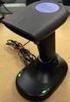 QuickScan QS6500/QS6500BT Product Reference Guide PSC Inc 959 Terry Street Eugene, Oregon 97402 Telephone: (541) 683-5700 Fax: (541) 345-7140 An Unpublished Work - All rights reserved. No part of the contents
NOTICE: respective owner. Note: Specification is subject to changes without. notice.
 0 NOTICE: This device complies with Part 15 of the FCC Rules. Operation shall be subject to the following two conditions: (1) This device may not cause harmful interface, and (2) This device must accept
HAND-HELD DEVICES II. Software Configuration Manual
 HAND-HELD DEVICES II Software Configuration Manual HAND-HELD DEVICES II SOFTWARE CONFIGURATION MANUAL DATALOGIC S.p.A. Via Candini 2 40012 - Lippo di Calderara di Reno Bologna - Italy Hand-Held Devices
Enter/Exit programming
 P/N: MUL-53247-02 Enter/Exit programming (This barcode is also found at back cover page.) Framed values are default values. All Rights Reserved This guide is designed for advanced settings of Hand Free
BI-300. Barcode configuration and commands Manual
 BI-300 Barcode configuration and commands Manual 1. Introduction This instruction manual is designed to set-up bar code scanner particularly to optimize the function of BI-300 bar code scanner. Terminal
CS4070 SCANNER PRODUCT REFERENCE GUIDE
 CS4070 SCANNER PRODUCT REFERENCE GUIDE CS4070 SCANNER PRODUCT REFERENCE GUIDE MN000762A01 Revision A August 2014 ii CS4070 Scanner Product Reference Guide No part of this publication may be reproduced
NLS-FR20 Series Fixed Mount Barcode Scanner. User Guide
 NLS-FR20 Series Fixed Mount Barcode Scanner User Guide Disclaimer 2015 Fujian Newland Auto-ID Tech. Co., Ltd. All rights reserved. Please read through the manual carefully before using the product and
LS6300 Lecteur de code-barres laser
 WWW.SYMCOD.COM Manuel LS6300 Lecteur de code-barres laser Version: 30/04/2013 Introduction Le lecteur laser Symcod LS6300 est une solution très abordable pour la gestion de vos opérations. Toujours à la
MS100 Bar Code Pen Reader
 MS100 Bar Code Pen Reader AdventureJan General Advisory Improper handling, storage, environmental influences and /or product modification can lead to problems during use. This is particularly true if repairs
METROLOGIC INSTRUMENTS, INC. IS4225 ScanGlove USB Addendum for the MetroSelect Single-Line Configuration Guide
 METROLOGIC INSTRUMENTS, INC. IS4225 ScanGlove USB Addendum for the MetroSelect Single-Line Configuration Guide Copyright 2005 by Metrologic Instruments, Inc. All rights reserved. No part of this work may
MD6 Series 2D Barcode Scanner
 MD6 Series 2D Barcode Scanner User Manual Version: MD6_UM_EN_V1.1.9 2 Warning: Ensure that the optional DC adapter works at +5V, especially for the RS-232 interface cable. NOTICE: 1. All software, including
1166 / 1266 Barcode Scanner
 1166 / 1266 Barcode Scanner Setup barcodes included. Version 3.03 Copyright 2005~2014 CIPHERLAB CO., LTD. All rights reserved The software contains proprietary information of CIPHERLAB CO., LTD.; it is
SG20T. Tethered Scanner. User s Guide
 SG20T Tethered Scanner User s Guide Intermec by Honeywell 6001 36th Ave.W. Everett, WA 98203 U.S.A. www.intermec.com The information contained herein is provided solely for the purpose of allowing customers
Quick Installation. A Series of Intelligent Bar Code Reader with NeuroFuzzy Decoding. Quick Installation
 Quick Installation A Series of Intelligent Bar Code Reader with NeuroFuzzy Decoding This chapter intends to get your new FuzzyScan scanner working with your existing system within minutes. General instructions
PowerScan 7000 2D Imager
 PowerScan 7000 2D Imager Product Reference Guide Datalogic Scanning, Inc. 959 Terry Street Eugene, Oregon 97402 Telephone: (541) 683-5700 Fax: (541) 345-7140 An Unpublished Work - All rights reserved.
DL910 SERIES. Instruction Manual
 DL910 SERIES Instruction Manual DL910 SERIES INSTRUCTION MANUAL ALL RIGHTS RESERVED Datalogic reserves the right to make modifications and improvements without prior notification. Datalogic shall not
Touch TD1100 Family General Purpose Corded Handheld Contact Imager Bar Code Reader
 Touch TD1100 Family General Purpose Corded Handheld Contact Imager Bar Code Reader Product Reference Guide Datalogic ADC, Inc. 959 Terry Street Eugene, Oregon 97402 USA Telephone: (541) 683-5700 Fax: (541)
QuickScan TM Lite QW2100
 QuickScan TM Lite QW2100 General Purpose Corded Handheld Linear Imager Bar Code Reader Product Reference Guide Datalogic ADC, Inc. 959 Terry Street Eugene, OR 97402 USA Telephone: (541) 683-5700 Fax: (541)
AN4128 Application note
 Application note Demonstration board for Bluetooth module class 1 SBT2632C1A.AT2 Introduction This document describes the STEVAL-SPBT4ATV3 demonstration board (dongle) for the Bluetooth class 1 SPBT2632C1A.AT2