
DS3508 Digital Scanner Product Reference Guide
|
|
|
- Lesley Reynolds
- 9 years ago
- Views:
Transcription
1 DS3508 Digital Scanner Product Reference Guide

2

3 DS3508 Digital Scanner Product Reference Guide 72E Revision A March 2011

4 ii DS3508 Product Reference Guide 2011 Motorola Solutions, Inc. All rights reserved. No part of this publication may be reproduced or used in any form, or by any electrical or mechanical means, without permission in writing from Motorola. This includes electronic or mechanical means, such as photocopying, recording, or information storage and retrieval systems. The material in this manual is subject to change without notice. The software is provided strictly on an as is basis. All software, including firmware, furnished to the user is on a licensed basis. Motorola grants to the user a non-transferable and non-exclusive license to use each software or firmware program delivered hereunder (licensed program). Except as noted below, such license may not be assigned, sublicensed, or otherwise transferred by the user without prior written consent of Motorola. No right to copy a licensed program in whole or in part is granted, except as permitted under copyright law. The user shall not modify, merge, or incorporate any form or portion of a licensed program with other program material, create a derivative work from a licensed program, or use a licensed program in a network without written permission from Motorola. The user agrees to maintain Motorola s copyright notice on the licensed programs delivered hereunder, and to include the same on any authorized copies it makes, in whole or in part. The user agrees not to decompile, disassemble, decode, or reverse engineer any licensed program delivered to the user or any portion thereof. Motorola reserves the right to make changes to any software or product to improve reliability, function, or design. Motorola does not assume any product liability arising out of, or in connection with, the application or use of any product, circuit, or application described herein. No license is granted, either expressly or by implication, estoppel, or otherwise under any Motorola, Inc., intellectual property rights. An implied license only exists for equipment, circuits, and subsystems contained in Motorola products. MOTOROLA, MOTO, MOTOROLA SOLUTIONS and the Stylized M Logo are trademarks or registered trademarks of Motorola Trademark Holding, LLC and are used under license. All other trademarks are the property of their respective owners. This media, or Motorola Product, may include Motorola Software, Commercial Third Party Software, and Publicly Available Software. The Motorola Software that may be included on this media, or included in the Motorola Product, is Copyright (c) by Motorola, Inc., and its use is subject to the licenses, terms and conditions of the agreement in force between the purchaser of the Motorola Product and Motorola, Inc. The Commercial Third Party Software that may be included on this media, or included in the Motorola Product, is subject to the licenses, terms and conditions of the agreement in force between the purchaser of the Motorola Product and Motorola, Inc., unless a separate Commercial Third Party Software License is included, in which case, your use of the Commercial Third Party Software will then be governed by the separate Commercial Third Party License. The Publicly Available Software that may be included on this media, or in the Motorola Product, is listed below. The use of the listed Publicly Available Software is subject to the licenses, terms and conditions of the agreement in force between the purchaser of the Motorola Product and Motorola, Inc., as well as, the terms and conditions of the license of each Publicly Available Software package. Copies of the licenses for the listed Publicly Available Software, as well as, all attributions, acknowledgements, and software information details, are included below. Motorola is required to reproduce the software licenses, acknowledgments and copyright notices as provided by the Authors and Owners, thus, all such information is provided in its native language form, without modification or translation. The Publicly Available Software in the list below is limited to the Publicly Available Software included by Motorola. The Publicly Available Software included by Commercial Third Party Software or Products, that is used in the Motorola Product, are disclosed in the Commercial Third Party Licenses, or via the respective Commercial Third Party Publicly Available Software Legal Notices. Publicly available software list: Name: Regular Expression Evaluator Version: 8.3 Description: Compiles and executes regular expressions Software Site: Source Code: No Source Distribution Obligations. Motorola will not provide nor distribute the Source Code for the Regular Expression Evaluator. License: BSD Style License 1992 Henry Spencer. 1992, 1993 The Regents of the University of California. All rights reserved. This code is derived from software contributed to Berkeley by Henry Spencer of the University of Toronto. Redistribution and use in source and binary forms, with or without modification, are permitted provided that the following conditions are met: 1. Redistributions of source code must retain the above copyright notice, this list of conditions and the following disclaimer. 2. Redistributions in binary form must reproduce the above copyright notice, this list of conditions and the following disclaimer in the documentation and/or other materials provided with the distribution.

5 iii 3. All advertising materials mentioning features or use of this software must display the following acknowledgement: This product includes software developed by the University of California, Berkeley and its contributors. 4. Neither the name of the University nor the names of its contributors may be used to endorse or promote products derived from this software without specific prior written permission. THIS SOFTWARE IS PROVIDED BY THE REGENTS AND CONTRIBUTORS ``AS IS'' AND ANY EXPRESS OR IMPLIED WARRANTIES, INCLUDING, BUT NOT LIMITED TO, THE IMPLIED WARRANTIES OF MERCHANTABILITY AND FITNESS FOR A PARTICULAR PURPOSE ARE DISCLAIMED. IN NO EVENT SHALL THE REGENTS OR CONTRIBUTORS BE LIABLE FOR ANY DIRECT, INDIRECT, INCIDENTAL, SPECIAL, EXEMPLARY, OR CONSEQUENTIAL DAMAGES (INCLUDING, BUT NOT LIMITED TO, PROCUREMENT OF SUBSTITUTE GOODS OR SERVICES; LOSS OF USE, DATA, OR PROFITS; OR BUSINESS INTERRUPTION) HOWEVER CAUSED AND ON ANY THEORY OF LIABILITY, WHETHER IN CONTRACT, STRICT LIABILITY, OR TORT (INCLUDING NEGLIGENCE OR OTHERWISE) ARISING IN ANY WAY OUT OF THE USE OF THIS SOFTWARE, EVEN IF ADVISED OF THE POSSIBILITY OF SUCH DAMAGE. Motorola Solutions, Inc. One Motorola Plaza Holtsville, New York Warranty For the complete Motorola Solutions hardware product warranty statement, go to: Revision History Changes to the original manual are listed below: Change Date Description -01 Rev A 09/2009 Initial release. -02 Rev A 11/2009 Update: - Presentation Mode Field of View bar codes - Supported baud rates for RS Rev A 02/2010 Add UID. Update DPM information. -04 Rev A 04/2010 Remove reference to Synapse (not supported); remove Regulatory information as the complete Regulatory requirements appear in the Quick Start Guide; update IEC definition in Glossary. -05 Rev A 03/2011 Add: Decode Pager Motor Duration, Fuzzy 1D Processing, PDF Prioritization, Prioritization Timeout, LCD Read Mode, CDC USB Com Port Emulation, Cute, PDF417, Data Matrix, QR Codes, Aztec/Aztec Rune, Micro PDF, Maxicode, Polling Interval, Quick Emulation, OCR, Coupon Report, Korean 3 of 5, Australian Post Format, Databar Limited Security Level. Update: Nixdorf Mode A and B columns, Inverse 1D defaults, Inverse Data Matrix defaults. Remove: Matrix 2 of 5 Redundancy.

6 iv DS3508 Product Reference Guide

7 v

8 vi DS3508 Product Reference Guide

9 Table of Contents Warranty... iii Revision History... iii About This Guide Introduction Configurations Chapter Descriptions Notational Conventions Related Documents Service Information Chapter 1: Getting Started Introduction Interfaces Unpacking Setting Up the Digital Scanner Installing the Interface Cable Removing the Interface Cable Connecting Power (if required) Configuring the Digital Scanner Accessories Required Accessories Optional Accessories Chapter 2: Scanning Introduction Beeper Definitions LED Definitions Scanning Presentation Mode Hand-Held Scanning

10 2 DS3508 Product Reference Guide DS3508-SR/HD/DP Hand-Held Scanning Aiming Imager Aiming Decode Ranges Chapter 3: Maintenance & Technical Specifications Introduction Maintenance Troubleshooting Technical Specifications Digital Scanner Signal Descriptions Chapter 4: User Preferences & Miscellaneous Digital Scanner Options Introduction Scanning Sequence Examples Errors While Scanning User Preferences/Miscellaneous Options Parameter Defaults User Preferences Set Default Parameter Parameter Bar Code Scanning Decode Pager Motor Enable Beep After Good Decode Beeper Volume Beeper Tone Beeper Duration Suppress Power-up Beeps Hands-Free Mode Presentation Performance Mode Digital Scanner Activity Modes Active Mode Idle Mode Sleep Mode Low Power Mode Time Delay to Presentation Idle Mode Time Delay to Presentation Sleep Mode Low Power Mode Time Delay to Low Power Mode Trigger Mode Fuzzy 1D Processing Picklist Mode PDF Prioritization PDF Prioritization Timeout DPM Scanning Continuous Bar Code Read Decode Session Timeout Timeout Between Decodes, Same Symbol Timeout Between Decodes, Different Symbols Hand-Held Decode Aiming Pattern

11 Table of Contents 3 Hands-Free Decode Aiming Pattern Presentation Mode Field of View LCD Read Mode Decoding Illumination (Hand-Held Mode only) Multicode Mode Multicode Expression Multicode Expression Syntax Notes Multicode Mode Concatenation Multicode Concatenation Symbology Multicode Troubleshooting Troubleshooting Multicode Expression Programming Troubleshooting Multicode Mode Scanning and Decoding Miscellaneous Scanner Parameters Transmit Code ID Character Prefix/Suffix Values Scan Data Transmission Format FN1 Substitution Values Scan Data Transmission Format (continued) Transmit No Read Message UID Parsing UID Parsing Output UID Error Mode Options Sample ADF Rule for UID UID Sample Bar Codes Chapter 5: Imaging Preferences Introduction Scanning Sequence Examples Errors While Scanning Imaging Preferences Parameter Defaults Imaging Preferences Operational Modes Decode Mode Snapshot Mode Image Capture Illumination Gain/Exposure Priority for Snapshot Mode Snapshot Mode Timeout Snapshot Aiming Pattern Image Cropping Crop to Pixel Addresses Image Size (Number of Pixels) Image Brightness (Target White) JPEG Image Options JPEG Target File Size JPEG Quality and Size Value Image Enhancement Image File Format Selector Bits Per Pixel

12 4 DS3508 Product Reference Guide Signature Capture Output File Format Signature Capture File Format Selector Signature Capture Bits Per Pixel Signature Capture Width Signature Capture Height Signature Capture JPEG Quality Video View Finder Video View Finder Image Size Chapter 6: USB Interface Introduction Connecting a USB Interface USB Parameter Defaults USB Host Parameters USB Device Type Symbol Native API (SNAPI) Status Handshaking USB Country Keyboard Types - Country Codes USB Keystroke Delay USB CAPS Lock Override USB Ignore Unknown Characters Emulate Keypad Emulate Keypad with Leading Zero USB Keyboard FN 1 Substitution Function Key Mapping Simulated Caps Lock Convert Case USB Static CDC USB Polling Interval Quick Keypad Emulation ASCII Character Set for USB Chapter 7: RS-232 Interface Introduction Connecting an RS-232 Interface RS-232 Parameter Defaults RS-232 Host Parameters RS-232 Host Types Baud Rate Parity Data Bits Stop Bit Select Check Receive Errors Hardware Handshaking Software Handshaking Host Serial Response Time-out RTS Line State

13 Table of Contents 5 Beep on <BEL> Intercharacter Delay Nixdorf Beep/LED Options Ignore Unknown Characters ASCII Character Set for RS Chapter 8: IBM 468X / 469X Interface Introduction Connecting to an IBM 468X/469X Host IBM Parameter Defaults IBM 468X/469X Host Parameters Port Address Convert Unknown to Code Chapter 9: Keyboard Wedge Interface Introduction Connecting a Keyboard Wedge Interface Keyboard Wedge Parameter Defaults Keyboard Wedge Host Parameters Keyboard Wedge Host Types Keyboard Wedge Country Types - Country Codes Ignore Unknown Characters Keystroke Delay Intra-Keystroke Delay Alternate Numeric Keypad Emulation Caps Lock On Caps Lock Override Convert Wedge Data Function Key Mapping FN1 Substitution Send Make and Break Keyboard Maps ASCII Character Set for Keyboard Wedge Introduction Chapter 10: OCR Programming OCR Parameter Defaults OCR Programming Parameters Enable/Disable OCR-A OCR-A Variant Enable/Disable OCR-B OCR-B Variant Enable/Disable MICR E13B Enable/Disable US Currency Serial Number OCR Orientation OCR Lines OCR Minimum Characters

14 6 DS3508 Product Reference Guide OCR Maximum Characters OCR Security Level OCR Subset OCR Quiet Zone OCR Bright Illumination OCR Template Required Digit (9) Required Alpha (A) Optional Alphanumeric (1) Optional Alpha (2) Alpha or Digit (3) Any Including Space & Reject (4) Any except Space & Reject (5) Optional Digit (7) Digit or Fill (8) Alpha or Fill (F) Optional Space ( ) Optional Small Special (.) Other Template Operators Repeat Previous (R) Template Examples OCR Check Digit Modulus OCR Check Digit Multiplier OCR Check Digit Validation None Product Add Left to Right Product Add Right to Left Digit Add Left to Right Digit Add Right to Left Product Add Right to Left Simple Remainder Digit Add Right To Left Simple Remainder Health Industry - HIBCC Chapter 11: Symbologies Introduction Scanning Sequence Examples Errors While Scanning Symbology Parameter Defaults UPC/EAN Enable/Disable UPC-A Enable/Disable UPC-E Enable/Disable UPC-E Enable/Disable EAN-8/JAN Enable/Disable EAN-13/JAN Enable/Disable Bookland EAN Decode UPC/EAN/JAN Supplementals User-Programmable Supplementals UPC/EAN/JAN Supplemental Redundancy UPC/EAN/JAN Supplemental AIM ID Format

15 Transmit UPC-A Check Digit Transmit UPC-E Check Digit Transmit UPC-E1 Check Digit UPC-A Preamble UPC-E Preamble UPC-E1 Preamble Convert UPC-E to UPC-A Convert UPC-E1 to UPC-A EAN-8/JAN-8 Extend Bookland ISBN Format UCC Coupon Extended Code Coupon Report ISSN EAN Code Enable/Disable Code Set Lengths for Code Enable/Disable GS1-128 (formerly UCC/EAN-128) Enable/Disable ISBT ISBT Concatenation Check ISBT Table ISBT Concatenation Redundancy Code Enable/Disable Code Enable/Disable Trioptic Code Convert Code 39 to Code Code 32 Prefix Set Lengths for Code Code 39 Check Digit Verification Transmit Code 39 Check Digit Code 39 Full ASCII Conversion Code 39 Buffering - Scan & Store Buffer Data Clear Transmission Buffer Transmit Buffer Overfilling Transmission Buffer Attempt to Transmit an Empty Buffer Code Enable/Disable Code Set Lengths for Code Code Set Lengths for Code Code 11 Check Digit Verification Transmit Code 11 Check Digits Interleaved 2 of 5 (ITF) Enable/Disable Interleaved 2 of Set Lengths for Interleaved 2 of I 2 of 5 Check Digit Verification Transmit I 2 of 5 Check Digit Convert I 2 of 5 to EAN Discrete 2 of 5 (DTF) Table of Contents 7

16 8 DS3508 Product Reference Guide Enable/Disable Discrete 2 of Set Lengths for Discrete 2 of Codabar (NW - 7) Enable/Disable Codabar Set Lengths for Codabar CLSI Editing NOTIS Editing MSI Enable/Disable MSI Set Lengths for MSI MSI Check Digits Transmit MSI Check Digit(s) MSI Check Digit Algorithm Chinese 2 of Enable/Disable Chinese 2 of Matrix 2 of Enable/Disable Matrix 2 of Set Lengths for Matrix 2 of Matrix 2 of 5 Check Digit Transmit Matrix 2 of 5 Check Digit Korean 3 of Enable/Disable Korean 3 of Inverse 1D Postal Codes US Postnet US Planet Transmit US Postal Check Digit UK Postal Transmit UK Postal Check Digit Japan Postal Australian Postal Australia Post Format Netherlands KIX Code USPS 4CB/One Code/Intelligent Mail UPU FICS Postal GS1 DataBar GS1 DataBar GS1 DataBar Limited GS1 DataBar Limited Security Level GS1 DataBar Expanded Convert GS1 DataBar to UPC/EAN Composite Composite CC-C Composite CC-A/B Composite TLC UPC Composite Mode Composite Beep Mode GS1-128 Emulation Mode for UCC/EAN Composite Codes D Symbologies Enable/Disable PDF

17 Table of Contents 9 Enable/Disable MicroPDF Code 128 Emulation Data Matrix Data Matrix Inverse Maxicode QR Code QR Inverse MicroQR Aztec Aztec Inverse Redundancy Level Redundancy Level Redundancy Level Redundancy Level Redundancy Level Security Level Intercharacter Gap Size Report Version Macro PDF Features Flush Macro Buffer Abort Macro PDF Entry Chapter 12: 123Scan2 Introduction Communication with 123Scan Scan2 Requirements More Information Chapter 13: Advanced Data Formatting Introduction Appendix A: Standard Default Parameters Appendix B: Programming Reference Symbol Code Identifiers... B-1 AIM Code Identifiers... B-3 Appendix C: Sample Bar Codes Code C-1 UPC/EAN... C-1 UPC-A, 100%... C-1 EAN-13, 100%... C-2 Code C-2 Interleaved 2 of 5... C-2 GS1 DataBar C-3

18 10 DS3508 Product Reference Guide PDF C-3 Data Matrix... C-3 Maxicode... C-4 QR Code... C-4 US Postnet... C-4 UK Postal... C-4 Appendix D: Numeric Bar Codes Numeric Bar Codes... D-1 Cancel... D-2 Appendix E: ASCII Character Sets Appendix F: Signature Capture Code Introduction... F-1 Code Structure... F-1 Signature Capture Area... F-1 CapCode Pattern Structure... F-2 Start / Stop Patterns... F-2 Dimensions... F-3 Data Format... F-3 Additional Capabilities... F-4 Signature Boxes... F-4 Glossary Tell Us What You Think...

19 About This Guide Introduction The DS3508 Product Reference Guide provides general instructions for setting up, operating, maintaining, and troubleshooting the DS3508 digital scanner. Configurations This guide includes the following configurations: DS3508-SR20005R DS3508 digital scanner, standard range DS3508-HD20005R DS3508 digital scanner, high density focus DS3508-DP20005R DS3508 digital scanner, DPM.

20 12 DS3508 Product Reference Guide Chapter Descriptions Topics covered in this guide are as follows: Chapter 1, Getting Started provides a product overview, unpacking instructions, and cable connection information. Chapter 2, Scanning describes parts of the digital scanner, beeper and LED definitions, and how to use the scanner in hand-held and hands-free (presentation) modes. Chapter 3, Maintenance & Technical Specifications provides information on how to care for the digital scanner, troubleshooting, and technical specifications. Chapter 4, User Preferences & Miscellaneous Digital Scanner Options describes features frequently used to customize how data transmits to the host device and programming bar codes for selecting user preference features for the digital scanner. Chapter 5, Imaging Preferences provides imaging preference features and programming bar codes for selecting these features. Chapter 6, USB Interface describes how to set up the digital scanner with a USB host. Chapter 7, RS-232 Interface describes how to set up the digital scanner with an RS-232 host, such as point-of-sale devices, host computers, or other devices with an available RS-232 port. Chapter 8, IBM 468X / 469X Interface describes how to set up the digital scanner with IBM 468X/469X POS systems. Chapter 9, Keyboard Wedge Interface describes how to set up a Keyboard Wedge interface with the digital scanner. Chapter 10, OCR Programming describes how to set up the digital scanner for OCR programming. Chapter 11, Symbologies describes all symbology features and provides programming bar codes for selecting these features for the digital scanner. Chapter 12, 123Scan2 (PC based scanner configuration tool) enables rapid and easy customized setup of Motorola Scanners. Chapter 13, Advanced Data Formatting briefly describes ADF, a means of customizing data before transmission to the host device, and includes a reference to the ADF Programmer Guide. Appendix A, Standard Default Parameters provides a table of all host devices and miscellaneous scanner defaults. Appendix B, Programming Reference provides a table of AIM code identifiers, ASCII character conversions, and keyboard maps. Appendix C, Sample Bar Codes includes sample bar codes of various code types. Appendix D, Numeric Bar Codes includes the numeric bar codes to scan for parameters requiring specific numeric values. Appendix E, ASCII Character Sets provides ASCII character value tables. Appendix F, Signature Capture Code provides information on CapCode, a signature capture code that encloses a signature area on a document and allows a scanner to capture a signature.

21 About This Guide 13 Notational Conventions The following conventions are used in this document: Italics are used to highlight the following: Chapters and sections in this and related documents Dialog box, window and screen names Drop-down list and list box names Check box and radio button names Bold text is used to highlight the following: Key names on a keypad Button names on a screen. bullets ( ) indicate: Action items Lists of alternatives Lists of required steps that are not necessarily sequential Sequential lists (e.g., those that describe step-by-step procedures) appear as numbered lists. Throughout the programming bar code menus, asterisks (*) are used to denote default parameter settings. * Indicates Default *Baud Rate 9600 Feature/Option Related Documents DS3508 Quick Start Guide, p/n xx - provides general information for getting started with the DS3508 digital scanner, and includes basic set up and operation instructions. For the latest version of all guides, go to:
22 14 DS3508 Product Reference Guide Service Information If you have a problem with your equipment, contact Motorola Enterprise Mobility support for your region. Contact information is available at: When contacting Enterprise Mobility support, please have the following information available: Serial number of the unit Model number or product name Software type and version number Motorola responds to calls by , telephone or fax within the time limits set forth in service agreements. If your problem cannot be solved by Motorola Enterprise Mobility Support, you may need to return your equipment for servicing and will be given specific directions. Motorola is not responsible for any damages incurred during shipment if the approved shipping container is not used. Shipping the units improperly can possibly void the warranty. If you purchased your Enterprise Mobility business product from a Motorola business partner, please contact that business partner for support.
23 Chapter 1 Getting Started Introduction The DS3508 combines superior 1D and 2D omnidirectional bar code scanning and sub-second image capture and transfer with a light-weight, hands-free/hand-held design. The digital scanner accommodates both hands-free use (in the scan stand) and hand-held use. Whether in hands-free (presentation) or hand-held mode, the digital scanner ensures comfort and ease of use for extended periods of time. Figure 1-1 DS3508 Digital Scanner
24 1-2 DS3508 Product Reference Guide Interfaces The DS3508 digital scanner supports: USB connection to a host. The digital scanner autodetects a USB host and defaults to the HID keyboard interface type. Select other USB interface types by scanning programming bar code menus.this interface supports the following international keyboards (for Windows environment): North America, German, French, French Canadian, Spanish, Italian, Swedish, UK English, Portuguese-Brazilian, and Japanese. Standard RS-232 connection to a host. Scan bar code menus to set up communication of the digital scanner with the host. Connection to IBM 468X/469X hosts. Scan bar code menus to set up communication of the digital scanner with the IBM terminal. Keyboard Wedge connection to a host. The host interprets scanned data as keystrokes. Scan bar code menus to set up communication of the digital scanner with the host. This interface supports the following international keyboards (for Windows environment): North America, German, French, French Canadian, French Belgian, Spanish, Italian, Swedish, UK English, Portuguese-Brazilian, and Japanese. Unpacking Remove the digital scanner from its packing and inspect it for damage. If the scanner was damaged in transit, contact Motorola Enterprise Mobility Support. See page 14 for contact information. KEEP THE PACKING. It is the approved shipping container; use this to return the equipment for servicing.
25 Getting Started 1-3 Setting Up the Digital Scanner Installing the Interface Cable NOTE Different hosts require different cables. The connectors illustrated in each host chapter are examples only. Connectors vary from those illustrated, but the steps to connect the digital scanner are the same. 1. Loosen the two screws on the cable clamp at the bottom of the scanner and gently pull the clamp away from the bottom of the scanner. Figure 1-2 Removing the Cable Clamp 2. Open the clamp and plug the interface cable modular connector into the cable interface port on the bottom of the scanner handle. Figure 1-3 Inserting the Interface Cable 3. Gently tug the cable to ensure the connector is properly secured.
26 1-4 DS3508 Product Reference Guide 4. Close the clamp, push it back into place and tighten the screws on the clamp to secure the cable into the bottom of the scanner. Figure 1-4 Closing the Cable Clamp 5. Connect the other end of the interface cable to the host (see the specific host chapter for information on host connections). Removing the Interface Cable 1. Loosen the two screws on the cable clamp at the bottom of the scanner and gently pull the clamp away from the bottom of the scanner. 2. Open the clamp and unplug the interface cable modular connector from the cable interface port on the bottom of the scanner handle. Carefully slide out the cable. 3. Follow the steps for Installing the Interface Cable on page 1-3 to connect a new cable. Connecting Power (if required) If the host does not provide power to the digital scanner, connect an external power supply: 1. Connect the interface cable to the base of the digital scanner, as described in Installing the Interface Cable on page Connect the other end of the interface cable to the host (refer to the host manual to locate the correct port). 3. Plug the power supply into the power jack on the interface cable. Plug the other end of the power supply into an AC outlet. Configuring the Digital Scanner To configure the digital scanner use the bar codes included in this manual. See Chapter 4, User Preferences & Miscellaneous Digital Scanner Options and Chapter 5, Imaging Preferences for information about programming the digital scanner using bar code menus. Also see each host-specific chapter to set up connection to a specific host type.
27 Getting Started 1-5 Accessories Required Accessories The digital scanner requires an interface cable and may require a power supply. These items can be purchased from Motorola. Optional Accessories Contact Motorola to purchase the optional accessories intable 1-1 for the DS3508. Table 1-1 Optional Accessories Accessory Scanner Belt Holster R Part Number Intellistand for DS R (see page 2-5). Desk Top Holder Multi-Mount Stand R R Tool Balancer
28 1-6 DS3508 Product Reference Guide
29 Chapter 2 Scanning Introduction This chapter provides beeper and LED definitions, techniques involved in scanning bar codes, general instructions and tips about scanning, and decode zone diagrams. Tether Plate Scan Window LED Indicators Scan Trigger Figure 2-1 Parts
30 2-2 DS3508 Product Reference Guide Beeper Definitions The digital scanner issues different beep sequences and patterns to indicate status. Table 2-1 defines beep sequences that occur during both normal scanning and while programming the digital scanner. Table 2-1 Beeper Definitions Beeper Sequence Indication Standard Use Low/medium/high beeps Short high beep Power up. A bar code symbol was decoded (if decode beeper is enabled). 4 long low beeps Transmission error. 5 low beeps Conversion or format error. Low/low/low/extra low beeps High beep RS-232 receive error. The digital scanner detected a <BEL> character over RS-232. Image Capture Low beep High/low beeps Snapshot mode started or completed. Snapshot mode timed out. Parameter Menu Scanning Low/high beeps High/low beeps High/low/high/low beeps Input error; incorrect bar code, programming sequence, or Cancel scanned. Keyboard parameter selected. Enter value using numeric bar codes. Successful program exit with change in parameter setting. Code 39 Buffering High/low beeps New Code 39 data was entered into the buffer. 3 long high beeps Code 39 buffer is full. High/low/high beeps Low/high/low beeps Low/high beeps The Code 39 buffer was erased. The Code 39 buffer was erased or there was an attempt to clear or transmit an empty buffer. A successful transmission of buffered data. Macro PDF 2 low beeps MPDF sequence buffered. 2 long low beeps File ID error. A bar code not in the current MPDF sequence was scanned. 3 long low beeps Out of memory. There is not enough buffer space to store the current MPDF symbol.
31 Scanning 2-3 Table 2-1 Beeper Definitions (Continued) Beeper Sequence Indication 4 long low beeps Bad symbology. Scanned a 1D or 2D bar code in a MPDF sequence, a duplicate MPDF label, a label in an incorrect order, or trying to transmit an empty or illegal MPDF field. 5 long low beeps Flushing MPDF buffer. Fast warble beep Low/high beeps Aborting MPDF sequence. Flushing an already empty MPDF buffer. Host Specific USB only 4 short high beeps The digital scanner has not completed initialization. Wait several seconds and scan again. Low/medium/high beeps upon scanning a USB device type Low/medium/high beeps occur more than once Communication with the host must be established before the digital scanner can operate at the highest power level. The USB host can put the digital scanner in a state where power to the scanner is cycled on and off more than once. This is normal and usually happens when the PC cold boots. RS-232 only 1 short high beep A <BEL> character is received and Beep on <BEL> is enabled.
32 2-4 DS3508 Product Reference Guide LED Definitions In addition to beep sequences, the digital scanner uses a two-color LED to indicate status. Table 2-2 defines LED colors that display during scanning. Table 2-2 Standard LED Definitions LED Indication Hand-Held Scanning Standard Use Green Red Off A bar code was successfully decoded. Transmission error, conversion or format error, or RS-232 receive error. No power is applied to the digital scanner, or the scanner is on and ready to scan. Presentation (Hands-Free) Scanning Standard Use Green Momentarily Off Red Off The scanner is on and ready to scan. A bar code was successfully decoded. Transmission error, conversion or format error, or RS-232 receive error. No power is applied to the digital scanner, or the scanner is in low power mode. Parameter Programming Green Red Number expected. Enter value using numeric bar codes. Successful program exit with change in parameter setting. Input error: incorrect bar code, programming sequence, or Cancel scanned. ADF Programming Green Blinking Green Green after Blinking Red Enter another digit. Add leading zeros to the front if necessary. Enter another alphabetic character or scan the End of Message bar code. All criteria or actions cleared for current rule, continue entering rule. Delete last saved rule. The current rule is left intact. All rules deleted. Enter another criterion or action, or scan the Save Rule bar code. Rule saved. Rule entry mode exited. Cancel rule entry. Rule entry mode exited because of an error or the user asked to exit rule entry. Out of rule memory. Erase some existing rules, then try to save rule again. Entry error, wrong bar code scanned, or criteria/action list is too long for a rule. Re-enter criterion or action.
33 Scanning 2-5 Scanning The DS3508 has a built-in, light-weight stand to easily accommodate both hands-free (presentation) and hand-held scanning. NOTE Certain areas of the digital scanner s handle may feel warm at times. This is normal. Presentation Mode The optional Intellistand adds greater flexibility to scanning operation. When you place the digital scanner in the stand s cup, the scanner s built-in sensor places the scanner in presentation (hands-free) mode. When you remove the digital scanner from the stand it operates in its normal hand-held mode. Adjust angle of scanner cup Scanner Cup Adjust height of IntelliStand Figure 2-2 Scanning in Hands-Free Mode To operate the digital scanner in the Intellistand: 1. Connect the digital scanner to the host (see the appropriate host chapter for information on host connections). 2. Insert the digital scanner in the Intellistand by placing the front of the digital scanner into the stand s cup (see Figure 2-2). 3. Use the Intellistand s adjustment knobs to adjust the height and angle of the digital scanner. 4. Center the symbol in the aiming pattern. 5. Upon successful decode, the digital scanner beeps and the LED turns green. For more information on beeper and LED definitions, see Table 2-1 on page 2-2 and Table 2-2 on page 2-4.
34 2-6 DS3508 Product Reference Guide Hand-Held Scanning DS3508-SR/HD/DP Hand-Held Scanning Aim the digital scanner at a bar code and pull the trigger to decode. Figure 2-3 Scanning in Hand-Held Mode - DS3508-SR/HD/DP Aiming Imager Aiming When scanning, the digital scanner projects a red laser aiming pattern which allows positioning the bar code within its field of view. See Decode Ranges on page 2-8 for the proper distance to achieve between the digital scanner and a bar code. Figure 2-4 Imager Aiming Pattern
35 Scanning 2-7 If necessary, the digital scanner turns on its red LEDs to illuminate the target bar code.to scan a bar code, center the symbol in any orientation within the aiming pattern. Be sure the entire symbol is within the rectangular area formed by the cross pattern. 1D bar code symbol 2D bar code symbol 2D dot peen DPM symbol Aiming Pattern Figure 2-5 Scanning Orientation with Imager Aiming Pattern NOTE Scanning Direct Part Mark (DPM) bar codes with the DS3508-DP20005R digital scanner: Due to the reflective nature of some surfaces used with DPM bar codes (see Figure 2-5), it may be necessary to tilt the scanner at an angle relative to the target (Motorola recommends degrees). For example, when scanning a 15 mil dot peen Datamatrix bar code marked on an aluminum surface with the DS3508-DP20005R, present the target between two and three inches from the nose of the scanner, and tilt the scanner at a 30 degree angle. When scanning standard (non-dpm) bar codes with any configuration of the DS3508 digital scanner, follow the standard aiming instructions described in Aiming on page 2-6. The digital scanner can also read a bar code presented within the aiming pattern but not centered. The top examples in Figure 2-6 show acceptable aiming options, while the bottom examples can not be decoded Figure 2-6 Acceptable and Incorrect Aiming
36 2-8 DS3508 Product Reference Guide Decode Ranges Table 2-3 DS3508-SR/HD/DS3508-DP Depth of Field Symbol Density DS3508-SR DS3508-HD/DS3508-DP Code 39-3 mil N/A 1.10 in in cm cm Code 39-4 mil Code 39-5 mil Code mil Code mil 2.60 in in cm cm 1.00 in in cm cm Contact in. Contact cm 1.00 in in cm cm Contact in. Contact cm Contact in. Contact cm Contact in. Contact cm 1.10 in in cm cm 100% UPC - 13 mil 0.90 in in cm cm 0.80 in in cm cm PDF mil PDF mil PDF mil 2.70 in in cm cm 0.40 in in cm cm 3.30 in in cm cm Contact in. Contact Contact in. Contact cm 3.20 in in cm cm Data Matrix - 4 mil N/A 1.00 in in cm cm Data Matrix - 5 mil N/A 0.40 in in cm cm Data Matrix mil Data Matrix - 10 mil 2.10 in in cm cm 1.10 in in cm cm Contact in. Contact cm Contact in. Contact cm QR Code - 4 mil N/A 1.10 in in cm cm QR Code - 5 mil N/A in cm cm QR Code mil N/A Contact in. Contact cm QR Code - 10 mil 1.50 in in cm cm Contact in. Contact cm
37 Chapter 3 Maintenance & Technical Specifications Introduction This chapter provides suggested digital scanner maintenance, troubleshooting, technical specifications, and signal descriptions (pinouts). Maintenance Cleaning the scan window is the only maintenance required. A dirty window can affect scanning accuracy. Do not allow abrasive material to touch the window. Remove any dirt particles with a damp cloth. Wipe the window using a tissue moistened with ammonia/water. Do not spray water or other cleaning liquids directly into the window.
38 3-2 DS3508 Product Reference Guide Troubleshooting Table 3-1 Troubleshooting Problem Possible Causes Possible Solutions The aiming pattern does not appear when pressing the trigger. Digital scanner emits short low/short medium/short high beep sequence (power-up beep sequence) more than once. Digital scanner emits aiming pattern, but does not decode the bar code. Digital scanner emits 4 short high beeps during decode attempt. No power to the digital scanner. Incorrect host interface cable is used. Interface/power cables are loose. Digital scanner is disabled. If using RS-232 Nixdorf B mode, CTS is not asserted. Aiming pattern is disabled. The USB bus may put the digital scanner in a state where power to the scanner is cycled on and off more than once. Digital scanner is not programmed for the correct bar code type. Bar code symbol is unreadable. The symbol is not completely inside aiming pattern. Digital scanner has not completed USB initialization. If the configuration requires a power supply, re-connect the power supply. Connect the correct host interface cable. Re-connect cables. For IBM 468x and USB IBM hand-held, IBM table top, and OPOS modes, enable the digital scanner via the host interface. Otherwise, see the technical person in charge of scanning. Assert CTS line. Enable the aiming pattern. See Hand-Held Decode Aiming Pattern on page Normal during host reset. Program the digital scanner to read that type of bar code. See Chapter 11, Symbologies. Scan test symbols of the same bar code type to determine if the bar code is defaced. Move the symbol completely within the aiming pattern. Wait several seconds and scan again.
39 Maintenance & Technical Specifications 3-3 Table 3-1 Troubleshooting (Continued) Problem Possible Causes Possible Solutions Digital scanner decodes bar code, but does not transmit the data to the host. Host displays scanned data incorrectly. Digital scanner emits high/high/high/low beeps when not in use. Digital scanner emits low/high beeps during programming. Digital scanner emits low/high/low/high beeps during programming. Digital scanner is not programmed for the correct host type. Interface cable is loose. If the digital scanner emits 4 long low beeps, a transmission error occurred. If the digital scanner emits 5 low beeps, a conversion or format error occurred. If the digital scanner emits low/high/low beeps, it detected an invalid ADF rule. If the digital scanner emits high/low beeps, the scanner is buffering Code 39 data. Digital scanner is not programmed to work with the host. RS-232 receive error. Input error or Cancel bar code was scanned. Out of ADF parameter storage space. Scan the appropriate host type programming bar code. See the chapter corresponding to the host type. Re-connect the cable. Set the scanner's communication parameters to match the host's setting. Configure the digital scanner's conversion parameters properly. Program the correct ADF rules. Refer to the Advanced Data Formatting Programmer Guide. Normal scanning a Code 39 bar code and the Code 39 Buffering option is enabled. Scan the appropriate host type programming bar code. For RS-232, set the digital scanner's communication parameters to match the host's settings. For a Keyboard Wedge configuration, program the system for the correct keyboard type, and turn off the CAPS LOCK key. Program the proper editing options (e.g., UPC-E to UPC-A Conversion). Normal during host reset. Otherwise, set the digital scanner's RS-232 parity to match the host setting. Scan the correct numeric bar codes within range for the parameter programmed. Erase all rules and re-program with shorter rules.
40 3-4 DS3508 Product Reference Guide Table 3-1 Troubleshooting (Continued) Problem Possible Causes Possible Solutions Digital scanner emits low/high/low beeps. Clearing Code 39 buffer. Normal when scanning the Code 39 Buffering Clear Buffer bar code or upon attempt to transmit an empty Code 39 buffer. Digital scanner emits a power-up beep after changing USB host type. Digital scanner emits one high beep when not in use. The USB bus re-established power to the digital scanner. In RS-232 mode, a <BEL> character was received and Beep on <BEL> option is enabled. Normal when changing USB host type. Normal when Beep on <BEL> is enabled and the digital scanner is in RS-232 mode. NOTE If after performing these checks the digital scanner still experiences problems, contact the distributor or call Motorola Enterprise Mobility Support. See page 14 for the telephone numbers.
41 Maintenance & Technical Specifications 3-5 Technical Specifications Table 3-2 Technical Specifications Item Description Physical Characteristics Dimensions Weight (without cable) Voltage and Current 7.34 in. H x 4.82 in. W x 2.93 in. D cm H x cm W x 7.43 cm D oz. (336 gm) 5 volts ±10%, 330mA Performance Characteristics Light Source Imager Field of View Aiming pattern: 650nm visible laser diode Illumination: 630nm LED Standard Range Focus: 39.6 H x 25.7 V High Density Focus: 38.4 H x 24.9 V Roll/Pitch/Yaw ±360, ±60, ±60 Motion Tolerance Programmable up to 100 in./254 cm/sec. when in presentation mode (Horizontal Read Rate) Symbology Decode Capability 1D PDF417 (and variants) 2D Postal DPM Marks (DPM unit only) IUID Support Nominal Working Range (Handheld) UPC/EAN (UPCA/UPCE/UPCE1/EAN-8/EAN-13/ JAN-8/JAN-13 plus supplementals, ISBN (Bookland), ISSN, Coupon Code), Code 39 (Standard, Full ASCII, Trioptic), Code 128 (Standard, Full ASCII, UCC/EAN-128, ISBT-128 Concatenated), Code 93, Codabar/NW7,Code 11 (Standard, Matrix 2 of 5), MSI Plessey, I 2 of 5 (Interleaved 2 of 5 / ITF, Discrete 2 of 5, IATA, Chinese 2 of 5), GS1 DataBar (Omnidirectional, Truncated, Stacked, Stacked Omnidirectional, Limited, Expanded, Expanded Stacked, Inverse), Base 32 (Italian Pharmacode) PDF417 (Standard, Macro), MicroPDF417 (Standard, Macro), Composite Codes (CC-A, CC-B, CC-C) TLC-39, Aztec (Standard, Inverse), MaxiCode, DataMatrix/ECC 200 (Standard, Inverse), QR Code (Standard, Inverse, Micro) U.S. Postnet and Planet, U.K. Post, Japan Post, Australian Post, Netherlands KIX Code, Royal Mail 4 State Customer, UPU FICS 4 State Postal, USPS 4CB Datamatrix marks applied by dot-peening. All supported barcode types listed above marked by laser etching, chemical etching, ink marking, molding, stamping or casting methods on surfaces such as including metal, plastic, rubber or glass Supports IUID parsing. The ability to read and separate IUID fields per application requirements See Decode Ranges on page 2-8.
42 3-6 DS3508 Product Reference Guide Table 3-2 Technical Specifications (Continued) Item Interfaces Supported Description USB, RS-232, RS-485 (IBM 46xx Protocols), Keyboard Wedge User Environment Operating Temperature -4 to 122 F (-20 to 50 C) Storage Temperature -40 to 140 F (-40 to 60 C) Humidity Drop Specifications 5% to 95% relative humidity, non-condensing Unit functions normally after repeated 6.5 ft. (2 m) drops to concrete Ambient Light Immunity Incandescent: 150 ft. candles (1,600 LUX) Sunlight: 8,000 ft. candles (86,000 LUX) Fluorescent: 150 ft. candles (1,600 LUX) Mercury Vapor: 150 ft. candles (1,600 LUX) Sodium Vapor: 150 ft. candles (1,600 LUX) Immune to direct exposure to normal office and factory lighting conditions, as well as direct exposure to sunlight Electrostatic Discharge Conforms to 20 kv air discharge and 8 kv of contact discharge
43 Maintenance & Technical Specifications 3-7 Digital Scanner Signal Descriptions Bottom of scanner Cable interface port PIN 10 PIN 1 Interface cable modular connector Figure 3-1 Digital Scanner Cable Pinouts
44 3-8 DS3508 Product Reference Guide The signal descriptions in Table 3-3 apply to the connector on the digital scanner and are for reference only. Table 3-3 Digital Scanner Signal Pin-outs Pin IBM RS-232 Keyboard Wedge USB 1 Reserved Reserved Reserved Jump to Pin 6 2 Power Power Power Power 3 Ground Ground Ground Ground 4 IBM_A(+) TxD KeyClock Reserved 5 Reserved RxD TermData D + 6 IBM_B(-) RTS KeyData Jump to Pin 1 7 Reserved CTS TermClock D - 8 Reserved Reserved Reserved Reserved 9 Reserved Reserved Reserved Reserved 10 Reserved Reserved Reserved Reserved
45 Chapter 4 User Preferences & Miscellaneous Digital Scanner Options Introduction You can program the digital scanner to perform various functions, or activate different features. This chapter describes each user preference feature and provides programming bar codes for selecting these features. The digital scanner ships with the settings shown in Table 4-1 on page 4-2 (also see Appendix A, Standard Default Parameters for all host device and miscellaneous defaults). If the default values suit requirements, programming is not necessary. To set feature values, scan a single bar code or a short bar code sequence. The settings are stored in non-volatile memory and are preserved even when the digital scanner is powered down. NOTE Most computer monitors allow scanning the bar codes directly on the screen (when using the imaging engine). When scanning from the screen, be sure to set the document magnification to a level where you can see the bar code clearly, and bars and/or spaces are not merging. If not using a USB cable, select a host type (see each host chapter for specific host information) after the power-up beeps sound. This is only necessary upon the first power-up when connected to a new host. To return all features to default values, scan the Set Default Parameter on page 4-5. Throughout the programming bar code menus, asterisks indicate (*)default values. * Indicates Default *High Volume (00h) Feature/Option Option Hex Value
46 4-2 DS3508 Product Reference Guide Scanning Sequence Examples In most cases, scanning one bar code sets the parameter value. For example, to set the beeper tone to high, scan the High Frequency (beeper tone) bar code listed under Beeper Tone on page The digital scanner issues a fast warble beep and the LED turns green, signifying a successful parameter entry. Other parameters, such as Serial Response Time-Out or Data Transmission Formats, require scanning several bar codes. See these parameter descriptions for this procedure. Errors While Scanning Unless otherwise specified, to correct an error during a scanning sequence, just re-scan the correct parameter. User Preferences/Miscellaneous Options Parameter Defaults Table 4-1 lists defaults for user preferences parameters. To change the default values, scan the appropriate bar codes in this guide. These new values replace the standard default values in memory. To recall the default parameter values, scan the Set Default Parameter on page 4-5. NOTE See Appendix A, Standard Default Parameters for all user preferences, hosts, symbologies, and miscellaneous default parameters. Table 4-1 User Preferences Parameter Defaults Parameter Parameter Number Default Page Number User Preferences Set Default Parameter Set Defaults 4-5 Parameter Bar Code Scanning ECh Enable 4-6 Decode Pager Motor F1h 65h Enable 4-7 Decode Pager Motor Duration F1h 72h 500 msec 4-7 Beep After Good Decode 38h Enable 4-9 Beeper Tone 91h Medium 4-10 Beeper Volume 8Ch High 4-9 Beeper Duration F1 74h Medium 4-11 Suppress Power-up Beeps F1h D1h Do Not Suppress 4-11 Hands-Free Mode F1h 76h Enable 4-12 Presentation Performance Mode F1 8Ah Standard 4-12 Time Delay to Presentation Idle Mode F1 97h 1 Minute 4-14
47 User Preferences & Miscellaneous Digital Scanner Options 4-3 Table 4-1 User Preferences Parameter Defaults (Continued) Parameter Parameter Number Default Page Number Time Delay to Presentation Sleep Mode F1 96h 1 Hour 4-16 Low Power Mode 80h Disable 4-18 Time Delay to Low Power Mode 92h 1 Hour 4-19 Trigger Mode 8Ah Standard (Level) 4-21 Fuzzy 1D Processing F1h 02h Enable 4-22 Picklist Mode F0h 92h Disabled Always 4-23 PDF Prioritization F1h CFh Disable 4-24 PDF Prioritization Timeout F1h D0h 200 ms 4-25 DPM Scanning F1h 09h Enable 4-26 Continuous Bar Code Read F1 89h Disable 4-27 Decode Session Timeout 88h 9.9 Sec 4-27 Timeout Between Decodes, Same Symbol 89h 0.5 Sec 4-28 Timeout Between Decodes, Different Symbols 90h 0.2 Sec 4-28 Hand-Held Decode Aiming Pattern F0h 32h Enable 4-29 Hands-Free Decode Aiming Pattern F1h 4Eh Enable for PDF 4-30 Presentation Mode Field of View F1h 61h Full 4-31 LCD Read Mode F1h CCh Disable 4-32 Decoding Illumination F0h, 2Ah Enable 4-33 Multicode Mode F1h, A5h Disable 4-34 Multicode Expression F1h, 95h Multicode Mode Concatenation F1h, CDh Disable 4-40 Multicode Concatenation Symbology F1h, D2h Concatenate as PDF Miscellaneous Options Transmit Code ID Character 2Dh None 4-44 Prefix Value 63h, 69h 7013 <CR><LF> 4-45 Suffix 1 Value Suffix 2 Value 62h 68h 64h 6Ah 7013 <CR><LF> 4-45
48 4-4 DS3508 Product Reference Guide Table 4-1 User Preferences Parameter Defaults (Continued) Parameter Parameter Number Default Page Number Scan Data Transmission Format EBh Data as is 4-46 FN1 Substitution Values 67h 6Dh Set 4-47 Transmit No Read Message 5Eh Disable 4-48 UID Parsing n/a Disable 4-49
49 User Preferences & Miscellaneous Digital Scanner Options 4-5 User Preferences Set Default Parameter You can reset the digital scanner to two types of defaults: factory defaults or custom defaults. Scan the appropriate bar code below to reset the decoder to its default settings and/or set its current settings as custom defaults. Set Defaults - Scan this bar code to reset all default parameters as follows. If you previously set custom defaults by scanning Write to Custom Defaults, scan Set Defaults to retrieve and restore the decoder s custom default settings. If you did not set custom defaults, scan Restore Defaults to restore the factory default values listed in Table A-1. Set Factory Defaults - Scan this bar code to restore the factory default values listed in Table A-1. This deletes any custom defaults set. Write to Custom Defaults - Scan this bar code to set the current decoder settings as custom defaults. Once set, you can recover custom default settings by scanning Restore Defaults. *Set Defaults Set Factory Defaults Write to Custom Defaults
50 4-6 DS3508 Product Reference Guide Parameter Bar Code Scanning Parameter # ECh To disable the decoding of parameter bar codes, including the Set Defaults parameter bar codes, scan the Disable Parameter Scanning bar code below. To enable decoding of parameter bar codes, scan Enable Parameter Scanning. *Enable Parameter Bar Code Scanning (01h) Disable Parameter Bar Code Scanning (00h)
51 User Preferences & Miscellaneous Digital Scanner Options 4-7 Decode Pager Motor Enable Parameter # F1h 65h The scanner includes a pager motor which, when enabled, vibrates the scanner for a period of time when a successful decode occurs. NOTE When the pager motor is enabled and the scanner is in IntelliStand, the pager motor disables until the scanner is removed from IntelliStand. Scan a bar code below to enable or disable the pager motor. If enabled, scan the appropriate bar code to set the period of time in which to vibrate the scanner (see Decode Pager Motor Duration below). Pager Motor Disable (00h) *Pager Motor Enable (01h) Decode Pager Motor Duration Parameter # F1h 72h 150 msec 200 msec
52 4-8 DS3508 Product Reference Guide Decode Pager Motor Enable (continued) 250 msec 300 msec 400 msec *500 msec 600 msec 750 msec
53 User Preferences & Miscellaneous Digital Scanner Options 4-9 Beep After Good Decode Parameter # 38h Scan a bar code below to select whether or not the digital scanner beeps after a good decode. If selecting Do Not Beep After Good Decode, the beeper still operates during parameter menu scanning and to indicate error conditions. *Beep After Good Decode (Enable) (01h) Do Not Beep After Good Decode (Disable) (00h) Beeper Volume Parameter # 8Ch To select a beeper volume, scan the Low Volume, Medium Volume, or High Volume bar code. Low Volume (02h) Medium Volume (01h) *High Volume (00h)
54 4-10 DS3508 Product Reference Guide Beeper Tone Parameter # 91h To select a decode beep frequency (tone), scan one of the following bar codes. Off (03h) Low Tone (02h) *Medium Tone (01h) High Tone (00h) Medium to High Tone (2-tone) (04h)
55 User Preferences & Miscellaneous Digital Scanner Options 4-11 Beeper Duration Parameter # F1 74h To select the duration for the beeper, scan one of the following bar codes. Short (00h) * Medium (01h) Long (02h) Suppress Power-up Beeps Parameter # F1h D1h Select whether or not to suppress the digital scanner s power-up beeps. * Do Not Suppress Power-up Beeps (00h) Suppress Power-up Beeps (01h)
56 4-12 DS3508 Product Reference Guide Hands-Free Mode Parameter # F1h 76h In hands-free mode, when you place the digital scanner in the scan stand, it automatically triggers when presented with a bar code. Lifting the digital scanner causes it to behave according to the setting of the Trigger Mode on page If you select Disable Hands-Free Mode, the digital scanner behaves according to the setting of the Trigger Mode regardless of whether it is hand-held or in the scan stand. *Enable Hands-Free Mode (01h) Disable Hands-Free Mode (00h) Presentation Performance Mode Parameter # F1 8Ah Select Standard Presentation Mode when presenting objects to the scanner. Select Enhanced Presentation Mode when swiping items underneath the scanner. *Standard Presentation Mode (02h) Digital Scanner Activity Modes The digital scanner is capable of four modes of activity: Enhanced Presentation Mode (00h) Active Mode - The digital scanner uses full illumination for active scanning.
57 User Preferences & Miscellaneous Digital Scanner Options 4-13 Idle Mode - In presentation mode only, the digital scanner s illumination dims after a programmable time period. See Time Delay to Presentation Idle Mode on page The digital scanner wakes when it is lifted or senses motion, upon presentation of a bar code, or upon a trigger pull. Sleep Mode - In presentation mode only, the digital scanner s illumination shuts off after a programmable time period after Idle Mode has expired. See Time Delay to Presentation Sleep Mode on page The digital scanner wakes when it is lifted or senses motion, upon presentation of a bar code (depending on ambient light conditions), or upon a trigger pull. Low Power Mode - The digital scanner enters a low power consumption mode after Sleep Mode has expired, in which the LEDs turn off in order to conserve energy and prolong the life of the scanner. See Low Power Mode. In hand-held mode, this occurs immediately after the programmed Time Delay to Low Power Mode. In presentation mode, this occurs after idle mode and sleep mode. The digital scanner wakes when it is lifted, senses a trigger pull, or when the host attempts to communicate. NOTE The digital scanner does not use Low Power Mode when connected to a USB or IBM host. Time Delay to Presentation Idle Mode value Time Delay to Presentation Sleep Mode value Time Delay to Low Power Mode value Active Mode Idle Mode Sleep Mode Low Power Mode Note: Time delays are cumulative. Figure 4-1 Power Levels
58 4-14 DS3508 Product Reference Guide Time Delay to Presentation Idle Mode Parameter # F1 97h In Presentation Mode, this parameter sets the time the digital scanner remains active before entering idle mode with dim illumination. The digital scanner wakes upon presentation of a bar code or a trigger pull. Disable (00h) 1 Second (01h) 10 Seconds (0Ah) *1 Minute (11h) 5 Minutes (15h) 15 Minutes (1Bh)
59 User Preferences & Miscellaneous Digital Scanner Options 4-15 Time Delay to Presentation Idle Mode (continued) 30 Minutes (1Dh) 45 Minutes (1Eh) 1 Hour (21h) 3 Hours (23h) 6 Hours (26h) 9 Hours (29h)
60 4-16 DS3508 Product Reference Guide Time Delay to Presentation Sleep Mode Parameter # F1 96h In Presentation Mode, this parameter sets the time the digital scanner remains active before entering sleep mode with no illumination. The digital scanner wakes when it senses motion, upon presentation of a bar code, or a trigger pull. NOTE Digital scanner performance is not guaranteed in dim conditions. Disable (00h) 1 Second (01h) 10 Seconds (0Ah) 1 Minute (11h) 5 Minutes (15h)
61 User Preferences & Miscellaneous Digital Scanner Options 4-17 Time Delay to Presentation Sleep Mode (continued) 15 Minutes (1Bh) 30 Minutes (1Dh) 45 Minutes (1Eh) *1 Hour (21h) 3 Hours (23h) 6 Hours (26h) 9 Hours (29h)
62 4-18 DS3508 Product Reference Guide Low Power Mode Parameter # 80h If enabled, the digital scanner enters a low power consumption mode after Sleep Mode has expired, in which the LEDs turn off in order to conserve energy and prolong the life of the scanner. In hand-held mode, this occurs immediately after the programmed Time Delay to Low Power Mode. In presentation mode, this occurs after idle mode and sleep mode. The digital scanner wakes when it is lifted, senses a trigger pull, or when the host attempts to communicate. If disabled, power remains on after each decode attempt. *Disable Low Power Mode (00h) Enable Low Power Mode (01h)
63 User Preferences & Miscellaneous Digital Scanner Options 4-19 Time Delay to Low Power Mode Parameter # 92h NOTE This parameter only applies when Low Power Mode is enabled. This parameter sets the time the digital scanner remains active before entering lower power mode (after the applicable activity mode - see Digital Scanner Activity Modes on page 4-12). The digital scanner wakes upon trigger pull or when the host attempts to communicate with the digital scanner. 1 Second (11h) 10 Seconds (1Ah) 1 Minute (21h) 5 Minutes (25h) 15 Minutes (2Bh)
64 4-20 DS3508 Product Reference Guide Time Delay to Low Power Mode (continued) 30 Minutes (2Dh) 45 Minutes (2Eh) *1 Hour (31h) 3 Hours (33h) 6 Hours (36h) 9 Hours (39h)
65 User Preferences & Miscellaneous Digital Scanner Options 4-21 Trigger Mode Parameter # 8Ah Select one of the following trigger modes for the digital scanner: Standard (Level) - A trigger pull activates decode processing. Decode processing continues until the bar code decodes, you release the trigger, or the Decode Session Timeout occurs. Presentation (Blink) - The digital scanner activates decode processing when it detects a bar code in its field of view. After a period of non-use, the digital scanner enters a low power mode, in which the LEDs turn off until the digital scanner senses motion. Auto Aim - The digital scanner s aiming pattern is consistently on when in auto aim mode. A trigger pull activates decode processing. After 2 seconds of inactivity the aiming pattern shuts off. * Standard (Level) (00h) Presentation (Blink) (07h) Auto Aim (09h)
66 4-22 DS3508 Product Reference Guide Fuzzy 1D Processing Parameter # F1h 02h This option is enabled by default to optimize decode performance on 1D bar codes, including damaged and poor quality symbols. Disable this only if you experience time delays when decoding 2D bar codes, or in detecting a no decode. * Enable Fuzzy 1D Processing (01h) Disable Fuzzy 1D Processing (00h)
67 User Preferences & Miscellaneous Digital Scanner Options 4-23 Picklist Mode Picklist mode enables the digital scanner to decode only bar codes that are aligned under the laser crosshair. Select one of the following picklist modes for the digital scanner: Disabled Always - Picklist mode is always disabled. Enabled in Hand-Held Mode - Picklist mode is enabled when the digital scanner is out of hands-free mode and disabled when the digital scanner is in presentation mode. Enabled in Hands-Free Mode - Picklist mode is enabled when the digital scanner is in hands-free mode only. Enabled Always - Picklist mode is always enabled. NOTE If you enabled DPM Scanning on page 4-26, disable Picklist Mode when scanning a DPM bar code. Picklist performance is not guaranteed for DPM bar codes. *Disabled Always (00h) Enabled in Hand-Held Mode (01h) Enabled in Hands-Free Mode (03h) Enabled Always (02h)
68 4-24 DS3508 Product Reference Guide PDF Prioritization Enable this feature to delay decoding a 1D bar code (Code 128) by the value specified in PDF Prioritization Timeout. During that time the digital scanner attempts to decode a PDF417 symbol (e.g., on a US driver's license), and if successful, reports this only. If it does not decode (can not find) a PDF417 symbol, it reports the 1D symbol after the timeout. The 1D symbol must be in the device s field of view for the digital scanner to report it. This parameter does not affect decoding other symbologies. NOTE The 1D Code 128 bar code lengths include the following: 7 to 10 characters 14 to 17 characters 27 to 28 characters In addition, a Code 39 bar code with the following lenghts are considered to potentially be part of a US driver s license: 8 characters 12 characters * Disable PDF Prioritization (00h) Enable PDF Prioritization (01h)
69 User Preferences & Miscellaneous Digital Scanner Options 4-25 PDF Prioritization Timeout When PDF Prioritization is enabled, this timeout specifies how long the digital scanner attempts to decode a PDF417 symbol before reporting the 1D bar code in the field of view. Scan the following bar code, then scan four digits from Numeric Bar Codes on page D-1 that specify the timeout in milliseconds. For example, to enter 400 ms, scan the following bar code, then scan The range is 0 to 5000 ms, and the default is 200 ms. PDF Prioritization Timeout
70 4-26 DS3508 Product Reference Guide DPM Scanning Unlike bar codes that are typically printed on labels, a direct part mark (DPM) is a symbol that is marked directly on an item s surface for permanent identification. These symbols are marked using methods such as laser etching and dot peening (see Figure 2-5 on page 2-7 for an example of a dot peen symbol). The DS3508-DP (DPM) reader scans these types of symbols. NOTE When the DS3508-DP digital scanner is DPM enabled, the digital scanner reads all symbols including DPM, 1D, PDF417, etc. If you do not require DPM reading, scan Disable DPM Scanning to ensure optimum scanner performance. If you enable DPM Scanning, disable Picklist Mode on page 4-23 when scanning a DPM bar code. Picklist performance is not guaranteed for DPM bar codes. Also, if you enable DPM Scanning, the scanner behaves as if the Data Matrix Inverse Autodetect setting is selected. When you disable DPM Scanning, the previous (user-selected) Data Matrix Inverse setting remains in effect. SeeData Matrix Inverse on page To configure the DS3508-DP digital scanner for DPM reading: 1. If you disabled DPM scanning in the DS3508-DP digital scanner, scan Enable DPM Scanning below. 2. Before scanning a DPM bar code, ensure you enabled Data Matrix Inverse on page *Enable DPM Scanning (01h) Disable DPM Scanning (00h)
71 User Preferences & Miscellaneous Digital Scanner Options 4-27 Continuous Bar Code Read Enable this to report every bar code while the trigger is pressed. NOTE Motorola strongly recommends enabling Picklist Mode on page 4-23 with this feature. Disabling Picklist Mode can cause accidental decodes when more than one bar code is in the imaging engine's field of view. *Disable Continuous Bar Code Read (0h) Enable Continuous Bar Code Read (1h) Decode Session Timeout This parameter sets the maximum time decode processing continues during a scan attempt. It is programmable in 0.1 second increments from 0.5 to 9.9 seconds. The default timeout is 9.9 seconds. To set a Decode Session Timeout, scan the bar code below. Next, scan two numeric bar codes from Appendix D, Numeric Bar Codes that correspond to the desired on time. Enter a leading zero for single digit numbers. For example, to set a Decode Session Timeout of 0.5 seconds, scan the bar code below, then scan the 0 and 5 bar codes. To correct an error or change the selection, scan Cancel on page D-2. Decode Session Timeout
72 4-28 DS3508 Product Reference Guide Timeout Between Decodes, Same Symbol Use this option in presentation mode and Continuous Bar Code Read to prevent the beeper from continuously beeping when a symbol is left in the digital scanner s field of view. It is programmable in 0.1 second increments from 0.0 to 9.9 seconds. The default interval is 0.5 seconds. To select the timeout between decodes for the same symbol, scan the bar code below, then scan two numeric bar codes from Appendix D, Numeric Bar Codes that correspond to the desired interval, in 0.1 second increments. Timeout Between Decodes, Same Symbol Timeout Between Decodes, Different Symbols Use this option in presentation mode and Continuous Bar Code Read to control the time the scanner is inactive between decoding different symbols. It is programmable in 0.1 second increments from 0.1 to 9.9 seconds. The default is 0.2 seconds. To select the timeout between decodes for different symbols, scan the bar code below, then scan two numeric bar codes from Appendix D, Numeric Bar Codes that correspond to the desired interval, in 0.1 second increments. Timeout Between Decodes, Different Symbols
73 User Preferences & Miscellaneous Digital Scanner Options 4-29 Hand-Held Decode Aiming Pattern Parameter # F0h, 32h Select Enable Hand-Held Decode Aiming Pattern to project the aiming pattern during bar code capture, Disable Hand-Held Decode Aiming Pattern to turn the aiming pattern off, or Enable Hand-Held Decode Aiming Pattern on PDF to project the aiming pattern when the digital scanner detects a 2D bar code. This parameter does not apply to Snapshot Mode. See Operational Modes on page 5-4. NOTE With Picklist Mode on page 4-23 enabled, the decode aiming pattern flashes even when the Decode Aiming Pattern is disabled. *Enable Hand-Held Decode Aiming Pattern (02h) Disable Hand-Held Decode Aiming Pattern (00h) Enable Hand-Held Decode Aiming Pattern on PDF (03h)
74 4-30 DS3508 Product Reference Guide Hands-Free Decode Aiming Pattern Parameter # F1h, 4Eh Select Enable Hands-Free Decode Aiming Pattern to project the aiming pattern during bar code capture, Disable Hands-Free Decode Aiming Pattern to turn the aiming pattern off, or Enable Hands-Free Decode Aiming Pattern on PDF to project the aiming pattern when the digital scanner detects a 2D bar code. This parameter does not apply to Snapshot Mode. See Operational Modes on page 5-4. NOTE With Picklist Mode on page 4-23 enabled, the decode aiming pattern flashes even when the Decode Aiming Pattern is disabled. Enable Hands-Free Decode Aiming Pattern (01h) Disable Hands-Free Decode Aiming Pattern (00h) *Enable Hands-Free Decode Aiming Pattern on PDF (02h)
75 User Preferences & Miscellaneous Digital Scanner Options 4-31 Presentation Mode Field of View Parameter # F1h 61h In presentation mode, by default the digital scanner searches the larger area of the aiming pattern (Full Field of View). To search for a bar code in a smaller region around the aiming pattern s center cross in order to speed search time, select Small Field of View or Medium Field of View. Small Field of View (00h) Medium Field of View (01h) *Full Field of View (02h)
76 4-32 DS3508 Product Reference Guide LCD Read Mode This mode improves bar code reading performance off mobile phones and electronic displays. Enable this in hand-held, hands-free, or both modes, or disable mode.. NOTE If you enable this mode, for best performance also select Presentation Performance Mode on page 4-12 and enable Hands-Free Decode Aiming Pattern on page *Disable LCD Mode (00h) Enable in Hand-Held Mode (01h) Enable in Hands-Free Mode (02h) Enable in Both Modes (03h)
77 User Preferences & Miscellaneous Digital Scanner Options 4-33 Decoding Illumination (Hand-Held Mode only) When in hand-held mode, selecting Enable Decoding Illumination causes the digital scanner to flash illumination to aid decoding. Select Disable Decoding Illumination to prevent the digital scanner from using decoding illumination. Enabling illumination usually results in superior images. The effectiveness of the illumination decreases as the distance to the target increases. *Enable Decoding Illumination (01h) Disable Decoding Illumination (00h)
78 4-34 DS3508 Product Reference Guide Multicode Mode Enable this parameter to allow multiple bar codes to decode upon one trigger event based on the programmed multicode expression. The digital scanner reports a successful decode and provides user indication only if it decodes all bar codes indicated by the multicode expression, otherwise the decode fails. Bar codes are transmitted in the order defined in the multicode expression. Disable this to operate in normal decode mode. NOTES Enabling Multicode Mode disables Picklist Mode. Multicode does not operate in presentation mode. Do not use Multicode Mode if a trigger is set to Laser Preferred Decoding. Do not use Multicode Mode if Continuous Bar Code Read is enabled. When using this mode, always orient the digital scanner at the same distance and angle (perpendicular). *Disable Multicode Mode (00h) Enable Multicode Mode (01h)
79 User Preferences & Miscellaneous Digital Scanner Options 4-35 Multicode Expression Use this feature to program a multicode expression for Multicode Mode (grid method). The default is 1, which indicates any bar code. To set the multicode expression: 1. Scan the bar code below. 2. Scan bar codes from the alphanumeric keyboard in the Advanced Data Formatting Programmer Guide to define the expression. 3. Scan the End of Message bar code from the Advanced Data Formatting Programmer Guide. Multicode Expression Multicode Expression Syntax Multicode Expression Syntax: [n] [Element 1]; [Element 2 ];... [Element n]; Where n is the number of elements in the overall expression. The multicode expression describes the bar code(s) that the digital scanner can expect to find in an image. Each element represents one bar code in the digital scanner's field of view. The order of elements in the expression is the order in which bar code data from each element transmits to the host. Elements are defined using one or more of the following methods: By Region. This type of element limits decoding to a specific area within the digital scanner's field of view. Region coordinates are defined as the top left and bottom right corners of the region, expressed in percentages of the field of view. These can range from 0% to 100%, or 0x00 to 0x64 in hex, for both horizontal and vertical axes. A region element is constructed as: Where: [R] [4] [Top, Left] [Bottom, Right] [R] is the character R [4] is 0x04, indicating there are four bytes thereafter to describe the region [Top, Left] are two values representing the top left corner of the region [Bottom, Right] are two values representing the bottom right corner of the region By Code Type. An element can specify a specific bar code symbology to find and decode somewhere in the field of view. A code type element is constructed as: [C] [2] [Code Type] Where: [C] is the character C [2] is 0x02, indicating there are two bytes thereafter to describe the code type [Code Type] is the desired symbology's parameter number (see Chapter 11, Symbologies). For single-byte parameter numbers, extend the value to two bytes by adding 00 before the parameter number.
80 4-36 DS3508 Product Reference Guide Notes When defining multicode expressions consider the following: Use the Code Type specifier if there are bar codes of more than one code type in view. Always use the Region specifier when there are multiple bar codes of the same code type. When transmission order is important (the first element in the expression transmits first), use either type to define the order. When there are unwanted bar codes in view, filter them out in one of two ways: Use Code Type to specify only the target bar codes. Use Region to identify only the target bar codes. If the expression does not contain a Region specifier, scanning angle and distance do not matter. If you specify a region you must scan in a fixed orientation and at a fixed distance. Because of this, it is preferable to use the Code Type specifier rather than the Region specifier. When defining regions: Defining a region much larger than the bar code improves tolerance to scan distance and angle, but can cause a decode of a nearby bar code instead of the target bar code. Therefore, for best performance define larger regions when only a few bar codes are in view and those in view are widely separated. Defining a region close to (or smaller than) the target bar code improves the probability of decoding this bar code rather than one nearby, but scan distance and angle must be more accurate. Therefore, for best performance define small regions when many bar codes are in view or those in view are close together. Use Region elements to improve decode speeds by reducing the image area to search for the target bar code. Specifying Code Type may also improve decode speeds for some code types. Although you can scan parameter bar codes when multicode mode is enabled, be aware of the following: If the multicode expression defined a region(s), to scan a parameter bar code you must position the bar code within the first region defined in the expression. In some cases, this first region is not the center of the image and aiming at the parameter bar code does not result in a successful decode. The following examples show the multicode expressions in both hex and decimal formats, however in the sample figures the values are decimal. Be sure to use the correct base numbering system when creating an expression. A region specified as 0x00 0x00 0x64 0x32 represents a region with coordinates of Top-Left (0,0) and Bottom Right (100,50).
81 User Preferences & Miscellaneous Digital Scanner Options 4-37 Example 1 To decode one Code 128 bar code anywhere in the image (even when bar codes of other types are in view), as in Figure 4-3, program the expression as follows: The expression in decimal is (formatted for readability): 1 C ; To program the expression via scanning parameters the sequence is (spaces are for readability): [MultiCode-Expression] 01 C ; [End Of Message] To program the expression via host command (SSI/SNAPI) the sequence is: 0x01 0x43 0x02 0x00 0x08 0x3b 0% 0% 50% 100% PDF417 Code Code 128 Code 50% UPC-A Code 100% Figure 4-2 Multicode Expression Example 1
82 4-38 DS3508 Product Reference Guide Example 2a To decode a Code128 (Code Type=8) on the top half of the image and a PDF417 (Code Type=15) on the bottom half of the image, as in Figure 4-4, program the expression as follows: The expression in decimal is (formatted for readability): 2 C R ; C R ; To program the expression via scanning parameters the sequence is: [MultiCode-Expression] 02 C R ; C F R ; [End Of Message] To program the expression via host command (SSI/SNAPI) the sequence is: 0x02 0x43 0x02 0x00 0x08 0x52 0x04 0x00 0x00 0x64 0x32 0x3B 0x43 0x02 0x00 0x0F 0x52 0x04 0x00 0x32 0x64 0x64 0x3B Example 2b In Figure 4-4, if the bottom PDF417 bar code must transmit first, reverse the sequence of the two bar codes: The expression in decimal is (formatted for readability): 2 C R ; C R ; To program the expression via scanning parameters the sequence is: [MultiCode-Expression] 02 C F R ; C R ; [End Of Message] To program the expression via host command (SSI/SNAPI) the sequence is: 0x02 0x43 0x02 0x00 0x0F 0x52 0x04 0x00 0x32 0x64 0x64 0x3B 0x43 0x02 0x00 0x08 0x52 0x04 0x00 0x00 0x64 0x32 0x3B 0% 0% 50% 100% (0,0) Code 128 Code 50% (0,50) (100,50) PDF417 Code 100% (160,100) Figure 4-3 Multicode Expression Example 2
83 User Preferences & Miscellaneous Digital Scanner Options 4-39 Example 3 To decode the set of three bar codes while excluding the center Code 128 bar code, as in Figure 4-4, the expression is: The expression in decimal is (formatted for readability): 3 C R ; C 2 [F0 24] R ; C R ; To program the expression via scanning parameters the sequence is: [MultiCode-Expression] 03 C F R ; C 02 F0 24 R ; C R C ; [End Of Message] To program the expression via host command (SSI/SNAPI) the sequence is: 0x03 0x43 0x02 0x00 0x0F 0x52 0x04 0x00 0x00 0x32 0x32 0x3B 0x43 0x02 0xF0 0x24 0x52 0x04 0x46 0x00 0x64 0x28 0x3B 0x43 0x02 0x00 0x08 0x52 0x04 0x41 0x3C 0x64 0x64 0x3B 0% 40% 50% 70% 100% 0% (0,0) (70,0) 40% PDF417 Code (40,40) Data Matrix Code (100,40) 40% 50% Code 128 Code (65,60) 60% Code 128 Code (100,100) 100% 65% Figure 4-4 Multicode Expression Example 3
84 4-40 DS3508 Product Reference Guide Multicode Mode Concatenation Enable this parameter to transmit multiple decoded bar codes, as specified by the Multicode Expression, as one bar code. Use the Multicode Concatenation Symbology parameter to specify how the concatenated bar codes transmit. Disable this to transmit decoded bar codes separately. NOTE When using Multicode Mode Concatenation, disable Transmit Code ID Character on page 4-44 and check digits. Enable Multicode Mode Concatenation (01h) *Disable Multicode Mode Concatenation (00h)
85 User Preferences & Miscellaneous Digital Scanner Options 4-41 Multicode Concatenation Symbology Use this parameter to specify how to transmit the concatenated bar codes decoded as specified by the Multicode Expression. Multicode Mode Concatenation must be enabled to use this option. Concatenation as Code 128 (01h) *Concatenation as PDF417 (02h) Concatenation as Data Matrix (03h) Concatenation as Maxicode (04h)
86 4-42 DS3508 Product Reference Guide Multicode Troubleshooting Troubleshooting Multicode Expression Programming Use the following suggestions if encountering problems programming a multicode expression: Ensure the expression is valid. Invalid expressions are rejected during programming. When an expression is rejected the previous expression remains intact. If after programming the expression the digital scanner can still decode any bar code, the expression was possibly rejected. When programming the multicode expression via parameter bar code, the digital scanner generates beeps. If any of the following beeps do not sound during programming, an error occurred (see Table 2-1 on page 2-2 and Table 2-2 on page 2-4 for error indicators): Scanning the Multicode Expression bar code produces a two-tone (same pitch) beep. Scanning each value of the expression produces a two-tone (same pitch) beep. Scanning the End Of Message bar code produces a four-tone (high-low-high-low) beep. Check the expression for syntax errors. Try programming a simple expression to ensure the syntax is correct. See Examples of Simple Multicode Expressions. Review Notes on page 4-36 for additional hints. Troubleshooting Multicode Mode Scanning and Decoding Use the following suggestions if encountering problems using multicode mode: If the digital scanner appears to decode any single bar code instead of the intended multiple bar codes, ensure you enabled Multicode Mode on page Programming the multicode expression does not enable multicode mode. When specifying Region, ensure: Coordinates are within range the decimal (or 0x00-0x64 hexadecimal). Top, Left is above Bottom, Right. Top, Left is 0,0 (0x00, 0x00 hexadecimal), and Bottom, Right is 100,100 (0x64, 0x64 hexadecimal). Regions for two or more bar codes do not overlap. When specifying Code Type ensure the digital scanner supports the code type. Try decoding a single bar code without using multicode. If it does not decode try enabling the bar code type. See Chapter 11, Symbologies. Experiment with simpler expressions, then add to it until you discover the source of the error. For example try the simplest expression (see Examples of Simple Multicode Expressions) and make sure you can scan a single bar code. If so, extend the expression by adding a second bar code, specifying a region, or specifying the code type. Verify that the digital scanner can decode this new expression. Continue adding to the expression until it fails to decode as expected, indicating the source of the error. Review Notes on page 4-36 for additional hints.
87 User Preferences & Miscellaneous Digital Scanner Options 4-43 Examples of Simple Multicode Expressions The simplest multicode expression is: One bar code of any type, anywhere in the image. To program this use: [MultiCode-Expression] 01 ; [End Of Message] Another simple multicode expression is: One Code 128 bar code, anywhere in the image. To program this use: [MultiCode-Expression] 01 C ; [End Of Message]
88 4-44 DS3508 Product Reference Guide Miscellaneous Scanner Parameters Transmit Code ID Character A Code ID character identifies the code type of a scanned bar code. This is useful when decoding more than one code type. In addition to any single character prefix already selected, the Code ID character is inserted between the prefix and the decoded symbol. Select no Code ID character, a Symbol Code ID character, or an AIM Code ID character. For Code ID Characters, see Symbol Code Identifiers on page B-1 and AIM Code Identifiers on page B-3. NOTE If you enable Symbol Code ID Character or AIM Code ID Character, and enable Transmit No Read Message on page 4-48, the digital scanner appends the code ID for Code 39 to the NR message. Symbol Code ID Character (02h) AIM Code ID Character (01h) *None (00h)
89 User Preferences & Miscellaneous Digital Scanner Options 4-45 Prefix/Suffix Values Key Category Parameter # P = 63h, S1 = 62h, S2 = 64h Decimal Value Parameter # P = 69h, S1 = 68h, S2 = 6Ah You can append a prefix and/or one or two suffixes to scan data for use in data editing. To set a value for a prefix or suffix, scan a four-digit number (i.e., four bar codes from Appendix D, Numeric Bar Codes) that corresponds to that value. See Table E-1 on page E-1 for the four-digit codes. When using host commands to set the prefix or suffix, set the key category parameter to 1, then set the 3-digit decimal value. See Table E-1 on page E-1 for the four-digit codes. To correct an error or change a selection, scan Cancel on page D-2. NOTE To use Prefix/Suffix values, first set the Scan Data Transmission Format on page Scan Prefix (07h) Scan Suffix 1 (06h) Scan Suffix 2 (08h) Data Format Cancel
90 4-46 DS3508 Product Reference Guide Scan Data Transmission Format Parameter # EBh To change the scan data format, scan one of the following eight bar codes corresponding to the desired format. NOTE If using this parameter do not use ADF rules to set the prefix/suffix. To set values for the prefix and/or suffix, see Prefix/Suffix Values on page *Data As Is (00h) <DATA> <SUFFIX 1> (01h) <DATA> <SUFFIX 2> (02h) <DATA> <SUFFIX 1> <SUFFIX 2> (03h) <PREFIX> <DATA > (04h)
91 User Preferences & Miscellaneous Digital Scanner Options 4-47 Scan Data Transmission Format (continued) <PREFIX> <DATA> <SUFFIX 1> (05h) <PREFIX> <DATA> <SUFFIX 2> (06h) FN1 Substitution Values Key Category Parameter # 67h Decimal Value Parameter # 6Dh The Wedge and USB HID Keyboard hosts support a FN1 Substitution feature. Enabling this substitutes any FN1 character (0x1b) in an EAN128 bar code with a value. This value defaults to 7013 (Enter Key). When using host commands to set the FN1 substitution value, set the key category parameter to 1, then set the 3-digit keystroke value. See the ASCII Character Set table for the current host interface for the desired value. To select a FN1 substitution value via bar code menus: 1. Scan the bar code below. <PREFIX> <DATA> <SUFFIX 1> <SUFFIX 2> (07h) Set FN1 Substitution Value 2. Locate the keystroke desired for FN1 Substitution in the ASCII Character Set table for the current host interface. Enter the 4-digit ASCII Value by scanning each digit in Appendix D, Numeric Bar Codes. To correct an error or change the selection, scan Cancel. To enable FN1 substitution for USB HID keyboard, scan the Enable FN1 Substitution bar code on page 4-47.
92 4-48 DS3508 Product Reference Guide Transmit No Read Message Scan a bar code below to select whether or not to transmit a No Read message. Enable this to transmit the characters NR when a successful decode does not occur before trigger release or the Decode Session Timeout expires. See Decode Session Timeout on page Disable this to send nothing to the host if a symbol does not decode. NOTE If you enable Transmit No Read, and also enable Symbol Code ID Character or AIM Code ID Character for Transmit Code ID Character on page 4-44, the digital scanner appends the code ID for Code 39 to the NR message. Enable No Read (01h) *Disable No Read (00h)
93 User Preferences & Miscellaneous Digital Scanner Options 4-49 UID Parsing NOTE UID parsing is only supported by DP configurations of the digital scanner. NOTE UID constructs are compliant with the US Department of Defense MIL - STD - 130N. A UID, or Unique Identifier, is used to identify and track data (e.g., manufacturer, distribution, lifetime of products and other information) specified by the United States Department of Defense for all imported packages containing merchandise equal to or greater than $5, Vendors are required to provide a legible and permanent UID marking, in the form of a data matrix bar code, with the contents. DP configurations of the digital scanner read the data matrix bar code, verify it is a valid UID bar code and parse the data into a UID bar code (Criterion: Parsed UID bar code type with UID fields). This output can be used at a later date. To enable/disable UID parsing, scan the appropriate bar code below. UID parsing is disabled by default. Scan Enable Embedded UID Parsing to start the parsing process. * Disable UID Parsing Enable Embedded UID Parsing
94 4-50 DS3508 Product Reference Guide UID Parsing Output When a UID successfully parses the fields shown in Table 4-2 are created. Each field is separated by a comma. If data is missing from a field in the UID, a lone comma fills the field. NOTE When a UID successfully parses, a parsed UID bar code type transmits to the host. When parsing is unsuccessful but data transmits to the host anyway, the data is in the data matrix format. Table 4-2 Output Fields Field Description 1 Concatenated UID 2 Construct type (UID1 or UID2) 3 Enterprise ID 4 Serialized part # 5 Original part # 6 Lot # 7 Current part # 8 Scanned data in ASCII mode Example Output - Successful Parsed Data D12345WS ,UID2,12345,041,WS51-004,,,[)> rs 06 gs 17V12345 gs 1PWS gs S041 rs eot Table 4-3 Output Fields Field Description 1 D12345WS UID WS (no data supplied, comma filled field) 7 (no data supplied, comma filled field) 8 [)> rs 06 gs 17V12345 gs 1PWS gs S041 rs eot
95 User Preferences & Miscellaneous Digital Scanner Options 4-51 UID Error Mode Options UID Error Beep (default): UID Error Pass Data: UID Error Beep and Pass Data: Scan UID Error Beep to program the digital scanner not to parse the data contained in the UID when the UID is not formatted correctly. An error tone sounds and no data transmits to the host. Scan UID Error Pass Data to program the digital scanner to transmit data to the host even when parsing fails. The digital scanner reads the incorrectly encoded UID, assumes the host can process the data and transmits the unformatted contents of the bar code. No error tone sounds. Scan UID Error Pass Data to program the digital scanner to transmit data to the host even when parsing fails. The digital scanner reads the incorrectly encoded UID, assumes the host can process the data and transmits the unformatted contents of the bar code. An error tone sounds. Scan the appropriate bar code below to program potential error conditions. UID Error Beep UID Error Pass Data UID Error Beep and Pass Data
96 4-52 DS3508 Product Reference Guide Sample ADF Rule for UID To transmit only the concatenated UID field of the parsed UID, scan the bar codes below, in order. Begin New Rule Criterion: Parsed UID Send Data Up to Character, (Comma) Save Rule
97 User Preferences & Miscellaneous Digital Scanner Options 4-53 UID Sample Bar Codes 05 Format Table 4-4 Sample 05 Formatted Data WS ,UID2,,041,WS51-004,,,[)> rs 05 gs 01WS gs rs eot Field Description 1 - Concatenated UID WS Construct type (UID1 or UID2) UID2 3 - Enterprise ID, (no data supplied) 4 - Serialized part # Original part # WS Lot #, (no data supplied) 7 - Current part #, (no data supplied) 8 - Scanned data in ASCII mode [)> rs 05 gs 01WS gs rs eot 06 Format D12345WS ,UID2,12345,041,WS51-004,,,[)> rs 06 gs 17V12345 gs 1PWS gs S041 rs eot Table 4-5 Sample 06 Formatted Data Field Description 1 - Concatenated UID D12345WS Construct type (UID1 or UID2) UID2 3 - Enterprise ID Serialized part # Original part # WS Lot #, (no data supplied) 7 - Current part #, (no data supplied) 8 - Scanned data in ASCII mode [)> rs 06 gs 17V12345 gs 1PWS gs S041 rs eot
98 4-54 DS3508 Product Reference Guide 12 Format D12345WS ,UID2,12345,041,WS51-004,,,[)> rs 12 gs MFR gs PNO WS gs SEQ 041 rs eot Table 4-6 Sample 12 Formatted Data Field Description 1 - Concatenated UID D12345WS Construct type (UID1 or UID2) UID2 3 - Enterprise ID Serialized part # Original part # WS Lot #, (no data supplied) 7 - Current part #, (no data supplied) 8 - Scanned data in ASCII mode [)> rs 12 gs MFR gs PNO WS gs SEQ 041 rs eot DD Format D12345WS ,UID2,12345,041,WS51-004,,,[)> rs DD gs MFR gs PNO WS gs SEQ 041 rs eot Table 4-7 Sample DD Formatted Data Field Description 1 - Concatenated UID D12345WS Construct type (UID1 or UID2) UID2 3 - Enterprise ID Serialized part # Original part # WS Lot #, (no data supplied) 7 - Current part #, (no data supplied) 8 - Scanned data in ASCII mode [)> rs DD gs MFR gs PNO WS gs SEQ 041 rs eot
99 Chapter 5 Imaging Preferences Introduction You can program the digital scanner to perform various functions, or activate different features. This chapter describes imaging preference features and provides programming bar codes for selecting these features. The digital scanner ships with the settings in Imaging Preferences Parameter Defaults on page 5-2 (also see Appendix A, Standard Default Parameters for all host device and miscellaneous defaults). If the default values suit requirements, programming is not necessary. To set feature values, scan a single bar code or a short bar code sequence. The settings are stored in non-volatile memory and are preserved even when you power down the digital scanner. NOTE Most computer monitors allow scanning the bar codes directly on the screen. When scanning from the screen, be sure to set the document magnification to a level where you can see the bar code clearly, and bars and/or spaces are not merging. If not using a USB cable, select a host type after the power-up beeps sound. See Chapter 6, USB Interface and Chapter 7, RS-232 Interface for specific host information. This is only necessary upon the first power-up when connecting to a new host. To return all features to default values, scan the Set Default Parameter on page 4-5. Throughout the programming bar code menus, asterisks (*) indicate default values. * Indicates Default *Enable Decode Aiming Pattern (02h) Feature/Option Option Hex Value
100 5-2 DS3508 Product Reference Guide Scanning Sequence Examples In most cases scanning one bar code sets the parameter value. For example, to disable image capture illumination, scan the Disable Image Capture Illumination bar code under Image Capture Illumination on page 5-5. The digital scanner issues a fast warble beep and the LED turns green, signifying a successful parameter entry. Other parameters require scanning several bar codes. See these parameter descriptions for this procedure. Errors While Scanning Unless otherwise specified, to correct an error during a scanning sequence, just re-scan the correct parameter. Imaging Preferences Parameter Defaults Table 5-1 lists the defaults for imaging preferences parameters. To change the default values, scan the appropriate bar codes in this guide. These new values replace the standard default values in memory. To recall the default parameter values, scan the Set Default Parameter on page 4-5. NOTE See Appendix A, Standard Default Parameters for all user preferences, hosts, symbologies, and miscellaneous default parameters. Table 5-1 Imaging Preferences Parameter Defaults Parameter Parameter Number Default Page Number Imaging Preferences Operational Modes N/A N/A 5-4 Image Capture Illumination F0h 69h Enable 5-5 Gain / Exposure Priority for Snapshot Mode F1h 32h Autodetect 5-6 Snapshot Mode Timeout F0h 43h 0 (30 seconds) 5-7 Snapshot Aiming Pattern F0h 2Ch Enable 5-7 Image Cropping F0h 2Dh Disable 5-8 Crop to Pixel Addresses F4h F0h 3Bh; F4h F0h 3Ch; F4h F0h 3Dh; F4h F0h 3Eh 0 top 0 left 479 bottom 751 right 5-9 Image Size (Number of Pixels) F0h 2Eh Full 5-10 Image Brightness (Target White) F0h 86h JPEG Image Options F0h 2Bh Quality 5-11 JPEG Target File Size F1h 31h 160 kb 5-12
101 Imaging Preferences 5-3 Table 5-1 Imaging Preferences Parameter Defaults (Continued) Parameter Parameter Number Default Page Number JPEG Quality and Size Value F0h 31h Image Enhancement F1h 34h Off (0) 5-13 Image File Format Selection F0h 30h JPEG 5-14 Bits per Pixel (BPP) F0h 2Fh 8 BPP 5-15 Signature Capture 5Dh Disable 5-16 Signature Capture Image File Format Selection F0h 39h JPEG 5-17 Signature Capture Bits per Pixel (BPP) F0h 3Ah 8 BPP 5-18 Signature Capture Width F4h F0h 6Eh Signature Capture Height F4h F0h 6Fh Signature Capture JPEG Quality F0h A5h Video View Finder F0h 44h Disable 5-20 Video View Finder Image Size F0h 49h 1700 bytes 5-20
102 5-4 DS3508 Product Reference Guide Imaging Preferences The parameters in this chapter control image capture characteristics. Image capture occurs in all modes of operation, including decode and snapshot. Operational Modes The digital scanner has two modes of operation: Decode Mode Snapshot Mode. Decode Mode By default, when you pull the trigger the digital scanner attempts to locate and decode enabled bar codes within its field of view. The digital scanner remains in this mode until it decodes a bar code or you release the trigger. Snapshot Mode Use Snapshot Mode to capture a high-quality image and transmit it to the host. To temporarily enter this mode scan the Snapshot Mode bar code. While in this mode the digital scanner blinks the green LED at 1-second intervals to indicate it is not in standard operating (decode) mode. In Snapshot Mode, the digital scanner turns on its laser aiming pattern to highlight the area to capture in the image. The next trigger pull instructs the digital scanner to capture a high quality image and transmit it to the host. A short time may pass (less than 2 seconds) between when the trigger is pulled and the image is captured as the digital scanner adjusts to the lighting conditions. Hold the digital scanner steady until the image is captured, denoted by a single beep. If you do not press the trigger within the Snapshot Mode Timeout period, the digital scanner returns to Decode Mode. Use Snapshot Mode Timeout on page 5-7 to adjust this timeout period. The default timeout period is 30 seconds. To disable the laser aiming pattern during Snapshot Mode, see Snapshot Aiming Pattern on page 5-7. Snapshot Mode
103 Imaging Preferences 5-5 Image Capture Illumination Parameter # F0h 69h Selecting Enable Image Capture Illumination causes illumination to turn on during every image capture. Disable illumination to prevent the digital scanner from using illumination. Enabling illumination usually results in superior images. The effectiveness of illumination decreases as the distance to the target increases. *Enable Image Capture Illumination (01h) Disable Image Capture Illumination (00h)
104 5-6 DS3508 Product Reference Guide Gain/Exposure Priority for Snapshot Mode Parameter # F1h, 32h This parameter alters the digital scanner s gain exposure priority when it acquires an image in Snapshot Mode in auto exposure mode. Scan Low Exposure Priority to set a mode in which the digital scanner favors higher gain over exposure to capture an image. This results in an image that is less susceptible to motion blur at the expense of noise artifacts. However, for most applications, the amount of noise is acceptable. Scan Low Gain Priority to set a mode in which the digital scanner favors longer exposure time rather than higher gain to capture an image. This ensures that the image is less noisy and produces fewer artifacts during post processing activities like image enhancement (sharpening). The mode is recommended for fixed mount / fixed object image capture since the image acquired is susceptible to motion blur. Scan Autodetect (default) to set a mode in which the digital scanner automatically selects Gain Priority or Low Exposure Priority mode for Snapshot Mode. If the digital scanner is in a magnetic read switch enabled stand (or it is configured in Blink Mode), it uses Low Gain Priority mode. Otherwise, it uses the Low Exposure Priority mode. Low Gain Priority (0) Low Exposure Priority (1) * Autodetect (2)
105 Imaging Preferences 5-7 Snapshot Mode Timeout Parameter # F0h, 43h This parameter sets the amount of time the digital scanner remains in Snapshot Mode. The digital scanner exits Snapshot Mode when you pull the trigger, or when the Snapshot Mode Timeout elapses. To set this timeout value, scan the bar code below followed by a bar code from Appendix D, Numeric Bar Codes. The default value is 0 which represents 30 seconds; values increment by 30. For example, 1 = 60 seconds, 2 = 90 seconds, etc. Snapshot Mode Timeout Snapshot Aiming Pattern Parameter # F0h, 2Ch Select Enable Snapshot Aiming Pattern to project the aiming pattern when in Snapshot Mode, or Disable Snapshot Aiming Pattern to turn the aiming pattern off. *Enable Snapshot Aiming Pattern (01h) Disable Snapshot Aiming Pattern (00h)
106 5-8 DS3508 Product Reference Guide Image Cropping Parameter # F0h, 2Dh This parameter crops a captured image. Select Disable Image Cropping to present the full 752 x 480 pixels. Select Enable Image Cropping to crop the image to the pixel addresses set in Crop to Pixel Addresses on page 5-9. Enable Image Cropping (01h) *Disable Image Cropping (Use Full 752 x 480 Pixels) (00h)
107 Imaging Preferences 5-9 Crop to Pixel Addresses Parameter # F4h, F0h, 3Bh (Top) Parameter # F4h, F0h, 3Ch (Left) Parameter # F4h, F0h, 3Dh (Bottom) Parameter # F4h, F0h, 3Eh (Right) If you selected Enable Image Cropping, set the pixel addresses from (0,0) to (751,479) to crop to. Columns are numbered from 0 to 751, rows from 0 to 479. Specify four values for Top, Left, Bottom, and Right, where Top and Bottom correspond to row pixel addresses, and Left and Right correspond to column pixel addresses. For example, for a 4 row x 8 column image in the extreme bottom-right section of the image set the following values: Top = 476, Bottom = 479, Left = 744, Right = 751 To set the crop to pixel address, scan each pixel address bar code below followed by three numeric bar codes representing the value. Leading zeros are required. For example, to crop the top pixel address to 3, scan 0, 0, 3. See Appendix D, Numeric Bar Codes for numeric bar codes. NOTE The digital scanner has a cropping resolution of 4 pixels. Setting the cropping area to less than 4 pixels (after resolution adjustment, see Image Size (Number of Pixels) on page 5-10) transfers the entire image. Top Pixel Address (0-479 Decimal) Left Pixel Address (0-751 Decimal) Bottom Pixel Address (0-479 Decimal) Right Pixel Address (0-751 Decimal)
108 5-10 DS3508 Product Reference Guide Image Size (Number of Pixels) Parameter # F0h, 2Eh This option alters image resolution before compression. Multiple pixels are combined to one pixel, resulting in a smaller image containing the original content with reduced resolution. Select one of the following values: Resolution Value Uncropped Image Size Full 752 x 480 1/2 376 x 240 1/4 180 x 120 *Full Resolution (00h) 1/2 Resolution (01h) 1/4 Resolution (03h)
109 Imaging Preferences 5-11 Image Brightness (Target White) Parameter # F0h 86h Type: Byte Range: This parameter sets the Target White value used in Snapshot and Video Viewfinder mode when using auto exposure. White and black are defined as 240 decimal and 1, respectively. Setting the value to the factory default of 180 sets the white level of the image to ~180. To set the Image Brightness parameter, scan Image Brightness below followed by three numeric bar codes representing the value. Leading zeros are required. For example, to set an Image Brightness value of 99, scan 0, 9, 9. See Appendix D, Numeric Bar Codes for numeric bar codes. *180 Image Brightness (3 digits) JPEG Image Options Parameter # F0h, 2Bh Select an option to optimize JPEG images for either size or for quality. Scan the JPEG Quality Selector bar code to enter a quality value; the digital scanner then selects the corresponding image size. Scan the JPEG Size Selector bar code to enter a size value; the digital scanner then selects the best image quality. *JPEG Quality Selector (01h) JPEG Size Selector (00h)
110 5-12 DS3508 Product Reference Guide JPEG Target File Size Parameter # F4h, F1h, 31h Type: Word Range: This parameter defines the target JPEG file size in terms 1 Kilobytes (1024 bytes). The default value is 160 kb which represents 160 Kilobytes.! CAUTION JPEG compress may take 10 to 15 seconds based on the amount of information in the target image. Scanning JPEG Quality Selector (default setting) on page 5-11 produces a compressed image that is consistent in quality and compression time. To set the JPEG Target File Size parameter, scan JPEG Target File Size below followed by three numeric bar codes representing the value. Leading zeros are required. For example, to set an Image Brightness value of 99, scan 0, 9, 9 in Appendix D, Numeric Bar Codes. JPEG Target File Size (3 digits) JPEG Quality and Size Value JPEG Quality = Parameter # F0h, 31h If you selected JPEG Quality Selector, scan the JPEG Quality Value bar code followed by 3 bar codes from Appendix D, Numeric Bar Codes corresponding to a value from 5 to 100, where 100 represents the highest quality image. JPEG Quality Value (Default: 065) (5-100 Decimal)
111 Imaging Preferences 5-13 Image Enhancement Parameter # F1h, 34h This parameter configures the digital scanner's Image Enhance feature. This feature uses a combination of edge sharpening and contrast enhancement to produce an image that is visually pleasing. The levels of image enhancement are: Off (0) - Default Low (1) Med (2) High (3). *Off (0) Low (1) Medium (2) High (3)
112 5-14 DS3508 Product Reference Guide Image File Format Selector Parameter # F0h, 30h Select an image format appropriate for the system (BMP, TIFF, or JPEG). The digital scanner stores captured images in the selected format. BMP File Format (03h) *JPEG File Format (01h) TIFF File Format (04h)
113 Imaging Preferences 5-15 Bits Per Pixel Parameter # F0h, 2Fh Select the number of significant bits per pixel (BPP) to use when capturing an image. Select 1 BPP for a black and white image, 4 BPP to assign 1 of 16 levels of grey to each pixel, or 8 BPP to assign 1 of 256 levels of grey to each pixel. NOTE The digital scanner ignores these settings for JPEG file formats, which only support 8 BPP. The digital scanner ignores 1 BPP for TIFF file formats, which only support 4 BPP and 8 BPP. 1 BPP is coerced to 4 BPP for TIFF file formats. 1 BPP (00h) 4 BPP (01h) *8 BPP (02h)
114 5-16 DS3508 Product Reference Guide Signature Capture Parameter # 5Dh A signature capture bar code is a special-purpose symbology which delineates a signature capture area in a document with a machine-readable format. The recognition pattern is variable so it can optionally provide an index to various signatures. The region inside the bar code pattern is considered the signature capture area. See Appendix F, Signature Capture Code for more information. Output File Format Decoding a signature capture bar code de-skews the signature image and converts the image to a BMP, JPEG, or TIFF file format. The output data includes the file descriptor followed by the formatted signature image. File Descriptor Output Format (1 byte) Signature Type (1 byte) Signature Image Size (4 bytes) (BIG Endian) Signature Image JPEG - 1 BMP - 3 TIFF x x To enable or disable Signature Capture, scan the appropriate bar code below. Enable Signature Capture (01h) *Disable Signature Capture (00h)
115 Imaging Preferences 5-17 Signature Capture File Format Selector Parameter # F0h, 39h Select a signature file format appropriate for the system (BMP, TIFF, or JPEG). The digital scanner stores captured signatures in the selected format. BMP Signature Format (03h) *JPEG Signature Format (01h) TIFF Signature Format (04h)
116 5-18 DS3508 Product Reference Guide Signature Capture Bits Per Pixel Parameter # F0h, 3Ah Select the number of significant bits per pixel (BPP) to use when capturing a signature. Select 1 BPP for a black and white image, 4 BPP to assign 1 of 16 levels of grey to each pixel, or 8 BPP to assign 1 of 256 levels of grey to each pixel. NOTE The digital scanner ignores these settings for JPEG file formats, which only support 8 BPP. 1 BPP (00h) 4 BPP (01h) *8 BPP (02h)
117 Imaging Preferences 5-19 Signature Capture Width Parameter # F4h, F0h, 6Eh The aspect ratio of the Signature Capture Width and Signature Capture Height parameters must match that of the signature capture area. For example, a 4 x 1 inch signature capture area would require a 4 to 1 aspect ratio of width to height. To set the width of the signature capture box, scan the Signature Capture Width bar code, followed by 3 bar codes from Appendix D, Numeric Bar Codes corresponding to a value in the range of 001 to 752 decimal. Signature Capture Width (Default: 400) ( Decimal) Signature Capture Height Parameter # F4h, F0h, 6Fh To set the height of the signature capture box, scan the Signature Capture Height bar code, followed by 3 bar codes from Appendix D, Numeric Bar Codes corresponding to a value in the range of 001 to 480 decimal. Signature Capture Height (Default: 100) ( Decimal) Signature Capture JPEG Quality Parameter # F0h, A5h Scan the JPEG Quality Value bar code followed by 3 bar codes from Appendix D, Numeric Bar Codes corresponding to a value from 005 to 100, where 100 represents the highest quality image. JPEG Quality Value (Default: 065) (5-100 Decimal)
118 5-20 DS3508 Product Reference Guide Video View Finder Parameter # F0h, 44h Select Enable Video View Finder to project the video view finder, or Disable Video View Finder to turn the video view finder off. *Disable Video View Finder (00h) Enable Video View Finder (01h) Video View Finder Image Size Parameter # F0h, 49h Select the number of 100-byte blocks. Values range from 800 to 3000 bytes. Selecting a smaller value transmits more frames per second; selecting a larger value increases video quality. To set the Video View Finder Image Size, scan the bar code below followed by two bar codes from Appendix D, Numeric Bar Codes corresponding to the 100-byte value from 800 to 3000 bytes. For example, to select 1500 bytes, enter 1, 5. To select 900 bytes, enter 0, 9. Video View Finder Image Size
119 Chapter 6 USB Interface Introduction This chapter describes how to set up the digital scanner with a USB host. The digital scanner connects directly to a USB host, or a powered USB hub, which powers it. No additional power supply is required. Throughout the programming bar code menus, asterisks (*) indicate default values. *Indicates Default *North American Standard USB Keyboard Feature/Option NOTE Most computer monitors allow scanning the bar codes directly on the screen. When scanning from the screen, be sure to set the document magnification to a level where you can see the bar code clearly, and bars and/or spaces are not merging.
120 6-2 DS3508 Product Reference Guide Connecting a USB Interface USB Series A Connector Interface cable Figure 6-1 USB Connection The digital scanner connects with USB-capable hosts including: Desktop PCs and notebooks Apple imac, G4, ibooks (North America only) IBM SurePOS terminals Sun, IBM, and other network computers that support more than one keyboard. The following operating systems support the digital scanner through USB: Windows 98, 2000, ME, XP MacOS MacOS 10.3 IBM 4690 OS. The digital scanner also interfaces with other USB hosts which support USB Human Interface Devices (HID). To set up the digital scanner: NOTE Interface cables vary depending on configuration. The connectors illustrated in Figure 6-1 are examples only. The connectors may be different than those illustrated, but the steps to connect the digital scanner are the same. 1. Connect the modular connector of the USB interface cable to the cable interface port on the digital scanner (see Installing the Interface Cable on page 1-3). 2. Plug the series A connector in the USB host or hub, or plug the Plus Power connector in an available port of the IBM SurePOS terminal. 3. Select the USB device type by scanning the appropriate bar code from USB Device Type on page On first installation when using Windows, the software prompts to select or install the Human Interface Device driver. To install this driver, provided by Windows, click Next through all the choices and click Finished on the last choice. The digital scanner powers up during this installation. 5. To modify any other parameter options, scan the appropriate bar codes in this chapter. If problems occur with the system, see Troubleshooting on page 3-2.
121 USB Interface 6-3 USB Parameter Defaults Table 6-1 lists the defaults for USB host parameters. To change any option, scan the appropriate bar code(s) provided in the Parameter Descriptions section beginning on page 6-4. NOTE See Appendix A, Standard Default Parameters for all user preferences, hosts, symbologies, and miscellaneous default parameters. Table 6-1 USB Interface Parameter Defaults USB Host Parameters Parameter Default Page Number USB Device Type HID Keyboard Emulation 6-4 Symbol Native API (SNAPI) Status Handshaking Enable 6-5 USB Country Keyboard Types (Country Codes) North American 6-6 USB Keystroke Delay No Delay 6-8 USB CAPS Lock Override Disable 6-8 USB Ignore Unknown Characters Enable 6-9 Emulate Keypad Disable 6-9 Emulate Keypad with Leading Zero Disable 6-10 USB FN1 Substitution Disable 6-10 Function Key Mapping Disable 6-11 Simulated Caps Lock Disable 6-11 Convert Case None 6-12 USB Static CDC Enable 6-12 USB Polling Interval 8 msec 6-13 Quick Keypad Emulation Disable 6-15
122 6-4 DS3508 Product Reference Guide USB Host Parameters USB Device Type Select the desired USB device type. NOTE NOTE When changing USB Device Types, the digital scanner automatically resets and issues the standard startup beep sequences. Before selecting CDC COM Port Emulation, install the CDC INF file on the host to ensure the scanner does not stall during power up (due to a failure to enumerate USB). If the scanner stalls, to recover it: 1) Install the CDC INF file or 2) After power-up, hold the trigger for 10 seconds, which allows the scanner to power up using an alternate USB configuration. Upon power-up, scan another USB Device Type. *HID Keyboard Emulation IBM Table Top USB IBM Hand-Held USB USB OPOS Handheld
123 USB Interface 6-5 USB Device Type (continued) Simple COM Port Emulation CDC COM Port Emulation Symbol Native API (SNAPI) with Imaging Interface Symbol Native API (SNAPI) without Imaging Interface Symbol Native API (SNAPI) Status Handshaking After selecting a SNAPI interface as the USB device type, select whether to enable or disable status handshaking. *Enable SNAPI Status Handshaking Disable SNAPI Status Handshaking
124 6-6 DS3508 Product Reference Guide USB Country Keyboard Types - Country Codes Scan the bar code corresponding to the keyboard type. This setting applies only to the USB HID Keyboard Emulation device. NOTE When changing USB country keyboard types the digital scanner automatically resets and issues the standard startup beep sequences. *North American Standard USB Keyboard German Windows French Windows French Canadian Windows 95/98 French Canadian Windows 2000/XP
125 USB Interface 6-7 USB Country Keyboard Types - Country Codes (continued) French Belgian Windows Spanish Windows Italian Windows Swedish Windows UK English Windows Japanese Windows (ASCII) Portuguese-Brazilian Windows
126 6-8 DS3508 Product Reference Guide USB Keystroke Delay This parameter sets the delay, in milliseconds, between emulated keystrokes. Scan a bar code below to increase the delay when hosts require a slower transmission of data. *No Delay Medium Delay (20 msec) Long Delay (40 msec) USB CAPS Lock Override This option applies only to the HID Keyboard Emulation device. Enable this to preserve the case of the data regardless of the state of the Caps Lock key. This setting is always enabled for the Japanese, Windows (ASCII) keyboard type and can not be disabled. Override Caps Lock Key (Enable) *Do Not Override Caps Lock Key (Disable)
127 USB Interface 6-9 USB Ignore Unknown Characters This option applies only to the HID Keyboard Emulation device and IBM device. Unknown characters are characters the host does not recognize. Select Send Bar Codes With Unknown Characters to send all bar code data except for unknown characters. The digital scanner issues no error beeps. Select Do Not Send Bar Codes With Unknown Characters, for IBM devices, to prevent sending bar codes containing at least one unknown character are to the host, or for HID Keyboard Emulation devices, this sends the bar code characters up to the unknown character. The digital scanner issues an error beep. *Send Bar Codes with Unknown Characters (Transmit) Do Not Send Bar Codes with Unknown Characters (Disable) Emulate Keypad Enable this to send all characters as ASCII sequences over the numeric keypad. For example ASCII A transmits as ALT make ALT Break. *Disable Keypad Emulation Enable Keypad Emulation
128 6-10 DS3508 Product Reference Guide Emulate Keypad with Leading Zero Enable this to send character sequences sent over the numeric keypad as ISO characters which have a leading zero. For example ASCII A transmits as ALT MAKE ALT BREAK. *Disable Keypad Emulation with Leading Zero Enable Keypad Emulation with Leading Zero USB Keyboard FN 1 Substitution This option applies only to the USB HID Keyboard Emulation device. Enable this to replace any FN 1 characters in an EAN 128 bar code with a user-selected Key Category and value (see FN1 Substitution Values on page 4-47 to set the Key Category and Key Value). Enable *Disable
129 USB Interface 6-11 Function Key Mapping ASCII values under 32 are normally sent as a control-key sequences (see Table 6-2 on page 6-16). Enable this parameter to send the keys in bold in place of the standard key mapping. Table entries that do not have a bold entry remain the same whether or not you enable this parameter. *Disable Function Key Mapping Enable Function Key Mapping Simulated Caps Lock Enable this to invert upper and lower case characters on the bar code as if the Caps Lock state is enabled on the keyboard. This inversion occurs regardless of the keyboard s Caps Lock state. *Disable Simulated Caps Lock Enable Simulated Caps Lock
130 6-12 DS3508 Product Reference Guide Convert Case Enable this to convert all bar code data to the selected case. *No Case Conversion Convert All to Upper Case Convert All to Lower Case USB Static CDC When disabled, each device connected consumes another COM port (first device = COM1, second device = COM2, third device = COM3, etc.) When enabled, each device connects to the same COM port. *Enable USB Static CDC Disable USB Static CDC
131 USB Interface 6-13 USB Polling Interval This option applies only to the USB HID Keyboard Emulation Device. Scan a bar code below to set the polling interval. The polling interval determines the rate at which data can be sent between the scanner and the host computer. A lower number indicates a faster data rate. CAUTION Ensure your host machine can handle the selected data rate. Selecting a data rate that is too fast for your host machine may result in lost data. 1 msec 2 msec 3msec 4 msec
132 6-14 DS3508 Product Reference Guide USB Polling Interval (continued) 5 msec 6 msec 7 msec * 8 msec 9 msec
133 USB Interface 6-15 Quick Keypad Emulation This option applies only to the HID Keyboard Emulation Device and if Emulate Keypad is enabled. This parameter enables a quicker method of keypad emulation where ASCII sequences are only sent for ASCII characters not found on the keyboard. The default value is Disable. Enable * Disable
134 6-16 DS3508 Product Reference Guide ASCII Character Set for USB Table 6-2 USB Prefix/Suffix Values Prefix/ Suffix Value Full ASCII Code 39 Encode Char.acter Keystroke 1000 %U CTRL $A CTRL A 1002 $B CTRL B 1003 $C CTRL C 1004 $D CTRL D 1005 $E CTRL E 1006 $F CTRL F 1007 $G CTRL G 1008 $H CTRL H/BACKSPACE $I CTRL I/HORIZONTAL TAB $J CTRL J 1011 $K CTRL K 1012 $L CTRL L 1013 $M CTRL M/ENTER $N CTRL N 1015 $O CTRL O 1016 $P CTRL P 1017 $Q CTRL Q 1018 $R CTRL R 1019 $S CTRL S 1020 $T CTRL T 1021 $U CTRL U 1022 $V CTRL V 1023 $W CTRL W 1024 $X CTRL X 1 The keystroke in bold transmits only if you enable Function Key Mapping on page Otherwise, the unbolded keystroke transmits.
135 USB Interface 6-17 Table 6-2 USB Prefix/Suffix Values (Continued) Prefix/ Suffix Value Full ASCII Code 39 Encode Char.acter Keystroke 1025 $Y CTRL Y 1026 $Z CTRL Z 1027 %A CTRL [/ESC %B CTRL \ 1029 %C CTRL ] 1030 %D CTRL %E CTRL Space Space 1033 /A! 1034 /B 1035 /C # 1036 /D $ 1037 /E % 1038 /F & 1039 /G 1040 /H ( 1041 /I ) 1042 /J * 1043 /K /L, /O / The keystroke in bold transmits only if you enable Function Key Mapping on page Otherwise, the unbolded keystroke transmits.
136 6-18 DS3508 Product Reference Guide Table 6-2 USB Prefix/Suffix Values (Continued) Prefix/ Suffix Value Full ASCII Code 39 Encode Char.acter Keystroke /Z : 1059 %F ; 1060 %G < 1061 %H = 1062 %I > 1063 %J? A A 1066 B B 1067 C C 1068 D D 1069 E E 1070 F F 1071 G G 1072 H H 1073 I I 1074 J J 1075 K K 1076 L L 1077 M M 1078 N N 1079 O O 1080 P P 1 The keystroke in bold transmits only if you enable Function Key Mapping on page Otherwise, the unbolded keystroke transmits.
137 USB Interface 6-19 Table 6-2 USB Prefix/Suffix Values (Continued) Prefix/ Suffix Value Full ASCII Code 39 Encode Char.acter Keystroke 1081 Q Q 1082 R R 1083 S S 1084 T T 1085 U U 1086 V V 1087 W W 1088 X X 1089 Y Y 1090 Z Z 1091 %K [ 1092 %L \ 1093 %M ] 1094 %N ^ 1095 %O _ 1096 %W ` A a B b C c D d E e F f G g H h I i J j K k L l 1 The keystroke in bold transmits only if you enable Function Key Mapping on page Otherwise, the unbolded keystroke transmits.
138 6-20 DS3508 Product Reference Guide Table 6-2 USB Prefix/Suffix Values (Continued) Prefix/ Suffix Value Full ASCII Code 39 Encode Char.acter Keystroke M m N n O o P p Q q R r S s T t U u V v W w X x Y y Z z 1123 %P { 1124 %Q 1125 %R } 1126 %S ~ 1 The keystroke in bold transmits only if you enable Function Key Mapping on page Otherwise, the unbolded keystroke transmits.
139 USB Interface 6-21 Table 6-3 USB ALT Key Character Set ALT Keys Keystroke 2064 ALT ALT A 2066 ALT B 2067 ALT C 2068 ALT D 2069 ALT E 2070 ALT F 2071 ALT G 2072 ALT H 2073 ALT I 2074 ALT J 2075 ALT K 2076 ALT L 2077 ALT M 2078 ALT N 2079 ALT O 2080 ALT P 2081 ALT Q 2082 ALT R 2083 ALT S 2084 ALT T 2085 ALT U 2086 ALT V 2087 ALT W 2088 ALT X 2089 ALT Y 2090 ALT Z
140 6-22 DS3508 Product Reference Guide Table 6-4 USB GUI Key Character Set GUI Key Keystroke 3000 Right Control Key 3048 GUI GUI GUI GUI GUI GUI GUI GUI GUI GUI GUI A 3066 GUI B 3067 GUI C 3068 GUI D 3069 GUI E 3070 GUI F 3071 GUI G 3072 GUI H 3073 GUI I 3074 GUI J 3075 GUI K 3076 GUI L 3077 GUI M 3078 GUI N 3079 GUI O 3080 GUI P Note: GUI Shift Keys - The Apple imac keyboard has an apple key on either side of the space bar. Windows-based systems have a GUI key to the left of the left ALT key, and to the right of the right ALT key.
141 USB Interface 6-23 Table 6-4 USB GUI Key Character Set (Continued) GUI Key Keystroke 3081 GUI Q 3082 GUI R 3083 GUI S 3084 GUI T 3085 GUI U 3086 GUI V 3087 GUI W 3088 GUI X 3089 GUI Y 3090 GUI Z Note: GUI Shift Keys - The Apple imac keyboard has an apple key on either side of the space bar. Windows-based systems have a GUI key to the left of the left ALT key, and to the right of the right ALT key.
142 6-24 DS3508 Product Reference Guide Table 6-5 USB F Key Character Set F Keys Keystroke 5001 F F F F F F F F F F F F F F F F F F F F F F F F24
143 USB Interface 6-25 Table 6-6 USB Numeric Keypad Character Set Numeric Keypad Keystroke 6042 * undefined / Enter 6059 Num Lock
144 6-26 DS3508 Product Reference Guide Table 6-7 USB Extended Keypad Character Set Extended Keypad Keystroke 7001 Break 7002 Delete 7003 PgUp 7004 End 7005 Pg Dn 7006 Pause 7007 Scroll Lock 7008 Backspace 7009 Tab 7010 Print Screen 7011 Insert 7012 Home 7013 Enter 7014 Escape 7015 Up Arrow 7016 Down Arrow 7017 Left Arrow 7018 Right Arrow
145 Chapter 7 RS-232 Interface Introduction This chapter describes how to set up the digital scanner with an RS-232 host. Use the RS-232 interface to connect the digital scanner to point-of-sale devices, host computers, or other devices with an available RS-232 port (e.g., com port). If your host does not appear in Table 7-2, refer to the documentation for the host device to set communication parameters to match the host. NOTE The digital scanner uses TTL RS-232 signal levels, which interface with most system architectures. For system architectures requiring RS-232C signal levels, Motorola offers different cables providing TTL-to-RS-232C conversion. Contact Motorola Enterprise Mobility Support for more information. Throughout the programming bar code menus, asterisks (*) indicate default values. * Indicates Default *Baud Rate 57,600 Feature/Option NOTE Most computer monitors allow scanning the bar codes directly on the screen. When scanning from the screen, be sure to set the document magnification to a level where you can see the bar code clearly, and bars and/or spaces are not merging.
146 7-2 DS3508 Product Reference Guide Connecting an RS-232 Interface Connect the digital scanner directly to the host computer. Serial Port Connector to Host Interface cable Power supply cable Figure 7-1 RS-232 Direct Connection NOTE Interface cables vary depending on configuration. The connectors illustrated in Figure 7-1 are examples only. The connectors may be different than those illustrated, but the steps to connect the digital scanner are the same. 1. Attach the modular connector of the RS-232 interface cable to the cable interface port on the digital scanner (see Installing the Interface Cable on page 1-3). 2. Connect the other end of the RS-232 interface cable to the serial port on the host. 3. Connect the power supply to the serial connector end of the RS-232 interface cable. Plug the power supply into an appropriate outlet. 4. Select the RS-232 host type by scanning the appropriate bar code from RS-232 Host Types on page To modify any other parameter options, scan the appropriate bar codes in this chapter.
147 RS-232 Interface 7-3 RS-232 Parameter Defaults Table 7-1 lists the defaults for RS-232 host parameters. To change any option, scan the appropriate bar code(s) provided in the RS-232 Host Parameters section beginning on page 7-4. NOTE See Appendix A, Standard Default Parameters for all user preferences, hosts, symbologies, and miscellaneous default parameters. Table 7-1 RS-232 Host Default Table Parameter RS-232 Host Parameters Default Page Number RS-232 Host Types Standard 7-6 Baud Rate Parity Type None 7-9 Data Bits 8-Bit 7-9 Stop Bits 1 Stop Bit 7-10 Check Receive Errors Enable 7-10 Hardware Handshaking None 7-11 Software Handshaking None 7-13 Host Serial Response Time-out 2 Sec 7-15 RTS Line State Low RTS 7-16 Beep on <BEL> Disable 7-16 Intercharacter Delay 0 msec 7-17 Nixdorf Beep/LED Options Normal Operation 7-18 Ignore Unknown Characters Send Bar Code 7-18 Note: The DS3508 supports one stop bit only.
148 7-4 DS3508 Product Reference Guide RS-232 Host Parameters Various RS-232 hosts use their own parameter default settings. Selecting standard, ICL, Fujitsu, Wincor-Nixdorf Mode A, Wincor-Nixdorf Mode B, OPOS/JPOS, Olivetti, Omron or Common Use Terminal Equipment (CUTE-LP/LG) sets the defaults listed in Table 7-2. Table 7-2 Terminal Specific RS-232 Parameter ICL Fujitsu Wincor- Nixdorf Mode A Wincor- Nixdorf Mode B/OPOS/JPOS Olivetti Omron CUTE Transmit Code ID Yes Yes Yes Yes Yes Yes Yes Data Transmission Format Data/Suffix Data/Suffix Data/Suffix Data/Suffix Prefix/Data/ Suffix Data/Suffix Prefix/Data/ Suffix Suffix CR (1013) CR (1013) CR (1013) CR (1013) ETX (1002) CR (1013) CR (1013) ETX (1003) Baud Rate Parity Even None Odd Odd Even None Even Hardware Handshaking RTS/CTS Option 3 None RTS/CTS Option 3 RTS/CTS Option 3 None None None Software Handshaking Serial Response Time-out None None None None Ack/Nak None None 9.9 Sec. 2 Sec. 9.9 Sec. 9.9 Sec. 9.9 Sec. 9.9 Sec. 9.9 Sec. Stop Bit Select One One One One One One One ASCII Format 8-Bit 8-Bit 8-Bit 8-Bit 7-Bit 8-Bit 7-Bit Beep On <BEL> Disable Disable Disable Disable Disable Disable Disable RTS Line State High Low Low Low = No data to send Low High High Prefix None None None None STX (1003) None STX (1002) *In the Nixdorf Mode B, if CTS is low, scanning is disabled. When CTS is high, scanning is enabled. ** If you scan Nixdorf Mode B without connecting the digital scanner to the proper host, it may appear unable to scan. If this happens, scan a different RS-232 host type within 5 seconds of cycling power to the digital scanner. The CUTE host disables all parameter scanning, including Set Defaults. If you inadvertently select CUTE, scan *Enable Parameter Bar Code Scanning (01h) on page 4-6, then change the host selection.
149 RS-232 Interface 7-5 RS-232 Host Parameters (continued) Selecting ICL, Fujitsu, Wincor-Nixdorf Mode A, Wincor-Nixdorf Mode B, OPOS/JPOS, Olivetti, Omron or Common Use Terminal Equipment (CUTE-LP/LG) enables the transmission of code ID characters listed in Table 7-3. These code ID characters are not programmable and are separate from the Transmit Code ID feature. Do not enable the Transmit Code ID feature for these terminals. Table 7-3 Terminal Specific Code ID Characters Code Type ICL Fujitsu Wincor- Nixdorf Mode A Wincor-Nixdorf Mode B/ OPOS/JPOS Olivetti Omron CUTE UPC-A A A A A A A A UPC-E E E C C C E None EAN-8/JAN-8 FF FF B B B FF None EAN-13/JAN-13 F F A A A F A Code 39 C <len> None M M M <len> C <len> 3 Codabar N <len> None N N N <len> N <len> None Code 128 L <len> None K K K <len> L <len> 5 I 2 of 5 I <len> None I I I <len> I <len> 1 Code 93 None None L L L <len> None None D 2 of 5 H <len> None H H H <len> H <len> 2 GS1-128 L <len> None P P P <len> L <len> 5 MSI None None O O O <len> None None Bookland EAN F F A A A F None Trioptic None None None None None None None Code 11 None None None None None None None IATA H<len> None H H None None 2 Code 32 None None None None None None None PDF417 None None Q Q None None 6 Datamatrix None None R R None None 4 QR Codes None None U U None None 7 Aztec/Aztec Rune None None V V None None 8 MicroPDF None None S S None None None Maxicode None None T T None None None
150 7-6 DS3508 Product Reference Guide RS-232 Host Types To select an RS-232 host interface, scan one of the following bar codes. Standard RS ICL RS-232 Wincor-Nixdorf RS-232 Mode A Wincor-Nixdorf RS-232 Mode B Olivetti ORS4500 Omron OPOS/JPOS
151 RS-232 Interface 7-7 RS-232 Host Types (continued) Fujitsu RS-232 CUTE 2 1 Scanning Standard RS-232 activates the RS-232 driver, but does not change port settings (e.g., parity, data bits, handshaking). Selecting another RS-232 host type bar code changes these settings. 2 The CUTE host disables all parameter scanning, including Set Defaults. If you inadvertently select CUTE, scan *Enable Parameter Bar Code Scanning (01h) on page 4-6, then change the host selection.
152 7-8 DS3508 Product Reference Guide Baud Rate Baud rate is the number of bits of data transmitted per second. Set the digital scanner's baud rate to match the baud rate setting of the host device. Otherwise, data may not reach the host device or may reach it in distorted form. *Baud Rate 9600 Baud Rate 19,200 Baud Rate 38,400 Baud Rate 57,600 Baud Rate 115,200
153 RS-232 Interface 7-9 Parity A parity check bit is the most significant bit of each ASCII coded character. Select the parity type according to host device requirements. Select Odd parity to set the parity bit value to 0 or 1, based on data, to ensure that the coded character contains an odd number of 1 bits. Select Even parity to set the parity bit value is set to 0 or 1, based on data, to ensure that the coded character contains an even number of 1 bits. Select None when no parity bit is required. Odd Even *None Data Bits This parameter allows the digital scanner to interface with devices requiring a 7-bit or 8-bit ASCII protocol. 7-Bit *8-Bit
154 7-10 DS3508 Product Reference Guide Stop Bit Select The stop bit(s) at the end of each transmitted character marks the end of transmission of one character and prepares the receiving device for the next character in the serial data stream. Select the number of stop bits (one or two) based on the number the receiving terminal is programmed to accommodate. Set the number of stop bits to match host device requirements. *1 Stop Bit 2 Stop Bits Check Receive Errors Select whether or not to check the parity, framing, and overrun of received characters. The parity value of received characters is verified against the parity parameter selected above. *Check For Received Errors Do Not Check For Received Errors
155 RS-232 Interface 7-11 Hardware Handshaking The data interface consists of an RS-232 port designed to operate either with or without the hardware handshaking lines, Request to Send (RTS), and Clear to Send (CTS). Disable Standard RTS/CTS handshaking to transmit scan data as it becomes available. Select Standard RTS/CTS handshaking to transmit scan data according to the following sequence: The digital scanner reads the CTS line for activity. If CTS is asserted, the scanner waits up to Host Serial Response Time-out for the host to de-assert the CTS line. If, after Host Serial Response Time-out (default), the CTS line is still asserted, the scanner sounds a transmit error, and discards any scanned data. When the CTS line is de-asserted, the digital scanner asserts the RTS line and waits up to Host Serial Response Time-out for the host to assert CTS. When the host asserts CTS, the scanner transmits data. If, after Host Serial Response Time-out (default), the CTS line is not asserted, the scanner sounds a transmit error, and discards the data. When data transmission completes, the digital scanner de-asserts RTS 10 msec after sending the last character. The host should respond by negating CTS. The digital scanner checks for a de-asserted CTS upon the next transmission of data. During the transmission of data, the CTS line should be asserted. If CTS is deasserted for more than 50 ms between characters, the digital scanner aborts transmission, sounds a transmission error, and discards the data. If this communication sequence fails, the digital scanner issues an error indication. In this case, the data is lost and must be rescanned. If hardware handshaking and software handshaking are both enabled, hardware handshaking takes precedence. NOTE The DTR signal is jumpered to the active state.
156 7-12 DS3508 Product Reference Guide Hardware Handshaking (continued) None: Scan this bar code to disable hardware handshaking. Standard RTS/CTS: Scan this bar code to select Standard RTS/CTS Hardware Handshaking. RTS/CTS Option 1: If you select RTS/CTS Option 1, the digital scanner asserts RTS before transmitting and ignores the state of CTS. The scanner de-asserts RTS when the transmission completes. RTS/CTS Option 2: If you select Option 2, RTS is always high or low (user-programmed logic level). However, the digital scanner waits for CTS to be asserted before transmitting data. If CTS is not asserted within Host Serial Response Time-out (default), the scanner issues an error indication and discards the data. RTS/CTS Option 3: If you select Option 3, the digital scanner asserts RTS prior to any data transmission, regardless of the state of CTS. The scanner waits up to Host Serial Response Time-out (default) for CTS to be asserted. If CTS is not asserted during this time, the scanner issues an error indication and discards the data. The digital scanner de-asserts RTS when transmission is complete. *None Standard RTS/CTS RTS/CTS Option 1 RTS/CTS Option 2 RTS/CTS Option 3
157 RS-232 Interface 7-13 Software Handshaking This parameter offers control of the data transmission process in addition to, or instead of, that offered by hardware handshaking. There are five options. If software handshaking and hardware handshaking are both enabled, hardware handshaking takes precedence. None: Select this to transmit data immediately. The digital scanner expects no response from the host. ACK/NAK: If you select this option, after transmitting data, the digital scanner expects either an ACK or NAK response from the host. When it receives a NAK, the scanner transmits the same data again and waits for either an ACK or NAK. After three unsuccessful attempts to send data after receiving NAKs, the digital scanner issues an error indication and discards the data. The digital scanner waits up to the programmable Host Serial Response Time-out to receive an ACK or NAK. If the scanner does not get a response in this time, it issues an error indication and discards the data. There are no retries when a time-out occurs. ENQ: If you select this option, the digital scanner waits for an ENQ character from the host before transmitting data. If it does not receive an ENQ within the Host Serial Response Time-out, the digital scanner issues an error indication and discards the data. The host must transmit an ENQ character at least every Host Serial Response Time-out to prevent transmission errors. ACK/NAK with ENQ: This combines the two previous options. For re-transmissions of data, due to a NAK from the host, an additional ENQ is not required. XON/XOFF: An XOFF character turns the digital scanner transmission off until the scanner receives an XON character. There are two situations for XON/XOFF: The digital scanner receives an XOFF before has data to send. When the scanner has data to send, it waits up to Host Serial Response Time-out for an XON character before transmission. If it does not receive the XON within this time, the digital scanner issues an error indication and discards the data. The digital scanner receives an XOFF during a transmission. Data transmission then stops after sending the current byte. When the digital scanner receives an XON character, it sends the rest of the data message. The digital scanner waits indefinitely for the XON.
158 7-14 DS3508 Product Reference Guide Software Handshaking (continued) *None ACK/NAK ENQ ACK/NAK with ENQ XON/XOFF
159 RS-232 Interface 7-15 Host Serial Response Time-out This parameter specifies how long the digital scanner waits for an ACK, NAK, or CTS before determining that a transmission error occurred. This only applies when in one of the ACK/NAK software handshaking modes, or RTS/CTS hardware handshaking mode. *Minimum: 2 Sec Low: 2.5 Sec Medium: 5 Sec High: 7.5 Sec Maximum: 9.9 Sec
160 7-16 DS3508 Product Reference Guide RTS Line State This parameter sets the idle state of the Serial Host RTS line. Scan a bar code below to select Low RTS or High RTS line state. *Host: Low RTS Host: High RTS Beep on <BEL> If you enable this parameter, the digital scanner issues a beep when it detects a <BEL> character on the RS-232 serial line. <BEL> indicates an illegal entry or other important event. Beep On <BEL> Character (Enable) *Do Not Beep On <BEL> Character (Disable)
161 RS-232 Interface 7-17 Intercharacter Delay This parameter specifies the intercharacter delay inserted between character transmissions. *Minimum: 0 msec Low: 25 msec Medium: 50 msec High: 75 msec Maximum: 99 msec
162 7-18 DS3508 Product Reference Guide Nixdorf Beep/LED Options If you selected Nixdorf Mode B, this indicates when the digital scanner beeps and turns on its LED after a decode. *Normal Operation (Beep/LED immediately after decode) Beep/LED After Transmission Beep/LED After CTS Pulse Ignore Unknown Characters Unknown characters are characters the host does not recognize. Select Send Bar Codes with Unknown Characters to send all bar code data except for unknown characters. The digital scanner issues no error beeps. Select Do Not Send Bar Codes With Unknown Characters to send bar code data up to the first unknown character. The digital scanner issues an error beep. *Send Bar Code (with unknown characters) Do Not Send Bar Codes (with unknown characters)
163 RS-232 Interface 7-19 ASCII Character Set for RS-232 You can assign the values in Table 7-4 as prefixes or suffixes for ASCII character data transmission. Table 7-4 Prefix/Suffix Values Prefix/Suffix Value Full ASCII Code 39 Encode Character ASCII Character 1000 %U NUL 1001 $A SOH 1002 $B STX 1003 $C ETX 1004 $D EOT 1005 $E ENQ 1006 $F ACK 1007 $G BELL 1008 $H BCKSPC 1009 $I HORIZ TAB 1010 $J LF/NW LN 1011 $K VT 1012 $L FF 1013 $M CR/ENTER 1014 $N SO 1015 $O SI 1016 $P DLE 1017 $Q DC1/XON 1018 $R DC $S DC3/XOFF 1020 $T DC $U NAK 1022 $V SYN 1023 $W ETB 1024 $X CAN 1025 $Y EM 1026 $Z SUB
164 7-20 DS3508 Product Reference Guide Table 7-4 Prefix/Suffix Values (Continued) Prefix/Suffix Value Full ASCII Code 39 Encode Character ASCII Character 1027 %A ESC 1028 %B FS 1029 %C GS 1030 %D RS 1031 %E US 1032 Space Space 1033 /A! 1034 /B " 1035 /C # 1036 /D $ 1037 /E % 1038 /F & 1039 /G 1040 /H ( 1041 /I ) 1042 /J * 1043 /K /L, /O /
165 RS-232 Interface 7-21 Table 7-4 Prefix/Suffix Values (Continued) Prefix/Suffix Value Full ASCII Code 39 Encode Character ASCII Character /Z : 1059 %F ; 1060 %G < 1061 %H = 1062 %I > 1063 %J? A A 1066 B B 1067 C C 1068 D D 1069 E E 1070 F F 1071 G G 1072 H H 1073 I I 1074 J J 1075 K K 1076 L L 1077 M M 1078 N N 1079 O O 1080 P P 1081 Q Q 1082 R R 1083 S S 1084 T T 1085 U U 1086 V V
166 7-22 DS3508 Product Reference Guide Table 7-4 Prefix/Suffix Values (Continued) Prefix/Suffix Value Full ASCII Code 39 Encode Character ASCII Character 1087 W W 1088 X X 1089 Y Y 1090 Z Z 1091 %K [ 1092 %L \ 1093 %M ] 1094 %N ^ 1095 %O _ 1096 %W ` A a B b C c D d E e F f G g H h I i J j K k L l M m N n O o P p Q q R r S s T t
167 RS-232 Interface 7-23 Table 7-4 Prefix/Suffix Values (Continued) Prefix/Suffix Value Full ASCII Code 39 Encode Character ASCII Character U u V v W w X x Y y Z z 1123 %P { 1124 %Q 1125 %R } 1126 %S ~ 1127 Undefined 7013 ENTER
168 7-24 DS3508 Product Reference Guide
169 Chapter 8 IBM 468X / 469X Interface Introduction This chapter describes how to set up the digital scanner with an IBM 468X/469X host. Throughout the programming bar code menus, asterisks (*) indicate default values. * Indicates Default *Disable Convert to Code 39 Feature/Option NOTE Most computer monitors allow scanning the bar codes directly on the screen. When scanning from the screen, be sure to set the document magnification to a level where you can see the bar code clearly, and bars and/or spaces are not merging.
170 8-2 DS3508 Product Reference Guide Connecting to an IBM 468X/469X Host Connect the digital scanner directly to the host interface. Host Port Connector Interface cable Figure 8-1 IBM Direct Connection NOTE Interface cables vary depending on configuration. The connectors illustrated in Figure 8-1 are examples only. The connectors may be different than those illustrated, but the steps to connect the digital scanner are the same. 1. Attach the modular connector of the IBM 46XX interface cable to the cable interface port on the digital scanner. See Installing the Interface Cable on page Connect the other end of the IBM 46XX interface cable to the appropriate port on the host (typically Port 9). 3. Select the port address by scanning the appropriate bar code from Port Address on page To modify any other parameter options, scan the appropriate bar codes in this chapter. NOTE The only required configuration is the port address. The IBM system typically controls other digital scanner parameters.
171 IBM 468X / 469X Interface 8-3 IBM Parameter Defaults Table 8-1 lists the defaults for IBM host parameters. To change any option, scan the appropriate bar code(s) provided in the Parameter Descriptions section beginning on page 8-4. NOTE See Appendix A, Standard Default Parameters for all user preferences, hosts, symbologies, and miscellaneous default parameters. Table 8-1 IBM Host Default Table Parameter IBM 468X/469X Host Parameters Default Page Number Port Address None Selected 8-4 Convert Unknown to Code 39 Disable 8-5
172 8-4 DS3508 Product Reference Guide IBM 468X/469X Host Parameters Port Address This parameter sets the IBM 468X/469X port used. NOTE Scanning one of these bar codes enables the RS-485 interface on the digital scanner. None Selected Hand-Held Scanner Emulation (Port 9B) Non-IBM Scanner Emulation (Port 5B) Table Top Scanner Emulation (Port 17)
173 IBM 468X / 469X Interface 8-5 Convert Unknown to Code 39 Scan a bar code below to enable or disable the conversion of unknown bar code type data to Code 39. Enable Convert Unknown to Code 39 *Disable Convert Unknown to Code 39
174 8-6 DS3508 Product Reference Guide
175 Chapter 9 Keyboard Wedge Interface Introduction This chapter describes how to set up a Keyboard Wedge interface with the digital scanner. With this interface, the digital scanner is connected between the keyboard and host computer, and translates bar code data into keystrokes. The host computer accepts the keystrokes as if they originated from the keyboard. This mode adds bar code reading functionality to a system designed for manual keyboard input. Keyboard keystrokes are simply passed through. Throughout the programming bar code menus, asterisks (*) indicate default values. * Indicates Default *North American Feature/Option NOTE Most computer monitors allow scanning the bar codes directly on the screen. When scanning from the screen, be sure to set the document magnification to a level where you can see the bar code clearly, and bars and/or spaces do not merge.
176 9-2 DS3508 Product Reference Guide Connecting a Keyboard Wedge Interface Male DIN Host Connector Y-cable Keyboard Connector Female DIN Keyboard Connector Figure 9-1 Keyboard Wedge Connection with Y-cable To connect the Keyboard Wedge interface Y-cable: NOTE Interface cables vary depending on configuration. The connectors illustrated in Figure 9-1 are examples only. The connectors may be different than those illustrated, but the steps to connect the digital scanner are the same. 1. Turn off the host and unplug the keyboard connector. 2. Attach the modular connector of the Y-cable to the cable interface port on the digital scanner. See Installing the Interface Cable on page Connect the round male DIN host connector of the Y-cable to the keyboard port on the host device. 4. Connect the round female DIN keyboard connector of the Y-cable to the keyboard connector. 5. If needed, attach the optional power supply to the connector in the middle of the Y-cable. 6. Ensure that all connections are secure. 7. Turn on the host system. 8. Select the Keyboard Wedge host type by scanning the appropriate bar code from Keyboard Wedge Host Types on page To modify any other parameter options, scan the appropriate bar codes in this chapter.
177 Keyboard Wedge Interface 9-3 Keyboard Wedge Parameter Defaults Table 9-1 lists the defaults for Keyboard Wedge host parameters. To change any option, scan the appropriate bar code(s) in the Keyboard Wedge Host Parameters section beginning on page 9-4. NOTE See Appendix A, Standard Default Parameters for all user preferences, hosts, symbologies, and miscellaneous default parameters. Table 9-1 Keyboard Wedge Host Default Table Parameter Keyboard Wedge Host Parameters Default Page Number Keyboard Wedge Host Type IBM PC/AT& IBM PC Compatibles 9-4 Country Types (Country Codes) North American 9-5 Ignore Unknown Characters Transmit 9-7 Keystroke Delay No Delay 9-7 Intra-Keystroke Delay Disable 9-8 Alternate Numeric Keypad Emulation Disable 9-8 Caps Lock On Disable 9-9 Caps Lock Override Disable 9-9 Convert Wedge Data No Convert 9-10 Function Key Mapping Disable 9-10 FN1 Substitution Disable 9-11 Send and Make Break Send 9-11
178 9-4 DS3508 Product Reference Guide Keyboard Wedge Host Parameters Keyboard Wedge Host Types Select the Keyboard Wedge host by scanning one of the bar codes below. IBM PC/AT & IBM PC Compatibles IBM AT Notebook
179 Keyboard Wedge Interface 9-5 Keyboard Wedge Country Types - Country Codes Scan the bar code corresponding to the keyboard type. If your keyboard type does not appear, see Alternate Numeric Keypad Emulation on page 9-8. *North American German Windows French Windows French Canadian Windows 95/98 French Canadian Windows XP/2000 French Belgian Windows
180 9-6 DS3508 Product Reference Guide Keyboard Wedge Country Types - Country Codes (continued) Spanish Windows Italian Windows Swedish Windows UK English Windows Japanese Windows Portuguese-Brazilian Windows
181 Keyboard Wedge Interface 9-7 Ignore Unknown Characters Unknown characters are characters the host does not recognize. Select Send Bar Codes With Unknown Characters to send all bar code data except for unknown characters. The digital scanner issues no error beeps. Select Do Not Send Bar Codes With Unknown Characters to send bar code data up to the first unknown character. The digital scanner issues an error beep. *Send Bar Codes with Unknown Characters (Transmit) Do Not Send Bar Codes with Unknown Characters Keystroke Delay This is the delay in milliseconds between emulated keystrokes. Scan a bar code below to increase the delay when hosts require a slower transmission of data. *No Delay Medium Delay (20 msec) Long Delay (40 msec)
182 9-8 DS3508 Product Reference Guide Intra-Keystroke Delay Enable this to insert an additional delay between each emulated key depression and release. This sets the Keystroke Delay parameter to a minimum of 5 msec as well. Enable *Disable Alternate Numeric Keypad Emulation This allows emulation of most other country keyboard types not listed in Keyboard Wedge Country Types - Country Codes on page 9-5 in a Microsoft operating system environment. Enable Alternate Numeric Keypad *Disable Alternate Numeric Keypad
183 Keyboard Wedge Interface 9-9 Caps Lock On Enable this to emulate keystrokes as if the Caps Lock key is always pressed. Enable Caps Lock On *Disable Caps Lock On Caps Lock Override If you enable this, on AT or AT Notebook hosts, the scanner ignores the state of the Caps Lock key. Therefore, an A in the bar code transmits as an A regardless of the state of the keyboard s Caps Lock key. Enable Caps Lock Override *Disable Caps Lock Override NOTE If both Caps Lock On and Caps Lock Override are enabled, Caps Lock Override takes precedence.
184 9-10 DS3508 Product Reference Guide Convert Wedge Data Enable this to convert all bar code data to the selected case. Convert to Upper Case Convert to Lower Case *No Convert Function Key Mapping ASCII values under 32 are normally sent as control key sequences (see Table 9-2 on page 9-13). Enable this parameter to send the keys in bold in place of the standard key mapping. Table entries that do not have a bold entry remain the same whether or not you enable this parameter. Enable *Disable
185 Keyboard Wedge Interface 9-11 FN1 Substitution Enable this to replace FN1 characters in an EAN128 bar code with a user-selected keystroke (see FN1 Substitution on page 9-11). Enable *Disable Send Make and Break Enable this to prevent sending the scan codes for releasing a key. *Send Make and Break Scan Codes Send Make Scan Code Only NOTE Windows-based systems must use Send Make and Break Scan Codes.
186 9-12 DS3508 Product Reference Guide Keyboard Maps Refer to the following keyboard maps for prefix/suffix keystroke parameters. To program the prefix/suffix values, see the bar codes on page Figure 9-2 IBM PS2 Type Keyboard
187 Keyboard Wedge Interface 9-13 ASCII Character Set for Keyboard Wedge NOTE Code 39 Full ASCII interprets the bar code special character ($ + % /) preceding a Code 39 character and assigns an ASCII character value to the pair. For example, if you enable Code 39 Full ASCII and scan +B, it transmits as b, %J as?, and %V Scanning ABC%I outputs the keystroke equivalent of ABC >. Table 9-2 Keyboard Wedge ASCII Character Set ASCII Value Full ASCII Code 39 Encode Char.acter Keystroke 1001 $A CTRL A 1002 $B CTRL B 1003 $C CTRL C 1004 $D CTRL D 1005 $E CTRL E 1006 $F CTRL F 1007 $G CTRL G 1008 $H CTRL H/BACKSPACE $I CTRL I/HORIZONTAL TAB $J CTRL J 1011 $K CTRL K 1012 $L CTRL L 1013 $M CTRL M/ENTER $N CTRL N 1015 $O CTRL O 1016 $P CTRL P 1017 $Q CTRL Q 1018 $R CTRL R 1019 $S CTRL S 1020 $T CTRL T 1021 $U CTRL U 1022 $V CTRL V 1023 $W CTRL W 1 The keystroke in bold transmits only if you enabled Function Key Mapping on page Otherwise, the unbolded keystroke transmits.
188 9-14 DS3508 Product Reference Guide Table 9-2 Keyboard Wedge ASCII Character Set (Continued) ASCII Value Full ASCII Code 39 Encode Char.acter Keystroke 1024 $X CTRL X 1025 $Y CTRL Y 1026 $Z CTRL Z 1027 %A CTRL [ /ESC %B CTRL \ 1029 %C CTRL ] 1030 %D CTRL %E CTRL Space Space 1033 /A! 1034 /B 1035 /C # 1036 /D $ 1037 /E % 1038 /F & 1039 /G 1040 /H ( 1041 /I ) 1042 /J * 1043 /K /L, /O / The keystroke in bold transmits only if you enabled Function Key Mapping on page Otherwise, the unbolded keystroke transmits.
189 Keyboard Wedge Interface 9-15 Table 9-2 Keyboard Wedge ASCII Character Set (Continued) ASCII Value Full ASCII Code 39 Encode Char.acter Keystroke /Z : 1059 %F ; 1060 %G < 1061 %H = 1062 %I > 1063 %J? A A 1066 B B 1067 C C 1068 D D 1069 E E 1070 F F 1071 G G 1072 H H 1073 I I 1074 J J 1075 K K 1076 L L 1077 M M 1078 N N 1079 O O 1 The keystroke in bold transmits only if you enabled Function Key Mapping on page Otherwise, the unbolded keystroke transmits.
190 9-16 DS3508 Product Reference Guide Table 9-2 Keyboard Wedge ASCII Character Set (Continued) ASCII Value Full ASCII Code 39 Encode Char.acter Keystroke 1080 P P 1081 Q Q 1082 R R 1083 S S 1084 T T 1085 U U 1086 V V 1087 W W 1088 X X 1089 Y Y 1090 Z Z 1091 %K [ 1092 %L \ 1093 %M ] 1094 %N ^ 1095 %O _ 1096 %W A a B b C c D d E e F f G g H h I i J j K k 1 The keystroke in bold transmits only if you enabled Function Key Mapping on page Otherwise, the unbolded keystroke transmits.
191 Keyboard Wedge Interface 9-17 Table 9-2 Keyboard Wedge ASCII Character Set (Continued) ASCII Value Full ASCII Code 39 Encode Char.acter Keystroke L l M m N n O o P p Q q R r S s T t U u V v W w X x Y y Z z 1123 %P { 1124 %Q 1125 %R } 1126 %S ~ 1 The keystroke in bold transmits only if you enabled Function Key Mapping on page Otherwise, the unbolded keystroke transmits. Table 9-3 Keyboard Wedge ALT Key Character Set ALT Keys Keystroke 2065 ALT A 2066 ALT B 2067 ALT C 2068 ALT D 2069 ALT E 2070 ALT F 2071 ALT G
192 9-18 DS3508 Product Reference Guide Table 9-3 Keyboard Wedge ALT Key Character Set (Continued) ALT Keys Keystroke 2072 ALT H 2073 ALT I 2074 ALT J 2075 ALT K 2076 ALT L 2077 ALT M 2078 ALT N 2079 ALT O 2080 ALT P 2081 ALT Q 2082 ALT R 2083 ALT S 2084 ALT T 2085 ALT U 2086 ALT V 2087 ALT W 2088 ALT X 2089 ALT Y 2090 ALT Z Table 9-4 Keyboard Wedge GUI Key Character Set GUI Keys Keystrokes 3000 Right Control Key 3048 GUI GUI GUI GUI GUI GUI GUI GUI 7
193 Keyboard Wedge Interface 9-19 Table 9-4 Keyboard Wedge GUI Key Character Set (Continued) GUI Keys Keystrokes 3056 GUI GUI GUI A 3066 GUI B 3067 GUI C 3068 GUI D 3069 GUI E 3070 GUI F 3071 GUI G 3072 GUI H 3073 GUI I 3074 GUI J 3075 GUI K 3076 GUI L 3077 GUI M 3078 GUI N 3079 GUI O 3080 GUI P 3081 GUI Q 3082 GUI R 3083 GUI S 3084 GUI T 3085 GUI U 3086 GUI V 3087 GUI W 3088 GUI X 3089 GUI Y 3090 GUI Z
194 9-20 DS3508 Product Reference Guide Table 9-5 Keyboard Wedge F Key Character Set F Keys Keystroke 5001 F F F F F F F F F F F F F F F F F F F F F F F F24 Table 9-6 Keyboard Wedge Numeric Keypad Character Set Numeric Keypad Keystroke 6042 * undefined
195 Keyboard Wedge Interface 9-21 Table 9-6 Keyboard Wedge Numeric Keypad Character Set (Continued) Numeric Keypad Keystroke / Enter 6059 Num Lock Table 9-7 Keyboard Wedge Extended Keypad Character Set Extended Keypad Keystroke 7001 Break 7002 Delete 7003 Pg Up 7004 End 7005 Pg Dn 7006 Pause 7007 Scroll Lock 7008 Backspace 7009 Tab 7010 Print Screen 7011 Insert 7012 Home 7013 Enter 7014 Escape
196 9-22 DS3508 Product Reference Guide Table 9-7 Keyboard Wedge Extended Keypad Character Set (Continued) Extended Keypad Keystroke 7015 Up Arrow 7016 Dn Arrow 7017 Left Arrow 7018 Right Arrow
197 Chapter 10 OCR Programming Introduction This chapter describes how to set up the digital scanner for OCR programming. The digital scanner can read 6 to 60 point OCR typeface. It supports font types OCR-A, OCR-B, MICR-E13B, and US Currency Serial Number. OCR is not as secure as a bar code. To decrease OCR misdecodes and speed OCR reading, set an accurate OCR template and character subset, and use a check digit. All OCR fonts are disabled by default. Enabling OCR can slow bar code decoding. Enabling more than one OCR font could also slow OCR decoding and impact OCR decoding accuracy. Throughout the programming bar code menus, asterisks (*) indicate default values. * Indicates Default *Disable OCR-A Feature/Option NOTE Most computer monitors allow scanning the bar codes directly on the screen. When scanning from the screen, be sure to set the document magnification to a level where you can see the bar code clearly, and bars and/or spaces are not merging.
198 10-2 DS3508 Product Reference Guide OCR Parameter Defaults Table 10-1 lists the defaults for OCR parameters. To change any option, scan the appropriate bar code(s) provided in the Parameter Descriptions section beginning on page NOTE See Appendix A, Standard Default Parameters for all user preferences, hosts, symbologies, and miscellaneous default parameters. Table 10-1 OCR Programming Default Table Parameter Parameter Number Default Page Number OCR Programming Parameters OCR-A F1h A8h Disable 10-3 OCR-A Variant F1h ACh Full ASCII 10-3 OCR-B F1h A9h Disable 10-5 OCR-B Variant F1h ADh Full ASCII 10-6 MICR E13B F1h AAh Disable 10-9 US Currency F1h ABh Disable OCR Orientation F1h AFh 0 o OCR Lines F1h B3h OCR Minimum Characters F1h B1h OCR Maximum Characters F1h B2h OCR Security Level F1h 2Ah OCR Subset F1h AEh Selected font variant OCR Quiet Zone F1h B7h OCR Bright Illumination F1h BDh Disable OCR Template F1h 23h 54R OCR Check Digit Modulus F1h B0h OCR Check Digit Multiplier F1h BCh OCR Check Digit Validation F1h B6h None 10-27
199 OCR Programming 10-3 OCR Programming Parameters Enable/Disable OCR-A Parameter # F1h A8h To enable or disable OCR-A, scan one of the following bar codes. NOTE NOTE OCR is not as secure as a bar code. To decrease OCR misdecodes and speed OCR reading, set an accurate OCR template and character subset, and use a check digit. See OCR Subset on page and OCR Template on page All OCR fonts are disabled by default. Enabling OCR can slow bar code decoding. Enabling more than one OCR font could also slow OCR decoding and impact OCR decoding accuracy. Enable OCR-A *Disable OCR-A OCR-A Variant Parameter # F1 ACh Font variant sets a processing algorithm and default character subset for the given font. To choose a variant, scan one of the following bar codes. Selecting the most appropriate font variant optimizes performance and accuracy. OCR-A supports the following variants: OCR-A Full ASCII!"#$()*+,-./ <>ABCDEFGHIJKLMNOPQRSTUVWXYZ\^ OCR-A Reserved 1 $*+-./ ABCDEFGHIJKLMNOPQRSTUVWXYZ OCR-A Reserved 2 $*+-./ <>ABCDEFGHIJKLMNOPQRSTUVWXYZ OCR-A Banking <>
200 10-4 DS3508 Product Reference Guide OCR-A Variant (continued) Special banking characters output as the following representative characters: outputs as f outputs as c outputs as h NOTE Enable OCR-A before setting this parameter. If disabling OCR-A, set the variant to its default (OCR-A Full ASCII). *OCR-A Full ASCII (00h) OCR-A Reserved 1 (01h) OCR-A Reserved 2 (02h) OCR-A Banking (03h)
201 OCR Programming 10-5 Enable/Disable OCR-B Parameter # F1h A9h To enable or disable OCR-B, scan one of the following bar codes. NOTE NOTE OCR is not as secure as a bar code. To decrease OCR misdecodes and speed OCR reading, set an accurate OCR template and character subset, and use a check digit. See OCR Subset on page and OCR Template on page All OCR fonts are disabled by default. Enabling OCR can slow bar code decoding. Enabling more than one OCR font could also slow OCR decoding and impact OCR decoding accuracy. Enable OCR-B *Disable OCR-B
202 10-6 DS3508 Product Reference Guide OCR-B Variant Parameter # F1 ADh OCR-B has the following variants. Selecting the most appropriate font variant affects performance and accuracy. OCR-B Full ASCII!#$%()*+,-./ <>ABCDEFGHIJKLMNOPQRSTUVWXYZ^ Ñ OCR-B Banking # <>JNP OCR-B Limited +,-./ <>ACENPSTVX OCR-B Travel Document Version 1 (TD1) 3-Line ID Cards <ABCDEFGHIJKLMNOPQRSTUVWXYZ OCR-B ISBN 10-Digit Book Numbers >BCEINPSXz OCR-B ISBN 10 or 13-Digit Book Numbers >BCEINPSXz OCR-B Travel Document Version 2 (TD2) 2-Line ID Cards <ABCDEFGHIJKLMNOPQRSTUVWXYZ OCR-B Visa Type A <ABCDEFGHIJKLMNOPQRSTUVWXYZ OCR-B Visa Type B <ABCDEFGHIJKLMNOPQRSTUVWXYZÑ To choose a variant, scan one of the following bar codes. Selecting the following OCR-B variants automatically sets the appropriate OCR Lines on page These five variants invoke extensive special algorithms and checking for that particular document type: Variant OCR Lines Setting TD1 ID Cards 3 TD2 ID Cards 2 Visa Type A 2 Visa Type B 2 Selecting one of the ISBN Book Numbers automatically applies the appropriate ISBN checksum, so you do not need to set this. NOTE Enable OCR-B before setting this parameter. If disabling OCR-B, set the variant to its default (OCR-B Full ASCII).
203 OCR Programming 10-7 OCR-B Variant (continued) *OCR-B Full ASCII (00h) OCR-B Banking (01h) OCR-B Limited (02h) OCR-B Travel Document Version 1 (TD1) 3 Line ID Cards (03h)
204 10-8 DS3508 Product Reference Guide OCR-B Variant (continued) OCR-B ISBN 10-Digit Book Numbers (06h) OCR-B ISBN 10 or 13-Digit Book Numbers (07h) OCR-B Travel Document Version 2 (TD2) 2-Line ID Cards (08h) OCR-B Visa Type A (09h) OCR-B Visa Type B (0Ah)
205 OCR Programming 10-9 Enable/Disable MICR E13B Parameter # F1h AAh To enable or disable MICR E13B, scan one of the following bar codes. MICR E 13B uses the following characters: TOAD characters (Transit, On Us, Amount, and Dash) output as the following representative characters: outputs as t outputs as a outputs as o outputs as d NOTE NOTE OCR is not as secure as a bar code. To decrease OCR misdecodes and speed OCR reading, set an accurate OCR template and character subset, and use a check digit. See OCR Subset on page and OCR Template on page All OCR fonts are disabled by default. Enabling OCR can slow bar code decoding. Enabling more than one OCR font could also slow OCR decoding and impact OCR decoding accuracy. Enable MICR E13B *Disable MICR E13B
206 10-10 DS3508 Product Reference Guide Enable/Disable US Currency Serial Number Parameter # F1 ABh To enable or disable US Currency Serial Number, scan one of the following bar codes. NOTE NOTE OCR is not as secure as a bar code. To decrease OCR misdecodes and speed OCR reading, set an accurate OCR template and character subset, and use a check digit. See OCR Subset on page and OCR Template on page All OCR fonts are disabled by default. Enabling OCR can slow bar code decoding. Enabling more than one OCR font could also slow OCR decoding and impact OCR decoding accuracy. Enable US Currency *Disable US Currency OCR Orientation Parameter # F1 AFh Select one of five options to specify the orientation of an OCR string to be read: 0 o to the imaging engine (default) 270 o clockwise (or 90 o counterclockwise) to the imaging engine 180 o (upside down) to the imaging engine 90 o clockwise to the imaging engine Omnidirectional Setting an incorrect orientation can cause misdecodes.
207 OCR Programming OCR Orientation (continued) *OCR Orientation 0 o (00h) OCR Orientation 270 o Clockwise (01h) OCR Orientation 180 o Clockwise (02h) OCR Orientation 90 o Clockwise (03h) OCR Orientation Omnidirectional (04h)
208 10-12 DS3508 Product Reference Guide OCR Lines Parameter # F1 B3h To select the number of OCR lines to decode, scan one of the following bar codes. Selecting Visas, TD1, or TD2 ID cards automatically sets the appropriate OCR Lines. Also see OCR-B Variant on page *OCR 1 Line (001h) OCR 2 Lines (002h) OCR 3 Lines (003h) OCR Minimum Characters Parameter # F1 B1h To select the minimum number of OCR characters (not including spaces) per line to decode, scan the following bar code, then scan a three-digit number between 003 and 100 using the bar codes in Appendix D, Numeric Bar Codes representing the number of OCR characters to decode. Strings of OCR characters less than the minimum are ignored. The default is 003. OCR Minimum Characters
209 OCR Programming OCR Maximum Characters Parameter # F1 B2h To select the maximum number of OCR characters (including spaces) per line to decode, scan the following bar code, then scan a three-digit number between 003 and 100 using the bar codes in Appendix D, Numeric Bar Codes representing the number of OCR characters to decode. Strings of OCR characters greater than the maximum are ignored. The default is 100. OCR Maximum Characters OCR Security Level Parameter # F1 2Ah To select the OCR decoding security/confidence level, scan the following bar code, then scan a two-digit number using the bar codes in Appendix D, Numeric Bar Codes representing the level of confidence. Greater numbers minimize OCR decoding errors but reduce performance. Setting a value that is too high can result in failure to decode. Setting a value that is too low can cause decoding errors. The range of the security level is and the default is 80. OCR Security Level
210 10-14 DS3508 Product Reference Guide OCR Subset Parameter # F1 AEh Set an OCR subset to define a custom group of characters in place of a preset font variant. For example, if scanning only numbers and the letters A, B, and C, create a subset of just these characters to speed decoding. This applies a designated OCR Subset across all enabled OCR fonts. To set or modify the OCR font subset, first enable the appropriate OCR font(s). Next, scan the following bar code, then scan numbers and letters to form the OCR Subset from the alphanumeric keyboard in the Advanced Data Formatting Guide. Then scan End of Message in the Advanced Data Formatting Guide. OCR Subset To cancel an OCR subset, for OCR-A or OCR-B, scan OCR-A variant Full ASCII, or OCR-B variant Full ASCII. For MICR E13B or US Currency Serial Number, create a subset which includes all allowed characters in that character set, or scan an option from the Set Default Parameter on page 4-5 and re-program the digital scanner. OCR Quiet Zone Parameter # F1h B7h This option sets the OCR quiet zone. The digital scanner stops scanning a field when it detects a sufficiently wide blank space. The width of this space is defined by the End of Field option. Used with parsers that tolerate slanted characters, the End of Field count is roughly a count of 8 for a character width. For example if set to 15, then two character widths are an end of line indicator for the parser. Larger end of field numbers require bigger quiet zones at each end of text line. To set a quiet zone, scan the following bar code, then scan a two-digit number using the numeric keypad in the Advanced Data Formatting Guide. The range of the quiet zone is and the default is 50, indicating a six character width quiet zone. OCR Quiet Zone
211 OCR Programming OCR Bright Illumination Parameter # F1h BDh When enabled, image contrast is improved for OCR scanning. Motorola recommends enabling this when the OCR string is longer than 20 characters, and for applications with busy backgrounds such as check or VISA reading. Enable OCR Bright Illumination *Disable OCR Bright Illumination NOTE Enabling OCR Bright Illumination causes the aiming pattern to blink due to the lower frame rate setting.
212 10-16 DS3508 Product Reference Guide OCR Template Parameter # F1 23h This option creates a template for precisely matching scanned OCR characters to a desired input format. Carefully constructing an OCR template eliminates scanning errors. To set or modify the OCR decode template, scan the OCR Template bar code, then bar codes corresponding to numbers and letters on the following pages to form the template expression. Then scan End of Message in the Advanced Data Formatting Guide. The default is 54R which accepts any character OCR strings. OCR Template End of Message Required Digit (9) 9 Only a numeric character is allowed in this position. Template Valid data Valid data Invalid data AB Required Alpha (A) A Only an alpha character is allowed in this position. Template Valid data Valid data Invalid data AAA ABC WXY 12F
213 OCR Programming Optional Alphanumeric (1) When this option appears in the template string, the data validator accepts an alphanumeric character if present. Optional characters are not allowed as the first character(s) in a field of like characters. Template Valid data Valid data Invalid data A < Optional Alpha (2) 1 When this option appears in the template string, the data validator accepts an alpha character if present. Optional characters are not allowed as the first character(s) in a field of like characters. Template Valid data Valid data Invalid data AAAA2 ABCDE WXYZ ABCD6 Alpha or Digit (3) 2 3 The data validator requires an alphanumeric character in this position to validate the incoming data. Template Valid data Valid data Invalid data ABC WXY34 12AB<
214 10-18 DS3508 Product Reference Guide Any Including Space & Reject (4) The template accepts any character in this position, including space and reject. Rejects are represented as an underscore (_) in the output. This is a good selection for troubleshooting. Template Valid data Valid data $34 34_98 Any except Space & Reject (5) 4 5 The template accepts any character in this position except a space or reject. Template Valid data Valid data Invalid data A.123 *Z456 A BCD Optional Digit (7) When this option appears in the template string, the template accepts a numeric character if present. Optional characters are not allowed as the first character(s) in a field of like characters. Template Valid data Valid data Invalid data AB 7
215 OCR Programming Digit or Fill (8) 8 The data validator accepts any numeric or fill character in this position. Template Valid data Valid data Invalid data >>789 <<789 Alpha or Fill (F) F The data validator accepts any alpha or fill character in this position. Template Valid data Valid data Invalid data AAAFF ABCXY LMN>> ABC<5 Optional Space ( ) Space When this option appears in the template string, the template accepts a space if present. Optional characters are not allowed as the first character(s) in a field of like characters. Template Valid data Valid data Invalid data
216 10-20 DS3508 Product Reference Guide Optional Small Special (.) When this option appears in the template string, the data validator accepts a special character if present. Optional characters are not allowed as the first character(s) in a field of like characters. Small special characters are -, and. Template Valid data Valid data Invalid data AA.99 MN.35 XY98 XYZ12 Other Template Operators These template operators assist in capturing, delimiting, and formatting scanned OCR data. Literal String (" and +). Use either of these delimiting characters surrounding characters from the alphanumeric keyboard in the Advanced Data Formatting Guide to define a literal string within a template that must be present in scanned OCR data. There are two characters used to delimit required literal strings; if one of the delimiter characters is present in the desired literal string, use the other delimiter. Template Valid data Invalid data "35+BC" 35+BC AB+22 +
217 OCR Programming New Line (E) E To create a template of multiple lines, add E between the template of each single line. Template Valid data Valid data Invalid data 999EAAAA XYZW BCAD ZXYW 12 String Extract (C) This operator combined with others defines a string of characters to extract from the scanned data. The string extract is structured as follows: CbPe Where: C is the string extract operator b is the string begin delimiter P is the category (one or more numeric or alpha characters) describing the string representation e is the string end delimiter Values for b and e can be any scannable character. They are included in the output stream. Template Incoming data Output C>A> XQ3>ABCDE> >ABCDE> ->ATHRUZ>123 >ATHRUZ> 1ABCZXYZ No Output C
218 10-22 DS3508 Product Reference Guide Ignore to End of Field (D) This operator causes all characters after a template to be ignored. Use this as the last character in a template expression. Examples for the template 999D: Skip Until (P1) D Template Incoming data Output 999D 123-PED P This operator allows skipping over characters until a specific character type or a literal string is detected. It can be used in two ways: P1ct Where: P1 is the Skip Until operator c is the type of character that triggers the start of output t is one or more template characters P1"s"t Where: 1 P1 is the Skip Until operator "s" is one or more literal string characters (see Literal String (" and +) on page 10-20) that trigger the start of output t is one or more template characters
219 OCR Programming The trigger character or literal string is included in output from a Skip Until operator, and the first character in the template should accommodate this trigger. Template Incoming data Output P1"PN"AA PN9876 PN9876 PN1234 PN1234 X-PN3592 PN3592 Skip Until Not (P0) P This operator allows skipping over characters until a specific character type or a literal string is not matched in the output stream. It can be used in two ways: P0ct Where: P0 is the Skip Until Not operator c is the type of character that triggers the start of output t is one or more template characters P0"s"t Where: P0 is the Skip Until Not operator "s" is one or more literal string characters (see Literal String (" and +) on page 10-20) that trigger the start of output t is one or more template characters 0
220 10-24 DS3508 Product Reference Guide The trigger character or literal string is not included in output from a Skip Until Not operator. Template Incoming data Output P0A9999 BPN PN1234 PN Template Incoming data Output P0"PN"9999 PN PNPN Repeat Previous (R) R This operator allows a template character to repeat one or more times, allowing the capture of variable-length scanned data. The following examples capture two required alpha characters followed by one or more required digits: Template Incoming data Output AA9R AB3 AB3 PN12345 PN RM52700 No output Scroll Until Match (S) S This operator steps through scanned data one character at a time until the data matches the template. Template Incoming data Output S99999 AB3 No Output PN RM
221 OCR Programming Template Examples Following are sample templates with descriptions of valid data for each definition. Field Definition Description "M"99977 M followed by three digits and two optional digits. "X"997777"X" X followed by two digits, four optional digits, and an X Two digits followed by any character, a digit, two optional digits, any two characters, and two digits. A55"-"999"-"99 A letter followed by two characters, a dash, three digits, a dash, and two digits. 33A"."99 Two alphanumeric characters followed by a letter, a period, and two digits Five digits followed by an optional alpha, two digits, and an optional alphanumeric. "PN98" Literal field - PN98 OCR Check Digit Modulus Parameter # F1h B0h This option sets OCR module check digit calculation. The check digit is the last digit (in the right most position) in an OCR string and improves the accuracy of the collected data. The check digit is the end product of a calculation made on the incoming data. For check digit calculation, for example Modulus 10, alpha and numeric characters are assigned numeric weights (see OCR Check Digit Multiplier on page 10-26). The calculation is applied to the character weights and the resulting check digit is added to the end of the data. If the incoming data does not match the check digit, the data is considered corrupt. The selected check digit option does not take effect until you set OCR Check Digit Validation. To choose the Check Digit Modulus, such as 10 for modulo 10, scan the following bar code, then scan a three-digit number from 001 to 099 representing the check digit using the numeric keypad in the Advanced Data Formatting Guide. The default is 1. OCR Check Digit
222 10-26 DS3508 Product Reference Guide OCR Check Digit Multiplier Parameter # F1h BCh This option sets OCR check digit multipliers for the character positions. For check digit validation, each character in scanned data has an equivalent weight used in the check digit calculation. DS9808 OCR ships with the following weight equivalents: 0 = 0 A = 10 K = 20 U = 30 1 = 1 B = 11 L = 21 V = 31 2 = 2 C = 12 M = 22 W = 32 3 = 3 D = 13 N = 23 X = 33 4 = 4 E = 14 O = 24 Y = 34 5 = 5 F = 15 P = 25 Z = 35 6 = 6 G = 16 Q = 26 Space = 0 7 = 7 H = 17 R = 27 8 = 8 I = 18 S = 28 9 = 9 J = 19 T = 29 All other characters are equivalent to one (1). You can define the multiplier string if it is different from the default (default) A (for ISBN, Product Add Right to Left. See OCR Check Digit Validation on page 10-27) For example: ISBN Multiplier Product Product add = 132 ISBN uses modulo 11 for its check digit. In this case, 132 is divisible by 11, so it passes the check digit. To set the check digit multiplier, scan the following bar code, then scan numbers and letters to form the multiplier string from the alphanumeric keyboard in the Advanced Data Formatting Guide. Then scan End of Message in the Advanced Data Formatting Guide. OCR Check Digit Multiplier
223 OCR Programming OCR Check Digit Validation Parameter # F1h B6h Use OCR Check Digit Validation to protect against scanning errors by applying a check digit validation scheme. The following is a list of options. None No check digit validation, indicating no check digit is applied. This is the default. *No Check Digit (00h) Product Add Left to Right Each character in the scanned data is assigned a numeric value (see OCR Check Digit Multiplier on page 10-26). Each digit representing a character in the scanned data is multiplied by its corresponding digit in the multiplier, and the sum of these products is computed. The check digit passes if this sum modulo Check Digit Modulus is zero. Example: Scanned data numeric value is (check digit is 6) Check digit multiplier string is Digit Multiplier Product Product add = 90 The Check Digit Modulus is 10. It passes because 90 is divisible by 10 (the remainder is zero). Product Add Left to Right (03h)
224 10-28 DS3508 Product Reference Guide Product Add Right to Left Each character in the scanned data is assigned a numeric value (see OCR Check Digit Multiplier on page 10-26). The check digit multiplier is reversed in order. Each value representing a character in the scanned data is multiplied by its corresponding digit in the reversed multiplier, resulting in a product for each character in the scanned data. The sum of these products is computed. The check digit passes if this sum modulo Check Digit Modulus is zero. Example: Scanned data numeric value is (check digit is 9) Check digit multiplier string is Digit Multiplier Product Product add = 60 The Check Digit Modulus is 10. It passes because 60 is divisible by 10 (the remainder is 0). Product Add Right to Left (01h) Digit Add Left to Right Each character in the scanned data is assigned a numeric value (see OCR Check Digit Multiplier on page 10-26). Each value representing a character in the scanned data is multiplied by its corresponding digit in the multiplier, resulting in a product for each character in the scanned data. The sum of each individual digit in all of the products is then calculated. The check digit passes if this sum modulo Check Digit Modulus is zero. Example: Scanned data numeric value is (check digit is 6) Check digit multiplier string is Digit Multiplier Product Digit add = 36 The Check Digit Modulus is 12. It passes because 36 is divisible by 12 (the remainder is 0). Digit Add Left to Right (04h)
225 OCR Programming Digit Add Right to Left Each character in the scanned data is assigned a numeric value (see OCR Check Digit Multiplier on page 10-26). The check digit multiplier is reversed in order. Each value representing a character in the scanned data is multiplied by its corresponding digit in the reversed multiplier, resulting in a product for each character in the scanned data. The sum of each individual digit in all of the products is then calculated. The check digit passes if this sum modulo Check Digit Modulus is zero. Example: Scanned data numeric value is (check digit is 6) Check digit multiplier string is Digit Multiplier Product Digit add = 30 The Check Digit Modulus is 10. It passes because 30 is divisible by 10 (the remainder is 0). Digit Add Right to Left (02h)
226 10-30 DS3508 Product Reference Guide Product Add Right to Left Simple Remainder Each character in the scanned data is assigned a numeric value (see OCR Check Digit Multiplier on page 10-26). The check digit multiplier is reversed in order. Each value representing a character in the scanned data is multiplied by its corresponding digit in the reversed multiplier, resulting in a product for each character in the scanned data. The sum of these products except for the check digit's product is computed. The check digit passes if this sum modulo Check Digit Modulus is equal to the check digit's product. Example: Scanned data numeric value is (check digit is 6) Check digit multiplier string is Digit Multiplier Product Product add = 46 6 The Check Digit Modulus is 10. It passes because 46 divided by 10 leaves a remainder of 6. Product Add Right to Left Simple Remainder (05h)
227 OCR Programming Digit Add Right To Left Simple Remainder Each character in the scanned data is assigned a numeric value (see OCR Check Digit Multiplier on page 10-26). The check digit multiplier is reversed in order. Each value representing a character in the scanned data is multiplied by its corresponding digit in the reversed multiplier, resulting in a product for each character in the scanned data. The sum of each individual digit in all of the products except for the check digit's product is then calculated. The check digit passes if this sum modulo Check Digit Modulus is equal to the check digit's product. Example: Scanned data numeric value is (check digit is 6) Check digit multiplier string is Digit Multiplier Product Digit add = 19 9 The Check Digit Modulus is 10. It passes because 19 divided by 10 leaves a remainder of 9. Digit Add Right to Left Simple Remainder (06h) Health Industry - HIBCC43 This is the health industry module 43 check digit standard. Health Industry - HIBCC43 (09h)
228 10-32 DS3508 Product Reference Guide
229 Chapter 11 Symbologies Introduction This chapter describes symbology features and provides programming bar codes for selecting these features. Before programming, follow the instructions in Chapter 1, Getting Started. To set feature values, scan a single bar code or a short bar code sequence. The settings are stored in non-volatile memory and are preserved even when the digital scanner powers down. NOTE Most computer monitors allow scanning the bar codes directly on the screen. When scanning from the screen, be sure to set the document magnification to a level where you can see the bar code clearly, and bars and/or spaces do not merge. Select a host type (see each host chapter for specific host information) after the power-up beeps sound. This is only necessary upon the first power-up when connected to a new host. To return all features to default values, scan the Set Default Parameter on page 4-5. Throughout the programming bar code menus, asterisks (*) indicate default values. * Indicates Default *Enable UPC-A (01h) Feature/Option Option Hex Value Scanning Sequence Examples In most cases, scanning one bar code sets the parameter value. For example, to transmit bar code data without the UPC-A check digit, simply scan the Do Not Transmit UPC-A Check Digit bar code under Transmit UPC-A Check Digit on page The digital scanner issues a fast warble beep and the LED turns green, signifying a successful parameter entry. Other parameters, such as Set Length(s) for D 2 of 5 require scanning several bar codes. See the individual parameter, such as Set Length(s) for D 2 of 5, for this procedure.
230 11-2 DS3508 Product Reference Guide Errors While Scanning Unless otherwise specified, to correct an error during a scanning sequence, just re-scan the correct parameter. Symbology Parameter Defaults Table 11-1 lists the defaults for all symbologies parameters. To change the default values, scan the appropriate bar codes in this guide. These new values replace the standard default values in memory. To recall the default parameter values, scan the Set Default Parameter on page 4-5. NOTE See Appendix A, Standard Default Parameters for all user preferences, hosts, and miscellaneous default parameters. Table 11-1 Parameter Defaults Parameter Parameter Number Default Page Number UPC/EAN UPC-A 01h Enable 11-7 UPC-E 02h Enable 11-7 UPC-E1 0Ch Disable 11-8 EAN-8/JAN 8 04h Enable 11-8 EAN-13/JAN 13 03h Enable 11-9 Bookland EAN 53h Disable 11-9 Decode UPC/EAN/JAN Supplementals (2 and 5 digits) 10h Ignore User-Programmable Supplementals Supplemental 1: Supplemental 2: F1h 43h F1h 44h UPC/EAN/JAN Supplemental Redundancy 50h Decode UPC/EAN/JAN Supplemental AIM ID F1h A0h Combined Transmit UPC-A Check Digit 28h Enable Transmit UPC-E Check Digit 29h Enable Transmit UPC-E1 Check Digit 2Ah Enable UPC-A Preamble 22h System Character UPC-E Preamble 23h System Character UPC-E1 Preamble 24h System Character Convert UPC-E to A 25h Disable 11-19
231 Symbologies 11-3 Table 11-1 Parameter Defaults (Continued) Parameter Parameter Number Default Page Number Convert UPC-E1 to A 26h Disable EAN-8/JAN-8 Extend 27h Disable Bookland ISBN Format F1h 40h ISBN UCC Coupon Extended Code 55h Disable Coupon Report F1h DAh New Coupon Symbols ISSN EAN F1h 69h Disable Code 128 Code h Enable Set Length(s) for Code 128 D1h, D2h Any Length GS1-128 (formerly UCC/EAN-128) 0Eh Enable ISBT h Enable ISBT Concatenation F1h 41h Disable Check ISBT Table F1h 42h Enable ISBT Concatenation Redundancy DFh Code 39 Code 39 00h Enable Trioptic Code 39 0Dh Disable Convert Code 39 to Code 32 (Italian Pharmacy Code) 56h Disable Code 32 Prefix E7h Disable Set Length(s) for Code 39 12h, 13h 2 to Code 39 Check Digit Verification 30h Disable Transmit Code 39 Check Digit 2Bh Disable Code 39 Full ASCII Conversion 11h Disable Buffer Code 39 71h Disable Code 93 Code 93 09h Disable Set Length(s) for Code 93 1Ah, 1Bh 4 to
232 11-4 DS3508 Product Reference Guide Table 11-1 Parameter Defaults (Continued) Parameter Parameter Number Default Page Number Code 11 Code 11 0Ah Disable Set Lengths for Code 11 1Ch, 1Dh 4 to Code 11 Check Digit Verification 34h Disable Transmit Code 11 Check Digit(s) 2Fh Disable Interleaved 2 of 5 (ITF) Interleaved 2 of 5 (ITF) 06h Disable Set Lengths for I 2 of 5 16h, 17h I 2 of 5 Check Digit Verification 31h Disable Transmit I 2 of 5 Check Digit 2Ch Disable Convert I 2 of 5 to EAN 13 52h Disable Discrete 2 of 5 (DTF) Discrete 2 of 5 05h Disable Set Length(s) for D 2 of 5 14h, 15h Codabar (NW - 7) Codabar 07h Disable Set Lengths for Codabar 18h, 19h 5 to CLSI Editing 36h Disable NOTIS Editing 37h Disable MSI MSI 0Bh Disable Set Length(s) for MSI 1Eh, 1Fh 4 to MSI Check Digits 32h One Transmit MSI Check Digit 2Eh Disable MSI Check Digit Algorithm 33h Mod 10/Mod Chinese 2 of 5 Chinese 2 of 5 F0h 98h Disable 11-55
233 Symbologies 11-5 Table 11-1 Parameter Defaults (Continued) Parameter Parameter Number Default Page Number Matrix 2 of 5 Matrix 2 of 5 F1h 6Ah Disable Matrix 2 of 5 Lengths F1h 6Bh F1h 6Ch 1 Length Matrix 2 of 5 Check Digit F1h 6Eh Disable Transmit Matrix 2 of 5 Check Digit F1h 6Fh Disable Inverse 1D F1h 4Ah (SR) Regular (DP) Inverse Autodetect Korean 3 of 5 Korean 3 of 5 F1h 45h Disable Postal Codes US Postnet 59h Disable US Planet 5Ah Disable Transmit US Postal Check Digit 5Fh Enable UK Postal 5Bh Disable Transmit UK Postal Check Digit 60h Enable Japan Postal F0h 22h Disable Australian Postal F0h 23h Disable Australia Post Format F1h CEh Autodiscriminate Netherlands KIX Code F0h 46h Disable USPS 4CB/One Code/Intelligent Mail F1h 50h Disable UPU FICS Postal F1h 63h Disable GS1 DataBar GS1 DataBar-14 F0h 52h Disable GS1 DataBar Limited F0h 53h Disable GS1 DataBar Limited Security Level F1h D8h Level GS1 DataBar Expanded F0h 54h Disable Convert GS1 DataBar to UPC/EAN F0h 8Dh Disable 11-70
234 11-6 DS3508 Product Reference Guide Table 11-1 Parameter Defaults (Continued) Parameter Parameter Number Default Page Number Composite Composite CC-C F0h 55h Disable Composite CC-A/B F0h 56h Disable Composite TLC-39 F0h 73h Disable UPC Composite Mode F0h 58h Never Linked Composite Beep Mode F0h 8Eh Beep As Each Code Type is Decoded GS1-128 Emulation Mode for UCC/EAN Composite Codes F0h ABh Disable D Symbologies PDF417 0Fh Enable MicroPDF417 E3h Disable Code 128 Emulation 7Bh Disable Data Matrix F0h 24h Enable Data Matrix Inverse F1h 4Ch Inverse Autodetect Maxicode F0h 26h Disable QR Code F0h 25h Enable QR Inverse F1h 4Bh Regular MicroQR F1h 3Dh Enable Aztec F1h 3Eh Enable Aztec Inverse F1h 4Dh Regular Symbology-Specific Security Levels Redundancy Level 4Eh Security Level 4Dh Intercharacter Gap Size F0h 7Dh Normal Report Version Macro PDF Flush Macro PDF Buffer Abort Macro PDF Entry 11-85
235 Symbologies 11-7 UPC/EAN Enable/Disable UPC-A Parameter # 01h To enable or disable UPC-A, scan the appropriate bar code below. *Enable UPC-A (01h) Disable UPC-A (00h) Enable/Disable UPC-E Parameter # 02h To enable or disable UPC-E, scan the appropriate bar code below. *Enable UPC-E (01h) Disable UPC-E (00h)
236 11-8 DS3508 Product Reference Guide Enable/Disable UPC-E1 Parameter # 0Ch UPC-E1 is disabled by default. To enable or disable UPC-E1, scan the appropriate bar code below. NOTE UPC-E1 is not a UCC (Uniform Code Council) approved symbology. Enable UPC-E1 (01h) *Disable UPC-E1 (00h) Enable/Disable EAN-8/JAN-8 Parameter # 04h To enable or disable EAN-8/JAN-8, scan the appropriate bar code below. *Enable EAN-8/JAN-8 (01h) Disable EAN-8/JAN-8 (00h)
237 Symbologies 11-9 Enable/Disable EAN-13/JAN-13 Parameter # 03h To enable or disable EAN-13/JAN-13, scan the appropriate bar code below. *Enable EAN-13/JAN-13 (01h) Disable EAN-13/JAN-13 (00h) Enable/Disable Bookland EAN Parameter # 53h To enable or disable Bookland EAN, scan the appropriate bar code below. Enable Bookland EAN (01h) *Disable Bookland EAN (00h) NOTE If you enable Bookland EAN, select a Bookland ISBN Format on page Also select either Decode UPC/EAN Supplementals, Autodiscriminate UPC/EAN Supplementals, or Enable 978/979 Supplemental Mode in Decode UPC/EAN/JAN Supplementals on page
238 11-10 DS3508 Product Reference Guide Decode UPC/EAN/JAN Supplementals Parameter # 10h Supplementals are bar codes appended according to specific format conventions (e.g., UPC A+2, UPC E+2, EAN 13+2). The following options are available: If you select Ignore UPC/EAN with Supplementals, and the digital scanner is presented with a UPC/EAN plus supplemental symbol, the scanner decodes UPC/EAN and ignores the supplemental characters. If you select Decode UPC/EAN with Supplementals, the digital scanner only decodes UPC/EAN symbols with supplemental characters, and ignores symbols without supplementals. If you select Autodiscriminate UPC/EAN Supplementals, the digital scanner decodes UPC/EAN symbols with supplemental characters immediately. If the symbol does not have a supplemental, the digital scanner must decode the bar code the number of times set via UPC/EAN/JAN Supplemental Redundancy on page before transmitting its data to confirm that there is no supplemental. If you select one of the following Supplemental Mode options, the digital scanner immediately transmits EAN-13 bar codes starting with that prefix that have supplemental characters. If the symbol does not have a supplemental, the digital scanner must decode the bar code the number of times set via UPC/EAN/JAN Supplemental Redundancy on page before transmitting its data to confirm that there is no supplemental. The digital scanner transmits UPC/EAN bar codes that do not have that prefix immediately. Enable 378/379 Supplemental Mode Enable 978/979 Supplemental Mode NOTE If you select 978/979 Supplemental Mode and are scanning Bookland EAN bar codes, see Enable/Disable Bookland EAN on page 11-9 to enable Bookland EAN, and select a format using Bookland ISBN Format on page Enable 977 Supplemental Mode Enable 414/419/434/439 Supplemental Mode Enable 491 Supplemental Mode Enable Smart Supplemental Mode - applies to EAN-13 bar codes starting with any prefix listed previously. Supplemental User-Programmable Type 1 - applies to EAN-13 bar codes starting with a 3-digit user-defined prefix. Set this 3-digit prefix using User-Programmable Supplementals on page Supplemental User-Programmable Type 1 and 2 - applies to EAN-13 bar codes starting with either of two 3-digit user-defined prefixes. Set the 3-digit prefixes using User-Programmable Supplementals on page Smart Supplemental Plus User-Programmable 1 - applies to EAN-13 bar codes starting with any prefix listed previously or the user-defined prefix set using User-Programmable Supplementals on page Smart Supplemental Plus User-Programmable 1 and 2 - applies to EAN-13 bar codes starting with any prefix listed previously or one of the two user-defined prefixes set using User-Programmable Supplementals on page NOTE To minimize the risk of invalid data transmission, select either to decode or ignore supplemental characters.
239 Symbologies Decode UPC/EAN/JAN Supplementals (continued) Decode UPC/EAN/JAN Only With Supplementals (01h) *Ignore Supplementals (00h) Autodiscriminate UPC/EAN/JAN Supplementals (02h) Enable 378/379 Supplemental Mode (04h) Enable 978/979 Supplemental Mode (05h) Enable 977 Supplemental Mode (07h)
240 11-12 DS3508 Product Reference Guide Decode UPC/EAN/JAN Supplementals (continued) Enable 414/419/434/439 Supplemental Mode (06h) Enable 491 Supplemental Mode (08h) Enable Smart Supplemental Mode (03h) Supplemental User-Programmable Type 1 (09h) Supplemental User-Programmable Type 1 and 2 (0Ah) Smart Supplemental Plus User-Programmable 1 (0Bh) Smart Supplemental Plus User-Programmable 1 and 2 (0Ch)
241 Symbologies User-Programmable Supplementals Supplemental 1: Parameter # F1h 43h Supplemental 2: Parameter # F1h 44h If you selected a Supplemental User-Programmable option from Decode UPC/EAN/JAN Supplementals on page 11-10, select User-Programmable Supplemental 1 to set the 3-digit prefix. Then select the 3 digits using the numeric bar codes beginning on page D-1. Select User-Programmable Supplemental 2 to set a second 3-digit prefix. Then select the 3 digits using the numeric bar codes beginning on page D-1. User-Programmable Supplemental 1 User-Programmable Supplemental 2 UPC/EAN/JAN Supplemental Redundancy Parameter # 50h If you selected Autodiscriminate UPC/EAN/JAN Supplementals, this option adjusts the number of times to decode a symbol without supplementals before transmission. The range is from two to thirty times. Five or above is recommended when decoding a mix of UPC/EAN/JAN symbols with and without supplementals. The default is 10. Scan the bar code below to set a decode redundancy value. Next, scan two numeric bar codes in Appendix D, Numeric Bar Codes. Enter a leading zero for single digit numbers. To correct an error or change a selection, scan Cancel on page D-2. UPC/EAN/JAN Supplemental Redundancy
242 11-14 DS3508 Product Reference Guide UPC/EAN/JAN Supplemental AIM ID Format Parameter # F1h A0h Select an output format when reporting UPC/EAN/JAN bar codes with supplementals with AIM ID enabled: Separate - UPC/EAN with supplementals transmit as ]E<0 or 4><data>]E<1 or 2>[supp data] Combined - EAN-8 with supplementals transmit as ]E4<data>]E<1 or 2>[supp data] All other UPC/EAN with supplementals transmit as ]E3<data+supps> Separate (00h) *Combined (01h) Transmit UPC-A Check Digit Parameter # 28h The check digit is the last character of the symbol used to verify the integrity of the data. Scan the appropriate bar code below to transmit the bar code data with or without the UPC-A check digit. It is always verified to guarantee the integrity of the data. *Transmit UPC-A Check Digit (01h) Do Not Transmit UPC-A Check Digit (00h)
243 Symbologies Transmit UPC-E Check Digit Parameter # 29h The check digit is the last character of the symbol used to verify the integrity of the data. Scan the appropriate bar code below to transmit the bar code data with or without the UPC-E check digit. It is always verified to guarantee the integrity of the data. *Transmit UPC-E Check Digit (01h) Do Not Transmit UPC-E Check Digit (00h) Transmit UPC-E1 Check Digit Parameter # 2Ah The check digit is the last character of the symbol used to verify the integrity of the data. Scan the appropriate bar code below to transmit the bar code data with or without the UPC-E1 check digit. It is always verified to guarantee the integrity of the data. *Transmit UPC-E1 Check Digit (01h) Do Not Transmit UPC-E1 Check Digit (00h)
244 11-16 DS3508 Product Reference Guide UPC-A Preamble Parameter # 22h Preamble characters are part of the UPC symbol, and include Country Code and System Character. There are three options for transmitting a UPC-A preamble to the host device: transmit System Character only, transmit System Character and Country Code ( 0 for USA), and transmit no preamble. Select the appropriate option to match the host system. No Preamble (<DATA>) (00h) *System Character (<SYSTEM CHARACTER> <DATA>) (01h) System Character & Country Code (< COUNTRY CODE> <SYSTEM CHARACTER> <DATA>) (02h)
245 Symbologies UPC-E Preamble Parameter # 23h Preamble characters are part of the UPC symbol, and include Country Code and System Character. There are three options for transmitting a UPC-E preamble to the host device: transmit System Character only, transmit System Character and Country Code ( 0 for USA), and transmit no preamble. Select the appropriate option to match the host system. No Preamble (<DATA>) (00h) *System Character (<SYSTEM CHARACTER> <DATA>) (01h) System Character & Country Code (< COUNTRY CODE> <SYSTEM CHARACTER> <DATA>) (02h)
246 11-18 DS3508 Product Reference Guide UPC-E1 Preamble Parameter # 24h Preamble characters are part of the UPC symbol, and include Country Code and System Character. There are three options for transmitting a UPC-E1 preamble to the host device: transmit System Character only, transmit System Character and Country Code ( 0 for USA), and transmit no preamble. Select the appropriate option to match the host system. No Preamble (<DATA>) (00h) *System Character (<SYSTEM CHARACTER> <DATA>) (01h) System Character & Country Code (< COUNTRY CODE> <SYSTEM CHARACTER> <DATA>) (02h)
247 Symbologies Convert UPC-E to UPC-A Parameter # 25h Enable this to convert UPC-E (zero suppressed) decoded data to UPC-A format before transmission. After conversion, the data follows UPC-A format and is affected by UPC-A programming selections (e.g., Preamble, Check Digit). Disable this to transmit UPC-E decoded data as UPC-E data, without conversion. Convert UPC-E to UPC-A (Enable) (01h) *Do Not Convert UPC-E to UPC-A (Disable) (00h) Convert UPC-E1 to UPC-A Parameter # 26h Enable this to convert UPC-E1 decoded data to UPC-A format before transmission. After conversion, the data follows UPC-A format and is affected by UPC-A programming selections (e.g., Preamble, Check Digit). Disable this to transmit UPC-E1 decoded data as UPC-E1 data, without conversion. Convert UPC-E1 to UPC-A (Enable) (01h) *Do Not Convert UPC-E1 to UPC-A (Disable) (00h)
248 11-20 DS3508 Product Reference Guide EAN-8/JAN-8 Extend Parameter # 27h Enable this parameter to add five leading zeros to decoded EAN-8 symbols to make them compatible in format to EAN-13 symbols. Disable this to transmit EAN-8 symbols as is. Enable EAN/JAN Zero Extend (01h) *Disable EAN/JAN Zero Extend (00h)
249 Symbologies Bookland ISBN Format Parameter # F1h 40h If you enabled Bookland EAN using Enable/Disable Bookland EAN on page 11-9, select one of the following formats for Bookland data: Bookland ISBN-10 - The digital scanner reports Bookland data starting with 978 in traditional 10-digit format with the special Bookland check digit for backward-compatibility. Data starting with 979 is not considered Bookland in this mode. Bookland ISBN-13 - The digital scanner reports Bookland data (starting with either 978 or 979) as EAN-13 in 13-digit format to meet the 2007 ISBN-13 protocol. *Bookland ISBN-10 (00h) Bookland ISBN-13 (01h) NOTE For Bookland EAN to function properly, first enable Bookland EAN using Enable/Disable Bookland EAN on page 11-9, then select either Decode UPC/EAN Supplementals, Autodiscriminate UPC/EAN Supplementals, or Enable 978/979 Supplemental Mode in Decode UPC/EAN/JAN Supplementals on page
250 11-22 DS3508 Product Reference Guide UCC Coupon Extended Code Parameter # 55h Enable this parameter to decode UPC-A bar codes starting with digit 5, EAN-13 bar codes starting with digit 99, and UPC-A/GS1-128 Coupon Codes. UPCA, EAN-13, and GS1-128 must be enabled to scan all types of Coupon Codes. *Enable UCC Coupon Extended Code (01h) *Disable UCC Coupon Extended Code (00h) NOTE See UPC/EAN/JAN Supplemental Redundancy on page to control autodiscrimination of the GS1-128 (right half) of a coupon code.
251 Symbologies Coupon Report Parameter # F1h DAh Traditional coupon symbols (old coupon symbols) are composed of two bar codes: UPC/EAN and Code128. A new coupon symbol is composed of a single Databar Expanded bar code. The new coupon format offers more options for purchase values (up to $999.99) and supports complex discount offers such as a second purchase requirement. An interim coupon symbol also exists that contains both types of bar codes: UPC/EAN and Databar Expanded. This format accommodates both retailers that do not recognize or use the additional information included in the new coupon symbol, as well as those who can process new coupon symbols. Scan a bar code below to select one of the following options for decoding coupon symbols: Old Coupon Symbols - Scanning an old coupon symbol reports both UPC and Code 128, scanning an interim coupon symbol reports UPC, and scanning a new coupon symbol reports nothing (no decode). New Coupon Symbols - Scanning an old coupon symbol reports either UPC or Code 128, and scanning an interim coupon symbol or a new coupon symbol reports Databar Expanded. Both Coupon Formats - Scanning an old coupon symbol reports both UPC and Code 128, and scanning an interim coupon symbol or a new coupon symbol reports Databar Expanded. Old Coupon Symbols (00h) *New Coupon Symbols (01h) Both Coupon Formats (02h)
252 11-24 DS3508 Product Reference Guide ISSN EAN Parameter # F1h 69h To enable or disable ISSN EAN, scan the appropriate bar code below. Enable ISSN EAN (01h) *Disable ISSN EAN (00h)
253 Symbologies Code 128 Enable/Disable Code 128 Parameter # 08h To enable or disable Code 128, scan the appropriate bar code below. *Enable Code 128 (01h) Disable Code 128 (00h) Set Lengths for Code 128 Parameter # L1 = D1h, L2 = D2h The length of a code refers to the number of characters (i.e., human readable characters), including check digit(s) the code contains. Set lengths for Code 128 to any length, one or two discrete lengths, or lengths within a specific range. NOTE When setting lengths for different bar code types, enter a leading zero for single digit numbers. One Discrete Length - Select this option to decode only Code 128 symbols containing a selected length. Select the length using the numeric bar codes in Appendix D, Numeric Bar Codes. For example, to decode only Code 128 symbols with 14 characters, scan Code One Discrete Length, then scan 1 followed by 4. To correct an error or change the selection, scan Cancel on page D-2. Two Discrete Lengths - Select this option to decode only Code 128 symbols containing either of two selected lengths. Select lengths using the numeric bar codes in Appendix D, Numeric Bar Codes. For example, to decode only Code 128 symbols containing either 2 or 14 characters, select Code Two Discrete Lengths, then scan 0, 2, 1, and then 4. To correct an error or change the selection, scan Cancel on page D-2. Length Within Range - Select this option to decode a Code 128 symbol with a specific length range. Select lengths using numeric bar codes in Appendix D, Numeric Bar Codes. For example, to decode Code 128 symbols containing between 4 and 12 characters, first scan Code Length Within Range. Then scan 0, 4, 1, and 2 (enter a leading zero for single digit numbers). To correct an error or change the selection, scan Cancel on page D-2. Any Length - Select this option to decode Code 128 symbols containing any number of characters within the digital scanner s capability.
254 11-26 DS3508 Product Reference Guide Set Lengths for Code 128 (continued) Code One Discrete Length Code Two Discrete Lengths Code Length Within Range *Code Any Length Enable/Disable GS1-128 (formerly UCC/EAN-128) Parameter # 0Eh To enable or disable GS1-128, scan the appropriate bar code below. *Enable GS1-128 (01h) Disable GS1-128 (00h)
255 Symbologies Enable/Disable ISBT 128 Parameter # 54h ISBT 128 is a variant of Code 128 used in the blood bank industry. Scan a bar code below to enable or disable ISBT 128. If necessary, the host must perform concatenation of the ISBT data. *Enable ISBT 128 (01h) Disable ISBT 128 (00h)
256 11-28 DS3508 Product Reference Guide ISBT Concatenation Parameter # F1h 41h Select an option for concatenating pairs of ISBT code types: If you select Disable ISBT Concatenation, the digital scanner does not concatenate pairs of ISBT codes it encounters. If you select Enable ISBT Concatenation, there must be two ISBT codes in order for the digital scanner to decode and perform concatenation. The digital scanner does not decode single ISBT symbols. If you select Autodiscriminate ISBT Concatenation, the digital scanner decodes and concatenates pairs of ISBT codes immediately. If only a single ISBT symbol is present, the digital scanner must decode the symbol the number of times set via ISBT Concatenation Redundancy on page before transmitting its data to confirm that there is no additional ISBT symbol. *Disable ISBT Concatenation (00h) Enable ISBT Concatenation (01h) Autodiscriminate ISBT Concatenation (02h)
257 Symbologies Check ISBT Table Parameter # F1h 42h The ISBT specification includes a table that lists several types of ISBT bar codes that are commonly used in pairs. If you set ISBT Concatenation to Enable, enable Check ISBT Table to concatenate only those pairs found in this table. Other types of ISBT codes are not concatenated. *Enable Check ISBT Table (01h) Disable Check ISBT Table (00h) ISBT Concatenation Redundancy Parameter # DFh If you set ISBT Concatenation to Autodiscriminate, use this parameter to set the number of times the digital scanner must decode an ISBT symbol before determining that there is no additional symbol. Scan the bar code below, then scan two numeric bar codes in Appendix D, Numeric Bar Codes to set a value between 2 and 20. Enter a leading zero for single digit numbers. To correct an error or change a selection, scan Cancel on page D-2. The default is 10. ISBT Concatenation Redundancy
258 11-30 DS3508 Product Reference Guide Code 39 Enable/Disable Code 39 Parameter # 00h To enable or disable Code 39, scan the appropriate bar code below. *Enable Code 39 (01h) Disable Code 39 (00h) Enable/Disable Trioptic Code 39 Parameter # 0Dh Trioptic Code 39 is a variant of Code 39 used in the marking of computer tape cartridges. Trioptic Code 39 symbols always contain six characters. To enable or disable Trioptic Code 39, scan the appropriate bar code below. Enable Trioptic Code 39 (01h) *Disable Trioptic Code 39 (00h) NOTE You cannot enable Trioptic Code 39 and Code 39 Full ASCII simultaneously.
259 Symbologies Convert Code 39 to Code 32 Parameter # 56h Code 32 is a variant of Code 39 used by the Italian pharmaceutical industry. Scan the appropriate bar code below to enable or disable converting Code 39 to Code 32. NOTE Code 39 must be enabled for this parameter to function. Enable Convert Code 39 to Code 32 (01h) *Disable Convert Code 39 to Code 32 (00h) Code 32 Prefix Parameter # E7h Scan the appropriate bar code below to enable or disable adding the prefix character A to all Code 32 bar codes. NOTE Convert Code 39 to Code 32 must be enabled for this parameter to function. Enable Code 32 Prefix (01h) *Disable Code 32 Prefix (00h)
260 11-32 DS3508 Product Reference Guide Set Lengths for Code 39 Parameter # L1 = 12h, L2 = 13h The length of a code refers to the number of characters (i.e., human readable characters), including check digit(s) the code contains. Set lengths for Code 39 to any length, one or two discrete lengths, or lengths within a specific range. If Code 39 Full ASCII is enabled, Length Within a Range or Any Length are the preferred options. NOTE When setting lengths for different bar code types, enter a leading zero for single digit numbers. One Discrete Length - Select this option to decode only Code 39 symbols containing a selected length. Select the length using the numeric bar codes in Appendix D, Numeric Bar Codes. For example, to decode only Code 39 symbols with 14 characters, scan Code 39 - One Discrete Length, then scan 1 followed by 4. To correct an error or change the selection, scan Cancel on page D-2. Two Discrete Lengths - Select this option to decode only Code 39 symbols containing either of two selected lengths. Select lengths using the numeric bar codes in Appendix D, Numeric Bar Codes. For example, to decode only Code 39 symbols containing either 2 or 14 characters, select Code 39 - Two Discrete Lengths, then scan 0, 2, 1, and then 4. To correct an error or change the selection, scan Cancel on page D-2. Length Within Range - Select this option to decode a Code 39 symbol with a specific length range. Select lengths using numeric bar codes in Appendix D, Numeric Bar Codes. For example, to decode Code 39 symbols containing between 4 and 12 characters, first scan Code 39 - Length Within Range. Then scan 0, 4, 1, and 2 (enter a leading zero for single digit numbers). To correct an error or change the selection, scan Cancel on page D-2. Any Length - Select this option to decode Code 39 symbols containing any number of characters within the digital scanner s capability. Code 39 - One Discrete Length Code 39 - Two Discrete Lengths Code 39 - Length Within Range Code 39 - Any Length
261 Symbologies Code 39 Check Digit Verification Parameter # 30h Enable this feature to check the integrity of all Code 39 symbols to verify that the data complies with specified check digit algorithm. Only Code 39 symbols which include a modulo 43 check digit are decoded. Enable this feature if the Code 39 symbols contain a Modulo 43 check digit. Enable Code 39 Check Digit (01h) *Disable Code 39 Check Digit (00h) Transmit Code 39 Check Digit Parameter # 2Bh Scan a bar code below to transmit Code 39 data with or without the check digit. Transmit Code 39 Check Digit (Enable) (01h) *Do Not Transmit Code 39 Check Digit (Disable) (00h) NOTE Code 39 Check Digit Verification must be enabled for this parameter to function.
262 11-34 DS3508 Product Reference Guide Code 39 Full ASCII Conversion Parameter # 11h Code 39 Full ASCII is a variant of Code 39 which pairs characters to encode the full ASCII character set. To enable or disable Code 39 Full ASCII, scan the appropriate bar code below. Enable Code 39 Full ASCII (01h) *Disable Code 39 Full ASCII (00h) NOTE You cannot enable Trioptic Code 39 and Code 39 Full ASCII simultaneously. Code 39 Full ASCII to Full ASCII Correlation is host-dependent, and is therefore described in the ASCII Character Set Table for the appropriate interface. See the ASCII Character Set for USB on page 6-16 or the ASCII Character Set for RS-232 on page Code 39 Buffering - Scan & Store Parameter # 71h This feature allows the digital scanner to accumulate data from multiple Code 39 symbols. Selecting the Scan and Store option (Buffer Code 39) temporarily buffers all Code 39 symbols having a leading space as a first character for later transmission. The leading space is not buffered. Decoding a Code 39 symbol with no leading space transmits in sequence all buffered data in a first-in first-out format, plus the triggering symbol. See the following pages for further details. Select Do Not Buffer Code 39 to transmit all decoded Code 39 symbols immediately without storing them in the buffer.
263 Symbologies Code 39 Buffering - Scan & Store (continued) This feature affects Code 39 only. If selecting Buffer Code 39, we recommend configuring the digital scanner to decode Code 39 symbology only. Buffer Code 39 (Enable) (01h) While there is data in the transmission buffer, you cannot select Do Not Buffer Code 39. The buffer holds 200 bytes of information. To disable Code 39 buffering when there is data in the transmission buffer, first force the buffer transmission (see Transmit Buffer on page 11-36) or clear the buffer. Buffer Data To buffer data, enable Code 39 buffering and scan a Code 39 symbol with a space immediately following the start pattern. Unless the data overflows the transmission buffer, the digital scanner issues a low/high beep to indicate successful decode and buffering. (For overflow conditions, see Overfilling Transmission Buffer on page ) The digital scanner adds the decoded data excluding the leading space to the transmission buffer. No transmission occurs. Clear Transmission Buffer To clear the transmission buffer, scan the Clear Buffer bar code below, which contains only a start character, a dash (minus), and a stop character. The digital scanner issues a short high/low/high beep. The digital scanner erases the transmission buffer. No transmission occurs. *Do Not Buffer Code 39 (Disable) (00h) Clear Buffer NOTE The Clear Buffer contains only the dash (minus) character. In order to scan this command, set Code 39 lengths to include length 1.
264 11-36 DS3508 Product Reference Guide Transmit Buffer There are two methods to transmit the Code 39 buffer. 1. Scan the Transmit Buffer bar code below, which includes only a start character, a plus (+), and a stop character. 2. The digital scanner transmits and clears the buffer. The digital scanner issues a low/high beep. 3. Scan a Code 39 bar code with a leading character other than a space. The digital scanner appends new decode data to buffered data. The digital scanner transmits and clears the buffer. The digital scanner signals that it transmitted the buffer with a low/high beep. The digital scanner transmits and clears the buffer. Transmit Buffer NOTE The Transmit Buffer contains only a plus (+) character. In order to scan this command, set Code 39 lengths to include length 1. Overfilling Transmission Buffer The Code 39 buffer holds 200 characters. If the symbol just read overflows the transmission buffer: The digital scanner indicates that it rejected the symbol by issuing three long, high beeps. No transmission occurs. The data in the buffer is not affected. Attempt to Transmit an Empty Buffer If you scan the Transmit Buffer symbol and the Code 39 buffer is empty: A short low/high/low beep signals that the buffer is empty. No transmission occurs. The buffer remains empty.
265 Symbologies Code 93 Enable/Disable Code 93 To enable or disable Code 93, scan the appropriate bar code below. Enable Code 93 (01h) *Disable Code 93 (00h) Set Lengths for Code 93 The length of a code refers to the number of characters (i.e., human readable characters), including check digit(s) the code contains. Set lengths for Code 93 to any length, one or two discrete lengths, or lengths within a specific range. One Discrete Length - Select this option to decode only Code 93 symbols containing a selected length. Select the length using the numeric bar codes in Appendix D, Numeric Bar Codes. For example, to decode only Code 93 symbols with 14 characters, scan Code 93 - One Discrete Length, then scan 1 followed by 4. To correct an error or to change the selection, scan Cancel on page D-2. Two Discrete Lengths - Select this option to decode only Code 93 symbols containing either of two selected lengths. Select lengths using the numeric bar codes in Appendix D, Numeric Bar Codes. For example, to decode only Code 93 symbols containing either 2 or 14 characters, select Code 93 - Two Discrete Lengths, then scan 0, 2, 1, and then 4. To correct an error or to change the selection, scan Cancel on page D-2. Length Within Range - Select this option to decode a Code 93 symbol with a specific length range. Select lengths using the numeric bar codes in Appendix D, Numeric Bar Codes. For example, to decode Code 93 symbols containing between 4 and 12 characters, first scan Code 93 - Length Within Range. Then scan 0, 4, 1, and 2 (enter a leading zero for single digit numbers). To correct an error or change the selection, scan Cancel on page D-2. Any Length - Scan this option to decode Code 93 symbols containing any number of characters within the digital scanner s capability.
266 11-38 DS3508 Product Reference Guide Set Lengths for Code 93 (continued) Code 93 - One Discrete Length Code 93 - Two Discrete Lengths Code 93 - Length Within Range Code 93 - Any Length
267 Symbologies Code 11 Code 11 To enable or disable Code 11, scan the appropriate bar code below. Enable Code 11 (01h) *Disable Code 11 (00h) Set Lengths for Code 11 The length of a code refers to the number of characters (i.e., human readable characters), including check digit(s) the code contains. Set lengths for Code 11 to any length, one or two discrete lengths, or lengths within a specific range. One Discrete Length - Select this option to decode only Code 11 symbols containing a selected length. Select the length using the numeric bar codes in Appendix D, Numeric Bar Codes. For example, to decode only Code 11 symbols with 14 characters, scan Code 11 - One Discrete Length, then scan 1 followed by 4. To correct an error or to change the selection, scan Cancel on page D-2. Two Discrete Lengths - Select this option to decode only Code 11 symbols containing either of two selected lengths. Select lengths using the numeric bar codes in Appendix D, Numeric Bar Codes. For example, to decode only Code 11 symbols containing either 2 or 14 characters, select Code 11 - Two Discrete Lengths, then scan 0, 2, 1, and then 4. To correct an error or to change the selection, scan Cancel on page D-2. Length Within Range - Select this option to decode a Code 11 symbol with a specific length range. Select lengths using numeric bar codes in Appendix D, Numeric Bar Codes. For example, to decode Code 11 symbols containing between 4 and 12 characters, first scan Code 11 - Length Within Range. Then scan 0, 4, 1, and 2 (enter a leading zero for single digit numbers). To correct an error or change the selection, scan Cancel on page D-2. Any Length - Scan this option to decode Code 11 symbols containing any number of characters within the digital scanner s capability.
268 11-40 DS3508 Product Reference Guide Set Lengths for Code 11 (continued) Code 11 - One Discrete Length Code 11 - Two Discrete Lengths Code 11 - Length Within Range Code 11 - Any Length
269 Symbologies Code 11 Check Digit Verification This feature allows the digital scanner to check the integrity of all Code 11 symbols to verify that the data complies with the specified check digit algorithm. This selects the check digit mechanism for the decoded Code 11 bar code. The options are to check for one check digit, check for two check digits, or disable the feature. To enable this feature, scan the bar code below corresponding to the number of check digits encoded in the Code 11 symbols. *Disable (00h) One Check Digit (01h) Two Check Digits (02h)
270 11-42 DS3508 Product Reference Guide Transmit Code 11 Check Digits This feature selects whether or not to transmit the Code 11 check digit(s). Transmit Code 11 Check Digit(s) (Enable) (01h) *Do Not Transmit Code 11 Check Digit(s) (Disable) (00h) NOTE Code 11 Check Digit Verification must be enabled for this parameter to function. Interleaved 2 of 5 (ITF) Enable/Disable Interleaved 2 of 5 To enable or disable Interleaved 2 of 5, scan the appropriate bar code below, and select an Interleaved 2 of 5 length from the following pages. Enable Interleaved 2 of 5 (01h) *Disable Interleaved 2 of 5 (00h)
271 Symbologies Set Lengths for Interleaved 2 of 5 The length of a code refers to the number of characters (i.e., human readable characters), including check digit(s) the code contains. Set lengths for I 2 of 5 to any length, one or two discrete lengths, or lengths within a specific range. The range for Interleaved 2 of 5 lengths is One Discrete Length - Select this option to decode only I 2 of 5 symbols containing a selected length. Select the length using the numeric bar codes in Appendix D, Numeric Bar Codes. For example, to decode only I 2 of 5 symbols with 14 characters, scan I 2 of 5 - One Discrete Length, then scan 1 followed by 4. To correct an error or to change the selection, scan Cancel on page D-2. Two Discrete Lengths - Select this option to decode only I 2 of 5 symbols containing either of two selected lengths. Select lengths using the numeric bar codes in Appendix D, Numeric Bar Codes. For example, to decode only I 2 of 5 symbols containing either 2 or 14 characters, select I 2 of 5 - Two Discrete Lengths, then scan 0, 2, 1, and then 4. To correct an error or to change the selection, scan Cancel on page D-2. Length Within Range - Select this option to decode an I 2 of 5 symbol with a specific length range. Select lengths using numeric bar codes in Appendix D, Numeric Bar Codes. For example, to decode I 2 of 5 symbols containing between 4 and 12 characters, first scan I 2 of 5 - Length Within Range. Then scan 0, 4, 1, and 2 (enter a leading zero for single digit numbers). To correct an error or change the selection, scan Cancel on page D-2. Any Length - Scan this option to decode I 2 of 5 symbols containing any number of characters within the digital scanner s capability. NOTE Due to the construction of the I 2 of 5 symbology, it is possible for a scan line covering only a portion of the code to transmit as a complete scan, yielding less data than is encoded in the bar code. To prevent this, select specific lengths (I 2 of 5 - One Discrete Length, Two Discrete Lengths) for I 2 of 5 applications.
272 11-44 DS3508 Product Reference Guide Set Lengths for Interleaved 2 of 5 (continued) I 2 of 5 - One Discrete Length I 2 of 5 - Two Discrete Lengths I 2 of 5 - Length Within Range I 2 of 5 - Any Length
273 Symbologies I 2 of 5 Check Digit Verification Enable this feature to check the integrity of all I 2 of 5 symbols to verify the data complies with either the specified Uniform Symbology Specification (USS), or the Optical Product Code Council (OPCC) check digit algorithm. *Disable (00h) USS Check Digit (01h) OPCC Check Digit (02h) Transmit I 2 of 5 Check Digit Scan the appropriate bar code below to transmit I 2 of 5 data with or without the check digit. Transmit I 2 of 5 Check Digit (Enable) (01h) *Do Not Transmit I 2 of 5 Check Digit (Disable) (00h)
274 11-46 DS3508 Product Reference Guide Convert I 2 of 5 to EAN-13 Enable this parameter to convert 14-character I 2 of 5 codes to EAN-13, and transmit to the host as EAN-13. To accomplish this, the I 2 of 5 code must be enabled, and the code must have a leading zero and a valid EAN-13 check digit. Convert I 2 of 5 to EAN-13 (Enable) (01h) *Do Not Convert I 2 of 5 to EAN-13 (Disable) (00h) Discrete 2 of 5 (DTF) Enable/Disable Discrete 2 of 5 To enable or disable Discrete 2 of 5, scan the appropriate bar code below. Enable Discrete 2 of 5 (01h) *Disable Discrete 2 of 5 (00h)
275 Symbologies Set Lengths for Discrete 2 of 5 The length of a code refers to the number of characters (i.e., human readable characters), including check digit(s) the code contains. Set lengths for D 2 of 5 to any length, one or two discrete lengths, or lengths within a specific range. The range for Discrete 2 of 5 lengths is One Discrete Length - Select this option to decode only D 2 of 5 symbols containing a selected length. Select the length using the numeric bar codes in Appendix D, Numeric Bar Codes. For example, to decode only D 2 of 5 symbols with 14 characters, scan D 2 of 5 - One Discrete Length, then scan 1 followed by 4. To correct an error or to change the selection, scan Cancel on page D-2. Two Discrete Lengths - Select this option to decode only D 2 of 5 symbols containing either of two selected lengths. Select lengths using the numeric bar codes in Appendix D, Numeric Bar Codes. For example, to decode only D 2 of 5 symbols containing either 2 or 14 characters, select D 2 of 5 - Two Discrete Lengths, then scan 0, 2, 1, and then 4. To correct an error or to change the selection, scan Cancel on page D-2. Length Within Range - Select this option to decode a D 2 of 5 symbol with a specific length range. Select lengths using numeric bar codes in Appendix D, Numeric Bar Codes. For example, to decode D 2 of 5 symbols containing between 4 and 12 characters, first scan D 2 of 5 - Length Within Range. Then scan 0, 4, 1, and 2 (enter a leading zero for single digit numbers). To correct an error or change the selection, scan Cancel on page D-2. Any Length - Scan this option to decode D 2 of 5 symbols containing any number of characters within the digital scanner s capability. NOTE Due to the construction of the D 2 of 5 symbology, it is possible for a scan line covering only a portion of the code to transmit as a complete scan, yielding less data than is encoded in the bar code. To prevent this, select specific lengths (D 2 of 5 - One Discrete Length, Two Discrete Lengths) for D 2 of 5 applications.
276 11-48 DS3508 Product Reference Guide Set Lengths for Discrete 2 of 5 (continued) D 2 of 5 - One Discrete Length D 2 of 5 - Two Discrete Lengths D 2 of 5 - Length Within Range D 2 of 5 - Any Length
277 Symbologies Codabar (NW - 7) Enable/Disable Codabar To enable or disable Codabar, scan the appropriate bar code below. Enable Codabar (01h) *Disable Codabar (00h) Set Lengths for Codabar The length of a code refers to the number of characters (i.e., human readable characters), including check digit(s) the code contains. Set lengths for Codabar to any length, one or two discrete lengths, or lengths within a specific range. One Discrete Length - Select this option to decode only Codabar symbols containing a selected length. Select the length using the numeric bar codes in Appendix D, Numeric Bar Codes. For example, to decode only Codabar symbols with 14 characters, scan Codabar - One Discrete Length, then scan 1 followed by 4. To correct an error or to change the selection, scan Cancel on page D-2. Two Discrete Lengths - Select this option to decode only Codabar symbols containing either of two selected lengths. Select lengths using the numeric bar codes in Appendix D, Numeric Bar Codes. For example, to decode only Codabar symbols containing either 2 or 14 characters, select Codabar - Two Discrete Lengths, then scan 0, 2, 1, and then 4. To correct an error or to change the selection, scan Cancel on page D-2. Length Within Range - Select this option to decode a Codabar symbol with a specific length range. Select lengths using numeric bar codes in Appendix D, Numeric Bar Codes. For example, to decode Codabar symbols containing between 4 and 12 characters, first scan Codabar - Length Within Range. Then scan 0, 4, 1, and 2 (enter a leading zero for single digit numbers). To correct an error or change the selection, scan Cancel on page D-2. Any Length - Scan this option to decode Codabar symbols containing any number of characters within the digital scanner s capability.
278 11-50 DS3508 Product Reference Guide Set Lengths for Codabar (continued) Codabar - One Discrete Length Codabar - Two Discrete Lengths Codabar - Length Within Range Codabar - Any Length
279 Symbologies CLSI Editing Enable this parameter to strip the start and stop characters and insert a space after the first, fifth, and tenth characters of a 14-character Codabar symbol. Enable this feature if the host system requires this data format. NOTE Symbol length does not include start and stop characters. Enable CLSI Editing (01h) *Disable CLSI Editing (00h) NOTIS Editing Enable this parameter to strip the start and stop characters from a decoded Codabar symbol. Enable this feature if the host system requires this data format. Enable NOTIS Editing (01h) *Disable NOTIS Editing (00h)
280 11-52 DS3508 Product Reference Guide MSI Enable/Disable MSI To enable or disable MSI, scan the appropriate bar code below. Enable MSI (01h) *Disable MSI (00h) Set Lengths for MSI The length of a code refers to the number of characters (i.e., human readable characters), including check digit(s) the code contains. Set lengths for MSI to any length, one or two discrete lengths, or lengths within a specific range. One Discrete Length - Select this option to decode only MSI symbols containing a selected length. Select the length using the numeric bar codes in Appendix D, Numeric Bar Codes. For example, to decode only MSI symbols with 14 characters, scan MSI - One Discrete Length, then scan 1 followed by 4. To correct an error or to change the selection, scan Cancel on page D-2. Two Discrete Lengths - Select this option to decode only MSI symbols containing either of two selected lengths. Select lengths using the numeric bar codes in Appendix D, Numeric Bar Codes. For example, to decode only MSI symbols containing either 2 or 14 characters, select MSI - Two Discrete Lengths, then scan 0, 2, 1, and then 4. To correct an error or to change the selection, scan Cancel on page D-2. Length Within Range - Select this option to decode a MSI symbol with a specific length range. Select lengths using numeric bar codes in Appendix D, Numeric Bar Codes. For example, to decode MSI symbols containing between 4 and 12 characters, first scan MSI - Length Within Range. Then scan 0, 4, 1, and 2 (enter a leading zero for single digit numbers). To correct an error or change the selection, scan Cancel on page D-2. Any Length - Scan this option to decode MSI symbols containing any number of characters within the digital scanner s capability.
281 Symbologies Set Lengths for MSI (continued) NOTE Due to the construction of the MSI symbology, it is possible for a scan line covering only a portion of the code to transmit as a complete scan, yielding less data than is encoded in the bar code. To prevent this, select specific lengths (MSI - One Discrete Length, Two Discrete Lengths) for MSI applications. MSI - One Discrete Length MSI - Two Discrete Lengths MSI - Length Within Range MSI - Any Length
282 11-54 DS3508 Product Reference Guide MSI Check Digits With MSI symbols, one check digit is mandatory and always verified by the reader. The second check digit is optional. If the MSI codes include two check digits, scan the Two MSI Check Digits bar code to enable verification of the second check digit. See MSI Check Digit Algorithm on page for the selection of second digit algorithms. *One MSI Check Digit (00h) Two MSI Check Digits (01h) Transmit MSI Check Digit(s) Scan a bar code below to transmit MSI data with or without the check digit. Transmit MSI Check Digit(s) (Enable) (01h *Do Not Transmit MSI Check Digit(s) (Disable) (00h)
283 Symbologies MSI Check Digit Algorithm Two algorithms are possible for the verification of the second MSI check digit. Select the bar code below corresponding to the algorithm used to encode the check digit. MOD 10/MOD 11 (00h) *MOD 10/MOD 10 (01h) Chinese 2 of 5 Enable/Disable Chinese 2 of 5 To enable or disable Chinese 2 of 5, scan the appropriate bar code below. Enable Chinese 2 of 5 (01h) *Disable Chinese 2 of 5 (00h)
284 11-56 DS3508 Product Reference Guide Matrix 2 of 5 Enable/Disable Matrix 2 of 5 To enable or disable Matrix 2 of 5, scan the appropriate bar code below. Enable Matrix 2 of 5 (01h) *Disable Matrix 2 of 5 (00h)
285 Symbologies Set Lengths for Matrix 2 of 5 The length of a code refers to the number of characters (i.e., human readable characters), including check digit(s) the code contains. Set lengths for Matrix 2 of 5 to any length, one or two discrete lengths, or lengths within a specific range. One Discrete Length - Select this option to decode only Matrix 2 of 5 symbols containing a selected length. Select the length using the numeric bar codes in Appendix D, Numeric Bar Codes. For example, to decode only Matrix 2 of 5 symbols with 14 characters, scan Matrix 2 of 5 - One Discrete Length, then scan 1 followed by 4. To correct an error or to change the selection, scan Cancel on page D-2. Two Discrete Lengths - Select this option to decode only Matrix 2 of 5 symbols containing either of two selected lengths. Select lengths using the numeric bar codes in Appendix D, Numeric Bar Codes. For example, to decode only Matrix 2 of 5 symbols containing either 2 or 14 characters, select Matrix 2 of 5 - Two Discrete Lengths, then scan 0, 2, 1, and then 4. To correct an error or to change the selection, scan Cancel on page D-2. Length Within Range - Select this option to decode a Matrix 2 of 5 symbol with a specific length range. Select lengths using the numeric bar codes in Appendix D, Numeric Bar Codes. For example, to decode Matrix 2 of 5 symbols containing between 4 and 12 characters, first scan Matrix 2 of 5 - Length Within Range. Then scan 0, 4, 1, and 2 (enter a leading zero for single digit numbers). To correct an error or change the selection, scan Cancel on page D-2. Any Length - Scan this option to decode Matrix 2 of 5 symbols containing any number of characters within the digital scanner s capability. *Matrix 2 of 5 - One Discrete Length Matrix 2 of 5 - Two Discrete Lengths Matrix 2 of 5 - Length Within Range Matrix 2 of 5 - Any Length
286 11-58 DS3508 Product Reference Guide Matrix 2 of 5 Check Digit The check digit is the last character of the symbol used to verify the integrity of the data. Scan the appropriate bar code below to transmit the bar code data with or without the Matrix 2 of 5 check digit. Enable Matrix 2 of 5 Check Digit (01h) *Disable Matrix 2 of 5 Check Digit (00h) Transmit Matrix 2 of 5 Check Digit Scan a bar code below to transmit Matrix 2 of 5 data with or without the check digit. Transmit Matrix 2 of 5 Check Digit (01h) *Do Not Transmit Matrix 2 of 5 Check Digit (00h)
287 Symbologies Korean 3 of 5 Enable/Disable Korean 3 of 5 To enable or disable Korean 3 of 5, scan the appropriate bar code below. NOTE The length for Korean 3 of 5 is fixed at 6. Enable Korean 3 of 5 (01h) *Disable Korean 3 of 5 (00h)
288 11-60 DS3508 Product Reference Guide Inverse 1D This parameter sets the 1D inverse decoder setting. Options are: Regular Only - the digital scanner decodes regular 1D bar codes only. Inverse Only - the digital scanner decodes inverse 1D bar codes only. Inverse Autodetect - the digital scanner decodes both regular and inverse 1D bar codes. *Regular (00h) Inverse Only (01h) **Inverse Autodetect (02h) NOTE *For the SR configuration, the Inverse 1D setting default is Regular. **For the DP configuration, the Inverse 1D setting default is Inverse Autodetect.
289 Symbologies Postal Codes US Postnet To enable or disable US Postnet, scan the appropriate bar code below. Enable US Postnet (01h) *Disable US Postnet (00h) US Planet To enable or disable US Planet, scan the appropriate bar code below. Enable US Planet (01h) *Disable US Planet (00h)
290 11-62 DS3508 Product Reference Guide Transmit US Postal Check Digit Select whether to transmit US Postal data, which includes both US Postnet and US Planet, with or without the check digit. *Transmit US Postal Check Digit (01h) Do Not Transmit US Postal Check Digit (00h) UK Postal To enable or disable UK Postal, scan the appropriate bar code below. Enable UK Postal (01h) *Disable UK Postal (00h)
291 Symbologies Transmit UK Postal Check Digit Select whether to transmit UK Postal data with or without the check digit. *Transmit UK Postal Check Digit (01h) Do Not Transmit UK Postal Check Digit (00h) Japan Postal To enable or disable Japan Postal, scan the appropriate bar code below. Enable Japan Postal (01h) *Disable Japan Postal (00h)
292 11-64 DS3508 Product Reference Guide Australian Postal To enable or disable Australian Postal, scan the appropriate bar code below. Enable Australian Postal (01h) *Disable Australian Postal (00h)
293 Symbologies Australia Post Format To select one of the following formats for Australia Post, scan the appropriate bar code below: Autodiscriminate (or Smart mode) - Attempt to decode the Customer Information Field using the N and C Encoding Tables. NOTE This option increases the risk of misdecodes because the encoded data format does not specify the Encoding Table used for encoding. Raw Format - Output raw bar patterns as a series of numbers 0 through 3. Alphanumeric Encoding - Decode the Customer Information Field using the C Encoding Table. Numeric Encoding - Decode the Customer Information Field using the N Encoding Table. For more information on Australia Post Encoding Tables, refer to the Australia Post Customer Barcoding Technical Specifications available at *Autodiscriminate (00h) Raw Format (01h) Alphanumeric Encoding (02h) Numeric Encoding (03h)
294 11-66 DS3508 Product Reference Guide Netherlands KIX Code To enable or disable Netherlands KIX Code, scan the appropriate bar code below. Enable Netherlands KIX Code (01h) *Disable Netherlands KIX Code (00h) USPS 4CB/One Code/Intelligent Mail To enable or disable USPS 4CB/One Code/Intelligent Mail, scan the appropriate bar code below. Enable USPS 4CB/One Code/Intelligent Mail (01h) *Disable USPS 4CB/One Code/Intelligent Mail (00h) UPU FICS Postal To enable or disable UPU FICS Postal, scan the appropriate bar code below.
295 Symbologies Enable UPU FICS Postal (01h) *Disable UPU FICS Postal (00h)
296 11-68 DS3508 Product Reference Guide GS1 DataBar The variants of GS1 DataBar are DataBar-14, DataBar Expanded, and DataBar Limited. The limited and expanded versions have stacked variants. Scan the appropriate bar codes to enable or disable each variant of GS1 DataBar. GS1 DataBar-14 Parameter # F0h 52h. Enable GS1 DataBar-14 (01h) *Disable GS1 DataBar 14 (00h) GS1 DataBar Limited Parameter # F0h 53h. Enable GS1 DataBar Limited (01h) *Disable GS1 DataBar Limited (00h)
297 Symbologies GS1 DataBar Limited Security Level Parameter # F1h D8h The digital scanner offers four levels of decode security for GS1 DataBar Limited bar codes. There is an inverse relationship between security and digital scanner aggressiveness. Increasing the level of security may result in reduced aggressiveness in scanning, so choose only that level of security necessary. Level 1 No clear margin required. This complies with the original GS1 standard, yet might result in erroneous decoding of the DataBar Limited bar code when scanning some UPC symbols that start with digits 9 and 7 Level 2 Automatic risk detection. This level of security may result in erroneous decoding of DataBar Limited bar codes when scanning some UPC symbols. The scanner defaults to Level 3, otherwise to Level 1. Level 3 Security level reflects newly proposed GS1 standard that requires a 5 times trailing clear margin. Level 4 Security level extends beyond the standard required by GS1. This level of security requires a 5 times leading and trailing clear margin. GS1 DataBar Limited Security Level 1 (01h) GS1 DataBar Limited Security Level 2 (02h) *GS1 DataBar Limited Security Level 3 (03h) GS1 DataBar Limited Security Level 4 (04h)
298 11-70 DS3508 Product Reference Guide GS1 DataBar Expanded Parameter # F0h 54h. Enable GS1 DataBar Expanded (01h) *Disable GS1 DataBar Expanded (00h) Convert GS1 DataBar to UPC/EAN Parameter # F0h, 8Dh This parameter only applies to GS1 DataBar-14 and GS1 DataBar Limited symbols not decoded as part of a Composite symbol. Enable this to strip the leading '010' from DataBar-14 and DataBar Limited symbols encoding a single zero as the first digit, and report the bar code as EAN-13. For bar codes beginning with two or more zeros but not six zeros, this parameter strips the leading '0100' and reports the bar code as UPC-A. The UPC-A Preamble parameter that transmits the system character and country code applies to converted bar codes. Note that neither the system character nor the check digit can be stripped. Enable Convert GS1 DataBar to UPC/EAN (01h) *Disable Convert GS1 DataBar to UPC/EAN (00h)
299 Symbologies Composite Composite CC-C Parameter # F0h 55h Scan a bar code below to enable or disable Composite bar codes of type CC-C. Enable CC-C (01h) *Disable CC-C (00h) Composite CC-A/B Parameter # F0h 56h Scan a bar code below to enable or disable Composite bar codes of type CC-A/B. Enable CC-A/B (01h) *Disable CC-A/B (00h)
300 11-72 DS3508 Product Reference Guide Composite TLC-39 Parameter # F0h 73h Scan a bar code below to enable or disable Composite bar codes of type TLC-39. Enable TLC39 (01h) UPC Composite Mode Parameter # F0h 58h *Disable TLC39 (00h) Select an option for linking UPC symbols with a 2D symbol during transmission as if they were one symbol: Select UPC Never Linked to transmit UPC bar codes regardless of whether a 2D symbol is detected. Select UPC Always Linked to transmit UPC bar codes and the 2D portion. If 2D is not present, the UPC bar code does not transmit. If you select Autodiscriminate UPC Composites, the digital scanner determines if there is a 2D portion, then transmits the UPC, as well as the 2D portion if present. *UPC Never Linked (00h) UPC Always Linked (01h) Autodiscriminate UPC Composites (02h)
301 Symbologies Composite Beep Mode Parameter # F0h, 8Eh To select the number of decode beeps when a composite bar code is decoded, scan the appropriate bar code. Single Beep after both are decoded (00h) *Beep as each code type is decoded (01h) Double Beep after both are decoded (02h) GS1-128 Emulation Mode for UCC/EAN Composite Codes Parameter # F0h, ABh Select whether to enable or disable this mode. Enable GS1-128 Emulation Mode for UCC/EAN Composite Codes (01h) *Disable GS1-128 Emulation Mode for UCC/EAN Composite Codes (00h)
302 11-74 DS3508 Product Reference Guide 2D Symbologies Enable/Disable PDF417 Parameter # 0Fh To enable or disable PDF417, scan the appropriate bar code below. *Enable PDF417 (01h) Disable PDF417 (00h) Enable/Disable MicroPDF417 Parameter # E3h To enable or disable MicroPDF417, scan the appropriate bar code below. Enable MicroPDF417 (01h) *Disable MicroPDF417 (00h)
303 Symbologies Code 128 Emulation Parameter # 7Bh Enable this parameter to transmit data from certain MicroPDF417 symbols as Code 128. AIM Code ID Character (01h) on page 4-44 must be enabled for this parameter to work. Enable Code 128 Emulation to transmit these MicroPDF417 symbols with one of the following prefixes: ]C1 if the first codeword is ]C2 if the first codeword is 908 or 909 ]C0 if the first codeword is 910 or 911 Disable Code 128 Emulation to transmit these MicroPDF417 symbols with one of the following prefixes: ]L3 if the first codeword is ]L4 if the first codeword is 908 or 909 ]L5 if the first codeword is 910 or 911 Scan a bar code below to enable or disable Code 128 Emulation. NOTE Linked MicroPDF codewords 906, 907, 912, 914, and 915 are not supported. Use GS1 Composites instead. Enable Code 128 Emulation (01h) *Disable Code 128 Emulation (00h)
304 11-76 DS3508 Product Reference Guide Data Matrix Parameter # F0h, 24h To enable or disable Data Matrix, scan the appropriate bar code below. *Enable Data Matrix (01h) Disable Data Matrix (00h)
305 Symbologies Data Matrix Inverse Parameter # F1h 4Ch This parameter sets the Data Matrix inverse decoder setting. Options are: Regular Only - the digital scanner decodes regular Data Matrix bar codes only. Inverse Only - the digital scanner decodes inverse Data Matrix bar codes only. Inverse Autodetect - the digital scanner decodes both regular and inverse Data Matrix bar codes. *Regular (00h) Inverse Only (01h) **Inverse Autodetect (02h) NOTE *For the SR configuration, the default is Regular. **If DPM Scanning is enabled, the scanner behaves as if the Data Matrix Inverse Autodetect setting is selected. When you disable DPM Scanning, the previous (user-selected) Data Matrix Inverse setting remains in effect.
306 11-78 DS3508 Product Reference Guide Maxicode Parameter # F0h, 26h To enable or disable Maxicode, scan the appropriate bar code below. Enable Maxicode (01h) *Disable Maxicode (00h) QR Code Parameter # F0h,25h To enable or disable QR Code, scan the appropriate bar code below. *Enable QR Code (01h) Disable QR Code (00h)
307 Symbologies QR Inverse Parameter # F1h 4Bh This parameter sets the QR inverse decoder setting. Options are: Regular Only - the digital scanner decodes regular QR bar codes only. Inverse Only - the digital scanner decodes inverse QR bar codes only. Inverse Autodetect - the digital scanner decodes both regular and inverse QR bar codes. *Regular (00h) Inverse Only (01h) Inverse Autodetect (02h) MicroQR Parameter # F1h 3Dh To enable or disable MicroQR, scan the appropriate bar code below. *Enable MicroQR (01h) Disable MicroQR (00h)
308 11-80 DS3508 Product Reference Guide Aztec To enable or disable Aztec, scan the appropriate bar code below. *Enable Aztec (01h) Disable Aztec (00h) Aztec Inverse This parameter sets the Aztec inverse decoder setting. Options are: Regular Only - the digital scanner decodes regular Aztec bar codes only. Inverse Only - the digital scanner decodes inverse Aztec bar codes only. Inverse Autodetect - the digital scanner decodes both regular and inverse Aztec bar codes. *Regular (00h) Inverse Only (01h) Inverse Autodetect (02h)
309 Symbologies Redundancy Level The digital scanner offers four levels of decode redundancy. Select higher redundancy levels for decreasing levels of bar code quality. As redundancy levels increase, the digital scanner s aggressiveness decreases. Select the redundancy level appropriate for the bar code quality. Redundancy Level 1 The following code types must be successfully read twice before being decoded: Table 11-2 Redundancy Level 1 Codes Code Type Codabar MSI D 2 of 5 I 2 of 5 Code Length 8 characters or less 4 characters or less 8 characters or less 8 characters or less Redundancy Level 2 The following code types must be successfully read twice before being decoded: Table 11-3 Redundancy Level 2 Codes Code Type Code Length All All Redundancy Level 3 Code types other than the following must be successfully read twice before being decoded. The following codes must be read three times: Table 11-4 Redundancy Level 3 Codes Code Type Code Length MSI D 2 of 5 I 2 of 5 Codabar 4 characters or less 8 characters or less 8 characters or less 8 characters or less
310 11-82 DS3508 Product Reference Guide Redundancy Level 4 The following code types must be successfully read three times before being decoded: Table 11-5 Redundancy Level 4 Codes Code Type Code Length All All *Redundancy Level 1 (01h) Redundancy Level 2 (02h) Redundancy Level 3 (03h) Redundancy Level 4 (04h)
311 Symbologies Security Level The digital scanner offers four levels of decode security for delta bar codes, which include the Code 128 family, UPC/EAN, and Code 93. Select increasing levels of security for decreasing levels of bar code quality. There is an inverse relationship between security and digital scanner aggressiveness, so choose only that level of security necessary for any given application. Security Level 0: This setting allows the digital scanner to operate in its most aggressive state, while providing sufficient security in decoding most in-spec bar codes. Security Level 1: This default setting eliminates most misdecodes. Security Level 2: Select this option if Security level 1 fails to eliminate misdecodes. Security Level 3: If you selected Security Level 2 and misdecodes still occur, select this security level. Be advised, selecting this option is an extreme measure against mis-decoding severely out of spec bar codes. Selecting this level of security significantly impairs the decoding ability of the digital scanner. If you need this level of security, try to improve the quality of the bar codes. *Security Level 0 (00h) Security Level 1 (01h) Security Level 2 (02h) Security Level 3 (03h)
312 11-84 DS3508 Product Reference Guide Intercharacter Gap Size The Code 39 and Codabar symbologies have an intercharacter gap that is typically quite small. Due to various bar code-printing technologies, this gap can grow larger than the maximum size allowed, preventing the digital scanner from decoding the symbol. If this problem occurs, scan the Large Intercharacter Gaps parameter to tolerate these out-of-specification bar codes. *Normal Intercharacter Gaps (06h) Large Intercharacter Gaps (0Ah) Report Version Scan the bar code below to report the version of software installed in the digital scanner. Report Software Version
313 Symbologies Macro PDF Features Macro PDF is a special feature for concatenating multiple PDF symbols into one file. The scanner can decode symbols that are encoded with this feature, and can store more than 64 Kb of decoded data stored in up to 50 MacroPDF symbols. CAUTION When printing, keep each Macro PDF sequence separate, as each sequence has unique identifiers. Do not mix bar codes from several Macro PDF sequences, even if they encode the same data. When scanning Macro PDF sequences, scan the entire Macro PDF sequence without interruption. If, when scanning a mixed sequence, the digital scanner emits two long low beeps (Low/Low) this indicates an inconsistent file ID or inconsistent symbology error. Flush Macro Buffer This flushes the buffer of all decoded Macro PDF data stored to that point, transmits it to the host device, and aborts from Macro PDF mode. Flush Macro PDF Buffer Abort Macro PDF Entry This clears all currently-stored Macro PDF data in the buffer without transmission and aborts from Macro PDF mode. Abort Macro PDF Entry
314 11-86 DS3508 Product Reference Guide
315 Chapter Scan2 Introduction 123Scan² is an easy-to-use, PC-based software tool that enables rapid and easy customized setup of Motorola scanners. 123Scan² uses a wizard tool to guide users through a streamlined set up process. Settings are saved in a configuration file that can be distributed via , electronically downloaded via a USB cable, or used to generate a sheet of scannable programming bar codes. Additionally 123Scan² can upgrade scanner firmware, check online to enable support for newly released products, generates a collection of multi-setting bar codes if the number of settings is very large, stage large number of scanners simultaneously, generate reports with asset tracking information and create custom products. Communication with 123Scan 2 To communicate with the 123Scan² program which runs on a host computer running a Windows XP SP2 or Windows Vista operating system, use a USB cable to connect the scanner to the host computer (see Connecting a USB Interface on page 6-2). 123Scan 2 Requirements Host computer with Windows XP or Windows Vista Scanner USB cable. More Information For detailed information about 123Scan², go to: To download 123Scan² software and access the Help file (within the utility), go to:
316 12-2 DS9808 Product Reference Guide
317 Chapter 13 Advanced Data Formatting Introduction Advanced Data Formatting (ADF) is a means of customizing data before transmission to the host device. Use ADF to edit scan data to suit requirements. Implement ADF by scanning a related series of bar codes which program the digital scanner with ADF rules. For information and programming bar codes for ADF, refer to the Advanced Data Formatting Programmer Guide, p/n 72E xx
318 13-2 DS3508 Product Reference Guide
319 Appendix A Standard Default Parameters Table A-1 Standard Default Parameters Table Parameter Parameter Number Default Page Number User Preferences Set Default Parameter Set Defaults 4-5 Parameter Bar Code Scanning ECh Enable 4-6 Decode Pager Motor Enable F1h 65h Enable 4-7 Decode Pager Motor Duration F1h 72h 500 msec 4-7 Beep After Good Decode 38h Enable 4-9 Beeper Tone 91h Medium 4-10 Beeper Volume 8Ch High 4-9 Beeper Duration F1 74h Medium 4-11 Suppress Power-up Beeps F1h D1h Do Not Suppress 4-11 Hands-Free Mode F1h 76h Enable 4-12 Presentation Performance Mode F1 8Ah Standard 4-12 Time Delay to Presentation Idle Mode F1 97h 1 Minute 4-14 Time Delay to Presentation Sleep Mode F1 96h 1 Hour 4-16 Low Power Mode 80h Disable 4-18 Time Delay to Low Power Mode 92h 1 Hour 4-19 Trigger Mode 8Ah Standard Level 4-21 Fuzzy 1D Processing F1h 02h Enable User selection is required to configure this interface and this is the most common selection.
320 A - 2 DS3508 Product Reference Guide Table A-1 Standard Default Parameters Table (Continued) Parameter Parameter Number Default Page Number Picklist Mode F0h 92h Disabled Always 4-23 PDF Prioritization F1h CFh Disable 4-24 PDF Prioritization Timeout 200 ms 4-25 DPM Scanning F1h 09h Enable 4-26 Continuous Bar Code Read F1 89h Disable 4-27 Decode Session Timeout 88h 9.9 Sec 4-27 Timeout Between Decodes, Same Symbol 89h 0.5 Sec 4-28 Timeout Between Decodes, Different Symbols 90h 0.2 Sec 4-28 Hand-Held Decode Aiming Pattern F0h 32h Enable 4-29 Hands-Free Decode Aiming Pattern F1h 4Eh Enable for PDF 4-30 Presentation Mode Field of View F1h 61h Full 4-31 LCD Read Mode F1h CCh Disable 4-32 Decoding Illumination F0h, 2Ah Enable 4-33 Multicode Mode F1h, A5h Disable 4-34 Multicode Expression F1h, 95h Multicode Mode Concatenation F1h, CDh Disable 4-40 Multicode Concatenation Symbology F1h, D2h Concatenate as PDF Miscellaneous Options Transmit Code ID Character 2Dh None 4-44 Prefix Value 63h, 69h 7013 <CR><LF> 4-45 Suffix 1 Value Suffix 2 Value 62h 68h 64h 6Ah 7013 <CR><LF> 4-45 Scan Data Transmission Format EBh Data as is 4-46 FN1 Substitution Values 67h 6Dh Set 4-47 Transmit No Read Message 5Eh Disable 4-48 UID Parsing n/a Disable 4-49 Imaging Preferences Operational Modes N/A N/A User selection is required to configure this interface and this is the most common selection.
321 Standard Default Parameters A - 3 Table A-1 Standard Default Parameters Table (Continued) Parameter Parameter Number Default Page Number Image Capture Illumination F0h 69h Enable 5-5 Gain / Exposure Priority for Snapshot Mode F1h 32h Autodetect 5-6 Snapshot Mode Timeout F0h 43h 0 (30 seconds) 5-7 Snapshot Aiming Pattern F0h 2Ch Enable 5-7 Image Cropping F0h 2Dh Disable 5-8 Crop to Pixel Addresses F4h F0h 3Bh; F4h F0h 3Ch; F4h F0h 3Dh; F4h F0h 3Eh 0 top 0 left 479 bottom 751 right 5-9 Image Size (Number of Pixels) F0h 2Eh Full 5-10 Image Brightness (Target White) F0h 86h JPEG Image Options F0h 2Bh Quality 5-11 JPEG Target File Size F1h 31h 160 kb 5-12 JPEG Quality and Size Value F0h 31h Image Enhancement F1h 34h Off (0) 5-13 Image File Format Selection F0h 30h JPEG 5-14 Bits per Pixel (BPP) F0h 2Fh 8 BPP 5-15 Signature Capture 5Dh Disable 5-16 Signature Capture Image File Format Selection F0h 39h JPEG 5-17 Signature Capture Bits per Pixel (BPP) F0h 3Ah 8 BPP 5-18 Signature Capture Width F4h F0h 6Eh Signature Capture Height F4h F0h 6Fh Signature Capture JPEG Quality F0h A5h Video View Finder F0h 44h Disable 5-20 Video View Finder Image Size F0h 49h 1700 bytes 5-20 USB Host Parameters USB Device Type HID Keyboard Emulation 6-4 Symbol Native API (SNAPI) Status Handshaking Enable User selection is required to configure this interface and this is the most common selection.
322 A - 4 DS3508 Product Reference Guide Table A-1 Standard Default Parameters Table (Continued) Parameter Parameter Number Default Page Number USB Country Keyboard Types (Country Codes) North American 6-6 USB Keystroke Delay No Delay 6-8 USB CAPS Lock Override Disable 6-8 USB Ignore Unknown Characters Enable 6-9 Emulate Keypad Disable 6-9 Emulate Keypad with Leading Zero Disable 6-10 USB Keyboard FN1 Substitution Disable 6-10 Function Key Mapping Disable 6-11 Simulated Caps Lock Disable 6-11 Convert Case No Case Conversion 6-12 USB Static CDC Enable 6-12 USB Polling Interval 8 msec 6-13 Quick Keypad Emulation Disable 6-15 RS-232 Host Parameters RS-232 Host Types Standard Baud Rate Parity Type None 7-9 Data Bits 8-Bit 7-9 Stop Bits 1 Stop Bit 7-10 Check Receive Errors Enable 7-10 Hardware Handshaking None 7-11 Software Handshaking None 7-13 Host Serial Response Time-out 2 Sec 7-15 RTS Line State Low RTS 7-16 Beep on <BEL> Disable 7-16 Intercharacter Delay 0 msec 7-17 Nixdorf Beep/LED Options Normal Operation 7-18 Ignore Unknown Characters Send Bar Code User selection is required to configure this interface and this is the most common selection.
323 Standard Default Parameters A - 5 Table A-1 Standard Default Parameters Table (Continued) Parameter Parameter Number Default Page Number IBM 468X/469X Host Parameters Port Address None Selected 8-4 Convert Unknown to Code 39 Disable 8-5 Keyboard Wedge Host Parameters Keyboard Wedge Host Type IBM PC/AT& IBM PC 9-4 Compatibles 1 Country Types (Country Codes) North American 9-5 Ignore Unknown Characters Transmit 9-7 Keystroke Delay No Delay 9-7 Intra-Keystroke Delay Disable 9-8 Alternate Numeric Keypad Emulation Disable 9-8 Caps Lock On Disable 9-9 Caps Lock Override Disable 9-9 Convert Wedge Data No Convert 9-10 Function Key Mapping Disable 9-10 FN1 Substitution Disable 9-11 Send and Make Break Send 9-11 OCR Programming Parameters OCR-A F1h A8h Disable 10-3 OCR-A Variant F1h ACh Full ASCII 10-3 OCR-B F1h A9h Disable 10-5 OCR-B Variant F1h ADh Full ASCII 10-6 MICR E13B F1h AAh Disable 10-9 US Currency F1h ABh Disable OCR Orientation F1h AFh 0 o OCR Lines F1h B3h OCR Minimum Characters F1h B1h OCR Maximum Characters F1h B2h User selection is required to configure this interface and this is the most common selection.
324 A - 6 DS3508 Product Reference Guide Table A-1 Standard Default Parameters Table (Continued) Parameter Parameter Number Default Page Number OCR Security Level F1h 2Ah OCR Subset F1h AEh Selected font variant OCR Quiet Zone F1h B7h OCR Bright Illumination F1h BDh Disable OCR Template F1h 23h 54R OCR Check Digit Modulus F1h B0h OCR Check Digit Multiplier F1h BCh OCR Check Digit Validation F1h B6h None UPC/EAN UPC-A 01h Enable 11-7 UPC-E 02h Enable 11-7 UPC-E1 0Ch Disable 11-8 EAN-8/JAN 8 04h Enable 11-8 EAN-13/JAN 13 03h Enable 11-9 Bookland EAN 53h Disable 11-9 Decode UPC/EAN/JAN Supplementals (2 and 5 digits) 10h Ignore User-Programmable Supplementals Supplemental 1: Supplemental 2: F1h 43h F1h 44h UPC/EAN/JAN Supplemental Redundancy 50h Decode UPC/EAN/JAN Supplemental AIM ID F1h A0h Combined Transmit UPC-A Check Digit 28h Enable Transmit UPC-E Check Digit 29h Enable Transmit UPC-E1 Check Digit 2Ah Enable UPC-A Preamble 22h System Character UPC-E Preamble 23h System Character UPC-E1 Preamble 24h System Character Convert UPC-E to A 25h Disable User selection is required to configure this interface and this is the most common selection.
325 Standard Default Parameters A - 7 Table A-1 Standard Default Parameters Table (Continued) Parameter Parameter Number Default Page Number Convert UPC-E1 to A 26h Disable EAN-8/JAN-8 Extend 27h Disable Bookland ISBN Format F1h 40h ISBN UCC Coupon Extended Code 55h Disable Coupon Report F1h DAh New Coupon Symbols ISSN EAN F1h 69h Disable Code 128 Code h Enable Set Length(s) for Code 128 D1h, D2h Any Length GS Eh Enable ISBT h Enable ISBT Concatenation F1h 41h Disable Check ISBT Table F1h 42h Enable ISBT Concatenation Redundancy DFh Code 39 Code 39 00h Enable Trioptic Code 39 0Dh Disable Convert Code 39 to Code 32 (Italian Pharmacy Code) 56h Disable Code 32 Prefix E7h Disable Set Length(s) for Code 39 12h, 13h 2 to Code 39 Check Digit Verification 30h Disable Transmit Code 39 Check Digit 2Bh Disable Code 39 Full ASCII Conversion 11h Disable Buffer Code 39 71h Disable Code 93 Code 93 09h Disable Set Length(s) for Code 93 1Ah, 1Bh 4 to User selection is required to configure this interface and this is the most common selection.
326 A - 8 DS3508 Product Reference Guide Table A-1 Standard Default Parameters Table (Continued) Parameter Parameter Number Default Page Number Code 11 Code 11 0Ah Disable Set Lengths for Code 11 1Ch, 1Dh 4 to Code 11 Check Digit Verification 34h Disable Transmit Code 11 Check Digit(s) 2Fh Disable Interleaved 2 of 5 (ITF) Interleaved 2 of 5 (ITF) 06h Disable Set Lengths for I 2 of 5 16h, 17h I 2 of 5 Check Digit Verification 31h Disable Transmit I 2 of 5 Check Digit 2Ch Disable Convert I 2 of 5 to EAN 13 52h Disable Discrete 2 of 5 (DTF) Discrete 2 of 5 05h Disable Set Length(s) for D 2 of 5 14h, 15h Codabar (NW - 7) Codabar 07h Disable Set Lengths for Codabar 18h, 19h 5 to CLSI Editing 36h Disable NOTIS Editing 37h Disable MSI MSI 0Bh Disable Set Length(s) for MSI 1Eh, 1Fh 4 to MSI Check Digits 32h One Transmit MSI Check Digit 2Eh Disable MSI Check Digit Algorithm 33h Mod 10/Mod Chinese 2 of 5 Chinese 2 of 5 F0h 98h Disable User selection is required to configure this interface and this is the most common selection.
327 Standard Default Parameters A - 9 Table A-1 Standard Default Parameters Table (Continued) Parameter Parameter Number Default Page Number Matrix 2 of 5 Matrix 2 of 5 F1h 6Ah Disable Matrix 2 of 5 Lengths F1h 6Bh F1h 6Ch 1 Length Matrix 2 of 5 Check Digit F1h 6Eh Disable Transmit Matrix 2 of 5 Check Digit F1h 6Fh Disable Korean 3 of 5 Korean 3 of 5 F1h 45h Disable Inverse 1D F1h 4Ah Inverse Autodetect Postal Codes US Postnet 59h Disable US Planet 5Ah Disable Transmit US Postal Check Digit 5Fh Enable UK Postal 5Bh Disable Transmit UK Postal Check Digit 60h Enable Japan Postal F0h 22h Disable Australian Postal F0h 23h Disable Australia Post Format F1h CEh Autodiscriminate Netherlands KIX Code F0h 46h Disable USPS 4CB/One Code/Intelligent Mail F1h 50h Disable UPU FICS Postal F1h 63h Disable GS1 DataBar GS1 DataBar-14 F0h 52h Disable GS1 DataBar Limited F0h 53h Disable GS1 DataBar Limited Security Level F1h D8h Level GS1 DataBar Expanded F0h 54h Disable Convert GS1 DataBar to UPC/EAN F0h 8Dh Disable User selection is required to configure this interface and this is the most common selection.
328 A - 10 DS3508 Product Reference Guide Table A-1 Standard Default Parameters Table (Continued) Parameter Parameter Number Default Page Number Composite Composite CC-C F0h 55h Disable Composite CC-A/B F0h 56h Disable Composite TLC-39 F0h 73h Disable UPC Composite Mode F0h 58h Never Linked Composite Beep Mode F0h 8Eh Beep As Each Code Type is Decoded GS1-128 Emulation Mode for UCC/EAN Composite Codes F0h ABh Disable D Symbologies PDF417 0Fh Enable MicroPDF417 E3h Disable Code 128 Emulation 7Bh Disable Data Matrix F0h 24h Enable Data Matrix Inverse F1h 4Ch (SR) Regular (DPM) Inverse Autodetect Maxicode F0h 26h Disable QR Code F0h 25h Enable QR Inverse F1h 4Bh Regular MicroQR F1h 3Dh Enable Aztec F1h 3Eh Enable Aztec Inverse F1h 4Dh Regular Symbology-Specific Security Levels Redundancy Level 4Eh Security Level 4Dh Intercharacter Gap Size F0h 7Dh Normal Report Version User selection is required to configure this interface and this is the most common selection.
329 Standard Default Parameters A - 11 Table A-1 Standard Default Parameters Table (Continued) Parameter Parameter Number Default Page Number Macro PDF Flush Macro PDF Buffer Abort Macro PDF Entry User selection is required to configure this interface and this is the most common selection.
330 A - 12 DS3508 Product Reference Guide
331 Appendix B Programming Reference Symbol Code Identifiers Table B-1 Symbol Code Characters Code Character Code Type A UPC-A, UPC-E, UPC-E1, EAN-8, EAN-13 B Code 39, Code 32 C Codabar D Code 128, ISBT 128 E Code 93 F Interleaved 2 of 5 G Discrete 2 of 5, or Discrete 2 of 5 IATA H Code 11 J K L MSI GS1-128 Bookland EAN M Trioptic Code 39 N R Coupon Code GS1 DataBar Family S Matrix 2 of 5 T UCC Composite, TLC 39 U Chinese 2 of 5
332 B - 2 DS3508 Product Reference Guide Table B-1 Symbol Code Characters (Continued) Code Character Code Type X z P00 P01 P02 P03 P04 P05 P06 P08 P09 P0A P0B ISSN, PDF417, Macro PDF417, Micro PDF417 Aztec, Aztec Rune Data Matrix QR Code, MicroQR Maxicode US Postnet US Planet Japan Postal UK Postal Netherlands KIX Code Australian Postal USPS 4CB/One Code/Intelligent Mail UPU FICS Postal
333 Programming Reference B - 3 AIM Code Identifiers Each AIM Code Identifier contains the three-character string ]cm where: ] = Flag Character (ASCII 93) c = Code Character (see Table B-2) m = Modifier Character (see Table B-3) Table B-2 Aim Code Characters Code Character Code Type A Code 39, Code 39 Full ASCII, Code 32 C d E e F Code 128, ISBT 128, Coupon (Code 128 portion) Data Matrix UPC/EAN, Coupon (UPC portion) GS1 DataBar Family Codabar G Code 93 H Code 11 I Interleaved 2 of 5 L M Q PDF417, Macro PDF417, Micro PDF417 MSI QR Code, MicroQR S Discrete 2 of 5, IATA 2 of 5 U z Maxicode Aztec, Aztec Rune X Bookland EAN, ISSN, Trioptic Code 39, Chinese 2 of 5, Matrix 2 of 5, US Postnet, US Planet, UK Postal, Japan Postal, Australian Postal, Netherlands KIX Code, USPS 4CB/One Code/Intelligent Mail, UPU FICS Postal
334 B - 4 DS3508 Product Reference Guide The modifier character is the sum of the applicable option values based on Table B-3. Table B-3 Modifier Characters Code Type Option Value Option Code 39 0 No check character or Full ASCII processing. 1 Reader has checked one check character. 3 Reader has checked and stripped check character. 4 Reader has performed Full ASCII character conversion. 5 Reader has performed Full ASCII character conversion and checked one check character. 7 Reader has performed Full ASCII character conversion and checked and stripped check character. Example: A Full ASCII bar code with check character W, A+I+MI+DW, is transmitted as ]A7AIMID where 7 = (3+4). Trioptic Code 39 0 No option specified at this time. Always transmit 0. Example: A Trioptic bar code is transmitted as ]X Code Standard data packet, no Function code 1 in first symbol position. 1 Function code 1 in first symbol character position. 2 Function code 1 in second symbol character position. Example: A Code (EAN) 128 bar code with Function 1 character FNC1 in the first position, AIMID is transmitted as ]C1AIMID I 2 of 5 0 No check digit processing. 1 Reader has validated check digit. 3 Reader has validated and stripped check digit. Example: An I 2 of 5 bar code without check digit, 4123, is transmitted as ]I04123 Codabar 0 No check digit processing. 1 Reader has checked check digit. 3 Reader has stripped check digit before transmission. Example: A Codabar bar code without check digit, 4123, is transmitted as ]F04123 Code 93 0 No options specified at this time. Always transmit 0. Example: A Code 93 bar code is transmitted as ]G MSI 0 Check digits are sent. 1 No check digit is sent. Example: An MSI bar code 4123, with a single check digit checked, is transmitted as ]M14123
335 Programming Reference B - 5 Table B-3 Modifier Characters (Continued) Code Type Option Value Option D 2 of 5 0 No options specified at this time. Always transmit 0. Example: A D 2 of 5 bar code 4123, is transmitted as ]S04123 UPC/EAN 0 Standard data packet in full EAN format, i.e. 13 digits for UPC-A, UPC-E, and EAN-13 (not including supplemental data). 1 Two digit supplemental data only. 2 Five digit supplemental data only. 3 Combined data packet comprising 13 digits from EAN-13, UPC-A or UPC-E symbol and 2 or 5 digits from supplemental symbol. 4 EAN-8 data packet. Example: A UPC-A bar code is transmitted as ]E Bookland EAN 0 No options specified at this time. Always transmit 0. Example: A Bookland EAN bar code X is transmitted as ]X X Code 11 0 Single check digit 1 Two check digits 3 Check characters validated but not transmitted. GS1 DataBar Family No option specified at this time. Always transmit 0. GS1 DataBar-14 and GS1 DataBar Limited transmit with an Application Identifier 01. Note: In GS1-128 emulation mode, GS1 DataBar is transmitted using Code 128 rules (i.e., ]C1). Example: A GS1 DataBar-14 bar code is transmitted as ]e EAN.UCC Composites (GS1 DataBar, GS1-128, 2D portion of UPC composite) Native mode transmission. Note: UPC portion of composite is transmitted using UPC rules. 0 Standard data packet. 1 Data packet containing the data following an encoded symbol separator character. 2 Data packet containing the data following an escape mechanism character. The data packet does not support the ECI protocol. 3 Data packet containing the data following an escape mechanism character. The data packet supports the ECI protocol. GS1-128 emulation Note: UPC portion of composite is transmitted using UPC rules. 1 Data packet is a GS1-128 symbol (i.e., data is preceded with ]JC1).
336 B - 6 DS3508 Product Reference Guide Table B-3 Modifier Characters (Continued) Code Type Option Value Option PDF417, Micro PDF417 0 Reader set to conform to protocol defined in 1994 PDF417 symbology specifications. Note: When this option is transmitted, the receiver cannot reliably determine whether ECIs have been invoked or whether data byte 92 DEC has been doubled in transmission. 1 Reader set to follow the ECI protocol (Extended Channel Interpretation). All data characters 92 DEC are doubled. 2 Reader set for Basic Channel operation (no escape character transmission protocol). Data characters 92 DEC are not doubled. Note: When decoders are set to this mode, unbuffered Macro symbols and symbols requiring the decoder to convey ECI escape sequences cannot be transmitted. 3 The bar code contains a GS1-128 symbol, and the first codeword is , 912, 914, The bar code contains a GS1-128 symbol, and the first codeword is in the range The bar code contains a GS1-128 symbol, and the first codeword is in the range Example: A PDF417 bar code ABCD, with no transmission protocol enabled, is transmitted as ]L2ABCD. Data Matrix 0 ECC , not supported. 1 ECC ECC 200, FNC1 in first or fifth position. 3 ECC 200, FNC1 in second or sixth position. 4 ECC 200, ECI protocol implemented. 5 ECC 200, FNC1 in first or fifth position, ECI protocol implemented. 6 ECC 200, FNC1 in second or sixth position, ECI protocol implemented. MaxiCode 0 Symbol in Mode 4 or 5. 1 Symbol in Mode 2 or 3. 2 Symbol in Mode 4 or 5, ECI protocol implemented. 3 Symbol in Mode 2 or 3, ECI protocol implemented in secondary message.
337 Programming Reference B - 7 Table B-3 Modifier Characters (Continued) Code Type Option Value Option QR Code 0 Model 1 symbol. 1 Model 2 / MicroQR symbol, ECI protocol not implemented. 2 Model 2 symbol, ECI protocol implemented. 3 Model 2 symbol, ECI protocol not implemented, FNC1 implied in first position. 4 Model 2 symbol, ECI protocol implemented, FNC1 implied in first position. 5 Model 2 symbol, ECI protocol not implemented, FNC1 implied in second position. 6 Model 2 symbol, ECI protocol implemented, FNC1 implied in second position. Aztec 0 Aztec symbol. C Aztec Rune symbol.
338 B - 8 DS3508 Product Reference Guide
339 Appendix C Sample Bar Codes Code ABC UPC/EAN UPC-A, 100%
340 C - 2 DS3508 Product Reference Guide EAN-13, 100% Code Interleaved 2 of
341 Sample Bar Codes C - 3 GS1 DataBar-14 NOTE DataBar-14 must be enabled to read the bar code below (see GS1 DataBar-14 on page 11-68) PDF417 Data Matrix
342 C - 4 DS3508 Product Reference Guide Maxicode QR Code US Postnet UK Postal
343 Appendix D Numeric Bar Codes Numeric Bar Codes For parameters requiring specific numeric values, scan the appropriately numbered bar code(s)
344 D - 2 DS3508 Product Reference Guide Numeric Bar Codes (continued) Cancel To correct an error or change a selection, scan the bar code below. Cancel
345 Appendix E ASCII Character Sets Table E-1 ASCII Value Table ASCII Value Full ASCII Code 39 Encode Char Keystroke 1000 %U CTRL $A CTRL A 1002 $B CTRL B 1003 $C CTRL C 1004 $D CTRL D 1005 $E CTRL E 1006 $F CTRL F 1007 $G CTRL G 1008 $H CTRL H/BACKSPACE $I CTRL I/HORIZONTAL TAB $J CTRL J 1011 $K CTRL K 1012 $L CTRL L 1013 $M CTRL M/ENTER $N CTRL N 1015 $O CTRL O The keystroke in bold transmits only if you enabled Function Key Mapping. Otherwise, the unbold keystroke transmits.
346 E - 2 DS3508 Product Reference Guide Table E-1 ASCII Value Table (Continued) ASCII Value Full ASCII Code 39 Encode Char Keystroke 1016 $P CTRL P 1017 $Q CTRL Q 1018 $R CTRL R 1019 $S CTRL S 1020 $T CTRL T 1021 $U CTRL U 1022 $V CTRL V 1023 $W CTRL W 1024 $X CTRL X 1025 $Y CTRL Y 1026 $Z CTRL Z 1027 %A CTRL [ 1028 %B CTRL \ 1029 %C CTRL ] 1030 %D CTRL %E CTRL Space Space 1033 /A! 1034 /B 1035 /C # 1036 /D $ 1037 /E % 1038 /F & 1039 /G 1040 /H ( 1041 /I ) 1042 /J * 1043 /K + The keystroke in bold transmits only if you enabled Function Key Mapping. Otherwise, the unbold keystroke transmits.
347 ASCII Character Sets E - 3 Table E-1 ASCII Value Table (Continued) ASCII Value Full ASCII Code 39 Encode Char Keystroke 1044 /L, /o / /Z : 1059 %F ; 1060 %G < 1061 %H = 1062 %I > 1063 %J? A A 1066 B B 1067 C C 1068 D D 1069 E E 1070 F F 1071 G G The keystroke in bold transmits only if you enabled Function Key Mapping. Otherwise, the unbold keystroke transmits.
348 E - 4 DS3508 Product Reference Guide Table E-1 ASCII Value Table (Continued) ASCII Value Full ASCII Code 39 Encode Char Keystroke 1072 H H 1073 I I 1074 J J 1075 K K 1076 L L 1077 M M 1078 N N 1079 O O 1080 P P 1081 Q Q 1082 R R 1083 S S 1084 T T 1085 U U 1086 V V 1087 W W 1088 X X 1089 Y Y 1090 Z Z 1091 %K [ 1092 %L \ 1093 %M ] 1094 %N ^ 1095 %O _ 1096 %W A a B b C c The keystroke in bold transmits only if you enabled Function Key Mapping. Otherwise, the unbold keystroke transmits.
349 ASCII Character Sets E - 5 Table E-1 ASCII Value Table (Continued) ASCII Value Full ASCII Code 39 Encode Char Keystroke D d E e F f G g H h I i J j K k L l M m N n O o P p Q q R r S s T t U u V v W w X x Y y Z z 1123 %P { 1124 %Q I 1125 %R } 1126 %S ~ The keystroke in bold transmits only if you enabled Function Key Mapping. Otherwise, the unbold keystroke transmits.
350 E - 6 DS3508 Product Reference Guide Table E-2 ALT Key Standard Default Tables ALT Keys Keystroke 2064 ALT ALT A 2066 ALT B 2067 ALT C 2068 ALT D 2069 ALT E 2070 ALT F 2071 ALT G 2072 ALT H 2073 ALT I 2074 ALT J 2075 ALT K 2076 ALT L 2077 ALT M 2078 ALT N 2079 ALT O 2080 ALT P 2081 ALT Q 2082 ALT R 2083 ALT S 2084 ALT T 2085 ALT U 2086 ALT V 2087 ALT W 2088 ALT X 2089 ALT Y 2090 ALT Z
351 ASCII Character Sets E - 7 Table E-3 USB GUI Key Character Set GUI Key Keystroke 3000 Right Control Key 3048 GUI GUI GUI GUI GUI GUI GUI GUI GUI GUI GUI A 3066 GUI B 3067 GUI C 3068 GUI D 3069 GUI E 3070 GUI F 3071 GUI G 3072 GUI H 3073 GUI I 3074 GUI J 3075 GUI K 3076 GUI L 3077 GUI M 3078 GUI N 3079 GUI O 3080 GUI P Note: GUI Shift Keys - The Apple imac keyboard has an apple key on either side of the space bar. Windows-based systems have a GUI key to the left of the left ALT key, and to the right of the right ALT key.
352 E - 8 DS3508 Product Reference Guide Table E-3 USB GUI Key Character Set (Continued) GUI Key Keystroke 3081 GUI Q 3082 GUI R 3083 GUI S 3084 GUI T 3085 GUI U 3086 GUI V 3087 GUI W 3088 GUI X 3089 GUI Y 3090 GUI Z Note: GUI Shift Keys - The Apple imac keyboard has an apple key on either side of the space bar. Windows-based systems have a GUI key to the left of the left ALT key, and to the right of the right ALT key.
353 ASCII Character Sets E - 9 Table E-4 PF Key Standard Default Table PF Keys Keystroke 4001 PF PF PF PF PF PF PF PF PF PF PF PF PF PF PF PF 16
354 E - 10 DS3508 Product Reference Guide Table E-5 F key Standard Default Table F Keys Keystroke 5001 F F F F F F F F F F F F F F F F F F F F F F F F 24
355 ASCII Character Sets E - 11 Table E-6 Numeric Key Standard Default Table Numeric Keypad Keystroke 6042 * Undefined / Enter 6059 Num Lock
356 E - 12 DS3508 Product Reference Guide Table E-7 Extended Keypad Standard Default Table Extended Keypad Keystroke 7001 Break 7002 Delete 7003 Pg Up 7004 End 7005 Pg Dn 7006 Pause 7007 Scroll Lock 7008 Backspace 7009 Tab 7010 Print Screen 7011 Insert 7012 Home 7013 Enter 7014 Escape 7015 Up Arrow 7016 Dn Arrow 7017 Left Arrow 7018 Right Arrow
357 Appendix F Signature Capture Code Introduction CapCode, a signature capture code, is a special pattern that encloses a signature area on a document and allows a scanner to capture a signature. There are several accepted patterns that allow automatic identification of different signatures on the same form. For example, on the federal tax return 1040 form there are three signature areas, one each for two joint filers, and one for a professional preparer. By using different patterns, a program can correctly identify all three, so they can be captured in any sequence and still be identified correctly. Code Structure Signature Capture Area A CapCode is printed as two identical patterns on either side of a signature capture box, as shown in Figure F-1. Each pattern extends the full height of the signature capture box. The box is optional, so you can omit it, replace it with a single baseline, or print a baseline with an "X" on top of it towards the left, as is customarily done in the US to indicate a request for signature. However, if an "X" or other markings are added in the signature box area, these are captured with the signature. ] tçx WÉx Figure F-1 CapCode
358 F - 2 DS3508 Product Reference Guide CapCode Pattern Structure A CapCode pattern structure consists of a start pattern followed by a separator space, a signature capture box, a second separator space, and then a stop pattern. Assuming that X is the dimension of the thinnest element, the start and stop patterns each contains 9X total width in 4 bars and 3 spaces. A 7X quiet zone is required to the left and to the right of the CapCode pattern. Capture Box Quiet Zone Start Separator Spaces Stop Quiet Zone Figure F-2 CapCode Structure The separator spaces on either side of the signature capture box can be between 1X and 3X wide. Start / Stop Patterns Table F-1 lists the accepted start / stop patterns. The bar and space widths are expressed as multiples of X. You must use the same pattern on either side of a signature capture box. The type value is reported with the captured signature to indicate the purpose of the signature captured. Table F-1 Start / Stop Pattern Definitions Bar/Space Patterns B S B S B S B Type
359 Signature Capture Code F - 3 Table F-2 lists selectable parameters used to generate the image of the captured signature. Table F-2 User Defined CapCode Parameters Parameter Defined Width Height Format JPEG quality Bits Per Pixel (not applicable to JPEG format) Number of pixels Number of pixels JPEG, BMP, TIFF 1 (most compression) to 100 (best quality) 1 (2 levels) 4 (16 levels) 8 (256 levels) BMP format does not use compression, JPEG and TIFF formats do. Dimensions The size of the signature capture box is determined by the height and separation of the start and stop patterns. The line width of the signature capture box is insignificant. The thinnest element width, referred to here as X, is nominally 10 mils (1 mil = mm). Select this as an exact multiple of the pixel pitch of the printer used. For example, when using a 203 DPI (dots-per-inch) printer and printing 2 dots per module, the resulting X dimension is 9.85 mils. Data Format The scanner output is formatted according to Table F-3. Symbol scanners allow different user options to output or inhibit bar code type. Selecting "Symbol ID" as the bar code type for output identifies the CapCode with letter "i". Table F-3 Data Format File Format (1 byte) Type (1 byte) Image Size (4 bytes, BIG Endian) Image Data JPEG - 1 BMP - 3 TIFF - 4 See Table F-1, last column (Same bytes as in a data file)
360 F - 4 DS3508 Product Reference Guide Additional Capabilities Regardless of how the signature is captured, the output signature image is de-skewed and right-side up. A scanner that captures signatures automatically determines whether it is scanning a signature or a bar code. You can disable the signature capturing capability in a scanner. Signature Boxes Figure F-3 illustrates the five acceptable signature boxes: Type 2: Type 5: Type 7: Type 8: Type 9: Figure F-3 Acceptable Signature Boxes
361 Index Numerics 2D bar codes aztec aztec inverse code 128 emulation data matrix data matrix inverse maxicode micropdf microqr PDF QR code QR inverse A accessories interface cable optional power supply ADF advanced data formatting aiming options hand-held decode aiming pattern , 4-30 snapshot aiming pattern snapshot mode timeout video view finder aiming pattern , 5-7 enabling , 4-30 orientation ASCII values keyboard wedge RS USB B bar codes Australia post format Australian postal aztec aztec inverse beep after good decode beeper tone beeper volume , 4-11 bits per pixel , 5-18 bookland EAN bookland ISBN buffering , cancel D-2 Chinese 2 of codabar codabar CLSI editing codabar lengths codabar NOTIS editing code code 11 lengths code code 128 emulation code 128 lengths code transmit buffer code 39 check digit verification code 39 full ASCII code 39 lengths code 39 transmit check digit code code 93 lengths composite CC-A/B composite CC-C composite TLC continuous bar code read
362 Index - 2 DS3508 Product Reference Guide convert GS1 databar to UPC/EAN convert UPC-E to UPC-A convert UPC-E1 to UPC-A coupon report crop to address data matrix data matrix inverse decode pager motor enable , 4-8 decode session timeout digital imager scanner default table direct part marking discrete 2 of lengths DPM EAN zero extend EAN-13/JAN EAN-8/JAN flush macro buffer/abort macro PDF entry FN1 substitution values fuzzy 1D processing GS1 DataBar GS1 databar expanded GS1 databar limited GS1 databar GS hand-held decode aiming pattern , 4-30 hands-free mode I 2 of 5 check digit verification I 2 of 5 convert to EAN I 2 of 5 transmit check digit IBM 468X/469X convert unknown to code default parameters port address illumination , 5-5 image brightness (target white) image cropping image enhancement image file format , 5-17 image resolution interleaved 2 of convert to EAN lengths inverse 1D ISBT ISBT concatenation , ISBT concatenation redundancy ISSN EAN Japan postal JPEG image options JPEG quality and size JPEG target file size keyboard wedge alternate numeric keypad emulation caps lock on caps lock override country keyboard types (country codes) default table host types ignore unknown characters intra-keystroke delay keystroke delay Korean 3 of korean 3 of low exposure priority for snapshot mode low gain priority for snapshot mode low power mode matrix 2 of matrix 2 of 5 check digit matrix 2 of 5 lengths maxicode micropdf microqr MSI MSI check digit algorithm MSI check digits MSI lengths MSI transmit check digit multicode mode , 4-35 Netherlands KIX code numeric bar codes D-2 OCR bright illumination check digit check digit multiplier check digit validation default table lines maximum characters MICR E13B minimum character OCR-A OCR-A variant OCR-B OCR-B variant orientation parameters quiet zone security level subset template US currency serial number pager motor parameter scanning PDF prioritization PDF prioritization timeout PDF
363 Index - 3 picklist modes postal prefix/suffix values presentation mode field of view presentation performance mode QR code QR inverse RS-232 baud rate beep on bel check receive errors data bits default table hardware handshaking , 7-12 host serial response time-out host types intercharacter delay parity RTS line state software handshaking , 7-14 stop bit select stop bits samples C-1 scan data options set defaults signature capture signature capture height signature capture JPEG quality signature capture width snapshot aiming pattern snapshot mode timeout supplementals suppress power-up beeps symbologies default table GS1 DataBar limited time delay to low power mode time delay to presentation idle mode time delay to presentation sleep mode , 4-17 timeout between decodes, different symbols timeout between decodes, same symbol transmit code ID character transmit matrix 2 of 5 check digit transmit no read message transmit UK postal check digit transmit US postal check digit trigger modes UCC coupon extended code UID UK postal UPC composite mode UPC/EAN coupon code supp redundancy , UPC/EAN/JAN supplemental AIM ID format supplemental redundancy UPC-A UPC-A preamble UPC-A/E/E1 check digit , UPC-E UPC-E preamble UPC-E UPU FICS postal US planet US postnet USB caps lock override country keyboard types default table device type keystroke delay polling interval , 6-13, 6-14 quick emulation SNAPI handshaking static CDC unknown characters USPS 4CB/One Code/Intelligent Mail video image size video view finder beeper suppress power-up beeps beeper definitions bullets C cables installing interface , 1-5 removing cables signal descriptions character sets keyboard wedge RS USB codabar bar codes CLSI editing codabar lengths NOTIS editing code 11 bar codes code lengths code 128 bar codes
364 Index - 4 DS3508 Product Reference Guide code GS ISBT ISBT concatenation , ISBT concatenation redundancy lengths code 128 emulation bar codes code 39 bar codes buffering , check digit verification code full ASCII lengths transmit check digit code 93 bar codes code lengths code ID character code identifiers AIM code IDs B-3 modifier characters B-4 Symbol B-1 composite bar codes composite CC-A/B composite CC-C composite TLC UPC composite mode configurations connecting IBM 468X/469X interface keyboard wedge interface power RS-232 interface USB interface conventions notational cropping , 5-9 D data matrix bar codes default parameters IBM 468X/469X imaging preferences keyboard wedge OCR RS standard default table A-1 symbologies USB user preferences digital imager scanner defaults digital scanner parts direct part marking bar codes scanning discrete 2 of 5 bar codes discrete 2 of DPM bar codes scanning E exposure options gain / exposure priority for snapshot mode illumination , 5-5 presentation mode field of view G gain / exposure priority for snapshot mode GS1 DataBar GS1 databar convert GS1 databar to UPC/EAN H host types keyboard wedge RS I IBM 468X/469X connection default parameters parameters illumination , 5-5 image brightness (target white) image cropping , 5-9 image enhancement image options bits per pixel cropping , 5-9 file formats , 5-17 image brightness (target white) image enhancement image resolution JPEG image options JPEG size/quality JPEG target file size image resolution imaging preferences parameters interleaved 2 of 5 bar codes check digit verification
365 Index - 5 J convert to EAN transmit check digit JPEG image options size/quality JPEG target file size K keyboard wedge connection default parameters parameters Korean 3 of 5 bar codes L LED definitions M macro PDF flush buffer/abort PDF entry maintenance matrix 2 of 5 bar codes check digit lengths transmit check digit maxicode bar codes micropdf417 bar codes Motorola enterprise mobility support MSI bar codes check digit algorithm check digits lengths MSI transmit check digit N notational conventions O OCR default parameters parameters OCR Programming P parameters decode pager motor enable , 4-8 parts PDF417 bar codes PDF prioritization pinouts scanner signal descriptions postal codes Australia post format Australian postal Japan postal Netherlands KIX code transmit UK postal check digit transmit US postal check digit UK postal UPU FICS postal US planet US postnet USPS 4CB/One Code/Intelligent Mail power supply connecting presentation mode field of view Q QR code bar codes R RS-232 connection default parameters parameters , 7-6 S sample bar codes C-1 scanning aiming errors , 5-2, 11-2 hand-held presentation mode sequence example , 5-2, 11-1 service information setup connecting a USB interface connecting an RS-232 interface connecting keyboard wedge interface connecting power connecting to an IBM 468X/469X host installing the cable unpacking
366 Index - 6 DS3508 Product Reference Guide signal descriptions signature capture bits per pixel file format selector height JPEG quality width snapshot mode timeout specifications standard default parameters A-1 support symbology default parameters T technical specifications troubleshooting U unpacking UPC/EAN bar codes bookland EAN bookland ISBN check digit , convert UPC-E to UPC-A convert UPC-E1 to UPC-A coupon report EAN zero extend EAN-13/JAN EAN-8/JAN ISSN EAN supplementals UCC coupon extended code UPC-A UPC-A preamble UPC-E UPC-E preamble UPC-E USB connection default parameters parameters user preferences parameters V video view finder image size
367 Index - 7
368 Index - 8 DS3508 Product Reference Guide
369 Index - 9
370 Index - 10 DS3508 Product Reference Guide
371 Index - 11
372 Index - 12 DS3508 Product Reference Guide
373 Glossary A Aperture. The opening in an optical system defined by a lens or baffle that establishes the field of view. API. An interface by means of which one software component communicates with or controls another. Usually used to refer to services provided by one software component to another, usually via software interrupts or function calls Application Programming Interface. See API. ASCII. American Standard Code for Information Interchange. A 7 bit-plus-parity code representing 128 letters, numerals, punctuation marks and control characters. It is a standard data transmission code in the U.S. Autodiscrimination. The ability of an interface controller to determine the code type of a scanned bar code. After this determination is made, the information content is decoded. B Bar. The dark element in a printed bar code symbol. Bar Code. A pattern of variable-width bars and spaces which represents numeric or alphanumeric data in machine-readable form. The general format of a bar code symbol consists of a leading margin, start character, data or message character, check character (if any), stop character, and trailing margin. Within this framework, each recognizable symbology uses its own unique format. See Symbology. Bar Code Density. The number of characters represented per unit of measurement (e.g., characters per inch). Bar Height. The dimension of a bar measured perpendicular to the bar width. Bar Width. Thickness of a bar measured from the edge closest to the symbol start character to the trailing edge of the same bar. BIOS. Basic Input Output System. A collection of ROM-based code with a standard API used to interface with standard PC hardware.
374 Glossary - 2 DS3508 Product Reference Guide Bit. Binary digit. One bit is the basic unit of binary information. Generally, eight consecutive bits compose one byte of data. The pattern of 0 and 1 values within the byte determines its meaning. Bits per Second (bps). Bits transmitted or received. Boot or Boot-up. The process a computer goes through when it starts. During boot-up, the computer can run self-diagnostic tests and configure hardware and software. BOOTP. A protocol for remote booting of diskless devices. Assigns an IP address to a machine and may specify a boot file. The client sends a bootp request as a broadcast to the bootp server port (67) and the bootp server responds using the bootp client port (68). The bootp server must have a table of all devices, associated MAC addresses and IP addresses. bps. See Bits Per Second. Byte. On an addressable boundary, eight adjacent binary digits (0 and 1) combined in a pattern to represent a specific character or numeric value. Bits are numbered from the right, 0 through 7, with bit 0 the low-order bit. One byte in memory is used to store one ASCII character. C CDRH. Center for Devices and Radiological Health. A federal agency responsible for regulating laser product safety. This agency specifies various laser operation classes based on power output during operation. CDRH Class 1. This is the lowest power CDRH laser classification. This class is considered intrinsically safe, even if all laser output were directed into the eye's pupil. There are no special operating procedures for this class. CDRH Class 2. No additional software mechanisms are needed to conform to this limit. Laser operation in this class poses no danger for unintentional direct human exposure. Character. A pattern of bars and spaces which either directly represents data or indicates a control function, such as a number, letter, punctuation mark, or communications control contained in a message. Character Set. Those characters available for encoding in a particular bar code symbology. Check Digit. A digit used to verify a correct symbol decode. The scanner inserts the decoded data into an arithmetic formula and checks that the resulting number matches the encoded check digit. Check digits are required for UPC but are optional for other symbologies. Using check digits decreases the chance of substitution errors when a symbol is decoded. Codabar. A discrete self-checking code with a character set consisting of digits 0 to 9 and six additional characters: ( - $ : /, +). Code 128. A high density symbology which allows the controller to encode all 128 ASCII characters without adding extra symbol elements. Code 3 of 9 (Code 39). A versatile and widely used alphanumeric bar code symbology with a set of 43 character types, including all uppercase letters, numerals from 0 to 9 and 7 special characters (-. / + % $ and space). The code name is derived from the fact that 3 of 9 elements representing a character are wide, while the remaining 6 are narrow. Code 93. An industrial symbology compatible with Code 39 but offering a full character ASCII set and a higher coding density than Code 39.
375 Glossary - 3 Code Length. Number of data characters in a bar code between the start and stop characters, not including those characters. Cold Boot. A cold boot restarts the mobile computer and erases all user stored records and entries. COM port. Communication port; ports are identified by number, e.g., COM1, COM2. Continuous Code. A bar code or symbol in which all spaces within the symbol are parts of characters. There are no intercharacter gaps in a continuous code. The absence of gaps allows for greater information density. Cradle. A cradle is used for charging the terminal battery and for communicating with a host computer, and provides a storage place for the terminal when not in use. D Dead Zone. An area within a scanner's field of view, in which specular reflection may prevent a successful decode. Decode. To recognize a bar code symbology (e.g., UPC/EAN) and then analyze the content of the specific bar code scanned. Decode Algorithm. A decoding scheme that converts pulse widths into data representation of the letters or numbers encoded within a bar code symbol. Decryption. Decryption is the decoding and unscrambling of received encrypted data. Also see, Encryption and Key. Depth of Field. The range between minimum and maximum distances at which a scanner can read a symbol with a certain minimum element width. Discrete 2 of 5. A binary bar code symbology representing each character by a group of five bars, two of which are wide. The location of wide bars in the group determines which character is encoded; spaces are insignificant. Only numeric characters (0 to 9) and START/STOP characters may be encoded. Discrete Code. A bar code or symbol in which the spaces between characters (intercharacter gaps) are not part of the code. DRAM. Dynamic random access memory. E EAN. European Article Number. This European/International version of the UPC provides its own coding format and symbology standards. Element dimensions are specified metrically. EAN is used primarily in retail. Element. Generic term for a bar or space. Encoded Area. Total linear dimension occupied by all characters of a code pattern, including start/stop characters and data. ENQ (RS-232). ENQ software handshaking is also supported for the data sent to the host. ESD. Electro-Static Discharge
376 Glossary - 4 DS3508 Product Reference Guide F Flash Disk. An additional megabyte of non-volatile memory for storing application and configuration files. Flash Memory. Flash memory is responsible for storing the system firmware and is non-volatile. If the system power is interrupted the data is not be lost. FTP. See File Transfer Protocol. H Hard Reset. See Cold Boot. Host Computer. A computer that serves other terminals in a network, providing such services as computation, database access, supervisory programs and network control. Hz. Hertz; A unit of frequency equal to one cycle per second. I IDE. Intelligent drive electronics. Refers to the solid-state hard drive type. IEC. International Electrotechnical Commission. This international agency regulates laser safety by specifying various laser operation classes based on power output during operation. IEC Class 1. This is the lowest power IEC laser classification. IEEE Address. See MAC Address. Input/Output Ports. I/O ports are primarily dedicated to passing information into or out of the terminal s memory. Series 9000 mobile computers include Serial and USB ports. Intercharacter Gap. The space between two adjacent bar code characters in a discrete code. Interleaved 2 of 5. A binary bar code symbology representing character pairs in groups of five bars and five interleaved spaces. Interleaving provides for greater information density. The location of wide elements (bar/spaces) within each group determines which characters are encoded. This continuous code type uses no intercharacter spaces. Only numeric (0 to 9) and START/STOP characters may be encoded. Interleaved Bar Code. A bar code in which characters are paired together, using bars to represent the first character and the intervening spaces to represent the second. Interleaved 2 of 5. A binary bar code symbology representing character pairs in groups of five bars and five interleaved spaces. Interleaving provides for greater information density. The location of wide elements (bar/spaces) within each group determines which characters are encoded. This continuous code type uses no intercharacter spaces. Only numeric (0 to 9) and START/STOP characters may be encoded.
377 Glossary - 5 I/O Ports. interface The connection between two devices, defined by common physical characteristics, signal characteristics, and signal meanings. Types of interfaces include RS-232 and PCMCIA. IOCTL. Input/Output Control. IP Address. (Internet Protocol address) The address of a computer attached to an IP network. Every client and server station must have a unique IP address. A 32-bit address used by a computer on a IP network. Client workstations have either a permanent address or one that is dynamically assigned to them each session. IP addresses are written as four sets of numbers separated by periods; for example, IPX/SPX. Internet Package Exchange/Sequential Packet Exchange. A communications protocol for Novell. IPX is Novell s Layer 3 protocol, similar to XNS and IP, and used in NetWare networks. SPX is Novell's version of the Xerox SPP protocol. IS-95. Interim Standard 95. The EIA/TIA standard that governs the operation of CDMA cellular service. Versions include IS-95A and IS-95B. See CDMA. K Key. A key is the specific code used by the algorithm to encrypt or decrypt the data. Also see, Encryption and Decrypting. L LASER. Light Amplification by Stimulated Emission of Radiation.The laser is an intense light source. Light from a laser is all the same frequency, unlike the output of an incandescent bulb. Laser light is typically coherent and has a high energy density. Laser Diode. A gallium-arsenide semiconductor type of laser connected to a power source to generate a laser beam. This laser type is a compact source of coherent light. Laser Scanner. A type of bar code reader that uses a beam of laser light. LCD. See Liquid Crystal Display. LED Indicator. A semiconductor diode (LED - Light Emitting Diode) used as an indicator, often in digital displays. The semiconductor uses applied voltage to produce light of a certain frequency determined by the semiconductor's particular chemical composition. Light Emitting Diode. See LED. Liquid Crystal Display (LCD). A display that uses liquid crystal sealed between two glass plates. The crystals are excited by precise electrical charges, causing them to reflect light outside according to their bias. They use little electricity and react relatively quickly. They require external light to reflect their information to the user.
378 Glossary - 6 DS3508 Product Reference Guide M MIL. 1 mil = 1 thousandth of an inch. Misread (Misdecode). A condition which occurs when the data output of a reader or interface controller does not agree with the data encoded within a bar code symbol. N Nominal. The exact (or ideal) intended value for a specified parameter. Tolerances are specified as positive and negative deviations from this value. Nominal Size. Standard size for a bar code symbol. Most UPC/EAN codes are used over a range of magnifications (e.g., from 0.80 to 2.00 of nominal). NVM. Non-Volatile Memory. O ODI. See Open Data-Link Interface. Open Data-Link Interface (ODI). Novell s driver specification for an interface between network hardware and higher-level protocols. It supports multiple protocols on a single NIC (Network Interface Controller). It is capable of understanding and translating any network information or request sent by any other ODI-compatible protocol into something a NetWare client can understand and process. Open System Authentication. Open System authentication is a null authentication algorithm. P PAN. Personal area network. Using Bluetooth wireless technology, PANs enable devices to communicate wirelessly. Generally, a wireless PAN consists of a dynamic group of less than 255 devices that communicate within about a 33-foot range. Only devices within this limited area typically participate in the network. Parameter. A variable that can have different values assigned to it. PC Card. A plug-in expansion card for laptop computers and other devices, also called a PCMCIA card. PC Cards are 85.6mm long x 54 mm wide, and have a 68 pin connector. There are several different kinds: Type I; 3.3 mm high; use - RAM or Flash RAM Type II; 5 mm high; use - modems, LAN adaptors Type III; 10.5 high; use - Hard Disks PCMCIA. Personal Computer Memory Card Interface Association. See PC Card.
379 Glossary - 7 Percent Decode. The average probability that a single scan of a bar code would result in a successful decode. In a well-designed bar code scanning system, that probability should approach near 100%. PING. (Packet Internet Groper) An Internet utility used to determine whether a particular IP address is online. It is used to test and debug a network by sending out a packet and waiting for a response. Presentation Mode. Typically used when the digital scanner sits in the scan stand or is mounted on a wall, in this mode, the digital scanner operates in continuous (constant-on) mode, where it automatically decodes a bar code presented in its field of view. Print Contrast Signal (PCS). Measurement of the contrast (brightness difference) between the bars and spaces of a symbol. A minimum PCS value is needed for a bar code symbol to be scannable. PCS = (RL - RD) / RL, where RL is the reflectance factor of the background and RD the reflectance factor of the dark bars. Programming Mode. The state in which a scanner is configured for parameter values. See Scanning Mode. Q Quiet Zone. A clear space, containing no dark marks, which precedes the start character of a bar code symbol and follows the stop character. QWERTY. A standard keyboard commonly used on North American and some European PC keyboards. QWERTY refers to the arrangement of keys on the left side of the third row of keys. R RAM. Random Access Memory. Data in RAM can be accessed in random order, and quickly written and read. Reflectance. Amount of light returned from an illuminated surface. Resolution. The narrowest element dimension which is distinguished by a particular reading device or printed with a particular device or method. RF. Radio Frequency. ROM. Read-Only Memory. Data stored in ROM cannot be changed or removed. Router. A device that connects networks and supports the required protocols for packet filtering. Routers are typically used to extend the range of cabling and to organize the topology of a network into subnets. See Subnet. RS-232. An Electronic Industries Association (EIA) standard that defines the connector, connector pins, and signals used to transfer data serially from one device to another.
380 Glossary - 8 DS3508 Product Reference Guide S Scan Area. Area intended to contain a symbol. Scanner. An electronic device used to scan bar code symbols and produce a digitized pattern that corresponds to the bars and spaces of the symbol. Its three main components are: 1) Light source (laser or photoelectric cell) - illuminates a bar code,; 2) Photodetector - registers the difference in reflected light (more light reflected from spaces); 3) Signal conditioning circuit - transforms optical detector output into a digitized bar pattern. Scanning Mode. The scanner is energized, programmed and ready to read a bar code. Scanning Sequence. A method of programming or configuring parameters for a bar code reading system by scanning bar code menus. SDK. Software Development Kit Self-Checking Code. A symbology that uses a checking algorithm to detect encoding errors within the characters of a bar code symbol. Shared Key. Shared Key authentication is an algorithm where both the AP and the MU share an authentication key. SHIP. Symbol Host Interface Program. SID. System Identification code. An identifier issued by the FCC for each market. It is also broadcast by the cellular carriers to allow cellular devices to distinguish between the home and roaming service. Soft Reset. See Warm Boot. Space. The lighter element of a bar code formed by the background between bars. Specular Reflection. The mirror-like direct reflection of light from a surface, which can cause difficulty decoding a bar code. Standard Trigger Mode. The digital scanner uses this mode when out of scan stand or removed from the wall mount. In this mode, aim the digital scanner at a bar code and pull the trigger to decode. Start/Stop Character. A pattern of bars and spaces that provides the scanner with start and stop reading instructions and scanning direction. The start and stop characters are normally to the left and right margins of a horizontal code. STEP. Symbol Terminal Enabler Program. Subnet. A subset of nodes on a network that are serviced by the same router. See Router. Subnet Mask. A 32-bit number used to separate the network and host sections of an IP address. A custom subnet mask subdivides an IP network into smaller subsections. The mask is a binary pattern that is matched up with the IP address to turn part of the host ID address field into a field for subnets. Default is often Substrate. A foundation material on which a substance or image is placed. SVTP. Symbol Virtual Terminal Program. Symbol. A scannable unit that encodes data within the conventions of a certain symbology, usually including start/stop characters, quiet zones, data characters and check characters.
381 Glossary - 9 Symbol Aspect Ratio. The ratio of symbol height to symbol width. Symbol Height. The distance between the outside edges of the quiet zones of the first row and the last row. Symbol Length. Length of symbol measured from the beginning of the quiet zone (margin) adjacent to the start character to the end of the quiet zone (margin) adjacent to a stop character. Symbology. The structural rules and conventions for representing data within a particular bar code type (e.g. UPC/EAN, Code 39, PDF417, etc.). T TCP/IP. (Transmission Control Protocol/Internet Protocol) A communications protocol used to internetwork dissimilar systems. This standard is the protocol of the Internet and has become the global standard for communications. TCP provides transport functions, which ensures that the total amount of bytes sent is received correctly at the other end. UDP is an alternate transport that does not guarantee delivery. It is widely used for real-time voice and video transmissions where erroneous packets are not retransmitted. IP provides the routing mechanism. TCP/IP is a routable protocol, which means that all messages contain not only the address of the destination station, but the address of a destination network. This allows TCP/IP messages to be sent to multiple networks within an organization or around the world, hence its use in the worldwide Internet. Every client and server in a TCP/IP network requires an IP address, which is either permanently assigned or dynamically assigned at startup. Telnet. A terminal emulation protocol commonly used on the Internet and TCP/IP-based networks. It allows a user at a terminal or computer to log onto a remote device and run a program. Terminal Emulation. A terminal emulation emulates a character-based mainframe session on a remote non-mainframe terminal, including all display features, commands and function keys. The VC5000 Series supports Terminal Emulations in 3270, 5250 and VT220. Terminate and Stay Resident (TSR). A program under DOS that ends its foreground execution to remain resident in memory to service hardware/software interrupts, providing background operation. It remains in memory and may provide services on behalf of other DOS programs. TFTP. (Trivial File Transfer Protocol) A version of the TCP/IP FTP (File Transfer Protocol) protocol that has no directory or password capability. It is the protocol used for upgrading firmware, downloading software and remote booting of diskless devices. Tolerance. Allowable deviation from the nominal bar or space width. Transmission Control Protocol/Internet Protocol. See TCP/IP. Trivial File Transfer Protocol. See TFTP. TSR. See Terminate and Stay Resident.
382 Glossary - 10 DS3508 Product Reference Guide U UDP. User Datagram Protocol. A protocol within the IP protocol suite that is used in place of TCP when a reliable delivery is not required. For example, UDP is used for real-time audio and video traffic where lost packets are simply ignored, because there is no time to retransmit. If UDP is used and a reliable delivery is required, packet sequence checking and error notification must be written into the applications. UPC. Universal Product Code. A relatively complex numeric symbology. Each character consists of two bars and two spaces, each of which is any of four widths. The standard symbology for retail food packages in the United States. V Visible Laser Diode (VLD). A solid state device which produces visible laser light. W Warm Boot. A warm boot restarts the mobile computer by closing all running programs. All data that is not saved to flash memory is lost.
383 Tell Us What You Think... We d like to know what you think about this Manual. Please take a moment to fill out this questionnaire and fax this form to: (631) , or mail to: Motorola, Inc. One Motorola Plaza M/S B-10 Holtsville, NY Attention: Advanced Data Capture Technical Publications Manager important If you need product support, please call the appropriate customer support number provided. Unfortunately, we cannot provide customer support at the fax number above. Manual Title: (please include revision level) How familiar were you with this product before using this manual? Very familiar Slightly familiar Not at all familiar Did this manual meet your needs? If not, please explain. What topics need to be added to the index, if applicable? What topics do you feel need to be better discussed? Please be specific. What can we do to further improve our manuals? Thank you for your input We value your comments.
384
385
386 Motorola Solutions, Inc. One Motorola Plaza Holtsville, New York 11742, USA MOTOROLA, MOTO, MOTOROLA SOLUTIONS and the Stylized M Logo are trademarks or registered trademarks of Motorola Trademark Holding, LLC and are used under license. All other trademarks are the property of their respective owners Motorola Solutions, Inc. All rights reserved. 72E Revision A - March 2011
Symbol LS1203. Product Reference Guide
 Symbol LS1203 Product Reference Guide LS1203 Product Reference Guide 72E-73953-04 Revision A November 2012 ii Symbol LS1203 Product Reference Guide Motorola Solutions, Inc. All rights reserved. No part
Symbol LS9203. Product Reference Guide
 Symbol LS9203 Product Reference Guide Symbol LS9203 Product Reference Guide 72E-71538-03 Revision A February 2007 Motorola, Inc. 2007. All rights reserved. No part of this publication may be reproduced
Symbol LS4208. Product Reference Guide
 Symbol LS4208 Product Reference Guide Symbol LS4208 Product Reference Guide 72E-69413-07 Revision A November 2012 ii Symbol LS4208 Product Reference Guide 2009-2012 Motorola Solutions, Inc. All rights
Symbol DS3408 Product Reference Guide
 Symbol DS3408 Product Reference Guide Symbol DS3408 Product Reference Guide 72E-68456-09 Revision A August 2010 ii DS3408 Product Reference Guide 2007-2010 by Motorola, Inc. All rights reserved. No part
Symbol LS2208 Product Reference Guide
 Symbol LS2208 Product Reference Guide Symbol LS2208 Product Reference Guide 72E-58808-07 Revision A August 2010 ii Symbol LS2208 Product Reference Guide 2007-2010 by Motorola, Inc. All rights reserved.
Programming Reference Guide HP USB Barcode Scanner
 Programming Reference Guide HP USB Barcode Scanner Document Part Number: 430944-002 August 2006 Print this document before setting up the HP USB Barcode Scanner. The document provides the programming bar
Laser Barcode Scanner
 Laser Barcode Scanner User s Manual FCC Compliance This equipment has been tested and found to comply with the limits for a Class A digital device, pursuant to Part 15 of the FCC Rules. These limits are
DS4208 Digital Scanner. Product Reference Guide
 DS4208 Digital Scanner Product Reference Guide DS4208 Digital Scanner Product Reference Guide 72E-139232-04 Revision A November 2013 ii DS4208 Digital Scanner Product Reference Guide 2011-2013 Motorola
Laser Barcode Scanner User s Manual
 Laser Barcode Scanner User s Manual FCC Compliance This equipment has been tested and found to comply with the limits for a Class A digital device, pursuant to Part 15 of the FCC Rules. These limits are
QuickScan TM L QD 2300 Bar Code Scanner
 QuickScan TM L QD 2300 Bar Code Scanner Product Reference Guide Datalogic ADC, Inc. 959 Terry Street Eugene, OR 97402 USA Telephone: (541) 683-5700 Fax: (541) 345-7140 2007-2014 Datalogic ADC, Inc. An
USER'S GUIDE NUSCAN 2100 Series
 BARCODE SCANNER USER'S GUIDE NUSCAN 2100 Series Table of Contents 1. Limited Warranty...1 2. Introduction...2 3. Contents...3 4. Barcode Symbologies...3 5. Product Introduction...3 6. Installation...4
SocketScan Software Advanced Programming Guide
 SocketScan Software Advanced Programming Guide A guide to help you program symbology and parameter settings for the following Socket barcode scanning products: Secure Digital Scan Card Series 3 CompactFlash
Chapter 1 LS1203. Product Reference Guide
 Chapter 1 LS1203 Product Reference Guide LS1203 Product Reference Guide 72E-73953-01 Revision A January 2006 2006 by Symbol Technologies, Inc. All rights reserved. No part of this publication may be reproduced
User Guide HP USB Barcode Scanner for Point of Sale System
 User Guide HP USB Barcode Scanner for Point of Sale System Document Part Number:419218-002 August 2006 Print this document before setting up the HP USB Barcode Scanner. The document provides the programming
Symbol LS3578 Product Reference Guide
 Symbol LS3578 Product Reference Guide Symbol LS3578 Product Reference Guide 72E-93911-02 Revision A April 2008 ii Symbol LS3578 Product Reference Guide 2007-2008 by Motorola, Inc. All rights reserved.
Register your product and get support at www.philips.com/dictation DPM8500. Barcode scanner configuration guide
 Register your product and get support at www.philips.com/dictation DPM8500 Barcode scanner configuration guide Table of contents 1 Introduction 5 Operational Parameters 5 Parameter defaults 5 2 Set default
LI4278 PRODUCT REFERENCE GUIDE
 LI4278 PRODUCT REFERENCE GUIDE LI4278 PRODUCT REFERENCE GUIDE 72E-151834-01 Revision A January 2012 ii LI4278 PRODUCT REFERENCE GUIDE No part of this publication may be reproduced or used in any form,
Wireless Laser Barcode Scanner ils 6300BU. User s Manual
 Wireless Laser Barcode Scanner ils 6300BU User s Manual FCC Compliance This equipment has been tested and found to comply with the limits for a Class A digital device, pursuant to Part 15 of the FCC Rules.
S302D. Programming Guide. 2D Imaging Barcode Scanner. Advanced Handheld High-Speed Laser Scanner
 S302D 2D Imaging Barcode Scanner Programming Guide 1 Advanced Handheld High-Speed Laser Scanner Revision History Changes to the original manual are listed below: Version Date Description of Version 1.0
QUICK START GUIDE. Wasp WLS 9500. www.waspbarcode.com
 QUICK START GUIDE Wasp WLS 9500 www.waspbarcode.com LED Scan Window Beeper Trigger CORD ATTACHMENT Model Number and Serial Number appear here. Cable interface Interface cable modular connector Interface
Laser Scanner Programming Guide (SE923 laser engine)
 Laser Scanner Programming Guide (SE923 laser engine) CONTENT Technical note... 5 How to recognise the type of the laser barcode engine... 5 How to program the laser barcode reader into default value...
Operating Manual BCSi-1 *
 Operating Manual BCSi-1 * Barcode scanner Doc.Nr.:60000340 MANUAL BCSI-1 REV 1.8 EN.DOC 19.12.08 A.J. - 1 - List of Contents List of Contents...2 Introduction...3 BCSi-1 * models available...4 Technical
BCST-20 Barcode Scanner. Instruction Manual. www.inateck.com
 BCST-20 Barcode Scanner Instruction Manual www.inateck.com IMPORTANT NOTICE Safety Precaution * DO NOT disassemble the scanner, or place foreign matter into the scanner causing a short circuit or circuit
Symbol CS3000 Series Scanner Product Reference Guide
 Symbol CS3000 Series Scanner Product Reference Guide Symbol CS3000 Series Scanner Product Reference Guide 72E-136088-01 July 2010 ii Symbol CS3000 Series Scanner Product Reference Guide 2010 by Motorola,
2 Advanced Scanner Configuration Guide
 2 Advanced Scanner Configuration Guide Table of contents Introduction...4 Operational Parameters...4 Set Default Parameter...7 Default Parameters...7 Beeper Volume...7 Beeper Tone...8 Beeper Frequency
LS 4004 ISBT 128/ABC Codabar Product Reference Guide
 LS 4004 ISBT 128/ABC Codabar Product Reference Guide Click on red text at any location in the manual to jump to the specified chapter, topic, or reference. About This Manual Introduction to LS 4004 ISBT
METROLOGIC INSTRUMENTS, INC. MetroSelect Configuration Guide
 METROLOGIC INSTRUMENTS, INC. MetroSelect Configuration Guide Copyright 2005 by Metrologic Instruments, Inc. All rights reserved. No part of this work may be reproduced, transmitted, or stored in any form
Allen-Bradley. Bar Code. 2-D Hand-Held. Programming Guide. Bar Code. Scanners. (Cat. No. 2755-HTG-4)
 Allen-Bradley 2-D Hand-Held Bar Code Scanners Bar Code Programming Guide (Cat. No. 2755-HTG-4) Important User Information The illustrations, charts, sample programs and layout examples shown in this guide
CS3000 SERIES SCANNER PRODUCT REFERENCE GUIDE
 CS3000 SERIES SCANNER PRODUCT REFERENCE GUIDE CS3000 SERIES SCANNER PRODUCT REFERENCE GUIDE 72E-136088-04 Revision A February 2013 ii CS3000 Series Scanner Product Reference Guide 2013 Motorola Solutions,
METROLOGIC INSTRUMENTS, INC. Area Imaging Bar Code Supplemental Configuration Guide
 METROLOGIC INSTRUMENTS, INC. Area Imaging Bar Code Supplemental Configuration Guide Copyright 2007 by Metrologic Instruments, Inc. All rights reserved. No part of this work may be reproduced, transmitted,
CS4070 SCANNER PRODUCT REFERENCE GUIDE
 CS4070 SCANNER PRODUCT REFERENCE GUIDE CS4070 SCANNER PRODUCT REFERENCE GUIDE MN000762A01 Revision A August 2014 ii CS4070 Scanner Product Reference Guide No part of this publication may be reproduced
Symbol CS3000 Series Scanner Product Reference Guide
 Symbol CS3000 Series Scanner Product Reference Guide Symbol CS3000 Series Scanner Product Reference Guide 72E-136088-02 October 2010 ii Symbol CS3000 Series Scanner Product Reference Guide 2010 by Motorola,
1704 Barcode Scanner. Setup barcodes included. Version 1.08
 1704 Barcode Scanner Setup barcodes included. Version 1.08 Copyright 2010~2012 CIPHERLAB CO., LTD. All rights reserved The software contains proprietary information of CIPHERLAB CO., LTD.; it is provided
Metrologic MS1690 2D Scanner Installation Guide
 Metrologic MS1690 2D Scanner Installation Guide Revision 1.0 Revision History 1.0 04/17/2007 Initial Release The latest version of this document can be found in the following places: Internally for Cerner
CT20 Barcode Scanner User Manual
 CT20 Barcode Scanner User Manual IMPORTANT NOTICE Safety Precaution * DO NOT disassemble the scanner, or place foreign matter into the scanner cause a short circuit or circuit damage. * DO NOT expose the
SG20T. Tethered Scanner. User s Guide
 SG20T Tethered Scanner User s Guide Intermec by Honeywell 6001 36th Ave.W. Everett, WA 98203 U.S.A. www.intermec.com The information contained herein is provided solely for the purpose of allowing customers
HS-251xW-TS Series Laser Barcode Scanner User s Manual
 HS-251xW-TS Series Laser Barcode Scanner User s Manual FCC Notes: This equipment generates, uses, and can radiate radio frequency energy and, if not installed and used in accordance with the instructions
because we care MS910 Wireless Barcode Scanner Quick Guide Full user s manual is available on the enclosed CD. Version 1.2 400947G
 because we care MS910 Wireless Barcode Scanner Quick Guide Full user s manual is available on the enclosed CD. Version 1.2 400947G because we care OUT OF THE BOX INTRODUCTION 2. Trigger 3. LED Indicator
TMCT-10 Barcode Scanner User Manual. 102, 5661-99 St. Edmonton, AB T6E 3N8 Ph. 780.988.0215 Fax 780.988.0465
 TMCT-10 Barcode Scanner User Manual 102, 5661-99 St. Edmonton, AB T6E 3N8 Ph. 780.988.0215 Fax 780.988.0465 IMPORTANT NOTICE Safety Precaution * DO NOT disassemble the scanner, or place foreign matter
Model No. CF-U1 Series
 First-time Operation Supplementary Instructions for 2D Barcode Reader Personal Computer Model No. CF-U1 Series This Supplementary Instructions explains how to get started with a barcode reader and point
DUET / VS800 Scanner. DUET Scanner VS800 Scanner. Programming Kit
 DUET / VS800 Scanner DUET Scanner VS800 Scanner Programming Kit PSC Scanning, Inc. 959 Terry Street Eugene, Oregon 97402 Telephone: (541) 683-5700 Telefax: (541) 345-7140 PSC and the PSC logo are registered
QuickScan Mobile. Reference Manual
 QuickScan Mobile Reference Manual Datalogic Scanning, Inc. 959 Terry Street Eugene, Oregon 97402 USA Telephone: (541) 683-5700 Fax: (541) 345-7140 An Unpublished Work - All rights reserved. No part of
METROLOGIC INSTRUMENTS INC. MetroSelect Single-Line Configuration Guide
 METROLOGIC INSTRUMENTS INC. MetroSelect Single-Line Configuration Guide Copyright 2005 by Metrologic Instruments, Inc. All rights reserved. No part of this work may be reproduced, transmitted, or stored
VersaScan II. Barcode Scanner Quick Start Manual. ID TECH 10721 Walker Street Cypress, CA 90630 (714) 761-6368 www.idtechproducts.
 VersaScan II TM Barcode Scanner Quick Start Manual ID TECH 10721 Walker Street Cypress, CA 90630 (714) 761-6368 www.idtechproducts.com 80105501-001 rev.a FCC WARNING STATEMENT This equipment has been tested
Wi-Fi Barcode Scanner
 Wireless Wi-Fi Barcode Scanner A world-class Wi-Fi barcode scanner for enterprise WLAN connectivity Thanks to the convergence of the cutting-edge FuzzyScan 2.0 Imaging Technology and IEEE 802.11 wireless
SR30. Handheld Scanner. User s Guide
 SR30 Handheld Scanner User s Guide Intermec Technologies Corporation Worldwide Headquarters 6001 36th Ave.W. Everett, WA 98203 U.S.A. www.intermec.com The information contained herein is provided solely
E-i. Section E. Code Formatting. E/D = Enable/Disable T/DNT = Transmit/Do Not Transmit EX/DNEX = Expand/Do Not Expand
 Section E Code Formatting E/D = Enable/Disable T/DNT = Transmit/Do Not Transmit EX/DNEX = Expand/Do Not Expand C/DNC = Convert/Do Not Convert E/DNE = Enable/Do Not Enable T/DNT UPC-A Check Digit (E - 1)
Product Reference Guide
 PowerScan 7000 SRI Product Reference Guide Datalogic Scanning, Inc. 959 Terry Street Eugene, Oregon 97402 Telephone: (541) 683-5700 Fax: (541) 345-7140 An Unpublished Work - All rights reserved. No part
QuickScan i. QD2100 Barcode Imager. Product Reference Guide
 QuickScan i QD2100 Barcode Imager Product Reference Guide Configuring the Interface KEYBOARD FEATURES AT, PS/2 25-286, 30-286, 50, 50Z, 60, 70, 80, 90 & 95 w/standard Key Encoding Select KBD-AT Keyboard
All brand, product and service, and trademark names are the property of their registered owners.
 Copyright 2010 EQUATOR LIMITED All rights reserved. All intellectual property rights are the property of their owners. EQUATOR LIMITED is authorized the right to use the software; it is provided under
MetroSelect. Single-Line Scanner. Configuration Guide
 MetroSelect Single-Line Scanner Configuration Guide Disclaimer Honeywell International Inc. ( HII ) reserves the right to make changes in specifications and other information contained in this document
PowerScan 7000 2D Imager
 PowerScan 7000 2D Imager Product Reference Guide Datalogic Scanning, Inc. 959 Terry Street Eugene, Oregon 97402 Telephone: (541) 683-5700 Fax: (541) 345-7140 An Unpublished Work - All rights reserved.
Barcode Scanning Made Easy. WWS500 Programming Guide
 Barcode Scanning Made Easy WWS500 Programming Guide Table of Contents Chapter 1. Introduction...........................2 Chapter 2. Barcode Symbologies...................3 Chapter 3. Quick Start............................4
Magellan TM 3200VSi. On-Counter Vertical Presentation Scanner. Product Reference Guide
 Magellan TM 3200VSi On-Counter Vertical Presentation Scanner Product Reference Guide Datalogic Scanning, Inc. 959 Terry Street Eugene, Oregon 97402 USA Telephone: (541) 683-5700 Fax: (541) 345-7140 An
Xi2000 Series Configuration Guide
 U.S. Default Settings Sequence Reset Scanner Xi2000 Series Configuration Guide Auto-Sense Mode ON UPC-A Convert to EAN-13 OFF UPC-E Lead Zero ON Save Changes POS-X, Inc. 2130 Grant St. Bellingham, WA 98225
MD6 Series 2D Barcode Scanner
 MD6 Series 2D Barcode Scanner User Manual Version: MD6_UM_EN_V1.1.9 2 Warning: Ensure that the optional DC adapter works at +5V, especially for the RS-232 interface cable. NOTICE: 1. All software, including
HT580 User Reference Guide. Version 1.0
 Version 1.0 NOTICE 1. Li-Ion Battery Pack The HT580 Portable Terminal and the Li-Ion Battery Pack are packaged separately. You will have to install the Battery Pack when you receive your terminal. Please
Bluetooth Version FUZZYSCAN FAMILY. Quick Start Guide WIRELESS SCANNER
 Bluetooth Version FUZZYSCAN FAMILY Quick Start Guide WIRELESS SCANNER Getting Familiar with Your FuzzyScan Thank you for choosing Cino FuzzyScan Bluetooth Cordless Image Scanner. Powered by the combination
Product Reference Guide. QuickScan TM QS6500/QS6500BT. General Purpose Handheld Linear Imager Bar Code Reader with Bluetooth Wireless Technology
 QuickScan TM QS6500/QS6500BT General Purpose Handheld Linear Imager Bar Code Reader with Bluetooth Wireless Technology Product Reference Guide Datalogic Scanning, Inc. 959 Terry Street Eugene, Oregon 97402
Wireless Scanner. User s Manual - MS910 - Version 1.0
 Wireless Scanner - MS910 - User s Manual Version 1.0 Table of Contents Chapter 1 Overview... 1 Introducing the MS910... 1 Package Contents... 2 Chapter 2 Installation and Connection... 5 Connecting (Pairing)
QuickScan QS6500/QS6500BT
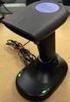 QuickScan QS6500/QS6500BT Product Reference Guide PSC Inc 959 Terry Street Eugene, Oregon 97402 Telephone: (541) 683-5700 Fax: (541) 345-7140 An Unpublished Work - All rights reserved. No part of the contents
Index...1. Introduction...3. Installation- Keyboard Wedge...3 RS-232...3 USB...3. Default Setting for each barcode shown as below:...
 Index Index...1 Introduction...3 Installation- Keyboard Wedge...3 RS-232...3 USB...3 Default Setting for each barcode shown as below:...4 Programming the MS320...5 Interface Selection...7 Keyboard wedge...8
Enter/Exit Programming Mode
 Enter/Exit Programming Mode (This barcode can also be found at back cover page.) Framed values are default values. IMPORTANT NOTICE No warranty of any kind is made in regard to this material, including,
ScanMaster for Scanner Configuration
 ScanMaster for Scanner Configuration For 1 Series Barcode Scanners: 1070, 1500, 1502 (1D, tethered) 1560, 1562, 1660, 1661 (1D, cordless) 1504, 1704 (2D, tethered) 1564, 1664 (2D, cordless) Version 1.30
APPENDIX E COMMAND BARCODES
 APPENDIX E COMMAND BARCODES Scan command barcode(s) to quickly configure the Socket Bluetooth Cordless Hand Scanner v3 (1D laser versions). By default, the CHS is in HID mode as a Keyboard device. IMPORTANT!
Part No. : MUL-53221-07 PROGRAMMING GUIDE
 Part No. : MUL-53221-07 PROGRAMMING GUIDE PROGRAMMING GUIDE for BARCODE SCANNERS The guide can be used as keyboard emulation, RS- 232C serial interface, and USB 1.1 interface and wand emulation. IMPORTANT
3800 Linear Series. Quick Start Guide
 3800 Linear Series Quick Start Guide Note: Refer to your user s guide for information about cleaning your device. For localized language versions of this document, go to www.honeywell.com/aidc. Getting
CD-3860 Bar Code Scanner User s Manual
 CD-3860 Bar Code Scanner User s Manual Important Notice Rev. Original No warranty of any kind is made in regard to this material, including, but not limited to, implied warranties of merchantability or
Integrated Scanner Programming Guide
 Integrated Scanner Programming Guide E-SW-SCANNERPG-N 2010 Copyright by LXE, Inc, An EMS Technologies Company. All Rights Reserved. Notices LXE Inc. reserves the right to make improvements or changes to
TaoTronics Laser Barcode Scanner User s Manual
 TaoTronics Laser Barcode Scanner User s Manual SETUP from PC keyboard For KBW or KBW/RS232 interface 1 Features * Simple installation,keyboard Wedge Serial, Wand Emulation tc * Superior keyboard wedge
Barcode Scanning Made Easy. Programming Guide
 Barcode Scanning Made Easy Programming Guide CCD Scanner Programming Guide Please Read Note: The Wasp WCS3900 Series Scanners are ready to scan the most popular barcodes out of the box. This manual should
MIRROR VT/5250 Terminal Emulation
 MIRROR VT/5250 Terminal Emulation 9300 / 9400 / 9500CE / 9600 Series Mobile Computers DOC Version 1.12 Copyright 2007~ 2009 CIPHERLAB CO., LTD. All rights reserved The software contains proprietary information
Back to Basics: Introduction to Industrial Barcode Reading
 Back to Basics: Introduction to Industrial Barcode Reading 1 Agenda What is a barcode? History 1 D codes Types and terminology 2 D codes Types and terminology Marking Methods Laser Scanning Image Based
QuickScan L. Barcode Scanner. Advanced Data Formatting (ADF) Guide
 QuickScan L Barcode Scanner Advanced Data Formatting (ADF) Guide Datalogic Scanning, Inc. 959 Terry Street Eugene, Oregon 97402 Telephone: (541) 683-5700 Fax: (541) 345-7140 An Unpublished Work - All rights
MetroSelect Programming Guide. MLPN 2407/December 1998
 MetroSelect Programming Guide MLPN 2407/December 1998 Locations: USA Corporate Headquarters Europe Metrologic Instruments, Inc. Metrologic Instruments GmbH 90 Coles Road Dornierstrasse 2 Blackwood, NJ
Gryphon I GD44XX/GBT4400 General Purpose Handheld Area Imager Bar Code Reader
 Gryphon I GD44XX/GBT4400 General Purpose Handheld Area Imager Bar Code Reader Product Reference Guide Datalogic Scanning, Inc. 959 Terry Street Eugene, Oregon 97402 USA Telephone: (541) 683-5700 Fax: (541)
METROLOGIC INSTRUMENTS, INC. MS1690 Focus Area Imaging Bar Code Scanner Supplemental Configuration Guide
 METROLOGIC INSTRUMENTS, INC. MS1690 Focus Area Imaging Bar Code Scanner Supplemental Configuration Guide Copyright 2005 by Metrologic Instruments, Inc. All rights reserved. No part of this work may be
QuickSpecs. At A Glance. HP Retail Integrated Peripherals for RP9 G1 Retail System. Overview
 Overview At A Glance The HP Retail Integrated peripheral options compatible with the HP RP9 Retail System can be purchased and installed separately: o HP Retail Integrated Encryption Capable MSR o HP Retail
HAND-HELD DEVICES II. Software Configuration Manual
 HAND-HELD DEVICES II Software Configuration Manual HAND-HELD DEVICES II SOFTWARE CONFIGURATION MANUAL DATALOGIC S.p.A. Via Candini 2 40012 - Lippo di Calderara di Reno Bologna - Italy Hand-Held Devices
Scanner Configuration
 Scanner Configuration SmartScan Manual DOC Version 2.21 This document is specifically designed for the user to print two pages per sheet of paper with optimal print quality. Copyright 2005~ 2008 CIPHERLAB
DL910 SERIES. Instruction Manual
 DL910 SERIES Instruction Manual DL910 SERIES INSTRUCTION MANUAL ALL RIGHTS RESERVED Datalogic reserves the right to make modifications and improvements without prior notification. Datalogic shall not
Create!form Barcodes. User Guide
 Create!form Barcodes User Guide Barcodes User Guide Version 6.3 Copyright Bottomline Technologies, Inc. 2008. All Rights Reserved Printed in the United States of America Information in this document is
Gryphon 2D Family General Purpose Handheld Area Imager Bar Code Reader Gryphon I GD44XX/GBT4400/GM440X
 Gryphon 2D Family General Purpose Handheld Area Imager Bar Code Reader Gryphon I GD44XX/GBT4400/GM440X Product Reference Guide Datalogic Scanning, Inc. 959 Terry Street Eugene, Oregon 97402 USA Telephone:
TCP/IP MODULE CA-ETHR-A INSTALLATION MANUAL
 TCP/IP MODULE CA-ETHR-A INSTALLATION MANUAL w w w. c d v g r o u p. c o m CA-ETHR-A: TCP/IP Module Installation Manual Page Table of Contents Introduction...5 Hardware Components... 6 Technical Specifications...
NLS-FR20 Series Fixed Mount Barcode Scanner. User Guide
 NLS-FR20 Series Fixed Mount Barcode Scanner User Guide Disclaimer 2015 Fujian Newland Auto-ID Tech. Co., Ltd. All rights reserved. Please read through the manual carefully before using the product and
Temperature & Humidity SMS Alert Controller
 Temperature & Humidity SMS Alert Controller Version 7 [Windows XP/Vista/7] GSMS THR / GSMS THP Revision 110507 [Version 2.2.14A] ~ 1 ~ SMS Alarm Messenger Version 7 [Windows XP/Vista/7] SMS Pro series
MS9500 SERIES VOYAGER PRODUCT GUIDE. Single Line, Hand-Held, 1D, High-Density 1D, PDF-417 2D and Wireless Laser Bar Code Scanners
 MS9500 SERIES VOYAGER PRODUCT GUIDE Single Line, Hand-Held, 1D, High-Density 1D, PDF-417 2D and Wireless Laser Bar Code Scanners Contents About Voyager Scanners Voyager Selection Chart MS9520 Voyager MS9540
GateKeeper: Barcode Scanner Setup. Rev. 20130410
 GateKeeper: Barcode Scanner Setup Table of Contents I. Introduction...3 A. Why Use a Serial Interface Barcode Scanner?...3 B. Adding a Serial Port to your computer...3 C. GateKeeper and Member Check-In...3
4.3-inch Back-Up Camera
 TM 4.-inch Back-Up Camera Model No.: PKC0BU4 Owner s Manual and Warranty Information Read these instructions completely before using this product. Retain this Owner s Manual for future reference. INTRODUCTION
Voyager 9520/40 Voyager GS9590 Eclipse 5145
 Voyager 9520/40 Voyager GS9590 Eclipse 5145 Quick Start Guide Aller à www.honeywellaidc.com pour le français. Vai a www.honeywellaidc.com per l'italiano. Gehe zu www.honeywellaidc.com für Deutsch. Ir a
Gryphon 2D Family General Purpose Handheld Area Imager Bar Code Reader Gryphon I GD44XX/GBT4400/GM440X
 Gryphon 2D Family General Purpose Handheld Area Imager Bar Code Reader Gryphon I GD44XX/GBT4400/GM440X Product Reference Guide Datalogic Scanning, Inc. 959 Terry Street Eugene, Oregon 97402 USA Telephone:
FREQUENTLY ASKED QUESTIONS (FAQs) 123Scan 2 Scanner Configuration Utility 19 April 2011
 FREQUENTLY ASKED QUESTIONS (FAQs) 123Scan 2 Scanner Configuration Utility 19 April 2011 Table of Content Question No. Product Overview What model scanners are supported by 123Scan 2 1 What are the key
ENGLISH USER S MANUAL. compact handheld 1D/2D code scanner
 ENGLISH USER S MANUAL compact handheld 1D/D code scanner 11175-en-GB 5J006 04 006 1 3 A B 4 C INSTALLATION INSTRUCTIONS FIRST STEP: TURN POWER OFF! Exercise caution at all times when working with AC and
HP ProDisplay P19A LED Backlit Monitor. User Guide
 HP ProDisplay P19A LED Backlit Monitor User Guide 2013 Hewlett-Packard Development Company, L.P. The only warranties for HP products and services are set forth in the express warranty statements accompanying
Scan to Network and Scan to Network Premium. Administrator's Guide
 Scan to Network and Scan to Network Premium Administrator's Guide March 2015 www.lexmark.com Contents 2 Contents Overview...3 Configuring the application...4 Configuring a destination...4 Configuring destination
MK-5200 2D Imager Barcode Scanner Configuration Guide
 MK-5200 2D Imager Barcode Scanner Configuration Guide V 1.2 Programming the Engine Code Programming On/Off Read the barcode to activate Code Programming function. One or more Code Programming barcodes
NX-591NE-GSM NetworX GSM 3G HSPA+ Module Installation Sheet
 NX-591NE-GSM NetworX GSM 3G HSPA+ Module Installation Sheet The NX-591NE-GSM is a microprocessor-controlled GSM interface module used to connect the NetworX series of control panels to GSM cellular networks
Bar Code CCD Scanner OPERATION MANUAL
 ISO 9002 Certified Lead with technology Win customers with service Bar Code CCD Scanner OPERATION MANUAL 69 Jarltech International Inc. 1998. All rights reserved. Under the copyright laws, this manual
MS100 Bar Code Pen Reader
 MS100 Bar Code Pen Reader AdventureJan General Advisory Improper handling, storage, environmental influences and /or product modification can lead to problems during use. This is particularly true if repairs