
QuickScan Mobile. Reference Manual
|
|
|
- Ella Adelia Wilkinson
- 9 years ago
- Views:
Transcription
1 QuickScan Mobile Reference Manual

2 Datalogic Scanning, Inc. 959 Terry Street Eugene, Oregon USA Telephone: (541) Fax: (541) An Unpublished Work - All rights reserved. No part of the contents of this documentation or the procedures described therein may be reproduced or transmitted in any form or by any means without prior written per-mission of Datalogic Scanning, Inc. or its subsidiaries or affiliates ("Datalogic" or Datalogic Scanning ). Owners of Datalogic products are hereby granted a non-exclusive, revocable license to reproduce and transmit this documentation for the purchaser's own internal business purposes. Purchaser shall not remove or alter any proprietary notices, including copyright notices, contained in this documentation and shall ensure that all notices appear on any reproductions of the documentation. Should future revisions of this manual be published, you can acquire printed versions by contacting your Datalogic representative. Electronic versions may either be downloadable from the Datalogic website ( or provided on appropriate media. If you visit our website and would like to make comments or suggestions about this or other Datalogic publications, please let us know via the "Contact Datalogic" page. Disclaimer Datalogic has taken reasonable measures to provide information in this manual that is complete and accurate, however, Datalogic reserves the right to change any specification at any time without prior notice. Datalogic is a registered trademark of Datalogic S.p.A. in many countries and the Datalogic logo is a trademark of Datalogic S.p.A. all licensed to Datalogic Scanning, Inc. All other trademarks and trade names referred to herein are property of their respective owners.

3 CONTENTS 1 INTRODUCTION INSTALLATION CONFIGURATION... 9 RS-232 PARAMETERS Baud Rate Parity Data Bits Stop Bits Handshaking Ack/Nack Protocol Fifo Inter-character Delay Rx Timeout Serial Trigger Lock USB PARAMETERS Handshaking Ack/Nack Protocol Fifo Inter-character Delay Rx Timeout Serial Trigger Lock Keyboard Nationality Fifo Inter-character Delay Inter-code Delay Control Character Emulation USB Keyboard Speed WEDGE PARAMETERS Keyboard Nationality Caps Lock Caps Lock Auto-Recognition (IBM AT compatible only) Num Lock Inter-character Delay Inter-code Delay Keyboard Setting Control Character Emulation iii

4 PEN EMULATION Operating Mode Minimum Output Pulse Conversion to Code 39 and Code Overflow Output Level Idle Level Inter-Block Delay IBM 46xx IBM Data Formatting DATA FORMAT Code Identifier Custom Code Identifier Header Terminator Special Keys Field Adjustment Field Adjustment Character Code Length Tx Character Replacement Address Stamping Address Delimiter READING PARAMETERS Hand-Held Operation Stand Operation Hardware Trigger Mode Trigger-off Timeout Flash Mode Reads per Cycle Safety Time Beeper Intensity Beeper Tone Beeper Type Beeper Length Stand Recognition Beep DECODING PARAMETERS Ink Spread Overflow Control Interdigit Control Decoding Safety Puzzle Solver iv

5 CODE SELECTION EAN/UPC Family /5 Family Code 39 Family Code 128 Family Code Codabar Family MSI Plessey Telepen Delta IBM Code Code 16K Code GS1 DataBar ADVANCED FORMATTING Concatenation Advanced Formatting RADIO PARAMETERS Radio Protocol Timeout Power-Off Timeout Beeper Control for Radio Response Single Store Batch Mode REFERENCES TECHNICAL FEATURES A HOST CONFIGURATION STRINGS B CODE IDENTIFIER TABLE C HEX AND NUMERIC TABLE v

6 GENERAL VIEW QUICKSCAN MOBILE READERS Reading Window Trigger Cradle Locking System Latch Charge completed (yellow LED) Charging (red LED) vi

7 INTRODUCTION 1 INTRODUCTION The QuickScan family provides a valuable solution for users seeking an affordable handheld device without compromise in performance. The extensive range of models and options of this family can easily meet any specific challenges required by retail, and commercial data collections applications. The QuickScan Mobile is the ideal solution for retail and commercial environments where continuous and multi-tasking activities are keys to optimum productivity, lower cost of ownership and profitable business. 1.1 READING ANGLE QuickScan Mobile readers automatically scan barcodes at a distance. Simply aim and pull the trigger. Code scanning is performed along the center of the light bar emitted from the reading window. This bar must cover the entire code. Successful scanning is obtained by tilting the reader with respect to the barcode to avoid direct reflections, which could impair the reading performance. See the figures below. Successful reading is obtained by an audible tone. Good read LED OK Not Advised 1

8 QUICKSCAN MOBILE 1.2 HANDS-FREE USE When using the QuickScan Mobile on the cradle, remember to lock the reader by pushing up the locking system as indicated in the following figure. 2

9 INSTALLATION 2 INSTALLATION 2.1 USING YOUR QUICKSCAN MOBILE READING SYSTEM Follow the procedure below to start using your QuickScan Mobile reading system: 1. Connect a QuickScan Mobile cradle to the Host. 2. Insert the QuickScan Mobile reader into the cradle to start the battery charging. A full charge of the Lithium battery takes hours. NOTE To achieve the best battery life, it is recommended to perform a full battery charge before using the reader in hand-held mode. In hands-free use, you can immediately start using the reader, since it is powered by the cradle. 3. Configure the QuickScan Mobile reader. 4. Configure the QuickScan Mobile cradle. 2.2 CHANGING THE BATTERIES To change the battery of your reader, you must: 1. Unscrew the battery cover screw (Figure 1). 2. Unplug the white connector and remove the old battery (Figure 2). 3. Insert the new battery and plug in the white connector. NOTE When inserting the new battery into the handle pay attention to position the battery and the connector just as shown in Figure 3. Figure 1 Figure 2 Figure 3 3

10 QUICKSCAN MOBILE 4. Insert the cover in the handle and screw it back into place. Figure 4 WARNING Do not incinerate, disassemble, short terminals or expose to high temperature. Risk of fire, explosion. Use specified charger only. Risk of explosion if the battery is replaced by an incorrect type. Dispose of the batteries as required by the relevant laws in force. 4

11 INSTALLATION 2.3 SYSTEM CONNECTIONS CAUTION Connections should always be made with power OFF! You can connect the QuickScan Mobile cradle to the Host through the dedicated connector, using the cable corresponding to the desired interface type. 1. Connect the appropriate interface cable to the cradle by simply plugging it into the Host connector on the base of the cradle. Interface Cable QuickScan Mobile Cradle - Bottom View To disconnect the cable, insert a paper clip or other similar object into the hole corresponding to the connector on the base of the cradle. Push down on the clip while unplugging the cable. Refer to the following figure: Disconnecting the Cable 5

12 QUICKSCAN MOBILE 2.4 RS-232 CONNECTION 2.5 USB 2.6 IBM USB POS CAB WEDGE CONNECTION (only for Quickscan M2 Type:130) CAB-391 or CAB CAB-431 6

13 INSTALLATION CAB-431 POWER SUPPLY ADAPTER 2.8 IBM PORT9B / IBM PORT 5B (only for Quickscan M2 Type:110) CAB-445 CAB PEN EMULATION CONNECTION CAB-431 POWER SUPPLY ADAPTER 7

14 QUICKSCAN MOBILE 2.10 SINGLE READER LAYOUT 8

15 CONFIGURATION 3 CONFIGURATION 3.1 CONFIGURATION METHODS Reading Configuration Barcodes This manual can be used for complete setup and configuration of your reader by following the setup procedures in this chapter. If you wish to change the default settings, this manual provides complete configuration of your reader in an easy way. To configure your reader: 1. Open the folded page in Appendix C with the hex-numeric table and keep it open during the device configuration. 2. Read the Enter Configuration code ONCE, available at the top of each page of configuration. 3. Modify the desired parameters in one or more sections following the procedures given for each group. 4. Read the Exit and Save Configuration code ONCE, available at the top of each page of configuration. Reference notes describing the operation of the more complex parameters are given in chapter Datalogic Aladdin Datalogic Aladdin is a multi-platform utility program that allows device configuration using a PC. It provides RS-232 interface configuration as well as configuration barcode printing Copy Command A previously configured device (Master), can be used to send its configuration directly to other devices of the same type (Slaves). The particular procedure for each device is given. 9

16 QUICKSCAN MOBILE Sending Configuration Strings from Host An alternative configuration method is provided in Appendix A using the RS-232 or USB-COM interface. This method is particularly useful when many devices need to be configured with the same settings. Batch files containing the desired parameter settings can be prepared to configure devices quickly and easily. 3.2 QUICKSCAN MOBILE STAND ALONE SETUP 1. Read the restore default parameters code below. Restore QuickScan Mobile Default Ì$+$*oÎ 2. Read the codes below to set the radio address of the QuickScan Mobile reader. Enter configuration Ì$+;Î 3. Set Radio Address ÌRA0RFHÎ + four digits for the QuickScan Mobile Address (from 0000 to 1999). All readers used in the same area must have different addresses. 4. Exit and Save configuration Ì$-?Î 5. Read the Bind code to pair the QuickScan Mobile to the cradle. The reader is dedicated to the cradle. Any previously bound reader will be excluded. Bind Ì$+RN0$-IÎ The yellow LED on the QuickScan Mobile will blink; the reader is ready to be positioned onto the cradle. 10

17 CONFIGURATION 6. Firmly position the reader onto the cradle within 10 seconds, a beep will be emitted, signaling that the cradle has been paired to the QuickScan Mobile, and the yellow LED on the reader will go off. Yellow LED 7. Read the cradle restore default code: Restore cradle default Ì$+RX0$-qÎ Go to par. 3.3 Interface Selection. 11

18 QUICKSCAN MOBILE 3.3 INTERFACE SELECTION Read the interface selection code for your application. RS-232 Standard Ì$+CP0$-$Î POS Terminals Nixdorf Mode A Ì$+CM2EC0$->Î Fujitsu Ì$+CM1$-ÈÎ ICL Mode Ì$+CM0$-ÃÎ For POS terminal default settings refer to par PEN Ì$+CP6$-BÎ 12

19 CONFIGURATION WEDGE (only for Quickscan M2 Type:130) IBM AT or PS/2 PCs Ì$+CP500$-aÎ IBM XT Ì$+CP503$-vÎ PC Notebook Ì$+CP505$-ÈÎ IBM SURE1 Ì$+CP506$-$Î IBM Terminal 3153 Ì$+CP504$-}Î 13

20 QUICKSCAN MOBILE WEDGE (CONTINUED) IBM Terminals 31xx, 32xx, 34xx, 37xx: To select the interface for these IBM Terminals, read the correct KEY TRANSMISSION code. Select the KEYBOARD TYPE if necessary (default = advanced keyboard). KEY TRANSMISSION MODE make-only keyboard Ì$+CP502$-oÎ make-break keyboard Ì$+CP501$-hÎ KEYBOARD TYPE advanced keyboard Ì$+FK1$-ÉÎ typewriter keyboard Ì$+FK0$-ÄÎ 14

21 CONFIGURATION WEDGE (CONTINUED) ALT MODE The ALT-mode selection allows barcodes sent to the PC to be interpreted correctly independently from the Keyboard Nationality used. You do not need to make a Keyboard Nationality selection. (default = Num Lock Unchanged). Make sure the Num Lock key on your keyboard is ON. IBM AT - ALT mode Ì$+CP507$-+Î PC Notebook - ALT mode Ì$+CP508$-2Î WYSE TERMINALS ANSI Keyboard Ì$+CP509$-9Î PC Keyboard Ì$+CP510$-gÎ ASCII Keyboard Ì$+CP511$-nÎ VT220 style Keyboard Ì$+CP514$-ÇÎ 15
22 QUICKSCAN MOBILE WEDGE (CONTINUED) DIGITAL TERMINALS VT2xx/VT3xx/VT4xx Ì$+CP512$-uÎ IBM 46XX (only for Quickscan M2 Type:110) PORT 9B 4501 Protocol Ì$+CP800$-pÎ (typical) 1520 Protocol Ì$+CP801$-wÎ PORT 5B 1520 Protocol Ì$+CP801$-wÎ (typical) 4501 Protocol Ì$+CP800$-pÎ 16
23 CONFIGURATION 3.4 USB READER CONFIGURATION The USB interface is compatible with: Windows 98 (and later) Mac OS 8.0 (and later) IBM POS for Windows 4690 Operating System USB Start-up As with all USB devices, upon connection, the Host performs several checks by communicating with the QuickScan Mobile. During this phase the yellow LED on the QuickScan Mobile reader blinks and normal operations are suspended. Two basic conditions must be met before the QuickScan Mobile is ready to read codes, the correct USB driver must be loaded and sufficient power must be supplied to the reader. First Start-Up For all systems, the correct USB driver for the default USB-KBD interface is included in the Host Operating System and will either be loaded automatically or will be suggested by the O.S. and should therefore be selected from the dialog box (the first time only). Normally the Host supplies sufficient power to the reader, the start-up phase ends correctly, the yellow LED stops blinking. Connect QuickScan Mobile to Host Yellow LED blinks Load drivers (if requested) Yellow LED off BEEP OK In rare cases, if the Host does not supply sufficient power to the reader, a dialog box will appear on the Host and the reader will be blocked (yellow LED continues blinking). In this case, disconnect the USB device cable at the Host (yellow LED stops blinking); and then try a different USB port as indicated by the Operating System message. You can now read codes. Select desired USB interface code (USB-KBD is default) Load drivers (if requested) Read test codes. Reader is READY At this point you can read the USB interface configuration code according to your application. Load drivers from the O.S. (if requested). When configuring the USB-COM interface, the relevant files and drivers must be installed from the USB Device Installation software, which can be downloaded from the web page The reader is ready to read barcodes. Successive start-ups will automatically recognize the previously loaded drivers. 17
24 QUICKSCAN MOBILE USB USB-KBD Ì$+UA03$-:Î USB-KBD-ALT-MODE USB-KBD-APPLE Ì$+UA05$-FÎ USB-COM* Ì$+UA02$-4Î USB-IBM-Table Top Ì$+UA00$-(Î USB-IBM-Hand Held Ì$+UA01$-.Î * When configuring USB-COM, the relevant files and drivers must be installed from the USB Device Installation software, which can be downloaded from the web site 18
25 CONFIGURATION 3.5 CHANGING DEFAULT SETTINGS Once your reader is setup, you can change the default parameters to meet your application needs. Refer to the preceding paragraphs for initial configuration in order to set the default values and select the interface for your application. In this manual, the configuration parameters are divided into logical groups making it easy to find the desired function based on its reference group. The first five groups are for Standard/IBM Interface parameter configuration: RS-232 USB WEDGE (only for Quickscan M2 type:130) PEN EMULATION IBM 46xx (only for Quickscan M2 type:110) The following parameter groups are common to all interface applications: DATA FORMAT parameters regard the messages sent to the Host system for all interfaces except Pen Emulation. READING PARAMETERS control various operating modes and indicator status functioning. DECODING PARAMETERS maintain correct barcode decoding in certain special reading conditions. CODE SELECTION parameters allow configuration of a personalized mix of codes, code families and their options. ADVANCED FORMATTING PARAMETERS allow code concatenation and advanced formatting of messages towards the Host. It cannot be used with Pen Emulation connections. RADIO PARAMETERS (Mobile series only) allow configuration of radio control parameters. 19
26 RS-232 PARAMETERS BAUD RATE PARITY DATA BITS STOP BITS HANDSHAKING ACK/NACK PROTOCOL FIFO INTER-CHARACTER DELAY RX TIMEOUT SERIAL TRIGGER LOCK 1. Read the Enter Configuration code ONCE, available at the top of each page. 2. Read configuration codes from the desired groups. = Read the code and follow the procedure given = Default value 3. Read the Exit and Save Configuration code ONCE, available at the top of each page. 20
27 Enter Configuration Exit and Save Configuration Ì$+;Î RS-232 Ì$-?Î BAUD RATE 300 baud ÌCD1XÎ 600 baud ÌCD2[Î 1200 baud ÌCD3^Î 2400 baud ÌCD4aÎ 4800 baud ÌCD5dÎ 9600 baud ÌCD6gÎ baud ÌCD7jÎ baud ÌCD8mÎ 21
28 Enter Configuration Exit and Save Configuration Ì$+;Î RS-232 Ì$-?Î PARITY none ÌCC0SÎ even parity ÌCC1VÎ odd parity ÌCC2YÎ DATA BITS 7 bits ÌCA0OÎ 8 bits ÌCA1RÎ 9 bits ÌCA2UÎ 22
29 Enter Configuration Exit and Save Configuration Ì$+;Î RS-232 Ì$-?Î STOP BITS 1 stop bit ÌCB0QÎ 2 stop bits ÌCB1TÎ HANDSHAKING disable ÌCE0WÎ hardware (RTS/CTS) ÌCE1ZÎ software (XON/XOFF) ÌCE2]Î RTS always ON ÌCE3`Î See par for details. 23
30 Enter Configuration Exit and Save Configuration Ì$+;Î RS-232 Ì$-?Î ACK/NACK PROTOCOL disable ÌER0sÎ enable ÌER1vÎ See par for details, particularly on implementing this parameter with QuickScan Mobile. FIFO disable ÌEC0UÎ enable ÌEC1XÎ See par for details. 24
31 Enter Configuration Exit and Save Configuration Ì$+;Î RS-232 Ì$-?Î INTER-CHARACTER DELAY delay between characters transmitted to Host ÌCK3Î Read 2 numbers from the table where: 00 = DELAY disabled = DELAY from 1 to 99 milliseconds delay disabled RX TIMEOUT timeout control in reception from Host ÌCL5Î Read 2 numbers from the table where: 00 = TIMEOUT disabled = TIMEOUT from.1 to 9.9 seconds rx timeout 5 seconds See par for details. 25
32 Enter Configuration Exit and Save Configuration Ì$+;Î RS-232 Ì$-?Î SERIAL TRIGGER LOCK disabled ÌCR0qÎ enable and select characters ÌCR1tÎ Read 2 characters from the Hex/Numeric table in the range 00-FE where: First Character enables device trigger Second Character inhibits device trigger until the first character is received again. 26
33 USB PARAMETERS USB-COM Handshaking, Ack/Nack protocol, FIFO, Inter-character delay, Rx timeout, Serial trigger lock USB-KBD Keyboard nationality, FIFO, Inter-character delay, Inter-code delay, Control character emulation, USB keyboard speed USB-IBM No parameter selection required. 1. Read the Enter Configuration code ONCE, available at the top of each page. 2. Read configuration codes from the desired groups. = Read the code and follow the procedure given = Default value 3. Read the Exit and Save Configuration code ONCE, available at the top of each page. 27
34 Enter Configuration Exit and Save Configuration Ì$+;Î USB-COM Ì$-?Î HANDSHAKING disable ÌCE0WÎ hardware (RTS/CTS) ÌCE1ZÎ software (XON/XOFF) ÌCE2]Î RTS always ON ÌCE3`Î See par for details. ACK/NACK PROTOCOL disable ÌER0sÎ enable ÌER1vÎ See par for details. 28
35 Enter Configuration Exit and Save Configuration Ì$+;Î USB-COM Ì$-?Î FIFO disable ÌEC0UÎ enable ÌEC1XÎ See par for details. INTER-CHARACTER DELAY delay between characters transmitted to Host ÌCK3Î Read 2 numbers from the table where: 00 = DELAY disabled = DELAY from 1 to 99 milliseconds delay disabled 29
36 Enter Configuration Exit and Save Configuration Ì$+;Î USB-COM Ì$-?Î RX TIMEOUT timeout control in reception from Host ÌCL5Î Read 2 numbers from the table where: 00 = TIMEOUT disabled = TIMEOUT from.1 to 9.9 seconds rx timeout 5 seconds See par for details. SERIAL TRIGGER LOCK disabled ÌCR0qÎ enable and select characters ÌCR1tÎ Read 2 characters from the Hex/Numeric table in the range 00-FE where: First Character enables device trigger Second Character inhibits device trigger until the first character is received again. 30
37 Enter Configuration Exit and Save Configuration Ì$+;Î USB-KBD Ì$-?Î KEYBOARD NATIONALITY Not Available for USB-KBD-ALT-MODE Interface This parameter default value is restored through the Interface Selection code and not Restore Default. Belgian ÌFJ7yÎ French ÌFJ2jÎ Italian ÌFJ1gÎ Spanish ÌFJ6vÎ USA ÌFJ0dÎ English ÌFJ4pÎ German ÌFJ3mÎ Japanese ÌFJ8 Î Swedish ÌFJ5sÎ 31
38 Enter Configuration Exit and Save Configuration Ì$+;Î USB-KBD Ì$-?Î FIFO disable ÌEC0UÎ enable ÌEC1XÎ See par for details. INTER-CHARACTER DELAY delay between characters transmitted to Host ÌCK3Î Read 2 numbers from the table where: 00 = DELAY disabled = DELAY from 1 to 99 milliseconds delay disabled 32
39 Enter Configuration Exit and Save Configuration Ì$+;Î USB-KBD Ì$-?Î INTER-CODE DELAY delay between codes transmitted to Host ÌFG.Î Read 2 numbers from the table where: 00 = DELAY disabled = DELAY from 1 to 99 seconds delay disabled CONTROL CHARACTER EMULATION CTRL + Shift + Key ÌFO0nÎ CTRL + Key ÌFO1qÎ 33
40 Enter Configuration Exit and Save Configuration Ì$+;Î USB-KBD Ì$-?Î USB KEYBOARD SPEED Normal ÌUT10cÎ Fast ÌUT01dÎ 34
41 WEDGE PARAMETERS KEYBOARD NATIONALITY CAPS LOCK CAPS LOCK AUTO-RECOGNITION NUM LOCK INTER-CHARACTER DELAY INTER-CODE DELAY KEYBOARD SETTING CONTROL CHARACTER EMULATION 1. Read the Enter Configuration code ONCE, available at the top of each page. 2. Read configuration codes from the desired groups. = Read the code and follow the procedure given = Default value 3. Read the Exit and Save Configuration code ONCE, available at the top of each page.. 35
42 Enter Configuration Exit and Save Configuration Ì$+;Î WEDGE Ì$-?Î KEYBOARD NATIONALITY Belgian ÌFJ7yÎ French ÌFJ2jÎ Italian ÌFJ1gÎ Swedish ÌFJ5sÎ English ÌFJ4pÎ German ÌFJ3mÎ Spanish ÌFJ6vÎ USA ÌFJ0dÎ The Japanese Keyboard Nationality selection is valid only for IBM AT compatible PCs. Japanese ÌFJ8 Î 36
43 Enter Configuration Exit and Save Configuration Ì$+;Î WEDGE Ì$-?Î CAPS LOCK caps lock OFF ÌFE0ZÎ caps lock ON ÌFE1]Î Select the appropriate code to match your keyboard caps lock status. Note: Caps lock manual configuration is ignored when Caps Lock Auto-Recognition is enabled. For PC Notebook interface selections, the caps lock status is automatically recognized; therefore this command is not necessary. CAPS LOCK AUTO-RECOGNITION (IBM AT COMPATIBLE ONLY) disable ÌFP0pÎ enable ÌFP1sÎ 37
44 Enter Configuration Exit and Save Configuration Ì$+;Î WEDGE Ì$-?Î NUM LOCK toggle num lock ÌFL1kÎ num lock unchanged ÌFL0hÎ This selection is used together with the Alt Mode interface selection for AT or Notebook PCs. It changes the way the Alt Mode procedure is executed; therefore it should be set as follows: if your keyboard Num Lock is normally on use num lock unchanged if your keyboard Num Lock is normally off use toggle num lock In this way the device will execute the Alt Mode procedure correctly for your application. INTER-CHARACTER DELAY delay between characters transmitted to Host ÌCK3Î Read 2 numbers from the table where: 00 = DELAY disabled = DELAY from 1 to 99 milliseconds delay disabled 38
45 Enter Configuration Exit and Save Configuration Ì$+;Î WEDGE Ì$-?Î INTER-CODE DELAY delay between codes transmitted to Host ÌFG.Î Read 2 numbers from the table where: 00 = DELAY disabled = DELAY from 1 to 99 seconds delay disabled 39
46 Enter Configuration Exit and Save Configuration Ì$+;Î WEDGE Ì$-?Î KEYBOARD SETTING ALPHANUMERIC KEYBOARD SETTING The reader can be used with terminals or PCs with various keyboard types and nationalities through a simple keyboard setting procedure. The type of computer or terminal must be selected before activating the keyboard setting command. Keyboard setting consists of communicating to the reader how to send data corresponding to the keyboard used in the application. The keys must be set in a specific order. Press and release a key to set it. Some characters may require more than one key pressed simultaneously during normal use (refer to the manual of your PC or terminal for keyboard use). The exact sequence must be indicated to the reader in this case pressing and releasing the different keys. Example: If one has to press the "Shift" and "4" keys simultaneously on the keyboard to transmit the character "$" to the video, to set the "$", press and release "Shift" then press and release "4". Each pressed and released key must generate an acoustic signal on the reader, otherwise repress the key. Never press more than one key at the same time, even if this corresponds to the normal use of your keyboard. Press "Backspace" to correct a wrong key entry. In this case the reader emits 2 beeps. Note: "CAPS LOCK" and "NUM LOCK" must be off before starting the keyboard setting procedure. "SHIFT" must be repressed for each character and cannot be substituted by "CAPS LOCK". setting the alphanumeric keyboard ÌFB0TÎ Read the code above. Press the keys shown in the following table according to their numerical order. Some ASCII characters may be missing as this depends on the type of keyboard: these are generally particular characters relative to the various national symbologies. In this case: The first 4 characters (Shift, Alt, Ctrl, and Backspace) can only be substituted with keys not used, or substituted with each other. characters can be substituted with other single symbols (e.g. "SPACE") even if not included in the barcode set used. characters can be substituted with others corresponding to your keyboard. The reader signals the end of the procedure with 2 beeps indicating the keys have been registered. 40
47 WEDGE 01 : Shift 02 : Alt 03 : Ctrl 04 : Backspace 05 : SPACE 28 : 7 51 : N 06 :! 29 : 8 52 : O 07 : " 30 : 9 53 : P 08 : # 31 : : 54 : Q 09 : $ 32 : ; 55 : R 10 : % 33 : < 56 : S 11 : & 34 : = 57 : T 12 : ' 35 : > 58 : U 13 : ( 36 :? 59 : V 14 : ) : W 15 : * 38 : A 61 : X 16 : + 39 : B 62 : Y 17 :, 40 : C 63 : Z 18 : - 41 : D 64 : [ 19 :. 42 : E 65 : \ 20 : / 43 : F 66 : ] 21 : 0 44 : G 67 : ^ 22 : 1 45 : H 68 : _ (underscore) 23 : 2 46 : I 69 : ` 24 : 3 47 : J 70 : { 25 : 4 48 : K 71 : 26 : 5 49 : L 72 : } 27 : 6 50 : M 73 : ~ 74 : DEL The keyboard setup functioning is signaled by the LEDs on the cradle. Each key stroke corresponds to a double blinking of the yellow LED. By pressing the Backspace key the red LED on the cradle blinks, while the yellow LED stays on. CAUTION Do not place the reader onto the cradle during this procedure. Otherwise, the battery charging will occur modifying the LEDs functioning. Once the procedure has been completed, the yellow LED turns off. 41
48 Enter Configuration Exit and Save Configuration Ì$+;Î WEDGE Ì$-?Î CONTROL CHARACTER EMULATION CTRL + Shift + Key ÌFO0nÎ CTRL + Key ÌFO1qÎ 42
49 PEN EMULATION OPERATING MODE MINIMUM OUTPUT PULSE CONVERSION TO CODE 39 OVERFLOW OUTPUT LEVEL IDLE LEVEL INTER-BLOCK DELAY 1. Read the Enter Configuration code ONCE, available at the top of each page. 2. Read configuration codes from the desired groups. = Default value 3. Read the Exit and Save Configuration code ONCE, available at the top of each page. 43
50 PEN EMULATION The operating mode parameters are complete commands and do not require reading the Enter and Exit configuration codes. OPERATING MODE interpret mode Ì$]8Î Interprets commands without sending them to the decoder. transparent mode Ì$[4Î Sends commands to the decoder without interpreting them. 44
51 Enter Configuration Exit and Save Configuration Ì$+;Î PEN EMULATION Ì$-?Î MINIMUM OUTPUT PULSE high resolution code emulation 200 μs ÌDG0\Î 400 μs ÌDG1_Î 600 μs ÌDG2bÎ 800 μs ÌDG3eÎ 1 ms ÌDG4hÎ low resolution code emulation See par for details. 1.2 ms ÌDG5kÎ 45
52 Enter Configuration Exit and Save Configuration Ì$+;Î PEN EMULATION Ì$-?Î CONVERSION TO CODE 39 AND CODE 128 disable conversion to Code 39 ÌDA0PÎ Transmits codes in their original format. enable conversion to Code 39 ÌDA1SÎ Converts codes read into Code 39 format. enable conversion to Code 128 ÌDA2VÎ Converts codes read into Code 128 format. See par for details. 46
53 Enter Configuration Exit and Save Configuration Ì$+;Î PEN EMULATION Ì$-?Î OVERFLOW narrow ÌDH0^Î medium ÌDH1aÎ wide ÌDH2dÎ See par for details. OUTPUT LEVEL normal (white = logic level 0) ÌDD0VÎ inverted (white = logic level 1) ÌDD1YÎ See par for details. 47
54 Enter Configuration Exit and Save Configuration Ì$+;Î PEN EMULATION Ì$-?Î IDLE LEVEL normal (black level) ÌDE0XÎ inverted (white level) ÌDE1[Î See par for details. INTER-BLOCK DELAY delay between character blocks transmitted to Host ÌCK3Î Read 2 numbers from the table where: 00 = DELAY disabled = DELAY from.1 to 9.9 seconds delay disabled See par for details. 48
55 IBM 46XX IBM DATA FORMATTING 1. Read the Enter Configuration code ONCE, available at the top of each page. 2. Read configuration codes from the desired groups. = Default value 3. Read the Exit and Save Configuration code ONCE, available at the top of each page. 49
56 Enter Configuration Exit and Save Configuration Ì$+;Î IBM 46xx Ì$-?Î IBM DATA FORMATTING conversion to Code 39 ÌGD0YÎ IBM Standard ÌGD1\Î mixed IBM Standard + Code 39 ÌGD2_Î Cradle check the Host command ÌGE0[Î Cradle ignore Host command ÌGE1^Î See par for details. 50
57 DATA FORMAT NOT FOR PEN INTERFACES CODE IDENTIFIER CUSTOM CODE IDENTIFIER HEADER TERMINATOR SPECIAL KEYS FIELD ADJUSTMENT FIELD ADJ. CHARACTER CODE LENGTH TX CHARACTER REPLACEMENT ADDRESS STAMPING ADDRESS DELIMITER 1. Read the Enter Configuration code ONCE, available at the top of each page. 2. Read configuration codes from the desired groups. = Read the code and follow the procedure given = Default value 3. Read the Exit and Save Configuration code ONCE, available at the top of each page. 51
58 DATA FORMAT CODE IDENTIFIER TABLE CODE AIM STANDARD DATALOGIC STANDARD Custom 2/5 interleaved ] I y N 2/5 industrial ] X y P 2/5 normal 5 bars ] S y O 2/5 matrix 3 bars ] X y Q EAN 8 ] E 4 A EAN 13 ] E 0 B UPC A ] X y C UPC E ] X y D EAN 8 with 2 ADD ON ] E 5 J EAN 8 with 5 ADD ON ] E 6 K EAN 13 with 2 ADD ON ] E 1 L EAN 13 with 5 ADD ON ] E 2 M UPC A with 2 ADD ON ] X y F UPC A with 5 ADD ON ] X y G UPC E with 2 ADD ON ] X y H UPC E with 5 ADD ON ] X y I Code 39 ] A y V Code 39 Full ASCII ] A y W CODABAR ] F y R ABC CODABAR ] X y S Code 128 ] C y T EAN 128 ] C y k ISBT 128 ] C4 f Code 93 ] G y U CIP/39 ] X y Y CIP/HR ] X y e Code 32 ] X y X MSI ] M y Z Plessey Standard ] P 0 a Plessey Anker ] P 1 o Telepen ] X 0 d Delta IBM ] X 0 c Code 11 ] H y b Code 16K ] K 0 p Code 49 ] T y q RSS Expanded Linear and Stacked ] e 0 t RSS Limited ] e 0 v RSS 14 Linear and Stacked ] e 0 u 52
59 DATA FORMAT AIM standard identifiers are not defined for all codes: the X identifier is assigned to the code for which the standard is not defined. The y value depends on the selected options (check digit tested or not, check digit tx or not, etc.). When customizing the Datalogic Standard code identifiers, 1 or 2 identifier characters can be defined for each code type. If only 1 identifier character is required, the second character must be selected as FF (disabled). The code identifier can be singly disabled for any code by simply selecting FF as the first identifier character. Write in the Custom character identifiers in the table above for your records. 53
60 Enter Configuration Exit and Save Configuration Ì$+;Î DATA FORMAT Ì$-?Î CODE IDENTIFIER disable ÌEB0SÎ Datalogic standard ÌEB1VÎ AIM standard ÌEB2YÎ custom ÌEB3\Î 54
61 Enter Configuration Exit and Save Configuration Ì$+;Î DATA FORMAT Ì$-?Î CUSTOM CODE IDENTIFIER define custom code identifier(s) ÌEH/Î Read the above code. (Code Identifiers default to Datalogic standard, see table on previous page). Select the code type from the code table in Appendix B for the identifier you want to change. You can define 1 or 2 identifier characters for each code type. If only 1 identifier character is required, the second character must be selected as FF (disabled). Read the hexadecimal value corresponding to the character(s) you want to define as identifiers for the code selected in step : valid characters are in the range 00-FD. For Wedge and USB-KBD interfaces, it is also possible to read the Special Key(s) on page 58. Example: To define Code 39 Code Identifier Read define custom code identifier(s) Code 39 ÌEH/Î + ÌVWÎ FF 55
62 Enter Configuration Exit and Save Configuration Ì$+;Î DATA FORMAT Ì$-?Î no header ÌEA00*Î two character header ÌEA022Î four character header ÌEA04:Î six character header ÌEA06BÎ eight character header ÌEA08JÎ HEADER one character header ÌEA01.Î three character header ÌEA036Î five character header ÌEA05>Î seven character header ÌEA07FÎ After selecting one of the desired Header codes, read the character(s) from the HEX table. Valid characters are in the range 00-FE. For Wedge and USB-KBD interfaces, it is also possible to read the Special Key(s) on page 58. Example: four character header = Header ABCD For more details see par
63 Enter Configuration Exit and Save Configuration Ì$+;Î DATA FORMAT Ì$-?Î no terminator ÌEA10-Î two character terminator ÌEA125Î four character terminator ÌEA14=Î six character terminator ÌEA16EÎ eight character terminator ÌEA18MÎ TERMINATOR one character terminator ÌEA111Î three character terminator ÌEA139Î five character terminator ÌEA15AÎ seven character terminator ÌEA17IÎ After selecting one of the desired Header codes, read the character(s) from the HEX table. Valid characters are in the range 00-FE. For Wedge and USB-KBD interfaces, it is also possible to read the Special Key(s) on page 58. Example: two character terminator + 0D + 0A = Terminator CR LF For more details see par
64 Enter Configuration Exit and Save Configuration Ì$+;Î DATA FORMAT Ì$-?Î SPECIAL KEYS Available only for Wedge IBM AT-PS/2 and USB-KBD Interfaces NOTE It is necessary to define each Special Key by following the procedure given in par Select one or more of the following Special Keys according to your needs. Special Key 1 Ì9CÄÎ Special Key 3 Ì9EÈÎ Special Key 5 ÌA0bÎ Special Key 2 Ì9DÆÎ Special Key 4 Ì9FÊÎ 58
65 Enter Configuration Exit and Save Configuration Ì$+;Î DATA FORMAT Ì$-?Î FIELD ADJUSTMENT disable field adjustment ÌEF0[Î Field adjustment allows a number of characters n, to be added to or subtracted from the barcode read. The adjustment can be different for each enabled code type. To define the field adjustment: Read the enable field adjustment code: enable field adjustment ÌEF+Î Select the code type from the Code Identifier Table in Appendix B. Select the type of adjustment to perform: right addition Ì01Î right deletion Ì23Î left addition Ì12Î left deletion Ì34Î Read a number in the range from the Hex/Numeric Table to define how many characters to add or delete: Conditions: Adjustment is only performed on the barcode data; the Code Identifier and Code Length Transmission fields are not modified by the field adjustment parameter. If the field setting would subtract more characters than exist in the barcode, the subtraction will take place only to code length 0. You can set up to a maximum of 10 different field adjustments on the same barcode family or on different barcode families. Example: To add 4 characters to the right of Standard Code 39 Codes: Read enable field adjustment Code 39 right addition ÌEF+Î + ÌVWÎ + Ì01Î
66 Enter Configuration Exit and Save Configuration Ì$+;Î DATA FORMAT Ì$-?Î FIELD ADJUSTMENT CHARACTER Read the field adjustment character code: field adjustment character ÌEG-Î Read the hexadecimal value corresponding to the character you want to use for field adjustment. Valid characters are in the range 00-FE. For Wedge and USB-KBD interfaces, it is also possible to read the Special Key(s) on page 58. Example: To define the field adjustment character = A: Read field adjustment character + 41 CODE LENGTH TX code length not transmitted ÌEE0YÎ code length transmitted in variable-digit format ÌEE1\Î code length transmitted in fixed 4-digit format ÌEE2_Î The code length is transmitted in the message after the Headers and Code Identifier characters. The code length is calculated after performing any field adjustment operations. 60
67 Enter Configuration Exit and Save Configuration Ì$+;Î DATA FORMAT Ì$-?Î CHARACTER REPLACEMENT disable character replacement ÌEO0mÎ This parameter allows up to three characters to be replaced from the barcode read. These substitutions are stored in memory. To define each character replacement: Read one of the following character replacement codes: first character replacement ÌEO1pÎ second character replacement ÌEO2sÎ third character replacement ÌEO3vÎ From the Code Identifier Table in Appendix B, read the Code Identifier for the desired code family. 0 = character replacement will be effective for all code families. From the Hex/Numeric Table read two characters corresponding to the Hex value (00-FE) which identifies the character to be replaced. For Wedge and USB-KBD interfaces, it is also possible to read the Special Key(s) on page 58. From the Hex/Numeric Table read two characters corresponding to the Hex value (00-FE) which identifies the new character to replace. For Wedge and USB-KBD interfaces, it is also possible to read the Special Key(s) on page 58. FF = the character to be replaced will be substituted with no character, that is, it will be removed from the code. 61
68 Example: The following strings define: 1. First Character Replacement: substitution in Code 39 barcodes of all occurrences of the 0 character with the 1 character. 2. Second Character Replacement: substitution in Code 39 barcodes of all occurrences of the A character with the B character. first character replacement Code 39 ÌEO1pÎ + ÌVWÎ ASCII characters corresponding to the HEX value for character 0 ASCII characters corresponding to the HEX value for character For Code 39 codes containing the string "0123", the contents transmitted will be "1123". second character replacement Code 39 ÌEO2sÎ + ÌVWÎ ASCII characters corresponding to the HEX value for character A ASCII characters corresponding to the HEX value for character B For Code 39 codes containing the string "ABCD", the contents transmitted will be "BBCD". 62
69 Enter Configuration Exit and Save Configuration Ì$+;Î DATA FORMAT Ì$-?Î ADDRESS STAMPING disable reader address stamping ÌRU0ÊÎ enable reader address stamping ÌRU1"Î See par for details. ADDRESS DELIMITER disable reader address delimiter ÌRV0!Î enable reader address delimiter and select characters ÌRV1$Î Read 2 HEX characters in the range 00-FE. See par for details. 63
70 READING PARAMETERS HAND-HELD OPERATION STAND OPERATION HARDWARE TRIGGER MODE TRIGGER-OFF TIMEOUT FLASH MODE READS PER CYCLE SAFETY TIME BEEPER INTENSITY BEEPER TONE BEEPER TYPE BEEPER LENGTH STAND RECOGNITION BEEP 1. Read the Enter Configuration code ONCE, available at the top of each page. 2. Read configuration codes from the desired groups. = Read the code and follow the procedure given = Default value 3. Read the Exit and Save Configuration code ONCE, available at the top of each page. 64
71 Enter Configuration Exit and Save Configuration Ì$+;Î READING PARAMETERS Ì$-?Î HAND-HELD OPERATION hardware trigger ÌBK1eÎ * always on ÌBK3kÎ * not available for Mobile series readers hardware trigger ready ÌBK4nÎ software trigger ÌBK0bÎ automatic ÌBK2hÎ hardware trigger ÌBU3ÃÎ STAND OPERATION ONLY Devices with Stand Recognition Beep software trigger ÌBU1yÎ * always on ÌBU2 Î * not available for Mobile series readers automatic ÌBU0vÎ 65
72 Enter Configuration Exit and Save Configuration Ì$+;Î READING PARAMETERS Ì$-?Î HARDWARE TRIGGER MODE trigger active level ÌBA0NÎ trigger active pulse ÌBA1QÎ See par for details TRIGGER-OFF TIMEOUT trigger-off timeout ÌBD$Î Read 2 numbers in the range 00-99: 00 = disables the trigger-off timeout = corresponds to a max. 99-sec. delay after the trigger press to allow the reader to turn off automatically. trigger-off timeout disabled See par for details. 66
73 Enter Configuration Exit and Save Configuration Ì$+;Î READING PARAMETERS Ì$-?Î FLASH MODE "FLASH" ON duration ÌBB0PÎ "FLASH" OFF duration ÌBB1SÎ Read 2 numbers in the range 01-99: 01 to 99 = from.1 to 9.9 seconds. Flash-ON = 1 sec. Flash-OFF = 0.6 sec READS PER CYCLE one read per cycle ÌBC0RÎ multiple reads per cycle ÌBC1UÎ See par for details. 67
74 Enter Configuration Exit and Save Configuration Ì$+;Î READING PARAMETERS Ì$-?Î SAFETY TIME safety time ÌBE&Î Limits same code consecutive reading. Read 2 numbers in the range 00-99: 00 = no same code consecutive reading until reader is removed (no decoding) for at least 400 ms = timeout from.1 to 9.9 seconds before a consecutive read on same code. safety time = 0.5 sec See par for details. BEEPER INTENSITY * very low intensity ÌBG0ZÎ medium intensity ÌBG2`Î low intensity ÌBG1]Î high intensity ÌBG3cÎ * This sets the beeper OFF for data entry, while for all other beeper signals it has the meaning very low intensity. The Beeper Intensity parameter is effective for all operating conditions described in par
75 Enter Configuration Exit and Save Configuration Ì$+;Î READING PARAMETERS Ì$-?Î BEEPER TONE tone 1 ÌBH0\Î tone 3 ÌBH2bÎ tone 2 ÌBH1_Î tone 4 ÌBH3eÎ BEEPER TYPE monotone ÌBJ0`Î bitonal ÌBJ1cÎ BEEPER LENGTH long ÌBI0^Î short ÌBI1aÎ 69
76 Enter Configuration Exit and Save Configuration Ì$+;Î READING PARAMETERS Ì$-?Î STAND RECOGNITION BEEP ONLY Devices with Stand Recognition disable ÌBV0xÎ enable ÌBV1{Î 70
77 DECODING PARAMETERS INK SPREAD OVERFLOW CONTROL INTERDIGIT CONTROL DECODING SAFETY PUZZLE SOLVER CAUTION Before changing these parameter values read the descriptions in par Read the Enter Configuration code ONCE, available at the top of each page. 2. Read configuration codes from the desired groups. = Default value 3. Read the Exit and Save Configuration code ONCE, available at the top of each page. 71
78 Enter Configuration Exit and Save Configuration Ì$+;Î DECODING PARAMETERS Ì$-?Î INK SPREAD disable ÌAX0{Î enable ÌAX1~Î See par for details. OVERFLOW CONTROL disable ÌAW1 Î enable ÌAW0yÎ See par for details. 72
79 Enter Configuration Exit and Save Configuration Ì$+;Î DECODING PARAMETERS Ì$-?Î INTERDIGIT CONTROL disable ÌAV0wÎ enable ÌAV1zÎ See par for details. DECODING SAFETY one read ÌED0WÎ (decoding safety disabled) two reads ÌED1ZÎ three reads ÌED2]Î four reads ÌED3`Î Required number of good reads before accepting code. 73
80 Enter Configuration Exit and Save Configuration Ì$+;Î DECODING PARAMETERS Ì$-?Î PUZZLE SOLVER disable ÌAU0uÎ enable ÌAU1xÎ In the case of damaged or poorly printed codes, this parameter allows reading multiple parts of the single code to reconstruct it. To read codes using this technology, simply move the illuminated bar over the code so that each line of the code is scanned. During this process a series of brief ticks indicates that reading is proceeding correctly. Conditions: This parameter is only valid for the following codes: EAN 8 without Add-on EAN 13 without Add-on UPC A without Add-on Code 128 Code 39 For Code 39, Check digit control is forced. PuzzleSolver is not valid for ISBT 128 code. 74
81 CODE SELECTION EAN/UPC FAMILY 2/5 FAMILY CODE 39 FAMILY CODE 128 FAMILY CODABAR FAMILY CODE 93 MSI PLESSEY TELEPEN DELTA IBM CODE 11 CODE 16K CODE 49 GS1 DATABAR 1. Read the Enter Configuration code ONCE, available at the top of each page. 2. Read configuration codes from the desired groups. = Read the code and follow the procedure given = Default value 3. Read the Exit and Save Configuration code ONCE, available at the top of each page. 75
82 Enter Configuration Exit and Save Configuration Ì$+;Î CODE SELECTION Ì$-?Î DISABLE ALL CODE FAMILIES ÌAZ0ÃÎ NOTE The reader allows up to 5 code selections. This does not limit the number of CODES enabled to 5, as it depends on the code family. SINGLE SELECTIONS = ONE combination code from the EAN family ONE code from the 2/5 family Example 5 code selections: 1. 2/5 Interleaved 2. 2/5 Industrial 3. Code EAN Code 39 Full ASCII + Code UPC A/UPC E In this section all SINGLE code selections are underlined and in bold. 76
83 Enter Configuration Exit and Save Configuration Ì$+;Î CODE SELECTION Ì$-?Î EAN/UPC FAMILY disable the family ÌAA0MÎ Read the desired family code Note: Since the EAN/UPC without ADD ON code selection is enabled by default, to correctly enable another selection, first disable the family. WITHOUT ADD ON EAN 8/EAN 13/UPC A/UPC E ÌAA1PÎ EAN 8/EAN 13 ÌAA3VÎ UPC A/UPC E ÌAA4YÎ 77
84 Enter Configuration Exit and Save Configuration Ì$+;Î CODE SELECTION Ì$-?Î WITH ADD ON 2 AND 5 EAN 8/EAN 13/UPC A/UPC E ÌAA5\Î EAN 8/EAN 13 ÌAA6_Î UPC A/UPC E ÌAA7bÎ WITH ADD ON 2 ONLY EAN 8/EAN 13 ÌAAK7Î UPC A/UPC E ÌAAM=Î WITH ADD ON 5 ONLY EAN 8/EAN 13 ÌAAL:Î UPC A/UPC E ÌAAN@Î 78
85 Enter Configuration Exit and Save Configuration Ì$+;Î CODE SELECTION Ì$-?Î WITH AND WITHOUT ADD ON EAN/UPC with and without ADD ON no Autodiscrimination ÌAA8Ad03Î EAN/UPC Autodiscrimination ADD ON by Prefix ÌAA8Ad19Î By setting the EAN/UPC Autodiscrimination ADD ON by Prefix, the desired prefixes must be selected by reading the corresponding codes given in the following section, since no prefix is configured by default. 79
86 Enter Configuration Exit and Save Configuration Ì$+;Î CODE SELECTION Ì$-?Î SELECT EAN/UPC PREFIXES NOTE When scanning the following codes, barcodes starting with the selected prefixes will be read and transmitted only if the ADD ON is present. If no ADD ON is found, the barcode will not be read. Barcodes starting with different characters are read regardless of ADD ON presence and transmitted always without ADD ON. Cancel All Selections ÌET0wÎ OR select one or more of the following prefixes: 434/439 ÌET3434ET4439ÉÎ 977 ÌET7977QÎ 979 ÌET9979cÎ 378/379 ÌET1378ET2379PÎ 414/419 ÌET5414ET6419}Î 978 ÌET8978ZÎ The commands above are not mutually exclusive. They can be used to configure more than one set of prefixes simultaneously. 80
87 Enter Configuration Exit and Save Configuration Ì$+;Î CODE SELECTION Ì$-?Î Example: The following string allows reading and transmitting with ADD ON all EAN/UPC starting with the 434/439, 977 and 978 prefixes: 1. EAN/UPC Autodiscrimination ADD ON by Prefix /439: enables reading and transmission with ADD ON of all EAN/UPC barcodes starting with 434/439 prefixes : enables reading and transmission with ADD ON of all EAN/UPC barcodes starting with 977 prefix : enables reading and transmission with ADD ON of all EAN/UPC barcodes starting with 978 prefix. EAN/UPC Autodiscrimination ADD ON by Prefix 434/439 ÌAA8Ad19Î + ÌET3434ET4439ÉÎ ÌET7977QÎ + ÌET8978ZÎ To clear the current prefix selections: 1. Cancel all Selections Cancel All Selections ÌET0wÎ 81
88 Enter Configuration Exit and Save Configuration Ì$+;Î CODE SELECTION Ì$-?Î EAN/UPC CHECK DIGIT TX SELECTIONS For each code type in this family you can choose to transmit the check digit or not CHECK DIGIT TRANSMISSION EAN 8 ÌAAG1oÎ NO CHECK DIGIT TRANSMISSION EAN 8 ÌAAG0kÎ EAN 13 ÌAAH1rÎ EAN 13 ÌAAH0nÎ UPC A ÌAAI1uÎ UPC A ÌAAI0qÎ UPC E ÌAAJ1xÎ UPC E ÌAAJ0tÎ 82
89 Enter Configuration Exit and Save Configuration Ì$+;Î CODE SELECTION Ì$-?Î CONVERSION OPTIONS UPC E to UPC A conversion ÌAAAÄÎ UPC E to EAN 13 conversion ÌAABÇÎ UPC A to EAN 13 conversion ÌAACÊÎ EAN 8 to EAN 13 conversion ÌAAD"Î Enable only ISBN conversion ÌAP1nÎ Enable only ISSN conversion ÌAP2qÎ Enable both ISBN and ISSN conversion ÌAP3tÎ Disable both ISBN and ISSN conversion ÌAP0kÎ 83
90 Enter Configuration Exit and Save Configuration Ì$+;Î CODE SELECTION Ì$-?Î 2/5 FAMILY disable the family ÌAC0QÎ Read the desired family code Interleaved 2/5 ÌAC1TÎ Normal 2/5 (5 Bars) ÌAC2WÎ Industrial 2/5 (IATA) ÌAC3ZÎ Matrix 2/5 (3 Bars) ÌAC4]Î The pharmaceutical code below is part of the 2/5 family but has no check digit or code length selections. Code CIP/HR ÌAC5`Î French pharmaceutical code Read a check digit selection CHECK DIGIT TABLE no check digit control Ì12Î check digit control and transmission Ì23Î check digit control without transmission Ì34Î Read 4 numbers for the code length where: First 2 digits = minimum code length. Second 2 digits = maximum code length. The maximum code length is 99 characters. The minimum code length must always be less than or equal to the maximum. Examples: 0199 = variable from 1 to 99 digits in the code = 10 digit code length only. 84
91 Enter Configuration Exit and Save Configuration Ì$+;Î CODE SELECTION Ì$-?Î CODE 39 FAMILY disables the family ÌAB0OÎ Read the desired family code Read a check digit selection CHECK DIGIT TABLE Standard Code 39 ÌAB1RÎ no check digit control Ì12Î Full ASCII Code 39 ÌAB2UÎ check digit control and transmission Ì23Î check digit control without transmission Ì34Î 85
92 Enter Configuration Exit and Save Configuration Ì$+;Î CODE SELECTION Ì$-?Î The pharmaceutical codes below are part of the Code 39 family but have no check digit selections. Code CIP39 ÌAB3XÎ French pharmaceutical code Code 32 ÌAB4[Î Italian pharmaceutical code CODE LENGTH (optional) The code length selection is valid for the entire Code 39 family Read the code + 4 numbers for the code length where: First 2 digits = minimum code length. Second 2 digits = maximum code length. set code length ÌAB*=Î The maximum code length is 99 characters. The minimum code length must always be less than or equal to the maximum. Examples: 0199 = variable from 1 to 99 digits in the code = 10 digit code length only. 86
93 Enter Configuration Exit and Save Configuration Ì$+;Î CODE SELECTION Ì$-?Î CODE 128 FAMILY disables the family ÌAI0]Î Read the desired family code Code 128 ÌAI11=Î control without transmission of check digit EAN 128 control without transmission of check digit Transmit GS Before Code Code EAN 128 uses the ASCII <GS> character to separate a variable length code field from the next code field. This character can also be transmitted before the code. disable ÌEQ0qÎ enable ÌEQ1tÎ If the <GS> character has been modified in the Character Replacement parameter, the new character is affected by this command. 87
94 Enter Configuration Exit and Save Configuration Ì$+;Î CODE SELECTION Ì$-?Î ISBT 128 ÌAI31CÎ Enabling ISBT 128 automatically disables Puzzle Solver. CODE LENGTH (optional) The code length selection is valid for the entire Code 128 family. Read the code + 4 numbers for the code length where: First 2 digits = minimum code length Second 2 digits = maximum code length set code length ÌAILJÎ The maximum code length is 99 characters. The minimum code length must always be less than or equal to the maximum. Examples: 0199 = variable from 1 to 99 digits in the code. 1010= 10 digit code length only. The length is calculated on the output string. CODE 93 disables the code ÌAK0aÎ Code 93 ÌAK1dÎ control without transmission of check digit 88
95 Enter Configuration Exit and Save Configuration Ì$+;Î CODE SELECTION Ì$-?Î CODABAR FAMILY disable the family ÌAD0SÎ Read the desired equality control code Standard Codabar ÌAD113Î no start/stop character equality control Read a start/stop transmission selection START/STOP CHARACTER TRANSMISSION no transmission Ì12Î Standard Codabar ÌAD127Î start/stop character equality control transmission Ì23Î The Codabar ABC code below uses a fixed start/stop character transmission selection. Codabar ABC ÌAD212)Î no start/stop character equality control but transmission. 89
96 Enter Configuration Exit and Save Configuration Ì$+;Î CODE SELECTION Ì$-?Î Codabar ABC Forced Concatenation enable Codabar ABC with forced concatenation ÌAD2321Î non start/stop character equality control but transmission CODE LENGTH (optional) The code length selection is valid for the entire Codabar family Read the code + 4 numbers for the code length where: First 2 digits = minimum code length. Second 2 digits = maximum code length. set code length ÌAD*AÎ The maximum code length is 99 characters. The minimum code length must always be less than or equal to the maximum. Examples: 0199 = variable from 1 to 99 digits in the code = 10 digit code length only. START/STOP CHARACTER CASE IN TRANSMISSION The start/stop character case selections below are valid for the entire Codabar family: transmit start/stop characters in lower case ÌADA0_Î transmit start/stop characters in upper case ÌADA1cÎ 90
97 Enter Configuration Exit and Save Configuration Ì$+;Î CODE SELECTION Ì$-?Î MSI disable the family ÌAE0UÎ Enable the code by selecting one of the check digit selections. no check digit control ÌAE1XÎ MOD10 check digit control no check digit transmission ÌAE2[Î MOD10 check digit control check digit transmission ÌAE3^Î MOD11 - MOD10 check digit control no check digit transmission ÌAE4aÎ MOD11 - MOD10 check digit control check digit transmission ÌAE5dÎ MOD10 - MOD10 check digit control no check digit transmission ÌAE6gÎ MOD10 - MOD10 check digit control check digit transmission ÌAE7jÎ 91
98 Enter Configuration Exit and Save Configuration Ì$+;Î CODE SELECTION Ì$-?Î PLESSEY disable the family ÌAF0WÎ Enable the code by selecting one of the check digit selections. no check digit control ÌAF117Î Standard Plessey check digit control check digit transmitted ÌAF12;Î check digit control check digit not transmitted ÌAF13?Î Anker Plessey no check digit control ÌAF21:Î check digit control check digit transmitted ÌAF22>Î check digit control check digit not transmitted ÌAF23BÎ 92
99 Enter Configuration Exit and Save Configuration Ì$+;Î CODE SELECTION Ì$-?Î TELEPEN disable the family ÌAL0cÎ Enable the code by selecting one of the check digit selections. no check digit control ÌAL11CÎ Numeric Telepen check digit control check digit transmitted ÌAL12GÎ check digit control check digit not transmitted ÌAL13KÎ Alphanumeric Telepen no check digit control ÌAL21FÎ check digit control check digit transmitted ÌAL22JÎ check digit control check digit not transmitted ÌAL23NÎ 93
100 Enter Configuration Exit and Save Configuration Ì$+;Î CODE SELECTION Ì$-?Î DELTA IBM disable the family ÌAH0[Î Enable the code by selecting one of the check digit selections. no check digit control ÌAH1^Î Type 1 check digit control ÌAH2aÎ Type 2 check digit control ÌAH3dÎ 94
101 Enter Configuration Exit and Save Configuration Ì$+;Î CODE SELECTION Ì$-?Î CODE 11 disable the family ÌAG0YÎ Enable the code by selecting one of the check digit selections. Type C check digit control check digit transmitted ÌAG21<Î Type K check digit control check digit transmitted ÌAG31?Î no check digit control ÌAG1\Î Type C check digit control check digit not transmitted ÌAG22@Î Type C and Type K check digit control check digits transmitted ÌAG41BÎ Type K check digit control check digit not transmitted ÌAG32CÎ Type C and Type K check digit control check digits not transmitted ÌAG42FÎ 95
102 Enter Configuration Exit and Save Configuration Ì$+;Î CODE SELECTION Ì$-?Î CODE 16K disable the code ÌAJ0_Î Code 16K ÌAJ1bÎ To read stacked codes, simply move the reader over the code so that each line of the code is scanned. During this process a series of brief ticks indicates that reading is proceeding correctly. CODE 49 disable the code ÌAM0eÎ Code 49 ÌAM1hÎ To read stacked codes, simply move the reader over the code so that each line of the code is scanned. During this process a series of brief ticks indicates that reading is proceeding correctly. 96
103 Enter Configuration Exit and Save Configuration Ì$+;Î CODE SELECTION Ì$-?Î GS1 DATABAR disable the family ÌAQ0mÎ DISABLE CODE disable RSS Expanded Linear and Stacked ÌAQ10IÎ ENABLE CODE enable RSS Expanded Linear and Stacked ÌAQ11MÎ disable RSS Limited ÌAQ20LÎ enable RSS Limited ÌAQ21PÎ disable RSS 14 Linear and Stacked ÌAQ30OÎ enable RSS 14 Linear and Stacked ÌAQ31SÎ To read stacked codes, simply move the reader over the code so that each line of the code is scanned. During this process a series of brief ticks indicates that reading is proceeding correctly. 97
104 ADVANCED FORMATTING NOT FOR PEN INTERFACES CONCATENATION ADVANCED FORMATTING NOTE Please follow the setup procedure carefully for these parameters. NOTE The Advanced Formatting parameters may not be compatible with the IBM USB POS interface selection. 1. Read the Enter Configuration code ONCE, available at the top of page. 2. Read configuration codes precisely following the numbered procedure given. = Read the code and follow the procedure given = Default value 3. Read the Exit and Save Configuration code ONCE, available at the top of page. 98
105 Enter Configuration Exit and Save Configuration Ì$+;Î ADVANCED FORMATTING Ì$-?Î CONCATENATION disable ÌEI0aÎ enable ÌEI1dÎ Permits the concatenation of two codes defined by code type and length. It is possible to set a timeout for the second code reading and to define code transmission if the timeout expires. The order of transmission is CODE 1-CODE 2. Define Concatenation 1 Code 1 code ID ÌEK0eÎ Read the code type from the Code Identifier Table beginning in Appendix B. code length ÌEL0gÎ Read a number in the range from the Hex/Numeric Table. 99
106 ADVANCED FORMATTING Exit and Save Configuration Ì$-?Î 2 Code 2 code ID ÌEK1hÎ Read the code type from the Code Identifier Table beginning in Appendix B. code length ÌEL1jÎ Read a number in the range from the Hex/Numeric Table. 3 Concatenation Result Code ID use code 1 ID ÌEN0kÎ use code 2 ID ÌEN1nÎ Since you can concatenate codes from different families, you must select the Code ID character of the resulting code. The Code ID character will be sent in the output message only if it is enabled according to the Code Identifier selection (Datalogic, AIM, or Custom). 4 Concatenation Timeout timeout ÌEJ3Î Read two numbers in the range 00 to 99 00= no timeout = timeout from 1 to 99 seconds Define the timeout, which determines the valid waiting period between the two codes, in order to accept concatenation. If the timeout expires, the resulting action will be based on the following selection. (HHDII) 100
107 ADVANCED FORMATTING Exit and Save Configuration Ì$-?Î 5 Transmission after Timeout no code transmitted after timeout ÌEM0iÎ only code 1 transmitted (if read) after timeout ÌEM1lÎ only code 2 transmitted (if read) after timeout ÌEM2oÎ either code 1 or code 2 transmitted after timeout ÌEM3rÎ 101
108 ADVANCED FORMATTING ADVANCED FORMATTING Advanced formatting has been designed to offer you complete flexibility in changing the format of barcode data before transmitting it to the host system. This formatting will be performed when the barcode data meets certain criteria, which you will define in the following procedure. Up to 4-advanced code management formats can be defined and saved in memory. For each format you must complete the entire configuration procedure: Read the Enter Configuration Command Step 1 Begin Format Definition 1, 2, 3, or 4 Steps 2-4 Define Match Code Conditions Step 5 Divide Code into Fields Step 6 Define Code Fields Steps 7-8 Add up to 2 Additional Fields Step 9 Define Field Transmission Step 10 Apply or Not Standard Message Formatting Step 11 End Format Definition 1, 2, 3, or 4 YES Define another? NO Enable Advanced Formats 1, 2, 3, 4 Define No Match Result Read the Exit and Save Configuration Command 102
109 Enter Configuration Exit and Save Configuration Ì$+;Î ADVANCED FORMATTING Ì$-?Î 1 Begin Format Definition begin Format 1 definition ÌHA0TÎ begin Format 2 definition ÌHA1WÎ begin Format 3 definition ÌHA2ZÎ begin Format 4 definition ÌHA3]Î 2 Match Code Type match code type ÌHB&Î Read the above code + the code type to match from the Code Identifier Table in Appendix B. OR any code type ÌHB0VÎ 3 Match Code Length match code length ÌHC(Î Read the above code + two numbers in the range 01 to 99 for the exact code length. OR any code length ÌHC001Î 103
110 ADVANCED FORMATTING Exit and Save Configuration Ì$-?Î 4 Match with Predefined Characters no match ÌHD0HE00ÄÎ OR match with 1 character ÌHD1]Î match with a 2-character string ÌHD2`Î match with a 3-character string ÌHD3cÎ match with a 4-character string ÌHD4fÎ After selecting the predefined match code, read the character(s) from the HEX table. Range of characters = 01-FE. Example: Match code with the 2-character predefined string = "@@". Read Match with a 2-character string AND position of first character in predefined string ÌHE,Î Read the above code + two numbers in the range 01 to 99 representing the character position in the code where the first character of the predefined string must be found. Read 00 if the match string can be found in any character position. 104
111 ADVANCED FORMATTING Exit and Save Configuration Ì$-?Î 5 Divide Code into Fields divide code into fields ÌHF.Î Read one number in the range 1 to 5 to divide the code into fields. 6 Define Code Fields Each code field length can be set by either: define code fields a) defining a field separator character to be found in the code itself. In this case you can choose to discard the code separator character or include it as the last character of the field. OR BY b) defining a match character to be found consecutively repeated in the code itself. In this case the field ends with the first character that does not match. OR BY c) specifying a specific character length up to the maximum of 99 characters. OR BY d) selecting the last field as variable length (if any). You must define the same number of fields as selected in step 5, including fields that will not be transmitted. 105
112 ADVANCED FORMATTING Exit and Save Configuration Ì$-?Î DEFINE FIELD 1 BY: EITHER field separator a) ÌHG0`Î Read the field separator character from the HEX table. Range of characters = 01-FE. discard separator include separator Ì01Î Ì12Î OR match character b) ÌHG3iÎ Read the match character from the HEX table. Range of characters = 01-FE. OR field length c) ÌHG1cÎ Read two numbers in the range 01 to 99 to define the field length. OR this is the last field (variable length) d) ÌHG2fÎ AND Field 1 Terminators no field terminators ÌHH0bÎ 1 field terminator 2 field terminators ÌHH1eÎ ÌHH2hÎ Read the field terminator character(s) from the HEX table. Valid range of characters for all readers = 01-FE. For Wedge and USB-KBD interfaces, it is also possible to read the Special Key(s) on page
113 ADVANCED FORMATTING Exit and Save Configuration Ì$-?Î DEFINE FIELD 2 BY: EITHER field separator a) ÌHG0`Î Read the field separator character from the HEX table. Range of characters = 01-FE. discard separator include separator Ì01Î Ì12Î OR match character b) ÌHG3iÎ Read the match character from the HEX table. Range of characters = 01-FE. OR field length c) ÌHG1cÎ Read two numbers in the range 01 to 99 to define the field length. OR this is the last field (variable length) d) ÌHG2fÎ AND Field 2 Terminators no field terminators ÌHH0bÎ 1 field terminator 2 field terminators ÌHH1eÎ ÌHH2hÎ Read the field terminator character(s) from the HEX table. Valid range of characters for all readers = 01-FE. For Wedge and USB-KBD interfaces, it is also possible to read the Special Key(s) on page
114 ADVANCED FORMATTING Exit and Save Configuration Ì$-?Î DEFINE FIELD 3 BY: EITHER field separator a) ÌHG0`Î Read the field separator character from the HEX table. Range of characters = 01-FE. discard separator include separator Ì01Î Ì12Î OR match character b) ÌHG3iÎ Read the match character from the HEX table. Range of characters = 01-FE. OR field length c) ÌHG1cÎ Read two numbers in the range 01 to 99 to define the field length. OR this is the last field (variable length) d) ÌHG2fÎ AND Field 3 Terminators no field terminators ÌHH0bÎ 1 field terminator 2 field terminators ÌHH1eÎ ÌHH2hÎ Read the field terminator character(s) from the HEX table. Valid range of characters for all readers = 01-FE. For Wedge and USB-KBD interfaces, it is also possible to read the Special Key(s) on page
115 ADVANCED FORMATTING Exit and Save Configuration Ì$-?Î DEFINE FIELD 4 BY: EITHER field separator a) ÌHG0`Î Read the field separator character from the HEX table. Range of characters = 01-FE. discard separator include separator Ì01Î Ì12Î OR match character b) ÌHG3iÎ Read the match character from the HEX table. Range of characters = 01-FE. OR field length c) ÌHG1cÎ Read two numbers in the range 01 to 99 to define the field length. OR this is the last field (variable length) d) ÌHG2fÎ AND Field 4 Terminators no field terminators ÌHH0bÎ 1 field terminator 2 field terminators ÌHH1eÎ ÌHH2hÎ Read the field terminator character(s) from the HEX table. Valid range of characters for all readers = 01-FE. For Wedge and USB-KBD interfaces, it is also possible to read the Special Key(s) on page
116 ADVANCED FORMATTING Exit and Save Configuration Ì$-?Î DEFINE FIELD 5 BY: EITHER field separator a) ÌHG0`Î Read the field separator character from the HEX table. Range of characters = 01-FE. discard separator include separator Ì01Î Ì12Î OR match character b) ÌHG3iÎ Read the match character from the HEX table. Range of characters = 01-FE. OR field length c) ÌHG1cÎ Read two numbers in the range 01 to 99 to define the field length. OR this is the last field (variable length) d) ÌHG2fÎ AND Field 5 Terminators no field terminators ÌHH0bÎ 1 field terminator 2 field terminators ÌHH1eÎ ÌHH2hÎ Read the field terminator character(s) from the HEX table. Valid range of characters for all readers = 01-FE. For Wedge and USB-KBD interfaces, it is also possible to read the Special Key(s) on page
117 ADVANCED FORMATTING Exit and Save Configuration Ì$-?Î 7 First Additional Fixed Field no fixed field ÌHI0dÎ 1 character fixed field ÌHI1gÎ 2 character fixed field ÌHI2jÎ 3 character fixed field ÌHI3mÎ 4 character fixed field ÌHI4pÎ 5 character fixed field ÌHI5sÎ 6 character fixed field ÌHI6vÎ After selecting one of the Additional Fixed Field codes, read the corresponding character(s) from the HEX table. Range of characters = 01-FE. For Wedge and USB-KBD interfaces, it is also possible to read the Special Key(s) on page 58. Example: 4 Character Fixed Field + 4D E = MAIN 111
118 ADVANCED FORMATTING Exit and Save Configuration Ì$-?Î 8 Second Additional Fixed Field no fixed field ÌHJ0fÎ 1 character fixed field ÌHJ1iÎ 2 character fixed field ÌHJ2lÎ 3 character fixed field ÌHJ3oÎ 4 character fixed field ÌHJ4rÎ 5 character fixed field ÌHJ5uÎ 6 character fixed field ÌHJ6xÎ After selecting one of the Additional Fixed Field codes, read the corresponding character(s) from the HEX table. Range of characters = 01-FE. For Wedge and USB-KBD interfaces, it is also possible to read the Special Key(s) on page 58. Example: 3 Character Fixed Field = SET 112
119 ADVANCED FORMATTING Exit and Save Configuration Ì$-?Î 9 Field Transmission number of fields to transmit ÌHK8Î Read one number in the range 1 to 7 for the number of fields to transmit. Include only fields to be transmitted. Field Order Transmission Read the codes corresponding to the fields to transmit in the order in which they are to be transmitted. A field can be transmitted more than once. See example. field 1 Ì12Î field 3 Ì34Î field 5 Ì56Î additional field 2 Ì78Î field 2 Ì23Î field 4 Ì45Î additional field 1 Ì67Î Example: The barcode is divided into 3 defined fields plus 1 additional fixed field. Transmit in the order: Field 2, Additional Field 1, Field 1, Field 2. Number of Fields to Transmit Field 2 + Additional Field 1 + Field 1 + Field 2 113
120 ADVANCED FORMATTING Exit and Save Configuration Ì$-?Î 10 Standard Formatting do not apply standard formatting ÌHL0jÎ apply standard formatting ÌHL1mÎ After performing Advanced Formatting on the barcode read, Standard Formatting (Headers, Code Length, Code ID, Terminators) can be applied to the message to be transmitted. 11 End Format Definition end Format 1 definition ÌHM0lÎ end Format 2 definition ÌHM1oÎ end Format 3 definition ÌHM2rÎ end Format 4 definition ÌHM3uÎ 114
121 Enter Configuration Exit and Save Configuration Ì$+;Î ADVANCED FORMATTING Ì$-?Î Enable Advanced Format no Advanced Formats enabled ÌHN0nÎ enable ÌHN11NÎ Advanced Format 1 disable ÌHN10JÎ enable ÌHN21QÎ Advanced Format 2 disable ÌHN20MÎ enable ÌHN31TÎ Advanced Format 3 disable ÌHN30PÎ enable ÌHN41WÎ Advanced Format 4 disable ÌHN40SÎ 115
122 Enter Configuration Exit and Save Configuration Ì$+;Î ADVANCED FORMATTING Ì$-?Î No Match Result clear data - no transmission ÌHO0pÎ transmit data using standard format ÌHO1sÎ This selection determines the action to be taken when codes read do not conform to the advanced format requisites (no match). Codes not matching can be ignored, cleared from memory and not transmitted. Codes not matching can be transmitted using the Standard formatting (Headers, Code Length, Code ID, Terminators). 116
123 RADIO PARAMETERS RADIO PROTOCOL TIMEOUT POWER-OFF TIMEOUT BEEPER CONTROL FOR RADIO RESPONSE SINGLE STORE BATCH MODE 1. Read the Enter Configuration code ONCE, available at the top of each page. 2. Read configuration codes from the desired groups. = Read the code and follow the procedure given 3. Read the Exit and Save Configuration code ONCE, available at the top of each page. 117
124 Enter Configuration Exit and Save Configuration Ì$+;Î RADIO PARAMETERS Ì$-?Î RADIO PROTOCOL TIMEOUT radio protocol timeout ÌRH<Î Read a number from the table where: = timeout from 2 to 19 seconds 2 seconds See par for details. POWER-OFF TIMEOUT power-off timeout ÌRPLÎ Read 2 numbers in the range 00-99: 00 = Power-off disabled; reader always ready = corresponds to a max. 99 hour delay before power-off. power-off after 4 hours. See par for details. 118
125 Enter Configuration Exit and Save Configuration Ì$+;Î RADIO PARAMETERS Ì$-?Î BEEPER CONTROL FOR RADIO RESPONSE normal ÌBF0XÎ only good decode ÌBF1[Î only good reception ÌBF2^Î off ÌBF3aÎ See par for details. 119
126 Enter Configuration Exit and Save Configuration Ì$+;Î RADIO PARAMETERS Ì$-?Î SINGLE STORE disable ÌRO0zÎ two attempts ÌRO2ÄÎ four attempts ÌRO4ÊÎ six attempts ÌRO6%Î eight attempts ÌRO8+Î See par for details one attempt ÌRO1}Î three attempts ÌRO3ÇÎ five attempts ÌRO5"Î seven attempts ÌRO7(Î nine attempts ÌRO9.Î 120
127 Enter Configuration Exit and Save Configuration Ì$+;Î RADIO PARAMETERS Ì$-?Î BATCH MODE disable batch ÌBZ0ÄÎ enable normal batch ÌBZ1ÇÎ enable automatic batch ÌBZ2ÊÎ See par for details. The following batch management parameters are complete commands and do not require reading the Enter and Exit configuration codes. start normal batch transmission Ì#+BFlush]Î delete batch data Ì#+BReset\Î 121
128 QUICKSCAN MOBILE 4 REFERENCES 4.1 RS-232 PARAMETERS Handshaking Hardware handshaking: (RTS/CTS) The RTS line is activated by the decoder before transmitting a character. Transmission is possible only if the CTS line (controlled by the Host) is active. Signals at EIA levels RTS TX Transmitted data Transmitted data CTS Host busy RTS/CTS handshaking Software handshaking: (XON/XOFF) During transmission, if the Host sends the XOFF character (13 Hex), the decoder interrupts the transmission with a maximum delay of one character and only resumes when the XON character (11 Hex) is received. Transmitted data Transmitted data TX RX XOFF Host busy XON Host ready XON/XOFF handshaking 122
129 REFERENCES ACK/NACK Protocol This parameter sets a transmission protocol in which the Host responds to the reader after every code transmitted. The Host sends an ACK character (06 HEX) in the case of good reception or the NACK character (15 HEX) requesting re-transmission, in the case of bad reception. data QuickScan Mobile cable ACK or NACK ACK/NACK enabled Host If the reader does not receive an ACK or NACK, transmission is ended after the RX Timeout (see par ). When ACK/NACK protocol is enabled, FIFO must be disabled manually, see par The transmission protocol takes place between reader, cradle and Host. The reader passes its data (code read) to the cradle, which sends it to the Host. In the following descriptions the completed transmission is indicated by the Beeper Control for Radio Response parameter with its default setting to Normal, see par When ACK/NACK is disabled, there is no control from cradle to Host transmission, the reader responds with the good reception tone. data data QuickScan Mobile CRADLE cable Host good RX beep ACK/NACK disabled data data QuickScan Mobile good RX beep CRADLE cable NACK data Host ACK ACK/NACK enabled 123
130 QUICKSCAN MOBILE When ACK/NACK is enabled, the Host sends an ACK character (06 HEX) in the case of good reception or the NACK character (15 HEX) requesting re-transmission, in the case of bad reception. Only after the ACK character is received by the cradle does the reader respond with the good reception tone. If the reader does not receive an ACK or NACK, transmission is ended after the RX Timeout (see par ). When ACK/NACK protocol is enabled, FIFO must be disabled manually, see par FIFO This parameter determines whether data (barcodes) are buffered on a First In First Out basis allowing faster data collection in certain cases for example when using slow baud rates and/or hardware handshaking. If the FIFO buffering is enabled, codes are collected and sent out on the serial line in the order of acquisition. About 800 characters can be collected (buffer full), after which the reader signals an error and discards any further codes until the transmission is restored. If the FIFO buffering is disabled, each code must be transmitted before another one can be read. If enabled, the cradle collects all messages sent by QuickScan Mobile and sends them in order of acquisition to the connected Host. If disabled, QuickScan Mobile blocks message transmission until the cradle has completed transmission towards the Host. 124
131 REFERENCES RX Timeout When the RS-232 interface is selected, the Host can be used to configure the device by sending it command strings (see appendix A). This parameter can be used to automatically end data reception from the Host after the specified period of time. If no character is received from the Host, after the timeout expires, any incomplete string (any string not terminated by <CR>) is flushed from the device buffer. 4.2 PEN PARAMETERS Minimum Output Pulse This parameter sets the duration of the output pulse corresponding to the narrowest element in the barcode. In this way the code resolution is controlled by the signal sent to the decoder, independently of the physical resolution of the code read. The shortest pulse (200 μs) corresponds to a high resolution code emulation and therefore a shorter transfer speed to the decoder (for decoders able to work on high resolution codes). Likewise, longer pulses correspond to low resolution code emulation and therefore a longer transfer time to the decoder Conversion to Code 39 and Code 128 When using these readers it is possible to choose between converting the decoded codes into either Code 39 format or Code 128 format. It is not possible to disable conversion. 125
132 QUICKSCAN MOBILE Overflow This parameter generates a white space before the first bar and after the last bar of the code. The selections are as follows: narrow medium wide = space 10 times the minimum output pulse. = space 20 times the minimum output pulse. = space 30 times the minimum output pulse Output and Idle Levels The following state diagrams describe the different output and idle level combinations for Pen emulation: OUTPUT: Normal idle bar black IDLE: Normal space barcode output white OUTPUT: Normal IDLE: Inverted idle space bar barcode output black white OUTPUT: Inverted space white IDLE: Normal idle bar barcode output black OUTPUT: Inverted IDLE: Inverted idle space barcode output bar white black Output and Idle Levels 126
133 REFERENCES Inter-Block Delay For the PEN Emulation interface, data are sent to the Host in fixed size blocks of 20 characters each. The inter-block delay parameter allows setting a delay between each block sent to the Host. 4.3 IBM 46XX IBM Data Formatting (Transmission Format) The IBM 46xx Series cash register recognizes the following codes: EAN 8 / EAN13 / UPC A / UPC E with and without Add On Interleaved 2/5 Code 39 Codabar Code 128 Code 93 Normal 2/5 The transmission format of codes belonging to this set is specified by the protocol. As the reader allows a wider set of codes to be selected, the following formats are defined to offer the user all the reading possibilities of the Datalogic product. Conversion to Code 39 Format Data from any code selected may be transmitted. Each code is transmitted to the Host as Code 39. Any character not included in the standard Code 39 set will be replaced with a Space (20 Hex). IBM Standard Format Only codes belonging to the above mentioned set may be transmitted. Each code transmitted to the Host is recognized by the identifier requested by the protocol. If the selected code does not belong to this set, it wiii not be transmitted. Mixed IBM Standard + Code 39 Format Data from any code selected may be transmitted. For codes belonging to the above mentioned set, the IBM Standard Format is applied. The Code 39 Format applies to codes not belonging to this set. Cradle Check the Host Command and Cradle Ignore the Host Command By default the cradle accepts the configuration commands received by the Host. When the other command is selected, the cradle ignores completely the commands sent from the Host and maintains its configuration. 127
134 QUICKSCAN MOBILE 4.4 DATA FORMAT The system always provides reader to host data communication using the following message formatting: Output Message from QuickScan Dx30 or QuickScan Mobile Stand Alone Towards Host [Header] [Gun_Addr] [Gun_Addr_delimiter] ] [Code ID] [Code Length] CODE [Terminator] [Items in square brackets are optional.] Output Message from QuickScan Mobile STAR-System Towards Host [Header] [Code ID] [Code Length] CODE [Terminator] [Items in square brackets are optional.] Header/Terminator Selection The header/terminator selection is not effected by the reading of the restore default code. In fact, header and terminator default values depend on the interface selection: RS-232: no header, terminator CR-LF WEDGE: no header, terminator ENTER These default values are always restored through the reading of RS-232 or WEDGE interface selection code, see chapter
135 REFERENCES For the WEDGE interface, the following extended keyboard values can also be configured: EXTENDED KEYBOARD TO HEX CONVERSION TABLE IBM AT IBM 3153 APPLE ADB IBM XT IBM 31xx, 32xx, 34xx, 37xx Wyse Digital HEX KEY KEY KEY KEY 83 ENTER ENTER FIELD EXIT RETURN 84 TAB TAB TAB TAB 85 F1 F1 F1 F1 86 F2 F2 F2 F2 87 F3 F3 F3 F3 88 F4 F4 F4 F4 89 F5 F5 F5 F5 8A F6 F6 F6 F6 8B F7 F7 F7 F7 8C F8 F8 F8 F8 8D F9 F9 F9 F9 8E F10 F10 F10 F10 8F F11 ESC F11 F11 90 F12 BACKSPACE F12 F12 91 HOME HOME ENTER F13 92 END END RESET F14 93 PG UP PG UP INSERT F15 94 PG DOWN PG DOWN DELETE F16 95 FIELD - UP 96 FIELD + DOWN 97 ENTER (Paddle) LEFT 98 PRINT RIGHT 99 ESC ESC ESC 9A CTRL (Right) CTRL (Right) CTRL (Right) 9B Euro Space Space Space For all devices using IBM AT (compatible) Wedge or USB-KBD interfaces, all values from 9C to FE send the relative simulated keypress when available or else the relative ALT-Mode sequence. See the Hex to Character Conversion Table in Appendix C. For all devices using other Wedge interfaces, all values from 9C to FE send the Space character. 129
136 Enter Configuration Ì$+;Î Exit and Save Configuration Ì$-?Î Define Special Key Sequence The Special Key(s) for Wedge IBM AT-PS/2 and USB-KBD interface users can be associated with a sequence of keyboard keys that otherwise could not be selected, i.e. ALT + F6, SHIFT + F1. These Special Keys can be used for: - Headers/Terminators - Character Replacement - Field Adjustment - Custom Code ID - Advanced Formatting Define Field - Advanced Formatting Additional Fixed Field Follow the procedure to define the desired Special Key sequence: 1. Read the Enter Configuration code above and select the Special Key to define (one at a time): Define Special Key 1 ÌFQ9C2>Î Define Special Key 2 ÌFQ9D2BÎ Define Special Key 3 ÌFQ9E2FÎ Define Special Key 4 ÌFQ9F2JÎ Define Special Key 5 ÌFQA02qÎ 130
137 Exit and Save Configuration Ì$-?Î 2. Read only one code to be associated with the special key sequence: SHIFT Ì12Î OR CTRL Ì23Î OR ALT Ì45Î OR CTRL + SHIFT Ì34Î OR ALT + SHIFT Ì56Î OR CTRL + ALT Ì67Î 131
138 QUICKSCAN MOBILE 3. Select the character to be associated with the Special Key sequence by reading the codes corresponding to the 3 character values from Appendix C. Then, read the Exit and Save Configuration code above to complete the Special Key sequence. The character values having the S and A symbols require SHIFT or ALT keys or key combinations in step 2, in particular: S = the character is obtained in combination with SHIFT A = the character is obtained in combination with ALT The following character values change according to the keyboard nationality. KEYB CHAR ITA USA FR BE DE UK ES SW JP! 016 S 016 S 04A 03E 016 S 016 S 016 S 016 S 016 S " 01E S 052 S E S 01E S 01E S 01E S 01E S # 052 A 026 S 026 A 026 A 05D 05D 026 A 026 S 026 S $ 025 S 025 S 05B 05B 025 S 025 S 025 S 025 A 025 S % 02E S 02E S 052 S 052 S 02E S 02E S 02E S 02E S 02E S & 036 S 03D S S 03D S 036 S 036 S 036 S ' 04E D S E 05D 03D S ( 03E S 046 S 02E 02E 03E S 046 S 03E S 03E S 03E S ) 046 S 045 S 04E 04E 046 S 045 S 046 S 046 S 046 S * 05B S 03E S 05D 05B S 05B 03E S 05B S 05D S 052 S + 05B 055 S 055 S 04A S 05B 055 S 05B 04E 04C S, A 03A A 04E A 04E 04A 04A 04E S 041 S / 03D S 04A 049 S 049 S 03D S 04A 03D S 03D S 04A S 045 S S 016 S E 01E 01E S 01E S 01E 01E 01E 01E 01E S 026 S S 025 S E 02E 02E S 02E S 02E 02E 02E 02E 02E S 036 S D 03D 03D S 03D S 03D 03D 03D 03D 03D 8 03E 03E 03E S 03E S 03E 03E 03E 03E 03E S 046 S
139 REFERENCES KEYB CHAR ITA USA FR BE DE UK ES SW JP : 049 S 04C S S 04C S 049 S 049 S 052 ; 041 S 04C S 04C 041 S 041 S 04C < S S S = 045 S A 045 S S 045 S 04E S > 061 S 049 S 061 S 061 S 061 S 049 S 061 S 061 S 049 S? 04E 04A S 03A S 03A S 04E S 04A S 04E S 04E S 04A 04C A 01E S 045 A 01E A 015 A 052 S 01E A 01E A 054 [ 054 A E A 054 A 052 S A 03E A 05B \ 00E 05D 03E A 061 A 04C S E A 04E A 051 ] 05B A 05B 04E A 05B A 054 S 05B 05B A 046 A 05D ^ 055 S 036 S 046 A E 036 S 054 S 05B S 055 _ 04A S 04E S 03E A S 04E S 04A S 04A S 051 S (accent) - 00E 03D A 05D A 055 S 00E S 054 S a 01C 01C C 01C 01C 01C 01C b c d e f 02B 02B 02B 02B 02B 02B 02B 02B 02B g h i j 03B 03B 03B 03B 03B 03B 03B 03B 03B k l 04B 04B 04B 04B 04B 04B 04B 04B 04B m 03A 03A 04C 04C 03A 03A 03A 03A 03A n o p 04D 04D 04D 04D 04D 04D 04D 04D 04D q C 01C r 02D 02D 02D 02D 02D 02D 02D 02D 02D s 01B 01B 01B 01B 01B 01B 01B 01B 01B t 02C 02C 02C 02C 02C 02C 02C 02C 02C u 03C 03C 03C 03C 03C 03C 03C 03C 03C v 02A 02A 02A 02A 02A 02A 02A 02A 02A 133
140 QUICKSCAN MOBILE KEYB CHAR ITA USA FR BE DE UK ES SW JP w 01D 01D 01A 01A 01D 01D 01D 01D 01D x y A z 01A 01A 01D 01D A 01A 01A 01A { S 025 A 046 A S 052 A 03D A 05B S 00E S 05D S 036 A 016 A 04C 061 S 016 A 061 A 06A S } - 05B S 055 A 045 A B S 05D A 045 A 05D S ~ - 00E S 01E A 04A A 04E 05D S - 05B A 055 S NOTE To use upper case letters, it is necessary to read one of the SHIFT commands from step 2 before the value corresponding to the lower case letters. The following key values are common to all the keyboard nationalities. KEYB KEY ITA USA FR BE DE UK ES SW JP ENTER 05A 05A 05A 05A 05A 05A 05A 05A 05A TAB 00D 00D 00D 00D 00D 00D 00D 00D 00D F F F F4 00C 00C 00C 00C 00C 00C 00C 00C 00C F F6 00B 00B 00B 00B 00B 00B 00B 00B 00B F F8 00A 00A 00A 00A 00A 00A 00A 00A 00A F F F F Home 26C 26C 26C 26C 26C 26C 26C 26C 26C End PG UP 27D 27D 27D 27D 27D 27D 27D 27D 27D PG down 27A 27A 27A 27A 27A 27A 27A 27A 27A 134
141 REFERENCES KEYB CHAR ITA USA FR BE DE UK ES SW JP Up arrow Down arrow Left arrow 26B 26B 26B 26B 26B 26B 26B 26B 26B Right arrow Esc Ctrl right E A 02E A 024 A 024 A 024 A 025 A 02E A 02E A - SPACE NOTE If Caps Lock Auto-Recognition is disabled, it is necessary to verify that the keyboard caps lock status matches the reader one. EXAMPLES - Defining Special Key Sequences - 1. the following example allows defining Special Key 1 as SHIFT + F5: enter configuration define Special Key 1 SHIFT Read Ì$+;Î + ÌFQ9C2>Î + Ì12Î + codes from Appendix C corresponding to the character value for F5 exit & save configuration Ì$-?Î 135
142 QUICKSCAN MOBILE 2. the following example allows defining Special Key 2 as CTRL + S (upper case): enter configuration define Special Key 2 CTRL + SHIFT Read Ì$+;Î + ÌFQ9D2BÎ + Ì34Î + codes from Appendix C corresponding to the character value for s (lower case) exit & save configuration + 01B + Ì$-?Î 3. the following example allows defining Special Key 3 as Alt + F6: enter configuration define Special Key 3 ALT Read Ì$+;Î + ÌFQ9E2FÎ + Ì45Î + codes from Appendix C corresponding to the character value for F6 exit & save configuration + 00B + Ì$-?Î 4. the following example allows defining Special Key 4 as Alt + Shift + F1: enter configuration define Special Key 4 ALT + SHIFT Read Ì$+;Î + ÌFQ9F2JÎ + Ì56Î + codes from Appendix C corresponding to the character value for F1 exit & save configuration Ì$-?Î - Integrating Special Keys in Headers/Terminators - 1. the following example allows setting Special Key 1 (defined in example 1 above) as terminator: enter configuration one character terminator special key 1 exit & save configuration Read Ì$+;Î + ÌEA111Î + Ì9CÄÎ + Ì$-?Î 136
143 REFERENCES 2. the following example allows setting Special Key 2 (defined in example 2 above) as header: enter configuration one character header special key 2 exit & save configuration Read Ì$+;Î + ÌEA01.Î + Ì9DÆÎ + Ì$-?Î 3. the following example allows setting Special Key 3 (defined in example 3 above) as header: enter configuration one character header special key 3 exit & save configuration Read Ì$+;Î + ÌEA01.Î + Ì9EÈÎ + Ì$-?Î 4. the following example allows setting Special Key 4 (defined in example 4 above) and ENTER character as terminators: enter configuration two character terminator special key 4 ASCII characters corresponding to the HEX value for character ENTER Read Ì$+;Î + ÌEA125Î + Ì9FÊÎ exit & save configuration + Ì$-?Î Address Stamping It is possible to include the reader address in the message sent to the host. The reader Address Stamping parameter consists of a 4-digit number in the range For message output format, refer to par Address Delimiter The Address Delimiter allows a character to be included to separate the reader Address stamping field from the next field in the message. Any character can be included in the hexadecimal range from 00 to FE. For message output format, refer to par
144 QUICKSCAN MOBILE Enter Sleep Timeout For readers that have the Sleep state enabled, this timeout determines when the reader will enter this state Standby If this command is enabled, part of the CCD circuitry shuts down (Standby), in order to optimize low power consumption when not reading. When the trigger is pressed this circuitry powers up. This mode causes a minor delay of about 100 ms before the reader is ready. Standby is always enabled and is not configurable. To exit Standby press the trigger. 4.5 READING PARAMETERS Hardware Trigger Mode This mode determines how the reading phase is controlled when the hardware trigger operating mode is selected: trigger active level: the reader goes ON when the trigger is pressed and goes OFF when it is released trigger active pulse: the reader goes ON at the first trigger press and goes OFF only at a second press Trigger-Off Timeout When this timeout is selected, the reader turns OFF automatically after the desired period of time Reads per Cycle In general, a reading cycle corresponds to the ON + OFF times of a device. The resulting effects of this parameter on code reading depend on other related configuration conditions. Here are the definitions of ON and OFF times. For readers using the software trigger parameter (FLASH MODE), a reading cycle corresponds to the flash on + flash off times. Code reading takes place during the flash on time. 138
145 REFERENCES For readers using the hardware trigger parameter, a reading cycle corresponds to a trigger press (ON) + one of the following OFF events: trigger release (for trigger active level) a second trigger press (for trigger active pulse) trigger-off timeout (see par ). When one read per cycle is selected, the device decodes only one code during the ON period and immediately turns the reader OFF. It is only possible to read another code when the next ON time occurs. In multiple reads per cycle, the ON period is extended so that the device can continue decoding codes until an OFF event occurs. For software trigger mode, the flash on period is immediately reset after each read and therefore extended. If another code is decoded before the reset flash on period expires, it is again reset and the effect is that the device remains ON, decoding codes until the flash on or timeout period expires. The Safety Time parameter should be used in this case to avoid unwanted multiple reading of the same code, see par Safety Time Safety time prevents the device from immediately decoding the same code more than once. Same code consecutive reading can be disabled requiring the reader to be removed from the code (no decoding) for at least 400 ms, or a timeout can be set up to 9.9 seconds before the decoder will accept the same code. Reading is immediate if the code changes. The safety time parameter is not applicable when reading stacked codes or when setting one read per cycle in hardware trigger operating mode, since these settings require voluntary action by the user. 4.6 DECODING PARAMETERS CAUTION These parameters are intended to enhance the decoding capability of the reader for particular applications. Used incorrectly, they can degrade the reading performance or increase the possibility of a decoding error Ink-Spread The ink-spread parameter allows the decoding of codes, which are not perfectly printed because the page texture tends to absorb the ink. 139
146 QUICKSCAN MOBILE Overflow Control The overflow control parameter can be disabled when decoding codes printed on small surfaces, which do not allow the use of an overflow space. This command does not affect code families 2/5, Code 128 and Code Interdigit Control The interdigit control parameter verifies the interdigit spacing for code families Code 39 and Codabar. 4.7 RADIO PARAMETERS Radio Protocol Timeout This parameter sets the valid time to wait before transmission between the reader and the cradle is considered failed. This parameter should be set taking into consideration the radio traffic (number of readers in the same area). If the RS-232 interface is used with ACK/NACK enabled, this parameter should be at least equal to the RX Timeout parameter for low traffic environments. It should be increased if there are many readers in the same area. It can be set between 2 and 19 seconds Power-Off Timeout If this command is enabled, after the desired timeout in hours, the batteries are disconnected and all power consumption ceases. To restore power, press the trigger once. The reader will now be ready to read codes. Power-off does not affect configuration parameters Beeper Control for Radio Response The data entry good read tone normally results in two beeps; the first indicates that the reader has decoded the code; the second indicates whether cradle has received the data. This can be changed according to the following selections: Normal: both good decode and good reception are signaled (two beeps). 140
147 REFERENCES Only Good Decode: only the first beep indicating a good read is signaled. Only Good Reception: only the second beep indicating a good reception is signaled. Off: Neither good read nor good reception beeps are signaled. For all configurations, any transmission errors will always be signaled Single Store When single store mode is enabled, if the QuickScan Mobile fails to transmit a code to the cradle, it enters a special operating mode that prevents the user from reading barcodes. When such operating mode is entered, the trigger no longer enables barcode reading but is used to retry transmission itself for the number of attempts selected in configuration. Once the transmission is successful the reader returns to the standard mode. If transmission is not successful after the number of configured attempts, the code is discarded. Single store may be useful if you often read codes at the limit of the coverage area and there is a chance that code transmission can fail. In such case single store allows you to move to a more favorable position or location (i.e. closer to the cradle) and retry transmission without the necessity of re-reading the code since it is already stored in the reader. Conversely, if single store is disabled, and the user wants to retry transmission, the code must be read again, and therefore the attempt must be made from basically the same location. If the user gives up, he does not know if the transaction was successful. (Actually the transmission could have been successful but the cradle may have been unable to acknowledge the message). There are applications in which there is no risk of transmission failure. In such cases it may be better to disable single store so that the user perceives a more consistent behavior of the trigger in that it always corresponds to code reading Batch Mode This Operating Mode allows storing read codes in the internal reader RAM memory. The stored codes are transmitted to the base station at a later time according to the type of batch mode selected. Batch mode can be enabled either manually (normal batch mode) or automatically. Normal batch mode temporarily suspends radio communication between reader and base station allowing codes to be stored in the reader on a FIFO basis. This can be useful for example, if codes must be read from a location where there is no radio network. Upon returning to the system working area, this mode requires reading the Start Normal Batch Transmission barcode to successively transmit the list of 141
148 QUICKSCAN MOBILE stored codes to the base station. The FIFO management assures that the first code read will be the first code to be transmitted to the base station. The Delete Batch Data barcode allows canceling all barcode data stored in the reader. Automatic batch mode allows codes to be stored in the reader on a FIFO basis whenever the reader is out of radio range. In this case radio communication is not suspended and transmission is attempted after each code read. If transmission cannot be successfully completed, then the code is added to the list. When the reader returns in range, transmission of the codes to the base station resumes automatically, according to the selected communication protocol, upon simply pressing and releasing the trigger or by successfully reading a new code. 142
149 REFERENCES 4.8 CONFIGURATION EDITING COMMANDS The following commands carry out their specific function and then exit the configuration environment. Command Ì$+$*oÎ Ì$+$!KÎ Ì$+$&_Î Ì$+RX0$-qÎ Ì$+RX1$-vÎ Ì$+RX2$-{Î Description Restore the reader default configuration (see the relative Quick Reference Manual for default settings) Transmit the reader Software release Transmit the reader configuration in ASCII format. This command is not effective with Pen emulation interface or with the reader model. Restore the cradle default configuration (see the relative Quick Reference Manual for default settings) Transmit the cradle Software release. Transmit the cradle configuration in ASCII format. This command is not effective with Pen emulation interface. 143
150 QUICKSCAN MOBILE 4.9 DEFAULT PARAMETERS FOR POS TERMINALS The default values of the RS-232 and Data Format parameters for POS terminals are listed in the following table: NIXDORF Mode A FUJITSU ICL Mode RS-232 Group Baud Rate Parity Odd None Even Data Bits Stop Bits Handshaking Hardware (RTS/CTS) None RTS always ON ACK/NACK Protocol Disabled Disabled Disabled FIFO Disabled Enabled Enabled Inter-Character Delay Disabled Disabled Disabled RX Timeout 9.9 sec 2 sec 9.9 sec Serial Trigger Lock Disabled Disabled Disabled Data Format Group Code Identifier Custom Custom Custom Header No Header No Header No Header Terminator CR CR CR Field Adjustment Disabled Disabled Disabled Code Length TX Not Transmitted Not Transmitted Not Transmitted Character Replacement Disabled Disabled Disabled Address Stamping Disabled Disabled Disabled Address Delimiter Disabled Disabled Disabled The table below lists all the Code Identifiers available for the POS terminals: CODE NIXDORF Mode A FUJITSU ICL Mode UPC-A A0 A A UPC-E C0 E E EAN-8 B FF FF EAN-13 A F F Code 39 M None C [code length] Codabar N None N [code length] Code 128 K None L [code length] Interleaved 2 of 5 I None I [code length] Code 93 L None None Industrial 2 of 5 H None H [code length] UCC/EAN 128 P None L [code length] MSI/Plessey O None None RSS E None None Other None None None 144
151 TECHNICAL FEATURES 5 TECHNICAL FEATURES QuickScan Mobile Reader and Cradle Electrical Features - READER Battery Type Time of recharge Lithium Operating autonomy Indicators Max scan rate Electrical Features - CRADLE 1 Lithium battery 700 mah max 6 hours with USB cable typical reads LED, Beeper 235 scans/sec Supply voltage 5 VDC ± 5% Power consumption max. 4 W (charging) LED Indicators Battery charging red Charge completed green Power / Data yellow Optical Features Sensor CCD solid state (2088 pixels) Illuminator LED array Wavelength 630 ~ 670 nm Max. LED Output Power 0.33 mw LED safety class Class 1 EN Reading field see reading diagram Max. resolution 0.10 mm, 4 mils PCS minimum 20% (Datalogic Test Chart) Environmental Features READER Working Temperature Storage Temperature (without battery) Humidity Drop resistance Protection class Environmental Features - CRADLE Working temperature Storage temperature Humidity Protection class 0 to + 40 C (32 to 104 F) -20 to 70 C (-4 to 158 F) 90% non condensing IEC Test ED 1.5 m (4 ft 9 in) IP30 0 to 40 C (32 to 104 F) -20 to 70 C (-4 to 158 F) 90 % non condensing IP30 145
152 QUICKSCAN MOBILE Mechanical Features READER Weight (without batteries) about 189 g (6.66 oz) Dimensions 171 x 90 x 68 mm (6.72 x 3.54 x 2.80 in) Material Cycoloy C 2800 with desmopan 3855 Mechanical Features CRADLE Weight 181 gr (6.38 oz) Dimensions 80 x 130 x 90 mm (3.15 x 5.11 x 3.54 in) Material Cycoloy C 2800 with desmopan 3855 QuickScan Mobile Radio Features Radio Features European Models USA Models Radio Frequency MHz 910 MHz Bit rate baud baud Effective Radiated Power <10 mw <1 mw Range (in open air) 12 m 12 m RF Modulation FSK 146
153 TECHNICAL FEATURES 5.1 SYSTEM AND RADIO FEATURES Radio Features Radio Frequency MHz Bit Rate Range (in open air) RF Modulation 30 m System Configurations CRADLE STARGATE Maximum number of devices per base stations Maximum number of devices in the same reading area 2000 Maximum number of base stations in network - 16 FSK 5.2 STATUS INDICATORS The reader has a LED indicator and a Beeper. The cradle has three LEDs. They signal several operating conditions, which are described in the tables below. H = high tone L = low tone READER START-UP Beeper¹ L L L L H H H H long tones H L H L Meaning Parameters loaded correctly Parameter loading error, reading or writing error in the non volatile memory Hardware error in EEPROM READER CONFIGURATION Beeper¹ H H H H L L L L Meaning Correct entry or exit from Configuration mode Good read of a command Command read error 147
154 QUICKSCAN MOBILE READER DATA ENTRY Beeper¹ LED Meaning one beep² ON Correct read of a code in normal mode H L long TX buffer full (when FIFO is enabled) or TX error between QuickScan Mobile and the cradle H long ON Successful advanced format concatenation H H H H H long Timeout expired operation not completed Error in advanced data formatting OFF Ready to read a code READER POWER Beeper LED Meaning 10 short H 10 short blinks Low Battery READER BIND AND JOIN Beeper¹ LED Meaning Blinking Command accepted; reader ready to be inserted into the cradle L H L long tones Success Failure ¹ Only the Beeper Intensity command can modify these signals. ² The data entry good read tone is user-configurable with all the Beeper commands in the Reading Parameters section. Normally this results in two beeps; the first indicates that the reader has decoded the code, the second indicates whether the cradle has received the data. See also par
155 TECHNICAL FEATURES CRADLE CHARGE STATUS, POWER/COMMUNICATION Red LED Green LED Yellow LED BEEPER Meaning ON Charging ON End of charge Blinking Blinking Repetitive beep Charging out of temperature range, overcurrent or over-voltage conditions ON Blinking Power applied Receiving data and commands from the Host or the reader 5.3 READING DIAGRAMS QUICKSCAN MOBILE (cm) Reading diagram at 25 C and 300 lux ambient lighting Reading Zones (10 skew angle) CODE mm (20 mils) mm (5 mils) EAN13 M= mm (13 mils)
156 QUICKSCAN MOBILE A HOST CONFIGURATION STRINGS In this section we provide a description of how to modify the device configuration using serial strings sent from the Host. This method requires either the RS-232 or USB-COM interface. The device configuration can be changed by receiving commands from the Host through the serial interface. When this method is used, the programming sequence format is the following: $+ Command $- CR Carriage return character (0D Hex.) Exit and Save configuration Character sequence in following tables Enter configuration environment Example: Multiple command programming sequence: $+ BG1 BH0 AC $- CR Carriage return character (0D Hex.) Exit and save new configuration Matrix 2/5 3 bars: no check digit, variable length code from 1 to 32 characters Beeper tone 1 Beeper low intensity Enter configuration environment Each configuration parameter setting removes the condition previously active for that parameter. NOTE The device buffer can contain about 400 characters. If your programming string goes over this value, you must split it into separate groups and send each group after a delay of at least 3 seconds to give the reader time to empty the buffer and interpret the commands. 150
157 HOST CONFIGURATION STRINGS SERIAL CONFIGURATION STRINGS ENTER/EXIT CONFIGURATION COMMANDS DESCRIPTION STRING Enter Configuration $+ Exit and Save Configuration $- Restore Default $* Transmit Software Release (not for PEN emulation) $! Transmit Device Configuration in ASCII (not for PEN emulation) $& These commands do not require $-. INTERFACE SELECTION DESCRIPTION STRING RS-232 Standard CP0 ICL Mode CM0 Fujitsu CM1 Nixdorf Mode A CM2EC0 WEDGE for IBM AT CP500 for IBM Terminals: 31xx, 32xx, 34xx, 37xx; make-break keyboard CP501 for IBM Terminals: 31xx, 32xx, 34xx, 37xx; make-only keyboard CP502 Keyboard Type for IBM Terminals 31xx, typewriter FK0 32xx, 34xx, 37xx advanced FK1 for IBM XT CP503 for IBM Terminal 3153 CP504 for IBM PC Notebook CP505 for IBM SURE1 CP506 for IBM AT - ALT mode CP507 for IBM PC Notebook - ALT mode CP508 for Wyse Terminal - ANSI Keyboard CP509 for Wyse Terminal - PC Keyboard CP510 for Wyse Terminal - ASCII Keyboard CP511 for Wyse Terminal - VT220 style Keyboard CP514 for Digital Terminals VT2xx/3xx/4xx CP512 for Apple ADB Bus CP513 PEN EMULATION CP6 USB USB-KBD UA03 USB-KBD-ALT-MODE UA04 USB-KBD-APPLE UA05 USB-COM UA02 USB-IBM-Table Top UA00 USB-IBM-Hand Held UA01 151
158 QUICKSCAN MOBILE RS-232 DESCRIPTION STRING Baud rate 300 CD1 600 CD CD CD CD CD CD CD8 Parity none CC0 even CC1 odd CC2 Data bits 7 CA0 8 CA1 9 CA2 Stop bits 1 CB0 2 CB1 Handshaking disable CE0 RTS/CTS CE1 XON/XOFF CE2 RTS always On CE3 ACK/NACK Protocol disable ER0 enable ER1 FIFO disable EC0 enable EC1 Inter-character delay (ms) CK00 - CK99 RX Timeout (100 ms) CL00 - CL99 Serial Trigger Lock disable CR0 enable and select characters CR1ab a = Hex values representing an ASCII character from 00 to FE enabling the device trigger. b = HEX values representing an ASCII character from 00 to FE inhibiting the device trigger. 152
159 HOST CONFIGURATION STRINGS USB DESCRIPTION STRING USB-COM Handshaking disable CE0 RTS/CTS CE1 XON/XOFF CE2 RTS always ON CE3 ACK/NACK Protocol disable ER0 enable ER1 FIFO disable EC0 enable EC1 Inter-character delay (ms) CK00 - CK99 RX Timeout (100 ms) CL00 - CL99 Serial Trigger Lock disable CR0 enable CR1ab USB-KBD Keyboard nationality Belgian FJ7 (not for USB-KBD-ALT-MODE) English FJ4 French FJ2 German FJ3 Italian FJ1 Japanese FJ8 Spanish FJ6 Swedish FJ5 USA FJ0 FIFO disable EC0 enable EC1 Delays Inter-Character (ms) CK00 - CK99 Inter-Code (s) FG00 - FG99 Control Character Emulation CTRL + Shift + Key FO0 CTRL + Key FO1 USB Keyboard Speed Normal UT10 Fast UT01 a = Hex values representing an ASCII character from 00 to FE enabling the device trigger. b = HEX values representing an ASCII character from 00 to FE inhibiting the device trigger. 153
160 QUICKSCAN MOBILE WEDGE DESCRIPTION STRING Keyboard nationality Belgian FJ7 English FJ4 French FJ2 German FJ3 Italian FJ1 Spanish FJ6 Swedish FJ5 USA FJ0 Japanese (IBM AT compatible only) FJ8 Caps Lock caps Lock ON FE1 caps Lock OFF FE0 Caps Lock Auto-Recognition disable FP0 (IBM AT compatible only) enable FP1 Num Lock Toggle Num Lock FL1 Num Lock Unchanged FL0 Delays Inter-Character (ms) CK00 - CK99 Inter-Code (s) FG00 - FG99 Control Character Emulation CTRL + Shift + Key FO0 CTRL + Key FO1 PEN DESCRIPTION STRING Operating mode interpret (does not require $+ or $-) $] transparent (does not require $+ or $-) $[ Minimum output pulse 200μs DG0 400μs DG1 600μs DG2 800μs DG3 1 ms DG4 1.2 ms DG5 Conversion to Code 39 and enable conversion to Code 39 DA1 Code 128 enable conversion to Code 128 DA2 (M series only) Output level normal DD0 inverted DD1 Idle level normal DE0 inverted DE1 Overflow narrow overflow DH0 medium overflow DH1 wide overflow DH2 Inter-Block delay (100 ms) CK00-CK99 154
161 HOST CONFIGURATION STRINGS DATA FORMAT NOT FOR PEN EMULATION INTERFACES DESCRIPTION STRING Code Identifier disable EB0 Datalogic standard EB1 AIM standard EB2 Custom EB3 Custom Code Identifier EHabc Headers no header EA00 one character EA01x two characters EA02xx three characters EA03xxx four characters EA04xxxx five characters EA05xxxxx six characters EA06xxxxxx seven characters EA07xxxxxxx eight characters EA08xxxxxxxx Terminators no terminator EA10 one character EA11x two characters EA12xx three characters EA13xxx four characters EA14xxxx five characters EA15xxxxx six characters EA16xxxxxx seven characters EA17xxxxxxx eight characters EA18xxxxxxxx Special Keys special key 1 9C special key 2 9D special key 3 9E special key 4 9F special key 5 A0 a = ASCII character. b, c, x = HEX values representing an ASCII character. a = ASCII character of the DATALOGIC STANDARD Code Identifier from the table on page 52. b = Hex value of the first Custom Code Identifier character from 00 to FD; FF = disable Code Identifier c = Hex value of the second Custom Code Identifier character from 00 to FD; FF = disable second character of Custom Code Identifier x = Hex value from 00 to FE 155
162 QUICKSCAN MOBILE DATA FORMAT (continued) NOT FOR PEN EMULATION INTERFACES DESCRIPTION STRING Code Length Tx not transmitted EE0 transmitted in variable-digit format EE1 transmitted in fixed 4-digit format EE2 Field Adjustment disable EF0 right addition EFa0d left addition EFa1d right deletion EFa2d left deletion EFa3d Field Adjustment Character EGe Character Replacement disable character replacement EO0 first character replacement EO1afg second character replacement EO2afg third character replacement EO3afg Address Stamping disable reader address stamping RU0 enable reader address stamping RU1 Address Delimiter disable reader address delimiter RV0 enable reader address delimiter and select character RV1h a = ASCII character. d = a number from the Hex/Numeric Table e, f, g, h = HEX values representing an ASCII character a = ASCII character of the DATALOGIC STANDARD Code Identifier from the table on page 52. d = a number in the range from the Hex/Numeric Table e = Hex value from 00 to FE f = Hex value of the character to be replaced from 00 to FE g = Hex value of the new character to insert from 00 to FE FF = replace with no new character (remove character) h = a HEX value in the range from 00 - FE representing the ASCII character. 156
163 HOST CONFIGURATION STRINGS READING PARAMETERS DESCRIPTION STRING Hand-Held Operation software trigger BK0 hardware trigger BK1 automatic BK2 always on BK3 hardware trigger ready BK4 Stand Operation software trigger BU1 hardware trigger BU3 automatic BU0 always on BU2 Hardware Trigger Mode trigger active level BA0 trigger active pulse BA1 Trigger-off Timeout (s) BD00 - BD99 FLASH ON (100 ms) BB001 - BB099 FLASH OFF (100 ms) BB101 - BB199 Reads per Cycle one read BC0 multiple reads BC1 Safety Time (100 ms) BE00 - BE99 Beeper Intensity very low intensity BG0 low intensity BG1 medium intensity BG2 high intensity BG3 Beeper Tone tone 1 BH0 tone 2 BH1 tone 3 BH2 tone 4 BH3 Beeper Type monotone BJ0 bitonal BJ1 Beeper Length long BI0 short BI1 Stand Recognition Beep disable Ba0 enable Ba1 157
164 QUICKSCAN MOBILE DECODING PARAMETERS DESCRIPTION STRING Ink-spread disable AX0 enable AX1 Overflow control disable AW1 enable AW0 Interdigit control disable AV0 enable AV1 Puzzle Solver TM disable AU0 enable AU1 Decoding Safety one read ED0 two reads ED1 three reads ED2 four reads ED3 CODE SELECTION DESCRIPTION STRING DISABLE ALL FAMILY CODES AZ0 EAN/UPC disable EAN/UPC family AA0 EAN 8/EAN 13/UPC A/UPC E without ADD ON AA1 with ADD ON AA5 EAN 8/EAN 13 without ADD ON AA3 with ADD ON 2 ONLY AAK with ADD ON 5 ONLY AAL with ADD ON 2 AND 5 AA6 UPC A/UPC E without ADD ON AA4 with ADD ON 2 ONLY AAM with ADD ON 5 ONLY AAN with ADD ON 2 AND 5 AA7 EAN/UPC with and without Add On no Autodiscrimination AA8Ad0 EAN/UPC Autodiscrimination Add On by Prefix AA8Ad1 Select Prefixes cancel all selections ET0 378/379 ET1378ET /439 ET3434ET /419 ET5414ET ET ET ET9979 EAN 8 check digit transmission Disable AAG0 Enable AAG1 EAN 13 check digit transmission disable AAH0 enable AAH1 UPC A check digit transmission disable AAI0 enable AAI1 158
165 HOST CONFIGURATION STRINGS CODE SELECTION (continued) DESCRIPTION STRING EAN/UPC UPC E check digit transmission disable AAJ0 enable AAJ1 conversions UPC E to UPC A AAA UPC E to EAN 13 AAB UPC A to EAN 13 AAC EAN 8 to EAN 13 AAD ISBN Conversion codes enable ISBN AP1 enable ISSN AP2 enable ISBN and ISSN AP3 disable ISBN and ISSN AP0 Code 39 disable Code 39 family AB0 Standard no check digit control AB11 check digit control and transmission AB12 check digit control without transmission AB13 Full ASCII no check digit control AB21 check digit control and transmission AB22 check digit control without transmission AB23 CIP 39 AB3 Code 32 AB4 code length AB*xxxx 2/5 disable Code 2/5 family AC0 Interleaved 2/5 no check digit control AC11xxxx check digit control and transmission AC12xxxx check digit control without transmission AC13xxxx Normal 2/5 5 bars no check digit control AC21xxxx check digit control and transmission AC22xxxx check digit control without transmission AC23xxxx Industrial 2/5 (IATA) no check digit control AC31xxxx check digit control and transmission AC32xxxx check digit control without transmission AC33xxxx Matrix 2/5 3 bars no check digit control AC41xxxx check digit control and transmission AC42xxxx check digit control without transmission AC43xxxx CIP/HR AC5 xxxx = ASCII numbers that define the code length where: First 2 digits = minimum acceptable code length. Second 2 digits = maximum acceptable code length. The minimum code length must always be less than or equal to the maximum. The maximum code length for all codes is 99 characters: Examples: 0132 = variable length from 1 to 32 digits in the code = 10 digit code length only. 159
166 QUICKSCAN MOBILE CODE SELECTION (continued) DESCRIPTION STRING Codabar disable Codabar family AD0 Standard no start/stop character equality control AD111 nor transmission no start/stop character equality control AD112 but transmission start/stop character equality control AD121 but no transmission start/stop character equality control AD122 and transmission ABC Codabar no start/stop character equality control AD212 but transmission Codabar ABC forced concatenation AD232 code length AD*xxxx start/stop character case in transmission lower case ADA0 upper case ADA1 Code 128 disable Code 128 family AI0 enable Code control without transmission of check digit AI11 enable EAN control without transmission of check digit AI21 Transmit GS before disable EQ0 Code enable EQ1 ISBT 128 enable ISBT 128 AI31 code length AILxxxx Code 93 disable Code 93 family AK0 enable Code 93 - control without transmission of check digit AK1 MSI disable the family AE0 no check AE1 MOD10 no tx AE2 MOD10 with tx AE3 MOD11-MOD10 no tx AE4 MOD11-MOD10 with tx AE5 MOD10-MOD10 no tx AE6 MOD10-MOD10 with tx AE7 xxxx = ASCII numbers that define the code length where: First 2 digits = minimum acceptable code length. Second 2 digits = maximum acceptable code length. The minimum code length must always be less than or equal to the maximum. The maximum code length for all codes is 99 characters: EXAMPLES: 0132 = variable length from 1 to 32 digits in the code = 10 digit code length only. 160
167 HOST CONFIGURATION STRINGS DESCRIPTION CODE SELECTION (continued) STRING Plessey disable the family AF0 Standard no check AF11 Standard check - with tx AF12 Standard check - no tx AF13 Anker no check AF21 Anker check - with tx AF22 Anker check - no tx AF23 Telepen disable the family AL0 Numeric no check AL11 Numeric check - with tx AL12 Numeric check - no tx AL13 Alpha no check AL21 Alpha check - with tx AL22 Alpha check - no tx AL23 Delta IBM disable the family AH0 no check AH1 Type 1 check AH2 Type 2 check AH3 Code 11 disable the family AG0 no check AG1 Type C with tx AG21 Type C no tx AG22 Type K with tx AG31 Type K no tx AG32 Type C and K with tx AG41 Type C and K no tx AG42 Code 16K disable AJ0 enable AJ1 Code 49 disable AM0 enable AM1 GS1 DataBar disable the family AQ0 disable RSS Expanded Linear and Stacked AQ10 enable RSS Expanded Linear and Stacked AQ11 disable RSS Limited AQ20 enable RSS Limited AQ21 disable RSS 14 Linear and Stacked AQ30 enable RSS 14 Linear and Stacked AQ31 161
168 QUICKSCAN MOBILE RADIO PARAMETERS DESCRIPTION STRING Radio Protocol Timeout enable (seconds) RH02-RH19 Power-Off Timeout RP00-RP99 Beeper Control For Radio Response normal BF0 only good decode BF1 only good reception BF2 off BF3 Single Store disable RO0 one attempt RO1 two attempts RO2 three attempts RO3 four attempts RO4 five attempts RO5 six attempts RO6 seven attempts RO7 eight attempts RO8 nine attempts RO9 Batch Mode disable BZ0 normal BZ1 automatic BZ2 162
169 CODE IDENTIFIER TABLE B CODE IDENTIFIER TABLE 2/5 Interleaved ÌNOÎ 2/5 normal 5 bars ÌOPÎ EAN 8 ÌABÎ UPC A ÌCDÎ EAN 8 with 2 ADD ON ÌJKÎ EAN 13 with 2 ADD ON ÌLMÎ UPC A with 2 ADD ON ÌFGÎ 2/5 Industrial ÌPQÎ 2/5 matrix 3 bars ÌQRÎ EAN 13 ÌBCÎ UPC E ÌDEÎ EAN 8 with 5 ADD ON ÌKLÎ EAN 13 with 5 ADD ON ÌMNÎ 163
170 QUICKSCAN MOBILE UPC A with 5 ADD ON ÌGHÎ UPC E with 5 ADD ON ÌIJÎ Code 39 Full ASCII ÌWXÎ ABC CODABAR ÌSTÎ EAN 128 ÌklÎ CIP/39 ÌYZÎ Code 32 ÌXYÎ UPC E with 2 ADD ON ÌHIÎ Code 39 ÌVWÎ CODABAR ÌRSÎ Code 128 ÌTUÎ Code 93 ÌUVÎ CIP/HR ÌefÎ ISBT 128 ÌfgÎ 164
171 CODE IDENTIFIER TABLE MSI ÌZ[Î Plessey Standard ÌabÎ Telepen ÌdeÎ Code 11 ÌbcÎ RSS Expanded Linear and Stacked ÌtuÎ RSS 14 Linear and Stacked ÌuvÎ Plessey Anker ÌopÎ Delta IBM ÌcdÎ Code 16K ÌpqÎ Code 49 ÌqrÎ RSS Limited ÌvwÎ 165
172 QUICKSCAN MOBILE C HEX AND NUMERIC TABLE CHARACTER TO HEX CONVERSION TABLE char hex char hex char hex NUL 00 * 2A U 55 SOH B V 56 STX 02, 2C W 57 ETX 03-2D X 58 EOT 04. 2E Y 59 ENQ 05 / 2F Z 5A ACK [ 5B BEL \ 5C BS ] 5D HT ^ 5E LF 0A 4 34 _ 5F VT 0B 5 35 ` 60 FF 0C 6 36 a 61 CR 0D 7 37 b 62 SO 0E 8 38 c 63 SI 0F 9 39 d 64 DLE 10 : 3A e 65 DC1 11 ; 3B f 66 DC2 12 < 3C g 67 DC3 13 = 3D h 68 DC4 14 > 3E i 69 NAK 15? 3F j 6A SYN 40 k 6B ETB 17 A 41 l 6C CAN 18 B 42 m 6D EM 19 C 43 n 6E SUB 1A D 44 o 6F ESC 1B E 45 p 70 FS 1C F 46 q 71 GS 1D G 47 r 72 RS 1E H 48 s 73 US 1F I 49 t 74 SPACE 20 J 4A u 75! 21 K 4B v 76 " 22 L 4C w 77 # 23 M 4D x 78 $ 24 N 4E y 79 % 25 O 4F z 7A & 26 P 50 { 7B ' 27 Q 51 7C ( 28 R 52 } 7D ) 29 S 53 ~ 7E T 54 DEL 7F 166
173 HEX AND NUMERIC TABLE CHARACTER TO HEX CONVERSION TABLE char hex char hex char hex 80 ª AA Õ D5 81 «AB Ö D6 82 AC D7 ENTER 83 - AD Ø D8 TAB 84 AE Ù D9 F1 85 AF Ú DA F2 86 B0 Û DB F3 87 ± B1 Ü DC F4 88 ² B2 Ý DD F5 89 ³ B3 Þ DE F6 8A B4 ß DF F7 8B µ B5 à E0 F8 8C B6 á E1 F9 8D B7 â E2 F10 8E B8 ã E3 F11 8F ¹ B9 ä E4 F12 90 º BA å E5 HOME 91» BB æ E6 END 92 ¼ BC ç E7 Pg UP 93 ½ BD è E8 Pg Down 94 ¾ BE é E9 95 BF ê EA 96 À C0 ë EB 97 Á C1 ì EC 98  C2 í ED ESC 99 à C3 î EE CTRL(Right) 9A Ä C4 ï EF 9B Å C5 ð F0 œ 9C Æ C6 ñ F1 9D Ç C7 ò F2 ž 9E È C8 ó F3 Ÿ 9F É C9 ô F4 NBSP A0 Ê CA õ F5 A1 Ë CB ö F6 A2 Ì CC F7 A3 Í CD ø F8 A4 Î CE ù F9 A5 Ï CF ú FA A6 Ð D0 û FB A7 Ñ D1 ü FC A8 Ò D2 ý FD A9 Ó D3 Reserved FE Ô D4 Reserved FF
174 Ì01Î 0 Ì23Î 2 Ì45Î 4 Ì67Î 6 Ì89Î 8 ÌABÎ A ÌCDÎ C ÌEFÎ E HEX / NUMERIC TABLE Backspace Ì$%/Î Cancels an incomplete configuration sequence Ì12Î 1 Ì34Î 3 Ì56Î 5 Ì78Î 7 Ì9:Î 9 ÌBCÎ B ÌDEÎ D ÌFGÎ F
175 Datalogic Scanning, Inc. 959 Terry Street Eugene, OR USA 07 dichiara che declares that the déclare que le bescheinigt, daß das Gerät declare que el QUICKSCAN M21XX Kit 433Mhz; Cordless System e tutti i suoi modelli and all its models et tous ses modèles und seine Modelle y todos sus modelos sono conformi alla Direttiva del Consiglio Europeo sottoelencata: are in conformity with the requirements of the European Council Directive listed below: sont conformes aux spécifications de la Directive de l'union Européenne ci-dessous: den nachstehenden angeführten Direktive des Europäischen Rats entsprechen: cumple con los requisitos de la Directiva del Consejo Europeo, según la lista siguiente: 1999/5/EEC R&TTE Questa dichiarazione è basata sulla conformità dei prodotti alle norme seguenti: This declaration is based upon compliance of the products to the following standards: Cette déclaration repose sur la conformité des produits aux normes suivantes: Diese Erklärung basiert darauf, daß das Produkt den folgenden Normen entspricht: Esta declaración se basa en el cumplimiento de los productos con las siguientes normas: ETSI EN V1.4.1, AUGUST 2002 : ELECTROMAGNETIC COMPATIBILITY AND RADIO SPECTRUM MATTERS (ERM); ELECTROMAGNETIC COMPATIBILITY (EMC) STANDARD FOR RADIO EQUIPMENT AND SERVICES; PART 3: SPECIFIC CONDITIONS FOR SHORT-RANGE DEVICES (SRD) OPERATING ON FREQUENCIES BETWEEN 9KHZ AND 40GHZ ETSI EN V1.1.1, SEPTEMBER 2000 : ELECTROMAGNETIC COMPATIBILITY AND RADIO SPECTRUM MATTERS (ERM); SHORT RANGE DEVICES (SRD); RADIO EQUIPMENT TO BE USED IN THE 25MHZ TO 1000MHZ FREQUENCY RANGE WITH POWER LEVELS RANGING UP TO 500MW; PART 3: HARMONIZED EN COVERING ESSENTIAL REQUIREMENTS UNDER ARTICLE 3.2 OF THE R&TTE DIRECTIVE EN , DECEMBER 2001 : INFORMATION TECHNOLOGY EQUIPMENT - SAFETY - PART 1 : GENERAL REQUIREMENTS March 1st,
176 Australia Datalogic Scanning Pty Ltd Telephone: [61] (2) France and Benelux Datalogic Scanning Sarl Telephone: [33] Germany Datalogic Scanning GmbH Telephone: 49 (0) 61 51/ India Datalogic Scanning India Telephone: [email protected] Italy Datalogic Scanning SpA Telephone: [39] (0) 39/ [email protected] Japan Datalogic Scanning KK Telephone: 81 (0) [email protected] Latin America Datalogic Scanning, Inc Telephone: (305) [email protected] Singapore Datalogic Scanning Singapore PTE LTD Telephone: (65) [email protected] Spain and Portugal Datalogic Scanning Sarl Sucursal en España Telephone: [email protected] United Kingdom Datalogic Scanning LTD Telephone: 44 (0) [email protected] Datalogic Scanning, Inc. 959 Terry Street Eugene, OR Telephone: (541) Fax: (541) Datalogic Scanning, Inc (Rev. B) 5/08
HAND-HELD DEVICES II. Software Configuration Manual
 HAND-HELD DEVICES II Software Configuration Manual HAND-HELD DEVICES II SOFTWARE CONFIGURATION MANUAL DATALOGIC S.p.A. Via Candini 2 40012 - Lippo di Calderara di Reno Bologna - Italy Hand-Held Devices
GRYPHON. Reference Manual
 GRYPHON Reference Manual GRYPHON REFERENCE MANUAL DATALOGIC S.p.A. Via Candini 2 40012 - Lippo di Calderara di Reno Bologna - Italy GRYPHON Ed.: 08/2004 This manual refers to software version 3.1.0 and
PowerScan D8330/ M8300/M8300-DK
 PowerScan D8330/ M8300/M8300-DK Product Reference Guide Datalogic ADC, Inc. 959 Terry Street Eugene, OR 97402 USA Telephone: (541) 683-5700 Fax: (541) 345-7140 2007-2014 Datalogic, Inc. An Unpublished
DL910 SERIES. Instruction Manual
 DL910 SERIES Instruction Manual DL910 SERIES INSTRUCTION MANUAL ALL RIGHTS RESERVED Datalogic reserves the right to make modifications and improvements without prior notification. Datalogic shall not
QuickScan i. QD2100 Barcode Imager. Product Reference Guide
 QuickScan i QD2100 Barcode Imager Product Reference Guide Configuring the Interface KEYBOARD FEATURES AT, PS/2 25-286, 30-286, 50, 50Z, 60, 70, 80, 90 & 95 w/standard Key Encoding Select KBD-AT Keyboard
Laser Barcode Scanner
 Laser Barcode Scanner User s Manual FCC Compliance This equipment has been tested and found to comply with the limits for a Class A digital device, pursuant to Part 15 of the FCC Rules. These limits are
Laser Barcode Scanner User s Manual
 Laser Barcode Scanner User s Manual FCC Compliance This equipment has been tested and found to comply with the limits for a Class A digital device, pursuant to Part 15 of the FCC Rules. These limits are
Xi2000 Series Configuration Guide
 U.S. Default Settings Sequence Reset Scanner Xi2000 Series Configuration Guide Auto-Sense Mode ON UPC-A Convert to EAN-13 OFF UPC-E Lead Zero ON Save Changes POS-X, Inc. 2130 Grant St. Bellingham, WA 98225
BARCODE READER V 2.1 EN USER MANUAL
 BARCODE READER V 2.1 EN USER MANUAL INSTALLATION OF YOUR DEVICE PS-2 Connection RS-232 Connection (need 5Volts power supply) 1 INSTALLATION OF YOUR DEVICE USB Connection 2 USING THIS MANUAL TO SETUP YOUR
E-i. Section E. Code Formatting. E/D = Enable/Disable T/DNT = Transmit/Do Not Transmit EX/DNEX = Expand/Do Not Expand
 Section E Code Formatting E/D = Enable/Disable T/DNT = Transmit/Do Not Transmit EX/DNEX = Expand/Do Not Expand C/DNC = Convert/Do Not Convert E/DNE = Enable/Do Not Enable T/DNT UPC-A Check Digit (E - 1)
Scanner Configuration
 Scanner Configuration SmartScan Manual DOC Version 2.21 This document is specifically designed for the user to print two pages per sheet of paper with optimal print quality. Copyright 2005~ 2008 CIPHERLAB
QuickScan L. Barcode Scanner. Advanced Data Formatting (ADF) Guide
 QuickScan L Barcode Scanner Advanced Data Formatting (ADF) Guide Datalogic Scanning, Inc. 959 Terry Street Eugene, Oregon 97402 Telephone: (541) 683-5700 Fax: (541) 345-7140 An Unpublished Work - All rights
Index...1. Introduction...3. Installation- Keyboard Wedge...3 RS-232...3 USB...3. Default Setting for each barcode shown as below:...
 Index Index...1 Introduction...3 Installation- Keyboard Wedge...3 RS-232...3 USB...3 Default Setting for each barcode shown as below:...4 Programming the MS320...5 Interface Selection...7 Keyboard wedge...8
METROLOGIC INSTRUMENTS, INC. MetroSelect Configuration Guide
 METROLOGIC INSTRUMENTS, INC. MetroSelect Configuration Guide Copyright 2005 by Metrologic Instruments, Inc. All rights reserved. No part of this work may be reproduced, transmitted, or stored in any form
because we care MS910 Wireless Barcode Scanner Quick Guide Full user s manual is available on the enclosed CD. Version 1.2 400947G
 because we care MS910 Wireless Barcode Scanner Quick Guide Full user s manual is available on the enclosed CD. Version 1.2 400947G because we care OUT OF THE BOX INTRODUCTION 2. Trigger 3. LED Indicator
Allen-Bradley. Bar Code. 2-D Hand-Held. Programming Guide. Bar Code. Scanners. (Cat. No. 2755-HTG-4)
 Allen-Bradley 2-D Hand-Held Bar Code Scanners Bar Code Programming Guide (Cat. No. 2755-HTG-4) Important User Information The illustrations, charts, sample programs and layout examples shown in this guide
HANDHELD LASER SCANNER
 HANDHELD LASER SCANNER PROGRAMMING GUIDE PSC Scanning, Inc. En Suisse: 959 Terry Street GOMARO s.a. Eugene, Oregon 97402-9120 1123 Aclens - Switzerland Telephone: (541) 683-5700 http://www.gomaro.ch/ Toll
Product Reference Guide
 PowerScan 7000 SRI Product Reference Guide Datalogic Scanning, Inc. 959 Terry Street Eugene, Oregon 97402 Telephone: (541) 683-5700 Fax: (541) 345-7140 An Unpublished Work - All rights reserved. No part
Touch TD1100 Family General Purpose Corded Handheld Contact Imager Bar Code Reader
 Touch TD1100 Family General Purpose Corded Handheld Contact Imager Bar Code Reader Product Reference Guide Datalogic ADC, Inc. 959 Terry Street Eugene, Oregon 97402 USA Telephone: (541) 683-5700 Fax: (541)
Laser Scanner Programming Guide (SE923 laser engine)
 Laser Scanner Programming Guide (SE923 laser engine) CONTENT Technical note... 5 How to recognise the type of the laser barcode engine... 5 How to program the laser barcode reader into default value...
QuickScan TM Lite QW2100
 QuickScan TM Lite QW2100 General Purpose Corded Handheld Linear Imager Bar Code Reader Product Reference Guide Datalogic ADC, Inc. 959 Terry Street Eugene, OR 97402 USA Telephone: (541) 683-5700 Fax: (541)
Part No. : MUL-53221-07 PROGRAMMING GUIDE
 Part No. : MUL-53221-07 PROGRAMMING GUIDE PROGRAMMING GUIDE for BARCODE SCANNERS The guide can be used as keyboard emulation, RS- 232C serial interface, and USB 1.1 interface and wand emulation. IMPORTANT
All brand, product and service, and trademark names are the property of their registered owners.
 Copyright 2010 EQUATOR LIMITED All rights reserved. All intellectual property rights are the property of their owners. EQUATOR LIMITED is authorized the right to use the software; it is provided under
Product Reference Guide. QuickScan TM QS6500/QS6500BT. General Purpose Handheld Linear Imager Bar Code Reader with Bluetooth Wireless Technology
 QuickScan TM QS6500/QS6500BT General Purpose Handheld Linear Imager Bar Code Reader with Bluetooth Wireless Technology Product Reference Guide Datalogic Scanning, Inc. 959 Terry Street Eugene, Oregon 97402
QuickScan QS6500/QS6500BT
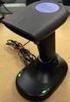 QuickScan QS6500/QS6500BT Product Reference Guide PSC Inc 959 Terry Street Eugene, Oregon 97402 Telephone: (541) 683-5700 Fax: (541) 345-7140 An Unpublished Work - All rights reserved. No part of the contents
QuickScan TM Lite QW2100
 QuickScan TM Lite QW2100 General Purpose Corded Handheld Linear Imager Bar Code Reader Product Reference Guide Datalogic Scanning, Inc. 959 Terry Street Eugene, Oregon 97402 USA Telephone: (541) 683-5700
Bar Code CCD Scanner OPERATION MANUAL
 ISO 9002 Certified Lead with technology Win customers with service Bar Code CCD Scanner OPERATION MANUAL 69 Jarltech International Inc. 1998. All rights reserved. Under the copyright laws, this manual
METROLOGIC INSTRUMENTS INC. MetroSelect Single-Line Configuration Guide
 METROLOGIC INSTRUMENTS INC. MetroSelect Single-Line Configuration Guide Copyright 2005 by Metrologic Instruments, Inc. All rights reserved. No part of this work may be reproduced, transmitted, or stored
PowerScan 7000 2D Imager
 PowerScan 7000 2D Imager Product Reference Guide Datalogic Scanning, Inc. 959 Terry Street Eugene, Oregon 97402 Telephone: (541) 683-5700 Fax: (541) 345-7140 An Unpublished Work - All rights reserved.
Gryphon I GD4100/GM4100
 Gryphon I GD4100/GM4100 General Purpose Handheld Linear Imager Barcode Reader Product Reference Guide Datalogic Scanning, Inc. 959 Terry Street Eugene, Oregon 97402 USA Telephone: (541) 683-5700 Fax: (541)
Register your product and get support at www.philips.com/dictation DPM8500. Barcode scanner configuration guide
 Register your product and get support at www.philips.com/dictation DPM8500 Barcode scanner configuration guide Table of contents 1 Introduction 5 Operational Parameters 5 Parameter defaults 5 2 Set default
DUET / VS800 Scanner. DUET Scanner VS800 Scanner. Programming Kit
 DUET / VS800 Scanner DUET Scanner VS800 Scanner Programming Kit PSC Scanning, Inc. 959 Terry Street Eugene, Oregon 97402 Telephone: (541) 683-5700 Telefax: (541) 345-7140 PSC and the PSC logo are registered
Datalogic Scanning, Inc. 959 Terry Street Eugene, Oregon 97402 Telephone: (541) 683-5700 Fax: (541) 345-7140
 Datalogic Scanning, Inc. 959 Terry Street Eugene, Oregon 97402 Telephone: (541) 683-5700 Fax: (541) 345-7140 An Unpublished Work - All rights reserved. No part of the contents of this documentation or
MS100 Bar Code Pen Reader
 MS100 Bar Code Pen Reader AdventureJan General Advisory Improper handling, storage, environmental influences and /or product modification can lead to problems during use. This is particularly true if repairs
Barcode Scanner User Manual V6.6.2
 Barcode Scanner User Manual V6.6.2 CONTENTS.......................................................................................... 1 1 2 2 3 4 13 14 15 17 17 19 19 20 22 23 23 28 29 33 42 60 65 85 87
Programming Reference Guide HP USB Barcode Scanner
 Programming Reference Guide HP USB Barcode Scanner Document Part Number: 430944-002 August 2006 Print this document before setting up the HP USB Barcode Scanner. The document provides the programming bar
BCST-20 Barcode Scanner. Instruction Manual. www.inateck.com
 BCST-20 Barcode Scanner Instruction Manual www.inateck.com IMPORTANT NOTICE Safety Precaution * DO NOT disassemble the scanner, or place foreign matter into the scanner causing a short circuit or circuit
QuickScan TM L QD 2300 Bar Code Scanner
 QuickScan TM L QD 2300 Bar Code Scanner Product Reference Guide Datalogic ADC, Inc. 959 Terry Street Eugene, OR 97402 USA Telephone: (541) 683-5700 Fax: (541) 345-7140 2007-2014 Datalogic ADC, Inc. An
Wireless Laser Barcode Scanner ils 6300BU. User s Manual
 Wireless Laser Barcode Scanner ils 6300BU User s Manual FCC Compliance This equipment has been tested and found to comply with the limits for a Class A digital device, pursuant to Part 15 of the FCC Rules.
Gryphon I GD44XX/GBT4400 General Purpose Handheld Area Imager Bar Code Reader
 Gryphon I GD44XX/GBT4400 General Purpose Handheld Area Imager Bar Code Reader Product Reference Guide Datalogic Scanning, Inc. 959 Terry Street Eugene, Oregon 97402 USA Telephone: (541) 683-5700 Fax: (541)
Barcode Magstripe. Decoder & Scanner. Programming Manual
 Barcode Magstripe Decoder & Scanner Programming Manual CONTENTS Getting Started... 2 Setup Procedures... 3 Setup Flow Chart...4 Group 0 : Interface Selection... 5 Group 1 : Device Selection for keyboard
MetroSelect. Single-Line Scanner. Configuration Guide
 MetroSelect Single-Line Scanner Configuration Guide Disclaimer Honeywell International Inc. ( HII ) reserves the right to make changes in specifications and other information contained in this document
Gryphon Family General Purpose Handheld Linear Imager or Laser Bar Code Readers
 Gryphon Family General Purpose Handheld Linear Imager or Laser Bar Code Readers Gryphon I GD4100/GM4100 Gryphon BT4100/ L GD4300 Product Reference Guide Datalogic Scanning, Inc. 959 Terry Street Eugene,
METROLOGIC INSTRUMENTS, INC. Area Imaging Bar Code Supplemental Configuration Guide
 METROLOGIC INSTRUMENTS, INC. Area Imaging Bar Code Supplemental Configuration Guide Copyright 2007 by Metrologic Instruments, Inc. All rights reserved. No part of this work may be reproduced, transmitted,
Wireless Scanner. User s Manual - MS910 - Version 1.0
 Wireless Scanner - MS910 - User s Manual Version 1.0 Table of Contents Chapter 1 Overview... 1 Introducing the MS910... 1 Package Contents... 2 Chapter 2 Installation and Connection... 5 Connecting (Pairing)
TaoTronics Laser Barcode Scanner User s Manual
 TaoTronics Laser Barcode Scanner User s Manual SETUP from PC keyboard For KBW or KBW/RS232 interface 1 Features * Simple installation,keyboard Wedge Serial, Wand Emulation tc * Superior keyboard wedge
TMCT-10 Barcode Scanner User Manual. 102, 5661-99 St. Edmonton, AB T6E 3N8 Ph. 780.988.0215 Fax 780.988.0465
 TMCT-10 Barcode Scanner User Manual 102, 5661-99 St. Edmonton, AB T6E 3N8 Ph. 780.988.0215 Fax 780.988.0465 IMPORTANT NOTICE Safety Precaution * DO NOT disassemble the scanner, or place foreign matter
Gryphon 2D Family General Purpose Handheld Area Imager Bar Code Reader Gryphon I GD44XX/GBT4400/GM440X
 Gryphon 2D Family General Purpose Handheld Area Imager Bar Code Reader Gryphon I GD44XX/GBT4400/GM440X Product Reference Guide Datalogic Scanning, Inc. 959 Terry Street Eugene, Oregon 97402 USA Telephone:
NOTICE: respective owner. Note: Specification is subject to changes without. notice.
 0 NOTICE: This device complies with Part 15 of the FCC Rules. Operation shall be subject to the following two conditions: (1) This device may not cause harmful interface, and (2) This device must accept
SocketScan Software Advanced Programming Guide
 SocketScan Software Advanced Programming Guide A guide to help you program symbology and parameter settings for the following Socket barcode scanning products: Secure Digital Scan Card Series 3 CompactFlash
Gryphon 2D Family General Purpose Handheld Area Imager Bar Code Reader Gryphon I GD44XX/GBT4400/GM440X
 Gryphon 2D Family General Purpose Handheld Area Imager Bar Code Reader Gryphon I GD44XX/GBT4400/GM440X Product Reference Guide Datalogic Scanning, Inc. 959 Terry Street Eugene, Oregon 97402 USA Telephone:
LI4278 PRODUCT REFERENCE GUIDE
 LI4278 PRODUCT REFERENCE GUIDE LI4278 PRODUCT REFERENCE GUIDE 72E-151834-01 Revision A January 2012 ii LI4278 PRODUCT REFERENCE GUIDE No part of this publication may be reproduced or used in any form,
S302D. Programming Guide. 2D Imaging Barcode Scanner. Advanced Handheld High-Speed Laser Scanner
 S302D 2D Imaging Barcode Scanner Programming Guide 1 Advanced Handheld High-Speed Laser Scanner Revision History Changes to the original manual are listed below: Version Date Description of Version 1.0
1166 / 1266 Barcode Scanner
 1166 / 1266 Barcode Scanner Setup barcodes included. Version 3.03 Copyright 2005~2014 CIPHERLAB CO., LTD. All rights reserved The software contains proprietary information of CIPHERLAB CO., LTD.; it is
Bluetooth Version FUZZYSCAN FAMILY. Quick Start Guide WIRELESS SCANNER
 Bluetooth Version FUZZYSCAN FAMILY Quick Start Guide WIRELESS SCANNER Getting Familiar with Your FuzzyScan Thank you for choosing Cino FuzzyScan Bluetooth Cordless Image Scanner. Powered by the combination
CD-3860 Bar Code Scanner User s Manual
 CD-3860 Bar Code Scanner User s Manual Important Notice Rev. Original No warranty of any kind is made in regard to this material, including, but not limited to, implied warranties of merchantability or
Enter/Exit programming
 P/N: MUL-53247-02 Enter/Exit programming (This barcode is also found at back cover page.) Framed values are default values. All Rights Reserved This guide is designed for advanced settings of Hand Free
CT20 Barcode Scanner User Manual
 CT20 Barcode Scanner User Manual IMPORTANT NOTICE Safety Precaution * DO NOT disassemble the scanner, or place foreign matter into the scanner cause a short circuit or circuit damage. * DO NOT expose the
Symbol LS9203. Product Reference Guide
 Symbol LS9203 Product Reference Guide Symbol LS9203 Product Reference Guide 72E-71538-03 Revision A February 2007 Motorola, Inc. 2007. All rights reserved. No part of this publication may be reproduced
Enter/Exit Programming Mode
 Enter/Exit Programming Mode (This barcode can also be found at back cover page.) Framed values are default values. IMPORTANT NOTICE No warranty of any kind is made in regard to this material, including,
MK-5200 2D Imager Barcode Scanner Configuration Guide
 MK-5200 2D Imager Barcode Scanner Configuration Guide V 1.2 Programming the Engine Code Programming On/Off Read the barcode to activate Code Programming function. One or more Code Programming barcodes
MD6 Series 2D Barcode Scanner
 MD6 Series 2D Barcode Scanner User Manual Version: MD6_UM_EN_V1.1.9 2 Warning: Ensure that the optional DC adapter works at +5V, especially for the RS-232 interface cable. NOTICE: 1. All software, including
Metrologic MS1690 2D Scanner Installation Guide
 Metrologic MS1690 2D Scanner Installation Guide Revision 1.0 Revision History 1.0 04/17/2007 Initial Release The latest version of this document can be found in the following places: Internally for Cerner
ScanMaster for Scanner Configuration
 ScanMaster for Scanner Configuration For 1 Series Barcode Scanners: 1070, 1500, 1502 (1D, tethered) 1560, 1562, 1660, 1661 (1D, cordless) 1504, 1704 (2D, tethered) 1564, 1664 (2D, cordless) Version 1.30
MetroSelect Programming Guide. MLPN 2407/December 1998
 MetroSelect Programming Guide MLPN 2407/December 1998 Locations: USA Corporate Headquarters Europe Metrologic Instruments, Inc. Metrologic Instruments GmbH 90 Coles Road Dornierstrasse 2 Blackwood, NJ
METROLOGIC INSTRUMENTS, INC. IS4225 ScanGlove USB Addendum for the MetroSelect Single-Line Configuration Guide
 METROLOGIC INSTRUMENTS, INC. IS4225 ScanGlove USB Addendum for the MetroSelect Single-Line Configuration Guide Copyright 2005 by Metrologic Instruments, Inc. All rights reserved. No part of this work may
OPR3301 USER MANUAL (OS version: RBJV0211 / Application version: RFJ35530)
 CAUTION: This information is subject to change without prior notice. Copyright 2010, Opticon Sensors Europe BV, all rights reserved. This manual may not, in whole or in part, be copied, photocopied, reproduced,
SR30. Handheld Scanner. User s Guide
 SR30 Handheld Scanner User s Guide Intermec Technologies Corporation Worldwide Headquarters 6001 36th Ave.W. Everett, WA 98203 U.S.A. www.intermec.com The information contained herein is provided solely
1560/1562 Barcode Scanner
 1560/1562 Barcode Scanner Setup barcodes included. Version 1.13 Copyright 2009~2014 CIPHERLAB CO., LTD. All rights reserved The software contains proprietary information of CIPHERLAB CO., LTD.; it is provided
Virtual Integrated Design Getting started with RS232 Hex Com Tool v6.0
 Virtual Integrated Design Getting started with RS232 Hex Com Tool v6.0 Copyright, 1999-2007 Virtual Integrated Design, All rights reserved. 1 Contents: 1. The Main Window. 2. The Port Setup Window. 3.
Barcode reader setup manual
 Barcode reader setup manual Setup procedures are as follows: 1 Scan Begin setting 2 Scan your required function and its corresponding barcode 3 Scan End setting 4 All the setting parameters will be saved
USER'S GUIDE NUSCAN 2100 Series
 BARCODE SCANNER USER'S GUIDE NUSCAN 2100 Series Table of Contents 1. Limited Warranty...1 2. Introduction...2 3. Contents...3 4. Barcode Symbologies...3 5. Product Introduction...3 6. Installation...4
Barcode Scanning Made Easy. Programming Guide
 Barcode Scanning Made Easy Programming Guide CCD Scanner Programming Guide Please Read Note: The Wasp WCS3900 Series Scanners are ready to scan the most popular barcodes out of the box. This manual should
MK-SERIE 1000/1500/2000 AllOfBarcode.de Michael Krug - 83278Traunstein BARCODE SCANNER
 MK-SERIE 1000/1500/2000 AllOfBarcode.de Michael Krug - 83278Traunstein BARCODE SCANNER Configuration Guide - 1 - Table of Contents Chapter 1 System Information 1.1 About this manual 3 1.2 How to set up
Voyager 9520/40 Voyager GS9590 Eclipse 5145
 Voyager 9520/40 Voyager GS9590 Eclipse 5145 Quick Start Guide Aller à www.honeywellaidc.com pour le français. Vai a www.honeywellaidc.com per l'italiano. Gehe zu www.honeywellaidc.com für Deutsch. Ir a
Quick Installation. A Series of Intelligent Bar Code Reader with NeuroFuzzy Decoding. Quick Installation
 Quick Installation A Series of Intelligent Bar Code Reader with NeuroFuzzy Decoding This chapter intends to get your new FuzzyScan scanner working with your existing system within minutes. General instructions
MATRIX 210. Host Mode Programming
 MATRIX 210 Host Mode Programming Datalogic Automation Srl Via Lavino, 265 40050 - Monte S. Pietro Bologna - Italy Matrix 210 Host Mode Programming Ed.: 04/2011 This manual refers to software release 6.10
Symbol LS1203. Product Reference Guide
 Symbol LS1203 Product Reference Guide LS1203 Product Reference Guide 72E-73953-04 Revision A November 2012 ii Symbol LS1203 Product Reference Guide Motorola Solutions, Inc. All rights reserved. No part
Keep it Simple Timing
 Keep it Simple Timing Support... 1 Introduction... 2 Turn On and Go... 3 Start Clock for Orienteering... 3 Pre Start Clock for Orienteering... 3 Real Time / Finish Clock... 3 Timer Clock... 4 Configuring
Symbol CS3000 Series Scanner Product Reference Guide
 Symbol CS3000 Series Scanner Product Reference Guide Symbol CS3000 Series Scanner Product Reference Guide 72E-136088-01 July 2010 ii Symbol CS3000 Series Scanner Product Reference Guide 2010 by Motorola,
2 Advanced Scanner Configuration Guide
 2 Advanced Scanner Configuration Guide Table of contents Introduction...4 Operational Parameters...4 Set Default Parameter...7 Default Parameters...7 Beeper Volume...7 Beeper Tone...8 Beeper Frequency
CS3000 SERIES SCANNER PRODUCT REFERENCE GUIDE
 CS3000 SERIES SCANNER PRODUCT REFERENCE GUIDE CS3000 SERIES SCANNER PRODUCT REFERENCE GUIDE 72E-136088-04 Revision A February 2013 ii CS3000 Series Scanner Product Reference Guide 2013 Motorola Solutions,
OPN_DL UTILITY SOFTWARE. INSTALLATION AND USER GUIDE - v2.03
 OPN_DL UTILITY SOFTWARE INSTALLATION AND USER GUIDE - v2.03 Electronic Reading Systems Ltd 14 Wolseley Business Park Kempston Beds MK42 7PW Tel: 01234 855300 Fax: 01234 855446 CONTENTS 1.0 INTRODUCTION
User Guide HP USB Barcode Scanner for Point of Sale System
 User Guide HP USB Barcode Scanner for Point of Sale System Document Part Number:419218-002 August 2006 Print this document before setting up the HP USB Barcode Scanner. The document provides the programming
Bluetooth to Serial Adapter
 Bluetooth to Serial Adapter Third Edition, Oct 2007 Version 3.0 771-BTS1009C3-001 Contents 1.0 Features....P.2 2.0 Package Content....P.2 3.0 Hard Drives Requirement.P.2 4.0 Specifications.P.3 5.0 Pin
Symbol LS2208 Product Reference Guide
 Symbol LS2208 Product Reference Guide Symbol LS2208 Product Reference Guide 72E-58808-07 Revision A August 2010 ii Symbol LS2208 Product Reference Guide 2007-2010 by Motorola, Inc. All rights reserved.
Synergy Controller Application Note 4 March 2012, Revision F Tidal Engineering Corporation 2012. Synergy Controller Bar Code Reader Applications
 Synergy Controller Bar Code Reader Applications Synergy Controller with Hand Held Products Bar Code Scanner OCR-A Labeled Part Introduction The value of the ubiquitous Bar Code Scanner for speeding data
QUICK START GUIDE. Wasp WLS 9500. www.waspbarcode.com
 QUICK START GUIDE Wasp WLS 9500 www.waspbarcode.com LED Scan Window Beeper Trigger CORD ATTACHMENT Model Number and Serial Number appear here. Cable interface Interface cable modular connector Interface
BI-300. Barcode configuration and commands Manual
 BI-300 Barcode configuration and commands Manual 1. Introduction This instruction manual is designed to set-up bar code scanner particularly to optimize the function of BI-300 bar code scanner. Terminal
Revision History. Advanced Handheld CCD/Laser Scanner
 Revision History Changes to the original manual are listed below: Version Date Description of Version 1.0 September 9, 2010 Initial release 1.1 February 18, 2011 Added Blink mode selections. i Important
SUDT AccessPort TM Advanced Terminal / Monitor / Debugger Version 1.37 User Manual
 SUDT AccessPort TM Advanced Terminal / Monitor / Debugger Version 1.37 User Manual Version 1.0 - January 20, 2015 CHANGE HISTORY Version Date Description of Changes 1.0 January 20, 2015 Initial Publication
1500/1502 Series Barcode Scanner
 1500/1502 Series Barcode Scanner Setup barcodes included. Version 1.20 Copyright 2008~2015 CIPHERLAB CO., LTD. All rights reserved The software contains proprietary information of CIPHERLAB CO., LTD.;
QUICK START GUIDE Bluetooth Cordless Hand Scanner (CHS)
 QUICK START GUIDE Bluetooth Cordless Hand Scanner (CHS) 1D Imager Models CHS 7Ci, 7Di, 7DiRx LED Trigger button Power button (also for ios Keyboard Pop-up) Model shown: CHS 7Di This document pertains to
MIRROR VT/5250 Terminal Emulation
 MIRROR VT/5250 Terminal Emulation 9300 / 9400 / 9500CE / 9600 Series Mobile Computers DOC Version 1.12 Copyright 2007~ 2009 CIPHERLAB CO., LTD. All rights reserved The software contains proprietary information
GateKeeper: Barcode Scanner Setup. Rev. 20130410
 GateKeeper: Barcode Scanner Setup Table of Contents I. Introduction...3 A. Why Use a Serial Interface Barcode Scanner?...3 B. Adding a Serial Port to your computer...3 C. GateKeeper and Member Check-In...3
Baracoda RoadRunners. User Guide. This document is to be used with the Baracoda RoadRunners. Baracoda RoadRunners
 User Guide Baracoda RoadRunners This document is to be used with the Baracoda RoadRunners Baracoda RoadRunners Package contents Check that you have the following items. Contact your reseller if any item
SG20T. Tethered Scanner. User s Guide
 SG20T Tethered Scanner User s Guide Intermec by Honeywell 6001 36th Ave.W. Everett, WA 98203 U.S.A. www.intermec.com The information contained herein is provided solely for the purpose of allowing customers
Magellan TM 3200VSi. On-Counter Vertical Presentation Scanner. Product Reference Guide
 Magellan TM 3200VSi On-Counter Vertical Presentation Scanner Product Reference Guide Datalogic Scanning, Inc. 959 Terry Street Eugene, Oregon 97402 USA Telephone: (541) 683-5700 Fax: (541) 345-7140 An
Symbol CS3000 Series Scanner Product Reference Guide
 Symbol CS3000 Series Scanner Product Reference Guide Symbol CS3000 Series Scanner Product Reference Guide 72E-136088-02 October 2010 ii Symbol CS3000 Series Scanner Product Reference Guide 2010 by Motorola,
PM1122 INT DIGITAL INTERFACE REMOTE
 PM1122 INT DIGITAL INTERFACE REMOTE PM1122 INT front panel description: 1. Clear wireless remotes knob: push this button for more than 2 seconds to clear the list of all assigned wireless remote settings