
Impactful Innovations
|
|
|
- Hugo Johnson
- 10 years ago
- Views:
Transcription
1 Impactful Innovations Lessons from Family Agriculture in Latin America and the Caribbean Abridged version

2 Impactful Innovations

3

4 Impactful Innovations: Lessons from Family Agriculture in Latin America and the Caribbean Edited by Priscila Henríquez and Hugo Li Pun

5 Inter-American Development Bank IDB (2014) Inter-American Institute for Cooperation on Agriculture IICA (2014) Impactful innovations: lessons from family agriculture in Latin America and the Caribbean by IICA and IDB is published under license from Creative Commons Attribution- NonCommercial-ShareAlike 3.0 unported Available in PDF format at and IICA encourages the fair use of this document. Proper citation is requested. This publication is also available in electronic (PDF) format from IICA s Web site at and Layout: Carlos Umaña Cover design: Karla Cruz Printed: Imprenta IICA Cover photo: Rafael Cartin, Depositphotos.com, and others (permission granted based on a case-by-case attribution within the document). Impactful innovations: lessons from family agriculture in Latin America and the Caribbean / Edited by Priscila Henríquez; Hugo Li Pun -- San José, C.R.: IICA, BID, XVI, 72 p.; 19,05 x 26,67 cm. ISBN Family farms 2. Innovation 3. Small enterprises 4. Markets 5. Economic competition I. Henríquez, Priscila II: Li Pun, Hugo III. IICA IV. BID V. Title AGRIS DEWEY E San José, Costa Rica 2014

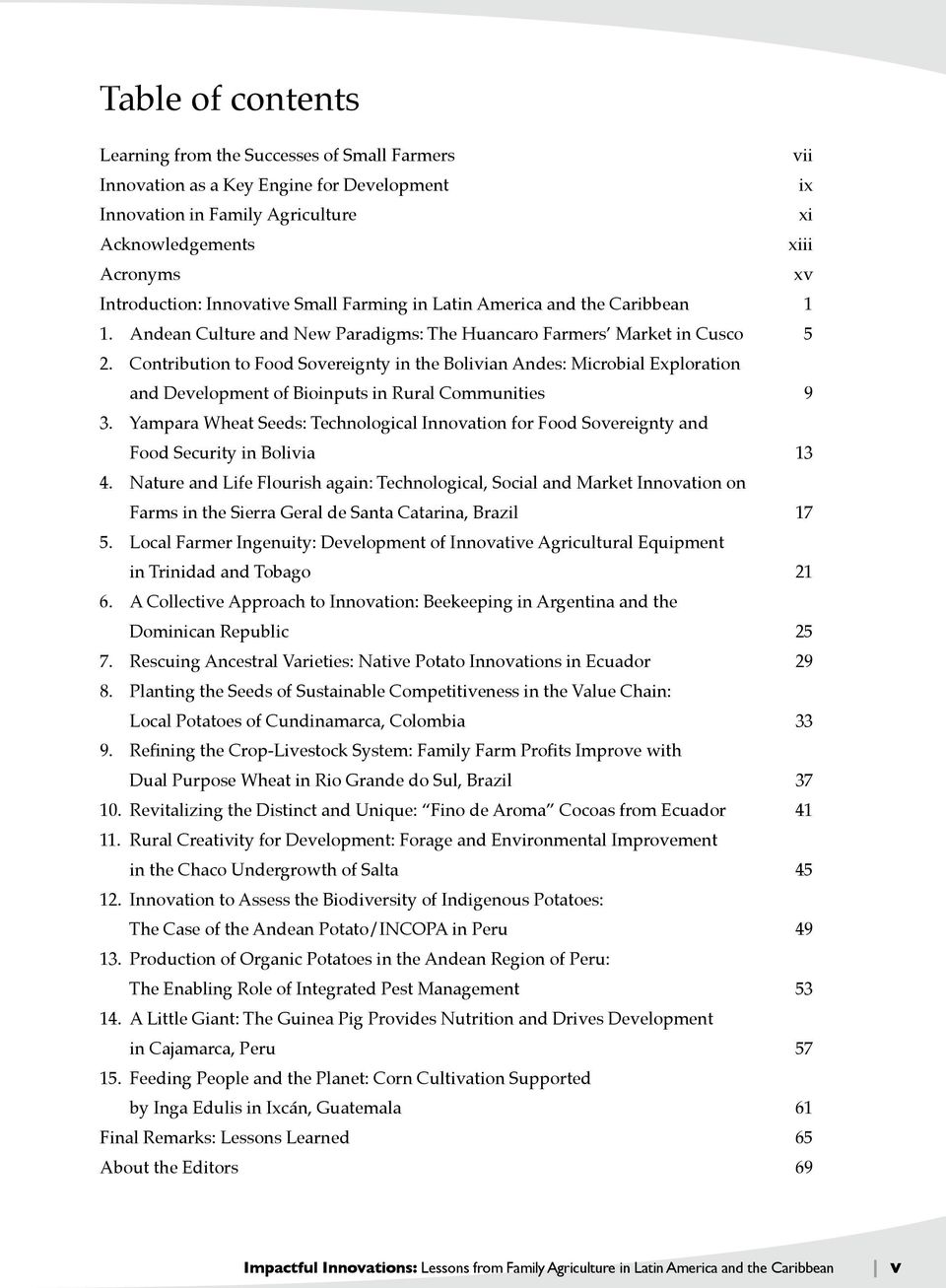
6 Table of contents Learning from the Successes of Small Farmers vii Innovation as a Key Engine for Development ix Innovation in Family Agriculture xi Acknowledgements xiii Acronyms xv Introduction: Innovative Small Farming in Latin America and the Caribbean 1 1. Andean Culture and New Paradigms: The Huancaro Farmers Market in Cusco 5 2. Contribution to Food Sovereignty in the Bolivian Andes: Microbial Exploration and Development of Bioinputs in Rural Communities 9 3. Yampara Wheat Seeds: Technological Innovation for Food Sovereignty and Food Security in Bolivia Nature and Life Flourish again: Technological, Social and Market Innovation on Farms in the Sierra Geral de Santa Catarina, Brazil Local Farmer Ingenuity: Development of Innovative Agricultural Equipment in Trinidad and Tobago A Collective Approach to Innovation: Beekeeping in Argentina and the Dominican Republic Rescuing Ancestral Varieties: Native Potato Innovations in Ecuador Planting the Seeds of Sustainable Competitiveness in the Value Chain: Local Potatoes of Cundinamarca, Colombia Refining the Crop-Livestock System: Family Farm Profits Improve with Dual Purpose Wheat in Rio Grande do Sul, Brazil Revitalizing the Distinct and Unique: Fino de Aroma Cocoas from Ecuador Rural Creativity for Development: Forage and Environmental Improvement in the Chaco Undergrowth of Salta Innovation to Assess the Biodiversity of Indigenous Potatoes: The Case of the Andean Potato/INCOPA in Peru Production of Organic Potatoes in the Andean Region of Peru: The Enabling Role of Integrated Pest Management A Little Giant: The Guinea Pig Provides Nutrition and Drives Development in Cajamarca, Peru Feeding People and the Planet: Corn Cultivation Supported by Inga Edulis in Ixcán, Guatemala 61 Final Remarks: Lessons Learned 65 About the Editors 69 Impactful Innovations: Lessons from Family Agriculture in Latin America and the Caribbean v
7

8 Learning from the Successes of Small Farmers One of the major development challenges faced in Latin America and the Caribbean (LAC) is the need to strengthen family agriculture, as it is responsible for producing the majority of the food consumed in the region. These producers are part of the solution to the food insecurity that exists in our countries. Many small farmers are women and youth, who toil on their farms every day, bring their produce to the markets, and keep themselves informed about climate conditions, product prices, and technologies. Innovation in family agriculture is essential for strengthening the productivity, competitiveness and sustainability of the agricultural sector, and also for contributing to rural development. For these reasons, the Regional Fund for Agricultural Technology FONTAGRO- has made the improvement of family agriculture a priority, with a focus on market linkages, climate change adaptation and the sustainable use of natural resources. These are three of the major challenges faced by small producers, and innovation is part of the solution. Strategies for inclusive rural development need to be based on accurate compilation, systematization and dissemination of lessons learned from previous experiences. As such, FONTAGRO, along with its sponsors - the Inter-American Development Bank and the Inter-American Institute for Cooperation on Agriculture, organized a competition to learn about successful examples of innovation in family agriculture in LAC. The results surpassed the expectations; 105 proposals highlighting technological, organizational and institutional innovations were received from several countries and ecological regions. This publication summarizes the most significant 15 cases. We hope that this document will be useful to those responsible for formulating agricultural development policies and that it will promote greater investment in agricultural research and innovation in our countries. We also hope that these experiences will inform the efforts of professionals working in the rural areas by offering models and practices that have been successfully implemented under a wide variety of conditions. On behalf of the Board of FONTAGRO, it is my pleasure to share this publication with you. Rafael Pérez Duvergé President of FONTAGRO Impactful Innovations: Lessons from Family Agriculture in Latin America and the Caribbean vii
9

10 Innovation as a Key Engine for Development Agricultural innovation is more important today than ever before given the increasing demand for food, and the significant environmental challenges that require smarter ways of producing as well as efficient natural resource use. The Inter-American Institute for Cooperation on Agriculture (IICA) has prioritized innovation as a means to strengthen productivity, competitiveness and trade in agriculture, and to contribute to food security and development in its member countries. For these reasons, the Institute is proud to be a part of FONTAGRO s efforts to document the successful cases of innovation in family agriculture, summarized in this publication. Innovation has many facets that are not always developed in a linear fashion. These include local experimentation, research and development, education, extension, technology transfer and training. In addition, it requires partnerships and new ways of managing knowledge. This is why the Institute is actively engaged with many stakeholders and partners in the innovation process. IICA works alongside the farmers who assume the risks inherent in agricultural production. Family agriculture, an innovator par excellence, is an essential sector for food security and development. There are currently approximately 15 million small farms in the region covering 400 million hectares; of these, at least four million producers depend entirely on their farms. The cases presented in this publication are convincing proof of the high innovative capacity of this group of entrepreneurs. IICA also works with the governments to support the development of an appropriate environment and policies for promoting innovation. Developing such policies is a task involving many agencies, not only those that conduct research and produce technology. Several cases featured in this book clearly demonstrate the important role played by government agencies in creating an enabling environment and facilitating the processes that lead to technological, organizational and institutional innovations. Many countries have made considerable economic and social progress by harnessing knowledge and technologies from outside of the region and adapting these to their own reality. This knowledge and technology often comes from the private companies. Therefore, the Institute is making efforts to develop closer ties with the private sector to validate and disseminate innovative technologies that enhance the competitiveness of family agriculture. Adapting is also a way of innovating, as shown in several cases in this publication. Impactful Innovations: Lessons from Family Agriculture in Latin America and the Caribbean ix
11 This book is the result of the efforts of many people, but primarily by the farmers, traders, small processors, nongovernmental organizations, national and international research centers and academic institutions, which have made the advances described in this publication possible. We express our sincere appreciation and dedicate this work to them. Dr. Víctor Villalobos Arámbula Director General Inter-American Institute for Cooperation on Agriculture x Inter-American Institute for Cooperation on Agriculture
12 Innovation in Family Agriculture Family agriculture in our region is particularly important for food security and rural development. This sector encompasses the large majority of farms in LAC and plays a dominant role in the use of natural resources for agricultural production. A number of recent studies have highlighted the importance of family agriculture and the need to promote innovation to improve both the sector s competitiveness as well as its contribution to rural poverty reduction. Nevertheless, there are obstacles to achieving these goals, including the limited scale of production, the fragmented supply and inadequate links to markets. Through integrated and inclusive approaches, the Inter-American Development Bank is carrying out a series of actions to promote agricultural development in the region in general, and innovation in family agriculture, in particular. To this end, the Bank has been collaborating with FONTAGRO and IICA on several activities, including the recent Successful Cases of Innovation in Family Agriculture Competition. We believe that these activities allow us to document cases and identify lessons that can serve to inform the design of effective rural development initiatives. We are confident that by providing concrete examples of success with current and potential impacts, this publication will be useful for those formulating innovation policies, as well as for all professionals who work in this field. Dr. Héctor R. Malarín Head of the Environment, Rural Development and Disaster Risk Management Division Inter-American Development Bank Impactful Innovations: Lessons from Family Agriculture in Latin America and the Caribbean xi

13

14 Acknowledgements We give special thanks to all the small farmers and their families whose hard work were highlighted in the 105 cases received for the Successful Cases of Innovation in Family Agriculture Competition sponsored by FONTAGRO, IICA, and the IDB. We would also like to thank those who submitted the success stories for their efforts in preparing the nominations. These experiences and the valuable information on innovations developed in the region will be kept in a database available in the FONTAGRO website ( We must also make special mention of the resourcefulness, tenacity and coordination of those small scale producers, processors and traders who executed the 15 projects included in this report. We thank them for providing all the information required and for participating actively in the documentation process. We would like to extend our gratitude to the sponsors of the competition - the Fund s Board of Directors and the management of IICA and the IDB - for their vision and commitment to supporting these activities. Thank you to the professionals who documented the success stories, Nadia Chalabi, Iciar Pavez, Luis Ginocchio, Fernando Crespo, Enrique Nolte, Juergen Kroschel, Miguel Ordinola, and Humberto Gómez, as well as their teams, for their invaluable work which was carried out with objectivity and dedication. We would also like to recognize the work of the professionals from FONTAGRO, the IDB and IICA who participated in the pre-selection of the projects, and those of the external review panel for their professionalism and impartiality in the selection process. We note in particular the contributions of Nicolás Mateo, Enrique Alarcón (may he rest in peace), Daniel Hincapié, César Falconi, Nancy Jesurún- Clements and Eugenia Saini for the technical reading and review of the 15 cases included in this publication. We also thank Kelly Witkowski for assisting with translation and for her valuable suggestions to improve the English version. We greatly appreciate the efforts of Willem Janssen, not only for his input in the conceptualization of the competition, but also for his technical review of the projects. Finally, we would like to thank Rajul Pandya-Lorch, Sivan Yosef, and Marian Fusch-Cash for their valuable input during the design phase of this initiative, which helped to steer us toward the success that was achieved. The Editors Impactful Innovations: Lessons from Family Agriculture in Latin America and the Caribbean xiii
15

16 Acronyms AGRECO AGROPIA ANW APOMIPE APROAGRO ARPAC AVSF BFE CAPAC CEDAF CEDEPAS CEDINCO CIAL CIBE CIMMYT CIP CONPAPA CORPOICA DOI DPW EMBRAPA EPCP EPPR EPR ESPOL EU FAO FFS FOAR FONTAGRO FORAGRO FORTIPAPA Ecological Farmers Association in the Hillsides of Santa Catarina Organic Agriculture for the World Argentine Northwest Support Program to Micro and Small Enterprises Association of Agricultural Producers Regional Association of Agricultural Producers of Cusco Agronomes et Vétérinaires Sans Frontières Biofertilizers with fungicidal effect Quality Agricultural Productivity Chains Center for Agricultural and Forestry Development Ecumenical Social Advocacy and Action Center Center for the Integrated Development of Communities Local Agricultural Research Committee Biotechnological Research Center of Ecuador International Maize and Wheat Improvement Center International Potato Center Consortium of Potato Producers Colombian Agricultural Research Corporation Organizational Development for Innovation Dual Purpose Wheat Brazilian Agricultural Research Corporation Production Chain Participatory Approach Empowerment of Small Producers Rural Participatory Undertakings Coastal Polytechnic College European Union Food and Agriculture Organization of the United Nations Farmer Field Schools Argentine Fund for Horizontal Cooperation Regional Fund for Agricultural Technology Forum for the Americas on Agricultural Research and Technology Development Strengthening of Potato Seed Research and Production Impactful Innovations: Lessons from Family Agriculture in Latin America and the Caribbean xv

17 GDP GMP HACCP IADB ICA IICA INALPROCES INCOPA INIA INIAF INIAP INIAP INTA IPM IRR LAC MCCH MMFN MOL MPA NGOs NPV PASA PBA Corporation PROAPI PROINPA RGS TAG TTABA AVSF-CICDA Gross Domestic Product Good Manufacturing Practices Hazard Analysis and Critical Control Points Inter-American Development Bank Colombian Agricultural Institute Inter-American Institute for Cooperation on Agriculture Processed Food Industry Project for Potato Innovation and Competitiveness in Peru National Agricultural Innovation Institute (Peru) National Institute for Agricultural Livestock and Forestry Innovation Autonomous National Institute for Agricultural and Livestock Research National Institute for Agricultural and Livestock Research National Agricultural Technology Institute (Argentina) Integrated Pest Management Internal Rate of Return Latin America and the Caribbean Maquita Cushunchic Trading as Brothers Northern Border Municipality Group Local Microorganisms Ministry of Food Production Non-governmental Organizations Net Present Value Food Security Support Program Foundation for the Sustainable and Participatory Development of Small Rural Producers Integrated Beekeeping Development Project (Argentina) Promotion and Research for Andean Products Foundation Rio Grande do Sul Technical Assistance Group Trinidad and Tobago Agri-business Association Veterinarians without Borders International Cooperation Center for Agricultural Development xvi Inter-American Institute for Cooperation on Agriculture
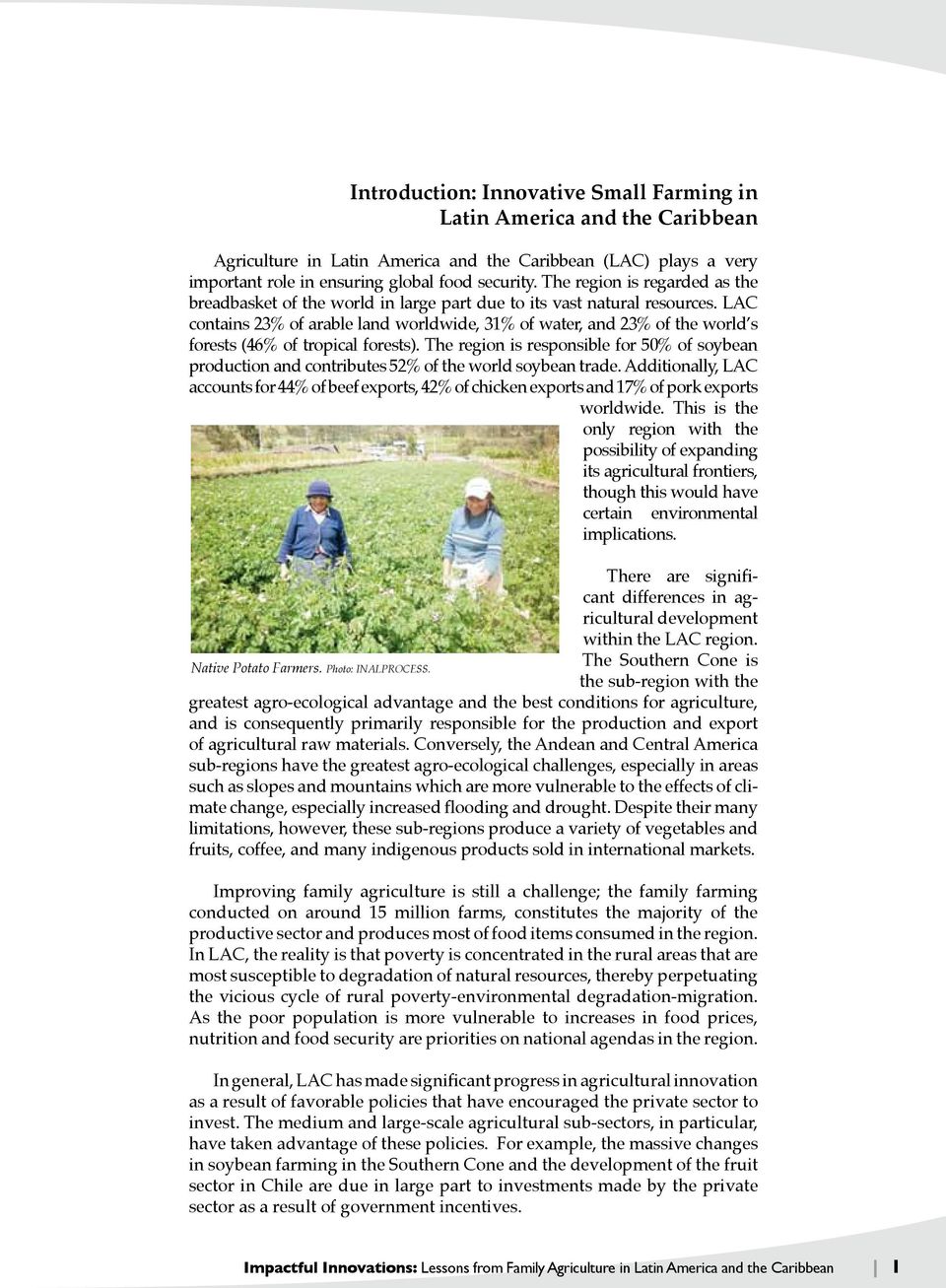
18 Introduction: Innovative Small Farming in Latin America and the Caribbean Agriculture in Latin America and the Caribbean (LAC) plays a very important role in ensuring global food security. The region is regarded as the breadbasket of the world in large part due to its vast natural resources. LAC contains 23% of arable land worldwide, 31% of water, and 23% of the world s forests (46% of tropical forests). The region is responsible for 50% of soybean production and contributes 52% of the world soybean trade. Additionally, LAC accounts for 44% of beef exports, 42% of chicken exports and 17% of pork exports worldwide. This is the only region with the possibility of expanding its agricultural frontiers, though this would have certain environmental implications. There are significant differences in agricultural development within the LAC region. Native Potato Farmers. The Southern Cone is Photo: INALPROCESS. the sub-region with the greatest agro-ecological advantage and the best conditions for agriculture, and is consequently primarily responsible for the production and export of agricultural raw materials. Conversely, the Andean and Central America sub-regions have the greatest agro-ecological challenges, especially in areas such as slopes and mountains which are more vulnerable to the effects of climate change, especially increased flooding and drought. Despite their many limitations, however, these sub-regions produce a variety of vegetables and fruits, coffee, and many indigenous products sold in international markets. Improving family agriculture is still a challenge; the family farming conducted on around 15 million farms, constitutes the majority of the productive sector and produces most of food items consumed in the region. In LAC, the reality is that poverty is concentrated in the rural areas that are most susceptible to degradation of natural resources, thereby perpetuating the vicious cycle of rural poverty-environmental degradation-migration. As the poor population is more vulnerable to increases in food prices, nutrition and food security are priorities on national agendas in the region. In general, LAC has made significant progress in agricultural innovation as a result of favorable policies that have encouraged the private sector to invest. The medium and large-scale agricultural sub-sectors, in particular, have taken advantage of these policies. For example, the massive changes in soybean farming in the Southern Cone and the development of the fruit sector in Chile are due in large part to investments made by the private sector as a result of government incentives. Impactful Innovations: Lessons from Family Agriculture in Latin America and the Caribbean 1
19 However, despite the significant progress achieved in the agricultural sector, it is clear that greater investment in agricultural science and technology is necessary. LAC invests a mere 1.14% of agricultural GDP in research (Stads and Beintema, 2009), a figure that masks significant differences between sub-regions and countries. In Central America no more than 0.5% of agricultural GDP is invested. The four largest countries, Brazil, Argentina, Mexico and Colombia, invest more than 80% of total regional public spending on agricultural research. Despite this low investment in science and technology in general, within the past two decades LAC has produced excellent examples of agricultural innovations with various stakeholders in the value chains, including family farmers. For example, there are initiatives in which community assets such as grains, roots and local tubers, tropical fruit trees and other crops have been revalued. Their productivity has improved using technology and in turn, innovative products have been placed on the market. Unfortunately, these cases have neither been adequately documented nor disseminated, and consequently, the lessons learned by local innovators have not yet been properly capitalized upon. Traditionally, LAC has been a source of genetic diversity of crops important for human consumption, as in the case of maize, potato and sweet potato; many crops and varieties grown on this continent are now being widely planted around the world. South-South cooperation between LAC and other regions must be increased, especially regarding technological and institutional knowledge, in order to improve small farming. In light of this situation, an important challenge for advancing the regional innovation agenda is to undertake a process of institutional transformation that better enables agricultural research and innovation. Given the differences in productivity as well as technological and scientific capabilities between countries, synergies must be created through cooperation among countries. It is also necessary to promote publicprivate partnerships that leverage knowledge for development. The lessons learned from successful projects, which are often available only in anecdotal form, must be disseminated. These challenges were recently discussed at a series of regional meetings promoted by the IDB, the Forum for the Americas on Agricultural Research and Technology Development (FORAGRO), IICA and FONTAGRO. It is from these discussions that the present initiative arose. This document summarizes the fifteen projects that were selected by a panel of international experts as those which best represent the technological, institutional and organizational innovations carried out with and by small farmers known as family farming - in LAC. This is the result of a hemisphere-wide competition organized in 2012 by FONTAGRO, with the aim of (1) showcasing success stories in which innovations having positive 2 Inter-American Institute for Cooperation on Agriculture
20 economic, social, and environmental impacts have been implemented and, (2) raising awareness regarding the importance of investing in innovation. The cases selected document the many successes achieved by producers, processors or traders who, alone or with occasional support from the public sector and NGOs, are increasing productivity, reaching more demanding markets, adding value to their products and obtaining better prices. Some of the examples indicate that these innovations, in addition to generating economic and productive benefits, are also resulting in environmental benefits. This demonstrates Beef cattle grazing in a field for dual purpose livestock Photo: Producer that increasing productivity does not have to conflict with environmental protection or the conservation of natural resources. The cases are organized according to the type of organization that submitted them, based on the guidelines established for the competition. The first five cases are examples of innovations achieved by the farmers and farmers organizations themselves. 1. Andean Culture and New Paradigms: The Huancaro Farmers Market in Cusco 2. Contribution to Food Sovereignty in the Bolivian Andes: Microbial Exploration and Development of Bioinputs in Rural Communities 3. Yampara Wheat Seeds: Technological Innovation for Food Sovereignty and Food Security in Bolivia 4. Nature and Life Flourish Again: Technological, Social and Market Innovation on Farms in La Sierra Geral of Santa Catarina, Brazil 5. Local Farmer Ingenuity: Development of Innovative Agricultural Equipment in Trinidad and Tobago The following six cases relate to national research and/or development institutions supporting family farming 6. A Collective Approach to Innovation: Beekeeping in Argentina and the Dominican Republic 7. Rescuing Ancestral Varieties: Native Potato Innovations in Ecuador 8. Planting the Seeds of Sustainable Competitiveness in the Value Chain: Local Potatoes of Cundinamarca, Colombia 9. Refining the Crop-Livestock System: Family Farm Profits Improve with Dual Purpose Wheat in Rio Grande do Sul, Brazil 10. Revitalizing the Distinct and Unique: Fino de Aroma Cocoas from Ecuador 11. Rural Creativity for Development: Forage and Environmental Improvement in the Chaco Undergrowth of Salta Impactful Innovations: Lessons from Family Agriculture in Latin America and the Caribbean 3

21 The last four cases are clear examples of the achievements of international agricultural research and/or development organizations in support of small farmers 12. Innovation to Assess the Biodiversity of Indigenous Potatoes: The Case of the Andean/INCOPA Potato in Peru 13. Production of Organic Potatoes in the Andean Region of Peru: The Enabling Role of Integrated Pest Management 14. A Little Giant: The Guinea Pig Provides Nutrition and Drives Development in Cajamarca, Peru 15. Feeding People and the Planet: Corn Cultivation supported by Inga Edulis in Ixcán, Guatemala. The majority of cases clearly show the link between the stakeholders in the production-trade value chain, indicating that innovation is present in each step. Finally, details on the lessons learned and several reflections on these cases and the outstanding innovations discussed are presented. These will constitute the basis for building awareness of the importance of investing in innovation and agricultural research in ALC. It is also expected that these cases will serve as models for formulating public policies that support small farmers, processors and traders in the region. Literature Reviewed Bientema, N; Avila, F; Fachini, C New developments in the organization and funding of public agricultural research. International Policy Research Institute (IFPRI) and Brazilian Agricultural Research Cooperation (EMBRAPA). Washington, DC. Stads, GJ; Bientema, N Public agricultural research in Latin America and the Caribbean: Investments and capacity trends. International Policy Research Institute (IFPRI). Washington, DC. 4 Inter-American Institute for Cooperation on Agriculture
22 Winner in the Category of Producers Associations and Non-governmental Organizations. 1. Andean Culture and New Paradigms: The Huancaro Farmers Market in Cusco Photo: AVSF-Perú. Edison Ramos Bautista, Gualberto Cruz Godos, Germán Mejía Tuco, Enrique Nolte
23 Until 2004, the only way that Cusco farmers had to sell their products was through middle-men or intermediaries who paid very low prices and captured the majority of the profits for themselves. As there was only a single source of demand, and the supply was fragmented and producers were disorganized, not everyone was treated equally. Thus, farmers tended to sell their products in the streets of Cusco, making their sales more difficult and unpredictable. Confronted with this harsh reality, 250 producers united to create the Regional Association of Agricultural Producers of Cusco (ARPAC; for its initials in Spanish) with the goal of finding suitable spaces in which to directly sell their products. The logical step was the creation of the Huancaro Farmers Market as an alternative rural marketing system through which farmers could sell directly to the consumers and therefore achieve better economic returns. Every Saturday, 2,000 producers from all the provinces of Cusco gather at four o clock in the morning at the Huancaro Farmers Market to sell their produce, livestock and agroindustrial goods. This has created a surprising commercial dynamic in which the buyers - mostly housewives - buy fresh products at much lower prices than those found at other markets; prices at Huancaro are on average 29% lower than those reported from Cusco s conventional markets. The transactions take place in an open commercial space, and are based on dialogue, transparency, respect and friendlier farmer-customer relationships. The direct beneficiaries are the 5,000 current members of the ARPAC, all of whom are small and medium-sized farmers from the 13 provinces of Cusco, who now have a space to sell of their products directly. Approximately 25,000 buyers are also able to enjoy a more orderly, clean and safe environment in which to make their purchases. The market also benefits more than 6,350 truck and taxi drivers who offer their services to transport both products and people. In addition, the market generates employment for 110 salaried workers, ranging from people to load and carry products to security guards. Within the first two years, the number of farmers participating in the market had already increased by 65%, rising from 1,000 registered farmers in 2004, to 1,600 in By 2012, the number of partners in the ARPAC had climbed to 5,000. With respect to the volume of goods traded, sales have nearly tripled, increasing from 60MT 1 /week to 170MT/week between 2004 and By 2012, this number had climbed to 850 MT/week. Currently, 1. MT= metric ton 6 Inter-American Institute for Cooperation on Agriculture
24 the economic benefits are impressive; annual sales have grown exponentially, increasing from US$1,480,000 in 2004, to US$5,500,000 in 2007, and to US$19, 260,000 in The most important benefit has been the opportunity for farming families to increase their income by more than 50% as a result of direct sales to the consumers. Though the market operates only on Saturdays, the annual value of sales exceeds US$19 million. More than 80% of the market vendors are women, mostly native Quechua speakers, who have served on ARPAC s Board of Directors from the beginning. All these figures are evidence of the ARPAC s great success. Another relevant impact is the actual operation of a rural business organization in the Cusco region and its political effect. The Huancaro project has been so well recognized that it is being used by the Congress of the Republic of Peru as a model for producers markets. In 2011, the Peruvian Congress passed Law Nº entitled Promotion of Agricultural Producers Markets Development Law. The law s objective is to promote the organization, operation and development of farmers markets across the country. This is the most valuable proof of the replicability of the initiative, and similar efforts are surfacing quickly throughout Peru. This initiative is currently managed by the ARPAC, with support for organizational strengthening and capacity development provided by the French NGO Veterinarians without Borders International Cooperation Center for Agricultural Development (AVSF-CICDA). Today, Huancaro is a very successful initiative that provides a stable alternative to the existing conventional markets in the city of Cusco. In 2008, the ARPAC was recognized internationally with the Excellent Experiences Award, in a competition organized by the Dutch institution Progress Network in which over sixty organizations participated. This distinction was awarded on the basis on the originality of the proposal, the momentum it has provided to strengthen local marketing networks and the reduction of intermediation in the supply chain, as well as the contribution it has made to increase the income of its members. Through this strategy, the ARPAC has managed to expand rural economies, increase the income of its members, and contribute to a reduction of the extreme poverty indices in the rural areas of the Cusco Region. Impactful Innovations: Lessons from Family Agriculture in Latin America and the Caribbean 7
25
26 Photo: Fundación PROINPA. 2. Contribution to Food Sovereignty in the Bolivian Andes: Microbial Exploration and Development of Bioinputs in Rural Communities Noel Ortuño, Óscar Navia, Mayra Claros, Claudia Gutiérrez, Daniel Barja, Walquer Arandia, Fernando Crespo
27 Bolivia is currently undergoing a rapid process of desertification due to the extremely dry nature of its soils and the very low precipitation at high elevations. The effects it has on agricultural production are compounded by the numerous pests and diseases that affect the main food crops, which compel farmers to use agrichemicals to overcome production limitations. Unfortunately, the indiscriminate use of agricultural chemicals has had a significant negative impact on the environment. The Bolivian Government has therefore developed a strategy to produce foods in an environmentally friendly manner, which includes the development of bioinputs 2 and the marketing of several products internationally as ecological or organic. The development and production of bioinputs is being driven by the organic export market, and incentivized by national clean production policies and the demand for alternative technologies for sustainable production. To catalyze the necessary technological development, the PROINPA Foundation explored the diversity of the endophytic plant microflora and soil microorganisms in native potatoes, quinoa and wheat in the areas of Altiplano, Puna, Valles, and Chaco. The populations of bacteria and fungi discovered were characterized morphologically and biochemically, selected in vitro and under controlled conditions in greenhouses, and then characterized using molecular techniques. The appropriate dosages and forms of application were evaluated and the final biofertilizer and biopesticide formulations were established in coordination with the small farmers. These efforts resulted in the formulation of the biofertilizers Mibac, Fertitrap, Biofert, Tricobal, and Vigortop, and the biofungicides Tricotop, Biobacillus and Biobat. Additionally, the formulas were adapted to enable their production by farmers in community laboratories. As a result, Fertisol (leaf biofertilizer), Biograd (organic activator), Acaritop (bioinsecticide), and Fungitop (biofungicide) are produced and marketed in rural communities and agricultural markets. The products are already registered in Bolivia and are authorized for formal organic production under the NOP (American), JAS (Japanese), and European Union standards. The farmers have always been an integral part of the innovation process, including the validation of these products in different agroecological regions, as well as through the adoption and current use of the products on their farms. The biofertilizers have facilitated a 30% increase in coverage with strategic food crops and up to a 20% increase in the quinoa yield. The biopesticides are responsible for controlling up to 80% of the lepidopterous pests and some other minor pests, whereas the biofungicides have controlled up to 100% of the damping off produced by soil pathogens. 2. Products developed from native microorganisms 10 Inter-American Institute for Cooperation on Agriculture
28 The direct beneficiaries of these activities include 1,500 vegetable, potato, maize and fruit producers as well as 500 organic quinoa, coffee, and onion farmers in the departments of Potosí and Chuquisaca, and even in the highlands and valleys. The use and high demand in these areas for Fertisol, Fungitop, Acaritop, and Fertitrap are of particular note. In terms of surface area, almost 2,000 hectares of farms in different agro-ecological strata are using these products. Three thousand five hundred farmers have been trained through short courses and field days in the rural communities of Altiplano, Valles, Llanos, and Chaco. There have also been advances in developing capacity for the production of these compounds as twenty-five professionals were trained in laboratory, greenhouse, and bioinoculant production techniques, as well as in the formulation of bioinputs. Catalogues, fliers, technical notes and several publications in scientific journals and conference proceedings have been published. The technical staff of the PROINPA Foundation created the company Biotop S.R.L. to produce the compounds and offer advisory services and product marketing in the farming areas. Since 2008, they have produced and marketed the bioinputs among producers and private institutions, operating in different rural communities. The microenterprise has been growing steadily, with volume of sales practically tripled. Most services and products from Biotop S.R.L. have been requested by farmers in the central and southern highlands, where production of organic quinoa has increased at rates exceeding 8% per year. The international demand and high prices (around $3,100 per ton) of certified quinoa has resulted in the expansion of this crop from 39,000 hectares to 83,000 hectares in less than five years. This initiative was developed by the PROINPA Foundation with support for research activities from FONTAGRO, and for outreach to small farmers from the government of the Netherlands. Impactful Innovations: Lessons from Family Agriculture in Latin America and the Caribbean 11
29
30 3. Yampara Wheat Seeds: Technological Innovation for Food Sovereignty and Food Security in Bolivia Photo: C. Calle. Wálter Fuentes, Crecencio Calle, Edson Gandarillas, Fernando Crespo
31 Current wheat production in Bolivia meets only 27% of local demand, resulting in the importation of 420,000 metric tons of wheat and flour each year. Wheat is an important crop in the country; 60,000 farmers cultivate 73,000 hectares which 103,000 tons of wheat during normal production years, versus approximately 50,000 tons during times of drought. The lands cultivated in the western region extend from small enclaves in the Bolivian highlands at 3,800 meters above sea level, to vast plains in the Andean valleys at different elevations. Both sowing and harvesting involve thousands of producers, who are in large part subsistence farmers. When there is a surplus, the wheat is sold to middlemen or directly to the milling industry to make flour or pasta. Beginning in 2006, a joint effort between the Bolivian Government, the PROINPA Foundation, international cooperation agencies, NGOs and farmers, began to gradually switch the traditional long cycle varieties of wheat for short cycle varieties resistant to moderate drought. After years of research and participatory activities, the Yampara wheat variety was introduced into the traditional production valleys in the departments of Chuquisaca and Potosí. This variety constitutes a technological innovation that has changed the preferences and practices of the producers due to its excellent yield, grain size, excellent, adaptation to different ecological levels, and its tolerance to pests, diseases and adverse abiotic factors that are characteristic of the western Andean valleys. During seasons of moderate drought, yields from the traditional varieties are 0.78 MT/ha, while the yield of the Yampara variety is 1.13 MT/ha on average, and 0.93 MT/ha if cultivated under drought conditions without fertilizers. The PROINPA Foundation, encouraged the use of biofertilizers among producers. As a result, farmers are achieving exceptional yields of 1.92 MT/ha with the application of an ecological liquid fertilizer (Biol) in soils prone to severe erosion and with poor organic matter content. In Chuquisaca, Potosí, Tarija, and Cochabamba and under normal climatic conditions, the average wheat yield is 1.42 MT/ha. The Yampara exceeds traditional varieties reaching yields of 1.84 TM/ha in these areas. Currently, Yampara seed sales provide a new source of income for rural families, with high demand coming not only from producers in the eastern plains, but also from farmers in the wheat-producing areas in the west. Records show that 2,600 hectares are used exclusively for the production of the Yampara seeds and production of high-quality seed generates more than US$227,000 in additional revenue for farmers each year. As a result of the introduction of Yampara, 36,000 additional tons of wheat have been produced, of which14,000 tons have been sold locally. To date, 20,000 families use the Yampara variety to sell in the domestic market. It is estimated that farmers are generating sales in the order of $6.5 million. 14 Inter-American Institute for Cooperation on Agriculture
32 The success of the participatory approach used to disseminate the technological innovation must be highlighted. Farmer Field Schools (FFS) made it possible for both male and female producers to come together and be part of a process of mutual teaching and learning. This resulted in a continuous dynamic of innovation. Additionally, Local Agricultural Research Committees (CIAL) were created through which the farmers participated in the research process, from defining the problems, prioritizing and identifying possible solutions, to tapping into their local and traditional knowledge. The farmer-to-farmer methodologies used to generate and transfer information and acquired knowledge horizontally were very successful. The entire process of generation, validation, and dissemination of this innovation lasted 14 years and involved collaboration between many institutions. The International Maize and Wheat Improvement Center (CIMMYT) provided genetic material and technical assistance. In the beginning, CIMMYT s Pro Wheat program was the main executing agency and driving force in the research and development of technological innovations, with economic support from different international partners and NGOs. In the first phase, the participation of the PL-480 Executive Secretariat, Food Security Support Program (PASA) financed by the European Union and the Prefecture of Chuquisaca, was exceptional. In the second phase of the process, the PROINPA Foundation became involved. The National Agricultural and Forestry Research Institute (INIAF) also participated actively as the main research entity for the Government. The municipalities of Betanzos, Puna, Tarvita and Yamparaez, the Andean Consortium, the Dutch Cooperation and the Association of Livestock Producers - APROAGRO San Isidro, were also involved as institutional stakeholders providing technical and financial support. This innovation has been of great asset in reducing food dependency in Bolivia. The scientific rigor utilized in the development of the technological innovation and the high level of farmer participation in the process, are the secrets to the success of the Yampara variety and the contribution it has made to food sovereignty and security for the population. Impactful Innovations: Lessons from Family Agriculture in Latin America and the Caribbean 15
33
34 Photo: Eduardo Aigner/MDA. 4. Nature and Life Flourish again: Technological, Social and Market Innovation on Farms in the Sierra Geral de Santa Catarina, Brazil João Augusto Vieira de Oliveira, Wilson Schmidt, Jane Eller, Sebastião Vanderlinde, Adilson Lunardi, Enrique Nolte
35 This case documents initiatives carried out in the Sierra Geral de Santa Catarina, Brazil. This is a region of the Santa Catarina River that is home to mountains and waterfalls surrounded by tropical rainforest of great ecological value. The initiative features technological, social and market innovations carried out on small farmers plots to combat the economic, social and cultural damage caused by extensive timber exploitation in the area. Although located in the midst of mountains, the farms were at risk of disappearing as they were ensconced in a degraded environment. Under these conditions, there were limited employment opportunities, especially for the young people who often migrated to cities in search of a better future. The creation of the Ecological Farmers Association of the Hillsides of the Sierra Geral de Santa Catarina (AGRECO, for its initials in Spanish), a farmer s cooperative, gave rise to comprehensive initiatives for sustainable development in the region. Over time, several organizational innovations were created: a marketing cooperative, a credit cooperative, a labor cooperative, the Agrotourism Association Acolhida na Colônia, the Training Center for Agroecology and a Distributor of Organic Products in Florianópolis, the capital of the state of Santa Catarina. These organizations are devoted to different tasks such as restoring agriculture, promoting new products, linking small farmers directly to markets, organizing sales and promoting agro-tourism. Until 2011, 425 families associated with the organizations participated in the innovative activities directly, with an indirect beneficiary population of 1,700 persons in the municipalities of Rancho Queimado, Anitápolis, Río Fortune, Gravatal, Laguna, Imaruí, Grão Pará, São Bonifacio, and Santa Rosa de Lima. The organized farmers converted to organic farming and have certified their production, resulting in significant economic gains through entry into important markets in Porto Alegre, São Paulo and Rio de Janeiro. The cooperative enters into contracts to supply produce for large distribution networks, institutional markets and direct sales in Florianópolis. The income from sales by the cooperative amounted to US$621,020 in August 2012, with estimated sales of US$931,544 by the end of the year. The trend in sales has been positive since the beginning, with US$71,101 in 2009, US$525,884 in 2010, and US$559,608 in Inter-American Institute for Cooperation on Agriculture
36 Family incomes increased significantly. In 2012, the families associated with the cooperative earned on average US$9,540 from the sale of organic products. This was in addition to their earnings from agrotourism activities which, in some cases, almost doubled that of product sales. There have also been environmental impacts, given that the adoption of organic agriculture on one in every six farms is decreasing the negative effects of production on the natural resources and agroecosystems. Nowadays, natural fertilizers and pesticides are being used for organic production, thereby completely eliminating synthetic agricultural chemicals and their associated risks. The most significant social result has been a change in mentality among the local population who now appreciate, believe in, and seek to contribute to the sustainable development of their region. The communities have a new appreciation for their culture and environment. What was once considered as a source of discouragement is now valued and enjoyed, for example traditional dishes, dances, festivals and the unique architecture of their homes. Behind all of this are intangible results such as an increase in residents self-esteem and the recovery of their cultural identity. This initiative has also had positive impacts outside of the immediate area, documented in several master s and doctoral theses. Santa Rosa de Lima was recently named The Agro-ecological Capital of Santa Catarina by the State Legislative Assembly. The Project also received national recognition in 2011, being awarded the FINEP Prize for Innovation from the Ministry of Industry and Trade. Impactful Innovations: Lessons from Family Agriculture in Latin America and the Caribbean 19
37
38 Honorable Mention in recognition of the resourcefulness of a family of farmers. 5. Local Farmer Ingenuity: Development of Innovative Agricultural Equipment in Trinidad and Tobago Photo: Colin Wilshire. Chemraj Ramsaroop, Sita Ramsaroop, Edric Harry, Humberto Gómez Paniagua
39 This case study tells the story of a family of small farmers who, with hard work and ingenuity, have achieved excellent production and market connections in a marginalized production area despite their lack of formal education and technical assistance. This story takes place in Trinidad and Tobago, a small Caribbean islands with limited access to goods and services, which when available are very expensive. Generally speaking, the farms are very small (0.4 to 2.2 hectares) and produce basic foods such as vegetables, roots, tubers, plantains and bananas. The soils are acidic and composed of heavy, compact clays that drain poorly in the rainy season and dry and crack during the dry season, posing limitations to agriculture throughout the year. In addition, the lack of adequate and attainable agricultural equipment makes production activities very difficult. The Ramsaroop family faced the many limitations of their small farm. The soils were exhausted from decades of intensive sugarcane production, lack of crop rotation and overuse of strong chemical fertilizers. In addition, they had to deal with limited availability of labor which, when obtainable, was unaffordable. Given this situation, agricultural machinery was a necessity. The Ramsaroops possess outstanding creativity and strong management skills, and work hard. Despite his limited formal education, Mr. Chemraj Ramsaroop is a machinery expert. He has designed, adapted and modified various agricultural equipment to suit the conditions of his land. He already has a plough, a blower, a planter, a harvester and a cane mill, all made of recycled materials and at only a fraction of the cost of new equipment. In some instances, the designs are original, such as the cassava reaper. The Ramsaroop designs are very effective and can be configured to the local terrain, thereby reducing production time and making labor much quicker and easier. These ingeniously designed pieces of equipment allow for agricultural processes to be carried out more effectively, are very affordable and are easy to maintain and repair. Several innovations are being developed, such as a new tool to allow for the planting of cassava and seed crops simultaneously with the application of fertilizers. Mr. Ramsaroop plans to modify the harvester that could take out roots and dispose of them without the need for manual labor. These ingenious machines may be small, but they are very successful and have become well known in Trinidad. Several national organizations have interest in disseminating these tools Mrs. Sita Ramsaroop is also an innovator in business management. She completed her secondary education and received nursing and secretarial training. Before devoting herself to the family s agricultural activities, she was a civil servant. Mrs. Ramsaroop is in charge of the farm s administrative and financial management. She is also responsible for organizing the vegetable production that generates the weekly income 22 Inter-American Institute for Cooperation on Agriculture
40 vital for meeting the family s needs for food, housing, clothing, health, and education. She uses these earnings to supplement the annual income from the sale of cassava to the Trinidad and Tobago Agribusinesses Association (TTABA), where it is processed. The Ramsaroop Family, on its own initiative, developed a technological package that sets them apart as true innovators in the area of agricultural machinery, for which there is very little support from the existing research and extension systems. The Ramsaroop operations generate a return of US$2.14 for each dollar invested. Their success is due to a combination of factors, including strong work ethics, good administrative skills, and problem solving as a team. They carry out their work with contagious enthusiasm. The Ramsaroop s technological innovations have yet to transition into a formal business. Investors willing to capitalize on this opportunity are required. The public sector could disseminate this success story while he private sector could take these innovations and transform them into profitable businesses that provide job opportunities, increase income and contribute to food security in the country. Impactful Innovations: Lessons from Family Agriculture in Latin America and the Caribbean 23
41
42 Winner in the Category of National Agencies and Universities. Photo: Pablo Oliveri (INTA-PROAPI). 6. A Collective Approach to Innovation: Beekeeping in Argentina and the Dominican Republic Enrique Bedascarrasbure, Santiago Rivas, Emilio Figini, Alejandra Palacio, Javier Caporgno, Sesar Rodríguez, Martín Canals, Iciar Pávez
43 This initiative, aimed at promoting beekeeping as a tool for development, is based on a collaborative effort between public and private entities where the process of innovation was understood as joint construction between actors in the territories. Before 1995, beekeeping in Argentina was haphazard, undertaken almost exclusively by small producers from the Pampas region. Four companies exported more than 90% of the honey without any quality differentiation. There was a growing dependency on the use of chemical antibiotics that affected the sector due to their residues in the honey. The Africanized bee had been introduced into Brazil and spread over the entire region, hindering management and technological development. The situation was even more critical in the Dominican Republic, where beekeeping was not modernized; more than 60% of the bee colonies were kept in hollow tree trunks and high quality inputs were not available. The parasite Varroa destructor destroyed 50% of the beehives and the producers lacked knowledge on how to control this pest which was unmanageable in the rustic beehives. Within the framework of the Argentine Fund for Horizontal Cooperation (FOAR), the Integrated Beekeeping Development Project (PROAPI) in Argentina and the Center for Agricultural and Forestry Development (CEDAF) in the Dominican Republic began studying these problems and finding solutions. This resulted in a long-term collaboration between two agricultural research institutions working hand-in-hand with beekeepers in both countries. The innovations achieved are technological, organizational and institutional in nature. Technological innovations: These include the selection of bees with good genetics for honey production, development of organic acaricides, management techniques to generate a technological pathway for honey production free of antibiotics and with both quality and traceability management from the apiary. The technology was developed for in vivo and in vitro bee germplasm preservation. The Certified Live Material Production System assisted groups of small beekeepers in multiplication of bees with high quality genetics through a supply of inseminated queens. This made bees with high quality genetics available to thousands of beekeepers. A software package called Softapi was developed and transferred to the interested parties. In addition, a mobile laboratory for instrumental insemination, which in itself is an innovation new to the world, was made available to assist producers. Organizational innovation: This included the creation of inclusive, competitive and sustainable associative models. On the basis of adequate public-private articulation, an innovative model organized the small farmers in Technical Assistance Groups (TAG) and Schools Networks. 26 Inter-American Institute for Cooperation on Agriculture
44 Through work carried out in clusters, these organizational innovations were useful to train producers, transfer technology and carry out participatory planning. Institutional innovation: Throughout this initiative, several activities were put in place with respect to formulation, negotiation and implementation of national policies, standards, innovation tools, financing schemes, organization, planning, and the creation of participatory consensus-building mechanisms. The methodology was developed by researchers at the National Agricultural Technology Institute (INTA for its Spanish acronym) and four Argentine universities. In the Dominican Republic it was carried out by technical personnel from two NGOs and two governmental agencies that interact with beekeepers organized through Territorial Technical Specialists. Some 15,000 beekeepers in Argentina have benefited from these technological innovations. A network of 300 territorial technical specialists and a research team that received international recognition were created. In the Dominican Republic, 450 beekeepers have so far benefited. The Dominican Bee Network was created and has started to develop joint activities in neighboring Haiti to contribute with knowledge transfer in that country. These efforts have resulted in the creation of many associative companies directly linked to the international honey market, as well as the establishment of the NOA Apiculture Cluster which is a real example of public/private organization of small honey producers. The adoption of the technological pathway free of antibiotics is a major accomplishment in this case. In Argentina, this pathway has reduced beehive mortality from 30% to 10%, thereby increasing yields and income by 31.8% per beehive with only a 2% increase in expenditures. This constituted a turning point in beekeeping in Argentina, which has now surpassed its main competitors, notably China, in the high-quality honey market. Between 2007 and 2011, it is estimated that this effort has had an impact on annual cumulative profits of over US$290 million. The impact of the project in the Dominican Republic has been even greater, with an increase of 277% in honey production, a reduction in beehive mortality to less than 10%, local value chain integration, and exports of honey and queen bees of good quality. From an environmental standpoint, the main result is the mitigation of the beehive disappearance syndrome and a reduction in the use of synthetic therapeutic chemicals. In the Dominican Republic, action is also being taken to rehabilitate the native forest and contribute to its sustainable use. Impactful Innovations: Lessons from Family Agriculture in Latin America and the Caribbean 27
45
46 Photo: INALPROCES. 7. Rescuing Ancestral Varieties: Native Potato Innovations in Ecuador Luis Montesdeoca, Martín Acosta, Catalina Quishpe, Cecilia Monteros, Jorge Andrade-Piedra, Iciar Pavez
47 The native potato is an ancestral product historically rooted in the worldview of Ecuadorian Andean communities living above 3,000 meters. Used as an offering during ancient ceremonies, rites, and feasts, as medicine, as food or for barter, native potatoes contribute significantly to food security for the inhabitants of these communities. Paradoxically, from a commercial perspective, the native potato is considered as a new product, unknown outside its production areas. It was once thought that the bright colors of these potatoes were not natural, but rather due to damage or defects. Only 17 of the 350 known native potato varieties have had a marginal presence in the markets, placing them on the verge of extinction. This case describes the process towards achieving technological, organizational and commercial innovations leading to the recovery of the native potato of Ecuador. Technological innovations have been achieved with the support of the projects Andean Potato and InnovAndes, the International Potato Center (CIP, for its name in Spanish) and with partial funding from FONTAGRO. The Autonomous National Institute for Agricultural and Livestock Research (INIAP, for its name in Spanish), through participatory genetic enhancement, has improved the native potato varieties making them suitable for meeting market demands. The process began with a characterization of the different varieties found in the Ecuadorian hillsides, where groups of farmers from 19 communities provided samples of their native potatoes. These potatoes were grouped according to their morphological and agronomical characteristics, and their industrial, gastronomic and other uses. Agribusiness universities, chefs, gastronomy schools, supermarkets and other buyers participated in this process. The 11 varieties with the best organoleptic characteristics were selected. Through nutritional and functional characterization, it was demonstrated that these native potatoes are an excellent source of proteins, fiber, minerals, carotenes and polyphenols (natural antioxidants), compared with the improved variety marketed in the country. In 2006, INIAP initiated the evaluation and selection of genotypes with colored pulps. Between 2008 and 2010, validation and production plots were established in the farmers fields, by using Local Agricultural Research Committees (CIAL) in the Chimborazo province. Consequently, in 2011, the varieties INIAP-Puca shungo and INIAP-Yana shungo, found to be rich in polyphenols, potassium, iron and zinc, were officially launched. Organizational innovations have highlighted a public-private system for seed multiplication and sales. This innovation was fueled by previous processes such as the project on Strengthening of Potato Seed Research and Production (FORTIPAPA), under which four local platforms were developed at the provincial level based on potato value chains, and the creation of the Consortium of Potato Producers (CONPAPA). By 2006, 30 Inter-American Institute for Cooperation on Agriculture
48 CONPAPA could not satisfy the steady demand for seeds with their own production, and therefore entered into arrangements with their producer partners who would undertake some of the production. A system was established between the CONPAPA and INIAP to provide the partners with quality seed, in the required quantities and at the right time. The best farmers were trained to become seed producers, and became knowledgeable on the required phytosanitary and quality standards. Under this arrangement, CONPAPA obtains the seeds from INIAP and distributes them on credit to these seed growers, and also provides them with technical advice and follow-up during production. At harvest, CONPAPA recovers all the seed produced, and then it subtracts the price of the seeds provided. CONPAPA then stores the seeds, and in accordance with a marketing plan, these seeds are sent to the partners for further crop production. This closes the market-seed-potato-market cycle. With respect to trade innovations, there is currently a partnership between CONPAPA and the Processed Food Industry (INALPROCES), a small, new and innovative processing company mainly dedicated to the Gourmet Snack market. Its main product is a Vegetable Mix made from an assortment of tubers. Through this partnership, CONPAPA brings together all the requests for assistance throughout the chain, ranging from sowing of the seeds, seed procurement, to production and compliance with trade agreements. As a result of the partnership, INALPROCES introduced a native potato flakes mix which expanded the market for the small farmers. Moreover, INALPROCES has invested in promoting the product internationally, as well as improved packaging and labeling to better suit the standards of these markets. INALPROCES has also received certification from HACCP, GMP, KOSHER, Non-GMO and CFS Gluten - Free Product. At the end of 2010, INALPROCES and CONPAPA signed a marketing contract with social responsibility. This outlined the conditions for selling fresh native potatoes to INALPROCES, which subsequently processes and markets them as potato flakes under the KIWA brand. The growth in the volume of sales of native potatoes was increased by 540% between 2011 and The sale price remained stable throughout the year and was 42% higher than the production cost. Native potato flakes have been exported to about 10 countries. This initiative has received four national and international awards, including the Taste 11 Award for Top Innovations of Anuga-2011, competing with 6,500 participants in the largest international food fair, thereby enabling its entry into the new markets of Saudi Arabia, Singapore and Denmark. These innovations have helped to place the native potato in a recognized position in international markets as a quality gourmet product. Impactful Innovations: Lessons from Family Agriculture in Latin America and the Caribbean 31
49
50 Photo: By authors. 8. Planting the Seeds of Sustainable Competitiveness in the Value Chain: Local Potatoes of Cundinamarca, Colombia María del Socorro Cerón Lasso, Claudia Patricia Álvarez Ochoa, Lena Prieto Contreras, Miguel Ángel Hernández Bonilla, Isabel Cusquen Londoño, Marco Antonio Pérez Fuentes, Manuel Antonio Caicedo, Edilberto Becerra Barreto, Nadia Chalabi
51 Demand for the native or yellow potato (Solanum phureja Juz & Bukasov), known as Golden Treasure, has been growing in the international market. The frozen, precooked potatoes are of interest given the short-lived viability of the fresh product. Colombia is exporting significant quantities of these potatoes to Japan with very encouraging results. Nevertheless, the lack of quality leads to market loss since only 28% of the products complies with size and uniformity specifications, and overall only 2% meets the requirements of the Japanese market. On the other hand, there is a growing potential for new potato products such as flours, starches and pellets that has not been tapped due to a lack of knowledge regarding their production. In this case, institutional innovations were conducted first to enable the necessary technological innovations. Initially, a public-private partnership was formed between four small producers associations, the Colombian Corporation of Agricultural Research (CORPOICA), the University of La Salle and the Corporation for the Participatory and Sustainable Development of Colombian Small Farmers (PBA Corporation). In Cundinamarca, this partnership, based on equality and reciprocity, has undertaken the participatory selection of native potato clones fit for industrial processing and export since This partnership is also based on complementarity between producers, technical personnel and researchers to take advantage of the potatoes good agronomic and agro- industrial traits. Intermediate collaborative research findings facilitated the collective decision-making and guided the progress, aided by the creation of a multidisciplinary working group, in which the producers became co-researchers and decision-makers. Female producers also participate in the decision-making process. The identification and characterization of optimal areas for native potato cultivation, based on the agro-ecological and biophysical characteristics, was undertaken. Collaborative research groups, consisting of individual and associated farmers from the same area, were formed for the process of potato improvement. This resulted in 53 promising potato clones being tested. The group then selected the best clones based on their adaptation to the local environment and their suitability for processing. Selection based on processing and sensory characteristics of the products was carried out with participation of interested processing companies. This research is in constant progress, as the nine selected clones will be evaluated on a semi-commercial scale under the supervision of the Colombian Agricultural Institute (ICA), a regulatory body. Participatory research carried out between CORPOICA and the University of La Salle generated improved agricultural, post-harvest and processing technologies that are being utilized by producers. To date, 320 organized farmers have improved their production systems. 34 Inter-American Institute for Cooperation on Agriculture
52 The PBA Corporation implemented proven training methodologies such as Empowerment of Small Producers (EPPR), Organizational Development for Innovation (DOI), and Rural Participatory Entrepreneurship (EPR), and also provided technical assistance. Thus, the producers learned to more effectively manage their farms as an integrated business and increased their business expertise. The process of capacity development culminated in the creation of a simplified business corporation, which facilitated the legalization of the company Criollas de Los Andes. The company was created using the farmers own resources; they invested in facilities, equipment, and personnel to market the cleaned potatoes selected from four municipalities. There have been many benefits of these innovations. At the beginning of the project, 52% of producers did not view the native potato as a viable business option. Today, the area dedicated to growing native potatoes has increased by 5%, and the number of applications of agricultural chemicals has decreased by half. This has led to a 20% reduction in production costs of the fresh potatoes. The yields improved by 25%, increasing from 12 to 15 tons per hectare, which represents an increase in production of 1,880 tons. Through Criollas de los Andes, intermediaries were eliminated, leading to more demanding sales avenues. Currently, 20% of the produce is purchased by the agro-exporter Procosecha at a higher price due to the products high quality. This price exceeds the retail price obtained in the Supply Center by 30%. In less than three months, Criollas de los Andes achieved net earnings of 9,324,151 Colombian pesos (almost US$5,200), equivalent to earnings per share of 88,801 pesos (almost US$50). In 2011, sales of 310 tons of potatoes to Procosecha amounted to US$116,795. In 2012, it sold 15 MT per week, or 780 MT per year. Sales through Criollas of The Andes have reduced also commercial risk since a guaranteed sales contract in place before the planting period. In the short term, 1,280 people have indirectly benefited from these innovations. One hundred thirteen new jobs have been created, contributing to a reduction in rural to urban migration. At present, the sons and daughters of the 57 partners of Criollas of The Andes are involved in the business, and it is expected that they will not need to migrate in search of economic opportunities elsewhere. Impactful Innovations: Lessons from Family Agriculture in Latin America and the Caribbean 35
53
54 Photo: Manuela Bergamin. 9. Refining the Crop-Livestock System: Family Farm Profits Improve with Dual Purpose Wheat in Rio Grande do Sul, Brazil Giovani Stefani Faé, Adão da Silva Acosta, Renato Serena Fontaneli, Henrique Pereira dos Santos, Joseani Antunes Mesquita, Enrique Nolte
55 Family farming accounts for 90% of the total number of farms in Southern Brazil. The small dairy farms of Rio Grande do Sul (RGS) base their forage plan for fall and winter on black oats and annual ryegrass. However, this resource is not sufficient as the low genetic diversity of the species used makes it more susceptible to diseases. Complicating matters further is the fact that after the summer crops (soybeans and corn) are harvested before the winter crops sown, there is a fallow period that increases the risk of soil erosion. Seventy percent of the cultivated land remains uncultivated in the winter. The use of dual purpose wheat (DPW) was investigated to produce more forage and grains tolerant of environmental stressors. This led to the innovation described below. DPW cultivation is the result of genetic research for late-flowering genotypes conducted by the wheat branch of the Brazilian Agricultural Research Company (EMBRAPA). These varieties show better agronomic characteristics, such as stronger root systems, more robust stems, and higher tolerance for grazing and trampling. The first variety of DPW, called BRS Figueira, was released in 2002, followed by BRS Guatambu, BRS Umbu, and BRS Tarumã. From 2003 to 2005, these varieties were validated on family farms by comparing them with the common black oat in a participatory process involving scientists, extension workers, producers and buyers. Since 2005, more than 180 demonstration plots between 40 and 500 m 2 have been set up on family farms, cooperatives, agricultural education institutions, and fairs to demonstrate and validate this technology, and train farmers in their use. The proposed innovation was aligned with the need to optimize land use on family farms, in anticipation of the many benefits to be gained from harvesting of DPW in the fall. Such benefits include a reduction in soil erosion, reduced labor and use of integrated crop-livestock systems. The indicators of impact were the indirect improvements achieved in the wheat, meat and dairy value chains, as well as social benefits, especially the reduction of rural migration. DPWs were tested with cattle and sheep. Average forage yields were 17.8% and 34.8% higher, respectively, with the use of DPW when compared with black oats planted in May and April. As a result of following the recommended management practices during the critical winter period, farmers achieved a weight gain between 150 to 300 kg/hectare in cattle, and an increase in liters of milk/hectare from 1,200 to 2,500. Wheat yields reached 4,500 kg/ha and the wheat was of similar industrial quality to that of imported varieties. Generally speaking, a well-managed grazing period does not compromise grain yield; on the contrary, grazing can add benefits such as delays in sprouting, reduction of risk due to frost, small plant size with less 38 Inter-American Institute for Cooperation on Agriculture
56 risk of flattening, and the renewal of plant tissue which results in less use of fungicides and insecticides. Compared with the production of wheat alone, the system that included milk production had an increase of more than 50% in gross profit per hectare. In the validation process of DPW varieties, opinion surveys indicated that 87% of the farmer families and extension workers who tried the innovation declared that they would use it again and recommend it to other farmers. It was determined that DPW provides an opportunity to reduce forage deficit periods, providing highly nutritious forage earlier in the season than any other species traditionally used, such as black oats. Currently, most of the family farms dedicated to producing DPW planted seeds kept by farmers or acquired on the informal market. Unofficial statistics reveal that dual purpose wheat represents 10% of the total wheat market in RGS, that is, approximately one million hectares. The use of DPW varieties offers a good opportunity to create new sources of income and to increase benefits per unit area. The livestock farms that are beginning to use this technology will also produce wheat grain in addition to fodder. The farms that produce grain will also produce highquality forage, thus adding meat or milk to the system. In both cases, extra revenue is generated with additional products from the farm, optimizing production area per unit. An added benefit relates to the flour industry since producers receive a bonus of up to 4.5% on the price of white wheat flour because this can be combined with other types. Yet, another significant economic impact is that the technology affords greater flexibility within the production system. While speculating on the prices of wheat, milk, or meat, farmers can decide whether to produce wheat for grain or to allow the animals to graze more frequently, obtaining more or less forage. Impactful Innovations: Lessons from Family Agriculture in Latin America and the Caribbean 39
57
58 Photo: By authors. 10. Revitalizing the Distinct and Unique: Fino de Aroma Cocoas from Ecuador Esther Lilia Peralta, Eduardo Chávez, Celso Averos, Luis Ginocchio Balcázar
59 Ecuador produces exceptional quality agricultural products as a result of its rich biodiversity, geography, and climates. One of these products is cocoa, a notable part of diets worldwide and the foundation of the huge chocolate industry. The country boasts fine cocoas, highly prized for their flavor and aroma. Ecuador satisfies 60% of the international demand for that product. The Ecuadorian State has prioritized surmounting the challenges confronting the cocoa industry, particularly the arriba variety, to capitalize on the extraordinary potential of this product of national biodiversity. The government has also called for efforts to establish a national brand name for the rich aromatic Ecuadorian cocoa. Half of the national production of these cocoas comes from family farming. These smallholders usually grow less than five hectares and face severe limitations to production and productivity, due to aging plantations and pests and diseases that decimate their harvests. All of this affects the families wellbeing. The coastal provinces of Ecuador (Guayas, Los Ríos, Manabí, Esmeraldas and El Oro), are the principal cocoa cultivation areas. In these areas, the cocoa growers have been working hard to revitalize productivity and upgrade the ageing plantations since The Biotechnological Research Center of Ecuador (CIBE-ESPOL) and the MCCH foundation, organizations strongly committed to local agricultural development, began working with these producers to implement sustainable technologies to rehabilitate unproductive cocoa plantations and improve the farmers incomes. These organizations spearheaded the preparation and use of a natural fertilizer made from local products that has become a true technological innovation and resulted in remarkable improvement in crop yields. This innovation involved the development and systematic application of bio-fertilizers with fungicidal effect (BFE), that are adapted to the characteristics of the plantations. It also involved training the small producers in the management of the old plantations. The benefits are noteworthy: 320 hectares of rich, aromatic national cocoa (fino de aroma) have been rehabilitated. Also, older cocoa plantations, particularly of CCN51, are being brought into production. The use of this technology continues to expand in the coastal farming areas as well as in the province of Bolivar. The production of fino de aroma cocoa and the quality of the pods increased significantly on the farms with the use of these technologies, resulting in production quintupling within three years of the first technology application. The number of small producers in rural areas that use the technology has increased up to 40%. The application of the technology reduced the 42 Inter-American Institute for Cooperation on Agriculture
60 incidence and effects of moniliasis and witch s broom by between 50 and 70%; this is evidence of the fungicidal action of the bio-product against Moniliophthora roreri and M. perniciosa. The positive effect of BFE on beneficial organisms was also further demonstrated. In order to increase the local supply of biofertilizers, 125 biofertilizer production facilities were built, 86 for individual producers and 39 for collective production. These have an average annual production of 68,800 liters of BFE and approximately 10,000 liters of local microorganisms, thus supplying quality bio-products. More than 250 small producers were systematically trained in bio-fertilization over a two-year period. The farmers gain additional income through the preparation and sale of the biofertilizer due to the efficiency of the local microorganisms. The two production facilities recently built in Los Ríos, have sold approximately 20,000 liters of BEF and 2,000 liters of local microorganisms during It is estimated that there has been a 40% increase in revenue due to this effort, which has become part of the local supply of inputs for agricultural innovation. The profitability of the technology for the small producer showed a positive Net Present Value (NPV) of US$1,989 per hectare, with a discount rate of 10%. The Internal Rate of Return (IRR) was 13%. As a result, the use of this technology has proved viable, as the producers will be able to make a profit. The active incorporation of producers and their grass root associations, along with the coordinated work of the MCCH foundation, its technical personnel and researchers and the professionals of the CIBE were integral to the success of the project. This has also helped to further promote municipal and provincial innovation systems by strengthening the links between academia and cocoa producers. Impactful Innovations: Lessons from Family Agriculture in Latin America and the Caribbean 43
61
62 Photo: Cristina Camardelli. 11. Rural Creativity for Development: Forage and Environmental Improvement in the Chaco Undergrowth of Salta María Cristina Camardelli, Stella Pérez de Bianchi, Víctor Humberto Caruso, Santiago Miranda, Daniela Pérez, Pablo Colina, Miriam Barbera, Agustín Arenas, Jacqueline Bassana, Nolberto Velarde, Enrique Nolte
63 Life in the dry Chaco forest of the Rivadavia Department, in Salta, Argentina, is conditioned by the climate and availability of natural resources. The forest consists of natural vegetation adapted to temperatures above 50ºC. Over a thousand rural families make a living from raising cattle at the subsistence level, usually owning around 50 head of cattle each. The traditional strategy for addressing the forage deficit during spring/ summer is known as yuchanear. This consists of cutting and moving the branches and leaves of the yuchán tree (Ceiba insignis) which is then used to feed the weakest animals. Even with this practice, the cattles malnutrition is severe, leading to high seasonal mortality among cows that have recently given birth or are pregnant. The deschampado system, a technique characterized by cutting back low and fallen branches of shrubs and trees or diseased yuchán seedlings to feed the weak animals has been traditionally used. However, this practice causes severe environmental impact worsening the already difficult situation of these small farmers. The innovations described here are the result of more than a decade of research at the University of Salta and the work by producers. The technological innovation consisted of planting forages at random on a zero tillage system and under the trees understory, which were used to feed the cattle during feed shortages. The pastures used are precocious and high yielding, and provide the nutrients required for sustainable livestock production. Before planting the forage, a technique locally known as deschampado consisting of minimum interference with shrubs and trees- limiting to cutting back low and fallen branches of shrubs and yuchán trees was applied. As a result, the productivity of the pastures in the deschampado plots was superior to that of pastures with full sun exposure. The impacts of these changes on this system are evident. Production in the pastures under the deschampado forest yielded 5,000 kg of dry matter/hectare, seven times greater than the pastures planted with full sun exposure. After the first few years, the pasture without shade disappeared, causing cattle mortality due to lack of food. In high-density forests, three adult yuchán trees per hectare can be harvested, resulting in the collection of up to 22.5 kg of yuchán dry matter, enough to feed three cows for one day. This is an improvement over yuchán trees growing outside the system, which can grow very tall and prickly and with exposed roots; these trees may die while cut. That risk disappears when they are replaced with cultivated forage. Improvements are also seen in cattle rearing. In cattle that consumed grasses during the critical drought period there was an average mortality rate of 13.2%, while cows that did not have any access to pastures had a higher mortality rate (16.6%). A similar improvement 46 Inter-American Institute for Cooperation on Agriculture
64 occurred regarding the mortality rate of calves, which was at 35% in the first case and 8% in the second. Average losses for a roundup of 50 female cows dropped to US$13,320 with the innovation, whereas without the technology it was as much as US$17,445, a difference of five instead of eight dead cattle. This is important because these efforts are often undertaken by very poor producers who often possess only half of a hectare of high yielding pasture. The labor needed to collect yuchán declined considerably with the use of pastures, which was the benefit most valued by families involved, since the loss of cattle can be prevented with 0.5 hectare of pasture. If the family does not have pastures, they will have to cut and move between 180 and 270 yuchán trees during the long critical period, a task requiring strenuous effort. With pasture, the required manpower was reduced by 70 to 80%. The pasture is kept in active production for at least 10 years. No labor intensive maintenance is needed once the pasture is established; all that is required is for the producer to manage the animals access to the pasture. It was found that the introduction of pastures in enclosures under the forest increases the diversity of the trees and shrubs, as long as the deschampado technique is in force. The pasture available allows for the recovery of the arboreal and shrub-like plants, because it protects the regenerating saplings from both the weather and consumption by animals. Impactful Innovations: Lessons from Family Agriculture in Latin America and the Caribbean 47
65
66 Winner in the Category of International and Multinational Organizations. Photo: Jean-Louis Gonterse. 12. Innovation to Assess the Biodiversity of Indigenous Potatoes: The Case of the Andean Potato/INCOPA in Peru Miguel Ordinola, André Devaux, Thomas Bernet, Kurt Manrique, Cristina Fonseca, Alice Thomann, Douglas Horton
67 The potato is the main crop of the Peruvian mountains, especially for small producers, as it is an important source of income and nutrition. Some 3,200 varieties of the indigenous potatoes are cultivated at altitudes higher than 3,500 meters above sea level. The Potato Innovation and Competitiveness Project (INCOPA, for its initials in Spanish; www. papandina.org) of the International Potato Center (CIP), in partnership with more than twenty organizations from the public and private sector, participated in the production and development of indigenous potatoes. These organizations believed that research and development should be joint initiatives in order to benefit small producers and all those involved in the potato sector. At the operational level, the program developed and applied the Participatory Approach to Production Chains (EPCP), which facilitates the identification of business opportunities, collaboration with stakeholders throughout the value chain, and the generation of innovations to enhance competitiveness. Emphasis was placed on working with small producers to take advantage of the existing biodiversity of indigenous potatoes as well as its related culinary, social and cultural attributes. The results achieved include several types of innovations, described bellow. Commercial innovations: New products for the market made from native potatoes, such as: My Potato, Selected & Classified (packages of 50 kg destined for the wholesale trade); packaged and labeled Tunta (white chuño) (local market and export); Andean Puree (export); T ikapapa (fresh gourmet potato selected, packaged and labeled for supermarkets); and Jalca Chips (native potato flakes for export). Based on these initiatives, new brands of snacks made from native potatoes - Lay s Andinas, Inca s Gold, Natu Krunch, Nips, Mr. Chips and others with which the project was directly related - were developed and introduced to the market between 2008 and Institutional innovations: These include new public-private institutions or associations such as the NGO Quality Production Chains (CAPAC) of Peru, the Institutional Tunta Alliance, the Andean Potato Initiative and the Partnership for Learning. These were developed in response to the need to coordinate activities for increasing competitiveness (improvements in supply) or meeting requirements for new standards. Other innovations such as the designation of the National Potato Day, the Technical Standard for Tunta, Wholesale Potato Trade Law, among others, aimed at leveraging political support for the native potatoes chain. There has been widespread participation of stakeholders in public-private partnerships. This work was carried out with more than 20 partners at different levels. Technological innovations: These included (1) the creation of norms and quality standards for My Potato, (2) the selection of native varieties with the right attributes for commercialization or processing, (3) the use of sprouting inhibitors to increase the shelf life of the indigenous potatoes, (4) the dissemination of integrated crop management strategies to improve the quality of the product in accordance with market 50 Inter-American Institute for Cooperation on Agriculture
68 requirements, and (5) seed production techniques to ensure commercial quality production and long term sustainability. This work has generated many changes in the potato sector, particularly among small producers. During the last decade, potato consumption in Peru has increased from 65 to 85 kilograms/person, one of the most notable examples of increased consumption of a particular food product in LAC in the past 15 years. Even with increased production, native potato prices rose by 55% during the same period due to a significant increase in demand. Higher sales and increasing prices contributed to the growth of the sales value of the native potato by 150% and an increase in the average sale per producer by more than 400%. In Cayna in the Department of Huánuco, the family income from sales of yellow potatoes rose from US$721 to US$2,058. The potato yields increased from 10 to 14 metric tons/ha and also obtained a price premium of 20% due to high product quality. In Andahuylas in the Department of Apurimac, the producers achieved the highest yields (from 9 to15 metric tons/ha) and also received the best prices (26% above the control group). Undoubtedly, the smallholders in the Peruvian Andes have benefited significantly from the innovations promoted by this initiative, as well as from the favorable economic policies and the recent culinary boom in Peru. The project has had even more widespread impacts. The Participatory Approach to Production Chains has been used successfully in other parts of Peru, with other crops, and in other parts of the world, including Uganda and Indonesia. However, further action needs to be taken in order to further strengthen these results. Impactful Innovations: Lessons from Family Agriculture in Latin America and the Caribbean 51
69
70 Photo: International Potato Center. 13. Production of Organic Potatoes in the Andean Region of Peru: The Enabling Role of Integrated Pest Management Jürgen Kroschel, Jesús Alcázar, Verónica Cañedo, Thomas Miethbauer, Octavio Zegarra, Luis Córdoba, Carmen Gamarra
71 The potato is one of the main crops for food and economic security of vast populations in the world and especially in the Andean highlands. The crop suffers severe damage from the Andean potato weevil and the potato moth. The former is found at elevations greater than 3,800 meters above sea level and includes 12 species of the genus Premnotrypes, which can cause losses of between 16% and 45%, even with the application of insecticides. If the pest is not systematically controlled, the reduction in the yield and quality of the tubers may amount to as much as %. As a consequence, the farmers are being forced to abandon their lots. At lower altitudes in the Andean valleys, potato moths (Phthorimaea operculella, Symmetrischema tangolias) can cause losses of up to US$500/hectare per year. Insecticides are normally used to control these pests, but they can be extremely harmful to both humans and the environment. The International Potato Center (CIP), in collaboration with its partners (national institutions, NGOs, and rural communities), has developed and validated alternatives of integrated pest management (IPM), which have proven to be highly effective from a biological, economic and environmental standpoint. Three recent innovations enable the control of the Andean potato weevil in particular and two species of the potato tuber moth, either using considerably lower quantities of insecticide or without any at all. The innovations are: 1. Physical barriers that prevent the migration of the Andean potato weevil to potato plots. This new technology is the only ecological method that effectively controls pest infestations. It reduces damage by up to 100% without the use of insecticides. 2. Two attracticides: AdiosMacho-Po and AdiosMacho-St, which control the species P. operculella and S. tangolias of the potato moth in both the field and storage. 3. A formula and product of talcum-bacillus thuringiensis subesp. kurstaki (Btk) which protects the potatoes in storage from P. operculella and S. tangolias. The three technological innovations were founded upon the main pillars of a new IPM potato program and were validated on a large scale. The technology of plastic barriers is very easy to use and has been fundamental to obtaining certification of the organic production of native potatoes in the department of Huancavelica. Its use has reduced total damage to the tubers by the weevil from greater than 80% to approximately only 5%. 54 Inter-American Institute for Cooperation on Agriculture
72 Farmers belonging to the Association of Agriculture Producers for Andean Industry- AGROPIA, located in Pazos and Huaribamba, produce certified organic native potatoes with colored pulp. Blue and red potatoes are processed into flakes for the international markets, mainly France and Belgium, with the support of the NGOs CEDINCO and AVSF-CICDA. In the communities of Mariscal Cáceres in Conayca and Chilhuapampa in Palca, Huancavelica, 20 families members of the ALLPARURUCHIQ association produce potatoes for the national market, and have organic certification for Europe and the United States. Nearly 800 families participating in a Caritas project are registered as beneficiaries and are already receiving training in IPM based on the technologies developed by CIP and its partners. In the local markets, native potatoes produced conventionally have low market prices and returns for the farmers are between US$0.15 and US$0.20/kg. However, the implementation of the new IPM technologies enables organic certification and value added through the processing of the native colored potatoes into potato flakes. The innovations allow farmers access to new national and international markets where they sell their products with higher returns of up to US$1.10/kg. Impactful Innovations: Lessons from Family Agriculture in Latin America and the Caribbean 55
73
74 14. A Little Giant: The Guinea Pig Provides Nutrition and Drives Development in Cajamarca, Peru Photo: CEDEPAS Norte. Carola Amézaga, Mario Casanova, Enrique Nolte
75 The history of the cuy (Guinea pig) in Peruvian animal husbandry and culinary culture began thousands of years ago. It was domesticated by the pre-incan cultures and included as part of their diet. During colonization the Guinea pig came to be viewed as satanic, but remained deeply hidden in the Andean households. Centuries later, academics rediscovered the guinea pig, still under household hearths, mostly hidden yet elevated to ceremonial status at celebrations or to demonstrate warm hospitality toward visitors. The Agrarian National University targeted the guinea pig for research and development and since then, much research has been carried out by several institutions, especially the National Institute of Agrarian Innovation (INIA). This has led to an unprecedented change in Andean animal husbandry. The Micro and Small Businesses Support Program, APOMIPE (2011), managed by the Ecumenical Center for Social Advocacy and Action (CEDEPAS) in North Cajamarca and sponsored by HELVETAS, identified significant market potential for the Guinea pigs. They also identified a large number of producers who could meet this unsatisfied demand. It therefore devised a strategy of promoting business networks and sponsored training process with the support of facilitators. Organized in networks, the producers underwent a process of building trust, identifying bottlenecks in the Guinea pig value chain, and planning to make the required improvements. In order to achieve the economic revitalization of the Guinea pig chain in the Condebamba valley, the development strategy for business networks was applied in seven phases. It started with an analysis of territories, chains and business opportunities. After this came the selection, creation and promotion of strategic partnerships, which involved building trust and strengthening and consolidating partnerships, achieved through improved planning and pilot activities. Afterwards, a joint strategic business project was carried out where each network determined a longterm objective, devised a business plan followed by a strategic project. Then the network initiated the management of the joint venture. Upon executing the strategic projects, the networks hired business managers so that they could capitalize on their own resources and rely less on APOMIPE s support. This process culminated in the formation of a network of networks which served as a second tier organization to meet demands for greater volumes with a standardized product. With the support of APOMIPE, new markets were identified for the Guinea pig. At the technical level, the animals diet was standardized and contact was established with suppliers of veterinary products as well as with financial entities that provided the necessary services. Later, this network of networks was registered as a consortium with the objective of selling the products formally. 58 Inter-American Institute for Cooperation on Agriculture
76 The project assisted 341 families organized in 34 business networks. Another 500 families benefited indirectly due to the benefits created by the revitalization and scaling of the Guinea pig value chain. The businesses established in the area now provide products and services to Guinea pig farms and generate employment for six private veterinarians, two businesses that supply a balanced diet for the Guinea pigs, and three laboratories that provide specialized veterinary products. Four financial entities also provide their services. Among the clients of buying the high quality Guinea pig meat are nine restaurants, two export companies, and a mining company, whose dining room offer this product for the enjoyment of its workers who cherish this traditional delicacy. Due to the innovations promoted by APOMIPE, rural families in the provinces of Cajabamba and San Marcos, in Cajamarca, increased their total annual income from all activities by an extraordinary 205%. However, the net annual earning coming directly from raising Guinea pigs actually increased by up to 708%. Harnessing the potential of the Guinea pig market increased the contribution of the activity to annual family income from 35% of to 75% in Employment generation was also a positive outcome, increasing by 43% between 2009 and The Guinea pig is currently a source of income and employment as well as a source of satisfaction and progress. The effects, over and above productivity indicators, are seen in more complex areas such as gender equity, as 48% of the business networks are led by women. These efforts have been part of an important process for restoring women s rights and providing them with access to opportunities. Impactful Innovations: Lessons from Family Agriculture in Latin America and the Caribbean 59
77
78 Photo: Ecologic Development Fund. 15. Feeding People and the Planet: Corn Cultivation Supported by Inga Edulis in Ixcán, Guatemala David Kramer, Chris Patterson, Francisco Tzul, Antonio Chipel, Nadia Chalabi
79 The region of Ixcán, Guatemala, though endowed with a rich cultural and natural heritage, has very low levels of human development and evidence of severe environmental degradation. The population, mostly rural poor, subsists on family farming based on the cultivation of maize, the mainstay of their diet. However, their conventional cropping methods cause severe erosion and loss of soil fertility. This increases the need to search for new arable lands at increasing distances, resulting in the encroachment of the agricultural frontier into forests. Deforestation is further exacerbated by the demand for wood for building and cooking. Given this context, it was essential to find ways of carrying out family farming that would enable responsible management of the environment while simultaneously providing food and income for these families. In 2008 the environmental NGO EcoLogic partnered with the Commonwealth of Northern Municipal Borders (MMFN) in order to contribute to the reversal of the degradation process. MMFN includes the towns of Santa María Dolores, Santa María Tzejá, Cimiento de la Esperanza, Chinajá, San Antonio Tzejá, San Juan Ixcán and Sao Paulo, each of which has with very high levels of poverty. The innovation this NGO developed involved the cultivation of maize in association with the Inga edulis (guama) tree, a legume that restores soil fertility. Leaders of these communities received comprehensive training as protected area guards, which covered topics including environmental sensitization, natural resources management (water, forests), protected areas, fire management, tree seed collection, forest legislation, and other relevant topics. An initial nursery was established with seeds imported from Honduras, and demonstration plots were also established. During the first year and a half, beans or maize were planted in furrows, and after two and a half years, the trees were pruned in order to produce firewood, while the leaves were left to form mulch. Afterwards the producers became promoters who shared their experiences in open meetings frequently attended by 80% of the community. Field trips to the demonstration plots were also organized to share knowledge in situ. Other producers began to establish their own plots with assistance from the promoters. These initiatives were complemented with nursery management, development of watershed management plans, reforestation activities and the donation of high efficiency stoves to decrease the amount of firewood used for cooking. With intercropping, the production costs were reduced from US$68 to US$28 per quintal 4. Yields increased by 50%; 115 quintales of corn per hectare 4. 1 quintal equals 45 kg. 62 Inter-American Institute for Cooperation on Agriculture
80 in plots with no Inga tress to 161 quintales/per hectare with Inga trees. Intercropping using Inga trees has better yields than when using other crops, such as beans. Also, the risks of partially losing crops through unfavorable weather conditions are reduced. Positive impacts were also seen in the family and local economies. At market price, every quintal of corn produced with the guama intercropping generates a profit US$5.28 higher than that achieved by the conventional system. A hectare of corn grown with the guama tree generates a profit for the biannual harvest that surpasses that obtained when using conventional farming methods by US$558. That value increases to US$1,045 with a single maize planting. In the short term, families will have greater availability of corn for their consumption. The firewood obtained annually from the pruning a hectare of guama trees meets the needs for firewood of a family of six for three to four months. The firewood from the guama trees is also sold to increase the family income. In addition, time is saved because the amount of weed control needed is reduced with intercropping. This time savings is significant as fields may be located as much as an hour s walk from the farmer s household; this time saved can be devoted to other productive activities. An additional benefit is that plots with trees have a better market value. At the same time, better soil management has helped to reduce the extension of the agricultural frontier, thus helping to keep the remaining forest undisturbed. This innovation has been adopted by 385 producers of seven communities. To date, 104 plots have been established and it is predicted that this figure will increase to 500 additional plots within the next five years. In order sustain the investment and to extend the area cultivated in association with the guama, plots have been established for local seed production. The adaptability of the guama trees to a wide range of growing conditions facilitates the spread of this system to other farms, as it can be applied not only along the northern border of Guatemala, but also in other areas of the country, and abroad. Impactful Innovations: Lessons from Family Agriculture in Latin America and the Caribbean 63
81
82 Final Remarks: Lessons Learned The cases presented here demonstrate a wide range of innovations. Some are focused on production, processing and adding value to products, while others concentrate on connecting small farmers to markets. Many of the innovations produced economic benefits that contributed to the well being of the small farmers and their families. Many stimulated local economies and at the same time contributed to the preservation and revalorization of natural resources. Despite the differences between the 15 cases included in this publication, several factors critical for success can be identified. 1. The participation of the small producers as drivers of the process is essential. As was evident in many of the cases, the greatest factor contributing to success was the participation of the producers, processors, traders and other actors in the value chain in all phases of the innovation process. A case in point is the implementation of the market in Huancaro, where the small farmers organized themselves and found a solution by creating their own market. When the market was established, their profits increased by more than 50%. 2. Unity is strength; organization is vital for success. It is clear that one of the major difficulties faced by small farmers in accessing services and markets for their product is the scale of their operations. It is through organization that these producers can achieve the volumes required by markets and thus become more empowered in negotiations with buyers or government institutions. 3. Institutional support is necessary at various times, but should not lead to paternalism. In all of the cases featured, the institutional dimension was present in the partnerships between organizations and organized producers. Although small producers are highly innovative, they also need institutional support, either from local governments, NGOs or national and international development organizations, for the promotion of farmer organization, the provision of methodologies, testing new technologies, market identification and facilitation of services. 4. Linkage to markets is crucial in the innovation process. In all these cases, there was a market demand for the products of the family farms. In some cases, demand was created by the initiative itself. For example, national and international demand for the native potatoes from Peru and Ecuador was created through adding value to the product. Impactful Innovations: Lessons from Family Agriculture in Latin America and the Caribbean 65
83 5. Technological, organizational, and institutional innovations usually occur in combination. In the majority of the cases, dissemination of the technological innovations was enabled by institutional or organizational innovations occurring at the same time. For example, in the case of beekeeping in Argentina and the Dominican Republic, access to markets was made possible by the adoption of technology that allowed the production of honey without antibiotics. On one hand, the technological innovation yielded positive results in the reduction of beehive mortality and, on the other, the certification of the organic honey made it possible to access international markets. 6. Favorable policies promote innovation, but at the same time, innovations lead to policy formulation. A case in point is the successful organization of the producer s market in Huancaro that encouraged the Congress of the Republic of Peru to pass the Producers Markets Law in 2011, which in turn led to the dissemination of this valuable experience throughout other areas of the country. 7. Research plays a key role but is not the only way to generate technological innovations. Research has become a fundamental element of economic development. It is clear that LAC countries should invest more in research programs to solve the agricultural limitations faced by small farmers, especially those in marginal environments. For instance, more attention must be focused on the development of products based on native agrobiodiversity that have high market potential. Revalorizing the local fruits, vegetables and other native products can be achieved by research. The revaluation of these assets through innovative products is one in the best ways to increase the revenue of small producers who safeguard agrobiodiversity and ancestral knowledge. 8. The involvement of the private sector is very important for achieving the widespread implementation of innovations. The private sector can add significant value to special products through processing and marketing. The case of the native potatoes in the Andean region is a good example, where private companies saw an opportunity to produce chips from colored potatoes for a differentiated national and international market. The collaboration with the private sector contributed to a significant increase in revenue for the small producers. 9. It is possible to generate economic, social, and environmental benefits simultaneously, as several of the cases have shown. For example, producing fine cocoa for an organic or niche market generated not only better income for farmers, but also conserved cultural values, reduced the use of agrichemicals and added value to biodiversity. Also, the case of intercropping maize in Guatemala 66 Inter-American Institute for Cooperation on Agriculture
84 demonstrates that technological innovations can contribute greatly to the conservation of the agroecosystems, while at the same time preventing the encroachment of agricultural borders in areas unsuitable for production. 10. Individual creativity and learning are an important part of innovation, as is demonstrated by the case of the Ramsaroop family. Small farmers are well aware of their main limitations, whether related to production or to market access. Local creativity is key to solving these problems through the processes of formulating and verifying a hypotheses and communicating the results. In spite of often limited academic training, very creative producers are good researchers, capable of improving their conditions through trial and error. Many local innovations, however, require greater dissemination and institutional support to generate an impact beyond a few families. The lessons learned from these cases will be used by FONTAGRO and its partners to create awareness on the need to support innovation in LAC. The publication with the complete cases in Spanish is available at TeI/B3089e.pdf Impactful Innovations: Lessons from Family Agriculture in Latin America and the Caribbean 67
85
86 About the Editors Dr. Priscila Henríquez is a Specialist in Technological Innovation Management at IICA, based in Washington DC, where she provides technical support, monitors projects, and manages new partnerships for the Regional Fund for Agricultural Technology (FONTAGRO). She has an impressive record as an agricultural researcher and as a research manager. She has worked in the International Maize and Wheat Improvement Center (CIMMYT), the Natural Resources Institute (NRI, England), the International Service for National Agricultural Research (ISNAR-IFPRI), the Food and Agriculture Organization (FAO) and the National Center of Livestock Technology (CENTA). Dr. Henríquez has coordinated many agricultural development projects with emphasis on the development of skills for innovation and research. She also has experience in the development of agricultural and food security policies. She holds a degree in Agronomy from the Polytechnic University of El Salvador, a PhD in Plant Pathology from the University of Greenwich (England), a M.Sc. in Entomology from the University of Alberta (Canada) and a Business Administration degree from the National University (El Salvador). She has published on management of research, science and technology and sustainable management of agrobiodiversity, and has participated as a speaker in numerous international events on these topics. Dr. Hugo Li Pun is the Executive Secretary of the Regional Fund for Agricultural Technology (FONTAGRO), based in the Inter-American Development Bank (IDB) in Washington, D.C. He has broad experience in the management of international organizations and agricultural innovation programs for small producers and management of natural resources. He has over 30 years of international experience, having held senior positions in various international organizations. He worked at the International Finance Corporation of the World Bank group in Peru. He was Deputy Director-General of the International Potato Center in Peru, Resident Director in Ethiopia, and Director of the Sustainable Production Systems Program at the International Livestock Research Institute (ILRI). He has worked at the International Development Research Center (IDRC) in Colombia, Uruguay, and Canada, in the Tropical Agronomic Center for Research and Training (CATIE) based in Panama, and the IICA Office in Washington, D.C, as well as at the National Agrarian University La Molina (UNALM) in Peru. He holds a degree in Agricultural Engineering, Animal Husbandry from UNALM, an M.Sc. in Dairy Sciences and a Ph.D. in Nutrition, Animal Sciences, and Biochemistry from the University of Wisconsin, Madison. He is the author of numerous publications in his areas of expertise. Impactful Innovations: Lessons from Family Agriculture in Latin America and the Caribbean 69
87
88 Printed at IICA Print Shop IICA Headquarters, San Jose, Costa Rica Press Run: 500
89 INTER-AMERICAN DEVELOPMENT BANK (IDB ) REGIONAL FUND FOR AGRICULTURAL TECHNOLOGY (FONTAGRO) Inter-American Institute for Cooperation on Agriculture (IICA)
REPORT TO MINISTERS Fifth Ministerial Meeting of the Pathways to Prosperity in the Americas Initiative Cali, Colombia
 REPORT TO MINISTERS Fifth Ministerial Meeting of the Pathways to Prosperity in the Americas Initiative Cali, Colombia As the fifth Pathways to Prosperity Ministerial in Cali, Colombia, approaches, the
Research to improve the use and conservation of agricultural biodiversity for smallholder farmers
 Research to improve the use and conservation of agricultural biodiversity for smallholder farmers Agricultural biodiversity the variability of crops and their wild relatives, trees, animals, arthropods,
DRYLAND SYSTEMS Science for better food security and livelihoods in the dry areas
 DRYLAND SYSTEMS Science for better food security and livelihoods in the dry areas CGIAR Research Program on Dryland Agricultural Production Systems The global research partnership to improve agricultural
GLOBAL ALLIANCE FOR CLIMATE-SMART AGRICULTURE (GACSA)
 GLOBAL ALLIANCE FOR CLIMATE-SMART AGRICULTURE (GACSA) FRAMEWORK DOCUMENT Version 01 :: 1 September 2014 I Vision 1. In today s world there is enough food produced for all to be well-fed, but one person
Climate-Smart Agriculture - Science for Action 24-26 October 2011 - Ede / Wageningen - The Netherlands
 The Wageningen Statement: Climate-Smart Agriculture - Science for Action 24-26 October 2011 - Ede / Wageningen - The Netherlands The Wageningen Statement: Climate-Smart Agriculture Science for Action The
AGRICULTURAL PROBLEMS OF JAPAN
 AGRICULTURAL PROBLEMS OF JAPAN Takeshi Kimura, Agricultural Counselor Embassy of Japan, Washington, D. C. I would like, first, to sketch the Japanese agricultural situation and, second, to review Japan's
Latin America and COP20
 ESSAY cities, Latin America and the Caribbean (LAC) increasingly try to engage in global environmental issues, particularly with regards to the challenge of climate change. Latin America and the Caribbean
Physiography, Geography and Climate of Latin America (Lecture 3)
 Physiography, Geography and Climate of Latin America (Lecture 3) Natural Landmarks in Latin America World's longest and second highest mountain range, and the world's highest active volcanoes. Biggest
Agricultural Production and Research in Heilongjiang Province, China. Jiang Enchen. Professor, Department of Agricultural Engineering, Northeast
 1 Agricultural Production and Research in Heilongjiang Province, China Jiang Enchen Professor, Department of Agricultural Engineering, Northeast Agricultural University, Harbin, China. Post code: 150030
Integrated Pest Management
 Chapter 2 Integrated Pest Management In This Chapter Keywords After learning the information in this chapter, you will be able to: 1. Define Integrated Pest Management (IPM). 2. List and describe the 5
Status of the World s Soil Resources
 5 December 2015 Status of the World s Soil Resources The Intergovernmental Technical Panel on Soils (ITPS), the main scientific advisory body to the Global Soil Partnership (GSP) hosted by the Food and
Perspective. The Hanoi Communiqué
 The Hanoi Communiqué The Ministers, representatives of countries, practitioners, scientists, civil society, private sector, and all other participants present at the 2 nd Global Conference on Agriculture,
Agriculture, Food Security and Climate Change A Triple Win?
 Agriculture, Food Security and Climate Change A Triple Win? Dr. Andrew Steer Special Envoy for Climate Change The World Bank Group Your Royal Highnesses, Excellencies, Ladies and Gentlemen, Let me begin
INTERNATIONAL COMPETITION: INNOVATIONS AGAINST CLIMATE CHANGE
 1 INTERNATIONAL COMPETITION: INNOVATIONS AGAINST CLIMATE CHANGE CALL FOR APPLICATIONS Deadline for receipt of applications: December 1 st at midnight - Paris time. L Agence Française de Développement (AFD)
Brazil s Response to Lower Commodity Prices Will Infrastructure Improvements Support Further Expansion?
 Brazil s Response to Lower Commodity Prices Will Infrastructure Improvements Support Further Expansion? By Dr. Michael Cordonnier www.soybeansandcorn.com [email protected] 630-325-0192 (Chicago) Overview
Learning for sustainable action Program Promipac, Central America
 Learning for sustainable action Program Promipac, Central America Dr. Orlando Cáceres Promipac, El Salvador Tuesday, 15 August 2006 25 th International Course on vocational Training and Education in Agriculture
THE ROLE OF VET IN FACILITATING DEVELOPMENT OF AGRICULTURAL SECTOR IN TANZANIA
 THE ROLE OF VET IN FACILITATING DEVELOPMENT OF AGRICULTURAL SECTOR IN TANZANIA Abstract Agriculture industry is the foundation of Tanzanian economy. It accounts for about half of the national income, three
Thinking globally and acting locally: HP community investment and involvement in Latin America
 Thinking globally and acting locally: HP community investment and involvement in Latin America For HP, global citizenship is a long-standing corporate objective. We take responsibility for making a positive
Chief Operations Officer, CFC, World Bamboo Congress, April 2012
 Common Fund for Commodities and bamboo value chains Short brief by Guy Sneyers Short brief by Guy Sneyers Chief Operations Officer, CFC, World Bamboo Congress, April 2012 Young autonomous intergovernmental
How To Be Successful In The World Of Trade Unionism
 Performance, vision and strategy (PVS) Eric Bolaños Ledezma Ana Marisa Cordero Peña Interaction within the public sector and with the private sector Capacity to access international markets Human and financial
Rural developments in Latin America, 1930-2015. Michiel Baud CEDLA
 Rural developments in Latin America, 1930-2015 Michiel Baud CEDLA Export-orientation, 1870-1930 Expansion agrarian frontier Agrarian monocultures Replacement of traditional large landowners New forms of
TARAPOTO PROCESS ON THE AMAZON FOREST S SUSTAINABILITY CRITERIA AND INDICATORS
 TARAPOTO PROCESS ON THE AMAZON FOREST S SUSTAINABILITY CRITERIA AND INDICATORS INTERNATIONAL EXPERT MEETING ON MONITORING, ASSESSMENT AND REPORTING ON THE PROGRESS TOWARD SUSTAINABLE FOREST MANAGEMENT
Ecosystem-based Adaptation
 Jessica Scranton Ecosystem-based Adaptation for Smallholder Subsistence and Coffee Farming Communities in Central America (CASCADE) What is the CASCADE project? In Central America, smallholder farmers
Liquid Biofuels for Transport
 page 1/11 Scientific Facts on Liquid Biofuels for Transport Prospects, risks and opportunities Source document: FAO (2008) Summary & Details: GreenFacts Context - Serious questions are being raised about
Enabling poor rural people to overcome poverty in Honduras
 IFAD/F. Mattioli Enabling poor rural people to overcome poverty in Honduras Rural poverty in Honduras The Republic of Honduras is the second-poorest country in Central America. It is a lower middle-income
Harmonizing indigenous and local knowledge:
 Harmonizing indigenous and local knowledge: The path towards community and institutional resilience 4 We, the indigenous peoples, do not reject adapting to climate change because we have always, as a people
Farming with future, a network approach in The Netherlands. Frank Wijnands Wageningen University and Research Centre
 Farming with future, a network approach in The Netherlands Frank Wijnands Wageningen University and Research Centre Road map Sustainable agriculture, ICP, IP NAP, SUP Dutch research: farming systems and
Kai Becker Waukon Senior High Waukon, IA
 Kai Becker Waukon Senior High Waukon, IA East Timor: A Look to the Future The Democratic Republic of Timor-Leste, also known as East Timor, is a tiny island nation in Southeast Asia. East Timor has suffered
How To Help The World Coffee Sector
 ICC 105 19 Rev. 1 16 October 2012 Original: English E International Coffee Council 109 th Session 24 28 September 2012 London, United Kingdom Strategic action plan for the International Coffee Organization
United Nations Environment Programme Regional Office for Latin America and the Caribbean
 United Nations Environment Programme Regional Office for Latin America and the Caribbean UNITED NATIONS ENVIRONMENT PROGRAMME PROGRAMME DES NATIONS UNIES POUR L ENVIRONNEMENT Seventeenth Meeting of the
ED 2157/13. 13 May 2013 Original: English. Report on the outbreak of coffee leaf rust in Central America and Action Plan to combat the pest
 ED 2157/13 13 May 2013 Original: English E Report on the outbreak of coffee leaf rust in Central America and Action Plan to combat the pest The Executive Director presents his compliments and following
Food Security: A Priority for the Inter American Social Protection Network
 Food Security: A Priority for the Inter American Social Protection Network The General Secretariat of the Organization of American States (OAS/GS), the FAO Regional Office for Latin America and the Caribbean,
TURKEY ANATOLIA WATERSHED REHABILITATION PROJECT Sedat Kadioglu Ministry of Environment Abdulmecit Yesil Ministry of Agriculture and Rural Affairs
 TURKEY ANATOLIA WATERSHED REHABILITATION PROJECT Sedat Kadioglu Ministry of Environment Abdulmecit Yesil Ministry of Agriculture and Rural Affairs PROJECT TITLE : Anatolia Watershed Rehabilitation Project
AGRICULTURAL USE OF PESTICIDES ON SANTA CRUZ
 GALAPAGOS REPORT 2013-2014 HUMAN SYSTEMS AGRICULTURAL USE OF PESTICIDES ON SANTA CRUZ MEGAN O CONNOR AND NOÉMI D OZOUVILLE How to cite this article: O Connor M and N d Ozouville. 2015. Agricultural use
HLPE report on Nutrition and Food Systems
 HLPE report on Nutrition and Food Systems e-consultation on an Issues Note proposed by the HLPE Steering Committee From 9 December 2015 to 15 February 2016 Short Summary by the HLPE Secretariat 1 There
Sustainable cocoa. Together with farmers, Cargill is making sustainable cocoa and chocolate a reality.
 Sustainable cocoa Building a transparent and sustainable supply chain Cargill Cocoa & Chocolate Together with farmers, Cargill is making sustainable cocoa and chocolate a reality. Committed to sustainability
DSM Position on Sustainable Biomass
 Corporate Public Affairs Het Overloon 1, 6411 TE Heerlen, the Netherlands www.dsm.com April 2012 DSM Position on Sustainable Biomass Key messages DSM is a leading Life Sciences and Materials Sciences company
Overview of food security projects funded by EKN Addis Ababa in 2016
 Overview of food security projects funded by EKN Addis Ababa in 2016 Each project is described under one of the three pillars in the Multi-Annuals Strategic Plan 2014-2017 to which it contributes most.
Speech at the High-Level Conference on World Food Security
 Speech at the High-Level Conference on World Food Security SUN Zhengcai Minister of Agriculture People s Republic of China Rome, June 2008 Distinguished Chairperson, Excellencies, Ladies and Gentlemen,
Organic farming : key advantages to be encouraged
 Stéphane Le Foll Minister of Agriculture, Agrifood and Forestry. Organic farming : key advantages to be encouraged «Organic farming and its products represent a dynamic and buoyant sector of the economy,
Agriculture and Forestry
 Agriculture and Forestry BUSINESS PLAN 2015 18 ACCOUNTABILITY STATEMENT This business plan was prepared under my direction, taking into consideration the government s policy decisions as of October 15,
SECTOR ASSESSMENT (SUMMARY): AGRICULTURE AND NATURAL RESOURCES 1
 Country Operations Business Plan: Philippines, 2013 2015 SECTOR ASSESSMENT (SUMMARY): AGRICULTURE AND NATURAL RESOURCES 1 A. Sector Performance, Problems, and Opportunities 1. Sector importance and growth
Rwanda Agricultural Sector and its Impact on Food Security and Economy
 Rwanda Agricultural Sector and its Impact on Food Security and Economy Workshop on Asian Lessons and Agriculture Transformation in Rwanda J.J. Mbonigaba Muhinda Rwanda Agriculture Board [email protected]
Agricultural Mechanization Strategies in India
 050 India Agricultural Mechanization Strategies in India Dr. Champat Raj Mehta Project Coordinator, All India Co-ordinated Research Project (AICRP) on Farm Implements and Machinery (FIM), Central Institute
How To Declare 2013 The International Year Of Quinoa
 June 2011 C 2011/INF/18 Rev.1 E CONFERENCE Thirty-seventh Session Rome, 25 June - 2 July 2011 Proposal by the Government of Bolivia for an International Year of Quinoa Executive Summary This document presents
Preventing through education
 Ministerial Declaration Preventing through education The Ministerial Declaration Preventing through Education, was approved in Mexico City in the framework of the 1st Meeting of Ministers of Health and
FEED 2011. The International Forum on Strategic Studies for Agriculture and Livestock Development and Respect for the Climate. Deborah La Franchi
 FEED 2011 The International Forum on Strategic Studies for Agriculture and Livestock Development and Respect for the Climate Deborah La Franchi CEO & President, Strategic Development Solutions Financing
A SWOT analysis of poverty alleviation and mountain development in China: A case study of Xiangxi prefecture
 Available online www.jocpr.com Journal of Chemical and Pharmaceutical Research, 2014, 6(5):750-755 Research Article ISSN : 0975-7384 CODEN(USA) : JCPRC5 A SWOT analysis of poverty alleviation and mountain
Carlos Sigueyuki Sediyama Universidade Federal de Viçosa Departamento de Fitotecnia 36570-000 Viçosa - Minas Gerais Brasil. csediyama@ufv.
 POTENTIALS FOR JOINT EFFORTS OF FEDERAL UNIVERSITY OF VIÇOSA AND JAPANESE UNIVERSITIES AND RESEARCH INSTITUTES FOR TECHNICAL ASSISTANCE TO DEVELOPING COUNTRIES Universidade Federal de Viçosa Carlos Sigueyuki
Speaker Summary Note
 2020 CONFERENCE MAY 2014 Session: Speaker: Speaker Summary Note Building Resilience by Innovating and Investing in Agricultural Systems Mark Rosegrant Director, Environment and Production Technology Division
Contest. Gobernarte: The Art of Good Government. Eduardo Campos Award. 2015 Third Edition
 Contest Gobernarte: The Art of Good Government Eduardo Campos Award 2015 Third Edition 1 Gobernarte: The Art of Good Government The purpose of the Gobernarte contest is to identify, reward, document, and
Farmer field school networks in Western Kenya
 Chain empowerment Farmer field school networks in Western Kenya Small-scale farmers in Western Kenya produce mainly for their own use, and tend to sell any surplus quite close to home often less than 30
Upscaling of locally proven IPM technologies for control of pest of economic importance i
 Technology Fact Sheet for Adaptation Upscaling of locally proven IPM technologies for control of pest of economic importance i Technology: Upscaling of locally proven IPM technologies for control of pest
Climate Change Vulnerability Assessment Tools and Methods
 Climate Change Vulnerability Assessment Tools and Methods Climate Finance Readiness Seminar Leif Kindberg Knowledge and Learning Manager, ARCC PRESENTATION OVERVIEW About ARCC Overview of Climate Change
Avoiding Crime in Latin America and the Caribbean 1
 Avoiding Crime in Latin America and the Caribbean 1 WORLD BANK GROUP LATIN AMERICA AND THE CARIBBEAN SERIES NOTE NO. 7 REV. 8/2014 Basic Definitions Countries surveyed in 2010 and how they are grouped
Giving Development a Face
 Giving Development a Face [Agricultural business linkages] By bridging the gap between small-scale farmers and resources such as agricultural inputs, financing markets and expertise, this programme is
Distance learning program for agricultural education in Southern Africa. Mungule Chikoye, Krishna Alluri, Richard Siaciwena, and Rainer Zachmann *
 Distance learning program for agricultural education in Southern Africa Mungule Chikoye, Krishna Alluri, Richard Siaciwena, and Rainer Zachmann * Abstract The Commonwealth of Learning (COL) in collaboration
Agricultural Reinsurance in Latin America Actual Situation & Outlook. 4 th Reinsurance Congress Rio de Janeiro (Brazil) April 2015
 Agricultural Reinsurance in Latin America Actual Situation & Outlook 4 th Reinsurance Congress Rio de Janeiro (Brazil) April 2015 AGENDA Commodity Price & Food Consumption Context Worldwide Agriculture
Small Farm Modernization & the Quiet Revolution in Asia s Food Supply Chains. Thomas Reardon
 Small Farm Modernization & the Quiet Revolution in Asia s Food Supply Chains Thomas Reardon Part 1 of Talk: Introduction to research issues and method 1. Introduction to Research Issues 1. Research past
AG R I C U LT U R E GREEN ECONOMY
 THIS IS THE STORY OF AG R I C U LT U R E GREEN ECONOMY We need to make the global economy green. provides significant opportunities for growth, investment and jobs to help make this happen. $ Everyone
October 16, 2014. UNICA s Comments on Brazilian Sugarcane Ethanol Availability for the LCFS.
 October 16, 2014 VIA ELECTRONIC MAIL Mike Waug Branch Chief, Alternative Fuels Section California Air Resources Board 1001 I Street Sacramento, CA 95814 RE: UNICA s Comments on Brazilian Sugarcane Ethanol
TORONTO CALL TO ACTION. 2006-2015 Towards a decade of Human Resources in Health for the Americas
 TORONTO CALL TO ACTION 2006-2015 Towards a decade of Human Resources in Health for the Americas Regional Meeting of the Observatory of Human Resources in Health 4-7 October, 2005 TOWARDS A DECADE OF HUMAN
Deforestation in the Amazon
 Deforestation in the Amazon By Rhett A Butler Rainforests once covered 14% of the earth's land surface; now they cover a mere 6% and experts estimate that the last remaining rainforests could be consumed
Agriculture Mongolia. Mongolian Farmers Association. Presented by: Perenlei Chultem (M.Sc.) President of Mongolian Farmers Association
 Mongolian Farmers Association Agriculture Mongolia Presented by: Perenlei Chultem (M.Sc.) President of Mongolian Farmers Association Co-Presenter: Boldsaikhan Usukh (PhD.Agri.) President of Ensada Holding
ARGENTINE NON GMO SOYBEAN CHAIN
 Instituto Nacional de Tecnología Agropecuaria Secretaría de Agricultura, Ganadería, Pesca y Alimentos ARGENTINE NON GMO SOYBEAN CHAIN Description of current Traceability and segregation system. Non-GMO
MINISTERIAL MEETING OF THE BLUE WEEK 2015
 5 JUNE 2015 MINISTERIAL MEETING OF THE BLUE WEEK 2015 We, Ministers responsible for Ocean/ Fisheries/ Maritime Affairs, having met in Lisbon on June the 5 th, 2015, at the invitation of the Minister of
CRIATING OPORTUNITIES PROMOTING SUSTENTABLE DEVELOPMENT INCENTIVATING CITIZENSHIP
 CRIATING OPORTUNITIES PROMOTING SUSTENTABLE DEVELOPMENT INCENTIVATING CITIZENSHIP Dear partners, We are very proud to look at the 11 years of existence of GERAR and we are sure that we offer real opportunities
Technology For Adaptation. Forestry Conservation Management. Dr. Javier Aliaga Lordemann
 Technology For Adaptation. Forestry Conservation Management Dr. Javier Aliaga Lordemann Forests has more carbon store than the currently carbon free atmosphere. By contrast, are important sources of emissions
LOAN ANALYSIS. 1 This is drawn from the FAO-GTZ Aglend Toolkits 1 5 for the training purpose.
 LOAN ANALYSIS AGLEND1 is a financial institution that was founded in the early nineties as a microcredit NGO. In the beginning, its target clientele were micro- and small entrepreneurs in the urban area.
DEPARTMENT OF FORESTRY DRAFT REVISED NATIONAL FOREST POLICY OF MALAWI
 DEPARTMENT OF FORESTRY DRAFT REVISED NATIONAL FOREST POLICY OF MALAWI July, 2013 1. Foreword 2. Preface 3. Introduction 4. Policy linkages 5. Broad Policy Direction 6. Policy Priority Areas Provides the
Cameroon CFSVA April/May 2011. Cameroon Comprehensive Food Security and Vulnerability Analysis. April/May 2011. Page 1
 Cameroon CFSVA April/May 2011 Cameroon Comprehensive Food Security and Vulnerability Analysis April/May 2011 Page 1 Cameroon CFSVA April/May 2011 Photo: Jane Howard Food insecurity high despite great agricultural
Evolution of informal employment in the Dominican Republic
 NOTES O N FORMALIZATION Evolution of informal employment in the Dominican Republic According to official estimates, between 2005 and 2010, informal employment fell from 58,6% to 47,9% as a proportion of
Indian Agrochemical Industry
 Indian Agrochemical Industry Introduction. India is the fourth largest producer of agrochemicals globally, after United States, Japan and China. The agrochemicals industry is a significant industry for
CELAC ACTION PLAN 2015
 CELAC ACTION PLAN 2015 FOOD SECURITY AND HUNGER AND POVERTY ERADICATION 1. Implement CELAC s Plan for Food Security, Nutrition and Hunger Eradication 2025, developed by FAO, ECLAC and ALADI following up
ARIMNet 2 Call 2014-15
 Coordination of the Agricultural Research In the Mediterranean Area Call i text ARIMNet 2 Call 2014-15 SUBMISSION Pre-proposal by December 1 st, 2014 Full Proposal by May 11 th 2015 on http://arimnet-call.eu/
TALKING POINTS: CUBA CASE STUDY
 [Translation from Spanish] CITMA Ministry of Science Technology and Environment TALKING POINTS: CUBA CASE STUDY Item 6: Follow-up to the World Summit on Sustainable Development: water, sanitation and human
How To Be Sustainable With Tourism
 QUÉBEC DECLARATION ON ECOTOURISM In the framework of the UN International Year of Ecotourism, 2002, under the aegis of the United Nations Environment Programme (UNEP) and the World Tourism Organization
Case Study Quinoa Market Development Demand-Driven Niche Marketing for Indigenous Crops
 Case Study Quinoa Market Development Demand-Driven Niche Marketing for Indigenous Crops Jim Krigbaum 2020 Development Company LLC 13811 217th PL NE Woodinville, WA 98077 [email protected] Abstract: Quinoa
INTEGRATED NATIONAL ADAPTATION PILOT República de Colombia INAP
 INTEGRATED NATIONAL ADAPTATION PILOT INAP Ecosystem Based Adaptation High Mountain Ecosystems Angela Andrade Technical Coordinator INAP Klaus Schutze Páez Coordinator Comp B CLIMATE CHANGE IN COLOMBIA
Transforming and Improving livelihoods through Market Development and Smallholder Commercialization in Sub- Saharan Africa
 Transforming and Improving livelihoods through Market Development and Smallholder Commercialization in Sub- Saharan Africa Janet Wanjiru Magoiya Mission To build Pro-poor market development initiatives
Methods of Supporting Farm Prices and Income
 Methods of Supporting Farm Prices and Income By Arthur Mauch When the level of support has been decided, the cost of the program has pretty well been determined. The second major decision involves how
International Workshop on Crop Agrobiodiversity Monitoring, 23-25 March 2015 Agropolis International Montpellier, France
 The Rainbow Route: Monitoring Long-Term in-situ Conservation of Potato Landraces in Diversity Hotspots in Southamerica Severin Polreich, Stef De Haan, Flor Rodriguez, Jorge Nuñez, Henry Juarez, Alejandra
One planet. Six commitments.
 One planet. Six commitments. We can t go on like this Humanity is facing its toughest challenge Every day, our planet wakes with 200,000 more mouths to feed. 1 Every night, more than 870 million people
Investment in agricultural mechanization in Africa
 Investment in agricultural mechanization in Africa Executive summary Conclusions and recommendations of a Round Table Meeting of Experts Co-organized by: Food and Agriculture Organization of the United
Source: Colombian Biennial Update Report, IDEAM 2015
 Pursuant to decisions 1/CP.19 and 1/CP.20 of the United Nations Framework Convention on Climate Change (UNFCCC), the Republic of Colombia is pleased to present its Intended Nationally Determined Contribution
Ministerie van Toerisme, Economische Zaken, Verkeer en Telecommunicatie Ministry of Tourism, Economic Affairs, Transport and Telecommunication
 SME Policy Framework for St. Maarten May, 2014 Department of Economic Affairs, Transportation & P. 1 of 16 TABLE OF CONTENTS 1. Introduction 2. SME Developments in St. Maarten 2.1 Definition 2.2 Government
UNEP Strategy for Latin America and the Caribbean (2003-2005)
 United Nations Environment Programme Regional Office for Latin America and the Caribbean PROGRAMA DE LAS NACIONES UNIDAS PARA EL MEDIO AMBIENTE PROGRAMME DES NATIONS UNIES POUR L ENVIRONNEMENT PROGRAMA