
Introduction course leader and module leaders
|
|
|
- Albert Austin
- 9 years ago
- Views:
Transcription
1 Introduction course leader and module leaders Plant Breeding

2 Plant breeding course The plant breeding course is led by Prof. Richard Visser. He is leading instructor in plant breeding at Wageningen University and head of Wageningen UR Plant Breeding. All module leader are staff members of Wageningen UR Plant Breeding Contact details WUR Plant Breeding Wageningen UR Plant Breeding PO Box 386, 6700 AJ Wageningen, The Netherlands Visiting address: Droevendaalsesteeg 1, building 107, room Website: Course leader Plant breeding course Richard Visser studied Biology at the State University in Groningen. After obtaining his PhD degree in Plant Genetics he came to Wageningen University. At present he is professor and head of Wageningen UR Plant Breeding. He has 30 years of experience as researcher and has published over 400 publications. His current research interests are centred around genetics and genomics of crop plants with an emphasis on Solaneaceaous crops. He is also involved in many different projects aimed at combining varying databases and ~omics datasets to better predict breeding outcomes in crop plants. Next to being a member of the Academic Board of Wageningen University he is also a Board member of the TKI board T & U and the foundation VLPB. He further more is active in different national (Vice-chairman and member of the Dutch Organisation for Plant Breeders Rights; VeenhuizenTulp Fonds; Broekema Fonds) and international organisations (EAPR, EUCARPIA, Institute for Food and Agricultural Literacy (IFAL) at the UC Davis World Food Center) with focus on breeding and/or food safety issue. Prof. RGF (Richard) Visser Chair & head Wageningen UR Plant Breeding

3 Module leader Module 1 Plant breeding and selection: basic principles and simple traits Rients Niks studied Plant Breeding at Wageningen University, and obtained his PhD degree in 1983 on partial resistance of barley to barley leaf rust. Since 1984 he works as staff member at the Laboratory of Plant Breeding. He runs a research programme on quantitative and nonhost resistance, and acts as lecturer in various courses at Wageningen University as well as in many tailor made courses abroad. Rients has produced a lot of teaching material, including a text book on the breeding for resistance to pathogens and pests and e-modules for distance learning. Dr RE (Rients) Niks Assistant Professor Plant Breeding

4 Module leaders Module 2 Molecular markers, linkage analysis, QTL analysis and marker-assisted breeding Sjaak van Heusden studied biology in Wageningen and obtained his PhD at the University of Amsterdam. From 1989 on he specialized in topics related to molecular markers especially in plant breeding. He is researcher since 1991 at Plant Research International, Wageningen and has been mainly involved in mapping studies in tomato research but has also experience in many crops such as onion, garlic, potato, apple, rose and lily. Since 2002 he also works for Wageningen University, department of Plant Breeding. There he also teaches in several breeding related subjects. The research has been focusing on biotic (a number of different pathogens like bacteria and fungi) and abiotic (salt and cold tolerance, parthenocarpic fruit set) stress in tomato. A total of 14 PhD students have been or are under his supervision and he has been coordinator of large research programs. The INDOSOL project (Solanaceae in Indonesia) with 5 PhD projects is an example of this. He was the daily coordinator of this program. He was also involved in co-operations with other countries like Malaysia, Ghana, India and Ecuador. Sjaak was author or co-author of over 60 peer reviewed scientific papers. Sjaak has organized and given many courses in different countries (Ecuador, Kenya, Malaysia, Indonesia, China, Spain and France and also gives regularly in-house courses for breeding companies in the Netherlands. From 1 January 2014 on Sjaak van Heusden is partly employed by a private company (Solynta BV), the aim of this company is to introduce F1 hybrid potato seeds on the global market. Dr AW (Sjaak) van Heusden Staff scientist

5 Module leader Module 3 Quantitative aspects of plant breeding Chris Maliepaard joined Plant Breeding of Wageningen University in 2007 as research group leader Quantitative Aspects of Plant Breeding and assistant professor. He carries out research projects about mapping, QTL analysis and marker-assisted selection, for example in polyploid crops; about prediction of phenotypic traits from genomics data sets and generally has expertise on plant breeding, quantitative genetics, statistics and quantitative analysis aspects of systems biology and bioinformatics. He teaches about these topics in several MSc courses, PhD courses and other (international) courses as well. Before joining Plant Breeding, Chris was employed at Biometris as a research scientist, working on statistical analysis of large data sets, usually in the context of breeding/genetics/molecular biology, and he did consultancy of breeding companies on statistical and quantitative genetics topics. Chris Maliepaard is also module leader for Module 2, together with Sjaak van Heusden. Dr CA (Chris) Maliepaard. Research Group Leader Quantitative aspects of Plant Breeding ; Assistant Professor

6 Module leader Module 4 Breeding for Resistance and Quality Luisa Trindade was born in Portugal, where she obtained her two MSc degrees, one in Agriculture Engineering, major Plant breeding, and the other in Microbial Molecular Genetics. She has completed in 2003 her PhD at the Laboratory of Plant Breeding of Wageningen University on Regulation of potato tuber formation. After her postdoc in the Laboratory of Microbiology, WU, on Genomics and proteomics of Aspergillus niger, she joined the NCMLS institute of Radboud University (Nijmegen, NL) to continue research on transcription regulation in humans. In 2007 she was appointed as leader of the Biobased Economy group and Assistant Professor at Wageningen UR Plant Breeding, and since 2013 as Associate Professor. She leads a group of about 20 researchers working of developing tools for breeding of biobased crops, such as lignocellulosic (miscanthus, maize, hemp), oil (crambe, jatropha), rubber (Guayule), protein and starch (potato) crops. She is associate Editor of Bioenergy Research journal and the Bioethanol journal. Dr LM (Luisa) Trindade Group Leader Biobased Economy; Associate Professor

7 Module leader Module 5 Biotechnology, including seed technology and GMOs Christian Bachem was born in Mexico, educated in Sussex, UK. He received his first degree in 1980 from Bonn University in Germany where he read Agriculture and specialised in Plant Sciences. His PhD was completed at the Max Planck Institute, Cologne in 1986 in the framework of a German/Hungarian collaborative project studying Rhizobium-Legume interactions located both in Cologne and Szeged, Hungary. After post-doctoral studies into plant mitochondria ( ) in Edinburgh, UK, he joined the plant biotech company Keygene (Wageningen, The Netherlands) where he was project manager for potato and developed cdna-aflp RNA-Fingerprinting technology. Since 1994 Christian Bachem has been teaching and conducting research at the University Wageningen, Laboratory of Plant Breeding in The Netherlands. His main scientific interest is in the functional genomic analysis of potato tuber development and potato tuber quality traits. He also participates in and coordinates a number of large multipartite research projects on national, European and international level and is an active member of academic organisations such as Eucarpia (member), EPSO (personal member) and SOL (SOL co-chair). Dr CWB (Christian) Bachem University teacher; Staff scientist

8 Module leader Module 6 Integrating all knowledge to design a breeding programme Guusje Bonnema studied Plant Breeding at Wageningen University and obtained her PhD from new Mexico State University in After that she obtained a postdoc position in INRA CNRS in Toulouse, where she worked on a tomato-yac transformation system. She returned to Wageningen in 1993, where she worked as postdoc on the interaction of tomato with Cladosporium fulvum and Fusarium oxysporum. In 2002 she managed a joint PhD program between Wageningen University and the Chinese Academy of Agricultural Sciences and initiated a research program in diploid Brassica s. Main objective is to understand the genetics of the enormous morphologic variation in Brassica s, ranging from tubers in turnip and kohlrabi, to leafy non-heading or heading vegetables like kales, pakchois and cabbages, to enlarged inflorescences of cauliflower and broccoli, to oil crops like yellow sarsons. At present she is Associate Professor and leader of the Growth and Development group. She teaches the course Design of Plant breeding programs to MSc students. This course is the last MSc course of the curriculum, in which students apply all knowledge obtained in previous courses to fully design a plant breeding program for a crop and traits of their own choice. In both international post-graduate courses and this Plant Breeding course, a similar approach is taken, and students are challenged to apply all obtained knowledge of previous modules, to design an innovative plant breeding program. Dr AB (Guusje) Bonnema Associate Professor Plant Breeding; Group leader Quality and Development; Study Advisor MSc Plant Sciences / Plant Biotechnology Wageningen University

Overview International course Plant Breeding
 Overview International course Plant Breeding 2016-2018 The course and modules The international course Plant Breeding consists of 6 modules of 1 week in the period October 2016 until March 2018. In between
Regional MSc and PhD in Plant Breeding. Thomas L Odong November 2014
 Regional MSc and PhD in Plant Breeding Thomas L Odong November 2014 Background Plant breeding is one areas with potential to revolutionized agriculture in Sub-Saharan Africa Limited number of plant breeders
COST European Cooperation in Science and Technology
 COST European Cooperation in Science and Technology Introduction to the COST Framework Programme COST is supported by the EU Framework Programme ESF provides the COST Office through a European Commission
It s our people that make the difference
 It s our people that make the difference 2 CONTENTS Welcome page 2 About KeyGene page 3 Personal & Professional page 4 KeyGene offers page 11 KeyGene Learning Academy page 13 Keep in Touch page 14 3 WELCOME
Master's Degree Programme in Biotechnology (MBIOT)
 Faculty of Agriculture and Forestry 1(3) Master's Degree Programme in Biotechnology (MBIOT) General information The supplies the students with the expertise and skills they need for modern biotechnology
A) CURRICULUM VITEA Name: Gamal Abdalla Elbadri SUDAN Place and Date of Birth Sudan Marital status Nationality Ph.D M.Sc M.Sc B.Sc Thesis Ph.D M.
 A) CURRICULUM VITEA Name: Gamal Abdalla Elbadri E-mail Address: [email protected] Address: Agricultural Research Coporation Crop protection department Plant pathology section Wad Medani P.O. Box
Research Roadmap for the Future. National Grape and Wine Initiative March 2013
 Research Roadmap for the Future National Grape and Wine Initiative March 2013 Objective of Today s Meeting Our mission drives the roadmap Our Mission Drive research to maximize productivity, sustainability
"Fingerprinting" Vegetables DNA-based Marker Assisted Selection
 "Fingerprinting" Vegetables DNA-based Marker Assisted Selection Faster, Cheaper, More Reliable; These are some of the goals that vegetable breeders at seed companies and public institutions desire for
Double Masters Degree in Field Vegetable Production and Supply Systems (VegSys) a collaboration between LUH and WU
 Double Masters Degree in Field Vegetable Production and Supply Systems (VegSys) a collaboration between LUH and WU The program offers a new specialisation in field vegetable production and supply systems
Patents on Seeds and Animals, Eggs & Bacon, Tomatoes and Melons
 Patents on Seeds and Animals, Eggs & Bacon, Tomatoes and Melons November 2011 Dr. Christoph Then www.no-patents-on-seeds.org [email protected] History of patent law English patent law of 17th
University Medical Centres
 University Medical Centres in the Netherlands AMC UMC Utrecht University Medical Centres University Medical Centres and the Health System Reform in the Netherlands: a Position Paper In the last ten years
A systems-approach to understand the regulation of plant growth and biomass production in bioenergy crops
 A systems-approach to understand the regulation of plant growth and biomass production in bioenergy crops Camila Caldana [email protected] Brazilian Bioethanol Science and Technology Laboratory
Plant Sciences. A flourishing career? Check the careers of Plant Sciences alumni in this booklet and see in which directions you can go!
 Plant Sciences A flourishing career? Check the careers of Plant Sciences alumni in this booklet and see in which directions you can go! 1 Graduates & Labour Market Master Plant Sciences, January 2014 28%
COMPUTATIONAL LIFE SCIENCE (MSc) GRADUATE PROGRAM
 COMPUTATIONAL LIFE SCIENCE (MSc) GRADUATE PROGRAM THE PROGRAM COMPUTATIONAL LIFE SCIENCE (COMPLIFE) Over the last decades, biomedical research has become increasingly interdisciplinary in nature, focusing
Crop production. 0 5 10 15 million ha. 0 5 10 15 20 million tonnes PART 1. CHART 7: Harvested area of the most important crops in Central Asia (2010)
 PART 1 Crop production is the most important crop in the region of Europe and Central Asia. More than 80 million hectares of land are dedicated to growing wheat, of which 240 were produced in 2010. is
Study in Chinese Academy of Agricultural Sciences (CAAS)
 Study in Chinese Academy of Agricultural Sciences (CAAS) Founded in 1957, one of the three Academies of Sciences of the People s Republic of China, the Chinese Academy of Agricultural Sciences (CAAS) is
EXPLORE BIO SIMULATION. COMPUTATIONAL LIFE SCIENCE (MSc) GRADUATE PROGRAM
 EXPLORE BIO SIMULATION COMPUTATIONAL LIFE SCIENCE (MSc) GRADUATE PROGRAM THE PROGRAM COMPUTATIONAL LIFE SCIENCE (COMPLIFE) Over the last decades, biomedical research has become increasingly interdisciplinary
About the authors. Coffee certification in East Africa 259
 Fred Bagamba is a lecturer in the Department of Agribusiness and Resource Economics, School of Agricultural Sciences, Makerere University, Uganda. He has worked before as a research assistant at the Faculty
Università Vita-Salute San Raffaele. Prof. Lorenzo Dagna Delegate for International Relations Milan, October 3 rd 2011
 Università Vita-Salute San Raffaele Prof. Lorenzo Dagna Delegate for International Relations Milan, October 3 rd 2011 Faculty of Medicine Faculty of Philosophy Faculty of Psychology Università Vita-Salute
FACULTY OF MEDICAL SCIENCE
 Doctor of Philosophy Program in Microbiology FACULTY OF MEDICAL SCIENCE Naresuan University 171 Doctor of Philosophy Program in Microbiology The time is critical now for graduate education and research
Information for Educators Page. Acknowledgments...4 About this Curriculum...5 National Science Education Standards...6
 Table of Contents Information for Educators Page Acknowledgments...4 About this Curriculum...5 National Science Education Standards...6 Lesson Modules I. The Science Behind Bt Crops The nature of Bt...7
MADE IN HOLLAND SEED VALLEY Leading the world of plant breeding
 MADE IN HOLLAND Leading the world of plant breeding the multilocal strategy of a family business sustainably improving agricultural productivity seed technology provides demonstrable added value the logistical
SIPBS Portfolio. 2012-13 Entry
 SIPBS Portfolio 2012-13 Entry MSc Programmes Existing: MSc Pharmaceutical Analysis MSc Analysis of Medicines (distance learning) MSc Clinical Pharmacy New Programmes just launched for Sept 2012 entry:
Patent issues in Industrial Biotech:
 Patent issues in Industrial Biotech: Nucleic Acids, Life Forms & Natural Products Konrad Sechley PhD, Vancouver, Canada 18 April, 2016 OVERVIEW Gene patenting Life Forms & Natural Products Conclusions
Improving food security
 From feeding a population expected to reach nine billion by 2050 to looking after soil, water and natural habitats our world s farmers face increasing challenges. What s more, they re under greater pressure
What are biofuels? Pocket K No. 24. Biotechnology for Green Energy: Biofuels
 Pocket K No. 24 Biotechnology for Green Energy: Biofuels What are biofuels? Biofuels are alternative fuels made from plant and plant-derived resources. Biofuels are used mainly for transportation. There
MAIZE AND SORGHUM SECTION OF EUCARPIA. XXI Conference Maize and Sorghum Breeding in the Genomics Era Bergamo, 21 24 June, 2009
 MAIZE AND SORGHUM SECTION OF EUCARPIA Second Announcement XXI Conference Maize and Sorghum Breeding in the Genomics Era Bergamo, 21 24 June, 2009 Under the auspices of Ministero delle Politiche Agricole,
A physiologically based kinetic model for the prediction of plasma cholesterol concentrations in mice and man. Niek C.A.
 A physiologically based kinetic model for the prediction of plasma cholesterol concentrations in mice and man Niek C.A. van de Pas A physiologically based kinetic model for the prediction of plasma cholesterol
Life-Science Economics and Policy
 Life-Science Economics and Policy Winter Term 2011/12 Dr. Maarten J. Punt Technische Universität München - Weihenstephan [email protected] http://www.wzw.tum.de/aew/ GMO adoption by countries What is
DTL AS CROSS-SECTOR TECHNOLOGY PLATFORM
 DTL AS CROSS-SECTOR TECHNOLOGY PLATFORM Enabling next generation life science research workshop Utrecht, October 23, 2013 AN INTEGRATED APPROACH TO BIG SCIENCE & DATA genomics/ngs proteomics metabolomics
PRACTICAL APPROACH TO ECOTOXICOGENOMICS
 ANNOUNCEMENT PRACTICAL APPROACH TO ECOTOXICOGENOMICS Advanced Workshop Studies in Biology and Applied Biosciences Department of Biology University of Aveiro, 30 April- 4 May 2007 This one-week post-graduate
BRAZILIAN FEDERAL AGENCY FOR SUPPORT AND EVALUATION OF GRADUATE EDUCATION CAPES
 BRAZILIAN FEDERAL AGENCY FOR SUPPORT AND EVALUATION OF GRADUATE EDUCATION CAPES Direction of International Relations June 2012 What is CAPES? public foundation within the Ministry of Education. 1951: research
Legume Scholars Program. Nomination Package. November 2014. Deadline for Submissions 19 December 2014
 Legume Scholars Program Nomination Package November 204 Deadline for Submissions 9 December 204 Materials Included:. Request for Nominations for Legume Scholars Program 2. Checklist for Submitting Nominations
New Directions and Changing Faces for the USDA Sunflower Genetics Research Programs. Brent Hulke, Ph.D. Research Geneticist
 New Directions and Changing Faces for the USDA Sunflower Genetics Research Programs Brent Hulke, Ph.D. Research Geneticist Brent s background Grew up on dairy farm in southern MN Agronomy BS from South
Gene Regulation, Epigenetics and Genome Stability. InternatIonal PhD Programme. In mainz, germany. Helsinki Tallinn. Riga. Moscow Vilnius Minsk.
 Helsinki Tallinn Riga InternatIonal PhD Programme Moscow Vilnius Minsk Kiew Sofia Istanbul Ankara Gene Regulation, Epigenetics and Genome Stability In mainz, germany ABouT ThE InTErnATIonAl PhD ProgrAMME
Faculty of Agronomy. Master degree study program. Lithuanian
 ALEKSANDRAS STULGINSKIS UNIVERSITY Faculty of Agronomy Master degree study program AGROBIOTECHNOLOGY Study program code 621J70002 Language of instruction Lithuanian Area field (branch) of studies Study
AGRONOMY (NEW REGULATION)
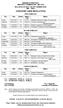 AGRONOMY (NEW REGULATION) Friday 08.05.2015 F.N STA 611 Statistical Methods & Design of Experiments Saturday 09.05.2015 F.N COM 615 Computer Applications for Monday 11.05.2015 F.N AGR 611 Modern Concepts
European Master s Programme in Sport & Exercise Psychology
 European Master s Programme in Sport & Exercise Psychology [Name] [Department] [University] [Country] Supported by the European Commission and FEPSAC History of the programme Since 1988 the idea on the
Graduate School of Excellence Exzellenz-Graduiertenschule
 Jena School for Microbial Communication Graduate School of Excellence Exzellenz-Graduiertenschule Microbial Communication Talking Microbes? Microorganisms are present everywhere. They are often considered
Conditions for Accreditation as (Basic) Pharmacologist
 NEDERLANDSE VERENIGING VOOR FARMACOLOGIE DUTCH PHARMACOLOGICAL SOCIETY Conditions for Accreditation as (Basic) Pharmacologist 1. Introduction The Dutch Pharmacological Society (DPS) is the organization
SAN DIEGO FARM TO SCHOOL INFORMAL PROCUREMENT: LOCAL FOODS FROM URBAN AGRICULTURE SITES San Diego Unified School District April 2013
 SAN DIEGO FARM TO SCHOOL INFORMAL PROCUREMENT: LOCAL FOODS FROM URBAN AGRICULTURE SITES San Diego Unified School District April 2013 Solicitation Number: For office use only Purpose: The purpose of this
SUMMER SCHOOLS UNIVERSITY OF ANGERS - FRANCE
 SUMMER SCHOOLS UNIVERSITY OF ANGERS - FRANCE Share your knowledge with international researchers and students from different countries and cultures. Plant science 27 th June to 8 th July 2016 The other
Analysis of the EU fruit and vegetables sector
 26 September 2014 Analysis of the EU fruit and vegetables sector EU and to Russia (2011-2013) Recent market s and measures taken to address market disruptions following the Russian import ban EU and to
How To Develop A Genomics Programme
 Plant Genomics Seminar Evolution of «GENOMICS, Plant Biotechnology» program in «Environnement et Ressources Biologiques» departement from ANR Philippe Feldmann Responsable du programme Génomique, Biotechnologies
Welcome and introduction i to AU Research Centre Flakkebjerg
 Workshop AU Flakkebjerg 22.09.2012 Welcome and introduction i to AU Research Centre Flakkebjerg Head of Research Section Entomology & Plant Pathology præsen TATION Welcome networking on Systemic approaches
PROGRAMME SPECIFICATION
 PROGRAMME SPECIFICATION Awarding body/institution: Queen Mary, University of London Teaching institution (if different from above): Centre for Infectious Disease, Institute of Cell and Molecular Science,
1. Program Title Master of Science Program in Biochemistry (International Program)
 1 Program Structure and Specification Master of Science Program in Biochemistry (International Program) Curriculum Last Revised in 2012 for Students Entering in Academic Year 2016 -----------------------------------------
International CEMarin Omics Workshop: Omics Techniques for the Study of Marine Organisms and Ecosystems
 International CEMarin Omics Workshop: Omics Techniques for the Study of Marine Organisms and Ecosystems Genomics, proteomics and metabolomics, used alone, in combination with each other and/or with more
Astrid Vrakking. PO Box: City: Rotterdam Country: ERASMUS MUNDUS ACTION 2 PARTNERSHIPS ERASMUS MUNDUS ACTION 2 PARTNERSHIPS
 Name of institution: Erasmus University Department: Netherlands Institute for Contact person: Astrid Vrakking Postal address: PO Box: : : e-mail address: [email protected] Telephone number: " +31
Admission Information and Application Guide
 2010 Admission Information and Application Guide (Screening of Foreign Students by Special Recommendation for enrollment in the 2010 Spring and Fall Doctoral Courses) Graduate School of Information Science
University of Glasgow - Programme Structure Summary C1G5-5100 MSc Bioinformatics, Polyomics and Systems Biology
 University of Glasgow - Programme Structure Summary C1G5-5100 MSc Bioinformatics, Polyomics and Systems Biology Programme Structure - the MSc outcome will require 180 credits total (full-time only) - 60
Training course of microbial resources information management and utilization for developing countries
 The Report of Training Course Training course of microbial resources information management and utilization for developing countries At Institute of Microbiology, China Academy of Science (MCAS), Beijing,
20-10-2015. DNA profiles in DUS testing of grasses. A new UPOV model? Lolium perenne (perennial ryegrass) Pilot study (2014)
 2--25 DNA profiles in DUS testing of grasses A new UPOV model? Henk Bonthuis Naktuinbouw Aanvragersoverleg Rvp Wageningsche Berg 9 oktober 25 Lolium perenne (perennial ryegrass) Challenges Genetically
AGRI-ENVIRONMENTAL SCIENCE
 AGRI-ENVIRONMENTAL SCIENCE Class LM-73 of the Master degrees in Forest and Environmental Science and Technology www.saa.unimi.it DIRECTOR OF THE MASTER PROGRAMME Prof. Gian Attilio Sacchi Department of
PLANT BREEDING: CAN METABOLOMICS HELP?
 PLANT BREEDING: CAN METABOLOMICS HELP? Carlos Muñoz Schick Ingeniero Agrónomo, M.S., Ph.D. UNIVERSIDAD DE CHILE Facultad de Ciencias Agronómicas OUTLINE OF THE PRESENTATION Origin of Plant Breeding Domestication
Summer School Greenhouse Horticulture
 Programme Summer School Greenhouse Horticulture Campus Wageningen UR Course leader: Dr Cecilia Stanghellini Date: 24 August 4 September 2015 Lecturers Chris Blok MSc, rooting media and water quality, Wageningen
Consumer Horticulture
 Purdue Extension Consumer Horticulture Container and Raised Bed Gardening HORT-186-W Purdue Extension Consumer Horticulture Indiana Vegetable Planting Calendar Michael N. Dana and B. Rosie Lerner HO-186-W
Biotechnology. MSc. Medway Campus. gre.ac.uk/science
 Biotechnology MSc Medway Campus gre.ac.uk/science Why study this programme? This multidisciplinary degree brings together aspects of chemistry, biology and cell biology. Courses are carefully tailored
Cooperation in Horticulture
 Cooperation in Horticulture Rob van Brouwershaven Director Plant Agri Chains and Food Quality Departement An interesting press release In Groenten en Fruit of august 7 th, 2015: ALMERIA BREAKS ALL RECORDS
Advanced Course Environmental Biotechnology 9 19 June 2015
 Advanced Course Environmental Biotechnology 9 19 June 2015 Aim Environmental Biotechnology is a rapidly developing, increasingly important branch of science that has implications for both the prevention
Marker-Assisted Backcrossing. Marker-Assisted Selection. 1. Select donor alleles at markers flanking target gene. Losing the target allele
 Marker-Assisted Backcrossing Marker-Assisted Selection CS74 009 Jim Holland Target gene = Recurrent parent allele = Donor parent allele. Select donor allele at markers linked to target gene.. Select recurrent
Sustainable Integrated Pest Management (IPM) Technologies for Mediterranean Fruit and Vegetable Crops. Master and Master of Science Programmes
 Sustainable Integrated Pest Management (IPM) Technologies for Mediterranean Fruit and Vegetable Crops Master and Master of Science Programmes ACADEMIC YEAR 2015-2016 1 Sustainable IPM Technologies for
JICA Training Course Plant Variety Protection course
 Session 4: DUS Training provided by members of the Union DUS Training organized by Japan Tsukasa KAWAKAMI Intellectual Property Division, Ministry of Agriculture, Forestry and Fisheries (MAFF) Japan 1
Implementation Regulation for the MSc Programme Nanobiology
 Implementation Regulation for the MSc Programme Nanobiology Part of the Course and Exam Regulation of the Master Programme As referred to in Section 2 of the Course and Exam Regulation. Faculty of Medicine
EMBL. International PhD Training. Mikko Taipale, PhD Whitehead Institute/MIT Cambridge, MA USA
 EMBL International PhD Training Mikko Taipale, PhD Whitehead Institute/MIT Cambridge, MA USA Why create an EMBL? The structure of DNA had been solved and first protein structures were being identified
Curriculum Vitae. 1 Person Dr. Horst O. Bunke, Prof. Em. Date of birth July 30, 1949 Place of birth Langenzenn, Germany Citizenship Swiss and German
 Curriculum Vitae 1 Person Name Dr. Horst O. Bunke, Prof. Em. Date of birth July 30, 1949 Place of birth Langenzenn, Germany Citizenship Swiss and German 2 Education 1974 Dipl.-Inf. Degree from the University
Carlos Sigueyuki Sediyama Universidade Federal de Viçosa Departamento de Fitotecnia 36570-000 Viçosa - Minas Gerais Brasil. csediyama@ufv.
 POTENTIALS FOR JOINT EFFORTS OF FEDERAL UNIVERSITY OF VIÇOSA AND JAPANESE UNIVERSITIES AND RESEARCH INSTITUTES FOR TECHNICAL ASSISTANCE TO DEVELOPING COUNTRIES Universidade Federal de Viçosa Carlos Sigueyuki
Under the Auspices of the European Federation of Sport Psychology
 European Master s in Sport and Exercise Psychology Under the Auspices of the European Federation of Sport Psychology Antonis Hatzigeorgiadis Department of Physical Education & Sport Science University
Course Descriptions. I. Professional Courses: MSEG 7216: Introduction to Infectious Diseases (Medical Students)
 Course Descriptions I. Professional Courses: MSEG 7216: Introduction to Infectious Diseases (Medical Students) This course is offered during the first semester of the second year of the MD Program. It
How To Organize An Efpp Conference
 11th Conference European Foundation for Plant Pathology Healthy plants healthy people 8-13 September 2014 Kraków, POLAND www.efpp11-krakow.pl www.efpp2014-cracow.pl EFPP Conferences 1990 founding the EFPP
BSc (Hons) Biology (Minor: Forensic Science or Marine & Coastal Environmental Science)/MSc Biology SC516 (Subject to Approval) SC516
 BSc (Hons) Biology (Minor: Forensic Science or Marine & Coastal Environmental Science)/MSc Biology SC516 (Subject to Approval) SC516 1. Mission, Aims and Objectives The new BSc (Hons)/ MSc course is a
How To Promote Agricultural Productivity And Sustainability
 La E.I.P. «Agricultural Productivity and Sustainability: il coinvolgimento delle imprese chimiche PARCO TECNOLOGICO PADANO Simona Palermo - Project Manager Lodi innovation Cluster Parco Tecnologico Padano
Introduction. Fujian Agriculture and Forestry University
 Fujian Agriculture and Forestry University Introduction Fujian Agriculture and Forestry University (FAFU) is a major higher education institution in Fujian Province, China. Its history can be traced back
Llewellyn's Moon Sign Book
 PLANTING BY THE MOON "Shine on, Shine on harvest moon" is the song lyric which Texans can sing most of the year because of the long production period. Most growers ignore the phases of the moon when the
Natur und Umwelt. International Studies in Aquatic Tropical Ecology (ISATEC) Master
 Natur und Umwelt International Studies in Aquatic Tropical Ecology (ISATEC) Master Description of the study programme... 3 Admission Criteria and Requirements... 4 Career Perspectives... 4 Curriculum...
MSc Animal Sciences. Is this the right programme for me? www.mas.wur.nl. René Kwakkel, Programme Director MSc Animal Sciences
 MSc Animal Sciences Is this the right programme for me? René Kwakkel, Programme Director MSc Animal Sciences Anet van den Biggelaar, Student Coach MSc Animal Sciences www.mas.wur.nl Why MSc Animal Sciences?
New Scientist/SRG Salary Survey 2013
 New Scientist/SRG Salary Survey 2013 Contents + Background + Objectives + Methodology + Executive Summary + Respondent Profile + Main Findings + Summary of Findings + Appendix Background & objectives +
International training programme
 International training programme Science has no native land, as knowledge is the heritage of humankind, the torch that lights up the world. Louis Pasteur The Institut Pasteur International Network (RIIP)
Faculty of Applied Sciences. Bachelor s degree programme. Nanobiology. Integrating Physics with Biomedicine
 Faculty of Applied Sciences Bachelor s degree programme Nanobiology Integrating Physics with Biomedicine We have just begun to explore life on this level Nanobiology uses the language of maths in the context
KEY BIOTECHNOLOGY INDICATORS (December 2011)
 KEY BIOTECHNOLOGY INDICATORS (December 211) 1. Biotechnology firms KBI 1. Number of biotechnology firms KBI 2. Percentage of small biotechnology firms (fewer than 5 employees) 2. Biotechnology R&D KBI
UPBM CURRICULAR BROCHURE
 UPBM CURRICULAR BROCHURE Undergraduate Program in Biology and Medicine Contents Academic Year 2015-16 About the Undergraduate Program in Biology and Medicine...pg. 1 Undergraduate Majors...pg. 2-3 Getting
KENYATTA UNIVERSITY SCHOOL OF PURE AND APPLIED SCIENCES
 KENYATTA UNIVERSITY SCHOOL OF PURE AND APPLIED SCIENCES Internal Links: The School forms one of the six Schools of the University and has a student population of approximately 2000. External Links: Through
Harald Isemann. Vienna Brno Olomouc. Research Institute for Molecular Pathology
 Harald Isemann Vienna Brno Olomouc Managing Director Research Institute for Molecular Pathology The Campus The Campus Max F. Perutz Laboratories www.mfpl.ac.at www.univie.ac.at www.meduniwien.ac.at Research