
HANDBOEK VOOR INSTALLATEURS
|
|
|
- Alison Stewart
- 9 years ago
- Views:
Transcription
1 HANDBOEK VOOR INSTALLATEURS Handboek voor de installatie van VELUX dakvensters Installers handbook Fourth edition
2 Foreword Contents The purpose of this handbook is to provide an overview of the installation of VELUX products based on best practice principles. The handbook describes the various aspects of roof construction in association with VELUX roof windows and also provides advice and information on how to obtain the optimum installation. In addition, the book provides examples of the numerous applications of VELUX products and an overview of the wide range of products and installation possibilities offered by the VELUX Group. (Fourth edition, 2014) The VELUX system Chapter Other products Chapter 9 Planning Considerations before choosing a roof window 5-13 Installation of a roof window Installation step by step Flashings Installation possibilities Special installation conditions Installation in various roof constructions Special roofing materials Installation in various roofing materials Replacement / Renovation Replacement of a roof window Building physics Roof constructions (humidity, heat, sound etc) Product information Overview of VELUX products Other products Contact VELUX Company Ltd List of telephone numbers 170 Size charts
3 Planning 1 The construction of the building 6-7 User requirements 8 Building regulations VELUX VELUX 5
4 1 Planning The construction of the building Planning The construction of the building 1 To choose the right VELUX roof window for a given situation, you start from the construction of the building, user requirements and current building regulations. Normally, a standard VELUX roof window can satisfy the basic requirements, but often choosing another window type or variant and/or choosing accessories can optimise the function and increase the utility value of the window. When the window is installed, insulation must be provided around the frame to allow for continuity of the insulation level in the roof. The easiest and most effective solution is VELUX frame insulation collar BDX (see page 146). Planning must include the following aspects: The distance between the rafters in the roof construction usually decides the size of the windows if cutting them and installing trimmers is not an option. Therefore, first check whether the position chosen and the size of the roof windows fit into the existing roof construction or if rafters will need cutting (see pages 16, 58). It is essential that the vapour barrier in the roof construction is connected to the window. The easy and effective answer is VELUX vapour barrier collar BBX. This will also provide an airtight connection between the window and the roof construction (see page 147). A connection must be established from the window frame to the interior ceiling finish either in the same materials as the interior ceiling finish or by installing a VELUX lining (see pages ). The roof pitch is important when choosing windows and flashings. As a rule, VELUX products can be used in roof pitches from 15 to 90. However, there are exceptions so always check whether the products chosen can be used in the roof pitch in question (see chapter 8). In some environments, such as rooms with high levels of humidity, there are special requirements for the window. The correct choice in these cases would be VELUX polyurethane windows (see page 157). The roofing material decides the type of flashing to be installed around the window to ensure a watertight installation. The different flashing types are described in chapter 3. VELUX Company Ltd recommends insulating glass units with laminated glass on the inside for roof windows installed at a high level. In case of breakage, the lamination holds fragments together (see pages ). When there is underfelt in the roof construction, a tight connection must be established between the underfelt and the window frame to keep out water, draught and drifting snow. The easiest solution is VELUX underfelt collar BFX (see page 146). If extra protection against solar heat is needed, VELUX products with particularly good heat reducing qualities are available. For instance, VELUX insulating glass units and VELUX interior and exterior sunscreening products offer these features (see pages ). 6 VELUX VELUX 7
5 1 Planning User requirements Planning Building regulations 1 MEANS OF ESCAPE If specified for emergency escape purposes, the roof window must have an unobstructed opening of not less than 0.33 m 2, with neither the width nor the height less than 450 mm. The sketch below shows the position of the window within the roof plane. For windows placed within reach, try to allow for a clear view when standing and when seated. Note that the optimum window height depends on the roof pitch. Centre-pivot windows make it possible to place furniture directly below the window without obstructing operation of the window. UNOBSTRUCTED OPENING Top-hung windows make it possible to stand upright under the open window while looking to the sides, providing extra headroom and maximising the feeling of extra space. These windows are also suitable for emergency escape/access purposes. max 1700 mm NOT APPLICABLE IN ENGLAND, SCOTLAND AND WALES min 600 mm if being used as an emergency escape window max 1100 mm If the window is placed out of reach, consider electrical operation, which makes it possible to operate the window as well as interior and exterior sunscreening products from for instance a control pad. Further details on roof window types and sizes that meet the requirements for emergency escape can be found at 8 VELUX VELUX 9
6 1 Planning Building regulations Planning Building regulations 1 MIMIMUM SILL HEIGHT REQUIREMENTS REQUIREMENTS FOR DAYLIGHT The bottom frame of an operable window must be positioned at least 0.8 m above floor level. To provide adequate levels of natural light, we recommend the daylight area of the window be at least 15% of the floor area. Restrictor locks could be used for centre-pivot windows with sills below this level. If the window functions as a means of escape, the bottom frame must be positioned as shown on page 9. In Scotland every apartment must have a window or windows of an aggregate glazed area equal to at least 1/15th of the floor area of the apartment and must be situated in a roof or external wall. Individual daylight areas for the various roof window types can be found at VENTILATION In habitable rooms, fresh air must be admitted for the health and safety of its occupants. VELUX roof windows provide both purge (rapid) and background ventilation to meet these requirements. Additional mechanical extraction is required in kitchen and bathrooms etc to rapidly remove large volumes of aqueous vapour. Building Regulation requirements should therefore be checked as to the correct amount and type of ventilation for a room depending on its size and use. Individual ventilation areas for the various roof window types can be found at 10 VELUX VELUX 11
7 1 Planning Building regulations Planning Building regulations 1 SAFETY GLASS The Building Regulations state that if glass is less than 800 mm from the floor then insulating glass units with safety glass must be installed. We also recommend that where windows are installed at high level, the inner pane be specified as laminated glass. This means that if the glass is broken, the lamination will hold the glass in place preventing it from falling. This is of particular importance within public access areas such as schools, sports centres, conference centres etc. REQUIREMENTS FOR SAFETY AT WORK WHEN IN- STALLING ROOF WINDOWS AND WORKING AT HEIGHT Instructions showing the right installation of the product are supplied with any VELUX product. Handling of the product from delivery to finished installation in the roof depends on the product type and size and the installation conditions present. In many cases, VELUX roof windows may be installed from the inside so that working on the roof is avoided. For optimum performance, we recommend the use of insulating glass variants --60, --62, --66 and --70 (see pages ). SOUND INSULATION To obtain sufficient sound insulation, special requirements may be necessary both in connection with the choice of window type and with the installation (see also page 125). REQUIREMENTS FOR MAXIMUM ENERGY AND HEAT LOSS According to building regulations, various requirements apply to the building and the building components in relation to thermal efficiency. VELUX Company Ltd provides windows and insulating glass units with different levels of thermal insulation (U-value) which allows the appropriate product to be specified and installed in the correct situation. To achieve even better thermal insulation, use VELUX recessed flashing E-J/E-N (see pages 35, 37) in combination with installation set BDX 2000 (see page 146). U-values for the various roof window types can be found at In some cases it is, however, necessary to carry out part of the installation from the outside, and in these cases it is important to take all necessary protective measures against the risk of falling and dropping items in accordance with the provisions of the Health and Safety at Work Act. Scaffolding or a railing at the base of the roof may be a solution. If work on the roof is brief, fall protection in the form of a safety belt with line/wire should be used. In addition, heavy and skew lifts while installing VELUX roof windows should be avoided. Appropriate equipment for installing roof windows to reduce or avoid heavy lifts is available. When using suction discs, please note that the window glazing might have a coating that is not compatible to silicone based suction discs which may damage the coating. Which safety measures to be taken depend on the conditions on the building site and are the full responsibility of the person(s) involved in the work being carried out. The safety measures may be found at SPECIAL ASPECTS Replacement of windows In some areas, replacement windows come under the aspect of the Building Regulations. This means that application must be made to the Local Authorities before the work can commence. FENSA and CERTAS registered companies can however carry out replacement work immediately and then register the work with the Local Authorities on completion. In all cases, local planning and building regulation requirements must be observed. 12 VELUX VELUX 13
8 Installation of a roof window 2 Preparing opening Preparing window 18 Exterior Interior VELUX VELUX 15
9 Installation of a roof window 2 Preparing opening Preparing opening Installation of a roof window 2 POSITIONING THE WINDOW FOR THE ROOM Position the window in the room considering: the use of the room a clear view when standing and/or when seated comfortable operation (centre-pivot or top-hung window) requirements regarding sill height, see chapter 1 vertical wall, if any, see page 69 optimum design of linings building regulation requirements HOLE IN THE ROOF First consult the installation instructions supplied with the flashing. If there is no access to the roof from the outside, establish a hole in the roof surface by cutting a small hole, approx 400 x 400 mm, from the inside through the roof construction. When battens have been cleared, the final position of the window in the roof construction can be determined. When measuring, be sure to allow space for insulation around the window frame. POSITION OF TOP, BOTTOM AND SIDE TRIMMERS See chapter 4. POSITIONING THE WINDOW To minimise need for adjustment of the roofing material, adjust the position of the window sideways, if possible. When adjusting sideways, be sure to allow for recommended distance to rafter/trimmer (support) (a) and roofing material (b). a b Adjust the position of the window upwards/downwards depending on type of flashing. Always read the flashing installation instructions before commencing. In roofs with: profiled roofing materials, allow for a full course of tiles below the window slates, ensure necessary overlap between slates and flashing, see page 91. To allow for correct insulation around the frame, allow space for mm insulation along the sides of the window and, depending on the installation level (see page 31), 20 or 50 mm insulation over/under the window. Define hole at top and bottom with installation battens and at sides with rafters as shown in the installation instructions. Note: Pay special attention to the positioning of the window in the roof in snowy areas, see page 126. HOLE IN UNDERROOF AND INTERIOR CEILING FINISH Roofing felt can be cut as shown and folded in order to ensure water tightness. If the underroof is rigid, make a hole in the underroof equivalent to the hole in the roof surface. In a roof with an existing interior ceiling finish, it is necessary to cut a temporary rough opening in order to install the window. Project frame dimensions perpendicular to the ceiling finish, mark and cut hole. Note that it must be possible to connect the vapour barrier within the existing roof construction (if present) with the new vapour barrier around the window. The final adjustments of the hole in the ceiling finish should not be made until kit for lining or lining is to be installed, see chapter VELUX VELUX 17
10 Installation of a roof window 2 Preparing window Exterior Installation of a roof window 2 REMOVING SASH The sash can be removed to facilitate the installation of the window. Place the sash with top of sash downwards on a clean and even surface. Scan the QR code to see an animation of how to remove the sash. FRAME INSULATION COLLAR Frame insulation collar BDX consists of four pieces of polyethylene foam fitted on steel rails. Once assembled, the frame is positioned on the battens around the roof opening before installing the window. It is then fixed along with the installation brackets of the window. INSTALLATION BRACKETS As standard, installation brackets are supplied with the window. Window heights from 1400 mm (-K08) and upwards are supplied with additional installation brackets to be fitted at the middle of the side frames. The brackets must be fitted to the frame prior to positioning the window in the roof. Note that the positioning of the brackets on the frame depends on the flashing being used. With some combinations of windows and flashings, special brackets are required, for instance: If the distance between the rafters is not sufficient, it may be necessary to adjust the thickness of frame insulation collar to ensure correct positioning by trimming the sides. The frame insulation collar comes in various versions depending on the installation level of the window. It is available separately or packed together with certain flashings. Special brackets are supplied with additional window elements GIL and VFE and with flashing EBW. When replacing a roof window manufactured before 1999 and maintaining the existing lining, the brackets supplied with flashings EL/EW/ELX are required as the window will be in a projected position. Scan the QR code to see an animation of how to install the frame insulation collar. 18 VELUX VELUX 19
11 Installation of a roof window 2 Exterior Exterior Installation of a roof window 2 FIXING AND ADJUSTING THE WINDOW It is important to adjust the square and level of the window to ensure a weathertight seal between the sash and frame and for optimum operation. Level the bottom frame and fix it at the bottom. Adjust distance between frame and sash to ensure that sides are parallel. Then make sure that bottom frame and bottom sash are also parallel. If uneven rafters cause the frame to twist, adjust frame using the variable thickness support plate supplied as shown in the installation instructions. If the roof is not level, for instance very lopsided/slanting, see pages Having adjusted the window, fix it as described in the installation instructions. UNDERFELT For the easiest connection to underfelt, use underfelt collar BFX. The underfelt collar is made of diffusion open material and can therefore be used for both ventilated and unventilated roof constructions. The underfelt collar is supplied with a pre-applied adhesive strip, which makes it easy to adhere it to the frame on all sides. Shape the underfelt collar around the battens and fix it to the counter battens with rustproof staples. Position the drainage gutter immediately above the first continuous batten above the window so that it can drain off water from the underfelt above the window. a b c Fit self-adhesive butyl strips supplied as shown (a) to seal the felt where cut over the rafter. Fold the underfelt collar and then the existing underfelt down into the drainage gutter and fix with brackets supplied (b). To position and fix the underfelt collar correctly below the window, cut underfelt collar as shown (c). Scan the QR code to see an animation of how to install the underfelt collar. 20 VELUX VELUX 21
12 2 Installation of a roof window Exterior Installation of a roof window Exterior 2 FLASHING AND COVERS As primary weather protection, the window is as standard delivered with aluminium covers. Most covers are pre-installed but parts (2) and (4) are supplied with the specified flashing. Supplied with the window Supplied with the flashing 6 7 FLASHINGS FOR PROFILED ROOFING MATERIALS When installing flashings for profiled roofing materials it is important that both foam gaskets and the flexible part of the bottom flashing section fit tightly to the roofing material to avoid drifting snow or driving rain entering under the flashing. For installations using E-W flashing variants, it is recommended to chamfer the roofing material below the window before fitting the bottom flashing section (a). To ensure optimum installation, position the bottom flashing section temporarily and shape the flexible part to the profile of the roofing material. Remove the flashing and then bend the flexible part (b) slightly before re-positioning and fixing the flashing to the bottom frame of the window. Bending the flexible part ensures a tight connection to the roofing material a b If you do not want to use a VELUX flashing, please note that parts (2) and (4) must be ordered separately. The parts are ordered as cover set ZWC according to the window size. Fit covers in the sequence indicated in the installation instructions for the flashing. The individual parts have a number on the back that in most cases also indicates the installation sequence. Note that there are left and right parts. To facilitate the installation, cover parts (5) can be snapped on and off (a). Please note that on high windows, part (4) are fastened by clips in the middle (b). a b Fold in the bottom side flashing section at the sides (c). Especially in shallow roof pitches, this is important as an extra guarantee against water ingress. The front edge of the flexible part of the bottom flashing section may be dressed further to fit tightly to the roofing material (d). To allow for correct overlap between roofing material and flashing, it may be necessary to remove a nib from the tile (e). As screws must not be fitted in the flashing, it may in some cases be necessary to secure tiles with wire and/or adhere to adjoining tile with appropriate sealant if possible (f). c e f d 22 VELUX VELUX 23
13 Installation of a roof window 2 Exterior FLASHINGS FOR FLAT ROOFING MATERIALS When installing flashings in slated roofs or similar roofing materials, it is important that the bottom flashing section overlaps the roofing material with at least the same overlap as applies to the roofing material in general (a). See also page 91. To provide the best possible drainage around the window, observe the distances between roofing material and window stated in the installation instructions (b). a b mm 0-20 mm When using flashing E-L, the top flashing section must fit tightly to the window top cover. As the top flashing section follows the slate course, it will in some situations be lifted too much. In these situations, the filler piece supplied must be used, to fill the gap. The same problem might occur when installing in roofs with roofing felt where numerous layers of felt can lift the top flashing section. Here too, it is important to use the filler piece to ensure a tight connection. See also page VELUX VELUX 25
14 Installation of a roof window 2 Interior Interior Installation of a roof window 2 CUTTING THE INTERIOR CEILING FINISH When the window has been installed, adjust the hole in the interior ceiling finish to its final dimensions. If using a VELUX lining LS-, adjust the hole by means of the template supplied with the lining. Use of the template ensures horizontal lining at the top and vertical lining at the bottom in roof pitch ELECTRICAL OPERATION Before fitting the interior lining finish to manually operated windows, it is recommended to provide a cable to prepare for subsequent installation of electrical products. Run the cable through the pre-drilled hole in the top frame. Fasten approx 20 cm of the cable as shown. The rest of the cable can now be led concealed to a position suitable for subsequent connection to a control unit. For cables up to 40 m, use a cable with dimensions 2 x 1.5 mm 2, see also page 150. INSULATION AROUND THE WINDOW Correct insulation around the window is important to avoid thermal bridges. Installation set BDX 2000 ensures that the necessary insulation is provided. If the installation set is not used, provide corresponding insulation around the frame up to the upper side of battens. VAPOUR BARRIER The vapour barrier of the house must be connected to the window rebate on the frame using a vapour resistant membrane. VELUX vapour barrier collar BBX is the easiest solution, which ensures an airtight seal between the window and the roof structure. The vapour barrier collar is pressed into the window frame rebate and fastened with screws in the corners. Ensure by means of the tool supplied that the gasket of the vapour barrier collar fits tightly to the window. The vapour barrier collar is connected to the vapour barrier of the house by means of the vapour-proof tape supplied. It is necessary to ensure tight sealed joint between the vapour barrier of the house and the vapour barrier collar. In any case, the joint should be supported. LINING When establishing the lining between the window frame and the interior ceiling finish, try if possible to make the lining horizontal at the top and vertical at the bottom. This gives the best warm air circulation across the inner pane surface, the best influx of light and the best view. When using VELUX lining LS-, the lining is assembled before being clicked into the rebate in one piece. If the lining is made of for instance plasterboard, a support frame for the lining may be required. VELUX kit for lining LSG can be used as a support frame. 26 VELUX VELUX 27
15 Flashings 3 In general Flashing types Combi flashing Twin flashing EB- 43 Installation with support rafters EBY / EKY Vertical window elements Installation with adjustable support rafter EBY W10 49 Additional elements below roof window Installation along roof ridge VELUX VELUX 29
16 3 Flashings In general Flashings In general 3 THE FLASHING SYSTEM INSTALLATION LEVELS VELUX flashing systems ensure a safe and secure connection between the roof window and the roofing material. The wide range of different types of VELUX flashings ensures that tested standard solutions are available for most roofing materials and installation situations. To be able to choose the right flashing, you must know the type of roofing material, the number of windows and the types and sizes of the windows to be installed. The choice of flashing is of decisive importance to the installation as the instructions supplied with the flashing describe how to install the windows. Therefore, always start by reading the instructions supplied with the flashing. When special or additional parts are needed for particular installation situations, these parts will be supplied with the flashing. The roof windows have been prepared for two installation levels. The two levels are indicated on the side frame as a red line and a blue line; in the following pages, they are referred to as "red level" (standard installation) and "blue level" (recessed installation), respectively. To ensure the correct positioning of installation brackets and frame in the roof, it is important to confirm that the flashing has been designed for the relevant installation level. Red level VELUX standard since Installation brackets are fixed to the bottom and top frames. Like the roofing material, the flashings drain off water resulting from normal weather conditions. The flashings are not 'submarine tight' and therefore it must be ensured that water cannot accumulate around the window. If there is a risk of water accumulation, particular measures must be taken as to the window and the roof. Blue level Window installed 40 mm deeper into the roof construction than red level. Installation brackets are fixed to the side frames. When replacing a roof window manufactured before 1999 and maintaining the existing lining, the window will be in a projected position. This requires particular flashings and installation brackets. See chapter 6. Installation brackets are supplied with the flashing and must be fixed to the side frames VELUX VELUX 31
17 3 Flashings In general Flashings Flashing types 3 TYPE DESIGNATION FOR FLASHINGS EDW The type designation for flashings consists of three characters. The first letter in the type designation is always an E--. For profiled or flat roofing materials with a profile height/thickness of mm. The second letter in the type designation refers to the installation situation, for instance: max 120 mm ED- Single flashing EB- Twin flashing EK- Combi flashing EF- Flashing for vertical window element EE- Flashing for roof terrace ET- Flashing for additional element mm ECX Insulated wooden kerb flashing for flat roofs The third letter in the type designation indicates the types of roofing material in which the flashing can be installed. On the following pages, the various flashing types are introduced, shown as single flashings. Please note that profile height of the roofing material and roof pitch will influence the choice of flashing. 80 mm 20 mm 25 mm mm mm 32 VELUX VELUX 33
18 3 Flashings Flashing types Flashings Flashing types 3 EDZ EDJ For profiled or flat roofing materials with a profile height/thickness up to 45 mm. In principle as EDW, but with window installed 40 mm recessed into the roof construction (blue level). max 45 mm max 90 mm mm mm 80 mm mm 20 mm 25 mm 90 mm 140 mm 55 mm mm mm mm 34 VELUX VELUX 35
19 3 Flashings Flashing types Flashings Flashing types 3 EDL EDN For flat roofing materials with a thickness of up to 2 x 8 mm. With side soakers. In principle as EDL, but with window installed 40 mm recessed into the roof construction (blue level). max 16 mm max 16 mm mm mm 125 mm 0-20 mm 20 mm 25 mm 260 mm min 140 mm 55 mm mm mm 36 VELUX VELUX 37
20 3 Flashings Flashing types Flashings Flashing types 3 EDP EDE For roofs with plain tiles. For installation in traditional standing seam roofs in copper or zinc. max 300 mm max 28 mm mm 170 mm 25 mm 95 mm 25 mm 20 mm 20 mm mm mm 38 VELUX VELUX 39
21 Volume / Weight Made in Denmark a = xx mm 3 Flashings Combi flashing Flashings Combi flashing 3 In general, a single flashing consists of a bottom flashing section (1), side sections (2) and a top flashing section (3). Basically, the same components are used when combining windows. They are, however, supplemented with components that ensure the rainwater is drained quickly and freely from around the windows The combi flashing system consists of six basic elements that make it possible to install from two to any number of roof windows in combinations side by side or over/under each other. Windows to be installed side by side must be of the same height and windows to be installed over/under each other must be of the same width. a a There are two drainage principles: LOW-LYING MIDDLE GUTTERS Flashings with low-lying middle gutters drain off the water from the roof surface above the windows down the outer sides of the windows and the centre channel between them. This drainage principle makes it possible to combine an unlimited number of windows on the roof surface. The principle is used for the combi flashing system. HIGH-LYING MIDDLE GUTTERS Flashings with high-lying middle gutters drain off the water from the roof surface above the windows down the outer sides of the window combination only. This drainage principle makes it possible to install the windows closer to each other compared to the combi flashing system. The principle is used for instance for twin flashing EB-. The total width of a combination (window widths + frame distances between side frames) with high-lying middle gutters must not, however, exceed 2780 mm P a = XX 00AH10Vmm The six basic elements have numbers referring to the last number in the variant code of the flashing. Thus, EKW MK is the middle flashing element in the bottom row. Distance "a" refers to the distance between the side frames whereas distance "b" refers to the distance between top and bottom frames. Distance "a" is as standard 100 mm, but can also be 120, 140 and 160 mm. In addition, combi flashings can be ordered as special products with "a" distances from 60 to 400 mm, at intervals of 10 mm. Distance "b" can only be 100 or 250 mm. To allow for subsequent installation of a roller shutter on the window, distance "a" must be min 100 mm and "b" must be 250 mm. The distances must be stated when ordering the flashing. They will appear from the flashing packaging for confirmation. Note: If "a" is less than 100 mm, the windows must be installed with special installation brackets supplied with the flashing. Otherwise the brackets supplied with the window should be used. b P EB. 40 VELUX VELUX 41
22 3 Flashings Combi flashing Flashings Twin flashing EB- 3 WINDOWS INSTALLED OVER/UNDER EACH OTHER Combi element 7 is used when installing any number of windows over/under each other. Always use a single flashing for the bottom window supplemented with combi element 7. Twin flashing EB- is used when installing two windows of the same height side by side when a minimum frame distance is required. As standard the two windows are installed with a frame distance "a" of 18 mm or 50 mm. Frame distances of between 19 and 100 mm are possible but the flashing must be ordered as a special product WK WK b a ASYMMETRICAL INTEGRATION By using asymmetrical flashing elements, windows can be installed in a combination with more windows in the bottom than in the top rows. The asymmetrical flashing elements are used in the combi system as a substitute for the "missing" windows. For instance flashing EK- WK is used instead of combi element 4. Combinations with less windows in the bottom rows are possible. In flat roofing materials, flashing EKL should be used whereas flashing EKW should be used in profiled roofing materials. These combinations must be ordered as special products; contact VELUX Company Ltd. The high-lying middle gutter makes it possible to install the windows close together. If the gap between the windows does not allow for the provision of a standard rafter, a support timber with a width no greater than distance "a" + 25 mm must be provided between the two windows to support them along their length. If the distance "a" is 18 mm, we advise using VELUX support rafter EBY. Follow the instructions supplied with flashing EB- when installing the windows. Additional window installation brackets are supplied with the flashing. 42 VELUX VELUX 43
23 3 Flashings Installation with support rafters EBY/EKY Flashings Installation with support rafters EBY/EKY 3 Use support rafters EBY/EKY to obtain a harmonious room side finish when two windows are installed side by side with a frame distance of 18 mm (EBY) or 100 mm (EKY). When using these support rafters, upper and lower trimmers must be installed to support the construction, see chapter 4. Support rafters EBY/EKY are available in three different lengths: 2000 mm (W20), 2750 mm (W27) and 3500 mm (W35). INSTALLATION POSSIBILITIES When the proper conditions exist, the length and load capacity of a support rafter increases the possibilities for installing more than two windows. A specific solution therefore depends on the combination of the factors below. a Size of windows (width (X) x height (Y)) Type of windows (affects the weight) Distance between trimmers (L) Total height of windows (H) Distance from windows to trimmers (D1 and D2) b max 775 mm max 40 mm Climatic zone and ground conditions (location of the building) Roof pitch Once these factors have been determined, you can contact VELUX Company Ltd. Based on your information, they will guide you about the possibilities as to installing additional windows. Follow the installation instructions supplied with the flashing when installing the roof windows. Adjustment of the window, however, is described in the installation instructions for the window. When establishing the roof aperture and positioning trimmers and support rafter, it is important that the support rafter is positioned perpendicularly to the installation battens (a). X Y D1 Observe the maximum dimensions stated when cutting the support rafter in order to avoid weakening it unnecessarily (b). If installation set BDX 2000 is used, the frame insulation collar must be assembled and installed before the windows are installed. L H Y SUPPORT RAFTER EBY ONLY D2 a Four installation brackets used for securing the windows to the rafter are supplied with the flashing. Y Connect underfelt as if connecting around one window. Position the drainage gutter as close as possible to the installation batten above. Then proceed according to the instructions supplied with flashing EB VELUX VELUX 45
24 3 Flashings Vertical window elements Flashings Vertical window elements 3 VERTICAL WINDOW ELEMENTS VFE/VIU WITH FLASHINGS EFW/EFL/EFN/EFJ Vertical window elements VFE/VIU are always combined with a roof window of the same width. The flashings for these combinations are EFW/EFL for standard (red) installation level and EFN/EFJ for recessed (blue) installation level. POSITION IN FAÇADE The roof window must be installed before the vertical window element. The template supplied with the vertical window element must be used to determine the exact position of the two windows. The optimum position of the vertical window element depends on the façade. A B C min 130 mm a 10 mm Follow the instructions supplied with the flashing when installing vertical window elements and roof window. Additional installation brackets for the roof window are supplied with the vertical window element. A Installation in brick, concrete wall etc: The vertical window elements must be positioned at least 130 mm (VFE) and 160 mm (VIU), respectively, from the façade of the house. This ensures that the top cover of the window element lies behind the façade. It also makes installation of an outer sill easier. B Installation in façade with vertical wooden boarding (with overlap): The vertical window elements VFE/VIU must be positioned so that the outer edge of the side frames is flush with the innermost layer of boarding. C In some cases, it may be necessary or desired to cover the joint between the bottom frame and the outer sill. For this purpose, an additional cover part can be ordered as a special product (a). Note: When installing vertical window elements, the drainage of the roof must be considered as the course of the eaves gutter is interrupted. As the flashing drains off the water to both sides of the windows, it must be ensured that there is a downpipe on both sides of the interrupted gutter. OUTER SILL AND DRAINAGE OF BOTTOM FRAME The outer sill can be made in many ways depending on the façade. It is important that there is a sufficient overlap between the bottom frame and the outer sill (approx 25 mm) to ensure that water from the gasket level of the window can be drained off. 46 VELUX VELUX 47
25 Without roofhang Nie Dach aushang Ce la vie Uden tagudhæng Nej Taaguthaang Nio fondiza Nuo terasa EFW/EFL/EFS Without roofhang Nie Dach aushang Ce la vie Uden tagudhæng Nej Taaguthaang Nio fondiza Nuo terasa Flashings Vertical window elements Flashings Installation with adjustable support rafter EBY W10 3 ADDITIONAL VERTICAL WINDOW ELEMENTS VFE/VIU WITH FLASHINGS EFW/EFL/EFN/EFJ XK99 Using flashings EFW/EFL/EFN/EFJ XK99, vertical window elements VFE/VIU can be combined with any number of windows in the roof and in the façade. Adjustable support rafter EBY W10 is recommended for combinations including vertical window elements installed with a frame distance of 18 mm. Adjustable support rafter EBY W10 can be used in roof pitches from 15 to 55. Note: It is not possible to combine VIU with VFE. The flashing must be ordered as a special product with exact specification of the position of the individual windows. To ensure sufficient drainage of the roof surface above the windows there are some limitations as to possible combinations. A combination of windows and frame distances (a) with a total width of less than 2780 mm will, as a single window, drain off the water to both sides of the combination. Combinations with a total width of more than 2780 mm require drainage between the windows. This is established by inserting a low-lying middle gutter and "box" gutter (A) that drains off water separately to a downpipe. When using this adjustable support rafter, a top trimmer spanning the total width of the aperture is installed in the roof construction. The adjustable support rafter provides the central support to the windows while at the same time ensuring an elegant room side finish to match the windows. In combinations with additional adjustable support rafters, the total width of all windows must not exceed 2780 mm because of the flashing. For further information, contact VELUX Company Ltd. Roof pitch "x", frame distances "a" and, where necessary, "b" must be specified at the time of ordering along with window sizes and combination. a A x b max 2780 mm 48 VELUX VELUX 49
26 3 Flashings Additional elements below roof window Flashings Additional elements below roof window 3 ADDITIONAL ELEMENTS GIL/GIU AND FLASHING EXTENSIONS ETW/ETL/ETN/ETJ ADDITIONAL ELEMENTS GIL/GIU IN TWIN INSTALLA- TION WITH SUPPORT RAFTER EBY Additional elements GIL/GIU are installed immediately below the roof window. Two roof windows each with additional elements GIL/GIU can be installed with a frame distance of 18 mm using support rafter EBY and a variation of the twin flashing system. Please contact VELUX Company Ltd for further information. The flashing for this combination is a standard single flashing together with flashing extensions ETW/ETL/ETN/ETJ. Follow the instructions supplied with additional elements GIL/GIU when installing the roof window. Adjustment of the window is described in the installation instructions for the window. The additional element is supplied with additional installation brackets. Note that the frames of the roof window and the additional element must align to allow for subsequent fitting of linings. Follow these guidelines during installation: 1. Prepare hole and install necessary trimmers. Width: X mm + 18 mm + X mm + 50 mm. Height: Y mm mm + 45 mm + distance to trimmers. X mm = window width, Y = window height 2. Install support rafter EBY according to instructions supplied with the support rafter. 3. Install frame insulation collar BDX with extension piece BDX WK34 according to instructions supplied with the extension pieces. 4. Install and adjust windows. 5. Connect windows to underfelt with underfelt collar BFX and position drainage gutter as close to the top frame as possible. 6. Install flashing and fit covers according to instructions supplied with the flashing. It is also possible to integrate three windows side by side provided that the total width of the window combination with high-lying middle gutters does not exceed 2780 mm. 50 VELUX VELUX 51
27 Flashings 3 Additional elements below roof window ADDITIONAL ELEMENTS GIL/GIU IN COMBI INSTALLATION Roof windows with additional elements GIL/GIU can also be used in combi installations with flashing extensions ETW/ETL/ETN/ETJ as a supplement to the common combi flashing elements. For a frame distance of 100 mm, use support rafter EKY. 52 VELUX VELUX 53
28 3 Flashings Installation along roof ridge Flashings Installation along roof ridge 3 When choosing flashing for installations along the roof ridge, the simplest solution is to use standard single flashings EDW/EDL on each side of the roof. Depending on distance to ridge, it can also be combined with a roof ridge kit EK- -K Installing windows along the roof ridge opens up to spectacular combinations of VELUX roof windows seen from the outside as well as from the inside. When centre-pivot windows are installed with the top frames close to the ridge, note that they must be positioned in a way that allows them to be opened without the sashes colliding. This can be ensured by observing the "A" measurement as stated in the table: Roof pitch Window height (mm) The procedure is simple: The installation itself does not differ much from a standard installation and the same rules as to positioning the window in relation to roofing material must be observed. Therefore, in tiled roofs always try to allow for a full course of tiles below the windows. When installing windows along the roof ridge, it is important to know the "ridge measurement". This is the distance from the top frame of the window to upper side of battens on the opposite roof surface. In the following this measurement is defined as "A" mm. In case of roof pitches below 30, the windows can be installed frame-to-frame without risk of sashes colliding ("A" must always be at least 80 mm). When "A" is between 80 mm and 200 mm, one pair of windows either side of the roof ridge requires 1 roof ridge kit EKW -K and 2 single flashings ED-. When combining more pairs of windows on each side, combi flashings EK- and 1 roof ridge kit for each pair of windows along roof ridge are required. A mm Whether it is one pair or more pairs of windows, the top flashing sections must be adjusted according to the distance "A" to the roof ridge. Follow the instructions supplied with the roof ridge kit. Note: Roof ridge kit EKW -K requires a ridge board to support the roof ridge (especially in slate roofs). If distance "A" is 200 mm or more, the standard flashing can be used without any adjustment. There is enough space for the top flashing sections and the ridge tiles can continue uninterrupted. 54 VELUX VELUX 55
29 Special installation conditions 4 Trimmers Installation in lopsided roof Connection to rigid underroof Cut tiles below the window Roof window installed as a skylight "Dutch barn" type roofs 68 Installation in connection with vertical wall 69 Flat roof Atrium in flat roof VELUX VELUX 57
30 4 Special installation conditions Trimmers Special installation conditions Trimmers 4 If the window is wider than the distance between the rafters, it may be necessary to install trimmers in the rafter construction. In most cases when installing a trimmer to support a single rafter, the solution is based on experience. Most often the trimmer has the same dimensions as the rafters. Note: Some constructions may require static calculations of the load capacity of the new trimmer and remaining rafters. Special conditions to consider: A large roof surface above or below the trimmed opening Existing trimmers in the roof construction close to the new trimmed opening Possible special support conditions for existing rafters For combinations of more windows side by side, it is often possible to adjust window width and frame distances between the windows in order to retain rafters. This must be determined before ordering flashings. Recommended distances between window frame and rafter/trimmer to allow for effective insulation around the windows. Good air circulation across the inner pane surface minimises the risk of condensation. Circulation is achieved by a horizontal top lining and vertical bottom lining to form a "funnel" leading air across the pane. If trimmers are necessary, they must be positioned in such a way that they do not obstruct the angled lining. When using VELUX kit for lining LSG or VELUX linings LS- in roof pitches from 30 to 60, the lining can be made with both horizontal top and vertical bottom. In roof pitches shallower than 30 or steeper than 60, the VELUX lining LS- cannot be installed with both horizontal top and vertical bottom as this will result in removing too much of the interior ceiling finish. Instead, the template supplied with the lining can be used to determine the optimum design of the aperture and the correct position of the trimmer mm 100 mm mm 58 VELUX VELUX 59
31 4 Special installation conditions Installation in lopsided roof Special installation conditions Installation in lopsided roof 4 In old buildings with very lopsided roof constructions, it may be necessary to deviate from the standard procedure for adjusting the window. The window should still be installed as normal but consideration should be given to alignment with existing floor level or roof. The red line/blue line level of the window will now lie above the upper side of the battens which might result in leakages in the flashing. For this reason, to avoid leakages and even out the connection between the flashing and the roofing material, it is necessary to "chock up" the battens around the window. Major local lopsidedness in the roof construction may also complicate adjustment of the window. It may be necessary to elevate one corner of the window with more than the height of the wedge supplied. In this case, the entire installation batten must be elevated. 60 VELUX VELUX 61
32 4 Special installation conditions Connection to rigid underroof Special installation conditions Connection to rigid underroof 4 UNDERROOF OF MASONITE PLATES Connection to underroof of masonite plates can be made either with VELUX underfelt collar BFX or with standard underfelt in rolls. Note: If no counter battens have been used in connection with the masonite underroof, it may be necessary to make a "frame" around the window to which the underfelt or the underfelt collar can be fixed. The "frame" can be made by placing infill battens between battens along the sides of the window. The underfelt or the underfelt collar can then be connected below and along the sides of the window as shown. Lay masonite plates by way of overlapping. This makes it easy to interweave the drainage gutter in the nearest overlap above the window. UNDERFELT ON RIGID BASE Connection to underfelt on rigid base boards or sarking can be carried out with VELUX underfelt collar BFX as well as standard underfelt. The illustration below shows principle for connection to underfelt. Note: As in some cases an uninterrupted underfelt is required, ensure sufficient drainage by securing the batten with screws and joint filler as shown. The compressed connection also ensures connection to the underfelt or the underfelt collar BFX above the window. 62 VELUX VELUX 63
33 Special installation conditions 4 Cut tiles below the window Special installation conditions Cut tiles below the window 4 When positioning the window in the roof surface, always allow for a full course of tiles below the window. If conditions on site make this impossible, adopt one of the alternatives described below. Alternative A Using apron ZZZ 166 (in rolls of 4 m) makes installation possible if the distance between bottom frame and roofing material (a) is increased by up to 240 mm compared to the distance stated in the installation instructions for flashing EDW or EDJ. The procedure is as follows: Cut the apron to length (corresponding to the width of the bottom flashing section of flashing EDW or EDJ). Alternative B Cut tiles below the bottom frame of the window. Ensure support at the end that has been cut as shown. It may be necessary to chamfer the tiles as shown in the installation instructions. As the nibs have been removed from the tiles below the window, the tiles must be secured to the battens with screws or nails. In the measuring example below, the measurements apply to flashing EDW. 150 mm 240 mm 100 mm Fasten the apron to a batten with roofing nails. Ensure sufficient overlap on roof tiles. a When positioning the bottom flashing section, it may also be necessary to shape the triangular part (b) to the same profile as the tiles. It will be necessary to use additional self-adhesive flashing material (c) (not a VELUX product) to seal the corners between bottom flashing section and tiles. b Position the bottom flashing section of flashing EDW or EDJ on top of the apron. c c 64 VELUX VELUX 65
34 4 Special installation conditions Roof window installed as a skylight Special installation conditions Roof window installed as a skylight 4 When installing VELUX roof windows as skylights, ie out of reach, consider choosing electrically or solar powered roof windows such as VELUX INTEGRA GGL/GGU and VELUX INTEGRA Solar GGL/GGU. Alternatively, it is recommended to lead a cable to the window, see page 26. This makes it possible to retrofit electrical accessories such as window operators and electrically powered sunscreening products and employ remote operation. The installation of the roof window follows standard installation procedures. INSTALLATION IN LIGHT SHAFT In buildings with unused attics, VELUX roof windows can be installed as skylights by establishing a light shaft. Observe the following: The light shaft must allow the window to be rotated 180 degrees to cleaning position, see illustration below. The table shows required distance "A" cm to shaft. Connect vapour barrier collar BBX to roof window rebate and extend it by using similar material to existing ceiling vapour barrier. Connect joints with diffusion tight tape. Insulate the shaft and depending on the insulating material establish a wind barrier on the exterior of the shaft. As the windows are installed out of reach, white finish polyurethane windows requiring a minimal amount of maintenance are ideal. A Roof pitch Window height in cm Ensure that all trimming work is carried out to structural requirements where necessary. When determining position of the light shaft, consider supported walking areas, ventilation channels, chimneys and antennas/aerials within the roof space/ construction. When using trimmers between floors, any horizontal loads in the base of the rafter must be taken into account. 66 VELUX VELUX 67
35 4 Special installation conditions "Dutch barn" type roofs Special installation conditions Installation in connection with vertical wall 4 Installation in "Dutch barn" type roofs does not differ much from a standard installation. Several types of roof windows can be installed in vertical position without problems. There are special aspects to be considered when installing a window in connection with a vertical wall. If using VELUX kit for lining LSG or VELUX linings LS-, we recommend the following guidelines: If the distance (measured horizontally) from the vertical wall to the interior edge of the bottom frame is more than 50 mm, use VELUX lining LS-. min 50 mm If the bottom frame lies within the distances shown to the vertical wall, use VELUX lining LSinstalled with bottom element perpendicularly to bottom frame. "Dutch barn" type roofs offer the opportunity of spectacular installations. Two windows may for instance be installed on either side of the "break point". Special flashing components making this possible are available. The distances indicated must be observed. When contacting VELUX Company Ltd, state roofing material and roof pitches of both roof surfaces. If the bottom frame lies within the distances shown from the angle of the wall, use VELUX lining LS- together with a VELUX vertical wall element LEI. max 50 mm max 130 mm max 250 mm 135 mm mm 135 mm max 140 If the bottom frame is positioned as shown, VELUX lining LS- can be used together with VELUX vertical wall element LEI with a sill depth of max 750 mm mm 68 VELUX VELUX 69
36 4 Special installation conditions Flat roof Special installation conditions Flat roof 4 Use flat roof kerb ECX for installation of VELUX roof windows on flat roofs. Flat roof kerb ECX can be used in roofs with a pitch between 0 and 15 and roofing material such as roofing felt. The flat roof kerb can be used with both manually operated and electrically powered centre-pivot windows GGL/GGU and comes in several sizes, see below. X 200 mm 71½ 71½ H W 105 mm H W W mm H mm X mm ECX CK ECX CK The kerb is made of plywood with pre-installed insulation of polystyrene and polyethylene and is normally flashed externally with the same roofing material as the rest of the roof. The roofing material is led up to the window and secured. The joint between the roof window and the kerb is then overlapped by the flashing components provided. An on-site lining is used to finish the kerb internally. ECX MK ECX MK ECX MK ECX PK ECX SK ECX UK VELUX VELUX 71
37 4 Special installation conditions Atrium in flat roof Special installation conditions Atrium in flat roof 4 ATRIUM Note: The pitch of the window in the kerb must always be 20. It is possible to install VELUX roof windows in flat roofs (roof pitches from 0 to 15 ) to produce an atrium type effect. However, this installation requires special cover and flashing components that must be ordered as special products. Section, bottom 60 mm Section, top 60 mm Section, side frame 57 mm Cover and flashing components are based on a kerb construction similar to VELUX flat roof kerb ECX. The kerb for the atrium is not part of the VELUX product programme and is to be made on site. Certain dimensions must be respected, see the following drawings. The dimensions of the kerb vary depending on chosen window sizes and frame distance. Before installing the windows, ensure that the construction is structurally stable. Supplementary instructions are enclosed with the special flashing. When ordering, please state window size and distance between side frames, distance "a". It is advised to contact VELUX Company Ltd to discuss the specific requirements. Section between windows Section between windows in installations with VELUX support rafter EBY a a a = 18 mm Section, top, if a back-to-back solution is requested 70 mm 72 VELUX VELUX 73
38 Special roofing materials 5 Roofing felt Unfelted roofs 78 Principle for adjustment of profiled roofing sheets 79 Profiled metal sheets Metal sheets with pre-formed standing seam 84 Decra (or similar) roofing panels 85 Flat interlocking tiles 86 Traditional standing seam roofs in aluminium or steel Slate Thatch Grass and the like VELUX VELUX 75
39 5 Special roofing materials Roofing felt Special roofing materials Roofing felt 5 Use flashing EDL for installation of VELUX roof windows in roofs with roofing felt and a roof pitch steeper than 15. The flashing must be positioned between the roofing felt layers with correct overlaps which means that the order below must be observed. Note: Under the projection on the window bottom frame, fill in an infill piece such as a piece of plywood (11 x 18 mm) before covering the frame with the bottom layer of roofing felt mm min 150 mm min 150 mm 50 mm mm In new roofs, install the window after having finished the boarding or sarking and established window aperture in roof. 1 Position bottom layer(s) of roofing felt on the roof surface around the window. Ensure that the bottom layer of roofing felt covers approx 50 mm of the frame on all sides. Note: Beware of naked flames that might damage the window. min 150 mm min 150 mm 50 mm 50 mm 2 Position top layer of roofing felt from ridge to eaves as close to the window as a full width of roofing felt will allow. 50 mm 50 mm 3 Position top layer of roofing felt from the window to eaves. At least 150 mm must project past the side of the window in the direction of laying. 4 Cut off bottom corners of bottom flashing section at an angle of 45 and fit. 505 mm Fit the remaining flashing 50 mmand cover parts. Distribute side soakers evenly along the sides of the window. Fasten flashing to roof with roofing nails. Please note that the top flashing section must fit tightly to the window top cover, see page Position top layer of roofing felt to ridge. Overlap the top layer of roofing felt positioned in ill. 3 and cut the overlapping courses to be level with the bottom edge of the bottom flashing section. The direction of laying (shown from left to right) must be the same as in ill. 2 and 3. 7 Position top layer of roofing felt on the other side of the window from ridge to eaves. 8 Finished installation. Installation in existing roofs follows the same principle as in new roofs with a few exceptions. Please contact VELUX Company Ldt mm 76 VELUX VELUX 77
40 Special roofing materials Special roofing materials 5 Unfelted roofs Principle for adjustment of profiled roofing sheets 5 Use flashing EDW or EDJ for installation of VELUX roof windows in roofs without roofing felt such as roofs with pointed pan tiles. When installing roof windows in older roofs where roofing felt may not be present, it is still advisable to use an underfelt collar such as VELUX underfelt collar BFX around the window. Alternatively, use normal underfelt material. The underfelt collar must finish lapped between the underside of the bottom flashing section and the roofing material. Lead the collar to the second row of tiles at the sides of the window and roll it to form a "sausage" that ensures a tight connection under the top of the tiles as shown. Fix the collar to the window with suitable tape and staples. Secure overlap with a suitable tape. Use flashing EDW or EDJ for installation of VELUX roof windows in roofs with roofing sheets, for instance Eternit sheeting. Adjustment when a whole roofing sheet below the window is possible: Position flashing around the window (2). For information about installation battens and distances to the roofing material and other elements in the roof construction, see installation instructions for roof window and flashing respectively Adjustment when a whole roofing sheet below the window is not possible: For flashing EDW, cut the sheets 100 mm (for flashing EDJ: 230 mm) below the window. Then finish installation as shown below. Position flashing around the window (2) VELUX VELUX 79
41 Special roofing materials Special roofing materials 5 Profiled metal sheets Profiled metal sheets 5 Install the flashing around the window and shape the bottom flashing section as shown in the installation instructions for the flashing (a). Use flashing EDW or EDJ for installation of VELUX roof windows in roofs with profiled single skin metal sheets that are uninterrupted from eaves to ridge of roof. Position roofing sheets uninterrupted from the bottom frame to the roof ridge along the sides and above the window. Observe distances from roofing material to window frame as shown in the installation instructions for the window and adjust the foam gaskets of the flashing (b). 100 mm For flashing EDW, cut the sheets 100 mm (for flashing EDJ: 230 mm) below the bottom frame. Install window on installation battens observing distances as shown in the installation instructions for the flashing. a b 80 VELUX VELUX 81
42 Min 270 mm 5 Special roofing materials Profiled metal sheets Special roofing materials Profiled metal sheets 5 If removing roofing sheets as shown on the previous pages is not possible, use the following method (applicable to flashing EDW only, not to flashing EDJ). Install window as shown in the installation instructions for the window. Make a hole for window as shown. X mm mm Y + 45 mm mm mm 80 mm Cut the metal sheets. The distance from the installation batten to the metal sheet roof must be 80 mm. Extend the cut at least 270 mm on both sides of the window to make room for the entire bottom flashing section. Note that the end of the cut must finish on the high profile point of the roofing sheets. The distance from the side frames to the metal sheet roof must be mm. The distance from the top frame to the metal sheet roof must be mm. Position side flashings under the metal sheet roof and under the top flashing section. Remember to adjust foam gaskets. Fold the flexible part of the bottom flashing section and fit bottom flashing section. Note that the sides of the bottom flashing section must be fitted under the side flashings. Fit covers. Position the top flashing section under the metal sheets before installing the window frame. Adjust foam gasket. Shape infill pieces from the rest of the metal sheets and fit so that all cuts are covered. Fix infill pieces with for instance rivets but do not puncture the flashing (seal holes with silicone, if necessary). 82 VELUX VELUX 83
43 5 Special roofing materials Metal sheets with pre-formed standing seam Special roofing materials Decra (or similar) roofing panels 5 Use flashing EDW for installation of VELUX roof windows in roofs with pre-formed steel sheets that are "snapped" together. Use flashing EDW or EDJ for installation of VELUX roof windows in roofs with Decra roofing panels. Note: Flashing EDE can be used for pre-formed zinc or copper metal sheets. The lowest level of these roofing panels is below the top face of battens. Therefore the window and flashing must be installed correspondingly deeper in the roof. Establish a recessed area around the window for the flashing. This area must be 25 mm below the top face of the battens. Ensure support of the battens if their load capacity is reduced. Install the window as shown in the installation instructions for the window. Follow normal procedure for connection of underfelt and insulation. Position the metal sheets below the bottom frame, not closer to the frame than the bottom installation batten. The sheet must continue at least 200 mm past the frame at the sides to make space for fitting the bottom flashing section (1). Note: If it is not possible to keep a full roofing panel below the roof window, please contact VELUX Company Ltd. In the measuring example below, the measurements apply to flashing EDW. Fit the bottom flashing section and shape the flexible part of it around the ribs of the metal sheets. Fold the bottom flashing section as shown in the installation instructions so that it presses against the metal sheets (2). X mm Fit the flashing around the window and cut the foam gasket to a height of approx 25 mm. Flatten the rib of the top flashing section on both sides (3). Y + 45 mm Position metal sheets around the window. The distances from the metal sheets to top and side frames follow the standard instructions (4). Fix metal sheets around the window with appropriate screws and washers. Do not screw through the flashing. 80 mm 1 2 min 260 mm mm 140 mm 84 VELUX VELUX 85
44 5 Special roofing materials Flat interlocking tiles Special roofing materials Traditional standing seam roofs in aluminium or steel 5 Use flashing EDW or EDJ for installation of VELUX roof windows in roofs with flat interlocking tiles such as Stonewold and the like. Install the window as shown in the installation instructions supplied with the flashing. In cases where very thin types of flat interlocking tiles have been used, it may be necessary or advisable to install window and flashing deeper in the roof to avoid the rib of the flashing lifting the roofing material. Establish a recessed area around the window for the flashing. This area must be 10 mm below the top face of the battens. This measure balances out the small rib of the flashing so the flat tile can be laid close to the high rib, cf. illustration. Ensure support of the battens if their load capacity is reduced. Note: As window and flashing are installed deeper in the roof, the roof pitch must be at least 30 to ensure optimum drainage near the bottom flashing section. In the measuring example below, the measurements apply to flashing EDW. The installation of VELUX roof windows in traditional standing seam roofs in aluminium or steel can be made by a roofer according to the guidelines on the following pages. X mm Y + 45 mm 80 mm 2 80 mm 10 mm 140 mm VELUX VELUX 87
45 5 Special roofing materials Traditional standing seam roofs in aluminium or steel Special roofing materials Traditional standing seam roofs in aluminium or steel 5 Template for bottom corners Template for top corners 15 mm 25 mm mm 33 mm 51 mm 94 mm 22 mm 94 mm 21 mm 35 mm mm 74 mm max 25 mm x2 15 mm 300 mm VELUX VELUX 89
46 5 Special roofing materials Traditional standing seam roofs in aluminium or steel Special roofing materials Slate Use flashing EDL in red level and flashing EDN in blue level for installation of VELUX roof windows in slate roofs. x2 A slate roof is tight because of the overlapping of the individual slates. The required overlap depends on the roof pitch, local climatic conditions etc. When flashing a roof window in a slate roof, the flashing parts must be fitted in such a way that they "replace" the slates that were removed when the window was installed mm A 10 mm 6 mm 70 mm 30 A Therefore, when determining the position of the window in the roof, the bottom flashing section must be considered, ie it must be in line with the slates thus "replacing" the slates removed (a). If this is not possible, the required overlap must be established in a different way, for instance by fitting an extension piece made-onsite under the bottom flashing section (b). a b Flashing EDL is designed for slates with a thickness of up to 8 mm (1). By adjusting the side soakers, the flashing can be installed in slates with a thickness of up to 20 mm (2). 2 Special flashing installation instructions EDL+ are available, please contact VELUX Company Ltd VELUX VELUX 91
47 5 Special roofing materials Slate Special roofing materials Slate 5 When installing VELUX roof windows in existing stone slate roofs, follow the following procedure: The hole in the roof can now be made according the measurements in the flashing instructions. Determine position of window in relation to slate overlap. Install installation set BDX 2000 and window. Find slate A based on the measurements in the illustration and remove it. In addition, remove the other slates within the marked area. The example shows lap slates, a drop-shaped natural stone slate with a notch to fix it with wire nails at the sides. Use flashing instructions EDL+ as this slate type is often thicker than usual. Notice the position of the slates, mark them if necessary. Do not remove the wire nails. The slates must be laid in the same place again because of the hidden roofing nails. Install covers and lay the slates. Note: The slates must be laid in the opposite order, ie from the bottom and upwards. End with slate A, which is to be fixed with visible nails. A 250 mm Y mm X mm 150 mm X mm Y + 45 mm 125 mm 92 VELUX VELUX 93
48 5 Special roofing materials Thatch Special roofing materials Thatch 5 Use flashing EDW with flashing kit ZZZ 166 (pleated aluminium roll) for installation of VELUX roof windows in thatched roofs. When installing roof windows in thatched roofs please note that the thatched roof must be made fireproof in accordance with local regulatory requirements. The drawing shows the principles for installation of a roof window in a roof construction with fire-resistant membrane shown in red. The roof construction must always be adjusted to the specific building, local architectural tradition and the directions of the building material supplier. ZZZ 166 Build a frame from 45 x 95 mm members as shown. Position frame on battens and fix to roof construction. Install window on this frame. Flashing EDW X Y approx 100 mm X + 60 mm Y + 45 mm 180 mm Fire-retardant glass tissue Roof window Mineral wool Frame insulation collar Timber framing (45 x 95 mm) Batten Rafter Vapour barrier Lathes Plasterboard 94 VELUX VELUX 95
49 Special roofing materials 5 Grass and the like Grass and the like Special roofing materials 5 Use flashing EDL for installation of VELUX roof windows in grass roofs and other types of roofing with a thick layer of natural materials such as seaweed or shells. 330 mm 160 mm In these roof constructions, a watertight membrane under the natural materials ensures a tight seal around the installation. The membrane is led from the roof surface to a built-up platform and up along the sides of the frame all around the window. 100 mm Establish frame with the dimensions shown. The platform must be level with the natural material. Chamfer the edges of the frame to reduce the possibilities of the membrane cracking or splitting. Establish transverse drainage above the frame. If the membrane consists of two layers, position both layers before fitting the flashing. Fit the flashing all around the window. Fold down edges of flashing over the platform at the sides so that the natural material can cover the edges of the flashing. Position a humus resistant flashing component over the top flashing section. Bend the flashing component so that it follows the upper side of the frame. This flashing component is not supplied by VELUX Company Ltd. 96 VELUX VELUX 97
50 Replacement / Renovation 6 Replacing roof windows Spare parts 104 Removing sash (roof windows GPL/GPU) 105 Replacing insulating glass units Replacing roof windows in slated roof VELUX VELUX 99
51 Replacement / Renovation Replacement / Renovation 6 Replacing roof windows Replacing roof windows 6 A VELUX roof window is designed to last for many years. A minimal amount of maintenance ensures a fully functional window provided that the window gaskets and the flashing foam gaskets, if any, are replaced as and when required, see page 104. The VELUX Group is continuously working to improve the products, and therefore it will at some point be an advantage to replace the window instead of renovating the old one. 1 REPLACING BOTH WINDOW AND LINING This solution is definitely the most advisable one to apply. It is equivalent to a new installation where the window is installed in accordance with optimum conditions as to connections to insulation, underfelt and vapour barrier. Advantages when replacing the old window with a new VELUX roof window: Improved U-value saving more energy. Option to choose another window type for instance changing from a centre-pivot to a top-hung window, from a timber to a polyurethane window or from a manually operated to a VELUX INTEGRA roof window. VELUX INTEGRA Solar roof windows are particularly suitable if you want to avoid routing cables as they are solar powered and therefore require no connection to the mains power supply. More attractive design better integration in the roof. Guarantee for tightness and insulation around the window when using VELUX installation products together with the window. Install the roof window following standard procedure according to the instructions for the chosen flashing. You are free to choose installation level. However, check whether the position of lower trimmer allows room for blue level installation. VELUX installation set BDX 2000 including underfelt collar BFX is applicable given sufficient space between window frame and rafters. In this replacement situation, the numerous possibilities should be considered carefully. You might for instance choose a larger window or install additional windows in combinations. Be sure to check whether the rafter distance allows for a wider window. If not, trimmers must be installed. TO BE CONSIDERED BEFORE REPLACEMENT VELUX Company Ltd can assist in finding a suitable solution for replacing old windows regardless of size and brand. Basically there are two replacement situations: 1 Replacing both window and lining 2 Replacing the window only, maintaining the existing lining 100 VELUX VELUX 101
52 Replacement / Renovation Replacement / Renovation 6 Replacing roof windows Replacing roof windows 6 2 REPLACING THE WINDOW ONLY, MAINTAINING THE EXISTING LINING There might be instances where it is not possible or desirable to remove the existing lining. Depending on the actual situation there are various solutions. Since 1968 VELUX roof windows have been produced with standard dimensions. It is therefore almost always possible to get a new window with dimensions that match those of the old window. VELUX roof windows manufactured since 1999 have as standard been installed 27 mm deeper in the roof surface to ensure obtain a better design or improved heat insulation. In a replacement situation, it is therefore important to notice the installation level of the window, see the examples in 2.1 and MAINTAINING THE LINING WITHOUT ALTERATIONS The replacement window will be installed above its normal installation height. To compensate for this position there are two possible solutions: When replacing single windows, use VELUX replacement flashing EW (for profiled roofing materials) or EL (for flat roofing materials). Alternatively, use VELUX extension flashing ELX together with a standard flashing. When replacing combined windows, use VELUX extension flashing ELX together with a standard combi flashing. Please note that one extension flashing is required per window. 2.1 MAINTAINING THE LINING WITH ALTERATIONS If the window to be replaced is manufactured before 1999, the new window will be designed to be installed deeper in the roof than the old window. This means that the lining must be reduced by 27 mm on all sides. Position frame in the lining and secure with installation brackets. Position the frame on the lining and secure with installation brackets supplied with the flashing. VELUX underfelt collar BFX can be used whereas frame insulation collar BDX cannot. Fit standard flashing following standard procedure. The lining now fits into the frame rebates but if the lining is splayed top and bottom, the connection can be finished either by fitting facings (a) or by pushing the window upwards to make the window fit into the lining at the top and providing an additional lining element at the bottom. a The projected positioning of the windows reduces the insulating properties somewhat but this loss can be compensated for by using the insulated flashing variants EW 6000 or EL 6000 where the insulation is provided around the frame above batten level. As the insulation lies over batten level, the flashing takes up more room in width. It may therefore be necessary to adjust the roofing material along the window. VELUX installation products BDX and BFX should be used if possible. Frame insulation collar BDX may have to be adjusted at the top and/or bottom. 102 VELUX VELUX 103
53 Replacement / Renovation Replacement / Renovation 6 Spare parts Removing sash (roof windows GPL/GPU) 6 VELUX products are designed to last for many years. Even with a minimal amount of maintenance, parts must, however, be replaced at regular intervals. Consequently, VELUX Company Ltd offers a wide range of spare parts that are available many years beyond the time of purchase. To make maintenance easy for you, various VELUX DIY service kits have been developed (general maintenance, repair lacquer etc). Before removing the sash on top-hung windows, the springs must be disengaged. Relieve the pressure on the springs by raising the sash fully. 1 For more information, please contact VELUX Company Ltd or visit or where you will find information about how to order spare parts. When ordering, please state window type and size specified on the data plate of the window, see page 136. Top cover Using a screwdriver, the springs can now be disengaged by releasing them from the sliding carriage. 2 Upper cover Sash profile Lower cover Bottom sash cover above glass Side frame cover Bottom frame cover under glass Close the sash and rotate it. 3 Bottom frame cover Striking plate for lock casing Filter unit (part of top cover) Data plate Lock casing Press in the button and remove the sash. 4 Barrel bolt Ventilation flap with control bar Pivot hinge Bushing for barrel bolt 104 VELUX VELUX 105
54 Replacement / Renovation Replacement / Renovation 6 Replacing insulating glass units Replacing insulating glass units 6 If replacement of the insulating glass unit in a roof window is required, complete VELUX replacement kits with all necessary components are available. A replacement kit includes: New insulating glass unit (available with different qualities) Sealants Complete set of instructions The procedure is simple: 1. Remove sash and place it for instance on trestles. 2. Unclip and unscrew covers and glazing profile. Lift out the old insulating glass unit. 3. Place new insulating glass unit in sash. 4. Clean glazing profile and bottom sash cover. Apply new adhesive sealant. 5. Refit glazing profile and covers. Replace sash The replacement kit is available from VELUX Company Ltd or or Be sure to state window type and size from the data plate of the window. 5 The replacement kit is delivered in a cardboard packaging. 106 VELUX VELUX 107
55 6 Replacement / Renovation Replacement / Renovation Replacing roof windows in slated roof Replacing roof windows in slated roof In roofs with slates, use VELUX flashing EDL when replacing an old window with a new one. In most cases, the installation instructions for the flashing can be followed. POSITIONING THE NEW FLASHING If it is either not desirable or not possible to remove the slates, follow this procedure: REMOVING THE OLD WINDOW 1. Remove the window sash and all window covers. 2. Saw the side frames and remove carefully. 3. Carefully draw out side soakers and top and bottom flashing sections. If the components are stuck in slate putty, loosen the individual slate layers carefully from the flashing components with a handsaw. Remove putty from between the slate layers with the handsaw. 108 VELUX 6 4. Apply slate putty to the top flashing section and push it diagonally up between the slates. 5. Apply slate putty to the side soakers and position them topdown between slate layers. Follow the same procedure when fitting the bottom flashing section. POSITIONING THE NEW ROOF WINDOW 6. F it four pieces of flat pre-galvanised straps to the side frames. 7. Provide timber infill blocks on rafters to establish base for fixing of straps. 8. L ift frame into position from the inside and fix. Ensure red line on frame is level with top of slate battens/boarding. 9. Follow standard procedures for fitting of exterior covers and interior lining. VELUX 109
56 Building physics 7 Roof construction 112 Roofing material 113 Underfelt Bearing construction Thermal insulation: U-value 119 Solar gain: g-value 120 Vapour barrier Interior ceiling finish 123 Ventilation of habitable rooms 124 Sound insulation 125 Snow and ice on and around VELUX roof windows VELUX VELUX 111
57 Building physics Building physics 7 Roof construction Roofing material 7 A modern roof is a complicated construction consisting of many different materials with many different functions. 1. Roofing material forms basic protection against water (rain and snow), hail etc 2. Underfelt protects against rain and snow and serves partly as wind barrier 3. Bearing construction rafters, battens 4. Thermal insulation minimises heat loss 5. Vapour barrier prevents air and vapour penetration 6. Interior ceiling finish The roofing material makes up the exterior weather shield that is the primary protection against precipitation. If the roofing material is not completely tight, for instance pan tiles without pointing, an underfelt layer must be established. Roofing materials are available in a large number of types and materials. However, condensation will form on the underside of all roofing materials and this moisture must be ventilated to the outside. Therefore there must be a ventilation path under the roofing material. If underfelt has been laid, battens and counter battens form this path When this construction is interrupted by the installation of a roof window, stringent demands are made upon the connections between the window and the surrounding construction to ensure continuity of the structure s performance. 112 VELUX VELUX 113
58 Building physics 7 Underfelt Underfelt Building physics 7 The underfelt protects the roof construction against harmful water penetration, primarily from condensation or leakages through the roofing material. A leakage in the roofing material means that wind driven rain and snow may penetrate the roof constructions. Especially drifting snow may cause problems if there is no underfelt. Large amounts of snow may accumulate over time and suddenly melt when the temperature rises. Water that runs down the underfelt ends in the gutter. If the underfelt is interrupted by for instance a roof window, the water must be drained off to the sides of the window by installing a drainage gutter. The drainage gutter drains off the water to the adjoining roof section (between two trusses) where it can continue down the underfelt. Depending on the means of removing the moisture, underfelts are divided into ventilated and unventilated underfelts. VENTILATED UNDERFELTS Ventilated underfelts are usually made of diffusion tight materials. The moisture is removed from the roof construction as the cavity between insulation and underfelt is ventilated with fresh air. The air circulation under a ventilated underfelt may be obstructed in one or more roof sections when a window is installed. To ensure ventilation in the roof section affected, it is recommended either: to fit ventilation pieces in the underfelt material (1) or to establish ventilation holes at the top of the rafters (2) so that air can flow to/from the adjoining roof section. This must be done both above and below the window. 1 2 As a result of for instance small holes in the vapour barrier, moisture may enter the roof construction from the inside of the building. This moisture must be removed in order to avoid subsequent problems with rot. The lack of a ventilation path below the underfelt may result in accumulation of moisture in rafters and insulation material. This may reduce the performance of the insulating layer and cause rot damages. 114 VELUX VELUX 115
59 Building physics Building physics 7 Underfelt Bearing construction 7 UNVENTILATED UNDERFELTS Unventilated underfelts are based on diffusion open underfelt materials that are positioned directly on the insulating material. Via diffusion through the vapour barrier, small amounts of moisture percolate from the interior of the building to the roof construction and continue through the underfelt material. From here the moisture is removed by the ventilation under the roofing material. As diffusion is not nearly as effective as ventilation, it is very important that the vapour barrier is absolutely airtight. The diffusion capacity of the underfelt is not sufficient to compensate for leakages in the vapour barrier. VELUX underfelt collar BFX is made of diffusion open material and can thus be used for unventilated underfelts. The method for fitting of the underfelt collar is the same when installed in ventilated and unventilated underfelts. When installing VELUX roof windows, you may choose to make allowances for rafter distances and vertical wall conditions instead of changing the roof construction. However, sometimes the preferred VELUX solution requires adjustment of the roof construction in order to create sufficient space. If planned thoroughly, this is not a problem. The design of old roof constructions is often based on tradition and experience. Changes to these roof constructions are therefore made on the basis of traditional craftsmanship and experience with a fair share of reason and caution. In new roof constructions where the bearing elements are often factory-made, the construction systems and materials have been optimised on the basis of calculations. Any change/weakening of the bearing system in these wall and roof constructions may impair the construction beyond calculated permissible safety limits. Factory-made rafters are most often marked with manufacturer and identification and it is recommended to seek advice from the manufacturer or a structural engineer before making changes in such constructions. The extra time and materials required to ensure that the structural integrity of the roof is maintained can be relatively moderate considering that the roof construction is already accessible. 116 VELUX VELUX 117
60 Building physics Building physics 7 Bearing construction Thermal insulation: U-value 7 The installation brackets supplied with VELUX roof windows are fixed either to the side frames or to the top and bottom frames. The positioning of the brackets depends on the chosen flashing, for example based on the wish for a standard (red) or recessed (blue) installation level, see page 31. To place the insulation optimally around the frame, the installation brackets rest on the top face of the battens. The brackets have been designed so that they can always be fastened through the battens to the underlying rafter construction with the long screws supplied. Therefore, there are no specific requirements as to the strength of the battens. The U-value of a building component is an expression of the insulating capacity of this component. The U-value states the amount of energy or heat being emitted from the warm side of a building component to the cold side. The lower the U-value, the less energy or heat will flow through the building component and thus the better the insulating capacity. The requirements of the building regulations apply to both the total energy consumption of a building and the U-value of the individual building components. The total energy consumption is calculated on the basis of the U-value of each individual component; for this reason, the U-value of building components is an important factor. In a VELUX roof window, two components specifically have an influence on the total U-value and the insulating capacity of the window. The insulating glass unit accounts for the largest area and therefore it is the most significant building component in terms of U-value. The insulating capacity of the insulating glass unit, expressed as Ug[W/m 2 K], has a great impact on the comfort in the area close to the window as a poorly insulated insulating glass unit will cool the air. The cold air will flow from the insulating glass unit and may result in downdraught. The frame/sash constitutes the second area and its insulating capacity is expressed as Uf[W/m 2 K]. Because of its construction, the same good U-value as that of the insulating glass unit cannot be obtained and the area therefore risks being seen as a thermal bridge. Please note, however, it is generally the U-value for the complete window, expressed as Uw[W/m 2 K], that is required for compliance to the building regulations. Even if the frame and its connection to the roof construction cover a small area only, careful insulation around the frame is essential. Insufficient frame insulation results in lower surface temperatures and thus a risk of condensation on the interior surfaces. In addition, a VELUX roof window must meet the requirements of the building regulations as to linear heat loss (thermal bridges). Therefore, the frame must be insulated carefully up to the upper side of battens. The required level of insulation can be achieved using VELUX frame insulation collar BDX. 118 VELUX VELUX 119
61 7 Building physics Solar gain: g-value Building physics Vapour barrier 7 The g-value of the window is just as important as the U-value. The g-value represents the ability of the window to let the solar heat into the building, thus contributing to a reduction of the energy consumption for heating in the heating season. The vapour barrier is a membrane of a diffusion tight material positioned on the warm side of the construction of the house. It prevents vapour from the warm air inside the building from reaching the colder air/surfaces within the wall or roof construction. The g-value of the window expresses the percentage (as a factor) of the solar heat falling on the window glazing to radiate into the house. The higher factor, the higher solar gain. During the summer, the solar heat can, however, contribute to excess temperatures in a room. In these cases, consideration to installing exterior sunscreening products should be made in order to be able to control the amount of solar heat to be let into the building. In terms of the energy balance of a window, it expresses the difference between the amount of solar heat entering the building (g-value) and the amount of energy or heat that is emitted (U-value). If the warm air is not stopped, the vapour will condensate on the cold surfaces, creating ideal conditions for damaging rot to occur. In periods with frost, this could result in accumulation of ice, making matters even worse. In addition to reducing the strength and lifetime of the building construction, dry rot may also result in an unhealthy indoor climate. This makes the vapour barrier one of the most important components in the construction of the building! Therefore, it is very important to the performance and lifetime of the construction that the vapour barrier is fitted correctly, ensuring absolute air tightness. Especially observe that details such as joints, penetrations and connections to other components of the construction are airtight. Solar gain (g-value) = Heat loss (U-value) Energy balance (Eref) 120 VELUX VELUX 121
62 Building physics Building physics 7 Vapour barrier Interior ceiling finish 7 When a VELUX roof window is installed, any vapour barrier present is penetrated. It must be re-established with a membrane that connects the window frame to the vapour barrier within the roof/ wall construction. VELUX vapour barrier collar BBX is the easiest solution and will also provide the necessary airtight seal between the window and roof construction. To complete the hole in the roof construction on the interior side, an on-site lining with VELUX kit for lining LSG or VELUX linings LS- can be used. The lining is of great importance to the performance and to the overall impression of the window. The top should be horizontal and the bottom vertical so that warm air from a heat source below the window can keep the inner glazing surface at a higher temperature and help prevent condensation occurring. This shape also allows more light into the room. Top and bottom positioned at right angles to the window should be avoided. This would result in cold areas at the bottom of the window, allowing condensation to occur. This would also make the window seem smaller and even impair the view at the head of the window. Note that the colour of the lining has an influence on the amount of light reflected from the lining into the room. The lighter the colour, the more daylight is reflected. If the membrane used is not a VELUX vapour barrier collar BBX, this membrane must be connected to the window rebate at the frame with butyl or other appropriate sealant to ensure tightness. Where the window aperture meets the interior ceiling, the membrane must be connected to the vapour barrier of the house by means of tape and/or tight overlapping joint. VELUX products are, of course, designed to meet these requirements. In addition, VELUX linings offer further advantages that cannot be obtained with an on-site lining solution: The design of VELUX products allow for more insulation (a). VELUX linings LS- are fitted directly in the window rebate. It is not necessary to provide additional framing for the lining. VELUX linings LS- are factory finished and further treatment is not required. a 122 VELUX VELUX 123
63 7 Building physics Ventilation of habitable rooms Building physics Sound insulation 7 A family of 2 adults and 2 children generates moisture equal to approx 10 l of water a day, ie the air inside building accumulates an additional 10 l of water vapour. This will result in an increase in the level of humidity if the air inside building is not renewed. A high level of humidity creates mould and mould fungus, which can cause both health problems and damage to building components. Therefore, to comply with building regulations, a minimum of air renewal must be provided in dwellings to maintain a good indoor climate and reduce the effects of moisture on the construction of the house. As a rule of thumb, the indoor humidity should be below 45% during most months of the year. Of course, the influences of pollutants and moisture differ from dwelling to dwelling. By complying with the building regulation requirements and observing the following general guidelines, it will in most cases be possible to maintain a low level of humidity. It is recommended to air habitable rooms 3-4 times a day, each time for 5-7 minutes. Rooms with high levels of humidity such as kitchens and bathrooms should also be provided with mechanical air extraction. Heating should not be turned off during airing as the cold fresh air should be heated immediately after the windows have been closed again. Rooms should not remain unheated for long periods of time as this results in an elevated level of humidity. If the bedroom is kept cold at night, it should be re-heated during the day. In buildings sound spreads from room to room and from the outside to the inside in two different ways; partly as airborne sound where air pressure waves spread through crevices in the constructions and partly as structural sound that is transmitted via vibrations in solid materials. The airborne sound can be reduced by carefully sealing crevices in the construction. Structural sound can be diminished by separating the constructions or by using high density building materials. If there are special requirements as to sound insulation, the special VELUX sound reducing roof windows GGL/GGU --62 or GPU --62 can be used. The construction of this variant has been optimised with regard to sound insulation. In addition to this, the installation must be carried out so that the connection between the window and the roof construction ensures effective sound insulation. This may be ensured by: fitting infill battens along the window frame (a), fitting strips of heavy bituminous roofing felt under the underfelt collar (b), sealing connections through which airborne sound may pass (c) and ensuring that the gaskets fit tightly. Avoid drying laundry indoors. When airing briefly, walls and furniture are not cooled off and consequently the heat loss is minimal. X + 20 cm 25 cm 25 cm Y + 20 cm Y a X Y + 20 cm b c X + 20 cm 25 cm 25 cm c 124 VELUX VELUX 125
64 Building physics Building physics 7 Snow and ice on and around VELUX roof windows Snow and ice on and around VELUX roof windows 7 WINTER CONDITIONS In areas with heavy snowfall and prolonged cold periods, considerable amounts of snow may accumulate on the roof and a VELUX roof window could become covered during the winter. IMPORTANT WHEN INSTALLING ROOF WINDOWS IN SNOWY AREAS Thick layers of snow have an insulating effect and can result in melting the snow closest to the roof surface. This may also take place if heat from the building flows up through the roof construction by a penetration, for instance a chimney or a badly fitted vapour barrier, or because of the small extra heat loss on and around a roof window. Melting snow will run down the roof surface under the snow cover and once the water reaches a cold surface below 0 C, it will freeze. This might take place in the area above a cold roof void, the eaves or on the relatively cold roof surface below the window. In such cases, a bank of ice can form below the window damming newly melted water. This may cause water ingress around the window as neither the window nor the roof surface is designed to resist this. Periods with fluctuating temperatures around freezing point require special attention as a bank of ice can grow very quickly. It is important to ensure that water on the underfelt does not penetrate the window area and can always drain away from this area. Avoid thermal bridges by insulating carefully around the window with for instance VELUX frame insulation collar BDX. VELUX underfelt collar BFX ensures a tight connection to underfelt. Therefore, the underfelt collar must be shaped carefully around the battens and fixed to the counter battens. In snowy areas, it is recommended to tape the underfelt collar to the window with an approved underfelt tape. The flashing foam keeps drifting snow and driving rain from the roof constructions. Therefore, the foam must be shaped to fit the roofing material. Make sure to remove banks of snow and ice around the window so that water can always drain off from the window. The vapour barrier connection is very important. VELUX vapour barrier collar BBX ensures a tight connection between the window frame and the vapour barrier of the building. In this way moisture cannot escape around the window and condensate in the roof construction. 126 VELUX VELUX 127
65 Building physics Building physics 7 Snow and ice on and around VELUX roof windows Snow and ice on and around VELUX roof windows 7 USE OF ROOF WINDOWS DURING THE WINTER In prolonged cold periods, the ventilation flap should be kept closed. If the ventilation flap is open, the warm air inside building will flow out and melt the snow above the window. The melted snow will freeze on the window covers and make the window difficult to open. If you want to air the room, the window must therefore be opened briefly, see page 124. POSITIONING OF THE WINDOW IN THE ROOF SURFACE When installing roof windows in snowy areas, special attention must be paid to the positioning of the window in the roof. In case of roofs at split-levels or displacements of the roof ridge, large accumulations of drifting snow may occur even if there is only little snow. The same phenomenon can be seen by obstacles to wind flow such as chimneys and by top flashing sections. Therefore, avoid wherever possible positioning of roof windows in places that pose a risk of accumulation of drifting snow. If possible, place snow stops at some distance from roof windows. Snow stops retain the snow with the risk of forming a bank of ice or snow right below the window. Such a bank would dam up additional melting water from the window. Even without snow on the roof, water may drip from an open ventilation flap in cold periods. This may take place when warm, moist air inside building meets extremely cold fresh air. In these situations, the ventilation flap should be kept closed, too. If you want to air the room, you are instead advised to open the window. During changes of weather in the autumn and spring, the risk of condensation is increased. SNOW AND SHALLOW ROOF PITCHES Generally, more snow will settle on roofs with a shallow roof pitch than on roofs with a steeper roof pitch. This may result in more winter maintenance work on and around roof windows as more snow must be removed. COMBINATIONS When combining roof windows above/below each other in areas with severe weather conditions, rather large banks of ice may be formed under the bottom window as a result of melting water from two windows. Therefore, this requires somewhat more winter maintenance work. Roof windows combined side by side do not require other measures than a single window as the bank of ice will be distributed over a larger area. 128 VELUX VELUX 129
66 Building physics Building physics 7 Snow and ice on and around VELUX roof windows Snow and ice on and around VELUX roof windows 7 PRODUCTS FOR SNOWY AREAS To obtain greater resistance to weather conditions during the winter, a number of VELUX products and solutions for particularly snowy areas have been developed. Roof window GGU ----IS In addition to the standard GGU parts, the roof window consists of special gaskets, a special bottom frame cover, sealed screws and a triple glazed insulating glass unit. These components make the window more resistant to "dammed up" water and extreme weather conditions. The triple glazed insulating glass unit reduces the possibilities of snow melting on the glazing and therefore decreases the risk of melt water forming a bank of ice below the window. Heating cables Heating cables make the winter maintenance work easier. Please note that even if heating cables ensure that melting water is drained off the roof windows, snow and ice must still be removed from the windows. The principle of laying heating cables is shown in the illustration. They must be led to frost-proof depth to ensure that the melting water can drain off. Retrofitting kit ZIS This kit can be retrofitted on an already installed window. The kit consists of gaskets, a special bottom frame cover and sealed screws. These components make the window more resistant to "dammed up" water and extreme weather conditions. Replacement glazing kit IGR The kit is used to upgrade a double glazed to a triple glazed insulating glass unit. It consists of the components necessary for the replacement except for the triple glazed insulating glass unit that must be ordered separately. A triple glazed insulating glass unit reduces the possibilities of snow melting on the glazing and therefore decreases the risk of melt water forming a bank of ice below the window. 130 VELUX VELUX 131
67 Product information 8 Product types 134 VELUX product and order codes VELUX roof windows 137 Centre-pivot roof windows 138 Centre-pivot roof windows / Top-hung roof windows 139 Roof balcony 140 Roof terrace 141 Smoke ventilation window 142 Sound reducing window 143 Additional elements 144 Vertical window elements 145 Installation products Linings Electrical operation Sunscreening products Insulating glass units VELUX VELUX 133
68 8 Product information Product types Product information VELUX product and order codes 8 The VELUX roof window is the key product in the VELUX product programme. But in addition to this, a wide range of different VELUX product types is offered that together ensure correct installation and optimum functionality of the roof window in all situations. TYPE DESIGNATION The first three characters in the product code of any VELUX product is the type designation. The first letter in the type designation indicates the product family. Below some examples: This chapter describes the various product types. G-- indicates a roof window, eg GGL E-- indicates a flashing, eg EDW B-- indicates an installation product, eg BDX L-- indicates a lining, eg LSB Flashing Roof window Sunscreening Lining S-- indicates a roller shutter, eg SML SIZE CODE The second block consisting of two letters and two digits indicates the size of the product. The size code of the window indicates the exterior frame dimensions. Roller shutter Underfelt collar Frame insulation collar Vapour barrier collar For instance CK04 = 550 x 980 mm (w x h) MK08 = 780 x 1400 mm (w x h) Please refer to VELUX size chart, see page 175. The size code of other products indicates which window size the product matches. In order to comply with customer demands in the best possible way, the VELUX products are available in many different standard sizes and variants. To be able to handle and describe this product system in a simple way, product codes with eleven characters divided into three "blocks" are applied. Examples: Type designation Size code Variant code GGL MK EDW MK Note: Not all sizes are marketed but they can be obtained on order. VARIANT CODE Most products are available in various materials and with various surfaces. Window covers and flashings that are made of aluminium as standard are also available in copper and zinc. Insulating glass units are available with special qualities etc. The four digits in the variant code define the different types of materials and surfaces. Note: Possible variants appear within the various sales brochures and on and VELUX VELUX 135
69 8 Product information VELUX product and order codes Product information VELUX roof windows 8 DATA PLATE All VELUX roof windows are equipped with a data plate with precise information about the window. On roof windows with control bar, the data plate is placed on the top sash behind the ventilation flap. VELUX roof windows are available as centre-pivot windows with the type designations GGL and GGU and as top-hung windows with the type designations GPL and GPU. Windows with a type designation ending in --L, as for instance GGL, are traditional timber windows. Windows with a type designation ending in --U, as for instance GGU, are polyurethane windows with a timber core. Polyurethane windows are especially suited for rooms with a high level of humidity. When ordering for instance an insulating glass unit, spare parts or accessories, state all information from the data plate. This ensures delivery of the correct product when ordering. 1 Type designation 3 Variant code The range of VELUX roof windows also includes roof balcony CABRIO GDL, roof terrace GEL+VEA/VEB/VEC and windows with special characteristics and application areas such as smoke ventilation windows. 2 Size code 4 Production code Roof balcony Roof terrace All VELUX roof windows can be installed individually as well as in combinations side by side and/or over/under each other (see chapter 3) VELUX VELUX 137
70 Product information Product information 8 Centre-pivot roof windows / Top-hung roof windows Centre-pivot roof windows / Top-hung roof windows 8 GGL timber window GGU polyurethane window Characteristics: Can be installed in roof pitches from 15 to 90 Can be opened/closed with the control bar at the top Features ventilation flap and air filter VELUX INTEGRA Solar GGL timber window VELUX INTEGRA Solar GGU polyurethane window Characteristics: Solar powered variants of GGL/GGU delivered with integral motor and control Wireless installation Operated with wireless control pad based on io-homecontrol technology (see page 150). Can also be operated manually Delivered with rain sensor that ensures automatic closing of the window in case of rain Can be combined with a broad range of solar powered sunscreening products Apart from the above, the windows have the same characteristics as GGL/GGU. VELUX INTEGRA GGL timber window VELUX INTEGRA GGU polyurethane window Characteristics: Electrically powered variants of GGL/GGU delivered with integral motor and control Operated with wireless control pad based on io-homecontrol technology (see page 150). Can also be operated manually Delivered with rain sensor that ensures automatic closing of the window in case of rain Prepared for subsequent fitting of electrically powered sunscreening products Apart from the above, the windows have the same characteristics as GGL/GGU. GPL timber window GPU polyurethane window Characteristics: Can be installed in roof pitches from 15 to 55 (with special springs up to 75 ) Can be opened and closed with a handle at the bottom Features ventilation flap and air filter Can remain open in all positions up to VELUX VELUX 139
71 Product information 8 Roof balcony Roof terrace Product information 8 CABRIO GDL roof balcony Characteristics: Can be installed in roof pitches from 35 to 53 The top-hung upper section - is opened and closed with a handle at the bottom - can remain open in all positions up to 45 - features ventilation flap and air filter The bottom-hung lower section - is opened and closed with two handles on the top sash - has integral banisters that automatically slide into position Is only available in timber version When installed in combination with other roof windows, please contact VELUX Company Ltd. GEL upper section: top-hung roof window VEA lower section: outward opening sash, hinged on the left hand side (seen from the outside) VEB lower section: outward opening sash, hinged on the right hand side (seen from the outside) VEC lower section: fixed sash (non opening) VELUX roof terrace is a combination of upper and lower sections which when opened allow access to a roof terrace. Because of structural considerations, a roof terrace can contain only one opening lower section VEA/VEB. The terrace floor and railing are not VELUX products. Characteristics: Can be installed in roof pitches from 35 to 53 The upper section - is opened/closed with a handle at the bottom - can remain open in all positions up to 45 - features ventilation flap and air filter Lower sections VEA/VEB can be opened/closed with a handle on the side sash When both upper and lower sections are open, there is free access to the roof terrace Can be installed using adjustable support rafter EBY W10 Is only available in timber version When installed in combination with other roof windows, please contact VELUX Company Ltd. 140 VELUX VELUX 141
72 Product information Product information 8 Smoke ventilation window Sound reducing window 8 GGL/GGU smoke ventilation window (timber) GGL/GGU smoke ventilation window (polyurethane) Characteristics: Can be installed and used for venting of smoke in roof pitches from 15 to 60 Optimised geometric and aerodynamic venting area To be connected to VELUX control system package KFX 100 that controls the smoke ventilation function Control system package KFX 100 can control up to 2 smoke ventilation windows Certified according to EN GGL --62 sound reducing window (timber) GGU --62 sound reducing window (polyurethane) Characteristics: Can be installed in roof pitches from 15 to 90 Provides sound reduction of 42 db Apart from the above, the windows have the same characteristics as GGL/GGU The sound reducing window is also available as top-hung polyurethane window GPU --62, which apart from sound reduction has the same characteristics as GPU. The window can be used for comfort ventilation but is not compatible with io-homecontrol 142 VELUX VELUX 143
73 Product information Product information 8 Additional elements Vertical window elements 8 GIL timber window GIU polyurethane window Characteristics: Rectangular lower element with fixed sash (non opening) Can be installed in roof pitches from 15 to 90 Can only be installed below a VELUX roof window VFE timber window Characteristics: Has bottom-hung, inward opening sash Can be opened and closed with a handle on the top sash Is to be installed vertically below a VELUX roof window installed in a roof pitch between 15 and 55 Is to be installed frame-to-frame with the roof window above VIU polyurethane window Characteristics: Has fixed sash (non opening) Is to be installed vertically below a VELUX roof window installed in a roof pitch between 15 and VELUX VELUX 145
74 8 Product information Installation products Product information Installation products 8 VELUX installation products ensure connection to the underlying layers that are typically present in a roof construction, ie underfelt, wind tight layer, insulation and vapour barrier (see chapter 7). BDX 2000 Installation set consisting of frame insulation collar BDX and underfelt collar BFX and drainage gutter as shown below, see also pages 19, 21. BFX BDX ZZZ 196 Wind tightness set used with installation set BDX 2000 to meet stringent requirements as to wind tight installation. The set consists of pleated corner pieces and butyl for wind proofing of the corners when the existing underfelt is folded. BBX Polyethylene vapour barrier collar. Fitted in the window rebate and led to the interior ceiling/wall where it is connected to the vapour barrier of the roof/wall with tape supplied. The vapour barrier collar is also supplied with lining LS- and kit for lining LSG. EBY/EKY Support rafter of laminated wood (finished with wood effect or white foil) provides support and interior finish between windows installed side by side with a frame distance of 18 mm (EBY) or 100 mm (EKY). See chapter 3. EBY W10 Adjustable support rafter of laminated wood (finished with wood effect or white foil). Used for installation of combinations of roof window/vertical window elements VFE/VIU or for roof terrace. BDX The frame insulation collar consists of shaped polyethylene insulation in a stable steel frame. The collar is positioned in the hole in the roof before the VELUX roof window is installed. This ensures an effective insulation around the frame. LGI Frame extension of laminated wood finished with clear lacquer or white paint to match the roof window. Fitted from the inside once the window has been installed. BFX Underfelt collar of diffusion open material with pleated sides that are shaped around the battens and protect against rain and snow. If the installation does not include a VELUX lining, the frame extension can also be used to ensure sufficient space for insulation in the roof void above and below the window. LGI BBX 146 VELUX VELUX 147
75 Product information 8 Linings Linings Product information 8 VELUX linings ensure an easy and quick connection of the window to the interior ceiling finish. The white, semi gloss surface and the white facings supplied ensure a harmonious connection from the window to most walls. LSB/LSC/LSD Standard linings to be used in roofs with a thickness of 125 mm to 500 mm and in roof pitches from 15 to 90. In roof pitches from 30 to 60, it is possible to install lining with horizontal top and vertical bottom. The linings are fitted and secured in the window rebate and there is no need for further framing. LFI Window sill to be fitted in linings LSB/LSC/ LSD. The sill is fixed to the bottom lining section. The sill depth is 270 mm. LLB/LLC/LLD Additional side sections to be fitted with linings LSB/LSC/LSD. The supplementary kit is used for combinations of a roof window with an additional element GIL/GIU as well as for roof balcony CABRIO GDL. LEI Vertical wall element to be fitted with linings LSB/LSC/LSD in roof pitches from 30 to 60. The supplementary kit consists of additional side sections and a window sill for installation in vertical wall. The sill depth is max 500 mm. See page 69. LVI Supplementary lining to be fitted with linings LSB/LSC/LSD in roof pitches from 30 to 55. The supplementary kit is used for combinations with a roof window above a vertical window element. The supplementary kit consists of extra side sections and a window sill. The sill depth is max 300 mm. SPECIAL PRODUCTS Linings are also available for twin installations with 18 mm and 100 mm frame distance. These linings must be ordered as special products. LSG Kit for lining as a framing basis for lining panels made of the materials on-site. The framing can be used for roof depths between 220 mm and 600 mm in all roof pitches. Vapour barrier collar BBX is supplied with the kit. VELUX INTEGRA KRA 100 Frame lights for VELUX linings. The spotlights are fitted in the upper lining and connected to electrically powered roof windows. Light intensity can be regulated via window control pad. 148 VELUX VELUX 149
76 8 Product information Electrical operation - VELUX INTEGRA products Product information Electrical operation - VELUX INTEGRA products 8 INSTALLATION OF WINDOWS VELUX INTEGRA roof windows (see page ) are installed in the same way as standard centre-pivot roof windows and just have to be connected to a standard plug outlet or mains supply. If the wiring from window to power supply is difficult, VELUX INTEGRA Solar roof windows may be an option. They do not require any wiring and receive power through an integrated solar cell. Windows manufactured from April 2012 and later VELUX INTEGRA KMG 100K VELUX INTEGRA products ensure optimum operational possibilities in terms of comfort and indoor climate. With a range of easy to use pre-installed programs, VELUX INTEGRA control pad KLR 200 can provide maximum performance from the products. For instance, you can use the program "Good morning" as an alarm clock. It will raise the sunscreening products and open the windows at the time set by yourself. VELUX INTEGRA Solar KSX 100K All products are based on wireless operation (io-homecontrol technology) and therefore they can be operated from anywhere in the building with one and the same control. Windows manufactured from 1985 or later VELUX INTEGRA KMX 100 VELUX INTEGRA Solar KSX 100 UPGRADING EXISTING WINDOWS If a manually operated roof window GGL/GGU manufactured from April 2012 and later, at the time of installation, has been prepared for electrical operation (by running cables, see page 26), you can retrofit VELUX INTEGRA window operator KMG 100K and control system KUX 100. If you want to avoid wiring entirely, you can use VELUX INTEGRA Solar conversion kit KSX 100K, which receives power through an integrated solar cell. Manually operated roof windows GGL/GGU manufactured from 1985 to April 2012 can also be upgraded. To do this, install VELUX INTEGRA conversion kit KMX 100 or VELUX INTEGRA Solar conversion kit KSX 100. Please notice the window size code, see page 136. VELUX INTEGRA products can be part of other intelligent building management installations such as IHC systems; please contact VELUX Company Ltd. io-homecontrol provides advanced and secure radio technology that is easy to install. io-homecontrol labelled products communicate with each other, improving comfort, security and energy savings VELUX VELUX 151
77 8 Product information Sunscreening products Product information Sunscreening products 8 VELUX roof windows are prepared for fitting of original VELUX interior or exterior sunscreening products such as blackout blinds and roller shutters. The products are designed so that fitting is both easy and quick. They are available with manual operation and in electrically or solar powered versions (pleated and Venetian blinds are not available in solar powered versions). BLACKOUT BLINDS Provide complete blackout and reduce both influx and radiation of heat. For further product information, visit or where the VELUX blinds collection brochure may be viewed and ordered. INSECT ROLLER SCREEN Keeps out insects but allows ventilation. Manual operation only. PLEATED BLINDS AWNING BLINDS Provide privacy and a soft diffused light in the room. Prevent direct sunlight from reaching the insulating glass unit keeping rooms cool while at the same time allowing a certain view to the outside. VENETIAN BLINDS ROLLER SHUTTERS Control the amount and direction of light entering the room and protect against heat. Provide additional security, effective blackout and heat and noise reduction from the outside plus additional thermal insulation. ROLLER BLINDS Provide privacy and a soft light in the room. ENERGY BLINDS Provide blackout effect and effective insulation. 152 VELUX VELUX 153
78 8 Product information Insulating glass units Product information Insulating glass units 8 The two last figures in the variant code indicate which type of insulating glass unit is fitted in the window (eg GGL MK ). The VELUX Group offers different types of insulating glass units for different purposes. The most commonly used insulating glass units are described below. If other types of insulating glass units are required, please contact VELUX Company Ltd NOISE REDUCTION GLAZING (--60) This insulating glass unit combines all of the characteristics of variant --70 but with an additionally improved sound insulation, rain noise reduction, solar heat protection and an outer coating which helps the window stay cleaner for longer MM REPLACEMENT GLAZING (--59C) 16 mm insulating glass unit used for obtaining a better insulating value when replacing the pane in old windows manufactured prior to It is an alternative to upgrading to a 24 mm insulating glass unit by means of replacement glazing kit IGR. The unit comes with a toughened outer pane making the glazing more resistant to hail, wind and snow. --59C LOW ENERGY GLAZING (--66) This 37 mm gas filled low energy glass unit is triple glazed with insulating coating. In addition to the extra heat insulation, the insulating glass unit has extra sound reduction and coatings that decrease the risk of dew forming on the outer pane surface and help the window stay cleaner for longer STANDARD ENERGY GLAZING (--50) As standard, VELUX roof windows are supplied with a 24 mm low energy insulating glass unit with heat insulating coating and gas filled cavity in order to better utilize the solar heat. The unit comes with a toughened outer pane making the glazing more resistant to hail, wind and snow EXTRA SOUND INSULATING GLAZING (--62) This insulating glass unit is used if additionally improved sound insulation is needed. The low energy glass unit is triple glazed with heat insulating coating and sound insulating foil ensuring better energy efficiency and high sound reduction. In addition, the glass unit has a coating that decreases the risk of dew forming on the outer pane surface. Windows with glazing variant --62 also provides rain noise reduction STANDARD LAMINATED GLAZING (--70) In addition to the features described for standard energy glazing above (variant --50), this insulating glass unit comes with an inner pane of laminated glass for enhanced personal safety, UV protection against premature fading of furniture and improved sound reduction VELUX VELUX 155
79 Product information Product information 8 Insulating glass units Insulating glass units 8 SECURITY GLAZING (--70Q) In addition to the features described for standard laminated glazing above (variant --70), this insulating glass unit comes with a higher safety class on the inner laminated glass for resistance to burglary (security class P4A according to EN 356). Windows with glazing variant --70Q provides resistance to burglary class 2 according to EN 1627:2011 and NEN Q CLEAR AND CLEAN COATING Activated by the UV rays of the sun, an invisible coating on the outer pane surface breaks down and loosens organic dirt, which is then simply washed away by the rain, thereby reducing the need to clean the window. Glazing with the clear and clean coating is recommended for roof windows installed out of reach. The actual position of the window in combination with the weather may influence the effect. Insulating glass units --60 and --66 have the clear and clean coating. OBSCURE GLAZING (--34) This insulating glass unit is recommended for bathrooms and where privacy is required. A white foil in the inner laminated glass provides privacy while still providing a high level of natural daylight ANTI DEW COATING Low energy insulating glass units have a colder outer pane surface because of their extra heat insulation properties. This can result in an increased risk of dew forming on the outer pane surface - especially during the autumn and spring months. The invisible anti dew coating on the outer pane surface ensures that dew formation is reduced and that dew vanishes more quickly. Insulating glass units --62 and --66 have the anti dew coating. HANDLING AND CLEANING PANES To protect the coatings on the outer surface of the pane, avoid any contact from silicone or sharp and abrasive objects. Never attempt to clean dirt off the pane without first applying water. If any works are taking place in the vicinity of the pane, protect the pane with a clean plastic sheet to prevent any splashes or staining from aggressive and abrasive compounds or eg plywood if the works result in the production of sparks or hot particles. Clean water will normally be sufficient for cleaning the pane. Ordinary, non-abrasive household cleaners can also be used. Do not use household cleaners containing high levels of acid or alkaline for cleaning the pane. ANTI DEW PLUS CLEAR AND CLEAN COATING A coating on the outer pane surface combines the characteristics of both the clear and clean coating and the anti dew coating. Insulating glass unit --66 has this coating. LAMINATED GLASS Insulating glass units with laminated glass on the inside are recommended for roof windows installed at high level. Laminated glass consists of two or more layers of glass with a plastic foil (PVB) between. If the glass shatters, the glass is retained by the foil. Insulating glass units --70, --60, --66, --62, --34 and --70Q have laminated inner glass. 156 VELUX VELUX 157
80 Other products 9 Rooflights with integrated flashing Sun tunnels Flat roof windows Modular skylights VELUX VELUX 159
81 Other products Other products 9 Rooflights with integrated flashing Rooflights with integrated flashing 9 Rooflights with integrated flashing are small window units for special situations. The window types below are delivered and installed as one unit. The rooflights cannot be combined with other windows. GVK rooflight Characteristics: For uninhabited attics Can be installed in roof pitches from 20 to 60 GVT rooflight Characteristics: For uninhabited attics Can be installed in roof pitches from 20 to VELUX VELUX 161
82 Other products Other products 9 Sun tunnels Sun tunnels 9 VELUX sun tunnels are complete installation kits delivered with all necessary components for both exterior and interior connections. An installation kit consists of three components; Exterior rooflight module Tunnel (flexible or rigid) Interior light diffuser unit The sun tunnel directs daylight into areas of the house where installation of traditional VELUX roof windows is either not possible or not appropriate. It is recommended for corridors, storage rooms, bathrooms etc. Installation of a sun tunnel requires access to the attic and roof. This does not apply to VELUX sun tunnel TCF that is designed for flat roofs with a roof thickness between 200 and 900 mm. ROOFLIGHT MODULE - TLF/TLR for flat roofing materials such as slates, roof pitch mm toughened pane and integral flashing made of lacquered aluminium. TUNNEL Two tunnel types are available: A flexible fibreglass tunnel with a highly reflective surface (TCF, TLF and TWF). Recommended tunnel length: 0.4 m m. A rigid aluminium tunnel with a highly reflective coating (TCR, TLR and TWR). Recommended tunnel length: 0.9 m m. The rigid tunnel can be extended with extension section ZTR in lengths of 600 mm or 1200 mm up to a maximum of 6.0 m. The sun tunnel is available in two sizes: 010 (Ø 250 mm/10") 014 (Ø 350 mm/14") Note: To prevent condensation problems, the vapour barrier must always be connected to the light diffuser unit at ceiling level. Note: When a tunnel penetrates a 30 minutes fire resistant construction or the like, the tunnel must be made fireproof to avoid fire spread. This might be done by insulating the tunnel with at least 60 mm non-inflammable insulating material. - TWF/TWR for profiled roofing materials, roof pitch mm toughened pane and integral flashing made of polyurethane. - TCF/TCR for flat roofs, roof pitch Made of environmentally friendly PVC, with polycarbonate/acrylic dome. The module is flashed with the roofing material. LIGHT DIFFUSER UNIT Seen from the inside, the sun tunnel ends in a frosted light diffuser discretely framed by a white ceiling ring. Accessories: Ceiling trim rings ZTB in various colours Insulated trim ring ZTB 2002 (for size 014 only) Light kit ZTL (requires wiring) Blackout blind ZTK Ventilation outlet ZTV for sun tunnels TWF/TWR Light diffuser kit designed by Ross Lovegrove 162 VELUX VELUX 163
83 Other products Other products 9 Flat roof window Flat roof window 9 VELUX flat roof windows have been designed for installations into flat roofs (0-15 ) with roofing materials such as roofing felt/membranes or preformed metal sheets. Flat roof windows are available in 9 sizes and can be used for both new and existing roof constructions and replacement of existing dome lights. When ordering, please note that a flat roof window consists of a dome and a window which are ordered under one code but delivered as two separate items. Installation hints: The design of the frame makes triangular lists unnecessary when installing in roofing felt. The window frame is covered by adhering the roofing material to it. Avoid direct contact between open burner flame and kerb! The polycarbonate/acrylic dome is fitted on top of the window for additional protection, rain noise reduction and rain water drainage. The dome is available in two variants: - clear - opaque If the installation requires mechanical fixing of the roofing material to the window frame, VELUX securing kit ZZZ 210 can be used. The window consists of a combined frame/ sash made of white PVC fitted with a low energy glazing. The window is flashed with the same material as the roof covering. The window is available in four types: CVP with opening sash and VELUX INTEGRA control pad. The motor is integrated in the construction and the system is io-homecontrol compatible CFP with fixed (not opening) sash CXP with opening sash for access to the roof (manually operated) CSP smoke ventilation window If further insulation of the roof is required, VELUX extension kerb ZCE can be used. The extension kerb extends the installation height by 150 mm. 90 mm 150 mm Various sunscreening products are available, such as: Awning blind MSG for exterior installation Pleated blind FMG Double pleated blind FMK 164 VELUX VELUX 165
84 Other products Other products 9 Modular skylights Modular skylights 9 VELUX modular skylights is a modular rooflight system for commercial buildings for flat roofs. The modular skylight system consists of pre-fabricated modules, is delivered as a complete installation kit with flashing and is to be installed on a prepared sub-construction (not included in the VELUX delivery). Installation principle The skylight modules can be installed in different ways. Depending on the design of the sub-construction, these are: Longlight 5 to 25 installation angle Ridgelight 25 to 40 installation angle Ridgelight with beam 5 installation angle Northlight 40 to 90 installation angle There is one factor common to all solutions: The sub-construction must be stable and designed to absorb the load from the modular skylights. In addition, the sub-construction must be dimensioned and built for the individual project. Position the modular skylights and fix them to a steel profile by means of the clamp system supplied. Insulate sub-construction and fix flashing and cover parts. MODULAR SKYLIGHTS HFC AND HVC The modular skylight system consists of: VELUX fixed modular skylights HFC VELUX venting modular skylights HVC (with integrated motor) flashing and covers for the chosen installation The modules are made of glass fibre composite and provided with low energy glazing. Electrically powered roller blinds in a selection of colours can be fitted. Control system for modular skylight HVC VELUX modular skylight HVC can both be included in stand-alone systems with VELUX INTEGRA products (based on the io-homecontrol technology) or be connected to BMS systems such as MotorLink TM from WindowMaster. In addition, certain sizes of HVC are approved for smoke ventilation. 166 VELUX VELUX 167
85 Contact VELUX Company Ltd Addresses / Service Contact VELUX Company Ltd Addresses / Service VELUX Company Ltd sells and markets VELUX products on the British and Irish markets. Technical Support Telephone: (UK) (ROI) Fax: (UK) (ROI) [email protected] [email protected] Service Support Telephone: (UK) (ROI) Fax: (UK) (ROI) Offices and showrooms are situated at the addresses below: VELUX Company Ltd Newark Road North Glenrothes Fife Scotland KY7 4NT VELUX Company Ltd Unit 1, Willsborough Cluster Willsborough Industrial Estate Clonshaugh Dublin 17 Ireland [email protected] [email protected] Training Centres Situated in Glenrothes and Dublin Telephone: (UK) (ROI) [email protected] [email protected] 168 VELUX VELUX 169
86 List of telephone numbers Notes Technical Support (UK) Technical Support (ROI) Service Support (UK) Service Support (ROI) VELUX VELUX 171
87 Notes Notes 172 VELUX VELUX 173
88 Size chart Flat roof windows mm CFP CVP CFP CVP CFP CVP CFP CVP CFP CVP CSP CFP CVP CSP CXP CFP CVP CSP CXP CFP CVP 900 Modular skylights (VMS) CFP CVP mm mm Size chart Roof windows mm GGL MK27 GGL PK25 CK01 SK01 GGL GGU CK02 GGL GGL GGL GGL GGL GGL GGU GGU GGU GGU GGU GPL GPL GPL GPL GPU GPU GPU GPU BK04 CK04 FK04 MK04 PK04 UK04 GGL GGU GPL GPU GGL GGU GPL GPU GGL GGL GGU GPL GPU MK10 PK10 sk10 uk10 GGL MK12 GGL GGU GPL GPU GGL GGL GGU GPL GPU CK06 FK06 MK06 PK06 SK06 GGL GGL GGL GGL GGU GGU GGU GGU GPL GPL GPL GPL GPU GPU GPU GPU GGL GGU GPL GPU FK08 MK08 PK08 SK08 UK08 GGL GGL GGL GGL GGU GGU GPL GPL GPL GPU GPU GPU GDL [Glass P10] (419) [Glass P04] P GEL M08 VEA VEB VEC M GVK 460 GVT Sloped fixed additional elements mm Vertical elements GIL GIU GIL GIU GIL GIU GIL GIU MK34 PK34 SK34 UK TWR TLF TLR TCR TWF TCF mm 10 TWR TLF TLR TCR TWF TCF mm VFE VFE VFE VFE VIU VIU VIU VIU MK31 PK31 SK31 UK31 VFE VIU VFE VIU VFE VIU VFE VIU MK34 pk34 SK34 UK34 VFE VFE VFE VFE MK36 PK36 SK36 UK36 VFE VFE VFE VFE MK38 PK38 SK38 UK38 mm Not all variants of insulating glass units are available for all window types and sizes. Please visit or for further information. 174 VELUX VELUX 175
89 VELUX Company Ltd Newark Road North Glenrothes Fife Scotland KY7 4ND VELUX Company Ltd Unit 1, Willsborough Cluster Willsborough Industrial Estate Clonshaugh Dublin 17 Ireland installers handbook. vas VELUX Group VELUX and the VELUX logo are registered trademarks used under licence by the VELUX Group
!!!!!! !!! Decra Plus DPSW010 DPSTW011 DPSW012 DPSW013 DPSW014 DPSW015 DPSW016 DPSW020 DPSW021 DPSW024 DPSW030 DPSW031 DPSW035 DPSW030 DPSW031 DPSW035
 Decra Plus Drawing no DPSW010 DPSTW011 DPSW012 DPSW013 DPSW014 DPSW015 Description Shown In Decra Brochure Most Commonly Used Detail t~êã=oççñ=b~îéë=aéí~áä=b~îéë=lîéêü~åö=táíü=fåëìä~íéç=c~ëåá~=~åç=pçññáí
EDW + FS, VS, VSE, GGL, GGU, GHL. EDW Deck Mounted Skylight and Roof Window Flashing Installation Instructions VAS 452259-0509
 EDW + FS, VS, VSE, GGL, GGU, GHL EDW Deck Mounted Skylight and Roof Window Flashing Installation Instructions VAS 4559-0509 a FS, VS, VSE For proper installation, remove cladding as shown b GGL, GGU, GHL
Clad Direct Glaze Window Installation Instructions
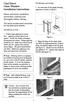 Clad Direct Glaze Window Installation Instructions Sill flashing and sealing: 2. An overview of the proper flashing sequence is shown in figure 1. Please read entire installation instructions carefully
FS Deck Mounted Skylight Installation Instructions 15-90
 FS FS Deck Mounted Skylight Installation Instructions 5-90 VAS 456-0909 5-90 FS is designed for roof pitch 5-90 deg. Accessories Refer to instructions for accessory type in questionor contact VELUX for
INSTALLATION OF A BAY WINDOW
 INSTALLATION OF A BAY WINDOW Installation of a Bay Window These instructions relate to the replacement of an existing bay window or replacement of a straight window with a new bay window, in an opening
Sun Windows General Information Sun New Construction Window Installation Instructions
 Sun Windows General Information Section 1 G F H H H A. Apply Weather Resistive Barrier B. Apply Sill Flashing Tape C. Place Waterproof Sill Shims D. Caulk Back of Nail Fin Sides & Top, Set Window, Fasten
Multi-layer Insulation Blanket for Roofs
 Multilayer Insulation Blanket for Roofs Thermal Insulation in a 40mm thin, flexible, multilayer membrane Meets requirements of L1A, L1B 2010 In accordance with BR443 NHBC Acceptance Pitched & Flat roof
We urge you to read and follow the attached installation instructions. Failure to do so may void the warranty of this garden window unit.
 Important Information for New Construction Installations Attention Installer! We urge you to read and follow the attached installation instructions. Failure to do so may void the warranty of this garden
Window Installation Instructions
 Caution The correct installation methods of windows in full frame or insert applications is critical towards achieving the tested performance of the window and longterm enjoyment and energy savings for
Installation Instructions Double-Hung, Single-Hung, Casement, Awning, Sliding, Picture & Shapes Non-Impact & Impact Resistant Nailing Fin Windows
 Installation Instructions Double-Hung, Single-Hung, Casement, Awning, Sliding, Picture & Shapes Non-Impact & Impact Resistant Nailing Fin Windows americancraftsmanwindows.com Project Requirements: Read
The WANZ Guide to Window Installation
 The WANZ Guide to Window Installation as described in E2/AS1 Amendment 5 Ver. 1.1 Page 2 of 74 Contents Overview Page 5 Objective Page 5 Scope Page 5 Opening Preparation Page 7 Step P1 Preliminary Check
March 14, 2007. Installation of Bay, Bow and Garden Windows
 March 14, 2007 Re: Installation of Bay, Bow and Garden Windows Attached are the Atrium Companies, Inc recommendation for the installation of bay, bow and garden windows. These instructions were developed
WINDOW INSTALLATION GUIDE FOR NEW CONSTRUCTION - WOOD FRAMING
 WINDOW INSTALLATION GUIDE FOR NEW CONSTRUCTION - WOOD FRAMING IMPORTANT NOTICES AND INFORMATION Read these instructions in their entirety prior to installing windows. Any local building code requirements
The WANZ Guide to Window Installation
 The WANZ Guide to Window Installation as described in E2/AS1 Amendment 5 2 of 60 Contents Overview 5 Objective 5 Scope 5 Opening Preparation 7 Step P1 Preliminary Check 8 Step P2 Cut the Underlay 9 Step
UBBINK SOLAR IN-ROOF SYSTEM
 UBBINK SOLAR IN-ROOF SYSTEM The integrated solar mounting system Installation guide UBBINK SOLAR IN-ROOF SYSTEM Table of contents Solar In-Roof System introduction System components Installation guide
After reading this lesson you will be able to: 12.3 IMPORTANCE OF ROOF 12.4 TYPES OF ROOF IN A HOUSE
 86 :: Certificate in Construction Supervision (CIVIL) 12 ROOF 12.1 INTRODUCTION The structure provided to cover the house surface (floor) is known as roof. For different situation and requirement, it is
Important Information for Installer & Homeowner
 Important Information for Installer & Homeowner Homeowner: Please keep this information for your records, do not discard! Installation Instructions for Wood Frame Construction Replacement (See other side
Flue Installation. High Efficiency Condensing Boilers
 Flue Installation High Efficiency Condensing Boilers Table of contents INTRODUCTION 1 Instruction guidance...4 1.1 Product documentation...4 1.2 Explanation of symbols...4 1.3 Important Notes...4 INSTALLATION
We urge you to read and follow the attached installation instructions. Failure to do so may void the warranty of this garden window unit.
 Important Information for New Construction Installations Attention Installer! We urge you to read and follow the attached installation instructions. Failure to do so may void the warranty of this garden
Chapter 9: INSTALLING ROOFING
 9.1 LEAK BARRIER (ICE AND WATER SHIELD) 9.2 SHINGLE UNDERLAYMENT 9.3 INSTALLING GUTTER APRON AND GABLE D-EDGE 9.4 INSTALLING SHINGLES 9.5 RIDGE VENT AND CAP Tools needed by each volunteer: Hammer (16 oz.
INSTALLATION INSTRUCTIONS for Vinyl Windows with Integral Nailing Fin (JII001)
 Thank you for selecting JELD-WEN products. Attached are JELD-WEN s recommended installation instructions for Vinyl windows with an integral nailing fin. While the use of these installation instructions
RESIDENTIAL ROOFING & RE-ROOFING, ROOF VENTILATION AND ROOF SHEATHING REQUIREMENTS MICHIGAN RESIDENTIAL CODE 2000
 RESIDENTIAL ROOFING & RE-ROOFING, ROOF VENTILATION AND ROOF SHEATHING REQUIREMENTS MICHIGAN RESIDENTIAL CODE 2000 SECTION R905 REQUIREMENTS FOR ROOF COVERINGS R905.1 Roof covering application. Roof coverings
BUILDING CONTROL GUIDANCE SHEET USE OF BREATHABLE ROOFING FELTS.
 Building Control Charnwood Borough Council Southfield Road Loughborough LE11 2TN BUILDING CONTROL GUIDANCE SHEET USE OF BREATHABLE ROOFING FELTS. Last updated 16/11/2010 Page 1 of 6 PURPOSE: This Guidance
Installation Details. D1 General D2 Walls D3 Ceilings D4 Reference. D Installation Details
 D Installation Details D1 General D2 Walls D3 Ceilings D4 Reference D Installation Details D Contents D1 General Installation and Fastening Sequence for Steel Studs D1.1 Fastener Selection D1.3 D2 Walls
Installation Guide for Andersen Architectural Clad Outswing Commercial Doors
 Installation Guide for Andersen Architectural Clad Outswing Commercial Doors Congratulations! You have just purchased one of the many fine Andersen products. Proper assembly, installation and maintenance
UB1 AIR CONDITIONING UNIT INSTALLATION INSTRUCTIONS
 UB1 AIR CONDITIONING UNIT INSTALLATION INSTRUCTIONS INSTALLATION INSTRUCTIONS: Carefully read these instructions before installing your new air-conditioner. AUSTRALIAN AUTOMOTIVE AIR AL00500054E 1 Table
Rooflight INSTALLATION INSTRUCTIONS
 INSTALLATION INSTRUCTIONS Rooflight These instructions should be used for: Installing Permanent Trickle Ventilation: Constructing & Waterproofing a Timber Upstand Curb: Installing & Waterproofing Proprietary
Superform Products Ltd.
 TYPICAL CORNER REINFORCING NOTE : SEE ENGINEERED REBAR SCHEDULES SUPPLIED BY THE MANUFACTURER STEEL REINFORCEMENT WALL CORNER 90 Copyright 2012 Sept. 2012 5.1.1 Rebar Spacing 6" 12" Max. Load LB./FT. 2000
Installation Guide. Bath and Wall Surrounds SERIES 7104 1021861-2-B
 Installation Guide and Wall Surrounds SERIES 7104 1021861-2-B Thank You For Choosing Sterling We appreciate your commitment to Sterling value. Please take a few minutes to review this manual before you
7. Installation. installation 7.1.1. CAST-IN WINDOW SYSTEM 7.1. INSTALLATION OF WINDOW MAIN FRAME
 7. Installation Window involves the fixing of window frame at an earlier construction stage and subsequent of the window sashes. This is a highly workmanship dependent process. Only trained and approved
Wren Kitchens Installation Tips... 3. Carefully check your kitchen delivery... 4. Measuring out and marking up... 5. Fitting the base cabinets...
 tra 1 Index Wren Kitchens Installation Tips... 3 Carefully check your kitchen delivery... 4 Measuring out and marking up... 5 Fitting the base cabinets... 6 Fitting the corner cabinets... 7 The 972mm or
Householder Applications: Supplementary Planning Guidance GENERAL POINTS
 Householder Applications: Supplementary Planning Guidance Environment Committee: 28 January 2004 Chief Planning Officer Town Hall The Parade Epsom Surrey KT18 5BY tel 01372 732000 web www.epsom-ewell.gov.uk
Installation Instructions
 Installation Instructions READ BEFORE INSTALLING UNIT For Low Profile Window Air Conditioner INSTALLATION WARNINGS AND CAUTION Carefully read the installation manual before beginning. Follow each step
Installation Window Building In Details
 Installation Window Building In Details INSTALLATION Photo courtesy of Rowe Aluminium DATE: NOVEMBER 2009 REPLACES: AUGUST 2003 INSTALLATION Installation Replaces: Scale: NOT TO SCALE Vantage snap-on couplers
Including. Rubershield-Pro. Breather Membrane
 Including RubershieldPro Breather Membrane 2 Ruberoid produces a wide range of underslating membranes, primarily to be installed below tiles, slates or metal roofing providing a secondary barrier against
Tundra Series Windows January 2016
 Tundra Series Windows January 2016 New Construction Installation Instructions Nail Fin, J-Fin and Brickmold Aplications product. ATTENTION! Read and understand all installation instructions before installing
Roof Tutorial. Chapter 3:
 Chapter 3: Roof Tutorial The majority of Roof Tutorial describes some common roof styles that can be created using settings in the Wall Specification dialog and can be completed independent of the other
Asphalt Shingle Application Requirements
 Alberta Allied Roofing Association Asphalt Shingle Application Requirements Section 1 Roof Decks 1.1 General Asphalt Shingles are not permitted to be installed directly over rigid insulation. When Asphalt
Installation Guide for Andersen Architectural Wood Inswing Entry Doors
 Installation Guide for Andersen Architectural Wood Inswing Entry Doors Congratulations! You have just purchased one of the many fine Andersen products. Proper assembly, installation and maintenance are
CONTENTS. General conditions 2. Material requirements 3. Terms 4. Estimating shingle requirements 4. Roof preparation 6. Shingle application 9 - 1 -
 CONTENTS General conditions Material requirements 3 Terms 4 Estimating shingle requirements 4 Roof preparation 6 Shingle application 9 Shingle Shingle application application guide guide - - b a 3a 3b
Mark Cramer Inspection Services, Inc.
 Mark Cramer Inspection Services, Inc. 492 Twentieth Avenue, Indian Rocks Beach, FL 34635-2970 (727) 595-4211 Fax (727) 596-7583 Certified Member #12085 American Society of Home Inspectors Construction
Basement Window Installation Guide Hopper and Sliding
 Basement Window Installation Guide Hopper and Sliding americancraftsmanwindows.com Project Requirements: Installation must comply with all applicable building codes. Existing window frame, wall and weatherresistant
Confort 26. Sliding Systems. Sapa Building System
 Confort 26 Sliding Systems Sapa Building System Confort 26 is Sapa s thermally insulated sliding system for windows and doors. Available as two- and three-rail solution. Among its features, there are
Replacement Window Installation Guide Non-Impact & Impact Resistant Windows without Nailing Fin
 Replacement Window Installation Guide Non-Impact & Impact Resistant Windows without Nailing Fin americancraftsmanwindows.com Project Requirements: Failure to follow these instructions may void product
September 3, 2009. Ric Boyd, Public Works Director Ketchikan Gateway Borough 344 Front St. Ketchikan, AK 99901
 September 3, 2009 Ric Boyd, Public Works Director Ketchikan Gateway Borough 344 Front St. Ketchikan, AK 99901 RE: Ketchikan Gateway Borough Gateway Recreation Center Roof Observations and Intrusive Inspections
AND MEMBRANES ROOFING UNDERLAYS. www.fakro.com
 AND MEMBRANES 010 ROOFING UNDERLAYS 1 HO DOES YOUR ROOF BREATHe? MEMBRANES THE WAY to A WARM AND DRY ROOF HO HO HO HO HO HO WATERTIGHTNESS The FAKRO Company offers a wide range of membranes and underlays
Isola Steel Gutters Strength and design for extreme climate!
 Isola Steel Gutters Strength and design for extreme climate! Dry and healthy buildings Isola Steel Gutters Steeled against wind and weath The four seasons Wide temperature variations and highly variable
WELCOME. Recommended Window Installation. 1.5 credits Minnesota Department of Labor and Industry
 WELCOME Recommended Window 1.5 credits Minnesota Department of Labor and Industry In accordance with the Department of Labor and Industry s statute 326.0981, Subd. 11, This educational offering is recognized
CERTIFICATE NAME OF PRODUCT MANUFACTURER PRODUCT DESCRIPTION CERTIFICATION PROCEDURE. No VTT C-6044-10 Date of issue 11.10.2010, Updated July 1, 2011
 CERTIFICATE NAME OF PRODUCT No VTT C-6044-10 Date of issue 11.10.2010, Updated July 1, 2011 H-CONTROL REFLEX+ reflective insulating vapour control layer for roof and wall applications MANUFACTURER ACTIS
Energy Efficient Windows
 Energy Efficient Windows All properties lose heat through their windows. But energy-efficient glazing keeps your home warmer and quieter as well as reducing your energy bills. That might mean double or
Residential Roofing Guide
 Residential Roofing Guide TABLE OF CONTENTS Building Detail and Accessories...... 1 Panel Introduction and Handling...... 2 Cutting and Trimming.... 3 Roof Preparation..... 3 Roof Slope..... 3 Re-roofing...
6720616592.00-1.SD. Flat roof. Rack Mounting. Installation instructions 6 720 647 036 (2010/11) AU
 6720616592.00-1.SD Flat roof Rack Mounting AU Installation instructions 2 Contents AU Contents 1 Key to symbols and safety instructions....... 3 1.1 Explanation of symbols................ 3 1.2 Safety
Rockwool Flexi Insulation Application Guide
 Pitched roof Rafters InterMediate floors INTERNAL partitions external Framed walls separating floors Separating Walls Rockwool Flexi Insulation Application Guide Ground floor The perfect fit for any framed
ROOF CONSTRUCTION Roof Styles Gable Roof Hip Roof Gambrel Roof
 ROOF CONSTRUCTION The overall appearance of a building is greatly affected by the roof lines and the roofing materials. The designer has many standard designs to choose from and should be able to find
Section 3.1.2. Timber Frame Walls. Single layer between studs. Single layer between studs with service void. Between studs with insulated lining
 Section Timber Frame Walls Single layer between studs Product: Earthwool FrameTherm Rolls and Slabs Tf01 Single layer between studs with service void Product: Earthwool FrameTherm Rolls and Slabs Tf02
GreenGuard Housewrap Installation Guide
 000768PACBPHW_Flashing Bro 5/23/03 2:52 PM Page 1 For the most current product information, go to www.green-guard.com. Pactiv Building Products believes the information and recommendations herein to be
glass & Glazing Products
 glass & Glazing Products WallMaker Create an unlimited variety of bright, beautiful and secure interior environments with the easy-to-install Stylmark WallMaker glass wall system. This versatile system
Vinyl Brick Mould Field Installation Instructions All Vinyl and Vinyl Clad Windows
 Vinyl Brick Mould Field Installation Instructions All Vinyl and Vinyl Clad Windows Viewed from the exterior. IMPORTANT: Please read before you begin installation. TABLE OF CONTENTS AND TOOL / MATERIAL
ROOFS, SNOW AND ICE DAMS
 ROOFS, SNOW AND ICE DAMS The Problem Ice dams are a common roof performance problem in cold climate buildings. Simply put, they are ridges of ice and icicles caused by melt water from further up the roof
Contents. APA Construction Details. Full fill cavity walls 2-13. Partial fill cavity walls 14-25. Solid externally insulated walls 26-37
 Contents Pages Full fill cavity walls 2-13 Partial fill cavity walls 14-25 Solid externally insulated walls 26-37 Appendix (BRE confirmation of Ψ and y-values) 38-40 Page 1 of 40 APA Construction Details
SHINGLE APPLICATION GUIDE
 SHINGLE APPLICATION GUIDE CONTENTS 01. General conditions 01. Material requirements 02. Terms 07. Estimating shingle requirements 08. Roof preparation 10.Shingle application E version 2006 GENERAL CONDITIONS
Comment Form on Proposed Gut Rehabilitation Alternatives
 Comment Form on Gut Rehabilitation Alternatives Name: Organization: Email: Instructions Submission: Please submit this form to [email protected] by October 10 th, 2012 with the subject line
Chapter 10 - Scaffolding Systems
 Chapter 10 - Scaffolding Systems Contents Chapter 10 - Scaffolding Systems... 10-1 Check and Oil the Pump Jacks... 10-4 Set Pump Jack Brackets... Error! Bookmark not defined. Set Pump Jack Poles... 10-5
How to Install UnderDeck The Original.
 How to Install UnderDeck The Original. TOOLS: Chalk Line Caulk Gun Garden hose or water bucket Gloves Hammer or Screw Gun Power Mitre Saw with OSB Blade Pencil Pliers Safety Glasses Straight Edge / Carpenter
foot skylight) is enough to knock a worker off their feet. A 10 mph wind gust on a 5 x 6 skylight develops a wind force of 270 lbs.
 Skylight Installation Instructions This document provides instruction and guidelines for installation of both curb mount (CM) and self flashing (SF) unit skylights on flat, pitched (> or equal to 3/12
Window Sill Details for Effective Drainage of Water
 Construction Technology Update No. 76 Window Sill Details for Effective Drainage of Water By M.A. Lacasse and M.M. Armstrong Satisfactory window performance demands a good product and proper installation.
Residential Garage Door Terminology
 A Air Infiltration: The leakage or passage of air through a door system Anodize: A hard non-corrosive oxide film on the surface of aluminum Astragal: A compressible or deformable seal provided on the bottom
The better way to build TM. Installation Manual. FOUNDATION SIPs & FROST WALLS SIPs
 The better way to build TM Installation Manual FOUNDATION SIPs & FROST WALLS SIPs February 2016 PWF FOUNDATION & FROST WALL SIPs Installation Manual Table of Contents Topics General Requirements...................................
Garden Window. Montecito Series Vinyl Garden Window Architectural Manual
 Montecito Series Vinyl The offers the outstanding insulating properties, low maintenance, and contemporary aesthetic appeal only vinyl can provide. Available in White and Tan homogenous window frames,
Roof Tutorial. Chapter 3:
 Chapter 3: Roof Tutorial The first portion of this tutorial can be completed independent of the previous tutorials. We ll go over some common roof styles that can be created using settings in the Wall
Manual lifting and handling
 Manual lifting and handling When installing British Gypsum products and systems care should be taken to ensure that appropriate methods of handling and lifting are adopted. The following guidance details
Linea Weatherboard DIRECT FIX CONCRETE SLAB AND SOFFIT FIGURE 1
 Top plate Stud Soffit lining 45mm min nog Fix scotia bead Building underlay/james Hardie rigid air barrier Soffit Detail Building underlay/james Hardie rigid air barrier Bottom plate 25mm wide cant strip.
INSTALLATION INSTRUCTIONS for Vinyl Windows without Nailing Fin (JII011) ImPOrTANT INFOrmATION & GlOssAry. rough OPeNINGs
 Thank you for selecting JELD-WEN products. Attached are JELD-WEN s recommended installation instructions for vinyl windows without a nailing fin (including finless, flush fin and flange). Read these instructions
Cable Support System Guide for Andersen Bow, Bay, and Box Projecting Window Units
 for Andersen Bow, Bay, and Box Projecting Window Units Congratulations! You have just purchased one of the many fine Andersen products. Proper assembly, installation and maintenance are essential if the
Installation Instructions For Slider Casement Air Conditioners
 Installation Instructions For Slider Casement Air Conditioners NOTE: These instructions describe installation in a typical wood framed window with a wood SLIDE-BY sash, or installation in a metal CASEMENT
STANDARD PROCEDURES FOR INSTALLATION OF METAL ROOF SYSTEMS
 ROOFING APPLICATION STANDARD (RAS) No. 133 STANDARD PROCEDURES FOR INSTALLATION OF METAL ROOF SYSTEMS 1. Scope 1.1 This application standard has been developed to provide consistent information for the
Part 3 Ancillary technologies. Chapter 3.2. Mechanical ventilation with heat recovery
 Part 3 Ancillary technologies Chapter CONTENTS SCOPE Clause Page DESIGN Design standards D1 1 Statutory requirements D2 1 System design D3 1 Building integration D4 2 Noise D5 2 Access and controls D6
VM ZINC : standing seam Guidelines for specification and installation
 VM ZINC : standing seam Guidelines for specification and installation Junglim Architecture - QUARTZ-ZINC Roofing and cladding system in VM ZINC Roofs from a 3 pitch and facades Freedom with shape and appearance
When considering Roof drainage design the following should be taken into account:
 Roof Drainage Design The primary objective of a gutter or spouting system is to remove water from the roof catchment area and channel that water to the ground drainage. Water ingress can have detrimental
Sliding and Folding Door Fittings Sliding Door Accessories
 Sliding door lock Toplock For 1- and 2-leaf sliding doors Suitable for toughened safty glass and laminated sheet glass Suitable for DIN left and DIN right Max. weight per door leaf 120 kg For glass thickness:
BUILD A CARPORT. 2 - Planning the carport. 3 - Designing the carport
 BUILD A CARPORT You only need basic DIY and woodworking skills to build a carport. The most important part of the job is setting the supporting posts truly vertical - a job for which another pair of hands
Installation Detailed installation instructions are provided which should be strictly followed.
 Specification System 6 The Metal Technology Thermally-Broken Vertical Slide Window has been designed in such a way that its'attractive and clean lines will enhance all types of residential and commercial
Andersen Electric Window Opener for Andersen Awning and Roof Windows
 W A Electric Window Opener Electric Window Opener for Awning and Roof Windows Congratulations! You have just purchased one of the many fine products. For ease of installation and continued enjoyment of
NRG 75 CRF NRG GREENBOARD WALL SYSTEM
 NRG GREENBOARD WALL SYSTEM NRG Energy Efficient Building Systems is pleased to announce a revolution in lightweight cladding systems. NRG Building Systems is the first and only company to achieve CodeMark
Storage Store the siding in a dry and ventilated area. Do not place it directly on the ground. Always cover the siding after a day s work.
 Installation Guide Before you begin, take the time to read this entire guide to clearly understand the requirements and steps to follow for proper installation. Warning Do not install defective material.
PANELIZED HOME INSTALLATION GUIDELINE
 PANELIZED HOME INSTALLATION GUIDELINE A typical home package will be constructed of Snap-N-Lock Insulated Panels clad with steel skins. 4" panels will be used for the walls, and 6" panels for the roof.
Installation, operation and maintenance manual TX 35A
 Installation, operation and maintenance manual TX 35A Rev.10 may 2012 Page 1 of 18 1.0.0 Table of contents INSTALLATION, OPERATION AND MAINTENANCE MANUAL...1 1.0.0 TABLE OF CONTENTS...2 2.0.0 ILLUSTRATIONS...2
Memtec Single Ply PVC Membrane Roofing and Waterproofing Technology. Modern Efficient Performance Cost Effective Flat Roofing Systems
 Memtec Single Ply PVC Membrane Roofing and Waterproofing Technology Modern Efficient Performance Cost Effective Flat Roofing Systems Introduction A complete range of Memtec Roofing and Waterproofing Single
4 5/16 Subframe Installation
 4 5/16 Subframe Installation The subframe system is a great installation tool for installing windows in masonry conditions. Typically subframes are used in masonry openings so that windows can be anchored
Packaged Terminal Air Conditioner Wall Sleeve Installation
 Installation & Maintenance Data IM 1196 Group: PTAC Part Number: 910141799 Date: October 2013 Packaged Terminal Air Conditioner Installation x 42" PGAN with Top-Mounted Hydronic Heat Note: Installation
WINDOW INSTALLATION GUIDE
 WINDOW INSTALLATION GUIDE is not responsible for or liable for any use or misuse of the information contained in this window installation guide. Window Installation Guide This guide provides basic information
HfHMD uses LP SmartSide siding and trim.
 HfHMD uses LP SmartSide siding and trim. These products are: More durable than cement fiber board. Much more volunteer-friendly to install. When installed correctly, have a 5/50- year pro-rated warranty.
GYPSUM AREA SEPARATION FIREWALLS GA-620-2011
 GYPSUM AREA SEPARATION FIREWALLS GA-620-2011 GA-620-2011 Copyright 2011 Gypsum Association All rights reserved. Printed in U.S.A. Characteristics, properties, or performance of materials or systems herein
Confort 160. Sliding Systems. Sapa Building System
 Confort 160 Sliding Systems Sapa Building System Confort 160 is a high performance thermally insulated sliding window system, with a user-friendly slide action. The system, which has an attractive aesthetic
FLAT ROOF CARPORT RECOMMENDED INSTRUCTION MANUAL
 FLAT ROOF CARPORT RECOMMENDED INSTRUCTION MANUAL Table of Contents Introduction... 2 Components... 3 Step 1 Marking out the Perimeter of the Carport... 3 Step 2a Footing Set-Out for Concrete Block Pad
AMERICAN GOTHIC PLAYHOUSE
 AMERICAN GOTHIC PLAYHOUSE Project Plan #856 Sheet 1 of 5 Pick a spot and get started with the beautiful that your kids will love. The design of the playhouse includes 35 square feet of interior space plus
plumbing products guide
 plumbing products guide radiator pipe guide & seals A significant development in the drive to reduce air leakage and heat loss. Installations such as that shown are all too common. The detail is poorly
CITY OF WHITE BEAR LAKE BUILDING INSPECTION DEPARTMENT 4701 Highway 61 White Bear Lake, MN 55110 Fax: 651-429-8503. Re-Roofing: Asphalt Shingles
 CITY OF WHITE BEAR LAKE BUILDING INSPECTION DEPARTMENT 4701 Highway 61 White Bear Lake, MN 55110 Fax: 651-429-8503 Re-Roofing: Asphalt Shingles This is a summary of the standard requirements based on the
Roofers Guide to Underslating Membranes
 Roofers Guide to Underslating Membranes IKO is a worldwide enterprise, with more than 3000 employees, and manufacturing plants in Canada, the United States, United Kingdom, Belgium, Holland, France and