
Keywords: coordinate systems, latitude, longitude, georeferencing, global positioning system, GPS, geodetic datum, ellipsoid, geocoding, postal code
|
|
|
- Stephen Noah Baldwin
- 10 years ago
- Views:
Transcription
1 Core Curriculum-Geographic Information Science ( ) UCSB Peer Reviewed Title: Units Position on the Earth Book Title: Core Curriculum in Geographic Information Science Author: , CC in GIScience Foote, Kenneth E., University of Texas at Austin Dana, Peter H., University of Texas at Austin Kirvan, Anthony P., University of Texas at Austin Cowen, David J., University of Texas at Austin Editor: Goodchild, Michael F.; Kemp, Karen K. Publication Date: 2000 Series: Core Curriculum-Geographic Information Science ( ) Permalink: Keywords: coordinate systems, latitude, longitude, georeferencing, global positioning system, GPS, geodetic datum, ellipsoid, geocoding, postal code Abstract: Five topics are hilighted in this section: Unit Coordinate Systems Overview; Unit 014 Latitude and Longitude; Unit The Shape of the Earth; Unit Discrete Georeferencing; and Unit Global Positioning Systems Overview. These cover topics that are fundamental to understanding the systems of locational reference used in GIS. Copyright Information: All rights reserved unless otherwise indicated. Contact the author or original publisher for any necessary permissions. escholarship is not the copyright owner for deposited works. Learn more at escholarship provides open access, scholarly publishing services to the University of California and delivers a dynamic research platform to scholars worldwide.
2 NCGIA Core Curriculum in Geographic Information Science Unit Position on the Earth by Kenneth E. Foote, Department of Geography, University of Texas at Austin, USA This unit is part of the NCGIA Core Curriculum in Geographic Information Science. These materials may be used for study, research, and education, but please credit the author Kenneth E. Foote, and the project, NCGIA Core Curriculum in GIScience. All commercial rights reserved. Copyright Unit Topics Five topics are highlighted in this section: Unit Coordinate Systems Overview, by Peter Dana Unit Latitude and Longitude, by Anthony Kirvan Unit The Shape of the Earth, by Peter Dana Unit Discrete Georeferencing, by David Cowen Unit Global Positioning Systems Overview, by Peter Dana These cover topics that are fundamental to understanding the systems of locational reference used in GIS. The units have been written as overviews, but additional references and materials are provided for instructors wishing to extend their presentations of these important topics. Intended Learning Outcomes of this Section Determine location and calculate distances using global coordinate systems (latitudelongitude and UTM). Determine location and calculate distances in the local coordinate system employed most commonly in the student's state, region, or nation. Understand why different coordinate systems have been developed to record location. Select a coordinate system suited to a particular GIS project. Explain how the shape of the earth is related to geographic position and to the measurement of distance. Understand how geographic coordinates can be assigned to street address and postal codes using discrete georeferencing. Identify the difficulties and errors that arise in discrete geocoding. Explain how a GPS receiver computes position and time from GPS signals and list major types of error. State the methodological differences between single-user and differential GPS. Page 1
3 Unit Position on the Earth Describe the practical differences between using GPS for low-precision and highprecision positioning. See also the detailed learning outcomes listed below by unit. Metadata and Revision History Position on the Earth 1. The Importance of Position Accurate referencing of geographic location is fundamental to all GIS. The management, analysis, and reporting of all GIS data requires that it be carefully referenced by position on the Earth's surface. Mispositioned data can disrupt and even invalidate a GIS dataset and all modeling based upon that dataset. Many different coordinate systems are used to record location. Some systems such as latitude and longitude are global systems that can be used to record position anywhere on the Earth's surface. Other systems are regional or local in coverage and intended to provide accurate positioning over smaller areas. Position is sometimes recorded in other ways, for instance by using postal codes and cadastral reference systems. The system of locational reference used in a particular GIS project will depend on the purpose of the project and how the positions of the source data have been recorded. It is sometimes the case that the data needed for a particular GIS project will be recorded in two or more of these reference systems. Combining the information of these sources will require that positions be carefully converted, transformed, or projected from one system to another. This is a reason why GIS practitioners must usually be familiar with a variety of commonly used coordinate systems. Geographic position is related to the shape of the Earth. This shape is not a perfect sphere but rather an irregular ellipsoid. Positions are sometimes reported in spherical units, but are more commonly are adjusted to account for Earth shape using what are called geodetic datums. Spherical distances and measurements differ from those that use geodetic datums to adjust for Earth shape. Accurate positioning requires knowledge of the datum used to construct a given coordinate system. Transforming locations from one coordinate system to another will often also require shifting datums as well. Phenomena whose positions are recorded by street address or postal code can also referenced using geographic coordinates. The process of matching street addresses and postal codes to geographic Page 2
4 Unit Position on the Earth coordinate systems is called discrete georeferencing. Precise positioning of natural and human phenomena can be a very demanding task. The level of precision with which position is recorded in a GIS dataset will vary from project to project. Some engineering applications demand centimeter precision, some demographic and marketing applications require much lower precision to accomplish their objectives. High precision positioning usually requires the use of staff well trained in surveying, geodesy, and photogrammetry. The Global Positioning System (GPS) is now used routinely for both low-precision and high-precision positioning. Low-precision GPS positioning can be attained by users with little knowledge of the underlying GPS technology and inexpensive equipment. High-precision GPS positioning requires both a thorough knowledge of the technology and more specialized equipment. 2. Overview of the Section Units The units are intended to provide an overview to the most important issues in determining position. These overviews still contain much technical information. Lecturing from these units may occasionally require studying some of the reference materials. Instructors are encouraged to adapt these materials to their audiences. Students often benefit from having these topics explained using local examples. Students often benefit from exercises and activities that require them to practice using different coordinate systems. Instructors may find it useful to teach these units in conjunction with those on map projections and on uncertainty in spatial databases. The contents and interrelationships of the units in this section are described below Unit Coordinate Systems Overview This unit provides an overview of coordinate systems used for georeferencing, including: A description of basic coordinate systems A description of the shape of the Earth Some examples of global and regional systems used for precise positioning, navigation, and geographic information systems The overview discusses the rationale behind these systems and how they are used After learning the material covered in this unit, students should be able to: List the major global georeferencing systems Explain how the UTM georeferencing system is organized Locate a given local landmark in three or more global or regional coordinate systems Express the location of the student's home in UTM and one regional coordinate system Page 3
5 Unit Position on the Earth Identify the georeferencing system used most widely in the student's locality. Differentiate between different global systems of georeferencing including UTM, MGRS, and GEOREF systems. Collect examples of regional and local coordinate systems employed by nations or states not mentioned in the text. Find and plot one example of a metes-and-bounds survey Plan a regional GIS project that spans two or more UTM or SPC zones Unit Latitude and Longitude This unit focuses on the most widely used global reference system, latitude and longitude. It defines, explains, and illustrates: Earth rotation, the North and South Poles, and the Equator Parallels of latitude and meridians of longitude Determination of north or south position with latitude The use of longitude to determine east or west position The measurement of latitude and longitude with degrees, minutes, and seconds After learning the material covered in this unit, students should gain an appreciation for: The relationship between plane and earth coordinate geometries The importance of the earth's rotation and poles to measurement and point location The use of latitude and longitude to determine locations on the earth's surface The differences and relationships between latitude and longitude Using latitude and longitude to measure distances 2.3. Unit The Shape of the Earth This unit focuses on the shape of the Earth, and how this shape is related to location. The unit provides an overview of the following concepts: Geodetic datums Geometric Earth models Reference ellipsoids Earth surfaces After learning the material covered in this unit, students should gain an appreciation for: The various methods of describing the size and shape of the earth The evolution of a flat earth model into an accurate spherical representation Unit Discrete Georeferencing GIS often must assign geographic coordinates to data recorded by street address or postal code using discrete georeferencing. This unit provides an overview of discrete georeferencing, including: Description of how georeferencing is used to create GIS databases Applications that rely on georeferencing The level of geographic resolution possible for various alternatives of georeferencing Page 4
6 Unit Position on the Earth Sources of base maps for georeferencing Software for georeferencing address files Problems associated with handling addresses Internet resources for georeferencing After learning the material covered in this unit, students should understand: The importance of georeferencing as a way to create GIS databases The limitations of the approach and the benefits of certain alternatives The mechanics of how to use GIS software to perform georeferencing tasks Sources of software and data for performing geocoding operations 2.5. Unit Global Positioning Systems Overview The Global Positioning System (GPS) is now widely used for both low-precision and high-precision positioning. This unit provides an overview of the GPS including: A description of the space, control and user components of the system. A description of the basic services provided by GPS. A discussion of position and time determination from GPS signals. A discussion of GPS error sources and methods for overcoming some GPS errors. The overview discusses GPS project planning and costs. The overview does not discuss details of GPS signals and data formats, but does provide references to relevant sources. After learning the material covered in this unit, students should be able to: List the major GPS segments as defined by the Department of Defense. Explain how a GPS receiver computes position and time from GPS signals. Describe the major error sources for GPS positioning projects. Explain the various forms of Differential GPS. Propose suitable equipment and processes for various levels of positioning accuracy. Last revised: November 30, Page 5
7 Unit Position on the Earth Advanced Organizer Unit Position on the Earth Topics Covered Intended Learning Outcomes Metadata and Revision History 1. The importance of position 2. Overview of section units Table of Contents 2.1 Unit Coordinate systems overview 2.2 Unit Latitude and Longitude 2.3 Unit The Shape of the Earth 2.4 Unit Discrete Georeferencing 2.5 Unit Global Positioning Systems Overview Back to the Unit Page 6
8 Unit Position on the Earth Position on the Earth Metadata and Revision History Page contents 1. About the main contributors 2. Details about the file 3. Key words 4. Index words 5. Prerequisite units 6. Subsequent units 7. Revision history 1. About the main contributors author: Kenneth E. Foote, Department of Geography, University of Texas at Austin, Austin, TX, USA, Details about the file last revision date: 15 November 1998 unit title: Position on the Earth unit key number: Unit 012w 3. Key words Coordinate Systems Latitude Longitude Discrete Georeferencing Global Positioning System (GPS) Georeferencing Precise Positioning Location See also the key words listed in individual units. 4. Index words Page 7
9 Unit Position on the Earth Geodetic datum Postal code Ellipsoid Geocoding See also the index words listed in individual units. 5. Prerequisite units None 6. Subsequent or concurrent units Projections and transformations Maps as representations of the world Handling uncertainty, including units: Storing uncertainty information Uncertainty Propagation in GIS Detecting and Evaluating Errors by Graphical Methods Data Quality Measurement and Assessment Managing Uncertainty in GIS 7. Revision history 15 November Draft completed. 30 November Posted to NCGIA website. Back to the Unit: Position on the Earth Page 8
10 Unit Coordinate Systems Overview by Peter H. Dana, Department of Geography, University of Texas at Austin, USA This section was edited by Kenneth Foote, Department of Geography, University of Texas Austin. This unit is part of the NCGIA Core Curriculum in Geographic Information Science. These materials may be used for study, research, and education, but please credit the author, Peter H. Dana, and the project, NCGIA Core Curriculum in GIScience. All commercial rights reserved. Copyright 1997 by Peter H. Dana. Advanced Organizer Topics covered in this unit This unit provides an overview of coordinate systems used for georeferencing, including: a description of basic coordinate systems a description of the shape of the Earth some examples of global and regional systems used for precise positioning, navigation, and geographic information systems The overview discusses the rationale behind these systems and how they are used Learning Outcomes After learning the material covered in this unit, students should be able to: List the major global georeferencing systems Explain how the UTM georeferencing system is organized Locate a given local landmark in three or more global or regional coordinate systems Express the location of the student's home in UTM and one regional coordinate system Identify the georeferencing system used most widely in the student's locality. Differentiate between different global systems of georeferencing including UTM, MGRS, and GEOREF systems. Collect examples of regional and local coordinate systems employed by nations or states not mentioned in the text. Find and plot one example of a metes-and-bounds survey Plan a regional GIS project that spans two or more UTM or SPC zones. Full Table of Contents Page 9
11 Unit Coordinate Systems Overview Instructors' Notes Metadata and Revision History 1. Basic Coordinate Systems Unit Coordinate Systems Overview There are many basic coordinate systems familiar to students of geometry and trigonometry. These systems can represent points in two-dimensional or three-dimensional space. René Decartes ( ) introduced systems of coordinates based on orthogonal (right angle) axes. These two and three-dimensional systems used in analytic geometry are often referred to as Cartesian systems. Similar systems based on angles from baselines are often referred to as polar systems Plane Coordinate Systems Two-dimensional coordinate systems are defined with respect to a single plane, as demonstrated in the following figures: Figure 1. A Point Described by Cartesian Coordinates in a Plane Figure 2. A Line Defined by Two Points in a Plane Figure 3. Distance Between Two points (Line Length) from the formula of Pythagoras Figure 4. A Point Described by Polar Coordinates in a Plane Figure 5. Conversion of Polar to Cartesian Coordinates in a Plane 1.2. Three-Dimensional Systems Three-dimensional coordinate systems can be defined with respect to two orthogonal planes. Figure 6. A Point Described by Three-Dimensional Cartesian Coordinates Figure 7. A Point Described by Three-Dimensional Polar Coordinates Figure 8. Conversion of Three-Dimensional Polar to Three Dimensional Cartesian Coordinates 2. Earth-Based Locational Reference Systems Reference systems and map projections extend the ideas of Cartesian and polar coordinate systems over all or part of the earth. Map projections portray the nearly spherical earth in a two-dimensional Page 10
12 Unit Coordinate Systems Overview representation. Earth-based reference systems are based on various models for the size and shape of the earth. Earth shapes are represented in many systems by a sphere However, precise positioning reference systems are based on an ellipsoidal earth and complex gravity models Reference Ellipsoids Ellipsoidal earth models are required for precise distance and direction measurement over long distances. Ellipsoidal models account for the slight flattening of the earth at the poles. This flattening of the earth's surface results at the poles in about a twenty kilometer difference between an average spherical radius and the measured polar radius of the earth. The best ellipsoidal models can represent the shape of the earth over the smoothed, averaged sea-surface to within about one-hundred meters. Reference ellipsoids are defined by either: semi-major (equatorial radius) and semi-minor (polar radius) axes, or the relationship between the semi-major axis and the flattening of the ellipsoid (expressed as its eccentricity). Figure 9. Reference Ellipsoid Parameters Many reference ellipsoids are in use by different nations and agencies. Table 1. Selected Reference Ellipsoids Reference ellipsoids are identified by a name and often by a year for example, the Clarke 1866 ellipsoid is different from the Clarke 1858 and the Clarke 1880 ellipsoids Geodetic Datums Precise positioning must also account for irregularities in the earth's surface due to factors in addition to polar flattening. Topographic and sea-level models attempt to model the physical variations of the surface: The topographic surface of the earth is the actual surface of the land and sea at some moment in time. Aircraft navigators have a special interest in maintaining a positive height vector above this surface. Sea level can be thought of as the average surface of the oceans, though its true definition is far more complex. Specific methods for determining sea level and the temporal spans used in these calculations vary considerably. Tidal forces and gravity differences from location to location cause even this smoothed surface to vary over the globe by hundreds of meters. Gravity models and geoids are used to represent local variations in gravity that change the local definition of a level surface Gravity models attempt to describe in detail the variations in the gravity field. Page 11
13 Unit Coordinate Systems Overview The importance of this effort is related to the idea of leveling. Plane and geodetic surveying uses the idea of a plane perpendicular to the gravity surface of the earth which is the direction perpendicular to a plumb bob pointing toward the center of mass of the earth. Local variations in gravity, caused by variations in the earth's core and surface materials, cause this gravity surface to be irregular. Geoid models attempt to represent the surface of the entire earth over both land and ocean as though the surface resulted from gravity alone. Geodetic datums define reference systems that describe the size and shape of the earth based on these various models. While cartography, surveying, navigation, and astronomy all make use of geodetic datums, they are the central concern of the science of geodesy. Hundreds of different datums have been used to frame position descriptions since the first estimates of the earth's size were made by the ancient greeks. Datums have evolved from those describing a spherical earth to ellipsoidal models derived from years of satellite measurements. Modern geodetic datums range from flat-earth models, used for plane surveying to complex models, used for international applications, which completely describe the size, shape, orientation, gravity field, and angular velocity of the earth. Different nations and international agencies use different datums as the basis for coordinate systems in geographic information systems, precise positioning systems, and navigation systems. In the United States, this work is the responsibility of the National Geodetic Survey ( Links to some of the NGS's counterparts in other nations are listed below in Section 7.2 (Web References). Linking geodetic coordinates to the wrong datum can result in position errors of hundreds of meters. The diversity of datums in use today and the technological advancements that have made possible global positioning measurements with sub-meter accuracies requires careful datum selection and careful conversion between coordinates in different datums. For the purposes of this unit, reference system can be divided into two groups:. Global systems can refer to positions over much of the Earth. Regional systems have been defined for many specific areas, often covering national, state, or provincial areas. 3. Global Systems 3.1. Latitude, Longitude, Height The most commonly used coordinate system today is the latitude, longitude, and height system. The Prime Meridian and the Equator are the reference planes used to define latitude Page 12
14 Unit Coordinate Systems Overview and longitude. Figure 10. Equator and Prime Meridian There are several ways to define these terms precisely. From the geodetic perspective these are: The geodetic latitude of a point is the angle between the equatorial plane and a line normal to the reference ellipsoid. The geodetic longitude of a point is the angle between a reference plane and a plane passing through the point, both planes being perpendicular to the equatorial plane. The geodetic height at a point is the distance from the reference ellipsoid to the point in a direction normal to the ellipsoid. Figure 11. Geodetic Latitude, Longitude, and Height 3.2. ECEF X, Y, Z Earth Centered, Earth Fixed (ECEF) Cartesian coordinates can also be used to define three dimensional positions. ECEF X, Y, and Z Cartesian coordinates define three dimensional positions with respect to the center of mass of the reference ellipsoid. The Z-axis points from the center toward the North Pole. The X-axis is the line at the intersection of the plane defined by the prime meridian and the equatorial plane. The Y-axis is defined by the intersection of a plane rotated 90 east of the prime meridian and the equatorial plane. Figure 12. ECEF X, Y, and Z Table 2. ECEF X, Y, Z Coordinates Example 3.3. Universal Transverse Mercator (UTM) Universal Transverse Mercator (UTM) coordinates define two dimensional, horizontal, positions. Each UTM zone is identified by a number UTM zone numbers designate individual 6 wide longitudinal strips extending from 80 South latitude to 84 North latitude. (Military UTM coordinate systems also use a character to designate 8 zones extending north and south from the equator, see below). Figure 13. UTM Zones Each zone has a central meridian. For example, Zone 14 has a central meridian of 99 west longitude. The zone extends from 96 to 102 west longitude. Figure 14. UTM Zone 14 Locations within a zone are measured in meters eastward from the central meridian and northward from the equator. However, Eastings increase eastward from the central meridian which is given a false easting of 500 km so that only positive eastings are measured anywhere in the zone. Northings increase northward from the equator with the equator's value differing Page 13
15 Unit Coordinate Systems Overview in each hemisphere in the Northern Hemisphere, the Equator has a northing of 0 for Southern Hemisphere locations, the Equator is given a false northing of 10,000 km Figure 15. UTM Zone 14 Example Detail Table 3. UTM Coordinate Example 3.4. Military Grid Reference System (MGRS) The Military Grid Reference System (MGRS) is an extension of the UTM system. A UTM zone number and an additional zone character are used to identify areas 6 in east-west extent and 8 in north-south extent. A few special UTM zones do not match the standard configuration (see Figure 13) between 0 and 42 east longitude, above 72 north latitude in the area of the Greenland and Barents Seas, and the Arctic Ocean. in zones 31 and 32 between 56 and 64 north latitude including portions of the North Sea and Norway. UTM zone number and character are followed by two characters designating the eastings and northings of 100 km square grid cells. Starting eastward from the 180 meridian, the characters A to Z are assigned consecutively to up to 24 strips covering 18 of longitude (characters I and O are omitted to eliminate the possibility of confusion with the numerals 1 and 0). The sequence begins again every 18. From the equator northward, the characters A to V (omitting characters I and O) are used to sequentially identify 100 km squares, repeating the sequence every 2,000 km. for odd numbered UTM easting zones, northing designators normally begin with 'A' at the equator for even numbered UTM easting zones, the northing designators are offset by five characters, starting at the equator with 'F'. South of the equator, the characters continue the pattern set north of the equator. Complicating the system, ellipsoid junctions ("spheroid junctions" in the terminology of MGRS) require a shift of 10 characters in the northing 100 km grid square designators. Different geodetic datums using different reference ellipsoids use different starting row offset numbers to accomplish this. Figure 16. Military Grid Reference System For a full MGRS location, UTM zone number and character and the two grid square designators are followed by an even number of digits representing more precise easting and northing values. 2 digits give a coordinate precision of 10 km. 10 digits give a coordinate precision of 1 m. Table 4. MGRS Example MGRS and UTM systems are often employed in products produced by the US National Imagery and Mapping Agency ( formerly the Defense Mapping Page 14
16 Unit Coordinate Systems Overview Agency World Geographic Reference System (GEOREF) The World Geographic Reference System is used for aircraft navigation. GEOREF is based on latitude and longitude. The globe is divided into twelve bands of latitude and twenty-four zones of longitude, each 15 in extent. Figure 17. World Geographic Reference System Index These 15 areas are further divided into one degree units identified by 15 characters. Figure 18. GEOREF 1 Grid Table 5. GEOREF Example 4. Regional Systems Several different systems are used regionally to identify geographic location Some of these are true coordinate systems, such as those based on UTM and UPS systems Others, such as the metes and bounds and Public Land Survey systems describe below, simply partition space 4.1. Transverse Mercator Grid Systems Many nations have defined grid systems based on Transverse Mercator coordinates that cover their territory An example - the British National Grid (BNG) The British National Grid (BNG) is based on the National Grid System of England, administered by the British Ordnance Survey The BNG has been based on a Transverse Mercator projection since the 1920s. The modern BNG is based on the Ordnance Survey of Great Britain Datum The true origin of the system is at 49 north latitude and 2 degrees west longitude. The false origin is 400 km west and 100 km north. Scale factor at the central meridian is The first BNG designator defines a 500 km square. The second designator defines a 100 km square. Figure 19. British National Grid 100 km Squares The remaining digits define 10 km, 1 km, 100 m, 10 m, and 1 m eastings and northings. Table 6. British National Grid Example 4.2. Universal Polar Stereographic (UPS) The Universal Polar Stereographic (UPS) projection is defined above 84 north latitude and south of 80 south latitude. Page 15
17 Unit Coordinate Systems Overview The eastings and northings are computed using a polar aspect stereographic projection. Zones are computed using a different character set for south and north Polar regions. Figure 20. North Polar Area UPS Grid Table 7. North Polar UPS Example Figure 21. South Polar Area UPS Grid Table 8. South Polar UPS Example 4.3. State Plane Coordinates (SPC) State plane systems were developed in order to provide local reference systems that were tied to a national datum. In the United States, the State Plane System 1927 was developed in the 1930s and was based on the North American Datum 1927 (NAD-27). NAD-27 coordinates are in English units (feet). Figure 22. NAD-27 State Plane Coordinate Example The State Plane System 1983 is based on the North American Datum 1983 (NAD-83). NAD-83 coordinates are metric. Table 9. NAD-83 State Plane Coordinate Example While the NAD-27 State Plane System has been superceded by the NAD-83 System, maps in NAD-27 coordinates are still in use. Most USGS 7.5 Minute Quadrangles show several coordinate system grids including latitude and longitude, UTM kilometer tic marks, and applicable State Plane coordinates. Figure 23. Three Coordinate Systems on the Austin, East USGS 7.5' Quadrangle Each state has its own State Plane system with specific parameters and projections. Software is available for easy conversion to and from latitude and longitude. A popular public domain software package, CORPSCON is maintained by the US Army Corps of Engineers Some smaller states use a single state plane zone while larger states are divided into several zones. State plane zone boundaries often follow county boundaries. Figure 24. State Plane Zone Example Two projections are used in all State Plane systems, with one exception: Lambert Conformal Conic projections are used for regions with a larger east-west than north-south extent. examples are Nebraska and North Carolina Transverse Mercator projections are used for regions with a larger north-south extent. examples are New Hampshire and Illinois Some states use both projections in Florida, the Lambert Conformal Conic projection is used for the North zone while the Transverse Mercator projection is used for the East and West zones. The exception is one State Plane zone in Alaska which uses an Oblique Mercator projection for a thin diagonal area. Figure 25. Alaska State Plane Zone 5001 Page 16
18 Unit Coordinate Systems Overview 4.4. Public Land Rectangular Surveys (USPLS) Public Land Rectangular Surveys have been used since the 1790s to identify public lands in the United States.(USPLS = US Public Land Survey) The system is based on principal meridians and baselines. Townships, square with six miles on each side, are numbered with reference to a baseline and principal meridian. actually, few townships are truly square due to convergence of the meridians. Ranges are the distances and directions from baseline and meridian expressed in numbers of townships. Every four townships, a new baseline is established so that orthogonal meridians can remain north oriented. Figure 26. U.S. Rectangular Survey Sections, approximately one mile square, are numbered from 1 to 36 within a township. Figure 27. Township Sections Sections are divided into quarter sections. Quarter sections are divided into 40-acre, quarter-quarter sections. Quarter-quarter sections are sometimes divided into 10-acre areas. Figure 28. Subdivided Section Fractional units of section quarters, designated as numbered lots, often result from irregular claim boundaries, rivers, lakes, etc. Abbreviations are used for Township (T or Tps), Ranges (R or Rs), Sections (Sec or Secs), and directions (N, E, S, W, NE, etc.). Table 10. A Township and Range Property Description 4.5. Metes and Bounds Metes and Bounds identify the boundaries of land parcels by describing lengths and directions of a sequence of lines forming the property boundary. Lines are described with respect to natural or artificial monuments and to baselines drawn from these monuments. The metes and bounds survey is based on a point of beginning, an established monument. Line lengths are measured along a horizontal level plane. Directions are bearing angles measured with respect to the previous line in the survey. Table 11. Metes and Bounds Example Figure 28a. Metes and Bounds graphic Metes and bounds descriptions are also referred to as COGO (Coordinate Geometry) when used in GIS and CAD systems 5. Summary This overview has introduced a number of global and regional coordinate systems. A single point on the Earth can be described in a variety of systems. Each GIS project Page 17
19 Unit Coordinate Systems Overview may require the use of a specific locational reference system. It is important to be aware of the variety of systems in use. As an example of a point that could be referred to by a number of different system, one of the horizontal control monuments used in the survey network maintained by the National Geodetic Survey (the star in the hand of the statue of the Goddess of Liberty on top of the state capitol building in Austin, Texas) has been used throughout this overview. Figure 29. The Texas Capitol Building Figure 30. The Star in the Hand of The Goddess of Liberty This horizontal control monument can be described by many different locational reference systems. Table 12. One Location Described by a Variety of Systems 6. Review and Study Questions 6.1. Essay and Short Answer Questions In what ways does the long and widespread use of SPC, UTM, COGO, and USPLS reference systems limit the possibility of building regional and state-wide GIS? What is metes and bounds surveying and how is it used to measure and record land records? The US Public Land Survey is a method of cadastral partitioning. How has it influenced the appearance of the American landscape and why? What is the rationale behind both the State Plane Coordinate and Universal Transverse Mercator coordinate systems? From the standpoint of locational reference systems (SPC and UTM) and methods of cadastral partitioning (USPLS, metes and bounds, etc.), why is Texas such an unusual state? Describe the Township and Range land surveying system. Use a diagram. What is a false origin? In practice, why are they always placed outside of the map zone being used? In a state of Texas's size, why can't SPC or UTM coordinates be used for mapping and GIS projects that span the entire state? Why was the State Plane Coordinate System such an important advance for mapping in the US? 6.2. Multiple-choice questions Choose the best or most appropriate answer(s) to the question. Which of the following statements are true of both SPC and UTM coordinate systems? 1. both SPC and UTM are for mapping in the US 2. both SPC and UTM employ conformal, equidistant projections 3. within the US both systems yield horizontal coordinates of equal precision 4. UTM zones correspond to state boundaries, whereas SPC zone are aligned with Page 18
20 Unit Coordinate Systems Overview county boundaries Which system incorporates a false origin to measure position within a Cartesian grid? 1. metes and bounds 2. State Plane Coordinate System (SPC) 3. Universal Transverse Mercator (UTM) 4. Township and Range 5. long lots Which of the following are true about the SPC? 1. accuracy is 1 part in the system is best used in regional and statewide GIS projects 3. city governments resist using the SPC because of cost 4. both A and B 5. none of the above 7. Reference Materials 7.1. Print References Bugayevskiy, Lev M. and John P. Snyder Map Projections: A Reference Manual. London: Taylor and Francis. This book contains a general exposition on map projection theory followed by sections on particular types of projection. Projections are classified by those whose parallels are straight, in the shape of concentric circles, or in the shape on non-concentric circles. Other types map projections and current map projection research are discussed. This is an excellent resource especially when paired with Snyder's Map Projections Clarke, Keith C Analytical and Computer Cartography, 2nd ed. Englewood Cliffs, NJ: Prentice Hall. This book contains descriptions of most coordinate systems used in GIS along with enough technical details (including source code examples and a diskette) to work out many coordinate system conversions including computer raster graphic transformations not included in many other books on map projections. Defense Mapping Agency The American Practical Navigator: Publication No. 9, Defense Mapping Agency Hydrographic Center. A venerable reference work containing many practical details for using maps and navigation systems. While primarily useful for working with nautical charts, the book contains sections on numerous navigation aids, from sextants to GPS. Defense Mapping Agency World Geodetic System 1984 (WGS 84) - Its Definition and Relationships with Local Geodetic Systems, 2nd Edition. Washington, DC: Defense Mapping Agency (DoD). The primary source for WGS-84 information, including lists of reference ellipsoids, geodetic datums, and the simple three-parameter datum shift values required for datum Page 19
21 Unit Coordinate Systems Overview transformation approximations. Laurila, Simo H Electronic Surveying and Navigation. New York: John Wiley & Sons. An excellent source for geodetic formulas, including details on latitude, longitude, height systems, rectangular coordinate systems and ellipsoidal geodesics. The book, while somewhat dated now, provides a good background on many surveying and navigation systems in use today. Muehrcke, P.C and Juliana O. Muehrcke Map Use. Madison, WI: JP Publications. While not a technical manual for mapping transformations, the book has very clear descriptions of most coordinate systems as well as discussions of many more detailed GIS issues relating to terrain surfaces and statistical evaluations. Maling, D.H Coordinate systems and map projections. 2nd ed. New York: Pergamon Press. A reference manual containing algorithms and formulas for conversion between different coordinate systems and map projections. Robinson, Arthur H., Joel L. Morrison, Phillip C. Muehrcke, A. Jon Kimerling, and Stephen C. Guptill Elements of Cartography. 6th ed. New York: John Wiley and Sons, 41-58, A book that has served as the basis for cartography courses for more than 40 years. An indispensable reference book covering all phases of map making and map reading. Snyder, John P Map Projections: A Working Manual. Washington, DC: US Government Printing Office. The best single reference for details on map projection methods, the book includes numerical examples for help in producing map projection code. US Army TM Grids and Grid References. Washington, DC: Department of the Army. A complete description of MGRS and UTM, including maps of the world with the MGRS preferred "spheroids" and MGRS row offsets. This old edition is out of print and does not contain WGS-84-based MGRS details Web References US Federal Agencies US Army Corps of Engineers, maintains the CORPSCON program US Geological Survey, National Mapping Division Global Land Information System Page 20
22 Unit Coordinate Systems Overview US National Geodetic Survey, Geodetic Control Subcommittee US National Imagery and Mapping Agency (NIMA) Non-US Federal Agencies Australian Surveying and Land Information Group (AUSLIG), AUSLIG Geodesy Division British Geological Survey, Geomatics Canada/Gomatique Canada National Atlas Information Service Geodetic Survey of Canada/Division des levés géodésiques, Geographical Survey Institute of Japan Institut Géographique National (France) National Survey and Cadastre (Denmark), Ordnance Survey (United Kingdom) Ordnance Survey of Northern Ireland, Sistema Nactional de Informação Geográphica (Portugal) Statens Kartverk (Norway), Other relevant webpages The following are related sections by the same author in The Geographer's Craft Project at the University of Texas Austin: Dana, Peter H Geodetic Datum Overview, Dana, Peter H Coordinate Systems Overview, Dana, Peter H Map Projections Overview, Citation Page 21
23 Unit Coordinate Systems Overview To reference this material use the appropriate variation of the following format: Dana, Peter H. (1997) Coordinate Systems Overview, NCGIA Core Curriculum in GIScience, posted (today). Created: June 10, Last revised: July 7, Page 22
24 Unit Coordinate Systems Overview Advanced Organizer Coordinate Systems Overview Topics Covered in this Unit Learning Outcomes Instructors' Notes Metadata and Revision History 1. Basic Coordinate Systems Table of Contents 1.1 Plane Coordinate Systems 1.2 Three Dimensional Coordinate Systems 2. Earth-Based Locational Reference Systems 2.1 Reference Ellipsoids 2.2 Geodetic Datums 3. Global Systems 3.1 Latitude, Longitude, Height 3.2 ECEF X, Y, Z 3.3 Universal Transverse Mercator (UTM) 3.4 Military Grid Reference System (MGRS) 3.5 World Geographic Reference System (GEOREF) 4. Regional Systems 4.1 Transverse Mercator Grid Systems British National Grid 4.2 Universal Polar Stereographic (UPS) 4.3 State Plane Coordinates 4.4 Public Land Rectangular Surveys 4.5 Metes and Bounds 5. Summary 6. Review and Study Questions 6.1 Essay and Short Answer Questions 6.2 Multiple-choice Questions 7. References Page 23
25 Unit Coordinate Systems Overview 7.1 Print References 7.2 Web References US Federal Agencies Non-US Federal Agencies Other Relevant Webpages Last revised May 20, Page 24
26 Unit Coordinate Systems Overview Coordinate Systems Overview Instructors' Notes Several techniques can be used to help students gain a working knowledge of coordinate systems. Indeed, this 50-minute module can readily be expanded to include another 50-minute coordinate system "workshop" using maps and mapping reading problems. Illustrations It is useful to teach this unit using sets of maps that employ different coordinate systems. Build a collection of local maps as well as maps from other states, provinces, or nations. These can be used for illustration or assigned to individual students for coordinate "readouts." Practice Have students practice using both global and local coordinate systems to find locations. Present them with problems where they must both locate positions on maps from coordinates and read coordinates from maps. Projects Develop projects that present problems with respect to the use of coordinate systems. These might involve GIS projects that span different UTM or SPC zones, or projects that involve collating information recorded in several different coordinate systems. Back to the Unit Page 25
27 Unit Coordinate Systems Overview Page contents Coordinate Systems Overview 1. About the main contributors 2. Details about the file 3. Key words 4. Index words 5. Prerequisite units 6. Subsequent units 7. Revision history Metadata and Revision History 1. About the main contributors author: Peter H. Dana, Department of Geography, University of Texas at Austin, Austin, TX, USA, editor: Kenneth E. Foote, Department of Geography, University of Texas at Austin, Austin, TX, USA, Details about the file last revision date: 21 May 1997 unit title: Coordinate System Overview unit key number: Unit 013w 3. Key words Coordinate Systems Georeferencing Precise Positioning Location Page 26
28 Unit Coordinate Systems Overview 4. Index words reference ellipsoid ("reference ellipsoid") geodetic datum ("geodetic datum") Cartesian coordinates ("Cartesian coordinates") Earth Centered, Earth Fixed Coordinates ("ECEF") Universal Transverse Mercator ("UTM") Military Grid Reference System ("MGRS") World Geographic Reference Systems ("GEOREF") Universal Polar Stereographic Coordinates ("UPS") British National Grid ("BNS") State Plane Coordinate System ("SPC") US Public Land Survey System ("USPLS") 5. Prerequisite units Representing the Earth 6. Subsequent units Mapping the Earth Populating the GISystem Kinds of Geospatial Data Handling Uncertainty Making it Work 7. Revision history 28 February tables converted from gif to html format. New tables placed in /tables subdirectory below unit root. Figures renumbered. 2 March Web references added to text and bibliography. 13 March Major format revision. Bold and italics added for definitions and technical terms. Frame version and short table of contents created. 25 March Editorial changes made in sections 2.1 (Reference Ellipsoids); 2.2 (Geodetic Datums); 3.3 (UTM); and 4.5 (Metes and Bounds). Additional technical and definitional terms highlighted. NAME annotations corrected to properly anchor text. 21 May Further editorial changes made. File posted to NCGIA website. 4 July Figure 3 replaced. 7 July External links updated. Back to the Unit: Coordinate System Overview Page 27
29 Unit Coordinate Systems Overview Figure 1. A Point Described by Cartesian Coordinates in a Plane Page 28
30 Unit Coordinate Systems Overview Figure 2. A Line Defined by Two Points in a Plane Page 29
31 Unit Coordinate Systems Overview Figure 3. Distance Between Two points (Line Length) from the formula of Pythagoras Page 30
32 Unit Coordinate Systems Overview Figure 4. A Point Described by Polar Coordinates in a Plane Page 31
33 Unit Coordinate Systems Overview Figure 5. Conversion of Polar to Cartesian Coordinates in a Plane Page 32
34 Unit Coordinate Systems Overview Figure 6. A Point Described by Three-Dimensional Cartesian Coordinates Page 33
35 Unit Coordinate Systems Overview Figure 7. A Point Described by Three-Dimensional Polar Coordinates Page 34
36 Unit Coordinate Systems Overview Figure 8. Conversion of Three-Dimensional Polar to Three Dimensional Cartesian Coordinates Page 35
37 Unit Coordinate Systems Overview Figure 9. Reference Ellipsoid Parameters Page 36
38 Unit Coordinate Systems Overview Selected Reference Ellipsoids Ellipse Semi-Major Axis Flattening Airy Bessel Clarke Clarke Everest Fischer 1960 (Mercury) Fischer G R S G R S G R S Hough International Krassovsky South American WGS WGS WGS WGS Table 1. Selected Reference Ellipsoids Page 37
39 Unit Coordinate Systems Overview Figure 10. Equator and Prime Meridian Page 38
40 Unit Coordinate Systems Overview Figure 11. Geodetic Latitude, Longitude, and Height Page 39
41 Unit Coordinate Systems Overview Figure 12. ECEF X, Y, and Z Page 40
42 Unit Coordinate Systems Overview Earth Centered, Earth Fixed (ECEF) X, Y, Z Example NAD-83 Latitude, Longitude of 30:16:28.82 N 97:44:25.19 W is X = Y = Z = Table 2. ECEF X, Y, Z Coordinates Example Page 41
43 Unit Coordinate Systems Overview Figure 13. UTM Zones Page 42
44 Unit Coordinate Systems Overview Figure 14. UTM Zone 14 Page 43
45 Unit Coordinate Systems Overview Figure 15. UTM Zone 14 Example Detail Page 44
46 Unit Coordinate Systems Overview Universal Transverse Mercator (UTM) Example NAD-83 Latitude, Longitude of 30:16:28.82 N 97:44:25.19 W is NAD-83 UTM Easting, Northing m m Zone 14 R Table 3. UTM Coordinate Example Page 45
47 Unit Coordinate Systems Overview Figure 16. Military Grid Reference System Page 46
48 Unit Coordinate Systems Overview Military Grid Reference System (MGRS) Example NAD-83 Latitude, Longitude of 30:16:28.82 N 97:44:25.19 W is NAD-83 Military Grid Reference 14RPU Table 4. MGRS Example Page 47
49 Unit Coordinate Systems Overview Figure 17. World Geographic Reference System Index Page 48
50 Unit Coordinate Systems Overview Figure 18. GEOREF 1 Grid Page 49
51 Unit Coordinate Systems Overview World Geographic Reference (GEOREF) System Example NAD-83 Latitude, Longitude of 30:16:28.82 N 97:44:25.19 W is World Geographic Reference System FJHA1516 Table 5. GEOREF Example Page 50
52 Unit Coordinate Systems Overview Figure 19. British National Grid 100 km Squares Page 51
53 Unit Coordinate Systems Overview British National Grid Example OS36 Latitude, Longitude of 54:30:52.55 N 1:27:55.75 W is British National Grid NZ Table 6. British National Grid Example Page 52
54 Unit Coordinate Systems Overview Figure 20. North Polar Area UPS Grid Page 53
55 Unit Coordinate Systems Overview North Polar Area UPS Example NAD-83 Latitude, Longitude of 85:40:30.0 N 85:40:30.0 W is Universal Polar Stereographic ZGG Table 7. North Polar UPS Example Page 54
56 Unit Coordinate Systems Overview Figure 21. South Polar Area UPS Grid Page 55
57 Unit Coordinate Systems Overview South Polar Area UPS Example NAD-83 Latitude, Longitude of 85:40:30.0 S 85:40:30.0 W is Universal Polar Stereographic ATN Table 8. South Polar UPS Example Page 56
58 Unit Coordinate Systems Overview Figure 22. NAD-27 State Plane Coordinate Example Page 57
59 Unit Coordinate Systems Overview State Plane Coordinate System Example NAD-83 Latitude, Longitude of 30:16:28.82 N 97:44:25.19 W is NAD-83 Texas Central Zone State Plane Coordinates, Easting and Northing m, m Table 9. NAD-83 State Plane Coordinate Example Page 58
60 Unit Coordinate Systems Overview Figure 23. Three Coordinate Systems on the Austin, East USGS 7.5' Quadrangle Page 59
61 Unit Coordinate Systems Overview Figure 24. State Plane Zone Example Page 60
62 Unit Coordinate Systems Overview Figure 25. Alaska State Plane Zone 5001 Page 61
63 Unit Coordinate Systems Overview Figure 26. U.S. Rectangular Survey Page 62
64 Unit Coordinate Systems Overview Figure 27. Township Sections Page 63
65 Unit Coordinate Systems Overview Figure 28. Subdivided Section Page 64
66 Unit Coordinate Systems Overview Land Description based on US Public Land Survey Black Hills Meridian T.3 S., R. 1 E., sec. 8, SE1/4; sec. 21; sec. 28, E1/2, N1/2NW1/4 and NE1/4SW1/4 sec. 31, lots 2 and 4, NW1/4NE1/4, NE1/4NW1/4, and SE1/4; sec. 34, W1/2NE1/4, W1/2, W1/2SE1/4, and W1/2SE1/4 Table 10. A Township and Range Property Description Page 65
67 Unit Coordinate Systems Overview Example of Metes and Bounds Description A right of way 40 ft. wide, the center line of which is described as follows: Beginning at station No.1, on the boundary between the United States Military Reservation and Land Court application 1000 (amended), from which the azimuth and distance to United States Military Reservation Monument No. 80 is '40", 6.55 ft. From station No. 1, by azimuths and distances, '48", ft. to station No. 2; '10", ft. to station No. 3; '56", ft. to station No. 4; '05", ft. to station No. 5; '45", ft. to station No. 6; '50", ft. to station No. 7; '40", ft. to station No. 8; '20", ft. to station No. 9; '45", ft. to station No. 10; '20", ft. to station R 1, at the southern intersection of the center of the Honolulu Waialua road with the Military Reservation boundary between monuments No. 79 and No.80, and being determined by the following azimuths and distances; To monument No. 79, '12", ft.; To monument No. 80, '12", ft.; (Specifications for Descriptions of Tracts of Land for Use in Land Orders and Proclamations, U. S. Dept,. of the Interior 1976) Table 11. Metes and Bounds Example Page 66
68 Unit Coordinate Systems Overview Figure 28a. Metes and Bounds graphic Page 67
69 Unit Coordinate Systems Overview Figure 29. The Texas Capitol Building Page 68
70 Unit Coordinate Systems Overview Figure 30. The Star in the Hand of The Goddess of Liberty Page 69
71 Unit Coordinate Systems Overview Position Descriptions in Selected Coordinate Systems Star in the Hand of the Statue of the Goddess of Liberty atop the Dome of the State Capitol Building Austin, Texas, USA Description System Capitol Building, Congress Avenue, Austin, TX Austin Capitol Dome, Star in Hand of Liberty 30 16' " North ' " West m 30 16' " North ' " West m 30 16' " North ' " West m m m Texas Central 4203 System Postal Address, No., Street, City, State, ZIP Code National Geodetic Survey Station Name NAD 83 Geodetic Coordinates: Latitude, Longitude, Height above Geoid NAD 27 Geodetic Coordinates: Latitude, Longitude, Height above Geoid WGS 84 Geodetic Coordinates: Latitude, Longitude, Height above Ellipsoid NAD 83 State Plane Coordinates: Easting, Northing, Zone, Zone No ft ft Texas Central 4203 NAD 27 State Plane Coordinates: X, Y, Zone, Zone No m m TX South Central ft ft TX South Central 4204 NAD 83 State Plane Coordinates: Easting, Northing, Zone, Zone No. NAD 27 State Plane Coordinates: X, Y, Zone, Zone No m m m WGS 84 Earth Centered, Earth Fixed: X, Y, Z 14RPJC RPU FJHA m m m m 14 NAD 27 Military Grid Reference System WGS 84 Military Grid Reference System World Geographic Reference System NAD 27 Universal Transverse Mercator Coordinates: Easting, Northing, Zone No. NAD 83 Universal Transverse Mercator Coordinates: Easting, Northing, Zone No nmi Ch. 93 AUS VOR-DME (magnetic bearing, distance, VOR ID , , , microseconds Loran-C Time Differences, GRI, X, Y, Z Table 12. One Location Described by a Variety of Systems Page 70
72 NCGIA Core Curriculum in Geographic Information Science Unit Latitude and Longitude by Anthony P. Kirvan, Department of Geography, University of Texas at Austin, USA This section was edited by Kenneth Foote, Department of Geography, University of Texas Austin. This unit is part of the NCGIA Core Curriculum in Geographic Information Science. These materials may be used for study, research, and education, but please credit the author, Anthony P. Kirvan, and the project, NCGIA Core Curriculum in GIScience. All commercial rights reserved. Copyright 1997 by Anthony P. Kirvan. Advanced Organizer Topics covered in this unit This unit provides an overview of latitude and longitude, including: Earth rotation, the North and South Poles, and the Equator Parallels of latitude and meridians of longitude Determination of north or south position with latitude The use of longitude to determine east or west position The measurement of latitude and longitude with degrees, minutes, and seconds Learning Outcomes After learning the material covered in this unit, students should gain an appreciation for: The relationship between plane and earth coordinate geometries The importance of the earth's rotation and poles to measurement and point location The use of latitude and longitude to determine locations on the earth's surface The differences and relationships between latitude and longitude Using latitude and longitude to measure distances Full Table of Contents Metadata and Revision History Page 71
73 Unit Latitude and Longitude 1. Frames of Reference Unit Latitude and Longitude Throughout history, many methods of keeping track of locations have been developed. Plane coordinate geometry was developed as an abstract frame of reference for flat surfaces. Once the earth's round, three-dimensional shape was accepted, a spherical coordinate system was created to determine locations around the world Plane Coordinate Geometry René Descartes' contributions to mathematics were developed into cartesian coordinate geometry. This is the familiar system of equally-spaced intersecting perpendicular lines in a single plane. The two principal axes are the horizontal (x) and the vertical (y). Any point's position can be described with respect to its corresponding x and y values (x,y). Figure 1. The position (5,3) is a unique location easily plotted on the cartesian plane. The position of one point relative to another can also be shown with the cartesian coordinate system. 2. Earth Coordinate Geometry The earth's spherical shape is more difficult to describe than a plane surface. Concepts from cartesian coordinate geometry have been incorporated into the earth's coordinate system Rotation of the Earth The spinning of the earth on its imaginary axis is called rotation. Aside from the cultural influences of rotation, this spinning also has a physical influence. The spinning has led to the creation of a system to determine points and directions on the sphere. The North and South poles represent the axis of spin and are fixed reference points. Page 72
74 Unit Latitude and Longitude 2.2. The Equator If the North Pole was extended, it would point to a fixed star, the North Star (Polaris). Any point on the earth's surface moves with the rotation and traces an imaginary curved line: Parallel of Latitude If a plane bisected the earth midway between the axis of rotation and perpendicular to it, the intersection with the surface would form a circle. This unique circle is the equator. The equator is a fundamental reference line for measuring the position of points around the globe. Figure 2. The equator and the poles are the most important parts of the earth's coordinate system The Geographic Grid The spherical coordinate system with latitudes and longtitudes used for determining the locations of surface features. Parallels: east-west lines parallel to the equator. Meridians: north-south lines connecting the poles. Figure 3. The Geographic Grid Parallels are constantly parallel, and meridians converge at the poles. Meridians and parallels always intersect at right angles Parallels of Latitude Parallels of latitude are all small circles, except for the equator. True east-west lines Always parallel Any two are always equal distances apart An infinite number can be created Parallels are related to the horizontal x-axes of the cartesian coordinate system. Figure 4. Parallels of Latitude Meridians of Longitude Meridians of longitude are halves of great circles, connecting one pole to the other. All run in a true north-south direction Spaced farthest apart at the equator and converge to a point at the poles An infinite number can be created on a globe Meridians are similar to the vertical y-axes of the cartesian coordinate system. Page 73
75 Unit Latitude and Longitude Meridians of Longitude - Figure Degrees, Minutes, and Seconds Angular measurement must be used in addition to simple plane geometry to specify location on the earth's surface. This is based on a sexagesimal scale: A circle has 360 degrees, 60 minutes per degree, and 60 seconds per minute. There are 3,600 seconds per degree. Example: 45 33' 22" (45 degrees, 33 minutes, 22 seconds). It is often necessary to convert this conventional angular measurement into decimal degrees. To convert 45 33' 22", first multiply 33 minutes by 60, which equals 1,980 seconds. Next add 22 seconds to 1,980: 2,002 total seconds. Now compute the ratio: 2,002/3,600 = Adding this to 45 degrees, the answer is The earth rotates on its axis once every 24 hours, therefore: Any point moves through 360 a day, or 15 per hour Great and Small Circles A great circle is a circle formed by passing a plane though the exact center of a sphere. The largest circle that can be drawn on a sphere's surface. An infinite number of great circles can be drawn on a sphere. Great circles are used in the calculation of distance between two points on a sphere. A small circle is produced by passing a plane through any part of the sphere other than the center. Figure 5 - Great and Small Circles Loxodromes Arcs of great circles are very important to navigation since they represent the shortest route between two points. A loxodrome, or rhumb line, intersects each meridian at the same angle (constant compass bearing). Unfortunately, this route traced by a loxodrome is not the shortest distance. Maintaining a constant heading or azimuth traces a sprial on the globe called a loxodromic curve. To approximate the path of a great circle, which constantly changes azimuth, navigators plot courses along a series of loxodromes. The Mercator projection was developed especially for navigators, and presents straight Page 74
76 Unit Latitude and Longitude lines as loxodromes. Because of the great distortion of parallels and meridians on this projection, great circles appear as deformed curves. Figure 6 - Loxodrome and Great Circle Comparison on Mercator Projection 3. Using Latitude and Longitude for Location 3.1. Latitude Authalic Latitude is based on a spherical earth: Measures the position of a point on the earth's surface in terms of the angular distance between the equator and the poles. Indicates how far north or south of the equator a particular point is situated. North latitude: all points north of the equator in the northern hemisphere South latitude: all points south of the equator in the southern hemisphere Latitude is measured in angular degrees from 0 at the equator to 90 at either of the poles. A point in the northern hemisphere 40 degrees north of the equator is labeled Lat. 40 N. Forty degrees south of the equator, the label changes to Lat. 40 S. The north or south measurement of latitude is actually measured along the meridian which passes through that location It is known as an arc of the meridian. Geodetic Latitude is based on an ellipsoidal earth: The ellipsoid is a more accurate representation of the earth than a sphere since it accounts for polar flattening. Refer to the Shape of the Earth (Unit 015) for more information. Modern large-scale mapping, GIS, and GPS technology all require the higher accuracy of an ellipsoidal reference surface. Refer to the Coordinate Systems Overview (Unit 013) for more information. When the earth's shape is based on the WGS 84 Ellipsoid: The length of 1 of latitude is not the same everywhere as it is on the sphere. At the equator, 1 of latitude is kilometers (68.7 miles). At the poles, 1 of latitude is kilometers (69.4 miles). Table 1 - Length of a Degree of Geodetic Latitude Latitude and Distance Parallels of latitude decrease in length with increasing latitude. Mathematical expression: length of parallel at latitude x = (cosine of x) * (length of equator) The length of each degree is obtained by dividing the length of that parallel by Page 75
77 Unit Latitude and Longitude 360. Example: the cosine of 60 is 0.5, so the length of the parallel at that latitude is one half the length of the equator. Since the variation in lengths of degrees of latitude varies by only 1.13 kilometers (0.7 mile), the standard figure of kilometers ( miles) can be used. For example, anywhere on the earth, the length represented by 3 of latitude is (3 * ) kilometers Longitude Longitude measures the position of a point on the earth's surface east or west from a specific meridian, the prime meridian. The longitude of a place is the arc, measured in degrees along a parallel of latitude from the prime meridian. The most widely accepted prime meridian is based on the Bureau International de l'heure (BIH) Zero Meridian: Defined by the longitudes of many BIH stations around the world.. Passes through the old Royal Observatory in Greenwich, England. The prime meridian has the angular designation of 0 longitude. All other points are measured with respect to their position east or west of this meridian. Longitude ranges from 0 to 180, either east or west. Since the placement of a prime meridian is arbitrary, other countries have often used their own. For the purposes of measurement, no one prime meridian is better than another Having a widely accepted meridian allows comparison between maps published in different areas. The distance represented by a degree of longitude varies upon where it is measured. The length of a degree of longitude along a meridian is not constant because of polar flattening. At the equator, the approximate length is determined by dividing the earth's circumference (24,900 miles) by 360 degrees: kilometers (69 miles). The meridians converge at the poles, and the distance represented by one degree decreases. At 60 N latitude, one degree of longitude is equal to about kilometers (34.5 miles) Longitude and Distance Because the earth is not a perfect sphere, the equatorial circumfererence does not equal that of the meridians. On a perfect sphere, each meridian of longitude equals one-half the circumference of the sphere. The length of each degree is equal to the circumference divided by 360. Page 76
78 Unit Latitude and Longitude Each degree is equal to every other degree. Measurement along meridians of longitude accounts for the earth's polar flattening:. Degree lengths along meridians are not constant: kilometers ( miles) per degree at the equator kilometers (10.47 miles) per degree at 80 North 0 kilometers at the poles The distance between meridians of longitude on a sphere is a function of latitude: Mathematical expression: Length of a degree of longitude = cos (latitude) * kilometers Example: 1 of longitude at 40 N = cos (40 ) * Since the cosine of 40 is , the length of one degree is kilometers. Table 2 - Length of a Degree of Geodetic Longitude These lengths are based on an ellipsoid and are similar to the lengths computed with the spherical formula Calculating Distances in Latitude and Longitude Calculating distance on a sphere based on latitude and longitude is a complicated task. The calulation of the distance between two points on a plane surface is a relatively simple task and has promoted the use of two-dimensional maps throughout history. When calculating distances over large areas, the authalic sphere can be used as a reference surface. The shortest distance between two points on a sphere is the arc on the surface directly above the true straight line. The arc is based on a great circle. Table 3 - Great Circle Distance Calculation See the Web References section for online examples. The difference betwen the sphere and ellipsoid is important when working with large areas. At a scale of 1:40,000,000, a 23 kilometer error in distance would equal a pen line (0.5 mm) on paper. Complex geodetic models based on ellipsoids are necessary for precise meaurement. Long range radio navigation requires precise distances. Loran-C requires range computations with better than 10 meter accuracy over 2,000 kilometers. Geodetic measurements using satellites requires very accurate range computations. Table 4 - Ellipsoidal Distance Calculation 4. Review and Study Questions Page 77
79 Unit Latitude and Longitude 4.1. Essay and Short Answer Questions Describe the relationship between the cartesian coordinate system and the geographic grid. Convert into degrees, minutes, and seconds. Explain why the length of a degree of longitude decreases as one approaches the poles Multiple-Choice Questions The equator can also be called a: 1. Prime Meridian 2. Parallel of Latitude 3. Great Circle 4. Both 1 and 2 5. Both 2 and 3 Which of the following is not true of parallels of latitude? 1. They are true east-west lines 2. Any two are always equal distances apart 3. Always meet at the poles 4. Related to the x-axis of the cartesian coordinate system Which of the following is not true of meridians of longitude? 1. They always meet at the poles 2. True north-south lines 3. Each is equal to half the length of a great circle 4. Always begin with the Prime Meridian through Greenwich, England 5. Reference Materials 5.1. Print References Dent, Borden D. Cartography: Thematic Map Design, William C. Brown Publishers, Muehrcke, Phillip C., and Juliana O. Muehrcke. Map Use: Reading-Analysis- Interpretation, 4th ed. Madison, WI: J.P. Publications, Robinson, Arthur H., et al. Elements of Cartography, New York: John Wiley & Sons, Strahler, Arthur N., and Alan H. Strahler. Elements of Physical Geography: Fouth Edition, New York: John Wiley & Sons, Page 78
80 Unit Latitude and Longitude Strahler, Arthur N., and Alan H. Strahler. Modern Physical Geography: Third Edition, New York: John Wiley & Sons, Web References Bali Online: How far is it? - This service calculates the distance between two places. Geographic Names Information System (GNIS) - This database can be used to locate the longitude and latitude of over 1,233,933 features in the U.S. GeoSystems Information on Latitude and Longitude Bureau of the Census Gazetteer - Search for latitude and longitude data by entering a zip code or town and state information. Citation To reference this material use the appropriate variation of the following format: Kirvan, Anthony P. (1997) Latitude/Longitude, NCGIA Core Curriculum in GIScience, posted (today). Created: October 29, Last revised: July 7, Page 79
81 Unit Latitude and Longitude Unit Latitude and Longitude Advanced Organizer Unit Topics Intended Learning Outcomes Metadata and Revision History Table of Contents Body of Unit 1. Frames of Reference 1. Plane Coordinate Geometry 2. Earth Coordinate Geometry 1. Rotation of the Earth 2. The Equator 3. The Geographic Grid 4. Parallels of Latitude 5. Meridians of Longitude 6. Degrees, Minutes, and Seconds 7. Great and Small Circles 8. Loxodromes 3. Using Latitude and Longitude for Location 1. Latitude 1. Latitude and Distance 2. Longitude 1. Longitude and Distance 3. Calculating Distances in Latitude and Longitude 4. Review and Study Questions 1. Essay and Short Anwer Questions 1. Multiple-Choice Questions 5. Reference Materials 1. Print References 2. Web References Citation Back to the Unit Page 80
82 Unit Latitude and Longitude Unit Latitude and Longitude 1. About the main contributors Metadata and Revision History author: Anthony P. Kirvan, Department of Geography, University of Texas at Austin, Austin, TX, USA, editor: Kenneth E. Foote, Department of Geography, University of Texas at Austin, Austin, TX, USA, Details about the file unit title: Latitude and Longitude unit key number: Key words Coordinate Systems Latitude and Longitude 4. Index words Parallels of Latitude Meridians of Longitude Great and Small Circles Prime Meridian Equator and Poles 5. Prerequisite units Representing the Earth 6. Subsequent units Overview of Coordinate Systems The Shape of the Earth Mapping the Earth Page 81
83 Unit Latitude and Longitude 7. Revision history 29 October First revision of unit published. 4 October First set of graphics added to module. 09 November Unit converted into NCGIA format, frame, short table of contents, metadata, and tables created. 13 November Review and study questions added to module. 19 November Revisions to section 3 on geodetic latitude and longitude, great circle calculation added. 12 June Additional revisions based on reviewer comments. July 1, Minor revisions. June 19, Tables revised. July 7, External links updated. Back to the Unit Page 82
84 Unit Latitude and Longitude Figure 1. The Cartesian Coordinate System Page 83
85 Unit Latitude and Longitude Figure 2. Location of the Equator, North & South Poles, and the Imaginary Axis of Rotation. Page 84
86 Unit Latitude and Longitude Figure 3. The Geographic Grid. The Point P has alatitude of 30 degrees North and a longitude of 20 degrees West. Page 85
87 Unit Latitude and Longitude Figure 4. Parallels of Latitude and Meridians of Longitude. Page 86
88 Unit Latitude and Longitude Figure 5. Great and Small Circles. The plane forming the great circle must pass through the exact center of the sphere. The plane forming the small circle can be anywhere else. Page 87
89 Unit Latitude and Longitude Figure 6. Comparison of Great Circle Route and Loxodrome on the Mercator Projection. The loxodrome is a line of constant heading, and the great circle, although appearing longer than the loxodrome, is actually the shortest route between New York and London. Page 88
90 Unit Latitude and Longitude Table 1 - Length of a Degree of Geodetic Latitude Latitude (º) Miles Kilometers Page 89
91 Unit Latitude and Longitude Table 2 - Length of a Degree of Geodetic Longitude Latitude (º) Miles Kilometers Page 90
92 Unit Latitude and Longitude Table 3 - Calculating the Great Circle Distance Between Two Cities The great circle distance (D) between any two points P and A on the sphere is calculated with the following formula: cos D = (sin p sin a) + (cos p cos a cos dl ) p and a are the latitudes of P and A dl is the absolute value of the difference in longitude between P and A Calculate the great circle distance between Paris (P) and Austin (A): Paris, France (48 52' N, 02 20' E) Austin, Texas (30 16' 09" N, 97 44' 37" W) 1. Convert to decimal degrees: Paris: N, E Austin: N, W 2. cos D = [sin(48.87) * sin(30.27)] + [cos(48.87) * cos(30.27) * cos( )] 3. cos D = [0.753 * 0.504] + [0.658 * * ] = Page 91
93 Unit Latitude and Longitude 4. D = cos -1 (0.281) = D = * kilometers/degree = 8, kilometers (5, miles) Page 92
94 Unit Latitude and Longitude Page 93
95 Unit Latitude and Longitude Page 94
96 NCGIA Core Curriculum in Geographic Information Science Unit The Shape of the Earth by Peter H. Dana, Department of Geography, University of Texas at Austin, USA This section was edited by Kenneth Foote, Department of Geography, University of Texas Austin. This unit is part of the NCGIA Core Curriculum in Geographic Information Science. These materials may be used for study, research, and education, but please credit the author, Peter H. Dana, and the project, NCGIA Core Curriculum in GIScience. All commercial rights reserved. Copyright 1998 by Peter H. Dana. Advanced Organizer Topics covered in this unit This unit provides an overview of concepts related to the shape of the earth, including: Geodetic Datums Geometric Earth Models Reference Ellipsoids Earth Surfaces Learning Outcomes After learning the material covered in this unit, students should gain an appreciation for: The various methods of describing the size and shape of the earth The evolution of a flat earth model into an accurate spherical representation Full Table of Contents Metadata and Revision History Unit The Shape of the Earth 1. Introduction to Geodetic Datums Page 95
97 Unit The Shape of the Earth Geodetic datums define the reference systems that describe the size and shape of the earth, and the origin and orientation of the coordinate systems used to map the earth. Hundreds of different datums have been used to frame position descriptions since the first estimates of the earth's size were made by Aristotle. Datums have evolved from those describing a spherical earth to ellipsoidal models derived from years of satellite measurements. Modern geodetic datums range from flat-earth models used for plane surveying to complex models used for international applications which completely describe the size, shape, orientation, gravity field, and angular velocity of the earth. While cartography, surveying, navigation, and astronomy all make use of geodetic datums, the science of geodesy is the central discipline for the topic. Referencing geodetic coordinates to the wrong datum can result in position errors of hundreds of meters. Different nations and agencies use different datums as the basis for coordinate systems used to identify positions in geographic information systems, precise positioning systems, and navigation systems. The diversity of datums in use today and the technological advancements that have made possible global positioning measurements with sub-meter accuracies requires careful datum selection and careful conversion between coordinates in different datums. 2. The Figure of the Earth Geodetic datums and the coordinate reference systems based on them were developed to describe geographic positions for surveying, mapping, and navigation. Through a long history, the "figure of the earth" was refined from flat-earth models to spherical models of sufficient accuracy to allow global exploration, navigation and mapping. True geodetic datums were employed only after the late 1700s when measurements showed that the earth was ellipsoidal in shape Geometric Earth Models Early ideas of the figure of the earth resulted in descriptions of the earth as an oyster (The Babylonians before 3000 B.C.), a rectangular box, a circular disk, a cylindrical column, a spherical ball, and a very round pear (Columbus in the last years of his life). Flat earth models are still used for plane surveying, over distances short enough so that earth curvature is insignificant (less than 10 kms). Page 96
98 Unit The Shape of the Earth Spherical earth models represent the shape of the earth with a sphere of a specified radius. Spherical earth models are often used for short range navigation (VOR-DME) and for global distance approximations. Spherical models fail to model the actual shape of the earth. The slight flattening of the earth at the poles results in about a twenty kilometer difference at the poles between an average spherical radius and the measured polar radius of the earth. Ellipsoidal earth models are required for accurate range and bearing calculations over long distances. Loran-C, and GPS navigation receivers use ellipsoidal earth models to compute position and waypoint information. Ellipsoidal models define an ellipsoid with an equatorial radius and a polar radius. The best of these models can represent the shape of the earth over the smoothed, averaged sea-surface to within about one-hundred meters Reference Ellipsoids Reference ellipsoids are usually defined by semi-major (equatorial radius) and flattening (the relationship between equatorial and polar radii). Other reference ellipsoid parameters such as semi-minor axis (polar radius) and eccentricity can computed from these terms. Figure 1 - Reference Ellipsoid Parameters Many reference ellipsoids are in use by different nations and agencies. Figure 2 - Selected Reference Ellipsoids Table 1 - A More Complete List of Reference Ellipsoids Some geodetic datums are based on ellipsoids that touch the surface of the earth at a defined point. North American Datum 1927 (NAD27) is tangent to the mean sea level surface at Meades Ranch in Kansas. NAD27 is not a global datum. Others are "topocentric" datums with a reference ellipsoid that has its center at the center of mass of the earth. Word Geodetic System 1984 (WGS-84) is an example of a global datum. These global datums can be better fits to the gravity surface for the entire earth but can be less accurate in specific areas Earth Surfaces The earth has a highly irregular and constantly changing surface. Models of the surface of the earth are used in navigation, surveying, and mapping. Topographic and sea-level models attempt to model the physical variations of the surface, while gravity models and geoids are used to represent local variations in gravity that change the local definition of a level surface. Figure 3 - Earth Surfaces Page 97
99 Unit The Shape of the Earth The topographical surface of the earth is the actual surface of the land and sea at some moment in time. Aircraft navigators have a special interest in maintaining a positive height vector above this surface. Sea level is the average (methods and temporal spans vary) surface of the oceans. Tidal forces and gravity differences from location to location cause even this smoothed surface to vary over the globe by hundreds of meters. Gravity models attempt to describe in detail the variations in the gravity field. The importance of this effort is related to the idea of leveling. Plane and geodetic surveying uses the idea of a plane perpendicular to the gravity surface of the earth, the direction perpendicular to a plumb bob pointing toward the center of mass of the earth. Local variations in gravity, caused by variations in the earth's core and surface materials, cause this gravity surface to be irregular. National Geodetic Survey Geoid-96 Geoid models attempt to represent the surface of the entire earth over both land and ocean as though the surface resulted from gravity alone. Bomford described this surface as the surface that would exist if the sea was admitted under the land portion of the earth by small frictionless channels. The WGS-84 Geoid defines geoid heights for the entire earth. The U. S. Defense Mapping Agency publishes a ten by ten degree grid of geoid heights for the WGS-84 geoid. By using a four point linear interpolation algorithm at the four closest grid points, the geoid height for any location can be determined. Table 2 - A Ten by Ten Degree WGS-84 Geoid Height Model. The same grid can be used to produce a contour map of geoid heights for the globe. Figure 4 - WGS-84 Geoid Heights The National Imagery and Mapping Agency (formerly the Defense Mapping Agency) publishes a 0.25 degree model of the WGS-84 Geoid (1441 by 721 grid points). Figure 5 - Shaded Relief of NIMA 0.25 WGS-84 Geoid Height Model 3. Geodetic Datums 3.1. Datum Types Horizontal Datums that define the relationship between the physical earth and horizontal coordinates such as latitude and longitude. Examples include the North American Datum of 1927 (NAD27) and the European Datum 1950 (ED50).. Vertical Datums that define level surfaces. Examples include the National Geodetic Vertical Datum of 1929 (NGVD29) and the North American Vertical Datum of 1988 (NAVD88). Some are based on sea-level measurements and leveling networks (NGVD29), others on gravity measurements (NAVD88). Page 98
100 Unit The Shape of the Earth Complete Datums that describe both vertical and horizontal systems. Some, such as World Geodetic System 1984 (WGS-84), also describe other parameters such as the rotation rate of the earth and various physical constants such as the angular velocity of the earth and the earth's gravitational constant Datums in Use Hundreds of geodetic datums are in use around the world. North American Datum of 1983 is used for United States marine, aviation, and topographic maps (based in the past on NAD 1927). The Global Positioning system is based on the World Geodetic System 1984 (WGS-84). Parameters for simple XYZ conversion between many datums and WGS-84 are published by the Defense mapping Agency. Figure 7 - Selected Geodetic Datums and Three Parameter Conversion Constants Table 3 - A More Complete List of Geodetic Datums 3.3. Datum Shifts Coordinate values resulting from interpreting latitude, longitude, and height values using the wrong datum can cause position errors in three dimensions of up to one kilometer. Figure 8 - Horizontal Position Shifts from Datum Differences 3.4. Datum Conversions Datum conversions are accomplished by various methods. Complete datum conversion is based on seven parameter transformations that include three translation parameters, three rotation parameters and a scale parameter. These conversions are only accurate in the region for which the parameters were computed. These can result in local accuracies of less than one meter. Multiple regression formulas can be used with parameters that represent fits to large contiguous land areas. Multiple regression equations can model datum shifts with accuracies of two meters over large (continental) areas. When coupled with tables of locally measured shifts these can provide better than one meter accuracies. Simple three parameter conversion between latitude, longitude, and height in different datums can be accomplished by conversion through Earth-Centered, Earth Fixed XYZ Cartesian coordinates in one reference datum and three origin offsets that approximate differences in rotation, translation and scale. These conversions can have accuracies ranging from two to twenty-five meters. Figure 9 - Conversion from ECEF XYZ to Latitude, Longitude, and Height Page 99
101 Unit The Shape of the Earth Figure 10 - Conversion from Latitude, Longitude, and Height to ECEF XYZ. Figure 11 - XYZ Three Parameter Datum Conversion The Standard Molodensky formulas can be used to convert latitude, longitude, and ellipsoid height in one datum to another datum if the Delta XYZ constants for that conversion are available and ECEF XYZ coordinates are not required. Figure 12 - Standard Molodensky Datum Conversion 4. Review and Study Questions 4.1. Essay and Short Answer Questions Essay Questions In what ways does the existence of hundreds of local and regional geodeitc datums limit the possibility of for international cooperation in GIS projects? To what extent is the problem of georeferencing a major obstacle to the creation of global GIS? Short Answer Why is it important to know the datum used for a given map? Which datum are you most likely to encounter for maps used in the US? Why is the use of the correct map datum important in determining location? 4.2. Multiple-Choice Questions Choose the best or most appropriate answer(s) to the question. What is a geodetic datum? The latitude and longitude of Meades Ranch, Kansas, the NAD 27 origin. The data point that defines the location of Greenwich, England. A theoretical map project designed to provide accurate scale over the entire surface of an oblate spheroid. The set of parameters that define the size and shape of the earth and the origin of coordinate systems that describe positions on the earth. Which of the following datums can be used anywhere in the world for accurate mapping? WGS 1983 and NAD 1927 WGS 1972 and NAD 1984 NAD 1927 and NAD 1983 There are no global datums None of the above Which of the following datums is the best representation of the shape (or gravity field) of the entire earth? NAD 27 NAD 83 WGS 84 Page 100
102 Unit The Shape of the Earth WGS 27 None of the above 5. Reference Materials 5.1. Print References Bomford, G Geodesy. Oxford: Clarendon Press. Burkard, Richard K Geodesy for the Layman. Washington, DC: NOAA. National Imagery and Mapping Agency Department of Defense World Geodetic System 1984: Its Definition and Relationships with Local Geodetic Systems. NIMA TR Third Edition 4 July Bethesda, MD: National Imagery and Mapping Agency. National Oceanic and Atmospheric Administration Geodetic Glossary. Rockville, MD: National Geodetic Information Center. Schwarz, Charles R North American Datum of Rockville, MD: National Geodetic Survey. Torge, Wolfgang Geodesy, 2nd Edition, New York: degruyter Web References National Imagery and Mapping Agency National Geodetic Survey Geoid-96 Page 5.3. Glossary Citation To reference this material use the appropriate variation of the following format: Dana, Peter H. (1997) The Shape of the Earth, NCGIA Core Curriculum in GIScience, posted (today). Last revised: July 15, Page 101
103 Unit The Shape of the Earth Advanced Organizer Unit Topics Intened Learning Outcomes Metadata and Revision History The Shape of the Earth Table of Contents Body of Unit 1. Introduction to Geodetic Datums 2. The Figure of the Earth 2.1 Geometric Earth Models 2.2 Reference Ellipsoids 2.3 Earth Surfaces 3. Geodetic Datums 3.1 Datum Types 3.2 Datums in Use 3.3 Datum Shifts 3.4 Datum Conversions 4. Review and Study Questions 4.1 Essay and Short Answer Questions 4.2 Multiple Choice Questions 5. References 5.1 Print References 5.2 Web References 5.3 Glossary Citation Back to the Unit Page 102
104 Unit The Shape of the Earth Unit The Shape of the Earth 1. About the main contributors Metadata and Revision History author: Peter H. Dana, Department of Geography, University of Texas at Austin, Austin, TX, USA, editor: Kenneth E. Foote, Department of Geography, University of Texas at Austin, Austin, TX, USA, and Anthony Kirvan, Department of Geography, University of Texas at Austin, Austin, TX, USA, Details about the file unit title: The Shape of the Earth unit key number: Key words Geodetic Datums Reference Ellipsoids 4. Index words geodetic datum ("geodetic datum") reference ellipsoid ("reference ellipsoid") Spherical Earth Models Ellipsoidal Earth Models 5. Prerequisite units Representing the Earth Latitude and Longitude 6. Subsequent units Mapping the Earth Handling Uncertainty Page 103
105 Unit The Shape of the Earth Making it Work 7. Revision history 07 November Converted from Geographer's Craft Geodetic Datums Overview 14 November Metadata and table of contents created. 30 June Revisions in response to reviews. June 15, 1998 Last revision date Back to the Unit: Page 104
106 Unit The Shape of the Earth Figure 1 - Reference Ellipsoid Parameters Page 105
107 Unit The Shape of the Earth Figure 2 - Selected Reference Ellipsoids Page 106
108 Unit The Shape of the Earth Reference Ellipsoid List Reference Ellipsoid, Equatorial Radius (a), Reciprocal Flattening (1/f), Delta a, Delta f (*10^4). Delta parameters are with respect to WGS-84 Parameters for conversion from WGS-84 to the specified datum. Parameter Delta a is the WGS-84 Equatorial radius minus the specified datum Equatorial radius in meters. Parameter Delta f is the WGS-84 flattening minus the specified datum flattening multiplied by 10^4. WGS-84 Equatorial Radius (a) = WGS-84 Flattening (f) = 1/ Source: Defense Mapping Agency. 1987b. DMA Technical Report: Supplement to Department of Defense World Geodetic System 1984 Technical Report. Part I and II. Washington, DC: Defense Mapping Agency. Airy, , , , Australian National, , , -23.0, Bessel 1841, , , , Bessel 1841 (Nambia), , , , Clarke 1866, , , -69.4, Clarke 1880, , , , Everest, , , , Fischer 1960 (Mercury), , 298.3, -29.0, Fischer 1968, , 298.3, , GRS 1967, , , -23.0, GRS 1980, , , 0.0, Helmert 1906, , 298.3, -63.0, Hough, , 297.0, , International, , 297.0, , Page 107
109 Unit The Shape of the Earth Krassovsky, , 298.3, , Modified Airy, , , , Modified Everest, , , , Modified Fischer 1960, , 298.3, -18.0, South American 1969, , , -23.0, WGS 60, , 298.3, -28.0, WGS 66, , , -8.0, WGS-72, , , 2.0, WGS-84, , , 0.0, 0.0 Table 1 - A More Complete List of Reference Ellipsoids Page 108
110 Unit The Shape of the Earth Figure 3 - Earth Surfaces Page 109
111 Unit The Shape of the Earth WGS-84 Geoid Heights Ten by Ten Degree WGS-84 Geoid Heights from -180 to +170 Degrees of Longitude Geoid height approximations in meters Source: Defense Mapping Agency. 12 Jan GPS UE Relevant WGS-84 Data Base Package. Washington, DC: Defense Mapping Agency. 90 Degrees N: 13,13,13,13,13,13,13,13,13,13,13,13,13,13,13,13,13,13,13,13,13,13,13,13,13,13,13,13,13,13,13,13,13,13,13,13 80 Degrees N: 3,1,-2,-3,-3,-3,-1,3,1,5,9,11,19,27,31,34,33,34,33,34,28,23,17,13,9,4,4,1,-2,-2,0,2,3,2,1,1 70 Degrees N: 2,2,1,-1,-3,-7,-14,-24,-27,-25,-19,3,24,37,47,60,61,58,51,43,29,20,12,5,-2,-10,-14,-12,-10,-14,-12,-6,-2,3,6,4 60 Degrees N: 2,9,17,10,13,1,-14,-30,-39,-46,-42,-21,6,29,49,65,60,57,47,41,21,18,14,7,-3,-22,-29,-32,-32,-26,-15,-2,13,17,19,6 50 Degrees N: -8,8,8,1,-11,-19,-16,-18,-22,-35,-40,-26,-12,24,45,63,62,59,47,48,42,28,12,-10,-19,-33,-43,-42,-43,-29,-2,17,23,22,6,2 40 Degrees N: -12,-10,-13,-20,-31,-34,-21,-16,-26,-34,-33,-35,-26,2,33,59,52,51,52,48,35,40,33,-9,-28,-39,-48,-59,-50,-28,3,23,37,18,-1, Degrees N: -7,-5,-8,-15,-28,-40,-42,-29,-22,-26,-32,-51,-40,-17,17,31,34,44,36,28,29,17,12,-20,-15,-40,-33,-34,-34,-28,7,29,43,20,4,-6 20 Degrees N: Page 110
112 Unit The Shape of the Earth 5,10,7,-7,-23,-39,-47,-34,-9,-10,-20,-45,-48,-32,-9,17,25,31,31,26,15,6,1,-29,-44,-61,-67,-59,-36,-11,21,39,49,39,22,10 10 Degrees N: 13,12,11,2,-11,-28,-38,-29,-10,3,1,-11,-41,-42,-16,3,17,33,22,23,2,-3,-7,-36,-59,-90,-95,-63,-24,12,53,60,58,46,36,26 0 Degrees: 22,16,17,13,1,-12,-23,-20,-14,-3,14,10,-15,-27,-18,3,12,20,18,12,-13,-9,-28,-49,-62,-89,-102,-63,-9,33,58,73,74,63,50,32 10 Degrees S: 36,22,11,6,-1,-8,-10,-8,-11,-9,1,32,4,-18,-13,-9,4,14,12,13,-2,-14,-25,-32,-38,-60,-75,-63,-26,0,35,52,68,76,64,52 20 Degrees S: 51,27,10,0,-9,-11,-5,-2,-3,-1,9,35,20,-5,-6,-5,0,13,17,23,21,8,-9,-10,-11,-20,-40,-47,-45,-25,5,23,45,58,57,63 30 Degrees S: 46,22,5,-2,-8,-13,-10,-7,-4,1,9,32,16,4,-8,4,12,15,22,27,34,29,14,15,15,7,-9,-25,-37,-39,-23,-14,15,33,34,45 40 Degrees S: 21,6,1,-7,-12,-12,-12,-10,-7,-1,8,23,15,-2,-6,6,21,24,18,26,31,33,39,41,30,24,13,-2,-20,-32,-33,-27,-14,-2,5,20 50 Degrees S: -15,-18,-18,-16,-17,-15,-10,-10,-8,-2,6,14,13,3,3,10,20,27,25,26,34,39,45,45,38,39,28,13,-1,-15,-22,-22,-18,-15,-14, Degrees S: -45,-43,-37,-32,-30,-26,-23,-22,-16,-10,-2,10,20,20,21,24,22,17,16,19,25,30,35,35,33,30,27,10,-2,-14,-23,-30,-33,-29,-35, Degrees S: -61,-60,-61,-55,-49,-44,-38,-31,-25,-16,-6,1,4,5,4,2,6,12,16,16,17,21,20,26,26,22,16,10,-1,-16,-29,-36,-46,-55,-54, Degrees S: -53,-54,-55,-52,-48,-42,-38,-38,-29,-26,-26,-24,-23,-21,-19,-16,-12,-8,-4,-1,1,4,4,6,5,4,2,-6,-15,-24,-33,-40,-48,-50,-53, Degrees S: -30,-30,-30,-30,-30,-30,-30,-30,-30,-30,-30,-30,-30,-30,-30,-30,-30,-30,-30,-30,-30,-30,-30,-30,-30,-30,-30,-30,-30,-30,-30,-30,-30,-30,-30,-30 Table 2 - A Ten by Ten Degree WGS-84 Geoid Height Model. Page 111
113 Unit The Shape of the Earth Figure 4 - WGS-84 Geoid Heights Page 112
114 Unit The Shape of the Earth Figure 5 - Shaded Relief of NIMA 0.25 WGS-84 Geoid Height Model Page 113
115 Unit The Shape of the Earth Figure 7 - Selected Geodetic Datums and Three Parameter Conversion Constants Page 114
116 Unit The Shape of the Earth Geodetic Datum List Datum, Ellipsoid, Delta a, Delta f (* 10^4), Delta X, Delta Y, Delta Z. Delta parameters are with respect to WGS-84 parameters for conversion from the specified datum to WGS-84. Parameter Delta a is the WGS-84 Equatorial radius minus the specified datum Equatorial radius in meters. Parameter Delta f is the WGS-84 flattening minus the specified datum flattening multiplied by 10^4. Delta X, Y, Z parameters are WGS-84 X, Y, Z parameters minus the specified datum X, Y, Z in meters. The Delta X, Y, and Z parameters are added to the specified datum X, Y, Z to convert to WGS-84. The source for most of these parameters is Defense Mapping Agency Technical Report, Department of Defense World Geodetic System 1984, DMA TR Second Edition, 1 September WGS-84 Equatorial Radius (a) = WGS-84 Flattening (f) = 1/ Adindan, Clarke_1880, , , -166, -15, +204 Afgooye, Krassovsky, , , -43, -163, +45 Ain_El_Abd_1970, International, , , -150, -251, -2 Alaska_(NAD-27), Clarke_1866, -69.4, , -5, +135, +172 Alaska/Canada_NAD-27, Clarke_1866, -69.4, , -9, +151, +185 Anna_1_Astro_1965, Australian_National, -23.0, , -491, -22, +435 ARC-1950_mean, Clarke_1880, , , -143, -90, -294 ARC-1960_mean, Clarke_1880, , , -160, -8, -300 Ascension_Island_'58, International, , , -207, +107, +52 Astro_B4_Sor.Atoll, International, , , +114, -116, -333 Astro_Beacon_"E", International, , , +145, +75, -272 Astro_Pos_71/4, International, , , Page 115
117 Unit The Shape of the Earth -320, +550, -494 Astronomic_Stn._'52, International, , , +124, -234, -25 Australian_Geodetic_1984, Australian_National, -23.0, , -134, -48, +149 Bahamas_(NAD-27), Clarke_1866, -69.4, , -4, +154, +178 Bellevue_(IGN), International, , , -127, -769, +472 Bermuda_1957, Clarke_1866, -69.4, , -73, +213, +296 Bogota_Observatory, International, , , +307, +304, -318 Bukit_Rimpah, Bessel_1841, , , -384, +664, -48 Camp_Area_Astro, International, , , -104, -129, +239 Campo_Inchauspe, International, , , -148, +136, +90 Canada_Mean_(NAD27), Clarke_1866, -69.4, , -10, +158, +187 Canal_Zone_(NAD27), Clarke_1866, -69.4, , 0, +125, +201 Canton_Island_1966, International, , , +298, -304, -375 Cape, Clarke_1880, , , -136, -108, -292 Cape_Canaveral_mean, Clarke_1866, -69.4, , -2, +150, +181 Carribean_(NAD27), Clarke_1866, -69.4, , -7, +152, +178 Carthage, Clarke_1880, , , -263, +6, +431 Central_America_(NAD27), Clarke_1866, -69.4, , 0, +125, +194 Chatham_1971, International, , , +175, -38, +113 Chua_Astro, International, , , -134, +229, -29 Corrego_Alegre, International, , , -206, +172, -6 Page 116
118 Unit The Shape of the Earth Corrego_Alegre_(Provisional), International, , , -206, +172, -6 Cuba_(NAD27), Clarke_1866, -69.4, , -9, +152, +178 Cyprus, International, , , -104, -101, -140 Djakarta(Batavia), Bessel_1841, , , -377, 681, -50 DOS_1968, International, , , +230, -199, -752 Easter_lsland_1967, International, , , +211, +147, +111 Egypt, International, , , -130, -117, -151 European_1950, International, , , -87, -96, -120 European_1950_mean, International, , , -87, -98, -121 European_1979_mean, International, , , -86, -98, -119 Finnish_Nautical_Chart, International, , , -78, -231, -97 Gandajika_Base, International, , , -133, -321, +50 Geodetic_Datum_'49, International, , , +84, -22, +209 Ghana, WGS-84, 0.0, 0.0, 0, 0, 0 Greenland_(NAD27), Clarke_1866, -69.4, , +11, +114, +195 Guam_1963, Clarke_1866, -69.4, , -100, -248, +259 Gunung_Segara, Bessel_1841, , , -403, +684, +41 Gunung_Serindung_1962, WGS-84, 0.0, 0.0, 0, 0, 0 GUX_1_Astro, International, , , +252, -209, -751 Herat_North, International, , , -333, -222, +114 Hjorsey_1955, International, , , -73, +46, -86 Hong_Kong_1963, International, , , Page 117
119 Unit The Shape of the Earth -156, -271, -189 Hu-Tzu-Shan, International, , , -634, -549, -201 Indian, Everest, , , +289, +734, +257 Iran, International, , , -117, -132, -164 Ireland_1965, Modified_Airy, , , +506, -122, +611 ISTS_073_Astro_'69, International, , , +208, -435, -229 Johnston_Island_'61, International, , , +191, -77, -204 Kandawala, Everest, , , -97, +787, +86 Kerguelen_Island, International, , , +145, -187, +103 Kertau_'48, Modified_Everest, , , -11, +851, +5 L.C._5_Astro, Clarke_1866, -69.4, , +42, +124, +147 La_Reunion, International, , , +94, -948, Liberia_1964, Clarke_1880, , , -90, +40, +88 Luzon, Clarke_1866, -69.4, , -133, -77, -51 Mahe_1971, Clarke_1880, , , +41, -220, -134 Marco_Astro, International, , , -289, -124, +60 Masirah_Is._(Nahrwan), Clarke_1880, , , -247, -148, +369 Massawa, Bessel_1841, , , +639, +405, +60 Merchich, Clarke_1880, , , +31, +146, +47 Mexico_(NAD27), Clarke_1866, -69.4, , -12, +130, +190 Midway_Astro_'61, International, , , +912, -58, Page 118
120 Unit The Shape of the Earth Mindanao, Clarke_1866, -69.4, , -133, -79, -72 Minna, Clarke_1880, , , -92, -93, +122 Montjong_Lowe, WGS-84, 0.0, 0.0, 0, 0, 0 Nahrwan, Clarke_1880, , , -231, -196, +482 Naparima_BWI, International, , , -2, +374, +172 North_America_'83, GRS_80, 0.0, , 0, 0, 0 North_America_1927_mean, Clarke_1866, -69.4, , -8, +160, +176 Observatorio_1966, International, , , -425, -169, +81 Old_Egyptian, Helmert_1906, -63.0, , -130, +110, -13 Old_Hawaiian_mean, Clarke_1866, -69.4, , +89, -279, -183 Old_Hawaiian_Kauai, Clarke_1866, -69.4, , +45, -290, -172 Old_Hawaiian_Maui, Clarke_1866, -69.4, , +65, -290, -190 Old_Hawaiian_Oahu, Clarke_1866, -69.4, , +56, -284, -181 Oman, Clarke_1880, , , -346, -1, +224 Ordnance_Survey_of_Great_Britain_'36, Airy, , , +375, -111, +431 Pico_De_Las_Nieves, International, , , -307, -92, +127 Pitcairn_Astro_'67, International, , , +185, +165, +42 Potsdam_Rauenberg_DHDN, Bessel_1841, , , +606, +23, +413 Provisional_South_American_1956_mean, International, , , -288, +175, -376 Provisional_South_Chilean_1963, International, , , +16, +196, +93 Puerto_Rico, Clarke_1866, -69.4, , +11, +72, -101 Page 119
121 Unit The Shape of the Earth Pulkovo_1942, Krassovsky, -108, , +28, -130, -95 Qornoq, International, , , +164, +138, -189 Quatar_National, International, , , -128, -283, +22 Rome_1940, International, , , -225, -65, +9 S_42, Krassovsky, -108, , +28, -121, -77 S.E.Asia_(Indian), Everest, , , +173, +750, +264 SAD-69/Brazil, South_American_1969, -23.0, , -60, -2, -41 Santa_Braz, International, , , -203, +141, +53 Santo_(DOS), International, , , +170, +42, +84 Sapper_Hill_'43, International, , , -355, +16, +74 Schwarzeck, Bessel_1841_(Namibia), , , +616, +97, -251 Sicily, International, , , -97, -88, -135 Sierra_Leone_1960, WGS-84, 0.0, 0.0, 0, 0, 0 South_American_1969_mean, South_American_1969, -23.0, , -57, +1, -41 South_American_1969_mean, South_American_1969, -23.0, , -57, +1, -41 South_Asia, Modified_Fischer_1960, -18.0, , +7, -10, -26 Southeast_Base, International, , , -499, -249, +314 Southwest_Base, International, , , -104, +167, -38 Tananarive_Observatory_'25, International, , , -189, -242, -91 Thai/Viet_(Indian), Everest, , , +214, +836, +303 Timbalai_1948, Everest, , , -689, +691, -45 Page 120
122 Unit The Shape of the Earth Tokyo_mean, Bessel_1841, , , -128, +481, +664 Tristan_Astro_1968, International, , , -632, +438, -609 Unites_Arab_Emirates_(Nahrwan), Clarke_1880, , , -249, -156, +381 Viti_Levu_1916, Clarke_1880, , , +51, +391, -36 Wake-Eniwetok_'60, Hough, , , +101, +52, -39 WGS-72, WGS-72, 2.0, , 0, 0, +5 WGS-84, WGS-84, 0.0, 0.0, 0, 0, 0 Yacare, International, , , -155, +171, +37 Zanderij, International, , , -265, +120, -358 Table 3 - A More Complete List of Geodetic Datums Page 121
123 Unit The Shape of the Earth Figure 8 - Horizontal Position Shifts from Datum Differences Page 122
124 Unit The Shape of the Earth Figure 9 - Conversion from ECEF XYZ to Latitude, Longitude, and Height Page 123
125 Unit The Shape of the Earth Figure 10 - Conversion from Latitude, Longitude, and Height to ECEF XYZ. Page 124
126 Unit The Shape of the Earth Figure 11 - XYZ Three Parameter Datum Conversion Page 125
127 Unit The Shape of the Earth Figure 12 - Standard Molodensky Datum Conversion Page 126
128 NCGIA Core Curriculum in Geographic Information Science Unit Discrete Georeferencing by David J. Cowen, Department of Geography, University of South Carolina, Columbia, USA This section was edited by Kenneth Foote, Department of Geography, University of Texas Austin. This unit is part of the NCGIA Core Curriculum in Geographic Information Science. These materials may be used for study, research, and education, but please credit the author, David J. Cowen, and the project, NCGIA Core Curriculum in GIScience. All commercial rights reserved. Copyright 1997 by David J. Cowen. Advanced Organizer Topics covered in this unit This unit provides an overview of discrete georeferencing, including: Description of how Georeferencing is used to create GIS databases Applications that rely on georeferencing The level of geographic resolution possible for various alternatives of georeferencing Sources of base maps for georeferencing Software for georeferencing address files Problems associated with handling addresses Internet resources for georeferencing Learning Outcomes After learning the material covered in this unit, students should gain an appreciation for: The importance of georeferencing as a way to create GIS databases The limitations of the approach and the benefits of certain alternatives The mechanics of how to use GIS software to perform georeferencing tasks Sources of software and data for performing geocoding operations Full Table of Contents Instructors' Notes Page 127
129 Unit Discrete Georeferencing Metadata and Revision History Unit Discrete Georeferencing 1. Georeferencing (or Geocoding) The process of assigning a geographic location (e.g. latitude and longitude) to a geographic feature on the basis of its address. This is beneficial because existing addresses can be automatically converted into a GIS database. The digital record for the feature must have a field which can be linked to a geographic base file with known geographic coordinates. This can simply be a relational data base join in which the geographic coordinates of the basemap are linked to the address records and made spatial. In most cases, a spatial search is required to determine the best geographic representation for each address. Georeferencing is an important tool for emergency response, package delivery and marketing applications Georeferencing software and the creation and maintenance of base maps has become a significant business Example of Georeferencing In order to understand how geocoding works, it is necessary to examine the content of a mailing address. Although this may differ from country to country, generally a mailing address consists of a hierarchy of geographic identifiers that become more specific as you proceed from the bottom to the top of the address. Mail is progressively sorted in that order until its gets placed in the specific order that the postal carrier delivers it Geocoding systems use information in an address to assign it to various geographic features. The following table breaks down a typical mailing address in reverse order, from least specific to most specific: The Palmetto Seafood Company 2200 Gervais Street Columbia, SC USA Page 128
130 Unit Discrete Georeferencing Address Feature Description Figures USA Country Figure Three digit ZIP-Code Area Figure Five digit ZIP-Code Area Figure ZIP Plus 2 Area Figure ZIP Plus 4 Point Figure 5. SC State Figure 6. Columbia City Figure 7. The postal definition of Columbia Group of ZIP Areas Figure Gervais Street Street Address Figure 9. The UTM Coordinates X, Y Coordinate pairs Figure 10. The Palmetto Seafood Company Name of Business Figure Georeferencing Applications Addresses represent the location of geographic features. Georeferencing provides the link to place these addresses into a GIS database. Some applications of georeferencing: Emergency response (911) Real estate Crime analysis Package delivery Market analysis Distribution of clients, customers, membership, etc. Trade area assessment Mass mailing Simple navigation 2. Georeferencing Methods The goal is to build a GIS data base from a set of addresses. The ability to do this is based on the reference or base maps that are available for your local area Direct Survey and property boundaries Determine the coordinates of an address by actually visiting the site. Calculate the location of a property through conventional surveying methods including use of Global Positioning Systems (GPS). Page 129
131 Unit Discrete Georeferencing Determine the location of an address from a digital version of the boundary of property. These files are usually called tax parcels because they are generally created by local governments for tax assessment. Accurate parcel level files are created from the legal descriptions of the property on deeds using special software that uses coordinate geometry to convert meets and bounds information into geographical coordinates. It is impossible to visually determine the legal boundaries of a property. This parcel level information is often adjusted to digital orthophotographs to provide visual content and planimetric accuracy. It should be done rigorously to create an accurate Multi Purpose Cadastre often at scales of 1" = 100' (1:1200). Parcel centroids or label points can be automatically generated from the polygon boundaries to create a point level file for geocoding purposes - In the UK the Ordinance Survey has such a point level file for all property Simple Database Queries The essence of georeferencing is to link an address record to a geographic location When an existing GIS database includes any geocodes from the mailing address, the records of the address file can be joined to the base map file. A simple data base management system can usually join the tables. For example, in Columbia, SC, there is a parcel centroid file that includes: Street Name Address Nine-Digit ZIP Code The attributes or information about the address (e.g. real estate, crime reports, utility information etc.) can be directly made into a GIS data base by virtually joining the records on the basis of the address - which forms the unique identification key Any set of addresses can be accurately georeferenced by joining to this file on the basis of common fields. Many GIS software applications support direct queries of the spatial database. One may also determine the coordinate of a single address with a direct query of the GIS database by entering the address in a dialog box. Once the particular address is located on a map then the coordinates can usually be read directly from the screen. Depending in the level of detail required and the number of addresses this method can work fine.: Figure 12. Simple Locate Address Function 2.3. Specialized Georeferencing Options Many firms have developed specialized software applications that perform geocoding. These products are designed to process and edit large address files. They are typically purchased by organizations that need to create geographic databases for marketing applications. Specialized georeferencing systems often constitute the front end to applications Page 130
132 Unit Discrete Georeferencing for package delivery, emergency response, etc. Many firms will geocode a set of addresses as a service. The U.S. Census Bureau has a large list of firms online. Several general purpose GIS packages now incorporate Geocoding functions. This is particularly true of several desktop mapping and GIS systems that take advantage of the available GIS databases generated from public domain sources such as the Census TIGER files. A geocoding system provides the user with a series of georeferencing options. The choice will be based on the type of base map that is available. The following list is the typical set of options: Single Field This method is based on establishing a one-to-one match of an address with a look-up table of points or polygons such as a tax parcel or centroid. A tax map or multi-purpose cadastre file maintained by a local government such as a county tax assessor is usually required. Figure 13. Address Matching Inputs and Results In the UK, the Ordinance Survey licenses a very accurate Address Point file with over 25,000,000 addresses Zip Code Address Style This method matches an address to a record in the base map file on the basis of its postal zone information. The actual street address is not utilized - only the postal codes. It can be used in countries with geographic base files of postal zones. Figure 14. Zip+4 Address Matching Inputs and Results In the US, the Zone Improvement Plan (ZIP) is administered by the US Postal Service. Look up the 9-digit zip code for any US address: ( A Zip Code is really just an extension of the single address process. Although the Postal Service assigns the new ZIP + 4 numbers to geographical features the ZIP code geographical base files are produced as commercial products The code becomes more precise with each additional digit: 3 digits: least precise - point or polygon representation 5 digit: point or polygon representation Zip + 2: point or polygon representation - based on a cluster of zip+ 4 points Zip + 4: point representation - most precise - typically block face, increments of 100 addresses, a building, or even the floor of a building if it receives enough mail; Generally the base file is a set of points that are located along a TIGER street segment to correspond with the midpoint of the address range Page 131
133 Unit Discrete Georeferencing US Streets Address Style This method interpolates the location of an address on the basis of address ranges and side of street. It relies on a street centerline geographic base file with address ranges. Figure 15. U.S. Streets address matching inputs and results Figure 16. Census Bureau TIGER (Topologically Integrated Geographic Encoding and Reference) line files represent the most commonly used files for this purpose Single Range The Streets segments are stored as directed links with from and to nodes. Address ranges are associated with the sides of the streets. Linear interpolation is performed for each address on the basis of the proportion of the theoretical range of addresses along a street segment. Figure 17. Assumes even distribution of addresses along the link Figure 18. Uses theoretical range rather than actual address along a street Figure 19. The process often results in clustered points. (This is a set of all business addresses in downtown Columbia, SC.) The user can typically select off-set distance from street centerline. (This is helpful for putting the address into the correct polygon such as a census block, block group or tract.) This method is a modification of the US Street Style except that interpolation of addresses is performed along street centerline without regard to side of street. This method is used when address ranges cannot be determined for different sides of the street. It can be used to create addresses for rural routes and box numbers. 3. Problems With Address Records Every set of addresses will have some problems that make it difficult to obtain a 100% match rate. These problems can be grouped into the following categories: Lack of street names - PO Boxes, Rural Routes Human errors in address records - Typos, spelling errors Inconsistency of address records - Multiple spellings (Green & Greene) Figure 20. See actual addresses for 2200 block of Gervais St. Note: in this example of the block that contains the Palmetto Seafood Company there are multiple lots with the same address, front and rear addresses, lots with no address, and buildings that have numbers out of sequence Handling Address Errors Page 132
134 Unit Discrete Georeferencing Once a set of addresses is initially processed, the user typically has to determine how to handle the non-matched records. This process is often referred to as reject processing. Most georeferencing software allows the user to control the processing of a set of address records: If there are a large number of addresses, a set of rules can be established at the beginning of the process to handle the rejects in a batch mode. For a smaller number of records, or in cases when the user wants to be involved in the process, they can be handled interactively ArcView Example Figure 21. Because reject processing functions differ by vendor the following examples are based on the georeferencing functions of ArcView 3.0 which is produced by Environmental Systems Research Institute (ESRI) ( Figure 22. With this system, addresses are matched to specific records in the base map file on the basis of a scoring system. A perfect match yields a score of 100. A match score between 75 and 100 can generally be considered a good match. The batch match process will not match the address if it yields a match score below the minimum match score Spelling Sensitivity The user can specify the level of spelling sensitivity to determine how exact the spelling must be for a record in the base map file to be a candidate for the matching process. This also includes road type suffixes and directional prefixes Minimum Match Score The minimum match score controls how well addresses have to match their most likely candidate in the reference theme, in order to be considered matched. The batch match process will not match the address if it yields a match score below the minimum match score. A perfect match yields a score of 100 A match score between 75 and 100 can generally be considered a good match. The default is Minimum Score to be Considered a Candidate This establishes a threshold to determine to whether a potential candidate should be considered. Candidates that yield a match score lower than this threshold will not be considered. The ArcView default is Examples Page 133
135 Unit Discrete Georeferencing Example 1 With the US Street georeferencing option, assume that the TIGER record for 2200 to 2298 Gervais St is the appropriate record for matching. Then the following addresses yield Score: Address Score 2200 Gervais St 100 Figure Gervaiss St Gervais Dr Gerv St N. Gervais St 52 If the minimum match score was set at 80, then only the first two records would have matched. If the spelling sensitivity is reduced to 50, then three candidate street records are found for 2200 Gerv St.: Address Score Gervais 100 Gregg 57 Green 57 In an interactive mode, the user would be able select the best alternative for matching Figure 24. If the spelling sensitivity is set too low, inappropriate matches will be made Example 2 In this example of matching against a single field, a non existent address (2201 Gervais St) generated the following scores: Address Score 2210 Gervais St Gervais St Gervais St Gervais St 70 Page 134
136 Unit Discrete Georeferencing 2100 Gervais St Gervais St 40 Therefore, in a batch processing mode, 2201 Gervais St would be matched to which is actually across the street! 3.4. Limitations of Georeferencing Poor match rates result in incomplete databases - Raises questions about the integrity of the addresses used in research projects or the omission of important records simply because they could not be located. New subdivisions are not included in geocoding data bases - This can be a particularly critical problem for applications that require such information for planning and emergency response - i.e. school districts. Also accidents that occur on building sites cannot be accurately reported. Mixed levels of geographic resolution for features in a layer based on the level of georeferencing accuracy For example - a large data base that includes both rural and urban areas will often be geocoded on the basis of a three step hierarchy: attempt to find a street address match, assign address to the zip+ 4 point and finally assign the address to the centroid of the five digit zip code area. As a result the positional accuracy of the data can easily range from a few hundred feet to several miles. Mail address often not at the location of the feature - This is particularly true of post office box numbers which are located at the post office Rural addresses (route and box numbers) do not have conventional street names and numbers which cannot be handled with geocoding software. The best solution is a perfect look-up table with a one-to-one match to a specific file that contains a unique representation for each address. 4. Sources of Basemaps for Georeferencing 4.1. Bureau of the Census TIGER is by far the leading source for a geocoding base map. Advantages Nationwide coverage Public domain Limitations Relatively poor positional accuracy - 1:100,000 Completeness of street names and address ranges Currency of the data Page 135
137 Unit Discrete Georeferencing 4.2. Other Suppliers Several companies provide their own versions of street centerline data and ZIP + 4 files. A comprehensive list of these vendors can be found at ( Two well known sources: Geographic Data Technology (GDT) ( ETAK ( 5. Sources of Address Data 5.1. Digital Yellow Pages Most georeferencing involves individual user-defined lists of addresses. Digital yellow pages provide convenient directories of businesses Web Based The number of firms offering web based sources of addresses and address locating systems is constantly changing Bigbook provides on line business listings and interactive mapping capabilities. ( Figure 25. A series of five maps of the location of the Palmetto Seafood Company generated by Bigbook MapsOnUs provides an extremely fast interactive address locating system ( CD-ROM Based Several companies now offer digital telephone directories which include addresses, telephone numbers, Standard Industrial Classifications (SIC), and even latitude and longitude. Select Street is one example of such a product from Pro-Cd 5.2. Demographic and Marketing firms Other companies offer a full range of demographic and marketing services based on address information. Equifax ( Page 136
138 Unit Discrete Georeferencing Several other companies are involved in Commercial Address Matching Services. ( These companies provide services for target marketing, bulk mailing, etc. 6. Review and Study Questions These questions refer primarily to the US postal code system (If outside the US, then use the address of the Palmetto Seafood Company or search any of the yellow page listings to obtain US addresses.) Go to the Postal Service Web Site ( request the nine digit ZIP code for your address and an address across the street - Are they different? Use one of the yellow page directories with mapping functions (such as to obtain a distribution of addresses for two categories of businesses in your hometown - How do they differ? Look in your local phone book for postal ZIP code maps. Can you determine the boundaries for your five digit zip code? How far is your house from the center of that zip code area? Examine the actual addresses along your street versus the potential addresses. Are most of the numbers less than half the potential range? For example, if the start of the next block is 200, what is the largest address on the 100 block? 7. Reference Materials 7.1. Print References Berry, Joseph K "Spatial Objects--Parse and Parcel of a GIS?," GIS World. October: Vol.9, No.10, p. 28. Cooke, Donald F "TIGER 1992 Version Scheduled to Arrive," GIS World. May, Vol.6, No.5. p. 61. Cooke, Donald, "Understanding Geodemographics," Business Geograpics, Vol.5, No.1, p. 32. Halls, Joanne "Address-Matching Using U.S. Postal Service Zip+4", Proceedings. ESRI Users Conference. Lange, Art "Georeferencing Basics Lead to Accurate GIS Data" GIS World, December, Vol. 9, No.12, p Raper, J., D. Rhind, and J. Sheperd Postcodes: The New Geography, Essex: Longman Scientific. Page 137
139 Unit Discrete Georeferencing Marx The TIGER system: Yesterday, Today and Tomorrow, Cartography and GIS Vol. 17, No.1, pp (This volume of CAGIS was dedicated to TIGER) Thrall, Grant, J. del Valle, and S. Elshaw-Thrall "Business GIS Data Part 6: When is Zip+2 Geocoding Good Enough?,"Geo Info Systems, Vol.5, No.11, p. 40. Thrall, Grant, J. del Valle, and S. Elshaw-Thrall "Shop Talk: Business GIS Data, Part Three Zip plus 4 Geocoding," Geo Info Systems, Vol. 4, p. 57. Van Demark, Peter "City Tailors GIS to Address Information Needs," December: Vol.6, No.12, p. 50. Van Demark, Peter "TIGER Massage Expands TIGER FILE FUNCTIONALITY," GIS World, August: Vol. 6, No.8, p Web References Census Bureau-LANDVIEW II Enables one to find a street and list address ranges. Commercial Vendors The Census Bureau maintains a list of vendors that provide georeferencing software and services Glossary (Glossary) Citation To reference this material use the appropriate variation of the following format: Cowen, David J. (1997) Discrete Georeferencing, NCGIA Core Curriculum in GIScience, posted February 11, Created: February 11, Last revised: December 18, Page 138
140 Unit Discrete Georeferencing Unit Discrete Georeferencing Table of Contents Advanced Organizer Topics Covered in this Unit Learning Outcomes Instructors' Notes Metadata and Revision History Body of Unit 1. Georeferencing 1.1 Example of Georeferencing 1.2 Georeferencing Applications 2. Methods 2.1 Direct Survey 2.2 Simple Database Queries 2.3 Specialized Georeferencing Options Single Field Zip Code Address Style US Streets Address Style Single Range 3. Problems with Address Records 3.1 Handling Address Errors 3.2 ArcView Example Spelling sensitivity Minimum Match Score Minimum Score to be Considered a Candidate 3.3 Examples Example Example Limitations of Georeferencing 4. Sources of Basemaps for Geocoding 4.1 Bureau of the Census 4.2 Other Suppliers 5. Sources of Address Data 5.1 Digital Yellow Pages Web-based CD-ROM 5.2 Demographic and Marketing Firms 6. Review and Study Questions 7. Reference Materials 7.1 Print References 7.2 Web References 7.3 Glossary Citation Page 139
141 Unit Discrete Georeferencing Discrete Georeferencing (016) Instructor's Notes The lesson on discrete georeferencing was developed largely from the perspective US postal code system and the Bureau of the Census TIGER files. However, some of the examples do use the city of Columbia parcel level file. The parcel level geocoding or single address method can be used anywhere in the world - all that is required is that you have a set of addresses associated with a set of X, Y locations. Therefore, the concepts should be rather universal. From a web browser you can do a lot of the examples using the Palmetto Seafood company as an example. But you could just as easily find another address in an other city. Maybe a book publisher or 1600 Pennsylvania Av, Washington DC There are several ways that you could use the materials. If you have geocoding software you should be able to set up the TIGER data for your area and develop a set of exercises or examples. I like to emphasize that most geocoding is based on interpolation. The Census works on the basis of potential address range - i.e. the 100 block goes from , and even though the actual addresses on a street rarely exceed 50% of that range. Therefore the interpolation process can only get you so close and it is easily to demonstrate. It is also important to note that if you end up locating an address on the basis of the center of its five digit zip code you can be very far (several miles) from the actual location. If you have access to a GPS system you could build a point level geocoding base and geocode using a single address procedure. If you do not have geocoding software then you can do the entire lesson with a web browser. Except that you will not create the actual GIS data base. I particularly like for locating a single address. The students could select a number of addresses along the same street and see how the interpolation system works. The postal service zip+4 locator is also informative. is a good way to select and locate a series of businesses in a city. It is a useful way to teach some economic geography by comparing automobile dealerships that tend to cluster versus grocery stores that are more dispersed. Back to the Unit Page 140
142 Unit Discrete Georeferencing Unit Discrete Georeferencing Metadata and Revision History 1. About the main contributors David J. Cowen, Department of Geography, University of South Carolina, Columbia, SC, USA. Edited by Jacquelyn Cunningham, Information Systems Manager, Liberal Arts Computing Lab, University of South Carolina, Columbia, SC, USA. Additional contributions by John Steward, graduate student, Department of Geography, University of South Carolina, USA Lynn Shirley, GIS Manager, Liberal Arts Computing Lab, University of South Carolina, USA. section editors: Kenneth E. Foote, Department of Geography, University of Texas at Austin, Austin, TX, USA, Tony Kirvan, Department of Geography, University of Texas at Austin, Austin, TX, USA, Details about the file unit title: Discrete Georeferencing unit key number: Key words Address matching Georeferencing Postal codes Postal codes 4. Index words Zone improvement Plan Zip+4 spelling sensitivity Page 141
143 Unit Discrete Georeferencing reject processing street center lines Military Grid Reference System ("MGRS") parcels 5. Prerequisite units Unit 13: Coordinate systems overview 6. Subsequent units 7. Revision history 17 September Major format revision. Bold and italics added for definitions and technical terms. Frame version, table of contents, and short table of contents created. 18 December Minor revisions. 7 July External links updated. Back to the Unit Page 142
144 Unit Discrete Georeferencing Where in the World is South Carolina? Knowing that the address is in the USA provides an initial sort for international mail. Figure 1. Page 143
145 Unit Discrete Georeferencing Where in South Carolina is 292? South Carolina is divided into ten 3-digit zip code areas These areas can consist of multiple non-contiguous polygons. 292 is a single polygon in the center of the state. The 3-digit polygons can be extracted from the Census TIGER files. They are also available as sample data sets with several GIS programs. Figure 2. Page 144
146 Unit Discrete Georeferencing Where in Richland County is 29204? Zipcode is one of 15 five digit zip codes in Richland County, SC. At a national level, the five digit zip codes are often represented as a centroid. The five digit zip code polygon boundaries can be extracted for any area from the Census TIGER files. Figure 3. Page 145
147 Unit Discrete Georeferencing Where is ? Zip + 2 areas are really logical clusters of the nine digit zipcode points and correspond to specific mail carrier routes. These clusters are often represented by a centroid. Point files that consist of the coordinates of these points can be purchased or leased from several vendors. Figure 4. Page 146
148 Unit Discrete Georeferencing Where is ? A nine digit or ZIP + 4 code is represented as a point. Generally there are two points assigned for every 100 addresses: One for the odd, and one for the even side of the street These points are usually mathematically calculated to be located at the midpoint of the TIGER street centerline for that address range. As a result, even though there are different points for each side of the street, the coordinates are often exactly the same. Unique ZIP + 4 numbers can also be assigned by the Postal Service to any business or organization that receives a large volume of mail. A large office building can actually be represented by several 9 digit zip codes with the same coordinate points. Separate divisions within the same business that receive large volumes of mail can even have their own ZIP + 4. Page 147
149 Unit Discrete Georeferencing Note that in there are 1,522 ZIP + 4 points. If there is a 9 digit zip code in the address then it is generally possible to geographically reference that address to the proper side of the street within a block. Figure 5. Page 148
150 Unit Discrete Georeferencing Where in the U.S. is South Carolina? South Carolina is one of fifty states. All SC addresses could be directly joined to a GIS polygon representing the state. Figure 6. Page 149
151 Unit Discrete Georeferencing What areas have Columbia mailing addresses? Most addresses use the name of the largest city in the region, even though the specific address may not be within the corporate limits of that city. In fact, it may not even be in the same county. In this example, several different five digit zip code areas are called Columbia. Therefore, a geocode of Columbia can be very ambiguous. This is one of the reasons the Zone Improvement Plan was developed. Figure 7/8. Page 150
152 Unit Discrete Georeferencing Where is 2200 Gervais Street? With the street name and number it is possible to more precisely assign an X Y coordinate to the address. The level of precision is a function of the type of basemap that is available: If there is a digital version of the tax maps or another representation of the property boundaries then the address can be accurately assigned to either the parcel polygon or centroid. If a parcel level GIS file does not exist then the best alternative is to interpolate along a street segment. This is the major approach to Geocoding in the United States and represents the basic approach developed by the Bureau of Census in the original DIME (Dual Independent Map Encoding) system implemented in the 1970 Census. It relies on a topologically structured file with from and to nodes and addresses ranges for both sides of the street. Page 151
153 Unit Discrete Georeferencing Addresses are assigned coordinates by interpolation from the nodes on the basis of the proportion of the address range the address represents Figure 9. Page 152
154 Unit Discrete Georeferencing What are the geographical coordinates of 2200 Gervais St? The geocoding process creates a GIS point theme. In this case the coordinate system is Universal Transverse Mercator (UTM): UTM X coordinates are in meters relative to a false easting of 500,000 at the center of the zone. The center of zone 17 is 81 degrees west longitude which is only about 1500 meters east of this location. The UTM Y coordinates are in meters north of the equator. Most GIS software does not actually include the X,Y coordinates as attributes of the record. However, it is also usually a simple process to add them to records that you may wish to export and use on another system. Note the difference in location of the address based on the different approaches taken to locate the address. Figure 10. Page 153
155 Unit Discrete Georeferencing The Palmetto Seafood Company Columbia, South Carolina Figure 11. Page 154
156 Unit Discrete Georeferencing Simple Locate Address Function Creates a graphic at the address, "Gervais Street?" Figure 12. Simple Locate Address Function Page 155
157 Unit Discrete Georeferencing Single field address matching inputs and results, matches to the parcel centroid Figure 13. Address Matching Inputs and Results Page 156
158 Unit Discrete Georeferencing Zip+4 Address Matching Inputs and Results Figure 14. Zip+4 Address Matching Inputs and Results Page 157
159 Unit Discrete Georeferencing US Streets address matching inputs and results, requires left and right side address ranges, linear interpolation of the address Figure 15. U.S. Streets address matching inputs and results Page 158
160 Unit Discrete Georeferencing Web Map of Columbia SC TIGER features and location of post offices Page 159
161 Unit Discrete Georeferencing Figure 16. Census Bureau TIGER (Topologically Integrated Geographic Encoding and Reference) line files represent the most commonly used files for this purpose Page 160
162 Unit Discrete Georeferencing What are the actual addresses of the 2200 block of Gervais Street? Figure 17. Assumes even distribution of addresses along the link Page 161
163 Unit Discrete Georeferencing What are the actual addresses of the 2200 block of Gervais Street? Figure 18. Uses theoretical range rather than actual address along a street Page 162
164 Unit Discrete Georeferencing What is the impact of actual versus potential address? Figure 19. The process often results in clustered points. (This is a set of all business addresses in downtown Columbia, SC.) Page 163
165 Unit Discrete Georeferencing What are the actual addresses of the 2200 block of Gervais Street? Figure 20. See actual addresses for 2200 block of Gervais St. Page 164
166 Unit Discrete Georeferencing ArcView user interface for georeferencing properties Figure 21. Because reject processing functions differ by vendor the following examples are based on the georeferencing functions of ArcView 3.0 which is produced by Environmental Systems Research Institute (ESRI) ( Page 165
167 Unit Discrete Georeferencing User interface to change preferences for georeferencing Figure 22. With this system, addresses are matched to specific records in the base map file on the basis of a scoring system. Page 166
168 Unit Discrete Georeferencing Example of good match for correction of spelling error in a record Figure Gervaiss St Page 167
169 Unit Discrete Georeferencing Example of poor matches that can result when spelling sensitivity is set too low Figure 24. If the spelling sensitivity is set too low, inappropriate matches will be made. Page 168
170 Unit Discrete Georeferencing Results of web-based search for seafood markets in Columbia, SC Figure 25. A series of five maps of the location of the Palmetto Seafood Company generated by Bigbook. Page 169
171 Unit Discrete Georeferencing Address a phrase denoting a location. Address Matching the technique of linking data from separate files by means of a common attribute, the street address. See also Geocoding. Address Range the range of house numbers along a specific street segment; in address matching an X,Y location is interpolated along a street centerline based on the address range values. Addressing System a set of rules for assigning addresses along a transportation network (streets, freeways, railroads); addresses in this context may be almost anything that identifies a point along a segment: house numbers, callbox numbers, mileposts, block/lot numbers, and/or post office box numbers. Directional Numbering house numbering system in which house numbers increase away from an origin in a cardinal direction (North, South, East, West); the line that separates north from south numbers is called a baseline; a meridian separates east-west numbers; the orientation of the system may be rotated east or west of due north; if such rotation is substantial, house numbers may be designated SW, SE, NW or NE. Dual Numbering Geocodes Geocoding situation in which the same street segment carries house numbers from two different house numbering systems. any of a number of geographic location systems, including street address, area code, ZIP and ZIP + 4, census tract, tax parcel, and latitude/longitude coordinates. Page 170
172 Unit Discrete Georeferencing the process of assigning a geographic location from an address record. See also Address Matching. House Numbering System a convention for the assignment of addresses to buildings, residences and occupancies. House Numbering Scheme a convention for using one or more house numbering systems at a particular place, such as a community or city; for example, a scheme may employ one numbering system for east-west streets, and another system for north-south streets in the same community. Linear Numbering addressing system in which numbers increase in a linear fashion away from a specified Origin (e.g., mileposts along a highway). Master Address File the inventory of a particular phenomena (e.g., Best Buy customers) by address; also referred to as an application database. Order Numbering house numbering system in which houses are numbered in the order that residences are built. Parity Convention house numbering system "rule" specifying that opposite sides of the street have all odd or all even numbers. Reject Processing an interactive process in which addresses are made to match the records in the spatial address file; this process involves changing street names, street types, etc., and also includes matching to a more general geocode (zip or zip + 4) rather than to a street address. Situs Address site specific, or location address (as opposed to a mailing address, which does not necessarily correspond with the site location). Page 171
173 Unit Discrete Georeferencing Street Centerline line representing the center of a street segment; a digital street centerline file is used in conjunction with a master address file to assign an address to a specific geographic location; spatial discrepancies in the street centerline file may lead to erroneous address matching (or no match at all); it is therefore critical that the centerline coverage be as accurate as possible. Street Components the non-name components of an address, including street type (Avenue, Road, Boulevard, etc.) and street direction (North, South, East, West). Street Name Tax Parcel the legal name of a particular street, generally assigned by a municipal or county agency. an area (generally represented as a centroid) corresponding to an individual property; the use of tax parcels in geocoding allows a one-to-one match between address records and unique geographic locations; the use of other geocodes (census tracts, wire centers, ZIP and ZIP + 4 regions) will result in the assignment of multiple address records to the same centroid location. Wire Center the basic geographic unit used in the telecommunications industry; a subdivision of a telephone area code, identified by the first three digits of a phone number (e.g., ). ZIP Code (Zone Improvement Plan) ZIP + 2 a system of 9-digit codes that identifies specific delivery points; the first five digits identify the individual post office or metropolitan area delivery station associated with the address. ZIP designation (e.g., ) identifying a sector or geographic portion of a zone; it can also indicate a portion of a rural route or part of a P.O. Box section. Page 172
174 Unit Discrete Georeferencing ZIP + 2 Centiroid ZIP + 4 as defined by Geographic Data Technology, Inc., the point that is the average of all ZIP + 4 centroids in the ZIP + 2 sector; because the ZIP + 2 centroid reflects the distribution of ZIP + 4 centroids, it is a good indicator of address concentration. ZIP designation (e.g., ) identifying a specific block face (an average of six to ten houses), apartment house bank of boxes, firm, building or other specific delivery location; there are over 50,000 ZIP + 4 locations in Richland and Lexington Counties in South Carolina. ZIP + 4 Centroid as defined by Geographic Data Technology, Inc., the point corresponding to the house number which is closest to the mid-address of the ZIP + 4 address range. Page 173
175 NCGIA Core Curriculum in Geographic Information Science Unit Global Positioning System Overview by Peter H. Dana, Department of Geography, University of Texas at Austin, USA This section was edited by Kenneth Foote, Department of Geography, University of Texas Austin. This unit is part of the NCGIA Core Curriculum in Geographic Information Science. These materials may be used for study, research, and education, but please credit the author, Peter H. Dana, and the project, NCGIA Core Curriculum in GIScience. All commercial rights reserved. Copyright 1998 by Peter H. Dana. Advanced Organizer Topics covered in this unit This unit provides an overview of the Global Positioning System including a description of the space, control and user segments. a description of the basic services provided by GPS. a discussion of position and time determination from GPS signals. a discussion of GPS error sources and methods for overcoming some GPS errors. The overview discusses GPS project planning and costs. The overview does not discuss details of GPS signals and data formats, but does provides references to relevant sources. Learning Outcomes After learning the material covered in this unit, students should be able to: List the major GPS segments as defined by the Department of Defense. Explain how a GPS receiver computes position and time from GPS signals. Describe the major error sources for GPS positioning projects. Explain the various forms of Differential GPS. Propose suitable equipment and processes for various levels of positioning accuracy. Page 174
176 Unit Global Positioning System Overview Full Table of Contents Metadata and Revision History Unit Global Positioning System Overview 1. The Global Positioning System: a Satellite Navigation System The Global Positioning System is an earth-orbiting-satellite based system that provides signals available anywhere on or above the earth, twenty-four hours a day, that can be used to determine precise time and the position of a GPS receiver in three dimensions. GPS is funded by and controlled by the U. S. Department of Defense (DOD) but can used by civilians for georeferencing, positioning, navigation, and for time and frequency control. GPS is increasingly used as an input for Geographic Information Systems particularly for precise positioning of geospatial data and the collection of data in the field. Effective use of the GPS system does require training, appropriate equipment, and knowledge of the limitations of the system. Some technical topics concerning GPS signals and data formats go beyond the scope of the present overview, but are addressed in sources listed in the references including the Segments of the Global Positioning System Space Segment The Space Segment of the system consists of the 24 GPS satellites. These space vehicles (SVs) send radio signals from space. Their configuration provides user with between five and eight SVs visible from any point on the earth. Figure 1. GPS Satellite Figure 2. GPS Constellation Control Segment The Control Segment consists of a system of tracking stations located around the world. These stations measure signals from the SVs, compute orbital data, upload data to the SVs, then the SVs send data to GPS receivers over radio signals. Page 175
177 Unit Global Positioning System Overview User Segment Figure 3. GPS Master Control and Monitor Network Figure 4. GPS Control Monitor The User Segment consists of the GPS receivers and the user community. GPS receivers convert SV signals into position, velocity, and time estimates. Four satellites are required to compute the four dimensions of X, Y, Z (position) and T (time). Figure 5. Four GPS Satellite Solution GPS receivers are used for navigation, surveying, time dissemination, and other research. Navigation receivers are made for aircraft, ships, ground vehicles, and for hand carrying by individuals. Figure 6. GPS Navigation 1.2. GPS Positioning Services Precise Positioning Service (PPS) Authorized users with cryptographic equipment and keys and specially equipped receivers use the Precise Positioning System. The PPS provides (95% of the time) a 22 meter horizontal accuracy, a 27.7 meter vertical accuracy, and a 100 nanosecond time accuracy. Authorized users include U. S. and Allied military, certain U. S. Government agencies, and selected civil users specifically approved by the U. S. Government Standard Positioning Service (SPS) Civil users worldwide use the SPS without charge or restrictions. Most receivers are capable of receiving and using the SPS signal. Prior to May 2, 2000, The SPS accuracy was intentionally degraded by the DOD by the use of Selective Availability (SA). With SA the SPS provided (95% of the time) a 100 meter horizontal accuracy, a 156 meter vertical accuracy, and a 340 nanoseconds time accuracy. Without SA the SPS provides a much improved performance, perhaps as good as 20 meters horizontal and 30 meters vertical. No new specification for the SPS without SA has been issued as of 7/01/ GPS Satellite Signals and Data The SVs transmit two microwave carrier signals. The L1 frequency ( MHz) carries the navigation message, the SPS code signals known as the C/A (coarse acquisition) Code, and the P (precise) Code used for the PPS. The L2 frequency ( MHz) carries the P Code used for the PPS. The phase Page 176
178 Unit Global Positioning System Overview difference between the P-Code on L1 and L2 is used to measure the ionospheric delay by PPS equipped receivers tracking both frequencies. A C/A Code modulates the L1 carrier phase. The C/A code is a repeating 1 MHz Pseudo Random Noise (PRN) Code. This noise-like code consisting of a repeating sequence of 1023 bits modulates the L1 carrier signal. There is a different C/A code PRN for each SV. GPS satellites are often identified by their PRN number, the unique identifier for each pseudo-random-noise code Figure 7. GPS Signals The GPS Navigation Message consists of time-tagged data bits marking the time of its transmission by the SV and includes: Clock data parameters describe the SV atomic clock and its relationship to GPS time. Ephemeris data parameters describe SV orbits for short sections of the satellite orbits. An ionospheric model that is used in the receiver to approximates the phase delay through the ionosphere at any location and time. The amount to which GPS Time is offset from Universal Coordinated Time. This correction can be used by the receiver to set UTC to within 100 nanoseconds. Figure 8. Navigation Data Bits 2. Using GPS 2.1. One Receiver Using Civilian Code-Phase Tracking The receiver tracks the satellites by aligning a set of receiver-generated C/A Codes with the received C/A Code sequences from the satellites. These measurements of code alignment times are called pseudo-ranges because they not actual range measurements, but are relative times of arrival all offset by the receiver clock bias common to each C/A code generated in the receiver. The GPS receiver gathers and interprets the Navigation Message transmitted by the SVs it is tracking, computing a position for each satellite at the moment of C/A code transmission. The measured pseudo-ranges are corrected for SV clock bias, ionospheric delay and other offsets. The coordinates of the receiver are computed by finding a position where the set of pseudo-ranges intersect when a common receiver clock offset is accounted for. Figure 9. Intersection of Pseudo-Ranges GPS time in the receiver is computed from the receiver clock offset that allows the Page 177
179 Unit Global Positioning System Overview corrected pseudo-ranges to converge at the receiver position. Four satellites (normal navigation) can be used to determine three position dimensions and time Position Time Position dimensions are computed by the receiver in Earth-Centered, Earth-Fixed X, Y, Z (ECEF XYZ) coordinates. Figure 10. ECEF X, Y, and Z Position in XYZ is converted within the receiver to geodetic latitude, longitude and height above the ellipsoid. Figure 11. Geodetic Coordinates Latitude and longitude are usually provided in the geodetic datum on which GPS is based (WGS-84). Receivers can often be set to convert to other user-required datums. Position offsets of hundreds of meters can result from using the wrong datum. Receiver position is computed from the SV positions, the measured pseudoranges, and a receiver position estimate. Four satellites allow computation of three position dimensions and time. Three satellites could be used determine three position dimensions with a perfect receiver clock. In practice this is rarely possible and three SVs are used to compute a twodimensional, horizontal fix (in latitude and longitude) given an assumed height. This is often possible at sea or in altimeter equipped aircraft. Five or more satellites can provide position, time and redundancy. Twelve channel receivers allow continuous tracking of all available satellites, including tracking of satellites with weak or occasionally obstructed signals. Time is computed in the same solution as position and is used to correct the offset in the receiver clock, allowing the use of inexpensive oscillators in low-cost receivers. Time is computed in SV Time, GPS Time, and UTC. SV Time is the time maintained by each satellite's atomic clocks. SV clocks are monitored by ground control stations and occasionally reset to maintain time to within one millisecond of GPS time. SV Time is set in the receiver from the GPS signals. SV Time is converted to GPS Time in the receiver using the SV clock correction parameters. Page 178
180 Unit Global Positioning System Overview GPS Time is a "paper clock" ensemble of the Master Control Clock and the SV clocks. It is measured in weeks and seconds from 24:00:00, January 5, 1980 and is steered to within one microsecond of UTC. GPS Time has no leap seconds and is ahead of UTC by several seconds. Universal Coordinated Time (UTC) is computed from GPS Time using the UTC correction parameters sent as part of the navigation data bits Velocity Velocity is computed from change in position over time, the SV Doppler frequencies (the change in carrier frequency due to the combined movement of the satellites and the receiver), or both GPS Errors GPS errors are a combination of noise, bias, blunders. Figure 12. Noise, Bias, and Blunders Noise Errors Noise errors are the combined effect of PRN code noise (around 1 meter) and noise within the receiver noise (around 1 meter). Noise and bias errors combine, resulting in typical ranging errors of around fifteen meters for each satellite used in the position solution Bias Errors Bias errors result from Selective Availability and other factors. Selective Availability (SA) is the intentional degradation of the SPS signals by a time varying bias. SA is controlled by the DOD to limit accuracy for non-u. S. military and government users. The potential accuracy of the C/A code of around 30 meters is reduced to 100 meters (95% of the time). Other Bias Error sources: SV clock errors uncorrected by Control Segment can result in one meter errors in position. Tropospheric delays: 1 meter position error. The troposphere is the lower part (ground level to from 8 to 13 km) of the atmosphere that experiences the changes in temperature, pressure, and humidity associated with weather changes. Unmodeled ionosphere delays: 10 meters of position error. The ionosphere is the layer of the atmosphere from 50 to 500 km that consists of ionized air. Page 179
181 Unit Global Positioning System Overview Blunders Multipath: 0.5 meters of position error. Multipath is caused by reflected signals from surfaces near the receiver that can either interfere with or be mistaken for the signal that follows the straight line path from the satellite. Multipath is difficult to detect and sometimes hard to avoid. Care in antenna placement at fixed sites, special antenna configurations, and special tracking techniques can help sometimes. Blunders can result in errors of hundred of kilometers. Control segment mistakes due to computer or human error can cause errors from one meter to hundreds of kilometers. User mistakes, including incorrect geodetic datum selection, can cause errors from 1 to hundreds of meters. Receiver errors from software or hardware failures can cause blunder errors of any size Geometric Dilution of Precision (GDOP) GPS ranging errors are magnified by the range vector differences between the receiver and the SVs. Poor GDOP, a large value representing a small unit vector-volume, results when angles from receiver to the set of SVs used are similar. Figure 13. Poor GDOP Good GDOP, a small value representing a large unit vector-volume, results when angles from receiver to SVs are different. Figure 14. Good GDOP GDOP is computed from the geometric relationships between the receiver position and the positions of the satellites the receiver is using for navigation. GDOP Components: PDOP - Position Dilution of Precision (3-D) HDOP - Horizontal Dilution of Precision (Latitude, Longitude) VDOP - Vertical Dilution of Precision (Height) TDOP - Time Dilution of Precision (Time) While each of these GDOP terms can be individually computed, they are formed from covariances and so are not independent of each other. A high TDOP, for example, will cause receiver clock errors which will eventually result in increased position errors Satellite Visibility GPS satellite signals are blocked by most materials. GPS signals will not mass through buildings, metal, mountains, or trees. Leaves and jungle canopy can attenuate GPS signals so that they become unusable. In locations where at least four satellite signals with good geometry cannot be Page 180
182 Unit Global Positioning System Overview tracked with sufficient accuracy, GPS is unusable. Planning software may indicate that a location will have good GDOP over a particular period, but terrain, building, or other obstructions may prevent tracking of the required SVs. Figure 15. Good predicted GDOP, Poor Visibility 2.5. Differential GPS (DGPS) Techniques The idea behind all differential positioning is to correct bias errors at one location with measured bias errors at a known position. A reference receiver, or base station, computes corrections for each satellite signal for all satellites in view. DGPS receivers require software that can apply individual pseudo-range corrections for each SV prior to computing a position solution Differential Code-Phase GPS (Navigation) Differential corrections may be used in real-time or later, with post-processing techniques. Real-time corrections can be transmitted by radio link. The U. S. Coast Guard transmits DGPS corrections over radiobeacons covering much of the U. S. coastline. Private companies broadcast corrections by ground-based FM-radio signals or satellite radio links. Corrections can be recorded for post processing. Many public and private agencies record DGPS corrections for distribution by electronic means. To remove Selective Availability (and other bias errors), differential corrections should be computed at the reference station and applied at the remote receiver at an update rate of five to ten seconds, fast enough to keep up with the rapid changes in the SA bias. Figure 16. Differential Code-Phase Navigation Figure 17. Errors Reduced by Differential Corrections DGPS is not able to eliminate all sources of error discussed in the next section. Bias errors are less common at great distance from the reference receiver. 300 to 500 km are considered reasonable reference-remote separations for Code- Phase DGPS Differential Carrier-Phase GPS (Surveying) Positions can also be calculated by tracking the carrier-phase signal transmitted by the SVs Figure 18. Carrier Phase Tracking All carrier-phase tracking is differential, requiring both a reference and remote receiver tracking carrier phases at the same time. In order to correctly estimate the number of carrier wavelengths at the reference and remote receivers, they must be close enough to insure that the ionospheric delay difference is less than a carrier wavelength. This usually means that carrier-phase GPS measurements must be taken with a remote and reference station within about 30 kilometers of each other. Using L1-L2 ionospheric measurements and long measurement averaging Page 181
183 Unit Global Positioning System Overview periods, relative positions of fixed sites can be determined over baselines of hundreds of kilometers. Special software is required to process carrier-phase differential measurements. Carrier-phase tracking of GPS signals has resulted in a revolution in land surveying. A line of sight along the ground is no longer necessary for precise positioning. Positions can be measured up to 30 km from reference point without intermediate points. This use of GPS requires specially equipped carrier tracking receivers. Figure 19. Differential Carrier-Phase Positioning Post processed static carrier-phase surveying can provide 1-5 cm relative positioning within 30 km of the reference receiver with measurement time of 15 minutes for short baselines (10 km) and one hour for long baselines (30 km). Rapid static or fast static surveying can provide 4-10 cm accuracies with 1 kilometer baselines and 15 minutes of recording time. Real-Time-Kinematic (RTK) surveying techniques can provide centimeter measurements in real time over 10 km baselines tracking five or more satellites and real-time radio links between the reference and remote receivers. 3. GPS Project Costs Receiver costs vary depending on capabilities. Small civil SPS receivers can be purchased for under $200. Most output NMEA sentences with position information for use with computer serial ports. Many can accept DGPS corrections from real-time sources. Receivers that can store files for post-processing with base station files cost more ($2000 to $5000). Receivers that can act as DGPS reference receivers and carrier phase tracking receivers (and two are often required) can cost many thousands of dollars ($5,000 to $40,000). RTK systems require two receivers and radio links and may cost $60,000. Military PPS receivers may cost more or be difficult to obtain. Other costs include the cost of multiple receivers when needed, post-processing software, and the cost of specially trained personnel. Project tasks can often be categorized by required accuracies which will determine equipment cost. Low-cost, single receiver SPS projects (100 meter accuracy) Medium-cost, differential SPS code Positioning (1-10 meter accuracy) High-cost, single receiver PPS projects (20 meter accuracy) High-cost, differential carrier phase surveys (1 mm to 1 cm accuracy) High-cost, Real-Time-Kinematic (1 cm) with real time accuracy indications Figure 20. GPS Applications, Costs, and Signals 4. Review and Study Questions Page 182
184 Unit Global Positioning System Overview 4.1. Essay and Short Answer Questions Essay Questions Will GPS technology really make much difference to most GIS applications? What GIS applications can make the best use of GPS technology? Which application will be affected the least? To what extent is the problem of georeferencing a major obstacle to the creation of global GIS? Short Answer No matter how inexpensive and wide-spread GPS technology becomes, why will it not entirely solve the problem of creating precise and accurate GIS datasets? 4.2. Multiple-choice questions Choose the best or most appropriate answer(s) to the question. What is selective availability? 1. The limited window of time during which GPS signals are within line-ofsight of a receiving antenna. 2. The intentional degradation of GPS signals is to deny full access to unauthorized users. 3. The Department of Defense classification of GPS users with access to the encrypted satellite signal. What is differential GPS? 1. A method for correcting GPS measurements by comparing bias errors between a known location and the position of a "roving" GPS receiver. 2. The variance between Code and Carrier Phase GPS positioning. 3. Multipath or imaging problems that cause position errors in a GPS codetracking receiver. 4. The design variations between the US (GPS) and the Russian (GLONASS) satellite positioning systems. High accuracy, survey quality GPS is usually associated with: 1. Differential code phase tracking. 2. Low-cost GPS. 3. Differential carrier phase tracking. 4. No post-processing software. The latitude, longitude, and altitude displayed by a GPS receiver represent: 1. An estimate of the receiver's antenna position. 2. The height above mean sea level. 3. The three-dimensional position fix with millimeter accuracy. 4. The height above the reference ellipsoid. 5. Reference Materials Page 183
185 Unit Global Positioning System Overview 5.1. Print References Global Positioning System Standard Positioning Service Specification, 2nd Edition, June 2, 1995, available on line from United States Coast Guard Navigation Center. This is a primary source for details about GPS C/A code implementation. GPS Joint Program Office ICD-GPS-200C: GPS Interface Control Document. ARINC Research. This document contains additional information about GPS P-code implementation. Hoffmann-Wellenhof, B. H. Lichtenegger, and J. Collins GPS: Theory and Practice. 3rd ed. New York: Springer-Verlag. A review of GPS for the surveyor. Chapters on planning GPS surveys. Institute of Navigation. 1980, 1984, 1986, 1993, Global Positioning System monographs. Washington, DC: The Institute of Navigation. A complete set of papers in five volumes that cover all aspects of GPS receiver design, GPS applications, and DGPS specifications. Kaplan, Elliott D. ed Understanding GPS: Principles and Applications. Boston: Artech House Publishers. A complete description of GPS and GPS applications. A good choice for a single GPS reference work. Leick, Alfred GPS Satellite Surveying. 2nd. ed. New York: John Wiley & Sons. This book covers GPS surveying in detail including network error analysis and carrier phase details. Parkinson, Bradford W. and James J. Spilker. eds Global Positioning System: Theory and Practice. Volumes I and II. Washington, DC: American Institute of Aeronautics and Astronautics, Inc. A very complete set of papers spanning all of the GPS literature. Full of engineering details as well as application specific chapters. Wells, David, ed Guide to GPS positioning. Fredericton, NB, Canada: Canadian GPS Associates. One of the first overviews of GPS positioning techniques. Still useful as a guide to surveying theory Web References US Federal Agencies United States Coast Guard Navigation Center NOAA National Geodetic Survey Division Home Page University-Related Pages Sam Wormley's GPS Page Alfred Leick's GPS Page University NAVSTAR Consortium (UNAVCO) Other Relevant Web Pages Page 184
186 Unit Global Positioning System Overview The Institute of Navigation The following are related sections by the same author in The Geographer's Craft Project at the University of Texas Austin: Dana, Peter H Global Positioning System Overview, Dana, Peter H Geodetic Datum Overview, Dana, Peter H Coordinate Systems Overview, Dana, Peter H Map Projections Overview, Citation To reference this material use the appropriate variation of the following format: Dana, Peter H. (1997) Global Positioning System Overview, NCGIA Core Curriculum in GIScience, posted August 28, Last revised: July 7, Page 185
187 Unit Global Positioning System Overview Unit Global Positioning System Overview Advanced Organizer Topics Covered in this Unit Intended Learning Outcomes Metadata and Revision History Table of Contents Body of Unit 1. The Global Positioning System: A Satellite Navigation System 1.1 Segments of the Global Positioning System Space Segment Control Segment User Segment 1.2 GPS Positioning Services Precise Positioning System (PPS) Standard Positioning System (SPS) 1.3 GPS Satellite Signals and Data 2. Using GPS 2.1 One Receiver Using Civilian Code-Phase Tracking Position Time Velocity 2.2 GPS Errors Noise Errors Bias Errors Blunders 2.3 Geometric Dilution of Precision (GDOP) 2.4 Satellite Visibility 2.5 Differential GPS (DGPS) Techniques Differntial Code-Phase GPS (Navigation) Differential Carrier-Phase GPS (Surveying) 3. GPS Project Costs 4. Review and Study Questions 4.1 Essay and Short Answer Questions 4.2 Multiple Choice Questions 5. References 5.1 Print References 5.2 Web References US Federal Agencies University Related Pages Other Relevant Webpages Citation Page 186
188 Unit Global Positioning System Overview Unit Global Positioning System Overview 1. About the main contributors Metadata and Revision History author: Peter H. Dana, Department of Geography, University of Texas at Austin, Austin, TX, USA, editor: Kenneth E. Foote, Department of Geography, University of Texas at Austin, Austin, TX, USA, Details about the file unit title: Global Positioning System Overview unit key number: Unit Key words GPS Global Positioning System Precise Positioning Navigation 4. Index words reference ellipsoid ("reference ellipsoid") geodetic datum ("geodetic datum") Cartesian coordinates ("Cartesian coordinates") Earth Centered, Earth Fixed Coordinates ("ECEF") 5. Prerequisite units Representing the Earth 6. Subsequent units Mapping the Earth Page 187
189 Unit Global Positioning System Overview Populating the GISystem Kinds of Geospatial Data Handling Uncertainty Making it Work 7. Revision history 28 August Converted from Geographer's Craft GPS Overview 10 February Module shortened to lecture length 19 March Additional revisions and corrections 14 May Revised after reviews 15 July Minor revisions. 7 July External links updated. 11 July Update on removal of selective availability added by author. Back to the Unit: Page 188
190 Unit Global Positioning System Overview Figure 1. GPS Satellite Page 189
191 Unit Global Positioning System Overview Figure 2. GPS Constellation Page 190
192 Unit Global Positioning System Overview Figure 3. GPS Master Control and Monitor Network Page 191
193 Unit Global Positioning System Overview Figure 4. GPS Control Monitor Page 192
194 Unit Global Positioning System Overview Figure 5. Four GPS Satellite Solution Page 193
195 Unit Global Positioning System Overview Figure 6. GPS Navigation Page 194
196 Unit Global Positioning System Overview Figure 7. GPS Signals Page 195
197 Unit Global Positioning System Overview Figure 8. Navigation Data Bits Page 196
198 Unit Global Positioning System Overview Figure 9. Intersection of Pseudo-Ranges Page 197
199 Unit Global Positioning System Overview Figure 10. ECEF X, Y, and Z Page 198
200 Unit Global Positioning System Overview Figure 11. Geodetic Coordinates Page 199
201 Unit Global Positioning System Overview igure 12. Noise, Bias, and Blunders Page 200
202 Unit Global Positioning System Overview Figure 13. Poor GDOP Page 201
203 Unit Global Positioning System Overview Figure 14. Good GDOP Page 202
204 Unit Global Positioning System Overview Figure 15. Good predicted GDOP, Poor Visibility Page 203
205 Unit Global Positioning System Overview Figure 16. Differential Code-Phase Navigation Page 204
206 Unit Global Positioning System Overview Figure 17. Errors Reduced by Differential Corrections Page 205
207 Unit Global Positioning System Overview Figure 18. Carrier Phase Tracking Page 206
208 Unit Global Positioning System Overview Figure 19. Differential Carrier-Phase Positioning Page 207
209 Unit Global Positioning System Overview Figure 20. GPS Applications, Costs and Signals Page 208
Earth Coordinates & Grid Coordinate Systems
 Earth Coordinates & Grid Coordinate Systems How do we model the earth? Datums Datums mathematically describe the surface of the Earth. Accounts for mean sea level, topography, and gravity models. Projections
UTM Zones for the US UTM UTM. Uniform strips Scalable coordinates
 UTM UTM Uniform strips Scalable coordinates Globally consistent, most popular projection/coordinate system for regional to global scale geospatial data (i.e. satellite images global scale datasets USGS/EDC)
The Map Grid of Australia 1994 A Simplified Computational Manual
 The Map Grid of Australia 1994 A Simplified Computational Manual The Map Grid of Australia 1994 A Simplified Computational Manual 'What's the good of Mercator's North Poles and Equators, Tropics, Zones
EPSG. Coordinate Reference System Definition - Recommended Practice. Guidance Note Number 5
 European Petroleum Survey Group EPSG Guidance Note Number 5 Coordinate Reference System Definition - Recommended Practice Revision history: Version Date Amendments 1.0 April 1997 First release. 1.1 June
WHAT YOU NEED TO USE THE STATE PLANE COORDINATE SYSTEMS
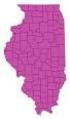 WHAT YOU NEED TO USE THE STATE PLANE COORDINATE SYSTEMS N & E State Plane Coordinates for Control Points AZIMUTHS - True, Geodetic, or Grid - Conversion from Astronomic to Geodetic (LaPlace Correction)
Introduction to GIS (Basics, Data, Analysis) & Case Studies. 13 th May 2004. Content. What is GIS?
 Introduction to GIS (Basics, Data, Analysis) & Case Studies 13 th May 2004 Content Introduction to GIS Data concepts Data input Analysis Applications selected examples What is GIS? Geographic Information
Geomatics Guidance Note 3
 Geomatics Guidance Note 3 Contract area description Revision history Version Date Amendments 5.1 December 2014 Revised to improve clarity. Heading changed to Geomatics. 4 April 2006 References to EPSG
What are map projections?
 Page 1 of 155 What are map projections? ArcGIS 10 Within ArcGIS, every dataset has a coordinate system, which is used to integrate it with other geographic data layers within a common coordinate framework
Lecture 2. Map Projections and GIS Coordinate Systems. Tomislav Sapic GIS Technologist Faculty of Natural Resources Management Lakehead University
 Lecture 2 Map Projections and GIS Coordinate Systems Tomislav Sapic GIS Technologist Faculty of Natural Resources Management Lakehead University Map Projections Map projections are mathematical formulas
An Introduction to Coordinate Systems in South Africa
 An Introduction to Coordinate Systems in South Africa Centuries ago people believed that the earth was flat and notwithstanding that if this had been true it would have produced serious problems for mariners
ELEMENTS OF SURVEYING FOR CADASTRAL MAPPING
 ELEMENTS OF SURVEYING FOR CADASTRAL MAPPING Chapter 4 2015 Cadastral Mapping Manual 4-0 Elements of Surveying and Mapping Utah's system of land surveying is the rectangular survey system as set forth on
The Earth Really is Flat! The Globe and Coordinate Systems. Long History of Mapping. The Earth is Flat. Long History of Mapping
 The Earth Really is Flat! The Globe and Coordinate Systems Intro to Mapping & GIS The Earth is Flat Day to day, we live life in a flat world sun rises in east, sets in west sky is above, ground is below
WGS AGD GDA: Selecting the correct datum, coordinate system and projection for north Australian applications
 internal report WGS AGD GDA: Selecting the correct datum, coordinate system and projection for north Australian applications JBC Lowry Hydrological and Ecological Processes Program Environmental Research
CHAPTER 9 SURVEYING TERMS AND ABBREVIATIONS
 CHAPTER 9 SURVEYING TERMS AND ABBREVIATIONS Surveying Terms 9-2 Standard Abbreviations 9-6 9-1 A) SURVEYING TERMS Accuracy - The degree of conformity with a standard, or the degree of perfection attained
THE UNIVERSAL GRID SYSTEM
 NGA Office of GEOINT Sciences Coordinate Systems Analysis (CSAT) Phone: 314-676-9124 Unclassified Email: [email protected] March 2007 THE UNIVERSAL GRID SYSTEM Universal Transverse Mercator (UTM) Military
CHAPTER 4 LEGAL DESCRIPTION OF LAND DESCRIBING LAND METHODS OF DESCRIBING REAL ESTATE
 r CHAPTER 4 LEGAL DESCRIPTION OF LAND DESCRIBING LAND A legal description is a detailed way of describing a parcel of land for documents such as deeds and mortgages that will be accepted in a court of
GEOGRAPHIC INFORMATION SYSTEMS CERTIFICATION
 GEOGRAPHIC INFORMATION SYSTEMS CERTIFICATION GIS Syllabus - Version 1.2 January 2007 Copyright AICA-CEPIS 2009 1 Version 1 January 2007 GIS Certification Programme 1. Target The GIS certification is aimed
Searching Land Records thru the BLM General Land Office Records.
 Searching Land Records thru the BLM General Land Office Records. Land Records can be an exciting addition to your family history search. The United States Government transferred ownership of land to millions
NGA GRID GUIDE HOW TO USE ArcGIS 8.x ANS 9.x TO GENERATE MGRS AND OTHER MAP GRIDS
 GEOSPATIAL SCIENCES DIVISION COORDINATE SYSTEMS ANALYSIS TEAM (CSAT) SEPTEMBER 2005 Minor Revisions March 2006 POC Kurt Schulz NGA GRID GUIDE HOW TO USE ArcGIS 8.x ANS 9.x TO GENERATE MGRS AND OTHER MAP
量 說 Explanatory Notes on Geodetic Datums in Hong Kong
 量 說 Explanatory Notes on Geodetic Datums in Hong Kong Survey & Mapping Office Lands Department 1995 All Right Reserved by Hong Kong Government 留 CONTENTS INTRODUCTION............... A1 HISTORICAL BACKGROUND............
Maintaining High Accuracy in Modern Geospatial Data
 Maintaining High Accuracy in Modern Geospatial Data Patrick Cunningham President [email protected] www.bluemarblegeo.com +1 (207) 582 6747 Copyright 2010 Blue Marble Geographics Concepts Geodesy -
Coordinate Systems. Orbits and Rotation
 Coordinate Systems Orbits and Rotation Earth orbit. The earth s orbit around the sun is nearly circular but not quite. It s actually an ellipse whose average distance from the sun is one AU (150 million
Metadata for Big River Watershed Geologic and Geomorphic Data
 Metadata for Big River Watershed Geologic and Geomorphic Data Metadata are descriptions and information regarding compiled data. This appendix contains the metadata that describes the compiled data used
The Chief Directorate: National
 Surveying The South African Coordinate Reference System (Part 1) by Aslam Parker, Chief Directorate: National Geo-spatial Information This article will define the various elements of the South African
11.1. Objectives. Component Form of a Vector. Component Form of a Vector. Component Form of a Vector. Vectors and the Geometry of Space
 11 Vectors and the Geometry of Space 11.1 Vectors in the Plane Copyright Cengage Learning. All rights reserved. Copyright Cengage Learning. All rights reserved. 2 Objectives! Write the component form of
CHAPTER 8 - LAND DESCRIPTIONS
 CHAPTER 8 - LAND DESCRIPTIONS Notes: While the location of land is commonly referred to by street number and city, it is necessary to use the legal description in the preparation of those instruments relating
SESSION 8: GEOGRAPHIC INFORMATION SYSTEMS AND MAP PROJECTIONS
 SESSION 8: GEOGRAPHIC INFORMATION SYSTEMS AND MAP PROJECTIONS KEY CONCEPTS: In this session we will look at: Geographic information systems and Map projections. Content that needs to be covered for examination
Assessment Tasks Pass theory exams at > 70%. Meet, or exceed, outcome criteria for projects and assignments.
 CENTRAL OREGON COMMUNITY COLLEGE: GEOGRAPHIC INFORMATION SYSTEM PROGRAM 1 CENTRAL OREGON COMMUNITY COLLEGE Associate Degree Geographic Information Systems Program Outcome Guide (POG) Program Outcome Guide
A guide to coordinate systems in Great Britain
 A guide to coordinate systems in Great Britain An introduction to mapping coordinate systems and the use of GPS datasets with Ordnance Survey mapping D00659 v2.3 Mar 2015 Crown copyright Page 1 of 43 Contents
UTM: Universal Transverse Mercator Coordinate System
 Practical Cartographer s Reference #01 UTM: Universal Transverse Mercator Coordinate System 180 174w 168w 162w 156w 150w 144w 138w 132w 126w 120w 114w 108w 102w 96w 90w 84w 78w 72w 66w 60w 54w 48w 42w
Public Land Survey System - Definition
 Public Land Survey System - Definition The Public Land Survey System (PLSS) is a method used in the United States to locate and identify land, particularly for titles and deeds of farm or rural land. The
WILD 3710 Lab 3: GIS Data Exploration Camp W.G. Williams
 WILD 3710 Lab 3: GIS Data Exploration Camp W.G. Williams -Laboratory- TAs and Lab Instructors: Chris McGinty [email protected] Office: JQL 146 Office Hours: W 2:30 3:30 or by appt. Alex Hernandez [email protected]
ESTIMATION USABILITY OF THE FREE SOFTWARE FOR TRANSFORMATION OF GEODETIC COORDINATES BETWEEB LOCAL AND GLOBAL DATUMS-EXAMPLE OF THE ADRIATIC SEA
 ESTIMATION USABILITY OF THE FREE SOFTWARE FOR TRANSFORMATION OF GEODETIC COORDINATES BETWEEB LOCAL AND GLOBAL DATUMS-EXAMPLE OF THE ADRIATIC SEA Duplančić Leder, Tea; Faculty of Civil Engineering and Architecture,
City of Tigard. GIS Data Standards
 City of Tigard GIS Data Standards City of Tigard 13125 SW Hall Blvd Tigard, Oregon 97223 503 639-4171 Page 1 of 5 1.0 Purpose The purpose of these standards is to provide guidance for geospatial data development
GIS User Guide. for the. County of Calaveras
 GIS User Guide for the County of Calaveras Written by Dave Pastizzo GIS Coordinator Calaveras County San Andreas, California August 2000 Table of Contents Introduction..1 The Vision.1 Roles and Responsibilities...1
Title 10 DEPARTMENT OF NATURAL RESOURCES Division 35 Land Survey Chapter 1 Cadastral Mapping Standards
 Title 10 DEPARTMENT OF NATURAL RESOURCES Division 35 Land Survey Chapter 1 Cadastral Mapping Standards 10 CSR 35-1.010 Application of Standards PURPOSE: These minimum standards provide the digital mapper
Title 10 DEPARTMENT OF NATURAL RESOURCES Division 35 Land Survey Chapter 1 Cadastral Mapping Standards
 Title 10 DEPARTMENT OF NATURAL RESOURCES Division 35 Land Survey Chapter 1 Cadastral Mapping Standards 10 CSR 35-1.010 Application of Standards PURPOSE: These minimum standards provide the digital mapper
Chapter 9 Questions Legal Descriptions
 Chapter 9 Questions Legal Descriptions 1. How many acres are in a lot that is 1/4 of a mile wide by 1/4 of a mile long? a. 10 b. 120 c. 40 d. 80 2. The numbering of sections in a township begins in the
GIS IN ECOLOGY: SPATIAL REFERENCING
 GIS IN ECOLOGY: SPATIAL REFERENCING Contents Introduction... 2 Coordinate Systems... 2 Map Projections... 3 Georeferencing... 5 Data Sources... 7 Tasks... 7 Undefined versus Unprojected Data... 7 Setting
SECOND GRADE 1 WEEK LESSON PLANS AND ACTIVITIES
 SECOND GRADE 1 WEEK LESSON PLANS AND ACTIVITIES UNIVERSE CYCLE OVERVIEW OF SECOND GRADE UNIVERSE WEEK 1. PRE: Discovering stars. LAB: Analyzing the geometric pattern of constellations. POST: Exploring
MAP PROJECTIONS AND VISUALIZATION OF NAVIGATIONAL PATHS IN ELECTRONIC CHART SYSTEMS
 MAP PROJECTIONS AND VISUALIZATION OF NAVIGATIONAL PATHS IN ELECTRONIC CHART SYSTEMS Athanasios PALLIKARIS [1] and Lysandros TSOULOS [2] [1] Associate Professor. Hellenic Naval Academy, Sea Sciences and
PLOTTING SURVEYING DATA IN GOOGLE EARTH
 PLOTTING SURVEYING DATA IN GOOGLE EARTH D M STILLMAN Abstract Detail surveys measured with a total station use local coordinate systems. To make the data obtained from such surveys compatible with Google
Modern Real Estate Practice in Illinois, 6 th Edition Filmore W. Galaty, Wellington J. Allaway, Robert C. Kyle Laurie MacDougal, Consulting Editor
 Filmore W. Galaty, Wellington J. Allaway, Robert C. Kyle Laurie MacDougal, Consulting Editor Chapter 9 Review Quiz 1. The numbering of sections in a township begins in the section in the a. northeast corner
Understanding Land Measurement and Legal Descriptions
 Lesson A2 1 Understanding Land Measurement and Legal Descriptions Unit A. Mechanical Systems and Technology Problem Area 2. Soil and Environmental Technology Systems Lesson 1. Understanding Land Measurement
A GIS helps you answer questions and solve problems by looking at your data in a way that is quickly understood and easily shared.
 A Geographic Information System (GIS) integrates hardware, software, and data for capturing, managing, analyzing, and displaying all forms of geographically referenced information. GIS allows us to view,
2 GIS concepts. 2.1 General GIS principles
 2 GIS concepts To use GIS effectively, it is important to understand the basic GIS terminology and functionality. While each GIS software has slightly different naming conventions, there are certain principles
Tax Parcel Mapping. Visual Representations of Legal Descriptions and So Much More
 Tax Parcel Mapping Visual Representations of Legal Descriptions and So Much More Topics I. E-Distribution II. GIS & Tax Mapping III. Tax Mapping Procedures IV. Deeds, Property Descriptions, & You! I. E-Distribution
About Fact Sheets Contact Us Partners Products Site Map FAQ Help
 About Fact Sheets Contact Us Partners Products Site Map FAQ Help Home Articles PLSS Article The Public Land Survey System (PLSS) What is the PLSS? History Commonly Used Terms Related Links What is the
STATE OF ALASKA DEPARTMENT OF NATURAL RESOURCES DIVISION OF MINING, LAND AND WATER. GENERAL SURVEY INSTRUCTIONS EASEMENTS Authority 11 AAC 53
 STATE OF ALASKA DEPARTMENT OF NATURAL RESOURCES DIVISION OF MINING, LAND AND WATER GENERAL SURVEY INSTRUCTIONS EASEMENTS Authority 11 AAC 53 These instructions define the survey and platting criteria unique
Data Visualization Techniques and Practices Introduction to GIS Technology
 Data Visualization Techniques and Practices Introduction to GIS Technology Michael Greene Advanced Analytics & Modeling, Deloitte Consulting LLP March 16 th, 2010 Antitrust Notice The Casualty Actuarial
GEOGRAPHIC INFORMATION SYSTEMS Lecture 11: Land Division Systems
 GEOGRAPHIC INFORMATION SYSTEMS Lecture 11: Land Division Systems Land Division Systems - in many applications of GIS, land ownership is an important data layer and it is important for GIS users to be familiar
NJDEP GPS Data Collection Standards For GIS Data Development
 NJDEP GPS Data Collection Standards For GIS Data Development Bureau of Geographic Information Systems Office of Information Resource Management June 8, 2011 1.0 Introduction... 3 2.0 GPS Receiver Hardware
GPS LOCATIONS FOR GIS: GETTING THEM RIGHT THE FIRST TIME
 GPS LOCATIONS FOR GIS: GETTING THEM RIGHT THE FIRST TIME Caroline Erickson and Pierre Héroux Geodetic Survey Division, Geomatics Canada Natural Resources Canada 615 Booth Street Ottawa, Ontario K1A 0E9
Learning about GPS and GIS
 Learning about GPS and GIS Standards 4.4 Understand geographic information systems (G.I.S.). B12.1 Understand common surveying techniques used in agriculture (e.g., leveling, land measurement, building
Section 4: The Basics of Satellite Orbits
 Section 4: The Basics of Satellite Orbits MOTION IN SPACE VS. MOTION IN THE ATMOSPHERE The motion of objects in the atmosphere differs in three important ways from the motion of objects in space. First,
GIS 101 - Introduction to Geographic Information Systems Last Revision or Approval Date - 9/8/2011
 Page 1 of 10 GIS 101 - Introduction to Geographic Information Systems Last Revision or Approval Date - 9/8/2011 College of the Canyons SECTION A 1. Division: Mathematics and Science 2. Department: Earth,
ADWR GIS Metadata Policy
 ADWR GIS Metadata Policy 1 PURPOSE OF POLICY.. 3 INTRODUCTION.... 4 What is metadata?... 4 Why is it important? 4 When to fill metadata...4 STANDARDS. 5 FGDC content standards for geospatial metadata...5
Introduction to GIS. Dr F. Escobar, Assoc Prof G. Hunter, Assoc Prof I. Bishop, Dr A. Zerger Department of Geomatics, The University of Melbourne
 Introduction to GIS 1 Introduction to GIS http://www.sli.unimelb.edu.au/gisweb/ Dr F. Escobar, Assoc Prof G. Hunter, Assoc Prof I. Bishop, Dr A. Zerger Department of Geomatics, The University of Melbourne
Understanding Map Projections
 Understanding Map Projections Melita Kennedy ArcInfo 8 Copyright 1994, 1997, 1999, 2000 Environmental Systems Research Institute, Inc. All Rights Reserved. Printed in the United States of America. The
PART 6 MAPPING CHAPTER 1 ASSESSMENT MAPPING PARCELING STANDARDS AND ASSESSMENT PROCEDURES MANUAL. DEPARTMENT OF REVENUE Property Tax Division
 Parceling Stards PART 6 MAPPING CHAPTER 1 ASSESSMENT MAPPING AND PARCELING STANDARDS 6.1.1 Parceling Stards INTRODUCTION As computerized mapping has moved into the mainstream, the sharing of geographic
Lesson 2: The Nature of Real Property. Real Property. Real Property. Real Estate Principles of Georgia. vs. Personal Property.
 Real Estate Principles of Georgia Lesson 2: The Nature of Real Property 1 of 53 23 Real Property vs. Personal Property Two types of property: Real property, ( realty ), real estate Personal property (
Stage 4. Geography. Blackline Masters. By Karen Devine
 1 Devine Educational Consultancy Services Stage 4 Geography Blackline Masters By Karen Devine Updated January 2010 2 This book is intended for the exclusive use in NSW Secondary Schools. It is meant to
FORMULA FOR FINDING THE SQUARE FEET OF A RECTANGLE L x W = A
 UNIT I REAL ESTATE MATH AREA MEASUREMENTS FORMULA FOR FINDING THE SQUARE FEET OF A RECTANGLE L x W = A Where: A = Area L = Length W = Width If the length = 30 and the width = 20 20 x 30 = 600 Sq. Feet
Pre and post-visit activities - Navigating by the stars
 Pre and post-visit activities - Navigating by the stars Vocabulary List Adult Education at Scienceworks Pre-visit Activity 1: What is longitude and latitude? Activity 2: Using the Southern Cross to find
Geospatial Positioning Accuracy Standards Part 3: National Standard for Spatial Data Accuracy
 Subcommittee for Base Cartographic Data Federal Geographic Data Committee Federal Geographic Data Committee Department of Agriculture Department of Commerce Department of Defense Department of Energy Department
Geography I Pre Test #1
 Geography I Pre Test #1 1. The sun is a star in the galaxy. a) Orion b) Milky Way c) Proxima Centauri d) Alpha Centauri e) Betelgeuse 2. The response to earth's rotation is a) an equatorial bulge b) polar
The Globe Latitudes and Longitudes
 INDIAN SCHOOL MUSCAT MIDDLE SECTION DEPARTMENT OF SOCIAL SCIENCE The Globe Latitudes and Longitudes NAME: CLASS VI SEC: ROLL NO: DATE:.04.2015 I NAME THE FOLLOWING: 1. A small spherical model of the Earth:
Solar Angles and Latitude
 Solar Angles and Latitude Objectives The student will understand that the sun is not directly overhead at noon in most latitudes. The student will research and discover the latitude ir classroom and calculate
Oregon Coordinate Reference System
 OREGON DEPARTMENT OF TRANSPORTATION Highway Division Geometronics Unit Ron Singh, PLS Geometronics Manager Chief of Surveys (503) 986-3033 Mark L. Armstrong, PLS NGS Oregon Advisor (503) 986-3775 Michael
Measuring the Earth Using a GPS M. Scott Wilkerson & M. Beth Wilkerson, DePauw University, May 10, 2007
 Measuring the Earth Using a GPS M. Scott Wilkerson & M. Beth Wilkerson, DePauw University, May 10, 2007 Modified from: Kerski, J.J., 2007, Measuring the Earth s Circumference with GPS, Copyright ESRI,
APPLY EXCEL VBA TO TERRAIN VISUALIZATION
 APPLY EXCEL VBA TO TERRAIN VISUALIZATION 1 2 Chih-Chung Lin( ), Yen-Ling Lin ( ) 1 Secretariat, National Changhua University of Education. General Education Center, Chienkuo Technology University 2 Dept.
Weekend Cabin Retreat Project Site Plans
 Weekend Cabin Retreat Project Site Plans Sacramento City College EDT 300/ENGR 306 EDT 300/ENGR 306 - Site Plans 1 Cabin Project Site Plan/Bubble Diagram - Assignment 1 =10-0 Floor Plan - Assignment 1/4
Calculation of Azimuth, Elevation and Polarization for non-horizontal aligned Antennas
 Calculation of Azimuth, Elevation and Polarization for non-horizontal aligned Antennas Algorithm Description Technical Document TD-1205-a Version 1.1 23.10.2012 In Co-operation with 1 Objective Many SatCom
Orbital Mechanics and Space Geometry
 Orbital Mechanics and Space Geometry AERO4701 Space Engineering 3 Week 2 Overview First Hour Co-ordinate Systems and Frames of Reference (Review) Kepler s equations, Orbital Elements Second Hour Orbit
Coordinate Conversions and Transformations including Formulas
 Geomatics Guidance Note Number 7, part 2 Coordinate Conversions and Transformations including Formulas Revised - April 2015 Page 1 of 145 Index Preface 4 Revision history 5 1 MAP PROJECTIONS AND THEIR
4.03 Vertical Control Surveys: 4-1
 4. HORIZONTAL AND VERTICAL CONTROL 4.01 General: Sufficient horizontal and, if applicable, vertical control surveys shall be established by the Contractor for all photogrammetric mapping purposes. Prior
The Visualization Simulation of Remote-Sensing Satellite System
 The Visualization Simulation of Remote-Sensing Satellite System Deng Fei, Chu YanLai, Zhang Peng, Feng Chen, Liang JingYong School of Geodesy and Geomatics, Wuhan University, 129 Luoyu Road, Wuhan 430079,
TerraColor White Paper
 TerraColor White Paper TerraColor is a simulated true color digital earth imagery product developed by Earthstar Geographics LLC. This product was built from imagery captured by the US Landsat 7 (ETM+)
Cartographic and Geospatial Materials
 LIBRARY OF CONGRESS COLLECTIONS POLICY STATEMENTS ±² Collections Policy Statement Index Cartographic and Geospatial Materials This document consolidates and replaces the former Maps, Atlases, and Remote
NEW MEXICO Grade 6 MATHEMATICS STANDARDS
 PROCESS STANDARDS To help New Mexico students achieve the Content Standards enumerated below, teachers are encouraged to base instruction on the following Process Standards: Problem Solving Build new mathematical
GEOGRAPHIC INFORMATION SYSTEMS
 GIS GEOGRAPHIC INFORMATION SYSTEMS FOR CADASTRAL MAPPING Chapter 7 2015 Cadastral Mapping Manual 7-0 GIS - GEOGRAPHIC INFORMATION SYSTEMS What is GIS For a long time people have sketched, drawn and studied
There is no "standard' per se for the survey and control data. Simply put, we will use whatever works best.
 INTRODUCTION The geographic coordinate data base (GCDB) is a data base containing geographic coordinates, and their associated attributes, for all corners of the Public Land Survey System (PLSS). It is
Survey Ties Guidelines
 North Carolina Board of Examiners for Engineers and Surveyors Survey Ties Guidelines The North Carolina Board of Examiners for Engineers and Surveyors is providing this document to serve as an interpretative
Model Virginia Map Accuracy Standards Guideline
 Commonwealth of Virginia Model Virginia Map Accuracy Standards Guideline Virginia Information Technologies Agency (VITA) Publication Version Control Publication Version Control: It is the user's responsibility
Where in the World is the arctic?
 Where in the World is the arctic? Summary: Students map the arctic in relation to their home in order to learn the location and countries of the arctic. Grade Level: 3-4; 5-8; K-2 Time one class period.
WATER INTERACTIONS WITH ENERGY, ENVIRONMENT AND FOOD & AGRICULTURE Vol. II Spatial Data Handling and GIS - Atkinson, P.M.
 SPATIAL DATA HANDLING AND GIS Atkinson, P.M. School of Geography, University of Southampton, UK Keywords: data models, data transformation, GIS cycle, sampling, GIS functionality Contents 1. Background
Chapter 7: Land Descriptions
 Chapter 7: Land Descriptions 7. Land Descriptions An * in the left margin indicates a change in the statute, rule or text since the last publication of the manual. I. Introduction While the location of
Remote Sensing, GPS and GIS Technique to Produce a Bathymetric Map
 Remote Sensing, GPS and GIS Technique to Produce a Bathymetric Map Mark Schnur EES 5053 Remote Sensing Fall 2007 University of Texas at San Antonio, Department of Earth and Environmental Science, San Antonio,
U.K. OFFSHORE OPERATORS ASSOCIATION (SURVEYING AND POSITIONING COMMITTEE) UKOOA DATA EXCHANGE FORMAT P6/98 DEFINITION OF 3D SEISMIC BINNING GRIDS
 U.K. OFFSHORE OPERATORS ASSOCIATION (SURVEYING AND POSITIONING COMMITTEE) UKOOA DATA EXCHANGE FORMAT P6/98 DEFINITION OF 3D SEISMIC BINNING GRIDS Revision 3.0 May 2000 SUMMARY The Guidelines For The Definition
Digital Terrain Model Grid Width 10 m DGM10
 Digital Terrain Model Grid Width 10 m Status of documentation: 23.02.2015 Seite 1 Contents page 1 Overview of dataset 3 2 Description of the dataset contents 4 3 Data volume 4 4 Description of the data
SURVEYING WITH GPS. GPS has become a standard surveying technique in most surveying practices
 SURVEYING WITH GPS Key Words: Static, Fast-static, Kinematic, Pseudo- Kinematic, Real-time kinematic, Receiver Initialization, On The Fly (OTF), Baselines, Redundant baselines, Base Receiver, Rover GPS
Reading Questions. Lo and Yeung, 2007: 2 19. Schuurman, 2004: Chapter 1. 1. What distinguishes data from information? How are data represented?
 Reading Questions Week two Lo and Yeung, 2007: 2 19. Schuurman, 2004: Chapter 1. 1. What distinguishes data from information? How are data represented? 2. What sort of problems are GIS designed to solve?
GPS ALIGNMENT SURVEYS AND MERIDIAN CONVERGENCE
 GPS ALIGNMENT SURVEYS AND MERIDIAN CONVERGENCE By Tomás Soler, 1 Member, ASCE, and Rudolf J. Fury 2 ABSTRACT: Since the advent of the Global Positioning System (GPS), geodetic azimuths can be accurately
Principles and Practices of Data Integration
 Data Integration Data integration is the process of combining data of different themes, content, scale or spatial extent, projections, acquisition methods, formats, schema, or even levels of uncertainty,
1 Basic concepts of surveying
 1 Basic concepts of surveying The aim of this chapter is to introduce the reader to the basic concepts of surveying. It is therefore the most important chapter and worthy of careful study and consideration.
Topographic Maps Practice Questions and Answers Revised October 2007
 Topographic Maps Practice Questions and Answers Revised October 2007 1. In the illustration shown below what navigational features are represented by A, B, and C? Note that A is a critical city in defining
Chapter 4: The Concept of Area
 Chapter 4: The Concept of Area Defining Area The area of a shape or object can be defined in everyday words as the amount of stuff needed to cover the shape. Common uses of the concept of area are finding