
Fire extinguisher systems in the data centre
|
|
|
- Austen Dawson
- 10 years ago
- Views:
Transcription
1 Fire extinguisher systems in the data centre by Alexander Wickel White Paper 08 Copyright 2008 All rights reserved. Rittal GmbH & Co. KG Auf dem Stützelberg D Herborn Phone +49(0)2772 / Fax +49(0)2772/

2 Contents 1 Abstract Three methods of a successful IT fire protection Early detection of fires Fire fighting with water Fire fighting with gas... 7 Comparison of fire-extinguishing gases... 7 Synthetic extinguishing gases... 7 FM200 TM... 9 Novec 1230 TM... 9 Inert gases Carbon dioxide (CO 2 ) Nitrogen (N 2 ) Argon (Ar) Extinguishing fire in racks Extinguishing fire in rooms Automatic door opening device Fire prevention by oxygen reduction Operating principle Summary

3 1 Abstract In most enterprises, information and communication technology becomes more and more important. Therefore, even small-scale fire damage can lead to disastrous complications there. Loss incurred by such fire damage can range from the loss of single data up to the failure of complete systems. Any failure of the SAP servers can, for example, cause the inability to write invoices. This would have very serious consequences for the whole enterprise. In this regard, the existence of fire protection systems is very important to every enterprise and constitutes a precondition for an adequate insurance coverage. The fire protection systems must be individually designed for this purpose, since there are different conditions in every data centre. There are the following important influencing variables: - Building properties and escape routes - Ignition and fire loads - Power supply - Ventilation system - Number of persons / frequency of visits of persons entering the data centre. This document provides a brief overview of the operating principle of individual fire protection systems and their effects on the IT infrastructure of the data centre. Rittal RimatriX5 The secure data centre of the future Today, all companies are dependent on reliable, high-performance IT with the lowest possible operating costs. Highly complex applications, faster processors, and the need for information and communication around the clock demand more than an intact physical infrastructure. RimatriX5 Driving IT-Performance is the complete, integrated solution from Rittal for stateof-the-art data centres. Comprehensive services and 5 seamlessly coordinated IT modules underline the quality of the solutions: rack, power, cooling, security and monitoring/remote management complement one another perfectly. Thus, all companies obtain a complete solution for a safe and cost-effective IT infrastructure with high-availability from single-rack applications to major data centres. For more information, please see: 2

4 2 Three methods of a successful IT fire protection Successful IT fire protection is characterized by three possibilities: 1. Early detection of fires 2. Fire fighting 3. Fire prevention The interaction of all three philosophies allows a beneficial protection of the IT infrastructure against fire damage. The selection of fire alarm components, the fire extinguishing equipment to be used as well as further fire prevention measures depend on the use and the structural conditions. 3 Early detection of fires By means of a highly sensitive, permanently active smoke extraction system, slightest and completely invisible sooty particles can be detected in a server rack at an early stage of a fire, i.e. as early as in the pyrolysis phase. The air sucked in by the system is led to two independent fire sensors in the early fire detection system in order to exclude errors during the detection. An optical "high sensity smoke detector for a pre-alarm (sensitivity: approximately 0.25 %/m light opacity 1 ) as well as an optical smoke detector for the main alarm (sensitivity: approximately 3.5 %/m light opacity) are installed in an early fire detection system. The systems are directly installed in the 19 level of the enclosure, together with the associated pipework. Early detection of fires is the basis of a successful fire protection concept and a very useful factor for prevention. Such early detection allows the user of the data centre to take appropriate counter-measures to limit the scope of damage caused to the hardware and to avoid hardware failures. Illustration 1: Rittal/Lampertz Early Fire Detection (EFD) 1 Light opacity: The smoke density and the range of vision resulting from it Light opacity 100%/m = 1m range of vision Light opacity 3%/m = 33m range of vision Light opacity 0.25%/m = 400m range of vision 3

5 Possible counter-measures: The detected fire is reported by the early fire detection system to the central monitoring and administration station of the data centre. This takes place via the floating relay contacts of the central building control systems or the RJ 12 slots of the Rittal Remote Control CMC TC. The CMC TC I/O Unit is directly connected to the early fire detection system and transfers its data to a Processing Unit II (PUII). Up to 4 CMC I/O Units can be connected to the PUII. The Processing Unit II allows a SNMP (Single Network Management Protocol) -compatible transfer to the administration station of the data centre. This ensures that several network elements, e.g. cooling devices of the server cabinets, can be monitored from a central station. Special software allows the triggering of a "gentle" server shutdown in the case of fire now. Now the RCCMD (Remote Control Command) software licence allows the data centre operator to perform some functions at the server cabinet in emergency situations. A possibility would, for example, be the following order of activities: 1. Storage of the cache contents on the hard disk. 2. Storage of the current state of all open data files. 3. Finishing all applications in a proper manner. 4. Performance of any commands stored in the background (e.g. running a backup, saving the database.) 5. Performance of a proper system termination and a gentle shutdown of the servers. 6. Disconnection of the uninterruptible power supply (UPS). Every server requires its own RCCMD shutdown licence. Administrator CMC Processing Unit PUII CMC I/O Unit Illustration 2: CMC monitoring system 1 SNMP: Network transfer protocol for the transmission of data 2 RCCMD: Most frequently used software for shutting down computers in networks secured by UPS 4

6 By means of a sequential network/server shutdown, the energy which would be required for inducing another fire is removed from the hardware components. The last step comprises the manual disconnection of the electric power supply which, in the case of fire, ensures an immediate de-energization of the relevant components if a "gentle" solution is no longer possible. Although this measure causes the immediate failure of the data centre, it protects the entire building from further fires, since short circuits can no longer occur. Afterwards the protected area can be flooded with the extinguishing gas. Fire detection: Aisle containment The cold aisle containment as well as the hot aisle containment is a combination of door and ceiling elements allowing a consistent separation of the warm and cold air in the data centre. This separation is an elementary one. Its purpose is to save energy and to increase the efficiency of the available air-conditioning technology. This containment does not cause a fire load increase in a data centre, since real glass is used. A data centre equipped with fire sensors below the ceiling might get problems with the fire detection in any aisle containment. If a fire breaks out in the containment, it will be detected only after a delay time has elapsed, since the ceiling element constitutes a barrier for the sensors. The problem is solved by means of installing the fire sensors below the ceiling element of the aisle containment. Now the fire sensors monitor the entire aisle and report any possible fire without delay. Furthermore, one also installs an extinguishing nozzle in the contained aisle to ensure that any fire will be extinguished in this aisle, as well. This is realized by means of leading the extinguishing nozzle from the ceiling into the containment. Illustration 3: Aisle containment Illustration 4: Smoke detector 5

7 4 Fire fighting with water A very cost-effective fire fighting version is the water-based sprinkler solution. In this case, the sprinklers are installed below the ceiling of the protected room and are connected by water conduits. The sprinklers contain a glass ampoule with liquid which expands in case of heating up. The glass ampoule breaks up. Usually the tripping temperature of the sprinklers is 30 C higher than the room temperature to be expected (60 C - 70 C). Water comes out of the nozzles. By means of the check valve, the other sprinklers recognize a pressure loss in the conduit and flood the room with water, as well. When the fire is extinguished, the open sprinklers are to be replaced with new ones so that the system is operational again. Sprinkler systems are often used in the USA and are primarily intended for the protection of the building structure. They are a cost-effective alternative to other extinguisher systems. Consequential damages arising from any water-based fire extinction are the major disadvantage of sprinkler systems. The complete hardware structure of a data centre could be destroyed in this way. Complete failures occur, since water is an electrically conductive substance. This leads to short circuits which have considerably negative effects on the installed servers. The servers are destroyed in this way. Failures of the applications are often even more detrimental than the physical loss of the servers. The data centre cannot be quickly re-commissioned after any fire extinction with water, since the water discharged from the sprinkler system must be removed from the entire room, apart from maintenance and repair of the damaged devices. To avoid the aforesaid, fire fighting on the basis of gas is applied. Illustration 5: Sprinkler 6

8 5 Fire fighting with gas The effective, residue-free extinction by means of several extinguishing gases allows fire fighting in a well-directed manner where the fire occurs. An extinction induced by a fire requires that the fire is detected by two independent sensors. In this way, the risk of an erroneous extinction is reduced. If the two sensors of the early fire detection system recognize an abnormal light opacity value (soot), the upcoming extinction will be indicated by an audible (pre-) alarm and triggered within a few seconds (10s), and the protected area will be flooded. Several gases come into question for this purpose. Every gas has its advantages and disadvantages. Comparison of fire-extinguishing gases Synthetic extinguishing gases Synthetic extinguishing gases require less storage space. In most cases, the extinguishing agent containers are integrated in a 19 system. They are neither electrically conductive nor corrosive. Damage due to short circuit cannot occur with regard to these extinguishing gases. A quick release of the extinguishing agent ( 10s) must be guaranteed, since otherwise dangerous hydrofluoric acid developing a caustic effect might form. Such quick release of the extinguishing agent can only be ensured by short pipework as well as by means of storing the extinguishing agent close to the object to be protected. The quick release of the extinguishing gas causes a pressure increase. Therefore, pressure relief flaps opening automatically in case of overpressure and relieving the protected area in this manner must be installed in the protected area. The synthetic extinguishing gases fight the fire which has occurred in two ways. With regard to the physical aspect, the molecules of the gas withdraw thermal energy from the fire. Therefore, the fire slows down. With regard to the chemical aspect, the molecules split up due to this absorption of energy, and they directly bind the oxygen onto themselves. Thus, the combustion process which has occurred is interrupted. 7

9 Abidance in the flooded room (in case of faulty activation or fire the area always must be left) Concentration for flooding (including 10 % fill- and extraction tolerances) Comparison of fire-extinguishing gases Novec 1230 FM-200 Inert gases (Argon, Aragonite, Inergen, Azotes) unlimited possible unlimited possible temporary possible CO 2 not possible 5,8% 8,4% 45 50,5% 47 57% Residual oxygen 19,6% 19,1% 11,4 10,3% CO 2 is toxic at >8 vol.-% VDS-Approval yes yes yes yes FM-Approval yes yes constricted yes Fumigation in the fireextinguish area no fumigation low fumigation low fumigation high fumigation Lead time according to VDS min. 10 sec min. 10 sec min. 10 sec min. 10 sec Lead time according to BGI not necessary not necessary necessary necessary Time for effusion max. 10 sec max. 10 sec 60 to 120 sec 60 sec Condensate formation on the pipes (after release) Multi area system no no yes yes limited possible limited possible possible possible Maximum pipe length around 60m around 60m >> 150m up to 150m Danger for human No No Yes yes Relation for over pressure relief 100% 115% % % Required space for supply low low high middle Environmental impact very good bad good very good Evaluation good procurement expensive acceptable procurement expensive conditionally operational procurement favourably priced Illustration 6: Comparison of fire-extinguishing gases insufficient effect fatal Legend: 8 VDS: Association of loss or damage insurers FM: Factory Mutual (American industrial property insurance)

10 FM200 TM FM200 TM is a trademark of Great Lakes Chemical TM. It is tasteless and inodorous. It is used all over the world and is, therefore, one of the best examined synthetic extinguishing gases. Its use in rooms occupied by persons is regarded as harmless. Due to the high loading pressure (50 bar), longer pipe distances can be covered and multirange systems can be reached. FM200 TM does not harm the ozone layer, but it increases the global warming. This gas is subject to the regulations of the Kyoto Protocol for the reduction of greenhouse gases. It has already been prohibited as extinguishing agent in Austria, Switzerland and Denmark. Germany continues to permit its use as extinguishing agent without restriction. Novec 1230 TM Novec 1230 TM is a brand of 3M Cooperation TM. It is an environmentally friendly chemical extinguishing gas and is degraded in the atmosphere within 5 days after its discharge. It is regarded as relatively future-proof, since it is neither harmful to the ozone layer nor does it increase the global warming. The Novac 1230 TM extinguisher system is a very space-saving version. It can be compactly stored like water at room temperature (approximately 20 C). However, it enters the extinguishing area in a gaseous state through the nozzles, and it extinguishes fire without remains. Air swirls are necessary in the enclosed extinguishing area, since Novec 1230 TM is heavier than air (13.6kg/m 3 ) and, thus, quickly sinks to the ground. There are sufficient air swirls in most cases, since the installed components alone circulate sufficient air. As an option, special swirl fans must be installed. The vapour pressure of Novec 1230 TM is ten times less than that of FM 200 TM. This leads to a lower density in the piping system and an increased pressure drop in the extinguishing agent container, at the valve and in every metre of pipe. Therefore, a Novec 1230 TM extinguisher system and its pipework must be planned very carefully. This extinguisher system is very well suited for the use in smaller systems (extinction of individual racks), e.g. in the Rittal/Lampertz Det AC version up to a 3m 3 protection volume. With regard to larger protected areas, its use in a masterslave application is also possible. In this case, up to 4 slave units can be connected to one master unit. The master unit detects the fire and triggers the extinction, and the slave units only store the extinguishing agent. In large multirange systems, a Novac 1230 TM solution is rather unsuitable, since the procurement / refill of the extinguishing gas is very expensive. 9

11 Inert gases Fire extinction by means of so-called inert gases [argon (Ar), nitrogen (N 2 ), carbon dioxide (CO 2 )] occurs by displacement of the oxygen of the air in the seat of fire. If the O 2 value for the combustion drops below a specific value, the fire "quenches" abruptly. The fire extinguishes at an air oxygen concentration of less than 13.8vol.-% 1. To extinguish a fire, the existing air volume must be displaced by one third which corresponds to an extinguishing gas concentration of 34vol.-%. Inert gases are often used for the fire extinction in rooms. The protected area is larger and a higher amount of extinguishing gas must be calculated. In this case, the cheaper inert gases come into question, rather than the cost-intensive synthetic gases. Due to the high availability, the extinction with inert gases is a very cost-effective solution, since a quick refill can be carried out almost everywhere. Carbon dioxide (CO 2) CO 2 is stored in large low-pressure tanks (cost-effective from 2000 kg up) at 20 C. A weighing device for the refill as well as the continuous cooling of the tank must be provided for. Depending on the required amount, it is also stored in high-pressure tanks at a pressure of approximately 60 bar. Carbon dioxide has the best tested extinguishing effect of all inert gases, but it requires special safety measures if its concentration exceeds 5vol.-%. It is considerably heavier than air and, thus, quickly sinks to the ground. Air swirls are required for extinguishing fire thoroughly. After the flooding with CO 2 a slight smoke screen and a temperature decrease occur in the extinguishing area. Thus, highly sensitive components might get damaged. CO 2 extinguisher systems are often used in engine rooms of vessels, hazardous material warehouses and silos. CO 2 is rarely used in data centres, since data centres are frequently entered by people for maintenance and installation work. People must not be endangered. Important! CO 2 is a breathing poison and always deadly in high concentrations. Illustration 7: CO 2 gas pressure system 1 percent by volume: (abbreviation: vol.-%) designates the measure for the proportion of a substance in a mixture, in relation to the volume. 10

12 Nitrogen (N 2) Nitrogen is a colourless, inodorous and tasteless gas. It is included in the atmosphere at 78.1vol.-%. Nitrogen is stored in high-pressure bottles at 300 bar. After the flooding, the cooling of the protected area sets in. This is to be attributed to the expansion process of the gas. This could have a negative effect on sensitive equipment, and condensate formation could also occur. N 2 has the best extinguishing effect of all inert gases, after CO 2. Nitrogen disperses very homogeneously in the protected area where a fire is to be extinguished, since its density is similar to that of air. Thus, it is universally applicable. In the case of any flooding, nitrogen forms - together with oxygen - a mixture which is harmless for the respiratory tracts. The high-pressure bottles can be refilled quickly and cost-effectively. Argon (Ar) Illustration 8: Group of extinguishing gas bottles, nitrogen Argon is an inert gas extracted from the ambient air, and is included in the atmosphere at 0.93vol.-%. Thus, apart from nitrogen, argon is the most environmentally friendly extinguishing gas, since it does not harm the atmosphere. It is stored in a gaseous and compressed state in high-pressure bottles. A maximum working pressure of 300 bar can be reached in this case. Argon can be compactly placed in a central extinguishing agent station, since no weighing device is required as in the case of CO 2. Ar is, similar to Novac 1230 TM, heavier than the ambient air and, thus, quickly sinks to the ground. A homogeneous distribution of the extinguishing gas requires the creation of swirls. Argon is not toxic. During the discharge of Ar no formation of condensation mist takes place. Quick and cost-effective refill, similar to that of nitrogen, is possible. The cooling of the protected area by argon is not to be expected, as in the case of nitrogen. However, in the case of flooding, slight personal injury can occur, since the flooding with argon might lead to a lack of oxygen. 11

13 Illustration 9: IT safety space with extinguisher system 6 Extinguishing fire in racks The rack extinguisher system is installed at the top in the 19 -level of the enclosure, together with the associated pipework. The reason for this type of installation is the specific property of the extinguishing gas which is heavier than air and, thus, quickly sinks to the ground. The extinguisher system only functions in enclosed server cabinets and constitutes an independent, compact unit which is able to detect and extinguish fires. Ranges of application The rack extinguisher system is used for the protection of high quality technical equipment which must be highly available at all costs. Such equipment comprises: - EDP, server and network technology ensuring that the data relevant to the company process are continuously made available. Furthermore, the data flow must be ensured. - production control systems the technical equipment of the aforementioned systems ensures that the production processes run without interruption - telecommunication devices ensuring that the communication of the company functions without interruption - electric power supply and control systems ensuring that sufficient electric energy is supplied to the right place in the company in due time 12

14 Setup of the 19 rack extinguisher system Rittal/Lampertz Det AC Plus 1. extinguishing agent container with level monitoring, overpressure safety device and el. triggering device. 2. propellant gas cartridge 3. extinguishing nozzle 4. fire sensors, (2-stage diffused light system) optical smoke detector high sensity for prealarm (sensitivity: approximately 0.25 %/m light opacity) optical smoke detector for main alarm (sensitivity: approximately 3.5 %/m light opacity) 5. suction fan 6. connections for suction and exhaust air pipe 7. emergency power supply (batteries, 4h bridging time) 8. mainboard 9. power supply unit 10. front panel with display and control panel 11. detector interface 12. filter, air flow monitoring Illustration 10: Det AC setup, source: assembly instructions Function By means of a pipe system, a fan (5) continuously aspirates air samples from the monitoring area (6) and guides them via the fire sensors (4). The sensors are permanently monitored by the electronic evaluation unit and the control electronics (8) for functional performance and possible dirt accumulation. Upon reaching the first fire alarm criterion, the electronic evaluation unit controls the operational sequence programmed for this case: It indicates the alarm state on the indication display (10), induces the transmission to superordinate systems if applicable, and activates optional, audible and optical alarming devices. Upon reaching the second alarm criterion, after expiration of a preset analysis time, the triggering device (2) is electrically activated as a result of which the propellant gas cartridge (2) is opened and the propellant flows into the extinguishing agent container (1). The propellant presses the extinguishing agent through an extinguishing pipe to the extinguishing nozzle (3). The extinguishing agent vaporizes at this nozzle and builds up the extinguishing agent concentration required for extinguishing the fire in the extinguishing area. The extinguishing agent container is secured against overpressure. 13


15 Illustration: 19 rack extinguisher system, rear side 1. relay output "pre-alarm 2. relay output "fire alarm 3. relay output "extinguishing 4. relay output "composite error 5. RJ12 connection to Rittal CMC I/O Unit (door contact 1), 6. RJ12 connection to Rittal CMC I/O Unit (malfunction), 7. RJ12 connection to Rittal CMC I/O Unit (main alarm) forced server deactivation is possible fdsf 8. RJ12 connection to Rittal CMC I/O Unit (pre-alarm), 9. still without function - is intended for future applications 10. connector, manual triggering 11. door contact plug external voltage supply (UB) Important If CMC TC is connected, the relay outputs of the central building control systems may not be assigned. CMC is able to send the information of the extinguisher system directly via SNMP to the central monitoring / administration unit of the data centre. Illustration 11: Installation of the suction pipe 1 1 (with accessories in the scope of delivery), in case of installation on the right side. Suction bore holes are to be directed against the air flow. 14

16 7 Extinguishing fire in rooms In a data centre with a low-density area with a power loss of 2 to 5 kw and with a mid-density area with a thermal power loss of up to 10 kw, the air-conditioning systems and double bottoms are usually cooled with recirculating air. Normally, perforated front doors are used there in racks so that the cool air from the cold aisle can flow into the rack. The room extinguisher system is exactly designed with regard to its individual components. This also includes the stockpiling of extinguishing agent which will mostly be differently dimensioned, depending on the size of the data centre. Normally, the extinguishing gas will be stored in groups of high-pressure gas bottles outside the protected area. The pipework is connected to the extinguishing gas bottles via an electrovalve. The extinguishing gas bottles lead the extinguishing gas into the protected area. The pipes as well as the outlet nozzles are installed below the ceiling of the data centre. If the early fire detection system detects a fire, it sends optical and audible signals to indicate the upcoming fire extinction in the protected area Within a delay time of 10 seconds, the extinguishing gas is released from the high-pressure bottles, and can flow into the protected area. In this way, it can unproblematically enter the rack interior through the perforated front door, and extinguish the fire which has occurred. In a high-density area with power losses between 10 and 30 kw, the room extinguisher system must be designed differently. In this area, cooling takes place by means of water heat exchangers. This cooling philosophy requires a solid server enclosure directly connected to the heat exchanger. An automatic door opening device must open the enclosure in the case of fire so that the extinguishing gas can enter the enclosure interior. Illustration 12: Data centre with room extinguisher system Upon recognition of a fire by the automatic detectors (1) or upon activation of a manual alarm (2), the alarming devices (4 audible and 5 optical) are triggered via the central fire alarm system (3). After expiration of a specific delay time (10 seconds) the extinguishing agent bottle (6) is electrically opened and the extinguishing gas flows through extinguishing nozzles (7) into the room. 15

17 8 Automatic door opening device The common sizes of extinguishing areas comprise fire extinction in individual racks, multirange fire extinction as well as fire extinction in rooms. A closed system is required for multirange fire extinction and fire extinction in individual racks. The extinguisher system has already been integrated into the 19 -level of the enclosure here. The doors must be closed so that the rack can be flooded. Existing data centres are very often equipped with an already existing room extinguisher system. If a rack-based "high-density" cooling system (LCP family) is used in closed cabinet systems, the extinguishing gas will be unable to enter the rack interior in the case of any activated room extinction. The closed inspection door and the high IP degree of protection do not allow the extinguishing gas to enter the cabinet interior. As soon as a fire is detected in an enclosure / protected area, the relevant server rack door (ideally the front and rear door) must automatically spring open so that the extinguishing gas can enter the rack. This is called sequential detection and general extinction, since every server cabinet is equipped with an own fire sensor. The CMC system can also activate individual racks which open individually. Beyond that, the door opening can be regarded as emergency cooling. In the case of any malfunction of the rack-based cooling (e.g. failure of the water supply), the internal temperatures of the cabinet can increase very quickly while the servers are running (in case of a power loss of 15 kw, from 20 C to 32 C within 90 s.). Due to the open door, the internal heat generated in the rack can disperse in a larger area and colder ambient air can flow into the rack. The automatic door opening device and the aisle width in the data centre must be exactly designed in advance, since otherwise considerable escape route restrictions could occur, if the enclosure doors open in emergency situations. Illustration 13: Automatic door opening device (compression spring) 16


18 9 Fire prevention by oxygen reduction Fire prevention is the last step in a fire-protected IT area. Three things are absolutely necessary for the occurrence of a fire. 1. heat 2. oxygen 3. combustible In the case of this procedure, the oxygen content in a data centre is permanently minimized by supplying nitrogen. If the oxygen content decreases, the flammability of the materials in a data centre will be reduced, as well. The normal air oxygen content is 20.95vol.-% and reaches a value of 15vol.-% due to the fire prevention measure. In this situation, the surrounding conditions have been established so that no fire can occur anymore. Composition of normal atmosphere Composition of atmosphere with reduced oxygen content Illustration 14: Composition of air The major problem of this type of fire prevention is to ensure that personnel can safely enter the protected area, as well. Special attention must be paid to the aforesaid, since otherwise complications might possibly arise. Apart from that, the time period is long until the desired reduced oxygen content is reached, since it takes a long time for the system to reduce the desired oxygen content to 15.0vol.-% in a large protected area. A healthy person (without known heart, circulation, airway and vascular problems) can stay without any problems in an area with an air oxygen content ranging between 20.9vol.-% and 17.0vol.-%. Persons who have undergone a work-related preventive medical checkup can stay in areas with an air oxygen content ranging between <17.0vol.-% and 13.0vol.-%. Staying in areas with reduced oxygen content below 17.0vol.-% is possible for 4 hours and below 15.0vol.-% for 2 hours. Staying in areas with the oxygen content being lower than the aforementioned is very risky and harmful to health. 17

19 Illustration 15: Physical principle of the fire prevention system Operating principle Surrounding air flows into an air compressor. The air compressor leads the pressurized air into the nitrogen generator where the air is split up into its constituents. In the nitrogen generator, there is a molecular sieve filtering individual air particles (O 2,H 2 O,Ar,CO 2 ) out. The N 2 passes by the capillary membrane and can flow into the protected area in this manner. The nitrogen content slowly increases and the oxygen content is reduced to 15vol.-%. A control range is determined (approximately 0.4vol.-%) in which the O 2 value can deviate from the absolute minimum. The fire prevention system operates in this range. 18

20 O (Vol.-%) 2 20,9 14 N2-Generator: AUS EIN AUS EIN AUS t Erstabsenkung Illustration 16: Oxygen regulation with regard to Oxy Reduct 1 A fire prevention system must be designed similarly to a fire fighting system. Many parameters play a crucial role in the fire prevention concept. During the planning of the fire prevention system one has to bear in mind that the protected room requires a very high outside tightness so that not surrounding air can subsequently flow in and, thus, the O2 content would increase. Access to the protected area through a security gate is recommendable for the fire prevention system. It regulates the frequency of visits of persons to the data centre and minimizes the ingress of outside air. 1 Oxy Reduct: is the fire prevention system made by Wagner 19

21 10 Summary Complete protection against fire is never possible, but you can do a lot of things to keep the risk as low as possible. Apart from the aforementioned issues of fire detection, fire fighting as well as fire prevention, there are some other possibilities of limiting the risk, as well. 1. Information signs stating emergency procedures should always be prominently displayed in the data centre. 2. The alarm system should always consist of multistage alarms (pre-alarm, main alarm). 3. All electrical components must be easily accessible to ensure troublefree maintenance. 4. Every exit should be provided with emergency telephone numbers. 5. The data centre area is a non-smoking area. 6. Waste should be removed from the data centre area. The issue of fire fighting in the data centre is a complex topic. For this reason, the solutions must be thoroughly reviewed in advance, and an exact project design of the individual fire fighting components must be carried out. To establish a safe and maybe also highly available data centre nowadays, strong partners ensuring best possible, comprehensive support from planning until realization are required. Only in this way can it be ensured that all described risks and influence factors will be taken into consideration right from the start, and a need-based protection of the IT structures, in consideration of the circumstances and budgetary limits, will be possible. References:
22 Index of illustrations Illustration 1: Rittal/Lampertz Early Fire Detection (EFD)... 3 Illustration 2: CMC monitoring system... 4 Illustration 3: Aisle containment... 5 Illustration 4: Smoke detector... 5 Illustration 5: Sprinkler... 6 Illustration 6: Comparison of fire-extinguishing gases... 8 Illustration 7: CO 2 gas pressure system Illustration 8: Group of extinguishing gas bottles, nitrogen Illustration 9: IT safety space with extinguisher system Illustration 10: Det AC setup, source: assembly instructions Illustration 12: Data centre with room extinguisher system Illustration 13: Automatic door opening device (compression spring) Illustration 14: Composition of air Illustration 15: Physical principle of the fire prevention system Illustration 16: Oxygen regulation with regard to Oxy Reduct
Alarm and Detection/Suppression
 Alarm and Detection/Suppression Fire Safety American Fire Technologies To provide special hazard services world wide to the industrial market through the integration of components and services Clean Agent
GAS EXTINGUISHING SYSTEMS INERT GAS EXTINGUISHING SYSTEMS. Argotec Liquid Argon Gas Extinguishing Technology (LAR)
 GAS EXTINGUISHING SYSTEMS INERT GAS EXTINGUISHING SYSTEMS Argotec Liquid Argon Gas Extinguishing Technology (LAR) INNOVATION modern technologie snuffed out cold Argotec liquid argon gas ex tinguishing
singapore//singapore data center specifications tel: +61 2 9948 8888 fax: +61 2 9948 1111 internet + intellectual property + intelligence
 internet + intellectual property + intelligence We thank you for the opportunity to work with you regarding your colocation needs in Singapore. We can colocate standard rack-mountable servers or other
Technologies Gas extinguishing systems. MX 1230 Fire Extinguishing Systems Fighting Fire using 3M Novec 1230
 Technologies Gas extinguishing systems MX 1230 Fire Extinguishing Systems Fighting Fire using 3M Novec 1230 ire protection Efficient and compact MX 1230 fire extinguishing systems fight fires using Novec
melbourne//australia data center specifications internet + intellectual property + intelligence tel: +61 2 9948 8888 fax: +61 2 9948 1111
 internet + intellectual property + intelligence We thank you for the opportunity to work with you regarding your colocation needs in Melbourne,. We can colocate standard rack-mountable servers or other
BRANCH SOLUTION. Automatic fire extinguishing systems for paint spraying plants. Safe for certain.
 BRANCH SOLUTION Automatic fire extinguishing systems for paint spraying plants Safe for certain. ISK IDENTIFYING With the extreme high degree of automation in painting technology, the risk of fire has
TYPICAL FIRE SAFETY INSPECTION VIOLATIONS
 TYPICAL FIRE SAFETY INSPECTION VIOLATIONS The following is a list of typical violations often found by inspectors and a generic solution. You can use this list to improve the safety of your facility, to
RiMatrix S Make easy.
 RiMatrix S Make easy. 2 RiMatrix S Rittal The System. The whole is more than the sum of its parts. The same is true of Rittal The System. With this in mind, we have bundled our innovative enclosure, power
How intelligent must an extinguishing solution be to keep fire virtual?
 How intelligent must an extinguishing solution be to keep fire virtual? Intelligent means: fire protection from Siemens. Sinorix intelligent extinguishing solutions. Answers for infrastructure. Sinorix
Maximum uptime and optimum fire safety for your data center
 Maximum uptime and optimum fire safety for your data center Integrated and tailored fire safety solutions from one partner Answers for infrastructure. Complete solutions for a safe data center with a single
DATA CENTER FIRE PROTECTION
 DATA CENTER FIRE PROTECTION DATA CENTER FIRE PROTECTION The following is a summary of a few key fire protection, detection, and suppression technologies used by Minimax Fire Solutions in data centers and
Maximum uptime and optimum fire safety for your data center
 Maximum uptime and optimum fire safety for your data center Integrated and tailored fire safety solutions from one partner Answers for infrastructure. Complete solutions for a safe data center with a single
CO 2. fire extinguishing systems
 fire extinguishing systems Extinguishing technique is a colourless, odourless and electrical non-conductive gas. In systems the is mixed with a special identifiable odour. The extinguishing effect of is
INERGEN - EXTINGUISHING SYSTEMS
 INERGEN - EXTINGUISHING SYSTEMS INERGEN : THE CLEAN SOLUTION. INERGEN extinguishes without leaving any residues, with 100% environmental neutrality to avoid harming nature. As digitalization increases,
Amerex CPS FM-200 Waterless Pre-engineered Fire Suppression System
 Amerex CPS FM-200 Waterless Pre-engineered Fire Suppression System A Simple Solution An Affordable Approach An Industry Innovation I N T R O D U C T I O N A SIMPLE SOLUTION. AN AFFORDABLE How many days
Fire Protection Options for Data Centres
 Fire Protection Options for Data Centres Mark L. Robin, PhD DuPont Chemicals & Fluoroproducts [email protected] Introduction Modern data centres are characterized by spaces filled with ever-increasing
JAWAHARLAL NEHRU UNIVERSITY
 School of Biotechnology JAWAHARLAL NEHRU UNIVERSITY New Delhi 110 067 Tender No. JNU/SBT/DBT-BUILDER/Data Centre/2015-16 Sealed Quotation for the establishment of a Data Centre for High-End Computational
Ontario Fire Code SECTION 5.13 DIP TANKS. Illustrated Commentary. Office of the Ontario Fire Marshal
 Ontario Fire Code SECTION 5.13 DIP TANKS Illustrated Commentary Office of the Ontario Fire Marshal Dip Tanks Illustrated Commentary 1 5.13.1. Location 5.13.1.1. Dip tank operations involving flammable
2 Rittal Micro Data Centre
 Micro Data Centre 2 Rittal Micro Data Centre The whole is more than the sum of its parts. The same is true of Rittal The System. With this in mind, we have bundled our innovative enclosure, power distribution,
BRANCH SOLUTION. Fire protection for wind turbines. Safe for certain
 BRANCH SOLUTION Fire protection for wind turbines Safe for certain RISKING A FIRE IS RISKING YOUR INVESTM Over the last few years, the generation of electricity from wind energy has become a major technology
For Data Center and Control Room Applications
 For Data Center and Control Room Applications Nearly zero wetting No costly clean up or equipment replacement Sustainable design Quick system recharge, minimal downtime No need for assurance of tight room
CoolTop. A unique water cooled air-conditioning unit for server room cooling from the top AC-TOPx-CW-240/60
 CoolTop A unique water cooled air-conditioning unit for server room cooling from the top AC-TOPx-CW-240/60 Application CoolTop is a new, unique air conditioning unit especially designed for datacenters.
PLAN SUBMITTAL REQUIREMENTS FOR SPRAY BOOTHS AND SPRAYING ROOMS EXTINGUISHING SYSTEMS
 January 1997 PLAN SUBMITTAL REQUIREMENTS FOR SPRAY BOOTHS AND SPRAYING ROOMS EXTINGUISHING SYSTEMS 1.0 PERMIT 1.1 After receipt of a Building Permit from the City of San Jose Building Department, submit
Automobile Air Conditioning Primer
 Automobile Air Conditioning Primer An air conditioner is basically a refrigerator without the insulated box. It uses the evaporation of a refrigerant, like Freon, to provide cooling. The mechanics of the
CRAC Precision climate control units for data centres
 CRAC Precision climate control units for data centres 2 Rittal Computer Room Air Conditioner The whole is more than the sum of its parts The same is true of Rittal The System. With this in mind, we have
ENGINEERING SPECIFICATIONS FOR CO2 EXTINGUISHING AGENT PRE-ENGINEERED FIRE SUPPRESSION SYSTEMS
 ENGINEERING SPECIFICATIONS FOR CO2 EXTINGUISHING AGENT PRE-ENGINEERED FIRE SUPPRESSION SYSTEMS SECTION 1 GENERAL SPECIFICATIONS I. SCOPE This specification outlines the requirements for a pre-engineered
PLAN REVIEW GUIDE FOR FIRE ALARM
 PLAN REVIEW GUIDE FOR FIRE ALARM PROJECT NAME: PERMIT # PROJECT ADDRESS: CONTACT PERSON: PHONE Fire alarm system installation information shall be provided on the appropriate architectural and electrical
Hydraulic control unit series 0086-372-01
 Technical Product Information No. 1290 EN Hydraulic control unit series 0086-372-01 Contents Page About this Technical Product Information (TPI) 2 The ORTLINGHAUS numbering system 2 About the product 3
SL280UHV SERIES GAS FURNACE WARNING
 2010 Lennox Industries Inc. Dallas, Texas, USA 506677 01 11/2010 Supersedes 506409 01 SL280UHV SERIES GAS FURNACE Litho U.S.A. FIRE OR EXPLOSION HAZARD. Failure to follow safety warnings exactly could
NYC SUB-SYSTEMS INSTALLATION & SERVICE REQUIREMENTS OF THE FDNY
 NYC SUB-SYSTEMS INSTALLATION & SERVICE REQUIREMENTS OF THE FDNY Presented by: James Goerl Metro Protection Systems, Inc. [email protected] Agenda Introduction & Learning Objectives History
Ammonia Detection System Codes and Design Specifications
 Ammonia Detection System Codes and Design Specifications December 28, 2015 Revision 5 920 N Trade Winds Pkwy Columbia, MO 65201 Ammonia detection system codes and design specifications Following is a discussion
For Data Center and Control Room Applications
 For Data Center and Control Room Applications Nearly zero wetting No costly clean up or equipment replacement Sustainable design Quick system recharge, minimal downtime No need for assurance of tight room
FIRE SAFETY FOR OFFICE WORKERS
 FIRE SAFETY FOR OFFICE WORKERS This easy-to-use Leader s Guide is provided to assist in conducting a successful presentation. Featured are: INTRODUCTION: A brief description of the program and the subject
Daker DK 1, 2, 3 kva. Manuel d installation Installation manual. Part. LE05334AC-07/13-01 GF
 Daker DK 1, 2, 3 kva Manuel d installation Installation manual Part. LE05334AC-07/13-01 GF Daker DK 1, 2, 3 kva Index 1 Introduction 24 2 Conditions of use 24 3 LCD Panel 25 4 Installation 28 5 UPS communicator
Full scale tunnel fire tests of VID Fire-Kill Low Pressure Water Mist Tunnel Fire Protection System in Runehamar test tunnel, spring 2009
 Full scale tunnel fire tests of VID Fire-Kill Low Pressure Water Mist Tunnel Fire Protection System in Runehamar test tunnel, spring 2009 By Carsten Palle, VID Fire-Fill, www.vid.eu Presented at ISTSS
White Paper Rack climate control in data centres
 White Paper Rack climate control in data centres Contents Contents...2 List of illustrations... 3 Executive summary...4 Introduction...5 Objectives and requirements...6 Room climate control with the CRAC
Safety issues of hydrogen in vehicles Frano Barbir Energy Partners 1501 Northpoint Pkwy, #102 West Palm Beach, FL 33407, U.S.A.
 Safety issues of hydrogen in vehicles Frano Barbir Energy Partners 1501 Northpoint Pkwy, #102 West Palm Beach, FL 33407, U.S.A. Properties of hydrogen Hydrogen is an odorless, colorless gas. With molecular
IT@Intel. Thermal Storage System Provides Emergency Data Center Cooling
 White Paper Intel Information Technology Computer Manufacturing Thermal Management Thermal Storage System Provides Emergency Data Center Cooling Intel IT implemented a low-cost thermal storage system that
Instruction manual. Electrobloc EBL 100-2
 Instruction manual 0 Manual Electrobloc EBL 100-2 Electrobloc EBL 100-2 Type no. 911.503 Table of contents 1 Introduction..........................................2 2 Safety information.....................................2
Continuous flow direct water heating for potable hot water
 Continuous flow direct water heating for potable hot water An independently produced White Paper for Rinnai UK 2013 www.rinnaiuk.com In the 35 years since direct hot water systems entered the UK commercial
Data Centre Services. JT First Tower Lane Data Centre Facility Product Description
 JT First Tower Lane Data Centre Facility Product Description JT s Data Centre Hosting Service provides a secure computer room enviroment with protected incoming power supplies, state-of-the-art security
White Paper Data Centre in a Standard Container
 White Paper Data Centre in a Standard Container Contents Contents... 1 List of illustrations... 3 List of tables... 3 Executive summary... 4 Introduction... 5 Objective and requirement... 6 Rittal Data
Aerosol Fire Suppression. Your Choice for Special Hazard Fire Protection
 Aerosol Fire Suppression Your Choice for Special Hazard Fire Protection Traditional Special Hazard Fire Protection Centers Around Two Technologies Water deluge and chemical agent fixed systems protect
Firewall. Propane flame projector Safety instructions and operating manual
 Firewall Propane flame projector Safety instructions and operating manual TBF-PyroTec GmbH Lichterfelder Str. 5A 21502 Geesthacht Tel.: +49(0)4152 157 9950 [email protected] www.tbf-pyrotec.de 1 Flame
DataCenter 2020: first results for energy-optimization at existing data centers
 DataCenter : first results for energy-optimization at existing data centers July Powered by WHITE PAPER: DataCenter DataCenter : first results for energy-optimization at existing data centers Introduction
Factory owners must ensure the boiler is:
 Factory owners must ensure the boiler is: * Registered with the Boilers and Pressure Vessels Division, Labour Department * Examined by an appointed examiner and has a valid certificate of fitness * Supervised
READ FIRST. Confined Space Entry Procedure. San José State University Environmental Health and Safety. Confined Space Entry Procedure
 READ FIRST 1. The purpose of a is to save lives by controlling the inherent hazards of a confined space prior to entry. a. If possible, avoid entering a confined space. Every consideration should be given
Rittal Liquid Cooling Series
 Rittal Liquid Cooling Series by Herb Villa White Paper 04 Copyright 2006 All rights reserved. Rittal GmbH & Co. KG Auf dem Stützelberg D-35745 Herborn Phone +49(0)2772 / 505-0 Fax +49(0)2772/505-2319 www.rittal.de
MOBILE FIRE - RESCUE DEPARTMENT FIRE CODE ADMINISTRATION
 MOBILE FIRE - RESCUE DEPARTMENT FIRE CODE ADMINISTRATION Fire Pump Plan Review 2009 International Fire Code and NFPA 20 Date of Review / / BLD201 - Project Address: Project Name: Contractor s Business
How To Use Rittal'S Rizone
 RiZone Data Centre Infrastructure Management Enclosures Power Distribution Climate Control IT INFRASTRUcTURe SOFTWARE & SERVICEs RiZone Data Centre Infrastructure Management What can the RiZone Data Centre
COOLSIDE box R410A. conditioned server - racks for direct installation into the room INVERTER E C
 COOLS conditioned server - racks for direct installation into the room COOLSIDE box INVERTER R410A E C 2 COOLSIDE box GENERAL FEATURES COOLSIDE BOX is a split system consisting of an outdoor motocondensing
Rittal the time has come...
 Rittal the time has come...... for the Data Centre of the future Sustainable energy efficiency! Energy Outstanding climate protection and energy efficiency with Green IT. Modular, scalable IT infrastructures
GUIDELINES - Gas Inspection Regulations 1. Recommendations for camping site owners
 GUIDELINES - Gas Inspection Regulations 1. Recommendations for camping site owners Offer gas tests by recognized experts for camping guests. Keep a record for gas tests. Write down the date and who tested
(2) Various fire sections enclosed by various classes of fire divisions; (3) Arrangement of fire detectors and manual fire alarm stations;
 (1979) (Rev.1 1990) (Rev.2 1996) (Rev.3 Jan 2012) Safety features.1 Fire protection and extinction.1.1 General Fire protection arrangements and fire extinguishing systems are to be in accordance with the
Containerized Infrastructure Solutions Fast and efficient deployment, anywhere, anytime
 Containerized Infrastructure Solutions Fast and efficient deployment, anywhere, anytime Containerized Infrastructure for Business-Critical Continuity Are you deploying a remote site faster than you can
GAS HEATING IN COMMERCIAL PREMISES
 ENERGY EFFICIENCY OFFICES GAS HEATING IN COMMERCIAL PREMISES www.energia.ie www.energia.ie Typically, energy reductions of 10% or more can be made easily through maintenance and low cost improvements.
Certain specific properties of compressed gases make them highly useful in various research activities.
 GAS CYLINDER SAFETY Introduction Certain specific properties of compressed gases make them highly useful in various research activities. These gases, however, can be dangerous if not handled in an appropriate
CLASSIFICATION NOTES
 CLASSIFICATION NOTES Type Approval, Installation and Testing of Water Level Detectors on Bulk Carriers and Single Hold Cargo Ships other than Bulk Carriers General Information This edition of the classification
News in Data Center Cooling
 News in Data Center Cooling Wednesday, 8th May 2013, 16:00h Benjamin Petschke, Director Export - Products Stulz GmbH News in Data Center Cooling Almost any News in Data Center Cooling is about increase
Element D Services Heating, Ventilating, and Air Conditioning
 PART 1 - GENERAL 1.01 OVERVIEW A. This section supplements Design Guideline Element D3041 on air handling distribution with specific criteria for projects involving design of a Data Center spaces B. Refer
Fire Pump Plan Review March 2010
 Fire Pump Plan Review March 2010 Date of Review: / / Permit Number: Business/Building Name: Address of Project: Designer Name: Designer s Phone: Contractor: Contractor s Phone: Occupancy Classification:
Aspirating Smoke Detectors 420 Series Special environments require very early detection
 Aspirating Smoke Detectors 420 Series Special environments require very early detection 2 Aspirating Smoke Detectors: A sure-fire investment Actively protect your investments with a smoke aspiration system
Ethanol Vehicle and Infrastructure Codes and Standards Citations
 Ethanol Vehicle and Infrastructure Codes and Standards Citations This document lists codes and standards typically used for U.S. ethanol vehicle and infrastructure projects. To determine which codes and
THE OPTIMAL SOLUTION FOR SMALL AND MEDIUM DATA CENTER
 Your Complete Turnkey Server Room Air Condition UPS THE OPTIMAL SOLUTION FOR SMALL AND MEDIUM DATA CENTER AVAILABLE IN WATER AND GAS SYSTEM MODEL AIR-CONDITIONED CABINET EXCELLENT TEMPERATURE CONTROL FOR
DATACENTER COLOCATION. Flexible, Secure and Connected
 DATACENTER COLOCATION Flexible, Secure and Connected Flexible Solutions for Your Requirements Contents Your Goals 2 Compound and Buildings 4 Security 6 Infrastructure 8 Free Choice 10 Good Reasons 12 Our
Visions become real. Temperature control and cooling systems. The innovative and reliable solution
 Temperature control and cooling systems The innovative and reliable solution With our PulseTemp equipment you have the option of up to 72 cooling circuits in the impulse cooling, temperature control, temperature
MODELING THE PERFORMANCE OF FIRE PROTECTION SYSTEMS IN MODERN DATA CENTERS
 MODELING THE PERFORMANCE OF FIRE PROTECTION SYSTEMS IN MODERN DATA CENTERS Richard W. Bukowski. P.E., FSFPE and Ralph Transue, P.E. Rolf Jensen and Associates, Chicago, IL 60661 USA Data Centers Society
10 Nuclear Power Reactors Figure 10.1
 10 Nuclear Power Reactors Figure 10.1 89 10.1 What is a Nuclear Power Station? The purpose of a power station is to generate electricity safely reliably and economically. Figure 10.1 is the schematic of
NITROX // safer diving
 NITROX // safer diving Always available, easy to use and safe for daily use: NITROX diving gas offers professional divers, yacht owners and offshore facilities the highest level of convenience and independence
Heating Water by Direct Steam Injection
 Heating Water by Direct Steam Injection Producing hot water by direct steam injection provides a solution where large volumes of hot water at precise temperatures are required, and where energy and space
Data Centre Services. JT Rue Des Pres Data Centre Facility Product Description
 JT Rue Des Pres Data Centre Facility Product Description JT s Data Centre Hosting Service provides a secure computer room environment with protected and backup power, security and bandwidth. Data Centre
HEATER, AIR CONDITIONING AND VENTILATION
 55-1 GROUP 55 HEATER, AIR CONDITIONING AND VENTILATION CONTENTS GENERAL DESCRIPTION 55-2 HEATER AND AIR CONDITIONING SYSTEM 55-4 HEATER CONTROL 55-6 A/C-ECU 55-7 A/C COMPRESSOR 55-9 CONDENSER 55-9 DUCT
Installation Instructions for Alarm Module Kit A043F059
 Instruction Sheet 07-2013 Installation Instructions for Alarm Module Kit A043F059 1 Introduction The information contained within is based on information available at the time of going to print. In line
Data Center Infrastructure & Managed Services Outline
 Data Center Infrastructure & Managed Services Outline The 360 Technology Center Solutions Data Center is located in Lombard, IL, USA. We are 20 minutes outside of downtown Chicago. The 360TCS staff consists
Natural Gas Information Contents
 Natural Gas Information Contents What is natural gas Natural Gas Components Physical Properties of Natural Gas Different Forms of Natural Gas The Use of Natural Gas Co-generation System Natural Gas and
Fire Protection of Data Centres
 Fire Protection of Data Centres With SEM-SAFE High-Pressure Water Mist System Danfoss Semco A/S Total Solution Provider of Certified Fixed Fire Fighting Systems Need a fire fighting system that: Allows
LNG Fuel Tank System LNG Tank overview
 Index 1. LNG Tank Overview 2. 3. Gas Flow Diagram 4. Tank Operation 5. 6. Maintenance Boil off line Slave tank Master tank manual gas line vacuum control manual liquid line Check nonreturn filling line
Guardian Fire Safety Solutions FIRE RISK CONTROL IN WELDING FUME EXTRACTION SYSTEMS
 Guardian Fire Safety Solutions FIRE RISK CONTROL IN WELDING FUME EXTRACTION SYSTEMS Guardian Fire Safety Solutions FIRE RISK CONTROL IN WELDING FUME EXTRACTION SYSTEMS DO YOU CONTROL THE RISK OF FIRE AT
New Trends in the Field of Automobile Air Conditioning
 New Trends in the Field of Automobile Air Conditioning E. Janotkova and M. Pavelek Department of Thermomechanics and Environmental Engineering Brno University of Technology, 61669 Brno, Czech Republic
The Ambient Air Monitoring System
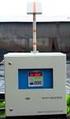 The Ambient Air Monitoring System 1.0 Introduction: The Ambient Air Monitoring System (AAMS) can measure a range of toxic and flammable gases, particulate matter, meteorological and environmental parameters
FACILITY FIRE PREVENTION AND EMERGENCY PREPAREDNESS INSPECTION CHECKLIST
 FACILITY FIRE PREVENTION AND EMERGENCY PREPAREDNESS INSPECTION CHECKLIST Date of Inspection: Conducted by: Location: Reviewed by: Date of Review: Comments or additional corrective action taken as a result
UCLA - Compressed Gas Cylinder Storage and Handling
 UCLA - Compressed Gas Cylinder Storage and Handling Purpose UCLA is committed to provide safety guidelines concerning the handling and use of portable compressed gas cylinders. Compressed gases represent
Refrigerant Charging Unit ICOGD. 020AH1000 Operating Manual. FR.8.2.4-09 İ-COLD 12.03.2014 Rev. 00
 E Refrigerant Charging Unit ICOGD 020AH1000 Operating Manual FR.8.2.4-09 İ-COLD 12.03.2014 Rev. 00 Contents Technical Specifications... 20 Safety... 21 A/C System... 22 Components... 23 Control Panel...
Refrigeration Air Dryers ADQ. Capacity: 21-4200 m 3 /h
 Refrigeration Air Dryers Capacity: 21-4200 m 3 /h Water Contamination in Compressed Air T he w a t er c o n t a i n e d i n a c o m p r e s s e d a i r s y s t e m w i l l va r y acc o r d i n g t o a
EXPLOSIVE ATMOSPHERES - CLASSIFICATION OF HAZARDOUS AREAS (ZONING) AND SELECTION OF EQUIPMENT
 EXPLOSIVE ATMOSPHERES - CLASSIFICATION OF HAZARDOUS AREAS (ZONING) AND SELECTION OF EQUIPMENT OVERVIEW ASSESSING THE RISK RELATIONSHIP BETWEEN FIRES AND EXPLOSIONS CLASSIFYING HAZARDOUS AREAS INTO ZONES
Adsorption air dryers ADS 1 215
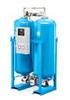 Adsorption air dryers ADS 25 INDUSTRY CUSTOMER SERVICE COMPRESSED AIR AIR INTAKE 20 C 70% UR 760 mm Hg 2 grh 2 O/m 3 AIR PRESSURE 0 bar COOLING SYSTEM 30 C 00% UR 0 bar 2,8 grh 2 O/m 3 A compressor that
Knürr CoolAdd The universal retrofit solution against overheating in server racks. Rack & Enclosure Systems
 Knürr CoolAdd The universal retrofit solution against overheating in server racks Rack & Enclosure Systems Knürr CoolAdd When cold air is no longer enough! Data centers are subject to constant changes:
Restaurant & café guide
 'Helping our customers stay in business by reducing risk' NZI Risk Solutions TM About NZI Risk Solutions NZI has extensive experience in providing expert risk management advice to help our commercial customers
LPG, Flammable Liquids, Toxic and Corrosive Substances
 LPG, Flammable Liquids, Toxic and Corrosive Substances LPG, Flammable Liquids, Toxic and Corrosive Substances Safe Storage and Handling Today s focus is Dangerous substances under the Dangerous Substances
Refrigeration Basics 101. By: Eric Nelson
 Refrigeration Basics 101 By: Eric Nelson Basics Refrigeration is the removal of heat from a material or space, so that it s temperature is lower than that of it s surroundings. When refrigerant absorbs
Material test chamber with mechanical convection
 FP series 400 Material test chambers Material test chamber with mechanical convection A BINDER material test chamber with mechanical convection of the FP series provides reliably short drying times and
Understanding Emergency Power Off (EPO)
 Understanding Emergency Power Off (EPO) White Paper #22 Executive Summary Emergency Power Off (EPO) is the capability to power down a piece of electronic equipment or an entire installation from a single
ENGINEERING SPECIFICATION. Engineering Specification SAPPHIRE 42 Bar
 Engineering Specification SAPPHIRE 42 Bar PART 1 GENERAL 1.1 DESCRIPTION OF WORK This specification outlines the requirements for a "Total Flood" SAPPHIRE Clean Agent Fire Suppression System. The work
14. Troubleshooting Guide
 14. Guide 14.1 Refrigeration Cycle System In order to diagnose malfunctions, ensure the air conditioner is free from electrical problems before inspecting the refrigeration cycle. Such problems include
Manual for Fire Suppression & Methane Detection System
 Manual for Fire Suppression & Methane Detection System Fogmaker North America Post address: 150 Gordon Dr Exton, PA 19341 Delivery address: 150 Gordon Dr Exton, PA 19341 Tel: 610-265-3610 Fax: 610-265-8327
SINGLE-CHANNEL GAS-DETECTOR GAS ALARM DG510/1P
 SINGLE-CHANNEL GAS-DETECTOR GAS ALARM DG510/1P 2 Alarm Levels Bargraph + LED Indication of Gas Concentration Visual and Audible Signalization of Activated Alarm Levels 2 SPDT 5A/250V Output Relays Shock-Proof
NELSON VOLTAGE MONITOR INSTALLATION & PROGRAMMING MANUAL
 NELSON VOLTAGE MONITOR INSTALLATION & PROGRAMMING MANUAL CONTENTS GENERAL INFORMATION...3 INSTALLATION...3 FIELD WIRING...4 PROGRAMMING...4 Circuit Monitor Options...5 Power Frequency...5 Alarm Silence
- White Paper - Data Centre Cooling. Best Practice
 - White Paper - Data Centre Cooling Best Practice Release 2, April 2008 Contents INTRODUCTION... 3 1. AIR FLOW LEAKAGE... 3 2. PERFORATED TILES: NUMBER AND OPENING FACTOR... 4 3. PERFORATED TILES: WITH
Technical specifications. Containerized data centre NTR CDC 40f+
 Technical specifications Containerized data centre NTR CDC 40f+ CONTENT 1 THE PURPOSE OF CDC... 3 2 BASIC PROPERTIES... 4 2.1 EXTERNAL DIMENSIONS... 4 2.2 INSTALLATION REQIREMENTS... 4 2.3 ELECTRICAL CONNECTION
User and installation manual
 User and installation manual aquaero 5 The information contained in this manual is subject to change without prior notice. All rights reserved. Current as of April 2011 ENGLISH: PAGE 1 DEUTSCH: SEITE 13