
INTERNATIONAL CENTRE FOR CROSS CULTURAL RESEARCH AND HUMAN RESOURCE MANAGEMENT (ICccR & HRM)
|
|
|
- Janel O’Brien’
- 10 years ago
- Views:
Transcription
1 INTERNATIONAL CENTRE FOR CROSS CULTURAL RESEARCH AND HUMAN RESOURCE MANAGEMENT (ICccR & HRM) MBA-IB SEMESTER - I COURSE STRUCTURE OF MBA-IB PROGRAMME (CHOICE BASED CREDIT SYSTEM) Course Code Paper Credits L-T-P PSMBAIBTC 0101 Principles of Management : International Perspectives PSMBAIBTC 0102 Business Economics PSMBAIBTC 0103 Marketing Management PSMBAIBTC 0104 Culture, Society and Organizational Behaviour PSMBAIBTC 0105 Accounting for Decision Making PSMBAIBTC 0106 Quantitative Techniques PSMBAIBTC 0107 India s Foreign Trade and Trade Policy PSMBAIBTC 0108 Foreign Language (French/Chinese/German) PSMBAIBPC 0109 Viva Voce 2 TOTAL CREDITS 32 MBA-IB SEMESTER - II Course Code Paper Credits L-T-P PSMBAIBTC 0201 International Business Environment PSMBAIBTC 0202 International Marketing Management PSMBAIBTC 0203 International Human Resource Management PSMBAIBTC 0204 Financial Management PSMBAIBTC 0205 International Trade Procedures and Documentation P a g e

2 PSMBAIBTC 0206 Global E-Business PSMBAIBTC 0207 Seminar on International Communication and Business Etiquettes PSMBAIBTC 0208 Seminar on Business Research Methods PSMBAIBTC 0209 Foreign Language (French/Chinese/German) PSMBAIBTC 0210 Viva Voce 2 TOTAL CREDITS Weeks Summer Training at the end of Semester II MBA-IB SEMESTER - III Course Code Paper Credits L-T-P PSMBAIBTC 0301 Competitive Strategy for Global Markets PSMBAIBTC 0302 International Economics PSMBAIBTC 0303 International Business Laws PSMBAIBTC 0304 Consumer Behaviour: International Perspectives PSMBAIBTC 0305 International Financial Management PSMBAIBTC 0306 Cross Culture and Diversity Management PSMBAIBTC 0307 International Trade Logistics and Supply Chain Management PSMBAIBDC 0308 Summer Training Report Evaluation (Internal Evaluation with Presentations) PSMBAIBTC 0309 Foreign Language (French/Chinese/German) PSMBAIBPC 0310 Viva Voce 2 TOTAL CREDITS 36 MBA-IB SEMESTER - IV Course Code Paper Credits L-T-P PSMBAIBTC 0401 International Project Management PSMBAIBTC 0402 Corporate Governance and Social Responsibility PSMBAIBTC 0403 WTO- Implications on International Business P a g e

3 PSMBAIBTC 0404 International Financial Markets and Institutions PSMBAIBTC 0405 Seminar on International/ Cross-Cultural Business Negotiations PSMBAIBTC 0406 Comprehensive Viva Voce 2 *Students may choose to opt for any two papers from the following electives: PSMBAIBTE 0407* Management of Multinational Corporations PSMBAIBTE 0408* Entrepreneurship Development PSMBAIBTE 0409* Global Sourcing and Business Development PSMBAIBTE 0410* Import and Export Management PSMBAIBTE 0411* Business Innovations and Creativity Management PSMBAIBTE 0412* Comparative Management PSMBAIBTE 0413* International Banking PSMBAIBTE 0414* PSMBAIBTE 0415* International Services Marketing International Retail Management TOTAL CREDITS 28 NOTE: THE MBA-IB COURSE SHALL CONSTITUTE TOTAL OF 132 CREDITS, OUT OF WHICH 4 CREDITS SHALL BE EARNED BY THE STUDENT BY EXERCISING HIS/HER OPTION IN FAVOUR OF ANY COURSE OFFERED BY OTHER DEPARTMENTS, OTHER THAN ICccR & HRM, IN SEMESTER III AND SEMESTER IV TWO COURSES SHALL BE OFFERED TO STUDENTS IN OTHER DEPARTMENTS AS PER BELOW: 1. CULTURE, SOCIETY AND ORGANISATIONAL BEHAVIOUR: SEMESTER I (4 CREDITS), COURSE CODE: PSMBAIBTC INTERNATIONAL HUMAN RESOURCE MANAGEMENT: SEMESTER II 4 (CREDITS), COURSE CODE: PSMBAIBTC 0203 THE DURATION OF ONE TUTORIAL SHALL BE 2 HOURS. DISTRIBUTION OF INTERNAL ASSESSMENT (40 MARKS), WHEREEVER APPLICABLE SHALL BE AS UNDER: 1. MID-SEMESTER TEST (MST): 15 MARKS 2. ASSIGNMENT: 05 MARKS 3. PRESENTATION BASED UPON ASSIGNMENT: 05 MARKS 4. SNAP TEST: 05 MARKS 5. CASE STUDY BASED TEST: 10 MARKS 3 P a g e

4 INTERNATIONAL CENTRE FOR CROSS CULTURAL RESEARCH AND HUMAN RESOURCE MANAGEMENT (ICccR & HRM) COURSE STRUCTURE OF MBA-IB (SEMESTER I) MBA-IB SEMESTER - I Course Code Paper Credits L-T-P PSMBAIBTC 0101 Principles of Management : International Perspectives PSMBAIBTC 0102 Business Economics PSMBAIBTC 0103 Marketing Management PSMBAIBTC 0104 Culture, Society and Organizational Behaviour PSMBAIBTC 0105 Accounting for Decision Making PSMBAIBTC 0106 Quantitative Techniques PSMBAIBTC 0107 India s Foreign Trade and Trade Policy PSMBAIBTC 0108 Foreign Language (French/Chinese/German) PSMBAIBPC 0109 Viva Voce 2 TOTAL CREDITS 32 4 P a g e

5 MBA-IB (Semester I) Course Title: Principles of Management: International Perspectives Course No. PSMBAIBTC 0101 Minimum Contact Hours: 45 Duration of Examination: 3 hours Course Credit: 04 Max. Marks: 100 Marks Internal assessment: 40 Marks Semester Examination: 60 Marks (For the Examinations to be held in 2014, 2015 and 2016) Objective To familiarize the students with the basic concepts, processes and issues in management to enhance their understanding of how organizations function. It shall also build upon the critical areas of knowledge and practice about the organizational context in which the international business takes place. UNIT I The basis of Global Management-Theory and Practice: The management process and the nature of managerial work; The evolution of management; Current and emerging management thought; Approaches to management; the manager s complex environment. International Management: Trends, goals, approaches, challenges and opportunities; Globalization and internationalization: Drivers of globalization, Global and regional integration, Trends in international investment and trade; Stages of internationalization; Pattern of growth, Country of origin- Different Management Styles; Comparative Management. UNIT II The nature and process of decision making; Decision making models; Groups and decision making; Analytical aids in decision making; Nature, purpose and framework of planning; Types of plans; The nature of objectives and Management by Objectives (MBO), Strategies, Polic ies and Planning premises. UNIT III Nature and purpose of organizing; Determinants of organization structure; Basic departmentalization, Line and Staff Concept, Downsizing and its implications; Span of management; Authority relationships; Delegation and Decentralization; Organizational Climate; Organizational Creativity and Innovation. UNIT IV Direction as a management function: its significance and main elements; Coordination- its importance and techniques; Nature, Scope and Concept of management control systems; Control techniques; Information resource management; Behavioral implications of management control. 5 P a g e

6 Note A minimum of five cases/articles/reports or a combination of these shall be introduced to the students in the paper. NOTE FOR PAPER SETTING The question paper shall consist of two sections: Section A (20 marks) and Section B (60 marks). Section A shall contain 10 compulsory questions of 2 marks each. Section B shall contain six questions from the syllabus, out of which students shall be required to attempt any four questions of 10 marks each. BOOKS RECOMMENDED Whelrich, Koontz and Cannes (2010): Management: A Global and Entrepreneurial Perspective (13 th Ed.), Tata Mc Graw Hill, New Delhi. Koontz & Whelrich (2005): Management: The Global Perspective, Tata Mc Graw Hill, New Delhi Hodgetts, R., Luthans, F. & Doh, J. (2005): International Management (6 th Ed.), Tata Mc Graw Hill, New Delhi. Saxena, P.K. (2009): Principles of Management: A Modern Approach, Global India Publications Pvt. Ltd., New Delhi. Hill, W.L.Charles & McShane, S.L. (2007): Principles of Management, McGraw Hill, New Delhi. Robbins, Judge and Vohra (2011): Organizational Behaviour, Pearson Education, New Delhi. Rohmetra, N., Singh, B.P. and Sharma, V. (2014): Sustainable Business Practices, Excel Books, New Delhi. Luthans Fred (2008) : Organization Behaviour (11 th Ed.), Tata Mc Graw Hill, New Delhi. Rohmetra, N. and Sharma, D. (2011): Management Perspectives in the New Age: Strategy, Markets and People, Excel Books, New Delhi. Hodgetts, R. & Luthans, F. (2003): International Management: Culture, Strategy and Behavior with World Map, Tata Mc Graw Hill, New Delhi Rohmetra, N. Singh, B.P. and Sharma, V. (2014): Business Dynamics: Contemporary Issues and Challenges, Excel Books, New Delhi. 6 P a g e

7 MBA-IB (Semester- I) Course Title: Business Economics Course Credit: 04 Course No. PSMBAIBTC 0102 Max. Marks 100 Minimum contact hours: 45 Internal Assessment: 40 Marks Duration of Examination: 3 hours Semester Examination: 60 Marks (For the Examination to be held in 2014, 2015 and 2016) Objective The objective of the Course is to impart basic knowledge of the concepts and tools of Economic Analysis and their application to key Business Decisions within the organizations and to acquaint participants with the main features of Aggregate Economic System. UNIT I Introduction to Managerial Economics; Demand Theory Meaning of Demand, Types of Demand Individual demand, Market Demand; Determinants of Market Demand; Law of Demand; Business and Economic Forecasting Survey Methods, Statistical Methods; Elasticity of Demand price elasticity, income elasticity, cross elasticity, advertising elasticity. Concept of Utility Cardinal and Ordinal Utility UNIT II Production Theory and Analysis - The production function Production with one variable input, Production with two variable inputs; Economies of Scale and Scope Internal economies, External economies, Laws of returns to scale; Analysis of Costs - Cost concepts, the link between production and costs, short run and Long run cost curves; Break even analysis and plant sizing. UNIT III Market Structure and Pricing Decisions: Perfect Competition Characteristics of Perfect competition, Price determination under perfect competition - short run and long run equilibrium;monopoly: Causes and kind of Monopolies, Pricing and output decisions in short run and long run, Price Discrimination under Monopoly; Monopolist Competition Price under Monopolist Competition in short run and long run; Oligopoly Pricing under Oligopoly, kinked demand curve analysis. Game Theory Types of Game Theory, Concept of Nash Equilibrium Uses in Economics UNIT IV Overview of Macroeconomics; Concept of National Income: Gross National Product (GNP), Gross Domestic Product (GDP), Net National Product (NNP); Methods of measuring National Income; Business Cycles Phases of Business Cycles, Theories of Business Cycles; Monetary 7 P a g e

8 and Fiscal Policies, Counter Cyclic Monetary and Fiscal Policies; The role of automatic Stabilizers; Input- Output Analysis; Concept of Inflation and Deflation. Note A minimum of five cases/ articles/ reports or a combination of these shall be introduced to the students in the paper. NOTE FOR PAPER SETTING The Question Paper shall consist of two sections, Section A (20 Marks) and Section B (40 Marks). Section A shall contain ten compulsory questions of 2 marks each and Section B shall contain six questions from the syllabus, out of which students shall be required to attempt any four questions of 10 marks each. BOOKS RECOMMENDED Managerial Economics by Varshney and Maheshwari, Sultan Chand and Sons, 19 th Edition, Managerial Economics by William F. Samuelson, Stephen G.Mark, 5 th Edition, John Wiley & Sons, Managerial Economics: Economic Tools for Today's Decision Makers, by Keat, 5 th Edition, Pearson Education India, 2009 Managerial Economics by W. Cris Lewis, Sudhir K. Jain, H. Craig Petersen, Pearson Education, 4 th Edition, Managerial Economics by Luke Froeb, Brian McCann, Michael Ward, Mikhael Shor, Cengage Learning, 2013 Managerial Economics by Dwivedi, D.N, 7 th Edition Vikas Publishing House, Macroeconomics by N. Gregory Mankiw, Mark P. Taylor, South-Western, Cengage Learning, P a g e

9 Course Title: Marketing Management MBA-IB (Semester- I) Course No. PSMBAIBTC 0103 Minimum contact hours: 45 Duration of Examination: 3 hours Course Credit: 04 Max. Marks: 100 Marks Internal Assessment: 40 Marks Semester Examination: 60 Marks (For the Examination to be held in 2014, 2015 and 2016) Objective The course aims at making students understand concepts, philosophies, processes and techniques of managing the marketing operations of a firm in turbulent business environment. This course will provide better understanding of the complexities associated with marketing functions, strategies and provides students with the opportunity to apply the key concepts to practical business situations. UNIT I Introduction to Marketing Management - Core Concepts of Marketing; Marketing Management Tasks; Marketing mix; Market Segmentation & Targeting; Analyzing Marketing Environment. UNIT II Product and Product Lines Product Personality; Product Decisions - Product Mix; Product Differentiation & Positioning; Product Life Cycle and Strategies; Packaging and Labeling Decisions, Branding & Brand Equity; New Product Development; Pricing Decisions - Cost Plus Pricing, Multiple Product Pricing, Peak Load Pricing, Pricing in Life Cycle of a Product, Product Bundling, Two Part Pricing/Disney Land Pricing UNITIII Promoting and Delivering Product -Promotion Mix, Advertising, Sales Promotion, Public Relations; Distribution and Channel Decision - Channel Design and Channel Management Decisions; Wholesaling - Classification; Retailing Types of Retailing, Strategic Issues in Retailing. UNIT IV Emerging Trends in Marketing: Green Marketing; Event Marketing; Direct Marketing, Social Marketing; Buzz Marketing/ Viral Marketing; Consumerism; Customer Relationship Management (CRM) - Customer Satisfaction, Loyalty, Retention 9 P a g e

10 Note A minimum of five cases/ articles/ reports or a combination of these shall be introduced to the students in the paper. NOTE FOR PAPER SETTING The Question Paper shall consist of two sections, Section A (20 Marks) and Section B (40 Marks). Section A shall contain ten compulsory questions of 2 marks each and Section B shall contain six questions from the syllabus, out of which students shall be required to attempt any four questions of 10 marks each. BOOKS RECOMMENDED Marketing Management: Analysis, Planning, implementation and control by Philip Kotler, 11 th Edition (millennium edition), Prentice Hall. Marketing Management Planning, Implementation and Control by Ramaswamy&Namakumari, 11 th Edition (millennium edition), Mac Milan India Limited. Marketing Management by Kotler &Koshy, 13 th Edition, Pearsons Education, Foundations of Marketing by David Jobber & John Fahy, TMH, 2009 Marketing Management by Joel R. Evans & Barry Berman, Cengage, Basic Marketing by William D Perreault Jr, E Jerome Mc Carthy, 15 th Edition, Tata McGraw Hill, P a g e

11 MBA-IB (Semester I) Course Title: Culture, Society and Organizational Behaviour Course No. PSMBAIBTC 0104 Minimum contact hours: 45 Duration of Examination: 3 hours Course Credit: 04 Max. Marks: 100 Marks Internal assessment: 40 Marks Semester Examination: 60 Marks (For the Examinations to be held in 2014, 2015 and 2016) Objective To enable the students to comprehend the relationship between culture and organizations as well as sensitizing them to the need for managing differently in diverse cultural environments with a view to develop skills for diagnosing and understanding the basic concepts and theories relating to organizational functioning in the international context and the behavioral perspective. UNIT I Culture: Meaning and Concept, Foundations of Culture, Cultural Orientations, Elements of Culture and the Cultural Phenomenon; Debates surrounding the concept of Culture; Culture, Society: Social Structures and Processes; Cross-Cultural Differences and Managerial Implications; Cultural Intelligence. UNIT II International Dimensions of Organizational Behaviour: Managing Across Cultures, Contemporary Challenges and Opportunities in Organizational Behaviour, Understanding and Managing Individual Behaviour: Individual Differences and Work Behaviour, Attitudes, Emotions, Personality, Perception, Attitudes, Learning, Motivation: Are motivation theories universally applicable across cultures?, Leadership across cultures. UNIT III Self Growth and Interpersonal Effectiveness: Transactional Analysis; Fundamentals of Cross- Cultural Interaction: Social Cognition, Stereotypic Expectations, Differential Attributions; A Cross-Cultural Interaction Model; Group Processes and Behaviour, Cohesiveness and Diversity, Group Decision Making; Understanding Work Teams, Difference between groups and teams, Building Effective Teams; Conflict Management: Process and Resolution. UNIT IV Organisational Culture: Impact of Organisational Culture, Creating and Sustaining Culture, Global Implications; Organization Structures and Design: New Design Options, Differences in Organization Structure, Organization Design and Employee Behaviour; Culture and Organizations: Cultural influence on Organizational Design; Explaining Organizational Structure; Culture and Organizational Structure. 11 P a g e

12 Note A minimum of five cases/articles/reports or a combination of these shall be introduced to the students in the paper. NOTE FOR PAPER SETTING The question paper shall consist of two sections: Section A (20 marks) and Section B (60 marks). Section A shall contain 10 compulsory questions of 2 marks each. Section B shall contain six questions from the syllabus, out of which students shall be required to attempt any four questions of 10 marks each. BOOKS RECOMMENDED Thomas, D.C. (2008): Cross-Cultural Management: Essential Concepts, Sage, New Delhi. Adler, N.J. (2007): International Organizational Behavior, Cengage Learning, New Delhi. Robbins, Judge and Vohra (2011): Organizational Behaviour, Pearson Education, New Delhi. Rohmetra, N. and Gupta, A. (2014): Cross-Cultural Management: Practice and Research, Primus Books, New Delhi Rohmetra, N., Gupta, V. and Sharma, D. (2004): Transformative Organizations Across Globe, Response Books, Sage India, New Delhi. Luthans Fred (2008) : Organization Behaviour (11 th Ed.), Tata Mc Graw Hill, New Delhi. Rohmetra,N. (2005): Cultural Paradigm in Managing People and Organisations, Excel Books, New Delhi. Hodgetts, R., Luthans, F. & Doh, J. (2005): International Management (6 th Ed.), Tata Mc Graw Hill, New Delhi. Hofstede, G. (2001): Culture s Consequences ( 2 nd Ed.), Sage, New Delhi. Hofstede, G., Hofstede,G.J. & Minkov, M. (2010), Cultures and Organizations: Software of the Mind (3rd Ed.), McGraw-Hill, USA. Valsinger, J. (2007): Culture in Minds and Societies: Foundations of Cross Cultural Psychology, Sage, New Delhi. Rohmetra, N. (2005): Human Resource Development in the Changing Context Challenges and Opportunities, Anmol Publications Pvt. Ltd., New Delhi. Minkov, M. (2013): Cross Cultural Analysis: The Science and Art of Comparing the World s Modern Societies and their Cultures, Sage, New Delhi. Rohmetra, N. and Sharma, A. (2012): Emotional Intelligence in the Telecom Sector: Strategy, Communication and Motivation Connect, Lambert Academic Publishing. Rohmetra, N. (1998): Human Resource Development In Commercial Banks In India Ashgate Publishing Limited, International Publishing In Social Sciences And Humanities, Aldershot Hampshire (U.K) 12 P a g e

13 MBA IB (Semester-I) Course Title: Accounting for Decision Making Course No. PSMBAIBTC 0105 Minimum contact hours: 45 Duration of Examination: 3 hours Course Credit: 04 Max. Marks: 100 Marks Internal Assessment: 40 Marks Semester Examination: 60 Marks (For the Examinations to be held in 2014, 2015 and 2016) Objective The basic objective of this course is to develop an insight of the principles and techniques of accounting and also the utilization of financial and accounting information for planning, decision-making and control. UNIT I Basics of Accounting - Conceptual framework, nature and purpose of accounting; Accounting concepts and conventions with special reference to GAAP; Preparation of Financial Statements Trading, Profit and Loss Account and Balance Sheet including adjustments. UNIT II Management Accounting concept, Importance and Scope; Analysis of Financial Statements : Ratio Analysis including DU Pont Analysis, Funds Flow and Cash Flow Analysis. UNIT III Introduction to Cost Accounting and its relationship with Financial and Management Accounting; Cost Classification; Preparation of Cost Sheet; Costing for decision-making: Standard Costing and Variance Analysis- Material and Labour ; Cost Volume Relationships and Marginal Costing. UNIT IV Accounting for Planning and Control: Budget and Budgetary Control; Performance Budgeting and Zero based Budgeting; Behavioral aspects of budgeting, Responsibility Accounting. Note A minimum of five cases/ articles/ reports or a combination of these shall be introduced to the students in the paper. NOTE FOR PAPER SETTING The Question Paper shall consist of two sections, Section A (20 Marks) and Section B (40 Marks). Section A shall contain ten compulsory questions of 2 marks each and Section B shall contain six questions from the syllabus, out of which students shall be required to attempt any four questions of 10 marks each. 13 P a g e

14 BOOKS RECOMMENDED Anthony, R.N. and Reese J.S Accounting Principles, 7 th ed., Homewood, IIIinois, Richard D. Lewis, Bhattacharya S.K. and Dearden J. Accounting for Management:Text and Cases, New Delhi, Vikas, Jain, S.P. & Narang, K.L. Cost Accounting- Principles & Positive, 16 th ed., Kalyani Publisher, Gupta, S.K & Sharma R.K., Management Accounting, 10 th ed., Kalyani Publishers, Juneja M.C., Chawla R.C. & Saxena K.K., Elements of Book Keeping, 11 th ed., Kalyani Publishers, Wason V., S,Chands Rapid Revision in Accountancy, 12 th ed; S Chand & Company, New Delhi. Fischer, Taylor and Cheng, Advanced Accounting, 6 th ed; South Western College. Atkinson, Kaplan R. and Young M.S., Management Accounting, 3 rd ed; Prentice Hall. 14 P a g e

15 MBA-IB (Semester- I) Course Title: Quantitative Techniques Course No. PSMBAIBTC 0106 Minimum contact hours: 45 Duration of Examination: 3 hours Course Credit: 04 Max. Marks: 100 Marks Internal Assessment: 40 Marks Semester Examination: 60 Marks (For the Examination to be held in 2014, 2015 and 2016) Objective The objective of this course is to acquaint the students with various statistical tools and techniques used to business decision making. The course aims at providing fundamental knowledge and exposure to the students about the basic tools of Operations Research in solving the management problems through modeling and using mathematical approach. UNIT I Measures of Central Tendencies - Arithmetic Mean (for Individual observations, Discrete Series and Continuous Series); Weighted Arithmetic Mean; Geometric Mean; Positional Measures Median, Quartiles and Mode; Relationship between Mean, Median and Mode; Measure of Dispersion Range, Interquartile Range, Mean Deviation, Standard Deviation; Coefficient of Variation; Skewness and Kurtosis. UNIT II Correlation Meaning, Significance and Types; Karl Pearson coefficient of correlation; Spearman s rank correlation method; Regression Analysis Introduction, Uses and Types; Simple Linear Regression Model; Regression Coefficients; Regression Equations; Standard Error of Estimate; Coefficient of Determination; Analysis of variance (ANOVA), One way and Two Way Classification. UNIT III Introduction to Operations Research; Linear Programming - Graphical Method, Simplex Method for Maximization and Minimization; Duality Principle and Sensitivity Analysis. Transportation Models Statement of Problem, Minimization Algorithm; Methods for finding Initial Solution N-W Method, Vogel s Approximation Method (VAM), Stepping Stone Method, MODI Method. UNIT IV Decision Analysis - Introduction to Decision Theory; Criteria for Decision Making under Risk and Uncertainty; Decision Trees; Queuing Theory - Basic Elements of the Queuing Model, Performance measures of a Queuing System, Single Server Queuing Model; Simulation Theory and Process, Role of Random Numbers. 15 P a g e

16 Note A minimum of five cases/ articles/ reports or a combination of these shall be introduced to the students in the paper. NOTE FOR PAPER SETTING The Question Paper shall consist of two sections, Section A (20 Marks) and Section B (40 Marks). Section A shall contain ten compulsory questions of 2 marks each and Section B shall contain six questions from the syllabus, out of which students shall be required to attempt any four questions of 10 marks each. BOOKS RECOMMENDED Statistical Method, Gupta S P, Sultan Chand Publication, Edition 2011 Business Statistics, Sharma J K, Pearson Education, 2 nd Edition, 2007 Quantitative Techniques in Management by N.D Vohra, Tata McGraw Hill, Operations Research by V. K. Kapoor, Sultan Chand & Sons, New Delhi, 2006 Operations Research: Theory and Applications by J. K. Sharma, Macmillan, P a g e

17 MBA- IB (Semester- I) Course Title: India s Foreign Trade and Trade Policy Course No. PSMBAIBTC 0107 Minimum contact hours: 45 Duration of Examination: 3 hours Course Credit: 04 Max. Marks: 100 Marks Internal assessment: 40 Marks Semester Examination: 60 Marks Objective (For the Examinations to be held in 2014, 2015 and 2016) The objective of this course is to acquaint MBA students to the basics of corporate finance. This course will help them in developing an understanding about the various aspects of Foreign Trade and Policy and their impact on the business. UNIT I World trade- Direction of World trade, Composition and direction of World Merchandise trade & World commercial services trade. India s foreign trade, its direction and composition, Terms of trade and Constraints in India s export growth. Balance of Trade and corrective measures. Balance of Payments and corrective measures. UNIT-II Preferential Trading Arrangement (PTA): Forms of International Economic Integration, Growth of Regional Trading Agreements(RTA) in different parts of world, Limitations of Regional economic integration, RTA vis-à-vis multilateral trading system under WTO. India s participation in PTAs. UNIT-III Organizations for International Trade Promotion: International Trade Centre, Import Promotion Organizations. Institutional Framework for Trade Promotion in India: Department of Commerce, Advisory Bodies, Commodity Organizations, Autonomous Bodies, Service Institutions, Government Participation in Foreign Trade, State s Involvement in Promoting Exports. UNIT-IV Trade Policy Options for developing countries, Strategic Options for Trade Policy, Instruments of Trade Policy. The Foreign Trade (Development and Regulation) Act, 1992.India s Foreign Trade policy Prohibitions and Restrictions on Import and Export, Policy Measures for Trade Promotion, Scheme to Augment Export Production, and other export promotion measures. Policy initiatives and incentives by the State Governments. 17 P a g e

18 Note A minimum of five cases/articles/reports or a combination of these shall be introduced to the students in the paper. NOTE FOR PAPER SETTING The question paper shall consist of two sections: Section A (20 marks) and Section B (60 marks). Section A shall contain 10 compulsory questions of 2 marks each. Section B shall contain six questions from the syllabus, out of which students shall be required to attempt any four questions of 10 marks each. BOOKS RECOMMENDED Francis Cherunilam (2010):International Business, Text and Cases(5 th ed.),prentice Hall of India Private Limited, New Delhi. Rakesh Mohan Joshi (2009):International Business(1 st ed.),oxford University Press. Justin Paul (2008): International Business(4 th ed.), Prentice Hall of India Learning Pvt. Ltd. O.P. Agarwal and B. K. Chaudhary (2009): Foreign Trade and Foreign Exchange(6 th ed.), Himalaya Publishing House. VyuptakeshSharan(2011): International Business- Concept, Environment and Strategy, (3 rd ed.)pearson Education. P.SubhaRao(2013): International Business, Text and Cases(3 rd ed.), Himalaya Publishing House. V.K. Pamecha ( ):A Guide to Export-Import Consultancy & Registration services (5 th ed.), Jain Book Agency. G.Hinkelman (2009): A Short Course in International Trade Documentation (3 rd ed.) - The Documents of Exporting, Importing, Shipping and Banking Edward, Indian print. 18 P a g e

19 INTERNATIONAL CENTRE FOR CROSS CULTURAL RESEARCH AND HUMAN RESOURCE MANAGEMENT (ICccR & HRM) COURSE STRUCTURE OF MBA-IB (SEMESTER II) MBA-IB SEMESTER - II Course Code Paper Credits L-T-P PSMBAIBTC 0201 International Business Environment PSMBAIBTC 0202 International Marketing Management PSMBAIBTC 0203 International Human Resource Management PSMBAIBTC 0204 Financial Management PSMBAIBTC 0205 International Trade Procedures and Documentation PSMBAIBTC 0206 Global E-Business PSMBAIBTC 0207 Seminar on International Communication and Business Etiquettes PSMBAIBTC 0208 Seminar on Business Research Methods PSMBAIBTC 0209 Foreign Language (French/Chinese/German) PSMBAIBTC 0210 Viva Voce 2 TOTAL CREDITS Weeks Summer Training at the end of Semester II 19 P a g e

20 MBA- IB (Semester- II) Course Title: International Business Environment Course No. PSMBAIBTC 0201 Minimum contact hours: 45 Duration of Examination: 3 hours Course Credit: 04 Max. Marks: 100 Marks Internal assessment: 40 Marks Semester Examination: 60 Marks (For the Examinations to be held in 2014, 2015 and 2016) Objective To enlighten the students on various aspects of International Business Environment and develop an understanding of the basic concepts related to global Environment issues and to analyze the impact of globalization on the Indian industry. UNIT I An overview of International Business Environment, Analysis of Global Environment- Political, Social and Cultural, Legal, Technological Environment. Globalization forces-meaning, Dimensions and Stages in Globalizations- Globalization Boon or Bane. UNIT II Managing the multinational Enterprises-Problems and Potential- Multinational Service Organizations. Indian Companies becoming multinationals- Potential, Need and Problems. Rise of new Economies like Brazil, Russia, India and China (BRIC) and Association of Southeast Asian Nations (ASEAN) Countries. UNIT III Country Risk Analysis- Political, Social, and Economic, Cultural and Ethical Practices- Responsibilities of International Business, Opportunities and threats for International Business. Trade Blocks, Types of Integration- Theory of custom Union, European Union, Regional Groupings, Integration of Developing Countries- SAARC, and SAPTA. UNIT IV Managing International Technology Transfers- Nature of Technology Transfer, Stages in the Transfer Process and International Technology Issues. Foreign Direct Investment (FDI): Introduction, Types of FDI, Policy Framed Work to Promote Foreign Direct Investment, FDI Trends in India. 20 P a g e

21 Note A minimum of five cases/articles/reports or a combination of these shall be introduced to the students in the paper. NOTE FOR PAPER SETTING The question paper shall consist of two sections: Section A (20 marks) and Section B (60 marks). Section A shall contain 10 compulsory questions of 2 marks each. Section B shall contain six questions from the syllabus, out of which students shall be required to attempt any four questions of 10 marks each. BOOKS RECOMMENDED O.P. Agarwal and B. K. Chaudhary (2009): Foreign Trade and Foreign Exchange (6 th ed.), Himalaya Publishing House. VyuptakeshSharan (2011): International Business- Concept, Environment and Strategy, (3 rd ed.), Pearson Education. Francis Cherunilam (2010):International Business, Text and Cases (5 th ed.), Prentice Hall of India Private Limited, New Delhi. Rakesh Mohan Joshi (2009): International Business (1 st. ed.), Oxford University Press. Justin Paul (2008): International Business (4 th ed.), Prentice Hall of India Learning Pvt. Ltd. P.SubhaRao(2013):International Business, Text and Cases (3 rd ed.),himalaya Publishing House. J.D.Daniels, L.H. Radebaugh, D.P.sullivan&P.Salwan (2009): International Business- Environment and Operations, (12 th ed.), Pearson Publication. 21 P a g e
22 MBA-IB (Semester- II) Course Title: International Marketing Management Course No. PSMBAIBTC 0202 Minimum contact hours: 45 Duration of Examination: 3 hours Course Credit: 04 Max. Marks: 100 Marks Internal Assessment: 40 Marks Semester Examination: 60 Marks (For the Examination to be held in 2014, 2015 and 2016) Objective The objective of the course is to provide students with a perspective of International Marketing Management, its environment and complexities. The aim is to understand the interdependence among various nations and its impact on the International Marketing opportunities and challenges. UNIT I Concept of International Marketing; Differences between International and Domestic Marketing; Local Responsiveness Vs Global Integration Grid; Targeting International Market opportunities - Regional Market Characteristics; Marketing in Transitional Economies and Third World Countries; Inter - market Segmentation Process; International Market Entry Strategies. UNIT II International Product Management - International Product Positioning, Product Saturation Levels in Global Market; International Product Life Cycle; New products in International Marketing; Brands in International Market. UNIT III Pricing and Promotion for International Markets: Environmental influences on Pricing Decisions; Grey Market goods; Transfer pricing; Global Pricing Policy; Global Ad vertising and Branding, Personal Selling; Sales Promotion and Public Relations. UNIT IV International Marketing Channels - Channels Distribution Structures, Distribution Patterns, Factors effecting Choice of Channels; International Distribution Strategy - Selecting Foreign Country Market intermediaries; International Logistic Decisions. Note A minimum of five cases/ articles/ reports or a combination of these shall be introduced to the students in the paper. 22 P a g e
23 NOTE FOR PAPER SETTING The Question Paper shall consist of two sections, Section A (20 Marks) and Section B (40 Marks). Section A shall contain ten compulsory questions of 2 marks each and Section B shall contain six questions from the syllabus, out of which students shall be required to attempt any four questions of 10 marks each. BOOKS RECOMMENDED International Marketing by Philip R. Cateora, John L. Graham, Tata McGraw-Hill Co.Ltd., International Marketing by Rakesh Mohan Joshi, 1 st Edition, Oxford University Press, 2014 International Marketing by Mathur, Sage, 2009 International Marketing Strategy Planning Market Entry & Implementation by Roger Bennett & Jim Blythe, Kogan, International Marketing by Francis Cherunillum, Himalaya Publishing, International Marketing Analysis and Strategy by SakOnkvisit, John J. Shaw, 3 rd Edition, Pearson, P a g e
24 MBA-IB (Semester-II) Course Title: International Human Resource Management Course No- PSMBAIBTC 0203 Minimum contact hours- 45 Duration of Examination: 3Hours Course credit: 04 Maximum Marks: 100 Marks Internal assessment: 40 Marks Semester Examination: 60 Marks (For the examination to be held in 2014, 2015 & 2016 Objective To introduce the concepts, theoretical frameworks and issues in IHRM. To make participants understand the role of HRM in international context. To appreciate IHRM practices across cultures and nations. UNIT I International HRM, Definition, concepts and approaches. Forms of international HRM. The comparative nature of HRM. Differences between domestic and international human resource management. Development of IHRM function, IHRM as a driver of competitive advantage, theoretical frameworks. Strategic issues in IHRM. IHRM a cross-cultural approach. UNIT II Global workforce management, HR contribution towards global strategic alliances and organizational renewal, International recruitment and selection, Developing international staff and multinational teams, Global staffing, managing global diverse workforce, Expatriation and repatriation-issues and concerns. Training imperatives for global workforce. Issues in crosscultural training. UNIT III International performance management, concepts and purposes, Cultural factors and issues in performance management, Performance management in multinational corporations and international assignees-evaluation issues and guidelines, Approaches to international compensation, Culture impact and compensation policy, Paying expatriates-variable pay, Factors influencing compensation programmes. Managing compensation on a global scale. Tahvanainen contextual model of expatriate performance management. UNIT IV Industrial relations in comparative perspective, Global unions, Regional integration and framework agreements, International labour standards, Managing international projects, Managing people in international context- India, China, Japan, EU, USA, UK. Research in HRM. Note A minimum of five cases/articles/reports or a combination of these shall be introduced to the students in the paper 24 P a g e
25 NOTE FOR PAPER SETTING The question paper shall contain two sections, section A (20 marks) and section B (40 marks). Section A shall contain ten compulsory questions of two marks each. Section B shall contain six questions from the syllabus, out of which students shall be required to attempt any four questions of ten marks each. BOOKS RECOMMENDED Peer J. Dowling, Denice E. Welch and Randall S. Schuler (1999): International human resource management, Managing people in a multinational context by, South Western College Publishing. Neelu Rohmetra and Anil Gupta, Cross-Cultural Management: Practice and Research, PRIMUS BOOKS, New Delhi, Neelu Rohmetra (2005): Cultural paradigm in managing people and organizations: Ethics, Change and development, Excel Books. Dennis R. Briscoe, Randall S. Schuler and Lisbeth Claus (2009): International human resource management: policies and practices for multinational enterprises, Routledge: Taylor and Francis group. Chris Brewster, Paul Sparrow and Guy Vernon (2008): International human resource management, Universities Press (India) Pct. Ltd. P.L.Rao (2008): International human resource management-text and cases, Excel Books. Neelu Rohmetra and Dinesh Sharma (2011): Managing perspectives in new age: strategy, markets and people, Excel books. Randall S. Schuler and Susan Jackson (2003): Managing human resources in cross-border alliance, Routledge Taylor and Francis Publications. Neelu Rohmetra (1998).:Human Resource Development In Commercial Banks In India, Ashgate Publishing Limited, International Publishing In Social Sciences And Humanities, Aldershot Hampshire (U.K) Rohmetra, N. (2005): Human Resource Development in the Changing Context Challenges and Opportunities, Anmol Publications Pvt. Ltd., New Delhi. Rohmetra, N. and Sharma, A. (2012): Emotional Intelligence in the Telecom Sector: Strategy, Communication and Motivation Connect, Lambert Academic Publishing. 25 P a g e
26 Course Title: Financial Management MBA IB (Semester-II) Course No. PSMBAIBTC 0204 Minimum contact hours: 45 Duration of Examination: 3 hours Course Credit: 04 Max. Marks: 100 Marks Internal Assessment: 40 Marks Semester Examination: 60 Marks (For the Examinations to be held in 2014, 2015 and 2016) Objective The objective of this course is to acquaint the students to the basis of corporate finance. This course will help them in developing an understanding about the various aspects of financial decisions and their impact on other functional areas of management. UNIT I Nature, Scope, Objectives of Financial Management, Risk-Return framework for Financial Decision-making, Role of a Finance Manager in a Firm and Agency problems; Capital Budgeting Decisions - Nature and kinds of Capital Budgeting Decisions, Evaluation Techniques, Time value of Money. UNIT II Cost of Capital: Valuation & Measurement of Specific Costs: Debt, Preference Shares, Equity Shares, Retained Earnings, Weighted Average Cost of Capital; Sources of Long-term Finance; Basics of Working Capital Planning and Management, Estimation of Working Capital Requirements, Factors Affecting Working Capital Requirements. UNIT III Capital Structure: Operating Leverage, Financial Leverage and its impact on the Valuation of Firm, Theories of Capital Structure, Optimal Capital Structure; Determinants of Capital Structure. UNIT IV Dividend Policy: Dividend and its form; Cash Dividend, Right and Bonus Shares, and Buy-Back of Shares; Theories of Dividend policy and their impact on the Value of a Firm; Types of Dividend Policy, Determinants of Dividend Policy. Note A minimum of five cases/ articles/ reports or a combination of these shall be introduced to the students in the paper. NOTE FOR PAPER SETTING The Question Paper shall consist of two sections, Section A (20 Marks) and Section B (40 Marks). Section A shall contain ten compulsory questions of 2 marks each and Section B shall 26 P a g e
27 contain six questions from the syllabus, out of which students shall be required to attempt any four questions of 10 marks each. BOOKS RECOMMENDED Pandey I M, Financial Management 10 th ed; Vikas Publishing House Pvt. Ltd., Khan M Y & Jain P K, Financial Management, Text, Problems & Cases, Tata McGraw Hill, Bhalla V.K., Financial Management & Policy 4 th ed;, Anmol Publications Pvt. Ltd Horne Van, Financial Management & Policy 3 rd ed; Prentice Hall India, Chandra P, Financial Management Theory & Practice 8 th ed; Tata McGraw Hill, Brealey R and Myers S.C., Principles of Corporate Finance 6 th ed;, McGraw-Hill College, Kapil.S., Financial Management, 1 st d; Pearson education, Lasher W.R., Financial Management : Principles and Practice, 1 st ed; South Western, P a g e
28 MBA- IB (Semester- II) Course Title: International Trade Procedures and Documentation Course No. PSMBAIBTC 0205 Minimum contact hours: 45 Duration of Examination: 3 hours Course Credit: 04 Max. Marks: 100 Marks Internal assessment: 40 Marks Semester Examination: 60 Marks (For the Examinations to be held in 2014, 2015 and 2016) Objective The objective is to acquaint the students with the development in the field of International trade and develop an understanding of various implications & applications. UNIT I Foreign Trade: Meaning, Types, balance of Trade: Meaning, Causes of Differences, Corrective Measures, Documents used in Foreign Trade, Marine Insurance Policy. UNIT II Export Procedures - General excise clearances; Role of clearing and following agents; shipment of export cargo; Export credit; Export credit guarantee and policies; Forward exchange cover; Finance for export on deferred payment terms; Duty drawbacks. UNIT III Import Procedures - Import licensing policy; Actual user licensing; Replenishment licensing; Import export pass book; Capital goods licensing; Export houses and trading houses. Export Incentives - Overview of export incentives-epcg, Duty drawbacks, duty exemption schemes, tax incentives; Procedures and documentation Duty entitlement Pass Book Scheme. UNIT IV Trading Houses - Export and trading houses schemes criteria, procedures and documentation; Policy and procedures for export oriented units (EOU)/Free Trade Zones (FTZ)/Export Processing Zones (EPZ)/ Special economic Zone (SEZ) units. Note A minimum of five cases/articles/reports or a combination of these shall be introduced to the students in the paper. 28 P a g e
29 NOTE FOR PAPER SETTING The question paper shall consist of two sections: Section A (20 marks) and Section B (60 marks). Section A shall contain 10 compulsory questions of 2 marks each. Section B shall contain six questions from the syllabus, out of which students shall be required to attempt any four questions of 10 marks each. BOOKS RECOMMENDED Cherian and Parab (2008):Export Marketing, Himalaya Publishing House, New Delhi. Government of India, Handbook of procedures, Import and Export Promotion, New Delhi. Rathod, Rathor and Jani (2008), International marketing, Himalaya Publishing House, New Delhi. Export Import manual (latest), Nabhi Publication, New Delhi Government of India, EXPORT-IMPORT POLICY, PROCEDURES, ETC. (Volumes I, II and II) New Delhi. Government of India: Handbook of Procedures, Import and Export Promotion, New Delhi. V.K. Pamecha ( ):A Guide to Export-Import Consultancy & Registration services 5 th ed., Jain Book Agency. G.Hinkelman (2009): A Short Course in International Trade Documentation (3 rd ed.),- The Documents of Exporting, Importing, Shipping and Banking Edward, Indian print. 29 P a g e
30 Course Title: Global E-Business MBA IB (Semester-II) Course No. PSMBAIBTC 0206 Minimum contact hours: 45 Duration of Examination: 3 hours Course Credit: 04 Max. Marks: 100 Marks Internal Assessment: 40 Marks Semester Examination: 60 Marks (For the Examinations to be held in 2014, 2015 and 2016) Objective The basic objective of this course is to elucidate the conceptual Framework of e-business and to explain various e-business models and strategic options. This course would further help the students to understand global e-marketing and e-services models. UNIT I Conceptual Framework of E-business, E-Commerce and M-Commerce; Web Based Tools for e- Commerce; E-Enabled Business Process Transformations and Challenges; E-Business Technology and Environment; E-Business Applications. UNIT II E-Business Models Business Models and Revenue Models over Internet; Emerging Trends in E-Business; E-Governance; Digital Commerce; Mobile Commerce; Strategies for E-Commerce, Internet based Business Models; Legal, ethical and Societal Impacts of E-Commerce. UNIT III Security Issues in E-Business; Electronic Commerce Threats; Encryption, Cryptography, Public Key and Private Key Cryptography, Digital Signatures, Digital Certificates; Security Protocols such as HTTP, SSL, Firewalls, Personal Firewalls, IDS, VPNs and Public Key Infrastructure (PKI) for Security. UNIT IV Global E-Marketing; Global E-Services; Electronic Processing of International Trade Documents; Policy Framework for Global E-Business. Note A minimum of five cases/ articles/ reports or a combination of these shall be introduced to the students in the paper. 30 P a g e
31 NOTE FOR PAPER SETTING The Question Paper shall consist of two sections, Section A (20 Marks) and Section B (40 Marks). Section A shall contain ten compulsory questions of 2 marks each and Section B shall contain six questions from the syllabus, out of which students shall be required to attempt any four questions of 10 marks each. BOOKS RECOMMENDED Bharat Bhaskar (2009), Electronic Commerce Framework, Technologies and Applications, 3 rd Edition, Tata McGraw Hill. Dave Chaffey (2009), E-Business and E-Commerce Management Strategy, Implementation and Practice, 3 rd Edition, Pearson Education. Joshi (2009), International Business, 6 th Edition, Oxford University Press. Schneider Gary P. and Perry, James T (2007), electronic Commerce Strategy, 1 st Edition, Cengage Learning. Adikesavan T., Information Technology: Best Practices and Applications in Business, 5 th ed; Prentice Hall. Srivastava N., Computer Applications in Management, 3 rd ed; Dreamtech Press, New Delhi. Whiteley, D., E-Commerce, Strategy, Technologies and Applications, London, McGraw Hill, Quaddus M. and Junu XV, E-business in the 21 st Century Realities and Outlook, 1 st ed; Cambridge University Press India Ltd. 31 P a g e
32 MBA-IB (Semester II) Course Title: Seminar on International Communication and Business Etiquettes Course No. PSMBAIBTC 0207 Minimum contact hours: 25 Duration of Examination: 2 hours Course Credit: 02 Max. Marks: 50 Marks (For the Examinations to be held in 2014, 2015 and 2016) Objective The objective of this course is to introduce the students with the concept of business etiquettes and personality development in international corporate setups. UNIT I Business Communication & Etiquettes: Nature, Dimensions of Communication, Oral and Written Communication, Barriers and Principles of Effective Communication. The Cultural Context for the Global Workplace- Cross-Cultural Communication: Process, Barriers, Communication misinterpretation, communication misevaluation, communication misperception, communication break down across cultures; Cross-Cultural Skills and abilities: Communication Competence. UNIT II Global etiquettes: Travel Customs and Tips, Language, Greetings, Introductions and Business cards, Socializing, Gestures and other non-verbal communication, Position and Status, Dining and tipping customs, Business and social customs: Greetings, handshake, verbal and non-verbal expressions, Conversational Customs and Manners; Dress and appearance; Oral and written communication customs and etiquettes; Etiquettes for International Business Women. UNIT III Personality and its dimensions; Self-Esteem: Advantages, Do s and Don ts to develop selfesteem, Low self-esteem, Personality having low self-esteem, Positive and negative self-esteem. Body language: Assertiveness, problem-solving in intercultural communication; Stress Management; Positive and creative thinking; Character building; Team-work; Lateral thinking; Time management and Work ethics in international work settings. 32 P a g e
33 BOOKS RECOMMENDED Chaney, L.H. (2006): Global Business Etiquette: A Guide to International Communication and Customs, Praeger. Denry, R. (2009): Communicate to Win (2 nd Ed.), Kogan Page India, Pvt. Ltd. New Delhi. Smith, P.B, Peterson, M.F. & Thomas, D.C. (2008): The Handbook of Cross Cultural Management Research, Sage, New Delhi. Thomas, D.C. (2008): Cross-Cultural Management: Essential Concepts, Sage, New Delhi. Pacher, B. (2013): The Essentials of Business Etiquettes: How to Greet, Eat and Tweet Your Way to Success, McGraw Hill, New Delhi. Adler, N.J. (2008): International Organizational Behavior (5 th Ed.), Cengage Learning, New Delhi. Michalle E. & Barak, M.(2014): Managing Diversity: Towards a Globally Inclusive Workplace (3 rd Ed.), Sage, New Delhi. Gudykunst, W.B. (2003): Cross-Cultural and Intercultural Communication, Sage, New Delhi. Tuleja, E. A. & Mason (2005): Intercultural Communication for Business: Managerial Communication Series, South-Western,OH. Sehgal, M.K. & Khetarpal, V. (2006): Business Communication, Excel Books, India Chaney, L.H. & Martin, J.S. (2007): Intercultural Business Communication (4 th Ed.), Upper Saddle River, Prentice-Hall, NJ. 33 P a g e
34 MBA-IB (Semester- II) Course Title: Seminar on Business Research Methods Course No. PSMBAIBTC 0208 Minimum contact hours: 25 Duration of Examination: 2 hours Course Credit: 02 Max. Marks: 50 Marks (For the Examination to be held in 2014, 2015 and 2016) Objective The objective of the course is to develop an understanding of Applied Business Research Methods and its usefulness in Managerial Decision Making. The aim of the course is to expose the students with the various qualitative and quantitative research techniques. UNIT I An overview of Research Methodology; Research Process; Research Methodology; Scales and Measurements Rating Scales, Attitude Scales, Thurston Scale, Likert scales, Hypothesis - Basic concepts, Semantic Differential scale; Questionnaire Design and Survey Research Methods of data collection Interviews, observation, schedule, Questionnaire; Other Methods of Data Collection Panel research, warranty cards, Pantry audit and consumer panel, Mechanical Devices, Projective Techniques. UNIT II Designing Qualitative Research Literature Review, Research Questions and Purpose, Qualitative Data Collection, Qualitative Analysis Thematic Coding and Content Analysis, Meta Synthesis of Qualitative Studies, Muddling Qualitative Methods; Quantitative Research - Research Hypotheses; Type I and Type II errors, One tailed and Two tailed tests, Tests of significance for Attributes; Tests of significance for Variables; Chi square test of independence and goodness of fit; F Tests. UNIT III Marketing Research Framework for International Marketing Research; Demand Forecasting - Consumer Survey Methods, Opinion Poll Methods, Trend Projection Methods, Barometric Methods, Econometric Methods; Perceptual Mapping; Human Resource Research Methods - Human Resource Accounting and Audit Research HR Valuation Methods; HR Scorecard and Metrics; HR Audit Research; Six Sigma and Total Quality Management 34 P a g e
35 BOOKS RECOMMENDED Business Research Methods, Zikmund, William G., Thomson / South Western, 2007 Business Research Methods, Donald R. Cooper and Ramela S. Schindler. Tata McGraw Hill Publishing Company, 7th Edition Human Resource Research Methods by Bhattacharya Deepak Kumar, Oxford University Press Marketing Research An Applied Orientation by Malhotra Naresh K., Dash Satyabhushan., Pearson, 6 th Edition, Marketing Research by Parasuraman, Grewal, Krishnan R., Biztantra, Managerial Economics by Dwivedi, D.N, Vikas Publishing House, 7 th Edition 35 P a g e
36 INTERNATIONAL CENTRE FOR CROSS CULTURAL RESEARCH AND HUMAN RESOURCE MANAGEMENT (ICccR & HRM) COURSE STRUCTURE OF MBA-IB (SEMESTER III) MBA-IB SEMESTER - III Course Code Paper Credits L-T-P PSMBAIBTC 0301 Competitive Strategy for Global Markets PSMBAIBTC 0302 International Economics PSMBAIBTC 0303 International Business Laws PSMBAIBTC 0304 Consumer Behaviour: International Perspectives PSMBAIBTC 0305 International Financial Management PSMBAIBTC 0306 Cross Culture and Diversity Management PSMBAIBTC 0307 International Trade Logistics and Supply Chain Management PSMBAIBDC 0308 Summer Training Report Evaluation (Internal Evaluation with Presentations) PSMBAIBTC 0309 Foreign Language (French/Chinese/German) PSMBAIBPC 0310 Viva Voce 2 TOTAL CREDITS P a g e
37 MBA-IB (Semester-III) Course Title: Competitive Strategy for Global Markets Course No- PSMBAIBTC 0301 Minimum contact hours- 45 Duration of Examination: 3 Hours Course credit: 04 Maximum Marks: 100 Marks Internal assessment: 40 Marks Semester Examination: 60 Marks (For the examination to be held in 2014, 2015 & 2016) Objective The objective of this course is to present the students with the concept and framework of strategic management. The student shall learn how to analyze the company s business environment, select a strategy, and construct the organization necessary to put into action. UNIT I Overview of Strategic Management; Concept of Strategy; Process of Strategic Management; Strategic Decision Making; Roles of a Strategist; Globalization and its Impact; Corporate Strategy and Corporate Governance; Strategic Intent; Vision, Mission, Goals and Objectives; Competitive Advantage UNIT II Environment appraisal Concept of Environment, Components of Environment; Environmental Scanning Techniques- ETOP and SWOT Analysis(TOWS); Organizational appraisal- Internal Environment; Strategic Advantage Profile and Methods for Organizational Appraisal; Industrial Analysis; Value Chain Analysis; Competition and Competitive dynamics; Concept, Importance and Use Of Core Competence UNIT III Corporate level strategies- Stability, expansion, retrenchment and combination; business level strategies conditions, risk and benefits of cost leadership, differentiation and focus leadership, porters framework of competitive strategies Identification of Critical success factors, entering international market, competitive positioning UNIT IV Strategic analysis and choice- Process of strategic choice, subjective factors in strategic choice, techniques of strategic analysis (BCG,GE Nine Cell, Product Market Evolution, Directional Policy Matrix); Aspects of strategic implementation; Resource Allocation; issues in strategy implementation; Procedural Implementation; Structural Implementation; Behavioural Implementation; Operational Implementation; Strategic evolution, strategic control, contemporary issues in strategic management- Blue Ocean strategy, balance score card, judo strategy, organizational learning and change. 37 P a g e
38 Note A minimum of five cases/articles/reports or a combination of these shall be introduced to the students in the paper NOTE FOR PAPER SETTING The question paper shall contain two sections, section A (20 marks) and section B (40 marks). Section A shall contain ten compulsory questions of two marks each. Section B shall contain six questions from the syllabus, out of which students shall be required to attempt any four q uestions of ten marks each. BOOKS RECOMMENDED Azhar Kazmi (2008) :Strategic Management and Business Policy, 3 rd edition,tata Mc Graw Hill Vipin Gupta, Kamala Gollakot, R. Srinivasan (2007) : Business Policy and Strategic Management: Concepts and Applications, Prentice Hall India R. Srinivasan: Strategic Management, The Indian Context (2012), 4 th edition,prentice hall India Charles Hill, Gareth Jones,: Strategic Management Theory: An Integrated Approach,11 th edition, Cengage Learning. Michael A. Hitt, R. Duane Ireland, Robert E. Hoskisson (2008): Strategic Management, competitiveness and globalization : concepts and cases,10 th edition, Cengage Learning Rohmetra, N. and Dhotra, J.R, (2006): Strategic Thought in the New Age Management, Excel Books, New Delhi. Johnson, Exploring Corporate Strategy: Text and Cases (2010), Pearson Education India Rohmetra, N., Singh, B.P. and Sharma, V. (2014): Sustainable Business Practices, Excel Books, New Delhi. W. Chan Kim, Renee Mauborgne: Blue Ocean Strategy, How to create uncontested Market Space and Make Competition Irrelevant (2005), Harvard Business School Press Robert S Kaplan, David P Norton: The Balanced Scorecard: Translating strategy into action (2000), Harvard Business Press. Rohmetra, N. Singh, B.P. and Sharma, V. (2014): Business Dynamics: Contemporary Issues and Challenges, Excel Books, New Delhi. 38 P a g e
39 Course Title: International Economics Course No- PSMBAIBTC 0302 Minimum contact hours- 45 Duration of Examination: 3 Hours MBA-IB (Semester-III) (For the examination to be held in 2014, 2015 & 2016) Course credit: 04 Maximum Marks: 100 Marks Internal assessment: 40 Marks Semester Examination: 60 Marks Objective: The course is designed for the convenience of analytical study of the intricate subject like international economics which is multidimensional and dynamic in nature with its wider scope in theory, institutions and problems in practice. The course aims to make students enquire into ever changing facts, events of the world trade in modern era in both their positive and normative aspects. UNIT I International economics, Theory, practice and significance, Internal and international trade: A distinction, Distinct features of international economics and transactions. The International Economy and Globalization, Globalization of Economic Activity, Waves of Globalization, First Wave of Globalization: , Second Wave of Globalization: , Latest Wave of Globalization, The United States as an Open Economy, Trade Patterns, Labor and Capital, Detroit s Big Three Face Obstacles in Restructuring, Common Fallacies of International Trade, International Trade an Opportunity or a Threat, Backlash Against Globalization, Competition in the World. UNIT II International trade relations, Foundations of Modern Trade Theory: Comparative Advantage. Historical Development of Modern Trade Theory. The Mercantilists, Why Nations Trade: Absolute Advantage, Why Nations Trade: Comparative Advantage, David Ricardo, Production Possibilities Schedules, Trading under Constant-Cost Conditions, Basis for Trade and Direction of Trade, Production Gains from Specialization. Consumption Gains from Trade, Distributing the Gains from Trade, Equilibrium Terms of Trade, Terms-of-Trade Estimates, Babe Ruth and the Principle of Comparative Advantage, Dynamic Gains from Trade, How Global Competition Led to Productivity, Changing Comparative Advantage, Trading under Increasing-Cost Conditions, Increasing-Cost Trading Case. Comparative Advantage Extended to Many Products and Countries. UNIT III Tariffs: Welfare impact of tariffs, Gains from eliminating tariffs, Non tariff trade barriers: Quotas vs. Tariffs, Trade regulations and industrial policies, welfare effects of strategic trade policy, Trade policies for the developing nations, tensions between developing countries and advanced countries, The OPEC oil cartel, Economic growth strategies: Import substitution vs. Export led growth: Case of East Asian economies. FDI and economic development, India: Breaking out of third world, International factor movements and MNE s, Direct Exporting versus 39 P a g e
40 Foreign Direct Investment/Licensing: A case of Japanese Transplants in the U.S. Automobile Industry, Foreign Direct Investment versus Licensing. Country Risk Analysis, International Trade Theory and Multinational Enterprise. UNIT IV International monetary relations, Balance of payments, Structure, International payment processes, Balance of payment adjustments, Paradox of foreign Debt, Foreign exchange, Foreign exchange market, transactions, exchange rate determination, Inflation differentials and foreign exchange rate, Indexes of the Foreign-Exchange Value of the Dollar: Nominal and Real Exchange Rates. Exchange rate risk, Exchange rate system and currency crisis: A case of China lets Yuan rise vs. Dollar. Macroeconomic policy in an open economy: India. Note A minimum of five cases/articles/reports or a combination of these shall be introduced to the students in the paper NOTE FOR PAPER SETTING The question paper shall contain two sections, section A (20 marks) and section B (40 marks). Section A shall contain ten compulsory questions of two marks each. Section B shall contain six questions from the syllabus, out of which students shall be required to attempt any four questions of ten marks each. BOOKS RECOMMENDED Robert J. Carbaugh (2011): International economics,13 th edition, Cenage learning. Paul R. Krugman and Maurice Obstfeld (1994): International Economics, Theory and Policy, 9 th edition, Pearson education India H.G. Mannur (1999): International Economics, 2 nd edition,vikas Publishing House. Philip King(2008): International Economics and International Economic Policy, 5 th edition, Mc Graw-Hill International Editions D.M. Mithani(2011): International Economics, Himalaya Publishing House. Chacholiades Miltiades (1978): International Trade Theory and Policy, McGraw- Hill. Dominick Salvatore (2004): International economics, International Publishing New York. Steven Husted, Michael Melvin (2012), International economics, 9 th edition, Pearson publication. Jos Daniels, David Van Hoose (2013), International monetary and financial economics, Pearson publication. Manfred Gartner (2013), Macro economy, 4 th edition, Pearson publication. Judith Piggott & Mark Cook (2008): International business economics: A European perspective, Palgrave Macmillan. 40 P a g e
41 MBA-IB (Semester III) Course Title: International Business Laws Course No. PSMBAIBTC 0303 Minimum contact hours: 45 Duration of Examination: 3 hours Course Credit: 04 Max. Marks: 100 Marks Internal assessment: 40 Marks Semester Examination: 60 Marks (For the Examinations to be held in 2014, 2015 and 2016) Objective To acquaint the students with the comprehensive understanding of the legal aspects associated with international business transactions and providing them with a comparative perspective to understand how business is conducted in other countries. UNIT I Legal Framework of International Business: Nature and Complexities; Code and Common Law and their implications to business; International Business Contracts- Legal Provisions; Payment terms; International Sales Agreement; Rights and Duties of Agents and Distributors; The Regulation of Imports and Exports; Comparative Law: Differences in National Laws and Legal Systems; International Sale of Goods CISG (1980): Formation and Performance of Contact, Acceptance and Rejection of Goods. Company Law: Characteristics of Company, Kinds and Stages in the formation of a Company; Setting up offices and branches abroad. UNIT II International Commercial Terms (INCOTERMS); Carriage: Unimodel and Multimodel Transport; The Carriage of Goods and the Liability of International Air Carriers: The Warsaw Convention of 1929, The Montreal Convention of 1999, Applicability to International Carriage, Liability for Air Cargo Losses; Liability of the Goods by Sea: The Harter Act, The Hague Rules, the Carriage of Goods by Sea Act (COGSA), Limitations of Liability under COGSA, Nautical Liability of the Carrier; Shipper s Liability for Hazardous Cargo; Carrier s Liability for Cargo Shortages; The Per-Package Limitation; Liability for Material Deviation; Liability of Ocean Transportation Intermediaries. UNIT III Licensing Agreements and the Protection of Intellectual Property Rights: Reasons for Intellectual Property Transfer Agreements; Intellectual Protection for Patents, Trademarks and other Intellectual Property; Trade-Related Aspects of Intellectual Property Rights (TRIPS); the DOHA Declaration on TRIPS and Public Health; Non-Enforcement of IPR Laws; The Mechanics of IPR Transfer Regulations; The Gray Market; Franchising: Licensing outside the Technological Context. 41 P a g e
42 UNIT IV Host-Country Regulations: Corporate Law, Taxation and Currency Risk- Host Country Corporate Law affecting Foreign Investment; Minority Ownership Investments; Controlling Currency Risk: Currency Swaps, Arrangements with Soft Currency Country, Payment and Price Adjustment Approaches, Structuring of Hard-Currency Obligations and Revenues, Countertrade, Informal Consortia or Parallel Exchanges, Inconvertibility Insurance. Note A minimum of five cases/articles/reports or a combination of these shall be introduced to the students in the paper. NOTE FOR PAPER SETTING The question paper shall consist of two sections: Section A (20 marks) and Section B (60 marks). Section A shall contain 10 compulsory questions of 2 marks each. Section B shall contain six questions from the syllabus, out of which students shall be required to attempt any four questions of 10 marks each. BOOKS RECOMMENDED: Schaffer, Agusti & Earle (2009): International Business Law: A Comprehensive Approach, Cengage Learning, New Delhi. Lew, D.M., Julton, Clive (2009): International Trade Law and Practice, Euromoney Publications, London. Carr, I. (2005): International Trade Law (3 rd Ed.), Routledge-Cavendish. August, R.A., Mayer, D. & Bixby, M. (2008): International Business Law (5 th Ed.), Prentice Hall. Chow, D.C.K., & Schoenbaum, T.J. (2010):International Business Transactions (2 nd Ed.), Aspen Publishers 42 P a g e
43 MBA-IB (Semester- III) Course Title: Consumer Behaviour: International Perspective Course No. PSMBAIBTC 0304 Minimum contact hours: 45 Duration of Examination: 3 hours Course Credit: 04 Max. Marks: 100 Marks Internal Assessment: 40 Marks Semester Examination: 60 Marks (For the Examination to be held in 2014, 2015 and 2016) Objective The objective of this course is to help the students to understand and apply the concepts of consumer behavior in international markets while performing diverse managerial roles. The course is structured in a logical manner that enables students to understand how distinct consumer behavior variables influence marketing decisions to help organizations improve their marketing strategies. UNIT I Overview of Consumer Behaviour; Relationship between CB and Marketing; Consumer Behaviour Models; EPRG Framework for understanding Global Consumer ; Culture as Key Determinant of Consumer Behaviour Wallace s Theory; Cultural Reinforcement. UNIT II Cross Cultural Consumer Behaviour The imperative to be Multi National; Country of Origin Effects; Cross Cultural Consumer Analysis; Alternative Multinational Strategies; Sub Cultures and Consumer Behaviour. UNIT III Consumer Decision Process, Brand evaluation, Pre purchase and Post purchase evaluation; International Consumer Involvement in Purchase Decision Cultural aspect of Involvement; Diffusion of innovations in different Global Markets; The Adoption Process. UNIT IV Consumer Motivation; Personality and Self Concept; Consumer Perception; Consumer Learning; Consumer Attitude Formation and change; Life Style Marketing; Consumer responses to marketing communications. Note A minimum of five cases/ articles/ reports or a combination of these shall be introduced to the students in the paper. 43 P a g e
44 NOTE FOR PAPER SETTING The Question Paper shall consist of two sections, Section A (20 Marks) and Section B (40 Marks). Section A shall contain ten compulsory questions of 2 marks each and Section B shall contain six questions from the syllabus, out of which students shall be required to attempt any four questions of 10 marks each. BOOKS RECOMMENDED International Consumer Behavior in the 21 st Century by SamliCoskun, Springer Consumer Behaviour by Leon G Schiffman and Leslie Lazar Kanuk, 9 th Edition, Prentice Hall, Consumer Behaviour by Blackwell, Miniard& Engel, Thomson, 10 th Edition, Cengage Learning, Consumer Behavior Concepts & Applications by David Loudon, Albert Della Bitta, 4 th Edition,Tata McGraw Hill, Consumer Behavior by Hawkins, Best & Coney, 10 th Edition, McGraw Hill, Consumer Behaviour and Marketing Actions by Henry Assael, Thomson Learning, Asian Book Pvt Ltd, P a g e
45 MBA IB (Semester-III) Course Title: International Financial Management Course No. PSMBAIBTC 0305 Minimum contact hours: 45 Duration of Examination: 3 hours Course Credit: 04 Max. Marks: 100 Marks Internal Assessment: 40 Marks Semester Examination: 60 Marks (For the Examinations to be held in 2014, 2015 and 2016) Objective The basic objective of this course is to develop an understanding about the principles and practices of international financial management. The distinctive aspects of International Finance and their utilization have been deliberated upon in this course to help the students in planning, decision-making and control. UNIT I Concept of International Financial Management and the role of International Finance Manager in Multi-National Corporations; International Transactions and Financial Markets; Imperfections of International Financial Markets. UNIT II International Financial Environment; Balance of Payment Framework; Different types of Risks in International Transactions Economic and Political; Foreign Exchange Risk and Exposure, Managing Foreign Exchange Risks, Forward Contracts, Future Contracts, Options and Swaps; Parity Theories, Techniques of Foreign exchange Rate Projection, Foreign Exchange depreciation and its impact on Exports and Imports; Contemporary Foreign Exchange Arrangements. UNIT III Foreign Direct Investment; Introduction, Types, Patterns, Policy framework to improve FDI, FDI Trends in India; Portfolio Investment and Benefits of International Portfolio Investment; Multinational Capital Budgeting Applications and Interpretations, Acceptance Criteria in Foreign Investments. UNIT IV International Mergers and Acquisitions; International Working Capital Management; Sources of Financing of International Trade. Note A minimum of five cases/ articles/ reports or a combination of these shall be introduced to the students in the paper. 45 P a g e
46 NOTE FOR PAPER SETTING The Question Paper shall consist of two sections, Section A (20 Marks) and Section B (40 Marks). Section A shall contain ten compulsory questions of 2 marks each and Section B shall contain six questions from the syllabus, out of which students shall be required to attempt any four questions of 10 marks each. BOOKS RECOMMENDED Apte, PG, International Financial Management, 5 th ed; New Delhi, Tata MC GrawHil, Buckley, Adrain, Multinational Finance, New York, Prentice Hall Inc; Paul, Justin, International Business, 3 rd ed; New Delhi, Prentice hall India, Seth, A.K., International Financial Management, Galgotia Publishing Company, New Delhi, Vyuptakesh S., International Financial Management, 6 th ed; Prentice Hall India, Madura J., International Financial Management, 7 th Revised edition; South-Western, Jain P.K., International Financial Management, Macmillan Publishers India, Bhalla V.K., International Financial Management. Anmol Publications Pvt Ltd, P a g e
47 MBA-IB (Semester III) Course Title: Cross-Culture and Diversity Management Course No. PSMBAIBTC 0306 Minimum contact hours: 45 Duration of Examination: 3 hours Course Credit: 04 Max. Marks: 100 Marks Internal assessment: 40 Marks Semester Examination: 60 Marks (For the Examinations to be held in 2014, 2015 and 2016) Objective The objective of the course is to enable the students to develop the concept of diversity, crosscultural and diversity issues and challenges and the benefits of diversity in the workplace. It shall also capitalize on the creativity and richness that diversity offers. UNIT I Cross-Cultural Management: Meaning and Concepts; Cross-Cultural Puzzle of Global Human Resource Management; Global Strategy and Culture; Frameworks in Cross-Cultural Management: Kluckhohn and Strodtbeck framework, Hofstede s Cultural Dimensions, Trompenaar s Dimensions, Schwartz Value Survey, the GLOBE Study; Use of Frameworks; International and Cross-Cultural Research: Types and Critiques. UNIT II Work Behaviour and Management Values across Cultures; National Culture Vs Organization Culture; Coping with cultural differences; Understanding socialization; International Ethics and Culture; Explaining the Differences in Comparative HRM, Culture and Institutions, Evidence of Convergence, the Power of Nation States; Cultural Dynamics & Impact of Cultural Distance within Mergers and Acquisitions. UNIT III Cultural Diversity: Meaning and Nature; Diversity and exclusion: A critical workforce problem; The importance of valuing diversity; Cultural Synergy; The challenge of work force-diversity: Stereotypes and Prejudice, Dehumanization and oppression, Employment-related discrimination; Types of diversity in teams; Diversity Management: Performance Imperative and Equal Opportunities Perspective, Transcending False Dichotomies- Equal opportunities Vs Diversity Management; Managing work-force diversity as a competitive advantage; the impact of diversity on groups/teams; Managing diversity in organizations: Strategies and Guidelines; Towards a globally inclusive workforce: The inclusive workforce model. UNIT IV Multinational Decision Making; Diversity Management Programmes; Diversity Management in International Organizations: Women in International Management, Role of Organizational 47 P a g e
48 Processes, Dual-Career Couples, The Implications of International Working on Work-Life Balance, Alternative forms of International Working, Measuring the Value of International Assignments. Note A minimum of five cases/articles/reports or a combination of these shall be introduced to the students in the paper. NOTE FOR PAPER SETTING The question paper shall consist of two sections: Section A (20 marks) and Section B (60 marks). Section A shall contain 10 compulsory questions of 2 marks each. Section B shall contain six questions from the syllabus, out of which students shall be required to attempt any four questions of 10 marks each. BOOKS RECOMMENDED: Thomas, D.C. (2008): Cross-Cultural Management: Essential Concepts, Sage, New Delhi. Adler, N.J. (2007): International Organizational Behavior, Cengage Learning, New Delhi. Michalle E. & Barak, M. (2014): Managing Diversity: Towards a Globally Inclusive Workplace, Sage, New Delhi. Rohmetra, N. and Gupta, A. (2014): Cross-Cultural Management: Practice and Research, Primus Books, New Delhi. Valsinger, J. (2007): Culture in Minds and Societies: Foundations of Cross Cultural Psychology, Sage, New Delhi. Rohmetra, N. (2005): Cultural Paradigm in Managing People and Organisations, Excel Books, New Delhi. Luthans, F. (2008): Organization Behaviour (11 th Ed.), Tata Mc Graw Hill, New Delhi. Newstorm & Davis, K. (2002): Organization Behavior-Human Behavior at Work (10 th Ed.), Tata Mc Graw Hill, New Delhi. Prasad, L.M. (2004): Organizational Behaviour (3 rd Ed.), Sultan Chand, New Delhi. Smith, P.B., Peterson, M.F. & Thomas, D.C. (2008): The Handbook of Cross Cultural Management Research, Sage, New Delhi. Rohmetra, N., Gupta, V. and Sharma, D. (2004): Transformative Organizations Across Globe, Response Books, Sage India, New Delhi. 48 P a g e
49 MBA-IB (Semester-III) Course Title: International Trade Logistics and Supply Chain Management Course No.: PSMBAIBTC 0307 Minimum contact hours- 45 Duration of Examination: 3 hours Course credit: 04 Max. Marks: 100 Marks Internal assessment: 40 Marks Semester Examination: 60 Marks (For the examination to be held in 2014, 2015 & 2016) Objective The course is designed by a solid review of the theory base associated with international logistics, along with a discussion of advanced topics, trends and directions so that the participants can be well equipped with all the conceptual understanding. UNIT I Introduction to supply chain management, Development chain, Global optimization. Managing uncertainty and risk, Supply chain orientation, Value chain and supply chain, Logistics and supply chain. Lean and agile supply chain. Dispersed Manufacturing, Assortment Packaging. Transportation, Warehousing and location decisions. Inventory management, Vendor management inventory, Supplier selection and management. Order processing, Supply chain coordination and integration, International issues in supply chain. UNIT II Supply chain management and strategic fit, Role of inter functional and inter-corporate coordination. Drivers of supply chain management competitive advantage. Customer relationship management and multi channel integration, Buyers focus and Supply Chain Integration. Overview of ERP, ERP implementation and national differences, DSS for supply chains EDI, RFID uses in supply chain and distribution networks in practice. UNIT III Logistic as a core strategic competency, Marketing and logistic interface, Service driven logistics organization, Developing logistics organizations. Logistical performance cycle. Integrated logistics, Logistics planning, Casting and prizing in international set ups. Trends towards globalization, Logistics in global economy, Challenges of global logistics, Organizing for global logistics, International logistic system, Global trade and containerization, Multi modal transportation, International maritime bureau, Operations, freight structure and practice. Supply chain orientation in China, India, USA, and Japan. UNIT IV Legal aspects in logistics, Responsibilities of shipping lines, Legal aspects of carriage of goods by air, Overview of CONCOR, Global positioning systems in supply chain, E-procurement 49 P a g e
50 technology model, adaptation B2B technologies, Information enrichment and bullwhip effect. Shipping industry, O pen registry system, Liners and tramp operation, Port operations, Types of ships and international trade, Coastal shipping and inland waterways, Air transport, Documentation and clearing procedures of air cargo, Air logistics and perishables. Supply Chain strategy of Compbell Soup, Xerox, Seven Eleven Japan. Note A minimum of five cases/articles/reports or a combination of these shall be introduced to the students in the paper NOTE FOR PAPER SETTING The question paper shall contain two sections, section A (20 marks) and section B (40 marks). Section A shall contain ten compulsory questions of two marks each. Section B shall contain six questions from the syllabus, out of which students shall be required to attempt any four questions of ten marks each. BOOKS RECOMMENDED Simchi-Levi, David, Kamisnsky, Philip, and Simchi-Levi, Edith (2008): Designing and Managing the Supply Chain, Concepts, Strategies and Case StudieE, 3 rd Edition, Irwin/McGraw Hill. Dr. R.P. Mohanty and Dr. S. G. Deshmukh: Essentials of supply chain management (2005), Jaico Publishing House Chopra, Sunil, P. Meindl, 4 th edition: Supply Chain management (2008), Pearson Prentice Hall, ISBN: Harrison A and Van Hoek R (2011), 4 th edition: Logistics management and strategy- Competing through the supply chain, Pearson Financial Time Press. Donald. J. Bowersox and Donald. J: Logistical Management-The integrated supply chain process (2005), TATA Mc-Graw Hill. Douglas Long: International Logistics: Global supply chain management (2003). Alan E. Branch, Global supply chain management and international logistics (2008), Taylor & Francis. Pierre A. David, International logistics: The management of international trade operations, (2013), 4 th edition, Cicero Books, LLC. John Mangan, Chandra Lalwani & Tim Butcher, Global logistics and supply chain management (2008). 50 P a g e
51 INTERNATIONAL CENTRE FOR CROSS CULTURAL RESEARCH AND HUMAN RESOURCE MANAGEMENT (ICccR & HRM) COURSE STRUCTURE OF MBA-IB (SEMESTER IV) MBA-IB SEMESTER - IV Course Code Paper Credits L-T-P PSMBAIBTC 0401 International Project Management PSMBAIBTC 0402 Corporate Governance and Social Responsibility PSMBAIBTC 0403 WTO- Implications on International Business PSMBAIBTC 0404 International Financial Markets and Institutions PSMBAIBTC 0405 Seminar on International/ Cross-Cultural Business Negotiations PSMBAIBTC 0406 Comprehensive Viva Voce 2 *Students may choose to opt for any two papers from the following electives: PSMBAIBTE 0407* Management of Multinational Corporations PSMBAIBTE 0408* Entrepreneurship Development PSMBAIBTE 0409* Global Sourcing and Business Development PSMBAIBTE 0410* Import and Export Management PSMBAIBTE 0411* Business Innovations and Creativity Management PSMBAIBTE 0412* Comparative Management PSMBAIBTE 0413* International Banking PSMBAIBTE 0414* PSMBAIBTE 0415* International Services Marketing International Retail Management TOTAL CREDITS P a g e
52 MBA-IB (Semester-IV) Course Title: International Project Management Course No- PSMBAIBTC 0401 Minimum contact hours- 45 Duration of Examination: 3 Hours Course credit: 04 Maximum Marks: 100 Marks Internal assessment: 40 Marks Semester Examination: 60 Marks (For the examination to be held in 2014, 2015 & 2016) Objective This course aims at apprising the students with the concepts and techniques used in the process of project conception, feasibility study, evaluation, implementation and control and thereby develop necessary skill for international project planning and management. UNIT I Need for project management, Project characteristics, Project constraints, Attributes of good project manager. International Project Environments- Project management in industrial settings, Project management in service sector. Different types of needs leading to different types of international projects under BOMRED (balancing, modernization, replacement, expansion, diversification), Considerations involved in decisions under each of these types. UNIT II International/ Global Project Identification: Generation of Ideas, Monitoring the environment, corporate appraisal, Scouting for Project Ideas, Preliminary screening, Project rating index, Sources of positive net present value, On being an entrepreneur. International/Global Project Formulation: Market and Demand Analysis, Technical Analysis. UNIT III International/ Global Economic Analysis, International/ Global Financial Analysis, Cost of project, Means of financing, Estimates of sales and production, Cost of production, Working capital requirements and its financing, Estimates of working results, Break even point, Projected cash flow statement, Projected balance sheet. Case s on Major International Project Collaborations. UNIT IV International / Global Project Control: Purpose of Project control, Approaches to project control, Project control process. International / Global Project Organization Structure and Integration: Formal Organizational Structure, Requirements of project organizations, Pure project organizations, Matrix organization, Selecting a project form, project office, Informal organization, Integration in large scale projects, Rationale of SCBA with an International perspective, Human Aspects of International Project Management. 52 P a g e
53 Note A minimum of five cases/articles/reports or a combination of these shall be introduced to the students in the paper NOTE FOR PAPER SETTING The question paper shall contain two sections, section A (20 marks) and section B (40 marks). Section A shall contain ten compulsory questions of two marks each. Section B shall contain six questions from the syllabus, out of which students shall be required to attempt any four questions of ten marks each. BOOKS RECOMMENDED P. Chandra Projects, 7 th edition, Tata Mc Graw Hill S. Chaudhary: Project Management, Tata Mc Graw Hill Dasgupta and Marglin: Guidelines for project Evaluation Chpton and Fyfee :Project Feasibility analysis Bhavesh M Patel (2000): Project Management, Vikas publishing house. Ramaraju Thirumalai (2002): Project Management, Himalaya publishing house. Gido, Jack and James P. Clements: Project management, 5 th edition, International Thompson Publishing Management Gido, Clements: Project management (2012), Cengage Learning Management Jeffery K. Pinto (2012): Project Management, 2 nd edition, Pearson Education 53 P a g e
54 MBA-IB (Semester- IV) Course Title: Corporate Governance and Social Responsibility Course No.: PSMBAIBTC 0402 Minimum contact hours: 45 Duration of Examination: 3 hours Course Credit: 04 Max. Marks: 100 Marks Internal Assessment: 40 Marks Semester Examination: 60 Marks (For the Examinations to be held in 2014, 2015 and 2016) Objective This course will provide students with more in depth knowledge of Corporate Governance issues in the business world. The aim is to introduce the student to the tension and trade offs involved in the adoption of CSR by a firm in competitive economy. Students will also learn to understand the role of central, regional and local government in providing a facilitating framework for Corporate Governance and Corporate Social Responsibility. UNIT I Corporate Governance Evolution, Concept and Principles; Internal Structural Mechanism for Managing Corporate Governance Board of Directors, Governance Committees, Corporate Credos, Whistle Blowing; Legal Framework for dealing with Corporate Governance SEBI Guidelines. Companies Act. UNIT II Corporate Governance Structure in U.K and U.S.A; Global Corporate Governance Models; Reports and Recommendation on Corporate Governance Cadbury Report, Hampel Report, Greenbury Report, Turnbull, Higgs Report, Combined Governance Code 2008, OECD recommendations, SOX Act,Corporate Governance Structure in India CII Corporate Governance Code, Kumar Manglam Birla Committee Report Narayan Murthy Committee Report. UNIT III Corporate Social Responsibility Concept, Evolution, Factors influencing CSR, Difference between CSR and Charity/ Philanthropy, Difference between CSR and Corporate Governance, CSR under Companies Act 2013 ; The issues: resources, people, climate, and natural resources; The environmental impacts of global economic growth The Environment Protection Act 1986; Carbon Foot printing; Current Indian and International CSR Practices - The Consumer Moment Consumer Protection Act 1986; ETI Base Code; Challenges of designing and implementing CSR in India 54 P a g e
55 UNIT IV Corporate Sustainability Concept, Various Sustainability Reporting indexes, Comprehensive Sustainability Phase Model; Measurement of Business Social performance Measuring Social Benefits and Costs; Legal Framework UN on Human Environment, Bruntland Commission International Protocols - Equator Principles, Kyoto Protocol; UNFCC; RIO Declaration; UN Environment Programme; Convention on Bio Diversity; Principle of Strict and Absolute Liability. Note A minimum of five cases/ articles/ reports or a combination of these shall be introduced to the students in the paper. NOTE FOR PAPER SETTING The Question Paper shall consist of two sections, Section A (20 Marks) and Section B (40 Marks). Section A shall contain ten compulsory questions of 2 marks each and Section B shall contain six questions from the syllabus, out of which students shall be required to attempt any four questions of 10 marks each. BOOKS RECOMMENDED Corporate Governance by Machiraju H.R., Himalaya Publishing House, Corporate Governance by Sateesh Kumar, Oxford University Press, Strategic Corporate Social Responsibility: Stakeholders, Globalization, and Sustainable Value Creation by Chandler and Werther, 3 rd Edition, Sage Publications, Key Concepts in Corporate Social Responsibility by Benn and Bolton, Sage Publications, Sustainability Reporting: Managing for Wealth and Corporate Health by Gwendolen B. White, Business Expert Press, 2009 Corporate Sustainability: Integrating Performance and Reporting byann Brockett, ZabihollahRezaee, John Wiley & Sons, Sustainable Management: Coping with the Dilemmas of Resource-Oriented Management by Georg Müller-Christ Springer, Corporate Social Responsibility: An Ethical Approach by Mark S. Schwartz Broadview Press, P a g e
56 MBA- IB (Semester- IV) Course Title: WTO - Implications on International Business Course No. PSMBAIBTC 0403 Minimum contact hours: 45 Duration of Examination: 3 hours Course Credit: 04 Max. Marks: 100 Marks Internal assessment: 40 Marks Semester Examination: 60 Marks (For the Examinations to be held in 2014, 2015 and 2016) Objective The objective of this course is to acquaint MBA students to the basics of corporate finance. This course will help them in developing an understanding about the various aspects of WTO Policy and their impact on both in terms of domestic as well as international business. UNIT I GATT to WTO: Breton woods institutions - IMF, ITO, & IBR, GATT 1947, From Havana to Tokyo, Uruguay round negotiations, difference between GATT & WTO- Status of GATT in WTO. UNIT II Norms and benefits of Joining WTO. Important WTO Agreements: Marrakech Agreement establishing the WTO, Multilateral Agreements- Trade in Goods and Services and Intellectual Property Rights, Dispute Settlement Mechanism, Common misunderstandings about the WTO UNIT III Major Issues and Negotiations of the WTO Ministerial Conferences: Singapore Round 1996, Geneva Round 1998, Seattle Round 1999, Doha Round 2001, Cancun Round 2003,Geneva conference 2004 and afterwards. UNIT IV Agreement on trade related investment measures (TRIMs) and its business implications. Coverage of Trade Related Aspects of Intellectual Property Rights (TRIPs) and its coverage in the light of prevailing India laws. IPRs and its impact on Indian industries. General Agreement on Trade in Services (GATS) - the Framework, Regulations, MFN Exemption and Ongoing Work, and Structure of GATS. Note A minimum of five cases/articles/reports/a combination of these shall be introduced to the students in the paper. 56 P a g e
57 NOTE FOR PAPER SETTING The question paper shall consist of two sections: Section A (20 marks) and Section B (60 marks). Section A shall contain 10 compulsory questions of 2 marks each. Section B shall contain six questions from the syllabus, out of which students shall be required to attempt any four questions of 10 marks each. BOOKS RECOMMENDED Mitsuo Matsushita, Thomas J. Schoenbaum, and Petros C. Mavroidis (2006): The World Trade Organization Law 2 nd ed., Practice, and Policy Oxford University Press. P.K.Vasudeva (2005):World Trade Organization, (1 st ed.), Pearson Education, New Delhi. Mattoo, R. M. Stern & G. Zanini: A Handbook of International Trade in Services (Paperback),Oxford University Press. Rakesh Mohan Joshi (2009): International Business (1 st ed.), Oxford University Press. Justin Paul (2008): International Business (4 th ed.), Prentice Hall of India Learning Pvt. Ltd. P.SubhaRao (2013): International Business, Text and Cases (3 rd ed.), Himalaya Publishing House. 57 P a g e
58 MBA IB (Semester-IV) Course Title: International Financial Markets and Institutions Course No. PSMBAIBTC 0404 Minimum contact hours: 45 Duration of Examination: 3 hours Course Credit: 04 Max. Marks: 100 Marks Internal Assessment: 40 Marks Semester Examination: 60 Marks (For the Examinations to be held in 2014, 2015 and 2016 ) Objective The basic objective of this course is to discuss the specific issues in managing financial institutions and to develop an insight into the working of the leading international financial institutions and markets. UNIT I Role and importance of Financial Institutions, Indian Financial Markets: Money Market Organization in India, nature, constituents and instruments; Capital Markets in India, New Issue Market and stock exchange Differences and Similarities, functions, Methods of New Issues, Regulatory Framework. UNIT II History of the International Financial System the rise and fall of Bretton Woods, World Bank, Introduction to International Monetary Fund (IMF) and Special Drawing Rights (SDR). UNIT III Foreign Exchange Markets, International Banking, International Credit Markets, International Money Markets and their Instruments, International Capital Markets and their Instruments, Offshore Markets, Euro Markets, International Bond Markets. UNIT IV International Financial Institutions: International Bank for Reconstruction and Development(IBRD), International Financial Corporation (IFC), International Development Association (IDA), Asian Development Bank (ADB) and other sources of Foreign aid. Note A minimum of five cases/ articles/ reports or a combination of these shall be introduced to the students in the paper. NOTE FOR PAPER SETTING The Question Paper shall consist of two sections, Section A (20 Marks) and Section B (40 Marks). Section A shall contain ten compulsory questions of 2 marks each and Section B shall 58 P a g e
59 contain six questions from the syllabus, out of which students shall be required to attempt any four questions of 10 marks each. BOOKS RECOMMENDED Francis Cherunilam, International Business, Text and Cases, 5 th ed; Prentice Hall of India Private Limited, O.P. Agarwal, B. K. Chaudhary, Foreign Trade and Foreign Exchange 3 rd ed; Himalaya Publishing House, Buckley, Adrain, Multinational Finance, 5 th ed; Prentice Hall Inc., A.C. Shaprio, Foundations of Multinational Financial Management 9 th ed; Wiley, Jain K., International Financial Markets and Institutions, Wiley Blackwell, Madura J., Financial Institutions and Markets (International edition), 10 th Revised Edition, South-Western, Joshi (2009), International Business, 6 th Edition, Oxford University Press. Levich R.M., International Financial Markets : Prices and Policies, International ed; McGraw-Hill Education, P a g e
60 MBA-IB (Semester IV) Course Title: Seminar on International/Cross-Cultural Business Negotiations Course No. PSMBAIBTC 0405 Minimum contact hours: 25 Duration of Examination: 2 hours Course Credit: 02 Max. Marks: 50 Marks (For the Examinations to be held in 2014, 2015 and 2016) Objective To acquaint the students, in a comprehensive manner, about the basics of conducting intercultural negotiations and effectively managing such negotiations in the global context. The understanding these skills shall enable successful international business transactions and enhancing dialogue skills. UNIT I Intercultural business negotiation: Components and variables, Basic concepts of negotiation, Selection of negotiators; Negotiating globally; Negotiating successfully: People, Situation and the Process; Negotiation contingencies; Negotiation strategy: A culturally synergistic approach; Stages of negotiation; Negotiation tactics: Verbal and Non-Verbal and Dirty Tricks; Ethical challenges in negotiating across cultures. UNIT II Intercultural negotiation framework: Role of individual aspirations, Concern with protocol, Significance of type of issue, Complexity of language, Nature of persuasive argument, Value of time, Bases of trust, Risk-taking propensity, Internal decision-making systems, Form of satisfactory agreement and basic etiquettes; Developing Cultural Intelligence (CQ) at work. UNIT III Negotiating with Specific Countries: Japan, China, US, India, Germany and France- Negotiating Styles, Variables and Perspectives. BOOKS RECOMMENDED Mortan, R.T. & Stripp, W.G. (2004): Dynamics of Successful International Business Negotiations, Jaico Publishing House, Mumbai. Denry, R. (2009): Communicate to Win (2 nd Ed.), Kogan Page India, Pvt. Ltd. New Delhi. Thomas, D.C. (2008): Cross-Cultural Management: Essential Concepts, Sage, New Delhi. 60 P a g e
61 Adler, N.J. (2008): International Organizational Behavior (5 th Ed.), Cengage Learning, New Delhi. Michalle E. & Barak, M.(2014): Managing Diversity: Towards a Globally Inclusive Workplace (3 rd Ed.), Sage, New Delhi. Rohmetra, N. and Gupta, A. (2014): Cross-Cultural Management: Practice and Research, Primus Books, New Delhi. Rohmetra, N. (2005): Cultural Paradigm in Managing People and Organisations, Excel Books, New Delhi. Gudykunst, W.B. (2003): Cross-Cultural and Intercultural Communication, Sage, New Delhi. Rohmetra, N. (2005): Human Resource Development in the Changing Context Challenges and Opportunities, Anmol Publications Pvt. Ltd., New Delhi. Tuleja, E. A. & Mason (2005): Intercultural Communication for Business: Managerial Communication Series, South-Western,OH. Chaney, L.H. & Martin, J.S. (2007): Intercultural Business Communication (4 th Ed.), Upper Saddle River, Prentice-Hall, NJ. Rohmetra, N., Gupta, V. and Sharma, D. (2004): Transformative Organizations Across Globe, Response Books, Sage India, New Delhi. 61 P a g e
62 MBA IB (Semester-IV) Course Title: Management of Multinational Corporations Course No. PSMBAIBTE 0407 Minimum contact hours: 45 Duration of Examination: 3 hours Course Credit: 04 Max. Marks: 100 Marks Internal Assessment: 40 Marks Semester Examination: 60 Marks (For the Examinations to be held in 2014, 2015 and 2016) Objective The objective of this course is to give students a deep understanding of the specific organizational and managerial issues and challenges faced by the modern multinational corporations. This course trains students in identifying and analyzing a variety of organizational means and solutions available to the multinational corporations. UNIT I MNCs- Concept, Importance and Evolution; MNC Theories; Strategic Approaches to MNCs; The Business Environment of the MNCs - Political, Economic and Legal Environment; Organizational Structures of MNCs, Social Responsibility of MNC and Ethics;. UNIT II The Competitive Advantage of Nations; Global Economies of Scale/Scope Vs Localization; Globally Coordinated Strategies intent and Maneuvering; Building Global Value Added Chains; Global Stages of Internationalization; Choosing the Mode of Entry. UNIT III Organizing for Cross-Border Knowledge Transfer and Innovation; Regional Product Launch Strategy; Global Growth Strategy; Transitioning from a Multi-domestic to a Globally Integrated Corporation ; Host Country and MNCs Relations including Coordination Mechanisms; Subsidiary roles and Functions. UNIT IV Global Company s Business Model Identifying the Company s Value Proposition, Global Core Competencies; Resource Allocation; Attack of Global Competitors; Knowledge Management in MNCs. Note A minimum of five cases/ articles/ reports or a combination of these shall be introduced to the students in the paper. 62 P a g e
63 NOTE FOR PAPER SETTING The Question Paper shall consist of two sections, Section A (20 Marks) and Section B (40 Marks). Section A shall contain ten compulsory questions of 2 marks each and Section B shall contain six questions from the syllabus, out of which students shall be required to attempt any four questions of 10 marks each. BOOKS RECOMMENDED Jones G. Multinational Corporations and Global Capitalism: From Nineteenth to the Twenty-First Century, 5 th ed; Oxford University Press, Tolenting P.E., Multinational Corporations: Emergence and Evolution, Routledge, Haghirian P., Multinationals and Cross- Cultural Management; the Transfer of knowledge within Multinational Corporations, Routledge, Casson M., Multinational Corporations, Edward Publishing Ltd, Rohmetra, N. Singh, B.P. and Sharma, V.: Business Dynamics: Contemporary Issues and Challenges, Excel Books, New Delhi, 2014 Rohmetra, N. and Dhotra, J.R, (2006): Strategic Thought in the New Age Management, Excel Books, New Delhi. Kristensen P.H. and Zeitlin J., Local players in Global Games: The Strategic Constitution of a Multinational Corporation, OUP Oxford, Dunning J.H., Multinational Enterprises, Economic Structure and International Competitiveness, Wiley & Sons, Rohmetra, N. and Sharma, D. (2011): Management Perspectives in the New Age: Strategy, Markets and People, Excel Books, New Delhi. Rohmetra, N., Gupta, V. and Sharma, D. (2004): Transformative Organizations Across Globe, Response Books, Sage India, New Delhi. 63 P a g e
64 MBA IB (Semester-IV) Course Title: Entrepreneurship Development Course No. PSMBAIBTE 0408 Minimum contact hours: 45 Duration of Examination: 3 hours Course Credit: 04 Max. Marks: 100 Marks Internal Assessment: 40 Marks Semester Examination: 60 Marks (For the Examinations to be held in 2014, 2015 and 2016) Objective The objective of this course is to enable the students to develop the insight needed to discover and create entrepreneurial opportunities; and the expertise to successfully start and manage their own businesses to take the advantage of these opportunities. UNIT I Entrepreneurship: Concept, Knowledge and Skill Requirement; Role of Entrepreneurship in Economic Development; Entrepreneurship Process; Factors impacting Emergence of Entrepreneurship; Managerial Vs Entrepreneurial Approach; SMEs and their Role in the National Economy; Ancillary Industry Development; Women Entrepreneurs Challenges, Achievements and Role Models. UNIT II Starting the Venture Idea Generation, Environmental Scanning, Competitor and Industry Analysis, Feasibility Study, Preparing Project Reports, Presenting Business Plans to the Investors, Functional Plans Marketing, Organizational, Manpower and Financial. UNIT III Laws Concerning Entrepreneurship Partnerships Laws, Business Ownership, Sales and Income Taxes and Workmen Compensation Act; Economic Environment and Entrepreneurship; The Concept of Economic Freedom; Financial Markets and Entrepreneurship; Venture Capital; Angel Capital. UNIT IV International Entrepreneurship and the Global trends Affecting New International Ventures; Cross Cultural Issues in International Networking; Identification of Viable Business Opportunities in International Context; Challenges of Developing Business Concepts in Geographically Dispersed International Teams. 64 P a g e
65 Note A minimum of five cases/ articles/ reports or a combination of these shall be introduced to the students in the paper. NOTE FOR PAPER SETTING The Question Paper shall consist of two sections, Section A (20 Marks) and Section B (40 Marks). Section A shall contain ten compulsory questions of 2 marks each and Section B shall contain six questions from the syllabus, out of which students shall be required to attempt any four questions of 10 marks each. BOOKS RECOMMENDED Forbat John, Entrepreneurship 1 st Edition, New Age International, Havinal, Veerbhadrappa, Management and Entrepreneurship, 1 st Edition, New Age International Publishers, James. F. The Global Entrepreneur: Taking Your Business International 2 nd Edition, Janmic Press International, Joseph, L.Masood, Essentials of Management, 4 th Edition, Prentice Hall of India, Desai V., The Dynamics Of Entrepreneurial Development, 5 th ed; Himalaya Publishing House, Arora M., Natarajan K. and Gordan E., Entrepreneurship Development, 1 st ed; Himalaya Publishing House Pvt Ltd, John S.M., rural women Entrepreneurship, 6 th ed; Discovery Publishing House, Janakiram B., Management & Entrepreneurship, Excel Books India, Prahlad, CK., Fortune at the Bottom of the Pyramid: Eradicating Poverty Through Profits, Ist Edition; Dorling Kindersley Ltd, P a g e
66 MBA-IB (Semester- IV) Course Title: Global Sourcing and Business Development Course No. PSMBAIBTE 0409 Minimum contact hours: 45 Duration of Examination: 3 hours Course Credit: 04 Max. Marks: 100 Marks Internal Assessment: 40 Marks Semester Examination: 60 Marks (For the Examination to be held in 2014, 2015 and 2016) Objective The objective of the course is to provide an understanding of managing the emerging phenomenon of global sourcing. The aim of the course is to develop an understanding of the strategic role that sourcing decisions can play in supply chain management in order to gain sustainable competitive advantage in a global environment. UNIT I An overview of Global Sourcing; Developing a Global Sourcing Strategy; Global Sourcing Process; International Trade Requirements; The most attractive regions for international procurement; Country Attractiveness for Sourcing - China, India, and Eastern Europe. UNIT II Global Sourcing as a growth booster; Positive effects of Global Sourcing on shareholder value; Decision for or against Global Sourcing; Supplier Evaluation and Selection Vendor Selection Strategy, Retained Management Capabilities; Introduction to Business Process Outsourcing Reasons for Outsourcing, Emerging BPO Destinations, BPO Categories. UNIT III Managing Sourcing Relationship Managing Globally Distributed Teams Types of Globalyy Distributed Teams, Structure of Globally Distributed Teams; Governance of Outsourcing Projects; Innovation through Sourcing; Offshore Captive Centers UNIT IV Global Sourcing Agreements Eight Primary Global Sourcing Agreements; Master Service Agreements; Risk addressed in Global Sourcing Agreements; Regulations affecting Private and Public/Government Entities. Note A minimum of five cases/ articles/ reports or a combination of these shall be introduced to the students in the paper. 66 P a g e
67 NOTE FOR PAPER SETTING The Question Paper shall consist of two sections, Section A (20 Marks) and Section B (40 Marks). Section A shall contain ten compulsory questions of 2 marks each and Section B shall contain six questions from the syllabus, out of which students shall be required to attempt any four questions of 10 marks each. BOOKS RECOMMENDED The Handbook of Global Outsourcing and Offshoring by Oshri, Kotlarsky and Willcocks, 2 nd Edition (2011), Palgrave MacMillan. Implementing Strategic Sourcing: A Manager's Guide to World Class Best Practices by By Christine V. Bullen, Richard LeFave, Gad J. Selig, Van Haren Publishing (2010) Global Sourcing Opportunity for the future by GerdKerkhoff, Wiley publishers (2006). Global Sourcing: An International Procurement Strategy for the Emerging Markets of Eastern Europe and Asia by Borstelmann. K, Wiley publishers Global Sourcing Strategic Reorientation of purchasing by Wolfgang Schneid, GrinVerlag Pub. (2003) Business Process Outsourcing: The Competitive Advantage by Rick L. Click, Thomas N. Duening, John Wiley & Sons (2004) Business Process Outsourcing: Process, Strategies, and Contracts by John K. Halvey, Barbara Murphy MelbJohn Wiley & Sons (2007) 67 P a g e
68 MBA- IB (Semester- IV) Course Title: Import and Export Management Course No. PSMBAIBTE 0410 Minimum contact hours 45 Duration of Examination: 3 hours Course Credit: 04 Max. Marks: 100 Marks Internal assessment: 40 Marks Semester Examination: 60 Marks (For the Examinations to be held in 2014, 2015 and 2016) Objective The aim of this course is to make the students understand various categories of exports, the import and export procedure and the documentation needed for import and export. UNIT I Preparation for exports: Registration of firms with authorities, PAN No., IE code, BIN No., EPC, Central Excise etc. Category of exports: Direct, indirect, third party exports. Category of exporters: Manufacturer exporter, merchant exporter, EOU/ SEZ/ Biotech Parks/ Export Houses 5 categories, Trading Houses, Super Trading, Star Trading Houses. Soft Ware Tech Parks India. UNIT II Export benefits: Duty drawback, advance authorization scheme, duty free import authorization, duty exemption entitlement scheme, export promotion capital goods (EPCG), duty entitlement pas book scheme, market development assistance, focus product, focus marketing, market access initiative, complete documentation and procedures for export clearance, conditions in a letter of credit, types of bill of ladings. UNIT III Import management, procurement planning, Identification, selection of suppliers. Purchase contract, terms of payments. UNIT IV Terms of Delivery, Incoterms. Import policy ITC HS. Role of a customs house agent and freight forward agents. Type of customs duties, valuation rules. Complete documentation and procedures for import clearance at sea port. Custom clearance of imports by sea and air documents, procedures. etc. Imports under various imports notification issued by customs. 68 P a g e
69 Note A minimum of five cases/articles/reports or a combination of these shall be introduced to the students in the paper. NOTE FOR PAPER SETTING The question paper shall consist of two sections: Section A (20 marks) and Section B (60 marks). Section A shall contain 10 compulsory questions of 2 marks each. Section B shall contain six questions from the syllabus, out of which students shall be required to attempt any four questions of 10 marks each. BOOKS RECOMMENDED V.K.Pamecha( ): A Guide to Export-Import Consultancy & Registration Services (5 th ed.), Indian print. Edward G.Hinkelman(2009): A Short Course in INTERNATIONAL PAYMENTS - Letters of Credit, Documentary Collections and Cyberpayments in International Transactions, (3 rd ed.), Indian print Richard Newfarmer, William Shaw & Peter Walkenhorst (2009): Breaking into New Markets - Emerging Lessons for Export Diversification, Indian Print. By Thomas E. Johnson(2002): Export/import Procedures and Documentation, (4 th ed.), AMACON. Paras Ram & Nikhil K. Garg (2013): EXPORT - What, Where & How - Only A-Z Book on Export Marketing, Procedure & Documents, (46 th ed.), Anupam Publishers. P.K.Khurana(2013):Export Management, (8 th ed.), Jain Book Agency. SandeeM.Bhatnagar(2013): Export Oriented Units - Law and Procedures (14 th ed.),jain Book Agency R.K.Jain (2014): Foreign Trade Policy & Handbook of Procedures with Forms, Circulars & Public Notices (Vol.1), (20 th ed.), Centex. R.K.Jain (2013): Foreign Trade Policy Input-Output Norms - Duty Exemption Schemes (Handbook of Procedures Vol. 2), (19 th ed.), Centex. Vibha Mathur(2012): Foreign Trade, Export-Import Policy and Regional Trade Agreements of India, Centex. 69 P a g e
70 MBA-IB (Semester IV) Course Title: Business Innovations and Creativity Management Course No. PSMBAIBTE 0411 Minimum contact hours: 45 Duration of Examination: 3 hours Course Credit: 04 Max. Marks: 100 Marks Internal assessment: 40 Marks Semester Examination: 60 Marks (For the Examinations to be held in 2014, 2015 and 2016) Objective This course is designed to introduce the students to the elements and attributes of the innovation and creativity process as well as the key factors that allow organizations and their workforce to harness this process. It will enable the students to realize how this process can turn ideas into successful products, processes or services and add economic value to the organizations and society. UNIT I The Innovative Organization: Three arenas of innovation competence, Categories/Types of innovation- Finance, Process, Offerings and Delivery; Innovation management models; Innovative problem solving: Process, Role of divergent and convergent thinking, Brainstorming, Pattern-breaking thinking; Skills needed by new product team leaders; Developing Challenge Statements; WIBNI- The self-seeking process to selecting right problems; TRIZ/ Theory of Inventive Problem Solving (TIPS), International innovative indices. UNIT II Innovation in Business Models: Traditional Vs. Emerging Business Models, Implementing business models; Product Innovation: Scale of product innovation, Disruptive innovations; Process Innovation: Drivers of process innovation, Business Process Management, Business Process Mapping, management of Change; Service Innovation; Innovation in Product Development. UNIT III Setting the Climate for Innovation: The essence of right climate, intrinsic and extrinsic motivation, hygiene and motivating factors, power of intrinsic motivation, dimensions of climate for innovation; Leading innovation in teams: Developing social contracts to set expectations, Organizational alignment, Maximizing value of a compelling mission/vision, Creating a selfsustaining culture of innovation. 70 P a g e
71 UNIT IV Getting the right people on the right job: Job demand for problem-solving style, Jobs on continuum, Calculating Coping Energy; Options for dealing with Coping Stress, Valuing differences in problem-solving style, making problem-solving style diversity work for teams; Coaching for innovation: Four leadership styles for creativity and innovation, Team-member s perspective, Transforming to coach leader, Impact of Caring on Curiosity and Discovery. Note A minimum of five cases/articles/reports or a combination of these shall be introduced to the students in the paper. NOTE FOR PAPER SETTING The question paper shall consist of two sections: Section A (20 marks) and Section B (60 marks). Section A shall contain 10 compulsory questions of 2 marks each. Section B shall contain six questions from the syllabus, out of which students shall be required to attempt any four questions of 10 marks each. BOOKS RECOMMENDED: Prather, C. (2010): Manager s Guide to Fostering Innovation and Creativity in Teams, Mc Graw Hill. Harvard Business Essentials (2003): Managing Creativity and Innovation, Harvard Business Review Press. Townsend, C. (2008): The Three Archetypes of Innovation Management Tool, Forrester Research Johnson, M.W., Christensen, C. & Kagermann, H. (2008): Reinventing Your Business Model, Harvard Business Review. By Jeff DeGraff, Katherine A. Lawrence, (2002): Creativity at Work: Developing the Right Practices to Make Innovation Happen, Jossey Bass, San-Francisco. Bettina von Stamm(2008): Managing Innovation, Design & Creativity (2 nd Ed.), John- Wiley and Sons Clegg, B. (1999): Creativity and Innovation for Managers, Butterworth-Hienmann, Oxford. 71 P a g e
72 MBA-IB (Semester-IV) Course Title: Comparative Management Course No.: PSMBAIBTE 0412 Minimum contact hours: 45 Duration of Examination: 3 hours Course credit:04 Maximum Marks: 100 Marks Internal assessment: 40 Marks Semester Examination: 60 Marks (For the examination to be held in 2014, 2015 & 2016) Objective The objective of this subject is to introduce students with the cross-cultural management orientations so that a comparative perspective can be conceptualized and applied in multinational and global settings. UNIT I Theoretical concept of comparative management: Definition, Necessity of comparative management development. Brief history, purposes, Content and dimensions of comparative management. Main approaches of comparative management. Models of comparative management. Main comparative management orientations, Role and functions of comparative management UNIT II Methods and techniques of comparative management studies: General methods and techniques, Non-metric methods and techniques, typology of comparative management studies. Cultural economics and management. Research on national cultures and critiques. Relevance of cross cultural psychology: Applications in global corporate setups. UNIT III Main characteristics of German, French and British management in a comparative version, General organisation of enterprise management system, Participative management decision making process in international set ups. Personnel motivation, Control contents and types, Leadership and organisational approach. Organisational structure of multinational corporations, European culture-complex of nation- cultural similarities and differences. UNIT IV Management by democracy: The employee-controlled organisations, Concept, examples of employee member control, Performance and success factors. Asian countries management, General characteristics of Japanese enterprise management, specific ways to communicate, 72 P a g e
73 Particularities of organisational structure, Wage system and job rotation, Continuous kaizen. Doing business with people republic of China, India, South korea, Singapore. International tendencies in firm management. Flexibility in international organisations and management of internationalisation. Note A minimum of five cases/articles/reports or a combination of these shall be introduced to the students in the paper NOTE FOR PAPER SETTING The question paper shall contain two sections, section A (20 marks) and section B (40 marks). Section A shall contain ten compulsory questions of two marks each. Section B shall contain six questions from the syllabus, out of which students shall be required to attempt any four questions of ten marks each. BOOKS RECOMMENDED Hofstede, Geert (2005): Culture and organisations, Software of the mind 2 nd edition, McGraw-Hill. F. Trompenaars, Ch. Hampden-turner (1995): Riding the waves of culture, Prentice Hall, London Newyork. Ralph B. Edfelt (2009): Global comparative management, A functional approach, Sage Publications. Carla Koen (2005): Comparative international management, Mc Graw Hill Education UK. Richard B. Peterson & Joseph L. C. Cheng (2000): Advances in international comparative management, JAI Press. Malcolm Warner (1997): Comparative management, critical perspectives on business and management, Routledge, Taylor & Francis group. R. Nath, Comparative management (1988), A regional view, Ballinger, Cambridge. 73 P a g e
74 MBA- IB (Semester- IV) Course Title: International Banking Course No. PSMBAIBTE 0413 Minimum contact hours: 45 Duration of Examination: 3 hours Course Credit: 04 Max. Marks: 100 Marks Internal assessment: 40 Marks Semester Examination: 60 Marks (For the Examinations to be held in 2014, 2015 and 2016) Objective The objective of this course is to promote and develop an understanding of sound and progressive International banking principles, practices and conventions UNIT I Introduction: Importance of the study of Banking Systems. Developed and Less developed Money Markets, Their Characteristics. Importance of Developed Money Market in a Banking System. English Banking System Bank of England, Origin and growth, organizational Structure, Functions, London Money Market, and EURO Currency. UNIT II Federal Reserve System: Origin, Organizational Structure and Working, Unit Banking and factors for its growth in USA. New York Money Market Constituents and working, Comparison between London Money Market and New York Money Market. UNIT III International Banking Technology; Electronic Banking-Core Banking Distribution Channels- Remittance Facilities & Clearing System-Online Banking- Electronic Fund Transfer System- Real Time Gross Settlement (RTGS), Society for Worldwide Interbank Financial Telecommunication (SWIFT). UNIT IV Indian Banking: Reserve Bank of India: Functions, Monetary and Credit Policy-its evaluation; Achievements and failures of R.B.I. Indian Money Market, Constituents, Characteristics, defects and measures. International Financial Institutions: I.M.F. and I.B.R.D. Objectives, Functions, Assistance to India by these Institutions. 74 P a g e
75 Note A minimum of five cases/articles/reports or a combination of these shall be introduced to the students in the paper. NOTE FOR PAPER SETTING The question paper shall consist of two sections: Section A (20 marks) and Section B (60 marks). Section A shall contain 10 compulsory questions of 2 marks each. Section B shall contain six questions from the syllabus, out of which students shall be required to attempt any four questions of 10 marks each. BOOKS RECOMMENDED Frederic Mishkin (2013): The Economics of Money, Banking and Financial Markets,(3 rd ed.)pearson New International. Carl Felsenfeld (2011):International Banking Regulation (3 rd ed.) Hardcover. OP Agrawal(2008): International Banking And Finance, (1 st ed.), Himalaya, Publishing House P.M. Rao (2002):Financial Services- Text, Cases and Strategies, Published by Deep & Deep Pvt. Ltd., New Delhi. Walter Tyndale (2009): Fundamentals of Offshore Banking- How To Open Accounts Almost Anywhere, (1 st ed.), Pratzen Publishing. Principles & practices of Banking A M Arondekar, O.P. Agarwal, Dr. OnkarNath, P. S. Khandelwal: Principles & practices of Banking, M/s Macmillan India Limited. S.K. Dutta, P.S.R. Prasad, A.D. Bhorkar, S.D. Bargir:Accounting & Finance for Bankers,M/s Macmillan India Limited. K.D. Zacharias, C.P. Ravindranath, P.R. Kulkarni,B. Gopalakrishnan:Legal Aspects of Banking Operations,M/s Macmillan India Limited. GaurangVasavada, Dr. Sharad Kumar, Dr. S.UpendraRao, Dr. SatishPai (2005):General Bank Management,M/s Macmillan India Limited. International Banking Operations,2007 Mod A: A.K. Trivedi, A.K. Patwardhan, A.R. Pawse (2007): International Banking Operations,M/s Macmillan India Limited. A: V. Ramesh K.S. Kang, U.P. Singh, P. Jagannathan, &: Smt. SudhaVenkat Ram (2007):Information Technology, Data Communications & Electronic Banking, (2 nd ed.),m/s Macmillan India Limited. 75 P a g e
76 MBA-IB (Semester- IV) Course Title: International Services Marketing Course No. PSMBAIBTE 0414 Minimum contact hours: 45 Duration of Examination: 3 hours Course Credit: 04 Max. Marks: 100 Marks Internal Assessment: 40 Marks Semester Examination: 60 Marks (For the Examination to be held in 2014, 2015 and 2016) Objective The objective of the course is to develop an understanding of services and se rvices marketing with emphasis on various aspects of service marketing and customer relationship in Global Context. UNIT I Introduction to Services Marketing, Understanding the 7 P s in Services Marketing; Understanding the Customer - Customer Expectations of Services; Customer Perceptions of Services; Service Encounters; Strategic Issues in Services Marketing Market Segmentation and Targeting, Positioning and Differentiation of Services; Managing demand and capacity. UNIT II Delivering Services - Role of Employees and Customers in service delivery, Role of Intermediaries; Service process Blue printing, Physical evidence; Evaluating Success of Service Offering - Service Quality and Measurement (SERVQUAL); Role of Customer Relationship Management; Building loyalty; Service Recovery UNIT III Current Trends in Service Industries and Understanding Specific Service Industries: Financial, Hospitality, Health, Telecom, Consultancy, Logistics, Education, NGO, Public Utilities, ITCS, Travel & Tourism, e Services and Professional Services. UNIT IV Global Perspective of Services Marketing The role of Services in World Economy; Marketing Services Globally Culture and Service Experience; Branding Decisions Selecting Global Brand name, Global Brand Strategies, Pan regional Strategies; Trademark and Brand Protection. Note A minimum of five cases/ articles/ reports or a combination of these shall be introduced to the students in the paper. 76 P a g e
77 NOTE FOR PAPER SETTING The Question Paper shall consist of two sections, Section A (20 Marks) and Section B (40 Marks). Section A shall contain ten compulsory questions of 2 marks each and Section B shall contain six questions from the syllabus, out of which students shall be required to attempt any four questions of 10 marks each. BOOKS RECOMMENDED Global Marketing by Gillespie, Jeannet, Hennessey, Dreamtech Press, 2009 International Marketing by Michael Czinkota, Ilkka Ronkainen, Cengage Learning, 2012 Serving Customers: Global Services Marketing Perspectives by Raymond P. Fisk, Rebekah Russell-Bennett, Lloyd C. Harris, Tilde University Press, Services Marketing: People. Technology, Strategy by Christopher Lovelock, JochenWirtz, Jayanta Chatterjee, 7 th Edition, Pearson, New Delhi, Services Marketing by Valerie Zeithaml & Mary Jo Bitner, 4 th Edition, Tata McGraw Hill, Services Marketing: Concepts, Strategies, & Cases by K. Hoffman, Cengage Learning, Services Marketing by Zeithaml, Tata McGraw-Hill Education, P a g e
78 MBA-IB (Semester- IV) Course Title: International Retail Management Course No. PSMBAIBTE 0415 Minimum contact hours: 45 Duration of Examination: 3 hours Course Credit: 04 Max. Marks 100 Marks Internal Assessment: 40 Marks Semester Examination: 60 Marks (For the Examination to be held in 2014, 2015 and 2016) Objective The objective of the course is to enable the students to understand the Retailing process, the environment within which it operates and the various Retail Institutions along with their functions. The course would provide knowledge and inculcate analytical skills required for Retail Management and build strong foundation for students who plan to make their career in field of retailing factoring in current Globalization/Internationalization trends. UNIT I Perspective of International Retailing International Retail Structures; Operational Challenges for Retail Internationalization - Push and Pull of Retail Internationalization; Methods of Market Entry; Strategies for Managing Foreign Operations; Retail Internationalization Theories Dunning s Eclectic Theory, Treadgold s Conceptulization, Salmon and Tordjman s Classification, Alexander and Myers Market and Operational Matrix, Newmen and Cullen Classification of Retail International Behaviour. UNIT II Store Location and Site Evaluation -Defining the Trade Area Reilly s Law Huffs Model; Concentric Zones; Geo Demographics; Infrastructure Site Evaluation and Selection Types of Locations. Store Layout Design and Visual Merchandising; Types of Display Areas - Flexibility of Store Design; Stores Interior Managing Space including planograms, Presentation Techniques Idea oriented presentation, Style item presentation, Color presentation, Price lining, Vertical Merchandising, Tonnage merchandising, Frontal presentation, Fixtures.; Atmospherics -Visual Communications, Lighting, Color, Music Scent Store Security. UNIT III. Retail Pricing Strategies -Types of Pricing strategies and Practices, Adjustments to the Initial Retail price Markdowns, Markdown Cancellations, Horizontal Price Fixing, Predatory Pricing, Comparative Price Advertising, Bait Switch Tactics; Retail Selling -Effective Retail Selling approaches; Supply Chain Management in Retailing; Merchandise Logistics; The Distribution Center, Out Sourcing, Store Vs. Distribution, Pull Vs. Push Logistics Strategy. 78 P a g e
79 UNIT IV Impact of Information Technology in Retailing, Integrated Systems and Networking, Electronic Data Interchange (EDI), Bar Coding, Radio Frequency Identification (RFID), Customer Database Management; Electronic Retailing - Role of Web, Online Retailing, Note A minimum of five cases/ articles/ reports or a combination of these shall be introduced to the students in the paper. NOTE FOR PAPER SETTING The Question Paper shall consist of two sections, Section A (20 Marks) and Section B (40 Marks). Section A shall contain ten compulsory questions of 2 marks each and Section B shall contain six questions from the syllabus, out of which students shall be required to attempt any four questions of 10 marks each. BOOKS RECOMMENDED International Retail Marketing by Christopher Moore, Margaret Bruce, Birtwistle G., Routledge Publications, Retail Management A strategic Approach by Barry Berman and Joel R. Evans, 10 th Edition, Pearson Prentice Hall, Retailing Management by Levy, Michael Barton A. Weitz, Irwin 7 th Edition, McGraw Hill, Retail Marketing Management by David Gilbert, 2 nd Edition, Pearson Education, Retail Management by Chetan Bajaj, Rajnish Arya, Nidhi Varma Srivatava, 2 nd Edition, Oxford University Press, Retail Management by Gibson G. Vedamani, 4th Edition, Jaico Publishing House, P a g e
Detailed Syllabus of POST GRADUATE DIPLOMA IN BUSINESS MANAGEMENT (SEMESTER SYSTEM)
 Detailed Syllabus of POST GRADUATE DIPLOMA IN BUSINESS MANAGEMENT (SEMESTER SYSTEM) 1 COURSE TITLE: POST GRADUATE DIPLOMA IN BUSINESS MANAGEMENT DURATION : 1 YEAR (Semester System) TOTAL DIPLOMA MARKS
BBA 2 nd Year Human Resource Management Paper 2.4
 Human Resource Management Paper 2.4 OBJECTIVES: To understand various facets of HRM and to create an understanding of the various policies and practices of HRM. To comprehend the emerging trends in HRM.
MBA (Master of Business Administration) Syllabus 2011 (Term 2)
 MBA (Master of Business Administration) Syllabus 2011 (Term 2) Course Code: D M G T 4 0 4 Course Title: RESEARCH METHODOLOGY 1. An Introduction to Research: Meaning, Process, Defining, Research Problem:
MANAGEMENT STUDIES (MBA) DETAILED SYLLABUS FOR PART A & B PART A GENERAL PAPER ON TEACHING AND RESEARCH APTITUDE
 MANAGEMENT STUDIES (MBA) DETAILED SYLLABUS FOR PART A & B PART A GENERAL PAPER ON TEACHING AND RESEARCH APTITUDE PART-B I - Managerial Economics Nature and scope of Managerial Economics. Importance of
LIST OF SUBJECTS MBA (EXECUTIVE) SEM.I 2015 1. Fundamental of Management 2. Organizational Behaviour 3. Accounting for Managers 4.
 LIST OF SUBJECTS MBA (EXECUTIVE) SEM.I 2015 1. Fundamental of Management 2. Organizational Behaviour 3. Accounting for Managers 4. Statistics for Management 5. Business Communication 6. Managerial Economics
LIST OF SUBJECTS MBA (EXECUTIVE) SEM.I 2011-13 1. Fundamental of Management 2. Organizational Behaviour 3. Accounting for Managers 4.
 LIST OF SUBJECTS MBA (EXECUTIVE) SEM.I 2011-13 1. Fundamental of Management 2. Organizational Behaviour 3. Accounting for Managers 4. Statistics for Management 5. Business Communication 6. Managerial Economics
Fifth Semester. The objective of this course is to explain the students fundamentals principles
 Fifth Semester B.B.AH-501 MARKETING MANAGEMENT s : The objective of this course is to explain the students fundamentals principles and practices of marketing as well as create awareness about other inter
DEM PRINCIPLES OF EVENT MANAGEMENT EM 011 Unit I. EVENT PLANNING & TEAM MANAGEMENT Unit I
 EVENT MANAGEMENT COURSES SYLLABUS > DEM > PGDEM > B.EM. > M.EM. Aims To give formal instructions and training to students to be future managers of the Event Industry. So that, they technical proficiency
GENERAL MBA/EMBA SYLLABUS - CORE COURSES DESCRIPTIONS PART I
 GENERAL MBA/EMBA SYLLABUS - CORE COURSES DESCRIPTIONS Your LMS is the main source of learning, and will provide more guidance to the content of this syllabus. So you are advised to pay close attention
P. G. Diploma in International Business (P.G.D.I.B.)
 P. G. Diploma in International Business (P.G.D.I.B.) 1 Objective: The objective of the P. G. / Diploma in International Business is to meet requirements of trained manpower in the vast field of foreign
X 303 SB SS 0 INTERNATIONAL BUSINESS RAKESH MOHAN JOSHI. Indian Institute of Foreign Trade New Delhi C 267315 OXJFORD UNIVERSITY PRESS
 X 303 SB SS 0 INTERNATIONAL BUSINESS RAKESH MOHAN JOSHI Indian Institute of Foreign Trade New Delhi C 267315 OXJFORD UNIVERSITY PRESS Contents Prefact List of Abbreviations 1. 1.1 1.2 1.3 1.4 1.5 1.6 1.7
MBA with specialisation in Marketing - LM501
 MBA with specialisation in Marketing - LM501 1. Objectives The objectives of the MBA Programme are as follows: (i) (ii) (iii) (iv) to impart professional education and training in Modern Management Techniques
CHITTAGONG INDEPENDENT UNIVERSITY (CIU) MBA Program COURSE CURRICULUM
 CHITTAGONG INDEPENDENT UNIVERSITY (CIU) MBA Program COURSE CURRICULUM Requirements for the MBA Major in Human Resources Management Program a) In the School of Business graduate courses are grouped into
Management and Marketing Course Descriptions
 Management and Marketing Course Descriptions Management Course Descriptions HRM 301 Human Resources Management (3-0-3) Covers all activities and processes of the human resources function that include recruitment,
VIVEKANANDA GLOBAL UNIVERSITY
 VIVEKANANDA GLOBAL UNIVERSITY III & IV Semesters Scheme & Syllabus For BACHELOR OF BUSINESS ADMINISTRATION (BBA) 2014-2017 The Bachelor of Business Administration (BBA) is a 6 semester program. The following
SolBridge International School of Business
 SolBridge International School of Business MBA Curriculum for Members: Sung Tae Kim* Chia-Hsing Huang YoungHack Song Tahir Hameed 1/15 SolBridge International School of Business Master of Business Administration
Business Subject Matter Requirements. Part I: Content Domains for Subject Matter Understanding and Skill in Business
 Business Subject Matter Requirements Part I: Content Domains for Subject Matter Understanding and Skill in Business Domain 1. Business Management Candidates demonstrate an understanding of the purpose
Executive Master's in Business Administration Program
 Executive Master's in Business Administration Program College of Business Administration 1. Introduction \ Program Mission: The UOS EMBA program has been designed to deliver high quality management education
K. J. SOMAIYA COLLEGE OF ARTS AND COMMERCE, VIDYAVIHAR, MUMBAI- 400077 (Autonomous) Affiliated to University of Mumbai
 K. J. SOMAIYA COLLEGE OF ARTS AND COMMERCE, VIDYAVIHAR, MUMBAI- 400077 (Autonomous) Affiliated to University of Mumbai SYLLABUS AND SCHEME OF EXAMINATION Program: B.COM. (Third Year) Sem. V & Sem. VI Course:
BSSC-3101 Functional English I BSSC-3103 Islamic Studies/Pak Studies BSSC-3103 Pakistan Studies BSSE-3102 Introduction to Psychology
 Course Description BSSC-3101 Functional English I This course provides the students Language skills for effective communication, organizational communication, the writing process, designing business documents,
Business Management and Leadership (MS)
 Business Management and Leadership (MS) ACADEMIC DIRECTOR: B. Loerinc Helft CUNY School of Professional Studies 101 West 31 st Street, 7 th Floor New York, NY 10001 Email Contact: B. Loerinc Helft, [email protected]
MBA PART-TIME SYLLABUS
 MBA PART-TIME SYLLABUS Semester II Course Code Paper C/E Credits Marks SMP 2201 Organization Effectiveness and Change C 3 100 SMP 2202 Information Technology for Managers C 3 100 SMP 2203 Financial Management
MBA with specialisation in Human Resource Management - LM503
 MBA with specialisation in Human Resource Management - LM503 1. Objectives The objectives of this MBA Programme are as follows: (i) (ii) (iii) (iv) to impart professional education and training in Modern
credits course Seminar laboratory project SE.MMA.FI.11 5 1 1
 Transilvania University of Braşov, Romania Faculty of Economic Sciences and Business Administration Study program: BUSINESS ADMINISTRATION ( type MBA) Study period: 2 years (master) Year 1 Microeconomics
Post Graduate Diploma in Human Resource and Management
 Post Graduate Diploma in Human Resource and Management Rationale The role of Human Resource has changed greatly since medieval times when the major motivational factions were basic human necessities and
Transilvania University of Braşov, Romania Faculty of Economic Sciences and Business Administration
 Transilvania University of Braşov, Romania Faculty of Economic Sciences and Business Administration Study program: BUSINESS ADMINISTRATION (type MBA) Study period: 2 years (master) Year 1 Microeconomics
Detailed Syllabus \\Iconsserver\projects\MaxValue-Phase2\Purchased_images PGPX IN HUMAN RESOURCE MANAGEMENT
 Detailed Syllabus \\Iconsserver\projects\MaxValue-Phase2\Purchased_images PGPX IN HUMAN RESOURCE MANAGEMENT Smart, Fun & Easy Way to Become A Complete Professional! Index Click on the subject for detailed
Post Graduate Certificate Program in Business Management IMT Ghaziabad
 Post Graduate Certificate Program in Business Management IMT Ghaziabad Ver 1.0 Contents Broad Contours Who Should Attend Unique Features of Program Program Modules Detailed Program Contents 2 Broad Contours
UNIVERSITY OF MUMBAI
 AC 7/6/2013 Item no. 4.29 UNIVERSITY OF MUMBAI NAAC ACCREDITED SYLLABUS Programme - B.COM Course - Psychology of Human Behaviour at Work Paper I & II (Semester V & VI) (Applied Component) Credit Based
Diploma in Business Management
 Diploma in Business Management 11101 Managerial Economics COURSE CONTENTS: SEM :- 1 Subject matter of Managerial Economics, nature of economic theory assumption and scope, importance of the study for a
Cotrugli MBA & Executive MBA outline
 Cotrugli MBA & Executive MBA outline COTRUGLI MBA programs are not only an investment in knowledge, information and networks, nor are they just an investment in career advancement. Our MBA programs inspire
M.Com Course. Nagpur
 M.Com Course of Rashtrasant Tukdoji Maharaj Nagpur University Nagpur Semester Pattern 2012-13 (Accounts & Statistics Board) Submitted by Dr. Dilip Gotmare (Chairman) M.Com First semester Advanced Financial
Rural Economy - Rural - Urban disparities-policy interventions required - Rural face to Reforms. The Development exercises in the last few decades.
 MBAE 451 RURAL MARKETING Course Objectives To help the students understand and appreciate the differences and similarities between urban and rural Indian markets. To make them understand and develop marketing
CERTIFICATE IN EVENT MANAGEMENT (CEM) COURSE CURRICULUM AND REGULATIONS
 GOVERNMENT OF PUDUCHERRY TAGORE ARTS COLLEGE PUDUCHERRY 8 CERTIFICATE IN EVENT MANAGEMENT (CEM) COURSE CURRICULUM AND REGULATIONS CAREER ORIENTED COURSE SPONSORED BY UGC 2010-2011 CONTENT TEACHING HOURS
MBA IB Syllabus. Semester II
 MBA IB Syllabus Semester II SMI 2201 Accounting for Managerial Decision C 3 100 SMI 2202 Financial Management C 3 100 SMI 2203 International Economics C 3 100 SMI 2204 International Business Environment
Syllabus for Entrance Test for Admission to Ph.D. Course (Main Subject Commerce)
 Syllabus for Entrance Test for Admission to Ph.D. Course (Main Subject Commerce) Paper-I Subject related paper (Objective) Note: 50 objective type questions to be attempted. Each question carries two marks.
ROMANIAN - AMERICAN UNIVERSITY. School of Domestic and International Business, Banking and Finance
 Invest in People! Project co-financed by European Social Fund through the Sectoral Operational Programme Human Resource Development 2007 2013 Priority Axis: 1. Education and training in support for growth
The objective of this course is to obtain a basic understanding of calculus the mathematical technique most frequently used in business and economics.
 Course Descriptions Mathematics The objective of this course is to obtain a basic understanding of calculus the mathematical technique most frequently used in business and economics. Micro/Macro Economics
201 Management Information Systems and Decision Support Systems
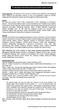 MBA Part I (Semester-II) 1 201 Management Information Systems and Decision Support Systems - The objective of this course is to introduce the students to the managerial issues relating to the information
Master of Business Administration Program in the Faculty of Business Administration and Economics
 Master of Business Administration Program in the Faculty of Business Administration and Economics The Faculty of Business Administration and Economics at Haigazian University offers a degree program leading
Master of Business Administration Program in the Faculty of Business Administration and Economics
 Master of Business Administration Program in the Faculty of Business Administration and Economics The Faculty of Business Administration and Economics at Haigazian University offers a degree program leading
SRI VIVEKANANDA WOMENS DEGREE COLLEGE Ngo Colony, Opp. Old Sivalayam, Kadapa. (Affiliated to Y.V. University)
 BBM. I YEAR BBM 102: PRINCIPLES OF MANAGEMENT UNIT 1 Management: concepts, Importance, Functions- classical, Neo-classical and Modern-Approaches- Role of Manager, Levels of Management. Planning: Nature,
Certificate Program in Health Care Management
 An Institution of National Importance Established by The BANARAS HINDU UNIVERSITY ACT XVI of 1915 Course Structure of Certificate Program in Health Care Management Under Career Oriented Courses of UNIVERSITY
FACULTY OF BUSINESS AND ACCOUNTANCY
 FACULTY OF BUSINESS AND ACCOUNTANCY List of Courses Offered for University of Malaya Student Exchange (UMSEP) for the 2016/2017 Academic Session CORE COURSES No. Course Code Topic Pre Requisite Credit
Bachelor's Degree in Business Administration and Master's Degree course description
 Bachelor's Degree in Business Administration and Master's Degree course description Bachelor's Degree in Business Administration Department s Compulsory Requirements Course Description (402102) Principles
How To Learn Economics In India
 B.A. PROGRAMME DISCIPLINE COURSE ECONOMICS COURSE CONTENTS (Effective from the Academic Year 2011-2012 onwards) DEPARTMENT OF ECONOMICS UNIVERSITY OF DELHI DELHI 1 Syllabus for B.A. Programme - Economics
SCHEME AND SYLLABUSES FOR VARIOUS JOB ORIENTED COURSES AT BA LEVEL. B.A. (MARKETING) Job. Oriented Courses Scheme of. Examinations
 SCHEME AND SYLLABUSES FOR VARIOUS JOB ORIENTED COURSES AT BA LEVEL B.A. (MARKETING) Job Oriented Courses Scheme of Examinations A student opting for B.A. (Marketing) will be required to study four papers
INSTITUTE OF DISTANCE EDUCATION AND LEARNING (IDEAL),NMU, JALGAON
 INSTITUTE OF DISTANCE EDUCATION AND LEARNING (IDEAL),NMU, JALGAON QUESTIONS FOR ASSIGNMENTS PROGRAMME MBA -2 ND YEAR -2014-15 INSTRUCTION: All students of MBA Programme, Paper wise assignments are given
OPEN UNIVERSITY OF TANZANIA FACULTY OF BUSINESS MANAGEMENT
 OPEN UNIVERSITY OF TANZANIA FACULTY OF BUSINESS MANAGEMENT OME 211: PRINCIPLES OF MARKETING COURSE OUTLINE INTRODUCTION This course introduces students to the concept and principles of marketing. In doing
MBAProgramme. The College of The Bahamas
 c o u r s e o u t l i n e MBAProgramme The College of The Bahamas Year 1 Fall Financial/Managerial Accounting (3 credits) Introduces students to the financial and managerial accounting disciplines; develops
101 Management Practices & Organizational Behavior
 MBA Part I (Semester-I) 1 101 Management Practices & Organizational Behavior The overall objective of this course is to familiarize the students with management concepts and behavioral processes in the
Selected Thesis Topics for BScBA students Bachelor s Thesis 2014-2015
 Selected Thesis Topics for BScBA students Bachelor s Thesis 2014-2015 Please use this list of the fields of International Business for thesis work and potential thesis topics when choosing and informing
Programme Regulations 2015 16 Business Administration with pathways in Human Resource Management, International Business and Marketing.
 Programme Regulations 2015 16 Business Administration with pathways in Human Resource Management, International Business and Marketing BSc Important document please read This document contains important
Overview... 2. Accounting for Business (MCD1010)... 3. Introductory Mathematics for Business (MCD1550)... 4. Introductory Economics (MCD1690)...
 Unit Guide Diploma of Business Contents Overview... 2 Accounting for Business (MCD1010)... 3 Introductory Mathematics for Business (MCD1550)... 4 Introductory Economics (MCD1690)... 5 Introduction to Management
MADRAS CHRISTIAN COLLEGE SELF FINANCED STREAM Department of Commerce. M.Phil in Commerce
 MADRAS CHRISTIAN COLLEGE SELF FINANCED STREAM Department of Commerce M.Phil in Commerce Department of Commerce (SFS) MADRAS CHRISTIAN COLLEGE (Autonomous) M.Phil (Commerce) Sem Subjects Title of the Paper
Department Of Leadership Studies M.Sc., MBA, MBA (Executive), M.S./M.Phil Leading to Ph.D.
 Department Of Leadership Studies M.Sc., MBA, MBA (Executive), M.S./M.Phil Leading to Ph.D. The postgraduate program in Leadership Studies (LS) is a program preparing its graduates for positions of responsibility
English-taught courses offered in 2015 spring term
 English-taught courses offered in 2015 spring term NO. Education Plan Academic Credits Terms for Course Academic school hours opening 1 Strategic Management 40 4 spring semester School of Management 2
The University of North Carolina at Pembroke 2015-2016 Academic Catalog COMMON BODY OF KNOWLEDGE OR FOUNDATION REQUIREMENTS:
 Graduate Studies and Research 452 The University of North Carolina at Pembroke 2015-2016 Academic Catalog MASTER OF BUSINESS ADMINISTRATION (M.B.A.) Director: Nick Arena The Master of Business Administration
MBA FULLTIME - SYLLABUS. Course Code Paper C/E Credits Marks SM S 2101 Management Concepts and Organizational Behaviour
 MBA FULLTIME - SYLLABUS Semester I Course Code Paper C/E Credits Marks SM S 2101 Management Concepts and Organizational Behaviour C 3 100 SM S 2102 Quantitative Methods C 3 100 SM S 2103 Managerial Economics
Master s Certificate In Business Management
 Master s Certificate In Business Management This program provides a structured, yet varied knowledge of the practice and principles of business management. Program Objectives This Master s Certificate
EMBA CURRICULUM - FIRST YEAR
 EMBA CURRICULUM - FIRST YEAR EMBA 0010 Professional Development Activities This required non-credit course is intended to provide opportunities to understand management skills and achieve a greater understanding
IFIM Business School. www.ifimbschool.com. Certificate Programme in Business Management for the Officers of Indian Armed Forces.
 IFIM Business School www.ifimbschool.com Certificate Programme in Business Management for the Officers of Indian Armed Forces Duration 24 weeks Scheduled from October 2009 About the Program: The programme
BANGLADESH INSTITUTE OF MANAGEMENT 4 Sobhanbag, Mirpur Road, Dhaka-1207 POST-GRADUATE DIPLOMA IN HUMAN RESOURCE MANAGEMENT SYLLABUS FOR PART-I
 BANGLADESH INSTITUTE OF MANAGEMENT POST-GRADUATE DIPLOMA IN HUMAN RESOURCE MANAGEMENT SYLLABUS FOR PART-I Evaluation Criteria : Class Attendance : 10% Class Test : 20% Final Examination : 70% Name of Subjects
MARKETING INTERMEDIATE LEVEL
 Syllabus MARKETING INTERMEDIATE LEVEL Proposed for examinations sessions starting May 2017 INTERMEDIATE Level, Marketing, MATSEC 1 Syllabus objectives The syllabus is intended to encourage candidates to:
M.A. PUBLIC ADMINISTRATION
 M.A. PUBLIC ADMINISTRATION FIRST YEAR PAPERS Subject Max. Marks Exam Hrs 1 Organizational Behavior 100 3 2 Administrative Theories 100 3 3 Principles of Organization and Management 100 3 4 Administrative
POST GRADUATE DIPLOMA IN BUSINESS MANAGEMENT (PGDBM) PROGRAMME GUIDE
 POST GRADUATE DIPLOMA IN BUSINESS MANAGEMENT (PGDBM) PROGRAMME GUIDE INDEX INTRODUCTION 3 PROGRAMME CODE 3 PROGRAMME DURATION 3 MEDIUM OF INSTRUCTION 3 SCHEME OF THE PROGRAMME 4 SYLLABUS OF PROGRAMME 5-14
Master of Business Administration COMMON BODY OF KNOWLEDGE OR FOUNDATION REQUIREMENTS: CBK OR FOUNDATION Principles of Accounting, 6 hours or
 473 MASTER OF BUSINESS ADMINISTRATION (M.B.A.) Director: Nick Arena The Master of Business Administration (MBA) is a professional degree program designed to accelerate entrepreneurial career development
Finance and Economics Course Descriptions
 Finance and Economics Course Descriptions Finance Course Descriptions FIN 250 Financial Management This course addresses the theory and practice of financial management and the role of the Financial Manager.
Higher Diploma Programme in Business and Human Resource Management. Syllabus
 Higher Diploma Programme in Business and Human Resource Management Syllabus English Reading and Writing This module gives students integrated instruction on reading and writing with emphasis on critical
LONDON SCHOOL OF COMMERCE. Programme Specifications for the. Cardiff Metropolitan University. MSc in International Hospitality Management
 LONDON SCHOOL OF COMMERCE Programme Specifications for the Cardiff Metropolitan University MSc in International Hospitality Management 1 Contents Programme Aims and Objectives 3 Programme Learning Outcomes
SCHEME OF STUDY MBA 3.5 YEAR PROGRAM
 International Islamic University Faculty of Management Sciences SCHEME OF STUDY MBA 3.5 YEAR PROGRAM SUMMARY: General Courses 12 Undergraduate Core Courses 60 Graduate Core Courses 15 Graduate Specialization
MBA 2 nd - Sem PRODUCTION & OPERATION MANAGEMENT
 MBA 2 nd - Sem PRODUCTION & OPERATION MANAGEMENT : Operations and Productivity Operations Functions and Evolution of POM; Framework for Managing Operations; Operations Strategy; Trends in Operations Management.
DEPARTMENT OF MANAGEMENT STUDIES MBA Master of Business Administration
 DEPARTMENT OF MANAGEMENT STUDIES MBA Master of Business Administration Course No Course Title L T E P O TH C MS 5003 Basics of Probability and Statistics 2 0 0 0 4 6 3 MS 5004 Basics of Accounting and
MASTER OF BUSINESS ADMINISTRATION (MBA) 800 Series
 MASTER OF BUSINESS ADMINISTRATION (MBA) 800 Series BBA 820: Managerial Functions Natural and scope of management of organizations operations. Systems approach to organizations. The management process planning,
HUMAN RESOURCE MANAGEMENT
 HUMAN RESOURCE MANAGEMENT 1. a) HRM Strategies b) Difference between Recruitment and Selection 2. a) Techniques of Performance Appraisal b) Methods of Executive Development 3. a) Methods of wage determination
COURSE SPECIFICATION DOCUMENT. Business and Economics. Masters of Business Administration. Dr Parviz Dabir-Alai
 COURSE SPECIFICATION DOCUMENT NOTE: ANY CHANGES TO A CSD MUST GO THROUGH ALL OF THE RELEVANT APPROVAL PROCESSES, INCLUDING LTPC. Academic School: Programme: Business and Economics Masters of Business Administration
Gonzaga MBA Electives
 Gonzaga MBA Electives MBA & MACC PROGRAMS Gonzaga MBA students complete a third of their program, 11 credits, in elective coursework, allowing them the flexibility to tailor the program based on personal
STUDY AND EVALUATION SCHEME FOR MBA SEMESTER IV w.e.f 2014-15. Marks L T P CT TA Total ESE Self Management 03 01-30 20 50 100 150
 STUDY AND EVALUATION SCHEME FOR MBA SEMESTER IV S.N Subject Code 01 MBA - 401-02 MBA - 402 03 MBA - 403 04 MBA - 404 05 MBA - 405 Subject Periods Evaluation Scheme Subject per week Sessional Exam Total
Department of Management
 Department of Management Course Student Learning Outcomes (ITM and MGMT) ITM 1270: Fundamentals of Information Systems and Applications Upon successful completion of the course, a student will be able
(Subject custodian: Department of Operations Management) Strategic management services. (Total tuition time: ± 32 hours)
 department of OPERATIONS MANAGEMENT Subject information (overview of syllabus) The syllabus content is subject to change to accommodate industry changes. Please note: A more detailed syllabus is available
The entrepreneurial role in the market economy
 MBA Entrepreneurship Specialisation The entrepreneurial role in the market economy is a major influence behind spirited economic activity in all corners of the globe. Our MBA with a Specialisation Track
OPEN UNIVERSITY OF TANZANIA FACULTY OF BUSINESS MANAGEMENT
 1 OPEN UNIVERSITY OF TANZANIA FACULTY OF BUSINESS MANAGEMENT OME 512: MARKETING MANAGEMENT COURSE OUTLINE INTRODUCTION This course introduces students to the concepts and principles marketing management.
BHARATHIAR UNIVERSITY, COIMBATORE-641 046 M.B.A (CBCS Pattern) (Introduced new elective papers/revised paper with effect from 2014-15 onwards)
 Page 1 of 6 BHARATHIAR UNIVERSITY, COIMBATORE-641 046 M.B.A (CBCS Pattern) (Introduced new elective papers/revised paper with effect from 2014-15 onwards) Note: The syllabi for the following introduced
GURU NANAK DEV ENGINEERING COLLEGE, LUDHIANA Deptt. Of Business Administration
 GURU NANAK DEV ENGINEERING COLLEGE, LUDHIANA Deptt. Of Business Administration No. MBA Date :- To Controller of Examination, MST-II Date Sheet Date Time MBA-I MBA-II 17/03/16 18/03/16 21/03/16 22/03/16
B.Ed. Two Year Programme. F.2: Human Development, Diversity and Learning
 B.Ed. Two Year Programme F.2: Human Development, Diversity and Learning Maximum Marks: 100 Vision This course will facilitate an understanding of the processes of development and learning and some of the
Centre for Economic and Social Studies
 1. The following is the structure of question paper for Commerce: _ Managerial Economics, Accounting Type of Question Marketing, Management & Finance Marks Business Environment (a) Short Answer Type 5
Far-western University Faculty of Management
 Far-western University Faculty of Management Course: Fundamentals of Financial Management Full marks: 100 Course No. Mgt FIN 2001 Pass marks: 45 Nature of the course: Theory Total periods: 120 Year: Second
FACULTY OF ECONOMICS AND BUSINESS SCIENCE Elviña Campus, A Coruña Updated: october 2005 GRADUATE IN BUSINESS ADMINISTRATION AND MANAGEMENT
 FACULTY OF ECONOMICS AND BUSINESS SCIENCE Elviña Campus, A Coruña Updated: october 2005 Address Campus de Elviña 15071 A Coruña Tel.: +34.981.167000 (Ext.: 2409) Fax.: +34. 981.167070 Webpage: www.udc.es
GURU NANAK DEV UNIVERSITY AMRITSAR
 Faculty of Economics & Business Syllabus For Post Graduate Diploma in Business Management (P.G.D.B.M.) Examination: 2013 GURU NANAK DEV UNIVERSITY AMRITSAR Note: (i) Copy rights are reserved. Nobody is
MBA students develop, or already possess,
 Master MBA Leadership of Business Specialisation Administration MBA students develop, or already possess, strong management skills; however the practice of effective leadership is essential for dedicated
FDU-Vancouver Bachelor of Science in Business Administration - International Business concentration Course Descriptions
 FDU-Vancouver Bachelor of Science in Business Administration - International Business concentration Course Descriptions ACCT 2021 Intro Financial Accounting An introduction to the concepts underlying an
Course No. Course Title Credits pre- req Course Description
 Course No. Course Title Credits pre- req Course Description ACG 2021 Intro to Financial Accounting 3 A study of basic financial accounting principles underlying assets, liabilities, and equities, including
The Institute of Cost Accountants of India
 The Institute of Cost ccountants of India ( Statutory Body under an ct of Parliament) www.icmai.in Foundation Course_Syllabus 2016 Structure & Contents Suggestions are invited within 20th July,2015 at
MM 301C Business Intelligence
 MM 301C Business Intelligence Course Objective : The objective of teaching this course is to enable students to integrate knowledge of various functional areas and technologies use for business integration.
APPENDIX I POST GRADUATE DIPLOMA IN HUMAN RESOURCES DEVELOPMENT LAW ( PGDHRDL )
 APPENDIX I POST GRADUATE DIPLOMA IN HUMAN RESOURCES DEVELOPMENT LAW ( PGDHRDL ) Sr. No. Name of the Paper No. of Credits Max. Marks Min. Marks 1 Human Resources Development. 4 Theory 80 2. Organisational
International Business Bachelor of Science Degree (B.S.)
 Berkeley College Overview Academic Programs International Business Bachelor of Science Degree (B.S.) Admissions and Finances Administration, Faculty, and Staff Contact Us Get a PDF of this page. Course
1. ELIGIBILITY FOR ADMISSION TO THE COURSE Any Degree
 Annexure: 56.O SCAA : 29.02.2008 BHARATHIAR UNIVERSITY: COIMBATORE 641 046. Master of International Business [MIB] Course offered in Colleges REGULATIONS AND SYLLABUS (from the academic year 2008 2009)
International Islamic University Faculty of Management Sciences SCHEME OF STUDY BBA (H) 4-YEAR TO MBA 1.5 PROGRAM
 International Islamic University Faculty of Management Sciences SCHEME OF STUDY BBA (H) 4-YEAR TO MBA 1.5 PROGRAM SUMMARY: Graduate Core Courses 15 Graduate Specialization Courses 12 Project 3 Total Credits
BUSINESS ADMINISTRATION (Non-EMBA) COURSES Student Learning Outcomes 1
 BUSINESS ADMINISTRATION (Non-EMBA) COURSES Student Learning Outcomes 1 BA 100: Exploration of Business 1. Explain the culture of higher education. 2. Undertake critical examination and self-reflection
International MBA Part Time
 International MBA Part Time Information: Schedule of classes: Fridays 02h00 pm to 08h00 pm fortnightly Saturdays 08h30 am to 5h30 pm fortnightly Class Hours: 600 Hours *The information may change without