
BIOLÓGIA ANGOL NYELVEN
|
|
|
- Joanna Griffin
- 10 years ago
- Views:
Transcription
1 Biológia angol nyelven középszint 1121 ÉRETTSÉGI VIZSGA május 14. BIOLÓGIA ANGOL NYELVEN KÖZÉPSZINTŰ ÍRÁSBELI ÉRETTSÉGI VIZSGA JAVÍTÁSI-ÉRTÉKELÉSI ÚTMUTATÓ EMBERI ERŐFORRÁSOK MINISZTÉRIUMA

2 Instructions for marking intermediate level papers 1. Always use red ink. 2. Tick the correct answers. Each tick is awarded. Half points cannot be given. Put two ticks if the candidate answered a question with 2 points correctly. 3. If the answer is correct but not included in the marking scheme it can still be accepted. The same principle applies to synonims. (e. g. :platelets trombocytes) 4. Equally correct, alternative ansewers are separated with a backslash (/) in the marking scheme. 5. At the end of each task add up the points in the grey chart. 6. At the end of the paper indicate the total points awarded for each task in the final summary chart and, by adding them up, work out the total score. 7. The total score achieved in the paper has to be multiplied by 1.25 to give the total score in percentages for the written part of the examination. 8. If the calculated total score is not an integer it has to be rounded according to the rules of rounding. 9. If the candidate is asked to compose whole sentences (e.g. to give reasons or explanations) only grammatically correct sentences can be accepted. Please, do not deduct points for spelling mistakes but do not accept answers with ambigious meaning. Good luck for your work. írásbeli vizsga / május 14.

3 I. Oil Trees 9 points This task is based on the following chapters of the Detailed Requirements: and Photo:original Drawing: Hortobágyi Tibor: Növényrendszertan, Tankönyvkiadó, Netted/webbed/branching leaf veins. (Wooden stem is also acceptable because it can only exceptionally occur in monocots.) 2. In xylem / in the water conducting vessels. 3. From the phloem of the conducting tissue / sieve tubes 4. Epidermis 5. Fruit wall (the mezocarp, to be more accurate) 6. The starch: glucose / maltose units The oil: glycerine and (partly unsaturated) fatty acids / oil acids 7. A/D/K/E. Any two correct vitamins. for each. 2 points II. Respiration of Animals This task is based on the following chapters of the Detailed Requirements:3.4.2 and Each correct answer is. 1. B 2. D 3. A 4. E 5. B 6. C 7. E 8. D 9. C 10. E III. Infusoria bringing about fermentation 8 points This task is based on the following chapters of the Detailed Requirements: 2.1.1, 2.1.3, 2.2.3, 3.2.1, and Source of figure: Benedek István: A tudás útja, Gondolat, The group of animals (at present) contains multicellular organisms, while infusoria are unicellular. Or: Animals have no cell wall. 2. Beer yeast is eukaryotic / it has cell nucleus, bacteria are prokaryotic / have no cell nucleus/nuclear membrane. Or other correct difference. The answer can refer to the text e.g.: butyric acid bacteria are rod shaped, while yeast cells are nearly spherical in shape. 3. Ethanol / ethyl alcohol and Carbon dioxid / CO 2 írásbeli vizsga / május 14.

4 4. Naming any organic molecule/group of molecules containing phosphorous with biological significance: DNA /RNA / ATP / ADP / phosphatides / nucleotides / coenzymes. 5. Energy production / production of ATP molecules 1point 6. It becomes more acidic / ph decreases. / Reason: accumulating butyric acid. The answer is only acceptable if the reason is provided. 7. The last/final experiment. If the bacteria are killed, the butyric acid fermentation comes to a halt. Other wording is also acceptable. IV. Hares and Lynx 7 points This task is based on the following chapters of the Detailed Requirements: 3.4.2, and Source of figure: Vadászati Múzeum, Georgikon, Keszthely (eredeti) Bánkuti-Both-Csorba-Horányi: A megőrzött idő, Nemzeti Tankönyvkiadó Each correct answer is. 1. C 2. Symbiosis / mutualism 3. Marking the carrying capacity as shown in the diagram. (it is enough to mark the K value on the vertical axis, or if the line is drawn in the correct place). numbers of animals K hares lynx time 4. The increasing number of lynx (Other wording is also acceptable) 5. The decreasing number of hares (Other wording is also acceptable) 6. Competition 7. The extent of fluctuation would decrease, because the predators could rely on (or hunt more frequently) other prey animals should hares become scarce. (Or other correctly worded answer) írásbeli vizsga / május 14.

5 V. This is the time of blood suckers 7 points This task is based on the following chapters of the Detailed Requirements: 3.2.1, 3.4.2, 4.2.1, Source of figure: Each correct answer is. 1. Because it has 4 pairs of legs / it does not have 3 pairs of legs. 2. It has to penetrate the epidermis 3. the intercellular fluid does not contain red blood corpuscles / red blood cells / blood proteins. Other wording is also acceptable 4. In this way the waste fluid also gets back into the body of the host and the risk of infection increases. 5. The (infecting) bacteria are also unicellular parasites. 6. C 7. C VI. Cell Metabolism This task is based on the following chapters of the Detailed Requirements: ; 2.2; D 1 pont 2. C 1 pont 3. B 1 pont 4. F 1 pont 5. E 1 pont 6. H 1 pont 7. G 1 pont 8. ribose és deoxyribose, for each, a total of 2 points 9. Pancreas 1 pont VII. Reflex This task is based on the following chapters of the Detailed Requirements: Source of figure: 1. B and D each, a total of 2 points 2. Name or characteristic Letter It contains the ascending and descending tracts Muscle spindle SENSORY NEURON(S) / DORSAL ROOT GANGLION / NERVE CELL BODY GREY MATTER OF THE SPINAL CORD / ASSOCIATION NEURONS / INTERNEURONS / DORSAL HORN Motor neurons / cell bodies Each box correctly filled in is, a total of 3. swings forward contracts relaxes E B C D F 5 points írásbeli vizsga / május 14.

6 VIII. The Human Blood 9 points Source of figure: This task is based on the following chapters of the Detailed Requirements:4.4.2., , , , , , What does the blood plasma carry? Name of the group of substances carried Absorbed food molecules Carbon dioxide Waste substances, byproducts Example 1. monosaccharides /glucose / amino acids / fatty acids / glycerine / monoglycerides / ions From where does the blood carry them? 2. from the midgut / from the small intestine To where does the blood carry them? (target organ) 3. to every organ / liver 4. from every 5. to the lungs organ urea from the liver 6. to the kidneys Each box correctly filled in is, a total of 6 points. 7. Transport of substances (transport proteins). / carrying out the steps in blood clotting, formation of blood clot. / ensuring the osmotic conditions of the blood. / ensuring immunity in the form of antibodies Giving any two functions is 1-, a total of 2 points 8. In the bottom / right hand side / red part. Reason: Because of the red colour of the red blood cells/corpuscles the cellular elements are easy to distinguish. Or: the cellular/formed elements of larger mass are deposited at a higher rate. IX. Lactose Intolerance This task is based on the following chapters of the Detailed Requirements :4.4.2., , , , Source of text: Source of figure: 1. small intestine / midgut 2. E 3. A 4. F 5. B 6. C 7. A 8. B and E each, a total of: 2 points 9. Aa and Aa A: dominant alleles a: recessive / the allele causing lactose intolerance. Other letters are also acceptable as long as the capital and small letter can be distinguished. The point can only be given if their meaning is provided. írásbeli vizsga / május 14.

BIOLÓGIA ANGOL NYELVEN
 Biológia angol nyelven középszint 1512 ÉRETTSÉGI VIZSGA 2015. május 13. BIOLÓGIA ANGOL NYELVEN KÖZÉPSZINTŰ ÍRÁSBELI ÉRETTSÉGI VIZSGA JAVÍTÁSI-ÉRTÉKELÉSI ÚTMUTATÓ EMBERI ERŐFORRÁSOK MINISZTÉRIUMA Instructions
1. The diagram below represents a biological process
 1. The diagram below represents a biological process 5. The chart below indicates the elements contained in four different molecules and the number of atoms of each element in those molecules. Which set
Cells, tissues and organs
 Chapter 8: Cells, tissues and organs Cells: building blocks of life Living things are made of cells. Many of the chemical reactions that keep organisms alive (metabolic functions) take place in cells.
Get It Right. Answers. Chapter 1: The Science of Life. A biologist studies all living things.
 Discover Biology 'N' Level Science Chapter 1 Chapter 1: The Science of Life A biologist studies all living things. In order to carry out the scientific method, we need to ask questions. Discover Biology
B2 1 Cells, Tissues and Organs
 B2 Cells, Tissues and Organs 5 minutes 5 marks Page of 7 Q. The diagram shows a bacterium. On the drawing, name the structures labelled A, B, C and D. (Total 4 marks) Q2. (a) The diagrams show cells containing
PRESTWICK ACADEMY NATIONAL 5 BIOLOGY CELL BIOLOGY SUMMARY
 Name PRESTWICK ACADEMY NATIONAL 5 BIOLOGY CELL BIOLOGY SUMMARY Cell Structure Identify animal, plant, fungal and bacterial cell ultrastructure and know the structures functions. Plant cell Animal cell
BIOLÓGIA ANGOL NYELVEN BIOLOGY
 Biológia angol nyelven középszint 0612 ÉRETTSÉGI VIZSGA 2007. május 17. BIOLÓGIA ANGOL NYELVEN BIOLOGY KÖZÉPSZINTŰ ÍRÁSBELI ÉRETTSÉGI VIZSGA INTERMEDIATE LEVEL WRITTEN EXAM JAVÍTÁSI-ÉRTÉKELÉSI ÚTMUTATÓ
Topic 3: Nutrition, Photosynthesis, and Respiration
 1. Base your answer to the following question on the chemical reaction represented below and on your knowledge of biology. If this reaction takes place in an organism that requires sunlight to produce
Photosynthesis. Chemical Energy (e.g. glucose) - They are the ultimate source of chemical energy for all living organisms: directly or indirectly.
 Photosynthesis Light Energy transduction Chemical Energy (e.g. glucose) - Only photosynthetic organisms can do this (e.g. plants) - They are the ultimate source of chemical energy for all living organisms:
10.1 The function of Digestion pg. 402
 10.1 The function of Digestion pg. 402 Macromolecules and Living Systems The body is made up of more than 60 % water. The water is found in the cells cytoplasm, the interstitial fluid and the blood (5
KEY CHAPTER 14: BLOOD OBJECTIVES. 1. Describe blood according to its tissue type and major functions.
 KEY CHAPTER 14: BLOOD OBJECTIVES 1. Describe blood according to its tissue type and major functions. TISSUE TYPE? MAJOR FUNCTIONS connective Transport Maintenance of body temperature 2. Define the term
Functions of Blood. Collects O 2 from lungs, nutrients from digestive tract, and waste products from tissues Helps maintain homeostasis
 Blood Objectives Describe the functions of blood Describe blood plasma Explain the functions of red blood cells, white blood cells, and platelets Summarize the process of blood clotting What is Blood?
tissues are made of cells that work together, organs are )
 Study Guide Cells Unit Test Matching. Write the letter of the correct response on the line. You may use the responses more than once. A. proteins B. simple carbohydrates C. complex carbohydrates D. lipids
BIOLÓGIA ANGOL NYELVEN BIOLOGY
 Biológia angol nyelven középszint 0521 ÉRETTSÉGI VIZSGA 2006. május 18. BIOLÓGIA ANGOL NYELVEN BIOLOGY KÖZÉPSZINTŰ ÍRÁSBELI ÉRETTSÉGI VIZSGA INTERMEDIATE LEVEL WRITTEN EXAM JAVÍTÁSI-ÉRTÉKELÉSI ÚTMUTATÓ
6023-1 - Page 1. Name: 4) The diagram below represents a beaker containing a solution of various molecules involved in digestion.
 Name: 6023-1 - Page 1 1) Which one of the following situations indicates a serious organ system malfunction? A) Mitochondria stop functioning in a unicellular organism exposed to pollutants. B) White blood
Introduction to the Cell: Plant and Animal Cells
 Introduction to the Cell: Plant and Animal Cells Tissues, Organs, and Systems of Living Things Cells, Cell Division, and Animal Systems and Plant Systems Cell Specialization Human Systems All organisms
The chemical reactions inside cells are controlled by enzymes. Cells may be specialised to carry out a particular function.
 12.1 What are animals and plants built from? All living things are made up of cells. The structures of different types of cells are related to their functions. to relate the structure of different types
Respiration occurs in the mitochondria in cells.
 B3 Question Which process occurs in the mitochondria in cells? Why do the liver and muscle cells have large number of mitochondria? What is the function of the ribosomes? Answer Respiration occurs in the
How To Understand The Chemistry Of Organic Molecules
 CHAPTER 3 THE CHEMISTRY OF ORGANIC MOLECULES 3.1 Organic Molecules The chemistry of carbon accounts for the diversity of organic molecules found in living things. Carbon has six electrons, four of which
Chapter 48. Nutrients in Food. Carbohydrates, Proteins, and Lipids. Carbohydrates, Proteins, and Lipids, continued
 Carbohydrates, Proteins, and Lipids The three nutrients needed by the body in the greatest amounts are carbohydrates, proteins, and lipids. Nutrients in Food All of these nutrients are called organic compounds,
Introduction to Animal Systems
 Human Body Systems Introduction to Animal Systems Recurring Themes in Biology 1. Correlation between structure and function( seen at many levels) 2. Life is organized at many levels from Smallest ----
BIOLÓGIA ANGOL NYELVEN
 Biológia angol nyelven emelt szint 1312 ÉRETTSÉGI VIZSGA 2014. május 14. BIOLÓGIA ANGOL NYELVEN EMELT SZINTŰ ÍRÁSBELI ÉRETTSÉGI VIZSGA JAVÍTÁSI-ÉRTÉKELÉSI ÚTMUTATÓ EMBERI ERŐFORRÁSOK MINISZTÉRIUMA Instructions
BIO 137: CHAPTER 1 OBJECTIVES
 BIO 137: CHAPTER 1 OBJECTIVES 1. Define the terms anatomy and physiology, and explain their relationship using an example of a human structure with its corresponding function. A. ANATOMY = the study of
CHAPTER 2: BLOOD CIRCULATION AND TRANSPORT
 CHAPTER 2: BLOOD CIRCULATION AND TRANSPORT BLOOD CIRCULATION AND TRANSPORT HUMAN BEING PLANTS Function of heart Wilting Structure of heart Blood vessels: characteristics and functions Transpiration: function
Keystone Review Practice Test Module A Cells and Cell Processes. 1. Which characteristic is shared by all prokaryotes and eukaryotes?
 Keystone Review Practice Test Module A Cells and Cell Processes 1. Which characteristic is shared by all prokaryotes and eukaryotes? a. Ability to store hereditary information b. Use of organelles to control
Topic 4: Digestion and Nutrition
 Topic 4: Digestion and Nutrition THE CONTENTS OF FOOD Food contains nutrients: Nutrients include: 1. 2. 3. 4. 5. Nutrients must be small enough to enter our cells. If they are too large they must be digested
H.W. 1 Bio 101 Prof. Fournier
 H.W. 1 Bio 101 Prof. Fournier 1. What is a similarity between all bacteria and plants? A) They both have a nucleus B) They are both composed of cells C) They both have chloroplasts D) They both lack a
How To Understand The Human Body
 Introduction to Biology and Chemistry Outline I. Introduction to biology A. Definition of biology - Biology is the study of life. B. Characteristics of Life 1. Form and size are characteristic. e.g. A
THE HUMAN BODY SYSTEMS
 Name Period Date THE HUMAN BODY SYSTEMS System Function Diagram Major Organs Digestive 1. take in food (ingestion) 2. digest food into smaller molecules and absorb nutrients 3. remove undigestable food
Cellular Respiration Worksheet 1. 1. What are the 3 phases of the cellular respiration process? Glycolysis, Krebs Cycle, Electron Transport Chain.
 Cellular Respiration Worksheet 1 1. What are the 3 phases of the cellular respiration process? Glycolysis, Krebs Cycle, Electron Transport Chain. 2. Where in the cell does the glycolysis part of cellular
Cellular Respiration: Practice Questions #1
 Cellular Respiration: Practice Questions #1 1. Which statement best describes one of the events taking place in the chemical reaction? A. Energy is being stored as a result of aerobic respiration. B. Fermentation
REVIEW for BIOLOGY UNIT TEST
 REVIEW for BIOLOGY UNIT TEST NOTE: The Unit Test will cover everything we have learned in the Biology Unit, starting from cell structures, cell division, various organ systems, disorders, organ donation,
B2 Revision. Subject Module Date Biology B2 13 TH May (am)
 B2 Revision Subject Module Date Biology B2 13 TH May (am) Useful websites www.aqa.org.uk This website contains the specifications that we follow and also has a large number of past papers and mark schemes
AP BIOLOGY CHAPTER 7 Cellular Respiration Outline
 AP BIOLOGY CHAPTER 7 Cellular Respiration Outline I. How cells get energy. A. Cellular Respiration 1. Cellular respiration includes the various metabolic pathways that break down carbohydrates and other
Unit 5 Photosynthesis and Cellular Respiration
 Unit 5 Photosynthesis and Cellular Respiration Advanced Concepts What is the abbreviated name of this molecule? What is its purpose? What are the three parts of this molecule? Label each part with the
Biology Chapter 7 Practice Test
 Biology Chapter 7 Practice Test Multiple Choice Write the letter that best answers the question or completes the statement on the line provided. 1. The work of Schleiden and Schwann can be summarized by
7 Answers to end-of-chapter questions
 7 Answers to end-of-chapter questions Multiple choice questions 1 B 2 B 3 A 4 B 5 A 6 D 7 C 8 C 9 B 10 B Structured questions 11 a i Maintenance of a constant internal environment within set limits i Concentration
Biochemistry of Cells
 Biochemistry of Cells 1 Carbon-based Molecules Although a cell is mostly water, the rest of the cell consists mostly of carbon-based molecules Organic chemistry is the study of carbon compounds Carbon
Enzymes. A. a lipid B. a protein C. a carbohydrate D. a mineral
 Enzymes 1. All cells in multicellular organisms contain thousands of different kinds of enzymes that are specialized to catalyze different chemical reactions. Given this information, which of the following
Name Date Period. Keystone Review Enzymes
 Name Date Period Keystone Review Enzymes 1. In order for cells to function properly, the enzymes that they contain must also function properly. What can be inferred using the above information? A. Cells
Chapter 9 Review Worksheet Cellular Respiration
 1 of 5 11/9/2011 8:11 PM Name: Hour: Chapter 9 Review Worksheet Cellular Respiration Energy in General 1. Differentiate an autotroph from a hetertroph as it relates to obtaining energy and the processes
CELLS: PLANT CELLS 20 FEBRUARY 2013
 CELLS: PLANT CELLS 20 FEBRUARY 2013 Lesson Description In this lesson we will discuss the following: The Cell Theory Terminology Parts of Plant Cells: Organelles Difference between plant and animal cells
PHOTOSYNTHESIS AND CELLULAR RESPIRATION
 reflect Wind turbines shown in the photo on the right are large structures with blades that move in response to air movement. When the wind blows, the blades rotate. This motion generates energy that is
Cell and Membrane Practice. A. chromosome B. gene C. mitochondrion D. vacuole
 Name: ate: 1. Which structure is outside the nucleus of a cell and contains N?. chromosome. gene. mitochondrion. vacuole 2. potato core was placed in a beaker of water as shown in the figure below. Which
Respiration Worksheet. Respiration is the controlled release of energy from food. Types of Respiration. Aerobic Respiration
 Respiration Worksheet Respiration is the controlled release of energy from food The food involved in respiration is usually Internal respiration is controlled by which allow energy to be released in The
BIOLÓGIA ANGOL NYELVEN
 Biológia angol nyelven emelt szint 1111 ÉRETTSÉGI VIZSGA 2012. október 26. BIOLÓGIA ANGOL NYELVEN EMELT SZINTŰ ÍRÁSBELI ÉRETTSÉGI VIZSGA JAVÍTÁSI-ÉRTÉKELÉSI ÚTMUTATÓ EMBERI ERŐFORRÁSOK MINISZTÉRIUMA Instructions
Biological molecules:
 Biological molecules: All are organic (based on carbon). Monomers vs. polymers: Monomers refer to the subunits that, when polymerized, make up a larger polymer. Monomers may function on their own in some
- Oxygen is needed for cellular respiration [OVERHEAD, fig. 6.2, p. 90 / 4th: 6.1] - lungs provide oxygen to blood, blood brings oxygen to the cells.
![- Oxygen is needed for cellular respiration [OVERHEAD, fig. 6.2, p. 90 / 4th: 6.1] - lungs provide oxygen to blood, blood brings oxygen to the cells.](/thumbs/40/21014327.jpg "- Oxygen is needed for cellular respiration [OVERHEAD, fig. 6.2, p. 90 / 4th: 6.1] - lungs provide oxygen to blood, blood brings oxygen to the cells.") Cellular respiration - how cells make energy - Oxygen is needed for cellular respiration [OVERHEAD, fig. 6.2, p. 90 / 4th: 6.1] - ATP - this is provided by the lungs - lungs provide oxygen to blood, blood
Cellular respiration - how cells make energy - Oxygen is needed for cellular respiration [OVERHEAD, fig. 6.2, p. 90 / 4th: 6.1] - ATP - this is provided by the lungs - lungs provide oxygen to blood, blood
Chapter 5: The Structure and Function of Large Biological Molecules
 Name Period Concept 5.1 Macromolecules are polymers, built from monomers 1. The large molecules of all living things fall into just four main classes. Name them. 2. Circle the three classes that are called
BIOLOGY HIGHER LEVEL
 2008. M44 Write your Examination Number here Coimisiún na Scrúduithe Stáit State Examinations Commission LEAVING CERTIFICATE EXAMINATION, 2008 BIOLOGY HIGHER LEVEL THURSDAY, 12 JUNE MORNING, 9.30 TO 12.30
008 Chapter 8. Student:
 008 Chapter 8 Student: 1. Some bacteria are strict aerobes and others are strict anaerobes. Some bacteria, however, are facultative anaerobes and can live with or without oxygen. If given the choice of
37 2 Blood and the Lymphatic System Slide 1 of 34
 1 of 34 Blood is a connective tissue that contains both dissolved substances and specialized cells. 2 of 34 The functions of blood include: collecting oxygen from the lungs, nutrients from the digestive
North Bergen School District Benchmarks
 Grade: 10,11, and 12 Subject: Anatomy and Physiology First Marking Period Define anatomy and physiology, and describe various subspecialties of each discipline. Describe the five basic functions of living
Additional Science. Biology BL2FP. (Jun15BL2FP01) General Certificate of Secondary Education Foundation Tier June 2015.
 Centre Number Surname Candidate Number For Examiner s Use Other Names Candidate Signature Examiner s Initials Question Mark Additional Science Unit Biology B2 Biology Unit Biology B2 General Certificate
pathway that involves taking in heat from the environment at each step. C.
 Study Island Cell Energy Keystone Review 1. Cells obtain energy by either capturing light energy through photosynthesis or by breaking down carbohydrates through cellular respiration. In both photosynthesis
Harvesting Energy: Glycolysis and Cellular Respiration. Chapter 8
 Harvesting Energy: Glycolysis and Cellular Respiration Chapter 8 Overview of Glucose Breakdown The overall equation for the complete breakdown of glucose is: C 6 H 12 O 6 + 6O 2 6CO 2 + 6H 2 O + ATP The
THE LIVING CELL. Cells also have variety of shapes. Plant cells are often rectangular or polygonal, while egg cells are usually spherical.
 THE LIVING CELL A Tour of the cell The cell is the smallest and the basic unit of structure of all organisms. There are two main types or categories of cells: prokaryotic cells and eukaryotic cells. Prokaryotic
7 TH GRADE FINAL EXAM PRACTICE TEST. Part I: Cells. 1. The cell grows to its mature size during. a. mitosis b. prophase c. telophase d.
 7 TH GRADE FINAL EXAM PRACTICE TEST Part I: Cells 1. The cell grows to its mature size during a. mitosis b. prophase c. telophase d. interphase 2. The final stage of the cell cycle is called a. interphase
Name: Hour: Elements & Macromolecules in Organisms
 Name: Hour: Elements & Macromolecules in Organisms Most common elements in living things are carbon, hydrogen, nitrogen, and oxygen. These four elements constitute about 95% of your body weight. All compounds
The Molecules of Cells
 The Molecules of Cells I. Introduction A. Most of the world s population cannot digest milk-based foods. 1. These people are lactose intolerant because they lack the enzyme lactase. 2. This illustrates
Membrane Structure and Function
 Membrane Structure and Function Part A Multiple Choice 1. The fluid mosaic model describes membranes as having A. a set of protein channels separated by phospholipids. B. a bilayer of phospholipids in
Human Body Systems Project By Eva McLanahan
 Human Body Systems Project By Eva McLanahan Students will work in groups to research one of the eleven body systems as found in Holt, Rinehart, and Winston Modern Biology (2002). Research will focus on
Chapter 2. The Chemistry of Life Worksheets
 Chapter 2 The Chemistry of Life Worksheets (Opening image courtesy of David Iberri, http://en.wikipedia.org/wiki/file:camkii.png, and under the Creative Commons license CC-BY-SA 3.0.) Lesson 2.1: Matter
The digestive system eliminated waste from the digestive tract. But we also need a way to eliminate waste from the rest of the body.
 Outline Urinary System Urinary System and Excretion Bio105 Lecture 20 Chapter 16 I. Function II. Organs of the urinary system A. Kidneys 1. Function 2. Structure III. Disorders of the urinary system 1
Cellular Respiration
 Cellular Respiration Cellular Respiration Text, Diagrams, Assessments, and Link to Standards Focus Questions 1) What is cellular respiration? 2) How is cellular respiration connected to breathing? 3) If
Plant and Animal Cells
 Plant and Animal Cells a. Explain that cells take in nutrients in order to grow, divide and to make needed materials. S7L2a b. Relate cell structures (cell membrane, nucleus, cytoplasm, chloroplasts, and
Advanced Subsidiary GCE Biology
 Advanced Subsidiary GCE Biology Unit F214 - Communication, Homeostasis and Energy - High banded OCR has produced these candidate style answers to support teachers in interpreting the assessment criteria
1. The leaf is the main photosynthetic factory (Fig. 36.1, p. 702)
 TRANSPORT IN PLANTS A. Introduction 1. The leaf is the main photosynthetic factory (Fig. 36.1, p. 702) a. This requires a transport system to move water and minerals from the roots to the leaf. This is
Special organ structures and functions conduct these tasks through the successive parts of the overall system.
 Chapter 5 Digestion, Absorption, and Metabolism Chapter 5 Lesson 5.1 Key Concepts Through a balanced system of mechanical and chemical digestion, food is broken down into smaller substances and the nutrients
The Digestive System. You are what you eat!
 The Digestive System You are what you eat! Try to label the diagram (PENCIL!!) What is Digestion? Digestion: the breakdown of large macromolecules (proteins, fats, carbohydrates) into smaller molecules
Chapter 3 Molecules of Cells
 Bio 100 Molecules of cells 1 Chapter 3 Molecules of Cells Compounds containing carbon are called organic compounds Molecules such as methane that are only composed of carbon and hydrogen are called hydrocarbons
Digestive System Functions
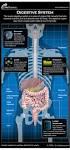 Digestive System Functions A. Gastrointestinal Processes 1. Ingestion: placing food in mouth (voluntary) 2. Propulsion: moving food through GI tract a. Peristalsis: alternating waves of contraction and
Questions on The Nervous System and Gas Exchange
 Name: Questions on The Nervous System and Gas Exchange Directions: The following questions are taken from previous IB Final Papers on Topics 6.4 (Gas Exchange) and 6.5 (Nerves, hormones and homeostasis).
1. Give the name and functions of the structure labeled A on the diagram. 2. Give the name and functions of the structure labeled B on the diagram.
 2013 ANATOMY & PHYSIOLOGY Sample Tournament Station A: Use the diagram in answering Questions 1-5. 1. Give the name and functions of the structure labeled A on the diagram. 2. Give the name and functions
UNIT 3 : MAINTAINING DYNAMIC EQUILIBRIUM
 BIOLOGY - 2201 UNIT 3 : MAINTAINING DYNAMIC EQUILIBRIUM What happens to your body as you run? Breathing, heart rate, temperature, muscle pain, thirsty... Homeotasis Homeostasis is the process of maintaining
Cellular Energy. 1. Photosynthesis is carried out by which of the following?
 Cellular Energy 1. Photosynthesis is carried out by which of the following? A. plants, but not animals B. animals, but not plants C. bacteria, but neither animals nor plants D. all living organisms 2.
Functions of Blood System. Blood Cells
 Functions of Blood System Transport: to and from tissue cells Nutrients to cells: amino acids, glucose, vitamins, minerals, lipids (as lipoproteins). Oxygen: by red blood corpuscles (oxyhaemoglobin - 4
1. When you come to a station, attempt to answer each question for that station.
 Name: Block: Steps for completing this study guide 1. When you come to a station, attempt to answer each question for that station. 2. Once you are done answering the questions, or if you can t answer
Cells and Systems Unit 2 Test
 Cells and Systems Unit 2 Test Student Name Class 1. Characteristics of living organisms include all of the following, EXCEPT... A. they need energy and produce wastes B. they reproduce and grow C. they
Biology [SBI 4U] FINAL EXAMINATION
![Biology [SBI 4U] FINAL EXAMINATION](/thumbs/27/12196629.jpg "Biology [SBI 4U] FINAL EXAMINATION") Biology [SBI 4U] FINAL EXAMINATION Date: November 28, 2012 (Wednesday) Time: 8:30 a.m. 10:30 a.m. Length: 2 hours Lecturer: Ms. Kimberley Gagnon Canadian International Matriculation Programme Student Name:
Biology [SBI 4U] FINAL EXAMINATION Date: November 28, 2012 (Wednesday) Time: 8:30 a.m. 10:30 a.m. Length: 2 hours Lecturer: Ms. Kimberley Gagnon Canadian International Matriculation Programme Student Name:
MCAS Biology. Review Packet
 MCAS Biology Review Packet 1 Name Class Date 1. Define organic. THE CHEMISTRY OF LIFE 2. All living things are made up of 6 essential elements: SPONCH. Name the six elements of life. S N P C O H 3. Elements
Given these characteristics of life, which of the following objects is considered a living organism? W. X. Y. Z.
 Cell Structure and Organization 1. All living things must possess certain characteristics. They are all composed of one or more cells. They can grow, reproduce, and pass their genes on to their offspring.
The Cell Teaching Notes and Answer Keys
 The Cell Teaching Notes and Answer Keys Subject area: Science / Biology Topic focus: The Cell: components, types of cells, organelles, levels of organization Learning Aims: describe similarities and differences
The correct answer is d C. Answer c is incorrect. Reliance on the energy produced by others is a characteristic of heterotrophs.
 1. An autotroph is an organism that a. extracts energy from organic sources b. converts energy from sunlight into chemical energy c. relies on the energy produced by other organisms as an energy source
12.1: The Function of Circulation page 478
 12.1: The Function of Circulation page 478 Key Terms: Circulatory system, heart, blood vessel, blood, open circulatory system, closed circulatory system, pulmonary artery, pulmonary vein, aorta, atrioventricular
Eukaryotic Cell Structure: Organelles in Animal & Plant Cells Why are organelles important and how are plants and animals different?
 Why? Eukaryotic Cell Structure: Organelles in Animal & Plant Cells Why are organelles important and how are plants and animals different? The cell is the basic unit and building block of all living things.
10.2 The Human Digestive System pg. 411
 10.2 The Human Digestive System pg. 411 The human digestive system is made up of a group of organs working together. The digestive tract is made up of the mouth, esophagus, stomach, small intestine, and
Cells & Cell Organelles
 Cells & Cell Organelles The Building Blocks of Life H Biology Types of cells bacteria cells Prokaryote - no organelles Eukaryotes - organelles animal cells plant cells Cell size comparison Animal cell
Chapter 1: Life Processes
 The human body is composed of countless millions of units called cells. In an animal like a human there are many different types of cells, with different structures. They are specialised so that they can
DIGESTION is the physical and
 Digestion DIGESTION is the physical and chemical breakdown of feeds as they pass through the gastrointestinal tract. The structures of the gastrointestinal tract include the mouth, the esophagus, the stomach,
Organic Compounds. Essential Questions: What is Organic? What are the 4 major Organic Compounds? How are they made? What are they used for?
 Organic Compounds Essential Questions: What is Organic? What are the 4 major Organic Compounds? How are they made? What are they used for? Aristotle: Francesco Redi: What do we already know? Spontaneous
Engage: Brainstorming Body Systems. Record the structures and function of each body system in the table below.
 Engage: Brainstorming Body s Record the structures and function of each body system in the table below. Body Nervous Circulatory Excretory Immune Digestive Respiratory Skeletal Muscular Endocrine Integumentary
Cellular Respiration An Overview
 Why? Cellular Respiration An Overview What are the phases of cellular respiration? All cells need energy all the time, and their primary source of energy is ATP. The methods cells use to make ATP vary
The Living Cell from the Biology: The Science of Life Series. Pre-Test
 1 Pre-Test Directions: Answer each question TRUE OR FALSE. 1. The instructions for making proteins are stored in molecules of DNA. 2. Proteins are made in the nucleus. 3. All cells are surrounded by a
1.1.2. thebiotutor. AS Biology OCR. Unit F211: Cells, Exchange & Transport. Module 1.2 Cell Membranes. Notes & Questions.
 thebiotutor AS Biology OCR Unit F211: Cells, Exchange & Transport Module 1.2 Cell Membranes Notes & Questions Andy Todd 1 Outline the roles of membranes within cells and at the surface of cells. The main
Introduction to Animals
 Introduction to Animals Unity and Diversity of Life Q: What characteristics and traits define animals? 25.1 What is an animal? WHAT I KNOW SAMPLE ANSWER: Animals are different from other living things
Digestive System Module 7: Chemical Digestion and Absorption: A Closer Look
 OpenStax-CNX module: m49457 1 Digestive System Module 7: Chemical Digestion and Absorption: A Closer Look Donna Browne Based on Chemical Digestion and Absorption: A Closer Look by OpenStax This work is
2. Which type of macromolecule contains high-energy bonds and is used for long-term energy storage?
 Energy Transport Study Island 1. During the process of photosynthesis, plants use energy from the Sun to convert carbon dioxide and water into glucose and oxygen. These products are, in turn, used by the