
INFORMATION BULLETIN
|
|
|
- Jean Horton
- 10 years ago
- Views:
Transcription

1 UNIVERSITY OF PETROLEUM & ENERGY STUDIES Established through an Act passed by Uttarakhand State Legislature Maintained by University Grants Commission under Section 2(f) of the UGC Act, 1956 Accredited by National Assessment & Accreditation Council (NAAC) Member Association of Indian Universities (AIU) INFORMATION BULLETIN ACADEMIC YEAR COLLEGE OF MANAGEMENT & ECONOMICS STUDIES COLLEGE OF ENGINEERING STUDIES COLLEGE OF LEGAL STUDIES ENROLLMENT OFFICE Dehradun: UPES Campus, P.O. Bidholi, Via Prem Nagar, Dehradun (Uttarakhand) Tel: , , Delhi:2nd Floor, 210, Okhla Industrial Estate Phase III, New Delhi Tel: /52/53, Toll Free No.:

2

3 CONTENTS Description Page No. Admission Criteria/ Test Details Management Programs (MBA/ BBA) 4-5 B.Tech / B. Des/B. Plan Programs 6-10 LLB / LLM Programs M. Tech / M. Des/M. Plan Programs BA / MA Programs 16 Program Fee Structure Other Fee 26 Scholarship/ Fee Concession 26 Hostel Facility/ Fee 27 Reservation of Seats 27 Withdrawal of Admission 27 Transportation 28 Placement 28 Ragging 28 How To Apply 28 Commencement of Program 29 Admission Policy for International Students Programs on Offer / Intake/ Codes Program Overview, Career Options & Program Contents College of Management & Economics Studies College of Engineering Studies School of Design Studies School of Planning & Architecture School of International Law & Diplomacy School of Public Policy & Governance College of Legal Studies

4 PROGRAM BBA Oil & Gas Marketing BBA Aviation Operations BBA Logistics Management BBA Auto Marketing BBA Foreign Trade BBA Retail Management BBA Digital Marketing BBA Financial Services Marketing MA Energy Economics MBA Oil & Gas Management MBA Energy Trading MBA Power Management MBA Port & Shipping Management MBA Logistics & Supply Chain Management MBA International Business MBA Aviation Management MBA Infrastructure Management MBA (Business Analytics) COLLEGE OF MANAGEMENT & ECONOMICS STUDIES ADMISSION DURATION ELIGIBILITY CRITERIA CRITERIA (YEARS) Science / Commerce stream with minimum 50% marks at Higher & Group Discussion 3 Senior Secondary level (10th & 12th) & Interview. Minimum 50% marks at Higher & Senior Secondary level(10th & Students appearing in class 3 12th) Minimum 50% marks at Higher & Senior Secondary level. (10th & XII and awaiting result can also 3 12th) Math in Class XII Preferred Minimum 50% marks at Higher & Senior Secondary level(10th & apply. 3 12th) Minimum 50% marks at Higher & Senior Secondary level Shortlisted candidates will be 3 (10th & 12th) Minimum 50% marks at Higher & Senior Secondary level given a provisional offer 3 (10th & 12th) Minimum 50% marks at Higher & Senior Secondary level letter. 3 (10th & 12th) Minimum 50% marks at Higher & Senior Secondary level (10th & 12th). Commerce Stream Preferred (1) Minimum 50% marks at Higher & Senior Secondary level (10th & 12th) (2) B.Com/BA Economics (Hons)/B.Sc./BA Programme with Economics or B.Tech with minimum 50% marks from a recognized University (3) Students who have read Statistics/Mathematics with minimum 50% marks at the graduation level from a recognized University (1) Minimum 50% marks at Higher &Senior Secondary level (10th & 12th)(2)Engineering*/ B. Sc. (PCM) Graduates with minimum 50% marks from a recognized University. (1) Minimum 50% marks at Higher &Senior Secondary level (10th & 12th)(2) Graduation in Commerce/Economics/Mathematics/ Statistics/CA/ICWA/Engineering*/B.Sc (PCM) with minimum 50% marks from a recognized University / (1) Minimum 50% marks at Higher &Senior Secondary level (10th & 12th)(2)Engineering*/ B. Sc. (PCM) Graduates with minimum 50% marks from a recognized University. (1) Minimum 50% marks at Higher &Senior Secondary level (10th & 12th) (2) Graduation with minimum 50% marks from a recognized University. (1) Minimum 50% marks at Higher &Senior Secondary level (10th & 12th) (2) Graduation with minimum 50% marks from a recognized University (1) Minimum 50% marks at Higher &Senior Secondary level (10th & 12th) (2) Graduation with minimum 50% marks from a recognized University (1) Minimum 50% marks at Higher &Senior Secondary level (10th & 12th) (2) Graduation with minimum 50% marks from a recognized University (1) Minimum 50% marks at Higher &Senior Secondary level (10th & 12th)(2)Engineering*/ B. Sc. (PCM) Graduates with minimum 50% marks from a recognized University (1) Minimum 50% marks at Higher & Senior Secondary Level (class 10 th 12 th ) (2) B.Tech / BE in any discipline, B.Sc (PCM) or B.Sc (Maths); BA (Economics/ Math/ Statistics); B.Com Pass or honors, BBA with minimum 50% marks from a recognized University * Engineering Degree with relevant industry requirement is acceptable ADMISSION CRITERIA MANAGEMENT PROGRAMS First round GD&PI to commence. From November Online Test followed by Personal Interview. MBA admissions through UPESMET Online Test/ National Level Test + Group Discussion & Interview

5 MBA (UPESMET) Online Test Test Date Name of Program Date of Test Time Duration MBA (All Streams) 12 Feb to 16 Feb 2015 Test Slots can be chosen by students after the last date for application (Feb 1, 2015) is over. 2:00 Hours Note: 1. Last date to receive the filled application (OMR Form) is 1 February 2015 (Sunday) ONLINE TEST PROCESS Candidates will appear for the ONLINE test by logging in with their credentials from their computer connected with a webcam and an internet connection. Candidates have the convenience to appear for the test from their residence, office or internet café. Note: University reserves the right to change the Test Date or even cancel the Test. Please note: The candidates will be sent their login credentials at least 24 hours before the exam on the registered ID of the applicants. Scheme of Test Sections No.of Questions General English: Reading Comprehension, Verbal Reasoning, Verbal Ability 35 Quantitative: Data Interpretation & Data Sufficiency 35 General Awareness: General Knowledge, Current Affairs, Business Scenario 35 Analytical & Logical Reasoning 35 Total No. of Questions 140 Non Examination Pathway - MBA Admissions through National Level Tests** For MBA Oil & Gas / Power Management / Energy Trading / Logistics & Supply Chain Management / International Business : Students having minimum CAT/XAT score of 75 percentile or MAT score of 80 Percentile will be exempted from UPES Online Management Entrance Test and will only be called for Group Discussion & Interview if qualified. Valid CMAT 2014 & 2015 / GMAT scores will also be accepted. For MBA Port & Shipping Management / Aviation Management / Infrastructure Management / Business Analytics) Students having minimum CAT/XAT score of 70 Percentile or MAT score of 75 Percentile will be exempted from UPES Online Management Entrance Test and will only be called for Group Discussion & Interview. Valid CMAT 2014 & 2015/ GMAT scores will also be accepted. Note: CAT November 14, XAT January 15 and MAT scores of September 14, December 14, February 15 and May 15 will be accepted ** Upto 50% seats shall be filled through National Level Tests category. Incase candidates for such seats are not available, UPES has the right to fill these seats through UPES Online Entrance Test. University also reserves the right to conduct further physical (paper pencil test) / online test for admission in the month of May 15 or June 15

6 RESERVATION OF SEATS For Uttarakhand bona fide resident candidates: 15% of the seats in all programs will be reserved for residents of Uttarakhand subject to production of Sthai Niwas Praman Patra (Permanent Residence Certificate) issued by the competent authority of Uttarakhand State. These seats will get allotted strictly based on the merit positions secured in this category, provided the candidate has declared his intent to opt under this category at the time of applying for admission. Note: Candidates applying under this category would be required to produce the original Sthai Niwas Praman Patra during the day of admission failing which their candidature shall stand cancelled. Seats remaining unfilled by the stipulated date in this category shall be treated as unreserved B. Tech Programs PROGRAM ELIGIBILITY CRITERIA COLLEGE OF ENGINEERING STUDIES B. Tech. Applied Petroleum Engineering with specialization in Upstream B. Tech. Applied Petroleum Engineering with specialization in Gas Stream B. Tech. Chemical Engineering with specialization in Refining & Petrochemicals B. Tech. Geo Science Engineering B. Tech. Geo Informatics Engineering B. Tech. Mining Engineering B. Tech. Automotive Design Engineering B. Tech. Mechanical Engineering B. Tech. Aerospace Engineering B. Tech. Aerospace Engineering with specialization in Avionics B. Tech. Electronics Engineering B. Tech. Mechatronics Engineering B. Tech. Power System Engineering B. Tech. Electrical Engineering B. Tech. Instrumentation & Control Engineering B. Tech. Civil Engineering with specialization in Infrastructure Development B. Tech. Material Science Engineering with specialization in Nano Technology B. Tech. Fire & Safety Engineering B. Tech. Production and Industrial Engineering B. Tech. Energy Technology + LLB (Hons.) with specialization in Intellectual Property Rights (IPR) B. Tech. Computer Science & Engineering + LLB (Hons.) with specialization in Cyber Laws Minimum 60% marks at Higher & Senior Secondary level (10 th & 12 th ) and Minimum 60% aggregate in Physics, Chemistry & Mathematics at Senior Secondary level (12 th ) Minimum 50% marks at Higher & Senior Secondary level (10 th & 12 th ) and Minimum 50% aggregate in Physics, Chemistry & Mathematics at Senior Secondary level (12 th ) ADMISSION CRITERIA UPES Engineering Aptitude Test (UPESEAT) followed by Centralized Counseling OR Centralized Counseling through Merit rank for Non Exam Category DURATION (YEARS) 4 6

7 School of Design Studies Program Eligibility Criteria Admission Criteria Bachelor of Design (B. Des) Bachelor of Fine Arts with specialization in Digital Arts Minimum 50% marks at Higher & Senior Secondary level (10 th & 12 th ) and Minimum 50% aggregate in Physics, Chemistry & Mathematics at Senior Secondary level (12 th ) Minimum 50% marks at Higher & Senior Secondary level (10 th & 12 th ) (Any Stream) UPES Engineering Aptitude Test (UPESEAT) followed by Centralized Counseling OR UPES-DAT Online Entrance Test ** followed by presentation of portfolio and interview OR Centralized Counseling through Merit rank for Non Exam Category UPES-DAT Online Entrance Test, Presentation of Portfolio and Interview ** For B. Des-Date of the examination UPES - DAT will be informed to B. Des applicants separately. DURATION (YEARS) 4 4 School of Planning and Architecture Bachelor of Planning (B. Plan) PROGRAM Bachelor of Planning (B. Plan) ELIGIBILITY CRITERIA Minimum 50% marks at Higher & Senior Secondary level (10 th & 12 th ) and Minimum 50% aggregate in Physics, Chemistry & Mathematics at Senior Secondary level (12 th ) ADMISSION CRITERIA Engineering Aptitude Test (UPESEAT) followed by Centralized Counseling OR DURATION (YEARS) 4 Centralized Counseling through Merit rank for Non Exam Category

8 Centre of Information Technology PROGRAM B. Tech. Computer Science & Engineering with specialization in Cloud Computing & Virtualization Technology* B. Tech. Computer Science & Engineering with specialization in Open Source & Open Standards* B. Tech. Computer Science & Engineering with specialization in Mainframe Technology* B. Tech. Computer Science & Engineering with specialization in Oil & Gas Informatics* B. Tech. Computer Science & Engineering with specialization in Telecom Informatics* B. Tech. Computer Science & Engineering with specialization in E- Commerce, Retail and Automation* B. Tech. Computer Science & Engineering with specialization in IT Infrastructure* B. Tech. Computer Science & Engineering with specialization in Business Analytics and Optimization* B. Tech. Computer Science & Engineering with specialization in Banking, Financial Services and Insurance* B.Tech Computer Science & Engineering with specialization in Graphics & Gaming * B. Tech. Computer Science & Engineering with specialization in IT Security & Cyber forensics* B.Tech Computer Science & Engineering with specialization in Manufacturing Systems* B.Tech Computer Science & Engineering with specialization in Healthcare Informatics* *In academic collaboration with IBM ELIGIBILITY CRITERIA Minimum 60% marks at Higher & Senior Secondary level (10 th & 12 th ) and Minimum 60% aggregate in Physics, Chemistry & Mathematics at Senior Secondary level (12 th ) ADMISSION CRITERIA UPES Engineering Aptitude Test (UPESEAT) followed by Centralized Counseling OR Centralized Counseling through Merit rank for Non Exam Category DURATION (YEARS) 4 Age Criteria Only candidates whose date of birth falls on or after October 1, 1993 are eligible to apply for admission. Date of Birth as recorded in the Secondary Education Board only will be taken as authentic. Test Date Name of Program Date of Test Time Duration B.Tech/ B. Des/B. Plan - All Streams (UPESEAT) B. Tech / B. Des/ B. Plan (UPESEAT) Test Details B. Des (Online Design Test)** Will be Informed later Note: Last date to receive the filled application (OMR Form/ Online) is 3 May May 2015 (Saturday) 09:30 12:30 Hours 3 Hours Test Slots will be assigned by the University 1 Hours ** For B. Des-UPES-DAT Online Entrance Test will be conducted before UPESEAT exam. Duration of Exam will be1 hour. Date of the examination will be informed to B. Des applicants subsequently

9 Admit Card (to be downloaded from UPES website) On the basis of information in the Application form, admit card of provisionally eligible candidates will be uploaded on the University website on 10 May, Candidates are required to download the admit card accordingly. The duly completed downloaded admit card with photograph affixed (duly attested) in the space provided will have to be produced at the allotted test center. Candidates without the admit card or card without the photograph will NOT be permitted to take the test. Entrance Test Locations / City Codes Kindly refer to the following table for filling up the OMR/ Online Application form. Candidates are cautioned to fill the City code and shade correctly as the allotment of required Test City will be based on this information only. Candidates need to give both first & second choice as per their city preference in OMR/Online Application form. City Name Test City Code Agra 11 Ahmedabad 12 Aizawl 13 Allahabad 14 Bangalore 15 Bhopal 16 Bhubaneswar 17 Chandigarh 18 Chennai 19 Cochin 20 Dehradun 21 Delhi 22 Dhanbad 23 Faridabad 24 City Name Test City Code Ghaziabad 25 Guwahati 26 Gurgaon 27 Haldwani 28 Hyderabad 29 Indore 30 Jabalpur 31 Jaipur 32 Jalandhar 33 Jammu 34 Jodhpur 35 Kanpur 36 Kolkata 37 Lucknow 38 City Name Test City Code Mumbai 39 Nagaon 40 Noida 41 Patna 42 Pune 43 Raipur 44 Ranchi 45 Rohtak 46 Shillong 47 Siliguri 48 Trivandrum 49 Varanasi 50 Vishakhapatnam 51 Note: University reserves the right to change or cancel any test center /city at its discretion, if required. Sections Scheme of Tests No.of Questions Mathematics 50 Physics 50 Chemistry 50 English Language Comprehension 30 Current Affairs Awareness 20 Total No. of Questions 200

10 RESERVATION OF SEATS For Uttarakhand bona fide resident candidates: 15% of the seats in all programs will be reserved for residents of Uttarakhand subject to production of Sthai Niwas Praman Patra (Permanent Residence Certificate) issued by the competent authority of Uttarakhand State. These seats will get allotted strictly based on the merit positions secured in this category, provided the candidate has declared his intent to opt under this category at the time of applying for admission. Note: Candidates applying under this category would be required to produce the original Sthai Niwas Praman Patra during the day of admission failing which their candidature shall stand cancelled. Seats remaining unfilled by the stipulated date in this category shall be treated as unreserved Non Examination Pathway - B. Tech through Board Merit / JEE Merit# ELIGIBILITY CRITERIA Board Merit Minimum 80% marks at Higher & Senior Secondary level (10th & 12th) and minimum 80% aggregate in Physics, Chemistry & Mathematics at Senior Secondary level (12 th class) OR JEE Main Merit (1) Minimum 60% marks at Higher & Senior Secondary level (10th & 12th) and minimum 60% aggregate in Physics, Chemistry & Mathematics at Senior Secondary level (12 th class). (2) JEE Main cut-off Rank to be announced (on UPES website) after the declaration of JEE Main 2015 results) ADMISSION CRITERIA Centralized Counseling through Merit Ranking # Upto 20% seats shall be filled through Board Merit / JEE Main Merit category. In case of seats following vacant in this category; UPES has the right to fill these through UPES Examination. University also reserves the right to conduct further physical (paper pencil test) / online test for admission 100% Scholarship on Tuition Fee: 1. Scholarship will be offered to students securing an aggregate of 85% marks in class XII & 90% marks in PCM for B.Tech. (All Streams) in CBSE or ICSE Examination Board passing out in Such scholarships will be limited to 5% of seats in each B.Tech. Program. Scholarships will be allotted after commencement of the classes in Merit order to eligible candidates. 2. Scholarships will be given on the basis of merit only. 3. Continuation of Scholarship in the subsequent year will be as per the University policy. Candidates placed in compartment are not eligible for admission to any program of study in the University

11 LAW Programs PROGRAM ELIGIBILITY CRITERIA ADMISSION CRITERIA BA LL.B (Hons.) with emphasis on Energy Laws* BBA LL.B (Hons.) with emphasis on Corporate Laws! B.Com LLB (Hons) with emphasis on Taxation Laws* B. Tech. Energy Technology + LLB (Hons.) with specialization in Intellectual Property Rights (IPR)* B. Tech. Computer Science & Engineering + LLB (Hons.) with specialization in Cyber Laws* LLM with specialization in Energy Laws LLM with specialization in International Law COLLEGE OF LEGAL STUDIES Minimum 50% Marks at Higher & Senior Secondary level (10th & 12th) (1) Minimum 50% marks at Higher & Senior Secondary level (10th & 12th) (2) Minimum 50% aggregate in Physics, Chemistry & Mathematics at Senior Secondary level Minimum 50 % Marks at Higher & Secondary Level (10th & 12th) and LLB Degree Min.50% Marks at Higher & Senior Secondary level (10 th & 12 th ) and LLB (3 years)/5 yrintg. LLB programme UPES Online Law Studies Aptitude Test(UL-SAT) / Board Merit / CLAT Merit/ L- SAT India Merit followed by Group Discussion & Interview UPES Engineering Aptitude Test(UPESEAT) followed by Centralized Counseling Entrance test followed by Interview Entrance test followed by Interview DURATION (YEARS) Note: *Programs are approved by Bar Council of India Age Criteria Only candidates whose date of birth falls on or after October 1, 1993 are eligible to apply for admission. Date of Birth as recorded in the Secondary Education Board only will be taken as authentic. Test Date Name of Program Date of Test Time Duration LLB- All Streams 11 May to 17 May 2015 LAW (UL-SAT) Online Test Details Note: Last date to receive the filled application (OMR Form/ Online) is 3 May 2015 Test Slots can be chosen by students from 1 May 2015 till 6 May 2015 on 2 Hours ONLINE TEST PROCESS Candidates will appear for the ONLINE test by logging in with their credentials from their computer connected with a webcam and an internet connection. Candidates have the convenience to appear for the test from their home, office or internet café. Note: University reserves the right to change the Test Date or cancel the Test. Please note: The candidates will be sent their login credentials at least 24 hours before the exam on the registered ID of the applicants.

12 Scheme of Tests Sections No. of Questions Language Comprehension 30 Quantitative & Numerical Ability 30 Logical Reasoning 30 Legal General Knowledge 30 Legal Aptitude 30 Total No. of Questions 150 Non Examination Pathway - LAW Programs through Board Merit/ CLAT Merit / L-SAT India Merit # CLAT Merit / L-SAT India Merit For BA LLB (Hons.)/ BBA LLB (Hons.)/ B.Com, LLB (Hons)- Candidates with minimum 50% Marks in Higher & Senior Secondary (10th & 12th) and CLAT ranking upto 5000/ L-SAT India score of 60 percentile or above will be exempted from UPES Law Studies Aptitude test and will be invited directly for GD and Interview. For B. Tech+ LLB (Hons.) Candidates with minimum 60% Marks in Higher & Senior Secondary (10th & 12th), minimum 60% Marks in PCM at Senior Secondary Level (12th) and CLAT ranking upto 5000/ L- SAT India score of 60 percentile or above will be exempted from UPES-EAT and admissions through Merit Ranking. Board Merit For BA LLB (Hons.)/ BBA LLB (Hons.)/B.Com LLB (Hons)- Candidates with 85% marks in 10th and 12th best of five subjects (English as one of the compulsory paper) are exempted from UPES Law Studies Aptitude Test (UL-SAT) and will be invited directly for GD and Interview. For B.Tech+ LLB (Hons.) Candidates with minimum 80% marks in 10th, 12th and 12th PCM (Physics, Chemistry & Maths) are exempted from UPES-EAT and admissions will be through Merit Ranking. #Upto 20% seats shall be filled through Board Merit/ CLAT/ L-SAT India Category. In case, any seat remaining vacant UPES has the right to fill such seats through UPES Entrance Exam. Candidates placed in compartment are not eligible for admission to any program of study in the University

13 M.s PROGRAM ELIGIBILITY CRITERIA ADMISSION CRITERIA M. Tech. Health, Safety & Environment M. Tech. Petroleum Exploration M. Tech. Energy Systems M. Tech. Pipeline Engineering M. Tech Chemical Engineering with specialization in Process Design M. Tech. Robotics Engineering M. Tech. Artificial Intelligence & Artificial Neural Networks M. Tech. Computational Fluid Dynamics M. Tech. Disaster Management M. Tech. Renewable Energy Engineering M. Tech. Embedded Systems with specialization in Wearable Technology M. Tech Power System& Industrial Drives M. Tech Power Distribution with Specialization in Smart Grids M. Tech Rotating Equipment M. Tech Nuclear Science & Technology M. Tech Structural Engineering with specialization in Offshore Structures M. Tech Aerospace Engineering with specialization in Unmanned Aerial Vehicles M. Tech Programs (1) Minimum 60% marks at Higher & Senior Secondary level (10th & 12th) (2) B. Tech /BE in Chemical/ Mechanical/ Electrical/ Civil/ Industrial Safety/ Petroleum Engg./ Geo- Science Engg./ Fire Safety Engg or M. Sc. in Environment Science/ Chemistry with minimum 60% marks (1) Minimum 60% marks at Higher & Senior Secondary level (10th & 12th) (2) B. Tech/ BE in Petroleum/ Geo Science/ Geo Informatics/ Mechanical/ Chemical or M.Sc. in Geology/ Geo Physics with minimum 60% marks (1) Minimum 60% marks at Higher & Senior Secondary level (10th & 12th) (2) B. Tech/BE in Electrical/Mechanical/Chemical/EEE/ Electronics/ Instrumentation Control with minimum 60% marks (1) Minimum 60% marks at Higher & Senior Secondary level (10th & 12th) (2) B. Tech /BE in Mechanical/Chemical/Civil/ Petroleum Engineering with minimum 60% marks (1) Minimum 60% marks at Higher & Senior Secondary level (10th & 12th) (2) B. Tech/BE in Chemical Engineering/ Chemical Technology/Petro Chemical Engineering, with minimum 60% marks (1) Minimum 60% marks at Higher & Senior Secondary level (10th & 12th) (2) B. Tech /BE in Electronics /Mechanical /Electrical /CSE/ Instrumentation & Control Engineering/ EEE with minimum 60% marks (1) Minimum 60% marks at Higher & Senior Secondary level (10th & 12th) (2) B.Tech./ BE (IT/CSE/EEE/ECE /Instrumentation & Control) / M.Sc.(IT/CSE)/ Maths/ MCA with minimum 60% marks (1) Minimum 60% marks at Higher & Senior Secondary level (10th & 12th) (2) B. Tech /BE in Aerospace/ Aeronautical/ Mechanical/ Civil/ Chemical Engg. with minimum 60% marks (1) Minimum 60% marks at Higher & Senior Secondary level (10th & 12th) (2) B. Tech /BE in any discipline/ M.Sc (Env. Sc/ Phsyics/ Industrial Chemistry) with minimum 60% marks (1) Minimum 60% marks at Higher & Senior Secondary level (10th & 12th) (2) B. Tech /BE in any discipline with minimum 60% marks (1) Minimum 60% marks at Higher & Senior Secondary level (10th & 12th) (2) B. Tech /BE in IT/ CSE/ EEE/ ECE/ Electronics &Comm. Engg/Electrical/ Instrumentation Control/M. Sc IT/ CSE/ Maths with minimum 60% marks (1) Minimum 60% marks at Higher & Senior Secondary level (10th & 12th) (2) B. Tech/BE in Electrical/ Electronics/ ECE/ Power System/ Instrumentation and Control Engg. with minimum 60% marks (1) Minimum 60% marks at Higher & Senior Secondary level (10th & 12th) (2) B. Tech/BE in Electronics & Comm. Engg/ Electronics/ Power Systems/ Instrumentation and Control/ Electrical with minimum 60% marks (1) Minimum 60% marks at Higher & Senior Secondary level (10th & 12th) (2) B. Tech /BE in Mechanical with minimum 60% marks (1) Minimum 60% marks at Higher & Senior Secondary level (10th & 12th) (2) B. Tech/BE/M. Sc (Physics) with minimum 60% marks (1) Minimum 60% marks at Higher & Senior Secondary level (10th & 12th) (2) B. Tech/BE in Civil Engineering/ Mechanical with minimum 60% marks (1) Minimum 60% marks at Higher & Senior Secondary level (10th & 12th) (2) B. Tech/BE in Aerospace/Aeronautical/Avionics/CSE/ECE/MECH/EEE/EIE with minimum 60% marks Screening of Application & Interview Screening of Application & Interview Screening of Application & Interview Screening of Application & Interview Screening of Application & Interview Screening of Application & Interview Screening of Application & Interview Screening of Application & Interview Screening of Application & Interview Screening of Application & Interview Screening of Application & Interview Screening of Application & Interview Screening of Application & Interview Screening of Application & Interview Screening of Application & Interview Screening of Application & Interview Screening of Application & Interview DURATION (YEARS)

14 Please Note: For all MBA/ M. Tech./ M. Des./ M. Plan programs, Candidates appearing in final year qualifying examination are also eligible to apply provided they submit the proof of their eligibility latest by October 30, Admission of students failing to submit the proof of their eligibility by October 30, 2015 even on account of non-declaration of results by their respective Universities will stand automatically cancelled & no refund of fee will be admissible, in such cases. Candidates placed in compartment are not eligible for admission to any program of study in the University in graduation. For all M. Tech. programs, candidates with valid GATE score will be preferred and will be offered teaching and research assistantship while pursuing the program as per University's requirements and discretion. For details refer page no.14 Admissions will be purely on the basis of merit and candidates are strongly advised against canvassing and/or extraneous pressure on the selection process. Any candidate found guilty in above activities, his/her candidature is liable for immediate disqualification. The University of Petroleum & Energy Studies reserves the right to cancel any advertised course due to insufficient enrollments or for any other reason beyond its control. In such an eventuality, full fee shall be refunded to the student. Candidates having M.Sc qualification require 60% marks in B.Sc as well Programmes where M.Sc is a qualification the candidates require 60% marks both at UG and PG level GATE 2015 Students admitted to M.Tech (full-time) program in the academic session with GATE 2015 scores higher than 90 percentile and above will be considered for half time research assistantship@ Rs.6000/- per month (half time 12 hrs work every week on campus from August May month within 2 years of study.) Students admitted to M.Tech (full-time) program in the academic session with GATE 2015 scores less than 90 percentile or don t have a GATE score will be given quarter time teaching / research assistantship for 2 Rs.3,000/- per month(6 hrs of work every week on campus from August May month within 2 years of study.) School of Design Studies M. DES PROGRAMS PROGRAM M. Des Transportation Design M. Des Product Design M. Des Industrial Design M. Des Interaction Design ELIGIBILITY CRITERIA (1) Minimum 50 % marks at Higher & Senior Secondary Level (10 th & 12 th ) (2) B. Tech / BE in any discipline / B. Arch / BFA-4 yrs / B. Des/ 3 years B.Sc in Design plus 1 year of foundation /Applied Arts with minimum 50% marks ADMISSION CRITERIA UPES Online Design Test (UPES DAT) / Presentation of Portfolio followed by interview DURATION (YEARS) 2 Note: - Candidates having valid CEED-2014/2015 Score will be exempted from UPES DAT Online Test.

15 M. DES SCHOLARSHIPS 50% Scholarship on 1 st Year Tuition Fee Such scholarship will be limited to only 10% of total admissions in each M. Des program. It will be allotted in the merit order (based on graduation percentage) after completion of program registration i.e. on commencement of classes Eligibility Criteria: Minimum 65% in 10 th, 12 th and Graduation Minimum 35 marks in CEED exam or 60 in UPES DAT The annual family income should not exceed Rs. 6 lacs 25% Scholarship on 1 st Year Tuition Fee Such scholarship will be limited to only 25% of total admissions in each M. Des program. It will be allotted in the merit order (based on graduation percentage) after completion of program registration i.e. on commencement of classes Eligibility Criteria: Minimum 60% in 10 th, 12 th and Graduation Minimum 30 marks in CEED exam or 50 in UPES DAT The annual family income should not exceed Rs. 6 lacs Scholarship in the subsequent year will be guided by the scholarship policy of the university. School of Planning and Architecture M PLAN PROGRAMS PROGRAM M. Plan Urban Design M. Plan Environmental Planning M. Tech in Building Engineering and Management ELIGIBILITY CRITERIA a) Minimum 50% marks at Higher & Senior Secondary level (10th & 12th) b) B. Tech/ BE in Planning/ Architecture /Planning from a recognized university or equivalent with minimum 50% marks a) Minimum 50% marks at Higher & Senior Secondary level(10th & 12th) b) B. Tech/ BE in Planning/ Architecture/ Civil Engineering/ Architectural Engineering/ Environmental Engineering/ Master s Degree in Geography/ Economics/ Sociology/ Environmental Science*/ Environmental Management* of a recognized university or equivalent with minimum 50% marks. a) Minimum 50% marks at Higher & Senior Secondary Level (10th & 12th) b) B. Tech/ BE in Civil Engineering/ Building Engineering/ Architecture/ Architectural Engineering/ Building Science or Five Year Diploma in Construction Technology or equivalent from a recognized University/ Institution established by an Act of Parliament or State Legislature with minimum 50% marks ADMISSION CRITERIA Screening of Application & Interview DURATION (YEARS) 2

16 School of Public Policy and Governance BA PROGRAM PROGRAM ELIGIBILITY CRITERIA ADMISSION CRITERIA BA Public Policy and Administration* DURATION (YEARS) Min. 50% in Class 10 th & 12 th Counselling Interview 3 PROGRAM ELIGIBILITY CRITERIA ADMISSION CRITERIA MA - Public Policy* Min.50% Marks at Higher & Senior Secondary level(10 & 12 th )/ Min. 50% in graduation MA PROGRAM th DURATION (YEARS) Counselling Interview 2 School of International Law and Diplomacy MA PROGRAMS PROGRAM ELIGIBILITY CRITERIA ADMISSION CRITERIA DURATION (YEARS) MA International Affairs** MA Criminal Law & Justice*** Min.50% Marks at Higher & Senior Secondary level (10 th & 12 th ) and B.A / LLB (3 years)/5 yr Intg. LLB programme Screening of Application & Interview 2 *With IAS Coaching and test preparation embedded. ** With IFS Coaching and test preparation embedded. ***With IPS Coaching and test preparation embedded.

17 PROGRAM FEE STRUCTURE COLLEGE OF MANAGEMENT & ECONOMICS STUDIES BBA FEE STRUCTURE (In Rs.) Programs: -BBA Oil & Gas Marketing / BBA Aviation Operations* / BBA Logistics Management / BBA Auto Marketing/ BBA Foreign Trade / BBA Retail Management/ BBA Digital Marketing / BBA Financial Services Marketing Semester 1 Tuition Fee 63,188 Academic Service Fee 21,062 Total Fee 84,250 Semester 2 Tuition Fee 63,188 Academic Service Fee 21,062 Total Fee 84,250 Semester 3 Tuition Fee 67,500 Academic Service Fee 22,500 Total Fee 90,000 Semester 4 Tuition Fee 67,500 Academic Service Fee 22,500 Total Fee 90,000 Semester 5 Tuition Fee 72,188 Academic Service Fee 24,062 Total Fee 96,250 Semester 6 Tuition Fee 72,188 Academic Service Fee 24,062 Total Fee 96,250 *In addition, IATA (International Air Transport Association) course fee (approx. Rs /- or as applicable) is payable during October 2015). Qualifying IATA Certification Program is mandatory for award of BBA (AVO) degree. Also, it is mandatory for these students to have a valid Passport. Students not having a Passport can apply and must submit a copy of the passport to the office by 31st Oct MBA FEE STRUCTURE (In Rs.) Programs: -MBA Oil & Gas Management / MBA Energy Trading / MBA Power Management / MBA Port &Shipping Management / MBA Logistics & Supply Chain Management / MBA International Business / MBA Aviation Management / MBA Infrastructure Management / MBA Business Analytics Semester 1 Tuition Fee 155,438 Academic Service Fee 51,812 Total Fee 207,250 Semester 2 Tuition Fee 155,438 Academic Service Fee 51,812 Total Fee 207,250 Semester 3 Tuition Fee 166,313 Academic Service Fee 55,437 Total Fee 221,750 Semester 4 Tuition Fee 166,313 Academic Service Fee 55,437 Total Fee 221,750

18 M.A. ENERGY ECONOMICS FEE STRUCTURE (In Rs.) Semester 1 Tuition Fee 80,250 Academic Service Fee 26,750 Total Fee 107,000 Semester 2 Tuition Fee 80,250 Academic Service Fee 26,750 Total Fee 107,000 Semester 3 Tuition Fee 85,688 Academic Service Fee 28,562 Total Fee 114,250 Semester 4 Tuition Fee 85,688 Academic Service Fee 28,562 Total Fee 114,250 COLLEGE OF ENGINEERING STUDIES B. TECH FEE STRUCTURE (In Rs.) Programs: -B. Tech. Applied Petroleum Engineering with specialization in Upstream/ B. Tech. Applied Petroleum Engineering with specialization in Gas Stream /B. Tech. Chemical Engineering with specialization in Refining & Petrochemicals/ B. Tech. Automotive Design Engineering/B. Tech. Mechanical Engineering Semester 1 Tuition Fee 74,400 Academic Service Fee 49,600 Total Fee 124,000 Semester 2 Tuition Fee 74,400 Academic Service Fee 49,600 Total Fee 124,000 Semester 3 Tuition Fee 79,500 Academic Service Fee 53,000 Total Fee 132,500 Semester 4 Tuition Fee 79,500 Academic Service Fee 53,000 Total Fee 132,500 Semester 5 Tuition Fee 85,050 Academic Service Fee 56,700 Total Fee 141,750 Semester 6 Tuition Fee 85,050 Academic Service Fee 56,700 Total Fee 141,750 Semester 7 Tuition Fee 90,900 Academic Service Fee 60,600 Total Fee 151,500 Semester 8 Tuition Fee 90,900 Academic Service Fee 60,600 Total Fee 151,500

19 B. TECH / B. DES FEE STRUCTURE (In Rs.) Programs: -B.Tech. Geo Science Engineering/ B.Tech. Geo-Informatics Engineering/ B.Tech Mining Engineering/ B.Tech. Aerospace Engineering/ B.Tech. Aerospace Engineering with specialization in Avionics/ B.Tech. Electronics Engineering/ B.Tech. Mechatronics Engineering/ B.Tech. Power System Engineering/ B.Tech Electrical Engineering/ B. Tech Instrumentation & Control Engineering/ B. Tech. Civil Engineering with specialization in Infrastructure Development / B. Tech. Material Science Engineering with specialization in Nano Technology / B. Tech. Fire & Safety Engineering / B. Tech Production & Industrial Engineering / Bachelor in Design (B. Des)/ B.Tech Computer Science & Engineering with specialization in Cloud Computing and virtualization Technology / B.Tech Computer Science & Engineering with specialization in Open Source & Open Standards / B.Tech Computer Science & Engineering with specialization in Oil & Gas Informatics / B.Tech Computer Science & Engineering with specialization in Mainframe Technology / B.Tech Computer Science & Engineering with specialization in Telecom Informatics / B.Tech Computer Science & Engineering with specialization in E-Commerce, Retail & Automation / B.Tech Computer Science & Engineering with specialization in IT Infrastructure / B.Tech Computer Science & Engineering with specialization in Business Analytics & Optimization / B.Tech Computer Science & Engineering with specialization in Banking, Financial Services & Insurance / B.Tech Computer Science & Engineering with specialization in IT Security and Cyber Forensics/ B.Tech Computer Science & Engineering with specialization in Graphics and Gaming/ B.Tech Computer Science & Engineering with specialization in Manufacturing Systems/ B.Tech Computer Science & Engineering with specialization in Healthcare Informatics. Semester 1 Tuition Fee 69,300 Academic Service Fee 46,200 Total Fee 115,500 Semester 2 Tuition Fee 69,300 Academic Service Fee 46,200 Total Fee 115,500 Semester 3 Tuition Fee 74,100 Academic Service Fee 49,400 Total Fee 123,500 Semester 4 Tuition Fee 74,100 Academic Service Fee 49,400 Total Fee 123,500 Semester 5 Tuition Fee 79,200 Academic Service Fee 52,800 Total Fee 132,000 Semester 6 Tuition Fee 79,200 Academic Service Fee 52,800 Total Fee 132,000 Semester 7 Tuition Fee 84,600 Academic Service Fee 56,400 Total Fee 141,000 Semester 8 Tuition Fee 84,600 Academic Service Fee 56,400 Total Fee 141,000

20 B. TECH LL.B FEE STRUCTURE (In Rs.) Programs:-B. Tech. Energy Technology + LLB (Hons.) with specialization in Intellectual Property Rights (IPR)/ B. Tech. Computer Science & Engineering + LLB (Hons.) with specialization in Cyber Laws. Semester 1 Tuition Fee 59,100 Academic Service Fee 39,400 Total Fee 98,500 Semester 2 Tuition Fee 59,100 Academic Service Fee 39,400 Total Fee 98,500 Semester 3 Tuition Fee 63,150 Academic Service Fee 42,100 Total Fee 105,250 Semester 4 Tuition Fee 63,150 Academic Service Fee 42,100 Total Fee 105,250 Semester 5 Tuition Fee 67,500 Academic Service Fee 45,000 Total Fee 112,500 Semester 6 Tuition Fee 67,500 Academic Service Fee 45,000 Total Fee 112,500 Semester 7 Tuition Fee 72,150 Academic Service Fee 48,100 Total Fee 120,250 Semester 8 Tuition Fee 72,150 Academic Service Fee 48,100 Total Fee 120,250 Semester 9 Tuition Fee 77,100 Academic Service Fee 51,400 Total Fee 128,500 Semester 10 Tuition Fee 77,100 Academic Service Fee 51,400 Total Fee 128,500 Semester 11 Tuition Fee 82,350 Academic Service Fee 54,900 Total Fee 137,250 Semester 12 Tuition Fee 82,350 Academic Service Fee 54,900 Total Fee 137,250

21 Bachelor of Fine Arts (BFA) FEE STRUCTURE (In Rs.) Semester 1 Tuition Fee 38,700 Academic Service Fee 25,800 Total Fee 64,500 Semester 2 Tuition Fee 38,700 Academic Service Fee 25,800 Total Fee 64,500 Semester 3 Tuition Fee 41,400 Academic Service Fee 27,600 Total Fee 69,000 Semester 4 Tuition Fee 41,400 Academic Service Fee 27,600 Total Fee 69,000 Semester 5 Tuition Fee 44,250 Academic Service Fee 29,500 Total Fee 73,750 Semester 6 Tuition Fee 44,250 Academic Service Fee 29,500 Total Fee 73,750 Semester 7 Tuition Fee 47,250 Academic Service Fee 31,500 Total Fee 78,750 Semester 8 Tuition Fee 47,250 Academic Service Fee 31,500 Total Fee 78,750 Note: Additional annual charge of Rs /- shall be levied for consumables (towards studio raw materials & consumables. This fee is payable by BFA. students only and will cover items like clays, wood and other items.)
22 M. TECH FEE STRUCTURE (In Rs.) Programs:-M. Tech. Health, Safety & Environment/ M. Tech. Petroleum Exploration/ M. Tech. Energy Systems/ M. Tech. Pipeline Engineering/ M. Tech Chemical Engineering with specialization in Process Design/ M. Tech. Robotics Engineering/ M. Tech. Artificial Intelligence & Artificial Neural Networks/ M. Tech. Computational Fluid Dynamics/ M. Tech. Disaster Management/ M. Tech. Renewable Energy Engineering/ M. Tech. Embedded Systems with specialization in Wearable Technology/ M. Tech Power System& Industrial Drives/ M. Tech. Power Distribution with specialization in Smart Grids/ M. Tech. Rotating Equipment/ M. Tech. Nuclear Science & Technology/ M. Tech. Aerospace Engineering with specialization in Unmanned Aerial Vehicles/ M. Tech Structural Engineering with specialization in Offshore Structures. Semester 1 Tuition Fee 75,750 Academic Service Fee 25,250 Total Fee 101,000 Semester 2 Tuition Fee 75,750 Academic Service Fee 25,250 Total Fee 101,000 Semester 3 Tuition Fee 81,000 Academic Service Fee 27,000 Total Fee 108,000 Semester 4 Tuition Fee 81,000 Academic Service Fee 27,000 Total Fee 108,000 M. DES FEE STRUCTURE (In Rs.) Programs: - M. Des Transportation Design / M. Des Product Design/ M. Des Industrial Design/ M. Des Interaction Design Semester 1 Tuition Fee 152,250 Academic Service Fee 50,750 Total Fee 203,000 Semester 2 Tuition Fee 152,250 Academic Service Fee 50,750 Total Fee 203,000 Semester 3 Tuition Fee 162,000 Academic Service Fee 55,000 Total Fee 217,000 Semester 4 Tuition Fee 162,000 Academic Service Fee 55,000 Total Fee 217,000
23 Bachelor of Planning (B. Plan) FEE STRUCTURE (In Rs.) Semester 1 Tuition Fee 51,900 Academic Service Fee 34,600 Total Fee 86,500 Semester 2 Tuition Fee 51,900 Academic Service Fee 34,600 Total Fee 86,500 Semester 3 Tuition Fee 55,500 Academic Service Fee 37,000 Total Fee 92,500 Semester 4 Tuition Fee 55,500 Academic Service Fee 37,000 Total Fee 92,500 Semester 5 Tuition Fee 59,250 Academic Service Fee 39,500 Total Fee 98,750 Semester 6 Tuition Fee 59,250 Academic Service Fee 39,500 Total Fee 98,750 Semester 7 Tuition Fee 63,300 Academic Service Fee 42,200 Total Fee 105,500 Semester 8 Tuition Fee 63,300 Academic Service Fee 42,200 Total Fee 105,500 M. Plan/ M. Tech FEE STRUCTURE (In Rs.) Programs: - M. Plan Urban Design/ M. Tech in Building Engineering and Management/ M. Plan Environmental Planning Semester 1 Tuition Fee 75,750 Academic Service Fee 25,250 Total Fee 101,000 Semester 2 Tuition Fee 75,750 Academic Service Fee 25,250 Total Fee 101,000 Semester 3 Tuition Fee 81,000 Academic Service Fee 27,000 Total Fee 108,000 Semester 4 Tuition Fee 81,000 Academic Service Fee 27,000 Total Fee 108,000
24 B.A. Public Policy and Administration FEE STRUCTURE (In Rs.) Semester 1 Tuition Fee 63,188 Academic Service Fee 21,062 Total Fee 84,250 Semester 2 Tuition Fee 63,188 Academic Service Fee 21,062 Total Fee 84,250 Semester 3 Tuition Fee 67,500 Academic Service Fee 22,500 Total Fee 90,000 Semester 4 Tuition Fee 67,500 Academic Service Fee 22,500 Total Fee 90,000 Semester 5 Tuition Fee 72,188 Academic Service Fee 24,062 Total Fee 96,250 Semester 6 Tuition Fee 72,188 Academic Service Fee 24,062 Total Fee 96,250 M.A. FEE STRUCTURE (In Rs.) Programs: -M.A. Public Policy/ M.A. International Affairs/ M.A. Criminal Law and Justice Semester 1 Tuition Fee 93,750 Academic Service Fee 31,250 Total Fee 125,000 Semester 2 Tuition Fee 93,750 Academic Service Fee 31,250 Total Fee 125,000 Semester 3 Tuition Fee 100,313 Academic Service Fee 33,437 Total Fee 133,750 Semester 4 Tuition Fee 100,313 Academic Service Fee 33,437 Total Fee 133,750
25 LL.B. FEE STRUCTURE (In Rs.) Programs: -BA LL.B (Hons) with emphasis on Energy Laws/ BBA LL.B (Hons.) with emphasis on Corporate Laws/ B.Com LLB (Hons.) with emphasis on Taxation Laws Semester 1 Tuition Fee 51,900 Academic Service Fee 34,600 Total Fee 86,500 Semester 2 Tuition Fee 51,900 Academic Service Fee 34,600 Total Fee 86,500 Semester 3 Tuition Fee 55,500 Academic Service Fee 37,000 Total Fee 92,500 Semester 4 Tuition Fee 55,500 Academic Service Fee 37,000 Total Fee 92,500 Semester 5 Tuition Fee 59,250 Academic Service Fee 39,500 Total Fee 98,750 Semester 6 Tuition Fee 59,250 Academic Service Fee 39,500 Total Fee 98,750 Semester 7 Tuition Fee 63,300 Academic Service Fee 42,200 Total Fee 105,500 Semester 8 Tuition Fee 63,300 Academic Service Fee 42,200 Total Fee 105,500 Semester 9 Tuition Fee 67,650 Academic Service Fee 45,100 Total Fee 112,750 Semester 10 Tuition Fee 67,650 Academic Service Fee 45,100 Total Fee 112,750 LLM. FEE STRUCTURE (In Rs.) Program: - LLM with specialization in Energy Laws/ LLM with specialization in International Law Trimester 1 Total Fee 33,750 Trimester 2 Total Fee 33,750 Trimester3 Total Fee 33,750 Trimester 4 Total Fee 33,750
26 OTHER FEE Industrial Tour Fee: In order to give real life exposure of the industry, short duration industrial tours would be organized for all students of full time programs. Participation in the industrial tour is mandatory and is a credited course for which a charge of 20,000/- (one time) is payable at the time of registration. In case travel of industrial tour by air is necessitated additional charges, if any, would be intimated to the students concerned for payment prior to commencement of the tour. Alumni Fee: This Fee is applicable to students of all the programs of the University. An Alumni Fee of 1,500/- is to be paid along with 3rd Semester fee of MBA / M. Tech /M. Des./ M. Plan/ M.A., 7th Sem. fee of B. Tech / B. Des / BFA and B. Plan, 5th Sem. fee of BBA and BA, 9th Sem. fee of BA LL.B (Hons.) / BBA LL.B & B. Com LLB (Hons.) /11th Sem. of B.Tech LL.B (Hons.). An Alumni Fee for LLM programme will be paid by the student during the time of admission. Personality Development Program (PDP) Fee: To improve communication & soft skills, it is mandatory for all the students to attend the Personality Development Program organized by UPES. PDP fee for MBA / M. Tech /M. Des./ M. Plan and M.A.is 15,000/- payable along with 2nd Semester Fee; and for Undergraduate Programs(BBA/BA LLB/BBA LLB/B.Com LL.B/BTECH/B. Des/B. Plan/ BFA/ BA and B.TECH+LLB) is 20,000/- payable along with 3rd semester fee. Refundable Security: Refundable (interest free) security amount of 20,000/- is also payable at the time of registration. In case any taxes/ levies on fee are charged by the Central/State/Local Authorities/Overseas Authorities from time to time, the same shall also be borne by the students. Academic Computing fee: 5,000/- will be charged in the first year of the program and is to be paid in equal installment in 1 st and 2 nd semester. For the subsequent year of the program 7% increase will be applicable each year till the end of the program. It is mandatory for all students to bring their Laptop as per the configuration mentioned in the admission offer letter or on the UPES website. Students of BBA Aviation Operations will additionally have to pay one time applicable IATA course fee (approx. 35,000/-) in addition to the semester fee during October Fee Payment Schedule for those admitted in Academic Year st Semester 2nd Semester 3rd Semester 4th Semester 5th Semester 6th Semester At the time of by 10th January, by 10th July, 2016 by 10th January, by 10th July, 2017 by 10th January, admission th Semester 8th Semester 9th Semester 10th Semester 11th Semester 12th Semester by 10th July, 2018 by 10th January, by 10th July, by 10th January, by 10th July, 2020 by 10th January, SCHOLARSHIP/FEE CONCESSION University of Petroleum & Energy Studies offers limited scholarships in some specific programs as decided by the University. The scholarships are awarded purely on academic merit cum means. Waiving of Tuition Fee partially/fully will be considered for those who are awarded scholarships. The details of the scholarships would be provided to the students in the student's bulletin given to the students at the time of registration. Award of Scholarships will be decided by the Scholarship Committee & its decision shall be final and binding. 25% Concession on Tuition fee shall be provided only to Uttarakhand bonafide resident students on merit-cummeans basis to be decided by the University subject to fulfilling the following conditions: - Students whose gross annual family income is not more than 3 lakhs, - Students who possess valid Sthai Niwas Praman Patra from Uttarakhand state,
27 - Should have passed class X & XII level schooling from Uttarakhand. However, this condition may be relaxed for wards of defense personnel subject to producing of posting certificate outside the state issued by competent authority. HOSTEL FACILITY / FEE ( ) Residential blocks have been earmarked for limited on campus accommodation (on first come first serve basis) separately for boys and girls on triple sharing basis. Student wishing to avail hostel facility (On-campus) will need to deposit; The fee indicated below is for academic session only and is on triple sharing basis Fee: Rs. 1, 00,000/- For regular hostel. However for girls students we also have a few additional triple sharing rooms with ad-on facilities at the Kandholi campus as indicated below: (i). Rs.1, 20,000/- for hostel room with attached washroom (II). Rs.1, 35,000/- for hostel room with attached washroom and Air conditioning Interest free refundable Hostel security Fee: Rs.10, 000/- Note: - Students desirous of availing the campus hostel facility should submit the following documents along with the requisite hostel fee without fail. Medical Certificate Police Verification Report (from their respective city/town) A student registered in the Hostel (On-campus) and withdraws from the same at any point of time during the academic year will not be entitled to hostel fee refund. In case, the seat is filled up by another boarder, proportionate refund may be considered on the prorate basis. RESERVATION OF SEATS For Uttrakhand bona fide resident candidates: 15% of the seats in all programs will be reserved for residents of Uttrakhand subject to production of Sthai Niwas Praman Patra (Permanent Residence Certificate) issued by the competent authority of Uttarakhand State. These seats will get allotted strictly based on the merit positions secured in this category, provided the candidate has declared his intent to opt under this category at the time of applying for admission. Note: Candidates applying under this category would be required to produce the original Sthai Niwas Praman Patra during the day of admission failing which their candidature shall stand cancelled. Seats remaining unfilled by the stipulated date in this category shall be treated as unreserved WITHDRAWAL OF ADMISSION UPES will follow UGC guidelines regarding refund of fees on withdrawal. The refund cheque will be issued in the name of student only {For this purpose the academic session is deemed to commence from the date of PEP (Personality Enhancement Program)}.For more details of refund policy please visit
28 TRANSPORTATION Students residing at Dehradun city and wishing to avail transportation facility to the UPES campus can avail the same by paying a fee of Rs.20,000 for academic year Boarders residing in on-campus hostels will be provided to and fro transportation facility to the city once a week free of charge. MEDICALFACILITIES University provides basic healthcare facilities. Doctors on roll provide basic first aid in case of medical emergencies and subsequently student is assisted in evacuating him/her to nearest empaneled hospital. The medical treatment cost is partially borne through medical insurance, balance is to borne by student or his/her parent. The onus of insuring the student is covered under medical insurance is on the student and he/she is expected to keep card handy. PLACEMENT UPES shall provide placement assistance to all enrolled students subject to their fulfilling eligibility conditions as prescribed in UPES Placement Regulations. However, the obligation of the University will be only to provide Placement assistance and not Placement guarantee. RAGGING The University has zero tolerance policy on ragging and will strictly enforce it. Ragging in any form inside or outside the campus and hostel premises is strictly prohibited under UGC Regulations on ragging, Ragging being a cognizable offence; the punishment for ragging will be summary expulsion from the University. Ragging as defined by the Hon ble Supreme Court of India: Any disorderly conduct whether by words spoken or written, or by an act with the effect of teasing, treating or handling with rudeness any other student; indulging in rowdy or undisciplined activities which causes or is likely to cause annoyance, hardship or psychological or to raise fear or apprehension thereof, in a fresher or a junior student, or asking the students to do any act or perform something which such student will not do in the ordinary course and which has the effect of causing or generating sense of shame or embarrassment so as to adversely affect the physique or psyche of a fresher or a junior student. HOW TO APPLY Candidates desirous of seeking admission to any of the program may procure the prospectus and application form from UPES Enrolment Offices at Dehradun/ Delhi on payment of Rs. 1750/- (Rs. 1850/-, if required through post or courier). The payment should be made in the form of demand draft drawn in favor of "UPES Fee Account", payable at Dehradun/ Delhi.
29 COMMENCEMENT OF PROGRAM Commencement of actual classes begins from the date of attending the PEP (Personality Enhancement Program) held immediately after registration. ADMISSION POLICY FOR INTERNATIONAL STUDENTS International Students International students are defined as any applicant holding a passport of any country other than India, including applicants of Indian origin who are not Indian nationals/passport holders. Non Resident Indians Non Resident Indians (NRI s) or dependents of Non Resident Indians who have studied and passed qualifying examinations from schools or colleges outside India are required to pay the appropriate international/saarc fees, depending on their country of residence. Dependents of NRI s studying in India are not defined as NRI/International students Eligibility Criteria: 1. Students must fulfil minimum eligibility requirements as laid down for their chosen program at UPES. 2. Student s educational degrees/certificates must be recognized as equivalent to the required Indian qualifications by the Association of Indian Universities. 3. It is recommended that students have the following: College of Management & Economics Studies : MBA programs: GMAT score of 600 College of Engineering Studies: Undergraduate programs: SAT score of 1500/ Postgraduate programs: GRE Score of 1700 (cumulative) 4. Students from non -English speaking countries should have passed TOEFL/IELTS or equivalent 5. Students must possess a passport that is valid for the duration of study. Procedure for admission: 1. Candidate may apply on prescribed format available online at along with application fee of USD75 (which can be remitted online). Students may also request a manual application form in case of difficulties in access online. 2. UPES will review the students application and required documents and if found eligible, will issue a provisional offer of admission letter. Note: UPES may also request an interview by phone or on line if the applicant is out of India - the cost of which will be borne by the applicant. Important note: At the time of final registration, all successful international applicants will be required to submit attested copies of the following documents: 10th & 12th/Graduation grade card or equivalent Official transcripts/transfer certificate from Institution last attended Passport and student visa valid for duration of study NRI students only: Passport and PIO/OCI card valid for duration of study 3. All international students are required to register with the Foreigners Regional Registration Office (FRRO) / local police authorities as per regulation of the Ministry of External Affairs, Government of India. Students can request assistance from UPES with preliminary registration formalities. Once the preliminary registration formalities are complete, students will be responsible thereafter to maintain their registration with the FRRO/local police.
30 Program Fee Structure (in USD per Annum): Programme One time Fees ( 1st year) 1st year nd year rd year th year th year th year Total Fees BBA 1,280 3,740 3,740 3,740 12,500 MBA 1,100 8,700 8,700 18,500 B. Tech. 1,380 6,030 6,030 6,030 6,030 25,500 M. Tech. / M. Plan 1,100 5,200 5,200 11,500 Law 1,450 4,010 4,010 4,010 4,010 4,010 21,500 B. Tech. LLB 1,520 4,830 4,830 4,830 4,830 4,830 4,830 30,500 M. Des. 1,100 9,700 9,700 20,500 Note: Students of BBA Aviation Operations will additionally have to pay applicable IATA course fee (approx. 35,000/-) along with the semester fee during October One time fees include: Industrial Tour Charges mandatory short and long duration industrial tours provide first hand exposure to industry for all students of full time UPES programs. Note: In the event that air travel is necessary, there may additional charges which the student will have to pay prior to commencement of the tour. Alumni Fee Personality Development Program Fee To improve communication and soft skills, all students must attend the Personality Development Program organized by UPES. Academic Computing Fees Academic Computing fee includes maintenance of the hardware, providing licensed software s and internet bandwidth cost for the entire duration of the program. However it is mandatory for each incoming student to be equipped with a tablet or laptop conforming to the minimum specifications of UPES which will be detailed at the time of admission. Refundable (interest free) Security Deposit: After the successful completion of the registered program, the amount of USD333. Note: In the event of any taxes/ levies on fees by the Central/State/Local Authorities/Overseas Authorities from time to time, these will be borne by students HOSTEL FACILITY / FEE ( ) Residential blocks have been earmarked for limited on campus accommodation (on first come first serve basis) separately for boys and girls on triple sharing basis. Student wishing to avail hostel facility (On-campus) will need to deposit; The fee indicated below is for academic session only and is on triple sharing basis Fee: USD 1650 for regular campus hostel However for girl s students we also have a few additional triple sharing rooms with ad-on facilities at the Kandholi campus as indicated below: (i). USD 1950 for campus hostel room with attached washroom (II). USD 2200 for campus hostel room with attached washroom and Air conditioner facility Interest free refundable Hostel security Fee: USD 165 Note: - Students desirous of availing the campus hostel facility should submit the following documents along with the requisite hostel fee without fail. Medical Certificate Police Verification Report (from their respective city/town) A student registered in the Hostel (On-campus) and withdraws from the same at any point of time during the academic year will not be entitled to hostel fee refund. In case, the seat is filled up by another boarder, proportionate refund may be considered.
31 PROGRAMS ON OFFER / INTAKE / CODES at UPES, Dehradun Kindly refer to the following table for filling up the OMR Application Form Program Intake# Code BBA Oil & Gas Marketing BBA Aviation Operations BBA Logistics Management BBA Auto Marketing BBA Foreign Trade BBA Retail Management BBA Digital Marketing BBA Financial Services Marketing MBA Oil & Gas Management MBA Energy Trading MBA Power Management MBA Port & Shipping Management MBA Logistics & Supply Chain Management MBA International Business MBA Aviation Management MBA Infrastructure Management MBA Business Analytics MA Energy Economics B.Tech Applied Petroleum Engineering with specialization In Upstream B.Tech Applied Petroleum Engineering with specialization In Gas Stream B.Tech Chemical Engineering with specialization In Refining & Petrochemicals B.Tech Geo-Science Engineering B.Tech Geo-Informatics Engineering B.Tech Mining Engineering B.Tech Power System Engineering B.Tech Electrical Engineering B.Tech Civil Engineering with specialization In Infrastructure Development B.Tech Fire & Safety Engineering B.Tech Electronics Engineering B.Tech Mechatronics Engineering B.Tech Automotive Design Engineering B.Tech Mechanical Engineering B.Tech Instrumentation & Control Engineering B.Tech Production & Industrial Engineering B.Tech Material Science Engineering with specialization In Nano Technology B.Tech Aerospace Engineering B.Tech Aerospace Engineering with specialization In Avionics Engineering B.Tech Computer Science & Engineering with specialization In Cloud Computing & Virtualization Technology B.Tech Computer Science & Engineering with specialization In Open Source & Open Standards B.Tech Computer Science & Engineering with specialization In Mainframe Technology B.Tech Computer Science & Engineering with specialization In Oil & Gas Informatics B.Tech Computer Science & Engineering with specialization In Telecom Informatics B.Tech Computer Science & Engineering with specialization In E-Commerce, Retail and Automation B.Tech Computer Science & Engineering with specialization In IT Infrastructure B.Tech Computer Science & Engineering with specialization In Business Analytics & Optimization B.Tech Computer Science & Engineering with specialization In Banking, Financial Services & 60 Insurance B.Tech Computer Science & Engineering with specialization In IT Security & Cyber Forensics
32 B.Tech Computer Science & Engineering with specialization In Graphics & Gaming B.Tech Computer Science & Engineering with specialization In Healthcare Informatics B.Tech Computer Science & Engineering with specialization In Manufacturing Systems M. Tech Chemical Engineering with specialization In Process Design M. Tech Artificial Intelligence & Artificial Neural Networks M. Tech Embedded Systems with specialization In Wearable Technology M. Tech Power Distribution with specialization In Smart Grids M. Tech Health, Safety & Environment M. Tech Petroleum Exploration M. Tech Energy Systems M. Tech Pipeline Engineering M. Tech Robotics Engineering M. Tech Computational Fluid Dynamics M. Tech Disaster Management M. Tech Nuclear Science & Technology M. Tech Renewable Energy Engineering M. Tech Rotating Equipment M. Tech Aerospace Engineering with specialization In Unmanned Aerial Vehicles (UAV) M. Tech Structural Engineering with specialization In Offshore Structures M. Tech Power System & Industrial Drives M. Des Transportation Design M. Des Industrial Design M. Des Product Design M. Des Interaction Design Bachelor of Design (B. Des) Bachelor of Fine Arts (BFA) Integrated BA LLB (Hons.) with emphasis on Energy Laws Integrated BBA LLB (Hons.) with emphasis on Corporate Laws Integrated B.Com. LLB (Hons.) with emphasis on Taxation Laws Integrated B.Tech-Energy Technology + LL.B. (Hons.) with specialization in Intellectual Property Rights Integrated B.Tech Computer Science + LL.B. (Hons.) with specialization in Cyber Laws LLM with specialization in Energy Laws LLM with specialization in International Law Bachelor of Planning(B. Plan) M. Plan Urban Design M. Tech in Building Engineering & Management M. Plan Environment Planning BA (Public Policy & Administration) with IAS Coaching - 3 year MA (Public Policy) with IAS Coaching MA (International Affairs) with IFS Coaching MA (Criminal Law and Justice) with IPS Coaching *In academic collaboration with IBM. # As per Academic Council decision, the University at its discretion may exceed the approved intake by 20%
33 PROGRAMS ON OFFER / INTAKE / CODES at UTM, Shillong Kindly refer to the following table for filling up the OMR Application Form Name of Course Intake# Code B.Tech. Computer Science &Engineering with specialization in Cloud Computing & Virtualization Technology* B.Tech. Computer Science& Engineering with specialization in Oil & Gas Informatics* B.Tech. Petroleum Engineering B. Tech. Civil Engineering with specialization in Infrastructure Development B.Tech. Mechanical Engineering B.Tech. Automotive Design Engineering BA Journalism and Mass Communication (BA - JMC) BBA Digital Marketing BBA Hospitality, Travel & Tourism PGDM Sports Management # As per Academic Council decision, the University at its discretion may exceed the approved intake by 20%. *In academic collaboration with IBM. For more details on eligibility and admission criteria about UTM, Shillong programs please visit
34 UNIVERSITY OF PETROLEUM & ENERGY STUDIES COLLEGE OF MANAGEMENT & ECONOMICS STUDIES UPES College of Management & Economics Studies (CoMES) combines all the facets of management and economic principles to provide graduate and post graduate programs that are focused on the vital domains of Oil & Gas, Power, Infrastructure, Aviation, Automobiles, Port & Shipping, Logistics & Chain Supply Management, International Business and Energy Trading. 20 Programs More than 1300 students 80 faculty Dedicated Libraries Visits by academicians and industry stalwarts UNDER GRADUATE PROGRAMS BBA Oil & Gas Marketing BBA Aviation Operations BBA Logistics Management BBA Auto Marketing BBA Retail Management BBA Digital Marketing BBA Financial Services Marketing BBA Foreign Trade POST GRADUATE PROGRAMS MBA Oil & Gas Management MBA Energy Trading MBA Power Management MBA Port & Shipping Management MBA Logistics & Supply Chain Management MBA International Business MBA Aviation Management MBA Infrastructure Management MBA Business Analytics MA Energy Economics Program Contents
35 BBA (Oil & Gas Marketing) Over the years, the Oil & Gas industry has helped fuel the rapid growth of the Indian economy. With this economic development, the demand for professionals working in the sector is also rising, thereby giving a boost to the job market in India and abroad. The program aims to create industry-ready, marketing professionals customized for the petro-retailing and lubes marketing industries. The students are exposed to various aspects of the Oil & Gas industry in order to understand and develop skills to manage challenges faced in sales and marketing of petroleum products and allied services. Career Options Brand Management Loyalty Program Management City Gas Marketing Lube Oil Sales & Marketing Petro Retailing Management Operations Management SEMESTER I Business Organization Business Economics I Business Mathematics Business Accounting Business Computing Business Communication I SEMESTER II Organizational Behavior Business Economics II Business Statistics Financial Management Business Communication II Marketing Management Distribution and Channel Management Understanding Oil & Gas Business SEMESTER III Human Resource Management Operations and Materials Management Logistics and Supply Chain Management Consumer Behavior & Market Research Oil / Gas Storage & Transportation Petroleum Retail Development SEMESTER IV International Business Advertising & Sales Promotion Research Methodology & Report Writing Understanding New Energy Resources Internet & Petroleum E Commerce Petroleum Law & Policy Industry Visit SEMESTER V Customer Relationship Management Business Policy & Strategy Negotiating Skills HSE in Petroleum Industry Summer Internship Dissertation I SEMESTER VI Project Management Entrepreneurship & Venture Management Lubricant Marketing Gas Fundamentals & Marketing Energy Retail Economics Dissertation II
36 BBA (Aviation Operations) The BBA Aviation Operations program aims to create skilled professionals for the aviation sector and allied fields of travel and tourism. Delivered under the aegis of Center for Aviation Studies, a center of excellence under UPES, the program has a unique advantage of a built-in IATA/UFTAA foundation course within the main curriculum, thus increasing the application relevance of the program with respect to addressing the business requirements of the aviation sector and enabling students with an entrepreneurial bent to acquire necessary skills for starting their own venture. The UPES center for Aviation Studies has also been awarded an IATA authorized partner certification. Career Options Customer Service Management Customer Relationship Management Passenger Reservations & Ticketing Revenue Management Airline Sales & Marketing Flight/Data Analysis Loyalty Programs Management Fueling Management SEMESTER I Business Organization Introduction to Aviation Industry Business Mathematics Business Accounting Business Communication I Business Computing SEMESTER II Organizational Behavior Business Economics I Business Statistics IATA Travel & Tourism* SEMESTER III Marketing Management Research Methodology and Report Writing Airport Functions of Airlines Financial Management Business Economics II SEMESTER IV Business Communication II Business Law Marketing Communication Consumer Behavior & Market Research Cargo Handling Travel Agency & Tour Operations SEMESTER V Essentials of Strategic Management Customer Relationship Management International Business Understanding of Aviation Business Tourism Enterprise Planning Dissertation I Summer Internship Industrial Tour Report SEMESTER VI Airport Customer Services Aviation Marketing Human Resource Management Dissertation II * Non-credit but mandatory course to qualify to be eligible for award of BBA (AO) degree. Additional fee of Rs. 35,000/- will be payable in the month of Oct, 2014.
37 BBA (Logistics Management) The program consists of a major stream and an elective stream selected from accounting, marketing, business management, and business information systems or operations management. The provision of the elective stream enables you to study a second business area in depth and to develop skills, overall marketability. This allows greater flexibility to choose alternative career paths. In addition, emphasis is also placed on logistics and supply chain management courses. Students also undertake a major dissertation and can opt for a specialization in retail logistics and manufacturing logistics. Career Options Purchase/Sourcing Vendor Development Warehousing & Distribution Inventory Control Logistics Management Operations Management SEMESTER I Business Organization Business Economics I Business Mathematics Business Accounting Business Computing Business Communication I SEMESTER II Organizational Behavior Business Economics II Business Statistics Financial Management Business Communication II Understanding Logistics SEMESTER III Human Resource Management Operations and Materials Management Logistics and Supply Chain Management Project Management Marketing Management Consumer Behaviour& Marketing Research SEMESTER IV Introduction to Multimodal Transportation Introduction to ERP Research Methodology & Report Writing Decision Modeling using Spreadsheet Logistics Information System Supply Relationship Management Industry Visit SEMESTER V Customer Relationship Management Logistics Planning & Strategy Business Policy & Strategy Logistics in Manufacturing Sector Summer Internship Dissertation I SEMESTER VI Retail Logistics Total Quality Management Dissertation II
38 BBA (Auto Marketing) The BBA Auto Marketing program is designed to create industry-ready, marketing professionals customized for the auto retailing and marketing of services associated to the sector. It is also aimed to expose participants to various aspects of the automobile industry, helping them understand and develop skills to manage challenges faced in sales and marketing of products and allied services. Career Options Business Development Sales and Marketing Agency Management Customer Service Key Account Management SEMESTER I Business Organization Business Economics I Business Mathematics Business Accounting Business Computing Business Communication I SEMESTER II Organizational Behavior Business Economics II Business Statistics Financial Management Business Communication II Marketing Management SEMESTER III Human Resource Management Operations and Materials Management Logistics and Supply Chain Management Consumer Behavior & Market Research Introduction to Automotive Industry SEMESTER IV Marketing of Services Research Methodology & Report Writing Customer Relationship Management Integrated Marketing Communication Industry Visit SEMESTER V Automotive Internet Marketing Business Policy & Strategy Brand Management Sales & Distribution Management Summer Internship Dissertation I SEMESTER VI B2B Auto Retailing Entrepreneurship & Venture Management Total Quality Management Dissertation II
39 BBA (Retail Management) The program is designed for developing Future Retail Leaders for Retail Organizations. This program caters to the growing demand of Retail Professionals who have the intellectual, academic and practical abilities mandatory to keep pace with fast changes in this dynamic global industry. It will provide comprehensive view of retailing, an analysis of the retail environment and provide exposure to issues and developments in the industry. Career Options: Retail Merchandiser Category Manager Purchase Manager Retail Manager Floor Manager SEMESTER I Business Organization Business Economics I Business Mathematics Business Accounting Business Computing Business Communication I SEMESTER II Organizational Behavior Business Economics II Business Statistics Financial Management Business Communication II Marketing Management Introduction to Retail SEMESTER III Human Resource Management Operations and Materials Management Logistics and Supply Chain Management Consumer Behavior & Market Research Retail Strategy & Formats Mall Management SEMESTER IV International Retailing Retail Business Analytics Research Methodology & Report Writing Store Design and Visual Merchandising Retail Marketing Retail Buying Industry Visit SEMESTER V Customer Relationship Management Business Policy & Strategy Negotiating Skills Category Management & ECR Summer Internship Dissertation I SEMESTER VI Project Management Entrepreneurship & Venture Management Location Strategy Retail Logistics & Warehousing Retail Operations Dissertation II
40 BBA (Digital Marketing) Interaction on Social Media has exploded in past few years and presence of Facebook, Twitter, LinkedIn has given us opportunity to explore the market on digital platform. Taking this opportunity UPES has taken a step ahead in introducing a graduate degree program that is designed for developing future Digital Marketing leaders. The course highlights the digital strategies, policies and technologies that have transformed the marketing paradigm and the rise of digital markets around the world. The program provides analysis of digital market environments, challenges and issues faced along with latest developments in digital market. It provides comprehensive view on e-business, online marketing, social media channels, the growing power of the connected customer, and an explosion of new digital tools for digital marketing. The program enables the students to plan, implement, and measure the impact of digital strategies that are suited to today's customers and integrated with their traditional marketing and business goals. Career Options: Digital Strategist Interactive or direct advertising manager Digital Business Marketer B2B marketing Manager Digital Business Development Executive SEO Specialist Content Manager Account Manager Social Media Manager Search Engine Marketing Manager SEMESTER I Business Organization Business Economics I Business Mathematics Business Accounting Business Computing Business Communication I SEMESTER II Organizational Behavior Business Economics II Business Statistics Financial Management Business Communication II Marketing Management SEMESTER III Understanding Digital Marketing Internet and Related Technologies e-business & e-commerce Human Resource Management Operations and Materials Management Consumer Behavior & Market Research SEMESTER IV Social Media Marketing Mobile Marketing Marketing Advertising & Sales Promotion Logistics and Supply Chain Management Research Methodology & Report Writing Industry Visit SEMESTER V Digital Media Laws Search Engine Optimization and Marketing Web Design & Development Customer Relationship Management Business Policy & Strategy Negotiating Skills Summer Internship Dissertation I SEMESTER VI Business Intelligence & Web Analytics Digital Advertising Content Marketing Project Management Entrepreneurship & Venture Management Dissertation II
41 BBA (Financial Services Marketing) The program is aimed to provide students with the opportunities to obtain the educational and competency skills necessary to operate as leading financial professionals for the 21st Century. It is also aimed to expose participants to various aspects of the Financial Services, helping them understand and develop skills to manage challenges faced in sales and marketing of financial products and allied services. Career Prospects: Stockbroker Analyst Relationship Manager Credit Control Manager Corporate Banking Executive Financial Consultant Financial Analyst SEMESTER I Business Organization Business Economics I Business Mathematics Business Accounting Business Computing Business Communication I SEMESTER II Organizational Behavior Business Economics II Business Statistics Financial Management Business Communication II Marketing Management SEMESTER III Human Resource Management Operations and Materials Management Logistics and Supply Chain Management Consumer Behavior & Market Research Indian Financial System Marketing of Financial Services SEMESTER IV International Business Advertising & Sales Promotion Research Methodology & Report Writing Bank Marketing Marketing of Mutual Funds Insurance Marketing Industry Visit SEMESTER V Customer Relationship Management Business Policy & Strategy Negotiating Skills Marketing of non-fund based products Summer Internship Dissertation I SEMESTER VI Infrastructure Project Management & Control Entrepreneurship & Venture Management Fixed Income Securities Commodities Dissertation II
42 BBA (Foreign Trade) The program is aimed to develop an understanding of fundamentals of foreign trade and its importance in Indian economy. It will impart knowledge of EXIM policy of India, trade procedures and documentation.in addition; it will provide a comprehensive knowledge of international trade bodies/multilateral agencies and their role/scope in foreign trade. Career Options Export Houses Third party Logistics Banks and Financial Institutions Multilateral Agencies and Consultancies SEMESTER I Business Organization Business Economics I Business Mathematics Business Accounting Business Computing Business Communication I SEMESTER II Organizational Behavior Business Economics II Business Statistics Financial Management Business Communication II Marketing Management SEMESTER III International Business Global Business Environment Managing Trade and Risk in International Business Trade Documentation Introduction to Trade Logistics Indian Economy and EXIM Policy Overseas Industry Visit (non credit, paid visit) SEMESTER IV WTO Agreements Role of Multilateral Agencies- IMF and World bank Regional Economic Integration World Geography and Major Trade Routes Introduction to Multi-Modal Transport Industry Visit SEMESTER V Contracts in International Trade and Business International Trade and Finance Introduction to International Business Strategy International Marketing Summer Internship Dissertation I SEMESTER VI Custom Clearance Procedures Business Law Introduction to International Trade Negotiations Dissertation-II
43 MBA (Oil & Gas Management) To pursue a management career in the fast-growing Oil & Gas domain, the college offers a unique program that s formulated to produce future managers and leaders who can handle the ever changing nature of challenges and opportunities of the rapidly evolving sector. You will develop a thorough understanding of strategic business issues across the entire hydrocarbon value chain from exploration to the retailing of petroleum and petroleum products. Career Options Refinery Management Loyalty Program Management Customer Relationship Management Brand Management Gas Business and Marketing Corporate Planning & Strategy Operations Management Business Analysis Financial Management SEMESTER I CORE COURSES Economics & Management Decisions Quantitative Techniques Business Communication Organizational Behavior DOMAIN SPECIFIC COURSES Fundamentals of Oil & Gas Business Fundamentals of Petroleum Exploration DOMAIN TAILORED COURSES IT Applications in Petroleum Sector Petroleum Industry Accounting SEMESTER II CORE COURSES Operations & Materials Management Marketing Management Negotiations Skills & Board Management Human Resource Management Research Methodology and App. Statistics DOMAIN SPECIFIC COURSES Understanding of Natural Gas Business Petro Economics Fundamentals of Refining Industrial Visit DOMAIN TAILORED COURSES Petroleum Financial Management SEMESTER III CORE COURSES Project Mgmt. & Contract Administration International Business Management Strategic Management Econometrics DOMAIN SPECIFIC COURSES POL: Retailing Understanding Petro Chemical Business Summer Internship Dissertation I DOMAIN TAILORED COURSES Supply Chain & Logistics for Petroleum Industry Financing Petroleum Sector Projects SEMESTER IV CORE COURSES E- Enterprise Management DOMAIN SPECIFIC COURSES Oil & Gas Law & Policy Dissertation II DOMAIN TAILORED COURSES Health, Safety & Environment for Petroleum
44 MBA (Energy Trading) This program is designed for students who wish to obtain a practical understanding of the basic energy derivative structures that are currently used in trading, marketing and risk management. Also, the program provides you with a sound knowledge of the field of trading in the energy market, enabling you to become an accomplished energy/commodity trader. MBA Energy Trading program will expose you to the global best practices involved in energy/commodity trading, the needs of the growing Oil & Gas trading, including pricing and risk management and oil economics. Career Options Commodity Trading Business Analysis Oil & Gas Marketing Carbon Emission Trading Research Analysis Consultancy SEMESTER I CORE COURSES Managerial Economics Marketing Management Business Communication Quantitative Techniques Organizational Behavior DOMAIN SPECIFIC COURSES Overview of Maritime Logistics Understanding Energy Value Chain 1 (Oil & Gas) DOMAIN TAILORED COURSES IT Applications in Energy Sector Energy Industry Accounting SEMESTER II CORE COURSES Econometrics Human Resource Management Trade Procedures and Documentation Research Methodology & Applied Statistics Negotiations Skills & Board Management DOMAIN SPECIFIC COURSES International Trade and Economics Understanding Energy Value Chain-II (Power & Coal) Energy Economics (Petro & Power) Energy Trading Lab I Industrial Visit Report DOMAIN TAILORED COURSES Financial Management in Energy Sector SEMESTER III CORE COURSES International Finance Management Strategic Management DOMAIN SPECIFIC COURSES Energy Trading Lab-II Energy Trading-I (Oil & Gas Markets) Energy Law & Policy-I Energy Contracting & Negotiations Energy Trading II (Power & Emissions) Summer Internship Dissertation I DOMAIN TAILORED COURSE Energy Derivatives & Risk Management SEMESTER IV CORE COURSES Comparative International Management DOMAIN SPECIFIC COURSES HSE Challenges in Energy Sector Oil Equity Acquisition & Asset Allocation Energy Law & Policy II Dissertation II
45 MBA (Power Management) With the advent of private players in the power sector, there is a need to groom young managers equipped to handle the new and old issues pertaining to the sector. The program develops your skills and abilities to apply management theories and concepts to live problems of the power industry across the spectrum of Generation, Transmission and Distribution. Career Options Project/Operations Manager Commodity Trader Business Analyst EPC Manager Research Analyst Customer Support Manager Commercial Manager Technical Consultants SEMESTER I CORE COURSES Economics & Management Decisions Quantitative Techniques Business Communication Organizational Behavior DOMAIN SPECIFIC COURSES Power Generation & PSM Fuel Resources & Technology & Management Power Sector Structure & Functioning Power Transmission & Distribution DOMAIN TAILORED COURSES Power Industry Accounting SEMESTER II CORE COURSES Operations & Materials Management Marketing Management Research Methodology and Application Statistics Human Resource Management DOMAIN SPECIFIC COURSES Energy Power Trading Regulatory Framework in Power Sector Non-Conventional Method of Power Generation Industrial Visits DOMAIN TAILORED COURSES Power Financial Management IT Applications in Power Sector SEMESTER III CORE COURSES Project Management & Contract Administration Project Management Lab Strategic Management Econometrics DOMAIN SPECIFIC COURSES Global Power Business Hydro & Nuclear Power Resources Management Power Pricing & Purchase Agreements Energy Conservation & Audit. Summer Internship Dissertation I DOMAIN TAILORED COURSE Supply Chain & Logistics for Power Industry Financing Energy Sector Projects SEMESTER IV DOMAIN SPECIFIC COURSES Energy Law & Policy Integrated Power Resources Mgt. & Power Sector Planning Rural Energy Management Dissertation II DOMAIN TAILORED COURSE HSE for Power Industry
46 MBA (Port & Shipping Management) The transportation sector in India is an integral part of the nation's economy, and the shipping industry is one of the main contributing factors to the growth of the transportation industry. The core modules of this program are designed to lead the aspiring manager into the essential management skills required for meeting the challenges of the ever-growing shipping industry. You will learn and be able to manage the various development and operational needs of port and allied infrastructure. Career Options Port Operations Container Yard Management Chartering Management Agency & Brokerage Management Port Planning & Development SEMESTER I CORE COURSES Economics & Management Decisions Quantitative Techniques Business Communication Organizational Behavior DOMAIN SPECIFIC COURSES Port & Terminal Management International Maritime Transport DOMAIN TAILORED COURSES IT Applications in Port & Shipping Port & Shipping Industry Accounting SEMESTER II CORE COURSES Operations & Materials Management Marketing Management Research Methodology and Application Statistics Human Resource Mgmt. Negotiations Skills & Board Management DOMAIN SPECIFIC COURSES Maritime Economics Ship Agency Management Ship Brokering & Chartering Industrial Visit DOMAIN TAILORED COURSES Port & Shipping Financial Mgmt. SEMESTER III CORE COURSES Strategic Management Econometrics DOMAIN SPECIFIC COURSES Port Planning Liner Management Summer Internship Dissertation I DOMAIN TAILORED COURSE Supply Chain & Logistics for Port & Shipping Maritime Enterprise Management SEMESTER IV CORE COURSES Customer Relationship Mgmt. DOMAIN SPECIFIC COURSES Marine Insurance and Law Dissertation II DOMAIN TAILORED COURSE Maritime HSE Management Marketing of Shipping Services
47 MBA (Logistics & Supply Chain Management) The program aims to train and develop future leaders and managers in the fast-growing Logistics & Supply chain sector. A highly integrated program, you would acquire knowledge and understanding of multiple facets of supply chain business including purchasing, materials management, supply-chain management, transportation, customs regulations, foreign exchange, international trade and information technology among various other aspects. Career Options Purchase/Sourcing Logistics Management (Freight & Transportation) Vendor Development Process Management Warehousing & Distribution Inventory Control Supply Chain Management-Solution Designing Network Planning SEMESTER I CORE COURSES Economics & Management Decisions Quantitative Techniques Organizational Behavior Marketing Management Operations & Materials Management Business Communication DOMAIN SPECIFIC COURSES Introduction to Logistics & Supply Chain Management DOMAIN TAILORED COURSES Accounting in Logistics & Supply Chain Sector SEMESTER II CORE COURSES Research Methodology and Application Statistics Human Resource Management Negotiations Skills & Board Management DOMAIN SPECIFIC COURSES Logistics Planning & Strategy Lean Supply Chain Management Industrial Visits DOMAIN TAILORED COURSES IT Application in Supply Chain Financial Management in Supply Chain Industry SEMESTER III CORE COURSES Strategic Management Project Management & Contract Administration Business Process Re- Engineering Econometrics DOMAIN SPECIFIC COURSES Multi Model Transportation Supplier Relationship Management Retail Supply Chain Management Summer Internship Dissertation- I DOMAIN TAILORED COURSE Supply Chain Modeling & Design SEMESTER IV DOMAIN SPECIFIC COURSES Supply Chain Simulation Dissertation II Global Supply Chain & Logistics Management DOMAIN TAILORED COURSE
48 MBA (International Business) The MBA in International Business has been designed to address managerial issues that are relevant to doing business internationally. The program develops an advanced understanding of critical awareness of the operation of global organizations, strategic concepts and current theories in the management of global businesses Career Options Export-Import Management Marketing Brand Management Key Account Management Finance/Forex Management Compliance Management Logistics Management SEMESTER I CORE COURSES Economics & Management Decisions Quantitative Technique Business Communication Organizational Behavior Marketing Management IT for Managers Financial Accounting SEMESTER II CORE COURSES Research Methodology and Application Statistics Human Resource Management Financial Management Negotiations Skills and Board Management DOMAIN SPECIFIC COURSES Industrial Visits DOMAIN TAILORED COURSES Indian Economy & Trade Policies International Trade Operations and Documentation Global Economic Environment International Logistics & Supply Chain Management SEMESTER III CORE COURSES Econometrics DOMAIN SPECIFIC COURSES International Finance Management International Marketing Management Commodity Trading & Price Risk Management WTO & its impact on International Business Summer Internship Dissertation I DOMAIN TAILORED COURSE E- Business & E Commerce SEMESTER IV DOMAIN SPECIFIC COURSES Cross Cultural Management International Business Negotiations Mergers, Acquisition, Corporate Regulation International Business Strategy Dissertation II
49 MBA (Aviation Management) Prepared to bridge the gap between the industry demand and professionals with the global knowledge of the aviation industry, the core modules of the program are designed to equip the aspiring manager in you with specialized domain specific skills like ground handling, cargo, aviation safety & fleet management, regulatory management, fueling management & other allied issues relevant to the aviation industry. Career Options Flight Analysis Airport Operations Management Business Development Corporate Planning & Strategy Airline/Airport Revenue Forecasting Airline Operations Management Loyalty Program Management Ticketing and Passenger Services Fueling Management SEMESTER I CORE COURSES Economics & Management Decisions Quantitative Techniques Business Communication Organizational Behavior DOMAIN SPECIFIC COURSES Fundamentals of Airlines Operations Airport Planning & Management DOMAIN TAILORED COURSES IT Applications in Aviation Sector Aviation Industry Accounting SEMESTER II CORE COURSES Econometrics Marketing Management Research Methodology and Application Statistics Human Resource Management Negotiations Skills & Board Management DOMAIN SPECIFIC COURSES Aviation Safety & Security Management Airport Economics Air Cargo Management Aviation Refueling Industrial Visits DOMAIN TAILORED COURSES Aviation Financial Mgmt. SEMESTER III CORE COURSES Strategic Management Operations & Materials Management DOMAIN SPECIFIC COURSES Contemporary issues in Aviation Airline Economics Aviation Forecasting Techniques Aviation Law and Insurance Summer Internship Dissertation- I DOMAIN TAILORED COURSE Supply Chain Mgmt. & Logistics for Aviation Industry Aviation Marketing Management SEMESTER IV CORE COURSES Customer Relationship Management Competitive Intelligence DOMAIN SPECIFIC COURSES Aviation Regulatory Management Dissertation II DOMAIN TAILORED COURSE Aviation Enterprise Management
50 MBA (Infrastructure Management) To tap the possibilities that have recently emerged in the rapidly evolving Infrastructure domain, this program has been tailored to equip you with all the relevant knowledge and skill sets. The program not only imparts managerial skills in core subjects, but also the specialized domain related expertise in infrastructure management, contract administration and non-conventional methods of infrastructure creation. You also learn about the financing of infrastructure projects, IT applications as well as accounting, specifically in the context of infrastructure sector. Career Options Project Management Project Marketing Finance & Accounting Management Facilities Management Project Consultancy Mergers & Acquisition Management SEMESTER I CORE COURSES Economics & Management Decisions Quantitative Techniques Business Communication Organizational Behavior DOMAIN SPECIFIC COURSES Basics of Realty & Construction Management Understanding Infrastructure Sector Sector Study- Infrastructure Management 1(Power Sector) Infrastructure Sector Economy & Planning DOMAIN TAILORED COURSES IT Applications in Infrastructure Accounting in Infrastructure Sector SEMESTER II CORE COURSES Operations & Materials Management Marketing Management Research Methodology and App. Statistics Negotiations Skills & Board Management Human Resource Management Project Mgmt. & Contract Administration Project Management Lab DOMAIN SPECIFIC COURSES Competition and Regulation for Infrastructure Sector Urban Infrastructure Mgmt.& Regulation Sector Study - Infrastructure Management 2 (O&G Sector/ Telecom Sector) Township Planning for Smart City Industrial Visit DOMAIN TAILORED COURSES Financial Management in Infrastructure Industry SEMESTER III CORE COURSES Strategic Management Risk Management DOMAIN SPECIFIC COURSES Land Acquisition Concessionaire Agreements Sector Study- Infra Management 3 (Aviation, Port and Shipping Management) Transport Economics & Mgmt. Light Rail Light Metro Transit (LRMT) Planning Summer Internship Dissertation I DOMAIN TAILORED COURSES Financing Infrastructure Sector Projects Logistics & Supply Chain Mgt. for infrastructure Management SEMESTER IV DOMAIN SPECIFIC COURSES Non-Conventional Methods of Infrastructure Creations Infrastructure for Rural & Social Sector & E Governance Infrastructure Law & Policy Dissertation II DOMAIN TAILORED COURSES HSE for Infrastructure Industry
51 MBA (Business Analytics) This program emphasizes on Analytics, one of the hottest technology topics in the world, which is a strange mix of arts, sciences and technologies. Analytics is an umbrella term referring to the processes, technologies and techniques, which turn data into information and knowledge that drive business decisions. The graduates of this program will develop knowledge and competencies on various analytical tools and technologies to collect and analyze data for generating business intelligence and support different functional areas of organizations belonging to various industry domains. Business Analytics are used in industries like financial services, retail, healthcare, manufacturing, energy, oil & gas, telecom, sports, social media, gaming, e-commerce, e-governance etc. Career Options: Business Analyst Business Analyst Industry Expert Business Analyst Project Manager Data Analyst Data Analyst SAS Programmer Big Data Analyst Data Warehousing Expert Business Intelligence Expert Data Warehousing and BA Architecture Data Mining Expert SEMESTER I CORE COURSES Organizational Behavior Business Communication Accounting for Managers Economics & Management Decisions Marketing Management Applied Statistics DOMAIN SPECIFIC COURSES Data Analytics Basics Spreadsheet Modeling and Analysis Applied Statistics Lab Query Languages SEMESTER II CORE COURSES Human Resource Management Operations Research Marketing Research Econometrics Financial Management Negotiations Skills & Board Management DOMAIN SPECIFIC COURSES Business Analytics Application - I Big Data Analytics - I Data Cleaning, Normalisation & data Mining Industrial Tour SEMESTER III CORE COURSES Strategic Management DOMAIN SPECIFIC COURSES Data Visualization Business Analytics Application - II Applied Business Intelligence Big Data Analytics - II Statistical Communication Social & Web Analytics Industry Applications of Analytics - Retail Summer Internship Mini Project / Dissertation I SEMESTER IV CORE COURSES Enterprise Risk Management DOMAIN SPECIFIC COURSES Industry Applications of Analytics - Energy DOMAIN TAILORED COURSE Legal Aspects of Business Dissertation II *Industry Analytics Retail Analytics, Insurance Analytics, Financial Services Analytics, Banking Analytics, Energy Analytics, Analytics, Telecom Analytics, Education Analytics etc. Oil & Gas Analytics, Manufacturing
52 **Functional Analytics Marketing and Sales Analytics, Production Analytics, HR Analytics, Finance Analytics, SCM Analytics, Purchase Analytics, Materials Management Analytics etc. MA (Energy Economics) This program develops the specialists with sector -specific skills required by the graduates from a wide range of backgrounds who wish to develop business and management careers in energy- related businesses and organizations. The program prepares students for managerial, advisory and academic positions in the energy sector-private and public sectors and provide an academically stimulating program of study, which will excite the students ability to evaluate theoretical concepts and analyze the practical problems. It also prepares the students for rapidly growing and highly competitive global business climate. Career Options Consultancy firms Energy Research Organization Business Chambers (CII, ASSOCHAM, FICCI) Academic Institutions Energy Business Firms Journalism SEMESTER I Microeconomics Quantitative Methods in Economics Research Methodology and Advanced Statistics Financial Statement Analysis Understanding Energy Sector SEMESTER II Macroeconomics Econometrics Modeling International Economics Public Finance Oil & Gas Economics Industrial Visit SEMESTER III International Energy Markets and Commercial Framework of Energy Industry Power Economics Energy Sector Project Financing Energy Trading Markets and Risk Management Regulation and Governance of Energy Sector Economics of Energy and Environmental Interaction Summer Internship Dissertation I SEMESTER IV Renewable Energy and Energy Efficiency Economics Advanced Strategic Analysis Business Modeling in Energy Sector Energy Laws Dissertation-II
53 UNIVERSITY OF PETROLEUM & ENERGY STUDIES COLLEGE OF ENGINEERING STUDIES UPES College of Engineering Studies (CoES) is a distinctive institution with a strong tradition of fostering innovative engineering programs that impart sound engineering fundamentals along with the domain specific knowledge its strong industry interface ensures that the UPES College of Engineering Studies curriculum is relevant to the industry requirements today and for the years to come. 59 programs Over 4136 students 272 faculty members 65 hi-tech labs Dedicated library & computer & technical labs UNDER GRADUATE PROGRAMS B. Tech. Applied Petroleum Engineering with specialization in Upstream B. Tech. Applied Petroleum Engineering with specialization in Gas Stream B. Tech. Chemical Engineering with specialization in Refining & Petrochemicals B. Tech. Geo Science Engineering B. Tech. Geo-Informatics Engineering B. Tech. Automotive Design Engineering B. Tech. Aerospace Engineering B. Tech. Aerospace Engineering with specialization in Avionics Engineering B. Tech. Electronics Engineering B. Tech. Mechatronics Engineering B. Tech. Power System Engineering B. Tech. Civil Engineering with specialization in Infrastructure Development B. Tech. Material Science Engineering with specialization in Nano Technology B. Tech. Fire & Safety Engineering B. Tech Electrical Engineering B. Tech Instrumentation & Control B. Tech Mechanical Engineering B. Tech Production & Industrial Engineering B. Tech Mining Engineering Bachelor of Design (B. Des) B. Tech. Computer Science & Engineering with specialization in Cloud Computing &Virtualization Technology* B. Tech. Computer Science & Engineering with specialization in Open Source & Open Standards* B. Tech. Computer Science & Engineering with specialization in Mainframe Technology* B. Tech. Computer Science & Engineering with specialization in Oil & Gas Informatics* B. Tech. Computer Science & Engineering with specialization in Telecom Informatics* B. Tech. Computer Science & Engineering with specialization in E-Commerce, Retail and Automation * B. Tech. Computer Science & Engineering with specialization in IT Infrastructure* B. Tech. Computer Science & Engineering with specialization in Business Analytics and Optimization * B. Tech. Computer Science & Engineering with specialization in Banking, Financial Services &Insurance* B. Tech. Computer Science & Engineering with specialization in IT Security & Cyber Forensics* B. Tech. Computer Science & Engineering with specialization in Graphics and Gaming * B. Tech. Computer Science & Engineering with specialization in Manufacturing Systems* B. Tech. Computer Science & Engineering with specialization in Healthcare informatics* *In academic collaboration with IBM
54 POST GRADUATE PROGRAMS M. Tech. Health, Safety & Environment M. Tech. Petroleum Exploration M. Tech Energy Systems M. Tech. Pipeline Engineering M. Tech. Chemical Engineering with specialization in Process Design M. Tech. Robotics Engineering M. Tech. Artificial Intelligence and Artificial Neural Networks M. Tech. Computational Fluid Dynamics M. Tech. Disaster Management M. Tech. Nuclear Science & Technology M. Tech. Renewable Energy Engineering M. Tech. Power System& Industrial Drives M. Tech. Power Distribution with specialization in Smart Grids M. Tech. Rotating Equipment M. Tech. Embedded Systems with specialization in Wearable Technology M. Tech Aerospace Engineering with specialization in Unmanned Aerial Vehicles M. Tech Structural Engineering with specialization in offshore structures M. Des. Transportation Design M. Des. Industrial Design M. Des. Product Design M. Des. Interaction Design
55 B. Tech. (Applied Petroleum Engineering with specialization in Upstream) The B. Tech Applied Petroleum Engineering program trains students in Petroleum Engineering and focuses primarily on exploration and production of Oil & Gas. You will gain a thorough knowledge of all major technical aspects in relation to the entire hydrocarbon value-chain and the strategic techno-commercial issues relevant to the domain. Career Options MWD Engineer (Measurement While Drilling) Production Engineer Reservoir Engineer Drilling Engineer Well Logging Engineer Well Testing Analyst Mud Logging Engineer SEMESTER I Physics I Chemistry I Mathematics I Computer Science Communication Workshop 1.1 Workshop Technology Environmental Studies Physics Lab I Chemistry Lab I Computer Lab Language Lab Engineering Workshop SEMESTER II Physics II Chemistry II Mathematics II Engineering Graphics Communication Workshop 1.2 Material & Energy Flow Competition Applied Geology I Engineering Graphics Lab I Physics Lab II Chemistry Lab II Language through Literature SEMESTER III Mathematics III Mechanics of Solids Introduction to Petroleum Operations Thermodynamics & Heat Engines Communication Workshop 2.0 Programming Language & DBMS Applied Geology II Petroleum Product Testing Lab Engineering Graphics Lab II Material Testing Lab Programming Language & DBMS Lab Geology Lab I SEMESTER IV Fluid Mechanics Basics Electrical Engineering Basics Electronics Engineering Drilling Engineering & Well Completion Applied Geology III Surveying Fluid Mechanics Lab Surveying Lab Electrical & Electronics Lab Geology Lab II
56 SEMESTER V Production Engineering I Reservoir Engineering I Heat Transfer Processes Natural Gas Engineering Communication Workshop 3.0 Chemical Thermodynamics Heat Transfer Lab Drilling Fluid & Cementation Lab Minor Project I SEMESTER VI Applied Numerical Methods Reservoir Engineering II Well Log Analysis & Well Testing Industrial Management Material Science Minor Project II Comprehensive Viva I Industrial Visit SEMESTER VII Offshore Drilling & Production Operations Production Engineering II Pipeline Transportation of Oil & Gas Elective I (Choose any one) Petroleum Production System Design Reservoir Modeling & Simulation Coal Bed Methane Technology Reservoir & Production Engineering Lab Major Project I Seminar Industrial Training Comprehensive Viva II SEMESTER VIII Petroleum Engineering Economics Safety, Health & Environment Management Well Stimulation Elective II Enhanced Oil Recovery Developing LNG Production & Handling Oil Field Asset Management Major Project II
57 B.TECH (Applied Petroleum Engineering with specialization in Gas Stream) The program intends to create technical professionals who are fit to take on engineering responsibilities across the entire value-chain in the Gas Industry a specialization that has seen growing demand in the recent years. The program is designed to help you understand and apply best global practices in the fields of natural gas processing, gas transportation and gas utilization techniques. You will also learn about specific upstream activities that encompass exploration, reservoir and production. Career Options Production Engineer LNG Production & Handling Engineer Reservoir Engineer PNG, CNG Operation & Distribution Engineer Pipeline Transportation Engineer Natural Gas Modeling & Simulation Engineer Well Stimulating Engineer SEMESTER I Physics I Chemistry I Mathematics I Computer Science Communication Workshop 1.1 Workshop Technology Physics Lab I Chemistry Lab I Computer Lab Language Lab Engineering Workshop SEMESTER II Physics II Chemistry II Mathematics II Applied Geology Engineering Graphics Communication Workshop 1.2 Environmental Studies Engineering Graphics Lab I Physics Lab II Chemistry Lab II Language through Literature SEMESTER III Mathematics III Basic Electrical Engineering Basic Electronics Engineering Introduction to Petroleum Operations Thermodynamics & Heat Engines Material & Energy Flow Computation Communication Workshop 2.0 Engineering Graphics Lab II Petroleum Product Testing Lab Electrical & Electronics Lab SEMESTER IV Fluid Mechanics Mass Transfer Operations Chemical Thermodynamics Drilling Engineering & Well Completion Programming Language & DBMS Engineering Mechanics & Mechanics of Solids Fluid Mechanics Lab Material Testing Lab Mass Transfer Lab Programming Language & DBMS Lab
58 SEMESTER V Production Engg I Reservoir Engg I Heat Transfer Processes Natural Gas Engineering Instrumentation & Control Material Science Communication Workshop 3.0 Heat Transfer Lab Drilling Fluid & Cementation lab Minor Project I SEMESTER VI Applied Numerical Methods Industrial Management Chemical Reaction Engineering Air Fractionation & Purification of Gases Reservoir Engineering II Gasification & Gas to Liquid Technology Petroleum Refining and Petrochemical Technology Minor Project II Comprehensive Viva I Instrumentation and Control Lab Industrial Visit SEMESTER VII Production Engineering II Pipeline Transportation of Oil & Gas City Gas Distribution & Pipeline Network Formation Evaluation & Well Stimulation Coal Bed Methane Technology Petroleum Refining Systems Design Major Project I Seminar Industrial Training Comprehensive Viva II SEMESTER VIII Safety, Health & Environment Management Petroleum Engineering Economics Natural Gas Processes, Modeling & Simulation LNG & NGL Conversion & Handling Major Project II
59 B.TECH (Chemical Engineering with specialization in Refining & Petrochemicals) This field includes systematic design development and operations of process systems for the extraction, transformation and recovery of economically useful materials. The program strives to develop industry centric personnel with a specialization in petrochemicals, petroleum refining and other significant streams. Career Options Refining Engineer Petrochemical Engineer Production Engineer Process Design Engineer Shift Engineer Chemical Equipment Engineer Consultant (pollution control, finance, audit, waste management, etc.) SEMESTER I Physics I Chemistry I Mathematics I Environment Studies Computer Science Communication Workshop 1.1 Workshop Technology Physics Lab I Chemistry Lab I Computer Lab Language Lab Engineering Workshop Lab SEMESTER II Physics II Chemistry II Mathematics II Material & Energy Flow Computation Engineering Graphics Communication Workshop 1.2 Programming Language & DBMS Programming Language & DBMS Lab Engineering Graphics Lab I Physics Lab II Language through Literature Chemistry Lab II SEMESTER III Mathematics III Mechanics of Solids Introduction to Petroleum Operations Thermodynamics - I Basic Electrical Engineering Basic Electronics Engineering Engineering Graphics Lab II Material Testing Lab Petroleum Product Testing Lab Electrical & Electronics Lab SEMESTER IV Fluid Mechanics Thermodynamics - II Mass Transfer I Particulate Technology Communication Workshop 2.0 Heat Transfer Fluid Mechanics Lab Particulate Technology Lab Heat Transfer Lab
60 SEMESTER V Mass Transfer II Process Instrumentation Petroleum Refining Technology Chemical Reaction Engineering - I Material Science Applied Numerical Methods Mass Transfer Lab Minor Project I SEMESTER VI Chemical Reaction Engineering - II Natural Gas Engineering& Processing Industrial Management Petrochemical Processes Process Equipment Design Process Control Communication Workshop 3.0 Instrumentation & Control Lab Reaction Engineering Lab Industrial Visit Minor Project II Comprehensive Viva I SEMESTER VII Process Optimization Pipeline Transportation of Oil & Gas Petroleum Refining Process Design Elective I (choose any one) Catalyst Design & Catalysis Fluidization Major Project I Seminar Industrial Training Comprehensive Viva II SEMESTER VIII Chemical Project Economics Safety, Health & Environment Mgmt. Elective II (choose any one) Polymer Processing & Technology Process Modeling & Simulation Major Project II
61 B. Tech (Geo Science Engineering) Geo science is related to the planet earth, its various strata and the tectonic plates, etc. In other words, the study combines geology and geophysics. At UPES, the program equips you with intensive knowledge about geo science and the earth's activities. This, then, boils down to the discovery and exploration of oil & gas, geo data analysis and interpretation. Career Options Geo Science Engineer Geo-scientist Seismic Data Collection Engineer Seismic Data Interpretation Engineer Mineral Engineer Mines Development Engineer SEMESTER I Physics I Chemistry I Mathematics I Introductory Geology Computer Science Communication Workshop 1.1 Environmental Studies Physics Lab I Chemistry Lab I Computer Lab Language Lab SEMESTER II Physics II Chemistry II Mathematics II Sedimentology Engineering Graphics Communication Workshop 1.2 Workshop Technology Engineering Workshop Engineering Graphics Lab I Physics Lab II Geology Lab I Language through Literature Chemistry Lab II SEMESTER III Mathematics III Applied Geology Fluid Mechanics Thermodynamics & Heat Engines Ground water Exploration Basics Electrical Engineering Basics Electronics Engineering Engineering Graphics Lab II Geology Lab II Fluid Mechanics Lab Electrical & Electronics Lab SEMESTER IV Methods of Petroleum Exploration Photogrammetry and Remote Sensing Planning and Surveying Programming Language & DBMS Economic Geology Exploration Geophysics Communication Workshop 2.0 Surveying Lab Programming Language & DBMS Lab Instrumentation & Control Lab
62 SEMESTER V Drilling Engineering & Well Completion Applied Numerical Methods Rock Mechanics & Geo Technical Engineering Mineral Exploration and Mining Geology Engineering Materials Petroleum Geology GIS and Satellite Navigation Systems GIS Lab Drilling Fluids & Cementation Lab Minor Project I SEMESTER VI Basin Analysis Statistical Methods in Geosciences Applied Micro Paleontology Soil Mechanics & Foundation Engg. Analytical Methods in Geosciences Industrial Management Communication Workshop 3.0 Minor Project II Comprehensive Viva I Industrial Visit SEMESTER VII Formation Evaluation and Well Logging Methods in Structural Geology Geophysical Data Acquisition: Processing & Interpretation Elective I (Choose one) Principles of Petroleum Production Engineering Principles of Reservoir Engineering Major Project I Seminar I Industrial Training Comprehensive Viva II SEMESTER VIII Asset Management Safety, Health & Environment Mgmt. Elective II (Choose one) Resource Economics and Risk Management in Exploration Operational Law & Contract Administration Major Project II Seminar II
63 B.TECH (Geo-Informatics Engineering) The program entails the understanding of processing and simulation of scientific data required for the construction and monitoring of geo-structures, environmental modeling and analysis and finally leading to an analytical simulation/software development career. Career Options GIS Engineer Geographic Information System Specialist GPS & GIS Software Developer Remote Sensing & Photogrammetric Expert City & Regional Planner Land Surveyor SEMESTER I Physics I Chemistry I Mathematics I Introductory Geology Computer Science Communication Workshop 1.1 Environmental Studies Physics Lab I Chemistry Lab I Computer Lab Language Lab SEMESTER II Physics II Chemistry II Mathematics II Sedimentology Engineering Graphics Communication Workshop 1.2 Workshop Technology Engineering Graphics Lab I Physics Lab II Chemistry Lab II Language through Literature Geology Lab 1 SEMESTER III Mathematics III Applied Geology Fluid Mechanics Thermodynamics & Heat Engines Introduction to Geoinformatics Basic Electrical Engineering Basics Electronics Engineering GIS Lab I Geology Lab II Fluid Mechanics Lab Electrical & Electronics Lab Engineering Graphics Lab II SEMESTER IV Methods of Petroleum Exploration Fundamentals of Remote Sensing Planning and Surveying Programming Language & DBMS Instrumentation & Control Communication Workshop 2.0 Instrumentation & Control Lab Surveying Lab Programming Language & DBMS Lab
64 SEMESTER V Drilling Engineering & Well Completion Exploration Geophysics Rock Mechanics & Geo Technical Engineering Mineral Exploration and Mining Geology Petroleum Geology Digital Photogrammetry GIS Lab II Drilling Fluids & Cementation Lab Minor Project I SEMESTER VI Basin Analysis Statistical Methods in Geosciences Digital Image Processing Spatial Database System GIS and Satellite Navigation System Industrial Management Communication Workshop 3.0 Minor Project II Comprehensive Viva I Industrial Visit SEMESTER VII Formation Evaluation and Well Logging Geophysical Data Acquisition: Processing and Interpretation Application of Geo Informatics I Elective I (any one) Principles of Reservoir Engineering Spatial Data Analysis & Modeling Major Project I Seminar Industrial Training Comprehensive Viva II SEMESTER VIII Asset Management Advances in Geo Informatics Engg Elective II (any one) Mobile Mapping Thermal and Microwave Remote Sensing Major Project II
65 B.TECH (Automotive Design Engineering) The program intends to meet the needs of the 21st century automotive industry. It trains the students on a range of topics including designing, manufacturing and maintenance of automobiles. The curriculum includes imparting knowledge on the related aspects of the transportation sector, energy and environmental concerns, application of fossil and alternative fuels and development of vehicles of the future. Career Options Automotive Design Engineer Production Engineer at Automobile Plants Automotive Ancillary Development Engineer Production Planning & Control Engineer Maintenance Engineer at Automobile Dealerships Vendor Development Engineer Technical Consultant in Automotive Sector Value Engineering SEMESTER I Physics I Chemistry Mathematics I Engineering Mechanics Computer Science Communication Workshop 1.1 Environmental Studies Physics Lab I Chemistry Lab Language Lab Computer Lab SEMESTER II Physics II Mathematics II Material Science Engineering Graphics Communication Workshop 1.2 Workshop Technology Introduction to Transportation Systems Engineering Graphics Lab I Physics Lab II Language through Literature Engineering Workshop Lab SEMESTER III Mathematics III Thermal Engineering Strength of Materials Basic Electrical Engineering Basic Electronics Engineering Applied Fluid Mechanics Communication Workshop 2.0 Engineering Graphics Lab II Fluid Mechanics Lab Material Testing Lab Electrical & Electronics Lab SEMESTER IV Components of Automotive Chassis Automotive Electrical & Electronic Systems I. C. Engine - I Design of Machine Elements Kinematics & Dynamics of Machines Programming Language & DBMS Manufacturing Technology Automotive Chassis Component Lab Manufacturing & Metrology Lab Automotive Electrical & Electronic Lab Programming Language & DBMS Lab
66 SEMESTER V Advanced Transportation Studies Automotive Chassis Components Design I. C. Engine - II Vehicle Dynamics Applied Numerical Techniques & FEM Communication Workshop 3.0 Micro Processor Based Control System CAD Appl. in Automotive Engine Design Engine Testing & Emission Measurement Lab Engine Troubleshooting & Servicing Lab Minor Project I SEMESTER VI Automotive Transmission Systems Vehicle Body Engineering Robotics & Mechatronics Heat Transfer Processes Industrial Engg. & Management CAD Appl. for Chassis Components Design Robotics & CAM Lab Heat Transfer Lab & Thermal Lab Industrial Visit Minor Project II Comprehensive Viva I SEMESTER VII Two & Three Wheelers Technology Advanced Manufacturing Technology Automotive Engine Component Design Design & Analysis Software Lab. Major Project I Seminar Industrial Training Comprehensive Viva II SEMESTER VIII Computer Aided Design and Development Economics and Life Cycle Concepts Elective (any one subject) Computational Fluid Dynamics Vehicle Infotronics Operation Research Alternate Fuel for Automobiles Major Project II
67 B.TECH (Aerospace Engineering) The program endeavors to create industry ready professional by training students on a wide variety of technical issues involving design analysis and manufacturing of airplanes, rockets, missiles, space launch vehicles, UAVs, etc. Career Options Aircraft Design & Analysis Engineer Aircraft Production Engineer Aerospace Modeling & Simulation Engineer Aerospace Maintenance Engineer Research in Satellite & Space Application Development SEMESTER I Physics I Mathematics I Basic Electronics Engineering Basic Electrical Engineering Communication Workshop 1.1 Engineering Graphics Workshop Technology Physics Lab I Electrical & Electronics Lab Engineering Graphics Lab I Language Lab Engineering Workshop Lab SEMESTER II Physics II Chemistry Mathematics II Engineering Mechanics Communication Workshop 1.2 Environmental Studies Physics Lab II Engineering Graphics Lab II Chemistry Lab Language through Literature SEMESTER III Mathematics III Strength of Materials Applied Fluid Mechanics Thermodynamics & Heat Engines Introduction to Aerospace & Avionics Engg Theory of Machine Applied Fluid Mechanics Lab Material Testing Lab SEMESTER IV Design of Machine Elements Aerodynamics I Programming Language & DBMS Propulsion I Heat Transfer Processes Communication Workshop 2.0 Heat Transfer Lab Programming Language & DBMS Lab CAD (Advanced Aero Drawing)
68 SEMESTER V Flight Mechanics I Aircraft Material & Manufacturing Techniques Aircraft Structures I Aerodynamics II Applied Numerical Techniques & FEM Aircraft Systems & Maintenance Aerodynamics Lab Aero Modeling & Fabrication Lab Minor Project I Aircraft Systems & Maintenance Lab SEMESTER VI Introduction to Vibration Analysis Propulsion II Flight Mechanics II Supersonic & Hypersonic Aerodynamics Aircraft Structures II Communication Workshop 3.0 Aircraft Structures Lab Propulsion Lab Industrial Visit Comprehensive Viva I Minor Project II SEMESTER VII Industrial Management Rocket Propulsion Composite Materials & Structures Flight Dynamics & Control Elective I(Choose any one) Helicopter Engineering Orbital Mechanics Flight Lab Comprehensive Viva II Major Project I Seminar Industrial Training SEMESTER VIII Design of Aerospace Vehicles Spacecraft Dynamics &Altitude Control Elective II(Choose any one) Introduction to Aero elasticity Space Science & Space Envt. Elective III(Choose any one) Computational Fluid Dynamics Finite Element Analysis Control Theory Major Project II
69 B.TECH (Aerospace Engineering with specialization in Avionics) The program endeavors to train and develop professionals in the fields of aerospace and avionics. This interdisciplinary program combines concepts and techniques like aeronautics, electronics and instrumentation. Career Options Avionics Design Air Defense Systems Engineer Satellite Engineer Aircraft Maintenance Specialist Weapon/Avionics Radar & Microwave Technology Specialist Research and Development Associate SEMESTER I Physics I Mathematics I Basic Electronics Engineering Basic Electrical Engineering Communication Workshop 1.1 Engineering Graphics Workshop Technology Physics Lab I Electrical & Electronics Lab Engineering Graphics Lab I SEMESTER II Physics II Chemistry Mathematics II Engineering Mechanics Communication Workshop 1.2 Environmental Studies Physics Lab II Engineering Graphics Lab II Chemistry Lab Language through Literature SEMESTER III Mathematics III Strength of Materials Applied Fluid Mechanics Thermodynamics & Heat Engines Theory of Machine Introduction to Aerospace & Avionics Engg Applied Fluid Mechanics Lab Material Testing Lab SEMESTER IV Digital Electronics Aerodynamics I Programming Language & DBMS Propulsion I Micro Controllers & Embedded Systems Communication Workshop 2.0 Micro Controller & Embedded Systems Lab Programming Language & DBMS Lab CAD (Advanced Aero Drawing)
70 SEMESTER V Flight Mechanics I Aircraft Material & Manufacturing Techniques Aircraft Structures I Aerodynamics II Applied Numerical Techniques & FEM Analog & Digital Communications Aerodynamics Lab Aero Modeling & Fabrication Lab Minor Project I SEMESTER VI Digital Signal Processing Propulsion II Flight Mechanics II Microwave Engineering Introduction to Automatic Flight Control Communication Workshop 3.0 Aircraft Structures Lab Propulsion Lab Industrial Visit Comprehensive Viva I Minor Project II SEMESTER VII Industrial Management Digital Avionics Aircraft Instruments & Measurements Radar Technology Elective I(Choose any one) Spacecraft Avionics Orbital Mechanics Avionics Lab Flight Lab Comprehensive Viva II Major Project I Seminar Industrial Training SEMESTER VIII Avionics System Design Satellite Communication Navigation & Guidance for Aerospace vehicles Elective II(Choose any one) Computational Fluid Dynamics Mathematical Modeling & Simulation Fly By Wire Control Systems Major Project II
71 B.TECH (Electronics Engineering) Electronics is a wide field that combines various technologies like radios, televisions, mobiles, etc. Thus electronics has become one of the fastest growing sectors in India. The program extends design, analysis and manufacturing of electronic devices and components, integrated circuits, wireless devices, digital and analog working of electronics circuitry for numerous applications Career Options Electronics Engineer DSP Design Engineer Communication Engineer VLSI Design Engineer Plant Engineer in Consumer Electronics Industrial Electronics Industrial Electronics Design Engineer Consumer Electronics Designing Computer Hardware Designing Electronic Design & Analog Engineer SEMESTER I Physics I Engineering Graphics Mathematics I Problem Solving with C Communication Workshop 1.1 Workshop Technology Physics Lab I Engineering Graphics Lab I C Programming Lab Engineering Workshop Language Lab SEMESTER II Physics II Chemistry Mathematics II Basics Electrical Engineering Communication Workshop 1.2 Environmental Studies Electrical Lab Physics Lab II Chemistry Lab Language through Literature SEMESTER III Mathematics III Algorithm and Data Structure Signals & Systems Electronic Devices & Circuits (EDC)-I Network Theory Communication Workshop 2.0 Algorithm and Data Structure Lab Electronics & Devices Circuits Lab - I Network Lab Electronics Workshop SEMESTER IV Electromagnetic Field Theory Instrumentation & Measurement Digital Electronics Electronic Devices & Circuits (EDC)-II Applied Numerical Methods Probability and Random Variables Instrumentation & Measurement Lab Electronics & Devices Circuits Lab - II Digital Electronics Lab
72 SEMESTER V Linear Integrated Circuits Antenna & Wave Propagation Microprocessor & Peripherals Analog Communication Power Electronics & Derives Digital IC Applications Communication Workshop 3.0 Analog Communication Lab Microprocessor Lab Linear Integrated Circuit Lab SEMESTER VI Microwave Engineering Control System Engineering Digital Signal Processing Digital Communication VLSI Technology & Processes Advanced Microprocessor & Embedded Systems Advanced Microprocessor Lab Digital Communication Lab DSP & MATLAB Lab Microwave & Antenna Lab Industrial Visit Minor Project II Comprehensive Viva I SEMESTER VII VLSI Design Wireless Communications Java Programming Elective-I (Choose any 1) Nano Electronics Technology Remote Sensing Solar Cell Technology Optical Communications Satellite Communication Telecommunication Switching Systems & Networks VLSI Lab Java Lab SEMESTER VIII Industrial Automation Industrial Management Artificial Intelligence Elective II (Choose any 1) VHDL Micro Electro Mechanical Systems Biomedical Instrumentation Radar Systems Broadband Wireless Communication Microcontroller & embedded system Major Project II Major Project I Seminar Industrial Training
73 B.TECH (Mechatronics Engineering) This program, developed in direct response to industrial demand for engineers with multi-disciplinary skills, is a combination of mechanical, electronics, control, computer and systems design engineering streams. The program allows engineers to design, construct and run factory production lines and automated processes, where they use their skills in computers, micro-controllers, programmable logic controllers, programming, industrial sensors, hydraulic, pneumatic and electric drives, design of mechanical structures and mechanisms and knowledge of manufacturing processes. Career Options Industrial Automation Engineer Automation Design Engineer Control Systems Engineer Robotics Application Engineer Maintenance Engineer for Automation System New Automation Product Developer SEMESTER I Physics I Chemistry Mathematics I Computer Science Communication Workshop 1.1 Workshop Technology Physics Lab I Chemistry Lab Computer Lab Engineering Workshop Language through Literature SEMESTER II Physics II Mathematics II Basic Electrical Engineering Basic Electronics Engineering Engineering Graphics Communication Workshop 1.2 Environmental Studies Electrical& Electronics Lab Engineering Graphics Lab I Physics Lab II Language Lab SEMESTER III Materials Technology OOPs with C++ Thermodynamics & Heat Engines Analog and Digital Electronics Electrical Machines Manufacturing Technology OOPS Lab Engineering Graphics Lab -II Electrical Drives & Electronics Lab SEMESTER IV Fluid Mechanics Metrology & Computer Aided Inspection Mechanics of Solids Control Engineering Instrumentation & Control Communication Workshop 2.0 Fluid Mechanics Lab Instrumentation & Control Lab Manufacturing science and material testing Lab
74 SEMESTER V Power Electronic & Drives Applied Numerical Techniques & FEM Microprocessor & Microcontroller Theory of Machines Computer Aided Manufacturing Signal Processing and Systems Power Electronics & Drives Lab Microprocessor & Microcontroller Lab Sensor & Signal Processing Lab CAM Lab Minor Project I SEMESTER VI Design of Machine Elements Robotics & Control Hydraulics and Pneumatics Programmable Logic Controller (PLC) Sensor Systems and Artificial Intelligence Computer Aided Design Communication Workshop 3.0 Hydraulics & Pneumatics Lab PLC and AI Lab Robotics Lab Minor Project II Comprehensive Viva I Industrial Visit SEMESTER VII Mechatronics System Design Embedded Systems Fluid Power System & Factory Automation Elective-I ( Any Two) Rapid Prototyping and Tooling Manufacturing System Analysis Manufacturing Information System Process Control Description Computer Integrated Manufacturing Mechatronics Lab Computer Aided Design Lab Major Project I Seminar Industrial Training Comprehensive Viva II SEMESTER VIII Material Handling Computational Fluid Dynamics Elective-II (Any Two) Robot Applications Micro Electromechanical System Optimization Technique Machine Vision CFD Lab Major Project II
75 B.TECH (Power System Engineering) The discipline is the intersection of electric power, economics and management. The program prepares you for power generation, distribution and power equipment. The students can also switchover to other specializations like energy conservation, renewable energy engineering and sustainable development. Career Options Power Plant Design Engineer Power Plant Operations Engineer Power Applications Engineer Operations Engineer with Power Utilities Power Systems Integration Transmission Line Planning Engineer Power Distribution Systems Engineer SEMESTER I Physics I Chemistry Mathematics I Engineering Mechanics Computer Science Communication Workshop 1.1 Environmental Studies Physics Lab I Chemistry Lab Computer Lab Language Lab SEMESTER II Physics II Mathematics II Engineering Graphics Communication Workshop 1.2 Workshop Technology Object Oriented Programming using C++ OOPS Using C++ Lab Engineering Graphics Lab I Physics Lab II Language through Literature Engineering Workshop Lab SEMESTER III Mathematics III Thermodynamics & Heat Engines Mechanics of Solids Electric Circuit Theory Analog Electronics Communication Workshop 2.0 Electric Machine I Engineering Thermodynamics Lab Electric Circuit Lab Electronics Lab Electric Machines I Lab SEMESTER IV Applied Fluid Mechanics Electric Machine II Heat & Mass Transfer Process Control Engineering Introduction to Power Generation Technology Digital Electronics Digital Electronics Lab Control Engineering Lab Electric Machine II Lab Thermal Lab Fluid Machines Lab
76 SEMESTER V Power Transmission Steam Generator, its Aux and BOP Steam Turbine and its Auxiliaries Applied Numerical Methods Measurement and Instrumentation Microprocessor Communication Workshop 3.0 Microprocessor Lab Measurement and Instrumentation Lab Power System Modeling & Simulation Lab Minor Project I SEMESTER VI Power System Protection & Switchgear Hydro Power Generation Power Plant Operation & Performance Monitoring Power Electronics Power Distribution & Utilization Nuclear Power Generation Power System Protection & Switchgear Lab Power Electronics Lab Minor Project II Comprehensive Viva I Industrial Visit SEMESTER VII Automation in Power System Power System Analysis & Stability Project Management Group Elective Group - I (select any one) Power Plant Maintenance Practices Design of Mechanical Equipment Group - II (Select any one) High Voltage Engineering Substation Design Major Project I Seminar Industrial Training SEMESTER VIII Energy Conservation & Audit Electric Drives HSE for Power Industry Group Elective Group III Diesel & Gas Turbine Plant IGCC & Clean Coal Technology Group IV Load Dispatch & Electricity Regulation Advance Power Transmission (HVDC, EHCAC, FACTS ) Major Project II Comprehensive Viva II
77 B. Tech (Civil Engineering with specialization in Infrastructure Development) Infrastructure is, in fact, one of the fastest growing fields in India today. The booming economy is a result of improved infrastructure in all spheres of industrialization. The program has been designed to create a highly skilled construction and project management professionals who fully understand the planning, designing, estimating, execution and maintenance of structures. It even combines transportation infrastructure, that encompasses roads, airports, railways, docks and harbors, lifeline structures like bridges, dams and canals, and structures of water supply and sanitary units. Career Options Project Engineer Quantity Estimator and Surveyor Building Design Engineer Infrastructure Maintenance Engineer Infrastructure Planning Engineer Consultant for Infrastructure Projects Contractor/Professional Builder Design Engineer for Bridges, Roads, Airports and SEZs SEMESTER I Physics I Mathematics I Chemistry Communication Workshop 1.1 Environmental Studies Computer Science Building Materials and Engg, Geology Basic Mechanical Engineering S Physics Lab I Chemistry Lab Computer Lab Language Lab SEMESTER III Communication Workshop 2.0 Mechanics of Solids Fluid Mechanics I Surveying I Building Construction Mathematics III S Material Testing Lab Fluid Mechanics Lab I Surveying Practical I Computer Aided Engg. Graphics SEMESTER II Physics II Mathematics II Engineering Graphics Communication Workshop 1.2 Workshop Technology Basic Electrical Engineering Basic Electronics Engineering Engineering Mechanics S Physics Lab II Engineering Graphics Lab Engineering Workshop Electrical & Electronics Lab Language through Literature SEMESTER IV Applied Numerical Methods Structural Analysis I Fluid Mechanics II Building Design & Drawing Surveying II Concrete Technology S Computer Aided Drawing Lab Surveying Practical II Concrete Testing Lab Fluid Mechanics Lab II
78 SEMESTER V Environmental Engineering I Structural Analysis II Design of Concrete Structures Water Resource Engineering Soil Mechanics Transportation Engineering I Communication Workshop 3.0 S Concrete Design Practical Structural Analysis Lab Soil Mechanics Lab Transportation Engineering Lab Minor Project I Survey Camp SEMESTER VI Design of Steel Structures Project Cost Analysis Environmental Engineering I Transportation Engineering II Foundation Engineering Irrigation Engineering S Steel Design Practical Project Cost Analysis Practical Environmental Engineering Lab Industrial Visit Comprehensive Viva I SEMESTER VII Construction Project Management Advanced Design of Concrete Structures Hydraulic Structures Transportation Engineering III Elective I (Choose any one) Design & Construction of Offshore Structures Optimization Methods and its Application in Infrastructure Engg. Finite Element Method Ground Improvement Techniques Environmental Impact Assessment S Advanced Design Practical Seminar I Industrial Training Major Project I SEMESTER VIII Constructional Professional Ethics Pre-stressed Concrete Elective II ( Choose any one ) Infrastructure Modeling Structural Dynamics Advanced Design of Steel Structures Urban Transport Planning Hydropower Engineering S Seminar II Comprehensive Viva II Major Project II
79 B.TECH (Material Science Engineering with specialization in Nano Technology) This program help in developing new material for industrial consumer use. The material science engineers work to create new synthetic, composite material along with improving of application properties of ferrous and non ferrous and plastic material. Nano technology is today playing a significant role in creating the next generation Nano structured material and Nano composites. The branch extends a variety of opportunities in cutting edge Nano Technology area. Career Options Material Engineer Nano Technologist Foundry Engineer Metallurgical Engineer Product Developing Engineer R & D Specialist in Nano Sciences Plastic Engineer Ceramic Engineer SEMESTER I Physics I Chemistry Mathematics I Workshop Technology Computer Science Thermodynamics & Heat Engines Communication Workshop 1.1 Physics Lab I Chemistry Lab Computer Lab Engineering Workshop Lab Language through Literature SEMESTER II Physics II Mathematics II Engineering Mechanics Engineering Graphics Communication Workshop 1.2 Environmental Studies Basic Electrical Engineering Basic Electronics Engineering Engineering Graphics Lab Physics Lab II Electrical &Electronics Engineering Lab SEMESTER III Mathematics III Metallurgical Thermodynamics & Kinetics Strength of Materials Material Science/Physical Metallurgy Transport Phenomenon Introduction to Nano Technology Material Science Lab SEMESTER IV Micro and Nano Materials Characterization Electrical, Magnetic & Electronic Materials Principles of Metal Extraction & Refining Fuel Furnaces & Refractories Particulate Processing Applied Numerical Methods Communication Workshop 2.0 Metallurgical & Instrument Analysis Lab
80 SEMESTER V Nano Material Processing Mechanical Behavior & Properties of Materials Polymers & Ceramics Energy Resources and Conversion Modeling & Simulation of Metallurgical Processes Manufacturing Processes Manufacturing Lab Materials Testing Lab Nano Materials Laboratory Minor Project I SEMESTER VI Corrosion Science & Technology/Materials Degradation & its Prevention Iron & Steel Processing Phase Equilibria & Phase Transformation in Materials Quality,Reliability and Safety Industrial Management Communication Workshop 3.0 Corrosion Engineering Lab Minor Project II Comprehensive Viva I Industrial Visit SEMESTER VII Nano Composite Process Plant Design for Metallurgical Engineering Operations Non-Ferrous Materials Technology Elective I (choose any one) Finite Elements Methods Advanced Manufacturing System Composite and Nano Composite Fabrication Lab Seminar Major Project I Industrial Training Comprehensive Viva II SEMESTER VIII Advanced Applications of Nano Technology Nano Electronics & Robotics Elective I (choose any one) Tribology Computational Fluid Dynamics Advanced Materials Technology Major Project II
81 B.TECH (Fire & Safety Engineering) This unique program provides students with the prowess to create an atmosphere of safety against fire. Fire & Safety engineering explores various ways of preventing fire. It is a science of designing buildings and fire safety and property protection. Fire engineers design sectors are at the forefront of ensuring that fire safety is maintained and enhanced without exhausting natural resources or damaging the environment. Career Options Fire & Safety Managers Fire Risk Assessors Fire & Safety Consultant Fire & Safety Advisor Fire Prevention Engineer Fire & Safety Engineer Research Scientist (Fire Safety) Fire & Safety Officer SEMESTER I Physics I Chemistry I Computer Science Communication Workshop 1.1 Workshop Technology Mathematics I Environmental Studies Physics Lab I Chemistry Lab I Computer Lab Engineering Workshop Language through Literature SEMESTER II Physics II Chemistry II Mathematics II Manufacturing Process Communication Workshop 1.2 Engineering Graphics Engineering Graphics Lab Physics Lab II Chemistry Lab II Language Lab SEMESTER III Mathematics III Chemical Engineering I (Thermodynamics & Measuring Analytical Instruments) Fluid Mechanics & Fluid Flow Machines Elements of Machine Drawing Principles of Safety Management Fluid Mechanics & Machinery Lab SEMESTER IV Applied Numerical Methods Chemical Engineering II (Unit Operations) Strength of Materials Fire Engineering I (Basic Concepts) Electrical Technology & Safety in Electrical Systems First Aid and Emergency Procedures Communication Workshop 2.0 Material Testing Lab Electrical Technology Lab
82 SEMESTER V Chemical Engineering III (Process Technology) Principles of Engineering Design Fire Engineering II (Equipments) Principles of Engineering Mgmt Safety in Construction Safety Engineering Lab Chemical Engineering Lab Minor Project I SEMESTER VI Legal Aspects of Safety, Health & Environment Chemical Process Safety Process Instrumentation and Control Engineering Fire Engineering III (Materials & Fire Control) Environmental Engineering & Management Communication Workshop 3.0 Occupational Health and Hygiene Management Environmental Engineering & Management Lab Comprehensive Viva I Minor Project II Industrial Visit SEMESTER VII Hazard Identification & HAZOP Safety in Rail and Road Transport Safety in Engineering Industry Fire Engineering IV (Risk Assessment & Planning) Safety in Process Industry Fire Engineering Lab Industrial Hygiene Lab Comprehensive Viva II Major Project I Industrial Training Seminar SEMESTER VIII Human Factors Engineering Disaster Management Advanced Safety Engineering & Management Insurance Claim Settlement Major Project II
83 B.TECH (Electrical Engineering) The course deals with the entire field related to electrical engineering. It includes Circuit analysis, Electromagnetic machines & drive system, Power System, Control system, Power electronics, Utilization etc. The course will focus on the core industrial requirement of Electrical engineering. Students will be provided with fundamental knowledge of engineering to advances in electrical engineering as FACTS, Drives, DSP, Smart Grid etc Electrical Engineering is main core branch of engineering and have strong industrial requirement. Electrical energy is most important form of energy used worldwide. As the industrial growth is increasing the requirement of electrical engineers is increasing day by day. The course mainly focuses on core electrical engineering requirement of industry. Career Options All power generation, transmission, distribution companies Any industry in any sector may be textile, steel, cement, fertilizer, petrochemical, shipping, traction, automobile etc. Service sector companies like IT companies, banking, telecommunication etc. Consulting companies SEMESTER I Physics I Engineering Graphics Mathematics I Problem Solving with C Communication Workshop 1.1 Workshop Technology Physics Lab I Engineering Graphics Lab I C Programming Lab Engineering Workshop Lab Language Lab SEMESTER II Physics II Chemistry Mathematics II Fundamentals of Electrical Engineering Communication Workshop 1.2 Environmental Studies Electrical Lab Physics Lab II Chemistry Lab Language through literature SEMESTER III Mathematics III Network Theory Electromagnetic Field Theory DC Machines & Transformers Mechanics of solid and fluids Analog & Digital Electronics Communication Workshop 2.0 Analog & Digital Electronics Lab DC Machines & Transformers Lab Networks Lab SEMESTER IV Power Generation Engineering Electrical Measurement & Instrumentation Synchronous & Asynchronous Machines Signals & Systems Applied Numerical Methods Control System Engineering Electrical Measurement & Instrumentation Lab Synchronous & Asynchronous Machines Lab Control System Engineering Lab
84 SEMESTER V Transmission & Distribution Electronic Communication Microprocessor & Microcontrollers Linear/Nonlinear Integrated Circuits Power Electronics & Devices Thermal & hydraulic Equipment Communication workshop 3.0 Electronics Communication Lab Microprocessor & Microcontroller Lab Linear & nonlinear Integrated Circuit Lab Power Electronics Lab Minor Project I SEMESTER VI Power System Analysis & Stability Special Purpose Machines High Voltage Engineering Switchgear & Protection Industrial Electronics Renewable Energy Technology RET Lab Power System Lab Industrial Electronics lab Minor Project II Comprehensive Viva I Industrial Visit SEMESTER VII Simulation of Electrical Systems Power System Operation & Control Electrical Power Utilization & Traction Electrical Machine Design Project Management & Contract Administration Elective-I (Choose any 1) Distribution Management Power Station Practice Advanced Control Systems Modeling & Simulation lab Major Project I Seminar Industrial Training SEMESTER VIII Power System Automation & Smart grid EHV AC and DC transmission Indian Electricity Act & Regulations Elective II (Choose any 1) Substation Design Advanced Signal Processing Advanced Protective Relaying Major Project II
85 B. TECH (Instrumentation & Control Engineering) Instrumentation and Control Engineering is a specialized stream of engineering that deals with measurement and control of process variables in a production process, and hence, it is an integral part of industrial automation. This discipline finds its origin in both electrical and electronics engineering, and it covers subjects related to electronics, electrical, mechanical and computing streams. In short, it deals with measurement, automation and control processes. The C & I engineers find employment in power generation, manufacturing, aerospace, process industries etc. Therefore, a four year B.Tech Instrumentation & Process Control Engineering course will prepare a student as a professional engineer specializing in Control and Instrumentation Engineering which lies at the heart of most of the modern industries from Power generation to all sorts of manufacturing & process industries. The course offered would be one of the fascinating studies from basic & fundamentals to design & adaptability along with understanding of linkages with the associated wider aspects of emerging engineering areas of technology & applications. Career Options: Production Safety Engineer and quality control Engineer Plant Engineer Manufacturing Engineer or process Engineer SEMESTER I Physics I Engineering Graphics Mathematics I Computer Science Workshop technology Communication Workshop 1.1 Physics Lab I Engineering graphics lab I Computer Lab Engineering Workshop Language lab SEMESTER II Physics II Mathematics II Chemistry Communication Workshop I.2 Electrical Engineering Environmental Studies Electrical Lab Chemistry lab Physics Lab II Language through literature SEMESTER III Electromagnetic Field Theory Compatibility Electronic Devices and Circuit Electrical Machines Signals and Systems Programming Language and DBMS Communication Workshop 2.0 Electronic Workshop Electronic devices and circuits lab Electrical Machine Lab Programming Language and DBMS LAB SEMESTER IV Digital Electronics Measurement & Measuring Instruments Fundamentals of Thermodynamics Fundamentals of Fluid Mechanics Control Theory Numerical Methods & Applications Introduction to Power Industry Measurement & Measuring Instruments lab Thermodynamics and Fluid Mechanics Lab Control Theory & Simulation Digital Electronics Lab
86 SEMESTER V Analog and Digital Communication System Operational Amplifiers and Applications Control System Design Transducers and Applications Introduction to Process Industry Microprocessor and Microcontroller Communication workshop 3.0 Transducer and Application Lab Microprocessor & Microcontroller Lab Operational Amplifiers and Application lab Analog and Digital Communication System Lab Minor Project I SEMESTER VI Process Control Power Electronics Signal Conditioning & Telemetry Computer Networks Power System Protection and Control Control System Components Power Electronics and Protection Lab Instrumentation Lab Industrial Visit Seminar Comprehensive Viva Minor Project II SEMESTER VII Industrial Drives Computer Control SCADA & Automation ELECTIVE 1 (Choose any one) Biomedical Instrumentation Introduction to Robotics Digital Signal Processing Analytical Instrumentation PLC & Automation Lab Industrial Training Major Project I SEMESTER VIII Industrial Management Fuzzy Logic & Neural Network ELECTIVE 2 (Choose any one) Computer Aided Instrumentation Intelligent Instrumentation Wireless Sensor Network Micro Electro Mechanical Systems Elective 3(Choose any one) Optimal & Adaptive Control Embedded System VLSI technology & Processes Digital image processing Major Project II
87 B. Tech (Mechanical Engineering) Mechanical Engineering is one of the primitive branches of Engineering have wide application in other engineering fields, and therefore, have remained always in demand and continue to be in the future. The proposed mechanical engineering program is designed to meet the needs of the 21st century industry covering design & developments, production & manufacturing, repair & maintenance, etc. As the Industrial sector has drastically risen in pace, the need for more mechanical engineers has increased exponentially. Every manufacturing and production industry needs mechanical engineers to carry out jobs efficiently and flawlessly for their operations.. The course offered would be one of the fascinating studies from basic & fundamentals to design & adaptability along with understanding of linkages with the associated wider aspects of emerging engineering areas of technology & applications Career Options Mechanical Design Engineer Advance Manufacturing Engineer Analyst Coding Scientist Design Engineer Development Engineer SEMESTER I Physics I Chemistry Mathematics I Engineering Mechanics Engineering Graphics I Computer Science Communication Workshop 1.1 Language through Literature Physics Lab I Chemistry Lab Engineering Graphics Lab I Computer Lab SEMESTER II Physics II Mathematics II Material Science Workshop Technology Communication Workshop 1.2 Environmental Science Basic Electrical and Electronics Engineering Engineering Workshop Lab I Physics Lab II Electrical and Electronics Lab Language lab I SEMESTER III Mathematics III Thermodynamics and Heat Engines Strength of Materials Fluid Mechanics Manufacturing Technology I Communication Workshop 2.0 Engineering Graphics Lab II Manufacturing Technology Lab I Fluid Mechanics Lab SEMESTER IV Applied Numerical Techniques and FEM Refrigeration and Air Conditioning Programming Language and DBMS Design of Machine Elements Measurement, Metrology and Control Kinematics of Machines Machine Drawing Lab Measurement & Metrology Lab Material Testing Lab Programming Language and DBMS Lab
88 SEMESTER V Production and Operation Management Advanced Machine Design I.C Engines Manufacturing Technology II Heat Transfer Processes Micro Processor Based Control System Manufacturing Technology Lab II Engine Testing & Emission Measurement Lab Heat Transfer Lab Minor Project I RAC Lab SEMESTER VI Industrial Management Fluid and Turbo Machinery Dynamics of Machines Automobile Engineering Quality, Reliability and Safety Communication Workshop 3.0 Fluid Machinery Lab Automobile Engineering Lab Theory of Machines Lab Minor Project II Comprehensive Viva I Industrial Visit SEMESTER VII Operation Research CAD/CAM Power Plant Engineering Elective I (Any One) Finite Element Analysis Energy Management Advanced Manufacturing Technology CAD/CAM Lab Seminar Major Project I Industrial Training Comprehensive Viva II SEMESTER VIII Alternate Energy Sources Mechanical Vibrations Entrepreneurship Development Elective II (Any One) Tribology Computational Fluid Dynamics Product Design and Development Major Project II
89 B.TECH (Production & Industrial Engineering) Industrial and Production Engineering is emerging as a specialized branch of Mechanical Engineering with an objective of enabling engineers to improve efficiency and effectiveness of both manufacturing and service sector Industries. The study of Industrial and Production Engineering constitutes topics like operations management, production and manufacturing engineering. It is concerned with the design of Man-Machine System that attempts to optimize the resources. The course curriculum is designed compatible to the existing and emerging needs of the industry. The course is supported by state-of-the-art facilities in form of laboratories and experienced faculty to impart training to the students The objective of the undergraduate program is to prepare world class and competent quality professionals with value based technical knowledge, for taking leading positions in industry and academia so that they will be able to face the challenges of managing effectively the Manufacturing and Production sectors in the industries. Career Options Production Engineer Safety Engineer and Quality Control Engineer Plant Engineer Manufacturing Engineer or Process Engineer SEMESTER I Physics I Mathematics I Engineering Mechanics Chemistry Workshop Technology Communication workshop 1.1 Physics Lab I Engineering Workshop Lab I Chemistry lab Language Lab SEMESTER II Physics II Mathematics II Basic Electrical & Electronics Engineering Engineering Graphics I Computer science Communication Workshop 1.2 Environmental Science Engineering Graphics Lab I Physics Lab II Electric &Electronic Lab Language through literature Computer lab SEMESTER III Mathematics III Strength of Materials Theory of machines Thermodynamics and heat engines Material Science Communication workshop 2.0 Engineering Thermodynamics Lab Material testing lab Engineering graphics II lab Theory of Machines lab SEMESTER IV Materials Management Measurements, Metrology and control Fluid mechanics Design of machine elements Manufacturing Technology I Heat Transfer Process Mechanical Measurement and metrology lab Material Science lab Manufacturing Technology lab I Fluid mechanics & heat transfer lab
90 SEMESTER V Microprocessor based control systems Manufacturing Technology II Work study and Ergonomics Industrial Quality Control Industrial automation and Robotics Communication workshop 3.0 Manufacturing Technology Lab II Work study and Ergonomics lab Quality Control Lab Minor project SEMESTER VI App numerical methods and Finite Element Analysis Advanced Manufacturing Technology Production planning and control Operations Research Tool design, Jigs and Fixtures Industrial automation and robotics lab Advanced Manufacturing Technology Lab Minor project II Industrial visit Comprehensive viva I SEMESTER VII Operations Management CAD/CAM Facilities planning and Material Handling Elective I (ANY ONE) Computer Aided Process Planning TQM and Value Engineering Modeling and Simulation CAD/CAM lab Major project I Seminar Industrial training Comprehensive viva II SEMESTER VIII Industrial Management Economic Life Cycle Concepts Maintenance and Reliability Engineering Elective II (ANY ONE) Product Design and Development Occupational Health and safety Advanced Forming and Casting Process Major Project II
91 B. Tech. (Mining Engineering) The program emphasizes on interdisciplinary aspects of both Sciences and Engineering including mine-surveying, mining mechanization, role of robotics engineering in mining along emerging themes of learning and education related to mine environment and sustainable mining, mineral quality analytics, India-specific placer deposits, opencast coal/ iron/ aluminum/ potash/ fluorite/ and other industrial minerals. Career Options Through this programme, the department encourages the students to pursue cross traditional modules of mining engineering and seek employable opportunities with global mining enterprises, consultants, services providers, or explore opportunities as techno-entrepreneurs, techno-economists of specific mineral mines and ore deposits, develop freelance expertise in reliability engineering and feasibility studies in robotic applications, geo statistical evaluation of complex ore deposits, innovative approaches in mine-surveying, mine planning, mine ventilation designing, mineral deposit assessment, and further gain basic techno-managerial strategies for rover fabrication for mining at both on-land off-land mineral deposits. SEMESTER I Physics I Chemistry I Mathematics I Sciences of Mineral Deposit Formation Computer Science Communication Workshop 1.1 Mine Site Pollution & Environment Physics Lab I Chemistry Lab I Computer Lab Language Lab SEMESTER II Physics II Chemistry II Mathematics II Global Mineral Deposits & Occurrences Engineering Graphics Communication Workshop 1.2 Mining Databases & Informatics Engineering Workshop Mine Planning & Graphics Lab I Physics Lab II Mineral Identification & Analysis I Language through Literature Chemistry Lab II SEMESTER III Mathematics III Mineral Deposits of Complex Formations Fluid Mechanics Thermodynamics & Heat Engines Mine Surveying & Planning Basic Electrical Engineering Basic Electronics Engineering Mine Planning & Graphics Lab II Mineral Identification & Analysis II Fluid Mechanics Lab Electrical & Electronics Lab SEMESTER IV Methods of Surface Mining Mine Surveying & Planning Geostatistics for Ore Bodies Estimation Programming Language & Exploitation Risk Mineral Economics & Exploitation Risk Methods of Surface Mining Communication Workshop 2.0 Mine Surveying Lab Programming Language & DBMS Lab Instrumentation & Control Lab
92 SEMESTER V Methods of Sub-surface Mining Applied Numerical Methods Rocks Mechanics & Geotechnical Analysis Photogrammetry, Remote Sensing, GIS and GPS Dynamics of Mine Verification Designing Opencast Mines & Arc GIS Lab Mine Ventilation & Engineering Lab Minor Project I SEMESTER VI Mine Plant Machinery & Robotics Advanced Engineering Rock Mechanics Commercial Polymetallic for Coal Mining Methods in Mining Quality Analysis Sustainable Mining & Geo-political Negotiations Communication Workshop 3.0 Minor Project II Comprehensive Viva I Industrial Visit SEMESTER VII Mining Hazards & Rescuing Operations Environmental Pollution &Control Strategies Mine Automation and Rover-based Operations Elective I (Choose any one) Extra Terrestrial Mining Radioactive Mineral Deposits & Valuation Placer Deposits & Viable Mining Major Project I Seminar I Industrial Training Comprehensive Viva II SEMESTER VIII Strategic Mine Acquisition & Mergers Legal Aspects of Mining & Cross Boundaries Evaluation Elective II Risk Management in Sub-sea Poly metallic nodules Collaborative Mining & Legal Due Diligence Contract Administration for International Mining
93 B. TECH (Computer Science & Engineering with specialization in Cloud Computing & Virtualization Technologies)* This program demystifies Cloud Computing, and attempts to define the cloud phenomenon and all the technologies that go with it. Cloud Computing is very much a work in progress at this time and so while the course comprehensively covers the basic technologies involved (e.g. Virtualization), the history of the cloud and its roots in Service Oriented Architecture and Utility Computing, it has ample of scope to take in the fast changing models that are thrown out by cloud computing. Students of this program will also benefit from the several practical credits that provide hands-on capabilities on the various aspects of cloud. Career Options Cloud Solution Architects Cloud System Administration Cloud Security Specialists Cloud Application Development/Maintenance/Testing Migration & Modernization Specialists Cloud Project Management SEMESTER I Physics I Chemistry Mathematics I Problem Solving with C Communication Workshop 1.1 (Focus on Social Networking & Collaborative Platform) Environmental Studies Introduction to Open Source Software and Open Standards Physics Lab I Chemistry Lab C Programming Lab Language through Literature SEMESTER II Physics II Mathematics II Data Structures using C Engineering Graphics Communication Workshop 1.2 Introduction to Mathematical Logic Web Technologies through PHP Data Structures using C Lab Engineering Graphics Lab I Physics Lab II Language Lab Web Technologies through PHP Lab SEMESTER III Mathematics III OOPS using C++ Computer Systems Architecture Design & Analysis of Algorithms Database Management Systems & data Modeling Communication Workshop 2.0 Electronic Devices & Circuits Dynamic paradigm in Cloud Computing 1 Introduction to IT Infrastructure Landscape OOPS using C++ Lab DBMS Lab SEMESTER IV Microprocessors and Embedded Systems Storage Technology Foundation Dynamic Paradigm in Cloud Computing 2 Advanced DBMS Theory of Automata & Computation Principles of Management Data Communication and Networks Introduction to Virtualization and Cloud Computing Microprocessors and Embedded Systems Lab Advanced DBMS Lab Data Communication and Networks Lab Introduction to Virtualization and Cloud Computing Lab
94 SEMESTER V Software Engineering & Project Management Cloud Computing Architecture Java Programming Operating Systems Organizational behavior Object Oriented Analysis & Design Communication Workshop 3.0 Dynamic Paradigm in Cloud Computing 3 Java Programming Lab Software Engineering & Project Management Lab Minor Project I Operating Systems Lab SEMESTER VI Computer Graphics Enterprise Java Dynamic Paradigm in Cloud Computing 4 Service Oriented Architecture XML Programming Cloud Deployment Model Compiler Design Enterprise Java Lab Computer Graphics Lab Minor Project II XML Programming Lab Industrial Visit Compiler Design Lab Cloud Deployment Model Lab SEMESTER VII Elective I (Choose any one) Security in Cloud Business Process Management I Backup & DR Cloud Performance Tuning Managerial Economics Data Warehousing & Data mining Cloud Performance Tuning Lab Data Warehousing & Data mining Lab Major Project I Summer Internship SEMESTER VIII Network Security & Cryptography Elective II (Choose any one) Managing the cloud Business Process Management - II Entrepreneurship and product development Professional Ethics Major Project II *in academic collaboration with IBM
95 B. Tech. (Computer Science & Engineering with specialization in Open Source & Open Standards)* This program will address the need for vertical open standards domain knowledge and open source software skills for various industry verticals and drive to reduce the gap between industry requirement and availability of trained technology professionals for the same. This program, is aimed at producing skilled professionals in the open source software and domain open standards by providing the student with the insights into the world of open source software, the collaborative methodology being followed, the licensing terms, expose the student to popular open source software tools, and bringing-in the right mix of theory with practical, to enable the student to understand the open domain standards, that are being used in the healthcare and retail industries. Career Options Open Standards Domain Vertical Solution Architects Open Source Software/ Linux Administration & Security Specialists Software Engineer/Application Development/Maintenance/ Testing using Open Source Software Tools Project Management - Open Source Software Implementation SEMESTER I Physics I Chemistry Mathematics I Problem Solving with C Communication Workshop 1.1 (Focus on Social Networking & Collaborative Platform) Environmental Studies Introduction to Open Source Software & Open Standards Physics Lab I Chemistry Lab C Programming Lab Language through Literature SEMESTER II Physics II Mathematics II Data Structures using C Engineering Graphics Communication Workshop 1.2 Introduction to Mathematical Logic Web Technologies through PHP Data Structures using C Lab Engineering Graphics Lab I Physics Lab II Language Lab Web Technologies through PHP Lab SEMESTER III Mathematics III OOPS using C++ Computer Systems Architecture IT Applications and Open Standards Design & Analysis of Algorithms Electronic Devices & Circuits Dynamic Paradigm in Open Source and Open Standards 1 Database system management and Data Modeling Operating Systems OOPS using C++ Lab DBMS Lab Operating Systems Lab SEMESTER IV Microprocessors and Embedded Systems OSS Development Methodology Dynamic Paradigm in Open Source & Open Standards 2 Advanced DBMS Theory of Automata & Computation Graphics & Animation Tools Principles of Management Communication Workshop 2.0 Data Communication and Networks Microprocessors and Embedded Systems Lab Advanced DBMS Lab Graphics & Animation Tools Lab Data Communication and Networks Lab
96 SEMESTER V Software Engineering & Project Management Marketing & Services in OSS Java Programming Service Oriented Architecture Organizational behavior Object Oriented Analysis & Design Communication Workshop 3.0 Dynamic Paradigm in Open source and open standards 3 Java Programing Lab Software Engineering & Project Management Lab Minor Project I SEMESTER VI Computer Graphics Enterprise Java XML programming Dynamic Paradigm in Open Source & Open Standards 4 Storage Technology Foundation Open Source Mobile platform Compiler Design Enterprise Java Lab XML Programming Lab Computer Graphics Lab Mobile Platform Lab Minor Project II Industrial Visit Compiler Design Lab SEMESTER VII Elective I (Choose any one) Retail Applications & ARTS - I Healthcare applications & HL7 - I Web 2.0 Technologies Licensing in OSS Administering Open Source Systems Managerial Economics Data Warehousing &Data mining Web 2.0 Technologies Lab Data Warehousing &Data mining Lab Administering Open Source Systems Lab Major Project I SEMESTER VIII Network Security & Cryptography Elective II (Choose any one) Retail Applications & ARTS - II Healthcare applications & HL7 II Entrepreneurship and Product Development Professional Ethics Major Project II *in academic collaboration with IBM
97 B.TECH (Computer Science & Engineering with specialization in Mainframe Technology)* This B. Tech degree program prepares the students on mainframe technologies and increases the employability of the student. This is the foundation for mainframe application development. This course starts with the history and basics of the Mainframe, Mainframe Hardware, Mainframe networking, Virtualization, z/os, Parallel Sysplex. The course also covers the application development modules and open source technologies. Career Options Mainframe Application Development/Maintenance Mainframe Administration & Security Specialist Mainframe Solution Architect Mainframe Project Management Migration & Legacy Modernization Specialists SEMESTER I Physics I Chemistry Mathematics I Problem Solving with C Communication Workshop 1.1 (Focus on Social Networking & Collaborative Platform) Environmental Studies Introduction to Open Source Software & Open Standards Physics Lab I Chemistry Lab C Programming Lab Language through Literature SEMESTER II Physics II Mathematics II Data Structures using C Engineering Graphics Communication Workshop 1.2 Introduction to Mathematical Logic Web Technologies through PHP Data Structures using C Lab Engineering Graphics Lab I Physics Lab II Language Lab Web Technologies through PHP Lab SEMESTER III Mathematics III OOPS using C++ Computer Systems Architecture Design & Analysis of Algorithms Database Management Systems & Data Modeling Electronic Devices & Circuits Operating Systems Fundamental Mainframe System Skills Dynamic Paradigm in Mainframe Technology 1 OOPS using C++ Lab DBMS Lab Operating Systems Lab SEMESTER IV Microprocessors and Embedded Systems Linux on Mainframes Communication Workshop 2.0 Dynamic Paradigm in Mainframe Technology 2 Advanced DBMS Theory of Automata & Computation Mainframe Operating Systems Principles of Management Data Communication and Networks Microprocessors and Embedded Systems Lab Advanced DBMS Lab Mainframe Operating Systems Lab Data Communication and Networks Lab
98 SEMESTER V Software Engineering & Project Management Java Programming Mainframe DBMS Organizational behavior Object Oriented Analysis & Design Communication Workshop 3.0 Mainframe Application Development using JCL Dynamic Paradigm in Mainframe Technology 3 Mainframe Application Development using JCL Lab Java Lab Software Engineering & Project Management Lab Mainframe DBMS Lab Minor Project I SEMESTER VI Computer Graphics Enterprise Java Virtualization on Mainframes Dynamic Paradigm in Mainframe Technology 4 Storage Technology Foundation Mainframe Application Development using COBOL Compiler Design Advanced Scripting (REXX) Enterprise Java Lab Computer Graphics Lab Industrial Visit Minor Project II Advanced Scripting (REXX) Lab Compiler Design Lab SEMESTER VII Elective I (Choose any one) Mainframe Clustering System Management on Mainframes Mainframe Transaction management Managerial Economics Data Warehousing & Data mining Network Security & Cryptography SEMESTER VIII Elective II (Choose any one) Networking for Mainframes Resource allocation on Mainframes Entrepreneurship and Product Development Professional Ethics Business Intelligence Data Warehousing & Data mining Lab Major Project I Summer Internship Mainframe Transaction management Lab Major Project II Business intelligence lab
99 B.TECH (Computer Science & Engineering with specialization in Oil & Gas Informatics)* This program is designed to prepare professionals which cater to the needs of the Oil and Gas industry with the right skills in the Oil and Gas domain as well as Information Technology. The program introduces the students to the entire value chain of Oil and Gas including exploration, refining, petrochemicals, production engineering, reservoir engineering and supply chain along with the necessary Information technology skills like application development, database, networks, security, business intelligence and data warehousing and open standards. Career Options Application Development, Maintenance & Testing GIS Application Development, Maintenance & Testing Large Size Data Administration Real Time Capture & Management Business Analyst SEMESTER I Physics I Chemistry Mathematics I Problem Solving with C Communication Workshop 1.1 (Focus on Social Networking & Collaborative Platform) Environmental Studies Introduction to Open Source Software & Open Standards Physics Lab I Chemistry Lab C Programming Lab Language through Literature SEMESTER II Physics II Mathematics II Data Structures using C Engineering Graphics Communication Workshop 1.2 Introduction to Mathematical Logic Web Technologies through PHP Data Structures using C Lab Engineering Graphics Lab I Physics Lab II Web Technologies through PHP Lab Language Lab SEMESTER III Mathematics III OOPS using C++ Computer Systems Architecture Fundamentals of Oil & Gas Business Design & Analysis of Algorithms Database Management Systems and Data Modeling Communication Workshop 2.0 Electronic Devices & Circuits Dynamics Paradigm in Oil and Gas Informatics -1 OOPS using C++ Lab DBMS Lab SEMESTER IV Microprocessors and Embedded Systems IT Applications and Open Standards in Oil & Gas Industry Dynamic Paradigm in O&G Informatics 2 Advanced DBMS Theory of Automata & Computation Basics of Petroleum Exploration Principles of Management Data Communication and Networks Microprocessors and Embedded Systems Lab Advanced DBMS Lab Petroleum Exploration Lab Data Communication and Networks Lab
100 SEMESTER V Software Engineering & Project Management Telemetry and SCADA systems Java Programming Dynamic Paradigm in Oil and Gas Informatics 3 Operating Systems Organizational behavior Object Oriented Analysis & Design Communication Workshop 3.0 Java Programming Lab Software Engineering & Project Management Lab Minor Project I Operating Systems Lab SEMESTER VI Computer Graphics Enterprise Java Fundamentals of Refining Dynamic Paradigm in O&G Informatics 4 Storage Technology Foundation Understanding Petro Chemicals Compiler Design Enterprise Java Lab Minor Project II Computer Graphics Lab Refining Lab Industrial Visit Compiler Design Lab SEMESTER VII Health, safety and Environmental issues Geophysical Data Acquisition: Processing & Interpretation Production Engineering Elective I (Choose any one) Photogrammetry: Remote Sensing, GIS and GPS Spatial Database System Managerial Economics Web 2.0 Technologies Web 2.0 Technologies Lab Geophysical Data Acquisition Lab Major Project I Summer Internship SEMESTER VIII Network Security & Cryptography Elective II (Choose any one) Reservoir Engineering Spatial Data Analysis & Modeling Entrepreneurship and Product Development Professional Ethics Major Project II *in academic collaboration with IBM
101 B. Tech. (Computer Science & Engineering with specialization in Telecom Informatics)* The program will teach students, among other subjects, the basics of networking, and telecom infrastructure, mobile communications standards and network design, IT applications used in telecom domain, mobile apps programming, and business analytics and optimization. Career Options Application development and maintenance of Telecom applications such as Business Support Systems and Operations Support Systems Telecom Switch software specialists Apps designers, programmers, testers, and marketers Data Warehousing and Business Intelligence/Analysis specialists Sales and Marketing specialist Telecom planning and expansion specialist SEMESTER I Physics I Engineering Graphics Mathematics I Problem Solving with C Communication Workshop 1.1 (Focus on Social Networking & Collaborative Platform) Environmental Studies Introduction to Open Source Software & Open Standards Physics Lab I Engineering Graphics Lab I C Programming Lab Language through Literature SEMESTER II Physics II Mathematics II Data Structures using C Chemistry Communication Workshop 1.2 Introduction to Mathematical Logic Web Technologies through PHP Data Structures using C Lab Chemistry Lab Physics Lab II Language Lab Web Technologies through PHP Lab SEMESTER III Mathematics III OOPS using C++ Computer Systems Architecture Fundamentals of Telecom Business Database Management Systems and data modeling Design & Analysis of Algorithms Electronic Devices & Circuits Introduction to IT Infrastructure Landscape Dynamic Paradigm in Telecom Informatics 1 OOPS using C++ Lab DBMS Lab SEMESTER IV Microprocessors and Embedded Systems Data Communication and networks Dynamic Paradigm in Telecom Informatics 2 Advanced DBMS Theory of Automata & Computation Advanced concepts in Telecom business Communication Workshop 2.0 Principles of Management Microprocessor & Embedded systems Lab Advanced DBMS Lab Data Communication & Networks Lab
102 SEMESTER V Software Engineering & Project Management Operating Systems Java Programming Object Oriented Analysis & Design Global Telecom Policies & Trends Communication Workshop 3.0 Java Programming Lab Dynamic Paradigm in Telecom Informatics 3 Operating Systems Lab Software Engineering & Project Management (Version Control) Lab Minor Project I SEMESTER VI Computer Graphics Enterprise Java Dynamic Paradigm in Telecom Informatics 4 Mobile communication standards Wireless and AD-Hoc Network Organizational behavior Mobile Communication Network Design Compiler Design Enterprise Java Lab Minor Project II Computer Graphics Lab Mobile communication network design lab Industrial Visit Compiler Design Lab SEMESTER VII Real-time Operating System Internals Mobile Apps using Android Elective I Operations Support System (OSS) Business Intelligence Managerial Economics Machine to Machine Communication Mobile Apps Lab Major Project I Summer Internship SEMESTER VIII Network Security & Cryptography Elective II Telecom Analytics Business Support System (BSS) Entrepreneurship and product development Professional Ethics Major Project II *in academic collaboration with IBM
103 B.TECH (Computer Science & Engineering with specialization in E-Commerce, Retail and Automation)* This unique program has been designed to fulfill the need for techno-managerial skills for the retail sector. Students would be equipped for careers with leading System Integrators working in the Retail sector upon completion of this program. The program focuses on IT Applications in the context of the retail sector. Career Options Retail solutions architects Retail Project Managers Retail application specialists Analytics consultants Retail application developers SEMESTER I Physics I Engineering Graphics Mathematics I Problem Solving with C Communication Workshop 1.1 (Focus on Social Networking & Collaborative Platform) Environmental Studies Introduction to Open Source Software and Open Standards Physics Lab I Engineering Graphics Lab I C Programming Lab Language Lab SEMESTER II Physics II Mathematics II Data Structures using C Chemistry Communication Workshop 1.2 Introduction to Mathematical Logic Web Technologies through PHP Data Structures using C Lab Chemistry Lab Physics Lab II Language through Literature Web Technologies through PHP Lab SEMESTER III Mathematics III OOPS using C++ Computer Systems Architecture Introduction to Retail Business Database Management Systems & data Modeling Design & Analysis of Algorithms Electronic Devices & Circuits Communication Workshop 2.0 OOPS using C++ Lab DBMS Lab SEMESTER IV Microprocessors and Embedded Systems IT Applications and Open Standards in Retail Dynamic Paradigm in Retail 2 Advanced DBMS Theory of Automata & Computation Retail Marketing applications Principles of Management Data Communication and Networks Microprocessors and Embedded Systems Lab Advanced DBMS Lab Retail Marketing lab Data Communication and Networks Lab
104 SEMESTER V Software Engineering & Project Management Retail Location Strategies Java Programming Web Application server and Advanced PHP Operating Systems Object Oriented Analysis & Design Communication Workshop 3.0 Java Programming Lab Operating Systems Lab Software Engineering & Project Management Lab Minor Project I SEMESTER VI Computer Graphics Enterprise Java Store design and visual merchandising Dynamic Paradigm in Retail 3 Storage Technology Foundation Organizational behavior Category Management Compiler Design Enterprise Java Lab Minor Project II Computer Graphics Lab Industrial Visit Compiler Design Lab SEMESTER VII Retail Buying Web 2.0 Technologies Retail Analytics Entrepreneurship and Product Development Elective I (Choose any one) Retail Supply Chain CRM and Loyalty Managerial Economics Web 2.0 Technologies Lab Major Project I Summer Internship SEMESTER VIII Network Security & Cryptography Dynamic Paradigm in Retail 4 Elective I (Choose any one) e-payment systems Non Store Retail Professional Ethics Major Project II *in academic collaboration with IBM
105 B.TECH (Computer Science & Engineering with specialization in IT Infrastructure)* The program prepares you to meet the above challenges through specialized subjects, delivered to you through industry aligned curriculum, courseware, and mentors. On passing out, you can look forward to an exciting career either with a leading Global S.I. or ISV company, or with a large end-user organization in the country or abroad. Career Options Server specialists Storage specialists IT Infrastructure Solution Designers Remote Infrastructure Management consultants IT Pre-Sales specialists Applications management team members and leaders Project management and program management professionals SEMESTER I Physics I Engineering Graphics Mathematics I Problem Solving with C Communication Workshop 1.1 (Focus on Social Networking & Collaborative Platform) Environmental Studies Introduction to Open Source Software & Open Standards Physics Lab I Engineering Graphics Lab I C Programming Lab Language through Literature SEMESTER II Physics II Mathematics II Data Structures using C Chemistry Communication Workshop 1.2 IT Infrastructure Landscape Overview Introduction to Mathematical Logic Data Structures using C Lab Chemistry Lab Physics Lab II Language Lab SEMESTER III Mathematics III OOPS using C++ Computer Systems Architecture ITIL (Information Technology Infrastructure Library) Database Management Systems & data Modeling Design & Analysis of Algorithms Electronic Devices & Circuits Communication Workshop 2.0 Dynamic Paradigm in IT Infrastructure Management 1 DBMS Lab OOPS using C++ Lab SEMESTER IV Microprocessors and Embedded Systems IT Service Management (ITSM) Dynamic Paradigm in IT Infrastructure Management 2 Advanced DBMS Storage Technology Foundation Theory of Automata & Computation Principles of Management Web Technologies through PHP Microprocessors and Embedded Systems Lab Advanced DBMS Lab Web Technologies through PHP Lab
106 SEMESTER V Software Engineering & Project Management Java Programming IT Infrastructure Management - Service Models And Benefits Operating Systems Data Communication & Networks Object Oriented Analysis & Design Communication Workshop 3.0 Dynamic Paradigm in IT Infrastructure Management 3 Data Communication & Networks Lab IT Infrastructure Management- Service Models & Benefits Lab Software Engineering & Project Management Lab Operating Systems Lab Java Programming Lab Minor Project I SEMESTER VI Computer Graphics Enterprise Java IT Infrastructure Management Frameworks Dynamic Paradigm in IT Infrastructure Management 4 IT Service Delivery IT Infrastructure Management Operations Organizational behavior Compiler Design IT Service Delivery Lab Minor Project II Computer Graphics Lab Enterprise Java Lab Industrial Visit Compiler Design Lab SEMESTER VII Network Security & Cryptography Business Intelligence Elective I (Choose any one) IT Application discovery & dependency management Data centre transformation I Managerial Economics Based on Elective (choose one) IT Application discovery & dependency management Lab Data centre transformation Lab Major Project I Summer Internship SEMESTER VIII Elective II (Choose any one) Data Centre Transformation II Technology & Tools for Infrastructure Management Entrepreneurship and Product Development Professional Ethics Major Project II *in academic collaboration with IBM
107 B.TECH (Computer Science & Engineering with specialization in Business Analytics and Optimization)* This program helps prepare students for careers in "economy of tomorrow" industries. They play a vital role in their organizations' technological direction. In an IT end-user industry, BAO responsibilities can reside in various corporate functions and departments, such as operations, product development, information systems and finance. For IT consulting/services and IT products organizations (such as IBM, Accenture, CSC, Wipro, Google, TCS, Infosys, etc), the BAO consultants lead large-scale data warehousing and business intelligence projects, advising large clients the world over in reshaping their businesses. Career Options Package implementation (such as Cognos, SPSS/SAS, Informatica, etc) Data Warehousing Specialists and System Administrators BI/BAO Specialist and Architects BI/BAO Project Managers BAO Infrastructure Specialists SEMESTER I Physics I Engineering Graphics Mathematics I Problem Solving with C Communication Workshop 1.1 (Focus on Social Networking & Collaborative Platform) Environmental Studies Introduction to Open Source Software & Open Standards Physics Lab I Engineering Graphics Lab I C Programming Lab Language through Literature SEMESTER II Physics II Mathematics II Data Structures using C Chemistry Communication Workshop1.2 Introduction to Mathematical Logic Web Technologies through PHP Data Structures using C Lab Chemistry Lab Physics Lab II Language Lab Web Technologies through PHP Lab SEMESTER III Mathematics III OOPS using C++ Computer Systems Architecture Advanced Statistical Analysis Database Management Systems & data modeling Design & Analysis of Algorithms Electronic Devices & Circuits Dynamic Paradigm in Business Analytics and Optimization 1 OOPS using C++ Lab DBMS Lab Advanced Statistical Analysis Lab SEMESTER IV Microprocessors & Embedded systems Data Warehouse & Multi-dimensional Modeling Dynamic Paradigm in Business Analytics & Optimization 2 Advanced DBMS Theory of Automata & Computation Principles of Management Data Mining and Predictive Modeling Communication Workshop 2.0 Data Communication and Networks Microprocessor & embedded systems Lab Advanced DBMS Lab Data Mining and Predictive Modeling Lab Data Warehouse & Multi-dimensional Modeling Lab Data Communication and Networks Lab
108 SEMESTER V Software Engineering & Project Management Business Strategy and Analytics Java Programming Operating Systems Business Intelligence Object Oriented Analysis & Design Communication Workshop 3.0 Compiler Design Dynamic Paradigm in Business Analytics and Optimization 3 Compiler Design Lab Operating Systems Lab Java Programming Lab Software Engineering & Project Management Lab Business Intelligence Lab Business Strategy and Analytics Lab Minor Project I SEMESTER VI Computer Graphics Enterprise Java Enterprise Information Architecture Dynamic Paradigm in Business Analytics & Optimization 3 Storage Technology Foundation Expert Systems Operations Research & Optimization Organizational behavior Computer Graphics Lab Expert Systems Lab Operations Research & Optimization Lab Industrial Visit Minor Project II SEMESTER VII (Choose any one) Real-time Monitoring & Analysis BAO and Cloud Social & Web Analytics Mobile Analytics Managerial Economics Big Data Analytics Social & Web Analytics Lab Big Data Analytics Lab Summer Internship Major Project I SEMESTER VIII Elective 2 (Choose any one) Content Analytics Business Process Management (SOA) Dynamic Paradigm in Business Analytics & Optimization 4 Network Security & Cryptography (mixed mode delivery) Entrepreneurship and Product Development Professional Ethics Major Project *in academic collaboration with IBM
109 B. Tech (Computer Science & Engineering with specialization in Banking, Financial Services& Insurance)* According to study on 'IT adoption in BFSI sector in India' by Zinnov, a globalization and market expansion advisory firm - IT spend in the Banking, Financial Services and Insurance (BFSI) sector is expected to reach $3.5 billion by FY 2014, growing at a CAGR of 13%. IT budgets as a percent of revenues for BFSI is estimated at 1.5%- 2% and regulatory compliance is the driver of this growth. India's domestic IT spends is valued at $ 30.4 billion, out of which BFSI sector contributes to 11.1% share; the sector is fast growing in terms of IT investment. Domestic firms made the maximum investment in hardware products, with 53% spend set aside for this category, followed by IT services at 32% and software at 15%, The study highlighted the growing maturity of Indian BFSI organizations in IT adoption, as technology is seen as a driver of business value. Technology firms have great potential to explore in the BFSI sector, which contributes to 8% of India's GDP. The Zinnov study found that while just 10 per cent of IT spend was on modern IT solutions before 2008, the share has moved up to a significant 35 per cent at present. While large firms are moving up the growth curve from core banking applications to mobility/electronic payment solutions and targeted business-focused solutions today (such as loan management and treasury solutions), regional or smaller organizations in the sector who demonstrated minimal IT adoption in 2008 are increasing investments in core banking solutions and showing increased interest in cloud computing, revealed the study. IT vendors have played a key role in maturing the banking sector through efficient and innovative technology solutions. Foreign companies continue to dominate the domestic IT market, with a 63% share as compared to 37% share of domestic companies in terms of overall IT service offerings to BFSI sector. The Banking sector in India has always been one of the most preferred avenues of employment. In the current decade, this has emerged as a resurgent sector in the Indian economy. India has 87 scheduled commercial banks with deposits worth Rs.71.6 trillion (US$ 1.21 trillion) as on 31 May, 2013 and is expected to reach US$ 28.5 trillion by Increase in working population and growing disposable incomes will increase the demand for banking and related services. Housing and personal finance are expected to remain key demand drivers Career Options The B. Tech program in Computer Science with specialization in Banking, Financial Services & Insurance (BFSI) Informatics prepares you for an exciting career in the BFSI domain. On passing out, one can choose a career either with the Banks, Financial Services or Insurance Companies, or with the leading Global S.I. or ISV companies with huge practices serving customers globally. Banking/Insurance/FS Application Development, Testing & Maintenance specialists BFSI Solutions Architect / Tech Consultant BFSI Business / Technical Analyst BFSI Application Implementation/Customization Consultant BFSI planning and expansion specialist.
110 SEMESTER I Physics I Chemistry Mathematics I Problem Solving with C Communication Workshop 1.1 (Focus on Social Networking & Collaborative Platform) Environmental Studies Introduction to Open Source Software & Open Standards Physics Lab I Chemistry Lab C Programming Lab Language through Literature SEMESTER II Physics II Mathematics II Data Structures using C Engineering Graphics Communication Workshop 1.2 Web Technologies through PHP Introduction to Mathematical Logic Introduction to IT Infrastructure Landscape Data Structures using C Lab Engineering Graphics Lab I Physics Lab II Language Lab Web Technologies through PHP Lab SEMESTER III Mathematics III OOPS using C++ Computer Systems Architecture Introduction to Banking, Financial Services & Insurance (BFSI) Database Management Systems & data Modeling Design & Analysis of Algorithms Electronic Devices & Circuits Communication Workshop 2.0 Dynamic Paradigm in BFSI 1 DBMS Lab OOPS using C++ Lab SEMESTER IV Microprocessors and Embedded Systems BFSI Products & Processes - I Dynamic Paradigm in BFSI 2 BFSI Products & Processes - II Advanced DBMS Storage Technology Foundation Theory of Automata & Computation Principles of Management Data Communication & Networks Microprocessors and Embedded Systems Lab Data Communication & Networks Lab Advanced DBMS Lab BFSI Products & Processes I Lab BFSI Products & Processes II Lab
111 SEMESTER V Elective I (Choose any one) Banking Technology Applications Architecture Insurance Technology Applications Architecture Wealth Management & Investment Banking Domain & Technology Landscape Risk Management & Compliance Dynamic Paradigm in BFSI 3 Software Engineering & Project Management Java Programming Organizational behavior Operating Systems Object Oriented Analysis & Design Software Engineering & Project Management Lab Application Design Lab Bank or Insurance Applications Operating Systems Lab Java Programming Lab Minor Project I SEMESTER VI Elective II (Choose any one) Banking Technology Database & Structures Insurance Technology Database & Structures Testing in BSFI Payment Technologies Computer Graphics Compiler Design Enterprise Java Dynamic Paradigm in BFSI 4 Communication Workshop 3.0 Security Environment in BFSI Technology Data Modeling Lab Bank or Insurance Minor Project II Computer Graphics Lab Enterprise Java Lab Compiler Design Lab Industrial Visit SEMESTER VII Managerial Economics Elective III (Choose any one) Mobile Technology for Banking Industry Mobile Technology for Insurance Industry SEMESTER VIII Elective IV (Choose any one) Analytics in Banking Industry Analytics in Insurance Industry Entrepreneurship and Product Development Professional Ethics Mobile Technology for Banking Industry Lab Or Mobile Technology for Insurance Industry Lab Major Project I Summer Internship Analytics in Banking Industry Lab Or Analytics in Insurance Industry Lab Major Project II *in academic collaboration with IBM
112 B. Tech (Computer Science & Engineering with specialization in IT Security & Cyber Forensics)* Cyber forensics is a branch of digital forensic science pertaining to legal evidence found in cyber space and digital storage media. In the digital age, the need for cyber experts has grown exponentially as the country is heading towards an internet explosion mostly fuelled by e-commerce, e-banking, e-governance and the social media. The current budget allocation towards cyber security is Rs 42.2 crore ($7.76 million) for , as against Rs crore in out of the $30.4 billion value of India's IT domestic spends. India has seen many attacks on its critical installations and the misuse of social media and internet has brought home the threat of cyber-terrorism, which cyber security experts say the country is poorly equipped to handle. With cyber security impacting the country's security, the national security adviser, announced last month that the government is putting in place a national cyber security architecture to prevent sabotage, espionage and other forms of cyber threats. The national cyber security policy proposed in 2011, will seek to defend national assets against cyber-attacks and seek to provide for protection of citizen s information. It will also strengthen the Computer Emergency Response Team (CERT-In) to periodically audit, defend and spread awareness on cyber security besides encouraging open standards. It is estimated that India will require five lakh cyber security professionals by 2015 to support its fast growing internet economy as per an estimate by the union ministry of information technology. The financial sector alone is expected to hire over 2 lakh people while telcos, utility sectors, power, oil & gas, airlines, government (law & order and e-governance) will hire the rest. The country's information security market is expected to grow by 18% to reach Rs 1,415 crore in Despite a continuing economic slowdown cyber security would continue on an upward trajectory, reaching $86 billion in 2016, up from $60 billion in The University Grants Commission directed all university vice chancellors in the country to introduce curriculum around cyber security in their respective colleges to meet this talent demand. NASSCOM along with DSCI currently operates 8 cyber labs in Bangalore, Chennai, Pune, Thane, Mumbai, Gurgaon, Delhi and Hyderabad and India's first Cyber Forensic Laboratory (CFL) of India was established in Tripura on 11 August All these factors point towards limitless future in the Cyber Forensics field. CAREER OPTIONS: The B. Tech in Computer Science & Engineering with specialization in Cyber Security & Forensic prepares you for an exciting career in the domain. On passing out, one can choose a career either between Government cyber organizations and National organizations such as DRDO, ISRO or private firms with needs of IT security. Cyber Forensics Solutions Architect/Tech Consultant Cyber Forensics planning and expansion specialist Cyber forensics malware analyst /examiner/engineer Cyber Security Architect Cyber security administrator Intelligence analyst Information Security Analyst Expert at Antivirus firms Computer and Information system manager Network security analyst
113 SEMESTER I Physics I Chemistry Mathematics I Problem Solving with C Communication Workshop 1.1 (Focus on Social Networking & Collaborative Platform) Environmental Studies Introduction to Open Source Software & Open Standards Physics Lab I Chemistry Lab C Programming Lab Language through Literature SEMESTER II Physics II Mathematics II Data Structures using C Engineering Graphics Communication Workshop 1.2 Web Technologies through PHP Introduction to Mathematical Logic Data Structures using C Lab Engineering Graphics Lab I Physics Lab II Language Lab Web Technologies through PHP Lab SEMESTER III Mathematics III OOPS using C++ Computer Systems Architecture Information Security fundamentals Database Management Systems & data Modeling Design & Analysis of Algorithms Electronic Devices & Circuits Communication Workshop 2.0 Dynamic Paradigm in Cyber Security & Digital Forensics 1 DBMS Lab OOPS using C++ Lab SEMESTER IV Microprocessors and Embedded Systems IT Data Security Dynamic Paradigm in Cyber Security & Digital Forensics 2 Data Communication & Networks Advanced DBMS Storage Technology Foundation Theory of Automata & Computation Principles of Management Microprocessors and Embedded Systems Lab Advanced DBMS Lab IT Data Security Lab Data Communication & Networks Lab
114 SEMESTER V Physical Security IT application security Software Engineering & Project Management Java Programming Organizational behavior Operating Systems Object Oriented Analysis & Design Dynamic Paradigm in Cyber Security &Digital; Forensics 3 Software Engineering & Project Management Lab Operating Systems Lab Java Programming Lab IT application and security Lab Minor Project I SEMESTER VI Digital Forensics I Information security audit and monitoring Computer Graphics Enterprise Java Dynamic Paradigm in Cyber Security &Digital; Forensics 4 IT Systems security Compiler Design Communication Workshop 3.0 IT Systems security Lab Computer Graphics Lab Enterprise Java Lab Digital Forensics I Lab Information Security Audit & Monitoring Lab Compiler Design Lab Minor Project II Industrial Visit SEMESTER VII IT Network Security Managerial Economics Digital Forensics II Elective I (Choose any one) IT Business Continuity & Disaster Recovery Planning Information Technology Security Evaluation Criteria (ITSEC) Digital Forensics II Lab IT Network Security Lab Major Project I Summer Internship SEMESTER VIII Entrepreneurship and Product Development Information Security Intelligence and Compliance Analytics Professional Ethics Elective II (Choose any one) Information Security Management Practices Information Security Governance Major Project II *in academic collaboration with IBM
115 B. Tech (Computer Science & Engineering with specialization in Graphics and Gaming)* The 2014 Global Games Market Report by Newzoo shows the international games market will rocket past the $100 Billion mark in the next three years to reach $102.9 Billion by This represents a compound annual growth rate (CAGR) of +8.1%. The market for (smart) phones and tablets will rise from $17.6bn (a total market share of 23% in 2013) to an impressive $35.4bn in 2017 ultimately dominating one third of the globaal games market. CAREER OPTIONS: The B. Tech program in Computer Science with specialization in Gaming & Graphics prepares students for an exciting career in IT for Gaming domain. On passing out, one can choose a career either with the Domestic & Global Gaming companies.application Developer / Testing Engineer - Graphics & Gaming Support & Testing of Gaming Applications Development Engineer of Gaming in Mobile Apps SEMESTER I Engg. Physics I Engg. Chemistry Mathematics I Problem Solving with C Communication Workshop 1.1 Environmental Studies Introduction to Open Source Software and Open Standards HTML programming Engg. Physics Lab I Engg. Chemistry Lab C Programming Lab Communication Workshop 1.1 Lab SEMESTER II Engg. Physics II Engg. Mathematics II Data Structures using C Engineering Graphics Communication Workshop 1.2 Web Programming Thru PHP Introduction to Mathematical Logic Data Structures using C Lab Engineering Graphics Lab I Engg. Physics Lab II Communication Workshop Lab 1.2 Web Programming Thru PHP Lab
116 SEMESTER III Mathematics III OOPS using C++ Computer Systems Architecture Introduction to Graphics and Animation Tools using Open Source Software Design & Analysis of Algorithms Database Management Systems & data modeling Communication Workshop 2.0 Electronic Devices & Circuits OOPS using C++ Lab Communication Workshop 2.0 Lab DBMS Lab SEMESTER IV Microprocessors and Embedded Systems Storage Technology Foundation Dynamic Paradigm in Graphics & Gaming I Philosophy of Science Advanced DBMS Theory of Automata & Computation Data Communication & Networks XML Programming Principles of Management Microprocessors and Embedded Systems Lab Advanced DBMS Lab Data Communication & Networks Lab XML Lab SEMESTER V Software Engineering & Project Management Mobile Application Programming Using Android Java Programming Web Programming For Graphics & Gaming (HTML 5 & Web GL) Operating Systems Organizational behavior Object Oriented Analysis & Design Mobile Application Programming Using Android Lab Java Programming Lab Software Engineering & Project Management Lab Minor Project I Operating Systems Lab Web Programming For Graphics & Gaming (HTML 5 & Web GL) SEMESTER VI Computer Graphics Enterprise Java Introduction To Game Programming Dynamic Paradigm in Graphics & Gaming 2 Computer Animation Algorithm and Techniques Digital Image Processing Enterprise Java Lab Computer Animation Algorithm and Techniques) Lab Computer Graphics Lab Minor Project II Introduction To Game Programming Lab Industrial Visit
117 SEMESTER VII Advanced Computer Graphics Advanced Game Programming 3D Complexity Techniques for Graphics Modeling and Animation Managerial Economics SEMESTER VIII Gaming & Simulation (Concepts, Methodology, Tools & Applications) Dynamic Paradigm in Graphics & Gaming 3 Entrepreneurship and product development Professional Ethics Advanced Computer Graphics Lab Advanced Game Programming Lab 3D Complexity Techniques for Graphics Modeling and Animation Major Project I Summer Internship Major Project II Gaming & Simulation (Concepts, Methodology, Tools & Applications) Lab *in academic collaboration with IBM
118 B. Tech (Computer Science & Engineering with specialization in Manufacturing Systems)* IT makes a significant contribution to the productivity of the Manufacturing sector in the management of supply chains, CRM, collaborating in designs, and increasing employee output. IT helps to control access and store, transmit, and manipulate information with a higher degree of accuracy and less redundancy, thereby enhancing the performance of the sector. Manufacturing companies are increasingly adopting IT services to optimize their business processes.. Apart from spending on hardware and software programs including CRM and ERP, manufacturing companies are adopting IT solutions to meet specific or multi-level requirements. Manufacturing companies spend heavily on IT services such as consulting, outsourcing, and system integration to make strategic decisions in terms of business expansion, waste management, and cost control. Manufacturing Industry broadly categorized as Discrete & Process Industries covers following sub-industries: Aerospace and Defense, Automotive, Base materials, Chemicals, Metals, Pulp and Paper, Consumer products, High-Tech electronic components, high-tech equipment industries etc. According to Research Analyst IDC, The Global IT spend for Manufacturing in 2014 is $ 305 billion & expected to grow $ 347 Billion by Research Analyst Tech Navio's forecast the Global Manufacturing IT Spending market to grow at a CAGR of 5.54 percent over the period CAREER OPTIONS: The B. Tech program in Computer Science with specialization in Manufacturing Informatics prepares students for an exciting career in IT for manufacturing domain. On passing out, one can choose a career either with the Global Systems Integrators ( TCS, Wipro, IBM, Accenture etc.) or Manufacturing focussed Application Development companies like SAP, Infor, Oracle etc. students can also join in IT consulting &package implementation companies & lastly they could opt for core Manufacturing companies (IT division) like Telco, Maruti, TISCO etc. Software Engineer - Application development of Manufacturing applications such as ERP (SAP), CRM, PLM, SCM etc Support & Maintenance of Business applications in Business Applications Manufacturing - IT Consultants / Solutions Architect / Package Implementation
119 SEMESTER I Engg. Physics I Engg. Chemistry Mathematics I Problem Solving with C Communication Workshop 1.1 Environmental Studies Introduction to Open Source Software and Open Standards HTML programming Engg. Physics Lab I Engg. Chemistry Lab C Programming Lab Communication Workshop 1.1 Lab SEMESTER II Engg. Physics II Engg. Mathematics II Data Structures using C Engineering Graphics Communication Workshop 1.2 Web Programming Thru PHP Introduction to Mathematical Logic Introduction to Manufacturing Informatics Data Structures using C Lab Engineering Graphics Lab I Engg. Physics Lab II Communication Workshop Lab 1.2 Web Programming Thru PHP Lab SEMESTER III Mathematics III OOPS using C++ Computer Systems Architecture Manufacturing Processes & Systems (Discrete & Process Industry) Design & Analysis of Algorithms Database Management Systems & data modeling Communication Workshop 2.0 Electronic Devices & Circuits OOPS using C++ Lab Communication Workshop 2.0 Lab DBMS Lab Manufacturing Processes & Systems (Discrete & Process Industry) SEMESTER IV Microprocessors and Embedded Systems Storage Technology Foundation Dynamic Paradigm in Manufacturing Informatics I Philosophy of Science Advanced DBMS Theory of Automata & Computation Data Communication & Networks IT Adoption for Manufacturing - Enterprise Resource Planning (ERP) Principles of Management Microprocessors and Embedded Systems Lab Advanced DBMS Lab Data Communication & Networks Lab IT Adoption for Manufacturing - Enterprise Resource Planning (ERP) Lab
120 SEMESTER V Software Engineering & Project Management Customer Relationship Management (CRM) Java Programming Supply Chain Management (SCM) Operating Systems Organizational behavior Object Oriented Analysis & Design SEMESTER VI Computer Graphics Enterprise Java Product Lifecycle Management (PLM) Dynamic Paradigm in Manufacturing Informatics 2 Business Analytics for Manufacturing Java Programming Lab Software Engineering & Project Management Lab Minor Project I Operating Systems Lab Product Lifecycle Management (PLM) Lab Enterprise Java Lab Business Analytics for Manufacturing Lab Computer Graphics Lab Minor Project II Industrial Visit SEMESTER VII Emerging Technology - Mobility Solutions for Manufacturing Emerging Technology - Cloud Solutions for Manufacturing Managerial Economics SEMESTER VIII Computer Aided Manufacturing ( CAM) - Robotics Engg Dynamic Paradigm in Manufacturing Informatics 3 Entrepreneurship and product development Professional Ethics Computer Aided Manufacturing ( CAM) - Robotics Engg Emerging Technology - Mobility Solutions for Manufacturing Lab Emerging Technology - Cloud Solutions for Manufacturing Major Project I Summer Internship Major Project II *in academic collaboration with IBM
121 B. Tech (Computer Science & Engineering with specialization in Healthcare Informatics)* Health informatics is defined as the knowledge, skills, and tools that enable the information to be collected, managed, used and shared for supporting the delivery of healthcare services and promoting health. Health informatics is one of the fastest growing segments of information technology and computer science. It is an application of information technology and computing disciplines for solving the problems in the field of healthcare. The need to reduce cost and increase efficiency within healthcare sectors is leading to the development of new healthcare concepts like managed care. Global healthcare and life sciences market is forecast to grow to $10.8 trillion by 2020 with e-health and preventative healthcare the highest growth areas. Worldwide Healthcare Industry IT opportunity in 2014 is $46.7B; By 2020, medical information will double every 73 days..usa is the largest healthcare market by size of spending, but ~80% of future growth will be driven by emerging regions. Healthcare industry has outpaced all others in both inefficiency and improvement potential; there is room for healthcare efficiency improvements in both the developed and developing markets. Most countries, developing and developed, are facing a shortage of skilled healthcare workers limiting access to care. CAREER OPTIONS: The B. Tech program in Computer Science with specialization in Healthcare Informatics prepares students for an exciting career in the Healthcare domain. On passing out, one can choose a career either with the Global Systems Integrators (TCS, Wipro, Accenture etc.) or Healthcare focused Application Development / ISVs companies. students can also join large core Healthcare provider organization in the IT organizations. Software Engineer - Application development of Healthcare applications such as HIMS, EMR, PACS etc. Support Engineer - Maintenance & Support of Healthcare Business applications Healthcare - IT Consultants / Solutions Architect / Package Implementation Healthcare - Apps designers, programmers, testers, and marketers SEMESTER I Engg. Physics I Engg. Chemistry Mathematics I Problem Solving with C Communication Workshop 1.1 Environmental Studies Introduction to Open Source Software and Open Standards HTML programming Engg. Physics Lab I Engg. Chemistry Lab C Programming Lab Communication Workshop 1.1 Lab SEMESTER II Engg. Physics II Engg. Mathematics II Data Structures using C Engineering Graphics Communication Workshop 1.2 Web Programming Thru PHP Introduction to Mathematical Logic Fundamentals of Healthcare Informatics Data Structures using C Lab Engineering Graphics Lab I Engg. Physics Lab II Communication Workshop Lab 1.2 Web Programming Thru PHP Lab
122 SEMESTER III Mathematics III OOPS using C++ Computer Systems Architecture Healthcare Delivery Models & Processes Design & Analysis of Algorithms Database Management Systems & data modeling Communication Workshop 2.0 Electronic Devices & Circuits OOPS using C++ Lab Communication Workshop 2.0 Lab DBMS Lab Healthcare Delivery Models & Processes SEMESTER IV Microprocessors and Embedded Systems Storage Technology Foundation Dynamic Paradigm in Healthcare Informatics I Philosophy of Science Advanced DBMS Theory of Automata & Computation Data Communication & Networks IT Adoption for Healthcare Operations & Processes Principles of Management Microprocessors and Embedded Systems Lab Advanced DBMS Lab Data Communication & Networks Lab IT Adoption for Healthcare Operations & Processes Lab SEMESTER V Software Engineering & Project Management Healthcare Data & Life cycle Governance Java Programming Healthcare Standards & Quality Assurance Operating Systems Organizational behavior Object Oriented Analysis & Design SEMESTER VI Computer Graphics Enterprise Java Emerging Tech - Healthcare Mobility & security (MOBILE APPS) Dynamic Paradigm in Healthcare Informatics 2 Healthcare Analytics Healthcare Data & Life cycle Governance Lab Java Programming Lab Software Engineering & Project Management Lab Minor Project I Operating Systems Lab Enterprise Java Lab Emerging Tech - Healthcare Mobility & security (MOBILE APPS) Lab Computer Graphics Lab Minor Project II Healthcare Analytics Lab Industrial Visit
123 SEMESTER VII Tele-Health Principles & Practices Advanced Healthcare Analytics Medico Ethics & Legal Issues in Healthcare Managerial Economics SEMESTER VIII Emerging Tech - Healthcare on Cloud & Security Dynamic Paradigm in Healthcare Informatics 3 Entrepreneurship and product development Professional Ethics Advanced Healthcare Analytics Lab Major Project I Summer Internship Major Project II Emerging Tech - Healthcare on Cloud & Security *in academic collaboration with IBM
124 M. Tech Programs M.TECH (Health, Safety & Environment) This program provides an innovative, high-quality learning opportunity in health, safety & environmental engineering and management. This is a professional degree that will enable you to manage the safety needs of the organizations in a variety of occupational environments with special focus on process industry, infrastructure industry and power industry. This M. Tech program provides you an opportunity to specialize in HSC areas applicable to Oil & Gas, Power, Infrastructure, Fire & Safety. The batch will be subdivided into the specialization based on prior academic credentials after the completion of first semester. Career Options HSE Engineer Pollution Control (Air, Water & Soil) Officers Environmental Protection Engineer Consultant in HSE HSE Audit Officer/Engineer Researchers in Environ Protection Technologies Safety Auditor SEMESTER I Environmental Engineering & Management Statutory Rules & Regulation Occupational Health & Safety Management Health, Safety &Environment Lab Behavioral Based Safety Management SEMESTER II Safety in Industrial Operations & Design Project Mgmt. & Contract Administration Electrical Safety Seminar on Assigned Topics Fundamentals of Sustainable Development Risk Analysis and Management Specializations Process Industry Elective I Petroleum Exploration & Petro Refinery Elective II HAZOP & HAZAN Techniques Infrastructure Industry Elective I Basics of Infrastructure Engg Elective II Safety in Construction Power Industry Elective I Introduction to Power Systems Elective II Safety in Electrical Design Fire Safety Elective I Fire Fighting Appliances and Operations Elective II Concepts of Fire Safety in buildings, structures & Installations
125 SEMESTER III Green Fuels & Their Env. Impact Fire Risk and Control TPM and TQM Specialization Process Industry Elective III Hazards Safety measures in Process Industry Infrastructure Industry Elective III Environmental Management in Infrastructure Industry Power Industry Elective III Environmental Management in Power Industry SEMESTER IV Project II Elective III Fire Safety Engineering Lab Summer Internship Summer Internship Seminar Project I
126 M. Tech (Petroleum Exploration) This program trains students in petroleum engineering and focuses primarily on exploration and production of Oil & Gas. You will gain a thorough knowledge of all major technical aspects in relation to the entire hydrocarbon valuechain and the strategic techno-commercial issues relevant to the domain Career Options Exploration Engineer Seismic Data Acquisition Engineer Reservoir Engineer Processing Platform Engineer Field Development Rig Engineer SEMESTER I Petroleum Geology Methods in Petroleum Exploration I Basin Analysis Methods in Structural Analysis Remote Sensing, GIS & GPS Computer Programming & Applied Numerical Methods in Science & Engineering SEMESTER II Methods in Petroleum Exploration II Geophysical Data Acquisition & Processing Drilling Technology & Well Completion Introduction to Production Engineering Introduction to Petroleum Reservoir Engineering Formation Evaluation & Well Logging SEMESTER III Geophysical Data Interpretation Economics & Risk Management in Exploration HSE challenges in Petroleum Operations Petroleum Law & Contract Administration Electives (Any Two) Well Seismic Methods Statistical Methods in Geosciences Applied Micropaleontology Sedimentology Subsurface Geological Methods Electronics & Geo Physical Instrumentation Modern Analytical Methods in Geo Sciences Oil/Gas Field Development Spatial Data Analysis & Modeling Summer Internship Summer Internship Seminar Project I SEMESTER IV Project Work
127 M. Tech. (Energy Systems) The course is designed in order to cater to the huge demand of energy professionals in India as well as abroad and to promote the development of renewable energy sources. The program promises you a prosperous career in future as it will enable you to meet the commitment to combat the issues of climate change and environmental sustainability. The program also offers specialization in energy auditing and renewable energy. Career Options Energy Audit Engineer CDM Expert Energy Management Engineer Energy Optimization & Conservation Engineer Energy Analyst Design of Energy Efficient Devices Renewable Energy Engineer SEMESTER I Energy Scenario & Energy Forms Fuels & Combustion Thermal Utilities I Electrical Utilities Thermodynamics & Heat Transfer Systems Renewable Energy Technologies- I SEMESTER II Power System Smart and Micro Grid Waste Heat Recovery & Cogeneration Thermal Utilities II Performance Analysis of Electrical Equipments Renewable Energy Technologies - II Energy Lab Seminar on Assigned topic SEMESTER III Green Buildings Energy Management & Audit Project & Financial Management in Energy Sector Performance Analysis of Thermal Equipment Instrumentation, control and Automation Process Optimization Summer Internship Summer Internship Seminar Project I SEMESTER IV Project Work
128 M. Tech (Pipeline Engineering) The students of this program learn the principles behind designing of pipelines, optimization of Modest/Crude/Gas pipeline design, material selection and use international standards like API, ANSI, ASTM and ASME. The program inputs are relevant in engineering activities like construction and maintenance of cross country pipelines, pipeline operations, pipeline integrity system, and investigation of pipeline defects, repairs and maintenance. Career Options Pipeline Engineer City Gas Distribution Grid Design Engineer Pipeline Network Design Engineer Pipeline Risk Assessment Engineer Pipeline Maintenance SCADA Engineer Monitoring & Control Engineer SEMESTER I Pumps, Compressors, Selection, Sizing, Speed Basics of Petro Refining & Petrochem. Transport Phenomena Numerical Methods in Engineering Petroleum Transport Sys. & Operations 1 Route Surveying & Planning GIS Image Processing for Petroleum Industry SEMESTER II Petroleum Transport Sys. & Operations II Defect Assess./ Maintenance in Pipelines I Systems Analysis and Optimization Project Mgmt. & Contract Administration Structural Engineering & Vibration in Pipeline Software Engineering Seminar on Assigned Topics SEMESTER III Defect Asses./ Maintenance in Pipelines II Data Base Management Systems Telemetry & SCADA System Pipeline Network Analysis ESM & its Application in Petro Sector Equipment & Machinery Maintenance Summer Internship Summer Internship Seminar Project I SEMESTER IV Project II
129 M. Tech. (Chemical Engineering with specialization in Process Design) The program develops professionals who have the domain knowledge of various processing steps involved in the Chemical/Petroleum /Petrochemical industries and methods to transform raw materials into finished products in an optimal way. The students are equipped with skills to select an appropriate plant/process design, determining the economic viability, safety, product quality and environmental impact through a rigorous, industry oriented theoretical and practical curriculum. Career Options Process Development Engineer in Chemical/Steel Plant/Petrochemical/Fertilizer Design Engineer for Liquefaction & Gasification Process Design Engineer Plant Modification Engineer Process Plant & Equipment Design Engineer R&D Engineer SEMESTER I Transport Phenomena Chemical Engineering Computing Advanced Thermodynamics Chemical Reactor Engineering and Design Fluid Flow and Heat Transfer Equipment Design Petroleum Refining, Petrochemicals and Polymers Transport Phenomena Chemical Engineering Computing Lab SUMMER Plant Simulation SEMESTER II Process Design and Flow Sheeting Process Modeling and Simulation Mass Transfer Equipment Design and Separation Processes Principles of Chemical Process Safety Elective 1 from among a basket of available courses given below Elective 2 from among a basket of available courses given below (ELECTIVES) Available basket Systems Analysis and Optimization Project Management and Contract Administration Advanced Process Control + Advanced Process Control Lab Biochemical Engineering Gasification Technology Polymer Engineering Plant Utility Equipment and Systems Catalysis and Catalytic Materials Elective Lab (if applicable) SEMESTER III M. Tech. Dissertation I (including two seminars) SEMESTER IV M. Tech. Dissertation II (including two seminars)
130 M. Tech (Robotics Engineering) This program provides greater intelligence and higher versatility for robotic tasks under ever-changing constraints of the environment. Students are provided in-depth knowledge in the areas of electro mechanics, robotics sensors and instrumentation, robotics fabrication, artificial intelligence and robotic vision. This builds a super specialization on fundamental background of core engineering. Career Options Robot Design Engineer Flexible Manufacturing Engineer. Automated Product Design Engineer Environmental Analysis Engineer Artificial Intelligence Thinking Machines and Systems Medical Instrumentation Engineer Ocean Diving Engineer Space survey & Analysis Engineer Agricultural Instrumentation Engineer System Design & Analysis Engineer Mineral Extraction Engineer SEMESTER I Applied Numerical Methods Control Systems Introduction to Robotics Instrumentation & Sensors Analog & Digital Electronics Advanced Solid Mechanics Instrumentation & Sensor Lab SEMESTER II Manufacturing System Electrical Actuators & Drives Image Processing & Machine Vision Robotics - based Industrial Automation Micro Processor & Micro Controller Programming Robotic Lab I Micro Processor Lab SEMESTER III Artificial Intelligence & Neutral Network Embedded System PLC & Data Acquisition system CAD/CAM Wireless Sensor Networks Robotics Lab II Summer Internship Summer Internship Seminar Project I SEMESTER IV Project II
131 M. Tech. (Artificial Intelligence & Artificial Neural Networks) A.I. is a broad discipline that promises to simulate numerous innate human skills such as automatic programming, case-based reasoning, neural networks, decision-making, expert systems, natural language processing, pattern recognition and speech recognition etc. A.I. technologies bring more complex data-analysis features to existing applications. The applications range from the military for autonomous control and target identification, to the entertainment industry for computer games and robotic pets, to the big establishments dealing with huge amounts of information such as hospitals, banks and insurances, prediction of customer behavior, detect trends, crossselling, customer relationship management analytics, demand prediction, failure prediction, and non-linear control. Application areas include system identification and control (vehicle control, process control), game-playing and decision making (backgammon, chess, racing), pattern recognition (radar systems, face identification, object recognition and more), sequence recognition (gesture, speech, handwritten text recognition), medical diagnosis, financial applications (automated trading systems), data mining (or knowledge discovery in databases, KDD ), visualization and spam filtering. The proven success of Artificial Neural Networks (ANN) and expert systems has helped A.I. gain widespread adoption in enterprise business applications. Career Options Artificial Intelligence Software Developer Adaptive Technology Development Expert System Developer Research & Development Game Designers Robotics and Automation Application Development Heuristic Programmer SEMESTER I Operational Research & Applied Statistical Techniques Knowledge Engineering & Expert Systems Design & Analysis of Advance Algorithms AI & AI based Programming tools Signal Processing Design & Analysis of Advance Algorithms Lab Knowledge Engineering & Expert Systems Lab AI & AI based Programming Tools Lab SEMESTER II Image Processing & Pattern Recognition Fuzzy Logic & its Applications Data Mining & Business Intelligence Artificial Neural Network & its Applications Seminar on Assigned Topics Image Processing & Pattern Recognition Lab Data Mining & Business Intelligence Lab Artificial Neural Network Lab SEMESTER III Natural Language Processing Modeling & Simulation of Digital Systems Game Theory Evolutionary Computational Techniques Human Computer interaction Modeling & Simulation of Digital Systems Lab Summer Internship Summer Internship Seminar Project - I SEMESTER IV Project II
132 M. Tech. (Computational Fluid Dynamics) CFD has become one of the most fundamental applications in almost all branches of engineering. Especially in the last decade, CFD has become a practical cornerstone of most fluid dynamics applications. In essence, CFD or Computational Fluid Dynamics is the concept of creating a computational, virtual environment of any physical system that has fluids and heat transfer in it. Due to this, many scientists and engineers study CFD in order to create simulations of real life fluid and heat interactions. It is helpful to engineers all around the world, since it cuts down the cost of engineering analysis. Moreover, CFD analysis saves a great deal of time in engineering calculations as compared to classical methods. CFD Application Areas CFD is a multi-disciplinary field that can allow an engineer with a proficiency to work in many different fields Career Options Aerospace Engineering Thermal Power Engineering Automotive Design Engineering Combustion Engineering Mechanical Engineering Biomedical Engineering Nautical Engineering Petroleum Exploration Engineering SEMESTER I Introduction to CFD Introduction to Fluid Dynamics Advanced Heat and Mass Transfer Compressible Flows Finite Differences and Finite Volumes Method Analysis Finite Elements and Boundary Elements Analysis CFD Lab SEMESTER II Geometric Modeling & Grid Generation Techniques Laminar & Turbulent Flows Reaction Fronts and Combustion Analysis Introduction to Multiphase Flow Visualization of Advanced Fluid Flow and Flow Diagnostics Advanced Computational Techniques Lab Computational Technique with MATLAB Programming Seminar on Assigned Topics SEMESTER III Software Engineering and Project Management Usage of CFD in Multidisciplinary Applications Commercial CFD Software Applications High Performance and Parallel Computing Applications for CFD LAB- Commercial CFD Software Applications CFD Industrial Application Project Summer Internship Summer Internship Seminar Project - I SEMESTER IV Project - II
133 M. Tech. (Disaster Management) Natural disasters & industrial disasters cause crippling economic losses and human tragedy and hamper development, particularly in developing countries, where many people reside in buildings and areas that are vulnerable to natural disasters. To reduce the effects of natural disasters, and human losses in particular, proactive disaster risk management should be promoted in multi-disciplinary ways. To meet this need, disaster management experts must be cultivated through professional education and training so that they may develop and then apply suitable disaster management policies and techniques in line with local conditions. Career Options Emergency Management Specialist Disaster Monitoring & Analysis Officer Emergency Management Training Program Coordinator Natural Hazard Program Specialist Technological Hazard Program Specialist SEMESTER I Global Disaster Scenario Safety Engineering Technology Environmental Hazards and Control Industrial Hazards and Control Lab (Health, Safety, Fire & Environment) SEMESTER II Types of Natural Disaster Shelter and Settlement in Disaster (Disaster Response Management) Human Factors Engineering Water Supply and Sanitation in Emergencies Seminar on Assigned topic SEMESTER III Fire Engineering Technology Risk Analysis and Management Health in Emergency and Refugee Health Geo-Information in Disaster Situation Summer Internship Summer Internship Seminar Project I SEMESTER IV Project II
134 M. Tech. (Nuclear Science & Technology) M. Tech in Nuclear Science and Technology is a program that is specifically designed for the study of all aspects of Nuclear Power such as Nuclear Engineering, Nuclear Plant Design, Reactor Operations, Nuclear Waste Management and the Radiological Applications of Nuclear Science. The curriculum is sufficiently focused on the development of practical knowledge to make the students immediately productive in several laboratories under the Department of Atomic Energy. It also provides the theoretical fundamentals to prepare the students to undertake research programs. Career Options Careers in laboratories functioning under the Department of Atomic Energy (DAE) Nuclear Reactor Operations/ Design Expert in Nuclear Power Plant Industries using non-destructive techniques for mechanical analysis of materials Nuclear Radiation Safety and Environmental Management Medical Sciences, Nuclear Medicine Consultancy SEMESTER I Nuclear Physics Quantum Mechanics & Electrodynamics. Nuclear Radiation & Measurement Numerical Methods for Nuclear Engineering Computer Programming and Simulations Computer Programming and Simulations Lab SEMESTER II Nuclear Reactor Theory-I Plasma Physics and Nuclear Fusion Reactor-I Nuclear Engineering Materials Fluid Dynamics and Heat Transfer Interaction of Radiation with Matter Nuclear Measurement Lab-I Seminar on Assigned Topic SEMESTER III Nuclear Reactor Theory-II Fast Breeder Reactor Radiation Shielding and Protection & Nuclear Waste Management Neutron Transport Theory Nuclear Power Engineering-I Nuclear Measurement Lab-II Summer Internship Summer Internship Seminar Project I SEMESTER IV Nuclear Power Engineering-II Nuclear Fusion Reactor Project II
135 M. Tech. (Renewable Energy Engineering) The program will offer students wide spread knowledge in the field of solar, wind energy, bio gas & bio mass etc. Also students will be provided with introductory knowledge of other alternate form of energy as OTEC, Tidal energy etc. It also provide wide spread knowledge on waste heat recovery. Along with all these topics the program also touches upon the recent topics as Green building & Smart grid. The course focuses on the power generation thorough a nonconventional route. As the reservoirs of conventional form of energy like coal & oil are at dying edge the major portion of global energy requirement is need to be met through alternate form of energy like solar or wind etc. The alternate form of energy usage not only meets the major energy requirement but also addresses global emission concern. The program is 2 in 1 solution for the energy crisis as well as environmental concern. Through the course students will find their career with companies working the field on Renewable energy. As government is rolling out various renewable energy policies and benefits there will huge need of specialized engineers in the field of renewable energy in particularly solar & wind energy. Career Options Consulting Companies Manufacturing Companies EPC Companies SEMESTER I Energy Scenario & Energy Forms Fuels & Combustion Energy conversion Thermal systems Biomass conversion Technology Solar power generation through PV route Alternate Energy Technologies Energy Lab I SEMESTER II Solar Thermal Technologies Wind Energy Technology Instrumentation, Control and Automation Small Hydropower system Waste to Energy Waste heat recovery and cogeneration Energy Lab - II Seminar on Assigned topic SEMESTER III Green Buildings Renewable Energy Policies Smart and micro grid Project & Financial Management in Energy Sector Summer Internship Summer Internship Seminar Project I SEMESTER IV Project II
136 M. Tech (Power System & Industrial Drives) The program will offer a wide spread knowledge and in depth understanding of Power Electronics devices and circuits. The program will cover analysis and simulation of various power electronics circuits as converters, choppers, Cyclo-converters etc. The course also lays emphasis on power quality and problem associated with harmonics.. The power electronics devices are making it practically possible to control the speed of most popular drive Induction motor like DC Motors called as VFD. VFDs have becoming most popular drives in the industries. With growing demand of VFDs, UPS the specialists in the field of VFDs, UPS is an immediate requirement. Career Options VFD Manufacturing Industries, Energy Conservation Solution Provider Consulting Engineers SEMESTER I Machine Modeling & Analysis Analysis of Power Electronic converters HVDC Transmission Power Electronic Control of DC Drives. Advanced Semiconductor, Devices and sensors. Instrumentation, Control & Automation SEMESTER II Power Electronic control of AC Drives Micro controllers Applications in power electronics. Switched Mode Power Supplies. Flexible AC Transmission Systems Power Converters & Micro grids Advanced Digital Signal Processing Simulation of Electrical Systems Lab Seminar on Assigned Topic SEMESTER III Digital control systems Power Quality Neural & Fuzzy systems Special purpose machines and control. Industrial Drives Lab Technical Seminar Summer Internship Summer Internship Seminar Project I SEMESTER IV Project II
137 M. Tech (Power Distribution with specialization in Smart Grids) The course offers wide spread knowledge in the field of Distribution automation with focus on Smart grid. The course covers all the areas related to smart grid as Communication, Automation, Information Technology, Cyber Security, Energy storage, System Integration, Micro grid etc. The program has been designed with distribution as focal point and keeping in view of trend of smart grid in western countries Dr. Sam Pitroda who brought revolutionary changes in telecom sector, is leading the Smart grid concept in India. Indian government has floored 9 pilot projects at the various parts of India. In the Indian context the smart grid has been popularized to reduce distribution losses (Technical & Commercial) and fast revenue recovery. As distribution franchises are coming up and they will like to have a smart system to curb the losses, in near future Smart grids will be an excellent career option. Career Options Transmission & Distribution Companies to IT Communication Companies SEMESTER I Power Transmission & Distribution Instrumentation & Control Information & Communication Technology Energy Scenario & Energy Forms SCADA & Telemetry Project & Financial Management in Energy Sector Projects Automation & Telemetry Laboratory SEMESTER II Power System Protection & analysis Wide area Sensor Networks (WSN) Distribution Automation Demand Side Management & Smart Metering Sub-Station Engineering Smart Micro Grids ETAP Workshop Seminar on Assigned Topic SEMESTER III Stability & Reliability of Smart Grid Grid Integration of Renewable Energy Sources Building Energy Systems & Optimization Cyber Security of Smart Grids Summer Internship Summer Internship Seminar Project I SEMESTER IV Stability & Reliability of Grid interactive smart grid Project II
138 M. Tech (Rotating Equipment) M. Tech Rotating equipment includes design, installation, operation and maintenance of rotating equipment like pumps, compressor, gas turbine, hydraulic turbines, bearings, gears, electrical machine, etc. Objective of the program is to empower the students with knowledge of design, analysis of difficulty occurs in the industrial equipment. This course is to combine excellence and research with service to society. This will provide students with a balance of intellectual and practical experiences. This M. Tech. program caters the need of various industries particularly aerospace, defense and scientific refinery, steel plants, power plants industries. Students trained under this program will be capable enough to take over the challenges related to the design and manufacturing of the sophisticated components required in aerospace, auto industry, refinery, steel plants, power plants etc. Career Options Designing, commissioning and operation and maintenance of various rotating equipment. Wide opportunities in technical development and implementation of rotary equipment associated with oil and gas projects. The rotating equipment Engineer has got scope in all aspects of the mechanical and aero-mechanical design and testing of starter products used on a variety of diesel and gas turbine engines in the oil and gas, marine, power generation and aircraft industries. Job opportunities in maintaining, troubleshooting, and repairing, overhauling of rotating equipment including pumps, compressors, blowers, turbines, etc. Consultancy. SEMESTER I Pumps, Compressors, Selection and Design Gas and Hydraulic Turbine and their Application Advanced Internal Combustion Engines Experimental Techniques in Rotating Equipments Fatigue, Fracture and Stress Analysis of Machine Component Gear and Bearing Design Data Base Management System SEMESTER II Electric Motors and Variable Frequency Drives Advanced Heat Transfer Instrumentation and Control of Turbo- Machinery Computational fluid Dynamics. Safety and Environment Issues in Industry. Flexible coupling design, installation and Operation Seminar on Assign Topic SEMESTER III Rotating Equipment Maintenance Telemetry and SCADA System ESM& its Application in Rotating system Rotor Dynamics Quality and Reliability Engineering Summer Internship Summer Internship Seminar Project I SEMESTER IV Project II
139 M. Tech (Embedded Systems with specialization in Wearable Technology) The course offers strong knowledge in the embedded systems by covering thrust areas such as Advanced Embedded Microcontrollers, Real Time Embedded Systems, Advanced Embedded System Design, UML Modeling and System on Chip. Students also have an access to industry collaborative laboratories set up by Bosch. In the present times, embedded software has found numerous applications in telecommunications, defense, instruments, software development, metropolitan networks, consumer electronics, electronic payments, intelligent systems, microcontrollers, automobiles and smart cards industry. Embedded systems created ripples in the technology world with its innovation of autonomous robots, humanoid that could be deployed for personal use. In India there are ample amount of opportunity in the embedded domain as the Indian IT industry is making a big leap from services to product development. Career Options Students are having ample number of opportunities in Core Electronics, Software Design and Development, ASIC Design & FPGA Prototyping, MNCs, Government sectors specially in Metro Rails, Robotics & Automation etc. Students can make their bright future towards Embedded Product Development, R & D Sector and further enhance their carrier towards doctoral program. Also this program will deal with the concept of SDR which has revolutionized the computing and communication methods and there has been a paradigm shift in these fields of study. SEMESTER I Advanced Digital System Design Embedded System Design Advanced Digital Signal Processing Real Time Operating System VLSI Methodologies & Design Data Communication & Embedded Networking Embedded Systems Design Lab RTOS Lab SEMESTER II Image Processing & Machine Vision Wireless Sensor Networks UML Modeling and System Design Advanced Microcontrollers FPGA & System on Chip Design Modern Control System Engineering Image Processing & Machine Vision Lab FPGA & SOC Design Lab Advanced Microcontrollers Lab Seminar on assigned Topic SEMESTER III Core Course Reliability Engineering Ubiquitous Computing Choose any one Pattern Recognition High Speed Board Design Wearable Technology Choose any one Automotive Electronics Nano Electronic Devices Summer Internship Summer Internship Seminar Project I SEMESTER IV Project II
140 M. Tech (Aerospace Engineering with specialization in Unmanned Aerial Vehicles) Unmanned Aerial Vehicles (UAVs) have found potential in Aerial Photography, Search and Rescue, Traffic control, Environmental and Wild life Monitoring, Surveillance and Reconnaissance, Precision Agriculture, Air Sampling, Firefighting, Power line inspection, Postal delivery and many more applications. Objective: To develop e Aerospace Engineers having strong interdisciplinary background of Aerospace, Avionics and Aero-modeling. Students will be aware of current and evolving engineering practices for unmanned and autonomous systems. Career Options UAV Pilot UAV Designer UAV Systems Engineer UAV Flight Test Engineer UAV Autopilot Programmer UAV Ground control software developer UAV Analyst in Structure, Propulsion, Aerodynamics, Avionics, Controls SEMESTER I Introduction to UAV Introduction to Flight Fundamental of Aerodynamics Introduction to Avionics Airplane Performance and Design Micro-controller & Embedded Systems Aerodynamics Lab Aero-modeling & Design SEMESTER II Mathematical Modeling & Simulation Flight Instrumentation & Data Acquisition System Automatic Flight Control Flight Stability & Control Path planning and Obstacle Avoidance for Unmanned Vehicles Actuators and Sensors for UAV Industrial Visit Seminar -I Mathematical Modeling & Simulation Flight Control Lab SEMESTER III UAV System Design System Identification Methods UAV Guidance & Navigation for Aerospace Vehicles Remote Sensing and Surveillance Digital image processing Summer Internship Major Project-I Seminar -II SEMESTER IV Major Project -II
141 M. Tech (Structural Engineering with specialization in offshore structures) Structural engineers are specialists in design, construction, repair, conversion and conservation. They are concerned with all aspects of a structure and its stability. But M. Tech Structural Engineering with specialization in offshore structures deals with offshore design, construction, procurement, transportation, installation of the structures subjected to marine environments. Objective: To develop Structural Engineers having strong expertise in both onshore and offshore infrastructures. Career Options Structural Engineer Design Engineer Bridge Engineer Offshore Design Engineer Offshore Construction Engineer Structural Consultant Forensic Engineer Construction Engineer Engineer in Public Sector, Govt. Sector and Private Sector SEMESTER I Theory of Elasticity and Plasticity Matrix Methods of Structural Analysis Structural Dynamics Analysis of Offshore Structures Advanced Steel Structures Seminar I SEMESTER II Finite Element Method Theory of Plates and Shells Seismic Design of Structures Design of Offshore Structures Installation of Offshore Structures Industrial Visit Advance Concrete Lab Advanced Structural Design Lab SEMESTER III Design of Floating Offshore Structures Stability of Structures Advanced Marine Structures Project I Seminar II SEMESTER IV Project II
142 UNIVERSITY OF PETROLEUM & ENERGY STUDIES SCHOOL OF DESIGN STUDIES Bachelor of Design (B. Des) Bachelor of Design (B. Des.) program at UPES, gives the students the flexibility to work in multi disciplinary environments. The emphasis is on the fundamentals of the wide variety of domains, viz. industrial design, transportation design, communication design and interior design. The course will teach you to address contemporary issues in an independent and creative way, in order to participate in a most stimulating and gratifying career. Studying Design at UPES School of Design Studies will facilitate to hone your distinctive viewpoint as well as the perception of societal values thus shaping the design of the comprehensive surroundings. As a UPES student your practical hands-on studies will be supplemented by leading research and explorative practices and methodologies. The course provides a launching pad that would propel your thoughts in the lines of creativity, unique and lucid concepts. Career options Transportation Design Studios Design Consultancy Accessory Design Studios Furniture Design Retail Design Architectural Design Electronics Companies SEMESTER I Sketching & Drawing- 1 Elements of Design Colour Geometry I Engineering Graphics Material exploration I SEMESTER II Sketching & Drawing- II Principles of design Geometry II Material exploration II Visual composition Introduction to Photography Computer applications I
143 SEMESTER III Elective Group I - Product Design Product drawing I Product presentation Form analysis and generation I Material and processes Computer applications II ( CAD ) Design methodology Elective Group 2 Transportation Design Vehicle Packaging & Architecture Basics of Automotive Engineering Automotive Illustration Advanced Engineering Graphics Transportation Design Project 1 SEMESTER IV Elective Group I - Product Design Product drawing II Model making Techniques Form analysis and generation II Ergonomics I Basic mechanics and electricity Project: simple product design Elective Group 2 Transportation Design Materials & Processes Design Research Aerodynamics and Form Study History of Automobile and Design Digital Sketching and Rendering. Transportation Design Project 2 SEMESTER V Elective Group I - Product Design Joining and Fastening Devices Product Styling Product Photography Research Methodology Ergonomics II Computer Applications II Crafts Workshop I Project- Display and Control Elective Group 2 Transportation Design Digital Sculpting 1 Elements of Ergonomics Vehicle Interiors 1 Vehicle Exteriors 1 Clay Modeling 1 Graphic Design 1 Transportation Design Project 3 SEMESTER VI Elective Group I - Product Design Design Research Open Elective I Material Colour and Finish Independent Studies Professional Documentation Project : System Design Crafts workshop II Industrial Visit Elective Group 2 Transportation Design Digital Sculpting 2 and 3D Rendering Advanced Ergonomics Vehicle Interiors 2 Vehicle Exteriors 2 Clay Modeling 2 Graphic Design 2 Transportation Design Project 4 Industrial Visit
144 SEMESTER VII Elective Group I - Product Design Design Management Interface and user experience design Portfolio Design Project: Technically complex product History of design Introduction to Semiotics Rapid prototyping Summer Internship Elective Group 2 Transportation Design Digital Sculpting 3 Portfolio Creation & Presentation Skills Clay Modeling 3 Biomimicry in Transportation Design Product & Brand Management Transportation Design Project 5 Industrial Training SEMESTER VIII Elective Group I - Product Design Design Project Elective Group 2 Transportation Design Graduation Project
145 Bachelor of Fine Arts with spec. in Digital Arts The Bachelors of Fine Arts (Design Arts) program focuses on design studies: critical thinking, project development, community engagement and collaboration. Students will learn to translate concepts into individual expression by using drawing, color, form, space, structure, and composition and by developing a solid understanding of tools and media. Above all, they will learn cultivate the intellectual, conceptual, and critical skills required to successfully launch their careers in today s highly demanding graphic and communication design industry and emerging new media based interactive design setups, apart from advertising and brand management agencies. Career Options Illustrator Visualizer Ideator Conceptualist Storyboard Artist Concept Artist Art Director/Supervisor Creative Director/Supervisor Brand Planner Brand Identity Designer Digital Strategist Digital Designer Interactive Media Designer User Experience (UX) Designer SEMESTER I Sketching & Drawing- I Elements of Design Colour Geometry I Engineering Graphics Material exploration I SEMESTER II Sketching & Drawing- II Principles of design Geometry II Material exploration II Visual composition Introduction to Photography Computer applications I SEMESTER III Digital Media in Social Content Narrative Skills I Introduction to imaging tool & techniques Introduction to game design I Introduction to typography 2D Animation I Desktop Publishing SEMESTER IV Digital Imaging Narrative Skills II Introduction to 3D Computer Animation Introduction to digital video tools & techniques Introduction to game design II 2D Animation II Brand Communication
146 SEMESTER V 3D Modelling &Animation I Visual Effects & Motion graphics MEL Scripting for artists Level design in games Digital sound design I Website design I Elements of video production SEMESTER VI 3D Modelling &Animation II Digital sound design II Type in motion Game production and prototyping Portfolio design Elements of video production II Environment design SEMESTER VII 3D Modelling, UV Mapping & Texturing Open elective Self-Study Web design II Digital graphic art Game design Project (Elective) SEMESTER VIII Degree Project
147 M. Des (Transportation Design) The program endeavors to provide interdisciplinary and progressive knowledge of Vehicle Design. The objective of this program is to impart learning that will produce graduates, competent in terms of skill and knowledge to work with designers for the auto industry in India. Studies include the understanding and identification of the transportation and mobility sectors and finding creative solutions. The program strives to inculcate critical, analytical, speculative and reflective problem-solving skills in an integrated manner. Also the issue of focus is to provide thorough understanding of technical and design fundamentals, this will be well supported with a strong exposure to the real life situations so as to enable as to how the intellectual, creative and other skills acquired could be adopted to benefit the user, society and industry. Students are also groomed with the help of exercises and projects. Career Options Automotive OEMs Automotive Design Studios Transportation Design Consultancy Heavy Vehicle Manufacturers Entrepreneurship SEMESTER I Aesthetics-Shapes & Forms Product Analysis Elements of Ergonomics History of Automobiles & Design Sketching & Rendering - I Engineering Graphics SEMESTER II Materials & Processes Vehicle Packaging Vehicle Ergonomics Design Project I Sketching & Rendering - II Visual Communications SEMESTER III Core Course Digital Sculpting Advanced Design Tools Design Project II Design Management & Professional Practice Value Engineering Portfolio Creation & Presentation Skills SEMESTER IV Design & Research Project
148 M. Des (Industrial Design) Industrial Design as a profession empowers the professional to design consumer centric products and systems related to industry, medical, computer, electronics, environment, and so on. The professional is not only an artist with great aesthetic knowledge, but also has the engineering point of perspective to enable a better production technology for the product. Industrial Design imparts the learner with artistic bent, technological approach and marketing knowledge. He/she can be a designer at a manufacturer, a design consultancy or even an entrepreneur. The learning process is based upon multi-disciplinary teaching having primary focus on arts (visual arts, liberal arts etc.), technology (engineering, materials, sciences etc.) and management (research tools, marketing, branding etc.). The course is well built to create a critical mind that has basic design, communication and engineering skills. Students learn through free hand sketches, computer aided design (using Adobe Photoshop, Autodesk Alias Design, Sketchbook Designer, RHINO 3D etc.) various studio workshops (Metal, Plastic, Automotive Clay, Wood, Paint etc.), visiting lectures, practical hands-on working with the materials (understanding various Colors, Materials, Finish etc.). It encourages students to learn not only from the course material but also from the various disciplines related to the same, including the environment and the nature. Learners learn in a not-so-formal environment, which allows free thinking and stresses mainly on the creative and innovative learning. An overall development and understanding is the key. Masters in Industrial Design is a Post graduate program that enables the learners to primarily focus on the design of various products. Career Options Product Designer Design Consultant Accessory Designer Furniture Designer Electronics Equipment Designer Animation Artist SEMESTER I Aesthetics-Shapes& Forms Product Analysis Elements of Ergonomics Art Design & Society Sketching &Rendering -I Engineering Graphics SEMESTER II Materials & Processes Product Detailing Advanced Ergonomics Design Project - I Sketching & Rendering II Visual Communication SEMESTER III Digital Sculpting Advanced Design Tools Design Project II Design Management & Professional Practice Value Engineering Portfolio Creation & Presentation Skills SEMESTER IV Design & Research Project
149 M. Des (Product Design) Product design, at its most diversified definition, is an inculcation of creativity, sustainability, innovation and management of all the products we see around us. Product design deals with complete development of a product. It is a larger umbrella under which almost all of the organizations work, depending upon their area of expertise and their philosophy of existence. Product Design aims in improving the overall performance of an object, from all the perspectives, catering the need of lifestyle products, accessory design, jeweler design, and apparel design and so on. Masters in Product Design aims in providing the students an array of fields related to design. With proper knowledge and skill sets, a Product Design Professional aims in bringing a positive change in the society. M. Des in Product Design at UPES aims just that. At UPES, this course introduces the students with not only aesthetics of design, but also the deep knowledge of engineering, feasibility, management, branding, development and production to name a few. The students learn from various design skills, both physical and virtual. The 360 degree development of a student to be a market ready professional is the principal aim of this course. Career Options Product Designer Design Consultant Accessory Designer Furniture Designer Equipment Designer Electronics Equipment Designer Animation Artist SEMESTER I Aesthetics-Shapes& Forms Product Analysis Elements of Ergonomics Art Design & Society Sketching &Rendering- I Engineering Graphics SEMESTER II Materials & Processes Product Detailing Advanced Ergonomics Design Project - I Sketching & Rendering II Visual Communication SEMESTER III Digital Sculpting Advanced Design Tools Design Project II Design Management & Professional Practice Value Engineering Portfolio Creation & Presentation Skills SEMESTER IV Design &Research Project
150 M. Des (Interaction Design) Interaction design is the beauty of intangible experiences through the potential of digital technology and sensitivity. It focuses on creating interfaces with well thought out behaviors. Understanding how users and technology communicate with each other is fundamental to this field. Therefore it includes traditional design disciplines with technological media. With this understanding, one can anticipate how someone might interact with the system, fix problems early, as well as invent new ways of doing things. Human centric research and user testing play a vital role throughout the ideation and concept generation process. Furthermore Interaction Designers should understand business strategy, as well as commercial, social and environmental concerns. As the discipline touches on all aspects of everyday life and therefore has substantial impact on society and industry. Career Options Interaction Designer User Experience Designer User Interface Designer Interface and information researcher Creative Director Strategist and Design Director SEMESTER I Aesthetics, Shapes and Forms Human Factors - Interaction Design Art, Design & Society History of Automobiles, Design & Architecture Graphic Design Sketching and Storyboarding Web Design SEMESTER II User Centered Research and Analysis Interaction Design Design Semantics Data Visualization Media Communication Methods Design Project I SEMESTER III Usability Engineering Tangible Interface Design Design Management & Professional Practice Design for Immersive Experience Portfolio Creation & Presentation Skills Design Project II SEMESTER IV Design & Research Project
151 UNIVERSITY OF PETROLEUM & ENERGY STUDIES Bachelor of Planning (B. Plan) Professional planner plays a very critical role in shaping our environment economically, environmentally, socially & culturally having significant impact on the factors that influence our lives. Bachelor of Planning program has been designed to provide knowledge and skills required for planning in an increasingly complex and diverse world. Planners help decide the design and appearance of cities and towns as well as their services, facilities and communities. Career Options SCHOOL OF PLANNING AND ARCHITECTURE Town & Urban Planners in Public & Private Sector Government Institutions Architectural Conservation Organizations Architectural Firms Private Practice Real Estate Organizations NGOs SEMESTER I Fundamentals of Urban and Regional Planning Fundamentals of Building Structures Materials and Principles of Construction Statistical and Quantitative Methods in Planning I Technical Report Writing and Research Methodology Basic Architectural Design Planning and Design Lab I (Graphics and Presentation Techniques) SEMESTER II Elements of Economics Specifications, Estimation and Valuation Surveying and Photogrammetry Statistical and Quantitative Methods in Planning II Evolution of Aesthetics, Culture and Technology Techniques of Planning I Applied Geology and Hydrology Planning and Design Lab II (Graphics and Presentation Techniques) SEMESTER III Planning Theory - I Settlement Geography Techniques of Planning II Computer Aided Design (CAD) in Planning Demography and Urbanization Traffic and Transportation Planning I Planning and Design Lab III (Neighborhoods and Site Planning) SEMESTER IV Planning Theory II Planning Practice - I Traffic and Transportation Planning II Ecology, Environment and Resource Development and Management Housing and Community Planning Settlement Sociology Planning and Design Lab IV ( Transportation Planning)
152 SEMESTER V Real Estate Planning and Management Planning and Management of Utilities and Services Planning Legislation Landscape Planning and Design Geo-Informatics for Planning Sustainable Urban Development Planning and Design Lab V (Area Planning) Training Seminar - I SEMESTER VI Urban Management - I Urban Renewal and Conservation Project Formulation, Appraisal and Management Introduction to Urban Design Planning and Management of Informal Sector Financing of Urban Projects Planning and Design Lab VI (Urban Development Plan) SEMESTER VII Introduction to Regional Planning Urban Governance Disaster Risk Mitigation & Management Metropolitan Planning, Development and Management Elective (Choose any one) Infrastructure Planning, Development and Management Rural Development and Management SEMESTER VIII Urban Management II Planning Practice II Human Values in Planning Planning Thesis Elective (Choose any one) Environmental Impact Assessment PPP in Urban Environmental Services
153 (M. Plan Environmental Planning) Environmental Planning is gaining utmost popularity. Environmental Planners ensure regulatory compliances for projected land use regarding its impact on the environment. This course is designed to equip the students with necessary knowledge and skills to meet the demand of environmental planners. The course endeavors to provide knowledge to the students on various aspects of environmental planning and management viz. Economics, Bio-Diversity, Climate Change, Environmental Impact Assessment, etc. Career Options City and State Government Organizations Consulting Firms NGOs Real Estate Organizations SEMESTER I Theory of Environmental Planning Theory of Environmental Design Environmental Impact Assessment Environmental Monitoring and Assessment Environmental Protection and Management Environmental Economics and Environmental Auditing Environmental Legislation Policies and Practices SEMESTER II Theory of Environmental Planning Environmental Design Environmental Monitoring and Assessment (theory) Environmental Monitoring Laboratory Environmental Impact Assessment Planning and Design Studio Assignments: Planning and Design Studio GIS Laboratory Training SEMESTER III Environmental Economics and Environmental Auditing Environmental Protection and Management Environmental Legislation Advanced EIA Technologies Planning Legislation SEMESTER IV Formulation, financing and Management of Environmental Projects Seminar on emerging Environmental Concepts Planning and Design Studio Assignments: Thesis Planning and Design Studio Assignments: Development Plan (Management / Conservation) for a Settlement / Region GIS Laboratory Applications
154 (M. Plan Urban Design) Towns and cities are constantly changing, and in ways that are unpredictable. How will we be living, working, shopping or enjoying ourselves in 10, 20 or 30 years time? Planning for Urban design is a collaborative and multidisciplinary process of shaping the physical setting for life in cities, towns and villages; the art of making places. Urban design involves the master planning of urban structures such as commercial building, residential building, spaces and landscapes, public spaces, transport systems, services, and amenities and the establishment of frameworks that orders the elements into a network of streets, squares, and blocks. Urban design blends architecture, landscape architecture, and city planning together to make urban areas functional and attractive. Career Options City and State Government Organizations Consulting Firms NGOs Real Estate Organizations SEMESTER I History of Urban Space Design Studio - I Urban Design Methodologies Site Planning Specializations / Electives: Computer Aided Urban Design OR Course from other Departments SEMESTER II Reading the City - I Design Studio - II Planning Tools for Urban Design Transport Planning for Urban Design Specializations / Electives: Administrative & Legal framework for Urban Design OR Course from other Departments SEMESTER III Reading the City - II Design Studio - III Techniques of Sustainable Development & EIA Urban Renewal & Conservation Specializations / Electives: Real Estate Development OR Course from other Departments SEMESTER IV City Futures Design Thesis OR Research Thesis Project Planning & Finance for Urban Design Specializations / Electives: Housing OR Course from other Departments
155 (M. Tech in Building Engineering and Management) This program provides a broad curriculum including all important aspects throughout the entire building cycle from planning, development, renovation and demolition. The focus is on technical and structural functions of building. After completion of the program, the students will develop critical thinking and integrated problem solving capabilities. Career Options Consulting Industry Government & Service Sectors Urban & Town Planning Institutions Regulatory Institutions Architectural Firms SEMESTER I Construction Technology Functional Performance of Buildings Building Services IT in Construction Project Management - I Quantitative Techniques Research Methodology SEMESTER II New Building Materials & Specifications Systems Analysis & Operations Research Building & Infrastructure Services Project Seminar- I IT in Construction- II Project Management- II Structure System & Design Process SEMESTER III Project Finance Management Laws & Regulations in Construction Industry Human Resource Management Project Seminar- II Real Estate Management Project Management- III SEMESTER IV Thesis Practical Training
156 UNIVERSITY OF PETROLEUM & ENERGY STUDIES SCHOOL OF INTERNATIONAL LAW AND DIPLOMACY (MA International Affairs) The objective of the program is to develop highly skilled international trade and economic policy professionals to work productively in the rapidly changing global marketplace. The program also makes the student competent enough to qualify Indian Foreign Services Examination. As a student in this program you will gain a deep understanding of policy analysis and trade negotiations as well as the opportunity to focus on one of three tracks in the trade and economic diplomacy program: business, government, or civil society. You will also be trained to work with businesses, government and non-government organizations (NGOs) on the world's most pressing international trade and diplomacy matters. Career Options After completion of the course you will be able make a career in solving global policy challenges every day: resolving conflicts, addressing human rights abuses, and promoting global development. You will also be best suited to join Indian Foreign Services, join national government offices, socially responsible business units, international organizations, think tanks, academic institutions and volunteer organizations. Equally, the programme will equip students for further study and doctoral research. SEMESTER I Psychology Sociology Geography Political Science History English SEMESTER II Political Geography International Business International Law & Trade International Organizations Economics for International & Public Affairs - I Political Geography SEMESTER III Economics for International & Public Affairs - II Introduction to Diplomacy Theory of International Relations International Security Globalization of Human Rights SEMESTER IV Introduction to Peace & Conflict Resolution World Trade Organization International Commercial Transactions & Finance Comparative Foreign Policy
157 (MA Criminal Law & Justice) This postgraduate degree in criminal law and criminal justice offers exciting, challenging and distinctive opportunities. The main focus of the programme is the inter linkages between criminal justice and criminal law. It offers a theoretically informed and multidisciplinary course of study. In addition to studying the now established critical and theoretical perspectives relevant to criminal law and criminal justice, the programme also has a focus to prepare the students for qualifying UPSC Exam - Indian Police Services. Students who complete the master s degree in Criminal Justice will be able to demonstrate advanced knowledge and ability to evaluate criminological and criminal justice theories and their implications for public policy and practice. Career Options The Master of Criminal Justice (MCJ) program is for those who wish to enter or advance a criminal justice career, especially those considering advanced studies or administration and research in the area of criminal justice. The Master of Criminal Justice also prepares students to enter areas of management, government, and specialized units in law enforcement. Through courses on the history, philosophy, politics, and social consequences of the Indian criminal justice system, students gain an interdisciplinary understanding of crime problems and criminal justice policy and administration. The students after completing the course will be best suited to Join Indian Police Services, Judge, Advocate General, Dept. of Indian Military, Public Prosecution Department, CBI, Intelligence Bureau, Indian Judiciary to name a few. Equally, the programme will equip students for further study and doctoral research. SEMESTER I Psychology History Sociology Political Science Geography Economics SEMESTER II Psychology of Law & Crimes Legal Reasoning Criminal Law Procedure Law of Evidence Drafting Pleading & Conveyance SEMESTER III Cyber Crimes International Criminal Law Juvenile Law Prisoners & Law Forensic Behavior Analysis SEMESTER IV Terrorism & law Human Rights & Criminal Justice Socio-economic offences Criminal Justice Administration
158 UNIVERSITY OF PETROLEUM & ENERGY STUDIES SCHOOL OF PUBLIC POLICY AND GOVERNANCE BA (Public Policy and Administration) In the era of Minimum Government and Maximum Governance and introduction of wide range of public services such as NRHM, RTF, RTI, NRLM, RTE etc. along with enabling environment, has created demand for trained professionals in the government agencies as well as with the other stakeholders. UPES has taken a lead by introducing graduate program that is designed to provide an interdisciplinary environment, specializing in public policy field as well as public management. This program provides knowledge of economics, public finance, research methods, public policy, leadership, strategy. The program equips the students with knowledge and skills covering broad range disciplines and topic of public sector. Career Options Government agencies, International agencies Urban and Regional Planning City Management Financial Planning Private firms, Non-government organizations SEMESTER I Macro Economics I Sociology History of Politics Political Science I SEMESTER II Political Science II Psychology Macro-Economic II Political Geography SEMESTER III Introduction to Computer Application Organizational Communication India Political System Introduction to Public Policy SEMESTER IV Management Information System Developmental Theory The State and the People Quantitative Techniques & Research Methodology SEMESTER V State and Urban Policies Welfare State & Social Policies Judiciary and our Constitution Financial Governance Summer Internship SEMESTER VI India Foreign Policy Comparative Policies Leadership, Strategy and Performance Seminar Dissertation
159 (MA Public Policy) With introduction of new public policy mantra and expansion of public services has created the demand for new thoughts, new approaches and revitalized ethics. UPES has introduced a platform where the students will understand context of interrelatedness of socio-cultural and politico-economic realities. The purpose of this program is to provide future policy makers and policy analyst with conceptual framework and practical skill necessary to succeed in making better policies. This course is multi-disciplinary, covering subjects like political sociology, political theory, economics, human rights, data analysis, foreign policy and issues in world politics etc. Career Options International organizations Civil services, corporate social initiative groups, Human Rights Commission Think-tanks Independent consultants for government and Non-governmental organizations; Start-up organizations. Academic development practitioners, researchers or journalists SEMESTER I Introduction to Political & Social Theory Policies, Law & Institution Dynamics of Public Policy Economics of Public Policy (Micro) Quantitative Analysis SEMESTER II Economics of Public Policy (Macro) Research Methodology Development, Law & Policy Political Philosophy & Justice Current Indian Political & Economic Problems SEMESTER III Public Economics Bureaucracy & Civil Society Comparative Public Policy Human Rights State, Market & Regulations SEMESTER IV Theory of International Relations Public Finance & Budgeting Project & Program Evaluations Research Paper
160 UNIVERSITY OF PETROLEUM & ENERGY STUDIES College of Legal studies, University of Petroleum and Energy studies (UPES) aims to further teaching, learning and scholarship in law. As a professional law college that offers courses both at the undergraduate and postgraduate levels, prepare its graduates for rewarding career in various roles and responsibilities in legal services organizations. Graduates of College of Legal Studies, UPES are highly sought after by law firms as well as other business since graduates from the College possess strong subject-matter expertise in law and legal institutions, justice and governance, demonstrable skills of legal counsel and professional argumentation as well as domain specific expertise knowledge. Courses, both at the undergraduate and postgraduate levels, offered by the College of Law, UPES delivered by highly accomplished full-time faculty, each an expert in a respective field, and learning is embellished by renowned law professionals. The teaching at the College is exceptional and the carefully crafted curriculum includes pedagogical features such as simulation and in live client-based teaching. CoLS Highlights COLLEGE OF LEGAL STUDIES 9 Unique program 2 specialized integrated program with UPES College of Engineering Studies Over 900 Students 23 dedicated faculty Moot Court Manupatra & West Law Electronic Databases Interactive Sessions with Jurists, Judges and legal luminaries UNDER GRADUATE PROGRAMS Integrated BA LL.B. (Hons.) with emphasis on Energy Laws (5 years)* Integrated BBA LL.B (Hons.) with emphasis on Corporate Laws (5 years)* Integrated B.Com LL.B (Hons.) with emphasis on Taxation Laws (5 years)* Integrated B. Tech Energy Technology + LL.B (Hons.) with specialization in Intellectual Property Rights(IPR) (6 years)* Integrated B. Tech Computer Science & Engineering + LL.B (Hons.) with specialization in Cyber Laws (6 years)* *Approved by the Bar Council of India (BCI) POST GRADUATE PROGRAMS LLM With specialization in Energy Laws
161 BA LL.B. with Emphasis on Energy Laws (5 Years)* The program has been prepared with an intention to create dedicated professionals who are well trained in legal framework and contractual requirements for energy sector companies. Students are exposed to the latest laws and judgments pertinent to the core sectors of India, apart from studying the regular legal subjects. Career options for Practicing Advocate in State Bar Councils Indian and Foreign Law Firms Multi-National Companies Legal Cells of Private and Public Sector Companies Legal Department of Foreign Companies Global Audit and Compliance Firms Consulting Firms SEMESTER I General English Political Science I Computer Fundamentals & its Applications History-I Law of Contracts I Legal Method & Legal Reasoning Fundamentals of Moot Court Language Lab SEMESTER II Legal Language & Legal Writing Political Science II Business Economics - I (Micro) History II (History of Court, Legislation & Legal Profession in India) Law of Contracts II Constitutional Law I SEMESTER III Family Law I Torts & Consumer Protection Law Constitutional Law II Economics of Oil & Gas Sector Political Science III Psychology History III (World History) SEMESTER IV Family Law II Philosophy Civil Procedure Code & Law of Limitation Business Economics - II (Macro) Jurisprudence Foreign Language
162 SEMESTER V Company Law-I Law of Evidence Economics of Surface & Maritime Transportation Property law including Transfer of Property Act & Easement Act Law of Crimes (IPC) Sociology SEMESTER VI Company Law-II Administrative Law Human Rights & International Law Criminal Procedure Code, Juvenile Justice Act & Probation of Offenders Act Law relating to Mining Economics of Power Sector Industrial Visit SEMESTER VII Interpretation of Statutes Private International Law Labour Law I Air & Space Law Aviation Law Environmental Law Oil & Gas Law & Policy (Upstream) Mediation Workshop SEMESTER VIII Labour Law II Banking & Insurance Law Intellectual Property Law Taxation Law Oil & Gas Law & Policy (Downstream) Maritime Law Airport Economics & Law Arbitration and Conciliation & Alternative Dispute Resolution(ADR) Mechanism SEMESTER IX Professional Ethics, Accountancy for Lawyers & Bar Bench Relation International Economic Law Competition Law Drafting, Pleading & Conveyance Regulatory Framework of Power Energy Sector Right to Information Dissertation I Information Technology Law SEMESTER X Energy Economics & Law Health, Safety and Environmental Challenges in Energy Sector Moot Court & Internship Dissertation II Seminar Course -1 Seminar Course -2 *Approved by the Bar Council of India (BCI)
163 BBA LL.B. with Emphasis on Corporate Laws (5 Years)* This program aims to create a brand new race of Corporate Lawyers who would not only understand the intricacies of business but be equally well-versed in the nuances of Corporate Laws and Regulatory Affairs. You will gain valuable insights in both the business functions like finance, human resource management, marketing, international business and corporate laws in the fields of Banking, Corporate Governance, Investment, Competition, Insurance and Mergers and Acquisitions. Career options for Practicing Advocate in State Bar Councils Indian and Foreign Law Firms Multi-National Companies Legal Cells of Private and Public Sector Companies Legal Department of Foreign Companies Global Audit and Compliance Firms Consulting Firms SEMESTER I General English Law of Contracts I Legal Method & Legal Reasoning Computer Fundamentals & its Applications Business Mathematics Business Organization Fundamentals of Moot Court Language Lab SEMESTER II Legal Language & Legal Writing History II (History of Courts, Legislature & Legal Profession of India) Law of Contracts II Business Economics I (Micro) Constitutional Law I Quantitative Techniques for Decision Making SEMESTER III Family Law I Torts & Consumer protection Act Constitutional Law II Business Economics II (Macro) Business Accounting Organizational Behavior SEMESTER IV Jurisprudence Family Law II Civil Procedure Code & Law of Limitation Human Resource Mgmt. Marketing Management Financial Management Foreign Language
164 SEMESTER V Law of Crimes (IPC) Company Law I Administrative Law Property Law including Transfer of Property Act & Easement Act Consumer Behavior & Market Research Commercial Transaction SEMESTER VI Law of Evidence Mergers & Acquisition Human Rights & International Law Criminal Procedure Court, JJ Act & Prohibition of Offenders Act Operations & Materials Management Foreign Language Company Law-II Industrial Visit SEMESTER VII Interpretation of Statutes Labour Law I Environmental Law Corporate Governance International Finance & Risk Management Mediation Workshop Private International Law SEMESTER VIII Intellectual Property Right Labour Law II Business Policy & Strategy Corporate Finance & Investment Regulations Banking & Insurance Law Taxation Law Arbitration, Conciliation & ADR Mechanisms SEMESTER IX Professional Ethics, Accountancy for lawyers & Bar Bench Relation Right to Information Competition Law Pleading, Drafting and Conveyance International Trade Law Dissertation I Information Technology Law SEMESTER X Project Finance International Arbitration Moot Court & Internship Dissertation II Seminar course-1 Seminar course-2 *Approved by the Bar Council of India (BCI)
165 B. COM. LLB. with Emphasis on Taxation Laws (5 Years)* To bridge the gap between legal theory and practice, an understanding of the trade and commerce is essential. Law is a profession that works in economic context, and therefore for a legal practitioner, training in the economic science is a prerequisite. The program combines the knowledge of the economic sciences with special training in taxation law. The trade, finance and commerce component of the B. com. LL.B. (Hons.) course includes subjects such as accounts, finance, economics, language and, which are supplemented by a range of law courses, and together they provide a broad-based multidisciplinary foundation to the curriculum. Career Options State Bar Councils Indian and Foreign Law Firms Multi-National Companies Legal Cells of Private and Public Sector Companies Legal Department of Foreign Companies Global Audit and Compliance Firms Consulting Firms SEMESTER I General English Law of Contracts I Legal Method & Legal Reasoning Computer Fundamentals & its Applications Business Mathematics Business Organization Fundamentals of Moot Court Language Lab SEMESTER II Legal Language & Legal Writing History II (History of Courts, Legislature & Legal Profession of India) Law of Contracts II Business Economics I (Micro) Constitutional Law I Quantitative Techniques for Decision Making SEMESTER III Family Law I Torts & Consumer protection Act Constitutional Law II Business Economics II (Macro) Business Accounting Organizational Behavior SEMESTER IV Jurisprudence Family Law II Civil Procedure Code & Law of Limitation Corporate Accounting Fundamentals of Investment Marketing Management
166 SEMESTER V Law of Crimes (IPC) Company Law I Administrative Law Property Law including Transfer of Property Act & Easement Act Principles of Taxation Law Principles of Auditing SEMESTER VI Law of Evidence Company Law-2 Human Rights & International Law Criminal Procedure Court, JJ Act & Prohibition of Offenders Act Cost Accounting Foreign Language Taxation Law Industrial Visit SEMESTER VII Interpretation of Statutes Labour Law I Environmental Law Income Tax Law and Practice Central Excise Law Mediation Workshop Private International Law SEMESTER VIII Intellectual Property Right Labour Law II Customs and Services Tax Law Wealth Tax and Direct Tax Planning Banking & Insurance Law Arbitration, Conciliation & ADR Mechanisms SEMESTER IX Professional Ethics, Accountancy for lawyers & Bar Bench Relation Right to Information Competition Law Pleading, Drafting and Conveyance VAT/Sales Tax Law and GST Corporate Tax Planning and DTC Information Technology Law Dissertation I SEMESTER X International Trade Law International Taxation Law (Hons. VII) Adjudication of Tax Related Disputes (Hons. VIII) Moot Court & Internship Dissertation II Seminar course-1 Seminar course-2 *Approved by the Bar Council of India (BCI)
167 B.TECH (Energy Technology + LL.B (Hons.) with specialization in Intellectual Property Rights (IPR) (6 Years)* The program provides a comprehensive understanding of the dynamically evolving techno-legal issues in the science and technology sectors. With companies dedicating large resources to research and development, the demand for protecting intellectual property rights has risen dramatically and is believed to increase further. The program equips the students to handle complex techno-legal issues in the energy and allied domains. Career Options Lawyer specializing in Technology Transfer Lawyer specializing in IPR Protection Techno Lawyers working with Energy Sector Companies Patent Attorneys Specialist in Technology Based Arbitration SEMESTER I Physics I Chemistry I Mathematics I Computer Science Engineering Graphics Communication Workshop 1.1 Environmental Studies Physics Lab I Chemistry Lab I Computer Lab Engineering Graphics Lab I Language through Literature SEMESTER II Physics II Chemistry II Mathematics II Workshop Technology Basics Electrical Engineering Communication Workshop 1.2 Energy Scenario & Energy Forms Fundamentals of Moot Court Physics Lab II Chemistry Lab II Workshop Lab Electrical Engg Lab Language Lab SEMESTER III Thermodynamics & Heat Engines Material & Energy Flow Computation Data Base Mgmt Systems & Data Modeling Introduction to Numerical Analysis Basics Electronics Engineering Legal History of Courts Legal Method & Legal Reasoning Electronic Lab DBMS Lab SEMESTER IV Fluid Mechanics Material Science Power System Thermal Power Generation Heat & Mass Transfer Process Law of Contracts I Torts & Consumer Protection Law Communication Workshop 2.0 Fluid Machines Lab Heat Transfer Lab Mass Transfer Lab
168 SEMESTER V Combustion Energy & Technology Solar Energy Technology Alternate Energy Technologies Fundamentals of Bio Energy Law of Contracts II Constitutional Law I Family Law I Foreign Language Minor Project I SEMESTER VI Energy Management & Audit Nuclear Power Generation Performance Analysis of Electrical Equipment s Fundamentals of Nano Technology Family Law II Constitutional Law II Law of Crimes I Communication Workshop 3.0 Minor Project II Comprehensive Viva-I Industrial Visit SEMESTER VII Wind Energy Technology Waste Heat Recovery & cogeneration Thermal Utilities Company Law I Law of Crime II Law of Copyrights Specifications & Claims Major Project I Seminar I Industrial Training SEMESTER VIII Project management & Financial Management in Energy Sector Hydro Power Generation Carbon Trading Civil Procedure Code & Law of Limitation Law of Trademark & Drafting Company Law II Major Project II Seminar II Comprehensive Viva II
169 SEMESTER IX Administrative Law Labour Law I Law of Evidence Environmental Law Public International Law Right to Information Law of Patents Property law including Transfer of Property Act & Easement Act Mediation Workshop SEMESTER X Arbitration and Conciliation & Alternative Dispute Resolution Mechanism Taxation Law Private International Law Competition Law Patent Drafting & Specification Writing- Jurisprudence Labour Law II SEMESTER XI Pleading, Drafting & Conveyance Information Technology Law Law of Industrial & ICL Designing Trade Secret & Technology Transfer IP Litigation IP Valuation Dissertation I SEMESTER XII Professional Ethics, Accountancy for lawyers & Bar Bench Relation International Trade Law IP Management Moot Court & Internship Dissertation II *Approved by the Bar Council of India (BCI)
170 B. TECH (Computer Science & Engineering + LL.B (Hons.) with specialization in Cyber Laws (6 Years)* With global digitization and spreading of information network far and wide, the cyber world has seen a propensity of new-age contracts and a slow but sure pervasion of cybercrimes. The program provides a unique amalgam of Computer Science knowledge and Laws pertaining to the Cyber world. Career Options Lawyer Specializing in Cyber Crime Practice Techno-legal Professional in Computer Security Lawyers working with IT Companies Security Computer Auditors Specialist in Cyber/IT Based Arbitration SEMESTER I Physics I Chemistry Basic Electronics Engg. Mathematics I Problem Solving with C Environmental Studies Physics Lab I Chemistry Lab C Programming Lab Electronics Lab Language through Literature SEMESTER II Physics II Mathematics II Data Structures using C Engineering Graphics Electronic Devices & Circuits Fundamental of Moot Court Communication Workshop 1.2 Data Structures using C Lab Engineering Graphics Lab I Physics Lab II Language Lab SEMESTER III Mathematics III OOPs using C++ and UML Computer Systems Architecture Data Communication & Networks Legal History of Courts Legal Method & Legal Reasoning OOPS using C++ and UML Lab Networking Lab EDC LAB SEMESTER IV Microprocessor Operating Systems Database Management System Theory of Automata & Computation Industrial Management Communication Workshop 2.0 Law of Contracts I Torts & Consumer Protection Law Microprocessor Lab Operating System Lab DBMS Lab
171 SEMESTER V Software Engineering Design & Analysis of Algorithms Artificial Intelligence OOPS Through Java Law of Contracts II Constitutional Law I Family Law I Foreign Language* Design & Analysis of Algo Lab Java Lab AI Lab Minor Project I SEMESTER VI Compiler Design Web Technologies Using.NET Storage Technology Foundations Network Security & Cryptography Family Law II Constitutional Law I Law of Crimes I Communication Workshop 3.0 Web Technologies Using.NET Lab Minor Project II Comprehensive Viva-I Industrial Visit SEMESTER VII Mobile Computing Elective 1 (choose any one) Data Warehousing & Data Mining Artificial Neural Networks Natural Language Processing Elective II (Choose any one) Embedded Systems Real Time Systems Human Computer Interaction Company Law I Law of Crime II Information Technology Law Elective One Lab Elective Two Lab Major Project I Seminar I Industrial Training SEMESTER VIII IT For Forensic Science Elective III (Choose one from remaining two of Elective One) Elective IV (Choose one from remaining two of Elective Two) Civil Procedure Code & Law of Limitation Property Law Company Law II E-commerce & M-Commerce law Elective Three Lab Elective Four Lab Major Project II Seminar II Comprehensive Viva II
172 SEMESTER IX Administrative Law Labour Law I Law of Evidence Environmental Law Public International Law Right to Information Digital Crime & Computer Law Mediation Workshop SEMESTER X Arbitration and Conciliation & Alternative Dispute Resolution Mechanism Taxation Law Private International Law Intellectual Property Law Digital Copyright & Data Protection Law Information Security Intelligence & Compliance analytics Jurisprudence Labour Law II SEMESTER XI Pleading, Drafting & Conveyance Competition Law IT Forensic and Electronic Evidence Law of Technology Transfer- Internet Regulation & Jurisdiction Law of Telecommunication convergence Information Security Governance Dissertation I SEMESTER XII Professional Ethics, Accountancy for lawyers & Bar Bench Relation International Trade Law Information Security Audit & Monitoring Moot Court & Internship Dissertation II *Approved by the Bar Council of India (BCI)
173 LLM with specialization in Energy Laws (1 Year) The primary objective of the Program is to create legal experts in the field of energy law and equip practicing lawyers with the knowledge on national and international regulatory frame work of energy business. On completion of the course the practicing lawyer will be in a position to deal with the key legal issues that may arise in the energy sector TRIMESTER I Research Methods and Legal Writings (compulsory 3 credits ) UGC Comparative Public Law (Compulsory 3 credits) UGC Understanding Energy Business and Investment Law ( 2 credits) TRIMESTER II Law and Justice in Globalized World (compulsory 3 credits) UGC Energy Law and Policy (Upstream) Energy Law and Policy (Power) TRIMESTER III Energy Law and Policy (Downstream) Environmental Regulations in Energy Sector Law and Energy Transaction TRIMESTER IV Energy Litigation Dissertation
174 LLM with specialization in International Law International law is an important and fast growing field of study, practice and research. Never before has international law taken such a central position in complex public debates. The programme reflects the breadth of contemporary international law, addressing issues as diverse as world trade disputes, United Nations peacekeeping, international human rights litigation, State responsibility and criminal trials before international courts, The regulation of financial markets, environmental protection, Law and Development, Commercial and Philanthropic Financing and IFIs, World, Regional and Bilateral Trade and Investment Law, International Climate, Environmental and Energy Law are all areas in which international law plays a major role. Career options: The LLM in International Law will enable entry into a range of careers where specialist expertise knowledge is needed. There is a high demand for law professionals with expertise in international law. Governments, international institutions, UN Bodies, NGOs, business houses, MNCs and law firms are increasingly looking for individuals capable of dealing with complex issues of transnational law and international governance. The programme will also equip students for further study and doctoral research. TRIMESTER I Research Methods and Legal Writings Comparative Public Law International Trade TRIMESTER II Law & Justice in Globalized World United Nations and International Organizations Law Human Rights and International Criminal Law International Climate, Environmental and Energy Law TRIMESTER III Law and Institutions of War and Post-Conflict Reconstruction Law and Development, Commercial and Philanthropic Financing and IFIs World, Regional and Bilateral Trade and Investment Law Law and Institutions of War and Post-Conflict Reconstruction TRIMESTER IV International/Transnational Litigation and Arbitration Dissertation
175 DISCLAIMER Every effort is made to ensure that information contained in this Information Bulletin is accurate and up-to-date. However, the contents of individual courses and the programs for any given degree are under constant academic review in light of current circumstances and requirement of industry and may change from time to time; with some programs and courses being modified, discontinued or replaced. The University reserves the right at any time to change or amend the course nomenclature, module content, commencement dates, time, location, fees and the Terms and Conditions. The University also reserves the right to discontinue, postpone or move the operation of any of its course or program of study at any time before or after the registration/commencement of program and effect change in student intake due to any academic or regulatory requirements. Please visit us at University Campus: Energy Acres, P.O. Bidholi, Via Prem Nagar, Dehradun (Uttarakhand) Tel: /61/89/98, , , Fax:
INFORMATION BULLETIN
 UNIVERSITY OF PETROLEUM & ENERGY STUDIES Established through an Act passed by Uttarakhand State Legislature Maintained by University Grants Commission under Section (f) of the UGC Act, 1956 Accredited
SVKM s Narsee Monjee Institute of Management Studies (NMIMS)
 1. Introduction SVKM s Narsee Monjee Institute of Management Studies (NMIMS) NMIMS s Anil Surendra Modi School of Commerce Admission Information Handout for NPAT 2015 (Saturday 9 th & Sunday 10 th May,
ACADEMIC PROGRAMMES AND ELIGIBILITY ENTRY LEVEL
 UG PROGRAMMES ACADEMIC PROGRAMMES AND NAME OF THE DEGREES AND COURSES B. Tech. Civil Mechanical Mechanical (Automobiles) Electrical & Electronics Electronics & Communication Computer Science & DURAT ION
Revised Management Programs Admission Handout - 2016
 Revised Management Programs Admission Handout - 2016 INTRODUCTION 1.1 This booklet gives information about the Admission Procedure and criteria for the following full time MBA - Mumbai & Bengaluru / Hyderabad
SRM University Haryana,Sonepat Common Admission Test (SRMHCAT-2015) for the Academic Year 2015-16
 SRM University Haryana,Sonepat Common Admission Test (SRMHCAT-2015) for the Academic Year 2015-16 INFORMATION DETAILS SRM University Haryana, Sonepat is a full-fledged State Private University established
FAQs Post Graduate Diploma in Management (Financial Markets) 2014-15 (1 year - Full Time Programme) AICTE Approved
 FAQs Post Graduate Diploma in Management (Financial Markets) 2014-15 (1 year - Full Time Programme) AICTE Approved Q1. I want to know about 1 year, full time, PGDM-Financial Markets Programme. National
SVKM s Narsee Monjee Institute of Management Studies (NMIMS)
 SVKM s Narsee Monjee Institute of Management Studies (NMIMS) NMIMS s Mukesh Patel School of Technology Management & Engineering Programmes: B.Tech. & MBA. (Tech) (Batch 2015) 1. Introduction Admission
FAQ s for the Session 2016 17
 ELIGIBILITY CRITERIA Q: What are the courses offered for undergraduates i.e. after 10+2? A: Following are the courses offered after 10+2: BSc. Footwear Design & Production 03 Years BSc. Retail & Fashion
MBA / PGPM / PhD Program
 ADMISSIONS 2016 MBA / PGPM / PhD Program 1. FAQs 2. Admission Process 3. Schedule 4. IBSAT Test 5. Eligibility 6. Selection Briefings 7. Selection Process 8. Fee Structure 9. Accommodation 10. Educational
NATIONAL LAW SCHOOL OF DELHI (NLSD)
 (NLSD) ADMISSION NOTICE: 2008-2009 National Law School of Delhi, established in 2008 by Act 1 of 2008 of National Capital Territory of Delhi is another premier Law University joining the band of premier
ADMISSION INFORMATION. DUAL DEGREE B.Sc. (Hons.)-M.Sc. in PHYSICS, CHEMISTRY, MATHEMATICS & BIOTECHNOLOGY (3+2= 5 YEARS) AND M.Sc. (ECONOMICS)-2 YEARS
 ADMISSION INFORMATION DUAL DEGREE B.Sc. (Hons.)-M.Sc. in PHYSICS, CHEMISTRY, MATHEMATICS & BIOTECHNOLOGY (3+2= 5 YEARS) AND M.Sc. (ECONOMICS)-2 YEARS 2016-17 A Grade NAAC Accredited State Govt. University
Central University of Rajasthan Programme of Study and Eligibility Requirements for Foreign nationals seeking admission
 Central University of Rajasthan Programme of Study and Eligibility Requirements for Foreign nationals seeking admission Applications of Foreign Nationals nominated by the Govt. of India under scholarship
NOIDA INTERNATIONAL UNIVERSITY INTERNATIONAL FEE STRUCTURE 2011-2012 SCHOOL OF BUSINESS MANAGMENT UG/PG. 2 Years PG 3500 7000 14000
 S. NO. PROGRAMME DURATION MBA (Dual Specialisation), Marketing, Finance, HR, Production & Operations Management, International Business NOIDA INTERNATIONAL UNIVERSITY INTERNATIONAL FEE STRUCTURE 0-0 SCHOOL
FAQs Post Graduate Programme-Financial Markets (1 year - Full Time & Weekend)
 FAQs Post Graduate Programme-Financial Markets (1 year - Full Time & Weekend) Q1. I want to know about 1 year, full time, PGP-Financial Markets Programmes. National Institute of Financial Management (NIFM),
Jabalpur Engineering College, Jabalpur (M.P.) - India
 Jabalpur Engineering College, Jabalpur (M.P.) - India (Established in 1947 as Government Engineering College, Jabalpur) (Declared Autonomous by Government of Madhya Pradesh and University Grant Commission,
FAQs Post Graduate Diploma in Management (Financial Markets) 2013-14 (1 year - Full Time Programme) AICTE Approved
 FAQs Post Graduate Diploma in Management (Financial Markets) 2013-14 (1 year - Full Time Programme) AICTE Approved Q1. I want to know about 1 year, full time, PGDM-Financial Markets Programme. National
2. (A) ADMISSION MODALITY FOR MBA #
 2. (A) ADMISSION MODALITY FOR MBA # 1. Modality for admission to Master of Business Administration (MBA) Courses, under Gujarat Professional Technical Educational Colleges or Institutions (Regulation of
Academic Programmes and CDC Facilities during visit. @ Mody University
 Academic Programmes and CDC Facilities during visit @ Mody University The Career Development Centre, Mody University, Lakshmangarh, invites recruiters to participate in the Campus Recruitment Programme
PUNJAB TECHNICAL UNIVERSITY, JALANDHAR Eligibility Criteria Session 2013-14
 Sr Course Duration No of Course 1. B.Tech. 1 st Year 4 year/ 8 Sem 2. B.Tech. 1 st Year Bio- Technology 4 year/ 8 Sem 3. B.Tech. 2 nd Year 3 year / 6 sem 4. B.Arch. 5 year / 10 semester Qualification All
Admission to LL.B./LL.M. by Entrance Test
 Page 1 of 6 Admission to LL.B./LL.M. by Entrance Test Applications for LL.B./LL.M. admission 2015-16 by online registration mode only. Last date - 30 th April, 2015. (The rules at University website are
(Only for Biology/Biotechnology based non JEE (Main) students)
 JAYPEE INSTITUTE OF INFORMATION TECHNOLOGY (JIIT), NOIDA, U.P. (Declared as Deemed to be University under section 3 of the UGC Act) JAYPEE UNIVERSITY OF INFORMATION TECHNOLOGY (JUIT), WAKNAGHAT, H.P. (Approved
HUMAN RESOURCES DEPARTMENT. HR-TAD/M2/Rec/2013 12 th September 2013 RECRUITMENT OF CLERKS AND OFFICERS
 BANKING PARTNER Regd. Office: Aluva, Kerala HUMAN RESOURCES DEPARTMENT HR-TAD/M2/Rec/2013 12 th September 2013 RECRUITMENT OF CLERKS AND OFFICERS Federal Bank, a leading Private Sector Bank having pan
Information Booklet. Bachelor of Design (B.Des.) Master of Design (M.Des.)
 Information Booklet Bachelor of Design (B.Des.) Master of Design (M.Des.) Online Registration/Application Process commences on Monday, 12 October, 20. Deadline for receipt of online applications on Friday,
University School of Studies (USS) and Approved Research Centres (ARC).
 1 Page GURU GOBIND SINGH INDRAPRASTHA UNIVERSITY DWARKA CAMPUS, SEC-16-C, NEW DELHI- 110 078 WEBSITE: http://www.ipu.ac.in OFFICE OF THE DIRECTOR (RESEARCH & CONSULTANCY) Ph. # 011-25302123 email Id: [email protected]
ELIGIBILITY CRITERIA FOR ADMITTING STUDENTS FOR 2015-2016 BATCH U.G. /P.G.
 ELIGIBILITY CRITERIA FOR ADMITTING STUDENTS FOR 2015-2016 BATCH U.G. /P.G. / M.Phil. /M.S. (By Research)./Ph.D./ P.G. DIPLOMA / ADVANCED DIPLOMA PROGRAMMES B. TECH COURSES (ALL DISCIPLINES) Admission will
PROGRAMMES OFFERED AND ELIGIBILITY
 PROGRAMMES OFFERED AND ELIGIBILITY CENTRAL UNIVERSITIES COMMON ENTRANCE TEST (CUCET)-2012 Admission to Integrated, PG&Research Programmes incentral Universities of Bihar(www.cub.ac.in), Jammu (www.cujammu.in)
Post Graduate Diploma in Management (Pharma and Healthcare Management)
 Admission Brochure 2016-2018 Post Graduate Diploma in Management Post Graduate Diploma in Management (Pharma and Healthcare Management) Indian Education Society s Management College and Research Centre
SHAHEED SUKHDEV COLLEGE OF BUSINESS STUDIES UNIVERSITY OF DELHI VIVEK VIHAR, PHASE-II, DELHI 110 095
 SHAHEED SUKHDEV COLLEGE OF BUSINESS STUDIES UNIVERSITY OF DELHI VIVEK VIHAR, PHASE-II, DELHI 110 095 ADMISSION BROCHURE 2015-16 FOR BACHELOR OF MANAGEMENT STUDIES* BACHELOR OF BUSINESS ADMINISTRATION (FINANCIAL
Admission Notification: 2010-11
 SCHOOL OF MANAGEMENT STUDIES JAWAHARLAL NEHRU TECHNOLOGICAL UNIVERSITY HYDERABAD KUKATPALLY, HYDERABAD 500 085, A.P. INDIA Admission Notification: 2010-11 Name of the Course Course duration Eligibility
2016-17 INFORMATION BROCHURE. M.Tech. (Part Time and Sponsored) Motilal Nehru National Institute of Technology Allahabad Allahabad (India)
 2016-17 INFORMATION BROCHURE M.Tech. (Part Time and Sponsored) Hewlett-Packard Company 2015-16 M.Tech. (Part Time and Sponsored) Motilal Nehru National Institute of Technology Allahabad Allahabad (India)
ADMISSION TO PG (MBA / MCA / M.E. / M.TECH. / M.ARCH. / M.PLAN) DEGREE COURSES 2014-2015
 DEPARTMENT OF TECHNICAL EDUCATION : CHENNAI 600 025 ADMISSION TO PG (MBA / MCA / M.E. / M.TECH. / M.ARCH. / M.PLAN) DEGREE COURSES 2014-2015 ELIGIBLE QUALIFICATION(S) FOR PG DEGREE COURSES PRESCRIBED BY
AHMEDABAD UNIVERSITY. CENTRE FOR HERITAGE MANAGEMENT Master of Management Studies (Heritage Management) 2015-2017. Admission Policy and Procedure
 AHMEDABAD UNIVERSITY CENTRE FOR HERITAGE MANAGEMENT Master of Management Studies (Heritage Management) 2015-2017 Admission Policy and Procedure chm.ahduni.edu.in Seats: 25 (plus 2 seats under supernumerary
Manipal University B Tech Online Common Counseling 2015
 Manipal University B Tech Online Common Counseling 2015 Manipal/Dubai/Sikkim/Jaipur/Malaysia INFORMATION BROCHURE Prepared by Manipal University, Manipal Contact : 0820-2571978 Email Id: [email protected]
Eligibility Matrix for admission to MTech./MArch./MPlan./MDes./MURP/MBA Programmes under DASA-2015. NIT Agartala
 Eligibility Matrix for admission to MTech./MArch./MPlan./MDes./MURP/MBA Programmes under DASA-2015 (All other criteria for admission are as per DASA-2015 norms). NIT Agartala Sl No. Department Postgraduate
G. H. Raisoni College of Engineering, Nagpur. Admission to MBA First Year
 G. H. Raisoni College of Engineering, Nagpur (An Autonomous Institute by UGC Act & Affiliated to R T M. Nagpur University) Admission Notification for 2014-15 Admission to MBA First Year Applications are
REVISED MANAGEMENT PROGRAMS ADMISSION INFORMATION HANDOUT FOR INTERNATIONAL CANDIDATES (BATCH 2016)
 REVISED MANAGEMENT PROGRAMS ADMISSION INFORMATION HANDOUT FOR INTERNATIONAL CANDIDATES (BATCH 2016) 1. Introduction 1.1 This booklet gives information about the Admission Procedure for following full time
programs except MA, BTech (Biotechnolo gy) June 30, 2015 June 12, 2015 AIPMT-2015 May 3, 2015
 IMPORTANT DATES AND INFORMATION: The online application form is available on www.thapar.edu. Fill the complete details and then take the print out of the form. Paste a recent passport size photograph on
SET 2016 Notification Symbiosis Entrance Test 2016 Dates
 SET 2016 Notification Symbiosis Entrance Test 2016 Dates www.siu.edu.in Symbiosis Entrance Test SET 2016 is a common written test for the admission processes of undergraduateinstitutes of Symbiosis International
SCHEDULE OF FEES. Rates of Fees. 9 5 year Integrated M.Sc. (Photonics) 15000 2650 1500 500 500 20150. 10 M.A.(Hindi) 1500 1150 1000-500 4150
 SCHEDULE OF FEES Sl. 1 2 3 4 B.Tech.(Civil Engg., Computer Science & Engg., Electrical and Electronics Engg., Electronics & Communication Engg., Information Technology, Mechanical Engg., Safety & Fire
ADMISSION HANDBOOK 2015-2017 DEPARTMENT OF BUSINESS ADMINISTRATION NATIONAL INSTITUTE OF TECHNOLOGY KURUKSHETRA (HARYANA) VISIT :WWW.NITKKR.AC.
 ADMISSION HANDBOOK 2015-2017 DEPARTMENT OF BUSINESS ADMINISTRATION NATIONAL INSTITUTE OF TECHNOLOGY KURUKSHETRA (HARYANA) VISIT :WWW.NITKKR.AC.IN/DBA What we are looking for: ADMISSION PROCEDURE The gap
HR-TAD/Rec/2016 12 th July 2016. Recruitment Process for Specialist Officers (IT Officer in Scale I & Credit Officers in Scale I / II)
 [ HR -TALENT ACQUISITION AND DEPLOYMENT HR-TAD/Rec/2016 12 th July 2016 Recruitment Process for Specialist Officers (IT Officer in Scale I & Credit Officers in Scale I / II) Federal Bank, one of India
र इल र न क एव स च र य न क स थ (.इ.स.र.स )
 र इल र न क एव स च र य न क स थ (.इ.स.र.स ) National Institute of Electronics and Information Technology (NIELIT) Department of Electronics and Information Technology (DeitY) Ministry of Communications and
FACULTY OF ENGINEERING & TECHNOLOGY
 CAMPUS: Village Kotni, Near Mantralaya, Naya Raiur 492101 Chhattisgarh CITY OFFICE: T Water Front, First Floor, 301 303, Opposite Telibandha Talab, Raipur 492001 CG www.kalingauniversity.org E Mail: [email protected]
APPLICATION FORM. Application Number
 Affix a Photograph of Size 35mm X 35mm Founded in 1962 (An Autonomous Institution affiliated to Madurai Kamaraj University) Pamban Swamy Nagar, Thirupparankundram, Madurai, Tamil Nadu- 625 005. Tel: 0452-2484099,
NATIONAL COUNCIL FOR HOTEL MANAGEMENT AND CATERING TECHNOLOGY
 RESERVATION OF SEATS IN HOSPITALITY COURSES FOR STUDENTS OF SAARC & LEAST DEVELOPED COUNTRIES IN INSTITUTES OF HOTEL MANAGEMENT, INDIA Offered by: NATIONAL COUNCIL FOR HOTEL MANAGEMENT AND CATERING TECHNOLOGY
OFFERS ONLINE COURSES DEGREE-DIPLOMA LESS FEES-FAST TRACK MODE
 OFFERS ONLINE COURSES DEGREE-DIPLOMA LESS FEES-FAST TRACK MODE Turn over Pages FAST TRACK COURSES ARE ONLINE BASIS S.No. Course Type Program 1 B.A. Economics Arts & Humanities 2 B.A. English Arts & Humanities
Eligibility Qualifications for admission to M.E./M.Tech./M.Arch./M.Plan. degree programmes through single window counselling
 Eligibility Qualifications for admission to M.E./M.Tech./M.Arch./M.Plan. degree programmes through single window counselling I. FACULTY OF CIVIL ENGINEERING B.E. / B.Tech 2. Chemical 3. Geoinformatics
GURU GOBIND SINGH INDRAPRASTHA UNIVERSITY DWARKA CAMPUS, SEC-16-C, NEW DELHI-
 1 Page GURU GOBIND SINGH INDRAPRASTHA UNIVERSITY DWARKA CAMPUS, SEC-16-C, NEW DELHI- 110 078 WEBSITE: http://www.ipu.ac.in OFFICE OF THE DIRECTOR (RESEARCH & CONSULTANCY) Ph. # 011-25302123 email Id: [email protected]
ADMISSION OF FOREIGN NATIONALS:
 COURSES OF STUDY AND ELIGIBILITY REQUIREMENTS ADMISSION OF FOREIGN NATIONALS: Applications of Foreign Nationals nominated by the Govt. of India under scholarship scheme and self-financing Foreign Nationals
BHARAT ELECTRONICS LTD. (A GOVT OF India Enterprise under the Ministry of Defence)
 BHARAT ELECTRONICS LTD. (A GOVT OF India Enterprise under the Ministry of Defence) The NCS GHAZIABAD, SBU of Bharat Electronics Ltd. a Navaratna Company and India s premier Professional Electronics Company,
INDIAN INSTITUTE OF TECHNOLOGY ROORKEE ROORKEE-247 667. Admission Process for MBA Programme 2015
 INDIAN INSTITUTE OF TECHNOLOGY ROORKEE ROORKEE-247 667 Admission Process for MBA Programme 2015 ADMISSIONS ELIGIBILITY CRITERIA Bachelor s degree in any discipline of Engineering/Technology with first
INDIAN INSTITUTE OF FOREST MANAGEMENT, BHOPAL Nehru Nagar, Bhopal 462003 (MP) Please read all the instructions before filling your application form.
 INSTRUCTIONS INDIAN INSTITUTE OF FOREST MANAGEMENT, BHOPAL Nehru Nagar, Bhopal 462003 (MP) Log on to www.iifm.ac.in, E.mail: [email protected] APPLICATION FORM FPM 2014-2018 Please read all the instructions
KERALA AGRICULTURAL UNIVERSITY PROSPECTUS Diploma in Agricultural Sciences 2015
 KERALA AGRICULTURAL UNIVERSITY PROSPECTUS Diploma in Agricultural Sciences 2015 1. Introduction The Diploma course in Agriculture Sciences was offered in the Kerala Agricultural University till 1986 but
MBA (MONIRBA) Admission Test 2015
 MBA (MONIRBA) Admission Test 2015 The SCHEDULE for different processes / stages of MBA Admission Test-2015 is as follows: Sl. PROCESS / STAGE DAY / DATES 1 Date of availability of Online Application Form
Faculty of Applied Social Sciences And Humanities
 Faculty of Applied Social Sciences And Humanities UNIVERSITY OF DELHI SOUTH CAMPUS ADMISSION BROCHURE 2015-16 FOR BACHELOR OF MANAGEMENT STUDIES* BACHELOR OF BUSINESS ADMINISTRATION (FINANCIAL INVESTMENT
Post Graduate Diploma in Business Analytics (PGDBA)
 Post Graduate Diploma in Business Analytics (PGDBA) Jointly offered by IIM Calcutta, IIT Kharagpur and ISI Kolkata Developing analytics professionals for the 21 st century ABOUT THE PROGRAM PGDBA is a
The policy for admission in various programs / courses of study at the Institute of Business Administration may be stated as follows:
 58 IBA takes pride that it has never compromised quality in its standards of student intake, classroom instruction and discipline, assessment and testing during the fifty nine years of its existence. The
FREQUENTLY ASKED QUESTIONS Registration
 FREQUENTLY ASKED QUESTIONS Registration 1. Who is eligible to take the exam? A candidate: Holding Bachelor s Degree with at least 50% marks or equivalent CGPA [ 45% in case of the candidates belonging
Process to cancel the admission after first and second counseling: Process for Third Counseling against vacant seats:
 Devi Ahilya Vishwavidyalaya, Indore Common Entrance Test (CET) 2015 Important Notice Third Counseling Process to cancel the admission after first and second counseling: 1. All those Candidates who had
ELIGIBILITY FOR ADMISSION TO VARIOUS PROGRAMS (TENTATIVE)
 ELIGIBILITY FOR ADMISSION TO VARIOUS PROGRAMS (TENTATIVE) B.E./ B. Tech./B. Arch. Programs Sl. No. Course Eligibility B.E./ B.Tech. B.Arch. Bachelor of / Bachelor of Bachelor of Architecture a) Second
Guidelines for application and admission
 Guidelines for application and admission Admission to the following courses shall be made on the basis of All India Rank of JEE(Main)-2015. Application for admission shall be submitted only on-line (07.07.2015
ONE-YEAR POST GRADUATE DIPLOMA IN BUSINESS MANAGEMENT (PGDBM)
 ONE-YEAR POST GRADUATE DIPLOMA IN BUSINESS MANAGEMENT (PGDBM) Sr. CONTENTS 1.00 1.01 1.02 1.03 1.04 1.05 1.06 1.07 1.08 1.09 1.10 1.11 1.12 1.13 1.14 1.15 1.16 1.17 1.18 1.19 2.00 3.00 4.00 4.01 4.02 4.03
Eligibility Criteria to Enrol for Undergraduate & Masters Degree Programmes
 Eligibility Criteria to Enrol for Undergraduate & Masters Degree Programmes B.E./B.Tech. Degree (Four years): 10 + 2 of Indian System or its equivalent 12 years of school education. Must have studied in
AIRPORTS AUTHORITY OF INDIA
 1 AIRPTS AUTHITY OF INDIA (A Mini Ratna Category 1 Public Sector Enterprise) Advt.No. 2/2012 Airports Authority of India invites applications from the eligible candidates to apply ON- LINE through AAI
Admission To Ph.D / M.Tech.(Research) Programmes Starting Autumn Semester (July), 2015-16.
 र ष ट र य प र द य ग क स स थ न,र उरक ल National Institute of Technology, Rourkela No.NITR/AC/2015/L/2836 April 30, 2015 Admission To Ph.D / M.Tech.(Research) Programmes Starting Autumn Semester (July),
Institute of Advanced Studies in Education (IASE) Deemed University Sardarshahr- 331401,Rajasthan, India. UGC, DEC, AIU, Approved University
 Institute of Advanced Studies in Education (IASE) Deemed University Sardarshahr- 331401,Rajasthan, India. UGC, DEC, AIU, Approved University ENGINEERING STREAM Programme with Code Duration (in years) Eligibility
FAQs BBA France- Admissions
 FAQs BBA France- Admissions 1. Who can apply for the Loyola - IÉSEG Twinning Programme? Students who have secured a minimum 60% overall grade in their +2 board exams. Students who have completed their
DIPLOMA IN MATERIALS MANAGEMENT (DMM) Sr.No. CONTENTS
 DIPLOMA IN MATERIALS MANAGEMENT (DMM) Sr.No. CONTENTS 1.00 GENERAL INFORMATION 1.01 About the Diploma 1.02 Purpose and Objectives 1.03 Eligibility 1.04 Syllabus 1.05 Admissions and Procedure 1.06 Pattern
School of Computer Science & IT, DAVV ADMISSIONS-2016
 School of Computer Science & IT, DAVV ADMISSIONS-2016 Academic System The school offers wide range of Post-Graduates programmes and Under-Graduate programme. These programmes provide appropriate specialization
University of Mumbai
 University of Mumbai Re-accredited with A Grade by NAAC Mumbai University Common Law Entrance Test (MUCLET) for admissions to Integrated Five Years Management & Law Degree Programme B.B.A.LL.B. (Hons.)
PU: Central University of Haryana Information about Academic Programmes during 2015-16
 PU: Central University of Haryana Information about Academic Programmes during 2015-16 University is offering the following Programmes under various Schools in the academic year 2015-16: Post-Graduate
Chadha, Head, Punjab School iv. B.A.. (Hons. School) Punjabi
 ADMISSION GUIDELINES 1. Admission to the following courses shall be made through the state level entrance test. A separate notification and prospectus will be issued by the concerned university. i. B.Architecture
CHETANA COLLEGE OF SPECIAL EDUCATION
 Serial No. : APPLICATION FORM AND PROSPECTUS MASTER IN EDUCATION SPECIAL EDUCATION (MENTAL RETARDATION) (One Academic Year P.G. Course) Recognized by : Rehabilitation Council of India, New Delhi and W.
DIPLOMA IN RETAIL MANAGEMENT (DRM) Sr.No. CONTENTS
 DIPLOMA IN RETAIL MANAGEMENT (DRM) Sr.No. CONTENTS 1.00 GENERAL INFORMATION 1.01 About Diploma 1.02 Purpose and Objectives 1.03 Eligibility 1.04 Syllabus 1.05 Admissions and Procedure 1.06 Pattern of Examination
GLS UNIVERSITY. Faculty of Computer Technology Master of Computer Applications (MCA) Programme
 GLS UNIVERSITY Faculty of Computer Technology Master of Computer Applications (MCA) Programme 1. GLS University s Master of Computer Applications programme is a three-year full-time postgraduate programme
An Opportunity to join SAIL as Management Trainee (Technical) or Management Trainee (Administration )
 An Opportunity to join SAIL as Management Trainee (Technical) or Management Trainee (Administration ) SAIL, a Maharatna Company, is the leading steel-making company in India with a turnover of Rs.51,866
MIER COLLEGE OF EDUCATION (AUTONOMOUS)
 MIER COLLEGE OF EDUCATION (AUTONOMOUS) College with Potential for Excellence Status by the UGC Recognized by the Govt. of J&K & Permanently Affiliated to the University of Jammu ISO 9001:2008 Certified
[MATHEMATICS AND SCIENTIFIC COMPUTING]
![[MATHEMATICS AND SCIENTIFIC COMPUTING]](/thumbs/31/14876486.jpg "[MATHEMATICS AND SCIENTIFIC COMPUTING]") 2015-16 INFORMATION BROCHURE M.Tech. (Part Time and Sponsored) Hewlett-Packard Company 2015-16 M.Sc. [MATHEMATICS AND SCIENTIFIC COMPUTING] & MASTER OF SOCIAL WORKS Motilal Nehru National Institute of
2015-16 INFORMATION BROCHURE M.Tech. (Part Time and Sponsored) Hewlett-Packard Company 2015-16 M.Sc. [MATHEMATICS AND SCIENTIFIC COMPUTING] & MASTER OF SOCIAL WORKS Motilal Nehru National Institute of
ADMISSION OF FOREIGN/N.R.I. CANDIDATES UNDER SUPERNUMERARY SEATS/ICCR
 ADMISSION OF FOREIGN/N.R.I. CANDIDATES UNDER SUPERNUMERARY SEATS/ICCR SPONSORED APPLICANTS Jamia Millia Islamia offers admission to ICCR sponsored and Foreign/NRI candidates in various programs except
DIPLOMA IN FOREIGN EXCHANGE AND RISK MANAGEMENT (DFxRM) Sr.No. CONTENTS
 DIPLOMA IN FOREIGN EXCHANGE AND RISK MANAGEMENT (DFxRM) Sr.No. CONTENTS 1.00 GENERAL INFORMATION 1.01 About the Diploma 1.02 Purpose and Objectives 1.03 Eligibility 1.04 Syllabus 1.05 Admissions and Procedure
Admission Notice For M.A under Faculty of Arts
 1 RABINDRA BHARATI UNIVERSITY 56A, B. T. ROAD, KOLKATA-700050 Admission Notice For M.A under Faculty of Arts Admission Notice: FC/PG/06 /15 July 13, 2015 The University invites online applications for
# Discipline-wise vis-à-vis Category-wise Likely Vacancy Position : DISCIPLINE-WISE Vis-à-Vis CATEGORY-WISE VACANCY POSITION (REVISED ON 21-05-2010)
 GOVERNMENT OF INDIA MINISTRY OF DEFENCE ORDNANCE FACTORY BOARD RECRUITMENT OF GROUP B (NON-GAZETTED) OFFICERS AS CHARGEMAN (TECHNICAL / ADMINISTRATION) IN ORDNANCE & ORDNANCE EQUIPMEMNT FACTORIES Application
PROCEDURE FOR OBTAINING PROSPECTUS AND APPLICATION FORM
 Madurai Kamaraj University (University with Potential for Excellence) Re-accredited by NAAC with A Grade in the 3 rd Cycle Admission Notification-2015-2016 (No.R.11 /MKU/ADC/2015-2016) Prospectus and Application
Academic Section. Information Brochure. NATIONAL INSTITUTE OF TECHNOLOGY KURUKSHETRA Institution of National Importance
 Academic Section Information Brochure NATIONAL INSTITUTE OF TECHNOLOGY KURUKSHETRA Institution of National Importance Teaching Departments/Schools A. Engineering: i. Civil Engineering ii. Computer Engineering
Recruitment Process for Admission to Federal Manipal School of Banking
 HR -TALENT ACQUISITION AND DEPLOYMENT HR-TAD/Rec-FMSB/2014 14 th November 2014 Recruitment Process for Admission to Federal Manipal School of Banking Federal Bank, a leading Private Sector Bank invites
CERTIFICATE IN. WORKING CAPITAL AND DEBT MANAGEMENT Sr.No. CONTENTS
 CERTIFICATE IN WORKING CAPITAL AND DEBT MANAGEMENT Sr.No. CONTENTS 1.00 GENERAL INFORMATION 1.01 About the Certificate 1.02 Purpose and Objectives 1.03 Eligibility 1.04 Syllabus 1.05 Admissions and Procedure
REGULATIONS RELATING TO Ph.D. PROGRAMME
 REGULATIONS RELATING TO Ph.D. PROGRAMME 1. GENERAL 1.1 The Institute provides facilities for research leading to the Degree of Doctor of Philosophy (Ph.D.). 1.2 The award of the Ph.D. degree is made on
CAREER OPPORTUNITIES AS EXECUTIVE TRAINEE
 GAIL (INDIA) LIMITED (A Govt. of India Undertaking) GAIL BHAWAN, 16, BHIKAIJI CAMA PLACE, NEW DELHI 110 066. PH: 011 26172580 Email: [email protected] Corporate Identification Number: L40200DL1984GOI018976
DIPLOMA IN SUPPLY CHAIN MANAGEMENT (DSCM)
 DIPLOMA IN SUPPLY CHAIN MANAGEMENT (DSCM) Sr. CONTENTS 1.00 1.01 1.02 1.03 1.04 1.05 1.06 1.07 1.08 1.09 1.10 1.11 1.12 1.13 1.14 1.15 1.16 1.17 1.18 1.19 2.00 3.00 GENERAL INFORMATION About the Diploma
CERTIFICATE PROGRAMS IN LOGISTICS / SUPPLY CHAIN MANAGEMENT PROSPECTUS
 CERTIFICATE PROGRAMS IN LOGISTICS / SUPPLY CHAIN MANAGEMENT PROSPECTUS 1 ABOUT CII INSTITUTE OF LOGISTICS CII Institute of Logistics (CIL) has been established by the Confederation of Indian Industry as
I. Admission to the M.Phil Programmes, 2015-2016
 1 SREE SANKARACHARYA UNIVERSITY OF SANSKRIT, KALADY NOTIFICATION No.Acd.A1/ 12164/SSUS/2015 Date: 06.10.2015 Applications in the prescribed format are invited through Online Registration from eligible
INTERNATIONAL STUDENT APPLICATIONS TO THE MASTER S DEGREE PROGRAMS FOR THE ACADEMIC YEAR 2015-2016 (FALL SEMESTER)
 INTERNATIONAL STUDENT APPLICATIONS TO THE MASTER S DEGREE PROGRAMS FOR THE ACADEMIC YEAR 2015-2016 (FALL SEMESTER) 1. Application period starts on July 6, 2016. Deadline is August 14, 2015. 2. Candidates
CALENDAR OF EVENTS / INSTRUCTIONS ADMISSIONS FALL 2015 MORNING / AFTERNOON PROGRAMMES. Time, Date and Place of Test. Morning 9:30 a.
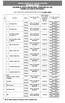 2. 1. NATIONAL UNIVERSITY OF MODERN LANGUAGES ISLAMABAD CAMPUS CALENDAR OF EVENTS / INSTRUCTIONS ADMISSIONS FALL 2015 MORNING / AFTERNOON PROGRAMMES (LAST DATE FOR ONLINE REGISTRATION IS 21 JULY 2015)
INDIA. 90% average 85% average 80% average. 75% average (National Board) ISC (National Board) 90% average 85% average 80% average.
 Qualifications Guide Undergraduate INDIA Year 12 / 10+2 Board AAA AAB ABB BBB CBSE 90% average 85% average 80% average. 75% average (National Board) ISC (National Board) 90% average 85% average 80% average.
GUIDELINES ON RESEARCH PROGRAMMES AT VTU (Based on Regulations (Amended) Governing the Degree of Doctor of Philosophy (Ph.D.
 GUIDELINES ON RESEARCH PROGRAMMES AT VTU (Based on Regulations (Amended) Governing the Degree of Doctor of Philosophy (Ph.D.)-2011) HANDBOOK ON REGISTRATION *DOCTOR OF PHILOSOPHY (Ph.D.) *MASTER OF SCIENCE
SUNRISE UNIVERSITY, Alwar - Fee Structure,
 S.NO. NAME OF COURSE ARTS DISCIPLINE SUNRISE UNIVERSITY, Alwar - Fee Structure, MIN. ELIGIBILITY (RELEVANT SUBJECT) DURATIO N (in Years) ENROLL FEE / REGN CHARGES PER YEAR EXAM FEE (PER YEAR) Bachelor
ANNOUNCEMENT FOR ADMISSION TO MASTER OF ARTS PROGRAM YEAR: 2014-16 SCHOOL OF LIBERAL STUDIES
 ANNOUNCEMENT FOR ADMISSION TO MASTER OF ARTS PROGRAM YEAR: 2014-16 SCHOOL OF LIBERAL STUDIES CONSTITUENT SCHOOL OF PANDIT DEENDAYAL PETROLEUM UNIVERSITY INTAKE: 20 STUDENTS EACH 1. AREAS OFFERED a) MASTER
CENTRE FOR INTERNATIONAL AFFAIRS
 Office Reference No. CENTRE FOR INTERNATIONAL AFFAIRS ANNA UNIVERSITY : : CHENNAI - 600 025, INDIA APPLICATION FOR ADMISSION TO RESEARCH PROGRAMMES UNDER FOREIGN NATIONALS CATEGORY Ph.D. M.S. (By Research)
GOVERNMENT OF INDIA MINISTRY OF CIVIL AVIATION OFFICE OF THE DIRECTOR GENERAL OF CIVIL AVIATION OPPOSITE SAFDARJUNG AIRPORT, NEW DELHI 110003.
 GOVERNMENT OF INDIA MINISTRY OF CIVIL AVIATION OFFICE OF THE DIRECT GENERAL OF CIVIL AVIATION OPPOSITE SAFDARJUNG AIRPT, NEW DELHI 110003. VACANCY CIRCULAR F 114 POSTS IN DIRECTATE GENERAL OF CIVIL AVIATION