
4005 Fire Alarm Front Panel Programming Instructions
|
|
|
- Jason Harris
- 10 years ago
- Views:
Transcription
1 4005 Fire Alarm Front Panel Programming Instructions Rev. D

2 this is blank text

3 Copyright and Trademarks Copyright 2000 by Simplex Time Recorder Company All rights reserved. Simplex Plaza, Westminster, MA Printed in the United States of America. Information in this document is subject to change without notice. No part of this document may be reproduced or transmitted in any form or by any means, electronic or mechanical, for any purpose, without the express written consent of Simplex Time Recorder Company. Walk Test is protected by US Patent No. 4,725,818. Cautions and Warnings SYSTEM REACCEPTANCE TEST AFTER SOFTWARE CHANGES - To ensure proper system operation, this product must be tested in accordance with NFPA , Chapter 7 after any programming operation or change in sitespecific software. Reacceptance testing is required after any change, addition or deletion of system components, or after any modification, repair or adjustment to system hardware or wiring. All components, circuits, system operations, or software functions known to be affected by a change must be 100% tested. In addition, to ensure that other operations are not inadvertently affected, at least 10% of initiating devices that are not directly affected by the change, up to a maximum of 50 devices, must also be tested and proper system operation verified. READ AND SAVE THESE INSTRUCTIONS. Follow the instructions in the installation, operating and programming manuals. These instructions must be followed to avoid damage to the control panel and associated equipment. Fire Alarm Control Panel (FACP) operation and reliability depend upon proper installation and programming. DO NOT INSTALL ANY SIMPLEX PRODUCT THAT APPEARS DAMAGED. Upon unpacking your Simplex product, inspect the contents of the carton for shipping damage. If damage is apparent, immediately file a claim with the carrier and notify Simplex. ELECTRICAL HAZARD - Disconnect electrical power when making any internal adjustments or repairs. Servicing should be performed by qualified Simplex Representatives. STATIC HAZARD - Static electricity can damage components. Therefore, handle as follows: 1. Ground yourself before opening or installing components (use the Static Control Kit). 2. Keep uninstalled component wrapped in anti-static material at all times. RADIO FREQUENCY ENERGY - This equipment generates, uses, and can radiate radio frequency energy and if not installed and used in accordance with the instruction manual, may cause interference to radio communications. It has been tested and found to comply with the limits for a Class A computing device pursuant to Subpart J of Part 15 of FCC Rules, which are designed to provide reasonable protection against such interference when operated in a commercial environment. Operation of this equipment in a residential area is likely to cause interference in which case the user at his own expense will be required to take whatever measures may be required to correct the interference. i

4 Codes and Standards The 4005 is listed for the following listing categories. UL 864 Listings for Type of System: UL 864 Power-Limited Fire Alarm Control Unit. Local (formerly NFPA 72A). Requires the sounding of an alarm via listed notification appliance(s). Auxiliary (formerly NFPA 72B). Requires City Circuit Module. Remote Station - protected premise (formerly NFPA 72C). Requires City Circuit Module or the DACT. Proprietary - protected premise (formerly NFPA 72D). Requires City Circuit Module. Central Station - protected premise (formerly NFPA 71). Requires DACT. UL 864 Listings for Type of Service: Automatic, Manual, Waterflow, and Sprinkler Supervisory. UL 864 Listings for Type of Signaling: Coded, Non-Coded, March-Time, and DACT. DACT requires DACT. Factory Mutual Approved Same as UL above Intrinsically Safe (Requires , , or Intrinsically Safe Barrier Module) Local Approvals CSFM MEA ii

5 NFPA Referenced Publications The 1993 National Fire Alarm Code (NFPA 72) referenced publications are listed below. The installer should be familiar with these codes, as well as any applicable local codes and standards, when installing a fire alarm system. NFPA 72 National Fire Alarm Code NFPA 11 Standard for Low-Expansion Foam and Combined Agent Systems NFPA 11A Standard for Medium- and High-Expansion Foam Systems NFPA 12 Standard on Carbon Dioxide Extinguishing Systems NFPA 12B Standard on Halon 1211 Fire Extinguishing Systems NFPA 13 Standard for the Installation of Sprinkler Systems NFPA 14 Standard for the Installation of Standpipe and Hose Systems NFPA 15 Standard for Water Spray Fixed Systems for Fire Protection NFPA 17 Standard for Dry Chemical Extinguishing Systems NFPA 70 National Electrical Code NFPA 80 Standard for Fire Doors and Fire Windows NFPA 90A Standard for the Installation of Air Conditioning and Ventilation Systems NFPA 90B Standard for the Installation of Warm Air Heating and Air Conditioning Systems NFPA 92A Recommended Practice for Smoke-Control Systems NFPA 92B Guide for Smoke Management Systems in Malls, Atria, and Large Areas NFPA 101 Life Safety Code NFPA 170 Standard for Fire Safety Symbols NFPA 231C Standard for Rack Storage of Materials NFPA 1221 Standard on the Installation, Maintenance, and Use of Public Fire Service Communication Systems iii

6 this is blank text

7 Table of Contents Cautions and Warnings... i Codes and Standards... ii Factory Mutual Approved... ii Local Approvals... ii NFPA Referenced Publications... iii Table of Contents... v Chapter 1. System Overview Introduction Related Documents Description Chapter 2. Basic Programming Introduction Menu Structure Basic Things to Know About Programming a Storing and Saving Editing Changes Programming Keys Programming Mode LogIn Default Passcodes Logout Operations Involving Points: Viewing Points Viewing Points Function Control Enabling a Point Disabling a Point Editing a Point Label Clearing a Point Label Editing Point Types Edit Mode Programming Edit Mode Programming Operations Involving Cards: Adding an Input/Output (I/O) Card Adding an Input/Output (I/O) Card Deleting Input/Output Cards Modifying Input/Output Card Devices Adding a Remote Unit Interface (RUI) Card Deleting a Remote Unit Interface (RUI) Card Operations Involving System Options: Changing Time/Date Format Changing Time/Date Format Turning the Active Point Reminder ON or OFF Setting the Silence/Reset Inhibit Timer v

8 Setting the Cut-Out Timer Setting the Door Drop Alarm Setting the Door Drop AC Loss Timer Setting the Audible Evacuation Signal Setting the Visible Evacuation Signal Enabling City Circuit 1 and/or City Circuit Enabling or Disabling the Expansion Power Supply Circuit Supervision Saving Editing Changes Overview Saving Changes at the End of an Editing Session Saving Changes Anytime During Programming Canceling Editing Changes Overview Abandoning Changes at the End of an Editing Session Canceling Changes Anytime During Programming Performing Basic Operations: Changing Access Level Changing Access Level Default Passcodes Changing Passcodes Setting the Time and Date Setting the Time and Date Executing a Cold Start Operations Involving Lists: User Pseudo Points User Pseudo Points Adding Points to a List Chapter 3. Custom Control Introduction Custom Control Overview To Start Custom Control Programming Custom Control Menu Navigation Equation Level Custom Control Level Equations Input Side (IF) Input Field Input Field The AND Link Operator The OR Link operator Using the AND Operator first and the OR Operator second Using the OR Operator first and the AND Operator second Input Field Overview Using the AND and NOT Operators Using the OR and NOT Operators vi

9 Input Field 3 and Input Field Overview Using the FIRE Qualifier Using the FIRE DET Qualifier Using the FIRE ACK Qualifier Using the SUPV Qualifier Using the SUPV ACK Qualifier Using the TBL Qualifier Using the TBL ACK Qualifier Using the ON/CODE and OFF Qualifiers Second Stage Fields The COMP CNST, ANY, ALL, and DELAY CNST Qualifiers Using the COMP CNST Qualifier Using the ANY Qualifier Using the ALL Qualifier Using the DELAY CNST Qualifier Output Statements Output Side (THEN) Output Field Output Field Output Field Chapter 4. Common Simplex Multi-Functional Programming Language (SMPL) Applications Introduction Selective Signals by Floor Selective Signals by Zone Selective Signal Operation for Fire Floor, Floor Above, and Floor Below Selective Relay Control for Fan/Damper Operation Selective Bypass of NAC/Relay Circuits Pre-Signal Operation Cross-Zoning Function Non-Latching / Non-Alarm Point Operation AC Power Failure Operation Delay Door Drop on AC Power Failure Operation SCU/RCU Point Matrix (Zone Grouping) Stagger/Start Operation Elevator Recall Operation Chapter 5. Point Type Charts Introduction Displaying information on the LCD Panel Point Type Messages for Monitor Points Monitor Points Point Type Messages for Signal Points Signal Points vii

10 Point Type Messages for Auxiliary Relay Points Auxiliary Relay Points Pseudo Point Types Digital Pseudo Points Analog Pseudo Points Chapter 6. Programming Guides and Reference Information Introduction System Programming Worksheet Module Identification and Placement Chart Front Panel Programming Menu Structure Edit Point Edit Cards SMPL Programming Edit SMPL Sample Program Valid Operator Codes and Parameter Tables SMPL Equations System Options System Option Chart Edit Access Levels Edit Passcodes Restore CFIG (Clear Edit Buffer) Save to CFIG Initiating Device Circuit (IDC) Zones Recording your System s IDC Zones Monitor Point and Signal Point Types Monitor Point Types Signal Point Types NAC/Relay Circuits Recording your System s NAC/Relay Points Relay Point Types Custom Labeling Recording your System s Custom Labels Reference Information CPU Card RCU/SCU Addresses Input/Output Card Addresses Power Supply Card Digital Pseudo Card Analog Pseudo Card List Pseudo Card viii

11 Chapter 1 System Overview Introduction This publication shows how to use the menu-driven Front Panel Programming feature of the 4005 Fire Alarm. All control of the 4005 is allowed through the front panel via menus and the keypad. Note: When a membrane panel key is referenced in this manual, it is normally shown between angle brackets. Examples are <Menu> and <System Reset>. Chapter 2 shows the basic programming involved with factory-configured operation of the The 4005 base panel is configured (and shipped) as a general alarm system. A number of menu selectable options are provided to further enhance the 4005 operation. The 4005 has resident editing capability. Once the programming mode is selected, the 4005 s LCD display and keypad become the indicator and controls of the resident editor (programmer). Chapter 3 shows how to use the Simplex Multi-functional Programming Language (SMPL) to program custom functions into the 4005 when more sophisticated operations are required. The SMPL option can be used to customize the operation of an Output, while the rest of the system continues to operate as a general alarm system. The SMPL programming provides many more features and applications which are discussed in this manual. Chapter 4 contains a number of SMPL applications with examples of equations used for various control and signaling functions. Chapter 5 contains Point Type Charts which list exact LCD displays and system status corresponding to each type of Point in the 4005 system. Chapter 6 contains Programming Guides and Reference Information to assist you in planning and documenting the programming steps you take. This chapter also provides information about System Addresses, Point and Device Types, and Point descriptions. Important: The 4005 system continues to operate as a fire alarm system during programming operations 1-1

12 System Overview, Continued Related Documents The following manuals contain information about the 4005: Publication Title Part # 4005 Fire Alarm Installation/Operating Instructions Rev. A 4005 Operating Instructions Following an Alarm/Supervisory/Trouble Condition... Ed Fire Alarm I/O Cards Installation Instructions Ed Fire Alarm City Circuit Card Installation Instructions... Rev. B 4005 Fire Alarm Expansion Power Supply & Power Distribution Boards Installation Instructions... Rev. A 4005 Fire Alarm PC Interface Operating Instructions Rev. A 4005 Fire Alarm Programming Sheets FA Fire Alarm Pocket Training Reference FA Description The 4005 is a microprocessor-based, battery-backed, electrically-supervised fire alarm system capable of supporting from 8 to 40 circuits. These circuits, either initiating device circuits (IDC) or notification appliance circuits (NAC), are added to the system in blocks of four. In addition, the 4005 can automatically control supplementary equipment such as fire doors and fans during a fire condition using NACs converted to auxiliary relay outputs. The 4005 provides audible and visible indications during trouble, supervisory, or alarm (fire) conditions. Should any of these conditions occur, the system activates the applicable notification appliance(s), LEDs, and the panel tone-alert. The indications continue until someone appropriately acknowledges the condition. 1-2

13 Chapter 2 Basic Programming Introduction This chapter discusses the basic programming functions that are available with the 4005 Fire Alarm Control Panel (FACP). The programming of more advanced functions is discussed in Chapter 3. Menu Structure All programming is done from the front panel via menu-driven prompts. Access levels protect different programming options. All programming described in this publication assumes a Level 4 (Simplex Service Mode) access. Figure 2-1 illustrates the entire menu structure at Level 4 operation. TOP LEVEL High Level Status Screen Main Menu activated from MENU Key Key Function Menu activated from FUNC Key Key Monitor Relay Signal Digital Analog View Points Generic Output System Points History Log Log Alarm Log Log Trouble Log Log Combine Log Log Software Revision Passcode Log Log In/Out Set Set Time // Date Walk Test Off Off Log Log Signal Cold Start Edit Edit Point Monitor Relay Signal Digital Edit Edit Card Add Add I/O I/O Card Delete I/O I/O Card Modify I/O I/O Card Add Add RUI RUI Card Programming System Options Time / / Date Format Active Point Reminder Doorholder Alarm Drop Timer Doorholder AC AC Fail Fail Drop Time Edit Edit SMPL Save CFIG Restore CFIG Access Level Passcode Manual Evacuation City City Circuit Disconnect Door Holder Bypass Control Point Bypass Elevator Bypass Lamp Test List List Generic Input Analog List List Delete RUI RUI Card Silence / / Reset Inhibit Signal Operation (Visible, (Visible, Audible, Audible, Evacuation) ation) Generic Input Signal Cut-out Time Generic Output Enable City City Circuit 1 Edit Mode Enable City City Circuit 2 Expansion Power Supply Figure 2-1. Level 4 Menu Structure 2-1

14 Basic Things to Know About Programming a 4005 Storing and Saving Editing Changes During a programming session, the edit changes are stored in a temporary memory area called the Edit Buffer. This means that you can leave the programming session and perform other operations on the As a result of this flexibility, the edit session becomes a two-step operation: 1. Editing and 2. Saving the changes to CFIG. After the edit session is complete, you must select the Save to CFIG option in order to save the edit changes (see the Save to CFIG in Chapter 6 of this publication). There are two programming reminder screens that notify you to act on changes in the Edit Buffer. Additionally, if there are no key presses within 10 minutes, the system returns to the High-Level Status screen at access level 1. Programming Keys During programming mode, only certain keys remain active. When in the programming mode, the 4005 still functions as a fire alarm system. If an alarm should sound, use the <Exit/Clear> key to exit the programming mode (by pressing the key several times). Once at the High-Level Status Screen (the display shows the first alarm or a normal status) alarms, supervisories, or troubles can be acknowledged and/or viewed for additional information. Figure 2-2 illustrates the front panel of the 4005 with a High-Level Status screen displaying normal system operation. Refer to the 4005 Fire Alarm Installation/Operating Instructions (Pub. No. FA ) for more information on the operator keys. LCD 6<67(0,61250$/ SP 0RQ$XJ LEDs FIRE ALARM SYSTEM SUPERVISORY SYSTEM TROUBLE ALARM SILENCED AC POWER Operator Keys ALARM ACK SUPV ACK TROUBLE ACK ALARM SILENCE SYSTEM RESET Menu Navigation Keys (Become Programming Keys in Programming Mode) Menu Function Disable Enable Exit Clear Enter Previous Next 2-2 Figure Front Panel

15 Basic Things to Know About Programming a 4005, Continued Programming Mode Even though Passcode is not the first menu option, you must log in to the 4005 FACP in order to perform the Level 4 programming covered in the remainder of this publication. To enter the Programming mode, press <Menu>. (You must always press <Menu> first to begin programming mode.) The Menu Programming screen is displayed. LogIn Use the following steps and Figures 2-3 and 2-4 to log in to the Note: All passcodes consist of a four-digit number (refer to Default Passcodes below). An asterisk ( ) appears in the place of an entered number for security purposes. A. 0HQX 6<67(0,61250$/ >3DVVFRGH@ B. &XUUHQW$FFHVV/HYHO 3DVVFRGH >/RJLQ@ /HYHO C. &XUUHQW$FFHVV/HYHO 3DVVFRGH >@ /HYHO D. &XUUHQW$FFHVV/HYHO 3DVVFRGH >@ /HYHO Figure 2-3. Menu Progression from the Normal Menu to the Passcode Menu 1. Press <Next> to scroll through the menus until [3DVVFRGH] is displayed (A) and then press <Enter> (B). 2. Press <Enter> to Login (C). 3. Press <Next> to scroll through the numbers (0-9) for the first digit of the passcode. When the correct number appears between the focus brackets ( [ ] ), press <ö> to move the brackets to the next digit of the code. 4. Repeat Step 3 until all four numbers are entered (D). Default Passcodes The 4005 comes with three default passcodes = Level 2 access 3000 = Level 3 access 4000 = Level 4 access (causes a Simplex Service Mode Trouble) 2-3

16 Basic Things to Know About Programming a 4005, Continued Default Passcodes (Continued) E. F. G. /RJLQLV$FFHSWHG &XUUHQW$FFHVV/HYHO /HYHO 6LPSOH[6HUYLFH0RGH 7URXEOH3RLQW 7URXEOH ),5( 683(59,625< 7528%/( 0HQX >9LHZ3RLQWV@ Figure 2-4. Menu Progression from the Login Accepted Menu to the Fire, Supervisory, Trouble Menu 5. Press <Enter> to accept the passcode. (Logging in at Level 4 causes a Simplex Service Mode Trouble. Acknowledge the trouble and continue.) The display in (E) appears briefly and then (F) appears after the Simplex Service Mode trouble is acknowledged. 6. Press <Menu> to start Programming (G). Logout Follow Steps 1 and 2 to log out of the Press <Next> to scroll through the menus until [3DVVFRGH] is displayed and then press <Enter>. 2. Press <Next> until [/RJ2XW] is displayed and then press Enter. The 4005 defaults to Level 1 access. 2-4

17 Operations Involving Points: Viewing Points Viewing Points To View a Point, use the following steps: 1. To view points, press <Menu>, <Next> until [9LHZ3RLQWV] is displayed, and then press <Enter>. 2. Press <Previous> or <Next> to display the Device Type of the point you wish to view and then press <Enter> (refer to Table 2-1). The first point for that Device Type is displayed. Table 2-1. Device Type Device Type Monitor Relay Signal Digital Analog Generic Output Generic Input System Points List 3. Press <Next> or <Previous> to scroll through additional points. &ODVV)LUH0RQLWRU =21( 0RQLWRU=RQH 1250$/ 'HYLFH 021% &DUG 3RLQW 0RQLWRU=RQH 1RUPDO Figure 2-5. Standard Screens Based on Device Type 4. To view additional information (if available), press <ö> or <ì> to advance through the information screens. Pressing <Exit/Clear> returns you to the menu screen (see G in Figure 2-4). When viewing the point or list, all points or lists have two standard screens based on the device type (see Figure 2-5). 2-5

18 Function Control while Viewing Points Function Control Certain Functions are allowed during the View Points session. To activate Function Control for a specific point, use Steps 1 through 3 above to view the point and then press <Function>. Refer to Table 2-2 for a list of functions based on device types. Device Type Monitor Relay Signal Digital (P27-P50) Analog (A5-A25) System Points Table 2-2. Functions Based On Device Type Available Function Commands Clear Verification Tally Turn ON the point Turn OFF the point Turn the point to AUTO Change the point Priority Change the Point Value Turn ON/OFF certain points Turn List ON Lists Turn List OFF Turn List Auto Generic Outputs Turn ON the point Turn OFF the point Use <Previous> or <Next> to scroll through the commands and then press <Enter> to execute the command. 2-6

19 Enabling a Point Enabling a Point To Enable a Point, use Figure 2-6 and the following steps: 1. View points by pressing <Menu> and <Next> until [9LHZ3RLQWV] is displayed, and then press <Enter>. 2. Press <Previous> or <Next> to display the Device Type of the point you wish to enable and then press <Enter>. The first point for that Device Type is displayed. 3. Press <Previous> or <Next> to display the point you wish to enable (A). A. B. C. D. )LUVW)ORRU(DVW:LQJ 5RRP 0RQLWRU=RQH 7528%/( )LUVW)ORRU(DVW:LQJ 5RRP &RQWURO >(QDEOH@ 6WDWXV ',6$%/(' )LUVW)ORRU(DVW:LQJ 5RRP 3UHVV(17(5WR(QDEOH(;,7WRFDQFHO )LUVW)ORRU(DVW:LQJ 5RRP 3RLQWZLOO(1$%/(LQ(;,7WRFDQFHO Figure 2-6. Typical Screens Used to Enable a Point 4. Press <Enable/Disable>. Press <Previous> or <Next> until [(QDEOH] is displayed (B). 5. Press <Enter> to enable the point. 6. Press <Enter> to confirm your choice (C). The point enables in 30 seconds (D). Press <Exit/Clear> to stop the point from enabling during this time period. 2-7

20 Disabling a Point Disabling a Point To Disable a Point, use the following steps: 1. View points by pressing <Menu> and <Next> until [9LHZ3RLQWV] is displayed, and then press <Enter>. 2. Press <Previous> or <Next> to display the Device Type of the point you wish to disable and then press <Enter>. The first point for that Device Type is displayed. 3. Press <Previous> or <Next> to display the point you wish to enable (A). A. B. C. D. )LUVW)ORRU(DVW:LQJ 5RRP 0RQLWRU=RQH 7528%/( )LUVW)ORRU(DVW:LQJ 5RRP &RQWURO >'LVDEOH@ 6WDWXV (1$%/(' )LUVW)ORRU(DVW:LQJ 5RRP 3UHVV(17(5WR'LVDEOH(;,7WRFDQFHO )LUVW)ORRU(DVW:LQJ 5RRP 0RQLWRU=RQH 7528%/( Figure 2-7. Typical Screens Used to Disable a Point 4. Press <Enable/Disable>. Press <Previous> or <Next> until ['LVDEOH] is displayed (B). 5. Press <Enter> to disable the point. 6. Press <Enter> to confirm your choice or <Exit/Clear> to cancel (C). The point disables immediately and a trouble occurs (D). Acknowledge the trouble and continue. 2-8

21 Editing a Point Label Editing a Point Label To Edit a Custom Label of a point, use the following steps: 1. Log in to the Press <Menu> (A). A. B. C. D. ),5( 683(59,625< 7528%/( 0HQX >9LHZ3RLQWV@ ),5( 683(59,625< 7528%/( 0HQX >3URJUDPPLQJ@ ),5( 683(59,625< 7528%/( 3URJUDPPLQJ>(GLW3RLQW@ ),5( 683(59,625< 7528%/( (GLW3RLQW>0RQLWRU@ Figure 2-8. Typical Screens Used to Edit a Label 3. Press <Next> or <Previous> to scroll through the menu until [3URJUDPPLQJ] is displayed (B) and then press <Enter>. 4. Press <Next> or <Previous> to scroll through the menu until [(GLW3RLQW] is displayed (C) and then press <Enter>. 5. Press <Next> or <Previous> to scroll through the menu until the desired device type is displayed (D) and then press <Enter>. Note: System Point Labels cannot be edited or cleared. 2-9
22 Editing a Point Label, Continued Editing a Point Label (Continued) 6. Press <Next> or <Previous> to scroll through the points until the point you wish to edit is displayed (E) and then press <Function>. E. F. G.,2&DUG,QSXW 0RQLWRU=RQH,2&DUG,QSXW &RQWURO>(GLW3RLQW/DEHO@,2&DUG,QSXW 0RQLWRU=RQH H. )LUVW)ORRU(DVW:LQJ 6PRNH'HWHFWRU 5RRP Figure 2-9. Additional Typical Screens Used to Edit a Label 7. Press <Next> or <Previous> to scroll through the menus until [(GLW3RLQW/DEHO] is displayed (F) and then press <Enter>. The first editable character of the label is underlined (G). 8. Press <Next> or <Previous> to scroll through the character set until the desired character is displayed. Press <ö> and <ì> to move the underline to the character in the label you wish to edit. Pick a label that best suits the location or function of the point (H). The available characters are as follows : Digits: 0-9 Alpha: A-Z and a-z Punctuation: space comma period & ) ( * + / : # Note: Press <Menu> to toggle between Upper and Lower Case characters. Press <Disable/Enable> to insert a blank space. 9. Press <Enter> once the label reads correctly. Press <Enter> again to confirm the change to the label. ** Operation Complete ** is displayed. Note: To save all changes, refer to the Saving Editing Changes section later in this chapter. 2-10
23 Clearing a Point Label Clearing a Point Label To Clear a Custom Label of a point, use the following steps: 1. Follow Steps 1 through 5 under Editing a Point Label. 2. Press <Next> or <Previous> to scroll through the points until the point you wish to clear is displayed (A) and then press <Function>. A. B. C.,2&DUG,QSXW 0RQLWRU=RQH,2&DUG,QSXW &RQWURO>&OHDU3RLQW/DEHO@ ³ 0RQLWRU=RQH Figure Typical Screens Used to Change a Point Label 3. Press <Next> or <Previous> to scroll through the menus until [&OHDU3RLQW/DEHO] is displayed (B) and then press <Enter>. Important: Once <Enter> is pressed, the label clears (C). The 4005 is now in the Edit Label mode. When a label is accidentally cleared, press <Exit/Clear> and re-enter the Clear Point Label menu to clear the correct label. F 2-11
24 Editing Point Types Editing Point Types To Edit the Point Type of a point, use the following steps: 1. Follow Steps 1 through 5 under Edit Label. 2. Press <Next> or <Previous> to scroll through the points until the point you wish to edit is displayed (A) and then press <Function>. A. B. C.,2&DUG,QSXW 0RQLWRU=RQH,2&DUG,QSXW &RQWURO>(GLW3RLQW/DEHO@,2&DUG,QSXW >),5()LUH0RQLWRU=RQH@ D. 3UHVV(17(5WR&RQILUP(;,7WRFDQFHO >),5()LUH0RQLWRU=RQH@ Figure Typical Screens Used to Edit Point Types 3. Press <Next> or <Previous> to scroll through the menus until [(GLW3RLQW7\SH] is displayed (B) and then press <Enter>. 4. Press <Next> or <Previous> to scroll through the point types until the desired type is displayed (C) and then press <Enter> (refer to the Programming Sheets in Appendix A for a complete list of point types). 5. A Confirmation screen appears (D) allowing you to make or abandon the changes. Press <Enter> to confirm your choice, or <Exit/Clear> to abandon your changes. The 4005 informs you when the Operation is Complete. 2-12
25 Edit Mode Programming Edit Mode Programming You can change the mode of a Generic Output point. (If another type of point is chosen, you are notified that this is an invalid action.) Mode editing of a point associated with the output of a SMPL equation is not allowed. Note: The following describes assigning Links between an LED of a RCU card to a Fire monitor point (18-01). To Edit the Mode of a point, use the following steps: 1. Follow Steps 1 through 5 under Editing a Point Label. 2. Press <Next> or <Previous> to scroll through the points until the point you wish to edit is displayed (A) and then press <Function>. 3. Press <Next> or <Previous> to scroll through the menus until [(GLW0RGH] is displayed (B) and then press <Enter>. 4. Press <Next> or <Previous> to scroll through the actions until the desired action is displayed then use the <ö> to move the focus brackets ([ ]) to the point you wish to link to a RCU/SCU point. Use <Next> or <Previous> to scroll through the points until the desired point is displayed (C) and then press <Enter> (see the Table 2-3 for your choices of Output Modes and Link to options). 5. A Confirmation screen appears (D) allowing you to make or abandon the changes. Press <Enter> to confirm your choice, or <Exit/Clear> to abandon your changes. A. B. C. D. 5&8&DUG/(' /(' 5&8&DUG/(' &RQWURO>(GLW0RGH@ 0RGH3URJUDPPLQJ²*HQHULF2XWSXW )LUH >@ 3UHVV(17(5WR&RQILUP(;,7WR&DQFHO >)LUH@ ² Figure Typical Screens Used in Edit Mode Programming 2-13
26 Edit Mode Programming, Continued Edit Mode Programming Table 2-3 lists the Output Mode choices for a Generic Output Point and the Points to which they can be linked. Table 2-3. Generic Output Point Output Mode and their Link to Choices Generic Output Output Mode SMPL Fire Supervisory Trouble Disabled ON OFF Can Link to these Points: No Points (RCU/SCU will not respond to any Output Mode) System Points (see complete list in Chapter 5) Digital Pseudo Points (see complete list in Chapter 5) Lists (see complete list in Chapter 5) 2-14
27 Operations Involving Cards: Adding an Input/Output (I/O) Adding an Input/Output (I/O) Card To add an Input/Output (I/O) card to the 4005, use the following steps: Note: Refer to the SMPL Programming, Edit SMPL section of Chapter 6 for more information on card addressing and points. 1. Make sure all jumpers and relays are set correctly and install the card in the Physical Slot desired (refer to Pub. No. FA ). After installing the I/O card, apply power to the An Extra I/O Card trouble occurs. Acknowledge the trouble and continue. 2. Follow Steps 1 through 3 under Editing a Point Label. 3. Press <Next> or <Previous> to scroll through the menus until [(GLW&DUG] is displayed (A) and then press <Enter>. A. B. C. ),5( 683(59,625< 7528%/( 3URJUDPPLQJ>(GLW&DUG@ ),5( 683(59,625< 7528%/( (GLW&DUG>$GG,2&DUG@ &DUG >@3DQHO6ORW &DUG7\SH 3RLQW0RQLWRU D. &DUG 3DQHO6ORW &DUG7\SH 3RLQW0RQLWRU Figure Typical Screens Used to Add an Input/Output Card 4. Press <Next> or <Previous> until [$GG,2&DUG] is displayed (B) and then press <Enter>. The focus brackets ( [ ] ) appear in the Card Address field (C) of the display. Refer to Table 2-3 for address information. Card Addresses Card Slot # Card Slot #1 Card Slot # Card Slot #2 Card Slot # Card Slot #3 Card Slot # Card Slot #4 Card Slot # Card Slot #5 Figure I/O Card Address/Locations 2-15
28 Adding an Input/Output Card, Continued Adding an Input/Output (I/O) Card (Continued) 5. Press <Next> or <Previous> to choose the Card Address. 6. Press <ö> to move the focus brackets to the Card Type field of the display (D). Card Location (Left) Table 2-4. Address Information Card Address Card Location (Right) Press <Next> or <Previous> to choose the Card Type (refer to Table 2-4) and then press <Enter>. When installing an I/O card with a Class A Adapter, choose the appropriate card type that includes the Class A Adapter. Table 2-5. I/O Card Types I/O Card Types 4-Point Monitor 4-Point Monitor Class A 2-Input / 2-Output 2-Input / 2-Output Class A 8-Point Annunciator Card 4-Point NAC/Relay Card 4-Point NAC/Relay Card Class A 8. Press <Enter> to confirm your selection. Configuring the card... is displayed. F Note: **No Cards Found for this Action** is displayed when the 4005 does not recognize an empty slot. 2-16
29 Deleting Input/Output Cards Deleting Input/Output Cards To delete an Input/Output Card from the 4005, use the following steps: Note: Deleting a card from the 4005 also removes any modes or SMPL equations associated with that card. 1. Follow Steps 1 through 3 under Editing a Point Label. 2. Press <Next> or <Previous> to scroll through the menus until [(GLW&DUG] is displayed (A) and then press <Enter>. A. B. C. ),5( 683(59,625< 7528%/( 3URJUDPPLQJ>(GLW&DUG@ ),5( 683(59,625< 7528%/( (GLW&DUG>'HOHWH,2&DUG@ &DUG >@3DQHO6ORW &DUG7\SH 3RLQW0RQLWRU Figure Typical Screens Used to Delete an Input/Output Card 3. Press <Next> or <Previous> until ['HOHWH,2&DUG] is displayed (B) and then press <Enter>. The focus brackets ( [ ] ) appear in the Card Address field (C) of the display. 4. Press <Next> or <Previous> to choose the Card to delete and then press <Enter>. F 5. Press <Enter> to confirm your selection. Removing the card... is displayed. 6. After deleting a card, the 4005 displays the next available card for deletion. To avoid deleting the next card, press <Exit/Clear>. 2-17
30 Modifying Input/Output Card Devices Modifying Input/Output Card Devices To modify an Input/Output Card of the 4005, use the following steps: 1. Follow Steps 1 through 3 under Editing a Point Label. 2. Press <Next> or <Previous> to scroll through the menus until [(GLW&DUG] is displayed (A) and then press <Enter>. A. B. C. ),5( 683(59,625< 7528%/( 3URJUDPPLQJ>(GLW&DUG@ ),5( 683(59,625< 7528%/( (GLW&DUG>0RGLI\,2&DUG'HYLFHV@ &DUG >@3DQHO6ORW &DUG7\SH 3RLQW1$&5HOD\ Figure Typical Screens Used to Modify Input/Output Card Devices 3. Press <Next> or <Previous> until [0RGLI\,2&DUG'HYLFHV] is displayed (B) and then press <Enter>. The focus brackets ( [ ] ) appear in the Card Address field (C) of the display. 4. Press <Next> or <Previous> to choose the Card to modify and then press <Enter>. 5. Press <Function> to modify the card. Certain Functions are allowed during the Modify I/O Card Devices session. By pressing the <Function> key, the device type edit screen is displayed (D). D. &DUG 3RLQW1$&5HOD\ &WO >6LJ@&W 6LJ&W $X[&W $X[ Figure Device Type Edit Screen For an input device type, the points are always MON (MONA or MONB is implied by the selected card type). If all four points are MONA or MONB, then no editable points exist. For an output device type, you can select: SIG (which is either SIGA or SIGB depending on the selected card), or AUX. In the case of the 2-Input / 2-Output cards, you can only edit the output points (i.e., points 3 and 4) of the card. 2-18
31 Modifying Input/Output Card Devices, Continued Modifying Input/Output Card Devices (Continued) 6. Press <Previous> or <Next> to select the type of output point. Press <ö> or <ì> to move the focus brackets to the next circuit. After all output points have been edited, press <Enter>. 7. After modifying a card, the 4005 displays the next available card for modification. To avoid modifying the next card, press <Exit/Clear>. 8. Press <Enter> to confirm your selection. Configuring the card... is displayed. 2-19
32 Adding a Remote Unit Interface (RUI) Card Adding a Remote Unit Interface (RUI) Card To add a Remote Unit Interface (RUI) Card, either a Status Command Unit (SCU) or a Remote Control Unit (RCU) to the 4005, perform the following steps: 1. Make sure all jumpers are set correctly and install the card. Refer to the Field Wiring Diagram for more information on wiring the RUI cards. After installing the RUI card, apply power to the Follow Steps 1 through 3 under Editing a Point Label. 3. Press <Next> or <Previous> to scroll through the menus until [(GLW&DUG] is displayed (A) and then press <Enter>. A. B. C. D. ),5( 683(59,625< 7528%/( 3URJUDPPLQJ>(GLW&DUG@ ),5( 683(59,625< 7528%/( (GLW&DUG>$GG58,&DUG@ &DUG >@ &DUG7\SH 6&8&DUG &DUG &DUG7\SH >6&8&DUG@ Figure Typical Screens Used to Add a Remote Unit Interface Card 4. Press <Next> or <Previous> until [$GG58,&DUG] is displayed (B) and then press <Enter>. The focus brackets ( [ ] ) appear in the Card Address field (C) of the display. Note: Annunciator addresses are 1 through Press <Next> or <Previous> to choose the Card Address. 6. Press <ö> to move the focus brackets to the Card Type field of the display (D). 7. Press <Enter> to confirm your selection. Configuring the card... is displayed. 2-20
33 Deleting a Remote Unit Interface (RUI) Card Deleting a Remote Unit Interface (RUI) Card To delete a Remote Unit Interface (RUI) Card, either a Status Command Unit (SCU) or a Remote Control Unit (RCU) from the 4005, perform the following steps: Note: Deleting a card from the 4005 also removes any modes or SMPL equations associated with that card. 1. Follow Steps 1 through 3 under Editing a Point Label. 2. Press <Next> or <Previous> to scroll through the menus until [(GLW&DUG] is displayed (A) and then press <Enter>. A. B. C. D. ),5( 683(59,625< 7528%/( 3URJUDPPLQJ>(GLW&DUG@ ),5( 683(59,625< 7528%/( (GLW&DUG>'HOHWH58,&DUG@ &DUG >@ &DUG7\SH 6&8&DUG &DUG &DUG7\SH >6&8&DUG@ Figure Typical Screens Used to Delete a Remote Unit Interface Card 3. Press <Next> or <Previous> until ['HOHWH58,&DUG] is displayed (B) and then press <Enter>. The focus brackets ( [ ] ) appear in the Card Address field (C) of the display. 4. Press <Next> or <Previous> to choose the Card to delete and then press <Enter>. 5. Press <Enter> to confirm your selection. Removing the card... is displayed. 6. After deleting a card, the 4005 displays the next available card for deletion. To avoid deleting the next card, press <Exit/Clear>. 2-21
34 Operations Involving System Options: Changing Time/Date Format Changing Time/Date Format To change the Time/Date Format of the 4005, use the following steps: 1. Follow Steps 1 through 3 under Editing a Point Label. 2. Press <Next> or <Previous> to scroll through the menus until [6\VWHP2SWLRQV] is displayed (A) and then press <Enter>. A. B. ),5( 683(59,625< 7528%/( 3URJUDPPLQJ>6\VWHP2SWLRQV@ ),5( 683(59,625< 7528%/( 6\VWHP2SWLRQV>7LPH'DWH)RUPDW@ C. 7LPH'DWH 1HZ>+RXU@ &XUUHQW+RXU D. 3UHVV(17(5WRFRQILUP(;,7WRFDQFHO 1HZ>+RXU@ &XUUHQW+RXU Figure Typical Screens Used to Change the Time/Date Format 3. Press <Next> or <Previous> until [7LPH'DWH)RUPDW] is displayed (B) and then press <Enter>. The focus brackets ( [ ] ) appear in the New: field (C) of the display. 4. Press <Next> or <Previous> to choose 12- or 24-Hour format and then press <Enter>. 5. Press <Enter> to confirm your selection or Exit to cancel (D). Option is updated is displayed when selecting Enter. 2-22
35 Active Point Reminder Turning the Active Point Reminder ON or OFF The Active Point Reminder sounds the piezo on the panel for five seconds eight hours after a trouble is acknowledged. This serves as a reminder that there is still a trouble in the system. To turn the Active Point Reminder ON or OFF for the 4005, use the following steps: 1. Follow Steps 1 through 3 under Editing a Point Label. 2. Press <Next> or <Previous> to scroll through the menus until [6\VWHP2SWLRQV] is displayed (A) and then press <Enter>. A. B. C. D. ),5( 683(59,625< 7528%/( 3URJUDPPLQJ>6\VWHP2SWLRQV@ ),5( 683(59,625< 7528%/( 6\VWHP2SWLRQV>$FWLYH3RLQW5HPLQGHU@ $FWLYH3RLQW5HPLQGHU 1HZ>2))@ &XUUHQW2)) 3UHVV(17(5WRFRQILUP(;,7WRFDQFHO &DUG7\SH >6&8&DUG@ Figure Typical Screens Used to Turn the Active Point ON or OFF 3. Press <Next> or <Previous> until [$FWLYH3RLQW5HPLQGHU] is displayed (B) and then press <Enter>. The focus brackets ( [ ] ) appear in the New: field (C)of the display. 4. Press <Next> or <Previous> to choose ON or OFF for the reminder and then press <Enter>. 5. Press <Enter> to confirm your selection or Exit to cancel (D). Option is updated is displayed when selecting Enter. 2-23
36 Silence/Reset Inhibit Timer Setting the Silence/Reset Inhibit Timer The Silence/Reset Inhibit timer ignores the keypress of the Silence and Reset Keys for a specified time (0-60 mins.). To set the Silence/Reset Inhibit timer in minutes for the 4005, use the following steps: 1. Follow Steps 1 through 3 under Editing a Point Label. 2. Press <Next> or <Previous> to scroll through the menus until [6\VWHP2SWLRQV] is displayed (A) and then press <Enter>. A. B. C. D. ),5( 683(59,625< 7528%/( 3URJUDPPLQJ>6\VWHP2SWLRQV@ ),5( 683(59,625< 7528%/( 6\VWHP2SWLRQV>6LOHQFH5HVHW,QKLELW@ $ODUP6LOHQFH6\VWHP5HVHW7LPHU,QKLELW 1HZ>@ &XUUHQW0LQV 3UHVV(17(5WRFRQILUP(;,7WRFDQFHO 1HZ>@ &XUUHQW0LQV Figure Typical Screens Used to Set the Silence/Reset Inhibit Timer 3. Press <Next> or <Previous> until [6LOHQFH5HVHW,QKLELW] is displayed (B) and then press <Enter>. The focus brackets ( [ ] ) appear in the New: field (C) of the display. 4. Press <Next> or <Previous> to choose the duration (1-60 minutes) for the inhibit timer and then press <Enter>. Note: When initially setting a value for a System Option, all values in the New: field reflect the Current: field s setting. A value of 00 is a disabled state of that System Option (for example, 00 Mins means that the Alarm Silence/System Reset Timer Inhibit is not active). 5. Press <Enter> to confirm your selection or Exit to cancel (D). Option is updated is displayed when selecting Enter. 2-24
37 Cut-Out Timer Setting the Cut-Out Timer The Cut-Out Timer is a specified time (0-60 mins.) for signals to sound until they automatically turn off. To set the Cut-Out Timer in minutes for the 4005, use the following steps: 1. Follow Steps 1 through 3 under Editing a Point Label. 2. Press <Next> or <Previous> to scroll through the menus until [6\VWHP2SWLRQV] is displayed (A) and then press <Enter>. A. B. C. D. ),5( 683(59,625< 7528%/( 3URJUDPPLQJ>6\VWHP2SWLRQV@ ),5( 683(59,625< 7528%/( 6\VWHP2SWLRQV>&XW2XW7LPHU@ 6LJQDO&XW2XW7LPHU 1HZ>@ &XUUHQW0LQV 3UHVV(17(5WRFRQILUP(;,7WRFDQFHO 1HZ>@ &XUUHQW0LQV Figure Typical Screens Used to Set the Cut-Out Timer 3. Press <Next> or <Previous> until [&XW2XW7LPHU] is displayed (B) and then press <Enter>. The focus brackets ( [ ] ) appear in the New: field (C) of the display. 4. Press <Next> or <Previous> to choose the duration (1-60 minutes) for the signal cut-out timer and then press <Enter>. Note: When initially setting a value for a System Option, all values in the New: field reflect the Current: field s setting. A value of 00 is considered a disabled state of that System Option (for example, 00 Mins means that the Cut-Out Timer is not active). 5. Press <Enter> to confirm your selection or Exit to cancel (D). Option is updated is displayed when selecting Enter. 2-25
38 Door Drop Alarm Setting the Door Drop Alarm The Door Drop Alarm is a specified time (0-60 secs.) doors are held open after an alarm. To set the Door Drop Alarm Timer in seconds for the 4005, use the following steps: 1. Follow Steps 1 through 3 under Editing a Point Label. 2. Press <Next> or <Previous> to scroll through the menus until [6\VWHP2SWLRQV] is displayed (A) and then press <Enter>. A. B. C. D. ),5( 683(59,625< 7528%/( 3URJUDPPLQJ>6\VWHP2SWLRQV@ ),5( 683(59,625< 7528%/( 6\VWHP2SWLRQV>'RRU'URS$ODUP@ 'RRU+ROGHU²$ODUP'URS7LPHU 1HZ>@ &XUUHQW6HFV 3UHVV(17(5WRFRQILUP(;,7WRFDQFHO 1HZ>@ &XUUHQW6HFV Figure Typical Screens Used to Set the Door Drop Alarm 3. Press <Next> or <Previous> until ['RRU'URS$ODUP] is displayed (B) and then press <Enter>. The focus brackets ( [ ] ) appear in the New: field (C) of the display. 4. Press <Next> or <Previous> to choose the duration (1-60 seconds) for the door holder alarm drop timer and then press <Enter>. Note: When initially setting a value for a System Option, all values in the New: field will reflect the Current: field's setting. A value of 00 is considered a disabled state of that System Option (for example, 00 Secs means that the Door Holder Alarm Drop Timer is not active). 5. Press <Enter> to confirm your selection or Exit to cancel (D). Option is updated is displayed when selecting Enter. 2-26
39 Door Drop AC Loss Timer Setting the Door Drop AC Loss Timer The Door Drop AC Loss is specified time (0-60 min.) that doors are held open on an AC loss. To set the Door Holder AC Fail Drop Timer in minutes for the 4005, use the following steps: 1. Follow Steps 1 through 3 under Editing a Point Label. 2. Press <Next> or <Previous> to scroll through the menus until [6\VWHP2SWLRQV] is displayed (A) and then press <Enter>. A. B. C. D. ),5( 683(59,625< 7528%/( 3URJUDPPLQJ>6\VWHP2SWLRQV@ ),5( 683(59,625< 7528%/( 6\VWHP2SWLRQV>'RRU'URS$&/RVV@ 'RRU+ROGHU²$&)DLO'URS7LPHU 1HZ>@ &XUUHQW0LQV 3UHVV(17(5WRFRQILUP(;,7WRFDQFHO 1HZ>@ &XUUHQW0LQV Figure Typical Screens Used to Set the Door Drop AC Loss Timer 3. Press <Next> or <Previous> until ['RRU'URS$&/RVV] is displayed (B) and then press <Enter>. The focus brackets ( [ ] ) appear in the New: field (C) of the display. 4. Press <Next> or <Previous> to choose the duration (1-60 minutes) for the AC fail drop timer and then press <Enter>. Note: When initially setting a value for a System Option, all values in the New: field will reflect the Current: field's setting. A value of 00 is considered a disabled state of that System Option (for example, 00 Mins means that the Door Holder - AC Fail Drop Timer is not active). 5. Press <Enter> to confirm your selection or Exit to cancel (D). Option is updated is displayed when selecting Enter. 2-27
40 Audible Evacuation Signal Setting the Audible Evacuation Signal To set the type of Audible Evacuation signal for the 4005, use the following steps: 1. Follow Steps 1 through 3 under Editing a Point Label. 2. Press <Next> or <Previous> to scroll through the menus until [6\VWHP2SWLRQV] is displayed (A) and then press <Enter>. A. B. ),5( 683(59,625< 7528%/( 3URJUDPPLQJ>6\VWHP2SWLRQV@ ),5( 683(59,625< 7528%/( 6\VWHP2SWLRQV>$XGLEOH(YDFXDWLRQ@ C. 6LJQDO 1HZ>6WHDG\@ &XUUHQW6WHDG\ D. 3UHVV(17(5WRFRQILUP(;,7WRFDQFHO 1HZ>6ORZ0DUFK@ &XUUHQW6WHDG\ Figure Typical Screens Used to Set the Audible Evacuation Signal 3. Press <Next> or <Previous> until [$XGLEOH(YDFXDWLRQ] is displayed (B) and then press <Enter>. The focus brackets ( [ ] ) appear in the New: field (C) of the display. 4. Press <Next> or <Previous> to choose the type of audible signal for evacuation (Steady, Slow March, Fast March, Temporal) and then press <Enter>. Note: When initially setting a value for a System Option, all values in the New: field will reflect the Current: field's setting. 5. Press <Enter> to confirm your selection or Exit to cancel (D). Option is updated is displayed when selecting Enter. 2-28
41 Visible Evacuation Signal Setting the Visible Evacuation Signal To set the type of Visible Evacuation signal for the 4005, use the following steps: 1. Follow Steps 1 through 3 under Editing a Point Label. 2. Press <Next> or <Previous> to scroll through the menus until [6\VWHP2SWLRQV] is displayed (A) and then press <Enter>. A. B. ),5( 683(59,625< 7528%/( 3URJUDPPLQJ>6\VWHP2SWLRQV@ ),5( 683(59,625< 7528%/( 6\VWHP2SWLRQV>9LVLEOH(YDFXDWLRQ@ C. 9LVLEOH(YDFXDWLRQ 1HZ>6WHDG\@ &XUUHQW6WHDG\ D. 3UHVV(17(5WRFRQILUP(;,7WRFDQFHO 1HZ>6ORZ0DUFK@ &XUUHQW6WHDG\ Figure Typical Screens Used to Set the Visible Evacuation Signal 3. Press <Next> or <Previous> until [9LVLEOH(YDFXDWLRQ] is displayed (B) and then press <Enter>. The focus brackets ( [ ] ) appear in the New: field (C) of the display. 4. Press <Next> or <Previous> to choose the type of visible signal for evacuation (Steady, Slow March, Fast March, Temporal) and then press <Enter>. Note: When initially setting a value for a System Option, all values in the New: field will reflect the Current: field's setting. 5. Press <Enter> to confirm your selection or <Exit/Clear> to cancel (D). Option is updated is displayed when selecting Enter. 2-29
42 City Circuits Enabling City Circuit 1 and/or City Circuit 2 To enable or disable the city circuits for the 4005, use the following steps: 1. Follow Steps 1 through 3 under Editing a Point Label. 2. Press <Next> or <Previous> to scroll through the menus until [6\VWHP2SWLRQV] is displayed (A) and then press <Enter>. A. B. C. D. ),5( 683(59,625< 7528%/( 3URJUDPPLQJ>6\VWHP2SWLRQV@ ),5( 683(59,625< 7528%/( 6\VWHP2SWLRQV>(QDEOH&LW\&LUFXLW@ &RQILJXUH&LW\&LUFXLW 1HZ>2))@ &XUUHQW2)) 3UHVV(17(5WRFRQILUP(;,7WRFDQFHO 1HZ>21@ &XUUHQW2)) Figure Typical Screens Used to Enable City Circuit 1 and City Circuit 2 3. Press <Next> or <Previous> until [(QDEOH&LW\&LUFXLW] or [(QDEOH&LW\&LUFXLW] is displayed (B) and then press <Enter>. The focus brackets ( [ ] ) appear in the New: field (C) of the display. 4. Press <Next> or <Previous> to choose ON or OFF for a specific city circuit and then press <Enter>. Note: When initially setting a value for a System Option, all values in the New: field will reflect the Current: field's setting. 5. Press <Enter> to confirm your selection or Exit to cancel (D). Option is updated is displayed when selecting Enter. 2-30
43 Expansion Power Supply Circuit Supervision Enabling or Disabling the Expansion Power Supply Circuit Supervision To enable or disable the expansion power supply circuit supervision for the 4005, use the following steps: Important: The Factory Default Setting for the 4005 Expansion Power supply circuit is ON. When this circuit is turned ON and no expansion power supply is present in the system, a trouble occurs. 1. Follow Steps 1 through 3 under Editing a Point Label. 2. Press <Next> or <Previous> to scroll through the menus until [System Options] is displayed (A) and then press <Enter>. A. B. C. D. ),5( 683(59,625< 7528%/( 3URJUDPPLQJ>6\VWHP2SWLRQV@ ),5( 683(59,625< 7528%/( 6\VWHP2SWLRQV>([SDQVLRQ3RZHU@ ([SDQVLRQ3RZHU 1HZ>21@ &XUUHQW21 3UHVV(17(5WRFRQILUP(;,7WRFDQFHO 1HZ>2))@ &XUUHQW21 Figure Typical Screens Used to Enable or Disable the Expansion Power Supply Circuit Supervision 3. Press <Next> or <Previous> until [([SDQVLRQ3RZHU] is displayed (B) and then press <Enter>. The focus brackets ( [ ] ) appear in the New: field (C) of the display. 4. Press <Next> or <Previous> to choose ON or OFF for the expansion power circuit and then press <Enter>. Note: When initially setting a value for a System Option, all values in the New : field will reflect the Current: field's setting. 5. Press <Enter> to confirm your selection or <Exit/Clear> to cancel (D). Option is updated is displayed when selecting Enter. 2-31
44 Saving Editing Changes Overview There are two ways to save the edit buffer information to the 4005 s CFIG: At the end of an edit session Anytime during programming Saving Changes at the End of an Editing Session To save changes at the end of an editing session, use the following steps: 1. Press and hold <Exit/Clear> after all your changes to the 4005 programming are made (A). A. B. C. (GLW%XIIHUKDV&+$1*(' >&DQFHO@5HVWRUH&),*6DYH&),* (GLW%XIIHUKDV&+$1*(' &DQFHO5HVWRUH&),*>6DYH&),*@ 6DYLQJ&),* 3UHVV(17(5WRVDYH(;,7WR&DQFHO Figure Typical Screens Used to Save Changes at the End of an Editing Session 2. Press <ö> or <ì> to choose [6DYH&),*] (B). 3. Press <Enter> (C). 4. Press <Enter> to confirm your selection or <Exit/Clear> to cancel. The 4005 downloads the edit buffer information to the 4005 program. When the download completes, the 4005 performs a cold start. 2-32
45 Saving Editing Changes, Continued Saving Changes Anytime During Programming To save changes anytime during programming, use the following steps: 1. To save the CFIG, press <Menu>, <Next> until [3URJUDPPLQJ] is displayed (A), and then press <Enter>. 2. Press <Next> or <Previous> until [6DYH&),*] is displayed (B), and then press <Enter>. A. B. C. ),5( 683(59,625< 7528%/( 0HQX ),5( 683(59,625< 7528%/( 6DYLQJ&),* 3UHVV(17(5WR6DYH(;,7WR&DQFHO Figure Typical Screens Used to Save Changes Anytime During Programming 3. Press <Enter> to confirm your selection or <Exit/Clear> to cancel (C). The 4005 downloads the edit buffer information to the 4005 program. When the download completes, the 4005 performs a cold start. 2-33
46 Canceling Editing Changes Overview The Restore CFIG option allows you to abandon all changes to the 4005 edit buffer. There are two ways to abandon your changes to the 4005 s edit buffer: At the end of an edit session Anytime during programming Abandoning Changes at the End of an Editing Session To abandon changes at the end of an editing session, use the following steps: 1. Press and hold <Exit/Clear> after all your changes to the 4005 programming are made (A). A. B. C. (GLW%XIIHUKDV&+$1*(' >&DQFHO@5HVWRUH&),*6DYH&),* (GLW%XIIHUKDV&+$1*(' &DQFHO>5HVWRUH&),*@6DYH&),* 5HVWRULQJ&),* 3UHVV(17(5WR5HVWRUH(;,7WR&DQFHO Figure Typical Screens Used to Abandon Changes at the End of an Editing Session 2. Press <ö> or <ì> to choose [5HVWRUH&),*] (B). 3. Press <Enter> (C). 4. Press <Enter> to confirm your selection or <Exit/Clear> to cancel. The 4005 clears the edit buffer information. You can now start a new edit session. 2-34
47 Canceling Editing Changes, Continued Canceling Changes Anytime During Programming To cancel changes anytime during programming, use the following steps: 1. To restore the CFIG, press <Menu>, <Next> until [3URJUDPPLQJ] is displayed (A), and then press <Enter>. 2. Press <Next> or <Previous> until [5HVWRUH&),*] is displayed (B), and then press <Enter>. A. B. C. ),5( 683(59,625< 7528%/( 0HQX ),5( 683(59,625< 7528%/( 5HVWRULQJ&),* 3UHVV(17(5WR6DYH(;,7WR&DQFHO Figure Typical Screens Used to Cancel Changes Anytime During Programming 3. Press <Enter> to confirm your selection or <Exit/Clear> to cancel (C). The 4005 clears the edit buffer information. You can now start a new edit session. 2-35
48 Performing Basic Operations: Changing Access Level Changing Access Level Use the following steps and Figure 2-34 to change an access level of the options listed in Table 2-6. For each of the specified options, you can change the access level of the option, from level 1 through level 4. You cannot set an access level higher than your current access level nor can you edit an access level that is higher than your logged on level. Table 2-6. Default Access Levels for System Options OPTIONS DEFAULT ACCESS LEVEL Alarm Silence Level 1 System Reset Level 1 Fire Ack Level 1 Supervisory Ack Level 1 Trouble Ack Level 1 Set Time/Date Level 2 Enable/Disable Level 2 Control Points Level 3 Clear Logs Level 3 Walk Test Level 3 Clear Verification Tallies Level 3 Cold Start Level 4 1. Follow Steps 1 through 3 under Editing a Point Label. A. B. ),5( 683(59,625< 7528%/( 3URJUDPPLQJ>$FFHVV/HYHO@ ),5( 683(59,625< 7528%/( 6\VWHP2SWLRQV>$ODUP6LOHQFH@ C. $ODUP6LOHQFH 1HZ>/HYHO@ &XUUHQW/HYHO D. 3UHVV(17(5WRFRQILUP(;,7WRFDQFHO 1HZ>/HYHO@ &XUUHQW/HYHO Figure Typical Screens Used to Change Access Level 2. Press <Next> or <Previous> to scroll through the menus until [$FFHVV/HYHO] is displayed (A) and then press <Enter>. 2-36
49 Changing Access Level, Continued Changing Access Level (Continued) 3. Press <Next> or <Previous> to choose the option to change (B) and then press <Enter>. The focus brackets ( [ ] ) appear in the New: field (C) of the display. Note: When initially setting an access level, the level in the New: field will reflect the Current: field's setting. 4. Press <Next> or <Previous> to choose the new access level. 5. Press <Enter> to confirm your selection or <Exit/Clear> to cancel (D). Access Level is updated is displayed when selecting Enter. Default Passcodes The 4005 comes with three default passcodes = Level 2 access 3000 = Level 3 access 4000 = Level 4 access (causes a Simplex Service Mode Trouble) 2-37
50 Changing Passcodes Changing Passcodes The passcode edit option allows you to customize the level passcodes. 1. Log into the Press <Menu>. 2. Press <Next> or <Previous> to scroll through the menu until [3URJUDPPLQJ] is displayed and then press <Enter>. 3. Press <Next> or <Previous> to scroll through the menus until [3DVVFRGH] is displayed (A) and then press <Enter>. A. B. C. D. ),5( 683(59,625< 7528%/( ),5( 683(59,625< 7528%/( /HYHO 5H(QWHUWKH3DVVFRGHWRFRQILUP&KDQJH Figure Typical Screens Used to Change Passcodes 4. Press <Next> or <Previous> to choose which level passcode you wish to change (B) and then press <Enter>. The focus brackets ( [ ] ) appear around the first digit in the New Passcode: field (C) of the display. Note: Passcodes always consist of four digits. 5. Press <Next> or <Previous> to scroll through the numbers for the first digit of the passcode. 6. Press <ö> or <ì> to move the focus brackets to the next digit of the passcode. 7. Repeat Steps 5 and 6 until all digits are correct and then press <Enter>. 8. Re-Enter the Passcode to Confirm Change using Steps 4 through 6 and then press <Enter> (D). The updated Passcode is displayed. Important: If the Level 4 Passcode is lost or forgotten, there is no way to retrieve it. 2-38
51 Setting the Time and Date Setting the Time and Date To set the 4005 s time and date follow the steps below. 1. Log in to the Press <Menu> (A). A. B. C. D. ),5( 683(59,625< 7528%/( 0HQX >9LHZ3RLQW@ ),5( 683(59,625< 7528%/( 0HQX>6HW7LPH'DWH@ 6HW6\VWHP7LPH >@SP6XQ2FW 6HW6\VWHP7LPH >@SP6XQ2FW Figure Typical Screens Used to Set the Time and Date 3. Press <Next> or <Previous> to scroll through the menus until [7LPH'DWH] is displayed (B), and then press <Enter>. The focus brackets ( [ ] ) appear around the Hours in the time field (C). 4. Press <Next> or <Previous> to scroll through the numbers for the hours. Note: Pay attention to AM or PM when setting the time in 12-Hour format. The AM/PM field can not be selected. 5. Press <ö> or <ì> to move the focus brackets to the Minutes in the time field (D). 6. Press <Next> or <Previous> to scroll through the numbers for the minutes. 7. Press <ö> or <ì> to move the focus brackets to the Date in the date field (E). 2-39
52 Setting the Time and Date, Continued Setting the Time and Date (continued) E. 6HW6\VWHP7LPH F. 6HW6\VWHP7LPH G. 6HW6\VWHP7LPH Figure Additional Screens Used to Set the Time and Date 8. Press <Next> or <Previous> to scroll through the numbers for the date. The 4005 will automatically pick which day the date falls on when setting the date is complete. 9. Press <ö> or <ì> to move the focus brackets to the Month in the date field (F). 10. Press <Next> or <Previous> to scroll through the months. F 11. Press <ì> or <ö> to move the focus brackets to the Year in the date field (G). 12. Press <Next> or <Previous> to scroll through the numbers for the year and then press <Enter>. Time and Date are updated is displayed. Notes: 1) If you set the time and date before the time of the last logged event, and you have sufficient access to clear the logs, the warning shown in Figure 2-38 is displayed. If you then press <Enter>, the logs are cleared. :$51,1*Ã7KLVÃDFWLRQÃZLOOÃFOHDUÃWKHÃORJV 3UHVVÃ(17(5ÃWRÃFRQWLQXHÃ(;,7ÃWRÃFDQFHO Figure Log Clearing Warning 2) If you set the time and date before the time of the last logged event, and you DO NOT have sufficient access to clear the logs, the warning shown in Figure 2-39 is displayed. The 4005 then returns to the Set Time Date screen.,qvxiilflhqwã$ffhvvãohyhoã1hzã7lph'dwh,qydolgdwhvwkhklvwrulfdoorjv Figure Insufficient Access Level Warning 2-40
53 Cold Start Executing a Cold Start A Cold Start of the 4005 clears Historical Logs, Time/Date, and causes a Cold Start Trouble that clears upon acknowledgment. To execute a cold start perform the following steps and refer to Figure Log in to the Press <Menu> (A). A. B. C. ),5( 683(59,625< 7528%/( 0HQX >9LHZ3RLQW@ ),5( 683(59,625< 7528%/( 0HQX>&ROG6WDUW@ 3UHVV(17(5WR(QDEOH&ROG6WDUW 3UHVV(;,7WRFDQFHO Figure Typical Screens Used to Execute a Cold Start 3. Press <Next> or <Previous> to scroll through the menus until [&ROG6WDUW] is displayed (B) and then press <Enter>. 4. Press<Enter> to enable a cold start on the next press of the CPU Warm Start button located on the CPU board below the main display (see Figure 2-41) or press <Exit/Clear> to cancel (C). Press CPU Reset to Perform Cold Start is displayed. 2-41
54 Cold Start, Continued Executing a Cold Start(Continued) RS-232 P1 P2 INT K1 EXT 4 DET TB1 J2 LCD Data J1 LCD Backlight Main LCD Display LED 1 LED 2 LED 3 LED 4 LED 5 P3 Membrane Keypad J3 LEF POWER DISTRIBUTIO U21 RIGH POWER DISTRIBUTIO P4 U29 U31 TP2 R95 WARM 4005 CPU BD ASSY B P6 TP1 P5 Warm Start (SW1) CITY1/DAC TP3 U33 CITY Figure CPU Board 2-42
55 Operations Involving Lists: User Pseudo Points User Pseudo Points The following User Pseudo Points can be added to a List shown in Table 2-7 below. Digital Pseudos (System Card Address 29) Digital Points through are User Definable as Utility point types. Analog Pseudos (System Card Address 30) Analog Points through are User Definable as Analog point types. List Pseudo Card (System Card Address 31) List Points are shown in Table 2-7. Table 2-7. Point Numbers and Desciption Point Number & Description Point Type Purpose 31-1 System Monitors and Manual Contains all monitor zones and the List Evacuation* manual evacuation pseudo point Waterflow Monitors* List Contains all waterfiow monitors Sprinkler Monitors* List Contains all sprinkler monitors Primary Elevator Capture User editable list for primary elevator List Monitors capture monitor zones Alternate Elevator Capture User editable list for alternate elevator List Monitors capture monitor zones Points OFF with Silence User editable list for points which turn List OFF with a signal silence operation Points OFF with Reset User editable list for points which turn List OFF with a successful system reset through User Definable Open for specific job needs and List requirements. * Not User Editable 2-43
56 Adding Points to a List Adding Points to a List Use the following steps and Figure 2-42 to place points within a List. 1. Log in to the Press <Menu> (A). A. B. C. D. ),5( 683(59,625< 7528%/( 0HQX>9LHZ3RLQWV@ ),5( 683(59,625< 7528%/( 0HQX>3URJUDPPLQJ@ ),5( 683(59,625< 7528%/( 3URJUDPPLQJ>(GLW3RLQW@ ),5( 683(59,625< 7528%/( (GLW3RLQW>/LVW@ Figure Typical Screens Used to Add Points to a List 3. Press <Next> or <Previous> to scroll through the menu until [3URJUDPPLQJ] is displayed (B) and then press <Enter>. 4. Press <Next> or <Previous> to scroll through the menu until [(GLW3RLQW] is displayed (C) and then press <Enter>. 5. Press <Next> or <Previous> to scroll through the menu until [/LVW] is displayed (D) and then press <Enter>. 6. Press <Next> or <Previous> to scroll through the points until the point you wish to edit is displayed (E) and then press <Function>. E. /LVW F. G. H. /LVW &RQWURO>$GG3RLQW@ &ODVVURRP >0RQLWRU@ $'' &ODVVURRP 0RQLWRU >$''@ Figure Additional Screens Used to Add Points to a List 2-44
57 Adding Points to a List, Continued Adding Points to a List (continued) 7. Press <Next> or <Previous> to scroll through the menus until [$GGÃ3RLQW] is displayed (F) and then press <Enter>. 8. Press <Next> or <Previous> to scroll through the types of points you wish to add to the list (G). 9. Press <ö> or <ì> to move the focus brackets to the ADD field (H). 10. Press <Next> or <Previous> to scroll through the different points for the point type chosen. 11. Press <Enter> to add the displayed point to a list. Repeat all steps to add points to other lists. **Operation Complete** is displayed. Note: The User-Definable Point Lists are 8 through
58 this is blank text
59 Chapter 3 Custom Control Introduction Custom Control is a programming language that is an English based version of the Simplex Multi-functional Programming Language (SMPL). Custom Control programming provides for creating custom functions such as selective signaling/control, cross zoning pre-signal, and many other possible functions. Equations are written by the programmer to describe the various operations of the 4005 Fire Alarm System. Custom Control programming is used to customize the operation of some points while remaining points operate as general alarm points. Custom Control programming is 100% field-generated through the standard LCD/Membrane switch interface. Custom Control Overview The 4005 base panel is configured (and shipped) as a general alarm system. You must program the Custom Control option when more sophisticated operations are required. Custom Control equations are developed to define specified operations. Each equation contains interrelated statements, which consists of the INPUT SIDE and OUTPUT SIDE. The 4005 will accept up to 40 programming equations, each consisting of up to six statements total. Custom Control is used to customize the operation of an output, while the rest of the system continues to operate as a general alarm system. Custom Control also allows the user to modify the operation of points to be used in non-alarm functions. A point can be selected as a non-alarm, tracking (non-latching) point. This allows these points to be used for non-alarm applications such as emergency generator monitoring. The 4005 has resident editing capability. Once the programming mode is selected, the Custom Control is programmed through a series of menu options. Custom Control equations are written for desired operation and are easily corrected. Once all the equations are entered, you can scroll through the Custom Control programming to review its contents. If errors are found, you can then insert new data or delete existing data. When you are satisfied with the program, you must exit the Custom Control mode to save all data to the 4005 CFIG chip. Once programmed, and back on line, the 4005 handles its inputs and outputs differently. The 4005 checks to see what inputs and outputs have been changed by the Custom Control programmed equations. Outputs not used in the Custom Control program remain general alarm outputs. Outputs which have newly defined operations operate as specified in the Custom Control equations. Important: Once an output is used in a Custom Control equation, it will no longer respond to the general alarm monitor points (for example, Walk Test will not activate Custom Control controlled points). 3-1
60 Custom Control, Continued To Start Custom Control Programming Follow Steps 1 through 4 to access the Custom Control program editor. 1. Log in at the appropriate level. 2. Press <Menu>. 3. Press <Previous> or <Next> until [3URJUDPPLQJ] (A) is displayed and then press <Enter>. 4. Press <Previous> or <Next> until [&XVWRP&RQWURO] (B) is displayed and then press <Enter>. A. B. ),5( 683(59,625< 7528%/( 0HQX>3URJUDPPLQJ@ ),5( 683(59,625< 7528%/( 3URJUDPPLQJ>&XVWRP&RQWURO@ Figure 3-1. Screens Used to Start Custom Control Programming Custom Control Menu Navigation Using <Next> and <Previous>, you can scroll through all the existing equations of the Custom Control program. Note: All insertions are done above the current location. If you wish to create a new equation before the first equation in the program, press <Next> to scroll to Equation 1 and then select Insert. When the new equation has been created and saved it will become Equation 1 and all other equations are incremented by 1. If you wish to add a new equation to the end of the program, press <Next> or <Previous> until ** End of Program ** is displayed on the screen. Select Insert from the menu to create a new equation at the end of the current equation list with the number of the last equation plus 1. Note: Selecting Insert does NOT change the current focus. That is, if you insert at the end of program marker when the action is completed, the current focus is still at the ** End of Program ** marker. This facilitates sequentially entering a program when none is present or adding a sequence of equations within the existing program. 3-2
61 Custom Control, Continued Custom Control Menu Navigation (Continued) When you enter Custom Control programming you see one of the screens in Figure 3-2. (A) shows the active equation number and how many equations exist in the program. (B) is displayed if no equations exist in the database or when you have scrolled past the last equation in the program. A. B. (TXDWLRQ (QGRI3URJUDP Figure 3-2. Equation Screens Note: You are required to select the Insert option to create a new equation. If you attempt to edit or delete the ** End of Program ** marker, an error message is displayed. Equation Level Enter the equation level by selecting an existing equation to edit or insert a new equation. When creating a new equation, you are shown an empty equation with the active indicator (signified by a leading asterisk [ ]) on the End of Input marker (remember: all inserts go above the current focus). An empty equation consists of the Input Side header, the End of Input marker, and the End of Output marker (A). If an equation exists, you are shown the first input statement in the equation (B). A. (QGRI,QSXW >(GLW@,QVHUW'HOHWH6DYH(TXDWLRQ B. 127),5( >(GLW@,QVHUW'HOHWH6DYH(TXDWLRQ Figure 3-3. Equation Level Screens Press <Next> and <Previous> to scroll through the statements of the selected equation. When the active statement to be modified is displayed (indicated by ), you enter the statement level by pressing <Enter> or by pressing < > or < > to move the focus brackets ( [ ] ) to select another menu option and then press <Enter>. The menu options are: Edit: To change the current statement. Insert: To create a new statement ABOVE the current statement. Delete: To remove the current statement from the equation. Save Equation: To update the program with the new equation and return to the program level. 3-3
62 Custom Control, Continued Custom Control Level After entering the statement level you can work on the individual parts of a Custom Control statement. The display shows the current statement on the top line with the current field of the statement marked with focus brackets ( [ ] ). The current option selection is shown in focus brackets on the lower line of the display. Use < > or < > to move between the statement fields on the top line and <Next> and <Previous> to scroll through the options for the current field (and display the new selection) on the lower line. Press <Enter> to move the new option from the lower line to the selected field in the top line. This also moves the field focus to the next field. Equations A total of 40 Custom Control equations are possible in the A Custom Control equation consists of up to six statements. Each equation consists of two sides: an INPUT SIDE and an OUTPUT SIDE. An equation can be better understood as an IF/THEN command. IF the INPUT SIDE is true, THEN execute the OUTPUT SIDE. Each equation is made up of one or more input statement and one or more output statement (for a total of six statements). The equation in Figure 3-4 has four statements: two input statements and two output statements. Equation Input Statement Input Statement End of Inputs Output Statement Output Statement End of Outputs Figure 3-4. An Equation Input Side (IF) Each input statement is made up of four fields. FIRST STATEMENT Field 1 Field 2 Field 3 Field 4 [] [127] [),5(] [] Empty field starts a Custom Control equation Optional NOT operator Condition qualifier for field 4 Point Figure 3-5. The Four Fields of an Input Statement 3-4
63 Input Field 1 Input Field 1 Field 1 is always empty in the first statement of any Custom Control equation. In subsequent statements, Field 1 will contain one of the two Link operators: AND which links the statement in Series with all previous statements OR which links the statement in Parallel with all previous statements The AND Link Operator The AND Link operator links the current statement in Series with all previous statements in an equation (see Figure 3-6). FIRST STATEMENT Field 1 Field 2 Field 3 Field 4 [] [] [),5(] [] SECOND STATEMENT Field 1 Field 2 Field 3 Field 4 [$1'] [] [),5(] [] Figure 3-6. The AND Link In Figure 3-6, IF the condition of is Fire AND the condition of is Fire, then the INPUT SIDE is true. Another way to look at this equation is shown in Figure 3-7. In order to cross from the INPUT SIDE of the equation to the OUTPUT SIDE, both of the statements must be true. INPUT SIDE (Statements 1 & 2) OUTPUT SIDE Points and in Series. Both statements must be true in order to go from the INPUT to the OUTPUT. Figure 3-7. An Example of How the AND Link Works 3-5
64 Input Field 1, Continued The OR Link operator The OR Link operator links the current statement in Parallel with all previous statements in an equation (see Figure 3-8). FIRST STATEMENT SECOND STATEMENT Field 1 Field 2 Field 3 Field 4 [] [] [),5(] [] Field 1 Field 2 Field 3 Field 4 [25] [] [),5(] [] Figure 3-8. The OR Link In Figure 3-9, IF the condition of is Fire OR the condition of is Fire, then the INPUT SIDE is true. In order to cross from the INPUT SIDE of the equation to the OUTPUT SIDE, one of the statements (03-01 or 03-02) must be true INPUT SIDE (Statements 1 & 2) OUTPUT SIDE Points and in Parallel. One statement or the other must be true in order to go from the INPUT to the OUTPUT. Figure 3-9. An Example of How the OR Link Works 3-6
65 Input Field 1, Continued Using the AND Operator first and the OR Operator second In Figure 3-10 the first and second statements are linked in Series and the third statement is linked in Parallel with the first and second statements. Remember, a Link operator links that statement with all previous statements, not just the statement before it. FIRST STATEMENT SECOND STATEMENT THIRD STATEMENT Field 1 Field 2 Field 3 Field 4 [] [] [),5(] [] Field 1 Field 2 Field 3 Field 4 [$1'] [] [),5(] [] Field 1 Field 2 Field 3 Field 4 [25] [] [),5(] [] Figure An Example of an And Link First and an OR Link Second In Figure 3-11, IF the condition of is Fire AND the condition of is Fire, OR the condition of is Fire, then the INPUT SIDE is true. In order to cross from the INPUT SIDE of the equation to the OUTPUT SIDE, the first and second statements (together) or the third statement must be true. Points and (in Series) are Parallel with & must be true (together) or must be true in order to go from the INPUT to the OUTPUT INPUT SIDE (Statements 1,2, & 3) OUTPUT SIDE Figure A Series and Parallel Statement 3-7
66 Input Field 1, Continued Using the OR Operator first and the AND Operator second In Figure 3-12 the first and second statements are linked in Parallel and the third statement is linked in Series with the first and second statements. Remember, a Link operator links that statement with all previous statements, not just the statement before it. FIRST STATEMENT SECOND STATEMENT THIRD STATEMENT Field 1 Field 2 Field 3 Field 4 [] [] [),5(] [] Field 1 Field 2 Field 3 Field 4 [25] [] [),5(] [] Field 1 Field 2 Field 3 Field 4 [$1'] [] [),5(] [] Figure A Parallel and Series Statement In Figure 3-13, IF the condition of is Fire OR the condition of is Fire, AND the condition of is Fire, then the INPUT SIDE is true. In order to cross from the INPUT SIDE of the equation to the OUTPUT SIDE, the first or second statements and the third statement must be true INPUT SIDE (Statements 1, 2, & 3) OUTPUT SIDE Points or (in Parallel) are in Series with or must be true and must be true in order to go from the INPUT to the OUTPUT. Figure A Parallel Statement in Series with a Series Statement 3-8
67 Input Field 2 Overview Field 2 can be empty or contain the negative operator NOT. NOT is shown in Figure 3-5 to state: IF point is NOT in a FIRE condition, THEN the statement is true. Using the AND and NOT Operators The AND Link operator links the current statement in Series with all previous statements in an equation (see Figure 3-14). FIRST STATEMENT SECOND STATEMENT Field 1 Field 2 Field 3 Field 4 [] [] [),5(] [] Field 1 Field 2 Field 3 Field 4 [$1'] [127] [),5(] [] Figure The NOT Operator In Figure 3-15, if the condition of is Fire AND the condition of is NOT Fire then the INPUT SIDE is true. In order to cross from the INPUT SIDE of the equation to the OUTPUT SIDE, the first and second statements must be true. Note: The NOT gate is shown as a normally closed contact. This statement is true because there is a path from the Input to the Output. INPUT SIDE (Statements 1 & 2) OUTPUT SIDE This statement is true because is in the FIRE condition and is NOT in the FIRE condition. Figure An Example of How the NOT Operator Works In Series 3-9
68 Input Field 2, Continued Using the OR and NOT Operators The OR Link operator links the current statement in Parallel with all previous statements in an equation (see Figure 3-16). FIRST STATEMENT SECOND STATEMENT Field 1 Field 2 Field 3 Field 4 [] [] [),5(] [] Field 1 Field 2 Field 3 Field 4 [25] [127] [),5(] [] Figure An OR Link and a NOT Operator In Figure 3-17, if the condition of is Fire OR the condition of is NOT Fire then the INPUT SIDE is true. In order to cross from the INPUT SIDE of the equation to the OUTPUT SIDE, the first or the second statement must be true. Note: The NOT gate is shown as a normally closed contact. This statement is true because there is a path from the Input to the Output INPUT SIDE (Statements 1 & 2) OUTPUT SIDE This statement is true because is not in the FIRE condition and is not in the FIRE condition. Figure An Example of How the NOT Operator Works In Parallel 3-10
69 Input Field 3 and Input Field 4 Overview Field 3 contains the condition qualifier for the point listed in Field 4; Field 4 options change per Condition Qualifier selected. Using the FIRE Qualifier When using the input condition qualifier FIRE, a statement is true when the point indicated in Field 4 is activated. Field 4 Choices for the FIRE qualifier are: System Card Points Digital Pseudo Points Note: The statement holds true until the system is reset. When the condition of is FIRE, the input is true, and the output is executed. If the system is not reset, and the condition of becomes FIRE after 03-01, the system outputs ignore In other words, if the output executes from the FIRE condition of 03-01, the output does not re-execute from the FIRE condition of FIRST STATEMENT SECOND STATEMENT Field 1 Field 2 Field 3 Field 4 [] [] [),5(] [] Field 1 Field 2 Field 3 Field 4 [25] [] [),5(] [] Figure An Example Where the First and the Second Statement Both Contain the Condition FIRE Example: The condition of is FIRE. The 4005 is reset from the Fire Alarm Control Panel (FACP). After the system is reset (and there are no alarms) the condition of is FIRE. The appropriate notification appliances now activate for the FIRE condition of
70 Input Field 3 and Input Field 4, Continued Using the FIRE DET Qualifier When using the input condition qualifier FIRE DET (Fire Detect), a statement is true when the point indicated in Field 4 is activated. Field 4 Choices for the FIRE DET qualifier are: System Card Points Digital Pseudo Points Note: When using the FIRE DET Qualifier, the statement holds true for ½ second. This allows the output to re-execute after a signal silence. When the condition of is FIRE DET, the input is true for ½ second and the output is executed. If the condition of becomes FIRE DET after 03-01, the system re-executes the output. In other words, if the output executes from the FIRE DET condition of 03-01, the output re-executes from the FIRE DET condition of FIRST STATEMENT SECOND STATEMENT Field 1 Field 2 Field 3 Field 4 [] [] [),5('(7] [] Field 1 Field 2 Field 3 Field 4 [25] [] [),5('(7] [] Figure An Example Where Fire Detect Re-executes Example: The condition of is FIRE DET. The appropriate notification appliances are silenced from the FACP. After the notification appliances are silenced the condition of is FIRE DET. The notification appliances now resound for the FIRE DET condition of
71 Input Field 3 and Input Field 4, Continued Using the FIRE ACK Qualifier When using the input condition qualifier FIRE ACK (Fire Acknowledge), a statement is true when the point indicated in Field 4 is activated. Field 4 Choices for the FIRE ACK qualifier are: System Card Points Digital Pseudo Points Note: The statement holds true until the point indicated in Field 4 is Acknowledged. The Output operator used for the example below is TRACK. FIRST STATEMENT SECOND STATEMENT Field 1 Field 2 Field 3 Field 4 [] [] [),5($&.] [] Field 1 Field 2 Field 3 Field 4 [] [] [),5($&.] [] Figure An Example Where the First and the Second Statement Both Contain the Condition FIRE ACK Example: The condition of is FIRE ACK. The input of the equation remains true until the point indicated in Field 4 is acknowledged from the FACP. The same holds true for Using the SUPV Qualifier When using the input condition qualifier SUPV (Supervisory), a statement is true when the point indicated in Field 4 is activated. Field 4 Choices for the SUPV qualifier are: System Card Points Digital Pseudo Points Note: The statement holds true until the point indicated in Field 4 clears. FIRST STATEMENT Field 1 Field 2 Field 3 Field 4 [] [] [6839] [] Figure An Example That Contains the Condition SUPV Example: The condition of is SUPV. The input of the equation remains true until the point indicated in Field 4 is cleared. 3-13
72 Input Field 3 and Input Field 4, Continued Using the SUPV ACK Qualifier When using the input condition qualifier SUPV ACK (Supervisory Acknowledge), a statement is true when the point indicated in Field 4 is activated. Field 4 choices for the SUPV ACK qualifier are: System Card Points Digital Pseudo Points Note: The statement holds true until the point indicated in Field 4 is Acknowledged. FIRST STATEMENT Field 1 Field 2 Field 3 Field 4 [] [] [6839$&.] [] Figure An Example That Contains the Condition SUPV ACK Example: The condition of is SUPV ACK. The input of the equation remains true until the point indicated in Field 4 is acknowledged from the FACP. Using the TBL Qualifier When using the input condition qualifier TBL (Trouble), a statement is true when the point indicated in Field 4 is in trouble. Field 4 choices for the TBL qualifier are: CPU Card Points System Card Points Power Supply Points Digital Pseudo Points Note: The statement holds true until the point indicated in Field 4 not in trouble. FIRST STATEMENT Field 1 Field 2 Field 3 Field 4 [] [] [7%/] [] Figure An Example That Contains the Condition TBL Example: The condition of is TBL. The input of the equation remains true until the point indicated in Field 4 is not in trouble. 3-14
73 Input Field 3 and Input Field 4, Continued Using the TBL ACK Qualifier When using the input condition qualifier TBL ACK (Trouble Acknowledge), a statement is true when the point indicated in Field 4 is in trouble. Field 4 choices for the TBL ACK qualifier are: ] CPU Card Points System Card Points Power Supply Points Digital Pseudo Points Note: The statement holds true until the point indicated in Field 4 (in trouble) is Acknowledged. FIRST STATEMENT Field 1 Field 2 Field 3 Field 4 [] [] [7%/$&.] [] Figure An Example That Contains the Condition TBL ACK Example: The condition of is TBL ACK. The input of the equation remains true until the point indicated in Field 4 is acknowledged from the FACP. Using the ON/CODE and OFF Qualifiers When using the input condition qualifier ON/CODE (On Coding), a statement is true when the point indicated in Field 4 is On or Coding. Field 4 choices for the ON/CODE qualifier are: CPU Card Points System Card Points Power Supply Points Digital Pseudo Points Analog Pseudo Points Note: The statement holds true until the point indicated in Field 4 is OFF. FIRST STATEMENT Field 1 Field 2 Field 3 Field 4 [] [] [21&2'(] [] Figure An Example That Contains the Condition Qualifier ON/CODE Example: The condition of is ON/CODE. The input of the equation remains true until the point indicated in Field 4 is OFF. 3-15
74 Input Field 3 and Input Field 4, Continued Using the ON/CODE and OFF Qualifiers (Continued) When using the input condition qualifier OFF, a statement is true when the point indicated in Field 4 is OFF. Field 4 choices for the OFF qualifier are: CPU Card Points System Card Points Power Supply Points Digital Pseudo Points Analog Pseudo Points Note: The statement holds true until the point indicated in Field 4 is ON or Coding. FIRST STATEMENT Field 1 Field 2 Field 3 Field 4 [] [] [2))] [] Figure An Example That Contains the Condition OFF Example: The condition of is OFF. The input of the equation remains true until the point indicated in Field 4 is ON or Coding. 3-16
75 Second Stage Fields The COMP CNST, ANY, ALL, and DELAY CNST Qualifiers The COMP CNST (Compare Constant), ANY, ALL, and DELAY CNST input condition qualifiers are two-stage qualifiers. Additional programming is necessary in order for these qualifiers to work correctly. When selecting these qualifiers, you must press Enter to program the second stage. In this second stage there are four additional fields with the following choices: Analog Points, numbers, relational qualifiers, and Lists. The choices for the different fields are related directly to the qualifier selected. Using the COMP CNST Qualifier When using the input condition qualifier COMP CNST, a statement is true when the value of the Analog Pseudo point in Field B is the proper relationship (dictated by the Field C relational qualifier) to the number in Field D (see Figure 3-27). The choices for Fields B, C, and D are as follows: Field B Analog Pseudo points through (20-05 through are reserved for future use) Field C Relational Qualifiers EQ (Equal), NE (Not Equal), GT (Greater Than), LT (Less Than), GE (Greater Than or Equal), and LE (Less Than or Equal) Field D Number Value (00000 to 65535) SECOND STAGE FIELDS Field A Field B Field C Field D [&203&167] [] [(4] [] Two-stage Input Condition Operator Analog Pseudo Point Relational Qualifier Number Figure An Example Using the Input Condition Qualifier COMP CNST Example: When the value of the Analog Pseudo point equals 1, then execute the output. 3-17
76 Second Stage Fields, Continued Using the ANY Qualifier When using the input condition qualifier ANY, a statement is true when the specified number of points from Field B equals the number of points in the List identified in Field D that are in the condition specified by Field C. The choices for Fields B, C, and D are as follows: Field B Point number value 001 to 255 Field C Conditions FIRE ACK, SUP ACK, TBL ACK, FIRE, SUP, TBL, ON IN, ON CODE, PHY NRM, PHY ABN, PHY SHR, FIRE DET, DISABLE, MAN Field D List Points through SECOND STAGE FIELDS Two-stage Input Condition Specifier Field A Field B Field C Field D [$1<] [] [),5($&.] [] Point Number Condition List Point Value Figure An Example Using the Input Condition Qualifier ANY Example: When any one (1) point s condition in the List is FIRE ACK, then execute the output. Using the ALL Qualifier Note: When choosing the ALL condition qualifier, there are only three fields open for programming. When using the input condition qualifier ALL, a statement is true when all points specified in Field C are in the condition specified in Field B. The choices for Fields B and C are as follows: Field B Conditions FIRE ACK, SUP ACK, TBL ACK, FIRE, SUP, TBL, ON IN, ON CODE, PHY NRM, PHY ABN, PHY SHR, FIRE DET, DISABLE, MAN Field C List Points through SECOND STAGE FIELDS Field A Field B Field C Field D [$//] [),5($&.] [] [] Two-stage Input Condition Specifier Condition List Point Figure An Example Using the ALL Condition Qualifier Example: When all points in List are in the condition of FIRE ACK, then execute the output. 3-18
77 Second Stage Fields, Continued Using the DELAY CNST Qualifier When using the input condition qualifier DELAY CNST, and the input statement is true, the output action is delayed for a specified amount of time. Note: The input must be true for the entire delay time specified. SECOND STAGE FIELDS Field A Field B Field C Field D ['(/$<&167] [] [] [] Two-stage Input Condition Specifier Point Specified Delay Time Figure An Example Using the Input Condition Qualifier DELAY CNST 3-19
78 Output Statements Output Side (THEN) Each output statement is made up of three fields. OUTPUT STATEMENT Field 1 Field 2 Field 3 [+ROG2Q] [] [] Action Specifier for Field 2 Point Priority Figure The Three Fields in an Output Statement Output Field 1 Field 1 is the Action Operator for the Output. Field 1 contains the Action Operators described in Table 3-1. These operators are used to define the action of the output device specified in Field 2. Table 3-1. Field 1 Action Operators Action Operator Description Input/Output Conditions TRACK ON Track Point ON When Input is TRUE; Output turns ON When Input is FALSE; Output turns OFF TRACK OFF Track Point OFF When Input is TRUE; Output turns OFF When Input is FALSE; Output turns ON HOLD ON Hold Point ON When Input is TRUE; Output turns ON and stays ON Output only turns off with another equation or with a system reset HOLD OFF Hold Point OFF When Input is TRUE; Output turns OFF and stays OFF Output only turns on with another equation or with a system reset ACK Acknowledge When Input is TRUE; Output is acknowledged Point S MARCH Slow March When Input is TRUE; Output cycles on at 20 beats per minute Output MARCH March Output When Input is TRUE; Output cycles on at 120 beats per minute TEMPORAL Temporal Output When Input is TRUE; Output cycles in a pattern of three (½ sec. Pulse, ½ sec. Silence) cycles separated by 1½ sec. Of silence. The output continues until Reset. Output Field 2 When using any action operator, Field 2 choices are: CPU Card Points through System Card Points through 27-xx (where xx is the point number) Power Supply Points through Digital Pseudo Points through List Pseudo Points through
79 Output Statements, Continued Output Field 3 Field 3 contains the Set and Reset Priorities of control equipment (relays). This eliminates confusion of when a point is under control of one statement and another statement tries to take control (see Figure 3-32). OUTPUT STATEMENT Field 1 Field 2 Field 3 [+ROG2Q] [] [] Action Specifier for Field 2 Point Set Priority Reset Priority Figure Field 3 Showing the Set and Reset Priorities In Figure 3-32, point will HOLD ON (IF the Input is true) at a Set priority of 9. This Output statement maintains control of this point until another output statement with an equal (9) or greater Set priority takes over. The possible ranges for a priority are from 1 to 15, 1 being the highest and 15 being the lowest priority. By default, the priority is 9. When changing a priority, press Function and then press < > to place the cursor under the Set priority. Use <Next> and <Previous> to scroll through the priorities. Press < > to place the cursor under the Reset priority. Use <Next> and <Previous> to scroll through the priorities and then press <Enter> to program the priorities selected. 3-21
80 this is blank text
81 Chapter 4 Common Simplex Multi-functional Programming Language (SMPL) Applications Introduction This chapter discusses some common Simplex Multi-functional Programming Language (SMPL) applications. Selective Signals by Floor In the following example any activated initiating device (e.g., smoke detectors and pull stations) on the first floor energizes the signals (e.g., horns) on the first floor. Initiating devices on the second floor energizes the signals on the second floor, and so on. Signals will March Time until silenced by the alarm silence key. 1) Edit a NAC/Relay card and assign NAC circuits as Signal points (see the Edit Card, Modify I/O Card Devices section of this publication). 2) Change the point type (see the Edit Points, Edit Point Type section of this publication). 3) Change the custom label of the point (see the Edit Points, Edit Point Label section of this publication). 4) Add the signal to the "Control Points, OFF with Silence" List (see the Lists, Add Points to a List section of this publication). 5) Add the following SMPL equations (see the To Start SMPL Programming section of this publication): Selective Signals by Floor - Equation 1 Equation Point Label Point Type ),5('(7 VW)ORRU(DVW:LQJ 25),5('(7 VW)ORRU(DVW:LQJ (QGRI,QSXW 0$5&+3UL VW)ORRU(DVW:LQJ 6LJQDO (QGRI2XWSXW Selective Signals by Floor - Equation 2 Equation Point Label Point Type ),5('(7 QG)ORRU(DVW:LQJ 25),5('(7 QG)ORRU(DVW:LQJ (QGRI,QSXW 0$5&+3UL QG)ORRU(DVW:LQJ 6LJQDO (QGRI2XWSXW 4-1
82 SMPL Language Applications, Continued Selective Signals by Floor (continued) If there are multiple zones on a floor, you may wish to have the zones on each floor assigned to a List. Then have this list turn ON the signal circuits. Create a user List for each floor (Lists through are user defined List Pseudo Points). The List should contain all Monitor zones on the floor. Don t forget to add a label for each List created. Add the following equations: Selective Signals by Floor - Equation 3 Equation Point Label Point Type $1<),5('(7 VW)ORRU(DVW:LQJ=RQHV (QGRI,QSXW 0$5&+3UL VW)ORRU(DVW:LQJ6LJ 6LJQDO (QGRI2XWSXW Selective Signals by Floor - Equation 4 Equation Point Label Point Type $1<),5('(7 QG)ORRU(DVW:LQJ=RQHV (QGRI,QSXW 0$5&+3UL QG)ORRU(DVW:LQJ6LJ 6LJQDO (QGRI2XWSXW 4-2
83 SMPL Language Applications, Continued Selective Signals by Zone In the following example any activated initiating device in the East Wing (e.g., smoke detectors and pull stations) energizes the signals (e.g., horns) in the East Wing only. Initiating devices in the Corridor energize the signals in the corridor only, and so on. Signals will sound steady until silenced by the alarm silence key. 1. Edit a NAC/Relay card and assign NAC circuits as Signal points (see the Edit Card, Modify I/O Card Devices section of this publication). 2. Change the point type (see the Edit Points, Edit Point Type section of this publication). 3. Change the custom label of the point (see the Edit Points, Edit Point Label section of this publication). 4. Add the signal to the "Control Points, OFF with Silence" List (see the Lists, Add Points to a List section of this publication). 5. Add the following SMPL equations (see the To Start SMPL Programming section of this publication): Selective Signals by Zone - Equation 1 Equation Point Label Point Type ),5( (DVW:LQJ,QLW'HYLFHV (QGRI,QSXW +2/'3UL (DVW:LQJ+RUQV 6LJQDO (QGRI2XWSXW Selective Signals by Zone - Equation 2 Equation Point Label Point Type ),5( &RUULGRU,QLW'HYLFHV (QGRI,QSXW +2/'3UL &RUULGRU+RUQV 6LJQDO (QGRI2XWSXW 4-3
84 SMPL Language Applications, Continued Selective Signal Operation for Fire Floor, Floor Above, and Floor Below In the following example any activated initiating device (e.g., smoke detectors and pull stations) on a particular floor energizes the signals (e.g., horns) on that floor, the floor above that floor, and the floor below that floor. Signals sound steady until silenced by the alarm silence key. 1) Edit a NAC/Relay card and assign NAC circuits as Signal points (see the Edit Card, Modify I/O Card Devices section of this publication). 2) Change the point types (see the Edit Points, Edit Point Type section of this publication). 3) Change the custom labels of the points (see the Edit Points, Edit Point Label section of this publication). 4) Add the signals to the "Control Points, OFF with Silence" List (see the Lists, Add Points to a List section of this publication). 5) Add the following SMPL equations (see the To Start SMPL Programming section of this publication): Selective Signal - Equation 1 (Fire Floor Above, Floor Below) Equation Point Label Point Type $1<),5('(7 VW)ORRU(DVW:LQJ=RQHV (QGRI,QSXW +2/'3UL VW)ORRU(DVW:LQJ6LJ 6LJQDO +2/'3UL QG)ORRU(DVW:LQJ6LJ 6LJQDO (QGRI2XWSXW Selective Signal - Equation 2 (Fire Floor Above, Floor Below) Equation Point Label Point Type $1<),5('(7 QG)ORRU(DVW:LQJ=RQHV (QGRI,QSXW +2/'3UL QG)ORRU(DVW:LQJ6LJ 6LJQDO +2/'3UL UG)ORRU(DVW:LQJ6LJ 6LJQDO +2/'3UL VW)ORRU(DVW:LQJ6LJ 6LJQDO (QGRI2XWSXW Selective Signal - Equation 3 (Fire Floor Above, Floor Below) Equation Point Label Point Type $1<),5('(7 UG)ORRU(DVW:LQJ=RQHV (QGRI,QSXW +2/'3UL UG)ORRU(DVW:LQJ6LJ 6LJQDO +2/'3UL WK)ORRU(DVW:LQJ6LJ 6LJQDO +2/'3UL QG)ORRU(DVW:LQJ6LJ 6LJQDO (QGRI2XWSXW 4-4
85 SMPL Language Applications, Continued Selective Relay Control for Fan/Damper Operation The following steps and SMPL equations will Negatively pressurize the fire floor and Positively pressurize the floor above and the floor below the fire floor in a four story building. All other supply and exhaust fan circuits will be ON. Note: The following example assumes you have two 4-point IDC cards installed in Physical Slots 1 and 2 (Logical Cards 18 and19 respectively), and two 4-point NAC/Relay cards installed in Physical Slots 4 and 5 (Logical Cards 21 and 22 respectively). Negatively Pressurize the Fire Floor (Turn the Supply Fans OFF and the Exhaust Fans ON) OFF ON Supply Fan Exhaust Fan Positively Pressurize the Floor Above and the Floor Below the Fire Floor (Turn the Supply Fans ON and the Exhaust Fans OFF) ON OFF Supply Fan Exhaust Fan 1. Edit a NAC/Relay card and assign NAC circuits as Relay points (see the Edit Card, Modify I/O Card Devices section of this publication). 2. Change the point types (see the Edit Points, Edit Point Type section of this publication). 3. Change the custom labels of the points (see the Edit Points, Edit Point Label section of this publication). 4. Add the signals to the "Control Points, OFF with Silence" List (see the Lists, Add Points to a List section of this publication). 4-5
86 SMPL Language Applications, Continued Selective Relay Control for Fan/Damper Operation (continued) 5. Create the following two sets of user lists: Set of Lists Containing All Monitor Zones on each Floor Zones Assign to List List Label VW)ORRU=RQHV%OGJ QG)ORRU=RQHV%OGJ UG)ORRU=RQHV%OGJ WK)ORRU=RQHV%OGJ Set of Lists Containing All the Supply and Exhaust Fan Circuits for the Floors Specified Supply & Exhaust Fans Assign to List List Label WKUX UG WK)ORRU)DQV WK)ORRU)DQV VW)ORRU)DQV WKUX VW QG)ORRU)DQV Add the following SMPL equations (see the To Start SMPL Programming section of this publication): Selective Relay Control - Equation 1 (Fire on the First Floor) Equation Point Label ),5( VW)ORRU=RQHV%OGJ (QGRI,QSXW +2/'2))3UL VW)ORRU6XSSO\)DQ +2/'213UL VW)ORRU([KDXVW)DQ +2/'213UL QG)ORRU6XSSO\)DQ +2/'2))3UL QG)ORRU([KDXVW)DQ +2/'213UL UG WK)ORRU)DQV (QGRI2XWSXW Selective Relay Control - Equation 2 (Fire on the Second Floor) Equation Point Label ),5( QG)ORRU=RQHV%OGJ (QGRI,QSXW +2/'2))3UL QG)ORRU6XSSO\)DQ +2/'213UL QG)ORRU([KDXVW)DQ +2/'213UL VW)ORRU6XSSO\)DQ +2/'2))3UL VW)ORRU([KDXVW)DQ +2/'213UL WK)ORRU)DQV (QGRI2XWSXW 4-6
87 SMPL Language Applications, Continued Selective Relay Control for Fan/Damper Operation (continued) Selective Relay Control - Equation 3 (Fire on the Second Floor) Equation Point Label ),5( QG)ORRU=RQHV%OGJ (QGRI,QSXW +2/'213UL UG)ORRU6XSSO\)DQ +2/'2))3UL UG)ORRU([KDXVW)DQ (QGRI2XWSXW Selective Relay Control - Equation 4 (Fire on the Third Floor) Equation Point Label ),5( UG)ORRU=RQHV%OGJ (QGRI,QSXW +2/'2))3UL UG)ORRU6XSSO\)DQ%OGJ +2/'213UL UG)ORRU([KDXVW)DQ%OGJ +2/'213UL QG)ORRU6XSSO\)DQ%OGJ +2/'2))3UL QG)ORRU([KDXVW)DQ%OGJ +2/'213UL VW)ORRU)DQV (QGRI2XWSXW Selective Relay Control - Equation 5 (Fire on the Third Floor) Equation Point Label ),5( UG)ORRU=RQHV%OGJ (QGRI,QSXW +2/'213UL WK)ORRU6XSSO\)DQ%OGJ +2/'2))3UL WK)ORRU([KDXVW)DQ%OGJ (QGRI2XWSXW Selective Relay Control - Equation 6 (Fire on the Fourth Floor) Equation Point Label ),5( WK)ORRU=RQHV%OGJ (QGRI,QSXW +2/'2))3UL WK)ORRU6XSSO\)DQ%OGJ +2/'213UL WK)ORRU([KDXVW)DQ%OGJ +2/'213UL UG)ORRU6XSSO\)DQ%OGJ +2/'2))3UL UG)ORRU([KDXVW)DQ%OGJ +2/'213UL VW QG)ORRU)DQV (QGRI2XWSXW 4-7
88 SMPL Language Applications, Continued Selective Bypass of NAC/Relay Circuits In the following example the activation of Monitor point acts as a bypass switch for the Third Floor Door and Signal circuits in both the East and West wings (20-01 through 20-04). 1. Change the monitor point type of to Utility (see the Edit Points, Edit Point Type section of this publication) and label point "Third Floor Doors & Signals Bypass" (see the Edit Points, Edit Point Label section of this publication). 2. Add point to a user defined list (see the Lists, Add Points to a List section of this publication) and label the user list "Third Floor Doors & Signals Bypass" (see the Edit Points, Edit Point Label section of this publication). 3. Change the point type of doors and signals to be bypassed to Relay and Signal (see the Edit Points, Edit Point Type section of this publication). 4. Add all door and signal circuits to a user list and label the user list Third Floor Doors & Signals. 5. Add signals to the Points OFF with Silence List Add doors to the Points OFF with Reset List Change the custom label of the next available Digital Pseudo Point to 3 rd Floor Doors & Signals Bypass Trouble (see the Edit Points, Edit Point Type section of this publication). 8. Change the Point Type of this Digital Pseudo Point to TROUBLE. 9. Add the following SMPL equations (see the To Start SMPL Programming section of this publication): Selective Bypass - Equation 1 Equation Point Label Point Type,1$1<),5('(7 6\VWHP0RQ 0DQXDO(YDF $1'1277%/ UG)OU'RRUV 6LJ%\SDVV (QGRI,QSXW +2/'2135, UG)OU'RRUV 6LJ (QGRI2XWSXW Result: If fire is detected and the bypass switch is not activated, release doors and sound signals. 4-8
89 SMPL Language Applications, Continued Selective Bypass of NAC/Relay Circuits (continued) Selective Bypass - Equation 2 Equation Point Label Point Type,11277%/ UG)OU'RRUV 6LJ%\SDVV $1'$1<),5( 6\VWHP0RQ 0DQXDO(YDF (QGRI,QSXW +2/'2135, UG)ORRU'RRUV 6LJ (QGRI2XWSXW Result: If fire is detected and the signals are bypassed, release doors and sound signals. Selective Bypass - Equation 3 Equation Point Label Point Type,1$1<3+<6+7 UG)OU'RRUV 6LJ%\SDVV (QGRI,QSXW 75$&.Ã21ÃÃ35,Ã 5'Ã)OUÃ'RRUVÃ Ã6LJÃ%\SDVVÃÃ 7URXEOH (QGRI2XWSXW Result: Whenever doors and signals are bypassed, a system trouble is generated. Pre-Signal Operation In the following example any smoke detector alarm (automatic device) causes a Slow March Time on signal circuit 1. Any manual device (manual station) causes evacuation signals (Temporal Code) to sound over signal circuits 2 and 4 until silenced. 1. Create a user list that includes all zones for pre-signal operation (see the Lists, Add Points to a List section of this publication). 2. Label the user list "Pre-Signal Alarm Zones (see the Edit Points, Edit Point Label section of this publication). 3. Add the following SMPL equations (see the To Start SMPL Programming section of this publication). Pre-Signal - Equation 1 (Automatic Device) Equation Point Label Point Type $1<3+<$%1 6PRNH'HWHFWRU$ODUP (QGRI,QSXW 60$5&+35, 6LJQDO&LUFXLW (QGRI2XWSXW Pre-Signal - Equation 2 (Manual Station) Equation Point Label Point Type $1<3+<6+5 3XOO6WDWLRQ$ODUP (QGRI,QSXW 7(0325$/35, 6LJQDO&LUFXLW 7(0325$/35, 6LJQDO&LUFXLW (QGRI2XWSXW 4-9
90 SMPL Language Applications, Continued Cross-Zoning Function In the following example, any two smoke detector zones in alarm causes an evacuation signal to sound on indicating device circuit Create a user list that includes all zones for cross-zoning function (see the Lists, Add Points to a List section of this publication). 2. Label the user list "Pre-Signal Alarm Zones (see the Edit Points, Edit Point Label section of this publication). 3. Add the following SMPL equation (see the To Start SMPL Programming section of this publication). Cross-Zoning Equation Equation Point Label Point Type $1<),5( 6PRNH'HWHFWRU$ODUP (QGRI,QSXW 0$5&+35, 6LJQDO&LUFXLW (QGRI2XWSXW Non-Latching / Non-Alarm Point Operation In the following example when the water temperature in a holding tank is below 45 F, a monitor point (18-01) turns ON. This monitor point in turn activates the water heater point (20-01). 1. Change the monitor point (18-01) type to Utility (see the Edit Points, Edit Point Type section of this publication). 2. Label the Utility point "Water Temperature and the control point (20-01) Water Heater (see the Edit Points, Edit Point Label section of this publication). 3. Add the monitor point to a user list and label that list Water Temperature. 4. Add the following SMPL equation (see the To Start SMPL Programming section of this publication). Non-Latching / Non-Alarm Equation Equation Point Label Point Type $1<21,1 :DWHU7HPSHUDWXUH (QGRI,QSXW 75$&.2135,:DWHU+HDWHU (QGRI2XWSXW 4-10
91 SMPL Language Applications, Continued AC Power Failure Operation In the following example the 24 VDC magnetic door holders drop when any alarm is initiated or when primary AC power is lost. This prevents excessive current drain on the system batteries when AC is lost. Add the following SMPL equation (see the To Start SMPL Programming section of this publication). AC Power Failure Equation Equation Point Label Point Type 21&2'( $&)DLOXUH0RQLWRU 25$1<),5( 6\VWHPÃ0RQÃ Ã0DQXDOÃ(YDF (QGRI,QSXW 75$&.2135, 'RRU+ROGHU&LUFXLW (QGRI2XWSXW Note: Using TRACK causes the relay (20-01) to reenergize when AC power is restored. Delay Door Drop on AC Power Failure Operation In the following example the 24 VDC magnetic door holders drop when on alarm or 30 seconds after a power failure. If the power is interrupted for a time less than thirty seconds, the doors will not drop. 1. Change the Door Holder circuits point types to Relay (see the Edit Points, Edit Point Type section of this publication). 2. Add the following SMPL equation (see the To Start SMPL Programming section of this publication). Delay AC Power Failure Equation Equation Point Label Point Type 21&2'( $&)DLOXUH0RQLWRU '(/$<&167 25$1<),5( 6\VWHPÃ0RQÃ Ã0DQXDOÃ(YDF (QGRI,QSXW 75$&.2135, 'RRU+ROGHU&LUFXLW (QGRI2XWSXW 4-11
92 SMPL Language Applications, Continued SCU/RCU Point Matrix (Zone Grouping) In the following example there is a 4602 SCU Serial Annunciator in the entry way of a building. The fire department would like the smoke detector s pull station s, and water flow device s alarm status to annunciate by floor. There are three floors and its a general alarm system. 1. Create a user list that includes all monitor zones for each floor (see the Lists, Add Points to a List section of this publication). 2. Label the user list for each floor "1st Floor Alarm, 2nd Floor Alarm, and 3rd Floor Alarm respectively (see the Edit Points, Edit Point Label section of this publication). 3. Change the labels assigned to the RCU LEDs that are used to annunciate the floor in alarm to "Fire First Floor, Fire Second Floor, and Fire Third Floor respectively. 4. Add the following SMPL equations (see the To Start SMPL Programming section of this publication). Zone Grouping - Equation 1 Equation Point Label Point Type $1<),5( VW)ORRU$ODUP (QGRI,QSXW +2/'2135, )LUHVW)ORRU (QGRI2XWSXW Zone Grouping - Equation 2 Equation Point Label Point Type $1<),5( QG)ORRU$ODUP (QGRI,QSXW +2/'2135, )LUHQG)ORRU (QGRI2XWSXW Zone Grouping - Equation 3 Equation Point Label Point Type $1<),5( UG)ORRU$ODUP (QGRI,QSXW +2/'2135, )LUHUG)ORRU (QGRI2XWSXW 4-12
93 SMPL Language Applications, Continued Stagger/Start Operation In the following example, fan circuits for the first through fourth floors are stagger started by 30 seconds following a system reset. 1. Change the fan circuits point types to Relay (see the Edit Points, Edit Point Type section of this publication). 2. Add the following SMPL equations (see the To Start SMPL Programming section of this publication). Note: You can not use a Relay point as an input to an equation using the DELAY CNST command. Stagger/Start - Equation 1 Equation Point Label &203Ã&167ÃÃ(4Ã 1XPEHUÃRIÃ)LUHÃ$ODUPVÃLQÃV\VWHP (QGRI,QSXW +2/'2135, VW)ORRUIDQFLUFXLW (QGRI2XWSXW Stagger/Start - Equation 2 Equation Point Label &203Ã&167ÃÃ(4Ã 1XPEHUÃRIÃ)LUHÃ$ODUPVÃLQÃV\VWHP '(/$<&167 'HOD\WKLUW\VHFRQGV (QGRI,QSXW +2/'2135, QG)ORRUIDQFLUFXLW (QGRI2XWSXW Stagger/Start - Equation 3 Equation Point Label &203Ã&167ÃÃ(4Ã 1XPEHUÃRIÃ)LUHÃ$ODUPVÃLQÃV\VWHP '(/$<&167 'HOD\VL[W\VHFRQGV (QGRI,QSXW +2/'2135, UG)ORRUIDQFLUFXLW (QGRI2XWSXW Stagger/Start - Equation 4 Equation Point Label &203Ã&167ÃÃ(4Ã 1XPEHUÃRIÃ)LUHÃ$ODUPVÃLQÃV\VWHP '(/$<&167 'HOD\QLQHW\VHFRQGV (QGRI,QSXW +2/'2135, WK)ORRUIDQFLUFXLW (QGRI2XWSXW 4-13
94 SMPL Language Applications, Continued Elevator Recall Operation In the following example any alarm from floors two and above recalls the elevator to floor one. An alarm from floor one recalls the elevator to floor two. Once the elevator is recalled to a floor, a subsequent alarm will not relocate the elevator to another floor until you reset the system. No SMPL equations are needed for the operation. 1. Add all monitor zones for floors two and above to the Primary Elevator Capture Monitors list (31-04). 2. Add all monitor zones for floor one to the Alternate Elevator Capture Monitors list (31-05). 3. See the Edit Cards, Modify I/O Card Devices section of this publication to assign the primary and alternate elevator capture relay circuits to AUX. 4. Change the Primary Elevator Capture relay point to a PRIMARY point type. 5. Change the Alternate Elevator Capture relay point to a ALTERN point type. 4-14
95 Chapter 5 Point Type Charts Introduction The Point Type determines: What words will be displayed on the bottom line of the LCD display Which LED will be illuminated (Status LEDs) The software operation of the panel May determine the field wiring arrangement The charts shown in this chapter have five major sections as described in Figure 5-1. Point Type and Description Circuit Status Column LCD Readout (exact wording) Status reported (LED indication) Detailed description of the Point Type Pt. TYPE: FIRE Description: Generic Fire Alarm Circuit Status LCD Readout (2 nd line) LED Normal Fire monitor Zone NORMAL Limited Fire monitor Zone ALARM A Open Fire monitor Zone TROUBLE T Short Fire monitor Zone ALARM A Disable TBL Fire monitor Zone TROUBLE T Class A TBL Fire monitor Zone TROUBLE T Detailed Description: Additional information about a circuit can always be obtained. For instance, if you interrogated the panel about a monitor zone with a point type of FIRE, and the zone is normal, the display Figure 5-1. Point Type Chart sections Displaying information on the LCD Panel A typical LCD Panel display is shown in Figure RRP7UDLQLQJ&HQWHU %XLOGLQJ )LUH0RQLWRU=RQH 1250$/ Figure 5-2. Typical LCD Panel display Additional information about the Point can be displayed by pressing the <ö> key. Figure 5-3 shows this additional information. 'HYLFHÃ Ã021% &DUGÃ Ã 3RLQWÃ Ã )LUH0RQLWRU=RQH 1250$/ Figure 5-3. Additional Information after <ö> key press Again, additional information about the Point can be displayed by pressing the <ö> key. Figure 5-4 shows this further information. 3K\VLFDO6WDWXVÃ Ã1250$/ (1$%/(' &ODVV$Ã Ã1250$/ 7DOO\Ã Ã Figure 5-4. Additional Information after 2 nd <ö> key press 5-1
96 Point Type Charts, Continued Displaying information on the LCD Panel (continued) The <ö> key can always be used to obtain additional information about the point. Another example would be if the Fire Monitor Zone is open, the screens shown in Figure 5-5 would be displayed. 5RRP7UDLQLQJ&HQWHU %XLOGLQJ )LUH0RQLWRU=RQH 7528%/( <ö> key 'HYLFHÃ Ã021% &DUGÃ Ã 3RLQWÃ Ã )LUH0RQLWRU=RQH 23(17528%/( <ö> key 3K\VLFDO6WDWXVÃ Ã23(1 (1$%/(' &ODVV$Ã Ã1250$/ 7DOO\Ã Ã Figure 5-5. Series of information displays These additional screens more specifically identify circuit conditions: OPEN TROUBLE DISABLE TROUBLE CLASS A TROUBLE The screens also specifically identify the circuit s Physical Status: NORMAL ABNORMAL SHORT OPEN Depending on the Point type, the screen may also identify the type of alarm: EMERGENCY SMOKE FIRE MANUAL VERIFIED SMOKE RUNNING STAGE 1 STAGE 2 WATERFLOW ACTIVATED DISCHARGE 5-2
97 Point Type Messages for Monitor Points Monitor Points There are 32 Monitor Points available with the These are described in Figures 5-6 through Pt. TYPE: SFIRE Description: Smoke/Fire Combination Zone Circuit Status LCD Readout (2 nd line) LED Normal Fire monitor Zone NORMAL Limited Fire monitor Zone ALARM A Open Fire monitor Zone TROUBLE T Short Fire monitor Zone ALARM A Disable TBL Fire monitor Zone TROUBLE T Class A TBL Fire monitor Zone TROUBLE T Detailed Description: Used when Smoke Detectors and shorting type devices are used on the same circuit. Figure 5-6. SFIRE Point Type Pt. TYPE: VFIRE Description: Verified Smoke/Fire Combination Circuit Status LCD Readout (2 nd line) LED Normal Fire monitor Zone NORMAL Limited Fire monitor Zone ALARM A Open Fire monitor Zone TROUBLE T Short Fire monitor Zone ALARM A Disable TBL Fire monitor Zone TROUBLE T Class A TBL Fire monitor Zone TROUBLE T Detailed Description: Used to activate the alarm verification software for all smoke detectors connected to this circuit. All shorting devices will cause an immediate alarm. Figure 5-7. VFIRE Point Type Pt. TYPE: SPULL Description: Smoke/Pull Combination Zone Circuit Status LCD Readout (2 nd line) LED Normal Fire monitor Zone NORMAL Limited Fire monitor Zone ALARM A Open Fire monitor Zone TROUBLE T Short Fire monitor Zone ALARM A Disable TBL Fire monitor Zone TROUBLE T Class A TBL Fire monitor Zone TROUBLE T Detailed Description: Used when only Smoke Detectors and Pull Stations are connected to the circuit. Figure 5-8. SPULL Point Type 5-3
98 Point Type Messages for Monitor Points, Continued Monitor Points (continued) Pt. TYPE: VSPULL Description: Verified Smoke/Pull Combination Circuit Status LCD Readout (2 nd line) LED Normal Fire monitor Zone NORMAL Limited Fire monitor Zone ALARM A Open Fire monitor Zone TROUBLE T Short Fire monitor Zone ALARM A Disable TBL Fire monitor Zone TROUBLE T Class A TBL Fire monitor Zone TROUBLE T Detailed Description: Used when only Smoke Detectors and Pull Stations are connected to the circuit. Figure 5-9. VSPULL Point Type Pt. TYPE: VSMOKE Description: Verified Smoke Detector Only Circuit Status LCD Readout (2 nd line) LED Normal Fire monitor Zone NORMAL Limited Fire monitor Zone ALARM A Open Fire monitor Zone TROUBLE T Short Fire monitor Zone ALARM A Disable TBL Fire monitor Zone TROUBLE T Class A TBL Fire monitor Zone TROUBLE T Detailed Description: Used when only Smoke Detectors that must be verified are connected to the circuit. Figure VSMOKE Point Type Pt. TYPE: GVMON Description: Generic Verified Monitor Circuit Status LCD Readout (2 nd line) LED Normal Fire monitor Zone NORMAL Limited Fire monitor Zone ALARM A Open Fire monitor Zone TROUBLE T Short Fire monitor Zone ALARM A Disable TBL Fire monitor Zone TROUBLE T Class A TBL Fire monitor Zone TROUBLE T Detailed Description: Used when abnormal condition of the circuit must be verified. Figure GVMON Point Type 5-4
99 Point Type Messages for Monitor Points, Continued Monitor Points (continued) Pt. TYPE: FIRE Description: Generic Fire Alarm Circuit Status LCD Readout (2 nd line) LED Normal Fire monitor Zone NORMAL Limited Fire monitor Zone ALARM A Open Fire monitor Zone TROUBLE T Short Fire monitor Zone ALARM A Disable TBL Fire monitor Zone TROUBLE T Class A TBL Fire monitor Zone TROUBLE T Detailed Description: Used for all fire alarm zones where more than one type of device may be connected. For example, smokes, pulls, waterflows, and heats are all connected to the same circuit. Shorts and current limited activate alarms. Figure FIRE Point Type Pt. TYPE: WATER Description: WaterFlow Monitor Circuit Status LCD Readout (2 nd line) LED Normal WaterFlow Monitor NORMAL Limited WaterFlow Monitor ALARM A Open WaterFlow Monitor TROUBLE T Short WaterFlow Monitor ALARM A Disable TBL WaterFlow Monitor TROUBLE T Class A TBL WaterFlow Monitor TROUBLE T Detailed Description: Used when only waterflow monitors are connected to the circuit. Shorts and current limited are treated the same (activate alarms). Figure WATER Point Type Pt. TYPE: HEAT Description: Heat Detector Circuit Status LCD Readout (2 nd line) LED Normal Heat Detector NORMAL Limited Heat Detector ALARM A Open Heat Detector TROUBLE T Short Heat Detector ALARM A Disable TBL Heat Detector TROUBLE T Class A TBL Heat Detector TROUBLE T Detailed Description: Used when only Heat Detectors are connected to the circuit. Figure HEAT Point Type 5-5
100 Point Type Messages for Monitor Points, Continued Monitor Points (continued) Pt. TYPE: DUCT Description: Duct Detector Circuit Status LCD Readout (2 nd line) LED Normal Duct Detector NORMAL Limited Duct Detector ALARM A Open Duct Detector TROUBLE T Short Duct Detector ALARM A Disable TBL Duct Detector TROUBLE T Class A TBL Duct Detector TROUBLE T Detailed Description: Used when only Duct Detectors are connected to the circuit. Figure DUCT Point Type Pt. TYPE: FLAME Description: Flame Detector Circuit Status LCD Readout (2 nd line) LED Normal Flame Detector NORMAL Limited Flame Detector ALARM A Open Flame Detector TROUBLE T Short Flame Detector ALARM A Disable TBL Flame Detector TROUBLE T Class A TBL Flame Detector TROUBLE T Detailed Description: Used when only Flame Detectors are connected to the circuit. Figure FLAME Point Type Pt. TYPE: PULL Description: Pull (manual) Station Circuit Status LCD Readout (2 nd line) LED Normal Manual Pull Station NORMAL Limited Manual Pull Station ALARM A Open Manual Pull Station TROUBLE T Short Manual Pull Station ALARM A Disable TBL Manual Pull Station TROUBLE T Class A TBL Manual Pull Station TROUBLE T Detailed Description: Used when only Pull Stations are connected to the circuit. Figure PULL Point Type 5-6
101 Point Type Messages for Monitor Points, Continued Monitor Points (continued) Pt. TYPE: SMOKE Description: Smoke Detector Circuit Status LCD Readout (2 nd line) LED Normal Smoke Detector NORMAL Limited Smoke Detector ALARM A Open Smoke Detector TROUBLE T Short Smoke Detector ALARM A Disable TBL Smoke Detector TROUBLE T Class A TBL Smoke Detector TROUBLE T Detailed Description: Used when only Smoke Detectors (both 2-wire and 4-wire) are connected to the circuit. Pt. TYPE: EMERG Figure SMOKE Point Type Description: Combination Fire / Emergency Circuit Status LCD Readout (2 nd line) LED Normal Monitor Zone NORMAL Limited Monitor Zone SUPERVISORY S Open Monitor Zone TROUBLE T Short Monitor Zone ALARM A Disable TBL Monitor Zone TROUBLE T Class A TBL Monitor Zone TROUBLE T Detailed Description: Used to connect two types of alarm devices on the same zone. For example, nurse call type devices and fire alarm devices. The emergency alarm devices (nurse call) will require the use of a current limiting resistor. Emergency devices cause a supervisory service condition. Figure EMERG Point Type Pt. TYPE: GENMON Description: Generator Monitor (No Supervisory) Circuit Status LCD Readout (2 nd line) LED Normal Generator Monitor OFF Limited Generator Monitor OFF Open Generator Monitor TROUBLE T Short Generator Monitor SUPERVISORY S Disable TBL Generator Monitor TROUBLE T Class A TBL Generator Monitor TROUBLE T Detailed Description: Used when Emergency generator monitoring is required. The shorted condition of the circuit indicates an abnormal status and is indicated by the Supervisory Service LED. The current limited condition of the circuit will indicate generator is running in the alphanumeric display (if the <ö> key is pressed) and can be tracked with an LED (must be programmed). A current limiting resistor must be installed for this operation. Figure GENMON Point Type 5-7
102 Point Type Messages for Monitor Points, Continued Monitor Points (continued) Pt. TYPE: SGENMON Description: Generator Monitor (Supervisory) Circuit Status LCD Readout (2 nd line) LED Normal Generator Monitor NORMAL Limited Generator Monitor SUPERVISORY S Open Generator Monitor TROUBLE T Short Generator Monitor SUPERVISORY S Disable TBL Generator Monitor TROUBLE T Class A TBL Generator Monitor TROUBLE T Detailed Description: Same as GENMON except generator running will be automatically displayed and require operator acknowledgement. Figure SGENMON Point Type Pt. TYPE: FPUMP Description: Fire Pump Monitor (No Supervisory) Circuit Status LCD Readout (2 nd line) LED Normal Fire Pump Monitor OFF Limited Fire Pump Monitor OFF Open Fire Pump Monitor TROUBLE T Short Fire Pump Monitor SUPERVISORY S Disable TBL Fire Pump Monitor TROUBLE T Class A TBL Fire Pump Monitor TROUBLE T Detailed Description: Used to monitor Fire Pump conditions. The shorted condition will indicate Fire Pump abnormal (if the <ö> key is pressed). A current limited condition equals Fire Pump running (if the <ö> key is pressed). Figure FPUMP Point Type Pt. TYPE: SFPUMP Description: Fire Pump Monitor (Supervisory) Circuit Status LCD Readout (2 nd line) LED Normal Fire Pump Monitor NORMAL Limited Fire Pump Monitor SUPERVISORY S Open Fire Pump Monitor TROUBLE T Short Fire Pump Monitor SUPERVISORY S Disable TBL Fire Pump Monitor TROUBLE T Class A TBL Fire Pump Monitor TROUBLE T Detailed Description: Same as FPUMP except that fire pump running will require operator acknowledgement. Figure SFPUMP Point Type 5-8
103 Point Type Messages for Monitor Points, Continued Monitor Points (continued) Pt. TYPE: S2STAGE Description: 2 Stage Monitor Circuit Status LCD Readout (2 nd line) LED Normal 2 Stage Monitor NORMAL Limited 2 Stage Monitor ALARM A Open 2 Stage Monitor TROUBLE T Short 2 Stage Monitor ALARM A Disable TBL 2 Stage Monitor TROUBLE T Class A TBL 2 Stage Monitor TROUBLE T Detailed Description: Used for 2 Stage Alarms. The current limited operation of any device will indicate a STAGE 1 ALARM (press the <ö> key to display). The shorting of the circuit, such as a key switch operation, will cause a STAGE 2 ALARM (press the <ö> key to display). Pt. TYPE: SO Figure S2STAGE Point Type Description: Sprinkler Supv (normally open) Circuit Status LCD Readout (2 nd line) LED Normal Sprinkler Monitor NORMAL Limited Sprinkler Monitor SUPERVISORY S Open Sprinkler Monitor TROUBLE T Short Sprinkler Monitor SUPERVISORY S Disable TBL Sprinkler Monitor TROUBLE T Class A TBL Sprinkler Monitor TROUBLE T Detailed Description: Used to indicate sprinkler abnormal conditions such as the operating of a PIV or OS&Y tamper switch. Must be used with normally open contacts only. Pt. TYPE: SC Figure SO Point Type Description: Sprinkler Supv (normally closed) Circuit Status LCD Readout (2 nd line) LED Normal Sprinkler Monitor SUPERVISORY S Limited Sprinkler Monitor NORMAL Open Sprinkler Monitor TROUBLE T Short Sprinkler Monitor TROUBLE T Disable TBL Sprinkler Monitor TROUBLE T Class A TBL Sprinkler Monitor TROUBLE T Detailed Description: Used the same as SO except the contacts monitored must be normally closed and a shunt resistor used. This type assures the zone will not go into alarm with multiple tamper valves activated. Refer to Field Wiring Diagram page 7 if 4-Point IDC is used; or page 11 for a 4-Point IDC Figure SC Point Type 5-9
104 Point Type Messages for Monitor Points, Continued Monitor Points (continued) Pt. TYPE: WSO Description: Combination Waterflow/Sprinkler (normally open) Circuit Status LCD Readout (2 nd line) LED Normal Sprinkler Monitor NORMAL Limited Sprinkler Monitor SUPERVISORY S Open Sprinkler Monitor TROUBLE T Short Sprinkler Monitor ALARM A Disable TBL Sprinkler Monitor TROUBLE T Class A TBL Sprinkler Monitor TROUBLE T Detailed Description: Where permitted by the AHJ, this circuit will operate with both waterflows and tampers on the same circuit. All tamper switches (N.O. contacts) must be connected with a current limiting resistor according to Field Wiring Diagram page 10 for a 4-Point IDC ; or page 12 for a 4-Point IDC A short condition will indicate a WATERFLOW ALARM. Figure WSO Point Type Pt. TYPE: WSC Description: Combination Waterflow/Sprinkler (normally closed) Circuit Status LCD Readout (2 nd line) LED Normal Sprinkler Monitor SUPERVISORY S Limited Sprinkler Monitor NORMAL Open Sprinkler Monitor TROUBLE T Short Sprinkler Monitor ALARM A Disable TBL Sprinkler Monitor TROUBLE T Class A TBL Sprinkler Monitor TROUBLE T Detailed Description: Same operation as WSO except that all tamper switches must have normally closed contacts. A 1K ohm shunt resistor must be installed across the tamper switch and a 1.2K ohm end-of-line resistor must be used for the 4-Point IDC (Field Wiring Diagram page 8). Figure WSC Point Type 5-10
105 Point Type Messages for Monitor Points, Continued Monitor Points (continued) Pt. TYPE: SUPV Description: Supervisory Monitor (no alarm) Circuit Status LCD Readout (2 nd line) LED Normal Supervision Monitor NORMAL Limited Supervision Monitor SUPERVISORY S Open Supervision Monitor TROUBLE T Short Supervision Monitor SUPERVISORY S Disable TBL Supervision Monitor TROUBLE T Class A TBL Supervision Monitor TROUBLE T Detailed Description: Used to monitor any supervisory type device where operator acknowledgement is required. Figure SUPV Point Type Pt. TYPE: UTIL Description: Utility Monitor with Tri-State (no alarm) Circuit Status LCD Readout (2 nd line) LED Normal Utility Monitor OFF Limited Utility Monitor ON Open Utility Monitor TROUBLE T Short Utility Monitor ON Disable TBL Utility Monitor TROUBLE T Class A TBL Utility Monitor TROUBLE T Detailed Description: Used to monitor and supervise any condition. Operator acknowledgement is not required. Figure UTIL Point Type Pt. TYPE: LATSUPV Description: Supervisory Latching Circuit Status LCD Readout (2 nd line) LED Normal Supervisory Monitor NORMAL Limited Supervisory Monitor SUPERVISORY S Open Supervisory Monitor TROUBLE T Short Supervisory Monitor SUPERVISORY S Disable TBL Supervisory Monitor TROUBLE T Class A TBL Supervisory Monitor TROUBLE T Detailed Description: Used for generic supervisory alarm. Figure LATSUPV Point Type 5-11
106 Point Type Messages for Monitor Points, Continued Monitor Points (continued) Pt. TYPE: TROUBLE Description: Trouble Monitor (no alarm) Circuit Status LCD Readout (2 nd line) LED Normal Trouble Monitor NORMAL Limited Trouble Monitor TROUBLE T Open Trouble Monitor TROUBLE T Short Trouble Monitor TROUBLE T Disable TBL Trouble Monitor TROUBLE T Class A TBL Trouble Monitor TROUBLE T Detailed Description: Used for monitoring only. Figure TROUBLE Point Type Pt. TYPE: STYLEC Description: Monitor-Style C Monitor Circuit Status LCD Readout (2 nd line) LED Normal Monitor Zone NORMAL Limited Monitor Zone ALARM A Open Monitor Zone TROUBLE T Short Monitor Zone TROUBLE T Disable TBL Monitor Zone TROUBLE T Class A TBL Monitor Zone TROUBLE T Detailed Description: Used when only current limited devices are connected to the circuit. A short circuit is reported as a TROUBLE. Figure STYLEC Point Type 5-12
107 Point Type Messages for Signal Points Signal Points Signal Points are described in Figures 5-34 through Pt. TYPE: TSIGNAL Description: Trouble / Supervisory Signal (until clear) Circuit Status LCD Readout (2 nd line) LED Normal Trouble Signal ON Normal Trouble Signal OFF Normal Trouble Signal CODING Open Trouble Signal TROUBLE T Short Trouble Signal TROUBLE T Disable TBL Trouble Signal TROUBLE T Off Auto TBL Trouble Signal TROUBLE T Detailed Description: Used when an audible signal should activate on any system Trouble or Supervisory condition and remain ON until the Trouble or Supervisory condition as cleared. Figure TSIGNAL Point Type Pt. TYPE: BSIGNAL Description: Trouble / Supervisory Signal (until acknowledge) Circuit Status LCD Readout (2 nd line) LED Normal Trouble Signal ON Normal Trouble Signal OFF Normal Trouble Signal CODING Open Trouble Signal TROUBLE T Short Trouble Signal TROUBLE T Disable TBL Trouble Signal TROUBLE T Off Auto TBL Trouble Signal TROUBLE T Detailed Description: Used when an audible signal should activate on any Trouble or Supervisory condition and remain ON only until the condition has been acknowledged. Figure BSIGNAL Point Type 5-13
108 Point Type Messages for Signal Points, Continued Signal Points (continued) Pt. TYPE: CODED Description: Coded Signal Circuit Status LCD Readout (2 nd line) LED Normal Coded Signal ON Normal Coded Signal OFF Normal Coded Signal CODING Open Coded Signal TROUBLE T Short Coded Signal TROUBLE T Disable TBL Coded Signal TROUBLE T Off Auto TBL Coded Signal TROUBLE T Detailed Description: Used to indicate that the circuit will track a PNIS code. NOTE: The 4005 does not support PNIS coding at this time. Figure CODED Point Type Additional information about the circuit status can always be obtained. For instance, a circuit that has the point type of CODED and has either a bad relay or an open in the field wiring will display the screens shown in Figure 5-37.,2&DUG2XWSXWÃ Ã &RGHG6LJQDO 7528%/( <ö> key 'HYLFHÃ Ã6,*% &DUGÃ Ã 3RLQWÃ Ã &RGHG6LJQDO 2)) <ö> key 3K\VLFDO6WDWXVÃ Ã23(1 (1$%/(' 3ULRULW\Ã Ã $XWR&RQWURO <ö> key &RUUHFW'ULYH 5HOD\Ã Ã2)) &ODVV$Ã Ã1250$/ Figure Series of CODED Point information displays 5-14
109 Point Type Messages for Signal Points, Continued Signal Points (continued) Pt. TYPE: SSIGNAL Description: Alarm Signal (on until silence) Operates on General Alarm Circuit Status LCD Readout (2 nd line) LED Normal Signal Circuit ON Normal Signal Circuit OFF Normal Signal Circuit CODING Open Signal Circuit TROUBLE T Short Signal Circuit TROUBLE T Disable TBL Signal Circuit TROUBLE T Off Auto TBL Signal Circuit TROUBLE T Detailed Description: Used for all audible / visible units that are required ON until the alarm silence key is pressed. Figure SSIGNAL Point Type Pt. TYPE: RSIGNAL Description: Alarm Signal (on until reset) Operates on General Alarm Circuit Status LCD Readout (2 nd line) LED Normal Signal Circuit ON Normal Signal Circuit OFF Normal Signal Circuit CODING Open Signal Circuit TROUBLE T Short Signal Circuit TROUBLE T Disable TBL Signal Circuit TROUBLE T Off Auto TBL Signal Circuit TROUBLE T Detailed Description: Used for any signaling device that is required ON until the system reset key is pressed. Figure RSIGNAL Point Type Pt. TYPE: SIGNAL Description: Generic Signal (no default operation) Circuit Status LCD Readout (2 nd line) LED Normal Signal Circuit ON Normal Signal Circuit OFF Normal Signal Circuit CODING Open Signal Circuit TROUBLE T Short Signal Circuit TROUBLE T Disable TBL Signal Circuit TROUBLE T Off Auto TBL Signal Circuit TROUBLE T Detailed Description: SMPL is required to turn on a SIGNAL point. Figure SIGNAL Point Type 5-15
110 Point Type Messages for Signal Points, Continued Signal Points (continued) Pt. TYPE: SVISUAL Description: Visual (on until silence) Operates on General Alarm Circuit Status LCD Readout (2 nd line) LED Normal Visual ON Normal Visual OFF Normal Visual CODING Open Visual TROUBLE T Short Visual TROUBLE T Disable TBL Visual TROUBLE T Off Auto TBL Visual TROUBLE T Detailed Description: Used only with visuals that are required ON until the alarm silence key is pressed. Figure SVISUAL Point Type Pt. TYPE: RVISUL Description: Visual (on until silence) Operates on General Alarm Circuit Status LCD Readout (2 nd line) LED Normal Visual ON Normal Visual OFF Normal Visual CODING Open Visual TROUBLE T Short Visual TROUBLE T Disable TBL Visual TROUBLE T Off Auto TBL Visual TROUBLE T Detailed Description: Used only with visuals that must remain ON until the system reset key is pressed. Pt. TYPE: SWATER Figure RVISUL Point Type Description: Water Signal (on until Silence) Circuit Status LCD Readout (2 nd line) LED Normal Waterflow Signal ON Normal Waterflow Signal OFF Normal Waterflow Signal CODING Open Waterflow Signal TROUBLE T Short Waterflow Signal TROUBLE T Disable TBL Waterflow Signal TROUBLE T Off Auto TBL Waterflow Signal TROUBLE T Detailed Description: Used in applications where a waterflow signal circuit is required which will remain activated until the silence key is pressed. Activated from any WATER point type. Figure SWATER Point Type 5-16
111 Point Type Messages for Signal Points, Continued Signal Points (continued) Pt. TYPE: RWATER Description: Water Signal (on until Reset) Circuit Status LCD Readout (2 nd line) LED Normal Waterflow Signal ON Normal Waterflow Signal OFF Normal Waterflow Signal CODING Open Waterflow Signal TROUBLE T Short Waterflow Signal TROUBLE T Disable TBL Waterflow Signal TROUBLE T Off Auto TBL Waterflow Signal TROUBLE T Detailed Description: Used in applications where a waterflow signal circuit is required which will remain activated until the reset key is pressed. Activated from any WATER point type. Figure RWATER Point Type Pt. TYPE: SUPV Description: Sprinkler Supervisory Signal (until acknowledged) Circuit Status LCD Readout (2 nd line) LED Normal Supervisory Signal ON Normal Supervisory Signal OFF Normal Supervisory Signal CODING Open Supervisory Signal TROUBLE T Short Supervisory Signal TROUBLE T Disable TBL Supervisory Signal TROUBLE T Off Auto TBL Supervisory Signal TROUBLE T Detailed Description: Used in applications where a supervisory signal circuit is required which will remain ON until acknowledged. Figure SUPV Point Type 5-17
112 Point Type Messages for Signal Points, Continued Signal Points (continued) Pt. TYPE: PRIMARY Description: Elevator Capture (primary) Operates on General Alarm Circuit Status LCD Readout (2 nd line) LED Normal Pri Elevator Capture ON Normal Pri Elevator Capture OFF Normal Pri Elevator Capture CODING Open Pri Elevator Capture TROUBLE T Short Pri Elevator Capture TROUBLE T Disable TBL Pri Elevator Capture TROUBLE T Off Auto TBL Pri Elevator Capture TROUBLE T Detailed Description: Used for any relay connected to the elevator controls to provide primary floor elevator capture. By default, these relays pick on any alarm. Figure PRIMARY Point Type Pt. TYPE: ALTERN Description: Elevator Capture (alternate) Circuit Status LCD Readout (2 nd line) LED Normal Alt Elevator Capture ON Normal Alt Elevator Capture OFF Normal Alt Elevator Capture CODING Open Alt Elevator Capture TROUBLE T Short Alt Elevator Capture TROUBLE T Disable TBL Alt Elevator Capture TROUBLE T Off Auto TBL Alt Elevator Capture TROUBLE T Detailed Description: Used for any relay connected to the elevator controls to provide alternate floor elevator capture. Figure ALTERN Point Type Pt. TYPE: AHUR Description: AHU On / Off (single relay control) Operates on General Alarm Circuit Status LCD Readout (2 nd line) LED Normal AHU Relay ON Normal AHU Relay OFF Normal AHU Relay CODING Open AHU Relay TROUBLE T Short AHU Relay TROUBLE T Disable TBL AHU Relay TROUBLE T Off Auto TBL AHU Relay TROUBLE T Detailed Description: Used where one auxiliary relay performs AHU ON and OFF control. Figure AHUR Point Type 5-18
113 Point Type Messages for Signal Points, Continued Signal Points (continued) Pt. TYPE: AHUO Description: AHU On (dual relay control) Operates on General Alarm Circuit Status LCD Readout (2 nd line) LED Normal AHU On Relay ON Normal AHU On Relay OFF Normal AHU On Relay CODING Open AHU On Relay TROUBLE T Short AHU On Relay TROUBLE T Disable TBL AHU On Relay TROUBLE T Off Auto TBL AHU On Relay TROUBLE T Detailed Description: Used where two auxiliary relays are used to perform AHU control. One relay for ON and one relay for Off. Figure AHUO Point Type Pt. TYPE: AHUF Description: AHU Off (dual relay control) Circuit Status LCD Readout (2 nd line) LED Normal AHU Off Relay ON Normal AHU Off Relay OFF Normal AHU Off Relay CODING Open AHU Off Relay TROUBLE T Short AHU Off Relay TROUBLE T Disable TBL AHU Off Relay TROUBLE T Off Auto TBL AHU Off Relay TROUBLE T Detailed Description: Used where two auxiliary relays are used to perform AHU control. Works in conjunction with the AHUO point type. Figure AHUF Point Type Pt. TYPE: DHOLDER Description: Door Holder Control (normally Off) Operates on General Alarm Circuit Status LCD Readout (2 nd line) LED Normal Door holder ON Normal Door holder OFF Normal Door holder CODING Open Door holder TROUBLE T Short Door holder TROUBLE T Disable TBL Door holder TROUBLE T Off Auto TBL Door holder TROUBLE T Detailed Description: used when the auxiliary relay is connected to door holders. The relay energizes an alarm, loss of AC power, or when programmed. Figure DHOLDER Point Type 5-19
114 Point Type Messages for Auxiliary Relay Points Auxiliary Relay Points Auxiliary Relay Points are described in Figures 5-52 through Pt. TYPE: RRELAY Description: Alarm Relay (on until reset) Operates on General Alarm Circuit Status LCD Readout (2 nd line) LED On Alarm Relay ON Off Alarm Relay OFF Alarm Relay CODING Disabled TBL Alarm Relay TROUBLE T Off Auto TBL Alarm Relay TROUBLE T Detailed Description: Used for any relay that must be ON until the system reset key is pressed. Figure RRELAY Point Type Pt. TYPE: SRELAY Description: Alarm Relay (on until silence) Operates on General Alarm Circuit Status LCD Readout (2 nd line) LED On Alarm Relay ON Off Alarm Relay OFF Alarm Relay CODING Disabled TBL Alarm Relay TROUBLE T Off Auto TBL Alarm Relay TROUBLE T Detailed Description: Used for any relay that must be ON until the alarm silence key is pressed. Figure SRELAY Point Type Pt. TYPE: TRELAY Description: Trouble / Supervisory Relay (On until clear) Operates on General Alarm Circuit Status LCD Readout (2 nd line) LED On Alarm Relay ON Off Alarm Relay OFF Alarm Relay CODING Disabled TBL Alarm Relay TROUBLE T Off Auto TBL Alarm Relay TROUBLE T Detailed Description: Used for any audible or visual device (Trouble or Supervisory) that must be ON until the condition clears. Figure TRELAY Point Type 5-20
115 Point Type Messages for Auxiliary Relay Points, Continued Auxiliary Relay Points (continued) Pt. TYPE: BRELAY Description: Trouble / Supervisory Relay (on until acknowledge) Operates on General Alarm Circuit Status LCD Readout (2 nd line) LED On Alarm Relay ON Off Alarm Relay OFF Alarm Relay CODING Disabled TBL Alarm Relay TROUBLE T Off Auto TBL Alarm Relay TROUBLE T Detailed Description: Used for trouble Relay ON (for Trouble or Supervisory) until the condition is acknowledged. Figure BRELAY Point Type Pt. TYPE: DHOLDER Description: Door holder Control (normally off) Operates on General Alarm Circuit Status LCD Readout (2 nd line) LED On Door Holder ON Off Door Holder OFF Door Holder CODING Disabled TBL Door Holder TROUBLE T Off Auto TBL Door Holder TROUBLE T Detailed Description: Used when the auxiliary relay is connected to door holders. The relay energizes on alarm or on loss of AC Power. Relays stays energized until reset. Figure DHOLDER Point Type Pt. TYPE: SVISUAL Description: Visual (on until silence) Operates on General Alarm Circuit Status LCD Readout (2 nd line) LED On Visual ON Off Visual OFF Visual CODING Disabled TBL Visual TROUBLE T Off Auto TBL Visual TROUBLE T Detailed Description: Used on visual alarm device circuits that must be ON until the alarm silence key is pressed (not supervised). Figure SVISUAL Point Type 5-21
116 Point Type Messages for Auxiliary Relay Points, Continued Auxiliary Relay Points (continued) Pt. TYPE: RVISUAL Description: Visual (on until reset) Operates on General Alarm Circuit Status LCD Readout (2 nd line) LED On Visual ON Off Visual OFF Visual CODING Disabled TBL Visual TROUBLE T Off Auto TBL Visual TROUBLE T Detailed Description: Used on visual alarm device circuits that must be ON until the system reset key is pressed (not supervised). Figure RVISUAL Point Type Pt. TYPE: CODED Description: Coded Relay (PNIS)(normally off) Operates on General Alarm Circuit Status LCD Readout (2 nd line) LED On Coded Relay ON Off Coded Relay OFF Coded Relay CODING Disabled TBL Coded Relay TROUBLE T Off Auto TBL Coded Relay TROUBLE T Detailed Description: Relay will track any PNIS code zone. NOTE: PNIS is not available with the 4005 at this time. Figure CODED Point Type Pt. TYPE: SWATER Description: Waterflow Relay (on until silence) Operates on General Alarm Circuit Status LCD Readout (2 nd line) LED On WaterFlow Relay ON Off WaterFlow Relay OFF WaterFlow Relay CODING Disabled TBL WaterFlow Relay TROUBLE T Off Auto TBL WaterFlow Relay TROUBLE T Detailed Description: Used in applications where a waterflow signal circuit is required which will remain activated until the silence key is pressed. Activated from a zone with the point type WATER. Figure SWATER Point Type 5-22
117 Point Type Messages for Auxiliary Relay Points, Continued Auxiliary Relay Points (continued) Pt. TYPE: RWATER Description: Waterflow Relay (on until reset) Operates on General Alarm Circuit Status LCD Readout (2 nd line) LED On WaterFlow Relay ON Off WaterFlow Relay OFF WaterFlow Relay CODING Disabled TBL WaterFlow Relay TROUBLE T Off Auto TBL WaterFlow Relay TROUBLE T Detailed Description: Used in applications where a waterflow signal circuit is required which will remain activated until the reset key is pressed. Activated from a zone with the point type WATER. Figure RWATER Point Type Pt. TYPE: SUPV Description: Sprinkler Supervisory Relay (on until acknowledged) Circuit Status LCD Readout (2 nd line) LED On Supervisory Relay ON Off Supervisory Relay OFF Supervisory Relay CODING Disabled TBL Supervisory Relay TROUBLE T Off Auto TBL Supervisory Relay TROUBLE T Detailed Description: used in applications where a Supervisory signal circuit is required which will remain ON until acknowledged. Figure SUPV Point Type Pt. TYPE: RELAY Description: Generic Relay (no default operation) Circuit Status LCD Readout (2 nd line) LED On Auxiliary Relay ON Off Auxiliary Relay OFF Auxiliary Relay CODING Disabled TBL Auxiliary Relay TROUBLE T Off Auto TBL Auxiliary Relay TROUBLE T Detailed Description: Used for all relay applications that are not defined by a specific point type. Figure RELAY Point Type 5-23
118 Point Type Messages for Auxiliary Relay Points, Continued Auxiliary Relay Points (continued) Pt. TYPE: PRIMARY Description: Elevator Capture (primary) Operates on General Alarm Circuit Status LCD Readout (2 nd line) LED On Pri Elevator Relay ON Off Pri Elevator Relay OFF Pri Elevator Relay CODING Disabled TBL Pri Elevator Relay TROUBLE T Off Auto TBL Pri Elevator Relay TROUBLE T Detailed Description: Used for any relay connected to the elevator controls to provide primary floor elevator capture. By default, these relays pick on any alarm. Figure PRIMARY Point Type Pt. TYPE: ALTERN Description: Elevator Capture (alternate) Circuit Status LCD Readout (2 nd line) LED On Alt Elevator Relay ON Off Alt Elevator Relay OFF Alt Elevator Relay CODING Disabled TBL Alt Elevator Relay TROUBLE T Off Auto TBL Alt Elevator Relay TROUBLE T Detailed Description: Used for any relay connected to the elevator controls to provide alternate floor elevator capture. Figure ALTERN Point Type Pt. TYPE: AHUR Description: AHU On / Off (single relay control) Operates on General Alarm Circuit Status LCD Readout (2 nd line) LED On AHU Relay ON Off AHU Relay OFF AHU Relay CODING Disabled TBL AHU Relay TROUBLE T Off Auto TBL AHU Relay TROUBLE T Detailed Description: Used where one auxiliary relay performs AHU ON and OFF control. Figure AHUR Point Type 5-24
119 Point Type Messages for Auxiliary Relay Points, Continued Auxiliary Relay Points (continued) Pt. TYPE: AHUO Description: AHU On (dual relay control) Operates on General Alarm Circuit Status LCD Readout (2 nd line) LED On AHU On Relay ON Off AHU On Relay OFF AHU On Relay CODING Disabled TBL AHU On Relay TROUBLE T Off Auto TBL AHU On Relay TROUBLE T Detailed Description: Used where two auxiliary relays are used to perform AHU control. One relay for ON and one relay for Off. Figure AHUO Point Type Pt. TYPE: AHUF Description: AHU Off (dual relay control) Circuit Status LCD Readout (2 nd line) LED On AHU Off Relay ON Off AHU Off Relay OFF AHU Off Relay CODING Disabled TBL AHU Off Relay TROUBLE T Off Auto TBL AHU Off Relay TROUBLE T Detailed Description: Used where two auxiliary relays are used to perform AHU control. Works in conjunction with the AHUO point type. Figure AHUF Point Type 5-25
120 Pseudo Point Types Digital Pseudo Points Figure 5-69 provides a list of Digital Pseudo Point Types and their description. Point TYPE UTILITY ALARM TROUBLE SUPERVISE Description Utility Point (no acknowledge) Alarm Point Trouble Point Supervisory Point Figure Digital Pseudo Point Types Analog Pseudo Points Figure 5-70 provides a list of Analog Pseudo Point Types and their description. Point TYPE TIMER COUNTER ANALOG Description Timer (seconds) Counter (counts) Analog value (generic) Figure Analog Pseudo Point Types 5-26
121 Chapter 6 Programming Guides and Reference Information Introduction This chapter provides information and aids to help you program the 4005 Fire Alarm. System Programming Worksheet Use the following sheet as an aid when programming the 4005 Fire Alarm SYSTEM PROGRAMMING WORKSHEET PROJECT NAME: CUST. CONTACT: DATE: BRANCH NO.: ORDER NO.: SECTION 1 CHECK AS REQUIRED GENERAL ALARM ALARM VERIFICATION WATERFLOW SPRINKLER SUPERVISION (TAMPER) SIGNAL CUTOUT 0-60 MINS. SIGNAL SILENCE INHIBIT 0-60 MINS. SIGNAL OPERATION (CHECK ONE) MARCH TIME SLOW MARCH TIME TEMPORAL CITY CONNECTION (CHECK ONE) LOCAL ENERGY FORM C REVERSE POLARITY ANNUNCIATOR REQUIREMENTS (CHECK AS REQUIRED) SERIAL: LIST QUANTITY ON SYSTEM HARDWIRED SUPERVISION STR REP.: SECTION 2 CHECK AS REQUIRED SELECTIVE SIGNAL OPERATION SELECTIVE RELAY CONTROL SELECTIVE DOOR HOLDER RELAY CONTROL SELECTIVE SWITCH OPERATION CUSTOM FAN/DAMPER RELAY CONTROL CROSS ZONING NON-ALARM MONITOR POINTS NON-LATCHING MONITOR POINTS (TRACKING) AC POWER FAIL (CONTROL) SCU/RCU MEMORY POINT MATRIX (ZONE GROUPING) ELEVATOR RECALL (ALT FLOOR) OPERATION POINT TYPE 6-1
122 Programming Guides, Continued 4005 Module Identification and Placement Chart Table 6-1 shows the Part Number and Product Identification (PID) Number for the available 4005 modules. Figure 6-1 indicates the I/O Card placement on the 4005 base panel. Table Module Identification Chart DESCRIPTION PART NUMBER PID NUMBER 4-Point IDC Low-Current Card Point IDC High-Current Card Point NAC/Relay Card IDC & 2-NAC/Relay Card Class A Adaptor Card Point I/O Card City Circuit Card Expansion Power Supply Power Distribution Card RS-232 PORT INT RUI K1 EXT RUI DET PWR TB1 FIRE SYSTEM SYSTEM ALARM AC ALARM SUPERVISORY TROUBLE SILENCED POWER **SYSTEM IS NORMAL** AUG 12:02:15PM 10, 1995 ASSY POINT IDC 4-Point IDC ALARM ACK SUPV ACK TROUBLE ACK ALARM SILENCE SYSTEM RESET TB1 ASSY POINT IDC 5 Expansion Slots (Optional Power Distribution Board Required) TP2 R95 WARM START P6 TP1 TP3 CITY1/DACT U33 P5 CITY2 P4 JW1 P1 K1 K2 P3 K3 R69 K4 T1 J1 TB1 F1 3A F2 3A F3 3A F4 3A NAC/RELAY ASSY 4-Point NAC/Relay card 2 Expansion Slots F1 3A P2 TB1 R83 SW1 TB2 115V NEG POSW2 AC Line AC Ret Earth Figure I/O Card Placement (Base Panel Shown) 6-2
123 Front Panel Programming Menu Structure Figure 6-2 shows the menu structure of the Front Panel Programmer. PROGRAMMING MENU EDIT POINT EDIT CARDS EDIT SMPL SYSTEM OPTIONS ACCESS LEVELS PASSCODES RESTORE CFIG (Clear Edit Buffer) SAVE TO CFIG Figure Programming Menu Structure Edit Point The Edit Point function includes the following: Custom Label - 40 Characters Point Type Modes (valid for RCU/SCU/LCD annunciators and 8-point output only) Valid Switch (control) Modes: SMPL: No mode (point used by SMPL) ACK: Ack all points (global) FIREACK: Ack all Fire alarms SUPVACK: Ack all Supervisory alarms TBLACK: Ack all Trouble alarms RESET: Perform a system reset SILENCE: Perform an alarm silence TOF: Toggle ON/OFF point PBT: Push button track point PBH: Push button hold point OFF: Turn point OFF TDE: Toggle disable/enable point Inputs Valid LED (tracking) modes: SMPL: No mode (point used by SMPL) FIRE: Track the Fire alarm state SUPERVISORY: Track the Supervisory alarm state TROUBLE: Track the Trouble alarm state DISABLE:T rack the Disable state ON: Track the ON state OFF: Track the OFF state List Contents - For list pseudos, the operator can add points to or delete points from the list. Continued in next page 6-3
124 Front Panel Programming, Continued Edit Cards The Edit Cards function includes the following: Add I/O Cards - Cards exist in the default configuration (10 cards maximum in the system) Add RUI Cards (Annunciators) - Add RCU/SCU RUI annunciator at addresses 1-16 Delete Cards Edit Device (Circuit) Types Allows circuit type modification for those cards that support it (NAC/Relay). Otherwise, device types are fixed based on card type 6-4
125 SMPL Programming Edit SMPL The Edit SMPL function has the following parameters: Max. number of Equations: 40 Max. number of Statements (Input or Output combined) per Equation: 6 Sample Program 01: Input Side ALARM OR DETECT End of Input HOLD ON PRI 9,9 End of Output 02: Input Side ON End of Input HOLD OFF PRI 9,9 End of Output (where 18 is the card address number and 01/ 04 is the point number) (where 9,9 indicates the point s set and reset priorities respectively) Valid Operator Codes and Parameter Tables Tables 6-2 through 6-4 show valid operator codes that are supported from front panel programming. Table 6-2. SMPL Input Qualifiers Table OPCODE (Qualifier) FIRE DET FIRE FIRE ACK SUPV SUPV ACK TBL TBL ACK ON/CODE COMP CNST OFF ANY ALL DELAY CNST DESCRIPTION Fire Detect State Fire State Fire Acknowledge State Supervisory State Supervisory Acknowledge State Trouble State Trouble Acknowledge State Oncoding State Compare to a constant value Off State Any Number of elements in a List All element in a List Delay for a constant value Table 6-3. SMPL Input Operators Table OPCODE MNEMONIC DESCRIPTION 29 NOT NOT operator 31 AND AND operator 30 OR OR operator 6-5
126 SMPL Programming, Continued Valid Operator Codes and Parameter Tables (continued) Table 6-4. SMPL Output Operators Table OPCODE MNEMONIC DESCRIPTION 04 TRACK ON Track Point On 05 TRACK OFF Track Point Off 07 HOLD ON Hold Point On 08 HOLD OFF Hold Point Off 10 ACK Acknowledge Point 24 S MARCH Slow March Output Code 26 TEMPORAL Temporal Output Code 25 MARCH March Output Code SMPL Equations Use the following lines to record your SMPL equations. 6-6
127 SMPL Programming, Continued SMPL Equations (continued) 6-7
128 SMPL Programming, Continued SMPL Equations (continued) 6-8
129 SMPL Programming, Continued SMPL Equations (continued) 6-9
130 System Options System Option Chart Table 6-5 shows each System Option, the valid values (ranges) and the default value for the option. Table 6-5. System Options Chart Option Name Value or Range Default Value Time/Date Format 12-Hour 12-Hour 24-Hour Active Point Reminder YES NO (ALM, SUPV, TBL) sounds every 8 hours NO Alarm Silence/Reset 0 60 minutes 0 Inhibit Timer Alarm Signal Cutout 0 60 minutes 0 with no cutout Time Doorholder drop on 0 60 seconds 0 Alarm Doorholder drop on 0 60 minutes 5 minutes AC loss Audible Signal Operation Visible Signal Operation Enable City Circuit 1 YES NO Enable City Circuit 2 YES NO Expansion Power ON Supply OFF Steady Slow March Time Fast March Time Temporal Steady Slow March Time Fast March Time Temporal Steady Steady NO NO ON Edit Access Levels Refer to the Changing Access Level section of this document (Chapter 2) for information regarding Access Levels. Edit Passcodes Refer to the Changing Passcodes section of this document (Chapter 2) for information regarding Passcodes. Restore CFIG (Clear Edit Buffer) Refer to the Canceling the Editing Changes section of this document (Chapter 2) for information on the Restore CFIG option. Save to CFIG Refer to the Saving Editing Changes section of this document (Chapter 2) for information on the Save CFIG option. 6-10
131 Initiating Device Circuit (IDC) Zones Recording your System s IDC Zones Use the following Table to record your Initiating Device Circuit (IDC) zones. Table 6-6. IDC Zones and Descriptions INITIATING DEVICE CIRCUIT (IDC) TYPE 38 ZONES MAXIMUM ZONE DESCRIPTION ZONE DESCRIPTION
132 Monitor Point and Signal Point Types Monitor Point Types Table 6-7 lists available Monitor Point types. Table 6-7. Monitor Point Types Monitor Description Monitor Description Point Point FIRE Fire Monitor Zone FPUMP Fire Pump Monitor WATER WaterFlow Monitor SFPUMP Supervised Fire Pump HEAT Heat Detector S2STAGE 2 Stage Monitor DUCT Duct Detector SO Sprinkler Normally Open FLAME Flame Detector SC Sprinkler Normally Closed PULL Manual Pull Station WSO Waterflow/Sprinkler Open SMOKE Smoke Detector WS: Waterflow/Sprinkler Closed EMERG Monitor-Fire Emergency SUPV Supervisory Monitor SFIRE Monitor-Smoke/Fire UTIL Utility Monitor VFIRE Monitor-Verified Smoke/Pull TROUBLE Trouble Monitor SPULL Monitor-Smoke/Pull VSMOKE Verified Smoke Detector VSPULL Verified Smoke/Pull GVMON Generic Verified Zone GENMON Generator Monitor LATSUPV Supervisory Latching SGENMON Supervisory Generator STYLEC Monitor-Style C Monitor Signal Point Types Table 6-8 lists available Signal Point types. Table 6-8. Signal Point Types Signal Point SSIGNAL: RSIGNAL: TSIGNAL: BSIGNAL: SVISUAL: RVISUAL: CODED: SIGNAL: SWATER: RWATER: SUPV: PRIMARY: ALTERN: AHUR: AHUO: AHUF: DHOLDER: Description Fire Signal (On Til Silence) Fire Signal (On Til Reset) Trouble (On Til Clear) Trouble (On Til ACK) Visual (On Til Silence) Visual (On Til Reset) Coded Signal Signal Circuit WaterFlow (On Til Silence) WaterFlow (On Til Reset) Sprinkler Supervisory Signal Elevator Capture (primary Elevator Capture (alternate) AHU Relay AHU On Relay AHU Off Relay Door Holder r 6-12
133 NAC/Relay Circuits Recording your System s NAC/Relay Points Use Table 6-9 to record your Notification Appliance Circuit (NAC)/Relay points. Table 6-9. NAC/Relay Circuits and Descriptions NAC/Auxiliary Relay Type 34 NACs/Relays Maximum RELAY DESCRIPTION RELAY DESCRIPTION Relay Point Types Table 6-10 lists available Relay Point types. Table Relay Point Types Relay Point RELAY PRIMARY ALTERN AHUR AHUO AHUF SRELAY RRELAY TRELAY BRELAY DHOLDER SVISUAL RVISUAL CODED WaterFlow SUPV Description Auxiliary Relay Elevator Capture (Primary) Elevator Capture (Alternate) AHU Relay AHU On Relay AHU Off Relay Fire Relay (On Til Silence) Fire Relay (On Til Ack) Trouble Relay (On Til Clear) Trouble Relay (On Til Ack) Door Holder Visual (On Til Silence) Visual (On Til Reset) Coded Relay Waterflow Relay Supervisory Relay 6-13
134 Custom Labeling Recording your System s Custom Labels Use Table 6-11 to record your Custom Labels for each zone. Table Custom Labels Initiating Device Circuit Labeling 38 Zone Maximum ZONE Custom Label (40 Characters Maximum) Available Characters: Digits: 0-9 Alpha: A-Z and a-z Punctuation space comma period & ) ( * + - / : # 6-14
135 Reference Information CPU Card Table 6-12 describes the Points associated with the CPU Card (System Address 0). Table CPU Card (System Address 0) Point Number: Description Device Type Point Type Purpose 1: City Circuit 1/DACT Monitor Generic Input Utility Detect abnormal condition on city circuit 1 or DACT 2: City Circuit 2 Monitor Generic Input Utility Detect abnormal condition on city circuit 2 3: External RUI Monitor Generic Input Utility Monitor RUI comm channel for short 4: Channel 1 Output Generic Output Control Annunciates system fire condition 5: Channel 2 Output Generic Output Control Annunciates system priority 2 conditions 6: Channel 3 Output Generic Output Control Annunciates system supervisory conditions 7: Channel 4 Output Generic Output Control Annunciates system trouble conditions 8: AC Failure Output Generic Output Control Annunciates system AC fail conditions 9: 4-wire Detector Power Generic Output Control Supplies 4-wire power to detectors 10: LCD Backlight Control Generic Output Control Turns on/off LCD backlight 11: Front Panel Piezo Control Generic Output Piezo Controls front panel piezo 12: Fire Alarm LED Generic Output Led Controls front panel fire alarm led 13: Supervisory LED Generic Output Led Controls front panel supervisory led 14: Trouble LED Generic Output Led Controls front panel trouble led 15: Alarm Silence LED Generic Output Led Controls front panel alarm silenced led 16: AC Power LED Generic Output Led Controls front panel AC power led 17: RUI Disconnect Control Generic Output Control Isolates internal from external RUI 6-15
136 Reference Information, Continued RCU/SCU Addresses Addresses 1 through 16 are reserved for RCU, SCU, and RCU/SCU graphic drive Annunciators. Address 17 is reserved for a test RCU. ZONE 1 ZONE 5 P W R T B L ZONE 2 ZONE 6 TROUBLE SILENCE ALARM SILENCE ZONE 3 ZONE 7 ZONE 4 ZONE 8 SYSTEM RESET ENABLE MANUAL EVAC Figure 6-3. RCU ZONE 1 ZONE 5 ZONE 9 ZONE 13 ZONE 2 ZONE 6 ZONE10 ZONE 14 ZONE 3 ZONE 7 ZONE 11 ZONE 15 ZONE 4 ZONE 8 ZONE 12 ZONE 16 Figure 6-4. SCU 6-16
137 Reference Information, Continued Input/Output Card Addresses I/O Card addresses are 18 through 27. Card Address 27 (Slot # 10) Card Address 18 (Slot # 1) Card Address 26 (Slot # 9) Card Address 19 (Slot # 2) Card Address 25 (Slot # 8) Card Address 20 (Slot # 3) Card Address 24 (Slot # 7) Card Address 21 (Slot # 4) Card Address 23 (Slot # 6) Card Address 22 (Slot # 5) Figure 6-5. I/O Card Address/Locations 6-17
138 Reference Information, Continued Power Supply Card Table 6-13 describes the Points associated with the Power Supply Card (System Address 28). Table Power Supply Card (System Address 28) Point Number: Description Device Type Point Type Purpose 1: Battery Voltage Monitor Generic Input Utility Low battery monitor input 2: Battery Depleted Monitor Generic Input Utility Depleted battery monitor input 3: Battery Missing Monitor Generic Input Trouble Missing battery monitor input 4: Battery Charge Current Generic Input Utility Battery charger current 5: Battery Supervision Generic Input Utility Battery supervision monitor 6: Earth/Ground Fault Generic Input Trouble Earth/Ground fault monitor 7: Main Supply Overcurrent Generic Input Trouble Main supply overcurrent monitor 8: AC Failure Monitor Generic Input Trouble AC failure monitor 9: Charger Failure Generic Input Trouble Battery Charger Failure 10: Right Backplane Overcurrent Generic Input Trouble Right backplane overcurrent monitor 11: Left Backplane Overcurrent Generic Input Trouble Left backplane overcurrent monitor 12: Main Power Tap Control Generic Output Control Main power tap control (on/off) 13: Battery Charger State Generic Output Control Battery charger state (on/off) 14: Battery Charger Rate Generic Output Control Battery charger rate (high/trickle) 15: Expansion Power Tap Control Generic Output Control Expansion power tap control (on/off) 6-18
139 Reference Information, Continued Digital Pseudo Card Table 6-14 describes the Points associated with the Digital Pseudo Card (System Address 29). Table Digital Pseudo Card (System Address 29) Point Number Description Device Type Point Type Purpose 1: Unacked Fire in System Digital Pseudo Utility Indicates an unacknowledged fire alarm exists in the system. 2: Unacked Supervisory in System Digital Pseudo Utility Indicates an unacknowledged supervisory exists in the system. 3: Unacked Trouble in System Digital Pseudo Utility Indicates an unacknowledged trouble exists in the system. 4: Extra RUI Card in System Digital Pseudo Trouble Indicates RUI card that is not configured is responding. 5: Extra I/O Card in System Digital Pseudo Trouble Indicates I/O card that is not configured is responding. 6: RUI Communication Trouble Digital Pseudo Trouble Annunciates RUI short circuit. 7: User SMPL Program Control Digital Pseudo Utility Turns on/off user SMPL program 8: Cold Start Digital Pseudo Trouble Indicates cold restart of panel. 9: Warm Start Digital Pseudo Trouble Indicates warm restart of panel. 10: Manual Evacuation Digital Pseudo Fire Indicates manual evacuation condition. 11: Time/Date Incorrect Digital Pseudo Trouble Indicates time/date is not set. 12: Simplex Service Mode Digital Pseudo Trouble Simplex service mode (level 4) 13: Keypad Inactivity Disable Digital Pseudo Utility Disables keyboard inactivity timer 14: Active List Overflow Digital Pseudo Trouble Indicates one of the active lists has overflowed, system events lost. 15: Low Battery Digital Pseudo Trouble Annunciates low battery trouble 16: City Circuit Disconnect Digital Pseudo Trouble Indicates city circuit disconnect trouble 17: City Circuit 1/DACT Trouble Digital Pseudo Trouble Indicates city circuit 1/DACT supervision trouble 18: City Circuit 2 Trouble Digital Pseudo Trouble Indicates city circuit 2 supervision trouble 19: Expansion Power Supply Failure Digital Pseudo Trouble Indicates expansion power supply status 20: Control Point Bypass Digital Pseudo Trouble Indicates control point bypass trouble 21: Elevator Bypass Digital Pseudo Trouble Indicates elevator bypass trouble 22: Doorholder Bypass Digital Pseudo Trouble Indicates doorholder bypass trouble 23: Verification Tally Limit Exceeded Digital Pseudo Trouble Indicates verification tally limit has been exceeded on a system verification monitor 24: Degraded Battery Digital Pseudo Trouble Indicates battery degraded trouble 25: Battery Charger Digital Pseudo Trouble Indicates battery charger trouble 26: Walktest Active Digital Pseudo Trouble Indicates Walk Test active trouble 27-50: User Definable Digital Pseudo Utility Open for specific job needs and requirements 6-19
140 Reference Information, Continued Analog Pseudo Card Table 6-15 describes the Points associated with the Analog Pseudo Card (System Address 30). Table Analog Pseudo Card (System Address 30) Point Number: Description Device Type Point Type Purpose 1: Fire Alarm Count Analog Pseudo Analog Indicates the current number of fire alarms in the system. 2: Supervisory Count Analog Pseudo Analog Indicates the current number of supervisories in the system. 3: Trouble Count Analog Pseudo Analog Indicates the current number of troubles in the system 4: System Startup Analog Pseudo Analog Turns on for one poll cycle at system startup for user specific initialization needs 5-25: User Definable Analog Pseudo Analog Open for specific job needs and requirements List Pseudo Card Table 6-16 describes the Points associated with the List Pseudo Card (System Address 31). Table List Pseudo Card (System Address 31) Point Number Description Device Type Point Type Purpose 1: System Monitors and Manual Evacuation List Pseudo List Contains all monitor zones and the manual evacuation pseudo point (not user editable) 2: Waterflow Monitors List Pseudo List Contains all waterflow monitors (not user editable) 3: Sprinkler Monitors List Pseudo List Contains all sprinkler monitors (not user editable) 4: Primary Elevator Capture Monitors 5: Alternate Elevator Capture Monitors List Pseudo List User editable list for placing primary elevator capture monitor zones into List Pseudo List User editable list for placing alternate elevator capture monitor zones into 6: Points Off with Silence List Pseudo List User editable list for placing points which should be turned off with a signal silence operation 7: Points Off with Reset List Pseudo List User editable list for placing points which should be turned off with a successful system reset 8-25: User Definable List Pseudo List Open for specific job needs and requirements 6-20
141
142 This Page intentionally left blank.
143 Rev. D Simplex Time Recorder Co., Simplex Plaza Gardner, Massachusetts U.S.A Simplex International Time Equipment, Co., LTD. Mississauga, Ontario, Canada
FireSeeker Fire Alarm Control Panel Model FS-250 Programming Manual
 FireSeeker Fire Alarm Control Panel Model FS-250 Programming Manual P/N 315-049403-1 Siemens Building Technologies Fire Safety Table Of Contents Introduction...1 The Access levels...1 User Level...1 Maintenance
Life Alarm Fire Alarm Controls
 FIRE SUPERVISORY SUPV SILENCED SILENCE AC POWER RESET UL, ULC Listed FM Approved MEA Approved* Life Alarm Fire Alarm Controls Fire Alarm Controls 4005 Series Fire Alarm Control Panels Eight through Thirty-Six
4010 Fire Alarm Front Panel Installing, Operating, and Programming Instructions
 4010 Fire Alarm Front Panel Installing, Operating, and Programming Instructions 574-052 Rev. E This page intentionally blank Copyright and Trademarks Copyright Simplex Time Recorder Co., 2000. All rights
SFC-200 SERIES LCD FIRE ALARM PANEL
 SFC-200 SERIES LCD FIRE ALARM PANEL User Guide LT-954SUM SFC-200 Series LCD Version User Guide Contents Introduction... 1 About this Manual... 1 Technical Support... 1 Main Display... 1 The Buzzer and
FA-300 Series. LCD Fire Alarm Control Panel. User Guide. LT-954 Rev. 0.1 February 2013. FA-300 SERIES Fire Alarm Control Panel
 ABC DEF GHI JKL MNO PQR STU YZ WXY FA-300 Series LCD Fire Alarm Control Panel Advanced Life Safety Solutions System Normal 10:36AM WED 2003-10-01 SYSTEM RESET A.C. ON ALARM SUPV TRBL CPU FAIL SIGNAL SILENCE
Fire Control Panels. 4100 Series Remote InfoAlarm Command Center for the 4010ES Fire Alarm Control Panel
 Fire Fire ALARMS Priority 2 Priority 2 Supervisory Supv WARNINGS Trou ble Trou ble Silenced Silence AC Po wer Reset Page Up Previous Next Page Dn A B C D E F G H I ZONE 1 SIG 2 J K L M N O P Q R FB 4 IO
4100U/4100ES to TFX Fire Fighter Phone System Installation Instructions
 4100U/4100ES to TFX Fire Fighter Phone System Installation Instructions Introduction This publication describes the installation procedure for the 4100U/4100ES to TFX Fire Fighter s Phone card used to
EST io64 and io500 Technical Reference Manual
 GE Security EST Fire & Life Safety EST io64 and io500 Technical Reference Manual P/N 3101112 REV 2.0 ISS 30JUL08 Copyright Copyright 2008 GE Security, Inc. All rights reserved. This document may not be
Rancho Cucamonga Fire Protection District Prevention Bureau Standard
 Rancho Cucamonga Fire Protection District Prevention Bureau Standard Title: Fire Alarm and Monitoring Systems Standard # 9-3 Effective: May 2002 Number of Pages: 7 Revised: January 2014 INTENT The intent
IDS. Users Guide to Keypad Functions S E C U R I T Y MANUAL NO. 700-171-01B ISSUED AUG 2002 VERSION 1.18
 INHEP DIGITAL IDS S E C U R I T Y Users Guide to Keypad Functions MANUAL NO. 700-171-01B ISSUED AUG 2002 VERSION 1.18 Summary of Operation A rm/ disarm [#] + [USER CODE] Quick Quick Quick Away Arm Stay
Using your LED Plus keypad
 Using your LED Plus keypad System 238 System 2316 System 238i System 2316i Part Number 5-051-372-00 Rev B Thank you for purchasing this C&K alarm system Your system is one of the most powerful and advanced
FLORIDA ATLANTIC UNIVERSITY FIRE ALARM SYSTEM INSTALLATION MANUAL
 FLORIDA ATLANTIC UNIVERSITY FIRE ALARM SYSTEM INSTALLATION MANUAL January, 2003 Environmental Health and Safety Florida Atlantic University 777 Glades Rd. Boca Raton, FL 33431 Phone: 561-297-3129 Fax:
CONTENTS 4. HOW TO UNSET THE PANEL...7
 Pi-8 USER MANUAL CONTENTS 1. THE KEYPAD AND ITS OPERATION...3 1.1 DESCRIPTION OF THE KEYPAD LEDS... 3 1.1.1 READY LED (RED)...3 1.1.2 TAMPER LED (RED)...3 1.1.3 POWER LED (GREEN)...3 1.1.4 CIRCUIT LEDs
D1260/D1260B. Keypad. National Security Systems Inc (800)457-1999. Owner's Manual
 D1260/D1260B EN Owner's Manual Keypad National Security Systems Inc (800)457-1999 D1260/D1260B Owner's Manual This system includes a telephone line seizure feature. The system may be programmed to communicate
USER S MANUAL. SMDC-16 Digital Control Communicator and SMPC-32 Personal Control
 SMDC-16 USER S MANUAL SMDC-16 Digital Control Communicator and SMPC-32 Personal Control Table of Contents General Descriptions Page Description of Your Alarm System 3 Description of Keypads 3 Keypad Maintenance
Module 4, Lesson 12 Fire Alarm Systems
 Student Manual Module 4, Lesson 12 Fire Alarm Systems Performance Objectives At the conclusion of this lesson, you will be able to: Identify the components and functions of a fire alarm system and determine
D7024 Fire Alarm Control Panels Software Version V2.06
 D7024 Fire Alarm Control Panels Software Version V2.06 Program Record Sheet Account Information: Account: Date: Name: Address: Panel Phone #: Contact Phone #: Contact Person: Comments: Panel Location:
NetworX NX-6V2. LED Keypad User Manual
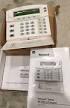 NetworX NX-6V2 LED Keypad User Manual POWER Light is on when AC power is present; flashes to indicate a low battery condition. ARMED Light is on when armed; off when disarmed; flashes to indicate a previous
SFC-200 SERIES FIRE ALARM CONTROL PANELS. SFC-200 Series Fire Alarm Control Panels. Features. Description
 SFC-200 SERIES FIRE ALARM CONTROL PANELS SFC-200 Series Fire Alarm Control Panels Description Summit s SFC-200 Series fire alarm control panels consist of six and twelve zone models which are equipped
TAMARAC FIRE RESCUE INSTRUCTIONS FOR FIRE ALARM PRE-SUBMITTAL CHECKLIST
 TAMARAC FIRE RESCUE INSTRUCTIONS FOR FIRE ALARM PRE-SUBMITTAL CHECKLIST In order to provide a comprehensive plan review in a timely manner, and to insure the design and installation of fire alarm systems
CITY OF PHILADELPHIA DEPARTMENT OF LICENSES AND INSPECTIONS ANNUAL CERTIFICATION FOR FIRE ALARM SYSTEMS
 CITY OF PHILADELPHIA DEPARTMENT OF LICENSES AND INSPECTIONS ANNUAL CERTIFICATION FOR FIRE ALARM SYSTEMS PROPERTY ADDRESS (BRT Address Required) TESTING CONTRACTOR (Name and Address) License No. ANNUAL
SECURITY SYSTEM NOTES
 SECURITY SYSTEM NOTES Installing/Service Company For Service Call Central Station Duress Code FUNCTION CODES Function Code Controls Function EMERGENCY ACTIVATION KEYS (check if enabled) Fire Auxiliary
FVSU-33201301 REPAIR & UPGRADE FIBER OPTIC 280000-1 SECTION 280000 FIRE ALARM SYSTEM CONNECTIVITY
 FVSU-33201301 REPAIR & UPGRADE FIBER OPTIC 280000-1 SECTION 280000 FIRE ALARM SYSTEM CONNECTIVITY PART 1 - GENERAL 1.1 SUMMARY A. Section Includes: 1. Fire-alarm control unit. 2. Addressable interface
466-1936 Rev E October 2004 ZZZ*(6HFXULW\FRP. Part No: 60-883-95R. CareGard. User Guide
 ) *(6HFXULW\ 466-1936 Rev E October 2004 ZZZ*(6HFXULW\FRP Part No: 60-883-95R CareGard User Guide FCC Notices FCC Part 15 Information to the User Changes or modifications not expressly approved by GE Security
SECURITY SYSTEM NOTES
 SECURITY SYSTEM NOTES Installing/Service Company For Service Call Central Station Duress Code FUNCTION CODES Function Code Controls Function This system is is not partitioned. EMERGENCY ACTIVATION KEYS
Original Document 10/16/07 Revised 01/30/09 2 nd Revision 01-23-12 3 rd Revision- 12/18/14
 North Collier Fire Control & Rescue District Greater Naples Fire Rescue District Immokalee Fire Control & Rescue District 2800 North Horseshoe Drive Naples, Florida 34104 SYSTEM REHABILITATION PLAN CHECKLIST
Firmware version: 1.10 Issue: 7 AUTODIALER GD30.2. Instruction Manual
 Firmware version: 1.10 Issue: 7 AUTODIALER GD30.2 Instruction Manual Firmware version: 2.0.1 Issue: 0.6 Version of the GPRS transmitters configurator: 1.3.6.3 Date of issue: 07.03.2012 TABLE OF CONTENTS
PC4020CF v3.0 and higher Commercial Fire Installation Guide DLS-3 v1.3
 PC4020CF v3.0 and higher Commercial Fire Installation Guide DLS-3 v1.3 Table of Contents Section 1: Introduction 1 1.1 Introduction...1 1.2 Hardware Description and Specifications...1 Section 2: Fire Zone
Solution-16 Operators Manual ISSUE 1.60
 Solution-16 Operators Manual ISSUE 1.60 !"#$%&"'()*+ Operators Manual Copyright 2002 by, SYDNEY, AUSTRALIA Document Part Number MA880O DOCUMENT ISSUE 1.60 Printed 22 March 2002 This documentation is provided
Application Notes. 1.21 Partition Programming (PC1616/1832/1864 V4.2) Page 42. Panels: POWER SERIES (PC1616/1832/1864 V4.
 Application Notes 1.21 Partition Programming (PC1616/1832/1864 V4.2) Panels: POWER SERIES (PC1616/1832/1864 V4.2) Overview: The PC1616 supports 2 true partitions. The PC1832 supports 4 true partitions.
NX-591NE-GSM NetworX GSM 3G HSPA+ Module Installation Sheet
 NX-591NE-GSM NetworX GSM 3G HSPA+ Module Installation Sheet The NX-591NE-GSM is a microprocessor-controlled GSM interface module used to connect the NetworX series of control panels to GSM cellular networks
Fire Fighter Phone System Installation Instructions
 Fire Fighter Phone System Installation Instructions Introduction This publication describes the installation procedure for the Fire Fighter s Phone on a 4100U or a 4100ES Fire Alarm Control Panel (FACP).
IDS X-Series User Manual 700-398-01D Issued July 2012
 1 2 Contents 1. Introduction to the IDS X-Series Panels... 7 2. Before Operating Your Alarm System... 7 3. Understanding the Keypad LEDs... 8 3.1 Viewing Data on an LED Keypad... 12 3.1.1 LED Status Indicators...
Security System Owner s Manual
 Security System Owner s Manual Interactive Technologies Inc. 2266 North 2nd Street North St. Paul, MN 55109 FCC Notices FCC Part 15 Information to the User Changes or modifications not expressly approved
CAPTAIN 6. USER GUIDE System ver. 6.0. 6 Zones Intruder Alarm System. PIMA Electronic Systems Ltd. www.pima-alarms.com
 CAPTAIN 6 6 Zones Intruder Alarm System USER GUIDE System ver. 6.0 PIMA Electronic Systems Ltd. www.pima-alarms.com P/N 4410049, G2 XX en, Jan. 2010 2 CAPTAIN 6 User Guide SAFETY INSTRUCTIONS Your CAPTAIN-i
User s Guide. Security Systems D220
 User s Guide Security Systems D220 Table of Contents About This User s Guide... 3 Introduction... 3 Security System Basics... 4 Controlled Points... 5 24-Hour Points... 6 Keypad Keys... 6 Keypad Lights...
SECTION 16721 FIRE ALARM AND SMOKE DETECTION SYSTEMS
 SECTION 16721 PART 1 - GENERAL 1.1 SECTION INCLUDES A. Fire Alarm Control Panels B. Manual Fire Alarm Stations C. Automatic Smoke D. Fire Alarm Notification Appliances E. Auxiliary Fire Alarm Equipment
INSTRUCTIONS FOR BUILDINGS WITH FIRE PROTECTION EQUIPMENT
 INSTRUCTIONS FOR BUILDINGS WITH FIRE PROTECTION EQUIPMENT FIRE EXTINGUISHERS,SPRINKLER SYSTEMS AND FIRE ALARMS Attachment #1 Inspection of Fire Extinguishers Fire Extinguishers must be tested according
NATIONAL FIRE ALARM AND SIGNALING CODE
 GAP.11.1.1.0 A Publication of Global Asset Protection Services LLC NATIONAL FIRE ALARM AND SIGNALING CODE INTRODUCTION National Fire Protection Association (NFPA) documents describe a level of fire protection
Release Control Fire Alarm Systems
 SYSTEM ABORT PUSH AND HOLD COIL SUPERVISION MODULE (2 AMP) 2081-9046 RED INSTALLATION INSTRUCTIONS 574-437 REV YEL NAC+ MAINTAIN 1/4" SEPARATION BETWEEN POW ER LIMITED (RED/) AND NONPOWER S LIMITED (YEL/)
NC State University Design and Construction Guidelines Division 26 Fire Alarm Systems
 NC State University Design and Construction Guidelines Division 26 Fire Alarm Systems 1.0 Purpose A. The following guideline provides the minimum standards and requirements for fire alarm systems. 2.0
SECTION 16721 FIRE DETECTION AND ALARM SYSTEM PART 1 - GENERAL 1.01 DESCRIPTION
 SECTION 16721 FIRE DETECTION AND ALARM SYSTEM PART 1 - GENERAL 1.01 DESCRIPTION A. This section of the specifications includes the furnishing, installation, and connection of the microprocessor-controlled
Fire Alarm System Plans Submittal Guidelines For New and Existing Systems
 Fire Alarm System Plans Submittal Guidelines For New and Existing Systems SCOPE The Temecula Fire Prevention Bureau (TFPB) has established the following requirements for the submittal of all fire alarms,
SARATOGA FIRE DISTRICT EARLY WARNING FIRE ALARM SYSTEM STANDARDS AND REQUIRMENTS CONTENTS
 SARATOGA FIRE DISTRICT EARLY WARNING FIRE ALARM SYSTEM STANDARDS AND REQUIRMENTS CONTENTS I. APPLICATION AND DEFINITIONS 1.01 Authorization for Standards 1.02 Application of Standards 1.03 Definitions
SECTION 16721 FIRE ALARM AND DETECTION SYSTEMS
 SECTION 16721 FIRE ALARM AND DETECTION SYSTEMS The equipment requirements of this section apply to the IUB Campus. The IUPUI Campus has a preferred vendor agreement for fire alarm systems. Contact Pat
User s Information Guide R1A
 HSC505-R Home Security Controller - User Manual Release R1a Pi HSC505 and Pi HSC505R Home Security Controller User s Information Guide R1A Page 1 QD Dynamics (Pty) Ltd reserves the right to make changes
FIRE. 4100U Fire Alarm. Operator s Manual. Operator's Manual. Operator s Manual. LT0395 Iss 1.0
 FIRE 4100U-S1 SP1 Fire Fire Indicator Indicator Panel Operator s Manual 4100U P l Fire Alarm Operator's Manual Operator s Manual LT0395 Iss 1.0 4100U-S1 Fire Panel Operator s Guide Fire detectors in the
PRT-CTRL-SE. Protege System Controller Reference Manual
 PRT-CTRL-SE Protege System Controller Reference Manual The specifications and descriptions of products and services contained in this document were correct at the time of printing. Integrated Control Technology
SECTION 16721 FIRE ALARM AND DETECTION SYSTEM
 1. GENERAL 1.1. Related Documents: 1.2. Scope: 1.1.1. The general provisions of the Contract, including General and Supplementary Conditions and General Requirements apply to the work specified in this
SECURITY SYSTEM NOTES. EMERGENCY ACTIVATION KEYS (check if enabled) PROGRAMMED FUNCTIONS
 SECURITY SYSTEM NOTES Installing/Service Company For Service Call Installation Date / / Central Station Duress Code EMERGENCY ACTIVATION KEYS (check if enabled) Fire Auxiliary Emergency Police PROGRAMMED
FIRE ALARM SYSTEMS PERMIT APPLICATION, PLAN SUBMITTAL, DESIGN, INSTALLATION AND INSPECTION REQUIREMENTS Effective Date: January, 2011
 Office of the Fire Marshal 1.0 PERMITS FIRE ALARM SYSTEMS PERMIT APPLICATION, PLAN SUBMITTAL, DESIGN, INSTALLATION AND INSPECTION REQUIREMENTS Effective Date: January, 2011 1.1 To acquire an installation
User Guide for the DS7060 Control/Communicator
 DS7060 User Guide Copyright 1996-97 Detection Systems, Inc. User Guide for the DS7060 Control/Communicator Copyright 1996-97 Detection Systems, Inc. Detection Systems, Inc., 130 Perinton Parkway, Fairport,
AGRI-ALERT 800T / AGRI-ALERT 800 ALARM SYSTEM USER MANUAL
 AGRI-ALERT 800T / AGRI-ALERT 800 ALARM SYSTEM USER MANUAL Manufacturer: Viatron Electronics 3514 1st Street, St-Hubert (Quebec) Canada J3Y 8Y5 WARNING: the warranty can be void if the Agri-Alert 800T or
Control/Communicator Installation Manual
 DAS NETWORX NX-8 Control/Communicator Installation Manual Page General Description... 2 Ordering Information... 2 Option Definitions... 2 Programming the LED Code Pads... 4 Programming the NX-8... 8 Types
FIRE ALARM AND DETECTION SYSTEMS SECTION 16721
 PART 1 - GENERAL 1.01 WORK INCLUDED FIRE ALARM AND DETECTION SYSTEMS SECTION 16721 A. Provide a complete fully addressable, power limited, fire detection and evacuation system. The system shall be connected
Fire Alarm System Plans Review Checklist Property location Date of Review
 Fire Alarm System Plans Review Checklist Property location Date of Review 1. Is application completed in entirety? 2. Are the plans review fee submitted with the application? 3. Does floor plan include
CLARK COUNTY FIRE DEPARTMENT Fire Hazard & Prevention Services
 CLARK COUNTY FIRE DEPARTMENT Fire Hazard & Prevention Services 575 E. Flamingo Road, Las Vegas, NV 89119 (702) 455-7316 FAX (702) 455-7347 105.8a-6.1 TITLE: FIRE ALARM SYSTEM REQUIREMENTS SCOPE: This guideline
What Should I Expect From My Alarm Monitoring Station?
 What Should I Expect From My Alarm Monitoring Station? When the alarm goes off... What actions will the operators take? When will they dispatch the authorities? What actions do I need to take? Monitoring
Fire Control Panels. Remote Annunciator Panels. UL, ULC, CSFM Listed; FM Approved; MEA (NYC) Acceptance* Features. Introduction
 Emergency Operating Instructions Fire Alarm S Priority 2 Alarm Fire Alarm Priority 2 Ack Ack How Acknowledge / View Events Press ACK located under flashing indicar. Repeat operation until all events are
COMSPHERE 6700 SERIES NETWORK MANAGEMENT SYSTEM
 COMSPHERE 6700 SERIES NETWORK MANAGEMENT SYSTEM SECURITY MANAGER FEATURE SUPPLEMENT Document No. 6700-A2-GB41-30 February 1998 Copyright 1998 Paradyne Corporation. All rights reserved. Printed in U.S.A.
INTELLIGENT FIRE ALARM CONTROL PANELS. MR-2100/MR-2200 Intelligent Fire Alarm Control Panels MEA. Features. Description
 INTELLIGENT FIRE ALARM CONTROL PANELS MR-2100/MR-2200 Intelligent Fire Alarm Control Panels Description MR-2100/MR-2200 Intelligent Fire Alarm Control Panel (shown with optional LED modules) Secutron's
HONEYWELL COMMERCIAL FIRE/BURG PANEL UL LISTING REQUIREMENTS (Compiled from VistaFBPT Installation Instructions 800-09617V1 Rev A 11/12)
 HONEYWELL COMMERCIAL FIRE/BURG PANEL UL LISTING REQUIREMENTS (Compiled from VistaFBPT Installation Instructions 800-09617V1 Rev A 11/12) UL864 (Commercial Fire) Compliance General Requirements The VISTA-128FBPT/VISTA250FBPT
Changes or modifications not expressly approved by Interactive Technologies, Inc. can void the user s authority to operate the equipment.
 0 FCC Notices FCC Part 15 Information to the User Changes or modifications not expressly approved by Interactive Technologies, Inc. can void the user s authority to operate the equipment. FCC Part 15 Class
Simon XTi Quick Operation Guide
 Simon XTi Quick Operation Guide This is the Quick Operation Guide for the Simon XTi system (models 600-1054-95R-12 & 600-1054-95R-12-CN). The Simon XTi provides a graphical user interface for programming
SECURITY SYSTEM NOTES SPECIAL CODES. Security System Configuration
 Installing / Service Company: SECURITY SYSTEM NOTES For Service Call: Master Code SPECIAL CODES Duress Code Security System Configuration Auxiliary Code(s) Quick Arm" Digit: 2 9 3 10 4 11 5 12 6 13 7 14
PC Tab Security System INSTRUCTION MANUAL
 PC Tab Security System INSTRUCTION MANUAL This manual is intended as a Quick Start manual covering the basic functions that have been enabled on the alarm panel. The alarm panel is capable of extensive
SECURITY SYSTEM NOTES. Security System Configuration
 Installing / Service Company: For Service Call: SECURITY SYSTEM NOTES Security System Configuration Master Code: Auxiliary Code(s) 2 3 4 5 6 "Quick Arm" Digit: Exit Delay Time Auxiliary Exit Delay Time
SECTION 13850 DETECTION AND ALARM
 SECTION 13850 DETECTION AND ALARM PART 1 GENERAL 1.01 SUMMARY A. Section Includes 1. Control Panel 2 Associated Equipment B. Products Installed But Not Supplied Under This Section 1. Section 16140 - Wiring
TABLE OF CONTENTS FEATURES
 TABLE OF CONTENTS FEATURES 2 Keypad Programmable... 2 EEPROM Memory... 2 Static/Lightning Protection... 2 Supervision... 2 Operation... 2 SPECIFICATIONS 2 PC1550 Control Panel... 2 PC1500RK Keypad... 2
NetworX Series. NX- 4/8 Code Pad. User Manual (Australian Version)
 NetworX Series NX- 4/8 Code Pad User Manual (Australian Version) Table Of Contents Code Pad Diagram... Inside Front Glossary of Terms...2 Understanding the Code Pad lights...3 Code Pad Tones...4 Fully
INSTRUCTION MANUAL PC5OO WITH PC5OORK KEYPAD
 INSTRUCTION MANUAL PC5OO WITH PC5OORK KEYPAD TABLE OF CONTENTS SYSTEM INFORMATION 2 INTRODUCTION 3 Test Your System Regularly...3 Important Notice...3 Glossary...3 BASIC OPERATION 4 Arming Your System...4
INTELLIGENT FIRE ALARM CONTROL UNITS. MMX-2017-12NDS Intelligent Network Fire Alarm Control Unit. Features. Description
 INTELLIGENT FIRE ALARM CONTROL UNITS MMX-2017-12NDS Intelligent Network Fire Alarm Control Unit Description Secutron s MMX-2017-12NDS Network Fire Alarm Control Unit offers modular components to meet a
SPECIAL CODES AUXILIARY CODES SYSTEM NOTES
 Installing/Service Company Monitoring Center SPECIAL CODES Master Code Duress Code AUXILIARY CODES "Quick Arm" " Chime" 08 02 09 03 10 04 11 05 12 06 13 07 14 SYSTEM NOTES Exit Delay Time Entry Delay Time
FIRE ALARM SYSTEM RECORD OF COMPLETION
 FUNDAMENTALS OF FIRE ALARM SYSTEMS 72 33 FIRE ALARM SYSTEM RECORD OF COMPLETION To be completed by the system installation contractor at the time of system acceptance and approval. 1. PROTECTED PROPERTY
NetworX NX-8 Control/Communicator Installation Manual
 NetworX NX- Control/Communicator Installation Manual Table of Contents General Description... Ordering Information... Feature Definitions... - Programming the LED Keypads... Programming the NX-... 9- Types
FIRE DETECTION Note: Your installer must enable the fire detection portion of this equipment before it becomes functional.
 Table of Contents Introduction... 2 About Your Security System... 2 Fire Detection... 2 Monitoring... 2 General System Operation... 3 Keypad LED Displays... 3 System Master Menu Functions... 3 Partition
Users Guide to Keypad Functions
 Users Guide to Keypad Functions MANUAL NO. 700-175-01J ISSUED JAN 2002 VERSION 1.41 Summary of Operation A rm/ disarm [#] + [USER CODE] Quick Quick Quick Panic Fire Medical Away Arm Stay Arm Stay Arm &
Solution 862 Operators Manual. Issue 1.00
 Solution 862 Operators Manual Issue 1.00 Solution 862 Operators Manual Copyright 1998 by Electronics Design and Manufacturing Pty Limited, SYDNEY, AUSTRALIA Document Part Number MA406O Document Issue
Simon XTi Installation Guide
 Simon XTi Installation Guide Content Contact information... 1 Description... 1 Installation... 1 Connecting hardwired devices... 2 Wiring phone lines... 3 Wiring the power transformer... 4 Resetting memory
SECTION 28 31 00 FIRE DETECTION AND ALARM SYSTEM
 SECTION 28 31 00 FIRE DETECTION AND ALARM SYSTEM PART 1 - GENERAL 1.01 SECTION INCLUDES A. Fire alarm system requirements B. Fire alarm equipment C. Fire alarm peripheral devices 1.02 RELATED SECTIONS
Security System. User Guide for the LED Command Center
 Security System User Guide for the LED Command Center MY SECURITY COMPANY IS: CALL BEFORE TEST: THIS SECURITY SYSTEM IS CONNECTED TO TELEPHONE NUMBER: THE SECURITY CONTROL PANEL IS CONNECTED TO THE PHONE
FIRE ALARM SYSTEM RECORD OF COMPLETION
 FIRE ALARM SYSTEM RECORD OF COMPLETION To be completed by the system installation contractor at the time of system acceptance and approval. 1. Protected Property Information Name of property: Description
PK5500 v1.1 Installation Instructions
 PK5500 v1.1 Installation Instructions 1 2 3 4 5 6 7 8 9 * 0 # WARNING: Please refer to the System Installation Manual for information on limitations regarding product use and function and information on
User's Manual 5120XM N8031 6/96
 Fire and Burglary System User's Manual 5120XM N8031 6/96 SYSTEM OVERVIEW...3 General...3 Zones...3 Fire & Emergency Protection...3 Burglary Protection...4 Alarms...4 Memory of Alarm...4 ABOUT THE KEYPADS...5
VISTA-128FBP VISTA-250FBP Commercial Fire and Burglary Partitioned Security Systems with Scheduling
 VISTA-128FBP VISTA-250FBP Commercial Fire and Burglary Partitioned Security Systems with Scheduling User Guide K0377V2 7/09 Rev. C 2 TABLE OF CONTENTS SYSTEM OVERVIEW... 5 General... 5 A Partitioned System...
VISTA-100. Commercial Fire and Burglary 8VHU*XLGH. Partitioned Security System. N6020-2 Rev B 4/99 FIRE FIRE PULL
 VISTA-100 Commercial Fire and Burglary Partitioned Security System 8VHU*XLGH FIRE FIRE * PULL N6020-2 Rev B 4/99 TABLE OF CONTENTS SYSTEM OVERVIEW... 3 A Partitioned System... 3 Zones... 3 Fire Protection...
Destiny 4100. Destiny 4100. Owners Manual
 Destiny 4100 Destiny 4100 Owners Manual TABLE OF CONTENTS INTRODUCTION Control Panel...3 Detection Devices...3 Telephone Keypads...3 GLOSSARY... 4-5 LOCAL PHONE ACCESS Using Your Telephones As Keypads...6
Security System. User's Guide. Keypad
 Security System EN User's Guide Keypad Security System User's Guide This system includes a telephone line seizure feature. The system can be programmed to communicate with a central monitoring station
User s Guide. Security Systems
 User s Guide Security Systems National Security Systems Inc (800)457-1999 2 Table of Contents About This Users Guide... 4 Introduction... 4 Security System Basics... 5 Controlled Points... 6 24-Hour Points...
User s Guide. Security Systems
 User s Guide Security Systems 2 Table of Contents About This Users Guide... 4 Introduction... 4 Security System Basics... 5 Controlled Points... 6 24-Hour Points... 7 Keypad Keys... 7 Keypad Tones... 8
DELAWARE STATE FIRE MARSHAL FIRE ALARM SYSTEM CERTIFICATE OF INSTALLATION
 Phone System Owner Phone System Engineered by: of Record Drawings: of System Manuals: of Test Reports: System Installer 1. GENERAL INFORMATION Phone Delaware License No: Certificate Holder No. System Supplier
HUNTER-PRO 32 Ver. 3.8 Intruder Alarm System RXN-9/416 User Guide
 HUNTER-PRO 32 Ver. 3.8 Intruder Alarm System RXN-9/416 User Guide PIMA Electronic Systems Ltd. 5 Hatzoref Street, Holon 58856, Israel +972-3-5587722 +972-3-5500442 [email protected] http://www.pima-alarms.com
The Mission Critical Fire Protection Experts
 The Mission Critical Fire Protection Experts Protection Systems Protection Systems HFC-227ea / FM200 / FE-227 FE-25 / ECARO-25 Novec 1230 Inergen / Argonite Halon Drop-in Systems High and Low Pressure
NX-8 Installation manual Page 1 Date 13/03/04
 NetworX NX-8 Installation Manual NX-8 Installation manual Page 1 Date 13/03/04 CONTENTS CONTENTS...2 GENERAL INFORMATION...4 ORDERING INFORMATION...4 FEATURE DEFINITIONS...5 PROGRAMMING THE NX-8 KEYPADS...12
LCD5500Z / PKP-LCD v3.x Installation Instructions
 LCD5500Z / PKP-LCD v3.x Installation Instructions TM Introduction The LCD5500Z / PKP-LCD keypad displays system status using an LCD screen. The keypad can be used on PowerSeries security systems with up
City of Bettendorf Fire Alarm System Requirements
 City of Bettendorf Fire Alarm System Requirements Section 907 of the 2009 Edition of the International Fire Code (IFC) and Section 10-7-3 of the Municipal Code provide fire alarm requirements. IFC Section
System Manager s Manual
 LCD Keypad DGP2-641B / DGP2-641RB DGP2-641 / DGP2-641R System Manager s Manual Also includes Operating Instructions Table of Contents Introduction... 1 Legend... 1 Basic Operation... 1 Auditory Feedback
HERNANDO COUNTY FIRE ALARM GUIDELINES
 HERNANDO COUNTY FIRE ALARM GUIDELINES To be used for all commercial building fire alarm system plan review. The procedures set forth in this document are the minimum requirements necessary to ensure a
EDA-Z5008 & Z5020. Radio Fire Alarm System. User Manual
 EDA-Z5008 & Z5020 Radio Fire Alarm System User Manual Electro-Detectors Ltd. Electro House, Edinburgh Way Harlow, Essex, CM20 2EG UK Tel: 01279 635668. Fax 01279 450185 Email: [email protected]