
TÜV RHEINLAND IMMISSIONSSCHUTZ UND ENERGIESYSTEME GMBH
|
|
|
- Lenard Kennedy
- 10 years ago
- Views:
Transcription
1 TÜV RHEINLAND IMMISSIONSSCHUTZ UND ENERGIESYSTEME GMBH Akkreditiertes Prüfinstitut DAP-PL Report on the suitability test of the ambient air quality measuring system BAM-1020 with PM 2.5 preseparator of the company Met One Instruments, Inc. for the component PM 2.5 TÜV Report No.: 936/ /A Koeln, March 26, TÜV Rheinland Immissionsschutz und Energiesysteme GmbH are accredited for the following work areas: - Determination of emissions and immissions of air pollution and odor substances; - Inspection of correct installation, function and calibration of continuously running emission measuring devices including systems for data evaluation and remote monitoring of emissions; - Suitability testing of measuring systems for continuous monitoring of emissions and immissions, and of electronic systems for data evaluation and remote monitoring of emissions according to EN ISO/IEC The accreditation is valid up to DAR-register number: DAP-PL Reproduction of extracts from this test report is subject to written consent. TÜV Rheinland Immissionsschutz und Energiesysteme GmbH D Koeln, Am Grauen Stein, Tel: , Fax: _2010_936_ A_eng.doc

2

3 the component PM2.5, Report No.: 936/ /A Page 3 of 285 Acknowledgement TÜV Rheinland Immissionsschutz und Energiesysteme GmbH would like to acknowledge the involvement of Bureau Veritas and the National Physical Laboratory as our UK partners in this project for their involvement in collecting the UK field data; project management; and data processing.

4

5 the component PM2.5, Report No.: 936/ /A Page 5 of 285 Akkreditiertes Prüfinstitut DAP-PL Report on the suitability test of the ambient air quality measuring system BAM-1020 with PM2.5 pre-separator of the company Met One Instruments, Inc. for the component PM2.5 Device tested: BAM-1020 with PM2.5 pre-separator Manufacturer: Met One Instruments, Inc NW Washington Blvd. Grants Pass, Oregon USA Test period: Start: July 2008 End: March 2010 Date of report: March 26, 2010 Report number: 936/ /A Editor: Dipl.-Ing. Karsten Pletscher T.: [email protected] Scope of report: Report 147 Pages Annex Page 148 ff. Manual Page 190 ff. Manual of 96 Pages Total 285 Pages

6

7 the component PM2.5, Report No.: 936/ /A Page 7 of 285 Content 1 SUMMARY AND PROPOSAL FOR DECLARATION OF SUITABILITY Summary Notification proposal: Summary of test results TASK DEFINITION Type of test Objective DESCRIPTION OF THE TESTED MEASURING SYSTEM Measuring principle Functionality of the measuring system AMS scope and layout TEST PROGRAM General Laboratory test Field test REFERENCE MEASUREMENT PROCEDURES TEST RESULTS Display for measured values Easy maintenance Function test Setup- and warm-up times Instrument design Security Data output...63

8 Page 8 of 285 the component PM2.5, Report No.: 936/ /A Requirements for mobile measuring systems General Measuring range Negative output signals Analytical function Linearity Detection limit Response time Ambient temperature dependency of zero point Ambient temperature dependency of the measured value Zero drift Drift of the measured value Cross sensitivity Reproducibility R D Hourly mean values Mains voltage and frequency Power outage Operating states Switchover Availability Converter efficiency Maintenance interval Total uncertainty Equivalency of the sampling system Reproducibility of the sampling system Calibration Cross sensitivity...108

9 the component PM2.5, Report No.: 936/ /A Page 9 of Daily averages Constancy of sample volumetric flow Tightness of the sampling system Requirements for multiple-component measuring systems ADDITIONAL TEST CRITERIA ACCORDING TO GUIDE DEMONSTRATION OF EQUIVALENCE OF AMBIENT AIR MONITORING METHODS Equivalence Methodology Determination of the in-between-instrument uncertainty u bs [ ] Calculation of the expanded uncertainty of the instruments [ ] Application of correction factors or terms [9.7] RECOMMENDATIONS FOR PRACTICAL USE LITERATURE APPENDIX...148

10

11 the component PM2.5, Report No.: 936/ /A Page 11 of Summary and proposal for declaration of suitability 1.1 Summary According to Directive 2008/50/EG of 21 May 2008 on Air quality and cleaner air for Europe (replaces Council Directive of 27 September 1996 on ambient air quality assessment and management including its daughter directives 1999/30/EC, 2000/69/EC, 2002/3/EC and the Council Decision 97/101/EC), the methods described in Standard EN12341 Air quality - Determination of the PM 10 fraction of suspended particulate matter. Reference method and field test procedure to demonstrate reference equivalence of measurement methods and Standard EN14907 Ambient air quality - Standard gravimetric measurement method for the determination of the PM 2.5 mass fraction of suspended particulate matter serve as reference methods for suspended particle measurement of the respective mass fraction. However, EC member states are free to use any other method in the case of particulate matter for which the Member State concerned can demonstrate displays a consistent relationship to the reference method. In that event the results achieved by that method must be corrected to produce results equivalent to those that would have been achieved by using the reference method. (2008/50/EC, Annex VI, B1). The Guidance Demonstration of Equivalence of Ambient Air Monitoring Methods [4] (which was developed by an ad hoc EC task group (Source: Version July 2009) describes an equivalence check method for non-standard measurement methods. Although this is not a normative Guide, it is tentatively recommended for application by the CAFE (Clean Air For Europe) committee. The following limits were applied during suitability testing: Annual limit value (1 a) PM µg/m³ as well as for the calculations according to the Guide [4] Limit value PM µg/m³

12 Page 12 of 285 the component PM2.5, Report No.: 936/ /A Standard VDI 4202, sheet 1 of June 2002 describes all Minimum requirements for suitability tests of automatic ambient air measuring systems. General parameters for the related tests are given in Standard VDI 4203, sheet 1 Testing of automatic measuring systems - General concepts of October 2001 and furthermore specified in VDI 4203, sheet 3 Testing of automatic measuring systems - Test procedures for point-related ambient air quality measuring systems of gaseous and particulate pollutants of August The fulfilment of the requirements from VDI standards is mandatory in Germany. Since all reference values given in these standards are adapted for PM 10 we recommend applying the following reference values for PM 2.5 measurement: B 0 B 1 B 2 PM µg/m³ 25 µg/m³ 200 µg/m³ Only for B 1 an adaption has been done on the level of the limit value for the annual mean. Met One Instruments, Inc. has commissioned TÜV Rheinland Immissionsschutz und Energiesysteme GmbH (in Germany), Bureau Veritas,and the National Physical Laboratory (both in the UK) with the performance of a suitability testing of BAM-1020 measuring system for the components PM2.5. The measuring system BAM-1020 with a PM 10 pre-separator is already suitability-tested and published in the German Bundesanzeiger. Declaration of suitability: BAnz.: No. 75, page 4139, based on TÜV-report no. 936/ /A of The suitability testing of the measuring system was carried out applying the following standards and requirements: Standard VDI 4202 sheet 1, Minimum requirements for suitability tests of automatic ambient air measuring systems Point-related measurement methods of gaseous and particulate pollutants, June 2002

13 the component PM2.5, Report No.: 936/ /A Page 13 of 285 Standard VDI 4203 sheet 3, Testing of automatic measuring systems - Test procedures for point-related ambient air quality measuring systems of gaseous and particulate pollutants, August 2004 Standard EN 14907, Ambient air quality - Standard gravimetric measurement method for the determination of the PM 2.5 mass fraction of suspended particulate matter, German version EN 14907: 2005 Guide Demonstration of Equivalence of Ambient Air Monitoring Methods, English version of July 2009 The measuring system BAM-1020 determines the particulate concentration by a radiometer measuring principle. With the aid of a pump, ambient air is sucked at 16.7 LPM via a PM 2.5 pre-separator (consisting of a PM 10 sampling inlet and a PM 2.5 Sharp Cut Cyclone). The dustladen air is then sucked on a filter tape. The determination of the separated mass of dust on the filter tape is performed after the respective sampling by the radiometric measuring principle of beta-attenuation. The tests took place in the laboratory and for several months in the field. The following sites were chosen for the field test: Table 1: Description of the test sites Teddington (UK), Summer Cologne, parking lot (Germany), Winter Bornheim, Motorway, parking lot (Germany), Summer Teddington (UK), Winter Time period 07/ / / / / / / /2010 No. of paired values: Candidates Characteristics Urban background Urban background Rural + Motorway Urban background Classification of ambient air load low to average average to high low to average average

14 Page 14 of 285 the component PM2.5, Report No.: 936/ /A The complete test was performed within the scope of the test program Combined MCERTS and TÜV PM Equivalence Testing Programme. In the context of European harmonization, the test program was developed by British and German test institutes (Bureau Veritas UK Limited, National Physical Laboratory (NPL) and TÜV Rheinland) and comprises the testing of the latest series of suspended particle measuring systems by different manufacturers in the laboratory and at field test sites in the UK and in Germany. The minimum requirements were fulfilled during suitability testing. TÜV Rheinland Immissionsschutz und Energiesysteme GmbH therefore suggests publication of BAM-1020 as a suitability-tested measuring system for continuous monitoring of suspended particulate matter PM 2.5 in ambient air. 1.2 Notification proposal: On the basis of the positive results that have been achieved, the following recommendation is made for the notification as a suitability-tested measuring system: Measuring system: BAM-1020 with PM2.5 pre-separator for PM2.5 Manufacturer: Met One Instruments, Inc., Grants Pass, USA Suitability: For permanent monitoring of suspended particulate matter PM 2.5 in ambient air(stationary operation). Measuring ranges during the suitability test: Component Certification range Supplementary range Unit PM ,000 - µg/m³ Software version: Version Restrictions: During the check of the tightness of the sampling system within the scope of the suitability test, values of 1.8 % and 2.4 % have been determined. According to the minimum requirement, the leak rate shall not be greater than 1 % of the sample flow rate.

15 the component PM2.5, Report No.: 936/ /A Page 15 of 285 Notices: 1. The requirements according to guide Demonstration of Equivalence of Ambient Air Monitoring Methods are fulfilled for the measured component PM For the recordation of PM 2.5, the system has to be equipped with the following options: Sample heater (BX-830), PM 10 -sampling inlet (BX-802), PM 2.5 Sharp Cut Cyclone SCC (BX-807), combined pressure and temperature sensor (BX-596) respectively as an alternative ambient temperature sensor (BX-592). 3. The cycle time duringthe suitability test was 1 h, i.e. an automatic filter change has been performed every hour. Each filter spot has been used one time. 4. The sampling time within the cycle time is 42 min. 5. The measuring system has to be operated in a lockable measuring cabinet. 6. The measuring system is to be calibrated on site in regular intervals by application of the gravimetric PM 2.5 reference method according to EN The identical measuring system is also distributed by the company Horiba Europe GmbH, Oberursel, Germany under the name APDA-371 with PM 2.5 pre-separator. Test report: TÜV Rheinland Immissionsschutz und Energiesysteme GmbH, Cologne, Germany Report-No.: 936/ /A of March 26, 2010

16 Page 16 of 285 the component PM2.5, Report No.: 936/ /A 1.3 Summary of test results Minimum requirement Specification Test result Fulfilled Page 4 Requirements on instrument design 4.1 General requirements Display for measured values Easy maintenance Shall be available. Maintenance works should be feasible from outside without taking much time and effort Function test Particular instruments for function tests shall be considered as part of the device and thus shall be evaluated in the corresponding sub-tests. Test gas units shall indicate readiness by status signals and shall allow direct or remote access to control functions via the measuring system. The measurement uncertainty of the test gas unit shall not exceed 1 % of B 2 within three months Setup- and warm-up times Instrument design Shall be specified in the manual. Shall be specified in the manual Security Shall contain a protection mechanism against unauthorized adjustment Data output Analogue and / or digital outputs shall be available. 4.2 Requirements for mobile measuring systems Permanent availability shall be ensured. The requirements of stationary operation shall also be fulfilled during mobile operation. The measuring device comprises a display for measured values. Maintenance works can be carried out with commonly available tools taking reasonable time and effort. All system functions listed in the manual are available, activatable and functioning. The current system status is continuously monitored and displayed by a set of different status messages (operation, warning and error messages). The setup- and warm-up times were determined. The instrument design specifications listed in the operating manual are complete and correct. The AMS is protected against unauthorized and unintended adjustment. In addition, the AMS shall be locked in a measuring cabinet. Measured signals are offered analogue (0-1 resp. 10 V resp ma / 4-20 ma) and digital (via RS 232). In the context of the field test, the measuring system was operated at several different sites, but cannot be operated in moving vehicles. yes 54 yes 55 yes 58 yes 60 yes 61 yes 62 yes 63 no 65

17 the component PM2.5, Report No.: 936/ /A Page 17 of 285 Minimum requirement Specification Test result Fulfilled Page 5. Performance requirements 5.1 General The manufacturer s specifications given in the manual shall not contradict the results of the suitability test. 5.2 General requirements Differences between the instrument design and the descriptions given in the manual could not be detected. yes Measuring range The upper limit of the measuring range shall exceed B Negative output signals Analytical function Shall not be suppressed (living zero point). The relation between output signals and measured quantity shall be determined by regression calculation and represented by the analysis function Linearity The deviation of the group averages of the measured values for calibration function shall not exceed 5% of B 1 within the range of zero to B 1. Within the range of zero to B 2 the deviation shall not exceed 1% of B 2. A measuring range of 0 to 1,000 µg/m³ is set by default. Other measuring ranges in the range between at minimum µg/m³ and at maximum 0-10,000 µg/m³ are possible. Negative measuring signals are displayed directly and are output correctly via the respective measured value outputs by the measuring system. A statistically firm correlation could be proven between the reference method and the instrument reading. The test should be carried out according to minimum requirement Equivalency of the sampling system for particle measuring devices Detection limit B 0 or less. The detection limit has been determined from the investigations to 1.33 µg/m³ for device 1 (SN 17010) and to 1.09 µg/m³ for device 2 (SN 17011) Response time Not more than 5% of the averaging time (equal to 180 s) Ambient temperature dependency of zero point The measured value at zero point shall not exceed B 0 at ΔT u by more than 15 K between +5 C and +20 C. Between +20 C and +40 C it shall not exceed B 0 at ΔT u by more than 20 K. yes 67 yes 68 yes 69 yes 71 yes 71 Not applicable A maximum influence of the ambient temperature on the zero point of µg/m³ was calculated. yes 75

18 Page 18 of 285 the component PM2.5, Report No.: 936/ /A Minimum requirement Specification Test result Fulfilled Page Ambient temperature dependency of the measured value The measured value in the range of B 1 shall not exceed 5% at ΔT u by more than 15 K between +5 C and +20 C. Between +20 C and +40 C it shall not exceed 5% at ΔT u by more than 20 K Zero drift Shall not exceed B 0 within 24h or during the maintenance interval Drift of the measured value Shall not exceed 5% of B 1 within 24h or during the maintenance interval Cross sensitivity Shall not exceed B 0 in the range of zero point and 3% of B 2 within the range of B Reproducibility RD R D Hourly mean values Mains voltage and frequency No deviations greater than -0.2 % were determined for device 1 (SN 17010). For device 2 (SN 17011) deviations did not exceed 0.3 % of the initial value at 20 C. The detected values are all within the allowed limits of B0 = 2 µg/m³ during the maintenance interval. The measuring system carries out a regular device-internal check of the sensitivity of the radiometric measurement during each measurement cycle. This test leads to no interruption of the ongoing measuring operation. The values for the drift of the sensitivity, determined within the scope of the test, were at maximum 0.5 % (SN 17010) and -0.5 % (SN 17011) in the maintenance interval. yes 77 yes 79 yes 84 Not applicable R D 10 related to B 1. Reproducibility RD in the field was 10 for the complete data set. Formation shall be possible. Change of the measured value in the voltage interval ( /-20 V) does not exceed B 0 at B 1. For mobile use, the change of the measured value does not exceed B 0 for the frequency interval (50 ± 2) Hz Power outage Uncontrolled emission of operating gas or reference gas for calibration shall be prevented. Device parameters shall be buffered against loss. Operating mode shall be secured on return of the mains voltage and the measurement shall be resumed. The formation of hourly averages for the component PM2.5 is not necessary for the monitoring of the relevant limit values, but possible.. No deviations > 0.1 % for device 1 (SN 17010) and > -0.1 % for device 2 (SN 17011) caused by mains voltage changes could be detected. All instrument parameters are protected against loss by buffering. The measuring system is in the normal operating condition after the restoration of the power supply and continues independently taking measurements upon reaching the next hour. yes yes 93 yes 95

19 the component PM2.5, Report No.: 936/ /A Page 19 of 285 Minimum requirement Specification Test result Fulfilled Page Operating states The AMS shall allow monitoring of system functions by telemetrically transmitted status signals. The measuring systems can be controlled and monitored extensively from an external PC via a modem. yes Switchover The AMS shall allow manual and telemetric activation of measurement, function test and/or calibration. Generally all necessary operations for functional check and calibration can be monitored directly at the device or via telemetric remote control Availability At least 90 %. The availability amounts to 97.9 % for device SN and 99.0 % for device SN without test-related outage times. Those included, the availability amounts to 94.6 % for device SN and 95.7 % for device SN Converter efficiency Maintenance interval yes 97 yes 99 At least 95 %. Not applicable Preferably 28 days, at least 14 days Total uncertainty Compliance with the requirements on data quality [G10 to G12]. The maintenance interval is defined by necessary maintenance proceedures and is 1 month. The determined total uncertainties were % respectively % for U(c) and % respectively % for U( c ). 5.3 Requirements on measuring systems for particulate air pollution yes 101 yes Equivalency of the sampling system Shall be confirmed in comparison with the reference method according to EN [T2]. Not applicable for PM2.5 sampling systems. Please refer to chapter 7 of this report

20 Page 20 of 285 the component PM2.5, Report No.: 936/ /A Minimum requirement Specification Test result Fulfilled Page Reproducibility of the sampling system Shall be confirmed in the field for two identical sampling systems according to EN [T2] Calibration Comparative measurement with the reference method under field conditions according to EN [T2]; Relation between the gravimetrically determined reference concentration and the measured signal shall be determined as a continuous function. Not applicable for PM2.5 sampling systems. Please refer to chapter 7 of this report Refer to Module Cross sensitivity Not more than 10% of B 1. No interferences which led to deviations of more than 1.2 µg/m³ between nominal value and measured signal, caused by humidity, contained in the measured medium, could be detected. Negative influences on the measured value caused by varying relative air humidity were not detected Daily averages 24 h mean values shall be possible; time needed for filter changes shall not exceed 1% of the averaging time Constancy of sample volumetric flow Tightness of the sampling system 5.4 Requirements for multiplecomponent measuring systems At least 3% of the nominal value during sampling and at least 5% for instantaneous values. Leakage shall not exceed 1% of the sampling volume. Shall be fulfilled for each individual component during simultaneous operation of all measuring channels; generation of hourly mean values shall be ensured during sequential operation. With the described system configuration and with a measurement cycle of 60 min, the formation of valid daily averages on the basis of 24 single measurements is possible. All determined daily averages deviate less than ± 3 %, all individual values less than ± 5 % from the nominal value. The maximum determined leakages have been 1.8 % for device 1 (SN 17010) as well as 2.4 % for device 2 (SN 17011). According to the minimum requirement, the leak rate shall not be greater than 1 % of the sample flow rate. yes 109 yes 111 yes 113 no 117 Not applicable

21 the component PM2.5, Report No.: 936/ /A Page 21 of 285 Minimum requirement Specification Test result Fulfilled Page Additional test criteria according to Guide Demonstration of Equivalence of Ambient Air Monitoring Methods Determination of the inbetween-instrument uncertainty ubs [ ] Calculation of the expanded uncertainty of the instruments [ ] Application of correction factors or terms [9.7] Shall be determined in the field for two identical systems according to point of guide Demonstration of Equivalence of Ambient Air Monitoring Methods. Determination of the expanded uncertainty of the devices under test according to point ff of Guide Demonstration of Equivalence of Ambient Air Monitoring Methods. Correction factors may be applied if the highest expanded uncertainty which has been calculated exceeds the relative expanded uncertainty specified in the requirements on the data quality of ambient air quality measurements according to EU Guideline [7]. The corrected values must comply with the requirements according to point ff. of Guide Demonstration of Equivalence of Ambient Air Monitoring Methods. The in-between-instrument uncertainty between the candidates ubs is at maximum 1.57 µg/m³ and thus below the required value of 2.5 µg/m³. The determined uncertainties WCM are below the specified expanded relative uncertainty Wdqo of 25 % (particulate matter) for all data sets without the usage of corrective factors. The candidate systems fulfil the requirements on the data quality of ambient air quality measurements during the test already without application of correction factors. yes 120 yes 127 yes 140
22 Page 22 of 285 the component PM2.5, Report-No.: 936/ /A 2 Task definition 2.1 Type of test Met One Instruments, Inc. has commissioned TÜV Rheinland Immissionsschutz und Energiesysteme GmbH with the performance of a suitability test of BAM-1020 with PM2.5 preseparator. The test was conducted as a complete suitability testing. 2.2 Objective The AMS shall determine the content of PM 2.5 suspended particulate matter in ambient air within the concentration range of 0 to 1,000 µg/m 3. The measuring system BAM-1020 with PM 10 pre-separator is already suitability-tested and published in the German Bundesanzeiger. Declaration of suitability: BAnz.: No. 75, page 4139, based on TÜV-report no. 936/ /A of The suitability test was carried out based on the current standards for suitability tests while taking into account the latest developments. The test was performed in consideration of the following standards: Standard VDI 4202 sheet 1, Minimum requirements for suitability tests of automatic ambient air measuring systems Point-related measurement methods of gaseous and particulate pollutants, June 2002 [1] Standard VDI 4203 sheet 3, Testing of automatic measuring systems - Test procedures for point-related ambient air quality measuring systems of gaseous and particulate pollutants, August 2004 [2] Standard EN 14907, Ambient air quality - Standard gravimetric measurement method for the determination of the PM 2.5 mass fraction of suspended particulate matter, German version EN 14907: 2005 [3] Guide Demonstration of Equivalence of Ambient Air Monitoring Methods, English version of July 2009 [4]
23 the component PM2.5, Report No.: 936/ /A Page 23 of Description of the tested measuring system 3.1 Measuring principle The ambient air measuring system BAM-1020 is based on the measuring principle of betaattenuation. The principle of the radiometric determination of mass is based on the physical law of attenuation of beta-rays when passing a thin layer of material. There is the following relationship: with: μg c 3 m ( ) 6 10 A cm² I0 = ln l cm² i Q Δt(min) μ min g C particle-mass concentration A sampling area for particles (filter spot) Q sampling flow rate Δt sampling time µ mass absorption coefficient I 0 beta count rate at the beginning (clean) I beta count at the end (collect) The radiometric determination of mass is calibrated in the factory and is checked within the scope of internal quality assurance hourly at the zero point (clean filter spot) and at the reference point (built-in reference foil) during operation. With the help of the generated data, measured values at zero and reference point can be easily affiliated. They can be compared with any stability requirements (drift effects) respectively with the nominal value for the reference foil (factory setting).
24 Page 24 of 285 the component PM2.5, Report-No.: 936/ /A 3.2 Functionality of the measuring system The particle sample passes the PM 2.5 pre-separator, consisting of a PM 10 -sampling inlet and a PM 2.5 Sharp Cut Cyclone SCC, with a flow rate of 1 m³/h and arrives via the sampling tube at the measuring instrument BAM Within the scope of the test work, the measuring system was operated with the sample heater BX-830 (Smart Inlet Heater). The heater can be controlled with the help of two control process variables respectively with their combination: 1. The maximum relative humidity RH at the filter tape (factory setting: 45 %) 2. The temperature difference Delta-T between ambient temperature and temperature at the filter tape (factory setting: 5 C) As soon as the relative humidity RH is 1 % below the nominal value or the critical value for Delta-T is exceeded, the heater is switched off. Thereby the criterion for Delta-T is the striking one, which means that if the relative humidity RH is above the nominal value, but the value for Delta-T is above or equal the critical value, the heater is switched off. During the test work, the candidates were installed in an air-conditioned trailer. In this configuration, the control of the heater by the Delta-T criterion is not feasable. For this reason, the heater was only controlled by RH during both the laboratory and field tests. The particles are collected on the glass fiber filter tape for subsequent radiometric measurement. One measurement cycle (incl. automatic check of the radiometric measurement) consists of the following steps (setting: measuring time for radiometry 8 min): 1. The initial count of the clean filter tape I 0 is performed at the beginning of the cycle for a period of eight minutes. 2. The filter tape is advanced four windows and the sampling (vacuum pumping) begins on the spot in which I 0 was just measured. Air is drawn through this spot on the filter tape for approximately 42 minutes. 3. At the same time the second count I 1 occurs (at a point on the tape 4 windows back) for a period of eight minutes. The purpose of the measurement is to perform the verification for instrument drift caused by varying external parameters such as temperature and relative humidity. A third count I 2 occurs with the reference membrane extended over the same place on the tape. Eight minutes before the end of sampling time, another count I 1x occurs on the same point of the tape. With the help of I 1 and I 1x, the stability at the zero point can be monitored.
25 the component PM2.5, Report No.: 936/ /A Page 25 of After sampling, the filter tape is moved back four windows to measure the beta ray absorption through the section that has collected dust (I 3 ). Finally the concentration calculation is performed to complete the cycle. 5. The next cycle begins with step 1 Figure 1 gives an overview on the sampling- and measurement part of the BAM Figure 1: BAM-1020 Overview on sampling and measurement part During the suitability test work, a cycle time of 60 min with a time need of 8 min for the radiometric measurement was set. Therefore the cycle time consists of 2 x 8 min for the radiometric measurement (I 0 & I 3 ) as well as approximately 1-2 min for filter tape movements. Thus the effective sampling time is around 42 min.
26 Page 26 of 285 the component PM2.5, Report-No.: 936/ /A 3.3 AMS scope and layout The ambient air measuring system BAM-1020 is based on the measuring principle of betaattenuation. The tested measuring system consists of the PM 10 -sampling inlet BX-802, the PM 2.5 Sharp Cut Cyclone SCC BX-807, the sampling tube, the sample heater BX-830, the combined pressure and temperature sensor BX-596 (including radiation protection shield, as an alternative the ambient temperature sensor BX-592), the vacuum pump BX-127, the measuring instrument BAM-1020 (incl. glass fiber filter tape), the respective connecting tubes and lines as well as adapters, the roof flange as well as the manual in English language.
27 the component PM2.5, Report No.: 936/ /A Page 27 of 285 Figure 2: Overview of the BAM-1020 measuring system (shown here with the PM 2.5 VSCC BX-808 (configuration for US-EPA approval) instead of PM 2.5 SCC BX-807) The measuring instrument BAM-1020 offers the possibility to connect up to 6 different sensors at the available analogue inputs. For example, besides the combined pressure and temperature sensor BX-596 respectively the ambient temperature sensor BX-592, the connection of sensors for the air pressure BX-594, the wind direction (BX-590), for the wind velocity (BX.591), for the air humidity (BX-593) as well as for solar radiation (BX-595) is possible. Concerning the sampling inlets,an US-PM 10 sampling inlet (type: BX-802, manufactured according to Guideline EPA 40 CFR Part 50) is available. The sampling inlet serves as a preseparator for the suspended particulate matter in the fraction PM 10. Directly downstream of the PM 10 sampling inlet, a Sharp Cut Cyclone SCC (BX-807) is used for the separation of particles in the range of 2.5 µm to 10 µm. The instruments are operated with a constant, regulated volume flow of l/min = 1.0 m³/h. As an alternative option (though untested herein), it is possible to use TSP-sampling inlets or PM 10 -sampling inlets without SCC. Figure 3: US- PM-sampling inlet BX-802 for BAM-1020
28 Page 28 of 285 the component PM2.5, Report-No.: 936/ /A Figure 4: Sharp Cut Cyclone SCC BX-807 for BAM-1020 Figure 5: Sampling inlet BX SCC BX-807 The sampling tube connects the sampling inlet and the measuring instrument. The length of the sampling tube was 1.65 m during the test, differing lengths can be used dependent upon the local site requirements
29 the component PM2.5, Report No.: 936/ /A Page 29 of 285 The sample heater BX-830 is installed at the lower end of the sampling tube (approximately 50 mm above the instrument inlet of BAM-1020). The operation of the heating systems is performed as described in point 3.2 Functionality of the. Figure 6: Sample heater BX-830 The vacuum pump BX-127 is connected to the measuring instrument at the end of the sampling path with a hose. The pump is controlled via the measuring system on actual volume in relation to the ambient conditions (Mode ACTUAL) The measuring system BAM-1020 contains, besides the radiometric measurement part, the glass fiber filter tape incl. transport system, large parts of the pneumatic system (flow measurement by mass flow sensor), the control unit of the sample heater and all necessary electronic parts and microprocessors for the control and operation of the measuring system as well as for communication with the system.
30 Page 30 of 285 the component PM2.5, Report-No.: 936/ /A Figure 7: Measuring instrument BAM-1020 Figure 8: BAM-1020 measuring systems installed in the trailer (Two candidates included for the suitability test plus a third candidate for experimental purposes (different configuration of heater))
31 the component PM2.5, Report No.: 936/ /A Page 31 of 285 Figure 9: Vacuum pump Figure 10: Front view BAM-1020, front cover opened
32 Page 32 of 285 the component PM2.5, Report-No.: 936/ /A The handling of the measuring systems is done via a soft keypad in combination with a display at the front of the instrument. The user is able to get stored data, to change parameters and to perform several tests to control the functional capability of the measuring system. Figure 11: Display + soft keypad of BAM-1020 The main screen of the user display can be found on the top level here the actual time and date, the last 1h-concentration value, the actual flow rate, the firmware version as well as the status of the instrument are displayed. Figure 12: Main screen of user display Via the function keys F1 to F6, different functions can be easily called from the top level. For example it is possible, to access actual information on the last concentration values as well
33 the component PM2.5, Report No.: 936/ /A Page 33 of 285 as measured values from other sensors (such as ambient temperature), error messages and on stored data for the measurements of the last ten days. Starting from the top level, one can furthermore access on the following sub-menus via soft key: 1. Menu SETUP (Press soft key SETUP ): The configuration and setting of parameters of the measuring system is done in the menu SETUP. The user can do settings for parameters like for instance date/time, sampling time, measuring range, flow rate, output of measured values (actual or standard conditions), change of pass word, interfaces, external sensors and sample heater. Figure 13: Menu SETUP 2. Menu OPERATION (Press soft key OPERATION ): In the menu OPERATION, it is possible to call up information during the operation of the measuring system. As long as the operating mode is switched to ON, the measuring system will be in operation according the settings. An interruption of the ongoing measurement can be done either by switching the operating mode to OFF, by calling up the menus SETUP, TEST or TAPE during the ongoing operation or in case of a severe malfunction (e.g. filter tape breakage).
34 Page 34 of 285 the component PM2.5, Report-No.: 936/ /A Figure 14: Menu OPERATION In the submenus NORMAL, INST and AVERAGE, the actual measured values of the system can be displayed in different manner. The most usual way of displaying is the NORMAL screen. Here the user can view the most important parameters relevant for operation. Figure 15: Sreenshot NORMAL
35 the component PM2.5, Report No.: 936/ /A Page 35 of Menu TEST (Press soft key TEST ): In the menu TEST, the user can perform several tests for checking the hardware and components, e.g. a check of the radiometric measurement (reference foil test), a check of the flow rate or a calibration of temperature and pressure sensors as well as of the flow rate is possible. Figure 16: Menu TEST 4. Menu TAPE (Press soft key TAPE ): In the menu TAPE, it is possible to start at any time (= aborting the ongoing measurement) an extensive self test of the measuring system. In this self test, which takes around 4 min, several mechanic parts (e.g. the filter transport system) are tested on functional capability and the flow rate and the condition of the filter tape (tension, crack of tape) are checked. In case of irregularities or unallowable deviations, an error message FAIL is displayed and a specific search for the problem can start. If the self test can be performed without problems, the status SELFTEST PASSED is displayed and the operation can start. The performance of this test is generally recommended after each restart of the measurement following an abort, or after changing of the filter tape. Figure 17: Screen shot TAPE/SELF TEST
36 Page 36 of 285 the component PM2.5, Report-No.: 936/ /A Besides direct communication via keys/display, there are numerous possibilities to communicate via different analogue outputs, relais (status and alarm messages) as well via RS-232 interfaces. The RS232-interfaces allow for connection with a printer, PC or modem. The communication with the instrument can be done for instance with the software Hyper- Terminal. The serial interface #1 serves for data transfer and transmission of the instrument status. This interface together with a modem is often used for remote control. The following system menu is available: Figure 18: Communication via serial interface #1 system menu
37 the component PM2.5, Report No.: 936/ /A Page 37 of 285 During the test work, the measured data have been remotely downloaded once a week. They are suitable for further data integration to daily mean values in an external spreadsheet. The following picture shows an example of data, which have been downloaded in this way. Station 10 Time Conc(ug/m3) Qtot(m3) BP(mmH) WS(MPS) WS(MPS) RH(%) Delta(C) AT(C) Stab(ug) Ref(ug) E U M I L R N F P D C T 2/9/2009 8: /9/2009 9: /9/ : /9/ : /9/ : /9/ : /9/ : /9/ : /9/ : /9/ : /9/ : /9/ : /9/ : /9/ : Conc(µg(m³)): concentration value in µg/m³ reported to ambient conditions Qtot(m³): total sample volume in m³ (here at 42 min sampling time) BP(mm-Hg): ambient pressure in mm-hg WS (MPS): wind speed, not active in this case RH(%): relative humidity below the filter tape in % - used for control of the sample heater Delta(C): ambient temperature minus the temperature at filter tape used for control of the sample heater, not active in this case AT(C): ambient temperature in C Stab(µg): result of the internal zero measurement in µg of I 1 and I 1x (refer to chapter 3.2 of this report) Ref(µg): result of the internal reference foil measurement in µg/cm² of I 2 (refer to chapter 3.2 of this re port) E, U, M, I, L, R, N, F, P, D, C, T: Status messages (relais), refer to manual chapter 6.5
38 Page 38 of 285 the component PM2.5, Report-No.: 936/ /A Via the system menu (number 4 Display System Configuration) it is furthermore possible to display and print out the actual parameter setting of the BAM-1020 for the purpose of information and diagnosis (refer to Figure 19) BAM 1020 Settings Report 2/18/2009 9:40 Station ID 10 Firmware K BKGD usw 0.3 ABS Range 1 Offset Clamp Conc Units ug/m3 Conc Type ACTUAL Count Time 8 Cv 1.01 Qo 0 Flow Type ACTUAL Flow Setpt 16.7 Std Temp 25 High Flow Alarm 20 Low Flow Alarm 10 Heat Mode AUTO Heat OFF (%) 6 RH Ctrl YES RH SetPt 45 RH Log YES DT Ctrl NO DT SetPt 99 DT Log YES BAM Sample 42 MET Sample 60 Cycle Mode STANDARD Fault Polarity NORM Reset Polarity NORM Maintenance OFF EUMILRNFPDCT 0 AP 150 Baud Rate 9600 Printer Report 2 e3 0 e4 15 Channel Sensor ID Channel ID Name BP WS WS RH Delta AT Units mmh MPS MPS % C C Prec FS Volts Mult Offset Vect/Scalar S S S S S S Inv Slope N N N N N N Calibration Offset Slope Flow AT 0 BP 0 RH FT 0 Figure 19: Typical print out of the parameter setting of BAM-1020
39 the component PM2.5, Report No.: 936/ /A Page 39 of 285 The serial interface #2 serves only as a printer output and can be connected to a printer or a PC. It offers the possibility of continuous recording of actual information on the measurements. For external check of the zero point of the measuring system and for determination of the background value BKGD (offset correction for concentration values) according to the manual chapter 7.7, a zero filter (BX-302, Zero Filter Calibration Kit) is mounted at the device inlet. The use of this filter allows the provision of particle-free air. Figure 20: Zero filter BX-302 during field application With the available valve, it is also possible to check the tightness of the measuring system with the zero filter BX-302 according to the manual chapter 5.3. For the audit of the inlet flow rate according to the manual chapter 5.6, an adapter BX-305 (Flow Inlet Adapter Kit) is available. As this kit is compliant in manufacture to the zero filter kit BX-802 except for the HEPA-filter itself, it is also possible to check the tightness of the measuring system with its available valve according to the manual chapter 5.3.
40 Page 40 of 285 the component PM2.5, Report-No.: 936/ /A Table 2 contains an overview of important technical specifications of the ambient air measuring system BAM Table 2: Device-related data BAM-1020 (Manufacturer s data) Dimensions / weight Energy supply Power consumption Ambient conditions Sampling flow rate Radiometry Radiator Detector Check procedure Parameter of filter change BAM-1020 Measuring system 310 x 430 x 400 mm / 24.5 kg (without pump) Sampling line 1.65 m (different lengthes available) Sampling inlet BX-802 (US) 100/115/230 V, 50/60 Hz 75 W, main unit Temperature C (manufacturer s data) C in suitability test Humidity non condensing l/min = 1 m³/h 14 C, <2,2 MBq (< 60 µci) Scintillation probe Measurement cycle (cycle time) 1 min 200 min Parameter sample heater BX-830 Measuring time radiometry selectable 4,6 or 8 min maximum temperature difference filter tape ambient temperature Nominal value for relative humidity at filter tape Buffer capacity (internal) Analogue output Digital output Status signals / error messages Hourly internal zero and reference point checks (reference foil), deviations from the nominal value are recorded. Default: 60 min for PM 2.5 : 8 min Sampling time depending on measuring time radiometry 50, 46 or 42 min for PM 2.5 : 42 min Default: 5 C Default: 45 % approx. 180 days for 1h-measuring values 0 1 (10) V or 0 16 ma / 4 20 ma can be set to , 0.200, 0.250, 0.500, 1.000, 2.000, or mg/m³ 2 x RS 232 interface for data transmission and remote control available, for an overview refer to chapter 8 in the manual
41 the component PM2.5, Report No.: 936/ /A Page 41 of Test program 4.1 General The suitability test has been performed with two identical devices of the serial numbers SN and SN The test was performed with firmware version (Status July 2008). The firmware has been constantly developed and optimized up to version during the test program. The changes up to version have been already presented in a statement and have been assessed positively by the responsible working group Test reports. The additional changes from version to version are described in Figure 64 on page 179 in the appendix. No influences on the system performance are expected from the changes which were made on the firmware up to version The laboratory tests for the determination of system characteristics were followed by a field test of several months at different test sites. All concentrations, determined under operation conditions, are presented in µg/m³. No structural changes were made on the candidates during the suitability testing. The following report comprises a description of each minimum requirement according to standards [1,2,3,4] in number and wording. 4.2 Laboratory test The laboratory test was carried out with two identical devices of BAM-1020 measuring system with the serial numbers SN and SN According to the Standards [1,2,3], the following test program was specified for the laboratory test: Description of system functions Determination of detection limits Determination of the dependence of zero point / sensitivity on ambient temperature Determination of the dependence of zero point / sensitivity on the system voltage The following devices were used to determine the system characteristics during laboratory test: Climatic chamber (temperature range from 20 C to +50 C, precision better than 1 C) Adjustable isolating transformer Zero filter kit BX-302 for external zero point check. Reference foil (built-in fixed in the devices) The measured values were recorded in the devices. The stored measured values were read via Hyperterminal with the help of a notebook. Section 6 describes the laboratory tests and the results.
42 Page 42 of 285 the component PM2.5, Report-No.: 936/ /A 4.3 Field test The field test was carried out with two identical systems of the serial numbers: Device 1: SN Device 2: SN The following test program was specified for the field test: Determination of the comparability of the candidates according to the Guide Demonstration of Equivalence of Ambient Air Monitoring Methods Determination of the comparability of the candidates and the reference methods according to the Guide Demonstration of Equivalence of Ambient Air Monitoring Methods Sampling flow stability check Determination of the calibration efficiency and analysis function record Determination of reproducibility Determination of temporal changes of zero point and sensitivity Leak test on the sampling system Inspection of the dependency of the measured values on humidity Determination of the maintenance interval Determination of availability Determination of the total uncertainty of the candidates. The following devices were used for the field test: Measurement cabinet of the UK partners, air-conditioned to approx. 20 C Weather station (WS 500 of the company ELV Elektronik AG) for the determination of meteorological characteristics such as air temperature, air pressure, air humidity, wind velocity, wind direction and rainfall Two reference equipment LVS3 for PM 2.5 according to point 5 Gas meter, dry Mass flow rate measuring device Type 4043 (Manufacturer: TSI) Measuring device Metratester 5 (Manufacturer: company Gossen Metrawatt) for the determination of power consumption Zero filter kit BX-302 for particle-free air generation Reference foil (built-in fixed in the devices) Two BAM-1020 systems and two reference equipment for PM 2.5 were simultaneously operated for 24 h each during the field test. The reference equipment for PM 2.5 was operating discontinuously, i.e. the filters must be manually changed after sampling.
43 the component PM2.5, Report No.: 936/ /A Page 43 of 285 The PM 10 sampling inlets BX-802 and the PM 2.5 cyclones BX-807 of the candidates were cleaned approx. every 4 weeks. In general the sampling inlet shall be cleaned according to the manufacturer s instructions while taking into account the local suspended particulate matter concentrations. The flow rate was tested on each candidate and each reference device prior to and after each change of location with a dry gasmeter respectively a mass flow meter, which could be connected to the air inlet of the systems via a hose assembly. Measurement sites and site of the measuring devices The candidate systems as well as the reference systems have been installed in the field test in such a way that only the sampling inlets are located above the roof of the measurement cabinet. The central units of both candidate systems and of both reference systems were installed inside the climate-controlled measurement cabinet. The connection of the central units with the sampling inlets was realised for the BAM systems with the sampling tube and for the LVS3 with an extension tube. The field test was carried out at the following sites: Table 3: Field test site No. Measurement site 1 Teddington (UK), Summer 2 Cologne, parking lot, Winter 3 Bornheim, parking lot at motorway, Summer 4 Teddington (UK), Winter Period Characterisation 07/ /2008 Urban background 12/ /2009 Urban background 08/ /2009 Rural structure + traffic influences 12/ /2010 Urban background
44 Page 44 of 285 the component PM2.5, Report-No.: 936/ /A Figure 21 to Figure 24 present the course of the PM-concentrations at the field test sites (recorded by the reference methods). 60 Conc. PM2.5 (Ref.) in µg/m³ /24/2008 7/31/2008 8/7/2008 8/14/2008 8/21/2008 8/28/2008 9/4/2008 9/11/2008 9/18/2008 9/25/ /2/ /9/ /16/ /23/ /30/ /6/2008 Figure 21: PM 2.5 concentration (reference) at the site Teddington, Summer 60 Conc. PM2.5 (Ref.) in µg/m³ /5/ /12/ /19/ /26/2008 1/2/2009 1/9/2009 1/16/2009 1/23/2009 1/30/2009 2/6/2009 2/13/2009 2/20/2009 2/27/2009 3/6/2009 3/13/2009 3/20/2009 Figure 22: PM 2.5 concentration (reference) at the site Cologne, Winter
45 the component PM2.5, Report No.: 936/ /A Page 45 of Con. PM2.5 (Ref.) in µg/m³ /16/2009 8/23/2009 8/30/2009 9/6/2009 9/13/2009 9/20/2009 9/27/ /4/ /11/ /18/2009 Figure 23: PM 2.5 concentration (reference) at the site Bornheim, Summer 60 Conc. PM2.5 (Ref.) in µg/m³ /9/ /16/ /23/ /30/2009 1/6/2010 1/13/2010 1/20/2010 1/27/2010 2/3/2010 Figure 24: PM 2.5 concentration (reference) at the site Teddington, Winter The following pictures show the measuring container at the field test sites in Teddington, Cologne (parking lot) and Bornheim (motorway parking lot).
46 Page 46 of 285 the component PM2.5, Report-No.: 936/ /A Figure 25: Field test site Teddington Figure 26: Field test site Cologne, parking lot
47 the component PM2.5, Report No.: 936/ /A Page 47 of 285 Figure 27: Field test site Bornheim, motorway parking lot A data acquisition device for meteorological characteristics was installed to the container in addition to the devices for dust measurement. Data for air temperature, air pressure, air humidity, wind velocity, wind direction and rainfall were continuously collected and saved as half-hourly averages (Germany) and 15 minute averages (UK). The installation of the measuring cabinet as well as the arrangement of the sampling probes were characterised by the following measures: Container roof: approx. 2.5 m Sampling height for candidates / approx / 0.51 m above reference devices container roof (resp. approx / 3.01 m above ground) Vane: approx. 4.5 m above ground The following Table 4 presents an overview on the most important meteorological data of the four sites and the particulate matter relations during the test. No meteorological data are available for the location in Teddington, UK, prior to September 17th Refer to section 5 and 6 for detailed results.
48 Page 48 of 285 the component PM2.5, Report-No.: 936/ /A Table 4: Ambient conditions at the field test site (daily averages) Teddington (UK), Summer* Cologne, parking lot Winter Bornheim, motorway parking lot, Summer Teddington (UK), Winter No. of paired values Reference PM 2.5 (total) PM 2,5 fraction from PM 10 under ambient conditions [%] Range Average Air temperature [ C] Range Average Air pressure [hpa] Range Average Rel. Air humidity [%] Range Average Wind velocity [m/s] Range Average Rainfall [mm] Range Average * Weather data available after not available
49 the component PM2.5, Report No.: 936/ /A Page 49 of 285 Sampling period EN defines a sampling period of 24 h ± 1 h. While the sampling period was constantly set to 24 h during the field tests (10:00 10:00 for Teddington and Cologne) and 7:00 7:00 (Bornheim), it was reduced for some laboratory tests to obtain a higher number of measured values. Data handling All paired reference values determined during the field tests were subject to statistical testing according to Grubbs (99 %) to prevent influences of obviously implausible data on the measuring results. Paired values which are identified as significant outliers can be discarded until the critical value of the test statistic is exceeded,. The July 2009 version of the Guidance [4] stipulates, that not more than 2.5 % of the paired values in total for each field test site may be identified and removed as outliers. Within the scope of the Combined MCERTS and TÜV PM Equivalence Testing program we agreed with our British partners not to discard any measured value for the candidates unless the implausibility is caused due to technical reasons. Table 5 presents an overview on the paired values (reference measurement) which were identified and removed as significant outliers for each location. Table 5: Overview on outliers reference, measured component PM 2.5 Graph Number Site Sampler Number of datapairs Maximum Number that can be deleted Number Identified Number Deleted Number of datapairs remaining A Teddington Summer PM 2.5 Leckel B Cologne Winter PM 2.5 Leckel C Bornheim Summer PM 2.5 Leckel D Teddington Winter PM 2.5 Leckel
50 Page 50 of 285 the component PM2.5, Report-No.: 936/ /A The following data pairs have been removed: Table 6: Removed data pairs reference PM 2.5 according to Grubbs Test site Date Reference 1 [µg/m³] Reference 2 [µg/m³] Teddington, Summer 07/24/ Teddington, Summer 07/26/ Cologne, Winter 01/20/ Cologne, Winter 02/03/ Bornheim, Summer 08/25/ Bornheim, Summer 10/22/ Teddington, Winter 01/06/ Not Outlier Outlier Deleted Outlier Not Deleted 1 to 1 Line 40 PM 2.5 Leckel PM 2.5 Leckel 1 Figure 28: Grubbs test results for PM 2,5 reference method, Teddington (Summer)
51 the component PM2.5, Report No.: 936/ /A Page 51 of Not Outlier Outlier Deleted Outlier Not Deleted 1 to 1 Line 40 PM 2.5 Leckel PM 2.5 Leckel 1 Figure 29: Grubbs test results for PM 2,5 reference method, Cologne (Winter) Not Outlier Outlier Deleted Outlier Not Deleted 1 to 1 Line 40 PM 2.5 Leckel PM 2.5 Leckel 1 Figure 30: Grubbs test results for PM 2,5 reference method, Bornheim (Summer)
52 Page 52 of 285 the component PM2.5, Report-No.: 936/ /A Not Outlier Outlier Deleted Outlier Not Deleted 1 to 1 Line 40 PM 2.5 Leckel PM 2.5 Leckel 1 Figure 31: Grubbs test results for PM 2,5 reference method, Teddington (Winter) Handling of filters mass determination The following filters were used for the suitability test: Table 7: Used filter material Measuring device Filter material, Type Manufacturer Reference devices Emfab, 47 mm Pall LVS3 The filter material EMFAB TM (teflon-coated glass fibre filters) was used in the scope of the Combined MCERTS and TÜV PM Equivalence Testing program by special request of our British partner, because according to [8], they consider it most appropriate for the test. The filter handling conforms to the requirements of EN The procedures of filter handling and weighing are described in detail in Annex 2 of this report.
53 the component PM2.5, Report No.: 936/ /A Page 53 of Reference measurement procedures The following devices were used during the field test in accordance with EN 14907: 1. Reference equipment for PM 2.5 : Small filter device Low Volume Sampler LVS3 Manufacturer: Ingenieurbüro Sven Leckel, Leberstraße 63, Berlin, Germany Date of manufacture: 2007 PM 2.5 -Sampling inlet Two reference devices were simultaneously operated with a controlled volume flow of 2.3 m³/h. The accuracy of the volume flow control is below <1 % of the nominal volume flow under standard conditions. The sampling air is sucked in via the rotary vane vacuum pump through the sampling inlet for the small filter device LVS3. The sampling air volume flow is measured with a measuring orifice which is installed between filter and vacuum pump. In order to collect any dust created by the abrasion of the vanes, the incoming air passes a separator before flowing to the air outlet. The electronic measuring equipment of the LVS3 small filter device displays the incoming sampling air volume in standard or operating m 3 as soon as the sampling is complete., To determine the PM 2.5 concentration, the laboratory performed a gravimetric determination of the amount of suspended particulate matter on the respective filters. The obtained result was then divided by the respective volume of sampling air in operating m 3.
54 Page 54 of 285 the component PM2.5, Report-No.: 936/ /A 6 Test results Display for measured values The measuring system shall be fitted with a display for measured values. 6.2 Equipment No additional equipment required. 6.3 Carrying out the test The measuring device was checked by the presence of a display for measured values. 6.4 Evaluation The measuring device comprises a display for measured values. The respective measured concentration value from the last measurement cycle can be indicated on different screens of the users display. 6.5 Assessment The measuring device comprises a display for measured values. Minimum requirement fulfilled? yes 6.6 Detailed representation of test results Figure 32 shows the user s display with the measured concentration value from the last measurement cycle. Figure 32: Display of measured concentration value from the last measurement cycle
55 the component PM2.5, Report No.: 936/ /A Page 55 of Easy maintenance Necessary maintenance for the measuring systems should be possible without larger effort, if possible from outside. 6.2 Equipment No additional equipment required. 6.3 Carrying out the test Necessary regular maintenance works were carried out according to the instructions of the operating manual. 6.4 Evaluation The following maintenance works should be carried out: 1. Check of device status The device status can be monitored and controlled by controlling the system itself or controlling it on-line. 2. In general the sampling inlet shall be cleaned according to the manufacturer s instructions with taking into account the local suspended particulate matter concentrations (during suitability test e very 4 weeks). 3. Monthly cleaning of the device. This includes also the cleaning of the nozzle area above the filter tape. In any case, the measuring system has to be cleaned after each measuring operation. 4. Check of the filter tape stock a 21 m-filter tape is hereby sufficient for approximately 60 days in case of a measurement cycle of 60 min. It is recommended, to check as a matter of routine the filter tape stock at every visit of the measurement site. 5. According to the manufacturer, a flow rate check and a leak check shall be carried out every 4 weeks. Furthermore a plausibility check of the ambient temperature and air pressure measurement is recommended within this context. These workings can be done together with the workings according to point Replacement of filter tape after approx. 2 months (measurement cycle: 60 min). After the replacement, it is strongly adviced to perform a selt-test according to chapter 3.5 of the manual. 7. According to the manufacturer, the calibration of the flow rate should be performed every 2 months. 8. The muffler at the pump should be replaced semi-annually. 9. The sensors for the ambient temperature, air pressure, filter temperature and filter rh have to be checked every 6 months according to the manual. 10. The flow controller, the pump and the sample heater have to be checked every 6 months according to the manual. 11. Once a year, a 72 h background test with the help of the zero filter kit BX-302 according to the manual point 7.7 should be performed 12. Once a year the carbon vanes of the vacuum pump (only rotary vane pump) have to be checked and replaced if necessary during an annual base maintenance. 13. During the annual basic maintenance, the sampling tube should be inspected and cleaned.
56 Page 56 of 285 the component PM2.5, Report-No.: 936/ /A For the performance of the maintenance work, the instructions in the manual have to be respected. All procedures can be performed with commonly available tools. It is generally recommended to perform a self-test according to chapter 3.5 of the manual after each action, which interrupts the measurement operation. 6.5 Assessment Maintenance works can be carried out with commonly available tools taking reasonable time and effort. The workings according to point 6ff have to be done during shutdown of the system. These workings are only necessary in a two month interval as well as semiannually or annually. During the remaining time, the maintenance can be basically restricted to the check of contaminants, plausibility checks and possible status/error messages. Minimum requirements fulfilled? yes 6.6 Detailed representation of test results The maintenance works were carried out during the test in accordance with the instructions given in the manual. No problems were noticed while following the described procedures. All maintenance works could be done with customary tools without taking much time and effort.
57 the component PM2.5, Report No.: 936/ /A Page 57 of Function test Particular instruments for function tests shall be considered as part of the device and thus shall be evaluated in the corresponding sub-tests. Test gas units shall indicate readiness by status signals and shall allow direct or remote access to control functions via the measuring system. The measurement uncertainty of the test gas unit shall not exceed 1% of B 2 within three months. 6.2 Equipment Manual, zero filter kit BX-802, built-in reference foil. 6.3 Carrying out the test To check the zero point of the radiometric measurement, it is harken back to the count rates I 1 respectively I 1x, which are determined on a clean filter tape spot at every measurement cycle (refer to point 3.2 Functionality of the ). The zero point of the radiometric measurement is thereby determined according to the following equation: C 0 A K I 1 [ mg / m³ ] = * * ln Q mu2 I 1X with C 0 particle mass concentration at ZP A particle collection area (filter spot) Q sampling flow rate K, mu2 coefficients beta measurement I 1 initial beta count rate I 1X final beta count rate In order to check the stability of the sensitivity of the radiometric measurement, it is harken back to the count rates I 1 (clean filter spot) respectively I 2 (clean filter spot + retracted reference foil), which are determined at every measurement cycle (refer to point 3.2 Functionality of the ). The mass density m [mg/cm²] of the reference foil is calculated device-internal from the determined count rates. The value is continuously compared to the nominal value ABS, which has been determined in the factory and in case of a deviation of >5% to the nominal value, an error message is generated. Hence there is the possibility to determine the zero point as well as the reference value (automatically) for each measurement cycle (here: once per hour). The obtained hourly values at zero point and at reference point are made available via the serial interface and are easily available for evaluation with an external spreadsheet. Within the scope of the test, the results of the internal tests have been compressed to suitable mean values and been evaluated (e.g. 24-h-mean for drift investigations).
58 Page 58 of 285 the component PM2.5, Report-No.: 936/ /A Furthermore there is also the possibility to check the zero point of the measuring device externally. For this a zero filter (BX-302 Zero Filter Calibration Kit) is installed at the device inlet. The use of this filter allows the provision of particle-free air. Besides the external zero point check for the measuring device, this procedure is also used for the regular determination of the background value BKGD (offset correction for the concentration values) according to the manual chapter 7.7. Within the scope of the test work, a determination of the zero point by using the zero filter was also performed approx. every 4 weeks. 6.4 Evaluation All instrument functions, which are listed in the manual, are available and can be activated. The current status of the system is monitored continuously and is indicated by a series of different status messages (operational, alarm and error status). The measuring system carries out by default an internal check of the zero point (zero measurement) as well as of the sensitivity (measurement with reference foil) at every measurement cycle. It must be pointed out, that only the mass density can be determined by the application of the reference foil. Therefore a direct comparison with the reference values is not possible. For the purpose of evaluation, the percental changes of the determined mass densities have been calculated. An external check of the zero point by using the zero filter (BX-302 Zero Filter Calibration Kit) is also possible at any time. 6.5 Assessment All system functions listed in the manual are available, activatable and functioning. The current system status is continuously monitored and displayed by a set of different status messages (operation, warning and error messages). The results of the device-internal checks of the zero point and of the radiometric measurement as well as the external zero point checks with zero filter during the field investigations are described in chapter Zero drift and in chapter Drift of the measured value in this report. Minimum requirements fulfilled? yes 6.6 Detailed description of test results Refer to point Zero drift and Drift of the measured value
59 the component PM2.5, Report No.: 936/ /A Page 59 of Setup- and warm-up times The set-up times and warm-up times shall be specified in the instruction manual. 6.2 Equipment A clock was required for this test. 6.3 Carrying out the test The AMS were started up according to the description given by the manufacturer. Necessary setup- and warm-up times were recorded separately. Necessary constructional works prior to the measurement, such as the installation of an inlet through the container roof, were not included in this test. 6.4 Evaluation The setup time comprises the time needed for all necessary works from system installation to start-up. The measuring system must be protected from weather inconsistencies (e.g. in an outdoor cabinet of the system manufacturer or an acclimated measuring container). Extensive construction work is required in order to lead the sample tube through the roof of a measuring container. A non-stationary application is therefore only assumed together with the belonging peripheral devices. Unpacking and installation of the measuring system (in a rack or on a table) Connection of the sampling tube + PM 10 -sampling inlet + PM 2.5 SCC Installation of the heating system Connection of the pump Mounting of ambient air sensor + radiation protection shield (nearby the sampling inlet) Connection of all connecting and control lines Connection of power supply Switch-on of the measuring system Insertion of the filter tape Performance of self-test according to point 3.5 in the manual Check of the tightness and of the flow rate Optional connection of peripheral recording and control systems (data logger, PC with HyperTerminal) to the respective interfaces The performance of these actions and therewith the set-up time takes 1 to 2 hours. The warm-up time contains the time need between the start of operation of the measuring system and the readiness for measurement. After switching on the system and the successful performed self-test, the measuring system remains in a waiting position until reaching the next hour. When reaching the hour, the next measurement cycle as described in point 3.2 Functionality of the. The sampling starts according to the set measurement time for the radiometry (during the suitability test 8 min) immediately after the radiometric measurement I 0 (zero value of filter spot for sampling).
60 Page 60 of 285 the component PM2.5, Report-No.: 936/ /A If required, possible changes of the basic parameterization of the measuring system can likewise be performed within few minutes by personal, familiar with the devices. 6.5 Assessment The setup- and warm-up times were determined. The measuring system can be operated at different measurement sites with manageable effort. The set-up time is approximately 1 to 2 hours and the warm-up time is at maximum the time need of a complete measurement cycle (here: 60 min). Minimum requirement fulfilled? yes 6.6 Detailed representation of test results Not required for this test.
61 the component PM2.5, Report No.: 936/ /A Page 61 of Instrument design The instruction manual shall include specifications of the manufacturer regarding the design of the measuring system. The main elements are: Instrument shape (e.g. bench mounting, rack mounting, free mounting) Mounting position (e.g. horizontal or vertical mounting) Safety requirements Dimensions Weight Power consumption 6.2 Equipment A measuring device for power consumption measurement and a scale were used for this test. 6.3 Carrying out the test The installation of the delivered systems was compared with the description given in the manuals. The specified power consumption was continuously tested (24h) under standard operation conditions on three days during field test. 6.4 Evaluation The measuring system has to be installed in horizontal mounting position, independent from atmospheric conditions. At this, the system should be installed on an even plane (e.g. table). The installation in a 19 rack is also possible. The dimensions and the weights of the measuring system are in compliance with the specifications in the manual. The power consumption of the measuring system with the used pump is specified by the manufacturer with at maximum 370 W. During 3 tests, each with 24 h, this specification was checked. At no time the mentioned value was exceeded during these investigations. The mean power consumption during the investigation for a measurement cycle of 60 min (42 min sampling) was approximately 150 W. 6.5 Assessment The instrument design specifications listed in the operating manual are complete and correct. Minimum requirement fulfilled? yes 6.6 Detailed representation of test results Not required for this minimum requirement.
62 Page 62 of 285 the component PM2.5, Report-No.: 936/ /A Security The AMS shall have a means of protection against unauthorized access to control functions. 6.2 Equipment No additional equipment required. 6.3 Carrying out the test The operation of the measuring device is carried out via the keypad at the front panel or via the RS232-interfaces and modem from an external computer. The menu Setup is completely protected by a password, except for the sub-point time setting. An alteration of the set parameters without the knowledge of the password is not possible. An adjustment of the sensors for the ambient temperature, air pressure as well as for the flow rate measurement in the menu Test/Flow as well as of the sensors for the control of the sample heater in the menu Test/Heater is only possible via several key sequences. It must be pointed out, that the current measurement cycle is interrupted by pressing the keys Setup, Test or Tape and the next measurement cycle does not begin until the following hour. As an outside installation of the measuring device is not possible, additional protection is given by installation at locations to which unauthorized people have no access (e.g. a locked measurement cabinet). 6.4 Evaluation Unintended adjustment of instrument parameters is avoided by the password protection of the menu Setup. The adjustment of sensors for the flow rate measurement and for the operation of the sample heater can only be done via several key sequences. Moreover there is an additional protection against unauthorized intervention by the installation in a locked measurement cabinet. 6.5 Assessment The AMS is protected against unauthorized and unintended adjustment. In addition, the AMS shall be locked in a measuring cabinet. Minimum requirement fulfilled? yes 6.6 Detailed representation of test results Not required for this minimum requirement.
63 the component PM2.5, Report No.: 936/ /A Page 63 of Data output The output signals shall be provided digitally (e.g. RS 232) and/or as analogue signals (e.g. 4 ma to 20 ma). 6.2 Equipment PC with software HyperTerminal, data logger Yokogawa (for analogue signal) 6.3 Carrying out the test The test was carried out using an electronic data recording system of the type Yokogawa (analogue output, only test in laboratory) and a PC with the software HyperTerminal (digital output, serial interfaces RS 232 #1 & #2). The data recording systems were connected to the analogue as well as digital output. The test was performed by comparing the measured values from the display, analogue and digital output in the laboratory. 6.4 Evaluation The measured signals are offered at the rear side of the instrument in the following way: Analogue: 0-1 resp. 10 V resp ma / 4-20 ma concentration range selectable Digital: via 2xRS 232-interface - via direct or modem connection to a computer, the device can be completely controlled e.g. it is possible to readout the buffer containing all past measurement data (serial interface #1). The determined measured values have been output as both analogue and digital signals in compliance with the indicated value in the instrument buffer. 6.5 Assessment Measured signals are offered analogue (0-1 resp. 10 V resp ma / 4-20 ma) and digital (via RS 232). The connection of additional measuring and peripheral devices to the respective ports of the devices is possible. Minimum requirement fulfilled? yes
64 Page 64 of 285 the component PM2.5, Report-No.: 936/ /A 6.6 Detailed representation of test results Figure 33 shows a view of the rear side of the instrument with the respective measured value outputs. Figure 33: View on rear of the device BAM-1020
65 the component PM2.5, Report No.: 936/ /A Page 65 of Requirements for mobile measuring systems Measuring systems for mobile applications shall also comply with the requirements on measuring systems for stationary applications in the case of mobile application. The measuring system shall be in a permanent operational stand-by mode during mobile application, e.g. measurements in running traffic, time-limited measurements at different site or measurements on aircraft. 6.2 Equipment No additional equipment required. 6.3 Carrying out the test Within the scope of the field test, the measuring system was tested at several field test sites. 6.4 Evaluation The measuring systems have been designed for fixed installation in a measurement station or cabinet. A mobile application is only possible together with a measurement cabinet. The permanent operational stand-by for time-limited measurements at different sites is ensured when considering the conditions of mounting (choice of measurement site, infrastructure). For a mobile application, the set-up and warm-up times have to be considered beside the mounting conditions. 6.5 Assessment In the context of the field test, the measuring system was operated at several different sites, but cannot be operated in moving vehicles. Minimum requirements fulfilled? no 6.6 Detailed representation of test results Not required for this minimum requirement.
66 Page 66 of 285 the component PM2.5, Report-No.: 936/ /A General The manufacturer s specifications shall not be contrary to the results of the suitability test. 6.2 Equipment No additional equipment required. 6.3 Carrying out the test The test results are compared with the specifications given in the manual. 6.4 Evaluation Found deviations between the first draft of the manual and the actual design were resolved. 6.5 Assessment Differences between the instrument design and the descriptions given in the manual could not be detected. Minimum requirement fulfilled? yes 6.6 Detailed representation of test results Refer to point 6.4 of this module.
67 the component PM2.5, Report No.: 936/ /A Page 67 of Measuring range The upper limit of measurement range of the measuring systems shall be greater or equal to reference value B Equipment No additional equipment required. 6.3 Carrying out the test It was tested, whether the upper limit of measuring range of the measuring system is greater or equal to the reference value B Evaluation The following measuring ranges can be set at the measuring system: , , , , , , as well as mg/m³. During the suitability test, the measuring range has been set to mg/m³ = 0 1,000 µg/m³. Measuring range: µg/m³ (standard) Reference value: VDI: B 2 = 200 µg/m³. 6.5 Assessment A measuring range of 0 to 1,000 µg/m³ is set by default. Other measuring ranges in the range between at minimum µg/m³ and at maximum 0-10,000 µg/m³ are possible. The upper limit of measuring range of the measuring system is greater than the reference value B 2. Minimum requirement fulfilled? yes 6.6 Detailed representation of test results Not required for this minimum requirement.
68 Page 68 of 285 the component PM2.5, Report-No.: 936/ /A Negative output signals Negative output signals or measured values may not be suppressed (live zero). 6.2 Equipment No additional equipment required. 6.3 Carrying out the test The AMS was tested on its ability to display negative output signals in the laboratory and in the field. 6.4 Evaluation The measuring system can output negative values via the display as well as via the analogue and digital outputs. 6.5 Assessment Negative measuring signals are displayed directly and are output correctly via the respective measured value outputs by the measuring system. Minimum requirement fulfilled? yes 6.6 Detailed representation of test results Not required for this minimum requirement.
69 the component PM2.5, Report No.: 936/ /A Page 69 of Analytical function The relationship between the output signal and the value of the air quality characteristic shall be represented by the analytical function and determined by regression analysis. 6.2 Equipment Refer to point 7.1 Calculation of the expanded uncertainty of the instruments [ ] 6.3 Carrying out the test For dust measuring devices for PM 2.5 measurements, the test should be carried out according to point 7.1 Calculation of the expanded uncertainty of the instruments [ ]. 6.4 Evaluation The comparability of the measuring devices according to point 7.1 Calculation of the expanded uncertainty of the instruments [ ] was proven within the framework of the test. The entire data record (251 valide data pairs for SN and 253 valid data pairs for SN 17011) were used for determining the calibration or analytical function. The characteristic data of the calibration function y = m * x +b were determined by orthogonal regression. The analytical function is the reversed calibration function and described as follows: x = 1/m * y b/m The slope m of the regression line characterizes the sensitivity of the measuring device; the ordinate intercept b characterizes zero point. This results in the characteristic data presented in Table 8.
70 Page 70 of 285 the component PM2.5, Report-No.: 936/ /A Table 8: Results of the calibration and analytical function Device No. Calibration function Analytical function Y = m * x + b x = 1/m * y - b/m m B 1/m b/m µg/m³ / µg/m³ µg/m³ µg/m³ / µg/m³ µg/m³ SN SN Assessment A statistically firm correlation could be proven between the reference method and the instrument reading. The candidates fulfil the criteria of the equivalence test according to chapter 7 of this report without the application of the determined analytical function with the as factory settings implemented calibration factors in the devices Minimum requirement fulfilled? yes 6.6 Detailed representation of test results Refer to chapter 7.1 Calculation of the expanded uncertainty of the instruments [ ].
71 the component PM2.5, Report No.: 936/ /A Page 71 of Linearity Reliable linearity is given, if deviations of the group averages of measured values about the calibration function are smaller than 5 % of B 1 in the range of zero to B 1, and smaller than 1 % of B 2 in the range of zero to B Equipment Refer to module 5.3.1) 6.3 Carrying out the test The test should be carried out according to minimum requirement Equivalency of the sampling system for particle measuring devices. 6.4 Evaluation Refer to module Assessment The test should be carried out according to minimum requirement Equivalency of the sampling system for particle measuring devices. Refer to module Minimum requirement fulfilled? yes 6.6 Detailed representation of test results Refer to module
72 Page 72 of 285 the component PM2.5, Report-No.: 936/ /A Detection limit The detection limit of the measuring system shall be smaller or equal to reference value B 0. The detection limit shall be determined in the field. 6.2 Equipment BX-302 zero filter kit for zero point check. 6.3 Carrying out the test The determination was carried out for the devices no. SN and SN by installing zero filters to the inlet of each measuring device. Particle-free air was sampled for 15 days of continuous measurement (24h periods). The detection limits were determined during the laboratory tests since a particle-free air supply over a long period was not possible under field conditions. 6.4 Evaluation The detection limit X is determined from standard deviation s x0 of the measured values for both measuring devices and particle-free sampling air. It corresponds to the standard deviation of the average value x 0 of the measured values x 0i multiplied with the student factor. 1 X = t n-1;0,95 s x 0 with s x 0 = n 1 i= 1, n (x 0 i x 0 ) 2 Reference value: B 0 = 2 µg/m³ 6.5 Assessment The detection limit has been determined from the investigations to 1.33 µg/m³ for device 1 (SN 17010) and to 1.09 µg/m³ for device 2 (SN 17011). Minimum requirement fulfilled? yes
73 the component PM2.5, Report No.: 936/ /A Page 73 of Detailed representation of test results Table 9: Detection limit Device SN Device SN No. of values n Average of zero values x µg/m³ Standard deviation s x0 µg/m³ Student factor t n-1;0, Detection limit X µg/m³ The single values for the determination of the detection limit can be found in annex 1 in the appendix.
74 Page 74 of 285 the component PM2.5, Report-No.: 936/ /A Response time The response time (90%-time) of the measuring system shall be smaller or equal to 5 % of the averaging time (180 s). According to Standard VDI Sheet 3, point 5.3, this test point is not relevant for particulate measuring systems with pre-separation, based on a physical measurement method. 6.2 Equipment Not applicable. 6.3 Carrying out the test Not applicable. 6.4 Evaluation Not applicable. 6.5 Assessment Not applicable. Minimum requirement fulfilled? Detailed representation of test results Not applicable.
75 the component PM2.5, Report No.: 936/ /A Page 75 of Ambient temperature dependency of zero point The temperature dependency of the measured value at zero concentration shall not exceed the reference value B 0 if ambient temperature is changed by 15 K in the range of +5 C to +20 C or by 20 K in the range of +20 C to +40 C. 6.2 Equipment Climate chamber adjusted to a temperature range of +5 C to +40 C, zero filter kit BX-302 for zero point check. 6.3 Carrying out the test The complete measuring systems were operated in a climate chamber in order to evaluate the dependency of zero point on ambient temperature. Both candidates SN and SN were supplied with particle-free sampling air by installing a zero filter at the device inlet. The ambient temperatures in the climate chamber were varied according to the following sequence 20 C 5 C 20 C 40 C 20 C. The measured values at zero point were recorded (3 times per temperature step) after an equilibration time of approximately 24 h per temperature step. Relative humidity was kept constant. 6.4 Evaluation The measured values for the concentration measurements were read out and evaluated. The absolute deviation in µg/m³ per temperature step, related to the start point of 20 C, was considered. Reference value: B 0 = 2 µg/m³. 6.5 Assessment A maximum influence of the ambient temperature on the zero point of -1.6 µg/m³ was calculated. In order to calculate the uncertainty according to point Total uncertainty µg/m 3 was used for SN and µg/m³ for SN Minimum requirement fulfilled? yes
76 Page 76 of 285 the component PM2.5, Report-No.: 936/ /A 6.6 Detailed representation of test results Table 10: Ambient temperature dependency of zero point, deviation in µg/m³, average of three measurements Temperature Deviation Start temperature End temperature Device 1 (SN 17010) Device 2 (SN 17011) C C µg/m³ µg/m³ The results of the three individual measurements are presented in Annex 2 of the appendix.
77 the component PM2.5, Report No.: 936/ /A Page 77 of Ambient temperature dependency of the measured value The temperature dependency of the measured value in the range of reference value B 1 shall not exceed 5 % of the measured value if ambient temperature is changed by 15 K in the range of +5 C to +20 C or by 20 K in the range of +20 C to +40 C. 6.2 Equipment Climate chamber adjusted to a temperature range of +5 C to +40 C, built-in reference foils 6.3 Carrying out the test For the investigation of the dependence of the measured values on the ambient temperature, the complete measuring systems have been operated in the climate chamber. To check the stability of the sensitivity of the radiometric measurement for the candidates SN and SN 17011, it is harken back to the count rates I 1 (clean filter spot) and I 2 (clean filter spot + retracted reference foil),determined at every measurement cycle (refer to point 3.2 Functionality of the ). The mass density m [µg/cm²] of the reference foil is calculated device-internal from the determined count rates. The ambient temperatures in the climate chamber were varied in triple repetition in the order 20 C, 5 C, 20 C, 40 C and 20 C. After a respective time for equilibration of approximately 6 h per temperature step, the measured values at the reference point have been recorded. The relative humidity was kept constant. 6.4 Evaluation The percentage change of the determined mass density has been calculated for each temperature step relative to the start point of 20 C. Note that only mass densities (and not concentrations) can be simulated by the application of the built-in reference foil. As such, a consideration in the range of B 1 (= 25 µg/m³) was not possible. 6.5 Assessment No deviations greater than -0.2 % were determined for device 1 (SN 17010). For device 2 (SN 17011) deviations did not exceed 0.3 % of the initial value at 20 C µg/m 3 (=-0.2 % of 25 µg/m³) were used for SN and 0.08 µg/m³ (=0.3 % of 25 µg/m³) for SN to calculate uncertainty according to point Total uncertainty. Minimum requirement fulfilled? yes
78 Page 78 of 285 the component PM2.5, Report-No.: 936/ /A 6.6 Detailed representation of test results Table 11: Ambient temperature dependency of sensitivity SN & SN 17011, deviation in %, average of three measurements Temperature Deviation Device 1 (SN 17010) Device 2 (SN 17011) Start temperature End temperature built-in reference foil built-in reference foil C C % % The results of the three individual measurements are presented in annex 2 of the appendix.
79 the component PM2.5, Report No.: 936/ /A Page 79 of Zero drift The temporal change in the measured value at zero concentration shall not exceed the reference value B 0 in 24 h and in the maintenance interval. 6.2 Equipment Zero-filter kit BX Carrying out the test The test was periodically carried out in the context of the field test over a time period of approximately 20 months in total. The measuring systems were operated with zero-filter at the inlet approximately once a month (including at the beginning and at the end of each test site) for a time period of at least 24 h, and the measured zero values were evaluated. The daily zero point check, required in the test plan, is in principle possible for this measuring system by evaluating the device-internal check of the zero point of the radiometric measurement. Hereby the count rates I 1 and I 1x, which are determined on a clean filter tape spot at every measurement cycle (refer to point 3.2 Functionality of the ) are evaluated. Within the scope of the test, a daily evaluation of the full dataset has not been incuded due to reasons of practicability (large amount of data). However as an example a graphic presentation of the results for the candidate SN at test site Cologne (Winter) has been carried out in Figure 36 and in Figure 37. The evaluation of the internal zero point measurement leads to no interruption of the ongoing measuring operation at all. 6.4 Evaluation The evaluation is based on 24hmeasured values obtained with the regular external zero point measurements by comparison of the respective values to those of the previous and to those of the first test. 6.5 Assessment The detected values are all within the allowed limits of B 0 = 2 µg/m³ during the maintenance interval. Minimum requirement fulfilled? yes 1.8 µg/m 3 was used for SN and 1.6 µg/m³ for SN to calculate uncertainty according to point Total uncertainty.
80 Page 80 of 285 the component PM2.5, Report-No.: 936/ /A 6.6 Detailed representation of test results Table 12 and Table 13 contain the determined measured values for the zero point and the calculated deviations related to the previous value and related to the start value in µg/m³. Figure 34 and Figure 35 show a graphic interpretation of the zero point drift over the time period of testing. Table 12: Zero point drift SN 17010, with zero filter Date Measured value Deviation from previous value Deviation from start value µg/m³ µg/m³ µg/m³ 07/24/ /18/ /23/ /16/ /10/ /03/ /07/ /02/ /04/ /02/ /13 & 08/14/
81 the component PM2.5, Report No.: 936/ /A Page 81 of 285 Table 13: Zero point drift SN 17011, with zero filter Date Measured value Deviation from previous value Deviation from start value µg/m³ µg/m³ µg/m³ 07/24/ /18/ /23/ /16/ /10/ /03/ /07/ /02/ /04/ /02/ /13 & 08/14/
82 Page 82 of 285 the component PM2.5, Report-No.: 936/ /A Zero point drift SN Measured value [µg/m³] Measured values (Zero filter) /24/2008 9/23/ /10/2008 1/7/2009 3/4/ / /23/2009 1/4/2010 Figure 34: Zero point drift SN Zero point drift SN Measured value [µg/m³] Measured values (Zero filter) /24/2008 9/23/ /10/2008 1/7/2009 3/4/ / /23/2009 1/4/2010 Figure 35: Zero point drift SN 17011
83 the component PM2.5, Report No.: 936/ /A Page 83 of STAB-Value in [µg] /8/ /28/ /18/2008 1/7/2009 1/27/2009 2/16/2009 3/8/2009 3/28/2009 4/17/2009 5/7/2009 Figure 36: Internal zero point check, SN 17011, Cologne (Winter), Measured values for stability from each cycle (1 x per hour) h-STAB-Value in [µg] /8/ /28/ /18/2008 1/7/2009 1/27/2009 2/16/2009 3/8/2009 3/28/2009 4/17/2009 5/7/2009 Figure 37: Internal zero point check, SN 17011, Cologne (Winter), 24h-mean values of measured values for stability from each cycle
84 Page 84 of 285 the component PM2.5, Report-No.: 936/ /A Drift of the measured value The temporal change in the measured value in the range of reference value B 1 shall not exceed 5 % of B 1 in 24 h and in the maintenance interval. 6.2 Equipment Built-in reference foil. 6.3 Carrying out the test The test has been performed within the scope of the field test over a time period of approximately 20 months in total. The daily reference point check, required in the test plan, is in principle possible for this particulate measuring system by evaluating the device-internal check of the stability of the sensitivity of the radiometric measurement. The count rates I 1 (clean filter spot) and I 2 (clean filter spot + retracted reference foil) are determined at every measurement cycle (refer to point 3.2 Functionality of the ). The mass density m [µg/cm²] of the reference foil is calculated deviceinternal from the determined count rates. Within the scope of the test, a daily evaluation of the full dataset has not been included due to reasons of practicability (large amount of data). However an example evaluation and graphical presentation of the results for the time periods during which the devices were in parallel operated with zero filters is included. The evaluation of the internal reference point measurement leads to no interruption of the ongoing measuring operation at all. 6.4 Evaluation The evaluation is based on the measured results of the internal reference point check by comparison of the respective values to those of the previous and to those of the first test Note that only mass densities (and not concentrations) can be simulated by the application of the built-in reference foil. A consideration in the range of B 1 (= 25 µg/m³) was not possible because of this reason. 6.5 Assessment The measuring system carries out a regular device-internal check of the sensitivity of the radiometric measurement during each measurement cycle. This test leads to no interruption of the ongoing measuring operation. The values for the drift of the sensitivity, determined within the scope of the test, were at maximum 0.5 % (SN 17010) and -0.5 % (SN 17011) in the maintenance interval. To calculate uncertainty according to point Total uncertainty, 0.13 µg/m 3 (=0.5 % of 25 µg/m³) was used for SN and µg/m³ (=-0.5 % of 25 µg/m³) was used for SN Minimum requirement fulfilled? yes
85 the component PM2.5, Report No.: 936/ /A Page 85 of Detailed representation of test results Table 14 and Table 15 show the determined values in % of the respective previous value and the initial value. Figure 38 and Figure 39 show a graphical representation of the drift of the measured value (related to the previous value). Table 14: Drift of the measured value for SN Date Measured value Deviation to previous value Deviation to start value µg/cm² % % 07/24/ /18/ /23/ /16/ /10/ /03/ /07/ /02/ /04/ /02/ /13 & 08/14/
86 Page 86 of 285 the component PM2.5, Report-No.: 936/ /A Table 15: Drift of the measured value for SN Date Measured value Deviation to previous value Deviation to start value µg/cm² % % 07/24/ /18/ /23/ /16/ /10/ /03/ /07/ /02/ /04/ /02/ /13 & 08/14/ Reference point drift Beta SN Deviation from previous value [%] /24/2008 9/23/ /10/2008 1/7/2009 3/4/ / /23/2009 1/4/2010 Reference foil Max. permissible dev. Time Figure 38: Drift of the measured value for SN 17010
87 the component PM2.5, Report No.: 936/ /A Page 87 of 285 Reference point drift Beta SN Deviation from previous value [%] /24/2008 9/23/ /10/2008 1/7/2009 3/4/ / /23/2009 1/4/2010 Reference foil Max. permissible dev. Time Figure 39: Drift of the measured value for SN 17011
88 Page 88 of 285 the component PM2.5, Report-No.: 936/ /A Cross sensitivity The absolute values of the sum of the positive and the sum of negative deviations caused by cross-sensitivities of interfering components in the measured sample shall not exceed B 0 at the zero point and shall not exceed 3 % of B 2 in the range of B 2. The concentration of interfering components shall correspond to the B 2 value of the respective interfering component. If reference values have not been specified, the test institute shall specify and declare suitable reference values in agreement with other test institutes. This test point is not relevant for particulate measuring systems. Instead, the minimum requirement in is required. For this reason, the results of this test are presented in module Equipment Not applicable. 6.3 Carrying out the test Not applicable. 6.4 Evaluation Not applicable. 6.5 Assessment Not applicable. Minimum requirement fulfilled? Detailed representation of test results Not applicable.
89 the component PM2.5, Report No.: 936/ /A Page 89 of Reproducibility R D The reproducibility R D of the measuring system shall be determined by parallel measurements with two identical measuring systems and shall be at least equal to 10. B 1 shall be used as the reference value. 6.2 Equipment The measuring devices described in chapter 5 were used for this test. 6.3 Carrying out the test Reproducibility R D is defined as the maximum deviation of two randomly chosen single values which were obtained under equal conditions in relation to each other. This test has been carried out with two identical devices which were simultaneously operated during the field test. The measured data from all four field tests was used for this test. 6.4 Evaluation Reproducibility R D is calculated as follows: R D = B 1 10 U where U = 1 ± sd t (n;0,95 ) and s = 2n n D (x1i x 2i ) i= 1 2. R D = Reproducibility R D at B 1 U = Uncertainty B 1 = 25 µg/m³ s D = Standard deviation from parallel measurements n = No. of parallel measurements t (n;0,95) = Student factor for 95 % certainty x 1i = Measured signal of device 1 (e.g. SN 17010) at i th concentration x 2i = Measured signal of device 2 (e.g. SN 17011) at i th concentration 6.5 Assessment Reproducibility R D in the field was 10 for the complete data set. Minimum requirement fulfilled? yes A value of 10 (all test sites) was used to calculate uncertainty according to point Total uncertainty.
90 Page 90 of 285 the component PM2.5, Report-No.: 936/ /A 6.6 Detailed representation of test results Table 16 summarizes the results of the test. Figure 44 to Figure 50 show a graphical representation of the test results. Note: The determined uncertainties of each site are related to the reference value B 1. Table 16: Concentration averages, standard deviation, uncertainty range and reproducibility R D in the field, measured component PM 10 Site No. c (SN 17010) Teddington (Summer) Cologne (Winter) Bornheim (Summer) Teddington (Winter) c (SN 17011) c ges s D t U R D µg/m³ µg/m³ µg/m³ µg/m³ µg/m³ All sites c (SN 17010): concentration averages device SN c (SN 17011): concentration averages device SN c ges : concentration averages of the devices SN & SN The results of the individual measurements are presented in annex 4 of the appendix.
91 the component PM2.5, Report No.: 936/ /A Page 91 of Hourly mean values The measurement method shall allow formation of hourly mean values. 6.2 Equipment Not required for this minimum requirement. 6.3 Carrying out the test The measuring systems were tested on the formation of hourly mean values. 6.4 Evaluation According to the valid Directive [7], the limits for particulate matter PM x are related to an averaging time of at least 24 hours. Hence, formation of hourly mean values is not required for measuring systems for monitoring the respective limits. The tested measuring systems operates by default with a measurement cycle of 60 min and thus outputs every hour a new measured value. Hence the measuring system allows an on-line measurement of the particulate concentrations with hourly resolution. 6.5 Assessment The formation of hourly averages for the component PM 2.5 is not necessary for the monitoring of the relevant limit values, but possible.. Minimum requirement fulfilled? Detailed representation of test results In the following figures, the course of the suspended particulate matter concentrations during the time period from 03/09/2009 until 03/28/2009 (Cologne, parking lot) as well as the correlation between both candidates on basis of 1 h-mean values is shown. The suitability of the measuring system for on-line measurement of the particulate concentrations with hourly resolution and therefore the possibility to supply information on the time courses of PM concentrations is satisfactorily demonstrated.
92 Page 92 of 285 the component PM2.5, Report-No.: 936/ /A 90 03/09/ /28/2009, 1h measured values [µg/m³] /8/2009 3/13/2009 3/18/2009 3/23/2009 3/28/2009 SN SN Figure 40: Tme series of 1h-mean PM 2.5 concentrations from 03/09/2009 to 03/28/ in µg/m³ y = 0,9504x + 0,6622 R 2 = 0, in µg/m³ Figure 41: SN vs. SN 17011, 03/09/2009 until 03/28/2009, 1h-mean values
93 the component PM2.5, Report No.: 936/ /A Page 93 of Mains voltage and frequency The change in the measured values at reference value B 1 caused by normal changes in the mains voltage in the interval ( /-20) V shall not exceed B 0. In addition, for mobile applications the change in the measured value caused by changes in frequency of the mains voltage in the interval (50 ± 2) Hz shall not exceed B Equipment Adjustable isolating transformer, built-in reference foils. 6.3 Carrying out the test To evaluate the dependency of the measured signal, the mains voltage was reduced from 230 V to 210 V and afterwards increased to 245 V via the intermediate stage of 230 V. To check the dependence of the measured values on the mains voltage for the candidates SN and SN 17011, it is harken back to the count rates I 1 (clean filter spot) respectively I 2 (clean filter spot + retracted reference foil), which are determined at every measurement cycle (refer to point 3.2 Functionality of the ). The mass density m [µg/cm²] of the reference foil is calculated device-internal from the determined count rates. Since the measuring system is not intended for mobile use, an additional test on the dependency of the measured signal on frequency was omitted. 6.4 Evaluation The percentile change of the determined mass density value at span point was considered in relation to the starting point at 230 V for each test step. It should be noted, that only mass densities (and not concentrations) can be simulated by the application of the built-in reference foil, a consideration in the range of B 1 (= 25 µg/m³) was not possible for this reason. 6.5 Assessment The assessment of the minimum requirements was based on the statements above. No deviations > 0.1 % for device 1 (SN 17010) and > -0.1 % for device 2 (SN 17011) caused by mains voltage changes could be detected. Minimum requirement fulfilled? yes A value of 0.03 µg/m³ (=0.1 % of 25 µg/m³) was used for SN and µg/m³ (=-0.1 % of 25 µg/m³) for SN to calculate uncertainty according to point Total uncertainty.
94 Page 94 of 285 the component PM2.5, Report-No.: 936/ /A 6.6 Detailed representation of test results Table 17 shows a summary of the test results. Table 17: Dependence of the measured value (Radiometry) on the mains voltage, Deviation in %, SN Start voltage Mains voltage End voltage Deviations Radiometry Device 1 (SN 17010) Device 2 (SN 17011) Reference foil Reference foil V V % % The results of the individual measurements are presented in annex 3 of the appendix.
95 the component PM2.5, Report No.: 936/ /A Page 95 of Power outage In case of malfunction of the measuring system or failure in the mains voltage, uncontrolled emission of operation and calibration gas shall be avoided. The instrument parameters shall be secured by buffering against loss caused by failure in the mains voltage. When mains voltage returns, the instrument shall automatically reach the operation mode and start the measurement according to the operating instructions. 6.2 Equipment Not required for this minimum requirement. 6.3 Carrying out the test A power outage was simulated in order to determine whether the device will remain intact and will be ready for measurement as soon as the mains voltage returns. 6.4 Evaluation Uncontrolled gas emission is not possible as the devices neither need operation nor calibration gases. In case of a power loss, the measuring system restarts independently at the next measurement cycle upon reaching the next hour (refer to point Setup- and warm-up times). 6.5 Assessment All instrument parameters are protected against loss by buffering. The measuring system is in the normal operating condition after the restoration of the power supply and continues independently taking measurements upon reaching the next hour. Minimum requirement fulfilled? yes 6.6 Detailed representation of test results Not required for this minimum requirement.
96 Page 96 of 285 the component PM2.5, Report-No.: 936/ /A Operating states Measuring systems shall be able to telemetrically transmit important operating states by status signals. 6.2 Equipment Modem, PC for data acquisition (RS 232-host-device) 6.3 Carrying out the test A modem has been connected to the measuring system. By remote data recording, i.e. the status signals of the device have been recorded. 6.4 Evaluation The measuring system allows the complete telemetric check and control of the measuring system. There is a series of read, write and control commands available. A complete overview can be found in the manual of the measuring system. 6.5 Assessment The measuring systems can be controlled and monitored extensively from an external PC via a modem. Minimum requirement fulfilled? yes 6.6 Detailed representation of test results Not required for this minimum requirement.
97 the component PM2.5, Report No.: 936/ /A Page 97 of Switchover Switchover between measurement and functional check and/or calibration shall be possible telemetrically by computer control or manual intervention. 6.2 Equipment Not required for this minimum requirement. 6.3 Carrying out the test The measuring device can be monitored as well as partly controlled by the user at the device or by telemetric remote control. The internal checks of the zero and reference point are an integral part of each measurement cycle and are stored in the device respectively offered via the serial interface. Some functions, i.e. the performance of the extensive self-test of the measuring system, can only be activated directly at the device. 6.4 Evaluation All operational procedures can be monitored by the user at the device as well as by telemetric remote control. The internal checks of the zero and reference point are an integral part of each measurement cycle and are stored in the device and can be interogated via the serial interface. 6.5 Assessment Generally all necessary operations for functional check and calibration can be monitored directly at the device or via telemetric remote control. Minimum requirement fulfilled? yes 6.6 Detailed representation of test results Not required for this minimum requirement.
98 Page 98 of 285 the component PM2.5, Report-No.: 936/ /A Availability The availability of the measuring system shall be at least 90 %. 6.2 Equipment Not required for this minimum requirement. 6.3 Carrying out the test Start time and end time of the availability tests were defined by the start and end of the field tests at each site. All measurement interruptions, e.g. due to system outage or maintenance works, were considered for this test. 6.4 Evaluation Table 18 and Table 19 show a compilation of the operation, maintenance and malfunction times. The measuring systems have been operated over a time period of 373 measuring days during the field test. This time period includes 12 days of zero filter operation (refer to annex 4). Losses caused by external influences, which cannot be attributed to the device itself, have been recorded on 08/06/2008 and 08/07/2008 (48 h due to power loss). Furthermore, all measuring systems were shut down between 10/17/2008 and 20/20/2008 (for SN additionally shut down on 08/12/2009 (repair of SN 17010)). Therefore the total operating time is reduced to 367 (SN 17010) respectively 366 (SN 17011) measuring days. The following malfunctions of the devices have been observed: There have been 3 days of loss for SN because of a broken filter tape. Moreover irregularities (spikes) in the concentration and in the stability values (internal zero check) have been recorded at the beginning of test site Bornheim. It was found that the detector (Photomultiplier Tube (PMT)) of the device was responsible for the spikes due to unknown reasons. The detector was changed on-site on 08/12/2009. The parameters for device calibration, implemented in the device, remained untouched. The trouble with the detector lead in total to a device outage of 4 days. There has been 1 day of loss for SN due to a stuck reference foil and another 2 days due to cracked filter tape. No further malfunctions of the devices have been observed. The regular cleaning of the sampling inlets in the maintenance interval, the change of the filter tape (approx. every 2 months) and the regular check of the flow rates respectivley of the tightness have in each case lead to outages of less than 1 h per device (outage time = 1 cycle). The performance of these actions have lead to outages of less than 1 h per device (in total 16 times during the test) and do not lead to the rejection of the affected daily mean value.
99 the component PM2.5, Report No.: 936/ /A Page 99 of Assessment The availability amounts to 97.9 % for device SN and 99.0 % for device SN without test-related outage times. Those included, the availability amounts to 94.6 % for device SN and 95.7 % for device SN Minimum requirement fulfilled? yes 6.6 Detailed representation of test results Table 18: Determination of availability (without test-related outages) Device 1 (SN 17010) Device 2 (SN 17011) Operating time h Outage time h Maintenance h Actual operating time h Availability % Table 19: Determination of availability (including test-related outages) Device 1 (SN 17010) Device 2 (SN 17011) Operating time h Outage time h Maintenance incl. zero filter h Actual operating time h Availability %
100 Page 100 of 285 the component PM2.5, Report-No.: 936/ /A Converter efficiency In the case of measuring systems with a converter, the efficiency of the converter shall be at least 95 %. According to Standard VDI Sheet 3, point 5.3, this test point is not relevant for particulate measuring systems with pre-separation, based on a physical measurement method for mass determination. 6.2 Equipment Not applicable. 6.3 Carrying out the test Not applicable. 6.4 Evaluation Not applicable. 6.5 Assessment Not applicable. Minimum requirement fulfilled? Detailed representation of test results Not applicable.
101 the component PM2.5, Report No.: 936/ /A Page 101 of Maintenance interval The maintenance interval of the measuring system shall be determined and specified. The maintenance interval should be 28 days if possible, but at least 14 days. 6.2 Equipment Not required for this minimum requirement. 6.3 Carrying out the test This test was done in order to determine which maintenance proceedures are required at which period to maintain correct functionality of the measuring system. Moreover, the results of the drift test for zero and span point according to module and module were included into the determination of the maintenance interval. 6.4 Evaluation No unacceptable drifts were detected for the measuring systems during the entire field test period. Therefore, the maintenance interval is determined by scheduled maintenance proceedures (refer to module 4.1.2). During operation, the maintenance works can be limited to contamination, plausibility and status / error message checks. 6.5 Assessment The maintenance interval is defined by necessary maintenance proceedures and is 1 month. Minimum requirement fulfilled? yes 6.6 Detailed representation of test results Necessary maintenance works can be found in module of this report and in chapter 7 of the operating manual.
102 Page 102 of 285 the component PM2.5, Report-No.: 936/ /A Total uncertainty The expanded uncertainty of the measuring system shall be determined. The value determined shall not exceed the corresponding data quality objectives in the EU Daughter Standards on air quality [G11 to G13]. 6.2 Equipment Not required for this minimum requirement. 6.3 Carrying out the test The expanded total uncertainty of the AMS was determined for individual concentration values within the short time ambient air limit range and average concentration values within the long time ambient air limit range. The determined parameters of the measuring devices were compiled. The following reference values were set: Short time ambient air limit value: PM µg/m³ (Source: EN 14907, pt 9.4 in consideration of Table 2) Long time ambient air limit value: 25 µg/m³ PM Evaluation The expanded total uncertainty of the measuring system was determined according to VDI Standard 4202, sheet 1, annex C [1]. 6.5 Assessment The individual uncertainties of each test parameter were included in the calculation of the expanded total uncertainty. The worst result was taken in case more than one individual result was available The determined total uncertainties were % respectively % for U(c) and % respectively % for U( c ). Table 20 to Table 23 show the individual values. All calculated values are below the required total uncertainties of 25 %. Minimum requirement fulfilled? yes
103 the component PM2.5, Report No.: 936/ /A Page 103 of Detailed representation of test results Table 20: Expanded measurement uncertainty U(c) for device SN 17010, PM 2.5, reference value: 35 µg/m³ Performance characteristic for Requirement Result Uncertainty Square of Device SN u uncertainty u² µg/m³ (µg/m³)² Reproducibility R D In-between uncertainty u Bs according to guide 2,5 µg/m³ 1.38 µg/m³ Temperature dependence at zero point 2 µg/m³ µg/m³ Temperature dependence at measured value (Beta) 5 % of B µg/m³ Drift at zero point 2 µg/m³ 1.80 µg/m³ Drift at measured value (Beta) 5 % of B µg/m³ Mains voltage (measured value Beta) 2 µg/m³ 0.03 µg/m³ Cross-sensitivities 2,5 µg/m³ 0.30 µg/m³ Uncertainty of test standard 1 µg/m³ 1.00 µg/m³ Σu² 6.56 U(c) = 2u(c) 5.12 U(c) / Ref Table 21: Expanded measurement uncertainty U(c) for device SN 17011, PM 2.5, reference value: 35 µg/m³ Performance characteristic for Requirement Result Uncertainty Square of Device SN u uncertainty u² µg/m³ (µg/m³)² Reproducibility R D In-between uncertainty u Bs according to guide 2,5 µg/m³ 1.38 µg/m³ Temperature dependence at zero point 2 µg/m³ µg/m³ Temperature dependence at measured value (Beta) 5 % of B µg/m³ Drift at zero point 2 µg/m³ 1.60 µg/m³ Drift at measured value (Beta) 5 % of B µg/m³ Mains voltage (measured value Beta) 2 µg/m³ µg/m³ Cross-sensitivities 2,5 µg/m³ 1.20 µg/m³ Uncertainty of test standard 1 µg/m³ 1.00 µg/m³ Σu² 7.16 U(c) = 2u(c) 5.35 U(c) / Ref
104 Page 104 of 285 the component PM2.5, Report-No.: 936/ /A Table 22: Expanded measurement uncertainty U(c) for device SN 17010, PM 2.5, reference value: 25 µg/m³ Performance characteristic for Uncertainty Time base Number Square of Device SN (Single value) nk uncertainty (mean value) (µg/m³)² Reproducibility R D hours In-between uncertainty u Bs according to guide year Temperature dependence at zero point year Temperature dependence at measured value (Beta) year Drift at zero point month Drift at measured value (Beta) month Mains voltage (measured value Beta) year Cross-sensitivities year Uncertainty of test standard year Σu m ²(c k ) U (c) = 2u(c) U(c ) Re f Table 23: Expanded measurement uncertainty U(c) for device SN 17011, PM 2.5, reference value: 25 µg/m³ Performance characteristic for Uncertainty Time base Number Square of Device SN (Single value) nk uncertainty (mean value) (µg/m³)² Reproducibility R D hours In-between uncertainty u Bs according to guide year Temperature dependence at zero point year Temperature dependence at measured value (Beta) year Drift at zero point month Drift at measured value (Beta) month Mains voltage (measured value Beta) year Cross-sensitivities year Uncertainty of test standard year Σu m ²(c k ) U (c) = 2u(c) U(c ) Re f
105 the component PM2.5, Report No.: 936/ /A Page 105 of Equivalency of the sampling system The equivalency between the PM 10 sampling system and the reference method according to EN [T5] shall be demonstrated. 6.2 Equipment Not applicable for PM 2.5 sampling systems. Please refer to chapter 7 of this report. 6.3 Carrying out the test Not applicable for PM 2.5 sampling systems. Please refer to chapter 7 of this report. 6.4 Evaluation Not applicable for PM 2.5 sampling systems. Please refer to chapter 7 of this report. 6.5 Assessment Not applicable for PM 2.5 sampling systems. Please refer to chapter 7 of this report. Minimum requirement fulfilled? Detailed representation of test results Not applicable for PM 2.5 sampling systems. Please refer to chapter 7 of this report.
106 Page 106 of 285 the component PM2.5, Report-No.: 936/ /A Reproducibility of the sampling system The PM 10 sampling systems of two identical candidate systems shall be reproducible among themselves according to EN [T5]. This shall be demonstrated in the field test. 6.2 Equipment Not applicable for PM 2.5 sampling systems. Please refer to chapter 7 of this report. 6.3 Carrying out the test Not applicable for PM 2.5 sampling systems. Please refer to chapter 7 of this report. 6.4 Evaluation Not applicable for PM 2.5 sampling systems. Please refer to chapter 7 of this report. 6.5 Assessment Not applicable for PM 2.5 sampling systems. Please refer to chapter 7 of this report. Minimum requirement fulfilled? Detailed representation of test results Not applicable for PM 2.5 sampling systems. Please refer to chapter 7 of this report.
107 the component PM2.5, Report No.: 936/ /A Page 107 of Calibration The PM 10 candidate systems shall be calibrated in the field test by comparison measurements with a reference method according to DIN EN [T5]. Here, the relationship between the output signal and the gravimetrically determined reference concentration shall be determined as a steady function. The PM 2.5 candidate systems were compared with reference measurements according to EN during the field test. The results of these investigations can be found in module Equipment Refer to Module Carrying out the test Refer to Module Evaluation Refer to Module Assessment Refer to Module Minimum requirement fulfilled? Detailed representation of test results Refer to Module
108 Page 108 of 285 the component PM2.5, Report-No.: 936/ /A Cross sensitivity The interference caused by humidity in the sample shall not exceed 10 % of B 1 in the range of B 1. In case of a heated sampling line, the reproducibility to the gravimetric reference method shall be determined at the specified temperature. 6.2 Equipment Not required for this minimum requirement. 6.3 Carrying out the test The interferences caused by humidity contained in the measured medium were determined under field conditions since a test at zero point under lab conditions did not lead to a reliable results and the test is not feasible at span point (in the range of B 1 ). Instead, the differences between the determined reference value (= nominal value) and the measured value of the respective candidate system were calculated for days of more than 70 % relative humidity during field test, and the average difference was set as a conservative estimation of the interfering effect of humidity contained in the measured medium. In addition, the reference-equivalence-functions were determined from the field investigations for days of more than 70 % relative humidity for both candidate systems. 6.4 Evaluation The average difference between the determined reference value (= nominal value) and the measured value of the respective candidate system was calculated for days of more than 70 % relative humidity during field test, and the relative deviation of the average concentration was determined. Reference value: B 1 = 25 µg/m³ 10 % of B 1 = 2.5 µg/m³ Further investigations were made to determine whether the comparability of the candidate systems with the reference method according to Guide Demonstration of Equivalence of Ambient Air Monitoring Methods [4] is also given at days of more than 70% relative humidity.
109 the component PM2.5, Report No.: 936/ /A Page 109 of Assessment No interferences which led to deviations of more than 1.2 µg/m³ between nominal value and measured signal, caused by humidity, contained in the measured medium, could be detected. Negative influences on the measured value caused by varying relative air humidity were not detected. The comparability of the candidate systems according to Guide Demonstration of Equivalence of Ambient Air Monitoring Methods [4] is even given at days of more than 70 % relative humidity. Minimum requirement fulfilled? yes 6.6 Detailed representation of test results Table 24 shows a summary of the results. Table 24: Deviation between the candidate system and the reference system at days of more than 70 % relative humidity Field test, days of >70% relative humidity Reference SN SN Average µg/m³ Deviation from the average (reference) Deviation from the average (reference) Deviation from B1 µg/m³ % % The individual values are listed in annex 4 and 5 of the appendix.
110 Page 110 of 285 the component PM2.5, Report-No.: 936/ /A The measurement uncertainties W CM of days of more than 70% relative humidity are represented and assessed in Table 25 and Table 26. The individual values are listed in annex 4 and 5 of the appendix. Table 25: Comparison SN vs. reference method, rel. humidity > 70 %, all sites Comparison candidate with reference according to Guide "Demonstration of Equivalence of Ambient Air Monitoring Methods" Candidate BAM-1020 SN SN Test site All test sites, rh>70% Limit value 30 µg/m³ Status of measured values Raw data Allowed uncertainty 25 % Results of regression analysis Slope b not significant Uncertainty of b 0.02 Ordinate intercept a not significant Uncertainty of a 0.30 Results of equivalence test Deviation at limit value 0.20 µg/m³ Uncertainty u c_s at limit value 1.80 µg/m³ Combined measurement uncertainty w CM 6.00 % Expanded measurement uncertainty W CM % Status equivalence test passed Table 26: Comparison SN vs. reference method, rel. humidity > 70 %, all sites Comparison candidate with reference according to Guide "Demonstration of Equivalence of Ambient Air Monitoring Methods" Candidate BAM-1020 SN SN Test site All test sites, rh>70% Limit value 30 µg/m³ Status of measured values Raw data Allowed uncertainty 25 % Results of regression analysis Slope b significant Uncertainty of b 0.01 Ordinate intercept a not significant Uncertainty of a 0.26 Results of equivalence test Deviation at limit value 1.85 µg/m³ Uncertainty u c_s at limit value 2.41 µg/m³ Combined measurement uncertainty w CM 8.03 % Expanded measurement uncertainty W CM % Status equivalence test passed
111 the component PM2.5, Report No.: 936/ /A Page 111 of Daily averages The measuring system shall allow for formation of daily averages. In case of filter changes, the time needed for the filter changes shall not exceed 1 % of the averaging time. 6.2 Equipment A clock was additionally used for this test. 6.3 Carrying out the test It has been investigated, whether the measuring system allows the formation of a daily average. The time need for a filter change has been determined. 6.4 Evaluation The measuring system operates by default with a measurement cycle of 60 min. After each measurement cycle, the filter tape is moved forward one position. The data of each measurement cycle are stored and are available for the user for further processing. Furthermore the measuring system allows the formation of a 24-h-mean value, which is outputted in the daily protocol via the serial interface. Within the scope of the suitability test, the cycle time has been set to 60 min with a time need for the radiometric measurement of respectively 8min. The cycle time therefore consists of 2 x 8 min for the radiometric measurement (I 0 & I 3 ) as well as approx. 1-2 min for filter tape movements. Hence the sampling time is approx. 42 min per hour. Thus the available sampling time per measurement cycle is approx. 70 % of the total cycle time. The results from the field investigations according to point 7.1 Calculation of the expanded uncertainty of the instruments [ ] in this report show, that the comparability of the candidates with the reference method could be securely proved in case of this system configuration and thus the formation of daily mean values is securely possible. 6.5 Assessment With the described system configuration and with a measurement cycle of 60 min, the formation of valid daily averages on the basis of 24 single measurements is possible. Minimum requirement fulfilled? yes 6.6 Detailed representation of test results Not required for this minimum requirement.
112 Page 112 of 285 the component PM2.5, Report-No.: 936/ /A Constancy of sample volumetric flow The sample volumetric flow averaged over the sampling time shall be constant within ± 3 % of the rated value. All instantaneous values of the sample volumetric flow shall be within a range of ± 5 % of the rated value during sampling. 6.2 Equipment Volumetric flow measuring systems according to point Carrying out the test The sample volumetric flow has been calibrated before the first field test site and afterwards checked on correctness and adjusted if necessary before each field test site with the help of a dry gas meter respectively a mass flow meter. In order to determine the constancy of the sampling volumetric flow, a flow meter was connected to the measuring devices and the flow rate was recorded as 5-second-values and evaluated over a time period of 24 h (= 24 measurement cycles). 6.4 Evaluation From the determined measured values for the flow rate, the mean value, the standard deviation as well as maximum and minimum value have been determined. 6.5 Assessment Table 27 presents the results of the check on volumetric flow rate prior to each field test site. Table 27: Sample volumetric flow rate results Volumetric flow check prior to SN 17010, SN Site: [l/min] Deviation from nominal value [%] [l/min] Deviation from nominal value [%] Teddington, Summer Cologne, Winter Bornheim, Summer Teddington, Winter
113 the component PM2.5, Report No.: 936/ /A Page 113 of 285 Graphical representations of the volumetric flow rates over 24 measurement cycles indicate that all measured values taken during sampling deviate less than + 5 % from the nominal value (16.67 l/min). Moreover, the deviation of the daily averages from the nominal value is less than ±3 %. All determined daily averages deviate less than ± 3 %, all individual values less than ± 5 % from the nominal value. Minimum requirement fulfilled? yes 6.6 Detailed representation of test results Table 28 and Table 29 present the determined parameters for the volumetric flow rate. Figure 42 and Figure 43 show a graphical representation of the flow rate measurements for both candidates SN and SN Table 28: Performance characteristics for flow rate measurement, SN No. Mean [l/min] Dev. of nominal [%] STD [l/min] Max [l/min] Min [l/min] Mean
114 Page 114 of 285 the component PM2.5, Report-No.: 936/ /A Table 29: Performance characteristics for flow rate measurement, SN No. Mean [l/min] Dev. of nominal [%] STD [l/min] Max [l/min] Min [l/min] Mean
115 the component PM2.5, Report No.: 936/ /A Page 115 of 285 SN 17010, Constancy of flow rate Flow rate [l/min] 16.5 Flow rate Nominal value 16.7 l/min Max. permissible dev. (5%) :48 19:12 21:36 0:00 2:24 4:48 7:12 9:36 12:00 14:24 16:48 19:12 Figure 42: Flow rate of device SN SN 17011, Constancy of flow rate Flow rate [l/min] 16.5 Flow rate Nominal value 16.7 l/min Max. permissible dev. (5%) :24 16:48 19:12 21:36 0:00 2:24 4:48 7:12 9:36 12:00 14:24 16:48 Figure 43: Flow rate of device SN 17011
116 Page 116 of 285 the component PM2.5, Report-No.: 936/ /A Tightness of the sampling system The complete sampling system shall be checked for tightness. Leakage shall not exceed 1 % of the in taken sample volume. 6.2 Equipment Zero filter kit BX-302 respektively inlet adapter BX Carrying out the test In order to determine the leak rate, the inlet adapter BX-305 has been installed at the inlet of the sampling tube and the ball valve of the adapter has been closed slowly. The leak rate has been determined from the difference between the flow rate with switched-off pump (zero point of flow rate measurement), measured in the device, and the measured flow rate with sealed instrument inlet. The procedure has been repeated three times during the field test in Cologne. It is recommended to check the tightness of the measuring device with the help of the described procedure once a month. 6.4 Evaluation The leak rate has been determined from the difference between the flow rate with switchedoff pump (zero point of flow rate measurement), measured in the device, and the measured flow rate with sealed instrument inlet. The maximum value of the three determined leak rates has been specified. According to the manufacturer, a maximum leak rate up to 1 l/min is permissible under the prescribed test conditions, as in case of a completely sealed device inlet, a very high vacuum is created in the system (21 inch Hg corresponds to approx. 700 mbar), which is manifold higher than it could possibly be created by filter load during normal operation. Possible leakages in the system (e.g. contamination in the area of the nozzle at the filter tape caused by filter abrasion) can be safely detected by the precribed method.
117 the component PM2.5, Report No.: 936/ /A Page 117 of Assessment The maximum determined leakages have been 1.8 % for device 1 (SN 17010) as well as 2.4 % for device 2 (SN 17011). According to the minimum requirement, the leak rate shall not be greater than 1 % of the sample flow rate. Minimum requirement fulfilled? no According to the manufacturer, a maximum leak rate up to 1 l/min (approx. 6 % of 16.7 l/min) is permissible under the prescribed test conditions, as in case of a completely sealed device inlet, a very high vacuum is created in the system (21 inch Hg corresponds to approx. 700 mbar), which is manifold higher than it could possibly be created by filter load during normal operation. Possible leakages in the system (e.g. contamination in the area of the nozzle at the filter tape caused by filter abrasion) can be safely detected by the precribed method It is recommended to check the tightness of the measuring device with the help of the described procedure once a month. 6.6 Detailed representation of test results Table 30 contains the determined values from the tightness test. Table 30: Determination of leak rate Flow rate (pump off) 1 (12/01/08) Flow rate (pump on, inlet sealed) 2 (01/26/09) 3 (02/16/09) Mean Maximum leak rate l/min l/min l/min l/min l/min % of nom. value SN SN
118 Page 118 of 285 the component PM2.5, Report-No.: 936/ /A Requirements for multiple-component measuring systems Multiple-component measuring systems shall comply with the requirements set for each component, also in the case of simultaneous operation of all measuring channels. In case of sequential operation, the formation of hourly averages shall be possible. 6.2 Equipment Not applicable. 6.3 Carrying out the test Not applicable. 6.4 Evaluation Not applicable. 6.5 Assessment Not applicable. Minimum requirement fulfilled? Detailed representation of test results Not applicable.
119 the component PM2.5, Report No.: 936/ /A Page 119 of Additional test criteria according to Guide Demonstration of Equivalence of Ambient Air Monitoring Methods 7.1 Equivalence Methodology According to the version of the Guide from July 2009 [4], the following 5 criteria must be fulfilled for the demonstration of equivalence: 1. Of the full dataset at least 20% of the results obtained using the standard method shall be greater than the upper assessment threshold specified in 2008/50/EC for annual limit values i.e.: 28 µg/m³ for PM 10 and currently 17 µg/m³ for PM The intra instrument uncertainty of the candidate must be less than 2.5 µg/m³ for all data and for two sub datasets corresponding to all the data split greater than or equal to and lower than 30 µg/m³ or 18 µg/m³ for PM 10 and PM 2.5 respectively. 3. The intra instrument uncertainty of the reference method must be less than 2.0 µg/m³. 4. The expanded uncertainty (W CM ) is calculated at 50 µg/m³ for PM 10 and 30 µg/m³ for PM 2.5 for each individual candidate instrument against the average results of the reference method. For each of the following permutations, the expanded uncertainty must be less than 25 %: Full dataset; Datasets representing PM concentrations greater than or equal to 30 µg/m³ for PM 10, or concentrations greater than or equal to 18 µg/m³ for PM 2.5, provided that the subset contains 40 or more valid data pairs; Datasets for each individual site. 5. Preconditions for acceptance of the full dataset are that: the slope b is insignificantly different from 1: b 1 2 u(b), and the intercept a is insignificantly different from 0: a 2 u(a).. If these preconditions are not met, the candidate method may be calibrated using the values obtained for slope and/or intercept of all paired instruments together. The fulfillment of the 5 criteria is checked in the following chapters: In chapter 7.1 Determination of the in-between-instrument uncertainty u bs [ ], the criteria 1 and 2 will be checked. In chapter 7.1 Calculation of the expanded uncertainty of the instruments [ ], the criteria 3,4 and 5 will be checked. In chapter 7.1 Application of correction factors or terms [9.7] there is an exemplary evaluation for the case, that criterio 5 cannot be fulfilled without the application of correction factors or terms.
120 Page 120 of 285 the component PM2.5, Report-No.: 936/ /A 7.1 Determination of the in-between-instrument uncertainty u bs [ ] The between-sampler uncertainty u bs has to be determined according to point of the Guide Demonstration of Equivalence of Ambient Air Monitoring Methods. 7.2 Equipment Not required for this minimum requirement. 7.3 Carrying out the test The test was carried out at four different sites during field test. Different seasons and varying concentrations for PM 2.5 were taken into consideration. Of the complete data set, at least 20 % of the concentration values determined with the reference method, shall be greater than the upper assessment threshold according to 2008/50/EC [7]. For PM 2.5, the upper assessment threshold is 17 µg/m³. A minimum of 40 valid paired values were determined at each site. Of the entire data set (4 sites, 251 valid paired values for SN 17010, 253 valid paired values for SN 17011), a total of 33.1% are above of the upper assessment threshold is 17 µg/m³ for the annual mean value of PM 2.5. The measured concentrations were referred to ambient conditions. 7.4 Evaluation According to point of Guide Demonstration of Equivalence of Ambient Air Monitoring Methods, it is imperative: The in-between-instrument uncertainty u bs shall be 2.5 µg/m³. An uncertainty larger than 2.5 µg/m³ between the candidate systems is an indication of unsuitable performance of one or both instruments and that equivalency cannot be declared. Uncertainty is hereby determined for: All sites (complete data set) 1 data set with measured values 18 µg/m³ for PM 2.5 (Basis: average values of the reference measurement)
121 the component PM2.5, Report No.: 936/ /A Page 121 of 285 The in-between-instrument uncertainty u bs is calculated from the differences of all 24-hour results of the simultaneously operated candidate systems according to the following equation: u 2 bs = n i= 1 (y i,1 y 2n i,2 ) 2 with y i,1 and y i,2 = results of the parallel measurements of individual 24h-values i n = No. of 24h-values 7.5 Assessment The in-between-instrument uncertainty between the candidates u bs is at maximum 1.57 µg/m³ and thus below the required value of 2.5 µg/m³. Minimum requirement fulfilled? yes A value of 1.38 µg/m³ for the complete data set was used to calculate uncertainty according to point Total uncertainty.
122 Page 122 of 285 the component PM2.5, Report-No.: 936/ /A 7.6 Detailed representation of test results Table 31 presents the calculated in-between-instrument uncertainty u bs. A graphical representation is given in Figure 44 to Figure 50. Table 31: In-between-instrument uncertainty u bs for the devices SN and SN Test device SN Site No. of Values Uncertainty u bs µg/m³ / All sites Single test sites / Teddington, Summer / Cologne, Winter / Bornheim, Summer / Teddington, Winter Classification via reference values / Values 18 µg/m³ / Values < 18 µg/m³
123 the component PM2.5, Report No.: 936/ /A Page 123 of 285 Candidate 2 [µg/m³] BAM-1020, SN / SN 17011, All test sites, Raw data Measured values Regression line y=x y = x R 2 = Candidate 1 [µg/m³] Figure 44: Results of the parallel measurements with device SN / SN 17011, all test sites Candidate 2 [µg/m³] BAM-1020, SN / SN 17011, Teddington (Summer), Raw data Candidate 1 [µg/m³] Measured values Regression line y=x y = x R 2 = Figure 45: Results of the parallel measurements with device SN / SN 17011, test site Teddington, Summer
124 Page 124 of 285 the component PM2.5, Report-No.: 936/ /A Candidate 2 [µg/m³] BAM-1020, SN / SN 17011, Cologne (Winter), Raw data Measured values Regression line y=x y = x R 2 = Candidate 1 [µg/m³] Figure 46: Results of the parallel measurements with device SN / SN 17011, test site Cologne, Winter Remark: The deviations on the paired values 98.2 µg/m³ / µg/m³ (Dec 31, 2008)as well as µ/m³ / µg/m³ (April 13,.2009) are caused by short-term local peaks (fireworks). As there are no technical reasons, the values have not been removed as outliers from the data pool (refer to chapter 4.3 Data handling) Candidate 2 [µg/m³] BAM-1020, SN / SN 17011, Bornheim (Summer), Raw data Candidate 1 [µg/m³] Measured values Regression line y=x y = x R 2 = Figure 47: Results of the parallel measurements with device SN / SN 17011, test site Bornheim, Summer
125 the component PM2.5, Report No.: 936/ /A Page 125 of 285 Candidate 2 [µg/m³] BAM-1020, SN / SN 17011, Teddington (Winter), Raw data Candidate 1 [µg/m³] Measured values Regression line y=x y = 1.031x R 2 = Figure 48: Results of the parallel measurements with device SN / SN 17011, test site Teddington, Winter Candidate 2 [µg/m³] BAM-1020, SN / SN 17011, All test sites, >18µg/m³, Raw data Candidate 1 [µg/m³] Measured values Regression line y=x y = x R 2 = Figure 49: Results of the parallel measurements with device SN / SN 17011, all test sites, values 18 µg/m³
126 Page 126 of 285 the component PM2.5, Report-No.: 936/ /A BAM-1020, SN / SN 17011, All test sites, <18µg/m³, Raw data Candidate 2 [µg/m³] Measured values Regression line y=x y = x R 2 = Candidate 1 [µg/m³] Figure 50: Results of the parallel measurements with device SN / SN 17011, all test sites, values < 18 µg/m³
127 the component PM2.5, Report No.: 936/ /A Page 127 of Calculation of the expanded uncertainty of the instruments [ ] The equivalence of the candidate instruments to the reference method has to be demonstrated according to the points to of the Guide Demonstration of Equivalence of Ambient Air Monitoring Methods. The highest resulting expanded uncertainty of the candidate method is to compare with the requirements on the data quality of ambient air measurements according to EU-guideline [7]. 7.2 Equipment The devices mentioned in point 5 of the present report were additionally used for this test. 7.3 Carrying out the test The test was carried out at four different sites during field test. Different seasons and varying concentrations for PM 2.5 were taken into consideration. Of the complete data set, at least 20% of the concentration values determined with the reference method, shall be greater than the upper assessment threshold according to 2008/50/EC [7]. For PM 2.5, the upper assessment threshold is 17 µg/m³. A minimum of 40 valid paired values were determined at each site. Of the entire data set (4 sites, 251 valid paired values for SN 17010, 253 valid paired values for SN 17011), a total of 33.1% are above of the upper assessment threshold is 17 µg/m³ for the annual mean value of PM 2.5. The measured concentrations were referred to ambient conditions. 7.4 Evaluation [Point ] The calculation of the in-between-instrument uncertainty u ref of the reference devices is carried out prior to the calculation of the expanded uncertainty of the candidates. The in-between-instrument uncertainty u ref of the reference devices shall be 2 µg/m³. Section 7.6 of this test point shows the evaluated results. A linear correlation y i = a + bx i is assumed between the results of both methods in order to evaluate the comparability of the candidates y and the reference procedure x. The correlation between the average values of the reference devices and the candidates is established by orthogonal regression. Regression is calculated for: All test sites Each test site separately 1 data set with measured values 18 µg/m³ (Basis: average values of the reference measurement) For further evaluation, the results of the uncertainty u c_s of the candidates compared with the reference method are described with the following equation, which describes u CR as a function of the PM concentration x i :
128 Page 128 of 285 the component PM2.5, Report-No.: 936/ /A u 2 CR (y ) = i RSS 2 u (xi) + (n 2) [ a + (b 1) x ] 2 i With RSS = Sum of the (relative) residuals from orthogonal regression u(x i ) = random uncertainty of the reference procedure if value u bs, which is calculated for using the candidates, can be used in this test (refer to point 7.1 Determination of the in-between-instrument uncertainty u bs [ ]) Algorithm for the calculation of ordinate intercept a as well as slope b and its variances by orthogonal regression are described in detail in annex B of [4]. The sum of the (relative) residuals RSS is calculated by the following equation: Uncertainty u c_s is calculated for: RSS = n i= 1 (y i a bx i ) All test sites Each test site separately 1 data set with measured values 18 µg/m³ (Basis: average values of the reference measurement) Preconditions for acceptance of the full dataset are that: The slope b is significantly different from 1: b 1 2 u(b) and The intercept a is insignificantly different from 0: a 2 u(a) Where u(b) and u(a) are the standard uncertainties of the slope and intercept, respectively calculated as the square root of their variances. If these preconditions are not met, the candidate method may be calibrated according to point 9.7 of the Guide (refer to 7.1 Application of correction factors or terms [9.7]). The calibration shall only be applied to the full dataset. 2
129 the component PM2.5, Report No.: 936/ /A Page 129 of 285 [Point 9.5.3] The combined uncertainty of the candidates w c,cm is calculated for each data set by combining the contributions from and according to the following equation: u w (y ) = 2 c,cm i (y ) 2 CR i 2 y i For each dataset, the uncertainty w c,cm is calculated at the level of y i = 30 µg/m³ for PM 2,5. [Point 9.5.4] The expanded relative uncertainty of the results of the candidates is calculated for each data set by multiplication of w c,cm with a coverage factor k according to the following equation: W = k CM w CM In practice: k=2 for large n [Point 9.6] The highest resulting uncertainty W CM is compared and assessed with the requirements on data quality of ambient air measurements according to EU Standard [7]. Two results are possible: 1. W CM W dqo Candidate method is accepted as equivalent to the standard method. 2. W CM > W dqo Candidate method is not accepted as equivalent to the standard method. The specified expanded relative uncertainty W dqo for particulate matter is 25 % [7]. 7.5 Assessment The determined uncertainties W CM are below the specified expanded relative uncertainty W dqo of 25 % (particulate matter) for all data sets without the usage of corrective factors. Minimum requirement fulfilled? yes The following Table 32 shows an overview on all results of the equivalence test for the candidate BAM-1020 for PM 2.5. The text within the cells is shaded green or red if it passes or fails key criteria. In this example, cells are also shaded corresponding to which of the 5 criteria they relate to in the list of the requirements of the July 2009 version of The Guidance highlighted in point 7.1 Equivalence Methodology above.
130 Page 130 of 285 the component PM2.5, Report-No.: 936/ /A Table 32: Overview on equivalence test BAM-1020 for PM 2.5 PM 2.5 Smart Heated BAM 33.1% > 17 μg m -3 Orthogonal Regression Between Instrument Uncertainties KEY W CM / % n c-s r 2 Slope (b) +/- u b Intercept (a) +/- u a Reference Candidate Criterion 1 All Data / / < 18 μg m / / Criterion 2 > 18 μg m / / SN Individual Datasets Combined Datasets Dataset Orthogonal Regression Limit Value of 30 μg m -3 Criterion 3 n c-s r 2 Slope (b) +/- u W CM / % % > 17 μg m -3 b Intercept (a) +/- u a Criterion 4 Teddington Summer / / Cologne Winter / / Criterion 5 Bornheim Summer / / Teddington Winter / / Other < 18 μg m / / > 18 μg m / / All Data / / SN Dataset Orthogonal Regression Limit Value of 30 μg m -3 n c-s r 2 Slope (b) +/- u W CM / % % > 17 μg m -3 b Intercept (a) +/- u a Teddington Summer / / Individual Datasets Combined Datasets Cologne Winter / / Bornheim Summer / / Teddington Winter / / < 18 μg m / / > 18 μg m / / All Data / / When following the 5 criteria detailed in the methodology in point 7.1 Equivalence Methodology in turn, there is the following: Criterion 1) Greater than 20 % of the data are greater than 17 µg/m³. Criterion 2) Criterion 3) The intra instrument uncertainty of the candidate is less than 2.5 µg/m³. The intra instrument uncertainty of the candidate is less than 2.0 µg/m³. Criterion 4) All of the expanded uncertainties are below 25 %. Criterion 5) The intercept and slope of the All Data comparison for are both signifycant. The slope of the All Data comparison for is significant.
131 the component PM2.5, Report No.: 936/ /A Page 131 of 285 The July 2009 version of The Guidance is ambiguous with respect to which slope and intercept should be used to correct a candidate should it fail the test for equivalence. After communication with the convenor of the EC working group, which is responsible for setting up the Guide, it was decided that the requirement of the November 2005 version of the Guidance are still valid, and that the slope and intercept from the orthogonal regression of all the paired data should be used. These are shaded gold and marked other in the key on the above Table 32. The 2006 UK Equivalence Report [8] highlighted that this was a flaw in the mathematics required for equivalence as per the November 2005 version of The Guidance as it penalised instruments that were more accurate (Appendix E Section 4.2 therein). This same flaw is copied in the July 2009 version. It is the opinion of TŰV Rheinland and their UK partners that the BAM 1020 for PM 2.5 is indeed being penalised by the mathematics for being accurate. It is proposed that the same pragmatic approach is taken here that was previously undertaken in earlier studies. Namely: as some of the individual data set slopes are greater than 1, and some are less, there should be no need to correct the data for this slope offset. In this particular case, the slope of all the paired data for all sites together is 1.000; therefore it is not possible to correct for slope. The intercept of all the paired data for all sites together is Therefore there is an additional evaluation by application of the respective calibration term onto the datasets in chapter 7.1 Application of correction factors or terms [9.7] The revised July 2009 version of the guide requires that when operating in networks, a candidate method needs to be tested annually at a number of sites and that the number of the instruments to be tested is dependent on the expanded measurement uncertainty of the device. The respective realisation is the responsibility of the network operator or of the responsible authority of the member state. However TÜV Rheinland and their UK partners recommend, that the expanded uncertainty for the full data set is refered to for this, namely 12.6 %, which again would require an annual test at 3 measurement sites (Guide [4], chapter 9.9.2, table 6). 7.6 Detailed representation of test results Table 33 shows an overview of the in-between-instrument uncertainties u ref of the reference devices during field tests. A summarized representation of the results of the equivalence test incl. the determined expanded measurement uncertainties W CM from the field investigations are shown in Table 34.
132 Page 132 of 285 the component PM2.5, Report-No.: 936/ /A Table 33: In-between-instrument uncertainty u ref of the reference devices, measured component PM 2.5 Reference devices No Site No. of values Uncertainty u bs µg/m³ 1 / 2 Teddington, Summer / 2 Cologne, Winter / 2 Bornheim, Summer / 2 Teddington, Winter / 2 All test sites The in-between-instrument uncertainty u ref of the reference devices is < 2 µg/m³ for all sites. Table 34: Summary of the results of the equivalence test, SN & SN 17011, raw data PM 2.5 Smart Heated BAM 33.1% > 17 μg m-3 Orthogonal Regression Between Instrument Uncertainties W CM / % n c-s r 2 Slope (b) +/- u b Intercept (a) +/- u a Reference Candidate All Data / / < 18 μg m / / > 18 μg m / / SN Dataset Orthogonal Regression Limit Value of 30 μg m -3 n c-s r 2 Slope (b) +/- u W CM / % % > 17 μg m -3 b Intercept (a) +/- u a Teddington Summer / / Individual Datasets Cologne Winter / / Bornheim Summer / / Teddington Winter / / Combined Datasets < 18 μg m / / > 18 μg m / / All Data / / SN Dataset Orthogonal Regression Limit Value of 30 μg m -3 n c-s r 2 Slope (b) +/- u W CM / % % > 17 μg m -3 b Intercept (a) +/- u a Teddington Summer / / Individual Datasets Cologne Winter / / Bornheim Summer / / Teddington Winter / / Combined Datasets < 18 μg m / / > 18 μg m / / All Data / /
133 the component PM2.5, Report No.: 936/ /A Page 133 of PM2.5 Smart Heated BAM / μg m Teddington Summer Cologne Winter Bornheim Summer Teddington Winter < 18 μg m-3 Line > 18 μg m-3 Line All Data Line PM 2.5 Leckel / μg m -3 Figure 51: Reference vs. candidate, SN & SN 17011, all test sites
134 Page 134 of 285 the component PM2.5, Report-No.: 936/ /A SN17010 PM2.5 Smart Heated BAM / μg m PM 2.5 Leckel / μg m -3 Figure 52: Reference vs. candidate, SN 17010, all test sites SN17011 PM2.5 Smart Heated BAM / μg m PM 2.5 Leckel / μg m -3 Figure 53: Reference vs. candidate, SN 17011, all test sites
135 the component PM2.5, Report No.: 936/ /A Page 135 of SN17010 Teddington Summer PM2.5 Smart Heated BAM / μg m PM 2.5 Leckel / μg m -3 Figure 54: Reference vs. candidate, SN 17010, Teddington, Summer 60 SN17011 Teddington Summer 50 PM2.5 Smart Heated BAM / μg m PM 2.5 Leckel / μg m -3 Figure 55: Reference vs. candidate, SN 17011, Teddington, Summer
136 Page 136 of 285 the component PM2.5, Report-No.: 936/ /A 60 SN17010 Cologne Winter 50 PM2.5 Smart Heated BAM / μg m PM 2.5 Leckel / μg m -3 Figure 56: Reference vs. candidate, SN 17010, Cologne, Winter 60 SN17011 Cologne Winter 50 PM2.5 Smart Heated BAM / μg m PM 2.5 Leckel / μg m -3 Figure 57: Reference vs. candidate, SN 17011, Cologne, Winter
137 the component PM2.5, Report No.: 936/ /A Page 137 of SN17010 Bornheim Summer PM2.5 Smart Heated BAM / μg m PM 2.5 Leckel / μg m -3 Figure 58: Reference vs. candidate, SN 17010, Bornheim, Summer 60 SN17011 Bornheim Summer 50 PM2.5 Smart Heated BAM / μg m PM 2.5 Leckel / μg m -3 Figure 59: Reference vs. candidate, SN 17011, Bornheim, Summer
138 Page 138 of 285 the component PM2.5, Report-No.: 936/ /A 60 SN17010 Teddington Winter 50 PM2.5 Smart Heated BAM / μg m PM 2.5 Leckel / μg m -3 Figure 60: Reference vs. candidate, SN 17010, Teddington, Winter 60 SN17011 Teddington Winter 50 PM2.5 Smart Heated BAM / μg m PM 2.5 Leckel / μg m -3 Figure 61: Reference vs. candidate, SN 17011, Teddington, Winter
139 the component PM2.5, Report No.: 936/ /A Page 139 of SN17010 PM2.5 Smart Heated BAM / μg m PM 2.5 Leckel / μg m -3 Figure 62: Reference vs. candidate, SN 17010, values 18 µg/m³ SN17011 PM2.5 Smart Heated BAM / μg m PM 2.5 Leckel / μg m -3 Figure 63: Reference vs. candidate, SN 17011, values 18 µg/m³
140 Page 140 of 285 the component PM2.5, Report-No.: 936/ /A 7.1 Application of correction factors or terms [9.7] If the highest resulting expanded uncertainty of the candidate method is larger than the expanded relative uncertainty, which is defined in the requirements on the data quality of ambient air measurements according to EU-Guideline [7], the application of correction factors or terms is permitted. The corrected values have to fulfil the requirements according to point et seqq. of the Guide Demonstration of Equivalence of Ambient Air Monitoring Methods. 7.2 Equipment Not required for this minimum requirement. 7.3 Carrying out the test Refer to Module Evaluation If evaluation of the raw data according to module leads to a case where W CM > W dqo, which means that the candidate systems is not regarded equivalent to the reference method, it is permitted to apply a correction factor or term resulting from the regression equation obtained from the full data set. The corrected values shall satisfy the requirements for all data sets or subsets (refer to module ). Moreover, a correction factor may be applied even for W CM W dqo in order to improve the accuracy of the candidate systems. Three distinct situations may arise: a) Slope b not significantly different from 1: b 1 2u(b), Intercept a significantly different from 0: a > 2u(a) b) Slope b significantly different from 1: b 1 > 2u(b), Intercept a not significantly different from 0: a 2u(a) c) Slope b significantly different from 1: b 1 > 2u(b) Intercept a significantly different from 0: a > 2u(a) With respect to a) The value of the intercept a may be used as a correction term to correct all input values y i according to the following equation. y i,corr = y a i
141 the component PM2.5, Report No.: 936/ /A Page 141 of 285 The resulting values of y i,corr may then be used to calculate the following new terms by linear regression: and y = c + dx i,corr 2 RSS 2 uc _ s(y i,corr ) = u (x i ) + i + (n 2) i 2 2 [ c + (d 1)x ] u (a) with u(a) = uncertainty of the original intercept a, the value of which has been used to obtain y i,corr. Algorithms for the calculation of intercepts as well as slopes and their variances by orthogonal regression are described in detail in annex B of [6]. RSS is determined analogue to the calculation in module With respect to b) The value of the slope b may be used as a factor to correct all input values y i according to the following equation. y i y i,corr = b The resulting values of y i,corr may then be used to calculate the following new terms by linear regression: y = c + dx i,corr i and 2 RSS 2 uc _ s (y i,corr ) = u (x i ) + i + (n 2) [ c + (d 1)x ] x u (b) i with u(b) = uncertainty of the original slope b, the value of which has been used to obtain y i,corr. Algorithms for the calculation of intercepts as well as slopes and their variances by orthogonal regression are described in detail in annex B of [4]. RSS is determined analogue to the calculation in module With respect to c) The values of the slope b and of the intercept a may be used as correction terms to correct all input values y i according to the following equation. y i,corr y i a = b
142 Page 142 of 285 the component PM2.5, Report-No.: 936/ /A The resulting values of y i,corr may then be used to calculate the following new terms by linear regression: and y = c + dx i,corr 2 RSS 2 uc _ s (y i,corr ) = u (x i ) + i i + (n 2) i [ c + (d 1)x ] + x u (b) u (a) with u(b) = uncertainty of the original slope b, the value of which has been used to obtain y i,corr and with u(a) = uncertainty of the original intercept a, the value of which has been used to obtain y i,corr. Algorithms for the calculation of intercepts as well as slopes and their variances by orthogonal regression are described in detail in annex B of [4]. RSS is determined analogue to the calculation in module The values for u c_s,corr are used for the calculation of the combined relative uncertainty of the candidate systems after correction according to the following equation: u w (y ) = 2 c,cm,corr i 2 c _ s,corr y 2 i (y ) i For the corrected data set, uncertainty is calculated at the daily limit value w c,cm,corr by taking as y i the concentration at the limit value. The expanded relative uncertainty W CM,corr is calculated according to the following equation: W CM,corr = k w In practice: k=2 for large number of available experimental results The highest resulting uncertainty W CM is compared and assessed with the requirements on data quality of ambient air measurements according to EU Standard [7]. Two results are possible: 1. W CM W dqo Candidate method is accepted as equivalent to the standard method. 2. W CM > W dqo Candidate method is not accepted as equivalent to the standard method. The specified expanded relative uncertainty W dqo for particulate matter is 25 % [7] 7.5 Assessment The candidate systems fulfil the requirements on the data quality of ambient air quality measurements during the test already without application of correction factors. Minimum requirement fulfilled? yes CM,corr
143 the component PM2.5, Report No.: 936/ /A Page 143 of 285 However, the evaluation of the full data set for both candidates leads to a significant intercept (refer to Table 34). The intercept for the full dataset is For this reason an intercept correction has been applied on the full dataset and all datasets have been evaluated again with the corrected values. Also after the correction, all datasets fulfil the requirements on the the data quality and the improvement in the expanded measurement uncertainties is only marginal, though in some cases there is even a slight increase (e.g. Teddington (Winter) for 17010). The July 2009 version of The Guidance requires that when operating in networks, a candidate method needs to be tested annually at a number of sites corresponding to the highest expanded uncertainty found during equivalence testing. These criteria are banded in 5 % steps (Guide [4], point 9.9.2, table 6). Importantly the highest expanded uncertainty both before and after correction for intercept is SN for Bornheim Summer which in both cases lies between 20 and 25 %. Therefore the application of a correction factor for the BAM-1020 for PM 2.5 is slightly improving the expanded measurement uncertainties but leads to no significant advantage. The proof for equivalence of the candidate BAM-1020 for PM 2.5 can also be demonstrated without the application of correction factors or terms. The respective realisation of the above mentioned requirement on ongoing QA/QC in networks is the responsibility of the network operator or of the responsible authority of the member state. However TÜV Rheinland and their UK partners recommend, that the expanded uncertainty for the full data set is refered to for this, namely 12.6 % (uncorrected dataset) respectively 11.6 % (dataset after offset-correction), which again would require an annual test at 3 measurement sites.
144 Page 144 of 285 the component PM2.5, Report-No.: 936/ /A 7.6 Detailed representation of test results Table 35 shows the results of evaluations for the equivalence test after application of a correction factor for the intercept onto the full dataset. Table 35: Summary of the results of the equivalence test, SN & SN 17011, after intercept correction PM 2.5 Smart Heated BAM Corrected by subtracting % > 17 μg m-3 Orthogonal Regression Between Instrument Uncertainties W CM / % n c-s r 2 Slope (b) +/- u b Intercept (a) +/- u a Reference Candidate All Data / / < 18 μg m / / > 18 μg m / / SN Dataset Orthogonal Regression Limit Value of 30 μg m -3 n c-s r 2 Slope (b) +/- u W CM / % % > 17 μg m -3 b Intercept (a) +/- u a Teddington Summer / / Individual Datasets Cologne Winter / / Bornheim Summer / / Teddington Winter / / Combined Datasets < 18 μg m / / > 18 μg m / / Alle Standorte / / SN Dataset Orthogonal Regression Limit Value of 30 μg m -3 n c-s r 2 Slope (b) +/- u W CM / % % > 17 μg m -3 b Intercept (a) +/- u a Teddington Summer / / Individual Datasets Cologne Winter / / Bornheim Summer / / Teddington Winter / / Combined Datasets < 18 μg m / / > 18 μg m / / Alle Standorte / /
145 the component PM2.5, Report No.: 936/ /A Page 145 of Recommendations for practical use Works in the maintenance interval (4 weeks) The following procedures are required to be undertaken at regular intervals: Regular visual inspection / telemetric monitoring - Check if device status is o.k. - Check if there a no error messages - Check if there are no contaminations Check of the instrument functions according to the instructions of the manufacturer Check of filter tape stock Maintenance of the sampling head according manufacturer s specifications Every 4 weeks: plausibility check of temperature, pressure sensors, if necessary recalibration Every 4 weeks: leak check and check of the flow rate Furthermore it is to pay attention to the advices of the manufacturer. Each measurement cycle, the measuring systems carry out an internal check of the zero point (zero measurement) as well as of the sensitivity (measurement with reference foil). The results of these checks can be used for the continuous check of the stability of the radiometric measurement.
146 Page 146 of 285 the component PM2.5, Report-No.: 936/ /A Further maintenance works The following works are necessary in addition to the regular works in the maintenance interval: Replacement of filter tape after approx. 2 months (measurement cycle: 60 min). After the replacement, it is strongly adviced to perform a selt-test according to chapter 3.5 of the manual. According to the manufacturer, the calibration of the flow rate should be performed every 2 months. The muffler at the pump should be replaced semiannually. The sensors for the ambient temperature, air pressure, filter temperature and filter rh have to be checked every 6 months according to the manual. The flow controller, the pump and the sample heater have to be checked every 6 months according to the manual. Once a year, a 72 h BKGD-test with the help of the zero filter kit BX-302 according to the manual point 7.7 should be performed Once a year the carbon vanes of the vacuum pump (only rotary vane pump) have to be checked and replaced if necessary during an annual base maintenance. During the annual base maintenance, it is also to pay attention to the cleaning of the sampling tube. Further details are provided in the user manual. Department of Environmental Protection Karsten Pletscher Dr. Peter Wilbring Koeln, March 26, / /A
147 the component PM2.5, Report No.: 936/ /A Page 147 of Literature [1] Standard VDI 4202, Sheet 1, Minimum requirements for suitability tests of automated ambient air quality measuring systems Point-related measurement methods of gaseous and particulate pollutants, June 2002 [2] Standard VDI 4203, Sheet 3, Testing of automated measuring systems Test procedures for point-related ambient air quality measuring systems of gaseous and particulate pollutants, August 2004 [3] Standard EN 14907, Ambient air quality - Standard gravimetric measurement method for the determination of the PM 2.5 mass fraction of suspended particulate matter, German version EN 14907: 2005 [4] Guide Demonstration of Equivalence of Ambient Air Monitoring Methods, English version of July 2009) [5] Operating manual BAM-1020, Version 9800-RevG [6] Operating manual LVS3, 2000 [7] Directive 2008/50/EC of the European Parliament and of the Council of May 21 st 2008 on ambient air quality and cleaner air for Europe [8] Report UK Equivalence Programme for Monitoring of Particulate Matter, Report No.: BV/AQ/AD202209/DH/2396 of June 5 th, 2006
148 Page 148 of 285 the component PM2.5, Report-No.: 936/ /A 10 Appendix Appendix 1 Annex 1: Annex 2: Annex 3: Annex 4: Annex 5: Annex 6: Measured and calculated values Detection limit Temperature dependency of zero point / sensitivity Dependency on supply voltage Measured values at the field test sites Ambient conditions at the field test sites Software version BAM-1020 Annex 2 Filter weighing procedure Appendix 3 Manuals
149 the component PM2.5, Report-No.: 936/ /A Page 149 of 285 Annex 1 Detection limit Page 1 of 1 Manufacturer Met One Instruments Type BAM-1020 Standards ZP Measured value with zero filter Serial-No. SN & SN No. Date Measured values [µg/m³] SN SN /14/ /15/ /16/ /17/ /18/ /19/ /20/ /21/ /22/ /23/ /24/ /25/ /26/ /27/ /28/ No. of values Mean Standard deviation s x Detection limit x s xo = ( ) (x 0i x 0 ) n 1 i= 1,n 2
150 Page 150 of 285 the component PM2.5, Report-No.: 936/ /A Annex 2 Dependence of zero point / measured value on ambient temperature Page 1 of 1 Manufacturer Met One Instruments Standards ZP Measured value with zero filter Type BAM-1020 RP built-in reference foil Serial-No. SN & SN Cycle 1 Cycle 2 Cycle 3 SN Temperature Measured value MetOne Dev. Measured value MetOne Abw. Measured value MetOne Dev. No. [ C] [µg/m³] [µg/m³] [µg/m³] [µg/m³] [µg/m³] [µg/m³] ZP SN Temperature Measured value MetOne Dev. Measured value MetOne Abw. Measured value MetOne Dev. No. [ C] [µg/m³] [µg/m³] [µg/m³] [µg/m³] [µg/m³] [µg/m³] ZP SN Temperature Measured value foil Dev. Measured value foil Dev. Measured value foil Dev. No. [ C] [µg/cm²] [%] [µg/cm²] [%] [µg/cm²] [%] RP SN Temperature Measured value foil Dev. Measured value foil Dev. Measured value foil Dev. No. [ C] [µg/cm²] [%] [µg/cm²] [%] [µg/cm²] [%] RP
151 the component PM2.5, Report-No.: 936/ /A Page 151 of 285 Annex 3 Dependence of measured value on mains voltage Page 1 of 1 Manufacturer Met One Instruments Type BAM-1020 Standards RP built-in reference foil Serial-No. SN & SN Cycle 1 Cycle 2 Cycle 3 SN Voltage Measured value foil Dev. Measured value foil Dev. Measured value foil Dev. No. [V] [µg/cm²] [%] [µg/cm²] [%] [µg/cm²] [%] RP SN Voltage Measured value foil Dev. Measured value foil Dev. Measured value foil Dev. No. [V] [µg/cm²] [%] [µg/cm²] [%] [µg/cm²] [%] RP
152 Page 152 of 285 the component PM2.5, Report-No.: 936/ /A Annex 4 Measured values from the field test sites, related to ambient conditions Page 1 of 13 Manufacturer Met One Instruments PM2.5, ambient air Type BAM-1020 Measured values in µg/m³, ambient cond. Serial-No. SN & SN No. Date Ref. 1 Ref. 2 Ref. 1 Ref 2. Ratio SN SN Remark Test site PM2.5 PM2.5 PM10 PM10 PM2.5/PM10 PM2.5 PM2.5 [µg/m³] [µg/m³] [µg/m³] [µg/m³] [%] [µg/m³] [µg/m³] 1 7/24/ Zero filter Teddington 2 7/25/ (Summer) 3 7/26/ Outlier Ref. PM /27/ /28/ /29/ /30/ /31/ /1/ /2/ Outlier Ref. PM /3/ /4/ /5/ /6/2008 Power loss 15 8/7/ Power loss 16 8/8/ /9/ /10/ /11/ /12/ /13/ /14/ /15/ /16/ Outlier Ref. PM /17/ /18/2008 Zero filter 27 8/19/ /20/ /21/ /22/
153 the component PM2.5, Report-No.: 936/ /A Page 153 of 285 Annex 4 Measured values from the field test sites, related to ambient conditions Page 2 of 13 Manufacturer Met One Instruments PM2.5, ambient air Type BAM-1020 Measured values in µg/m³, ambient cond. Serial-No. SN & SN No. Date Ref. 1 Ref. 2 Ref. 1 Ref 2. Ratio SN SN Remark Test site PM2.5 PM2.5 PM10 PM10 PM2.5/PM10 PM2.5 PM2.5 [µg/m³] [µg/m³] [µg/m³] [µg/m³] [%] [µg/m³] [µg/m³] 31 8/23/ Teddington 32 8/24/ (Summer) 33 8/25/ /26/ /27/ /28/ /29/ /30/ /31/ /1/ /2/ /3/ /4/ Outlier Ref. PM /5/ Reference foil stuck, 4h loss because of repair 45 9/6/ /7/ /8/ /9/ /10/ /11/ /12/ /13/ /14/ /15/ /16/ /17/ /18/ /19/ /20/ /21/
154 Page 154 of 285 the component PM2.5, Report-No.: 936/ /A Annex 4 Measured values from the field test sites, related to ambient conditions Page 3 of 13 Manufacturer Met One Instruments PM2.5, ambient air Type BAM-1020 Measured values in µg/m³, ambient cond. Serial-No. SN & SN No. Date Ref. 1 Ref. 2 Ref. 1 Ref 2. Ratio SN SN Remark Test site PM2.5 PM2.5 PM10 PM10 PM2.5/PM10 PM2.5 PM2.5 [µg/m³] [µg/m³] [µg/m³] [µg/m³] [%] [µg/m³] [µg/m³] 61 9/22/ Teddington 62 9/23/ Zero filter (Summer) 63 9/24/ Filtertape cracked 64 9/25/ /26/ /27/ /28/ /29/ /30/ /1/ /2/ /3/ /4/ /5/ /6/ /7/ /8/ /9/ /10/ /11/ /12/ /13/ /14/ /15/ /16/2008 Zero filter 86 10/17/2008 Not in operation 87 10/18/2008 Not in operation 88 10/19/2008 Not in operation 89 10/20/2008 Not in operation 90 10/21/
155 the component PM2.5, Report-No.: 936/ /A Page 155 of 285 Annex 4 Measured values from the field test sites, related to ambient conditions Page 4 of 13 Manufacturer Met One Instruments PM2.5, ambient air Type BAM-1020 Measured values in µg/m³, ambient cond. Serial-No. SN & SN No. Date Ref. 1 Ref. 2 Ref. 1 Ref 2. Ratio SN SN Remark Test site PM2.5 PM2.5 PM10 PM10 PM2.5/PM10 PM2.5 PM2.5 [µg/m³] [µg/m³] [µg/m³] [µg/m³] [%] [µg/m³] [µg/m³] 91 10/22/ Teddington 92 10/23/ (Summer) 93 10/24/ /25/ /26/ /27/ /28/ /29/ /30/ /31/ /1/ /2/ /3/ /4/ /5/ /6/ /7/ /8/ /9/ /4/ Cologne /5/ (Winter) /6/ /7/ /8/ /9/ Outlier Ref. PM /10/ /11/ /12/ /13/ Outlier Ref. PM /14/
156 Page 156 of 285 the component PM2.5, Report-No.: 936/ /A Annex 4 Measured values from the field test sites, related to ambient conditions Page 5 of 13 Manufacturer Met One Instruments PM2.5, ambient air Type BAM-1020 Measured values in µg/m³, ambient cond. Serial-No. SN & SN No. Date Ref. 1 Ref. 2 Ref. 1 Ref 2. Ratio SN SN Remark Test site PM2.5 PM2.5 PM10 PM10 PM2.5/PM10 PM2.5 PM2.5 [µg/m³] [µg/m³] [µg/m³] [µg/m³] [%] [µg/m³] [µg/m³] /15/ Cologne /16/ (Winter) /17/ /18/ /19/ /20/ /21/ /22/ /23/ /24/ /25/ /26/ /27/ /28/ /29/ /30/ /31/ /1/ /2/ /3/ /4/ /5/ /6/ /7/2009 Zero filter 145 1/8/ /9/ /10/ /11/ /12/ /13/
157 the component PM2.5, Report-No.: 936/ /A Page 157 of 285 Annex 4 Measured values from the field test sites, related to ambient conditions Page 6 of 13 Manufacturer Met One Instruments PM2.5, ambient air Type BAM-1020 Measured values in µg/m³, ambient cond. Serial-No. SN & SN No. Date Ref. 1 Ref. 2 Ref. 1 Ref 2. Ratio SN SN Remark Test site PM2.5 PM2.5 PM10 PM10 PM2.5/PM10 PM2.5 PM2.5 [µg/m³] [µg/m³] [µg/m³] [µg/m³] [%] [µg/m³] [µg/m³] 151 1/14/ Cologne 152 1/15/ (Winter) 153 1/16/ /17/ /18/ /19/ /20/ Outlier Ref. PM /21/ /22/ /23/ /24/ /25/ /26/ /27/ /28/ /29/ /30/ /31/ /1/ /2/2009 Zero filter 171 2/3/ Outlier Ref. PM /4/ /5/ /6/ /7/ /8/ /9/ /10/ /11/ /12/
158 Page 158 of 285 the component PM2.5, Report-No.: 936/ /A Annex 4 Measured values from the field test sites, related to ambient conditions Page 7 of 13 Manufacturer Met One Instruments PM2.5, ambient air Type BAM-1020 Measured values in µg/m³, ambient cond. Serial-No. SN & SN No. Date Ref. 1 Ref. 2 Ref. 1 Ref 2. Ratio SN SN Remark Test site PM2.5 PM2.5 PM10 PM10 PM2.5/PM10 PM2.5 PM2.5 [µg/m³] [µg/m³] [µg/m³] [µg/m³] [%] [µg/m³] [µg/m³] 181 2/13/ Cologne 182 2/14/ (Winter) 183 2/15/ /16/ Ref.2 PM2.5 not in operation 185 2/17/ /18/ /19/ /20/ /21/ /22/ /23/ /24/ /25/ /26/ /27/ /28/ /1/ /2/ /3/ /4/2009 Zero filter 201 3/5/ /6/ /7/ /8/ /9/ /10/ /11/ /12/ /13/ /14/
159 the component PM2.5, Report-No.: 936/ /A Page 159 of 285 Annex 4 Measured values from the field test sites, related to ambient conditions Page 8 of 13 Manufacturer Met One Instruments PM2.5, ambient air Type BAM-1020 Measured values in µg/m³, ambient cond. Serial-No. SN & SN No. Date Ref. 1 Ref. 2 Ref. 1 Ref 2. Ratio SN SN Remark Test site PM2.5 PM2.5 PM10 PM10 PM2.5/PM10 PM2.5 PM2.5 [µg/m³] [µg/m³] [µg/m³] [µg/m³] [%] [µg/m³] [µg/m³] 211 3/15/ Cologne 212 3/16/ (Winter) 213 3/17/ /18/ /19/ /20/ /21/ /22/ /23/ /24/ /25/ /26/ /27/ /28/ /29/ /30/ /31/ /1/ /2/2009 Zero filter 230 4/3/ /4/ /5/ /6/ /7/ /8/ /9/ /10/ /11/ /12/ /13/
160 Page 160 of 285 the component PM2.5, Report-No.: 936/ /A Annex 4 Measured values from the field test sites, related to ambient conditions Page 9 of 13 Manufacturer Met One Instruments PM2.5, ambient air Type BAM-1020 Measured values in µg/m³, ambient cond. Serial-No. SN & SN No. Date Ref. 1 Ref. 2 Ref. 1 Ref 2. Ratio SN SN Remark Test site PM2.5 PM2.5 PM10 PM10 PM2.5/PM10 PM2.5 PM2.5 [µg/m³] [µg/m³] [µg/m³] [µg/m³] [%] [µg/m³] [µg/m³] 241 8/9/ shows spikes in Bornheim 242 8/10/ measured value and in stability (Summer) 243 8/11/ values 244 8/12/ Change of PMT for /13/2009 Zero filter 246 8/14/2009 Zero filter 247 8/15/ /16/ /17/ /18/ /19/ /20/ /21/ /22/ /23/ /24/ /25/ Outlier Ref. PM /26/ /27/ /28/ /29/ /30/ /31/ /1/ /2/ , Filter tape crack 266 9/3/ , Filter tape crack 267 9/4/ /5/ /6/ /7/
161 the component PM2.5, Report-No.: 936/ /A Page 161 of 285 Annex 4 Measured values from the field test sites, related to ambient conditions Page 10 of 13 Manufacturer Met One Instruments PM2.5, ambient air Type BAM-1020 Measured values in µg/m³, ambient cond. Serial-No. SN & SN No. Date Ref. 1 Ref. 2 Ref. 1 Ref 2. Ratio SN SN Remark Test site PM2.5 PM2.5 PM10 PM10 PM2.5/PM10 PM2.5 PM2.5 [µg/m³] [µg/m³] [µg/m³] [µg/m³] [%] [µg/m³] [µg/m³] 271 9/8/ Bornheim 272 9/9/ (Summer) 273 9/10/ /11/ /12/ /13/ /14/2009 Zero filter 278 9/15/ /16/ /17/ /18/ /19/ /20/ /21/ /22/ /23/ /24/ /25/ /26/ /27/ /28/ /29/ /30/ /1/ /2/ /3/ /4/ /5/ /6/ /7/
162 Page 162 of 285 the component PM2.5, Report-No.: 936/ /A Annex 4 Measured values from the field test sites, related to ambient conditions Page 11 of 13 Manufacturer Met One Instruments PM2.5, ambient air Type BAM-1020 Measured values in µg/m³, ambient cond. Serial-No. SN & SN No. Date Ref. 1 Ref. 2 Ref. 1 Ref 2. Ratio SN SN Remark Test site PM2.5 PM2.5 PM10 PM10 PM2.5/PM10 PM2.5 PM2.5 [µg/m³] [µg/m³] [µg/m³] [µg/m³] [%] [µg/m³] [µg/m³] /8/ Bornheim /9/ (Summer) /10/ /11/ /12/ /13/ /14/ /15/ /16/ /17/ /18/ /19/ /20/ Outlier Ref. PM /21/ /22/ Outlier Ref. PM /9/ Teddington /10/ (Winter) /11/ /12/ /13/ /14/ /15/ Filter tape error /16/ Filter tape error /17/ /18/ /19/ /20/ /21/ /22/ Outlier Ref. PM /23/
163 the component PM2.5, Report-No.: 936/ /A Page 163 of 285 Annex 4 Measured values from the field test sites, related to ambient conditions Page 12 of 13 Manufacturer Met One Instruments PM2.5, ambient air Type BAM-1020 Measured values in µg/m³, ambient cond. Serial-No. SN & SN No. Date Ref. 1 Ref. 2 Ref. 1 Ref 2. Ratio SN SN Remark Test site PM2.5 PM2.5 PM10 PM10 PM2.5/PM10 PM2.5 PM2.5 [µg/m³] [µg/m³] [µg/m³] [µg/m³] [%] [µg/m³] [µg/m³] /24/ Teddington /25/ (Winter) /26/ /27/ /28/ /29/ /30/ /31/ /1/ /2/ /3/ /4/2010 Zero filter 343 1/5/ /6/ Outlier Ref. PM /7/ /8/ /9/ /10/ /11/ /12/ /13/ /14/ /15/ /16/ /17/ /18/ /19/ /20/ /21/ /22/
164 Page 164 of 285 the component PM2.5, Report-No.: 936/ /A Annex 4 Measured values from the field test sites, related to ambient conditions Page 13 of 13 Manufacturer Met One Instruments PM2.5, ambient air Type BAM-1020 Measured values in µg/m³, ambient cond. Serial-No. SN & SN No. Date Ref. 1 Ref. 2 Ref. 1 Ref 2. Ratio SN SN Remark Test site PM2.5 PM2.5 PM10 PM10 PM2.5/PM10 PM2.5 PM2.5 [µg/m³] [µg/m³] [µg/m³] [µg/m³] [%] [µg/m³] [µg/m³] 361 1/23/ Teddington 362 1/24/ (Winter) 363 1/25/ /26/ /27/ /28/ /29/ /30/ /31/ /1/ /2/ /3/ /4/
165 the component PM2.5, Report-No.: 936/ /A Page 165 of 285 Annex 5 Ambient conditions at the field test sites Page 1 of 13 No. Date Test site Ambient temperature Ambient pressure Rel. humidity Wind velocity Wind direction Precipitation [ C] [hpa] [%] [m/s] [ ] [mm] 1 7/24/2008 Teddington 2 7/25/2008 (Summer) 3 7/26/ /27/ /28/ /29/ /30/ /31/ /1/ /2/ /3/ /4/ /5/ /6/ /7/ /8/2008 No weather data available 17 8/9/ /10/ /11/ /12/ /13/ /14/ /15/ /16/ /17/ /18/ /19/ /20/ /21/ /22/2008
166 Page 166 of 285 the component PM2.5, Report-No.: 936/ /A Annex 5 Ambient conditions at the field test sites Page 2 of 13 No. Date Test site Ambient temperature Ambient pressure Rel. humidity Wind velocity Wind direction Precipitation [ C] [hpa] [%] [m/s] [ ] [mm] 31 8/23/2008 Teddington 32 8/24/2008 (Summer) 33 8/25/ /26/ /27/ /28/ /29/ /30/ /31/ /1/ /2/ /3/ /4/2008 No weather data available 44 9/5/ /6/ /7/ /8/ /9/ /10/ /11/ /12/ /13/ /14/ /15/ /16/ /17/ /18/ /19/ /20/ /21/
167 the component PM2.5, Report-No.: 936/ /A Page 167 of 285 Annex 5 Ambient conditions at the field test sites Page 3 of 13 No. Date Test site Ambient temperature Ambient pressure Rel. humidity Wind velocity Wind direction Precipitation [ C] [hpa] [%] [m/s] [ ] [mm] 61 9/22/2008 Teddington /23/2008 (Summer) /24/ /25/ /26/ /27/ /28/ /29/ /30/ /1/ /2/ /3/ /4/ /5/ /6/ /7/ /8/ /9/ /10/ /11/ /12/ /13/ /14/ /15/ /16/ /17/ /18/ /19/ /20/ /21/
168 Page 168 of 285 the component PM2.5, Report-No.: 936/ /A Annex 5 Ambient conditions at the field test sites Page 4 of 13 No. Date Test site Ambient temperature Ambient pressure Rel. humidity Wind velocity Wind direction Precipitation [ C] [hpa] [%] [m/s] [ ] [mm] 91 10/22/2008 Teddington /23/2008 (Summer) /24/ /25/ /26/ /27/ /28/ /29/ /30/ /31/ /1/ /2/ /3/ /4/ /5/ /6/ /7/ /8/2008 No weather data available /9/ /4/2008 Cologne /5/2008 (Winter) /6/ /7/ /8/ /9/ /10/ /11/ /12/ /13/ /14/
169 the component PM2.5, Report-No.: 936/ /A Page 169 of 285 Annex 5 Ambient conditions at the field test sites Page 5 of 13 No. Date Test site Ambient temperature Ambient pressure Rel. humidity Wind velocity Wind direction Precipitation [ C] [hpa] [%] [m/s] [ ] [mm] /15/2008 Cologne /16/2008 (Winter) /17/ /18/ /19/ /20/ /21/ /22/ /23/ /24/ /25/ /26/ /27/ /28/ /29/ /30/ /31/ /1/ /2/2009 No data 1022 No data No data No data /3/ /4/ /5/ /6/ /7/ /8/ /9/ /10/ /11/ /12/ /13/
170 Page 170 of 285 the component PM2.5, Report-No.: 936/ /A Annex 5 Ambient conditions at the field test sites Page 6 of 13 No. Date Test site Ambient temperature Ambient pressure Rel. humidity Wind velocity Wind direction Precipitation [ C] [hpa] [%] [m/s] [ ] [mm] 151 1/14/2009 Cologne /15/2009 (Winter) /16/ /17/ /18/ /19/ /20/ /21/ /22/ /23/ /24/ /25/ /26/ /27/ /28/ /29/ /30/ /31/ /1/ /2/ /3/ /4/ /5/2009 No data 987 No data No data No data /6/ /7/ /8/ /9/ /10/ /11/ /12/
171 the component PM2.5, Report-No.: 936/ /A Page 171 of 285 Annex 5 Ambient conditions at the field test sites Page 7 of 13 No. Date Test site Ambient temperature Ambient pressure Rel. humidity Wind velocity Wind direction Precipitation [ C] [hpa] [%] [m/s] [ ] [mm] 181 2/13/2009 Cologne /14/2009 (Winter) /15/ /16/ /17/ /18/ /19/ /20/ /21/ /22/ /23/ /24/ /25/ /26/ /27/ /28/ /1/ /2/ /3/ /4/ /5/ /6/ /7/ /8/ /9/ /10/ /11/ /12/ /13/ /14/
172 Page 172 of 285 the component PM2.5, Report-No.: 936/ /A Annex 5 Ambient conditions at the field test sites Page 8 of 13 No. Date Test site Ambient temperature Ambient pressure Rel. humidity Wind velocity Wind direction Precipitation [ C] [hpa] [%] [m/s] [ ] [mm] 211 3/15/2009 Cologne /16/2009 (Winter) /17/ /18/ /19/ /20/ /21/ /22/ /23/ /24/ /25/ /26/ /27/ /28/ /29/ /30/ /31/ /1/ /2/ /3/ /4/ /5/ /6/ /7/ /8/ /9/ /10/ /11/ /12/ /13/
173 the component PM2.5, Report-No.: 936/ /A Page 173 of 285 Annex 5 Ambient conditions at the field test sites Page 9 of 13 No. Date Test site Ambient temperature Ambient pressure Rel. humidity Wind velocity Wind direction Precipitation [ C] [hpa] [%] [m/s] [ ] [mm] 241 8/9/2009 Bornheim defective /10/2009 (Summer) defective /11/ defective /12/ defective /13/ defective /14/ defective /15/ defective /16/ defective /17/ defective /18/ defective /19/ defective /20/ defective /21/ defective /22/ defective /23/ defective /24/ defective /25/ defective /26/ defective /27/ defective /28/ defective /29/ defective /30/ defective /31/ defective /1/ defective /2/ defective /3/ defective /4/ defective /5/ defective /6/ defective /7/ defective 0.0
174 Page 174 of 285 the component PM2.5, Report-No.: 936/ /A Annex 5 Ambient conditions at the field test sites Page 10 of 13 No. Date Test site Ambient temperature Ambient pressure Rel. humidity Wind velocity Wind direction Precipitation [ C] [hpa] [%] [m/s] [ ] [mm] 271 9/8/2009 Bornheim defective /9/2009 (Summer) defective /10/ defective /11/ defective /12/ defective /13/ defective /14/ defective /15/ defective /16/ defective /17/ defective /18/ defective /19/ defective /20/ defective /21/ defective /22/ defective /23/ defective /24/ defective /25/ defective /26/ defective /27/ defective /28/ defective /29/ defective /30/ defective /1/ defective /2/ defective /3/ defective /4/ defective /5/ defective /6/ defective /7/ defective 8.6
175 the component PM2.5, Report-No.: 936/ /A Page 175 of 285 Annex 5 Ambient conditions at the field test sites Page 11 of 13 No. Date Test site Ambient temperature Ambient pressure Rel. humidity Wind velocity Wind direction Precipitation [ C] [hpa] [%] [m/s] [ ] [mm] /8/2009 Bornheim defective /9/2009 (Summer) defective /10/ defective /11/ defective /12/ defective /13/ defective /14/ defective /15/ defective /16/ defective /17/ defective /18/ defective /19/ defective /20/ defective /21/ defective /22/ defective /9/2009 Teddington /10/2009 (Winter) /11/ /12/ /13/ /14/ /15/ /16/ /17/ /18/ /19/ /20/ /21/ /22/ /23/
176 Page 176 of 285 the component PM2.5, Report-No.: 936/ /A Annex 5 Ambient conditions at the field test sites Page 12 of 13 No. Date Test site Ambient temperature Ambient pressure Rel. humidity Wind velocity Wind direction Precipitation [ C] [hpa] [%] [m/s] [ ] [mm] /24/2009 Teddington /25/2009 (Winter) /26/ /27/ /28/ /29/ /30/ /31/ /1/ /2/ /3/ /4/ /5/ /6/ /7/ /8/ /9/ /10/ /11/ /12/ /13/ /14/ /15/ /16/ /17/ /18/ /19/ /20/ /21/ /22/
177 the component PM2.5, Report-No.: 936/ /A Page 177 of 285 Annex 5 Ambient conditions at the field test sites Page 13 of 13 No. Date Test site Ambient temperature Ambient pressure Rel. humidity Wind velocity Wind direction Precipitation [ C] [hpa] [%] [m/s] [ ] [mm] 361 1/23/2010 Teddington /24/2010 (Winter) /25/ /26/ /27/ /28/ /29/ /30/ /31/ /1/ /2/ /3/ /4/
178 Page 178 of 285 the component PM2.5, Report-No.: 936/ /A Annex 6: Firmware version Remark The test was performed with the software version (status July 2008). The software has been constantly developed and optimized up to version during the test program. The changes up to version have been already presented in a statement and have been assessed positively by the responsible working group Test reports. The additional changes from version to version are described in Figure 64. No influences on the system performance are expected from the changes which were made on the software up to version
179 the component PM2.5, Report-No.: 936/ /A Page 179 of 285 Figure 64: Firmware changes from version to version
180 Page 180 of 285 the component PM2.5, Report-No.: 936/ /A Appendix 2 Filter weighing methodology A) German sites (Cologne and Bornheim) A.1 Carrying out the weighing All weightings are done in an air-conditioned weighing room. Ambient conditions are 20 C ±1 C and 50 % ±5 % relative humidity, which conforms to the requirements of Standard EN The filters used in the field test are weighed manually. The filters (including control filters) are placed on sieves for the purpose of conditioning to avoid overlap. The specifications for pre- and post-weighing are specified beforehand and conform to the Standard. Before sampling = pre-weighing Conditioning 48 h + 2 h Filter weighing Re-conditioning 24 h +2 h Filter weighing and immediate packaging After sampling = post-weighing Conditioning 48 h + 2 h Filter weighing Re-conditioning 24 h + 2 h Filter weighing The balance is always kept ready for use. An internal calibration process is started prior to each weighing series. The standard weight of 200 mg is weighed as reference and the boundary conditions are noted if nothing out of ordinary results from the calibration process. Deviations to prior measurements conform to the Standard and do not exceed 20 µg (refer to Figure 65). All six control filters are weighed afterwards and a warning is displayed for control filters with deviations > 40 µg during evaluation. These control filters are not used for post-weighing. Instead, the first three acceptable control filters are used while the others remain in the protective jar in order to replace a defective or deviating filter, if necessary. Figure 66 shows an exemplary process over a period of more than 4 months. All filters which deviate more than 40 µg between the first and second weighing are excluded during the pre-weighing process. Filters which deviate more than 60 µg are not considered for evaluation after post-weighing, as conforming to standards.
181 the component PM2.5, Report-No.: 936/ /A Page 181 of 285 Weighed filters are packed in separate polystyrene jars for transport and storage. These jars remain closed until the filter is placed in the filter holder. Virgin filters can be stored in the weighing room for up to 28 days before sampling. Another pre-weighing is carried out if this period is exceeded. Sampled filters can be stored for not more than 15 days at a temperature of 23 C or less. The filters are stored at 7 C in a refrigerator.
182 Page 182 of 285 the component PM2.5, Report-No.: 936/ /A A2 Filter evaluation The filters are evaluated with the help of a corrective term in order to minimize relative mass changes caused by the weighing room conditions. Equation: Dust = MF post ( M Tara x ( MKon post / MKon pre ) ) (F1) MKon pre = average mass of the 3 control filters after 48 h and 72 h pre-weighing MKon post = average mass of the 3 control filters after 48 h and 72 h post-weighing M Tara = average mass of the filter after 48 h and 72 h pre-weighing MF post = average mass of the loaded filter after 48 h and 72 h post-weighing Dust = corrected dust mass of the filter This shows that the method becomes independent from weighing room conditions due to the corrective calculation. Influence due to the water content of the filter mass between virgin and loaded filter can be controlled and do not change the dust content of sampled filters. Hence, Point EN is fulfilled. The below example of the standard weight between November 2008 and February 2009 shows that the allowed deviation of not more than 20 µg on the previous measurement is not exceeded. Stability of standard weight between Nov 08 and Feb Weight [g] Standard weight Mean standard weight No. of weighing Figure 65:: Stability of standard weight
183 the component PM2.5, Report-No.: 936/ /A Page 183 of 285 Table 36: Stability standard weight Highlighted yellow = average value Highlighted green = lowest value Highlighted blue = highest value Date Weighing No. Standard weight Deviation from prev. weighing g µg
184 Page 184 of 285 the component PM2.5, Report-No.: 936/ /A Stability control filter Emfab Weight [g] No. of weighing TM1 TM2 TM3 Mean TM1 Mean TM2 Mean TM3 Figure 66:: Stability of the control filters
185 the component PM2.5, Report-No.: 936/ /A Page 185 of 285 Table 37: Stability of the control filters Control filter No. Weighing No. TM1 TM2 TM Average STD E E E-05 rel. STD Median lowest value highest value Highlighted yellow = average value Highlighted green = lowest value Highlighted blue = highest value
186 Page 186 of 285 the component PM2.5, Report-No.: 936/ /A B) UK site (Teddington) B.1 Implementation of Weighing Protocols NPL (National Physical Laboratory) were subcontracted to weigh filters manually for the field study. In line with EN14907 filters were kept in the weighing room for less than 28 days; the glove box used for weighing was maintained at (20 ± 1) C and (50 ± 5) %; and filters were weighed twice before and after sampling. Table 38 summarises the conditioning and weighing timescales utilised: Table 38: conditioning and weighing timescales Pre Sampling Condition minimum of 48 hours Weigh Filters Condition 24 hours Weigh Filters Post Sampling Condition 48 hours Weigh Filters Condition 24 hours Weigh Filters At the start of each weighing session the balance was exercised to remove mechanical stiffness, and then calibrated. At the start and end of each batch of filters, a 50 and 200 mg check weight were weighed. In line with the recommendations of the UK PM Equivalence Report, filters were weighed relative to a 100 mg check weight, and not a tare filter, as the latter was shown to lose mass over time. Four filters were weighed between check weights, as the balance drift over time had been shown to be small.
187 the component PM2.5, Report-No.: 936/ /A Page 187 of 285 The Check weight Mass (CM) of the filter was calculated for each weighing session using E A.1 below: CM ( m check + m ), Beg check, End = E A.1 2 Where: M check,bef = Mass of check weight weighed immediately prior to sample filter. M check,aft = Mass of check weight weighed immediately after sample filter. The Relative Mass (RM) of the filter was calculated for each weighing session using E A.2 below: RM = m CM E A.2 filter Where: m filter = Mass of sample filter Particulate Mass (PM) is calculated using the following equation in accordance with EN RM + End1 + RM RM 2 Beg1 RM End Beg 2 PM = E A Where: Pre1 Pre2 denotes weighing session 1 prior to sampling denotes weighing session 2 prior to sampling Post1 denotes weighing session 1 after sampling Post2 denotes weighing session 2 after sampling
188 Page 188 of 285 the component PM2.5, Report-No.: 936/ /A Pre Spread (S Pre ), Post Spread (S Post ) and Blank Spread (S Blank ) were calculated using the following equations: S Pr e = RM RM E A.4 Anf 1 Anf 2 S Post = RM RM E A.5 End1 End 2 CM + End 2 + CM CM 1 Anf 2 CM End Anf 1 S = Blank E A As with the UK PM Equivalence Report [11], it was not possible to weigh all filters within the 15 day timeframe suggested in EN However, as filters were removed immediately from the reference samplers and placed in the refrigerator, it was not necessary to determine if T Ambient exceeded 23 ºC. It is felt that as 15 days was impractical for a relatively small scale field study, it is less likely to be attainable if this methodology were adopted by a National or Regional network, and as such, the methodology employed herein is representative of how the reference samplers would be operated in practice. B.2 Analysis of Protocols Employed The distributions of pre and post weight for all Emfab filters weighed relative to the tare filter and checkweight are shown in Figure 67. If filters lose relative mass between weightings, then the distribution will be shifted to the right, whereas if there is a gain in the relative mass the distribution will shift to the left. EN14907 states that unsampled filters should be rejected if the difference between the masses of the two pre weightings is greater than 40 µg. Similarly, EN14907 states that sampled filters should be rejected if the difference between the masses of the two post weightings is greater than 60 µg. Filters were not rejected based on these criteria. The observed distributions of repeat mass measurements are considered unlikely to have had a significant effect on the results.
189 the component PM2.5, Report-No.: 936/ /A Page 189 of 285 Figure 67: Distribution for Emfab filters of (A) Pre spread weighed relative to the checkweight and (B) Post spread weighed relative to the checkweight. 250 (A) 200 Pre Spread / µ g (B) 200 Post Spread / µ g less than to to to to to to to to to to to to 0 0 to to to to to to to 70 Range of Spread / µg 70 to to to to to 200 greater than 200
190 Page 190 of 285 the component PM2.5, Report-No.: 936/ /A Appendix 3 Manual
TÜV RHEINLAND ENERGIE UND UMWELT GMBH
 TÜV RHEINLAND ENERGIE UND UMWELT GMBH Report on performance testing of the Air Pollution Monitor 2 (APM-2) measuring system manufactured by Comde-Derenda GmbH for the components suspended particulate matter
Certificate: 0000040216 / 29 April 2014
 Test report: 936/21209885/G of 20 September 2013 Initial certification: 01 April 2014 Date of expiry: 31 March 2019 Publication: BAnz AT 01 April 2014 B12, chapter IV, No. 7.3 Approved application The
PRODUCT CONFORMITY CERTIFICATE
 PRODUCT CONFORMITY CERTIFICATE This is to certify that the 1. SWAM 5a 24 hour Dual Channel Monitor with both PM 10 and PM 2.5 pre-separators; 2. SWAM 5a 24 hour Single Channel Monitor with PM 10 preseparator;
CERTIFICATE of Product Conformity (QAL1 )
 ATÜVRheinland Precisely Right. CERTIFICATE of Product Conformity (QAL1 ) Certificate No.: 0000043528 Certified AMS: Manufacturer: Test lnstitute: F-701-20 for particulate matter PMio DURAG GmbH Kollaustraße
Any potential user should ensure in consultation with the manufacturer that this AMS is suitable for the installation on which it will be installed.
 Test report: 936/21210692/A of 30 March 2011 First certification: 29 July 2011 Run of validity until: 28 July 2016 Publication BAnz. 29 July 2011, No 113, page 2725, chapter I, No 4.1 Authorised application
Metrological features of a beta absorption particulate air monitor operating with wireless communication system
 NUKLEONIKA 2008;53(Supplement 2):S37 S42 ORIGINAL PAPER Metrological features of a beta absorption particulate air monitor operating with wireless communication system Adrian Jakowiuk, Piotr Urbański,
Air Pollution Control Division. Technical Services Program
 Page 1 of 10 Air Pollution Control Division Technical Services Program APPENDIX PM4 STANDARD OPERATING PROCEDURE FOR THE DETERMINATION OF PM 10 AND PM 2.5 IN AMBIENT AIR USING A GRIMM EDM 180 Page 2 of
CERTIFICATE. on Product Conformity (QAL 1) Number of Certificate: 0000037051. GM32 ln-situ-gasanalysator model Cross Duct for NO and S02
 Umwelt Bundes Amt @ For our Environment A TÜVRheinland Precisely Right. CERTIFICATE on Product Conformity (QAL 1) Number of Certificate: 0000037051 Certified AMS: Manufacturer: Test Institute: GM32 ln-situ-gasanalysator
Certificate: 0000038506_01 / 29 April 2014
 Test report: 936/21219899/C of 30 August 2013 Initial certification: 23 July 2013 Expiry date: 22 July 2018 Publication: BAnz AT 01 April 2014 B12, chapter II, No. 1.1 Approved application The tested AMS
Certificate: 0000038506 / 20 August 2013
 Test report: 936/21219899/B of 28 March 2013 Initial certification: 23 July 2013 Expiry date: 22 July 2018 Publication: BAnz AT 23 July 2013 B4, chapter II, No. 1.1 Approved application The tested AMS
CERTIFICATE. about Product Conformity (QAL 1) Number of Certificate: 0000028755_01. TÜV Rheinland Energie und Umwelt GmbH
 Umwelt Bundes Amt For our Environment /;!,. TÜVRheinland Precisely Right. CERTIFICATE about Product Conformity (QAL 1) Number of Certificate: 0000028755_01 Certified AMS: Manufacturer: Test Institute:
Any potential user should ensure in consultation with the manufacturer that this AMS is suitable for the installation on which it will be installed.
 Test report: 936/21206693/B of 28 March 2011 First certification: 29 July 2011 Run of validity until: 28 July 2016 Publication BAnz. 29 July 2011, No 113, page 2725, chapter I, No 4.2 Authorised application
Performance Standards and Test Procedures for Automated Dust Arrestment-Plant Monitors
 Performance Standards and Test Procedures for Automated Dust Arrestment-Plant Monitors Certification under MCERTS according to EN 15859 Environment Agency Version 1 August 2010 Record of amendments Version
EN 15267 Type Approval & Certification of AMS (QAL1)
 EN 15267 Type Approval & Certification of AMS (QAL1) Mr. Karsten Pletscher TÜV Rheinland Energie und Umwelt GmbH Am Grauen Stein, 51105 Cologne Germany Phone: ++49 221 806 2592 [email protected]
AIR QUALITY SURVEILLANCE BRANCH ACCEPTANCE TEST PROCEDURE (ATP) FOR. Teledyne Advanced Pollution Instruments Model 400 E Ozone Analyzer AQSB ATP 002
 AIR QUALITY SURVEILLANCE BRANCH ACCEPTANCE TEST PROCEDURE (ATP) FOR Teledyne Advanced Pollution Instruments Model 400 E Ozone Analyzer AQSB ATP 002 First Edition MONITORING AND LABORATORY DIVISION August
1.0 What Are the Purpose and Applicability of Performance Specification 11?
 While we have taken steps to ensure the accuracy of this Internet version of the document, it is not the official version. Please refer to the official version in the FR publication, which appears on the
Short Form Catalogue. Alarm Systems. Reliable Supervision and Control
 Short Form Catalogue Alarm Systems Reliable Supervision and Control Alarm Monitors and Indicators The SELCO product range includes a number of alarm monitors and indicator panels for use in numerous applications.
Online Infrared Flue Gas Analyzer Gasboard 3000
 Online Infrared Flue Gas Analyzer Gasboard 3000 O 2 CO CO2 SO 2 NO NO x Use of measurement methods Proprietary Infrared NDIR Detectors - Micro-flow in ppm range: CO, NO, SO2, CO2 - Dual beam in % volume
Certificate: 0000039318 / 20 August 2013
 Test report: 936/21220824/B of 15 March 2013 Initial certification: 23 July 2013 Expiry date: 22 July 2018 Publication: BAnz AT 23 July 2013 B4, chapter II, No. 2.3 Approved application The tested AMS
Material test chamber with mechanical convection
 FP series 400 Material test chambers Material test chamber with mechanical convection A BINDER material test chamber with mechanical convection of the FP series provides reliably short drying times and
WEATHER STATION FOR SOLAR FARM MONITORING
 WEATHER STATION FOR SOLAR FARM MONITORING SOLAR FARM MONITORING SYSTEM: Measures global, horizontal, & background irradiance. Measures wind speed, wind direction, ambient temperature, and relative humidity.
Lightweight, compact, ergonomic, safe POLARIS FID. Portable TOC Analyser for Stack Emissions
 Lightweight, compact, ergonomic, safe POLARIS FID Portable TOC Analyser for Stack Emissions The Portable FID for Stack Emissions: lightweight, compact, ergonomic, safe POLARIS FID" analyser realized by
Incubator with mechanical convection
 BF series 400 Incubators and cooling incubators Incubator with mechanical convection The BINDER incubator of the BF series with mechanical convection is suitable for all gentle incubation applications,
STERILIZERS, LABORATORY DRYING OVENS
 TS9026 TS9053 TS9135 TS9430 TS 9000 SERIES: STERILIZERS, LABORATORY DRYING OVENS Series TS9000 consists of four different cabinets available in sizes from 26 litres to 430 litres. Interior housing and
TransCity Legacy Way Air Monitoring Network
 Accredited for compliance with ISO/IEC 17025. Accreditation No. 14184. TransCity Legacy Way Air Monitoring Network Ambient Air Quality Monitoring Validated Report 1 st June 2015 30 th June 2015 Report
How To Use A Ds340 (Dsp)
 Ideal for monitoring dust levels in the exhaust gas of industrial combustion or air filtration processes. Innovative Dynamic Detection Principle (DDP) measurement technique Immune to gradual reductions
DUST EMISSION MONITORING SYSTEM
 Applications Measurement of dust concentration in dry or moist, steamsaturated and corrosive stack gases Monitoring of municipal and hazardous waste and sewage sludge incinerators Monitoring of power plants
Certificate: 0000040200 / 29 April 2014
 Test report: 936/21218490/A of 02 December 2013 Initial certification: 01 April 2014 Expiry date: 31 March 2019 Publication: BAnz AT 01 April 2014 B12, chapter II, No. 2.3 Approved application The tested
Product Manual. ABB i-bus KNX Data Logging Unit BDB/S 1.1. Intelligent Installation Systems ABB
 Product Manual ABB i-bus KNX Data Logging Unit BDB/S 1.1 Intelligent Installation Systems ABB This manual describes the function of the Data Logging Unit BDB/S 1.1. Subject to changes and errors excepted.
CERTIFICATE. on Product Conformity (QAL 1) Number of Certificate: 0000034862. Gaschromategraph GC 5000 BTX Type FID for Benzene
 Umwelt Bundes Amt ror our Environ ment /;;!.. TÜVRheinland Precisely Right. CERTIFICATE on Product Conformity (QAL 1) Number of Certificate: 0000034862 Certified AMS: Manufacturer: Test Institute: Gaschromategraph
G4 ICARUS HF. Innovation with Integrity. Simultaneous Determination of Carbon and Sulfur in Solids. Combustion Method
 G4 ICARUS HF Simultaneous Determination of Carbon and Sulfur in Solids Innovation with Integrity Combustion Method High Performance Carbon & Sulfur Analyzer Combustion Method with High-Frequency Furnace
Wireless Data Logger Monitoring Systems
 Wireless Data Logger Monitoring Systems Table of Contents About MadgeTech, Inc. Wireless Systems & Components Wireless Data Loggers 2000A Wireless Data Logger Models MadgeTech Cloud Services MadgeTech
How To Control A Power Supply With A Mini Transmitter And Switch (Power Supply)
 transmitter (2 wire) / switch for continuous or On/Off Control Indication, monitoring, transmitting and continuous or On/Off control in one device Output signal 4...20 ma, 2-wire for continuous control
TR 07-03 SUPPLEMENTARY REQUIREMENTS FOR THE ACCREDITATION OF CONTINUOUS AMBIENT AIR QUALITY MONITORING STATIONS
 SUPPLEMENTARY REQUIREMENTS FOR THE ACCREDITATION OF CONTINUOUS AMBIENT AIR QUALITY MONITORING STATIONS Approved By: Chief Executive Officer: Ron Josias Senior Manager: Christinah Leballo Reviewed By: Testing
Instruction Manual. T3111 T3111L T3111P T3111Ex
 www.cometsystem.cz Instruction Manual T3111 T3111L T3111P T3111Ex Programmable transmitter of temperature, relative humidity and other calculated humidity values with external probe and 4-20 ma outputs
Rackmount Intelligent Pressure Scanners
 Rackmount Intelligent Pressure Scanners NetScanner System 9816/98RK-1 FEATURES ±0.05% Accuracy 100 Hz EU Throughput Autonegotiating 10/100/1G Base T Ethernet - TCP and UDP Protocol Pressure Ranges up to
Process Alarm Solutions
 Process Alarm Solutions Reliable Supervision and Control www.selco.com SELCO flexible alarm panels for supervision and control SELCO provides efficient and reliable solutions for alarm monitoring of electrical
Differential Pressure Sensors for air and non-corrosive gases, with calibration certificate
 1 919 1919P01 1919P03 QBM65/C, QBM75-1U/C Differential Pressure Sensors for air and non-corrosive gases, with calibration certificate QBM751-1/C QBM65/C QBM75/C Highly accurate measurements with calibration
SMS Alarm Messenger. Setup Software Guide. SMSPro_Setup. Revision 090210 [Version 2.2]
![SMS Alarm Messenger. Setup Software Guide. SMSPro_Setup. Revision 090210 [Version 2.2]](/thumbs/29/13662687.jpg "SMS Alarm Messenger. Setup Software Guide. SMSPro_Setup. Revision 090210 [Version 2.2]") SMS Alarm Messenger SMSPro_Setup Revision 090210 [Version 2.2] ~ 1 ~ Contents 1. How to setup SMS Alarm Messenger?... 3 2. Install the SMSPro_Setup software... 5 3. Connection Type... 6 4. Connection Port
SMS Alarm Messenger SMSPro_Setup Revision 090210 [Version 2.2] ~ 1 ~ Contents 1. How to setup SMS Alarm Messenger?... 3 2. Install the SMSPro_Setup software... 5 3. Connection Type... 6 4. Connection Port
Technical Datasheet Scalar Network Analyzer Model 8003-10 MHz to 40 GHz
 Technical Datasheet Scalar Network Analyzer Model 8003-10 MHz to 40 GHz The Giga-tronics Model 8003 Precision Scalar Network Analyzer combines a 90 db wide dynamic range with the accuracy and linearity
EuroFID Total Hydrocarbon Analyzer. Precise Determination of Total Hydrocarbons in Air for Corrosive as well as Condensing Gases
 Product information EuroFID Total Hydrocarbon Analyzer Precise Determination of Total Hydrocarbons in Air for Corrosive as well as Condensing Gases Proven Analyzer Technology Measuring total hydrocarbons
WEA-Base. User manual for load cell transmitters. UK WEA-Base User manual for load cell transmitters Version 3.2 UK
 WEA-Base User manual for load cell transmitters 1 Contents 1. Technical data... 3 2. Assembly... 4 2.1 Power supply... 4 2.2 Load cells... 4 2.3 RS-485... 4 2.4 Relays... 5 2.5 Digital input... 5 2.6 Analogue
CONTAMINATION CONTROL FOR ELECTRONIC AND SEMICONDUCTOR APPLICATIONS
 CONTAMINATION CONTROL FOR ELECTRONIC AND SEMICONDUCTOR APPLICATIONS UNDERSTANDING, ACCELERATED TSI SETS THE STANDARD FOR PARTICLE COUNTING Performance Semiconductor, hard disk drive, and flat panel manufacturers
On-line Dissolved Gas Analysis
 On-line Dissolved Gas Analysis accord. to IEC 567/ASTM 3612 Online-Monitoring of transformers Automatic on-line analysis of 11 gases The analysis is done in 2 steps with high selectivity and accuracy fully
Designed for multi-injector endurance testing, the
 Designed for multi-injector endurance testing, the ETB Test Bench can optionally provide shot-to-shot mass measurement. The injectors are precisely subject to variable controls and hydraulic pressures
Duct Humidity Transmitter
 SDC-H Duct Humidity Transmitter Features Replaceable sensor element Humidity measurement for air ducts Minimum and maximum value memory 0 0V, 0 0mA or 0V, 4 0mA measuring signals selectable with jumpers
THERMAL ANEMOMETRY ELECTRONICS, SOFTWARE AND ACCESSORIES
 TSI and TSI logo are registered trademarks of TSI Incorporated. SmartTune is a trademark of TSI Incorporated. THERMAL ANEMOMETRY ELECTRONICS, SOFTWARE AND ACCESSORIES IFA 300 Constant Temperature Anemometry
Firmware version: 1.10 Issue: 7 AUTODIALER GD30.2. Instruction Manual
 Firmware version: 1.10 Issue: 7 AUTODIALER GD30.2 Instruction Manual Firmware version: 2.0.1 Issue: 0.6 Version of the GPRS transmitters configurator: 1.3.6.3 Date of issue: 07.03.2012 TABLE OF CONTENTS
Automation System TROVIS 6400 TROVIS 6493 Compact Controller
 Automation System TROVIS 6400 TROVIS 6493 Compact Controller For panel mounting (front frame 48 x 96 mm/1.89 x 3.78 inch) Application Digital controller to automate industrial and process plants for general
Alarm Systems. Peace of Mind. Agri-Alert alarms have been protecting swine operations across the world since 1997. automated production systems
 Alarm Systems Agri-Alert alarms have been protecting swine operations across the world since 1997. Peace of Mind The Agri-Alert alarm system constantly monitors your operation and quickly notifies you
LTR Series Uninterruptible Power Systems 700 VA - 2.1 KVA. General Specification
 08/17/12 Rev2 LTR Series General Specification 700 VA to 2.1 KVA 1.0 General LTR Series Uninterruptible Power Systems 700 VA - 2.1 KVA General Specification This specification describes the features and
VdS 2100-09en. VdS Guidelines for water extinguishing systems. Non-return valves. Requirements and test methods. VdS 2100-09en : 2011-05 (01)
 VdS Guidelines for water extinguishing systems VdS 2100-09en Requirements and test methods VdS 2100-09en : 2011-05 (01) Publishing house: VdS Schadenverhütung GmbH Amsterdamer Str. 172-174 50735 Köln,
User Guide. Heavy Duty Dissolved Oxygen Meter. Model 407510
 User Guide Heavy Duty Dissolved Oxygen Meter Model 407510 Introduction Congratulations on your purchase of Extech's Heavy Duty Dissolved Oxygen / Temperature Meter which simultaneously displays Dissolved
CERTIFICATE. on Product Conformity (QAL 1) Number of Certificate: 0000035011. NIS Ingenieurgesellschaft mbh lndustriestr. 13 63755 Alzenau Germany
 Umwelt Bundes Amt For our Environment A TÜVRheinland Precisely Right. CERTIFICATE on Product Conformity (QAL 1) Number of Certificate: 0000035011 Certified AMS: Manufacturer: Test Institute: UmweltOffice
Gas Custody Transfer Calibration
 Gas Custody Transfer Calibration Using multi variable temperature / pressure calibrators for flowmeter calibration 2013 Introduction Gas custody transfer flow computers require special calibration to perform
Temperature & Humidity SMS Alert Controller
 Temperature & Humidity Alert Controller METERS 3 simple steps starting the unit: Insert the SIM card Plug in the sensors connectors Connect the AC power cord. Specifications: AC 90~260V Auto Select Internal
Extract of the White paper Reduce energy costs in compressed air systems by up to 60%
 Extract of the White paper Reduce energy costs in compressed air systems by up to 60% How can potential energy savings be identified? There are various measures for realising potential savings in compressed
Operating Manual UMB Analogue/Digital Converter ANACON Order Number: 8160.UANA
 Order Number: 8160.UANA Status: V6; 1425.03.2010 G. Lufft Mess- und Regeltechnik GmbH, Fellbach, Germany 1 TABLE OF CONTENTS PLEASE READ BEFORE USE... 3 DESCRIPTION... 5 ANACON UMB ANALOGUE/DIGITAL CONVERTER...
NG360 Inclinometer with digital RS485 communications port and 360 degree measuring range
 Inclinometer with digital RS485 communications port and 360 degree measuring range Features integrated 16bit microprocessor RS485 bus output signal no measuring range limitation 0.01 degree resolution
S300 Series Dust Monitors
 S301 DustGuard S303 Trend Monitor S304 Emission Monitor S305 Stack Monitor Intrinsically Safe (ATEX) Dust Monitors Split Architecture (Remote)Models Data Logging Software S300 Series Dust Monitors Dust
REAL-TIME DUST AND AEROSOL MONITORING
 REAL-TIME DUST AND AEROSOL MONITORING THE DUSTTRAK II AND DRX AEROSOL MONITORS UNDERSTANDING, ACCELERATED REAL-TIME DUST MONITORING. ANY ENVIRONMENT. ANY APPLICATION. The DustTrak II and DRX Aerosol Monitors
Combi switchbox with integrated 3/2 way pilot valve
 H Combi switchbox with integrated 3/2 way pilot valve Construction The GEMÜ combi switchbox with integrated 3/2 way pilot valve for pneumatically operated quarter turn actuators has a micro-processor controlled
Operating instructions Platform/floor scales
 KERN & Sohn GmbH Ziegelei 1 D-72336 Balingen email: [email protected] Phone: +49-[0]7433-9933-0 Fax: +49-[0]7433-9933-149 Internet: www.kern-sohn.com Operating instructions Platform/floor scales KERN
FT-100 Fire Training Fog Machine User Manual English
 FT-100 Fire Training Fog Machine User Manual English 2015 Antari Lighting and Effects Ltd. User Manual - English Safety Information Please read the following safety information carefully before operating
Certificate: 0000040211 / 29 April 2014
 Test report: 936/21219690/A of 10 October 2013 Initial certification: 01 April 2014 Expiry date: 31 March 2019 Publication: BAnz AT 01 April 2014 B12, chapter II, No. 2.2 Approved application The tested
Daker DK 1, 2, 3 kva. Manuel d installation Installation manual. Part. LE05334AC-07/13-01 GF
 Daker DK 1, 2, 3 kva Manuel d installation Installation manual Part. LE05334AC-07/13-01 GF Daker DK 1, 2, 3 kva Index 1 Introduction 24 2 Conditions of use 24 3 LCD Panel 25 4 Installation 28 5 UPS communicator
AVL FUEL MASS FLOW METER & FUEL TEMPERATURE CONTROL
 FUEL CONSUMPTION MEASUREMENT AVL FUEL MASS FLOW METER & FUEL TEMPERATURE CONTROL Description The combination of AVL Fuel Mass Flow Meter and AVL Fuel Temperature Control is a high precise and continuous
Guido Baum Phone: +49(0)221-806 2592 Mail: [email protected] www.qal1.de
 Determination of CO 2 and N 2 O emissions with CEM Systems within the scope of greenhouse gas trading CEM 2014 Istanbul Thursday, 15 th May 2014 TÜV Rheinland Energie und Umwelt GmbH Guido Baum Phone:
Temperature & Humidity SMS Alert Controller
 Temperature & Humidity SMS Alert Controller Version 7 [Windows XP/Vista/7] GSMS THR / GSMS THP Revision 110507 [Version 2.2.14A] ~ 1 ~ SMS Alarm Messenger Version 7 [Windows XP/Vista/7] SMS Pro series
PD 100A. Printing data system
 PD 100A Printing data system Operating instructions ENGLISH IMPORTANT: Read these instructions carefully before installing and using the device; do not forget following all additional information. Keep
ABB i-bus EIB / KNX Analogue Input AE/S 4.2
 Product Manual ABB i-bus EIB / KNX Analogue Input AE/S 4.2 Intelligent Installation Systems This manual describes the functionality of Analogue Input AE/S 4.2. Subject to changes and errors excepted. Exclusion
COMBIMASS. Technical Data COMBIMASS eco-bio +
 COMBIMASS Technical Data THE SYSTEM COMBIMASS The field transmitters of the COMBIMASS eco series are suitable for gas flow measurement and cover a wide range of different applications. The instruments
NSW Air Quality Monitoring Network: Quality Assurance Procedures
 NSW Air Quality Monitoring Network: Quality Assurance Procedures Copyright State of NSW and Office of Environment and Heritage With the exception of photographs, the State of NSW and Office of Environment
Vacuum drying oven for non-flammable solvents
 VD series 53 Vacuum drying ovens Vacuum drying oven for non-flammable solvents A BINDER vacuum drying oven of the VD series is impressive while gently drying with its homogeneous temperature distribution.
Digital pressure gauge for industrial applications Model DG-10-S, Standard version Model DG-10-E, Enhanced version
 Electronic pressure measurement Digital pressure gauge for industrial applications Model DG-10-S, Standard version Model DG-10-E, Enhanced version WIKA data sheet PE 81.66 Applications Machine building
QFP910. Water detector. Building Technologies. CE1N2732en. Synco living
 2 732 Synco living Water detector QFP910 Wireless radio sensor to record water puddles RF communication based on KNX standard (868 MHz unidirectional) Battery operation with standard 1.5 V batteries Use
Problem / Solution. The problem:
 Problem / Solution Solar Photovoltaic (PV) technology has shown significant development in recent years and this has led to many UK homeowners investing in Solar PV installations. Solar electricity is
User Manual. Humidity-Temperature Chart Recorder. Model RH520
 User Manual Humidity-Temperature Chart Recorder Model RH520 Introduction Congratulations on your purchase of the Extech RH520 Temperature + Humidity Chart Recorder. The RH520 measures and displays Temperature,
Spirant BAM Particulate Monitor
 Spirant BAM Particulate Monitor User Manual Revision A PN M010044 October 2012 www.ecotech.com This page is intentionally blank Page 2 SPIRANT BAM REV A Table of Contents 1 INTRODUCTION 7 1.1 About This
Electronic Control Devices The European Product Catalogue 2007
 FX07 Field Controller (1/4) FX07 Field Controller Display Model Dimensions in mm (inches) The FX07 is a terminal unit controller in the Facility Explorer range of products. The controller is designed specifically
Contents. Document information
 User Manual Contents Document information... 2 Introduction... 3 Warnings... 3 Manufacturer... 3 Description... Installation... Configuration... Troubleshooting...11 Technical data...12 Device Scope: PCB
Electronic Pressure Switch EDS 300
 Electronic Pressure Switch EDS 300 User manual Page 2 of 16 Content 1. Functions of the EDS 300...3 2. Mounting...3 3. Operating keys on the membrane keypad...4 4. Digital display...4 5. Output function...5
LLB-OCMFM 2000 PORTABLE DOPPLER AREA-VELOCITY FLOWMETER
 LLB-OCMFM 2000 PORTABLE DOPPLER AREA-VELOCITY FLOWMETER System for flow measurement, data acquisition and transmission for wastewater with long battery life With Long Life Battery Open Channel Flow Meter
RRV934. Multi-controller. Synco living
 s 2 709 Synco living Multi-controller RRV934 RF-based multi-controller For precontrol of up to 2 room groups For control of ventilation plant with up to 3 stages RF communication based on KNX standard
Continuous Monitoring of Flue and Combustible or Hazardous Gases and Vapors
 Continuous Monitoring of Flue and Combustible or Hazardous Gases and Vapors www.static-control.in 1 Introduction The detection or monitoring of flue gases and or hazardous gases has been a complex subject
Quick Connect. quick - simple - efficient. www.g-mw.de
 Quick Connect quick - simple - efficient www.g-mw.de Phone: +49 9103 7129-0 Fax: +49 9103 7129-207 Innovative connection technology to plug three single-phase current transformers to multifunctional power
BB-18 Black Body High Vacuum System Technical Description
 BB-18 Black Body High Vacuum System Technical Description The BB-18 Black Body is versatile and is programmed for use as a fixed cold target at 80 K or variable target, at 80 K- 350 K no extra cost. The
site monitoring Kit Site Monitoring Kit User Manual we prove it.
 site monitoring Kit 1 User Manual Site Monitoring Kit User Manual we prove it. 2 site monitoring Kit Content 1. Introduction 3 2. Content of the Site Monitoring Kit 4 3. Preparation 6 1. Positioning of
Telephone- and leased line modem for industrial applications TD-36
 Telephone- and leased line modem for industrial applications TD-36 Modem for industrial PSTN- and leased line applications The TD-36 is an analogue V.34 PSTN modem as well as an industrial 2-wire leased
NortechCommander Software Operating Manual MAN-00004 R6
 NortechCommander Software Operating Manual MAN-00004 R6 If the equipment described herein bears the symbol, the said equipment complies with the applicable European Union Directive and Standards mentioned
ThermoSorb Desiccant Dryers
 ThermoSorb Desiccant Dryers Sierra Why dry compressed air? Contamination reduces efficiency The air we breathe contains contamination in the form of water vapour and airborne particles. During the compression
The Ambient Air Monitoring System
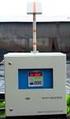 The Ambient Air Monitoring System 1.0 Introduction: The Ambient Air Monitoring System (AAMS) can measure a range of toxic and flammable gases, particulate matter, meteorological and environmental parameters
TAC I/NETTM MR-VAV-AX. Application Specific MicroRegulator TM
 TAC I/NETTM TM TAC s TM has an extensive range ofpre-engineered VAV control sequences, which combined with a fully integrated actuator and airflow transducer, makes it a low Total Installed Cost solution
NC-12 Modbus Application
 NC-12 Modbus Application NC-12 1 Table of Contents 1 Table of Contents... 2 2 Glossary... 3 SCADA...3 3 NC-12 Modbus in general... 3 4 Entire system... 4 4.1 PFC to PC connection alternatives...4 4.1.1
Option field bus: without bus with profibus DP. Design-Index (Subject to change)
 Amplifier / controller cards ED1 Digital amplifier / controller card ED1 for 1 or 2 proportional solenoids 4 analogue inputs, of which 2 for differential inputs 8 digital inputs Card setting via PC, multi-function
Air Quality Performance Test Guidelines. Kansas Department of Health and Environment Bureau of Air and Radiation
 Air Quality Performance Test Guidelines Kansas Department of Health and Environment Bureau of Air and Radiation December 22, 2004 TABLE OF CONTENTS 1. INTRODUCTION 2. TEST PLANNING 2.1 EPA Test Methods