
Kaseya 2. Quick Start Guide. for Network Monitor 5.0
|
|
|
- Madlyn Simon
- 10 years ago
- Views:
Transcription
1 Kaseya 2 Network Monitor Quick Start Guide for Network Monitor 5.0 October 18, 2013

2 Agreement The purchase and use of all Software and Services is subject to the Agreement as defined in Kaseya s Click-Accept EULA as updated from time to time by Kaseya at If Customer does not agree with the Agreement, please do not install, use or purchase any Software and Services from Kaseya as continued use of the Software or Services indicates Customer s acceptance of the Agreement Kaseya. All rights reserved.

3 Contents Getting Started... 1 Pre-Installation Checklist... 1 Server, Gateway or Utilities Installation... 1 Server Sizing... 2 Network Monitor 5.0 Module Requirements... 2 Selecting a Service Account... 2 Running the KNM Startup Guide... 3 Administrator Settings... 4 Gateway Server Settings... 4 Mail Settings... 5 SMS Device Configuration... 5 Credentials Used with Network Discovery... 6 Logging On... 6 Shutting Down Network Monitor... 7 Getting Started... 9 Monitoring... 9 Navigation Default Group and Local Gateway Inheritance Crumbline Lists Views Searches List View Controls Data Views Properties and Commands Edit Menus Moving Nodes Menu Bar Dashboard The K Menu Knowledge Base Articles Knowledge Base Categories Groups Group Commands and Views Devices tab Monitors tab Map tab Schedules tab Toplist tab i

4 Knowledge tab Audit tab Adding / Editing Groups Basic properties edit tab - groups Advanced edit tab - groups Authentication edit tab NOC edit tab Access edit tab Tags edit tab Gateways Gateway Commands and Views Adding a Gateway Troubleshooting gateway connections Editing Gateways Basic properties edit tab - gateways Advanced edit tab - gateways Network Discovery Devices Device Commands and Views Monitor tab State change log tab Adding / Editing Devices Basic properties edit tab - devices Advanced edit tab - devices Dependency Testing Device Templates Monitors Monitor Commands and Views Summary tab Actions tab Simulate alarm tab Adding / Editing Monitors Basic edit tab - monitors Advanced edit tab - monitors Alarm filtering edit tab - monitors Statistics edit tab - monitors Alarm Messages Format Variables Acknowledging Alarms Reports Viewing Report Templates Viewing Quick Reports Viewing Customized Reports ing and publishing reports Scheduling reports ii

5 Configuration Summary iii

6

7 Getting Started Getting Started Network Monitor is a web-based monitoring solution for monitoring the performance and availability of a wide array of network devices. Network Monitor monitoring is agentless, meaning it does not install any software or files on monitored machines. How This Quick Start Guide is Organized 1. Network Monitor Concepts 2. Installation and Setup 3. Configuring Network Monitor - Provides a step-by-step, "first time" demonstration of how to configure Network Monitor. Pre-Installation Checklist Completing the following pre-installation checklist before installing Network Monitor is recommended. 1. Estimate the memory required by Network Monitor to monitor the number of devices on your network, using the recommendations in Server Sizing (page 2). Ensure the system hosting the Network Monitor server has enough free memory to run Network Monitor. 2. Check that the system hosting the Network Monitor server meets all software and hardware requirements. 3. If you choose to use a specified Windows account instead of the default (local system), ensure the Windows account used by the Network Monitor service has sufficient privileges (page 2). 4. If ODBC logging is going to be enabled, create a ODBC system data source on the Network Monitor host machine. 5. If a GSM phone is used, install it and verify that it responds correctly to standard AT commands in a terminal program. When completed you are ready to install Network Monitor. After installing Network Monitor and connecting to the web interface for the first time, consult the topic Running the KNM Startup Guide (page 3). Server, Gateway or Utilities Installation During a KNMsetup.exe install, clicking the Options button displays the following choices. Install server - Selected by default. If monitoring a single subnet, select this option. Recommended for first time evaluations. Install gateway - If monitoring an additional subnet for a server that is already installed, use this option. Utilities - Select this option to install specialized utilities. These utilities are not required. There are four utilities installed: gizmo.exe - The Gizmo system tray application. ide.exe - The Lua Development Environment dme.exe - The Dashboard Map Editor. 1


8 Server Sizing mibcompiler.exe - The MIB Compiler utility. Server Sizing Minimum requirements for using the free version of Network Monitor. 1 GHz CPU 2 GB memory 5 GB free disk space Network Monitor 5.0 Module Requirements Systems Hosting the Network Monitor Server Windows 2003, 2008, or 2008 R2 with the latest service pack Network Monitor comes with its own database and HTTP server Microsoft.Net Framework 4.5 or later Supported Browsers Microsoft Internet Explorer 7.0 or later Opera 9.0 or later Firefox 3.5 or later (Recommended for best viewing experience) The following features must be enabled in your browser settings. Accept third party cookies - Cookies are required to keep track of the user session. Javascript enabled - Java scripts are used by the web interface and must be enabled. Dashboard Map Editor utility Microsoft.Net Framework 4.0 or later Selecting a Service Account Kaseya Network Monitor is a Windows service that is installed to logon using a service account. 2

9 Running the KNM Startup Guide Using the LocalSystem account The built-in LocalSystem account is the default service account assigned to the Kaseya Network Monitor service when installing. While the LocalSystem account is the most convenient way to get Network Monitor up and running, it has many privileges that are unnecessary to run Network Monitor locally. Note: We recommend the Kaseya Network Monitor service be assigned a service account using the fewest number of privileges possible. The Network Monitor account manager can then be used to impersonate Windows accounts with elevated permissions when these permissions are required for tests, actions and events. Network Monitor Required Privileges Network Monitor requires the service account it is assigned to have the following file system permissions: READ, WRITE and EXECUTE to Network Monitor base directory READ, WRITE, MODIFY to all sub-directories The service account may also require the Act as part of operating system privilege to enable Windows account impersonations. Consult your Windows documentation to determine if this privilege must be added. Running the KNM Startup Guide The Server install displays a series of web pages called the KNM Startup Guide to help you configure Network Monitor for first time use. The Startup Guide has five steps. Administrator Settings (page 4) Gateway Server Settings (page 4) Mail Settings (page 5) SMS Device Configuration (page 5) Credentials Used with Network Discovery (page 6) Note: A person logging into the Network Monitor server is referred to as a user. Each user can only have one logon session open at one time. 3


10 Running the KNM Startup Guide Administrator Settings 1. Enter the username and password of the default Network Monitoruser. Passwords are case sensitive. 2. Configure an address for this user. The address is used when Network Monitor is sending notifications or reports. 3. Optionally configure a phone number for this user. The phone number is used when Network Monitor is sending SMS notifications. 4. Clicking Next creates the default user record you will use to logon to Network Monitor after completing the KNM Startup Guide. Gateway Server Settings This is the IP address and port the server listens to for incoming gateway data. All gateways you install are populated with this IP address and port by default. Note: If the Network adaptor drop-down list is blank, do not proceed. Without an IP address specified here, the web interface and gateways will not be able to locate the server. Cancel the install and reinstall Network Monitor on a different machine that displays a value in this drop-down list. 4


11 Running the KNM Startup Guide Mail Settings To send notifications and reports you need to configure the server settings. Two servers can be configured: a primary server and a secondary backup server used in case the primary server is unreachable. SMTP server - Enter the host name of the primary server. If your server requires credentials when sending mail, enter those below. If you are uncertain leave the username and password fields blank. Port - Uses 25 if left blank. SSL - If checked, uses SSL to connect to the server. User Name - If required for authentication, enter the username of an account authorized to use the host server. Password - If required for authentication, enter the password of the account. Default return address - Use the format Display Name < address> or just an address. If no display name is entered, the default display name is KNM. Enter similar information for the SMTP server 2 set of fields. If you want to skip this step and configure these parameters later, click Next to continue. Use the menu > Mail, SMS and messaging page after you logon to update these settings. SMS Device Configuration If you have an SMS device connected to a COM port on the Network Monitor host you can configure Network Monitor to send SMS notifications. Configure SMS - Select this box if you have an SMS device connected to the Network Monitor host. Com port - Select the serial port the SMS device is connected to. 5

12 Logging On Baud rate - Select the baud rate. This is the speed the SMS device is capable of sending and receiving over the COM port. A setting of 2400 is recommended, if you're not sure what to select. PIN code - If your SMS device is a GSM phone or modem, you might need to unlock the SIM card with a PIN code. Enter that PIN code in the PIN code field. Test settings - Click the button to test the configuration, if the test fails make necessary changes or uncheck the Configure SMS check box to skip this part of the wizard. User phone number If you did not enter a phone number on the Administrator Settings (page 4) step of the KNM Startup Guide you can enter it using the menu > My settings page after you logon. Without the phone number in a user record Network Monitor is unable to send an SMS notification to that user. Note: See SMS settings for information. Credentials Used with Network Discovery Network discovery is automatically performed on the local network immediately after the install. Enter a set of credentials that matches the devices on the server's local network. Credentials can always be added after the install and network discovery run again. Windows logon account settings - An administrator level Windows credential is required to return some types of scan data from Windows devices. Use the domain\username format to enter a domain username. UNIX logon account settings - An administrator level UNIX credential is required to return some types of scan data from UNIX devices. SNMP settings - Enter the SNMP community name used by devices on the server's local subnet. Note: The community name, SNMP version, and port used used by Network Monitor to connect to an SNMP device is set on the Authentication (page 33) tab of a device node. The device node may inherit this setting from a parent node. See the Installation Checklist (page 1). Logging On After installing Network Monitor, the logon page displays. 6

13 Shutting Down Network Monitor Enter the username and password you specified on the Administrator Settings (page 4) page. If you closed your browser, you can re-display the logon page using one of the following two methods. From the Network Monitor host: Click the link to the web interface in the Network Monitor program folder in the start menu. Use the following link Note: This link above assumes you accepted the standard parameters during the installation and the Network Monitor web server is running on the default 8080 port. If you have installed Network Monitor on a different host, replace the localhost host name with the name of the Network Monitor host. Shutting Down Network Monitor A standalone Network Monitor installation consists of three different services: Kaseya Network Monitor Kaseya Record Manager Kaseya Local Gateway When upgrading to a new release of Network Monitor, you will need to shut down two of these services for the upgrade process to work. Another reason for shutting down Network Monitor could be maintenance work, such as moving to another server. On the Windows system hosting Network Monitor locate the Administrative Tools > Services > Kaseya Network Monitor service. Right-click the service and select Stop. Confirm the Kaseya Record Manager also stops. This service automatically stops when shutting down the Kaseya Network Monitor service. If performing maintenance on the server running Network Monitor, also stop the Kaseya Local Gateway service. It can take a while for the Kaseya Network Monitor service to shut down. Network Monitor has to finish the monitor tests that are currently running. The services automatically start again after an upgrade installation finishes. 7

14 Shutting Down Network Monitor Agreement The purchase and use of all Software and Services is subject to the Agreement as defined in Kaseya s Click-Accept EULA as updated from time to time by Kaseya at If Customer does not agree with the Agreement, please do not install, use or purchase any Software and Services from Kaseya as continued use of the Software or Services indicates Customer s acceptance of the Agreement Kaseya. All rights reserved. 8

15 Getting Started Getting Started In This Section Monitoring 9 Navigation 11 Default Group and Local Gateway 11 Inheritance 12 Crumbline 13 Lists Views 14 Searches 14 List View Controls 15 Data Views 16 Properties and Commands 17 Edit Menus 17 Moving Nodes 18 Menu Bar 19 Dashboard 20 The K Menu 21 Knowledge Base Articles 22 Knowledge Base Categories 23 Monitoring Network Monitor > Monitoring The Monitoring module is the main module you use to configure Network Monitor. The Monitoring module is organized into three main panels: Navigation - Selects the group, gateway, device or monitor you want to work with. Content - Displays user content and settings such as devices, monitors, or maps either in a list view, a data view or as tabbed properties sheets. 9


16 Getting Started Action - Displays the main properties and commands you can perform for a selected node. N a v ig a t io n C o n t e n t A c t io n 10

17 Getting Started Navigation The navigation tree organizes all groups, gateways, devices and monitors managed by Network Monitor. Using the tree you can quickly browse to any device and monitor. Groups - Used to group other nodes on the navigation tree. Groups do not correspond to a physical device on a network. Think of them as representing logical business units, such as companies or departments, or a set of devices within a network. A node cannot be the child of more than one parent. This includes a group node. Groups can have sub-groups. Groups can be added above or below a gateway. Gateways - A gateway monitors devices sharing the same subnet. For a standard install of Network Monitor there is only one Local gateway and it refers to the same network the Network Monitor server is installed on. Devices - Anything with an IP address. This includes computers, routers, switchers, mobile devices, printers, firewalls, etc. Monitors - A monitor runs a specific test on a device and reports the result back to the server. A device can have multiple monitors. Default Group and Local Gateway Immediately after a new install of Network Monitor v5.0, you'll notice the navigation tree displays a KNM at the highest level, then a Default group, then a Local gateway. All three levels were created for you during the install. Default group - A Groups (page 25) typically represents a logical business unit. In this case the Default group initially represents your own business unit. 11

18 Getting Started Local gateway - A gateway (page 39) listens to devices on a network. The Local gateway listens for devices on your own network. If you like, rename both of these nodes to reflect your own business name. Add additional groups and gateways as needed, for the customers you manage. Inheritance Certain node properties can be inherited by nodes at a lower level. This design enhancement, new in KNM v5.0, affects nearly every other aspect of configuration. With inheritance you can propagate configuration changes to hundreds, even thousands, of devices and monitors effortlessly, simply by making changes to a higher level node in the navigation tree. 12


19 Getting Started For any one node you can elect to use either an inherited setting or override it. For example, the image below shows a setting that is inherited from a higher level node. You'll spot this same convention used throughout the Network Monitor user interface for many different types of properties. Note that overriding an inherited setting affects all lower level nodes inheriting the changes you make. Inheritance is enabled by default for every property that supports it. Crumbline A crumbline at the top of the navigation tree shows you the currently selected node in the tree. You can click anywhere in the crumbline to jump to that node in the navigation tree. Or you can select one of the child nodes of the currently selected node. 13


20 Getting Started Lists Views The middle panel shows the content of any node selected in the navigation tree. If the selected node is a group, gateway or device, you'll see a list like the one below. You can see all the devices and monitors that are members of that group or gateway. For example: The Devices tab displays all the devices that are members of the selected node in the hierarchy. The Monitors tab displays all the monitors that are member of the selected node in the hierarchy. Searches A Search edit box displays in the upper right hand corner. Enter a string to search the navigation tree for all group, gateway and device nodes that match the string entered. Do not press the Enter key. Just wait for the list of nodes to be displayed below the edit box, then select one to display that node. Searches include any text entered in the Description field of a node. Searches include the names and descriptions of users and user groups. 14


21 Getting Started List views typically display a similar Search edit box you can use to filter items in the list view. List View Controls Each list view provides a set of buttons at the top of the list that can be applied to multiple nodes in the list. You can can also page forward, page back, and search a list. Click a column header to sort the list by that column. Filtering Group and gateway list views can be filtered by multiple conditions. Types of filters include: Device property - Device status Device template - The device or monitor is or is not associated with a device template. System type Tag Logical expression 15

22 Getting Started Data Views If the node selected in the navigation tree is a monitor, the middle pane shows the data returned by that monitor. 16

23 Getting Started Properties and Commands When a group, gateway, device or monitor is selected, certain properties and commands display in the right hand pane. Group Commands Gateway Commands Device Commands Monitor Commands When a group is selected, commonly used commands include: Edit Add a subgroup Add a new device When a gateway is selected, commonly used commands include: Edit Add a subgroup Add a new device When a device is selected, commonly used commands include: Edit Add new monitor When a monitor is selected, commonly used commands include: Edit Test Now Edit Menus When you click the Edit command for a selected node you typically see a tabbed set of properties sheets. Hovering the cursor over most fields displays a tooltip balloon on the right side, providing an explanation of the field. 17

24 Getting Started Click the Save or Cancel button to close the edit menu and return to the List View (page 14) or Data View (page 16) of the selected node. Moving Nodes Let's take a look at how the navigation tree can be reorganized by moving one branch of the navigation tree to the next. We'll use the example of moving discovered devices out of a Discovery group. Note: Network discovery (page 45) requires moving discovered devices out of any Discovery group to start generating alert notifications. 1. Select the Discovery group node. Note: Use any group of devices to practice this procedure if a Discovery group node is not available. 2. Select the devices you want to move from the list view. 18

25 Getting Started 3. Click the Move button. The Move devices page displays. 4. Enter text that matches the target node in the Search edit box. A drop-down list of possible nodes displays. 5. Click the target node in the drop-down list. 6. Click the Select button. The target node now displays in the Selected group field. 7. Click Save. The nodes are now moved to their new location in the navigation tree. Note: You can also click the Select button to browse for a target node. Menu Bar A menu bar is always available at the top of the Network Monitor browser window. Click any module in the menu bar to access different collections of data, resources and options. - The "K" menu defines global settings and values, independent of any one node in the navigation tree. Dashboard - The Dashboard (page 20) displays a single page view of the status of all networks and devices you are monitoring Knowledge base - The Knowledge base (page 22) provides user-defined articles on how to use Network Monitor effectively. Articles can be linked to specific nodes in Monitoring navigation tree. 19

26 Getting Started Dashboard Network Monitor > Dashboard The Network Monitor dashboard is a user configurable view, comprising one or more widgets. Each widget displays a different type of real time information. A number of useful widgets are included with Network Monitor. This includes: Status widgets Monitor status Device status Group status Gateway status User status System status Alarm summary NOC widget Map widgets Network map Network map, small Misc widgets Web page Web page, small Favourited items Log entries Toplists Notepad RSS feed - This is a new type of widget provided with Network Monitor v5.0. Click Settings to create or edit a dashboard. Click Add widget to add widgets to a dashboard. 20

27 Getting Started The K Menu Network Monitor > The module at the top of the page defines global settings and values, independent of any one node in the navigation tree. Examples include: Users and user groups Report templates Device templates Maintenance schedules Notifications Note: See the K Menu Reference for more information. 21

28 Getting Started Knowledge Base Articles Network Monitor > Knowledge base The Knowledge base enables you to create a shared set of "how to" articles that can be assigned to any group, gateway, device or monitor. This provides you with instant access the to exact reference material you need to troubleshoot and manage devices. Click any group, gateway or device node and select the Knowledge (page 31) tab to see the list of Knowledge base articles assigned to that node. Related Topics View tabs Commands Edit tabs Knowledge tab (page 31) Knowledge Base Categories (page 23) Summary - Displays the article. Groups attached tab - Lists the groups attached to the current article. Optionally attaches or detaches the current article to groups and devices. Devices attached tab - Lists the devices attached to the current article. Optionally attaches or detaches the current article to groups and devices. Audit tab - Shows the log of users who have updated the article. Edit - Edits the selected article. Attach article - Attaches the current article to groups and devices. Print article - Printed the current article. Delete - Deletes the current article. Basic properties tab - Edits the title and body of an article. Use the following toolbar buttons to add special formatting to the text: 22 The more advanced toolbar buttons are described below. - Source - Enables you to edit the HTML tags controlling the format of the article.
29 Getting Started - Preview the display of text and images. - Pastes content copied from a Word document. - Find and replace. - Remove formatting. - Links and unlinks text to a URL, an anchor or an element ID. Links are only supported within the same article. Insert an named anchor at a location in the article text. Then add a link that jumps the article to that named anchor when you click the link. Use the Source icon to display HTML tags and add an ID attribute to an element. Then add a link that jumps the article to that element ID when you click the link. - Inserts a table at the cursor location. Table properties include number of rows and columns, caption, border width, header, cell spacing, alignment. - Insert a horizontal line as a percentage of the width, or set a fixed width in pixels. - Insert an emoticon. - Insert a symbol. - Insert a page break. Used when printing an article. Advanced tab Link categories / Linked categories - Explicitly links an article to one or more categories. A category is a knowledge base folder containing other categories or knowledge base articles. Clicking a category lists all the articles linked to that category. User rights to view or modify an article are set by category. Add related articles / Related articles - Links an article to other related articles. Related articles are listed in the right side panel when an article is being viewed. See also: Knowledge Base Categories (page 23) Knowledge tab (page 31) Knowledge Base Categories A knowledge base category is a knowledge base folder containing other categories or knowledge base articles. Clicking an category in the knowledge base tree lists all the articles in the middle panel that are either descendants of that category or explicitly linked to that category. Articles are explicitly linked to categories using the Advanced (page 22) edit tab when editing an article. Related Topics Actions Commands Knowledge Base Articles (page 22) Knowledge tab (page 31) Delete - Deletes a selected article Edit - Edits one or more selected articles. If multiple articles are edited, only shared properties can be edited. Move - Moves selected articles to a different position in the knowledge base tree. This does not affect explicit links between articles and categories. Attach article - Assigns an article to selected groups and devices. Edit - Edits a selected article. 23

30 Getting Started Add a subcategory - Adds a subcategory to the current category. Delete category - Deletes the current category. Create a new article - Creates a new article subordinate to the current category. Edit tabs Basic properties tab Access tab Name - The name of the category. Description - A one line description of the category. User rights to view or modify an article are set by category and are optionally inherited from higher level categories in the knowledge base tree. Access permissions are assigned by a combination of user group and category. A user group is a set of one or more Network Monitor users that can log into Network Monitor. For each category, each user group can be assigned one of five types of permissions: Inherit - Users inherit the permission from the parent category. No access - Access is not even visible in the navigation tree. See the one exception further down. View only - The category is visible and its articles can be viewed. Users cannot modify the category or create new articles. Content Administrator - Users can modify existing articles of the category, but not create or delete articles. Content Creator - Users can both modify existing articles and create new articles. For example, if you set the permission for a category and user group to View only, users in that group can only display that category and view any data it generates. Since most categories inherit their user group permissions from their parent node, setting permissions for a category also sets the same permissions for sub-categories set to Inherit. If a user is a member of multiple user groups, for any one category it is the group with the lowest ranking permission that sets the effective permission for that user. 24

31 Groups Groups Groups are "container" nodes used to group other nodes in the navigation tree. Logical Business Units Think of groups as representing logical business units. Say you're asked to monitor three gateways for a single business. Create a group with three gateways. Rename the group to reflect the name of the business. Rename the three gateways to reflect their business locations. When you Edit any group, click the Advanced tab. You'll notice contact information can be entered for the business unit a group represents. If a device requires on-site intervention, display the devices's closest parent in the navigation tree for the contact information you need. Groups and sub groups can also be defined below gateways. For example, you might have to deliver specialized services to a set of devices within a single subnet. It easiest to distinguish these devices by grouping them together. In this case you might rename the group by the department name or by the set of services you are delivering. Inheritance by Group The power of groups goes far beyond organizing and labeling. When you edit a group you'll find it includes many properties, such as alert settings, authentication, access and map locations. This allows you to set properties for all the child devices of the group using inheritance. This can include subgroups, gateways, devices, and monitors. If you take the time to organize the devices you manage by groups and subgroups and use the inheritance feature, it can greatly reduce the amount of time spent configuring devices individually. The Root Node It might be tempting to think of the root node called KNM by default as the "server" but it's not. It's just 25
32 Groups another group. Group properties set for the root note can be inherited by lower level nodes, just like any other group. In this case, settings can be potentially inherited by every other node in the navigation tree. In This Section Group Commands and Views 26 Adding / Editing Groups 32 Group Commands and Views Commands Views 26 These same commands display when a group node is selected, regardless of the tab selected at the top. Edit - Edits the properties (page 32) of a group. Add a subgroup - Creates a new group (page 32) as a child node. Deploy a new gateway - Creates a gateway (page 43) node. This option only displays if the group has no parent gateways. Move to other group - Moves the currently selected group to another group. Delete group - Deletes the currently selected group. Add a new device - Adds a device (page 47) to a group. Add new scheduled event - Schedules a new event (page 28). Create a report - Creates a report (page 68). Groups and gateways share the same set of views. Devices tab (page 26) - This tab displays with groups and gateways. Monitors tab (page 27) - This tab displays with groups, gateways, and devices. Map tab (page 27) - This tab displays with groups and gateways. Toplist tab (page 30) - This tab displays with groups, gateways, and devices. Schedules tab (page 28) - This tab displays with groups and gateways. Actions tab (page 55) - This tab displays with groups, gateways, devices and monitors. Knowledge tab (page 31) - This tab displays with groups, gateways, and devices. Audit tab (page 31) - This tab displays with groups, gateways, devices and monitors. Devices tab Actions This tab displays with groups and gateways. The Devices tab isplays all devices on multiple levels that are members of this node. These are the actions available at the top of the list view when one or more devices are selected. Activate - Activates selected devices and all monitors assigned to those devices. Deactivate - Deactivates selected devices and all monitors assigned to those devices. Copy - Copies selected devices and all monitors assigned to those devices to another group. Delete - Deletes selected devices and all monitors assigned to those devices.
33 Groups Edit - Edits a selected device. If multiple devices are selected, edits only those properties shared by those devices. Move - Moves selected devices and all monitors assigned to those devices to another group. View report - Generates a report (page 68) for selected devices. Table Columns Name - The name of the device. Address - The network name or IP address. Group - The immediate parent node of the device. OS Type - The system type of the device. Monitors tab Actions This tab displays with groups, gateways, and devices. The Monitors tab displays all monitors on multiple levels that are members of this node. These are the actions available at the top of the list view when one or more monitors are selected. Acknowledge alarm - Acknowledges alarms (page 68) on selected monitors. Activate - Activates selected monitors. Deactivate - Deactivates selected monitors. Edit - Edits a selected monitor. If multiple monitors are selected, edits only those properties shared by those monitors. Copy - Copies selected monitors to selected devices. View report - Generates a report (page 68) for selected devices. Table Columns Map tab Name - The name of the monitor. Click the name of a monitor to jump to that node. Device - The name of the monitor. Click the name of the device to jump to that node. Type - The type of monitor. Next test - The next time the test is scheduled to be run. This tab displays with groups and gateways. The Maps tab displays a large map when a map-enabled node is selected. The large map scales automatically to encompass the locations of all map-enabled child nodes of the currently selected node. Clicking a map location icon jumps to that node in the navigation tree. If an icon represents multiple child nodes at the same location, a list of child nodes displays. Clicking a child node jumps to that node in the navigation tree. Smaller Map A smaller map, in the lower right hand corner of the page, shows the location of the currently selected node. Inheritance Groups, gateways and devices can be associated with a location on a map and a local time zone. Lower level nodes can inherit their geographical locations from their parent nodes. For example, setting the location of gateway or group for a single building can effectively set the location and local 27

34 Groups time zone for all the devices in the same building. Configuration Map settings are typically configured on the Advanced tab of a node. Network Monitor is integrated with the Google Maps API. This means you can use either the name of a location or GPS coordinates using decimal notation, such as , , to identify the location of any node. Map and location settings Inherit map settings - If checked, map settings (page 27) are inherited from the parent node and the other three map options remain hidden. Uncheck to specify your own map settings. Map setting - Use google maps. This is the only option available at this time. Google map display - Checking these options determines whether gateways, groups and devices are shown on the map. Geographic location - Enter the name of a location or GPS coordinates using decimal notation, such as , Time zone - Monitors display their real time charts in the device's local time. Inherit time zone - If checked, inherits time zone settings from the parent node. Uncheck to specify you own time zone settings. Schedules tab This tab displays with groups and gateways. The Schedules tab schedules actions for a specific date and time instead of waiting for a monitor to trigger the action. Events can be scheduled to run once or repeatedly. Note: Events are not inherited. Any group or gateway can schedule any event for any host. For security reasons, you should use schedule events from one of the parent groups or gateway node of the device you're targeting. This ensures scheduled events for these devices can be viewed only by users who are authorized to see them. 28

35 Groups Click the Schedules tab for any group or gateway. The tab shows any previously scheduled events. Click the Add schedule event command. A list of event actions displays. Click one to edit the event. The configuration details depend on the type of event action you select. When specifying a host, enter the DNS hostname or IP address. Scheduling an event from a parent group or gateway for the device you're targeting is more likely to provide you with the appropriate credential, if one is required. Scheduling All events provide the same scheduling options. Run Once Events Date - Enter the date. Time - Enter the time. Repeating Events Active between - Specifies the date range the event repeats. Specify the range using a YYYY-MM-DD format. If these fields are left empty the event is always repeats. Day of week - By checking a day, the event repeats only on selected days of the week. 29

36 Groups Hour(s) in day - The hour and minute each day you want the event to repeat. Format is HH:MM,HH:MM,... Last in month - If checked, the event repeats the last day of every month. Days in month - If checked, the event repeats on specific days of the month. Specify days separated with a comma. Toplist tab This tab displays with groups, gateways, and devices. The Toplist tab displays the values returned by multiple devices for the same type of monitor. These values are continuously updated in real time. This enables you to compare the values and identify poor performing monitors. Because multiple devices are required for a toplist, only groups and gateways displays a Toplist tab. Toplists can also be included in reports. Refresh - If checked, refreshes the page. Choose one of the following: Snapshot - A snapshot toplist displays the latest value for each monitor in the list. Stored list - Stored list toplists display the min, max and average of monitor values, for a selected daily, weekly and monthly time periods. Load - Displays the selected toplist. Load for Compare - Compares two toplists. 1. Select a first toplist and click Load. 2. Select a second toplist of the same Type, then click Load to Compare. The first toplist displays on the on left. The second toplist displays on the right. You can now see how the monitored properties for a particular monitor changed between the two toplists. 30
37 Groups The following Sort options can only be used when comparing two toplists. Top movers - Entries that have moved the most up or down. Top climbers - Entries that moved up the most. Top fallers - Entries that have moved down the most. Type - The toplist data type and unit of measure. CPU utilization Disk utilization Free disk space Bandwith utilization Ping roundtrip time Ping packetloss Free memory Swap utilization Webpage fetch time Data Sampled min value Sampled max value Period average Sort Lowest entries first Highest entries first Entries - Number of entries to display. Knowledge tab Actions This tab displays with groups, gateways, and devices. The Knowledge tab displays the list of knowledge base articles assigned to that node. Visibility of articles on the Knowledge tab is determined by the permissions set on the Access (page 23) tab of the categories linked to each article. Attach article - Assigns selected articles to selected groups and devices. Detach article - Unassigns selected articles from selected groups and devices. Related Topics Audit tab Knowledge Base Articles (page 22) Knowledge Base Categories (page 23) This tab displays with groups, gateways, devices and monitors. An Audit tab displays on every node of the navigation tree. Log entries describe every configuration action performed by a Network Monitor user on the currently node. 31

38 Groups Note: Searches are case sensitive. Adding / Editing Groups 32 (selected group or gateway) > Add a subgroup (selected group) > Edit The Edit group page configures the properties of a group node. Since groups are "container" nodes, most of the properties can only be used when inherited by lower level nodes. Basic properties tab (page 32) - Groups, gateways, and devices display a Basic properties edit tab. Advanced tab (page 32) - Groups, gateways, devices, and monitors display an Advanced edit tab. Authentication tab (page 33) - This edit tab displays with groups, gateways, or devices. NOC tab (page 35) - This edit tab displays with groups, gateways, or devices. Access tab (page 36) - This edit tab displays with groups, gateways, or devices. Tag tab (page 37) - This edit tab displays with groups, gateways, or devices. Basic properties edit tab - groups Groups, gateways, and devices display a Basic properties edit tab. Basic properties Name - Enter a name for the group. Oftentimes a group corresponds to a logical business unit of a customer. Description - A longer description of the group. Alert and recovery settings Inherit notification group - Sets the notification group for this node. For groups, gateways and device nodes you can override the default notification user group messages are sent to. Monitor nodes use the notification group specified by their parent device node and cannot be overridden. Inherit alarm messages - Sets the Alarm Messages (page 63) format for this node. Inherit actions - If checked, inherited actions and inherited recovery actions are included on the Actions tab (page 55) of this node. Advanced edit tab - groups Groups, gateways, devices, and monitors display an Advanced edit tab. Map and location settings Inherit map settings - If checked, map settings (page 27) are inherited from the parent node and the other three map options remain hidden. Uncheck to specify your own map settings. Map setting - Use google maps. This is the only option available at this time.
39 Groups Google map display - Checking these options determines whether gateways, groups and devices are shown on the map. Geographic location - Enter the name of a location or GPS coordinates using decimal notation, such as , Time zone - Monitors display their real time charts in the device's local time. Inherit time zone - If checked, inherits time zone settings from the parent node. Uncheck to specify you own time zone settings. Group dependency settings Note: Dependency settings only display for group nodes below a gateway node on the navigation tree. Inherit dependency - This setting determines the currently selected node's dependency (page 51) on one or more specified monitors. If checked, this node inherits it dependency from the parent node. If blank, you can define a dependency based on a different set of monitors within the same gateway branch of the navigation tree or leave no monitors specified to ensure this node has no dependencies. Select dependency monitor / Selected monitors - Enter text to display the names of monitors in the Select dependency monitor list that match the text entered. Select one or more monitors in the list, then click the Add button to add the monitors to the Selected monitors list. You can also click the Select button to browse for target monitors. To remove a monitor, select it and click the Remove button. Contact information Enter contact information for the business unit a group represents. If a device requires on-site intervention, display the devices's closest parent in the navigation tree for the contact information you need. Company Contact name Phone Cellphone Fax Address 1 Address 2 Additional Authentication edit tab This edit tab displays with groups, gateways, or devices. The Authentication edit tab stores credentials used by Network Monitor to authenticate access to network devices. 33

40 Groups If you're familiar with earlier versions of Network Monitor, you'll recall that credentials were maintained as a single long list. Keeping straight which credentials went with which device and monitor was up to you, no matter how many customers you managed. With Network Monitor v5.0, credentials are managed using inheritance. That means you can set credentials for a single gateway or group in the navigation tree and all child devices and monitors will make use of them. Moreover you can be certain these same credentials will never be confused with other credentials set for other branches in the tree. 34 For any one type of authentication, if Inherit credentials is checked, the credentials are inherited from a higher level node. If the checkbox is uncheck, enter credentials for this type of authentication. These credentials will be used by this node and all lower level nodes that inherit this type of authentication. If the name of specified credentials does not display in parentheses next the name of the higher level node, it means that credentials are not yet defined at the higher level node. Types of authentication include: Windows domain credentials - Specifies Windows local or domain credentials. Leave the Domain or Computer field blank to specify localhost credentials. Applies to multiple monitors using Windows authentication. SSH Telnet credentials - Specifies SSH and Telnet credentials. SNMP credentials - Specifies SNMP credentials. The required parameters depend on the version of SNMP used to connect to the device: SNMP v1 or SNMP2c - Enter the Read community name and Write community name. SNMP v3 - If authentication is required SNMPv3 Context ID - Optional. A string matching one or several context IDs specified by the SNMP agent on the device to limit the data returned. Auth method - The algorithm used for authentication: None, HCMA-MD5, or HCMA-SHA1. SNMPv3 username - The name of the SNMP manager used to access the SNMP agent on the remote device. SNMPv3 Passphrase - A sequence of words, similar to a password.

41 Groups SNMPv3 Encryption - The algorithm used to ensure privacy using data encryption: None, DES or AES-128. SNMPv3 Crypto key - The string used for data encryption. VMware credentials - Specifies VMware credentials. Additional credentials - You can add additional credentials for the following. CIM account Exchange account FTP account HTTP account IMAP account LDAP account MySQL account ODBC account Oracle account POP3 account RADIUS account SMTP account SQL server account NOC edit tab This edit tab displays with groups, gateways, or devices. The NOC edit tab assigns a group, gateway or device node to a NOC view. Network Operation Center (NOC) widgets are compact, full-screen information views that display the status of a collection of networks and devices. They are normally displayed on dedicated monitors and are particularly useful in conjunction with the Auto login feature. NOC views display group, gateway and device status hierarchically, in a matrix format. All groups, gateways and devices are listed vertically, with the status for each monitor type horizontally. The overall status is shown in the large colored rectangle at the left. Configuring a NOC view and widget 1. The menu > Users & user groups > User list > ( to edit) > Dashboard access > NOC status checkbox must be checked for each user requiring access. 2. A default Group NOC is already defined. To define additional NOC views use the > Monitoring > NOC settings page. 3. A selected group node or gateway node must be assigned to at least one NOC view using the Edit > NOC tab. For example, check the Group NOC checkbox checked if that is the only checkbox available. 4. Select Dashboard > Add widget > NOC widget. 5. Select the icon on the right side of the widget title bar to configure the following settings. Title - The title displayed with the NOC widget on the dashboard. 35
42 Groups Select - Select the default Group NOC or any other NOC view that you have created to display that NOC view. 6. Optionally use the Auto login feature to display a NOC view on a dedicated monitor. Access edit tab This edit tab displays with groups, gateways, or devices. The Access tab controls access to different branches of the navigation tree. Click Edit for any node down to the device level, then click the Access tab to see these settings. As with other aspects of Network Monitor this feature can be inherited from parent node to child node. This means Network Monitor business data security can be intuitively managed using the same navigation tree you use to monitor devices. Note: A user with the System admin checkbox checked has access to all nodes, devices and user interface options, regardless of other access settings. User Groups and Permissions Access permissions are assigned by a combination of user group and node. A user group is a set of one or more Network Monitor users that can log into Network Monitor. For each node, each user group can be assigned one of five types of permissions: Inherit - Users inherit the permission from the parent node. None - Access is not even visible in the navigation tree. See the one exception further down. View - The node is visible and its content can be viewed. Users cannot modify the node or create new content. Modify - Users can modify existing contents of the node, but not create or delete content. Create - Users can both modify existing content and create new content. For example, if you set the permission for a node and user group to View, users in that group can only display that node and view any data it generates. Since most nodes inherit their user group permissions from their parent node, setting permissions for a node also sets the same permissions for child devices set to Inherit. If a user is a member of multiple user groups, for any one node it is the group with the lowest ranking permission that sets the effective permission for that user. 36

43 Groups Revert All Child Permissions The Access tab includes a powerful option call Revert child permissions to inherit. This sets all the descendants of the current node to inherit. This means you can be confident the permissions you set will be obeyed all the way down the tree from the current node. Creating User Groups User groups are not created using the navigation tree. Instead click the icon in the upper left hand corner. The menu defines global settings and values, independent of any one node in the navigation tree. Select Create a new user group. Once created you can assign users to each user group. For a new user group permissions are set to None for all nodes by default. Adjust the node permissions for a new user group after creation. Tags edit tab This edit tab displays with groups, gateways, or devices. The Tags edit tab creates and edits tags and assigns a node to one or more tags. A new feature in Network Monitor v5.0 is the ability to classify nodes, users and other types of records using one or more user-defined tags. The only type of node that cannot be classified using tags are monitors. For example, you could classify devices by the department they belong to. You could create a DEPT tag with multiple values: Sales, Accounting, Marketing, Development, Manufacturing, Distribution. View lists can be subsequently filtered or reported on by their assigned tags. An example is shown in the image below. 37

44 Groups For example, to create and assign tags to a node in the navigation tree, select a group, gateway, or device. Then click Edit, then the Tags tab. There are two types of Scope for a tag. The scope determines what other types of nodes can use the tag. Global - Any type of record can use the tag. Device, Group, or User - If a device node has been selected, only other devices can use the tag. If a group or gateway has been selected, only other gateways or groups can use the tag. If a new user has been selected, only other users can use the tag. You must also specify the type of Data entry required for a tag, when a user assigns a tag to a node. None - No data is required. For example, you might simply assign a tag called InMaintenance and leave it at that. Text - The user can enter any kind of string. For example, a tag called Note allows the user to enter whatever they want. Choice - The user selects one of several fixed values. For example, a LicenseStatus tag could be set to one of three fixed values: Licensed, Unlicensed or TrialEvaluation. Date - The user selects a date. For example, a tag called RepairDueDate could represent the expected date of repair for a device. 38
45 Gateways Gateways Network Monitor supports the monitoring of servers, routers and other types of devices on multiple networks. A gateway is installed on the server's local network and each remote network managed by Network Monitor. Devices are monitored by the gateway sharing their same network. Each gateway, local and remote, sends its monitoring results back to the Network Monitor server. Network Monitor Server The Network Monitor server contains a database and management interface providing a consolidated view of all data returned by all gateways. Remote gateway devices are managed exactly the same as any local gateway. This makes Network Monitor very simple to configure and manage. This process is completely transparent to the user. Network Monitor Gateway A gateway is a special version of the KNMsetup.exe installation that only acts on requests from the server. Except for a small cache file, gateways do not store any configuration or statistical data locally. All data is sent immediately to the server. The gateway can be installed on any available machine in the remote network and does not require a dedicated server. Server and Gateway Communication The data between a gateway and the server is always sent from the gateway to the server. The idea behind this solution is that more gateways than servers are deployed, so the administrator only has to 39
46 Gateways open one port on the server firewall to allow communication. If, for any reason, the gateway cannot connect to the server, the gateway starts buffering test results and statistics while waiting for the server. This buffering time can be configured per gateway. Security and data integrity is achieved by using the state of the art communication protocol SSH2. The SSH2 protocol encrypts data with public key algorithms and protects connections from man-in-the-middle attacks. This is the same way VPN software establish secure tunnels over the internet. Time Synchronization Network Monitor automatically adjusts for time zone differences. The administrators must ensure the clock on gateways are synchronized with the clock in the Network Monitor server. We recommend that server and gateways be synchronized with a time synchronizing service such as NTP (Network Time Protocol). Failure to synchronize time between server and gateway may lead to unpredictable results in alarm generation and statistical storage. Gateway nodes Gateway nodes display as specialized nodes on the navigation tree. Gateway views, commands and properties are similar to groups (page 32). Gateway nodes have additional, specialized properties and commands (page 40) for managing a gateway installed on a network. In This Section Gateway Commands and Views 40 Adding a Gateway 41 Editing Gateways 43 Network Discovery 45 Gateway Commands and Views Commands Views 40 These same commands display when a gateway node is selected, regardless of the view tab selected at the top. Edit - Edits the properties (page 32) of a gateway. Add a subgroup - Creates a new group (page 32) as a child node. Move to other group - Moves the currently selected gateway to another group. Delete gateway - Deletes the currently selected gateway. Add a new device - Adds a device (page 47) to the gateway. Add new scheduled event - Schedules a new event (page 28). Create a report - Creates a report (page 68). Download configuration - Downloads the configuration file, gateway.nxd, required for an installed gateway to connect to the server. Push configuration - Updates the gateway with gateway configuration changes. For example, use this command after adding an IP number to the server address list. Groups and gateways share the same set of views. Devices tab (page 26) - This tab displays with groups and gateways.
47 Gateways Monitors tab (page 27) - This tab displays with groups, gateways, and devices. Map tab (page 27) - This tab displays with groups and gateways. Toplist tab (page 30) - This tab displays with groups, gateways, and devices. Schedules tab (page 28) - This tab displays with groups and gateways. Actions tab (page 55) - This tab displays with groups, gateways, devices and monitors. Knowledge tab (page 31) - This tab displays with groups, gateways, and devices. Audit tab (page 31) - This tab displays with groups, gateways, devices and monitors. Adding a Gateway Adding a gateway involves the following main steps. 1. Add and configure a gateway node on the navigation tree. 2. Export the gateway node's configuration to a data file. Procedure 3. Use knmsetup.exe to install a new gateway on the system hosting the gateway. 4. Copy the configuration file to a directory on the system hosting the installed gateway. 5. Restart the gateway service on the host of the gateway system. 1. Select a group that will serve as the parent group of the new gateway (page 39). Note: The group must be above or equal in rank to other gateways that already exist on the tree. You cannot create a gateway below another gateway on the same branch. 2. Click the Deploy a new Gateway command. The Edit gateway > Basic properties tab displays. 3. Enter the Name and Description of the new gateway. 4. Enter Address and Port settings for the gateway. If, for evaluation purposes, a Network Monitor server and gateway are installed on the same subnet, the Address and Port fields on this page should match the Server IP and Port fields on the Gateway server settings page. If the server is installed behind a NAT firewall, specify the external IP and port of the NAT firewall. The NAT firewall should then be configured to redirect to the internal IP and port specified by the Server IP and Port fields of the Gateway server settings page. 5. Select the new gateway in the tree. A icon displays next to the new gateway indicating the gateway is disconnected from the server. 6. Click the Download configuration command. Clicking this command creates two files in the <KaseyaInstallDirectory>/knm/gateways/<GatewayName> directory of the server host machine. gateway.nxd readme.txt 7. Install Network Monitor on the gateway host machine using the same knmsetup.exe used to install the server. 8. During the install, click the Options button and ensure the Gateway option is selected. 9. Complete the install. No user interface displays after a gateway is installed. 10. Stop the Kaseya Network Monitor service on the gateway host machine. 41
48 Gateways 11. Copy the gateway.nxd file from the server host machine into the <KaseyaInstallDirectory>/knm directory of the gateway host machine. 12. Start the Kaseya Network Monitor service on the gateway host machine. 13. Check the status of the new gateway in the Network Monitor user interface. The new gateway should now display a icon, indicating it is connected to the server. If the new gateway fails to connect, see Troubleshooting gateway connections (page 42). Note: To monitor the gateway add a device node below the gateway node that specifies an address of localhost or Troubleshooting gateway connections Troubleshooting gateway connection problems Review the gateway configuration. Ensure the correct IP and port number has been entered. Ensure all the gateway configuration files in the KNM\Gateway directory have been copied to the KNM folder of the host gateway machine. If you have reinstalled the server on a new machine, the gateway configuration must be updated to update the public key file. After the gateway configuration is saved, move the gateway configuration files to the \Gateway root directory and restart the gateway. If you changed the gateway configuration (IP number and port number) move the updated configuration files to the gateway and restart the gateway. The server shuts down any gateway that does not match the server version number. Gateways can be updated directly from the Network Monitor management interface by choosing the Update gateway command on a selected gateway. The gateway name is part of the server login session, if you change the gateway name you have to move the gateway configuration files to the gateway for it to be able to reconnect. Logging debug information To enable debug logging on the gateway, open the init.cfg file on the gateway and enter the following line: LOG_LEVEL=2. A debug file called debuglog.txt is written to the \logs directory. Running the gateway in debug mode Local gateway - To run the local gateway in debug mode you first need to stop the Kaseya Local Gateway (nmservicelg.exe) service on the system hosting the local gateway. When the service has been stopped start cmd.exe and navigate to the <KaseyaInstallDirectory>\knm\local_gateway directory. Start the gateway by entering the following line: nmservicelg.exe -d Remote gateway - To run a remote gateway in debug mode you first need to stop the Kaseya Network Monitor (nmservice.exe) service on the system hosting the remote gateway. When the service has been stopped start cmd.exe and navigate to the <KNMInstall> directory. Start the gateway by entering the following line: nmservice.exe -d 42
49 Gateways Editing Gateways Network Monitor > (selected gateway) > Edit The Edit gateway page configures the properties of a gateway node. Gateways nodes share many of the same properties as groups (page 32). Gateway nodes have additional, specialized properties and commands (page 40) for managing a gateway installed on a network. Basic properties tab (page 43) - Groups, gateways, and devices display a Basic properties edit tab. Advanced tab (page 43) - Groups, gateways, devices, and monitors display an Advanced edit tab. Authentication tab (page 33) - This edit tab displays with groups, gateways, or devices. NOC tab (page 35) - This edit tab displays with groups, gateways, or devices. Access tab (page 36) - This edit tab displays with groups, gateways, or devices. Tag tab (page 37) - This edit tab displays with groups, gateways, or devices. Basic properties edit tab - gateways Groups, gateways, and devices display a Basic properties edit tab. Basic properties Name - Enter a name for the gateway. Description - A longer description of the gateway. Alert and recovery settings Inherit notification group - Sets the notification group for this node. For groups, gateways and device nodes you can override the default notification user group messages are sent to. Monitor nodes use the notification group specified by their parent device node and cannot be overridden. Inherit alarm messages - Sets the Alarm Messages (page 63) format for this node. Inherit actions - If checked, inherited actions and inherited recovery actions are included on the Actions tab (page 55) of this node. Advanced edit tab - gateways Groups, gateways, devices, and monitors display an Advanced edit tab. Map and location settings Inherit map settings - If checked, map settings (page 27) are inherited from the parent node and the other three map options remain hidden. Uncheck to specify your own map settings. Map setting - Use google maps. This is the only option available at this time. Google map display - Checking these options determines whether gateways, groups and devices are shown on the map. Geographic location - Enter the name of a location or GPS coordinates using decimal notation, such as , Time zone - Monitors display their real time charts in the device's local time. Inherit time zone - If checked, inherits time zone settings from the parent node. Uncheck to specify you own time zone settings. Group dependency settings Inherit dependency - This setting determines the currently selected node's dependency (page 51) on one or more specified monitors. If checked, this node inherits it dependency from the parent node. If blank, you can define a dependency based on a different set of monitors within the same 43
50 Gateways gateway branch of the navigation tree or leave no monitors specified to ensure this node has no dependencies. Select dependency monitor / Selected monitors - Enter text to display the names of monitors in the Select dependency monitor list that match the text entered. Select one or more monitors in the list, then click the Add button to add the monitors to the Selected monitors list. You can also click the Select button to browse for target monitors. To remove a monitor, select it and click the Remove button. Network discovery Network discovery can only be run manually from the Advanced tab of a gateway node. See Network Discovery (page 45). 1. Click the Enable checkbox for the Network Discovery section of this tab. 2. Specify up to three subnets. A tooltip displays accepted formats: Using CIDR notation /24 By Range Single IP Address Click the Start now checkbox. 4. You must move discovered devices out of the Discovery group (page 18) to start generating alert notifications. Receive Syslog messages Syslog server - If checked, enables Syslog messages intercepted on the gateway's network to be forwarded to the server. Ensure the > Other > Other system settings > Syslog checkbox is also checked. The Syslog monitor requires these two checkboxes be enabled. Once checked, intercepted syslog messages display on the > Tools > List syslog messages page. Port - Defaults to 514. Receive SNMP traps SNMP trap - If checked, enables SNMP trap messages received from the gateway's network to be forwarded to the server. The SNMP trap monitor requires this checkbox be enabled. Once checked, received syslog messages display on the > Tools > List syslog messages page. You can create SNMP trap monitors directly from the List syslog message pages, based on selected messages. IP - The host name or IP number of the receiver of the traps. Port - Port number that the trap receiver listens to. Community filter - SNMP trap community string. Agent IP range filter - Filters the forwarding of SNMP trap messages by IP address. Misc settings Sync MIBs - If checked, Network Monitor automatically updates this gateway with MIB files added to the server. Notification group - Group that is notified by if the gateway does not connect in a timely fashion. Disable auto update - If checked, disables auto update. If blank, this gateway is automatically updated with the latest version of Network Monitor when the server is updated. 44
51 Gateways Network Discovery Network discovery is run manually from the Advanced (page 43) edit tab of a gateway node. Immediately after a new install, you'll notice a Discovery group created for the Local gateway. The Discovery group contains all the devices discovered on your own local network. If you create a new gateway (page 41), a similar discovery group is created just below that gateway. After the initial run, network discovery runs daily at 2:00 AM, gateway time, by default. One Gateway Per Local Area Network The gateway performing the discovery needs to be physically or logically (VLAN) connected to the network that you specify. Having router access only is not enough. Network discovery uses ARP requests to look up the MAC address of IP addresses, and ARP requests never travel beyond the same local area network (router). There is no way for the the gateway to see the MAC address of devices beyond the local area network. So to get the best possible coverage from network discovery at least one gateway must be placed in each local area network. Monitoring and Alerts You can assign monitors to devices in the Discovery group and even see the data reported back by the monitor. But you cannot generate an alert for a device while it is inside the Discovery group. Licensing No monitoring licenses are consumed by a device inside the Discovery group. When you move a discovered device out of the Discovery group, a license is consumed. Running Network Discovery Manually Network discovery can only be run manually from the Advanced tab (page 43) of a gateway node. 1. Select a gateway node in the navigation tree. 2. Click Edit in the right hand pane. 3. Click the Advanced tab. 4. Click the Enable checkbox for the Network Discovery section of this tab. 5. Specify up to three subnets. A tooltip displays accepted formats: 45

52 Gateways Using CIDR notation /24 By Range Single IP Address Click the Start now checkbox. 7. You must move discovered devices out of the Discovery group (page 18) to start generating alert notifications. 46

53 Devices Devices Network Monitor monitors devices. A device represents a computer or any other type of network device that can be accessed by an IP number or host name. Each device managed by Network Monitor displays as a separate node in the navigation tree. The parent node of a device is either a gateway or a group. A selected device node provides a list view of all the monitors assigned to that device. Device Commands and Views Commands These same commands display when a device node is selected, regardless of the view tab selected at the top. Edit - Edits the properties (page 49) of the device. Add new monitor - Adds a new monitor (page 59) to the device. Deactivate device - Deactivates the device. Inspect now - Inspects a device to determine the appropriate pre-configured monitors for the device. This is the same inspection performed on devices during Network Discovery (page 45). You may want to run Inspect Now if the credentials or configuration of the device have changed. After running Inspect Now, click Add New Monitor to see the list of pre-configured monitors. Move device - Moves the device to a different group or gateway. Delete device - Deletes the device. Apply template - Applies a device template (page 52). Save as template - Saves the set of monitors as a device template (page 52). Create a report - Views, s or publishes a report (page 69). 47
54 Devices Views Open MIB browser - Displays the list of OIDs supported by a device that can be monitored using SNMP. A device must be SNMP enabled to display OIDs. Monitor tab (page 48) - This tab displays with groups, gateways, and devices. Actions tab (page 55) - This tab displays with groups, gateways, devices and monitors. Knowledge tab (page 31) - This tab displays with groups, gateways, and devices. Toplist tab (page 30) - This tab displays with groups, gateways, and devices. Audit tab (page 31) - This tab displays with groups, gateways, devices and monitors. State change log tab (page 48) - This tab displays with devices and monitors. Monitor tab Actions This tab displays with groups, gateways, and devices. These are the actions available at the top of the list view when one or more monitors are selected. Activate - Activates selected monitors. Deactivate - Deactivates selected monitors. Acknowledge alarm - Acknowledges alarms (page 68) on selected monitors. Copy - Creates selected monitors to selected devices. Delete - Deletes selected monitors. Edit - Edits a selected monitor. If multiple monitors are selected, edits shared standard monitor properties (page 62) of these monitors. View report - Generates a report for selected devices. Table Columns Name - The name of the monitor. Type - The type of monitor. Alarms - The alarm count (page 53). - This column is only displayed on device nodes. Status - The latest result returned from the monitor. This column is only displayed on device nodes. Next test - The next time the test is scheduled to be run. State change log tab This tab displays with devices and monitors. The State change log tab displays whenever a device node or monitor node is selected. This tab lists the status changes for each monitor assigned to a device. 48

55 Devices Note: Searches are case sensitive. Adding / Editing Devices <selected group or gateway> > Add a new device > Empty device <selected device> > Edit The New device page and Edit device page display almost the same properties. The New device page gives you an additional option of deploying monitors automatically, based on a initial inspection of the device. Basic properties tab (page 49) - Groups, gateways, and devices display a Basic properties edit tab. Advanced tab (page 50) - Groups, gateways, devices, and monitors display an Advanced edit tab. Authentication tab (page 33) - This edit tab displays with groups, gateways, or devices. NOC tab (page 35) - This edit tab displays with groups, gateways, or devices. Access tab (page 36) - This edit tab displays with groups, gateways, or devices. Tag tab (page 37) - This edit tab displays with groups, gateways, or devices. Basic properties edit tab - devices Groups, gateways, and devices display a Basic properties edit tab. Basic properties Name - Enter a name for the device. This should be a descriptive name used to identify the device in lists and notifications sent to users. Address - Enter the network address of the device. This can be a host name or an IPv4 number. Operating system - Select the device's system type. The operating system determines the type of monitors that can be added to this device. If you do not know what system type the device is or the system type is unavailable, select the Other/Unidentified option. For Windows performance monitors to work properly, it is essential that the system type be specified correctly. Device type - Classifies the type of hardware device. For reference purposes only. 49
56 Devices Description - The description field can be used to describe the device in greater detail. For example, the type of hardware or physical location. Free text - The free text field can be used to include other information about the device and can also be included in alarm notifications. Initial monitor deployment This option only displays on the New device page. Monitor deployment None, add empty device - Adds the device without adding any monitors. Automatic, add monitors after inspection - Adds an appropriate set of monitors for this device after an initial inspection of the device. Alert and recovery settings Inherit notification group - Sets the notification group for this node. For groups, gateways and device nodes you can override the default notification user group messages are sent to. Monitor nodes use the notification group specified by their parent device node and cannot be overridden. Inherit alarm messages - Sets the Alarm Messages (page 63) format for this node. Inherit actions - If checked, inherited actions and inherited recovery actions are included on the Actions tab (page 55) of this node. Advanced edit tab - devices Groups, gateways, devices, and monitor display an Advanced edit tab. Advanced Active - If checked the device is considered active. Active devices test their monitors. This option is checked by default. SSH2 connect. sharing - If checked, enables persistent SSH2 connections for this device. Normally only one connection is opened and then shared among all monitors using SSH2 with this device. Disabling the SSH2 connection sharing results in more logons on the SSH server, but can be useful if you experience any problems with your connections. Enable inspection - Enables automated inspection on this device. Normally Network Monitor performs a device inventory of all devices regularly, to discover hardware and attached devices. Use WMI - If a device is a Windows system type, the following monitor types use WMI when the device flag Use WMI is checked. If you experience issues with these monitor types, try unchecking this checkbox. WMI Query monitor - Always uses WMI. Active directory monitor - Always uses WMI. Bandwidth utilization monitor CPU utilization monitor Disk utilization monitor Event log monitor Memory utilization monitor Swap file utilization monitor Note: See Windows Management Instrumentation (WMI) for more information. Map and location settings 50 Inherit map settings - If checked, map settings (page 27) are inherited from the parent node and the other three map options remain hidden. Uncheck to specify your own map settings.
57 Devices Map setting - Use google maps. This is the only option available at this time. Google map display - Checking these options determines whether gateways, groups and devices are shown on the map. Geographic location - Enter the name of a location or GPS coordinates using decimal notation, such as , Time zone - Monitors display their real time charts in the device's local time. Inherit time zone - If checked, inherits time zone settings from the parent node. Uncheck to specify you own time zone settings. Device dependency settings Inherit dependency - This setting determines the currently selected node's dependency (page 51) on one or more specified monitors. If checked, this node inherits it dependency from the parent node. If blank, you can define a dependency based on a different set of monitors within the same gateway branch of the navigation tree or leave no monitors specified to ensure this node has no dependencies. Select dependency monitor / Selected monitors - Enter text to display the names of monitors in the Select dependency monitor list that match the text entered. Select one or more monitors in the list, then click the Add button to add the monitors to the Selected monitors list. You can also click the Select button to browse for target monitors. To remove a monitor, select it and click the Remove button. Simple maintenance These settings provide a quick method of specifying a maintenance period for a single device. Note: Use > Schedules > Device maintenance to specify maintenance schedules for multiple devices. Start time / (end time) - The range of time during the day when this device down for maintenance. Day of week - The days of the week this device is down for maintenance. Maintenance mode - Stop test during maintenance. This is the only device available during a maintenance period. Dependency Testing Dependencies are configured using the Advanced (page 50) edit tab of a devices node. If you're familiar with earlier versions of Network Monitor you might recall that the alert status of one monitor could be made dependent on the alert status of another monitor assigned to the same device. With Network Monitor v5.0 this dependency feature has been expanded to include any part of the local gateway branch. Imagine monitoring a router for a single network. If the router goes down the monitor you've set up to test that router will correctly change, first to a Failed state, then to an Alarm state. Unfortunately all the other devices on that same network depend on that same router. When the router fails to connect, those dependent devices can't help but fail to connect as well. An entire branch of the navigation tree reports monitoring failures even though the problem is really a single device. Those dependent devices are just a distraction at this point. Using dependency relationships you can prevent Network Monitor from triggering a cascade of unnecessary Alarm states when the Alarm state for a single critical monitor will serve the same purpose. 51

58 Devices Click Edit for any node, then click the Advanced tab. Use Device dependency settings to select the monitor this node should be dependent on. All descendants of this node set to inherit will be dependent on the same monitor you select. Device Templates Device templates are configured using > Monitoring > Device templates Configuring one monitor at a time for thousands of devices isn't practical. Instead configure a set of monitors using a device template, then assign the device template to the appropriate device. You should have a device template for each type of device you manage. Devices remain linked to the device template after the monitors are assigned. Changes to a device template are not automatically propagated to linked devices. You have to re-apply the changed template to each device again. When re-applying a changed template to devices, you have the option of over-riding device-specific settings on selected devices, or leaving device-specific settings unchanged. Note: There is an ever-growing set of built-in "system" device templates available. This includes several OS-specific devices templates that are applied when you run Network Discovery (page 45) or inspect (page 47) a device. 52
59 Monitors Applying Device Templates to Devices Once you have configured a device template, you only have to select a device and click the Apply template option. Then select the device template. All the monitors in the device template will be assigned to the selected device and begin returning data. Monitors A monitor tests a specific function in a device. Most monitors are capable of collecting various statistical data for reporting purposes. When a monitor test fails consecutively a specified number of times, the monitor enters an Alarm state and executes a set of actions. The alert status of each monitor along with all other active monitors is reported all the way up the navigation tree. If you are managing hundreds or thousands of monitors, this feature can quickly help you identify the individual monitor that is failing. Alarm Status Progression OK Status During normal operation, when a monitor is in the OK state, a green status icon displays next to the monitor in the navigation tree. Here is what the navigation tree looks like when all monitors are in the OK state. Failed Status 53
60 Monitors When a monitor fails its test, it changes to a Failed state, and an orange status icon displays next to the monitor in the navigation tree. The Failed status has precedence over the OK state. In this case the icon is reported all the way up the navigation tree. Alarm Status When a monitor keeps failing tests, it eventually changes to an Alarm state, and a red status icon displays next to the monitor in the navigation tree. The number of failed tests required to change a monitor to the Alarm state known as the alarm count is set to five for most monitors. This is the default and can be changed. Since the Alarm state has precedence over the Failed state and OK state, the icon is reported all the way up the navigation tree. Disconnected Status A special icon displays whenever a gateway is disconnected from the server. In this case the gateway and all lower level nodes are unable to report their data back to the server. Check the Server gateway settings page on the menu to ensure the gateway and server can communicate. 54 In This Section Monitor Commands and Views 55 Adding / Editing Monitors 59
61 Monitors Alarm Messages 63 Format Variables 65 Acknowledging Alarms 68 Monitor Commands and Views Commands Views These same commands display when a device node is selected, regardless of the view tab selected at the top. Edit - Edits the properties (page 49) of the device. Deactivate - Deactivates the monitor. Copy - Copies the monitor to selected devices. Inspect now - Tests all monitors assigned to the device immediately. Delete - Deletes the monitor. Create a report - Views, s or publishes a report (page 69). Test now - Tests the monitor immediately. Summary tab (page 48) - This tab displays with monitors. Actions tab (page 55) - This tab displays with groups, gateways, devices and monitors. Audit tab (page 31) - This tab displays with groups, gateways, devices and monitors. State change log tab (page 48) - This tab displays with devices and monitors. Simulate alarm tab (page 59) - This tab displays with monitors. Summary tab This tab displays with monitors. The Summary tab of a active monitor displays the latest data returned. There are usually three sections to this view. Monitor status - Displays the latest value and the threshold to trigger a Failed state. Live data - A chart of the latest test values returned by the monitor. The time period the chart is set when you configure the monitor. Monitor Log - A log of every test value returned by the monitor. Actions tab This tab displays with groups, gateways, devices and monitors. The Actions tab displays a set of actions. Actions are defined directly or by inheritance. Each action is executed in response to a specific alarm count. It is possible and common to define several actions for the same alarm count. 55

62 Monitors Note: Notice we're saying alarm count and not Alarm state. You can execute a series of actions using any alarm count you want. It doesn't have to match the count for the Alarm state. Recovery Actions An administrator may have to intervene to correct a device in an Alarm state, or the device may enter an Alarm state temporarily and recover on its own. Either way, when a monitor recovers, Network Monitor can optionally execute a set pf recovery actions. Recovery actions are executed when a monitor changes back to an OK state. When the monitor recovers, all recovery actions displayed on the monitor's Actions tab are executed, regardless of the alarm number. Adding Actions to the Actions tab 1. Click the Add actions button at the top of the Actions tab. 2. Select an action from the Add new action tree in the middle panel. 3. Select the Add action command in the right side panel. 56
63 Monitors 4. Edit Action properties for the specific action selected. Here is the list of actions you can select. 57
64 Monitors Managing Hierarchies of Actions and Recovery Actions All nodes have an Actions tab. The Actions tab displays all actions and recovery actions that apply to the currently selected node. The Inherited from column identifies actions inherited from all higher level nodes. You can add additional actions and recovery actions to the currently selected node. All actions and recovery actions on this tab apply to any child nodes that are configured to inherit actions and recovery actions. Disabling Inheritance of Actions and Recovery Actions You can disable the inheritance of actions and recovery actions for the currently selected node. Disabling inherited actions and recovery actions applies to any child nodes that are configured to inherit actions and recovery actions. In edit mode on either the Basic properties or Advanced tabs an Alert and recovery settings section displays. Uncheck Inherit actions to remove all inherited actions and recovery actions from the currently selected node. After saving this change, re-display the Actions tab for the currently selected node. You'll notice inherited actions and inherited recovery actions no longer display. Managing Customer-Specific Actions and Recovery Actions 58 You might find it easiest to manage customize sets if actions and recovery actions at the "customer" level of the navigation tree. For example, you could create customer-specific alarm messages and alarm actions using the group node representing a single customer. From then on these customer-specific settings could be inherited by every monitor below that customer group in the navigation tree. Actions on Gateways Actions work slightly different for monitors assigned to a gateway. The following actions are always

65 Monitors executed on the server: Send Send SMS Paging via Pagegate All other actions are executed on the gateway. Simulate alarm tab This tab displays with monitors. The Simulate alarm tab generates a report that describes what happens when a particular monitor enters the Alarm state. To better understand how alarm escalation works in Network Monitor, the report contains verbose information about the progress of the escalation. Time specified in the report is relative to the first alarm generated. Below is a sample report produced by the Simulate alarm function for a Free disk space monitor with default actions assigned. Note: The Simulate alarm feature does not work correctly if the system administrator has disabled all actions. Adding / Editing Monitors <selected device > > Add a new monitor > <select monitor> <selected monitor> > Edit The Edit monitor tab sets the monitoring attributes for monitors assigned to devices. Basic tab (page 62) - This edit tab displays with monitors. Advanced tab (page 62) - Groups, gateways, devices, and monitors display an Advanced edit tab. Alarm filtering tab (page 63) - This edit tab displays with monitors. Statistics tab (page 63) - This edit tab displays with monitors. 59

66 Monitors Adding a Monitor - An Example To begin monitoring, select any device node in the navigation tree, then select the Add new monitor command. The following list of monitor types more than 40 and growing displays. See Monitor Reference to identify which operating systems support which monitors. Let's take a look at the properties you can set if you select the Performance > Memory utilization monitor. Note: The following standard monitor settings display on most monitors. See the Monitor Reference for monitor-specific settings. The Test interval value in the Basic Properties section shows how much time must elapse between tests before the first alarm is generated. 60

67 Monitors The Threshold setting section specifies the minimum Free memory required by this monitor, as described by the tooltip. The Alarm generation value specifies the minimum number of consecutive "tests" that must fail to generate an alarm. The Alarm test interval value shows how much time must elapse between tests after the first alarm is generated. This interval is usually much longer then the Test interval, to give you time to respond to the original alarm. After the first alarm count, each additional, consecutive test that fails will increase the alarm count by one. As described in Monitor Status Progression (page 53): The first time a monitor fails a test it begins displaying a warning icon next to the monitor in the navigation tree. When the number of failed tests the alarm count matches the number in the Alarm generation field, the monitor enters an Alarm state. An alarm icon starts displaying next to the monitor in the navigation tree. The monitor will remain in its alarm state until any one of the following occurs: The test no longer fails, at least once, in a continuing series of consecutive tests. The alarm is acknowledged by a user. An acknowledged alarm means a user knows about it and is acting to correct it. The monitor is edited. 61
68 Monitors Basic edit tab - monitors Basic tab This edit tab displays with monitors. Note: The following standard monitor settings display on most monitors. See the Monitor reference for monitor-specific settings. Device - The name of the device. Type - The type of monitor. The identified operating system determines the type of monitors that can be added to a device. Name - The unique name of the monitor. Defaults from the monitor type name. Test interval - The interval to wait if the last test was OK. Typically the interval is longer if the last test Failed, as specified using the the Alarm test interval on the Advanced tab. Advanced edit tab - monitors Groups, gateways, devices, and monitors display an Advanced edit tab. Note: The following standard monitor settings display on most monitors. See the Monitor reference for monitor-specific settings. Alert settings Alarm generation - Specifies the minimum number of consecutive "tests" that must fail to generate an alarm. Alarm test interval - Specifies how much time must elapse between tests after the first Failed alarm is generated. This interval is usually much longer then the Test interval on the Basics tab, to give you time to respond to the original alarm. After the first alarm count, each additional, consecutive test that fails increases the alarm count by one. Active - If checked, this monitor is active. A monitor that is not active does not perform any tests. This option is checked by default. Statistics and chart settings Store statistics - If checked, data collected is stored to disk. Chart resolution - The duration displayed by the chart. Group channels - The number of channels of data allowed on a single chart if a monitor returns multiple channels of data. This is mainly useful for monitors such as the Environment monitor that store separate statistics data for different external sensors. Simple maintenance These settings provide a quick method of specifying a maintenance period for a single monitor. Note: Use > Schedules > Monitor maintenance to specify maintenance schedules for multiple monitors. Start time / (end time) - The range of time during the day when this monitor is down for maintenance. Day of week - The days of the week this monitor is down for maintenance. Maintenance mode - Stop test during maintenance. This is the only mode available during a maintenance period. 62

69 Monitors Alert and recovery settings Inherit alarm messages - Sets the Alarm Messages (page 63) format for this node. Inherit actions - If checked, inherited actions and inherited recovery actions are included on the Actions tab (page 55) of this node. Alarm filtering edit tab - monitors This edit tab displays with monitors. Note: The following standard monitor settings display on most monitors. See the Monitor reference for monitor-specific settings. This tab enables you to filter out categories of alarms for a monitor. For example, if a monitor is causing false alerts due to an unstable network connection, uncheck Network errors to ignore these types of errors. By default, all types of errors are alerted on. Network errors - Alerts on network connection error conditions. Threshold errors - Alerts on monitor threshold error conditions. Other errors - Alerts on unclassified error error conditions. Statistics edit tab - monitors This edit tab displays with monitors. Note: The following standard monitor settings display on most monitors. See the Monitor reference for monitor-specific settings. This tab contains display settings for each type of statistical data recorded by the monitor. If checked, the specified data is shown in the real time charts on the monitor information view. Alarm Messages Alarm messages can be specified for groups, gateways, devices, and monitors. Several of the actions you can execute when an alarm fails a consecutive number of tests is the sending of messages. 63

70 Monitors The default format used by all message types is specified by the root node at the top of the navigation tree, named the KNM node by default. All other descendant nodes inherit this message format unless you choose to override it. There is a separate format for action messages and for recovery action messages. See the list of Format Variables (page 65) available to use. 64

71 Monitors To override the inherited default format, click either the Basic properties or Advanced tab, depending on the type of node you've selected. Then uncheck the Inherit alarm messages checkbox. Format Variables All outgoing messages in Network Monitor can include formatting variables in the text of the message. messages can also contain special formatting codes known as BB codes that can be used to improve the look of the mail. BB codes BB codes are a semi-standard used by many forum systems to format messages without the need of embedding HTML. It works similar to HTML, having a start and an end tag, and supports nested tags. BB codes are translated to HTML for all users that have selected to receive s from Network Monitor in either the HTML or Simple HTML format. Users that have selected to receive plain text messages will have the BB codes stripped out from their messages. Start End Description [hr] Horizontal ruler. This tag does not have a closing tag. [b] [/b] Bold text 65
72 Monitors [i] [/i] Italic text [u] [/u] Underline text [quote] [/quote] Quote text (translates to the html <blockquote> markup tag) [size=x] [/size] Sets the size to X pixels [size=12] Example Text [/size] [font=x] [/font] Sets the text in scope to use the font "X" [font=verdana] Example Text [/font] [color=x] [/color] Sets the text in the scope to use a color. The color can be any type of HTML color definition. [color=red] Example Text [/color] [url=x] [/url] Creates a link to URL X [url= Example URL [/url] [img=x] [/img] Inlines an image located at URL X [img= Format Variables 66 Format flags are used to expand information in messages before they are processed and sent to their recipient. Most of these flags are context sensitive. For example, the flag %[monitor.error] expands the latest alarm report for the monitor triggering the action, and would not be expanded into anything if used in a Send mail scheduled event. %[system.time] %[system.time_hour] %[system.time_hour2] %[system.time_minute] %[system.time_second] %[system.date] %[system.date_year] %[system.date_year2] current time 24 hours formatting 12 hours formatting including minutes including seconds current date current date with full year year without century %[system.date_month] month as number %[system.date_day_of_month] day of the month %[system.date_weekday] 0 - sunday, 6 = saturday %[system.date_day_of_year] day of the year %[group.name] %[group.path] %[group.id] %[group.url] %[group.kb_article_url] %[group.company] name of group full path of group group unique id link to group link to articles for the current group group/company name %[group.additional] group/company additional line 1 %[group.additional] group/company additional line 2 %[group.contact] group/company contact name
73 Monitors %[group. ] group/company %[group.phone] group/company phone %[group.cellphone] group/company cell phone %[group.fax] group/company fax %[group.address1] group/company address1 %[group.address2] group/company address 2 %[device.local_time] device local time %[device.name] name %[device.id] unique id of device %[device.free_text] %[device.address] %[device.ip] %[device.description] %[device.notification_group] %[device.mac] %[device.url] link to device %[device.kb_article_url] link to articles for the current device %[monitor.name] %[monitor.id] %[monitor.error] %[monitor.error2] %[monitor.type] %[monitor.current_status] %[monitor.time_last_ok] %[monitor.time_last_ok_local_time] %[monitor.time_last_failed] %[monitor.time_last_failed_local_time] %[monitor.dependency_status] %[monitor.url] %[user.current] %[user.on_duty] %[user.distribution_list] %[system.charts] %[report.name] %[report.description] %[monitor.list] name of the user, used in acknowledge alarm name of "on duty" user as defined by a user work schedule list of users who get the monitor realtime charts used in acknowledge alarm, monitors that were acknowledged 67

74 Reports Acknowledging Alarms Acknowledge an alarm by selecting the Acknowledge button at the top of any Monitors view tab on a group, gateway or device node. A user can acknowledge the alarm state of one more monitors to notify other users that the alarms are being investigated. When acknowledging an alarm, the user has two choices: Clear alarm status - This clears the alarm state and returns the monitor to its Ok state. Deactivate the monitors - This deactivates the monitors, with a checkbox to automatically reactivate the monitors after N minutes. If the reactivate checkbox is unchecked, the monitors stays deactivated until being manually activated. Acknowledge Notification Format The format of the acknowledge notification message is not inherited down the navigation tree. Instead, the default notification format is specified using the menu at the top of the page and applies to all nodes. Click the Mail, SMS & messaging option, then click the Default Messages tab to view or update this format. Note: The Format Variables (page 65) topic lists the format variables you can include in an acknowledgment notification message. Reports 68 Network Monitor is capable of generating statistical reports from recorded monitor data. All reports are constructed using a common set of design elements such as charts, toplists, downtime information,

75 Reports data tables, comments and images. The overall style and color settings of the reports are controlled by style templates, which makes it easy to add your company color-scheme or logotype to the finished reports. This section introduces how to viewing and publishing different types of reports. Viewing Report Templates <Select a node> > Create a report > View in Browser The View report page enables you to view two types of report. Report templates Quick reports Typically you select groups, devices or monitors first, then select the type of report to view. 1. Select any node in the navigation tree, typically a group. Depending on the type of node, either devices or monitors are listed in the middle pane. 2. Click the View Report button or select the Create a Report > View in Browser command to display the View report page. Report settings Selection The Report settings tab on the View report page displays three initial options: Period - Selects the period of the report. Current day, week, month, quarter, year Last day, week, month, quarter, year User defined period Offset in days Run a report template - Select from a list of predefined reports templates. Network Monitor comes pre-configured with a set of useful Report templates. You can customize these or create your own using the menu. The type of data and design elements are already selected in a report template, so the only choice you have to make is which report template to run. Configure a quick report - We recommend you select specific monitors before selecting this option. If you do, the quick report (page 70) includes a set of compatible design elements by default for the monitors you have selected. If no monitors are selected before selecting this option, you must add each design element manually. Use the Selection tab on the View report page to override the default selection of groups, devices and monitors selected for either type of report. 69

76 Reports Viewing Quick Reports <Select a node> > <select monitors> > View report Once devices are assigned different types of monitors, run a Quick report to compare data from different types of monitors. When multiple devices are selected, data for the same monitor type is grouped together on the same graph. The fastest way to configure a quick report is from the list view of a Monitors tab of a single device. Select all the monitors for that device on the Monitors tab. Click the View report button at the top of the monitor list. 70

77 Reports Click the Configure a quick report option. The Report settings tab lists a series of configuration sections, one or more for each type of monitor you selected earlier. Click the View report button at the bottom of the page. Monitor data displays in chart format for each of the sections configured on the Report settings tab. Note: To display the report in a new tab or window, set the menu > Edit my settings > Interface options > View reports drop-down list to Open reports in a new window. Using this same page you can: Add new sections using the Add button at the top the Report settings tab. Select a different time Period. Use the Selection tab to select multiple groups, devices and monitors. Note: You can also select the Run a report template option to run a report with a pre-defined layout for the devices you selected. 71

78 Reports Viewing Customized Reports Customized reports are good for defining reports whose content does not change. A customized report is also the only way to create a report that contains data for different time periods in the same report. Customize reports are designed just like report templates, but are bound to specific groups, devices and monitors. For that reason customized reports are not run by first selecting a node in the navigation tree. Instead you both create and run customized reports by selecting > Reports > Customized reports. Note: Since the design and running of customized reports are so similar to report templates, you should familiarize yourself with configuring Report templates first. Customized reports simply provide additional fields that require you to specify groups, devices and monitors. ing and publishing reports <Select a node> > Create a report > or publish > Reports > Customize reports > (click the icon) The report page distributes a selected report template or customized report as an attachment to an , or populates a file location. You do not preview the report before generating it. Select groups, devices or monitors first. 1. Select any node in the navigation tree, typically a group. Depending on the type of node, either devices or monitors are listed in the middle pane. 2. Click the View Report button or select the Create a Report > or publish command to display the report page. 72
79 Reports Report configuration Selected groups - Displays the selected group node. Report template - Select a report template. Period - Selects the period of the report. Current day, week, month, quarter, year Last day, week, month, quarter, year User defined period Offset in days recipients Select devices / Selected devices - Enter text matching the any part of a the name of device. Select one or more devices from the Select devices list and click the Add button. To remove one or more user groups from Selected groups, select a user group and click the Remove button. User / Selected users - Select one or more users from the Users list and click the Select button. To remove one or more users from the Selected users list, select users and click the Remove button. - Specify individual addresses as recipients. Separate multiple entries with a comma. Publish report options Instead of ing a report, you can save it to a network location. Directory - The generated report is published on a network folder as an HTML document. Specify the path to this folder. Optionally include the following formatting variables when specifying the filename. %[system.date] - the current full date %[system.date_year] - current year %[system.date_month] - current month %[system.date_day_of_month] - current day in the month %[system.time] - current full time %[system.time_hour] - current hour %[system.time_minute] - current minute %[system.time_second] - current second FTP host & port -The generated report can be published on a FTP server as a HTML document. Specify the host name and port number. Defaults to 21. FTP user -Select the logon account to be used for authenticating against the FTP server here. Scheduling reports Scheduling the automatic generation of reports is done with the scheduled events feature. Details on how to work with scheduled events can be found in the Scheduled events (page 28) section. Documentation for the Generate report event specifically can be found in the Scheduled event reference section. 73
80 Configuration Summary Configuration Summary If you're new to Network Monitor v5.0, the following configuration sequence is recommended to help you evaluate the product. Each step includes a link to a more detailed explanation of how to perform that step. 1. Run through the Installation Checklist (page 1). 2. Install Network Monitor v5.0 (page 1) on a network with other devices you can test with. Use the Server install option. A Local gateway will be installed as well. 3. Run through the KNM Startup Guide (page 3) after Network Monitor is installed. Ensure the Gateway Server Settings (page 4) page is configured with an IP address and port. 4. Logon (page 6) to Network Monitor. 5. Review the list of devices found by Network Discovery (page 45) in the Discovery group. Run Network Discovery again for a other subnets that share the same LAN as the Local gateway. 6. Move (page 18) one or more devices out of the Discovery group to the Local gateway. Devices must be moved out of the Discovery group to enable the generation of alarms. 7. Add monitors (page 59) to any device outside of a Discovery group. 8. Change the settings for the monitor threshold so as to force the monitor test to fail. This will enable you to watch the Monitor Status Progression (page 53). 9. Define actions (page 55) that are executed when a monitor fails a test a consecutive number of times. 10. Test the monitor by creating a Simulate Alarm (page 59) report to confirm the alarm is configured as you expect. 74
Kaseya 2. Quick Start Guide. for Network Monitor 4.1
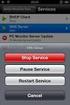 Kaseya 2 VMware Performance Monitor Quick Start Guide for Network Monitor 4.1 June 7, 2012 About Kaseya Kaseya is a global provider of IT automation software for IT Solution Providers and Public and Private
Kaseya 2. User Guide. for Network Monitor 4.1
 Kaseya 2 Ping Monitor User Guide for Network Monitor 4.1 June 5, 2012 About Kaseya Kaseya is a global provider of IT automation software for IT Solution Providers and Public and Private Sector IT organizations.
Kaseya 2. Quick Start Guide. for Network Monitor 4.1
 Kaseya 2 Syslog Monitor Quick Start Guide for Network Monitor 4.1 June 5, 2012 About Kaseya Kaseya is a global provider of IT automation software for IT Solution Providers and Public and Private Sector
Kaseya 2. User Guide. Version 7.0. English
 Kaseya 2 Network Monitor User Guide Version 7.0 English September 3, 2014 Agreement The purchase and use of all Software and Services is subject to the Agreement as defined in Kaseya s Click-Accept EULATOS
Quick Start Guide. Version R9. English
 Network Monitor Quick Start Guide Version R9 English April 17, 2015 Agreement The purchase and use of all Software and Services is subject to the Agreement as defined in Kaseya s Click-Accept EULATOS as
Kaseya 2. User Guide. English. Version 7.0
 Kaseya 2 Network Monitor User Guide Version 7.0 English October 22, 2015 Agreement The purchase and use of all Software and Services is subject to the Agreement as defined in Kaseya s Click-Accept EULATOS
Kaseya 2. Installation guide. Version 7.0. English
 Kaseya 2 Kaseya Server Setup Installation guide Version 7.0 English September 4, 2014 Agreement The purchase and use of all Software and Services is subject to the Agreement as defined in Kaseya s Click-Accept
User Guide. Version 3.2. Copyright 2002-2009 Snow Software AB. All rights reserved.
 Version 3.2 User Guide Copyright 2002-2009 Snow Software AB. All rights reserved. This manual and computer program is protected by copyright law and international treaties. Unauthorized reproduction or
Kaseya 2. User Guide. Version R8. English
 Kaseya 2 Discovery User Guide Version R8 English September 19, 2014 Agreement The purchase and use of all Software and Services is subject to the Agreement as defined in Kaseya s Click-Accept EULATOS as
Pharos Control User Guide
 Outdoor Wireless Solution Pharos Control User Guide REV1.0.0 1910011083 Contents Contents... I Chapter 1 Quick Start Guide... 1 1.1 Introduction... 1 1.2 Installation... 1 1.3 Before Login... 8 Chapter
Net Inspector 2015 GETTING STARTED GUIDE. MG-SOFT Corporation. Document published on October 16, 2015. (Document Version: 10.6)
 MG-SOFT Corporation Net Inspector 2015 GETTING STARTED GUIDE (Document Version: 10.6) Document published on October 16, 2015 Copyright 1995-2015 MG-SOFT Corporation Introduction In order to improve the
Kaseya 2. User Guide. Version 1.1
 Kaseya 2 Directory Services User Guide Version 1.1 September 10, 2011 About Kaseya Kaseya is a global provider of IT automation software for IT Solution Providers and Public and Private Sector IT organizations.
Freshservice Discovery Probe User Guide
 Freshservice Discovery Probe User Guide 1. What is Freshservice Discovery Probe? 1.1 What details does Probe fetch? 1.2 How does Probe fetch the information? 2. What are the minimum system requirements
HP A-IMC Firewall Manager
 HP A-IMC Firewall Manager Configuration Guide Part number: 5998-2267 Document version: 6PW101-20110805 Legal and notice information Copyright 2011 Hewlett-Packard Development Company, L.P. No part of this
NMS300 Network Management System
 NMS300 Network Management System User Manual June 2013 202-11289-01 350 East Plumeria Drive San Jose, CA 95134 USA Support Thank you for purchasing this NETGEAR product. After installing your device, locate
WebSpy Vantage Ultimate 2.2 Web Module Administrators Guide
 WebSpy Vantage Ultimate 2.2 Web Module Administrators Guide This document is intended to help you get started using WebSpy Vantage Ultimate and the Web Module. For more detailed information, please see
Online Help StruxureWare Data Center Expert
 Online Help StruxureWare Data Center Expert Version 7.2.1 What's New in StruxureWare Data Center Expert 7.2.x Learn more about the new features available in the StruxureWare Data Center Expert 7.2.x release.
LifeSize Control TM Deployment Guide
 LifeSize Control TM Deployment Guide July 2011 LifeSize Control Deployment Guide 2 LifeSize Control This guide is for network administrators who use LifeSize Control to manage video and voice communications
User Manual for Web. Help Desk Authority 9.0
 User Manual for Web Help Desk Authority 9.0 2011ScriptLogic Corporation ALL RIGHTS RESERVED. ScriptLogic, the ScriptLogic logo and Point,Click,Done! are trademarks and registered trademarks of ScriptLogic
Exclaimer Signature Manager 2.0 User Manual
 Exclaimer Exclaimer UK +44 (0) 1252 531 422 USA 1-888-450-9631 [email protected] Contents GETTING STARTED... 10 Signature Manager Overview... 11 How does it Work?... 11 But That's Not All...... 12 And
Avaya Video Conferencing Manager Deployment Guide
 Avaya Video Conferencing Manager Deployment Guide August 2011 Avaya Video Conferencing Manager Deployment Guide 2 Avaya Video Conferencing Manager This guide is for network administrators who use Avaya
Legal Notes. Regarding Trademarks. 2012 KYOCERA Document Solutions Inc.
 Legal Notes Unauthorized reproduction of all or part of this guide is prohibited. The information in this guide is subject to change without notice. We cannot be held liable for any problems arising from
Kaseya 2. User Guide. Version 1.0
 Kaseya 2 Mobile Device Management User Guide Version 1.0 March 12, 2012 About Kaseya Kaseya is a global provider of IT automation software for IT Solution Providers and Public and Private Sector IT organizations.
Sharp Remote Device Manager (SRDM) Server Software Setup Guide
 Sharp Remote Device Manager (SRDM) Server Software Setup Guide This Guide explains how to install the software which is required in order to use Sharp Remote Device Manager (SRDM). SRDM is a web-based
Features Overview Guide About new features in WhatsUp Gold v12
 Features Overview Guide About new features in WhatsUp Gold v12 Contents CHAPTER 1 Learning about new features in Ipswitch WhatsUp Gold v12 Welcome to WhatsUp Gold... 1 What's new in WhatsUp Gold v12...
Dell OpenManage Network Manager Version 6.0. Quickstart Guide
 Dell OpenManage Network Manager Version 6.0 Quickstart Guide Notes and Cautions A NOTE indicates important information that helps you make better use of your computer. A CAUTION indicates either potential
There are numerous ways to access monitors:
 Remote Monitors REMOTE MONITORS... 1 Overview... 1 Accessing Monitors... 1 Creating Monitors... 2 Monitor Wizard Options... 11 Editing the Monitor Configuration... 14 Status... 15 Location... 17 Alerting...
GP REPORTS VIEWER USER GUIDE
 GP Reports Viewer Dynamics GP Reporting Made Easy GP REPORTS VIEWER USER GUIDE For Dynamics GP Version 2015 (Build 5) Dynamics GP Version 2013 (Build 14) Dynamics GP Version 2010 (Build 65) Last updated
NMS300 Network Management System Application
 NMS300 Network Management System Application Quick Start Guide December 2014 202-11288-04 350 East Plumeria Drive San Jose, CA 95134 USA Support Thank you for purchasing this NETGEAR product. After installing
HP IMC Firewall Manager
 HP IMC Firewall Manager Configuration Guide Part number: 5998-2267 Document version: 6PW102-20120420 Legal and notice information Copyright 2012 Hewlett-Packard Development Company, L.P. No part of this
2X ApplicationServer & LoadBalancer Manual
 2X ApplicationServer & LoadBalancer Manual 2X ApplicationServer & LoadBalancer Contents 1 URL: www.2x.com E-mail: [email protected] Information in this document is subject to change without notice. Companies,
Deploying System Center 2012 R2 Configuration Manager
 Deploying System Center 2012 R2 Configuration Manager This document is for informational purposes only. MICROSOFT MAKES NO WARRANTIES, EXPRESS, IMPLIED, OR STATUTORY, AS TO THE INFORMATION IN THIS DOCUMENT.
Vector HelpDesk - Administrator s Guide
 Vector HelpDesk - Administrator s Guide Vector HelpDesk - Administrator s Guide Configuring and Maintaining Vector HelpDesk version 5.6 Vector HelpDesk - Administrator s Guide Copyright Vector Networks
InventoryControl for use with QuoteWerks Quick Start Guide
 InventoryControl for use with QuoteWerks Quick Start Guide Copyright 2013 Wasp Barcode Technologies 1400 10 th St. Plano, TX 75074 All Rights Reserved STATEMENTS IN THIS DOCUMENT REGARDING THIRD PARTY
NSi Mobile Installation Guide. Version 6.2
 NSi Mobile Installation Guide Version 6.2 Revision History Version Date 1.0 October 2, 2012 2.0 September 18, 2013 2 CONTENTS TABLE OF CONTENTS PREFACE... 5 Purpose of this Document... 5 Version Compatibility...
User Manual. Onsight Management Suite Version 5.1. Another Innovation by Librestream
 User Manual Onsight Management Suite Version 5.1 Another Innovation by Librestream Doc #: 400075-06 May 2012 Information in this document is subject to change without notice. Reproduction in any manner
Kaseya 2. User Guide. Version 7.0. English
 Kaseya 2 Monitoring Configuration User Guide Version 7.0 English September 3, 2014 Agreement The purchase and use of all Software and Services is subject to the Agreement as defined in Kaseya s Click-Accept
MyOra 3.0. User Guide. SQL Tool for Oracle. Jayam Systems, LLC
 MyOra 3.0 SQL Tool for Oracle User Guide Jayam Systems, LLC Contents Features... 4 Connecting to the Database... 5 Login... 5 Login History... 6 Connection Indicator... 6 Closing the Connection... 7 SQL
Discovery Guide. Secret Server. Table of Contents
 Secret Server Discovery Guide Table of Contents Introduction... 3 How Discovery Works... 3 Active Directory / Local Windows Accounts... 3 Unix accounts... 3 VMware ESX accounts... 3 Why use Discovery?...
Table of Contents. Welcome... 2. Login... 3. Password Assistance... 4. Self Registration... 5. Secure Mail... 7. Compose... 8. Drafts...
 Table of Contents Welcome... 2 Login... 3 Password Assistance... 4 Self Registration... 5 Secure Mail... 7 Compose... 8 Drafts... 10 Outbox... 11 Sent Items... 12 View Package Details... 12 File Manager...
Copyright 2012 Trend Micro Incorporated. All rights reserved.
 Trend Micro Incorporated reserves the right to make changes to this document and to the products described herein without notice. Before installing and using the software, please review the readme files,
Server Manager Help 10/6/2014 1
 Server Manager Help 10/6/2014 1 Table of Contents Server Manager Help... 1 Getting Started... 7 About SpectorSoft Server Manager... 8 Client Server Architecture... 9 System Requirements... 10 Screencasts...
Ingeniux 8 CMS Web Management System ICIT Technology Training and Advancement ([email protected])
 Ingeniux 8 CMS Web Management System ICIT Technology Training and Advancement ([email protected]) Updated on 10/17/2014 Table of Contents About... 4 Who Can Use It... 4 Log into Ingeniux... 4 Using Ingeniux
Exclaimer Signature Manager 2.0 User Manual
 Exclaimer Exclaimer UK +44 (0) 1252 531 422 USA 1-888-450-9631 [email protected] Contents GETTING STARTED... 10 Signature Manager Overview... 11 How Does it Work?... 11 But That's Not All...... 12 And
Installation Guide ARGUS Symphony 1.6 and Business App Toolkit. 6/13/2014 2014 ARGUS Software, Inc.
 ARGUS Symphony 1.6 and Business App Toolkit 6/13/2014 2014 ARGUS Software, Inc. Installation Guide for ARGUS Symphony 1.600.0 6/13/2014 Published by: ARGUS Software, Inc. 3050 Post Oak Boulevard Suite
TANDBERG MANAGEMENT SUITE 10.0
 TANDBERG MANAGEMENT SUITE 10.0 Installation Manual Getting Started D12786 Rev.16 This document is not to be reproduced in whole or in part without permission in writing from: Contents INTRODUCTION 3 REQUIREMENTS
Installing and Configuring WhatsUp Gold
 Installing and Configuring WhatsUp Gold This guide provides information about installing and configuring WhatsUp Gold v14.2, including instructions on how to run the WhatsUp web interface through an Internet
Installation Guide for Pulse on Windows Server 2008R2
 MadCap Software Installation Guide for Pulse on Windows Server 2008R2 Pulse Copyright 2014 MadCap Software. All rights reserved. Information in this document is subject to change without notice. The software
NeuralStar Installation Guide
 NeuralStar Installation Guide Version 9.8 Release 2 October 2011 1st Edition Preface Software License Agreement Software is defined as the Kratos Technology & Training Solutions, Inc. computer programs
Installing and Using the vnios Trial
 Installing and Using the vnios Trial The vnios Trial is a software package designed for efficient evaluation of the Infoblox vnios appliance platform. Providing the complete suite of DNS, DHCP and IPAM
File Auditor for NAS, Net App Edition
 File Auditor for NAS, Net App Edition Installation Guide Revision 1.2 - July 2015 This guide provides a short introduction to the installation and initial configuration of NTP Software File Auditor for
SpectorSoft Disk Monitor Help
 SpectorSoft Disk Monitor Help 5/3/2013 i SpectorSoft Disk Monitor Table of Contents Getting Started... 1 SpectorSoft Disk Monitor Help... 1 How it Works... 2 Tutorials... 3 Free Disk Space and SMART Status
NETWORK PRINT MONITOR User Guide
 NETWORK PRINT MONITOR User Guide Legal Notes Unauthorized reproduction of all or part of this guide is prohibited. The information in this guide is subject to change without notice. We cannot be held liable
Jim2 ebusiness Framework Installation Notes
 Jim2 ebusiness Framework Installation Notes Summary These notes provide details on installing the Happen Business Jim2 ebusiness Framework. This includes ebusiness Service and emeter Reads. Jim2 ebusiness
Installation Guide for Pulse on Windows Server 2012
 MadCap Software Installation Guide for Pulse on Windows Server 2012 Pulse Copyright 2014 MadCap Software. All rights reserved. Information in this document is subject to change without notice. The software
OnCommand Performance Manager 1.1
 OnCommand Performance Manager 1.1 Installation and Setup Guide For Red Hat Enterprise Linux NetApp, Inc. 495 East Java Drive Sunnyvale, CA 94089 U.S. Telephone: +1 (408) 822-6000 Fax: +1 (408) 822-4501
User Guide. Version R91. English
 AuthAnvil User Guide Version R91 English August 25, 2015 Agreement The purchase and use of all Software and Services is subject to the Agreement as defined in Kaseya s Click-Accept EULATOS as updated from
LifeSize Control Installation Guide
 LifeSize Control Installation Guide April 2005 Part Number 132-00001-001, Version 1.0 Copyright Notice Copyright 2005 LifeSize Communications. All rights reserved. LifeSize Communications has made every
LifeSize UVC Manager TM Deployment Guide
 LifeSize UVC Manager TM Deployment Guide May 2014 LifeSize UVC Manager Deployment Guide 2 LifeSize UVC Manager Network administrators who use UVC Manager to manage video and voice communications systems
026-1010 Rev 7 06-OCT-2011. Site Manager Installation Guide
 026-1010 Rev 7 06-OCT-2011 Site Manager Installation Guide Retail Solutions 3240 Town Point Drive NW, Suite 100 Kennesaw, GA 30144, USA Phone: 770-425-2724 Fax: 770-425-9319 Table of Contents 1 SERVER
CMS Training. Prepared for the Nature Conservancy. March 2012
 CMS Training Prepared for the Nature Conservancy March 2012 Session Objectives... 3 Structure and General Functionality... 4 Section Objectives... 4 Six Advantages of using CMS... 4 Basic navigation...
Veeam Backup Enterprise Manager. Version 7.0
 Veeam Backup Enterprise Manager Version 7.0 User Guide August, 2013 2013 Veeam Software. All rights reserved. All trademarks are the property of their respective owners. No part of this publication may
Strategic Asset Tracking System User Guide
 Strategic Asset Tracking System User Guide Contents 1 Overview 2 Web Application 2.1 Logging In 2.2 Navigation 2.3 Assets 2.3.1 Favorites 2.3.3 Purchasing 2.3.4 User Fields 2.3.5 History 2.3.6 Import Data
CA Nimsoft Monitor Snap
 CA Nimsoft Monitor Snap Quick Start Guide 7.0 Legal Notices Copyright 2013, CA. All rights reserved. Warranty The material contained in this document is provided "as is," and is subject to being changed,
Kaseya 2. User Guide. Version 6.5 and 1.1
 Kaseya 2 Policy Management User Guide Version 6.5 and 1.1 January 23, 2014 Agreement The purchase and use of all Software and Services is subject to the Agreement as defined in Kaseya s Click-Accept EULA
Bitrix Site Manager ASP.NET. Installation Guide
 Bitrix Site Manager ASP.NET Installation Guide Contents Introduction... 4 Chapter 1. Checking for IIS Installation... 5 Chapter 2. Using An Archive File to Install Bitrix Site Manager ASP.NET... 7 Preliminary
A Guide to New Features in Propalms OneGate 4.0
 A Guide to New Features in Propalms OneGate 4.0 Propalms Ltd. Published April 2013 Overview This document covers the new features, enhancements and changes introduced in Propalms OneGate 4.0 Server (previously
WhatsUp Gold v11 Features Overview
 WhatsUp Gold v11 Features Overview This guide provides an overview of the core functionality of WhatsUp Gold v11, and introduces interesting features and processes that help users maximize productivity
Decision Support AITS University Administration. Web Intelligence Rich Client 4.1 User Guide
 Decision Support AITS University Administration Web Intelligence Rich Client 4.1 User Guide 2 P age Web Intelligence 4.1 User Guide Web Intelligence 4.1 User Guide Contents Getting Started in Web Intelligence
IsItUp Quick Start Manual
 IsItUp - When you need to know the status of your network Taro Software Inc. Website: www.tarosoft.com Telephone: 703-405-4697 Postal address: 8829 110th Lane, Seminole Fl, 33772 Electronic mail: [email protected]
Spector 360 Deployment Guide. Version 7
 Spector 360 Deployment Guide Version 7 December 11, 2009 Table of Contents Deployment Guide...1 Spector 360 DeploymentGuide... 1 Installing Spector 360... 3 Installing Spector 360 Servers (Details)...
Desktop Surveillance Help
 Desktop Surveillance Help Table of Contents About... 9 What s New... 10 System Requirements... 11 Updating from Desktop Surveillance 2.6 to Desktop Surveillance 3.2... 13 Program Structure... 14 Getting
Eucalyptus 3.4.2 User Console Guide
 Eucalyptus 3.4.2 User Console Guide 2014-02-23 Eucalyptus Systems Eucalyptus Contents 2 Contents User Console Overview...4 Install the Eucalyptus User Console...5 Install on Centos / RHEL 6.3...5 Configure
WhatsUp Gold v16.2 MSP Edition Deployment Guide This guide provides information about installing and configuring WhatsUp Gold MSP Edition to central
 WhatsUp Gold v16.2 MSP Edition Deployment Guide This guide provides information about installing and configuring WhatsUp Gold MSP Edition to central and remote sites. Contents Table of Contents Using WhatsUp
Novell ZENworks Asset Management 7.5
 Novell ZENworks Asset Management 7.5 w w w. n o v e l l. c o m October 2006 USING THE WEB CONSOLE Table Of Contents Getting Started with ZENworks Asset Management Web Console... 1 How to Get Started...
Chapter 15: Forms. User Guide. 1 P a g e
 User Guide Chapter 15 Forms Engine 1 P a g e Table of Contents Introduction... 3 Form Building Basics... 4 1) About Form Templates... 4 2) About Form Instances... 4 Key Information... 4 Accessing the Form
JOOMLA 2.5 MANUAL WEBSITEDESIGN.CO.ZA
 JOOMLA 2.5 MANUAL WEBSITEDESIGN.CO.ZA All information presented in the document has been acquired from http://docs.joomla.org to assist you with your website 1 JOOMLA 2.5 MANUAL WEBSITEDESIGN.CO.ZA BACK
http://docs.trendmicro.com
 Trend Micro Incorporated reserves the right to make changes to this document and to the products described herein without notice. Before installing and using the product, please review the readme files,
User's Guide. Product Version: 2.5.0 Publication Date: 7/25/2011
 User's Guide Product Version: 2.5.0 Publication Date: 7/25/2011 Copyright 2009-2011, LINOMA SOFTWARE LINOMA SOFTWARE is a division of LINOMA GROUP, Inc. Contents GoAnywhere Services Welcome 6 Getting Started
SyncThru TM Web Admin Service Administrator Manual
 SyncThru TM Web Admin Service Administrator Manual 2007 Samsung Electronics Co., Ltd. All rights reserved. This administrator's guide is provided for information purposes only. All information included
Software Version 5.1 November, 2014. Xerox Device Agent User Guide
 Software Version 5.1 November, 2014 Xerox Device Agent User Guide 2014 Xerox Corporation. All rights reserved. Xerox and Xerox and Design are trademarks of Xerox Corporation in the United States and/or
Table of Contents. Introduction...9. Installation...17. Program Tour...31. The Program Components...10 Main Program Features...11
 2011 AdRem Software, Inc. This document is written by AdRem Software and represents the views and opinions of AdRem Software regarding its content, as of the date the document was issued. The information
Kaseya 2. Quick Start Guide. for VSA 6.1
 Kaseya 2 Monitoring Configuration Quick Start Guide for VSA 6.1 January 17, 2011 About Kaseya Kaseya is a global provider of IT automation software for IT Solution Providers and Public and Private Sector
Avalanche Site Edition
 Avalanche Site Edition Version 4.8 avse ug 48 20090325 Revised 03/20/2009 ii Copyright 2008 by Wavelink Corporation All rights reserved. Wavelink Corporation 6985 South Union Park Avenue, Suite 335 Midvale,
Smart Business Architecture for Midsize Networks Network Management Deployment Guide
 Smart Business Architecture for Midsize Networks Network Management Deployment Guide Introduction: Smart Business Architecture for Mid-sized Networks, Network Management Deployment Guide With the Smart
System Administration Training Guide. S100 Installation and Site Management
 System Administration Training Guide S100 Installation and Site Management Table of contents System Requirements for Acumatica ERP 4.2... 5 Learning Objects:... 5 Web Browser... 5 Server Software... 5
ADMINISTRATOR GUIDE VERSION
 ADMINISTRATOR GUIDE VERSION 4.0 2014 Copyright 2008 2014. All rights reserved. No part of this document may be reproduced or transmitted in any form or by any means electronic or mechanical, for any purpose
Product Manual. Administration and Configuration Manual
 Product Manual Administration and Configuration Manual http://www.gfi.com [email protected] The information and content in this document is provided for informational purposes only and is provided "as is" with
Avalanche Remote Control User Guide. Version 4.1.3
 Avalanche Remote Control User Guide Version 4.1.3 ii Copyright 2012 by Wavelink Corporation. All rights reserved. Wavelink Corporation 10808 South River Front Parkway, Suite 200 South Jordan, Utah 84095
DiskPulse DISK CHANGE MONITOR
 DiskPulse DISK CHANGE MONITOR User Manual Version 7.9 Oct 2015 www.diskpulse.com [email protected] 1 1 DiskPulse Overview...3 2 DiskPulse Product Versions...5 3 Using Desktop Product Version...6 3.1 Product
Pre-Installation Checks Installation Creating Users and Quick Setup Usage Examples and Settings Appendix
 Standard Setup Guide 1 2 3 4 5 Pre-Installation Checks Installation Creating Users and Quick Setup Usage Examples and Settings Appendix Read this manual carefully before you use this product and keep it
Tandem Systems, Ltd. WinAgents HyperConf. User s Guide
 Tandem Systems, Ltd. WinAgents HyperConf User s Guide Tandem Systems, Ltd. 02.04.2010 Table of Contents Overview... 4 System Requirements... 4 Quick Start... 4 1-2-3-Start!... 4 1. Set default parameters
AVG 8.5 Anti-Virus Network Edition
 AVG 8.5 Anti-Virus Network Edition User Manual Document revision 85.2 (23. 4. 2009) Copyright AVG Technologies CZ, s.r.o. All rights reserved. All other trademarks are the property of their respective
NTP Software File Auditor for NAS, EMC Edition
 NTP Software File Auditor for NAS, EMC Edition Installation Guide June 2012 This guide provides a short introduction to the installation and initial configuration of NTP Software File Auditor for NAS,
Kaseya 2. User Guide. Version R8. English
 Kaseya 2 Remote Control Tools User Guide Version R8 English December 22, 2014 Agreement The purchase and use of all Software and Services is subject to the Agreement as defined in Kaseya s Click-Accept
HDA Integration Guide. Help Desk Authority 9.0
 HDA Integration Guide Help Desk Authority 9.0 2011ScriptLogic Corporation ALL RIGHTS RESERVED. ScriptLogic, the ScriptLogic logo and Point,Click,Done! are trademarks and registered trademarks of ScriptLogic
RSA Authentication Manager 7.1 Basic Exercises
 RSA Authentication Manager 7.1 Basic Exercises Contact Information Go to the RSA corporate web site for regional Customer Support telephone and fax numbers: www.rsa.com Trademarks RSA and the RSA logo
5nine Cloud Monitor for Hyper-V
 5nine Cloud Monitor for Hyper-V Getting Started Guide Table of Contents System Requirements... 2 Installation... 3 Getting Started... 8 Settings... 9 Authentication... 9 5nine Cloud Monitor for Hyper-V