
Operating instructions. Laser Measurement Sensor LD-MRS
|
|
|
- Virginia Newman
- 9 years ago
- Views:
Transcription
1 Operating instructions Laser Measurement Sensor

2 Software version Operating Instructions Laser measurement sensor Software version described Device/Software/Tool Function Version () ( HD) ( 8-Layer) Firmware (DSP) Firmware (FPGA) Firmware (DSP) Firmware (FPGA) Firmware (DSP) Firmware (FPGA) as of V. 2.0.x as of V. 9.0.x as of V. 2.0.x as of V. 9.0.x as of V.3.0.x as of V.9.6.x SOPAS ET 1) Configuration software for field monitoring as of V SICK LaserView Customer Edition 1)2) Configuration software and visualization tool for measuring mode as of V ) Can run on a computer with an operating system starting at Windows 2000 TM 2) For installation and use, see the operating instructions "Visualization tool SICK LaserView Customer Edition (Part No , English version) on the provided CD, "Manuals & Software " The visualization tool "SICK LaserView Customer Edition" will hencworth be called LaserView. Copyright Copyright SICK AG Waldkirch Auto Ident, Reute plant Nimburger Strasse Reute Germany Trademark Windows 2000 TM, XP TM, Vista TM, Windows 7 TM are registered trademarks or trademarks of the Microsoft Corporation in the USA and other countries. Adobe Reader is a registered trademark of Adobe Systems Incorporated. Download via Internet: Version of these operating instructions The latest version of these operating instructions can be obtained as PDF at 2 SICK AG Germany All rights reserved Subject to change without notice /YBD5/

3 Operating Instructions Content Content 1 About this document Function Target group Depth of information Symbology used For your safety Safety standards Authorized personnel Intended use General safety notes and protective means Quick stop and Quick restart Environmental protection Product description Design of the device Scope of delivery System requirements Operating principle of the device Measuring mode Object Tracking (xxxx.s01 only) Mounting upside down ( 8-Layer only) Field monitoring (for 400xxx only) Function of the 8-layer sensors Status indicators and controls Mounting Overview of the mounting steps Preparations for mounting Mounting and adjustment of the device Mount the optional CAN module Dismounting the device Electrical installation Overview of the installation steps Planning the electrical installation Electrical connections and cables Perform electrical installation Pin assignments and wire colors of the assembled cables Commissioning and configuration Overview for the startup steps for field monitoring SOPAS-ET configuration program Synchronization Switching off the Maintenance Maintenance during operation Cleaning the device Exchanging an Troubleshooting Warnings and fault messages Overview of possible errors and faults Monitor error and fault indications Troubleshooting SICK Support Technical specifications Data sheets Dimensional drawings Conditions for integrating the Annex Overview of the annex /YBD5/ SICK AG Germany All rights reserved Subject to change without notice 3

4 Content Operating Instructions Laser measurement sensor 10.2 Additional documentation Ordering information Glossary EC Declaration of Conformity SICK AG Germany All rights reserved Subject to change without notice /YBD5/

5 Operating Instructions Indexes Abbreviations CAN Controller Area Network = Standardized field bus system with a message-oriented data exchange protocol EEPROM Electrically Erasable Programmable Read-only Memory = non-volatile memory that can be electrically erased and programmed LED Light Emitting Diode = light emitting diode INT Integer LD Ladar Digital (Ladar = Laser Radar) MRS Multi-Layer Range Scanner RAM Random Access Memory = volatile memory with direct access ROM Read-only Memory = memory that can only be read (non-volatile) SOPAS-ET SICK OPEN PORTAL for APPLICATION and SYSTEMS Engineering Tool = Configuration software for configuring the UINT Unsigned Integer /YBD5/ SICK AG Germany All rights reserved Subject to change without notice 5

6 Indexes Operating Instructions Tables Laser measurement sensor Tab. 1-1: Target group... 9 Tab. 2-1: Required qualification for commissioning the...11 Tab. 2-2: Power consumption of the...15 Tab. 3-1: Delivery of...19 Tab. 3-2: Contents of the CD-ROM "Manuals & Software "...19 Tab. 3-3: Device variants of the...19 Tab. 3-4: Product features and functions (overview)...20 Tab. 3-5: Naming conventions (colour code see Fig. 3-5)...25 Tab. 3-6: Angular resolution Tab. 3-7: Angular resolution Tab. 3-8: Angular resolution Tab. 3-9: Setting the layer sensitivity...42 Tab. 3-10: Example of a combination of inputs...47 Tab. 5-1: Pin assignment of the 4-pin socket (round plug-in connection) "Ethernet"...65 Tab. 5-2: Pin assignment of the 12-pin plug "data interfaces/synchronization" (round plug-in connection)...65 Tab. 5-3: Pin assignment of the 4-pin plug "Power" (round plug-in connection)...66 Tab. 5-4: Assembled cables for connecting the...66 Tab. 5-5: Power consumption of the...67 Tab. 5-6: Pin assignment of the Ethernet data cable...76 Tab. 5-7: Pin assignment of the connecting cable "Synchronization"...76 Tab. 5-8: Pin assignment of the cable splitter 1: Tab. 5-9: Pin assignment of the CAN connecting cable...78 Tab. 5-10: Wire colour assignment of the supply cable...78 Tab. 6-1: Default setting of SOPAS-ET...80 Tab. 6-2: Password...82 Tab. 8-1: Troubleshooting the...90 Tab. 9-1: Tab. 9-2: Technical specifications...93 Technical specifications for the CAN modules (from the manufacturer's data sheets and manuals)...95 Tab. 10-1: Additional documentation Tab. 10-2: Consumables for the care of the Figures Fig. 2-1: Laser output aperture of the...15 Fig. 3-1: Design of the...18 Fig. 3-2: Principle of time-of-flight measurement...22 Fig. 3-3: Multi-echo capability...23 Fig. 3-4: Multi-layer technology...24 Fig. 3-5: Principle of the scan planes, color-coded...24 Fig. 3-6: Scanning range...26 Fig. 3-7: Relation of angle to scanning range...27 Fig. 3-8: Example of three echoes of a laser pulse...28 Fig. 3-9: Angular resolution...28 Fig. 3-10: Example: Angular resolution of 0.25 at distance d = 25 m (82 ft)...29 Fig. 3-11: Different angular resolution by sector...30 Fig. 3-12: Scanning frequency 12.5 Hz with constant angular resolution of Fig. 3-13: Scanning frequency 25 Hz with constant angular resolution of Fig. 3-14: Scanning frequency 50 Hz with constant angular resolution of Fig. 3-15: Reflection of the laser beam at the surface of an object...33 Fig. 3-16: Reflection angle...33 Fig. 3-17: Degree of reflection SICK AG Germany All rights reserved Subject to change without notice /YBD5/

7 Operating Instructions Indexes Fig. 3-18: Mirror surfaces Fig. 3-19: Object smaller than diameter of the laser beam Fig. 3-20: Raw data Fig. 3-21: Object contour Fig. 3-22: Bounding box Fig. 3-23: Object Fig. 3-24: Suppressor filter Fig. 3-25: Setting the near range sensitivity Fig. 3-26: Example for measurement result with Clutter Fig. 3-27: Noise Control -Filter Fig. 3-28: Device parameter: Upside down mounting Fig. 3-29: Principle of field monitoring Fig. 3-30: Manipulation protection against shadow Fig. 3-31: Examples of evaluation field shapes Fig. 3-32: Function of the 8-layer sensors upper scan field Fig. 3-33: Function of the 8-layer sensors lower scan field Fig. 3-34: Function of the 8 layer sensor overlapping scan fields Fig. 3-35: CAN.8.dio-SNAP module Fig. 3-36: CAN.8.dio-BOX module Fig. 4-1: Beam expansion Fig. 4-2: Mount the on holder Part No Fig. 4-3: Adjust the holder Fig. 4-4: Mount the on the weather resistant cover Part No and on the holder Part No Fig. 4-5: Mount the optional CAN module Fig. 5-1: Measuring mode: Electrical installation of the Fig. 5-2: Field monitoring: Electrical installation of the and the CAN module Fig. 5-3: Connection of the voltage supply and wiring of the Ethernet interface Fig. 5-4: Design of the CAN module CAN.8.dio-BOX Fig. 5-5: Design of the CAN module CAN.8.dio-SNAP Fig. 5-6: Connect two CAN modules to the CAN interface of the Fig. 5-7: Connect one CAN module to the CAN interface of the Fig. 5-8: Input switched against V +PWR Fig. 5-9: A circuit diagram of digital I/O terminal (high side driver) Fig. 5-10: DIP switch for address (example: address 9) Fig. 5-11: DIP switch for transmission rate (example: 500 kbit/s) Fig. 5-12: Wiring of the RS-232 interface Fig. 6-1: Principle of data storage Fig. 6-2: Scheme of the data flow in a system with one and up to two external devices Fig. 6-3: : Sync IN and Sync Out pulse Fig. 9-1: Dimensions of the Fig. 9-2: Position of the sensor coordinate origin in the Fig. 9-3: Dimensions of the holder Part No Fig. 9-4: Dimensions of the weather resistant cover Part no Fig. 9-5: Dimensions of the two designs of the CAN modules Fig. 9-6: Dimensions of the shock mounting Fig. 9-7: Boundary conditions for integration Fig. 10-1: Illustration containing the EC Declaration of Conformity, page 1 (size reduced) /YBD5/ SICK AG Germany All rights reserved Subject to change without notice 7

8 Indexes Operating Instructions Laser measurement sensor 8 SICK AG Germany All rights reserved Subject to change without notice /YBD5/

9 Operating Instructions Chapter 1 About this document 1 About this document 1.1 Function This document informs technical personnel how to safely install and operate these versions of the laser measurement sensor: (standard version) (heavy duty version) (standard version with 8 layers) The document contains information about mounting and electrical installation commissioning and configuration (parametrization) Maintenance troubleshooting Replacing the laser measurement sensor Important In the following, the , and laser measurement sensors are termed "" for short, except in cases where differences need to be explained specifically. 1.2 Target group The target group of this document are people in the following positions: Activities Mounting, electrical installation, maintenance, replacement Commissioning, configuration Tab. 1-1: Target group Target group Qualified personnel, e.g. service technicians, factory electricians Qualified personnel, e.g. technicians, engineers 1.3 Depth of information This document contains all information required for mounting, electrical installation and commissioning of the with factory settings. All tasks are described step by step. The configuration of the for user-specific situations in measuring mode as well as measurement queries for displaying the scan data are done via the provided visualization tool SICK LaserView Customer Edition or with messages. To configure field monitoring, use the SOPAS-ET configuration software. SOPAS-ET can also display scanning data from measuring mode. Further information about laser measurement technology is available from SICK AG, Division Auto Ident, and on the internet at /YBD5/ SICK AG Germany All rights reserved Subject to change without notice 9

10 Chapter 1 About this document Operating Instructions Laser measurement sensor 1.4 Symbology used Some information in this documentation are highlighted to facilitate quick access to these information: NOTICE Note! A note indicates potential hazards that could involve damage or degradation of the functionality of the. WARNING Warning! A warning indicates an actual or potential hazard for the physical integrity of the user. They are designed to help to prevent accidents. The safety symbol beside the warning indicates the nature of the risk of accident, e. g. due to electricity. The incremental warning category (CAUTION, WARNING, DANGER) indicates the severity of the hazard. Always read carefully and follow the warning notices. Cross-reference Important Explanation Recommendation Basic settings BAUD RATE Text in italics indicates a reference to more detailed information. This important note informs about special issues. An explanation provides background knowledge about technical relations. Recommendations are designed to assist in the decision-making process with respect to a certain function or a technical measure. Marks a section listing the values of the factory settings. This typeface indicates a term in the configuration software SOPAS-ET. This symbol identifies a section that describes the operating steps with the SOPAS-ET configuration software. This symbol refers to supplementary technical documentation. Instructions for taking action are shown by an arrow. This symbol indicates an instruction that only consists of one step, or a warning note with several steps that do not require any particular order. Multiple step instructions in a required sequence are identified by a sequential numbers. 10 SICK AG Germany All rights reserved Subject to change without notice /YBD5/

11 Operating Instructions Chapter 2 For your safety 2 For your safety This chapter deals with your own safety. Read this chapter carefully before using the. 2.1 Safety standards The has been designed and manufactured under consideration of a risk analysis and careful selection of the pertinent harmonized standards as well as other technical specifications. Hence, the matches state-of-the-art technology. In design and production, established technological rules have been applied and observed. Development and production in SICK AG ensure this quality standard by a certified quality management system according to EN ISO 9001:2008. If the user adheres to all safety notes in this operating instructions and uses the device as intended, he is sufficiently protected. 2.2 Authorized personnel Important The must be mounted and operated by qualified personnel to ensure its proper and safe function. Only trained and authorized service personnel of SICK AG may repair the. The different tasks require the following qualification: Activities Mounting, maintenance Electrical installation, device replacement Commissioning, configuration Processing the measured values in EDP systems Tab. 2-1: Qualification practical technical basic training knowledge of the established safety rules at work practical electrical training knowledge of the established electric safety rules basic knowledge of Windows TM in the version used on site basic knowledge of data transmission Basic knowledge of how to establish and set up (address) Ethernet connections when connecting the to the Ethernet Basic knowledge of how to establish and set up a CAN network when using field monitoring Programming skills for the application to be created in measuring mode Required qualification for commissioning the /YBD5/ SICK AG Germany All rights reserved Subject to change without notice 11

12 Chapter 2 For your safety Operating Instructions Laser measurement sensor 2.3 Intended use Important Important The allows two applications with its radial field of view: The detection of objects around the location or installation site while continuously outputting measurements upon request, or Field monitoring of freely definable areas while signaling field violations via external switch outputs The device is designed for application in the industrial sector, in particular outside. Every other use as well as modifications to the device, including those within the course of mounting and electrical installation, will render void any warranty claim towards SICK AG. Only operate the in the permitted ambient temperature range, see Chapter 9 Technical specifications, Page 93. The user of the has to ensure that the device is only used in compliance with the listed specifications and environment conditions, see Chapter 9.1 Data sheets, Page 93, country-specific standards and regulations are adhered to, depending on the kind of operation, the device is only used in proper, functional state, safety and warning labels attached to the device are not removed or covered and remain readable, the operating instructions are available on site in a readable form and that the authorized personnel had read the operating instructions and is thus sufficiently qualified. Loss of warranty! The housing of the laser measurement sensor is closed with a seal. Breaking the seal and opening the device causes a loss of warranty claims towards SICK AG. The housing may only be opened by authorized service personnel of SICK AG. 12 SICK AG Germany All rights reserved Subject to change without notice /YBD5/

13 Operating Instructions Chapter 2 For your safety 2.4 General safety notes and protective means Read the general safety notes carefully and strictly observe them in when working at or with the. Also observe the warning notes printed before the instructions in the individual chapters of this document. WARNING Safety notes Observe the following points in order to ensure safe use as intended of the : The user must ensure that every person working on or with the has read and understood these operating instructions. Official and legal requirements must be adhered to when operating the. For installation and usage of the as well as for commissioning and regular technical inspection, national/international legal requirements apply, in particular the accident prevention regulations/safety rules other pertinent safety rules Adhere to the following safety notes in order to prevent dangers for persons and/or property: The operator must ensure by suitable instructions and inspections that the window of the is always clean. Additionally, the local safety and accident prevention regulations apply for operating the. A defect of the control functions can cause danger for human life or property damage at the. Data integrity In its products, SICK AG uses information technology, such as IO-Link or standard IP technology. The focus is on the availability of the products and their features. It is the consistent assumption of SICK AG that the user will maintain the integrity and confidentiality of data and rights that are affected by the use of the products. The user must observe appropriate safety measures such as network separation, firewalls, viral protection and patch management according to the situation Range of application WARNING Not permitted for personal protection! The is NOT a device for ensuring personal protection as defined by applicable safety standards for machines! /YBD5/ SICK AG Germany All rights reserved Subject to change without notice 13

14 Chapter 2 For your safety Operating Instructions Laser measurement sensor Electrical installation tasks Only trained personnel may perform the electrical installation. Electrical connection may only be established or disconnected when not under voltage. Specify and implement the wire diameter and the correct fusing according to valid standards Malfunctions CAN modules for external switching inputs and outputs (accessories) NOTICE Potential radio interference when using the optional CAN modules in residential areas. Only use the laser measurement sensor together with the CAN modules in an industrial setting Laser protection CAUTION Laser radiation! The uses infrared light laser. The device is specified as laser class 1 (eye-safe). The laser beam is invisible to the human eye! Caution use of controls, adjustments or performance of procedures other than those specified herein may result in hazardous radiation exposure. Do not open the housing of the (opening the housing does not interrupt laser operation). Observe the valid laser protection regulations in their newest version. Important Laser power The laser operates at a wave length = approx. 905 nm (invisible infrared light). The product is classified as laser class 1 EN ( )/IEC , 21 CFR and 21 CFR The radiation emitted in normal operation is not harmful to the eyes and human skin. In order to ensure laser class 1, no maintenance is necessary. Laser output aperture The laser output aperture is the window of the. 14 SICK AG Germany All rights reserved Subject to change without notice /YBD5/

15 Operating Instructions Chapter 2 For your safety 1 Fig. 2-1: Laser output aperture of the Caption: 1Window 2.5 Quick stop and Quick restart The device has no separate switch for the supply voltage Switching off the Switch off the supply voltage by disconnecting from the supply system, or loosen and remove the supply cable at the "Power" connection Switching on the Switch on the supply voltage or connect the supply cable again with the "Power" connection. The starts operation with the most recently stored permanently parameter set. 2.6 Environmental protection The has been designed to minimize environmental impact Energy consumption At 9 to 27 V DC, the draws the following: Process Power consumption Switch-on typically 36 W (1.5 A at 24 V DC) permanent operation typically 8 W (0.34 A at 24 V DC) permanent operation max. 10 W (0.4 A at 24 V DC) Tab. 2-2: Power consumption of the The optional CAN module consumes approximately 1.5 W at 8 to 50 V DC without a load /YBD5/ SICK AG Germany All rights reserved Subject to change without notice 15

16 Chapter 2 For your safety Operating Instructions Laser measurement sensor Disposal after final decommissioning Currently the SICK AG does not offer a return service for inoperative or irreparable devices. Always dispose of unserviceable or irreparable devices in compliance with local/national rules and regulations on waste disposal. The design of the allows for recovery of secondary raw material and hazardous waste (e-scrap). 16 SICK AG Germany All rights reserved Subject to change without notice /YBD5/

17 Operating Instructions Chapter 3 Product description 3 Product description This chapter provides information on design, special features and properties of the. For information on assembly, electrical installation and startup of the, consult the section before starting. 3.1 Design of the device The laser measurement sensor consists of a laser measurement system and a mirror construction. The components - laser measurement system and mirror construction - are mounted in a rugged housing. When looking from the front at the, the right side of the device contains three connections ("Ethernet", "Data interfaces/synchronization" and "Power"), the left side contains a ventilation unit. At the rear side of the device, four protruding lugs have a hole each to attach the device at the point of installation /YBD5/ SICK AG Germany All rights reserved Subject to change without notice 17

18 Chapter 3 Product description Operating Instructions Laser measurement sensor Device view Fig. 3-1: Design of the Caption: 1Ventilation element 2Mounting hole 6.6 mm (4 x) 3Window 4"Ethernet" connection 5"Power" connection 6Data interfaces/synchronization connection 18 SICK AG Germany All rights reserved Subject to change without notice /YBD5/

19 Operating Instructions Chapter 3 Product description 3.2 Scope of delivery The delivery includes the following components: Quantity Component Comment 1 Laser measurement sensor Type depending on order 1 Notes on Device with information and electrical Included in the packaging circuit diagram for getting started 1 CD-ROM "Manuals & Software " Tab. 3-1: Delivery of The product information for the laser measurement sensor (Part No ) contains all of the ordering information for the product and accessories. Chapter 10.3 Ordering information, Page 103 provides an overview of consumables for care and maintenance of the Contents of the CD, "Manuals & Software " (Part No ) Component SoftwareSICK LaserView Customer Edition Software SOPAS-ET Operating instructions for the "laser measurement sensor " Operating instructions for the "SICK LaserView Customer Edition visualization tool" Product information " laser measurement sensor" Operating instructions for the " CAN.8.dio- SNAP module" Operating instructions for the " CAN.8.dio- BOX module" Tab. 3-2: Comment Visualization tool for measurements; can run on standard computers (Windows TM and Linux) Configuration software for field monitoring including online help (Java), can run on standard computers (Windows TM ) PDF version in German and English PDF version in German and English PDF version in German and English PDF in German and English PDF in German and English Contents of the CD-ROM "Manuals & Software " Important The publications and programs on the CD-ROM are also available for download at Download address for PDF visualization software in the Internet: Device variants The is available in the following variants: Part No. Designation Type Description Scanning range 50 m (164 ft) at 10 % remission, simultaneous measurement on 4 planes, enclosure rating IP 69k Tab. 3-3: Device variants of the /YBD5/ SICK AG Germany All rights reserved Subject to change without notice 19

20 Chapter 3 Product description Operating Instructions Laser measurement sensor Part No. Designation Type Description HD Scanning range 30 m (98,4 ft) at 10 % remission, simultaneous measurement on 4 planes, particularly suited for dust penetration, enclosure rating IP 69k Layer Scanning range 50 m at 10 % remission, measurement on up to 8 layers, IP 69k Tab. 3-3: Device variants of the (contd.) 3.3 System requirements For general system requirements refer to the data sheet for the (see Chapter 9 Technical specifications, Page 93). The requirements for Mounting, Electrical installation and Commissioning and configuration are summarized in the respective chapters Product features and functions (overview) Performance feature General advantages Safety and comfort for the user Simple operation / parametrization Operating states Output of results Electric interfaces Tab. 3-4: Characteristic Product features and functions (overview) secure detection of objects in the field of view of the high scanning range and compact housing simultaneous measurement on 4 planes HD: expanded penetration through dust by special receiver unit and extended dust filter software rugged, compact aluminium housing laser class 1, laser switches off in case of faults enclosure rating IP 69K in mounted condition upgradable by firmware update via data interface Ethernet low power consumption wide range of supply voltage Configuration of measuring mode using the SICK LaserView Customer Edition visualization tool with Windows and Linux And configuration of field monitoring using the SOPAS-ET the configuration software with Windows alternatively using commands in messages wait mode: Configuration of the Operating mode measurement: Scanning the field of view Operating mode "Object tracking". Scanning the field of view and tracking of up to 63 objects in field of view. Field monitoring mode: scanning the field of view and monitoring specific fields for changes (field violation) Measurements: via the Ethernet data interface Object tracking: pre-processed object data allows for object tracking of up to 63 objects simultaneously, as well as the output of their dynamic properties (e.g.. speed, direction, size, etc.) Field violations: via a maximum of 10 externals switch outputs with the help of two optional CAN modules (accessory) with eight configurable I/O ports each, optional arming of specific, freely-definable evaluation instances through 2 external switching inputs power supply (9 to 27 V DC) Ethernet data interface Data interface CAN synchronization interface auxiliary data interface: RS SICK AG Germany All rights reserved Subject to change without notice /YBD5/

21 Operating Instructions Chapter 3 Product description Performance feature Connection technology (type) Tab. 3-4: Characteristic Product features and functions (overview) connection "Ethernet": 4-pin socket (round plug-in connection) connection "Data interfaces/synchronization": 12-pin socket (round plug-in connection) connection "Power": 4-pin plug (round plug-in connection) Application The detects objects. Its applications are wide-ranging. In particular, the following can be stated: container loading/handling traffic/transport robots object protection In measuring mode, the measurements can be processed externally to identify and analyse objects. In field monitoring, external switch outputs signal changes in the monitored areas (fields). Evaluation instances can be defined with an application-specific evaluation strategy per evaluation field and assigned to switch outputs and combined. Combining two switch outputs activates a specific evaluation instance only when needed. 3.4 Operating principle of the device The serves for contact-free and directional detection of the sensor surroundings, or rather of the objects located within the radial field of view. The object detection is done with laser beams that the emits in four stacked planes. The device measures the distance and the direction (the angle to the ) of the object. From the measured data, the calculates the position of the object in the sensor co-ordinate system. The resulting profiles of the different planes are called scan, see Chapter 3.5 Measuring mode, Page 35. The issues the measured data in reference to its sensor co-ordinates. The data contain information about the measuring plane, distance, echo number, echo pulse width and class. It also contains angle information (horizontal and vertical). Due to the detailed presentation and thus the extensive amount of data, the issues the measured data via the Ethernet interface only. The factory defaults of the are designed to facilitate immediate commissioning of the. The user can modify some parameters to optimize the in regard to the application at hand Measuring process and measuring properties The is a measurement instrument basing on the Time-of-Flight (ToF) technology, i. e. the uses laser beams to detect distance and angle of objects. It scans the surroundings radially with several rotating laser beams, receives the echoes with a photo diode receiver, processes the data by means of a time of flight calculation and issues the processed data via the Ethernet interface /YBD5/ SICK AG Germany All rights reserved Subject to change without notice 21
22 Chapter 3 Product description Operating Instructions Laser measurement sensor By the permanent rotation of the mirror in connection with the laser beam, it is possible to build a complete profile of the surroundings within the field of view of the. The scan data of the consist of values for distance, angle, and echo pulse width. The measurement properties base on time-of-flight measurement, multi-echo capability, multi-layer technology, the scanning range and the relation of angle to range the angular resolution and the scanning frequency Time-of-flight measurement Fig. 3-2: Principle of time-of-flight measurement Caption: 1Object 2Laser pulse, transmitted 3Laser pulse, reflected 4 The laser pulses emitted from the are reflected by the objects in the surroundings. The collects the laser pulse reflections, processes the information and issues the data via the Ethernet interface. The distance is calculated from the time-of-flight of the laser pulse and the speed of light. The rotating mirror deflects the laser pulses. The angular position of the mirror during deflection yields the direction of the detected object. The combination of these values builds the basis for a complete profile of the surroundings in the radial scanning range of the. 22 SICK AG Germany All rights reserved Subject to change without notice /YBD5/
23 Operating Instructions Chapter 3 Product description Multi-echo capability U(t) U th t 0 t A w A t B w B t C w C d 0 d A d B d C Fig. 3-3: Multi-echo capability Caption: 1Example: echo of a window pane 2Example: echo of a raindrop 3Threshold voltage 4Example: echo of an object V(t) input voltage t time d distance w echo pulse width A glass panel B rain drop C object threshold voltage V th The has multi-echo capability. Thus, it can gather and evaluate up to three echoes per transmitted laser pulse. Once the echo reaches the photo diode receiver of the, the received intensity is transformed into a voltage. In the example shown in Fig. 3-3, a reflected echo of a glass pane yields a high voltage over a short period of time. The echo of a rain drop, however, yields a very low voltage over a short period of time. The echo of an object yields a high voltage over a longer period. All three echoes are generated by reflections of a single transmitted pulse. The threshold voltage V th separates the system noise from the relevant echoes. By comparing, this threshold prevents system noise to be evaluated as measured value. The uses the amplitudes above the threshold voltage V th to evaluate the echo pulse widths w A/B/C in that range /YBD5/ SICK AG Germany All rights reserved Subject to change without notice 23
24 Chapter 3 Product description Operating Instructions Laser measurement sensor Multi-layer technology Fig. 3-4: Multi-layer technology Caption: 1 2Scan plane 3Object The multi-layer technology of the allows for a pitch angle compensation by means of four scan planes with different vertical angles, e.g. if the device is mounted to a vehicle. Thus, the detects the object reliably even when accelerating or braking the vehicle Fig. 3-5: Principle of the scan planes, color-coded Caption: 1vertical aperture angle 2one of the four scan planes 3 24 SICK AG Germany All rights reserved Subject to change without notice /YBD5/
25 Operating Instructions Chapter 3 Product description The photo diode receiver of the consists of four independent receivers arranged in a line. These four receivers enable the implementation of the multi-layer technology. One receiver is assigned to each plane, thus dividing the vertical aperture angle into four scan planes. These four scan planes are scanned interlaced. This means that the combination of two planes is always scanned simultaneously (first e. g. the yellow and the green plane, then the blue and the red plane), see Chapter Angular resolution and scanning frequency, Page 28. Plane Echo 1 Echo 2 Echo 3 yellow scan plane 4 scan plane 4 scan plane 4 green scan plane 3 scan plane 3 scan plane 3 blue scan plane 2 scan plane 2 scan plane 2 red scan plane 1 scan plane 1 scan plane 1 Tab. 3-5: Naming conventions (colour code see Fig. 3-5) Colour hues visualize the planes and colour saturation of the echoes. Tab. 3-5 illustrates the naming convention for the planes and their predefined colors that are used for the visualisation. The colour saturation in the visualization decreases from echo to echo. Example for a case with three echoes, see Fig. 3-3 If a laser beam hits a glass pane, for example, a part of the light is reflected and triggers a measurement (echo 1). Most of the light passes the window pane and might hit a rain drop which then again reflects a part of the light (echo 2). The remaining light is then reflected by an object, which then results in the third measured value (echo 3) /YBD5/ SICK AG Germany All rights reserved Subject to change without notice 25
26 Chapter 3 Product description Operating Instructions Laser measurement sensor Scanning range and relation of angle to range Scanning range Fig. 3-6: Scanning range Caption: 1central working range (green) 2lateral scanning range (light green) 3 The has been designed with a central scanning range of 85 for four scan planes. The scanning range can be extended between +35 and +50 or 50 and 60 to a total range of 110. The lateral scanning ranges only provide two instead of four scan planes. 26 SICK AG Germany All rights reserved Subject to change without notice /YBD5/
27 Operating Instructions Chapter 3 Product description Relation of angle to scanning range 1 2 Fig. 3-7: Relation of angle to scanning range Caption: 1Curves of the upper planes (scan planes 1 and 2) 2Curves of the lower planes (scan planes 3 and 4) %scanning range in % angle in Due to the optical design of the, the scanning range depends on the angle, see Fig The HD and the differ marginally in regard to the way the scanning range depends on the angle Filter Important Noise filter The noise filter reduces the effects of atmospheric interference such as rain, spray or dust with a clutter filter.this filter classifies the scanning data and distinguishes normal measurements from noise. The filter affects the field evaluation and the output measurements. The has for scan planes (layers).every second measurement within a layer takes place at close range up to approximately 15 m (49.2 ft) with reduced sensitivity. For greater distances, the measurements are taken at normal sensitivity. In addition, the measurements are evaluated. Criteria such as proximity relationships between measurements with normal sensitivity as well as the measuring characteristic of the sensor are taken into account. When the filter is set, measurements classified as clutter are not transmitted to the SOPAS- ET interface and are therefore not included in the field evaluation. The close range sensitivity is reduced by the clutter filter. Consequently, targets with a lower remission are more difficult for the to identify /YBD5/ SICK AG Germany All rights reserved Subject to change without notice 27
28 Chapter 3 Product description Operating Instructions Laser measurement sensor Only the last echo This filter causes only the last echo of a laser pulse to be measured. If for example part of the energy is reflected as a first or second echo by a pane of glass or raindrop, only the last echo of the actual object is measured. The filter affects the field evaluation and the output measurements. V (t) V th t 0 t A w A t B w B t C w C d 0 d A d B d C Fig. 3-8: Example of three echoes of a laser pulse Caption: 1Echo of a pane of glass 2Echo of a raindrop 2Echo of an object Angular resolution and scanning frequency The can be operated with three different scanning frequencies (12.5 Hz, 25 Hz and 50 Hz), which allow four different settings of the angular resolution. The operator can configure these parameters. Angular resolution Fig. 3-9: Angular resolution Two scan planes each are measured and analysed simultaneously. If an angular resolution of is specified for a certain range, then is the angular step between two scan planes (e. g. red-blue) and their partners (e. g. yellow-green). The angle for the next measurement on the same plane is twice as high, in this example SICK AG Germany All rights reserved Subject to change without notice /YBD5/
29 Operating Instructions Chapter 3 Product description X_Layer Y_G2 Y_G1 Y_S Fig. 3-10: Example: Angular resolution of 0.25 at distance d = 25 m (82 ft) Caption: Y_G1 distance between measured points in one measurement plane (here: Y_G1 = m) Y_G2 distance between measured points between two laser pulses (here: Y_G2 = m) Y_S width of measured point (here: Y_S = m) X_Layer height of individual measured point (here: X_Layer = m) The following tables illustrate some values as examples: Distance d [m] Y_S [m] Y_G1 [m] Y_G2 [m] X_Layer [m] Tab. 3-6: Angular resolution Distance d [m] Y_S [m] Y_G1 [m] Y_G2 [m] X_Layer [m] Tab. 3-7: Angular resolution 0.25 Distance d [m] Y_S [m] Y_G1 [m] Y_G2 [m] X_Layer [m] , , , Tab. 3-8: Angular resolution 0.5 In measuring mode for a scanning frequency of 12.5 Hz, you can choose between an angle resolution that is constant or changes according to sector (settable with the SICK LaserView Customer Edition). This function is not possible for field monitoring. The scanning frequencies of 25 Hz and 50 Hz only allow for constant angular resolution /YBD5/ SICK AG Germany All rights reserved Subject to change without notice 29
30 Chapter 3 Product description Operating Instructions Laser measurement sensor Fig. 3-11: Different angular resolution by sector Caption: 1Central area of the angular resolution Middle area of the angular resolution Lateral area of the angular resolution The focus of the angular resolution is in an area of ±1 0 (central area) around x-axis of the sensor. A slightly lesser angular resolution is applied in the medium area of ± (30 to 10 ) around the x-axis. The lateral area from +50 to +30 and 30 to 60 has a lower angular resolution because the objects there are less relevant. 30 SICK AG Germany All rights reserved Subject to change without notice /YBD5/
31 Operating Instructions Chapter 3 Product description Scanning frequency 12.5 Hz Fig. 3-12: Scanning frequency 12.5 Hz with constant angular resolution of 0.25 At the scanning frequency 12.5 Hz with constant angular resolution, the angular resolution is 0.25, see Fig Scanning frequency 25 Hz Fig. 3-13: Scanning frequency 25 Hz with constant angular resolution of 0.25 At the scanning frequency 25 Hz with constant angular resolution, the angular resolution is 0.25, see Fig /YBD5/ SICK AG Germany All rights reserved Subject to change without notice 31
32 Chapter 3 Product description Operating Instructions Laser measurement sensor Scanning frequency 50 Hz Fig. 3-14: Scanning frequency 50 Hz with constant angular resolution of 0.5 At the scanning frequency 50 Hz with constant angular resolution, the angular resolution is 0.5, see Fig SICK AG Germany All rights reserved Subject to change without notice /YBD5/
33 Operating Instructions Chapter 3 Product description Impact of the object surface on the measurement The signal received from a perfectly diffuse reflecting white surface corresponds to the definition of a remission of 100 %. As a result of this definition, the remissions for surfaces that reflect the light bundled (mirrored surfaces, reflectors), are more than 100 %. Fig. 3-15: Reflection of the laser beam at the surface of an object Most surfaces reflect the laser beam diffusely in all directions. The reflection of the laser beam will vary as a function of the surface structure and colour. Light surfaces reflect the laser beam better than dark surfaces and can be detected by the over larger distances. Brilliant white plaster reflects approx. 100% of the incident light, black foam rubber approx. 2.4 %. On very rough surfaces, part of the energy is lost due to shading. This reduces the scanning range of the. Fig. 3-16: Reflection angle The reflection angle is the same as the angle of incidence. If the laser beam is incident perpendicularly on a surface, the energy is optimally reflected, see Fig If the beam is incident at an angle, a corresponding energy and scanning range loss is incurred. Fig. 3-17: Degree of reflection If the reflected energy returned is over 100% (basis: Kodak standard) the incident beam is not reflected diffusely in all directions, but is reflected in a specific direction. As a result a /YBD5/ SICK AG Germany All rights reserved Subject to change without notice 33
34 Chapter 3 Product description Operating Instructions Laser measurement sensor large portion of the energy emitted can be received by the laser distance measurement device. Plastic reflectors ("cats eyes ), reflective tape and triple prisms have these properties. Fig. 3-18: Mirror surfaces At mirror surfaces the laser beam is almost entirely deflected, see Fig Instead of the surface of the mirror, it is possible that the object on which the deflected laser beam is incident may be detected. Fig. 3-19: Object smaller than diameter of the laser beam Objects that are smaller than the diameter of the laser beam cannot reflect all the energy of the laser light, see Fig The energy in the portion of the laser light that is not reflected is lost. This means that the scanning range is less than would be possible theoretically based on the surface of the object. 34 SICK AG Germany All rights reserved Subject to change without notice /YBD5/
35 Operating Instructions Chapter 3 Product description Data interface The has an Ethernet interface for configuration and data transmission for measuring mode. The Ethernet interface is designed as TCP/IP interface; it supports full duplex. By factory default, the Ethernet interface is configured as follows: IP address: Subnet mask: TCP port: Depending on the configuration of the, the Ethernet interface provides different data types: Scan data (see Chapter 3.5 Measuring mode, Page 35) : data type 0x2202 Warnings and fault messages : data type 0x2030 Commands and responses data types 0x2010 and 0x2020 For a description of the electrical connections and cables of the data interfaces, refer to Chapter 5.3 Electrical connections and cables, Page 64. See Ethernet Data Protocol for further information. 3.5 Measuring mode Scan data Scanning the sensor surroundings within the scanning range of the is called the scan process. The total set of measured data (= scan data) of a scan process, consisting of individual scan points, are called scan. Upon request, the issues the scan data via the Ethernet interface. In the scan process, the transmitted laser pulses are reflected by objects within the measurement range. These echo pulses are received and analysed by the. Every detected echo pulse is represented by a scan point with the following main properties: position of the point width of the echo pulse scan plane and echo number The generates a two-dimensional profile of the surroundings, with additional height information (three-dimensional information) resulting from the multi-layer technology, see Fig. 3-4, page 24. Typical presentation of the scan data is a bird's view, i.e. the view from above onto the measurement plane /YBD5/ SICK AG Germany All rights reserved Subject to change without notice 35
36 Chapter 3 Product description Operating Instructions Laser measurement sensor Measured value output For the measured value output, the supplies measured values to the Ethernet interface. It is prerequisite for this data output that the is in the measurement mode. Normally, the starts measurement mode via the automatic power system. If the stops during measured value output, there are two ways to start the measurement mode: Start using the SICK LaserView Customer Edition visualization tool Start using a telegramm, see Telegram Listing Ethernet Data Protocol, art. no Data communication using messages In measuring mode, the communicates with a connected computer using messages via the Ethernet interface. The following functions can be run using messages: request for measured values by the PC and subsequent output of the measured values by the to the PC Setting the parameter using a computer to configure the parameters and status log querying by the PC A detailed list of all possible telegrams is included the Telegram Listing Ethernet Data Protocol, art. no SICK AG Germany All rights reserved Subject to change without notice /YBD5/
37 Operating Instructions Chapter 3 Product description 3.6 Object Tracking (xxxx.s01 only) By means of object tracking, the outputs preprocessed data that can then be used for advanced applications. No additional hardware or software is required for object tracking. The outputs the following dynamic object parameters in relation to the data for its own movement: Position of the object Speed of the object Size (length and width) of the object Direction of movement of the object Age (scans, time) of the object The areas of application include: Navigation Collision prevention Monitoring Object tracking allows up to 128 objects to be tracked at the same time. The object data is then processed in real time. This real-time data is output via an Ethernet interface /YBD5/ SICK AG Germany All rights reserved Subject to change without notice 37
38 Chapter 3 Product description Operating Instructions Laser measurement sensor Processing raw data The raw data is processed in four stages during object tracking: Raw data Object contour Bounding box Object box Fig. 3-20: Raw data First, the analyzes the scan data. This analysis is referred to as preprocessing. During this process, the classifies every measured point and divides them up into values based on contamination, atmospheric disturbances (e.g. rain), and impact on the object. The only outputs scan data as data types via the Ethernet interface. It is important to note the following differences here: Scan data from the is output within the sensor coordinates system in a diametrically opposed manner. Important Scan data is transmitted from the within the sensor coordinates system. 38 SICK AG Germany All rights reserved Subject to change without notice /YBD5/
39 Operating Instructions Chapter 3 Product description Fig. 3-21: Object contour When the "Show Contour" option is activated, the uses the raw data to generate an object contour. The scan data is divided to form groups consisting of related scan points. This division is dependent on the vehicle's own movement. Fig. 3-22: Bounding box When the "Show Bounding Box" option is activated, the uses the raw data to generate a rectangular border around the object contour. The vehicle's own movement and the historical scan data will affect the object contour /YBD5/ SICK AG Germany All rights reserved Subject to change without notice 39
40 Chapter 3 Product description Operating Instructions Laser measurement sensor Fig. 3-23: Object When the "Show Object Boxes" and "Show Direction" options are activated, the uses the raw data to generate a rectangular box around the object and also outputs the following data: Position of the object Speed of the object Size (length and width) of the object Direction of movement of the object Age (scans, time) of the object Contour of the object 40 SICK AG Germany All rights reserved Subject to change without notice /YBD5/

41 Operating Instructions Chapter 3 Product description Suppressor filter Fig. 3-24: Suppressor filter The "Suppressor" filter option can be activated during object tracking to improve the measurement results under difficult conditions. This filter reduces the sensitivity of the four lower levels to ensure more accurate measurement Reduced sensitivity NOTICE If the sensitivity is reduced, the "NoiseControl" sensitivity settingwill be deactivated because the reduction in sensitivity also results in excellent ambient light immunity. If the "Lower 4 layers reduced range" option has been selected under the "LayerRangeReduction" setting, the measurements in the near range up to 15 m will not be used during object tracking /YBD5/ SICK AG Germany All rights reserved Subject to change without notice 41

42 Chapter 3 Product description Operating Instructions Laser measurement sensor Fig. 3-25: Setting the near range sensitivity Depending on the application, reducing the sensitivity can filter out erroneous measurements and prevent them from being taken in the first place. For use on a vehicle in a dusty environment, it is possible to reduce the sensitivity of the lower layers yet retain the full scanning range of the upper layers to make it possible to detect obstacles or objects that are further away. Value Upper layers Lower layers Application 0 (default) Highest sensitivity Highest sensitivity Normal 1 Highest sensitivity Reduced sensitivity Vehicle in dusty environment 2 Reduced sensitivity Highest sensitivity Horizontal measurement, possible errors due to setting sun 3 Reduced sensitivity Reduced sensitivity Profile measurement with sun in background Tab. 3-9: Setting the layer sensitivity NOTICE If the has been mounted upside down, make sure that the "Upper layers" and "Lower layers" columns are swapped over and that the "Upside down active" option has been activated. The sensitivity is generally reduced to 60% of the original scanning range. 42 SICK AG Germany All rights reserved Subject to change without notice /YBD5/

43 Operating Instructions Chapter 3 Product description Clutter Remover Fig. 3-26: Example for measurement result with Clutter For every echo that reflects off an object, the signal amplitude is assessed twice with a lower and higher threshold. If both thresholds are exceeded, it can be assumed that the measurement target is solid and fixed. If only the lower threshold is exceeded, the target is scattered: For example, dust. Within the output of measured values, the measured values are marked as "Clutter" and are not included in the object calculation NOTICE This option should only be used in cases when it is known that there is a chance of disruptive measurements occurring in the measuring situation. If not, this may result in inaccurate measurement results /YBD5/ SICK AG Germany All rights reserved Subject to change without notice 43

44 Chapter 3 Product description Operating Instructions Laser measurement sensor Noise Control filter Fig. 3-27: Noise Control -Filter The filter can only be used with the full range of layers ("Layer Reduction" > "Full Range"). In extreme cases of ambient light (e.g. sunlight), erroneous measurements may be taken, which can be evaluated and filtered by performing a plausibility check on a downstream external computer. The "Noise control active" function activates an automatic sensitivity setting that monitors erroneous measurements at > 100 m and uses them to update the sensitivity of the receivers. The automatic sensitivity adjustment means that the scanning range will be between the maximum and the threshold for reduced sensitivity. 44 SICK AG Germany All rights reserved Subject to change without notice /YBD5/

45 Operating Instructions Chapter 3 Product description 3.7 Mounting upside down ( 8-Layer only) Fig. 3-28: Device parameter: Upside down mounting If the has been mounted upside down, it is necessary to activate the "Upside down active" option. The installation position is selected from the Laserview/Telegram listing to ensure that the scan data output, coordinates and object data can be output correctly. If two 8Ls are used, it is possible to extend the scanning range by mounting the 8L on the left-hand side, upside down in the direction of travel /YBD5/ SICK AG Germany All rights reserved Subject to change without notice 45
46 Chapter 3 Product description Operating Instructions Laser measurement sensor 3.8 Field monitoring (for 400xxx only) With the aid of integrated field monitoring, the evaluates up to 16 evaluation fields within its scan range. It signals field violations (events) through a maximum of 10 logical outputs. The logical outputs can be assigned via the CAN bus to external, physical ports (that can each be configured as inputs or outputs) of a maximum of two CAN modules (optional accessory). A CAN module has 8 I/O ports. Systems for collision protection, object protection or access monitoring can be created using field monitoring. 16 Evaluation fields Inputs IN1 IN2 Evaluation instances Evaluation field Evaluation strategy Logical output Linkage of logical outputs & or 1 & or 1 & or 1... & or 1 OUT1 OUT2 OUT3 OUT10 Fig. 3-29: Principle of field monitoring The uses up to 16 evaluation cases to adapt to the evaluated situation. For each evaluation instance, and, the following are selected: one of 16 configurable evaluation fields, one evaluation strategy per field, a logical output and in certain circumstances a combination of the logical inputs that activate the evaluation instance. For each logical output, a link can be selected that determines the result of the output if more than one evaluation instance affects the output. In the example infig. 3-29, evaluation field 1 is used in evaluation instance 1, and evaluation field 2 is used in evaluation instance 2. Both evaluation instances affect logical output OUT1. If the results of the evaluation instances are AND-linked, the output only switches when both evaluation instances report results. 46 SICK AG Germany All rights reserved Subject to change without notice /YBD5/
47 Operating Instructions Chapter 3 Product description Evaluation instances An evaluation instance determines which evaluation field is evaluated in which way (evaluation strategy), and which logical output it affects. Up to 16 evaluation instances can be configured, and all configured and evaluation instances are simultaneously active. The following is specified with SOPAS-ET for each evaluation instance: Logical inputs that (specifically) activate the evaluation instance Associated evaluation field to be monitored Evaluation strategy per evaluation field Logical output that is affected by the evaluation instance Response time of the logical output Manipulation protection per evaluation field Reset behavior of an activated output Logical inputs If the evaluation instance is not to be continuously active, an input combination can be configured that activates the evaluation instance. Input 1 Input 2 Evaluation instance Active high Active high Evaluation instance 1 Active high Active low Evaluation instance 2 Active low Active high Evaluation instance 3 Active low Active low Evaluation instance 4 Tab. 3-10: Example of a combination of inputs Important A combination of inputs can also be defined for several evaluation instances. In this case (for example), two evaluation instances are active simultaneously. Evaluation strategy for evaluation field The offers three different evaluation strategies: Pixel evaluation The evaluates the entire area of the field; each beam is used for evaluation. If an object enters the field, this event is transmitted to the appropriate output. Hiding The evaluates the entire area of the field. Objects up to a certain size can be hidden. An object is only identified when it is larger than the configured hidden size. Contour The evaluates the presence of a contour that is supposed to be continuously and completely in the evaluation field. This allows the to determine that for example a door is opening outward, or that the position of the is changing. In addition, the entrance of a vertical evaluation field or the deflection of the laser beam with a mirror can be identified. By using the hiding function, the absence of a part the contour can be hidden up to a certain size /YBD5/ SICK AG Germany All rights reserved Subject to change without notice 47
48 Chapter 3 Product description Operating Instructions Laser measurement sensor Response time A response time is defined for the above evaluation strategies. In order for the to identify an object, it must be detected at one location for the duration of the response time when the "pixel evaluation" and "hiding" evaluation strategies are used. With the "contour" evaluation strategy, the contour violation must be detected for at least the duration of the response time at one location. Manipulation projection When evaluation fields are defined at a distance from the, a small, close-range object (between the in the field) may cast a large shadow in the observed fields. Without manipulation protection, shadowed objects are not detected in the field. When manipulation protection is activated, the signals a field violation when the shadowed area is larger than the configured minimum object size, and the configured "expanded response time" has passed. Shadow Evaluation field at a distance to the Object is smaller than the minimum object size Fig. 3-30: Manipulation protection against shadow Evaluation field A field is selected from the configuration evaluation fields for the evaluation instance. Is shape must corresponds to the evaluation strategy (see Chapter Evaluation fields, Page 49). Logical output One of the logical outputs is selected for the evaluation instance. If several evaluation instances act on one logical output, specify how the results of the evaluation instances are linked (see Chapter Linking the evaluation instances to the logical output, Page 49). Important Negation of the results By negating the results, the field evaluation is conversely transmitted to the logical output. The output that is used is hence switched (for example) when the evaluation field is free, or when the contour has not been violated. The "Negation of the results" function does not correspond to the setting option "active high/active low" (level) for the external, physical outputs (see Chapter Linking the evaluation instances to the logical output, Page 49). 48 SICK AG Germany All rights reserved Subject to change without notice /YBD5/
49 Operating Instructions Chapter 3 Product description Evaluation fields Up to 16 evaluation fields can be configured using field monitoring. There is almost no restriction to the configuration of the size and shape of these the 16 evaluation fields Fig. 3-31: Examples of evaluation field shapes Caption: 1Evaluation field for contour monitoring 2Rectangular evaluation field at a distance from the 3Polygonal evaluation field 4Rotated evaluation field 5 scanning range 6 The evaluation fields can be marked directly with the SOPAS-ET corresponding to the requirements of the application. Evaluation fields can have the following shapes and positions: Polygon Rectangle Extending up to the At a distance from the When the range to be monitored changes, the can be reconfigured using software without additional installation Linking the evaluation instances to the logical output If several evaluation instances act on one logical output, specify how the results of the evaluation instances are linked.the results can be AND-linked or OR-linked. The external, physical outputs are configured by default as "active high". Resetting a logical output Logical outputs are reset immediately by default. However, a delay up to 10 seconds can be set (for example to activate a horn, or to send the output signal to a PLC). Alternately, the output can be reset by and input. The output is only reset when the assigned input assumes the configured status /YBD5/ SICK AG Germany All rights reserved Subject to change without notice 49
50 Chapter 3 Product description Operating Instructions Laser measurement sensor 3.9 Function of the 8-layer sensors The features two sender elements and four receiver elements. The elements are mounted such that they each cover a particular viewing angle and thus measure different approach angles. The rotating mirror that deflects the lasers is mounted at a slight angle to the axis of rotation. This design means that the front and back of the mirror each have a different field of vision, thus extending the vertical range covered. The lower scan field is generated by the back of the mirror. The upper scan field is generated by the front of the mirror. Fig. 3-32: Function of the 8-layer sensors upper scan field Fig. 3-33: Function of the 8-layer sensors lower scan field 50 SICK AG Germany All rights reserved Subject to change without notice /YBD5/
51 Operating Instructions Chapter 3 Product description Fig. 3-34: Function of the 8 layer sensor overlapping scan fields The alignment of the mirror provides a continuous vertical field of vision. The upper and lower scan fields start to overlap at a scanning angle of Physical switching inputs and outputs External switching inputs (digital) The does not have a direct, physical switching input. A maximum of two external switch inputs can be implemented for the using a CAN module (optional accessory). These inputs can turn specific evaluation instances on and off (see Chapter Evaluation instances, Page 47). The external outputs of the can be reset by using inputs (Chapter Resetting a logical output, Page 49) External switching outputs (digital) The does not have a direct, physical switching output. A maximum of 10 external switching outputs can be implemented for the using a maximum of two optional CAN modules (together with the optional switching inputs). If an output is switched by the field monitoring, the reports field violations or contour violations as the results (results). Use SOPAS-ET to specify which evaluation instance acts on which output CAN module (optional accessory) The aforementioned AND module is available with two types of protection: IP 20: type CAN.8.dio-SNAP (Part No ), plastic housing for top hat rail installation with 16 terminals /YBD5/ SICK AG Germany All rights reserved Subject to change without notice 51
52 Chapter 3 Product description Operating Instructions Laser measurement sensor (The image may differ) Compatible with top hat rail TS35 Only operate the CAN module when the housing is closed. Fig. 3-35: CAN.8.dio-SNAP module 52 SICK AG Germany All rights reserved Subject to change without notice /YBD5/
53 Operating Instructions Chapter 3 Product description IP 67: type CAN.8.dio-BOX (Part No ), small metal housing with seven threaded holes for cable glands (4 x M16, 3 x M20) and 36 terminals. An additional set (Part No ) consisting of 5 cable glands/2 blind covers (in metal) is available. (The image may differ) Only operate the CAN module when the housing is closed! Fig. 3-36: CAN.8.dio-BOX module The address range of 1 to 127 is available in the CAN bus. By default, the has the address 1. The transmission rate of 500 kbit/s is fixed by the and needs to be set for the two CAN modules. When a cable is used to connect to the (Part No (2 m (6.56 ft))/part No (8 m (26.2 ft)) in maximum configuration, both CAN modules are connected to the end of the bus via the 9-pin D-sub connector. The required terminals are created using the internal switches of each module. If only one module is connected to the, the 9-pin D-sub connector (Part No ) offers an integrated termination resistor for one end of the bus as an adapter Status indicators and controls The does not have any status indicators like LEDs, and it does not have any controls like switches. The device is configured for measurement mode by means of commands in messages or using the "SICK LaserView Customer Edition" visualization tool via the Ethernet interface and is switched to measuring mode. Configuration for field monitoring is performed using the SOPAS-ET /YBD5/ SICK AG Germany All rights reserved Subject to change without notice 53
54 Chapter 3 Product description Operating Instructions Laser measurement sensor Notes: 54 SICK AG Germany All rights reserved Subject to change without notice /YBD5/
55 Operating Instructions Chapter 4 Mounting 4 Mounting This chapter describes the mounting steps for the. 4.1 Overview of the mounting steps The following list gives an overview of the typical mounting steps: select a mounting location for the mount and adjust the 4.2 Preparations for mounting In general, observe the following requirements for mounting: mounting location with free view of the scanning range of the, see Chapter Holder (optional accessory), Page 98. stable mounting support with sufficient bearing capacity and suitable dimensions for if needed behind a pane (glass or acrylic glass) which is transparent for infrared light (905 nm). For more detailed information about suitable material contact SICK AG. The following accessories are required for mounting: 4 M6 screws of property class 8.8 to attach the at the mounting support. The length of the screws depends on the wall thickness of the support. Tools Prepare the components to be mounted Laser measurement sensor Optional: Mounting bracket for adjustable alignment of the In addition for field monitoring: depending on the number of employed logical switching outputs and inputs, one or two optional CAN modules for installation in the system (box) or the switching cabinet on a top hat rail (snap) When using only one CAN module, the connector (Part No ) with integrated termination resistance Mounting device The is attached by means of the 4 holes located in the four projecting attachment lugs at the rear side of the device. To make it easier to align the and protect from external influences, SICK AG offers the following optional accessories: Holder Part No (adjustable in 2 axes) Weather resistant cover Part No /YBD5/ SICK AG Germany All rights reserved Subject to change without notice 55
56 Chapter 4 Mounting Operating Instructions Laser measurement sensor 4.3 Mounting and adjustment of the device After mounting the, adjust the matching angles and the distance to the reference plane Mounting the For mounting the safely at the mounting location, 4 M6 screws with washers and lock washers are required. The supply voltage of the must be switched off Distance between and object/surface to be monitored c b c a s Fig. 4-1: Beam expansion Caption: a vertical beam expansion for four layers b vertical beam expansion for two layers (one laser pulse) c vertical beam expansion for one layer s distance in mm The reference plane for the required distance to the floor/wall is the sensor point of origin, see Chapter Laser measurement sensor : sensor coordinate origin, Page 97. The distance-dependant beam expansion can be calculated with this formula: vertical beam expansion for one layer = distance horizontal beam expansion for one layer = distance For some example values see Tab. 3-6, Page 29, Tab. 3-7 and Tab SICK AG Germany All rights reserved Subject to change without notice /YBD5/
57 Operating Instructions Chapter 4 Mounting Mount the on the optional holder Part No Holder components Assembly of the holder and mounting of the 7 Fig. 4-2: Mount the on holder Part No /YBD5/ SICK AG Germany All rights reserved Subject to change without notice 57
58 Chapter 4 Mounting Operating Instructions Laser measurement sensor Caption: 1Bracket 1 2Bracket 2 3Quick release 1 4Quick release 2 5Mounting plate 6M6 x 14 screws, self locking (4) 7 1. Mount bracket 2 to quick release Mount quick release 2 on the mounting plate. 3. Mount bracket 1 to bracket Mount quick release 1 to quick release Mount to the mounting plate. Fig. 4-3: Adjust the holder By means of bracket 1 and 2, the can be aligned in two planes.the maximum adjustment angle in both planes is ± 45. Quick releases 1 and 2 enable the to be quickly exchanged without having to recalibrate a new device. 58 SICK AG Germany All rights reserved Subject to change without notice /YBD5/
59 Operating Instructions Chapter 4 Mounting Mount the on the optional weather resistant cover Part No Components of the weather resistant cover and ways to install the fastening bracket Version 1: Install the bracket by introducing the screws from the back Version 2: Install the bracket by introducing the screws from the front Install the weather resistant cover and insert the 6 Install the holder No on the 7 Fig. 4-4: Mount the on the weather resistant cover Part No and on the holder Part No /YBD5/ SICK AG Germany All rights reserved Subject to change without notice 59
60 Chapter 4 Mounting Operating Instructions Laser measurement sensor Caption: 1M6 x 20 screws, self locking (4) 2Retention bracket 1 3Retention bracket 2 4M4 x 10 screws, self locking (4) 5Body with frame 6 7Holder Recommendation Explanation Only mount the on the weather resistant cover Part No when the holder Part No , see Fig. 4-2, is used. Advantage of version 2: The weather protection cover can be removed for cleaning without having to unscrew the from the retention bracket. 1. Mount retention brackets 1 and 2 on the body with the frame; see versions 1 or 2 in Fig Shove the between retention bracket 1 and 2 to the body with the frame. 3. Mount the mounting plate of the holder on the. 4.4 Mount the optional CAN module CAN.8.dio-SNAP CAN.8.dio-BOX (The image may differ) Compatible with top hat rail TS35. 2 fixing holes in the floor of the bottom part of the housing for M4 screws. Only operate the CAN module when the housing is closed. Fig. 4-5: Mount the optional CAN module 60 SICK AG Germany All rights reserved Subject to change without notice /YBD5/
61 Operating Instructions Chapter 4 Mounting 4.5 Dismounting the device 1. Switch off the supply voltage of the. 2. Disconnect the connection cables of plug and sockets of the. 3. Unscrew and remove the attachment screws of the, and remove the device Storage NOTICE Property damage! Improper storage can cause damages at the. Condensing humidity can damage the optical components. Prepare the device for storage. For the permitted storage temperature and humidity, see Chapter 9 Technical specifications, Page 93. Observe the following when storing the : Dry the carefully Do not store the device in airtight containers so that any residual humidity can escape Use original packaging whenever possible /YBD5/ SICK AG Germany All rights reserved Subject to change without notice 61
62 Chapter 4 Mounting Operating Instructions Laser measurement sensor Notes: 62 SICK AG Germany All rights reserved Subject to change without notice /YBD5/
63 Operating Instructions Chapter 5 Electrical installation 5 Electrical installation 5.1 Overview of the installation steps Important Only trained personnel may perform the electrical installation Fig. 5-1: Caption: Measuring mode: Electrical installation of the 1 2Power supply line 3Ethernet data cable 4Power supply 5Desktop/laptop (temporary, configuration) or host computer (measurement processing) The CAN module is compatible with top hat rail TS35. The integrated function earth contact lies directly on the top hat rail after snapping on. Fig. 5-2: Field monitoring: Electrical installation of the and the CAN module /YBD5/ SICK AG Germany All rights reserved Subject to change without notice 63
64 Chapter 5 Electrical installation Operating Instructions Laser measurement sensor Caption: 1 2Connection of the CAN module to the 3Power supply line 4Ethernet data cable 5CAN module(s) with digital I/O ports 6Power supply line for the CAN module 7Power supply 8Desktop/laptop (temporary, configuration) The following list provides an overview of the required installation steps: Connect the to the supply voltage Connect the PC temporarily (configuration) Measuring mode: Turn on the data interface for operation (depending on the use) - or - Field monitoring: Wiring of the external switching inputs and outputs Connect the module to the power supply After finishing the electrical installation, commission and configure the, see Chapter 6 Commissioning and configuration, Page Planning the electrical installation In general, observe the following requirements for electrical installation: A supply voltage of 9 to 27 V DC, typical 12/24 V DC (function extra-low voltage in accordance with IEC ). The voltage supply must provide at least 36 W power output. The device can be connected to a supply by solar energy. Measuring mode: Host computer (such as a vehicle computer) with an Ethernet interface for processing the measurements from the Field monitoring: External control required for processing the output switching signals from the optional arming of specific evaluation instances using the switching inputs of the PC/laptop with Ethernet interface for temporary connection for configuration/visualization of the measured data Connection lines: see the order information in the product information "Product family of the laser measurement sensor " or Tab. 5-4, Page Electrical connections and cables The connections of the consist of three round plug-in connections. These connections lead to the following interfaces: Ethernet data interface Data interface RS-232 (auxiliary data interface) Data interface CAN synchronization interface 64 SICK AG Germany All rights reserved Subject to change without notice /YBD5/
65 Operating Instructions Chapter 5 Electrical installation Power supply Pin assignment of the connections Connection "Ethernet" Pin Signal Function 1 RX Receive 2 TX+ Transmit+ 3 TX Transmit 4 RX+ Receive+ Tab. 5-1: Pin assignment of the 4-pin socket (round plug-in connection) "Ethernet" Connection "Data interfaces/synchronization Pin Signal Function 1 TxD RS-232, Transmit 2 Sync-out Sensor Sync. 3 Sync-in Sensor Sync. 4 Data GND (Sync-in) Data Ground 5 Data GND (Sync-out) Data Ground 6 Data GND (TxD, RS-232) Data Ground 7 RxD RS-232, Receive 8 Data GND (RxD, RS-232) Data Ground 9 CAN_L1 CAN bus (connection 1) 10 CAN_H1 CAN bus (connection 1) 11 CAN_L2 CAN bus (connection 2) 12 CAN_H2 CAN bus (connection 2) Tab. 5-2: Pin assignment of the 12-pin plug "data interfaces/synchronization" (round plug-in connection) /YBD5/ SICK AG Germany All rights reserved Subject to change without notice 65
66 Chapter 5 Electrical installation Operating Instructions Laser measurement sensor Connection "Power" Cable Part No. Type Pin Signal Function 1 Power GND Supply voltage Ground 2 V s Supply voltage 3 V s Supply voltage 4 Power GND Supply voltage Ground Tab. 5-3: Pin assignment of the 4-pin plug "Power" (round plug-in connection) Assembled cables (overview) Ambient operating temperature Length Connection to Supply line, shielded, 4-pin round socket and open end 30 to +80 C 2 m (6.56 ft) Power supply (2 multiple spring wire plug) ( 22 to +176 F) 8 m (26.2 ft) m (65.6 ft) Supply line, angled, shielded, 4-pin round socket and 8 m (26.2 ft) open end (2 multiple spring wire plug) Ethernet data cable (crossover), shielded, 4-pin plug 40 to +80 C 2 m (6.56 ft) Ethernet (round plug-in connection) and 8-pin RJ-45 plug ( 40 to +176 C) 8 m (26.2 ft) (PC directly or via network) m (65.6 ft) Ethernet data cable (crossover), angled, shielded, 4-pin 8 m (26.2 ft) plug (round plug-in connection) and 8-pin RJ-45 plug Connecting cable for synchronization, shielded, 12-pin 10 to +80 C 2 m (6.56 ft) Second or plug (round plug-in connection) and 9-pin D-Sub plug (+14 to +176 F) 8 m (26.2 ft) other device Extension cable for connection "data interface/synchronisation", shielded, 12-pin plug and 12-pin socket (both round plug connectors) Cable splitter 1:3, shielded, 12-pin plug on 9-pin D-Sub plug (synchronisation), 9-pin D-Sub socket (RS-232) and 9-pin D-Sub socket (CAN, reserved) CAN data line, shielded, 12-pin connector and 9-pin D-Sub socket (2 CAN) 10 to +80 C (+14 to +176 F) 10 to +80 C (+14 to +176 F) 8 m (26.2 ft) 2 m (6.56 ft) PC (RS-232) second to +80 C (+14 to +176 F) 8 m (26.2 ft) CAN terminating resistor (D-Sub plug-in connector) 2 m (6.56 ft) CAN module(s) (accessory) Tab. 5-4: Assembled cables for connecting the Pin / wire colour assignment of the cables see Chapter 5.5 Pin assignments and wire colors of the assembled cables, Page 76. NOTICE Damage hazard! When laying the cables, the bending radius of the cables must be at least 70 mm (2.76 in) in. Else the cables could be damaged. 66 SICK AG Germany All rights reserved Subject to change without notice /YBD5/
67 Operating Instructions Chapter 5 Electrical installation 5.4 Perform electrical installation Electrical connection may only be established or disconnected when not under voltage. Specify and implement the wire diameter and the correct fusing according to valid standards. For data cables only use shielded cables (twisted pair). In order to prevent noise, do not lay data cables parallel to power supply or motor cables, e. g. in cable ducts. Lay all cables such that there is no risk of tripping and all cables are protected against damage. Do not switch on the supply voltage for the before all connection works are finished and the wiring has been checked thoroughly Connect the supply voltage Important Supply voltage requirements The requires for operation a supply voltage of 9 to 27 V DC (function extra-low voltage in accordance with IEC ). The function extra-low voltage can be generated by a power supply with a safety transformer in accordance with IEC 742. The output circuit of the power supply must be safely electrically isolated from the input circuit, this feature is normally provided by a safety transformer in accordance with IEC 742. The consumes the following power: Process Switch-on permanent operation permanent operation Power consumption typically 36 W (1.5 A at 24 V DC) typically 8 W (0.34 A at 24 V DC) max. 10 W (0.4 A at 24 V DC) Tab. 5-5: Power consumption of the The optional CAN module consumes approximately 1.5 W at DC 8 to 50 V without a load. Important In order to ensure protection against short circuit / overload of the supply cable, dimension and fuse the wire cross-sections accordingly. The valid standards must be observed. Make sure that the voltage supply to which the will be connected, is switched off. 1. Connect the supply cable, e. g. Part no (2 m (6.56 ft)), to the, see Fig. 5-3, page Connect the supply cable voltage-free to the voltage supply. In order to bridge distances greater than 20 m (65.6 ft) (cable no ), use an extension cable at the consumer side between the supply cable and the voltage supply. Important If you remove the bunch pin plugs of the supply cable and connect the cores directly to the terminal block, make sure to connect the shielding of the cable also at a suitable ground point /YBD5/ SICK AG Germany All rights reserved Subject to change without notice 67
68 Chapter 5 Electrical installation Operating Instructions Laser measurement sensor Fig. 5-3: Caption: Connection of the voltage supply and wiring of the Ethernet interface 1 2Power supply line 3Ethernet data cable 4Power supply 5Desktop/laptop Important For the next steps of the installation, the supply voltage of the remains switched off! Connect the optional CAN modules (external I/O ports) CAN modules (optional accessory) NOTICE Potential radio interference when using the optional CAN modules in residential areas. Only use the laser measurement sensor together with the CAN modules in an industrial setting. 68 SICK AG Germany All rights reserved Subject to change without notice /YBD5/
69 Operating Instructions Chapter 5 Electrical installation 1 Term Off/On 11 2 I/O_1 I/O_2 I/O_3 I/O_4 I/O_5 I/O_6 I/O_7 I/O_8 V+PWR V-PWR V+ GND CAN_L CAN_H Baud Modul ID NS 3 MS Fig. 5-4: Design of the CAN module CAN.8.dio-BOX Caption: 1LED 2Terminal strip of the digital switching inputs/outputs 3DIP switch for the transmission rate 4DIP switch for the address 5Terminal V +PWR 6Terminal V PWR 7Terminal for the power supply V+ 8Terminal for the power supply GND 9Terminal for CAN bus CAN_L blterminal for CAN bus CAN_H bmtermination switch /YBD5/ SICK AG Germany All rights reserved Subject to change without notice 69
70 Chapter 5 Electrical installation Operating Instructions Laser measurement sensor Fig. 5-5: Caption: Design of the CAN module CAN.8.dio-SNAP 1Terminal for the power supply V+ 2Terminal V P 3Terminal for the power supply GND 4Switch for termination 5DIP switch for the transmission rate 6DIP switch for the address 7Terminal for the CAN bus CAN_H and CAN bus CAN_L 8LED 9Terminal strip of digital switching inputs/outputs 1 to 4 blterminal strip of digital switching inputs/outputs 5 to 8 CAN bus Since the fixed transmission rate of the is 500 kbit/s, the maximum bus line length is 100 m (328 ft). ISO recommends the following wire cross section: 0.25 mm 2 (24 AWG) (for 0 to 40 m (0 to ft)) and 0.34 mm 2 (22 AWG) (for 40 to 100 m (131.2 to 328 ft)). The bus must be connected to each end of the cable with a 120 Ohm resistor (terminated). It is recommendable to use a shielded (braided), twisted two-wire cable with a surge impedance of 120 Ohm. 70 SICK AG Germany All rights reserved Subject to change without notice /YBD5/
71 Operating Instructions Chapter 5 Electrical installation CAN_H1 (black) CAN_L1 (brown) CAN_H2 (black) CAN_L2 (red) 1 2 Fig. 5-6: Caption: Connect two CAN modules to the CAN interface of the 1 2CAN module When a cable (Part No (2 m (6.56 ft))/ (8 m (26.2 ft))) is used to connect to the in maximum configuration, both CAN modules are connected to the end of the bus via the 9-pin D-sub connector, see Fig. 5-6 CAN_H1 (Pin 7) (black) CAN_H2 (Pin8) (black) 120Ω CAN_L2 (Pin4) (red) Int. termination resistance (green) CAN_L1 (Pin 2) (brown) 1 3 Fig. 5-7: Caption: Connect one CAN module to the CAN interface of the 1 2CAN module If only one CAN module is connected to the, the CAN terminating resistance (D-Sub connector) Part no is integrated in the termination resistance for the other end of the bus, see Fig. 5-7, page /YBD5/ SICK AG Germany All rights reserved Subject to change without notice 71
72 Chapter 5 Electrical installation Operating Instructions Laser measurement sensor Termination The required termination is provided by a CAN module via the internal termination switch; see Fig. 5-4, page 69 and Fig. 5-5, page 70. Termination is active when the termination switch is in the ON position. Digital switching inputs The digital switching inputs of the CAN modules are connected to the positive supply voltage V +PWR (high side) Fig. 5-8: Caption: 1logic Input switched against V +PWR 2V ref 3V +PWR 72 SICK AG Germany All rights reserved Subject to change without notice /YBD5/
73 Operating Instructions Chapter 5 Electrical installation Digital switching outputs The digital switching output of the CAN modules are connected to the positive supply voltage V +PWR (high side driver) Fig. 5-9: Caption: 1logic A circuit diagram of digital I/O terminal (high side driver) 2impedance R in 3V +PWR Configuring the CAN module Setting the CAN address OFF Important Fig. 5-10: DIP switch for address (example: address 9) For addressing in the CAN bus, the address range 1 to 127 is available. By default, the address of the is 1. Each address assigned to a device may only occur once (such as 10, 11, 12). Switch 8 must always be in the 0 position (OFF). The switches may never all be in the 0 position (OFF) at the same time. In this configuration, the CAN module will not start /YBD5/ SICK AG Germany All rights reserved Subject to change without notice 73
74 Chapter 5 Electrical installation Operating Instructions Laser measurement sensor Setting the transmission rate OFF Fig. 5-11: DIP switch for transmission rate (example: 500 kbit/s) Set a transmission rate of 500 kbit/s for the CAN modules Connect the CAN to the supply voltage Use the supply cable to connect the supply voltage (8 to 50 V DC) to V+ and GND. The optional CAN module consumes approximately 1.5 W at 8 to 50 V DC without a load. 74 SICK AG Germany All rights reserved Subject to change without notice /YBD5/
75 Operating Instructions Chapter 5 Electrical installation Connect PC/laptop Ethernet interface To configure using the visualization tool SICK LaserView Customer Edition (measuring mode) or the configuration software program SOPAS-ET (field monitoring), use a crossover cable such as Part No to connect the to the ethernet port of the computer. RS-232 interface In order to be able to access the RS-232 interface as auxiliary data interface, connect the via a data cable, e. g. Part no , to the COM port of the PC, see Fig Fig. 5-12: Wiring of the RS-232 interface /YBD5/ SICK AG Germany All rights reserved Subject to change without notice 75
76 Chapter 5 Electrical installation Operating Instructions Laser measurement sensor 5.5 Pin assignments and wire colors of the assembled cables Pin assignment of the assembled cables Cable Part no , , , (Ethernet data cable, crossover) 4-pin plug (round plug-in connection) 8-pin RJ-45 plug View from the front View from the soldering side View from the front Pin*) Signal Pin 1 RX 2 2 TX+ 3 3 TX 6 4 RX+ 1 4 to 8 not assigned *) Twisted wire pair: RX (1) with RX+ (4); TX (3) with TX+ (2) Tab. 5-6: Pin assignment of the Ethernet data cable Cable Part no , , (connecting cable "Synchronization") 12-pin plug (round plug-in connection) View from the front View from the soldering side 9-pin D-Sub plug View from the front View from the soldering side Pin*) Signal*) Pin 1 not assigned 2 Sync-out 6 3 Sync-in 9 4 Data GND 5 5 Data GND 8 6 to 12 not assigned *) Twisted wire pair: Sync-in (3) with Data GND (4); Sync-out (2) with Data GND (5) Tab. 5-7: Pin assignment of the connecting cable "Synchronization" 76 SICK AG Germany All rights reserved Subject to change without notice /YBD5/
77 Operating Instructions Chapter 5 Electrical installation Cable Part no (cable splitter 1:3) 12-pin plug (round plug-in connection) View from the View from the soldering side pin. D-Sub socket "RS-232 D-SUB" View from the front View from the soldering side 9-pin. D-Sub plug "SYNC D-SUB" 9-pin D-Sub socket "CAN D-SUB" Pin*) Signal Pin Pin Pin 1 TxD 2 2 Sync-out 6 3 Sync-in 9 4 Data GND 5 5 Data GND 8 6 Data GND 5 7 RxD 3 8 Data GND 5 9 CAN_L CAN_H CAN_L CAN_H2 8 *) Twisted wire pair: Sync-in (3) with Data GND (4); Sync-out (2) with Data GND (5); TxD (1) with Data GND (6); RxD (7) with Data GND (8); CAN_L1 (9) with CAN_H1 (10); CAN_L2 (11) with CAN_H2 (12) Tab. 5-8: Pin assignment of the cable splitter 1:3 View from the front View from the soldering side View from the front View from the soldering side /YBD5/ SICK AG Germany All rights reserved Subject to change without notice 77
78 Chapter 5 Electrical installation Operating Instructions Laser measurement sensor Cable Part no , ("CAN" connecting cable) 12-pin plug (round plug-in connection) View from the front View from the soldering side pin D-Sub socket View from the front View from the soldering side Pin*) Signal Pin not assigned 9 CAN_L CAN_H CAN_L CAN_H2 8 *) Twisted wire pair: CAN_L1 (9) with CAN_H1 (10); CAN_L2 (11) with CAN_H2 (12) Tab. 5-9: Pin assignment of the CAN connecting cable Wire colour assignment of the assembled cables Cable no , , , (supply cable) 4-pin socket (round plug-in connection) Open end with 2 bunch pin plugs View from the front View from the soldering side Pin Signal Plug / wire color 1 Power GND black 2 V s red 3 V s red 4 Power GND black Tab. 5-10: Wire colour assignment of the supply cable 78 SICK AG Germany All rights reserved Subject to change without notice /YBD5/
79 Operating Instructions Chapter 6 Commissioning and configuration 6 Commissioning and configuration WARNING Do not start up without testing by a qualified technician! Before a system equipped with the is started up for the first time, it needs to be checked and released by a technician. Follow the instructions in Chapter 2 For your safety, Page 11. Start up and configuration of the is independent of the intended use with the following tools: SICK LaserView Customer Edition visualization tool for measuring mode. The installation and use of SICK LaserView Customer Edition as well as the configuration of the are described in the operating instructions for the SICK LaserView Customer Edition visualization tool (Part No , English version). This document is also on the CD, "Manuals & Software ". SOPAS-ET configuration program for field monitoring. The installation and use of the SOPAS-ET are described in this section as well as the device-related online help in SOPAS-ET. In normal mode, the is fully-automatic and does not require any operator intervention. 6.1 Overview for the startup steps for field monitoring Install the SOPAS-ET configuration program on the computer Connect PC to Take the into operation with the factory defaults To optimize the functionality, adjust the and adapt the configuration of the Use SOPAS-ET to create an application-specific set of parameters for field monitoring, and save them permanently in and on the computer Test for correct functionality 6.2 SOPAS-ET configuration program SOPAS-ET is used for interactive configuration. With this configuration program, the parameters can be set and tested for the evaluation behavior and output characteristics of the LD- MRS for field monitoring is needed. The configuration data can also be saved and archived as a parameter set (project file) on the computer. You can find help for using the program interface and individual options in SOPAS-ET: HELP menu, HELP F1: detailed online help on the program interface and individual options HELP window (bottom left in the user interface): Context-sensitive help for the most recently appeared dialog ToolTips: place the mouse pointer over an entry field. A small reference text (tool tip) appears with information on valid entries The primary functions are: Select the menu language (German/English) /YBD5/ SICK AG Germany All rights reserved Subject to change without notice 79
80 Chapter 6 Commissioning and configuration Operating Instructions Laser measurement sensor Establish communication with the Password-protected configuration with different operating levels Diagnosis of the System prerequisites for the SOPAS-ET Standard Intel Pentium computer or compatible, at least a Pentium III, 500 MHz Minimum of 512 MB RAM, 1024 MB RAM recommended Data interface RS 232, Ethernet or CAN Operating system: MS Windows 2000, XP, VISTA or Windows 7 Monitor with at least 256 colors, recommended: 65,536 colors (16 Bit High Color) Minimum screen resolution: Hard disk: minimum of 300 MB free memory CD drive Installation of SOPAS-ET 1. Start the computer and insert the installation CD 2. If the installation does not start automatically, call up "setup.exe" on the CD. 3. To complete the installation, follow the operation instructions Default setting of SOPAS-ET Parameter Language of the user interface Units of length User group (operating level) Download the parameters for the Upload the parameters of a Window partitions Serial communication Tab. 6-1: Default setting of SOPAS-ET Value English (the program needs to be re-started after a change) Metric Maintenance staff Immediately when there is a change, temporary in the RAM of the Automatic after going online 3 (Project tree, help, work area) COM1: 9,600 Bd/19,200 Bd, 8 data bits, no parity, 1stop bit 6.3 Establish communication with the Important To communicate via TCP IP, the TCP IP protocol must be active on the computer. When connecting a computer to the host, maintain the following sequence: 1. Turn on the computer. 2. Connect the computer to the using a data cable. 3. Switch on the supply voltage of the. The runs a self test and initializes itself Connect the data interfaces Connect the computer to the using an ethernet cable. 80 SICK AG Germany All rights reserved Subject to change without notice /YBD5/
81 Operating Instructions Chapter 6 Commissioning and configuration Start the SOPAS-ET and open the scanning assistant 1. Start the SOPAS-ET. SOPAS-ET opens the program window with the English user interface by default. 2. To change the language setting, click CANCEL in the start dialogue and change the user interface language to an other language in the menu by going to TOOLS, OPTIONS. 3. Once the language has been changed, close SOPAS-ET and restart it. 4. In the dialog window, select the option CREATE NEW PROJECT and confirm with OK. 5. In the main window under SCAN ASSISTANT, click the button CONFIGURATION. The SCAN ASSISTANT dialog appears Configure the ethernet connection Important Deactivate all the programs on your computer that access the ethernet or TCP/IP. 1. In the SCAN ASSISTANT dialogue, go to INTERNET PROTOCOL, IP COMMUNICATION and check the box ACTIVATE IP COMMUNICATION and USE AUTOIP. 2. Confirm the settings in the SCAN ASSISTANT dialog by clicking OK. The SCAN ASSISTANT dialog closes Run a scan 1. In the SCAN ASSISTANT dialogue, click the button START SCAN. 2. Select the listed devices and confirm with ADD DEVICE. The connected devices are searched over the connection. SOPAS-ET adds the listed devices to the project tree. 6.4 Initial startup The is adapted to the local field monitoring by SOPAS-ET. A user-specific set of parameters is created with SOPAS-ET. The parameters set can either be loaded from the device (upload), or it can be created independently. The parameter set is then loaded onto the (download). This is either done immediately (the SOPAS-ET option DOWNLOAD IMMEDIATELY) or manually (the SOPAS-ET command DOWNLOAD ALL PARAMETERS TO THE DEVICE). Important After configuration, permanently save the parameter set on the /YBD5/ SICK AG Germany All rights reserved Subject to change without notice 81
82 Chapter 6 Commissioning and configuration Operating Instructions Laser measurement sensor Recommendation In addition, the parameter set can be saved as a project file (spr file with configuration data) and archived on the computer. Parameter set in the main memory of the RAM Download Upload Computer with SOPAS-ET Opened project file with current parameter set RAM Permanently saved parameter set EEPROM Saved project file with archived parameter set (*.spr) Hard disk Factory defaults of the ROM Fig. 6-1: Principle of data storage Configure the Important You can configure the interactively using SOPAS-ET. All of the configurable parameters for the are compiled in a device description (jar or sdd file) for SOPAS-ET. You can access the parameters through the project tree for the device description. The functions of the parameters are explained depending on the context in an online help (press [F1]). The valid value range and default are listed n the display window PARAMETER INFO (right-click when the pointer is over the parameter. The program access to the is password protected. After configuration is successful, change the password to ensure protection. User level Authorized client Password Client Tab. 6-2: Password Use the structure of the project tree in SOPAS-ET to configure the required parameters for your application. Do not turn off the power during configuration. If the power is turned off during configuration, all of the configured parameters are lost. 1. In the OPTIONS menu, select the command LOG ON TO THE DEVICE, and log on with the password "client" as an AUTHORIZED CLIENT. 2. Configure the using the parameters in the SOPAS-ET for the desired application. You can find help on using the program interface and individual options in SOPAS-ET: Reset configuration Recommendation To reset the back to its original settings, first export the data of a device with the original settings to a file. This device data can later be loaded to a configured device to reset the configuration to the original settings. 82 SICK AG Germany All rights reserved Subject to change without notice /YBD5/
83 Operating Instructions Chapter 6 Commissioning and configuration 6.5 Conclusion and test measurement Important Use the graphic scan display in SOPAS-ET to verify the generated measurements and measuring range online. 1. In the project tree, select /MONITOR/EVALUATION MONITOR. 2. To start measurement, click the button DISPLAY SCAN LINE. 3. Compare the measured line with the desired results. The SCAN DISPLAY on the MONITOR depends on the available power of the computer and does not occur in real time. Consequently, not every measurement is visualized. 4. After the test measurement is over, permanently save the configuration on the : In the menu, go to /PARAMETERS/SAVE PERMANENTLY. 6.6 Synchronization Fig. 6-2: Caption: Scheme of the data flow in a system with one and up to two external devices 1 2"Data interfaces/synchronization" connecting line 3External device (e.g. camera; optional) 4External synchronization pulse signal generator (optional) In a fusion system with an and an external device (e. g. a camera), the must be synchronized with the external component to minimize time shift during data collection of both components. This reduces the necessity of scan data corrections during processing. During the synchronization process, the adjusts its scanning frequency (in a small range) so that the measurement in a selected angle happens at the time the external device presents a synchronization pulse. Another option is to define the as master which presents its synchronization pulse to the external device, which can adjust its processing frequency of measurement (e. g. taking pictures) to this synchronization signal /YBD5/ SICK AG Germany All rights reserved Subject to change without notice 83
84 Chapter 6 Commissioning and configuration Operating Instructions Laser measurement sensor Synchronization details Important The synchronization frequency must be between 8.5 Hz and 50 Hz. Frequencies above and beyond these values are not accepted by the. The precision of the synchronization (i. e. the time difference between synchronization pulse and the moment of crossing the angle that was specified as SyncAngle) is approx. ±1,000 μs for a scanning frequency of 12.5 Hz if no external forces act on the (especially no angle acceleration). This is the equivalent of an angular precision of ± 4.5 around the true 0 direction. For the scanning frequency of 25 Hz and 50 Hz the precision is ± 500 μs, equivalent to an angular precision of ± 4.5 or ± 9, respectively. The external synchronization frequency f sync can be selected in a range of 8.5 Hz f sync 50 Hz and should have a relative precision better than 0.1 % (the better f sync, the better the laser measurement sensor). Therefore we recommend not to send the synchronization signal from a PC because they generally have less precise timers. Instead use a designated micro-controller to generate the synchronization signal. The external synchronization frequency and the scanning frequency do not need to match. The external synchronization frequency must be within ± 4 Hz of the scanning frequency f s- can (f sync = f scan ± 4 Hz). The adjusts the scanning frequency to the external synchronization frequency. When the external synchronization frequency fails, the adjusts its scanning frequency again to the initially specified value. Fig. 6-3: : Sync IN and Sync Out pulse The voltage level to detect an external trigger signal must have level E/A-232 (formerly RS- 232). The detects a logical positive flank as the moment of synchronization, see T SyncTime in Fig SICK AG Germany All rights reserved Subject to change without notice /YBD5/
85 Operating Instructions Chapter 6 Commissioning and configuration Synchronization systems There are three possible synchronization systems: and external device synchronized by the and external device synchronizing the and two external units, one of which synchronizes the, the other being synchronized by the The external unit can also be a different. Each starts as a master unit, sending trigger points to the next unit. The always sets the output signal to t Pulse_out = 20 μs; see the red output signal infig. 6-3, page 84. When the trigger input receives a transition from low to high, the switches to the salve mode. This stops the further active sending of the Sync Pulse. The device then only copies and transmits the master trigger. The external synchronization signal should remain in high state for at least t Pulse,min = 10 μs, see blue input signal in Fig. 6-3, page 84. If no other external trigger is present, the switches back to master mode after approx. 300 ms. 6.7 Switching off the Switch off the supply voltage of the. The parameter set most recently stored in the remains valid /YBD5/ SICK AG Germany All rights reserved Subject to change without notice 85
86 Chapter 6 Commissioning and configuration Operating Instructions Laser measurement sensor Notes: 86 SICK AG Germany All rights reserved Subject to change without notice /YBD5/
87 Operating Instructions Chapter 7 Maintenance 7 Maintenance 7.1 Maintenance during operation Important The is maintenance-free. In order to ensure laser class 1 of the, no maintenance is necessary. The issues device and function errors via the Ethernet interface, see Chapter 8.1 Warnings and fault messages, Page 89. Breaking the seal and opening the device void any warranty claims against SICK AG. The housing may only be opened by authorized service personnel of SICK AG. 7.2 Cleaning the device Recommendation In order to keep the complete measurement power of the, check the window of the on a regular basis (e. g. weekly) for contamination. This is particularly true in rugged operation environments (dust, debris, humidity). CAUTION Laser radiation! The uses infrared light laser. The device is specified as laser class 1 (eye-safe). Do not open the device (opening the housing does not interrupt the laser operation). Observe the valid laser protection regulations in their newest version Cleaning the window from outside NOTICE Damaging the window! Reduced measurement capabilities by scratches and streaks on the window! The window of the (Fig. 2-1, page 15) consists of a special plastic material. Only clean after a visual check. Do not touch the window with your fingers. Do not use aggressive detergents. Do not use paper towels for cleaning (can contain scratching wood particles!). Avoid scratching and abrasive movement on the window. Recommendation Important Static charges cause dust particles to be attracted to the window. Reduce this effect by using the antistatic plastic cleaner (Part No ) and the lens cloth (Part No ), see Chapter 10.3 Ordering information, Page 103. Clean window Clean the window of the cover only with a damp cloth (lint-free) and a mild pane detergent, if necessary. If the window is scratched or damaged (crack, break), the window must be replaced. To do so, contact SICK Service /YBD5/ SICK AG Germany All rights reserved Subject to change without notice 87
88 Chapter 7 Maintenance Operating Instructions Laser measurement sensor Cleaning the housing of the NOTICE Damages to the! The is classified as enclosure rating IP 69k and is only protected against permeating liquids in that regard. Do not use aggressive chemicals! If necessary, clean the housing with a soft, damp cloth (lent-free). Use a mild antistatic window detergent. If mounted, the can also be cleaned with a high pressure cleaner as long as the maximum values regarding pressure, duration and distance between high pressure cleaner and comply with DIN In addition, protect the plugs of the with suitable measures when cleaning with a high-pressure cleaning device because the plugs are classified as enclosure rating IP 68. Else water can permeate the seals or damage parts of the housing. 7.3 Exchanging an Important Only trained and authorized service personnel of SICK AG may repair the. A faulty or damaged must be dismounted and replaced by a new or repaired LD- MRS Exchanging the device 1. Switch off the supply voltage of the. 2. Unplug all of the device's plugs and remove the cables. 3. If necessary, appropriately mark the alignment of the. 4. Remove the from the holder. 5. Mount a new device in reverse sequence and connect it. 6. Switch on the supply voltage of the Configure the new device. Measuring mode: The replaced must be reconfigured to the application with the SICK LaserView Customer Edition configuration program. See the operating instructions, "SICK LaserView Customer Edition visualization tool (Part no ), section "Changing and saving the configuration of the ". Field monitoring: 1. Use SOPAS-ET to load the parameter set for the application saved on the computer to the. 2. Test the for correct operation. 88 SICK AG Germany All rights reserved Subject to change without notice /YBD5/
89 Operating Instructions Chapter 8 Troubleshooting 8 Troubleshooting 8.1 Warnings and fault messages If a malfunction arises in the, it emits warning and error messages via the ethernet interface. The operator can extract the warnings and fault messages from the Ethernet data stream. If the SICK LaserView Customer Edition is used to visualize the scan data, the errors are displayed there. See the operating instructions, "SICK LaserView Customer Edition visualization tool (Part No ), section "Trace log". The warnings and fault messages contain Bit fields, each Bit represents one warning or one fault. Available are a maximum of twice 16 Bit each for warnings and faults. 8.2 Overview of possible errors and faults Mounting error not mounted conveniently (e. g. limited field of vision) adjusted incorrectly (angle of rotation) Error in the electrical installation Interfaces of the switched incorrectly Parametrization error Device limits (scanning range) not considered The parameters are not adapted to local conditions Fault during operation Device error (hardware/software) 8.3 Monitor error and fault indications The monitors itself during operation: After switching on the supply voltage, the first runs a self-test checking important hardware components before initialization (loading the parameter set and initializing the device functions). In case of an error, the sends warning and error messages via the Internet interface; see Chapter 8.1 Warnings and fault messages, Page /YBD5/ SICK AG Germany All rights reserved Subject to change without notice 89
90 Chapter 8 Troubleshooting Operating Instructions Laser measurement sensor 8.4 Troubleshooting The following tools are required for troubleshooting: A digital measurement device (measuring current/voltage) A computer with the SICK LaserView Customer Edition visualization tool and SOPAS-ET configuration software Tools Fault Possible cause Rectification 1. SICK LaserView Customer Edition: Configuration. PC with SICK LaserView Customer Edition cannot communicate with the LD- MRS. Supply voltage for not switched on. PC not connected to. 2. Measurement mode: no scan data. inconveniently mounted or adjusted. parametrized incorrectly. 3. Field monitoring: No signals from the field violations 4. Field monitoring: The CAN modules are not working (correctly) (optional accessory) Field not assigned to an evaluation instance Switching output not activated or incorrectly configured The supply voltage V+ is not connected to the CAN electronics, the poles are switched or it is not turned on The supply voltage V P for the power driver (switching outputs) is not connected Switch 8 for the CAN address dip switch was accidentally set to 1 2) (for programming via an RS-232) Incorrect transmission rate Wrong termination CAN addressed several times The logical inputs/outputs in the incorrectly assigned to the physical I/O ports in the CAN modules The switching logic of the inputs/outputs is inverted, active high, active low Check supply voltage, switch on. Connect PC via Ethernet interface of the. Mount at more suitable place or readjust. Set correct parameters for the. In SOPAS-ET: check the evaluation instance and provide the correct parameters if necessary. In SOPAS-ET: check the CAN parameters. Check the configuration of the external outputs. Check the wiring between the and the CAN module. Connect the supply voltage (8 to 50 V DC) to V+ and GND and turn on if necessary For example, bridge the supply voltage to V+ to V P Set switch 8 for the CAN address dip switch to 0 2) In each CAM module, set a transmission rate of 500 kbit/s (set the dip switch transmission rate from left to right: 1110) 2) Activate the termination in both modules with the Termination switch. If there is only one CAN module, terminate the open bus end with a 120 Ohm resistance. Configure a unique CAN address for each bus user Check the assignment of the logical inputs/outputs in SOPAS-ET Check the assignment of the switching logic in SOPAS-ET 1) For additional assistance, see the chapter "Diagnosis" in the manual for the CAN module on the CD, "Manuals & Software (Part No ) 2) 1 = ON, 0 = OFF Tab. 8-1: Troubleshooting the 90 SICK AG Germany All rights reserved Subject to change without notice /YBD5/
91 Operating Instructions Chapter 8 Troubleshooting 8.5 SICK Support Important If an error can not be rectified by the listed measures, the might be defective. The operator can not repair the and thus restore its functionality after a fault. However, the can be rapidly replaced by the user. See Chapter 7.3 Exchanging an, Page 88. If an error occurs which cannot be eliminated, please contact SICK Service: International: Competent SICK branch office or SICK subsidiary For telephone numbers and addresses please see the back page of these operating instructions For the postal address please visit Only return device after consultation with the SICK Service. Only trained and authorized service personnel of SICK AG may repair the /YBD5/ SICK AG Germany All rights reserved Subject to change without notice 91
92 Chapter 8 Troubleshooting Operating Instructions Laser measurement sensor 92 SICK AG Germany All rights reserved Subject to change without notice /YBD5/
93 Operating Instructions Chapter 9 Technical specifications 9 Technical specifications 9.1 Data sheets Data sheet for the laser measurement sensor Type (Standard) (Heavy-Duty) (Standard-Version mit 8 Ebenen) Part No Distance measurement range 0, m auf 10 % remission 0.3 to 50 m (0.9 to 164 ft) to 10 % remission 0.3 to 30 m (0.9 to 98.4 ft) to 10 % remission Scan planes 4, vertical aperture angle over 4 planes: scan planes, vertical aperture angle over 8 layers: 5,6 ±0,2 4,2 (±0,2 50 scan angle 5,6 (±0,2 0 scan angle 6,4 (±0,2 -50 scan angle Usable horizontal aperture angle (sector) Angular resolution (step width) Scanning frequency 4 scan planes: scan planes: 110 ; overlapping ranges Min (interlaced) Measuring mode: 12.5 Hz ( )/12.5 Hz (0.25 )/25 Hz (0.25 )/50 Hz (0.5 ) Field monitoring: 12.5 Hz (0.25 )/25 Hz (0.25 )/50 Hz (0.5 ) 8 scan angles: scan angles: 110 ; overlapping ranges Measuring mode: 12,5 Hz (0, ,5 )/12,5 Hz (0,25 )/25 Hz (0,25 )/50 Hz (0,5 ) Tracking: 12,5 Hz (0,25 / focussed (0, ,5 ) / Flexible resolution (0, ,5 ) Measurement resolution 40 mm (1.58 in) Statistical error (1 sigma) 100 mm (3.94 in) Beam divergence Horizontal 0.08, vertical 0.8 per layer, per laser 1.6 Echoes per individual measurement 3 Field monitoring 16 evaluation fields/instances, 1 of 3 evaluation strategies per field, 2 logical inputs, 10 logical outputs (AND or OR link to evaluation instances) no field monitoring Power-up delay 15 s (at an operation environment temperature of 20 C (+68 F)) Light sources 2 laser diodes, infrared light (895 to 915 nm) Laser safety class of the unit Class 1 acc. EN ( ), ICE (2007-3), 21 CFR and Optical indicators None Configuration Measuring mode: with SICK LaserView Customer Edition visualization tool or messages Field monitoring: with SOPAS-ET configuration software Switching inputs/outputs Measuring mode: none Field monitoring: 2 inputs/10 outputs (realized externally with a maximum of two optional CAN modules with 8 configurable I/O ports) no switching inputs/outputs Ethernet data interface Data interface RS-232 Data interface CAN Electrical connection Supply voltage Power consumption Tab. 9-1: Technical specifications 100 Mbit, TCP/IP, full duplex, measurement output for measuring mode Auxiliary interface, 57.6 KBd, 8 data bits, no parity, 1 stop bit (values cannot be modified) 500 KBit/s (fest), address range 0 to 127, max. line length: 100 m (328 ft) Ethernet: 4-pin round socket Data interfaces (RS-232, CAN)/synchronization: 12-pin round socket Power: 4-pin plug (round plug-in connection) 9 to 27 V DC, typically 12 /24 V DC, polarity proof Max. 10 W, typically 8 W, on start-up shortly 36 W /YBD5/ SICK AG Germany All rights reserved Subject to change without notice 93
94 Chapter 9 Technical specifications Operating Instructions Laser measurement sensor Type Housing Aluminium, window: polycarbonate Housing color Grey (RAL 7032)/black (RAL 9005), weatherproof alloy Dimensions (H x W x D) 88 mm x mm x 93.2 mm (including fastening tabs) Weight Approximately 1 kg (2.2 lb.) Electrical safety As per EN ( ) Enclosure rating IP 69k, plug IP 68 (2 m/ 24 h) as per EN ( ) + A1: EMC test Radiated emissions: as per EN ( ) Noise immunity: as per EN ( ) Vibration resistance Vibration, sinus-shaped as per EN ( ) Vibration broadband noise (digitally controlled) and conductive paths as per EN ( ) Shock resistance Continuous shock as per EN ( ) Operating/storage temperature range 40 to +70 C/ 40 to +95 C ( 40 to +158 F/ 40 to +203 F) Max. rel. humidity EN ( ); method Db, variant 1 Mounting Any position, 4x mounting lugs with hole 6.6 mm Tab. 9-1: (Standard) Technical specifications (contd.) (Heavy-Duty) (Standard-Version mit 8 Ebenen) 94 SICK AG Germany All rights reserved Subject to change without notice /YBD5/
95 Operating Instructions Chapter 9 Technical specifications CAN module data sheet, Part no / (optional accessory) Type CAN.8.dio-SNAP CAN.8.dio-BOX Part No Function Recording and outputting digital signals via a CAN bus, max. 8 configurable I/O ports, no separation of potential between the bus and ports Optical indicators 1 two-color LED (status display) 10 two-color LEDs (status display) Configuration 2 DIP switches/1 switch/1 jumper 2 dip switches/1 switch Data interface CAN 20 kbit/s to 1 MBit/s Digital switching inputs High side/low side input (configurable by jumpers or terminal wiring) Low: V in < 0.4 x V S, High: V in > 0.6 x V S, input resistance 24.2 kohm No galvanic isolation between the inputs Digital switching outputs High side switch, I OUTmax = 500 ma per output, sustained short-circuit proof, total current of all outputs: max. 6 A, no galvanic isolation between outputs Electrical connection 16 screw terminals 36 cage clamps Supply voltage (U V ) 8 to 50 V DC, protected against polarity reversal Power consumption 1.5 W (60 ma at DC 24 V) without load Housing/housing color Plastic (PA 66 FR)/ grey/black Aluminum/ gray/black Dimensions (H x W x D) 99 mm x 22.5 mm x mm 125 mm x 80 mm x 57 mm without cable glands 1) Threaded holes for cable glands 4 x M16 x x M20 x 1.5 Weight approx. 150 g (5.3 oz.) Approximately 515 g (18.2 oz.) without cable glands 1) Enclosure rating IP 20 IP 67 EMC test Emitted interference: according to EN , EN 55022, class A; EN (2001) Noise immunity: according to EN , EN (2001) Ambient operating temperature 40 to +85 C ( 40 to +185 F) Mounting Snap-in on TS35 top hat rail in the control cabinet 2 holds for M4 screws 1) Set of cable glands (metal), Part no deliverable as optional accessory, consisting of: 2 cable glands M16 x 1.5 for a line diameter of 5 to 9 mm (0.2 to.35 in), 3 cable glands M20 for a line diameter of 10 to 14 mm (0.39 to 0.55 in) including filler plug, 2 dummy covers M16, 3 dummy covers M20 Tab. 9-2: Technical specifications for the CAN modules (from the manufacturer's data sheets and manuals) /YBD5/ SICK AG Germany All rights reserved Subject to change without notice 95
96 Chapter 9 Technical specifications Operating Instructions Laser measurement sensor 9.2 Dimensional drawings laser measurement sensor: Dimensions All lengths in mm Fig. 9-1: Dimensions of the 96 SICK AG Germany All rights reserved Subject to change without notice /YBD5/
97 Operating Instructions Chapter 9 Technical specifications Laser measurement sensor : sensor coordinate origin All lengths in mm Fig. 9-2: Position of the sensor coordinate origin in the /YBD5/ SICK AG Germany All rights reserved Subject to change without notice 97
98 Chapter 9 Technical specifications Operating Instructions Laser measurement sensor Holder (optional accessory) All lengths in mm Fig. 9-3: Dimensions of the holder Part No SICK AG Germany All rights reserved Subject to change without notice /YBD5/
99 Operating Instructions Chapter 9 Technical specifications Weather resistant cover (optional accessory) All lengths in mm Fig. 9-4: Dimensions of the weather resistant cover Part no /YBD5/ SICK AG Germany All rights reserved Subject to change without notice 99
100 Chapter 9 Technical specifications Operating Instructions Laser measurement sensor CAN modules (optional accessory) Part No CAN.8.dio-SNAP Part No CAN.8.dio-BOX Dimensions without projecting cable glands! All lengths in mm Fig. 9-5: Dimensions of the two designs of the CAN modules 100 SICK AG Germany All rights reserved Subject to change without notice /YBD5/
101 Operating Instructions Chapter 9 Technical specifications Shock mounting All lengths in mm Fig. 9-6: Dimensions of the shock mounting /YBD5/ SICK AG Germany All rights reserved Subject to change without notice 101
102 Chapter 9 Technical specifications Operating Instructions Laser measurement sensor 9.3 Conditions for integrating the 1 1 Fig. 9-7: Boundary conditions for integration Caption: 1 Area to keep clear Recommendation The following measures make it easier to integrate the in a vehicle: When integrating the, keep at least the marked areas clear. Additionally only use materials with a low remission as materials bordering to the field of view. Avoid edges close to the window of the. For optimum design integration the transition between the surrounding material and the should be smooth. Together with SICK AG, a customer-specific solution for the housing cover of the can be developed, so that it adjusts to the conditions on the vehicle and that the vehicle contour fits smoothly and without edges into the contour of the. 102 SICK AG Germany All rights reserved Subject to change without notice /YBD5/
103 Operating Instructions Chapter 10 Annex 10 Annex 10.1 Overview of the annex The annex contains the following supplements and additions: Additional documentation Ordering information Glossary EC Declaration of Conformity 10.2 Additional documentation Part No. Title Language Contents Operating instructions for the "SICK LaserView Customer Edition visualization tool" *) English Installation and use of the SICK LaserView Customer Edition software Manual " CAN.8.dio-SNAP module" *) English Detailed technical description of the module Manual " CAN.8.dio-BOX module" *) English Detailed technical description of the module Telegramm Listing Ethernet Data Protocol Telegramm Listing CAN Data Protocol 10.3 Ordering information English English *) Available as a PDF on the CD "Manuals & Software Laser Measurement Sensor Tab. 10-1: Additional documentation Detailed technical description of the parametrization Detailed technical description of the parametrization The ordering information on the product and accessories are available at Consumables Part No. Type Description Lens cloth Special cloth for proper cleaning of the window Plastic detergent Antistatic, mild detergent solution Tab. 10-2: Consumables for the care of the /YBD5/ SICK AG Germany All rights reserved Subject to change without notice 103
104 Chapter 10 Annex Operating Instructions Laser measurement sensor 10.4 Glossary SICK LaserView Customer Edition Visualization tool for configuring (adapting to the requirements and the situation of use), and for starting the visualization tool for measuring mode. The operating instructions "SICK LaserView Customer Edition visualization tool" describe how to install and use the software (Part No , English version). Download Procedure for transmitting the parameter set from the SICK LaserView Customer Edition visualization tool/sopas-et configuration program on the computer to the when for example parameters were changed. SOPAS-ET configuration software For configuring (adapting to requirements and the situation of use) and starting the for field monitoring. Parameter set Data set which serves for initializing and activating the functions implemented in the LD- MRS. The parameters for field monitoring can be saved on the computer as a configuration file under SOPAS-ET. Remission Remission is the quality of reflection at a surface. The basis is the Kodak standard, known world-wide in, among other areas, photography. Scan A scan encompasses all measured values determined referred to the scanning angle and the speed of rotation of the mirror. Upload The procedure for transmitting the parameter set from the to the SICK LaserView Customer Edition visualization tool/sopas-et configuration software. The parameters are shown on the computer in the program window where they can be modified. 104 SICK AG Germany All rights reserved Subject to change without notice /YBD5/
105 Operating Instructions Chapter 10 Annex 10.5 EC Declaration of Conformity Fig shows page 1 of the EC Declaration of Conformity (size reduced) for the. If needed, you can download the complete EC statement of conformity (with a list of the device versions and satisfied standards as a PDF file from the product page of the LD- MRS on the SICK Partner Portal under Fig. 10-1: Illustration containing the EC Declaration of Conformity, page 1 (size reduced) /YBD5/ SICK AG Germany All rights reserved Subject to change without notice 105
106 Chapter 10 Annex Operating Instructions Laser measurement sensor 106 SICK AG Germany All rights reserved Subject to change without notice /YBD5/
107 / M/MC/TEO <FM10/PDF A4 4c int35 Australia Phone tollfree [email protected] Belgium/Luxembourg Phone +32 (0) [email protected] Brasil Phone [email protected] Ceská Republika Phone [email protected] China Phone [email protected] Danmark Phone [email protected] Deutschland Phone [email protected] España Phone [email protected] France Phone [email protected] Great Britain Phone +44 (0) [email protected] India Phone [email protected] Israel Phone [email protected] Italia Phone [email protected] Japan Phone +81 (0) [email protected] Nederlands Phone +31 (0) [email protected] Norge Phone [email protected] Österreich Phone +43 (0) [email protected] Polska Phone [email protected] Republic of Korea Phone /4 [email protected] Republika Slovenija Phone +386 (0) [email protected] România Phone [email protected] Russia Phone [email protected] Schweiz Phone [email protected] Singapore Phone [email protected] Suomi Phone [email protected] Sverige Phone [email protected] Taiwan Phone [email protected] Türkiye Phone [email protected] United Arab Emirates Phone [email protected] USA/Canada/México Phone +1(952) tollfree [email protected] More representatives and agencies in all major industrial nations at SICK AG Waldkirch Germany
Laser Measurement Systems of the LMS100 Product Family
 ONLINE HELP Laser Measurement Systems of the LMS100 Product Family In full view in all weathers compact and economical Software version Online Help Laser Measurement Systems of the LMS100 Product Family
CLV490 Bar Code Scanner
 New Connectivity CDB420 and CDM490 OPERATING INSTRUCTIONS CLV490 Bar Code Scanner Advanced Line Software versions Software versions Software/Tool Function Version CLV 490-0010/-0011 Firmware From V 3.5
LMS12x/LMS13x Security LMC12x/LMC13x VdS Laser Measurement Sensors/Systems
 TECHNICAL INFORMATION LMS12x/LMS13x Security LMC12x/LMC13x VdS Laser Measurement Sensors/Systems Integrator Commissioning Description VdS/VSÖ (certified systems). Supplement to the operating instructions
Cross-beam scanning system to detect slim objects. 100 mm 3.937 in
 891 Object Area Sensor General terms and conditions... F-17 Related Information Glossary of terms... P.1359~ Sensor selection guide...p.831~ General precautions... P.1405 PHOTO PHOTO Conforming to EMC
KNX L. Brightness Sensor. Technical specifications and installation instructions Item number 70119
 EN KNX L Brightness Sensor Technical specifications and installation instructions Item number 70119 Elsner Elektronik GmbH Control and Automation Engineering Herdweg 7 D 75391 Gechingen Phone +49 (0) 70
Automation System TROVIS 6400 TROVIS 6493 Compact Controller
 Automation System TROVIS 6400 TROVIS 6493 Compact Controller For panel mounting (front frame 48 x 96 mm/1.89 x 3.78 inch) Application Digital controller to automate industrial and process plants for general
Technical data. General specifications. Indicators/operating means. 30 Hz Multiplex operation 30 Hz / n, n = number of sensors, n 5
 Model Number Single head system Features Parameterization interface for the application-specific adjustment of the sensor setting via the service program ULTRA 000 programmable switch outputs Hysteresis
Operating instructions Diffuse reflection sensor with background suppression O1D101 O1D104 706114 / 00 01 / 2012
 Operating instructions Diffuse reflection sensor with background suppression O1D101 O1D104 706114 / 00 01 / 2012 Contents 1 Preliminary note 3 1.1 Symbols used 3 1.2 Warning signs used 3 2 Safety instructions
CLV440/442 Bar Code Scanner
 PRODUCT INFORMATION CLV440/442 Bar Code Scanner Advanced line CLV440/442 Bar Code Scanner: Dynamic focus control Compact but powerful The bar code scanners CLV440/442 represent the newest members of our
CLV62x Bar Code Scanner CLV62x Bar Code Scanner
 Operating Instructions OPERATING INSTRUCTIONS CLV62x Bar Code Scanner Standard Line Software Versions Operating Instructions Software Versions Software/Tool Function Version CLV62x Bar Code SICK firmware
OPERATING INSTRUCTIONS. VPS Pro Profiling Systems
 OPERATING INSTRUCTIONS Profiling Systems EN Operating instructions This work is protected by copyright. All rights reserved by SICK AG. Copying of this work, whether in whole or in part, is only permissible
Operating instructions Optical distance sensor O1D100 O1D103 704991 / 00 08 / 2012
 Operating instructions Optical distance sensor UK O1D100 O1D103 704991 / 00 08 / 2012 Contents 1 Preliminary note4 1.1 Symbols used 4 1.2 Warning signs used 4 2 Safety instructions 4 3 Functions and features
Bar code scanners CLV45x / CLV450 / Standard Density
 ONLINE DATA SHEET www.mysick.com Bar code scanners CLV45x / CLV450 / Standard Density CLV450-0010 Bar code scanners CLV45x / CLV450 / Standard Density Model Name > CLV450-0010 Part No. > 1018556 At a glance
CLV 41x Bar Code Scanner Standard line
 New Connectivity CDB 410 and CDM 410 O P E R A T I N G I N S T R U C T I O N S CLV 41x Bar Code Scanner Standard line Software versions Software versions Software/Tool Function Version CLV 410 Firmware
Collision Prevention and Area Monitoring with the LMS Laser Measurement System
 Collision Prevention and Area Monitoring with the LMS Laser Measurement System PDF processed with CutePDF evaluation edition www.cutepdf.com A v o i d...... collisions SICK Laser Measurement Systems are
HCR3.2/.. Chipcard reader HOTEL SOLUTION
 s 6 332 HOTEL SOLUTION Chipcard reader HCR3.2/.. Chipcard reader for hotel room access control Reads access code on chipcard Transfers access code to room controller Built-in optical display of messages
CLV45x Bar Code Scanner
 OPERATING INSTRUCTIONS CLV45x Bar Code Scanner Advanced Line Software versions Operating Instructions Described software versions Software/Tool Function Version CLV 45x Firmware V 3.03 K949 CLV-Setup User
Bar code scanners CLX49x / CLX490 / Standard Density
 ONLINE DATA SHEET www.mysick.com Bar code scanners CLX49x / CLX490 / Standard Density CLX490-0010 Bar code scanners CLX49x / CLX490 / Standard Density Model Name > CLX490-0010 Part No. > 1019318 At a glance
W150: Miniature photoelectric switch series with completely integrated electronics
 Product group W50 Photoelectric proximity switch BGS Photoelectric proximity switch energ. Photoelectric reflex switch W50: iniature photoelectric switch series with completely integrated electronics Through-beam
TIG INVERTER INSTRUCTION MANUAL
 TIG INVERTER INSTRUCTION MANUAL Contents Warning General Description Block Diagram Main Parameters Circuit Diagram Installation and Operation Caution Maintenance Spare Parts List Troubleshooting 3 4 4
Daker DK 1, 2, 3 kva. Manuel d installation Installation manual. Part. LE05334AC-07/13-01 GF
 Daker DK 1, 2, 3 kva Manuel d installation Installation manual Part. LE05334AC-07/13-01 GF Daker DK 1, 2, 3 kva Index 1 Introduction 24 2 Conditions of use 24 3 LCD Panel 25 4 Installation 28 5 UPS communicator
Operating instructions Diffuse reflection sensor. OJ50xx 701396 / 01 07 / 2004
 Operating instructions Diffuse reflection sensor OJ50xx 7096 / 0 07 / 004 Contents Preliminary note. Symbols used Function and features Installation. Installation of the supplied mounting fixture 4 4 Electrical
Technical data. General specifications. Indicators/operating means. Electrical specifications Operating voltage U B Power consumption P 0 Interface
 Release date: 06-0- 09: Date of issue: 06-0- 009_eng.xml Model Number Single head system Features Parameterization interface for the application-specific adjustment of the sensor setting via the service
StructureScan HD Module. Installation Guide ENGLISH. www.bandg.com www.simrad-yachting.com www.lowrance.com
 StructureScan HD Module Installation Guide ENGLISH www.bandg.com www.simrad-yachting.com www.lowrance.com Disclaimer As Navico is continuously improving this product, we retain the right to make changes
CMC III Temperatur-/ Feuchtesensor CMC III Temperature/ Humidity Sensor
 CMC III Temperatur-/ Feuchtesensor CMC III Temperature/ Humidity Sensor 7030.111 Montage-, Installations- und Bedienungsanleitung Assembly and operating instructions Foreword Foreword Dear Customer, Thank
FCC COMPLIANCE STATEMENT FOR AMERICAN USERS
 FCC COMPLIANCE STATEMENT FOR AMERICAN USERS This equipment has been tested and found to comply with the limits for a CLASS A digital device, pursuant to Part 15 of the FCC Rules. These limits are designed
LED red (-): Measuring value < lower tolerance threshold LED red (+): Measuring value > upper tolerance threshold. Page 1/6
 L-LAS Series L-LAS-LT-165-CL - Line laser 1 mw, laser class 2 - Visible laser line (red light 670 nm), typ. 2 mm x 3 mm - Reference distance approx. 165 mm - Measuring range typ. 65... 265 mm - Resolution
PCS0100en 02.2008. Persy Control Services B.V. Netherlands
 P-Bus Gateway PBGW2.128 Universal gateway between the P-bus protocol and open standard protocols. The variety of available electrical interfaces on the gateway offers a wide range of possibilities for
Network Interface Panel User s Guide NPD4747-01 EN
 User s Guide NPD4747-01 EN Contents Contents Copyright and Trademarks Safety Instructions Important Safety Instructions... 4 Cautions and Notes... 4 Getting to Know Your Network Interface Panel Package
alpha DSL WTM HS Instructions for use ADSL modem alpha DSL WTM HS
 alpha DSL WTM HS Instructions for use ADSL modem alpha DSL WTM HS Safety precautions Safety precautions The DSL modem alpha DSL WTM HS complies with the European norm EN60950 safety of information technology
Operating instructions. AS-i Profibus gateway AC1411 / AC1412 7390884/00 04/2014
 Operating instructions AS-i Profibus gateway AC1411 / AC1412 7390884/00 04/2014 Contents 1 Preliminary note 4 1.1 Notes on this document 4 1.2 Symbols used 4 2 Safety instructions 4 2.1 General 4 2.2 Installation
OPERATING INSTRUCTIONS S3000. Safety laser scanner
 OPERATING INSTRUCTIONS Safety laser scanner en Operating instructions This document is protected by the law of copyright, whereby all rights established therein remain with the company SICK AG. Reproduction
In-Sight Hardware specifications
 specifications In-Sight 5000, 5100, 5400, 5400S, 5400C, 5401, and 5403 4020 Linz/Austria Pummererstr. 36 Tel.: +43-(0)70-7646-0* www.schmachtl.at Memory Job/Program 16MB non-volatile flash memory; Unlimited
Bar Code Reader Series BCL 20 A flexible reader for a variety of applications
 Bar Code Reader Series BCL 20 A flexible reader for a variety of applications PRODUCT INFORMATION The benchmark for flexibility. Laser scanners of the BCL 20 series as variable as your requirements demand.
Wind Sensor W-RS485 with RS485 Interface
 Wind Sensor W-RS485 with RS485 Interface Technical data and notes for installation Elsner Elektronik GmbH Steuerungs- und Automatisierungstechnik Herdweg 7 D-75391 Gechingen Germany Phone: +49 (0) 70 56/93
KNX TH65-AP. Thermo-Hygrometer. Technical specifications and installation instructions Item number 70184
 EN KNX TH65-AP Thermo-Hygrometer Technical specifications and installation instructions Item number 70184 Elsner Elektronik GmbH Control and Automation Engineering Herdweg 7 D 75391 Gechingen Phone +49
Telegrams for Operating/Configuring the LMS 2xx Laser Measurement Systems Firmware Version V2.10/X1.14
 Telegrams for Operating/Configuring the LMS 2xx Laser Measurement Systems Firmware Version V2.10/X1.14 T E L E G R A M L I S T I N G Telegram listing LMS 2xx Laser Measurement Systems Software Status:
OPERATING INSTRUCTIONS S300. Safety laser scanner
 OPERATING INSTRUCTIONS Safety laser scanner en Operating instructions This document is protected by the law of copyright, whereby all rights established therein remain with the company SICK AG. Reproduction
JKW-IP. IP Video Entry System. QuikStart Guide
 1210 JKW-IP IP Video Entry System QuikStart Guide This is an abbreviated instruction manual for installation purposes. Please see the JKW-IP Installation Manual and JKW-IP Operation Manual for complete
Brake module AX5021. Documentation. Please read this document carefully before installing and commissioning the brake module!
 Documentation Brake module AX5021 Please read this document carefully before installing and commissioning the brake module! Version : 1.2 : 2012.03.05 Date Article-no. : TDmlAX-5021-0000-0200 Page 2/8
RIEGL VQ-480. Airborne Laser Scanning. Airborne Laser Scanner with Online Waveform Processing. visit our website www.riegl.com
 Airborne Laser Scanner with Online Waveform Processing RIEGL VQ-48 high-accuracy ranging based on echo digitization and online waveform processing high laser repetition rate - fast data acquisition multiple
MicroTech II McQuay Maverick II Rooftop Unit Controller BACnet Communication Module (MS/TP)
 Installation and Maintenance Manual IM 852 Group: Controls Part Number: IM 852 Date: June 2007 Supercedes: New MicroTech II McQuay Maverick II Rooftop Unit Controller BACnet Communication Module (MS/TP)
R60 USB to CAN interface Manual (1.5 EN)
 R60 USB to CAN interface Manual (1.5 EN) General information R60 USB to CAN interface Manual Version 1.5 EN, 02/2010, DOC01586 Copyright 2010 by ; all rights reserved. Eugen-Adolff-Strasse 134, D-71522
Instruction Manual Service Program ULTRA-PROG-IR
 Instruction Manual Service Program ULTRA-PROG-IR Parameterizing Software for Ultrasonic Sensors with Infrared Interface Contents 1 Installation of the Software ULTRA-PROG-IR... 4 1.1 System Requirements...
DRM75A 230V 20/100A DIN rail single phase two wire energy meter
 DRM75A 230V 20/100A DIN rail single phase two wire energy meter 1.1 Safety instruction 1.2 Foreword 1.3 Performance criteria 1.4 Specifications 1.5 Basic errors 1.6 Description 1.7 Dimensions 1.8 Installation
1 Technical Description Lokal-200PC
 1 Technical Description Lokal-200PC 1.1 Overview laptop with in-built accummulator USB connection correlator box internal power supply laptop (if the device has been supplied by F.A.S.T.) BNC aerial connection
Long sensing range. Most suitable for conveyor lines and parking lot applications. 10 m 32.808 ft (Red LED)
 NX SERIES Compact Multi-voltage Photoelectric Power Supply Built-in Multi-voltage photoelectric sensor usable worldwide Conforming to ow Voltage and EMC Directive Multi-voltage The NX series can operate
Mobile Data Power Model: MDP-25
 Mobile Data Power Model: MDP-25 Topic Section Features... 2 Operational Features Summary... 2 Back-up Battery Power Internal Charger Voltage Spike Protection RF Noise Filtering Warning of Imminent Loss
CLV 41x Bar Code Scanner Standard line
 CLV 41x Bar Code Scanner Standard line O P E R A T I N G I N S T R U C T I O N S CLV 41x Bar Code Scanner Operating Instructions General These Operating Instructions describe the procedure for installing
BroadBand PowerShield. User Manual
 BroadBand PowerShield User Manual 990-0375G 12/2006 Chapter 1 General Information The PowerShield provides a power source for broadband telephony and other DC applications. Safety This Safety Guide contains
Original instructions Tina 3A/Aps Adaptor unit
 Original instructions Tina 3A/Aps Adaptor unit ABB Jokab Safety Varlabergsvägen 11, SE-434 39 Kungsbacka, Sweden www.abb.com/jokabsafety Read and understand this document Please read and understand this
Digital input modules
 8 172 TX-I/O Digital input modules TXM1.8D TXM1.16D Two fully compatible versions: TXM1.8D: 8 inputs, each with a three-color LED (green, yellow or red) TXM1.16D: As TXM1.8X, but 16 inputs, each with a
KNX R. Rain Sensor. Installation and Adjustment
 EN KNX R Rain Sensor Installation and Adjustment 1 Content 1. Description... 3 1.1. Technical specifications... 3 2. Installation and commissioning... 4 2.1. Installation notes... 4 2.2. Location... 4
Kvaser Mini PCI Express User s Guide
 Kvaser Mini PCI Express User s Guide Copyright 2013-2014 Kvaser AB, Mölndal, Sweden http://www.kvaser.com Printed Sunday 28 th September, 2014 We believe that the information contained herein was accurate
How To Use A Power Supply On A Powerline 2.2 (Ai)
 KNX/EIB Product documentation Issue: 05.08.2010 629x1220 Push button sensor 3 comfort 1-gang Push button sensor 3 comfort 2-gang (1+1) Push button sensor 3 comfort 3-gang Push button sensor 3 comfort 4-gang
SIMATIC NET. CP 243-2 AS-Interface Master B C. Preface Contents. Technical Description and Installation Instructions Interface to the User Program
 Preface Contents SIMATIC NET CP 243-2 AS-Interface Master Manual Technical Description and Installation Instructions Interface to the User Program 2 in the S7-200 CPU Access to the Data of the AS-i Slaves
Tubular Analog model resolution: 0,5 mm (SLOW mode), 1 mm (FAST mode) Right angle Repeatibility: 0,7 mm Vdc
 Ultrasonic sensors for high precision detection of clear and transparent objects Clear object detection, inspection on transparent or highly reflective film and liquid level measurement Standard M18 tubular
Basler. Line Scan Cameras
 Basler Line Scan Cameras High-quality line scan technology meets a cost-effective GigE interface Real color support in a compact housing size Shading correction compensates for difficult lighting conditions
Addendum to the Operating Instructions
 Drive Technology \ Drive Automation \ System Integration \ Services Addendum to the Operating Instructions MOVIMOT with AS-Interface and AC Motor DT/DV Unit Replacement MOVIMOT MM..C -> MM..D with MLK3A
Electronic Pressure Switch EDS 300
 Electronic Pressure Switch EDS 300 User manual Page 2 of 16 Content 1. Functions of the EDS 300...3 2. Mounting...3 3. Operating keys on the membrane keypad...4 4. Digital display...4 5. Output function...5
SENSORS. Miniature Sensors - S3Z. Advanced line of miniature Asian style of photoelectric sensors. 40-300 mm background suppression
 Advanced line of miniature Asian style of photoelectric sensors 4-3 background suppression.7 m proximity, 15 with narrow beam 4 m polarized retroreflective 3 m LASER through beam Standard 3-wire output
Manual. Simrad StructureScan LSS-1 Sonar Module. English
 Manual Simrad StructureScan LSS-1 Sonar Module English www.simrad-yachting.com A brand by Navico - Leader in Marine Electronics Disclaimer As Navico is continuously improving this product, we retain the
IP Box Camera ACM-5711. Ver. 081016. Hardware User s Manual
 IP Box Camera ACM-5711 Ver. 081016 Hardware User s Manual 0 0 PRECAUTIONS 1. Read these instructions All the safety and operating instructions should be read before the product is operated. 2. Heed all
Infrarot-Bewegungsmelder IP44
 Infrarot-Bewegungsmelder IP44 infrared motion sensors IP44 ODA (weiß) slim ODA (schwarz) slim 95174 96000 ODA (weiß) ODA (schwarz) 95175 96001 Betriebsanleitung User s Manual User s Manual infrared motion
D/N VANDAL RESISTANT 700TVL VARI-FOCAL IR DOME CAMERA CMR6082X/6082MX3.6 N/P CMR6086X/6086MX3.6 N/P
 D/N VANDAL RESISTANT 700TVL VARI-FOCAL IR DOME CAMERA CMR6082X/6082MX3.6 N/P CMR6086X/6086MX3.6 N/P INSTRUCTION MANUAL IMPORTANT SAFEGUARDS CAUTION RISK OF ELECTRIC SHOCK DO NOT OPEN CAUTION TO REDUCE
Programmable set for Ethernet Modbus/TCP in IP67 TI-BL67-PG-EN-2
 Type code Ident no. 1545065 Number of channels 2 Dimensions (W x L x H) 108 x 145 x 77.5 mm CoDeSys-programmable acc. to IEC 61131-3 Cable max. 50 m between interface and read/write head 10/100 Mbps Male
TRIMBLE TX5 3D LASER SCANNER QUICK START GUIDE
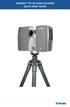 TRIMBLE TX5 3D LASER SCANNER QUICK START GUIDE Equipment 1 8 9 5 6 7 4 3 2 The TX5 laser scanner ships with the following equipment: 1 Scanner transport and carry case 6 USB memory card reader 2 AC power
Electronic Power Control
 Service. Self-Study Programme 210 Electronic Power Control Design and Function With the Electronic Power Control system, the throttle valve is actuated only by an electric motor. This eliminates the need
LabelWriter. Print Server. User Guide
 LabelWriter Print Server User Guide Copyright 2010 Sanford, L.P. All rights reserved. 08/10 No part of this document or the software may be reproduced or transmitted in any form or by any means or translated
Modular I/O System Analog and Digital Interface Modules
 OPERATING INSTRUCTIONS Modular I/O System Analog and Digital Interface Modules Installation Operation Maintenance Document Information Document ID Title: Operating Instructions Modular I/O System Part
8-Port PoE Network Switch
 Page 1 of 12 8-Port PoE Network Switch User s Guide Document Number 91I00-1 Rev A August, 2009 FCC Warning: Page 2 of 12 This devices has been tested and found to comply with the regulations for Class
EPSON Scan Server & EPSON TWAIN Pro Network
 EPSON Scan Server & EPSON TWAIN Pro Network EPSON Scan Server & EPSON TWAIN Pro Network SCANNER UTILITY PROGRAMS All rights reserved. No part of this publication may be reproduced, stored in a retrieval
Installation guide H-5500-8554-03-A. HSI hardwired system interface
 Installation guide H-5500-8554-03-A HSI hardwired system interface 2008-2011 Renishaw plc. All rights reserved. This document may not be copied or reproduced in whole or in part, or transferred to any
e-4 AWT07MLED 7 Q TFT LCD MONITOR (LED Backlighted) USER MANUAL
 Thank you for purchasing our product. Please read this User s Manual before using the product. Change without Notice AWT07MLED 7 Q TFT LCD MONITOR (LED Backlighted) USER MANUAL e-4 SAFETY PRECAUTIONS Federal
8-port 10/100Base-TX +2-port 100Base-FX Switch. User s Guide
 8-port 10/100Base-TX +2-port 100Base-FX Switch User s Guide COPYRIGHT All rights reserved. No part of this publication may be reproduced, stored in a retrieval system, or transmitted in any form or by
AXIS T81B22 DC 30W Midspan
 INSTALLATION GUIDE AXIS T81B22 DC 30W Midspan ENGLISH About this Document This document includes instructions for installing AXIS T81B22 on your network. Previous experience of networking will be beneficial
sensors Miniature Sensors - S100 The universal miniature photoelectric sensor
 Miniature Sensors - S1 The universal miniature photoelectric sensor Two threaded front mounting holes Two slotted rear mounting holes Anti-tampering sensor (no adjustment) Standard optic functions and
Safety Information. Accessories. Step 1: Mounting. > > The CLV61x must be used exclusively in industrial environments. Equipment Required
 en Operating Instructions Bar Code Scanner CLV6-C0000 CAN Mid Range CLV615-F2000 FIELDBUS Long Range Intended Use The bar code scanner is an intelligent SICK IDpro sensor and is used exclusively for automatic,
LASER-PROTECTION INFORMATION
 LASER-PROTECTION INFORMATION µspeed-systems Version V2.0 Creation date: 18.07.2012 page 1/8 LASER PROTECTION The µspeed sensor system is a laser-based measuring system. When using a µspeed, it is necessary
Tina 2A/B Adaptor unit
 Original instructions Tina 2A/B Adaptor unit ABB Jokab Safety Varlabergsvägen 11, SE-434 39 Kungsbacka, Sweden www.abb.com/jokabsafety Read and understand this document Please read and understand this
Laser diffuse reflection light scanner with background suppression. Dimensioned drawing
 Specifications and description HRTL 3B Laser diffuse reflection light scanner with background suppression Dimensioned drawing We reserve the right to make changes DS_HRTL3B_en.fm en 01-2010/12 50114049
Grid Automation Products. SAM600 Process Bus I/O System Cyber Security Deployment Guideline
 Grid Automation Products SAM600 Process Bus I/O System Cyber Security Deployment Guideline Document ID: 1MRK 511 430-UEN Issued: April 2016 Revision: - Product version: 1.1 Copyright 2016 ABB. All rights
Sturdy aluminium housing, anodized in blue Female connector for optical fiber (please order optical fiber separately) Mounting holes
 SI-COLO Series SI-COLO2-LWL-HAMP-COL4 - Big measuring range: typ. 25 mm... 40 mm (with optical fiber and attachment optics KL-14 or KL-17) - Large assortment of optical fibers available (reflected or transmitted
Product Information. Gateway For Connecting EnDat Encoders to PROFIBUS-DP
 Product Information Gateway For Connecting EnDat Encoders to PROFIBUS-DP April 2012 PROFIBUS Gateway For Connecting EnDat Encoders Encoders with EnDat interface for connection via gateway All absolute
PRELIMINARY MANUAL STAGE COLOR 48. Preliminary User Guide. Official version will follow soon on: WWW.BRITEQ-LIGHTING.COM TABLE OF CONTENTS
 STGE COO 48 Preliminary User Guide Official version will follow soon on: WWW.BITEQ-IGHTIG.COM TBE OF COTETS 1. Safety Instruction 2. Technical Specification 3. How To Set The Unit 4. How To Control The
KNX L. Brightness Sensor. Installation and Adjustment. Item number 70119
 EN KNX L Brightness Sensor Item number 70119 Installation and Adjustment 1 Content 1. Description... 3 1.1. Technical specifications... 3 2. Installation and commissioning... 4 2.1. Installation notes...
MADRIX NEO Quick Start Guide & User Manual
 MADRIX NEO Quick Start Guide & User Manual 4 th Edition, Last Update: March 2011 Thank You for Purchasing MADRIX NEO Please read this manual carefully and thoroughly before using the MADRIX NEO. Make sure
USER GUIDE. Ethernet Configuration Guide (Lantronix) P/N: 2900-300321 Rev 6
 KRAMER ELECTRONICS LTD. USER GUIDE Ethernet Configuration Guide (Lantronix) P/N: 2900-300321 Rev 6 Contents 1 Connecting to the Kramer Device via the Ethernet Port 1 1.1 Connecting the Ethernet Port Directly
DRTS 33. The new generation of advanced test equipments for Relays, Energy meters, Transducers and Power quality meters
 The new generation of advanced test equipments for Relays, Energy meters, Transducers and Power quality meters Testing all relay technologies: electromechanical, solid state, numerical and IEC61850 Manual
FB-500A User s Manual
 Megapixel Day & Night Fixed Box Network Camera FB-500A User s Manual Quality Service Group Product name: Network Camera (FB-500A Series) Release Date: 2011/7 Manual Revision: V1.0 Web site: Email: www.brickcom.com
MRC High Resolution. MR-compatible digital HD video camera. User manual
 MRC High Resolution MR-compatible digital HD video camera User manual page 1 of 12 Contents 1. Intended use...2 2. System components...3 3. Video camera and lens...4 4. Interface...4 5. Installation...5
Hygro-Thermometer + InfraRed Thermometer Model RH101
 User's Guide Hygro-Thermometer + InfraRed Thermometer Model RH101 Introduction Congratulations on your purchase of the Extech Hygro-Thermometer plus InfraRed Thermometer. This device measures relative
WEB log. Device connection plans
 WEB log LIGHT+ 20 BASIC 100 PRO unlimited Device connection plans Version 20151210* Copyright Copyright for this manual remains with the manufacturer. No part of this manual may be reproduced or edited,
LED Security Spotlight User Manual
 MOT ION-TR ACKING LED Security Spotlight User Manual www.jascoproducts.com 1-800-654-8483 2 TABLE OF CONTENTS Parts List 3 Questions? Missing Parts? 4 Installation (Wall mount) 6-9 Installation (Eave mount)
5-port 10/100Base-TX Industrial Switch (314500) User s Guide
 5-port 10/100Base-TX Industrial Switch (314500) User s Guide COPYRIGHT All rights reserved. No part of this publication may be reproduced, stored in a retrieval system, or transmitted in any form or by
VFS24/32HDIP. Public Display IP Monitor User Manual
 VFS24/32HDIP Public Display IP Monitor User Manual 2 Contents Before You Begin...4 Side Panel Control buttons...6 Connections...7 OSD Function...7 LCD monitor Mounting Guide...9 Getting started... 10 Power
Introduction. In this Self-study Programme we will explain to you the design and function of the CAN data bus. SSP 186/01
 Introduction The requirements relating to driving safety, driving comfort, exhaust emissions and fuel economy are are becoming ever more stringent. This entails more intensive information exchange between
Network ScanGear Guide
 Network ScanGear Guide Please read this guide before operating this product. After you finish reading this guide, store it in a safe place for future reference. ENG Network ScanGear Guide Contents Before
Energy Communication Unit (ECU)
 Altenergy Power System Energy Communication Unit (ECU) Installation and User Manual (For ECU-3 V3.7) Version:3.0 ALTENERGY POWER SYSTEM INC. All rights reserved TABLE OF CONTENTS 1.0 Introduction... 2