
Biotic Indicators of Water Quality
|
|
|
- Anthony Daniel
- 9 years ago
- Views:
Transcription
1 ANR-1167 There has been serious concern about declining water quality in streams and rivers since the 1960s. Initially, concerns were centered on releases of point source pollutants such as heavy metals, sewage, and other chemical wastes from industrial and municipal origins. These were harmful both to human and stream ecosystem health. For this reason, the Clean Water Act (CWA) was enacted in 1977 to restore and maintain the chemical, physical, and biological integrity of the Nation s waters. In 1987, Section 319 of an amendment to the CWA created policy to control nonpoint source water pollution pollution that can occur from sediment and pesticide runoff from farms, residential areas, construction sites, and mines. High nonpoint source runoff may change stream water color and turbidity (clarity), increase the amount of organic matter and nutrients (usually nitrogen and phosphorus), and increase sediment suspended in the water. Once in streams, these materials separately or in combination can seriously degrade water quality for humans and aquatic life. Unlike point source pollution, nonpoint source pollution is much more difficult to detect and control because runoff does not come from a few easily identifiable sources, but instead stems from a number of locations scattered across a watershed. Nonpoint source pollution is among the most A L A B A M A A & M A N D A U B U R N U N I V E R S I T I E S The Alabama Watershed Demonstration Project: Biotic Indicators of Water Quality important sources of water quality impairment. It is the primary source of pollution from logging operations in forested watersheds in the United States. The traditional water quality monitoring approach has been to collect stream water samples and analyze them in a laboratory for suspected physical and chemical pollutants. Unfortunately, because sampling and analysis are expensive and because concentrations of pollutants vary greatly with time and location, physical and chemical monitoring alone often cannot detect nonpoint source pollution problems. A biological approach to water quality monitoring biomonitoring incorporates the use of stream organisms themselves as a basis for pollution detection. Europeans first adopted this strategy in the early 1900s to identify organic pollution in large rivers. In the United States, the use of stream organisms as biological indicators or sentinels has become widespread only over the last two decades. Several agencies including the Environmental Protection Agency (EPA), the Natural Resources Conservation Service (NRCS), and the U.S. Geological Survey (USGS) now employ biologists whose main task is to implement biomonitoring in streams and rivers across the country. The underlying concept of biomonitoring is simple: certain types of stream animals occur or thrive only under certain water quality conditions. When conditions change, such as when a stream receives significant nonpoint source runoff, the abundance and distribution of animals in the affected site change as well. Although fish and algae have been used in stream biomonitoring programs, benthic invertebrates are the most commonly used organisms. Benthic invertebrates are widely used as bioindicators because They constitute the majority of species present in streams. The numerous species present often show a wide range of sensitivity to pollution. They are relatively easy to sample and identify. The short life cycles and high movement of many species may provide reliable and rapid evidence of the return of favorable water quality after a pollution event. The combined use of benthic invertebrate bioindicators and traditional stream water quality monitoring allows a comprehensive means of assessing water quality pollution from nonpoint sources within forested watersheds. Visit our Web site at:
2 What Are Benthic Invertebrates? Benthic invertebrates are small animals that live on the bottom of a pond, lake, stream, or river for at least part of their lives. They inhabit tiny spaces between submerged stones, within organic debris, on logs and aquatic plants, or within fine sediments (silt, clay). Technically, invertebrates are animals that do not have backbones like the larger animals (vertebrates) such as fishes, amphibians, reptiles, birds, and mammals. Benthic macroinvertebrates are bottom-dwelling invertebrates large enough to be seen with the naked eye. They are usually greater than 1 mm or 1 32 inch long. Most species of stream macroinvertebrates are aquatic insects (see below), although crustaceans (crayfish, sideswimmers, aquatic pillbugs), molluscs (snails, mussels, clams), oligochaetes (earthworms, leeches), and arachnids (aquatic mites) also occur commonly. General Guide to Aquatic Insects Found in Streams Following is a description of features that may help you identify seven of the groups (orders) of aquatic insects found commonly in streams. Consult the references at the end of this publication for more detailed information on identification and on the biology and ecology of these or other invertebrates. Mayflies (Order: Ephemeroptera). These are aquatic insects whose immature stages (nymphs) usually have two or three tails (caudal filaments), flattened or fingerlike gills on the abdomen, and one claw at the end of each leg. Nymphs may be strongly flattened (Figure 1) or more cylindrical (Figure 2). Adults are terrestrial, meaning they live on land. Figure 1. Flattened mayfly nymph (Family: Heptageniidae). Photo courtesy of Howell Daly. Figure 2. Cylindrical mayfly nymph (Family: Leptophlebiidae). Photo courtesy of Ralph Charlton. Stoneflies (Order: Plecoptera). Stonefly nymphs often are confused with mayflies; they differ in that they always have two caudal filaments (never three), usually lack abdominal gills (some have fingerlike gills on the thorax, or midsection, at the base of each leg), and have two claws at the end of each leg (Figure 3). Like mayflies, most stonefly nymphs are flattened. Adults are terrestrial. Figure 3. Perlid stonefly nymph (Family: Perlidae). Damselflies and Dragonflies (Order: Odonata). Immature damselflies and dragonflies (naiads) have a modified lower lip (labium) that is often strongly toothed and scoopshaped and is used as a spear for catching prey. Damselflies typically are slender, with large, thin gills at the end of the abdomen (Figure 4). Dragonflies have more husky bodies and no external gills on the abdomen (Figure 5). Adults of both groups are terrestrial. Figure 4. Damselfly naiad (Family: Coenagrionidae). Note the three leaflike gills at the end of the abdomen. Figure 5. Dragonfly naiad (Family: Aeshnidae). 2
3 Caddisflies (Order: Trichoptera). Caddisfly immatures (larvae) are caterpillar-like with fleshy (whitish) abdomens, a dark brown head and thorax, and three pairs of welldeveloped legs close to the head. The last abdominal segment bears a pair of fleshy appendages with hooks. Larvae may build and live within cases made from wood, leaf fragments, or inorganic materials such as fine sand (Figure 6), or they may be free living (Figure 7). Adults are terrestrial and resemble small moths. True Flies (Order: Diptera). In terms of species, this is the largest and most widespread group of stream insects. Larvae lack legs (although they may have a single, stubby projection, called a proleg, near the head) and have soft, fleshy bodies; a head may or may not be present. Three groups containing larvae common to streams are black flies (Figure 8), crane flies (Figure 9), and midges (Figure 10). Adults are terrestrial and often resemble mosquitoes. Beetles (Order: Coleoptera). Larvae are extremely variable in form, with bodies ranging from a slender, crescent shape (such as riffle beetles, Figure 11) to a highly flattened form (such as water pennies, Figure 12). With most aquatic insects only the immature stages are aquatic and the adults are terrestrial or capable of flight. Adult beetles, however, are often as common in streams as are the larvae. Adults usually display the typical beetlelike appearance small, dull-colored with extremely hard bodies. Figure 6. Overhead view of casebuilding caddisfly larva inside its stony case (Family: Limnephildae). Note the head and legs emerging from the case on the right side of photograph. Figure 8. Black fly larva (Family: Simuliidae). Note the brown head and single fleshy proleg. Figure 11. Riffle beetle larva, left, and adult, right, (Family: Elmidae). Photo courtesy of Lara Panayotoff. Figure 7. Free-living caddisfly larva (Family: Hydropsychidae). Photo courtesy of Ken Fritz. Figure 9. Crane fly larva (Family: Tipulidae). The swollen area on the left is a modification of the abdomen that aids in movement. Photo courtesy of Lara Panayotoff. Figure 12. Water penny beetle larva underside, left, and upperside, right, (Family: Psephenidae). Photo courtesy of Lara Panayotoff. Figure 10. Midge larva (Family : Chironomidae). Note the small yellowish head and single proleg on the left. 3
4 Dobsonflies (Order: Megaloptera). Larvae of this group (hellgrammites) are similar to caddisflies except that they have long lateral projections (filaments) and/or gills on the abdomen, strong heads with large jaws (mandibles), and are usually larger (Figure 13). Adults are terrestrial. Figure 13. Dobsonfly larva (hellgrammite; Family: Corydalidae). Note the large head and jaws and lateral filaments on abdomen. Photo courtesy of George Folkerts. How Are Benthic Invertebrates Used in Biomonitoring? Typically, benthic invertebrates are sampled from streams using dip nets or kick screens for qualitative collections (Figure 14) or quadrat samplers such as a Surber or Hess sampler for more precise, quantitative collections (Figure 15). After collection, the samples are examined either in the field or in the laboratory. The invertebrates are removed from stones and organic debris, identified as belonging to a particular taxonomic group, and counted. Once counted, invertebrates can be compared to samples taken in the same stream but at different times, such as before and after a suspected pollutant has entered a stream. They also can be compared to samples taken from two or more streams at approximately the same time, such as from a stream suspected of receiving a pollutant and a nearby undisturbed reference stream. Figure 14. Use of aquatic dip net to collect benthic invertebrates in Coastal Plains streams. Flow is from right to left of photograph. Figure 15. Use of a Surber quadrat sampler to quantify benthic invertebrates from a known area of stream bottom (1 ft 2 ). Flow is from left to right of photograph. Invertebrates may be quantified by species richness (number of unique types of invertebrates present in a sample), abundance (total number of invertebrates in a sample), relative abundance (number of invertebrates in the sample from one species relative to another), and species diversity (distribution of total individuals across species in the sample). One very popular biomonitoring metric is the EPT index. This is a measure of the total number of species within the three most pollution-sensitive aquatic insect orders: Ephemeroptera (mayflies), Plecoptera (stoneflies), and Trichoptera (caddisflies). This index assumes that streams showing high EPT richness are less likely to be polluted than are streams showing relatively low EPT richness in the same region. Importance of Reference Streams Because streams differ by many natural factors besides nonpoint source pollution, it is critical to establish a baseline or reference condition upon which differences or changes in water quality resulting from pollution can be judged. Water chemistry (e.g., whether streams drain chalky limestone or more dense sandstone rocks), the nature of the stream bottom and its slope, flow regimes, amount of light, temperature, and other watershed features can greatly affect invertebrate communities independent of human influences. For example, benthic research on undisturbed forested watersheds from four different ecoregions of the southeastern United States (Blue Ridge, Southwestern Appalachians, Piedmont, and Coastal Plains) revealed that streams from different ecoregions can show large, natural differences in invertebrate communities. Total invertebrate and EPT richness often may be higher in upland streams of the Blue Ridge or Southwest Appalachians than in lowland Piedmont or Coastal Plains streams. This demonstrates that stream invertebrates can vary geographically according to differences in natural watershed attributes, and measures such as the EPT index are useful in recording such natural variation. Thus, some measure of reference conditions that incorporates natural variation must be established if biomonitoring is useful in pinpointing changes resulting from nonpoint source impacts in streams. 4
5 Application of Biomonitoring in Alabama Streams The biomonitoring approach described in this publication is currently being used with conventional water quality sampling in the Alabama Watershed Demonstration Project (AWDP). This project is centered within the Sepulga River Basin (Butler, Crenshaw, and Conecuh counties) in south-central Alabama. The main objective of the AWDP is to examine if nonpoint source physical, chemical, and biological measures of water quality are related to a mixture of human activities within the Sepulga Basin. The biomonitoring aspect of AWDP is specifically designed to evaluate whether stream benthic invertebrate communities differ in watersheds showing dissimilar amounts of silvicultural, agricultural, or residential land use and, in turn, assess if invertebrate-based measures of water quality are useful in describing differences in land use within watersheds of the Gulf Coastal Plain. References Kellogg, L. L Save our streams monitor s guide to aquatic macronivertebrates. Izaak Walton League of America, Arlington, Virginia. Klemm, D.J., P.A. Lewis, F. Fulk, and J.M. Lazorchak Macroinvertebrate field and laboratory methods for evaluating the biological integrity of surface waters. EPA/600/4-90/030. U.S. Environmental Protection Agency, Office of Modeling, Monitoring Systems, and Quality Assurance. Washington, D.C. McCafferty, W.P Aquatic entomology. Jones and Bartlett Publishers, Boston, Massachusetts. Merritt, R.W. and K.W. Cummins, editors An introduction to the aquatic insects of North America. 3rd edition. Kendall- Hunt Publishers, Dubuque, Iowa. Resh, V.H., J.W. Feminella, and E.P. McElravy Sampling aquatic insects. Department of Entomological Sciences and Office of Media Services, University of California, Berkeley, California. Rosenberg, D.M. and V.H. Resh, editors Freshwater biomonitoring and benthic macroinvertebrates. Chapman and Hall, New York, New York. Thorp, J.H., and A.P. Covich, editors Ecology and classification of North American freshwater invertebrates. Academic Press, San Diego, California. U.S. Department of Agriculture, Soil Conservation Service (Now NRCS) Water quality indicators guide: surface waters. NRCS- TP-161. Washington, D.C. 5
6 ANR-1167 Jack W. Feminella, Associate Professor, Biological Sciences, and Kathryn M. Flynn, Extension Forester and Coordinator, Associate Professor, Forestry, both with Auburn University For more information, call your county Extension office. Look in your telephone directory under your county s name to find the number. Issued in furtherance of Cooperative Extension work in agriculture and home economics, Acts of May 8 and June 30, 1914, and other related acts, in cooperation with the U.S. Department of Agriculture. The Alabama Cooperative Extension System (Alabama A&M University and Auburn University) offers educational programs, materials, and equal opportunity employment to all people without regard to race, color, national origin, religion, sex, age, veteran status, or disability. UPS, 6.5M30, New Dec 1999, ANR-1167
Identifying Aquatic Insects From Your Pond
 Identifying Aquatic Insects From Your Pond Penobscot County Soil & Water Conservation District Natural Resources Conservation Service 28 Gilman Plaza, Suite #2 Bangor, ME 04401 Tel: (207) 990-3676 Fax:
78 N ATIONAL SCIENCE TEACHERS ASSOCIATION PROTOCOL 5. COLLECTING AQUATIC INVERTEBRATES
 Topic opic: aquatic entomology Go to: www.scilinks.org Code: WD14 Topic opic: freshwater ecosystems Go to: www.scilinks.org Code: WD15 PROTOCOL 5. COLLECTING AQUATIC INVERTEBRATES Objective To safely collect,
Monitoring Macroinvertebrates
 Monitoring Macroinvertebrates Life Skill: Communication Project Skill: Identifying stream macroinvertebrates (animals without a backbone that are visible without magnification) Objective: Collect and identify
POND INTERACTIONS Teacher Guide February 2011
 Grades: 4, 5, & 6 POND INTERACTIONS Teacher Guide February 2011 Time: 3 hours A pond is an ever-changing environment. The pond ecosystem is made of countless interactions that link living things to one
Urban Ecology: Watersheds and Aquatic Ecology A BIOBUGS program
 NAME: Urban Ecology: Watersheds and Aquatic Ecology A BIOBUGS program Objective: To describe the health of the Muddy River in the Fens wetlands system of Boston by examining abiotic and biotic parameters.
Aquatic Organisms and Their Habitats
 Aquatic Organisms and Their Habitats Objectives: Students will understand the following: 1. The presence of specific organisms in a freshwater habitat determines the quality of that habitat. 2. An organism
Get to Know Your Watershed. McMillan Creek
 Get to Know Your Watershed McMillan Creek Where is McMillan Creek? McMillan Creek is found in the northeastern portion of the City of Prince George, know as the Hart and Shady Valley. It is located entirely
Life in a Pond. Page 1 of 5. Grade Levels K-5
 Grade Levels Overview Observe a local pond or aquatic ecosystem, and study the wildlife that utilizes the pond/aquatic ecosystem for its habitat needs. Subject Areas Science, Language Arts & Art, Duration
Time Required: 45 minutes
 Benthic Macroinvertebrate Study Concept/Topic to Teach: The presence or absence of benthic macroinvertebrates can be used to indicate water quality. Standards: Discipline: Science and Technology Strand:
Prepared by: Armand Ruby Armand Ruby Consulting in association with Brown and Caldwell
 Contra Costa County BMI Monitoring - Comparison of Results of 2007 Reach-wide Benthos (RWB) vs. 2006 Targeted Riffle Composite (TRC) Method for Collection of Benthic Macroinvertebrates Prepared by: Armand
BiT Stream Study - Guided Observations:
 BiT Stream Study - Guided Observations: Streams are the pathways that transport water through a watershed. They are also critical to the healthy functioning of the watershed and the myriad of habitats
www.irishseedsavers.ie Natural surface water on earth includes lakes, ponds, streams, rivers, estuaries, seas and oceans.
 www.irishseedsavers.ie POND LIFE FACT SHEET Natural surface water on earth includes lakes, ponds, streams, rivers, estuaries, seas and oceans. A pond is a small body of fresh water shallow enough for sunlight
Introduction to the Biotic Water Quality of a Stream
 Teacher s Guide Introduction to the Biotic Water Quality of a Stream Lesson Description This lesson allows students to learn the Biotic Water Quality Score (BWQS) method for collecting macroinvertebrates.
Turbidity (cm) Using Dot # ph. Dissolved Oxygen (ppm or parts per million) Nitrate (ppm) Phosphate (ppm) Color
 For this activity you will need to bring in water samples from 2 streams which should have very different water quality. For our class, I used the Poestenkill in Troy and and a small stream that runs through
Flies That Catch Trout And Why They Work
 Flies That Catch Trout And Why They Work We all have boxes of flies that we carry on every trip. But we always find ourselves fishing the same flies; Why?? because they always produce fish. A special thank-you
Sand and Silt Removal from Salmonid Streams
 Sand and Silt Removal from Salmonid Streams Stream bank erosion Poor land use practices Sources of Sand and Silt Impacts of Sand and Silt Interstitial spaces infilled Little or no flow through the streambed
Report for 2003PA14B: Spruce Creek Watershed Keystone Project
 Report for 2003PA14B: Spruce Creek Watershed Keystone Project There are no reported publications resulting from this project. Report Follows Abstract: This proposal seeks support for a graduate assistant
The concepts developed in this standard include the following: Oceans cover about 70% of the surface of the Earth.
 Name Date Grade 5 SOL 5.6 Review Oceans Made by SOLpass - www.solpass.org [email protected] Reproduction is permitted for SOLpass subscribers only. The concepts developed in this standard include
LIMNOLOGY, WATER QUALITY
 LIMNOLOGY, WATER QUALITY PA RANI ET E R S, AN D c 0 IV D IT I 0 N S AND ECOREGIONS Water Quality Parameters Nutrients are important parameters because phosphorous and nitrogen are major nutrients required
How To Plan A Buffer Zone
 Backyard Buffers Protecting Habitat and Water Quality What is a buffer? A buffer (also called a riparian buffer area or zone) is the strip of natural vegetation along the bank of a stream, lake or other
Pond Water Web Lesson Plan
 Pond Water Web Lesson Plan Purpose: As a result of this lesson, students will become familiar with common organisms found in a pond and discover their importance in a balanced aquatic habitat as they create
The Pond Pack. Background information and resources for teachers
 The Ecology Service 2010 Date published 02/03/10 Extended artwork area (REMOVE THIS TEXT) The Pond Pack Background information and resources for teachers For further information contact: Holland Park Ecology
APPLICATION OF GEOSPATIAL TECHNOLOGIES FOR SUSTAINABLE ENVIRONMENTAL MANAGEMENT
 APPLICATION OF GEOSPATIAL TECHNOLOGIES FOR SUSTAINABLE NATURAL RESOURCES AND ENVIRONMENTAL MANAGEMENT IN MALAYSIA By James Dawos Mamit, Ph.D. Deputy Minister Ministry of Natural Resources and Environment,
Sustainability Brief: Water Quality and Watershed Integrity
 Sustainability Brief: and Watershed Integrity New Jersey depends on water resources for the health of our people, the strength of our economy, and the vitality of our ecosystems. The quality of our water
Unit Four Insects. Carlos de la Rosa. Education Coordinator Dept. of Environmental Management Pinellas County, Florida
 Carlos de la Rosa Education Coordinator Dept. of Environmental Management Pinellas County, Florida Ph.D. in Ecology University of Pittsburgh Carlos was born in Caracas, Venezuela and received his Ph.D.
Pond Vocabulary Words and Meanings
 Pond Vocabulary Words and Meanings Adapt: to adjust to a use or situation Aquatic: from or in the water Bacteria: tiny organisms, too small to be seen with the naked eye Carnivore: an animal that eats
Pond Ecosystem Field Study MOLS
 This multi-week lab involves field studies comparing ecosystem-level ecology between 2 freshwater ponds in Marshfield Outdoor Learning Sanctuary. We will be investigating a correlation between weather
Lesson 4: What Makes Water Healthy?
 Lesson 4: What Makes Water Healthy? Activity: Students make observations and measurements of several water samples. This activity helps students think about different ways to determine water quality. Grade
Habitat of rivers and creeks
 Water and Rivers Commission W N 8 J a n u a ry 2000 Habitat of rivers and creeks Stream systems play an important role in the hydrological cycle, transporting water off the landscape and back to the estuaries
Missouri Streams. Fact Sheet. By Danny Brown & Jim Czarnezki Edited by Chris Riggert & Sarah Wolken
 Missouri Streams Fact Sheet By Danny Brown & Jim Czarnezki Edited by Chris Riggert & Sarah Wolken Chemical parameters play an important role in the health, abundance, and diversity of aquatic life. They
Managing Systems for Tilapia Culture
 Auburn University and USDA-Natural Resources Conservation Service Alabama Aquaculture Best Management Practice (BMP) Managing Systems for Tilapia Culture BMP No. 17 Definition Tilapias (Oreochromis spp.)
Rocky EEP Preliminary Findings Report Summary February 2005
 This is a DRAFT summary of the NC Ecosystem Enhancement Upper Rocky River Local Watershed Plan Preliminary Findings Report. The original, 157 page document can be found here: www.ncsu.edu/weco/rocky. The
Using Aerial Photography to Measure Habitat Changes. Method
 Then and Now Using Aerial Photography to Measure Habitat Changes Method Subject Areas: environmental education, science, social studies Conceptual Framework Topic References: HIIIB, HIIIB1, HIIIB2, HIIIB3,
Mud in the Water. www.agclassroom.org/ok. Oklahoma Academic Standards. Objective. Background. Resources Needed. Activities
 Mud in the Water Objective Students will learn about soil erosion and water pollution by building a demonstration model from pop bottles and observing the movement of pollutants from soil into water. Background
Welcome to the Understanding Dissolved Oxygen learning module. This section provides information on the following topics:
 Introduction Welcome to the learning module. This section provides information on the following topics: How dissolved oxygen is defined and measured in numbers Why dissolved oxygen is important Natural
Class Insecta - The insects
 A Introduction 1. Very species rich 2. Characteristics a. 3 pairs of legs b. 2 pairs of wings (most) except flies (1 pair of wings - Diptera) B. Distribution 1. All habitats except saltwater - replaced
Vulnerability Assessment of New England Streams: Developing a Monitoring Network to Detect Climate Change Effects
 Vulnerability Assessment of New England Streams: Developing a Monitoring Network to Detect Climate Change Effects National Water Quality Monitoring Council 2012 Meeting Britta Bierwagen, National Center
Classification. Living Things. bacteria and blue green algae: (single celled organisms without a nucleus)
 Teacher Discovery Card Classification Information There are millions different kinds plants and animals in the world Each different kind plant and animal is called a species We can group species together
AQUATIC ECOSYSTEMS & BIOMES
 AQUATIC ECOSYSTEMS & BIOMES A) Name three general types of aquatic ecosystems and describe the salinity for each. Give an example for each. 1) 2) 3) B) MATCHING In the space provided, write the letter
3. Which relationship can correctly be inferred from the data presented in the graphs below?
 1. Recent evidence indicates that lakes in large areas of New York State are being affected by acid rain. The major effect of acid rain in the lakes is (1) an increase in game fish population levels (3)
Insect identification sheet
 information leaflet Insect identification sheet To enable you to identify the insect you have in your home, we have provided some identification sheets. These depict the most common pest species that you
CHAPTER I: INTRODUCTION. Background
 CHAPTER I: INTRODUCTION Background California State Law requires each county to adopt a General Plan for the physical development of the county and any land outside its boundaries which bears relation
Great Crested Newt Habitat Suitability Index
 Great Crested Newt Habitat Suitability Index Background The Habitat Suitability Index (H) for the great crested newt was developed by Oldham et al. (2000). H scoring systems were originally developed by
What types of monitoring do we do? Freshwater (rivers, streams) Marine Waters (bays, ocean) & Tidal Rivers Ambient Ground Water
 What types of monitoring do we do? Freshwater (rivers, streams) Marine Waters (bays, ocean) & Tidal Rivers Ambient Ground Water What do we monitor these waters for? Sanitary Quality (indicators of human
Missouri Regions Shaped by Land Forms and Geology
 Missouri Regions Shaped by Land Forms and Geology Lesson Abstract Summary: MO GLE: Subject Areas: The students will use various resources to compare and contrast the geology of each Missouri region to
4.2 Buena Vista Creek Watershed
 Buena Vista Creek Watershed 4.2 Buena Vista Creek Watershed Watershed Overview The Buena Vista Creek Watershed is the fourth-largest system within the Carlsbad Hydrologic Unit. The watershed extends approximately
case study 7: south east queensland healthy waterways partnership
 2 Australia s National Programme of Action for the Protection of the Marine Environment from Land-Based Activities introduction South-east Queensland s marine systems support large populations of dugongs
Mosquito Control Guidelines
 Appendix G Mosquito Control Guidelines This appendix presents the guidance for designing and maintaining stormwater treatment measures to control mosquitoes from ACCWP s Vector Control Plan. Project sponsors
Unique reproductive strategies have developed to ensure maximum reproductive success.
 Animal Reproductive Strategies The ultimate goal of each species is to produce the maximum number of surviving offspring using the least amount of energy. This is called the reproductive effort. Asexual
REGULATORY GUIDANCE LETTER
 REGULATORY GUIDANCE LETTER. 07-02 Date: July 4, 2007 SUBJECT: Exemptions for Construction or Maintenance of Irrigation Ditches and Maintenance of Drainage Ditches Under Section 404 of Clean Water Act 1.
Michigan Wetlands. Department of Environmental Quality
 Department of Environmental Quality Wetlands are a significant component of Michigan s landscape, covering roughly 5.5 million acres, or 15 percent of the land area of the state. This represents about
Restoring Ecosystems. Ecosystem Restoration Services
 Restoring Ecosystems Ecosystem Restoration Services 2 Ecosystem Restoration Services AECOM s integrated approach sciencebased planning, with innovative design and execution delivers sustainable and cost-effective
Standards: Human activity has consequences on living organisms and ecosystems. (94412, 94211 )
 Minnehaha Creek Restoration Project A Place- Based Environmental Water Study Course: 9 th grade Biology Adapted from Kent Piccott, Minneapolis Public Schools Background: This study was designed with the
Freshwater Resources and Water Pollution
 Visualizing Environmental Science Freshwater Resources and Water Pollution Chapter 10 Copyright The Importance of Water Life on Earth would be impossible without water All living organisms contain water
Discover a Species. Smoky Mountain Diversity. Episode: For a follow-along viewing guide for students, see Viewing Guide 12.
 Episode: Smoky Mountain Diversity EXPLORING NORTH CAROLINA Discover a Species MATERIALS & PREPARATION Computers with Internet access Make copies of Fact Sheet and Assignment Sheet, one per group of four.
This material is based on work supported by the U.S. Department of Agriculture, Extension Service & the U.S. EPA
 Revised April 1992 (reformatted May 2000) A Workbook for Certified Pesticide Applicators To accompany the VHS tape "Pesticides in the Environment" Based on materials developed by: Colorado State University
RESTORATION AND ENHANCEMENT OF SOUTHERN CALIFORNIA LAGOONS
 RESTORATION AND ENHANCEMENT OF SOUTHERN CALIFORNIA LAGOONS by Hany Elwany, Ph.D. Scripps Institution of Oceanography Headwaters to Oceans Conference 25 October 2003 CE Ref #03-22 San Diego County Lagoons
Ecosystems and Food Webs
 Ecosystems and Food Webs How do AIS affect our lakes? Background Information All things on the planet both living and nonliving interact. An Ecosystem is defined as the set of elements, living and nonliving,
Visiting a wetland without the chirping
 Monitoring your Wetland a primer to site-level monitoring activities for volunteer coordinators Frogs & Toads (Anurans).......... Visiting a wetland without the chirping of frogs on a warm summer night
Lesson 5: Water Conductivity and Total Dissolved Solids Water Quality Sampling
 Lesson 5: Water Conductivity and Total Dissolved Solids Water Quality Sampling Time Frame: Two 45-50 minute class periods Grade Level: 8 th 12 th Grade Overview: There are a wide variety of inorganic substances
Lower Crooked Creek Watershed Conservation Plan EXECUTIVE SUMMARY
 EXECUTIVE SUMMARY Project Background Located in southwestern Pennsylvania, Crooked Creek is a major tributary of the Allegheny River, entering near Ford City in Armstrong County. It is rich in natural
Life Science Study Guide. Environment Everything that surrounds and influences (has an effect on) an organism.
 Life Science Study Guide Environment Everything that surrounds and influences (has an effect on) an organism. Organism Any living thing, including plants and animals. Environmental Factor An environmental
Part B Integrated Monitoring Design for Comprehensive Assessment and Identification of Impaired Waters Contents
 Part B Integrated Monitoring Design for Comprehensive Assessment and Identification of Impaired Waters Contents Chapter 10. Selecting Metrics or Indicators of WQS Attainment... 10-2 Chapter 11. Monitoring
Food Web Crasher. An introduction to food chains and food webs
 Food Web Crasher An introduction to food chains and food webs Activity Students create a physical food web and watch what happens when an aquatic nuisance species is introduced into the ecosystem. Grade
ANIMALS AND THEIR HABITATS: KS1 STUDENT RESOURCES
 ANIMALS AND THEIR HABITATS: KS1 STUDENT RESOURCES PLANT OR ANIMAL? (Lesson 1:1) Card sort task: print out and get the students to sort them into: Plants or Animals. Get the students to explain why they
Agua Hedionda Creek Flood Plain Information; Department of Army, Los Angeles District,
 Bibliography Agua Hedionda Creek Flood Plain Information; Department of Army, Los Angeles District, California and Maps. US Army Corps of Engineers July 1973 pg. 24 Aqua Hedionda Lagoon Foundation Framework
Chapter 3 Communities, Biomes, and Ecosystems
 Communities, Biomes, and Ecosystems Section 1: Community Ecology Section 2: Terrestrial Biomes Section 3: Aquatic Ecosystems Click on a lesson name to select. 3.1 Community Ecology Communities A biological
Clean Water Services. Ecosystems Services Case Study: Tualatin River, Washington
 Viewed broadly, the concept of ecosystem services describes the many resources and services provided by nature. Typically, traditional planning and development practices do not adequately represent the
A Traditional Island Industry
 A Traditional Island Industry The PEI wild public fishery has remained a productive Island industry for 150 years Wild public oyster fishers still fish in the traditional methods of their ancestors, using
nucleus cytoplasm membrane wall A cell is the smallest unit that makes up living and nonliving things.
 1 In nature there are living things and nonliving things. Living things depend on three basic life processes: nutrition, sensitivity and reproduction. Living things are made up of cells. 1. Match the two
STATEMENT OF SHARON BUCCINO SENIOR ATTORNEY NATURAL RESOURCES DEFENSE COUNCIL WASHINGTON, DC
 STATEMENT OF SHARON BUCCINO SENIOR ATTORNEY NATURAL RESOURCES DEFENSE COUNCIL WASHINGTON, DC Good morning. My name is Sharon Buccino. I am an attorney with the Natural Resources Defense Council (NRDC).
NYS DEC s Regulation of Invasive Species Management Programs
 NYS DEC s Regulation of Invasive Species Management Programs John W. Bennett - Pesticide Program Manager NYSDEC Region 5 Presentation Goals NYS DEC Jurisdiction Application/Permit Requirements Required
WASTEWATER TREATMENT OBJECTIVES
 WASTEWATER TREATMENT OBJECTIVES The student will do the following: 1. Define wastewater and list components of wastewater. 2. Describe the function of a wastewater treatment plant. 3. Create a wastewater
Wild About... Frogs and Frogspawn
 a Wild About... Rutland County Council Nature notes Frogs belong to a group of animals called amphibians, which also includes newts and toads. Amphibians live both on land and in water. Water is needed
Major/Specialization. B.Sc. Degree
 B.Sc. Degree Extension and Extension and Forestry and Forest Reclamation of Arid & Mountainous Regions Agronomy & with two specializations Landscape Design Aquatic Ecology Fish Processing Forestry and
Pamela Birak, Jordan Lake State Park, Chatham County, NC
 Pamela Birak, Jordan Lake State Park, Chatham County, NC 3 Lakes, Reservoirs, and Ponds Forty-six states, Puerto Rico, and the District of Columbia (collectively referred to as states in the rest of this
Nipigon Bay. Area of Concern Status of Beneficial Use Impairments September 2010
 Nipigon Bay Area of Concern Status of Beneficial Use Impairments September 2010 Nipigon Bay is in the most northerly area of Lake Superior. The Area of Concern takes in a large portion of Nipigon Bay and
ENVIRONMENTAL CHANGES
 reflect How do you respond to environmental changes? Maybe you wear different types of clothes in different seasons. Maybe you only ride your bike during certain times of the year. What if you moved to
Total Suspended Solids Total Dissolved Solids Hardness
 Total Suspended Solids (TSS) are solids in water that can be trapped by a filter. TSS can include a wide variety of material, such as silt, decaying plant and animal matter, industrial wastes, and sewage.
LOW INTEREST LOANS FOR AGRICULTURAL CONSERVATION
 LOW INTEREST LOANS FOR AGRICULTURAL CONSERVATION LILAC MANUAL LOW INTEREST LOANS FOR AGRICULTURAL CONSERVATION TABLE OF CONTENTS Introduction... 3 General Eligibility... 4 Specific Eligibility Criteria
Sources to Seafood: Mercury Pollution in the Marine Environment Background on Presenting Scientists
 Celia Y. Chen, Ph.D Dartmouth College Research Professor Department of Biological Sciences Class of '78 Life Sciences Center HB 6044 Hanover, NH 03755 (603)646 2376 [email protected] Dr. Celia Chen
Ecology 1 Star. 1. Missing from the diagram of this ecosystem are the
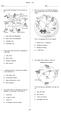 Name: ate: 1. Missing from the diagram of this ecosystem are the 5. ase your answer(s) to the following question(s) on the diagram below and on your knowledge of biology.. biotic factors and decomposers.
Reptiles and Amphibians by Guy Belleranti
 Name: Take a look at the four animals pictures below. Do you know which ones are reptiles and which ones are amphibians? The chameleon is an unusual lizard that can change the color of its scaly body.
EUROPEAN WATER RESOURCES AND POLICY
 EUROPEAN WATER RESOURCES AND POLICY What is the current water situation? The current water situation in Europe, according to a European Commission brochure, is described as: 20% of all surface water in
SPECIES DESCRIPTION Picture
 SPECIES DESCRIPTION Picture German Cockroach Cockroach egg case & nymphs 12-15mm (Adult Stage)Mid to dark brown body. Lighter area with 2 dark bars behind head. Wings. Very long antennae. Young are smaller
Avison Management Services Ltd. COMPANY PROFILE
 Avison Management Services Ltd. COMPANY PROFILE Providing resource management through environmental leadership. Mission Statement: We are committed to providing high quality, timely, and cost effective
THE WATER CYCLE. Ecology
 THE WATER CYCLE Water is the most abundant substance in living things. The human body, for example, is composed of about 70% water, and jellyfish are 95% water. Water participates in many important biochemical