
NR 23 Assessment of the Abdomen
|
|
|
- Noah Simon
- 9 years ago
- Views:
Transcription
1 The Abdomen NR 23 Assessment of the Abdomen Abdominal Cavity The body systems in the abdomen Gastrointestinal Urinary Reproductive Vascular The Gastrointestional System Alimentary canal Mouth Pharynx Tongue Esophagus Stomach Small and large intestine Anus Accessory organs Teeth and Salivary glands Liver Gallbladder Pancreas Esophagus Stomach o Fundus o Body o Antrum CS/06/MP/08 1

2 Small Intestine o Duodenum o Jejunum o Ilium Large Intestine Cecum Colon Ascending Transverse Descending Sigmoid Rectum Accessory Digestive Organs Liver Gallbladder Pancreas Other Related Structures Peritoneum o Visceral o Parietal Abdominal muscles CS/06/MP/08 2

3 Spleen Aorta Kidneys Ureters Bladder Costoveterbral angle Reproductive organs Inside the abdominal cavity Solid viscera Hollow viscera Landmarks for Assessment 1. Xiphoid process 2. Costal Margin 3. Umbilicus 4. Iliac crests 5. Pubic bone Mapping RUQ RLQ LUQ LLQ CS/06/MP/08 3

4 PHYSICAL ASSESSMENT OF THE ABDOMEN Equipment: Assessment techniques used: Subjective history: Ask client to void Drape gown to expose the abdomen from chest to pubic bone Inspection 1. Contour and Symmetry CONTOUR-Stoop and gaze across abdomen and note contour from costal margin to pubic bone NORMAL o Flat o Rounded ABNORMAL o Protubererant (ascities, tumors) o Scaphoid (starvation, subcutaneous fat is replaced muscle) SYMMETRY Stand on patient s right side and look down on abdomen Shine a light lengthwise and assess for shadows or bulges Step to the foot of the bed Abdomen should be smooth and symmetrical with no visible masses 2. Movement- As you are inspecting look for movement in the abdomen NORMAL MOVEMENTS o Pulsations of the aorta at the midline (only in thin people) CS/06/MP/08 4

5 o Peristaltic rushes (thin people) o Respiratory movement in males or in a patient with relaxed muscles 3. Lesions/scars-look for moles, lesions, scars note location, measure in centimeters Straie-silvery white linear jagged marks occur when elastic fibers are broken with rapid growth 4. Vessel pattern- should be non-visable or flat if seen 5. Skin color and hair distribution- Should be homogenous. Pubic hair will be a diamond shape in males, inverted triangle in females. Skin color should be consistent with rest of bosy ABNORMAL SKIN- red (localized inflammation), jaundice (shows best in daylight) 6. Condition of the umbilicus- Should be midline, inverted without signs of discoloration, inflammation or hernia ABNORMAL-everted (asities or underlying mass pushed it upward) a normal finding with pregnancy, enlarged and everted with a hernia, bluish color with abdominal bleeding (Cullen s sign) Hernia-bulge that occurs when person coughs or raises head and shoulders Ausculatation Perform next prior to percussion and palpation as they may create false interpretation of bowel sounds 1. Bowel sounds-sounds created by air and fluid movement in the bowel, listen in all four quadrants Use the diaphragm, press lightly Begin in the RLQ in the ileoceccal valve Listen in this area until you hear sounds, may take 5-20 seconds up to 1 minute, if not heard in 1 minute move to next quadrants Classify BS as Normal, hypoactive or hyperactive, absent Normal- Sound like high pitched gurgling cascading sounds occurring 5-30 times a minute Hyperactive-occurs in diarrhea Hypoactive-sluggish bowel Absent-paralytic ileus must listen for full five minutes 2. Bruits and venous hum Venous hum-continous medium pitched tone created by blood flow in an engorged organ like the liver CS/06/MP/08 5

6 Bruits- vascular blowing sounds, like a murmur o Aorta o Right and Left artery o Right and left Iliac artery o Right and left Femoral artery Percussion Start around the umbilicus and percuss in a circular pattern over the entire abdomen in all four quadrants note the: 1. Gas pattern- Tympany should predominate because of air in intestines 2. Masses this would be dullness in areas that should have tympany Any areas of hyperesonance indicates gastric distention. 3. Organ location-dullness over areas of organs, can find the spleen and the liver and percuss to identify their size Spleen Roll patient midway to the right so that they are lying between the supine and right lateral position Percuss the 9 th to 11 th ICS posterior to the left mid axillary line and listen for resonance to change to dullness Then percuss the lowest ICS in the left anterior axillary line-should note tympany Ask pt to take a deep breath and should still hear tympany Liver (2 methods to map out the liver borders) 1. Begin in area of resonance in the upper thorax along the right midclavicular line and percuss down intercostals spaces until sound changes to dullnessmark the spot with a pen (5 th ICS 2 cm below nipple, MCL) This is the upper liver border Then find abdominal tympany at the midclavicular line, percuss up until tympany changes to dullness (usually at the right costal margin) mark with pen-this is the lower liver border Measure between these spaces-normal range 6-12 cm-the liver span 2. Alternate method-scratch test: Helps to define the liver border when the abdomen is distended or muscles are tense Begin by placing stethoscope over the liver (between the right costal margin and 5 th ICS, MCL) With one finger scratch short strokes over the abdomen beneath the costal margin starting in the RLQ upward towards the liver When scratching is heard louder, you have crossed the lower border of the liver CS/06/MP/08 6

7 Palpation -Normal patient is non tender to both light and deep palpation 1. Light palpation Bend patients knees (relaxes muscles) Use the first four fingers and depress 1 cm Use a gentle rotary smooth motion over all four quadrants, examining reported painful area last. As you palpate note the persons facial characteristics and Note any Tenderness (note by location RUQ, etc) Muscle resistance/rigidity (guarding can be voluntary which is bilateral from a ticklish person to involuntary resistance and rigid muscle) Masses if found note to its location, size, shape, consistency soft, form, hard), mobility, pulsatility, tenderness 2. Deep palpation Using the same hand press harder but do not jab. Press about 2-3 inches Move clockwise note any Masses (f found note to its location, size, shape, consistency soft, form, hard), mobility, pulsatility, tenderness) Pulsations-normal from the aorta Organs-Normally palpable organs are the: Liver edge R kidney lower pole Cecum (asending colon) Sigmoid colon Full bladder or gravid uterus 3. Bimanual Palpation Needed for when deep palpation is difficult. Place one hand over the over, let the hand relax that touches the abdomen and let the overlaying hand guide the pressure Liver o Place left hand under patient s back parallel to the 11 th and 12 th rib and lift o Place right hand on the RUQ beneath the right costal margin and push deeply o Ask patient to take a deep breath (brings liver down) o May be able to feel the firm ridge CS/06/MP/08 7

8 May also use the hooking technique o Stand at the client s right facing their feet o Place both hands side by side below the area of liver dullness hooking over the costal margin o Ask client to inhale and press fingers in and upward in attempt to feel liver Spleen (LUQ) o Stand at patient s right side o Reach over the patient and place left hand under the left costal margin and gently pull upwards o Place your right hand in the LUQ fingers pointing towards the axilla below the costal margin o Ask patient to take deep breath and push upward to palpate- should feel nothing Although this is a percussion technique, it is performed last due to position change of the patient Kidney Have patient sit up Move to their back Percuss for CVA (costoveterbral angles) o Place hand over 12 th rib at the costoveterbral angle o Thump with ulnar edge of fist o Should cause no sharp pain CS/06/MP/08 8

Aehlert: Paramedic Practice Today PowerPoint Lecture Notes Chapter 50: Abdominal Trauma
 Aehlert: Paramedic Practice Today PowerPoint Lecture Notes Chapter 50: Abdominal Trauma Chapter 50 Abdominal Trauma 1 Describe the epidemiology, including morbidity, mortality rates, and prevention strategies,
Figure 9-2. Abdominal and Genitourinary. Internal Anatomy. Deep Internal Anatomy. Abdominal Anatomy & Physiology. Abdominal Surface Landmarks
 Figure 9-2. Abdominal and Genitourinary Abdominal Surface Landmarks Myung-Hee Pak, RN, MSN, CNS Internal Anatomy Deep Internal Anatomy Pat Thomas, 2006. Pat Thomas, 2006. Abdominal Anatomy & Organs of
Abdomen X-Ray (AXR) Collimation is ideally from diaphragms to lower border of the symphysis pubis and the lateral skin margins.
 Abdomen X-Ray (AXR) Collimation is ideally from diaphragms to lower border of the symphysis pubis and the lateral skin margins. LMP of child-bearing age female patients should be checked. 1. Acute abdomen
Divisions of Digestive System. Organs of the Alimentary Canal. Anatomy of the Digestive System: Organs of the Alimentary Canal. CHAPTER 14 p.
 Divisions of Digestive System Anatomy of the Digestive System: Organs of the Alimentary Canal CHAPTER 14 p. 412-423 1. Alimentary Canal or Gastrointestinal Tract (GI)-digests and absorbs food coiled hollow
The Gastrointestinal System It consists of: The digestive tract Mouth Pharynx Oesophagus Stomach Small intestine Large intestine
 The Gastrointestinal System It consists of: The digestive tract Mouth Pharynx Oesophagus Stomach Small intestine Large intestine The digestive organs Teeth Tongue Salivary glands Liver Gall bladder Pancreas
Human Digestive System Anatomy
 Human Digestive System Anatomy Biology 104 Objectives: 1. Learn the anatomy of the digestive system. You should be able to find all terms in bold on the human torso models. 2. Relate structure of the system
Digestive System. Gross Anatomy and Physiology
 Digestive System Gross Anatomy and Physiology I. Introduction A. Base Function: Working with the circulatory system the digestive system provides the body with fuel. B. Main players: 1. Digestive tract:
UNIT 1 BODY PLAN AND ORGANIZATION LECTURE
 UNIT 1 BODY PLAN AND ORGANIZATION LECTURE 1.03 CONTRAST THE SCIENCES OF ANATOMY AND PHYSIOLOGY A. Anatomy Anatomy is the scientific study of structures and the relationship of.. structures to each other.
Introduction. Physiology of the Abdomen. Anatomy & Physiology. Abdominal Pain Introduction (2 of 2) Gastrointestional and Urologic Emergencies
 Gastrointestional and Urologic Emergencies Introduction Abdominal pain is a common complaint. Cause of abdominal pain is often difficult to determine. As an EMT: You do not need to determine exact cause.
Digestive System AKA. GI System. Overview. GI Process Process Includes. G-I Tract Alimentary Canal
 Digestive System AKA G-I Tract Alimentary Canal Overview GI System Consists of Mouth, pharynx, esophagus, stomach, small intestine, large intestine, anus About 30 in length Accessory Organs Teeth, tongue,
United States Department of Transportation National Highway Traffic Safety Administration Paramedic: National Standard Curriculum 1
 UNIT TERMINAL OBJECTIVE 4-8 At the completion of this unit, the paramedic student will be able to integrate pathophysiologic principles and the assessment findings to formulate a field impression and implement
Eating, pooping, and peeing THE DIGESTIVE SYSTEM
 THE DIGESTIVE SYSTEM Ingested food is not technically in the body until it is absorbed so it needs to be: Mechanically and chemically reduced Transported by the blood to the cells Large portions are not
5. Secretion: release of water, acids. Enzymes, buffers by digestive tract.
 Digestive System CH-16 Lecture topics Functions of the digestive system: p. 488. 1. Ingestion: Taking food in 2. Propulsion: movement of food thru alimentary canal p.490. voluntary: swalloing : skeletal
CHINESE QI GONG EXERCISES TAUGHT BY JAKE PAUL FRATKIN, OMD
 1 CHINESE QI GONG EXERCISES TAUGHT BY JAKE PAUL FRATKIN, OMD Doctor of Oriental Medicine MORNING ROUTINE SUMMATION 1. Joint Opening Exercises 2. Meridian Stretching Exercises 3. Qi Circulation Exercises
Welcome back. Today, we embark on Lesson 6 where we ll study the human digestive system.
 Basic Human Anatomy Lesson 6: The Human Digestive System Welcome back. Today, we embark on Lesson 6 where we ll study the human digestive system. After completing this lesson, you should be able to define
What is Separation of the Abdominal Muscles after Childbirth (also known as Divarication of Rectus Abdominis)?
 What is Separation of the Abdominal Muscles after Childbirth (also known as Divarication of Rectus Abdominis)? Following your pregnancy and the birth of your baby your abdominal (tummy) muscles may have
By Casey Schmidt and Wendy Ford
 By Casey Schmidt and Wendy Ford Body systems Digestive System Circulatory System Respiratory System Excretory System Immune System Reproductive System Nervous System Muscular System Skeletal System Endocrine
MOLLOY COLLEGE DIVISION OF NURSING NURSE PRACTITIONER PROGRAMS. Study Guide for the Basic Physical Assessment Exam
 DIVISION OF NURSING S Study Guide for the Basic Physical Assessment Exam Questions will be based on following chapters in, Bickley, L.S. (2009). (10 th ed). Bates guide to physical examination and history
Name Class Date Laboratory Investigation 24A Chapter 24A: Human Skin
 Name Class Date Laboratory Investigation 24A Chapter 24A: Human Skin Human Anatomy & Physiology: Integumentary System You may refer to pages 386-394 in your textbook for a general discussion of the integumentary
Acute abdominal conditions Key Points
 7 Acute abdominal conditions Key Points 7.1 ASSESSMENT AND DIAGNOSIS Referred abdominal pain Fore gut pain (stomach, duodenum, gall bladder) is referred to the upper abdomen Mid gut pain (small intestine,
ORGAN SYSTEMS OF THE BODY
 ORGAN SYSTEMS OF THE BODY DEFINITIONS AND CONCEPTS A. Organ a structure made up of two or more kinds of tissues organized in such a way that they can together perform a more complex function that can any
Integumentary System Digestive System. Outline. Integumentary System 11/4/2008. Week 11 BA & BP November 4, 2008 Nadia Arora, ND
 Integumentary System Digestive System Week 11 BA & BP November 4, 2008 Nadia Arora, ND Outline Integumentary system and body membranes Types of body membranes and their function General structure and main
The Human Digestive System
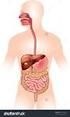 The Human Digestive System Name: Section: Date: Page 1 of 10 Page 2 of 10 Page 3 of 10 Page 4 of 10 Page 5 of 10 Page 6 of 10 Putting it All Together Digestive Enzymes Page 7 of 10 Page 8 of 10 Page 9
THE BENJAMIN INSTITUTE PRESENTS. Excerpt from Listen To Your Pain. Assessment & Treatment of. Low Back Pain. Ben E. Benjamin, Ph.D.
 THE BENJAMIN INSTITUTE PRESENTS Excerpt from Listen To Your Pain Assessment & Treatment of Low Back Pain A B E N J A M I N I N S T I T U T E E B O O K Ben E. Benjamin, Ph.D. 2 THERAPIST/CLIENT MANUAL The
The Digestive System. Chapter 15
 The Digestive System Chapter 15 Introduction Digestion refers to the mechanical and chemical breakdown of food so the nutrients can be absorbed by cells Carried out by the digestive system Consists of
RN.com s Assessment Series: Focused Gastrointestinal Assessment
 RN.com s Assessment Series: Focused Gastrointestinal Assessment Presented by: RN.com 12400 High Bluff Drive San Diego, CA 92130 This course has been approved for one (1.0) contact hour. This course expires
Learning Objectives. Introduction to Medical Careers. Vocabulary: Chapter 16 FACTS. Functions. Organs. Digestive System Chapter 16
 Learning Objectives Introduction to Medical Careers Digestive System Chapter 16 Define at least 10 terms relating to the digestive Describe the four functions of the digestive Identify different structures
Alimentary canal (gastrointestinal or GI tract) continuous coiled hollow tube
 The Digestive System and Body Metabolism Gross Anatomy Function The Digestive System Functions Ingestion taking in food Digestion breaking food down both physically and chemically Absorption movement of
CHAPTER 9 BODY ORGANIZATION
 CHAPTER 9 BODY ORGANIZATION Objectives Identify the meaning of 10 or more terms relating to the organization of the body Describe the properties of life Describe the function for the structures of the
Chapter 2 - Anatomy & Physiology of the Respiratory System
 Chapter 2 - Anatomy & Physiology of the Respiratory System Written by - AH Kendrick & C Newall 2.1 Introduction 2.2 Gross Anatomy of the Lungs, 2.3 Anatomy of the Thorax, 2.4 Anatomy and Histology of the
6. Pig Dissection I. BI102. B.K. Penney
 6. Pig Dissection I BACKGROUND To study the anatomy of vertebrates, we will be dissecting fetal pigs. Material for these labs is essentially from Term 1. The context for BI02 is that I want you to understand
X-Plain Abdominal Aortic Aneurysm Vascular Surgery Reference Summary
 X-Plain Abdominal Aortic Aneurysm Vascular Surgery Reference Summary Ballooning of the aorta, also known as an "abdominal aortic aneurysm," can lead to life threatening bleeding. Doctors may recommend
I. The basic function of the digestive system is
 Chapter 15, Digestive System - ANATOMY OF THE DIGESTIVE SYSTEM I. The basic function of the digestive system is. This process is called. II. List 2 other names for the digestive tract: A. B. III. The digestive
Human Body Vocabulary Words Week 1
 Vocabulary Words Week 1 1. arteries Any of the blood vessels that carry blood away from the heart to all parts of the body 2. heart The muscular organ inside the chest that pumps blood through the body
The Digestive System. Chapter 14. The Digestive System and Body Metabolism. Metabolism. Organs of the Digestive System. Digestion.
 Chapter 14 The Digestive System The Digestive System and Body Metabolism Digestion of ingested food of nutrients into the blood Metabolism Production of Constructive and degradative cellular activities
X-Plain Inguinal Hernia Repair Reference Summary
 X-Plain Inguinal Hernia Repair Reference Summary Introduction Hernias are common conditions that affect men and women of all ages. Your doctor may recommend a hernia operation. The decision whether or
Gastrointestinal Bleeding
 Gastrointestinal Bleeding Introduction Gastrointestinal bleeding is a symptom of many diseases rather than a disease itself. A number of different conditions can cause gastrointestinal bleeding. Some causes
THE GI TRACT IS A CONTINUOUS MULTILAYERED TUBE EXTENDING FROM THE MOUTH TO THE ANUS THAT IS SUPPORTED AND PARTIALLY COVERED BY THE PERITONEUM.
 THE GI TRACT IS A CONTINUOUS MULTILAYERED TUBE EXTENDING FROM THE MOUTH TO THE ANUS THAT IS SUPPORTED AND PARTIALLY COVERED BY THE PERITONEUM. OVERVIEW OF THE DIGESTIVE SYSTEM Two groups of organs compose
An abdominal ultrasound produces a picture of the organs and other structures in the upper abdomen.
 Scan for mobile link. Ultrasound - Abdomen Ultrasound imaging of the abdomen uses sound waves to produce pictures of the structures within the upper abdomen. It is used to help diagnose pain or distention
Emergency Ultrasound Course
 Emergency Ultrasound Course Dr Justin Bowra ED Course Manual 2: EFAST Extended Focused Assessment with Sonography in Trauma JUSTIN BOWRA 1 The Questions: 1. Is there free fluid (FF) a. In the pleural space?
The Energy Medicine Daily Routine
 The Energy Medicine Daily Routine Improve your well-being in less than 10 minutes a day! Through years of practice we have designed a Daily Energy Routine that combines the most potent techniques we know
Qigong. Ba Duan Jin. The Eight Pieces of Brocade
 Qigong Ba Duan Jin The Eight Pieces of Brocade by Col and g Hamilton Yiheyuan Martial Arts Contents Page Introduction 2 Preparation 2 1. Hold up the Sky 3 2. The Archer 4 3. Join Heaven and Earth 5 4a.
Functional Human Morphology (2040) & Functional Anatomy of the Head, Neck and Trunk (2130)
 Functional Human Morphology (2040) & Functional Anatomy of the Head, Neck and Trunk (2130) Gastrointestinal & Urogenital Systems Recommended Text: TEXTBOOK OF ANATOMY: ROGERS Published by Churchill Livingstone
Examination of the Pregnant Abdomen
 Medical students often find the examination of the pregnant abdomen daunting. This document provides a framework for you to develop a comprehensive understanding of the pregnant abdomen examination at
Note Taking Guide. Topic # 3024 Comparative Digestive Systems
 Note Taking Guide Topic # 3024 Comparative Digestive Systems Digestive Systems Overview 1. Digestion Digestion: Food enters the mouth and goes through mechanical and chemical changes as it passes through
Acute Abdominal Pain: Other causes
 Acute Abdominal Pain: Other causes Vishal Gupta, MCh Associate Professor Deptt Surg. Gastroenterology KGMU Definition Acute abdominal pain: Presentation of previously undiagnosed abdominal pain Lasting
Lab 18 The Digestive System
 Lab 18 The Digestive System Laboratory Objectives Identify on a diagram, model or cadaver the parts of the digestive system and accessory organs. Describe the general histology of the digestive system.
The Take-Apart Human Body
 The Take-Apart Human Body As any teacher knows, children are naturally curious about their bodies. Their questions are endless, and present a tremendous educational opportunity: How do my ears work? Where
A proper warm-up is important before any athletic performance with the goal of preparing the athlete both mentally and physically for exercise and
 A proper warm-up is important before any athletic performance with the goal of preparing the athlete both mentally and physically for exercise and competition. A warm-up is designed to prepare an athlete
Changes to Your Baby and Your Body During Pregnancy
 Changes to and Your Body During Pregnancy 1st Trimester: Conception to Week 16 Your baby s traits and sex are set when the sperm meets the egg. During this time: The brain, nerves, heart, lungs and bones
Sheet 1A. Treating short/tight muscles using MET. Pectorals. Upper trapezius. Levator scapula
 Sheet 1A Treating short/tight muscles using MET Pectorals Once daily lie at edge of bed holding a half-kilo can, arm out sideways. Raise arm and hold for 10 seconds, then allow arm to hang down, stretching
General Structure and Function of the Digestive System
 General Structure and Function of the Digestive System Do Now Why does food have to be digested before cells can use it? What are the typical four layers of the digestive tract wall? What is the name of
DATA BASE SAMPLE: PHYSICAL EXAMINATION WITH ALL NORMAL FINDINGS
 DATA BASE SAMPLE: PHYSICAL EXAMINATION WITH ALL NORMAL FINDINGS GENERAL APPEARANCE: (include general mental status) 45 y/o female who is awake and alert and who appears healthy and looks her stated age
Laboratory 1 Anatomical Planes and Regions
 Laboratory 1 Anatomical Planes and Regions Goals: Define the anatomical position, including the application of the terms right and left. List and correctly use the major directional terms used in anatomy.
KEYHOLE HERNIA SURGERY
 Disclaimer This movie is an educational resource only and should not be used to manage a hernia or abdominal pain. All decisions about the management of a hernia must be made in conjunction with your Physician
Administrative. Patient name Date compare with previous Position markers R-L, upright, supine Technical quality
 CHEST X-RAY Administrative Patient name Date compare with previous Position markers R-L, upright, supine Technical quality AP or PA ( with x-ray beam entering from back of patient, taken at 6 feet) Good
CHAPTER 3: BACK & ABDOMINAL STRETCHES. Standing Quad Stretch Athletic Edge - www.athleticedge.biz - (650) 815-6552
 CHAPTER : BACK & ABDOMINAL STRETCHES Standing Quad Stretch ) Stand and grasp right ankle with same hand, use a wall or chair to Lower maintain Back balance with left hand. Maintain an upright Stretches
38 Assisting with a General Physical Examination
 Learning Outcomes 38-2 38.1 Identify the purpose of a general physical. CHAPTER 38 Assisting with a General Physical Examination 38.2 Describe the role of the medical assistant in a general physical. 38.3
Chapter 48. Nutrients in Food. Carbohydrates, Proteins, and Lipids. Carbohydrates, Proteins, and Lipids, continued
 Carbohydrates, Proteins, and Lipids The three nutrients needed by the body in the greatest amounts are carbohydrates, proteins, and lipids. Nutrients in Food All of these nutrients are called organic compounds,
The Abdominal Wall And Hernias. Stanley Kurek, DO, FACS Associate Professor of Surgery UTMCK
 The Abdominal Wall And Hernias Stanley Kurek, DO, FACS Associate Professor of Surgery UTMCK The Abdominal Wall The structure of the abdominal wall is similar in principle to the thoracic wall. There are
A Stretch-Break Program for Your Workplace! www.healthyworkplaceweek.ca
 www.healthyworkplaceweek.ca A Stretch-Break Program for Your Workplace! Why is stretching at work important? Sitting at a desk or computer; or standing at your work station for extended periods of time
Exercise 1: Knee to Chest. Exercise 2: Pelvic Tilt. Exercise 3: Hip Rolling. Starting Position: Lie on your back on a table or firm surface.
 Exercise 1: Knee to Chest Starting Position: Lie on your back on a table or firm surface. Action: Clasp your hands behind the thigh and pull it towards your chest. Keep the opposite leg flat on the surface
The Digestive System. Chapter 16. Introduction. Histological Organization. Overview of Digestive System. Movement and Mixing of Digestive Materials
 The Digestive System Chapter 16 Introduction Structure of the digestive system A tube that extends from mouth to anus Accessory organs are attached Functions include Ingestion Movement Digestion Absorption
67 The Human Skeleton
 67 The Human Skeleton Skull SCIENCE EXPLORER Focus on Life Science Prentice-Hall, Inc. Clavicle (collarbone) Scapula (shoulder blade) Carpals Metacarpals Phalanges Femur Tibia Humerus Ulna Sternum (breastbone)
ANATOMY 1 LEARNING TARGETS
 ANATOMY 1 LEARNING TARGETS ORGANIZATION OF THE BODY 1. Define "anatomy" and "physiology." 2. Describe homeostasis. 3. Identify examples of homeostasis 4. Describe the organization of the body according
The Digestive System
 The Digestive System Biology 104 Objectives: 1. Learn external anatomy of the pig. 2. Learn the anatomy of the digestive system. I. Introduction: Humans (Homo sapiens) and domestic pigs (Sus scrofa) are
Organ Systems Overview
 E x e r c i s e 2 Organ Systems Overview Time Allotment: 1½ hours (rat dissection: 1 hour; if performing reproductive system dissection, ½ hour each for male and female; dissectible human torso model:
Digestive system Review
 Digestive system Review 1. Distinguish between chemical digestion and mechanical digestion. The physical breakdown of food begins in the mouth with two types of processes. The mouth is a complex structure
Lung & Thorax Exams. Charlie Goldberg, M.D. Professor of Medicine, UCSD SOM [email protected]
 Lung & Thorax Exams Charlie Goldberg, M.D. Professor of Medicine, UCSD SOM [email protected] Lung Exam Includes Vital Signs & Cardiac Exam 4 Elements (cardiac & abdominal too) Observation Palpation Percussion
Medical Terminology, Anatompy & Physiology
 1. Which of the following BEST describes the anatomical position? a. Supine with arms crossed over the chest and knees slightly bent b. Standing, facing forward, with arms raised above the head c. Standing,
CHAPTER 1: THE LUNGS AND RESPIRATORY SYSTEM
 CHAPTER 1: THE LUNGS AND RESPIRATORY SYSTEM INTRODUCTION Lung cancer affects a life-sustaining system of the body, the respiratory system. The respiratory system is responsible for one of the essential
Focused Physical Assessment by Body Systems
 222 Unit III Promoting Physiologic Health PROCEDURE 12-1 Focused Physical Assessment by Body Systems PURPOSES To obtain measurements to compare to baseline data. To obtain information to assess effect
Frog Dissection. Procedure
 Name Class Date Skills Practice Lab Frog Dissection Amphibians, such as frogs, are examples of animals that have structural adaptations for living in or near water and for living on land. As tadpoles,
The Digestive System. You are what you eat!
 The Digestive System You are what you eat! Try to label the diagram (PENCIL!!) What is Digestion? Digestion: the breakdown of large macromolecules (proteins, fats, carbohydrates) into smaller molecules
Module 5 ADULT RECOvERY POSITION STEP 1 POSITION ThE victim
 Module 5 ADULT RECOVERY POSITION The recovery position is used in the management of victims who are unresponsive but have breathing and pulse. When an unresponsive victim is lying supine, the airway may
10.2 The Human Digestive System pg. 411
 10.2 The Human Digestive System pg. 411 The human digestive system is made up of a group of organs working together. The digestive tract is made up of the mouth, esophagus, stomach, small intestine, and
The Vertebrate (mostly human) Digestive System
 The Vertebrate (mostly human) Digestive System Mouth - mastication, lubrication, digestion Pharynx and Esophagus - swallowing Stomach - some digestion Small intestine - most digestion and absorption Large
Lab Exercise 4. Epithelial Tissues. Connective Tissue Proper. What you need to be able to do on the exam after completing this lab exercise:
 Lab Exercise 4 Epithelial Tissues Connective Tissue Proper Textbook Reference: See Chapter 4 What you need to be able to do on the exam after completing this lab exercise: Be able to identify each type
Functions of the digestive system
 Digestive system Functions of the digestive system Digestion-mechanical and chemical breakdown of material Motility-movement of material from the oral cavity to the anus-swallowing / peristalsis Secretion-exocrine
The Digestive System. The large intestine, or colon, holds waste products until elimination can occur. Its main function is to absorb.
 The Digestive System By: Joyce Green About the Digestive System The digestive system is responsible for the processing and uptake of nutrition. Every cell in an organism needs energy and an array of nutrients
Blood Vessels and Circulation
 13 Blood Vessels and Circulation FOCUS: Blood flows from the heart through the arterial blood vessels to capillaries, and from capillaries back to the heart through veins. The pulmonary circulation transports
Functional rehab after breast reconstruction surgery
 Functional rehab after breast reconstruction surgery UHN A guide for women who had DIEP, latissimus dorsi with a tissue expander or implant, or two-stage implant based breast reconstruction surgery Read
Getting Energy from Food Your Digestive System
 9 Getting Energy from Food Your Digestive System The Digestive System You know how your body gets the oxygen it needs. But how do your body s cells get the nutrients they need? Nutrients come from the
Men s Health: Testicular & Breast. September 2012
 Men s Health: Testicular & Breast September 2012 Objectives: You will learn: How to perform a testicular self-exam and breast self-exam. You will know when to perform testicular and breast self-exams.
Muscular System Grades 3-5 BACKGROUND
 Muscular System Grades 3-5 BACKGROUND The Muscular System Muscle makes up most of everything underneath the skin. This is the tissue that makes up the heart, body organs, and skeletal muscles. Muscle accounts
Chapter 7. Expose the Injured Area
 Chapter 7 GUNSHOT WOUNDS KEY FIGURES: Entrance/exit wounds This chapter describes how to treat the external, surface wounds caused by a bullet. The evaluation for underlying injury related to gunshot wounds
Digestive System. Student Learning Objectives: Structures to be studied: Introduction
 Digestive System Student Learning Objectives: Identify the primary structures of the digestive system. Describe the use of various important nutrient materials in the body. Structures to be studied: Oral
The Goat s Digestive System. Roy Beckford UF/IFAS Lee County
 The Goat s Digestive System Roy Beckford UF/IFAS Lee County Ruminants The goat is a member of a class of animals called ruminants. These animals ruminate (chew their cud). Unlike us, they have special
Digestive System Notes
 Digestive System Notes Structure Function Relation Mouth cavity Mechanical digestion by teeth; chemical digestion of starch by saliva. Salivary glands Three pairs of glands which secrete saliva containing
The Digestive System
 School of Social Work The Digestive System Undergraduate researcher: Nancy D. Bergerson (2010). 1 The Digestive System breaks down and absorbs food. When food is eaten, it is not in a form the body can
Human Growth and Reproduction
 Human Growth and Reproduction Sperm reach ovum and cluster around it Only one sperm is allowed to penetrate egg When the sperm penetrates the egg, the egg immediately releases a chemical creating a hard
The Large Intestine. General Facts: (everything will be repeated in a more organized matter later on)
 The Large Intestine Let's continue on our wild journey through the GI tract. We have just arrived at the junction between the ileum and cecum, crossing the border between the small and large intestine.
Laparoscopic Repair of Hernias. A simple guide to help answer your questions
 Laparoscopic Repair of Hernias A simple guide to help answer your questions What is a hernia? A hernia is defined as a hole or defect in the abdominal (belly) wall. A hernia can either be congenital (a
TRANSVERSUS ABDOMINIS PLANE (TAP) BLOCK
 THE JOURNAL OF NEW YORK SCHOOL M a y 2 0 0 9 V o l u m e OF REGIONAL ANESTHESIA 1 2 TRANSVERSUS ABDOMINIS PLANE (TAP) BLOCK By Karim Mukhtar, MB BCh, MSc, FRCA Royal Liverpool and Broadgreen University
Practice Anatomy Questions Semester 2
 1 - Which muscle layer does NOT wrap around the abdomen? a) external oblique b) internal oblique c) transversus abdominus d) rectus abdominus 2 - Which statement is correct? a) The fibres of the internal
The Acute Abdomen. Dr. Ed Snyder Dr. Melanie Walker Huntington Memorial Hospital
 The Acute Abdomen Dr. Ed Snyder Dr. Melanie Walker Huntington Memorial Hospital Causes of the Acute Abdomen Hemorrhage in the GI tract Blood vessel GU tract Perforation of the GI tract Ulcer Infection
MELT Mini Map For Motorcyclists
 MELT Mini Map For Motorcyclists The MELT Self-Treatment Tools needed for this monthʼs Mini Map can be found online at store.meltmethod.com. Depending on which tools you have on hand, you can start with
The Thorax - Anterior and Lateral Chest Wall
 The Thorax - Anterior and Lateral Chest Wall by Marc Heller,DC When we think of the thorax, most of us think of the thoracic vertebrae and the posterior ribs. When examining for thoracic restrictions,