
Technical Documentation
|
|
|
- Harold Fitzgerald
- 9 years ago
- Views:
Transcription
1 Technical Documentation Tsunami Hazard Maps for Bali Multi-scenario Tsunami Hazard Maps for Bali, 1:100,000 Multi-scenario Tsunami Hazard Maps for Southern Bali, 1:25,000 with zoning based on wave height at coast (in line with the InaTEWS warning levels) as well as probability of areas being affected by a tsunami. Presented by Balinese Working Group for Tsunami Hazard Mapping compiled by DLR / GTZ September 2010

2

3 Technical Documentation Tsunami Hazard Maps for Bali Multi-scenario Tsunami Hazard Maps for Bali, 1:100,000 Multi-scenario Tsunami Hazard Maps for Southern Bali, 1:25,000 with zoning based on wave height at coast (in line with the InaTEWS warning levels) as well as probability of areas being affected by a tsunami. Presented by Balinese Working Group for Tsunami Hazard Mapping compiled by DLR / GTZ September 2010

4

5 Table of Contents 1. Executive Summary Background Information on the Tsunami Hazard Map for Southern Bali Background Information on the Mapping Process German Indonesian Cooperation in the Framework of InaTEWS Indonesian-German Working Group on Vulnerability Modelling and Risk Assessment Tsunami Hazard Mapping within the Framework of GITEWS The Tsunami Hazard Mapping Process in Bali Methodology The Maps Definitions Abbreviations... 23

6

7 1. Executive Summary Bali is paradise for many of the thousands of tourists who come to visit the island every year. During recent decades Bali s economy has become highly dependent on the tourism industry. Many of Bali s major developments, especially those related to tourism, are located directly on the southern shorelines facing the Indian Ocean. Below the same ocean, a couple of hundred kilometres south of Bali, lies one of the Earth s major tectonic collision zones, which is a major source of tsunamigenic earthquakes. Thus, geologists and tsunami scientists consider Bali a high risk tsunami area, because a large tsunami within range of the island would have a severe impact on its densely populated coastlines. Bali has experienced major earthquakes and tsunamis in the past. Due to the island s proximity to the subduction zone and its seismic history, the science community presumes that tsunamis will affect Bali again in the future, although a precise prediction is not possible. As preparedness is the key to coping with tsunamis, development of local preparedness strategies is essential. Development of preparedness strategies requires a good understanding of the hazard. An official tsunami hazard map provides all stakeholders with a crucial reference for development of preparedness strategies. An official tsunami hazard map is needed as the basic reference and most important planning tool for developing evacuation strategies and maps and setting up a tsunami early warning system in Bali. The map is also relevant for land use planning and development of mid-term measures to mitigate the possible impacts of tsunamis. Publication of an official tsunami hazard maps at the district and province level is the responsibility of local governments. This paper is a technical document that describes the process and the underlying technical concepts of hazard assessment and the mapping process. The maps have been developed in the framework of the establishment of the Indonesian Tsunami Early Warning System (InaTEWS). The purpose of this document is to provide decision-makers in Bali with background information on the tsunami hazard mapping process. This information will support further discussions and help to initiate the legalization process of the maps. The maps described here are: A set of Multi-scenario Tsunami Hazard Maps for Bali, 1:100,000 covering the Indian Ocean coastlines of Bali, excluding scenarios > 9 M A detailed Multi-scenario Tsunami Hazard Maps for southern Bali, 1:25,000 The maps show two zones based on wave height at coast (in line with the two warning levels of InaTEWS), probability of areas being affected by a tsunami, and estimated arrival times.

8 The maps are the product of a multi-institutional effort including Balinese government institutions, Indonesian science institutions, and partners from the GITEWS (German- Indonesian Cooperation for a Tsunami Early Warning System) Project. The institutions involved agreed on the mapping approach and methodology. The maps were produced by DLR (German Aerospace Centre). DLR and the German Technical Cooperation (GTZ) drafted the technical document. The Balinese Working Group for Tsunami Hazard Mapping reviewed the document in March The document was updated to incorporate results from detailed inundation simulations in July 2009.

9 2. Background Information on the Tsunami Hazard Map for Southern Bali Bali is located very close to the collision zone between the Indian-Australian Plate and the Eurasian Plate. The related subduction zone represents the main source area for tsunamis that might affect, in particular, the southern part of the island. It should be expected that tsunami waves from this area will need only 30 to 60 minutes to reach the coast. Historical tsunami records related to this source area are the Sumba (1977) and Banyuwangi (1994) tsunamis, which were caused by earthquakes with epicentres in the subduction zone. Figure 1: Source areas of tsunamis around Bali Just off the northern coast of Bali, a back-arc fault is another source area for local tsunamis. The Flores Tsunami (1992) was caused by an earthquake in the back-arc zone. Beside the subduction zone in the Sunda Trench and the back-arc fault, two more sources of tsunami hazard have been identified: submarine landslides and volcanic activity. Submarine landslides are often associated with earthquakes. If they happen during an earthquake, they can increase the energy of a tsunami and therefore add up to the uplift caused by tectonic movements in the subduction zone (which are also caused by the earthquake). Every tsunami is different! Bali might suffer the impact of a smaller tsunami; but the worst case scenario is also possible. Research on historical tsunami events provides important information about possible events in the future. To understand what might be the possible impact of a tsunami in the future one can look back into the past and learn from historical experiences and/or use mathematics to calculate potentially inundated areas using computerized inundation modelling tools.

10 A tsunami hazard map generally visualizes the tsunami-affected areas in a given region. In some cases, the maps show only the inundated areas of a tsunami that is considered the most probable scenario. Other maps show the affected areas resulting from a number of (hypothetic) tsunami events. This is called a multi-scenario approach, because it combines the inundated areas of a variety of tsunamis (or scenarios) in one map. The tsunami hazard map presented here is a multi-scenario map. It visualizes the impacts on the southern coast of Bali of a large number of potential tsunamis caused by earthquakes of various magnitudes and originating from various locations within the subduction zone. It is important to note that map does not take into account tsunami hazards related to the back arc fault, to submarine landslides and to volcanic activity, because of the very limited information available regarding probabilities, occurrences and possible impacts of these kinds of tsunamis. A number of hypothetical tsunami sources with different locations and earthquake magnitude were used in the mapping process The red and yellow colors show the areas affected by the calculated scenarios. Yellow areas are affected only by bigger tsunamis, while the red zone is affected already by smaller tsunamis. Figure 2: Multi-scenario approach This tsunami hazard map is also zoned; it groups all calculated scenarios into two zones. The red zone represents the area impacted by a tsunami with a wave height at the coast between 0.5 m and 3 m. The orange zone represents areas impacted only by major tsunamis with a calculated wave height at the coast of > 3 m. Both zones are directly linked to the InaTEWS warning levels, as shown below:


11 Area affected at Warning Level 2 wave height at coast > 3m Area affected at Warning Level 1 wave height at coast 0.5 3m Figure 3: Zoning by wave height and warning level When assessing the tsunami hazard it is essential to talk about probabilities. Tsunamis are a typical example of low frequency, high impact disasters. In other words, tsunamis do not occur very often, but if they occur, they are very dangerous and can cause great damage. On average every two years a destructive tsunami occurs in Indonesia. At a particular coastal location, however, the recurrence interval between destructive tsunamis can vary from years or even years. In Indonesia, most tsunamis are generated by submarine earthquakes. Tsunamis triggered by volcanic activity are much rarer events. Smaller tsunamis happen much more frequently than major tsunamis (and worst case tsunamis). The multi-scenario hazard map provides information about tsunami probabilities. Red indicates the area that will be affected by tsunamis with a wave height between 0.5 m and 3 m. The range of colours from dark yellow to grey indicates the probability of an area being affected by a major tsunami. The colour indicates the level of probability Figure 4: Visualisation of probabilities on the map

12 The question of probabilities leads directly to discussion about acceptable risk. Due to the infrequent occurrence of tsunamis, information about their possible impact, occurrence and run up heights is uncertain. It must be assumed that no action can take into account all possible risks, and that some degree of risk must be accepted due to economic reasons. Discussion about acceptable risks requires decisions that are often very difficult to make, because they involve choices, trade-offs and risks. In the case of Bali, one question related to probability and acceptable risk is directly related to the decision whether magnitude 9 earthquakes should be considered on the multi-scenario map or not. Scientists agree that a magnitude 9 earthquake south of Bali is very unlikely; but on the other hand they also say that the available scientific data is not sufficient to completely exclude that possibility. The broad-scale maps (1:100,000) that include magnitude 9 scenarios (see figure 5, map on the left) show extreme inundation areas that seem rather unlikely and hardly manageable in terms of evacuation planning. When using more detailed topography and bathymetry data (only available for a small area of southern Bali!) for modelling on a 1:25,000 scale (see figure 5, map on the right) these large inundation areas are reduced significantly resulting in more credible and manageable areas. Therefore for planning purposes in southern Bali the 1:25,000 map should be used. For all other areas not covered by detailed modelling it is suggested to use the set of broad scale hazard map (1:100,000) that excludes magnitude 9 scenarios, as the inundation areas of these maps (see figure 5, map in the center) match much better with the more credible results from detailed modelling (1:25,000). 1:100,000 including M9 1:100,000 excluding M9 1:25,000 including M9 Figure 5: Comparison of results of broad-scale and detailed mapping

13 3. Background Information on the Mapping Process 3.1. German Indonesian Cooperation in the Framework of InaTEWS The German government supports the implementation of a tsunami early warning system in the Indian Ocean especially in Indonesia through the GITEWS project (German-Indonesian Cooperation for a Tsunami Early Warning System). Funded by the German Ministry of Education and Research (BMBF), GITEWS is part of a bilateral cooperation between the governments of Indonesia and Germany, based on a joint agreement between BMBF and the Indonesian State Ministry of Research and Technology (RISTEK). The warning concept, which was developed under the guidance of the Potsdam Geo Research Centre (GFZ) and in cooperation with national and international partners, will significantly reduce warning times by making use of real-time data transfer, predetermined flooding scenarios in coastal regions, and direct warning reports. The two-year operational phase of German support for InaTEWS began in November The scope of this cooperation covers not only the technical aspects of the early warning system, but also hazard, vulnerability and risk assessment, production of maps for the project area, and capacity building. The German cooperation partner for hazard, vulnerability and risk assessments is the German Aerospace Centre (DLR). The cooperation is coordinated and developed within the framework of the Indonesian-German Working Group on Vulnerability Modelling and Risk Assessment (see 3.2.). Within the framework of local capacity building for tsunami early warning, the German Technical Cooperation-International Services (GTZ IS) has been supporting the Bali provincial government since the end of 2006 in the development of tsunami early warning procedures and mechanisms, clarification of roles in receiving and issuing warnings, and in overall preparedness planning. This cooperation is based on agreements with the provincial government and Badung district government Indonesian-German Working Group on Vulnerability Modelling and Risk Assessment Risk and vulnerability assessment is an important component of an effective tsunami early warning system, and contributes significantly to disaster risk reduction. Knowledge of exposed communities, their vulnerabilities, and coping and adaptation mechanisms, is a precondition for the development of people-centred warning structures, local evacuation planning and recovery planning. In the past, the vulnerability was quantified based on economic damage assessments. However, based

14 on the three pillars of sustainable development, this working group applied indicators for physical and social, as well as economic, dimensions of vulnerability. The approach has been developed within the framework of the joint Indonesian- German Working Group on Vulnerability Modelling and Risk Assessment, which is coordinated by the Indonesian Institute of Science (LIPI) and the German Aerospace Centre (DLR), with contributions from Indonesian, German and international organizations, such as LAPAN, BAKOPSURTANAL, BPPT, DKP, AWI, GKKS and UNU-EHS. Its goal is to develop indicators to assess the vulnerability of coastal areas of Sumatra, Java and Bali exposed to tsunami hazard on a broad scale; and on a more detailed scale of the three pilot areas of Padang, Cilacap and Kuta. The major task is to conduct hazard assessments, and physical and socioeconomic vulnerability assessments, and to produce risk and vulnerability maps and guidelines for decision makers on how to monitor risks and carry out continuous risk assessment, for effective early warning and disaster mitigation strategies Tsunami Hazard Mapping within the Framework of GITEWS Within the framework of the GITEWS project, large-scale hazard maps (1:100,000) are produced, covering the whole west and south coast of Sumatra as well as the south coasts of Java and Bali. Additionally, detailed hazard maps (1:25,000) are produced for the three pilot areas of Padang, Cilacap and Kuta. During three workshops conducted in Indonesia, with participants from national and local government and research groups from various institutes, the layout and the content of the hazard and risk maps were discussed and agreed The Tsunami Hazard Mapping Process in Bali Bali needs to develop a clear framework for tsunami preparedness to ensure that activities implemented by the various actors share a common goal and do not conflict with each other. Preparing an official tsunami hazard map is a priority task in achieving this goal. Several maps related to tsunami hazards, risks and evacuation planning were available for Bali in None of them, however, could be considered the official map (see Figure 6).

15 Map Institution Type Zoning BAPPEDA Tsunami zoning map with reference to Aceh tsunami (max. 33 m run-up) Zoning according topography: Tsunami Potential medium (elevation 30-40m) Tsunami Potential high (elevation 0-30m) BPPT (2006) Badan Geologi CVGHM (2007) DLR: multiscenario (Draft 2008) DKP (2005) Tsunami Run Up Map for scenario M 8.9 (developed for Tsunami Drill 2006) Tsunami Hazard Prone Map based on worst case scenario M 9, 300x50km rupture south of Bali, depth 10 km, reverse fault Hazard Map showing affected areas by several hundreds of different scenarios with EQ-magnitudes between 7.5 and 9 Evacuation Map based on inundation prediction: the map was built by using 'same level approximation', topographic data based on Global SRTM and the inundation height was modeled by the 1977 Sumba Tsunami (tsunami wave height in the coastline as the result of the model was 5.2 meter) Zoning according flow depth: Flow depth m Flow depth m Flow depth 1-2 m Flow depth 2-3 m Flow depth 3-5 m Flow depth 5-8 m Flow depth 8-15 m Zoning based on elevation and inundation Tsunami Prone Area: high Elev. <10m / inund. max. 4.5 km Tsunami Prone Area: moderate Elev m / inund.. ~7.8 km Tsunami Prone Area: low Elev m / inund. ~ 8.3 km 2 Zones related to BMG warning levels: Impacted area if wave height at coast m (Warning Level 1) Impacted area if wave height at coast >3 m (Warning Level 2) Zoning according inundation prediction: Inundation height 1m Inundation height 2m Inundation height 3m Inundation height 4m Inundation height 5m Figure 6: The various approaches to tsunami hazard mapping in Bali (August 2008) To revise all existing mapping approaches and explore knowledge of tsunami sources and impacts for Bali, a Consultation Workshop on Tsunami Hazard Mapping in Bali was organized by Bali provincial government with support from GTZ-IS. During the workshop, held on 7-8 July 2008, in Denpasar, Bali, participants from national institutions (BAKOSURTANAL, BPPT, BMKG, CGS, CVGHM, DKP, National LAPAN, and LIPI), international research institutes (AWI, DHI, DLR, GKSS), local institutions (Regional Development Planning Agency, Civil Defence, Public Works, Indonesian Military), and other stakeholders (IDEP, PMI, SAR, SEACORM), gathered to achieve a better understanding of tsunami hazards and the possible

16 impacts for Bali to help local decision-makers and other stakeholders get better prepared for future tsunami events. During the workshop, the researchers recommended developing a multi-scenario map that incorporated all scenarios taken into consideration by the various institutions. This recommendation was based on the fact that current scientific knowledge is unable to identify the most probable scenario. A multi-scenario approach combines the impacts of a large number of calculated tsunami scenarios (generated by numeric modelling) on one map. It was agreed that the German Aerospace Centre (DLR) would integrate the scenarios developed by GITEWS and the scenarios from Indonesian partner institutions into a Multi-Scenario Tsunami Hazard Map for Southern Bali (scale 1: ). An updated version was presented at the International Conference for Tsunami Warning, in Bali, in November A second map, excluding the less probable > magnitude 9 scenario, was handed over in February In July 2009, from detailed inundation modelling using revised data for the target area, a detailed 1: scale map for southern Bali was produced. Additional maps covering the entire Indian Ocean coast of Bali were also produced. A Balinese working group with representatives from the National Unity and Community Protection Agency, the Regional Development Planning Agency and Public Works was formed to steer and participate in the mapping process. This paper presents a consolidated map and a technical report for the Balinese authorities for further consideration and official recognition.

17 4. Methodology The approach used for developing the tsunami hazard map is a combination of the results of probability analyses and multi-scenario tsunami modelling. A large number of realistic tsunami scenarios, using various tsunami source locations and earthquake magnitudes along the Sunda Trench, have been calculated. Together, these scenarios cover the entire Indian Ocean coast of Sumatra, Java and Bali. These scenarios were used as input data for the hazard maps. The approach is based on an event tree technique, which takes into account the various warning levels that are issued from the Tsunami Warning Centre. The warning levels defined in the InaTEWS (BMKG 2008) are as follows: Tsunami Category Warning Level Wave Height (WH) Range [m] <none> <none> 0.0 = WH < 0.1 Minor Tsunami Advisory 0.1 = WH < 0.5 Tsunami Warning 0.5 = WH < 3.0 Major Tsunami Major Warning WH 3.0 Figure 7: InaTEWS warning levels (BMKG 2008). A minor tsunami of the Advisory warning level causes little or no inundation at the coast. Hence, in this hazard mapping approach, the advisory and warning warning levels are combined. The approach used to produce a comprehensive tsunami hazard probability map involves six steps: 1. Determine the tsunami scenarios that are relevant to the target area: As a first step, all the scenarios that are relevant to the target area are selected from the tsunami scenario database. This involves running a spatial data query and selecting all scenarios that result in inundation of at least one point on land in the target area (e.g. using a map). The selected scenarios provide the basis for further assessment. 2. Group the scenarios by warning level: The second step is to group all selected scenarios into two categories of warning level. A database query asking Which scenarios generate a wave height at coast over 3 m? is performed. Defining the outline of the consolidated inundation of the classes produces a first map showing maximum inundation areas for each of the warning levels (Figure 8). On the final hazard map, only the zone generated by the class wave heights at coast 3 m is displayed (red zone in Figure 8). The other zone is substituted by a calculation of continuous tsunami impact probabilities, which is described in the steps below.

18 Figure 8: Grouping of tsunami modelling results by warning level 3. Estimate the spatial distributed probability of earthquakes of specific magnitudes along the Sunda Trench: Due to the fact that submarine earthquakes of high magnitudes occur far less frequently than earthquakes of lower magnitudes, scenarios with higher earthquake magnitudes (moment magnitude M w ) must given a lower weighting in the analysis, since the probability of a higher magnitude earthquake occurring is lower. Similarly some regions along the Sunda Trench show higher seismic activity than other regions, and some spots are characterized by special geologic conditions, such as a strong coupling of the plates in the subduction zone, which means there is a higher probability of the occurrence of high magnitude earthquakes. This means that inundation by a tsunami event caused by an earthquake with a high magnitude at a region with low seismic activity is less likely than a tsunami event caused by a lower magnitude earthquake in an earthquake hot spot. Therefore, a probability analysis of earthquake occurrence must be performed. This analysis involves two steps. First, the Sunda Trench region is divided into three smaller zones, by seismic activity (these have been widely published, e.g. Latief, Puspito & Imamura 2000, and can be also determined by a statistical analysis of historical earthquake data). The probability of an annual recurrence of an earthquake of each Mw is estimated using historical earthquake data (NEIC). To improve the analysis, topical investigations, such as deterministic models, are considered by weighting the occurrence probabilities between 1 (for a known hot spot where the probability of the occurrence of an earthquake of high magnitude is high) and 0.1 (for unidentified or inactive spots). Figure 9 presents an example of the results of weighted earthquake occurrence probability for a specific Mw. Thus, each tsunamigenic source has an individual occurrence probability (Note that the probability of an earthquake also generating a significant tsunami is included in the numerical tsunami model approach).

19 Figure 9: Analysis of the spatially differentiated probabilities of the occurrence of an earthquake of a specific magnitude along the Sunda Trench (upper figure: Mw 8.0, lower figure: Mw 9.0). 4. Determine the spatially differentiated inundation probability: This step involves determining a spatial differentiation for the probability of a coastal area being inundated (spatial inundation probability). The results of the modelled tsunami scenarios include their impacts on land, i.e. the area on land that will be inundated as a result of a tsunami originating from specific location and of a specific magnitude. The impacted areas of the various scenarios may, of course, overlap each other (either because the tsunami source locations are close in proximity or because they originate from same location and the scenarios differ only in terms of the magnitude of the submarine earthquake). Hence every point on land may be inundated several times in different scenarios. As a general example, a point near the coast is more likely to be frequently inundated than a point far away from the coast. Calculation of the inundation probability in a coastal area is represented by points on a grid, about 100 m apart. So, for each point on the grid (every 100 m point inland along the whole coast), the number of

20 scenarios that hit that point is calculated. For these selected scenarios the occurrence probabilities of their tsunami source (estimated in step 3) are summed up and divided by the number scenarios. Hence, the occurrence probability represents the probability that this point will be hit by a tsunami within a year. Figure 10 shows the query for the relevant scenarios and the total of the probabilities at one point on land. For display on a hazard map, the discrete points on land are interpolated. Figure 11 summarises the workflow for producing tsunami impact probability maps using the event tree technique. Figure 10: Example of the calculation of the inundation probability for one point on land.

21 Figure 11: Overview of the workflow for processing the hazard probability maps. Using this approach, continuous hazard probability calculations are obtained. The hazard maps show only the probabilities for the major warning zones (moderate to low probability). The areas that will be affected in a warning level situation are displayed on the hazard maps as red zones. The zone is derived as described in Step Combine the continuous probability with the warning level zone: In this step, the continuous tsunami impact probability is overlaid on the warning level zone derived from step 2 on the hazard map 6. Add additional parameters to the map: To supplement the information on the inundation areas, additional parameters are incorporated into the hazard map that characterize the potential tsunami danger of a coastal area. Each modelled scenario includes the estimated time of arrival (ETA) of the first tsunami wave hitting the coast. The ETA can vary to a great extent, depending, in general, on the distance from the coast to the tsunamogenic source and the magnitude of the earthquake. To provide a valid value for the ETA from all possible scenarios, two values are shown on the hazard map. The min. ETA represents the minimum ETA, derived from all possible scenarios. This is the worst case for that specific point in on the map. But as this can be a very rare event, the med. ETA is also stated on the map. This value is the median of the minimum ETAs of all scenarios for that area. These values can be taken as an estimate of the time to respond after the earthquake event happened (see Figure 12).
22 Figure 12: Example of the ETA values displayed on the hazard maps. The tsunamigenic sources relevant to the area are also displayed on the hazard map. They are divided into sources of high magnitude earthquakes (which are widely dispersed along the Sunda trench) and sources of lower magnitude earthquakes (which are generally closer to the coast). This information can be used to assess whether an earthquake is likely result in a tsunami affecting the area on the map (see Figure 13). Figure 13: Example of tsunamigenic sources displayed on the map.
23 5. The Maps Large Scale Tsunami Hazard Maps (1:100,000) are available for the entire Indian Ocean coastline of Bali. The database for this approach consists of the results of the tsunami modelling performed by GITEWS partner AWI (Alfred Wegener Institute) at epicentre locations (source grid) for tsunami scenarios provided by GFZ (German Research Centre for Geosciences, 2008). The area modelled covers the south coasts of Sumatra, Java and Bali. The datasets used are global coverage GEBCO data (bathymetry data) and global coverage SRTM data (topography data). The results of the tsunami modelling based on these global datasets provide a level of detail usable only for maps of a scale of 1:100,000 or below. Figure 14: Available tsunami hazard maps of a scale of 1 : for Bali. Numbers and locations of map sheets and map numbers are based on National Coordinating Body for Survey and Mapping reference system For the area around Badung District in southern Bali a detailed Tsunami Hazard Map of a scale of 1: was developed. The method used to produce this hazard map is the same as for the 1: hazard map series. For detailed inundation modelling the MIKE21 FM model from DHI- Wasy GmbH was used, and run-up modelling was performed by GKSS and DHI- Wasy. Initial bottom deformation and sea surface height as well as time series of water level elevation at the open boundaries were provided by AWI and GFZ in the frame of the GITEWS project. Spatial resolution used in modelling is between several hundreds of meters to ten meters, allowing for representation at a map scale of 1 : 25,000. The number of tsunami inundation scenarios used was 137, with moment magnitudes of 8.0, 8.5 and 9.0. The bathymetry is based on GEBCO data, C-Map data and echosounder measurements performed by BPPT and DHI-Wasy. The topography is based on digital surface model, street and building data, provided by DLR, and differential GPS measurements performed by DHI-Wasy.
24 The Detailed Tsunami Hazard Map (1:25,000) for Southern Bali Figure 15: Hazard map of a 1:25,000 scale, based on detailed topographic and bathymetric data (Only tsunamis from Subduction Zone source area!) The Large Scale Tsunami Hazard Maps (1:100,000) Figure 16: Tsunami Hazard Map Green box indicates the location of detailed 1:25,000 hazard map (see Figure 15) (Only tsunamis from Subduction Zone source area!)
25 Figure 17: Tsunami Hazard Map (Only tsunamis from Subduction Zone source area!) Figure 18: Tsunami Hazard Map (Only tsunamis from Subduction Zone source area!)
26 Figure 19: Tsunami Hazard Map (Only tsunamis from Subduction Zone source area!) Figure 20: Tsunami Hazard Map (Only tsunamis from Subduction Zone source area!)
27 Figure 21: Tsunami Hazard Map (Only tsunamis from Subduction Zone source area!) Figure 22: Tsunami Hazard Map (Only tsunamis from Subduction Zone source area!)
28 6. Definitions This section presents commonly used terms and definitions that are used throughout this document. The terms correspond with those in the UNESCO-IOC Tsunami Glossary. Tsunamigenic source: Source causing a tsunami. In this context, a location of a submarine earthquake of a specific magnitude. Tsunami inundation area: Area flooded with water by a tsunami Estimated Time of Arrival / Tsunami Arrival Time (ETA): Time taken for a tsunami to arrive at a specific fixed location, estimated by modelling the speed and refraction of the tsunami waves as they travel from the source. ETA can be estimated with very good precision (± 2 minutes) if the bathymetry and source are well known. The first wave is not necessarily the largest, but one of the first five waves usually is. Water depth (bathymetry): The depth of water measured from mean sea level downwards [m]. Elevation (topography): The land elevation above mean sea [m]. Flow depth: The water depth above land surface in case of inundation, and is a time dependent value, given in meters [m]. Wave height: The height of a wave from crest to trough in meters [m]. Inundation length (inundation distance): The distance from shore inundated by water, given in meters [m]. Inundation is usually defined as at least 10 cm flow depth. Run-up height: The height above mean sea level at the line of inundation, given in meters [m].
29 7. Abbreviations AWI BAKORSURTANAL BAPPEDA BMBF BMKG CGS CVGHM DHI DKP DLR ETA GFZ GKSS GITEWS GTZ GEBCO KESBANGPOLLINMAS InaTEWS LAPAN = Alfred Wegener Institute = Badan Koordinasi Survei dan Pemetaan Nasional (National Coordinating Body for Survey and Mapping) = Badan Perencanaan Pembangunan Daerah (Local Planning Board) = German Ministry of Education and Research = Badan Metereologi dan Geofisika (National Agency for Meteorlogy, Klimatology, and Geophysics) = Centre for Geological Survey = Centre Volcanology and Geological Hazard Mitigation = DHI-WASY GmbH = Departemen Kelautan dan Perikanan (Department for Marine and Fisheries) = German Aerospace Center = Estimated Time of Arrival = German Research Centre for Geosciences = Research Center Geesthacht = German-Indonesian Tsunami Early Warning System = German Technical Cooperation = General Bathymetric Chart of the Oceans = Kesatuan Bangsa, Politik, dan Perlindungan Masyarakat (Civil Defence) = Indonesian Tsunami Early Warning System = Lembaga Penerbangan dan Antariksa Nasional (National Aeronautics and Space Institute)
30 LIPI PMI PU RISTEK SAR SEACORM SRTM SR TNI UNU-EHS = Lembaga Ilmu Pengetahuan Indonesia (Indonesian Institute of Sciences) = Palang Merah Indonesia (Indonesian Red Cross) = Pekerjaan Umum (Public Works) = Kementrian Negara Riset dan Teknologi (State Minister of Research and Technology) = Search and Rescue = Southeast Asia Center for Ocean Research and Monitoring = Shuttle Radar Topographic Mission = Skala Richter (Richter Scale) = Tentara Nasional Indonesia = United Nations University Environment and Human Security
31
32 USGS WH = U.S Geology Survey = Wave Height
HAZARD MAPPING, RISK ASSESSMENT, AND INSURANCE COVERAGE OF NATURAL CATASTROPHE RISK
 SESSION III HAZARD MAPPING, RISK ASSESSMENT, AND INSURANCE COVERAGE OF NATURAL CATASTROPHE RISK Mr. Sumarjono Insurance Bureau of The Ministry of Finance of the Republic of Indonesia Geological Position
Assessment of Impact of the December 26, 2004 Tsunami In Aceh Province Indonesia
 Assessment of Impact of the December 26, 2004 Tsunami In Aceh Province Indonesia Jay H. Samek, David L. Skole, and Walter Chomentowski December 30, 2004 Center for Global Change and Earth Observations
GITEWS The German-Indonesian Tsunami Early-Warning System
 GITEWS The German-Indonesian Tsunami Early-Warning System GITEWS-Partner National Helmholtz-Gemeinschaft deutscher Forschungszentren (HGF) GeoForschungsZentrum Potsdam (GFZ) Deutsches Zentrum für Luft-
Disaster Risk Reduction through people centered National Multi-hazard Early Warning System in the context of Maldives
 Disaster Risk Reduction through people centered National Multi-hazard Early Warning System in the context of Maldives Abdul Muhusin, Deputy Director Department of Meteorology, Maldives Fourth Technical
4.14 Netherlands. Interactive flood risk map of a part of the province of Gelderland in the Netherlands. Atlas of Flood Maps
 4.14 Netherlands The Netherlands is flood prone for about 60% of its surface. 95 so-called dike-rings protect the polders from being flooded from the North Sea, rivers or lakes. The protection level has
Plotting Earthquake Epicenters an activity for seismic discovery
 Plotting Earthquake Epicenters an activity for seismic discovery Tammy K Bravo Anne M Ortiz Plotting Activity adapted from: Larry Braile and Sheryl Braile Department of Earth and Atmospheric Sciences Purdue
Plate Tectonics: Ridges, Transform Faults and Subduction Zones
 Plate Tectonics: Ridges, Transform Faults and Subduction Zones Goals of this exercise: 1. review the major physiographic features of the ocean basins 2. investigate the creation of oceanic crust at mid-ocean
Chapter 7 Earthquake Hazards Practice Exam and Study Guide
 Chapter 7 Earthquake Hazards Practice Exam and Study Guide 1. Select from the following list, all of the factors that affect the intensity of ground shaking. a. The magnitude of the earthquake b. Rather
Natural Disaster Impact on Business and Communities in Taiwan. Dr. Chung-Sheng Lee. NCDR Chinese Taipei
 Natural Disaster Impact on Business and Communities in Taiwan Dr. Chung-Sheng Lee NCDR Chinese Taipei 1 Brief Introduction of NCDR 2 Organizational Chart of NCDR NDPPC: National Disaster Preparation and
Tsunami Evacuation Plan for Sanur, Bali
 Tsunami Evacuation Plan for Sanur, Bali A Documentation of the Process and Results of Tsunami Evacuation Planning developed by Evacuation Planning Working Group of Sanur Denpasar with support from District
The role of social protection in disaster risk reduction and climate change adaptation in Indonesia
 The role of social protection in disaster risk reduction and climate change adaptation in Indonesia Rahmitha The SMERU Research Institute www.smeru.or.id A Symposium on linkages between social protection
Presentations. Session 1. Slide 1. Earthquake Risk Reduction. 1- Concepts & Terminology
 Earthquake Risk Reduction Presentations Session 1 Slide 1 Earthquake Risk Reduction 1- Concepts & Terminology Welcome to the World Bank Institute s (WBI) Distance Learning (DL) course on Earthquake Risk
Monthly Humanitarian Bulletin Indonesia
 Monthly Humanitarian Bulletin Indonesia April - June 2014 In this issue HIGHLIGHTS Overall decrease in disaster events in 2014 Two volcano eruptions Mt. Sangeangapi and Mt. Sinabung UNDAC course hosted
Plate Tectonics. Plate Tectonics The unifying concept of the Earth sciences. Continental Drift
 Plate Tectonics The unifying concept of the Earth sciences. The outer portion of the Earth is made up of about 20 distinct plates (~ 100 km thick), which move relative to each other This motion is what
Lecture 12 Earthquake Magnitude
 Lecture 12 Earthquake Magnitude Locating Earthquakes Last time, we learned that we could obtain a rough estimate of the distance in miles to an earthquake epicenter by multiplying the S - P time interval
Plate Tectonics: Big Ideas. Plate Tectonics. Plate Tectonics. The unifying concept of the Earth sciences.
 Plate Tectonics: Big Ideas Our understanding of Earth is continuously refined. Earth s systems are dynamic; they continually react to changing influences from geological, hydrological, physical, chemical,
THE 2004 SUMATRA EARTHQUAKE AND INDIAN OCEAN TSUNAMI: WHAT HAPPENED AND WHY
 Page 6 The Earth Scientist THE 2004 SUMATRA EARTHQUAKE AND INDIAN OCEAN TSUNAMI: WHAT HAPPENED AND WHY Seth Stein and Emile A. Okal Dept of Geological Sciences, Northwestern University, Evanston Illinois
TSUNAMI RISK ASSESSMENT
 Intergovernmental Oceanographic Commission Intergovernmental Oceanographic Commission Manuals and Guides 52 TSUNAMI RISK ASSESSMENT ANDMITIGATION FOR THE INDIAN OCEAN KNOWING YOUR TSUNAMI RISK AND WHAT
Using Google Earth to Explore Plate Tectonics
 Using Google Earth to Explore Plate Tectonics Laurel Goodell, Department of Geosciences, Princeton University, Princeton, NJ 08544 [email protected] Inspired by, and borrows from, the GIS-based Exploring
Name: Date: Class: Finding Epicenters and Measuring Magnitudes Worksheet
 Example Answers Name: Date: Class: Finding Epicenters and Measuring Magnitudes Worksheet Objective: To use seismic data and an interactive simulation to triangulate the location and measure the magnitude
Exploring Our World with GIS Lesson Plans Engage
 Exploring Our World with GIS Lesson Plans Engage Title: Exploring Our Nation 20 minutes *Have students complete group work prior to going to the computer lab. 2.List of themes 3. Computer lab 4. Student
Magnitude 8.8 OFFSHORE MAULE, CHILE
 A great 8.8-magnitude struck central Chile early Saturday. The quake hit 200 miles (325 kilometers) southwest of the capital Santiago. The epicenter was just 70 miles (115 kilometers) from Concepcion,
Possible Inundation Map of Coastal Areas of Gujarat with a Tsunamigenic Earthquake
 Indian Minerals, Vol.61(3-4) & 62 (1-4), (July, 2007 - December, 2008); pp. 59-64 Possible Inundation Map of Coastal Areas of Gujarat with a Tsunamigenic Earthquake A. P. Singh 1*, U. Bhonde 1, B. K. Rastogi
SIXTH GRADE PLATE TECTONICS 1 WEEK LESSON PLANS AND ACTIVITIES
 SIXTH GRADE PLATE TECTONICS 1 WEEK LESSON PLANS AND ACTIVITIES PLATE TECTONIC CYCLE OVERVIEW OF SIXTH GRADE VOLCANOES WEEK 1. PRE: Comparing the structure of different types of volcanoes. LAB: Plotting
How Did These Ocean Features and Continental Margins Form?
 298 10.14 INVESTIGATION How Did These Ocean Features and Continental Margins Form? The terrain below contains various features on the seafloor, as well as parts of three continents. Some general observations
Chapter 5: Earthquakes
 Chapter 5: Earthquakes 1. Experiencing an Earthquake firsthand 2. The Science of Ghost Forests and Megaearthquakes 3. Faults, Earthquakes, and Plate Tectonics 4. Seismic Waves and Earthquake Detection
EARTH SCIENCE ACTIVITY #1 Tsunami in a Bottle
 EARTH SCIENCE ACTIVITY #1 Tsunami in a Bottle Grades 3 and Up This activity is one of several in a basic curriculum designed to increase student knowledge about earthquake science and preparedness. The
Probabilistic Risk Assessment Studies in Yemen
 Probabilistic Risk Assessment Studies in Yemen The catastrophic risk analysis quantifies the risks of hazard, exposure, vulnerability, and loss, thus providing the decision maker with the necessary information
Chapter Overview. Bathymetry. Measuring Bathymetry. Echo Sounding Record. Measuring Bathymetry. CHAPTER 3 Marine Provinces
 Chapter Overview CHAPTER 3 Marine Provinces The study of bathymetry charts ocean depths and ocean floor topography. Echo sounding and satellites are efficient bathymetric tools. Most ocean floor features
Plate Tectonics. Introduction. Boundaries between crustal plates
 Plate Tectonics KEY WORDS: continental drift, seafloor spreading, plate tectonics, mid ocean ridge (MOR) system, spreading center, rise, divergent plate boundary, subduction zone, convergent plate boundary,
Lessons learned from the tsunami disaster caused by the 2011 Great East Japan Earthquake and improvements in JMA's tsunami warning system
 Lessons learned from the tsunami disaster caused by the 2011 Great East Japan Earthquake and improvements in JMA's tsunami warning system October 2013 Japan Meteorological Agency Lessons learned from the
UNISDR - Global Risk Assessment: Towards a high-performance environment
 1 UNISDR - Global Risk Assessment: Towards a high-performance environment WCDRR, Sendai 15 March, 2015 Sahar Safaie, Julio Serje Global Assessment Report Team United Nations Office for Disaster Risk Reduction
EARTHQUAKE PREDICTION
 Lecture 15 Earthquake Prediction EARTHQUAKE PREDICTION To successfully predict an earthquake we would like to know:- PLACE TIME MAGNITUDE (rather like a weather forecast) 1 Evidence must be integrated
DRAFT TSUNAMI WARNING INFORMATION DISSEMINATION PROTOCOL FOR TRINIDAD AND TOBAGO (CDEMA PARTICIPATING STATE)
 DRAFT TSUNAMI WARNING INFORMATION DISSEMINATION PROTOCOL FOR TRINIDAD AND TOBAGO (CDEMA PARTICIPATING STATE) ODPM 6/3/2011 CONTENTS 1. Acronyms 2. Standard operating procedures A: (SOP A): 3. Standard
3D Visualization of Seismic Activity Associated with the Nazca and South American Plate Subduction Zone (Along Southwestern Chile) Using RockWorks
 3D Visualization of Seismic Activity Associated with the Nazca and South American Plate Subduction Zone (Along Southwestern Chile) Using RockWorks Table of Contents Figure 1: Top of Nazca plate relative
New Brunswick s Flood Risk Reduction Strategy. Province of New Brunswick PO 6000, Fredericton NB E3B 5H1. www.gnb.ca
 New Brunswick s Flood Risk Reduction Strategy i New Brunswick s Flood Risk Reduction Strategy Province of New Brunswick PO 6000, Fredericton NB E3B 5H1 2014 www.gnb.ca ISBN 978-1-4605-0533-5 (print edition)
Tsunami Practice Questions and Answers Revised November 2008
 Tsunami Practice Questions and Answers Revised November 2008 1. What happened on 26 December 2004 off the west coast of Sumatra? 2. What is the final estimate of the magnitude of the Sumatra 26 December
Step 2: Learn where the nearest divergent boundaries are located.
 What happens when plates diverge? Plates spread apart, or diverge, from each other at divergent boundaries. At these boundaries new ocean crust is added to the Earth s surface and ocean basins are created.
TECTONICS ASSESSMENT
 Tectonics Assessment / 1 TECTONICS ASSESSMENT 1. Movement along plate boundaries produces A. tides. B. fronts. C. hurricanes. D. earthquakes. 2. Which of the following is TRUE about the movement of continents?
Investigation 6: What happens when plates collide?
 Tectonics Investigation 6: Teacher Guide Investigation 6: What happens when plates collide? In this activity, students will use the distribution of earthquakes and volcanoes in a Web GIS to learn about
Regents Questions: Plate Tectonics
 Earth Science Regents Questions: Plate Tectonics Name: Date: Period: August 2013 Due Date: 17 Compared to the oceanic crust, the continental crust is (1) less dense and more basaltic (3) more dense and
DYNAMIC CRUST: Unit 4 Exam Plate Tectonics and Earthquakes
 DYNAMIC CRUST: Unit 4 Exam Plate Tectonics and Earthquakes NAME: BLOCK: DATE: 1. Base your answer to the following question on The block diagram below shows the boundary between two tectonic plates. Which
Plate Tectonics Chapter 2
 Plate Tectonics Chapter 2 Does not include complete lecture notes. Continental drift: An idea before its time Alfred Wegener First proposed his continental drift hypothesis in 1915 Published The Origin
Keynote 2: What is Landslide Hazard? Inventory Maps, Uncertainty, and an Approach to Meeting Insurance Industry Needs
 Keynote 2: What is Landslide Hazard? Inventory Maps, Uncertainty, and an Approach to Meeting Insurance Industry Needs Jeffrey R Keaton Richard J Roth, Jr Amec Foster Wheeler Los Angeles, USA Consulting
Magnitude 7.2 GUERRERO, MEXICO
 A powerful magnitude-7.2 earthquake shook central and southern Mexico on Friday. The earthquake occurred at a depth of 24 km (15 miles). Its epicenter was in the western state of Guerrero, near the seaside
Earthquakes. Earthquakes: Big Ideas. Earthquakes
 Earthquakes Earthquakes: Big Ideas Humans cannot eliminate natural hazards but can engage in activities that reduce their impacts by identifying high-risk locations, improving construction methods, and
Georgia Performance Standards Framework for Natural Disasters 6 th Grade
 The following instructional plan is part of a GaDOE collection of Unit Frameworks, Performance Tasks, examples of Student Work, and Teacher Commentary. Many more GaDOE approved instructional plans are
Where in the World Are All the Earthquakes?
 Curry School of Education, University of Virginia www.teacherlink.org/content/science/ Where in the World Are All the Earthquakes? In this activity, students go to the United States Geological Survey (USGS)
1. You are about to begin a unit on geology. Can anyone tell me what geology is? The study of the physical earth I.
 PLATE TECTONICS ACTIVITY The purpose of this lab is to introduce the concept of plate tectonics and the formation of mountains. Students will discuss the properties of the earth s crust and plate tectonics.
Tectonic plates push together at convergent boundaries.
 KEY CONCEPT Plates converge or scrape past each other. BEFORE, you learned Plates move apart at divergent boundaries In the oceans, divergent boundaries mark where the sea floor spreads apart On land,
Remote Sensing and GIS based Approach for Multi-Source Landslide Mapping in Southern Kyrgyzstan
 Remote Sensing and GIS based Approach for Multi-Source Landslide Mapping in Southern Kyrgyzstan DARYA GOLOVKO 1, SIGRID ROESSNER 2, ROBERT BEHLING 3, HANS-ULRICH WETZEL 4 & HERMANN KAUFMANN 5 Southern
Interactive Plate Tectonics
 Interactive Plate Tectonics Directions: Go to the following website and complete the questions below. http://www.learner.org/interactives/dynamicearth/index.html How do scientists learn about the interior
EARTHQUAKE MAGNITUDE
 EARTHQUAKE MAGNITUDE Earliest measure of earthquake size Dimensionless number measured various ways, including M L local magnitude m b body wave magnitude M s surface wave magnitude M w moment magnitude
2015 Global Risk Assessment. Sahar Safaie Program Officer, UNISDR Risk Knowledge Section
 2015 Global Risk Assessment Sahar Safaie Program Officer, UNISDR Risk Knowledge Section Outline Global Assessment Report (GAR) evolution Global Risk Assessment for GAR15 Objective Scope Audience/Users
EUROPEAN COMMISSION. Better Regulation "Toolbox" This Toolbox complements the Better Regulation Guideline presented in in SWD(2015) 111
 EUROPEAN COMMISSION Better Regulation "Toolbox" This Toolbox complements the Better Regulation Guideline presented in in SWD(2015) 111 It is presented here in the form of a single document and structured
CIESIN Columbia University
 Conference on Climate Change and Official Statistics Oslo, Norway, 14-16 April 2008 The Role of Spatial Data Infrastructure in Integrating Climate Change Information with a Focus on Monitoring Observed
Plate Tectonics Visual Glossary and Atlas How to use this app in your classroom
 Plate Tectonics Visual Glossary and Atlas How to use this app in your classroom In addition to providing a comprehensive list of terms, definitions, illustrations, and animations related to plate tectonics,
Plan Plus Volume 1 No 1 2002 (117-123)
 Plan Plus Volume 1 No 1 2002 (117-123) APPLICATION OF GIS (GEOGRAPHIC INFORMATION SYSTEM) FOR LANDSLIDE HAZARD ZONATION AND MAPPING DISASTER PRONE AREA: A STUDY OF KULEKHANI WATERSHED, NEPAL Purna Chandra
The earthquake source
 Global seismology: The earthquake source Reading: Fowler p111-140 and Bolt Appendix G Earthquake location Earthquake focus: Latitude, longitude, depth Earthquake epicenter: Latitude, longitude Earthquakes
A disaster occurs at the point of contact between social activities and a natural phenomenon of unusual scale.
 Hazard Mapping and Vulnerability Assessment Mr. Toshiaki Udono Senior Project Manager, Kansai Division, PASCO Corporation, Japan Mr. Awadh Kishor Sah Project Manager, Project Implementation Department,
TopoBathy Database Mozambique
 TopoBathy Database Mozambique Andrew Hoggarth, (Canada), Gordon Johnston (UK) Charles de Jongh and peter Schwarzberg (Netherlands) Montevideo Uruguay, 28 th November 2012 Fredericton Canada Heeswijk The
Implementing Marine SDI Through Capacity Building
 Implementing Marine SDI Through Capacity Building A TopoBathy Database for Mozambique NIOHC Colombo, 20 th 23 rd March 2012 Fredericton Canada Heeswijk The Netherlands Washington DC United States Adelaide
Plate tectonics states that the Earth's crust and upper mantle are broken into sections, called plates.
 Notes on Plate Tectonics Plate tectonics states that the Earth's crust and upper mantle are broken into sections, called plates. These plates move around the mantle. Plates are composed of the crust and
Rapid Changes in Earth s Surface
 TEKS investigate rapid changes in Earth s surface such as volcanic eruptions, earthquakes, and landslides Rapid Changes in Earth s Surface Constant Changes Earth s surface is constantly changing. Wind,
The Caribbean Disaster Mitigation Project: Supporting Sustainable Responses to Natural Hazards
 The Caribbean Disaster Mitigation Project: Supporting Sustainable Responses to Natural Hazards Steven Stichter Caribbean Disaster Mitigation Project (CDMP) Unit of Sustainable Development and Environment
Georgia Performance Standards Framework for Science Grade 6. Unit Organizer: Geology: Inside the Earth (Approximate Time: 7 Weeks)
 The following instructional plan is part of a GaDOE collection of Unit Frameworks, Performance Tasks, examples of Student Work, and Teacher Commentary. Many more GaDOE approved instructional plans are
Locating the Epicenter and Determining the Magnitude of an Earthquake
 Locating the and Determining the Magnitude of an Earthquake Locating the Measuring the S-P time interval There are hundreds of seismic data recording stations throughout the United States and the rest
Institute for Risk and Disaster Reduction University College London
 Institute for Risk and Disaster Reduction University College London Wilkins Building South Wing, UCL, Gower Street London, England, WC1E 6BT www.ucl.ac.uk/rdr Outline Reducing the impact of disasters globally
Risks of future Earthquake- and extreme hydrological Disasters in Southeast Asia with a Focus on Thailand
 Risks of future Earthquake- and extreme hydrological Disasters in Southeast Asia with a Focus on Thailand Manfred Koch Department of Geohydraulics and Engineering Hydrology University of Kassel Germany
Numerical Modeling Earthquake Effects On Sea Outfall Systems : Kadýköy Sea Outfall Case
 2 ND INTERNATIONAL CONFERENCE ON MARINE WASTE WATER DISCHARGES MWWD 2002 - I STANBUL SEPT. 16 20 Numerical Modeling Earthquake Effects On Sea Outfall Systems : Kadýköy Sea Outfall Case Prof.Dr. Sedat Kabdaþlý
Natural Hazard Risk Assessment in the Australasian Region: Informing Disaster Risk Reduction and Building Community Resilience.
 Natural Hazard Risk Assessment in the Australasian Region: Informing Disaster Risk Reduction and Building Community Resilience Jane Sexton Australia and Disaster Risk Reduction Australian Context Understanding
Disaster Risk Assessment:
 Disaster Risk Assessment: Disaster Risk Modeling Dr. Jianping Yan Disaster Risk Assessment Specialist Session Outline Overview of Risk Modeling For insurance For public policy Conceptual Model Modeling
Building a Spatial Database for Earthquake Risk Assessment and Management in the Caribbean
 Building a Spatial Database for Earthquake Risk Assessment and Management in the Caribbean Jacob Opadeyi and Rehanna Jadoo Department of Geomatics Engineering and Land Management, The University of the
Impacts of Global Warming on North Carolina s Coastal Economy
 Impacts of Global Warming on North Carolina s Coastal Economy IMPACTS OF GLOBAL WARMING ON NORTH CAROLINA S COASTAL ECONOMY Key Findings Global warming is projected to have significant impacts on North
HAZUS 2014. 7 th Annual Conference
 HAZUS 2014 7 th Annual Conference HAZUS Comparison of Storm Surge Levels from Different Hurricanes to the Newest SLOSH Models for Berkeley, Charleston, & Dorchester Counties Along the SC Coastline. Charlie
Earthquake Disaster Recovery Plan in TMG
 Earthquake Disaster Recovery Plan in TMG Pre-disaster Management Measures by District and Recovery from Expected Earthquake Directly Underneath Tokyo Planning Section Urban Development Projects Division
FIFTH GRADE PLATE TECTONICS 1 WEEK LESSON PLANS AND ACTIVITIES
 FIFTH GRADE PLATE TECTONICS 1 WEEK LESSON PLANS AND ACTIVITIES PLATE TECTONIC CYCLE OVERVIEW OF FIFTH GRADE VOLCANOES WEEK 1. PRE: Exploring the rocks produced by volcanoes. LAB: Comparing igneous rocks.
The Integration of Hydrographic and Oceanographic Data in a Marine Geographic Information System U.S. Hydro 2015
 The Integration of Hydrographic and Oceanographic Data in a Marine Geographic Information System U.S. Hydro 2015 Karen Hart CARIS USA Oceanography and Hydrography Defined Oceanography: The branch of Earth
OCEANOGRAPHY Vol.II Morphology of Ocean Floor and Plate Tectonics - Chengsung Wang MORPHOLOGY OF OCEAN FLOOR AND PLATE TECTONICS
 MORPHOLOGY OF OCEAN FLOOR AND PLATE TECTONICS Chengsung Wang National Taiwan Ocean University, Keelung 202, Taiwan, China Keywords: Morphology of sea floor, continental margins, mid-ocean ridges, deep-sea
Tsunami Inundation Maps
 1946 1964 Today Tomorrow Tsunami Inundation Maps For Emergency Response Planning Available at www.tsunami.ca.gov Multi-year project covers all low-lying populated coastal areas 20 counties and over 75
Oregon Pre-Disaster Mitigation Program Plan Update Training Manual
 FEMA Oregon Pre-Disaster Mitigation Program Plan Update Training Manual Prepared by: Oregon Partnership for Disaster Resilience OPDR FEMA OPDR FEMA OPDR 2010, University of Oregon s Community Service Center
Earthquake Hazards and Risks
 Page 1 of 7 EENS 3050 Tulane University Natural Disasters Prof. Stephen A. Nelson Earthquake Hazards and Risks This page last updated on 28-Aug-2013 Earthquake Risk Many seismologists have said that "earthquakes
Waves disturbances caused by the movement of energy from a source through some medium.
 Oceanography Chapter 10 Waves disturbances caused by the movement of energy from a source through some medium. Floating Gull- Figure 10.1 water is not moving only the energy is moving through the water.
Geol 101: Physical Geology PAST EXAM QUESTIONS LECTURE 4: PLATE TECTONICS II
 Geol 101: Physical Geology PAST EXAM QUESTIONS LECTURE 4: PLATE TECTONICS II 4. Which of the following statements about paleomagnetism at spreading ridges is FALSE? A. there is a clear pattern of paleomagnetic
RISK ASSESSMENT AND EVALUATION
 RISK ASSESSMENT AND EVALUATION ArcGIS toolbox USER S MANUAL CRATER COASTAL RISK ANALYSIS OF TSUNAMIS AND ENVIRONMENTAL REMEDIATION RISK ASSESSMENT AND EVALUATION ArcGIS toolbox USER S MANUAL CRATER COASTAL
Using LIDAR to monitor beach changes: Goochs Beach, Kennebunk, Maine
 Geologic Site of the Month February, 2010 Using LIDAR to monitor beach changes: Goochs Beach, Kennebunk, Maine 43 o 20 51.31 N, 70 o 28 54.18 W Text by Peter Slovinsky, Department of Agriculture, Conservation
The Dynamic Crust 2) EVIDENCE FOR CRUSTAL MOVEMENT
 The Dynamic Crust 1) Virtually everything you need to know about the interior of the earth can be found on page 10 of your reference tables. Take the time to become familiar with page 10 and everything
Engineering Geological Asset Management for Large Dams. Yasuhito SASAKI (1)
 Engineering Geological Asset Management for Large Dams Yasuhito SASAKI (1) (1) Geology Research Team, Public Works Research Institute, Japan E-mail:[email protected] Abstract Comprehensive inspection
Predicting Coastal Hazards: A Southern California Demonstration
 Predicting Coastal Hazards: A Southern California Demonstration Patrick Barnard United States Geological Survey Coastal and Marine Geology Team Santa Cruz, CA Southern California Multi-hazards Demonstration
Creating common operational pictures for disaster response with collaborative work
 Risk Analysis IX 393 Creating common operational pictures for disaster response with collaborative work T. Chen, G. Su & H. Yuan Institute of Public Safety Research, Department of Physics Engineering,
Application of Space Technology for Disaster monitoring and assessment current state in Vietnam
 Application of Space Technology for Disaster monitoring and assessment current state in Vietnam Lai Anh Khoi SPACE TECHNOLOGY INSTITUTE 8th GEOSS Asian Pacific Symposium Beijing, Sep. 09-11, 2015 Types
IASC Inter-Agency Standing Committee
 IASC Inter-Agency Standing Committee Global Health Cluster Guidance Note Promotion and Advocacy for Stronger National and Local Capacities in Health Emergency Preparedness and Risk Reduction 1. Background
February 28 Earthquake: We got off easy
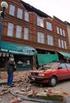 February 28 Earthquake: We got off easy State Geologist John Beaulieu Lucky may not be the first word that comes to mind after an earthquake that injured more than 200 and caused more than $1 billion damage,
FOURTH GRADE PLATE TECTONICS 1 WEEK LESSON PLANS AND ACTIVITIES
 FOURTH GRADE PLATE TECTONICS 1 WEEK LESSON PLANS AND ACTIVITIES PLATE TECTONIC CYCLE OVERVIEW OF FOURTH GRADE VOLCANOES WEEK 1. PRE: Comparing different structures of volcanoes. LAB: Modeling three types