
Sugar International Market Profile
|
|
|
- Janice Shaw
- 9 years ago
- Views:
Transcription
1 Background paper for the Competitive Commercial Agriculture in Sub Saharan Africa (CCAA) Study Sugar International Market Profile Prepared by JenniferNyberg Markets and Trade Division Food and Agriculture Organization of the United Nations Disclaimer: This background report is being made available to communicate the results of Bank-funded work to the development community with the least possible delay. The manuscript therefore has not been prepared in accordance with the procedures appropriate to formally edited texts. Some sources cited in this report may be informal documents that are not readily available. The findings and interpretations expressed in this report are those of the author(s) and do not necessarily reflect the views of the Board of Executive Directors of the World Bank or the governments they represent, or those of the Food and Agriculture Organization of the United Nations (FAO). The World Bank and FAO do not guarantee the accuracy of the data included in this work. The designations employed and the presentation of the material in this work, including the boundaries, colors, denominations, and other information shown on any map do not imply any judgment on the part of the World Bank or FAO concerning the legal status of any territory or the endorsement or acceptance of such boundaries.
2 Sugar: International Market Profile 1 Introduction The international sugar market is one of the most highly distorted agricultural commodity markets. Raw and refined sugar markets are generally characterized by significant and widespread domestic support and trade distorting policies, such as guaranteed minimum payments to producers, production and marketing controls (quotas), state-regulated retail prices, tariffs, import quotas and export subsidies. Although current world sugar prices have largely retreated from the 25-year highs reached in February 2006, the market remains particularly susceptible to large demand swings and price volatility. Generally, international sugar prices have generally trended downward as the production of traditional importing countries increased, largely due to domestic support measures. International trade is largely defined by preferential trade agreements in which sugarproducing countries enjoy access to the higher priced domestic markets of the EU or USA through preferential access. Trade under preferential agreements is very important to the sugar sectors of many developing countries. Sugar trade between African Caribbean and Pacific countries (ACP) and the European Union, for example, is regulated by two agreements: the ACP/EU Sugar Protocol and the Agreement on Special Preferential Sugar (SPS). Other significant trade agreements in international sugar markets include the Everything But Arms (EBA) initiative, Caribbean Basin Initiative (CBI), African Growth and Opportunity Act (USA), North American Free Trade Agreement (NAFTA), and the Southern Africa Customs Union (SACU). FAO studies have found that EU sugar policy reform implies an erosion of preferences for the ACP countries that export to the EU under the Sugar Protocol, with potential gains for LDCs due to the implementation of the EBA initiative, primarily over the medium to longer term. Sugarcane offers production alternatives to food, such as feed, fibre and energy, particularly biofuels (sugar-based ethanol) and/or co-generation of electricity. Sugarcane is generally regarded as one of the most significant and efficient sources of biomass for biofuel production, and given expectations of rising oil prices, the considerable potential for expansions in production for biofuel feedstock has resulted in a heightened focus on sugar as an internationally traded commodity. Strong linkages between world sugar and oil prices have emerged in recent years, driven in part by the relationships between sugar as the primary ethanol feedstock in Brazil, the most dominant producer and exporter of both sugar and 1 ethanol in the world. Practices capture A wide range of environmental and social issues are connected with sugarcane production and branded processing, and sugarcane growers, processors, plus energy and food companies, are seeking sugarcane See draft the sugar-containing for ways to address growing ToR, interests Sugarcane, IFC interests Technical of a based wide products, Assistance on the a multi-stakeholder Project, on the Preparation Better Sugarcane of Guidance Initiative Document (BSI) created on Good Management June 2005 to concerns from range related major banks, of stakeholders world researchers, in the environmental sugarcane sector and social including concerns traders, of civil investors, society, sellers and of to sugar growing production, areas. The biofuels BSI approach and is sustainability. to develop internationallyapplicable complements Fund (GEF), guidelines aimed the IFC at to Biodiversity reducing define a habitat sustainable and destruction Agricultural approach by Commodities leveraging to growing Program market and processing forces (BACP), at sugarcane. all funded levels by of the The the Global value initiative Environment chain in 1 Continued order 2
3 domestic support measures, highly regulated trade and uncertain future policy scenarios (continued price supports for sugar production or preferential trade agreements) may have constrained opportunities for capital investment in biofuels and other renewable energy sources. For countries with the need to diversify or modernize cane sectors to focus on feedstock potential, new forms of public and private cooperation and partnership are necessary. 2 Market Structure 2.1 Production More than 130 countries produce either sugarcane or sugarbeet, and ten of these produce sugar from both cane and beet crops. 2 Sugarcane, on average, accounts for 75 to 80 percent of global production per year, and developing countries produce about 70 percent of total global output. Production has become increasingly concentrated since 1980, when the top ten producing countries accounted for 56 percent of global output compared to 2004, when the top ten accounted for 69 percent. 3 Table 1 - Top 10 Producing and Consuming Countries in 2005 (million metric tons, raw equivalent) Production Consumption 1 Brazil India EU EU India China China Brazil USA USA Mexico Russian Fed Australia Mexico Thailand Pakistan Pakistan Indonesia Russian Fed Egypt 2.67 Total Total World Total World Total Percent 73% Percent 64% Source: ISO Sugar Yearbook 2005 The largest sugar producing countries in the world consist of both beet and cane sugar producers, which combined account for more than 70 percent of global output (see Table 1). commodities to Brazil, Australia and Thailand, included amongst the list of the top ten sugar producing 2 countries from sugarcane, are also considered amongst the lowest cost and efficient of global sugar produce 3 mainstream the adoption of Good Management Practices for various commodities. Sugar one of the primary producers. All three are also ranked amongst the top ten sugar exporting countries. Sugar Guatemala, China, Top ten Ecuador, sugar output India, covered from exporting Egypt, by the BACP. South both Honduras, Islamic Republic of Iran, Japan, Mexico, Morocco, Pakistan and the United States the Africa, cane countries and beet, according to FAOStat data (2004). United Turkey (on States, and average, China Colombia. raw equivalent) include Brazil, the EU, Australia, Thailand, Cuba, and Sugar: Pakistan policy is insights derived from from analysis both of sugar sugarbeet sector reform, and FAO Trade Policy Briefs, FAO Rome,
4 sugarcane crops. Domestic production in the EU and the Russian Federation is derived from sugarbeet. Sugar production in developed countries is growing very slowly, with the International Sugar Organization (ISO) estimating growth at less than one percent per year over the past decade. According to the ISO, the proportion of global sugar output attributable to developed countries is on the decline, from 32 percent in 1989 to 25 in Further decline is likely given the reform of the EU sugar regime that will not only reduce EU output, but also the availability of EU refined sugar exports to the global market. Australia is the only developed country in which sugar plays a significant although declining- role in the national trade balance. Generally, amongst the largest developing country producers, average growth is nearly 3.4 percent per year, led by Brazil, India, China, Mexico and Thailand. Production in China, Mexico and India is mostly dedicated to domestic demand. Sugar accounts for a relatively small share of overall GDP in these countries, however, due to diversified economies and growth in other sectors. Sugar output in Brazil, where average annual growth rates exceed seven percent, more than domestic consumption of sugar and ethanol combined, have resulted in surplus supply directed to global export markets. 4 Sugar Production in LDCS: Focus on Sub-Saharan Africa Sugar production in LDCs is growing rapidly. Annual growth in sugar production in LDCs has averaged more than five percent - the highest amongst all groups of developing countries although from a relatively small baseline. Growth is expected to continue in the LDC sugar-producing countries given increased transitional EBA sugar quota access and zero-duty access after LDC sugar production was 1.98 million tons (raw equivalent) in 1996/97, increasing to 3.11 million tons by 2005/2006. Sudan, Ethiopia, Tanzania, Mozambique, Zambia, Malawi and Uganda account for 75 percent of total sugar production for all LDCs. Sudan is the largest sugar producing LDC, with the most rapid production growth year-onyear noted for Mozambique, at almost 30 percent, and Ethiopia, Myanmar and Tanzania, around 10 percent for each country. Sugar export revenues have doubled in the case of Malawi, with sugar currently contributing some three percent of GDP, and also in the case of Zambia, where sugar now contributes one percent. Economic incentives other than the EBA access exist that should support further expansion in LDC sugar production and processing: high sugar yields, long milling campaigns (8 to 190 months), low labor and transportation costs, low processing (ex-factory) costs. Some reports indicate that sugar production costs in Malawi, Zambia and Mozambique are estimated to be some of the lowest in the world, potentially competitive to cost structures in Australia, Brazil, Guatemala and Thailand considered the most cost effective and competitive sugar producing countries in the world. Excerpt from Sugar and Economic Development, ISO London, Consumption Developing countries account for 67 percent of global sugar consumption, and are expected to be the primary sources of future demand growth, particularly in Asia. Global consumption continues to expand, averaging between 1.5 to 2 percent, driven largely by rising incomes, population growth and shifting dietary patterns. 4 Sugar and Economic Development, ISO MECAS (06)17, London,
5 The top ten sugar consuming countries account for 64 percent of global sugar consumption, largely based on population balance, particularly in the case of the EU, and the United States, where sugar demand is largely saturated and mostly keeping pace with population growth rates. Sugar consumption is only one part of total sweetener consumption in the case of the United States, where more high-fructose (corn-based) sweetener is consumed annually per capita than sugar. Globally, sugar consumption has continued to grow over the past decade, from 20.7 to 23.2 kgs, driven primarily by higher population and income growth in developing countries, particularly those in the Far East. Global trends toward more westernized diets in many developing countries have resulted in emerging dietary patterns that include more sugar-containing and processed foods, as well as meat and dairy products. Table 2 - World Production, Consumption and Ending Stocks ---(thousand tons, raw equivalent)--- Year Production Consumption Ending Per capita ISA Daily Stocks consumption Price 5 kgs US cents/lb Source: ISO Sugar Yearbook International Trade Key characteristics of the international sugar market Cane sugar is the primary source of internationally traded sugar, as sugarbeets are grown and processed almost exclusively for internal domestic markets, and the most efficient sugarbeet processing technologies result in one-step production for refined (white food grade standard) sugar. Sugarcane is harvested and milled into raw sugar (non-food grade) to further refine at some later date or immediately refined into white (food grade) sugar. Specifications for sugar purchases will vary according to the specific applications of the end users, with trade volumes and prices broadly categorized as raw or refined types of sugar. Sugar polarity, or degree of refining purity, is a measurement of the degree of purity of the sugar (based on molasses content), how close the color of the sugar is to pure white and 5 The International Sugar Agreement (ISA) Daily Price is an average of the New York Coffee and Sugar Exchange Number 11 Contract spot price and the London Daily Price (LDP), FOB Stowed Caribbean port (bulk raw sugar) 5
6 dextran content. Dextran is the fibrous content of the sugar that develops when sugarcane is cut during harvest, which tends to make refining the cane more difficult. Polarization is what distinguishes raw from refined sugar, with polarity at 100 percent signifying pure refined sugar. Raw sugar trades according to various polarity specifications, based upon the specific needs of refining and processing facilities as well as refinery sugar production costs. There are four general sugar product types trade in international markets based on polarity: refined (white) sugar; semi-refined or direct white (also called plantation white); very-high polarity raw sugar (VHP); and standard raw sugar. Polarity is also a key determinant of raw and refined sugar pricing. Future contracts are the most critical element in global sugar pricing, although premiums or discounts based on origin, destination and product specifications, play an important role. 6 Brazil dominates global trade in raw and refined sugars, and may become more dominant as the EU retreats as a major global supplier of high quality refined sugar due to the end of the EU export subsidy scheme following the ruling of a WTO panel, as well as EU reform of the sugar regime. The ability to forward finance purchases from exporters has become a key prerequisite of global sugar trade, and thus, often only the larger trade houses are able to prefinance a significant proportion of sugar trade. Several large producing country origins export typically small volumes directly to end users, for example, Australia, Brazil and South Africa, while state-controlled import tendering systems remain in a number of countries in North Africa, the Middle East and Indonesia. Global Sugar Trade According to ISO data, world sugar trade averages some 46 million metric tons per year, with nearly 90 percent based on ocean or seaborne trade. Raw sugar accounts for more than 50 percent of internationally trade volumes. Nearly 12 million tons of global raw sugar trade is conducted under preferential agreements. Although many countries produce sugar, ten countries dominate global raw sugar exports, with Brazil, Australia, Thailand, Cuba, Guatemala, South Africa, Mauritius, Colombia, El Salvador and Fiji, accounting for nearly 90 percent of global export trade. Brazil, as the largest producing and exporting country in the world, dominates world trade, accounting for 51 percent of global export trade in 2005, up from 21 percent in 2000 and evidence of the significant expansion of the sugar-ethanol complex in Brazil over the past 10 years. The Russian Federation, EU-25, United States, South Korea and Japan are the world s largest importing nations, although India also emerged as an important importer of raw sugar in 2004 and Preferential trade agreements There are two major preferential trade agreements that govern raw sugar imports by the EU and the United States, although preferential arrangements also exist between Cuba and China. 7 Globally, preferential trade typically accounts for approximately 4.5 million metric tons of global trade, with nearly all raw sugar trade by ocean going vessel, while a large part of refined sugar trade is based on land transport. 6 International sugar market prices can be related futures markets, for raw sugar through the New York Coffee and Sugar Exchange Contract Number 11 and for refined sugar through the London LIFFE Sugar Contract Number 5. Contract terms for the #11 and #5 are included in this report on pages 14 and Sugar trade under regional trade agreements are not considered preferential trade in terms of the international market, and thus will not be addressed in this report. 6
7 The EU has traditionally imported nearly 1.3 million tones of raw sugar under the African, Caribbean, Pacific (ACP) Sugar Protocol, plus additional volumes as necessary to supplement internal EU market needs under the Special Preferential Sugar (SPS) agreement. The Sugar Protocol is a trade agreement of indefinite duration in which the EU agreed to purchase and import specific quantities of cane sugar (raw or refined) from ACP countries at preferential (internal) prices.the ACP group consists of 17 countries, eight of which are also considered Least Developed Countries (LDCs), that hold duty free quota access totaling 1.3 million metric tons. 8 For most ACP Sugar Protocol countries, the socio-economic contribution of sugar production and trade is very significant, providing direct and indirect employment and livelihoods opportunities for millions of people. For example, sugar accounts for more than 17 percent of GDP in Guyana, 24 percent in Swaziland, and more than 5 percent in Fiji. 9 Reform of the EU sugar regime reduces the preferential price received by ACP sugar exporters by 36 percent over four years, starting with the 2006/2007 marketing year. 10 Export revenues to ACP countries are expected to decline 56 percent, from EUR 524 per metric ton to 335 per metric ton CIF basis, by 2009/2010. The ISO estimates that the loss in ACP Sugar Protocol export earnings could total EUR 462 million between 2006 and Mauritius, Fiji and Guyana are expected to experience the largest decrease in export earnings due to EU sugar reform. 11 Transitional programmes and monetary compensation from the EU through Economic Partnership Agreements (EPAs) is expected to mitigate the loss of export earnings due to EU sugar reform and loss of preferential access. Residual sugar access formally granted ACP exporters under the phase-out of the SPS, will also be replaced by increased access for LDC sugar exporters under Everything-But-Arms (EBA) transitional quotas. This transitional quota increases from tons in 2001/2002 to tons in 2008/2009, at which point sugar exports from LDCs will be granted duty-free access to the EU sugar market under the EBA trade agreement. There are, however, provisional constraints remain on year-to-year increases in export volumes of zero-duty raw sugar imports for refining starting 2009/2010. The other major preferential trade agreement for raw sugar is the United States Tariff Rate Import Quota (TRQ). The US TRQ allocates approximately 1.7 million metric tons of raw sugar to 40 sugar supplying developing countries, with the exception of the TRQ access granted 8 Australia, plus metric tons allocated to Mexico under the North American Free Trade Agreement (NAFTA) and metric tons allocated to El Salvador, Guatemala, Honduras Kenya, Zimbabwe. and Nicaragua under the Central American Free Trade Agreement (CAFTA). Raw cane the sugar, refined sugar, sugar syrups, and specialty sugars enter the United States primarily 9 The ACP Sugar Group signatory countries include Barbados, Belize, Congo, Cote d Ivoire, Fiji, Guyana, Jamaica, under two tariff-rate quotas (TRQs), under which U.S. importers pay either a nominal or zero duty. Sugar The sugar ACP 12 Group Madagascar, industry Countries St Malawi, Mauritius, Mozambique, Swaziland, Tanzania, Trinidad and Tobago, Zambia and ( Kitts closed. and and Nevis the Reform was one of the original 18 member states of the ACP Sugar Group until 2005, when imports under and of the FAO. the EU Sugar Regime, Background Document for the Press, June 2005, ACP Caribbean Basin Economic Recovery Act, the Andean Trade 11 additional The loss access of export granted earnings when from Finland preferential and Portugal prices acceded will be to exacerbated the EU at 85 by percent the phase-out of EU preferential of the SPS quotas, prices. 10 More recent information on EU sugar regime reform and transitional programmes, refer to Forthcoming Changes in the EU Banana/Sugar Markets: A Menu of Options for an Effective EU Transitional Package, Gillson, Hewitt and Page, Overseas Development Institute, London, For more information on the US Sugar Programme, TRQ, HTS codes and speciality sugar products, refer to 7
8 Preference Act, and the US Generalized System of Preferences also enter at a zero duty. The U.S. Trade Representative (USTR) allocates the raw sugar TRQ among supplying countries, currently using a formula based on share of exports to the United States between 1975 and Table 3 - Top 10 Exporters of Raw Sugar (metric tons, raw equivalent) Countries Brazil 4,344,075 7,085,072 8,132,267 9,332,148 10,846,709 12,944,549 Australia 3,735,339 3,453,000 3,783,160 3,944,590 4,203,743 4,086,059 Thailand 2,415,119 2,238,634 2,136,541 2,747,276 2,328,257 1,581,482 Cuba 3,417,820 2,925,930 3,067,822 1,788,372 1,937, ,503 Guatemala 1,094,383 1,276,398 1,097, , ,836 1,351,554 South 1,111,068 1,201, , , , ,350 Africa Mauritius 382, , , , , ,316 Colombia 687, , , , , ,711 El 262, , , , , ,305 Salvador Fiji 330, , , , , ,039 Total 17,780,355 19,998,782 20,579,900 21,261,302 22,502,708 23,180,868 World 20,438,505 22,607,529 22,850,051 23,579,443 25,051,844 25,774,916 Percent Source: ISO MECAS (06) 18 Table 4 - Top 10 Importers of Raw Sugar (metric tons, raw equivalent) Countries Russian 4,782,978 5,707,921 4,531,512 4,112,330 2,609,634 2,893,000 Fed EU25 1,662,234 1,654,926 1,860,260 1,690,514 1,991,742 1,864,948 USA 1,373,705 1,211,753 1,271,700 1,446,101 1,386,637 1,770,284 South 1,462,457 1,515,710 1,516,818 1,560,939 1,597,236 1,623,437 Korea India ,215,688 1,546,310 Japan 1,603,589 1,568,095 1,507,549 1,509,044 1,431,036 1,372,277 Malaysia 1,157,081 1,230,376 1,176,358 1,355,148 1,384,686 1,351,309 Algeria 42,296 71, , , ,228 1,345,377 Canada 1,115,549 1,142,011 1,145,150 1,414,188 1,081,589 1,247,900 China 595,515 1,019,119 1,061, , ,502 1,203,667 Total 13,795,404 15,120,942 14,241,245 14,216,123 14,322,978 16,218,509 World 20,634,088 22,229,325 22,441,316 22,929,273 23,668,383 25,555,482 Percent 67% 68% 63% 62% 61% 63% Source: ISO MECAS (06) 18 Major destinations for raw sugar are the Russian Federation, European Union, the United States, South Korea and Japan. Brazil is a key exporter to the Former Soviet Union (FSU), Middle East and North America. Far East origins, such as Thailand, supply a major portion of the deficit in the Far East as well as exports to North America, Western Europe and the Former Soviet Union. Sugar exports from Sub-Saharan Africa are typically directed to Western European destinations. 8
9 Global trade in refined sugar The top ten exporters of refined sugar account for nearly 80 percent of global refined trade. The EU, Brazil and Thailand account for a major proportion of global trade, with sporadic entry with high volumes into the global refined market by India. As the largest white sugar exporter until 2006, the EU consistently exported to the Middle East and West Africa. Although the EU has been the major exporter of high quality refined sugar in past years, Brazil has steadily gained market share through exports of a lower quality white sugar. Large destination refineries in the Persian Gulf are increasingly important as domestic and regional suppliers of refine sugar. Destination refineries usually import high quality raw sugar (VHP) which helps defray refining costs. Globally, refined sugar import volumes are much less concentrated amongst the top ten importing countries than in raw sugar trade. The role of quality in sugar trade Trade in raw sugar is typically differentiated polarity and color, based on ICUMSA ratings. 13 Refineries pay premiums for raw sugar with polarity over 96 degrees. 14 The higher the polarity, the less additional refining throughput is necessary, lowering overall refining costs. Payments of premiums above or below the notice price against the New York Number 11 raw sugar contract are determined through polarization samples upon delivery. A standard discount of 5.5 percent is charged against the contract price when the sampled raw sugar is between 95 to 96 polarity. Premiums are paid polarity above the contract standard of 96 percent, ranging from 1.5 percent for 96 to 97 polarity to 3.79 percent for 99.3 percent polarity. 15 Origin and quality typically differentiate refined sugar trade. The European Union was a consistent exporter of four to six million tons of high quality refined sugar to the world market, irrespective of world market prices for 25 years, due to EU subsidies of surplus domestic sugar. The export subsidies essentially shielded EU exporters from the need to capture sufficient refining margins in world prices received for their refined sugar, and ensured that the EU would become the primary supplier for nearly 60 percent averaging four to six million tons - of total world trade in refined sugar. The WTO ruling against EU sugar export subsidies restricts total EU exports to an annual limit of 1.3 million tons from 2006/2007, and represents a serious structural shift in global refined markets. Brazil emerged as a major refined sugar exporter in the mid-1990s, introducing very high pol (VHP) that ranged (in terms of sucrose content, color and purity) between raw and refined 13 sugar. VHP sugar must have a minimum 99.4 percent polarity. Brazilian cane refiners are Methods generally able to produce a very high polarity, almost semi-refined, sugar very economically color, priced and efficiently, primarily due to co-production of ethanol and sugar. Brazil VHP sugar currently dominates world trade in raw sugar and has become benchmark for high quality raw 14 ICUSMA a color grading scheme based on the recommendations of the International Commission for Uniform 15 specification sugar 96 degree with of a any discount Sugar Analysis. (ICUMSA). The highest quality is rated 45 ICUMSA as the closest pure white trade. polarity of darker minimum to colors, such as semi-refined raw sugars from Brazil or Thailand, rated 100 to 150 ICUMSA, Globally, could the 99.7 lower also polarity ICUMSA ratings. For refined sugar according to EU standard quality white sugar an be and 45 ICUMSA. increasing considered number 96 percent of pure suppliers, sucrose. such as Australia, Thailand and 99.7 from Typical to Thailand raw percent sugar polarity quality varies and 45 by or origin, 150 ICUMSA with 99.9 from percent Brazil, polarity and 99.8 and percent 45 ICUMSA polarity from and the 45 EU or and 100 South ICUMSA Africa, 9
10 Central American countries, export VHP sugar. Large destination refineries in the Near and Middle East, West Africa and China have been constructed in recent years that focus on the cost savings associated with using high quality (VHP) raw sugar to reduce refining time (eliminate the affination process), as well as the growing demand in these regions for refined sugar due to population growth, increased incomes and shifting diets. Table 6 - Top 10 Exporters of Refined Sugar (metric tons, raw equivalent) Countries EU 6,203,304 6,059,598 4,713,201 5,055,950 4,292,528 6,657,225 Brazil 2,158,300 4,083,350 5,255,979 4,053,933 5,448,019 5,454,690 Thailand 1,926,255 1,125,388 2,067,285 2,737,482 2,564,825 1,723,743 Persian 713, , , ,610 1,532, ,401 Gulf Colombia 358, , , , , ,932 India 201,293 1,208,603 1,257,046 1,677, ,991 38,960 Belarus 276, , , , , ,603 South 180,042 14, , , , ,815 Africa South 315, , , , , ,591 Korea Mexico 263, , , , , ,254 Total 12,596,759 14,170,803 16,386,055 16,252,160 16,167,900 17,197,214 World 16,067,315 18,549,494 20,655,729 21,452,159 20,830,441 22,113,225 Percent Source: ISO MECAS (06) 18 Table 7 - Top 10 Importers of Refined Sugar (metric tons, raw equivalent) Countries Indonesia 564, ,656 1,129,632 1,194,394 1,195,875 1,114,233 Syria 516, , ,541 1,059, , ,570 Pakistan 824, ,248 5,698 10,498 11, ,000 Russian 505, , , ,130 1,018, ,567 Fed Bangladesh 396, , , , , ,524 Persian 579, , , , , ,953 Gulf Algeria 913, , , , , ,725 Yemen 531, , , , , ,909 Sri Lanka 424, , , , , ,154 EU25 572, , , , , ,894 Total 5,828,740 6,007,986 6,113,725 6,735,964 6,738,938 7,205,529 World 14,328,798 15,656,311 18,199,172 18,928,661 18,808,088 19,236,451 Percent 41% 38% 34% 36% 36% 37% Source: ISO MECAS (06) 18 10
11 2.4 International market prices Generally, there are two broad considerations in the determination of global sugar prices - the related raw or refined International sugar futures contract price together with the relative premium or discount. Spot or cash price is the Annual Sugar indicative Average Agreement price Daily Price for immediate delivery. The New York Contract Number 11 is widely used for settling maturing physical contracts as well as a world indicator price for sugar. The key indicator price for white sugar is the Contract Number 5 for refined FOB European ports. World sugar prices are volatile, and trade well below average global production costs (raw sugar) U US cents per lb Source: FAO ISA annual prices averaged US cents per pound between 1986 and Global raw sugar prices generally declined, however, over the next decade as Brazil continued to emerge as the dominant world sugar exporter and prices averaged 8.79 US cents per pound. Brazil has the lowest production costs for sugar in the world, with reports indicating costs between four to five cents per pound, compared to a global average cost closer to 15 or 16 US cents per pound (LMC). Given the exportable surplus of Western Hemisphere suppliers and dominant position of Brazil, sugar from the Far East has tended to trade at a premium to Western Hemisphere sugar. As a traditionally sugar deficit region, the Far East tends to attract raw sugar trade flows from Latin America and the Caribbean. Thus, the Far East premium is largely the freight advantage held by Far Eastern suppliers, such as Thailand, over Western Hemisphere suppliers. An additional pricing consideration is the relationship between world raw and refined sugar prices, referred to as the raw-refined differential. This differential, averaging US per ton in recent years according to ISO data, is very important for large destination refineries and toll refiners (refiners that charge a refining free to end users that originate their own raw sugar). Given the significant changes in the structure of the global refined sugar market, the refined premium may be more volatile as markets adjust to reduced availability of EU export volumes. However, over the longer term, the refined sugar premium may be pressured by excess refining capacity particularly given reports of some 8.5 million tons of planned greenfield refineries or capacity expansions in the near to mid-term compared to the 11
12 expected loss of 5.5 million tons of EU refined sugar exports over time due to EU sugar reform. Freight rates are a key consideration in sugar pricing, particularly for trade in refined sugar which has been reliant on a decreasing number of small handysize vessels of to tons to transport mostly bagged refined sugar. According to an ISO study, freight rates for bagged refined sugar shipped in containers tend to be lower than for bagged sugar shipped in conventional vessels, and currently some 20 percent of refined sugar is shipped in containers. This percentage may increase, however, given that refined sugar can be shipped easily and economically from the EU and Dubai in containers charging low backhaul rates for the return to the Far East region. Increasingly, raw sugar is shipped in larger vessels that help reduce costs per ton, as well as more economic handling as a bulk raw sugar product, versus bagged and smaller volumes of refined sugar. Generally, the trend in bulk raw sugar is toward large vessels, ranging from to tons (Handymax) and to tons (Panamax). However, vessels of this size require specialized terminals, equipment and deep draft port facilities which may pose future challenges for raw sugar exporters and importers, and increase the importance of destination refinery trade as importer of raw sugar and exporter of refined. 3 Market Situation and Outlook The global sugar market is complex and experiencing fundamental shifts in terms of the recent focus on sugar as a feedstock for ethanol, the loss of the EU as the major refined sugar supplier and loss of preferences by many traditional ACP sugar exporters due to EU sugar reform. At the national level, the range of sugar products and qualities is much more extensive than the product quality traded internationally, particularly for large industrial users and food processors. The emergence of VHP sugar exports from Brazil in the 1990s was an important development in global sugar markets, as it introduced a new type of sugar and supported the development of destination refineries, in North Africa and Middle East, particularly. Furthermore, now that the quality of raw sugar available to the market has become increasingly differentiated by polarity, other origins (such as Thailand) have had to take steps to become more efficient and improve their own refining processes. Given the retraction of the EU from global refined sugar markets, and the dominant position of Brazil, refined sugar trade may fundamentally change, with less of a focus on global rawrefined differentials (refined premiums), and the possible emergence of regional premiums that address regional availabilities, refinery capacities and trends. The future role of destination refineries is very important, and Brazil, Thailand, Guatemala, Colombia and South Africa (possibly India) are expected to benefit from the decline in EU refined sugar exports. Sugar should continue to play a key role in the development of the agricultural sectors of sugar-producing LDCs, many of which have attracted capital investment in either the expansion of current farmgate production, refining capacity or greenfielding sugarcane refineries. Rapid growth is already underway as some of the most efficient sugar-producing LDCs start to expand production and processing facilities to capitalize on duty-free access to EU markets under the EBA after 2009/2010. However, the ability of LDCs to access EU markets, at lower preferential prices post-eu sugar regime reform, will be constrained by their ability to expand domestic production, invest in infrastructure and export throughput facilities, and compete globally with lower cost competitors. 12
13 ANNEX: SUGAR PRICE CONTRACTS NEW YORK RAW SUGAR CONTRACT NUMBER 11 The contract calls for delivery of cane sugar, stowed in bulk, FOB from any twenty-eight foreign countries of origin as well as the United States, deliverable under Sugar No. 11 Futures Contract shall be sound raw centrifugal cane sugar based on 96 degrees average polarization. Raw sugar is any crystallized sugar product from a cane sugar production facility delivered in bulk. Contract terms below are effective with the March 2007 delivery month and all future delivery months. Contract Size 112,000 pounds (50 long tons) Contract Months March, May, July, October Contract Settlement Physical Delivery Price Quotation Cents per pound Minimum Price 1/100 cent/lb., equivalent to $11.20 per contract. Movement Daily Price Limit None Last Trading Day Last business day of the month preceding delivery month. First Notice Day 1st business day after the last trading day. Last Notice Day 1st business day after the last trading day. Delivery/Settlement Terms Grade/Standards/Quality Raw centrifugal cane sugar based on 96 degrees average polarization. Deliverable Growths Growths of Argentina, Australia, Barbados, Belize, Brazil, Colombia, Costa Rica, Dominican Republic, El Salvador, Ecuador, Fiji Islands, French Antilles, Guatemala, Honduras, India, Jamaica, Malawi, Mauritius, Mexico, Mozambique*,Nicaragua, Peru, Republic of the Philippines, South Africa, Swaziland, Taiwan, Thailand, Trinidad, United States, and Zimbabwe.*Mozambique becomes a deliverable origin beginning with the March 2007 contract. Delivery Points A port in the country of origin or in the case of landlocked countries, at a berth or anchorage in the customary port of export. Subject to minimum standards established by the Exchange's rules. 13
14 LONDON SUGAR CONTRACT NUMBER 5 Euronext-Liffe White Sugar Futures Unit of trading Quality Delivery months Price basis Minimum price movement (tick size and value) Fifty tons White beet or cane crystal sugar or refined sugar of any origin of the crop current at the time of delivery, free running of regular grain size and fair average of the quality of deliveries made from the declared origin from such crop, with minimum polarization 99.8 degrees, moisture maximum 0.06%, and color maximum 45 units ICUMSA attenuation index (except that sugar originating in the EU shall satisfy the color specification set out or referred to in the ASSUC Rules), all at time of delivery to vessel at port. March, May, August, October, December, such that eight delivery months are available for trading. US dollars and cents per ton FOB and stowed in vessel s hold at one of the following designated ports: Amsterdam, Antwerp, Bangkok/Kohsichang, Bilbao, Bremen, Buenaventura, Buenos Aires, Cadiz, Calais, Delfzijl, Dunkirk, Durban, Eemshaven, Flushing, Gdansk, Gdynia, Gijon, Guangzhou, Hamburg, Huangpu, Imbituba, Immingham, Inchon, Itajai, Jebel Ali, Laemchabang/ Sri Racha, Le Havre, Leixoes, Lisbon, Maceio, Marseilles, Matanzas, Natal, New Orleans, Paranagua, Penang, Port Kelang, Puerto Quetzal, Recife, Rosario, Rostock, Rotterdam, Rouen, Santander, Santos, Savannah, Shekou, Singapore, Szczecin, Ulsan, Vitoria1, Xiamen, Zeebrugge. Freight differentials, as from time-to-time determined and published by the Board, shall apply to any non-european port. 10 cents per ton ($5) Last trading day Sixteen calendar days preceding the first day of the delivery month (if not a business day then the first business day immediately preceding). Notice day/tender day Fifteen calendar days preceding the first day of the delivery period (if not a business day then the first business day following) Tender period The specified delivery month and the following month Trading hours 09:45-17:30 14
List of tables. I. World Trade Developments
 List of tables I. World Trade Developments 1. Overview Table I.1 Growth in the volume of world merchandise exports and production, 2010-2014 39 Table I.2 Growth in the volume of world merchandise trade
Countries Ranked by Per Capita Income A. IBRD Only 1 Category iv (over $7,185)
 Page 1 of 5 Note: This OP 3.10, Annex C replaces the version dated September 2013. The revised terms are effective for all loans that are approved on or after July 1, 2014. Countries Ranked by Per Capita
Bangladesh Visa fees for foreign nationals
 Bangladesh Visa fees for foreign nationals No. All fees in US $ 1. Afghanistan 5.00 5.00 10.00 2. Albania 2.00 2.00 3.00 3. Algeria 1.00 1.00 2.00 4. Angola 11.00 11.00 22.00 5. Argentina 21.00 21.00 42.00
FDI performance and potential rankings. Astrit Sulstarova Division on Investment and Enterprise UNCTAD
 FDI performance and potential rankings Astrit Sulstarova Division on Investment and Enterprise UNCTAD FDI perfomance index The Inward FDI Performance Index ranks countries by the FDI they receive relative
I. World trade developments
 I. World trade developments The value of world merchandise exports increased by 20 per cent in 2011 while exports of commercial services grew by 11 per cent. Key developments in 2011: a snapshot Trade
Mineral Industry Surveys
 4 Mineral Industry Surveys For information contact: Robert L. Virta, Asbestos Commodity Specialist U.S. Geological Survey 989 National Center Reston, VA 20192 Telephone: 703-648-7726, Fax: (703) 648-7757
The Economic Impact of a U.S. Slowdown on the Americas
 Issue Brief March 2008 Center for Economic and Policy Research 1611 Connecticut Ave, NW Suite 400 Washington, DC 20009 tel: 202-293-5380 fax:: 202-588-1356 www.cepr.net The Economic Impact of a U.S. Slowdown
Annexure 1. 1. India s FTA/PTA and RMG Trade with FTA/PTA Partners
 Annexure 1 1. India s FTA/PTA and RMG Trade with FTA/PTA Partners The size of India s clothing industry is estimated to be US$ 62 bn. in 2012 as per FICCI and Textile committee estimates including exports
INSTRUCTIONS FOR COMPLETING THE USAID/TDA DEFENSE BASE ACT (DBA) APPLICATION
 INSTRUCTIONS FOR COMPLETING THE USAID/TDA DEFENSE BASE ACT (DBA) APPLICATION Full Name of Insured or Company and Complete Mailing Address: This is whoever has the contract with USAID. Generally, it is
Proforma Cost for international UN Volunteers for UN Partner Agencies for 2016. International UN Volunteers (12 months)
 Proforma Cost for international UN Volunteers for UN Partner Agencies for 2016 Country Of Assignment International UN Volunteers (12 months) International UN Youth Volunteers (12 months) University Volunteers
Cisco Global Cloud Index Supplement: Cloud Readiness Regional Details
 White Paper Cisco Global Cloud Index Supplement: Cloud Readiness Regional Details What You Will Learn The Cisco Global Cloud Index is an ongoing effort to forecast the growth of global data center and
International Fuel Prices 2012/2013
 International Fuel Prices 212/213 8 th Edition Published by International Fuel Prices 212/213 8 th Edition Disclaimer Findings, interpretation and conclusions expressed in this document are based on the
Milk and milk products market summary
 Milk and milk products market summary Food Outlook Prices of dairy products began to decline in mid-2011, as supplies to the international market improved. In April, after a favourable outcome of the milk-producing
SUGAR. Market situation. Projection highlights
 3. COMMODITY SNAPSHOTS SUGAR Market situation International sugar prices fell by more than 30% in 2014. The prospect of a global sugar production deficit has led to a price increase at the start of the
2015 Global Feed Survey
 2015 Global Feed Survey 2015 ALLTECH GLOBAL FEED EXECUTIVE SUMMARY 2015 marks the fourth consecutive year that Alltech has conducted this global feed survey. This undertaking has required a significant
Chart 1: Zambia's Major Trading Partners (Exports + Imports) Q4 2008 - Q4 2009. Switzernd RSA Congo DR China UAE Kuwait UK Zimbabwe India Egypt Other
 Bank of Zambia us $ Million 1. INTRODUCTION This report shows Zambia s direction of merchandise trade for the fourth quarter of 2009 compared with the corresponding quarter in 2008. Revised 1 statistics,
Appendix 1: Full Country Rankings
 Appendix 1: Full Country Rankings Below please find the complete rankings of all 75 markets considered in the analysis. Rankings are broken into overall rankings and subsector rankings. Overall Renewable
Contact Centers Worldwide
 A Contact Centers Worldwide Country Tel.no. Supported lang. Contact Center Albania Algeria 852 665 00 +46 10 71 66160 Angola 89900 +34 91 339 2121 (Port) and Portuguese +34 913394044 +34 913394023 (Por)
THE ICSID CASELOAD STATISTICS (ISSUE 2015-1)
 THE ICSID CASELOAD STATISTICS (ISSUE 05-) The ICSID Caseload Statistics (Issue 05-) This issue of the ICSID Caseload Statistics updates the profile of the ICSID caseload, historically and for the calendar
Migration and Remittances: Top Countries
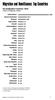 Migration and Remittances: Top Countries Top Immigration Countries a, 010 number of immigrants, millions United States b Russian Federation b Germany b Saudi Arabia b Canada b United Kingdom b Spain b
Senate Committee: Education and Employment. QUESTION ON NOTICE Budget Estimates 2015-2016
 Senate Committee: Education and Employment QUESTION ON NOTICE Budget Estimates 2015-2016 Outcome: Higher Education Research and International Department of Education and Training Question No. SQ15-000549
U.S. Trade Overview, 2013
 U.S. Trade Overview, 213 Stephanie Han & Natalie Soroka Trade and Economic Analysis Industry and Analysis Department of Commerce International Trade Administration October 214 Trade: A Vital Part of the
UNHCR, United Nations High Commissioner for Refugees
 Belgium 22 Jul 1953 r 08 Apr 1969 a Belize 27 Jun 1990 a 27 Jun 1990 a Benin 04 Apr 1962 s 06 Jul 1970 a Bolivia 09 Feb 1982 a 09 Feb 1982 a Bosnia and Herzegovina 01 Sep 1993 s 01 Sep 1993 s Botswana
BIOFUELS. Market situation. Projection highlights
 3. COMMODITY SNAPSHOTS BIOFUELS Market situation Cereals, oilseeds and vegetable oil prices in 2014 continued their decrease in nominal terms. This, coupled with the strong decline in crude oil prices
International Financial Reporting Standards
 International Financial Reporting Standards Of Growing Importance for U.S. Companies Assurance Services there is no longer a choice Three factors may influence your need to consider IFRS. First, many organizations
States Parties to the 1951 Convention relating to the Status of Refugees and the 1967 Protocol
 States Parties to the 1951 Convention relating to the Status of Refugees and the 1967 Protocol Date of entry into force: 22 April 1954 (Convention) 4 October 1967 (Protocol) As of 1 October 2008 Total
Consolidated International Banking Statistics in Japan
 Total (Transfer Consolidated cross-border claims in all currencies and local claims in non-local currencies Up to and including one year Maturities Over one year up to two years Over two years Public Sector
Wheat Import Projections Towards 2050. Chad Weigand Market Analyst
 Wheat Import Projections Towards 2050 Chad Weigand Market Analyst January 2011 Wheat Import Projections Towards 2050 Analysis Prepared by Chad Weigand, Market Analyst January 2011 Purpose The United Nations
Analysis of the determinants of prices and costs in product value chains
 SUGAR PRODUCTS Analysis of the determinants of prices and costs in product value chains SUGAR OVERVIEW Background Sugar commodity returns from the world market are based on global demand and supply. The
Shell Global Helpline - Telephone Numbers
 Shell Global Helpline - Telephone Numbers The Shell Global Helpline allows reports to be submitted by either a web-based form at https://shell.alertline.eu or by utilising one of a number of telephone
U.S. Agriculture and International Trade
 Curriculum Guide I. Goals and Objectives A. Understand the importance of exports and imports to agriculture and how risk management is affected. B. Understand factors causing exports to change. C. Understand
Fall 2015 International Student Enrollment
 Fall 2015 International Student Enrollment Prepared by The Office of International Affairs Nova Southeastern University Nova Southeastern University International Student Statistics Fall 2015 International
Guidelines for DBA Coverage for Direct and Host Country Contracts
 Guidelines for DBA Coverage for Direct and Host Country Contracts An Additional Help document for ADS Chapter 302 New Reference: 06/14/2007 Responsible Office: OAA/P File Name: 302sap_061407_cd48 BACKGROUND:
NET INTERNATIONAL MIGRATION
 II. NET INTERNATIONAL MIGRATION A. GLOBAL TRENDS During the period 195-21, the developed regions experienced population gains from positive net international migration while the developing regions were
Competitiveness Depends on Good Products and Enlightened Domestic Farm and Trade Policies. Marietta Bernot Senior Trade Advisor, Mars Inc.
 Competitiveness Depends on Good Products and Enlightened Domestic Farm and Trade Policies Marietta Bernot Senior Trade Advisor, Mars Inc. Mars is a family owned United States company headquartered in McLean,
Excerpt Sudan Fixed Telecommunications: Low Penetration Rates Get a Boost from Broadband Internet and VoIP Services
 Excerpt Sudan Fixed Telecommunications: Low Penetration Rates Get a Boost from Broadband Internet and VoIP Services This report is part of Pyramid Research s series of Africa & Middle East Country Intelligence
THE ICSID CASELOAD STATISTICS (ISSUE 2016 1)
 THE ICSID CASELOAD STATISTICS (ISSUE 06 ) The ICSID Caseload Statistics (Issue 06 ) This issue of the ICSID Caseload Statistics updates the profile of the ICSID caseload, historically and for the calendar
COMMISSION IMPLEMENTING DECISION. of 24.5.2016
 EUROPEAN COMMISSION Brussels, 24.5.2016 C(2016) 3040 final COMMISSION IMPLEMENTING DECISION of 24.5.2016 amending Commission Implementing Decision C(2015) 8936 of 15.12.2015 on the financing of humanitarian
Total Purchases in 2012
 Fighting Hunger Worldwide Food Procurement Annual Report 2012 Maize, Niger WFP/Rein Skullerud Procurement Mission Statement To ensure that appropriate commodities are available to WFP beneficiaries in
OILSEEDS AND OILSEED PRODUCTS
 3. COMMODITY SNAPSHOTS OILSEEDS AND OILSEED PRODUCTS Market situation Global oilseeds production in the 214 marketing year (see glossary for a definition of marketing year) reached record levels for the
4. Comparative advantage in freshwater fish farming
 35 4. Comparative advantage in freshwater fish farming In this section we apply the RCA approach to a regional assessment of countries comparative advantage in culturing three freshwater fish species.
Best Integrated Consumer Bank Site HSBC Best Information Security Initiatives HSBC Best Online Deposits Acquisition Wells Fargo
 2009 World s Best Internet Banks in North America NEW YORK, July 21, 2009 Global Finance has announced the First Round winners in the World s Best Internet Banks competition in North America. This is the
Fiscal Rules and Fiscal Responsibility Frameworks for Growth in Emerging and Low-Income Countries
 Fiscal Affairs Department Effects of Good Government, by Ambrogio Lorenzetti, Siena, Italy, 1338-39 Fiscal Rules and Fiscal Responsibility Frameworks for Growth in Emerging and Low-Income Countries Martine
Implementation of the FDES 2013 and the Environment Statistics Self-Assessment Tool (ESSAT)
 Implementation of the FDES 2013 and the Environment Statistics Self-Assessment Tool (ESSAT) 6. Protection, Management and Engagement 2. Resources and their Use 5. Human Settlements and Health 1. Conditions
Sulfuric Acid 2013 World Market Outlook and Forecast up to 2017
 Brochure More information from http://www.researchandmarkets.com/reports/2547547/ Sulfuric Acid 2013 World Market Outlook and Forecast up to 2017 Description: Sulfuric Acid 2013 World Market Outlook and
How To Calculate The Lorenz Curve
 FACT SHEET 1. Overview 1.1 Developed by an Italian statistician Corrado in the 1910s, is commonly used to indicate income inequality in a society. is a number which has a value between zero and one. As
GLOBAL. 2014 Country Well-Being Rankings. D Social (% thriving) E Financial (% thriving) F Community (% thriving) G Physical (% thriving)
 0 0 GLOBAL 0 Country Rankings 0 0 0 0 0 0 0 0 0 0 0 0 0 0 0 0 0 : >0.0% 0.% 0.0% 0.% 0.0% 0.% 0.0% 0.0% A Country s global rank B in three or more elements of well-being C (% thriving) D (% thriving) E
Expression of Interest in Research Grant Applications
 INTERNATIONAL CENTRE FOR GENETIC ENGINEERING AND BIOTECHNOLOGY THE ACADEMY OF SCIENCES FOR THE DEVELOPING WORLD UNITED NATIONS EDUCATIONAL, SCIENTIFIC AND CULTURAL ORGANIZATION ICGEB-TWAS-UNESCO/IBSP Joint
מדינת ישראל. Tourist Visa Table
 Updated 22/06/2016 מדינת ישראל Tourist Visa Table Tourist visa exemption is applied to national and official passports only, and not to other travel documents. Exe = exempted Req = required Press the first
INTERNATIONAL FACTORING
 INTERNATIONAL FACTORING November 3, 2011 1 L. Gabriel Segura President and founding officer of CVCredit Inc, a Miami-based company which focuses in USA-domestic and international factoring services. Nine
Appendix A. Crisis Indicators and Infrastructure Lending
 Appendix A. Crisis Indicators and Infrastructure Lending APPENDIX A Table A.1. Crisis Indicators (Case Study Countries) Country % as Share of GDP Share of in Bank Crisis Severity Score (principal factor
KYOTO PROTOCOL STATUS OF RATIFICATION
 KYOTO PROTOCOL STATUS OF RATIFICATION Notes: R = Ratification At = Acceptance Ap = Approval Ac = Accession 1. ALBANIA ----- 01/04/05 (Ac) 30/06/05 2. ALGERIA ---- 16/02/05 (Ac) 17/05/05 3. ANTIGUA AND
The global economy in 2007
 Introduction The global economy in 27 Global output grew 3.8 percent in 27, receding slightly from 4 percent in 26. The downturn was greatest in high-income economies, where growth fell from 3 percent
Dial 00-800-0010, when prompted to enter calling number, enter 800-544-6666 American Samoa 1-800-544-6666 Number can be dialed directly Angola 0199
 National Financial Services International Calling Instructions Albania 00-800-0010 Dial 00-800-0010, when prompted to enter American Samoa 1-800-544-6666 Number can be dialed directly Angola 0199 Dial
World Fuel Ethanol. Analysis and Outlook. Prepared for METI. Dr. Christoph Berg, F.O. Licht
 Analysis and Outlook Prepared for METI By Dr. Christoph Berg, F.O. Licht 1 Some basic concepts By production route: Fermentation vs. Synthetic By composition: Anhydrous vs. Hydrous By end-use: Beverage,
Obtaining Finance in Latin America and the Caribbean 1
 Obtaining Finance in Latin America and the Caribbean 1 World Bank Group latin America and the Caribbean Series Note No. REV. 8/14 Basic Definitions Countries surveyed in and how they are grouped for analysis:
Global Education Office University of New Mexico MSC06 3850, Mesa Vista Hall, Rm. 2120 Tel. 505 277 4032, Fax 505 277 1867, geo@unm.
 Global Education Office University of New Mexico MSC06 3850, Mesa Vista Hall, Rm. 220 Tel. 505 277 4032, Fax 505 277 867, [email protected] Report on International Students, Scholars and Study Abroad Programs
Argentina s Economy: A death foretold again, or a surprise rescue? Claudio M. Loser Centennial- Latin America March 2014
 Argentina s Economy: A death foretold again, or a surprise rescue? Claudio M. Loser Centennial- Latin America March 214 Argentine performance tended to be ahead the world and even the Emerging Economies
OFFICIAL NAMES OF THE UNITED NATIONS MEMBERSHIP
 OFFICIAL NAMES OF THE UNITED NATIONS MEMBERSHIP Islamic Republic of Afghanistan Republic of Albania People s Democratic Republic of Algeria Principality of Andorra Republic of Angola Antigua and Barbuda
The World Market for Medical, Surgical, or Laboratory Sterilizers: A 2013 Global Trade Perspective
 Brochure More information from http://www.researchandmarkets.com/reports/2389480/ The World Market for Medical, Surgical, or Laboratory Sterilizers: A 2013 Global Trade Perspective Description: This report
Taxation Determination
 Page status: legally binding Page 1 of 8 Taxation Determination Fringe benefits tax: reasonable amounts under section 31G of the Fringe Benefits Tax Assessment Act 1986 for food and drink expenses incurred
Annex 5A Trends in international carbon dioxide emissions
 Annex 5A Trends in international carbon dioxide emissions 5A.1 A global effort will be needed to reduce greenhouse gas emissions and to arrest climate change. The Intergovernmental Panel on Climate Change
Dividends Tax: Summary of withholding tax rates per South African Double Taxation Agreements currently in force Version: 2 Updated: 2012-05-22
 Dividends Tax: Summary of withholding tax rates per South African Double Taxation Agreements currently in force Version: 2 Updated: 2012-05-22 Note: A summary of the rates and the relevant provisions relating
DAIRY AND DAIRY PRODUCTS
 3. COMMODITY SNAPSHOTS DAIRY AND DAIRY PRODUCTS Market situation International prices of all dairy products continued to decline from their 2013 peak, in particular for skim milk powder (SMP) and whole
Population below the poverty line Rural % Population below $1 a day % Urban % Urban % Survey year. National %
 2.7 International the the Afghanistan.................... Albania 2002 29.6 19.8 25.4...... 2002 a
Japan s Economic Partnership Agreement (EPA)
 Japan s Economic Partnership Agreement (EPA) Customs & Tariff Bureau, MOF JAPAN May 30 2008 1 2002 Entered into force in November Japan s Current Status of EPA/FTA negotiations Preliminary discussions
Key global markets and suppliers impacting U.S. grain exports BRICs
 Key global markets and suppliers impacting U.S. grain exports BRICs Levin Flake Senior Agricultural Economist, Global Policy Analysis Division, OGA/FAS/USDA TEGMA Annual Meeting January 23 rd, 2015 U.S.
Summit Level Group of Developing Countries
 Summit Level Group of Developing Countries GROUP OF FIFTEEN The Current Status of G-15 International Trade Working Paper Series, Volume 1 January 2007 Disclaimer: This is a working paper, and hence it
GLOBAL BIOFUELS OUTLOOK 2010-2020 MAELLE SOARES PINTO DIRECTOR BIOFUELS EUROPE & AFRICA WORLD BIOFUELS MARKETS, ROTTERDAM MARCH 23, 2011
 GLOBAL BIOFUELS OUTLOOK 2010-2020 MAELLE SOARES PINTO DIRECTOR BIOFUELS EUROPE & AFRICA WORLD BIOFUELS MARKETS, ROTTERDAM MARCH 23, 2011 Presentation Overview Global Outlook Biofuels Mandates in 2010 Total
Eligibility List 2015
 The Global Fund adopted an allocation-based approach for funding programs against HIV/AIDS, TB and malaria in 2013. The Global Fund policy states that countries can receive allocation only if their components
Introducing Clinical Trials Insurance Services Ltd
 Introducing Clinical Trials Insurance Services Ltd Important Staff Richard Kelly Managing Director Richard joined CTIS in 2006 having previously managed the Pharmaceutical wholesale division at Heath Lambert
MILK AND MILK PRODUCTS
 Market summaries MILK AND MILK PRODUCTS World milk production in is forecast to grow by 1.9 percent to 780 million tonnes a similar rate to that in previous years. Asia and Latin America and the Caribbean
MILK AND MILK PRODUCTS
 MILK AND MILK PRODUCTS World milk production is forecast to grow by 1.6 percent to 816 million tonnes in. Output is set to expand in Europe, Asia and the Americas, but anticipated to stagnate or decline
89% 96% 94% 100% 54% Williams 93% financial aid at Williams. completion statistics $44,753 76% class of 2013 average four-year debt: $12,749
 financial aid at Average - $, financial aid is comprehensive, covering books, health insurance, study abroad costs, travel, and personal expenses % % % % cost met by average % of with demonstrated need
ADVOC. the international network of independent law firms
 ADVOC the international network of independent law firms About ADVOC ADVOC is an international network of independent law firms, sharing international expertise in jurisdictions across the globe Our member
ICE BARLEY FUTURES & OPTIONS. www.theice.com. April 2013. IntercontinentalExchange ICE Futures Canada ICE Clear Canada
 ICE BARLEY FUTURES & OPTIONS April 2013 IntercontinentalExchange ICE Futures Canada ICE Clear Canada www.theice.com Page 2 of 5 ICE Futures Canada is pleased to introduce new Barley futures and options
I. World trade developments
 I. World trade developments World merchandise exports grew by 2 per cent in value terms in 2013 while exports of commercial services increased by per cent. Key developments in 2013: a snapshot Trade data
PROFITABILITY ANALYSIS OF SELECTED COMPANIES IN SUGAR INDUSTRY BASED ON THEIR MARGIN ON SALES
 Volume 3, Issue 6 (June, 2014) Online ISSN-2277-1166 Published by: Abhinav Publication Abhinav National Monthly Refereed Journal of Research in PROFITABILITY ANALYSIS OF SELECTED COMPANIES IN SUGAR INDUSTRY
Global Sector. How does Travel & Tourism compare to other sectors? GDP. Global Direct GDP. Global GDP Impact by Industry
 Global Sector Agriculture Automotive Banking Chemicals Communications Education Financial Mining Other Service Manufacturing Manufacturing Services Exports Retail (without wholesale) Total Economy Travel
Wal Marts Expansion Into South Asia. Shounak and Evan
 Wal Marts Expansion Into South Asia Shounak and Evan The Wal-Mart Giant Wal-Mart is the #1 retailer in sales worldwide Total year-end sales for fiscal year 2007 showed 77.1 billion dollars in revenue,
Washington State Industry Outlook and Freight Transportation Forecast:
 Washington State Industry Outlook and Freight Transportation Forecast: Apple Industry Prepared for the Washington State Department of Transportation Freight Systems Division By Selmin Creamer Research
INTRODUCTION TO THE ETHANOL SUPPLEMENT
 INTRODUCTION TO THE Program planning for export market development must take into account the diversity of market development programs, geographic realities, economic conditions, the nature of constraints
2015 Growth in data center employment continues but the workforce is changing
 Published in Conjunction with MARKET BRIEFING GLOBAL DATA CENTER EMPLOYMENT 2015 2015 Growth in data center employment continues but the workforce is changing Globally, the number of people working in
Wealth Accounting and Valuation of Ecosystem Services (WAVES): a Global Partnership. Natural Capital Accounting for Sustainable Development
 Wealth Accounting and Valuation of Ecosystem Services (WAVES): a Global Partnership Natural Capital Accounting for Sustainable Development WAVES Implementation and Funding Partnership Core Implementing
LNG Poised to Significantly Increase its Share of Global Gas Market David Wood February 2004 Petroleum Review p.38-39
 LNG Poised to Significantly Increase its Share of Global Gas Market David Wood February 2004 Petroleum Review p.38-39 For the past few years LNG has experienced high levels of activity and investment in
Investment in developing countries' food and agriculture: Assessing agricultural capital stocks and their impact on productivity
 Investment in developing countries' food and agriculture: Assessing agricultural capital stocks and their impact on productivity Gustavo Anriquez (FAO), Hartwig de Haen, Oleg Nivyevskiy & Stephan von Cramon
ISO is the world s largest developer of voluntary international
 The ISO Survey 2005 ISO and The ISO Survey ISO is the world s largest developer of voluntary international standards for business, government and society. Its portfolio at the beginning of June 2006 comprised
www.pwc.co.uk/economics Global wage projections to 2030 September 2013
 www.pwc.co.uk/economics Global wage projections to 2030 Summary: Wage gap between emerging and advanced economies will shrink significantly by 2030 By 2030, our projections in this report suggest that
Energy Briefing: Global Crude Oil Demand & Supply
 Energy Briefing: Global Crude Oil Demand & Supply November 6, 215 Dr. Edward Yardeni 516-972-7683 eyardeni@ Debbie Johnson 48-664-1333 djohnson@ Please visit our sites at www. blog. thinking outside the
Global growth rates Macroeconomic indicators CEDIGAZ Reference Scenario
 Medium and Long Term Natural Gas Outlook CEDIGAZ February 215 Global growth rates Macroeconomic indicators CEDIGAZ Reference Scenario 4 3 %/year 199-213 213-235 6 Main consuming markets - %/year (213-235)
Technical & Trade School Lines World Report
 Brochure More information from http://www.researchandmarkets.com/reports/1836899/ Technical & Trade School Lines World Report Description: TECHNICAL & TRADE SCHOOL LINES WORLD REPORT The Technical & Trade
External Trade. An Introduction to the EU Scheme of Generalised Tariff Preferences. DG Trade July 2008
 An Introduction to the EU Scheme of Generalised Tariff Preferences DG Trade July 2008 What is the GSP? The GSP is a scheme of generalised tariff preferences that offers preferential access to imports into
THE ADVANTAGES OF A UK INTERNATIONAL HOLDING COMPANY
 THE ADVANTAGES OF A UK INTERNATIONAL HOLDING COMPANY Ideal Characteristics for the Location of an International Holding Company Laurence Binge +44 (0)1372 471117 [email protected] www.woolford.co.uk