
MPM. Customer Service Representative Training. Class C Fuel Spill Handling
|
|
|
- Myrtle Tyler
- 9 years ago
- Views:
Transcription
1 MPM Customer Service Representative Training Class C Fuel Spill Handling

2 The Class C Operator "Class C operator" means an individual who has daily on-site presence and responsibility to handle emergencies and alarms pertaining to a spill or release from the underground storage tank system. Page 2

3 Responding to spills and alarms Spill response The simple truth is that spills happen. Spills might occur at the pump island by a customer or at the Underground tank when a delivery is made. You must be alert. Continuously monitor the fuel island be ready to assist the transport driver if a spill occurs. Minnesota law requires that a person who owns or operates a facility transporting, storing, or otherwise handling oil, shall be prepared at all times to rapidly and thoroughly recover discharged oil, and to take all other necessary actions to minimize pollution and protect the public safety and health. Page3

4 If a Spill Occurs 1. Stop the source of the spill, if you can do so safely. Shutting off the pump nozzle or shutting down the power to the dispensers will stop product from continuing to spill. 2. Determine the size and type of the spill (i.e. large or small, flowing or pooling). 3. If the spill has pooled and you CAN SAFELY contain and absorb the spill, do so by building a temporary dike around the spill using the spill kit absorbent. Pour absorbent directly on the spill to soak up the fuel. Move the absorbent over the spill with the broom. Page 4

5 4. Control access to the fuel spill area using the cones in the spill kit. Let everyone know what is happening to minimize potential fire hazards. Control traffic around the spill, and stop customers from starting cars or using cell phones in the immediate area. 5. Determine if the spill has flowed into a street and if any storm drains are in the immediate area. If it has, call the Fire Department and tell them that fuel has gone into a storm sewer, where you are located and your estimate on how many gallons. The Fire Department will have equipment to check the level of vapors in the storm sewer. 6. Clean up the spill material properly. Brooms and shovels can be used to collect absorbent materials used to contain and recover the fuel. This spill material can be put into buckets, garbage cans, barrels or on top of plastic sheeting. Remember to control potential fire sources around the materials. PageS

6 7. Report the spill to the responsible COMPANY EMPLOYEE OR OWNER. Be aware, state law requires that spills over five (5) gallons must be reported to the Minnesota Pollution Control Agency (MPCA) within 24 hours. If the C-Store has a home office, call it and determine your company's procedures. If the C-Store does not have a home office, or no one is there, contact the appropriate supervisor or owner, at home, if necessary. A supervisor or owner may then contact the MPCA via the state Duty Officer. Even if the fire department or someone else calls the MPCA, a company representative MUST notify the MPCA as well. Failure to do so may result in reductions in Petrofund reimbursement for the expenses of remedial action. It could also result in a fine. Page 6

7 8. Recover the spilled materials. Make certain that all applicable safety precautions are observed at all times during recovery. Depending on the size of the spill and the nature of the material spilled, the C-Store may need to hire a company trained in environmental remedial procedures. If the spill is relatively small (5 gallons or less), spread the granular absorbent liberally over all the spill area and work it into the spill with a broom or similar tool. If you are using absorbent pads or other similar material, work these into the spill material as you would a sponge, until all free product is absorbed. In the case of granular or other absorbents, be sure to use enough material so that the petroleum does not run back out of the material when you are done mopping. Clean up absorbent materials and dispose of it as per directions of your supervisor. Page 7

8 Alarm Response Automatic Tank Gauge "ATG" *Minnesota Law does not require fuel dispensing locations to have ATG. An ATG measures and produces reports based on the gallons in the tank. The ATG has an alarm on it and will indicate when there has been a possible release and in most cases indicates the fuel tanker driver if the tank is close to 90% full. Your supervisor will teach you about your ATG as they are site specific. PageS

9 Safety First Class C Fuel Spill Handling When fueling make sure customers are: >ln attendance of the nozzle >Using approved containers if they are not filling a vehicle. >Filling the container on the ground not in a trunk or truck bed >Don't use Glass containers Page 9

10 Know your fueling system Dispensers Emergency Shut Off Submersible Pump Breakers Underground Fuel Tank Overfill Alarm Automatic Tank Gauge* o Vents *Minnesota Law does not require fuel dispensing locations to have ATG. Inventory control or manual tank gauging Automatic Tank Gauge (ATG) secondary containment with interstital monitor Water Table Page 10

11 Minnesota Petroleum Marketers Association 3244 Rice Street Saint Paul, MN (651) or (800) Underground Oil Storage Tank Facility Class "C" Operator Training Checklist All Minnesota retail and motor fuel underground oil storage tank (UST) facilities must have a certified Class "C" Operator on-site and at all times during business hours. Class C Operators, at a minimum, must be trained on the facility specific items below by a Minnesota Certified Class A/B Operator. This form will be used to certify the training provided to a Class C Operator. Check each area of training upon completion UST Facility Components, Functions and Daily Procedures Fuel Dispensing Emergency Shut-off)s): Location(s) and Usage Spill Alarm Console (if applicable): Warnings, Alarms and Response Spills & Overfills: Prevention and Response Procedures/Actions Spill Reporting Location and Procedures Clay Absorbent and Oil Absorbent Pads: Location, Use and Disposal Fire and Other Emergencies: Procedures/Actions & Notifications By my signature below, 1 certify that 1 have received training in the listed topic areas. Printed Name - Class "C" Operator Date Signature - Class "C" Operator Facility Name & City By my signature below, 1 certify that 1 have trained the employee named above in the listed topic areas. Printed Name -Class "A" or "B" Operator/Trainer Date Signature - Class "A" or "B" Operator/Trainer

12 Class C Training Quiz I.Minnesota Law requires a person who operates a gas station be prepared for spills. ( a. True r b. False 2.Spill pools are determined by type they are: r a. Large and flowing ( b. Small and pooling r c. Both a and b 3.If a spill has pooled and you can safely contain and absorb the spill do so by: r a. Putting old newspapers on it r b. Shoveling dirt on it r c. Pouring absorbent directly on the spill c d. None of the above 4.It is a good idea to control traffic around a spill? r a. True r b. False 5.State Law requires that spills over Agency. r a. 100 gallons c b. 50 gallons r c. 5 gallons r d. 1 gallon must be reported to Minnesota Pollution Control 6.Use a broom to work the absorbent into the spill. r a. True r b. False 7.The first thing you want to do when a spill occurs is. r a. Call your boss r b. Close the store r c. Stop the source of the spill c d. Get the license number of the car that spilled 8.What is the second step in containing a spill? r a. Stop flow of spill r b. Direct traffic away from spill r c. Call MPCA r d. Call fire department 9.If a spill is large you must. ( a. Call fire department r b. Stop flow r c. Call supervisor r d. All of the above 10.The best container for gas is a glass jar. c a. True r b. False

13 Class C Training Quiz I.Minnesota Law requires a person who operates a gas station be prepared for spills. ^ a. True c b. False 2.Spill pools are determined by type they are: ( a. Large and flowing ( b. Small and pooling -^NC. Both a and b 3.If a spill has pooled and you can safely contain and absorb the spill do so by: ( a. Putting old newspapers on it ( b. Shoveling dirt on it s\. Pouring absorbent directly on the spill ( d. None of the above 4.It is a good idea to control traffic around a spill? /% a. True r b. False 5.State Law requires that spills over Agency. c a. 100 gallons r b. 50 gallons ^ c. 5 gallons r d. 1 gallon 6.Use a broom to work the absorbent into the spill. fc a. True c b. False 7.The first thing you want to do when a spill occurs is. r a. Call your boss 1 b. Close the store ^ c. Stop the source of the spill ( d. Get the license number of the car that spilled 8.What is the second step in containing a spill? a. Stop flow of spill c b. Direct traffic away from spill r c. Call MPCA 1 d. Call fire department 9.If a spill is large you must. c a. Call fire department r b. Stop flow ( c. Call supervisor ^ d. All of the above 10. The best container for gas is a glass jar. r a.. True. False must be reported to Minnesota Pollution Control

ACTIVITY NAME. Training Requirements for Spill Prevention Control and Countermeasures (SPCC) 40 CFR Part 112 Naval Air Station Corpus Christi Texas
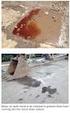 ACTIVITY NAME Training Requirements for Spill Prevention Control and Countermeasures (SPCC) 40 CFR Part 112 Naval Air Station Corpus Christi Texas CY 2014 BOTTOM LINE UP FRONT To prevent oil discharges
Spill Prevention, Control and Countermeasure (SPCC) Rule
 Spill Prevention, Control and Countermeasure (SPCC) Rule Code of Federal Regulations Title 40 CFR Part 112 Training Guide for Oil and Fuel handlers on Farms 1 Purpose of SPCC Rule To prevent oil discharges
Spill Control Prevention Plan (SCPP)
 Spill Control Prevention Plan (SCPP) FACILITY INFORMATION PLEASE PRINT Facility Name: Mailing Address: Physical address if different: Owner Name: Owner Address: Primary Contact Name: Work Phone Number:
SPILL PREVENTION CONTROL AND COUNTERMEASURE PLAN PREPARED FOR: ARKANSAS STATE UNIVERSITY JONESBORO, ARKANSAS ORIGINAL DATE OF PLAN: APRIL 2005
 SPILL PREVENTION CONTROL AND COUNTERMEASURE PLAN PREPARED FOR: ARKANSAS STATE UNIVERSITY JONESBORO, ARKANSAS ORIGINAL DATE OF PLAN: APRIL 2005 DATE OF LAST PLAN AMENDMENT/P.E. CERTIFICATION: MAY 24, 2005
FUELING AND FUEL STORAGE
 FUELING AND FUEL STORAGE BENCHMARK Implement spill prevention measures whenever fuel is handled or stored. Report, minimize, contain and clean up spills that do occur. FUELING BMPS Spills of diesel, oil,
GUIDANCE FOR DEVELOPMENT OF SPILL AND SLUG PREVENTION CONTROL PLANS AND FACILITIES FOR THE CITY OF ATTLEBORO SEWER USERS
 Company Name: Address: The City of Attleboro s Rules and Regulations for the use of Wastewater Facilities require each user to provide protection from accidental discharge of prohibited materials and substances
 Section A SPCC Plan Implementation Checklist This section of the report addresses compliance with certain requirements of Federal Regulations 40 CFR 112. I. STATUS OF SPCC PLAN (40 CFR 112.3) YES NO A.
ALL UST SYSTEMS. MOTOR FUEL, USED OIL, BULK HEATING OIL STORAGE (Federal/State Regulated Systems)
 FACTS ABOUT: UST SYSTEMS COMPLIANCE OUTLINE Maryland Department of the Environment In Maryland, certain UST systems must meet various compliance requirements. The following is a summary of the current
ALLEGANY WIND POWER PROJECT CONSTRUCTION SPILL PREVENTION PLAN
 ALLEGANY WIND POWER PROJECT CONSTRUCTION SPILL PREVENTION PLAN Best Management Practices (BMPs) will be implemented during construction of the Allegany Wind Power Project to prevent and contain spills.
Maryland Containment System Testing Protocol. The individual performing the inspection and testing as outlined in this protocol must be either:
 MARYLAND DEPARTMENT OF THE ENVIRONMENT Oil Control Program, Suite 620, 1800 Washington Blvd., Baltimore MD 21230-1719 4 410-537-3442 410-537-3092 (fax) 1-800-633-6101 http://www.mde.state.md.us Maryland
UDOT SPILL PREVENTION and RESPONSE PLAN for CONSTRUCTION SITES
 UDOT SPILL PREVENTION and RESPONSE PLAN for CONSTRUCTION SITES February 2014 The plan contained in the following pages was developed in part from UDOT Construction Division s Safety and Health Manual,
UPDATE ON MAINE'S UNDERGROUND TANK LAWS
 MAINE OIL DEALERS ASSOCIATION TECHNICAL BULLETIN #6.5 MAINE UNDERGROUND TANK LAW CHANGES September, 1992 [Replaces Technical Bulletin #6.4, issued January, 1992] UPDATE ON MAINE'S UNDERGROUND TANK LAWS
Ethanol-Water Phase Separation White Paper
 Ethanol-Water Phase Separation White Paper Samir Jain Background The use of ethanol as a fuel in the United States has significantly increased over the past decade. Today, greater than 80% of all retail
UNIVERSITY OF WISCONSIN MADISON
 UNIVERSITY OF WISCONSIN MADISON Contractor Spill Contingency Plan (while working on campus) Departments of: Environment, Health & Safety Physical Plant Table of Contents Spill Contingency Plan Most Common
History of the SPCC Rule
 2010 SPCC Training SPCC Rule History of the SPCC Rule The SPCC plan is a document required under the clean water act (CWA) It became effective in 1972 and has changed little in 32 years. The rule was formally
Spill Prevention, Control and Countermeasure (SPCC) Training
 Spill Prevention, Control and Countermeasure (SPCC) Training Fort Jackson 2015 Origins of SPCC Regulatory History 1972 Clean Water Act Oil Pollution Act of 1990 Spill Prevention Control and Countermeasures
Civil Engineering Sector Labour-Management Health and Safety Committee
 PROCEDURE FOR THE STORAGE AND HANDLING OF FUEL ON CONSTRUCTION SITES Civil Engineering Sector Labour-Management Health and Safety Committee July 2008 PROCEDURE FOR THE STORAGE AND HANDLING OF FUEL ON CONSTRUCTION
UST RULES CHANGES. Heather Peters, Environmental Specialist
 UST RULES CHANGES Heather Peters, Environmental Specialist Today s Topic 2011 Rule package- what s left? Upcoming rule changes Federal Regulation Changes & Testing Protocols How are you doing? 2011 Rule
Pesticide Spills. Chapter 26. In This Chapter. Keywords. Accidents. Pesticides Act and Environmental Protection Act
 Chapter 26 Pesticide Spills In This Chapter Keywords Accidents After learning the information in this chapter, you will be able to: 1. Define a spill. 2. Describe when a spill must be reported to the Spills
Farm Fuel Tank Safety Guide
 Farm Fuel Tank Safety Guide This brochure is provided by North Dakota Department of Emergency Services, your Local Emergency Planning Committee, and the State Emergency Response Commission along with assistance
Contractor Signature: Title:
 LITTLETON/ENGLEWOOD WASTEWATER TREATMENT PLANT SPILL PREVENTION, COUNTERMEASURE, CONTROL AND CLEAN-UP DOCUMENT SUBMISSION The Littleton/Englewood Wastewater Treatment Plant (L/EWWTP) requires that all
Good Housekeeping Practices for DPW/Fleet Maintenance Facilities
 Good Housekeeping Practices for DPW/Fleet Maintenance Facilities Kevin P. Walker C&S Engineers, Inc. Best Management Practices Best Management Practices (BMPs) are measures and/or controls used to prevent
Managing Floor Drains and Flammable Traps
 Managing Floor Drains and Flammable Traps Contents: Problem... 1 Solution... 2 Maintenance... 2 Waste Management Options... 2 For More Information... 4 BMP Chart... 5 This fact sheet discusses recommended
APPENDIX O. Spill Prevention and Emergency Response Plan. G3 Terminal Vancouver Port Metro Vancouver Project Permit Application APPENDIX O
 APPENDIX O Spill Prevention and Emergency Response Plan APPENDIX O G3 Terminal Vancouver Port Metro Vancouver Project Permit Application G3 TERMINAL VANCOUVER: PORT METRO VANCOUVER SPILL PREVENTION AND
SOP 4: Spill Response and Cleanup Procedures SOP 4: SPILL RESPONSE AND CLEANUP PROCEDURES
 SOP 4: SPILL RESPONSE AND CLEANUP PROCEDURES Municipalities are responsible for any contaminant spill or release that occurs on property they own or operate. Particular areas of concern include any facilities
Inventory Control for Underground Storage Tanks
 Inventory Control for Underground Storage Tanks Tanks/Underground #3-20 September 2008 M innesota law requires Underground Storage Tank (UST) systems to have leak detection. Inspections conducted nationwide
Risk Assessment Based Environmental Management Systems for Petroleum Retail Stores
 Risk Assessment Based Environmental Management Systems for Petroleum Retail Stores NATO/CCMS Pilot Study Prevention and Remediation In Selected Industrial Sectors: Small Sites in Urban Areas Prof. Cem
DRAFT REVISED 2015. Musts For USTs DRAFT. Printed on Recycled Paper. Updated June 2015
 DRAFT REVISED 2015 Musts For USTs DRAFT Printed on Recycled Paper EPA wrote this booklet for owners and operators of underground storage tanks (USTs). This booklet describes the 2015 revised federal UST
SPILL PREVENTION AND RESPONSE PLAN TEMPLATE FOR BUSINESSES IN DAYTON S SOURCE WATER PROTECTION AREA
 SPILL PREVENTION AND RESPONSE PLAN TEMPLATE FOR BUSINESSES IN DAYTON S SOURCE WATER PROTECTION AREA Regulated Substance Management: All Regulated Substances, including chemical wastes, are to be managed
Underground Storage Tank Operational Compliance Field Guide
 Underground Storage Tank Operational Compliance Field Guide Created April 2012, Reaffirmed April 2015 Bureau of Underground Storage Tank Regulations http://www.com.state.oh.us/fire/default.aspx Department
APPLICATION FOR DRY CLEANERS PROGRAM (THIS APPLICATION IS FOR A CLAIMS MADE POLICY)
 APPLICATION FOR DRY CLEANERS PROGRAM (THIS APPLICATION IS FOR A CLAIMS MADE POLICY) INSTRUCTIONS 1. If space is not sufficient to fully answer the questions, please attach additional pages. 2. This form
CHEMICAL SPILLS. (revised April, 2013)
 CHEMICAL SPILLS (revised April, 2013) A spill is defined as an uncontrolled release of a chemical. Spills can be categorized into two types: 1. Major spills 2. Minor spills Major spills meet these criteria:
COMPLIANCE MANAGEMENT STRATEGIES. Presented by: Megan Kazmierczak, ECS Eclipse
 COMPLIANCE MANAGEMENT STRATEGIES Presented by: Megan Kazmierczak, ECS Eclipse AST vs. UST Compliance requirements Aboveground Storage Tanks (ASTs): Misconception that ASTs are unregulated Most are subject
Northern Region. Underground Storage Tank
 California CUPA Northern Region Presents Underground Storage Tank Designated Operators Workshop Workshop Agenda Definitions Tank Construction Corrosion Protection Spill Prevention Overfill Prevention Piping
Application for the Construction or Installation of Aboveground Storage Tank (AST) Systems or Associated Underground or Over-water Piping Systems
 Page 1 of 5 Application for the Construction or Installation of Aboveground Storage Tank (AST) Systems or Associated Underground or Over-water Piping Systems New Hampshire Department of Environmental Services
The following definitions apply with regard to requirements specified in this document:
 GUIDELINES FOR INSTALLATION OF TEMPORARY AND PERMANENT ABOVEGROUND DIESEL FUEL TANKS FOR EMERGENCY AND STANDBY POWER SYSTEMS LOCATED OUTSIDE OF BUILDINGS For Use by Unidocs Member Agencies or where approved
OREGON FIRE CODE Interpretations and Technical Advisories
 OREGON FIRE CODE Interpretations and Technical Advisories A collaborative service by local and state fire professionals, along with our stakeholders and customers, to provide consistent and concise application
Company Name Chemical Spill Prevention & Clean-up Procedures Program. Last Revised On 00/00/0000
 Company Name Chemical Spill Prevention & Clean-up Procedures Program Last Revised On 00/00/0000 PURPOSE The following program will discuss how prevent chemical spills from occurring and setting forth procedures
Petroleum Storage Tank Compliance 101
 Petroleum Storage Tank Compliance 101 Palm Beach County Board of County Commissioners Department of Environmental Resources Management Petroleum Storage Tank Compliance Section www.pbcgov.com/erm 561-233-2400
SPILL PREVENTION, CONTROL AND COUNTERMEASURE (SPCC) PLAN
 SPILL PREVENTION, CONTROL AND COUNTERMEASURE (SPCC) PLAN DEPARTMENT OF PUBLIC WORKS, New Jersey Prepared by Date This is a sample document and is not to be used as an actual SPCC Plan for the applicable
SPILL PREVENTION, CONTROL AND COUNTERMEASURE PLAN
 SPILL PREVENTION, CONTROL AND COUNTERMEASURE PLAN XXXX FARM (CITY OR COUNTY), MICHIGAN CONTACT (NAME), OWNER CERTIFICATION: I hereby certify that I have examined the facility, and being familiar with the
Safety Manual Title: Spill Prevention & Response Review Date: 6/1/2014
 Operation s Purpose The purpose of this plan is to document spill prevention and response requirements. Each Elkhorn Construction, Inc. jobsite will develop a spill prevention and response plan based on
Waste Oil Collection / Storage
 ENVIRONMENTAL & REGULATORY SERVICES Storage Tank Regulation Section P. O. Box 7837 Madison, Wisconsin 53707-7837 TDD #: (608) 264-8777 http://www.commerce.state.wi.us http://www.wisconsin.gov Jim Doyle,
1. Who is your current pollution carrier? Expiration Date: Premium: Retroactive Date:
 Named Insured: Business Name (include dba if applicable): Mailing Address: Phone Number: County: In Case of Claim: Contact Name: Phone Number: Type of Business: Corporation Individual Partnership L.L.C.
Spill Prevention Control and Countermeasure Plan
 Spill Prevention Control and Countermeasure Plan Boston College Prepared by: Rizzo Associates, Inc. March 5, 1997 Reviewed and Updated by: ENSR International May, 1998 Last Update Boston College January,
Good? Bad? Why? http://uncultured.com/2007/09/20/notre-dame-and-watering-sidewalks/ Training Module 4
 Good? Bad? Why? http://uncultured.com/2007/09/20/notre-dame-and-watering-sidewalks/ Solution Sprinklers should be directed at lawn areas Spraying water on pavement increases runoff Look for more water-efficient
Spill Kits and Incidental Spill Response
 Spill Kits and Incidental Spill Response June 2012 This training is intended to be educational and should not be construed as legal guidance. It is provided as a courtesy to our customers and others who
New York State Department of Environmental Conservation 625 Broadway, Albany, NY 12233 www.dec.ny.gov. Environmental Self Audit For Small Businesses
 New York State Department of Environmental Conservation 625 Broadway, Albany, NY 12233 www.dec.ny.gov Environmental Self Audit For Small Businesses Disclaimer The materials in this document are intended
Pollution Prevention And Best Management Practices For Dry Cleaners Operating In Broward County
 FORWARD In 1991, the Broward County Environmental Protection and Growth Management Department, who was then known as the Department of Natural Resource Protection (DNRP), initiated the development of Pollution
TRAINING SPCC/SWPP Training UGA. Automotive Center. Campus Transit
 SPILL PREVENTION, CONTROL, AND COUNTERMEASURE TRAINING SPCC/SWPP Training UGA STORM WATER Automotive Center POLLUTION Campus Transit PREVENTION PLAN PLAN Goals of SPCC/SWPP Training Introduce facility
DANGER WARNING CAUTION
 Training and Evaluation Outline Report Task Number: 05-2-7502 Task Title: React to a Hazardous Spill Supporting Reference(s): Step Number Reference ID Reference Name Required Primary TM 38-410 STORAGE
PLAN APPLICATION HAZARDOUS MATERIALS USE AND SPILL PREVENTION CONTROL (HMPC) PLAN
 PLAN APPLICATION HAZARDOUS MATERIALS USE AND SPILL PREVENTION CONTROL (HMPC) PLAN A. GENERAL INFORMATION A1. Business Name: Acme Company Street Address: 1000 Stroll St. City: Louisville State: Kentucky
A Guide for Used Oil Transporter Training Programs. Following are excerpts from laws and rules pertaining to Used Oil Transporter Certification
 A Guide for Used Oil Transporter Training Programs Introduction An used oil transporter that transports over public highways more than 500 gallons of used oil annually, not including oily waste, must become
This page left intentionally blank
 1 This page left intentionally blank 2 STATE OF TENNESSEE DEPARTMENT OF ENVIRONMENT AND CONSERVATION DIVISION OF UNDERGROUND STORAGE TANKS TECHNICAL CHAPTER 4.2 SPILL AND OVERFILL PREVENTION EFFECTIVE
Daily Inventory and. Statistical Inventory Analysis. Daily Inventory and Statistical Inventory Analysis (SIA) are inventory control
 Introduction: TankSmart Operator Training Class A/B Operators Training Class C Operators Annual UST System Inspections Record Keeping Spills: Cleanup & Reporting Safety Tanks: Double-Walled w/ Continuous
CHECKLIST FOR INSTALLING OR CONVERTING EQUIPMENT TO DISPENSE E15, E30 E85 AND OTHER BLENDS OF ETHANOL General Information:
 CHECKLIST FOR INSTALLING OR CONVERTING EQUIPMENT TO DISPENSE E15, E30 E85 AND OTHER BLENDS OF ETHANOL General Information: Is your project an equipment conversion, station remodel or new construction?
SPCC. Created by EPA in 1973 under the Clean Water Act. 10/22/2014. Spill Prevention Control & Countermeasure Plan
 SPCC Created by EPA in 1973 under the Clean Water Act. Purpose: To protect the "navigable" waters of the United States, a business or organization must develop a plan that would prevent any pollution from
SPILL RESPONSE PLAN. What is the Issue? Regulatory Requirements. General Information
 An equal opportunity university SPILL RESPONSE PLAN What is the Issue? Accidental spills of petroleum products, common household cleaning products, hazardous materials or hazardous waste, can have negative
A GROUNDWATER PROTECTION PLAN FOR HOME HEATING OIL TANKS
 A GROUNDWATER PROTECTION PLAN FOR HOME HEATING OIL TANKS What is a groundwater protection plan? A groundwater protection plan identifies the activities being conducted that can pollute groundwater and
Sanitary Sewer Overflow Report Form
 Preliminary report Final report Revised final report Sanitary Sewer Overflow Report Form Sanitary Sewer Overflow Sequential Tracking Number: Reported to: Sent Regional Board a fax Left Regional Board a
Spill Prevention, Control, and Countermeasures (SPCC) Course Material
 Introduction Welcome to the Spill Prevention, Control, and Countermeasures (SPCC) Training course. The ultimate goal of this course is to help you recognize the ways you can avoid pollution of the local
STANDARD FOR SECONDARY CONTAINMENT TESTING OF UNDERGROUND STORAGE TANK SYSTEMS I. INTRODUCTION
 SANTA FE SPRINGS DEPARTMENT OF FIRE-RESCUE Environmental Protection Division Certified Unified Program Agency 11300 Greenstone Ave, Santa Fe Springs, CA 90670 Phone (562) 944-9713 Fax (562) 941-1817 STANDARD
ENGINEERED DRAWINGS FOR PETROLEUM STORAGE TANKS
 Facility Name: ENGINEERED DRAWINGS FOR PETROLEUM STORAGE TANKS The following is intended to be used as a guideline for information required to appear on engineered drawings involving petroleum storage
MAINE DEPARTMENT OF ENVIRONMENTAL PROTECTION
 Oxford Hills Bus Garage 36 Brown St, Norway, ME Oil Storage Inspection 2/20/14 CONDITIONS OBSERVED Underground Oil Storage: 12,000 gallon underground oil storage tank (split 10,000 gallon diesel/2,000
Stormwater BMPs: Secondary Containment and Spill Control. September 2012
 Stormwater BMPs: Secondary Containment and Spill Control September 2012 Secondary Containment Secondary Containment Helps to minimize the potential for pollution by: Keeping spills in a confined area Preventing
CHAPTER 62-740 PETROLEUM CONTACT WATER
 CHAPTER 62-740 PETROLEUM CONTACT WATER 62-740.010 Declaration of Intent (Repealed) 62-740.020 Applicability 62-740.030 Definitions 62-740.040 General 62-740.100 Management Practices for Producers of PCW
Extraction Oil and Gas, LLC. Diamond Valley Central Oil Terminal Waste Management Plan
 Extraction Oil and Gas, LLC. Diamond Valley Central Oil Terminal Waste Management Plan Scope: This Extraction Oil and Gas Waste Management Plan has been prepared to provide operations personnel at the
Welcome UST Owners & Operators!!
 Welcome UST Owners & Operators!! Underground Storage Tank Owner & Operator Workshop Presented By: Kern County Environmental Health CUPA Kern County Environmental Health Phone: (661) 862-8740 Email: [email protected]
AOP:008.8. Storage, Transportation, Decontamination, and Spill Containment of Lampricides and Lampricide Application Equipment
 AOP:008.8 Storage, Transportation, Decontamination, and Spill Containment of Lampricides and Lampricide Application Equipment AOP:008.8 January 29, 2014 U.S. Fish and Wildlife Service Marquette Biological
Statistical Inventory Reconciliation for Underground Storage Tank Systems
 Statistical Inventory Reconciliation for Underground Storage Tank Systems Tanks/Underground #3.26 August 2010 Minnesota law requires Underground Storage Tank (UST) systems, including tanks and piping,
CITY OF WASHINGTON SPILL PREVENTION, CONTROL AND COUNTERMEASURE PLAN
 CITY OF WASHINGTON SPILL PREVENTION, CONTROL AND COUNTERMEASURE PLAN Adopted October 5, 2009 Table of Contents Chapter Description Page 1 Facility Descriptions... 3 1.1 Municipal Power Plant, 1001 Park
Fact sheet 6: for farmers
 Fact sheet 6: for farmers Fuel Oil Storage February 2011 Are you planning to substantially alter your fuel oil store, or add a new one? If so, this fact sheet will help you meet the requirements of The
The Fuel Storage Tank Regulations 2009
 The Fuel Storage Tank Regulations 2009 October 2009 ED/RO1/015 The Fuel Storage Tank Regulations Issued by: The Regulation and Supervision Bureau for the water, wastewater and electricity sector in the
Fuel Tanker Online Content Monitoring. Petroleum Products Real Time! Solution for Modern Businesses
 Fuel Tanker Online Content Monitoring Petroleum Products Real Time! Solution for Modern Businesses TRACK your Trucks From Loading to Discharge... Benefits: Systems Fuel offers a complete line of tank monitoring
ADMINISTRATIVE SERVICES MANUAL
 Purpose Responsibilities Proper Storage and use of flammable liquids can significantly reduce the possibility of accidental fires and injuries. To minimize risk to life and properly, the requirements of
for Gary Hughes GARY HUGHES SELF SERVICE LLC State of Missouri ID: ST 3004261
 SPILL PREVENTION CONTROL & COUNTERMEASURE (SPCC) PLAN for Gary Hughes GARY HUGHES SELF SERVICE LLC State of Missouri ID: ST 3004261 Reporting conditions as of January 1, 2005 TABLE OF CONTENTS Subpart
SPILL PREVENTION, CONTROL AND COUNTERMEASURE PLAN. for the PIÑON RIDGE MILL 16910 HIGHWAY 90 BEDROCK, COLORADO 81411. Prepared by:
 SPILL PREVENTION, CONTROL AND COUNTERMEASURE PLAN for the PIÑON RIDGE MILL 16910 HIGHWAY 90 BEDROCK, COLORADO 81411 Prepared by: ENERGY FUELS RESOURCES CORPORATION September 2009 SPILL PREVENTION, CONTROL,
Clean Water: Supply side potable water, not wastewater. Gray Water/Sewage: Wastewater originating from a drain (sink, toilet, urinal).
 Procedures for Emergency Responses to Flooding and Building Water Intrusion PURPOSE: To establish uniform, sanitary, and systematic procedures for responding to flooding and water intrusion emergencies.
DIRECTIVE 055: STORAGE REQUIREMENTS FOR THE UPSTREAM PETROLEUM INDUSTRY. August 2012
 DIRECTIVE 055: STORAGE REQUIREMENTS FOR THE UPSTREAM PETROLEUM INDUSTRY August 2012 SECTION 2 The storage requirements in Directive 055 apply to upstream petroleum facilities, well sites, and pipelines
UNDERGROUND STORAGE TANK SYSTEM CLOSURE REPORT FORM
 APPENDIX D COMMONWEALTH OF PENNSYLVANIA DEPARTMENT OF ENVIRONMENTAL PROTECTION BUREAU OF ENVIRONMENTAL CLEANUP AND BROWNFIELDS UNDERGROUND STORAGE TANK SYSTEM CLOSURE REPORT FORM - Facility I.D. Facility
MOTOR FUEL DISPENSING SAFETY
 STRATEGIC OUTCOMES PRACTICE TECHNICAL ADVISORY BULLETIN January 2010 MOTOR FUEL DISPENSING SAFETY Fire! Not an alarm anyone wants to hear, especially not when the fire is burning at a major fuel source.
Technical Requirements for Aboveground Storage Tanks (ASTs) Storing Class IIIB Liquids (other than used oil)
 Technical Requirements for Aboveground Storage Tanks (ASTs) Storing Class IIIB Liquids (other than used oil) References: Comm 10 2009 EDITION / NFPA 30 2008 EDITION ITEM DESCRIPTION Comm 10 / NFPA General