
Welcome UST Owners & Operators!!
|
|
|
- Lynne Evans
- 10 years ago
- Views:
Transcription
1 Welcome UST Owners & Operators!! Underground Storage Tank Owner & Operator Workshop Presented By: Kern County Environmental Health CUPA

2 Kern County Environmental Health Phone: (661)

3 Items of Agenda Definitions of Levels of Responsibilities Owner/Operator Responsibilities Designated Operator Responsibilities Designated Operator Binder Facility Information Form Tank Information Form Monitoring Procedure Plan Emergency Response Plan Certificate of Financial Responsibility Hazardous Materials Business Plan Training UST Monitoring Site Plan Owner/Operator Agreement Required Testing and their frequencies Daily Logs Record Retention - Minor, Class II, Class I Violations; Red Tag - Enforcement Process- Administrative Enforcement Order (AEO) - CERS - Questions & Answers

4 Mandate In 1999, the Legislature Required SWRCB to Adopt Regulations Requiring Training For: Owners and Operators Service Technicians Installers and Inspectors...meet minimum industry-established training standards Health and Safety Code, Chapter 6.7,Section (a)(4)(A)(i)

5 Levels of Responsibilities Defined UST Owner or Operator Holds the UST operating permit, and is legally responsible for the UST system Designated UST Operator Has knowledge of UST laws, regulations, and management practices, and has obtained ICC certification Facility Employee Works with the UST system on a routine basis, and is trained by UST Designated Operator

6 Responsibilities of an Owner / Operator All UST Owners & Operators must: Be registered with the appropriate regulatory authority (CERS), and meet leak detection requirements. In addition owners and operators must: Meet Financial Responsibility requirements Perform a site check and corrective action in response to leaks, spills and overfills Follow regulatory rules during installation of new tanks and closure of existing tanks Maintain records as required Have periodic checks performed on corrosion protection and leak detection systems put forth by the state and local authorities that implement the UST program

7 Responsibilities of an Owner / Operator Statement of Compliance California Code of Regulations, Title 23, Section 2715(a) Owner understands, and is in compliance with, all applicable UST requirements Designated UST Operator name and contact information are to be submitted to the local agency or upload into CERS whenever there is a change of Owner or Designated Operator

8 Regulatory Definition: Designated UST Operator Designated UST Operator: One or more individuals designated by the owner to have responsibility for training facility employees and conducting monthly visual inspections at an UST facility. A Designated UST Operator is not considered the Operator, although the same individual may hold both positions. California Code of Regulations, Title 23, Section 2611

9 Requirements of a D.O. Effective January 1, 2005 Possess a current California UST System Operator certification issued by the International Code Council (ICC) Certification must be renewed every 2 years Perform monthly visual inspections for each facility and maintain a log Provide on-the-job training for facility employee(s) and re-train every 12 months New employees must receive training within 30 days of hire

10 Monthly Visual Inspection Review alarm history for previous month, and check that each alarm was responded to appropriately Inspect spill containers and under dispenser containment for water, debris, and hazardous substances (fuel) Check that monitoring equipment in under dispenser containment is located in the upright position at the lowest point to detect a leak Check sumps if in alarm

11 Monthly Visual Inspection Inspection of tank-top sumps is required ONLY when there has been an alarm in that sump within the last month, and there is no record of a service visit If sump inspection is required, check for: water, debris, hazardous substance (fuel) in the sump monitoring equipment in the upright position at the lowest point

12 Monthly Visual Inspection Check that all required testing and maintenance for the UST has been completed Examples include annual monitoring system certification, tightness testing, secondary containment testing (SB 989), ELD, cathodic protection testing, monthly ATG test required for single walled tanks to detect a 0.2 gph leak rate, single wall tank interior lining, line leak detector test, etc. Verify that facility employees have been trained as required

13 Recording the Monthly Inspection Inspection results must be recorded, and a copy given to the UST Owner The UST owner must maintain monthly inspection records for at least 12 months The Designated Operator must notify the Owner/Operator of any conditions that require followup action It is the OWNER/OPERATOR s responsibility to make any repairs, clean-ups, or schedule testings.

14 Binder Recommendations Maintain all records onsite

15 Forms Facility & Tank Registration Forms

16 Forms Monitoring Procedure Plan - Must be filled out and complete - One plan per tank/product (i.e. split tanks) - Plans are to be submitted and approved by Local Agency - Resubmit plan after any modifications or changes

17 Forms Emergency Response Plan - Must be filled out and complete - Must be uploaded into CERS

18 Forms Certificate of Financial Responsibility - Letter from Chief Financial Officer included if necessary

19 Hazardous Materials Business Plan Forms Hazardous Materials Business Plan Updated Annually (CERS)

20 Facility Employee Training Training must be provided by a Designated UST Operator (Training cannot be delegated) Training should be provided to at least one employee per shift A list of trained employees must be maintained on-site, and must be provided to the local agency upon request Employees are to be retrained annually New employees are to be trained within 30 days of hire

21 Training to Include Emergency Procedures as indicated in Emergency Response Plan Employee s responsibilities regarding spill/overfill response and notification Emergency shut-off locations and procedures Employee s responsibilities regarding monitoring equipment and alarm response according to best management practices
22 UST Monitoring Site Plan Must include and depict: USTs Piping Line leak detectors Sensors (annular space, sumps, UDCs, etc.) Tank level monitors Monitors Dispensers Spill containers Emergency shut-off
23 Good UST Site Plan
24 Bad UST Site Plan
25 Owner / Operator Agreement Owner of the UST(s) must enter into a written contract with the Operator Monitor the UST(s) according to Permit to Operate, Monitoring Procedure Plan, Emergency Response Plan Maintain appropriate records as required by Permit to Operate Implement all reporting procedures as required by the Permit to Operate
26 Testing Frequencies Annual Monitoring Certification Annually Secondary containment testing (SB989) 6 months after initial installation and every 3 yrs afterwards. Line test single wall vs. double wall Tank Integrity test Single wall tank lining integrity test 10 years and then every 5 years Cathodic protection system testing 3 years + 60 day logs Enhanced Leak Detection
27 Daily logs Check panel daily Record any alarms Walk around facility and check for unusual conditions (spills, damage, etc.)
28 Alarm/repair log If alarm recorded on Daily inspection log, it must be recorded on here as well Inventory warnings are not required to be recorded Be sure to note the response to alarm or repair
29 Record Retention Monitor Certifications & SB989 tests 3 years Monthly D.O. reports 12 months Cathodic protection tests 6 ½ years Modifications and/or repairs Life Training Documentation 1-2 years
30 Violation Classification Minor Class II Class I
31 Minor Violations Health and Safety Code, Section Examples of Minor Violations: Failure to update or submit complete tank and facility forms No maintenance and monitoring records on site Training records not onsite
32 Class II Violations Health and Safety Code, Section Examples of Class II Violations: Failure to document a recordable release Mechanical monitoring device within the UST system is not operational A device to remove liquid from the spill bucket is not available/functional Timely repairs were not made following a failed secondary containment test Owner/Operator did not designate an ICC certified Designated Operator Owner/Operator does not have monthly inspection records
33 Class I Violations Health and Safety Code, Section Examples of Class I Violations: Tampering with monitoring equipment Failure to repair nonfunctional monitoring equipment Failure to report an unauthorized release. Failure to repair secondary containment Failure to complete/pass secondary containment testing Failure to properly close a UST Failure to complete Annual Monitoring Certification
34 Red Tag Authority CCR Title 23, Division 3, Chapter 16, Underground Tank Regulations Article 10.5 Upon the discovery of a significant violation that poses an imminent threat to human health, safety, or the environment, immediately affix a red tag to the fill pipe to provide notice that the delivery of petroleum into the UST system is prohibited
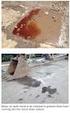
35 What s wrong with these?
36 ???
37 ???
38 ???
39 ???
40 ???
41 ???
42 ???
43 ???
44 ???
45 ENFORCEMENT PROCESS Violations noted during Routine Inspection Notice of Violation (NOV) and Order to Correct Issuance of an Administrative Enforcement Order (AEO) Referral to District Attorney
46 CERS California Environmental Reporting System A statewide, web-based system Supports businesses and Unified Program Agencies with electronically reporting, collecting, and managing hazardous materials-related data Mandated by the California Health and Safety Code and AB 2286
47 CERS CERS Reporting Requirements HMIS Must be verified annually, but on the third year would be resubmitted as part of the HMBP
48 CERS 12 submittal elements Facility information (business activities and owner/operator information) Hazardous materials inventory & map Emergency response and training plans Underground storage tanks (USTs) Onsite hazardous waste treatment notification Recyclable materials report Remote waste consolidation annual notification Hazardous waste tank closure certification Aboveground petroleum storage tanks (ASTs) California Accidental Release Program (CalARP)
49
Northern Region. Underground Storage Tank
 California CUPA Northern Region Presents Underground Storage Tank Designated Operators Workshop Workshop Agenda Definitions Tank Construction Corrosion Protection Spill Prevention Overfill Prevention Piping
Secondary Containment Testing Report Form
 Secondary Containment Testing Report Form This form is intended for use by contractors performing periodic testing of UST secondary containment systems. Use the appropriate pages of this form to report
UST RULES CHANGES. Heather Peters, Environmental Specialist
 UST RULES CHANGES Heather Peters, Environmental Specialist Today s Topic 2011 Rule package- what s left? Upcoming rule changes Federal Regulation Changes & Testing Protocols How are you doing? 2011 Rule
UST Regulatory Compliance Inspection Training. State Water Resources Control Board Underground Storage Tank Program September 2004
 UST Regulatory Compliance Inspection Training State Water Resources Control Board Underground Storage Tank Program September 2004 Disclaimer The material provided herein is not comprehensive of Chapter
COMPLIANCE MANAGEMENT STRATEGIES. Presented by: Megan Kazmierczak, ECS Eclipse
 COMPLIANCE MANAGEMENT STRATEGIES Presented by: Megan Kazmierczak, ECS Eclipse AST vs. UST Compliance requirements Aboveground Storage Tanks (ASTs): Misconception that ASTs are unregulated Most are subject
Underground Storage Tank Operational Compliance Field Guide
 Underground Storage Tank Operational Compliance Field Guide Created April 2012, Reaffirmed April 2015 Bureau of Underground Storage Tank Regulations http://www.com.state.oh.us/fire/default.aspx Department
Petroleum Storage Tank Compliance 101
 Petroleum Storage Tank Compliance 101 Palm Beach County Board of County Commissioners Department of Environmental Resources Management Petroleum Storage Tank Compliance Section www.pbcgov.com/erm 561-233-2400
STANDARD FOR SECONDARY CONTAINMENT TESTING OF UNDERGROUND STORAGE TANK SYSTEMS I. INTRODUCTION
 SANTA FE SPRINGS DEPARTMENT OF FIRE-RESCUE Environmental Protection Division Certified Unified Program Agency 11300 Greenstone Ave, Santa Fe Springs, CA 90670 Phone (562) 944-9713 Fax (562) 941-1817 STANDARD
UST Site Inspection Guidance Document
 UST Site Inspection Guidance Document September 2004 Publication No. 04-09-089 UST Site Inspection Guidance Document Prepared by: Washington State Department of Ecology Toxics Cleanup Program September
Spill Containment Device and Containment Sump Testing Protocols. Introduction
 Department of Natural Resources and Environmental Control Tank Management Branch 391 Lukens Drive New Castle, DE 19720 (302) 395-2500 (Phone) (302) 395-2555 (Fax) http://www.dnrec.state.de.us/dnrec2000/divisions/awm/ust
Spill Prevention, Control and Countermeasure (SPCC) Rule
 Spill Prevention, Control and Countermeasure (SPCC) Rule Code of Federal Regulations Title 40 CFR Part 112 Training Guide for Oil and Fuel handlers on Farms 1 Purpose of SPCC Rule To prevent oil discharges
PMMIC 2013 Inspection Findings. Brian Pottebaum Rounds & Associates/PMMIC
 2013 Inspection Findings Brian Pottebaum Rounds & Associates/ 2013 Top Ten Deficiencies Cited 1. Liquid/Debris in Spill Containment 2. Insufficient Secondary Containment (Piping Sump) 3. Insufficient Secondary
ALL UST SYSTEMS. MOTOR FUEL, USED OIL, BULK HEATING OIL STORAGE (Federal/State Regulated Systems)
 FACTS ABOUT: UST SYSTEMS COMPLIANCE OUTLINE Maryland Department of the Environment In Maryland, certain UST systems must meet various compliance requirements. The following is a summary of the current
Secondary Containment & Spill Buckets Inspection, Testing, and Repair Solutions. Allen Porter May 28, 2015
 Secondary Containment & Spill Buckets Inspection, Testing, and Repair Solutions Allen Porter May 28, 2015 Welcome and overview Introduction Tanknology Proposed Revisions to Federal Regulations Testing
AUTOMATIC TANK GAUGING SYSTEMS Achieving Compliance. John D. Sieger, Tanknology
 AUTOMATIC TANK GAUGING SYSTEMS Achieving Compliance John D. Sieger, Tanknology The Objective: Monitor the Tanks & Piping Systems for leaks TANK GAUGING SYSTEM BRANDS DOUBLE WALL STEEL TANK MONITORING DOUBLE
DRAFT REVISED 2015. Musts For USTs DRAFT. Printed on Recycled Paper. Updated June 2015
 DRAFT REVISED 2015 Musts For USTs DRAFT Printed on Recycled Paper EPA wrote this booklet for owners and operators of underground storage tanks (USTs). This booklet describes the 2015 revised federal UST
 Section A SPCC Plan Implementation Checklist This section of the report addresses compliance with certain requirements of Federal Regulations 40 CFR 112. I. STATUS OF SPCC PLAN (40 CFR 112.3) YES NO A.
Application for the Construction or Installation of Aboveground Storage Tank (AST) Systems or Associated Underground or Over-water Piping Systems
 Page 1 of 5 Application for the Construction or Installation of Aboveground Storage Tank (AST) Systems or Associated Underground or Over-water Piping Systems New Hampshire Department of Environmental Services
Frequent Mishaps and Solutions with Regulated Aboveground Storage Tanks in Pennsylvania
 Frequent Mishaps and Solutions with Regulated Aboveground Storage Tanks in Pennsylvania NISTM 4 th Annual Pennsylvania Storage Tank Conference April 25, 2013 Overview Common regulated ASTs missed Performance
Spill Control Prevention Plan (SCPP)
 Spill Control Prevention Plan (SCPP) FACILITY INFORMATION PLEASE PRINT Facility Name: Mailing Address: Physical address if different: Owner Name: Owner Address: Primary Contact Name: Work Phone Number:
ACTIVITY NAME. Training Requirements for Spill Prevention Control and Countermeasures (SPCC) 40 CFR Part 112 Naval Air Station Corpus Christi Texas
 ACTIVITY NAME Training Requirements for Spill Prevention Control and Countermeasures (SPCC) 40 CFR Part 112 Naval Air Station Corpus Christi Texas CY 2014 BOTTOM LINE UP FRONT To prevent oil discharges
Storage Tank Systems for Petroleum products and allied petroleum products regulations
 Storage Tank Systems for Petroleum products and allied petroleum products regulations Information Session for: BC MoE Workshop: Update on Contaminated Sites in BC Jim Sheehan Environment Canada February
Tanks: What's in store?
 Tanks: What's in store? Technical and regulatory developments in tank construction prompt changes; operations and maintenance receive greater emphasis. Chemical Processing magazine By Wayne Geyer Tanks
This page left intentionally blank
 1 This page left intentionally blank 2 STATE OF TENNESSEE DEPARTMENT OF ENVIRONMENT AND CONSERVATION DIVISION OF UNDERGROUND STORAGE TANKS TECHNICAL CHAPTER 4.2 SPILL AND OVERFILL PREVENTION EFFECTIVE
FACILITY ENVIRONMENTAL COMPLIANCE
 FACILITY ENVIRONMENTAL COMPLIANCE 2014 TxDOT Environmental Conference 2014 TxDOT Environmental Conference 2014 TxDOT Environmental Conference Table of Contents 1 Introduction 1 2 Facility Environmental
September 2008 AFC 4.6.2.1.(2) Page 1 of 5. Maximum Size and Aggregate Capacities of Aboveground Storage Tank Systems at Fuel Dispensing Stations
 FIRE CODE VARIANCE September 2008 AFC 4.6.2.1.(2) Page 1 of 5 ISSUE Maximum Size and Aggregate Capacities of Aboveground Storage Tank Systems at Fuel Dispensing Stations The Alberta Fire Code (AFC) limits
1. Who is your current pollution carrier? Expiration Date: Premium: Retroactive Date:
 Named Insured: Business Name (include dba if applicable): Mailing Address: Phone Number: County: In Case of Claim: Contact Name: Phone Number: Type of Business: Corporation Individual Partnership L.L.C.
UPDATE ON MAINE'S UNDERGROUND TANK LAWS
 MAINE OIL DEALERS ASSOCIATION TECHNICAL BULLETIN #6.5 MAINE UNDERGROUND TANK LAW CHANGES September, 1992 [Replaces Technical Bulletin #6.4, issued January, 1992] UPDATE ON MAINE'S UNDERGROUND TANK LAWS
Operation, Maintenance, and Inspection of UST System Release Detection and Prevention Equipment
 Operation, Maintenance, and Inspection of UST System Release Detection and Prevention Equipment Objectives Raise awareness of remote monitoring systems capabilities o Methods of connections to ATGs o Difference
Brian Derge Tanknology Inc. February 26, 2015
 Secondary Containment & Spill Buckets Inspection, Testing, and Repair Solutions Brian Derge Tanknology Inc. February 26, 2015 Welcome Introduction Tanknology Proposed Revisions to Federal Regulations Testing
MAINE DEPARTMENT OF ENVIRONMENTAL PROTECTION
 Oxford Hills Bus Garage 36 Brown St, Norway, ME Oil Storage Inspection 2/20/14 CONDITIONS OBSERVED Underground Oil Storage: 12,000 gallon underground oil storage tank (split 10,000 gallon diesel/2,000
HAZARDOUS MATERIALS BUSINESS PLAN (HMBP)
 ALAMEDA COUNTY DEPARTMENT OF ENVIRONMENTAL HEALTH 1131 HARBOR BAY PARKWAY, ALAMEDA, CA 94502 PHONE (510) 567-6702 FAX (510) 337-9335 HAZARDOUS MATERIALS BUSINESS PLAN (HMBP) Joint Bioenergy Institute (JBEI).
Maryland Containment System Testing Protocol. The individual performing the inspection and testing as outlined in this protocol must be either:
 MARYLAND DEPARTMENT OF THE ENVIRONMENT Oil Control Program, Suite 620, 1800 Washington Blvd., Baltimore MD 21230-1719 4 410-537-3442 410-537-3092 (fax) 1-800-633-6101 http://www.mde.state.md.us Maryland
HAZARDOUS MATERIALS BUSINESS PLAN Authority Cited: Ch. 6.95 HSC; Title 19, Div. 2, CCR; Title 22, Div. 4.5, CCR
 Certified Unified Program Agency County of Marin Waste Management Division P.O. Box 4186, San Rafael, CA 94913-4186 899 Northgate Drive, Suite 100, San Rafael, CA 94903 PHONE: (415) 473-6647 FAX: (415)
Waste Oil Collection / Storage
 ENVIRONMENTAL & REGULATORY SERVICES Storage Tank Regulation Section P. O. Box 7837 Madison, Wisconsin 53707-7837 TDD #: (608) 264-8777 http://www.commerce.state.wi.us http://www.wisconsin.gov Jim Doyle,
Bulk Storage Program. Cornell University 8/22/2014
 Cornell University 8/22/2014 Written Program Table of Contents 1. Introduction... 2 2. Definitions... 2 3. Roles and Responsibilities... 3 3.1. EHS... 3 3.2. College/Unit... 3 4. Regulatory and Operational
Petroleum Storage Tank Spill and Overfill Prevention
 TCEQ REGULATORY GUIDANCE Small Business and Environmental Assistance Division RG-475e Revised April 2011 Introduction Petroleum Storage Tank Spill and Overfill Prevention A guide for owners and operators
OIL STORAGE REQUIREMENTS OF THE SPCC REGULATIONS. Christopher J. Ecsedy, P.E. Fuss & O'Neill, Inc. 146 Hartford Road Manchester, CT 06040
 ABSTRACT OIL STORAGE REQUIREMENTS OF THE SPCC REGULATIONS Christopher J. Ecsedy, P.E. Fuss & O'Neill, Inc. 146 Hartford Road Manchester, CT 06040 The SPCC regulations entail numerous requirements for the
4.7 HAZARDS AND HAZARDOUS MATERIALS
 LSA ASSOCIATES, INC. MARCH 2008 FINAL ENVIRONMENTAL IMPACT REPORT YUCCA VALLEY RETAIL SPECIFIC PLAN The State defines hazardous material as any material that, because of its quantity, concentration, or
District of Columbia Municipal Regulations UNDERGROUND STORAGE TANKS: GENERAL PROVISIONS 5500 COMPLIANCE WITH OTHER DISTRICT LAWS
 CHAPTER 55 UNDERGROUND STORAGE TANKS: GENERAL PROVISIONS Section 5500 Compliance with Other District Laws 5501 Applicability of UST Regulations 5502 Partial Applicability of UST Regulations to Particular
Safety Manual Title: Spill Prevention & Response Review Date: 6/1/2014
 Operation s Purpose The purpose of this plan is to document spill prevention and response requirements. Each Elkhorn Construction, Inc. jobsite will develop a spill prevention and response plan based on
General Fire Code Requirements Within Commercial Tenant Spaces
 FIRE DEPARTMENT in cooperation with Scope: General Fire Code Requirements Within Commercial Tenant Spaces This handout is designed to assist owners, architects, contractors and others in understanding
Daily Inventory and. Statistical Inventory Analysis. Daily Inventory and Statistical Inventory Analysis (SIA) are inventory control
 Introduction: TankSmart Operator Training Class A/B Operators Training Class C Operators Annual UST System Inspections Record Keeping Spills: Cleanup & Reporting Safety Tanks: Double-Walled w/ Continuous
4.7.2 Regulatory Framework
 CHAPTER 4 Environmental Analysis in the environment, can cause various human health effects, including liver injury, irritation of the skin and mucous membranes, and adverse reproductive effects. PCBs
Pollution Prevention And Best Management Practices For Dry Cleaners Operating In Broward County
 FORWARD In 1991, the Broward County Environmental Protection and Growth Management Department, who was then known as the Department of Natural Resource Protection (DNRP), initiated the development of Pollution
The following definitions apply with regard to requirements specified in this document:
 GUIDELINES FOR INSTALLATION OF TEMPORARY AND PERMANENT ABOVEGROUND DIESEL FUEL TANKS FOR EMERGENCY AND STANDBY POWER SYSTEMS LOCATED OUTSIDE OF BUILDINGS For Use by Unidocs Member Agencies or where approved
HAZARDOUS MATERIALS BUSINESS PLAN (HMBP)
 ALAMEDA COUNTY DEPARTMENT OF ENVIRONMENTAL HEALTH 1131 HARBOR BAY PARKWAY, ALAMEDA, CA 94502 PHONE (510) 567-6700 FAX (510) 337-9335 HAZARDOUS MATERIALS BUSINESS PLAN (HMBP) FACILITY NAME FACILITY SITE
The Future is Now: UST Technology Trends
 The Future is Now: UST Technology Trends NTC 2015 Pre-Conference Workshop September 13, 2015 1:00-3:00 PM Agenda Session & Speaker Introductions Steve Reuter, P.G., C.P.G., Geologist Manager New Mexico
Good Housekeeping Practices for DPW/Fleet Maintenance Facilities
 Good Housekeeping Practices for DPW/Fleet Maintenance Facilities Kevin P. Walker C&S Engineers, Inc. Best Management Practices Best Management Practices (BMPs) are measures and/or controls used to prevent
BUSINESS EMERGENCY/CONTINGENCY PLAN COVER SHEET
 BUSINESS EMERGENCY/CONTINGENCY PLAN COVER SHEET I. IDENTIFICATION For Dept Use Only Log In/Date Stamp FACILITY ID # F A 1 2 3 4 5 6 7 BUSINESS NAME (Same as FACILITY NAME or DBA) 3 CUPA Automotive Repair
LEHMAN COLLEGE: DEPARTMENTAL RETENTION SCHEDULE 11/18/2013 ENVIRONMENTAL HEALTH & SAFETY. Report and recommendation resulting from investigation
 EHS-1 EPA Audit Records-- Internal investigation or non-fiscal audit records for audits overseen by CUNY Central Office Report and recommendation resulting from investigation Background materials and supporting
The following definitions apply with regard to requirements specified in this document:
 GUIDELINES FOR INSTALLATION OF TEMPORARY AND PERMANENT ABOVEGROUND DIESEL FUEL TANKS FOR EMERGENCY AND STANDBY POWER SYSTEMS LOCATED OUTSIDE OF BUILDINGS For Use by Unidocs Member Agencies or where approved
HAZARDOUS MATERIALS BUSINESS PLAN
 HAZARDOUS MATERIALS BUSINESS PLAN For use by Unidocs Member Agencies or where approved by your Local Jurisdiction Authority Cited: Ch. 6.95 HSC; Title 19, Div. 2, CCR; Title 22, Div. 4.5, CCR All facilities
Model Plan for Auto Repair / Maintenance Facilities
 Fresno County Department of Community Health - Environmental Health Division Certified Unified Program Agency (CUPA) Hazardous s Program 1221 Fulton Mall, P.O. Box 11867, Fresno, California 93775 (559)
Spill Prevention, Control and Countermeasure (SPCC)
 Spill Prevention, Control and Countermeasure (SPCC) History Original promulgation 1973, effective 1974 Codified in 40 CFR 112 (EPA Jurisdiction) Proposed rulemaking 1991, 1993 and 1997 Amended July 17,
UNIFIED PROGRAM (UP) FORMS
 UNIFIED PROGRAM (UP) FORMS This sample consolidated Contingency Plan and Inventory is provided to assist small businesses in accurately completing the Unified Program Forms. The consolidated Contingency
Petroleum Tanks at Municipal Facilities
 January/February 2013 Petroleum Tanks at Municipal Facilities This document was reprinted with permission from the New York Association of Towns Talk of the Towns/Topics magazine January/February 2013
CHAPTER 62-740 PETROLEUM CONTACT WATER
 CHAPTER 62-740 PETROLEUM CONTACT WATER 62-740.010 Declaration of Intent (Repealed) 62-740.020 Applicability 62-740.030 Definitions 62-740.040 General 62-740.100 Management Practices for Producers of PCW
DIRECTIVE 055: STORAGE REQUIREMENTS FOR THE UPSTREAM PETROLEUM INDUSTRY. August 2012
 DIRECTIVE 055: STORAGE REQUIREMENTS FOR THE UPSTREAM PETROLEUM INDUSTRY August 2012 SECTION 2 The storage requirements in Directive 055 apply to upstream petroleum facilities, well sites, and pipelines
Storage Tank Guidance for Real Estate Professionals
 MARYLAND DEPARTMENT OF THE ENVIRONMENT Land Management Administration Oil Control Program 1800 Washington Boulevard Suite 620 Baltimore Maryland 21230-1719 410-537-3442 800-633-6101 x3442 www.mde.state.md.us
Civil Engineering Sector Labour-Management Health and Safety Committee
 PROCEDURE FOR THE STORAGE AND HANDLING OF FUEL ON CONSTRUCTION SITES Civil Engineering Sector Labour-Management Health and Safety Committee July 2008 PROCEDURE FOR THE STORAGE AND HANDLING OF FUEL ON CONSTRUCTION
NEW JERSEY SMALL BUSINESS ENVIRONMENTAL ASSISTANCE PROGRAM. New Jersey Fuel Dispensing Facilities Compliance Calendar
 NEW JERSEY SMALL BUSINESS ENVIRONMENTAL ASSISTANCE PROGRAM New Jersey Fuel Dispensing Facilities Compliance Calendar 2016 Welcome The New Jersey Small Business Environmental Assistance Program developed
FUELING AND FUEL STORAGE
 FUELING AND FUEL STORAGE BENCHMARK Implement spill prevention measures whenever fuel is handled or stored. Report, minimize, contain and clean up spills that do occur. FUELING BMPS Spills of diesel, oil,
City of Bakersfield Public Works Department Sewer System Management Plan December 2014
 City of Bakersfield Public Works Department Sewer System Management Plan December 2014 C:\Users\hmayberry\Desktop\SEWER SYSTEM MANAGEMENT PLAN 2014.doc 1 Sewer System Management Plan Index: Section 1 Goals
GUIDANCE FOR DEVELOPMENT OF SPILL AND SLUG PREVENTION CONTROL PLANS AND FACILITIES FOR THE CITY OF ATTLEBORO SEWER USERS
 Company Name: Address: The City of Attleboro s Rules and Regulations for the use of Wastewater Facilities require each user to provide protection from accidental discharge of prohibited materials and substances
OVERVIEW SCOPE DEFINITIONS
 Procedure No 400.10 Subject: Fire Protection Impairment Program Reference: NFPA (see bottom of page 5) Effective Date: March 2008 Distribution All Employees Review Date: April 2008 Purpose: To establish
Agenda Item 16 Compilation of States Above-Ground Storage Tank Programs and Regulations
 Agenda Item 16 Compilation of States Above-Ground Storage Tank Programs and Regulations 207 TH TECHNICAL COMMITTEE MEETING FEBRUARY 11-12, 2015 INFORMATIONAL ITEM STEVE BRAUN Recent News January 9 th,
Storage Tank Facility Registration Form
 Florida Department of Environmental Protection Twin Towers Office Bldg.! 2600 Blair Stone Road! Tallahassee, Florida 32399-2400 Storage Tank Facility Registration Form DEP Form # 62-761.900(2) Form Title
Straight Talk On Tanks Leak Detection Methods For Petroleum Underground Storage Tanks And Piping
 Straight Talk On Tanks Leak Detection Methods For Petroleum Underground Storage Tanks And Piping Printed on Recycled Paper Contents Do You Have Questions About Leak Detection?...1 An Overview Of Leak Detection
Outdoor Storage of Raw Materials SC-33
 Objectives Cover Contain Educate Reduce/Minimize Description Raw materials, by-products, finished products, containers, and material storage areas exposed to rain and/or runoff can pollute stormwater.
The Fuel Storage Tank Regulations 2009
 The Fuel Storage Tank Regulations 2009 October 2009 ED/RO1/015 The Fuel Storage Tank Regulations Issued by: The Regulation and Supervision Bureau for the water, wastewater and electricity sector in the
Underground Storage Tanks
 Underground Storage Tanks An Informational and Guidance Document for the University Community. Please contact Yale Environmental Health and Safety for latest Regulatory Requirements. A typical UST installation
Steel Tank Institute AST Inspections. Dana Schmidt, PE STI/SPFA
 Steel Tank Institute AST Inspections Dana Schmidt, PE STI/SPFA Agenda Brief review of SPCC Rule SPCC relevance to small tanks and small facilities. SP001 Standard for Inspection of Aboveground Storage
Contingency Plan. Facility Name
 Contingency Plan Facility Name This plan is reviewed annually and amended whenever changes occur that will significantly affect the ability of this facility to respond to an emergency situation. This includes
SPCC for Food Services
 Welcome to the University s Annual Oil Spill Prevention, Control and Countermeasures (SPCC ) Compliance Awareness Training for Food Service Employees. Completing this training will fulfill your annual
LEAK DETECTION ALARM SYSTEM GUIDELINES FOR TOXIC HAZARDOUS/MATERIALS STORAGE
 Suffolk County Department of Health Services Division of Environmental Quality LEAK DETECTION ALARM SYSTEM GUIDELINES FOR TOXIC HAZARDOUS/MATERIALS STORAGE ~~~~ Mary E. Hibberd, M.D., M.P.H. Suffolk County
Generator Requirements Summary Chart
 guidance Generator Requirements Summary Chart This chart is designed to give inspectors a fairly detailed comparison of the requirements as they apply to Large Quantity Generators (LQGs), Small Quantity
SUFFOLK COUNTY DEPARTMENT OF HEALTH SERVICES TOXIC/HAZARDOUS MATERIAL TRANSFER FACILITY DESIGN GUIDELINES
 SUFFOLK COUNTY DEPARTMENT OF HEALTH SERVICES TOXIC/HAZARDOUS MATERIAL TRANSFER FACILITY DESIGN GUIDELINES 1.0 GENERAL 1.1 Article 12 of the Suffolk County Sanitary Code requires that toxic/hazardous material
HAZARDOUS MATERIALS BUSINESS PLAN
 The HMBP Package HAZARDOUS MATERIALS BUSINESS PLAN HAYWARD FIRE DEPARTMENT A Certified Unified Program Agency 777 B Street, Hayward, CA 94541-5007 Tel.: (510) 58-4910 Fax: (510) 58-641 For HFD Office Use
Spill Prevention, Control & Cleanup SC-11
 Objectives Cover Contain Educate Reduce/Minimize Product Substitution Description Spills and leaks, if not properly controlled, can adversely impact the storm drain system and receiving waters. Due to
MPM. Customer Service Representative Training. Class C Fuel Spill Handling
 MPM Customer Service Representative Training Class C Fuel Spill Handling The Class C Operator "Class C operator" means an individual who has daily on-site presence and responsibility to handle emergencies
Underground Storage Tank Cathodic Protection Checklist
 Underground Storage Tank Cathodic Protection Checklist The attached Underground Storage Tank (UST) checklist is required for the activity above. This checklist certifies the Cathodic Protection activities
Regulations and Recommended Practices. Introduction. American Petroleum Institute Recommended Practices 2350
 Meeting Spill Prevention Regulations using RF Admittance and Ultrasonic Level Measurement Technologies Martin Bahner Marketing Manager Drexelbrook Engineering Co. 205 Keith Valley Rd. Horsham, PA 19044
Secondary Containment Options for Aboveground and Underground Tanks. Wayne Geyer Steel Tank Institute
 Secondary Containment Options for Aboveground and Underground Tanks Wayne Geyer Steel Tank Institute Secondary containment tanks first appeared in the United States in the early 1980's, when several local
PLAN APPLICATION HAZARDOUS MATERIALS USE AND SPILL PREVENTION CONTROL (HMPC) PLAN
 PLAN APPLICATION HAZARDOUS MATERIALS USE AND SPILL PREVENTION CONTROL (HMPC) PLAN A. GENERAL INFORMATION A1. Business Name: Acme Company Street Address: 1000 Stroll St. City: Louisville State: Kentucky