
COMPLIANCE MANAGEMENT STRATEGIES. Presented by: Megan Kazmierczak, ECS Eclipse
|
|
|
- Sydney Briggs
- 10 years ago
- Views:
Transcription
1 COMPLIANCE MANAGEMENT STRATEGIES Presented by: Megan Kazmierczak, ECS Eclipse

2 AST vs. UST Compliance requirements Aboveground Storage Tanks (ASTs): Misconception that ASTs are unregulated Most are subject to federal requirements and some may also be subject to state or local requirements ASTs generally have fewer compliance items to track Underground Storage Tanks (USTs): Subject to federal, state and sometimes local requirements In most cases, have more compliance requirements than ASTs

3 AST Compliance Background No single federal regulatory program for ASTs Several federal and state regulations, laws, codes Examples of requirements that may apply to ASTs: Spill Prevention Control and Countermeasure (SPCC) regulations Federal EPA program Developed under Clean Water Act, 40 CFR Part 112 Purpose is to protect from discharge into water Applicability depends on material stored and quantity


4 AST Compliance Background Examples of requirements that may apply to ASTs: National pollutant discharge elimination system (NPDES) storm water permitting Also developed under Clean Water Act Developed to protect runoff to storm water from activities at industrial facilities Ohio EPA program: Flammable/Combustible Liquid Storage Regulated under Ohio Fire Code Local fire department may also have requirements

5 UST Compliance Background CBS s 60 Minutes aired Check the Water which brought national attention to the effects of leaking underground storage tanks (USTs) At this time UST s were: Steel tanks unprotected from corrosion Had no spill or overfill prevention/protection Were not being monitored for releases Congress required EPA to develop regulatory Underground Storage Tank Program (required by Subtitle I of Resource Conservation and Recovery Act (RCRA)) The UST Program was developed in response to the problems created by more than 2 Million USTs operating in 1984, many old and leaking, threatening groundwater.

6 UST Compliance Background 1986 Congress amended Subtitle I of RCRA and created Leaking Underground Storage Tank (LUST) Trust Fund To oversee cleanups To pay for cleanups at sites where owner/operator cannot or does not pay 1988 EPA issued the new UST regulations 40 CFR Part 280, 40 CFR Part 281 and 40 CFR Parts Allowed approved state UST programs to operate in place of federal program In Ohio, regulated by State Fire Marshal, Bureau of Underground Storage Tanks (BUSTR)

7 UST Compliance Background 1989 New Requirements Started Phase-In of Leak Detection began, including Tank/Line tightness testing New tanks must have spill/overfill, corrosion protection Existing Tanks Upgrade Deadline Spill, Overfill Prevention Monthly Leak Detection Corrosion Protection Double Wall Tanks

8 UST Compliance Background EPA reported 26% of USTs still had significant problems March 2003 GAO Report Concluded 200,000 Tanks (30%) not operated and maintained properly (May 2001) Tanks significantly still leaking into environment Even tanks with new equipment still leaking EPA and States Reported -DID NOT have sufficient manpower and funds to inspect all tanks 2005 Energy Policy Act amended Subtitle I of the Solid Waste Disposal Act Required all regulated USTs be inspected every 3 years Secondary containment for new installs Delivery prohibition (red tags) Operator training (8/8/2012 deadline)

9 AST/UST Compliance Future Where are we going? New state and federal UST regulations Mandatory removal requirements for single-wall systems More stringent requirements for monitoring and testing of secondary containment New regulations allowing decommissioning of Stage II vapor recovery New regulations requiring periodic testing of Stage I vapor recovery

10 Ohio Petroleum Underground Storage Tank 2012 Annual Report Statistics required by 2005 US Energy Policy Act 2012 Annual Report info posted April 2, 2013 Covers period October 1, 2011 through September 30, 2012 Total number of UST facilities at the end of the reporting period: 7,596 Total number of underground storage tanks at the end of the reporting period: 22,144 Inspection info: Number of facilities inspected: 2,877 Percent of UST facilities inspected meeting release prevention (corrosion protection, spill and overfill) and release detection requirements: 89%

11 Ohio Petroleum Underground Storage Release info: Tank 2012 Annual Report Covers release reporting period October 1, 2011 through September 30, 2012 Only UST releases that were identified to have taken place during the reporting period were been included in this report. Total new UST releases that took place during the reporting period: *72 *There are 12 multiple sources identified for the reported 72 releases

12 Ohio Petroleum Underground Storage Tank 2012 Annual Report Release info: Detail about source of releases Tanks: 9 releases (13% of 72 releases) Physical/Mechanical Damage: 1 (11% of 9 releases) Corrosion: 1 (11% of 9 releases) Unknown: 7 (78% of 9 releases) Piping: 18 releases (25% of 72 releases) Physical/Mechanical Damage: 8 (44% of 18 releases) Unknown: 10 (56% of 18 releases)

13 Ohio Petroleum Underground Storage Tank 2012 Annual Report Release info: Detail about source of releases Dispenser: 13 releases (18% of 72 releases) Physical/Mechanical Damage: 7 (54% of 13 releases) Other: 1 (8% of 13 releases) Unknown: 5 (38% of 13 releases) Submersible Turbine Pump (STP): 3 releases (4% of 72 releases) Unknown: 3 (100% of 3 releases)

14 Ohio Petroleum Underground Storage Tank 2012 Annual Report Release info: Detail about source of releases Delivery problem: 3 releases (4% of 72 releases) Spill: 1 (33% of 3 releases) Overfill: 2 (67% of 3 releases) Unknown: 25 releases (35% of 72 releases) Unknown: 25 (100% of 25 releases) To view report, or for past reports: alreports.aspx

15 Why Maintain Compliance? Reduce environmental risks Fumes from leaks can cause explosions or fire Leaking USTs and ASTs contaminate groundwater, surface water and soils Be prepared for inspections The number of compliance requirements is increasing Inspections have increased. BUSTR inspects UST facilities every 3 years Once issues found, may be subject to increased scrutiny

16 Why Maintain Compliance? Avoid fines and penalties Fines and penalties could be the result of not maintaining compliance A reminder from the BUSTR Operational Compliance Guide: IF YOUR UST SYSTEM IS NOT EQUIPPED AND OPERATED IN COMPLIANCE WITH FEDERAL AND STATE REGULATIONS, THE FIRE MARSHAL HAS THE AUTHORITY TO FINE YOU UP TO $10,000 FOR EVERY DAY YOU REMAIN IN VIOLATION. Stop station disruption Avoid red tag shutdowns Also from the BUSTR Operational Compliance Guide: THE FIRE MARSHAL HAS THE AUTHORITY TO PLACE A RED TAG ON YOUR UST AND PROHIBIT DELIVERY OF FUEL TO YOUR UST.

17 Why Maintain Compliance? Ensure cleanup fund eligibility Eliminate the possibility of rejection, due to noncompliance, by state cleanup fund Improve facility performance Improve facility recordkeeping and employee training Identify maintenance or risk issues before they become a problem

18 How to Achieve Compliance? Understand what is required Agencies Regulations Establish a compliance program Review options, determine best for you

19 Important Aspects of Compliance Equipment inventory Know what you have Permitting and fees UST related: BUSTR registration, fees, UST permits for work, out of service, etc. State fund: PUSTRCB certificate, financial responsibility Air quality: Ohio EPA Permits to install and operate (PTI and PTO) or Permit to install/operate (PTIO), Permit by rule (PBR, if applicable), emissions related filings and fees Local (if applicable) Federal (if applicable)

20 Important Aspects of Compliance Testing and inspections Determine requirements for periodic testing and inspections Keep track of due dates Make sure required testing and inspections are performed Maintenance and equipment info Keep equipment in good working order May be specific inspection forms / checklists BUSTR Operational Compliance Form Stage II equipment inspection and maintenance logs Impressed current rectifier check logs

21 Important Aspects of Compliance Training Class A, B and C UST operator training Stage I/II vapor recovery training Release detection Need passing result each month ATG, interstitial monitoring or other approved method (Statistical Inventory Reconciliation (SIR)) Next steps for non-passing results Alarm management (ATG) Release reporting
22 Important Aspects of Compliance Recordkeeping Maintain organized records related to all aspects of compliance management NOV resolution Regulatory changes Follow and understand
23 Compliance Management Options How can owner/operator manage all compliance requirements? Do it yourself Some third-party assistance Mostly third-party assistance
24 Compliance Management Options Do it yourself How to do it: Understand aspects of compliance management Develop own program Pros: Little cost (if compliance is maintained) Cons: Requires time investment, discipline, organization, welltrained employees
25 Compliance Management Options Some third-party assistance How to do it: Different vendors for managing different aspects: testing contractor, maintenance contractor, release detection Pros: Can pick and choose which aspects need most assistance Cons: Multiple parties involved, possible communication issues, more costly than DIY
26 Compliance Management Options Mostly third-party assistance How to do it: Use one vendor to assist with all aspects: Maintain equipment inventory Track, renew, maintain permits, pay required fees Scope, dispatch, maintain required tests and inspections Manage and/or perform release detection Document storage (recordkeeping) NOV resolution Regulatory guidance Owner still maintains responsibility
27 Compliance Management Options Mostly third-party assistance (continued) Pros: Higher level of compliance, fewer parties involved, all info in one place, requires less involvement and time investment by owner/operator Cons: More costly than DIY
28 Consequences of Non-Compliance
29 Conclusion Determine best approach Understand what is required Achieve and maintain compliance
30 Thank You Contact info: Eclipse, a Division of ECS, Inc. Megan Kazmierczak, Manager of Compliance Services or [email protected]
UPDATE ON MAINE'S UNDERGROUND TANK LAWS
 MAINE OIL DEALERS ASSOCIATION TECHNICAL BULLETIN #6.5 MAINE UNDERGROUND TANK LAW CHANGES September, 1992 [Replaces Technical Bulletin #6.4, issued January, 1992] UPDATE ON MAINE'S UNDERGROUND TANK LAWS
Welcome UST Owners & Operators!!
 Welcome UST Owners & Operators!! Underground Storage Tank Owner & Operator Workshop Presented By: Kern County Environmental Health CUPA Kern County Environmental Health Phone: (661) 862-8740 Email: [email protected]
UST Site Inspection Guidance Document
 UST Site Inspection Guidance Document September 2004 Publication No. 04-09-089 UST Site Inspection Guidance Document Prepared by: Washington State Department of Ecology Toxics Cleanup Program September
District of Columbia Municipal Regulations UNDERGROUND STORAGE TANKS: GENERAL PROVISIONS 5500 COMPLIANCE WITH OTHER DISTRICT LAWS
 CHAPTER 55 UNDERGROUND STORAGE TANKS: GENERAL PROVISIONS Section 5500 Compliance with Other District Laws 5501 Applicability of UST Regulations 5502 Partial Applicability of UST Regulations to Particular
Underground Storage Tank Operational Compliance Field Guide
 Underground Storage Tank Operational Compliance Field Guide Created April 2012, Reaffirmed April 2015 Bureau of Underground Storage Tank Regulations http://www.com.state.oh.us/fire/default.aspx Department
Spill Prevention, Control and Countermeasure (SPCC) Rule
 Spill Prevention, Control and Countermeasure (SPCC) Rule Code of Federal Regulations Title 40 CFR Part 112 Training Guide for Oil and Fuel handlers on Farms 1 Purpose of SPCC Rule To prevent oil discharges
FUELING AND FUEL STORAGE
 FUELING AND FUEL STORAGE BENCHMARK Implement spill prevention measures whenever fuel is handled or stored. Report, minimize, contain and clean up spills that do occur. FUELING BMPS Spills of diesel, oil,
FACILITY ENVIRONMENTAL COMPLIANCE
 FACILITY ENVIRONMENTAL COMPLIANCE 2014 TxDOT Environmental Conference 2014 TxDOT Environmental Conference 2014 TxDOT Environmental Conference Table of Contents 1 Introduction 1 2 Facility Environmental
Design of a Fuel Oil Storage Facility
 Design of a Fuel Oil Storage Facility Background The goal of this project is to design a new, state-of-the-art fuel oil storage facility for the Kanawha Valley Facility, such as the one illustrated in
OIL STORAGE REQUIREMENTS OF THE SPCC REGULATIONS. Christopher J. Ecsedy, P.E. Fuss & O'Neill, Inc. 146 Hartford Road Manchester, CT 06040
 ABSTRACT OIL STORAGE REQUIREMENTS OF THE SPCC REGULATIONS Christopher J. Ecsedy, P.E. Fuss & O'Neill, Inc. 146 Hartford Road Manchester, CT 06040 The SPCC regulations entail numerous requirements for the
Spill Control Prevention Plan (SCPP)
 Spill Control Prevention Plan (SCPP) FACILITY INFORMATION PLEASE PRINT Facility Name: Mailing Address: Physical address if different: Owner Name: Owner Address: Primary Contact Name: Work Phone Number:
Agenda Item 16 Compilation of States Above-Ground Storage Tank Programs and Regulations
 Agenda Item 16 Compilation of States Above-Ground Storage Tank Programs and Regulations 207 TH TECHNICAL COMMITTEE MEETING FEBRUARY 11-12, 2015 INFORMATIONAL ITEM STEVE BRAUN Recent News January 9 th,
Tanks: What's in store?
 Tanks: What's in store? Technical and regulatory developments in tank construction prompt changes; operations and maintenance receive greater emphasis. Chemical Processing magazine By Wayne Geyer Tanks
CHAPTER 62-740 PETROLEUM CONTACT WATER
 CHAPTER 62-740 PETROLEUM CONTACT WATER 62-740.010 Declaration of Intent (Repealed) 62-740.020 Applicability 62-740.030 Definitions 62-740.040 General 62-740.100 Management Practices for Producers of PCW
Secondary Containment & Spill Buckets Inspection, Testing, and Repair Solutions. Allen Porter May 28, 2015
 Secondary Containment & Spill Buckets Inspection, Testing, and Repair Solutions Allen Porter May 28, 2015 Welcome and overview Introduction Tanknology Proposed Revisions to Federal Regulations Testing
APPENDIX G Materials Storage and Handling Guidelines
 APPENDIX G Materials Storage and Handling Guidelines 1.0 INTRODUCTION Operations at Austin-Bergstrom International Airport (ABIA) comprise several different industrial activities including aircraft, ground
Doing Inventory Control Right For Underground Storage Tanks
 United States Solid Waste And EPA 510-B-93-004 Environmental Protection Emergency Response November 1993 Agency 5403W Doing Inventory Control Right For Underground Storage Tanks CONTENTS Why You Should
SPILL PREVENTION AND RESPONSE PLAN TEMPLATE FOR BUSINESSES IN DAYTON S SOURCE WATER PROTECTION AREA
 SPILL PREVENTION AND RESPONSE PLAN TEMPLATE FOR BUSINESSES IN DAYTON S SOURCE WATER PROTECTION AREA Regulated Substance Management: All Regulated Substances, including chemical wastes, are to be managed
Straight Talk On Tanks Leak Detection Methods For Petroleum Underground Storage Tanks And Piping
 Straight Talk On Tanks Leak Detection Methods For Petroleum Underground Storage Tanks And Piping Printed on Recycled Paper Contents Do You Have Questions About Leak Detection?...1 An Overview Of Leak Detection
Northern Region. Underground Storage Tank
 California CUPA Northern Region Presents Underground Storage Tank Designated Operators Workshop Workshop Agenda Definitions Tank Construction Corrosion Protection Spill Prevention Overfill Prevention Piping
MAINE DEPARTMENT OF ENVIRONMENTAL PROTECTION
 Oxford Hills Bus Garage 36 Brown St, Norway, ME Oil Storage Inspection 2/20/14 CONDITIONS OBSERVED Underground Oil Storage: 12,000 gallon underground oil storage tank (split 10,000 gallon diesel/2,000
Waste Oil Collection / Storage
 ENVIRONMENTAL & REGULATORY SERVICES Storage Tank Regulation Section P. O. Box 7837 Madison, Wisconsin 53707-7837 TDD #: (608) 264-8777 http://www.commerce.state.wi.us http://www.wisconsin.gov Jim Doyle,
Shop Fabricated Aboveground Tank Construction Standards
 Shop Fabricated Aboveground Tank Construction Standards Wayne Geyer Steel Tank Institute Fourth Biennial Freshwater Spills Symposium 2002 March 19-12, 2002 Cleveland, OH One key to clean freshwater is
 Section A SPCC Plan Implementation Checklist This section of the report addresses compliance with certain requirements of Federal Regulations 40 CFR 112. I. STATUS OF SPCC PLAN (40 CFR 112.3) YES NO A.
Pollution Prevention And Best Management Practices For Dry Cleaners Operating In Broward County
 FORWARD In 1991, the Broward County Environmental Protection and Growth Management Department, who was then known as the Department of Natural Resource Protection (DNRP), initiated the development of Pollution
Spill Prevention, Control and Countermeasure (SPCC)
 Spill Prevention, Control and Countermeasure (SPCC) History Original promulgation 1973, effective 1974 Codified in 40 CFR 112 (EPA Jurisdiction) Proposed rulemaking 1991, 1993 and 1997 Amended July 17,
ACTIVITY NAME. Training Requirements for Spill Prevention Control and Countermeasures (SPCC) 40 CFR Part 112 Naval Air Station Corpus Christi Texas
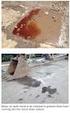 ACTIVITY NAME Training Requirements for Spill Prevention Control and Countermeasures (SPCC) 40 CFR Part 112 Naval Air Station Corpus Christi Texas CY 2014 BOTTOM LINE UP FRONT To prevent oil discharges
DRAFT REVISED 2015. Musts For USTs DRAFT. Printed on Recycled Paper. Updated June 2015
 DRAFT REVISED 2015 Musts For USTs DRAFT Printed on Recycled Paper EPA wrote this booklet for owners and operators of underground storage tanks (USTs). This booklet describes the 2015 revised federal UST
STORAGE TANK INSPECTION AND COMPLIANCE PHILLIP BENTON CERTIFIED TANK INSPECTOR
 STORAGE TANK INSPECTION AND COMPLIANCE PHILLIP BENTON CERTIFIED TANK INSPECTOR HDR EOC PETROLEUM SYSTEMS DIVISION 419 CANYON AVENUE, SUITE 316 FORT COLLINS, COLORADO 80524 INTRODUCTION Various policies,
Spill Prevention, Control, and Countermeasures (SPCC) Course Material
 Introduction Welcome to the Spill Prevention, Control, and Countermeasures (SPCC) Training course. The ultimate goal of this course is to help you recognize the ways you can avoid pollution of the local
Spill Prevention, Control, and Countermeasures (SPCC) Regulations Update
 Spill Prevention, Control, and Countermeasures (SPCC) Regulations Update The current deadline for most facilities (including typical mining and aggregate operations) is November 10, 2011. All facilities
History of the SPCC Rule
 2010 SPCC Training SPCC Rule History of the SPCC Rule The SPCC plan is a document required under the clean water act (CWA) It became effective in 1972 and has changed little in 32 years. The rule was formally
Underground Storage Tanks
 Underground Storage Tanks An Informational and Guidance Document for the University Community. Please contact Yale Environmental Health and Safety for latest Regulatory Requirements. A typical UST installation
Spill Prevention, Control and Countermeasure (SPCC) Training
 Spill Prevention, Control and Countermeasure (SPCC) Training Fort Jackson 2015 Origins of SPCC Regulatory History 1972 Clean Water Act Oil Pollution Act of 1990 Spill Prevention Control and Countermeasures
Secondary Containment Options for Aboveground and Underground Tanks. Wayne Geyer Steel Tank Institute
 Secondary Containment Options for Aboveground and Underground Tanks Wayne Geyer Steel Tank Institute Secondary containment tanks first appeared in the United States in the early 1980's, when several local
DIRECTIVE 055: STORAGE REQUIREMENTS FOR THE UPSTREAM PETROLEUM INDUSTRY. August 2012
 DIRECTIVE 055: STORAGE REQUIREMENTS FOR THE UPSTREAM PETROLEUM INDUSTRY August 2012 SECTION 2 The storage requirements in Directive 055 apply to upstream petroleum facilities, well sites, and pipelines
Storage Tank Systems for Petroleum products and allied petroleum products regulations
 Storage Tank Systems for Petroleum products and allied petroleum products regulations Information Session for: BC MoE Workshop: Update on Contaminated Sites in BC Jim Sheehan Environment Canada February
AUTOMATIC TANK GAUGING SYSTEMS Achieving Compliance. John D. Sieger, Tanknology
 AUTOMATIC TANK GAUGING SYSTEMS Achieving Compliance John D. Sieger, Tanknology The Objective: Monitor the Tanks & Piping Systems for leaks TANK GAUGING SYSTEM BRANDS DOUBLE WALL STEEL TANK MONITORING DOUBLE
UST RULES CHANGES. Heather Peters, Environmental Specialist
 UST RULES CHANGES Heather Peters, Environmental Specialist Today s Topic 2011 Rule package- what s left? Upcoming rule changes Federal Regulation Changes & Testing Protocols How are you doing? 2011 Rule
KANSAS STORAGE TANK PROGRAM ABOVEGROUND STORAGE TANK OVERVIEW March 2, 2015
 KANSAS STORAGE TANK PROGRAM ABOVEGROUND STORAGE TANK OVERVIEW March 2, 2015 http://www.kdheks.gov/tanks/index.html Copies of this document are available at: http://www.kdheks.gov/tanks/download/ast_overview.pdf
The Federal Spill Prevention, Control & Countermeasures (SPCC) Rule Overview
 The Federal Spill Prevention, Control & Countermeasures (SPCC) Rule Overview January 2012 Presented by: Annie Macmillan, Stephanie Congo The purpose of the SPCC rule is to prevent discharges of oil into
~CSRMA ALERT~ REVISED SPCC RULE WILL IMPACT MOST POTW S
 ~CSRMA ALERT~ September 17, 2004 REVISED SPCC RULE WILL IMPACT MOST POTW S A CSRMA member in the San Francisco Bay Area was recently inspected by the EPA and Bay Area Regional Water Quality Control Board
Petroleum Tanks at Municipal Facilities
 January/February 2013 Petroleum Tanks at Municipal Facilities This document was reprinted with permission from the New York Association of Towns Talk of the Towns/Topics magazine January/February 2013
This page left intentionally blank
 1 This page left intentionally blank 2 STATE OF TENNESSEE DEPARTMENT OF ENVIRONMENT AND CONSERVATION DIVISION OF UNDERGROUND STORAGE TANKS TECHNICAL CHAPTER 4.2 SPILL AND OVERFILL PREVENTION EFFECTIVE
SPILL PREVENTION, CONTROL, AND COUNTER MEASURES PLAN (SPCC)
 SPILL PREVENTION, CONTROL, AND COUNTER MEASURES PLAN (SPCC) UNIVERSITY RISK MANAGEMENT Occupational and Health Programs 19 Hagood Avenue, Suite 908 Charleston SC 29425 843-792-3604 Revised: June 2015 Spill
Application for the Construction or Installation of Aboveground Storage Tank (AST) Systems or Associated Underground or Over-water Piping Systems
 Page 1 of 5 Application for the Construction or Installation of Aboveground Storage Tank (AST) Systems or Associated Underground or Over-water Piping Systems New Hampshire Department of Environmental Services
The Fuel Storage Tank Regulations 2009
 The Fuel Storage Tank Regulations 2009 October 2009 ED/RO1/015 The Fuel Storage Tank Regulations Issued by: The Regulation and Supervision Bureau for the water, wastewater and electricity sector in the
Improper storage of fuel on construction sites will increase the risk of water pollution that may occur as a result of leaks or spills.
 WQ-10 Best Management Practice (BMP) Water Quality Protection Guideline Secondary Containment Design Standards Fuel Storage on Construction Sites According to the EPA, the majority of water pollution in
Farm Fuel Tank Safety Guide
 Farm Fuel Tank Safety Guide This brochure is provided by North Dakota Department of Emergency Services, your Local Emergency Planning Committee, and the State Emergency Response Commission along with assistance
Used Oil Guidance. Tank and Secondary Containment Requirements For Used Oil Processors
 Used Oil Guidance Tank and Secondary Containment Requirements For Used Oil Processors Washington State Department of Ecology Publication Number 05-04-016 November 2005 For more information The Washington
Maryland Containment System Testing Protocol. The individual performing the inspection and testing as outlined in this protocol must be either:
 MARYLAND DEPARTMENT OF THE ENVIRONMENT Oil Control Program, Suite 620, 1800 Washington Blvd., Baltimore MD 21230-1719 4 410-537-3442 410-537-3092 (fax) 1-800-633-6101 http://www.mde.state.md.us Maryland
SPCC for Food Services
 Welcome to the University s Annual Oil Spill Prevention, Control and Countermeasures (SPCC ) Compliance Awareness Training for Food Service Employees. Completing this training will fulfill your annual
Bulk Storage Program. Cornell University 8/22/2014
 Cornell University 8/22/2014 Written Program Table of Contents 1. Introduction... 2 2. Definitions... 2 3. Roles and Responsibilities... 3 3.1. EHS... 3 3.2. College/Unit... 3 4. Regulatory and Operational
1. Who is your current pollution carrier? Expiration Date: Premium: Retroactive Date:
 Named Insured: Business Name (include dba if applicable): Mailing Address: Phone Number: County: In Case of Claim: Contact Name: Phone Number: Type of Business: Corporation Individual Partnership L.L.C.
UNIVERSITY OF WISCONSIN MADISON
 UNIVERSITY OF WISCONSIN MADISON Contractor Spill Contingency Plan (while working on campus) Departments of: Environment, Health & Safety Physical Plant Table of Contents Spill Contingency Plan Most Common
ABOVE-GROUND STORAGE TANKS
 ABOVE-GROUND STORAGE TANKS Above-ground storage tanks in Georgia are regulated by the State Fire Marshall and by the EPA. Above-ground tanks containing 1,100 gallons or less do not require any secondary
Safety Manual Title: Spill Prevention & Response Review Date: 6/1/2014
 Operation s Purpose The purpose of this plan is to document spill prevention and response requirements. Each Elkhorn Construction, Inc. jobsite will develop a spill prevention and response plan based on
Brian Derge Tanknology Inc. February 26, 2015
 Secondary Containment & Spill Buckets Inspection, Testing, and Repair Solutions Brian Derge Tanknology Inc. February 26, 2015 Welcome Introduction Tanknology Proposed Revisions to Federal Regulations Testing
OIL POLLUTION PREVENTION REGULATIONS
 OIL POLLUTION PREVENTION REGULATIONS The Newly Revised SPCC Rules Spill Prevention Control and Countermeasure NON-TRANSPORTATION RELATED ONSHORE AND OFFSHORE FACILITIES Code of Federal Regulations Title
ALL UST SYSTEMS. MOTOR FUEL, USED OIL, BULK HEATING OIL STORAGE (Federal/State Regulated Systems)
 FACTS ABOUT: UST SYSTEMS COMPLIANCE OUTLINE Maryland Department of the Environment In Maryland, certain UST systems must meet various compliance requirements. The following is a summary of the current
SPILL PREVENTION, CONTROL AND COUNTERMEASURE PLAN
 SPILL PREVENTION, CONTROL AND COUNTERMEASURE PLAN XXXX FARM (CITY OR COUNTY), MICHIGAN CONTACT (NAME), OWNER CERTIFICATION: I hereby certify that I have examined the facility, and being familiar with the
Pollution Liability Exposure: Adjustments your automotive business should consider to maintain compliance
 : Adjustments your automotive business should consider to maintain compliance Pollution sounds like such a dirty word. And as an automotive service business owner, employee or operator, you might be producing
SUBJECT: Effective Date: Procedure Number: Contractor Environmental Management. 09/03/13 emp11 Procedures
 SUBJECT: Effective Date: Procedure Number: Contractor Environmental Management 09/03/13 emp11 Procedures APPLICABILITY/ACCOUNTABILITY: Supersedes: Page Of EMS Procedure-011 1 11 Responsible Authority:
Petroleum Storage Tank Compliance 101
 Petroleum Storage Tank Compliance 101 Palm Beach County Board of County Commissioners Department of Environmental Resources Management Petroleum Storage Tank Compliance Section www.pbcgov.com/erm 561-233-2400
How To Get A Stormwater Discharge Permit In A City Of Scottsdale
 Environmental Regulations Guide Section 4 Pollution Prevention 4. 0 Pollution Prevention The Pollution Prevention Act (PPA) focuses on source reduction, i.e. on reducing the amount of pollution through
TRAINING SPCC/SWPP Training UGA. Automotive Center. Campus Transit
 SPILL PREVENTION, CONTROL, AND COUNTERMEASURE TRAINING SPCC/SWPP Training UGA STORM WATER Automotive Center POLLUTION Campus Transit PREVENTION PLAN PLAN Goals of SPCC/SWPP Training Introduce facility
Regulations and Recommended Practices. Introduction. American Petroleum Institute Recommended Practices 2350
 Meeting Spill Prevention Regulations using RF Admittance and Ultrasonic Level Measurement Technologies Martin Bahner Marketing Manager Drexelbrook Engineering Co. 205 Keith Valley Rd. Horsham, PA 19044
LEHMAN COLLEGE: DEPARTMENTAL RETENTION SCHEDULE 11/18/2013 ENVIRONMENTAL HEALTH & SAFETY. Report and recommendation resulting from investigation
 EHS-1 EPA Audit Records-- Internal investigation or non-fiscal audit records for audits overseen by CUNY Central Office Report and recommendation resulting from investigation Background materials and supporting
PCB STORAGE. 1) 2-drum unit (4 x 2 x 4 ) 2) 4-drum unit (4 x 4 x 4 ) 3) 8-drum unit (8 x 4 x 4 ) 4) 16-drum unit (8 x 8 x 10 )
 PCB STORAGE With the exception of utilities, very few PCB owners are choosing to store their PCB wastes on site. The practice of on-site PCB storage was commonplace before Swan Hills opened up in 1996
How To Safely Handle A Spill
 WD DWGB 22 6 2010 Best Management Practices for Fueling and Maintenance of Excavation and Earthmoving Equipment Env Wq 401, Best Management Practices for Groundwater Protection, applies to a variety of
Spill Prevention Control and Countermeasure (SPCC) Regulations Fact Sheet
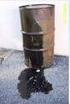 Spill Prevention Control and Countermeasure (SPCC) Regulations Fact Sheet REGULATORY SUMMARY The Spill Prevention Control and Countermeasure (SPCC) regulations strive to prevent oil from entering navigable
Kurt Wilson Louisiana Dept. of Environmental Quality Business & Community Outreach Division Small Business/Small Community Assistance Program
 Kurt Wilson Louisiana Dept. of Environmental Quality Business & Community Outreach Division Small Business/Small Community Assistance Program LDEQ Water Regulations Spill Prevention and Control (SPC) Authorized
Daily Inventory and. Statistical Inventory Analysis. Daily Inventory and Statistical Inventory Analysis (SIA) are inventory control
 Introduction: TankSmart Operator Training Class A/B Operators Training Class C Operators Annual UST System Inspections Record Keeping Spills: Cleanup & Reporting Safety Tanks: Double-Walled w/ Continuous
Spill Prevention, Control & Cleanup SC-11
 Objectives Cover Contain Educate Reduce/Minimize Product Substitution Description Spills and leaks, if not properly controlled, can adversely impact the storm drain system and receiving waters. Due to
Environmental Standard Operating Procedure Originating Office: MCAS Miramar Environmental Management Department
 Environmental Standard Operating Procedure Originating Office: MCAS Miramar Environmental Management Department Revision: Original Prepared By: Environmental Management Department Approved By: William
Safe Operating Procedure
 Safe Operating Procedure (Revised 3/14) ABOVEGROUND PETROLEUM STORAGE TANKS INTRODUCTION Aboveground storage tanks (ASTs) are used to store petroleum products at several UNL locations. For example, ASTs
Steel Tank Institute AST Inspections. Dana Schmidt, PE STI/SPFA
 Steel Tank Institute AST Inspections Dana Schmidt, PE STI/SPFA Agenda Brief review of SPCC Rule SPCC relevance to small tanks and small facilities. SP001 Standard for Inspection of Aboveground Storage
Spill Prevention Control and Countermeasure Plan
 Spill Prevention Control and Countermeasure Plan Boston College Prepared by: Rizzo Associates, Inc. March 5, 1997 Reviewed and Updated by: ENSR International May, 1998 Last Update Boston College January,
New York State Department of Environmental Conservation 625 Broadway, Albany, NY 12233 www.dec.ny.gov. Environmental Self Audit For Small Businesses
 New York State Department of Environmental Conservation 625 Broadway, Albany, NY 12233 www.dec.ny.gov Environmental Self Audit For Small Businesses Disclaimer The materials in this document are intended
SILICON VALLEY CLEAN WATER. May 2015
 SILICON VALLEY CLEAN WATER May 2015 Slug Discharge Control and Spill Containment Guidelines This document was revised and used with the permission of the Los Angeles County Sanitation District, Industrial
Outdoor Storage of Raw Materials SC-33
 Objectives Cover Contain Educate Reduce/Minimize Description Raw materials, by-products, finished products, containers, and material storage areas exposed to rain and/or runoff can pollute stormwater.
UST System Inspection Checklist
 UST System Inspection Checklist The Petroleum Equipment Institute (PEI) Tank Installation Committee has produced this checklist as a service to owners/operats of underground stage tanks (USTs). Items on
DIRECTIVE 055: STORAGE REQUIREMENTS FOR THE UPSTREAM PETROLEUM INDUSTRY
 DIRECTIVE 055: STORAGE REQUIREMENTS FOR THE UPSTREAM PETROLEUM INDUSTRY FREQUENTLY ASKED QUESTIONS (FAQ) Question: Do fuel tanks fall under the requirements of Directive 055? No. For storage of fuels (e.g.,
SPCC. Created by EPA in 1973 under the Clean Water Act. 10/22/2014. Spill Prevention Control & Countermeasure Plan
 SPCC Created by EPA in 1973 under the Clean Water Act. Purpose: To protect the "navigable" waters of the United States, a business or organization must develop a plan that would prevent any pollution from