
Analysis of Changes for the 5 th Edition (2014) of the Florida Codes
|
|
|
- Poppy Grant
- 9 years ago
- Views:
Transcription
1 Analysis of Changes for the 5 th Edition (2014) of the Florida Codes Changes to the Florida Building Code, Building This Analysis of Changes for the 5 th Edition (2014) of the Florida Codes is intended to provide a comprehensive comparison of the provisions in the 2010 Florida Building Code, Building (FBCB) and the 5 th Edition (2014) of the Florida Building Code, Building. The 2009 International Building Code was the base code for the 2010 FBCB. The 2012 International Building Code is the base code for the 5 th Edition (2014) of the FBCB. As a result of changing the base code and Florida-specific amendments, certain provisions and criteria of the code have changed. This Analysis will serve a useful tool to facilitate the transition to the new code. This Analysis is arranged so that comparable provisions in the two codes can be easily located. The left two columns contain section numbers and a brief overview of the corresponding requirements from the 2010 FBCB. The next two columns contain section numbers and a brief overview of the corresponding requirements in the 5 th Edition (2014) of the FBCB. The far right column contains a brief analysis or comment on the differences between the provisions. This Analysis is not intended to replace or interpret the provisions contained in either the 2010 FBCB or the 5 th Edition (2014) of the FBCB. This information simply points out the differences. The Analysis is not designed to be used without the aid of the representative code books, as all the details pertaining to a specific section may or may not be provided. However, this Analysis will provide an easy means for identifying differences in the two codes, as well as enabling the user to locate issue specific provisions in the 5 th Edition (2014) of the FBCB by means of a numbered section cross reference. This Analysis provides a cross-reference for the majority of the sections that changed in the 5 th Edition (2014) of the FBCB. In some cases, sections were grouped together due to substantial differences. This grouping enables the extent of the differences to be more readily identified. Notable changes deemed to be the most significant or to have the greatest impact have been highlighted in yellow. Note: Seismic loading and snow loading provisions in the code are no longer reserved (deleted) in the 5 th Edition (2014) of the FBCB, even though they do not apply in the State of Florida. While they are technically new sections and provisions to the Florida Codes, they are not shown here in this Analysis because they do not apply to construction in the State of Florida.

2 2010 FBCB 5 th Edition of the FBCB Section Requirement Section Requirement Analysis Chapter 1: Administration The term movement has been changed to Scope Scope relocation Referenced codes and standards Conflicting scopes Roof assemblies (construction documents) Referenced codes and standards Section split into two sections for clarity Differences and for coordination with new Section New section that expands upon the requirements in Section by making it clear that, even if a referenced standard contains requirements that parallel the FBCB, the provisions of the FBCB will always take precedence. Inspection of existing residential building not impacted by construction Streamlined low-voltage alarm system installation permitting Means of egress Section deleted Exterior wall envelope Site plans Design flood elevation New section (from Section (17) Florida Statutes) prohibiting the condition of issuing a one- or two-family residential permit on the inspection of any portion of a building, structure, or real property that is not directly impacted by the construction, erection, alteration, modification, repair, or demolition of the building, structure, or real property for which the permit is sought. New section applicable to low-voltage alarm system projects for which a permit is required by a local enforcement agency. New section requiring the construction documents show the location, construction, size and character or all portions of the means of egress. New section requiring the construction documents describe the exterior wall envelope. New section requiring the construction documents be accompanied by a site plan. New section requiring that design flood elevations are to be established where they

3 Electronic copies of site plans Phased approval Deferred submittals Building permits issued on the basis of an affidavit Prescribed fees Prescribed fees Work commencing before permit issuance Work commencing before permit issuance 117 Variances in flood hazard areas Chapter 2: Definitions Definitions: 24-hour care Definitions: Anchor Building Definitions: Anchor Building Definitions: Area, Bedded Definition deleted. are not specified. New section permitting site plans to be maintained in the form of an electronic copy at the worksite. New section permitting the issuance of a permit for the foundation or other part of a building or structure before the construction documents for the whole building have been submitted. New section pertaining to the portions of the design that are not submitted at the time of the application and are to be submitted to the building official within a specified period. New section stating the issue of permits on the basis of an affidavit does not apply to the flood load and flood resistance construction requirements. Revised to delete the reference to Florida Statutes and simply state that a permit is not valid until fees prescribed by law have been paid. Revised to allow the penalty for commencing work before a permit is issued to be a fee established by the building official. New section pertaining to variances in flood hazard areas. New definition applicable to facilities that are open for 24 hours and capable of providing care to someone visiting the facility during any segment of the 24 hours. Revised to clarify that anchor buildings have direct access to open mall buildings as well as covered mall buildings. Definitions: Brick Definitions: Brick Definition revised to be consistent with the definitions in TMS 602 and TMS 602. Definitions: Canopy Definitions: Canopy Definition revised to provide a more

4 general description. Permits canopies to be structurally independent from a building. Definitions: Care Suite New definition applicable to a group of treatment rooms, care recipient sleeping rooms, and circulation space within Group I-2 occupancies. Definitions: Child Care Facilities Definition deleted. Definitions: Circular Stairs Definition deleted. Definitions: Collar Joint Definitions: Collar Joint Definition revised to be consistent with the definitions in TMS 602 and TMS 602. Definitions: Connector Definition deleted. Definitions: Crane Load Definition deleted. Definitions: Cornice New definition described as a projecting horizontal molded element located at or near the top of an architectural feature. Definitions: Corridor Definitions: Corridor Revised to remove the requirement that a corridor provide a path to an exit. Definitions: Cover Definition deleted. Definitions: Custodial Care New definition applicable to assistance with day-to-day living tasks. Definitions: Day-care Home Definition deleted. Definitions: Day-care Occupancy Definition deleted. Definitions: Decorative Cementitous Coating Definition deleted. Definitions: Detoxification Facilities Definitions: Detoxification Facilities Definitions: Dimensions Definitions: Dimensions Definitions: Exit Definitions: Exit Definitions: Exit Access Doorway Definitions: Exit Access Doorway Definitions: Exit Access Ramp The requirement that such facilities provide treatment on a 24 hour basis has been removed. Definition revised to be consistent with the definitions in TMS 602 and TMS 602. Revised to state that an exit is the portion of a means of egress system between the exit access and exit discharge. Revised to remove the description that exit access stairs and exit access ramps be unenclosed. New definition defined as an interior ramp that is not a required interior exit ramp.

5 Definitions: Exit Access Stairway Definitions: Exit discharge, level of Definitions: Exit discharge, level of Definitions: Exit Enclosure Definition deleted. Definitions: Exit Passageway Definitions: Exit Passageway Revised for clarity. Definitions: Fabric Covered Framework Definition deleted. Definitions: Family Day Care Homes Definition deleted. Definitions: Fiber Reinforced Polymer Fiberglass Reinforced Polymer Definitions: Fiber Reinforced Polymer Fiberglass Reinforced Polymer Definitions: Fire-rated Glazing Definitions: Fixed Seating New definition defined as an interior stairway that is not a required interior exit stairway. Definitions revised to simply state the level of exit discharge is the story at the point at which an exit terminates and an exit discharge begins. Definitions combined for clarity. New language permits fiber reinforced polymers to contain cores laminated between fiber reinforced polymer facings. New definition applicable to glazing with either a fire protection rating or a fire resistance rating. New definition applicable to seating secured in place. Definitions: Flexible Plan Building Definition deleted. Definitions: Fly Gallery Definition deleted. Definitions: Fossil Fuel Definition deleted. Definitions: Foster Care Facilities Definitions: Framework Definition deleted. Definitions: Gas Cabinet Definitions: Gas Cabinet Definitions: Gridiron Definition deleted. Definitions: Group Day Care Home Definition deleted. Definitions: Group Home Definitions: Grouted Masonry Definition deleted. New definition applicable to facilities that provide care to more than 5 children, 2 ½ years of age or less. Revised to require that a gas cabinet be ventilated. New definition of facilities for social rehabilitation, substance abuse, or mental health problems.

6 Definitions: Heating Definition deleted. Definitions: Height, walls Definition deleted. Definitions: Helipad Definitions: Hospitals and Mental Hospitals Definitions: Insulating Concrete Form Definitions: High-Pressure Decorative Exterior-Grade Compact Laminate (HPL) Definitions: High-Pressure Decorative Exterior-Grade Compact Laminate (HPL) System Definitions: Hospitals and Psychiatric Hospitals Definitions: Ice-Sensitive Structure Definitions: Incapable of Self Preservation Definition deleted. Definitions: Intended to be Occupied as a Residence Definitions: Interior Exit Ramp Definitions: Interior Exit Stairway New definition of describing a surface that is used for the landing, taking off, taxiing and parking of helicopters. New definition describing a new class of wall coverings. New definition describing a new class of wall coverings. The requirement that such facilities provide treatment on a 24 hour basis has been removed. New definition to describing a structure in which the effects of ice govern the design. New definition describing persons that cannot respond to an emergency situation. New definition. Definitions: Joint Definitions: Joint Revised for clarity Definitions: L-Rating Definitions: Live/Work Unit New definition of an exit component that serves to meet one or more means of egress design requirements and provides for a protected path of egress travel to the exit discharge or public way. New definition of an exit component that serves to meet one or more means of egress design requirements and provides for a protected path of egress travel to the exit discharge or public way. New definition applicable to the air leakage rating of a through penetration firestop system. New definition describing a dwelling or sleeping unit in which a significant portion of the space includes nonresidential use

7 Definitions: Live Loads Definitions: Live Load Definitions: Live Loads (Roof) Definitions: Live Load, Roof Definitions: Lowest Floor Definitions: Lowest Floor Definitions: Marquee Definitions: Marquee Definitions: Masonry Unit, (Clay) Definitions: Masonry Unit, (Concrete) Definitions: Mechanical Equipment Screen Definition deleted. Definition deleted. Definitions: Mechanical Equipment Screen Definitions: Medical Care operated by a tenant. Definition revised for consistency with ASCE 7 Definition revised for consistency with ASCE 7 Revised to clarify that the definition is applicable to the lowest floor or the lowest enclosed area. Definition revised for clarity and coordination with Table Revised to define a mechanical equipment screen as partially enclosed. Deletes language indicating that mechanical equipment screens are not covered by a roof. New definition applicable to medical or surgical procedures, nursing or psychiatric purposes. Definition revised to be more descriptive of the type of penetration Definitions: Membrane Definitions: Membrane Penetration Penetration Definitions: Membrane Definitions: Membrane Penetration Firestop System Penetration Firestop System New definition. Definitions: Mortar Definitions: Mortar Definition revised to be consistent with the definitions in TMS 602 and TMS 602. The requirement that such facilities provide Definitions: Nursing Homes Definitions: Nursing Homes treatment on a 24 hour basis has been removed. Definitions: Open Plan Buildings Definition deleted. Definitions: Openings Definition deleted. Definitions: Performance New definition applicable to identification of Category wood structural panels. Definitions: Personal Care Definitions: Personal Care Service Service Revised for clarity. Definitions: Photovoltaic New definition applicable to photovoltaic

8 Modules/Shingles roof coverings. Definitions: Pinrail Definition deleted. Definitions: Plans New definition applicable to the construction drawings and specifications. Definitions: Polypropylene Siding New definition applicable to exterior siding material. Definitions: Porcelain Tile New definition. Definitions: Resident Sleeping Unit Definition deleted. Definitions: Residential Care/Assisted Living Facilities Definition deleted. Definitions: Restricted Entrance Definitions: Retaining Wall, Segmental Definition deleted. Definitions: Retractable Awning Definitions: Roof Deck Definitions: Roof Deck Revised for clarity. Definitions: Rooftop Structure Definitions: Rooftop Structure Revised for clarity. Definitions: Secondary Members Definitions: Secondary Members Definitions: Self-Service Storage Facility New definition. Definitions: Self-Preservation Definition deleted. Definitions: Shell Definition deleted. Definitions: Service Entrance New definition. Definitions: Structural Definitions: Structural Composite Composite Lumber Lumber Definitions: Site New definition. Definitions: Spiral Stairs Definition deleted. Definitions: Street Definition deleted. Definitions: State Enforcement Agency New definition applicable to an entrance that is made available for common use on a controlled basis, but not public use, and not a service entrance. New definition applicable to a type of awning that retracts against a building or other structure. Revised to clarity the members of the roof construction that do not have direction connections to columns are considered secondary members. Revised to recognize 4 types of structural composite lumber. New definition applicable to the agency with the authority to make inspections and enforce codes.

9 Definitions: Substantial Improvement Definitions: Substantial Structural Damage Definitions: Structural Determination Definitions: Substantial Improvement Definitions: Substantial Structural Damage New definition. Definitions: Suite Definition deleted. Definitions: Susceptible Bay Definitions: Technical Production Area Revised to add alterations and other improvements to the scope of the definition. The trigger for reduced load-carrying capacity has been changed from 20 percent to 33 percent of the lateral load carrying capacity in its pre-damage condition. New definition applicable to areas of roofs with greater risk of ponding water. New definition. Definitions: Through Penetration Definitions: Through Penetration Definitions: Through Definitions: Through Penetration Penetration Firestop System Firestop System Definitions: Tie, Lateral Definition deleted. Definitions: Tile Definition deleted. Definitions: Valley Definition deleted. Definitions: Vapor Permeable Membrane Definitions: Vapor Permeable Definitions: Vehicle Barrier Systems Definitions: Vehicle Barrier Definitions: Walkway, Covered Definition deleted. Definitions: Walkway, Enclosed Definition deleted. Wall, Masonry-bonded Hollow Wall, Masonry-bonded Hollow Wall Wall Definitions: Web Definition deleted. Definitions: Wind-borne Debris Impact Resistant Products Definition deleted. Chapter 3: Use and Occupancy Classifications Assembly Group A Associate with Group E occupancies Definition revised to be more descriptive of the type of penetration Definition revised to be more descriptive of the type of penetration Revised to change the term to be an adjective to that it can be a descriptor of either a material or an assembly of materials. Revised for clarity and coordination with ASCE 7. Definition revised to be consistent with the definitions in TMS 602 and TMS 602. Exception for Group E has been relocated to a stand-alone section. Revised to apply to assembly purposes associated with

10 303.1 Assembly Group A Assembly group A Restaurants and drinking establishments Section deleted Group E, day care facilities Within places of worship Five or fewer children Factory industrial F-1 moderate-hazard occupancy Five or fewer children in a dwelling unit Factory industrial F-1 moderatehazard occupancy Special purpose F-3 Section deleted High-hazard Group H High-hazard Group H Institutional Group I Institutional Group I Group I Group I Five or fewer persons receiving car Five or fewer persons receiving car Group E in lieu of accessory to Group E. Cafeterias and similar dining facilities (including associated commercial kitchens) have been added to the list of A-2 occupancies. Casinos have been added to the list of A-2 occupancies. New section applicable to buildings occupied by more than 5 children older than 2 ½ years of age who receive educational, supervision or personal care services for fewer than 24 hours per day. New section permitting such rooms within places of worship to be classified as part of the primary occupancy. New section permitting such facilities with five or fewer children to be classified as part of the primary occupancy. New section permitting such facilities with five or fewer children within a dwelling unit to be classified as Group R-3. Commercial kitchens not associated with restaurants and cafeterias have been added to the F-1 list. Revised to clarify limits on combustible dust as some would qualify as Group F or S. Similar clarification for Table 307.1(1). Revised for clarity. Group I-4, day care is added as Group D has been deleted. Revised for clarity. Initial stage Alzheimer s facilities have been added to Group I-1. New section containing text relocated from Section Revised to require such facilities to be sprinklered if designed in accordance with the FBCR, New section permitting I-2 facilities with five or fewer residents to classified as

11 308.6 Group I-4, day care facilities Mercantile Group M Mercantile Group M Residential Group R Residential Group R Residential Group R Residential Group R Residential Group R-4 Group R-3. Requires the building to be sprinklered if designed in accordance with the FBCR. New section providing classification criteria for Group I-4, day care facilities. New Group I-4 replaces Group D which has been deleted. Restaurants and drinking establishments with occupant loads of less than 50 have been removed from the Group M list. Congregate living facilities with more than 10 occupants have been added to the Group R-1 classification. Boarding houses classified as Group R-1 have been revised to apply to those with more than 10 occupants Congregate living facilities with more than 16 occupants have been added to the Group R-2 classification. Boarding houses classified as Group R-2 have been revised to apply to those with more than 16 occupants Boarding houses (nontransient) with 16 or fewer occupants and boarding houses (transient) with 10 or fewer occupants have been added to the Group R-3 classification. Applicability of congregate living facilities classified as Group R-3 has been clarified. Adult and child care facilities have been combined. Revised to clarify that care facilities that can comply with the IRC are limited to 5 or fewer individuals receiving care. The listings of applicable uses of Group R- 4 have been revised to correlate the terminology and be more current with industry and licensing descriptions. 313 Day-care Occupancy Group D Section deleted. Chapter 4: Special Detailed Requirements Based on use and Occupancy 402 Covered Mall and Open Mall 402 Covered Mall and Open Mall Entire section on malls has been

12 Buildings Buildings reorganized and revised to include specific provisions for open mall buildings. Open space requirements have been relocated to new Section New Open space (malls) language requires open malls to be surrounded on all sides by permanent open space not less than 60 feet Open mall building perimeter line New section specifying the determination of the open mall building perimeter line. The perimeter line is used for measuring the width of the required open space around an open mall building Open mall construction New section requiring a minimum of 20 feet of open space between floor and roof assemblies and mall of open mall buildings Pedestrian walkways New section requiring pedestrian walkways connecting balconies in an open mall building to be located not less than 20 feet from any other pedestrian walkway. Revised to allow assembly occupancies Arrangement of means of located within the perimeter line of an open Arrangement of means of egress egress mall building to have their main exit open to the open mall Service areas fronting on exit passageways (malls) Service areas fronting on exit passageways (malls) Automatic sprinkler system Automatic sprinkler system Anchor building separation Anchor building separation Kiosks Kiosks Language requiring such rooms or areas to be protected by an approved supervised automatic sprinkler system has been deleted. New language requiring sprinkler protection for the tenant spaces of an open mall building to be independent from that provided for anchor buildings. New language requiring sprinkler protection beneath exterior circulation balconies located adjacent to an open mall. New exception requiring exterior walls of anchor buildings separated from an open mall building to comply with Table 602. Revised to allow foam plastics on kiosks to be tested in accordance with NFPA 289.

13 Children s playground structures Children s play structures Foam plastics Foam plastics Accessibility (high-rise buildings) Smoke control (high-rise buildings) Standby power (high-rise buildings) Section deleted. Fire pump rooms (high-rise buildings) Section deleted Standby power (high-rise buildings) Fire service access elevator Fire service access elevator Use (floor of atrium) Use (floor of atrium) Enclosure of atriums Enclosure of atriums Limited access protection (underground buildings) Section deleted Separation (parking garages) Separation (parking garages) Provisions related to materials, fire protection, and separations have been relocated to Section 424. Revised to allow foam plastics on plastic signs to be tested in accordance with NFPA 289. New section requiring fire pumps to be located in rooms protected in accordance with Section Relocated provisions for standby power for elevators provided for accessible means of egress, fire service access, or occupant self-evacuation from Section to Section for clarity. In buildings with an occupied floor more than 120 feet above the lowest level of fire department vehicle access, a minimum of two (or all elevators whichever is less) fire service access elevators are required. Requires each fire service elevator to have a minimum capacity of 3500 pounds. New exception permits the atrium floor to be used for any approved use where the individual space is provided with an automatic sprinkler system in accordance with Section Exceptions reformatted for clarity. New criteria for exception to a fire barrier with a glass wall forming a smoke partition that requires where glass doors are provided in the glass wall, they are required to be either self-closing or automatic closing. Where door openings between a private garage and the dwelling unit are installed in

14 Classification (parking garages) Public parking garages Openings below grade (parking garages) Pumps installed above grade Section deleted Area and height increases (parking garages) System design (heating equipment in repair garages) Area and height increases (parking garages) System design (heating equipment in repair garages) Gas detection system components (heating equipment in repair garages) Gift shops (Group I-2) Gift shops (Group I-2) compliance with Section , they are required to have a minimum fire protection rating of 20 minutes. Separation requirements from a dwelling unit and its attic area have been revised to provide a complete separation between the garage areas and any habitable areas of the dwelling unit including its attic, in addition to providing protection of walls and members providing support of assemblies used for this separation. Revised to classify parking structures that are not private parking garages as public parking garages. New section requiring where openings below grade provide required natural ventilation, the outside horizontal clear space measure perpendicular to the opening shall be one a one-half times the depth of the opening. For determining area and height increases, the height of the interior area of the side is limited to 7 feet for calculation purposes. Requirement that gas detectors or sensors be listed in accordance with UL 2075 and indicate the gases they intended to detect has been deleted. New section requiring gas detection system control units to be listed and labeled in accordance with UL 864 or UL Requires such systems to be listed and labeled for use with the gases and vapors being detected in accordance with UL Revised to permit gift shops and associated storage less than 500 square feet to be open to the corridor when such spaces are constructed as required for corridors.

15 Refuge area (Group I-2) Refuge area (Group I-2) 410 Stages and platforms 410 Stages, platforms, and technical production areas Stage exits Arrangement of means of egress Stairway and ramp enclosure Means of egress (technical production areas) Travel distance (technical production areas) Two means of egress (technical production areas) Path of egress travel (technical production areas) Revised to require refuge areas within each smoke compartment. Requires smoke compartments adjoined by two or more smoke compartments to be a size to accommodate the largest occupant load of the adjoining compartments. Entire section updated to replace outdated terminology such as fly galleries, gridirons, and pinrails with a new more comprehensive term called technical production areas). Means of egress for such areas has been updated and relocated from Chapter 10 to Section 410. Section deleted as means of egress requirements for stages, platforms and technical production areas have been updated and relocated to Section New section requiring that where two or more exits or exit access doorways are required from the stage, at least one exit or exit access doorway is to be provided on each side of a stage. New section permitting stairways and ramps provided from stages, platforms, and technical productions areas to be unenclosed. New section requiring at least one means of egress from technical production areas. New section limiting travel distance to 300 feet for buildings without a sprinkler system and 400 feet for buildings with a sprinkler system complying with Section New section limiting the common path of travel to 100 feet where two means of egress are required. New section permitting the following to serve as exit access components: stairways, ramps, spiral stairways, catwalks, alternating tread devices, and permanent ladders.

16 Table Automatic sprinkler systems (stages) General (special amusement buildings) Automatic sprinkler protection (special amusement buildings) Separation of maximum single fire areas (aircraft related occupancies) Inside storage, dispensing and use (hazardous materials) Group H occupancy minimum fire separation distance Minimum Separation Distances for Buildings Containing Explosive Materials Special provisions for Groups H-2 and H-3 occupancies Group H-1 Width (technical production areas) Automatic sprinkler systems (stages) General (special amusement buildings) Automatic sprinkler protection (special amusement buildings) Separation of maximum single fire areas (aircraft related occupancies) Inside storage, dispensing and use (hazardous materials) Explosive materials Table deleted Special provisions for Groups H- 2 and H-3 occupancies Multiple hazards New section requiring a minimum of 22 inches for the path of egress travel within and from technical support areas. Language has been updated for consistency with other changes to Section 410. Clarifies that the sprinkler system has to be in accordance with Section Revised to permit amusement buildings with an occupant load of less than 50 to comply with the requirements for a Group B occupancy. Exception for sprinklers has been revised to apply to temporary amusement buildings less than 1000 square feet and the travel distance from any point to an exit is less than 50 feet. Revised to permit ancillary uses separated from the aircraft servicing areas by a minimum 1-hr fire barrier to not be include in the determination of the maximum single fire area. Revised to remove the reference to maximum allowable quantities per control area of Tables 307.1(1) and 307.1(2). Exception for specific materials separated in accordance with Table has been deleted. Where separations are not specified, this section has been revised to require the distances to be determined by a technical report issued in accordance with Section Limitations on story height and underfloor spaces have been relocated to new Section New section applicable to Group H-2 or H- 3 occupancies containing materials which

17 Table Quantity limits for hazardous materials in a single fabrication area in group Table Corridors Corridors Separation of incompatible materials Quantity limits for hazardous materials in a single fabrication area in group Liquid storage rooms Liquid storage rooms General (application of flammable finishes) Means of egress (live/work units) General (application of flammable finishes) Ventilation (application of flammable finishes) Means of egress (live/work units) Sliding doors (live/work units) Section deleted Locks (live/work units) Section deleted Accessibility (live/work units) Accessibility (live/work units) are in themselves both physical and health hazards. New section requiring hazardous materials other than those listed in Table are allowed in manufacturing, processing dispensing, use or storage areas when separated from incompatible materials in accordance with the FFPC. Pyrophoric solid quantity limits have been changed to 0.01 pounds/square foot. New exception permits non-production HPM to be transported in corridors if utilized for maintenance, lab work and testing. Revised to permit the use fire-retardanttreated wood for the construction of shelving, racks, and wainscoting used in liquid storage rooms. The laundry list of flammable materials has been deleted and replace with a more generic flammable finishes. New section requiring mechanical ventilation and interlocks with the spraying operation to be in accordance with the FBCM. Revised to clarify that the means of egress components for a live/work unit is required to be based on the function served. Revised to require accessibility to be designed in accordance with the function served Plumbing (live/work units) New section requiring the nonresidential are of the live/work unit to be provided with plumbing facilities in accordance with Chapter 29 based on the function of the nonresidential area Separation (ambulatory care New section requiring fire partition

18 Smoke barriers (ambulatory care facilities) Refuge area (ambulatory care facilities) facilities) Smoke compartments (ambulatory care facilities) Refuge area (ambulatory care facilities) 424 Children s play structures Patient sleeping rooms (hospitals) Mobile or transportable units (hospitals) Patient sleeping rooms (hospitals) Soap dispensers (hospitals) Doors (hospitals) Toilet compartment partitions (hospitals) Inspection of fire/smoke walls (hospitals) Air-handling equipment (hospitals) Toilet compartment partitions (hospitals) Inspection of fire/smoke walls (hospitals) Air-handling equipment (hospitals) separation from adjacent spaces in facilities with the potential for 4 or more care recipients. Continuity requirements of a smoke barrier have been revised to deal with the intersection or connection to adjacent tenants, and maintain its integrity and safety. Revised to clarify that the area of refuge must be accessed without going through adjacent tenant spaces in multiple tenant spaces. New section applicable to play structures inside all occupancies that exceed 10 feet in height and 150 square feet in area. Some of the provisions have been relocated from other parts of the code. New section exempting mobile units from other sections of the Guidelines when the units are limited to providing non-invasive, diagnostic and treatment services without the use of anesthetics. Views from window in patient sleeping rooms have been revised. Section revised to apply to doors opening to a room or closet located on an exit access corridor. Required that such doors be equipped with automatic positive latching for both the active and inactive door leaf. Revised to require the partitions to be constructed of products that do not rust, corrode or delaminate. Revised to clarify the types of fire/smoke walls to be identified and the access required for inspection. Revised to require air-handling equipment to be installed on the exterior of the building. Permits the equipment to be located above a ceiling if it serves only one

19 Flexible ducts (hospitals) Flexible ducts (hospitals) Flexible ducts (performance criteria) Flexible ducts (performance criteria) Flexible ducts (performance criteria) Panel boards, transfer switches, disconnect switches, enclosed circuit breakers or emergency system raceway systems (hospitals) Flexible ducts (performance criteria) Flexible ducts (performance criteria) Section deleted Panel boards, transfer switches, disconnect switches, enclosed circuit breakers or emergency system raceway systems (hospitals) Toilet rooms (nursing homes) Toilet rooms (nursing homes) Institutional design model (nursing homes) Household design model (nursing homes) Institutional design model (nursing homes) Household design model (nursing homes) Soap dishes (nursing homes) Section deleted. Electric drinking fountains Water and cup dispenser (nursing homes) (nursing homes) room. Requires flexible ducts to be listed and labeled to comply with UL 181 and be Class 0 or Class 1. Revised to require that the outer vapor barrier of flexible ducts have a perm rating of not greater than 0.05 perms when tested in accordance with ASTM E 96, Procedure A. Limits the length of flexible air duct connectors to 14 feet installed length and are not permitted to pass through any wall, partition, or enclosure of a vertical shaft required to have a fire-resistance rating of 1 hour or more. New language requires the equipment system to be kept entirely independent of all other wiring and equipment and is not permitted to enter the same raceways, boxes, or cabinets with other wiring. The required plumbing connection for a rinsing device is now conditional upon if the function program provides a method of disposing of bedpans, urinals, and emesis basins after each and every use. New language stating that if every resident sleeping room has a bathing room equipped with a 3 feet x 5 feet roll in the shower, the central bathing room is to be as required by the functional program. New language stating that if every resident sleeping room has a bathing room equipped with a 3 feet x 5 feet roll in the shower, the central bathing room is to be as required by the functional program. Adds water and cup dispensers to the scope of this section.

20 Inspection of fire/smoke walls (nursing homes) Nurse call systems (nursing homes) Switches for critical branch lighting (nursing homes) Panel boards, transfer switches, disconnect switches, enclosed circuit breakers or emergency system raceway systems (nursing homes) Nurse call systems (ambulatory surgical centers) Switches for critical branch lighting (ambulatory surgical centers) Routine maintenance (educational facilities) Inspection of fire/smoke walls (nursing homes) Nurse call systems (nursing homes) Switches for critical branch lighting (nursing homes) Panel boards, transfer switches, disconnect switches, enclosed circuit breakers or emergency system raceway systems (nursing homes) Inspection of fire/smoke walls (ambulatory surgical centers) Nurse call systems (ambulatory surgical centers) Switches for critical branch lighting (ambulatory surgical centers) Electric lighting (ambulatory surgical centers) Fire protection(ambulatory surgical centers) Medical gas (ambulatory surgical centers) Routine maintenance (educational facilities) Revised to clarify the types of fire/smoke walls to be identified and the access required for inspection. Revised to require nurse call systems to have electronically supervised visual and audible annunciation in accordance with UL Requirement that devices or cover plates be of a distinctive color has been deleted. New language requires the equipment system to be kept entirely independent of all other wiring and equipment and is not permitted to enter the same raceways, boxes, or cabinets with other wiring. New section applicable to inspection of fire/smoke walls that extend through the attic or interstitial space. Requires ceiling access panels to confirm the identity of the wall. Revised to require nurse call systems to have electronically supervised visual and audible annunciation in accordance with UL Requirement that devices or cover plates be of a distinctive color has been deleted. New section requiring electric light required to provide care and service to the patient occupied areas and the patient support areas to be connected to the essential electrical system. New section requiring ambulatory surgical centers in buildings containing a sprinkler system to have a dedicated supply main serving only the space occupied by the ambulatory surgical center. New section requiring piped medical gas to comply with NFPA 99. The cost trigger for requiring a licensed general contractor for maintenance

21 Separate exit (educational facilities) Vertical drops (educational facilities) Projecting and awning windows (educational facilities) Toilet room ventilation (educational facilities) Teacher toilets (educational facilities) Floor drains and hose bibs (educational facilities) Separate exit (educational facilities) Exit passageways and horizontal exits (educational facilities) Vertical drops (educational facilities) Exterior stairways (educational facilities) Projecting and awning windows (educational facilities) Toilet room ventilation (educational facilities) Section deleted Relocatables (educational facilities) Flood hazard areas (swimming pools) Stall urinals (educational facilities) Custodial receiving (educational facilities) Relocatables (educational facilities) Flood hazard areas (swimming pools) Pool structure(b) Pool structure(b) Floor slope shall be uniform (swimming pools) Floor slope shall be uniform (swimming pools) projects has been changed to $200,000. Revised to clarify that this section applies to exits from an assembly space. New section prohibiting the use of exit passageways and horizontal exits as referenced in Section 1023 and New exception for assembly seating where guards in accordance with are permitted and provided. New section requiring exterior stairways serving as a means of egress to be roofed. Play areas have been added as a location where projecting awning windows cannot be located below door head height. Exception revised to require the ventilation turn on with the light switch instead of off. Requirement for all group toilet rooms to have at least one floor drain and one easily accessible hose bibb has been deleted. New section requiring a dousing shower, eye wash, and a floor drain at custodial receiving where chemicals that are dangerous to human tissue are stored, handled, or mixed. Reference for code requirements and other standards applicable to relocatables constructed prior to this code has been deleted. Note has been revised to clarify that the regulation and enforcement of the initial and annual operation permit for public pools are preempted to the DOH. The use of one inch square tile is no longer conditional up if the licensed contractor provides a signed written certification. Minimum floor slope has been changed to 1:60 units horizontal in areas 5 feet deep or
22 Rules and regulation signage (swimming pools) Obstruction of the deck (swimming pools) Bridges and overhead obstructions or river rides (swimming pools) Rules and regulation signage (swimming pools) Obstruction of the deck (swimming pools) Bridges and overhead obstructions or river rides (swimming pools) Safety (swimming pools) Underwater lighting (swimming pools) Rinse shower (swimming pools) Feeders for PH adjustment (swimming pools) Injection point for ozone generating equipment (swimming pools) Underwater lighting (swimming pools) Rinse shower (swimming pools) Feeders for PH adjustment (swimming pools) Injection point for ozone generating equipment (swimming pools) Water features (swimming pools) Chemical quality (swimming pools) Chemical quality (swimming pools) Vacuuming (swimming pools) Vacuuming (swimming pools) less. Revised to require rules and regulations to be installed in minimum 1 inch letters legible from the pool deck. Specific criteria that is required to be posted is now listed. Revised to allow 20 percent of the deck along the pool perimeter to be obstructed provided any one obstruction does not exceed ten percent or ten feet, whichever is less, in any one area. Revised to require the minimum height of the bridge or obstruction to be at least 4 feet above the surface of the pool in all cases except when the pool is a river ride where it is required to be at least 5 feet above the surface of the pool. New section specifying specific safety parameters for life safety. Revised to allow alternative lighting systems (LED, fiber-optic systems) where the manufacturer s specifications provide for the equivalency in watt output. Revised to require the rinse shower to be located within the perimeter of the fence. Spa pools of less than 100 square feet are not longer exempted from the feeders for PH adjustment. New language requiring the generator to be electrically interlocked with the recirculation pump. Permits the use of a flow sensor controller to turn off the feeder when flow is sensed. New section providing requirements for water features such as water falls or fountains. Revised to require only NSF-60 approved chemicals are allowed. Revised to require vacuuming through the skimmer, a portable vacuum system, or an alternative approved method that does not
23 Lighting (swimming pools) Lighting (swimming pools) Automated oxidation reduction potential (swimming pools) Automated controllers (swimming pools) involve a direct suction port in the pool. Revised to require wading pool lighting to be 10 foot-candles if indoors or 6 footcandles for outdoor night use. New section requiring automated oxidation reduction potential and ph controllers with sensing probes to be provided. New section requiring automated oxidation reduction potential and ph controllers with sensing probes to be provided in spa pools Spa pool signs Clocks (spa pools) Pump reservoir volume (swimming pools) Recirculation rate (swimming pools) Pump reservoir volume (swimming pools) Recirculation rate (swimming pools) Water activity pools Water activity pools Water activity pool signs Pool deck slope (river rides) Pool deck slope (river rides) Automatic skimmer system Section deleted IWF pool signs through Modifications Sections deleted. Requires spa pool signs in accordance with Section and additional criteria of this section. New section requiring the installation of a clock. Revised to require the minimum reservoir volume to be equal to 3 minutes of the combined flow rate. Revised to require the recirculationfiltration system of water slides to recirculate and filter a water volume equal to the total water volume of the facility in a period of 2 hours or less. Language permitting the design engineer to consult with the department prior to preparation and submission of plans and specifications has been deleted. Requires water activity pool signs in accordance with Section and additional criteria of this section. Revised to permit the pool deck to slope toward the pool for no more than 7 feet. Requires IWF pool signs in accordance with Section and additional criteria of this section.
24 Private swimming pools Chapter 5: General Building Heights and Areas 469 Office surgery suite Address identification Address identification Table 503 Allowable Building Heights and Areas Table 503 Allowable Building Heights and Areas Special industrial occupancies Basements Section deleted Group A and E basements Section deleted General (building height) 505 Mezzanines 505 Mezzanines and Equipment Platforms Egress Means of egress Width limits (frontage increase) Width limits (frontage increase) General (unlimited area buildings) General (unlimited area buildings) New section providing requirements for private swimming pools. Provisions are consistent with the requirements in the FBCR. New section applicable to that portion of a physician s office where surgery is performed. New language requiring address numbers to be provided in additional approved locations when required by the fire code official. Table notes revised to add a general pointer to Chapter 4 for specific exceptions to allowable heights and areas in Chapter 5. New section exempting specific buildings and structures housing special industrial processes from the height and area limitations of Table 503. The exception permitting the height Group B, M, and R occupancies of Type IB construction to be unlimited in height under certain conditions has been deleted. Section reorganized to distinguish mezzanines from equipment platforms. Clarifies the limits imposed when both occur in the same space. Text of section deleted and replaced with a general reference to Chapter 10 for means of egress for mezzanines. The methodology for calculating the width W has been clarified. New exception permits accessory occupancies in accordance with Section to be located in unlimited area buildings. New language has been added
25 507.3 Sprinklered, one story Sprinklered, one story Group H occupancies Group H occupancies Table through Table Required Separation of Occupancies Incidental accessory occupancies Incidental Accessory Occupancies Separation of incidental accessory occupancies Nonfire-resistance-rated separation and protection Table Required Separation of Occupancies 509 Incidental uses Table 509 Incidental Uses Separation and protection Protection to clarify the measurement of the width yards and public ways for unlimited area buildings. Revised to clarify that Groups B, F, M or S within scope of this section can be of any construction type. The provisions for Group H occupancies in unlimited area buildings has been reorganized and reformatted for clarity. Revised to clarify the applicability of Group H-5. Table editorially revised to clarify that to be considered a sprinklered building for the purposes of Table 508.4, the sprinkler system has to be an NFPA 13 system. The note exempting the separation of a commercial kitchen from the restaurant seating areas they serve has been deleted in favor of clarifying that the restaurant and associated kitchen are in the same Group A-2 occupancy in Section Provisions for incidental uses have been clarified by relocating the criteria from the mixed-occupancy provisions to a new stand-alone section specific to incidental uses. Revised to require an automatic sprinkler system (in lieu of an automatic fire extinguishing system) for providing fire protection required for incidental rooms and areas. Revised to require an automatic sprinkler system (in lieu of an automatic fire extinguishing system) for providing fire protection required for incidental rooms and areas. Revised to require an automatic sprinkler system (in lieu of an automatic fire extinguishing system) for providing fire protection required for incidental rooms and areas.
26 Protection Protection limitation Chapter 6: Types of Construction Table 601 Table 602 Fire Resistance Rating Requirements for Building Elements Fire-Resistance Rating Requirements for Exterior Walls Based on Fire Separation Distance Chapter 7: Fire and Smoke Protection Features Table 601 Table 602 Fire Resistance Rating Requirements for Building Elements Fire-Resistance Rating Requirements for Exterior Walls Based on Fire Separation Distance Multiple use fire assemblies Automatic sprinklers Fire-resistance-rated glazing Fire-resistance-rated glazing Marking and identification (fire walls, fire barriers, fire partitions, smoke barriers, smoke partitions and any other wall required to have protected Marking and identification (fire walls, fire barriers, fire partitions, smoke barriers, smoke partitions and any other wall required to have protected openings or Revised to require an automatic sprinkler system (in lieu of an automatic fire extinguishing system) for providing fire protection required for incidental rooms and areas. The Florida-specific amendments to Table 601 have been deleted and the fire resistance rating requirements are now consistent with the base code. The Florida-specific amendments to Table 602 have been deleted and the fire resistance rating requirements are now consistent with the base code. A new note has been added permitting nonbearing exterior walls with unlimited area of unprotected openings per Table to have a fire-resistance rating of 0 hrs. New section clarifying that fire assemblies serving multiple purposes have to comply with all of the requirements that are applicable for each of the individual fire assemblies. New section clarifying that an automatic sprinklers and a fire suppression systems are not permitted to be included as part of a tested building element, component, or assembly in order to establish the fireresistance rating. Information required on the label has been revised and relocated to new Section Application of the label has revised to clarify that it is permanently identified on the glazing. Revised the size and location of identifying markings required on vertical fire assemblies in accessible above-ceiling spaces to increase the potential for such markings to be seen.
27 openings or penetrations) penetrations) Column protection Column protection Protection of the primary structural frame other than columns Protection of the primary structural frame other than columns Bottom flange protection Bottom flange protection Projections Projections Table Minimum Distance of Projection from Lot Lines Combustible projections Combustible projections Buildings on the same lot Buildings on the same lot Structural stability Structural stability Structural stability (fire walls) Structural stability (fire walls) Vertical continuity (fire walls) Vertical continuity (fire walls) Buildings with sloped roofs (fire walls) Continuity (fire barriers) Continuity (fire barriers) Joints (fire barriers) Joints (fire barriers) Revised to clarify that this section applies to where columns are required to have protection to be fire-resistance rated. Revised to clarify that this section applies to where members of the primary structural frame other than columns are required to have protection to be fire-resistance rated. The span of lintels, shelf angles, and plates not requiring fire protection at the bottom flanges has been revised to 6 feet 4 inches. Projection limitations have been tabulated for clarity. Combustible projection limitations have been revised to include projections with greater fire separation distances. Revised to require projections for buildings on the same lot to comply with the provisions of Section New language addressing structural elements that brace exterior walls that are required to have a fire-resistance rating. Revised to permit fire walls to be constructed as double fire walls in accordance with NFPA 221 in lieu of the structural ability to allow collapse of construction on either side of the wall. New exception added for buildings with sloped roofs in accordance with new Section New section addressing conditions where a sloped roof occurs on one or both sides of the fire wall parapet. New language requiring joints and voids at intersection to comply with Sections and Revised to clarify the compliance with Section 714 is required for joints of fire
28 707.9 Voids at intersections 708 Shaft enclosures 713 Shaft enclosures Exception 7 Shaft enclosure required Two story openings Penetrations (shaft enclosures) Penetrations (shaft enclosures) Refuse and laundry chutes Refuse and laundry chutes Recycling chutes Recycling chutes Elevator lobby Elevator lobby General (fire partitions) General (fire partitions) Continuity (fire partitions) Continuity (fire partitions) Roof construction Sections deleted. barriers with the underside of a fireresistance-rated floor. New section requiring voids created at the intersection of a fire barrier and a non-fireresistance-rate roof assembly to be filled. Provisions for shaft enclosures have been reorganized and relocated for clarity and to remove conflicts resulting in inconsistent interpretations. Revised to clarify the meaning of required means of egress and remind the user that smoke and fire barriers cannot be penetrated with an unprotected vertical opening. New language added permitting structural elements, where protected in accordance with Section 714 are permitted to penetrate a shaft enclosure. Revised to require refuse and laundry chutes in Group I-2 to comply with NFPA 82, Chapter 5. Recycling chutes have been added to scope of these sections. Elevator hoistways in buildings that serve more than three stories but do not serve any stories located more than 75 feet above the lowest level of fire department access no longer require elevator lobby protection. The requirement than walls separating individual tenant spaces be separated by a fire partition has been deleted. Associated exceptions have also been deleted. Clarifies that fireblocking for assemblies are not continuous to the sheathing, deck or slab is only required for combustible construction.
29 Roof sheathing Roof protection Continuity (smoke barriers) Continuity (smoke barriers) Revised to no longer require smoke barrier walls used for elevator lobbies to extend from outside wall to outside wall Openings (smoke partitions) Openings (smoke partitions) Section reorganized for clarity Nonfire-resistance-rated assemblies (joints in horizontal assemblies) 712 Vertical openings Penetrations (horizontal assemblies) Through-penetration firestop system Penetrations (horizontal assemblies) Through-penetration firestop system Membrane penetrations Membrane penetrations Penetrations in smoke barriers Penetrations in smoke barriers New section providing requirements for open joints in non-rated assemblies between the floor assemblies that allow for independent movement of the building in any plane caused by thermal, wind, or any other loading. New section containing requirements previously applicable to shaft enclosures which are now covered in Section 713. Provisions for shaft enclosures have been reorganized for clarity and to remove conflicts resulting in inconsistent interpretations. Previous exceptions to shaft enclosures have been rewritten to become available options for dealing with various vertical openings encountered within a building. Revised to clarify this section applies to concealed and unconcealed penetrations. Revised to clarify that when a floor or tub drain is contained within the horizontal concealed space of a floor/ceiling assembly, the T rating required as part of the listed firestop system can be omitted. New exception added exempting membrane penetrations by noncombustible items in concrete floors. Additional new exception added that allows the ceiling membrane of a 1- or 2-hour fire rated floor/ceiling or roof/ceiling assembly to be interrupted by a double wood tope plate of a fire rated wall. Revised to clarify that the throughpenetration firestop system includes the
30 Fire walls, fire barriers, fire partitions, smoke barriers, smoke partitions identification General (fire-resistant joint systems) Section deleted Curtain wall assemblies Installation Installation Exterior curtain wall/floor intersection Exterior curtain wall/floor intersection 715 Opening protectives 716 Opening protectives Table Marking fire-rated glazing Table Fire Door and Fire Shutter Fire Protection Ratings Table Opening Fire-Protection Assemblies, Ratings and Markings Other types of assemblies Other types of assemblies leakage rating, not the penetration itself. The provisions for voids at curtain wall assemblies have been relocated to a new stand-alone section for clarity. Revised to require fire-resistant joint systems to be installed in accordance with the listing criteria. New exception added permitting the use of ASTM E 119 as an acceptable evaluation method for addressing voids at the intersection of fire-resistance-rate floor assemblies and exterior curtain wall assemblies where the vision glass extends down to the finished floor level. Entire section on opening protectives has been reorganized for clarity and ease of use. New table added to define and relate the various test standards for fire-rated glazing to the designations used to mark such glazing Table revised and expanded to also include the maximum size and marking requirements for door vision panels and the minimum assembly rating, including glazing marking requirements for sidelights and transoms. Revised to add bottom and side-hinged chute intake doors and top hinged chute discharge doors to scope of this section Glazing in doors Glazing in doors Revised to make the size limits for fire protection glazing in 60- and 90-minute doors in interior exit stairways and ramps and passageways consistent with the size limits 60- and 90-minute doors elsewhere in the code Chute intake door latching New section requiring chute intake doors to
31 Smoke-activated doors Smoke-activated doors Table Fire Window Assembly Fire- Protection Ratings Table Fire Window Assembly Fire- Protection Ratings Wired glass Table Limiting Sizes of Wired Glass Panels Area limitations Area limitations Damper testing Damper testing Table deleted Fire partitions (fire dampers) Fire partitions (fire dampers) Fireblocking materials Fireblocking materials Architectural trim Exterior wall coverings Groups R-1, R-2, R-3, and R-4 (draftstopping) Groups R-1, R-2, R-3, and R-4 (draftstopping) be positive latching, remaining latched and closed in the event of latch spring failure during a fire emergency. Revised to also refer to Section and for automatic-closing chute intake doors installed in rubbish and laundry chutes. Revised to identify the markings required on fire-rated glazing. Provisions for using wired glass without compliance with the applicable test standards have been deleted. Revised to clarify that the area limits specified apply to fire-protection rated window assemblies. Revised to clarify that dampers have to be labeled in accordance with the standards in this section. New exception for omitting fire dampers in fire partitions consistent with the exception for fire dampers in fire barriers. Applies to walls penetrated by ducted HVAC systems, having a fire-resistance rating of 1 hour or less, and are in buildings equipped with an automatic sprinkler system. Cellulose insulation installed as tested for the specific application is added as a fireblocking material. Section editorially revised for clarity. New exception permitting fireblocking to be omitted where the exterior wall covering has been tested in accordance with NFPA 285. Exception 2 revised to clarify that where draftstopping is omitted, sprinklers have to installed in that combustible concealed space Groups R-1 and R Groups R-1 and R-2 Exception 4 revised to clarify that where
32 Chapter 8: Interior Finishes Table (draftstopping in attics) (draftstopping in attics) draftstopping is omitted, sprinklers have to installed in that combustible concealed space. Exterior walls (prescriptive fire resistance wood assemblies) Interior Wall and Ceiling Finish Requirements by Occupancy Application of interior finish materials to fire-resistancerated structural elements High Density Polyethylene (HDPE) Table Exterior walls (prescriptive fire resistance wood assemblies) Interior Wall and Ceiling Finish Requirements by Occupancy Application of interior finish materials to fire-resistance-rated or noncombustible building elements High Density Polyethylene (HDPE) and Polypropylene Site-fabricated stretch systems Site-fabricated stretch systems Interior floor finish requirements Interior floor finish requirements Minimum critical radiant flux Minimum critical radiant flux Test requirement Chapter 9: Fire Protection Systems Automatic sprinkler systems Automatic sprinkler systems Pump and riser room size Section revised to apply to exterior walls with a fire separation distance greater than 10 feet for consistency with Section Occupancy Group D has been removed and Group I-4 has been added reflecting changes to Chapter 3. Table headings and notes have been revised to reflect changes to exits, exit enclosures, ramps and stairs. Entire section reorganized for clarity. Revised to require polypropylene used as interior finish to comply with the room corner test for interior wall or ceiling finish materials in accordance with NFPA 286 Revised to require site-fabricated stretch systems only require testing as required by this section when the system contains all three components described in the definition. Sections revised to clarify that the floor finish in rooms or spaces that are not separated from the corridor by full-height walls must meet the same requirements as the corridor. ASTM D 2859 Exception 2 to monitoring of the sprinkler system has been revised to apply to limited area systems serving fewer than 20 sprinklers. New section providing direction on the design, sizes, and layout of pump and riser rooms so that adequate working clearances are provided for routine maintenance, repairs, and replacing
33 Group B ambulatory health care facilities (required automatic sprinklers) Group F-1 (required automatic sprinklers) Group I (required automatic sprinklers) Group M (required automatic sprinklers) Care facilities Group S-1 (required automatic sprinklers) Specific building hazards (required automatic sprinklers) Group B ambulatory health care facilities (required automatic sprinklers) Group F-1 (required automatic sprinklers) Group I (required automatic sprinklers) Group M (required automatic sprinklers) Group R-3 or R-4 congregate residences Group S-1 (required automatic sprinklers) Specific building hazards (required automatic sprinklers) Stories without openings Stories without openings equipment. Revised to require all floors between the ambulatory health care facility and the level of exit discharge serving it, including the level of exit discharge, to be sprinklered when the specified conditions are met. Revised to require an automatic sprinkler system in Group F-1 occupancies used for the manufacture of upholstered furniture or mattresses. Exceptions for providing an automatic sprinkler system in Group I occupancies have been revised. The use of a sprinkler system complying with Section is now subject to new set of conditions. Two additional exceptions have been provided for day care occupancies under certain conditions. Mattresses have been added to condition 4. New section permitting the use of a sprinkler system in accordance with Section for R-3 or R-4 congregate residences with 16 or fewer residents. New section permitting the use of a sprinkler system in accordance with Section for care facilities with 5 or fewer individuals in a single family dwelling. Revised to require an automatic sprinkler system in Group F-1 occupancies used for the storage of upholstered furniture or mattresses. Exception for Groups R-3 has been deleted to clarity. Condition 2 has been revised to require the height of the bottom of the clear opening no exceed 44 inches measured from the floor to effectuate firefighting operations.
34 Basements Basements Rubbish and linen chutes Rubbish and linen chutes NFPA 13D sprinkler systems NFPA 13D sprinkler systems Group R4 Small Facilities and NFPA 13D or 13R sprinkler systems Quick-response and residential sprinklers Section deleted Quick-response and residential sprinklers Limited area sprinklers Limited area sprinklers Sprinkler system supervision and alarms Actuation Actuation Sprinkler system supervision and alarms Height (standpipe systems) Height (standpipe systems) Additional criteria has been added triggering the installation of a sprinkler system where walls, partitions or other obstructions are installed that restrict the application of water from hose streams. Revised to require additional sprinkler heads in rubbish and linen chutes so one less floor is exposed to fire. Additional revisions are intended to remove conflicts with NFPA 82 and requires the sprinkler heads to be recessed from the drop are of the chute. Revised to add Group R-3 and R-4 congregate residences to the groups that are permitted to have a sprinkler system in accordance with NFPA 13D installed. Adds smoke compartments containing treatment rooms in ambulatory care facilities as additional location where quickresponse or residential sprinklers are required. Section revised to apply to limited area sprinkler systems serving fewer than 20 sprinklers. Exception 2 revised to apply to limited area sprinkler systems serving fewer than 20 sprinklers. Where multiple hazards could be involved in a fire, new language requires all hazards to be protected by a single system designed to protect all hazards that could become involved. Standpipe trigger for the location of the lowest floor has been revised to apply when the lowest story is located more than 30 feet below the highest level of fire department vehicle access. Exception for
35 Covered mall buildings Covered and open mall buildings Helistops and heliports Helistops and heliports Location of Class I standpipe hose connections Where required (portable fire extinguishers) Group A (fire alarm and detection systems) Rooftop gardens and landscaped roofs Location of Class I standpipe hose connections Where required (portable fire extinguishers) Group A (fire alarm and detection systems) Emergency voice/alarm communication captions (Group building less than 75 ft in height and protected as stated has been deleted. Revised to clarify this section applies to open mall buildings as well. Also requires hose connections to be provided at public entrances at the perimeter line of an open mall building. Revised to require buildings with a helistop or heliport to blass I or II standpipe system extended to the roof level on which the helistop or heliport is located. New section requiring buildings or structures equipped with a standpipe and having roof gardens or landscaped roofs that the standpipe extend to the roof level on which the roof garden or landscaped roof is located. Criteria for mall buildings (Item 4) have been revised to also address open mall buildings. Requires hose connections for open mall buildings adjacent to each public entrance at the perimeter line of the open mall. Required standpipe hose connections on low sloped roofs (< 4:12) have been revised for consistency with NFPA 14. Exception for Group A, B, and E occupancies equipped with quick response sprinklers has been delete. New exception for R-2 occupancies. Portable fire extinguishers are no longer required in R-2 where complying portable fire extinguisher is provided within each dwelling unit. Requirements for a fire alarm system in a building housing two or more Group A occupancies are now based on whether or not the occupancies are in separate fire areas. New section requiring stadiums, arenas, and grandstands required to caption
36 Group B (fire alarm and detection systems) Group E (fire alarm and detection systems) Group F (fire alarm and detection systems) Group I (fire alarm and detection systems) Group R-1 (single- and multiple-station smoke alarms) A) audible public announcements to be in accordance with Section Conditions for requiring a manual fire alarm system in Group B occupancies have been revised: 1. Combined occupant load of all Group B (fire alarm and detection floors is 500 or more; 2. Occupant load is systems) more than 100 persons above or below the lowest level of exit discharge; 3. The fire area contains an ambulatory care facility. Group E (fire alarm and detection systems) Group F (fire alarm and detection systems) Group I (fire alarm and detection systems) Group R-2 college and university buildings Group R-1 (single- and multiplestation smoke alarms) Revised to require an emergency voice/alarm communications system in Group E occupancies with an occupant load of 30 or more. Conditions for when manual fire alarm boxes are not required have been revised to correlate with new language in Section Conditions for requiring a manual fire alarm system in Group F occupancies have been revised: 1. Two or more stories in height; 2. Combined occupant load of 500 or more above or below the lowest level of exit discharge. Terminology has been revised for consistency with changes to occupancy classifications in Chapter 3. New section requiring a smoke detection system tied into the occupant notification system in the specified public and common spaces of R-2 college and university buildings. The required smoke alarms within individual dwelling and sleeping units are required to be interconnected with the building s fire alarm and detection system. Revised to require single- or multiplestation smoke alarms in Group R-1 in: 1. Sleeping areas; 2. Every room in the path of the means of egress from the sleeping are to the door leading from the sleeping unit; and 3. Each story within the sleeping unit, including basements.
37 Interconnection (single- and multiple-station smoke alarms) High-rise buildings (automatic smoke detection system) Area smoke detection (highrise buildings) Interconnection (single- and multiple-station smoke alarms) High-rise buildings (automatic smoke detection system) Area smoke detection (high-rise buildings) Covered mall buildings Covered mall buildings Protection of fire alarm control unit (initiating devices) Protection of fire alarm control unit (initiating devices) Unobstructed and unobscured Audible alarms (alarm notification appliances) Audible alarms (alarm notification appliances) Average sound pressure Average sound pressure Group R-2 (occupant notification systems) Emergency voice/alarm communication captions Group R-2 (occupant notification systems) Termination of monitoring services Revised to apply the smoke alarm interconnection requirements to Group I-1. Permits physical interconnection to be omitted where wireless alarms are installed and all alarms sound upon activation of one alarm. New exception added for low-hazard special occupancies in accordance with Section Revised to clarify that the locations requiring area smoke detectors are in addition to the smoke detectors required by Section through Revised to clarify that this section also applies to open mall buildings. Exception for buildings equipped throughout with an automatic sprinkler system in accordance with Section or has been deleted. New section requiring manual fire alarm boxes to be accessible, unobstructed, unobscured and visible at all times. New exception requiring audible notification appliances, where provided, located in each occupant evacuation elevator lobby to be connected to a separate notification zone for manual paging only. Minimum sound pressure levels have been deleted. New section requiring mass notification fire alarm signals in large stadiums, arenas, and grandstands to have captioned messages. New language is added clarifying the required capability to support visible alarm notification appliances in accordance with ICC A New section requiring termination of the fire alarm monitoring services to be in
38 accordance with the FFPC. Exception for tubing has been revised to Materials (smoke control Materials (smoke control require the tubing to comply with the systems) systems) requirements of Section of the FBCM Revised to require submittal and approval System acceptance (smoke System acceptance (smoke of a written maintenance program control systems) control systems) complying with the requirements of Section Minimum stair pressurization has been Stair pressurization alternative Stair pressurization alternative changed from 0.05 inches of water to (smoke proof enclosures) (smoke proof enclosures) 0.10 inches of water New section permitting elevator hoistway Elevator hoistway pressurization pressurization in lieu of required enclosed alternative elevator lobbies. New exception permitting mechanical smoke exhaust as an alternative to smoke Where required (smoke and Where required (smoke and heat and heat vents in occupied portions of a heat vents) vents) building where the upper surface of the story is not a roof assembly. Revised to require that the fire command Required features (fire Required features (fire command center also contain an approved Building command center) center) Information Card. Specific information required on the card is provided. Chapter 10: Means of Egress Alterations Section deleted. New section requiring fire safety and Fire safety evacuation plans evacuation plans to be provided for occupancies where required by and in accordance with the FFPC Existing stairs Section deleted Special egress requirements by occupancy Section deleted Elevation change Elevation change For Group I-2 occupancies, this section is revised to require any change in elevation in portions of the means of egress (in lieu of just the exit access) to be by means of a ramp or sloped walkway Design occupant load Design occupant load Exceptions for special purpose factoryindustrial occupancies and towers have
39 Cumulative occupant loads Intervening spaces Areas without fixed seating Areas without fixed seating Table Maximum Floor Area Allowances Per Occupant Table Maximum Floor Area Allowances Per Occupant Exiting from multiple levels been deleted. Provisions for occupant load calculations for egress of accessory spaces through primary spaces has been deleted. Such determinations have been relocated and revised to new Sections , , , and New section requiring cumulative occupant loads for egress travel through intervening rooms, areas, or spaces to be in accordance with this section. New section requiring where occupants egress from one room, area, or space through another that the design occupant load is to be based on the cumulative occupant loads of all rooms to that point along the path of egress travel. Terminology revised to refer to function of the space for determination of the occupant load factor as established in Table Table heading changed from floor area in sq. ft. per occupant to occupant load factor. Exhibit galleries and museums have been added under assembly spaces with an occupant load factor of 30 net specified. New entry added for covered and open mall buildings with a reference to Section Entry for exercise rooms without equipment (occupant load factor = 15) has been deleted. Exercise rooms with or without equipment are now given an occupant load factor of 50 gross. Notes for occupant loads in mercantile occupancies and food courts or other assembly uses in malls have been deleted. Section deleted for correlation with changes to Section Egress convergence Egress convergence Section relocated to Section Mezzanine levels Adjacent levels Revised for correlation with changes to
40 Fixed seating Fixed seating Means of egress width Door encroachment Door hardware encroachment through Means of egress sizing Encroachment Doors Other projections Protruding objects 1006 Means of egress illumination 1006 Means of egress illumination Door swing Door swing cumulative occupant load calculations in new Section New language added requiring the occupant load of wheelchair spaces and associated companion seat to be based on one occupant for each wheelchair space one occupant for the associated companion seat. Provisions for means of egress width have been editorially reorganized for clarity. New exception added for stairways for all groups other than Group H and I-2. Permits the use of a stairway means of egress factor of 0.2 in buildings with a sprinkler system in accordance with Section or and a emergency voice/alarm communication system in accordance with Section Sections reorganized for clarity. New section referencing Section for handrail projections. Provisions for other projections are permitted a maximum of 1 ½ inches on each side of the required width is relocated to Section New section referencing for protruding objects. Provisions for means of egress illumination have been completely revised. The Florida-specific amendments to this section have been deleted and are now consistent with the base code. Requirement that door swing in the direction of egress travel has been revised to clarify that the door has to swing in the direction of egress travel if it serves a room or area containing an occupant load 50 or more persons. The trigger is based on the room served and not the tributary
41 occupant load of the door itself Revolving doors Revolving doors Exception for the side-hinged door at revolving doors has been deleted. All revolving doors now require a side-hinged swinging door in the same wall and within 10 feet of the revolving door Power-operated doors Power-operated doors Requirement that the egress side of the door have a sign reading in emergency push to open has been deleted. Exception applicable to the sign on sliding power-operated doors has been deleted. Exception for emergency breakout mode has been deleted Horizontal sliding doors Horizontal sliding doors Criteria prohibiting the use of horizontal sliding doors in corridors of apartment buildings, hotels and dormitories has been deleted Self-closing doors Section deleted Floor elevation Floor elevation Slope of landings has been revised to not exceed 0.25 unit vertical in 12 units horizontal Hardware height Hardware height Exception for egress doors from individual living units and guest rooms of residential occupancies has been deleted. New exception permitting the operable parts of the release of latch on self latching devices at 54 inches for access doors or gates in barrier walls and fences protecting pools, spas and hot tubs Bolt locks Bolt locks Language clarifying the prohibition of manually operated flush bolts or surface bolts has been deleted Access controlled egress doors Access controlled egress doors Access controlled egress doors are required to be listed in accordance with UL 294. Revised to require that the operation of the Electromagnetically locked Electromagnetically locked listed hardware directly interrupt the egress doors egress doors power to the electromagnetic lock and unlock the door immediately Stairway doors Stairway doors New exception permitting stairway exit
42 Door swing unobstructed width Reentry from the stair enclosure to the interior of the building Section deleted Panic and fire exit hardware Panic and fire exit hardware 1009 Stairways 1009 Stairways doors to be openable from the egress side and locked from the opposite in Groups B, F, M, and S where the only interior access to the tenant space is from a single exit stair. Additional new exception permits stairway exit doors to be openable from the egress side and lock from the opposite side in Group R-2 where the only interior access to the dwelling unit is from a single exit stair. Exception for panic and fire exit hardware for residential and commercial swimming pools has been deleted. Section 1009 (including many other sections throughout the code) has been revised to coordinate and clarify the provisions for unenclosed interior stairways and ramps that can be used as a portion of the means of egress. Revisions are primarily a clarification. The term exit enclosure has been deleted. The terms interior exit ramp, interior exit stairway, exit access ramp, and exit access stairway have been added to clarify the enclosure requirements. The changes are based on the following concepts: - All stairs within a building are elements of the means of egress system and must comply with Chapter 10 - Unenclosed stairways are not exits - All exit stairways must be enclosed with a fir-resistance-rated enclosure - Exit access stairways may be open unless enclosure is required based
43 Tread slope Section deleted Stairway landings Stairway landings Stair identification Section deleted Vertical rise Vertical rise Curved stairways Curved stairways Alternating tread devices Alternating tread devices Treads of alternating tread devices Treads of alternating tread devices Handrails Handrails Interlocking or scissor stairs Sections deleted Roof access on shaft provisions - Exit access travel distance is measured to an entrance to an exit - Exit access travel distance includes the travel distance on exit access stairways - Entrances to exits on each story are not mandatory and access to exits on other stories is permissible within certain limitations Revised to clarify that landing width is measured perpendicular to the line of travel. Exception for one- and two-family dwellings permitting a door at the top of a stair to open direct at a stair has been deleted. New exception to the maximum vertical rise of a flight of stairs has been added for spiral stairways used as a means of egress from technical production areas. Exception for Group R-3 permitting circular stairs to have a minimum tread depth of 9 inches and not comply with the radius restriction has been deleted. Alternating read devices are now permitted to be used in the permitted occupancies that serve not more than 5 occupants. Revised to correct long mistaken use of the terms used pertaining to treads of alternating tread devices. New section requiring access to the roof be provided through a penthouse complying with Section where a stairway is provided to a roof.
44 Slope (ramps) Slope (ramps) Ramps (permanent fixed construction) Ramps (solid without perforations) Handrails (ramps) Handrails (ramps) Tactile exit sign Section deleted. Section deleted. Floor-level exit signs in Group R- 1 Raised character and Braille exit sign Height (handrail) Height (handrail) Type I handrail dimensions Type I handrail dimensions Projections (handrails) Projections (handrails) Height (guards) Height (guards) Window opening control devices Exception permitting ramps for access to vehicles, vessels, mobile structures and aircraft to not comply with slope requirements has been deleted. Specific requirements for handrails have been deleted and a reference to Section 1012 for handrail construction has been added. New section requiring low-level exit signs complying with Section in Group R- 1 occupancies where exit signs are required by Section The bottom of the sign is required to be between 10 and 12 inches of the floor, and is required to be flush-mounted to to the door or wall. The term tactile has been changed to raised character and Braille for consistency with ICC A New exceptions permit transition pieces of continuous handrail to exceed the maximum permitted handrail for certain conditions. Revised to require that Type I handrails have a minimum cross-section dimension of 1 inch. Revised to clarify that projections due to intermediate handrails do not constitute a reduction in the egress width. Revised to reduce the minimum guard height for guards on R-3 and within individual dwelling units in R-2 form 42 inches to 36 inches. New section requiring window opening control devices to comply with ASTM F Common path of egress travel Common path of egress travel Provisions for common path of egress
45 Exits or exit access doorways from spaces Exits or exit access doorways from spaces Day care means of egress Stage means of egress Gallery, gridiron and catwalk means of egress Table Exit Access Travel Distance Table Exit Access Travel Distance travel have been reorganized into a table for clarity. Revised to allow the common path of travel in an S-2 open to be not more than 100 feet. Common path of egress travel in Group M is now limited to 75 feet with or without a sprinkler system. Common path of egress travel in Groups R-1 and R-2 are now permitted to be 75 feet. Additional revisions apply for certain occupancies. Exception permitting one means of egress in Group R-2 and R-3 occupancies where the occupant load does not exceed 20 and the building is equipped with a sprinkler system has been deleted. New section intended to clarify the means of egress requirements for day care occupancies. Note in Table limiting the day care maximum occupant load to 10 has been deleted. New section requires access to not less than 2 exits or exit access doorways where care is provided for more than 10 children that are 2 ½ years of age or less. Section deleted. Provisions have been updated and are now covered in Section 410. Section deleted. Provisions have been updated and are now covered in Section 410. Group R and E are now permitted a travel distance of 200 feet without a sprinkler system and 250 feet with a sprinkler system. Group M is now permitted a travel distance of 200 feet without a sprinkler system. Group S-2 is now permitted a travel distance of 300 feet without a sprinkler system and 400 feet with a sprinkler system. Note permitting travel within a guest room, guest suite or dwelling
46 unit to not be included in the travel distance calculation has been deleted Seating at tables Provisions for aisle access ways in assembly spaces with tables has been Aisle access width for seating at relocated to Section 1028 since aisles for tables all assembly, including tables, are covered in Section New section requiring the minimum clear aisle width in rooms or spaces other than occupant load served but not less than 36 inches. Aisles in other than assembly for assembly purposes or Group B or M, to spaces and Groups B and M be determined by Section for the New exception permits corridors adjacent to exterior walls of buildings to have Construction (corridors) Construction (corridors) unprotected openings on unrated exterior walls where unrated walls are permitted by Table 602 and unprotected openings are permitted by Table Revised to permit corridors in Group R buildings to have a 0.5 hour rating where protected by an automatic sprinklers Table Corridor Fire-Resistance system complying with or Table Corridor Fire-Resistance Rating Rating Note requiring corridors to also form smoke partitions for Group E when the corridor is permitted to not be rated has been deleted Width (corridors) Width (corridors) Minimum corridor widths including exceptions have been tabulated in new Table for clarity Corridor continuity Corridor continuity Revised to clarify how the fire-resistance rating of a corridor is maintained from the corridor to an exit where an unenclosed exit access stairway or ramp is allowed and occurs along the path of egress travel. New section with provisions for exterior clarified. Location (exterior egress egress balconies relocated from Section balconies) and separation requirements General (number of exits and exit New general section on the minimum
47 Exits form stories configuration) number of exit or access to exits Exits form stories Section completely reorganized for consistency with changes to the provisions for unenclosed interior stairways and ramps that can be used as a portion of the means of egress. New excepti0n permits exits to be arranged where they serve a portion of a story instead of requiring that Single-story or multi-story dwelling units Single exits Mixed occupancies Penetrations (exit enclosures) Penetrations (interior exit stairways and ramps) Floor identification signs Stairway identification signs Smokeproof enclosures and pressurized stairways Smokeproof enclosures and pressurized stairways and ramps all of the required exits from the story be accessible to all of the occupants. New Section clarifies when a single exit is permitted within or from an individual dwelling unit. New Table (1) specifically addressing Group R-2 dwelling units qualifying for stories with one exit or access to one exit. Exception applicable to fenced outdoor assembly occupancies has been deleted. A ratio equation is now required to be used to determine if a single exit is allowed to serve the combined occupant load from different occupancies. New exception permits membrane penetrations on the outside of interior exit stairways and ramps provided they are protected in accordance with Section Revised to clarify that in addition to the stairway identification sign, a floor level sign in raised characters and Braille complying with ICC A117.1 is to be located at each floor level landing adjacent to the door leading from the interior ext stairway and ramp in to the corridor to identify the floor level. Revised to clarify that where smokeproof enclosures or pressurized stairways are required for high-rise and underground buildings (Sections and ) they are required to be in accordance with
48 Termination (exit passageways) Penetrations (exit passageways) Open side (exterior exit stairways and ramps) Termination (exit passageways) Penetrations (exit passageways) Assembly 1028 Assembly Bleachers Open side (exterior exit stairways and ramps) Spaces under grandstands and bleachers Assembly main exit Assembly main exit Section Revised to clarify that exit passageways on the level of exit discharge are required to terminate at an exit discharge. Exit passageways on other levels are required to terminate at an exit. New exception permits membrane penetrations on the outside of the exit passageways provided they are protected in accordance with Section Revised to require that an open side have a minimum of 35 square feet of aggregate open area adjacent to each floor level and the level of each intermediate landing FBCB required the open side to be at least 50% open. Most of the section has been reorganized with specific provisions relocated from other parts of the code. The assembly classifications used for height and area requirements, sprinklers, etc. have been separated from the provisions for assembly areas where the use of the space determines the requirements. New section requiring bleachers, grandstands, and folding and telescopic seating, that are not building elements to comply with ICC 300. New section requiring the spaces under grandstands and bleachers to be separated by fire barriers and horizontal assemblies. Of not less than 1-hour fireresistance-rated construction. Section reorganized for consistency with the base code. Revised to only apply to buildings, rooms, or spaces used for assembly purposes that have an occupant load of greater than 300 and provided with a main exit. Exception requiring bowling establishments to have a main entrance
49 Assembly other exits Assembly other exits Travel distance (assembly) Travel distance (assembly) Common path of travel (assembly) Minimum aisle width (assembly) Common path of travel (assembly) Minimum aisle width (assembly) Aisle width serving seating at tables Section deleted Means of egress capacity Section deleted Aisle widths for theater-type seating Section deleted. Table Capacity factors Section deleted Modifications to capacity factors Section deleted Measurement of clear widths Section deleted Aisle widths capable of accommodating 50 percent of the total occupant load regardless of the aisles that the entrance serves has been deleted. Section reorganized for consistency with the base code. Revised to only apply to buildings, rooms, or spaces used for assembly purposes that have an occupant load of greater than 300 and provided with a main exit. Exception requiring the travel distance to be not greater than 50 feet within an exhibit booth or exhibit enclosure to an exit access aisle has been deleted. Revised to limit the common path of travel to 30 feet from any seat to a point where an occupant has a choice of two paths of egress travel to two exits. New exception permitting the common path of egress travel to not exceed 75 feet for areas serving less than 50 occupants. Revised to apply to all aisles not just aisles serving seating not tables. New exception for aisle stairs having seating on only one side that permits a width of 23 inches between an aisle stair handrail and seating where an aisle does not serve more than five rows on one side. New section requiring the aisle width to provide sufficient egress capacity for the
50 Aisle accessways Aisle accessways Risers Risers Seat stability Seat stability Handrails (ramped aisles and aisle stairs) Sightline-constrained guard heights Handrails (ramped aisles and aisle stairs) Sightline-constrained guard heights number of persons accommodated by the catchment area served by the aisle. Requirements for aisle accessways have been completely reorganized and updated for consistency with the base code. Exception permitting riser heights of aisle stairs in folding and telescopic seating to be not less than 3 ½ inches and not exceed 11 inches has been deleted. New exception added addressing riser height nonuniformity where nonuniformities exceed 3/16 inches between adjacent risers. The following exceptions to fastening the seats securely to the floor have been deleted: - Restaurants, cafeterias, etc. - Movable seating in rows with seats fastened together in groups of not less than 3 nor more than 7 - Seats in balconies, galleries, etc. - Limitation on Exceptions 1 or 3 that they not have more than one seat for 15 square feet of net floor area. The intent of some of the deleted exceptions are covered in the existing Exceptions 1 through 6. Revised to refer to Section 1012 for the construction of the required handrail. Exception for ramped aisles having a gradient no greater than 1:8 is no longer limited aisles not serving an accessible route. Exception permitting the use of a guard no longer specifies the required height of the guard. The guard would have to comply with Section Revised to clarify the measurement of the guard height. New exception permits the height of the guard in front of seating to be measure from the adjacent walking
51 surface Bench seating Section deleted Emergency escape and rescue Emergency escape and rescue Rooms or spaces greater than 250 square feet in educational occupancies Section deleted Business Section deleted Educational Section deleted Factory-industrial Section deleted Institutional Section deleted Mercantile Section deleted Residential Section deleted Storage Section deleted Day Care Section deleted. Boiler, Furnace and 1038 Mechanical Equipment Chapter 12: Interior Environment Section deleted. 1.1 Definitions: Sunroom Definitions: Sunroom General (ventilation) General (ventilation) Attic spaces Attic spaces Provision permitting the emergency escape and rescue opening to open into a screen enclosure has been deleted. Definition revised to delete the requirement that the sunroom be a room with roof panels that include sloped glazing from Item 1 of the definition. New language describing a building as too tight where the air infiltration rate is less than 5 air changes per hour when tested at 0.3 inch w.c. Language permitting compliance with ASHRAE 62.1 in lieu of Section through has been deleted. Revised to change base requirement for net free ventilation area to 1/150 th of the area of the space ventilated. Two new exceptions permit the net free crossventilation area to be reduced to 1/300 under certain conditions. New exception permits attic ventilation to be omitted when determined not necessary by the building official due to atmospheric or climatic
52 Room area Room area 1210 Surrounding materials 1210 Chapter 14: Exterior Walls Scope Scope Toilet and bathroom requirements Vertical and lateral flame propagation conditions. Exception permitting unvented attics designed to eliminate the venting has been deleted. Revised to delete the minimum room area requirement of 50 square feet for kitchens. There is no minimum room area required for kitchens. Entire section reorganized for clarity. Provisions for water closet compartments and urinal partitions are from the FBCP are reprinted as Sections and respectively. Exception requiring buildings and structures located within the HVHZ to comply with Section and 1410 has been deleted. Buildings and structures within the HVHZ are required to comply with the base requirements of Chapter 14. New section requiring testing and compliance with NFPA 285 where combustible water-resistive barriers are use on exterior walls of Types I, II, III, or IV construction. High-velocity wave action areas changed to coastal high hazard areas Flood resistance for highvelocity wave action areas hazard areas Flood resistance for coastal high Drained wall assembly over mass wall assembly Section deleted Cement plaster over frame construction Section deleted Vinyl siding and soffit Vinyl siding Revised to remove the reference to ASTM D 4477 for vinyl siding. New section for polypropylene siding. New Polypropylene siding sections provide regulations for flame spread index, heat release, and fire separation distance Revised to require buildings and structures General (installation of wall General (installation of wall within the HVHZ to also comply with TAS coverings) coverings) and 203. Table Minimum Thickness of Table Minimum Thickness of Weather Revised to require porcelain tile to have a
53 Weather Coverings Coverings minimum thickness of 0.25 inches. New note added for precast stone facing clarifying that the minimum thickness includes the scratch coat, setting bed and precast stone. Fort exterior plywood, the HVHZ is required to comply with Section Vapor retarders Vapor retarders New language indicating that the appropriate zone is to be selected in Table Class III Vapor Retarders Table Class III Vapor Retarders Wind requirements Section deleted Stone veneer Stone veneer Exterior adhered masonry Water-resistive barriers Flashing at foundation Clearances Window Sills Window sills Exterior adhered masonry veneers porcelain tile accordance with the FBCEC. The terms OSB and plywood have been deleted and replaced with the term wood structural panels for consistency throughout the code. Revised to distinguish between wood stud backing and cold-formed steel stud backing. New requirements are added for cold-formed steel stud backing. New section requiring exterior adhered masonry veneer to be installed in accordance with Section and the manufacturer s instructions. New section requiring water-resistive barriers for exterior adhered masonry to be install in accordance with Section New section applicable to foundation flashing for exterior adhered masonry. New section specifying minimum clearances above ground for exterior adhered masonry. New section applicable to porcelain tile. Revised to increase the minimum sill height at which a guard is not required from 24 inches to 36 inches. New exception limits the use of window fall protection devices complying with ASTM F 2006 to operable windows where the sill portion of the opening is located more than 75 feet above
54 Fastening Fastening Polypropylene siding Fireblocking Fireblocking Thermal barriers (MCM) Thermal barriers (MCM) Thermal barrier not required (MCM) High-Velocity Hurricane Zone Other Materials 1409 Chapter 15: Roof Assemblies and Roof Structures Thermal barrier not required (MCM) Installations up to 75 feet in height (option 1) (MCM) Installations up to 75 feet in height (option 2) (MCM) High-pressure decorative exterior-grade compact laminates (HPL) finished grade or the surface below. Window opening control devices complying with ASTM F 2090 are covered in new Section Revised to provide specific references for buildings and structures within the HVHZ. New section specifying limits for the installation of polypropylene siding. New exception allowing the distance between the back of the exterior wall covering and the exterior wall to exceed 1 5/8 inches where the concealed space created is not required to be fireblocked. Revised to require thermal barrier material, other than gypsum wallboard, to comply with the Temperature Transmission Fire Test and the Integrity Fire Test of NFPA 275. Revised to also recognize testing in accordance with NFPA 286 for omitting the thermal barrier. New section providing requirements for installing MCM s up to 75 feet in height. New section providing requirements for installing MCM s up to 75 feet in height. Section deleted. Buildings and structures within the HVHZ are required to comply with the base requirements of Chapter 14. New section governing the materials, construction and quality of HPL for use as exterior wall coverings Secondary drainage required Clarifies that secondary roof drains or scuppers are only required where roof drains are required. New language Secondary (emergency overflow) references Sections 1106 and 1107 of the drains or scuppers FBCP for installation and sizing of secondary emergency overflow drains, leaders, and conductors Crickets and saddles Crickets and saddles New exceptions permits unit skylights to be
55 Edge securement for low-slope roofs Edge securement for low-slope roofs Class A roof assemblies Class A roof assemblies Underlayment (asphalt shingles) Underlayment application High wind attachment Underlayment (metal roof panels) Underlayment (asphalt shingles) Underlayment application Underlayment (metal roof panels) Underlayment application installed without a cricket or saddle when the skylights are installed in accordance with Section and flashed in accordance with the manufacturer s instructions. Revised to clarify that this section applies to low-slope built-up, modified bitumen and single-ply roof systems. Additionally, Test Methods Re-1, RE-2 and RE-3 of ANSI/SPRI ES-1 are specifically required for testing of metal edge securement. New exception added classifying minimum 16 oz./sq. ft. copper sheets installed over combustible decks as Class A roof assemblies. For underlayment complying with ASTM D 4869, Type I is no longer permitted. The underlayment must be Type II or IV. Underlayment requirements have been significantly revised. For roof slopes of 2:12 to less than 4:12, a two layer system is required. For roof slopes of 4:12 and greater, a single layer is permitted but underlayment is required to be ASTM D 226 Type II, ASTM D 4869 Type IV, or ASTM D 6757 (all are equivalent to a 30 lb. underlayment). Required fastening of underlayment to roof has been significantly enhanced. Self-adhered underlayment complying with ASTM D 1970 is also permitted. Revised to require underlayment to comply with ASTM D 226 Type I or Type II, ASTM D 4869 Type II or Type IV, ASTM D 1970, or ASTM D Underlayment requirements have been significantly revised. A two layer or single layer system is permitted. If a single layer system is used, underlayment is required to be ASTM D 226 Type II, ASTM D 4869
56 Underlayment (metal roof shingles) Underlayment (metal roof shingles) Underlayment application (metal roof shingles) Underlayment (mineral-surfaced roll roofing) Underlayment application (mineral-surfaced roll roofing) Underlayment (slate shingles) Underlayment (slate shingles) Underlayment application (slate shingles) Type IV, or ASTM D 6757 (all are equivalent to a 30 lb. underlayment). Required fastening of underlayment to roof has been significantly enhanced. Selfadhered underlayment complying with ASTM D 1970 is also permitted. For underlayment complying with ASTM D 4869, Type II or Type IV is required. Underlayment requirements have been significantly revised. A two layer or single layer system is permitted. If a single layer system is used, underlayment is required to be ASTM D 226 Type II, ASTM D 4869 Type IV, or ASTM D 6757 (all are equivalent to a 30 lb. underlayment). Required fastening of underlayment to roof has been significantly enhanced. Selfadhered underlayment complying with ASTM D 1970 is also permitted. For underlayment complying with ASTM D 4869, Type II or Type IV is required. Underlayment requirements have been significantly revised. A two layer or single layer system is permitted. If a single layer system is used, underlayment is required to be ASTM D 226 Type II, ASTM D 4869 Type IV, or ASTM D 6757 (all are equivalent to a 30 lb. underlayment). Required fastening of underlayment to roof has been significantly enhanced. Selfadhered underlayment complying with ASTM D 1970 is also permitted. Underlayment complying with ASTM D 226 is permitted to be Type I. Underlayment complying with ASTM D 4869 is permitted to be Type IV. Underlayment complying with ASTM D 1970 and ASTM D 6757 is also permitted. Underlayment requirements have been significantly revised. A two layer or single
57 Underlayment (wood shingles) Underlayment (wood shingles) Underlayment application (wood shingles) Deck slope (wood shakes) Deck slope (wood shakes) Underlayment (wood shakes) Underlayment (wood shakes) Material standards (built-up roofs) Table Material standards (built-up roofs) Protective Coating material Standards (sprayed polyurethane foam roofing) Structural fire-resistance (roof gardens and landscaped roofs) layer system is permitted. If a single layer system is used, underlayment is required to be ASTM D 226 Type II, ASTM D 4869 Type IV, or ASTM D 6757 (all are equivalent to a 30 lb. underlayment). Required fastening of underlayment to roof has been significantly enhanced. Selfadhered underlayment complying with ASTM D 1970 is also permitted. Underlayment complying with ASTM D 226 is permitted to be Type II. For underlayment complying with ASTM D 4869, Type I is no longer permitted. The underlayment must be Type II or IV. Underlayment requirements have been significantly revised. A two layer or single layer system is permitted. If a single layer system is used, underlayment is required to be ASTM D 226 Type II, ASTM D 4869 Type IV, or ASTM D 6757 (all are equivalent to a 30 lb. underlayment). Required fastening of underlayment to roof has been significantly enhanced. Minimum slope for wood shakes has been changed from 3:12 to 4:12. Underlayment complying with ASTM D 226 is permitted to be Type II. For underlayment complying with ASTM D 4869, Type I is no longer permitted. The underlayment must be Type II or IV. Revised to allow built-up roof covering materials to comply with UL 55A. New table that identifies the specific protective coating materials that are applicable to sprayed polyurethane foam roof systems. New section requiring the structural frame and roof construction supporting the load imposed by the roof gardens or landscaped roofs to comply with Table 601.
58 General (roof insulation) General (roof insulation) Table Material Standards for Roof Insulation Table Penthouses Penthouses Material Standards for Roof Insulation Cooling towers Cooling towers Towers, spires, domes, and cupolas Towers, spires, domes, and cupolas Mechanical equipment screens Photovoltaic systems (roof mounted) Revised to requires above-deck thermal insulation to comply with FM 4450, FM 4454, or UL 1256 for wind uplift resistance and UL 263 or ASTM E 119 for fire resistance. New entry added to the table requiring lightweight insulating concrete to comply with ASTM C 495, ASTM C 513, ASTM C 796, or ASTM C 869. The entire section pertaining to penthouses has been revised and reorganized for clarity, elimination of redundant language, and consistency of terminology. Revised to make it clear that this section is only applicable to cooling towers located on the roof deck of a building. Also clarifies how the height of the cooling tower is to be measure for applying the limitations specified. The entire section pertaining to towers, spires, domes, and cupolas has been revised and reorganized for clarity, elimination of redundant language, and consistency of terminology. New section providing requirements for the construction of mechanical equipment screens. Requires mechanical equipment screens to be constructed of materials consistent with the building s exterior wall type of construction without the required fire-resistance ratings. New sections and provide exceptions that modify the type of construction or general building height limitations. New section addressing roof mounted photovoltaic systems. Requires such systems to be design for component and cladding wind loads in accordance with Chapter 16 using an effective wind area based on the dimensions of a single unit
59 Other rooftop structures Dry in prior to roofing permit (HVHZ) Solar photovoltaic panels/modules Master building permit (HVHZ) Sheathing inspection (HVHZ) Submittal of required roofing permit (HVHZ) Inspections outside the HVHZ Flashings (HVHZ) Flashings (HVHZ) Location of flashing (HVHZ) Location of flashing (HVHZ) Metal flashings and terminations (HVHZ) Coping (HVHZ) Coping (HVHZ) Metal flashings and terminations (HVHZ) frame. Requires such systems to have the same fire classification as the roof assembly. Roof-mounted photovoltaic panels and modules are required to be listed and labeled in accordance with UL New section addressing other rooftop structures that are not addressed by Section New section requiring solar photovoltaic panels/modules installed on a roof or as an integral part of a roof assembly to comply with the requirements of this code and the FFPC. Requires the structural frame and roof construction supporting the load imposed upon the roof to comply with Table 601. Section revised to delete the general language regarding the purpose of flashing because it is not related to structural wind resistance design. Section revised to delete the specified location of flashing because it is not related to Section revised to delete the timing of installing metal flashing because it is not related to Section revised to delete the requirements for type and size of coping because it is not related to
60 Gutters (HVHZ) Gutters (HVHZ) Roof slope Deck preparation (HVHZ) Cant strips (HVHZ) Precast and prestressed concrete deck components (HVHZ) Compatibility of materials (HVHZ) Material specification and physical characteristics (HVHZ) Valley metal (HVHZ) Voids between the deck and tile (HVHZ) Weepholes (HVHZ) Hot mopped applications over precast panels (HVHZ) Foam plastic (HVHZ) Cellulose fiberboard (HVHZ) Existing ventilation (HVHZ) Rooftop mounted equipment (HVHZ) Testing for fire resistance (HVHZ) Rooftop mounted equipment (HVHZ) Section revised to delete the gutter material requirements because it is not related to Subsection deleted also. Provisions that do not pertain to structural wind resistance design have been deleted. Only requires rooftop equipment and supports to be secured in accordance with Chapter 16 (HVHZ).
61 Scope (required owners notification for roofing considerations) (HVHZ) Chapter 16: Structural Design Definitions: Production 1602 Greenhouse Scope (required owners notification for roofing considerations) (HVHZ) Definition deleted. Provisions pertaining to aestheticsworkmanship, common roofs, ponding roofs, and ventilation have been deleted because they are not related to structural wind resistance design. Table Deflection limits Table Deflection limits Revised to add a new line item for deflection limits for exterior walls and interior partitions with plaster or stucco finishes. Such walls are limited to a deflection of l/ Steel (serviceability) Steel (serviceability) Reference to ASCE 3 has been deleted Limits Limits Risk Category Risk Category Table Risk Category of Buildings and Other Structures Basic load combinations (LRFD) Table Flood loads Other loads Risk Category of Buildings and Other Structures Load combinations using strength design or load and resistance factor design Basic load combinations (ASD) Basic load combinations (ASD) Revised to address potential increased deflection requirements that may be necessary for certain finishes not specifically addressed in Table New language added stating that the where a referenced standard specifies a risk category that it cannot be taken as lower than the category specified in Table The classification of hazardous materials in Risk Categories III and IV have been revised for coordination with hazardous materials requirements in the FBCB and FFPC. Fluid (F) and lateral earth pressure (H) load combinations have been revised for consistency with ASCE 7. Self restraining loads (T) have been removed and replaced with a reference to ASCE 7 for load combinations including T. Revised to require ice-sensitive structures to meet the load combinations of ASCE 7. Fluid (F) and lateral earth pressure (H) load combinations have been revised for consistency with ASCE 7. Self restraining loads (T) have been removed and replaced
62 Flood loads Other loads Table Other loads (alternate basic load combinations) Minimum Uniformly Distributed Live Loads and Minimum Concentrated Live Loads Table Other loads (alternate basic load combinations) Minimum Uniformly Distributed Live Loads and Minimum Concentrated Live Loads Load reduction Stress increases Heliports and helistops Helipads Truck and bus garages Heavy vehicle loads Loads on handrails, guards, grab bars, seats and vehicle barrier systems Impact loads Impact loads Loads on handrails, guards, grab bars, seats and vehicle barrier Group A occupancies Roof members Reduction in live loads Reduction in uniform live loads Roof loads Roof loads with a reference to ASCE 7 for load combinations including T. Wind load W is permitted to be reduced by 10% in Eq for design of the foundation other than anchorage of the structure to the foundation. Revised to require ice-sensitive structures to meet the load combinations of ASCE 7. Revised to require ice-sensitive structures to meet the load combinations of ASCE 7. Live loads specified in Table have been revised and updated for consistency with ASCE 7. Exception for structures designed in accordance with ACI 530/ASCE 5/TMS 402 has been deleted. New note requires the HVHZ to comply with Section The terminology and live load design requirements for helipads has been updated for consistency with ASCE 7. Provisions for the design of structures that support vehicle loads in excess of 10,000 pounds gross vehicle weight have been updated Loads on handrails, guards, grab bars, seats and vehicle barriers have been updated for consistency with ASCE 7. Impact loads for elevators and machinery have been updated for consistency with ASCE 7. Section has been deleted as its purpose has been supplanted by the changes to Table Section has been deleted as its purpose has been supplanted by the changes to Table Uniform live load reductions have been updated for consistency with ASCE 7. Roof loads have been updated for consistency with ASCE 7. Special purpose
63 Louvers Louvers Garage doors Optional exterior door component testing Landward limits of the windborne debris region Testing to allowable or nominal loads Section deleted. Section deleted. Section deleted Surface roughness categories Surface roughness categories (1) Garage Door and Rolling Door Wind Loads Rooftop structures and equipment (1) Garage Door and Rolling Door Wind Loads Ponding instability Ponding instability Section deleted. Modifications of ASCE 24 (flood loads) Flood hazard documentation Flood hazard documentation roofs have been separated from the section on reduction of roof loads and clarifies that the provisions for landscaped roofs only apply to unoccupied areas. Revised to require louvers required to be open for life safety purposes such as providing a breathable atmosphere to comply with AMCA 540. New section clarifying that glazed opening protection in garage doors for wind-borne debris has to comply with an approved impact-resisting standard or ANSI/DASMA 115. Language in Surface Roughness C definition pertaining to short-term changes in the pre-existing terrain for the purposes of development has been deleted. Table heading revised to show applicable V ult design wind speeds. New note added clarifying that the 0.6 reduction factor for nominal (ASD) wind loads has been applied to the table values. Revised to refer to the new definition of susceptible bay and for coordination with ASCE 7. New section revising the title Table 6.1 in ASCE 24 and revising Section in ASCE 24 to permit dry floodproofing in Coastal A Zones. For construction in coastal high hazard areas, breakaway walls are no longer allowed to resist less than 10 psf.
64 Table 1615 Live loads (HVHZ) Live loads (HVHZ) 1616 Roof live loads (HVHZ) 1617 Roof drainage (HVHZ) through through Special load considerations (HVHZ) Special load considerations (HVHZ) 1619 Live load reductions (HVHZ) 1623 Live loads posted and occupancy permits (HVHZ) 1624 Foundation design (HVHZ) Large missile impact speed (impact test for wind-borne debris) (HVHZ) Small missile impact test (HVHZ) Chapter 17: Special Inspections and Tests Large missile impact speed (impact test for wind-borne debris) (HVHZ) Small missile impact test (HVHZ) Method of labeling Regulations of the NFIP do not provide for breakaway wall with a design safe loading resistance of less than 10 psf. related to related to related to related to related to related to related to related to related to Revised to require the large missile to impact the surface of the test specimen at 80 feet per second for Risk Category IV buildings and structures. Revised to require Risk Category IV buildings and structures to follow the large missile impact testing in Section at 50 feet per second. New section specifying the method for applying the label to products required by the code to be label. Label information is required to be acid etched, sand blasted, ceramic fired, laser etched, embossed, or
65 one that cannot be removed without being destroyed Exterior windows and doors Exterior windows and doors Revised to provide new requirements for qualifying structural wind load design pressures for window and door units other than the size tested. Previous requirements for skylights have been deleted. Skylights and sloped glazing Testing and labeling of Skylights and sloped glazing are required to comply with Chapter 24. In skylights the HVHZ, skylights and sloped glazing are required to comply with TAS Comparative analysis label Section deleted as requirements have been supplanted by the changes to Section Table Minimum Test Sizes, Including Framing Table deleted Custom doors Section deleted Optional exterior door component testing Section deleted Anchorage requirements Section deleted Wood or other approved framing materials Section deleted Installation instruction for exterior windows and doors Section deleted. Chapter 18: Soils and Foundations Scope Scope Exception for the HVHZ has been deleted. Reference is made throughout Chapter 18 for specific requirements for the HVHZ. Buildings and structures within the HVHZ are required to comply with the base requirements of Chapter Design basis Design basis Revised to require the HVHZ to comply with Section Load combinations Load combinations Revised to require the HVHZ to comply with Section Hydrostatic pressure (retaining walls) Section deleted Safety factor (retaining walls) New section requiring retaining walls to be designed for sliding and overturning using
66 Design loads (foundations) Design loads (foundations) Uplift capacity of grouped deep foundation elements Uplift capacity of grouped deep foundation elements High-Velocity Hurricane Zones Chapter 19: Concrete Scope Scope Source and applicability Flat wall insulating concrete form (ICF) systems Water-cementitious ratio Concrete properties Concrete properties Freezing and thawing exposures Alternative cementitous materials for sulfate exposure Concrete quality, mixing and placing Formwork, embedded pipes and construction joints 1907 Details of reinforcement Increase in allowable load Increase in allowable load Special structures Limitations a minimum safety factor of 1.5. Revised to require the HVHZ to comply with Section Revised to allow 2/3 of the ultimate shear resistance along the soil block for determining the uplift resistance. HVHZ chapters have been deleted. Reference is made throughout Chapter 18 for specific requirements for the HVHZ. Exception for the HVHZ has been deleted. Reference is made throughout Chapter 19 for specific requirements for the HVHZ. Section deleted. Requirements are covered in ACI 318 New section requiring ICF material used for forming flat concrete walls to conform to ASTM E Section deleted. Requirements are covered in ACI 318 Revised to add maximum cementitious admixtures and minimum air-entrainment to the scope of this section. Section deleted. Requirements are covered in ACI 318 Section deleted. Requirements are covered in ACI 318 Section deleted. Requirements are covered in ACI 318 Section deleted. Requirements are covered in ACI 318 Section deleted. Requirements are covered in ACI 318 Revised to require the HVHZ to comply with Section Section deleted. Requirements are covered in ACI 318 Section deleted. Requirements are covered in ACI 318
67 Joints Section deleted. Requirements are covered in ACI Design Section deleted. Requirements are covered in ACI Precast members Section deleted. Requirements are covered in ACI Walls Section deleted. Requirements are covered in ACI Joints Section deleted Walkability (lightweight insulating concrete roofs) Section deleted Base ply fasteners Base ply fasteners Revised to require the HVHZ to comply with Section Insulation board Insulation board Revised to require the HVHZ to comply with Section Expansion joints Section deleted High-Velocity Hurricane Zones HVHZ chapters have been deleted. Reference is made throughout Chapter 19 for specific requirements for the HVHZ. Chapter 20: Aluminum Sunrooms Sunrooms Revised to require sunrooms to be categorized by the permit applicant, design professional, or property owner where the sunroom is being constructed. New section permitting the loads on the structural frame of the screen enclosure to Alternative design method for be based on portions of the screen in the screen enclosures screen walls removed, retracted, moved to the open position, or cut Definitions (HVHZ) Identification (HVHZ) Aluminum alloys other than those listed in the standard (HVHZ) Painting (HVHZ) Membrane for water protection
68 through Dissimilar materials (HVHZ) Expansion and contraction (HVHZ) Sunroom categories Chapter 21: Masonry Scope Scope Direct design Prescriptive methods Section deleted Definitions Definitions Architectural cast stone Bracing of masonry Section deleted Lap splices (ASD) Lap splices (ASD) Pilasters (ASD) Splices (strength design) Limitations (glass unit masonry) Limitations (glass unit masonry) Chimney caps New section requiring sunrooms to be categorized as specified by this section. Provisions are consistent with the FBCR. Exception for the HVHZ has been revised to reflect the removal of many provisions within the HVHZ that are similar to the base requirements. The base requirements are referenced for specific conditions. New section referencing TMS 403 for the direct design of masonry. The following definitions have been deleted since they are no longer used in Chapter 21: bedded area, connector, actual dimensions, grouted masonry, wall height, clay masonry unit, concrete masonry unit, shell, lateral tie, tile, and web. New section referencing ASTM C 1364 for architectural cast stone. Revised to make the lap splice modifications in the code an alternative to the lap splice requirements in TMS 402. New modification to TMS 402 has been added for pilasters. New section modifying the splicing of reinforcement requirements in TMS 402. Exception for fire tested and listed glass unit masonry has been deleted. New section requiring masonry chimneys to have a concrete, metal, or stone cap to
69 Rain caps Chimney fireblocking Chimney fireblocking 2118 Design (HVHZ) Quality (HVHZ) Tests (HVHZ) through through through Brick, stone, concrete block, structural clay tile, gypsum tile, plain concrete, plain gypsum concrete, and mortar (HVHZ) Allowable unit stresses in unit masonry (HVHZ) General construction details (HVHZ) Glass unit masonry (HVHZ) Grill block (HVHZ) Interior bearing walls (HVHZ) Fire walls (HVHZ) Veneered walls (HVHZ) Partitions (HVHZ) Fences (HVHZ) Other masonry walls (HVHZ) shed water, a drip edge, and caulked bond break. New section specifying ventilation requirements rain caps when installed. Revised to require fireblocking to be selfsupporting instead of extending to a depth of 1 inch. related to related to related to related to related to related to related to related to related to
70 Reinforcement (HVHZ) Reinforcement (HVHZ) Concentrated loads (HVHZ) Concentrated loads (HVHZ) Grout placement (HVHZ) Grout placement (HVHZ) Chapter 22: Steel Scope Scope Composite slabs on steel decks ANSI/SDI-NC1.0 Section 2.4B1 General (composite structural steel and concrete structures) Composite slabs on steel decks Workmanship (HVHZ) Statements of the structural responsibilities of architects and professional engineers on the design of structural steel systems (HVHZ) Steel physical requirements (HVHZ) Section deleted High-strength bolts (HVHZ) Tests (HVHZ) 2218 Connections (HVHZ) 2220 Protection of metal (HVHZ) Revised to refer to Sections 2107 and 2108 for development of bars, splicing, and joint reinforcement. Sections through have been deleted. Revised to refer to TMS 402 for concentrated loads. Revised to refer to TMS 402 for grout placement and pour height. Exception revised to require the HVHZ to also comply with Sections 2204 through New section requiring systems of structural steel acting compositely with reinforced concrete to be designed in accordance with AISC 360 and ACI 318. Reference to ASCE 3 has been deleted. New language requires compliance with SDI-C, Standard for Composite Steel Floor Deck-Slabs. related to related to related to
71 Statements of the structural responsibilities of architects and professional engineers on the design of structural steel systems (open web steel joists) (HVHZ) Design (open web steel joists) (HVHZ) Connections (open web steel joists) (HVHZ) Bridging (open web steel joists) (HVHZ) Fabrication (open web steel joists) (HVHZ) Shop standards (open web steel joists) (HVHZ) Structural submittals (preengineered structures) (HVHZ) Permitting (pre-engineered structures) (HVHZ) Fabrication and erection (preengineered structures) (HVHZ) Envelope components (preengineered structures) (HVHZ) Doors and windows (preengineered structures) (HVHZ) Inspections (pre-engineered structures) (HVHZ) Chapter 23: Wood Scope Scope Sawn lumber End-jointed lumber related to related to related to related to related to related to related to Exception for the HVHZ has been revised to reflect the removal of many provisions within the HVHZ that are similar to the base requirements. The base requirements are referenced for specific conditions. Provisions for end-jointed lumber relocated as a new stand-alone section. Revised to require end-jointed lumber used in an assembly required to have a fire-resistance rating to have the designation Heat
72 Wood structural panels Wood structural panels Wood structural panels Wood structural panels Fasteners and connectors in contact with preservativetreated and fire-retardanttreated wood Fasteners and connectors for preservative-treated wood Fasteners for wood foundations Fasteners for fire-retardanttreated wood used in exterior applications or wet or damp locations Fasteners for fire-retardanttreated wood used in interior applications Wood supported by exterior foundation walls Diaphragm deflection (design requirements for lateral-force resisting systems) Shear wall deflection (design requirements for lateral-force resisting systems) Fasteners and connectors in contact with preservative-treated and fire-retardant-treated wood Fasteners and connectors for preservative-treated wood Fasteners for wood foundations Fasteners for fire-retardanttreated wood used in exterior applications or wet or damp locations Fasteners for fire-retardanttreated wood used in interior applications Wood supported by exterior foundation walls Diaphragm deflection (design requirements for lateral-force resisting systems) Shear wall deflection (design requirements for lateral-force resisting systems) Wood-frame diaphragms Resistant Adhesive or HRA included on its grad mark. Revised to add ANSI/APA PRP 210 for wood structural panel siding products. Revised to add ANSI/APA PRP 210 for wood structural panel siding products. Revised to add nuts and washers to the scope of this section. Revised to add nuts and washers to the scope of this section. Revised to add nuts and washers to the scope of this section. Revised to add nuts and washers to the scope of this section. Revised to add nuts and washers to the scope of this section. Language requiring wood framing members and furring strips attached directly to masonry or concrete walls to be of approved naturally durable or preservative-treated wood has been deleted. New language added requiring the deflection of wood-frame diaphragms to be determine inn accordance with AF&PA SDPWS. New language added requiring the deflection of wood-frame shear walls to be determine inn accordance with AF&PA SDPWS. New section requiring wood-frame diaphragms to be designed and constructed in accordance with AF&PA SDPWS. Permits panels fastened with staples to be designed in accordance with
73 Table (1) Table (2) Table Table Table Wood structural panel diaphragms Single diagonally sheathed lumber diaphragms Double diagonally sheathed diaphragms Allowable Shear for Wood Structural Panel Diaphragms with Framing of Douglas-Fir- Larch, or Southern Pine for Wind or Seismic Loading Allowable Shear for Wood Structural Panel Blocked Diaphragms Utilizing Multiple Rows of Fasteners (High Load Diaphragms) with Framing of Douglas-Fir-Larch, or Southern Pine for Wind or Seismic Loading Wood structural panel shear walls Allowable Shear for Wood Structural Panel Shear Walls with Framing of Douglas-Fir- Larch or Southern Pine for Wind or Seismic Loading Allowable Shear for Particleboard Shear Wall Sheathing Allowable Shear Values for Wind or Seismic Loading on Shear Walls of Fiberboard Sheathing Board Construction Tables (1) or (2). Section deleted. Section deleted. Section deleted. Table (1) Table (2) Allowable Shear Values for Wood Structural Panel Diaphragms Utilizing Staples with Framing of Douglas-Fir-Larch, or Southern Pine for Wind or Seismic Loading Allowable Shear Values for Wood Structural Panel Blocked Diaphragms Utilizing Multiple Rows of Staples (High Load Diaphragms) with Framing of Douglas-Fir-Larch, or Southern Pine for Wind or Seismic Loading Wood-frame shear walls Table (1) Allowable Shear Values for Wood Structural Panel Shear Walls Utilizing Staples with Framing of Douglas-Fir-Larch or Southern Pine for Wind or Seismic Loading Table deleted. Table (2) Allowable Shear Values for Wind or Seismic Loading on Shear Walls of Fiberboard Sheathing Board Construction Utilizing Shear values in the table for nails have been deleted. Table only applies to diaphragms constructed using staple connections. Shear values in the table for nails have been deleted. Table only applies to diaphragms constructed using staple connections. Section completely revised to required wood-frame shear walls to be designed and constructed in accordance with AF&PA SDPWS. Permits panels fastened with stapes to be designed in accordance with Tables (1), (2) or (3) Shear values in the table for nails have been deleted. Table only applies to shear walls constructed using staple connections. Shear values in the table for nails have been deleted. Table only applies to shear walls constructed using staple connections.
74 for Type V Construction Only Staples for Type V Construction Only Table Allowable Shear for Wind or Seismic Forces for Shear Walls of Lath and Plaster or Gypsum Board Wood Framed Table (3) Allowable Shear Values for Wind or Seismic Forces for Shear Walls of Lath and Plaster or Gypsum Board Wood Framed Shear values in the table for nails have been deleted. Table only applies to shear walls constructed using staple connections. Wall Assemblies Wall Assemblies Utilizing Staples Lumber Sheathed shear walls Section deleted Particleboard shear walls Section deleted Fiberboard shear walls Section deleted Shear walls sheathed with Section deleted through Table other materials Wood structural panel shear walls Conventional light-frame construction Section deleted Conventional light-frame construction Quality (HVHZ) Wood structural panels exposed in outdoor locations (HVHZ) Lumber boards used for floor and roof sheathing (HVHZ) 2316 Sizes (HVHZ) Lumber used interior non bearing walls (HVHZ) Wall hung fixtures (HVHZ) Interior nonbearing partitions (HVHZ) Bottom of columns and posts (HVHZ) Changes are not shown to Section 2308 because the provisions of this section do not apply to the State of Florida. Section 2308 is limited to areas where the ultimate design wind speed, V ult, does not exceed 115 mph. related to Section and table deleted because they are not related to structural wind resistance design. related to related to
75 Horizontal wood members supporting suspended ceilings (HVHZ) Spacing (horizontal framing) (HVHZ) Joists entering a masonry wall (horizontal framing) (HVHZ) Floor joists (HVHZ) Stair stringers (HVHZ) through Truss erection (HVHZ) Masonry or concrete extending above wood trusses (HVHZ) 2320 Firestops (HVHZ) Floor sheathing part of a require fire-resistive assembly (HVHZ) Finished floor (HVHZ) Other subfloor panels (HVHZ) Table Resilient flooring (HVZ) Underlayment hardboard (HVHZ) Particleboard floor underlayment (HVHZ) 2323 Furring (HVHZ Wood supporting reinforced concrete slabs, concrete base tile and terrazzo floors, and lightweight concrete toppings (HVHZ) related to related to related to Section and table deleted because they are not related to structural wind resistance design.
76 Wood piles (protections) (HVHZ) Preservative treated or durable species wood (HVHZ) Ventilation (HVHZ) Removal of stumps and roots (HVHZ) Termite protection (HVHZ) Existing building (HVHZ) 2327 Fire retardant wood (HVHZ) Fire-retardant-treated shakes 2329 and shingles Chapter 24: Glass and Glazing Vertical glass (wind, snow, seismic and dead loads on glass) Unit skylights Vertical glass (wind, snow, seismic and dead loads on glass) Unit skylights and tubular daylight devices 2406 Safety glazing 2406 Safety glazing Impact test (safety glazing) Impact test (safety glazing) Workmanship (HVHZ) related to related to related to related to Language requiring the design of exterior windows and doors utilize the same edition of ASTM E 1300 used for testing in accordance with Chapter 17 has been deleted. Revised to include tubular daylight devices within the scope. The entire section on safety glazing has been reorganized to eliminate conflicts, create consistency, and ease the use of the safety glazing requirements. Revised to use the higher test criteria as the default value with the referenced tables relaxing the requirements for specific applications Tempered glass (HVHZ) Transparent and obscure safety glazing (HVHZ) Wired glass (HVHZ)
77 Glazing in sliding and swinging doors (HVHZ) related to Test loads (HVHZ) Section deleted New section providing requirements for qualifying structural wind load design pressures for window and door units other than the size tested. Replaces requirements in Section and through Comparative analysis of operative windows and glazed doors (HVHZ) Comparative analysis of fixed glass windows (HVHZ) Glazed panel safeguards, operable window safeguards, interior locations, safety glazing, sloped glazing (HVHZ) Storm shutters (storage) (HVHZ) Fire protection (curtain walls) (HVHZ) Inspections (curtain walls) (HVHZ) Fire protection (structural glazing systems) (HVHZ) Chapter 25: Gypsum Board and Plaster General (scope) General (scope) Table Table Gypsum Board Materials and Accessories Lath, Plastering Materials and Accessories Table Table Gypsum Board Materials and Accessories Lath, Plastering Materials and Accessories Section deleted. Requirements have been supplanted by new Section Section deleted. Requirements have been supplanted by new Section related to related to Exception for the HVHZ has been deleted. Reference is made throughout Chapter 19 for specific requirements for the HVHZ. The following standards for gypsum board have been deleted and replaced by a single composite standard ASTM C 1396: ASTM C 931, ASTM C 442, ASTM C 1395, ASTM C 79, ASTM C 36, ASTM C 960, and ASTM C 630. The following standards for gypsum board have been deleted and replaced by a single composite standard ASTM C 1396:
78 ASTM C 37 and ASTM C Water-resistive barriers Water-resistive barriers New language requiring individual layers of the water-resistive barrier to be installed independently such that each layer provides a separate continuous plan and any flashing intended to drain to the waterresistive barrier is directed between the layers Fenestration Section deleted. Sections deleted. Buildings and structures 2514 through Gypsum board and plaster within the HVHZ are required to comply 2520 (HVHZ) with the base requirements of Chapter 14. Chapter 26: Plastic Scope Scope Surface burning characteristics (foam plastic insulation) Surface burning characteristics (foam plastic insulation) Thermal barrier Thermal barrier Interior signs Interior signs Floors Label required Label required Plenums Interior finish in plenums Exception for the HVHZ has been revised to require compliance with all of Chapter 26 in addition to Section Exception 5 has been revised to add open mall buildings to its scope. Prescriptive testing requirements for the thermal barrier separating foam plastic have been deleted and replaced with a reference to NFPA 275 Revised to include open mall buildings to the scope. New section permitting foam plastic to be used in products used for walking surfaces such as SIPs. The thermal barrier can be omitted when on the walking surface when the foam plastic is covered by a minimum ½ inch thick wood structural panel. The thermal barrier is required on the underside of such a surface when the underside of the floor system is exposed to the interior of the building. Revised to require packaging and containers of foam plastic insulation to also bear the label of an approved agency. Revised to require that exposed foam plastic insulation (i.e. foam plastic left unprotected), whether used as interior
79 Special approval Special approval Exterior walls Light-diffusing systems Light-diffusing systems Mounting (light-transmitting plastic skylight glazing) General (light-transmitting plastic interior signs) Fiber reinforced polymer and fiberglass reinforced polymer Mounting (light-transmitting plastic skylight glazing) General (light-transmitting plastic interior signs) 2612 Fiber reinforced polymer finish or as interior trim, to exhibit a flame spread index of 25 or less and a smoke developed index of 50 and meet the requirements of the full scale room-corner fire test (NFPA 286) with requirements for flame spread, heat release, no flashover and smoke release. Additionally, two alternatives are provided to protect foam plastics and thus allow them even when they have a higher flame spread index and smoke developed index, namely a thermal barrier and a corrosion-resistant steel barrier. Revised to also include smoke developed requirements for interior finishes qualified under the special approval requirements. New section prohibiting the use of testing based on Section to eliminate any component of the construction of an exterior wall assembly when that component was included in the construction that has met the requirements of Section In Item 5 the phrase vertical exit enclosures is changed interior exit stairways and ramps. New language added requiring the Class B brand test to be conducted on a skylight that is elevated to a height specified by the manufacturer, but not less than 4 inches. Revised to include open mall buildings to the scope. Section 2612 is revised throughout by deleting the reference to fiberglass reinforced polymer since it is a type of fiber reinforced polymer. The definitions have been combined in Chapter 2. Revised to include decorative materials or Interior finish Interior finishes trim Foam plastic cores New section requiring fiber reinforced
80 Decorative materials and trim Exterior use Exterior use Surface-burning characteristics (reflective plastic core insulation) Surface-burning characteristics (reflective plastic core insulation) Mounting of test specimen Section deleted Specific testing Section deleted through General (plastics) (HVHZ) Definitions (HVHZ) Definitions (HVHZ) Foam plastics (HVHZ) Light-transmitting plastics (HVHZ) Chapter 27: Electrical 2702 Emergency and standby power systems Cross References Defining Table 2703 Electrical Requirements of the Florida Building Code Bonding of metal framing 2704 members Chapter 29: Plumbing Systems 2702 Emergency and standby power systems Table deleted. Section deleted Minimum plumbing facilities polymer used as interior finish and which contain foam plastic cores to comply with Chapter 8 and Chapter 26. Section deleted as it is now covered in Section Revised to limit the use of the provisions of this section to combustible construction. The prescriptive testing requirements referenced in Sections and have been deleted and replaced by a reference for test specimen preparation and mounting in accordance with ASTM E related to All definitions have been deleted except for Approved Plastic as the remaining definitions are not related to structural wind resistance design. related to related to New provisions, consistent with NFPA 70, are provided for emergency and standby power systems. Provisions for minimum plumbing facilities have been extracted from the FBCP and reprinted in Chapter 29 of the FBCB.
81 Chapter 30: Elevators and Conveying Systems Emergency signs Emergency signs Standardized fire service elevator keys Phase I Emergency recall operation (fire service access elevator) Automatic sprinkler system (fire service access elevator) Water protection Lobby doorways Lobby doorways Shunt trip Structural integrity of hoistway enclosures Language on the required emergency sign has been changed to read IN CASE OF FIRE ELEVATORS ARE OUT OF SERVICE. USE EXIT STAIRS. New section requiring elevators that operate in a building that is six or more stories in height to be equipped to operate with one of seven emergency response region elevator keys. New section requiring activation of the fire recall from 3 locations. New provisions provide the fire service a standardized way to initiate the fire recall process. New provisions requiring automatic sprinkler systems throughout the building. New section prohibits the installation of automatic sprinklers in elevator machine rooms, elevator machine spaces, and elevator hoistways of fire service access elevators. New section requires the sprinkler systems to be monitored by the building s fire alarm system. New section requiring an approved method to prevent water from infiltrating into the hoistway enclosure due to the operation of the automatic sprinkler system. Revised to clarify that the lobby in front of the fire service elevator and occupant evacuation elevator will protect the area from fire smoke so that the hoistway doors do not have to meet fire-door assemblies. Prohibits the means for elevator shutdown in accordance with Section for fire service access elevators. New section requiring the fire service access elevator hoistway shaft enclosure to comply with Sections through Fire service access elevator New section providing requirements to
82 symbol Protection of wiring or cables Protection of wiring or cables Access Phase I emergency recall Activation Water protection Structural integrity of hoistway enclosures designate which elevators in a building have been designated as fire service access elevators via a standardized pictorial symbol to be installed on each side of the door frame of each designated elevator. Revised to require wires or cables that are located outside of the elevator hoistway and machine room and the provide normal or standby power, control signals, etc, to be protected by construction having a minimum 2 hour fire-resistance rating or be circuit integrity cable having a minimum 2 hour fire-resistance rating. New exception permitting wiring and cables to not be protected when not serving Phase II emergency in-car operation. New section requiring the exit enclosure containing the standpipe to have access to the floor without passing through the fire service access elevator lobby. New section requiring an independent, three-position, key-operated fire recall switch in accordance with the requirements in ASME A17.1/CSA B44. New section providing a set of initiating devices to activate the automatic operation of occupant evacuation elevator systems. New section requiring an approved method to prevent water from infiltrating into the hoistway enclosure due to the operation of the automatic sprinkler system. New section requiring the fire service access elevator hoistway shaft enclosure to comply with Sections through Protection of wiring or cables Protection of wiring or cables Revised to require wires or cables that are
83 Lobby doorways Lobby doorways Chapter 31: Special Construction General (temporary structures) General (temporary structures) General (telecommunication and broadcast towers) General (telecommunication and broadcast towers) Chapter 32: Encroachments Into the Public Right-of-Way 3.5 Sidewalk or street obstructions Section deleted. Chapter 33: Safeguards During Construction Fire safety during construction Fire safety during construction Stairways required Stairways required Appendix A: Employee Qualifications located outside of the elevator hoistway and machine room and the provide normal or standby power, control signals, etc, to be protected by construction having a minimum 2 hour fire-resistance rating or be circuit integrity cable having a minimum 2 hour fire-resistance rating. New exception permitting wiring and cables to not be protected when not serving Phase II emergency in-car operation. Revised to clarify that the lobby in front of the fire service elevator and occupant evacuation elevator will protect the area from fire smoke so that the hoistway doors do not have to meet fire-door assemblies. Exception requiring tents and membrane structures erected for a period of less than 180 days to comply with the FFPC has been deleted. New language added modifying Section of TIA-222 to require the extent of Topographic Category 2 escarpments to extend 16 times the height of the escarpment. New section requiring fire safety during construction to comply with the applicable requirements in this code and the FFPC. New section requiring fire safety during demolition to comply with the applicable requirements in this code and the FFPC. The trigger for requiring no fewer than one temporary lighted stairway has been changed to building heights of 50 ft or for stories for new construction and existing building heights exceeding 50 ft.
84 New appendix specifying employment qualifications for building officials, chief inspectors, inspectors, and plans examiners. Provisions are also included for terminating employment. Appendix D: Fire Districts New appendix specifying the location parameters and limitations and restrictions for construction within designated fire districts. Appendix F: Rodent Proofing New appendix specifying rodent proofing measures for buildings or structures and the walls enclosing habitable or occupiable rooms and spaces in which persons live, sleep or work, or in which feed, food or food stuffs are stored, prepared, processed, served or sold. Appendix G: Flood-resistant Construction New appendix specifying minimum requirements for development located in flood-hazard areas. Appendix H: Signs New appendix specifying provisions for the location and construction of signs. Appendix I: Patio Covers New appendix applicable to the construction and installation of patio covers. Appendix J: Grading New appendix specifying requirements for grading, excavation and earthwork construction, including fills and embankments. Appendix K: Administrative Provisions New appendix primarily intended to be used by a jurisdiction to implement and enforce NFPA 70, the National Electrical Code. Appendix M: Tsunami-Generated Flood Hazard New appendix providing tsunami regulatory criteria for communities that have a tsunami hazard and have elected to develop and adopt a map of their tsunami hazard inundation zone.
2012 IBC & 2012 NFPA 101 Significant Means of Egress Changes. Questions. 1004.1 Design Occupant Load. 1005 - Means of Egress Capacity Determination
 2012 IBC & 2012 NFPA 101 Significant Means of Egress Changes Clay Aler, P.E. Principal [email protected] Andrew M. Schneider, P.E. Senior Fire Protection Engineer [email protected] Questions Submit
2012 Changes of the International Building Code Compared to the National Fire Protection Association- 101
 2012 Changes of the International Building Code Compared to the National Fire Protection Association- 101 For the Florida Building Commission And the Fire Code Advisory Council Introduction The scope of
Certification: Building Plans Examiner. Exam ID: B3
 Certification: Building Plans Examiner Exam ID: B3 Scope: A Building Plans Examiner will be responsible for reviewing submitted plans to determine if they meet the requirements of the various Building
Florida Building Code 2004 SECTION 1009 STAIRWAYS AND HANDRAILS
 Florida Building Code 2004 SECTION 1009 STAIRWAYS AND HANDRAILS 1009.1 Stairway width. The width of stairways shall be determined as specified in Section 1005.1, but such width shall not be less than 44
Design Options (Tradeoffs) Allowed by the 2012 Building Codes for Properties with Sprinkler Systems. April 2013
 Design Options (Tradeoffs) Allowed by the 2012 Building Codes for Properties with Sprinkler Systems April 2013 The National Multi Housing Council and the National Apartment Association (NMHC/NAA) have
Building Code Clarifications - 7. Fire Resistance
 Building Code Clarifications - 7. Fire Resistance 7.1 (15-12-030) Use of combustibles in Type III construction roof assemblies Code Section (15-12-030) Use of Combustibles was revised on May 17, 2000,
2010 FLORIDA BUILDNG CODE, FIRE AND LIFE SAFETY i
 2010 FLORIDA BUILDNG CODE, FIRE AND LIFE SAFETY i Changes between the 2006 and 2009 Editions of the International Codes account for the vast majority of changes to the 2010 Florida Building Code. In many
2007 ICC FINAL ACTION AGENDA
 907.2.1.1 System initiation in Group A occupancies with an occupant load of 1,000 or more. Activation of the fire alarm in Group A occupancies with an occupant load of 1,000 or more shall initiate a signal
The replacement or modification of existing windows shall comply with the following requirements:
 City of La Habra Heights Building Division 1245 N. Hacienda Road La Habra Heights, CA 90631 Office: (562) 694-6302 ext. 228 Fax: (562) 690-5010 WINDOW REPLACEMENT 2010 CALIFORNIA RESIDENTIAL CODE (CRC)
General Fire Code Requirements Within Commercial Tenant Spaces
 FIRE DEPARTMENT in cooperation with Scope: General Fire Code Requirements Within Commercial Tenant Spaces This handout is designed to assist owners, architects, contractors and others in understanding
CHAPTER 29 PLUMBING SYSTEMS
 CHAPTER 29 SYSTEMS Note: The amendments to Chapter 29 are different than the 2009 Seattle Building Code and are not marked with margin bars or arrows. SECTION 2901 GENERAL [P] 2901.1 Scope. The provisions
SPECIAL RESIDENCE (ASSISTED SELF-PRESERVATION) OCCUPANCIES (Adopted by the State of Oregon)
 SPECIAL RESIDENCE (ASSISTED SELF-PRESERVATION) OCCUPANCIES (Adopted by the State of Oregon) SECTION SR101 GENERAL SR101.1 General. Group SR occupancies shall comply with the provisions of this appendix
BUILDING PERMIT SPECIFICATIONS
 BUILDING PERMIT SPECIFICATIONS The below noted requirements are based upon La Plata County Building Code. These specifications are not intended as a complete set of requirements, but are intended to provide
SCHEDULE A BY-LAW B-6 CLASSES OF PERMITS AND FEES
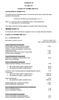 1. CALCULATION OF PERMIT FEES SCHEDULE A BY-LAW B-6 CLASSES OF PERMITS AND FEES Permit fees shall be calculated based on the formula given below, unless otherwise specified in this schedule: Permit Fee
2012 CODES SIGNIFICANT CHANGES 2012 IBC
 2012 CODES SIGNIFICANT CHANGES 2012 IBC 1. Section 303.4 added language that includes commercial kitchens which are associated with restaurants, cafeterias, and similar dining facilities to be classified
MAJOR 2015 MN RESIDENTIAL CODE CHANGES Effective Date: January 24 th, 2015
 MAJOR 2015 MN RESIDENTIAL CODE CHANGES Effective Date: January 24 th, 2015 **Disclaimer: This document is to serve as informational purposes only. This is not a code book or a final interpretation of the
Building Codes Update: The 2009 International Fire Code and the Apartment Industry
 ! Building Codes Update: The 2009 International Fire Code and the Apartment Industry Apartment operators and developers should be aware of organizational changes in the 2009 edition of the International
Ch. 58 DIVISION D-O 34 CHAPTER 58. DIVISION D-O ORDINARY COMMERCIAL, INDUSTRIAL, OFFICE OCCUPANCY GROUP CONSTRUCTION TYPE MAXIMUM STORY HEIGHT
 Ch. 58 DIVISION D-O 34 CHAPTER 58. DIVISION D-O ORDINARY COMMERCIAL, INDUSTRIAL, OFFICE Sec. 58.1. Division D-O occupancies. 58.2. Separation and mixed occupancy. OCCUPANCY GROUP CONSTRUCTION TYPE MAXIMUM
New York City Department of Buildings
 The New NYC Building Code Chapter 10 Means of Egress New York City Department of Buildings Technical Affairs Fatma M. Amer, P.E. Copyright Materials This presentation is protected by US and International
CHAPTER 9 FIRE PROTECTION SYSTEMS
 CHAPTER 9 FIRE PROTECTION SYSTEMS SECTION 901 GENERAL 901.1 Scope. Provisions of this chapter shall govern the application, design, installation, testing and maintenance of automatic sprinklers, standpipes
General Safety & Health Standards Published by the Division of Building Safety In Cooperation with the Idaho Industrial Commission
 General Safety & Health Standards Published by the Division of Building Safety In Cooperation with the Idaho Industrial Commission Local Fire Alarm 064. FIRE ALARM SYSTEMS 01. Scope 02. Definitions 03.
Schedule B to By-law 33-2009
 Amended by By-law 8-2016 Note: This consolidation is prepared for convenience only. For accurate reference the original by-laws should be reviewed. Floor Area Calculation Floor area shall: Schedule B to
Educational. Educational-Existing 1/28/2014. OCCUPANT LOADS [no change] Application. Application
![Educational. Educational-Existing 1/28/2014. OCCUPANT LOADS [no change] Application. Application](/thumbs/24/2939000.jpg "Educational. Educational-Existing 1/28/2014. OCCUPANT LOADS [no change] Application. Application") February 2014 Code Requirements and Inspections in Educational Occupancies Presented By: Barry W. Rickert Douglas M. Schanne Fire Marshal Training Program Supervisor Office of Education & Data Management
February 2014 Code Requirements and Inspections in Educational Occupancies Presented By: Barry W. Rickert Douglas M. Schanne Fire Marshal Training Program Supervisor Office of Education & Data Management
MINIMUM STANDARDS FOR HIGH-RISE BUILDINGS
 CHAPTER 93 MINIMUM STANDARDS FOR HIGH-RISE BUILDINGS Note: Chapter 93 is entirely Seattle amendments to the International Fire Code and is not underlined. Point of Information The requirements of this
REVEWED BY: Ross Rogien B.O/P.R. ADDITIONAL REVIEW(S) REQ.-FIRE DEPT Y/N
 PLAN REVIEW FOR: PROJECT NAME: OWNER: ARCH/DESIGNER: ADDRESS: Ph/Fx: Plans Dated: E-mail: Sealed By: Estimated Project Cost - $ REVEWED BY: Ross Rogien B.O/P.R. ADDITIONAL REVIEW(S) REQ.-FIRE DEPT Y/N
FIRE-RESISTANCE-RATED CONSTRUCTION
 CHAPTER 7 FIRE-RESISTANCE-RATED CONSTRUCTION SECTION 70 GENERAL 70. Scope. The provisions of this chapter shall govern the materials and assemblies used for structural fire resistance and fire-resistance-rated
527 CMR: BOARD OF FIRE PREVENTION REGULATIONS
 527 CMR 31.00: CARBON MONOXIDE ALARMS Section 31.01: Purpose and Scope 31.02: Definitions 31.03: General Installation Provisions 31.04: Specific Installation Provisions 31.05: Carbon Monoxide Protection:
CITY OF FAIRFAX CODE ADMINISTRATION 703-385-7830 / FAX 703-385-9265 www.fairfaxva.gov
 CITY OF FAIRFAX CODE ADMINISTRATION 703-385-7830 / FAX 703-385-9265 www.fairfaxva.gov Finishing a basement to make additional living space in a house is a popular construction project for many homeowners.
Schedule B to By-law 33-2009 Part A Fees Payable for Permits
 Floor Area Calculation Floor area shall: Part A Fees Payable for Permits (Effective January 1, 2015) a) be calculated by measuring to the outer face of exterior walls and to the centre of party walls or
Appendix B. 2010 Florida Building Code Building Section 423.25 Public Shelter Design Criteria
 Appendix B 2010 Florida Building Code Building Section 423.25 Public Shelter Design Criteria 423.25 Public shelter design criteria. 423.25.1 New facilities. New educational facilities for school boards
9.8.1.1. General (1) This Section applies to the design and construction of interior and exterior stairs, steps, ramps, railings and guards.
 Section 9.8. Stairs, Ramps, Handrails and Guards 9.8.1. Application 9.8.1.1. General (1) This Section applies to the design and construction of interior and exterior stairs, steps, ramps, railings and
Adult Family Home (AFH) LOCAL BUILDING INSPECTION CHECKLIST Code References: 2012 IRC Section R325 (WAC 51-51) APPLICATION NUMBER:
 Adult Family Home (AFH) LOCAL BUILDING INSPECTION CHECKLIST Code References: 2012 IRC Section R325 (WAC 51-51) APPLICATION NUMBER: SECTIONS 1, 2, 3, AND 4 MUST BE COMPLETED BY APPLICANT BEFORE INSPECTION
Building Permit, Fire Inspection and Operating Permit Fee Schedule
 Chenango County Code Enforcement Building Permit, Fire Inspection and Operating Permit Fee Schedule Building Permit Exceptions: Buildings being used solely for the purpose of agriculture. As per Agricultural,
TYPICAL FIRE SAFETY INSPECTION VIOLATIONS
 TYPICAL FIRE SAFETY INSPECTION VIOLATIONS The following is a list of typical violations often found by inspectors and a generic solution. You can use this list to improve the safety of your facility, to
Single Family Residential Basement Finish
 How to Use This Guide Building Guide Pottawattamie County Planning & Development Department Building & Safety Division Single Family Residential Basement Finish Provide two (2) sets of plans and complete
How To Make A House Safe
 1 RESIDENTIAL Screen Enclosures Orange County Residential Code Compliance Alternative design method for screen enclosures R301.2.1.1.3 PLAN REVIEW Engineered plans must state that the Alternative Design
We hope these Frequently Asked Questions will be of use both to municipal officials and fire inspectors.
 September 14, 2012 Dear AMM Member: Please see the attached Fire Code Frequently Asked Questions. This document was compiled by the Office of the Fire Commissioner at the AMM s request to help clarify
City of Riverside Building & Safety Division Phone: (951) 826-5697 www.riversideca.gov
 City of Riverside Building & Safety Division Phone: (951) 826-5697 www.riversideca.gov BUILDING CODE REQUIREMENTS FOR CHILD DAY CARE The purpose of this document is to provide the user with a basic level
CHILD CARE CENTER INFORMATION SHEET
 CHILD CARE CENTER INFORMATION SHEET SECTION 1 INTRODUCTION This fire safety information sheet is based on the 2007 Minnesota State Fire Code (MSFC) and the 2007 Minnesota State Building Code (MSBC). It
Errata has been identified as follows:
 2009 IFC Performing Commercial Fire Inspections Inventory Number: 1424S09 Second Printing; July 2014 Changes HAVE been made- Third Printing: September 2014 Errata has been identified as follows: 1. Page
Florida Advanced Building Code Course# FLBC11
 Florida Advanced Building Code Course# FLBC11 EZpdh.com All Rights Reserved CHAPTER 1 Administration: Significant Changes Chapter 1 is now split into two parts: Part 1 is Scope and Application, Part 2
5-8.1.4* Any required illumination shall be arranged so that the failure of any single lighting unit shall not leave any area in darkness.
 NFPA 101 Life Safety Code Section 5-8 Illumination of Means of Egress 5-8.1 General. 5-8.1* Illumination of means of egress shall be provided in accordance with this section for every building and structure
Development Services City of Lawrence, KS
 Development Services City of Lawrence, KS Building Planning Table R301.2 (1) Climatic & Geographic Design Criteria Building Planning The design criteria for wind speed increased from 90 MPH to 115 MPH.
OCFRD TENT STANDARD 6000. This Standard operates under the authority of Orange County, Florida Ordinance and State Statutes.
 1. Authority Orange County Fire Rescue Department Tents & Membrane Structures Office of The Fire Marshall - 109 E. Church Street, Lower Level - Orlando, Florida 32801-3319 Phone: 407-836-0004 Fax: 407-836-8310
Mobile Fire Rescue Department Bureau of Fire Prevention
 222 Mobile Fire Rescue Department Bureau of Fire Prevention Samuel L. Jones Mayor Stephen A. Dean Fire Chief February 2011 2009 International Fire Code Fire Alarm and Detection Systems 907.1 General. This
Healthcare Engineering. Code Summary Report
 American Society for Healthcare Engineering Code Summary Report CODE SUMMARY HEALTH CARE NEW BUILDINGS This code summary is based on the following codes: 2000 Edition NFPA 101, The Life Safety Code (LSC),
FIRE-RESISTANCE-RATED CONSTRUCTION
 CHAPTER 7 FIRE-RESISTANCE-RATED CONSTRUCTION SECTION 70 GENERAL 70. Scope. The provisions of this chapter shall govern the materials and assemblies used for structural fire resistance and fire-resistance-rated
2. What building projects are exempted? (permit not required)
 BUILDING AND SAFETY DEPARTMENT 1. What building projects require a permit? Following is a list of projects that require building permits based on Appendix chapter 1 of the California Building Code and
FIRE AND LIFE SAFETY REQUIREMENTS FOR EXISTING BUILDINGS
 CHAPTER 46 FIRE AND LIFE SAFETY REQUIREMENTS FOR EXISTING BUILDINGS SECTION 4601 GENERAL 4601.1 Scope. The provisions of this chapter shall apply to existing buildings constructed prior to a state building
FIRE AND LIFE SAFETY REQUIREMENTS FOR CONVENTIONS, TRADE SHOWS AND EXHIBITS
 FIRE AND LIFE SAFETY REQUIREMENTS FOR CONVENTIONS, TRADE SHOWS AND EXHIBITS November 2011, Updated March 2012 COLORADO SPRINGS FIRE DEPARTMENT Division of the Fire Marshal If you have any questions or
How To Protect A Swimming Pool
 County of Gloucester Codes Compliance Building Department Building Three P. O. Box 329 Gloucester, Virginia 23061 Building Code Guidelines Residential Swimming Pools & Spas KEEP YOUR POOL SAFE CODE REQUIREMENTS
New Ontario Building Code Requirements for Mid-rise Wood Frame Buildings
 New Ontario Building Code Requirements for Mid-rise Wood Frame Buildings Note: This information addresses complex issues in a summary fashion. Consideration should be given to the official version of the
Requirements for Hydrogen Storage and Use
 Requirements for Hydrogen Storage and Use I. INTRODUCTION Fire and Life-Safety Group (FLS) The following is a summary of the fire and building code requirements for the storage and use of hydrogen. These
BUILDING INSPECTORS INSPECTION FORM FOR CHILD CARE CENTERS
 DCD-0304 Identification # Rev. 9/08 County Date of Inspection NAME OF OPERATION BUILDING INSPECTORS INSPECTION FORM FOR CHILD CARE CENTERS ADDRESS TELEPHONE: CITY STATE ZIP BUILDING INSPECTORS CERTIFICATE
COMMERCIAL COOKING HOODS, VENTILATION & FIRE SUPPRESSION SYSTEM GUIDELINES AND PROCEDURES
 COMMERCIAL COOKING HOODS, VENTILATION & FIRE SUPPRESSION SYSTEM GUIDELINES AND PROCEDURES These guidelines are to be used for ALL commercial cooking hoods, ventilation systems and related fire suppression
NFPA 101 2012 SELECT SIGNIFICANT CHANGES
 NFPA 101 2012 SELECT SIGNIFICANT CHANGES William E. Koffel, P.E., FSFPE President Koffel Associates, Inc. www.koffel.com [email protected] Expertly Engineering Safety From Fire INTRODUCTION NFPA 101 is
The Accord on Fire and Building Safety in Bangladesh Building Standard
 The Accord on Fire and Building Safety in Bangladesh Building Standard December 30, 2013 TABLE OF CONTENTS 1 Part 1 Scope and Definitions... 1 2 Part 2 Administration and Enforcement... 5 3 Part 3 General
City of Bettendorf Fire Alarm System Requirements
 City of Bettendorf Fire Alarm System Requirements Section 907 of the 2009 Edition of the International Fire Code (IFC) and Section 10-7-3 of the Municipal Code provide fire alarm requirements. IFC Section
FIRE AND SMOKE PROTECTION FEATURES
 CHAPTER 7 FIRE AND SMOKE PROTECTION FEATURES SECTION 70 GENERAL 70. Scope. The provisions of this chapter shall govern the materials, systems and assemblies used for structural fire resistance and fire-resistance-rated
CITY OF TORONTO. BY-LAW No. 349-2008
 Authority: Licensing and Standards Committee Item 12.3, adopted as amended, by City of Toronto Council on April 28 and 29, 2008 Enacted by Council: April 29, 2008 CITY OF TORONTO BY-LAW No. 349-2008 To
Upper Southampton Township Department of Licenses and Inspections 939 Street Rd. Southampton, Pa. 18966 Phone: 215-322-9700 Fax: 215-322-5842
 Upper Southampton Township Department of Licenses and Inspections 939 Street Rd. Southampton, Pa. 18966 Phone: 215-322-9700 Fax: 215-322-5842 APPLICATION for ZONING and BUILDING PERMIT APPLICATION INSTRUCTIONS:
contents 1. Introduction 7. Types of Construction IBC - Chapter 6 NFPA 101 - Section 8.2 2. Analysis & Recommendations
 Table of Contents contents 1. Introduction 2. Analysis & Recommendations 3. Definitions IBC - Chapter 2 NFPA 101 - Chapter 3 4. Occupancy Classification IBC - Chapter 3 NFPA 101 - Chapter 6 5. Special
Preparation for 2015 Residential Code Changes Discussion with Local Builders and Designers
 City of Duluth Preparation for 2015 Residential Code Changes Discussion with Local Builders and Designers Thank you for taking the time to join us today. We know you are busy and your time is valuable.
This handout is a guide only and does not contain all of the requirements of the Minnesota State Building Code or city ordinances.
 Basement Finishing Guide Community Development Department Building Inspections Division 5200 85 th Avenue North / Brooklyn Park, MN 55443 Phone: (763) 488-6379 / Fax: (763) 493-8171 6/15 www.brooklynpark.org
RESIDENTIAL PLUMBING ALTERATIONS PERMIT REQUIREMENTS
 RESIDENTIAL PLUMBING ALTERATIONS PERMIT REQUIREMENTS The following guidelines are intended to assist with the permit acquisition process with regard to Plumbing Alterations. Not all information, or additional
http://www.iccsafe.org/
 Sections R311 and R312 from the 2006 International Residential Code These sections of Chapter 3 of the 2006 International Residential Code for One and Two Family Dwellings (R311 and R312) including the
Page 1 of 6 COMPLIANCE CHECKLIST. > Long Term Care Facility - Nursing Unit
 COMPLIANCE CHECKLIST Page 1 of 6 > Long Term Care Facility - Nursing Unit The following checklist is for plan review of new long-term care facilities and new additions to existing long-term care facilities.
ELECTRICAL CONTRACTORS THE UNIVERSITY OF TENNESSEE KNOXVILLE, TENNESSEE SECTION 16050 PAGE 1
 KNOXVILLE, TENNESSEE SECTION 16050 PAGE 1 PART 1 - GENERAL 1.01 RELATED DOCUMENTS: SECTION 16050 A. Drawings and general provisions of Contract, including General and Supplementary Conditions and Division-1
Applications for building permits will not be reviewed until all of the required information has been submitted.
 NOTICE: Applications for building permits will not be reviewed until all of the required information has been submitted. Once all items are submitted a minimum of ten (10) working days are required to
MINNESOTA STATE DEPARTMENT OF PUBLIC SAFETY
 MINNESOTA STATE DEPARTMENT OF PUBLIC SAFETY State Fire Marshal Division 444 Cedar Street, Suite 145, St. Paul, Minnesota 55101-5145 Phone: 651/201-7200 FAX: 651/215-0525 TTY: 651/282/6555 Internet: http://www.fire.state.mn.us
FIRE AND LIFE SAFETY REQUIREMENTS FOR CONVENTIONS, TRADE SHOWS AND EXHIBITS November 2011
 FIRE AND LIFE SAFETY REQUIREMENTS FOR CONVENTIONS, TRADE SHOWS AND EXHIBITS November 2011 COLORADO SPRINGS FIRE DEPARTMENT Division of the Fire Marshal If you have any questions or comments regarding the
Fire Alarm Systems Requirements by Occupancy Type
 WALT WHITE Fire Chief 5770 Freeport Blvd., Suite 200 Sacramento, CA 95822-3516 Ph: (916) 808-1300 Fax: (916) 808-1629 www.sacfire.org Fire Alarm Systems Requirements by Occupancy Type 2013 California Building
CHAPTER 29 PLUMBING SYSTEMS. [P] TABLE 2902.1 MINIMUM NUMBER OF REQUIRED PLUMBING FIXTURES a (See Sections 2902.2 and 2902.3) 1 per 40 for the
![CHAPTER 29 PLUMBING SYSTEMS. [P] TABLE 2902.1 MINIMUM NUMBER OF REQUIRED PLUMBING FIXTURES a (See Sections 2902.2 and 2902.3) 1 per 40 for the](/thumbs/40/21363378.jpg "CHAPTER 29 PLUMBING SYSTEMS. [P] TABLE 2902.1 MINIMUM NUMBER OF REQUIRED PLUMBING FIXTURES a (See Sections 2902.2 and 2902.3) 1 per 40 for the") CHAPTER 29 PLUMBING SYSTEMS > SECTION 2901 GENERAL [P] 2901.1 Scope. The provisions of this chapter and the Phoenix Plumbing Code shall govern the erection, installation, alteration, repairs, relocation,
CHAPTER 29 PLUMBING SYSTEMS > SECTION 2901 GENERAL [P] 2901.1 Scope. The provisions of this chapter and the Phoenix Plumbing Code shall govern the erection, installation, alteration, repairs, relocation,
Code Requirements for Existing Buildings
 Code Requirements for Existing Buildings Kevin S. Hastings, P.E., LEED AP R. W. Sullivan, Inc. 529 Main St., Suite 203 Charlestown, MA (617) 523-8227 www.rwsullivan.com R.W. Sullivan Engineering (RWS)
KITCHEN AND BATH REMODELING BUILDING PERMIT REQUIREMENTS
 St. Louis County Department of Public Works Division of Code Enforcement KITCHEN AND BATH REMODELING BUILDING PERMIT REQUIREMENTS This guideline is intended to provide the homeowner/contractor with the
Overview of Hotel Fire Safety Requirements
 Overview of Hotel Fire Safety Requirements in the Fire Code Susan Clarke, P.Eng. Office of the Fire Marshal - January 10, 2012 1 Agenda Regulation History - Hotels Fire Code Overview (Parts 1 to 8) Defined
How To Build A Basement House
 Single Family Basement Finish Purpose of Guide The purpose of this guide is to assist you in the permit process for your project. This handout is intended as a basic plan submittal under the 2009 International
Indiana Building Rehabilitation Standard
 Rule 8. Indiana Building Rehabilitation Standard 675 IAC 12-8-1 Definitions Sec. 1. The following definitions apply throughout this rule: (1) "Building code" means the Indiana Building Code under 675 IAC
Charter Township of Shelby Harry Reese Building Director
 Charter Township of Shelby Harry Reese Building Director Phone: (586) 731-5969 52700 Van Dyke Fax: (586) 803-2099 Shelby Township, MI 48316-3572 E-mail: [email protected] OUTLINE PROCEDURES FOR PRIVATE
The City of Basehor, Kansas
 The City of Basehor, Kansas Residential and Miscellaneous Permits This list provides general information regarding permit requirements for various residential construction and maintenance activities. The
Building Permit Application Packet. BUILDING CODES Adopted by La Plata County For Enforcement In The Unincorporated Areas Of La Plata County
 Building Permit Application Packet The purpose of Building Codes is to establish the minimum requirements to safe guard the public health, safety and general welfare through structural strength, means
PROJECT SUMMARY. Scope of work details: (If phased construction, please see plan submittal guidelines.)
 APPENDIX B BUILDING CODE SUMMARY FOR ALL COMMERCIAL FIRE RESTORATION PROJECTS (EXCEPT 1 AND 2-FAMILY DWELLINGS AND TOWNHOUSES) (Reproduce the following data on the building plans sheet 1 or 2) Name of
MA BUILDING CODES ON SWIMMING POOLS SECTION 780 CMR 120.M
 MA BUILDING CODES ON SWIMMING POOLS SECTION 780 CMR 120.M APPENDIX 120.M SWIMMING POOLS, SPAS AND HOT TUBS SECTION 120.M101 GENERAL 120.M101.1 General. The provisions of this appendix shall control the
Walking and Working Surface Checklist:
 Walking and Working Surfaces Purpose: This information is presented to improve the level of safety in our operations, and to inform you that we will comply with the OSHA Standard 29 CFR 1910.23. Responsibility:
Chapter 3 Pre-Installation, Foundations and Piers
 Chapter 3 Pre-Installation, Foundations and Piers 3-1 Pre-Installation Establishes the minimum requirements for the siting, design, materials, access, and installation of manufactured dwellings, accessory
Errata NFPA 1. Fire Code. 2015 Edition
 Errata NFPA 1 Fire Code 2015 Edition Reference: 2.2, Table 6.1.14.4.1(a) and (b), 13.3.1.6, 13.7.2.13.2.1, 14.11.3.3, 18.5.2, 18.5.3, 20.1.2, 20.1.5.12, 25.1.1, 25.3, 25.4, A.3.3.164.2, and A.13.3.2.9.1
Winnipeg Fire Department Fire Prevention Branch
 Winnipeg Fire Department Fire Prevention Branch Manitoba Fire Code Life-Safety Equipment Maintenance Requirements The Fire Prevention Branch of the Winnipeg Fire Department has prepared this document of
Number of Sides Required to Have a Handrail
 Excerpt from 2012 B.C. Building Code HANDRAILS & GUARDS 9.8.7. Handrails 9.8.7.1. Required Handrails 1) Except as provided in Sentences (2) to (4), handrails shall be installed on stairs and ramps in accordance
WHEN IS A PERMIT REQUIRED?
 WHEN IS A PERMIT REQUIRED? Any owner, builder, contractor, or other authorized agent who intends to construct, enlarge, alter, repair, move, demolish, or change the occupancy of a building or structure,
A Residential Owner s Guide to PERMITS. Elgin CITY OF PLANNING & NEIGHBORHOOD SERVICES
 A Residential Owner s Guide to PERMITS CITY OF Elgin PLANNING & NEIGHBORHOOD SERVICES CITY OF Elgin A Residential Owner s Guide Welcome! This booklet has been prepared to provide residential property owners
FIRE AND SMOKE PROTECTION FEATURES
 CHAPTER 7 FIRE AND SMOKE PROTECTION FEATURES SECTION 70 GENERAL 70. Scope. The provisions of this chapter shall govern the materials, systems and assemblies used for structural fire resistance and fire-resistance-rated
HCD DSA OSHPD 1 2 1/AC AC SS SS/CC 1 2 3 4 2013 CALIFORNIA BUILDING CODE 199
 CALIFORNIA BUILDING CODE MATRIX ADOPTION TABLE CHAPTER 7 FIRE AND SMOKE PROTECTION FEATURES (Matrix Adoption Tables are non-regulatory, intended only as an aid to the user. See Chapter for state agency
Arapahoe County Residential Water Heater Installation and Inspection Guide
 Arapahoe County Residential Water Heater Installation and Inspection Guide The attached handout is designed to be a general permit submittal and inspection guide covering most installation instances, however
- 5 - Table1. Maximum Compartment Volumes
 - 5 - Part II - SPECIFIC REQUIREMENTS 5. Compartmentation 5.1 Every building should be divided into compartments by walls and floors to inhibit the spread of fire. 5.2 Compartment walls, compartment floors,
MANUFACTURED HOUSING USED AS DWELLINGS
 MANUFACTURED HOUSING USED AS DWELLINGS SECTION AE101 SCOPE AE101.1 General. These provisions shall be applicable only to a manufactured home used as a single dwelling unit and shall apply to the following:
Name Of Occupancy Date. Yes No Describe
 FIRE PREVENTION INSPECTION CHECKLIST For Class A Occupancy (For Assembly Buildings, Bars, Restaurants, Gyms, Churches, Arenas, Theatres or wherever people gather) Name Of Occupancy Date Physical Address
Exit Routes, Emergency Action Plans, Fire Prevention Plans, and Fire Protection. OSHA Office of Training and Education 1
 Exit Routes, Emergency Action Plans, Fire Prevention Plans, and Fire Protection OSHA Office of Training and Education 1 Introduction Fires and explosions kill more than 200 and injure more than 5,000 workers
MINNESOTA HEALTH CARE ENGINEERS IN ASSISTED LIVING FACILITIES
 MINNESOTA HEALTH CARE ENGINEERS FIRE/LIFE SAFETY IN ASSISTED LIVING FACILITIES September 13, 2012 MINNESOTA HEALTH CARE ENGINEERS FIRE/LIFE SAFETY IN ASSISTED LIVING FACILITIES WELCOME Exits Restrooms
Sample Drawing Package for One and Two Family Dwelling Applications
 Sample Drawing Package for One and Two Family Dwelling Applications For a full list of submission requirements, refer to the relevant checklist for your application found on our website: http://vancouver.ca/home-property-development/application-forms-and-checklists.aspx