
Population Growth Activity Date Per
|
|
|
- Beverley Merritt
- 9 years ago
- Views:
Transcription
1 Population Growth Activity Name Date Per Objectives: You will graph the population growth of different populations and use it to predict future growth. You will identify factors that affect population growth. A. Human Population Growth Prior to 1950, the death rate was high, which kept the numbers of humans from increasing rapidly. In the 19th Century, the agricultural revolution increased food production. The industrial revolution improved methods of transporting food and other good. In the 20th Century, advances in medicine, sanitation and nutrition have decreased the death rates further. These factors combined to produce the rapid growth of the human population in the 20th century. As with any population, humans are also limited by factors such as space, amount of food and disease. The carrying capacity is the number of individuals that a stable environment can support. Authorities disagree on the maximum number of people that the earth can support, though the numbers generally range for 8 to 10 billion. As the population approaches its limit, starvation will increase. Some countries have a much higher growth rate than others. Growth rate is the number of people born minus the number of people that die. Most countries are trying to reduce their growth rate. Zero population growth means that as many people are being born as there are dying - to achieve zero population growth, each couple would need to have no more than two children (to replace the parents). Even if this number is achieved, the population will continue to grow because the parents will still live on for decades, as their children have children and their children have children, and so forth. The United States reached zero population growth in the 1980's, and yet the overall population of the US still increases. The earth s known human population size is reported in the table below. First graph the data and then answer the analysis questions. Make sure to use all of the space given for the graph. Table 1. Earth s Human Population Size Year A.D. Number of People (in billions)

2 Analysis 1. It took 1,649 years for the world population to double, going from 0.25 billion people to 0.50 billion people. How long did it take for the population to double a second time? 2. How long did it take for the population to double a third time? A fourth time? 3. Based on your graph, in what year will the population reach 8 billion?

3 4. Define the following termsa) Exponential growth- b) Logistic growth- c) Carrying capacity- d) Limiting factors- 5. What factors contributed to the world's overall population growth in the last 150 years? 6. If the carrying capacity of the earth was 9 billion people, when would this number be reached (according to your graph)? 7. What will happen when the human population exceeds the earth's carrying capacity? 8. Use the graph below to answer the questions that follow. a) Which country looks like it is experiencing exponential growth? b) Which country looks like it has reached its carrying capacity?

4 c) Because it has reached its carrying capacity, describe the relationship between its birth rates and death rates. d) Describe what is happening to Europe s population size in terms of birth rates and death rates. e) Which country or countries could be experiencing: emigration: Explain your answer. immigration: Explain your answer. 9. Read the CAUSE on the left hand side of the table below. Then, predict the EFFECT of the cause in the right-hand column. For the last one, fill in the CAUSE portion of the table. Cause During the 1920s, many Eastern European people leave their countries to come to the United States. Effect During the 1920 s, many Eastern European people enter the United States. Many more babies were born in the post-world War II era than in the pre-world War II era. China imposed a one child only policy in 1979 which is still in effect today. Seals are hunted for their meat and fur in some regions, resulting in many deaths of seals.

5 B. Deer: Predation or Starvation Background Information: In 1970 the deer population of an island forest reserve about 518 square kilometers in size was about 2000 animals. Although the island had excellent vegetation for feeding, the food supply obviously had limits. Thus the forest management personnel feared that overgrazing might lead to mass starvation. Since the area was too remote for hunters, the wildlife service decided to bring in natural predators to control the deer population. It was hoped that natural predation would keep the deer population from becoming too large and also increase the deer quality (or health), as predators often eliminate the weaker members of the herd. In 1971, ten wolves were flown into the island. The data collected during this program are shown in the following table. The Population Change is the number of deer born minus the number of deer that died during that year. Fill in the last column for each year. The first has been calculated for you. Then graph the deer and wolf populations on the graph below. Use one color to show deer populations and another color to show wolf populations. Year Wolf Population Deer Population Number of Deer Offspring Predation Starvation Deer Population Change , , ,500 1, , , , , , , , ,

6 Analysis: 1. What is a density-dependent limiting factor? 2. When do density-dependent factors operate most strongly? 3. List four density-dependent limiting factors? a. b. c. d. 4. Describe what happened to the deer and wolf populations between 1971 and What happened to the deer population when the number of wolves was low? 6. What do you think would have happened to the deer on the island had wolves NOT been introduced? Explain your answer. 7. What is the relationship between the deer and the wolves on the island? 8. Is the number of deer on the island a density-dependent or density-independent limiting factor for the wolf? Explain your answer.

7 9. Read each situation in the chart below. Then, state if it is a density-independent limiting factor or a density-dependent limiting factor. Then, state the specific limiting factor that is occurring. The first one is done for you as an example. Situation Mrs. Engelbrecht has 32 students assigned to her Biology class, but she only has room for 28. Because the room is so crowded, the extra 4 students leave the room to go to Guidance and have their schedules changed. Northern pike (it s a fish) feed on another fish, the yellow perch. An increase in the yellow perch population causes an increase in the northern pike population. The BP oil spill in the Gulf of Mexico has harmed many aquatic organisms that live in the Gulf region. A new strain of influenza (the flu) breaks out in New York City. A population of rabbits and a population of deer are both feeding off the same plants in the same habitat. Hurricane Katrina forced thousands of people to leave New Orleans. 65 million years ago, a large asteroid collided with the Earth. As a result, large amounts of ash were ejected into Earth s atmosphere. Density-independent or Density-dependent? Density-dependent Limiting Factor: emigration

Biology Chapter 5 Test
 Name: Class: _ Date: _ Biology Chapter 5 Test Multiple Choice Identify the choice that best completes the statement or answers the question. 1. What does the range of a population tell you that density
CCR Biology - Chapter 14 Practice Test - Summer 2012
 Name: Class: Date: CCR Biology - Chapter 14 Practice Test - Summer 2012 Multiple Choice Identify the choice that best completes the statement or answers the question. 1. Zebras live on the savannas of
You re One in Seven Billion!
 You re One in Seven Billion! We ve all heard the expression, You re one in a million!. With the ever-growing number of people on the planet, it might be more accurate to say, You re one in seven billion!
Population Ecology. Life History Traits as Evolutionary Adaptations
 Population Ecology An Overview of Population Ecology Population ecology is the study of factors that affect population: Density Growth A population is a group of individuals of a single species that occupy
ECOSYSTEM RESPONSES. reflect
 reflect There is a saying, No man is an island, which means that people need one another in order to survive. Everyone on Earth is interconnected in some way. This is not only true of human beings, but
14.1. Every organism has a habitat and a niche. A habitat differs from a niche. Interactions in Ecosystems CHAPTER 14.
 SECTION 14.1 HABITAT AND NICHE Study Guide KEY CONCEPT Every organism has a habitat and a niche. VOCABULARY habitat ecological niche competitive exclusion ecological equivalent A habitat differs from a
8.7 Exponential Growth and Decay
 Section 8.7 Exponential Growth and Decay 847 8.7 Exponential Growth and Decay Exponential Growth Models Recalling the investigations in Section 8.3, we started by developing a formula for discrete compound
Critical Thinking ANALOGIES. Skills Worksheet
 Skills Worksheet Critical Thinking ANALOGIES In the space provided, write the letter of the pair of terms or phrases that best complete the analogy shown. An analogy is a relationship between two pairs
III. World Population Growth
 III. World Population Growth Population dynamics are one of the key factors to consider when thinking about development. In the past 50 years the world has experienced an unprecedented increase in population
Generating Heat. Part 1: Breathing Earth. Part 2: The Growth of Carbon Emitters. Introduction: Materials:
 Generating Heat Introduction: Carbon dioxide (CO 2 ) is the primary greenhouse gas contributing to global climate change. A greenhouse gas is a gas that absorbs the sunlight being reflected back towards
World Population Growth
 3 World Population Growth Why is world population growing faster than ever before? Population dynamics are one of the key factors to consider when thinking about development. In the past years the world
A Method of Population Estimation: Mark & Recapture
 Biology 103 A Method of Population Estimation: Mark & Recapture Objectives: 1. Learn one method used by wildlife biologists to estimate population size of wild animals. 2. Learn how sampling size effects
REVIEW UNIT 10: ECOLOGY SAMPLE QUESTIONS
 Period Date REVIEW UNIT 10: ECOLOGY SAMPLE QUESTIONS A. Sample Multiple Choice Questions Complete the multiple choice questions to review this unit. 1. All of the following are density-dependent factors
Ecosystems and Food Webs
 Ecosystems and Food Webs How do AIS affect our lakes? Background Information All things on the planet both living and nonliving interact. An Ecosystem is defined as the set of elements, living and nonliving,
ENVIRONMENTAL CHANGES
 reflect How do you respond to environmental changes? Maybe you wear different types of clothes in different seasons. Maybe you only ride your bike during certain times of the year. What if you moved to
Ecology - scientific study of how individuals interact with their environment 34.1
 Biology 1407 Exam 4 Notes - Ecology Ch.35-36 Ecology - scientific study of how individuals interact with their environment 34.1 - organisms have adapted to - evolved in - a particular set of conditions;
food webs reflect look out! what do you think?
 reflect Imagine for a moment that you stay after school one day to clean up the classroom. While cleaning, you move some plants away from the sunny windows. A week later, you remember to move the plants
CHAPTER 3. A is a certain number of individuals that make up an interbreeding, reproducing group within a given area.
 Review Question-1 Answer CHAPTER 3 Basic Needs of Living Things A is a certain number of individuals that make up an interbreeding, reproducing group within a given area. a. species b. population c. organism
Guided Reading Level Ī - -
 A Friend to the Pilgrims Guided Reading Level Ī - - No part of this publication may be reproduced in whole or in part, or stored in a retrieval system, or transmitted in any form or by any means, electronic,
Geography at GISSV: An Introduction to the Curriculum
 Geography at GISSV: An Introduction to the Curriculum Classes Geography is taught for two hours per week in Grades 5-9. The only exception is in Grade 8, where class is taught for one hour per week for
Extinction; Lecture-8
 I. introduction Definition Current extinction Genetic drift Extinction; Lecture-8 II. 3 types of extinction 1. background 2. mass 3. stochastic III. 5 periods of mass IV. human caused 1. on land and in
Process 3.5. A Pour it down the sink. B Pour it back into its original container. C Dispose of it as directed by his teacher.
 Process 3.5 Biology EOI sample test questions Objective numbers correspond to the State Priority Academic Student Skills (PASS) standards and objectives. This number is also referenced with the local objective
Pond Vocabulary Words and Meanings
 Pond Vocabulary Words and Meanings Adapt: to adjust to a use or situation Aquatic: from or in the water Bacteria: tiny organisms, too small to be seen with the naked eye Carnivore: an animal that eats
C.4 Applications of Differential Equations
 APPENDIX C Differential Equations A39 C.4 Applications of Differential Equations Use differential equations to model and solve real-life problems. EXAMPLE 1 Modeling Advertising Awareness The new cereal
Ecology 1 Star. 1. Missing from the diagram of this ecosystem are the
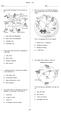 Name: ate: 1. Missing from the diagram of this ecosystem are the 5. ase your answer(s) to the following question(s) on the diagram below and on your knowledge of biology.. biotic factors and decomposers.
-* -* -* -* reflecting. A~fion ~ynop i. Gl) ~ linking to real world
 Afion ynop i Students make food webs of their study site, then trace how a change in one population could affect other populations within the web. Session 1 1. Show a food web made by a team of ecologists.
Lesson 3: Fish Life Cycle
 Lesson 3: Fish Life Cycle Activity: Diagram fish life cycle. Grade level: 4-8 Subjects: Science, social studies Setting: Classroom Duration: 50 minutes Key Terms: Fry, life cycle, life history, spawn,
AP Biology Unit I: Ecological Interactions
 AP Biology Unit I: Ecological Interactions Essential knowledge 1.C.1: Speciation and extinction have occurred throughout the Earth s history. Species extinction rates are rapid at times of ecological stress.
Deforestation in the Amazon
 Deforestation in the Amazon By Rhett A Butler Rainforests once covered 14% of the earth's land surface; now they cover a mere 6% and experts estimate that the last remaining rainforests could be consumed
Growth Models. Linear (Algebraic) Growth. Growth Models 95
 Growth Models 95 Growth Models Populations of people, animals, and items are growing all around us. By understanding how things grow, we can better understand what to expect in the future. Linear (Algebraic)
Environmental Issues. Approaches to Environmental Science. Environmental Issues, natural capital degradation. Approaches to Environmental Science
 Environmental Issues Approaches to Environmental Science UW Environmentally-Related Undergrad Programs: The Program on the Environment Environmental Studies Certificate In Restoration Ecology College of
Chapter 1 Key Themes in Environmental Science
 Key Themes in Environmental Science Case Study: Shrimp, Mangroves, and Pickup Trucks This case study highlights the plight of a small farmer in Thailand in the shrimp farming business. He makes his living
Florida Institute of Oceanography
 Florida Institute of Oceanography Dr. William T. Hogarth, Interim Director, FIO & Dr. Jyotika I. Virmani, Associate Director, FIO National Water Quality Monitoring Council New Orleans, LA May 3-5, 2011
j.b. NO. 2S1(~ A BILL FOR AN ACT
 j.b. NO. 2S1(~ A BILL FOR AN ACT RELATING TO PREDATORS. BE IT ENACTED BY THE LEGISLATURE OF THE STATE OF HAWAII: 1 SECTION 1. Section 183D-l, Hawaii Revised Statutes, is 2 amended by amending the definition
BALBHARATI PUBLIC SCHOOL, PITAMPURA,NEW DELHI COMPREHENSIVE NOTES CHAPTER-6 HUMAN RESOURCES CLASS-VIII SUBJECT-GEOGRAPHY FINAL TERM
 BALBHARATI PUBLIC SCHOOL, PITAMPURA,NEW DELHI COMPREHENSIVE NOTES CHAPTER-6 HUMAN RESOURCES CLASS-VIII SUBJECT-GEOGRAPHY FINAL TERM Q1. Why are people considered as a resource? A1. People are a nation
Answer Keys to Unit Tests
 Reading Geography Series Answer Keys to Unit Tests Unit 1 The Five Themes of Geography Unit 2 Patterns in Physical Geography Unit 3 Natural Resources 7 Portage & Main Press Unit Test for The Five Themes
One basic need of living things is energy. Living things use food and water to get energy. The bird is living. It eats fish for energy.
 reflect If you are cold, what can you do to get warm? You could put on a coat and hat. You can jump in place. These are ways you might react to the cold. Now think about a rock. What if a rock is somewhere
Name Class Date. Adapting to the Environment Adaptations and Survival
 CHAPTER 3 4 SECTIN Adapting to the Environment Adaptations and Survival EFRE YU READ After you read this section, you should be able to answer these questions: What adaptations help animals survive? What
LESSON 2 Carrying Capacity: What is a Viable Population? A Lesson on Numbers and Space
 Ï MATH LESSON 2 Carrying Capacity: What is a Viable Population? A Lesson on Numbers and Space Objectives: Students will: list at least 3 components which determine the carrying capacity of an area for
Practice Questions 1: Evolution
 Practice Questions 1: Evolution 1. Which concept is best illustrated in the flowchart below? A. natural selection B. genetic manipulation C. dynamic equilibrium D. material cycles 2. The diagram below
Projections of Global Meat Production Through 2050
 Projections of Global Meat Production Through 2050 Dr. Thomas E. Elam Center for Global Food Issues President, FarmEcon Summary: Meat production growth is driven by a combination of increases in economic
Ecology Module B, Anchor 4
 Ecology Module B, Anchor 4 Key Concepts: - The biological influences on organisms are called biotic factors. The physical components of an ecosystem are called abiotic factors. - Primary producers are
Three Bears by Erin Ryan
 Three Bears by Erin Ryan Did you know that there are eight different kinds of bears found around the world? Three very different ones are polar bears, grizzly bears and Giant Pandas. Polar bears live in
Working Animals. 1. Herding and Hunting. 2. Guards
 Working Animals 1. Herding and Hunting Since time began, we have partnered with animals in our work. Some of the ways we have used animals to perform work are in hunting and herding. One of the things
Matter and Energy in Ecosystems
 Matter and Energy in Ecosystems The interactions that take place among biotic and abiotic factors lead to transfers of energy and matter. Every species has a particular role, or niche, in an ecosystem.
ENDANGERED AND THREATENED
 ENDANGERED AND THREATENED Understand how species in the Sonoran Desert Region may become endangered or threatened and what is being done to protect them. ARIZONA SCIENCE STANDARDS SC03-S4C3-03&04, SC08-S1C3-07,
Producers, Consumers, and Food Webs
 reflect Think about the last meal you ate. Where did the food come from? Maybe it came from the grocery store or a restaurant. Maybe it even came from your backyard. Now think of a lion living on the plains
The animals at higher levels are more competitive, so fewer animals survive. B.
 Energy Flow in Ecosystems 1. The diagram below shows an energy pyramid. Which of the following best explains why the number of organisms at each level decreases while moving up the energy pyramid? The
Amherst County Public Schools. AP Environmental Science Curriculum Pacing Guide. College Board AP Environmental Science Site
 Amherst County Public Schools AP Environmental Science Curriculum Pacing Guide College Board AP Environmental Science Site REV: 8/12 1 st 9 weeks AP Objectives Energy Resources and Consumption A. Energy
Population, Community & Ecosystem Worksheet
 Population, Community & Ecosystem Worksheet Name Section A: Intro to Ecology The wolves and moose of Isle Royale are known world-wide, and they are the focus of the longest-running study of a predator-prey
Using Aerial Photography to Measure Habitat Changes. Method
 Then and Now Using Aerial Photography to Measure Habitat Changes Method Subject Areas: environmental education, science, social studies Conceptual Framework Topic References: HIIIB, HIIIB1, HIIIB2, HIIIB3,
POPULATION DYNAMICS. Zoo 511 Ecology of Fishes
 POPULATION DYNAMICS Zoo 511 Ecology of Fishes Today s goals Understand why and how population dynamics are important in fisheries ecology Gain experience in a variety of mark-recapture methods What are
Environmental Science: A Global Perspective. All the flowers of all the tomorrows are in the seeds of today. Chinese Proverb
 Environmental Science: A Global Perspective All the flowers of all the tomorrows are in the seeds of today. Chinese Proverb Shout Out Think about 5 major environmental problems that we are facing today
A Most Colorful Mammal by Guy Belleranti
 Name: In the tropical rainforests of western Africa lives a mammal with a most colorful face and rump. This mammal is the mandrill, the world's largest monkey. The skin on a male mandrill's face has a
Section 5.1 Food chains and food webs
 Section 5.1 Food chains and food webs The ultimate source of energy in an ecosystem comes from sunlight This energy is converted to an organic form using photosynthesis which is then passed between organisms
GCSE BITESIZE Examinations
 GCSE BITESIZE Examinations General Certificate of Secondary Education AQA SCIENCE A BLY1B Unit Biology B1b (Evolution and Environment) AQA BIOLOGY Unit Biology B1b (Evolution and Environment) FOUNDATION
FOUR (4) FACTORS AFFECTING DENSITY
 POPULATION SIZE REGULATION OF POPULATIONS POPULATION GROWTH RATES SPECIES INTERACTIONS DENSITY = NUMBER OF INDIVIDUALS PER UNIT AREA OR VOLUME POPULATION GROWTH = CHANGE IN DENSITY OVER TIME FOUR (4) FACTORS
AP ENVIRONMENTAL SCIENCE 2010 SCORING GUIDELINES
 AP ENVIRONMENTAL SCIENCE 2010 SCORING GUIDELINES Question 3 (a) Why are zebra mussels located primarily in areas in the eastern United States rather than in the western United States? One point can be
Ranger Report About Deforestation of the Rainforest
 Ranger Report About Deforestation of the Rainforest About deforestation Forests are cut down for many reasons, but most of them are related to money or to people s need to provide for their families. The
Life processes. All animals have to carry out seven life processes. These are: 2. Respiration taking in one gas and getting rid of another
 Food chains Life processes All animals have to carry out seven life processes. These are: 1. Movement being able to move its body 2. Respiration taking in one gas and getting rid of another 3. Reproduction
This material is based on work supported by the U.S. Department of Agriculture, Extension Service & the U.S. EPA
 Revised April 1992 (reformatted May 2000) A Workbook for Certified Pesticide Applicators To accompany the VHS tape "Pesticides in the Environment" Based on materials developed by: Colorado State University
Did You Know? Neha Rao
 Did You Know? 1. Tigers now occupy 7 percent of their historical range, and in the past decade, the area occupied by tigers has decreased by as much as 41 percent, according to some estimates (Dinerstein
Population Change and Public Health Exercise 1A
 Population Change and Public Health Exercise 1A 1. What is not true of demographic transition in European countries A. The pre-transition fertility and mortality rates were as high as seen in developing
MARCH OF THE PENGUINS
 MARCH OF THE PENGUINS S C I E N C E M O V I E N I G H T The Academic Support Center @ Daytona State College (Science 127 Page 1 of 33) The Academic Support Center @ Daytona State College (Science 127 Page
Strategic Land Conservation in the Gulf of Mexico Region
 Strategic Land Conservation in the Gulf of Mexico Region : Elizabeth Barber and Julia Weaver, Coordinators, Partnership for Gulf Coast Land Conservation Bob Stokes, Galveston Bay Foundation President and
CHAPTER 20 COMMUNITY ECOLOGY
 CHAPTER 20 COMMUNITY ECOLOGY MULTIPLE CHOICE 1. The relationship between a predator and its prey is best illustrated by a. a snake eating a bird. c. a lion eating a zebra. b. a fox eating a mouse. d. a
Discover Entomology. Discover Entomology. A Science, a Career, a Lifetime. A Science, a Career, a Lifetime
 Discover Entomology A Science, a Career, a Lifetime Discover Entomology A Science, a Career, a Lifetime What is Entomology? Entomology is the study of insects. Entomologists study bees, ants, beetles,
BIOE 370 1. Lotka-Volterra Model L-V model with density-dependent prey population growth
 BIOE 370 1 Populus Simulations of Predator-Prey Population Dynamics. Lotka-Volterra Model L-V model with density-dependent prey population growth Theta-Logistic Model Effects on dynamics of different functional
Available study programs at Czech University of Life Sciences Prague
 EU subject code University subject Name of course/program Mobility Language Homepage 1,1 1,1 Environmental Engineering in Agriculture II Rural Communication and Extension 1,1 Tropical Forestry and Agroforestry
Integrated Mosquito Management. Rosmarie Kelly Public Health Entomologist Georgia Dept of Public Health
 Integrated Mosquito Management Rosmarie Kelly Public Health Entomologist Georgia Dept of Public Health Topics of discussion: Integrated pest management (IPM) History of pest management Definition of IPM
Lesson Title: Beef Cattle-Animal Care is Everywhere Grade Level: K-4 Time: 1 hour Content Area: Science, Language Arts Objectives:
 Lesson Title: Beef Cattle-Animal Care is Everywhere Grade Level: K-4 Time: 1 hour Content Area: Science, Language Arts Objectives: Identify the needs of beef animals Compare the needs of beef animals to
United Nations INTRODUCTION. The World at Six Billion 1
 INTRODUCTION According to the latest United Nations population estimates, world population reaches the six billion mark on 12 October 1999, an historic milestone in the growth of world population. The
Evolution by Natural Selection 1
 Evolution by Natural Selection 1 I. Mice Living in a Desert These drawings show how a population of mice on a beach changed over time. 1. Describe how the population of mice is different in figure 3 compared
NET INTERNATIONAL MIGRATION
 II. NET INTERNATIONAL MIGRATION A. GLOBAL TRENDS During the period 195-21, the developed regions experienced population gains from positive net international migration while the developing regions were
Activity 1 Exploring Animal Diets and Sizes
 Activity 1 Exploring Animal Diets and Sizes Objective & Overview: Using measurement and books, students will gain a better understanding of animal size, diversity, and diet through the fun study of wildlife.
Worksheet: The food chain
 Worksheet: The food chain Foundation Phase Grade 1-3 Learning area: Natural Science Specific Aim 2: Investigating phenomena in natural sciences Activity Sheet Activity 1: What is a food chain? Every time
Kakapo Recovery Plan 1996-2005
 Kakapo Recovery Plan 1996-2005 Threatened Species Recovery Plan No.21 Kakapo Management Group Department of Conservation P.O. Box 10-420 Wellington New Zealand CONTENTS 1. Background 5 2. Distribution
Past, Present, and Future
 Dear Educator, Like many others in the U.S. agricultural industry, American egg farmers have made a commitment to environmental sustainability, and their success in achieving this goal can serve as an
Lesson Overview. Biodiversity. Lesson Overview. 6.3 Biodiversity
 Lesson Overview 6.3 6.3 Objectives Define biodiversity and explain its value. Identify current threats to biodiversity. Describe how biodiversity can be preserved. THINK ABOUT IT From multicolored coral
Introduction and Pretest
 Introduction and Pretest PREPARATION It s recommended that the students complete the five proofreading lessons in the Writer s Guide before beginning this unit. The pretest in this introduction to the
Food Chains and Food Webs
 Program Support Notes by: Spiro Liacos B.Ed. Produced by: VEA Pty Ltd Commissioning Editor: Sandra Frerichs B.Ed, M.Ed. Executive Producers: Edwina Baden-Powell B.A, CVP. Sandra Frerichs B.Ed, M.Ed. You
Silent, Nighttime Hunters By Guy Belleranti
 By Guy Belleranti Owls are raptors, or birds of prey. They are carnivores who quickly and silently swoop down on their prey from above. Most raptors such as eagles, hawks and falcons are day hunters. They
Kacy Blackham Fall, 2002. Introductory Lesson: Grade Level: 10 th
 Kacy Blackham Fall, 2002 Introductory Lesson: The Interdependence of Birds and the Great Salt Lake Ecosystem Abstract: Students will participate in the Checks and Balances game. This game will allow the
Biology Keystone (PA Core) Quiz Ecology - (BIO.B.4.1.1 ) Ecological Organization, (BIO.B.4.1.2 ) Ecosystem Characteristics, (BIO.B.4.2.
 Biology Keystone (PA Core) Quiz Ecology - (BIO.B.4.1.1 ) Ecological Organization, (BIO.B.4.1.2 ) Ecosystem Characteristics, (BIO.B.4.2.1 ) Energy Flow 1) Student Name: Teacher Name: Jared George Date:
Water from the Air: Cloud Forests
 Water from the Air: Cloud Forests Alden Wicker Water from the Air: Cloud Forests In the Americas, Asia, and Africa, there s a special kind of forest. It s rare, beautiful, and incredibly important to the
Soybean Supply and Demand Forecast
 Soybean Supply and Demand Forecast U.S. soybean planted acreage is expected to increase 11.5 million acres over the forecast period. U.S. soybean yields are expected to increase 7 bushels per acre or an
Fishy Adaptations. Adapted from: Fashion a Fish in Project Wild Aquatic Education Activity Guide. The Council for Environmental Education, 1992
 Fishy Adaptations Adapted from: Fashion a Fish in Project Wild Aquatic Education Activity Guide. The Council for Environmental Education, 1992 Physical Structure Grade Level: Basic Duration: 45 minutes
CATS HAVE KITTENS. Are You My Mother?, P.D. Eastman. (New York: Beginner Books, Inc. 1960).
 Alabama Department of Public Health Mother s Milk Education Package for Grades K-12 Level K Adapted from New York Department of Health Level K CATS HAVE KITTENS LEARNING OBJECTIVE FOR LEVEL K: Students
Health and Longevity. Global Trends. Which factors account for most of the health improvements in the 20th century?
 8 Health and Longevity The health of a country s population is often monitored using two statistical indicators: life expectancy at birth and the under-5 mortality rate. These indicators are also often
BP Criminal Plea Agreement Fact Sheet
 B P O i l D i s a s t e r : R e s t o r a t i o n & R e c o v e r y BP Criminal Plea Agreement Fact Sheet FEBRUARY 2013 On November 15, 2012, the U.S. Department of Justice (DOJ) announced an agreement
APES Math Review. For each problem show every step of your work, and indicate the cancellation of all units No Calculators!!
 APES Math Review For each problem show every step of your work, and indicate the cancellation of all units No Calculators!! Scientific Notation All APES students should be able to work comfortably with
Materials For each student (or group of students): Caterpillar data sheets Pencil For teacher: Chart paper Markers
 Insects! Concepts Life cycles and metamorphosis are common to all insects. Butterflies, like most insects, go through complete metamorphosis involving four distinct phases egg, caterpillar (larva), chrysalis
Past and Current Research on Natural Resource Issues in the Blue Mountains
 Past and Current Research on Natural Resource Issues in the Blue Mountains Recreation, Hunting, Access Livestock Production (and Wild Ungulate Ecology) Restoration Timber Harvest, Production Biodiversity,
Gulf Coast Restoration & recovery 101 Basic policies, legal processes, and terms relevant to the Deepwater Horizon disaster
 E N V I R O N M E N T A L L A W I N S T I T U T E O C E A N P R O G R A M W W W. E L I - O C E A N. ORG/ G U L F 1 7 3 0 M S T N W, S TE 700, W A S H I N G T O N, DC 2 0 0 3 6 T EL: 2 0 2. 9 3 9. 3 8 4
Unit 4 - Shelter. Plants
 Unit 4 - Shelter Shelter is one of the elements of survival, along with food and water. Shelter offers people safety and security. Often a person s shelter is a reflection of their personal habitat. Outside
Biology 300 Homework assignment #1 Solutions. Assignment:
 Biology 300 Homework assignment #1 Solutions Assignment: Chapter 1, Problems 6, 15 Chapter 2, Problems 6, 8, 9, 12 Chapter 3, Problems 4, 6, 15 Chapter 4, Problem 16 Answers in bold. Chapter 1 6. Identify
Giant panda born in U.S. zoo
 www.breaking News English.com Ready-to-use ESL / EFL Lessons Giant panda born in U.S. zoo URL: http://www.breakingnewsenglish.com/0507/050710-panda-e.html Today s contents The Article 2 Warm-ups 3 Before