
You re One in Seven Billion!
|
|
|
- Crystal Singleton
- 10 years ago
- Views:
Transcription
1 You re One in Seven Billion! We ve all heard the expression, You re one in a million!. With the ever-growing number of people on the planet, it might be more accurate to say, You re one in seven billion! As humans, we are all part of a giant global family made up of people from all over the world. Although we may look, act and dress differently, each person shares the same basic needs and hopes for the future. When the population of our global family grows, it becomes more difficult for our home (planet Earth) to meet everyone s needs and wants. Understanding Population Dynamics Think of your own home and family. What if your family continued to grow but remained in the same house or apartment? What sort of things might change in the way you live? What are some things you would need more of in your home? For starters, you would need more food, beds, clothes and energy to heat water for showers and to power all of the appliances that would be used more often. You would also need more cooperation because each person would have less privacy and personal space. If your family grew, you might decide to build on to your house or move to a bigger house or apartment. When the global family grows, there is not a bigger planet where we can move. Earth is the only planet where humans can live and it is a finite system. We can never increase the number of oceans or mountains on Earth. None of the minerals or oil buried in the Earth can be resupplied. And there is only so much fertile soil in which to grow the world s food supply. We must take care of the Earth because it will always be our home. But our global family grows every day. In the time it takes you to blink your eyes, three more people have been added to the family. That works out to 160 more people every minute; 9,589 every hour; 230,137 every day and over 84 million every year! In fact, our family has almost seven billion (7,000,000,000) people now! HOME SWEET HOME Oh! How We ve Grown How did our global family become so large? For most of human history, the population grew very slowly because people didn t live as long as they do today. Our earliest ancestors relied on hunting and gathering their food to survive. Only a finite number of people could be supported on the wildlife in an area for a limited amount of time. Then, just 12,000 years ago, several cultures shifted from hunting and gathering to farming. Humans became the first and only species ever to control its own food supply. Civilizations grew and so did the human population. You re One in Seven Billion!, page 1

2 Until recently, birth rates and death rates were about the same, keeping the population stable. People had many children, but a vast number of them died before age five. Without modern medicine, vaccines, clean and healthy living conditions, many children did not survive common diseases like measles or the flu. These trends in child deaths began to change with the coming of the Industrial Revolution, a period of history in Europe and North America when there were great advances in science and technology. Beginning in the late 1700s, this revolution saw the creation of the steam engine and the use of electricity. During this period there were also many inventions that promoted longer life. These included improvements in farming, nutrition, medicine and sanitation. Now, people were able to fight once-deadly germs, produce more and different kinds of food and cure more illnesses. Before long, these new discoveries and inventions spread throughout the world, lowering death rates and improving people s quality of life. Now you might be wondering what happened to the birth rates while the death rates were coming down. In Europe and North America, the Industrial Revolution eventually led to people having fewer children because more people were now moving to the cities. New farm machinery, such as the cotton gin and wheat thresher, allowed more crops to be harvested in less time with fewer laborers. At the same time, industrialization created more jobs for people in factories and offices in the growing urban centers. However, most of the world was less industrialized, large families were still needed to help farm the land and so birth rates stayed higher than death rates. The world population began to grow significantly. By 1930, the world population reached two billion. Just 30 years later, in 1960, the world population hit three billion. The population soared to four billion by 1975, topped five billion in 1987, reached six billion in 1999 and is expected to hit seven billion by As you can see, in the scope of human history, this population explosion has been fairly recent. Over the past 300 years, the world s population has grown exponentially, doubling at an everfaster rate. 7 Billion Billion Billion Billion Billion Billion Billion Different populations grow at different rates around the world. This depends on how many children families tend to have and the life expectancy (number of years someone is expected to live) of people in different places. The populations of many countries in Asia, Africa and You re One in Seven Billion!, page 2

3 Latin America are growing the fastest, especially where large families are still important to parents who need more children to help with family farms and provide for them in their old age. These poorer, less developed countries tend to have lower life expectancies and higher infant mortality rates (rates of infant deaths). When couples know some of their children may not survive to adulthood, they often choose to have more. In many cases, couples wish to limit their family size, but lack the information and means to make these choices. While more developed countries tend to have slower rates of population growth, some still grow steadily. The United States, for example, is the third most populated country in the world, and grows by almost two million people each year. That s like adding another city the size of Houston, Texas, to the nation's population every year! Those of us who live in small towns or farm areas may not feel that the United States greatly contributes to world population problems. Some argue that population growth in the United States may have more serious environmental impacts than growth in any other part of the world because of the typical American lifestyle. Each American uses more energy and more water and produces more garbage than a person living anywhere else in the world. We make up less than 5% of the world population, yet use up more than 20% of the Earth s natural resources. Because of this, even modest increases in population in the United States have far-reaching impacts for all members of the global family. What s the Big Deal? OK, so the population of the planet is growing and there are already about seven billion of us. Is this something we should care about? Yes. Can the world population keep growing without end? No. When it comes to population, bigger isn t always better. Every population, whether it s of plants, animals or people, has a carrying capacity. This is the maximum number of a species that can be supported by the finite resources available. Think of a wooded area that is home to deer, rabbits and squirrels. There is only enough food to be found for so many animals. If the populations of these animals grow too much, some may have to leave to find other food and shelter. The wooded area has a carrying capacity it can only support so many animals. The same is true for people. It may seem like there s plenty of room to go around in this big world of ours. But we need to remember that when the number You re One in Seven Billion!, page 3

4 of people doubles, a lot of other things grow or shrink. With every new person added to the planet, the need for food, shelter, clothes and fuel grows. More people also demand more cars, roads, schools, hospitals, restaurants and stores. Even as our demands grow, the ability of our world to meet those demands shrinks. More buildings mean cutting more trees for lumber, burning more fuel for energy and using up land that may have been home to different plants and animals. There is only so much land on our planet to grow food, plant trees, build cities and still leave space for animals and plants to grow in the wild. If there are too many people, there may not be enough of some of the things we need for everyone to have a share. What Can Be Done Population growth rates come down when couples can choose to have fewer children. Throughout the world, birth rates have been gradually dropping as people receive education on how to plan their families. People everywhere are learning the economic and health benefits of waiting until they re older to have children and then spacing their births by several years two factors that slow the population growth. If the average family size throughout the world were two children and two parents, the world s population would be at a stable level (also known as zero population growth). Your family and teachers are the best sources of information on when and how to plan a family. The problem for our planet isn t just numbers of people, though. In looking to protect Earth s natural beauty and keep enough natural resources for the future, we must also take care to use resources carefully and to be considerate of the needs of others. Resource conservation means making thoughtful choices about the way we use energy, eat, travel and create waste. The decisions each person makes go a long way to making our planet a more comfortable home for the global family. Reading Comprehension and Analysis: 1. By how many people is the world population growing each year? 2. Why is the world population growing faster now than it did hundreds of years ago? 3. What is meant by the Earth s carrying capacity to support humans? You re One in Seven Billion!, page 4

5 Glossary: billion: quite a large number (1,000,000,000). A billion is a thousand times as large as a million. It would take 95 years to count a billion dollars if you counted it eight hours each day at the rate of $1 each second. birth rates: the yearly number of births per 1,000 people. carrying capacity: the number of people who can be supported at a sustainable level in an area with given resources and technology. death rates: the yearly number of deaths per 1,000 people. exponential growth: a growth pattern in which numbers double (multiplied by 2). fertile soil: soil that is rich in minerals and good for growing crops. finite: limited amount. Industrial Revolution: a period in history (mid-18th century through the 19th century) when there was a surge of new technological advances. infant mortality: the annual number of deaths to infants under one year of age per 1,000 live births in a given year. less developed countries: poorer countries that do not manufacture as many of their goods as more developed countries. life expectancy: the average number of years someone is expected to live based on current health trends. more developed countries: countries with greater overall wealth. These countries tend to be more industrialized, bringing in money from producing more goods and services. population: the number of people in a country or region. sanitation: the prevention of disease and promotion of good hygiene by maintaining clean conditions and safe drinking water. zero population growth: when a population is stable, neither growing nor decreasing. Globally, this would occur when the birth rate and the death rate are the same. You re One in Seven Billion!, page 5

Global Demographic Trends and their Implications for Employment
 Global Demographic Trends and their Implications for Employment BACKGROUND RESEARCH PAPER David Lam and Murray Leibbrandt Submitted to the High Level Panel on the Post-2015 Development Agenda This paper
Critical Thinking ANALOGIES. Skills Worksheet
 Skills Worksheet Critical Thinking ANALOGIES In the space provided, write the letter of the pair of terms or phrases that best complete the analogy shown. An analogy is a relationship between two pairs
Population Growth Activity Date Per
 Population Growth Activity Name Date Per Objectives: You will graph the population growth of different populations and use it to predict future growth. You will identify factors that affect population
Population Change and Public Health Exercise 1A
 Population Change and Public Health Exercise 1A 1. What is not true of demographic transition in European countries A. The pre-transition fertility and mortality rates were as high as seen in developing
Lesson 1. Objectives: ocus: Subjects:
 Lesson 1 The Web of Life Objectives: 1. Understand the concept of an ecosystem. 2. Understand the interdependence of members of an ecosystem. Subjects: 1. Ecology 2. Language 3. Art MATERIALS: Copies of
Generating Heat. Part 1: Breathing Earth. Part 2: The Growth of Carbon Emitters. Introduction: Materials:
 Generating Heat Introduction: Carbon dioxide (CO 2 ) is the primary greenhouse gas contributing to global climate change. A greenhouse gas is a gas that absorbs the sunlight being reflected back towards
Culture (from the Encarta Encyclopedia)
 Culture (from the Encarta Encyclopedia) 1. Introduction Culture, in anthropology, is the patterns of behavior and thinking that people living in social groups learn, create, and share. Culture distinguishes
Frequently asked questions about whooping cough (pertussis)
 Frequently asked questions about whooping cough (pertussis) About whooping cough What is whooping cough? Whooping cough is a highly contagious illness caused by bacteria. It mainly affects the respiratory
World Population Growth
 3 World Population Growth Why is world population growing faster than ever before? Population dynamics are one of the key factors to consider when thinking about development. In the past years the world
Chapter 12 The South Section Notes Video Maps History Close-up Images Quick Facts
 Chapter 12 The South Section Notes Growth of the Cotton Industry Free Southern Society The Slave System History Close-up Southern Plantation Quick Facts Chapter 12 Visual Summary Video Regional Economies
RENEWABLE OR NOT? ADVANCE PREPARATION MATERIALS
 AT A GLANCE RENEWABLE OR NOT? Students learn the difference between renewable and non-renewable resources and discover why sustainable use of natural resources is important. OBJECTIVES Students will: Identify
7 WHERE AND WHY DID THE FIRST CITIES APPEAR?
 7 WHERE AND WHY DID THE FIRST CITIES APPEAR? In this three-part video David Christian explains how the rise of agriculture led to the formation of the world s first large-scale civilizations. Fueled by
The Pillars of Agricultural Literacy
 The Pillars of Agricultural Literacy Overview The following standards offer a framework for agricultural literacy throughout life. Foundational Knowledge is addressed first. This section provides a guide
Rainforest Concern Module 2 Why do we need rainforests?
 Rainforest Concern Module 2 Why do we need rainforests? Rainforest Concern Module 2: Why do we need Rainforest? Before we go any further, there are some words you may not understand, and these words and
PRODUCTION. 1The Surplus
 1The Surplus 2 The US economy produces an amazing number of different products: thousands of different foods, countless movies, dozens of different type cars, hundreds of entertainment products, dozens
INFLUENZA (FLU) Flu and You
 Influenza (Flu) What is the flu? The flu is an illness caused by flu viruses. The flu may make people cough and have a sore throat and fever. They may also have a runny or stuffy nose, feel tired, have
Environmental Issues. Approaches to Environmental Science. Environmental Issues, natural capital degradation. Approaches to Environmental Science
 Environmental Issues Approaches to Environmental Science UW Environmentally-Related Undergrad Programs: The Program on the Environment Environmental Studies Certificate In Restoration Ecology College of
Chapter 1 Key Themes in Environmental Science
 Key Themes in Environmental Science Case Study: Shrimp, Mangroves, and Pickup Trucks This case study highlights the plight of a small farmer in Thailand in the shrimp farming business. He makes his living
Answer Keys to Unit Tests
 Reading Geography Series Answer Keys to Unit Tests Unit 1 The Five Themes of Geography Unit 2 Patterns in Physical Geography Unit 3 Natural Resources 7 Portage & Main Press Unit Test for The Five Themes
The atmosphere has a number of gases, often in tiny amounts, which trap the heat given out by the Earth.
 The Earth is wrapped in a blanket of air called the atmosphere, which is made up of several layers of gases. The sun is much hotter than the Earth and it gives off rays of heat (radiation) that travel
Basic Farming Questions What did you grow on the farm when you first started? Are you a first generation farm owner or has your family been in
 MASTER LIST OF POSSIBLE QUESTIONS FOR FARMER INTERVIEWS: Choose a subset of 15-20 of these questions and have them ready in case the conversation hits a slow spot. Personal History When did you start farming?
Wheat Farming: Then and Now
 Wheat Farming: Then and Now Written by Lisa Cocca California Education and the Environment Initiative History-Social Science Standard 2.4.1. Farming has changed in many ways. In 1900, farms needed many
III. World Population Growth
 III. World Population Growth Population dynamics are one of the key factors to consider when thinking about development. In the past 50 years the world has experienced an unprecedented increase in population
Findon PS Sustainability Leaders / CSI
 Findon PS Sustainability Leaders / CSI Zebras: No Smoking, No Violence, Less Factories, No Graffiti, Look after the Envrionment, No Poaching Animals, Less Cutting down Trees, Every one getting along. The
Discover Entomology. Discover Entomology. A Science, a Career, a Lifetime. A Science, a Career, a Lifetime
 Discover Entomology A Science, a Career, a Lifetime Discover Entomology A Science, a Career, a Lifetime What is Entomology? Entomology is the study of insects. Entomologists study bees, ants, beetles,
Teacher Resource Bank
 Teacher Resource Bank GCSE Religious Studies Specification A Unit 9 Islam : Ethics Exemplar Scripts and Commentaries Copyright 2010 AQA and its licensors. All rights reserved. The Assessment and Qualifications
1Planning Your Financial Future: It Begins Here
 This sample chapter is for review purposes only. Copyright The Goodheart-Willcox Co., Inc. All rights reserved. 1Planning Your Financial Future: It Begins Here Terms Financial plan Financial goals Needs
Available study programs at Czech University of Life Sciences Prague
 EU subject code University subject Name of course/program Mobility Language Homepage 1,1 1,1 Environmental Engineering in Agriculture II Rural Communication and Extension 1,1 Tropical Forestry and Agroforestry
Contents. Introduction 4. Joseph-Michel Montgolfier 7. Louis Blériot 19. Charles Lindbergh 31. Amelia Earhart 45. Amy Johnson 59.
 Contents Introduction 4 Joseph-Michel Montgolfier 7 Louis Blériot 19 Charles Lindbergh 31 Amelia Earhart 45 Amy Johnson 59 Glossary 73 Joseph-Michel Montgolfier 1740 1810 the man who helped humans to fly
China The Giant Panda
 China The Giant Panda China The Giant Panda Deep in a forest, a black-and-white bear sits peacefully. It chews the green leaves of a plant. The bear is alone, but there are others not too far away. Later,
NATURAL REGIONS OF KENTUCKY
 NATURAL WONDERS As you travel around Kentucky taking pictures, you are excited by what you see. Kentucky offers diverse and amazing sights. The Six Regions In the West, you see the Mississippi River, the
What is our role in creating change?
 What is our role in creating change? Margaret Wheatley 2008 Note: This is a new conversation starter for Turning To One Another, 2 nd edition. January 2009, Berrett-Koehler Publishers Inc. Proceed until
IN A SMALL PART OF THE CITY WEST OF
 p T h e L a s t L e a f IN A SMALL PART OF THE CITY WEST OF Washington Square, the streets have gone wild. They turn in different directions. They are broken into small pieces called places. One street
The effects of a pandemic can be lessened, however, if preparations are made ahead of time.
 PANDEMIC FLU FAMILY GUIDE TO PREPARATIONS A flu pandemic is a global outbreak of influenza that occurs when a new flu virus appears to which people have little or no immunity. Pandemic flu spreads easily
Lesson Overview. Biodiversity. Lesson Overview. 6.3 Biodiversity
 Lesson Overview 6.3 6.3 Objectives Define biodiversity and explain its value. Identify current threats to biodiversity. Describe how biodiversity can be preserved. THINK ABOUT IT From multicolored coral
Tuberculosis. TB the disease, its treatment and prevention
 Tuberculosis TB the disease, its treatment and prevention Tuberculosis TB (tuberculosis) is an infectious disease that usually affects the lungs, although it can affect any part of the body. About 150
Biology Chapter 5 Test
 Name: Class: _ Date: _ Biology Chapter 5 Test Multiple Choice Identify the choice that best completes the statement or answers the question. 1. What does the range of a population tell you that density
Health and Longevity. Global Trends. Which factors account for most of the health improvements in the 20th century?
 8 Health and Longevity The health of a country s population is often monitored using two statistical indicators: life expectancy at birth and the under-5 mortality rate. These indicators are also often
Integrated Skills in English ISE II
 Integrated Skills in English ISE II Reading & Writing exam Sample paper 1 Your full name: (BLOCK CAPITALS) Candidate number: Centre: Time allowed: 2 hours Instructions to candidates 1. Write your name,
The Economics of Ranching
 Montana Cowboy College Kent Hanawalt Fiddle Creek Road Livingston, MT 59047 Home:406-686-4426 Work 406-683-9111 [email protected] The Economics of Ranching Ranching is easy right? All you
Story of the Eye Tooth
 Story of the Eye Tooth Today, I am going to tell you a story. I wish it was the story of the eye tooth, but I haven t heard of a very interesting story involving eye teeth. The eye tooth s proper name
Level: Upper Intermediate Lesson: 21 Title: Trip to Island
 Summary: Lisa and Denise take a trip to an island. Level: Upper Intermediate Lesson: 21 Title: Trip to Island The upper intermediate podcasts are a series of short rather informal dialogues between the
GEORGIA S ECONOMY. Inside this issue: Special points of interest:
 GEORGIA S ECONOMY SS8E1 The student will give examples of the kinds of goods and services produced in Georgia in different historical periods. SS8E2 The student will explain the benefits of free trade.
Water from the Air: Cloud Forests
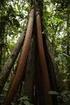 Water from the Air: Cloud Forests Alden Wicker Water from the Air: Cloud Forests In the Americas, Asia, and Africa, there s a special kind of forest. It s rare, beautiful, and incredibly important to the
What Is. Norovirus? Learning how to control the spread of norovirus. Web Sites
 Web Sites Centers for Disease Control and Prevention (CDC) http://www.cdc.gov/norovirus/index.html Your Local Health Department http://www.azdhs.gov/diro/lhliaison/countymap.htm What Is Ocument dn Norovirus?
-* -* -* -* reflecting. A~fion ~ynop i. Gl) ~ linking to real world
 Afion ynop i Students make food webs of their study site, then trace how a change in one population could affect other populations within the web. Session 1 1. Show a food web made by a team of ecologists.
BALBHARATI PUBLIC SCHOOL, PITAMPURA,NEW DELHI COMPREHENSIVE NOTES CHAPTER-6 HUMAN RESOURCES CLASS-VIII SUBJECT-GEOGRAPHY FINAL TERM
 BALBHARATI PUBLIC SCHOOL, PITAMPURA,NEW DELHI COMPREHENSIVE NOTES CHAPTER-6 HUMAN RESOURCES CLASS-VIII SUBJECT-GEOGRAPHY FINAL TERM Q1. Why are people considered as a resource? A1. People are a nation
Mini Medical School Lesson
 Mini Medical School Lesson The American Osteopathic Association s (AOA) Mini Medical School Lesson is designed to help educators teach children about health and fitness. This lesson is aimed towards elementary
Parent s Guide to CHILDHOOD IMMUNIZATIONS
 Part One Vaccine-Preventable Part Three More Diseases About Vaccines and Childhood Vaccines 30 Parent s Guide to CHILDHOOD IMMUNIZATIONS Part 3: More About Vaccines How do vaccines work? To understand
Nonrenewable Natural Gas. Natural Gas Basics. How Was Natural Gas Formed?
 Did You Know? Because natural gas is colorless, odorless, and tasteless, mercaptan (a chemical that smells like sulfur) is added before distribution, to give it a distinct unpleasant odor (it smells like
Colo s Story: The Life of One Grand Gorilla by Nancy Roe Pimm A Choose to Read Ohio Toolkit
 Colo s Story: The Life of One Grand Gorilla by Nancy Roe Pimm A Choose to Read Ohio Toolkit About the Book When Colo was born unexpectedly on the cold concrete floor of the zoo on December 22, 1956, the
1EPA. planet protectors club. Solid Waste and Emergency Response (5305W) United States Environmental Protection Agency
 1EPA planet protectors club United States Environmental Protection Agency Solid Waste and Emergency Response (5305W) EPA530-K-98-001 September 1998 www.epa.gov/osw Someone dropped an important note, but
Past, Present, and Future
 Dear Educator, Like many others in the U.S. agricultural industry, American egg farmers have made a commitment to environmental sustainability, and their success in achieving this goal can serve as an
Water Cycle Unit Test
 Name: Multiple Choice (2 pts each): 1. What is the source of energy for all parts of the water cycle? A. Wind B. The Ocean C. Soil D. The Sun 2. Which of the following processes would result in water pollution?
Yes, Tuberculosis is a serious problem all over the world. Between 6 and 10 million in South Africa are infected by the TB germ.
 What is TB? Do many people get tuberculosis (TB)? Yes, Tuberculosis is a serious problem all over the world. Between 6 and 10 million in South Africa are infected by the TB germ. It is infectious, so it
Ecological Footprint Calculator
 Ecological Footprint Calculator Table of Contents: (1.) Ecological Footprint (2.) Activity: Determining Your Ecological Footprint Ecological Footprint Estimating your overall impact on the environment
2. Importance of Energy to Human Population Growth and the Economy. Gail Tverberg Energy Economics and Analysis Modeling
 2. Importance of Energy to Human Population Growth and the Economy Gail Tverberg Energy Economics and Analysis Modeling How might additional energy supply increase human population? } There are far more
ENDANGERED AND THREATENED
 ENDANGERED AND THREATENED Understand how species in the Sonoran Desert Region may become endangered or threatened and what is being done to protect them. ARIZONA SCIENCE STANDARDS SC03-S4C3-03&04, SC08-S1C3-07,
ONE DOLLAR AND EIGHTY-SEVEN CENTS.
 T h e G i f t o f t h e M a g i p T h e G i f t o f t h e M a g i ONE DOLLAR AND EIGHTY-SEVEN CENTS. That was all. She had put it aside, one cent and then another and then another, in her careful buying
OUR WATER, OUR LIFE Asia/Pacific Cultural Centre for UNESCO (ACCU)
 OUR WATER, OUR LIFE Asia/Pacific Cultural Centre for UNESCO (ACCU) Our planet of water We are all living on this planet, Earth. Do you see the blue part? That's all water. See, almost 3/4 of our planet
Climate Change: A Local Focus on a Global Issue Newfoundland and Labrador Curriculum Links 2010-2011
 Climate Change: A Local Focus on a Global Issue Newfoundland and Labrador Curriculum Links 2010-2011 HEALTH Kindergarten: Grade 1: Grade 2: Know that litter can spoil the environment. Grade 3: Grade 4:
Swine Health. Beth Ferry MSU Extension Pork Educator
 Swine Health Beth Ferry MSU Extension Pork Educator What Affects Pig Health? Resources Environment Nutrition Management Animal Care What is your job? Good Observation Key to managing health, production
Teacher Development Workshop
 Teacher Development Workshop Senior Phase ECONOMIC AND MANAGEMENT SCIENCES 6009701866711 CONTENTS PAGE CONTENTS PAGE... 2 ACTIVITY A:... 3 ECONOMIC AND MANAGEMENT SCIENCES INTRODUCTION TO CAPS... 5 ACTIVITY
FOOD, HANDS and BACTERIA. Cooperative Extension Service University of Georgia College of Agricultural and Environmental Sciences
 FOOD, HANDS and BACTERIA Cooperative Extension Service University of Georgia College of Agricultural and Environmental Sciences STOP THE POPULATION EXPLOSION: WASH YOUR HANDS! Bacteria have their own population
FACTS ABOUT CLIMATE CHANGE
 FACTS ABOUT CLIMATE CHANGE 1. What is climate change? Climate change is a long-term shift in the climate of a specific location, region or planet. The shift is measured by changes in features associated
food webs reflect look out! what do you think?
 reflect Imagine for a moment that you stay after school one day to clean up the classroom. While cleaning, you move some plants away from the sunny windows. A week later, you remember to move the plants
Madolyn Drebenstedt Mediapolis High School Mediapolis, IA Philippines, Factor 4 Animal Health Philippines: Porcine Epidemic Diarrhea Virus In the
 Madolyn Drebenstedt Mediapolis High School Mediapolis, IA Philippines, Factor 4 Animal Health Philippines: Porcine Epidemic Diarrhea Virus In the modern world today technology is all around. Everyone from
The Smartest Targets For The WORLD 2016-2030
 The Smartest Targets For The WORLD 2016-2030 The World s Best Targets Right now, 193 governments negotiating Targets for 2016-2030 Most people don t know Development aid 2016-30: $2.5 trillion The World
I. Survey Methodology
 I.SurveyMethodology TheElonUniversityPollisconductedusingastratifiedrandomsampleofhouseholdswithtelephones andwirelesstelephonenumbersinthepopulationofinterest inthiscase,citizensinnorthcarolina. ThesampleoftelephonenumbersforthesurveyisobtainedfromSurveySamplingInternational,LLC.
Fry Phrases Set 1. TeacherHelpForParents.com help for all areas of your child s education
 Set 1 The people Write it down By the water Who will make it? You and I What will they do? He called me. We had their dog. What did they say? When would you go? No way A number of people One or two How
Sustainable Energy Sources By: Sue Peterson
 www.k5learning.com Objective sight words (consumption, terrain, integral, orbit, originated, contemporary, remote); concepts (sustainable, renewable, photovoltaics, gasification) Vocabulary consumption
Food Chains and Food Webs
 Program Support Notes by: Spiro Liacos B.Ed. Produced by: VEA Pty Ltd Commissioning Editor: Sandra Frerichs B.Ed, M.Ed. Executive Producers: Edwina Baden-Powell B.A, CVP. Sandra Frerichs B.Ed, M.Ed. You
TUBERCULOSIS the disease, its treatment and prevention. mmunisation
 TUBERCULOSIS the disease, its treatment and prevention mmunisation TB (tuberculosis) is an infectious disease that usually affects the lungs, although it can affect almost any part of the body. About
ECOSYSTEM RESPONSES. reflect
 reflect There is a saying, No man is an island, which means that people need one another in order to survive. Everyone on Earth is interconnected in some way. This is not only true of human beings, but
Madagascar: Makira REDD+
 project focus Madagascar: Makira REDD+ Madagascar is considered to be one of the top five biodiversity hotspots in the world due to more than 75% of all animal and plant species being endemic while less
United Nations INTRODUCTION. The World at Six Billion 1
 INTRODUCTION According to the latest United Nations population estimates, world population reaches the six billion mark on 12 October 1999, an historic milestone in the growth of world population. The
SCRIPT NUMBER 116 ALCOHOL ADDICTION - 2 (TWO SPEAKERS)
 SCRIPT NUMBER 116 ALCOHOL ADDICTION - 2 (TWO SPEAKERS) PROGRAM NAME: HEALTH NUGGETS PROGRAM TITLE: ALCOHOL ADDICTION - 2 PROGRAM NUMBER: 116 SUBJECT: ALCOHOL ADDICTION, RISK FACTORS, TREATMENT KEY WORDS:
THE LOST PEOPLE OF MESA VERDE by Elsa Marston. The Anasazi lived peacefully on the mesa for 800 years. Then they disappeared.
 THE LOST PEOPLE OF MESA VERDE by Elsa Marston The Anasazi lived peacefully on the mesa for 800 years. Then they disappeared. In the dry land of southwestern Colorado a beautiful plateau rises. It has so
Fundamental Financial Planning Interview Guide
 Fundamental Financial Planning Interview Guide Money Tree Software developed this fundamental guide for use with Silver Financial Planner and similar financial planning applications. For both you and your
What s It All About? The Sun as a Power Source Instructor Guide
 What s It All About? The Sun as a Power Source Instructor Guide Subject Area Unit Grade Time Science Earth Science K - 1st grade 45 minutes Overview This activity reinforces the concept that the sun supplies
Income is the most common measure
 Income Goal A healthy standard of living for all Income is the most common measure of socioeconomic status, and a strong predictor of the health of an individual or community. When assessing the health
Unit: Healthy Habits Grade: 1
 Unit: Healthy Habits 5.3b Good health habits include hand washing, personal cleanliness; avoiding harmful substances; eating a balanced diet; engaging in regular eercise ways to stay healthy Wash hands
7 Secrets To Websites That Sell. By Alex Nelson
 7 Secrets To Websites That Sell By Alex Nelson Website Secret #1 Create a Direct Response Website Did you know there are two different types of websites? It s true. There are branding websites and there
Conventional Energy Sources
 9.2 Conventional Energy Sources Key Question: What benefits and problems come with common sources of energy? Hints The word plant here is not the kind that grows out of the ground. In this section, plants
Easter Island Population Model
 Easter Island Population Model Consider a problem that happened on Easter Island. Easter Island is a small island (about 150 square miles) in the Pacific Ocean about 2,000 miles from South America. It
Household Trends in U.S. Life Insurance Ownership
 Household Trends in U.S. Life Insurance Ownership Full Report Cheryl D. Retzloff, LLIF, ACS Markets Research 860-285-7738 [email protected] Maximize the Value of LIMRA Research The value of LIMRA research
DRYLAND SYSTEMS Science for better food security and livelihoods in the dry areas
 DRYLAND SYSTEMS Science for better food security and livelihoods in the dry areas CGIAR Research Program on Dryland Agricultural Production Systems The global research partnership to improve agricultural
alliantenergykids.com
 Standards This lesson addresses the following National Science Education Standards: Physical Science: properties and changes of properties in matter Physical Science: transfer of energy Science in Personal
The birth rate in the US has been declining since 2005
 Every year since Texas joined the United States its growth has been faster than the country as a whole. Texas was the eighth fastest growing state in 1990, the seventh fastest growing in 2000, and the
101 Characteristics of Americans/American Culture
 101 Characteristics of Americans/American Culture To help you compare and contrast what you observe of American culture and your own, mark the similarities and differences between your culture and what
Biodiversity Concepts
 Biodiversity Concepts WHAT IS BIODIVERSITY? Biodiversity is the variety of life on Earth. For any kind of animal or plant each individual is not exactly the same as any other; nor are species or ecosystems.
4.0 Discuss some effects of disturbances on the forest.
 4.0 Discuss some effects of disturbances on the forest. 4.1 Describe common disturbances that occur in the Boreal forest. Disturbances are normal to the life of the forest. Forests are very resilient (able
Advice about MRSA for people not in hospital. If you have MRSA, this leaflet tells you about things you should do in your everyday life.
 Advice about MRSA for people not in hospital If you have MRSA, this leaflet tells you about things you should do in your everyday life. Easy read This booklet is about a germ called MRSA. It is an Easy