
Circulator Fan Performance Testing Standards BY CHRISTIAN TABER, BEMP, HBDP, MEMBER ASHRAE
|
|
|
- Brian Horton
- 9 years ago
- Views:
Transcription
1 This article was published in ASHRAE Journal, September Copyright 2015 ASHRAE. Posted at This article may not be copied and/or distributed electronically or in paper form without permission of ASHRAE. For more information about ASHRAE Journal, visit The Thrust of ANSI/AMCA Standard Circulator Fan Performance Testing Standards BY CHRISTIAN TABER, BEMP, HBDP, MEMBER ASHRAE Inventor Philip Diehl is credited with creating the first electric ceiling fan out of a modified sewing machine motor in the 1880s. 1 The invention led to a manufacturing boom, and fans of different sizes, with varying numbers of blades and blade shapes, soon became available to consumers. Manufacturers sought to stand out from one another, and early 1900s print advertisements show the same selling points we see today including efficiency claims (Photo 1). However, for more than 100 years after the inception of the electric ceiling fan, there was no widely accepted standard to back up those claims, and fan manufacturers published data based on different assumptions, using disparate conditions and rating methods. The Journal of the Institution of Electrical Engineers acknowledged the problem as far back as the 1920s: It appears to be the practice to state the volume of air displaced per minute by a ceiling fan without any reference to the conditions under which the measurements are made. When ceiling fans are being compared on the basis of air displacement, such comparison is useless unless the measurements have been made under similar conditions. -E. Hughes, It wasn t until 1999 that the Air Movement and Control Association (AMCA) introduced ANSI/AMCA Standard , Laboratory Methods of Testing Air Circulating Fans for Rating and Certification, which set uniform requirements for testing the performance of circulating fans. Energy Star created a standard specifically for residential ceiling fans three years later. AMCA Standard , while widely accepted for nonresidential fans, didn t account for a new type of industrial fan that was invented at roughly the same time: high-volume, large-diameter (HVLD) fans. The primary issue was the standard s requirement that the ceiling height of the test chamber be three times the diameter of the fan; for a 24 ft (7.3 m) industrial fan, this would require a testing facility with a 72 ft (21.9 m) ceiling. The emerging HVLD fan industry found itself where the residential ceiling fan industry as a whole had been 100 years prior without a practical standard for measuring performance. Therefore, manufacturers of HVLD ceiling fans used numerous rating methods and test Christian Taber is a senior research engineer at Big Ass Solutions, Lexington, Ky. He is a member of ASHRAE SSPC 90.1 and SSPC 189.1, and of the AMCA Standard 230 committee. 28
2 conditions (often of their own making), or modifications of existing standards like AMCA Standard 230, to measure the efficiency and performance of large fans. But without a viable testing standard in place, design professionals have been unable to accurately compare the performance of different fan models. ANSI/AMCA Standard , which is expected to be published next month, will finally correct this. It will provide new means for determining and expressing ceiling fan efficiency and efficacy for both standard and HVLD fans. While data produced by the standard won t tell design professionals precisely which fan is best for any given application for example, whether an 8 ft (2.4 m) or 24 ft (7.3 m) diameter fan is better for a facility it will solve the E. Hughes problem, allowing a direct comparison of similar fans based on a variety of performance metrics, backed by uniform testing conditions and third-party certification. Another standard, proposed ASHRAE Standard 216P, Methods of Test for Determining Application Data of Overhead Circulator Fans, will provide a better way to compare how different fans work in a given space (see Future Considerations ). Past Iterations of AMCA Standard 230 In general, AMCA Standard 230 sets uniform testing procedures for determining fan performance, including airflow rate (cfm or m 3 /s), power consumption (W), efficiency, thrust (lb f or N) and efficacy (cfm/w or m 3 /s W). The standard has gone through several revisions since it was first published in The following is an overview of changes made during each iteration. AMCA Standard The first version of the standard measured the load differential generated by the fan and power consumed by the fan. Thrust and airflow rate were calculated from load differential, and all values were at ambient conditions. However, the equation for airflow (EQ9.5) significantly overestimated the airflow generated by the fans. Clearance requirements (1 fan diameter above; whichever was larger of 2 diameters or 10 ft [3 m] below; and 2 diameters from the center of the fan to the wall) limited the ability to test large-diameter fans. See Test Figure 1 from AMCA Standard (Figure 1). AMCA Standard The first revision of the standard retained similar measurement PHOTO 1 Early 1900s fan print advertisement. requirements. There were no changes to clearance requirements from the original standard. For lab-tolab consistency, thrust was corrected from ambient air conditions to standard air conditions. Airflow rate and the associated equations were removed from the standard. This revision had a somewhat limited adoption because thrust is not as commonly understood as airflow rate. AMCA Standard Airflow rate was reintroduced with a revised equation, and new metrics were introduced for the first time, including total pressure, fan total efficiency (input power divided by power in the output air) and fan efficacy (airflow rate of the fan divided by the power consumed by the fan). The scope of the standard was limited to ceiling fans under 6 ft (1.8 m) in diameter. Summary of Major Changes in 2015 The 2015 version of the standard will allow for more than the testing of large-diameter ceiling fans alone; it will also provide clarity to testing procedures for fans of all sizes. The following changes will be made in the 2015 version: New clearance requirements: 0.4 diameter SEPTEMBER 2015 ashrae.org ASHRAE JOURNAL 29
3 above; the larger of 0.8 diameter or 15 ft (4.6 m) below; and 1.5 diameters from the center of the fan to the walls. Thorough testing was done to establish the minimum clearances that will not impact fan performance. Removal of the 6 ft (1.8 m) diameter limit for ceiling fans. The maximum fan size will be determined by the size of the test chamber and the minimum clearance requirements. Clarification that forward and reverse flow are covered by the standard. Since some fan manufacturers recommend reverse operation during heating season, Test Figure 1 will be revised to show both forward and reverse airflow. Reverse flow performance will be added to the purpose section of the standard. Revision of efficiency and efficacy metrics, including which values will be reported at ambient conditions and which will be reported at standard conditions. Power, efficacy, and total fan efficiency will be reported at ambient conditions, while thrust will be reported at standard conditions. Fans will be rated at 20%, 40%, 60%, 80%,and 100% of maximum speed (defined by rpm). As the efficiency of the motor and associated variable speed device (if applicable) change at part-load conditions, the fan affinity laws provide the general shape of the performance curve, not accurate values for real-world fan performance. Clarification of calibration, sampling intervals, and minimum measurement time, which provide consistent measurements for tests carried out at different certified test labs. The location of the measurement for input power changed from the motor input to fan system input, before any associated variable speed device. This will allow the total fan system energy consumption (wire-to-air) to be measured. Measurement for the input power to the fan system will be done simultaneously on all phases of power to ensure accurate measurement of the electricity consumed by the fan system. The requirements for the final test report will be clarified, including general test information, data collected during testing, calculated values and calibration information. This will provide consistent reporting of data from certified labs for verification of fan performance. FIGURE 1 AMCA Standard test Figure 1. 1D Minimum to Ceiling or Support Minimum Clearance, Impeller to Floor: 2D or 3 m (10 ft), Whichever is Greater Airflow D Load Cell Measures Load Differential 2D Minimum from Centerline to Walls and Large Obstructions All Around Performance Data: Efficiency & Efficacy Input power, volumetric airflow rate, and efficacy have long been the standard metrics for comparing fan performance. They will still likely be components of the data used for comparisons going forward. However, fans tested under AMCA Standard will also provide a wealth of other data, which will help engineers, designers and end users compare fans. With this plethora of data soon to be available, designers and end users should be aware of some potential pitfalls. Below are examples of how performance data has been (and may continue to be) misleading, along with some suggestions on how to better use that data for fan comparison purposes. An example of two fan efficacy curves generated at the required five measurement speeds is provided in Figure 2. Glancing at the graph, it appears that Fan 2 has a higher efficacy at all speeds, averaging 85 cfm/w (0.04 m 3 /s W) more than Fan 1. However, there is a 30
4 Advertisement formerly in this space.
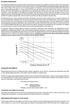
5 Fan Efficacy (cfm/w) FIGURE 2 Fan efficacy versus fan speed Fan 1 Fan Fan Speed (Percent of Maximum rpm) FIGURE 3 Fan power versus airflow rate. Fan System Input Power (W) 1,600 1,400 1,200 1, Fan 1 Fan , , , , ,000 Airflow Rate (cfm) fundamental issue with rating or comparing fans based only on efficacy and using percentage of maximum speed as a basis for the comparison. A simple way to improve fan efficacy is to simply decrease the maximum speed of the fan. In Figure 3, we plot the airflow rate and power of the two fans shown in Figure 2. It quickly becomes clear that Fans 1 and 2 are actually the same fan; the only difference is that Fan 2 had its maximum speed reduced to 80% of Fan 1 s maximum speed. For efficacy-based comparisons, it is important that the work done by the fan, the airflow rate, be factored into the assessment. Comparing fan efficiency at similar airflow rates provides a more accurate picture of fan performance than comparing efficacy at a percent of maximum speed. Designers can now evaluate not only efficiency and efficacy, but airflow rate and power data at part-load Average Air Speed (fpm) TABLE 1 Fan efficiency and power reduction. PERCENT OF MAXIMUM SPEED 20% 40% 60% 80% 100% FAN 1 OVERALL EFFICIENCY 15% 23% 31% 33% 35% INPUT POWER REDUCTION 50 W 50 W 50 W 50 W 50 W FAN 2 OVERALL EFFICIENCY 41% 34% 35% 35% 36% REQUIRED EFFICIENCY INCREASE 26% 11% 4% 2% 1% FIGURE 4 Average air speed versus distance from the center of the fan conditions. Fan overall efficiency is the ratio of the power in the air exiting the fan to the fan system input power. Table 1 shows the fan overall efficiency for two fans that have equal airflow rates at each rated speed. The efficiency of the motor in Fan 2 was increased to provide a 50 W power savings at each operating speed. When dealing with fan overall efficiency, it is important to remember that at low operating speeds, the power consumption of the fan is dramatically reduced. The power savings offered by high part-load efficiency may not be as large as the difference the fan overall Distance from the Center of the Fan (ft) Fan 1 Fan 2 efficiency indicates. To save 50 W at 100% of maximum rpm, a 1% increase in fan overall efficiency is required. At 20% of maximum rpm, a 26% increase in fan overall efficiency is required to achieve the same power reduction. In short, the fan with the highest efficacy or overall efficiency at a certain operating speed may appear to be the best choice, but reducing the fan s output to alter the efficacy or efficiency can limit the fan s usefulness in any given application, potentially requiring additional fans to meet the design performance requirements. 32
6 Advertisement formerly in this space.
7 The following example demonstrates how the new data from AMCA Standard can be helpful in applying fan models in a given space. Example Use of Data The 2015 version of the standard will provide certified performance data for thrust (lb f or N), airflow rate Advertisement formerly in this space. (cfm or m 3 /s), power consumption (W), efficiency, and efficacy (cfm/w or m 3 /s W) at five operating speeds. How will a designer use this information in an actual application? A hypothetical 575 ft long (175 m), 150 ft wide (45.7 m), 40 ft tall (12.2 m) airplane hangar in Lexington, Ky., illustrates how ceiling fans can be applied in a space, as well as how performance data from Standard can be used to compare fans and estimate annual operating cost. Based on thermal comfort calculations using the ASHRAE Thermal Comfort Tool, it has been determined that 125 fpm (0.64 m/s) of average air speed at occupant level is required to achieve acceptable thermal comfort in this application (as per ANSI/ASHRAE Standard ). Fan 1 and Fan 2 from the first example (Figures 2 and 3) will be used to provide the elevated air speed. Air speed provided by Fan 1 falls below 125 fpm (0.64 m/s) at approximately 95 ft (29 m) from the center of the fan. Fan 2, which had its top speed reduced by 20%, provides 125 fpm (0.64 m/s) of air speed at approximately 75 ft (22.9 m) from the center of the fan (Figure 4, Page 32). Therefore, three Fan 1 products or four Fan 2 products would be required for complete coverage of the hangar (Figure 5). The annual energy consumption of the fans can be estimated using the proposed control sequence for the HVLD fans, the power data at five operation speeds from Standard , and bins of estimated indoor air temperatures for the building. In this example, the proposed control sequence would increase fan speed based on the indoor air temperature during the cooling 34
8 Advertisement formerly in this space.
9 season. The indoor air temperature for the hangar was estimated using simulation software and code minimum lighting and envelope values from ANSI/ASHRAE/ IES Standard Fan 1 Scenario assumes three Fan 1 products. Fan 2 Scenario assumes four Fan 2 products. During the heating season, the fans are operated at 20% of maximum speed in the forward Advertisement formerly in this space. direction for destratification. Since some manufacturers recommend reversing the fan in the heating season, a reverse winter scenario has been included. The Fan 2 Reversed Scenario assumes those same four Fan 2 products operated in the reverse direction at 50% of maximum rpm during the heating season, rather than 20% in the forward direction. The annual energy consumption and operating cost for three scenarios is shown in Table 2. Based on the estimated installed cost, annual energy consumption and annual energy cost (among other factors), the designer can evaluate the most appropriate fan selection for the space. Future Considerations Accurate air speed performance data is not currently available from most circulator fan manufacturers. The proposed ASHRAE Standard 216P, Methods of Test for Determining Application Data of Overhead Circulator Fans, will complement the data available in AMCA Standard to help users more accurately compare air speed performance data. It is also worth noting the U.S. Department of Energy is currently working on minimum efficiency requirements for all ceiling fans. (See rulemaking docket EERE BT-STD-0045.) Under the proposed requirements, fans less than or equal to 7 ft (2.1 m) in diameter will be covered under modified ENERGY STAR testing requirements. For ceiling fans larger than 7 ft (2.1 m) in diameter, it is likely that a modified version of Standard will be the basis of the testing procedures. Conclusions The 2015 version of AMCA Standard 230 will provide a level playing field for the testing of large fans for the first time in history. It 36
10 Advertisement formerly in this space.
11 FIGURE 5 Overhead view of fans in a hypothetical hangar. Fan 1 Coverage Area 150 ft 575 ft Fan 2 Coverage Area 150 ft 575 ft Advertisement formerly in this space. TABLE 2 Annual fan energy consumption and cost for three design scenarios. INDOOR TEMPERATURE FAN SPEED ANNUAL HOURS FAN 1 (KWH) FAN 2 (KWH) FAN 2** (KWH) 83 F+ 100% 507 2,159 1,686 1, F to 83 F 80% F to 81 F 60% 817 1, F to 79 F 40% Heating (65 F) 20% 3, ,099 2,224 Total 5,300 4,741 4,218 5,344 Annual Operating Cost* $375 $334 $423 Estimated Installed Cost $21,000 $28,000 $28,000 * Cost of electricity is $0.0792/kWh per U.S. EIA, Electric Power Monthly, Table 5.6B, March 2015 ** Assumes fan is reversed in the heating season only and operating at 50% of maximum speed will also provide a more consistent method of testing across the circulator fan industry by reducing lab-tolab variation. Tests conducted under the standard will provide useful information for designers of large spaces, and careful application of that data can help designers select fans for any facility or purpose. However, mindful evaluation of the data is required to achieve an accurate and useful comparison. References 1. Diehl, P Electric fan. U.S. Patent 417, Hughes, E., W.G. White Testing of ceiling fans. Journal of the Institution of Electrical Engineers 65(363): ANSI/ASHRAE Standard , Thermal Environmental Conditions for Human Occupancy. 4. ANSI/ASHRAE/IES Standard , Energy Standard for Buildings Except Low-Rise Residential Buildings. 38
2006 Delta T Corporation dba Big Ass Fan Company
 Saving Energy Savings with HVLS Fans Josh Eddy LEED-AP National Sales Manager Big Ass Fans Outline Who is Big Ass Fans HVLS fan types How HVLS fans save energy HVLS fan applications How utilities are helping
Saving Heating Costs In Warehouses
 2005, American Society of Heating, Refrigerating and Air-Conditioning Engineers, Inc. (www.ashrae.org). Reprinted by permission from ASHRAE Journal, (Vol. 47, No. 12, December 2005). This article may not
Fan Performance By: Mark Stevens AMCA International Deputy Executive Director Technical Affairs
 Fan Performance By: Mark Stevens AMCA International Deputy Executive Director Technical Affairs Fan Performance (Paper I.D. 021) Mark Stevens Air Movement and Control Association International Abstract
Rating Water-Source Heat Pumps Using ARI Standard 320 and ISO Standard 13256-1
 Rating Water-Source Heat Pumps Using ARI Standard 320 and ISO Standard 13256-1 W. Vance Payne and Piotr A. Domanski National Institute of Standards and Technology Building and Fire Research Laboratory
AIR DISTRIBUTION FOR COMFORT AND IAQ
 AIR DISTRIBUTION FOR COMFORT AND IAQ Heating Piping and Air Conditioning March 1998 Dan Int-Hout Chief Engineer KRUEGER EXCELLENCE IN AIR DISTRIBUTION Modern environmentally controlled spaces consume significant
Case Studies: Infrared Heating in Industrial Applications
 Case Studies: Infrared Heating in Industrial Applications Chao Chen, Puget Sound Energy ABSTRACT Puget Sound Energy (PSE) is a utility which serves more than one million electric customers and over 700,000
Fan Applications & System Guide
 Fan Applications & System Guide Airflow for general ventilation can be calculated by; Area Method Air Change Method Occupancy Method Ventilation Calculation Methods Area Method Derives the ventilation
Second Place: Industrial Facilities or Processes, New
 Second Place: Industrial Facilities or Processes, New Photo: Paul Howell Texas Medical Center in Houston is the largest medical center in North America. It has a chilled water system of 160,000 tons. Big
Fundamentals of CFD and Data Center Cooling Amir Radmehr, Ph.D. Innovative Research, Inc. [email protected]
 Minneapolis Symposium September 30 th, 2015 Fundamentals of CFD and Data Center Cooling Amir Radmehr, Ph.D. Innovative Research, Inc. [email protected] Learning Objectives 1. Gain familiarity with Computational
VAV Laboratory Room Airflow The Lowdown on Turndown
 Technology Report March, 2003 VAV Laboratory The Lowdown on Turndown Turndown comparison of these two turndown ratios. Note the small actual airflow difference between them. control ranges are normally
Problem Statement In order to satisfy production and storage requirements, small and medium-scale industrial
 Problem Statement In order to satisfy production and storage requirements, small and medium-scale industrial facilities commonly occupy spaces with ceilings ranging between twenty and thirty feet in height.
Basic Selection & Proper Application of Overhead Air Distribution Devices
 Basic Selection & Proper Application of Overhead Air Distribution Devices GRD Selection & Application Terms Selection Throw Sound Installation Variations affect Performance Inlet Effects Basics Return
Centrifugal Fans and Pumps are sized to meet the maximum
 Fans and Pumps are sized to meet the maximum flow rate required by the system. System conditions frequently require reducing the flow rate. Throttling and bypass devices dampers and valves are installed
HVACPowDen.xls An Easy-to-Use Tool for Recognizing Energy Efficient Buildings and HVAC Systems
 HVACPowDen.xls An Easy-to-Use Tool for Recognizing Energy Efficient Buildings and HVAC Systems Fundamental Principles of Environmentally Responsible, Energy Efficient Buildings 1. Energy efficiency is
Protocol for the Certification of Energy Simulation Software: Second edition, September 2011
 Copyright Agrément South Africa, September 2011 The master copy of this document appears on the website: http://www.agrement.co.za SANS 10400: The application of the National Building Regulations: Protocol
Dual Maximum VAV Box Controls
 ASHRAE Golden Gate Chapter November 13, 2014 Dual Maximum VAV Box Controls Steven T. Taylor, PE FASHRAE Taylor Engineering LLC staylor@taylor engineering.com Agenda VAV Box basics Sizing VAV Boxes How
DESIGN OF NATURAL VENTILATION WITH CFD CHAPTER SEVEN. Qingyan Chen. difficult to understand and model, even for simple
 CHAPTER SEVEN L. Glicksman and J. Lin (eds), Sustainable Urban Housing in China, 116-123 2006 Springer. Printed in the Netherlands. DESIGN OF NATURAL VENTILATION WITH CFD Qingyan Chen INTRODUCTION As the
TES for Medical Center
 First Place: Industrial Facilities or Processes, New This article was published in ASHRAE Journal, November 2012. Copyright 2012 ASHRAE. Reprinted here by permission from ASHRAE at www.tecothermalenergy.com.
Air, Fluid Flow, and Thermal Simulation of Data Centers with Autodesk Revit 2013 and Autodesk BIM 360
 Autodesk Revit 2013 Autodesk BIM 360 Air, Fluid Flow, and Thermal Simulation of Data Centers with Autodesk Revit 2013 and Autodesk BIM 360 Data centers consume approximately 200 terawatt hours of energy
How to Build a Data Centre Cooling Budget. Ian Cathcart
 How to Build a Data Centre Cooling Budget Ian Cathcart Chatsworth Products Topics We ll Cover Availability objectives Space and Load planning Equipment and design options Using CFD to evaluate options
Methods for Effective Room Air Distribution. Dan Int-Hout Chief Engineer, Krueger Richardson, Texas
 Methods for Effective Room Air Distribution Dan Int-Hout Chief Engineer, Krueger Richardson, Texas Agenda Overview LEED issues and Update Perimeter Acoustics Thermal Comfort IAQ / Standard 62.1 Update
SPECIAL ISSUE: NATIONAL SCIENCE FOUNDATION WORKSHOP
 research journal 2013 / VOL 05.01 www.perkinswill.com SPECIAL ISSUE: NATIONAL SCIENCE FOUNDATION WORKSHOP ARCHITECTURE AND ENGINEERING OF SUSTAINABLE BUILDINGS Current Trends in Low-Energy HVAC Design
Large Energy Savings Per Installation VFDs for Large Chillers
 This article was published in ASHRAE Journal, June 2010. Copyright 2010 American Society of Heating, Refrigerating and Air-Conditioning Engineers, Inc. Reprinted here by permission from ASHRAE at www.tiaxllc.com.
Unique Airflow Visualization Techniques for the Design and Validation of Above-Plenum Data Center CFD Models
 Unique Airflow Visualization Techniques for the Design and Validation of Above-Plenum Data Center CFD Models The MIT Faculty has made this article openly available. Please share how this access benefits
The Benefits of Supply Air Temperature Control in the Data Centre
 Executive Summary: Controlling the temperature in a data centre is critical to achieving maximum uptime and efficiency, but is it being controlled in the correct place? Whilst data centre layouts have
Data Center 2020: Delivering high density in the Data Center; efficiently and reliably
 Data Center 2020: Delivering high density in the Data Center; efficiently and reliably March 2011 Powered by Data Center 2020: Delivering high density in the Data Center; efficiently and reliably Review:
Protocol for the Certification of Energy Simulation Software: First edition, December 2009
 Copyright Agrément South Africa, December 2009 The master copy of this document appears on the website: http://www.agrement.co.za Protocol for the Certification of Energy Simulation Software: First edition,
HVAC Efficiency Definitions
 HVAC Efficiency Definitions Term page EER - 2 SEER - 3 COP - 4 HSPF - 5 IPLV - 6 John Mix May 2006 Carrier Corporation 1 Energy Efficiency Ratio (EER) The energy efficiency ratio is used to evaluate the
Application of CFD modelling to the Design of Modern Data Centres
 Application of CFD modelling to the Design of Modern Data Centres White Paper March 2012 By Sam Wicks BEng CFD Applications Engineer Sudlows March 14, 2012 Application of CFD modelling to the Design of
Thermal Mass Availability for Cooling Data Centers during Power Shutdown
 2010 American Society of Heating, Refrigerating and Air-Conditioning Engineers, Inc. (www.ashrae.org). Published in ASHRAE Transactions (2010, vol 116, part 2). For personal use only. Additional reproduction,
SECTION EG. Engineering Guide Air Distribution. Please refer to the Price Engineer s HVAC Handbook for more information on Air Distribution.
 SECTION EG Air Distribution Please refer to the Price Engineer s HVAC Handbook for more information on Air Distribution. Space Air Diffusion AIR DISTRIBUTION ENGINEERING GUIDE Proper selection of air diffusion
The ASHRAE HQ Building Can the energy efficiency of the different mechanical systems really be compared? RESIDENTIAL LIGHT COMMERCIAL COMMERCIAL
 The ASHRAE HQ Building Can the energy efficiency of the different mechanical systems really be compared? RESIDENTIAL LIGHT COMMERCIAL COMMERCIAL Technical Article April 2013 The ASHRAE HQ Building Can
Applying Schedules and Profiles in HAP
 This HAP e-help discusses the importance of properly applying schedules and profiles in HAP. We will also discuss potential misapplications of these user inputs. First, we need to understand the differences
Access Server Rack Cabinet Compatibility Guide
 Access Server Rack Cabinet Compatibility Guide A Guide to the Selection and Evaluation of Access Server Rack Cabinets for Compatibility and Use with Third Party Server Chassis Kalkenstraat 91-93 B-8800
Creating Efficient HVAC Systems
 Creating Efficient HVAC Systems Heating and Cooling Fundamentals for Commercial Buildings Heating, ventilating, and air conditioning (HVAC) systems account for nearly half of the energy used in a typical
By Donald Fisher, P.Eng., Associate Member ASHRAE
 By Donald Fisher, P.Eng., Associate Member ASHRAE Decisions to purchase a commercial kitchen ventilation (CKV) system often are based on rule-of-thumb estimates using a $/cfm index (i.e., annual energy
Energy Savings With Adjustable Frequency Drives. for Centrifugal Fans
 Energy Savings With Adjustable Frequency Drives for Centrifugal Fans 2 Centrifugal Fans Centrifugal Fan Fans are designed to be capable of meeting the maximum demand of the system in which they are installed.
J O U R N A L. Energy Performance for. Proper Specification of Air Terminal Units Future Climate Impacts on Building Design
 Copyright 24, American Society of Heating, Refrigerating & Air-Conditioning Engineers, Inc., 79 Tullie Circle NE, Atlanta, GA. 3329. Reprinted by permission from the September 24 Issue of ASHRAE Journal
Example Retrocommissioning Measure: Opening Throttled Discharge Valves
 Opening Throttled Discharge Valves This 21-story building, constructed in 1997, is located in Oregon and contains 589,000 gross square feet of mostly office occupancy. The HVAC system includes six large
Using BIM In HVAC Design
 This article was published in ASHRAE Journal, June 2010. Copyright 2010 American Society of Heating, Refrigerating and Air-Conditioning Engineers, Inc. Posted at www.ashrae.org. This article may not be
EnergyPro Building Energy Analysis. Assisted Living Building
 EnergyPro Building Energy Analysis Assisted Living Building EnergyPro Building Energy Analysis for an assisted living building Project Scope The purpose of the EnergyPro energy model was to evaluate the
Ceiling Fans. 1 Introduction. V entilation I nformation P aper n 13
 V entilation I nformation P aper n 13 October 2007 INIVE EEIG Operating Agent and Management Boulevard Poincaré 79 B-1060 Brussels Belgium [email protected] - www.inive.org International Energy Agency Energy
Energy Audits. Good energy management begins with an energy audit
 Energy Audits Good energy management begins with an energy audit Effective management of energy-consuming systems can lead to significant cost and energy savings as well as increased comfort, lower maintenance
ENHANCED LABORATORY HVAC SYSTEM
 ENHANCED LABORATORY HVAC SYSTEM INTRODUCTION Since the early 1980's the attention to more energy efficient laboratory designs has been on the rise due to the increase in energy cost and the emergence of
Degrees of Freedom In HVAC Controls Design BY JOHN VARLEY, P.E., HBDP, MEMBER ASHRAE
 This article was published in ASHRAE Journal, June 05. Copyright 05 ASHRAE. Posted at www.ashrae.org. This article may not be copied and/or distributed electronically or in paper form without permission
Dr. Michael K. West, PE 1 Dr. Richard S. Combes, PE 2 Advantek Consulting / Melbourne, Florida
 Optimizing 100% Outside Air Systems with Heat Pipes Dr. Michael K. West, PE 1 Dr. Richard S. Combes, PE 2 Advantek Consulting / Melbourne, Florida Introduction To meet increasingly rigorous building codes
Thermal destratification in buildings: The missing piece to the HVAC puzzle
 WHITE PAPER Thermal destratification in buildings: The missing piece to the HVAC puzzle January 2013 Thermal Destratification In Buildings: The missing piece to the HVAC puzzle 1. What is Thermal Destratification
AMD-23-TD. Thermal Dispersion Air Measuring Station with VCD-23 Control Damper. Application and Design. Ratings. Features and Control Options.
 Application and esign Thermal ispersion Air Measuring Station with VC-23 Control amper The combines the functionality of a highly accurate thermal dispersion airflow measuring station and a low leakage
ENERGY AUDIT REPORT MINIMUM REQUIREMENTS
 ENERGY AUDIT REPORT MINIMUM REQUIREMENTS Energy Audit Reports must contain the following: 1) Eligibility Criteria: a) Evidence demonstrating that the Eligibility Criteria were met. 2) Participant Information:
- White Paper - Data Centre Cooling. Best Practice
 - White Paper - Data Centre Cooling Best Practice Release 2, April 2008 Contents INTRODUCTION... 3 1. AIR FLOW LEAKAGE... 3 2. PERFORATED TILES: NUMBER AND OPENING FACTOR... 4 3. PERFORATED TILES: WITH
HVAC Basic Science - System Capacity
 HVAC Basic Science - System Capacity Btu/hour, btu/h, b/h, btuh. btu?? 1 MBH = 1000 btu/hour 1 KBH = 1000 btu/hour 1 ton of cooling= 12,000 btu/hour 1 watt = 3.414 btu/hour 1 kilowatt = 1000 watts = 3,414
Introduction. Motor Types
 QwikSEER+ Theory of Operation and Retrofit Potential Mainstream Engineering Corporation Rockledge, FL 32955 http://www.qwik.com/products/qwikseer/index.jsp Prepared by Robert P. Scaringe and R. Paul Roth
Performance Rating of Room Fan- Coils
 ANSI/AHRI Standard 440 with Addendum 1 (Formerly ARI Standard 440) 2008 Standard for Performance Rating of Room Fan- Coils ANSI/AHRI STANDARD 440-2008 WITH ADDENDUM 1, PERFORMANCE RATING OF ROOM FAN-COILS
G U I D E L CERTIFICATION EDUCATION TRAINING. Procurement Guideline. National Air Filtration Association Recommended Practice
 G U National Air Filtration Association Recommended Practice I D E L I N E Procurement Guideline TRAINING EDUCATION CERTIFICATION HVAC Air Filter Purchasing Specification Guideline 1.0 Purpose To provide
BUILDING PERFORMANCE METRICS
 BUILDING PERFORMANCE METRICS Hugh Crowther P. Eng. Executive Vice President, Product Management and Technology There is a steady and determined march towards designing better and better performing buildings.
Whole House Dehumidification for Occupant Comfort and Energy Savings
 Downloaded from www.rsrews.com. Since 1968, RS Andrews has proudly served Atlanta's Heating, Air Conditioning & Plumbing Needs. Whole House Dehumidification for Occupant Comfort Energy Savings June 2009
By Steven C. Severini, P.E., Member ASHRAE
 The following article was published in ASHRAE Journal, July 2004. Copyright 2004 American Society of Heating, Refrigerating and Air- Conditioning Engineers, Inc. It is presented for educational purposes
Diego Ibarra Christoph Reinhart Harvard Graduate School of Design
 Building Performance Simulation for Designers - Energy DesignBuilder // EnergyPlus Tutorial #2 Load Schedules GEOMETRY LOADS RESULTS Diego Ibarra Christoph Reinhart Harvard Graduate School of Design OVERVIEW
DataCenter 2020: hot aisle and cold aisle containment efficiencies reveal no significant differences
 DataCenter 2020: hot aisle and cold aisle containment efficiencies reveal no significant differences November 2011 Powered by DataCenter 2020: hot aisle and cold aisle containment efficiencies reveal no
New Deluxe Wall Mounted Heat Pump Series EXTERIOS
 New Deluxe Wall Mounted Heat Pump Series EXTERIOS May 2013 New Deluxe Wall Mounted Heat Pump Series Panasonic Adding New Air Conditioner Lineup Setting Another Mile Stone in the US Ductless Split History
Cost Estimation for Materials and Installation of Hot Water Piping Insulation
 Cost Estimation for Materials and Installation of Hot Water Piping Insulation Prepared for Pacific Northwest National Laboratory Under Contract Number: 18O9O2 By Gary Klein, Managing Partner Affiliated
Impacts of Static Pressure Set Level on the HVAC Energy Consumption and Indoor Conditions
 Impacts of Static Pressure Set Level on the HVAC Energy Consumption and Indoor Conditions M. Liu, Y. Zhu, D. E. Claridge Energy Systems Laboratory Texas A&M University Ed. White Energy Management Operation
AisleLok Modular Containment vs. Legacy Containment: A Comparative CFD Study of IT Inlet Temperatures and Fan Energy Savings
 WH I TE PAPE R AisleLok Modular Containment vs. : A Comparative CFD Study of IT Inlet Temperatures and Fan Energy Savings By Bruce Long, Upsite Technologies, Inc. Lars Strong, P.E., Upsite Technologies,
Understanding How Cabinet Door Perforation Impacts Airflow by Travis North
 & design deployment The first step in determining the proper perforation for an application is to understand the airflow requirements of the equipment that will be used in the cabinet. Understanding How
Energy Impact of Increased Server Inlet Temperature
 Energy Impact of Increased Server Inlet Temperature By: David Moss, Dell, Inc. John H. Bean, Jr., APC White Paper #138 Executive Summary The quest for efficiency improvement raises questions regarding
ENERGY SAVING STUDY IN A HOTEL HVAC SYSTEM
 ENERGY SAVING STUDY IN A HOTEL HVAC SYSTEM J.S. Hu, Philip C.W. Kwong, and Christopher Y.H. Chao Department of Mechanical Engineering, The Hong Kong University of Science and Technology Clear Water Bay,
Selecting the Supply Air Conditions for a Dedicated Outdoor Air System Working in Parallel with Distributed Sensible Cooling Terminal Equipment
 AT-01-7-3 Selecting the Supply Air Conditions for a Dedicated Outdoor Air System Working in Parallel with Distributed Sensible Cooling Terminal Equipment Kurt M. Shank Student Member ASHRAE Stanley A.
Achieving ENERGY EFFICIENCY with Standard Air-Conditioning Units. Mike West, PhD, PE Advantek Consulting, Inc
 Achieving ENERGY EFFICIENCY with Standard Air-Conditioning Units Mike West, PhD, PE Advantek Consulting, Inc Standard Air Conditioning Unit Packaged Unit Split System DX (not chilled water) Air-cooled
Using Time-of-Day Scheduling To Save Energy
 The following article was published in ASHRAE Journal, May 29. Copyright 29 American Society of Heating, Refrigerating and Air-Conditioning Engineers, Inc. It is presented for educational purposes only.
HVAC Systems: Overview
 HVAC Systems: Overview Michael J. Brandemuehl, Ph.D, P.E. University of Colorado Boulder, CO, USA Overview System Description Secondary HVAC Systems Air distribution Room diffusers and air terminals Duct
The Data Center Dilemma - A Case Study
 Second Place: Industrial Facilities or Processes, Existing The TCS data center makes use of white cabinets and reflective surfaces as one method to reduce power for its lights and cooling. Data Center
EVALUATION OF GEOTHERMAL ENERGY AS HEAT SOURCE OF DISTRICT HEATING SYSTEMS IN TIANJIN, CHINA
 EVALUATION OF GEOTHERMAL ENERGY AS HEAT SOURCE OF DISTRICT HEATING SYSTEMS IN TIANJIN, CHINA Jingyu Zhang, Xiaoti Jiang, Jun Zhou, and Jiangxiong Song Tianjin University, North China Municipal Engineering
ULTRA-EFFICIENT HVAC DESIGN AND CONTROL
 CASE STUDY ULTRA-EFFICIENT HVAC DESIGN AND CONTROL MAJOR HEATING, VENTILATING AND AIR- CONDITIONING REPLACEMENT AT THE COUNTY OF SAN DIEGO CRIME LAB December 30, 2005 8520 Tech Way, Suite 110 San Diego,
Energy Recovery Ventilation Equipment
 AHRI Standard 1060 (I-P) 2013 Standard for Performance Rating of Airto-Air Exchangers for Energy Recovery Ventilation Equipment IMPORTANT SAFETY DISCLAIMER AHRI does not set safety standards and does not
AMCA International. Investigation of the Impact of Building Entrance Air Curtain on Whole Building Energy Use AIR MOVEMENT AND CONTROL
 AMCA International Investigation of the Impact of Building Entrance Air Curtain on Whole Building Energy Use AIR MOVEMENT AND CONTROL ASSOCIATION INTERNATIONAL, INC. The International Authority on Air
Environmental Data Center Management and Monitoring
 2013 Raritan Inc. Table of Contents Introduction Page 3 Sensor Design Considerations Page 3 Temperature and Humidity Sensors Page 4 Airflow Sensor Page 6 Differential Air Pressure Sensor Page 6 Water Sensor
Rate of Heating Analysis of Data Centers during Power Shutdown
 2011. American Society of Heating, Refrigerating and Air-Conditioning Engineers, Inc. (www.ashrae.org). Published in ASHRAE Transactions, Volume 117, Part 1. For personal use only. Additional reproduction,
EFFECTS OF INDOOR RELATIVE HUMIDITY ON REFRIGERATED DISPLAY CASE PERFORMANCE
 P (5, EFFECTS OF INDOOR RELATIVE HUMIDITY ON REFRIGERATED DISPLAY CASE PERFORMANCE Ronald H. Howell, Professor Luis Rosario, Graduate Student Antonio Bula, Graduate Student Department of Mechanical Engineering
Guide Specification for Laboratory Fume Hood Commissioning
 Guide Specification for Laboratory Fume Hood Commissioning 3 February, 1997 Application notes: This specification is intended to be used by qualified, experienced engineers and industrial hygienists as
Flexibility, Efficiency In San Antonio Arena
 2005, American Society of Heating, Refrigerating and Air-Conditioning Engineers, Inc. (www.ashrae.org). Reprinted by permission from ASHRAE Journal, (Vol. 47, No. 9, September 2005). This article may not
Central Plant Air Systems: Keeping the Heart and. Title Style. Better Buildings Summit May 2016
 Central Plant Air Systems: Keeping the Heart and Click Lungs To Healthy Edit Master Title Style Better Buildings Summit May 2016 Introductions Michael Deru National Renewable Energy Laboratory New Resources
WhisperGreen Select Ventilation Fans
 FV-05-11VKS1, FV-05-11VK1, FV-11-15VK1 FV-05-11VKSL1, FV-05-11VKL1, FV-11-15VKL1 WhisperGreen Select Ventilation Fans n Customizable, all-in-one fan and fan/led light combinations n Pick-A-Flow speed selector
Reducing the Annual Cost of a Telecommunications Data Center
 Applied Math Modeling White Paper Reducing the Annual Cost of a Telecommunications Data Center By Paul Bemis and Liz Marshall, Applied Math Modeling Inc., Concord, NH March, 2011 Introduction The facilities
Accurate Air Flow Measurement in Electronics Cooling
 Accurate Air Flow Measurement in Electronics Cooling Joachim Preiss, Raouf Ismail Cambridge AccuSense, Inc. E-mail: [email protected] Air is the most commonly used medium to remove heat from electronics
Demand Based Static Pressure Reset Control for Laboratories
 LLC Demand Based Static Pressure Reset Control for Laboratories Laboratories are generally the largest users of energy in any facility. Whether in a pharmaceutical research facility, a university or a
Ventilation Standard For Health Care Facilities
 The following article was published in ASHRAE Journal, October 2008. Copyright 2008 American Society of Heating, Refrigerating and Air- Conditioning Engineers, Inc. It is presented for educational purposes
NEBB STANDARDS SECTION-8 AIR SYSTEM TAB PROCEDURES
 NEBB STANDARDS SECTION-8 AIR SYSTEM TAB PROCEDURES 8.1 INTRODUCTION Testing, adjusting, and balancing of HVAC systems can best be accomplished by following a series of systematic procedures. The NEBB TAB
Eco Pelmet Modelling and Assessment. CFD Based Study. Report Number 610.14351-R1D1. 13 January 2015
 EcoPelmet Pty Ltd c/- Geoff Hesford Engineering 45 Market Street FREMANTLE WA 6160 Version: Page 2 PREPARED BY: ABN 29 001 584 612 2 Lincoln Street Lane Cove NSW 2066 Australia (PO Box 176 Lane Cove NSW
Green Data Centre Design
 Green Data Centre Design A Holistic Approach Stantec Consulting Ltd. Aleks Milojkovic, P.Eng., RCDD, LEED AP Tommy Chiu, EIT, RCDD, LEED AP STANDARDS ENERGY EQUIPMENT MATERIALS EXAMPLES CONCLUSION STANDARDS
The formula for finding CFM is: CFM = BTUH OUTPUT_ Temp Rise (ACF)* *Altitude correction factor below 1000ft = 1.08
 Air Volume Requirement Air conditioning systems are engineered with a specific amount of indoor air passing across the surface of the evaporator coil. The amount of air is measured in cubic feet per minute.
Understanding Heating Seasonal Performance Factors for Heat Pumps
 Understanding Heating Seasonal Performance Factors for Heat Pumps Paul W. Francisco, University of Illinois, Building Research Council Larry Palmiter and David Baylon, Ecotope, Inc. ABSTRACT The heating
Impact of Infiltration on Heating and Cooling Loads in U.S. Office Buildings
 Impact of Infiltration on Heating and Cooling Loads in U.S. Office Buildings 1 Steven J. Emmerich, 1 Andrew K. Persily, and 2 Timothy P. McDowell 1 Building and Fire Research Laboratory, National Institute
American Society of Heating Refrigeration and Air Conditioning Engineers (ASHRAE) Procedures for Commercial Building Energy Audits (2004)
 Excerpt from: American Society of Heating Refrigeration and Air Conditioning Engineers (ASHRAE) Procedures for Commercial Building Energy Audits (2004) 2004 American Society of Heating, Refrigerating and