
Creating the program. TIA Portal. SIMATIC Creating the program. Loading the block library. Deleting program block Main [OB1] Copying program blocks
|
|
|
- Randell Dennis
- 9 years ago
- Views:
Transcription
1 Loading the block library 1 Deleting program block Main [OB1] 2 TIA Portal SIMATIC Getting Started Copying program blocks 3 Cyclic interrupt OB 4 Copying tag tables 5 Compiling a project 6 Load project into the CPU 7 Optimized block access 8 Versioning a block 9 Setting retentivity 10 Activating the EN/ENO mechanism 11 Using the comment function 12 Local error handling 13 05/2014 A5E
2 Legal information Warning notice system This manual contains notices you have to observe in order to ensure your personal safety, as well as to prevent damage to property. The notices referring to your personal safety are highlighted in the manual by a safety alert symbol, notices referring only to property damage have no safety alert symbol. These notices shown below are graded according to the degree of danger. DANGER indicates that death or severe personal injury will result if proper precautions are not taken. WARNING indicates that death or severe personal injury may result if proper precautions are not taken. CAUTION indicates that minor personal injury can result if proper precautions are not taken. NOTICE indicates that property damage can result if proper precautions are not taken. If more than one degree of danger is present, the warning notice representing the highest degree of danger will be used. A notice warning of injury to persons with a safety alert symbol may also include a warning relating to property damage. Qualified Personnel The product/system described in this documentation may be operated only by personnel qualified for the specific task in accordance with the relevant documentation, in particular its warning notices and safety instructions. Qualified personnel are those who, based on their training and experience, are capable of identifying risks and avoiding potential hazards when working with these products/systems. Proper use of Siemens products Note the following: Trademarks WARNING Siemens products may only be used for the applications described in the catalog and in the relevant technical documentation. If products and components from other manufacturers are used, these must be recommended or approved by Siemens. Proper transport, storage, installation, assembly, commissioning, operation and maintenance are required to ensure that the products operate safely and without any problems. The permissible ambient conditions must be complied with. The information in the relevant documentation must be observed. All names identified by are registered trademarks of Siemens AG. The remaining trademarks in this publication may be trademarks whose use by third parties for their own purposes could violate the rights of the owner. Disclaimer of Liability We have reviewed the contents of this publication to ensure consistency with the hardware and software described. Since variance cannot be precluded entirely, we cannot guarantee full consistency. However, the information in this publication is reviewed regularly and any necessary corrections are included in subsequent editions. Siemens AG Industry Sector Postfach NÜRNBERG GERMANY A5E P 05/2014 Subject to change Copyright Siemens AG All rights reserved
3 Table of contents 1 Loading the block library Deleting program block Main [OB1] Copying program blocks Cyclic interrupt OB Cyclic interrupt OB Cycle time and phase Changing the cycle time Copying tag tables Compiling a project Load project into the CPU Optimized block access Introduction Expanding and reloading the optimized "Filling" data block Versioning a block Setting retentivity Activating the EN/ENO mechanism Using the comment function Local error handling Handle errors within block Loading blocks for local error handling Generating errors without local error handling Generating errors with local error handling Getting Started, 05/2014, A5E
4 Loading the block library 1 Introduction In the following section, you will load the global library "ProgLib_ColorFillingStation". This library contains the blocks and tag tables that you need for the example project. This library is available as a ZIP file under "Getting Started S / TIA V13 ( You need to unzip this library before you import it to your project. Global libraries Global libraries are used to store elements that you want to reuse in other projects. You must create global libraries explicitly. The following libraries are provided in the standard package: "Buttons and Switches" They offer a large selection of switches and buttons. The folders organize switches and buttons into categories. You can find the "System diagnostics indicator" object in the "DiagnosticsButtons" folder, for example. You use the "System diagnostics indicator" object for system diagnostics in your plant. "Monitoring and Control objects" This provides complex operator control and display objects in several designs as well as suitable control lights, buttons and switches. Note Library is write-protected The "Open read-only" option is activated by default in the "Open global library" dialog. Click in the check box to open the library without write protection. 4 Getting Started, 05/2014, A5E
5 Loading the block library Procedure 1. Click on the "Libraries" tab. 2. Click "Open global library". 3. Select the "ProgLib_ColorFillingStation" file from the directory that contains the unzipped library folder and click "Open". Getting Started, 05/2014, A5E
6 Loading the block library Result The "ProgLib_ColorFillingStation" global library is open. 6 Getting Started, 05/2014, A5E
7 Deleting program block Main [OB1] 2 Introduction In the following section, you will delete the automatically generated "Main [OB1]" program block from the project folder. A "Main [OB1]" program block is included in the program blocks of the example project. Organization blocks (OBs) form the interface between the CPU operating system and the user program. These blocks are called by the operating system. At least one cycle OB must be available in an automation project. Getting Started, 05/2014, A5E
8 Deleting program block Main [OB1] Procedure 1. Open the "Program blocks" folder in the project tree and then click the "Main [OB1]" program block. 2. Right-click to open the shortcut menu and then click "Delete". 3. Click "Yes" to confirm deletion of the block. Result The automatically generated "Main [OB1]" program block is deleted. 8 Getting Started, 05/2014, A5E
9 Copying program blocks 3 Introduction In the following section, you will insert the program blocks from the "ProgLib_ColorFillingStation" global library into your project. Procedure 1. Click on global library "ProgLib_ColorFillingStation". 2. Click the "Master copies" folder and then on "Programm_blocks". 3. Drag-and-drop the program block to be imported from the global library to the "Program blocks" folder. 4. Proceed as described in steps 2 and 3 for the other blocks. Result The program blocks are inserted in the project folder of the same name. Getting Started, 05/2014, A5E
10 Cyclic interrupt OB Cyclic interrupt OB Cycle time and phase Cycle time and phase offset can be changed Main [OB35] is located below the program blocks inserted into the project. Main [OB35] is a cyclic interrupt organization block (cyclic interrupt OB). Cyclic interrupt OBs serve to start programs in periodic time intervals independently of the cyclic program execution. The start times of a cyclic interrupt OB are specified using the cycle time and the phase offset. Cycle time The cycle time determines the interval at which an OB is called. The cyclic interrupt OB has a cycle time of μs by default. Phase offset The phase offset is used to increase the accuracy of the processing intervals of cyclic interrupt programs. If an OB has the same or a common multiple clock pulse of another OB, both can be operated at a precise interval by a phase offset. 10 Getting Started, 05/2014, A5E
11 Cyclic interrupt OB 4.2 Changing the cycle time 4.2 Changing the cycle time Introduction In the following section, you will change the cycle time for the "Main" program block. Requirement The program block "Main" [OB35] is contained in the library The FB/FC calls exist Procedure 1. Open the properties of the "Main" program block. 2. Select the "Cyclic interrupt" option under "General". 3. Enter the new value for the "Cycle time" and click "OK". Result The cycle time is changed. Getting Started, 05/2014, A5E
12 Copying tag tables 5 Introduction In the following section, you will insert the tag tables from the "ProgLib_ColorFillingStation" global library into your project. Procedure 1. Open the "PLC tags" folder in the project navigation. 2. Open the "PLC_tags" folder. 3. Drag-and-drop the tag table to be imported from the global library to the "PLC tags" folder. 4. Proceed as described in step 3 for the other tag tables. Result The tag tables are inserted in the project folder of the same name. 12 Getting Started, 05/2014, A5E
13 Compiling a project 6 Introduction In the next section, you will compile the "Color_Filling_Station" project. Procedure 1. Select the "Color_Mixing_CPU" CPU in the project tree. 2. Right-click to open the shortcut menu and then select "Compile" > "Hardware and software (only changes)". Getting Started, 05/2014, A5E
14 Compiling a project Result The project is compiled and ready for downloading. Note "Main" program block is updated Open the "Main" program block after compilation. All instance data blocks have been created and the data blocks are updated. 14 Getting Started, 05/2014, A5E
15 Load project into the CPU 7 Introduction In the next section, you will download the "Color_Filling_Station" project to the CPU. Note Displaying all compatible devices If the desired CPU is not displayed after you have made the settings in the "Extended download to device" dialog, click the option "Show all compatible devices". Procedure 1. Open the CPU shortcut menu and select "Download to device" > "Hardware and software (only changes)". 2. From the drop-down lists, select the PG/PC interface type, the interface and the connection with the subnet. 3. Select the CPU from the compatible devices in the subnet and click "Load". 4. Confirm the two "Assign IP address" dialogs with "Yes" and "OK". 5. In the "Load preview" dialog, select the alternative entry for all entries set to "No action" in the drop-down list and confirm open options. Getting Started, 05/2014, A5E
16 Load project into the CPU 6. Click "Load". 7. Confirm the "Start all" option and click "Finish". Result The project is downloaded to the CPU. 16 Getting Started, 05/2014, A5E
17 Optimized block access Introduction Operating principle The "optimized data blocks" of the CPUs of the S series are optimized for performance and are only programmed symbolically. By using the optimized data blocks, you make your program more efficient, because the declared tags are given symbolic names and no longer a fixed address. You can create data blocks with any structure without paying attention to the physical arrangement of the individual tags. Quick access to the optimized data is always available because the data storage is optimized and managed by the system. Changing data types increases the risk of error in the standard block. In the optimized block, changes lead to a reorganization of the data storage. Addressing remains unique. To enable the subsequent editing of user programs that are already running in a CPU, the S CPUs support the option of extending the interfaces of function or data blocks during runtime. You can download the modified blocks without setting the CPU to STOP and without affecting the actual values of tags already loaded. In addition: You can define in the data block itself, which the values in the CPU are read-only for an HMI device ("Visible in HMI") or which can be written ("Accessible from HMI"). Getting Started, 05/2014, A5E
18 Optimized block access 8.2 Expanding and reloading the optimized "Filling" data block 8.2 Expanding and reloading the optimized "Filling" data block Introduction In the following section, you will supplement the "Filling" data block with the date and time of the last filling and reload the data block. To do this, create a block for recording the date and time and enable the function "Download without reinitialization". Note: The "Download without reinitialization" function protects the actual parameters of the data block from being overwritten during download to the CPU. Advantages of symbolic addressing: The use of universally applied and meaningful symbols in the entire project makes the program code easier to read and understand. This gives you the following advantages: You do not have to write detailed comments. Data access is faster. No errors occur when accessing data. You no longer have to work with absolute addresses. The assignment of the symbol to the memory address is monitored by STEP 7, which means that all points of use are automatically updated when the name or the address of a tag changes. Requirement The library has been loaded The project has been compiled and loaded into the CPU 18 Getting Started, 05/2014, A5E
19 Optimized block access 8.2 Expanding and reloading the optimized "Filling" data block Procedure 1. Open the "Filling" data block and the "Main" program block. 2. Enable the "Monitoring on/off" function for the "Main" program block. 3. In the "Main" program block, open the shortcut menu of the "'FILLING' FillingLevel_CMYK_C" I/O in the 3 network with a right-click and select "Modify > Modify operand". 4. Enter a new value and click "OK". 5. Enable the "Download without reinitialization" function and the "Monitor all" function in the "Filling" data block. 6. Create a new parameter named "DT_Loc-T_Last_Filling" and select "Date_And_Time" as the data type. Getting Started, 05/2014, A5E
20 Optimized block access 8.2 Expanding and reloading the optimized "Filling" data block 7. Insert a normally closed contact into the "Main" program block in the 5 network, and interconnect it with the "FILLING_DONE" parameter. 8. Open the "Date & time" folder from the "Instructions" tab and insert the "RD_Loc_T" block in the "Main" program block. 20 Getting Started, 05/2014, A5E
21 Optimized block access 8.2 Expanding and reloading the optimized "Filling" data block 9. Interconnect the "OUT" output with the "DT_Loc-T_Last_Filling" parameter and the "RED_VAL" output with the newly created "RED_VAL_Loc-T" parameter. Use the "LAD_Tanks_Filling_Process" data block as the storage location for the "RED_VAL_Loc- T" parameter. 10. Compile and download the project. Getting Started, 05/2014, A5E
22 Optimized block access 8.2 Expanding and reloading the optimized "Filling" data block Result The date and time of the last filling are reloaded. The actual parameters of the "Filling" data block are not overwritten. 22 Getting Started, 05/2014, A5E
23 Versioning a block 9 Introduction The use of block types ensures a high degree of standardization in your projects. You can easily integrate function extensions to the block type into existing projects. Change tracking is ensured by versioning. In this example, you create a "LAD_Tanks_Filling" block as a type in the project library. As a function extension, replace the three instructions for the level calculation with CalculateBox, which performs all arithmetic functions. This optimization means that fewer temporary tags are required and that the switch between blocks with various programming languages is no longer necessary. Procedure 1. Compile the "LAD_Tanks_Filling" block and then insert it in the project library under "Types". 2. Create a new block version with "Edit type". 3. Insert the CALCULATE instruction from the "Basic instructions > Mathematical functions" library. 4. Delete the MUL, DIV and SUB instructions from the block. Getting Started, 05/2014, A5E
24 Versioning a block 5. Insert two inputs into the CALCULATE instruction and interconnect the inputs. 6. Define the calculation formula and then interconnect the output. 7. Release the block version. 24 Getting Started, 05/2014, A5E
25 Versioning a block Result The revised version of the block type is saved in the library with a new version number. Getting Started, 05/2014, A5E
26 Setting retentivity 10 Introduction All tags are initialized with their configured start values during CPU startup, for example, after a power failure. The most recent values the tags had immediately before the interruption are overwritten with the initial values. To prevent this, define the tag as retentive. Retentive tags retain their values even after a restart. In this example, the levels of paint storage tanks are backed up in the retentive memory area of the CPU. Procedure 1. Connect to the CPU online. 2. Enable the retentivity for the "Cyan" entry in the "Filling" data block. 3. Load the change to the CPU. 4. Drag the "Watchtable" object from the library into the project. This object contains the fill level tags included a control value. 26 Getting Started, 05/2014, A5E
27 Setting retentivity 5. Transfer the control values to the CPU with "Modify now". 6. Close the online connection to the CPU. To simulate a power failure, disconnect the power supply to the CPU. 7. Reconnect the power supply and go online to the CPU. Enable "Monitor all" for the "Filling" DB. Getting Started, 05/2014, A5E
28 Setting retentivity Result The fill level for "Cyan" is read from the retentive memory area. All other fill levels are reinitialized with their start value. 28 Getting Started, 05/2014, A5E
29 Activating the EN/ENO mechanism 11 Introduction The EN/ENO mechanism in various instructions enables you to detect runtime errors and avoid a program crash. Newly inserted ENO instructions are disabled by default. You can then activate the ENO enable output. You can use this in a new network that has the fill level of all paint storage tanks reset to the start value (1000) at the same time. Procedure 1. Open the Main[OB35] program block and insert the MOVE instruction into network Expand the instruction to a total of four outputs. 3. Insert a normally open contact before the MOVE instruction. 4. Insert a reset coil after the MOVE instruction. 5. Interconnect the inputs and outputs of the MOVE instruction. 6. Generate the instruction with the ENO shortcut menu. Getting Started, 05/2014, A5E
30 Activating the EN/ENO mechanism Result The EN/ENO mechanism is interconnected for this block. If there are no errors during execution, the ENO enable output has the signal state "1". If there are errors during execution, the ENO enable output has the signal state "0". 30 Getting Started, 05/2014, A5E
31 Using the comment function 12 Introduction The MOVE and Reset instructions should be expanded with detailed commentary. Procedure 1. Insert a comment using the shortcut menu. 2. Enter the comment text. Result The comments for the instruction and the coil are entered. Getting Started, 05/2014, A5E
32
33 Local error handling Handle errors within block Procedure Unlike the CPUs of the S7-300/400, CPUs of the S go to STOP with errors much less often. If an error occurs, it is entered in the diagnostics buffer of the CPU. You avoid the CPU STOP by using local error handling at each block. You should preferably enable local error handling during development of the user program. Getting Started, 05/2014, A5E
34 Local error handling 13.1 Handle errors within block You can precisely evaluate the information and, for example, program the error handling in the block with STL/FBD/LAD and SCL programs. The block generates an error ID that is evaluated by the "GET_ERROR_ID" instruction. You can call the "GET_ERROR_ID" instruction in both the MAIN block and in the function blocks. The CPU remains in RUN mode. 34 Getting Started, 05/2014, A5E
35 Local error handling 13.2 Loading blocks for local error handling 13.2 Loading blocks for local error handling Introduction To illustrate the local error handling, load the blocks of the "ProgLib_LEH" library in the project. The blocks are used only to demonstrate the local error handling and are otherwise not used in the project. Procedure 1. Open the global library, "ProgLib_LEH". 2. Copy the blocks from the master copies into the project. 3. Call the "LAD_Local_Error_Handling" function block in an empty network of the "Main" block. Getting Started, 05/2014, A5E
36 Local error handling 13.2 Loading blocks for local error handling 4. Interconnect the parameters of the "LAD_Local_Error_Handling" function block with tags of the "LEH_InOutValues" data block. 5. Connect to the CPU online. 6. Compile and load the changes to the CPU. Result Use the "LEH_INDEX" tag at the "INDEX[0..100]" input parameter to trigger a programming error in the following. For example, if you set the input parameter to "101", an error at the output parameters is reported. 36 Getting Started, 05/2014, A5E
37 Local error handling 13.3 Generating errors without local error handling 13.3 Generating errors without local error handling Introduction Perform the following steps to trigger a programming error without using the local error handling or creating a corresponding OB. Procedure 1. Activate the "Monitor" function. 2. Set the value of the "LEH_INDEX" tag to an invalid value, for example, "101". In the Testing dialog, the ERROR LED flashes briefly and the CPU goes from RUN to STOP. 3. Switch to the diagnostics buffer. The error and the error response is displayed in the diagnostics buffer. 4. Set the CPU back to RUN. Result The transition from STOP in RUN resets the "LEH_INDEX" tag to the start value "0". This automatically solves the problem. Getting Started, 05/2014, A5E
38 Local error handling 13.4 Generating errors with local error handling 13.4 Generating errors with local error handling Introduction Perform the following steps to use "GET_ERR_ID" instruction and its ENO bit for the local error handling to respond to the error with an error message. This means the CPU remains in RUN mode. Procedure 1. Open the "LAD_Local_Error_Handling" function block. 2. Insert the "GET_ERR_ID" instruction in the second network and interconnect the "ID" output. 3. Call the "ErrorID_to_ErrorText" function from the project tree. 4. Interconnect the parameters of the "ErrorID_to_ErrorText" function so that they can convert the error code into an error message. 5. Load the changes to the CPU. 6. Trigger an error in the "Main" organization block by entering an invalid value, for example, "101". An error message is output at the "ERROR_MESSAGE" parameter. 38 Getting Started, 05/2014, A5E
39 Local error handling 13.4 Generating errors with local error handling Result The error message is output as long as the error is not corrected. To correct the error, assign the "LEH_INDEX" tag a valid value or restart the CPU. Getting Started, 05/2014, A5E
Validity 1. Improvements in STEP 7 2. Improvements in WinCC 3 SIMATIC. Readme. Programming and Operating Manual
 Validity 1 Improvements in STEP 7 2 SIMATIC Improvements in WinCC 3 Readme Programming and Operating Manual 07/2013 Legal information Warning notice system This manual contains notices you have to observe
S7-1500 SIMATIC S7-1500. Welcome. Automation task. Hardware section 2. Software section 3. Security. Getting Started 05/2014 A5E03981761-AC
 Welcome Automation task 1 SIMATIC Hardware section 2 Software section 3 Security 4 Getting Started 05/2014 A5E03981761-AC Legal information Warning notice system This manual contains notices you have to
Validity 1. Improvements in STEP 7 2. Improvements in WinCC 3. Simatic. Readme. Readme
 Validity 1 Improvements in STEP 7 2 Simatic Improvements in WinCC 3 2012 Legal information Warning notice system This manual contains notices you have to observe in order to ensure your personal safety,
Validity 1. Installation 2 SIMATIC. WinCC flexible Tag simulator Update 1. Readme
 Validity 1 Installation 2 SIMATIC WinCC flexible Readme 05/2011 Legal information Warning notice system This manual contains notices you have to observe in order to ensure your personal safety, as well
Visualization SIMATIC. Visualization. Present sample project. HMI configuration. Insert HMI device from libraries 3. Configuring HMI connection 4
 Present sample project 1 HMI configuration 2 SIMATIC Getting Started Insert HMI device from libraries 3 Configuring HMI connection 4 Configuring system diagnostics 5 Simulating an HMI device 6 05/2014
WinCC Runtime Professional Readme SIMATIC HMI. WinCC V11 SP1. Readme WinCC Runtime Professional. Special considerations for Windows 7.
 WinCC Runtime Professional Readme SIMATIC HMI WinCC V11 SP1 Special considerations for Windows 7 1 Installation 2 Runtime 3 Options 4 HMI devices 5 Readme WinCC Runtime Professional System Manual Online
Information Server Documentation SIMATIC. Information Server V8.0 Update 1 Information Server Documentation. Introduction 1. Web application basics 2
 Introduction 1 Web application basics 2 SIMATIC Information Server V8.0 Update 1 System Manual Office add-ins basics 3 Time specifications 4 Report templates 5 Working with the Web application 6 Working
SIMATIC. WinCC V7.0. Getting started. Getting started. Welcome 2. Icons 3. Creating a project 4. Configure communication 5
 SIMATIC WinCC V7.0 SIMATIC WinCC V7.0 Printout of the Online Help 1 Welcome 2 Icons 3 Creating a project 4 Configure communication 5 Configuring the Process Screens 6 Archiving and displaying values 7
CPU 317-2 PN/DP: Configuring an ET. 200S as PROFINET IO device SIMATIC. PROFINET CPU 317-2 PN/DP: Configuring an ET 200S as PROFINET IO device
 CPU 317-2 PN/DP: Configuring an ET 200S as PROFINET IO device SIMATIC PROFINET CPU 317-2 PN/DP: Configuring an ET 200S as PROFINET IO device Introduction 1 Preparation 2 Learning units 3 Further Information
Getting Started - SINAMICS Startdrive. Startdrive. SINAMICS Getting Started - SINAMICS Startdrive. Introduction 1
 Introduction 1 Connecting the drive unit to the PC 2 Startdrive SINAMICS Getting Started - SINAMICS Startdrive Getting Started Creating a project 3 Going online and incorporating devices 4 Commissioning
DB Administration COMOS. Platform DB Administration. Trademarks 1. Prerequisites. MS SQL Server 2005/2008 3. Oracle. Operating Manual 09/2011
 Trademarks 1 Prerequisites 2 COMOS Platform MS SQL Server 2005/2008 3 Oracle 4 Operating Manual 09/2011 A5E03638301-01 Legal information Legal information Warning notice system This manual contains notices
Creating the project and hardware. TIA Portal. SIMATIC Creating the project and hardware. Introduction to the TIA Portal 1. Creating a project
 Introduction to the TIA Portal 1 Creating a project 2 TIA Portal SIMATIC Getting Started Creating an S7-1500 CPU 3 Running the hardware detection 4 Creating ET 200 interface modules 5 Networking ET 200
Applications & Tools. Configuration of Messages and Alarms in WinCC (TIA Portal) WinCC (TIA Portal) Application description December 2012
 Cover Configuration of Messages and Alarms in WinCC (TIA Portal) WinCC (TIA Portal) Application description December 2012 Applications & Tools Answers for industry. Siemens Industry Online Support This
DANGER indicates that death or severe personal injury will result if proper precautions are not taken.
 Multi-User Systems 1 ArchiveServer 2 SIMATIC HMI WinCC V7.0 SP1 File Server 3 WinCC ServiceMode 4 Redundant Systems 5 System Manual Print of the Online Help 11/2008 Legal information Warning notice system
Performing an automated installation
 Principles of an automated installation 1 Automated installation using the record / play mode 2 Automated installation via the command line 3 Parameter list 4 Return values from the installation process
COMOS. Lifecycle COMOS Snapshots. "COMOS Snapshots" at a glance 1. System requirements for installing "COMOS Snapshots" Database management 3
 "" at a glance 1 System requirements for installing "COMOS Snapshots" 2 COMOS Lifecycle Operating Manual Database management 3 Configuring "COMOS Snapshots" 4 Default settings for "COMOS Snapshots" 5 Starting
LOGO! LOGO! App V.10. LOGO! app 1. Making basic settings and establishing a connection to LOGO! Using the device overview 3. Creating controls 4
 LOGO! app 1 Making basic settings and establishing a connection to LOGO! 2 LOGO! Using the device overview 3 Creating controls 4 Settings and project information 5 Operating Manual 04/2016 A5E38071463-AA
SIMATIC. SIMATIC Logon. User management and electronic signatures. Hardware and Software Requirements. Scope of delivery 3.
 SIMATIC SIMATIC SIMATIC User management and electronic signatures 1 Hardware and Software Requirements 2 Scope of delivery 3 Installation 4 5 Configuration Manual 08/2008 A5E00496669-05 Legal information
SIMATIC HMI. WinCC flexible 2008 Getting Started - First-Time Users Getting Started. Printout of the Online Help 06/2008 A5E00279548-04
 SIMATIC HMI WinCC flexible 2008 Getting Started - First-Time Users Getting Started Printout of the Online Help 06/2008 A5E00279548-04 Safety Guidelines This manual contains notices you have to observe
SIMATIC. Process Control System PCS 7 Configuration Symantec Endpoint Protection (V12.1) Preface 1. Virus scanner administration 2.
 Preface 1 Virus scanner administration 2 SIMATIC Configuration 3 Process Control System PCS 7 Configuration Symantec Endpoint Protection (V12.1) Commissioning Manual 04/2013 A5E03874574-02 Legal information
SIMATIC S7-300. Getting Started for First Time Users. Order No.: 6ZB5310-0NC02-0BA0 04/2007 A5E01094750-01
 SIMATIC S7-300 Getting Started for First Time Users Order No.: 6ZB5310-0NC02-0BA0 04/2007 A5E01094750-01 Safety Guidelines This manual contains notices you have to observe in order to ensure your personal
WinCC. Communication Manual. Manual 2. This manual is part of the documentation package with the order number: 6AV6392-1CA05-0AB0 C79000-G8276-C156-01
 WinCC Communication Manual Manual 2 This manual is part of the documentation package with the order number: 6AV6392-1CA05-0AB0 Release: September 1999 WinCC, SIMATIC, SINEC, STEP are trademarks of Siemens.
SIMATIC. S7 300 PLC CPU 317T-2 DP: Controlling a virtual axis. Introduction. Preparation. Learning units 3. Further information 4.
 Introduction 1 Preparation 2 SIMATIC S7 300 PLC CPU 317T-2 DP: Controlling a virtual axis Learning units 3 Further information 4 Getting Started 12/2005 A5E00266292-03 Safety Guidelines This manual contains
DANGER indicates that death or severe personal injury will result if proper precautions are not taken.
 Basic Settings 1 Configuring the firewall 2 SIMATIC HMI Configuring DCOM 3 Configuring DCOM Machine Default 4 Using OPC via DCOM with Windows XP SP3 Readme 01/2010 Safety Guidelines This manual contains
Patch management and security. updates SIMATIC. Process Control System PCS 7 Patch management and security updates. Preface 1
 Patch management and security updates SIMATIC Preface 1 Patch management and security updates 2 Practical information 3 Process Control System PCS 7 Patch management and security updates Commissioning
Automation License Manager
 s Contents Product Overview 1 Installation 2 Working with the Automation License Manager 3 Glossary Manual Index 12/2008 A5E02389428-01 Legal information Warning notice system This manual contains notices
Training Document for Comprehensive Automation Solutions Totally Integrated Automation (T I A) MODULE A5 Programming the CPU 314C-2DP
 Training Document for Comprehensive Automation Solutions Totally Integrated Automation (T I A) MODULE T I A Training Document Page 1 of 25 Module This document has been written by Siemens AG for training
The goal is to program the PLC and HMI to count with the following behaviors:
 PLC and HMI Counting Lab The goal is to program the PLC and HMI to count with the following behaviors: 1. The counting should be started and stopped from buttons on the HMI 2. The direction of the count
SIMATIC NET. Functions (FC) and function blocks (FB) for SIMATIC NET S7 CPs. Preface. Overview and general information on working with FCs and FBs
 Preface Overview and general information on working with FCs and FBs 1 SIMATIC NET Functions (FC) and function blocks (FB) for SIMATIC NET S7 CPs Programming Manual FCs / FBs for Industrial Ethernet 2
Service & Support. How can you establish a connection between an S7-1200 PLC and SIMATIC NET OPC? S7-1200 PLC, SIMATIC NET OPC.
 Cover How can you establish a connection between an S7-1200 PLC and SIMATIC NET OPC? S7-1200 PLC, SIMATIC NET OPC FAQ January 2010 Service & Support Answers for industry. This entry is from the Service&Support
SIMATIC. S7-1200 Getting started with S7-1200. Preface. Quick review 1. Installation 2. Create a simple latch circuit 3. Complete the user program 4
 Preface S7-1200 SIMATIC S7-1200 Getting Started Quick review 1 Installation 2 Create a simple latch circuit 3 Complete the user program 4 Use a watch table for monitoring 5 11/2009 A5E02486791-01 Legal
SIMATIC. TIA Portal STEP 7 Basic V10.5. TIA Portal Introduction 1. Simple example 2. Extended example 3. Example "PID control" 4. Example "Motion" 5
 SIMATIC TIA Portal SIMATIC TIA Portal TIA Portal Introduction 1 Simple example 2 Extended example 3 Example "PID control" 4 Example "Motion" 5 Getting Started 12/2009 A5E02651459-01 Legal information Legal
SIMATIC HMI. WinCC flexible Getting Started First Time User. Order number 6ZB5370-1CL02-0BA2. Edition 04/2006 A5E00279548-03
 SIMATIC HMI WinCC flexible Getting Started First Time User Order number 6ZB5370-1CL02-0BA2 Edition 04/2006 A5E00279548-03 Safety Guidelines This manual contains notices which you should observe to ensure
Configuration limits for products of the SIMATIC NET PC Software V12 SIMATIC NET. Configuration limits for products of the SIMATIC NET PC Software V12
 Configuration limits for products of the SIMATIC NET PC Software V12 Communications partners and configuration limits for HARDNET-PB DP-Base 1 software Configuration limits, SOFTNET-PB DP 2 SIMATIC NET
Service & Support. How can you establish a connection between a S7-1200 PLC and SIMATIC NET OPC? S7-1200 PLC, SIMATIC NET OPC.
 Cover How can you establish a connection between a S7-1200 PLC and SIMATIC NET OPC? S7-1200 PLC, SIMATIC NET OPC FAQ November 2009 Service & Support Answers for industry. Question This entry is from the
SIMATIC NET PC Software V8.2 SIMATIC NET. PG/PC - Industrial Ethernet / PROFIBUS SIMATIC NET PC Software V8.2. Introduction 1
 Introduction 1 Installation of the SIMATIC NET PC software products 2 SIMATIC NET PG/PC - Industrial Ethernet / PROFIBUS Installation Manual Installation and configuration with VMware vsphere 5.0 3 Installing
SIMATIC S7-1200 Update to the S7-1200 System Manual, edition 04/2012 Product Information
 SIMATIC S7-1200 Product Information In spite of efforts to ensure the accuracy and clarity in the product documentation, some of the pages in the S7-1200 Programmable Controller System Manual contain information
SINAMICS drives SINAMICS DCM. DC converters from 6 kw to 2500 kw for variable-speed direct-current drives. Load-balanced control application
 SINAMICS DCM DC converters from 6 kw to 2500 kw for variable-speed direct-current drives Edition 01-12/2010 SINAMICS drives SINAMICS DCM Compact User Manual Legal information Warning notice system This
SIMATIC HMI. WinCC V7.3. WinCC/DataMonitor. WinCC/DataMonitor. Installation Notes 1. WinCC/DataMonitor Release Notes 2
 Installation Notes 1 Release Notes 2 SIMATIC HMI WinCC V7.3 Getting Started 3 Documentation 4 System Manual Print of the Online Help 06/2014 A5E34330046-AA Legal information Warning notice system This
SIMATIC NET. CP 243-2 AS-Interface Master B C. Preface Contents. Technical Description and Installation Instructions Interface to the User Program
 Preface Contents SIMATIC NET CP 243-2 AS-Interface Master Manual Technical Description and Installation Instructions Interface to the User Program 2 in the S7-200 CPU Access to the Data of the AS-i Slaves
Web server SIMATIC. S7-1500 Web server. Preface. Documentation guide. General information. Websites 3. Function Manual 12/2014 A5E03484625-AD
 Preface Documentation guide 1 SIMATIC S7-1500 General information 2 Websites 3 Function Manual 12/2014 A5E03484625-AD Legal information Warning notice system This manual contains notices you have to observe
The following shows the symbols used in this Quick start guide with descriptions and examples. Symbol Description Example. Select [Project] [New].
![The following shows the symbols used in this Quick start guide with descriptions and examples. Symbol Description Example. Select [Project] [New].](/thumbs/39/18407968.jpg "The following shows the symbols used in this Quick start guide with descriptions and examples. Symbol Description Example. Select [Project] [New].") How to read this guide The following shows the symbols used in this Quick start guide with descriptions and examples. Symbol Description Example P oint Caution This symbol explains information you need
How to read this guide The following shows the symbols used in this Quick start guide with descriptions and examples. Symbol Description Example P oint Caution This symbol explains information you need
Short-circuit current rating (SCCR) of. industrial control panels. NEC Article 409 and UL 508A
 Short-circuit current rating (SCCR) of industrial control panels NEC Article 409 and UL 508A Short-circuit current rating (SCCR) of industrial control panels 1 Introduction 2 Overview of NEC Article 409
DeviceNet Communication Card
 Release Notes DeviceNet Communication Card Catalog Number 1784-PCD Use These Release Notes These release notes contain information about the 1784-PCD card (Series A, B, and C) and version 4.03 of the driver.
Software redundancy for SIMATIC S7 SIMATIC. S7-300/S7-400 Software redundancy for SIMATIC S7. Contents 1
 Contents 1 How should I use this description? - A tip for 2 readers SIMATIC S7-300/S7-400 Software redundancy for SIMATIC S7 Function Manual Introduction 3 How software redundancy works 4 Blocks for software
SIMATIC. Open TCP/IP Communication via Industrial Ethernet. Contents Open TCP/IP Communication via Industrial Ethernet 1. Index.
 s Contents Open TCP/IP Communication via Industrial Ethernet 1 SIMATIC Index Open TCP/IP Communication via Industrial Ethernet Manual Edition 12/2005 A5E00711636-01 Safety Guidelines This manual contains
SIMATIC. ET 200S distributed I/O 2AO I ST analog electronic module (6ES7135-4GB01-0AB0) Preface. Properties 1. Parameters 2.
 SIMATIC ET 200S distributed I/O SIMATIC ET 200S distributed I/O 2AO I ST analog electronic module (6ES7135-4GB01-0AB0) Manual Preface Properties 1 Parameters 2 Diagnostics 3 Analog value representation
WinCC. Configuration Manual. Manual Volume 3
 WinCC Configuration Manual Manual Volume 3 This manual is part of the documentation package with the order number: 6AV6392-1CA05-0AB0 Release: September 1999 WinCC, SIMATIC, SINEC, STEP are trademarks
Applications & Tools. Master Slave Communication via a CM PtP using the Modbus RTU Protocol. S7-1500 CM PtP RS422/485 HF, ET 200SP CM PtP
 Cover Master Slave Communication via a CM PtP using the Modbus RTU Protocol S7-1500 CM PtP RS422/485 HF, ET 200SP CM PtP Application Description March 2013 Applications & Tools Answers for industry. Siemens
SIMATIC. Programming with STEP 7 Lite V3.0. Preface, Contents Introducing the Product and Installing the Software. Basics of Designing a Program 2
 s SIMATIC Programming with STEP 7 Lite V3.0 Manual Preface, Contents Introducing the Product and Installing the Software 1 Basics of Designing a Program 2 Startup and Operation 3 Setting Up and Editing
Automating with STEP7 in LAD and FBD
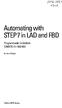 bisk Automating with STEP7 in LAD and FBD Programmable Controllers SIMATIC S7-300/400 by Hans Berger Publicis MCD Verlag Contents Indroduction 19 1 SIMATIC S7-300/400 Programmable Controller... 20 1.1
SIMATIC HMI. WinCC flexible Getting Started Power User. Order number 6ZB5370-1CM02-0BA2 A5E00279892-03
 s SIMATIC HMI WinCC flexible Getting Started Power User Order number 6ZB5370-1CM02-0BA2 Edition 04/2006 A5E00279892-03 Safety Guidelines This manual contains notices which you should observe to ensure
WinCC. Configuration Manual. Manual Volume 2
 WinCC Configuration Manual Manual Volume 2 This manual is part of the documentation package with the order number: 6AV6392-1CA05-0AB0 Release: September 1999 WinCC, SIMATIC, SINEC, STEP are trademarks
SIMATIC The Process Device Manager Manual Edition 12/2004 A5E00325944-01
 s SIMATIC Manual Preface, Contents Product Introduction and Installation 1 Starting SIMATIC PDM 2 Configuring Networks and Devices 3 SIMATIC PDM Integrated 4 Working with SIMATIC PDM 5 Loading of Data
Applications & Tools. Connecting a SINAMICS G120 Drive to an S7-300/400 CPU in TIA Portal V11 SINAMICS G120 (CU 240E-2 PN(-F)), SIMATIC S7-300/400
 Cover Connecting a SINAMICS G0 Drive to an S7-300/400 CPU in TIA Portal V SINAMICS G0 (CU 40E- PN(-F)), SIMATIC S7-300/400 Application Description May 0 Applications & Tools Answers for industry. Siemens
SIMATIC PDM V6.0. Getting Started Edition 12/2004
 s SIMATIC PDM V6.0 Getting Started Edition 12/2004 Copyright Siemens AG 2004 All rights reserved The reproduction, transmission or use of this document or its contents is not permitted without express
SIMATIC. Process Control System PCS 7 SIMATIC BATCH. Preface, Contents
 s Preface, Contents SIMATIC Process Control System PCS 7 Manual What's New in SIMATIC BATCH? Product introduction and installation 2 Technological basics in accordance with ISA S88.01 3 1 Introduction
Logix5000 Controllers Import/Export Project Components
 Programming Manual Logix5000 Controllers Import/Export Project Components Catalog Numbers 1768-L43, 1768-L45 Important user information Read this document and the documents listed in the additional resources
Automating witfi STEP7 in LAD and FBD
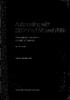 Automating witfi STEP7 in LAD and FBD Programmable Controllers SIMATIC S7-300/400 by Hans Berger 2nd revised edition, 2001 Publicis MCD Corporate Publishing Contents Contents Indroduction 19 1 SIMATIC
KeyAdvantage System DMS Integration. Software User Manual
 KeyAdvantage System DMS Integration Software User Manual ii Copyright Disclaimer Trademarks and patents Intended use EMC Directive Regulatory 2013 United Technologies Corporation. All rights reserved.
FAQ Communication over IE
 FAQ Communication over IE S7 communication between S7-200 and S7-300/400 FAQ Table of Contents Table of Contents... 2 Question...2 How do I configure a S7 connection to exchange data between S7-200 and
SIMATIC. ET 200S distributed I/O Digital electronic module 8DO DC24V/0.5 A (6ES7132-4BF00-0AA0) Preface. Properties 1. Diagnostics 2.
 SIMATIC ET 200S distributed I/O SIMATIC Preface Properties 1 Diagnostics 2 ET 200S distributed I/O Digital electronic module 8DO DC24V/0.5 A (6ES7132-4BF00-0AA0) Manual 04/2007 A5E01077385-01 Safety Guidelines
PROCESS AUTOMATION PLANNING AND INTEGRATION INFORMATION LB8106* Integration in Siemens SIMATIC PCS 7
 PROCESS AUTOMATION PLANNING AND INTEGRATION INFORMATION LB8106* Integration in Siemens SIMATIC PCS 7 With regard to the supply of products, the current issue of the following document is applicable: The
How are tags and messages archived in WinCC flexible? WinCC flexible. FAQ May 2011. Service & Support. Answers for industry.
 How are tags and messages archived in WinCC flexible? WinCC flexible FAQ May 2011 Service & Support Answers for industry. Question This entry is from the Service&Support portal of Siemens AG, Sector Industry,
s Preface SIMATIC Configuring Hardware and Communication Connections with STEP 7 Contents Basics of Configuring Hardware with STEP 7 1
 s Preface SIMATIC Configuring Hardware and Communication Connections with STEP 7 Manual This manual is part of the documentation package with the order number: 6ES7810-4CA08-8BW0 Contents Basics of Configuring
Lifecycle Service Tool. Operator's manual
 REF 542plus 1MRS756725 Issued: 23.12.2008 Version: A/23.12.2008 REF 542plus Contents Copyrights... 5 1. Introduction...7 1.1. This manual... 7 1.2. Use of symbols... 7 1.3. Intended audience... 7 1.4.
Siemens AG 2013. LOGO! App V1.0.0 LOGO! Edition 03/2013. Manual. Answers for industry.
 LOGO! App V1.0.0 LOGO! Manual Edition 03/2013 Answers for industry. The free of charge LOGO! App enables you to monitor actual process values of your LOGO! 0BA7 application with a smart phone or a tablet
MedDream SendToPACS USER S MANUAL (version 1.15)
 MedDream SendToPACS USER S MANUAL (version 1.15) 2014, Softneta UAB, Kaunas All rights reserved in the event of granting of patents or registration as a utility patent. All names of companies and products
PROFINET CPU 314C-2 PN/DP, 315-2 PN/DP, 317-2 PN/DP, 319-3 PN/DP: Configuring the PROFINET interface
 CPU 314C-2 PN/DP, 315-2 PN/DP, Introduction 1 317-2 PN/DP, 319-3 PN/DP: Configuring the PROFINET interface SIMATIC PROFINET CPU 314C-2 PN/DP, 315-2 PN/DP, 317-2 PN/DP, 319-3 PN/DP: Configuring the PROFINET
SIMATIC. ET 200S distributed I/O Digital electronic module 8DI DC24V (6ES7131-4BF00-0AA0) Preface. Properties 1. Diagnostics 2.
 SIMATIC ET 200S distributed I/O SIMATIC Preface Properties 1 Diagnostics 2 ET 200S distributed I/O Digital electronic module 8DI DC24V (6ES7131-4BF00-0AA0) Manual 04/2007 A5E01077339-01 Safety Guidelines
SCE Training Curriculum for Integrated Automation Solutions Totally Integrated Automation (TIA)
 SCE Training Curriculum for Integrated Automation Solutions Totally Integrated Automation (TIA) Siemens Automation Cooperates with Education TIA Portal Module 010-080 HMI Panel KTP600 with SIMATIC S7-1200
IMPORTANT PRODUCT INFORMATION
 January 2010 IMPORTANT PRODUCT INFORMATION READ THIS INFORMATION FIRST Product: Max-ON Hot-Backup Redundancy Software, Release 2.05 Introduction Max-ON is a trademark of GE Intelligent Platforms, Inc.
MANUAL Device Type Manager
 FACTORY AUTOMATION MANUAL Device Type Manager 2D Laser Scanner OBD10M-R2000-4EP-V1V17 With regard to the supply of products, the current issue of the following document is applicable: The General Terms
Agilent Automated Card Extraction Dried Blood Spot LC/MS System
 Agilent Automated Card Extraction Dried Blood Spot LC/MS System SCAP DBS Software User Guide Notices Agilent Technologies, Inc. 2012 No part of this manual may be reproduced in any form or by any means
BASLER ACE QUICK INSTALLATION GUIDE
 BASLER ACE QUICK INSTALLATION GUIDE Rev. 01 Quick installation Guide V1 1 Introduction The installation procedures in this guide assume that you want to get your camera operational and begin capturing
Using the WAGO 750-340 PROFINET Coupler as Remote I/O with a Siemens S7 PLC
 Using the WAGO 750-340 PROFINET Coupler as Remote I/O with a Siemens S7 PLC, English Version 1.0.0 2 General Copyright 2007 by WAGO Kontakttechnik GmbH & Co. KG All rights reserved. WAGO Kontakttechnik
SIMATIC. Testing Your S7 Programs with S7-PLCSIM. Preface, Contents. Product Overview. Installing the S7-PLCSIM Software. Getting Started with
 Preface, Contents SIMATIC Testing Your S7 Programs with S7-PLCSIM User Manual Product Overview 1 Installing the S7-PLCSIM Software 2 Getting Started with S7-PLCSIM 3 Running a Program on the Simulated
FactoryTalk ViewPoint Quick Start Guide
 FactoryTalk ViewPoint Quick Start Guide Publication FTVP-QS002F-EN-E - September 2015 Supersedes Publication FTVP-QS002E-EN-E Important user information Read this document and the documents listed in the
SIMOTION. Supplement to the FM 350-1, FM 350-2 and FM 352 Modules. Preface. Description 1. Function blocks of the FM 350-1
 Preface SIMOTION Supplement to the FM50-1, FM50-2 and FM 352 Modules SIMOTION Supplement to the FM 350-1, FM 350-2 and FM 352 Modules Function Manual Description 1 Function blocks of the FM 350-1 2 Function
Accounting Manager. User Guide A31003-P1030-U114-2-7619
 Accounting Manager User Guide A31003-P1030-U114-2-7619 Our Quality and Environmental Management Systems are implemented according to the requirements of the ISO9001 and ISO14001 standards and are certified
Flexi Soft Ethernet IP: Implicit Messaging with a Omron PLC
 O N L I N E - H E L P Flexi Soft Ethernet IP: Implicit Messaging with a Omron PLC s GB Online Help This document is protected by the law of copyright, whereby all rights established therein remain with
CP 1242-7 SIMATIC NET. S7-1200 - Telecontrol CP 1242-7. Preface. Application and properties. Displays and connectors 2
 Preface Application and properties 1 SIMATIC NET S7-1200 - Telecontrol Operating Instructions Displays and connectors 2 Installation, connecting up, commissioning 3 Notes on operation and configuration
PROFINET IO Diagnostics 1
 PROFINET IO is a very cost effective and reliable technology. However, extensive installations can have thousands of PROFINET IO devices operating on many networks. The reliable operation of these networks
Allworx OfficeSafe Operations Guide Release 6.0
 Allworx OfficeSafe Operations Guide Release 6.0 No part of this publication may be reproduced, stored in a retrieval system, or transmitted, in any form or by any means, electronic, mechanical, photocopy,
SIMATIC. C7-621, C7-621 AS-i Control Systems. Volume 2 Working with C7 A B C D E. Contents. User Information. Introduction. Startup.
 Contents User Information Introduction 1 Startup 2 SIMATIC C7-621, C7-621 AS-i Control Systems Volume 2 Working with C7 Manual Controlling Controlling with the C7 CPU 3 Addessing, Parameter Assignment,
Installation Guide. IDA Indoor Climate and Energy. EQUA Simulation AB January 2014. Copyright 2014 EQUA Simulation AB.
 Installation Guide IDA Indoor Climate and Energy Network Versions EQUA Simulation AB January 2014 Copyright 2014 EQUA Simulation AB Contents 1. Introduction 3 2. System requirements 3 3. Delivered files
PROFINET IRT: Getting Started with The Siemens CPU 315 PLC
 PROFINET IRT: Getting Started with The Siemens CPU 315 PLC AN-674 Application Note This document shows how to demonstrate a working design using the PROFINET isochronous real-time (IRT) device firmware.
Studio 5.0 User s Guide
 Studio 5.0 User s Guide wls-ug-administrator-20060728-05 Revised 8/8/06 ii Copyright 2006 by Wavelink Corporation All rights reserved. Wavelink Corporation 6985 South Union Park Avenue, Suite 335 Midvale,
Sitecore InDesign Connector 1.1
 Sitecore Adaptive Print Studio Sitecore InDesign Connector 1.1 - User Manual, October 2, 2012 Sitecore InDesign Connector 1.1 User Manual Creating InDesign Documents with Sitecore CMS User Manual Page
Teamstudio USER GUIDE
 Teamstudio Software Engineering Tools for IBM Lotus Notes and Domino USER GUIDE Edition 30 Copyright Notice This User Guide documents the entire Teamstudio product suite, including: Teamstudio Analyzer
ABB industrial drives. Quick start-up guide Drive Manager for SIMATIC
 ABB industrial drives Quick start-up guide Drive Manager for SIMATIC List of related manuals Drive firmware manuals and guides FPBA-01 PROFIBUS DP adapter module user s manual RPBA-01 PROFIBUS DP Adapter
CONFIGURATION MANUAL FILE TRANSFER DAEMON. Version 3.7 - June 2014
 CONFIGURATION MANUAL FILE TRANSFER DAEMON Version 3.7 - June 2014 CONFIGURATION MANUAL IP2Archive 1.4 File Transfer Daemon 3.7 Copyright EVS Broadcast Equipment SA Copyright 2003-2014. All rights reserved.
KeePass Getting Started on Windows
 KeePass Getting Started on Windows This guide includes the initial installation of KeePass 2.x on a Windows PC, creating your first password database, testing the software and entering your first accounts.
USER AND INSTALLATION MANUAL
 Revision 1 - October 2013 User and installation manual O-link The manufacturer OWANDY reserves the right to make modifications to its products or to their specifications in order to improve the performance,
Application Note Profinet Modules
 BusWorks XT Series XT1xx3-000 I/O Models for Profinet 10/100MB Industrial Ethernet I/O Modules Application Note Profinet Modules Communicating with Acromag Model XTxxx3-000 Profinet I/O Modules From a
Intellicus Cluster and Load Balancing (Windows) Version: 7.3
 Intellicus Cluster and Load Balancing (Windows) Version: 7.3 Copyright 2015 Intellicus Technologies This document and its content is copyrighted material of Intellicus Technologies. The content may not
S7 for Windows S7-300/400
 S7 for Windows S7-300/400 A Programming System for the Siemens S7 300 / 400 PLC s IBHsoftec has an efficient and straight-forward programming system for the Simatic S7-300 and ern controller concept can
28 What s New in IGSS V9. Speaker Notes INSIGHT AND OVERVIEW
 28 What s New in IGSS V9 Speaker Notes INSIGHT AND OVERVIEW Contents of this lesson Topics: New IGSS Control Center Consolidated report system Redesigned Maintenance module Enhancement highlights Online
Colligo Email Manager 6.0. Offline Mode - User Guide
 6.0 Offline Mode - User Guide Contents Colligo Email Manager 1 Key Features 1 Benefits 1 Installing and Activating Colligo Email Manager 2 Checking for Updates 3 Updating Your License Key 3 Managing SharePoint
SAS 9.3 Foundation for Microsoft Windows
 Software License Renewal Instructions SAS 9.3 Foundation for Microsoft Windows Note: In this document, references to Microsoft Windows or Windows include Microsoft Windows for x64. SAS software is licensed