
Construction Survey Procedures
|
|
|
- Charles Ramsey
- 9 years ago
- Views:
Transcription
1 Chapter 15 Construction Survey Procedures General In performing construction surveying, preparation is a major part of the operation. Study the contract plans, special provisions, Standard Plans, Standard Specifications, the plan quantities, Construction Manual, and the contractor s proposal. Take appropriate measures to protect existing monuments. (See Chapter 16 Monumentation and Survey Records ). Features may be staked directly from the highway center line by station and offset, or they may be staked from some other control point that is more convenient. Depending on the type of work to be performed by the contractor, stakes may be set to mark the actual work, such as clearing limits, or they may be offset in staking pipe. After completing a staking operation, look at the stakes to be sure that they are in a uniform line if they should be. Double Checking is the most important part of construction surveying. Check everything that is staked and always have another member of the crew double check any calculations that someone has made. Always visually check field staking making sure it looks correct. If your not sure, check it out. Many errors can be caught beforehand or eliminated if the survey crew stays aware and questions anything that looks out of the ordinary. Review cuts or fills recorded on the stakes to ensure that they agree with the notes. In addition to Field Note Records (which are kept as documentation for payments to the contractor), computer printouts, and cross section notes, keep a field book to record alignment, references, control points, slope stake data, drainage computations, and other information. A Surveyors Daily Report should be made denoting all work completed for the day. (DOT Form EF). Included in this chapter are five phases of construction for many WSDOT projects. They are: Earthwork and Surfacing Drainage Structure layout Miscellaneous Construction Post Construction Surveying WSDOT Standard Color Codes Equipment Table Earthwork and Surfacing As the construction work progresses, the survey crew is usually involved in the following stages: Clearing and Grubbing Slope Staking Grade Control Highway Surveying Manual Page 15-1

2 Clearing and Grubbing After Aesthetic and Environmental concerns are addressed, Clearing and Grubbing stakes are set to mark the limits of disposal of all unwanted material from the surface (clearing) and underground (grubbing). This prepares the project for other staking and construction activities. See Chapter 2-1 of the Construction Manual. Use the construction center line as the reference line for setting clearing stakes. Set stakes (lath) at least 4 feet long, marked Clearing, at the offset, marking the limits of the area to be cleared. Where slope treatment is to be provided, clearing normally is staked 10 feet beyond the limits of the slope treatment with 5 feet minimum. Do not set grading stakes until clearing and grubbing work is completed. Refer to the Standard Specifications, Section While staking for clearing and grubbing, the party chief prepares a Field Note Record, WSDOT Form EF (Figure 15-1). Complete the heading. In the sketch grid area, show center line, stations, and limits of clearing and grubbing. Include a north arrow. Do not try to draw to scale, as an exaggerated scale makes the note easier to read. Use a straightedge for straight lines. Gaps that require no work and isolated areas that require work should be staked in accordance to the Standard Specifications in Section Figure 15-1 Field Notes for Clearing and Grubbing Page 15-2 Highway Surveying Manual

3 Slope Staking Construction Survey Procedures Slope staking is a trial and error process of finding the point where the slope intercepts the natural ground. This point is referred to as the catch point or slope catch. The information needed to set slope stakes is obtained from the contract plans and the computer generated slope stake notes which includes: Profile grade elevation. Traveled way cross slopes and lane widths. Shoulder slopes and widths. Side slopes, cut or fill. Ditch inslopes, back slopes, and depths. Total depth of surfacing materials. Figure 15-2A Computer Generated Slope Stake Notes Also see Figure 15-2B for an example of hand written slope stake notes. Highway Surveying Manual Page 15-3

4 Figure 15-2B Hand Written Generated Slope Stake Notes There are various ways to slope stake a project, depending on which method you choose. They are listed as follows: Manual Method - Manual slope staking using a rag tape, fiberglass rod and level. Conventional Method - Slope staking using a total station and data collector, setting out the offset and distance from the design catches and then manually slope staking from this point. Modified Conventional Method - Slope staking using a total station and data collector, using the slope staking program in the data collector by inputting design templates, horizontal and vertical alignments and super elevation rates. Or by User Defined process entering pivot offset, pivot elevation and slope ratios for desired station. GPS/RTK Method - Slope staking using a base station and rovers with data collectors by loading a design Digital Terrain Model (DTM). This method slope stakes off the DTM surface and immediately calculates the catch allowing you to walk right to the actual catch point. Or by User Defined process entering pivot offset, pivot elevation and slope ratios for desired station. Page 15-4 Highway Surveying Manual

5 Figure 15-2C Distance From Finished Shoulder to Subgrade Shoulder and Slope Equivalents See 1996 Field tables M22-24, page 13 for determining the add distance from finished shoulder to subgrade shoulder as a check for the slope stake notes Manual Method To find the catch point, first obtain the distance and elevation of the subgrade shoulder for a fill section, or back of ditch (BOD) for a cut section. This information is found on the generated slope stake notes. Next, determine the difference in elevation between the existing ground and the subgrade shoulder at that offset. Multiply the prescribed slope ratio by this difference in elevation to find the catch. If the ground is level, go to that distance and take another rod shot. In most cases, the ground will not be level. In a fill, if the ground slopes downward away from center line, the catch will be farther out. In a cut, if the ground slopes downward away from center line, the catch will be closer in. The catch point is found by trial and error until the amount of cut or fill multiplied by the slope ratio plus the add distance agrees with the distance and elevation for the current rod shot. Highway Surveying Manual Page 15-5

6 Page 15-6 Figure 15-3 Slope stake Example The tolerance for slope staking is 0.10 feet horizontally and vertically. Set a slope stake at the catch. Set an offset hub and stake to the catch. For fill sections the offset is 10 feet beyond the catch and for cut sections the offset is 7 feet beyond the catch. When using a rod, level, and tape, the conversion from elevations to rod readings will expedite the staking. From your H.I., determine the grade rod for subgrade shoulder (or back of ditch for a cut section). This will be the rod reading if there is zero fill (or zero cut). After taking a ground shot at the subgrade shoulder distance (SGS), subtract the rod readings. The difference will be the height of fill or cut. The catch can usually be found after two or three trial and error shots. After finding the catches for two to three stations, it is possible to align the rod sighting through the previous stakes to eliminate much of the trial and error Conventional Method Hubs will be set at the distance from centerline at the design catches using the total station system (TSS). Hubs should be set flush with the ground. Record the elevations shot with the total station on top of the hubs. Write the elevations recorded next to the elevation shown at the design catch on the slope stake design notes. Spot check the elevations with a level and a rod throughout the area slope staked to ensure the elevations recorded from the total station system are correct. Proceed station-to-station fine-tuning the catches using a fiberglass rod and hand level to determine the cut and/or fills on the hubs and the offset. (Refer to Chapter 9, Total Station System ) Modified Conventional Method There are times when it is advantageous to use the Data Controller with a Roading-type slope staking module to set out slope stakes. Input roadway design templates, horizontal and vertical alignments, and superelevation rate data in the Data Controller before slope stake work can proceed. Applicable situations include new roadway designs with definite template ranges as opposed to roadway projects that match existing slopes. An advantage to slope staking this way is that the positions of the slope stakes are at right angles to the center line and this ensures accurate quantities for payment. Highway Surveying Manual

7 Data Controllers running Carlson SurvCE software can slope stake with the user entering pivot offsets, pivot elevations and slope ratios from our computer generated Slope Staking reports at any desired station. A customizable slope staking report in TXT or CSV format can be stored in the controller for later downloading. In the latter case, it is impractical to input unique templates for every station and therefore manual rod and level techniques are appropriate. (Refer to Chapter 9, Total Station System ) Global positioning System (GPS) /Real Time Kinematics (RTK) Method Stake Markings Additional Notes Input roadway design templates, horizontal and vertical alignments, and superelevation rate data or a DTM surface in the Data Controller before slope stake work can proceed. The GPS units read continuously and models the ground surface. The program calculates immediately where the catch point is located. The trial and error method is eliminated using GPS. (Refer to Chapter 8 Global Positioning System ). Standard plans have been developed to establish a uniform method of marking survey stakes. This uniformity permits a consistent way of communicating the desired action and checking the Contractor progress in achieving that goal. Using a different symbology will require documentation to assure that all parties involved understand the meaning conveyed on the survey stakes. Data Controllers running Carlson SurvCE software can slope stake with the user entering pivot offsets, pivot elevations and slope ratios from our computer generated Slope Staking reports at any desired station. A customizable slope staking report in TXT or CSV format can be stored in the controller for later downloading. Set a second back-up offset hub and lath for line and distance to centerline only, well beyond the original offset in fill sections. Set the back-up offset hub as far back as possible staying inside of right of way. Many times the offset hubs are destroyed accidentally during the construction of the slopes and all references to centerline are lost through these areas. This additional step will prevent the crew from having to re-survey the area to re-establish centerline for grade control. Daylighting is when the catch intersects the existing ground and daylights. (See Figure 15-4). Figure 15-4 Daylighting Example A ditch cut (DC) is when the natural ground elevation is lower than the ditch depth(the catch is a ditch cut).(see Figure 15-5) Highway Surveying Manual Page 15-7

8 Figure 15-5 Ditch Cut (DC) Example When daylighting isn t workable because ditch water is draining toward your station, but the natural ground is still too low to obtain a full depth ditch, you might need to stake a ditch cut. The subgrade will be in a shallow fill, and the ditch depth will remain the same related to subgrade shoulder, but the catch point will be lower than subgrade shoulder. In this case, slope stake using the bottom of ditch elevation as the reference. Label the stake as ditch cut (DC) with a fill to subgrade shoulder. When the design slope rates change abruptly (ie; 6:1 to a 2:1) a gradual transition slope rate should be implemented. Make sure to blend the slopes, gradually transitioning between stations. Where the catch is at the actual ground elevation, there is no cut, no fill at the slope stake catch. This is referred to as a naught/naught section, written at the top of the stake as shown in figure Catch Stake Offset Stake Grade Control Figure 15-6 See Chapter 1-5 of the Construction Manual. Before any hubbing is started on the project it is very important to check all areas where any new roadbed construction matches into the existing pavement. An elevation check should be done using the design elevations comparing these with shots across the existing pavement to make sure no adjustments to the alignment need to be done. If this is not done and there are errors in the original design topo the crew will have to make last minute field adjustments to the vertical alignment and superelevations of the roadway. This can be avoided by simply checking these areas ahead of time. After the roadbed is constructed as near as possible from the cut and fill stakes, the survey crew sets grade hubs and feathers for final finishing of the roadbed. There might be several sets of grade stakes required before the roadway is paved. Page 15-8 Highway Surveying Manual

9 Procedure Construction Survey Procedures The first set of grade hubs usually required is for the subgrade. Stake subgrade before placement of base materials. The base might be crushed aggregates, cement treated or asphalt treated base of subgrade, or selected rock material, for example. The subgrade hubs are referred to as bluetops. The most common lengths used are 8 inch and 12 inch. In most situations set bluetops every 50 feet. In order for the contractor to grade the roadbed to its true cross section, place bluetops on each break in the slope. Set bluetops on center line and subgrade shoulder. If a broken back is required, set a hub on this line. Also, if the width between hub rows is excessive, the contractor might want an intermediate row. Do not set hubs too close together. A blade cannot work grades 10 feet apart without destroying most of them. Do not set a forest of hubs in an intersection that the contractor cannot possibly work between. It is best to set a few key hubs and return later if more hubs are required. Do not set loose hubs, the grade operator will remove them and the crew will be re-hubbing. After the subgrade is completed, the base surfacing is placed at the prescribed depth. Then set hubs for base rock ( redtops ). Use the same procedure as for bluetops. Finally, set yellow tops for the top course grade control. Each row of shoulder hubs will be closer to the center line by the factor: slope times depth of surfacing course. The finish required on roadway surfacing and subgrades ensures a final grade in as close conformity to the planned grade and cross section as is practicable, consistent with the type of material being placed. Set hubs for subgrade 0.05 feet below grade. Set hubs for surfacing at grade. Hubs should be set in accordance with tolerances as identified in the Construction Manual Chapter 1-6 or as modified in the Special Provisions of the contract. The procedure for efficient setting of grade stakes is as follows: 1. Temporary Bench Marks (TBM s) set every 500 feet are recommended on construction projects. Run the center line. 2. Go through and set a stake at each point you intend to bluetop. 3. Drive through with the survey truck and throw out hubs at each point. 12 inch hubs are used the most. 4. Select the lengths appropriate for the soil conditions. 5. Set up the level, set the Lenker rod on the bench mark, and read the elevation. Set the rod to the elevation and check it. This involves moving the lenker rod up and down and rechecking the elevation on the benchmark. It is a good idea to mark the side of the lenker rod with a pencil mark. This lets you know immediately if it has slipped. 6. Each rod person sets the rod next to the stake and calls out the station. 7. The level person reads the rod and indicates how much up or down to grade, usually calling out the amount of cut or fill. 8. Typically, when the grade requires a Cut of 0.30 or more a thin flat or stake is set with a line at the subgrade. A crows foot and line with the indicating arrow pointing down to the top of subgrade or surfacing, instead of driving a hub. This area will have to be re-hubbed after the contractor gets the grade closer. Highway Surveying Manual Page 15-9

10 15-03 Drainage Culverts 9. The hammer person drives the hub, stopping above the indicated grade. The rod person checks and then the hammer person drives the hub to grade with light blows. Don t overdo it. It is easier to tap a hub down a few hundredths than it is to pull one up. A good set of hand signals known to all is useful. Turn when you reach the limits of your level. Check all rods into a TBM as often as possible. After obtaining a new H.I., check the last hub set, and at the end of the day s hubbing make sure and check into a known benchmark. GPS/RTK equipment can be used for setting out and checking grade control for creating a DTM (digital terrain model)or TTM (triangulated terrain model). The equipment will model elevations at any point on the surface DTM/TTM s. See Chapter 7 of the Construction Manual. A culvert is an opening (usually a pipe) in the embankment that allows water to pass from one side to the other. Culverts are placed in valleys that would otherwise be dammed by the highway embankment. Culverts may be concrete or metal pipe, pipe arches, or concrete box culverts. The amount of water passing through and the height of the fill determine the size and type of culvert to be installed. If the culvert is to be constructed for a flowing stream, a channel change is usually required. The culvert is constructed on the new channel alignment and the stream is then diverted through it. If the channel is dry at the time of construction, the contractor might be required to partially build the embankment before placing pipe. To lay out culvert installations, perform the following steps: 1. Consult the contract plans for station and offset for ends of the installation. You might be required to field fit culverts. If so, find the slope catch in the channel bottom for each end of the culvert. Check the templates to be sure widening for guardrail has been included if necessary. 2. Set a hub and tack at the indicated positions for each end of the culvert. Typically we set an offset reference point 10 feet past the end of the pipe with a grade to the pipe. 3. Measure distance between hubs. 4. Set a parallel offset line at a distance convenient for the contractor. Usually 10 feet is adequate. 5. Beginning at the downstream end, set and station hubs along the offset line at 25 feet intervals. Place the beginning hub at station 0+01 or greater. 6. At the downstream end, set a second hub to ensure proper positioning of the first section of pipe. 7. Obtain elevations on all offset hubs and corresponding ground elevations at the center line of the pipe. Record on Field Note Record for Drainage, WSDOT Form When the trench will be excavated to a depth of 4 feet or more, obtain elevations at the horizontal limits of the trench. Page Highway Surveying Manual

11 Sewers Construction Survey Procedures 9. Compute the flow line grade of the culvert for each offset hub. Subtract from hub elevation. Record on the form. 10. Mark and place stakes at the hubs, recording the station, offset, code number, and cut. 11. Check all computations and check all stakes for accuracy in recording. 12. Complete the sketch on Form along with other required data and submit to your supervisor. Sewers are a closed system of watertight pipes that generally begin and end in some sort of drainage structure. Storm sewers, manholes, or catch basins are located to allow water in or out of the system and provide access for cleanout. Manholes are usually spaced at a maximum of 300 feet. Catch basins are spaced often enough to drain the roadway. Sanitary sewers have manholes for maintenance but no other openings. In sewer design, the crowns of all pipes coincide at the center of the manhole. Therefore, water running through a small pipe into a larger pipe at a manhole will fall by the difference in pipe size. On the drainage plan sheets of the contract plans you will find a circled number and a line drawn to each drainage structure. The plan sheet number with the circled number are the structure note or code. The drainage profile sheets show the station, offset, flow line grade, and top of grate elevations for each installation. The top of grate elevation is for the center and is usually at the pavement elevation for manholes, and 1 inch below the pavement elevation for catch basins and grate inlets. The grates are to be set on the same slope as the pavement. Communication between the crew and the contractor is very important when setting elevations for top of grate inlets. Make sure the contractor and inspector know that the elevations are already set 1 inch below the pavement elevation. Grades are critical, especially for sanitary sewers. Therefore, pay close attention to elevations. The structure notes section of the contract plans tabulates the lengths, size, type of pipe, appurtenances, and any special note for each installation. In laying out sewers, the following steps are taken: 1. Study the plans, special provisions, structure note sheets, Standard Specifications, and appropriate standard drawings before starting. This is most important. In studying the system you are staking, be sure to consider the whole system, not just the area you are working in. You might pick up an error on the plans before it gets constructed. Make sure that the back edges of catch basins will be in the curb line and that manhole lids are not in the curb line. 2. Establish the locations at the center of manholes, catch basins, or any other connections by setting a guinea. A hub and tack serves no purpose since it will get dug out. Set an offset hub at the same offset distance as for the pipe. Then set a second offset hub in line with the first. This will allow the contractor and inspector to be sure of accurate placement of the structure. Highway Surveying Manual Page 15-11

12 15-04 Structure Layout 3. Compare the plan layout against the ground layout. Always pay attention to the drainage layout in the field. Does it look correct compared to the plan layout? If you suspect an error in the plans or if something looks out of place, advise your supervisor or project inspector. Do not make changes without approval. For catch basins or irregular shaped structures VERIFY design offset is to center of structure or center of grate. 4. Set RP hubs for an offset line parallel to the pipe at 25 foot intervals. It s handy for the drainage inspectors if an offset RP hub is set at the end of second length of pipe (20 pipe length, so put a hub at 40 ). Station the hubs using 0+00 at the center of the manhole or catch basin at the lower end of the pipe. Offset the RP s enough to allow pipe laying and digging equipment room to work along the trench but not so far away that they are difficult to transfer to the trench. Usually 10 to 20 feet is a good offset distance, depending on the depth and size of pipe. Consult with the pipe-laying contractor and agree on the offset distance. 5. Obtain elevations on the offset hubs and ground at the center line of the pipe. Record the elevations on WSDOT Form , Field Note Record - Drainage. 6. Compute the flow line grade of the sewer at each Reference Point (RP) hub. Subtract from hub elevation and record on the form. 7. Mark and place stakes at the hubs and record the drainage code number, station, offset, and cut. 8. Check all computations and check all stakes for accuracy in recording. 9. Complete the Field Note Record for Drainage. One sheet is required for each drainage structure note or code. On the form, show a simple plan view and profile along with a north arrow and center line ties. On the back of the sheet, show the pipe stations at 25 feet intervals, flow line grades, ground elevations at the center line of the pipe, the elevations of the offset hubs, and the cuts from the offset hub to pipe flow line grade. The inspector completes the quantity calculations. When completed, submit the form to your supervisor. As in all survey work, it is easy to transpose numbers or make other blunders. Therefore, have some other qualified person check all computations and spot check instrument readings before leaving the site. This addresses the procedures to be followed for surveying and staking structures. Review Section 1-5 and chapter 6 of the Construction Manual before proceeding. Review the plans, specifications, and special provisions Horizontal Control For structure layout, establish a horizontal control network using second order procedures. (See Chapter 7 Accuracy Classification and Standards.) Place control points in strategic locations so that any point within the bridge site can be set from at least two control points. Provide control points that are substantial enough to remain in place and undisturbed for the duration of the bridge construction. A rebar and cap set in concrete can be used for these control points. Always use the same set of control points to build the bridge from one side to the other. Page Highway Surveying Manual

13 Staking Vertical Control Construction Survey Procedures The next step is to establish the structure center line. Sometimes this center line differs from the line used to construct the roadway. Study the plans carefully to determine the correct line. This is not always plainly marked and it is easy to overlook some variation in the alignment. Resolve any problems before setting stakes. Run the center line (make sure it closes within the site location) and all other controls that are pertinent to the structure. Check distances across streams, highways, or other obstructions by use of an approved electronic distance measuring device (EDM). Never rely on any existing station to establish pier or bridge footing locations without checking it first. Always double check all distances to all existing or proposed structure features to ensure constructibility. Errors in locating the footing might necessitate extensive revision in the design of the structure or removal of the incorrectly located foundation. Stake pier locations in accordance with the footing layout included in the plans. After the piers have been staked, stand back and eyeball the entire layout, if possible, to determine if it looks correct. Check the depth of footing compared to the ground line, cut or fill slopes, or stream bed. Take profiles along the center line of each pier or bent and at all corners for use in excavation calculations. Set the vertical control after the horizontal control. Set temporary bench marks (TBM) in readily accessible locations where they will also be safe during construction. Extra TBMs are advisable to ensure survival. The vertical control requirement for major structures is second order and for minor structures is third order. (See Chapter 7 Accuracy Classification and Standards.) When setting TBMs for structures, remember that structures are very susceptible to settlement. Not only do the piers settle but the ground in the area of the piers can also settle. Therefore, it is essential to set a control TBM outside the area of influence so that it can be used to monitor TBMs near the structure. Settlement can occur on the day of the pour or more than a year later, so it is something that requires close attention. Settlement is common in some concrete structures. Notify the inspector and project engineer when it is detected. Locate TBMs at each end of the structure. If the structure is very long, it might be necessary to set TBMs in intermediate locations along the structure. Consider locating TBMs in the vicinity of each pier Layout and References Stake the piers/footings at the locations shown in the plans. These may be staked directly by station and offset from the center line or from the control points established previously. Stake reference points (RP) in line with the center of the pier or footing to ensure recovery of the pier after excavation. Consider the following concepts when setting RP s. Highway Surveying Manual Page 15-13

14 Checking Layout Superstructure Consider the length of time that the point must remain in a precise, fixed position and be resistant to outside forces such as traffic and frost heave. Hubs are susceptible to heave if not planted deeply enough and will weather rapidly if shattered. If not driven straight, small diameter rebar has a tendency to straighten during weather cycles. If a rock is driven along the side of a rebar to get it on line, it will only remain in that position until the next heavy rain or frost. A 5:1 ratio from RP to deck elevation is sufficient width on structures other than lids. Place the reference points so they are clear of other construction features and so they will not be affected by ground movements caused by large excavations or embankments. Set adequate references so that if some are lost the pier can still be easily reestablished. References are a very critical item in the layout of the structure. A little extra time spent placing good references can save time throughout the life of the project. Have the layout of the structure and the references independently checked by a different survey crew using a different control point. Whenever possible, avoid having the same crew perform the independent check. Also have all survey notes checked by another person. Whenever possible, determine distances by direct measurement. The contractor will excavate for the footings. (The party chief as well as all crew members may only enter properly shored excavations. It is a safety violation to do otherwise.) Bluetop the bottom of the excavation for grade, and set the form corner hubs. After the piers or footings have been cast, the reference hubs can be used to center and plumb the column forms and then the pier cap forms. As the contractor s work progresses to the superstructure, the survey work also continues. For box girder bridges, the bottom deck, diaphragms, webs, and exterior walls are aligned on the plywood decking. For precast girder bridges, points are set for precise placement of the girders. When working on structures, safety procedures for work above ground or water must be known and observed. Due to the heights involved as well as heavy materials being lifted overhead and proximity of water or traffic, the potential for injury is high. It is the responsibility of the party chief to ensure that items such as handrails are in place before the crew begins work. The contractor will construct the forms for the roadway deck. The roadway will extend outward of the exterior walls or girders. This portion of the bridge is called a soffitt or overhang. The decking forms are supported by either steel brackets or bracing against the falsework below. On the overhang decking, the line marking the edge of the roadway deck must be laid out. The elevation at each bracket/brace is observed and the soffitt is adjusted until the decking is set at its predetermined elevation. This procedure is known as grading the overhang. The brackets/ bracing are usually spaced at 4 feet along the entire length of the bridge. Only approved equipment in proper adjustment, calibration, collimnation and approved rods may be used for determining elevations and grades for structures. Remember to check the TBMs from the control benches after major concrete pours and after placement of large quantities of rebar. Page Highway Surveying Manual

15 Documentation Construction Survey Procedures The interior decking forms are usually adjusted to grade after placement of the rebar so that some of the crush is taken up. The girders or web walls will have rebars protruding vertically from the concrete. Grade marks can be filed into the bars for each bay and adjustments are made by string lining. The screed rails are set up and the crew will grade them at each support bracket. Critical areas to watch for in deck construction are errors built into structures due to expansion caused by temperature changes. In steel structures, camber built into truss spans can increase more than 1 inch on a hot day. When doing this type of work, a point can be set at mid span and then monitored throughout the day to determine what if any adjustment to apply to the layout grades. This is less obvious on concrete spans so it is easier to miss. This is probably the greatest cause of dispute when state crews are required to check grades after they are set and adjusted by the contractor. A typical scenario has the grades set in the morning when it is cool and checked in the afternoon by a different survey crew. Perform the final survey operation after the falsework has been released. This is the grading of the top of the traffic barrier. First, the face of barrier line is established and deck elevations observed at each joint in the forms. The deck profile is plotted and top of barrier grades are determined. Low spots can be filled but any high spots in the deck will essentially be a controlling factor. The chamfered grade strip is nailed to the back form and concrete is poured to match the grade. Field Note Records will be required for payment of the contractor. Keep a field book record of observations, sketches, horizontal and vertical control monuments, and Height of Instrument (HI s) for each grading operation. Also keep computer calculations and other papers. A separate field book for each structure is recommended. Turn these records over to the office engineer for safekeeping upon completion of the project Miscellaneous Construction Surveying Pit Site/Quarry Site, Stockpiles, Sundry Site, and Reclamation Pit Areas One of the many tasks required of survey crews is to gather field data of pit site areas for the purpose of generating quantities for the state to pay contractors. With current surveying practices, Digital Terrain Model (DTM) data (Topographic) is gathered of the pit site area before any work is done (original ground) and then new DTM data is gathered after work has been performed (remeasure).a conventional total station system (TSS) or the GPS/RTK equipment can be used. The contractor may request a remeasure of the pit site at a time when the work is getting close to plan quantities. The procedure is as follows: 1. Gather crew together and discuss strategy for collecting data. 2. Set a minimum of two control points to establish a set up station and a back sight. Assumed coordinates and elevations may be used for this type of work since the object is a volume. Check with the Regions Pit s and Quarries division, there may already be control in the area. It is always better to work from known control points (such as Washington Coordinate System) when available, than assumed coordinates. Highway Surveying Manual Page 15-15

16 3. Set additional control points, as necessary, to be able to Topo the entire pit site area. Locate all control points where they will not be disturbed by the work. 4. Set up a new Topo job in the data collector with a note that includes the pit site number, date, job name, and the names of crew members. 5. Gather data for DTM. It is very helpful to mark each point where a shot is taken with a paint spot so you can visually see areas where shots are needed. 6. Download, edit, backup, and create DTM. For remeasures, create a new job in the data collector and follow the aforementioned procedures taking care to pick up any terrain changes from the original ground (first DTM). Manual cross section methods may be used instead of DTM methods. The procedures are as follows: 1. Establish a base line and reference it in a safe location so that it can be replaced after the material has been removed. Fifty foot intervals are usual but closer spacing might be necessary if the ground is very irregular. 2. Cross section the ground prior to removal of any material. 3. Establish temporary bench marks (TBM) for vertical control. Set 2 or 3 TBMs around the pit for backup. 4. On completion of the removal, or at any time an estimate is required, reestablish the base line and cross section the area. This will be the remeasure line on your notes. Stockpiling The volume for pay quantity will be determined by computing the volume between the original ground surface and the stockpile surface using Digital Terrain Model (DTM) techniques or cross sectioning. First study the contract plans to determine the following: Number of stockpiles required for various aggregates. Which aggregates are to be surveyed for pay quantity. Quantity of aggregates required in each stockpile. An on-site review of the stockpile area with the project inspector and contractor will determine where the best stockpile locations are in relationship to the various plant operations. 1. Locate stockpile areas to ensure easy access by trucks and loading equipment. 2. Do not establish stockpiles under power lines. 3. Maintain sufficient distance between the various stockpiles to prevent mixing the various classes of materials. The procedure for staking stockpile areas is as follows: 4. Find out how much area is available for the stockpiles. Often a scale drawing of the area will be needed. 5. From the proposed planned quantities, determine suitable dimensions for piles that will best fit into the available areas. (If stockpiles are for maintenance, check with the maintenance foreman for the best locations for their use.) 6. Lay out control points, base lines, and all corners of each pile and indicate materials to be piled at each located area. Page Highway Surveying Manual

17 Erosion control Guide Post Construction Survey Procedures 7. Follow the procedures given for DTM technique for pit areas or, follow steps 8 through 12 below for cross sectioning. 8. Place stations along the base line at 20 foot intervals and at any points where irregular breaks in the ground require extra stations for accurate measurements. 9. Cross section the ground from the stations established along each base line. Take rod shots at 25 foot intervals and where ground line irregularities require extra rod shots for accurate measurement. 10. Set base line references in protected areas. 11. Set a TBM in a safe place. Assumed elevations can be established if an actual bench mark is not handy. Use the same bench mark for all stockpiles being constructed in the immediate area. 12. After the stockpile is complete, remeasure the pile and compute the quantity. Sundry Site and Reclamation Plans Refer to the Plans Preparation Manual and the Standard Plans for Road, Bridge, and Municipal Construction for survey requirements. Erosion control is to preserve the erodible surfaces of our highway projects. Steep slopes are the most susceptible to erosion. Covering with topsoil then planting grass, sodding, bark mulch, plants, and trees are used for erosion control. Measurement and payment are by area, by volume, or by actual count of such things as plants and trees. For items paid by area such as seeding, mulching, and fertilizing, measure the area to be covered. For example: in a quadrant of an interchange, start by laying out a base line. The base line may be parallel or skewed to the highway, ramp, or crossroad. If the base line is on a skew, tie the ends to one of the control center lines. After the base line is laid out and stationed, measure to the edges of the planting area perpendicular to the base line at 50 foot intervals or at the breaks. These measurements are made directly on the ground instead of level chaining. Prepare a Field Note Record, WSDOT Form EF showing the base line and center line ties and measurements to the edge of the planting area. The inspector then computes the areas for payment. An alternative is to gather a Topo of the site with a closed chain defining the perimeter of the area. Then the design software will build a DTM and build a report using the Surface Volume/Area command to provide the surface area. The locations for guide posts are shown in the contract plans. Check the Standard Plans and Standard Specifications for the distance from the edge of the pavement as it might vary in different areas. Check with the project engineer because maintenance might have some special requests as to the location of the guide posts. In staking guide posts, usually all that is required is a stake at the location of each guide post. Sometimes a paint mark on the edge of the pavement will be sufficient. Consult with the contractor who will be doing the work. More information can be found in the Design Manual Chapter 830 or the Manual on Uniform Traffic Control Devices for Streets and Highway (MUTCD). Highway Surveying Manual Page 15-17

18 Guardrail Fencing Study the plans, specifications, and Standard Plans specific to the project before beginning. This is especially important with guardrail as the design details change frequently. Use the face of rail and top of rail as the horizontal and vertical references for guardrail. Consult the contractor for the type of reference line needed. The contractor might want the face of rail staked, the center of post, back of the post, and so on, and usually will want the center of the bolt or the top of the post referenced for grade. Resist the tendency to overstake guardrail. Normally, only the guardrail ends (flares and parabolas) and the tapers are staked. The following applies in most cases. Don t stake every post. Just stake the beginning and ending post of the straight run. In most situations, a reference hub every 50 feet is adequate. On sharp horizontal or vertical curves, you might need a hub every 30 feet. On tight radius curves, you might need hubs at 10 feet. A hub and tack is usually used to mark line and grade. Only stake every post in special areas where the situation requires exact placement. If the contractor wants the center or back of the post staked, locate the hubs between posts. If the contractor wants the face of the rail staked, it is not necessary to keep the hubs between the posts. Do not level chain as the rail has a finite length that follows the slope of the road. The locations for fencing are given in the contract plans or the special provisions. Consult the project inspector and the contractor for the type of reference line. The following will apply in most cases: Stake the pull points, gate post, corner post, and end posts. For all types of fence, a change in alignment of 2 feet tangent offset, or more, for the next post is considered a corner. Stake all fence 1 foot inside Right of Way, unless directed otherwise. More information can be found in Design Manual Chapter Illumination and Traffic Signals First study the plans, specifications, and standard drawings. The locations are given in the contract plans. A visual check of the site is needed to ensure that the location is suitable. See the plans for the location and the height of the luminaire. A cross section is necessary at that section of roadway to determine the base elevation. Double check the cross section elevations, subgrade shoulder and existing ground elevations to the top of the luminaire base to make sure the placement is correct. There is a limit to the amount of adjustment the contractor can make if it is set too low and if it is set too high it may have to be re-set. Page Highway Surveying Manual

19 Signing Construction Survey Procedures Stake the center of the base for line and grade. The stake for the center will be destroyed during excavation and must, therefore, be referenced. Locate the reference points outside the excavation area, but near enough to be useful to the contractor. Show the offset distance, cut or fill to the top of the luminaire base, and stationing on the stakes. Stake the conduit runs according to the plan or as directed by the project inspector. A paint line will generally be adequate for the conduit, but consult the project inspector and the contractor for their needs. Stake and reference the junction boxes. See the plans for the location. Locate service cabinets and reference them to line and grade. When staking illumination, good communication with the project inspectors is needed. The survey crew must be aware of their needs and aware of any changes that are necessary. Good communication between the crew and inspector will aid the crew in determining what is needed. More information can be found in Design Manual Chapters 840 and 850. Steel Sign Supports Study the plans, specifications, and standard drawings. The following procedure usually can be followed: 1. Locate the site of the sign. It will be given on the plans but you will have to check it for visibility. 2. Take a cross section at the sign location. Include the edge of the traveled way in the section. 3. Set hubs at the footing locations with references to the top of the footings. With this information the exact post length can be computed, and the sign can be installed later. Unless your reference hubs are lost, no other staking is usually required. On sign bridges and large cantilevered signs that have electric power to them, you will have to also locate and stake the conduits. Follow the plans and try to locate the conduits outside the pavement area if possible. Miscellaneous Signing The locations for these facilities are given in the contract. All that is required for wood sign posts is the location by station and the offset. The required heights and other details are given on the plans and are the responsibility of the contractor. More information can be found in Design Manual Chapter 830 or the Manual on Uniform Traffic Control Devices for Streets and Highway (MUTCD) Pavement Marking Review the contract plans and special provisions, Standard Specifications, and Standard Plans prior to laying out pavement marking. Prior to layout, meet with the contractor to determine the intervals required for layout marks. Once layout is complete, the contractor completes preliminary spotting prior to pavement marking. Highway Surveying Manual Page 15-19

20 Center line is generally used as the control points for pavement marking although use of an offset is acceptable. Lay out all the pavement marking from the same control to maintain correct spacing and lane widths. Paint marks are typically used when establishing control and for layout. Center Line Mark center lines with paint. Curves Concrete Curb Use a total station and set the curve points or use a 300 ft or longer cord, eyeball in a curve, and paint over it. By doing the tangents first, it will make the transitions to curve look better when you eyeball in a curve. When laying out the initial paint marking use very small preliminary dabs until you verify the plans are correct. At times there can be errors in the plans and recalculation may be needed on lane tapers, stationing etc. Visually check dabs looking back and ahead on line making sure it looks correct. If the crew finds an error and corrects it, use black paint to cover the preliminary dabs. Always inform the project inspector or the project engineer when finding an error. When staking concrete curb, check the plans carefully to determine the correct location and grade. Since the face of the curb is battered and the back of the curb is plumb, the best control point for line and grade is the top and back of curb. Set hubs and tacks at 30-foot intervals on a 3 foot offset line to the back of curb. On radius curves of 50 feet or less, space hubs and tacks at 10 feet or less as needed. Run levels on the hubs and determine the difference in grade from the hubs to the top of the curb. Prepare stakes showing the difference as a cut or fill and the offset. Flagging on the stakes is not necessary. Always check any new curbs elevations that are being tied into existing/new pavement (such as a grind and inlay with different surfacing depths up to finished, etc.). Just because the plan profiles show elevations at top of curb does not mean that they are error free. Check by calculating the measure up at centerline from the subgrade or existing surfacing, across what will be the finished roadway at the proper super to the new curb elevation making sure it is correct. Prepare a Field Note Record, WSDOT Form EF, showing the plan view of the curb line along with the length staked WSDOT Standard Color Codes Some standards apply to all construction phases. Follow the standard color codes for survey ribbon and spray paint to ensure uniformity and minimize confusion. Color Code for Spray Paint It is desirable to conform to the WUCC/APWA/ULCC standard color codes for utilities. White is acceptable for stationing along the paved shoulder. Pink is the accepted color for all other survey markings per the national standard utility color code list. Page Highway Surveying Manual

21 Flagging Color Code for Construction Stakes Construction Survey Procedures It is desirable to have a uniform color code system throughout the state so the contractor s personnel will be able to readily recognize the work item referenced. Whenever flagging is necessary on the project, use the following flagging colors: Activity Clearing and Grubbing Right of Way Slope Stakes Center line Drainage Signing and Illumination References and Control Selective Thinning Trees Remaining 15-7 Post Construction Survey 15-8 Equipment Table Equipment Flagging Color White Highway Surveying Manual Page Red Blue Yellow Blue White Multicolor Orange (for tree removal) Blue See Chapter 16 Monumentation and Survey Records for guidelines on location, placement and types of monuments and documentation needed for your project. It is vital that a post construction survey be performed on projects to ensure that associated documentation and monumentation are accurate and up to date. The ideal rod to use is the Lenker or self-reducing type. Grade rods do not have to be computed as with the Philadelphia rod. The Lenker enables you to read the elevation directly on the rod with no computations required. For example, the TBM elevation is The rod is set on the TBM and the rod person adjusts the tape until the level person reads 7.68 and then locks the tape in place. If the elevation of the bluetop is to be , then the hub is driven until the level person reads 5.15 on the rod and no computations are required. If you use a Philadelphia rod however, the following computations are required: The TBM elevation is The level person reads The HI is then The grade elevation (125.15) is subtracted from the HI (132.74) to yield a grade rod of Thus, when the hub is driven so the level person reads 7.59, the hub is at grade. Grade rods have to be computed for each hub set. A 12 lb hammer is a good all around size for driving the hubs. A lighter hammer requires too many blows to drive a hub into a well compacted grade, which is tiring and increases chances the hub will be shattered. The heavier the hammer the better. Skill with a hammer is the controlling factor in the speed at which the crew can work. A pick and shovel are necessary tools when the grade is a little high. Digging below grade before driving the hub makes the hub easier to drive. Placing centerline Cuts and Fills is a very good interim step between slope stakes and bluetopping. If the grade is consistently high or low, halt operations and inform the inspector. If the grade is suspected of not being close, spot check it before setting up operation. Painting, on the ground, the amount high or low might save time in the long run.
22 A small pruning saw can save much time and work in some situations. In a very hard grade, often the hub will go so far and then bind up. The hub will shatter before getting to grade. If the hub is solid, saw it off at grade. The alternatives are: keep pounding and if the hub shatters set another; remove the hub and drive a frost pin to provide a hole for the hub; or insert another hub into the shattered hub, driving it down to the elevation needed (this method prevents loose hubs). Periodically have the hammered end of the frost pin cut off. Do not use a mushroomed tool. Equipment Table CLEARING AND GRUBBING SLOPE STAKING - TRADITIONAL SLOPE STAKING CONVENTIONAL SLOPE STAKING MODIFIED CONVENTIONAL SLOPE STAKING - GPS/RTK GRADE CONTROL DRAINAGE AND CULVERTS SEWERS STRUCTURE LAYOUT PITS, QUARRIES STOCKPILES- TRADITIONAL PITS, QUARRIES STOCKPILES- CONVENTIONAL Figure 15-7 Suggested Equipment Table PITS, QUARRIES STOCKPILES- GPS/RTK GUIDEPOSTS GUARDRAIL FENCING ILLUMINATION SIGNING PAVEMENT MARKINGS CONCRETE CURB Crew Size Field Book - WSDOT Field Forms Computer Data Sheets Calculator Spray Paint Colored Flagging Marking Pen Fiberglass (Rag) Tape Hammers (Several Sizes) * Total Station System (TSS) Level with Tripod Level Rod (Philadelphia,Lenker, etc.) Hand Level ** GPS/RTK Equipment Pick Shovel Frost Pin Hubs,Guineas,Stakes,Lath,Thins Feathers (variety of colors) Pruning Saw Walkie-Talkie Radios Cup Tacks Pocket Tape Umbrella *** Survey Vest and Hard Hat *** First Aid Kit *** Eye and Ear Protection NOTES: * See Chapter 9 ** See Chapter 8 *** See Chapter 2 Page Figure 15-7 Suggested Equipment Table Highway Surveying Manual
State of Illinois Department Of Transportation CONSTRUCTION INSPECTOR S CHECKLIST FOR STORM SEWERS
 State of Illinois Department Of Transportation CONSTRUCTION INSPECTOR S CHECKLIST FOR STORM SEWERS While its use is not required, this checklist has been prepared to provide the field inspector a summary
SECTION 02100 SITE PREPARATION
 SECTION 02100 SITE PREPARATION PART 1 - GENERAL 1.01 RELATED DOCUMENTS A. Drawings and General Provisions of Contract, including General Conditions and Supplementary Conditions and Division 1 through Division
ROAD SURVEYING Section I. RECONNAISSANCE SURVEY PREPARATION AND SCOPE
 CHAPTER 2 ROAD SURVEYING Section I. RECONNAISSANCE SURVEY PREPARATION AND SCOPE The reconnaissance survey is an extensive study of an entire area that might be used for a road or airfield. Its purpose
Civil. 2. City of Seattle Supplement to the Specification for Road, Bridge and Municipal Construction, most current addition.
 Design Guide Basis of Design This section applies to the design and installation of earthwork and backfill. Design Criteria No stockpiling of excavation materials is allowed unless the Geotechnical Engineer
APPENDIX C INLETS. The application and types of storm drainage inlets are presented in detail in this Appendix.
 Storm Drainage 13-C-1 APPENDIX C INLETS 1.0 Introduction The application and types of storm drainage inlets are presented in detail in this Appendix. 2.0 Inlet Locations Inlets are required at locations
Index. protection. excavated drop inlet protection (Temporary) 6.50.1 6.51.1. Block and gravel inlet Protection (Temporary) 6.52.1
 6 Index inlet protection excavated drop inlet protection (Temporary) 6.50.1 HARDWARE CLOTH AND GRAVEL INLET PROTECTION Block and gravel inlet Protection (Temporary) sod drop inlet protection ROCK DOUGHNUT
SECTION 5 DRAFTING STANDARDS
 SECTION 5 DRAFTING STANDARDS 1 SECTION FIVE TABLE OF CONTENTS Description Page TABLE OF CONTENTS... 5-2 GENERAL... 5-3 DRAFTING STANDARDS... 5-5 DRAFTING MINIMUM REQUIREMENTS HANDOUT... 5-8 2 GENERAL 1.
Road Rehabilitation and Reconstruction Using AutoCAD Civil 3D
 Road Rehabilitation and Reconstruction Using AutoCAD Civil 3D Contents Introduction... 3 Introduction to Corridor Targets... 3 Surface Targets... 4 Width and Offset Targets... 5 Elevation or Slope Targets...
SECTION 02530 STORM DRAINAGE STRUCTURES. 1. Trench excavation, backfill, and compaction; Section 02250.
 02530-1 of 5 SECTION 02530 STORM DRAINAGE STRUCTURES 02530.01 GENERAL A. Description Storm drainage structure construction shall include, but not necessarily be limited to, furnishing and installing or
SECTION 08000 STORM DRAINAGE TABLE OF CONTENTS
 SECTION 08000 STORM DRAINAGE 08010 DESIGN A. Location B. Sizing TABLE OF CONTENTS 08020 MATERIALS A. Pipe Materials B. Structure Materials C. Installation D. Inlets and Outlets 08030 INSPECTIONS AND TESTING
720 Contour Grading. General. References. Resources. Definitions
 720 Contour Grading General Contour grading directs water to a desired point, prevents erosion, provides noise deflection, provides visual fit of the facility into the landscape, and protects desirable
Foundation Experts, LLC Specializes in Foundation Repair and Waterproofing
 1 Most basements show some signs of leaking and cracking. Through the years, problems with water, poor soils, grading, drainage and possible settling affect the integrity of a basement. Being able to recognize
Safe & Sound Bridge Terminology
 Safe & Sound Bridge Terminology Abutment A retaining wall supporting the ends of a bridge, and, in general, retaining or supporting the approach embankment. Approach The part of the bridge that carries
City of Shelbyville Site Inspection Checklist
 City of Shelbyville Site Inspection Checklist General Information Project Name: KYR10 Permit Number: Date: Project Location: Contractor: Conractor Representative: Inspector's Name: Title: Signature : Weather
Town of Elkton & Cecil Soil Conservation District Checklist for Joint Agency Review Stormwater Management / Erosion and Sediment Control
 Town of Elkton & Cecil Soil Conservation District Checklist for Joint Agency Review Stormwater Management / Erosion and Sediment Control Project Name: Tax Map Parcel: Acreage: Plat: ADC Map & Grid Engineering
Survey Field Note Standards
 OREGON DEPARTMENT OF TRANSPORTATION 200 Hawthorne Avenue S.E. Suite B250 Salem, OR 97310 (503) 986-3103 Ron Singh, PLS Chief of Surveys (503) 986-3033 Survey Technical Advisory Committee David Artman,
Unit Price Averages Reports
 Unit Price Averages Reports 12/7/2015 UNIT PRICE AVERAGES REPORT Disclaimer The information provided in the following Unit Price Averages Report is only for the use of Alberta Infrastructure & Transportation
Exhibit A Scope of Work
 Exhibit A Scope of Work The agreement for S.P. 3116-142 (T.H. 169-Cross Range Expressway) includes final design plans for a 1.55 mile length of a 2 lane to 4 lane expansion project located 0.66 miles SW
Structures Construction Pre-Work Checklist PRE-WORK SHEET FOR PROJECT MANAGERS
 Structures Construction Pre-Work Checklist PRE-WORK SHEET FOR PROJECT MANAGERS 1 Proposal & Plans Received? 2 Review Proposal, highlight important facts. Know proposal well to be able to find answers quickly.
DESCRIPTION OF WORK:
 DEPARTMENT OF PUBLIC WORKS COUNTY OF HENRICO P.O. BOX 27032 RICHMOND, VIRGINIA 23273 PERMIT NO. One (1) copy of application and four (4) copies of plans are hereby made to the Director of Public Works
Construction Site Inspection Checklist for OHC000004 By making use of some simple Best Management Practices (BMPs) a construction site operator can
 Construction Site Inspection Checklist for OHC000004 By making use of some simple Best Management Practices (BMPs) a construction site operator can do his or her share to protect Ohio's water resources
FDOT DBE CERTIFICATION NAICS CODE GUIDE WITH CAP SIZES
 NAICS CODE Highway, Street, and Bridge Construction SIZE CAP ($ MIL) 237310 Asphalt Roadway (includes 300, 320, 327, 330, 334, 336, 337, 338) Application of prime and tack coats, leveling surfaces and
CONSTRUCTION PERMIT REQUIREMENTS
 CONSTRUCTION PERMIT REQUIREMENTS Any work to be done in the City right-of-way (ROW), in a utility easement, and certain work on private property, requires an Engineering Inspection Permit from the Department
BMP-7. A sediment filter or an excavated impounding area around a storm drain drop inlet or curb inlet.
 BMP-7 BMP: STORM DRAIN INLET PROTECTION Definition A sediment filter or an excavated impounding area around a storm drain drop inlet or curb inlet. To prevent sediment from entering storm drainage systems
SECTION 31 20 00 EARTH MOVING
 SECTION 31 20 00 PART 1 - GENERAL 1.01 DESCRIPTION A. This Section describes the requirements for excavating, filling, and grading for earthwork at Parking Structure, new exit stair and as required to
Storm Drainage Systems 11.9-1
 Storm Drainage Systems 11.9-1 11.9 Gutter Flow Calculations 11.9.1 Introduction Gutter flow calculations are necessary in order to relate the quantity of flow (Q) in the curbed channel to the spread of
FLORIDA DEPARTMENT OF TRANSPORTATION GUIDELINE FOR
 FLORIDA DEPARTMENT OF TRANSPORTATION GUIDELINE FOR ESTABLISHING CONSTRUCTION CONTRACT DURATION July 2010 DISCLAIMER: The following documentation as a whole was derived from Federal Highway Administration
SECTION 7- STORM SEWER
 SECTION 7- STORM SEWER 7.1. STORM SEWERS.... 7-1 7.2. SUMP DRAINS... 7-3 7.3. CATCH BASINS... 7-3 7.4. MANHOLES... 7-4 7.5. STORM SEWER CALCULATIONS... 7-4 7.6. CULVERTS AND BRIDGES... 7-5 7.7. OPEN CHANNELS...
The checklist utilized by the Authority will be similar to that which is shown below. Project Name: Location: Consulting Engineering Firm:
 Page 1 of 6 Section 1. PURPOSE This policy is an Engineering checklist of the Local Review Program for sanitary sewer improvement projects by the Bedford Regional Water Authority ( Authority ). Section
Electric Engineering Division FIBER CONDUIT RULES AND REGULATIONS
 Electric Engineering Division FIBER CONDUIT RULES AND REGULATIONS TABLE OF CONTENTS I. RULES AND REGULATIONS A. TABLE OF CONTENTS... 2 B. TERMS AND DEFINITIONS... 3 C. DEVELOPER S/CONTRACTOR S RESPONSIBILITIES...
Stormwater/Wetland Pond Construction Inspection Checklist
 : Construction Inspection ChecklistsTools Stormwater/Wetland Pond Construction Inspection Checklist Project: Location: Site Status: Date: Time: Inspector: SATISFACTORY/ UNSATISFACTORY COMMENTS Pre-Construction/Materials
Chapter 3 CULVERTS. Description. Importance to Maintenance & Water Quality. Culvert Profile
 Chapter 3 CULVERTS Description A culvert is a closed conduit used to convey water from one area to another, usually from one side of a road to the other side. Importance to Maintenance & Water Quality
SECTION 33 41 13 PUBLIC STORM UTILITY DRAINAGE PIPING
 SECTION 33 41 13 PUBLIC STORM PART 1 - GENERAL 1.01 SECTION INCLUDES A. Storm drainage piping, fittings, and accessories at proposed station areas and locations other than under and immediately adjacent
CITY OF VAUGHAN SCHEDULE O LOT GRADING DESIGN FOR RESIDENTIAL DEVELOPMENT
 Page 1 CITY OF VAUGHAN SCHEDULE O LOT GRADING DESIGN FOR RESIDENTIAL DEVELOPMENT CIVIC CENTRE 2141 MAJOR MACKENZIE DRIVE MAPLE ONTARIO L6A 1T1 905-832-2281 Page 2 SECTION 1 - GENERAL OBJECTIVES To provide
Wastewater Capital Projects Management Standard Construction Specification
 CITY AND COUNTY OF DENVER ENGINEERING DIVISION Wastewater Capital Projects Management Standard Construction Specification 10.1 Precast Concrete Pipe 10.1.1 General This section covers material requirements,
 DUTIES OF THE CONSTRUCTION SURVEYOR In support of construction activities, the surveyor obtains the reconnaissance and preliminary data which are necessary at the planning stage. During the construction
Chapter 22. Lump Sum Project Guidelines
 Chapter 22 Lump Sum Project Guidelines 22.1 General...22-1 22.2 Project Selection...22-3 22.3 Plans Preparation...22-5 22.4 Preliminary Estimate...22-7 22.5 Specifications...22-9 22.6 Contracts Administration...22-11
TOPOGRAPHICAL SURVEY REPORT - PART OF L.R No. 7413/11 Done on February 2015 at International Union for Conservation of Nature (IUCN) Eastern African
 TOPOGRAPHICAL SURVEY REPORT - PART OF L.R No. 7413/11 Done on February 2015 at International Union for Conservation of Nature (IUCN) Eastern African Regional Office 01 CHAPTER ONE Checklist Page 2 of 8
Elev. A = 200.05, Elev. B = 325.25, horizontal distance = 1625 feet a. 7.7 b..077 c. 12.98 d. 1.28
 1. If the percent grade is 7.25 % and the horizontal length of grade is 1625 feet, what is the change in elevation? a. 117.81 feet b. 1178.13 feet c. 11.78 feet d. 1.17 feet 2. In surveying, the distance
How To Build A Road In A Townhouse
 FDOT DBE CERTIFICATION SPECIALTY/ SHEET WITH CAP SIZES Highway, Street, and Bridge Construction SIZE CAP ($ MIL) 237310 Asphalt Roadway $ 22.41 Application of prime and tack coats, leveling surfaces and
TABLE OF CONTENTS. Manhole, Frame, and Cover Installation (includes Drop Manhole) Additional Manhole Depth
 TABLE OF CONTENTS NO. MP-1 MP-2 MP-3 MP-4 MP-4.01 MP-4.02 MP-4.03 MP-5 MP-5.01 MP-5.02 MP-5.03 MP-5.04 MP-5.05 MP-5.06 MP-5.07 MP-5.08 MP-5.11 MP-5.12 MP-5.13 MP-5.14 MP-5.15 MP-5.16 MP-5.18 MP-5.19 MP-5.20
Section 402. STORM SEWERS
 402.02 Section 402. STORM SEWERS 402.01. Description. This work consists of constructing storm sewers of the size and class required, including excavation, bedding, and backfill. 402.02. Materials. Provide
Section 2100-Trenching and Tunneling
 SECTION 5200 - STORM SEWER PART 1 - GENERAL 1.01 SCOPE: This Section covers installation of storm sewer mains and culverts. Topics include permits and fees, trench widths, pipe laying, bedding, initial
SECTION 33 31 00.11 GRAVITY SANITARY SEWERS
 SECTION 33 31 00.11 GRAVITY SANITARY SEWERS PART 1: GENERAL 1.01 SCOPE A. Gravity sanitary sewers and appurtenances. 1.02 SUBMITTALS A. Conform to requirements of Section 01 33 00 Submittals. B. Submit
EMPLOYEE FALL PROTECTION
 EMPLOYEE FALL PROTECTION You can fall from any height and be seriously injured or killed. In the construction industry, as well as any other industry, when falls from heights happen, they are usually very
4-02 Gravel Base. 4-04 Ballast and Crushed Surfacing
 Chapter 4 Bases 4-02 Gravel Base GEN 4-02.1 General Instructions Gravel Base is typically used in the construction of the roadway section and provides support for the pavement. For the pavement to provide
Land Disturbance, Erosion Control and Stormwater Management Checklist. Walworth County Land Conservation Department
 Land Disturbance, Erosion Control and Stormwater Management Checklist Walworth County Land Conservation Department The following checklist is designed to assist the applicant in complying with the Walworth
SECTION 55 PIPE FOR STORM DRAINS AND CULVERTS (FAA D-701)
 SECTION 55 PIPE FOR STORM DRAINS AND CULVERTS (FAA D-701) 55-1 GENERAL The Contractor shall perform all work required by the plans for construction of pipe for storm drains, precast polymer trench drains
Storm Drain Inlet Protection - IP
 Storm Drain Inlet Protection - IP DEFINITION A temporary protective device formed around a storm drain drop inlet to trap sediment. PURPOSE To prevent sediment from entering storm drainage systems, prior
The Manitoba Water Services Board SECTION 022180 Standard Construction Specifications PIPE EXCAVATION, BEDDING AND BACKFILL Page 1 of 11
 Page 1 of 11 Part 1 General 1.1 DESCRIPTION OF WORK.1 The work described herein shall consist of the excavation of trenches (or excavation of tunnels); the supply and placing of bedding and backfill materials;
LS 2540 SEWER LATERALS AND INSPECTION TEES
 LS 2540 SEWER LATERALS AND INSPECTION TEES A. Summary B. Submittals C. Site Information D. Sewer Pipe and Fittings E. Lateral Locations F. Lateral Installation G. Inspection Tee Installation H. Removal
EFFECTIVE FEBRUARY 2014. note: drainage permit required to call for a dampproof inspection
 EFFECTIVE FEBRUARY 2014 note: drainage permit required to call for a dampproof inspection 1. ROOF DRAINS/DECK DRAINS (INTERIOR ) All roof and deck drains within the perimeter of the building shall be APPROVED
Guidelines for Fiber Optic Cable Permits
 Guidelines for Fiber Optic Cable Permits NOVA District (Fairfax/Arlington) Permits www.virginiadot.org/business/fairfax-permits-main.asp Email: [email protected] 14685 Avion Parkway
CHAPTER 17: STORM SEWER STANDARDS. 17.00 Introduction. 17.01 Administration. 17.02 Standards 17.1
 CHAPTER 17: STORM SEWER STANDARDS 17.00 Introduction 17.01 Administration 17.02 Standards 17.1 17.00 INTRODUCTION The purpose of this chapter is to provide guidance for the design and construction of storm
SEDIMENT/STORMWATER MANAGEMENT BASIN CONSTRUCTION CHECKLIST
 SEDIMENT/STORMWATER MANAGEMENT BASIN CONSTRUCTION CHECKLIST For permanent structures per Delaware SCS Pond Code 378 and Delaware Sediment and Stormwater Regulations KEY PROJECT INFORMATION Item meets standard
Outlet stabilization structure
 Overview of Sedimentation and Erosion Control Practices Practice no. 6.41 Outlet stabilization structure Erosion at the outlet of channels, culverts, and other structures is common, and can cause structural
SUPPLEMENTAL SPECIFICATIONS CROSS SLOPE VERIFICATION:
 September 22, 2009 Updated November 16, 2009 SUPPLEMENTAL SPECIFICATIONS CROSS SLOPE VERIFICATION: 1. DESCRIPTION: The cross slopes of the roadway are to be constructed as detailed in the plans and within
Trenching and Excavation Safety
 1.0 ACTIVITY DESCRIPTION 1.1 This document provides basic safety guidelines related to excavation and trenching in pipeline construction activities. These guidelines are applicable to the locating, marking
CITY OF ANN ARBOR PUBLIC SERVICES PLAN REVIEW CHECKLIST
 CITY OF ANN ARBOR PUBLIC SERVICES PLAN REVIEW CHECKLIST NOTE: The following list shall only be used as a guide and shall not be used in lieu of the specifications found in the CITY OF ANN ARBOR PUBLIC
SANITARY SEWER SERVICE CONNECTION INSTRUCTIONS
 1 SANITARY SEWER SERVICE CONNECTION INSTRUCTIONS TABLE OF CONTENTS I. Introduction II. General Information and Requirements A. Applying for Sewer connection B. Excavation C. Cutting Concrete and Asphalt
STRUCTURES. 1.1. Excavation and backfill for structures should conform to the topic EXCAVATION AND BACKFILL.
 STRUCTURES 1. General. Critical structures may impact the integrity of a flood control project in several manners such as the excavation for construction of the structure, the type of foundation, backfill
CHAPTER 5. Storm Sewer
 CHAPTER 5 Storm Sewer A. Introduction All proposed developments shall have a properly designed and constructed storm water conveyance system. This chapter deals only with the conveyance system. Storm water
TRAFFIC ACCIDENT STUDY GUIDE 2010
 TRAFFIC ACCIDENT STUDY GUIDE 2010 SECTION SEVEN This study guide is designed to provide the law enforcement Explorer with basic principles. The guide is not all inclusive, and does not delineate specific
Design of Bridges. Introduction. 3 rd to 4 th July 2012. Lecture for SPIN Training at the University of Dar es Salaam
 Design of Bridges Introduction 3 rd to 4 th July 2012 1 FUNCTION OF A BRIDGE To connect two communities which are separated by streams, river, valley, or gorge, etc. 2 EVOLUTION OF BRIDGES 1. Log Bridge
APPLICATION FOR DEMOLITION & RIGHT-OF OF-WAY PERMIT
 APPLICATION FOR DEMOLITION & RIGHT-OF OF-WAY PERMIT City of Swartz Creek 8083 Civic Drive Swartz Creek, MI 48473 810-635-4464 Fee Received: $ Date: / / Receipt No: Demolition Permit (including Right of
Appendix B: Uniform Color Code & Marking Guidelines
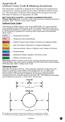 Appendix B: Uniform Color Code & Marking Guidelines The information contained in Appendix B is intended to be supplemental information for existing practices found within CGA Best Practices Version 2.0.
ENGINEERING DESIGN GUIDELINES. for SUBDIVISIONS OR COMMERCIAL DEVELOPMENTS
 ENGINEERING DESIGN GUIDELINES for SUBDIVISIONS OR COMMERCIAL DEVELOPMENTS City of Birmingham Department of Planning, Engineering and Permits Engineering Division Office of the City Engineer 2008 TABLE
SANITARY SEWER SPECIFICATIONS
 SANITARY SEWER SPECIFICATIONS OCTOBER 2003 HARVEST-MONROVIA WATER, SEWER, AND FIRE PROTECTION AUTHORITY SECTION 1.00 1.10 Purpose The purpose of this document is to assemble the sewer specifications, policies,
SECTION 5: SANITARY SEWER SYSTEM DESIGN
 SECTION 5: SANITARY SEWER SYSTEM DESIGN 5.01 GENERAL Sanitary sewer improvements shall be designed to serve the ultimate level of City development as defined in the General Plan and the Wastewater Facilities
SECTION III-06 Surfacing Page 1 Revised 3/2/10. See the DESIGN GUIDELINES in Section I-06 for requirements for cross slope of the roadway.
 Page 1 Revised 3/2/10 See the DESIGN GUIDELINES in Section I-06 for requirements for cross slope of the roadway. For New/Reconstruction projects: The cross slope of the driving lanes range from 1.5% to
Residential Deck Safety, Construction, and Repair
 Juneau Permit Center, 4 th Floor Marine View Center, (907)586-0770 This handout is designed to help you build your deck to comply with the 2006 International Residential Building code as modified by the
3. Contractor shall ensure that all permits are obtained prior to any construction. Contractor shall be responsible for all utility fees.
 The following shall serve as the minimum requirements for contractors performing work in relation to the Authority s potable water and sanitary sewer system(s), appurtenances and service connections. General:
How To Improve Safety
 Collision Diagrams Collision diagrams are used to display and identify similar accident patterns. They provide information on the type and number of accidents; including conditions such as time of day,
SECTION 15076 CEMENT-MORTAR LINED AND COATED STEEL PIPE
 SECTION 15076 CEMENT-MORTAR LINED AND COATED (CML&C) STEEL PIPE PART 1 GENERAL 1.01 DESCRIPTION This section designates the requirements for steel pipe fabrication, test in shop, installation of steel
ADA POST INSPECTION CHECKLIST. Job No. Route County Location
 ADA POST INSPECTION CHECKLIST Job No. Route County Location SIDEWALKS All sidewalks constructed within the project limits are ADA compliant. Sidewalks are 5 or greater in width. Exception, existing sidewalks
CHAPTER 3 PROJECT CONTROL
 CHAPTER 3 PROJECT CONTROL Marking Survey Control Points 3-2 Horizontal Control 3-2 Vertical Control 3-3 Preconstruction Bench Marks 3-3 Bench Mark Levels 3-3 Bench Mark Check Levels 3-5 Total Station Leveling
CHAPTER 9 SURVEYING TERMS AND ABBREVIATIONS
 CHAPTER 9 SURVEYING TERMS AND ABBREVIATIONS Surveying Terms 9-2 Standard Abbreviations 9-6 9-1 A) SURVEYING TERMS Accuracy - The degree of conformity with a standard, or the degree of perfection attained
San Antonio Water System Standard Specifications for Construction ITEM NO. 1103 POINT REPAIRS AND OBSTRUCTION REMOVALS
 ITEM NO. 1103 POINT REPAIRS AND OBSTRUCTION REMOVALS 1103.1 DESCRIPTION: 1. Repair of sanitary sewer lines by replacing short lengths of failed pipe with new pipe. 2. Repair of service laterals located
LONGITUDINAL PROFILE COMPLETION
 LONGITUDINAL PROFILE COMPLETION Course of the trench bottom determine using drawn cross-sections plot (refer to fig. 0630) according to the stationing direction: right-sided... dotted line left-sided...
Minimizes sediment and debris from entering storm drains that lead to waterways and watercourses.
 4.5-p DRAIN INLET PROTECTION Alternative Names: DI protection, Drop Inlet Protection DESCRIPTION Storm drain inlet (DI) protection slows and ponds stormwater, and filters sediment and debris before it
SECTION 108 - INLETS 108.1 INLET LOCATIONS
 Greene County Design Standards -Adopted April 5, 1999 SECTION 108 - INLETS SECTION 108 - INLETS 108.1 INLET LOCATIONS 108.2 INLET INTERCEPTION CAPACITIES 108.2.1 Clogging Factors 108.3 INTERCEPTION AND
Los Angeles County Department Of Public Works. Land Development Division. Bond Calculation Sheets
 Los Angeles County Department Of Public Works Land Development Division Bond Calculation Sheets Effective July 1, 2015 COUNTY OF LOS ANGELES DEPARTMENT OF PUBLIC WORKS LAND DEVELOPMENT DIVISION ROADS COST
TECHNICAL SPECIFICATION SERIES 8000 PRECAST CONCRETE
 TECHNICAL SPECIFICATION SERIES 8000 PRECAST CONCRETE TECHNICAL SPECIFICATION PART 8000 - PRECAST CONCRETE TABLE OF CONTENTS Item Number Page 8100 PRECAST CONCRETE CONSTRUCTION - GENERAL 8-3 8101 General
Gas Meter Clearances and Service Installation Requirements
 March 2015 Gas Meter Clearances and Service Installation Requirements Builder/Owner/Developer Requirements Call PSE s Customer Construction Services 1-888-321-7779 or visit PSE.com/CustomerConstruction
GUIDELINES FOR UTILITY INSTALLATIONS Part 1 - Wire Lines and Communications Cables
 Engineering Department SEPTEMBER, 2007 GUIDELINES FOR UTILITY INSTALLATIONS Part 1 - Wire Lines and Communications Cables General Requirements This section applies to all public and private utilities,
FIBER-OPTIC CABLE PLAN CHECK
 Engineering Division 201 North Broadway, Escondido, CA 92025 (760) 839-4651, FAX (760) 839-4597 FIBER-OPTIC CABLE PLAN CHECK To: Date: Project: Project No. Address: Check No. Attn: Via: The attached plans
PUBLIC WORKS DESIGN, SPECIFICATIONS & PROCEDURES MANUAL LINEAR INFRASTRUCTURE
 REGION OF PEEL PUBLIC WORKS DESIGN, SPECIFICATIONS & PROCEDURES MANUAL LINEAR INFRASTRUCTURE Storm Sewer Design Criteria REVISED July 2009 PUBLIC WORKS STORM SEWER DESIGN CRITERIA TABLE OF CONTENTS 1.0
32-02.05 Precast Manhole Sections and Castings. These items shall conform to Section 31, "Storm Drain Installation," of these Standard Provisions.
 SECTION 32: SANITARY SEWER INSTALLATION 32-01 SCOPE. The Work shall consist of furnishing and installing sewer mains, manholes, laterals, cleanout fittings and appurtenances; and testing, flushing and
STANDARD AND SPECIFICATIONS FOR STORM DRAIN INLET PROTECTION
 STANDARD AND SPECIFICATIONS FOR STORM DRAIN INLET PROTECTION Design Criteria Drainage Area The drainage area for storm drain inlets shall not exceed one acre. The crest elevations of these practices shall
SECTION 02400 - STORM DRAIN SYSTEM
 SECTION 02400 - STORM DRAIN SYSTEM CONTENTS: Part 1 - General... 1 1.01 Work Included... 1 1.02 Related Requirements... 1 1.03 Reference Standards... 1 1.04 Quality Assurance... 1 1.05 Measurement And
NRDCA 400 GUIDELINE FOR FIELD APPLICATION of LIGHTWEIGHT INSULATING CONCRETE REROOFING/RECOVER SYSTEMS
 NRDCA 400 GUIDELINE FOR FIELD APPLICATION of LIGHTWEIGHT INSULATING CONCRETE REROOFING/RECOVER SYSTEMS The (NRDCA) has prepared this document to provide customers and installers information that the industry
ASSET MANAGEMENT GUIDE FOR PROJECT DESIGN FORMAT
 ASSET MANAGEMENT GUIDE FOR PROJECT DESIGN FORMAT 1. BACKGROUND There has been an increasing awareness of design features, which produce poor whole-of-life costs. These poor whole-of-life costs manifest
DIVISION OF WATER QUALITY CONSTRUCTION GRANTS & LOANS SECTION FAST TRACK AUDIT CHECKLIST
 DIVISION OF WATER QUALITY CONSTRUCTION GRANTS & LOANS SECTION FAST TRACK AUDIT CHECKLIST CERTIFICATION 1. Did the engineer submit a certificate of completion utilizing the appropriate page of the issued
SEWER LINE EXTENSION DESIGN CHECKLIST
 SEWER LINE EXTENSION DESIGN CHECKLIST SWLE# Utilities Staff Date DISCLAIMER - This checklist is provided to Consulting Engineers for the express purpose of assisting them in compiling design plans for
NOTICE TO CONTRACTORS. CALL ORDER 700 FEDERAL PROJECT NO. STPD-6-2(122) LOCATION: US-34/US-6,CULBERTSON-McCOOK COUNTIES: HITCHCOCK RED WILLOW
 NOTICE TO CONTRACTORS CALL ORDER 700 FEDERAL PROJECT NO. STPD-6-2(122) LOCATION: US-34/US-6,CULBERTSON-McCOOK COUNTIES: HITCHCOCK RED WILLOW The Nebraska Department of Roads will receive sealed bids in
Note: All dimensions are nominal. All weights are for shipping purposes only. Availability is subject to change.
 CHANNEL DrAiNS Durable Designed for maximum durability and drainage, NDS Channel Drains are a proven alternative to traditional concrete drains. UV inhibitors in the grates, channel and component parts
Storm Drain Inlet Protection
 Objectives EC Erosion Control SE Sediment Control TR Tracking Control WE Wind Erosion Control Non-Stormwater NS Management Control Waste Management and WM Materials Pollution Control Legend: Primary Objective
SECTION 02401 SHEETING, SHORING AND BRACING
 SECTION 02401 SHEETING, SHORING AND BRACING This section should be edited to reflect soil conditions specific to the project site and the recommendations of a Geotechnical Engineer licensed in the State
Walking and Working Surface Checklist:
 Walking and Working Surfaces Purpose: This information is presented to improve the level of safety in our operations, and to inform you that we will comply with the OSHA Standard 29 CFR 1910.23. Responsibility:
SECTION 6 SANITARY SEWER MAIN 6.01 SCOPE
 6.01 SCOPE The work covered by this section of the specifications consists of the furnishing of all plant, labor, materials, equipment and supervision and performing all operations involved in the construction