
A N OVERVIEW OF GENE EXPRESSION
|
|
|
- Christopher Booth
- 9 years ago
- Views:
Transcription
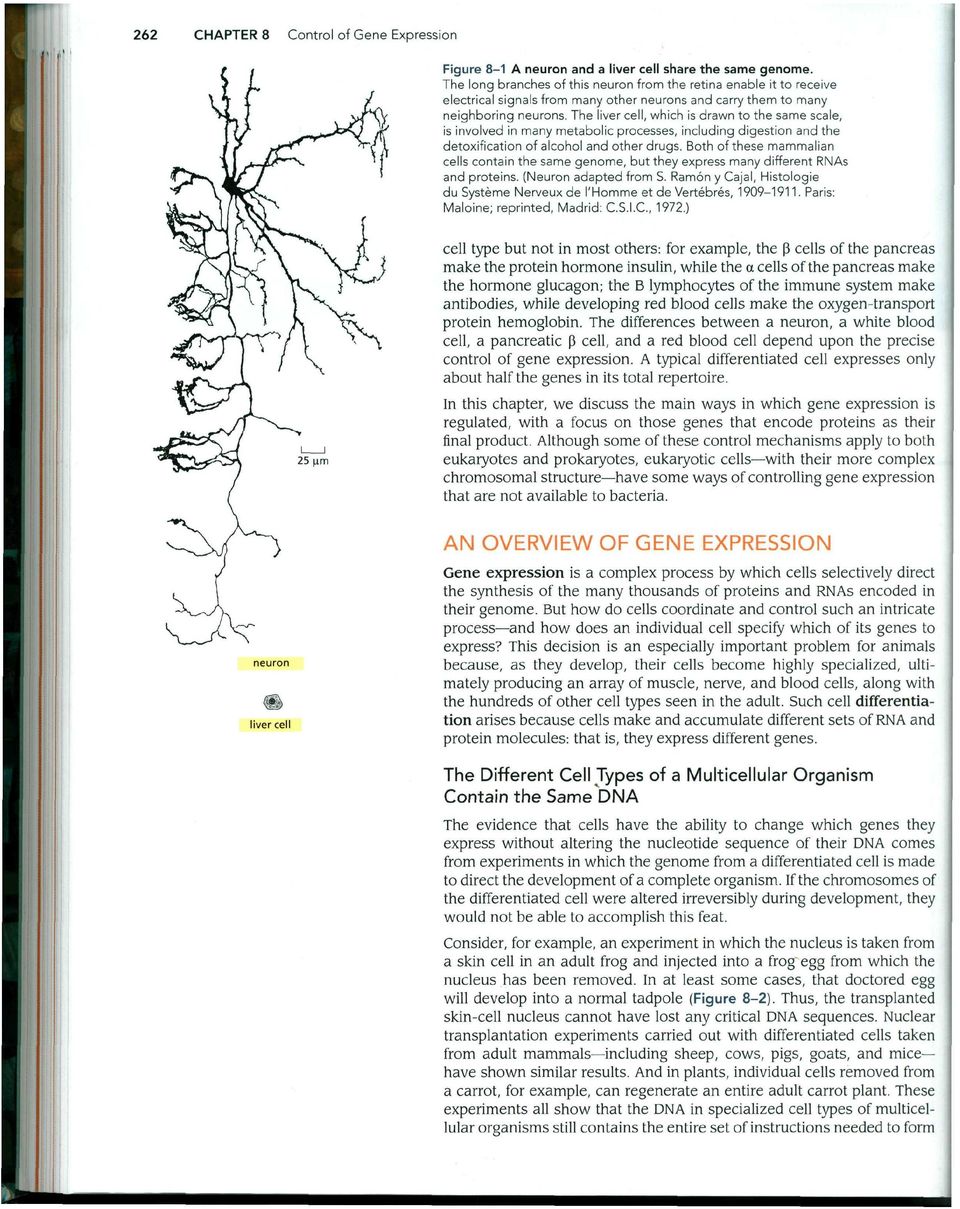
1 C H A P T E R E I G H T 8 C o n t r o l o f G e n e E x p r e s s i o n An organism's DNA encodes all of the RNA and protein molecules that are needed to make its cells. Yet a complete description of the DNA sequence of an organism be it the few million nucleotides of a bacterium or the few billion nucleotides in each human cell does not enable us to reconstruct that organism any more than a list of all the English words in a dictionary enables us to reconstruct a play by Shakespeare. We need to know how the elements in the DNA sequence or the words on a list work together to make the masterpiece. For cells, the question involves gene expression. Even the simplest singlecelled bacterium can use its genes selectively for example, switching genes on and off to make the enzymes needed to digest whatever food sources are available. In multicellular plants and animals, however, gene expression is under much more elaborate control. Over the course of embryonic development, a fertilized egg cell gives rise to many cell types that differ dramatically in both structure and function. The differences between an information-processing nerve cell and an infection-fighting white blood cell, for example, are so extreme that it is difficult to imagine that the two cells contain the same DNA (Figure 8-1). For this reason, and because cells in an adult organism rarely lose their distinctive characteristics, biologists originally suspected that certain genes might be selectively lost when a cell becomes specialized. We now know, however, that nearly all the cells of a multicellular organism contain the same genome. Cell differentiation is instead achieved by changes in gene expression. A N OVERVIEW OF GENE EXPRESSION HOW TRANSCRIPTIONAL SWITCHES WORK THE MOLECULAR MECHANISMS THAT CREATE SPECIALIZED CELL TYPES POST-TRANSCRIPTIONAL CONTROLS In mammals, hundreds of different cell types carry out a range of specialized functions that depend upon genes that are switched on in that

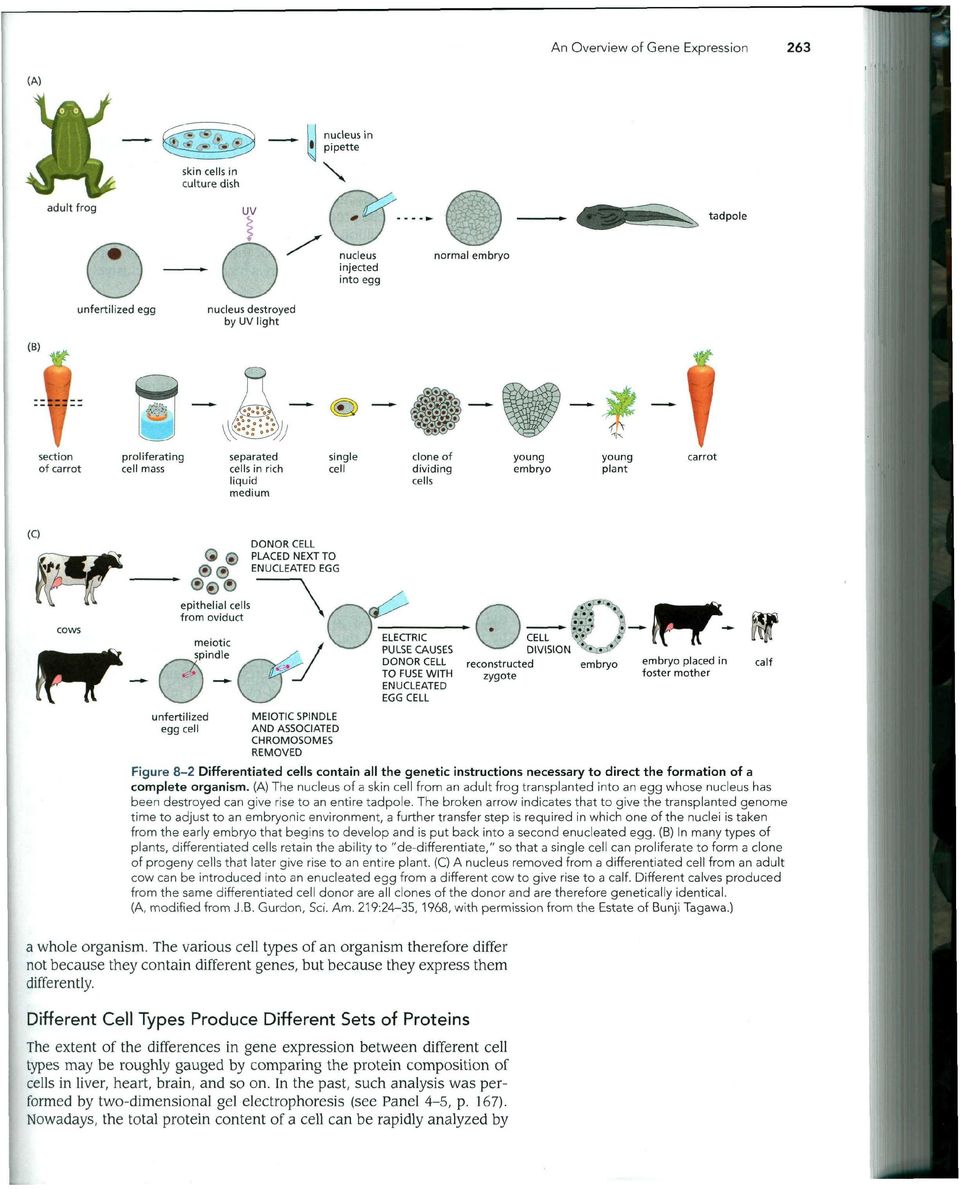
2 262 CHAPTER 8 Control of Gene Expression Figure 8-1 A neuron and a liver cell share the same genome. The long branches of this neuron from the retina enable it to receive electrical signals from many other neurons and carry them to many neighboring neurons. The liver cell, which is drawn to the same scale, is involved in many metabolic processes, including digestion and the detoxification of alcohol and other drugs. Both of these mammalian cells contain the same genome, but they express many different RNAs and proteins. (Neuron adapted from S. Ramon y Cajal, Histologie du Systeme Nerveux de I'Homme et de Vertebres, Paris: Maloine; reprinted, Madrid: C.S.I.C, 1972.) cell type but not in most others: for example, the 3 cells of the pancreas make the protein hormone insulin, while the a cells of the pancreas make the hormone glucagon; the B lymphocytes of the immune system make antibodies, while developing red blood cells make the oxygen-transport protein hemoglobin. The differences between a neuron, a white blood cell, a pancreatic 3 cell, and a red blood cell depend upon the precise control of gene expression. A typical differentiated cell expresses only about half the genes in its total repertoire. In this chapter, we discuss the main ways in which gene expression is regulated, with a focus on those genes that encode proteins as their final product. Although some of these control mechanisms apply to both eukaryotes and prokaryotes, eukaryotic cells with their more complex chromosomal structure have some ways of controlling gene expression that are not available to bacteria. liver cell A N OVERVIEW OF GENE EXPRESSION Gene expression is a complex process by which cells selectively direct the synthesis of the many thousands of proteins and RNAs encoded in their genome. But how do cells coordinate and control such an intricate process and how does an individual cell specify which of its genes to express? This decision is an especially important problem for animals because, as they develop, their cells become highly specialized, ultimately producing an array of muscle, nerve, and blood cells, along with the hundreds of other cell types seen in the adult. Such cell differentiation arises because cells make and accumulate different sets of PJMA and protein molecules: that is, they express different genes. The Different Cell Types of a Multicellular Organism Contain the Same DNA The evidence that cells have the ability to change which genes they express without altering the nucleotide sequence of their DNA comes from experiments in which the genome from a differentiated cell is made to direct the development of a complete organism. If the chromosomes of the differentiated cell were altered irreversibly during development, they would not be able to accomplish this feat. Consider, for example, an experiment in which the nucleus is taken from a skin cell in an adult frog and injected into a frog egg from which the nucleus has been removed. In at least some cases, that doctored egg will develop into a normal tadpole (Figure 8-2). Thus, the transplanted skin-cell nucleus cannot have lost any critical DNA sequences. Nuclear transplantation experiments carried out with differentiated cells taken from adult mammals including sheep, cows, pigs, goats, and micehave shown similar results. And in plants, individual cells removed from a carrot, for example, can regenerate an entire adult carrot plant. These experiments all show that the DNA in specialized cell types of multicellular organisms still contains the entire set of instructions needed to form
3 An Overview of Gene Expression 263 nucleus in pipette. Q tadpole nucleus injected into egg normal embryo unfertilized egg nucleus destroyed by UV light (B) ik f section of carrot proliferating cell mass separated cells in rich liquid medium single cell clone of dividing cells young embryo young plant carrot (Q p r DONOR CELL g) PLACED NEXT TO (g) «, ENUCLEATED EGG epithelial cells from oviduct unfertilized egg cell meiotic spindle MEIOTIC SPINDLE AND ASSOCIATED CHROMOSOMES REMOVED ELECTRIC CELL W A- PULSE CAUSES DIVISION '*> ' DONOR CELL reconstructed embryo TO FUSE WITH zygote ENUCLEATED EGG CELL flf" embryo placed in foster mother Figure 8-2 Differentiated cells contain all the genetic instructions necessary to direct the formation of a complete organism. (A) The nucleus of a skin cell from an adult frog transplanted into an egg whose nucleus has been destroyed can give rise to an entire tadpole. The broken arrow indicates that to give the transplanted genome time to adjust to an embryonic environment, a further transfer step is required in which one of the nuclei is taken from the early embryo that begins to develop and is put back into a second enucleated egg. (B) In many types of plants, differentiated cells retain the ability to "de-differentiate," so that a single cell can proliferate to form a clone of progeny cells that later give rise to an entire plant. (C) A nucleus removed from a differentiated cell from an adult cow can be introduced into an enucleated egg from a different cow to give rise to a calf. Different calves produced from the same differentiated cell donor are all clones of the donor and are therefore genetically identical. (A, modified from J.B. Gurdon, Sci. Am. 219:24-35, 1968, with permission from the Estate of Bunji Tagawa.) calf a whole organism. The various cell types of an organism therefore differ not because they contain different genes, but because they express them differently. Different Cell Types Produce Different Sets of Proteins The extent of the differences in gene expression between different cell types may be roughly gauged by comparing the protein composition of cells in liver, heart, brain, and so on. In the past, such analysis was performed by two-dimensional gel electrophoresis (see Panel 4-5, p. 167). Nowadays, the total protein content of a cell can be rapidly analyzed by
4 264 CHAPTER 8 Control of Gene Expression a method called mass spectrometry (see Figure 4-49). This technique is much more sensitive than electrophoresis and it enables the detection of even proteins that are produced in minor quantities. Both techniques reveal that many proteins are common to all the cells of a multicellular organism. These housekeeping proteins include, for example, the structural proteins of chromosomes, RNA polymerases, DNA repair enzymes, ribosomal proteins, enzymes involved in glycolysis and other basic metabolic processes, and many of the proteins that form the cytoskeleton. In addition, each different cell type also produces specialized proteins that are responsible for the cell's distinctive properties. In mammals, for example, hemoglobin is made almost exclusively in developing red blood cells. Gene expression can also be studied by cataloging a cell's RNAs, including the mrnas that encode protein. The most comprehensive methods for such analyses involve determining the nucleotide sequence of every RNA molecule made by the cell, an approach that can also reveal their relative abundance. Estimates of the number of different mrna sequences in human cells suggest that, at any one time, a typical differentiated human cell expresses perhaps ,000 protein-coding genes from a total of about 21,000. It is the expression of a different collection of genes in each cell type that causes the large variations seen in the size, shape, behavior, and function of differentiated cells. A Cell Can Change the Expression of Its Genes in Response to External Signals The specialized cells in a multicellular organism are capable of altering their patterns of gene expression in response to extracellular cues. For example, if a liver cell is exposed to the steroid hormone Cortisol, the production of several proteins is dramatically increased. Released by the adrenal gland during periods of starvation, intense exercise, or prolonged stress, Cortisol signals liver cells to boost the production of glucose from amino acids and other small molecules. The set of proteins whose production is induced by Cortisol includes enzymes such as tyrosine aminotransferase, which helps convert tyrosine to glucose. When the hormone is no longer present, the production of these proteins returns to its resting level. Other cell types respond to Cortisol differently. In fat cells, for example, the production of tyrosine aminotransferase is reduced, while some other cell types do not respond to Cortisol at all. The fact that different cell types often respond in different ways to the same extracellular signal contributes to the specialization that gives each cell type its distinctive character. Gene Expression Can Be Regulated at Various Steps from DNA to RNA to Protein If differences among the various cell types of an organism depend on the particular genes that the cells express, at what level is the control of gene expression exercised? As we saw in the last chapter, there are many steps in the pathway leading from DNA to protein, and all of them can in principle be regulated. Thus a cell can control the proteins it contains by (1) controlling when and how often a given gene is transcribed, (2) controlling how an RNA transcript is spliced or otherwise processed, (3) selecting which mrnas are exported from the nucleus to the cytosol, (4) regulating how quickly certain mrna molecules are degraded, (5) selecting which mrnas are translated into protein by ribosomes, or
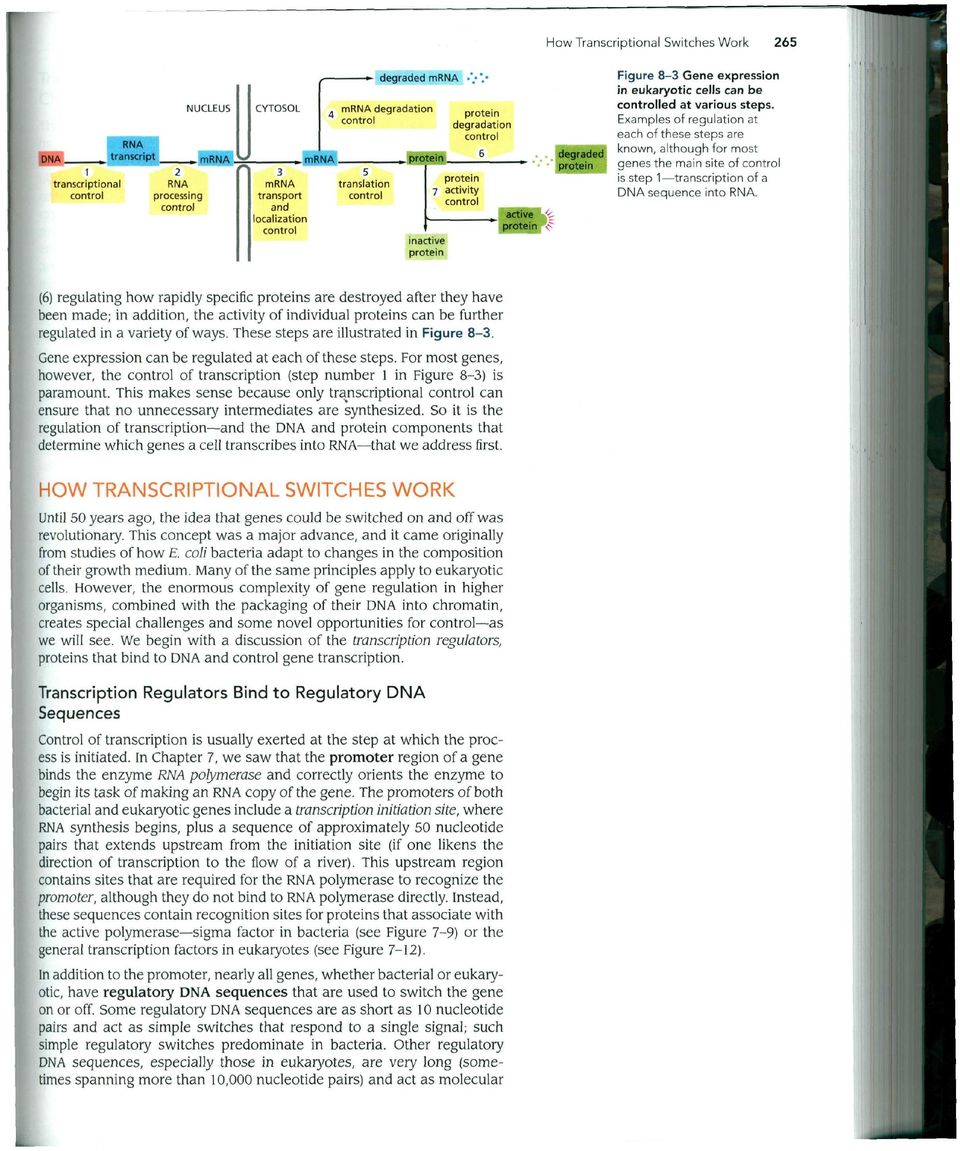
5 How Transcriptional Switches Work 265 DNA. transcriptional control RN, transcripi NUCLEUS.mRNA 2 processing RNA control CYTOSOL 3 mrna transport and localization control _^ mrna _ degraded mrna mrna degradation control translation control protein degradation control nrotein protein 7 activity control inactive protein active protein degraded protein Figure 8-3 Gene expression in eukaryotic cells can be controlled at various steps. Examples of regulation at each of these steps are known, although for most genes the main site of control is step 1 transcription of a DNA sequence into RNA. (6) regulating how rapidly specific proteins are destroyed after they have been made; in addition, the activity of individual proteins can be further regulated in a variety of ways. These steps are illustrated in Figure 8-3. Gene expression can be regulated at each of these steps. For most genes, however, the control of transcription (step number 1 in Figure 8-3) is paramount. This makes sense because only transcriptional control can ensure that no unnecessary intermediates are synthesized. So it is the regulation of transcription and the DNA and protein components that determine which genes a cell transcribes into RNA that we address first. HOW TRANSCRIPTIONAL SWITCHES W O R K Until 50 years ago, the idea that genes could be switched on and off was revolutionary. This concept was a major advance, and it came originally from studies of how. coli bacteria adapt to changes in the composition of their growth medium. Many of the same principles apply to eukaryotic cells. However, the enormous complexity of gene regulation in higher organisms, combined with the packaging of their DNA into chromatin, creates special challenges and some novel opportunities for control as we will see. We begin with a discussion of the transcription regulators, proteins that bind to DNA and control gene transcription. Transcription Regulators Bind to Regulatory DNA Sequences Control of transcription is usually exerted at the step at which the process is initiated. In Chapter 7, we saw that the promoter region of a gene binds the enzyme RNA polymerase and correctly orients the enzyme to begin its task of making an RNA copy of the gene. The promoters of both bacterial and eukaryotic genes include a transcription initiation site, where RNA synthesis begins, plus a sequence of approximately 50 nucleotide pairs that extends upstream from the initiation site (if one likens the direction of transcription to the flow of a river). This upstream region contains sites that are required for the RNA polymerase to recognize the promoter, although they do not bind to RNA polymerase directly. Instead, these sequences contain recognition sites for proteins that associate with the active polymerase sigma factor in bacteria (see Figure 7-9) or the general transcription factors in eukaryotes (see Figure 7-12). In addition to the promoter, nearly all genes, whether bacterial or eukaryotic, have regulatory DNA sequences that are used to switch the gene on or off. Some regulatory DNA sequences are as short as 10 nucleotide pairs and act as simple switches that respond to a single signal; such simple regulatory switches predominate in bacteria. Other regulatory DNA sequences, especially those in eukaryotes, are very long (sometimes spanning more than 10,000 nucleotide pairs) and act as molecular L
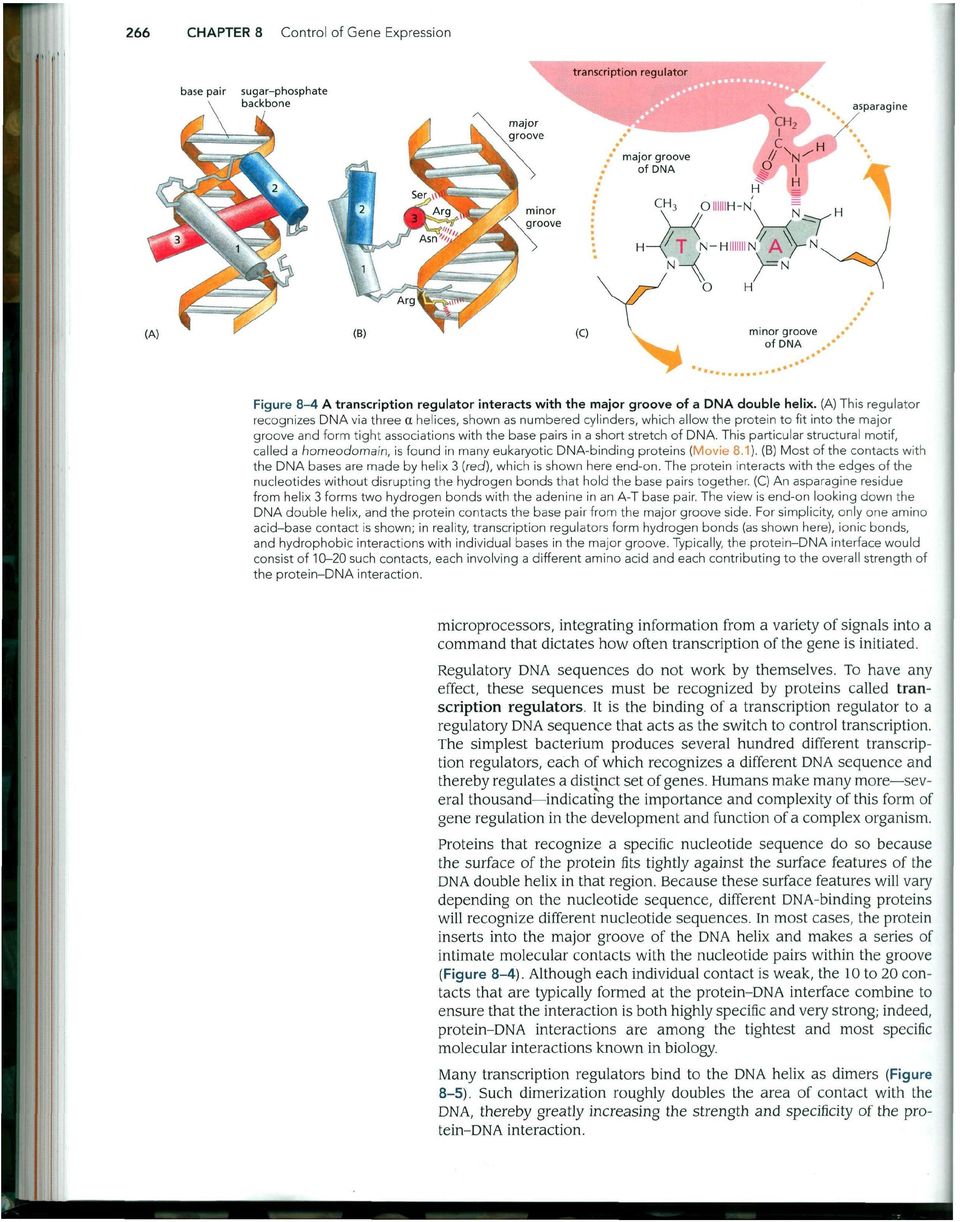
6 266 CHAPTER 8 Control of Gene Expression base pair sugar-phosphate backbone H <^T N-HIIIIIIIN A / ~ N minor groove of DNA Figure 8-4 A transcription regulator interacts with the major groove of a DNA double helix. (A) This regulator recognizes DNA via three a helices, shown as numbered cylinders, which allow the protein to fit into the major groove and form tight associations with the base pairs in a short stretch of DNA. This particular structural motif, called a homeodomain, is found in many eukaryotic DNA-binding proteins (Movie 8.1). (B) Most of the contacts with the DNA bases are made by helix 3 (red), which is shown here end-on. The protein interacts with the edges of the nucleotides without disrupting the hydrogen bonds that hold the base pairs together. (C) An asparagine residue from helix 3 forms two hydrogen bonds with the adenine in an A-T base pair. The view is end-on looking down the DNA double helix, and the protein contacts the base pair from the major groove side. For simplicity, only one amino acid-base contact is shown; in reality, transcription regulators form hydrogen bonds (as shown here), ionic bonds, and hydrophobic interactions with individual bases in the major groove. Typically, the protein-dna interface would consist of such contacts, each involving a different amino acid and each contributing to the overall strength of the protein-dna interaction. microprocessors, integrating information from a variety of signals into a command that dictates how often transcription of the gene is initiated. Regulatory DNA sequences do not work by themselves. To have any effect, these sequences must be recognized by proteins called transcription regulators. It is the binding of a transcription regulator to a regulatory DNA sequence that acts as the switch to control transcription. The simplest bacterium produces several hundred different transcription regulators, each of which recognizes a different DNA sequence and thereby regulates a distinct set of genes. Humans make many more several thousand indicating the importance and complexity of this form of gene regulation in the development and function of a complex organism. Proteins that recognize a specific nucleotide sequence do so because the surface of the protein fits tightly against the surface features of the DNA double helix in that region. Because these surface features will vary depending on the nucleotide sequence, different DNA-binding proteins will recognize different nucleotide sequences. In most cases, the protein inserts into the major groove of the DNA helix and makes a series of intimate molecular contacts with the nucleotide pairs within the groove (Figure 8-4). Although each individual contact is weak, the 10 to 20 contacts that are typically formed at the protein-dna interface combine to ensure that the interaction is both highly specific and very strong; indeed, protein-dna interactions are among the tightest and most specific molecular interactions known in biology. Many transcription regulators bind to the DNA helix as dimers (Figure 8-5). Such dimerization roughly doubles the area of contact with the DNA, thereby greatly increasing the strength and specificity of the protein-dna interaction.
7 How Transcriptional Switches Work 267 Transcriptional Switches Allow Cells to Respond to Changes in Their Environment The simplest and best understood examples of gene regulation occur in bacteria and in the viruses that infect them. The genome of the bacterium coli consists of a single circular DNA molecule of about 4.6 x 10 6 nucleotide pairs. This DNA encodes approximately 4300 proteins, although only a fraction of these are made at any one time. Bacteria regulate the expression of many of their genes according to the food sources that are available in the environment. For example, in E. coli, five genes code for enzymes that manufacture the amino acid tryptophan. These genes are arranged in a cluster on the chromosome and are transcribed from a single promoter as one long mrna molecule; such coordinately transcribed clusters are called operons (Figure 8-6). Although operons are common in bacteria, they are rare in eukaryotes, where genes are transcribed and regulated individually (see Figure 7-2). When tryptophan concentrations are low, the operon is transcribed; the resulting mrna is translated to produce a full set of biosynthetic enzymes, which work in tandem to synthesize tryptophan. When tryptophan is abundant, however for example, wften the bacterium is in the gut of a mammal that has just eaten a protein-rich meal the amino acid is imported into the cell and shuts down production of the enzymes, which are no longer needed. We now understand in considerable detail how this repression of the tryptophan operon comes about. Within the operon's promoter is a short DNA sequence, called the operator (see Figure 8-6), that is recognized by a transcription regulator. When this regulator binds to the operator, it blocks access of RNA polymerase to the promoter, preventing transcription of the operon and production of the tryptophan-producing enzymes. The transcription regulator is known as the tryptophan repressor, and it is controlled in an ingenious way: the repressor can bind to DNA only if it has also bound several molecules of tryptophan (Figure 8-7). The tryptophan repressor is an allosteric protein (see Figure 4-41): the binding of tryptophan causes a subtle change in its three-dimensional structure so that the protein can bind to the operator sequence. When the concentration of free tryptophan in the bacterium drops, the repressor no longer binds to DNA, and the tryptophan operon is transcribed. The repressor is thus a simple device that switches production of a set of biosynthetic enzymes on and off according to the availability of the end product of the pathway that the enzymes catalyze. The tryptophan repressor protein itself is always present in the cell. The gene that encodes it is continuously transcribed at a low level, so that a small amount of the repressor protein is always being made. Thus the bacterium can respond very rapidly to a rise in tryptophan concentration. promoter 1 1 I operator E 1 D 1 1 C B A i i i T L_ 9 series of enzymes required for tryptophan biosynthesis F. coli chromosome mrna molecule Figure 8-5 Many transcription regulators bind to DNA as dimers. This transcription regulator contains a leucine zipper motif, which is formed by two a helices, each contributed by a different protein subunit. Leucine zipper proteins thus bind to DNA as dimers, gripping the double helix like a clothespin on a clothesline (Movie 8.2). Figure 8-6 A cluster of bacterial genes can be transcribed from a single promoter. Each of these five genes encodes a different enzyme; all of the enzymes are needed to synthesize the amino acid tryptophan. The genes are transcribed as a single mrna molecule, a feature that allows their expression to be coordinated. Clusters of genes transcribed as a single mrna molecule are common in bacteria. Each of these clusters is called an operon because its expression is controlled by a regulatory DNA sequence called the operator (green), situated within the promoter. The yellow blocks in the promoter represent DNA sequences that bind RNA polymerase.
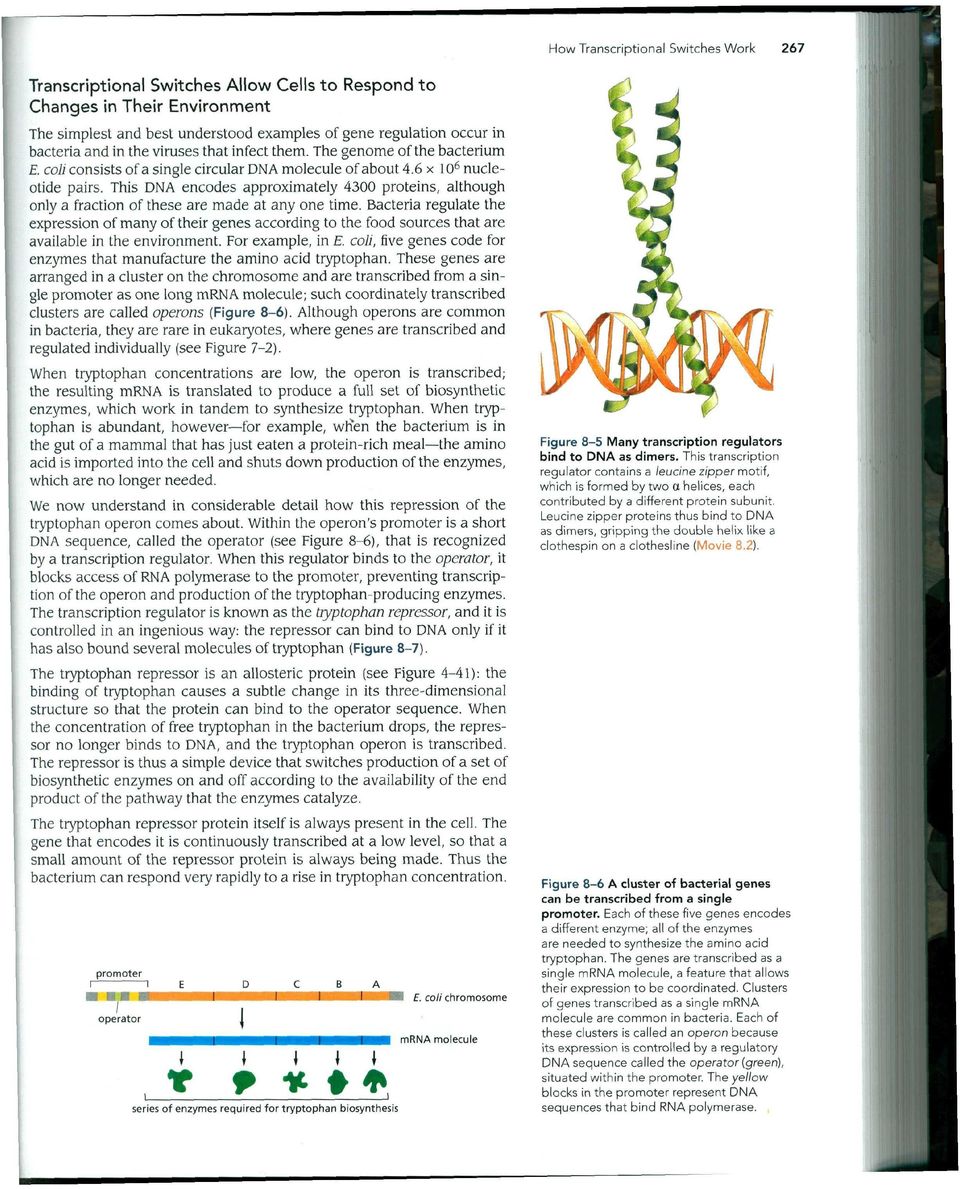
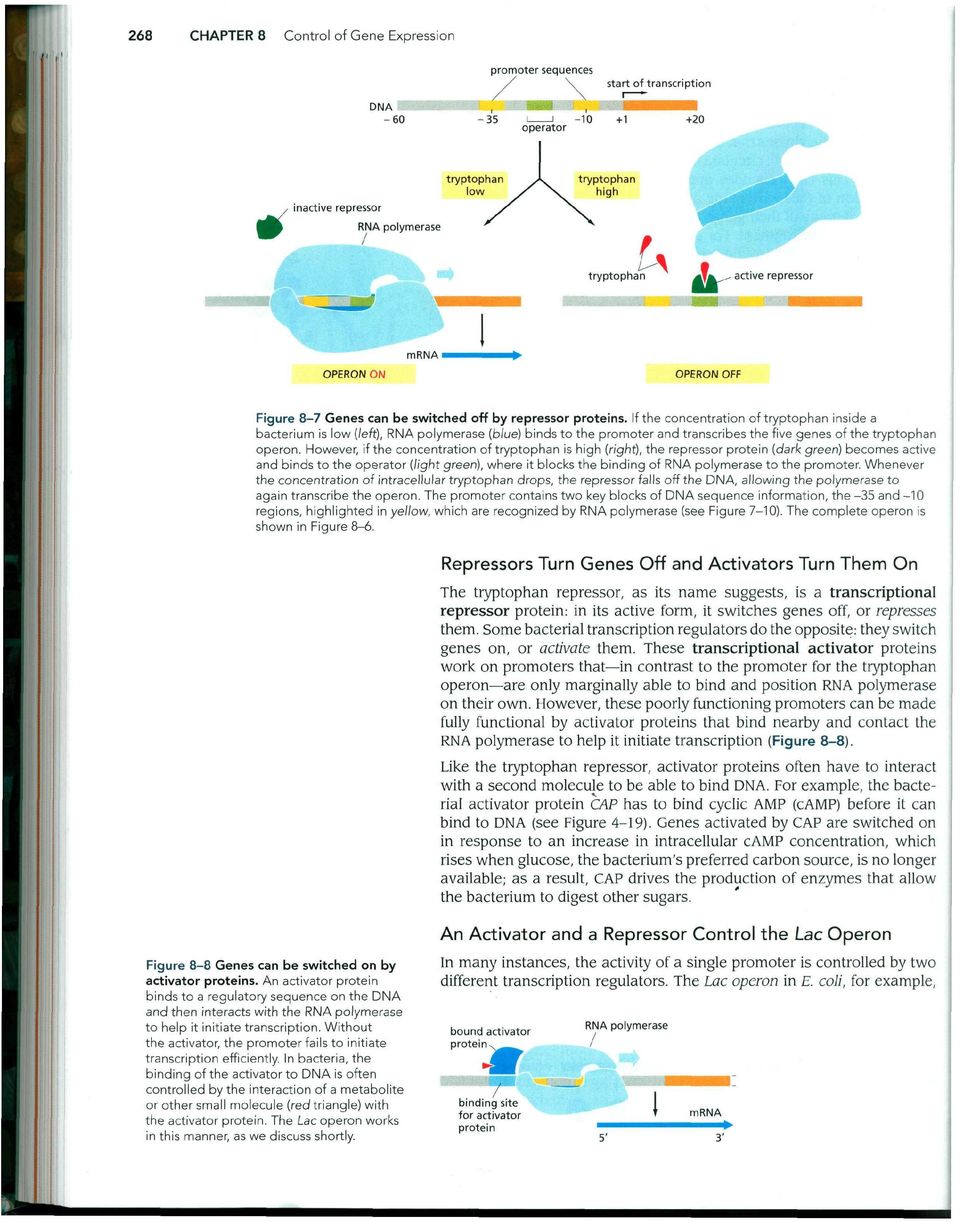
8 268 CHAPTER 8 Control of Gene Expression promoter sequences start of transcription DNA operator tryptophan low inactive repressor RNA polymerase tryptophan high tryptopha active repressor OPERON ON mrna i OPERON OFF Figure 8-7 Genes can be switched off by repressor proteins. If the concentration of tryptophan inside a bacterium is low (left), RNA polymerase (blue) binds to the promoter and transcribes the five genes of the tryptophan operon. However, if the concentration of tryptophan is high (right), the repressor protein (dark green) becomes active and binds to the operator (light green), where it blocks the binding of RNA polymerase to the promoter. Whenever the concentration of intracellular tryptophan drops, the repressor falls off the DNA, allowing the polymerase to again transcribe the operon. The promoter contains two key blocks of DNA sequence information, the -35 and -10 regions, highlighted in yellow, which are recognized by RNA polymerase (see Figure 7-10). The complete operon is shown in Figure 8-6. Repressors Turn Genes Off and Activators Turn Them On The tryptophan repressor, as its name suggests, is a transcriptional repressor protein: in its active form, it switches genes off, or represses them. Some bacterial transcription regulators do the opposite: they switch genes on, or activate them. These transcriptional activator proteins work on promoters that in contrast to the promoter for the tryptophan operon are only marginally able to bind and position RNA polymerase on their own. However, these poorly functioning promoters can be made fully functional by activator proteins that bind nearby and contact the RNA polymerase to help it initiate transcription (Figure 8-8). Like the tryptophan repressor, activator proteins often have to interact with a second molecule to be able to bind DNA. For example, the bacterial activator protein CAP has to bind cyclic AMP (camp) before it can bind to DNA (see Figure 4-19). Genes activated by CAP are switched on in response to an increase in intracellular camp concentration, which rises when glucose, the bacterium's preferred carbon source, is no longer available; as a result, CAP drives the production of enzymes that allow the bacterium to digest other sugars. Figure 8-8 Genes can be switched on by activator proteins. An activator protein binds to a regulatory sequence on the DNA and then interacts with the RNA polymerase to help it initiate transcription. Without the activator, the promoter fails to initiate transcription efficiently. In bacteria, the binding of the activator to DNA is often controlled by the interaction of a metabolite or other small molecule (red triangle) with the activator protein. The Lac operon works in this manner, as we discuss shortly. An Activator and a Repressor Control the Lac Operon In many instances, the activity of a single promoter is controlled by two different transcription regulators. The Lac operon in E. coli, for example, bound activator protein M binding site for activator protein RNA polymerase / mrna
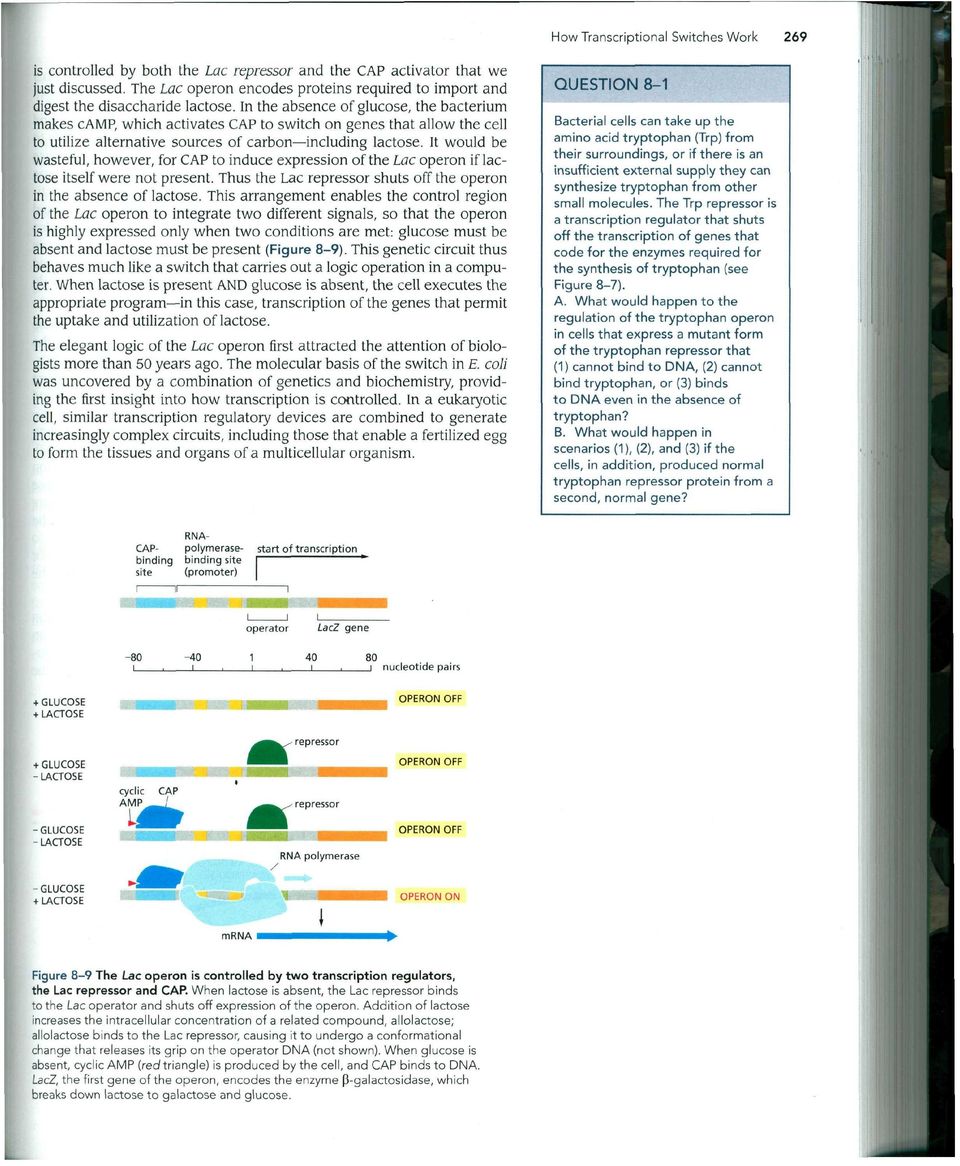
9 How Transcriptional Switches Work 269 is controlled by both the Lac repressor and the CAP activator that we just discussed. The Lac operon encodes proteins required to import and digest the disaccharide lactose. In the absence of glucose, the bacterium makes camp, which activates CAP to switch on genes that allow the cell to utilize alternative sources of carbon including lactose. It would be wasteful, however, for CAP to induce expression of the Lac operon if lactose itself were not present. Thus the Lac repressor shuts off the operon in the absence of lactose. This arrangement enables the control region of the Lac operon to integrate two different signals, so that the operon is highly expressed only when two conditions are met: glucose must be absent and lactose must be present (Figure 8-9). This genetic circuit thus behaves much like a switch that carries out a logic operation in a computer. When lactose is present AND glucose is absent, the cell executes the appropriate program in this case, transcription of the genes that permit the uptake and utilization of lactose. The elegant logic of the Lac operon first attracted the attention of biologists more than 50 years ago. The molecular basis of the switch in E. coli was uncovered by a combination of genetics and biochemistry, providing the first insight into how transcription is controlled. In a eukaryotic cell, similar transcription regulatory devices are combined to generate increasingly complex circuits, including those that enable a fertilized egg to form the tissues and organs of a multicellular organism. QUESTION 8-1 Bacterial cells can take up the amino acid tryptophan (Trp) from their surroundings, or if there is an insufficient external supply they can synthesize tryptophan from other small molecules. The Trp repressor is a transcription regulator that shuts off the transcription of genes that code for the enzymes required for the synthesis of tryptophan (see Figure 8-7). A. What would happen to the regulation of the tryptophan operon in cells that express a mutant form of the tryptophan repressor that (1) cannot bind to DNA, (2) cannot bind tryptophan, or (3) binds to DNA even in the absence of tryptophan? B. What would happen in scenarios (1), (2), and (3) if the cells, in addition, produced normal tryptophan repressor protein from a second, normal gene? RNA- CAP- polymerase- start of transcription binding binding site site (promoter) operator LacZ gene l nucleotide pairs + GLUCOSE + LACTOSE + GLUCOSE - LACTOSE -GLUCOSE - LACTOSE repressor repressor RNA polymerase OPERON OFF OPERON OFF OPERON OFF -GLUCOSE + LACTOSE OPERON ON mrna Figure 8-9 The Lac operon is controlled by two transcription regulators, the Lac repressor and CAP. When lactose is absent, the Lac repressor binds to the Lac operator and shuts off expression of the operon. Addition of lactose increases the intracellular concentration of a related compound, allolactose; allolactose binds to the Lac repressor, causing it to undergo a conformational change that releases its grip on the operator DNA (not shown). When glucose is absent, cyclic AMP (red triangle) is produced by the cell, and CAP binds to DNA. LacZ, the first gene of the operon, encodes the enzyme P-galactosidase, which breaks down lactose to galactose and glucose.
10 270 CHAPTER 8 Control of Gene Expression QUESTION 8-2 Explain how DNA-binding proteins can make sequence-specific contacts to a double-stranded DNA molecule without breaking the hydrogen bonds that hold the bases together. Indicate how, through such contacts, a protein can distinguish a T-A from a C-G pair. Indicate the parts of the nucleotide base pairs that could form noncovalent interactions hydrogen bonds, electrostatic attractions, or hydrophobic interactions (see Panel 2-7, pp ) with a DNA-binding protein. The structures of all the base pairs in DNA are given in Figure 5-6. Eukaryotic Transcription Regulators Control Gene Expression from a Distance Eukaryotes, too, use transcription regulators both activators and repressors to regulate the expression of their genes. The DNA sites to which eukaryotic gene activators bind are termed enhancers, because their presence dramatically enhances the rate of transcription. It was surprising to biologists when, in 1979, it was discovered that these activator proteins could enhance transcription even when they are bound thousands of nucleotide pairs away from a gene's promoter. They also work when bound either upstream or downstream from the gene. These observations raised several questions. How do enhancer sequences and the proteins bound to them function over such long distances? How do they communicate with the promoter? Many models for this "action at a distance" have been proposed, but the simplest of these seems to apply in most cases. The DNA between the enhancer and the promoter loops out to allow eukaryotic activator proteins to influence directly events that take place at the promoter (Figure 8-10). The DNA thus acts as a tether, allowing a protein that is bound to an enhancer even one that is thousands of nucleotide pairs away to interact with the proteins in the vicinity of the promoter including RNA polymerase and the general transcription factors (see Figure 7-12). Often, additional proteins serve to link the distantly bound transcription regulators to these proteins at the promoter; the most important of these regulators is a large complex of proteins known as Mediator (see Figure 8-10). One of the ways in which these proteins function is by aiding the assembly of the general transcription factors and RNA polymerase to form a large transcription complex at the promoter. Eukaryotic repressor proteins do the opposite: they decrease transcription by preventing the assembly of the same protein complex. In addition to promoting or repressing the assembly of a transcription initiation complex directly, eukaryotic transcription regulators have an additional mechanism of action: they attract proteins that modify chromatin structure and thereby affect the accessibility of the promoter to the general transcription factors and RNA polymerase, as we discuss next. eukaryotic activator protein Figure 8-10 In eukaryotes, gene activation can occur at a distance. An activator protein bound to a distant enhancer attracts RNA polymerase and general transcription factors to the promoter. Looping of the intervening DNA permits contact between the activator and the transcription initiation complex bound to the promoter. In the case shown here, a large protein complex called Mediator serves as a go-between. The broken stretch of DNA signifies that the length of DNA between the enhancer and the start of transcription varies, sometimes reaching tens of thousands of nucleotide pairs in length. The TATA box is a DNA recognition sequence for the first general transcription factor that binds to the promoter (see Figure 7-12). DNA L enhancer (binding site for activator protein) TATA box BINDING OF GENERAL TRANSCRIPTION FACTORS, MEDIATOR, AND RNA POLYMERASE TRANSCRIPTION BEGINS RNA polymerase start of transcription

11 How Transcriptional Switches Work 271 Eukaryotic Transcription Regulators Help Initiate Transcription by Recruiting Chromatin-Modifying Proteins Initiation of transcription in eukaryotic cells must also take into account the packaging of DNA into chromosomes. As discussed in Chapter 5, eukaryotic DNA is packed into nucleosomes, which, in turn, are folded into higher-order structures. How do transcription regulators, general transcription factors, and RNA polymerase gain access to such DNA? Nucleosomes can inhibit the initiation of transcription if they are positioned over a promoter, because they physically block the assembly of the general transcription factors or RNA polymerase on the promoter. Such chromatin packaging may have evolved in part to prevent leaky gene expression by blocking the initiation of transcription in the absence of the proper activator proteins. In eukaryotic cells, activator and repressor proteins exploit chromatin structure to help turn genes on and off. As we saw in Chapter 5, chromatin structure can be altered by chromatin-remodeling complexes and by enzymes that covalently modify the histone proteins that form the core of the nucleosome (see Figures 5-26 and 5-27). Many gene activators take advantage of these mechanisms by recruiting such chromatin-modifying proteins to promoters. For example, the recruitment of histone acetyltransferases promotes the attachment of acetyl groups to selected lysines in the tail of histone proteins. This modification alters chromatin structure, allowing greater accessibility to the underlying DNA; moreover, the acetyl groups themselves attract proteins that promote transcription, including some of the general transcription factors (Figure 8-11). Likewise, gene repressor proteins can modify chromatin in ways that reduce the efficiency of transcription initiation. For example, many repressors attract histone deacetylases enzymes that remove the acetyl groups from histone tails, thereby reversing the positive effects that acetylation has on transcription initiation. Although some eukaryotic repressor proteins work on a gene-by-gene basis, others can orchestrate the formation of large swathes of transcriptionally inactive chromatin containing many QUESTION 8-3 Some transcription regulators bind to DNA and cause the double helix to bend at a sharp angle. Such "bending proteins" can stimulate the initiation of transcription without contacting either the RNA polymerase, any of the general transcription factors, or any other transcription regulators. Can you devise a plausible explanation for how these proteins might work to modulate transcription? Draw a diagram that illustrates your explanation. histone octamer transcription regulator V TATA box specific pattern of histone acetylation TRANSCRIPTION INITIATION general transcription factors. Mediator, and RNA polymerase chromatin-remodeling complex TATA box Figure 8-11 Eukaryotic transcriptional activators can recruit chromatinmodifying proteins to help initiate gene transcription. On the right, chromatinremodeling complexes render the DNA packaged in chromatin more accessible to other proteins in the cell, including those required for transcription initiation; notice, for example, the increased exposure of the TATA box. On the left, the recruitment of histone-modifying enzymes such as histone acetyltransferases adds acetyl groups to specific histones, which can then serve as binding sites for proteins that stimulate transcription initiation (not shown).

12 272 CHAPTER 8 Control of Gene Expression genes. As discussed in Chapter 5, these transcription-resistant regions of DNA include the heterochromatin found in interphase chromosomes and the inactive X chromosome in the cells of female mammals. THE MOLECULAR M E C H A N I S M S THAT CREATE SPECIALIZED CELL TYPES All cells must be able to switch genes on and off in response to signals in their environment. But the cells of multicellular organisms have evolved this capacity to an extreme degree and in highly specialized ways to form organized arrays of differentiated cell types. In particular, once a cell in a multicellular organism becomes committed to differentiate into a specific cell type, the choice of fate is generally maintained through subsequent cell divisions. This means that the changes in gene expression, which are often triggered by a transient signal, must be remembered by the cell. This phenomenon of cell memory is a prerequisite for the creation of organized tissues and for the maintenance of stably differentiated cell types. In contrast, the simplest changes in gene expression in both eukaryotes and bacteria are often only transient; the tryptophan repressor, for example, switches off the tryptophan operon in bacteria only in the presence of tryptophan; as soon as the amino acid is removed from the medium, the genes switch back on, and the descendants of the cell will have no memory that their ancestors had been exposed to tryptophan. In this section, we discuss some of the special features of transcriptional regulation that are found in multicellular organisms. Our focus will be on how these mechanisms create and maintain the specialized cell types that give a worm, a fly, or a human its distinctive characteristics. Eukaryotic Genes Are Controlled by Combinations of Transcription Regulators Because eukaryotic transcription regulators can control transcription initiation when bound to DNA many base pairs away from the promoter, the nucleotide sequences that control the expression of a gene can be spread over long stretches of DNA. In animals and plants, it is not unusual to find the regulatory DNA sequences of a gene dotted over tens of thousands of nucleotide pairs, although much of the intervening DNA serves as "spacer" sequence and is not directly recognized by the transcription regulators... So far in this chapter, we have treated transcription regulators as though each functions individually to turn a gene on or off. While this idea holds true for many simple bacterial activators and repressors, most eukaryotic transcription regulators work as part of a "committee" of regulatory proteins, all of which are necessary to express the gene in the right place, in the right cell type, in response to the right conditions, at the right time, and in the required amount. The term combinatorial control refers to the way that groups of transcription regulators work together to determine the expression of a single gene. We saw a simple example of such regulation by multiple regulators when we discussed the bacterial Lac operon (see Figure 8-9). In eukaryotes, the regulatory inputs have been amplified, and a typical gene is controlled by dozens of transcription regulators. These help assemble chromatin-remodeling complexes, histone-modifying enzymes, RNA polymerase, and general transcription factors via the multiprotein Mediator complex (Figure 8-12). In many cases, both repressors and activators will be present in the same complex; how the cell integrates the effects of all of these proteins to determine the final level of gene

13 The Molecular Mechanisms That Create Specialized Cell Types 273 regulatory DNA sequences ^ ( mm00^ ^ B^^ "^ transcription^ l B ^ l ^ factors y I ^0^*!****H*00^ K«^:,t. / / ^^^ 0 chromatinremodeling complex histonemodifying enzyme Figure 8-12 Transcription regulators work together as a "committee" to control the expression of a eukaryotic gene. Whereas the general transcription factors that assemble at the promoter are the same for all genes transcribed by RNA polymerase (see Figure 7-12), the transcription regulators and the locations of their DNA binding sites relative to the promoters are different for different genes. These regulators, along with chromatinmodifying proteins, are assembled at the promoter by the Mediator. The effects of multiple transcription regulators combine to determine the final rate of transcription initiation. RNA polymerase promoter expression is only now beginning to be understood. An example of such a complex regulatory system one that participates in the development of a fruit fly from a fertilized egg is described in How We Know, pp The Expression of Different Genes Can Be Coordinated by a Single Protein In addition to being able to switch individual genes on and off, all cells whether prokaryote or eukaryote need to coordinate the expression of different genes. When a eukaryotic cell receives a signal to divide, for example, a number of hitherto unexpressed genes are turned on together to set in motion the events that lead eventually to cell division (discussed in Chapter 18). As discussed earlier, one way in which bacteria coordinate the expression of a set of genes is by having them clustered together in an operon under the control of a single promoter (see Figure 8-6). Such clustering is not seen in eukaryotic cells, where each gene is transcribed and regulated individually. So how do these cells coordinate gene expression? In particular, given that a eukaryotic cell uses a committee of transcription regulators to control each of its genes, how can it rapidly and decisively switch whole groups of genes on or off? The answer is that even though control of gene expression is combinatorial, the effect of a single transcription regulator can still be decisive in switching any particular gene on or off, simply by completing the combination needed to activate or repress that gene. This is like dialing in the final number of a combination lock: the lock will spring open if the other numbers have been previously entered. Just as the same number can complete the combination for different locks, the same protein can complete the combination for several different genes. As long as different genes contain regulatory DNA sequences that are recognized by the same transcription regulator, they can be switched on or off together, as a coordinated unit. An example of such coordinated regulation in humans is seen with the Cortisol receptor protein. In order to bind to regulatory sites in DNA, this

14 274 H O W W E K N O W G E N E REGULATION THE STORY O F The ability to regulate gene expression is crucial to the proper development of a multicellular organism from a fertilized egg to a fertile adult. Beginning at the earliest moments in development, a succession of transcriptional programs guides the differential expression of genes that allows an animal to form a proper body plan helping to distinguish its back from its belly, and its head from its tail. These programs ultimately direct the correct placement of a wing or a leg, a mouth or an anus, a neuron or a sex cell. A central challenge in development, then, is to understand how an organism generates these patterns of gene expression, which are laid down within hours of fertilization. Among the most important genes involved in these early stages of development are those that encode transcription regulators. By interacting with different regulatory DNA sequences, these proteins instruct every cell in the embryo to switch on the genes that are appropriate for that cell at each time point during development. How can a protein binding to a piece of DNA help direct the development of a complex multicellular organism? To see how we can address that large question, we review the story of Eve. Seeing Eve Even-skipped Eve, for short is a gene whose expression plays an important part in the development of the Drosophila embryo. If this gene is inactivated by mutation, many parts of the embryo fail to form and the fly larva dies early in development. But Eve is not expressed uniformly throughout the embryo. Instead, the Eve protein is produced in a striking series of seven neat stripes, each of which occupies a very precise position along the length of the embryo. These seven stripes correspond to seven of the fourteen segments that define the body plan of the fly three for the head, three for the thorax, and eight for the abdomen. This pattern never varies: Eve can be found in the very same places in every Drosophila embryo (see Figure 8-13B). How can the expression of a gene be regulated with such spatial precision such that one cell will produce a protein while a neighboring cell does not? To find out, researchers took a trip upstream. Dissecting the D N A As we have seen in this chapter, regulatory DNA sequences control which cells in an organism will express a particular gene, and at what point during development that gene will be turned on. In eukaryotes, EVE these regulatory sequences are frequently located upstream of the gene itself. One way to locate a regulatory DNA sequence and study how it operates is to remove a piece of DNA from the region upstream of a gene of interest and insert that DNA upstream of a reporter gene one that encodes a protein with an activity that is easy to monitor experimentally. If the piece of DNA contains a regulatory sequence, it will drive the expression of the reporter gene. When this patchwork piece of DNA is subsequently introduced into a cell or organism, the reporter gene will be expressed in the same cells and tissues that normally express the gene from which the regulatory sequence was derived (see Figure 10-31). By excising various segments of the DNA sequences upstream of Eve, and coupling them to a reporter gene, researchers found that the expression of the gene is controlled by a series of seven regulatory m o d u l e s each of which specifies a single stripe of Eve expression. In this way, researchers identified, for example, a single segment of regulatory DNA that specifies stripe 2. They could excise this regulatory segment, link it to a reporter gene, and introduce the resulting DNA segment into the fly. When they examined embryos that carried this engineered DNA, they found that the reporter gene is expressed in the precise position of stripe 2 (Figure 8-13). Similar experiments revealed the existence of six other regulatory modules, one for each of the other Eve stripes. The next question is: How does each of these seven regulatory segments direct the formation of a single stripe in a specific position? The answer, researchers found, is that each segment contains a unique combination of regulatory sequences that bind different combinations of transcription regulators. These regulators, like Eve itself, are distributed in unique patterns within the embryo some toward the head, some toward the rear, some in the middle. The regulatory segment that defines stripe 2, for example, contains regulatory DNA sequences for four transcription regulators: two that activate Eve transcription and two that repress it (Figure 8-14). In the narrow band of tissue that constitutes stripe 2, it just so happens the repressor proteins are not present so the Eve gene is expressed; in the bands of tissue on either side of the stripe, the repressors keep Eve quiet. And so a stripe is formed. The regulatory segments controlling the other stripes are thought to function along similar lines; each regulatory segment reads "positional information" provided
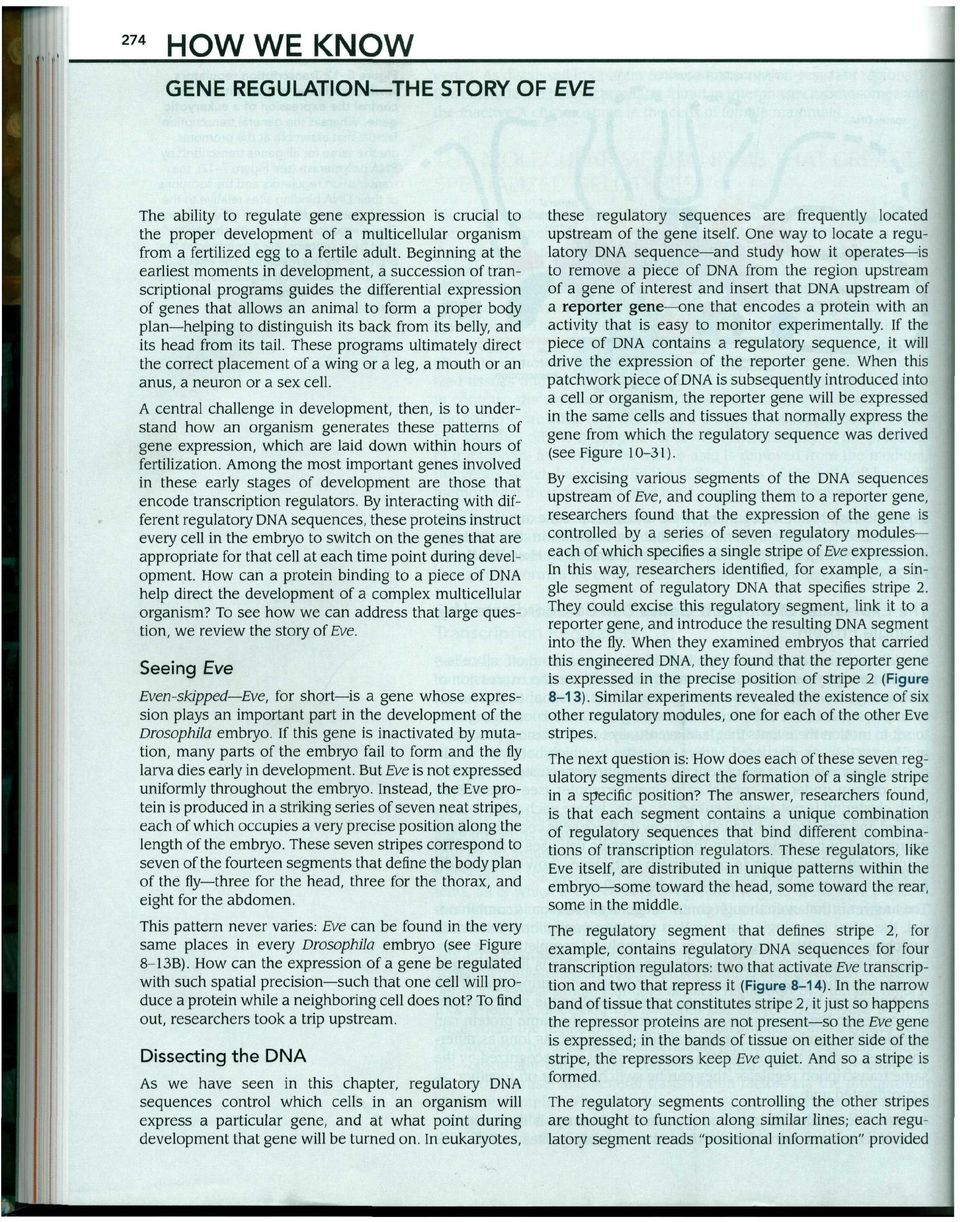
15 The Molecular Mechanisms That Create Specialized Cell Types 275 NORMAL DNA A) REPORTER FUSION DNA Q m \ \ \ 1 / Eve regulatory segments INSERT r stri ae 2 regu atory segr nent stripe 2 regulatory segment JEXC, V r TATA box r TATA box start of transcription start of transcription Fve gene LacZ gene Figure 8-13 An experimental approach that involves the use of a reporter gene reveals the modular construction of the Eve gene regulatory region. (A) Expression of the Eve gene is controlled by a series of regulatory segments (orange) that direct the production of Eve protein in stripes along the embryo. (B) Embryos stained with antibodies to the Eve protein show the seven characteristic stripes of Eve expression. (C) In the laboratory, the regulatory segment that directs the formation of stripe 2 can be excised from the DNA shown in part A and inserted upstream of the E. coli LacZ gene, which encodes the enzyme B-galactosidase (see Figure 8-9). (D) When the engineered DNA containing the stripe 2 regulatory segment is introduced into the genome of a fly, the resulting embryo expresses P-galactosidase precisely in the position of the second Eve stripe. Enzyme activity is assayed by the addition of X-gal, a modified sugar that when cleaved by B-galactosidase generates an insoluble blue product. (B and D, courtesy of Stephen Small and Michael Levine.) by some unique combination of transcription regulators in the embryo and expresses Eve on the basis of this information. The entire regulatory region is strung out over 20,000 nucleotide pairs of DNA and, altogether, binds more than 20 transcription regulators. This large regulatory region is built from a series of smaller regulatory segments, each of which consists of a unique arrangement of regulatory DNA sequences recognized by specific transcription regulators. In this way, the Eve gene can respond to an enormous combination of inputs. The Eve protein is itself a transcription regulator, and it in combination with many other regulatory proteins controls key events in the development of the fly. This complex organization of a discrete number of regulatory elements begins to explain how the development of an entire organism can be orchestrated by repeated applications of a few basic principles. stripe 2 regulatory DNA segment HI «9B YM YA transcriptional repressors Giant Kruppel \ Bicoid Hunchback transcriptional activators Figure 8-14 The regulatory segment that specifies Eve stripe 2 contains binding sites for four different transcription regulators. All four regulators are responsible for the proper expression of Eve in stripe 2. Flies that are deficient in the two activators, called Bicoid and Hunchback, fail to form stripe 2 efficiently; in flies deficient in either of the two repressors, called Giant and Kruppel, stripe 2 expands and covers an abnormally broad region of the embryo. As indicated in the diagram, in some cases the binding sites for the transcription regulators overlap, and the proteins compete for binding to the DNA. For example, the binding of Bicoid and Kruppel to the site at the far right is thought to be mutually exclusive. The regulatory segment is 480 base pairs in length.
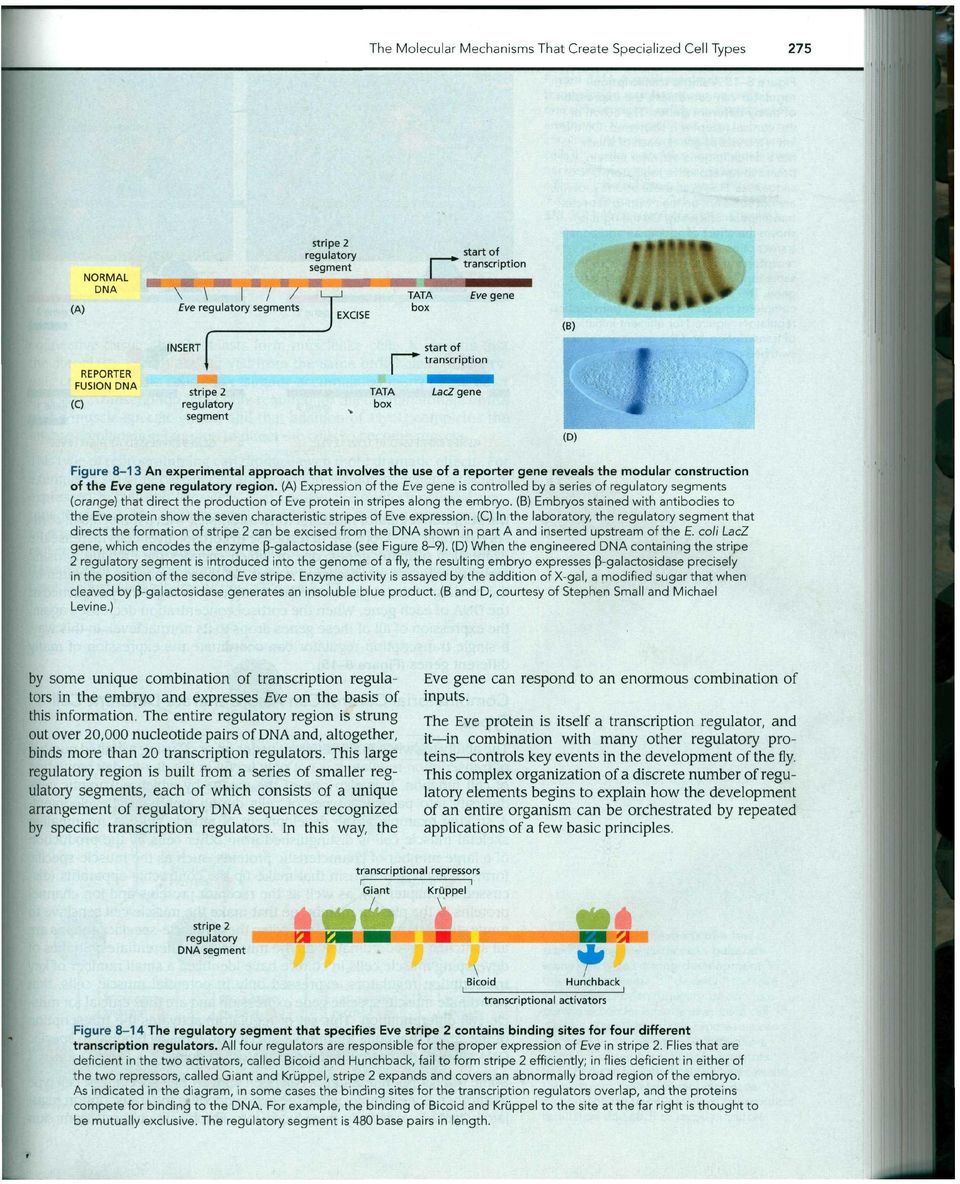
16 276 CHAPTER 8 Control of Gene Expression Figure 8-15 A single transcription regulator can coordinate the expression of many different genes. The action of the Cortisol receptor is illustrated. On the left is a series of genes, each of which has a different gene activator protein bound to its respective regulatory DNA sequences. However, these bound proteins are not sufficient on their own to activate transcription efficiently. On the right is shown the effect of adding an additional transcription regulator the cortisolreceptor complex that can bind to the same regulatory DNA sequence in each gene. The activated Cortisol receptor completes the combination of transcription regulators required for efficient initiation of transcription, and the genes are now switched on as a set. inactive Cortisol receptor in absence of Cortisol \ gene 1 regulatory sequences for cortisol-receptor complex gene 2 Cortisol gene 3 GENES EXPRESSED AT LOW LEVEL gene 3 GENES EXPRESSED AT HIGH LEVEL transcription regulator must first form a complex with a molecule of Cortisol (see Table 16-1, p. 529). In response to Cortisol, liver cells increase the expression of many genes, one of which encodes the enzyme tyrosine aminotransferase, as discussed earlier. All these genes are regulated by the binding of the cortisol-receptor complex to a regulatory sequence in the DNA of each gene. When the Cortisol concentration decreases again, the expression of all of these genes drops to its normal level. In this way, a single transcription regulator can coordinate the expression of many different genes (Figure 8-15). Combinatorial Control Can Also Generate Different Cell Types The ability to switch many different genes on or off using a limited number of transcription regulators is not only useful in the day-to-day regulation of cell function. It is also one of the means by which eukaryotic cells diversify into particular types of cells during embryonic development. A striking example is the development of muscle cells. A mammalian skeletal muscle cell is distinguished from other cells by the production of a large number of characteristic proteins, such as the muscle-specific forms of actin and myosin that make up the contractile apparatus (discussed in Chapter 17), as well as the receptor proteins and ion channel proteins in the plasma membrane that make the muscle cell sensitive to nerve stimulation. The genes encoding these muscle-specific proteins are all switched on coordinately as the muscle cell differentiates. Studies of developing muscle cells in culture have identified a small number of key transcription regulators, expressed only in potential muscle cells, that coordinate muscle-specific gene expression and are thus crucial for muscle-cell differentiation. This set of regulators activates the transcription of the genes that code for muscle-specific proteins by binding to specific DNA sequences present in their regulatory regions. Some transcription regulators can even convert one specialized cell type to another. For example, when the gene encoding the transcription regulator MyoD is artificially introduced into fibroblasts cultured from skin
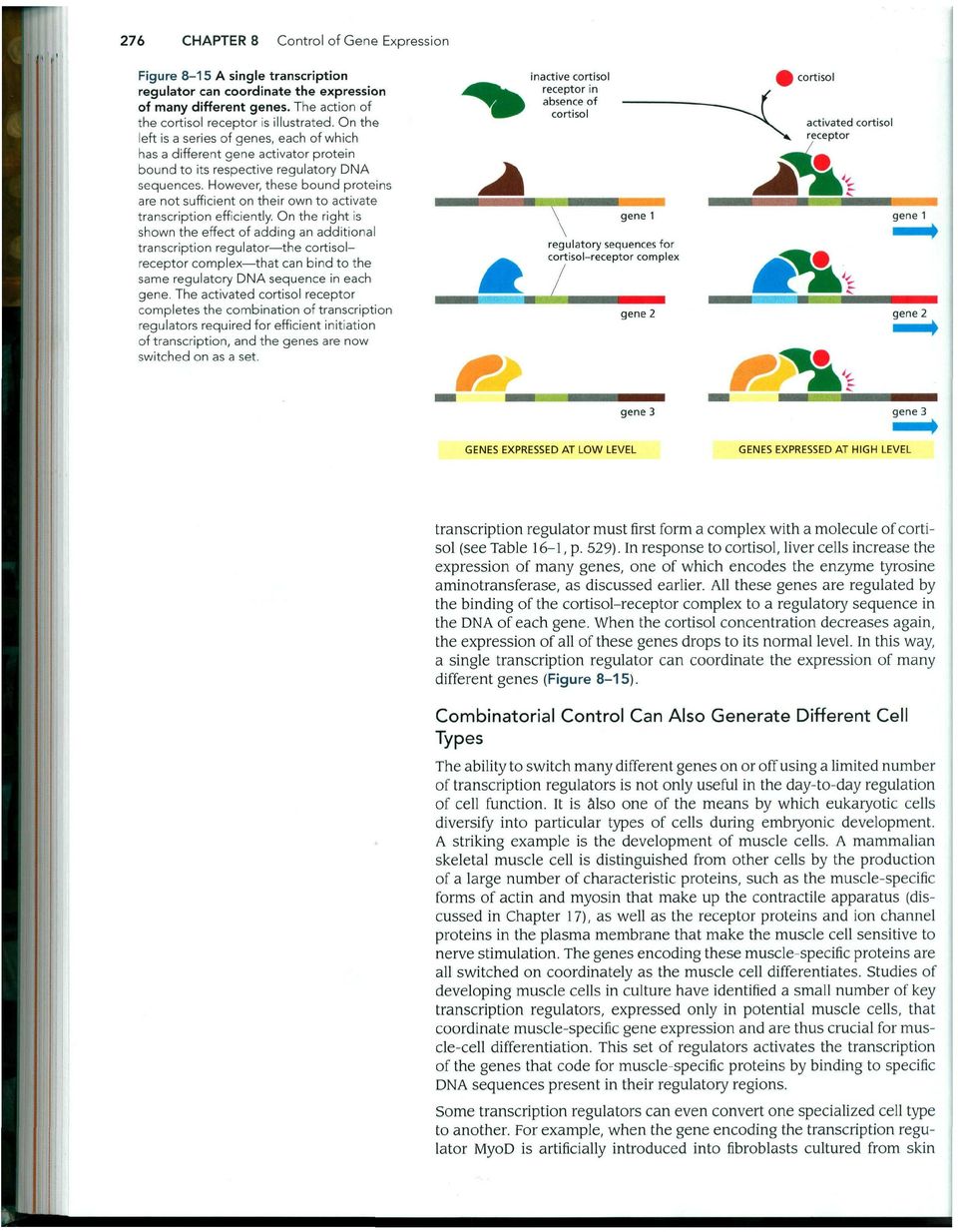
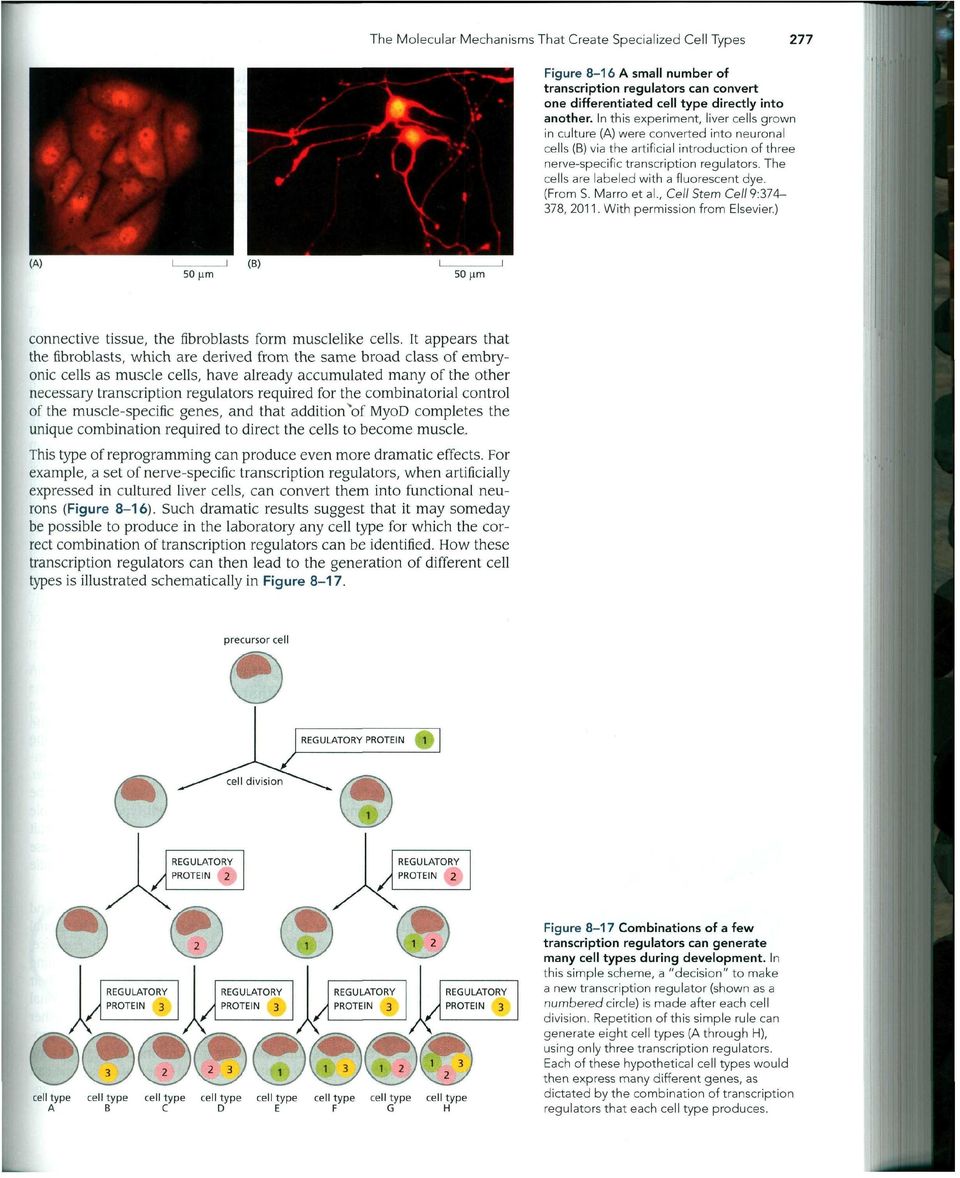
17 The Molecular Mechanisms That Create Specialized Cell Types 277 Figure 8-16 A small number of transcription regulators can convert one differentiated cell type directly into another. In this experiment, liver cells grown in culture (A) were converted into neuronal cells (B) via the artificial introduction of three nerve-specific transcription regulators. The cells are labeled with a fluorescent dye. (From S. Marro et al., Cell Stem Cell 9: , With permission from Elsevier.) 50 im 50 jim connective tissue, the fibroblasts form musclelike cells. It appears that the fibroblasts, which are derived from the same broad class of embryonic cells as muscle cells, have already accumulated many of the other necessary transcription regulators required for the combinatorial control of the muscle-specific genes, and that addition v of MyoD completes the unique combination required to direct the cells to become muscle. This type of reprogramming can produce even more dramatic effects. For example, a set of nerve-specific transcription regulators, when artificially expressed in cultured liver cells, can convert them into functional neurons (Figure 8-16). Such dramatic results suggest that it may someday be possible to produce in the laboratory any cell type for which the correct combination of transcription regulators can be identified. How these transcription regulators can then lead to the generation of different cell types is illustrated schematically in Figure precursor ce REGULATORY PROTEIN 3 REGULATORY PROTEIN 3 cel type cell type cell type cell type cell type cell type cell type cell type A B C D E F G H Figure 8-17 Combinations of a few transcription regulators can generate many cell types during development. In this simple scheme, a "decision" to make a new transcription regulator (shown as a numbered circle) is made after each cell division. Repetition of this simple rule can generate eight cell types (A through H), using only three transcription regulators. Each of these hypothetical cell types would then express many different genes, as dictated by the combination of transcription regulators that each cell type produces..
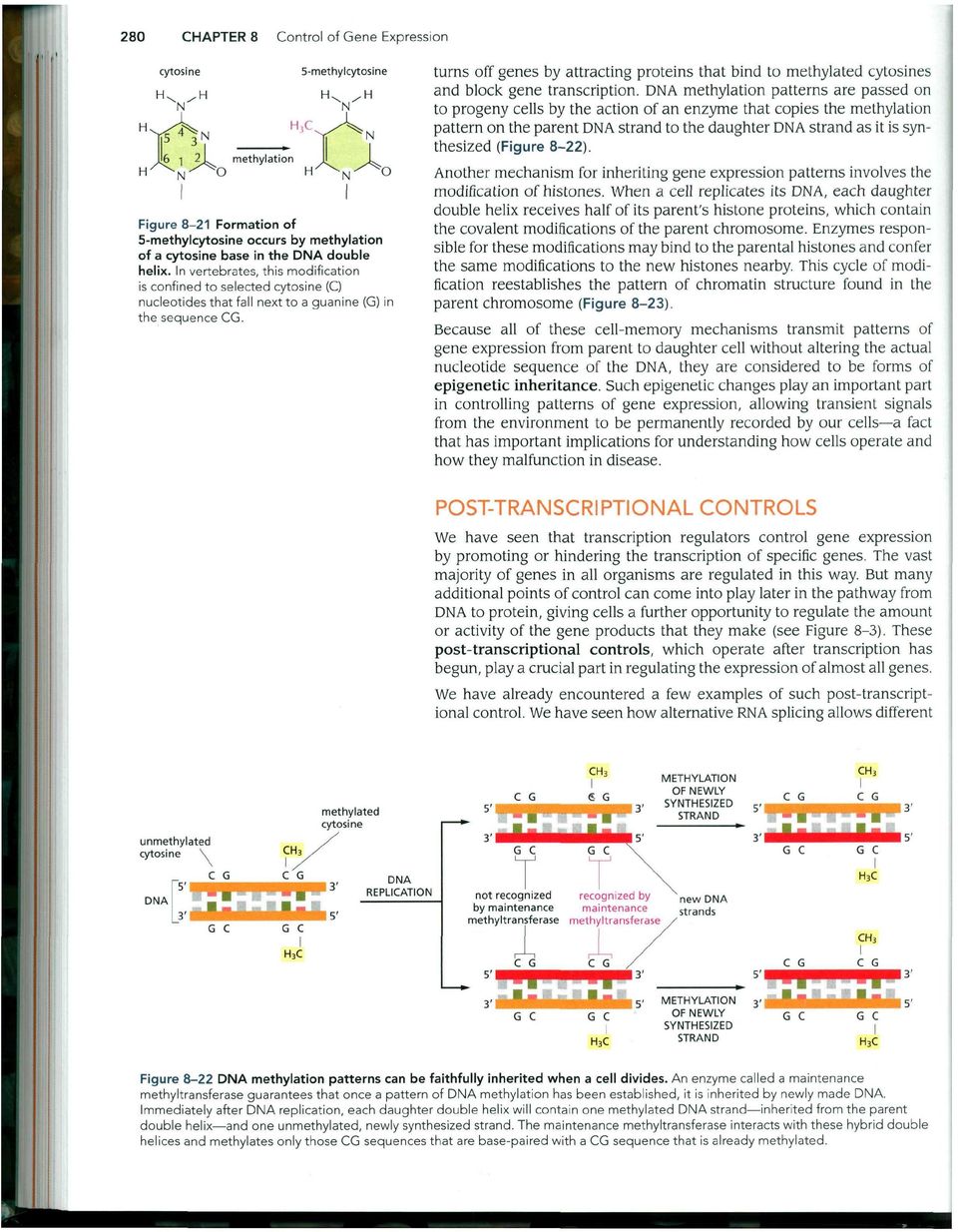
18 278 CHAPTER 8 Control of Gene Expression Figure 8-18 A combination of transcription regulators can induce a differentiated cell to de-differentiate into a pluripotent cell. The artificial expression of a set of four genes, each of which encodes a transcription regulator, can reprogram a fibroblast into a pluripotent cell with ES cell-like properties. Like ES cells, such IPS cells can proliferate indefinitely in culture and can be stimulated by appropriate extracellular signal molecules to differentiate into almost any cell type in the body. GENES ENCODING THREE TRANSCRIPTION REGULATORS INTRODUCED INTO FIBROBLAST NUCLEUS fibroblast CELLS ALLOWED TO DIVIDE IN CULTURE CELLS INDUCED TO DIFFERENTIATE IN CULTURE ips cell fat cell Specialized Cell Types Can Be Experimentally Reprogrammed to Become Pluripotent Stem Cells We have seen that, in some cases, one type of differentiated cell can be experimentally converted into another type by the artificial expression of specific transcription regulators (see Figure 8-16). Even more surprising, transcription regulators can coax various differentiated cells to de-differentiate into pluripotent stem cells that are capable of giving rise to all the specialized cell types in the body, much like the embryonic stem (ES) cells discussed in Chapter 20 (see pp ). Using a defined set of transcription regulators, cultured mouse fibroblasts have been reprogrammed to become induced pluripotent stem (ips) cells cells that look and behave like the pluripotent ES cells that are derived from embryos (Figure 8-18). The approach was quickly adapted to produce ips cells from a variety of specialized cell types, including cells taken from humans. Such human ips cells can then be directed to generate a population of differentiated cells for use in the study or treatment of disease, as we discuss in Chapter 20. eye structure on leg 100 jim Figure 8-19 Artificially induced expression of the Drosophila Ey gene in the precursor cells of the leg triggers the misplaced development of an eye on a fly's leg. (Courtesy of Walter Gehring.) The Formation of an Entire Organ Can Be Triggered by a Single Transcription Regulator We have seen that a small number of transcription regulators can control the expression of whole sets of genes and can even convert one cell type into another. But an even more stunning example of the power of transcriptional control comes from studies of eye development in Drosophila. In this case, a single "master" transcription regulator called Ey could be used to trigger the formation of not just a single cell type but a whole organ. In the laboratory, the Ey gene can be artificially expressed in fruit fly embryos in cells that would normally give rise to a leg. When these modified embryos develop into adult flies, some have an eye in the middle of a leg (Figure 8-19). How the Ey protein coordinates the specification of each type of cell found in the eye and directs their proper organization in three-dimensional space is an actively studied topic in developmental biology. In essence, however, Ey functions like any other transcription regulator, controlling the expression of multiple genes by binding to DNA sequences in their regulatory regions. Some of the genes controlled by Ey encode additional transcription regulators that, in turn, control the expression of other genes. In this way, the action of a single transcription regulator can produce a cascade of regulators that, working in combination, lead to the formation of an organized group of many different types of cells. One can begin to imagine how, by repeated applications of this principle, a complex organism self-assembles, piece by piece.
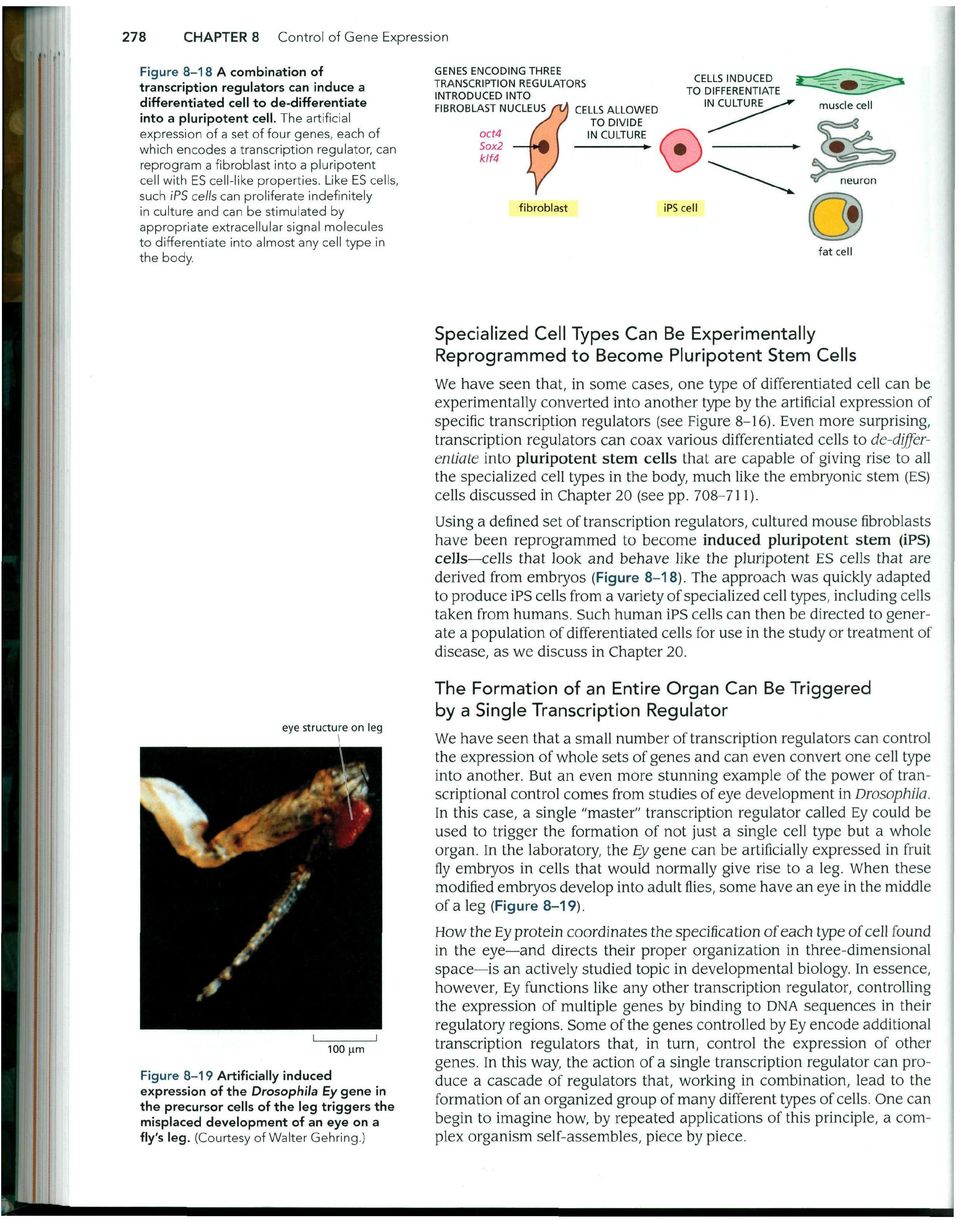
19 Epigenetic Mechanisms Allow Differentiated Cells to Maintain Their Identity Once a cell has become differentiated into a particular cell type, it will generally remain differentiated, and all its progeny cells will remain that same cell type. Some highly specialized cells, including skeletal muscle cells and neurons, never divide again once they have differentiated that is, they are terminally differentiated (as discussed in Chapter 18). But many other differentiated cells such as fibroblasts, smooth muscle cells, and liver cells will divide many times in the life of an individual. When they do, these specialized cell types give rise only to cells like themselves: smooth muscle cells do not give rise to liver cells, nor liver cells to fibroblasts. For a proliferating cell to maintain its identity a property called cell memory the patterns of gene expression responsible for that identity must be remembered and passed on to its daughter cells through all subsequent cell divisions. Thus, in the model illustrated in Figure 8-17, the production of each transcription regulator, once begun, has to be continued in the daughter cells of each cell division. How is such perpetuation accomplished? Cells have several ways of ensuring that their daughters "remember" what kind of cells they are. One of the simplest and most important is through a positive feedback loop, where a master transcription regulator activates transcription of its own gene, in addition to that of other cell-type-specific genes. Each time a cell divides the regulator is distributed to both daughter cells, where it continues to stimulate the positive feedback loop. The continued stimulation ensures that the regulator will continue to be produced in subsequent cell generations. The Ey protein discussed earlier functions in such a positive feedback loop. Positive feedback is crucial for establishing the "self-sustaining" circuits of gene expression that allow a cell to commit to a particular fate and then to transmit that information to its progeny (Figure 8-20). Although positive feedback loops are probably the most prevalent way of ensuring that daughter cells remember what kind of cells they are meant to be, there are other ways of reinforcing cell identity. One involves the methylation of DNA. In vertebrate cells, DNA methylation occurs on certain cytosine bases (Figure 8-21). This covalent modification generally The Molecular Mechanisms That Create Specialized Cell Types 279 progeny cells CELL MEMORY TRANSIENT SIGNAL transcriptional TURNS ON factor, protein A, EXPRESSION is not made OF GENE A because it is normally required for the transcription of its own gene GENE A CONTINUES TO BE TRANSCRIBED IN ABSENCE OF INITIAL SIGNAL CELL MEMORY Figure 8-20 A positive feedback loop can create cell memory. Protein A is a master transcription regulator that activates the transcription of its own gene as well as other cell-type-specific genes (not shown). All of the descendants of the original cell will therefore "remember" that the progenitor cell had experienced a transient signal that initiated the production of protein A.
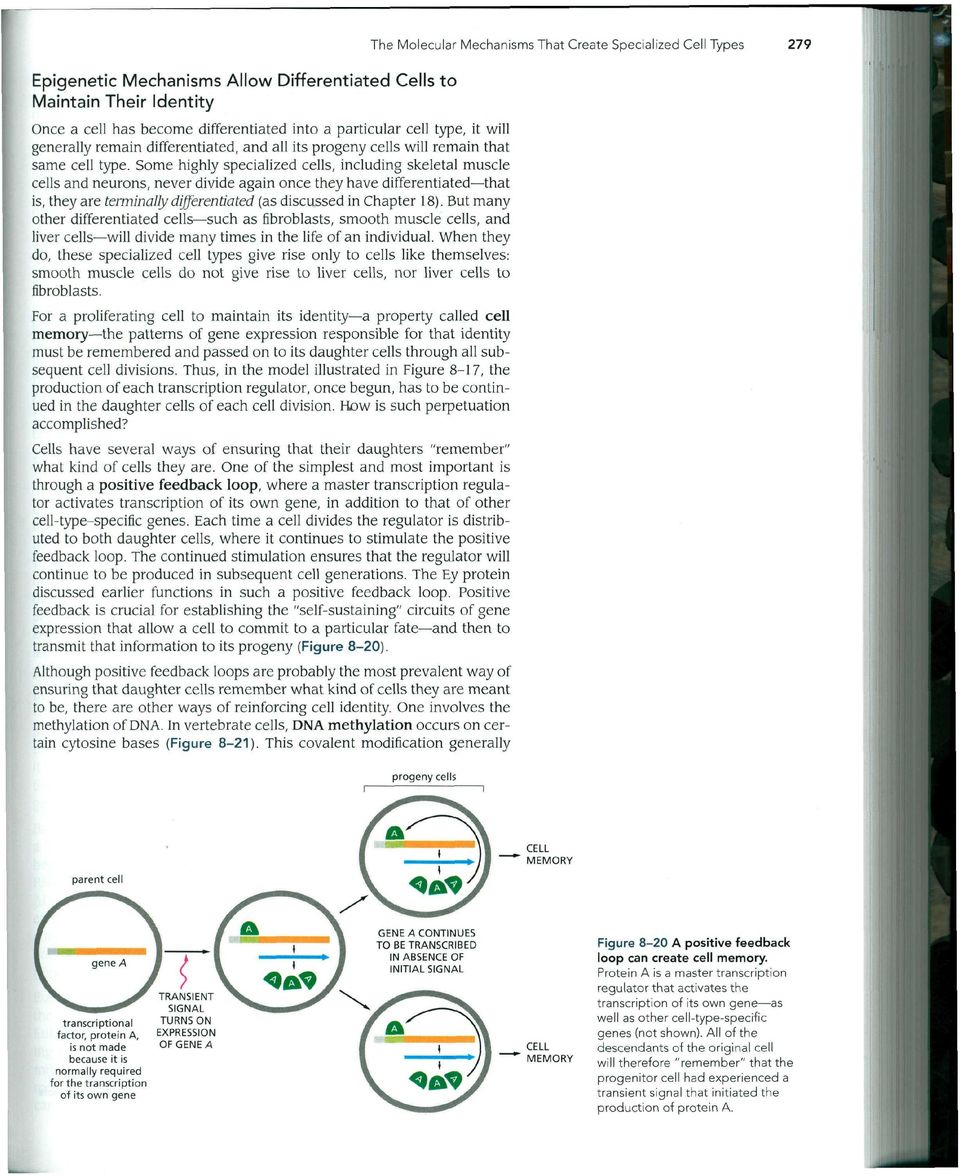
20 280 CHAPTER 8 Control of Gene Expression cytosine hu -H 4^N O 5-methylcytosine Figure 8-21 Formation of 5-methylcytosine occurs by methylation of a cytosine base in the DNA double helix. In vertebrates, this modification is confined to selected cytosine (C) nucleotides that fall next to a guanine (G) i the sequence CG. turns off genes by attracting proteins that bind to methylated cytosines and block gene transcription. DNA methylation patterns are passed on to progeny cells by the action of an enzyme that copies the methylation pattern on the parent DNA strand to the daughter DNA strand as it is synthesized (Figure 8-22). Another mechanism for inheriting gene expression patterns involves the modification of histones. When a cell replicates its DNA, each daughter double helix receives half of its parent's histone proteins, which contain the covalent modifications of the parent chromosome. Enzymes responsible for these modifications may bind to the parental histones and confer the same modifications to the new histones nearby. This cycle of modification reestablishes the pattern of chromatin structure found in the parent chromosome (Figure 8-23). Because all of these cell-memory mechanisms transmit patterns of gene expression from parent to daughter cell without altering the actual nucleotide sequence of the DNA, they are considered to be forms of epigenetic inheritance. Such epigenetic changes play an important part in controlling patterns of gene expression, allowing transient signals from the environment to be permanently recorded by our cells a fact that has important implications for understanding how cells operate and how they malfunction in disease. POST-TRANSCRIPTIONAL CONTROLS We have seen that transcription regulators control gene expression by promoting or hindering the transcription of specific genes. The vast majority of genes in all organisms are regulated in this way. But many additional points of control can come into play later in the pathway from DNA to protein, giving cells a further opportunity to regulate the amount or activity of the gene products that they make (see Figure 8-3). These post-transcriptional controls, which operate after transcription has begun, play a crucial part in regulating the expression of almost all genes. We have already encountered a few examples of such post-transcriptional control. We have seen how alternative RNA splicing allows different unmethylated cytosine \ methylated cytosine C G CH 3 I S G METHYLATION OF NEWLY SYNTHESIZED STRAND C G CH 3 C G DNA C G G C DNA REPLICATION not recognized recognized by new DNA by maintenance maintenance strands methyltransferase methyltransferase CH 3 C G C G G C G C I H 3 C 5. METHYLATION 3' OF NEWLY SYNTHESIZED STRAND G C G C H3C Figure 8-22 DNA methylation patterns can be faithfully inherited when a cell divides. An enzyme called a maintenance methyltransferase guarantees that once a pattern of DNA methylation has been established, it is inherited by newly made DNA. Immediately after DNA replication, each daughter double helix will contain one methylated DNA strand inherited from the parent double helix and one unmethylated, newly synthesized strand. The maintenance methyltransferase interacts with these hybrid double helices and methylates only those CG sequences that are base-paired with a CG sequence that is already methylated.
21 Post-Transcriptional Controls 281 parental nucleosomes with modified histones / X only half of the daughter nucleosomes inherit the modified parental histones parental pattern of histone modification reestablished by enzymes that recognize the same modifications they catalyze forms of a protein, encoded by the same gene, to be made in different tissues (Figure 7-22). And we have discussed how various post-translational modifications of a protein can regulate its concentration and activity (see Figure 4-43). In the remainder of this chapter, we consider several other examples some only recently discovered of the many ways in which cells can manipulate the expression of a gene after transcription has commenced. Figure 8-23 Histone modifications may be inherited by daughter chromosomes. When a chromosome is replicated, its resident histones are distributed more or less randomly to each of the two daughter DNA double helices. Thus, each daughter chromosome will inherit about half of its parent's collection of modified histones. The remaining stretches of DNA receive newly synthesized, not-yet-modified histones. If the enzymes responsible for each type of modification bind to the specific modification they create, they can catalyze the spread of this modification on the new histones. This cycle of modification and recognition can restore the parental histone modification pattern and, ultimately, allow the inheritance of the parental chromatin structure. This mechanism may apply to some but not all types of histone modifications. Each mrna Controls Its Own Degradation and Translation The more time an mrna persists in the cell before it is degraded, the more protein it will produce. In bacteria, most mrnas last only a few minutes before being destroyed. This instability allows a bacterium to adapt quickly to environmental changes. Eukaryotic mrnas are generally more stable. The mrna that encodes p-globin, for example, has a half-life of more than 10 hours. Most eukaryotic mrnas, however, have half-lives of less than 30 minutes, and the most short-lived are those that encode proteins whose concentrations need to change rapidly based on the cell's needs, such as transcription regulators. Whether bacterial or eukaryotic, an mrna's lifetime is dictated by specific nucleotide sequences within the untranslated regions that lie both upstream and downstream of the protein-coding sequence. These sequences often harbor binding sites for proteins that are involved in RNA degradation. In addition to the nucleotide sequences that regulate its half-life, each mrna possesses sequences that help control how often or how efficiently it will be translated into protein. These sequences control translation initiation. Although the details differ between eukaryotes and bacteria, the general strategy is similar for both. Bacterial mrnas contain a short ribosome-binding sequence located a few nucleotide pairs upstream of the AUG codon where translation begins (see Figure 7-37). This binding sequence forms base pairs with the RNA in the small ribosomal subunit, correctly positioning the initiating AUG codon within the ribosome. Because this interaction is needed for efficient translation initiation, it provides an ideal target for translational control. By blocking or exposing the ribosome-binding sequence, the bacterium can either inhibit or promote the translation of an mrna (Figure 8-24). Eukaryotic mrnas possess a 5' cap that helps guide the ribosome to the first AUG, the codon where translation will start (see Figure 7-36). Eukaryotic repressor proteins can inhibit translation initiation by binding to specific nucleotide sequences in the 5' untranslated region of the mrna, thereby preventing the ribosome from finding the first AUG a mechanism similar to that in bacteria. When conditions change, the cell can inactivate the repressor to initiate translation of the mrna.
22 282 CHAPTER 8 Control of Gene Expression (A) & mrna _g«aug_ ribosome-binding site AUG, PROTEIN MADE translation repressor protein NO PROTEIN MADE.3, NO PROTEIN MADE INCREASED TEMPERATURE EXPOSES RIBOSOME-BINDING SITE PROTEIN MADE Figure 8-24 A bacterial gene's expression can be controlled by regulating translation of its mrna. (A) Sequencespecific RNA-binding proteins can repress the translation of specific mrnas by keeping the ribosome from binding to the ribosome-binding sequence (orange) in the mrna. Some ribosomal proteins exploit this mechanism to inhibit the translation of their own mrna. In this way, "extra" ribosomal proteins those not incorporated into ribosomes serve as a signal to halt their synthesis. (B) An mrna from the pathogen Listeria monocytogenes contains a "thermosensor" RNA sequence that controls the translation of a set of mrnas produced by virulence genes. At the warmer temperature that the bacterium encounters inside its human host, the thermosensor sequence denatures, exposing the ribosome-binding sequence, so the virulence proteins are made. Regulatory RNAs Control the Expression of Thousands of Genes As we saw in Chapter 7, RNAs perform many critical tasks in cells. In addition to the mrnas, which code for proteins, noncoding RNAs have various functions. It has long been known that some have key structural and catalytic roles, particularly in protein synthesis by ribosomes (see pp ). But a recent series of surprising discoveries has revealed several new classes of noncoding RNAs and shown that these RNAs are far more prevalent than previously suspected. What, then, are all these newly discovered noncoding RNAs doing? Many have unanticipated but important roles in regulating gene expression and are therefore referred to as regulatory RNAs. There are at least three major types of regulatory RNAs micrornas, small interfering RNAs, and long noncoding RNAs. We discuss each one in turn. MicroRNAs Direct the Destruction of Target mrnas MicroRNAs, or mirnas, are tiny RNA molecules that control gene expression by base-pairing with specific mrnas and reducing both their stability and their translation into protein. In humans, mirnas are thought to regulate the expression of at least one-third of all proteincoding genes. Like other noncoding RNAs, such as trna and rrna, a precursor mirna transcript undergoes a special type of processing to yield the mature, functional mirna molecule, which is only about 22 nucleotides in length. This small but mature mirna is packaged with specialized proteins to form an RNA-induced silencing complex (RISC), which patrols the cytoplasm in search of mrnas that are complementary to the bound mirna molecule (Figure 8-25). Once a target mrna forms base pairs with an mirna, it is either destroyed immediately by a nuclease present within the RISC or its translation is blocked. In the latter case, the bound mrna molecule is delivered to a region of the cytoplasm where other nucleases eventually degrade it. Destruction of the mrna releases the RISC and allows it to seek out additional mrna targets. Thus, a single mirna as part of a RISC can eliminate one mrna molecule after another, thereby efficiently blocking production of the protein that the mrnas encode. Two features of mirnas make them especially useful regulators of gene expression. First, a single mirna can inhibit the transcription of a whole set of different mrnas so long as all the mrnas carry a common sequence, usually located in either their 5' or 3' untranslated regions. In humans, some individual mirnas influence the transcription of hundreds of different mrnas in this manner. Second, a gene that encodes an mirna occupies relatively little space in the genome compared with one that encodes a transcription regulator. Indeed, their very small size is one reason that mirnas were discovered only recently. There are thought
23 AAAAA kaaa-^ RISC proteins \ " I single-stranded mirna 3' \ precursor mirna PROCESSING AND EXPORT TO CYTOPLASM NUCLEUS CYTOSOL double-stranded RNA intermediate FORMATION OF RISC -5' SEARCH FOR COMPLEMENTARY TARGET mrna less extensive match Post-Transcriptional Controls 283 Figure 8-25 An mirna targets a complementary mrna molecule for destruction. Each precursor mirna transcript is processed to form a doublestranded intermediate, which is further processed to form a mature, single-stranded mirna. This mirna assembles with a set of proteins into a complex called RISC, which then searches for mrnas that have a nucleotide sequence complementary to its bound mirna. Depending on how extensive the region of complementarity is, the target mrna is either rapidly degraded by a nuclease within the RISC or transferred to an area of the cytoplasm where other cellular nucleases destroy it..mrna lllllllllllllllllllllllll AAAAA mrna» Willi' AAAAA mrna RAPIDLY DEGRADED RISC released mrna TRANSLATION REDUCED; mrna SEQUESTERED AND EVENTUALLY DEGRADED foreign double-stranded RNA «I CLEAVAGE BY DICER *>v n - to be roughly 500 different mirnas encoded by the human genome. Although we are only beginning to understand the full impact of these mirnas, it is clear that they play a critical part in regulating gene expression and thereby influence many cell functions. foreign double-stranded sirnas RISC proteins FORMATION OF RISC Small Interfering RNAs Are Produced From Double- Stranded, Foreign RNAs to Protect Cells From Infections Some of the same components that process and package mirnas also play another crucial part in the life of a cell: they serve as a powerful cell defense mechanism. In this case, the system is used to eliminate "foreign" RNA molecules in particular, the double-stranded RNAs produced by many viruses and transposable genetic elements (discussed in Chapter 9). The process is called RNA interference (RNAi). In the first step of RNAi, the double-stranded, foreign RNAs are cut into short fragments (approximately 22 nucleotide pairs in length) by a protein called Dicer the same protein used to generate the double-stranded RNA intermediate in mirna production (see Figure 8-25). The resulting double-stranded RNA fragments, called small interfering RNAs (sirnas), are then taken up by the same RISCs that carry mirnas. The RISC discards one strand of the sirna duplex and uses the remaining single-stranded RNA to seek and destroy complementary foreign RNA molecules (Figure 8-26). In this way, the infected cell turns the foreign RNA back on itself. RNAi operates in a wide variety of organisms, including single-celled fungi, plants, and worms, indicating that it is an evolutionarily ancient defense mechanism. In some organisms, including plants, the RNAi defense response can spread from tissue to tissue, allowing the entire organism to become resistant to a virus after only a few of its cells single-stranded sirna RISC released sirna lllllllllllllllllllllllll SEARCH FOR COMPLEMENTARY RNA foreign RNA _y FOREIGN RNA DEGRADED Figure 8-26 sirnas are produced from double-stranded, foreign RNAs in the process of RNA interference. Doublestranded RNAs from a virus or transposable genetic element are first cleaved by a nuclease called Dicer. The resulting doublestranded fragments are incorporated into RISCs, which discard one strand of the foreign RNA duplex and use the other strand to locate and destroy foreign RNAs with a complementary sequence. i
24 284 CHAPTER 8 Control of Gene Expression have been infected. In this sense, RNAi resembles certain aspects of the adaptive immune responses of vertebrates; in both cases, an invading pathogen elicits the production of molecules either sirnas or antibodies that are custom-made to inactivate the specific invader and thereby protect the host. Thousands of Long Noncoding RNAs May Also Regulate Mammalian Gene Activity At the other end of the size spectrum are the long noncoding RNAs, a class of RNA molecules that are more than 200 nucleotides in length. There are thought to be upwards of 8000 of these RNAs encoded in the human and mouse genomes. Yet, with few exceptions, their roles in the biology of the organism are not entirely clear. One of the best understood of the long noncoding RNAs is Xist. This enormous RNA molecule, some 17,000 nucleotides long, is a key player in X inactivation the process by which one of the two X chromosomes in the cells of female mammals is permanently silenced (see Figure 5-30). Early in development, Xist is produced by only one of the X chromosomes in each female nucleus. The transcript then "sticks around," coating the chromosome and presumably attracting the enzymes and chromatinremodeling complexes that promote the formation of highly condensed heterochromatin. Other long noncoding RNAs may promote the silencing of specific genes in a similar manner. Some long noncoding RNAs arise from protein-coding regions of the genome, but are transcribed from the "wrong" DNA strand. Some of these antisense transcripts are known to bind to the mrnas produced from that DNA segment, regulating their translation and stability in some cases by producing sirnas (see Figure 8-26). Regardless of how the various long noncoding RNAs operate or what exactly they do the discovery of this large class of RNAs reinforces the idea that a eukaryotic genome is densely packed with information that provides not only an inventory of the molecules and structures every cell must make, but a set of instructions for how and when to assemble these parts to guide the growth and development of a complete organism. ESSENTIAL CONCEPTS A typical eukaryotic cell expresses only a fraction of its genes, and the distinct types of cells in multicellular organisms arise because different sets of genes are expressed as cells differentiate. In principle, gene expression can be controlled at any of the steps between a gene and its ultimate functional product. For the majority of genes, however, the initiation of transcription is the most important point of control. The transcription of individual genes is switched on and off in cells by transcription regulator proteins, which bind to short stretches of DNA called regulatory DNA sequences. In bacteria, transcription regulators usually bind to regulatory DNA sequences close to where RNA polymerase binds. This binding can either activate or repress transcription of the gene. In eukaryotes, regulatory DNA sequences are often separated from the promoter by many thousands of nucleotide pairs. Eukaryotic transcription regulators act in two main ways: (1) they can directly affect the assembly process that requires RNA polymerase
25 Essential Concepts 285 and the general transcription factors at the promoter, and (2) they can locally modify the chromatin structure of promoter regions. In eukaryotes, the expression of a gene is generally controlled by a combination of different transcription regulator proteins. In multicellular plants and animals, the production of different transcription regulators in different cell types ensures the expression of only those genes appropriate to the particular type of cell. One differentiated cell type can be converted to another by artificially expressing an appropriate set of transcription regulators. A differentiated cell can also be reprogrammed into a stem cell by artificially expressing a particular set of such regulators. Cells in multicellular organisms have mechanisms that enable their progeny to "remember" what type of cell they should be. A prominent mechanism for propagating cell memory relies on transcription regulators that perpetuate transcription of their own gene a form of positive feedback. A master transcription regulator, if expressed in the appropriate precursor cell, can trigger the formation of a specialized cell type or even an entire organ. The pattern of DNA methylation can be transmitted from one cell generation to the next, producing a form of epigenetic inheritance that helps a cell remember the state of gene expression in its parent cell. There is also evidence for a form of epigenetic inheritance based on transmitted chromatin structures. Cells can regulate gene expression by controlling events that occur after transcription has begun. Many of these post-transcriptional mechanisms rely on RNA molecules that can influence their own stability or translation. MicroRNAs (mirnas) control gene expression by base-pairing with specific mrnas and inhibiting their stability and translation. Cells have a defense mechanism for destroying "foreign" doublestranded RNAs, many of which are produced by viruses. It makes use of small interfering RNAs (sirnas) that are produced from the foreign RNAs in a process called RNA interference (RNAi). Scientists can take advantage of RNAi to inactivate specific genes of interest. The recent discovery of thousands of long noncoding RNAs in mammals has opened a new window to the roles of RNAs in gene regulation. KEY TERMS combinatorial control differentiation DNA methylation epigenetic inheritance gene expression long noncoding RNA microrna (mirna) positive feedback loop post-transcriptional control promoter regulatory DNA sequence regulatory RNA reporter gene RNA interference (RNAi) small interfering RNA (sirna) transcription regulator transcriptional activator transcriptional repressor
26 286 CHAPTER 8 Control of Gene Expression QUESTIONS QUESTION 8-4 A virus that grows in bacteria (bacterial viruses are called bacteriophages) can replicate in one of two ways. In the prophage state, the viral DNA is inserted into the bacterial chromosome and is copied along with the bacterial genome each time the cell divides. In the lytic state, the viral DNA is released from the bacterial chromosome and replicates many times in the cell. This viral DNA then produces viral coat proteins that together with the replicated viral DNA form many new virus particles that burst out of the bacterial cell. These two forms of growth are controlled by two transcription regulators, called d ("c one") and Cro, that are encoded by the virus. In the prophage state, cl is expressed; in the lytic state, Cro is expressed. In addition to regulating the expression of other genes, d represses the Cro gene, and Cro represses the cl gene (Figure Q8-4). When bacteria containing a phage in the prophage state are briefly irradiated with UV light, d protein is degraded. A. What will happen next? B. Will the change in (A) be reversed when the UV light is switched off? C. Why might this response to UV light have evolved? A A d protein QUESTION 8-6 Your task in the laboratory of Professor Quasimodo is to determine how far an enhancer (a binding site for an activator protein) could be moved from the promoter of the straightspine gene and still activate transcription. You systematically vary the number of nucleotide pairs between these two sites and then determine the amount of transcription by measuring the production of Straightspine mrna. At first glance, your data look confusing (Figure Q8-6). What would you have expected for the results of this experiment? Can you save your reputation and explain these results to Professor Quasimodo? 110 number of nucleotides between enhancer and promoter Figure Q8-6 d gene NO c? GENE TRANSCRIPTION Cro gene QUESTION 8-7 The X repressor binds as a dimer to critical sites on the X genome to repress the virus's lytic genes. This is necessary to maintain the prophage (integrated) state. Each molecule of the repressor consists of an N-terminal DNA-binding domain and a C-terminal dimerization domain (Figure Q8-7). Upon induction (for example, by irradiation with UV light), the genes for lytic growth are expressed, X progeny are produced, and the bacterial cell is lysed (see Question 8-4). Induction is initiated by cleavage of the X repressor at a site between the DNA-binding domain and the dimerization domain, which causes the repressor to dissociate from the DNA. In the absence of bound repressor, RNA polymerase binds and initiates lytic growth. Given that the number (concentration) of DNA-binding domains is unchanged by cleavage of the repressor, why do you suppose its cleavage results in its dissociation from the DNA? Figure Q8-4 QUESTION 8-5 Which of the following statements are correct? Explain your answers. A. In bacteria, but not in eukaryotes, many mrnas contain the coding region for more than one gene. B. Most DNA-binding proteins bind to the major groove of the DNA double helix. C. Of the major control points in gene expression (transcription, RNA processing, RNA transport, translation, and control of a protein's activity), transcription initiation is one of the most common. repressor monomers repressor dimer DNA binding site Figure Q8-7 QUESTION 8-8 The genes that encode the enzymes for arginine biosynthesis are located at several positions around the genome of E. coli, and they are regulated coordinately by a transcription regulator encoded by the ArgR gene.
27 Chapter 8 End-of-Chapter Questions 287 The activity of the ArgR protein is modulated by arginine. Upon binding arginine, ArgR alters its conformation, dramatically changing its affinity for the DNA sequences in the promoters of the genes for the arginine biosynthetic enzymes. Given that ArgR is a repressor protein, would you expect that ArgR would bind more tightly or less tightly to the DNA sequences when arginine is abundant? If ArgR functioned instead as an activator protein, would you expect the binding of arginine to increase or to decrease its affinity for its regulatory DNA sequences? Explain your answers. QUESTION 8-9 When enhancers were initially found to influence transcription many thousands of nucleotide pairs from the promoters they control, two principal models were invoked to explain this action at a distance. In the "DNA looping" model, direct interactions between proteins bound at enhancers and promoters were proposed to stimulate transcription initiation. In the "scanning" or "entry-site" model, RNA polymerase (or another component of the transcription machinery) was proposed to bind at the* enhancer and then scan along the DNA until it reached the promoter. These two models were tested using an enhancer on one piece of DNA and a P-globin gene and promoter on a separate piece of DNA (Figure Q8-9). The P-globin gene was not expressed from the mixture of pieces. However, when the two segments of DNA were joined via a linker (made of a protein that binds to a small molecule called biotin), the p-globin gene was expressed. Does this experiment distinguish between the DNA looping model and the scanning model? Explain your answer. biotin attached to one end of each DNA molecule enhancer avidin X P-globin gene transcription QUESTION 8-12 Imagine the two situations shown in Figure Q8-12. In cell I, a transient signal induces the synthesis of protein A, which is a transcriptional activator that turns on many genes including its own. In cell II, a transient signal induces the synthesis of protein R, which is a transcriptional repressor that turns off many genes including its own. In which, if either, of these situations will the descendants of the original cell "remember" that the progenitor cell had experienced the transient signal? Explain your reasoning. (A) CELL I OFF transient signal gene activator turns on transcription of activator mrna (B) CELL I OFF gene repressor Figure Q8-12 QUESTION 8-13 transient signal turns on transcription of repressor mrna ^ ^ A < activator protein turns on its own transcription ffi R repressor protein turns off its own transcription Discuss the following argument: "If the expression of every gene depends on a set of transcription regulators, then the expression of these regulators must also depend on the expression of other regulators, and their expression must depend on the expression of still other regulators, and so on. Cells would therefore need an infinite number of genes, most of which would code for transcription regulators." How does the cell get by without having to achieve the impossible? Figure Q8-9 enhancer promoter (3-globin gene QUESTION 8-10 Differentiated cells of an organism contain the same genes. (Among the few exceptions to this rule are the cells of the mammalian immune system, in which the formation of specialized cells is based on limited rearrangements of the genome.) Describe an experiment that substantiates the first sentence of this question, and explain why it does. QUESTION 8-11 Figure 8-17 shows a simple scheme by which three transcription regulators are used during development to create eight different cell types. How many cell types could you create, using the same rules, with four different transcription regulators? As described in the text, MyoD is a transcription regulator that by itself is sufficient to induce muscle-specific gene expression in fibroblasts. How does this observation fit the scheme in Figure 8-17?
Control of Gene Expression
 Home Gene Regulation Is Necessary? Control of Gene Expression By switching genes off when they are not needed, cells can prevent resources from being wasted. There should be natural selection favoring
Complex multicellular organisms are produced by cells that switch genes on and off during development.
 Home Control of Gene Expression Gene Regulation Is Necessary? By switching genes off when they are not needed, cells can prevent resources from being wasted. There should be natural selection favoring
Chapter 18 Regulation of Gene Expression
 Chapter 18 Regulation of Gene Expression 18.1. Gene Regulation Is Necessary By switching genes off when they are not needed, cells can prevent resources from being wasted. There should be natural selection
GENE REGULATION. Teacher Packet
 AP * BIOLOGY GENE REGULATION Teacher Packet AP* is a trademark of the College Entrance Examination Board. The College Entrance Examination Board was not involved in the production of this material. Pictures
Control of Gene Expression
 PER EIG 8 ontrol of Gene Expression n organism s D encodes all of the R and protein molecules that are needed to make its cells. Yet a complete description of the D sequence of an organism be it the few
Module 3 Questions. 7. Chemotaxis is an example of signal transduction. Explain, with the use of diagrams.
 Module 3 Questions Section 1. Essay and Short Answers. Use diagrams wherever possible 1. With the use of a diagram, provide an overview of the general regulation strategies available to a bacterial cell.
Gene Regulation -- The Lac Operon
 Gene Regulation -- The Lac Operon Specific proteins are present in different tissues and some appear only at certain times during development. All cells of a higher organism have the full set of genes:
Control of Gene Expression
 Control of Gene Expression What is Gene Expression? Gene expression is the process by which informa9on from a gene is used in the synthesis of a func9onal gene product. What is Gene Expression? Figure
How To Understand How Gene Expression Is Regulated
 What makes cells different from each other? How do cells respond to information from environment? Regulation of: - Transcription - prokaryotes - eukaryotes - mrna splicing - mrna localisation and translation
Lecture 1 MODULE 3 GENE EXPRESSION AND REGULATION OF GENE EXPRESSION. Professor Bharat Patel Office: Science 2, 2.36 Email: [email protected].
 Lecture 1 MODULE 3 GENE EXPRESSION AND REGULATION OF GENE EXPRESSION Professor Bharat Patel Office: Science 2, 2.36 Email: [email protected] What is Gene Expression & Gene Regulation? 1. Gene Expression
Genetic information (DNA) determines structure of proteins DNA RNA proteins cell structure 3.11 3.15 enzymes control cell chemistry ( metabolism )
 Biology 1406 Exam 3 Notes Structure of DNA Ch. 10 Genetic information (DNA) determines structure of proteins DNA RNA proteins cell structure 3.11 3.15 enzymes control cell chemistry ( metabolism ) Proteins
Structure and Function of DNA
 Structure and Function of DNA DNA and RNA Structure DNA and RNA are nucleic acids. They consist of chemical units called nucleotides. The nucleotides are joined by a sugar-phosphate backbone. The four
Gene Switches Teacher Information
 STO-143 Gene Switches Teacher Information Summary Kit contains How do bacteria turn on and turn off genes? Students model the action of the lac operon that regulates the expression of genes essential for
13.4 Gene Regulation and Expression
 13.4 Gene Regulation and Expression Lesson Objectives Describe gene regulation in prokaryotes. Explain how most eukaryotic genes are regulated. Relate gene regulation to development in multicellular organisms.
The Making of the Fittest: Evolving Switches, Evolving Bodies
 OVERVIEW MODELING THE REGULATORY SWITCHES OF THE PITX1 GENE IN STICKLEBACK FISH This hands-on activity supports the short film, The Making of the Fittest:, and aims to help students understand eukaryotic
Gene Transcription in Prokaryotes
 Gene Transcription in Prokaryotes Operons: in prokaryotes, genes that encode protein participating in a common pathway are organized together. This group of genes, arranged in tandem, is called an OPERON.
Control of Gene Expression
 Control of Gene Expression (Learning Objectives) Explain the role of gene expression is differentiation of function of cells which leads to the emergence of different tissues, organs, and organ systems
Name Class Date. Figure 13 1. 2. Which nucleotide in Figure 13 1 indicates the nucleic acid above is RNA? a. uracil c. cytosine b. guanine d.
 13 Multiple Choice RNA and Protein Synthesis Chapter Test A Write the letter that best answers the question or completes the statement on the line provided. 1. Which of the following are found in both
DNA Fingerprinting. Unless they are identical twins, individuals have unique DNA
 DNA Fingerprinting Unless they are identical twins, individuals have unique DNA DNA fingerprinting The name used for the unambiguous identifying technique that takes advantage of differences in DNA sequence
The Molecules of Cells
 The Molecules of Cells I. Introduction A. Most of the world s population cannot digest milk-based foods. 1. These people are lactose intolerant because they lack the enzyme lactase. 2. This illustrates
MICROBIAL GENETICS. Gene Regulation: The Operons
 MICROBIAL GENETICS Gene Regulation: The Operons Pradeep Kumar Burma Reader Department of Genetics University of Delhi South Campus Benito Juarez Road New Delhi-110021 E-mail: [email protected] 05-May-2006
Activity 7.21 Transcription factors
 Purpose To consolidate understanding of protein synthesis. To explain the role of transcription factors and hormones in switching genes on and off. Play the transcription initiation complex game Regulation
1 Mutation and Genetic Change
 CHAPTER 14 1 Mutation and Genetic Change SECTION Genes in Action KEY IDEAS As you read this section, keep these questions in mind: What is the origin of genetic differences among organisms? What kinds
AP BIOLOGY 2009 SCORING GUIDELINES
 AP BIOLOGY 2009 SCORING GUIDELINES Question 4 The flow of genetic information from DNA to protein in eukaryotic cells is called the central dogma of biology. (a) Explain the role of each of the following
Name Date Period. 2. When a molecule of double-stranded DNA undergoes replication, it results in
 DNA, RNA, Protein Synthesis Keystone 1. During the process shown above, the two strands of one DNA molecule are unwound. Then, DNA polymerases add complementary nucleotides to each strand which results
Sample Questions for Exam 3
 Sample Questions for Exam 3 1. All of the following occur during prometaphase of mitosis in animal cells except a. the centrioles move toward opposite poles. b. the nucleolus can no longer be seen. c.
Chem 465 Biochemistry II
 Chem 465 Biochemistry II Name: 2 points Multiple choice (4 points apiece): 1. Formation of the ribosomal initiation complex for bacterial protein synthesis does not require: A) EF-Tu. B) formylmethionyl
Given these characteristics of life, which of the following objects is considered a living organism? W. X. Y. Z.
 Cell Structure and Organization 1. All living things must possess certain characteristics. They are all composed of one or more cells. They can grow, reproduce, and pass their genes on to their offspring.
PRESTWICK ACADEMY NATIONAL 5 BIOLOGY CELL BIOLOGY SUMMARY
 Name PRESTWICK ACADEMY NATIONAL 5 BIOLOGY CELL BIOLOGY SUMMARY Cell Structure Identify animal, plant, fungal and bacterial cell ultrastructure and know the structures functions. Plant cell Animal cell
Transcription and Translation of DNA
 Transcription and Translation of DNA Genotype our genetic constitution ( makeup) is determined (controlled) by the sequence of bases in its genes Phenotype determined by the proteins synthesised when genes
NO CALCULATORS OR CELL PHONES ALLOWED
 Biol 205 Exam 1 TEST FORM A Spring 2008 NAME Fill out both sides of the Scantron Sheet. On Side 2 be sure to indicate that you have TEST FORM A The answers to Part I should be placed on the SCANTRON SHEET.
Translation Study Guide
 Translation Study Guide This study guide is a written version of the material you have seen presented in the replication unit. In translation, the cell uses the genetic information contained in mrna to
Protein Synthesis How Genes Become Constituent Molecules
 Protein Synthesis Protein Synthesis How Genes Become Constituent Molecules Mendel and The Idea of Gene What is a Chromosome? A chromosome is a molecule of DNA 50% 50% 1. True 2. False True False Protein
2007 7.013 Problem Set 1 KEY
 2007 7.013 Problem Set 1 KEY Due before 5 PM on FRIDAY, February 16, 2007. Turn answers in to the box outside of 68-120. PLEASE WRITE YOUR ANSWERS ON THIS PRINTOUT. 1. Where in a eukaryotic cell do you
From DNA to Protein. Proteins. Chapter 13. Prokaryotes and Eukaryotes. The Path From Genes to Proteins. All proteins consist of polypeptide chains
 Proteins From DNA to Protein Chapter 13 All proteins consist of polypeptide chains A linear sequence of amino acids Each chain corresponds to the nucleotide base sequence of a gene The Path From Genes
Helices From Readily in Biological Structures
 The α Helix and the β Sheet Are Common Folding Patterns Although the overall conformation each protein is unique, there are only two different folding patterns are present in all proteins, which are α
The Lipid Bilayer Is a Two-Dimensional Fluid
 The Lipid Bilayer Is a Two-Dimensional Fluid The aqueous environment inside and outside a cell prevents membrane lipids from escaping from bilayer, but nothing stops these molecules from moving about and
Just the Facts: A Basic Introduction to the Science Underlying NCBI Resources
 1 of 8 11/7/2004 11:00 AM National Center for Biotechnology Information About NCBI NCBI at a Glance A Science Primer Human Genome Resources Model Organisms Guide Outreach and Education Databases and Tools
DNA Replication & Protein Synthesis. This isn t a baaaaaaaddd chapter!!!
 DNA Replication & Protein Synthesis This isn t a baaaaaaaddd chapter!!! The Discovery of DNA s Structure Watson and Crick s discovery of DNA s structure was based on almost fifty years of research by other
Replication Study Guide
 Replication Study Guide This study guide is a written version of the material you have seen presented in the replication unit. Self-reproduction is a function of life that human-engineered systems have
Lecture Series 7. From DNA to Protein. Genotype to Phenotype. Reading Assignments. A. Genes and the Synthesis of Polypeptides
 Lecture Series 7 From DNA to Protein: Genotype to Phenotype Reading Assignments Read Chapter 7 From DNA to Protein A. Genes and the Synthesis of Polypeptides Genes are made up of DNA and are expressed
Disaccharides consist of two monosaccharide monomers covalently linked by a glycosidic bond. They function in sugar transport.
 1. The fundamental life processes of plants and animals depend on a variety of chemical reactions that occur in specialized areas of the organism s cells. As a basis for understanding this concept: 1.
Algorithms in Computational Biology (236522) spring 2007 Lecture #1
 Algorithms in Computational Biology (236522) spring 2007 Lecture #1 Lecturer: Shlomo Moran, Taub 639, tel 4363 Office hours: Tuesday 11:00-12:00/by appointment TA: Ilan Gronau, Taub 700, tel 4894 Office
Lecture 8. Protein Trafficking/Targeting. Protein targeting is necessary for proteins that are destined to work outside the cytoplasm.
 Protein Trafficking/Targeting (8.1) Lecture 8 Protein Trafficking/Targeting Protein targeting is necessary for proteins that are destined to work outside the cytoplasm. Protein targeting is more complex
Molecular Genetics. RNA, Transcription, & Protein Synthesis
 Molecular Genetics RNA, Transcription, & Protein Synthesis Section 1 RNA AND TRANSCRIPTION Objectives Describe the primary functions of RNA Identify how RNA differs from DNA Describe the structure and
Biological Sciences Initiative. Human Genome
 Biological Sciences Initiative HHMI Human Genome Introduction In 2000, researchers from around the world published a draft sequence of the entire genome. 20 labs from 6 countries worked on the sequence.
Transcription in prokaryotes. Elongation and termination
 Transcription in prokaryotes Elongation and termination After initiation the σ factor leaves the scene. Core polymerase is conducting the elongation of the chain. The core polymerase contains main nucleotide
The world of non-coding RNA. Espen Enerly
 The world of non-coding RNA Espen Enerly ncrna in general Different groups Small RNAs Outline mirnas and sirnas Speculations Common for all ncrna Per def.: never translated Not spurious transcripts Always/often
Basic Concepts of DNA, Proteins, Genes and Genomes
 Basic Concepts of DNA, Proteins, Genes and Genomes Kun-Mao Chao 1,2,3 1 Graduate Institute of Biomedical Electronics and Bioinformatics 2 Department of Computer Science and Information Engineering 3 Graduate
Central Dogma. Lecture 10. Discussing DNA replication. DNA Replication. DNA mutation and repair. Transcription
 Central Dogma transcription translation DNA RNA Protein replication Discussing DNA replication (Nucleus of eukaryote, cytoplasm of prokaryote) Recall Replication is semi-conservative and bidirectional
Enzymes. A. a lipid B. a protein C. a carbohydrate D. a mineral
 Enzymes 1. All cells in multicellular organisms contain thousands of different kinds of enzymes that are specialized to catalyze different chemical reactions. Given this information, which of the following
Genetics Module B, Anchor 3
 Genetics Module B, Anchor 3 Key Concepts: - An individual s characteristics are determines by factors that are passed from one parental generation to the next. - During gamete formation, the alleles for
Name Date Period. Keystone Review Enzymes
 Name Date Period Keystone Review Enzymes 1. In order for cells to function properly, the enzymes that they contain must also function properly. What can be inferred using the above information? A. Cells
Genetics Test Biology I
 Genetics Test Biology I Multiple Choice Identify the choice that best completes the statement or answers the question. 1. Avery s experiments showed that bacteria are transformed by a. RNA. c. proteins.
Immunology Ambassador Guide (updated 2014)
 Immunology Ambassador Guide (updated 2014) Immunity and Disease We will talk today about the immune system and how it protects us from disease. Also, we ll learn some unique ways that our immune system
PRACTICE TEST QUESTIONS
 PART A: MULTIPLE CHOICE QUESTIONS PRACTICE TEST QUESTIONS DNA & PROTEIN SYNTHESIS B 1. One of the functions of DNA is to A. secrete vacuoles. B. make copies of itself. C. join amino acids to each other.
Biological molecules:
 Biological molecules: All are organic (based on carbon). Monomers vs. polymers: Monomers refer to the subunits that, when polymerized, make up a larger polymer. Monomers may function on their own in some
Lab # 12: DNA and RNA
 115 116 Concepts to be explored: Structure of DNA Nucleotides Amino Acids Proteins Genetic Code Mutation RNA Transcription to RNA Translation to a Protein Figure 12. 1: DNA double helix Introduction Long
Biochemistry of Cells
 Biochemistry of Cells 1 Carbon-based Molecules Although a cell is mostly water, the rest of the cell consists mostly of carbon-based molecules Organic chemistry is the study of carbon compounds Carbon
DNA (genetic information in genes) RNA (copies of genes) proteins (functional molecules) directionality along the backbone 5 (phosphate) to 3 (OH)
 DNA, RNA, replication, translation, and transcription Overview Recall the central dogma of biology: DNA (genetic information in genes) RNA (copies of genes) proteins (functional molecules) DNA structure
Carbohydrates, proteins and lipids
 Carbohydrates, proteins and lipids Chapter 3 MACROMOLECULES Macromolecules: polymers with molecular weights >1,000 Functional groups THE FOUR MACROMOLECULES IN LIFE Molecules in living organisms: proteins,
Induction of Enzyme Activity in Bacteria:The Lac Operon. Preparation for Laboratory: Web Tutorial - Lac Operon - submit questions
 Induction of Enzyme Activity in Bacteria:The Lac Operon Preparation for Laboratory: Web Tutorial - Lac Operon - submit questions I. Background: For the last week you explored the functioning of the enzyme
BCH401G Lecture 39 Andres
 BCH401G Lecture 39 Andres Lecture Summary: Ribosome: Understand its role in translation and differences between translation in prokaryotes and eukaryotes. Translation: Understand the chemistry of this
K'NEX DNA Models. Developed by Dr. Gary Benson Department of Biomathematical Sciences Mount Sinai School of Medicine
 KNEX DNA Models Introduction Page 1 of 11 All photos by Kevin Kelliher. To download an Acrobat pdf version of this website Click here. K'NEX DNA Models Developed by Dr. Gary Benson Department of Biomathematical
RNA and Protein Synthesis
 Name lass Date RN and Protein Synthesis Information and Heredity Q: How does information fl ow from DN to RN to direct the synthesis of proteins? 13.1 What is RN? WHT I KNOW SMPLE NSWER: RN is a nucleic
The Nucleus: DNA, Chromatin And Chromosomes
 The Nucleus: DNA, Chromatin And Chromosomes Professor Alfred Cuschieri Department of Anatomy, University of Malta. Objectives By the end of this unit the student should be able to: 1. List the major structural
Genetics Lecture Notes 7.03 2005. Lectures 1 2
 Genetics Lecture Notes 7.03 2005 Lectures 1 2 Lecture 1 We will begin this course with the question: What is a gene? This question will take us four lectures to answer because there are actually several
Chapter 6 DNA Replication
 Chapter 6 DNA Replication Each strand of the DNA double helix contains a sequence of nucleotides that is exactly complementary to the nucleotide sequence of its partner strand. Each strand can therefore
Genetics 301 Sample Final Examination Spring 2003
 Genetics 301 Sample Final Examination Spring 2003 50 Multiple Choice Questions-(Choose the best answer) 1. A cross between two true breeding lines one with dark blue flowers and one with bright white flowers
Cell Division Mitosis and the Cell Cycle
 Cell Division Mitosis and the Cell Cycle A Chromosome and Sister Chromatids Key Points About Chromosome Structure A chromosome consists of DNA that is wrapped around proteins (histones) and condensed Each
Chapter 5. The Structure and Function of Macromolecule s
 Chapter 5 The Structure and Function of Macromolecule s Most Macromolecules are polymers: Polymer: (poly: many; mer: part) Large molecules consisting of many identical or similar subunits connected together.
7 Answers to end-of-chapter questions
 7 Answers to end-of-chapter questions Multiple choice questions 1 B 2 B 3 A 4 B 5 A 6 D 7 C 8 C 9 B 10 B Structured questions 11 a i Maintenance of a constant internal environment within set limits i Concentration
RNA & Protein Synthesis
 RNA & Protein Synthesis Genes send messages to cellular machinery RNA Plays a major role in process Process has three phases (Genetic) Transcription (Genetic) Translation Protein Synthesis RNA Synthesis
How To Understand The Chemistry Of Organic Molecules
 CHAPTER 3 THE CHEMISTRY OF ORGANIC MOLECULES 3.1 Organic Molecules The chemistry of carbon accounts for the diversity of organic molecules found in living things. Carbon has six electrons, four of which
Reproductive System & Development: Practice Questions #1
 Reproductive System & Development: Practice Questions #1 1. Which two glands in the diagram produce gametes? A. glands A and B B. glands B and E C. glands C and F D. glands E and F 2. Base your answer
Copyright 2000-2003 Mark Brandt, Ph.D. 54
 Pyruvate Oxidation Overview of pyruvate metabolism Pyruvate can be produced in a variety of ways. It is an end product of glycolysis, and can be derived from lactate taken up from the environment (or,
Review of the Cell and Its Organelles
 Biology Learning Centre Review of the Cell and Its Organelles Tips for most effective learning of this material: Memorize the names and structures over several days. This will help you retain what you
An Overview of Cells and Cell Research
 An Overview of Cells and Cell Research 1 An Overview of Cells and Cell Research Chapter Outline Model Species and Cell types Cell components Tools of Cell Biology Model Species E. Coli: simplest organism
Cellular Reproduction
 9 Cellular Reproduction section 1 Cellular Growth Before You Read Think about the life cycle of a human. On the lines below, write some of the stages that occur in the life cycle of a human. In this section,
a. Ribosomal RNA rrna a type ofrna that combines with proteins to form Ribosomes on which polypeptide chains of proteins are assembled
 Biology 101 Chapter 14 Name: Fill-in-the-Blanks Which base follows the next in a strand of DNA is referred to. as the base (1) Sequence. The region of DNA that calls for the assembly of specific amino
2. The number of different kinds of nucleotides present in any DNA molecule is A) four B) six C) two D) three
 Chem 121 Chapter 22. Nucleic Acids 1. Any given nucleotide in a nucleic acid contains A) two bases and a sugar. B) one sugar, two bases and one phosphate. C) two sugars and one phosphate. D) one sugar,
Unit 1 Higher Human Biology Summary Notes
 Unit 1 Higher Human Biology Summary Notes a. Cells tissues organs body systems Division of labour occurs in multicellular organisms (rather than each cell carrying out every function) Most cells become
Introduction to the Cell: Plant and Animal Cells
 Introduction to the Cell: Plant and Animal Cells Tissues, Organs, and Systems of Living Things Cells, Cell Division, and Animal Systems and Plant Systems Cell Specialization Human Systems All organisms
http://www.springer.com/3-540-23372-5
 http://www.springer.com/3-540-23372-5 Chromatin Remodeling Factors and DNA Replication Patrick Varga-Weisz Abstract Chromatin structures have to be precisely duplicated during DNA replication to maintain
Respiration occurs in the mitochondria in cells.
 B3 Question Which process occurs in the mitochondria in cells? Why do the liver and muscle cells have large number of mitochondria? What is the function of the ribosomes? Answer Respiration occurs in the
How Cancer Begins???????? Chithra Manikandan Nov 2009
 Cancer Cancer is one of the most common diseases in the developed world: 1 in 4 deaths are due to cancer 1 in 17 deaths are due to lung cancer Lung cancer is the most common cancer in men Breast cancer
Gene mutation and molecular medicine Chapter 15
 Gene mutation and molecular medicine Chapter 15 Lecture Objectives What Are Mutations? How Are DNA Molecules and Mutations Analyzed? How Do Defective Proteins Lead to Diseases? What DNA Changes Lead to
7. 2. Regulation of gene expression. Unit 7: Molecular biology and genetics
 7. 2 Regulation of gene expression We all start off as one stem cell (a fertilised ovum) that divides to give a ball of cells. These cells then differentiate and become specialised to carry out specific
Eukaryotes. www.njctl.org PSI Biology Eukaryotes & Gene Expression
 Eukaryotes The Eukaryotic Cell Classwork 1. Identify two characteristics that are shared by all cells. 2. Suppose you are investigating a cell that contains a nucleus. Would you categorize this cell as
Thymine = orange Adenine = dark green Guanine = purple Cytosine = yellow Uracil = brown
 1 DNA Coloring - Transcription & Translation Transcription RNA, Ribonucleic Acid is very similar to DNA. RNA normally exists as a single strand (and not the double stranded double helix of DNA). It contains
Regulation of enzyme activity
 1 Regulation of enzyme activity Regulation of enzyme activity is important to coordinate the different metabolic processes. It is also important for homeostasis i.e. to maintain the internal environment
Endocrine System: Practice Questions #1
 Endocrine System: Practice Questions #1 1. Removing part of gland D would most likely result in A. a decrease in the secretions of other glands B. a decrease in the blood calcium level C. an increase in
Stem Cell Quick Guide: Stem Cell Basics
 Stem Cell Quick Guide: Stem Cell Basics What is a Stem Cell? Stem cells are the starting point from which the rest of the body grows. The adult human body is made up of hundreds of millions of different
Compartmentalization of the Cell. Objectives. Recommended Reading. Professor Alfred Cuschieri. Department of Anatomy University of Malta
 Compartmentalization of the Cell Professor Alfred Cuschieri Department of Anatomy University of Malta Objectives By the end of this session the student should be able to: 1. Identify the different organelles
Actions of Hormones on Target Cells Page 1. Actions of Hormones on Target Cells Page 2. Goals/ What You Need to Know Goals What You Need to Know
 Actions of Hormones on Target Cells Graphics are used with permission of: Pearson Education Inc., publishing as Benjamin Cummings (http://www.aw-bc.com) Page 1. Actions of Hormones on Target Cells Hormones
Lecture 6. Regulation of Protein Synthesis at the Translational Level
 Regulation of Protein Synthesis (6.1) Lecture 6 Regulation of Protein Synthesis at the Translational Level Comparison of EF-Tu-GDP and EF-Tu-GTP conformations EF-Tu-GDP EF-Tu-GTP Next: Comparison of GDP
Multiple Choice Write the letter that best answers the question or completes the statement on the line provided.
 Name lass Date hapter 12 DN and RN hapter Test Multiple hoice Write the letter that best answers the question or completes the statement on the line provided. Pearson Education, Inc. ll rights reserved.
Plant Growth & Development. Growth Stages. Differences in the Developmental Mechanisms of Plants and Animals. Development
 Plant Growth & Development Plant body is unable to move. To survive and grow, plants must be able to alter its growth, development and physiology. Plants are able to produce complex, yet variable forms
Student name ID # 2. (4 pts) What is the terminal electron acceptor in respiration? In photosynthesis? O2, NADP+
 1. Membrane transport. A. (4 pts) What ion couples primary and secondary active transport in animal cells? What ion serves the same function in plant cells? Na+, H+ 2. (4 pts) What is the terminal electron