
Steps To Better Histology. Scientia. Leica Microsystems Education Series
|
|
|
- Phillip Maxwell
- 9 years ago
- Views:
Transcription
1 Steps To Better Histology Scientia Leica Microsystems Education Series

2

3 From patient to pathologist, preparing tissue specimens for histological examination requires care, skill and sound procedures. This guide provides practical advice on best-practice techniques and simple ways to avoid common errors. Each aspect of the histology process is covered: specimen collection, grossing, processing, embedding, sectioning and staining (routine, special, immunohistochemistry and in situ hybridization). We hope each step provides a valuable reminder of good histology practice and also helps with troubleshooting when unacceptable results do occur. Geoffrey Rolls Leica Microsystems

4

5 Contents Specimen Collection and Transport Step 1 Avoid Mechanical Trauma Step 2 Prevent Specimen Drying Step 3 Avoid Heat Damage Step 4 Avoid Chemical Damage Step 5 Label Specimens Properly Step 6 Ensure Prompt Fixation Step 7 Use Sufficient Fixative and a Suitable Container Step 8 Check Fixative ph Step 9 Expedite Large Specimen Fixation Step 10 Avoid Unnecessary Delays Step 11 Handle Specimens Gently Grossing Step 12 Check Fixation Status Step 13 Prepare Thin Slices Step 14 Avoid Specimen Trauma Step 15 Avoid Cross-contamination Step 16 Take Care with Biopsy Pads Step 17 Choose Appropriate Cassettes Step 18 Avoid Overloading Cassettes Step 19 Clearly Label Cassettes Processing Step 20 Use an Appropriate Schedule Step 21 Provide Additional Fixation Step 22 Maintain Reagent Quality Step 23 Use High Quality Wax Step 24 Avoid Hazardous Reagents

6 Embedding Step 25 Orientate Specimens Carefully Step 26 Choose an Appropriate Mold Step 27 Handle Specimens Gently Step 28 Avoid Excessive Heat Step 29 Check Temperatures Regularly Step 30 Do Not Over-fill Molds Microtomy Step 31 Use High Quality Blades Step 32 Optimize Knife Tilt Angle Step 33 Carefully Trim Blocks Step 34 Avoid Freezing Damage Step 35 Use Cold Blocks Step 36 Cut Sections Slowly Flotation Step 37 Use Clean Water Step 38 Ensure Slides are Clean Step 39 Avoid Cross-contamination Step 40 Avoid Contamination with Squames Step 41 Don t Float from Multiple Blocks Step 42 Check Water Temperature Step 43 Avoid Wrinkles in Sections Step 44 Avoid Over-expanding Sections Step 45 Don t Damage Floating Sections Step 46 Carefully Choose Sections Step 47 Prevent Bubbles Under Sections Step 48 Prevent Section Lifting

7 Section Drying Step 49 Drain Before Drying Step 50 Monitor Drying Temperature Step 51 Dry for Appropriate Time Routine Staining (H&E) Step 52 Use Accurate Timing Step 53 Regularly Monitor Quality Step 54 Standardize Staining Conditions Step 55 Ensure Complete Dewaxing Step 56 Renew Reagents Regularly Step 57 Hydrate Sections Thoroughly Step 58 Monitor Hematoxylin Quality Step 59 Ensure Complete Nuclear Blueing Step 60 Avoid Uneven Eosin Staining Step 61 Monitor Eosin ph Coverslipping Step 62 Thoroughly Dehydrate Before Clearing and Coverslipping Step 63 Avoid Drying and Crystal Formation Special Stains Step 64 Understand the Stain Step 65 Use a Positive Control Step 66 Use Accurate Timing Step 67 Consider Reagent Stability Step 68 Store Reagents Correctly Step 69 Adhere to the Method Step 70 Record any Changes Step 71 Standardize Washing Steps Step 72 Set Up Microscope Carefully

8 Immunohistochemistry Step 73 Use High Quality Sections Step 74 Ensure Optimal Fixation Step 75 Avoid Section Adhesion Problems Step 76 Optimize Wax Removal and Reagent Application Step 77 Avoid Concentration Gradients Step 78 Choose Antibody Carefully Step 79 Read Specification Sheets Step 80 Optimize Retrieval Methods Step 81 Consider Antibody Cross-reactivity Step 82 Block Endogenous Peroxidase Step 83 Avoid Background Staining Step 84 Use an Appropriate Detection System Step 85 Standardize Washing Steps Step 86 Optimize Counterstaining Step 87 Use Appropriate Controls Step 88 Evaluate Results Carefully In Situ Hybridization Step 89 Use High Quality Sections Step 90 Ensure Optimal Fixation Step 91 Avoid Section Adhesion Problems Step 92 Optimize Wax Removal and Reagent Application Step 93 Choose Probe Carefully Step 94 Read Specification Sheets Step 95 Optimize Pretreatment Conditions Step 96 Handle Tissue Carefully Step 97 Use Appropriate Detection System Step 98 Avoid Reagent Evaporation Step 99 Standardize Washing Steps Step 100 Use Appropriate Controls Step 101 Evaluate Results Carefully

9 Specimen Collection and Transport Step 1 Step 2 Step 3 Step 4 Step 5 Step 6 Step 7 Step 8 Step 9 Step 10 Step 11 Avoid Mechanical Trauma Prevent Specimen Drying Avoid Heat Damage Avoid Chemical Damage Label Specimens Properly Ensure Prompt Fixation Use Sufficient Fixative and a Suitable Container Check Fixative ph Expedite Large Specimen Fixation Avoid Unnecessary Delays Handle Specimens Gently

10 Step 1 Avoid Mechanical Trauma Tissue is removed gently to avoid trauma to the specimen caused by crushing or tearing. This applies both during surgery and during any further dissection that may be required of a fresh specimen. Specimen is damaged before fixation by crushing or tearing during removal. Typical crush artifact is shown in this section of lymphoid tissue. It is characterized by dark, distorted cell nuclei, some of which are extremely elongated and intensely basophilic. Specimen Collection and Transport

11 Step 2 Prevent Specimen Drying Specimen is not allowed to dry out prior to fixation. If immediate fixation is not practicable, gauze moistened with saline can be used to prevent this. Specimen is left on absorbent surface for some time prior to fixation. This fresh specimen has just been removed from a patient during surgery. Because it is resting on an absorbent surface and the theatre is quite warm it will rapidly dry out unless it is immediately placed in fixative. Specimen Collection and Transport

12 Step 3 Avoid Heat Damage As far as possible avoid local heat damage to specimens (some damage by cautery may be unavoidable). Any unnecessary local heat applied to tissue will cause damage. Fresh tissue is particularly susceptible. A localized area at the edge of this breast specimen exhibits strong acidophilia with a loss of nuclear and cytoplasmic detail. These effects are the result of heat damage caused when cautery was used during the removal of the specimen. Adjacent glandular tissue is unaffected. Specimen Collection and Transport

13 Step 4 Avoid Chemical Damage Avoid contaminating fresh specimens with foreign chemicals or substances such as disinfectants. The surface of unfixed tissue can be easily penetrated and damaged by foreign reagents or substances. A B Monsel s solution (ferric subsulphate solution) is a topical hemostatic agent used to control bleeding following mucosal biopsy. It causes coagulation and necrosis of the mucosal surface. If it is applied before a biopsy is taken it causes local basophilia and signs of early necrosis, masking pathological changes that may be present. Monsel s solution artifact is most commonly seen when the patient is rebiopsied or wider excision is done later. The effects are seen in micrograph A of a H&E stained cervical biopsy. Micrograph B, stained with Perl s method, shows the extensive deposition of iron on the specimen surface. Specimen Collection and Transport

14 Step 5 Label Specimens Properly Each specimen should be properly identified and all details recorded as soon as possible. Recording of specimen details is delayed and the information provided is incomplete. Specimens with incomplete labels such a these, should not be accepted by a laboratory. A procedure must be in place to deal with specimens that arrive at the lab inadequately labeled or accompanied by incomplete or inconsistent documentation. Specimen Collection and Transport

15 Step 6 Ensure Prompt Fixation Fixation is always carried out promptly. If it is necessary that a specimen remains unfixed for a short period of time, it should be refrigerated at 4 C. Fixation is delayed (degeneration of tissue elements commences as soon as the specimen is deprived of a blood supply). A B A B This autopsy liver specimen (H&E) shows the result of an extended delay before fixation. Note the poorly defined nuclei and imprecise cytoplasmic detail. Many bacteria are present within the central blood vessel. In this section of fibro-muscular tissue the nuclear chromatin is poorly preserved due to an extensive delay prior to fixation. Specimen Collection and Transport

16 Step 7 Use Sufficient Fixative and a Suitable Container An adequate volume of fixative (ratio of at least 20:1) is used in a container of an appropriate size. This avoids distortion of the fresh specimen and ensures good quality fixation. Specimens are sometimes squashed into a small container with insufficient fixative to cover the specimen surface. This container is too small for the mass of tissue it contains. There is insufficient fixative present and the specimen may well have been distorted as it was pushed into the container. Specimen Collection and Transport

17 Step 8 Check Fixative ph The fixative is of high quality and at the optimal ph. The fixative is of poor quality and unknown ph. If formalin is used at acid ph it rapidly produces formalin pigment by reaction with hemoglobin. Near neutral solutions will still produce the pigment but much more slowly. In good histological preparations formalin pigment should be removed prior to staining. A B A B The fixative used here has an unsatisfactory ph of 4.5. Buffered formalin solutions should have a ph of The brownish-black granular deposit seen in the blood vessel in the center of this field is formalin pigment (acid formaldehyde hematin). It readily forms when tissue is fixed in acidic formalin and is usually seen in association with red blood cells. Specimen Collection and Transport

18 Step 9 Expedite Large Specimen Fixation The specimen dimensions allow rapid penetration of the fixative. Large specimens should be rapidly transported to the lab to allow grossing (tissue slices can be prepared to allow proper fixation to occur). Large specimens are left in fixative for an extended time prior to grossing. The center of the specimen may remain unfixed and the tissue can become markedly distorted. This large specimen (pig heart) has been sliced to allow the fixative access to all parts of the tissue. The slices are approximately 4 5 mm thick. Specimen Collection and Transport

19 Step 10 Avoid Unnecessary Delays No unnecessary delays specimen reaches lab in minimum time. Specimens are sometimes delayed specimen transport has a low priority and is not well organized. Priorities are important when delivering specimens to the laboratory. This is particularly so when frozen sections are involved. Specimen Collection and Transport

20 Step 11 Handle Specimens Gently Specimens handled gently fragile specimens remain intact. Specimens handled roughly delicate friable specimens can be damaged. Some of the tissue fragments seen at the bottom of this container have been produced by excessively rough handling during specimen transport. What was originally a cohesive specimen now consists of tissue fragments. Specimen Collection and Transport

21 Grossing Step 12 Step 13 Step 14 Step 15 Step 16 Step 17 Step 18 Step 19 Check Fixation Status Prepare Thin Slices Avoid Specimen Trauma Avoid Cross-contamination Take Care with Biopsy Pads Choose Appropriate Cassettes Avoid Overloading Cassettes Clearly Label Cassettes
22 Step 12 Check Fixation Status Specimens are dealt with promptly (especially large specimens that may otherwise be inadequately fixed). No consideration given to optimizing the fixation of problem specimens. Specimens in the large containers should be checked as soon as possible to ensure they will be adequately fixed. Grossing
23 Step 13 Prepare Thin Slices Care is always taken to prepare uniform, thin slices from large specimens (3 4 mm maximum thickness). This is particularly important with dense tissues. Slices are sometimes 6 mm (or more) thick and are often uneven. Shown here are uniform, thin (2 3 mm) slices of a tumor ready for processing. They should process effectively and should section without difficulty. Grossing
24 Step 14 Avoid Specimen Trauma Care is taken to avoid traumatizing delicate specimens, particularly those that are incompletely fixed (handle carefully, do not crush, always use sharp blades). Specimens are handled roughly without any consideration as to their state of fixation. Sometimes blunt blades are used in dissection. Section of H&E stained lung showing obvious local trauma due to very forceful grasping with forceps. Fresh or partly fixed tissue is most susceptible to damage but even well-fixed tissue can be damaged by rough handling. Grossing
25 Step 15 Avoid Cross-contamination Each specimen is handled on a clean surface avoiding the possibility of specimen-to-specimen contamination. Sometimes the surface of the cutting board is not properly cleaned between specimens. This is of particular concern when the same specimen types are cut up one after the other. You do not want to have carryover from a specimen that is malignant to one that is benign. Section of H&E stained lung containing a piece of foreign tissue (liver) impacted into the surface at cut-up. Grossing
26 Step 16 Take Care with Biopsy Pads Fresh or incompletely fixed specimens are not placed between foam biopsy pads, particularly needle-core specimens (biopsy pad artifact is avoided). Sometimes small, fresh or incompletely fixed specimens are placed between biopsy pads, put into a cassette and then fixed. This can produce a characteristic artifact. The triangular spaces visible in this section result from local pressure effects caused by the cellular structure of the foam pads when applied to fresh or very briefly fixed tissue. Grossing
27 Step 17 Choose Appropriate Cassettes Choose appropriate cassettes for the specimen type being processed. Tissue fragments shrink during processing and, if cassette perforations are too large, fragments may escape into processing reagents or, worse still, transfer over to another specimen. A one size fits all approach is used when placing specimens into cassettes. A B A Some of the smaller tissue fragments seen here may escape through the holes in the cassette. This will become even more likely as the tissue shrinks during processing. B Cassettes with fine perforations are available for small tissue fragments. Grossing
28 Step 18 Avoid Overloading Cassettes Cassettes are never overloaded with tissue thus allowing ready access to processing reagents and preventing distortion of specimens. If the volume of tissue is too great a second cassette is used. Cassettes are often crammed full of tissue thus preventing access of processing reagents. Sometimes specimens are distorted in the process. These cassettes are over-loaded. If processing goes ahead the specimens will be distorted and it is likely that the processing will be incomplete. Grossing
29 Step 19 Clearly Label Cassettes Cassettes are always clearly labeled. Accurate identification of specimens is of paramount importance. Sometimes it is difficult to read the labels on cassettes. A bit of guesswork may be required. These illegible cassette labels are totally unacceptable. Grossing
30
31 Processing Step 20 Step 21 Step 22 Step 23 Step 24 Use an Appropriate Schedule Provide Additional Fixation Maintain Reagent Quality Use High Quality Wax Avoid Hazardous Reagents
32 Step 20 Use an Appropriate Schedule An appropriate schedule is chosen for the tissue type and size. An inappropriate schedule is chosen. For example, avery long schedule for a small endoscopic biopsy or a very short schedule for a large, fatty breast specimen. A B A B This endoscopic biopsy has been over-processed and has become very brittle. As a consequence many fine cracks are visible throughout the section. Poor microtomy technique will exacerbate the problem (H&E). This micrograph of a small area of subcutaneous tissue from a large, fatty specimen shows the effects of under-processing. The fibro-fatty tissue is poorly supported and therefore fragmented while the epithelial tissue of the glands shows a lack of nuclear definition and peculiar staining due to retained solvent (H&E). Processing
33 Step 21 Provide Additional Fixation For optimal processing and good morphology tissue should be well fixed before processing. Where specimens are incompletely fixed additional formalin fixation is provided in the processing schedule. Incompletely fixed specimens go directly into alcohol producing zonal fixation (formalin fixation for the outside of the specimen, alcohol fixation for deeper areas). A B A B This micrograph shows the effects of zonal fixation on a section of a marrow aspirate (H&E). In the upper left portion the red cells are intact whereas in the lower part they are hemolyzed. This micrograph shows a low power view of liver stained with a trichrome stain. The staining result in the outer zone of the specimen is different to that of the inner. Processing
34 Step 22 Maintain Reagent Quality Processing reagents are replaced strictly according to established guidelines (ideally using a reagent management system in an advanced tissue processor such as Leica Microsystems PelorisTM). Guidelines for the replacement of processing reagents are ignored, meaning that ineffective, contaminated or diluted reagents are used (eg out-of-threshold warnings from the Peloris reagent management system are ignored). This can cause poor processing quality. In this section from a large skin specimen the poor preservation of the dense collagen is due to inadequate processing. In this case we believe it was due to the use of heavily contaminated reagents well out-ofthreshold. Processing
35 Step 23 Use High Quality Wax High quality wax is used for infiltration and especially for embedding (blocking out) to ensure high quality blocks that are easy to cut. Cheap, poor quality wax from little-known sources is used for infiltration and embedding. Poor quality wax produces blocks that are difficult to cut. A ribbon of sections was slowly cut from this block while the block was cold. The sections show considerable compression despite the low temperature used. Here the poor quality wax failed to properly support the tissue. Processing
36 Step 24 Avoid Hazardous Reagents Where possible, xylene-free protocols are used (such as those available when using Leica Microsystems Peloris tissue processor). This provides a safer laboratory environment without compromising processing quality. No consideration is given to the health effects of xylene use. The possibility of using alternatives has not been considered. Xylene-free processing can improve laboratory safety while maintaining quality. Processing
37 Embedding Step 25 Step 26 Step 27 Step 28 Step 29 Step 30 Orientate Specimens Carefully Choose an Appropriate Mold Handle Specimens Gently Avoid Excessive Heat Check Temperatures Regularly Do Not Over-fill Molds
38 Step 25 Orientate Specimens Carefully Specimens are carefully orientated. Competent grossing ensures flat surfaces on most specimens. Staff performing embedding have ready access to each specimen description and are appropriately trained. Orientation is incorrect. This can result in loss of tissue as re-embedding is required. Some poorly prepared specimens require extensive trimming on the microtome to obtain a fullface section. This endoscopic biopsy has been orientated incorrectly and shows only the superficial level of the mucosa. Embedding
39 Step 26 Choose an Appropriate Mold A mold of suitable size is always chosen for each specimen. The same mold size is used for every specimen. Often the tissue touches the edge of the mold. A B A B The mold used for this specimen was too small. The specimen is in contact with the edges of the block and may therefore be difficult to section. Molds of different sizes are available for a variety of specimen sizes. Embedding
40 Step 27 Handle Specimens Gently Specimens are handled gently during embedding. Specimens are handled forcefully during embedding to make them lie flat in the mold. Some tissue can be fractured by this process. An H&E stained section of spleen which was fractured during embedding in an attempt to make the specimen lie flat on the base of the mold. Embedding
41 Step 28 Avoid Excessive Heat Before handling tissue, forceps are heated to the point where the wax just melts. Forceps are heated well beyond the melting point of wax. This can cause local heat damage and a change in morphology in the area close to the contact point. This micrograph shows the surface of a section of liver (H&E). Extreme local damage (making the tissue almost unrecognizable) has been caused by the application of heat to the tissue during embedding. Embedding
42 Step 29 Check Temperatures Regularly The temperature of the embedding center hot plate and wax reservoir is regularly checked. The temperature of the embedding center hot plate is never checked. Even at this stage of processing specimens can be damaged by excessive local heat. This lymph node was damaged by over-heating of the embedding center hot plate. Note the shriveled, pyknotic nuclei and extensive cracking. Cracking like this can also be caused by flotation on a water bath that is too warm, or by drying on a hot plate without sufficient draining. Embedding
43 Step 30 Do Not Over-fill Molds Molds are filled to an optimum level and do not overflow. Molds are over-filled, requiring scraping of the back and edges of the cassette prior to microtomy. Over-filled blocks may sit unevenly in the microtome chuck causing instability that may lead to the tissue becoming damaged during microtomy. Blocks that have resulted from over-filling the molds during embedding. Embedding
44
45 Microtomy Step 31 Step 32 Step 33 Step 34 Step 35 Step 36 Use High Quality Blades Optimize Knife Tilt Angle Carefully Trim Blocks Avoid Freezing Damage Use Cold Blocks Cut Sections Slowly
46 Step 31 Use High Quality Blades High quality, sharp blades are always used for cutting. Blades are used for as long as possible a few train lines are considered acceptable. A B A A section of spleen (H&E) showing many fine lines due to a defective blade. B Skin sections undergoing flotation. A severe knife line can be seen running right through the tissue. Defects such as this can be easily seen during flotation. Microtomy
47 Step 32 Optimize Knife Tilt Angle Knife tilt angle is always optimized for each microtome and blade type Knife tilt angle is never adjusted when conditions are changed (different microtome, new blade type, different wax etc). This short ribbon of sections that was cut from a cold block shows considerable compression (30 40%). In this case re-setting the knife tilt angle overcame the problem. Microtomy
48 Step 33 Carefully Trim Blocks Blocks are carefully trimmed to expose tissue. The last few sections are always cut at what will be the final thickness to polish the block face. Blocks are roughly trimmed to save time. The surface is not polished before taking final sections. This often produces a moth-eaten appearance in the final section which is full of small, ragged holes. Initial exposure of the tissue (roughing) in this block has pulled fragments from the block surface which has resulted in numerous holes in the final section (H&E). Microtomy
49 Step 34 Avoid Freezing Damage Blocks are chilled on a cold wet surface and are always cold when cut (the surface of melting ice is excellent). Blocks are frozen before cutting. This sometimes causes the blocks to crack. This block face has cracked because it was frozen to 15 C in a freezer prior to cutting. The cracks may make sectioning and flotation difficult because the wax is no longer bound to the tissue. Microtomy
50 Step 35 Use Cold Blocks Blocks are always cold when cut. There is sometimes a delay before final sections are cut from a block. The block may be warm and this may result in excessive compression of sections. A B A B The distortion of the glomeruli in this kidney section is due to excessive compression when the section was cut (H&E). Sections from the same block undergoing flotation. The sections on the left were cut without chilling the block while those on the right were cut when the block was cold. Microtomy
51 Step 36 Cut Sections Slowly The final sections from each block are cut gently with a uniform, slow rotation. Sections are cut as quickly as possible with a rapid rotation, in the belief that any section compression will be overcome on the flotation bath. A B A B Rodent liver (reticulin stain) showing fine chatter due to cutting a cold block of brittle tissue too fast. In this case the problem was overcome by allowing the block to warm slightly then cutting very slowly. Chatter can also result if the paraffin block or blade is poorly secured in the microtome. This H&E stained section of mucosal tissue shows fine chatter due to cutting a very cold block very quickly. Microtomy
52
53 Flotation Step 37 Step 38 Step 39 Step 40 Step 41 Step 42 Step 43 Step 44 Step 45 Step 46 Step 47 Step 48 Use Clean Water Ensure Slides Are Clean Avoid Cross-contamination Avoid Contamination with Squames Don t Float from Multiple Blocks Check Water Temperature Avoid Wrinkles in Sections Avoid Over-expanding Sections Don t Damage Floating Sections Carefully Choose Sections Prevent Bubbles Under Sections Prevent Section Lifting
54 Step 37 Use Clean Water The water in the flotation bath is replaced regularly. The water in the flotation bath is topped up regularly but replaced only occasionally. Any contaminants in the bath may end up on the slide under the section (fungi, molds, etc). Section from serosa of gastrointestinal tract (H&E). Clusters of weakly staining microorganisms are present within the tissue but could also be seen on the slide, outside the section. The likely source of these contaminating organisms was the flotation bath. Flotation
55 Step 38 Ensure Slides are Clean The cleanliness of slides is always checked before they are used. Handling of slides is kept to a minimum to avoid contamination with squamous cells prior to flotation. Slides are not checked for cleanliness: As long as the sections stay on the slide during staining we consider they are satisfactory. Dust, organisms and other contaminants can spoil an otherwise good slide. A B A B This section of kidney is spoilt by a black contaminant that was present on the slide prior to use. The deposit could be seen under the section in other parts of the slide. A section of lung containing stained adhesive pools which have been formed as the section dried. The adhesive (probably gelatin based) was present in the flotation bath. The protein content of the adhesive has been concentrated as the water evaporated. Proper draining of the section prior to drying may have avoided the problem. Flotation
56 Step 39 Avoid Cross-contamination The water surface is always skimmed between specimens to avoid contamination of one section with cells from another. The water surface is not skimmed between every block. This can result in specimen-to-specimen contamination which can cause confusion and even an inaccurate diagnosis. A section of cardiac muscle has been contaminated with a fragment of thyroid from another case. This example of specimen-to-specimen transfer occurred on the flotation bath. Flotation
57 Step 40 Avoid Contamination with Squames Care is taken not to brush hair or hands whilst floating-out sections (squames can contaminate sections). Some of our staff produce slides containing many squames. They seem unaware that this can be avoided. A kidney section containing many extraneous squames that were deposited on the surface of the section while it was on the flotation bath. They adhere firmly and are subsequently stained with eosin. Flotation
58 Step 41 Don t Float from Multiple Blocks Sections from more than one block (case) are never simultaneously floated on the water bath. Sometimes sections from two or more blocks (cases) are left floating-out simultaneously. This is a dangerous practice that can lead to inaccurate identification of specimens. There is a particular risk when the sections happen to be from the same type of specimen. Here sections from two different cases are being floated-out simultaneously. This practice can result in confusion and lead to inaccurate identification of sections. Flotation
59 Step 42 Check Water Temperature Flotation bath temperature is carefully checked. A temperature 4 5 C below the melting point of the wax is optimal. Sections should readily flatten but the wax should not melt. If sections are left on the flotation bath for more than 15 seconds the wax melts. Although this may seem to make the process faster it can rapidly cause over-expansion and tissue and cell damage. These sections of skin clearly show cracks and excessive separation of layers, the typical effects of over-expansion. Poorly processed tissue is very prone to this problem. Flotation
60 Step 43 Avoid Wrinkles in Sections Sections flatten readily on the flotation bath. Sections never quite flatten on the flotation bath. The bath may be too cold and the sections may remain wrinkled when picked up on the slide. In this case flotation has not overcome the wrinkles produced during the cutting of these sections. Better cutting technique and slightly warmer water would overcome this problem. Flotation
61 Step 44 Avoid Over-expanding Sections Sections are left on the flotation bath for just long enough to flatten then promptly picked up on a slide. For convenience, some sections are left for extended periods on the flotation bath. This can cause over-expansion and tissue damage (particularly to delicate specimens such as lymphoid tissue). A B A B A section of intestinal mucosa stained with PAS shows a lamina propria that is over-expanded (shows excessive separation from the intestinal glands). In this case the section was floated for too long on a bath that was too hot. A section of lymphoid tissue that has cracked due to over-expansion on the flotation bath. Lymphoid and hematopoietic tissues are particularly prone to damage in this way. Flotation
62 Step 45 Don t Damage Floating Sections Extreme care is taken to avoid damaging floating sections when mechanically removing wrinkles with a brush or forceps. Wrinkles are vigorously removed from floating sections with a brush or forceps. Macroscopic and microscopic damage can easily be caused by this procedure. A section of cardiac muscle shows mechanical damage (gouging), caused when attempting to remove a fold in the section (heart, H&E). Flotation
63 Step 46 Carefully Choose Sections The first one or two sections in a ribbon are never picked up on slides. The first and second sections in a ribbon are selected for mounting because they look better than the later sections. They look better because they are invariably thicker due to the expansion of the cold block during the first couple of passes across the knife. The sections in the ribbon prepared from this block are numbered in the order in which they were cut. Note that the first couple of sections are widest (least compressed) but as the block warmed the sections got narrower (more compressed). Although the microtome was set on 3 μm the first couple of sections would be 4 5 μm thick due to thermal expansion. Flotation
64 Step 47 Prevent Bubbles Under Sections Care is taken to avoid the formation of air bubbles in the flotation bath. Any visible bubbles are dislodged before the sections are laid on the water. Small air bubbles in the flotation bath are ignored. Any bubbles that are trapped under the section apparently disappear as the section dries. Although the bubbles may apparently disappear, the areas in the section above the bubble are often distorted and are likely to float off during staining. A liver section stained H&E, showing a circular, cracked area where the section has lifted. The cause was a bubble that lodged under the section during flotation and prevented proper flattening and adhesion. Flotation
65 Step 48 Prevent Section Lifting The use of sticky (charged) slides or section adhesives such as AAS is considered and used appropriately. Sometimes sections float off during staining (particularly during antigen retrieval for IHC, or when methods require the use of heat). Charged slides or section adhesives are required in these circumstances. A This slide shows an area where the section has lifted and been deposited on adjacent tissue (lung, H&E). Flotation
66
67 Section Drying Step 49 Step 50 Step 51 Drain Before Drying Monitor Drying Temperature Dry for Appropriate Time
68 Step 49 Drain Before Drying Sections are drained briefly before being placed in the slide drier or onto a hotplate. Sections are not drained properly before being dried horizontally. Sections move on the slide and sometimes do not dry flat. A B A B This section was dried horizontally without effective preliminary draining. As a result, a raised out-of-focus area is visible in the center of the field. This section has just been picked up from the flotation bath and will be drained vertically for a brief time before being placed in the slide drier. This will avoid the problem shown in A. Section Drying
69 Step 50 Monitor Drying Temperature The temperature of the slide drier is carefully monitored. Sometimes the slide drier is very hot. Excessive heat can produce hot-spots in sections and cause uneven staining. This section of prostate shows the features of nuclear meltdown, one possible cause being excessive heat when drying slides. Faulty tissue processing can produce a similar effect. Nuclear meltdown is typically seen at the perimeter of specimens and usually affects epithelial tissue. Nuclei show uneven staining, sometimes appearing pink or very blue and completely lacking detail. Section Drying
70 Step 51 Dry for Appropriate Time The minimum and maximum slide drying time is monitored. Slide drying times vary considerably. Extended drying at higher temperatures may be detrimental to sections. A section of lymph node H&E that shows extensive cracking due to prolonged drying at too high a temperature. Cracking like this can also be caused by other factors including over-processing. Section Drying
71 Routine Staining (H&E) Step 52 Step 53 Step 54 Step 55 Step 56 Step 57 Step 58 Step 59 Step 60 Step 61 Use Accurate Timing Regularly Monitor Quality Standardize Staining Conditions Ensure Complete Dewaxing Renew Reagents Regularly Hydrate Sections Thoroughly Monitor Hematoxylin Quality Ensure Complete Nuclear Blueing Avoid Uneven Eosin Staining Monitor Eosin ph
72 Step 52 Use Accurate Timing Each step in the staining protocol is accurately timed. Step times in staining are approximate and if we are in a hurry some steps are skipped. This can produce inconsistent results. These sections were cut from the same block at the same thickness and manually stained H&E by different staff members using what was supposed to be the same method. Even macroscopically the inconsistency of the stain can be seen. Routine Staining (H&E)
73 Step 53 Regularly Monitor Quality Control slides are regularly stained to monitor stain quality. Control slides are never used for H&E stains. This can make it very difficult to determine whether a staining problem is due to poor reagents, an inappropriate protocol or poor fixation. This section of kidney includes a variety of eosinophilic tissue elements and well-preserved nuclei that allows a reliable assessment of the quality of H&E staining. Placenta is another specimen type that can be used as a useful control. Routine Staining (H&E)
74 Step 54 Standardize Staining Conditions Agitation, wash and drain times are optimized for all steps during staining. Agitation, wash and drain times are inconsistent. Solvents and reagents rapidly become contaminated. Staining becomes inconsistent. One of the benefits of using an automated staining instrument is that agitation, wash and drain times are consistent. Providing other variables are properly controlled, this will ensure good, consistent results. Routine Staining (H&E)
75 Step 55 Ensure Complete Dewaxing Slide dewaxing is optimized. Slide dewaxing is sometimes incomplete and slides contain patches of residual wax. This produces unstained, or unevenly stained areas in sections. This H&E stained section shows a large unstained area on the left and several smaller areas that are either partially stained or unstained. This is due to incomplete wax removal prior to staining. Routine Staining (H&E)
76 Step 56 Renew Reagents Regularly Solvents and staining reagents are regularly replaced based on the number of slides stained or racks processed. Replacement of solvents and staining reagents is haphazard. They are not replaced until stain quality declines. This section shows poor quality, muddy hematoxylin staining. This reagent should be replaced immediately. Routine Staining (H&E)
77 Step 57 Hydrate Sections Thoroughly Slides are thoroughly hydrated prior to hematoxylin staining. Hematoxylin solution rapidly becomes contaminated with alcohol and sometimes xylene. This causes uneven staining. The uneven hematoxylin staining visible in the epidermis in this skin section was caused by residual xylene (and traces of wax) present when the hematoxylin was applied. Routine Staining (H&E)
78 Step 58 Monitor Hematoxylin Quality The performance of hematoxylin solutions is carefully monitored. During their working life hematoxylin solutions are progressively diluted by carryover from slides and racks and also affected by continuing oxidation. Hematoxylin staining is variable from day-to-day and no attempt is made to understand why. For example, the staining bath surface area, the extent of aeration during staining, and the ambient temperature can all affect the oxidation rate. Two slides from the same control block are shown. They were stained H&E using identical protocols on an automated stainer but with an interval of seven days between runs. Even macroscopically the variation in the level of staining is obvious. Routine Staining (H&E)
79 Step 59 Ensure Complete Nuclear Blueing Thorough blueing of nuclei with Scott s alkaline tap water substitute or ammonia water is always performed after hematoxylin staining. This requirement is influenced by the natural ph of the local tap water. Sometimes nuclei appear pinkish in completed sections due to incomplete blueing in alkaline tap water after hematoxylin staining. Nuclei that are under-stained with hematoxylin (or over-differentiated) and over-stained with eosin also appear pink. A B A B In this section the epidermal nuclei are poorly defined and are pinkish in color. This section was not properly blued in alkaline water after hematoxylin staining (skin, H&E). This shows another section that was properly blued after the nuclear stain. Here the nuclei are much better defined (skin, H&E). Routine Staining (H&E)
80 Step 60 Avoid Uneven Eosin Staining Blueing is followed by a very thorough wash in tap water to remove residual alkali that can impede eosin staining and cause weak and uneven staining. Inefficient washing after blueing (leaving residual alkali) causes eosin staining to be weak and uneven. This section demonstrates the effect of residual alkali on eosin staining. Note the patchy nature of the stain (spleen, H&E). Routine Staining (H&E)
81 Step 61 Monitor Eosin ph The ph of the eosin solution is monitored. It is kept close to ph 5.0 to maintain optimal staining. The addition of a couple of drops of acetic acid can be used as a convenient means of lowering ph. No attempt is made to monitor the ph of eosin. When staining intensity falls away the solution is replaced (carryover of alkaline tap water can cause the ph of eosin solutions to rise). A section of lung stained H&E. The eosin stain is uniformly very weak and quite unacceptable. Note that the only components stained with eosin are the red blood cells. Routine Staining (H&E)
82
83 Coverslipping Step 62 Step 63 Thoroughly Dehydrate Before Clearing and Coverslipping Avoid Drying and Crystal Formation
84 Step 62 Thoroughly Dehydrate Before Clearing and Coverslipping Sections are thoroughly dehydrated before being placed in xylene for clearing. Sections are sometimes rushed through alcohol to xylene. Clearing in xylene contaminated with water can result in the presence of tiny water droplets in the tissue that are seen microscopically as opaque areas lacking detail. This section lacks clarity (it appears opaque to the naked eye). Careful examination reveals tiny water droplets to be present throughout. Coverslipping
85 Step 63 Avoid Drying and Crystal Formation The coverslip is always applied before the section has a chance to dry and a high quality mountant is used. The longterm storage qualities of the mountant must be known because crystals can appear in poor quality mountant sometimes after a long period (months or years). Sections are allowed to partially dry before the coverslip is applied causing some nuclei to appear black. Mountant chosen on the basis of price alone may develop crystals during long-term storage and coverslips may lift. A B A This section was allowed to partially dry before coverslipping. This has caused tiny air bubbles to be trapped over some nuclei making them appear black (sometimes referred to as corn-flaking ). B A coverslipped section stained H&E showing a multitude of refractile spherocrystals that developed from poor quality mountant within six months of mounting. Coverslipping
86
87 Special Stains Step 64 Step 65 Step 66 Step 67 Step 68 Step 69 Step 70 Step 71 Step 72 Understand the Stain Use a Positive Control Use Accurate Timing Consider Reagent Stability Store Reagents Correctly Adhere to the Method Record any Changes Standardize Washing Steps Set Up Microscope Carefully
88 Step 64 Understand the Stain Know what you are trying to demonstrate with the stain you are performing. Just following the method and not really knowing what should be seen in the finished section will lead to poor results. A B A A section of liver stained with PAS. Lipofuscin and glycogen are PAS positive while traces of bile and hemosiderin are PAS negative and appear in their natural colors (yellow and brown respectively). B This section shows an opportunistic fungal infection in lung (Aspergillus) stained with the Grocott-Gomori method. Fungal hyphae are black as is unstained carbon, a common feature in the lungs of smokers and most city dwellers. Special Stains
89 Step 65 Use a Positive Control Always use a control slide known to contain the structure/ substance you are trying to demonstrate. If the structure/substance we are staining for is not visible in a slide we assume it is not present. A section of cirrhotic liver stained with Perl s method to demonstrate ironcontaining hemosiderin (blue). This would make a satisfactory control block for iron stains. Special Stains
90 Step 66 Use Accurate Timing Use accurate timing. Timing is always approximate. Inaccurate timing produces inconsistent results. A B Both these sections of skin from the same block have been stained with the PAS method. Section A was treated with periodic acid (oxidation step) for 5 minutes whereas section B had only 30 seconds (a mistake). Note that the basement membrane is very poorly stained in section B as a consequence. Special Stains
91 Step 67 Consider Reagent Stability Be aware of the shelf life of the reagents you are using. Some reagents or dye solutions deteriorate slowly while others are very unstable and must be made up fresh and used immediately. Others have to be left for some time to oxidize (ripen) before they can be used at all. We assume all reagents can be used for an indefinite period. Muddy Weigert s hematoxylin due to overoxidation. Note the brown staining of collagen. Special Stains
92 Step 68 Store Reagents Correctly Store reagents correctly. Some require refrigeration because they are inclined to support the growth of fungi or molds. Others are light sensitive and require storage in the dark. All our reagents are stored on the shelf above the staining bench. Sometimes we see stray organisms in our sections. This section shows large deposits of extraneous microorganisms which have grown in the staining solution (in this case hematoxylin) then been deposited on top of the section. Special Stains
93 Step 69 Adhere to the Method Follow the protocol exactly. Staff members achieve different results when supposedly using the same protocol. A B These sections of formalin-fixed submucosa have been stained with Masson trichrome stain. Section A shows red smooth muscle. In this case the stain was performed correctly following the lab protocol and including a preliminary chromic acid step (sensitization or secondary mordanting). This step was overlooked when section B was being stained. Note the lack of differential coloration of muscle in section B (intestine). Special Stains
94 Step 70 Record Any Changes Document any departure from the method you are using. Sometimes when results are poor it is difficult or impossible to work out why because protocol changes have not been recorded. In this silver impregnation stain for reticulin the fibers are poorly demonstrated and there is a background scum (precipitate) on the slide. It is very difficult to determine the cause of such a problem if the method has not been followed exactly (Gordon & Sweets method, kidney). Special Stains
95 Step 71 Standardize Washing Steps Take particular care with washing steps. Standardize them as far as possible as they are frequently the cause of variable results. Lab staff members use different washing techniques some use vigorous agitation, others are much more gentle. A B These liver sections were stained by the same method. The only difference between them was the technique by which they were rinsed between impregnation and reduction. The reticulin fibers are black and better defined in section A (Gordon & Sweets method). Special Stains
96 Step 72 Set Up Microscope Carefully Use microscopic control at crucial stages such as differentiation steps. Be aware of the effect of the microscope setup on the appearance of un-coverslipped (wet) sections; it can produce the appearance of false background staining. For all methods the level of staining is assessed by looking at the slide with the naked eye. A B A. Wet section (no coverslip) viewed under a microscope with closed condenser diaphragm. Note the false background. B. Wet section (no coverslip) viewed under a microscope with open condenser diaphragm. Note the clear background. Special Stains
97 Immunohistochemistry Step 73 Step 74 Step 75 Step 76 Step 77 Step 78 Step 79 Step 80 Step 81 Step 82 Step 83 Step 84 Step 85 Step 86 Step 87 Step 88 Use High Quality Sections Ensure Optimal Fixation Avoid Section Adhesion Problems Optimize Wax Removal and Reagent Application Avoid Concentration Gradients Choose Antibody Carefully Read Specification Sheets Optimize Retrieval Methods Consider Antibody Cross-reactivity Block Endogenous Peroxidase Avoid Background Staining Use an Appropriate Detection System Standardize Washing Steps Optimize Counterstaining Use Appropriate Controls Evaluate Results Carefully
98 Step 73 Use High Quality Sections Take particular care to use thin, flat sections that have been thoroughly dried onto the slide. Preferably use charged slides or APES coated slides for IHC. Uneven, poorly-adhering sections stain unevenly with variable background staining. A B A A bubble under the section (from mounting) has resulted in subsequent detachment of the section during staining (tonsil, CD45). B A poor quality section, that has not been properly flattened and dried before staining, has lifted making the slide unsatisfactory (tonsil, CD3). Immunohistochemistry
99 Step 74 Ensure Optimal Fixation Good quality fixation using known and consistent fixation conditions (fixative type, ph, temperature, time) produces the best results. Specimens should be checked prior to processing to determine if further fixation is required. Inconsistent fixation conditions, producing under-fixed or over-fixed tissues, produce variable results and make troubleshooting difficult. Uneven fixation (zonal fixation) has resulted in uneven staining in this section (breast tumor, ER). Immunohistochemistry
100 Step 75 Avoid Section Adhesion Problems Avoid the use of protein-based section adhesives in the flotation bath (glue, starch, or gelatin), particularly on charged slides. Protein-based adhesives can block the surface of the charged slide. This causes inconsistent adhesion and leads to uneven staining due to pooling of IHC reagents beneath lifting sections. A line of thick protein-based section adhesive has stained adjacent to the section (breast, PR). Immunohistochemistry
101 Step 76 Optimize Wax Removal and Reagent Application Take particular care with dewaxing and hydration of sections as well as efficient and uniform distribution of reagents on the specimen surface. This ensures even staining and consistent results. Incomplete removal of wax or uneven distribution of reagents on the specimen surface can produce unstained or poorly stained areas in sections. A B C A B C Poor reagent flow has produced uneven staining (tonsil, CD45). Residual wax has resulted in an unstained area (tonsil, CD5). A bubble in the primary antibody has prevented uniform staining (tonsil, CD20). Immunohistochemistry
102 Step 77 Avoid Concentration Gradients Concentration gradients are avoided by careful application of reagents. We sometimes see strong staining at one end of the slide progressing to weak staining at the other. A B A and B are micrographs taken from opposite ends of the same slide. One end of the slide shows strong staining (A) whereas at the other end (B) the staining was very weak. This is an extreme example of a concentration gradient created during staining. (tonsil, CD45). Immunohistochemistry
103 Step 78 Choose Antibody Carefully Choose your primary antibody carefully with regard to its sensitivity and specificity. Be aware that antibodies sold by different suppliers often come from the same source and are repackaged/branded for sale. It is important to use the clone name when assessing an antibody. We buy our antibodies based on price alone. A B These sections of human tonsil from the same block have been stained with the B cell marker CD20 using primary monoclonal antibodies from different sources (suppliers). In each case the recommended pretreatment and optimized dilution was used. There is an obvious difference in the quality of the results achieved. Immunohistochemistry
104 Step 79 Read Specification Sheets Know your primary antibody. Always check the specification sheet to determine the suitability of your method for a particular antibody. Specification sheets should be updated when a new batch of antibody is purchased. We don t have access to the antibody specification sheets in our laboratory. A B These sections of intestine have been stained for Cytokeratin AE1/AE3. Different retrieval conditions were used for each section. Section A shows unacceptable weak staining, while section B shows strong precise staining. Immunohistochemistry
105 Step 80 Optimize Retrieval Methods Choose appropriate unmasking conditions for the primary antibody being used, the tissue being stained and the fixation employed (ph, reagent, reaction conditions). The same retrieval technique is used for all primaries on the assumption that there is a successful universal HIER method. A B Prostate sections stained for Cytokeratin 34 E12. Section A shows weak staining while section B is stronger and sharper. The only difference between the two was the retrieval method used. Immunohistochemistry
106 Step 81 Consider Antibody Cross-reactivity Be aware of any potential problems with antibody crossreactivity (read the specification sheet). No attempt is made to explain unexpected positive staining. Palatine tonsil showing the base of a tonsillar crypt stained for CD5, a lymphocyte marker that stains mainly T cells. This particular clone (4C7) cross-reacts with epithelial cells deep in the crypt. Immunohistochemistry
107 Step 82 Block Endogenous Peroxidase For peroxidase-based detection systems, always use a peroxidase-blocking step. Non-specific staining is often seen in erythrocytes, granulocytes, monocytes, and in muscle. This is due to incompletely-blocked endogenous peroxidase. Spleen showing typical, non-specific staining of erythrocytes due to incomplete blocking of endogenous peroxidase. Here the natural peroxidase present in the red cells has reacted with the DAB chromogen. Immunohistochemistry
108 Step 83 Avoid Background Staining Appropriate protein block is always used. Generalized background staining is sometimes seen due to ineffective protein block. Normal tonsil stained for Kappa light chain showing a heavy background stain due to ineffective protein block. Immunohistochemistry
109 Step 84 Use an Appropriate Detection System Choose an appropriate detection system that will provide precise, specific staining with adequate sensitivity. We have been using the same detection system for a long time and see no reason to change. Sometimes our stains are weak and are not as sharp as we would expect. A B Sections A and B are from the same specimen but have been stained using different detection systems. Note the difference in the intensity and precision of the stains. (tonsil, CD20). Immunohistochemistry
110 Step 85 Standardize Washing Steps Use standardized washing steps throughout (duration, volume and form of agitation). This will ensure consistency of results. Results are very variable within runs with the same antibody and between runs on different days. This can be due to different washing techniques used by different operators. A B Sections A and B are from the same specimen and have been stained manually using the same reagents. Note the difference in the level of background staining in the stratified epithelium. This is probably due to a difference in the efficiency of the washing technique used. (tonsil, CD20). Immunohistochemistry
111 Step 86 Optimize Counterstaining The level of nuclear counterstain is carefully regulated and standardized so as not to obscure positive staining. The counterstain should provide the best possible contrast between chromogen and background tissue elements. An appropriate counterstain is chosen for the chromogen used. Nuclear counterstain is sometimes very strong. This can obscure weak specific staining. A B Tonsil stained for Ki67, a nuclear marker for proliferating cells. The two sections are from the same specimen showing different levels of hematoxylin counterstaining. Slide A shows staining that is too strong and would obscure a weak positive reaction. Slide B shows a better level of staining. Immunohistochemistry
112 Step 87 Use Appropriate Controls Always use appropriate positive and negative controls that are carefully examined to validate results. Internal positive and negative controls are also important and provide an excellent means of ensuring quality assurance in IHC. We only do controls when our method doesn t seem to work. If we did them for every run people wouldn t bother to look at them. Tonsil stained for Ki67. This was the negative control slide and the nuclei should not be stained. The primary antibody was mistakenly applied to this slide instead of the negative control reagent. Immunohistochemistry
113 Step 88 Evaluate Results Carefully Know what to look for and where to look when evaluating your test sections and controls after staining. If staining is observed in test sections it is assumed the stains are satisfactory. Intestine stained for AE1/AE3. Unexpected weak staining of the crypt epithelium has occurred. On investigation it was found that CK20 had been wrongly used as the primary antibody. Immunohistochemistry
114
115 In Situ Hybridization Step 89 Step 90 Step 91 Step 92 Step 93 Step 94 Step 95 Step 96 Step 97 Step 98 Step 99 Step 100 Step 101 Use High Quality Sections Ensure Optimal Fixation Avoid Section Adhesion Problems Optimize Wax Removal and Reagent Application Choose Probe Carefully Read Specification Sheets Optimize Pretreatment Conditions Handle Tissue Carefully Use Appropriate Detection System Avoid Reagent Evaporation Standardize Washing Steps Use Appropriate Controls Evaluate Results Carefully
116 Step 89 Use High Quality Sections Take particular care to use thin, flat sections that have been thoroughly dried onto the slide. Use charged slides for ISH. Uneven, poorly-adhering sections stain unevenly with variable background staining. This poor quality section shows lifting and background staining (HPV). In Situ Hybridization
117 Step 90 Ensure Optimal Fixation Good quality fixation using known and consistent fixation conditions (fixative type, ph, temperature, time) produces the best results. Inconsistent fixation conditions, producing under-fixed or over-fixed tissues, produce variable results and make troubleshooting difficult. A B A B ISH for kappa light chain mrna on well-fixed tonsil shows a sharp, strong reaction. ISH for kappa light chain mrna on poorly-fixed tonsil shows a weak reaction. In Situ Hybridization
118 Step 91 Avoid Section Adhesion Problems Avoid the use of protein-based section adhesives in the flotation bath (glue, starch, or gelatin), particularly on charged slides. Protein-based adhesives can block the surface of the charged slide. This causes inconsistent adhesion and leads to uneven staining due to pooling of ISH reagents beneath lifting sections. Poor adhesion and folds have resulted in uneven staining (HPV). In Situ Hybridization
119 Step 92 Optimize Wax Removal and Reagent Application Take particular care with dewaxing and hydration of sections as well as efficient and uniform distribution of reagents on the specimen surface. This ensures even staining and consistent results. Incomplete removal of wax can produce unstained or poorlystained areas in sections. Bubbles retained on the section surface during pretreatment or staining can cause problems. Bubbles formed during pretreatment at 95 C have caused uneven staining (HPV). In Situ Hybridization
120 Step 93 Choose Probe Carefully Choose your probe carefully with regard to its sensitivity and specificity. We buy our probes based on price alone. A B Both sections of tonsil were stained using ISH (BCIP/NBT) for kappa light chain mrna using oligonucleotide probes from different sources. Section A shows strong staining while section B demonstrates weaker staining with fewer cells stained. In Situ Hybridization
121 Step 94 Read Specification Sheets Know your probe. Always check the specification sheet to determine the suitability of your method for a particular probe. Carefully control temperature and time to provide optimal hybridization conditions. These must be exactly right to ensure that maximum specific binding occurs. No access to the probe data sheets in the laboratory: We just follow the standard method. A B Both sections of condyloma were stained using ISH for HPV using the same DNA probe but different hybridization conditions. Section A shows strong staining while in section B staining is unsatisfactory. In Situ Hybridization
122 Step 95 Optimize Pretreatment Conditions Choose appropriate pretreatment and optimization conditions. These will depend on fixation and tissue type. Use of the same enzyme pretreatment conditions for different probes may sometimes produce poor results. This section of colon has been stained with a Poly d(t) positive control probe. The section demonstrates the result of over-digestion with Proteinase K. Note the loss of cytoplasmic structure in the mucosal epithelium and heavy background staining. In Situ Hybridization
123 Step 96 Handle Tissue Carefully Careful handling of tissue specimens and prompt fixation will limit the loss of RNA by the action of endogenous RNAses. Careless handling of tissue specimens and delayed fixation will encourage the loss of RNA by the action of endogenous RNAses. Weak staining due to the breakdown of nuclear RNA by RNAses. Tonsil stained with a Poly d(t) positive control probe. In Situ Hybridization
124 Step 97 Use Appropriate Detection System Choose a sensitive detection and visualization system and optimize incubation conditions. A lack of sensitivity in the detection and visualization system can result in very weak or even negative staining even though the probe is bound to a target. The weak staining in this section of tonsil is due to a lack of sensitivity in the detection system. ISH for lambda light chain using a non-polymer detection kit. In Situ Hybridization
125 Step 98 Avoid Reagent Evaporation Prevent evaporation of the probe solution and other reagents during incubation. Because of the need for long incubation times drying of the reagents is a common problem. The use of good quality equipment is essential. If the probe or other reagents dry out on the section (usually at the edges) it can cause heavy, non-specific staining in areas. This section of tonsil stained with ISH for kappa light chain has dried out during the formamide post-hybridization wash causing inconsistent, non-specific staining. In Situ Hybridization
126 Step 99 Standardize Washing Steps Use standardized washing steps throughout (duration, volume and form of agitation). This will ensure consistency of results. Results are very variable within runs with the same probe and between runs on different days. This can be due to different washing techniques used by different operators. A B These sections of tonsil stained with ISH for kappa light chain show how washing affects the final result. Section A shows excessive background staining due to poor washing technique while section B was properly washed and has no background staining. In Situ Hybridization
127 Step 100 Use Appropriate Controls Use appropriate controls with every run. This should include known positive tissue and a negative control using a nonspecific probe. We only do controls when our method doesn t seem to work. If we did them for every run people wouldn t bother to look at them. Section of tonsil stained with Poly d(t) positive control probe. The precise staining indicates that the tissue is well fixed and that RNA sequences will be well preserved. In Situ Hybridization
128 Step 101 Evaluate Results Carefully Know what to look for and where to look when evaluating your test sections and controls after staining. Anyone undertaking ISH should have a fundamental knowledge of the underlying theory of the technique and where to find positive staining. If any staining is observed in test sections it is assumed the stains are satisfactory. This negative control section of tonsil has gone through all steps of ISH but without the application of a probe. It shows hemosiderin, which has a natural brown color and additionally binds DAB which intensifies the color. This does not represent positive staining. In Situ Hybridization
129
130
131 Scientia Knowledge. Science. Skill. The Scientia education series from Leica Microsystems is part of our commitment to improving the theory and practice of histology through education, training and scientific discourse. Authors Geoffrey Rolls (principal author) Simon Davies (immunohistochemistry) Aodin Gallagher (in situ hybridization) Contributors Kerrie Scott-Dowell Annette Mullane Neville Farmer Fiona Tarbet
132 Leica Microsystems GmbH HRB / Rev A
Clinical Histology Procedure histo09.03. Embedding Paraffin Processed Tissue
 Clinical Histology Procedure histo09.03 Final Approval: May 2010 Effective: May 2010 Next Review Date: April 2015 List all stakeholder(s) and dates of approval: Stakeholder Name(s): Shelly Siegel HT Date:
Microtomy and Paraffin Section Preparation
 Microtomy and Paraffin Section Preparation Scientia Leica Microsystems Education Series Living up to Life Introduction The preparation of high-quality sections for histopathology requires skill and experience
CONTROL: For staining fungus; use a known positive such as those used for the GMS. Use skin, aorta or normal liver for positive PAS staining.
 SURGICAL PATHOLOGY - HISTOLOGY Date: STAINING MANUAL - CARBOHYDRATES Page: 1 of 3 PAS - McMANNUS' PERIODIC ACID SCHIFF'S - GLYCOGEN PURPOSE: Glycogen is present in skin, liver, parathyroid glands and skeletal
STAINING OF PBF AND INTERPRETATION OF NORMAL AND ABNORMAL RED CELL MORPHOLOGY
 9 STAINING OF PBF AND INTERPRETATION OF NORMAL AND ABNORMAL RED CELL MORPHOLOGY 9.1 INTRODUCTION A peripheral blood smear (peripheral blood film) is a glass microscope slide coated on one side with a thin
Preparation of Blood Films
 Preparation of Blood Films Principle: Blood film enables us to evaluate WBC, RBC, and PLT morphology, also, allows us to perform differential WBC count, furthermore estimation of WBC and platelets counts
EQUIPMENT: Rinse glassware in DI water. Coplin jars, 60 C oven or waterbath, microwave
 SURGICAL PATHOLOGY - HISTOLOGY Date: STAINING MANUAL - CONNECTIVE TISSUE Page: 1 of 4 COLLAGEN - MASSON'S TRICHROME STAIN(TRI) PURPOSE: Used to differentiate between collagen and smooth muscle in tumors,
Clinical Histology Procedure histo13.01 Automated Immunohistochemical Staining Utilizing the Bond III Instrument
 Clinical Histology Procedure histo13.01 Automated Immunohistochemical Staining Utilizing the Bond III Instrument Final Approval: October 2010 Effective: October 2010 Next Review Date: February 2013 List
Cell Biology Prokaryotic and eukaryotic cells
 Cell Biology Prokaryotic and eukaryotic cells Observation of cells and organelles In this lab you will be looking at an example of a Prokaryotic cell (Bacillus cereus) and a some examples of Eukaryotic
Apr 17, 2000 LAB MANUAL 1811.0
 Apr 17, 2000 LAB MANUAL 1811.0 1811 BULK SPECIFIC GRAVITY (GMB) AND DENSITY OF COMPACTED BITUMINOUS SPECIMENS USING PARAFFIN OR PARAFILM ASTM Designation D 1188 (MN/DOT Modified) 1811.1 SCOPE This test
ArtisanLink Staining System is an automated special stains slide
 Technical Tips Tips on using the ArtisanLink Special Staining System Jamie Nowacek, BS, HT(ASCP) CM, QIHC, PMP Dako North America, Inc. Carpinteria, CA, USA ArtisanLink Staining System is an automated
Urinalysis and Body Fluids CRg
 Urinalysis and Body Fluids CRg Unit 2; Session 1 Urine Microscopic Examination The Complete Urinalysis Physical properties already covered Chemical analysis in the next unit Microscopic our current focus
Lab Exercise 3: Media, incubation, and aseptic technique
 Lab Exercise 3: Media, incubation, and aseptic technique Objectives 1. Compare the different types of media. 2. Describe the different formats of media, plate, tube etc. 3. Explain how to sterilize it,
IHC Service Center. Department of Medicine
 Department of Medicine IHC Service Center Boston University School of Medicine 650 Albany Street, Room 431, 437, EBRC Boston, MA Phone: 617-638-7003 Fax: 617-638-7140 We are here to assist you with your
FULLY AUTOMATED PARALLEL DUAL STAINING DETECTION SYSTEM. ChromoPlex 1 Dual Detection for BOND
 ChromoPlex 1 Dual Detection for BOND FULLY AUTOMATED PARALLEL DUAL STAINING DETECTION SYSTEM View multiple antibodies on a single slide to deliver a comprehensive clinical result. 1 MULTIPLY YOUR CAPABILITIES
Basic Professional Training Program for Associate Medical Technologist
 Basic Professional Training Program for Associate Medical Technologist Basic Cytology Part 2 (Preparartion and normal morphology) Normal Morphology in Liquid based Gynecologic Cytology Speaker: Mr. Fung
ab176915 StayBlue/AP Plus Stain Kit Instructions for Use An immunohistochemical chromogen substrate for staining tissue sections
 ab176915 StayBlue/AP Plus Stain Kit Instructions for Use An immunohistochemical chromogen substrate for staining tissue sections This product is for research use only and is not intended for diagnostic
Chapter 14 Urinalysis, Body Fluids and Other Specimens. Objectives:
 EXERCISE 15: CHEMICAL EXAMINATION OF URINE Textbook: Skill: Chapter 14 Urinalysis, Body Fluids and Other Specimens 15 points Objectives: 1. Name 10 routine chemical tests performed on urine and list a
FUNCTIONS OF THE SKIN
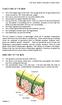 FUNCTIONS OF THE SKIN Skin is the largest organ of the body. The average adult has 18 square feet of skin which account for 16% of the total body weight. Skin acts as a physical barrier for you to the
It is an important tool to assess factors that affect the bioavailability of a drug from a solid preparartion.
 Quality control of tablets Dissolution It is an important tool to assess factors that affect the bioavailability of a drug from a solid preparartion. To ensure that the preparation comply with product
WESTERN BLOTTING TIPS AND TROUBLESHOOTING GUIDE TROUBLESHOOTING GUIDE
 WESTERN BLOTTING TIPS AND TROUBLESHOOTING GUIDE TIPS FOR SUCCESSFUL WESTERB BLOTS TROUBLESHOOTING GUIDE 1. Suboptimal protein transfer. This is the most common complaint with western blotting and could
STANDARD OPERATING PROCEDURES FOR THE COLLECTION OF PERINATAL SPECIMENS FOR RESEARCH. Research Centre for Women s and Infants Health (RCWIH) BioBank
 STANDARD OPERATING PROCEDURES FOR THE COLLECTION OF PERINATAL SPECIMENS FOR RESEARCH Research Centre for Women s and Infants Health (RCWIH) BioBank Mount Sinai Hospital Samuel Lunenfeld Research Institute
Profiles for floors of same height Cerfix Projoint
 PROFILPAS S.P.A. VIA EINSTEIN, 38 35010 CADONEGHE (PADOVA) ITALY TEL. +39 (0)49 8878411 +39 (0)49 8878412 FAX. +39 (0)49-706692 EMAIL: [email protected] s for floors of same height Cerfix Projoint Application
TROUBLESHOOTING GUIDE FLEXOGRAPHIC INKS
 TROUBLESHOOTING GUIDE FLEXOGRAPHIC INKS Even under the best circumstances, there will be times when things go wrong on a flexographic press. And when you encounter such problems in your printing process,
RECITATION NOTES FOR EXPERIMENT # 5 A&B THIN LAYER CHROMATOGRAPHY
 RECITATION NOTES FOR EXPERIMENT # 5 A&B THIN LAYER CHROMATOGRAPHY Have your lab textbook available for quick reference to specific pages, indicated in red. BASIC PRINCIPLES OF CHROMATOGRAPHY Chromatography
GIEMSA STAIN PREANALYTICAL CONSIDERATIONS
 GIEMSA STAIN PREANALYTICAL CONSIDERATIONS I. Principle Giemsa stain is used to differentiate nuclear and/or cytoplasmic morphology of platelets, RBCs, WBCs, and parasites (1,2). The most dependable stain
LASER PRINTING PROBLEM SOLVER
 LASER PRINTING PROBLEM SOLVER Controllng Moisture Die Cutting & Sheeting Adhesive Contamination Laser Compatible Materials General Tips Other Common Problems Laser Label printing problems are primarily
INSTRUCTION FOR ASSEMBLY. 150x180 v Traditional sauna cabin
 INSTRUCTION FOR ASSEMBLY 150x180 v Traditional sauna cabin 1. SAUNA PLAN 1800 LIGHT UNDER THE BENCH VENTILATION OUTLET UPPER BENCH 600 1500 LOWER BENCH 400 700 1656 956 HEATER 366 381 690 815 Light switch
Conservation of Momentum Greg Kifer
 SCIENCE EXPERIMENTS ON FILE Revised Edition 6.7-1 Conservation of Momentum Greg Kifer Topic Conservation of momentum Time 1 hour! Safety Please click on the safety icon to view the safety precautions.
Application Instructions for Avery Dennison Films SF100-843-S LTR EZ RS, Conform Chrome
 Application Instructions for Avery Dennison Films SF100-843-S LTR EZ RS, Conform Chrome Instructional Bulletin #4.00.2 (Revision 0) Dated: 04/05/2012 1.0 Consult Product Data Bulletin Before starting application,
Melanoma The Skin Understanding Cancer
 Melanoma A form of cancer that begins in melanocytes (cells that make the pigment melanin). It may begin in a mole (skin melanoma), but can also begin in other pigmented tissues, such as in the eye or
ab183294 TripleStain IHC Kit: M&M&R on rodent tissue (DAB, DAB/Ni & AP/Red)
 ab183294 TripleStain IHC Kit: M&M&R on rodent tissue (DAB, DAB/Ni & AP/Red) Instructions for Use For the detection of Rabbit and Mouse Primary antibodies on Rodent Tissue. This product is for research
Surface Decoration. Design techniques used to put on the surface of the pottery. Slip Oxides Glaze Embossed Incised Wax on wet Altered from the wheel
 Surface Decoration Design techniques used to put on the surface of the pottery. Slip Oxides Glaze Embossed Incised Wax on wet Altered from the wheel Slip How to apply slip Colored slip is intended to add
In order to be useful, a smear must have the following qualities:
 Smear Preparation and Simple Stain Objectives: Make bacterial smear slides (usually called smears) Distinguish cells on these slides using a simple stain procedure Unstained microbial cells are nearly
A Guide to Thermoform Processing of Polypropylene. Introduction
 A Guide to Thermoform Processing of Polypropylene Introduction Thermoforming is the process of heating plastic sheet to a pliable state and forming it into shape. Thermoforming offers processing advantages
Dyne Testing Why Test In The First Place?
 Solving Your Extrusion and Converting Needs Dyne Testing Why Test In The First Place? By Marc Nolan-Converting Supply Inc. Today, more than ever film extruders, laminators and printers need to be concerned
Students will identify these animal cell structures: Students should properly answer the pre-activity cell membrane, nucleus. questions.
 WHAT DO PLANT & ANIMAL CELLS LOOK LIKE? Grade Levels: 10-12 Time Frame: 2 periods Big Idea: Students will compare various plant epithelial cells (onion and elodea) with human epithelial cells (cheek lining
Clinical Histology Procedure Histo03.01 Automated Immunohistochemical Staining Utilizing the Ventana Benchmark Instrument
 Clinical Histology Procedure Histo03.01 Automated Immunohistochemical Staining Utilizing the Ventana Benchmark Instrument Final Approval: May 2010 Effective: May 2010 Next Review Date: May 2012 List all
Blood-Based Cancer Diagnostics
 The Biotechnology Education Company Blood-Based Cancer Diagnostics EDVO-Kit 141 Store entire experiment at room temperature. EXPERIMENT OBJECTIVE: The objective of this experiment is to learn and understand
Inc. Wuhan. Quantity Pre-coated, ready to use 96-well strip plate 1 Plate sealer for 96 wells 4 Standard (liquid) 2
 Uscn Life Science Inc. Wuhan Website: www.uscnk.com Phone: +86 27 84259552 Fax: +86 27 84259551 E-mail: [email protected] ELISA Kit for Human Prostaglandin E1(PG-E1) Instruction manual Cat. No.: E0904Hu
ABO-Rh Blood Typing Using Neo/BLOOD
 ABO-Rh Blood Typing Using Neo/BLOOD Objectives Determine the ABO and Rh blood type of unknown simulated blood samples. Prepare a simulated blood smear. Examine a prepared blood smear under the microscope
Explain the role of blood and bloodstain patterns in forensics science. Analyze and identify bloodstain patterns by performing bloodstain analysis
 Lab 4 Blood Learning Objectives Explain the role of blood and bloodstain patterns in forensics science Analyze and identify bloodstain patterns by performing bloodstain analysis Introduction Blood, a
Histological Techniques
 Histological Techniques Histology is the study of the cellular organization of body tissues and organs. The term is derived from the Greek "histos" meaning web or tissue, and refers to the "science of
Rigid Gas Permeable Contact Lens Information
 Rigid Gas Permeable Contact Lens Information Congratulations! You have been fit with quality contact lenses designed specifically for your visual correction. Please note that successful contact lens wear
AN114. Scope. Safety. Materials H AND SOLDERING TUTORIAL FOR FINE PITCH QFP DEVICES. Optional. Required. 5. Solder flux - liquid type in dispenser
 H AND SOLDERING TUTORIAL FOR FINE PITCH QFP DEVICES Scope This document is intended to help designers create their initial prototype systems using Silicon Lab's TQFP and LQFP devices where surface mount
Solid shape molding is not desired in injection molding due to following reasons.
 PLASTICS PART DESIGN and MOULDABILITY Injection molding is popular manufacturing method because of its high-speed production capability. Performance of plastics part is limited by its properties which
OBJECTIVES PROCEDURE. Lab 2- Bio 160. Name:
 Lab 2- Bio 160 Name: Prokaryotic and Eukaryotic Cells OBJECTIVES To explore cell structure and morphology in prokaryotes and eukaryotes. To gain more experience using the microscope. To obtain a better
MANUAL PLATELET COUNT
 MANUAL PLATELET COUNT Principle Whole blood is diluted with a 1% ammonium oxalate solution. The isotonic balance of the diluent is such that all erythrocytes are lysed while the leukocytes, platelets,
MUCICARMINE STAIN - SOUTHGATE S - MUCIN PURPOSE:
 SURGICAL PATHOLOGY - HISTOLOGY Date: STAINING MANUAL - CARBOHYDRATES Page: 1 of 2 MUCICARMINE STAIN - SOUTHGATE S - MUCIN PURPOSE: To stain mucin which is a secretion produced by a variety of epithelial
Brisa UV Gel Enhancements Sculpted on a Tip
 Step-by-Step Guide Brisa UV Gel Enhancements Sculpted on a Tip 90 MIN A service designed for problem nails with no natural nail extension edge, requiring length and re-design. STEP 1: P.R.E.P. f. Apply
Special histochemical stains are routinely used for the interpretation
 Technical Articles Special Stains in Interpretation of Liver Biopsies Rashmil Saxena, BFA, HT(ASCP) CM Division of Transplantation Department of Surgery, Indiana University Indianapolis, IN, USA Special
Fiber Analysis 2005, 2004, 2003, 2001, 1999 by David A. Katz. All rights reserved.
 Fiber Analysis 2005, 2004, 2003, 2001, 1999 by David A. Katz. All rights reserved. Fiber evidence can be found at crime scenes in a number of different ways. In personal contact between the clothing of
Good Boards = Results
 Section 2: Printed Circuit Board Fabrication & Solderability Good Boards = Results Board fabrication is one aspect of the electronics production industry that SMT assembly engineers often know little about.
RECOVERY PROCEDURES FOR LIBRARY MATERIALS
 RECOVERY PROCEDURES FOR LIBRARY MATERIALS Read and understand all steps thoroughly before undertaking recovery procedures below. DAMP OR WET BOOKS CAUTION: All air drying MUST take place in a cool, dry
Dot Blot Analysis. Teacher s Guidebook. (Cat. # BE 502) think proteins! think G-Biosciences www.gbiosciences.com
 PR110 G-Biosciences 1-800-628-7730 1-314-991-6034 [email protected] A Geno Technology, Inc. (USA) brand name Dot Blot Analysis Teacher s Guidebook (Cat. # BE 502) think proteins! think G-Biosciences
Product name Company Cat # PowerPac Basic Power supply Bio Rad 165-6019 Mini Protean electrophoresis system Mini trans blot cell Bio Rad 170-3930
 SDS-PAGE and western blot for low molecular weight proteins (2-20kDa) Merav Marom Shamur, Smart Assays Aim: Analysis of low molecular weight proteins by SDS-PAGE and western blot under reducing conditions.
VC 104+ Rigid Grade / Rigid Grade Imagine VC 104 Rigid Grade Commercial Customised
 Page 1 of 6 instructions VC 104+ Rigid Grade / VC 104+ Rigid Grade Imagine / (for the rest of this document referred to as VC 104) can be applied to new and used trucks and trailers with painted rigid
Chemical reaction (slow): Enzyme-catalyzed reaction (much faster):
 1 Enzymes Introduction Enzymes are Biological Catalysts Recall that a catalyst is an agent which speeds up a chemical reaction without actually being consumed or changed by the reaction. Enzymes are proteins
WATERPROOFING OF WET ROOMS
 WATERPROOFING OF WET ROOMS Waterproofing under tiles For longterm enjoyment of a wetroom area a complete and resistant waterproofing system is an important precondition. Most tiles are by themselves waterproof
Things you need. Time ?????? Large pyrex beaker preferably 500 to 1000ml, or large steel vacuum
 This experiment is a means of observing the effect of cold temperatures on a range of everyday items. A freezing solution is made for this purpose by adding dry ice to a pure alcohol. This is strictly
Human Free Testosterone(F-TESTO) ELISA Kit
 Human Free Testosterone(F-TESTO) ELISA Kit Catalog Number. MBS700040 For the quantitative determination of human free testosterone(f-testo) concentrations in serum, plasma. This package insert must be
06-6542 n/a MYSTERY OF THE BLOOD STAIN (RE)
 DATA SHEET Order code Manufacturer code Description 06-6542 n/a MYSTERY OF THE BLOOD STAIN (RE) The enclosed information is believed to be correct, Information may change without notice due to product
Test Methods for the Colour Fastness of Leather & Dyes. TFL Leather Technology Ltd. Quality and Environment February 2004 Version 1.
 Test s for the Colour Fastness of Leather & Dyes TFL Leather Technology Ltd. Quality and Environment February 2004 Version 1.0 Contents Colour Fastness of Dyed Leather 1. Grey scale for assessing change
GLOSSARY of STAINS Hematoxylin and Eosin (H&E) Periodic acid-schiff s (PAS) Masson s Trichrome Stain Gomori Trichrome Stain Silver Salts
 GLOSSARY of STAINS Your study and comprehension of the slides in your collection will be enhanced if you know something about the staining methods used in their preparation. The following list includes
1.1.2 Polypropylene The polypropylene must be a white opaque film, 1 2 mil thick. Biaxial orientation is preferred.
 Library of Congress Preservation Directorate Specification Number 700 704 09 Specifications for Pressure Sensitive Adhesive Labels For Application to Single Paper Sheets and Text Pages of Bound Books For
Puzio Eye Care Associates
 Puzio Eye Care Associates DENNIS HARWICH 38, Route 134 Route 137 & Route 39, Suite 119B P.O. Box 1412 P.O. Box 1661 South Dennis MA 02660 East Harwich, MA 02645 Voice: 508-394-221 Voice: 508-432-3444 Fax:
EXTRACTION OF DNA FROM CALF THYMUS CELLS Revised 2/1/96 Introduction
 Revised 2/1/96 Introduction Cells may be classified into two primary types depending on whether they have a discrete nucleus (eukaryotic) or do not (prokaryotic). Prokaryotes include bacteria, such as
Functions of Blood. Collects O 2 from lungs, nutrients from digestive tract, and waste products from tissues Helps maintain homeostasis
 Blood Objectives Describe the functions of blood Describe blood plasma Explain the functions of red blood cells, white blood cells, and platelets Summarize the process of blood clotting What is Blood?
Operator Quick Guide EC SENSOR
 Operator Quick Guide EC SENSOR Revision G - 24/04/2008 General Information About This Guide The information in this guide has been carefully checked and is believed to be accurate. However, Hach Ultra
STANDARD OPERATING PROCEDURE
 STANDARD OPERATING PROCEDURE Title: Evaluation using Western Blot SOP#: M-103 Version #: 1 Author: R. Saul Date Approved: Feb. 5, 2009 Date Modified: 1. PURPOSE The purpose of this document is to describe
STANDARD PHOTOGRAPHIC PRINTING 08/10. 1.5 minutes to 3 minutes. HCA (hypoclearing agent): *rapid washing agent. 20 minutes at 65-80 degrees
 STANDARD PHOTOGRAPHIC PRINTING 08/10 Work with 32 oz. of solution in each tray depending upon tray size. Agitate paper when in trays DEKTOL: 1.5 minutes to 3 minutes STOP: 30 seconds USED FIXER: 3 minutes
Food delivery & storage
 screen 1 Food delivery & storage 7. Rubbish bags in the way of deliveries This screen shows a delivery scene with a number of potential hazards to food safety. As a starting point students are encouraged
What You Will Learn in This Module: Testing for Pullorum-Typhoid Disease
 Module 5-B: Testing Poultry for Pullorum-Typhoid Disease This module applies only to individuals who have attended and successfully completed an Indiana State Poultry Association NPIP Blood Testing School
Care and Maintenance for Wood Flooring
 Care and Maintenance for Wood Flooring The finishing technology used for Tarkett wood floorings makes them the best choice for easy maintenance. To preserve all the beauty of your Tarkett wood flooring,
How to Build a Printed Circuit Board. Advanced Circuits Inc 2004
 How to Build a Printed Circuit Board 1 This presentation is a work in progress. As methods and processes change it will be updated accordingly. It is intended only as an introduction to the production
Direct Antiglobulin Test (DAT)
 Exercise 8 Exercise 9 Direct Antiglobulin Test (DAT) Elution Study Task Aim Introduction To perform the DAT and elution procedure with correct interpretation of results. To perform with 100% accuracy the
Living things: Cells Living things:
 unit 1 The cell is the smallest unit capable of living an independent existence. Most cells contain a nucleus which controls the way they work; the only cells in the human body with no nuclei are the red
DECISION-MAKING TREE FOR DISASTER RECOVERY SOLINET Preservation Services
 DECISION-MAKING TREE FOR DISASTER RECOVERY SOLINET Preservation Services (FAST!) Vacuum Dry Coated (FAST!) Paper Uncoated Water-Soluble Inks Large Quantity Thaw & Air-Dry Water-Stable Inks Air-Dry Small
What is special about a stain, and why do we call some stains
 Technical Articles Evolution of Use of Special Stains Alton D. Floyd, PhD Independent Consultant Edwardsburg, MI, USA What is special about a stain, and why do we call some stains special? We all think
MASONRY RESTORATION Lime Putty Mortar Repointing Guide
 1.0 Preparation for Lime Putty Mortar Pointing 1.1 Tools & Approach A. Grinding - When used in a controlled way, angle grinders with diamond-impregnated metal blades with a maximum 1/8-inch-thickness and
Cells. Introduction WSBCTC 1
 Cells Cells are the fundamental unit of life. All living things are composed of cells. While there are several characteristics that are common to all cells, such as the presence of a cell membrane, cytoplasm,
ph Measurements of Common Substances
 Chem 100 Section Experiment 10 Name Partner s Name Introduction ph Measurements of Common Substances The concentration of an acid or base is frequently expressed as ph. Historically, ph stands for the
Microtomy: Microscopical study of sections of animal & plant material
 ICENI MICROSCOPY STUDY GROUP Microtomy: Microscopical study of sections of animal & plant material Introduction. Many living things are extraordinarily beautiful. The microscopist has a privileged view
Metabolism: Cellular Respiration, Fermentation and Photosynthesis
 Metabolism: Cellular Respiration, Fermentation and Photosynthesis Introduction: All organisms require a supply of energy and matter to build themselves and to continue to function. To get that supply of
Western Blotting For Protein Analysis
 Western Blotting For Protein Analysis Part 1: Laemmli Gel Electrophoresis Using Mini-PROTEAN II Electrophoresis Cell Note: Powder-free gloves should be worn throughout the entire procedure. A. Preparing
CARING FOR WATER DAMAGED PAINTINGS
 CARING FOR WATER DAMAGED PAINTINGS A GUIDE FOR ARTISTS Rustin Levenson Art Conservation As the creators of works of art, artists have the discretion to revise or rework their pieces in their possession.
Pre-Lab Questions. 1. What is cell theory? 2. What do all cells contain? 3. What is a prokaryote? 4. What is a eukaryote? 5. What is an organelle?
 Name: TOC# Background Ever since the first microscope was used, biologists have been interested in studying the cellular organization of all living things. After hundred s of years of observations by many
6 Body Fluid Stains and Standards
 6 Body Fluid Stains and Standards Laboratory examination of body fluids (i.e., blood, semen, saliva, etc.) may produce significant information in certain investigations. This chapter considers the recognition,
Critical Point Drying Principles
 Critical Point Drying Principles What is Critical Point Drying? Critical Point Drying is so named as it includes, as part of its process, the occurrence known as the continuity of state for which there
Why is my air conditioner dripping on my customers?
 De-Mystifying HVAC Why is my air conditioner dripping on my customers? By Ron Prager One of the most frequent emergency service requests is a call for an air conditioner leaking water into the store. These
Active and Passive Sash Replacement
 for Andersen Gliding Windows Read all instructions carefully before attempting this procedure. If you have any questions about your ability to complete the procedure, call Andersen at 1-888-888-7020 for
Two main classes: Epithelial Connective (synovial) Epithelial. Cutaneous Mucous Serous
 Two main classes: Epithelial Connective (synovial) Epithelial Cutaneous Mucous Serous Epithelial Membranes = sheet of epithelia + connective tissue base 1. Cutaneous membrane: outer skin layer (stratified
h. Large intestine 3
 (1) General features (a) Large intestine is last organ of digestive tract proper divided into 3 or 4 regions cecum appendix in humans colon rectum 1 b) No villi lumenal epithelium has microvilli This brush
Lab 02: Blood Cytology (20 points)
 Pierce College Putman/Biol 242 Name: Lab 02: Blood Cytology (20 points) Reference: Marieb & Mitchell 9 th Ed: 29A (Activities 1, 2, 3, 4, 7); 10 th Ed: Exercise 29 (Activities 1, 2, 3, 4, 7). Pierce College
Recrystallization II 23
 Recrystallization II 23 Chem 355 Jasperse RECRYSTALLIZATIN-Week 2 1. Mixed Recrystallization of Acetanilide 2. Mixed Recrystallization of Dibenzylacetone 3. Recrystallization of an Unknown Background Review:
Wave Soldering Problems
 Wave Soldering Problems What is a good joint? The main function of the solder is to make electrical interconnection, but there is a mechanical aspect: even where parts have been clinched or glued in position,
Exercise 9: Blood. Readings: Silverthorn 5 th ed, 547 558, 804 805; 6 th ed, 545 557, 825 826.
 Exercise 9: Blood Readings: Silverthorn 5 th ed, 547 558, 804 805; 6 th ed, 545 557, 825 826. Blood Typing The membranes of human red blood cells (RBCs) contain a variety of cell surface proteins called
Contents. Introduction... A Note About Heatsinks... Precautions...
 Contents Introduction... A Note About Heatsinks... Precautions... Application Instructions... Heatsink Preparation... CPU Preparation... Tinting the Heatsink and Metal cap... Applying Thermal Compound...
SDS-PAGE Protocol Mutated from the SDS-PAGE protocol written by the Lord of the Flies
 SDS-PAGE Protocol Mutated from the SDS-PAGE protocol written by the Lord of the Flies Pouring the resolving gel 1. Clean glass plates with soap and water, then with ethanol. Assemble the glass plates and
1.4 Metallic Impurities Iron must not exceed 150 ppm and copper shall not exceed 6 ppm when tested according to TAPPI T 266.
 Library of Congress Preservation Directorate Specification Number 100 132 09 Specifications for 3 x 10ʺ Paper Enclosures For the Storage of Strip Photographic Negatives This specification is provided as
Comparing Plant and Animal Cells
 1.2 Comparing Plant and Animal Cells Here is a summary of what you will learn in this section: Plant and animal cell structures are called organelles. Plant and animal cells perform some similar functions,