
HP Color LaserJet 3000/3600/3800 Series printers. Service Manual
|
|
|
- Daniel Patterson
- 10 years ago
- Views:
Transcription
1 HP Color LaserJet 3000/3600/3800 Series printers Service Manual

2

3 HP Color LaserJet 3000/3600/3800 Series printers Service Manual

4 Copyright and license 2005 Copyright Hewlett-Packard Development Company, L.P. Reproduction, adaptation, or translation without prior written permission is prohibited, except as allowed under the copyright laws. The information contained herein is subject to change without notice. The only warranties for HP products and services are set forth in the express warranty statements accompanying such products and services. Nothing herein should be construed as constituting an additional warranty. HP shall not be liable for technical or editorial errors or omissions contained herein. Trademark credits Microsoft and Windows are U.S. registered trademarks of Microsoft Corporation. Linux is a U.S. registered trademark of Linus Torvalds. PostScript is a trademarks of Adobe Systems Incorporated. UNIX is a registered trademark of The Open Group. Energy Star and the Energy Star logo are U.S. registered marks of the United States Environmental Protection Agency. Edition 1, 11/2005 Part number Q

5 Table of contents 1 Product information Quick access to printer information...2 Printers at a glance...3 HP Color LaserJet 3000 Series printer...3 HP Color LaserJet 3600 Series printer...4 HP Color LaserJet 3800 Series printer...4 Features at a glance...5 Walkaround...7 Control-panel overview...9 Control-panel indicator lights...10 Display...10 Printer software...12 HP Color LaserJet 3000 Series printer and HP Color LaserJet 3800 Series printer drivers...12 HP Color LaserJet 3600 Series printer drivers...12 Additional drivers...13 Software for networks...13 HP Web Jetadmin...13 UNIX...14 Linux...14 Utilities...14 HP Easy Printer Care Software...14 Embedded Web server...14 Other components and utilities...14 Print-media specifications...16 Supported media types...16 Supported media sizes Installation and configuration What is in the box...20 Site requirements...21 Physical specifications...21 Connecting to a network or a computer...22 Printer memory...24 Installing memory DIMMs...24 To install memory and font DIMMs...24 Enabling memory...27 To enable memory for Windows...27 Checking DIMM installation...27 ENWW iii

6 To check DIMM installation Maintenance Understanding approximate supplies-replacement intervals...30 Replacing supplies...31 Locating supplies...31 Supply replacement guidelines...31 Replacing the fuser...32 Managing the print cartridge...33 HP print cartridges...33 Non-HP print cartridges...33 Print-cartridge authentication...33 Print-cartridge storage...33 Print-cartridge life expectancy...33 Checking the supply level...34 Using the control panel...34 Using the embedded Web server...34 Using HP Web Jetadmin...34 Replacing print cartridges...34 To replace the print cartridge...35 Cleaning the printer...37 Cleaning spilled toner...37 Vacuum specifications...37 Calibrating the printer...38 Tools for troubleshooting...39 Using printer information pages...39 Configuring alerts...40 Using the embedded Web server...40 To open the embedded Web server by using a network connection...41 Embedded Web server sections...42 Using the HP Easy Printer Care Software...43 Supported operating systems...43 To use the HP Easy Printer Care Software...44 HP Easy Printer Care Software sections...44 Using the HP Printer Utility for Macintosh...45 To open the HP Printer Utility in Mac OS X V To open the HP Printer Utility in Mac OS X V HP Printer Utility features Theory of operation Engine control system...48 Power-on sequence...49 Motors, fans, and solenoids...50 Laser/scanner system...52 Pickup-and-feed-system...53 Sensors in the pickup-and-feed system trays (cassettes)...54 Cassette pickup mechanism...55 Multipurpose-tray pickup mechanism...56 Feed-speed control...56 Sensor jam detection...58 iv ENWW

7 Image-formation system...61 Image-formation process...62 Latent-image formation stage...63 Step 1: pre-exposure...63 Step 2: primary charging...64 Step 3: laser-beam exposure...64 Developing stage...64 Step 4: developing...64 Transfer stage...64 Step 5: media feed...65 Step 6: image transfer...65 Step 7: separation from the drum...65 Step 8: separation from the ETB...66 Fusing stage...66 Step 9: fusing...66 Cleaning stage...66 Step 10: drum cleaning...67 Print cartridge...67 Print-cartridge activation Removal and replacement Removal and replacement strategy...70 Introduction...70 Required tools...71 Types of screws...72 Service approach...73 Before performing service...73 After performing service...73 Print cartridges...74 External doors, covers, and panels...75 Front cover...75 Upper cover (fuser door)...80 Rear lower cover...83 Left cover...84 Right cover...87 Rear upper cover...91 Internal assemblies...92 Formatter cage...92 Electrostatic transfer belt (ETB)...94 Fuser...95 Duplex fan...96 Print-cartridge drive motors...99 Duplex-reverse-drive assembly Duplex-feed-drive assembly Fuser drive assembly Developing separation-drive assembly Pickup-and-feed assembly Pickup-drive assembly Laser/scanner assembly Main fan ENWW v

8 Printed circuit assemblies (PCAs) Low-voltage power-supply PCA DC controller PCA High-voltage power supply Memory-controller PCA Driver PCA Control panel Pickup-and-feed driver PCA Duplex-driver PCA Sensors Cassette media sensor (HP LaserJet 3600/3800) Temperature sensor Paper and registration sensor covers Cartridge-sensor PCA sheet feeder sheet feeder right cover sheet feeder left cover sheet feeder rear cover sheet feeder driver PCA Media sensor (500-sheet feeder) Troubleshooting Troubleshooting process Pre-troubleshooting checklist Troubleshooting flowchart Power-on checks Control-panel messages Jams Jam recovery Avoiding jams Clearing jams Image-formation troubleshooting Print-quality problems associated with media Defects on overhead transparencies Print-quality problems that are related to the environment Print-quality problems that are related to jams Print-quality problems from toner buildup Print-quality troubleshooting pages Image defects Light image Light color Dark image Dark color Completely blank image All black or solid color Dots in vertical lines Dirt on back of paper Dirt on front of paper Vertical lines White vertical lines vi ENWW

9 Horizontal line White horizontal line Color missing Blank spots Poor fusing Image distortion Color misregistration Smearing Misplaced image Reversed color Snail tracks Repetitive-defects troubleshooting Interface troubleshooting Communication checks EIO troubleshooting Service menu Using the Service menu Clear event log Total page count Transfer kit count Fuser kit count Serial number Diagnostics menu Diagnostics LED diagnostics Diagnostics mode Diagnostics that put the engine into the special diagnostics mode Diagnostic tests Individual diagnostic tests Print the event log page View the event log on the control-panel display Print the print-quality (PQ) troubleshooting pages Disable cartridge check (special mode test) Paper-path sensor test Paper-path test Manual sensor test (special mode test) Component test (special mode test) Print/Stop test Test pages Engine test page Formatter test Half-self test Drum-rotation test Engine resets Engine resets Cold reset NVRAM initialization Hard-disk initialization Service ID Converting the Service ID to an actual date ENWW vii

10 Restoring the Service ID Troubleshooting diagrams Connector locations Major assemblies DC controller connectors Timing diagram Circuit diagrams Parts and diagrams Ordering parts and supplies Parts How to use the parts lists and diagrams Types of screws Related documentation and software Accessories and supplies External panels and covers Internal components Paper-pickup drive assembly Duplexing-feed drive assembly (duplex models) Duplexing reverse-drive assembly (duplex models) Developing separation-drive assembly Fuser drive assembly Cassette (tray 2) Paper-pickup assembly (HP CLJ 3600/3800) Paper-pickup assembly (HP CLJ 3000) Electronic transfer belt (simplex models) Electronic transfer belt (duplex models) Multipurpose tray assembly (tray 1) Duplex-paper feed assembly (duplex models) Fuser PCAs sheet feeder cassette (tray 3) sheet feeder paper-pickup assembly sheet feeder PCA Alphabetical parts list Numerical parts list Appendix A Printer specifications Electrical specifications Power-consumption specifications Acoustic specifications Operating-environment specifications Appendix B Product warranty statements Hewlett-Packard Limited Warranty Statement Availability of support and service HP maintenance agreements Next-Day Onsite Service viii ENWW

11 Appendix C Regulatory statements FCC regulations Declaration of conformity (HP Color LaserJet 3000 Series printer) Declaration of conformity (HP Color LaserJet 3600 Series and HP Color LaserJet 3800 Series printer) Safety statements Laser safety Canadian DOC regulations EMI statement (Korea) VCCI statement (Japan) Power cord statement (Japan) Laser statement for Finland Index ENWW ix

12 x ENWW

13 List of tables Table 1-1 Printer guides...2 Table 1-2 HP Color LaserJet 3000 Series printer configurations...3 Table 1-3 HP Color LaserJet 3600 Series printer configurations...4 Table 1-4 HP Color LaserJet 3800 Series printer configurations...4 Table 1-5 Features...5 Table 1-6 Printer drivers for the HP Color LaserJet 3000 and 3800 Series printers...12 Table 1-7 Tray 1 (multipurpose tray) media types...16 Table 1-8 Tray 2 and tray 3 media types...16 Table 1-9 Supported media sizes...16 Table 1-10 Automatic 2-sided printing...17 Table 2-1 Physical dimensions for the HP Color LaserJet 3000/3600/3800 Series printers...21 Table 4-1 Sequence of operation...48 Table 6-1 Troubleshooting flowchart Table 6-2 Common causes of jams Table 6-3 Image defects Table 6-4 Causes for light images Table 6-5 Causes for one color printing light Table 6-6 Causes for dark images Table 6-7 Causes for one color printing darker than others Table 6-8 Causes for a completely blank image Table 6-9 Causes for an all black or solid colored image Table 6-10 Causes for vertical lines of white dots Table 6-11 Causes for dirt on the back of the paper Table 6-12 Causes for dirt on the front of the paper Table 6-13 Causes for vertical lines Table 6-14 Causes for white vertical lines Table 6-15 Causes for horizontal line Table 6-16 Causes for white horizontal lines Table 6-17 Causes for a missing color Table 6-18 Causes for blank spots Table 6-19 Causes for poor fusing Table 6-20 Causes for distortion or blurring Table 6-21 Causes for color misregistration Table 6-22 Causes for smearing Table 6-23 Causes for a misplaced image Table 6-24 Causes for reversed color Table 6-25 Causes for snail tracks Table 6-26 Causes of repetitive defects Table 6-27 Communication check Table 6-28 Manual sensor test ENWW xi

14 Table 7-1 Technical support Web sites Table 7-2 Accessories and supplies Table 7-3 External panels and covers (1 of 2) Table 7-4 External panels, and covers (2 of 2) Table 7-5 Front-cover assembly (simplex model) Table 7-6 Front-cover assembly (duplex model) Table 7-7 Internal components (1 of 5) Table 7-8 Internal components (2 of 5) Table 7-9 Internal components (3 of 5) Table 7-10 Internal components (4 of 5) Table 7-11 Internal components (5 of 5) Table 7-12 Paper-pickup drive assembly Table 7-13 Duplexing-feed drive assembly (duplex models) Table 7-14 Duplexing reverse-drive assembly (duplex models) Table 7-15 Developing separation-drive assembly Table 7-16 Fuser drive assembly Table 7-17 Cassette (tray 2) Table 7-18 Paper-pickup assembly (HP CLJ 3600/3800) Table 7-19 Paper-pickup assembly (HP CLJ 3000) Table 7-20 Electronic transfer belt (simplex models) Table 7-21 Electronic transfer belt (duplex models) Table 7-22 Multipurpose tray assembly (tray 1) Table 7-23 Duplex-paper feed assembly (duplex models) Table 7-24 Fuser Table 7-25 PCAs Table sheet feeder cassette (tray 3) Table sheet feeder paper-pickup assembly Table sheet feeder PCA Table 7-29 Alphabetical parts list Table 7-30 Numerical parts list Table A-1 Electrical specifications for the HP Color LaserJet 3000 Series printers Table A-2 Electrical specifications for the HP Color LaserJet 3600 Series printer Table A-3 Electrical specifications for the HP Color LaserJet 3800 Series printer Table A-4 Power consumption (average, in watts) Table A-5 Acoustic emissions for the HP Color LaserJet 3000 Series printers Table A-6 Acoustic emissions for the HP Color LaserJet 3600 Series printer Table A-7 Acoustic emissions for thehp Color LaserJet 3800 Series printers Table A-8 Operating environment specifications xii ENWW

15 List of figures Figure 1-1 Front view (shown with optional 500-sheet paper feeder)...7 Figure 1-2 Back and side view...8 Figure 1-3 Control panel buttons and lights...9 Figure 1-4 Printer display...10 Figure 2-1 What is in the shipping box...20 Figure 3-1 Supply-item locations...31 Figure 4-1 Engine control system components...48 Figure 4-2 Power-on sequence...49 Figure 4-3 Motors, fans, and solenoids...50 Figure 4-4 Laser/scanner system...52 Figure 4-5 Pickup-and-feed system...53 Figure 4-6 Pickup-and-feed system sensors...54 Figure 4-7 Cassette pickup mechanism...55 Figure 4-8 Multipurpose-tray pickup mechanism...56 Figure 4-9 Image formation system...61 Figure 4-10 Image-formation steps...63 Figure 4-11 Pre-exposure...64 Figure 4-12 Laser-beam exposure...64 Figure 4-13 Media feed...65 Figure 4-14 Image transfer...65 Figure 4-15 Separation from the drum...66 Figure 4-16 Fusing...66 Figure 4-17 Print cartridge...67 Figure 4-18 Print-cartridge activation...68 Figure 5-1 Phillips and pozidrive screwdriver comparison...71 Figure 5-2 Remove the print cartridges (1 of 2)...74 Figure 5-3 Remove the print cartridges (2 of 2)...74 Figure 5-4 Remove the front cover (1 of 7)...75 Figure 5-5 Remove the front cover (2 of 7)...76 Figure 5-6 Remove the front cover (3 of 7)...76 Figure 5-7 Remove the front cover (4 of 7)...77 Figure 5-8 Remove the front cover (5 of 7)...77 Figure 5-9 Remove the front cover (6 of 7)...78 Figure 5-10 Remove the front cover (7 of 7)...79 Figure 5-11 Remove the upper cover (1 of 5)...80 Figure 5-12 Remove the upper cover (2 of 5)...80 Figure 5-13 Remove the upper cover (3 of 5)...81 Figure 5-14 Remove the upper cover (4 of 5)...81 Figure 5-15 Remove the upper cover (5 of 5)...82 Figure 5-16 Remove the rear lower cover (1 of 2)...83 ENWW xiii

16 Figure 5-17 Remove the rear lower cover (2 of 2)...83 Figure 5-18 Remove the left cover (1 of 5)...84 Figure 5-19 Remove the left cover (2 of 5)...84 Figure 5-20 Remove the left cover (3 of 5)...85 Figure 5-21 Remove the left cover (4 of 5)...85 Figure 5-22 Remove the left cover (5 of 5)...86 Figure 5-23 Remove the right cover (1 of 4)...87 Figure 5-24 Remove the right cover (2 of 4)...88 Figure 5-25 Remove the right cover (3 of 4)...89 Figure 5-26 Remove the right cover (4 of 4)...90 Figure 5-27 Remove the rear upper cover...91 Figure 5-28 Remove the formatter cage...93 Figure 5-29 Remove the front ETB...94 Figure 5-30 Remove the fuser...95 Figure 5-31 Remove the duplex fan (1 of 3)...96 Figure 5-32 Remove the duplex fan (2 of 3)...97 Figure 5-33 Remove the duplex fan (3 of 3)...98 Figure 5-34 Remove the print-cartridge motor...99 Figure 5-35 Remove the duplex-reverse-drive assembly (1 of 5) Figure 5-36 Remove the duplex-reverse-drive assembly (2 of 5) Figure 5-37 Remove the duplex-reverse-drive assembly (3 of 5) Figure 5-38 Remove the duplex-reverse-drive assembly (4 of 5) Figure 5-39 Remove the duplex-reverse-drive assembly (5 of 5) Figure 5-40 Remove the duplex-feed-drive assembly (1 of 2) Figure 5-41 Remove the duplex-feed-drive assembly (2 of 2) Figure 5-42 Remove the fuser drive assembly (1 of 4) Figure 5-43 Remove the fuser drive assembly (2 of 4) Figure 5-44 Remove the fuser drive assembly (3 of 4) Figure 5-45 Remove the fuser drive assembly (4 of 4) Figure 5-46 Remove the developing separation-drive assembly (1 of 4) Figure 5-47 Remove the developing separation-drive assembly (2 of 4) Figure 5-48 Remove the developing separation-drive assembly (3 of 4) Figure 5-49 Remove the developing separation-drive assembly (4 of 4) Figure 5-50 Remove the pickup-and-feed assembly (1 of 8) Figure 5-51 Remove the pickup-and-feed assembly (2 of 8) Figure 5-52 Remove the pickup-and-feed assembly (3 of 8) Figure 5-53 Remove the pickup-and-feed assembly (4 of 8) Figure 5-54 Remove the pickup-and-feed assembly (5 of 8) Figure 5-55 Remove the pickup-and-feed assembly (6 of 8) Figure 5-56 Remove the pickup-and-feed assembly (7 of 8) Figure 5-57 Remove the pickup-and-feed assembly (8 of 8) Figure 5-58 Remove the pickup-drive assembly (1 of 13) Figure 5-59 Remove the pickup-drive assembly (2 of 13) Figure 5-60 Remove the pickup-drive assembly (3 of 13) Figure 5-61 Remove the pickup-drive assembly (4 of 13) Figure 5-62 Remove the pickup-drive assembly (5 of 13) Figure 5-63 Remove the pickup-drive assembly (6 of 13) Figure 5-64 Remove the pickup-drive assembly (7 of 13) Figure 5-65 Remove the pickup-drive assembly (8 of 13) Figure 5-66 Remove the pickup-drive assembly (9 of 13) xiv ENWW

17 Figure 5-67 Remove the pickup-drive assembly (10 of 13) Figure 5-68 Remove the pickup-drive assembly (11 of 13) Figure 5-69 Remove the pickup-drive assembly (12 of 13) Figure 5-70 Remove the pickup-drive assembly (13 of 13) Figure 5-71 Remove the laser/scanner assembly (1 of 6) Figure 5-72 Remove the laser/scanner assembly (2 of 6) Figure 5-73 Remove the laser/scanner assembly (3 of 6) Figure 5-74 Remove the laser/scanner assembly (4 of 6) Figure 5-75 Remove the laser/scanner assembly (5 of 6) Figure 5-76 Remove the laser/scanner assembly (6 of 6) Figure 5-77 Remove the main fan (1 of 2) Figure 5-78 Remove the main fan (2 of 2) Figure 5-79 Remove the low-voltage power-supply PCA (1 of 6) Figure 5-80 Remove the low-voltage power-supply PCA (2 of 6) Figure 5-81 Remove the low-voltage power-supply PCA (3 of 6) Figure 5-82 Remove the low-voltage power-supply PCA (4 of 6) Figure 5-83 Remove the low-voltage power-supply PCA (5 of 6) Figure 5-84 Remove the low-voltage power-supply PCA (6 of 6) Figure 5-85 Remove the DC controller PCA (1 of 3) Figure 5-86 Remove the DC controller PCA (2 of 3) Figure 5-87 Remove the DC controller PCA (3 of 3) Figure 5-88 Remove the high-voltage power supply (1 of 3) Figure 5-89 Remove the high-voltage power supply (2 of 3) Figure 5-90 Remove the high-voltage power supply (3 of 3) Figure 5-91 Remove the memory-controller PCA (1 of 2) Figure 5-92 Remove the memory-controller PCA (2 of 2) Figure 5-93 Remove the driver PCA (1 of 2) Figure 5-94 Remove the driver PCA (2 of 2) Figure 5-95 Remove the control panel (1 of 2) Figure 5-96 Remove the control panel (2 of 2) Figure 5-97 Remove the pickup-and-feed driver PCA (1 of 3) Figure 5-98 Remove the pickup-and-feed driver PCA (2 of 3) Figure 5-99 Remove the pickup-and-feed driver PCA (3 of 3) Figure Remove the duplex-driver PCA (1 of 3) Figure Remove the duplex-driver PCA (2 of 3) Figure Remove the duplex-driver PCA (3 of 3) Figure Remove the cassette media sensor (1 of 2) Figure Remove the cassette media sensor (2 of 2) Figure Remove the temperature sensor Figure Remove the paper and registration sensor covers Figure Remove the cartridge-sensor PCA (1 of 4) Figure Remove the cartridge-sensor PCA (2 of 4) Figure Remove the cartridge-sensor PCA (3 of 4) Figure Remove the cartridge-sensor PCA (4 of 4) Figure Remove the 500-sheet feeder right cover (1 of 3) Figure Remove the 500-sheet feeder right cover (2 of 3) Figure Remove the 500-sheet feeder right cover (3 of 3) Figure Remove the 500-sheet feeder left cover (1 of 5) Figure Remove the 500-sheet feeder left cover (2 of 5) Figure Remove the 500-sheet feeder left cover (3 of 5) ENWW xv

18 Figure Remove the 500-sheet feeder left cover (4 of 5) Figure Remove the 500-sheet feeder left cover (5 of 5) Figure Remove the 500-sheet feeder rear cover (1 of 3) Figure Remove the 500-sheet feeder rear cover (2 of 3) Figure Remove the 500-sheet feeder rear cover (3 of 3) Figure Remove the 500-sheet-feeder driver PCA (1 of 2) Figure Remove the 500-sheet-feeder driver PCA (2 of 2) Figure Remove the media sensor (500-sheet feeder) (1 of 4) Figure Remove the media sensor (500-sheet feeder) (2 of 4) Figure Remove the media sensor (500-sheet feeder) (3 of 4) Figure Remove the media sensor (500-sheet feeder) (4 of 4) Figure 6-1 Jam locations (printer shown without optional tray 3) Figure 6-2 Repetitive defect ruler Figure 6-3 Door switch and fuser interlock Figure 6-4 Engine test page Figure 6-5 Printer connector locations Figure sheet tray connector locations Figure 6-7 Major assemblies (1 of 5) Figure 6-8 Major assemblies (2 of 5) Figure 6-9 Major assemblies (3 of 5) Figure 6-10 Major assemblies (4 of 5) Figure 6-11 Major assemblies (5 of 5) Figure 6-12 DC controller connectors Figure 6-13 Timing diagram (HP LaserJet 3000/3800) Figure 6-14 Timing diagram (HP LaserJet 3600) Figure 6-15 General circuit diagram (1 of 2) Figure 6-16 General circuit diagram (2 of 2) Figure 7-1 External panels and covers (1 of 2) Figure 7-2 External panels and covers (2 of 2) Figure 7-3 Front-cover assembly (simplex model) Figure 7-4 Front-cover assembly (duplex model) Figure 7-5 Internal components (1 of 5) Figure 7-6 Internal components (2 of 5) Figure 7-7 Internal components (3 of 5) Figure 7-8 Internal components (4 of 5) Figure 7-9 Internal components (5 of 5) Figure 7-10 Paper-pickup drive assembly Figure 7-11 Duplexing-feed drive assembly (duplex models) Figure 7-12 Duplexing reverse-drive assembly (duplex models) Figure 7-13 Developing separation-drive assembly Figure 7-14 Fuser drive assembly Figure 7-15 Cassette (tray 2) Figure 7-16 Paper-pickup assembly (HP CLJ 3600/3800) Figure 7-17 Paper-pickup assembly (HP CLJ 3000) Figure 7-18 Electronic transfer belt (simplex models) Figure 7-19 Electronic transfer belt (duplex models) Figure 7-20 Multipurpose tray assembly (tray 1) Figure 7-21 Duplex-paper feed assembly (duplex models) Figure 7-22 Fuser Figure 7-23 PCAs xvi ENWW

19 Figure sheet feeder cassette (tray 3) Figure sheet feeder paper-pickup assembly Figure sheet feeder PCA ENWW xvii

20 xviii ENWW

21 1 Product information Quick access to printer information Printers at a glance Features at a glance Walkaround Control-panel overview Printer software Print-media specifications ENWW 1
22 Quick access to printer information Several references are available for use with this printer. HP Color LaserJet 3000 Series printer: HP Color LaserJet 3600 Series printer: HP Color LaserJet 3800 Series printer: Table 1-1 Printer guides Guide Getting started guide HP Jetdirect Embedded Print Server Administrators Guide Accessory and consumable installation guides User guide Online Help Description Provides step-by-step instructions for installing and setting up the printer. Provides instructions to configure and troubleshoot the HP Jetdirect print server. Provide step-by-step instructions for installing the accessories and supplies. These guides are supplied with the optional printer accessories and supplies. Provides detailed information for using and troubleshooting the printer. Available on the printer CD. Provides information about options that are available in the printer drivers. To view a Help file, open the online Help through the printer driver. 2 Chapter 1 Product information ENWW
23 Printers at a glance The HP Color LaserJet 3000, 3600, and 3800 Series printers are available in the following configurations. HP Color LaserJet 3000 Series printer Table 1-2 HP Color LaserJet 3000 Series printer configurations HP Color LaserJet 3000 printer HP Color LaserJet 3000n printer HP Color LaserJet 3000dn printer HP Color LaserJet 3000dtn printer Prints up to 30 pages per minute (ppm) on letter-size media or 29 ppm on A4-size media in monochrome (black and white) and 15 ppm in color 100-sheet multipurpose tray (tray 1) and 250-sheet input tray (tray 2) Hi-Speed universal serial bus (USB) 2.0 port and enhanced input/output (EIO) slot The features of the HP Color LaserJet 3000 printer, plus: 64 MB RAM (128 total) HP Jetdirect fullfeatured embedded print server to connect to 10Base- T/100 Base-TX networks The features of the HP Color LaserJet 3000 printer, plus: 192 MB RAM (256 total) HP Jetdirect fullfeatured embedded print server to connect to 10Base- T/100 Base-TX networks The features of the HP Color LaserJet 3000 printer, plus: 192 MB RAM (256 total) HP Jetdirect fullfeatured embedded print server to connect to 10Base- T/100 Base-TX networks 64 MB RAM Automatic 2-sided (duplex) printing Automatic 2-sided (duplex) printing 500-sheet input tray (tray 3) ENWW Printers at a glance 3
24 HP Color LaserJet 3600 Series printer Table 1-3 HP Color LaserJet 3600 Series printer configurations HP Color LaserJet 3600 printer HP Color LaserJet 3600n printer HP Color LaserJet 3600dn printer 17 ppm print speed 100-sheet multipurpose tray (tray 1) and 250-sheet input tray (tray 2) Hi-Speed USB 2.0 port 64 MB RAM The features of the HP Color LaserJet 3600 printer, plus: HP Jetdirect value-featured embedded print server to connect to 10Base-T/100Base-TX networks 64 MB RAM The features of the HP Color LaserJet 3600 printer, plus: 64 MB RAM (128 total) Automatic 2-sided (duplex) printing HP Jetdirect value-featured embedded print server to connect to 10Base-T/100Base-TX networks HP Color LaserJet 3800 Series printer Table 1-4 HP Color LaserJet 3800 Series printer configurations HP Color LaserJet 3800 printer HP Color LaserJet 3800n printer HP Color LaserJet 3800dn printer HP Color LaserJet 3800dtn printer 22 ppm (letter-size) or 21 ppm (A4) print speed 100-sheet multipurpose tray (tray 1) and 250-sheet input tray (tray 2) The features of the HP Color LaserJet 3800 printer, plus: 64 MB RAM (160 total) The features of the HP Color LaserJet 3800 printer, plus: 192 MB RAM (288 total) The features of the HP Color LaserJet 3800 printer, plus: 192 MB RAM (288 total) Hi-Speed USB 2.0 port and EIO slot 96 MB RAM HP Jetdirect fullfeatured embedded print server to connect to 10Base- T/100Base-TX networks Automatic 2-sided (duplex) printing HP Jetdirect fullfeatured embedded print server to connect to 10Base- T/100Base-TX networks Automatic 2-sided (duplex) printing HP Jetdirect fullfeatured embedded print server to connect to 10Base- T/100Base-TX networks 500-sheet input tray (tray 3) 4 Chapter 1 Product information ENWW
25 Features at a glance Table 1-5 Features Feature HP Color LaserJet 3000 Series printer HP Color LaserJet 3600 Series printer HP Color LaserJet 3800 Series printer Performance 533 MHz processor 360 MHz processor 533 MHz processor User interface Graphic display Graphic display Graphic display Control-panel help Control-panel help Control-panel help HP Easy Printer Care Software (a Windows - or Macintoshbased status and troubleshooting tool) HP Easy Printer Care Software (a Windows- or Macintoshbased status and troubleshooting tool) HP Easy Printer Care Software (a Windows- or Macintoshbased status and troubleshooting tool) Windows and Macintosh printer drivers Windows and Macintosh printer drivers Windows and Macintosh printer drivers Embedded Web server to gain access to support and to order supplies (administrator tool for network-connected models only) Embedded Web server to configure network settings only (administrator tool for networkconnected models only) Embedded Web server to gain access to support and to order supplies (administrator tool for network-connected models only) HP formatter Host formatter HP formatter Printer drivers HP PCL 5c HP PCL 6 HP JetReady 4.2 HP PCL 5c HP PCL 6 PostScript 3 emulation PostScript 3 emulation Storage features Fonts, forms, and other macros None Fonts, forms, and other macros Job retention Job retention Fonts 80 internal fonts available for both PCL and PostScript 3 emulation None 80 internal fonts available for both PCL and PostScript 3 emulation 80 printer-matching screen fonts in TrueType format available with the software solution 80 printer-matching screen fonts in TrueType format available with the software solution Accessories Optional 500-sheet input tray (tray 3) (standard on the HP Color LaserJet 3000dtn printer) Optional 500-sheet input tray (tray 3) Optional 500-sheet input tray (tray 3) (standard on the HP Color LaserJet 3800dtn printer) Dual inline memory modules (DIMMs) DIMMs ENWW Features at a glance 5
26 Table 1-5 Features (continued) Feature HP Color LaserJet 3000 Series printer HP Color LaserJet 3600 Series printer HP Color LaserJet 3800 Series printer Connectivity Hi-Speed USB 2.0 cable interface Hi-Speed USB 2.0 cable interface Hi-Speed USB 2.0 cable interface HP Jetdirect full-featured embedded print server (standard on the HP Color LaserJet 3000n, 3000dn, and 3000dtn printers) HP Jetdirect value-featured embedded print server (standard on the HP Color LaserJet 3600n and 3600dn printers) HP Jetdirect full-featured embedded print server (standard on the HP Color LaserJet 3800n, 3800dn, and 3800dtn printers) HP Web Jetadmin software (standard on the HP Color LaserJet 3000n, 3000dn, and 3000dtn printers) HP Web Jetadmin software (standard on the HP Color LaserJet 3600n and 3600dn printers) HP Web Jetadmin software (standard on the HP Color LaserJet 3800n, 3800dn, and 3800dtn printers) Enhanced input/output (EIO) slot Enhanced input/output (EIO) slot Environmental features Sleep-mode setting High content of recyclable components and materials ENERGY STAR qualified Supplies Supplies status page contains information about toner level, page count, and estimated pages remaining No-shake cartridge design Printer checks for authentic HP print cartridges at cartridge installation Internet-enabled supply-ordering capabilities (using HP Easy Printer Care Software) Accessibility The online user guide is compatible with text screen-readers. Print cartridges can be installed and removed by using one hand. All doors and covers can be opened by using one hand. Media can be loaded in tray 1 by using one hand. 6 Chapter 1 Product information ENWW
27 Walkaround Figure 1-1 Front view (shown with optional 500-sheet paper feeder) 1 Output bin extender 2 Output bin 3 Top cover (This part is called the upper cover in this service manual.) 4 Printer control panel 5 Front door (This part is called the front cover in this service manual.) 6 Tray 1 (holds 100 sheets of standard paper) (This part is called the multipurpose-tray assembly in this service manual.) 7 Tray 2 cassette (holds 250 sheets of standard paper) 8 Tray 3 cassette (optional; holds 500 sheets of standard paper) ENWW Walkaround 7
28 Figure 1-2 Back and side view 1 On/off switch 2 Power connection 3 EIO slot (available on the HP Color LaserJet 3000 and 3800 Series printers) 4 Hi-Speed USB 2.0 port 5 Network port (available on the HP Color LaserJet 3000n, 3000dn, 3000dtn, 3600n, 3600dn, 3800n, 3800dn, and 3800dtn printers) 8 Chapter 1 Product information ENWW
29 Control-panel overview The control panel provides controls for printer functions and shows messages about the printer, print jobs, and supplies status. Figure 1-3 Control panel buttons and lights Number Button or light Function 1 Stop button Halts the current job, presents a choice to resume or cancel the current print job, clears media from the printer, and clears any continuable errors that are associated with the halted job. If the printer is not printing a job, pressing Stop pauses the printer. 2 Menu button Opens and closes menus. 3 Ready light Indicates that the printer is online or offline. See Control-panel indicator lights on page Data light Indicates whether or not the printer is receiving data. See Controlpanel indicator lights on page Attention light Indicates that a critical error has occurred. See Control-panel indicator lights on page Back arrow ( ) button Navigates backward in nested menus. 7 Up arrow ( ) button Navigates menus and text, and increases the values of numerical items in the display. 8 Select ( ) button Makes selections, resumes printing after continuable errors, and overrides a non-hp print cartridge. 9 Down arrow ( ) button Navigates menus and text, and decreases the values of numerical items in the display. 10 Help ( ) button Provides detailed information about printer messages or menus. 11 Supplies gauge Shows the print cartridge-consumption levels. See Display on page Display Shows status information, menus, help information, and error messages. See Display on page 10. The printer communicates through the display and the lights on the control panel. The display shows status information, menus, help information, and error messages. The Ready, Data, and Attention lights provide at-a-glance information about the printer state. ENWW Control-panel overview 9
30 You can perform most routine printing tasks from the computer through the printer driver or any software program. Use the control panel to access printer features that the printer driver or software program do not support. Any changes that you make from the computer override the printer controlpanel settings. For information about using the printer driver, see Printer software on page 12. Control-panel indicator lights Indicator On Off Flashing Ready (green) The printer is online (can accept and process data). The printer is offline (paused), or is turned off. The printer is attempting to stop printing and go offline. This usually results from a user's request to pause the current job. Data (green) The processed data is present in the printer, but more data is needed to complete the job, or the job is paused or waiting for errors to be cleared. The printer is not processing or receiving data. The printer is processing and receiving data. Attention (amber) A critical error has occurred. The printer requires attention. No conditions exist that require attention. An error has occurred. The printer requires attention. Display The printer display gives you complete, timely information about the printer and print jobs. Graphics illustrate levels of supplies. Menus provide access to printer functions and detailed information. The top-level screen on the display has two areas: message/prompt and supplies gauge. 1 2 Figure 1-4 Printer display 3 1 Message/prompt area 2 Supplies gauge 3 Print cartridge colors from left to right: black, yellow, cyan, and magenta The message and prompt areas of the display alert you to the state of the printer and tell you how to respond. 10 Chapter 1 Product information ENWW
31 The supplies gauge shows the consumption levels of print cartridges (black, cyan, magenta, and yellow). When a non-hp print cartridge is installed, a? might appear instead of the consumption level. The supplies gauge appears whenever the printer shows the Ready state, and whenever the printer shows a warning or error message concerning a cartridge. ENWW Control-panel overview 11
32 Printer software The printing-system software is included with the printer. See the getting started guide for installation instructions. The printing system includes software for end users and network administrators, and printer drivers for access to the printer features and communication with the computer. For a list of printer drivers and updated HP printer software, go to the following Web sites: HP Color LaserJet 3000 Series printer, go to HP Color LaserJet 3600 Series printer, go to HP Color LaserJet 3800 Series printer, go to HP Color LaserJet 3000 Series printer and HP Color LaserJet 3800 Series printer drivers The HP Color LaserJet 3000 and 3800 Series printers use the PCL 5c, PCL 6, and PostScript 3 emulation PDL drivers. NOTE For Windows 2000, Windows XP, and Windows Server 2003, the HP Color LaserJet 3000 and 3800 Series printers include a monochrome PCL 6 driver that can be installed for users who will be printing only black-and-white print jobs. Table 1-6 Printer drivers for the HP Color LaserJet 3000 and 3800 Series printers Operating system 1 PCL 5c PCL 6 2 PS 3 emulation Windows 98, Windows Me Windows Windows XP (32-bit) 4 Windows Server 2003 (32-bit) Windows Server 2003 (64-bit) Mac OS V9.1 and later, and OS X V10.2 and later 1 Not all printer features are available from all drivers or operating systems. 2 The HP Color LaserJet 3000 and 3800 Series printers include both a monochrome and color PCL 6 driver for Windows 2000, Windows XP, and Windows Server 2003 users. 3 For Windows 2000 and Windows XP (32-bit and 64-bit), download the PCL 5 driver from or 4 For Windows XP (64-bit), download the PCL 6 driver from or clj3800_software. HP Color LaserJet 3600 Series printer drivers The HP Color LaserJet 3600 Series printer uses the HP JetReady 4.2 Page Description Language (PDL), a host-based printer language. HP JetReady 4.2 uses the combined power of the computer and the printer to render the printed page in a Windows or Macintosh system environment. 12 Chapter 1 Product information ENWW
33 HP JetReady 4.2 transfers the prerendered pages from the host computer to the printer and communicates instructions to the printer about how to convert the pages to data that can be printed. The HP JetReady 4.2 PDL driver is available on the installation CD for the following operating systems: Windows 98, Windows Millennium Edition (Me) Windows 2000 Windows XP (32-bit and 64-bit) Windows Server 2003 (32-bit and 64-bit) Macintosh OS X V10.2 and later NOTE Not all printer features are available from all drivers or operating systems. If your system did not automatically check the Internet for the latest drivers during software installation, download them from Additional drivers The following drivers are not included on the CD, but are available from clj3000_software or These drivers are for the HP Color LaserJet 3000 and 3800 Series printers only. UNIX model scripts Linux drivers OS/2 PS and PCL printer driver NOTE The OS/2 drivers are available from IBM and are packaged with OS/2. They are not available for Traditional Chinese, Simplified Chinese, Korean, and Japanese languages. Software for networks For a summary of available HP network installation and configuration software solutions, see the HP Jetdirect Print Server Administrators Guide. You can find this guide on the printer CD. HP Web Jetadmin HP Web Jetadmin is a browser-based management tool for HP Jetdirect-connected printers within your intranet, and it should be installed only on the network administrator's computer. To download a current version of HP Web Jetadmin and for the latest list of supported host systems, visit When HP Web Jetadmin is installed on a host server, any client can gain access to it by using a supported Web browser (such as Microsoft Internet Explorer 4.x or Netscape Navigator 4.x or later) by navigating to the HP Web Jetadmin host. ENWW Printer software 13
34 UNIX For HP-UX and Solaris networks, go to to download the HP Jetdirect printer installer for UNIX. NOTE The HP Color LaserJet 3600 Series printer does not support UNIX printing. Linux For information, go to Utilities The HP Color LaserJet 3000, 3600, and 3800 Series printers are equipped with several utilities that make it easy to monitor and manage the printer on a network. HP Easy Printer Care Software The HP Easy Printer Care Software is a software program that you can use for the following tasks: Checking the printer status Checking the supplies status Setting up alerts Viewing printer documentation Gaining access to troubleshooting and maintenance tools You can view the HP Easy Printer Care Software when the printer is directly connected to your computer or when it is connected to a network. Perform a complete software installation in order to use the HP Easy Printer Care Software. Embedded Web server NOTE The HP Color LaserJet 3600 Series printer embedded Web server provides network configuration and status information only. The printers are equipped with an embedded Web server, which provides access to information about printer and network activities. This information appears in a Web browser, such as Microsoft Internet Explorer or Netscape Navigator. The embedded Web server resides on the printer. It is not loaded on a network server. See Using the embedded Web server on page 34 for more information. Other components and utilities Several software programs are available for Windows and Macintosh users. 14 Chapter 1 Product information ENWW
35 Windows Macintosh OS Software installer automates the printing system installation PostScript Printer Description files (PPDs) for use with the Apple PostScript drivers that come with the Mac OS Online Web registration Use the HP Printer Utility to change printer settings, view the current status, and receive printer event updates from a Macintosh computers. This utility is supported for Mac OS X V10.2 and V10.3. ENWW Printer software 15
36 Print-media specifications For optimum results, use conventional 75-g/m 2 to 90-g/m 2 (20-lb to 24-lb) photocopy paper. Verify that the paper is of good quality and is free of cuts, nicks, tears, spots, loose particles, dust, wrinkles, curls, or bent edges. Supported media types Table 1-7 Tray 1 (multipurpose tray) media types Type Dimensions Weight or thickness Capacity 1 Plain Minimum: 76 x 127 mm (3 x 5 in) 60 to 163 g/m 2 (16- to 43-lb bond) 100 sheets Glossy paper Maximum: 216 x 356 mm (8.5 x 14 in) HP Color LaserJet 3600 and 3800: 75 to 220 g/m 2 (20- to 58-lb bond) 60 sheets HP Color LaserJet 3000: 75 to 120 g/m 2 (20- to 32-lb bond) Transparencies to 0.13 mm thick (4.7 to 5 mils thick) 60 sheets Envelopes 60 to 90 g/m 2 (16- to 24-lb bond) 10 envelopes Labels 75 to 163 g/m 2 (20- to 43-lb bond) 60 sheets Cardstock 163 to 220 g/m 2 (43- to 58-lb cover) 60 sheets 1 Capacity can vary depending on media weight and thickness and environmental conditions. Smoothness should be 100 to 250 (Sheffield). 2 Use only transparencies that are designed for use with HP Color LaserJet printers. Table 1-8 Tray 2 and tray 3 media types Type Dimensions Weight or thickness Tray 2 capacity 1 Tray 3 capacity 1 Plain Glossy paper Transparencies 2 Minimum: 148 x 210 mm (5.83 x 8.27 in) Maximum: x mm (8.5 x 14 in) 60 to 120 g/m 2 (16- to 32-lb bond) 250 sheets 500 sheets 106 to 120 g/m 2 (28- to 32-lb bond) 0.12 to 0.13 mm thick (4.7 to 5 mils thick) 100 sheets 200 sheets 50 sheets 100 sheets Labels 75 to 163 g/m 2 (20- to 43-lb bond) 50 sheets 100 sheets 1 The printer supports a wide range of standard and custom sizes of print media. Capacity can vary depending on media weight and thickness and environmental conditions. Smoothness should be 100 to 250 (Sheffield). 2 Use only transparencies that are designed for use with HP Color LaserJet printers. Supported media sizes Table 1-9 Supported media sizes Input tray Letter Legal A4 A5 8.5 x 13 Executive (JIS) B5 (JIS) Custom Statement Envelope 1 Tray 1 16 Chapter 1 Product information ENWW
37 Table 1-9 Supported media sizes (continued) Input tray Letter Legal A4 A5 8.5 x 13 Executive (JIS) B5 (JIS) Custom Statement Envelope 1 Tray 2, tray 3 1 Supported envelope sizes are #10, Monarch, C5, DL, and B5. Table 1-10 Automatic 2-sided printing 1 Media size Dimensions Weight and thickness Letter 216 x 279 mm (8.5 x 11 in) 60 to 120 g/m 2 (16- to 32-lb bond) Legal A4 216 x 356 mm (8.5 x 14 in) 210 x 297 mm (8.3 x 11.7 in) 8.5 x x 330 mm (8.5 x 13 in) 1 Automatic 2-sided printing on weights lighter or heavier than those shown can produce unexpected results. NOTE Automatic 2-sided (duplex) printing is available with the HP Color LaserJet 3000dn, 3000dtn, 3600dn, 3800dn, and 3800dtn printers. Manual 2-sided printing. Most of the supported media sizes and types listed for printing from tray 1 can be manually duplexed. Do not use the 2 sided printing feature on transparencies, envelopes, or labels. ENWW Print-media specifications 17
38 18 Chapter 1 Product information ENWW
39 2 Installation and configuration What is in the box Site requirements Connecting to a network or a computer Printer memory ENWW 19
40 Stop Menu Ready Data Attention? What is in the box The following items come in the box with the printer Figure 2-1 What is in the shipping box 1. Getting started guide 2. Warranty booklet 3. User guide on CD 4. Printer 5. Control-panel overlays (optional) 6. Power cord 20 Chapter 2 Installation and configuration ENWW
41 Site requirements Select a sturdy, well-ventilated, dust-free area that is away from direct sunlight to position the printer. Allow enough space around the printer to open the doors and trays. Physical specifications Table 2-1 Physical dimensions for the HP Color LaserJet 3000/3600/3800 Series printers Product Height Depth Width Weight 1 Base model 400 mm (15.7 in) 450 mm (17.7 in) 400 mm (15.7 in) Base model plus duplexer 423 mm (16.7 in) 450 mm (17.7 in) 400 mm (15.7 in) 20.3 kg (44.8 lbs) 21.5 kg (47.4 lbs) Base model plus optional tray mm (21.3 in) 450 mm (17.7 in) 400 mm (15.7 in) 25.4 kg (56 lbs) Base model plus duplexer and optional tray mm (22.2 in) 450 mm (17.7 in) 400 mm (15.7 in) 26.6 kg (58.6 lbs) 1 Printer weight does not include print cartridges. ENWW Site requirements 21
42 Connecting to a network or a computer To connect to a network 1. Connect the network cable to the printer. 2. Find the IP address. On the control panel, press Menu. Select INFORMATION, and then select PRINT CONFIGURATION. The IP address is on the embedded Jetdirect page, under TCP/IP. NOTE You might need to assign an IP address depending on the type of network that is installed. 3. Configure an IP address (if necessary). On the control panel, press Menu. Select CONFIGURE DEVICE, select I/O, and then select EMBEDDED JETDIRECT. Select TCP/IP, select CONFIG METHOD, select MANUAL, and then select MANUAL SETTINGS. Use the control-panel buttons to specify the IP address. 4. Prepare for software installation. Quit all of the programs (including terminate-and-stay resident [TSR], antivirus, and firewall programs) on the print server or on each computer that will use the printer. 5. Install the software. Insert the CD that came with the printer, and then click Install Printer on the welcome screen. (If the welcome screen does not appear, run SETUP.EXE from the root directory of the CD.) 6. Follow the onscreen instructions. When prompted, select Wired Networking. The installer shows available printers. Select the appropriate IP address. 7. On the Installation Type screen select Full Installation to install the most common drivers and software, select Basic Installation to install the minimum set of drivers and software (recommended), or select Custom Installation. NOTE See the HP Jetdirect Print Server Administrators Guide for more information. You can find this guide on the printer CD. To use Windows with a direct connection (USB) 1. Install the software from the CD before connecting the cable to the printer. NOTE If the New Hardware Found message appears, insert the CD, follow the onscreen instructions, and accept the default selections. 2. On the welcome screen, click Install Printer. The Setup Wizard appears. NOTE If the welcome screen does not appear, click Start, and then click Run. Type X:SETUP, replace X with the CD-ROM drive letter, and then click OK. 3. Follow the onscreen instructions. When prompted, connect a USB cable between the printer and the computer. NOTE HP does not recommend using USB hubs. Use a USB cable that is no longer than 2 meters (6.5 feet). 22 Chapter 2 Installation and configuration ENWW
43 4. Click Finish. If prompted, restart the computer. 5. Test the software installation. Print a page from any program to make sure that the software is correctly installed. NOTE If the installation failed, reinstall the software. To connect to a Macintosh computer 1. Connect a USB cable between the printer and the computer. NOTE HP does not recommend using USB hubs. Use a USB cable that is no longer than 2 meters (6.5 feet). 2. Place the CD in the CD-ROM drive. For OS V9.1 to V9.2.x, go to step 3. For OS X, go to step Run the Installer and complete a custom install. Select all options, including USB Components (Classic). When prompted, restart the computer. 4. Run the Apple Desktop Printer Utility from HD/Applications/Utilities. Double-click HP Printer (USB), and then click OK. Next to the USB Printer Selection, click Change. 5. Select the printer, and then click OK. Next to Postscript Printer Description (PPD) File, click Auto Setup, and then click Create. Save the printer setup. 6. On the desktop, highlight the printer. Click the Printing menu, and then click Set Default Printer. Go to step Run the Installer and complete an easy install. NOTE If OS X and OS V9.1 (Classic) to V9.2.x (Classic) are installed on the same computer, the installer shows both the Classic and the OS X installation options. 8. From HD/Applications/Utilities/Print Center, start the Print Center. If the printer appears in the Printer List, delete the printer. Click Add. On the next page, click the drop-down menu, and then select USB. 9. From the Printer Model drop-down list, select HP. Under Model Name, select the printer, and then click Add. 10. Test the software installation. Print a page from any program to make sure that the software is correctly installed. NOTE If the installation failed, reinstall the software. ENWW Connecting to a network or a computer 23
44 Printer memory NOTE This information applies to the HP Color LaserJet 3000 and 3800 Series printers only. The HP Color LaserJet 3000 and 3800 Series printers have one DIMM slot. More printer memory DIMMs are available in 128, 256, and 512 MB increments. Other DIMM-based printer languages and printer options are available. NOTE Single in-line memory modules (SIMMs) that are used on previous HP LaserJet printers are not compatible with these printers. You might want to add more memory to the printer if you often print complex graphics or PostScript documents, if you use many downloaded fonts, or if a Jetdirect EIO print server will be installed for network printing capabilities. Additional memory also allows the printer to print multiple collated copies at the maximum speed. Before ordering additional memory, see how much memory is currently installed by printing a configuration page. See Using printer information pages on page 39. Installing memory DIMMs You can install more memory for the printer, and you can also install a font DIMM to print characters for languages such as Chinese or the Cyrillic alphabet. CAUTION Static electricity can damage DIMMs. When handling DIMMs, either wear an antistatic wrist strap or frequently touch the surface of the DIMM antistatic package and then touch bare metal on the printer. To install memory and font DIMMs 1. Turn the printer off, and then disconnect all power and interface cables. 24 Chapter 2 Installation and configuration ENWW
45 2. On the right side of the printer, gently pull the black tabs together, and then pull the formatter assembly from the printer. 3. Place the formatter board on a clean, flat, grounded surface. To replace a DIMM that is currently installed, spread the latches apart on each side of the DIMM slot, lift the DIMM up at an angle, and pull it out. 4. Remove the new DIMM from the antistatic package, and then locate the alignment notch on the bottom edge of the DIMM. ENWW Printer memory 25
46 5. Holding the DIMM by the edges, align the notch on the DIMM with the bar in the DIMM slot at an angle and firmly press the DIMM into the slot until it is fully seated. When installed correctly, the metal contacts are not visible. 6. Push down on the DIMM until both latches engage the DIMM. NOTE If you have difficulty inserting the DIMM, make sure that the notch on the bottom of the DIMM is aligned with the bar in the slot. If the DIMM still does not go in, make sure that you are using the correct DIMM type. 7. Align the edge of the formatter board in the tracks at the top and bottom of the slot, and then slide the board into the printer. Push the formatter firmly until you hear the formatter latches click into place. NOTE After replacing the formatter, make sure that the control panel is functioning. If the printer fans and motors are operating correctly but the control panel is not, turn the power off, and then remove the formatter and reinstall it. You might have to repeat this step several times to seat the formatter correctly. 26 Chapter 2 Installation and configuration ENWW
47 8. Reconnect the power cable and USB or network cable, and then turn on the printer. 9. After installing a memory DIMM, see Enabling memory on page 27. Enabling memory If you installed a memory DIMM, set the printer driver to recognize the newly added memory. To enable memory for Windows 1. On the Start menu, point to Settings, and click Printers or Printers and Faxes. 2. Select this printer and select Properties. 3. On the Configure tab, click More. 4. In the Total Memory field, type or select the total amount of memory that is now installed. 5. Click OK. 6. Go to Checking DIMM installation on page 27. Checking DIMM installation Check that the DIMMs are installed correctly and working. To check DIMM installation 1. Turn the printer on. Check that the printer is in the Ready state after it has gone through the startup sequence. If an error message appears, a DIMM might have been incorrectly installed. 2. Print a configuration page. See Using printer information pages on page Check the Installed Personalities and Options section on the configuration page and compare it with the configuration page that you printed before the DIMM installation. 4. If the information on the configuration page has not changed, one of the following situations exists: The DIMM might not be installed correctly. Repeat the installation procedure. -or- The DIMM might be defective. Try a new DIMM. ENWW Printer memory 27
48 28 Chapter 2 Installation and configuration ENWW
49 3 Maintenance Understanding approximate supplies-replacement intervals Replacing supplies Managing the print cartridge Cleaning the printer Calibrating the printer Tools for troubleshooting ENWW 29
50 Understanding approximate supplies-replacement intervals The following table lists the estimated replacement intervals for supplies and the control-panel messages that prompt you to replace each item. Usage conditions and print patterns can cause results to vary. Item Printer message Page count (HP Color LaserJet 3000) Page count (HP Color LaserJet 3600) Page count (HP Color LaserJet 3800) Black cartridges Color cartridges REPLACE BLACK CARTRIDGE REPLACE <COLOR> CARTRIDGE 6,500 pages 1 6,000 pages 1 6,000 pages 1 3,500 pages 1 4,000 pages 1 6,000 pages 1 1 Approximate average A4-/letter-size page count based on 5% coverage of individual colors You can use the embedded Web server to order supplies. See Using the embedded Web server on page Chapter 3 Maintenance ENWW
51 Replacing supplies When you use genuine HP supplies, the printer automatically notifies you when supplies are nearly depleted. The notification to order supplies allows ample time to order new supplies before they need to be replaced. Locating supplies Supplies are identified by their labeling and their blue plastic handles. The following figure illustrates the location of each supply item Figure 3-1 Supply-item locations 1 Fuser 2 Print cartridges 3 ETB Supply replacement guidelines To facilitate the replacement of supplies, keep the following guidelines in mind when setting up the printer. Allow sufficient space above and in the front of the printer for removing supplies. Place the printer on a flat, sturdy surface. For instructions about installing supplies, see the installation guides that came with each supply item, or see more information at or When you connect, select Troubleshoot a Problem. CAUTION Hewlett-Packard Company recommends the use of genuine HP products in this printer. Use of non-hp products might cause problems requiring service that is not covered by the Hewlett-Packard extended warranty or service agreements. ENWW Replacing supplies 31
52 Replacing the fuser CAUTION The fuser might be hot. 1. Turn the printer off. 2. Open the upper (top) cover. 3. Squeeze the two blue fuser locking levers to release the fuser. 4. Rotate the old fuser up and out of the printer. 5. Install the new fuser. 6. Close the upper (top) cover. 32 Chapter 3 Maintenance ENWW
53 Managing the print cartridge This section provides information about HP print cartridges, including their life expectancies, how to store them, and how to identify genuine HP supplies. Information also appears about non-hp print cartridges. HP print cartridges When you use a genuine HP print cartridge, you can obtain several types of information: Amount of toner remaining Estimated number of pages remaining Number of pages printed Non-HP print cartridges Hewlett-Packard Company cannot recommend use of non-hp print cartridges, either new or remanufactured. Because they are not HP products, HP cannot influence their design or control their quality. Service or repair that is required as a result of using a non-hp print cartridge will not be covered under the printer warranty. When you use a non-hp print cartridge, certain features, such as remaining toner-volume data, might not be available. Using genuine HP supplies ensures the availability of all HP printing features. Print-cartridge authentication A message appears on the printer control-panel display if you insert a print cartridge that is not a genuine HP print cartridge. If you believe that you purchased a genuine HP supply, go to Print-cartridge storage Do not remove the print cartridge from its package until you are ready to use it. Always store the print cartridge in the correct environment. The storage temperature should be between -20 C and 40 C (-4 F to 104 F). The relative humidity should be between 10% and 90%. CAUTION To prevent damage to the print cartridge, do not expose it to light for more than a few minutes. Print-cartridge life expectancy The life of the print cartridge depends on the amount of toner that print jobs require and the length of life for the components inside the cartridge. The page-yield specification that HP provides is a general guideline. Actual yield can vary according to usage conditions. At any time, you can verify life expectancy by checking the supply level. ENWW Managing the print cartridge 33
54 Checking the supply level You can check the toner-supply level by using the control panel, the embedded Web server, or HP Web Jetadmin. Using the control panel 1. Press Menu to open the MENUS. 2. Press to highlight INFORMATION. 3. Press to highlight PRINT SUPPLIES STATUS. Using the embedded Web server 1. In your browser, type the IP address for the printer home page. This takes you to the printer status page. 2. On the left side of the screen, click Supplies Status. This takes you to the supplies status page, which provides print-cartridge information. Using HP Web Jetadmin In HP Web Jetadmin, select the printer. The device status page shows print-cartridge information. Replacing print cartridges When a print cartridge approaches the end of its useful life, a message to order a replacement appears on the control-panel display. The printer can continue to print with the current print cartridge until the control-panel message instructs you to replace the cartridge. The printer uses four colors, each in its own and has a different print cartridge: black (K), magenta (M), cyan (C), and yellow (Y). Replace a print cartridge when a REPLACE <COLOR> CARTRIDGE message appears on the printer control panel. The control-panel display indicates the color that should be replaced (if a genuine HP cartridge is currently installed). CAUTION If toner gets on clothing, wipe it off with a dry cloth and wash the clothes in cold water. Hot water sets toner into fabric. NOTE For information about recycling used print cartridges, visit the HP LaserJet Supplies Web site at 34 Chapter 3 Maintenance ENWW
55 To replace the print cartridge 1. Open the front cover and ETB unit. CAUTION Do not place any item on the transfer unit while it is open. If the transfer unit is punctured, print-quality problems could result. 2. Remove the used print cartridge from the printer. ENWW Managing the print cartridge 35
56 3. Remove the new print cartridge from the bag, and remove the tape-seal. Place the used print cartridge in the bag for recycling. 4. Align the print cartridge with the tracks inside the printer and insert the cartridge until it is completely seated. NOTE If a cartridge is in the wrong slot, the message INCORRECT COLOR CARTRIDGE appears on the control panel. 5. Close the front cover and then close the top cover. After a short while, Ready appears on the control panel. 6. Installation is complete. Place the used print cartridge in the box that the new cartridge came in. See the enclosed recycling guide for recycling instructions. 7. If you are using a non-hp print cartridge, check the control panel for further instructions. For additional help, go to or support/clj Chapter 3 Maintenance ENWW
57 Cleaning the printer Clean the outer surfaces with an HP Toner Cleaning Cloth or a water-dampened cloth. WARNING! Before you begin these steps, turn the printer off and unplug all power cords to avoid shock hazard. Be careful when cleaning around the fuser area. It might be hot. CAUTION To avoid permanent damage to the print cartridge, do not use ammonia-based cleaners on or around the printer. If toner gets on your clothes, wipe it off with a dry cloth and wash your clothes in cold water. Hot water sets toner into fabric. Component Cleaning Method Outer covers Use an HP Toner Cleaning Cloth (part number ) or a water-dampened cloth. Do not use solvents or ammoniabased cleaners. Inside, general ETB attaching roller Paper-pickup rollers With a dry, lint-free cloth, wipe any dust, spilled toner, and paper particles from the paper path area, the registration roller, and the print-cartridge cavity. Clean with lint-free paper. If dirt cannot be removed, dampen the paper with alcohol. Clean with lint-free paper. If dirt cannot be removed, dampen the paper with alcohol. Cleaning spilled toner Defective print cartridges can develop leaks. Also, after a jam has occurred, some toner might remain on the rollers and guides inside the printer. The pages that print immediately after the jam can pick up this toner. Use a vacuum that is designed for picking up fine particles. See Vacuum specifications on page 37. CAUTION fingers. When cleaning the printer, do not touch the ETB with the damp cloth or with your Vacuum specifications Do not use a conventional vacuum to vacuum the printer or any spilled toner. The toner particles used in this product might be too fine for effective vacuuming and could result in damage to conventional vacuums. You can use a vacuum specifically designed for cleaning if it can filter fine particles (5 microns in diameter). ENWW Cleaning the printer 37
58 Calibrating the printer Calibration is a printer function that optimizes print quality. If you experience any print-quality problems, calibrate the printer. 1. Press Menu. 2. Press to highlight CONFIGURE DEVICE, and then press. 3. Press to highlight PRINT QUALITY, and then press. 4. Press to highlight FULL CALIBRATE NOW, and then press. 38 Chapter 3 Maintenance ENWW
59 Tools for troubleshooting Using printer information pages NOTE Printer information pages for the HP Color LaserJet 3600 Series printer are available in English only. Page description Menu map Shows the control-panel menus and available settings How to print the page 1. Press Menu. 2. Press to highlight INFORMATION, and then press. 3. If PRINT MENU MAP is not highlighted, press or until it is highlighted, and then press. The content of the menu map varies, depending on the options currently installed in the printer. Configuration page Shows printer settings and installed accessories 1. Press Menu. 2. Press to highlight INFORMATION, and then press. 3. Press to highlight PRINT CONFIGURATION, and then press. NOTE If the printer contains an HP Jetdirect print server or an optional hard-disk accessory, an additional configuration page prints that provides information about those devices. Supplies status page Shows print-cartridge toner levels 1. Press Menu. 2. Press to highlight INFORMATION, and then press. 3. Press to highlight PRINT SUPPLIES STATUS PAGE, and then press. Usage page (HP Color LaserJet 3000 and 3800 Series printers only) Shows a page count for each size of paper printed, the number of onesided (simplexed) or two-sided (duplexed) pages, and the average percentage of coverage for each color Demo page Shows a color photograph that allows you to check print quality Color usage log Shows color-use statistics for the printer 1. Press Menu. 2. Press to highlight INFORMATION, and then press. 3. Press to highlight PRINT USAGE PAGE, and then press. 1. Press Menu. 2. Press to highlight INFORMATION, and then press. 3. Press to highlight PRINT DEMO, and then press. 1. Press Menu. 2. Press to highlight INFORMATION, and then press. 3. Press to highlight PRINT COLOR USAGE JOB LOG, and then press. ENWW Tools for troubleshooting 39
60 Page description File directory (HP Color LaserJet 3000 and 3800 Series printers only) Shows information for all installed mass-storage devices PCL or PS font list (HP Color LaserJet 3000 and 3800 Series printers only) Shows which fonts are currently installed in the printer How to print the page 1. Press Menu. 2. Press to highlight INFORMATION, and then press. 3. Press to highlight PRINT FILE DIRECTORY, and then press. NOTE This option does not appear if no mass-storage devices are installed. 1. Press Menu. 2. Press to highlight INFORMATION, and then press. 3. Press to highlight PRINT PCL FONT LIST or PRINT PS FONT LIST, and then press. NOTE The font lists also show which fonts are resident on an optional hard-disk accessory or flash DIMM. Configuring alerts NOTE If your host software does not support , this feature might not be available on the HP Color LaserJet 3600 Series printer. You can use HP Web Jetadmin or the embedded Web server to configure the system to alert you of problems with the printer. The alerts take the form of messages to the account(s) that you specify. Configure the following items: The printer(s) that you want to monitor The alerts that you want to receive (for example, alerts for jams, paper out, supplies status, and cover open) The account(s) to which the alerts should be forwarded Software HP Web Jetadmin Information location See HP Web Jetadmin on page 13 for general information about HP Web Jetadmin. See the HP Web Jetadmin Help system for details about alerts and how to set them up. Embedded Web server See Using the embedded Web server on page 40 for general information about the embedded Web server. See the embedded Web server Help system for details about alerts and how to set them up. Using the embedded Web server NOTE The HP Color LaserJet 3600 Series printer embedded Web server provides network configuration and status information only. 40 Chapter 3 Maintenance ENWW
61 NOTE When the printer is directly connected to a computer, use the HP Easy Printer Care Software to view the printer status. View printer-control status information. Set the type of media that is loaded in each tray. Determine the remaining life of all supplies and order new ones. View and change tray configurations. View and change the printer control-panel menu configuration. View and print internal pages. Receive notification of printer and supplies events. View and change network configuration. View support content that is specific to the current state of the printer. Restrict access to color printing features (HP Color LaserJet 3000 and 3800 Series printers only). When the printer is connected to the network, the embedded Web server is automatically available. You can open the embedded Web server from Windows 95 and later. Use the embedded Web server to view printer and network status and to manage printing functions from your computer instead of from the printer control panel. To use the embedded Web server, you must have Microsoft Internet Explorer 4 and later or Netscape Navigator 4 and later. The embedded Web server works when the printer is connected to an IP-based network. The embedded Web server does not support IPX-based or AppleTalk printer connections. You do not need Internet access to open and use the embedded Web server. To open the embedded Web server by using a network connection 1. In a supported Web browser on your computer, type the IP address for the printer in the URL field. (To find the IP address, print a configuration page. See Using printer information pages on page 39.) NOTE After you open the URL, you can bookmark it so that you can return to it quickly in the future. 2. The embedded Web server has three tabs that contain settings and information about the printer: the Information tab, the Settings tab, and the Networking tab. Click the tab that you want to view. See the following section for more information about each tab. ENWW Tools for troubleshooting 41
62 Embedded Web server sections Tab or section Description Information tab Provides printer, status, and configuration information Settings tab Provides the ability to configure the printer from your computer Device Status: Shows the printer status and shows the life remaining of HP supplies, with 0% indicating that a supply is empty. The page also shows the type and size of print media set for each tray. To change the default settings, click Change Settings. Configuration Page: Shows the information that is on the printer configuration page. Supplies Status: Shows the life remaining of HP supplies, with 0% indicating that a supply is empty. This page also provides supplies part numbers. To order new supplies, click Order Supplies in the Other Links area on the left side of the window. Event log: Shows a list of all printer events and errors. Usage page: Shows a summary of the number of pages the printer has printed, grouped by size and type. Diagnostics Page: Provides information about printer calibration, color density, and other parameters. Device Information: Shows the printer network name, address, and model information. To change these entries, click Device Information on the Settings tab. Control Panel: Shows messages from the printer control panel. Color Usage Job Log: Shows color print jobs on a job-by-job basis. Print: Use to send print jobs to the printer. Configure Device: Use to configure printer settings. This page contains the traditional menus found on printers using a control-panel display. Server: Network only. Use in conjunction with the Alerts page to set up incoming and outgoing , as well as to set alerts. Alerts: Network only. Use to set up to receive alerts for various printer and supplies events. AutoSend: Use to configure the printer to send automated s regarding printer configuration and supplies to specific addresses. Security: Use to set a password that must be typed to gain access to the Settings and Networking tabs. Enable and disable certain features of the embedded Web server. Edit Other Links: Use to add or customize a link to another Web site. This link is displayed in the Other Links area on all embedded Web server pages. Device Information: Use to name the printer and assign an asset number to it. Type the name and address for the primary contact who will receive information about the printer. Language: Use to specify the language in which to display the embedded Web server information. Date & Time: Synchronizes with a network time server. 42 Chapter 3 Maintenance ENWW
63 Tab or section Description Wake Time: Use to set or edit a wake time for the printer. Restrict Color: Use to set color-print-job user restrictions. NOTE The Settings tab can be password-protected. If this printer is on a network, always consult with the printer administrator before changing settings on this tab. Networking tab Provides the ability to change network settings from your computer Network administrators can use this tab to control network-related settings for the printer when it is connected to an IP-based network. This tab does not appear if the printer is directly connected to a computer, or if the printer is connected to a network using anything other than an HP Jetdirect print server. NOTE The Networking tab can be password-protected. If this printer is on a network, always consult with the printer administrator before changing settings on this tab. Other links Contains links that connect you to the Internet HP Instant Support : Connects to the HP Web site to help you find solutions. This service analyzes the printer error log and configuration information to provide diagnostic and support information specific to your printer. Order Supplies: Connects to the HP Web site to order genuine HP supplies. Product Support: Connects to the support site for the printer for help regarding general topics. NOTE Internet access is necessary in order to use any of these links. If you use a dial-up connection and did not connect when you first opened the embedded Web server, you must connect before you can visit these Web sites. Connecting might require that you close the embedded Web server and reopen it. Using the HP Easy Printer Care Software Use the HP Easy Printer Care Software for the following tasks: Check the printer status. Check supplies status. Set up alerts. Gain access to troubleshooting and maintenance tools. Use the HP Easy Printer Care Software when the printer is directly connected to your computer or when it is connected to a network. A complete software installation is necessary in order to use the HP Easy Printer Care Software. NOTE You do not have to have Internet access to open and use the HP Easy Printer Care Software. However, if you click a Web-based link, you must have Internet access to go to the site that is associated with the link. Supported operating systems The HP Easy Printer Care Software is supported for Windows 2000 and Windows XP. ENWW Tools for troubleshooting 43
64 To use the HP Easy Printer Care Software Use one of the following methods to open HP Easy Printer Care Software: On the Start menu, select Programs, select HP, and then select HP Easy Printer Care Software. In the Windows system tray (in the lower-right corner of the desktop), double-click the HP Easy Printer Care Software icon. Double-click the desktop icon. HP Easy Printer Care Software sections Section Description Overview tab Contains basic status information for the printer Support tab Provides help information and links Devices list: Shows the printers that you can select. Device Status section: Shows printer status information, including printer alert conditions, such as an empty print cartridge; device-identification information; control-panel messages; and print-cartridge levels. After correcting a printer problem, click to update the section. Supplies Status section: Shows detailed supplies status, such as the percentage of toner remaining in the print cartridges and the status of the media that is loaded in each tray. Supplies Details link: Opens the supplies status page to view more detailed information about printer supplies, ordering information, and recycling information. Provides device information, including alerts for items that need attention. Provides links to troubleshooting information and tools. Provides links to the HP Web site for registration and support, and for ordering supplies. NOTE Connect to the Internet to visit these Web sites. Supplies Ordering window Provides access to online or supplies ordering Ordering list: Shows the supplies that can be ordered for each printer. To order a certain item, click the Order check box for that item in the supplies list. Shop Online for Supplies: Opens the HP supplies Web site in a new browser window. The information about selected items can be transferred to the Web site. Print Shopping List: Prints the information about the selected supplies. Shopping List: Creates a text list of selected items. The list can be copied into an e- mail message that is sent to a supplier. NOTE Connect to the Internet to visit these Web sites. Alert Settings window Use to configure the printer to automatically notify of printer issues Activate or deactivate the alerts feature for a certain printer. Set when you want alerts to appear either when printing to that particular printer, or whenever a printer event occurs. Set alerts for only critical errors or for any error, including continuable errors. Set what type of alert should appear (pop-up message or system tray alert, and message). 44 Chapter 3 Maintenance ENWW
65 Section Description Device List tab Shows information about each printer in the Devices list Printer information, including printer name, make, and model An icon (if the View as drop-down box is set to Tiles, which is the default setting) Any current alerts for the printer If you click a printer in the list, the HP Easy Printer Care Software opens the Overview tab for that printer. Find Other Printers window Use to add more printers to the printer list Clicking the Find Other Printers link in the Devices list opens the Find Other Printers window. The window provides a utility that detects other network printers that can be added to the Devices list and then monitored from a computer. Using the HP Printer Utility for Macintosh To open the HP Printer Utility in Mac OS X V Open the Finder and click Applications. 2. Click Library and click Printers. 3. Click hp and click Utilities. 4. Double-click HP Printer Selector to open the HP Printer Selector. 5. Select the printer that you want to configure, and then click Utility. To open the HP Printer Utility in Mac OS X V In the Dock, click the Printer Setup Utility icon. NOTE If the Printer Setup Utility icon does not appear in the Dock, open the Finder, click Applications, click Utilities, and then double-click Printer Setup Utility. 2. Select the printer that you want to configure, and then click Utility. HP Printer Utility features The HP Printer Utility consists of pages that you open by clicking in the Configuration Settings list. The following table describes the tasks that you can perform from these pages. Item Color Cleaning Configuration Page Supplies Status HP Support File Upload Upload Fonts Description Prints a cleaning page Prints a configuration page Shows the printer-supplies status and provides links for online supplies-ordering Provides access to technical assistance, online supplies ordering, online registration, and recycling and return information Transfers files from the computer to the printer Transfers font files from the computer to the printer ENWW Tools for troubleshooting 45
66 Item Firmware Update Duplex Mode Resolution Lock Resources Stored Jobs Trays Configuration IP Settings Additional Settings Alerts Description Transfers updated firmware files from the computer to the printer Turns on the automatic two-sided printing mode Changes the resolution settings, including the REt setting Locks or unlocks storage devices, such as a hard disk Manages print jobs that are stored on the printer hard disk Changes the default printer tray settings Changes the printer network settings and provides access to the embedded Web server Provides access to the embedded Web server Configures the printer to send notices for certain events 46 Chapter 3 Maintenance ENWW
67 4 Theory of operation This chapter presents an overview of the major components of the HP Color LaserJet 3000/3600/3800 Series printers, and includes a detailed discussion of the image-formation system. Engine control system Laser/scanner system Pickup-and-feed-system Image-formation system ENWW 47
68 Engine control system The engine control system coordinates all printer functions and drives the other three systems. The engine control system contains these components: DC controller High-voltage power-supply PCB Low-voltage power unit Figure 4-1 Engine control system components Table 4-1 Sequence of operation Period Duration Purpose Remarks WAIT From the time the power is turned on or the door is closed until the drum-phase adjustment is complete Clears the potential from the drum surface, adjusts the drum phase, and cleans the ETB Detects the toner level, cartridge presence, and environment; completes any required calibration (color registration control and image stability) STBY (Standby period) From end of the WAIT or LSTR period until either the print command is received from the formatter or the power is turned off Maintains the printer in readiness for a print command The printer enters sleep mode when the formatter sends a sleep command, and performs color registration and the image stability control when the formatter sends those commands INTR (Initial rotation) From the time the print command is received until the media is picked up Prepares the photosensitive drum for printing 48 Chapter 4 Theory of operation ENWW
69 Table 4-1 Sequence of operation (continued) Period Duration Purpose Remarks PRINT From the end of INTR period until the fuser paper sensor detects the trailing edge of paper Forms the images on the photosensitive drum and transfers the toner image to the print media Performs image stabilization at a specified print interval or at specified times LSTR (Last rotation) From the end of the PRINT period until the delivery motor stops rotating Moves the printed sheet out of the printer The printer enters the INTR period as soon as the formatter sends another print command Power-on sequence Figure 4-2 Power-on sequence ENWW Engine control system 49
70 Motors, fans, and solenoids Figure 4-3 Motors, fans, and solenoids 1. Main fan (FM1) 2. Fuser drive motor (M1) 3. Print-cartridge drive motors (M6, M7, M8, M9)) 4. Pickup-and-feed motor (M4) 5. Developing separation solenoids (SL5014, SL5015) 6. ETB drive motor (M5) 7. Developing separation solenoid (SL5011) 8. Cassette pickup solenoid (SL5012) 50 Chapter 4 Theory of operation ENWW
71 9. Multipurpose tray pickup solenoid (SL5013) NOTE The following parts are included only on duplexing printer models. 10. Duplex reverse-drive motor (M11) 11. Duplex flapper solenoid (SL10) 12. Duplex-feed-drive motor (M10) 13. Door fan (duplex models only) (FM2) ENWW Engine control system 51
72 Laser/scanner system The formatter sends video signals to the DC controller, which controls the laser/scanner. When the laser/scanner system receives those signals it converts them to latent images on the photosensitive drum. Figure 4-4 Laser/scanner system 52 Chapter 4 Theory of operation ENWW
73 Pickup-and-feed-system The pickup and feed system consists of several types of feed rollers and sensors. The DC controller drives the system by controlling the feed motor (M4), ETB motor (M5), and four drum motors (M6, M7, M8, M9) and the solenoids for the trays. In models that include an automatic duplex accessory, the duplexing feed motor (M10) and reversing motor (M11) are also part of the system. NOTE Tray 2 must be installed in order to print from tray 1 or tray 3. DC controller PCA PCA Fuser Fuser Fuser Fuser PCA Figure 4-5 Pickup-and-feed system ENWW Pickup-and-feed-system 53
74 Sensors in the pickup-and-feed system trays (cassettes) Paper sensors detect media in the trays. Other sensors react to the media as it moves through the paper path. If the media does not reach or pass each sensor within a specified time period, the DC controller determines that a jam has occurred and alerts the formatter. In models that include an automatic duplex accessory, the paper path contains additional sensors that detect movement through the duplex path. Figure 4-6 Pickup-and-feed system sensors SR705 SR706 SR707 Fuser pressure-release sensor Output-bin-full sensor Multipurpose-tray paper sensor 54 Chapter 4 Theory of operation ENWW
75 SR708 SR709 SR710 SR714 SR6001 SR6005 SW2 Multipurpose-tray paper-position sensor (HP Color LaserJet 3000 and 3800 Series printers only) Cassette paper-presence sensor Top-of-page sensor One-sided paper sensor Paper-warp sensor Fuser paper sensor Cassette-presence switch Cassette pickup mechanism When the cassette is correctly installed, SW2 detects its presence. The cassette paper sensor (SR709) detects whether media is present in the cassette, and the cassette media sensor detects the type of media. When the cassette is correctly installed and the correct media type is present, the cassette pickup operation begins. 1. The DC controller receives a print command from the formatter, and then begins rotating the pickup-and-feed motor (M4) at the correct speed for the media type. 2. After the motor reaches the correct speed and the fuser is at the correct temperature, the cassette pickup solenoid (SL5012) turns on and the cassette pickup roller begins rotating. 3. The cassette lifting plate lifts the paper stack, and the cassette pickup roller picks up one sheet of media. The separation pad prevents multi-feeds. Figure 4-7 Cassette pickup mechanism ENWW Pickup-and-feed-system 55
76 Multipurpose-tray pickup mechanism The cassette must be installed in order for the multipurpose (MP) tray to operate. The MP tray paper sensor (SR707) detects whether media is present in the MP tray. When the cassette is correctly installed and media is present, the MP tray pickup operation begins. 1. The DC controller receives a print command from the formatter, and then begins rotating the pickup-and-feed motor (M4) at the correct speed for the media type. 2. After the motor reaches the correct speed and the fuser is at the correct temperature, the MP pickup solenoid (SL5013) turns on and the MP pickup roller begins rotating. 3. The MP pickup roller picks up one sheet of media. The separation pad prevents multi-feeds. 4. The MP tray media sensor detects the media type as the media enters the printer. Figure 4-8 Multipurpose-tray pickup mechanism Feed-speed control To optimize print quality, the pickup-and-feed motor rotates at different speeds depending on the type of media. NOTE In the following table, normal speed is 22 ppm for the HP CLJ 3800 and 3600 models. Normal speed is 30 ppm for the HP CLJ 3000 model. 56 Chapter 4 Theory of operation ENWW
77 Media type HP CLJ 3800 HP CLJ 3600 HP CLJ 3000 (fullcolor mode) HP CLJ 3000 (monochrome mode) Plain 22 ppm 13.6 to 14 ppm 7.5 ppm 30 ppm Rough 17.6 to 18 ppm 13.6 to 14 ppm 7.5 ppm 15 ppm Thin 22 ppm 13.6 to 14 ppm 7.5 ppm 30 ppm Thick 17.6 to 18 ppm 13.6 to 14 ppm 7.5 ppm 15 ppm Thicker 17.6 to 18 ppm 13.6 to 14 ppm 7.5 ppm 15 ppm Postcard 4/5-speed 13.6 to 14 ppm 7.5 ppm 15 ppm Thicker postcard 17.6 to 18 ppm 13.6 to 14 ppm 7.5 ppm 15 ppm Glossy 17.6 to 18 ppm 13.6 to 14 ppm 7.5 ppm 15 ppm Heavy Glossy 11 ppm 13.6 to 14 ppm 7.5 ppm 15 ppm Extra Heavy glossy 8.8 to 9 ppm ppm 15 ppm Envelope 17.6 to 18 ppm 13.6 to 14 ppm 7.5 ppm 15 ppm Label 17.6 to 18 ppm 13.6 to 14 ppm 7.5 ppm 15 ppm Gloss film 8.8 to 9 ppm ppm 15 ppm Transparency 8.8 to 9 ppm ppm 15 ppm ENWW Pickup-and-feed-system 57
78 Sensor jam detection Cartridge sensor assembly 2. Paper and registration sensor covers 3. Cassette media sensor (HP Color LaserJet 3600 and 3800 only) 4. Temperature sensor 5. Media-sensor assembly (500-sheet feeder) 58 Chapter 4 Theory of operation ENWW
79 The following jams can occur during operation: Pick-up delay jam. The printer makes three attempts to pick up media from a tray. When the topof-page sensor (SR710) does not detect the leading edge of a page within a specific time after the third attempt, the printing operation stops. The time varies depending on the printer model and the media source, as follows. HP CLJ 3000: 1.3 seconds from the cassette; 2.2 seconds from the multipurpose tray (tray 1); 2.3 seconds from the paper feeder HP CLJ 3600: for black printing, 1.0, 1.5, or 1.6 seconds; for color printing, 1.7, 2.7, or 2.9 seconds HP CLJ 3800: 1.3 seconds from the cassette; 2.2 seconds from the multipurpose tray (tray 1); 2.3 seconds from the paper feeder Pick-up stationary jam. The printing operation stops when the top-of-page sensor (SR710) does not detect the trailing edge of a page within a specific time after it has detected the leading edge. HP CLJ 3000: approximately 3.2 seconds HP CLJ 3600: for black printing in Normal mode, 2.3 seconds; for color printing in Normal mode, 4.6 seconds HP CLJ 3800: approximately 4.0 seconds Delivery delay jam. The printing operation stops when the fuser paper sensor (SR6005) does not detect the leading edge of a page within a specific time after it has detected the leading edge. HP CLJ 3000: approximately 3.0 seconds (in Normal print mode) HP CLJ 3600: for black printing in Normal mode, 2.2 seconds; for color printing in Normal mode, 3.8 seconds HP CLJ 3800: approximately 3.8 seconds (in Normal print mode) Wrapping jam. The printing operation stops when the fuser paper sensor (SR6005) does not detect any media within a specific time. The time varies depending on the length of the media that the top-of-page sensor (SR710) detected. HP CLJ 3000: approximately 1.9 seconds (in Normal print mode with letter-size media) HP CLJ 3600: for black printing in Normal mode with letter-size media, 1.3 seconds; for color printing in Normal mode with letter-size media, 2.4 seconds HP CLJ 3800: approximately 2.4 seconds (in Normal print mode with letter-size media) Delivery stationary jam. The printing operation stops when the fuser paper sensor (SR6005) continues to detect paper for a specific time after the top-of-page sensor (SR710) detected its presence. HP CLJ 3000: approximately 3.1 seconds (in Normal print mode) HP CLJ 3600: for black printing in Normal mode, 2.2 seconds; for color printing, 3.9 seconds HP CLJ 3800: approximately 3.9 seconds (in Normal print mode) Duplexing pickup delay jam (for models that include an automatic duplex accessory). The printing operation stops when the top-of-page sensor (SR710) does not detect the leading edge ENWW Pickup-and-feed-system 59
80 of the second side of the paper within a specific time after the duplexing feed motor (M10) started rotating. HP CLJ 3000: approximately 2.0 seconds (in Normal print mode) HP CLJ 3600: for black printing in Normal mode, 1.4 seconds; for color printing, 2.5 seconds HP CLJ 3800: approximately 2.5 seconds (in Normal print mode) Residual-paper jam. The printing operation stops when any of the following sensors detects media during the initial sequence period: Top-of-page sensor (SR710) Paper-warp sensor (SR6001) Fuser paper sensor (SR6005) Duplexing reverse sensor (SR823) Multipurpose tray (MPT) paper-position sensor (SR708) Door-open jam. The printing operation stops when the DC controller detects that a printer door is open. 60 Chapter 4 Theory of operation ENWW
81 Image-formation system The image-formation system, which forms a toner image on media, consists of several interdependent systems: Electrostatic latent-image-formation Developing Transfer Fuser Drum cleaning The printer includes four print cartridges that contain the toner than is used to create the image on the media. Toner is applied in the following order, using only the colors necessary for a specific image: magenta (M), cyan (C), yellow (Y), and black (Bk). Figure 4-9 Image formation system ENWW Image-formation system 61
82 Image-formation process Laser printing requires the interaction of several different technologies including electronics, optics, and electrographics to provide a printed page. Each process functions independently and must be coordinated with the other processes. Image formation consists of the following five processes: 1. Latent-image formation 2. Developing 3. Image transfer 4. Fusing 5. Transfer-belt cleaning These processes are divided into ten steps, which are shown in Figure 4-10 Image-formation steps on page 63 and described in the following sections. 62 Chapter 4 Theory of operation ENWW
83 Figure 4-10 Image-formation steps Latent-image formation stage During the three steps that comprise this stage, a latent image is formed by applying a negative charge to the photosensitive drum. You cannot see this image on the drum. Step 1: pre-exposure The pre-exposure LED hits the photosensitive drum surface and eliminates any residual charge on the surface. ENWW Image-formation system 63
84 Figure 4-11 Pre-exposure Step 2: primary charging A high-voltage dc bias is applied to the primary charging roller, which is made of conductive rubber and is in contact with the drum surface. As the roller moves across the drum, it applies the negative charge to that surface. Step 3: laser-beam exposure The laser beam scans the photosensitive drum to neutralize the negative charge on portions of the drum surface. An electrostatic latent image is formed where the negative charge was neutralized. Figure 4-12 Laser-beam exposure Developing stage The developing cylinder comes in contact with the photosensitive drum and deposits toner on the electrostatic latent image. Step 4: developing Toner acquires a negative charge as a result of the friction from the developing cylinder rotating against the developing blade. When the negatively charged toner comes in contact with the drum, it adheres to the electrostatic latent image. When the toner is on the drum the image becomes visible. Transfer stage 64 Chapter 4 Theory of operation ENWW
85 Step 5: media feed The printer generates electrostatic force to pull a sheet of print media to the ETB. The sheet adheres to the belt and travels between the ETB engaged motor and the attraction roller. The attraction roller transfer positive dc bias to the media so that the negatively charged toner can be easily transferred from the drum to the sheet. Figure 4-13 Media feed Step 6: image transfer The ETB carries the positively charged media over the photosensitive drum. As it passes between the transfer roller and the drum, the transfer roller applies a positive dc bias to the belt. The negatively charged media and belt attract the negatively charged toner from the drum surface. This process is repeated for each toner color. Figure 4-14 Image transfer Step 7: separation from the drum The elasticity of the print media causes it to separate from the drum surface. The sheet remains on the ETB and continues to travel through the printer. ENWW Image-formation system 65
86 Figure 4-15 Separation from the drum Step 8: separation from the ETB The elasticity of the print media causes it to separate from the ETB. The static-charge eliminator is not involved during this step. Fusing stage Until the fusing stage is complete, the image is not permanently affixed to the print media. The toner can be easily smudged until the heat and pressure of the fusing process fix the image to the sheet. Step 9: fusing The printer uses a ceramic heater to accomplish the color-on-demand fusing process. The heater has a low heat capacity, which results in a short warm-up period and yields energy savings. Figure 4-16 Fusing Cleaning stage Not all of the toner is removed from the photosensitive drum during the transfer stage. During the cleaning stage, the residual, or waste, toner is cleared from the drum surface to prepare the surface for the next latent-image formation. 66 Chapter 4 Theory of operation ENWW
87 Step 10: drum cleaning The cleaning blade scrapes the residual toner off the surface of the photosensitive drum and deposits it in the waste-toner container. The drum is now clear, and is ready for the next imageformation process. Print cartridge This printer has four print cartridges: magenta (M), cyan (C), yellow (Y), and black (Bk). Each cartridge holds non-magnetic, single-component toner that is composed of resins in the four colors. In addition to the toner, each cartridge contains a developing cylinder, toner-feed roller, and stirrer. The developer motor rotates these parts so that each print cartridge can deposit toner to form a visible image on the photosensitive drum. Figure 4-17 Print cartridge The cartridges in this printer include the photosensitive drum, the primary charging roller, and the developing roller. Each cartridge performs these functions: Memory tag control Cartridge presence detection Developing roller engagement and disengagement control ENWW Image-formation system 67
88 Print-cartridge activation A memory tag is a nonvolatile memory that is built into the print cartridge. The DC controller reads and writes data that is stored in the memory tag. The DC controller reads data at the following times: When the power is turned on When someone closes the front cover When it receives a command from the formatter The DC controller writes information at the following times: At a specified interval during printing When it receives a command from the formatter When the read/write operation fails or the wrong data is read or written, the DC controller determines that an error has occurred and notifies the formatter of a cartridge-memory abnormality. Printing then stops. Figure 4-18 Print-cartridge activation 68 Chapter 4 Theory of operation ENWW
89 5 Removal and replacement Removal and replacement strategy External doors, covers, and panels Internal assemblies Printed circuit assemblies (PCAs) Sensors 500-sheet feeder ENWW 69
90 Removal and replacement strategy Introduction This chapter describes the removal and replacement of field-replaceable units (FRUs) only. Replacing FRUs is generally the reverse of removal. Occasionally, notes are included to provide directions for difficult or critical replacement procedures. HP does not support repairing individual subassemblies or troubleshooting to the component level. WARNING! Turn the printer off, wait 5 seconds, and then remove the power cord before attempting to service the printer. If this warning is not followed, severe injury can result, as well as damage to the device. The power must be on for certain functional checks during troubleshooting. However, the power supply should be disconnected during parts removal. Never operate or service the printer with the protective cover removed from the laser/scanner assembly. The reflected beam, although invisible, can damage your eyes. The sheet-metal parts can have sharp edges. Be careful when handling sheet-metal parts. CAUTION Some parts are sensitive to electrostatic discharge (ESD). Look for the ESD reminder when removing printer parts. Always perform service work at an ESD-protected workstation or mat. If an ESD workstation or mat is not available, ground yourself by touching the sheet-metal chassis before touching an ESD-sensitive part. Protect the ESD-sensitive parts by placing them in ESD pouches when they are out of the printer. CAUTION Do not bend or fold the flat flexible cables (FFCs) during removal or installation. NOTE To install a self-tapping screw, first turn it counterclockwise to align it with the existing thread pattern, and then carefully turn it clockwise to tighten. Do not overtighten. If a selftapping screw-hole becomes stripped, repair the screw-hole or replace the affected assembly. The printer shown in this chapter is a duplex model. It has a duplex fan mounted to the front cover, a duplex-feed-drive assembly, and a duplexing-reverse-drive assembly mounted under the upper (top) cover. Simplex model printers do not have these parts. The electrostatic transfer belt (ETB) shown in this chapter is for the duplex model printer. The ETB for the simplex model looks different. 70 Chapter 5 Removal and replacement ENWW
91 Required tools #2 Phillips screwdriver with a magnetic tip and a 152-mm (6-inch) shaft length Small flatblade screwdriver Needle-nose pliers ESD mat (if one is available) Penlight (optional) CAUTION Always use a Phillips screwdriver (callout 1). Do not use a pozidrive screwdriver (callout 2) or any motorized screwdriver. These can damage screws or screw threads. CAUTION Do not pull directly on the wires to disconnect them. Always pull on the plastic body of a connector to avoid damaging the connector wires. Figure 5-1 Phillips and pozidrive screwdriver comparison ENWW Removal and replacement strategy 71
92 Types of screws Illustration Description Size Part Number Use Screw with washer M3X8 XA CN Used to secure metal components to metal components (for example, a ground wire to the frame) Screw, RS M3X6 M3X10 XA CN Used to secure metal to metal Screw, tapping, truss head M4X10 XB CN Used to secure anything to plastic 72 Chapter 5 Removal and replacement ENWW
93 Service approach Printer repair normally begins by using the printer internal diagnostics and the following two-step process: 1. Isolate the problem to the major system (for example, the network or server, or the printer). 2. Troubleshoot the problem by using the procedures in chapter 6. After a faulty part is located, the printer can usually be repaired at the assembly level by replacing field-replaceable units (FRUs). Some mechanical assemblies might need to be repaired at the subassembly level. Hewlett-Packard Company does not support replacement of components on the printed circuit assembles. Before performing service Remove all media. Unplug the power cable. Place the product on an ESD mat (if available). Remove the print cartridges. Remove the tray 2 cassette. After performing service Return all media to the trays. Plug in the power cable. Reinstall the print cartridges. Reinstall the tray 2 cassette. ENWW Removal and replacement strategy 73
94 Print cartridges 1. Open the front cover. Figure 5-2 Remove the print cartridges (1 of 2) 2. Grasp the two blue handles on the print cartridge, and pull the cartridge out of the printer. Figure 5-3 Remove the print cartridges (2 of 2) 74 Chapter 5 Removal and replacement ENWW
95 External doors, covers, and panels Front cover This part is called the front door in the user documentation and in chapter 1, Product information. NOTE The printer shown in the following procedure is a duplex model, and has a fan mounted to the front-cover assembly. Simplex model printers do not have one. NOTE The ETB shown in this procedure is for the duplex model printer. The ETB for the simplex model looks different. 1. Open the front cover. 2. Push in the two blue ETB latch buttons (callout 1) and pull the ETB out of the printer. 1 Figure 5-4 Remove the front cover (1 of 7) ENWW External doors, covers, and panels 75
96 3. Move the two ETB connectors (callout 2) to the raised position (as when the front cover is closed). 2 Figure 5-5 Remove the front cover (2 of 7) 4. Lift the front cover slightly, and then gently pry the retainer arms off of the clips. Figure 5-6 Remove the front cover (3 of 7) 76 Chapter 5 Removal and replacement ENWW
97 5. For duplex models, use the following procedure to remove the fan. For simplex models, skip to the next step. a. Remove two screws (callout 3) that secure the fan to the cover and one screw that secures the wire-harness cover (callout 4). 4 3 Figure 5-7 Remove the front cover (4 of 7) b. Use a small flatblade screwdriver to release the wire-harness-cover locking tab (callout 5) and remove the wire-harness cover. Remove the fan and set it next to the printer. 5 Figure 5-8 Remove the front cover (5 of 7) ENWW External doors, covers, and panels 77
98 6. Support the door and remove four screws (callout 6). 6 Figure 5-9 Remove the front cover (6 of 7) 78 Chapter 5 Removal and replacement ENWW
99 7. Pull the front cover forward to remove it. Figure 5-10 Remove the front cover (7 of 7) Hint Duplex model only: When you reinstall the duplex-fan wire-harness, make sure that the wire-harness is clipped correctly to the door. ENWW External doors, covers, and panels 79
100 Upper cover (fuser door) 1. Rotate the output bin towards the front of the printer and remove it. Figure 5-11 Remove the upper cover (1 of 5) 2. Open the upper cover, and then squeeze the two blue fuser-locking levers to release the fuser. Rotate the fuser up and out of the printer. CAUTION The fuser might be hot. Wait for the fuser to cool before you remove it. Figure 5-12 Remove the upper cover (2 of 5) 80 Chapter 5 Removal and replacement ENWW
101 3. Support the upper cover and remove four screws (callout 1). NOTE The screw in the recessed area (see Figure 5-13 Remove the upper cover (3 of 5) on page 81) is longer than the other three mounting screws. Make sure to replace this screw in the correct location when installing the upper cover. 1 Figure 5-13 Remove the upper cover (3 of 5) 4. Lift up slightly on the right of the upper cover and disconnect one connector (callout 2). 2 Figure 5-14 Remove the upper cover (4 of 5) ENWW External doors, covers, and panels 81
102 5. Lift the upper cover to remove it. Figure 5-15 Remove the upper cover (5 of 5) Hint Make sure that the upper cover is seated correctly when it is reinstalled. Wireharness cables can block the cover alignment pin and become pinched or frayed when the cover is fastened to the chassis. 82 Chapter 5 Removal and replacement ENWW
103 Rear lower cover 1. Carefully flex the hinge bracket until you can dislodge the hinge pin. Move the rear lower cover away from the bracket to remove it. Figure 5-16 Remove the rear lower cover (1 of 2) NOTE Step 2 is only necessary if you are removing the rear upper cover or installing a replacement hinge bracket. 2. Remove one screw (callout 1), and then remove the hinge bracket (callout 2). 1 2 Figure 5-17 Remove the rear lower cover (2 of 2) ENWW External doors, covers, and panels 83
104 Left cover 1. Remove the following components: Upper cover. See Upper cover (fuser door) on page 80. Rear lower cover. See Rear lower cover on page Remove two screws (callout 1). 1 Figure 5-18 Remove the left cover (1 of 5) 3. Open the front cover. 4. Use a flatblade screwdriver to release the three locking tabs (callout 2) at the front of the left cover. 2 Figure 5-19 Remove the left cover (2 of 5) 84 Chapter 5 Removal and replacement ENWW
105 5. Release the locking tab (callout 3) at the upper front of the left cover. 3 Figure 5-20 Remove the left cover (3 of 5) 6. Release the two locking tabs at the rear of the left cover. Figure 5-21 Remove the left cover (4 of 5) ENWW External doors, covers, and panels 85
106 7. Rotate the back of the cover away from the printer, and then slide the cover to the rear to disengage the two front locking tabs and release the cover. Figure 5-22 Remove the left cover (5 of 5) NOTE cover. This photograph shows the two front locking tabs low on the inside of the left 86 Chapter 5 Removal and replacement ENWW
107 Right cover 1. Remove the following components: Upper cover. See Upper cover (fuser door) on page 80. Formatter cage. See Formatter cage on page Remove one screw (callout 1). 1 Figure 5-23 Remove the right cover (1 of 4) 3. Open the front cover. ENWW External doors, covers, and panels 87
108 4. Use a flatblade screwdriver to release the two locking tabs (callout 2) on the front of the right cover, and the tab on the printer chassis (callout 3). 3 2 Figure 5-24 Remove the right cover (2 of 4) NOTE This photograph shows the front locking tabs on the inside of the right cover. 88 Chapter 5 Removal and replacement ENWW
109 5. Remove the power-switch arm. Figure 5-25 Remove the right cover (3 of 4) ENWW External doors, covers, and panels 89
110 6. Remove the cover by releasing the two rear locking tabs. Figure 5-26 Remove the right cover (4 of 4) Hint When installing the right cover, make sure that the metal power-switch arm is engaged with the power switch. 90 Chapter 5 Removal and replacement ENWW
111 Rear upper cover 1. Remove the following components: Upper cover. See Upper cover (fuser door) on page 80. Rear lower cover. See Rear lower cover on page 83. Left cover. See Left cover on page 84. Right cover. See Right cover on page Release the cover by removing 10 screws (callout 1). 1 Figure 5-27 Remove the rear upper cover ENWW External doors, covers, and panels 91
112 Internal assemblies Formatter cage WARNING! Do not replace the formatter and the DC controller at the same time. Install the replacement formatter and then turn the power on. After the printer initializes, turn the power off and install the replacement DC controller. CAUTION PCAs are sensitive to electrostatic discharge (ESD). Look for the ESD reminder when removing PCAs. Always perform service work at an ESD-protected workstation or mat. If an ESD workstation or mat is not available, ground yourself by touching the sheet-metal chassis before touching an ESD-sensitive part. Protect the ESD-sensitive parts by placing them in ESD pouches when they are out of the printer. 1. Before you install a replacement formatter, open the service menu (see Service menu on page 221) and record the following values: Mono cycle count Color cycle count Refurbish cycle count Serial number Service ID 2. Push in on the two black locking levers. 92 Chapter 5 Removal and replacement ENWW
113 3. Pull the formatter cage away from the printer to remove it. Figure 5-28 Remove the formatter cage 4. Open the service menu (see Service menu on page 221) and transfer the values from step 1 to the replacement formatter. 5. When you install a replacement formatter, you must calibrate the printer. See Calibrating the printer on page 38. NOTE After replacing the formatter cage, make sure that the control panel is functioning. If the printer fans and motors are operating correctly but the control panel is not, turn the power off, and then remove the formatter cage and reinstall it. You might have to repeat this step several times to seat the formatter correctly. ENWW Internal assemblies 93
114 Electrostatic transfer belt (ETB) NOTE The ETB shown in this procedure is for the duplex model. The ETB for the simplex model looks different, but the procedure for removing it is the same as for the duplex model. 1. Open the front cover. 2. Push in the two blue latch buttons (callout 1) and pull the ETB out of the printer. 1 Figure 5-29 Remove the front ETB 94 Chapter 5 Removal and replacement ENWW
115 Fuser CAUTION The fuser might be hot. Wait for the fuser to cool before you remove it. 1. Open the upper (top) cover (fuser door). 2. Squeeze the two blue fuser locking levers to release the fuser. 3. Rotate the fuser up and out of the printer. Figure 5-30 Remove the fuser ENWW Internal assemblies 95
116 Duplex fan NOTE The printer shown is the duplex model, and has a duplex fan mounted to the frontcover assembly. Simplex model printers do not have this part. If you are repairing a simplex model printer, ignore this procedure. 1. Open the front cover. 2. Remove the two screws (callout 1) that secure the fan to the front cover and one screw that secures the wire-harness cover (callout 2). 2 1 Figure 5-31 Remove the duplex fan (1 of 3) 96 Chapter 5 Removal and replacement ENWW
117 3. Use a small flatblade screwdriver to release the wire-harness-cover locking tab (callout 3). Remove the harness cover. 3 Figure 5-32 Remove the duplex fan (2 of 3) NOTE When you reinstall the duplex-fan wire harness, make sure that the wire-harness is clipped correctly to the door. ENWW Internal assemblies 97
118 4. Disconnect one connector (callout 4) and remove the fan. 4 Figure 5-33 Remove the duplex fan (3 of 3) Hint When you reinstall the duplex-fan wire-harness, make sure that the wire-harness is clipped correctly to the door. 98 Chapter 5 Removal and replacement ENWW
119 Print-cartridge drive motors NOTE The HP Color LaserJet 3000 uses a different black-print-cartridge drive motor from the HP Color LaserJet 3600/3800 printer. You must use the correct black-print-cartridge drive motor for the HP Color LaserJet Make sure that you order the black-print-cartridge drive motor that is appropriate for the model. (The black-print-cartridge drive motor for the HP Color LaserJet 3000 has one additional pin in the wire-harness connector.) 1. Remove the right cover. See Right cover on page To remove the motor, disconnect one connector (callout 1) and remove three screws (callout 2). Repeat this procedure for the remaining print-cartridge motors Figure 5-34 Remove the print-cartridge motor ENWW Internal assemblies 99
120 Duplex-reverse-drive assembly NOTE The printer shown is the duplex model, and contains a duplex-reverse-drive assembly. Simplex model printers do not have this part. If you are repairing simplex model printer, ignore the following procedure. 1. Remove the upper cover. See Upper cover (fuser door) on page Turn the upper cover over and place it on a flat surface. 3. Remove the duplex driver PCA. See Duplex-driver PCA on page Release the tab on the delivery-roller retainer, and rotate the retainer up into the unlocked position and remove it. Figure 5-35 Remove the duplex-reverse-drive assembly (1 of 5) 100 Chapter 5 Removal and replacement ENWW
121 5. Slide the delivery roller and retainer out of the upper cover. NOTE When you reinstall the roller, make sure that the locking tabs on the right roller collar are inserted into the slots in the assembly. Figure 5-36 Remove the duplex-reverse-drive assembly (2 of 5) 6. Remove two screws (callout 1), and then remove the delivery-guide assembly (callout 2). 1 2 Figure 5-37 Remove the duplex-reverse-drive assembly (3 of 5) ENWW Internal assemblies 101
122 7. Remove two screws (callout 3). 3 Figure 5-38 Remove the duplex-reverse-drive assembly (4 of 5) 8. Rotate the duplex-reverse-drive assembly up and out of the upper cover. Figure 5-39 Remove the duplex-reverse-drive assembly (5 of 5) 102 Chapter 5 Removal and replacement ENWW
123 Duplex-feed-drive assembly NOTE The printer shown is the duplex model, and contains a duplex-feed drive assembly. Simplex model printers do not have this part. If you are repairing a simplex model printer, ignore the following procedure. 1. Remove the following components: Upper cover. See Upper cover (fuser door) on page 80. Right cover. See Right cover on page Disconnect one connector (callout 1) and remove three screws (callout 2). 2 1 Figure 5-40 Remove the duplex-feed-drive assembly (1 of 2) ENWW Internal assemblies 103
124 3. Carefully lift and rotate the duplex-feed-drive assembly to remove it. Figure 5-41 Remove the duplex-feed-drive assembly (2 of 2) 104 Chapter 5 Removal and replacement ENWW
125 Fuser drive assembly 1. Remove the following components: Upper cover. See Upper cover (fuser door) on page 80. Right cover. See Right cover on page 87. Duplex-feed-drive assembly (duplex model only). See Duplex-feed-drive assembly on page Disconnect one connector (callout 1) and release two cable clamps (callout 2). 2 1 Figure 5-42 Remove the fuser drive assembly (1 of 4) ENWW Internal assemblies 105
126 3. Remove four screws (callout 3). 3 Figure 5-43 Remove the fuser drive assembly (2 of 4) 4. Disconnect one connector (callout 4; J213) on the driver PCA assembly and remove the wireharness from the guide (callout 5). 5 4 Figure 5-44 Remove the fuser drive assembly (3 of 4) Hint You might have to use needle-nose pliers to reattach the cable straps to the two cable clamps. 106 Chapter 5 Removal and replacement ENWW
127 5. Lift the fuser drive assembly off of the printer chassis. Figure 5-45 Remove the fuser drive assembly (4 of 4) ENWW Internal assemblies 107
128 Developing separation-drive assembly 1. Remove the following components: Upper cover. See Upper cover (fuser door) on page 80. Right cover. See Right cover on page 87. Fuser. See Fuser on page Use a small flatblade screwdriver to release the wire-guide locking tab (callout 1), and then move the guide slightly towards the front of the printer. 1 Figure 5-46 Remove the developing separation-drive assembly (1 of 4) 108 Chapter 5 Removal and replacement ENWW
129 3. Remove three screws (callout 2) and the sheet-metal plate (callout 3). 3 2 Figure 5-47 Remove the developing separation-drive assembly (2 of 4) 4. Disconnect two connectors (callout 4; J403 and J405) on the driver PCA and remove the wireharnesses from the two retainers (callout 5). 5 4 Figure 5-48 Remove the developing separation-drive assembly (3 of 4) Hint When you reinstall the developing separation-drive assembly, the upper solenoid wire-harness connects to J405 and the lower solenoid wire-harness connects to J403. ENWW Internal assemblies 109
130 5. Remove three screws (callout 6) to release the developing separation-drive assembly. 6 Figure 5-49 Remove the developing separation-drive assembly (4 of 4) NOTE The upper drive gear (callout 7) behind the developing separation-drive assembly is not captive. Be careful not to lose the gear Chapter 5 Removal and replacement ENWW
131 Pickup-and-feed assembly 1. Remove the following components: Front cover. See Front cover on page 75. Left cover. See Left cover on page Disconnect one connector (callout 1) on the left side of the printer. Hint Remove the wire-harness from the guide on the pickup-and-feed assembly to make it easier to detach the connector. 1 Figure 5-50 Remove the pickup-and-feed assembly (1 of 8) ENWW Internal assemblies 111
132 3. Remove one screw (callout 2), and then remove the gear cover. 2 Figure 5-51 Remove the pickup-and-feed assembly (2 of 8) 4. Remove two screws (callout 3), and then remove the two sheet-metal covers (callout 4). CAUTION Do not bend the locator tabs on the covers. 3 4 Figure 5-52 Remove the pickup-and-feed assembly (3 of 8) 112 Chapter 5 Removal and replacement ENWW
133 5. Release the locking tab (callout 5) on the pickup-and-feed driver PCA cover (callout 6), and then remove the cover. CAUTION Do not damage or bend the print-cartridge high-voltage springs (callout 7) when you remove the cover. Hint It might be easier to remove the cover if you squeeze the right end of the cover, and then lift it slightly up and to the right to release it Figure 5-53 Remove the pickup-and-feed assembly (4 of 8) 6. Disconnect five connectors (callout 8). 8 Figure 5-54 Remove the pickup-and-feed assembly (5 of 8) ENWW Internal assemblies 113
134 7. Remove two screws (callout 9) from the left side of the assembly. 9 Figure 5-55 Remove the pickup-and-feed assembly (6 of 8) 8. Remove two screws (callout 10) from the right side of the assembly. Hint When you reinstall the lower screw, you might need to rotate the cam so it does not block access to the screw-hole. 10 Figure 5-56 Remove the pickup-and-feed assembly (7 of 8) 114 Chapter 5 Removal and replacement ENWW
135 9. Lift the pickup-and-feed assembly out of the printer. Figure 5-57 Remove the pickup-and-feed assembly (8 of 8) Hint Slightly flex the chassis when you reinstall the pickup-and-feed assembly. Make sure that the assembly is flush with the chassis after it is installed. ENWW Internal assemblies 115
136 Pickup-drive assembly 1. Remove the following components: Front cover. See Front cover on page 75. Right cover. See Right cover on page 87. Pickup-and-feed assembly. See Pickup-and-feed assembly on page Chapter 5 Removal and replacement ENWW
137 2. Release the locking tab (callout 1) on the cassette guide rail to the right, and slide the rail forward to remove it. 1 Figure 5-58 Remove the pickup-drive assembly (1 of 13) NOTE This photograph shows the locking tab and retainers on the guide rail. ENWW Internal assemblies 117
138 3. Remove one screw (callout 2) and remove the front-cover hinge (callout 3). 2 3 Figure 5-59 Remove the pickup-drive assembly (2 of 13) 4. Rotate the retainer arm (callout 4) up until the tab on the pivot pin (callout 5) is aligned with the slot in the retainer arm, and then slide the retainer off of the pivot pin. 4 5 Figure 5-60 Remove the pickup-drive assembly (3 of 13) 118 Chapter 5 Removal and replacement ENWW
139 5. Remove all of the wire-harnesses from the guide (callout 6). 6 Figure 5-61 Remove the pickup-drive assembly (4 of 13) 6. Disconnect three connectors (callout 7). 7 Figure 5-62 Remove the pickup-drive assembly (5 of 13) ENWW Internal assemblies 119
140 7. Remove one screw (callout 8), and then lift up on the locking tab (callout 9) to release it. Remove the guide (callout 10) Figure 5-63 Remove the pickup-drive assembly (6 of 13) Hint When you reinstall the guide, make sure that the rear locking tab is seated in the sheet-metal chassis. 120 Chapter 5 Removal and replacement ENWW
141 8. Release the retainer tabs on the ETB connector link arm (callout 11) and slide the link arm off of the pivot pin. 11 Figure 5-64 Remove the pickup-drive assembly (7 of 13) 9. Rotate the link arm until the tab on the pivot pin (callout 12) is aligned with the slot in the link arm. Remove the link arm. Hint The link arm causes the print-cartridge-shutter doors to open when the front cover is closed. If the shutter doors are not operating correctly, make sure that the link arm is correctly installed. 12 Figure 5-65 Remove the pickup-drive assembly (8 of 13) ENWW Internal assemblies 121
142 10. Remove two screws (callout 13), and then remove the ETB connector bracket (callout 14) Figure 5-66 Remove the pickup-drive assembly (9 of 13) 11. Remove one screw (callout 15), and then remove the sheet-metal support bracket (callout 16) Figure 5-67 Remove the pickup-drive assembly (10 of 13) 122 Chapter 5 Removal and replacement ENWW
143 12. Remove four screws (callout 17). 17 Figure 5-68 Remove the pickup-drive assembly (11 of 13) 13. Carefully turn the printer onto its right side. Gently pry the sheet-metal bottom plate off of its locator pins (callout 18) and away from the pickup-drive assembly (callout 19). NOTE The plastic printer foot can be dislodged when the bottom plate is separated from the chassis. Be careful to not lose the printer foot Figure 5-69 Remove the pickup-drive assembly (12 of 13) ENWW Internal assemblies 123
144 14. Remove two screws (callout 20) to release the pickup-drive assembly. NOTE Figure 5-70 Remove the pickup-drive assembly (13 of 13) on page 124 shows the pickup drive assembly from the tray 2 cassette side. 20 Figure 5-70 Remove the pickup-drive assembly (13 of 13) CAUTION The small gear assembly above the pickup-drive-assembly motor is not captive. Do not lose the gears when you remove the drive assembly. 124 Chapter 5 Removal and replacement ENWW
145 Laser/scanner assembly NOTE Always perform a full calibration procedure when you replace the laser/scanner assembly. 1. Remove the following components: Upper cover. See Upper cover (fuser door) on page 80. Rear lower cover. See Rear lower cover on page 83. Left cover. See Left cover on page 84. Right cover. See Right cover on page 87. Rear upper cover. See Rear upper cover on page Remove four screws (callout 1) and remove the sheet-metal shield (callout 2). NOTE Only three screws secure the sheet-metal shield, but removing the fourth screw is necessary for tasks later in this procedure. 2 1 Figure 5-71 Remove the laser/scanner assembly (1 of 6) ENWW Internal assemblies 125
146 3. Disconnect all of the wire-harness connectors and flat flexible cables (FFCs) on the DC controller PCA (eight wire-harness connectors and eight FFCs). CAUTION Do not bend or fold the FFCs during removal or installation. NOTE Remove the wire-harnesses from all of the retainers near the DC controller. Figure 5-72 Remove the laser/scanner assembly (2 of 6) 4. Remove 10 screws (callout 3). Push up on the sheet-metal shield to release it from the printer chassis, and remove it. 3 Figure 5-73 Remove the laser/scanner assembly (3 of 6) 126 Chapter 5 Removal and replacement ENWW
147 5. Remove the laser/scanner wire-harness from the guide (callout 4) and the retainer (callout 5). 4 5 Figure 5-74 Remove the laser/scanner assembly (4 of 6) 6. Disconnect two FFCs (callout 6), and then remove five screws (callout 7). Remove the laser/ scanner. CAUTION Do not bend or fold the FFCs during removal or installation. 7 6 Figure 5-75 Remove the laser/scanner assembly (5 of 6) Hint When you reinstall the laser/scanner, the longest FFC connects to the bottom connector, and the short FFC connects to the top connector on the laser/scanner. ENWW Internal assemblies 127
148 7. Disconnect two wire-harnesses (callout 8). CAUTION To prevent ESD damage, do not touch the laser/scanner PCAs (callout 9) or the laser/scanner lenses (callout 10) Figure 5-76 Remove the laser/scanner assembly (6 of 6) 128 Chapter 5 Removal and replacement ENWW
149 Main fan 1. Remove the following components: Fuser. See Fuser on page 95. Upper cover. See Upper cover (fuser door) on page 80. Rear lower cover. See Rear lower cover on page 83. Left cover. See Left cover on page 84. Rear upper cover. See Rear upper cover on page 91. High-voltage power supply. See High-voltage power supply on page Disconnect one connector (callout 1; J1008) on the DC controller. 1 Figure 5-77 Remove the main fan (1 of 2) ENWW Internal assemblies 129
150 3. Remove one screw (callout 2) to release the fan. 2 Figure 5-78 Remove the main fan (2 of 2) 130 Chapter 5 Removal and replacement ENWW
151 Printed circuit assemblies (PCAs) NOTE For information about removing the 500-sheet feeder PCA, see 500-sheet feeder driver PCA on page 163 in the 500-sheet feeder section of this chapter. Low-voltage power-supply PCA CAUTION PCAs are sensitive to electrostatic discharge (ESD). Look for the ESD reminder when removing PCAs. Always perform service work at an ESD-protected workstation or mat. If an ESD workstation or mat is not available, ground yourself by touching the sheet-metal chassis before touching an ESD-sensitive part. Protect the ESD-sensitive parts by placing them in ESD pouches when they are out of the printer. 1. Remove the following components: Fuser. See Fuser on page 95. Upper cover. See Upper cover (fuser door) on page 80. Rear lower cover. See Rear lower cover on page 83. Left cover. See Left cover on page 84. Right cover. See Right cover on page 87. Rear upper cover. See Rear upper cover on page 91. ENWW Printed circuit assemblies (PCAs) 131
152 2. Disconnect four wire-harness (callout 1; J1004, J1005, J1002 and J1006) on the DC controller PCA and remove the wire-harnesses from the retainer. 1 Figure 5-79 Remove the low-voltage power-supply PCA (1 of 6) 3. Remove four screws (callout 2), and then remove the sheet-metal shield (callout 3). NOTE It might not appear that you need to remove the screw securing the high-voltage power supply to the chassis, but it must be removed to feed the low-voltage power supply wire-harnesses out of the printer later in this procedure. 3 2 Figure 5-80 Remove the low-voltage power-supply PCA (2 of 6) 132 Chapter 5 Removal and replacement ENWW
153 4. Remove one screw (callout 4). 4 Figure 5-81 Remove the low-voltage power-supply PCA (3 of 6) 5. Disconnect one connector (callout 5), and remove five screws (callout 6). NOTE Two of the screws have washers attached to them. Make sure that these screws are reinstalled in the same place that they are removed from. 5 6 Figure 5-82 Remove the low-voltage power-supply PCA (4 of 6) ENWW Printed circuit assemblies (PCAs) 133
154 6. Use needle-nose pliers to gently squeeze the retainer tabs on the PCA standoff, and carefully pull up on the PCA to release it. Figure 5-83 Remove the low-voltage power-supply PCA (5 of 6) 7. Lift the low-voltage power-supply PCA off of the printer chassis. Figure 5-84 Remove the low-voltage power-supply PCA (6 of 6) 134 Chapter 5 Removal and replacement ENWW
155 DC controller PCA CAUTION PCAs are sensitive to electrostatic discharge (ESD). Look for the ESD reminder when removing PCAs. Always perform service work at an ESD-protected workstation or mat. If an ESD workstation or mat is not available, ground yourself by touching the sheet-metal chassis before touching an ESD-sensitive part. Protect the ESD-sensitive parts by placing them in ESD pouches when they are out of the printer. 1. Remove the following components: Formatter cage. See Formatter cage on page 92. Fuser. See Fuser on page 95. Upper cover. See Upper cover (fuser door) on page 80. Rear lower cover. See Rear lower cover on page 83. Left cover. See Left cover on page 84. Rear upper cover. See Rear upper cover on page Disconnect all of the wire-harness connectors and FFCs on the DC controller PCA (eight wireharness connectors and eight FFCs). CAUTION Do not bend or fold the FFCs during removal or installation. Figure 5-85 Remove the DC controller PCA (1 of 3) ENWW Printed circuit assemblies (PCAs) 135
156 3. Release four locking tabs (callout 1), and then remove the engine-test print switch (callout 2). 1 2 Figure 5-86 Remove the DC controller PCA (2 of 3) 4. Remove four screws (callout 3) to release the DC controller PCA. 3 Figure 5-87 Remove the DC controller PCA (3 of 3) 136 Chapter 5 Removal and replacement ENWW
157 High-voltage power supply CAUTION PCAs are sensitive to electrostatic discharge (ESD). Look for the ESD reminder when removing PCAs. Always perform service work at an ESD-protected workstation or mat. If an ESD workstation or mat is not available, ground yourself by touching the sheet-metal chassis before touching an ESD-sensitive part. Protect the ESD-sensitive parts by placing them in ESD pouches when they are out of the printer. 1. Remove the following components: Fuser. See Fuser on page 95. Upper cover. See Upper cover (fuser door) on page 80. Rear lower cover. See Rear lower cover on page 83. Left cover. See Left cover on page 84. Rear upper cover. See Rear upper cover on page Disconnect two FFCs (callout 1, J1009, and J1019) on the DC controller. CAUTION Do not bend or fold the FFCs during removal or installation. 1 Figure 5-88 Remove the high-voltage power supply (1 of 3) ENWW Printed circuit assemblies (PCAs) 137
158 3. Remove four screws (callout 2), and then disconnect two connectors (callout 3). 2 3 Figure 5-89 Remove the high-voltage power supply (2 of 3) 4. Release seven locking tabs (callout 4), and then remove the high-voltage power supply. 4 Figure 5-90 Remove the high-voltage power supply (3 of 3) 138 Chapter 5 Removal and replacement ENWW
159 Memory-controller PCA CAUTION PCAs are sensitive to electrostatic discharge (ESD). Look for the ESD reminder when removing PCAs. Always perform service work at an ESD-protected workstation or mat. If an ESD workstation or mat is not available, ground yourself by touching the sheet-metal chassis before touching an ESD-sensitive part. Protect the ESD-sensitive parts by placing them in ESD pouches when they are out of the printer. 1. Remove the following components: Fuser. See Fuser on page 95. Upper cover. See Upper cover (fuser door) on page 80. Rear lower cover. See Rear lower cover on page 83. Left cover. See Left cover on page 84. Right cover. See Right cover on page 87. Rear upper cover. See Rear upper cover on page Remove one FFC (callout 1) from the cable guide (callout 2). CAUTION Do not bend or fold the FFCs during removal or installation. 1 2 Figure 5-91 Remove the memory-controller PCA (1 of 2) ENWW Printed circuit assemblies (PCAs) 139
160 3. Disconnect four connectors (callout 3), and then remove three screws (callout 4) to release the memory-controller PCA. 4 3 Figure 5-92 Remove the memory-controller PCA (2 of 2) 140 Chapter 5 Removal and replacement ENWW
161 Driver PCA CAUTION PCAs are sensitive to electrostatic discharge (ESD). Look for the ESD reminder when removing PCAs. Always perform service work at an ESD-protected workstation or mat. If an ESD workstation or mat is not available, ground yourself by touching the sheet-metal chassis before touching an ESD-sensitive part. Protect the ESD-sensitive parts by placing them in ESD pouches when they are out of the printer. 1. Remove the following components: Fuser. See Fuser on page 95. Upper cover. See Upper cover (fuser door) on page 80. Right cover. See Right cover on page Disconnect all of the connectors and FFCs on the driver PCA. CAUTION Do not bend or fold the FFCs during removal or installation. Figure 5-93 Remove the driver PCA (1 of 2) ENWW Printed circuit assemblies (PCAs) 141
162 3. Remove two screws (callout 1) to release the driver PCA. 1 Figure 5-94 Remove the driver PCA (2 of 2) 142 Chapter 5 Removal and replacement ENWW
163 Control panel CAUTION PCAs are sensitive to electrostatic discharge (ESD). Look for the ESD reminder when removing PCAs. Always perform service work at an ESD-protected workstation or mat. If an ESD workstation or mat is not available, ground yourself by touching the sheet-metal chassis before touching an ESD-sensitive part. Protect the ESD-sensitive parts by placing them in ESD pouches when they are out of the printer. 1. Remove the following components: Fuser. See Fuser on page 95. Upper cover. See Upper cover (fuser door) on page 80. Left cover. See Left cover on page Release the guide locking tab (callout 1) and disconnect one connector (callout 2). 2 1 Figure 5-95 Remove the control panel (1 of 2) ENWW Printed circuit assemblies (PCAs) 143
164 3. Remove two screws (callout 3) to release the control panel. 3 Figure 5-96 Remove the control panel (2 of 2) 144 Chapter 5 Removal and replacement ENWW
165 Pickup-and-feed driver PCA CAUTION PCAs are sensitive to electrostatic discharge (ESD). Look for the ESD reminder when removing PCAs. Always perform service work at an ESD-protected workstation or mat. If an ESD workstation or mat is not available, ground yourself by touching the sheet-metal chassis before touching an ESD-sensitive part. Protect the ESD-sensitive parts by placing them in ESD pouches when they are out of the printer. 1. Open the front cover. 2. Release the locking tab (callout 1) on the pickup-and-feed driver PCA cover (callout 2), and then remove the cover. CAUTION Do not damage or bend the print-cartridge high-voltage springs (callout 3) when you remove the cover. 3 2 Figure 5-97 Remove the pickup-and-feed driver PCA (1 of 3) 1 ENWW Printed circuit assemblies (PCAs) 145
166 3. Disconnect one FFC (callout 4; J014) on the DC controller. 4 Figure 5-98 Remove the pickup-and-feed driver PCA (2 of 3) 4. Disconnect six connectors (callout 4), and remove one screw (callout 5) to release the pickupand-feed driver PCA. NOTE The HP Color LaserJet 3000 will not have the two white media-sensor connectors. 4 5 Figure 5-99 Remove the pickup-and-feed driver PCA (3 of 3) 146 Chapter 5 Removal and replacement ENWW
167 Duplex-driver PCA CAUTION PCAs are sensitive to electrostatic discharge (ESD). Look for the ESD reminder when removing PCAs. Always perform service work at an ESD-protected workstation or mat. If an ESD workstation or mat is not available, ground yourself by touching the sheet-metal chassis before touching an ESD-sensitive part. Protect the ESD-sensitive parts by placing them in ESD pouches when they are out of the printer. 1. Remove the following components: Fuser. See Fuser on page 95. Remove the upper cover. See Upper cover (fuser door) on page Disconnect six connectors (callout 1). 1 Figure Remove the duplex-driver PCA (1 of 3) ENWW Printed circuit assemblies (PCAs) 147
168 3. Remove one screw (callout 2). 2 Figure Remove the duplex-driver PCA (2 of 3) 4. Lift the duplex-driver PCA out of the upper cover. Figure Remove the duplex-driver PCA (3 of 3) 148 Chapter 5 Removal and replacement ENWW
169 Sensors NOTE For information about removing the 500-sheet media sensor, see Media sensor (500- sheet feeder) on page 165 in this chapter. Cassette media sensor (HP LaserJet 3600/3800) NOTE sensor. Always perform a full calibration procedure when you replace the cassette media CAUTION PCAs are sensitive to electrostatic discharge (ESD). Look for the ESD reminder when removing PCAs. Always perform service work at an ESD-protected workstation or mat. If an ESD workstation or mat is not available, ground yourself by touching the sheet-metal chassis before touching an ESD-sensitive part. Protect the ESD-sensitive parts by placing them in ESD pouches when they are out of the printer. 1. Open the front cover and remove the ETB. See Electrostatic transfer belt (ETB) on page Release the locking tab (callout 1) on the pickup-and-feed driver PCA cover (callout 2), and then remove the cover. CAUTION Do not damage or bend the print-cartridge high-voltage springs (callout 3) when you remove the cover. 3 2 Figure Remove the cassette media sensor (1 of 2) 1 ENWW Sensors 149
170 3. Disconnect one connector (callout 4) and remove one screw (callout 5). Lift the cassette media sensor (callout 6) out of the printer Figure Remove the cassette media sensor (2 of 2) 150 Chapter 5 Removal and replacement ENWW
171 Temperature sensor CAUTION PCAs are sensitive to electrostatic discharge (ESD). Look for the ESD reminder when removing PCAs. Always perform service work at an ESD-protected workstation or mat. If an ESD workstation or mat is not available, ground yourself by touching the sheet-metal chassis before touching an ESD-sensitive part. Protect the ESD-sensitive parts by placing them in ESD pouches when they are out of the printer. 1. Remove the following components: Upper cover. See Upper cover (fuser door) on page 80. Rear lower cover. See Rear lower cover on page 83. Left cover. See Left cover on page 84. Right cover. See Right cover on page 87. Rear upper cover. See Rear upper cover on page Disconnect one connector (callout 1; J1018) and release the locking tab (callout 2). Remove the temperature sensor (callout 3) Figure Remove the temperature sensor ENWW Sensors 151
172 Paper and registration sensor covers 1. Open the front cover and remove the ETB. See Electrostatic transfer belt (ETB) on page Remove two screws (callout 1) and the paper and registration sensor covers (callout 2). CAUTION Do not bend the locator tabs on the covers. 1 2 Figure Remove the paper and registration sensor covers 152 Chapter 5 Removal and replacement ENWW
173 Cartridge-sensor PCA CAUTION PCAs are sensitive to electrostatic discharge (ESD). Look for the ESD reminder when removing PCAs. Always perform service work at an ESD-protected workstation or mat. If an ESD workstation or mat is not available, ground yourself by touching the sheet-metal chassis before touching an ESD-sensitive part. Protect the ESD-sensitive parts by placing them in ESD pouches when they are out of the printer. 1. Remove the following components: Upper cover. See Upper cover (fuser door) on page 80. Rear lower cover. See Rear lower cover on page 83. Left cover. See Left cover on page 84. Right cover. See Right cover on page 87. Rear upper cover. See Rear upper cover on page Remove four screws (callout 1) and remove the sheet-metal shield (callout 2). 2 1 Figure Remove the cartridge-sensor PCA (1 of 4) ENWW Sensors 153
174 3. Disconnect all of the wire-harness connectors and flat flexible cables (FFCs) on the DC controller PCA (eight wire-harness connectors and eight FFCs). CAUTION Do not bend or fold the FFCs during removal or installation. NOTE Remove the wire-harnesses from all of the retainers near the DC controller. Figure Remove the cartridge-sensor PCA (2 of 4) 4. Remove 10 screws (callout 3). Push up on the sheet-metal shield to release it from the printer chassis, and remove it. 3 Figure Remove the cartridge-sensor PCA (3 of 4) 154 Chapter 5 Removal and replacement ENWW
175 5. Disconnect four connectors (callout 4) and remove three screws (callout 5). Remove the cartridge-sensor PCA from the printer. 4 5 Figure Remove the cartridge-sensor PCA (4 of 4) ENWW Sensors 155
176 500-sheet feeder 500-sheet feeder right cover 1. Remove one screw (callout 1). 1 Figure Remove the 500-sheet feeder right cover (1 of 3) Hint Before proceeding, look at the following figure and note the location of the locking tabs on the right cover. 156 Chapter 5 Removal and replacement ENWW
177 2. Carefully pry loose the two locking tabs along the top of the cover. Figure Remove the 500-sheet feeder right cover (2 of 3) 3. Rotate the top of the cover away from the feeder to release three locking tabs along the bottom of the cover. Figure Remove the 500-sheet feeder right cover (3 of 3) ENWW 500-sheet feeder 157
178 500-sheet feeder left cover 1. Remove one screw (callout 1). 1 Figure Remove the 500-sheet feeder left cover (1 of 5) Hint Before proceeding, look at the following figure and note the location of the locking tabs on the left cover. 158 Chapter 5 Removal and replacement ENWW
179 2. Carefully pry loose the three locking tabs along the top of the cover. Figure Remove the 500-sheet feeder left cover (2 of 5) 3. Use a flatblade screwdriver to release the locking tab at the front of the cover. Figure Remove the 500-sheet feeder left cover (3 of 5) ENWW 500-sheet feeder 159
180 4. Use a flatblade screwdriver to release the locking tab at the rear of the cover. Figure Remove the 500-sheet feeder left cover (4 of 5) 5. Rotate the top of the cover away from the feeder to release two locking tabs along the bottom of the cover. Figure Remove the 500-sheet feeder left cover (5 of 5) 160 Chapter 5 Removal and replacement ENWW
181 500-sheet feeder rear cover 1. Remove the following components: 500-sheet feeder right cover. See 500-sheet feeder right cover on page sheet feeder left cover. See 500-sheet feeder left cover on page Release the two locking tabs along the side of the cover. Figure Remove the 500-sheet feeder rear cover (1 of 3) Hint Before proceeding, look at the following figure and note the location of the locking tabs on the rear cover. ENWW 500-sheet feeder 161
182 3. Carefully pry loose the three locking tabs along the top of the cover. Figure Remove the 500-sheet feeder rear cover (2 of 3) 4. Rotate the cover up and away from the feeder chassis to remove it. Figure Remove the 500-sheet feeder rear cover (3 of 3) 162 Chapter 5 Removal and replacement ENWW
183 500-sheet feeder driver PCA CAUTION PCAs are sensitive to electrostatic discharge (ESD). Look for the ESD reminder when removing PCAs. Always perform service work at an ESD-protected workstation or mat. If an ESD workstation or mat is not available, ground yourself by touching the sheet-metal chassis before touching an ESD-sensitive part. Protect the ESD-sensitive parts by placing them in ESD pouches when they are out of the printer. 1. Remove the 500-sheet feeder right cover. See 500-sheet feeder right cover on page Disconnect four connectors (callout 1) 1 Figure Remove the 500-sheet-feeder driver PCA (1 of 2) ENWW 500-sheet feeder 163
184 3. Release the 500-sheet-feeder PCA by removing two screws (callout 2). 2 Figure Remove the 500-sheet-feeder driver PCA (2 of 2) 164 Chapter 5 Removal and replacement ENWW
185 Media sensor (500-sheet feeder) CAUTION PCAs are sensitive to electrostatic discharge (ESD). Look for the ESD reminder when removing PCAs. Always perform service work at an ESD-protected workstation or mat. If an ESD workstation or mat is not available, ground yourself by touching the sheet-metal chassis before touching an ESD-sensitive part. Protect the ESD-sensitive parts by placing them in ESD pouches when they are out of the printer. 1. Remove the 500-sheet feeder right cover. See 500-sheet feeder right cover on page Disconnect one connector (callout 1; J4003). 1 Figure Remove the media sensor (500-sheet feeder) (1 of 4) ENWW 500-sheet feeder 165
186 3. Use a small flatblade screwdriver to release the top cover on the 500 sheet feeder pickup-andfeed assembly, and then remove the cover. CAUTION Be careful not to lose the grounding springs that are under this cover. Figure Remove the media sensor (500-sheet feeder) (2 of 4) 4. Remove the media sensor torsion spring (callout 2). 2 Figure Remove the media sensor (500-sheet feeder) (3 of 4) 166 Chapter 5 Removal and replacement ENWW
187 5. Raise the media sensor, and then slide it off of the hinges to remove it. Figure Remove the media sensor (500-sheet feeder) (4 of 4) ENWW 500-sheet feeder 167
188 168 Chapter 5 Removal and replacement ENWW
189 6 Troubleshooting To use the information in this chapter, you should have a basic understanding of the HP LaserJet printing process. Explanations of each mechanical assembly, the printer systems, and the basic theory of operation are contained in Theory of operation on page 47. Do not perform any of these troubleshooting processes unless you understand the function of each printer component. Troubleshooting process Control-panel messages Jams Image defects Repetitive-defects troubleshooting Interface troubleshooting Service menu Diagnostics menu Diagnostics Test pages Engine resets Service ID ENWW 169
190 Troubleshooting process When the printer malfunctions or encounters an unexpected situation, the printer control panel alerts you to the situation. This chapter also contains information to help diagnose and solve problems. Use the pre-troubleshooting checklist to evaluate the source of the problem and to reduce the number of steps that are required to fix the problem. Use the troubleshooting flowchart to pinpoint the root cause of hardware malfunctions. The flowchart guides you to the section of this chapter that contains steps for correcting the malfunction. Before beginning any troubleshooting procedure, check the following issues: Are supply items within their rated life? Does the configuration page reveal any configuration errors? NOTE The customer is responsible for checking supplies and for using supplies that are in good condition. Pre-troubleshooting checklist The following table includes basic questions to ask the customer to quickly help define the problem(s). General topic Questions Environment Is the printer installed on a solid, level surface (+/- 1 )? Is the power-supply voltage within ± 10 volts of the specified power source? Is the power-supply plug inserted in the printer and the outlet? Is the operating environment within the specified parameters that are listed in chapter 1? Is the printer exposed to ammonia gas, such as that produced by diazo copiers or office cleaning materials? Is the printer exposed to direct sunlight? Media Does the customer use only supported media? Is the media in good condition (no curls, folds, or distortion)? Is the media stored correctly and within environmental limits? Input trays Is the amount of media in the tray within specifications? Is the media correctly placed in the tray? Are the paper guides aligned with the stack? Is the cassette installed in the printer correctly? Print cartridges Is each print cartridge installed correctly? Transfer unit and fuser Are the transfer unit and fuser installed correctly? Covers Is the front cover closed? 170 Chapter 6 Troubleshooting ENWW
191 General topic Questions Condensation Does condensation occur following a temperature change (particularly in winter following cold storage)? If so, wipe affected parts dry or leave the printer on for 10 to 20 minutes. Was a print cartridge opened soon after being moved from a cold to a warm room? If so, allow the print cartridge to sit at room temperature for 1 to 2 hours. Miscellaneous Check for and remove any non-hp components (print cartridges, memory modules, and EIO cards) from the printer. If the hardware or software configuration has not changed or the problem is not associated with any specific software, contact the Customer Care Center (see chapter 1). Remove the printer from the network and ensure that the failure is associated with the printer before beginning troubleshooting. For any print-quality issues, calibrate the printer. ENWW Troubleshooting process 171
192 Troubleshooting flowchart This flowchart highlights the general processes that you can follow to isolate and solve printer hardware problems quickly. Each row depicts a major troubleshooting step. A yes answer to a question allows you to proceed to the next major step. A no answer indicates that additional testing is needed. Proceed to the appropriate section in this chapter, and follow the instructions there. After completing the instructions, proceed to the next major step in this troubleshooting flowchart. Table 6-1 Troubleshooting flowchart 1 Power on 2 Control-panel messages 3 Event log 4 Information pages Is the printer on and does a readable message appear? Yes No Does the message Ready appear on the control-panel display? Yes No Open the DIAGNOSTICS menu and print an event log to see the history of errors with this printer. Does the event log print? Yes No Open the INFORMATION menu and print the configuration pages to verify that all of the accessories are installed. Are all of the accessories installed? Follow the power-on troubleshooting checks. After the control-panel display is functional, go to step 2. If an error message appears, see Control-panel messages on page 174. After the errors have been corrected, go to step 3. If the event log does not print, see Control-panel messages on page 174. If the paper jams inside the printer, see Jams on page 193. If error messages appear on the control-panel display when you try to print an event log, see Control-panel messages on page 174. After successfully printing and evaluating the event log, go to step 4. If accessories that are installed are not listed on the configuration page, remove the accessory and reinstall it. After evaluating the configuration pages, go to step 5. Yes No 5 Image quality 6 Interface Does the print quality meet the customer's requirements? Yes No Can the customer print successfully from the host computer? Yes. This is the end of the troubleshooting process. No Compare the images with the sample defects in the image-defect tables. After the print quality is acceptable, go to step 6. Verify that all I/O cables are connected correctly and that a valid IP address is listed on the Jetdirect configuration page. When the customer can print from the host computer, the troubleshooting process ends. 172 Chapter 6 Troubleshooting ENWW
193 Power-on checks When you turn on the printer, if it does not make any sound or if the control-panel display is blank, check the following items: 1. Verify that the printer is plugged directly into an active electrical outlet that has the correct voltage and not plugged into a surge protector or power strip. 2. Verify that the on/off switch is in the on position. 3. Make sure that the fan is running, which indicates that the system is operational. 4. Verify that the firmware DIMM and the formatter are seated and operating correctly. 5. Remove any HP Jetdirect or other devices, then try to turn the printer on again. 6. Make sure that the control-panel display is connected. 7. Check the two fuses on the power supply. 8. If necessary, replace the power supply. 9. If necessary, replace the DC controller. ENWW Troubleshooting process 173
194 Control-panel messages Control-panel message Description Recommended action UNAUTHORIZED SUPPLY Unauthorized supply in use alternates with For help press A new, non-hp supply has been installed. This message appears until an HP supply is installed or you press. If you believe that you purchased an HP supply, go to anticounterfeit. Service or repairs that are required as a result of using non-hp supplies are not covered under HP warranty. To continue printing, press. The first pending print job will be cancelled YY CARTRIDGES NOT ENGAGED The print cartridges are not engaged correctly. YY Description: Open and then close the front door. If the message persists, make sure all the print cartridges are seated correctly. 00 Black 01 Cyan 02 Magenta 03 Yellow Clean the contacts on the memorycontroller PCA. Make sure that connectors J302, J303, J304, and J305 on the memorycontroller PCA are seated correctly. Also make sure that connector J1020 on the DC controller is seated correctly. Replace the memory-controller PCA if it is damaged. Check the gears on the print-cartridge drive motors. Replace defective motors. Replace the DC controller YY REMOVE SHIPPING LOCKS FROM ALL CARTRIDGES 10.XX.YY SUPPLY MEMORY ERROR For help press 11.XX INTERNAL CLOCK ERROR At least one print cartridge has a shipping lock attached. The printer cannot read or write to at least one print cartridge memory tag, or at least one memory tag is missing. XX Description: 00 e-label memory error YY Description: 00 Black 01 Cyan 02 Magenta 03 Yellow The printer's internal clock is not working correctly. Printing can continue, but you are 1. Remove all the print cartridges and check for orange shipping locks at each end of each cartridge. Remove any that remain. 2. Reinstall the print cartridges. 1. Open the front door. 2. Remove the print cartridges, and then reinstall them. 3. Close the front door. 4. Turn the printer off and then on. 5. Clean the memory controller PCB contacts to the memory tag if they are dirty. 6. Replace the memory controller PCB if necessary. 7. Replace the DC controller PCB if necessary. Set the correct date and time. 174 Chapter 6 Troubleshooting ENWW
195 Control-panel message Description Recommended action alternates with To continue press prompted to set the date and time each time you turn the printer on. XX Description: 13.XX.YY DUPLEX JAM INSIDE FRONT DOOR alternates with 01 Dead clock battery 02 Dead real-time clock A jam has occurred inside the front door. Open the front door and clear the jam. For help press 13.XX.YY DUPLEX PATH JAM FRONT DOOR alternates with A jam has occurred in the duplex output area inside the front door. Open the front door and clear the jam. For help press 13.XX.YY FUSER JAM INSIDE TOP COVER alternates with For help press A jam has occurred in the fuser. Open the top cover and clear the jam. CAUTION The fuser is hot. Wait 10 minutes for it to cool. 13.XX.YY JAM IN TRAY 1 A page is jammed in the multipurpose tray. Clear the jam, and then press. alternates with Clear jam then press 13.XX.YY JAM IN TRAY X A page is jammed in tray 2. Remove tray 2, clear the jam, and then reinstall tray XX.YY JAM IN TRAY X alternates with Clear jam then press A page is jammed in the multipurpose tray or tray 3. Clear the jam, and then press. 13.XX.YY JAM INSIDE FRONT DOOR A jam has occurred inside the front door. Press for help. alternates with For help press 13.XX.YY JAM INSIDE TOP COVER alternates with A page is jammed underneath the front cover. Open the front door and remove any jammed media. For help press ENWW Control-panel messages 175
196 Control-panel message Description Recommended action 20 INSUFFICIENT MEMORY alternates with For help press To continue press The printer has received more data from the computer than fits in available memory. 1. Press to continue printing. NOTE Data will be lost. 2. Reduce the complexity of the print job to avoid this error. 3. Adding memory to the printer might accommodate printing of more complex pages. 22 EIO X BUFFER OVERFLOW alternates with To continue press For the HP Color LaserJet 3000 and 3800 Series printers with an EIO device only The printer EIO card in slot X has overflowed its I/O buffer during a busy state. Press to continue printing. NOTE Data will be lost. 22 EMBEDDED I/O BUFFER OVERFLOW For the HP Color LaserJet 3000 and 3800 Series printers only Press to continue printing. The embedded HP Jetdirect print server buffer has overflowed during a busy state. NOTE Data will be lost. 22 PARALLEL I/O BUFFER OVERFLOW alternates with To continue press For the HP Color LaserJet 3000 and 3800 Series printers only The printer parallel buffer has overflowed during a busy state. Press to continue printing. NOTE Data will be lost. 22 SERIAL I/O BUFFER OVERFLOW alternates with To continue press For the HP Color LaserJet 3000 and 3800 Series printers with an EIO device only The printer serial buffer has overflowed during a busy state. Press to continue printing. NOTE Data will be lost. 22 USB I/O BUFFER OVERFLOW alternates with The printer USB buffer has overflowed during a busy state. Press to continue printing. NOTE Data will be lost. To continue press 40 BAD SERIAL TRANSMISSION alternates with To continue press For the HP Color LaserJet 3000 and 3800 Series printers only A serial data error (parity, framing, or line overrun) occurred while the printer was receiving data. Press to continue printing. NOTE Data will be lost. 40 EIO X BAD TRANSMISSION alternates with To continue press For the HP Color LaserJet 3000 and 3800 Series printers with an EIO device only The connection with the card in the EIO slot has broken. Press to continue printing. NOTE Data will be lost. 40 EMBEDDED I/O BAD TRANSMISSION alternates with The connection with the HP Jetdirect embedded print server has broken. Press to continue printing. To continue press 176 Chapter 6 Troubleshooting ENWW
197 Control-panel message Description Recommended action 41.3 UNEXPECTED SIZE IN TRAY X alternates with LOAD TRAY X <TYPE> <SIZE> 41.5 UNEXPECTED TYPE IN TRAY X alternates with LOAD TRAY X <TYPE> <SIZE> 41.X ERROR alternates with To continue press Media is loaded that is longer or shorter in the feed direction than the size configured for the tray. The printer senses a different media type from what is configured in the tray. A printer error has occurred. X Description: 2 Beam-detected misprint error 1. Press to print from a different tray. 2. To print from the current tray, load the tray with the size and type indicated. Ensure that all trays are configured correctly before printing again. 1. Press to print from a different tray. 2. To print from the current tray, load the tray with the size and type indicated. Ensure that all trays are configured correctly before printing again. 1. Press to continue or press for more information. 2. If the message persists after exiting the help, turn the printer off and then on. 49.XXXXX ERROR alternates with To continue turn off then on A critical firmware error has occurred. 1. Turn the printer off and then on. 2. Try printing a job from a different program. If the job prints, try printing a different file from the original program. If the message appears only with a certain program or print job, contact the software vendor for assistance. 3. If the message persists with different programs and print jobs, disconnect all of the printer cables that connect to the network or the computer. 4. Turn the printer off. 5. Remove all memory DIMMs or thirdparty DIMMs from the printer. (Do not remove the firmware DIMM in the lower slot J1). 6. Remove the printer EIO card. 7. Turn the printer on. 8. If the error does not persist, install each DIMM and EIO device one at a time. Turn the printer off and then on again after installing each device. 9. Replace DIMMs and EIO devices as necessary. 10. Reconnect all of the printer cables. 11. If the error persists, replace the firmware DIMM. 12. Replace the formatter and calibrate the printer. ENWW Control-panel messages 177
198 Control-panel message Description Recommended action 50.X FUSER ERROR For help press 51.XY ERROR alternates with To continue turn off then on A fuser error has occurred. X Description: 1 Low fuser temperature 2 Fuser-warmup service 3 High fuser temperature 4 Faulty fuser 7 Fuser pressure release mechanism failure 8 Low fuser temperature (subthermistor) 9 High fuser temperature (subthermistor) A printer error has occurred. X Description: 2 laser Y Description: 0 Black 1 Cyan 2 Yellow 3 Magenta WARNING! The fuser is hot. Turn the printer off an allow it to cool for approximately 10 minutes before removing the fuser. 1. Verify the fuser is installed correctly and fully seated. 2. Turn off the printer. 3. Turn on the printer. 1. Press to continue. 2. If the message persists, turn the printer off and then on. 3. Reseat DC controller connectors J1022, J1026, and J1027. Reseat laser/scanner unit connectors J101A, J101B, J5001A, J5001B, and J Replace the laser/scanner unit as necessary. 5. Replace the DC controller PCB as necessary ERROR UNSUPPORTED RAM For the HP Color LaserJet 3000 and 3800 Series printers only Install a supported DIMM. 53.XY.ZZ alternates with CHECK RAM DIMM SLOT 54.XX ERROR 55.XX.YY DC CONTROLLER ERROR alternates with The memory DIMM is not a supported DIMM. For the HP Color LaserJet 3600 Series printer only A printer error has occurred. An error has occurred with one of the tonerlevel sensors. XX Description: 15 Yellow 16 Magenta 17 Cyan 18 Black A communication error between the DC controller and the formatter has occurred. 1. Turn the printer off and then on. 2. If the message persists, replace the DIMM. 3. Replace the formatter. 1. Make sure that connector J1020 on the DC controller is seated correctly. 2. Replace the memory-controller PCA. 3. Replace the DC controller. 1. Turn the printer off. 2. Reconnect the connector between the DC controller and the formatter. 3. Replace the DC controller. 178 Chapter 6 Troubleshooting ENWW
199 Control-panel message Description Recommended action To continue turn off then on 57.XX PRINTER ERROR alternates with To continue turn off then on ERROR ERROR ERROR ERROR ERROR ERROR ERROR ERROR A printer fan error has occurred. XX Description: 04 Main fan 06 Duplex fan An error occurred with the fuser motor during startup or rotation. An error occurred with the black printcartridge drive motor during startup or rotation. An error occurred with the cyan printcartridge drive motor during startup or rotation. An error occurred with the magenta printcartridge drive motor during startup or rotation Error: 1. Check that connector J1008 on the DC controller is seated correctly. 2. Replace the fan. 3. Replace the DC controller Error: 1. Check that connectors J802, J832, and J850 on the duplex-driver PCA are seated correctly. 2. Replace the fan. 3. Replace the DC controller. 1. Check that connectors J5008 on the fuser motor and J213 on the driver PCA are seated correctly. 2. Replace the fuser. 3. Replace the DC controller. 1. Check that connectors J5006 on the black print-cartridge drive motor and J203 on the DC controller are seated correctly. 2. Replace the black print-cartridge drive motor. 3. Replace the DC controller. 1. Check that connectors J5004 on the cyan print-cartridge drive motor and J207 on the DC controller are seated correctly. 2. Replace the cyan print-cartridge drive motor. 3. Replace the DC controller. 1. Check that connectors J5003 on the magenta print-cartridge drive motor and J207 on the DC controller are seated correctly. 2. Replace the magenta print-cartridge drive motor. 3. Replace the DC controller. ENWW Control-panel messages 179
200 Control-panel message Description Recommended action ERROR ERROR ERROR 59.A0 ERROR An error occurred with the yellow printcartridge drive motor during startup or rotation. An error occurred with the ETB motor during startup or rotation. 1. Check that connectors J5005 on the yellow print-cartridge drive motor and J208 on the DC controller are seated correctly. 2. Replace the yellow print-cartridge drive motor. 3. Replace the DC controller. 1. Check that connectors J5002 on the ETB motor and J206 on the DC controller are seated correctly. 2. Replace the ETB. 3. Replace the DC controller. 59.C0 ERROR An error occurred with the developing separation-drive assembly. 1. Check that the following connectors on the driver PCA are seated correctly: J403, J405, J Check that connector J1020 on the DC controller is seated correctly. 3. Check that connector J5008 on the fuser motor is seated correctly. 4. Replace the developing separationdrive assembly. 5. Replace the memory-controller PCA. 6. Replace the fuser. 59.F0 ERROR The transfer rollers in the ETB are not engaged. 1. Check that the following connectors on the driver PCA are seated correctly: J5002 on the ETB motor J5011 on the transfer-roller separation solenoid J206 on the driver PCA J1019 on the DC controller 2. Replace the ETB. 3. Replace the high-voltage power supply PCA. 62 NO SYSTEM No system was found. 1. Turn the printer off and then on. 2. Reseat the firmware DIMM. Make sure that it is in slot 1 (the bottom slot). 3. Download new firmware. 4. Replace the firmware DIMM. 64 ERROR For the HP Color LaserJet 3600 Series printers only 1. Turn the printer off and then on. 2. Perform a cold reset. 180 Chapter 6 Troubleshooting ENWW
201 Control-panel message Description Recommended action For help press alternates with A scan buffer error has occurred. 3. Replace the firmware DIMM. 4. Replace the formatter PCB. To continue turn off then on 68.X PERMANENT STORAGE FULL alternates with To continue press 68.X PERMANENT STORAGE WRITE FAIL alternates with To continue press 68.X STORAGE ERROR SETTINGS CHANGED alternates with To continue press 79.XXXX ERROR alternates with To continue turn off then on A nonvolatile storage device is full. Press to clear the message. Printing can continue, but unexpected behavior could result. X Description: 0 Onboard NVRAM 1 Removable disk (flash or hard) A nonvolatile storage device is full. Press to clear the message. Printing can continue, but unexpected behavior could result. X Description: 0 Onboard NVRAM 1 Removable disk One or more printer settings that were saved in the nonvolatile storage device are invalid and have been reset to the factory default. Press to clear the message. Printing can continue, but unexpected behavior could result. For the HP Color LaserJet 3000 and 3800 Series printers only A critical hardware error has occurred. 1. Press to continue. 2. For 68.0 errors, turn the printer off and then on. 3. If the error persists, perform an NVRAM initialization. 4. For 68.1 errors, use the HP Web Jetadmin software to delete files from the disk drive. 1. Press to continue. 2. For 68.0 errors, turn the printer off and then on. 3. If the error persists, perform an NVRAM initialization. 4. For 68.1 errors, use the HP Web Jetadmin software to delete files from the disk drive. 1. Press to continue. 2. Turn the printer off and then on. 3. Check the printer settings to determine which settings have been changed. 1. Turn the printer off and then on. 2. Reseat the firmware DIMM. 3. Reseat the formatter PCB. 4. Replace the firmware DIMM. 5. Replace the formatter PCB. 8X.YYYY EIO ERROR For the HP Color LaserJet 3000 and 3800 Series printers only The EIO accessory card has encountered a critical error. 1. Turn the printer off and then on. 2. Reseat the EIO card. 3. Replace the EIO card. 8X.YYYY EMBEDDED JETDIRECT ERROR <Date> <Time> To change press To skip, press STOP The HP Jetdirect embedded print server has encountered a critical error. The printer has an internal clock that tracks the date and time. You are prompted to set the correct date and time the first time you turn on the printer. Turn the printer off and then on. Press to change the date and time. Press Stop to skip this step. You can set the date and time later by using the SYSTEM SETUP menu. ENWW Control-panel messages 181
202 Control-panel message Description Recommended action Access Denied MENUS LOCKED ACTION NOT CURRENTLY AVAILABLE FOR TRAY X alternates with Tray size cannot be ANY SIZE/ANY CUSTOM BAD DUPLEXER CONNECTION alternates with To continue turn off then on Because the printer administrator has enabled the control-panel security mechanism, you cannot modify controlpanel settings. The message disappears after a few seconds, and the printer returns to READY or BUSY state. You are trying to set duplex registration for a tray that is configured for ANY SIZE or ANY CUSTOM. Duplex registration is not available when the tray size is set to either of these settings. The duplexer is not installed correctly. Contact the printer administrator to change settings. Perform a cold reset to clear passwords. Change the size setting for the tray. Turn the printer off and then on to continue. Calibrating... The printer is calibrating. No action necessary. Canceling... <JOB NAME> Checking paper path For the HP Color LaserJet 3600 Series printers only The printer is in the process of canceling a job. The message appears while the job is stopped, the paper path is flushed, and any remaining incoming data on the active data channel is received and discarded. The engine is turning the rollers to check for possible jams. No action necessary. No action necessary. Checking printer The engine is performing an internal test. No action necessary. CHOSEN PERSONALITY NOT AVAILABLE alternates with To continue press The printer encountered a request for a personality that did not exist in the printer. The job is cancelled and no pages are printed. 1. Press to continue. 2. Try a different driver. NOTE For the HP Color LaserJet 3600 Series printers, you must use HP JetReady 4.2, the driver that was specifically designed for these printers. CLEANING DISK X% COMPLETE alternates with DO NOT POWER OFF For the HP Color LaserJet 3000 and 3800 Series printers only The memory disk is being cleaned. This process might take up to an hour. During this time, no jobs can be printed. Do not turn off the printer. Wait for the process to complete. The printer automatically restarts at the end of the cleaning process. Cleaning... The printer is performing a cleaning cycle. No action necessary. Cleaning...Do not grab paper The printer is processing a cleaning page. No action necessary. Clearing event log This message appears while the event log is cleared. The printer then returns to the SERVICE menu. No action necessary. 182 Chapter 6 Troubleshooting ENWW
203 Control-panel message Description Recommended action Clearing paper path CLOSE TOP COVER AND FRONT DOOR The printer jammed or detected misplaced media. The printer is attempting to eject these pages automatically. The top cover and front door need to be closed. No action necessary. Close the top cover and front door. CODE CRC ERROR For the HP Color LaserJet 3000 and 3800 Series printers only Reinstall the firmware. COLOR RFU FAILED Creating...CLEANING PAGE DATA RECEIVED alternates with Ready Duplexing... Do not grab paper Event Log Empty Genuine HP supplies installed GENUINE HP SUPPLIES DESIGNED FOR <PROD> alternates with Ready An error has occurred during a firmware upgrade. An error has occurred during a firmware upgrade. The printer is generating a cleaning page. The printer returns to the Ready state after the cleaning page is printed. The printer received data and is waiting for a form feed. When the printer receives another file, the message disappears. The printer is paused. During duplex printing, the paper emerges for a short time before it is pulled back into the printer. SHOW EVENT LOG was selected from the control panel, and the event log is empty. A new HP cartridge has been installed. The printer returns to the Ready state after approximately 10 seconds. This genuine HP supply was not designed for this printer and is not supported. The printer can print with this supply, but print quality might be affected. Reinstall the firmware. 1. Load the cleaning page into the multipurpose tray. 2. Press Menu. 3. Select PRINT QUALITY, and then press. 4. Select PROCESS CLEANING PAGE, and then press. If the printer is waiting for a form feed, press to continue. If the printer is paused, press Stop to continue. Do not pick up pages until they come to rest in the output bin. No action necessary. No action necessary. Replace this supply with a genuine HP supply that is designed for this printer. Incorrect The PIN number is incorrect. Contact the network administrator. INCORRECT <COLOR> CARTRIDGE alternates with For help press INCORRECT SUPPLIES For status press A color cartridge is installed in an incorrect slot. Two or more print cartridges are installed in the incorrect slot. Press for help. See Replacing print cartridges on page 34 for more information. Press and then press for help. See Replacing supplies on page 31 for more information. ENWW Control-panel messages 183
204 Control-panel message Description Recommended action INFLATE FAILURE For the HP Color LaserJet 3000 and 3800 Series printers only Reinstall the firmware. Initializing permanent storage Initializing... INSERT OR CLOSE TRAY X An error has occurred during a firmware upgrade. This message appears when the printer is turned on to show that permanent storage is being initialized. This message appears when the printer is turned on and begins initialization. A tray is open and the printer is trying to print from another tray. No action necessary. No action necessary. Close the tray indicated so that printing can continue. NOTE Tray 2 must be correctly installed in order to print from the MP tray. INSTALL <COLOR> CARTRIDGE alternates with For help press INSTALL FUSER For help press INSTALL SUPPLIES For status press The cartridge is either not installed or not correctly installed in the printer. The fuser is either not installed or not correctly installed in the printer. Two or more cartridges are missing. Press for help. See Replacing print cartridges on page 34 for more information. 1. Press for help. 2. Make sure that the fuser is completely seated in its slot. 3. Reseat the fuser. 4. Turn the printer off and remove the fuser. Measure the resistance between the fuser connectors J5013LA-2 (MAINTH) and J5013LA-1 (GND). If it is not within the range of 330k to 50k ohms (at ambient temperature), replace the fuser. 5. Measure the resistance between the fuser connectors J5013L-2 (FSRH) and J5013L-1 (FSRN). If it is not within the range of 12 to 52 ohms (at ambient temperature), replace the fuser. 6. Replace the DC controller PCB. Install the missing cartridges. Press and then press for help. See Supply replacement guidelines on page 31 for more information. INSUFFICIENT MEMORY TO LOAD FONTS/DATA For the HP Color LaserJet 3000 and 3800 Series printers only Press the data. to continue printing without using 184 Chapter 6 Troubleshooting ENWW
205 Control-panel message Description Recommended action This message alternates with the name of the storage device. The storage device does not have enough memory to load the fonts or other data. To solve the problem, increase the amount of memory for the device. Press for more information. LOAD TRAY X <TYPE> <SIZE> alternates with Tray X is either empty or configured for a type and size other than that specified in the job. No other tray is available. Press for help. For help press LOAD TRAY X <TYPE> <SIZE> alternates with To use another tray press Loading program X alternates with DO NOT POWER OFF MANUALLY FEED <TYPE> <SIZE> alternates with For help press Tray X is either empty or configured for a type and size other than that specified in the job. For the HP Color LaserJet 3000 and 3800 Series printers only Programs and fonts can be stored on the printer file system and are loaded into RAM when the printer is turned on. The X specifies a sequence number indicating the current program being loaded. The multipurpose tray is empty and no other tray is available. Press for help, or press to print from another tray. No action necessary. Load media into the multipurpose tray, and press to continue. Press for help. MANUALLY FEED <TYPE> <SIZE> alternates with Media is in the multipurpose tray, but the print job requires a specific type and size that is not currently available. Press for help. to print from the tray, or press To continue press MANUALLY FEED <TYPE> <SIZE> alternates with No media is in the multipurpose tray, and a print job requires a specific type and size that is available in another tray. Press press to print from another tray, or for help. To use another tray press MANUALLY FEED OUTPUT STACK alternates with Then press to print second sides The first side of a manual 2-sided print job has been printed and the printer is paused until the output stack is reinserted. Take the printed stack out of the output bin and reinsert it in the multipurpose tray to print the second side of the 2-sided print job. Press to continue. MEM TEST FAILURE REPLACE DIMM 1 For the HP Color LaserJet 3000 and 3800 Series printers only Install a supported memory DIMM. The memory DIMM has failed. Moving solenoid The printer is testing a solenoid. No action necessary. alternates with To exit press STOP NON HP SUPPLY IN USE The printer has detected that a non- HP supply is currently installed but pressed to override. was If you believe you purchased an HP supply, go to ENWW Control-panel messages 185
206 Control-panel message Description Recommended action alternates with Ready NON HP SUPPLY INSTALLED alternates with For help press ORDER <COLOR> CARTRIDGE alternates with Ready A new, non-hp supply has been installed. This message appears until an HP supply is installed or you press. The identified print cartridge is nearing the end of its useful life. The printer is ready and will print for the estimated number of pages indicated. Service or repairs that are required as a result of using non-hp supplies are not covered under HP warranty. If you believe you purchased an HP supply, go to Service or repairs that are required as a result of using non-hp supplies are not covered under HP warranty. To continue printing, press. Order the identified print cartridge. Printing will continue until REPLACE <COLOR> CARTRIDGE appears. NOTE Estimated pages remaining is based on historical page coverage with this supply. NOTE To prevent this message from appearing, in the SYSTEM SETUP menu, set ORDER AT to 0%. ORDER SUPPLIES alternates with Ready More than one supply item is low. 1. Press to identify which supplies should be ordered. 2. Order the supplies. Printing can continue until REPLACE SUPPLIES appears. Press for help. PAPER PATH JAM FRONT DOOR alternates with A page is jammed in the paper path. Open the front door and remove any jammed media. For help press PERFORMING UPGRADE <X : YYY>% COMPLETE alternates with DO NOT POWER OFF A firmware upgrade is in process. No action necessary. Do not turn off the printer. Performing... PAPER PATH TEST The printer is performing a paper-path test. No action necessary. PRINTING STOPPED To continue press This message appears when a Print/Stop test runs and the time expires. Press to continue printing. Printing... CMYK SAMPLES For the HP Color LaserJet 3000 and 3800 Series printers only No action necessary. The printer is generating the CMYK samples page and will return to the Ready state when the page is printed. 186 Chapter 6 Troubleshooting ENWW
207 Control-panel message Description Recommended action Printing... COLOR USAGE LOG For the HP Color LaserJet 3000 and 3800 Series printers only No action necessary. Printing... CONFIGURATION Printing... DEMO PAGE Printing... DIAGNOSTICS PAGE The printer is generating the color-usage log page and will return to the Ready state when the page is printed. The printer is generating the configuration page and will return to the Ready state when the page is printed. The printer is generating the demo page and will return to the Ready state when the page is printed. The printer is generating the diagnostics page and will return to the Ready state when the page is printed. No action necessary. No action necessary. No action necessary. Printing... EVENT LOG For the HP Color LaserJet 3000 and 3800 Series printers only No action necessary. The printer is generating the event log page and will return to the Ready state when the page is printed. Printing... FILE DIRECTORY For the HP Color LaserJet 3000 and 3800 Series printers only No action necessary. The printer is generating the mass-storagedirectory page and will return to the Ready state when the page is printed. Printing... FONT LIST For the HP Color LaserJet 3000 and 3800 Series printers only No action necessary. Printing... MENU MAP Printing... PQ troubleshooting Printing... REGISTRATION PAGE Printing... RGB SAMPLES Printing... SUPPLIES STATUS The printer is generating either the PCL or PS personality typeface list and will return to the Ready state when the page is printed. The printer is generating the printer menu map and will return to the Ready state when the page is printed. The printer is generating the print-quality troubleshooting pages and will return to the Ready state when the pages are printed. The printer is generating the registration page and will return to the SET REGISTRATION menu when the page is printed. The printer is generating the RGB samples page and will return to the Ready state when the page is printed. The printer is generating the supplies status page and will return to the Ready state when the page is printed. No action necessary. Follow the instructions on the printed pages. Follow the instructions on the printed pages. No action necessary. No action necessary. Printing... USAGE PAGE For the HP Color LaserJet 3000 and 3800 Series printers only No action necessary. ENWW Control-panel messages 187
208 Control-panel message Description Recommended action The printer is generating the usage page and will return to the online Ready state when the page is printed. Processing... Processing... from tray <X> RAM DISK DEVICE FAILURE alternates with Ready To clear press RAM DISK FILE OPERATION FAILED alternates with Ready To clear press RAM DISK FILE SYSTEM IS FULL alternates with Ready To clear press RAM DISK IS WRITE PROTECTED alternates with Ready To clear press RAM DISK X Initializing alternates with DO NOT POWER OFF The printer is currently processing a job but is not yet picking pages. When the media begins to move, this message is replaced by a message that indicates the job status. The printer is actively processing a job from the designated tray. For the HP Color LaserJet 3000 and 3800 Series printers only The RAM disk has failed. For the HP Color LaserJet 3000 and 3800 Series printers only The printer received a PJL file system command that attempted to perform an illogical operation (for example, to download a file to a nonexistent directory). For the HP Color LaserJet 3000 and 3800 Series printers only The printer received a PJL file system command to store something on the file system, but the file system is full. For the HP Color LaserJet 3000 and 3800 Series printers only The file system is protected and no new files can be written to it. For the HP Color LaserJet 3000 and 3800 Series printers only The new RAM disk installed in slot X is initializing. No action necessary. No action necessary. 1. Printing can continue for jobs that do not require the RAM disk. 2. To clear this message, press. 1. Printing can continue. 2. To clear this message, press. 3. If the message reappears, a problem might exist with the software program. 1. Use HP Web Jetadmin software to delete files from the RAM disk memory and try again. 2. To clear this message, press. 1. To enable writing to the RAM disk memory, use HP Web Jetadmin to turn off write protection. 2. To clear this message, press. No action necessary. Receiving upgrade A firmware upgrade is in progress. Do not turn the printer off until the printer returns to Ready. REMOVE ALL PRINT CARTRIDGES alternates with To exit press STOP key REMOVE AT LEAST ONE PRINT CARTRIDGE alternates with To exit press STOP key The printer is performing a component test. The printer is performing a disable-cartridge check or component test. Remove all print cartridges. After diagnostics are complete, reinstall all print cartridges. Remove one print cartridge. After the test is complete, reinstall the print cartridge. 188 Chapter 6 Troubleshooting ENWW
209 Control-panel message Description Recommended action REPLACE <COLOR> CARTRIDGE (out) alternates with For help press REPLACE <COLOR> CARTRIDGE (REPLACE SUPPLIES = STOP AT LOW) alternates with To continue press. REPLACE SUPPLIES alternates with For status press REPLACE SUPPLIES alternates with To continue press REPLACE SUPPLIES Override in use alternates with Ready REPLACE SUPPLIES Using black only alternates with Ready Request accepted please wait The print cartridge has reached its end of life. Printing will not continue until the cartridge is replaced. The print cartridge is nearing the end of its useful life and the REPLACE SUPPLIES setting in SYSTEM SETUP is set to STOP AT LOW. To override, press. At least two print cartridges are out and need to be replaced. More than one supply item is low, and the REPLACE SUPPLIES setting in SYSTEM SETUP is set to STOP AT LOW. At least one print cartridge is out, but printing is continuing. Print-quality problems might occur. At least one color print cartridge is out. Printing can continue, but only the black cartridge is being used. The printer has accepted a request to print an internal page, but the current job must finish printing before the internal page will print. Press for help. Or, if the cartridge is new: 1. Replace the memory controller PCB. 2. Replace the DC controller PCB. 1. Order the print cartridge. 2. Press to continue, or press for help. 1. Press to identify which supplies should be replaced. 2. Press for help. 1. Press Menu and navigate to the SUPPLIES STATUS menu to identify which supplies should be ordered. 2. Order the supplies. 3. Press to continue printing. 1. Press to identify which supplies should be ordered. 2. Order the identified supplies. 1. Press to identify which supplies should be ordered. 2. Order the identified supplies. No action necessary. Resend upgrade The firmware upgrade was not successful. Attempt the upgrade again. Restoring factory settings The printer is restoring factory settings. No action necessary. Restoring... The printer is restoring settings. No action necessary. RESTRICTED FROM PRINTING IN COLOR alternates with Ready For the HP Color LaserJet 3000 and 3800 Series printers only HP Color LaserJet 3000: The printer is set to print in black only, but the job is in color. HP Color LaserJet 3000: Enable color printing on the SYSTEM SETUP menu. Set RESTRICT COLOR USE to ENABLE COLOR. ENWW Control-panel messages 189
210 Control-panel message Description Recommended action HP Color LaserJet 3800: The message appears when the printer is set to COLOR IF ALLOWED and permissions do not exist to print in color. RFU LOAD ERROR For the HP Color LaserJet 3000 and 3800 Series printers only HP Color LaserJet 3800: Ask the network administrator to set the user or program permissions for color printing. Reinstall the firmware. Rotating <COLOR> motor alternates with To exit press STOP key Rotating motor alternates with To exit press STOP key SANITIZING DISK X% COMPLETE alternates with DO NOT POWER OFF An error has occurred during a firmware upgrade. A component test is in progress; the component selected is <color> Cartridge motor. The printer is testing a motor. For the HP Color LaserJet 3000 and 3800 Series printers only The memory disk is being sanitized. This process might take up to an hour. During this time, no jobs can be printed. Press Stop to stop this test. Press Stop to stop this test. Do not turn off the printer. Wait for the process to complete. The printer automatically restarts at the end of the sanitation process. Setting saved A menu selection has been saved. No action necessary. SIZE MISMATCH IN TRAY X alternates with Ready Sleep mode on STANDARD TOP BIN FULL alternates with Remove all paper from bin The tray is loaded with a media size that is different from the size for which the tray is configured. Printing can continue from other trays, but not from this one. The printer is in the sleep mode. Any button press or data received clears the sleep mode. The output bin is full. Printing cannot continue. 1. Make sure the media guides are adjusted correctly. 2. On the PAPER HANDLING menu, configure the tray for the correct size. No action necessary. The printer automatically exits sleep mode. Empty the output bin. Printing resumes automatically. To return to Ready press the STOP key The printer has paused. Press Stop to resume printing. TRAY X <TYPE> <SIZE> alternates with The printer is reporting the current configuration of tray X. No action necessary. Press to clear the message. To change size or type press Press to change the type or size. TRAY X EMPTY <TYPE> <SIZE> alternates with Ready Tray 3 is empty, but the current print job does not require this tray. Fill the tray. The message indicates the type and size of media for which the tray is currently configured. TRAY X OPEN The tray is open, but printing can continue. Close the tray. 190 Chapter 6 Troubleshooting ENWW
211 Control-panel message Description Recommended action For help press alternates with NOTE If tray 2 is open, printing cannot continue. Ready TRAY X OPEN OR EMPTY alternates with Ready TYPE MISMATCH IN TRAY X alternates with Ready Unauthorized supply in use alternates with Ready The tray is open or empty, but the current print job does not require this tray. The tray is loaded with a media type that is different from the type for which the tray is configured. Printing can continue from other trays. The printer has detected that a non-hp supply is currently installed and was pressed to override. Close or fill the tray. On the PAPER HANDLING menu, configure the tray for the correct type. If you believe you purchased an HP supply, go to Service or repairs that are required as a result of using non-hp supplies are not covered under HP warranty. USB ACCESSORY ERROR For the HP Color LaserJet 3000 and 3800 Series printers only The printer has detected too much current on the USB storage accessory. 1. Turn the printer off. 2. Remove the USB storage accessory. 3. Replace the USB storage accessory. 4. Turn the printer on. USB Storage <X> initializing For the HP Color LaserJet 3000 and 3800 Series printers only No action necessary. The USB storage device is initializing. USB STORAGE <X> NOT FUNCTIONAL For the HP Color LaserJet 3000 and 3800 Series printers only Replace the USB storage device. USB STORAGE DEVICE FAILURE alternates with Ready To clear press USB STORAGE FILE OPERATION FAILED alternates with Ready To clear press The USB storage device is not working. For the HP Color LaserJet 3000 and 3800 Series printers only The USB storage device has failed. For the HP Color LaserJet 3000 and 3800 Series printers only The printer received a PJL file system command that attempted to perform an illogical operation (for example, to download a file to a nonexistent directory). 1. Printing can continue for jobs that do not require the storage device. 2. To remove this message from the display, press. 3. If the message persists, turn the printer off, remove and re-install the storage device, and then turn the printer on. 4. If the message persists, replace the storage device. 1. Printing can continue. 2. To remove this message from the display, press. 3. If the message reappears, a problem might exist in the software program. ENWW Control-panel messages 191
212 Control-panel message Description Recommended action USB STORAGE FILE SYSTEM IS FULL alternates with Ready To clear press USB STORAGE IS WRITE PROTECTED alternates with Ready To clear press USB STORAGE X REMOVED USE TRAY X <TYPE> <SIZE> For the HP Color LaserJet 3000 and 3800 Series printers only The printer received a PJL file system command that attempted to store something on the file system but was unsuccessful because the file system is full. For the HP Color LaserJet 3000 and 3800 Series printers only The file system is protected and no new files can be written to it. HP Color LaserJet 3000 and 3800 Series printers only The USB storage accessory was removed while the printer was turned on. The printer is offering a selection of alternative media to use for the print job. 1. Use HP Web Jetadmin software to delete files from the storage device, and then try again. 2. To clear this message, press. 1. To enable writing to the storage device, use HP Web Jetadmin to turn off write protection. 2. To clear this message, turn the printer off and then on. 1. Turn the printer off. 2. To continue using the USB storage accessory, reinstall it. 3. Turn the printer on. 1. Use and to highlight a different size or type, and then press to select the size or type. 2. Press to return to the previous size or type. 192 Chapter 6 Troubleshooting ENWW
213 Jams Use this illustration to troubleshoot jams in the printer. For instructions to clear jams, see Clearing jams on page 195. Figure 6-1 Jam locations (printer shown without optional tray 3) 1 Output bin 2 Paper path (inside the front cover) 3 Multipurpose tray (tray 1) 4 Trays 2, 3 5 Duplex path (inside the upper cover and the front cover of duplex models only) 6 Fuser (inside the top cover) Jam recovery This printer automatically provides jam recovery, a feature that specifies whether the printer should attempt to automatically reprint jammed pages. AUTO instructs the printer to attempt to reprint jammed pages. OFF instructs the printer not to attempt to reprint jammed pages. NOTE During the recovery process, the printer might reprint pages that were printed before the jam occurred. Be sure to remove any duplicated pages. To improve print speed and increase memory resources, disable the jam recovery. To turn off jam recovery 1. Press Menu. 2. Press to highlight CONFIGURE DEVICE, and then press. 3. Press to highlight SYSTEM SETUP, and then press. 4. Press to highlight JAM RECOVERY, and then press. ENWW Jams 193
214 5. Press to highlight OFF, and then press. 6. Press Menu to return to the Ready state. Avoiding jams The table below lists common causes of jams and suggests solutions for resolving jams. Table 6-2 Common causes of jams Cause The media does not meet HPrecommended specifications. A supply item is installed incorrectly, causing repeated jams. You are reloading media that has already passed through a printer or copier. A tray is loaded incorrectly. The media is skewed. The media is binding or sticking together. Solution Use only media that meets HP specifications. Verify that all print cartridges, the transfer unit, and the fuser are correctly installed. Do not use media that has been previously printed on or copied. Remove any excess media from the input tray. Be sure that the stack does not exceed the maximum stack height mark in the input tray. The tray guides are not adjusted correctly. Adjust the guides so they hold the stack firmly in place without bending it. Remove the stack and flex it, rotate it 180, or flip it over. Reload the stack into the tray. NOTE Do not fan paper. Fanning can create static electricity which can cause paper to stick together. The media is removed before it settles into the output bin. When duplexing, the paper is removed before the second side of the document is printed. The media is in poor condition. The internal rollers do not pick up media from tray 2 or tray 3. The media has rough or jagged edges. The media is perforated or embossed. The supplies have reached the end of their useful life. The media was not stored correctly. Reset the printer. Wait until the page completely settles in the output bin before removing it. Reset the printer and print the document again. Wait until the page completely settles in the output bin before removing it. Replace the media. Remove the top sheet of media. If it is heavier than 163 g/m 2 (43 lb), it might not be picked from the tray. Replace the media. This type of media does not separate easily. You might need to feed single sheets from the multipurpose tray. Check the printer control panel for messages prompting you to replace supplies, or print a supplies status page to verify the remaining life of the supplies. Replace the media. Media should be stored in the original packaging in a controlled environment. 194 Chapter 6 Troubleshooting ENWW
215 Clearing jams Procedures in the following sections correspond with a jam message that might appear on the control panel. Jam in the multipurpose tray (tray 1) 1. Remove the media from the tray. 2. Grasp the jammed sheet by both corners and pull. 3. Place the media stack in the tray. ENWW Jams 195
216 4. Confirm that the media guides are against the stack without bending it and that the stack does not extend above the fill tabs. 5. Press to resume printing. Jam in tray 2 or tray 3 1. If the optional tray 3 is installed, pull it out and place it on a flat surface. If the jammed sheet is visible, remove it. 2. If the sheet is not visible, check inside the printer at the top of the tray opening. Remove any jammed media. 3. Pull out tray 2 and place it on a flat surface. 196 Chapter 6 Troubleshooting ENWW
217 4. If the jammed sheet is visible, remove it. 5. If the sheet is not visible, check inside the printer at the top of the tray opening. Remove any jammed media. 6. Replace tray 2 and optional tray 3. NOTE Use the multipurpose tray when printing on heavier paper. 7. Press to resume printing. NOTE When printing from tray 2, printing resumes automatically. ENWW Jams 197
218 Jam inside the fuser area (upper cover) 1. Open the upper cover. 2. If the jammed sheet is visible, remove it and then close the upper cover. 3. If the sheet is not visible, turn off the printer. WARNING! The fuser will be hot. Wait 10 minutes before proceeding. 198 Chapter 6 Troubleshooting ENWW
219 4. Place your thumbs on the fuser latches, squeeze the latches, and pull up on the fuser to remove it. 5. On the fuser, lift the shutter door. CAUTION Do not open the shutter door while the fuser is in the printer. 6. Remove any jammed sheets. NOTE If the sheet tears, make sure that all fragments are removed before you resume printing. ENWW Jams 199
220 7. Hold the fuser with your thumbs on the latches, and then push both sides of the fuser into the printer. Press the fuser down until it clicks into place. 8. Close the upper cover and then turn on the printer. 200 Chapter 6 Troubleshooting ENWW
221 Jam inside the front cover NOTE This part is called the front door in the user documentation and in chapter 1, Product information. 1. Open the front cover. CAUTION Do not place anything on the transfer unit. Do not touch the top of the transfer unit or the contacts on the left side of it. NOTE If the sheet tears, make sure that all fragments are removed before resuming printing. 2. Remove any visible media. ENWW Jams 201
222 3. Locate the green registration-plate tabs that are below the bottom print cartridge. 4. Press the tabs, and then lift the registration plate. Remove any jammed media, and then return the registration plate to its closed position. NOTE If the sheet tears, make sure that all fragments are removed before resuming printing. 5. Close the front cover. 202 Chapter 6 Troubleshooting ENWW
223 Jam in the duplex path NOTE This issue occurs only in duplex models. 1. Turn off the printer, and open the upper cover. If any media is visible, remove it. 2. Open the front cover. ENWW Jams 203
224 3. Rotate the transfer unit up and away from the front cover. 4. Remove any jammed sheets from under the transfer unit. 5. Locate the green registration-plate tabs that are below the bottom print cartridge. 204 Chapter 6 Troubleshooting ENWW
225 6. Press the tabs, and then lift the registration plate. Remove any jammed media, and then return the registration plate to its closed position. NOTE If the sheet tears, make sure that all fragments are removed before resuming printing. 7. Close the front cover and then turn on the printer. Image-formation troubleshooting This section identifies issues that can affect print quality. For additional information, see the HP LaserJet Printer Family Print Media Guide. Print-quality problems associated with media Some print-quality problems arise from use of inappropriate print media. Use media that meets HP paper specifications. The surface of the media is too smooth. Use paper that meets HP paper specifications. The driver setting is incorrect. To change the paper-type setting, see Type and Size. The media you are using is too heavy for the paper-type setting you selected, and the toner is not fusing to the paper. The moisture content of the paper is uneven, too high, or too low. Use paper from a different source, from an unopened ream of paper, or dry out the paper (100 C [212 F] for 24 hours). ENWW Jams 205
226 Some areas of the paper reject toner. Use paper from a different source or from an unopened ream of paper. The letterhead you are using is printed on rough paper. Use a smoother, xerographic paper. If this solves your problem, consult with the supplier of your letterhead to verify that the paper used meets the specifications for this printer. The paper is excessively rough. Use a smoother, xerographic paper. Defects on overhead transparencies Overhead transparencies can show the image-quality problems as any other type of media, as well as defects that are specific to printing on transparencies. Because transparencies are pliable while in the print path, the paper-handling components can also mark them. NOTE Allow transparencies to cool for at least 30 seconds before handling them. Change the pre-rotation setting in CONFIGURE DEVICE/PRINT QUALITY/OPTIMIZE/PRE- ROTATION=ON. This enhances transparency print quality by raising the fuser pressure roller temperature to more closely match the sleeve temperature. Change the transparency mode in CONFIGURE DEVICE/PRINT QUALITY/PRINT MODES/ TRANSPARENCY to B TRNSPRNCY (Best Transparency) mode. This optimizes transparency print quality and minimizes transparency curl. NOTE If the printer media sensor rejects a supported color laserjet transparency, make sure that the transparency is not from an old box. Try a new box. In the printer driver Paper tab, select Transparency as the paper type. Also, make sure that the tray is correctly configured for transparencies. Check that the transparencies meet the specifications for this printer. For more information about media specifications and for ordering information, consult the HP LaserJet Printer Family Print Media Specification Guide. If print-quality defects occur, then make sure that the transparencies are designed for correct toner adhesion. Use only transparencies that are designed for HP Color LaserJet printers. Handle transparencies by the edges. Oil from fingers can cause spots and smudges on the transparencies. Small, random, dark areas on the trailing edge of solid fill pages might be caused by transparencies sticking together in the output bin. Try printing the job in smaller batches. If the selected colors are not what you want when printed, then select different colors in the program or printer driver. If you are using a reflective overhead projector, then use a standard overhead projector instead. Print-quality problems that are related to the environment If the printer is operating in excessively humid or dry conditions, verify that the printing environment is within specifications. See the getting started guide for this printer for information about operatingenvironment specifications. 206 Chapter 6 Troubleshooting ENWW
227 Print-quality problems that are related to jams Make sure that all media is cleared from the paper path. If the printer recently jammed, print two to three pages to clean the printer. If the media does not pass through the fuser, image defects appear on subsequent documents. Print two to three pages to clean the printer. Print-quality problems from toner buildup Over time, toner and other particles can build up inside the printer. This buildup can cause the following print-quality problems: Marks at even intervals on the printed side of the page Toner that smears easily Toner specks on the page Vertical streaks or bands on the page To correct these types of problems, clean the printer. See Cleaning the printer on page 37. Print-quality troubleshooting pages Use the built-in print-quality troubleshooting pages to help diagnose and solve print-quality problems. 1. Press Menu. 2. Press to highlight DIAGNOSTICS, and then press. 3. Press to highlight PQ TROUBLESHOOTING, and then press to print the pages. ENWW Jams 207
228 Image defects If specific defects occur repeatedly, print a Print Quality Troubleshooting page and follow the instructions on the first page. If you cannot resolve the problem, use the information in this section to identify the root cause of the problem. Image defects fall into the following categories. Links to possible causes and recommended solutions are included. In general, the items are listed in order, from minor repairs to major repairs. Check each item in the order in which it appears. Table 6-3 Image defects Image defect Description More information Light image Image light in all colors See Table 6-4 Causes for light images on page 209. Light color Image light in a particular color See Table 6-5 Causes for one color printing light on page 209. Dark image Image dark in all colors See Table 6-6 Causes for dark images on page 210. Dark color Image dark in a particular color See Table 6-7 Causes for one color printing darker than others on page 211. Completely blank No image prints See Table 6-8 Causes for a completely blank image on page 211. All black/solid color Image is all black or solid color See Table 6-9 Causes for an all black or solid colored image on page 211. Dots in vertical lines White dots appear in image See Table 6-10 Causes for vertical lines of white dots on page 211. Dirt on back of paper Dirt on the back of the page See Table 6-11 Causes for dirt on the back of the paper on page 212. Dirt on front of paper Dirt on the front of the page See Table 6-12 Causes for dirt on the front of the paper on page 212. Vertical lines Vertical line appears in image See Table 6-13 Causes for vertical lines on page 213. White vertical lines White vertical line appears in image See Table 6-14 Causes for white vertical lines on page 213. Horizontal lines Horizontal line appears in image See Table 6-15 Causes for horizontal line on page 213. White horizontal lines White horizontal line appears in image See Table 6-16 Causes for white horizontal lines on page 214. Missing color Image in a particular color does not come out in color See Table 6-17 Causes for a missing color on page 214. Blank spots Blank spots appear in image See Table 6-18 Causes for blank spots on page Chapter 6 Troubleshooting ENWW
229 Table 6-3 Image defects (continued) Image defect Description More information Poor fusing Toner image is not fully fixed on the media See Table 6-19 Causes for poor fusing on page 215. Distorted Image Image is distorted See Table 6-19 Causes for poor fusing on page 215. Color misregistration Some color is misregistered See Table 6-21 Causes for color misregistration on page 215. Smearing Image smeared in whole or in part See Table 6-22 Causes for smearing on page 216. Misplaced image Whole image is incorrectly placed See Table 6-23 Causes for a misplaced image on page 216. Reversed color Snail tracks White in image is output in color, and color is output in white Streaks on the page (that look like snail tracks); the media might wrinkle See Table 6-24 Causes for reversed color on page 216. See Table 6-25 Causes for snail tracks on page 217. Light image Table 6-4 Causes for light images Cause The image density is not adjusted correctly The transfer unit has deteriorated Poor secondary-transfer-bias contacts exist The secondary transfer charging roller is deformed or has deteriorated The high-voltage PCB is defective The DC controller PCB is defective Solution Calibrate the printer. If the transfer unit is at the end of its life or its surface has deteriorated, replace the transfer unit. On the secondary transfer roller, check the bias contacts to the high-voltage PCB. Clean them, if necessary. Replace defective parts and deformed or damaged contacts. Replace the secondary transfer charging roller. Replace the high-voltage PCB. Replace the DC controller PCB. Light color Use an external device to print a solid-filled image as an example of the problem. As the sample prints, turn the printer off and remove the cartridge. Open the cartridge shutter. If the toner image on the drum before transfer is light, go to step A. If the toner image on the photosensitive drum is not fully transferring to the transfer unit, go to step B in the following table. Table 6-5 Causes for one color printing light Cause Solution Step A Poor developing-bias contacts Check the developing-bias contacts to the high-voltage ENWW Image defects 209
230 Table 6-5 Causes for one color printing light (continued) Cause Solution PCB. Clean the contacts as necessary. Replace any deformed or damaged contacts. Deteriorated cartridge (photosensitive drum) Defective high-voltage PCB Defective DC controller PCB Replace the cartridge that produces the light color. Replace the high-voltage PCB. Replace the DC controller PCB. Step B Poor primary-transfer-bias contacts On the transfer unit, check the primary transfer-bias-contacts to the high-voltage PCB. Clean the contacts as necessary. Replace any deformed or damaged contacts. Deformed or deteriorated primary-transfer charging roller Defective high-voltage PCB Defective laser/scanner unit Defective DC controller PCB Replace the transfer unit. Replace the high-voltage PCB. Replace the laser/scanner unit. Replace the DC controller PCB. Dark image Table 6-6 Causes for dark images Cause Image density is not adjusted correctly Color misregistration sensor lens is dirty Color misregistration sensor is defective Environmental sensor is defective DC controller PCB is defective Solution Calibrate the printer. Clean the color misregistration sensor lens. Replace the color misregistration sensor. Replace the environmental sensor. Replace the DC controller PCB. 210 Chapter 6 Troubleshooting ENWW
231 Dark color Table 6-7 Causes for one color printing darker than others Cause Poor contacts with the primary-charging bias, developing bias, or drum grounding High-voltage PCB is defective DC controller PCB is defective Solution On the cartridge that is producing the darker color, check the primary-charging bias and developing-bias contacts to the high-voltage PCB, or the drum-grounding contacts. Clean the contacts as necessary. Replace any deformed or damaged contacts. Replace the high-voltage PCB. Replace the DC controller PCB. Completely blank image Table 6-8 Causes for a completely blank image Cause High-voltage PCB is defective (no developing-bias output) DC controller PCB is defective Solution Replace the high-voltage PCB. Replace the DC controller PCB. Calibrate the printer after replacing the DC controller. All black or solid color Table 6-9 Causes for an all black or solid colored image Cause Poor contacts with the primary-charging bias, developing bias, or drum grounding Cartridge (primary-charging roller) is defective High-voltage PCB is defective DC controller PCB is defective Solution On the cartridge that is producing the solid color, check the primary-charging bias and developing-bias contacts to the high-voltage PCB, or the drum-grounding contacts. Clean the contacts as necessary. Replace any deformed or damaged contacts. Replace the cartridge that is producing the solid color. Replace the high-voltage PCB. Replace the DC controller PCB. Calibrate the printer after replacing the DC controller. Dots in vertical lines Table 6-10 Causes for vertical lines of white dots Cause Transfer unit or primary-transfer charging roller is deformed or deteriorated Secondary-transfer charging roller is deformed or deteriorated Solution Replace the transfer unit. Replace the secondary-transfer charging roller. ENWW Image defects 211
232 Table 6-10 Causes for vertical lines of white dots (continued) Cause High-voltage PCB is defective DC controller PCB is defective Solution Replace the high-voltage PCB. Replace the DC controller PCB. Calibrate the printer after replacing the DC controller. Dirt on back of paper If the defect is repetitive dirt, go to step A; if not, go to step B. Table 6-11 Causes for dirt on the back of the paper A B Cause Repetitive dirt (dirty registration roller, pressure roller, feed roller, fuser delivery roller, or face-down delivery sub-roller) Dirty cassette pickup roller, feed guide, fuser inlet guide, or fuser delivery guide Solution See Table 6-26 Causes of repetitive defects on page 218 to identify the roller with which the problem is associated. Clean the dirty roller. Replace the roller if the dirt does not come off. Clean any dirt from the rollers. Replace the roller if the dirt does not come off. Dirt on front of paper If the defect appears in a particular color, go to step A. If it does not appear in a particular color and it is repetitive, go to step B. If it is not repetitive, go to step C. Table 6-12 Causes for dirt on the front of the paper A B Cause Defective cartridge (deteriorated toner or scratches on the developing cylinder, photosensitive drum, or primary charging roller) Repetitive dirt (dirty registration sub-roller, fuser sleeve, feed sub-roller, or face-down delivery roller) Solution Replace the cartridge of the color that matches the defect. See Table 6-26 Causes of repetitive defects on page 218 to identify the roller with which the problem is associated. Clean the dirty roller. Replace the roller if the dirt does not come off. C Dirty multipurpose tray pickup roller Clean dirt from the roller. Replace the roller if the dirt does not come off. Defective transfer unit Defective transfer-unit cleaning blade Check the transfer-unit surface. If it is scratched or dented, replace it. Replace the transfer unit. 212 Chapter 6 Troubleshooting ENWW
233 Vertical lines Table 6-13 Causes for vertical lines Cause Photosensitive drum has grooves on the circumference Fuser sleeve has grooves on the circumference Solution Replace the cartridge that produces the vertical lines. Replace the fuser. White vertical lines If the lines appear in a particular color, go to step A. If they appear in a full-color print, go to step B. Table 6-14 Causes for white vertical lines A Cause Scratches on the circumference of the developing cylinder (print cartridge) Scratches on the circumference of the photosensitive drum Solution Replace the print cartridge. Replace the print cartridge. B Vertical scratches on the transfer unit Replace the transfer unit. Vertical scratches on the fuser sleeve Replace the fuser. Horizontal line If the line appears in a particular color, go to step A. If it appears in the full-color print, go to step B. Table 6-15 Causes for horizontal line A Cause The developing cylinder is deformed by remaining engaged with the photosensitive drum for too long. Horizontal scratches on the photosensitive drum (cartridge) The print-cartridge cleaning blade leaves a line of toner on the drum (C-blade blur). The line repeats every 77 mm (3.0 inches). Solution See Table 6-26 Causes of repetitive defects on page 218 to determine whether a developing cylinder is involved. If so, print about 20 pages to solve the problem. If the problem is not resolved, replace the cartridge. See Table 6-26 Causes of repetitive defects on page 218 to determine whether a photosensitive drum is involved. If so, replace the cartridge. At the printer control panel, set CONFIGURE DEVICE/ PRINT QUALITY/OPTIMIZE/ PRE-ROTATION=ON. B Horizontal scratches on the fuser sleeve See Table 6-26 Causes of repetitive defects on page 218 to determine whether a fuser sleeve is involved. If so, replace the fuser. White horizontal line If the line appears in a particular color, go to A. If it appears in full color, go to B. ENWW Image defects 213
234 Table 6-16 Causes for white horizontal lines A Cause Horizontal scratches on the photosensitive drum (cartridge) Solution See Table 6-26 Causes of repetitive defects on page 218 to determine whether a photosensitive drum is involved. If so, replace the print cartridge. B Horizontal scratches on the transfer unit Check the transfer unit surface for horizontal scratches. If any, replace the transfer unit. C The fuser sleeve is deformed by remaining engaged with the pressure roller for too long See Table 6-26 Causes of repetitive defects on page 218 to determine whether the fuser sleeve is involved. If so, replace the fuser. Color missing Table 6-17 Causes for a missing color Cause Defective laser shutter Poor developing-bias contacts Defective cartridge (primary-charging roller) Laser/scanner unit is defective High-voltage PCB is defective DC controller PCB is defective Solution Check the problem color laser shutter. Clean the shutter as necessary. Replace the shutter if it is deformed or damaged. For the cartridge with the problem (color missing), check the developing-bias contacts to the high-voltage PCB. Clean contacts, if dirty. Replace defective parts if the contacts are deformed or damaged. Replace the problem (color missing) color cartridge. Replace the laser/scanner for any missing color. Calibrate the printer after replacing the laser/scanner. Replace the high-voltage PCB. Replace the DC controller PCB. Calibrate the printer after replacing the DC controller. Blank spots Table 6-18 Causes for blank spots Cause Poor secondary-transfer-bias contacts High-voltage PCB is defective DC controller PCB is defective Solution On the secondary-transfer roller, check the bias contacts to the high-voltage PCB. Clean the contacts as necessary. Replace any deformed or damaged contacts. Replace the high-voltage PCB. Replace the DC controller PCB. Calibrate the printer after replacing the DC controller. 214 Chapter 6 Troubleshooting ENWW
235 Poor fusing Table 6-19 Causes for poor fusing Cause Media is not within specifications Solution Use media that meets specifications. Fuser is not within nip-width specifications See Table 6-26 Causes of repetitive defects on page 218 to determine whether a fuser sleeve is involved. If so, replace the fuser sleeve unit. Fuser sleeve is scarred or damaged Replace the fuser. Pressure roller is scarred or damaged See Table 6-26 Causes of repetitive defects on page 218 to determine if a pressure roller is involved. If so, replace the fuser. Printer is not properly set for media type Thermistor is deteriorated DC controller PCB is defective Set the printer for the media type being used. Replace the fuser. Replace the DC controller PCB. Calibrate the printer after replacing the DC controller. Image distortion Table 6-20 Causes for distortion or blurring Cause Transfer unit is defective Secondary-transfer roller is defective DC controller PCB is defective Solution Replace the transfer unit. Calibrate the printer after replacing the transfer unit. If it does not rotate smoothly or is deformed, replace the secondary-transfer roller. Replace the DC controller PCB. Calibrate the printer after replacing the DC controller. Color misregistration If the misregistration occurs in a particular color, go to A. If it occurs in all colors, go to step B. If another misregistration issue is evident, perform the steps in order. Table 6-21 Causes for color misregistration Cause The printer is not calibrated correctly Solution Calibrate the printer. Open the front door and remove the ETB shipping locks on each side of the ETB assembly, toward the bottom. A Cartridge is defective Check if the photosensitive drum in the problem cartridge rotates smoothly. If not, replace the cartridge. Cartridge drive gears are worn or chipped Check the drive gears connected to the problem cartridge. If a gear is worn or chipped, replace the gear. ENWW Image defects 215
236 Table 6-21 Causes for color misregistration (continued) Cause Solution B Color misregistration sensor is dirty Clean the color misregistration sensor lens. Color misregistration sensor is defective Transfer unit is defective Drive gears are worn or chipped Image drive unit is defective Laser/scanner unit is defective DC controller PCB is defective Replace the color misregistration sensor. If the transfer unit does not rotate smoothly, replace it. Check the drive gears between the image drive unit and the drum motor. If one is worn or chipped, replace it. Replace the image drive unit. Replace the laser/scanner unit. Replace the DC controller PCB. Smearing Table 6-22 Causes for smearing Cause Poor contacts exist to each cartridge and printer grounding The movement of the fuser front paper sensor lever is not smooth Foreign substances or dirt on the fuser inlet guide Solution Clean the grounding contacts on each cartridge and the printer. If the problem remains after cleaning, check the contacts for damage. Replace any deformed or damaged parts. Make sure that all contacts are connected correctly. Reseat the lever to make the movement smooth. Clean the fuser inlet guide. Misplaced image Table 6-23 Causes for a misplaced image Cause The oblique rollers are worn (if problem only occurs on the back side of duplex printing only) DC controller PCB is defective Solution Replace the oblique rollers. Replace the DC controller PCB. Calibrate the printer after replacing the DC controller. Reversed color Table 6-24 Causes for reversed color Cause The FFC that connects the DC controller to the formatter is not correctly connected DC controller PCB is defective Solution Reseat the FFC to the DC controller PCB J1001. Replace the DC controller PCB. 216 Chapter 6 Troubleshooting ENWW
237 Snail tracks Table 6-25 Causes for snail tracks Cause This occurs in high-temperature, high-humidity environments on the second side of duplexing jobs when the fuser pressure roller is bent. Solution Replace the fuser. NOTE See the print modes in CONFIGURE DEVICE/ PRINT QUALITY/ PRINT MODES to associate each paper type with a specific print mode. For example, several BEST print modes can be set for a specific media type to enhance print quality. Results will vary, depending on the media being used. See the OPTIMIZE setting for additional print-quality adjustments. ENWW Image defects 217
238 Repetitive-defects troubleshooting Defects on printer rollers can cause image defects to appear at regular intervals on the page. Use Table 6-26 Causes of repetitive defects on page 218 to determine which roller is causing the defect. To resolve the problem, try cleaning the roller. If the roller remains dirty after cleaning or if it is damaged, replace it. Repetitive defects for the transfer unit normally appear on every other page, because the transfer belt is longer than a page. However, the period of the repetitive defect can vary depending on the type of media, and a repetitive defect can occur more than once on the same page. CAUTION Do not use solvents or oils to clean rollers. Instead, use lint-free paper to clean the roller. If dirt is difficult to remove, dampen the paper with rubbing alcohol. NOTE Defects on the tray 2 pickup roller or the multipurpose-tray pickup roller do not cause a repetitive defect, but instead cause a defect on the leading edge of the page. Table 6-26 Causes of repetitive defects Problem Area Period of defect (mm) Problem Dirt on front Blank spots Dirt on back Poor fuser Primary charging roller About 27 X X Developing cylinder About 27 X X Registration roller (inside) About 35 X Registration roller (outside) About 36 X Transfer roller About 44 X X Fuser sleeve About 75 X X X Photosensitive drum About 76 X X Fuser pressure roller About 79 X X X Repetitive print defects are usually caused by a specific roller, cylinder, or drum in the printer or the print cartridge. Use the following figure to isolate the cause of repetitive print defects. Align the first occurrence of the defect with the top of the ruler (at the top or bottom of the misprinted page), and measure to the next occurrence of the defect to determine which roller, cylinder, or drum is causing the defect. When the defect pattern matches the pattern of the ruler, replace the indicated part. 218 Chapter 6 Troubleshooting ENWW
239 First occurrence 0mm Primary charging roller 27mm Developing cylinder 27mm Registration roller (inside) 35mm Registration roller (outside) 36mm Transfer roller (inside) 44mm Fuser sleeve 75mm Photo sensitive drum 76mm Fuser pressure roller 79mm Figure 6-2 Repetitive defect ruler NOTE Transfer unit defects usually appear on every other page because the transfer belt is longer than a page. However, the defect distance might vary depending on the type of media that is being used. It is possible to see a repetitive defect more than once on the same page. ENWW Repetitive-defects troubleshooting 219
240 Interface troubleshooting Communication checks NOTE Communication problems are normally the customer s responsibility. Time spent attempting to resolve these problems might not be covered by the Hewlett-Packard warranty. Refer the customer to the network administrator for assistance in troubleshooting network problems. If the printer is not connected to an MS-DOS-based host, use the following table to check the connection. Table 6-27 Communication check Check Does the computer configuration match the parameters described in the configuration instructions? Action Verify that the configuration of the computer's communications port matches these parameters. View the Jetdirect configuration page for print server status, and to verify configuration parameters for operation on your network. NOTE If these parameters are not set correctly, an error message might appear on the control panel. EIO troubleshooting If the printer contains an optional HP Jetdirect print server and you cannot communicate with the printer over the network, verify the operation of the print server. Print a configuration page. If the Jetdirect card does not appear under Installed personalities and options on the configuration page, see the troubleshooting section of the HP Jetdirect Print Server Administrators Guide supplied with the print server. If the host system and printer still do not communicate, replace the formatter PCB or the EIO card and reconfigure the printer. If the problem persists, use a protocol analyzer to find the source of the problem. CAUTION HP LaserJet printers are not designed to work with mechanical switch-box products that do not have surge protection. These devices generate high transient voltages that cause permanent damage to the formatter PCB. This circumstance is not covered under the Hewlett-Packard warranty. 220 Chapter 6 Troubleshooting ENWW
241 Service menu Using the Service menu The Service menu is PIN protected for added security. Only authorized service technicians have access to the Service menu. When you select SERVICE from the list of menus, you are prompted to type your 8-digit PIN number. The following are the appropriate PIN numbers: HP Color LaserJet 3000 Series printers: HP Color LaserJet 3600 Series printers: HP Color LaserJet 3800 Series printers: Press Menu to open the MENUS. 2. Press to highlight SERVICE, and then press. 3. Press or until the first digit of the PIN appears. 4. Press to save the digit. The control-panel display replaces the digit with an asterisk. Press at any time to move to the previous digit. 5. Repeat steps 3 and 4 until all eight digits are typed. Clear event log Use this item to clear the printer internal event log. Total page count The page count that is stored in NVRAM and printed on the configuration page represents the number of pages that the formatter has formatted (not including engine-test prints). If you install a new formatter when repairing a printer, use this menu item to reset the page count to the previous value. In this way, the page count reflects the number of pages that the engine has printed rather than restarting the count for the new formatter. The page count is in two categories: total mono pages and total color pages. Transfer kit count Use this item to reset the transfer unit count if the value is lost, such as when you replace the formatter. This value is initially set to zero at the factory. Type a value up to 120,000. This value is automatically reset to zero when a customer installs a new transfer kit and sets NEW TRANSFER KIT to YES in the RESETS menu. Fuser kit count Use this item to reset the fuser count if the value is lost, such as when you replace the formatter. This value is initially set to zero at the factory. Type a value up to 150,000. This value is automatically reset to zero when a customer installs a new transfer kit and sets NEW FUSER KIT to YES in the RESETS menu. Serial number If you replace the formatter, use this item to reset the serial number of the printer. ENWW Service menu 221
242 Diagnostics menu Menu item PRINT EVENT LOG SHOW EVENT LOG PQ TROUBLESHOOTING PRINT DIAGNOSTICS PAGE DISABLE CARTRIDGE CHECK PAPER PATH SENSORS PAPER PATH TEST MANUAL SENSOR TEST COMPONENT TEST PRINT/STOP TEST Description Prints an event log that shows the last 50 entries in the printer event log, starting with the most recent. Shows the last 50 printer events on the control-panel display, starting with the most recent. Prints a series of print-quality assessment pages that help troubleshoot many print-quality problems. Prints the diagnostics page. Prints with one or more cartridges removed so that you can diagnose print cartridge-related problems. Shows the values of the sensors. Values are updated as media passes each sensor. Jobs can be initiated from the control panel or sent from the computer. Tests the printer paper-handling features, such as the configuration of the trays. Tests the paper-path sensors and switches for correct operation. Activates individual parts independently to isolate noise, leaking, and other hardware issues. Isolates print-quality issues more accurately by stopping the printer in mid-print cycle. Stopping the printer in mid-print cycle causes a jam that might need to be removed manually. Only a service representative should perform this test. 222 Chapter 6 Troubleshooting ENWW
243 Diagnostics The following section describes the printer's diagnostics. LED diagnostics Use the following procedure to help identify the cause of high-level printer problems. These problems are indicated by abnormalities in the printer's power-on sequence. The LED that the procedure refers to is on the formatter. This is the heartbeat LED that blinks on and off when the formatter is operating correctly. Does the LED blink with four fast bursts at power on? If not, then perform the following checks: Check the firmware. Check the memory. Check the formatter. Does the LED blink at a fast, steady rate during memory testing (one blink per 8 MB)? If not, then perform the following checks: Check the control-panel display for an error code. Check the memory. Check the formatter. Is the LED off for about eight seconds, while the boot code is decompressing, before the display turns on? If not, then perform the following checks: Check the firmware. Check the control-panel display for correct connections and operation. Check the control-panel display for an error code. Does the LED blink at a steady rate of one blink per second? If not, then perform the following checks: Check the firmware. Check the formatter. Check the control-panel display for an error code. If the control-panel display does not illuminate, perform an engine test to check the engine. You must have media loaded in tray 2 for the engine test. Diagnostics mode Some of the diagnostics tests automatically put the printer into a special diagnostics mode. During the special diagnostics mode the printer performs actions that normally cause the printer to enter an error state. Always follow the control panel directions in the DIAGNOSTICS menu to exit the special diagnostics mode correctly and return the printer to a normal state. ENWW Diagnostics 223
244 Diagnostics that put the engine into the special diagnostics mode Four diagnostics tests put the engine into a special state: Disable cartridge check Sensor test Manual sensor test Component test While the printer is in the special diagnostics mode, the following message should appear: READY DIAGNOSTICS MODE TO EXIT PRESS STOP KEY When the printer is in the special diagnostics mode, these four tests appear in the menu and are available to be run. To gain access into other diagnostic tests or to leave the special state, press Stop, and then select Exit. The printer resets itself, and then returns to the normal state. NOTE You need to have a good understanding of how the printer operates in order to use the engine diagnostics successfully. Before proceeding with these diagnostic tests, make sure that you understand the information in chapter 4 of this manual. Diagnostic tests Different tests can be used to isolate different types of issues. For component or noise isolation, you can run the diagnostic test after removing the covers. Removing the covers provides a better view of the areas that are being tested. To operate the printer with the covers removed, the door switch lever (SW1, callout 1) must be depressed (this is the door-closed position). WARNING! Be careful when performing printer diagnostics to avoid the risk of injury. Only trained service personnel should open and run the diagnostics with the covers removed. Never touch any of the power supplies when the printer is turned on. 224 Chapter 6 Troubleshooting ENWW
245 1 Figure 6-3 Door switch and fuser interlock NOTE Any time that a cartridge is installed or removed while the covers are removed, the door interlock must be cycled to simulate opening and closing the top cover in order for the engine to recognize the change. When the covers are installed, the door switch and fuser interlock are automatically operated. When the covers are removed, you must perform these steps manually. Individual diagnostic tests The following sections explain in more detail how to operate the various diagnostics correctly. Print the event log page The event log lists the printer events, including jams, service errors, and other printer conditions. 1. Press Menu to open the MENUS. 2. Press to highlight DIAGNOSTICS, and then press. 3. Press to highlight PRINT EVENT LOG, and then press. The message Printing... EVENT LOG appears on the display until the printer finishes printing the event log. The printer returns to the Ready state after printing the event log. View the event log on the control-panel display The event log lists the last 50 printer events on the control-panel display. (The most recent event is listed first.) 1. Press Menu to open the MENUS. 2. Press to highlight DIAGNOSTICS, and then press. 3. Press to highlight SHOW EVENT LOG, and then press. ENWW Diagnostics 225
246 Print the print-quality (PQ) troubleshooting pages The PQ troubleshooting pages are print-quality assessment pages that you can use to troubleshoot print-quality problems. Follow the instructions on the first page of the print-quality troubleshooting pages to solve print-quality problems. 1. Press Menu to open the MENUS. 2. Press to highlight DIAGNOSTICS, and then press. 3. Press to highlight PQ TROUBLESHOOTING, and then press. The message PRINTING... PQ TROUBLESHOOTING appears on the control-panel display until the printer finishes printing the PQ troubleshooting pages. The printer returns to the Ready state after printing the PQ troubleshooting pages. Disable cartridge check (special mode test) Use this diagnostic test to print internal pages or send an external job to the printer when one or more print cartridges are removed or exchanged. Because the cartridges are not keyed, the diagnostic test can be run when one to four cartridges have been removed or moved to another location (exchanged). Consumable supply errors are ignored while the printer is in this mode. When the printer is in this mode, you can navigate the menus and print internal pages or send an external print job to the printer. This diagnostic test can be used to isolate print-quality problems that are related to individual cartridges and to isolate individual cartridge problems, such as noise. NOTE Any time that a cartridge is installed or removed while the covers are removed, the door interlock must be cycled to simulate opening and closing the top cover in order for the engine to recognize the change. When the covers are installed, the door switch and fuser interlock are automatically operated. When the covers are removed, you must perform these steps manually. 1. Press Menu to open the MENUS. 2. Press to highlight DIAGNOSTICS, and then press. 3. Press to highlight DISABLE CARTRIDGE CHECK, and then press. To exit this diagnostic test, press Stop and then select EXIT DIAGNOSTICS. Paper-path sensor test This test shows the status of each paper-path sensor. 1. Press Menu to open the MENUS. 2. Press to highlight DIAGNOSTICS, and then press. 3. Press to highlight PAPER PATH SENSORS, and then press. 4. Print an internal page, and observe the status of the sensors as the page moves through the printer. Paper-path test This diagnostic test generates one or more test pages that you can use to isolate the cause of jams. 226 Chapter 6 Troubleshooting ENWW
247 To isolate a problem, specify which input tray to use, specify whether to use the duplex path, and specify the number of copies to print. Print multiple copies to help isolate intermittent problems. The following options become available after you start the diagnostic feature: PRINT TEST PAGE. Run the paper-path test from the default settings: tray 2, no duplex, and one copy. To specify other settings, scroll down the menu and select the setting, and then scroll back up and select PRINT TEST PAGE to start the test. SOURCE. Select tray 1, tray 2, or optional tray 3. DUPLEX. Enable or disable 2-sided printing. COPIES. Select the number of sheets to use during the test. 1. Press Menu to open the MENUS. 2. Press to highlight DIAGNOSTICS, and then press. 3. Press to highlight PAPER PATH TEST, and then press. 4. Select the paper-path test options when the printer prompts you. Manual sensor test (special mode test) Use this diagnostic test to test the printer sensors and switches. NOTE To eliminate the flickering on the control-panel display during this test, leave the door switch in the open state. 1. Press Menu to open the MENUS. 2. Press to highlight DIAGNOSTICS, and then press. 3. Press to highlight MANUAL SENSOR TEST, and then press. To exit this diagnostic, press the Stop button, and then select EXIT DIAGNOSTICS. Menus cannot be opened during component tests, so serves the same function as the Stop button. NOTE Depressing all three switches of the tray 2 paper-size levers causes the Custom paper menu to appear on the control-panel display. Press the to return to the sensor diagnostic screen. To toggle a sensor, find and move the sensor flags in the following locations. A BCDE FGH I JK L MN ENWW Diagnostics 227
248 Table 6 28 shows how these letter designations correspond to the paper-path sensors. Table 6-28 Manual sensor test Name Symbol Paper-path sensors 1 Manual sensor test 1 A Top-of-page sensor SR710 0 or 1 0 or 1 B Paper loop sensor SR or 1 0 or 1 C N/A N/A 0 0 D Fuser paper sensor SR or 1 0 or 1 E F Delivery-tray paperfull sensor Fuser pressurerelease sensor SR706 0 or 1 0 or 1 SR705 0 or 1 0 or 1 G Media sensor J7007 0, 1, 3, 4, 5, 6, 7 2 N/A H N/A N/A N/A N/A I Multipurpose tray paper sensor SR707 N/A 0 or 1 J Cassette paper sensor SR709 N/A 0 or 1 K L M Door open detection switch Developing estrangement sensor (Yellow, magenta, and cyan) Developing estrangement sensor (Black) SW1 N/A 0 or 1 SR712 N/A 0 or 1 SR711 N/A 0 or 1 N Multipurpose tray media-position sensor SR708 N/A 0 or = off; 1 = on 2 0 = unknown media; 1 = normal media; 3 = overhead transparency; 4 = glossy; 5 = glossy film; 6 = heavy media; 7 = light media Component test (special mode test) Use the component test to exercise individual parts independently to isolate problems. Each component test can be performed once or repeatedly. If CONTINUOUS is selected from the drop-down menu as the repeat option, the test will cycle the component on and off. This process continues for 2 minutes, and then the test ends. 228 Chapter 6 Troubleshooting ENWW
249 NOTE The door interlock switch must be defeated to run any of the component tests. If covers are removed, the door switch must be manually cycled during some tests in order for the engine to recognize a change. The ETB assembly can be open, closed, or removed while some of these tests are executing. Print cartridges can be installed or removed during certain tests. The control-panel display prompts for the removal of some or all of the cartridges during certain tests in order to rotate and isolate certain components, and to protect the cartridges and ETB. 1. Press Menu to open the MENUS. 2. Press to highlight DIAGNOSTICS, and then press. 3. Press to highlight COMPONENT TEST, and then press. 4. Select the component test options when the printer prompts you. Menus cannot be opened during component tests, so serves the same function as the Stop button. You can perform the following component tests: Transfer motors. This test turns the components that are involved in the image-transfer process: the cartridge motors, the ETB motor and belt, and the print cartridges (if the ETB is closed). You can remove or install print cartridges during this test. Belt only. This test turns only the ETB motor and belt. The control-panel display prompts you to remove the cartridges because the ETB belt contacts the photosensitive drums and cannot turn without them also rotating the drums. Rotating the photosensitive drums can damage the belt or photosensitive drums. If covers are removed, you must manually activate the door switch after removing the cartridges in order to run the test. Cartridge motors. This test rotates only the print-cartridge drive motors. The control-panel display prompts you to remove at least one cartridge because the ETB belt contacts the photosensitive drums and cannot turn without also rotating the drums. The engine rotates the cartridge motor(s) for only the cartridges that are removed. To rotate all motors sequentially, remove all of the cartridges; to isolate one motor, remove only that cartridge. If covers are removed, you must manually activate the door switch after removing the cartridges in order to perform the test. Always start this test with all of the cartridges installed, and activate the door switch so that the printer recognizes the configuration. Then you can proceed with the test by removing one or more cartridges. Black, Magenta, Yellow, Cyan laser/scanners. Use these tests to rotate each scanner motor individually. Fuser motor. Use this test to rotate the fuser motor and drive gears. Fuser pressure release motor. Use this test to rotate the fuser pressure-release motor. Alienation motor (also called the developing disengaging motor). This test moves the developing disengaging motor, clutches and gears, and plates through their positions. ETB contact/alienation. This test activates the ETB motors and solenoid. Tray 1 pickup solenoid. This test activates and releases the multipurpose tray (tray 1) pickup solenoid. Tray 2 pickup motor. This test activates and moves the tray 2 pickup motor and gear train. ENWW Diagnostics 229
250 Tray 2 pickup solenoid. This test activates and releases the tray 2 pickup solenoid. Tray 3 pickup motors and solenoids. These tests run the same way as the tray 2 pickup motor and solenoid test. NOTE You must have the tray partially installed or must manually lift the pickup roller assembly/lifter plate. Duplexer pickup motor. This test activates and moves the duplexer pickup motor. Print/Stop test Use this diagnostic test to isolate the cause of problems such as image-formation defects and jams in the engine. During this test you can stop the paper anywhere along the printer paper path. The test can be programmed to stop printing internal pages or an external print job when the paper reaches a certain position. The test can also be programmed to stop from 0 to 60,000 ms. If the timer is set to a value that is greater than the job print time, you can recover the printer the following ways: After the print job is complete, press Stop to return to the DIAGNOSTICS menu before the timer times out. After the timer times out, press Stop. Activate the door switch to restart the engine and return it to a normal state. When the timer trips, the message Printing stopped Press to continue appears on the controlpanel display. Press Menu to print the previously selected job. If you do not want the previous job to print, press Stop and then press Menu. NOTE Do not attempt to perform a Print/Stop test while the printer is calibrating because you will be required to turn the printer off and then on again. If a jam message appears on the control-panel display during testing, activate the door switch. 230 Chapter 6 Troubleshooting ENWW
251 Test pages Engine test page Print an engine test page to make sure that the printer is functioning. Use a small, pointed object to depress the test-page switch on the back of the printer. Figure 6-4 Engine test page Formatter test Print a configuration page to make sure that the formatter is functioning. 1. Press Menu to open the MENUS. 2. Press to highlight INFORMATION, and then press. 3. Press to highlight PRINT CONFIGURATION, and then press. Half-self test Perform a half-self test to determine which stage of the print process is malfunctioning. 1. Press Menu. 2. Press to highlight INFORMATION, and then press. 3. Press to highlight PRINT DEMO, and then press to print a demo page. 4. Open the front cover when the leading edge of the paper exits the printer. 5. Remove the print cartridges. 6. Open the print-cartridge drum shield to view the drum surface. If a dark and distinct toner image is present on the drum surface, then the two functions of the electrophotographic process are ENWW Test pages 231
252 functioning (image-formation and development). Any failure is occurring in the transfer or fusing stage. Drum-rotation test The photosensitive drum, located in the print cartridge, must rotate in order for the print process to work. The photosensitive drum receives its drive from the main motor through a system of gears on the right side of the printer. NOTE This test is especially important if refilled print cartridges have been used. 1. Open the front door. 2. Remove the print cartridges. 3. Mark the drive gear on the cartridge with a felt-tipped marker. Make note of the position of the mark. 4. Install the print cartridges and close the front door. The startup sequence should rotate the drum enough to move the mark. 5. Open the front door and inspect the gear that was marked in step 3. Verify that the mark moved. If the mark did not move, inspect the drive shaft that moves into the print-cartridge area when the front door is closed to make sure that it is meshing with the print cartridge. If the drive shaft looks functional and the drum does not move, then replace the print cartridge. If the drive shaft is damaged, then replace the printer. 232 Chapter 6 Troubleshooting ENWW
253 Engine resets Use the following information to perform system-wide reset procedures. Customers do not have access to this information. Engine resets Cold reset A cold reset unlocks menus that have been previously locked and resets all control-panel menu items to the factory defaults. A cold reset does not clear the values in the Service menu, such as the serial number and the page counts. NOTE Before performing a cold reset, print a menu map and a configuration page. Use the information on these pages to reset customer-specific settings. CAUTION All HP Jetdirect settings are also reset. Be sure to print a configuration page before performing a cold reset. Make note of the IP address that is listed on the Jetdirect configuration page. You might need to restore the IP address after performing a cold reset. To perform a cold reset 1. Turn the printer off and then on. 2. When the printer begins its initialization sequence, press and hold until all LEDs are lit. 3. Press until COLD RESET appears, and then press. NVRAM initialization CAUTION All HP Jetdirect settings are also reset. Be sure to print a configuration page before performing an NVRAM initialization. Make note of the IP address that is listed on the Jetdirect configuration page. You need to restore the IP address after performing an NVRAM initialization. Performing an NVRAM initialization resets the following settings and information: All menu settings are reset to factory default values. All localization settings, including language and country/region, are reset. After performing an NVRAM initialization, reconfigure any computers that print to this printer so that the computers can recognize the printer. To perform an NVRAM initialization 1. Turn the printer off and then on. 2. When the printer begins its initialization sequence, press and hold until all LEDs are lit. 3. Press one time, and then press Menu. 4. Press until NVRAM INIT appears, and then press. ENWW Engine resets 233
254 Hard-disk initialization A hard-disk initialization erases and reformats the hard disk. Perform a hard-disk initialization only if an error message on the control panel indicates a disk error. Always try initializing the hard disk before replacing it. NOTE Before performing a hard-disk initialization, print a menu map and a configuration page. Use the information on these pages to reset any customer-specific settings. To perform a hard-disk initialization 1. Turn the printer off and then on. 2. When the printer begins its initialization sequence, press and hold Menu until all LEDs are lit. 3. Press one time. INITIALIZE DISK appears on the control-panel display. 4. Press one time. A series of asterisks appears on the control-panel display. Wait for the printer to complete its initialization sequence. 234 Chapter 6 Troubleshooting ENWW
255 Service ID When printing from an HP Color LaserJet 3000/3600/3800 Series printer, this information appears on the configuration page, which eliminates the need for customers to keep paper receipts for proof of the warranty. Because the printer has an internal clock, the availability of the service ID date depends on the printer being connected to a source that can provide the date, in this case a time server that is on the same network as the printer. When the printer is not connected to a date source, the service ID is not available, and appears on the configuration page. Converting the Service ID to an actual date You can use the printer Service ID number to determine whether the printer is still under warranty. Use the following procedure to convert the Service ID into the installation date. 1. Add 1990 to YY to determine the actual year that the printer was installed. 2. Divide DDD by 30 (and, if there is a remainder, add 1 to the quotient) to determine the month the printer was installed. 3. The remainder from the calculation in step 2 is the day of the month. If no remainder resulted from the calculation in step 2, then the day of the month is the 30th. Using the Service ID as an example, the date conversion is as follows: = 2002, so the year is divided by 30 = 9 with a remainder of 17. Add 1 to 9 to get 10, so the month is October. 3. The remainder (from the above calculation) is 17, so that is the day of the month. 4. The complete date is 17-October A 6-day grace period is built into the date system. Restoring the Service ID If you replace the formatter, the Service ID is lost and must be restored. Use this menu item to reset the Service ID, which is calculated based on the date the printer was first used. The date format is YYDDD. Use the following procedure to calculate the Service ID. 1. To calculate YY, subtract 1990 from the calendar year. 2. To calculate DDD, use the following formula: 30 * (calendar month 1) + calendar day = DDD. (If the calendar day is 31, use 30 instead.) Using October 17, 2002, as the date the printer was first used, the service ID conversion is as follows: a minus 1990 = 12, so YY = 12. b. 10 minus 1 (calendar month minus 1) = 9. c. 9 times 30 = 270. d. 270 plus 17 (the calendar day) = 287, so DDD = 287. e. The complete service ID number is ENWW Service ID 235
256 Troubleshooting diagrams The diagrams in this section include connector locations, DC controller connectors, major assembly locations, printer timing, and printed circuit block diagrams. Connector locations Use these diagrams to identify connector locations. Figure 6-5 Printer connector locations 236 Chapter 6 Troubleshooting ENWW
257 Figure sheet tray connector locations ENWW Service ID 237
258 Major assemblies Use this diagram to identify major assemblies in the printer Figure 6-7 Major assemblies (1 of 5) 1. Fuser drive assembly 2. Developing-separation drive assembly 3. Pickup drive assembly 4. Laser/scanner assembly 5. Pickup-and-feed assembly 6. Main drive assembly 238 Chapter 6 Troubleshooting ENWW
259 Figure 6-8 Major assemblies (2 of 5) 1. Main fan 2. Fuser drive motor 3. Print cartridge drive motors (M6, M7, M8, M9) 4. Pickup-and-feed motor (M4) 5. Developing separation solenoids (SL5014 and SL5015) 6. ETB drive motor (M5) 7. Developing separation solenoid (SL5011) 8. Cassette pickup solenoid (SL5012) 9. Multipurpose tray pickup solenoid (SL5013) 10. Duplex reverse-drive motor 11. Duplex flapper solenoid (SL10) 12. Duplex-feed-drive motor (M11) 13. Door fan (duplex models only) ENWW Service ID 239
260 Figure 6-9 Major assemblies (3 of 5) 1. Cartridge sensor assembly 2. Paper and registration sensor covers 3. Cassette media sensor (HP color LaserJet 3600 and 3800 only) 4. Temperature sensor 5. Media sensor assembly (500 sheet feeder) 240 Chapter 6 Troubleshooting ENWW
261 Figure 6-10 Major assemblies (4 of 5) 1. Duplex-reverse-drive assembly 2. Duplex-delivery-drive assembly 3. Duplex-feed-drive assembly 4. Position guide and duplex paper-feed assemblies ENWW Service ID 241
262 Figure 6-11 Major assemblies (5 of 5) 1. Low-voltage power supply 2. DC controller PCA 3. High-voltage power supply 4. Memory-controller PCA 5. Driver PCA 6. Control panel 7. Duplex-driver PCA 242 Chapter 6 Troubleshooting ENWW
263 DC controller connectors This diagram shows the connectors on the DC controller PCA. J1005 J1002 J1006 J1001 J1004 J1024 J1010 J1025 J1013 J1011 J1014 J1023 J1022 J1020 J1019 J1009 J1018 J1008 J1012 J1021 Figure 6-12 DC controller connectors ENWW Service ID 243
264 Timing diagram Figure 6-13 Timing diagram (HP LaserJet 3000/3800) 244 Chapter 6 Troubleshooting ENWW
265 Figure 6-14 Timing diagram (HP LaserJet 3600) ENWW Service ID 245
266 Circuit diagrams The following diagrams show the printer circuits. 246 Chapter 6 Troubleshooting ENWW
267 Figure 6-15 General circuit diagram (1 of 2) ENWW Service ID 247
268 Figure 6-16 General circuit diagram (2 of 2) 248 Chapter 6 Troubleshooting ENWW
269 7 Parts and diagrams Ordering parts and supplies External panels and covers Internal components Paper-pickup drive assembly Duplexing-feed drive assembly (duplex models) Duplexing reverse-drive assembly (duplex models) Developing separation-drive assembly Fuser drive assembly Cassette (tray 2) Paper-pickup assembly (HP CLJ 3600/3800) Paper-pickup assembly (HP CLJ 3000) Electronic transfer belt (simplex models) Electronic transfer belt (duplex models) Multipurpose tray assembly (tray 1) Duplex-paper feed assembly (duplex models) Fuser PCAs 500-sheet feeder cassette (tray 3) 500-sheet feeder paper-pickup assembly 500-sheet feeder PCA Alphabetical parts list Numerical parts list ENWW 249
270 Ordering parts and supplies This section describes Web resources for ordering parts and for technical support and resources for ordering related documentation and software. Parts Order replacement parts from the following Web sites: HP Parts Store: Partsurfer: HP Parts Portal: How to use the parts lists and diagrams The figures in this chapter show the major subassemblies in the printer and their component parts. A parts list table follows each exploded-view assembly diagram. Each table lists the item number, the associated part number, and the description of each part. If a part is not listed in the table, then it is not a field replacement unit (FRU). CAUTION Be sure to order the correct part. When looking for part numbers for electrical components, pay careful attention to the voltage that is listed in the description column to ensure that the part number selected is for the correct printer model. NOTE In this manual, the abbreviation PCA stands for printed circuit board assembly. components described as a PCA might consist of a single circuit board or a circuit board plus other parts, such as cables and sensors. Types of screws Illustration Description Size Part Number Use Screw w/washer M3X8 XA CN Used to secure metal components to metal components (for example, a ground wire to the frame) Screw, RS M3X6 M3X10 XA CN Used to secure metal to metal Screw, tapping, truss head M4X10 XB CN Used to secure anything to plastic 250 Chapter 7 Parts and diagrams ENWW
271 Related documentation and software Table 7-1 Technical support Web sites HP Customer Care Online Software drivers, support documentation, and answers to frequently asked questions HP Technical Training (North America) Classes and schedules Accessories and supplies Table 7-2 Accessories and supplies Item Part number Service/exchange number Description Memory (DIMMs) HP Color LaserJet 3000/3800 Series only) Q7721A Q Synchronous 128 MB DDR SDRAM DIMM Q7722A Q Synchronous 256 MB DDR SDRAM DIMM Q7723A Q Synchronous 512 MB DDR SDRAM DIMM 500-sheet feeder (tray 3) Q5985A Q Optional accessory Internal (EIO) connectivity for the HP Color LaserJet 3000 and 3800 Series printers J6073A J7934A J7960A J7961A J7972G J6035D/G J7942A J7951A HP EIO highperformance hard disk HP Jetdirect 620n print server (10/100- TX Ethernet) HP Jetdirect 625n print server (10/100/1000T Ethernet) HP Jetdirect 635n IPv6/IPsec/Gigabit print server HP 1284 parallel card HP Jetdirect 175x print server (fast Ethernet, value feature set, 10/100- TX, USB 1.1) HP Jetdirect en3700 print server (fast Ethernet, 10/100-TX, USB 2.0) HP Jetdirect ew2400 wired/wireless print ENWW Ordering parts and supplies 251
272 Table 7-2 Accessories and supplies (continued) Item Part number Service/exchange number Description server (fast Ethernet, value feature set, USB 2.0) Printer supplies for the HP Color LaserJet 3000 Series printer Q7560A Q Black print cartridge Q7561A Q Cyan print cartridge Q7562A Q Yellow print cartridge Q7563A Q Magenta print cartridge Printer supplies for the HP Color LaserJet 3600 Series printer Q6470A Q Black print cartridge Q6471A Q Cyan print cartridge Q6472A Q Yellow print cartridge Q6473A Q Magenta print cartridge Printer supplies for the HP Color LaserJet 3800 Series printer Q6470A Q Black print cartridge Q7581A Q Cyan print cartridge Q7582A Q Yellow print cartridge Q7583A Q Magenta print cartridge Cable C6518A USB 2.0 printer cable (2-meter [6.5-feet] standard) Media C2934A 50 sheets HP Color LaserJet Transparencies (letter) C2936A 50 sheets HP Color LaserJet Transparencies (A4) Q2419A 50 sheets HP LaserJet High Gloss paper (letter) C4179A 200 sheets HP LaserJet High Gloss paper (letter) C4179B 200 sheets HP LaserJet High Gloss paper (A4) Q1298A Q1298B HPU1132 HP LaserJet Tough paper (letter) HP LaserJet Tough paper (A4) HP Premium Choice LaserJet paper (letter) 252 Chapter 7 Parts and diagrams ENWW
273 Table 7-2 Accessories and supplies (continued) Item Part number Service/exchange number CHP410 HPJ1124 CHP310 Description HP Premium Choice LaserJet paper (A4) HP LaserJet paper (letter) HP LaserJet paper (A4) Reference, service, and training materials HP LaserJet Printer Family Print Media Specification Guide PCL/PLJ Technical Reference Package For downloadable versions, go to clj3000, support/clj3600, or clj3800. When connected, select Manuals. Service and training CD Assembly, service, and training CD Service manual (this manual) Q CD based service and training information Q CD based service and training information (English) Q Printed copy of this manual Control-panel overlays Q French, Spanish, Portuguese Q German, French, Italian Q Spanish, Portuguese, Catalan Q Finnish, Norwegian, Swedish, Slovak Q Czech, Hungarian, Polish Q Russian, Turkish Formatter HP Color LaserJet 3000 Series Q MB (base and N models) new Q MB (base and N models) exchange Q MB (DN and DTN models) new Q MB (DN and DTN models) exchange ENWW Ordering parts and supplies 253
274 Table 7-2 Accessories and supplies (continued) Item Part number Service/exchange number Description Formatter HP Color LaserJet 3800 Series Q MB (base and N models) new Q MB (base and N models) exchange Q MB (DN and DTN models) new Q MB (DN and DTN models) exchange I controller (formatter) Q I controller HP Color LaserJet 3600 Series only Power cord Power cord, OPT COND 1.9-M-LG ROHS (110v) 254 Chapter 7 Parts and diagrams ENWW
275 ENWW Ordering parts and supplies 255
276 External panels and covers See front-cover assembly Simplex model or Duplex model See Multipurpose tray (tray1) Figure 7-1 External panels and covers (1 of 2) 256 Chapter 7 Parts and diagrams ENWW
277 Table 7-3 External panels and covers (1 of 2) Ref Description Part number Qty 1 Link, multipurpose tray (tray 1) hinge left RC CN 1 2 Link, multipurpose tray (tray 1) hinge right RC CN 1 3 Spring, tension RC CN 2 4 Cover, left RC CN 1 5 Cover, multipurpose tray (tray 1) RC CN 1 6 Cover, cassette rear right (hinge) RC CN 1 7 Cover, cassette rear left RC CN 1 8 Cover, rear lower RC CN 1 11 Cover, right RM CN 1 16 Multipurpose tray (tray 1) extension tray assembly RM CN 1 ENWW External panels and covers 257
278 Figure 7-2 External panels and covers (2 of 2) 258 Chapter 7 Parts and diagrams ENWW
279 Table 7-4 External panels, and covers (2 of 2) Ref Description Part number Qty 12 Interlock-switch assembly RM CN 1 13 Upper cover assembly (fuser door) (simplex models) RM CN 1 14 Top-cover assembly (simplex models) RM CN 1 14A Cable, paper-full (simplex models) RM CN 1 14B Connector, snap-tight (simplex models) VS CN 1 15 Top-cover assembly (duplex models) RM CN 1 15A Cable, paper-full (duplex models) RM CN 1 15B Upper cover assembly (fuser door) (duplex models) RM CN 1 17 Face-down tray assembly (HP CLJ 3000) RM CN 1 17 Face-down tray assembly (HP CLJ 3600/3800) RM CN 1 19 Cable, duplexing (duplex models) RM CN 1 ENWW External panels and covers 259
280 Figure 7-3 Front-cover assembly (simplex model) 260 Chapter 7 Parts and diagrams ENWW
281 Table 7-5 Front-cover assembly (simplex model) Ref Description Part number Qty All Front-cover assembly (simplex models) RM CN 1 ENWW External panels and covers 261
282 Figure 7-4 Front-cover assembly (duplex model) 262 Chapter 7 Parts and diagrams ENWW
283 Table 7-6 Front-cover assembly (duplex model) Ref Description Part number Qty All Front-cover assembly (duplex models) RM CN 1 1 Fan (duplex models) RK CN 1 ENWW External panels and covers 263
284 Internal components Figure 7-5 Internal components (1 of 5) 264 Chapter 7 Parts and diagrams ENWW
285 Table 7-7 Internal components (1 of 5) Ref Description Part number Qty 1 Holder, fan RC CN 1 2 Duct, fan RC CN 1 3 Lever lock, left RC CN 3 4 Spring, tension RC CN 4 5 Lever, lock slide, left RC CN 1 6 Lever, lock slide, right RC CN 1 7 Cam, slide, right RC CN 1 9 Lever, lock, left upper RC CN 1 10 Cover, slide plate, right RC CN 1 12 Spring, grounding RC CN 1 13 Fan RK CN 1 14 Lever, lock, right RC CN 4 15 Spring, grounding RC CN 4 16 Spring, tension RC CN 4 18 Guide, cartridge, left RC CN 1 20 Gear, 58T RC CN 4 21 Bushing RC CN 4 23 Gear, 29T RC CN 4 24 Cartridge, guide, right assembly RM CN 1 25 Contact-holder assembly RM CN 1 26 Media-sensor cassette assembly (HP CLJ 3600/3800) RM CN 1 26A Cable, media sensor cassette assembly (HP CLJ 3600/3800) RM CN 1 29 Guide, duplexing external (duplex models) RC CN 1 30 Cover, guide crossmember RC CN 1 31 Spring, tension RC CN 2 33 Latch, left RC CN 1 34 Latch, right RC CN 1 39 Duct, 2 RC CN 1 40 Duct, 3 RC CN 1 43 Cable, panel RM CN 1 ENWW Internal components 265
286 See duplex separation drive assembly See fuser drive assembly HP CLJ See fuser HP CLJ Figure 7-6 Internal components (2 of 5) 266 Chapter 7 Parts and diagrams ENWW
287 Table 7-8 Internal components (2 of 5) Ref Description Part number Qty 6 Cam, gear. 48T RC CN 4 7 Gear, 41T RC CN 2 8 Gear, 19T/30T RC CN 1 9 Gear, 31T RC CN 1 10 Gear, 17T/41T RC CN 1 11 Flag, developing estrangement (developing separation) RC CN 2 12 Cover, crossmember, upper RC CN 1 13 Guide, cable, right 1 RC CN 1 14 Bushing RC CN 4 15 Guide, cable, right 3 RC CN 1 16 Guide, cable, right 4 RC CN 1 17 Crossmember, drive side plate RC CN 1 18 Cover, shutter, left RC CN 4 19 Holder, toner cartridge RC CN 4 20 Cable, scanner flat (long (HP CLJ 3000) RK CN 1 20 Cable, scanner flat (long (HP CLJ 3600/3800) RK CN 1 21 Cable, scanner flat short RK CN 1 23 Cable, scanner RM CN 1 24 Drive-motor assembly, print-cartridge (HP CLJ 3000; requires 1 each for C, M, Y cartridges) 24 Drive-motor assembly, print-cartridge (HP CLJ 3600/3800; requires 1 each for C, M,Y, K cartridges) RM CN 1 RM CN 1 26 Lever, sensing RC CN 1 27 Spring, tension RC CN 1 29 Cable, memory tag RM CN 1 30 Drive-motor assembly, black print-cartridge (HP CLJ 3000 only; K motor) RM CN 1 ENWW Internal components 267
288 See ETB simplex models See duplex assembly See ETB duplex models See paper-pickup assembly Figure 7-7 Internal components (3 of 5) 268 Chapter 7 Parts and diagrams ENWW
289 Table 7-9 Internal components (3 of 5) Ref Description Part number Qty 1 Cover, gear RC CN 1 2 Guide, cassette front, left RC CN 1 3 Guide, cassette front, right RC CN 1 5 Cam, slide, left RC CN 1 6 Rod, link, left RC CN 1 7 Rod, link, right RC CN 1 8 Foot, rear RC CN 2 10 Holder, ETB, left RC CN 1 11 Holder, ETB, right RC CN 1 16 Mount, hinge, left RC CN 1 24 Cable, duplex docking RM CN 1 25 Motor, AC 24V, 9W RK CN 1 26 Cable, sensor RM CN 1 28 Right-rear base assembly RM CN 1 28A Cassette sensor PCA RM CN 1 32 Plate, gear 3 RL CN 1 33 Foot, rubber assembly, front RL CN 2 ENWW Internal components 269
290 Figure 7-8 Internal components (4 of 5) 270 Chapter 7 Parts and diagrams ENWW
291 Table 7-10 Internal components (4 of 5) Ref Description Part number Qty 1 Holder, drawer connector RC CN 1 2 Holder, drawer RC CN 1 3 Guide, cable, left RC CN 1 4 Arm, switch-link RC CN 1 5 Guide, flexible flat cable 1 RC CN 1 6 Guide, flexible flat cable 2 RC CN 1 7 Guard, cable RC CN 1 8 Bracket, left, rear RC CN 1 9 Sensor, temperature WP CN 1 12 Cable, environment sensor RM CN 1 13 Cable, ETB RM CN 1 14 Cable, drum motor RM Cn 1 15 Cable, solenoid RM CN 1 16 Cable, cassette RM CN 1 17 Cable, drum motor (HP CLJ 3000) RM CN 1 17 Cable, drum motor (HP CLJ 3600/3800) RM CN 1 18 Cable, paper-full RM CN 1 21 Fuser cable assembly RM CN 1 23 Cable, drive power RM CN 1 24 Scanner assembly (HP CLJ 3000) RM CN 1 24 Scanner assembly (HP CLJ 3600/3800) RM CN 1 ENWW Internal components 271
292 See paper-pickup assembly 9 Figure 7-9 Internal components (5 of 5) 272 Chapter 7 Parts and diagrams ENWW
293 Table 7-11 Internal components (5 of 5) Ref Description Part number Qty 1 Cover, rear RC CN 1 2 Cover RC CN 1 3 Cable, drive flat 1 RK CN 1 4 Cable, drive flat 2 RK CN 1 5 Duct 1 RC CN 1 9 Relay, PCA RM CN 1 10 Cable, panel connecting RM CN 1 11 Cable, power control RM CN 1 12 Cable, clamp WT CN 2 14 Multipurpose tray paper-pickup gear assembly RM CN 1 16 Shield, PCA RC CN 1 17 Cover, connector RC CN 1 18 Cover, paper sensor RC CN 1 19 Cover, registration sensor RC CN 1 ENWW Internal components 273
294 Paper-pickup drive assembly Figure 7-10 Paper-pickup drive assembly 274 Chapter 7 Parts and diagrams ENWW
295 Table 7-12 Paper-pickup drive assembly Ref Description Part number Qty All Paper-pickup drive assembly RM CN 1 ENWW Paper-pickup drive assembly 275
296 Duplexing-feed drive assembly (duplex models) Figure 7-11 Duplexing-feed drive assembly (duplex models) 276 Chapter 7 Parts and diagrams ENWW
297 Table 7-13 Duplexing-feed drive assembly (duplex models) Ref Description Part number Qty All Duplexing-feed drive assembly (duplex models) RM CN 1 ENWW Duplexing-feed drive assembly (duplex models) 277
298 Duplexing reverse-drive assembly (duplex models) Figure 7-12 Duplexing reverse-drive assembly (duplex models) 278 Chapter 7 Parts and diagrams ENWW
299 Table 7-14 Duplexing reverse-drive assembly (duplex models) Ref Description Part number Qty All Duplexing reverse-drive assembly (duplex models) RM CN 1 1 Cable, duplexing (duplex models) RM CN 1 2 Cable, duplexing sensor (duplex models) RM CN 1 ENWW Duplexing reverse-drive assembly (duplex models) 279
300 Developing separation-drive assembly Figure 7-13 Developing separation-drive assembly 280 Chapter 7 Parts and diagrams ENWW
301 Table 7-15 Developing separation-drive assembly Ref Description Part number Qty All Developing separation (estrangement) drive assembly RM CN 1 ENWW Developing separation-drive assembly 281
302 Fuser drive assembly Figure 7-14 Fuser drive assembly 282 Chapter 7 Parts and diagrams ENWW
303 Table 7-16 Fuser drive assembly Ref Description Part number Qty All Fuser drive assembly RM CN 1 1 Cable, fuser drive RM CN 1 ENWW Fuser drive assembly 283
304 Cassette (tray 2) Figure 7-15 Cassette (tray 2) 284 Chapter 7 Parts and diagrams ENWW
305 Table 7-17 Cassette (tray 2) Ref Description Part number Qty All Cassette, 250-sheet RM CN 1 6 Cover, cassette, front RC CN 1 25 Separation-pad assembly RM CN 1 ENWW Cassette (tray 2) 285
306 Paper-pickup assembly (HP CLJ 3600/3800) Figure 7-16 Paper-pickup assembly (HP CLJ 3600/3800) 286 Chapter 7 Parts and diagrams ENWW
307 Table 7-18 Paper-pickup assembly (HP CLJ 3600/3800) Ref Description Part number Qty All Paper-pickup assembly (HP CLJ 3600/3800) RM CN 1 1 Multipurpose tray roller (HP CLJ 3600/3800) RM CN 1 2 Cover, cassette roller assembly (HP CLJ 3600/3800) RM CN 1 3 Cassette RM CN 1 4 Multipurpose tray separation-pad assembly (HP CLJ 3600/3800) RM CN 1 ENWW Paper-pickup assembly (HP CLJ 3600/3800) 287
308 Paper-pickup assembly (HP CLJ 3000) Figure 7-17 Paper-pickup assembly (HP CLJ 3000) 288 Chapter 7 Parts and diagrams ENWW
309 Table 7-19 Paper-pickup assembly (HP CLJ 3000) Ref Description Part number Qty All Paper-pickup assembly (HP CLJ 3000) RM CN 1 7 Spring, tension (HP CLJ 3000) RC CN 2 8 Bushing (HP CLJ 3000) RC CN 1 9 Bushing (HP CLJ 3000) RC CN 1 10 Clutch, mechanical (HP CLJ 3000) RM CN 1 11 Spring, compression (HP CLJ 3000) RC CN 1 12 Gear, 18T (HP CLJ 3000) RC CN 1 18 Preregistration-guide assembly (HP CLJ 3000) RM CN 1 25 Block, Multipurpose path (HP CLJ 3000) RC CN ENWW Paper-pickup assembly (HP CLJ 3000) 289
310 Electronic transfer belt (simplex models) Figure 7-18 Electronic transfer belt (simplex models) 290 Chapter 7 Parts and diagrams ENWW
311 Table 7-20 Electronic transfer belt (simplex models) Ref Description Part number Qty All Electronic transfer belt (simplex models) RM CN 1 6 Motor, DC (ETB) (simplex models) RK CN 1 ENWW Electronic transfer belt (simplex models) 291
312 Electronic transfer belt (duplex models) See electronic transfer belt (simplex models) Figure 7-19 Electronic transfer belt (duplex models) 292 Chapter 7 Parts and diagrams ENWW
313 Table 7-21 Electronic transfer belt (duplex models) Ref Description Part number Qty All Electronic transfer belt (duplex models) RM CN 1 ENWW Electronic transfer belt (duplex models) 293
314 Multipurpose tray assembly (tray 1) Figure 7-20 Multipurpose tray assembly (tray 1) 294 Chapter 7 Parts and diagrams ENWW
315 Table 7-22 Multipurpose tray assembly (tray 1) Ref Description Part number Qty All Multipurpose tray assembly (tray 1) RM CN 1 ENWW Multipurpose tray assembly (tray 1) 295
316 Duplex-paper feed assembly (duplex models) See Duplexing reverse drive assembly See Duplexing feed drive assembly Figure 7-21 Duplex-paper feed assembly (duplex models) 296 Chapter 7 Parts and diagrams ENWW
317 Table 7-23 Duplex-paper feed assembly (duplex models) Ref Description Part number Qty 1 Duplex-paper feed assembly (duplex models) RM CN 1 2 Position-guide assembly (duplex models) RM CN 1 3 Lower guide assembly (duplex models) RM CN 1 ENWW Duplex-paper feed assembly (duplex models) 297
318 Fuser Figure 7-22 Fuser 298 Chapter 7 Parts and diagrams ENWW
319 Table 7-24 Fuser Ref Description Part number Qty All Fuser assembly 110V-127V RM CN 1 All Fuser assembly 220V-240V RM CN 1 ENWW Fuser 299
320 PCAs Figure 7-23 PCAs 300 Chapter 7 Parts and diagrams ENWW
321 Table 7-25 PCAs Ref Description Part number Qty 1 DC controller PCA assembly (HP CLJ 3000) Rm CN 1 1 DC controller PCA assembly (HP CLJ 3600/3800) Rm CN 1 2 High-voltage PCA assembly RM CN 1 3 Low-voltage power PCA assembly (110V-127V) RK CN 1 3 Low-voltage power PCA assembly (220V-240V) RK CN 1 4 Control panel-assembly (HP CLJ 3000) RK CN 1 4 Control-panel assembly (HP CLJ 3600/3800) RK CN 1 5 Driver PCA RM CN 1 6 Cartridge-sensor PCA RM CN 1 7 Duplexing PCA assembly (duplex models) RM CN 1 NOTE This illustration does not show the relay PCA. See callout 9 in Figure 7-9 Internal components (5 of 5) on page 272. ENWW PCAs 301
322 500-sheet feeder cassette (tray 3) Figure sheet feeder cassette (tray 3) 302 Chapter 7 Parts and diagrams ENWW
323 Table sheet feeder cassette (tray 3) Ref Description Part number Qty All Cassette, 500 sheet feeder (tray 3) RM CN 1 14 Cover, 500-sheet cassette RC CN 1 25 Separation-pad-holder assembly (500-sheet feeder) RM CN ENWW 500-sheet feeder cassette (tray 3) 303
324 500-sheet feeder paper-pickup assembly 20 Figure sheet feeder paper-pickup assembly 304 Chapter 7 Parts and diagrams ENWW
325 Table sheet feeder paper-pickup assembly Ref Description Part number Qty All 500-sheet feeder paper-pickup assembly RM CN 1 20 Photointerruptor WG CN 1 21 Cable, option sensor RM CN 1 22 Sensor, media assembly RM CN 1 22A Cable, option media sensor (500-sheet feeder) RM CN 1 23 Paper-pickup-roller assembly (500-sheet feeder) RM CN 1 ENWW 500-sheet feeder paper-pickup assembly 305
326 500-sheet feeder PCA 1 Figure sheet feeder PCA 306 Chapter 7 Parts and diagrams ENWW
327 Table sheet feeder PCA Ref Description Part number Qty 1 PCA assembly (500-sheet feeder) RM CN 1 ENWW 500-sheet feeder PCA 307
328 Alphabetical parts list Table 7-29 Alphabetical parts list Description Part number Table and page 500-sheet feeder paper-pickup assembly RM CN 500-sheet feeder paperpickup assembly on page 305 Arm, switch-link RC CN Internal components (4 of 5) on page 271 Block, Multipurpose path (HP CLJ 3000) RC CN Paper-pickup assembly (HP CLJ 3000) on page 289 Bracket, left, rear RC CN Internal components (4 of 5) on page 271 Bushing RC CN Internal components (1 of 5) on page 265 Bushing RC CN Internal components (2 of 5) on page 267 Bushing (HP CLJ 3000) RC CN Paper-pickup assembly (HP CLJ 3000) on page 289 Bushing (HP CLJ 3000) RC CN Paper-pickup assembly (HP CLJ 3000) on page 289 Cable, cassette RM CN Internal components (4 of 5) on page 271 Cable, clamp WT CN Internal components (5 of 5) on page 273 Cable, drive flat 1 RK CN Internal components (5 of 5) on page 273 Cable, drive flat 2 RK CN Internal components (5 of 5) on page 273 Cable, drive power RM CN Internal components (4 of 5) on page 271 Cable, drum motor RM Cn Internal components (4 of 5) on page 271 Cable, drum motor (HP CLJ 3000) RM CN Internal components (4 of 5) on page 271 Cable, drum motor (HP CLJ 3600/3800) RM CN Internal components (4 of 5) on page 271 Cable, duplex docking RM CN Internal components (3 of 5) on page 269 Cable, duplexing (duplex models) RM CN External panels, and covers (2 of 2) on page 259 Cable, duplexing (duplex models) RM CN Duplexing reverse-drive assembly (duplex models) on page 279 Cable, duplexing sensor (duplex models) RM CN Duplexing reverse-drive assembly (duplex models) on page Chapter 7 Parts and diagrams ENWW
329 Table 7-29 Alphabetical parts list (continued) Description Part number Table and page Cable, environment sensor RM CN Internal components (4 of 5) on page 271 Cable, ETB RM CN Internal components (4 of 5) on page 271 Cable, fuser drive RM CN Fuser drive assembly on page 283 Cable, media sensor cassette assembly (HP CLJ 3600/3800) RM CN Internal components (1 of 5) on page 265 Cable, memory tag RM CN Internal components (2 of 5) on page 267 Cable, option media sensor (500-sheet feeder) RM CN 500-sheet feeder paperpickup assembly on page 305 Cable, option sensor RM CN 500-sheet feeder paperpickup assembly on page 305 Cable, panel RM CN Internal components (1 of 5) on page 265 Cable, panel connecting RM CN Internal components (5 of 5) on page 273 Cable, paper-full RM CN Internal components (4 of 5) on page 271 Cable, paper-full (duplex models) RM CN External panels, and covers (2 of 2) on page 259 Cable, paper-full (simplex models) RM CN External panels, and covers (2 of 2) on page 259 Cable, power control RM CN Internal components (5 of 5) on page 273 Cable, scanner RM CN Internal components (2 of 5) on page 267 Cable, scanner flat (long (HP CLJ 3000) RK CN Internal components (2 of 5) on page 267 Cable, scanner flat (long (HP CLJ 3600/3800) RK CN Internal components (2 of 5) on page 267 Cable, scanner flat short RK CN Internal components (2 of 5) on page 267 Cable, sensor RM CN Internal components (3 of 5) on page 269 Cable, solenoid RM CN Internal components (4 of 5) on page 271 Cam, gear. 48T RC CN Internal components (2 of 5) on page 267 Cam, slide, left RC CN Internal components (3 of 5) on page 269 Cam, slide, right RC CN Internal components (1 of 5) on page 265 ENWW Alphabetical parts list 309
330 Table 7-29 Alphabetical parts list (continued) Description Part number Table and page Cartridge, guide, right assembly RM CN Internal components (1 of 5) on page 265 Cartridge-sensor PCA RM CN PCAs on page 301 Cassette RM CN Paper-pickup assembly (HP CLJ 3600/3800) on page 287 Cassette sensor PCA RM CN Internal components (3 of 5) on page 269 Cassette, 250-sheet RM CN Cassette (tray 2) on page 285 Cassette, 500 sheet feeder (tray 3) RM CN 500-sheet feeder cassette (tray 3) on page 303 Clutch, mechanical (HP CLJ 3000) RM CN Paper-pickup assembly (HP CLJ 3000) on page 289 Connector, snap-tight (simplex models) VS CN External panels, and covers (2 of 2) on page 259 Contact-holder assembly RM CN Internal components (1 of 5) on page 265 Control panel-assembly (HP CLJ 3000) RK CN PCAs on page 301 Control-panel assembly (HP CLJ 3600/3800) RK CN PCAs on page 301 Cover RC CN Internal components (5 of 5) on page 273 Cover, 500-sheet cassette RC CN 500-sheet feeder cassette (tray 3) on page 303 Cover, cassette rear left RC CN External panels and covers (1 of 2) on page 257 Cover, cassette rear right (hinge) RC CN External panels and covers (1 of 2) on page 257 Cover, cassette roller assembly (HP CLJ 3600/3800) RM CN Paper-pickup assembly (HP CLJ 3600/3800) on page 287 Cover, cassette, front RC CN Cassette (tray 2) on page 285 Cover, connector RC CN Internal components (5 of 5) on page 273 Cover, crossmember, upper RC CN Internal components (2 of 5) on page 267 Cover, gear RC CN Internal components (3 of 5) on page 269 Cover, guide crossmember RC CN Internal components (1 of 5) on page 265 Cover, left RC CN External panels and covers (1 of 2) on page 257 Cover, multipurpose tray (tray 1) RC CN External panels and covers (1 of 2) on page Chapter 7 Parts and diagrams ENWW
331 Table 7-29 Alphabetical parts list (continued) Description Part number Table and page Cover, paper sensor RC CN Internal components (5 of 5) on page 273 Cover, rear RC CN Internal components (5 of 5) on page 273 Cover, rear lower RC CN External panels and covers (1 of 2) on page 257 Cover, registration sensor RC CN Internal components (5 of 5) on page 273 Cover, right RM CN External panels and covers (1 of 2) on page 257 Cover, shutter, left RC CN Internal components (2 of 5) on page 267 Cover, slide plate, right RC CN Internal components (1 of 5) on page 265 Crossmember, drive side plate RC CN Internal components (2 of 5) on page 267 DC controller PCA assembly (HP CLJ 3000) Rm CN PCAs on page 301 DC controller PCA assembly (HP CLJ 3600/3800) Rm CN PCAs on page 301 Developing separation (estrangement) drive assembly RM CN Developing separation-drive assembly on page 281 Drive-motor assembly, black print-cartridge (HP CLJ 3000 only; K motor) Drive-motor assembly, print-cartridge (HP CLJ 3000; requires 1 each for C, M, Y cartridges) Drive-motor assembly, print-cartridge (HP CLJ 3600/3800; requires 1 each for C, M,Y, K cartridges) RM CN Internal components (2 of 5) on page 267 RM CN Internal components (2 of 5) on page 267 RM CN Internal components (2 of 5) on page 267 Driver PCA RM CN PCAs on page 301 Duct 1 RC CN Internal components (5 of 5) on page 273 Duct, 2 RC CN Internal components (1 of 5) on page 265 Duct, 3 RC CN Internal components (1 of 5) on page 265 Duct, fan RC CN Internal components (1 of 5) on page 265 Duplex-paper feed assembly (duplex models) RM CN Duplex-paper feed assembly (duplex models) on page 297 Duplexing PCA assembly (duplex models) RM CN PCAs on page 301 Duplexing reverse-drive assembly (duplex models) RM CN Duplexing reverse-drive assembly (duplex models) on page 279 Duplexing-feed drive assembly (duplex models) RM CN Duplexing-feed drive assembly (duplex models) on page 277 ENWW Alphabetical parts list 311
332 Table 7-29 Alphabetical parts list (continued) Description Part number Table and page Electronic transfer belt (duplex models) RM CN Electronic transfer belt (duplex models) on page 293 Electronic transfer belt (simplex models) RM CN Electronic transfer belt (simplex models) on page 291 Face-down tray assembly (HP CLJ 3000) RM CN External panels, and covers (2 of 2) on page 259 Face-down tray assembly (HP CLJ 3600/3800) RM CN External panels, and covers (2 of 2) on page 259 Fan RK CN Internal components (1 of 5) on page 265 Fan (duplex models) RK CN Front-cover assembly (duplex model) on page 263 Flag, developing estrangement (developing separation) RC CN Internal components (2 of 5) on page 267 Foot, rear RC CN Internal components (3 of 5) on page 269 Foot, rubber assembly, front RL CN Internal components (3 of 5) on page 269 Front-cover assembly (duplex models) RM CN Front-cover assembly (duplex model) on page 263 Front-cover assembly (simplex models) RM CN Front-cover assembly (simplex model) on page 261 Fuser assembly 110V-127V RM CN Fuser on page 299 Fuser assembly 220V-240V RM CN Fuser on page 299 Fuser cable assembly RM CN Internal components (4 of 5) on page 271 Fuser drive assembly RM CN Fuser drive assembly on page 283 Gear, 17T/41T RC CN Internal components (2 of 5) on page 267 Gear, 18T (HP CLJ 3000) RC CN Paper-pickup assembly (HP CLJ 3000) on page 289 Gear, 19T/30T RC CN Internal components (2 of 5) on page 267 Gear, 29T RC CN Internal components (1 of 5) on page 265 Gear, 31T RC CN Internal components (2 of 5) on page 267 Gear, 41T RC CN Internal components (2 of 5) on page 267 Gear, 58T RC CN Internal components (1 of 5) on page 265 Guard, cable RC CN Internal components (4 of 5) on page Chapter 7 Parts and diagrams ENWW
333 Table 7-29 Alphabetical parts list (continued) Description Part number Table and page Guide, cable, left RC CN Internal components (4 of 5) on page 271 Guide, cable, right 1 RC CN Internal components (2 of 5) on page 267 Guide, cable, right 3 RC CN Internal components (2 of 5) on page 267 Guide, cable, right 4 RC CN Internal components (2 of 5) on page 267 Guide, cartridge, left RC CN Internal components (1 of 5) on page 265 Guide, cassette front, left RC CN Internal components (3 of 5) on page 269 Guide, cassette front, right RC CN Internal components (3 of 5) on page 269 Guide, duplexing external (duplex models) RC CN Internal components (1 of 5) on page 265 Guide, flexible flat cable 1 RC CN Internal components (4 of 5) on page 271 Guide, flexible flat cable 2 RC CN Internal components (4 of 5) on page 271 High-voltage PCA assembly RM CN PCAs on page 301 Holder, drawer RC CN Internal components (4 of 5) on page 271 Holder, drawer connector RC CN Internal components (4 of 5) on page 271 Holder, ETB, left RC CN Internal components (3 of 5) on page 269 Holder, ETB, right RC CN Internal components (3 of 5) on page 269 Holder, fan RC CN Internal components (1 of 5) on page 265 Holder, toner cartridge RC CN Internal components (2 of 5) on page 267 Interlock-switch assembly RM CN External panels, and covers (2 of 2) on page 259 Latch, left RC CN Internal components (1 of 5) on page 265 Latch, right RC CN Internal components (1 of 5) on page 265 Lever lock, left RC CN Internal components (1 of 5) on page 265 Lever, lock slide, left RC CN Internal components (1 of 5) on page 265 ENWW Alphabetical parts list 313
334 Table 7-29 Alphabetical parts list (continued) Description Part number Table and page Lever, lock slide, right RC CN Internal components (1 of 5) on page 265 Lever, lock, left upper RC CN Internal components (1 of 5) on page 265 Lever, lock, right RC CN Internal components (1 of 5) on page 265 Lever, sensing RC CN Internal components (2 of 5) on page 267 Link, multipurpose tray (tray 1) hinge left RC CN External panels and covers (1 of 2) on page 257 Link, multipurpose tray (tray 1) hinge right RC CN External panels and covers (1 of 2) on page 257 Low-voltage power PCA assembly (110V-127V) RK CN PCAs on page 301 Low-voltage power PCA assembly (220V-240V) RK CN PCAs on page 301 Lower guide assembly (duplex models) RM CN Duplex-paper feed assembly (duplex models) on page 297 Media-sensor cassette assembly (HP CLJ 3600/3800) RM CN Internal components (1 of 5) on page 265 Motor, AC 24V, 9W RK CN Internal components (3 of 5) on page 269 Motor, DC (ETB) (simplex models) RK CN Electronic transfer belt (simplex models) on page 291 Mount, hinge, left RC CN Internal components (3 of 5) on page 269 Multipurpose tray (tray 1) extension tray assembly RM CN External panels and covers (1 of 2) on page 257 Multipurpose tray assembly (tray 1) RM CN Multipurpose tray assembly (tray 1) on page 295 Multipurpose tray paper-pickup gear assembly RM CN Internal components (5 of 5) on page 273 Multipurpose tray roller (HP CLJ 3600/3800) RM CN Paper-pickup assembly (HP CLJ 3600/3800) on page 287 Multipurpose tray separation-pad assembly (HP CLJ 3600/3800) RM CN Paper-pickup assembly (HP CLJ 3600/3800) on page 287 Paper-pickup assembly (HP CLJ 3000) RM CN Paper-pickup assembly (HP CLJ 3000) on page 289 Paper-pickup assembly (HP CLJ 3600/3800) RM CN Paper-pickup assembly (HP CLJ 3600/3800) on page 287 Paper-pickup drive assembly RM CN Paper-pickup drive assembly on page Chapter 7 Parts and diagrams ENWW
335 Table 7-29 Alphabetical parts list (continued) Description Part number Table and page Paper-pickup-roller assembly (500-sheet feeder) RM CN 500-sheet feeder paperpickup assembly on page 305 PCA assembly (500-sheet feeder) RM CN 500-sheet feeder PCA on page 307 Photointerruptor WG CN 500-sheet feeder paperpickup assembly on page 305 Plate, gear 3 RL CN Internal components (3 of 5) on page 269 Position-guide assembly (duplex models) RM CN Duplex-paper feed assembly (duplex models) on page 297 Preregistration-guide assembly (HP CLJ 3000) RM CN Paper-pickup assembly (HP CLJ 3000) on page 289 Relay, PCA RM CN Internal components (5 of 5) on page 273 Right-rear base assembly RM CN Internal components (3 of 5) on page 269 Rod, link, left RC CN Internal components (3 of 5) on page 269 Rod, link, right RC CN Internal components (3 of 5) on page 269 Scanner assembly (HP CLJ 3000) RM CN Internal components (4 of 5) on page 271 Scanner assembly (HP CLJ 3600/3800) RM CN Internal components (4 of 5) on page 271 Sensor, media assembly RM CN 500-sheet feeder paperpickup assembly on page 305 Sensor, temperature WP CN Internal components (4 of 5) on page 271 Separation-pad assembly RM CN Cassette (tray 2) on page 285 Separation-pad-holder assembly (500-sheet feeder) RM CN 500-sheet feeder cassette (tray 3) on page 303 Shield, PCA RC CN Internal components (5 of 5) on page 273 Spring, compression (HP CLJ 3000) RC CN Paper-pickup assembly (HP CLJ 3000) on page 289 Spring, grounding RC CN Internal components (1 of 5) on page 265 Spring, grounding RC CN Internal components (1 of 5) on page 265 Spring, tension RC CN External panels and covers (1 of 2) on page 257 Spring, tension RC CN Internal components (1 of 5) on page 265 ENWW Alphabetical parts list 315
336 Table 7-29 Alphabetical parts list (continued) Description Part number Table and page Spring, tension RC CN Internal components (1 of 5) on page 265 Spring, tension RC CN Internal components (1 of 5) on page 265 Spring, tension RC CN Internal components (2 of 5) on page 267 Spring, tension (HP CLJ 3000) RC CN Paper-pickup assembly (HP CLJ 3000) on page 289 Top-cover assembly (duplex models) RM CN External panels, and covers (2 of 2) on page 259 Top-cover assembly (simplex models) RM CN External panels, and covers (2 of 2) on page 259 Upper cover assembly (fuser door) (duplex models) RM CN External panels, and covers (2 of 2) on page 259 Upper cover assembly (fuser door) (simplex models) RM CN External panels, and covers (2 of 2) on page Chapter 7 Parts and diagrams ENWW
337 Numerical parts list Table 7-30 Numerical parts list Part number Description Table and page RC CN Link, multipurpose tray (tray 1) hinge left External panels and covers (1 of 2) on page 257 RC CN Link, multipurpose tray (tray 1) hinge right External panels and covers (1 of 2) on page 257 RC CN Spring, tension External panels and covers (1 of 2) on page 257 RC CN Cover, gear Internal components (3 of 5) on page 269 RC CN Cover, cassette, front Cassette (tray 2) on page 285 RC CN Guide, cassette front, left Internal components (3 of 5) on page 269 RC CN Guide, cassette front, right Internal components (3 of 5) on page 269 RC CN Spring, tension (HP CLJ 3000) Paper-pickup assembly (HP CLJ 3000) on page 289 RC CN Bushing (HP CLJ 3000) Paper-pickup assembly (HP CLJ 3000) on page 289 RC CN Bushing (HP CLJ 3000) Paper-pickup assembly (HP CLJ 3000) on page 289 RC CN Spring, compression (HP CLJ 3000) Paper-pickup assembly (HP CLJ 3000) on page 289 RC CN Gear, 18T (HP CLJ 3000) Paper-pickup assembly (HP CLJ 3000) on page 289 RC CN Bushing Internal components (1 of 5) on page 265 RC CN Gear, 29T Internal components (1 of 5) on page 265 RC CN Cam, gear. 48T Internal components (2 of 5) on page 267 RC CN Gear, 41T Internal components (2 of 5) on page 267 RC CN Gear, 19T/30T Internal components (2 of 5) on page 267 RC CN Gear, 31T Internal components (2 of 5) on page 267 RC CN Gear, 17T/41T Internal components (2 of 5) on page 267 RC CN Flag, developing estrangement (developing separation) Internal components (2 of 5) on page 267 RC CN Cover, connector Internal components (5 of 5) on page 273 ENWW Numerical parts list 317
338 Table 7-30 Numerical parts list (continued) Part number Description Table and page RC CN Cover, paper sensor Internal components (5 of 5) on page 273 RC CN Cover, registration sensor Internal components (5 of 5) on page 273 RC CN Cover, rear Internal components (5 of 5) on page 273 RC CN Guide, cartridge, left Internal components (1 of 5) on page 265 RC CN Holder, fan Internal components (1 of 5) on page 265 RC CN Duct, fan Internal components (1 of 5) on page 265 RC CN Lever lock, left Internal components (1 of 5) on page 265 RC CN Spring, tension Internal components (1 of 5) on page 265 RC CN Lever, lock slide, left Internal components (1 of 5) on page 265 RC CN Cam, slide, left Internal components (3 of 5) on page 269 RC CN Rod, link, left Internal components (3 of 5) on page 269 RC CN Lever, lock, right Internal components (1 of 5) on page 265 RC CN Spring, grounding Internal components (1 of 5) on page 265 RC CN Lever, lock slide, right Internal components (1 of 5) on page 265 RC CN Cam, slide, right Internal components (1 of 5) on page 265 RC CN Rod, link, right Internal components (3 of 5) on page 269 RC CN Foot, rear Internal components (3 of 5) on page 269 RC CN Cover, shutter, left Internal components (2 of 5) on page 267 RC CN Holder, drawer connector Internal components (4 of 5) on page 271 RC CN Holder, drawer Internal components (4 of 5) on page 271 RC CN Cover, crossmember, upper Internal components (2 of 5) on page 267 RC CN Holder, ETB, left Internal components (3 of 5) on page Chapter 7 Parts and diagrams ENWW
339 Table 7-30 Numerical parts list (continued) Part number Description Table and page RC CN Holder, ETB, right Internal components (3 of 5) on page 269 RC CN Spring, tension Internal components (1 of 5) on page 265 RC CN Guide, cable, left Internal components (4 of 5) on page 271 RC CN Guide, cable, right 1 Internal components (2 of 5) on page 267 RC CN Mount, hinge, left Internal components (3 of 5) on page 269 RC CN Cover, left External panels and covers (1 of 2) on page 257 RC CN Cover, multipurpose tray (tray 1) External panels and covers (1 of 2) on page 257 RC CN Cover, cassette rear right (hinge) External panels and covers (1 of 2) on page 257 RC CN Arm, switch-link Internal components (4 of 5) on page 271 RC CN Guide, duplexing external (duplex models) Internal components (1 of 5) on page 265 RC CN Holder, toner cartridge Internal components (2 of 5) on page 267 RC CN Guide, flexible flat cable 1 Internal components (4 of 5) on page 271 RC CN Guide, flexible flat cable 2 Internal components (4 of 5) on page 271 RC CN Cover, cassette rear left External panels and covers (1 of 2) on page 257 RC CN Cover, guide crossmember Internal components (1 of 5) on page 265 RC CN Bushing Internal components (2 of 5) on page 267 RC CN Cover, slide plate, right Internal components (1 of 5) on page 265 RC CN Guard, cable Internal components (4 of 5) on page 271 RC CN Cover, 500-sheet cassette 500-sheet feeder cassette (tray 3) on page 303 RC CN Guide, cable, right 3 Internal components (2 of 5) on page 267 RC CN Guide, cable, right 4 Internal components (2 of 5) on page 267 RC CN Duct 1 Internal components (5 of 5) on page 273 ENWW Numerical parts list 319
340 Table 7-30 Numerical parts list (continued) Part number Description Table and page RC CN Duct, 2 Internal components (1 of 5) on page 265 RC CN Duct, 3 Internal components (1 of 5) on page 265 RC CN Cover, rear lower External panels and covers (1 of 2) on page 257 RC CN Bracket, left, rear Internal components (4 of 5) on page 271 RC CN Spring, tension Internal components (1 of 5) on page 265 RC CN Latch, left Internal components (1 of 5) on page 265 RC CN Latch, right Internal components (1 of 5) on page 265 RC CN Crossmember, drive side plate Internal components (2 of 5) on page 267 RC CN Cover Internal components (5 of 5) on page 273 RC CN Spring, grounding Internal components (1 of 5) on page 265 RC CN Lever, sensing Internal components (2 of 5) on page 267 RC CN Spring, tension Internal components (2 of 5) on page 267 RC CN Shield, PCA Internal components (5 of 5) on page 273 RC CN Lever, lock, left upper Internal components (1 of 5) on page 265 RC CN Block, Multipurpose path (HP CLJ 3000) Paper-pickup assembly (HP CLJ 3000) on page 289 RC CN Gear, 58T Internal components (1 of 5) on page 265 RK CN Motor, DC (ETB) (simplex models) Electronic transfer belt (simplex models) on page 291 RK CN Motor, AC 24V, 9W Internal components (3 of 5) on page 269 RK CN Fan (duplex models) Front-cover assembly (duplex model) on page 263 RK CN Fan Internal components (1 of 5) on page 265 RK CN Low-voltage power PCA assembly (110V-127V) PCAs on page 301 RK CN Low-voltage power PCA assembly (220V-240V) PCAs on page 301 RK CN Cable, scanner flat (long (HP CLJ 3600/3800) Internal components (2 of 5) on page Chapter 7 Parts and diagrams ENWW
341 Table 7-30 Numerical parts list (continued) Part number Description Table and page RK CN Cable, scanner flat short Internal components (2 of 5) on page 267 RK CN Cable, drive flat 1 Internal components (5 of 5) on page 273 RK CN Cable, drive flat 2 Internal components (5 of 5) on page 273 RK CN Cable, scanner flat (long (HP CLJ 3000) Internal components (2 of 5) on page 267 RK CN Control-panel assembly (HP CLJ 3600/3800) PCAs on page 301 RK CN Control panel-assembly (HP CLJ 3000) PCAs on page 301 RL CN Foot, rubber assembly, front Internal components (3 of 5) on page 269 RL CN Plate, gear 3 Internal components (3 of 5) on page 269 RM CN Cassette sensor PCA Internal components (3 of 5) on page 269 RM CN High-voltage PCA assembly PCAs on page 301 Rm CN DC controller PCA assembly (HP CLJ 3600/3800) PCAs on page 301 RM CN Driver PCA PCAs on page 301 RM CN Relay, PCA Internal components (5 of 5) on page 273 RM CN PCA assembly (500-sheet feeder) 500-sheet feeder PCA on page 307 RM CN Duplexing PCA assembly (duplex models) PCAs on page 301 RM CN Cartridge-sensor PCA PCAs on page 301 RM CN Cable, panel connecting Internal components (5 of 5) on page 273 RM CN Cable, media sensor cassette assembly (HP CLJ 3600/3800) Internal components (1 of 5) on page 265 RM CN Cable, power control Internal components (5 of 5) on page 273 RM CN Cable, scanner Internal components (2 of 5) on page 267 RM CN Cable, environment sensor Internal components (4 of 5) on page 271 RM CN Cable, panel Internal components (1 of 5) on page 265 RM CN Fuser cable assembly Internal components (4 of 5) on page 271 Rm CN DC controller PCA assembly (HP CLJ 3000) PCAs on page 301 RM CN Cable, sensor Internal components (3 of 5) on page 269 ENWW Numerical parts list 321
342 Table 7-30 Numerical parts list (continued) Part number Description Table and page RM CN Cable, drive power Internal components (4 of 5) on page 271 RM CN Cable, ETB Internal components (4 of 5) on page 271 RM CN Cable, duplex docking Internal components (3 of 5) on page 269 RM Cn Cable, drum motor Internal components (4 of 5) on page 271 RM CN Cable, solenoid Internal components (4 of 5) on page 271 RM CN Cable, cassette Internal components (4 of 5) on page 271 RM CN Cable, drum motor (HP CLJ 3600/3800) Internal components (4 of 5) on page 271 RM CN Cable, duplexing (duplex models) Duplexing reverse-drive assembly (duplex models) on page 279 RM CN Cable, duplexing (duplex models) External panels, and covers (2 of 2) on page 259 RM CN Cable, duplexing sensor (duplex models) Duplexing reverse-drive assembly (duplex models) on page 279 RM CN Cable, fuser drive Fuser drive assembly on page 283 RM CN Cable, paper-full (duplex models) External panels, and covers (2 of 2) on page 259 RM CN Cable, option media sensor (500-sheet feeder) 500-sheet feeder paperpickup assembly on page 305 RM CN Cable, option sensor 500-sheet feeder paperpickup assembly on page 305 RM CN Cable, memory tag Internal components (2 of 5) on page 267 RM CN Cable, paper-full Internal components (4 of 5) on page 271 RM CN Cable, drum motor (HP CLJ 3000) Internal components (4 of 5) on page 271 RM CN Cable, paper-full (simplex models) External panels, and covers (2 of 2) on page 259 RM CN Scanner assembly (HP CLJ 3600/3800) Internal components (4 of 5) on page 271 RM CN Fuser assembly 110V-127V Fuser on page 299 RM CN Fuser drive assembly Fuser drive assembly on page Chapter 7 Parts and diagrams ENWW
343 Table 7-30 Numerical parts list (continued) Part number Description Table and page RM CN Interlock-switch assembly External panels, and covers (2 of 2) on page 259 RM CN Upper cover assembly (fuser door) (simplex models) External panels, and covers (2 of 2) on page 259 RM CN Top-cover assembly (simplex models) External panels, and covers (2 of 2) on page 259 RM CN Front-cover assembly (simplex models) Front-cover assembly (simplex model) on page 261 RM CN Right-rear base assembly Internal components (3 of 5) on page 269 RM CN Paper-pickup drive assembly Paper-pickup drive assembly on page 275 RM CN Contact-holder assembly Internal components (1 of 5) on page 265 RM CN Media-sensor cassette assembly (HP CLJ 3600/3800) Internal components (1 of 5) on page 265 RM CN Developing separation (estrangement) drive assembly Developing separation-drive assembly on page 281 RM CN Drive-motor assembly, print-cartridge (HP CLJ 3000; requires 1 each for C, M, Y cartridges) RM CN Drive-motor assembly, print-cartridge (HP CLJ 3600/3800; requires 1 each for C, M,Y, K cartridges) Internal components (2 of 5) on page 267 Internal components (2 of 5) on page 267 RM CN Electronic transfer belt (simplex models) Electronic transfer belt (simplex models) on page 291 RM CN Multipurpose tray separation-pad assembly (HP CLJ 3600/3800) Paper-pickup assembly (HP CLJ 3600/3800) on page 287 RM CN Clutch, mechanical (HP CLJ 3000) Paper-pickup assembly (HP CLJ 3000) on page 289 RM CN Cassette Paper-pickup assembly (HP CLJ 3600/3800) on page 287 RM CN Multipurpose tray paper-pickup gear assembly Internal components (5 of 5) on page 273 RM CN Cassette, 250-sheet Cassette (tray 2) on page 285 RM CN Separation-pad assembly Cassette (tray 2) on page 285 RM CN Multipurpose tray (tray 1) extension tray assembly External panels and covers (1 of 2) on page 257 RM CN Electronic transfer belt (duplex models) Electronic transfer belt (duplex models) on page 293 RM CN Multipurpose tray assembly (tray 1) Multipurpose tray assembly (tray 1) on page 295 RM CN Top-cover assembly (duplex models) External panels, and covers (2 of 2) on page 259 ENWW Numerical parts list 323
344 Table 7-30 Numerical parts list (continued) Part number Description Table and page RM CN Upper cover assembly (fuser door) (duplex models) External panels, and covers (2 of 2) on page 259 RM CN Front-cover assembly (duplex models) Front-cover assembly (duplex model) on page 263 RM CN Duplex-paper feed assembly (duplex models) Duplex-paper feed assembly (duplex models) on page 297 RM CN Position-guide assembly (duplex models) Duplex-paper feed assembly (duplex models) on page 297 RM CN Duplexing-feed drive assembly (duplex models) Duplexing-feed drive assembly (duplex models) on page 277 RM CN Duplexing reverse-drive assembly (duplex models) Duplexing reverse-drive assembly (duplex models) on page 279 RM CN Lower guide assembly (duplex models) Duplex-paper feed assembly (duplex models) on page 297 RM CN 500-sheet feeder paper-pickup assembly 500-sheet feeder paperpickup assembly on page 305 RM CN Cassette, 500 sheet feeder (tray 3) 500-sheet feeder cassette (tray 3) on page 303 RM CN Separation-pad-holder assembly (500-sheet feeder) 500-sheet feeder cassette (tray 3) on page 303 RM CN Multipurpose tray roller (HP CLJ 3600/3800) Paper-pickup assembly (HP CLJ 3600/3800) on page 287 RM CN Fuser assembly 220V-240V Fuser on page 299 RM CN Face-down tray assembly (HP CLJ 3600/3800) External panels, and covers (2 of 2) on page 259 RM CN Paper-pickup assembly (HP CLJ 3600/3800) Paper-pickup assembly (HP CLJ 3600/3800) on page 287 RM CN Sensor, media assembly 500-sheet feeder paperpickup assembly on page 305 RM CN Cartridge, guide, right assembly Internal components (1 of 5) on page 265 RM CN Drive-motor assembly, black print-cartridge (HP CLJ 3000 only; K motor) Internal components (2 of 5) on page 267 RM CN Paper-pickup assembly (HP CLJ 3000) Paper-pickup assembly (HP CLJ 3000) on page 289 RM CN Preregistration-guide assembly (HP CLJ 3000) Paper-pickup assembly (HP CLJ 3000) on page 289 RM CN Face-down tray assembly (HP CLJ 3000) External panels, and covers (2 of 2) on page 259 RM CN Scanner assembly (HP CLJ 3000) Internal components (4 of 5) on page Chapter 7 Parts and diagrams ENWW
345 Table 7-30 Numerical parts list (continued) Part number Description Table and page RM CN Cover, cassette roller assembly (HP CLJ 3600/3800) Paper-pickup assembly (HP CLJ 3600/3800) on page 287 RM CN Cover, right External panels and covers (1 of 2) on page 257 RM CN Paper-pickup-roller assembly (500-sheet feeder) 500-sheet feeder paperpickup assembly on page 305 VS CN Connector, snap-tight (simplex models) External panels, and covers (2 of 2) on page 259 WG CN Photointerruptor 500-sheet feeder paperpickup assembly on page 305 WP CN Sensor, temperature Internal components (4 of 5) on page 271 WT CN Cable, clamp Internal components (5 of 5) on page 273 ENWW Numerical parts list 325
346 326 Chapter 7 Parts and diagrams ENWW
347 A Printer specifications Electrical specifications Power-consumption specifications Acoustic specifications Operating-environment specifications ENWW 327
348 Electrical specifications WARNING! Power requirements are based on the country/region where the printer is sold. Do not convert operating voltages. This can damage the printer and void the product warranty. Table A-1 Electrical specifications for the HP Color LaserJet 3000 Series printers Item 110-volt models 220-volt models Power requirements 100 to 127 V (+/-10%) 50 to 60 Hz (+/-2 Hz) 220 to 240 V (+/-10%) 50 to 60 Hz (+/-2 Hz) Minimum recommended circuit capacity 6.5 A 3.5 A Table A-2 Electrical specifications for the HP Color LaserJet 3600 Series printer Item 110-volt models 220-volt models Power requirements 100 to 127 V (+/-10%) 50 to 60 Hz (+/-2 Hz) 220 to 240 V (+/-10%) 50 to 60 Hz (+/-2 Hz) Minimum recommended circuit capacity 6.5 A 3.5 A Table A-3 Electrical specifications for the HP Color LaserJet 3800 Series printer Item 110-volt models 220-volt models Power requirements 100 to 127 V (+/-10%) 50 to 60 Hz (+/-2 Hz) 220 to 240 V (+/-10%) 50 to 60 Hz (+/-2 Hz) Minimum recommended circuit capacity 6.5 A 3.5 A 328 Appendix A Printer specifications ENWW
349 Power-consumption specifications Table A-4 Power consumption (average, in watts) 1 Product Model Printing 2 Ready 3 Sleep 4 Off Heat output- Ready (BTU/ hour) 5 HP Color LaserJet HP Color LaserJet 3000n HP Color LaserJet 3000dn HP Color LaserJet 3000dtn HP Color LaserJet HP Color LaserJet 3600n HP Color LaserJet 3600dn HP Color LaserJet HP Color LaserJet 3800n HP Color LaserJet 3800dn HP Color LaserJet 3800dtn The power consumption reflects the highest values measured for color and monochrome printing when using standard voltages. 2 HP Color LaserJet 3000: The printing speed is 15 ppm for letter-size media and 29 ppm for A4-size media. HP Color LaserJet 3600: The printing speed is 17 ppm for letter-size media and 17 ppm for A4-size media. HP Color LaserJet 3800: The printing speed is 20 ppm for letter-size media and 21 ppm for A4-size media. 3 The default activation time from ready mode to sleep mode is 30 minutes. 4 The recovery time from sleep mode to the start of printing is 6 seconds. 5 Maximum heat dissipation for all models in ready mode is 171 BTU per hour. NOTE These values are subject to change. ENWW Power-consumption specifications 329
350 Acoustic specifications Table A-5 Acoustic emissions for the HP Color LaserJet 3000 Series printers 1 Sound power level Declared per ISO 9296 Printing (15 ppm) 2 Ready L WAd = 6.9 Bels (A) [69 db (A)] L WAd = 5.3 Bels (A) [53 db (A)] Sound pressure level: bystander position Declared per ISO 9296 Printing (15 ppm) 2 Ready L pam = 55 db (A) L pam = 39 db (A) 1 The HP Color LaserJet 3000dn was tested in simplex mode with A4-size media. 2 The color printing speed is 15 ppm for letter-size media and A4-size media. The monochrome printing speed is 30 ppm for letter-size media and 29 ppm for A4-size media. Table A-6 Acoustic emissions for the HP Color LaserJet 3600 Series printer 1 Sound power level Declared per ISO 9296 Printing (17 ppm) 2 L WAd = 6.4 Bels (A) [64 db (A)] Sound pressure level: bystander position Declared per ISO 9296 Printing (17 ppm) 2 L pam = 49 db (A) 1 The HP Color LaserJet 3600 printer was tested in simplex monochrome mode with A4-size media. 2 The printing speed is 17 ppm for letter-size media and 17 ppm for A4-size media. Table A-7 Acoustic emissions for thehp Color LaserJet 3800 Series printers 1 Sound power level Declared per ISO 9296 Printing (20 ppm) 2 Ready L WAd = 6.4 Bels (A) [64 db (A)] L WAd = 5.4 Bels (A) [54 db (A)] Sound pressure level: bystander position Declared per ISO 9296 Printing (20 ppm) 2 Ready L pam = 50 db (A) L pam = 40 db (A) 1 The HP Color LaserJet 3800n was tested in simplex mode with A4-size media. 2 The printing speed is 20 ppm for letter-size media and 21 ppm for A4-size media. NOTE These values are subject to change. 330 Appendix A Printer specifications ENWW
351 Operating-environment specifications Table A-8 Operating environment specifications Environment Recommended Allowed Temperature 17 to 25 C (62.6 to 77 F) 10 to 27 C (50 to 81 F) Humidity 20 to 60% relative humidity (RH) 10 to 70% RH Altitude Not applicable 0 to 2,600 m (0 to 8,530 ft) NOTE These values are subject to change. ENWW Operating-environment specifications 331
352 332 Appendix A Printer specifications ENWW
353 B Product warranty statements Hewlett-Packard Limited Warranty Statement Availability of support and service HP maintenance agreements ENWW 333
354 Hewlett-Packard Limited Warranty Statement HP PRODUCT HP 3000/3600/3800 Series printer DURATION OF LIMITED WARRANTY 1 year, Onsite service HP warrants to you, the end-user customer, that HP hardware and accessories will be free from defects in materials and workmanship after the date of purchase, for the period specified above. If HP receives notice of such defects during the warranty period, HP will, at its option, either repair or replace products which prove to be defective. Replacement products might be either new or equivalent in performance to new. HP warrants to you that HP software will not fail to execute its programming instructions after the date of purchase, for the period specified above, due to defects in material and workmanship when properly installed and used. If HP receives notice of such defects during the warranty period, HP will replace software which does not execute its programming instructions due to such defects. HP does not warrant that the operation of HP products will be uninterrupted or error free. If HP is unable, within a reasonable time, to repair or replace any product to a condition as warranted, you will be entitled to a refund of the purchase price upon prompt return of the product. HP products might contain remanufactured parts equivalent to new in performance or might have been subject to incidental use. Warranty does not apply to defects resulting from (a) improper or inadequate maintenance or calibration, (b) software, interfacing, parts or supplies not supplied by HP, (c) unauthorized modification or misuse, (d) operation outside of the published environmental specifications for the product, or (e) improper site preparation or maintenance. TO THE EXTENT ALLOWED BY LOCAL LAW, THE ABOVE WARRANTIES ARE EXCLUSIVE AND NO OTHER WARRANTY OR CONDITION, WHETHER WRITTEN OR ORAL, IS EXPRESSED OR IMPLIED AND HP SPECIFICALLY DISCLAIMS ANY IMPLIED WARRANTIES OR CONDITIONS OF MERCHANTABILITY, SATISFACTORY QUALITY, AND FITNESS FOR A PARTICULAR PURPOSE. Some countries/regions, states or provinces do not allow limitations on the duration of an implied warranty, so the above limitation or exclusion might not apply to you. This warranty gives you specific legal rights and you might also have other rights that vary from country/region to country/ region, state to state, or province to province. HP's limited warranty is valid in any country/region or locality where HP has a support presence for this product and where HP has marketed this product. The level of warranty service you receive might vary according to local standards. HP will not alter form, fit or function of the product to make it operate in a country/region for which it was never intended to function for legal or regulatory reasons. TO THE EXTENT ALLOWED BY LOCAL LAW, THE REMEDIES IN THIS WARRANTY STATEMENT ARE YOUR SOLE AND EXCLUSIVE REMEDIES. EXCEPT AS INDICATED ABOVE, IN NO EVENT WILL HP OR ITS SUPPLIERS BE LIABLE FOR LOSS OF DATA OR FOR DIRECT, SPECIAL, INCIDENTAL, CONSEQUENTIAL (INCLUDING LOST PROFIT OR DATA), OR OTHER DAMAGE, WHETHER BASED IN CONTRACT, TORT, OR OTHERWISE. Some countries/regions, states or provinces do not allow the exclusion or limitation of incidental or consequential damages, so the above limitation or exclusion might not apply to you. THE WARRANTY TERMS CONTAINED IN THIS STATEMENT, EXCEPT TO THE EXTENT LAWFULLY PERMITTED, DO NOT EXCLUDE, RESTRICT OR MODIFY AND ARE IN ADDITION TO THE MANDATORY STATUTORY RIGHTS APPLICABLE TO THE SALE OF THIS PRODUCT TO YOU. 334 Appendix B Product warranty statements ENWW
355 Availability of support and service Around the world, HP provides a variety of service and support options for purchase. Availability of these programs will vary depending upon your location. HP maintenance agreements Hewlett-Packard Company has several types of maintenance agreements that meet a wide range of support needs. Maintenance agreements are not part of the standard warranty. Support services vary by location. Contact HP Customer Care to determine the services that are available and for more information about maintenance agreements. In general, the printer will have the following maintenance agreement: Next-Day Onsite Service This agreement provides support by the next working day following a service request. Extended coverage hours and extended travel beyond HP s designated service zones are available on most onsite agreements (for additional charges). ENWW Availability of support and service 335
356 336 Appendix B Product warranty statements ENWW
357 C Regulatory statements FCC regulations Declaration of conformity (HP Color LaserJet 3000 Series printer) Declaration of conformity (HP Color LaserJet 3600 Series and HP Color LaserJet 3800 Series printer) Safety statements ENWW 337
358 FCC regulations This equipment has been tested and found to comply with the limits for a Class B digital device, pursuant to Part 15 of the FCC rules. These limits are designed to provide reasonable protection against harmful interference in a residential installation. This equipment generates, uses, and can radiate radio frequency energy. If this equipment is not installed and used in accordance with the instructions, it may cause harmful interference to radio communications. However, there is no guarantee that interference will not occur in a particular installation. If this equipment does cause harmful interference to radio or television reception, which can be determined by turning the equipment off and on, the user is encouraged to try to correct the interference by one or more of the following measures: Reorient or relocate the receiving antenna. Increase separation between equipment and receiver. Connect equipment to an outlet on a circuit different from that to which the receiver is located. Consult your dealer or an experienced radio/tv technician. NOTE Any changes or modifications to the printer that are not expressly approved by HP could void the users authority to operate this equipment. Use of a shielded interface cable is required to comply with the Class B limits of Part 15 of FCC rules. 338 Appendix C Regulatory statements ENWW
359 Declaration of conformity (HP Color LaserJet 3000 Series printer) Declaration of Conformity according to ISO/IEC Guide 22 and EN Manufacturers Name: Manufacturer's Address: declares, that the product Product Name: Regulatory Model: 3) Hewlett-Packard Company Chinden Boulevard, Boise, Idaho , USA HP Color LaserJet 3000 series BOISB Including Q5985A Optional 500 Sheet Input Tray Product Options: ALL Print Cartridges: Q7560A, Q7561A, Q7562A, Q7563A conforms to the following Product Specifications: SAFETY: IEC :2001 / EN : A11 IEC :1993 +A1+A2 / EN :1994 +A1 +A2 (Class 1 Laser/LED Product) GB EMC: CISPR22:1993 +A1 +A2 / EN55022:1994 +A1 +A2 - Class B 1) EN :2000 EN :1995 +A1 EN 55024:1998 +A1 +A2 FCC Title 47 CFR, Part 15 Class B2) / ICES-003, Issue 4 GB , GB Supplementary Information: The product herewith complies with the requirements of the EMC Directive 89/336/EEC and the Low Voltage Directive 73/23/EEC, and carries the CE-Marking accordingly. 1) The product was tested in a typical configuration with Hewlett-Packard Personal Computer Systems. 2) This Device complies with Part 15 of the FCC Rules. Operation is subject to the following two Conditions: (1) this device may not cause harmful interference, and (2) this device must accept any interference received, including interference that may cause undesired operation. 3) For regulatory purposes, these products are assigned a Regulatory model number. This number should not be confused with the product name or the product number(s). Boise, Idaho 83713, USA 16 May, 2005 For Regulatory Topics Only: Australia Contact Product Regulations Manager, Hewlett-Packard Australia Ltd., Joseph Street,, Blackburn, Victoria 3130, Australia European Contact Your Local Hewlett-Packard Sales and Service Office or Hewlett-Packard Gmbh, Department HQ-TRE / Standards Europe, Herrenberger Strasse 140, Bblingen, D-71034, Germany, (FAX ) USA Contact Product Regulations Manager, Hewlett-Packard Company, PO Box 15, Mail Stop 160, Boise, ID , USA, (Phone: ) ENWW Declaration of conformity (HP Color LaserJet 3000 Series printer) 339
360 Declaration of conformity (HP Color LaserJet 3600 Series and HP Color LaserJet 3800 Series printer) Declaration of Conformity according to ISO/IEC Guide 22 and EN Manufacturers Name: Manufacturer's Address: declares, that the product Product Names: 4) Regulatory Model: 3) Hewlett-Packard Company Chinden Boulevard, Boise, Idaho , USA HP Color LaserJet 3600 series / HP Color LaserJet 3800 series BOISB Including Q5985A Optional 500 Sheet Input Tray Product Options: ALL Print Cartridges: Q6470A, Q6471A, Q6472A, Q6473A, Q7581A, Q7582A, Q7583A conforms to the following Product Specifications: SAFETY: IEC :2001 / EN : A11 IEC :1993 +A1 +A2 / EN :1994 +A1 +A2 (Class 1 Laser/LED Product) GB EMC: CISPR22:1993 +A1 +A2 / EN55022:1994 +A1 +A2 - Class B 1) EN :2000 EN :1995 +A1 EN 55024:1998 +A1 +A2 FCC Title 47 CFR, Part 15 Class B 2) / ICES-003, Issue 4 GB , GB Supplementary Information: The product herewith complies with the requirements of the EMC Directive 89/336/EEC and the Low Voltage Directive 73/23/EEC, and carries the CE-Marking accordingly. 1) The product was tested in a typical configuration with Hewlett-Packard Personal Computer Systems. 2) This Device complies with Part 15 of the FCC Rules. Operation is subject to the following two Conditions: (1) this device may not cause harmful interference, and (2) this device must accept any interference received, including interference that may cause undesired operation. 3) For regulatory purposes, these products are assigned a Regulatory model number. This number should not be confused with the product name or the product number(s). 4) CLJ3600 series and CLJ3800 series are similar in design, but use various interface boards. Boise, Idaho 83713, USA 16 May, 2005 For Regulatory Topics Only: Australia Contact Product Regulations Manager, Hewlett-Packard Australia Ltd., Joseph Street,, Blackburn, Victoria 3130, Australia European Contact Your Local Hewlett-Packard Sales and Service Office or Hewlett-Packard Gmbh, Department HQ-TRE / Standards Europe, Herrenberger Strasse 140, Bblingen, D-71034, Germany, (FAX ) USA Contact Product Regulations Manager, Hewlett-Packard Company, PO Box 15, Mail Stop 160, Boise, ID , USA, (Phone: ) 340 Appendix C Regulatory statements ENWW
361 Safety statements Laser safety The Center for Devices and Radiological Health (CDRH) of the U.S. Food and Drug Administration has implemented regulations for laser products manufactured since August 1,1976. Compliance is mandatory for products marketed in the United States. The printer is certified as a Class 1 laser product under the U.S. Department of Health and Human Services (DHHS) Radiation Performance Standard according to the Radiation Control for Health and Safety Act of Since radiation emitted inside the printer is completely confined within protective housings and external covers, the laser beam cannot escape during any phase of normal user operation. WARNING! Using controls, making adjustments, or performing procedures other than those specified in this user guide may result in exposure to hazardous radiation. Canadian DOC regulations Complies with Canadian EMC Class B requirements. Conforme la classe B des normes canadiennes de compatibilit lectromagntiques. CEM. EMI statement (Korea) VCCI statement (Japan) Power cord statement (Japan) ENWW Safety statements 341
362 Laser statement for Finland Luokan 1 laserlaite Klass 1 Laser Apparat HP Color LaserJet 3000, 3000n, 3000dn, 3000dtn, 3600, 3600n, 3600dn, 3800, 3800n, 3800dn, 3800dtn, laserkirjoitin on kyttjn kannalta turvallinen luokan 1 laserlaite. Normaalissa kytss kirjoittimen suojakotelointi est lasersteen psyn laitteen ulkopuolelle. Laitteen turvallisuusluokka on mritetty standardin EN (1994) mukaisesti. VAROITUS! Laitteen kyttminen muulla kuin kyttohjeessa mainitulla tavalla saattaa altistaa kyttjn turvallisuusluokan 1 ylittvlle nkymttmlle lasersteilylle. VARNING! Om apparaten anvnds p annat stt n i bruksanvisning specificerats, kan anvndaren utsttas fr osynlig laserstrlning, som verskrider grnsen fr laserklass 1. HUOLTO HP Color LaserJet 3000, 3000n, 3000dn, 3000dtn, 3600, 3600n, 3600dn, 3800, 3800n, 3800dn, 3800dtn -kirjoittimen sisll ei ole kyttjn huollettavissa olevia kohteita. Laitteen saa avata ja huoltaa ainoastaan sen huoltamiseen koulutettu henkil. Tllaiseksi huoltotoimenpiteeksi ei katsota vriainekasetin vaihtamista, paperiradan puhdistusta tai muita kyttjn ksikirjassa lueteltuja, kyttjn tehtvksi tarkoitettuja yllpitotoimia, jotka voidaan suorittaa ilman erikoistykaluja. VARO! Mikli kirjoittimen suojakotelo avataan, olet alttiina nkymttmllelasersteilylle laitteen ollessa toiminnassa. l katso steeseen. VARNING! Om laserprinterns skyddshlje ppnas d apparaten r i funktion, utsttas anvndaren fr osynlig laserstrlning. Betrakta ej strlen. Tiedot laitteessa kytettvn laserdiodin steilyominaisuuksista: Aallonpituus nm Teho 5 m W Luokan 3B laser. 342 Appendix C Regulatory statements ENWW
363 Index Symbols/Numerics 500 sheet feeder connector locations 237 driver PCA, removing 163 leftt cover, removing 158 rear cover, removing 161 right cover, removing 156 A accessibility features 6 acoustic specifications 330 after service checklist 73 agreements, maintenance 335 alerts, 40 anticounterfeit Web site 33 assembly diagrams 238 B bad transmission errors 176 bin, output full message 190 locating 7 black or solid color pages, troubleshooting 211 blank images, troubleshooting 211 blank spots, troubleshooting 214 both sides, printing on 17 box, contents 20 buffer overflow, troubleshooting 176 buttons, control panel 9 C calibrating the printer 38 Canadian DOC regulations 341 cardstock, sizes supported 16 cartridges drive motors, removing 99 drum-rotation test 232 features 6 Genuine HP message 183 image-formation system 61 incorrect installation message 183 install message 184 jam locations 193 life expectancy 33 non-hp 33, 186 operations 67 order message 186 remove all message 188 removing 74 replace message 189 replacement intervals 30 replacing 34 status messages 10 storing 33 supply level, checking 34 testing 226 cassette capacity 3 jams 196 locating 7 media sizes supported 16 media types supported 16 pickup mechanism 55 sensors 54 solenoids 50 checklists after service 73 pre-troubleshooting 170 preservice 73 chosen personality not available 182 circuit diagrams 246 classes, HP Technical Training 251 cleaning stage, image formation operations 66 cleaning the printer 37 clearing event log 221 clock errors 174 code CRC errors 183 cold reset 233 color RFU failed 183 color usage log 39 color, troubleshooting dark 211 light 209 misregistration 215 missing 214 restricted message 189 reversed 216 solid pages 211 communications, troubleshooting 220 component test 228 configuration page 39 connector diagrams 500 sheet tray 237 DC controller 243 printer 236 consumables. See supplies contracts, maintenance 335 control panel access denied 182 blank, troubleshooting 173 buttons 9 Diagnostics menu 222 display 10 lights 10 locating 7 menu map 39 messages 174 print cartridge supply level, checking 34 removing 143 Service menu 221 counterfeit supplies 33 counts, resetting 221 ENWW Index 343
364 covers 500 sheet feeder, removing 156 cleaning 37 front, removing 75 left, removing 84 rear lower, removing 83 rear upper, removing 91 right, removing 87 upper, removing 80 Customer Care Online 251 D dark color, troubleshooting 211 dark images, troubleshooting 210 date, converting Service ID 235 DC controller connectors 243 engine control system 48 errors 178 jam detection operations 54 laser/scanner system operations 52 pickup-and-feed system operations 53 DC controller PCA, removing 135 Declaration of Conformity 339, 340 default settings, restoring cold reset 233 NVRAM initialization 233 demo page 39 developing separation-drive assembly removing 108 developing stage 64 diagnostics components 228 disable cartridge check 226 drum-rotation 232 engine test page 231 event log 225 formatter 231 half-self 231 LED 223 mode 223 paper-path sensor 226 paper-path test 226 print quality pages 226 Print/Stop test 230 sensor 227 tests, types of 224 Diagnostics menu 222 diagrams 500 sheet feeder connector locations 237 assemblies 238 circuit 246 connector locations 236 DC controller connectors 243 timing 244 DIMMs checking installation 27 enabling 27 failure 185 installing 24 dirt on paper, troubleshooting 212 disable cartridge check 226 disk initialization 234 display, control panel messages 10 distorted images, troubleshooting 215 documentation 2 doors, locating 7 dots, troubleshooting 211 double-sided printing 17 downloading software 12 drive assemblies, removing developing separation 108 duplex-feed 103 duplex-reverse 100 fuser 105 pickup 116 driver PCA, removing 141 drivers downloading 12 supported 5 drum, image formation operations 63 drum-rotation test 232 duplex errors 182 duplex fan, removing 96 duplex path jams, clearing 203 duplex-driver PCA, removing 147 duplex-feed-drive assembly removing 103 duplex-reverse-drive assembly removing 100 duplexing 17 E alerts 40 Easy Printer Care Software 14, 43 EIO bad transmission error 176 EIO buffer overflow 176 EIO slot 8 EIO troubleshooting 220 electrical specifications 328 electrostatic discharge (ESD) 70 electrostatic transfer belt (ETB), removing 94 embedded I/O bad transmission errors 176 embedded I/O buffer overflow 176 embedded Web server about 14 alerts 40 print cartridge supply level, checking 34 settings 42 using 40 energy specifications 328 Energy Star compliance 6 engine control system 48 engine test page 231 envelopes, sizes supported 16 environment for printer specifications 331 troubleshooting 206 error messages, control panel 10, 174 ETB (electrostatic transfer belt), removing 94 ETB separation stage 66 event log clearing 221 printing 225 viewing 225 F factory defaults, restoring cold reset 233 NVRAM initialization 233 faded color, troubleshooting 209 faded images, troubleshooting 209 fans, removing duplex 96 main 129 FCC regulations 338 features 344 Index ENWW
365 HP Color LaserJet , 5 HP Color LaserJet , 5 HP Color LaserJet , 5 field-replaceable units 70 file directory page 40 Finland, laser safety statement 342 firmware upgrades, troubleshooting 183, 184, 190 flowchart, troubleshooting 172 fonts DIMMs, installing 24 included 5 list, printing 40 formatter LED 223 resetting counts 221 restoring Service IDrestor 235 service ID 235 testing 231 formatter cage, removing 92 front cover jams, clearing 201 locating 7 removing 75 fuser errors 178 install message 184 removing 95 replacing 32 resetting counts 221 fuser door jams, clearing 198 removing 80 fuser drive assembly removing 105 fusing stage 66 fusing, poor 215 G Genuine HP supplies installed message 183 guides, printer information 2 H half-self test 231 hard disk initialization 234 heavy paper, sizes supported 16 high-voltage power-supply PCA, removing 137 horizontal lines, troubleshooting 213 HP Customer Care Online 251 HP Easy Printer Care Software 43 HP Easy Printer Care software 14 HP Jetdirect print server errors 181 HP Color LaserJet 3000 features 3 HP Color LaserJet 3600 features 4 HP Color LaserJet 3800 features 4 NVRAM initialization 233 troubleshooting 220 HP JetReady 12 HP Printer Utility, Macintosh 14, 45 HP Technical Training 251 HP Web Jetadmin downloading 13 alerts 40 print cartridge level, checking 34 HP-UX software 14 humidity specifications 331 troubleshooting 206 I I/O buffer overflow 176 image defects, troubleshooting 208 image formation cleaning stage 66 developing stage 64 fusing stage 66 latent-image stage 63 process 62 systems 61 transfer stage 64 troubleshooting 205 image quality. See print quality, troubleshooting image transfer stage 65 incorrect supplies error 183 inflate failure 184 initialization hard-disk 234 NVRAM 233 install cartridge error 184 install fuser error 184 install supplies error 184 installation 20 internal clock errors 174 J jams cleaning spilled toner 37 control panel messages 175 detection operations 58 duplex path, clearing 203 alerts 40 front cover, clearing 201 fuser area, clearing 198 locations 193 preventing 194 print quality after 207 recovery 193 tray 1, clearing 195 tray 2 or 3, clearing 196 Japanese VCCI statement 341 Jetadmin, HP Web downloading 13 print cartridge level, checking 34 Jetdirect print server errors 181 HP Color LaserJet 3000 features 3 HP Color LaserJet 3600 features 4 HP Color LaserJet 3800 features 4 NVRAM initialization 233 troubleshooting 220 K Korean EMI statement 341 L labels, sizes supported 16 laser safety statments 341 laser-beam exposure stage 64 laser/scanner assembly, removing 125 laser/scanner system operations 52 latent-image formation stage 63 LED diagnostics 223 left cover, removing 84 ENWW Index 345
366 light color, troubleshooting 209 light diagnostics 223 light images, troubleshooting 209 lights, control panel 10 lines, troubleshooting dotted 211 horizontal 213 vertical 213 Linux drivers 13 load tray message 185 locked menus, control panel 182 low-voltage power-supply PCA, removing 131 M Macintosh connecting to 23 HP Printer Utility 45 PPDs 14 versions supported 12 main fan, removing 129 maintenance agreements 335 maintenance kit resetting counts 221 manually feed message 185 manuals 2 media dirty, troubleshooting 212 duplex path jams 203 front cover jams 201 fuser area jams 198 jam detection operations 58 jam prevention 194 sizes supported 16 transparencies 206 tray 1 jams 195 tray 2 or 3 jams 196 tray operations 54 troubleshooting 205 two-sided printing 17 types supported 16 unexpected size error 177 unexpected type error 177 media feed stage 65 memory checking installation 27 DIMM failures 185 enabling 27 HP Color LaserJet HP Color LaserJet HP Color LaserJet installing 24 insufficient 176, 184 NVRAM initialization 233 print cartridges 68 RAM errors 178, 188 sanitizing disk message 190 memory-controller PCA, removing 139 menu map 39 menus locked, control panel 182 messages, control panel 10, 174 misplaced images, troubleshooting 216 misregistration, color 215 missing color, troubleshooting 214 motors locations 50 print cartridge, removing 99 multipurpose tray capacity 3 jams 195 locating 7 media sizes supported 16 media types supported 16 pickup and feed operations 56 sensor test 227 solenoids 50 N networks connecting to 22 HP Color LaserJet 3000 features 3 HP Color LaserJet 3600 features 4 HP Color LaserJet 3800 features 4 HP Jetdirect print server errors 181 ports, locating 8 software 13 troubleshooting 220 next-day onsite service 335 noise specifications 330 non-hp supplies 33, 174, 186 NVRAM initialization 233 O on/off switch 8 Online Customer Care, HP 251 onsite service 335 operating systems supported 12 operating-environment specifications 331 operations engine control system 48, 49 image-formation system 61 jam detection 58 laser/scanner system 52 motors 50 pickup-and-feed system 53 power-on 49 print cartridges 67 sequence of 48 solenoids 50 trays 54 order supplies message 186 OS/2 drivers 13 output bin full message 190 locating 7 output quality. See print quality, troubleshooting P page count 221 pages per minute HP Color LaserJet HP Color LaserJet HP Color LaserJet paper dirty, troubleshooting 212 duplex path jams 203 front cover jams 201 fuser area jams 198 jam detection operations 58 jam locations 193 jam prevention 194 sizes supported 16 tray 1 jams 195 tray 2 or 3 jams 196 tray operations 54 troubleshooting 205 two-sided printing 17 types supported 16 unexpected size error 177 unexpected type error 177 paper-path sensor test 226 paper-path test Index ENWW
367 parallel buffer overflow 176 PCAs, removing 500 sheet feeder driver 163 control panel 143 DC controller 135 driver 141 duplex-driver 147 high-voltage power-supply 137 low-voltage power-supply 131 memory-controller 139 pickup-and-feed driver 145 PCL drivers 12 PCL font list, printing 40 PDL driver 12 permanent storage errors 181 personality not available error 182 photosensitive drum image formation operations 63 rotation test 232 physical specifications 21 pickup-and-feed assembly, removing 111 pickup-and-feed driver PCA, removing 145 pickup-and-feed system operations 53 pickup-drive assembly removing 116 pliers, required 71 ports HP Color LaserJet HP Color LaserJet HP Color LaserJet locating 8 supported 6 power specifications 328 power switch 8 power-on operations 49 troubleshooting 173 PPDs, Macintosh 14 pre-exposure stage 63 pre-troubleshooting checklist 170 preservice checklist 73 preventative maintenance kit resetting counts 221 primary charging stage 64 print cartridge drive motors, removing 99 print cartridges drum-rotation test 232 features 6 Genuine HP message 183 image-formation system 61 incorrect installation message 183 install message 184 jam locations 193 life expectancy 33 non-hp 33, 186 operations 67 order message 186 remove all message 188 removing 74 replace message 189 replacement intervals 30 replacing 34 status messages 10 storing 33 supply level, checking 34 testing 226 print quality, troubleshooting black or solid color pages 211 blank images 211 blank spots 214 color misregistration 215 color missing 214 dark color 211 dark images 210 diagnostic pages 207, 226 dirt on paper 212 distorted images 215 dots in vertical lines 211 environment 206 fusing, poor 215 horizontal lines 213 image defects 208 jams, after 207 light color 209 light images 209 media 205 misplaced images 216 repetitive defects 218 reversed color 216 smearing 216 snail tracks 217 toner buildup 207 transparencies 206 vertical lines 213 white horizontal lines 213 white vertical lines 213 Print/Stop test 230 printer maintenance kit counts, resetting 221 printing system software 12 processor speed 5 PS Emulation drivers 12 PS font list, printing 40 Q quality. See print quality, troubleshooting R RAM errors 178, 188 rear lower cover, removing 83 rear upper cover, removing 91 regulatory statement 338 remove all print cartridges error 188 removing parts 500 sheet feeder 156 about 70 after service checklist 73 control panel 143 DC controller PCA 135 developing separation-drive assembly 108 driver PCA 141 duplex fan 96 duplex-driver PCA 147 duplex-feed-drive assembly 103 duplex-reverse-drive assembly 100 electrostatic transfer belt (ETB) 94 formatter cage 92 front cover 75 fuser 95 fuser drive assembly 105 high-voltage power-supply PCA 137 laser/scanner assembly 125 left cover 84 low-voltage power-supply PCA 131 main fan 129 memory-controller PCA 139 pickup-and-feed assembly 111 ENWW Index 347
368 pickup-and-feed driver PCA 145 pickup-drive assembl 116 preservice checklist 73 print cartridge drive motors 99 print cartridges 74 rear lower cover 83 rear upper cover 91 right cover 87 screws, types of 72 service approach 73 tools, required 71 upper cover 80 repair approach 73 replace cartridge message 189 replacement intervals, supplies 30 replacing field-replaceable units 70 formatter 221 fuser 32 print cartridges 34 resets cold 233 NVRAM initialization 233 resetting counts 221 restoring default settings cold reset 233 NVRAM initialization 233 restricted from printing in color error 189 reversed color, troubleshooting 216 RFU loaderror 190 right cover, removing 87 rollers image formation operations 63 repetitive defects 218 S safety statements 341 sanitizing disk message 190 schedules, HP Technical Training 251 screwdrivers, required 71 screws self-tapping 70 types of 72 sensors automatic testing 227 jam detection 58 paper-path, testing 226 trays 54 separation stage, image formation 65 sequence of operations 48 serial buffer overflow 176 serial data errors 176 serial number 221 service agreements 335 service approach 73 service ID 235 Service menu 221 Service menu, PIN 221 setup 20 site requirements 21 size mismatch error 190 smeared print, troubleshooting 216 snail tracks, troubleshooting 217 software applications 14 drivers 12 Easy Printer Care 43 embedded Web server 14, 40 HP Easy Printer Care 14 HP Printer Utility for Macintosh 45 HP Web Jetadmin 13 included 6 network 13 Web sites 12 Solaris software 14 solenoids, locations 50 space requirements 21 specifications acoustic 330 electrical 328 features 5 media sizes supported 16 operating environment 331 paper types supported 16 physical 21 speed HP Color LaserJet HP Color LaserJet HP Color LaserJet static discharge 70 status alerts 40 supplies 10 storing print cartridges 33 supplies anticounterfeit Web site 33 alerts 40 features 6 Genuine HP message 183 incorrect installation message 183 install message 184 locating 31 non-hp 33, 174, 186 order message 186 print cartridges, checking level 34 replace message 189 replacement guidelines 31 replacement intervals 30 status messages 10 supplies status page 39 support, technical 251 switch boxes 220 T technical support 251 Technical Training 251 temperature specifications 331 tests components 228 Diagnostics menu 222 diagnostics mode 223 disable cartridge check 226 drum-rotation 232 engine 231 event log 225 formatter 231 half-self 231 paper-path 226 paper-path sensor 226 print quality 226 Print/Stop 230 sensor 227 types of 224 timing diagrams 244 toner buildup, troubleshooting 207 cleaning spilled 37 poor fusing 215 smearing Index ENWW
369 toner cartridges. See print cartridges tools, required 71 top cover locating 7 removing 80 total page count 221 Training, HP Technical 251 transfer kit count 221 transfer stage 64 transparencies print quality, troubleshooting 206 sizes supported 16 trays action not currently available error 182 configuring 190 empty 190 HP Color LaserJet 3000, included 3 HP Color LaserJet 3600, included 4 HP Color LaserJet 3800, included 4 jams, clearing 195, 196 load message 185 locating 7 manual feed message 185 open 190 optional 5 paper sizes supported 16 paper types supported 16 paper-path test 226 sensors 54 size mismatch error 190 type mismatch error 191 unexpected size errors 177 unexpected type errors 177 troubleshooting about 170 access denied 182 action not currently available error 182 assembly diagrams 238 black or solid color pages 211 blank images 211 blank spots 214 buffer overflow 176 cartridges 184, 188 checklist 170 chosen personality not available error 182 circuit diagrams 246 code CRC error 183 cold reset 233 color misregistration 215 color missing 214 color restrictions 189 communications 220 component test 228 connector locations 236 control-panel messages 174 dark color 211 dark images 210 DC controller connectors 243 DC controller errors 178 Diagnostics menu 222 diagnostics mode 223 DIMMs 185 dirt on paper 212 disable cartridge check 226 distorted images 215 dots in vertical lines 211 drum-rotation test 232 duplexer errors 182 EIO cards 220 engine test page 231 environment 206 event log 225 firmware upgrades 183, 184, 190 flowchart 172 formatter test 231 fuser 184 fusing, poor 215 half-self test 231 horizontal lines 213 HP Jetdirect print server 181 image defects 208 image formation 205 incorrect supplies error 183 internal clock errors 174 jams 193 jams, control panel messages 175 LED diagnostics 223 light color 209 light images 209 media 205 memory 184 memory errors 176 misplaced images 216 non-hp supplies 186 NVRAM initialization 233 paper-path sensor test 226 paper-path test 226 permanent storage errors 181 power-on 173 print quality diagnostic pages 207, 226 Print/Stop test 230 RAM 188 RAM errors 178 repetitive defects 218 reversed color 216 sanitizing disk message 190 sensor test 227 serial data errors 176 Service menu 221 size mismatch error 190 smeared print 216 snail tracks 217 supplies 184 timing diagram 244 toner buildup 207 transparencies 206 trays 185, 190 type mismatch error 191 unexpected size error 177 unexpected type error 177 USB storage device failure 191 vertical lines 213 white horizontal lines 213 white vertical lines 213 two-sided printing 17 type mismatch error 191 U unexpected size error 177 unexpected type error 177 UNIX model scripts 13 upper cover jams, clearing 198 removing 80 usage page 39 USB I/O buffer overflow 176 USB port locating 8 Macintosh setup 23 ENWW Index 349
370 supported 6 Windows setup 22 USB storage device failure 191 V vacuuming toner 37 vertical lines, troubleshooting black or colored 213 dotted 211 white 213 voltage specifications 328 W warranty 334 washing toner off clothing 37 Web sites anticounterfeit 33 documentation 2 printer features 5 software, downloading 12 supply replacement guidelines 31 white lines, troubleshooting horizontal 213 vertical 213 Windows direct connection, setting up 22 versions supported Index ENWW
371
372 2005 Hewlett-Packard Development Company, L.P. *Q * *Q * Q
HP Color LaserJet CP1210 and CP1510 Series Printers. Service Manual
 HP Color LaserJet CP1210 and CP1510 Series Printers Service Manual HP Color LaserJet CP1210 and HP Color Laserjet CP1510 Series MFP Series Printers Service Manual Copyright information 2008 Copyright
hp LaserJet quick reference service guide
 hp LaserJet quick reference service guide color service volume III hp color LaserJet quick reference service guide volume III March 2004 edition 2004 Copyright Hewlett-Packard Development Company, LP
HP Color LaserJet CM2320 MFP Series Paper and Print Media Guide
 HP Color LaserJet CM2320 MFP Series Paper and Print Media Guide Copyright and License 2008 Copyright Hewlett-Packard Development Company, L.P. Reproduction, adaptation, or translation without prior written
HP LaserJet 1160, 1320, 1320n, 1320tn, 1320nw. Use
 HP LaserJet 1160, 1320, 1320n, 1320tn, 1320nw Use hp LaserJet 1160 and hp LaserJet 1320 series printer User Guide Copyright information 2004 Copyright Hewlett-Packard Development Company, L.P. Reproduction,
HP Color LaserJet CM1312 MFP Series Paper and Print Media Guide
 HP Color LaserJet CM1312 MFP Series Paper and Print Media Guide HP Color LaserJet CM1312 MFP Series Paper and Print Media Guide Copyright and License 2008 Copyright Hewlett-Packard Development Company,
hp LaserJet 4250/4350 series printers use
 hp LaserJet 4250/4350 series printers use HP LaserJet 4250 or 4350 series printer User Guide Copyright and License 2004 Copyright Hewlett-Packard Development Company, L.P. Reproduction, adaptation, or
hp embedded web server for hp LaserJet printers
 hp embedded web server for hp LaserJet printers user guide Trademark Credits Microsoft is a U.S. registered trademark of Microsoft Corporation. Netscape is a U.S. trademark of Netscape Communications Corporation.
HP LaserJet 1010 series printer. Software Technical Reference
 HP LaserJet 1010 series printer Software Technical Reference ii ENWW Contents 1 Purpose 2 Software overview Printer configurations........................................................ 9 HP LaserJet
User Guide. Color LaserJet Enterprise M750
 User Guide Color LaserJet Enterprise M750 HP Color LaserJet Enterprise M750 Printer Series User Guide Copyright and License 2013 Copyright Hewlett-Packard Development Company, L.P. Reproduction, adaptation,
Phaser 5550N Adds 10/100/1000 Ethernet
 Phaser 5550 Phaser 5550B 3-Tray, 1,100-sheet paper capacity Phaser 5550N Adds 10/100/1000 Ethernet Phaser 5550DN Adds Automatic two-sided printing Phaser 5550DT Adds 1,000-sheet feeder for 2,100-sheet
HP LaserJet 4050 and 4050 N Printers Getting Started Guide. English
 HP LaserJet 4050 and 4050 N Printers Getting Started Guide English HP LaserJet 4050 and 4050 N Printers Getting Started Guide Copyright Hewlett-Packard Company 1999 All Rights Reserved. Reproduction,
HP LaserJet P3005 Series printers HP Embedded Web Server User Guide
 HP LaserJet P005 Series printers HP Embedded Web Server User Guide HP Embedded Web Server User Guide Copyright 005 Copyright Hewlett-Packard Development Company, L.P. Reproduction, adaptation or translation
LASERJET ENTERPRISE 600 M601, M602, AND M603 SERIES PRINTER. User Guide
 LASERJET ENTERPRISE 600 M601, M602, AND M603 SERIES PRINTER User Guide HP LaserJet Enterprise 600 M601, M602, and M603 Series Printer User Guide Copyright and License 2011 Copyright Hewlett-Packard Development
HP LaserJet 9040/9050 User Guide
 HP LaserJet 9040/9050 User Guide User Guide hp LaserJet 9040/9050 series printers Copyright and License 2005 Copyright Hewlett-Packard Development Company, L.P. Reproduction, adaptation or translation
user guide hp LaserJet 1200 series products
 user guide hp LaserJet 1200 series products HP LaserJet 1200 Series Printer and Print Copy Scan Products User Guide Copyright Hewlett-Packard Company 2002 All Rights Reserved. Reproduction, adaptation,
HP Color LaserJet 3000/3800 Series printers HP Embedded Web Server User Guide
 HP Color LaserJet 3000/3800 Series printers HP Embedded Web Server User Guide HP Embedded Web Server User Guide Copyright and Warranty 2005 Copyright Hewlett-Packard Development Company, L.P. Reproduction,
HP Color LaserJet 4700 HP Embedded Web Server User Guide
 HP Color LaserJet 4700 HP Embedded Web Server User Guide HP Embedded Web Server User Guide Copyright and Warranty 2005 Copyright Hewlett-Packard Development Company, L.P. Reproduction, adaptation or translation
use hp color LaserJet 5500 hp LaserJet 4100mfp hp embedded web server hp color LaserJet 4600 hp LaserJet 4300 hp LaserJet 9000mfp
 use hp embedded web server hp LaserJet 00 hp color LaserJet 500 hp LaserJet 400mfp hp LaserJet 400 hp LaserJet 400 hp color LaserJet 4600 hp color LaserJet 5500 hp LaserJet 9000mfp hp embedded web server
Software Technical Reference for the HP LaserJet 8150 Series Printers (8150, 8150N, 8150DN, 8150HN, 8150MFP)
 Software Technical Reference for the HP LaserJet 8150 Series Printers (8150, 8150N, 8150DN, 8150HN, 8150MFP) Notice The information contained in this document is subject to change without notice. HEWLETT-PACKARD
LASERJET PRO 400. User Guide M401
 LASERJET PRO 400 User Guide M401 HP LaserJet Pro 400 M401 Printer Series User Guide Copyright and License 2012 Copyright Hewlett-Packard Development Company, L.P. Reproduction, adaptation, or translation
COLOR LASERJET ENTERPRISE CP5520
 COLOR LASERJET ENTERPRISE CP5520 PRINTER SERIES User Guide HP Color LaserJet Enterprise CP5520 Series Printer User Guide Copyright and License 2010 Copyright Hewlett-Packard Development Company, L.P.
HP Color LaserJet CP1510 Series Printer. User Guide
 HP Color LaserJet CP1510 Series Printer User Guide HP Color LaserJet CP1510 Series Printer User Guide Copyright and License 2007 Copyright Hewlett-Packard Development Company, L.P. Reproduction, adaptation,
use hp embedded web server hp LaserJet 4345mfp
 use hp embedded web server hp LaserJet 5mfp HP Embedded Web Server User Guide Copyright 00 Copyright Hewlett-Packard Development Company, L.P. Reproduction, adaptation or translation without prior written
Color LaserJet Enterprise M552 Color LaserJet Enterprise M553
 Color LaserJet Enterprise M552 Color LaserJet Enterprise M553 User Guide M553n M552dn M553dn M553x www.hp.com/support/colorljm552 www.hp.com/support/colorljm553 HP Color LaserJet Enterprise M552, M553
LASERJET PRO 200 COLOR. User Guide
 LASERJET PRO 200 COLOR User Guide M251n M251nw HP LaserJet Pro 200 color M251 Series Printer User Guide Copyright and License 2012 Copyright Hewlett-Packard Development Company, L.P. Reproduction, adaptation,
Troubleshooting. Chapter contents
 Troubleshooting To better help our customers - this HP Laserjet P3005 series troubleshooting page is simply a guide / additional information for your convenience, as you search for assistance in repairing
How To Use An Hp Laserjet
 HP LaserJet M1522 MFP Series Service Manual HP LaserJet M1522 MFP Series Service Manual Copyright and License 2008 Copyright Hewlett-Packard Development Company, L.P. Reproduction, adaptation, or translation
use hp embedded web server HP 9200C Digital Sender
 use hp embedded web server HP 900C Digital Sender HP Embedded Web Server User Guide Copyright 00 Copyright Hewlett-Packard Development Company, L.P. Reproduction, adaptation or translation without prior
Color LaserJet Pro M252 User Guide
 Color LaserJet Pro M252 User Guide M252n M252dw www.hp.com/support/colorljm252 HP Color LaserJet Pro M252 User Guide Copyright and License 2015 Copyright Hewlett-Packard Development Company, L.P. Reproduction,
High-endurance printing delivered in a compact design!
 PRINT UP TO 38 PPM Lexmark E460dn Lexmark E460dw Lexmark E462dtn DUPLEX NETWORK High-endurance printing delivered in a compact design! Print Less. Save More. Print less? This may seem like a surprising
LASERJET ENTERPRISE 600 M601, M602, AND M603 SERIES PRINTER. User Guide
 LASERJET ENTERPRISE 600 M601, M602, AND M603 SERIES PRINTER User Guide HP LaserJet Enterprise 600 M601, M602, and M603 Series Printer User Guide Copyright and License 2011 Copyright Hewlett-Packard Development
HP LaserJet MFP Analog Fax Accessory 300 Send Fax Driver Guide
 HP LaserJet MFP Analog Fax Accessory 300 Send Fax Driver Guide Copyright and License 2008 Copyright Hewlett-Packard Development Company, L.P. Reproduction, adaptation, or translation without prior written
Legal Notes. Regarding Trademarks. Model supported by the KX printer driver. 2010 KYOCERA MITA Corporation
 Legal Notes Unauthorized reproduction of all or part of this guide is prohibited. The information in this guide is subject to change for improvement without notice. We cannot be held liable for any problems
eprint SOFTWARE User Guide
 eprint SOFTWARE User Guide HP eprint software User Guide Copyright and License 2012 Copyright Hewlett-Packard Development Company, L.P. Reproduction, adaptation, or translation without prior written permission
HP LaserJet P2015 Series User Guide
 HP LaserJet P2015 Series User Guide HP LaserJet P2015 Series User Guide Copyright information 2006 Copyright Hewlett-Packard Development Company, L.P. Reproduction, adaptation or translation without prior
HP LaserJet 4345mfp Series. User Guide
 HP LaserJet 4345mfp Series User Guide Copyright and License 2004 Copyright Hewlett-Packard Development Company, L.P. Reproduction, adaptation, or translation without prior written permission is prohibited,
The hassle-free high-volume colour laser printer
 The hassle-free high-volume colour laser printer The perfect combination of colour quality, performance and cost effectiveness Samsung Colour Laser Printer CLP-775ND Introduction Bringing the perfect combination
KX Driver User Guide
 KX Driver User Guide Legal Notes Unauthorized reproduction of all or part of this guide is prohibited. The information in this guide is subject to change for improvement without notice. We cannot be held
WorkCentre 6400 Color Multifunction Printer
 WorkCentre 6400 Color Multifunction Printer WorkCentre 6400S A full-featured multifunction printer with automatic 2-sided print/copy/ scan capabilities WorkCentre 6400X All of the features of the 6400S
WorkCentre 4260 Black-and-White Multifunction Printer
 WorkCentre 4260 Black-and-White Multifunction Printer WorkCentre 4260S A powerful multifunction device with automatic two-sided copy/print/scan, 600-sheet input capacity and Color Scan to Email, Scan to
LASERJET ENTERPRISE 700
 LASERJET ENTERPRISE 700 User Guide 2 3 M712 HP LaserJet Enterprise 700 M712 User Guide Copyright and License 2012 Copyright Hewlett-Packard Development Company, L.P. Reproduction, adaptation, or translation
7130cdn Professional Color Printer User Guide Guide d'utilisation Guida dell'utente Benutzerhandbuch Guía del usuario
 7130cdn Professional Color Printer Guide d'utilisation Guida dell'utente Benutzerhandbuch Guía del usuario www.support.dell.com Copyright protection claimed includes all forms of matters of copyrightable
LASERJET ENTERPRISE 500 COLOR
 LASERJET ENTERPRISE 500 COLOR User Guide M551n M551dn M551xh HP LaserJet Enterprise 500 color M551 User Guide Copyright and License 2011 Copyright Hewlett-Packard Development Company, L.P. Reproduction,
Getting Started. rp5800, rp5700 and rp3000 Models
 Getting Started rp5800, rp5700 and rp3000 Models Copyright 2011 Hewlett-Packard Development Company, L.P. The information contained herein is subject to change without notice. Microsoft, Windows, and Windows
HP Color LaserJet CM1312 MFP Series User Guide
 HP Color LaserJet CM1312 MFP Series User Guide HP Color LaserJet CM1312 MFP Series User Guide Copyright and License 2008 Copyright Hewlett-Packard Development Company, L.P. Reproduction, adaptation, or
Xerox Phaser 3610 Black-and-white Printer
 Black-and-white Printer Output Speed Automatic Two-sided Paper Handling Input Multipurpose Tray Tray 1 Phaser 3610N Up to 47 ppm 8.5 x 11 in. Up to 45 ppm A4 / 210 x 297 mm Up to 38 ppm 8.5 x 14 in. /
Solving printing problems 1
 Solving printing problems 1 Some printer problems are very easy to solve. If your printer is not responding, first make sure: The printer cable is securely attached to the printer and the host computer.
Network Interface Panel User s Guide NPD4747-01 EN
 User s Guide NPD4747-01 EN Contents Contents Copyright and Trademarks Safety Instructions Important Safety Instructions... 4 Cautions and Notes... 4 Getting to Know Your Network Interface Panel Package
HP LaserJet P2050 Series Printer. User Guide
 HP LaserJet P2050 Series Printer User Guide HP LaserJet P2050 Series Printer User Guide Copyright and License 2009 Copyright Hewlett-Packard Development Company, L.P. Reproduction, adaptation, or translation
LASERJET PRO 400. Troubleshooting Manual M401
 LASERJET PRO 400 Troubleshooting Manual M401 HP LaserJet Pro 400 M401 Printer Series Troubleshooting Manual Copyright and License 2012 Copyright Hewlett-Packard Development Company, L.P. Reproduction,
LASERJET PRO CP1520 COLOR PRINTER SERIES. User Guide
 LASERJET PRO CP1520 COLOR PRINTER SERIES User Guide HP LaserJet Pro CP1520 color printer series User Guide Copyright and License 2010 Copyright Hewlett-Packard Development Company, L.P. Reproduction,
LASERJET PRO 200 COLOR MFP
 LASERJET PRO 200 COLOR MFP User Guide M276 HP LaserJet Pro 200 color MFP M276 Series User Guide Copyright and License 2014 Copyright Hewlett-Packard Development Company, L.P. Reproduction, adaptation,
LASERJET ENTERPRISE 700 COLOR MFP
 LASERJET ENTERPRISE 700 COLOR MFP User Guide M775dn M775f M775z M775z+ HP LaserJet Enterprise 700 color MFP M775 User Guide Copyright and License 2012 Copyright Hewlett-Packard Development Company, L.P.
HP LaserJet P3010 Series Printers HP Embedded Web Server User Guide
 HP LaserJet P3010 Series Printers HP Embedded Web Server User Guide www.hp.com/support/ljp3010series HP LaserJet P3010 Embedded Web Server User Guide Copyright and Warranty 2008 Copyright Hewlett-Packard
HP Color LaserJet CM6040/CM6030 MFP Series Analog Fax Accessory 300 Fax Guide
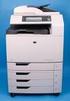 HP Color LaserJet CM6040/CM6030 MFP Series Analog Fax Accessory 300 Fax Guide Copyright and License 2008 Copyright Hewlett-Packard Development Company, L.P. Reproduction, adaptation, or translation without
LaserJet Enterprise M604, M605, M606
 LaserJet Enterprise M604, M605, M606 User Guide 3 M604n M605n M604dn M605dn M606dn M605x M606x www.hp.com/support/ljm604 www.hp.com/support/ljm605 www.hp.com/support/ljm606 HP LaserJet Enterprise M604,
UFR II Driver Guide. UFR II Driver Ver. 2.20 ENG
 UFR II Driver Guide UFR II Driver Ver. 2.20 Please read this guide before operating this product. After you finish reading this guide, store it in a safe place for future reference. ENG 0 Ot UFR II Driver
LASERJET PRO CP1020 COLOR PRINTER SERIES. User Guide
 LASERJET PRO CP1020 COLOR PRINTER SERIES User Guide HP LaserJet Pro CP1020 Color Printer Series User Guide Copyright and License 2010 Copyright Hewlett-Packard Development Company, L.P. Reproduction,
The more efficient the printer, the more efficient the business.
 The more efficient the printer, the more efficient the business. Samsung Laser Printer ProXpress M4020 3820 3320 Series Businesses increasingly require high productivity and lower operating costs from
KX Driver Version 4.1. User Guide
 KX Driver Version 4. User Guide Legal Notes Unauthorized reproduction of all or part of this guide is prohibited. The information in this guide is subject to change for improvement without notice. We cannot
HP LaserJet MFP Analog Fax Accessory 300 Fax Guide
 HP LaserJet MFP Analog Fax Accessory 300 Fax Guide Copyright and License 2008 Copyright Hewlett-Packard Development Company, L.P. Reproduction, adaptation, or translation without prior written permission
Professional color. without compromise. Samsung Color Laser Printers CLP-620ND and CLP-670ND. Color Xpression
 Professional color without compromise. Color Xpression Samsung Color Laser Printers CLP-620ND and CLP-670ND Efficient color printing for maximum productivity. How will your business benefit from a color
II. Monochrome Image Quality Problems
 I. Introduction Summary of Assumptions of This Document II. Monochrome Image Quality Problems Blank Print... 1 Light Print... 2 Backgrounding... 3 Black Print (edge to edge)... 4 Fine Vertical (black)
Version 1.0 November 2010. Xerox Phaser 4600/4620 User Guide
 Version 1.0 November 2010 Xerox Phaser 4600/4620 2010 Xerox Corporation. XEROX and XEROX and Design are trademarks of Xerox Corporation in the United States and/or other countries. Changes are periodically
Xerox. Xerox Phaser 6500 Color Laser Printer. Svenska Dansk Čeština Polski. Magyar Русский Türkçe Ελληνικά
 Xerox Phaser 6500 Color Laser Printer Xerox Phaser 6500 Guide d'utilisation Italiano Guida per l utente Deutsch Benutzerhandbuch Español Guía del usuario Português Guia do usuário Nederlands Gebruikershandleiding
Legal Notes. Regarding Trademarks. Models supported by the KX printer driver. 2011 KYOCERA MITA Corporation
 Legal Notes Unauthorized reproduction of all or part of this guide is prohibited. The information in this guide is subject to change without notice. We cannot be held liable for any problems arising from
Print-Quality and Copy-Quality Problems
 Print-Quality and Copy-Quality Problems Topics Covered: Print-quality checklist...................... Page 1 Image defect examples: Light print (partial page)................... Page 2 Light print (entire
LASERJET PRO 400 MFP. User Guide M425
 LASERJET PRO 400 MFP User Guide M425 HP LaserJet Pro 400 MFP M425 Series User Guide Copyright and License 2012 Copyright Hewlett-Packard Development Company, L.P. Reproduction, adaptation, or translation
Printer / Scanner Reference
 Operating Instructions Printer / Scanner Reference 1 2 3 4 5 6 Getting Started Installing the Software Using the Printer Function Using the TWAIN Scanner Function Troubleshooting Appendix Read this manual
DIGITAL MULTIFUNCTIONAL SYSTEM
 MODEL: MX-M283N MX-M363N MX-M453N MX-M503N DIGITAL MULTIFUNCTIONAL SYSTEM Software Setup Guide BEFORE INSTALLING THE SOFTWARE SETUP IN A WINDOWS ENVIRONMENT SETUP IN A MACINTOSH ENVIRONMENT TROUBLESHOOTING
HP UPS R1500 Generation 3
 HP UPS R1500 Generation 3 Installation Instructions Part Number 650952-001 NOTE: The rating label on the device provides the class (A or B) of the equipment. Class B devices have a Federal Communications
Xerox Phaser 4622 Black and White Printer
 Black and White Printer Output Speed Automatic Two-sided Paper Handling Input Multipurpose Tray Tray 1 Tray 2 Phaser 4622DN Up to 65 ppm 8.5 x 11 in. Up to 62 ppm A4 / 210 x 297 mm Up to 49 ppm 8.5 x 14
software technical reference
 software technical reference hp color LaserJet 0 series HP Color LaserJet 0 Software Technical Reference Copyright (c) 2004 Copyright Hewlett-Packard Development Company, L.P. Reproduction, adaptation
HP Color LaserJet CP1210 Series Printer. User Guide
 HP Color LaserJet CP1210 Series Printer User Guide HP Color LaserJet CP1210 Series Printer User Guide Copyright and License 2007 Copyright Hewlett-Packard Development Company, L.P. Reproduction, adaptation,
EPSON Stylus. Start Here
 EPSON Stylus C84 EPSON Stylus Start Here C84 CPD-16675R1 4043482-00 XXX 1 Unpack 1 Remove everything from the box. Paper support Printer Manual Power cord Ink cartridges CD-ROM 2 Remove all the blue tape
Common Error Codes of HP Printers
 Common Error Codes of HP Printers Error Code On Screen Description Solution 12 Printer open The printer top cover is open. 13.1 paper jam or 13.2 paper jam Paper jam at paperfeed area 13.5 paper jam or
hp color LaserJet 2550 series use
 hp color LaserJet 2550 series use hp color LaserJet 2550 series printer User Guide Copyright and License 2004 Copyright Hewlett-Packard Development Company, LP Reproduction, adaptation, or translation
Version 6.x Generic. KYOCERA KX DRIVER 6.x USER GUIDE
 Version 6.x Generic KYOCERA KX DRIVER 6.x USER GUIDE Legal Notes Unauthorized reproduction of all or part of this guide is prohibited. The information in this guide is subject to change without notice.
Checking the Package Contents. Installing the Printer Software. Connecting. Unpacking the. the Printer. Printer. Attaching
 Installing the Printer Software Checking the Package Contents Connecting the Printer Unpacking the Printer Installing the Ink Cartridges Plugging in the Printer Attaching the Printer Parts 4032216-00 EUL
LabelWriter. Print Server. User Guide
 LabelWriter Print Server User Guide Copyright 2010 Sanford, L.P. All rights reserved. 08/10 No part of this document or the software may be reproduced or transmitted in any form or by any means or translated
SMART INSTALL CONTENTS. Questions and answers
 SMART INSTALL Questions and answers CONTENTS Frequently asked questions...2 Compatibility...3 USB connection...3 Wired or wireless network connection...4 Software CD...5 After installation...6 Software
LaserJet Pro MFP M426, M427
 LaserJet Pro MFP M426, M427 User Guide 1 2 M426dw M426fdn M426fdw M427dw M427fdn M427fdw www.hp.com/support/ljm426mfp www.hp.com/support/ljm427mfp HP LaserJet Pro MFP M426, M427 User Guide Copyright and
DDST Unit Type A / Type B. Printer / Scanner Reference. Operating Instructions
 DDST Unit Type A / Type B Operating Instructions Printer / Scanner Reference 1 2 3 4 5 6 Getting Started Installing the Software Using the Printer Function Using the TWAIN Scanner Function Troubleshooting
HP LaserJet 3052/3055 Getting Started Guide
 HP LaserJet 3052/3055 Getting Started Guide Copyright Information 2006 Copyright Hewlett-Packard Development Company, L.P. Reproduction, adaptation or translation without prior written permission is prohibited,
Color LaserJet Pro MFP M476
 Color LaserJet Pro MFP M476 HP Color LaserJet Pro MFP M476 User Guide Copyright and License 2014 Copyright Hewlett-Packard Development Company, L.P. Reproduction, adaptation, or translation without prior
500/600/1000. User Manual June 2011 Rev. 061311. 1 v061311
 500/600/1000 User Manual June 2011 Rev. 061311 1 v061311 http://shopping.netsuite.com/digitalcheck TABLE OF CONTENTS Contents Radio Frequency Interference... 3 About the SB Scanner... 3 SB Scanner Equipment...
Color LaserJet Pro MFP M277 User Guide
 Color LaserJet Pro MFP M277 User Guide www.hp.com/support/colorljmfpm277 HP Color LaserJet Pro MFP M277 User Guide Copyright and License 2015 Copyright Hewlett-Packard Development Company, L.P. Reproduction,
How To Set Up An Hp Print Printer
 LASERJET PRO 400 MFP User Guide M425 HP LaserJet Pro 400 MFP M425 Series User Guide Copyright and License 2014 Copyright Hewlett-Packard Development Company, L.P. Reproduction, adaptation, or translation
Xerox DocuPrint P12 Print Driver User Guide
 Xerox DocuPrint P12 Print Driver User Guide Xerox Corporation 800 Phillips Road Webster, New York 14580 1998 Xerox Corporation. Xerox, The Document Company, the stylized X, and the identifying product
QuickSpecs. HP Compaq t5525 Thin Client. Overview
 Overview 1. 10/100 RJ-45 6. PS/2 Connector 2. Security lock 7. DC Power Input 3. Parallel Connector 8. Video Connector 4. USB Connectors 9. Serial Connector 5. Audio connector (mic in/line out) DA - 12265
Xerox 700 Digital Color Press with Integrated Fiery Color Server. Utilities
 Xerox 700 Digital Color Press with Integrated Fiery Color Server Utilities 2008 Electronics for Imaging, Inc. The information in this publication is covered under Legal Notices for this product. 45072726
HP LaserJet 3050/3052/3055/3390/3392 All-in-One User Guide
 HP LaserJet 3050/3052/3055/3390/3392 All-in-One User Guide HP LaserJet 3050/3052/3055/3390/3392 All-in-One User Guide Copyright and License 2006 Copyright Hewlett-Packard Development Company, LP Reproduction,
Affordable A3 colour for your busy workgroup
 colour printer Affordable A3 colour for your busy workgroup Colour Touch screen Solutions Model A3 Up to 31 ppm The colour printer delivers outstanding A3 colour printing, easy-to-use features and productivity
LaserJet Pro M201, M202
 LaserJet Pro M201, M202 User Guide M201n M202n M201dw M202dw www.hp.com/support/ljm201 www.hp.com/support/ljm202 HP LaserJet Pro M201, M202 User Guide Copyright and License 2014 Copyright Hewlett-Packard
HP LaserJet 4000, 4000 T, 4000 N, and 4000 TN Printers User's Guide. English
 HP LaserJet 4000, 4000 T, 4000 N, and 4000 TN Printers User's Guide English HP LaserJet 4000, 4000 T, 4000 N, and 4000 TN Printers User's Guide Copyright Hewlett-Packard Company 1997 All Rights Reserved.
Wireless Router Setup Manual
 Wireless Router Setup Manual NETGEAR, Inc. 4500 Great America Parkway Santa Clara, CA 95054 USA 208-10082-02 2006-04 2006 by NETGEAR, Inc. All rights reserved. Trademarks NETGEAR is a trademark of Netgear,
Lexmark T64x Troubleshooting Guide
 Lexmark T64x Troubleshooting Guide Online technical support Technical support is available on our Lexmark Web site at www.lexmark.com. Checking an unresponsive printer If the printer is not responding,