
It was one of the greatest natural
|
|
|
- Irma Pearson
- 10 years ago
- Views:
Transcription
1 Feature Story 1260 THE TEN BIGGEST IMPACT CRATERS IN THE SOLAR SYSTEM It was one of the greatest natural disasters in the Earth s history. Sixty-five million years ago, a piece of space rock nearly 15 kilometres in diameter hit the Earth with a force equivalent to a billion atomic bombs. This impact, on an area of Mexico s Yucatan Peninsula called Chicxulub, caused the extinction of the dinosaurs and wiped out half the species on the planet. But, believe it or not, the Earth was lucky. All over the solar system, the surfaces of planets and moons bear the evidence of impacts far bigger than the one at Chicxulub. If any of these impactors hit Earth, the consequences would be catastrophic. These are the ten biggest known impact craters in the solar system:
2 1. Borealis Basin, Mars Mars holds many records in the solar system. It has the biggest volcano, the biggest canyon system and quite possibly, the biggest crater. Scientists in the 1970 s studying the Viking spacecraft images of Mars were perplexed as to why the planet was divided into two halves. The upper third hemisphere of Mars appeared very smooth and low in altitude while most of the southern hemisphere was several kilometres higher, scarred with rough terrain and pitted with craters. The two-half planet remained a mystery until new data, provided by Mars Reconnaissance Orbiter and Mars Global Surveyor, indicated that the northern hemisphere s 8,500-kilometre diameter Borealis Basin could actually be a huge 4 billion-year-old impact crater. The object that created this impact was probably around 2,000 kilometres in diameter that s the same size as the planet Pluto. 2. Valhalla, Callisto The Jovian moon Callisto is a huge chunk of rock and ice that is one of the most heavily cratered satellites of any planet. Valhalla, its biggest impact basin, consists of a bright patch roughly 600 kilometres in diameter, and a series of concentric rings that spread out beyond the centre for thousands of kilometres. The rings were formed when the impact caused fracturing on the thin surface crust of the moon. Scientists think this could mean the crust covers a soft or liquid ocean underneath. The outermost ring is 2,000 kilometres from the centre and is big enough to fit the whole of the USA within its boundaries.
3 4. Hellas Basin, Mars At over 2,100 kilometres in diameter and nine kilometres deep, the Hellas Basin on the southern hemisphere of Mars is very big, and very deep. You could fit all the countries of western Europe inside its basin. The crater walls are very steep and the huge amount of material ejected by the impact stretches out for 4,000 kilometres from the basin centre and is up to 2 kilometres thick in places. 3. South Pole-Aitken Basin, Moon. Thank goodness for the Moon. Not only does our shiny satellite light up our night sky, shift our ocean tides and fill our folklore with moon-related tales, but also, for the many hundreds of thousands of impacts it has taken instead of the Earth. Many lunar craters are visible to the naked eye but no one knew about the monster that existed on the far side of the moon until a small Russian probe, called Luna 3, visited during the early 1960 s and sent some intriguing images. Subsequent spacecraft have confirmed that a huge impact basin, 2,500 kilometres in diameter and 13 kilometres deep, exists between the south pole and the large Aitken crater. The impact occurred very early in the existence of the moon, some 3.8 billion years ago and the object that made it was so big that it would easily have smashed the Moon apart were it not for the fact that it hit at quite a low angle the equivalent to a heavyweight boxer s glancing blow to the head!
4 5. Argyre Basin, Mars Coming a close second to Hellas in terms of size, is the massive Argyre Basin, also on the southern hemisphere of Mars. At 1,800 kilometres wide and 5 kilometres deep is closely rivals it s giant crater but the two are on different sides of the red globe. Argyre does have one novel feature of interest a smiley crater! 6. Caloris, Mercury It was the space probe Mariner 10, in 1974, that first discovered something huge lurking on the surface of our smallest planetary neighbour Mercury. In 2008, the Messenger spacecraft went back and examined Mercury. It confirmed a monstrous crater, 1,550 kilometres in diameter, which, due to its small size, affected the entire planet. The impact that created the Caloris Basin caused massive amounts of lava to flow across the impact basin. The force of the impact itself pushed the crust upwards, creating a ring of mountains two kilometres high that surround the crater. Shock waves from the impact caused a second set of outer mountains to rise up from the crust and even affect geological processes on the other side of the planet. 7. Isidis Planitia, Mars Isidis is Mars third, officially recognised, biggest crater. With a diameter of around 1,500 kilometres, the vast sand-covered basin was chosen as the landing site of the ill-fated Beagle 2 spacecraft. The Britishbuilt Beagle 2 was released from ESA s Mars Express spacecraft in December After separation, Beagle 2 was never heard from again. The huge basins of Mars may once have contained liquid oceans of water and Beagle 2 was meant to find evidence of water, and possibly life. 8. Asgard, Callisto Valhalla is not the only big impact on Callisto. The rings of Asgard span over 1,400 kilometres in diameter. It too has a bright central zone, which measures 300 kilometres wide. Like Valhalla, the Asgard impact happened a long time in the past, possibly several billion years ago when impacts were much more common. 9. Mare Imbrium, Moon Ancient sky gazers once thought that the dark patches on the surface of the moon were vast oceans. Mare Imbrium is the largest of these patches and is easily visible to the naked eye. If the Moon were a clock face, Mare Imbrium could be described as a roughly circular patch sitting around 11 O clock on the moon s face. The basin measures 1,100 kilometres in diameter and its dark appearance is due, not to a liquid ocean, but was formed when lava fluid flooded the hole that was made by the impact. And what a colossal impact it must have been. Surrounding the Mare crater are three rings of mountains, some rise as high as seven kilometres above the Mare surface. The impact gouged a hole five kilometres deep and blanketed the surrounding area with ejecta for over 800 kilometres. 10. Turgis, Iapetus The Saturnian moon Iapetus measures just 1,500 kilometres in diameter. One half of the moon is covered with dark ejecta giving it a two-tone appearance. Dominating the light side of the moon is the Turgis impact crater. Although the crater measures only 580 kilometres wide, it comprises 40 percent of the diameter of the whole of Iapetus. This is easily one of the biggest craters as a proportion of the diameter and hence makes our top ten and it looks very pretty too.
5 Impacts on Earth The Chicxulub impact that killed off the dinosaurs 65 million years ago seems like a small dent compared to the monstrous impacts found on other solar system bodies. Chicxulub is actually one of over 170 terrestrial impact craters that are officially recognised by the Earth Impact Database an online catalogue of impact craters with strict criteria. Some impacts, such as the Barringer crater in Arizona, or Wolf Creek crater in Australia are easily visible, having formed within the past few hundred thousand years. Most other craters however are hidden under deep layers of sediment, rock, water, or vegetation. Satellites that measure anomalies in the surface gravity are able to spot many hidden craters, such as those lying in Chicxulub and Chesapeake Bay. The largest crater on Earth that is officially recognised by the Earth Impact Database, is the 300 kilometre Vredefort impact crater in South Africa. There are also suggestions that the East Antarctic ice sheet hides a 482-kilometre impact crater. Some researchers believe this impact may have been the cause of the great Permian-Triassic extinction 250-million years ago. Most impacts that occurred further back in time have long since become eroded away or eaten up as part of the Earth s continual geological processes. But it was highly likely that in the earliest history of the Earth, our planet was bombarded with objects as big as those that have fallen on Mars, the Moon, Callisto etc.. The truly frightening aspect, is that a monster impact may yet hit us in the very near future. And there is nothing we can do to stop it. ENDS 1,400 WORDS 2010 COPYRIGHT SCI- ENCE PHOTO LIBRARY
6 FULL PICTURE SET For captions and credits, please refer to the captions.txt file Science Photo Library Feature Stories - Ten Biggest Impact Craters in the Solar System For further information, please contact: [email protected] All images are copyright, please credit images as stated on the captions
7 FULL PICTURE SET For captions and credits, please refer to the captions.txt file Science Photo Library Feature Stories - Ten Biggest Impact Craters in the Solar System For further information, please contact: [email protected] All images are copyright, please credit images as stated on the captions
THE SOLAR SYSTEM - EXERCISES 1
 THE SOLAR SYSTEM - EXERCISES 1 THE SUN AND THE SOLAR SYSTEM Name the planets in their order from the sun. 1 2 3 4 5 6 7 8 The asteroid belt is between and Which planet has the most moons? About how many?
Science 9 Worksheet 13-1 The Solar System
 Name Date Due Date Science 9 Read pages 264-287 of SP to help you answer the following questions: Also, go to a school computer connected to the internet. Go to Mr. Colgur s Webpage at http://sd67.bc.ca/teachers/dcolgur
Purpose To determine the factors affecting the appearance of impact craters and ejecta.
 Teacher Page Purpose To determine the factors affecting the appearance of impact s and ejecta. Background [also see Teacher's Guide Pages 1, 2, photo on 8, 12, and photo on 13] The circular features so
Asteroids. Earth. Asteroids. Earth Distance from sun: 149,600,000 kilometers (92,960,000 miles) Diameter: 12,756 kilometers (7,926 miles) dotted line
 Image taken by NASA Asteroids About 6,000 asteroids have been discovered; several hundred more are found each year. There are likely hundreds of thousands more that are too small to be seen from Earth.
Moon. Compiled by Donnette E Davis www.staidenshomeschool.com
 Moon Compiled by Donnette E Davis www.staidenshomeschool.com The Moon Moon Facts When we look at the Moon from Earth, we always see the same side. Until Luna 3 sent back photos in 1959, no-one knew what
A Solar System Coloring Book
 A Solar System Coloring Book Courtesy of the Windows to the Universe Project http://www.windows2universe.org The Sun Size: The Sun is wider than 100 Earths. Temperature: ~27,000,000 F in the center, ~10,000
Chapter 9 Asteroids, Comets, and Dwarf Planets. Their Nature, Orbits, and Impacts
 Chapter 9 Asteroids, Comets, and Dwarf Planets Their Nature, Orbits, and Impacts Asteroid Facts Asteroids are rocky leftovers of planet formation. The largest is Ceres, diameter ~1,000 km. There are 150,000
A SOLAR SYSTEM COLORING BOOK
 A SOLAR SYSTEM COLORING BOOK Brought to you by: THE SUN Size: The Sun is wider than 100 Earths. 1 Temperature: 27,000,000 F in the center, 10,000 F at the surface. So that s REALLY hot anywhere on the
STUDY GUIDE: Earth Sun Moon
 The Universe is thought to consist of trillions of galaxies. Our galaxy, the Milky Way, has billions of stars. One of those stars is our Sun. Our solar system consists of the Sun at the center, and all
Our Planetary System. Earth, as viewed by the Voyager spacecraft. 2014 Pearson Education, Inc.
 Our Planetary System Earth, as viewed by the Voyager spacecraft 7.1 Studying the Solar System Our goals for learning: What does the solar system look like? What can we learn by comparing the planets to
Europa and Titan: Oceans in the Outer Solar System? Walter S. Kiefer, Lunar and Planetary Institute, Houston TX
 Europa and Titan: Oceans in the Outer Solar System? Walter S. Kiefer, Lunar and Planetary Institute, Houston TX Biologists believe that life requires the presence of some sort of liquid to serve as a medium
Lecture 12: The Solar System Briefly
 Lecture 12: The Solar System Briefly Formation of the Moonhttp://www.youtube.com/watch?v=WpOKztEiMqo&feature =related Formation of our Solar System Conservation of Angular Momentum Why are the larger,
Solar System Overview
 Solar System Overview Planets: Four inner planets, Terrestrial planets Four outer planets, Jovian planets Asteroids: Minor planets (planetesimals) Meteroids: Chucks of rocks (smaller than asteroids) (Mercury,
The Solar System. Olivia Paquette
 The Solar System Olivia Paquette Table of Contents The Sun 1 Mercury 2,3 Venus 4,5 Earth 6,7 Mars 8,9 Jupiter 10,11 Saturn 12 Uranus 13 Neptune Pluto 14 15 Glossary. 16 The Sun Although it may seem like
Chapter 7 Our Planetary System. What does the solar system look like? Thought Question How does the Earth-Sun distance compare with the Sun s radius
 Chapter 7 Our Planetary System 7.1 Studying the Solar System Our goals for learning:! What does the solar system look like?! What can we learn by comparing the planets to one another?! What are the major
Chapter 7 Our Planetary System. Agenda. Intro Astronomy. Intro Astronomy. What does the solar system look like? A. General Basics
 Chapter 7 Our Planetary System Agenda Pass back & discuss Test 2 Where we are (at) Ch. 7 Our Planetary System Finish Einstein s Big Idea Earth, as viewed by the Voyager spacecraft A. General Basics Intro
Rosaly Lopes, Jet Propulsion Laboratory, California Institute of Technology
 Saturn s Moon Titan: Cassini-Huygens Reveals a New World Rosaly Lopes, Jet Propulsion Laboratory, California Institute of Technology The year 2005 will be remembered in the history of space exploration
Related Standards and Background Information
 Related Standards and Background Information Earth Patterns, Cycles and Changes This strand focuses on student understanding of patterns in nature, natural cycles, and changes that occur both quickly and
CHAPTER 6 THE TERRESTRIAL PLANETS
 CHAPTER 6 THE TERRESTRIAL PLANETS MULTIPLE CHOICE 1. Which of the following is NOT one of the four stages in the development of a terrestrial planet? 2. That Earth, evidence that Earth differentiated.
The Solar System. Source http://starchild.gsfc.nasa.gov/docs/starchild/solar_system_level1/solar_system.html
 The Solar System What is the solar system? It is our Sun and everything that travels around it. Our solar system is elliptical in shape. That means it is shaped like an egg. Earth s orbit is nearly circular.
Earth Is Not the Center of the Universe
 Earth Is Not the Center of the Universe Source: Utah State Office of Education Introduction Have you ever looked up at the night sky and wondered about all the pinpoint lights? People through the ages
How To Celebrate The Pictures Of The Asteroid Vesta
 1 of 11 08/02/2012 09:04 PM Article LOS ANGELES, California (Achieve3000, May 1, 2012). Vesta is stepping into the spotlight. Thanks to NASA's Dawn spacecraft, scientists now have the first close-up pictures
Solar System. 1. The diagram below represents a simple geocentric model. Which object is represented by the letter X?
 Solar System 1. The diagram below represents a simple geocentric model. Which object is represented by the letter X? A) Earth B) Sun C) Moon D) Polaris 2. Which object orbits Earth in both the Earth-centered
Earth Science Landforms, Weathering, and Erosion Reading Comprehension. Landforms, Weathering, and Erosion
 Reading Comprehension Name 1 How many people have been to the Rocky Mountains or the Grand Canyon? When people go to visit these natural wonders, they may not realize that it took millions of years for
The sun and planets. On this picture, the sizes of the sun and 8 planets are to scale. Their positions relative to each other are not to scale.
 The solar system The solar system consists of our sun and its eight planets. The word solar means to do with the sun. The solar system formed 4½ billion years ago, when the universe was about two-thirds
Astronomy Notes for Educators
 Our Solar System Astronomy Notes for Educators Our Solar System 5-1 5-2 Specific Outcomes: Learning Outcome 1: Knowledge / Content and it place in the Milky Way Different types of bodies make up the Solar
Solar System Fact Sheet
 Solar System Fact Sheet (Source: http://solarsystem.nasa.gov; http://solarviews.com) The Solar System Categories Mercury Venus Earth Mars Jupiter Saturn Uranus Neptune Rocky or Gas Rocky Rocky Rocky Rocky
Science Standard 4 Earth in Space Grade Level Expectations
 Science Standard 4 Earth in Space Grade Level Expectations Science Standard 4 Earth in Space Our Solar System is a collection of gravitationally interacting bodies that include Earth and the Moon. Universal
The Earth, Sun, and Moon
 reflect The Sun and Moon are Earth s constant companions. We bask in the Sun s heat and light. It provides Earth s energy, and life could not exist without it. We rely on the Moon to light dark nights.
Grade 6 Standard 3 Unit Test A Astronomy. 1. The four inner planets are rocky and small. Which description best fits the next four outer planets?
 Grade 6 Standard 3 Unit Test A Astronomy Multiple Choice 1. The four inner planets are rocky and small. Which description best fits the next four outer planets? A. They are also rocky and small. B. They
1. Title: Relative Sizes and Distance in the Solar System: Introducing Powers of Ten
 1. Title: Relative Sizes and Distance in the Solar System: Introducing Powers of Ten Here we're going to learn how big the Sun is relative to the different types of planet in our Solar System and the huge
NOTES: GEORGIA HIGH SCHOOL SCIENCE TEST THE SOLAR SYSTEM
 NOTES: GEORGIA HIGH SCHOOL SCIENCE TEST THE SOLAR SYSTEM 1.What is a Solar system? A solar system consists of: * one central star, the Sun and * nine planets: Mercury, Venus, Earth, Mars, Jupiter, Saturn,
Continents join together and split apart.
 KEY CONCEPT Continents change position over time. BEFORE, you learned Earth s main layers are the core, the mantle, and the crust The lithosphere and asthenosphere are the topmost layers of Earth The lithosphere
Earth Egg Model Teacher Notes
 Ancient Greeks tried to explain earthquakes and volcanic activity by saying that a massive bull lay underground and the land shook when it became angry. Modern theories rely on an understanding of what
DESCRIPTION ACADEMIC STANDARDS INSTRUCTIONAL GOALS VOCABULARY BEFORE SHOWING. Subject Area: Science
 DESCRIPTION Host Tom Selleck conducts a stellar tour of Jupiter, Saturn, Uranus, Neptune, and Pluto--the outer planets of Earth's solar system. Information from the Voyager space probes plus computer models
Essential Question. Enduring Understanding
 Earth In Space Unit Diagnostic Assessment: Students complete a questionnaire answering questions about their ideas concerning a day, year, the seasons and moon phases: My Ideas About A Day, Year, Seasons
Study Guide: Solar System
 Study Guide: Solar System 1. How many planets are there in the solar system? 2. What is the correct order of all the planets in the solar system? 3. Where can a comet be located in the solar system? 4.
1. Soaring Through Our Solar System By Laura G. Smith
 1. Soaring Through Our Solar System By Laura G. Smith 1 Five, four, three, two, one... BLAST OFF! Come along as we explore our solar system! If we were flying high above the Earth, what would you see?
The Sun-Earth-Moon System. Unit 5 covers the following framework standards: ES 9, 11 and PS 1. Content was adapted the following:
 Unit 5 The Sun-Earth-Moon System Chapter 10 ~ The Significance of Earth s Position o Section 1 ~ Earth in Space o Section 2 ~ Phases, Eclipses, and Tides o Section 3 ~ Earth s Moon Unit 5 covers the following
 143,000 km Key to Sorting the Solar System Cards Object Description Size (km) Picture Credits Barringer Crater Ceres Earth Earth's moon Eris Eros Gaspra Hale-Bopp Hoba Iapetus Ida and Dactyl Itokawa
Discover the planets of our solar system. In 90 minutes through the universe. On a hiking path between Ehrenfriedensdorf and Drebach
 Discover the planets of our solar system In 90 minutes through the universe On a hiking path between Ehrenfriedensdorf and Drebach Solar System - Sonnensystem The Solar System consists of the Sun and the
A: Planets. Q: Which of the following objects would NOT be described as a small body: asteroids, meteoroids, comets, planets?
 Q: Which of the following objects would NOT be described as a small body: asteroids, meteoroids, comets, planets? A: Planets Q: What can we learn by studying small bodies of the solar system? A: We can
Module 2 Educator s Guide Investigation 4
 Module 2 Educator s Guide Investigation 4 Is life on Mars possible and could humans establish settlements there? Investigation Overview Humans will, within the next few decades, travel to Mars to explore
Lab 7: Gravity and Jupiter's Moons
 Lab 7: Gravity and Jupiter's Moons Image of Galileo Spacecraft Gravity is the force that binds all astronomical structures. Clusters of galaxies are gravitationally bound into the largest structures in
Relationship Between the Earth, Moon and Sun
 Relationship Between the Earth, Moon and Sun Rotation A body turning on its axis The Earth rotates once every 24 hours in a counterclockwise direction. Revolution A body traveling around another The Earth
Cosmic Journey: A Solar System Adventure General Information
 Cosmic Journey: A Solar System Adventure General Information Imagine it a huge spiral galaxy containing hundreds of billions of stars, spiraling out from a galactic center. Nestled deep within one of the
CHARACTERISTICS OF THE SOLAR SYSTEM
 reflect Our solar system is made up of thousands of objects, at the center of which is a star, the Sun. The objects beyond the Sun include 8 planets, at least 5 dwarf planets, and more than 170 moons.
LER 2891. Ages. Grades. Solar System. A fun game of thinking & linking!
 Solar System Ages 7+ LER 2891 Grades 2+ Card Game A fun game of thinking & linking! Contents 45 Picture cards 45 Word cards 8 New Link cards 2 Super Link cards Setup Shuffle the two decks together to mix
What's Gravity Got To Do With It?
 Monday, December 16 What's Gravity Got To Do With It? By Erin Horner When you woke up this morning did you fly up to the ceiling? Of course not! When you woke up this morning you put both feet on the floor
California Standards Grades 9 12 Boardworks 2009 Science Contents Standards Mapping
 California Standards Grades 912 Boardworks 2009 Science Contents Standards Mapping Earth Sciences Earth s Place in the Universe 1. Astronomy and planetary exploration reveal the solar system s structure,
Explain the Big Bang Theory and give two pieces of evidence which support it.
 Name: Key OBJECTIVES Correctly define: asteroid, celestial object, comet, constellation, Doppler effect, eccentricity, eclipse, ellipse, focus, Foucault Pendulum, galaxy, geocentric model, heliocentric
The Solar System. Unit 4 covers the following framework standards: ES 10 and PS 11. Content was adapted the following:
 Unit 4 The Solar System Chapter 7 ~ The History of the Solar System o Section 1 ~ The Formation of the Solar System o Section 2 ~ Observing the Solar System Chapter 8 ~ The Parts the Solar System o Section
Name: João Fernando Alves da Silva Class: 7-4 Number: 10
 Name: João Fernando Alves da Silva Class: 7-4 Number: 10 What is the constitution of the Solar System? The Solar System is constituted not only by planets, which have satellites, but also by thousands
Chapter 12 Asteroids, Comets, and Dwarf Planets. Asteroid Facts. What are asteroids like? Asteroids with Moons. 12.1 Asteroids and Meteorites
 Chapter 12 Asteroids, Comets, and Dwarf Planets Their Nature, Orbits, and Impacts What are asteroids like? 12.1 Asteroids and Meteorites Our goals for learning:! What are asteroids like?! Why is there
Lecture 23: Terrestrial Worlds in Comparison. This lecture compares and contrasts the properties and evolution of the 5 main terrestrial bodies.
 Lecture 23: Terrestrial Worlds in Comparison Astronomy 141 Winter 2012 This lecture compares and contrasts the properties and evolution of the 5 main terrestrial bodies. The small terrestrial planets have
Bangkok Christian College EIP Matayom Course Description Semester One 2011-2012
 Bangkok Christian College EIP Matayom Course Description Semester One 2011-2012 Subject: General Science Grade: Matayom 6 Course Description This semester the General Science course will continue covering
The Earth System. The geosphere is the solid Earth that includes the continental and oceanic crust as well as the various layers of Earth s interior.
 The Earth System The atmosphere is the gaseous envelope that surrounds Earth. It consists of a mixture of gases composed primarily of nitrogen, oxygen, carbon dioxide, and water vapor. The atmosphere and
2007 Pearson Education Inc., publishing as Pearson Addison-Wesley. The Jovian Planets
 The Jovian Planets The Jovian planets are gas giants - much larger than Earth Sizes of Jovian Planets Planets get larger as they get more massive up to a point... Planets more massive than Jupiter are
Regents Questions: Plate Tectonics
 Earth Science Regents Questions: Plate Tectonics Name: Date: Period: August 2013 Due Date: 17 Compared to the oceanic crust, the continental crust is (1) less dense and more basaltic (3) more dense and
Earth in the Solar System
 Copyright 2011 Study Island - All rights reserved. Directions: Challenge yourself! Print out the quiz or get a pen/pencil and paper and record your answers to the questions below. Check your answers with
Georgia Performance Standards Framework for Science Grade 6. Unit Organizer: UNIVERSE AND SOLAR SYSTEM (Approximate Time 3 Weeks)
 The following instructional plan is part of a GaDOE collection of Unit Frameworks, Performance Tasks, examples of Student Work, and Teacher Commentary. Many more GaDOE approved instructional plans are
Name Period 4 th Six Weeks Notes 2015 Weather
 Name Period 4 th Six Weeks Notes 2015 Weather Radiation Convection Currents Winds Jet Streams Energy from the Sun reaches Earth as electromagnetic waves This energy fuels all life on Earth including the
Mission To Mars! A dialogue activity for upper KS2
 Mission To Mars! A dialogue activity for upper KS2 Teacher s Sheet Mission to Mars: Dialogue activity for upper KS2 Part One: As a class or in groups. pupils read the Fact or Fiction cards. On each card
CELESTIAL MOTIONS. In Charlottesville we see Polaris 38 0 above the Northern horizon. Earth. Starry Vault
 CELESTIAL MOTIONS Stars appear to move counterclockwise on the surface of a huge sphere the Starry Vault, in their daily motions about Earth Polaris remains stationary. In Charlottesville we see Polaris
The Moon. Nicola Loaring, SAAO
 The Moon Nicola Loaring, SAAO Vital Statistics Mean distance from Earth Orbital Period Rotational Period Diameter 384,400 km 27.322 days 27.322 days 3476 km (0.272 x Earth) Mass 7.3477 10 22 kg (0.0123
Chapter 6 Formation of Planetary Systems Our Solar System and Beyond
 Chapter 6 Formation of Planetary Systems Our Solar System and Beyond The solar system exhibits clear patterns of composition and motion. Sun Over 99.9% of solar system s mass Made mostly of H/He gas (plasma)
Interactive Plate Tectonics
 Interactive Plate Tectonics Directions: Go to the following website and complete the questions below. http://www.learner.org/interactives/dynamicearth/index.html How do scientists learn about the interior
So What All Is Out There, Anyway?
 So What All Is Out There, Anyway? Imagine that, like Alice in Wonderland, you have taken a magic potion that makes you grow bigger and bigger. You get so big that soon you are a giant. You can barely make
The Earth, Sun & Moon. The Universe. The Earth, Sun & Moon. The Universe
 Football Review- Earth, Moon, Sun 1. During a total solar eclipse, when almost all of the Sun's light traveling to the Earth is blocked by the Moon, what is the order of the Earth, Sun, and Moon? A. Moon,
Copyright 2006, Astronomical Society of the Pacific
 2 1 3 4 Diameter: 590 miles (950 km) Distance to Sun: 257 million miles (414 million km) Orbits: # 18 Composition: Outer layer probably ice and frozen ammonia, no Diameter: 750 miles (1200 km) Distance
A blended course for introductory geology at San Diego State University: Choosing and implementing an assessment tool
 pict Project 2006 Assessing your experiment A blended course for introductory geology at San Diego State University: Choosing and implementing an assessment tool Gary H. Girty Give a very brief background
4. Plate Tectonics II (p. 46-67)
 4. Plate Tectonics II (p. 46-67) Seafloor Spreading In the early 1960s, samples of basaltic ocean crust were dredged up from various locations across the ocean basins. The samples were then analyzed to
Reasons for Seasons. Question: TRUE OR FALSE. Question: TRUE OR FALSE? What causes the seasons? What causes the seasons?
 Reasons for Seasons Question: TRUE OR FALSE? Earth is closer to the Sun in summer and farther from the Sun in winter. Question: TRUE OR FALSE? Earth is closer to the Sun in summer and farther from the
Plate Tectonics. Hi, I am Zed and I am going to take you on a trip learning about Plate Tectonics. And I am Buddy Zed s mascot
 Plate Tectonics Hi, I am Zed and I am going to take you on a trip learning about Plate Tectonics And I am Buddy Zed s mascot Continental Drift Alfred Wegener proposed that continents were not always where
Outdoor Exploration Guide. A Journey Through Our Solar System. A Journey Through Our Solar System
 Outdoor Exploration Guide A Journey Through Our Solar System A Journey Through Our Solar System The Solar System Imagine that you are an explorer investigating the solar system. It s a big job, but in
KINDERGARTEN 1 WEEK LESSON PLANS AND ACTIVITIES
 KINDERGARTEN 1 WEEK LESSON PLANS AND ACTIVITIES UNIVERSE CYCLE OVERVIEW OF KINDERGARTEN UNIVERSE WEEK 1. PRE: Discovering misconceptions of the Universe. LAB: Comparing size and distances in space. POST:
Focus Earth The Velingara Circular Structure A meteorite impact crater?
 Focus Earth The Velingara Circular Structure A meteorite impact crater? S. Wade Institut des Sciences de la Terre, Faculté des Sciences et Techniques, Université Cheikh Anta Diop, Dakar-Fann, Sénégal M.
Introduction to the Solar System
 Introduction to the Solar System Lesson Objectives Describe some early ideas about our solar system. Name the planets, and describe their motion around the Sun. Explain how the solar system formed. Introduction
1. You are about to begin a unit on geology. Can anyone tell me what geology is? The study of the physical earth I.
 PLATE TECTONICS ACTIVITY The purpose of this lab is to introduce the concept of plate tectonics and the formation of mountains. Students will discuss the properties of the earth s crust and plate tectonics.
6.E.2.2 Plate Tectonics, Earthquakes and Volcanoes
 Name: Date: 1. The road shown below was suddenly broken by a natural event. 3. The convergence of two continental plates would produce Which natural event most likely caused the crack in the road? island
4 HOW OUR SOLAR SYSTEM FORMED 890L
 4 HOW OUR SOLAR SYSTEM FORMED 890L HOW OUR SOLAR SYSTEM FORMED A CLOSE LOOK AT THE PLANETS ORBITING OUR SUN By Cynthia Stokes Brown, adapted by Newsela Planets are born from the clouds of gas and dust
Earth In Space Chapter 3
 Earth In Space Chapter 3 Shape of the Earth Ancient Greeks Earth casts a circular shadow on the moon during a lunar eclipse Shape of the Earth Ancient Greeks Ships were observed to disappear below the
Unit 2 Lesson 4 The Geologic Time Scale. Copyright Houghton Mifflin Harcourt Publishing Company
 Once Upon a Time How have geologists described the rate of geologic change? Geology is the scientific study of the origin, history, and structure of Earth and the processes that shape it. Early geologists
Chesapeake Bay Governor School for Marine and Environmental Science
 Choose the best answer and write on the answer sheet provided. 1. Which of the following is LEAST likely to be an effect of global warming? (a) Loss of fertile delta regions for agriculture (b) Change
Name Class Date. true
 Exercises 131 The Falling Apple (page 233) 1 Describe the legend of Newton s discovery that gravity extends throughout the universe According to legend, Newton saw an apple fall from a tree and realized
4 HOW OUR SOLAR SYSTEM FORMED 750L
 4 HOW OUR SOLAR SYSTEM FORMED 750L HOW OUR SOLAR SYSTEM FORMED A CLOSE LOOK AT THE PLANETS ORBITING OUR SUN By Cynthia Stokes Brown, adapted by Newsela Planets come from the clouds of gas and dust that
1 laser altimeter. Background & Instructions. exploration extension. Instructions. Background
 extension 1 laser altimeter Background & First 3-D view of the north pole of Mars from MOLA (Image credit: MOLA science Team/NASA/GSFC SVS) Background A laser altimeter is a device used aboard planet-orbiting
WELCOME to Aurorae In the Solar System. J.E. Klemaszewski
 WELCOME to Aurorae In the Solar System Aurorae in the Solar System Sponsoring Projects Galileo Europa Mission Jupiter System Data Analysis Program ACRIMSAT Supporting Projects Ulysses Project Outer Planets
Astrock, t he A stronomical Clock
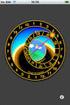 Astrock, t he A stronomical Clock The astronomical clock is unlike any other clock. At first glance you ll find it has similar functions of a standard clock, however the astronomical clock can offer much
Name Date THE OUTER PLANETS
 THE OUTER PLANETS The outer planets are the planets that are the farthest from the sun. There are four outer planets. Their names are Jupiter, Saturn, Uranus, and Neptune. Jupiter, Saturn, Uranus, and
Vagabonds of the Solar System. Chapter 17
 Vagabonds of the Solar System Chapter 17 ASTR 111 003 Fall 2006 Lecture 13 Nov. 27, 2006 Introduction To Modern Astronomy I Introducing Astronomy (chap. 1-6) Planets and Moons (chap. 7-17) Ch7: Comparative
Hot Spots & Plate Tectonics
 Hot Spots & Plate Tectonics Activity I: Hawaiian Islands Procedures: Use the map and the following information to determine the rate of motion of the Pacific Plate over the Hawaiian hot spot. The volcano
Look at Our Galaxy. by Eve Beck. Space and Technology. Scott Foresman Reading Street 2.1.2
 Suggested levels for Guided Reading, DRA, Lexile, and Reading Recovery are provided in the Pearson Scott Foresman Leveling Guide. Space and Technology Look at Our Galaxy Genre Expository nonfiction Comprehension
Summary: Four Major Features of our Solar System
 Summary: Four Major Features of our Solar System How did the solar system form? According to the nebular theory, our solar system formed from the gravitational collapse of a giant cloud of interstellar
Douglas Adams The Hitchhikers Guide to the Galaxy
 There is a theory which states that if ever anybody discovers exactly what the Universe is for and why it is here, it will instantly disappear and be replaced by something even more bizarre and inexplicable.