
Module 2 Educator s Guide Investigation 4
|
|
|
- Gervase McCarthy
- 10 years ago
- Views:
Transcription
1 Module 2 Educator s Guide Investigation 4 Is life on Mars possible and could humans establish settlements there? Investigation Overview Humans will, within the next few decades, travel to Mars to explore the red planet. Those first explorers will become the 21st century s Christopher Columbus. Their primary objective will be to explore for evidence of life. This investigation allows students to become explorers. Students use images of Mars (those used in Investigation 3) to locate regions in which to search for evidence of life and to build future settlements. Time required: One or two 45-minute sessions Materials/Resources Briefing and Log (one copy of each per student or group) Figures 1-6: transparency copies of the images (one copy to project using an overhead projector), or paper copies of the images (one copy per student or student group), or computer projector to project the image from this CD for the entire class Content Preview Evidence of water on Mars raises the possibility of life on that planet. Does Mars have suitable sites for future human settlements? NASA images of physical features on Mars are being used to explore that question. Geography Standards Standard 4: Places and Regions The physical and human characteristics of places Analyze the physical characteristics of places. Standard 18: The Uses of Geography How to apply geography to interpret the present and plan for the future Demonstrate an understanding of the spatial organization of human activities and physical systems and be able to make informed decisions. Geography Skills Skill Set 4: Analyze Geographic Information Interpret information obtained from maps, aerial photographs, satelliteproduced images, and geographic information systems. Skill Set 5: Answer Geographic Questions Develop and present combinations of geographic information to answer geographic questions. Classroom Procedures Beginning the Investigation 1. Ask students where else in our solar system humans might be able to live. Give them time to consider what conditions and resources would be required to support human habitation. Ask students to choose the planet that they consider best capable of supporting human life in future settlements and explain their choice. 2. Have students read the Briefing and follow the procedures suggested there. Students will make a list of the important factors and resources that are needed to sustain human life on Earth and identify those areas with large populations. 1

2 Module 2 Educator s Guide Investigation 4 Developing the Investigation 3. Have students locate where on Mars future explorers may search for evidence of past life. With water as a major component of life on Earth, students should mention this factor when deciding where to search for life on Mars. The students also identify locations that could be suitable for human settlements on the red planet. Have students record their answers on the Log. Concluding the Investigation 4. Have students continue their discussions on human choices for settlements that have been made in the past and may be made in the future. For example, the American pioneers of the 19th century risked their lives to move westward. Will future pioneers risk their lives to settle on other planets? Background NASA uses satellites and remote sensing to study Earth as well as other planets in our solar system. Mars is the most popular target of study because it is the most Earth-like planet. Mars is relatively close to Earth. There is clear evidence of water on the surface, and the planet has been studied and written about by humans for over a century. A number of factors limit the habitability of Mars. It has a very thin atmosphere, little oxygen, and very cold temperatures. netheless, NASA hopes to send the first humans to Mars within the next couple of decades. A greater understanding of the red planet is necessary before humans are sent. Before NASA sent humans to the Moon from 1969 to 1972, years of research were needed to locate suitable landing sites for the lunar explorers. Likewise, NASA will also spend many years of researching suitable landing sites for future human explorers and future human settlements. Evaluation Students are not required to identify locations on Mars for this investigation. For reference, each image used is identified below. Figure 1: Olympus Mons Volcano (the largest known volcano in our solar system) Figure 2: Ancient river valley network in the Southern Margins Tharsis Montes Plateau Figure 3: Arres Valles ( Twin Peaks Mars Pathfinder landing site) Figure 4: Yuty crater Figure 5: 3D image of the north polar region Figure 6: South Candor Chasma canyon (part of the Valles Marineris canyon) Resources NASA Spacelink Mars Millennium Project Lunar and Planetary Institute NASA Exploring Earth from Space Lithograph Set and Instructional Materials (LS HQ) NASA Our Mission to Planet Earth Educator s Guide (EP HQ) 2

3 Background Based on the factors and resources needed to sustain life on Earth, you will determine where on Mars future explorers (maybe you) may search for evidence of life, past or present. Scientists have discovered that water flowed on Mars. The presence of ice caps on the poles is clear evidence that water once existed on the red planet. Water is only one major resource essential for life on Earth. Could the presence of water be a factor in locating a suitable site to search for life on Mars? What are some of the other factors and resources needed to sustain life on Mars? Before NASA sent humans to the Moon, years of research were needed to locate suitable landing sites for the lunar explorers. Likewise, NASA will also spend years finding suitable landing sites for future human explorers and future human settlements. In this investigation, you will also identify locations for possible future human settlements on the red planet. Objectives Upon completion of this investigation, you will identify factors and resources that are needed to sustain life on Earth, identify and locate regions on Mars that would be likely areas to search for evidence of past or present life, and identify and locate regions of Mars that would be suitable areas for future human settlements. Procedures 1. Prepare a list of factors and resources that are needed to sustain life here on Earth. Two examples are a moderate climate and water. 2. Prepare a list of some of the most populated regions of Earth and give reasons why they are densely populated (for example, available fresh water). 3. Each figure in this investigation is of a region on Mars. Observe the figures and identify those that could be promising areas in which to search for evidence of life. Check the appropriate box and write your reasons for your answer on the chart provided. Be prepared to discuss and explain your answers. 4. In addition, observe the images and identify those that may be good areas for future human settlements. Check the appropriate box and write your reasons for your answer on the chart provided. Be prepared to discuss and explain your answers. 1 3

4 Figure 1: Olympus Mons Volcano 3D mosaic image of Olympus Mons Volcano on Mars from the Viking 1 and 2 Orbiters (1976) Source: 4 2

5 Figure 2: Ancient river valley network River valley system of Arrego Valles along the southern edges of the Tharsis Montes plateau (as imaged by the Viking Orbiter, 1976) Source: 5 3

6 Figure 3: Twin Peaks Twin Peaks region on Mars as imaged by the Mars Pathfinder Lander on July 7, 1997 (the peaks are 1 2 kilometers away from the camera) Source: 6 4

7 Figure 4: Mars crater Yuti Crater on Mars as imaged by the Viking Orbiter (1976) (the crater is 18 kilometers in diameter) Source: 7 5

8 Figure 5: Mars rth Polar ice cap 3D view of the rth Polar Region on Mars from the Mars Orbiter Laser Altimeter (MOLA) 1998 Source: 8 6

9 Figure 6: Mars canyon South Candor Casma in Valles Marineris on Mars (a mosaic from Viking 1 and 2 Orbiters in 1976) Source: 9 7

10 Module 2, Investigation 4: Log Image Figure 1: Olympus Mons Volcano Figure 2: Ancient River Valley Network Figure 3: Twin Peaks (Pathfinder Landing Site) Figure 4: Mars Crater Figure 5: Mars rth Polar Ice Cap Figure 6: Mars Canyon 10 8

Module 2 Educator s Guide Investigation 3
 What similar physical processes occur on both Earth and Mars? Investigation Overview Could life exist on Mars? This is a question that humans have wondered about for centuries. What physical processes
Solar System Overview
 Solar System Overview Planets: Four inner planets, Terrestrial planets Four outer planets, Jovian planets Asteroids: Minor planets (planetesimals) Meteroids: Chucks of rocks (smaller than asteroids) (Mercury,
THE SOLAR SYSTEM - EXERCISES 1
 THE SOLAR SYSTEM - EXERCISES 1 THE SUN AND THE SOLAR SYSTEM Name the planets in their order from the sun. 1 2 3 4 5 6 7 8 The asteroid belt is between and Which planet has the most moons? About how many?
Lecture 12: The Solar System Briefly
 Lecture 12: The Solar System Briefly Formation of the Moonhttp://www.youtube.com/watch?v=WpOKztEiMqo&feature =related Formation of our Solar System Conservation of Angular Momentum Why are the larger,
1 laser altimeter. Background & Instructions. exploration extension. Instructions. Background
 extension 1 laser altimeter Background & First 3-D view of the north pole of Mars from MOLA (Image credit: MOLA science Team/NASA/GSFC SVS) Background A laser altimeter is a device used aboard planet-orbiting
Mission To Mars! A dialogue activity for upper KS2
 Mission To Mars! A dialogue activity for upper KS2 Teacher s Sheet Mission to Mars: Dialogue activity for upper KS2 Part One: As a class or in groups. pupils read the Fact or Fiction cards. On each card
Space Exploration Classroom Activity
 Space Exploration Classroom Activity The Classroom Activity introduces students to the context of a performance task, so they are not disadvantaged in demonstrating the skills the task intends to assess.
The sun and planets. On this picture, the sizes of the sun and 8 planets are to scale. Their positions relative to each other are not to scale.
 The solar system The solar system consists of our sun and its eight planets. The word solar means to do with the sun. The solar system formed 4½ billion years ago, when the universe was about two-thirds
The Solar System. Olivia Paquette
 The Solar System Olivia Paquette Table of Contents The Sun 1 Mercury 2,3 Venus 4,5 Earth 6,7 Mars 8,9 Jupiter 10,11 Saturn 12 Uranus 13 Neptune Pluto 14 15 Glossary. 16 The Sun Although it may seem like
Science 9 Worksheet 13-1 The Solar System
 Name Date Due Date Science 9 Read pages 264-287 of SP to help you answer the following questions: Also, go to a school computer connected to the internet. Go to Mr. Colgur s Webpage at http://sd67.bc.ca/teachers/dcolgur
CHAPTER 6 THE TERRESTRIAL PLANETS
 CHAPTER 6 THE TERRESTRIAL PLANETS MULTIPLE CHOICE 1. Which of the following is NOT one of the four stages in the development of a terrestrial planet? 2. That Earth, evidence that Earth differentiated.
DESCRIPTION ACADEMIC STANDARDS INSTRUCTIONAL GOALS VOCABULARY BEFORE SHOWING. Subject Area: Science
 DESCRIPTION Host Tom Selleck conducts a stellar tour of Jupiter, Saturn, Uranus, Neptune, and Pluto--the outer planets of Earth's solar system. Information from the Voyager space probes plus computer models
Asteroids. Earth. Asteroids. Earth Distance from sun: 149,600,000 kilometers (92,960,000 miles) Diameter: 12,756 kilometers (7,926 miles) dotted line
 Image taken by NASA Asteroids About 6,000 asteroids have been discovered; several hundred more are found each year. There are likely hundreds of thousands more that are too small to be seen from Earth.
Discover the planets of our solar system. In 90 minutes through the universe. On a hiking path between Ehrenfriedensdorf and Drebach
 Discover the planets of our solar system In 90 minutes through the universe On a hiking path between Ehrenfriedensdorf and Drebach Solar System - Sonnensystem The Solar System consists of the Sun and the
View Through a Telescope Classroom Activity
 View Through a Telescope Classroom Activity The Classroom Activity introduces students to the context of a performance task, so they are not disadvantaged in demonstrating the skills the task intends to
A SOLAR SYSTEM COLORING BOOK
 A SOLAR SYSTEM COLORING BOOK Brought to you by: THE SUN Size: The Sun is wider than 100 Earths. 1 Temperature: 27,000,000 F in the center, 10,000 F at the surface. So that s REALLY hot anywhere on the
Rosaly Lopes, Jet Propulsion Laboratory, California Institute of Technology
 Saturn s Moon Titan: Cassini-Huygens Reveals a New World Rosaly Lopes, Jet Propulsion Laboratory, California Institute of Technology The year 2005 will be remembered in the history of space exploration
Solar System. 1. The diagram below represents a simple geocentric model. Which object is represented by the letter X?
 Solar System 1. The diagram below represents a simple geocentric model. Which object is represented by the letter X? A) Earth B) Sun C) Moon D) Polaris 2. Which object orbits Earth in both the Earth-centered
A Solar System Coloring Book
 A Solar System Coloring Book Courtesy of the Windows to the Universe Project http://www.windows2universe.org The Sun Size: The Sun is wider than 100 Earths. Temperature: ~27,000,000 F in the center, ~10,000
Our Planetary System. Earth, as viewed by the Voyager spacecraft. 2014 Pearson Education, Inc.
 Our Planetary System Earth, as viewed by the Voyager spacecraft 7.1 Studying the Solar System Our goals for learning: What does the solar system look like? What can we learn by comparing the planets to
5GRADE Opinion Genre
 5GRADE Opinion Genre All items contained in this Assesslet are the property of the Georgia Center for Assessment. Items may be used for formative purposes by the customer within their school setting. Forms
Chapter 7 Our Planetary System. What does the solar system look like? Thought Question How does the Earth-Sun distance compare with the Sun s radius
 Chapter 7 Our Planetary System 7.1 Studying the Solar System Our goals for learning:! What does the solar system look like?! What can we learn by comparing the planets to one another?! What are the major
A long time ago, people looked
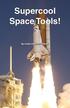 Supercool Space Tools! By Linda Hermans-Killam A long time ago, people looked into the dark night sky and wondered about the stars, meteors, comets and planets they saw. The only tools they had to study
Clouds and the Energy Cycle
 August 1999 NF-207 The Earth Science Enterprise Series These articles discuss Earth's many dynamic processes and their interactions Clouds and the Energy Cycle he study of clouds, where they occur, and
What's Gravity Got To Do With It?
 Monday, December 16 What's Gravity Got To Do With It? By Erin Horner When you woke up this morning did you fly up to the ceiling? Of course not! When you woke up this morning you put both feet on the floor
Earth Is Not the Center of the Universe
 Earth Is Not the Center of the Universe Source: Utah State Office of Education Introduction Have you ever looked up at the night sky and wondered about all the pinpoint lights? People through the ages
Chapter 7 Our Planetary System. Agenda. Intro Astronomy. Intro Astronomy. What does the solar system look like? A. General Basics
 Chapter 7 Our Planetary System Agenda Pass back & discuss Test 2 Where we are (at) Ch. 7 Our Planetary System Finish Einstein s Big Idea Earth, as viewed by the Voyager spacecraft A. General Basics Intro
Our Solar System!!! Solar System scaled to accurate size, not distance from the Sun.
 Our Solar System!!! Solar System scaled to accurate size, not distance from the Sun. The Order of the Solar System Although not to scale, this diagram shows where all the objects in our Solar System are
The Apollo Program. PTYS 395 October 9, 2008 Sarah Mattson
 The Apollo Program PTYS 395 October 9, 2008 Sarah Mattson May 25, 1961 President Kennedy announces the Apollo Program. The goal was to put a man on the Moon, and return him safely to Earth, by the end
7. Our Solar System. Planetary Orbits to Scale. The Eight Planetary Orbits
 7. Our Solar System Terrestrial & Jovian planets Seven large satellites [moons] Chemical composition of the planets Asteroids & comets The Terrestrial & Jovian Planets Four small terrestrial planets Like
Related Standards and Background Information
 Related Standards and Background Information Earth Patterns, Cycles and Changes This strand focuses on student understanding of patterns in nature, natural cycles, and changes that occur both quickly and
Solar System Fact Sheet
 Solar System Fact Sheet (Source: http://solarsystem.nasa.gov; http://solarviews.com) The Solar System Categories Mercury Venus Earth Mars Jupiter Saturn Uranus Neptune Rocky or Gas Rocky Rocky Rocky Rocky
Astronomy Notes for Educators
 Our Solar System Astronomy Notes for Educators Our Solar System 5-1 5-2 Specific Outcomes: Learning Outcome 1: Knowledge / Content and it place in the Milky Way Different types of bodies make up the Solar
CHARACTERISTICS OF THE SOLAR SYSTEM
 reflect Our solar system is made up of thousands of objects, at the center of which is a star, the Sun. The objects beyond the Sun include 8 planets, at least 5 dwarf planets, and more than 170 moons.
FIRST GRADE 1 WEEK LESSON PLANS AND ACTIVITIES
 FIRST GRADE 1 WEEK LESSON PLANS AND ACTIVITIES UNIVERSE CYCLE OVERVIEW OF FIRST GRADE UNIVERSE WEEK 1. PRE: Describing the Universe. LAB: Comparing and contrasting bodies that reflect light. POST: Exploring
How To Celebrate The Pictures Of The Asteroid Vesta
 1 of 11 08/02/2012 09:04 PM Article LOS ANGELES, California (Achieve3000, May 1, 2012). Vesta is stepping into the spotlight. Thanks to NASA's Dawn spacecraft, scientists now have the first close-up pictures
Stage 4. Geography. Blackline Masters. By Karen Devine
 1 Devine Educational Consultancy Services Stage 4 Geography Blackline Masters By Karen Devine Updated January 2010 2 This book is intended for the exclusive use in NSW Secondary Schools. It is meant to
Science Standard 4 Earth in Space Grade Level Expectations
 Science Standard 4 Earth in Space Grade Level Expectations Science Standard 4 Earth in Space Our Solar System is a collection of gravitationally interacting bodies that include Earth and the Moon. Universal
California Standards Grades 9 12 Boardworks 2009 Science Contents Standards Mapping
 California Standards Grades 912 Boardworks 2009 Science Contents Standards Mapping Earth Sciences Earth s Place in the Universe 1. Astronomy and planetary exploration reveal the solar system s structure,
Section 1 The Earth System
 Section 1 The Earth System Key Concept Earth is a complex system made up of many smaller systems through which matter and energy are continuously cycled. What You Will Learn Energy and matter flow through
NOTES: GEORGIA HIGH SCHOOL SCIENCE TEST THE SOLAR SYSTEM
 NOTES: GEORGIA HIGH SCHOOL SCIENCE TEST THE SOLAR SYSTEM 1.What is a Solar system? A solar system consists of: * one central star, the Sun and * nine planets: Mercury, Venus, Earth, Mars, Jupiter, Saturn,
Georgia Performance Standards Framework for Science Grade 6. Unit Organizer: UNIVERSE AND SOLAR SYSTEM (Approximate Time 3 Weeks)
 The following instructional plan is part of a GaDOE collection of Unit Frameworks, Performance Tasks, examples of Student Work, and Teacher Commentary. Many more GaDOE approved instructional plans are
Earth Sciences -- Grades 9, 10, 11, and 12. California State Science Content Standards. Mobile Climate Science Labs
 Earth Sciences -- Grades 9, 10, 11, and 12 California State Science Content Standards Covered in: Hands-on science labs, demonstrations, & activities. Investigation and Experimentation. Lesson Plans. Presented
6. The greatest atmospheric pressure occurs in the 1) troposphere 3) mesosphere 2) stratosphere 4) thermosphere
 1. The best evidence of the Earth's nearly spherical shape is obtained through telescopic observations of other planets photographs of the Earth from an orbiting satellite observations of the Sun's altitude
The Earth, Sun, and Moon
 reflect The Sun and Moon are Earth s constant companions. We bask in the Sun s heat and light. It provides Earth s energy, and life could not exist without it. We rely on the Moon to light dark nights.
It was one of the greatest natural
 Feature Story 1260 THE TEN BIGGEST IMPACT CRATERS IN THE SOLAR SYSTEM It was one of the greatest natural disasters in the Earth s history. Sixty-five million years ago, a piece of space rock nearly 15
 143,000 km Key to Sorting the Solar System Cards Object Description Size (km) Picture Credits Barringer Crater Ceres Earth Earth's moon Eris Eros Gaspra Hale-Bopp Hoba Iapetus Ida and Dactyl Itokawa
Outdoor Exploration Guide. A Journey Through Our Solar System. A Journey Through Our Solar System
 Outdoor Exploration Guide A Journey Through Our Solar System A Journey Through Our Solar System The Solar System Imagine that you are an explorer investigating the solar system. It s a big job, but in
EDIBLE MARS ROVER Adapted from Jean Settle's "Edible Rockets"
 EDIBLE MARS ROVER Adapted from Jean Settle's "Edible Rockets" 49 Introduction: In 1997, NASA used small robotic vehicles to explore Mars. The Sojourner rover was able to roll around the surface of Mars
KINDERGARTEN 1 WEEK LESSON PLANS AND ACTIVITIES
 KINDERGARTEN 1 WEEK LESSON PLANS AND ACTIVITIES UNIVERSE CYCLE OVERVIEW OF KINDERGARTEN UNIVERSE WEEK 1. PRE: Discovering misconceptions of the Universe. LAB: Comparing size and distances in space. POST:
About Google Earth. A Great Way to Engage and Inspire Students
 About Google Earth A Great Way to Engage and Inspire Students Google Earth is an amazing tool that will keep your learners interested and engaged in learning! You can use it across the curriculum. 1 Scenario
Atmospheric Dynamics of Venus and Earth. Institute of Geophysics and Planetary Physics UCLA 2 Lawrence Livermore National Laboratory
 Atmospheric Dynamics of Venus and Earth G. Schubert 1 and C. Covey 2 1 Department of Earth and Space Sciences Institute of Geophysics and Planetary Physics UCLA 2 Lawrence Livermore National Laboratory
Name: João Fernando Alves da Silva Class: 7-4 Number: 10
 Name: João Fernando Alves da Silva Class: 7-4 Number: 10 What is the constitution of the Solar System? The Solar System is constituted not only by planets, which have satellites, but also by thousands
Look at Our Galaxy. by Eve Beck. Space and Technology. Scott Foresman Reading Street 2.1.2
 Suggested levels for Guided Reading, DRA, Lexile, and Reading Recovery are provided in the Pearson Scott Foresman Leveling Guide. Space and Technology Look at Our Galaxy Genre Expository nonfiction Comprehension
The Sun-Earth-Moon System. Unit 5 covers the following framework standards: ES 9, 11 and PS 1. Content was adapted the following:
 Unit 5 The Sun-Earth-Moon System Chapter 10 ~ The Significance of Earth s Position o Section 1 ~ Earth in Space o Section 2 ~ Phases, Eclipses, and Tides o Section 3 ~ Earth s Moon Unit 5 covers the following
The facts we know today will be the same tomorrow but today s theories may tomorrow be obsolete.
 The Scale of the Universe Some Introductory Material and Pretty Pictures The facts we know today will be the same tomorrow but today s theories may tomorrow be obsolete. A scientific theory is regarded
Moon Phases & Eclipses Notes
 Moon Phases & Eclipses Notes Melka 2014-2015 The Moon The Moon is Earth s one natural satellite. Due to its smaller size and slower speed of rotation, the Moon s gravity is 1/6 of the Earth s gravitational
ASTR 1010 Astronomy of the Solar System Professor Caillault Fall 2009 Semester Exam 3 Answers
 ASTR 1010 Astronomy of the Solar System Professor Caillault Fall 2009 Semester Exam 3 Answers 1. Earth's atmosphere differs from those of near-neighbor planets, Venus and Mars, in one important respect
Journey to other celestial objects. learning outcomes
 The eight planets Journey to other celestial objects C 44 time 80 minutes. learning outcomes To: know which planets have moons know which planets have rings know the colours of the different planets know
Our Solar System. Our Solar System LEVELED BOOK S. www.readinga-z.com. Visit www.readinga-z.com for thousands of books and materials.
 Our Solar System A Reading A Z Level S Leveled Book Word Count: 1,766 LEVELED BOOK S Our Solar System Written by Bruce D. Cooper Visit www.readinga-z.com for thousands of books and materials. www.readinga-z.com
Seasonal & Daily Temperatures. Seasons & Sun's Distance. Solstice & Equinox. Seasons & Solar Intensity
 Seasonal & Daily Temperatures Seasons & Sun's Distance The role of Earth's tilt, revolution, & rotation in causing spatial, seasonal, & daily temperature variations Please read Chapter 3 in Ahrens Figure
Data Sets of Climate Science
 The 5 Most Important Data Sets of Climate Science Photo: S. Rahmstorf This presentation was prepared on the occasion of the Arctic Expedition for Climate Action, July 2008. Author: Stefan Rahmstorf, Professor
9.0 Planetary Geology: Earth and the Other Terrestrial Worlds. 9.1 Comparative Planetary Geology
 9.0 Planetary Geology: Earth and the Other Terrestrial Worlds Think back to a time when you went for a walk or a drive through the open countryside. Did you see a valley? If so, the creek or river that
Out of This World Classroom Activity
 Out of This World Classroom Activity The Classroom Activity introduces students to the context of a performance task, so they are not disadvantaged in demonstrating the skills the task intends to assess.
NASA Explorer Schools Pre-Algebra Unit Lesson 2 Student Workbook. Solar System Math. Comparing Mass, Gravity, Composition, & Density
 National Aeronautics and Space Administration NASA Explorer Schools Pre-Algebra Unit Lesson 2 Student Workbook Solar System Math Comparing Mass, Gravity, Composition, & Density What interval of values
SPACE EXPLORATION BYU Merit Badge PowWow Official Merit Badge Worksheet
 SPACE EXPLORATION BYU Merit Badge PowWow Official Merit Badge Worksheet Scout's Name Instructor's Name Scout's Address City State Zip Instructions 1) The Scout is to review the merit badge book before
Europa and Titan: Oceans in the Outer Solar System? Walter S. Kiefer, Lunar and Planetary Institute, Houston TX
 Europa and Titan: Oceans in the Outer Solar System? Walter S. Kiefer, Lunar and Planetary Institute, Houston TX Biologists believe that life requires the presence of some sort of liquid to serve as a medium
Seventh Grade Social Studies. Unit 1: Geography of the Eastern Hemisphere
 Seventh Grade Social Studies Unit 1: Big Picture Graphic Overarching Question: How can the fundamental themes of geography be used to describe the Eastern Hemisphere? Previous Unit: Grade 6 Australia and
CELESTIAL EVENTS CALENDAR APRIL 2014 TO MARCH 2015
 CELESTIAL EVENTS CALENDAR APRIL 2014 TO MARCH 2015 *** Must See Event 2014 ***April 8 - Mars at Opposition. The red planet will be at its closest approach to Earth and its face will be fully illuminated
Earth in the Solar System
 Copyright 2011 Study Island - All rights reserved. Directions: Challenge yourself! Print out the quiz or get a pen/pencil and paper and record your answers to the questions below. Check your answers with
Educator Guide to S LAR SYSTEM. 1875 El Prado, San Diego CA 92101 (619) 238-1233 www.rhfleet.org
 Educator Guide to S LAR SYSTEM 1875 El Prado, San Diego CA 92101 (619) 238-1233 www.rhfleet.org Pre-Visit Activity: Orbital Paths Materials: Plastic Plate Marble Scissors To Do: 1. Put the plate on a flat
Background Information Students will learn about the Solar System while practicing communication skills.
 Teacher Information Background Information Students will learn about the Solar System while practicing communication skills. Materials clipboard for each student pencils copies of map and Available Destinations
Probing for Information
 Name Class Date Inquiry Lab Probing for Information Using Scientific Methods Information about planets in our solar system has been collected by observation from Earth and from probes, or scientific instruments,
 Destination: Mars Activity Packet National Aeronautics and Space Administration Lyndon B. Johnson Space Center Astromaterials Research and Exploration Science (ARES) Houston Museum of Natural Science Burke
Hyperspectral Satellite Imaging Planning a Mission
 Hyperspectral Satellite Imaging Planning a Mission Victor Gardner University of Maryland 2007 AIAA Region 1 Mid-Atlantic Student Conference National Institute of Aerospace, Langley, VA Outline Objective
How Do You Make a Weather Satellite?
 NATIONAL OCEANIC AND ATMOSPHERIC ADMINISTRATION U.S. DEPARTMENT OF COMMERCE How Do You Make a Weather Satellite? This booklet was adapted from the original work by Ed Koenig I'm a weather forecaster. I
Chapter 9 Asteroids, Comets, and Dwarf Planets. Their Nature, Orbits, and Impacts
 Chapter 9 Asteroids, Comets, and Dwarf Planets Their Nature, Orbits, and Impacts Asteroid Facts Asteroids are rocky leftovers of planet formation. The largest is Ceres, diameter ~1,000 km. There are 150,000
Solar System Fundamentals. What is a Planet? Planetary orbits Planetary temperatures Planetary Atmospheres Origin of the Solar System
 Solar System Fundamentals What is a Planet? Planetary orbits Planetary temperatures Planetary Atmospheres Origin of the Solar System Properties of Planets What is a planet? Defined finally in August 2006!
Geol 116 The Planet Class 7-1 Feb 28, 2005. Exercise 1, Calculate the escape velocities of the nine planets in the solar system
 Exercises/Discussions Atmospheric Composition: Escape Velocities and Surface Temperature Objectives Escape velocity and the mass and size of a planetary body The effect of escape velocity and surface temperature
The Earth System. The geosphere is the solid Earth that includes the continental and oceanic crust as well as the various layers of Earth s interior.
 The Earth System The atmosphere is the gaseous envelope that surrounds Earth. It consists of a mixture of gases composed primarily of nitrogen, oxygen, carbon dioxide, and water vapor. The atmosphere and
Tectonic plates have different boundaries.
 KEY CONCEPT Plates move apart. BEFORE, you learned The continents join and break apart The sea floor provides evidence that tectonic plates move The theory of plate tectonics helps explain how the plates
The Four Seasons. A Warm Up Exercise. A Warm Up Exercise. A Warm Up Exercise. The Moon s Phases
 The Four Seasons A Warm Up Exercise What fraction of the Moon s surface is illuminated by the Sun (except during a lunar eclipse)? a) Between zero and one-half b) The whole surface c) Always half d) Depends
UC Irvine FOCUS! 5 E Lesson Plan
 UC Irvine FOCUS! 5 E Lesson Plan Title: Astronomical Units and The Solar System Grade Level and Course: 8th grade Physical Science Materials: Visual introduction for solar system (slides, video, posters,
Solar Flux and Flux Density. Lecture 3: Global Energy Cycle. Solar Energy Incident On the Earth. Solar Flux Density Reaching Earth
 Lecture 3: Global Energy Cycle Solar Flux and Flux Density Planetary energy balance Greenhouse Effect Vertical energy balance Latitudinal energy balance Seasonal and diurnal cycles Solar Luminosity (L)
STUDY GUIDE: Earth Sun Moon
 The Universe is thought to consist of trillions of galaxies. Our galaxy, the Milky Way, has billions of stars. One of those stars is our Sun. Our solar system consists of the Sun at the center, and all
HONEY, I SHRUNK THE SOLAR SYSTEM
 OVERVIEW HONEY, I SHRUNK THE SOLAR SYSTEM MODIFIED VERSION OF A SOLAR SYSTEM SCALE MODEL ACTIVITY FROM UNDERSTANDING SCIENCE LESSONS Students will construct a scale model of the solar system using a fitness
Lecture 23: Terrestrial Worlds in Comparison. This lecture compares and contrasts the properties and evolution of the 5 main terrestrial bodies.
 Lecture 23: Terrestrial Worlds in Comparison Astronomy 141 Winter 2012 This lecture compares and contrasts the properties and evolution of the 5 main terrestrial bodies. The small terrestrial planets have
Name Period 4 th Six Weeks Notes 2015 Weather
 Name Period 4 th Six Weeks Notes 2015 Weather Radiation Convection Currents Winds Jet Streams Energy from the Sun reaches Earth as electromagnetic waves This energy fuels all life on Earth including the
Interaction of Energy and Matter Gravity Measurement: Using Doppler Shifts to Measure Mass Concentration TEACHER GUIDE
 Interaction of Energy and Matter Gravity Measurement: Using Doppler Shifts to Measure Mass Concentration TEACHER GUIDE EMR and the Dawn Mission Electromagnetic radiation (EMR) will play a major role in
The Inner Solar System by Leslie Cargile
 The Inner Solar System The inner solar system is the name of the terrestrial planets and asteroid belt. Terrestrial is just a fancy way of saying rocky. Like the Earth, terrestrial planets have a core
25 MS The Solar System Chapter Outline
 www.ck12.org CHAPTER 25 MS The Solar System Chapter Outline 25.1 INTRODUCTION TO THE SOLAR SYSTEM 25.2 INNER PLANETS 25.3 OUTER PLANETS 25.4 OTHER OBJECTS IN THE SOLAR SYSTEM 25.5 REFERENCES Earth is not
Lab 7: Gravity and Jupiter's Moons
 Lab 7: Gravity and Jupiter's Moons Image of Galileo Spacecraft Gravity is the force that binds all astronomical structures. Clusters of galaxies are gravitationally bound into the largest structures in