
Citroen ZX Service and Repair Manual
|
|
|
- Marion Carr
- 10 years ago
- Views:
Transcription
1 THE BOOK Citroen ZX Service and Repair Manual Mark Coombs Models covered All Citroen ZX Hatchback models with petrol engines, including special/limited editions 1360 cc, 1580 cc, 1761 cc, 1905 cc and 1998 cc (inc. 16-valve) Covers most features of Estate models Also covers 1124 cc engine Does not cover Diesel engine models ( X1) Haynes Publishing 1996 A book in the Haynes Service and Repair Manual Series All rights reserved. No part of this book may be reproduced or transmitted in any form or by any means, electronic or mechanical, including photocopying, recording or by any information storage or retrieval system, without permission in writing from the copyright holder. ISBN British Library Cataloguing in Publication Data A catalogue record for this book is available from the British Library. Printed by J H Haynes & Co Ltd, Sparkford, Nr Yeovil, Somerset BA22 7JJ, England Haynes Publishing Sparkford, Nr Yeovil, Somerset BA22 7JJ, England Haynes North America, Inc 861 Lawrence Drive, Newbury Park, California 91320, USA Editions Haynes S.A. 147/149, rue Saint Honore, PARIS, France Haynes Publishing Nordiska AB Bo 1504, UPPSALA, Sweden Rage Bad 2004, 2005

2 Contents LIVING WITH YOUR CITROEN ZX Introduction Safety First! General dimensions and weights MOT Test Checks Checks carried out from the driver's seat Checks carried out with the vehicle on the ground Checks carried out with the vehicle raised Checks carried out on your vehicle's ehaust emission system Page 0 4 Page 0 5 Page 0 6 Page 0 7 Page 0 8 Page 0 9 Page 0 10 Roadside Repairs Buying spare parts and vehicle identification numbers Page 0 11 Jacking, towing and wheel changing Booster battery (jump) starting Identifying leaks Radio/cassette unit anti-theft system - precaution Conversion factors Page 0 12 Page 0 14 Page 0 15 Page 0 15 Page 0 16 Routine Maintenance Routine maintenance and servicing Lubricants, fluids and capacities Maintenance schedule Weekly checks Every 6000 miles or 6 months Every miles or 12 months Every miles or 18 months Every miles or 2 years Every miles or 2 years Every miles Every miles Page 1 1 Page 1 2 Page 1 3 Page 1 8 Page 1 11 Page 1 14 Page 1 20 Page 1 22 Page 1 23 Page 1 26 Page 1 26

3 Contents REPAIRS & OVERHAUL Engine and Associated Systems TU series engine in-car repair procedures XU series engine in-car repair procedures Engine removal and general engine overhaul procedures Cooling, heating and ventilation systems Fuel and ehaust systems - carburettor models Fuel and ehaust systems - single-point fuel injection models Fuel and ehaust systems - multi-point fuel injection models Emission control systems Engine electrical systems Transmission Clutch Manual transmission Automatic transmission Driveshafts Page 2A 1 Page 2B 1 Page 2C 1 Page 3 1 Page 4A 1 Page 4B 1 Page 4C 1 Page 4D 1 Page 5 1 Page 6 1 Page 7A 1 Page 7B 1 Page 8 1 Brakes Braking system Page 9 1 Suspension Suspension and steering Page 10 1 Body Equipment Bodywork and fittings Page 11 1 Electrical Body electrical systems Wiring Diagrams Page 12 1 Page REFERENCE Tools and Working Facilities General Repair Procedures Fault Finding Glossary of Technical Terms Page REF 1 Page REF 4 Page REF 5 Page REF 12 Inde Page REF 16

4 0 4 Introduction Introduction to the Citroen ZX The Citroen ZX range was introduced to the UK in June Originally, the ZX was available with a choice of 1.1 litre (1124 cc), 1.4 litre (1360 cc), 1.6 litre (1580 cc) or 1.9 litre (1905 cc) engines. Not all engine sizes, however, were available in all markets (the 1.1 litre version was not available in the UK). At first, only five-door Hatchback models Citroen ZX 1.4 Refle Plus 5-door Citroen ZX valve were available. All models have a five-speed manual transmission as standard; a fourspeed automatic transmission was offered as an option on 1.6 and 1.9 litre models. All engines are derived from the wellproven TU series (1124 cc and 1360 cc) and XU series (1580 cc and 1905 cc models) engines, which have appeared in many Citroen and Peugeot vehicles. The engines are of four-cylinder overhead camshaft design, mounted transversely and inclined to the rear, with the transmission mounted on the left-hand side. In late 1992, a three-door Hatchback variant was introduced. At the same time, three new "sports" models were also introduced, all of which were equipped with new engines. These new models were the 1.8 litre (1761 cc) Furio, the 2.0 litre (1998 cc 8-valve) Volcane, and the 2.0 litre (1998 cc 16-valve) 16-valve model. All of these new models are available in three-door form only. All three of the new engines are again derived from the XU series engine. On all models, fully-independent front suspension is fitted, with the components attached to a subframe assembly. The rear suspension is semi-independent, with torsion bars and trailing arms. All models in the range are comprehensively-equipped, and anti-lock braking (ABS) and air conditioning systems are available as options on certain models (ABS is standard on the 2.0 litre 16-valve). Provided that regular servicing is carried out in accordance with the manufacturer's recommendations, the Citroen ZX should prove reliable and very economical. The engine compartment is well-designed, and most of the items requiring frequent attention are easily accessible. Acknowledgements Thanks are due to Champion Spark Plug, who supplied the illustrations showing spark plug conditions. Certain other illustrations are the copyright of Citroen Cars Ltd, and are used with their permission. Thanks are also due to Sykes-Pickavant Limited, who provided some of the workshop tools, and to all those people at Sparkford who helped in the production of this manual. Project vehicles Various project vehicles were used in the preparation of this manual, and appear in many of the photographic sequences. These include a 1360 cc, 1580 cc, 1761 cc, 1905 cc, 1998 cc 8-valve and a 1998 cc 16-valve

5 Safety First! 0 5 Working on your car can be dangerous. This page shows just some of the potential risks and hazards, with the aim of creating a safety-conscious attitude. General hazards Scalding Don't remove the radiator or epansion tank cap while the engine is hot. Engine oil, automatic transmission fluid or power steering fluid may also be dangerously hot if the engine has recently been running. Burning Beware of burns from the ehaust system and from any part of the engine. Brake discs and drums can also be etremely hot immediately after use. Crushing When working under or near a raised vehicle, always supplement the jack with ale stands, or use drive-on ramps. Never venture under a car which is only supported by a jack. Take care if loosening or tightening hightorque nuts when the vehicle is on stands. Initial loosening and final tightening should be done with the wheels on the ground. Fire Fuel is highly flammable; fuel vapour is eplosive. Don't let fuel spill onto a hot engine. Do not smoke or allow naked lights (including pilot lights) anywhere near a vehicle being worked on. Also beware of creating sparks (electrically or by use of tools). Fuel vapour is heavier than air, so don't work on the fuel system with the vehicle over an inspection pit. Another cause of fire is an electrical overload or short-circuit. Take care when repairing or modifying the vehicle wiring. Keep a fire etinguisher handy, of a type suitable for use on fuel and electrical fires. Electric shock Ignition HT voltage can be dangerous, especially to people with heart problems or a pacemaker. Don't work on or near the ignition system with the engine running or the ignition switched on. Mains voltage is also dangerous. Make sure that any mains-operated equipment is correctly earthed. Mains power points should be protected by a residual current device (RCD) circuit breaker. Fume or gas intoication Ehaust fumes are poisonous; they often contain carbon monoide, which is rapidly fatal if inhaled. Never run the engine in a confined space such as a garage with the doors shut. Fuel vapour is also poisonous, as are the vapours from some cleaning solvents and paint thinners. Poisonous or irritant substances Avoid skin contact with battery acid and with any fuel, fluid or lubricant, especially antifreeze, brake hydraulic fluid and Diesel fuel. Don't syphon them by mouth. If such a substance is swallowed or gets into the eyes, seek medical advice. Prolonged contact with used engine oil can cause skin cancer. Wear gloves or use a barrier cream if necessary. Change out of oilsoaked clothes and do not keep oily rags in your pocket. Air conditioning refrigerant forms a poisonous gas if eposed to a naked flame (including a cigarette). It can also cause skin burns on contact. Asbestos Asbestos dust can cause cancer if inhaled or swallowed. Asbestos may be found in gaskets and in brake and clutch linings. When dealing with such components it is safest to assume that they contain asbestos. Remember... DO Do use eye protection when using power tools, and when working under the vehicle Do wear gloves or use barrier cream to protect your hands when necessary. Do get someone to check periodically that all is well when working alone on the vehicle, Do keep loose clothing and long hair well out of the way of moving mechanical parts. Do remove rings, wristwatch etc. before working on the vehicle - especially the electrical system. Do ensure that any lifting or lacking equipment has a safe working load rating adequate for the ob. Special hazards Hydrofluoric acid This etremely corrosive acid is formed when certain types of synthetic rubber, found in some O-rings, oil seals, fuel hoses etc, are eposed to temperatures above 400 C. The rubber changes into a charred or sticky substance containing the acid. Once formed, the acid remains dangerous for years. If it gets onto the skin, it may be necessary to amputate the limb concerned. When dealing with a vehicle which has suffered a fire, or with components salvaged from such a vehicle, wear protective gloves and discard them after use. The battery Batteries contain sulphuric acid, which attacks clothing, eyes and skin. Take care when topping-up or carrying the battery. The hydrogen gas given off by the battery is highly eplosive. Never cause a spark or allow a naked light nearby. Be careful when connecting and disconnecting battery chargers or jump leads. Air bags Air bags can cause injury if they go off accidentally. Take care when removing the steering wheel and/or facia. Special storage instructions may apply. Diesel injection equipment Diesel injection pumps supply fuel at very high pressure. Take care when working on the fuel injectors and fuel pipes. Warning: Never epose the hands, face or any other part of the body to injector spray; the fuel can penetrate the skin with potentially fatal results. DON'T Don't attempt to lift a heavy component which may be beyond your capability - get assistance. Don't rush to finish a job, or take unverified short cuts. Don't use ill-fitting tools which may slip and cause injury. Don't leave tools or parts lying around where someone can trip over them. Mop up oil and fuel spills at once. Don't allow children or pets to play in or near a vehicle being worked on.

6 0 6 General Dimensions & Weights Dimensions Overall length: Volcane, Funo and 16-valve models All other models Overall width (ecluding mirrors): Volcane and 16-valve models Funo models All other models Overall height Volcane, Funo and 16-valve models All other models Wheelbase - all models Front and rear track: Refle and Avantage models All other models Turning circle: Models with manual steering Models with power-assisted steering Weights Kerb weights (approimate): 1124 cc and 1360 cc models: Three-door models Five-door models 1580 cc models: Three-door models Five-door models 1761 cc models: Three-door models Five-door models 1905 cc models: Three-door models Five-door models 1998 cc 8-valve models: Three-door models 4090 mm 4070 mm 1710 mm 1690 mm 1700 mm 1400 mm 1390 mm 2540 mm 1410 mm 1420 mm 10.5 m 10.7 m 935 kg 945 kg 995 kg 1015 kg 1008 kg 1024 kg 1055 kg 1085 kg 1060 kg Five-door models 1091 kg 1998 cc 16-valve models 1150 kg Maimum gross vehicle weight: 1124 cc and 1360 cc models 1490 kg 1580 cc models 1540 kg 1761 cc models 1550 kg 1905 cc models 1570 kg 1998 cc 8-valve models 1600 kg 1998 cc 16-valve models 1630 kg Maimum roof rack load 75 kg Maimum towing nose weight 70 kg Maimum towing weight: Braked trailer: 1905 cc and 1998 cc models 1100 kg All other models 1000 kg Unbraked trailer: 1124 cc and 1360 cc models 470 kg 1580 cc models 490 kg 1761 cc models 500 kg 1905 cc models 510 kg 1998 cc models 530 kg

7 This is a guide to getting your vehicle through the MOT test. Obviously it will not be possible to eamine the vehicle to the same standard as the professional MOT tester. However, working through the following checks will enable you to identify any problem areas before submitting the vehicle for the test. Where a testable component is in borderline condition, the tester has discretion in deciding whether to pass or fail it. The basis of such discretion is whether the tester would be happy for a close relative or friend to use the vehicle with the component in that condition. If the vehicle presented is clean and evidently well cared for, the tester may be more inclined to pass a borderline component than if the vehicle is scruffy and apparently neglected. It has only been possible to summarise the test requirements here, based on the regulations in force at the time of printing. Test standards are becoming increasingly stringent, although there are some eemptions for older vehicles. For full details obtain a copy of the Haynes publication Pass the MOT! (available from stockists of Haynes manuals). An assistant will be needed to help carry out some of these checks. MOT Test Checks 0 7 The checks have been sub-divided into four categories, as follows: Checks carried out FROM THE DRIVER'S SEAT Checks carried out WITH THE VEHICLE ON THE GROUND Checks carried out WITH THE VEHICLE RAISED AND THE WHEELS FREE TO TURN Checks carried out on YOUR VEHICLE'S EXHAUST EMISSION SYSTEM 1 Checks carried out FROM THE DRIVER'S SEAT Handbrake Test the operation of the handbrake. Ecessive travel (too many clicks) indicates incorrect brake or cable adjustment. Check that the handbrake cannot be released by tapping the lever sideways. Check the security of the lever mountings. Check that the brake pedal is secure and in good condition. Check also for signs of fluid leaks on the pedal, floor or carpets, which would indicate failed seals in the brake master cylinder. Check the servo unit (when applicable) by operating the brake pedal several times, then keeping the pedal depressed and starting the engine. As the engine starts, the pedal will move down slightly. If not, the vacuum hose or the servo itself may be faulty. movement of the steering wheel, indicating wear in the column support bearings or couplings. Windscreen and mirrors The windscreen must be free of cracks or other significant damage within the driver's field of view. (Small stone chips are acceptable.) Rear view mirrors must be secure, intact, and capable of being adjusted. Footbrake Depress the brake pedal and check that it does not creep down to the floor, indicating a master cylinder fault. Release the pedal, wait a few seconds, then depress it again. If the pedal travels nearly to the floor before firm resistance is felt, brake adjustment or repair is necessary. If the pedal feels spongy, there is air in the hydraulic system which must be removed by bleeding. Steering wheel and column Eamine the steering wheel for fractures or looseness of the hub, spokes or rim. Move the steering wheel from side to side and then up and down. Check that the steering wheel is not loose on the column, indicating wear OK a loose retaining nut. Continue moving the steering wheel as before, but also turn it slightly from left to right. Check that the steering wheel is not loose on the column, and that there is no abnormal

8 0 8 MOT Test Checks Electrical equipment Switch on the ignition and check the operation of the horn. Check the windscreen washers and wipers, eamining the wiper blades; renew damaged or perished blades. Also check the operation of the stop-lights. Inspect both front brake fleible hoses for cracks or deterioration of the rubber. Turn the steering from lock to lock, and ensure that the hoses do not contact the wheel, tyre, or any part of the steering or suspension mechanism. With the brake pedal firmly depressed, check the hoses for bulges or leaks under pressure. Seat belts and seats Note: The following checks are applicable to all seat belts, front and rear. Eamine the webbing of all the belts (including rear belts if fitted) for cuts, serious fraying or deterioration. Fasten and unfasten each belt to check the buckles. If applicable, check the retracting mechanism. Check the security of all seat belt mountings accessible from inside the vehicle. The front seats themselves must be securely attached and the backrests must lock in the upright position. Doors Both front doors must be able to be opened and closed from outside and inside, and must latch securely when closed. 2 Checks carried out WITH THE VEHICLE ON THE GROUND Vehicle identification Number plates must be in good condition, secure and legible, with letters and numbers correctly spaced - spacing at (A) should be twice that at (B). Check the operation of the sidelights and number plate lights. The lenses and reflectors must be secure, clean and undamaged. Check the operation and alignment of the headlights. The headlight reflectors must not be tarnished and the lenses must be undamaged. Switch on the ignition and check the operation of the direction indicators (including the instrument panel tell-tale) and the hazard warning lights. Operation of the sidelights and stop-lights must not affect the indicators - if it does, the cause is usually a bad earth at the rear light cluster. Check the operation of the rear foglight(s), including the warning light on the instrument panel or in the switch. Footbrake Eamine the master cylinder, brake pipes and servo unit for leaks, loose mountings, corrosion or other damage. Steering and suspension Have your assistant turn the steering wheel from side to side slightly, up to the point where the steering gear just begins to transmit this movement to the roadwheels. Check for ecessive free play between the steering wheel and the steering gear, indicating wear or insecurity of the steering column joints, the column-to-steering gear coupling, or the steering gear itself. Have your assistant turn the steering wheel more vigorously in each direction, so that the roadwheels just begin to turn. As this is done, eamine all the steering joints, linkages, fittings and attachments. Renew any component that shows signs of wear or damage. On vehicles with power steering, check the security and condition of the steering pump, drivebelt and hoses. Check that the vehicle is standing level, and at approimately the correct ride height. Shock absorbers Depress each corner of the vehicle in turn, then release it. The vehicle should rise and then settle in its normal position. If the vehicle continues to rise and fall, the shock absorber is defective. A shock absorber which has seized will also cause the vehicle to fail. The VIN plate (A) and homologation plate (B) must be legible. The fluid reservoir must be secure and the fluid level must be between the upper (A) and lower (B) markings.

9 MOT Test Checks 0 9 Ehaust system Start the engine. With your assistant holding a rag over the tailpipe, check the entire system for leaks. Repair or renew leaking sections. Front and rear suspension and wheel bearings Starting at the front right-hand side, grasp the roadwheel at the 3 o'clock and 9 o'clock positions and shake it vigorously. Check for free play or insecurity at the wheel bearings, suspension balljoints, or suspension mountings, pivots and attachments. Now grasp the wheel at the 12 o'clock and 6 o'clock positions and repeat the previous inspection. Spin the wheel, and check for roughness or tightness of the front wheel bearing. The same general checks apply to vehicles fitted with other suspension types, such as torsion bars, hydraulic displacer units, etc. Ensure that all mountings and attachments are secure, that there are no signs of ecessive wear, corrosion or damage, and (on hydraulic types) that there are no fluid leaks or damaged pipes. Inspect the shock absorbers for signs of serious fluid leakage. Check for wear of the mounting bushes or attachments, or damage to the body of the unit. Driveshafts (fwd vehicles only) Rotate each front wheel in turn and inspect the constant velocity joint gaiters for splits or damage. Also check that each driveshaft is straight and undamaged. 3 Checks carried out WITH THE VEHICLE RAISED AND THE WHEELS FREE TO TURN Jack up the front and rear of the vehicle, and securely support it on ale stands. Position the stands clear of the suspension assemblies. Ensure that the wheels are clear of the ground and that the steering can be turned from lock to lock. Steering mechanism Have your assistant turn the steering from lock to lock. Check that the steering turns smoothly, and that no part of the steering mechanism, including a wheel or tyre, fouls any brake hose or pipe or any part of the body structure. Eamine the steering rack rubber gaiters for damage or insecurity of the retaining clips. If power steering is fitted, check for signs of damage or leakage of the fluid hoses, pipes or connections. Also check for ecessive stiffness or binding of the steering, a missing split pin or locking device, or severe corrosion of the body structure within 30 cm of any steering component attachment point. If ecess free play is suspected at a component pivot point, this can be confirmed by using a large screwdriver or similar tool and levering between the mounting and the component attachment. This will confirm whether the wear is in the pivot bush, its retaining bolt, or in the mounting itself (the bolt holes can often become elongated). Carry out all the above checks at the other front wheel, and then at both rear wheels. Braking system If possible without dismantling, check brake pad wear and disc condition. Ensure that the friction lining material has not worn ecessively, (A) and that the discs are not fractured, pitted, scored or badly worn (B). Springs and shock absorbers Eamine the suspension struts (when applicable) for serious fluid leakage, corrosion, or damage to the casing. Also check the security of the mounting points. If coil springs are fitted, check that the spring ends locate in their seats, and that the spring is not corroded, cracked or broken. If leaf springs are fitted, check that all leaves are intact, that the ale is securely attached to each spring, and that there is no deterioration of the spring eye mountings, bushes, and shackles. Eamine all the rigid brake pipes underneath the vehicle, and the fleible hose(s) at the rear. Look for corrosion, chafing or insecurity of the pipes, and for signs of bulging under pressure, chafing, splits or deterioration of the fleible hoses. Look for signs of fluid leaks at the brake calipers or on the brake backplates. Repair or renew leaking components. Slowly spin each wheel, while your assistant depresses and releases the footbrake. Ensure that each brake is operating and does not bind when the pedal is released.

10 0 10 MOT Test Checks Eamine the handbrake mechanism, checking for frayed or broken cables, ecessive corrosion, or wear or insecurity of the linkage. Check that the mechanism works on each relevant wheel, and releases fully, without binding. It is not possible to test brake efficiency without special equipment, but a road test can be carried out later to check that the vehicle pulls up in a straight line. Fuel and ehaust systems Inspect the fuel tank (including the filler cap), fuel pipes, hoses and unions. All components must be secure and free from leaks. Eamine the ehaust system over its entire length, checking for any damaged, broken or missing mountings, security of the retaining clamps and rust or corrosion. Wheels and tyres Eamine the sidewalls and tread area of each tyre in turn. Check for cuts, tears, lumps, bulges, separation of the tread, and eposure of the ply or cord due to wear or damage. Check that the tyre bead is correctly seated on the wheel rim, that the valve is sound and properly seated, and that the wheel is not distorted or damaged. Check that the tyres are of the correct size for the vehicle, that they are of the same size and type on each ale, and that the pressures are correct. Check the tyre tread depth. The legal minimum at the time of writing is 1.6 mm over at least three-quarters of the tread width. Abnormal tread wear may indicate incorrect front wheel alignment. Body corrosion Check the condition of the entire vehicle structure for signs of corrosion in loadbearing areas. (These include chassis bo sections, side sills, cross-members, pillars, and all suspension, steering, braking system and seat belt mountings and anchorages.) Any corrosion which has seriously reduced the thickness of a load-bearing area is likely to cause the vehicle to fail. In this case professional repairs are likely to be needed. Damage or corrosion which causes sharp or otherwise dangerous edges to be eposed will also cause the vehicle to fail. 4 Checks carried out on YOUR VEHICLE'S EXHAUST EMISSION SYSTEM Petrol models Have the engine at normal operating temperature, and make sure that it is in good tune (ignition system in good order, air filter element clean, etc). Before any measurements are carried out, raise the engine speed to around 2500 rpm, and hold it at this speed for 20 seconds. Allow the engine speed to return to idle, and watch for smoke emissions from the ehaust tailpipe. If the idle speed is obviously much too high, or if dense blue or clearly-visible black smoke comes from the tailpipe for more than 5 seconds, the vehicle will fail. As a rule of thumb, blue smoke signifies oil being burnt (engine wear) while black smoke signifies unburnt fuel (dirty air cleaner element, or other carburettor or fuel system fault). An ehaust gas analyser capable of measuring carbon monoide (CO) and hydrocarbons (HC) is now needed. If such an instrument cannot be hired or borrowed, a local garage may agree to perform the check for a small fee. CO emissions (miture) At the time or writing, the maimum CO level at idle is 3.5% for vehicles first used after August 1986 and 4.5% for older vehicles. From January 1996 a much tighter limit (around 0.5%) applies to catalystequipped vehicles first used from August If the CO level cannot be reduced far enough to pass the test (and the fuel and ignition systems are otherwise in good condition) then the carburettor is badly worn, or there is some problem in the fuel injection system or catalytic converter (as applicable). HC emissions With the CO emissions within limits, HC emissions must be no more than 1200 ppm (parts per million). If the vehicle fails this test at idle, it can be re-tested at around 2000 rpm; if the HC level is then 1200 ppm or less, this counts as a pass. Ecessive HC emissions can be caused by oil being burnt, but they are more likely to be due to unburnt fuel. Diesel models The only emission test applicable to Diesel engines is the measuring of ehaust smoke density. The test involves accelerating the engine several times to its maimum unloaded speed. Note: It is of the utmost importance that the engine timing belt is in good condition before the test is carried out. Ecessive smoke can be caused by a dirty air cleaner element. Otherwise, professional advice may be needed to find the cause.

11 Roadside Repairs 0 11 Buying spare parts and vehicle identification numbers Buying spare parts Spare parts are available from many sources; for eample, Citroen garages, other garages and accessory shops, and motor factors. Our advice regarding spare part sources is as follows. Officially-appointed Citroen garages - This is the best source for parts which are peculiar to your car, and are not generally available (eg complete cylinder heads, gearbo internal components, badges, interior trim etc). It is also the only place at which you should buy parts if the vehicle is still under warranty. To be sure of obtaining the correct parts, it will be necessary to give the storeman your car's vehicle identification number. If possible, take the old parts along for positive identification. Many parts are available under a factory echange scheme - any parts returned should always be clean. It obviously makes good sense to go straight to the specialists on your car for this type of part, as they are best equipped to supply you. Other garages and accessory shops - These are often very good places to buy materials and components needed for the maintenance of your car (eg oil filters, spark plugs, bulbs, drivebelts, oils and greases, touch-up paint, filler paste, etc). They also sell general accessories, usually have convenient opening hours, charge lower prices, and can often be found not far from home. Motor factors - Good factors will stock all the more important components which wear out comparatively quickly (eg ehaust systems, brake pads, seals and hydraulic parts, clutch components, bearing shells, pistons, valves etc). Motor factors will often provide new or reconditioned components on a part-echange basis - this can save a considerable amount of money. Vehicle identification numbers Modifications are a continuing and unpublicised process in vehicle manufacture, quite apart from major model changes. Spare parts manuals and lists are compiled upon a numerical basis, the individual vehicle identification numbers being essential to correct identification of the component concerned. When ordering spare parts, always give as much information as possible. Quote the car model, year of manufacture, body and engine numbers as appropriate (see illustration). The vehicle identification plate is stamped on a plate located under the bonnet on the lower right-hand wheel arch (see illustration). The chassis number is stamped on the body panel under the bonnet on the righthand side of the bulkhead on models produced up to 1993, or on the right-hand wheel arch on models produced from 1993 (see illustration). 20CJ A BE 3 FROM 1993 Vehicle identification number locations The paint code number is located on the body panel under the bonnet on the left-hand upper wheel arch. The engine number is stamped on a plate riveted to the front of the cylinder block (refer to Chapter 2A or 2B for further information). P.T.C UP TO FROM 1993 UP TO 1993

12 0 12 Roadside Repairs Jacking, towing and wheel changing Jacking The jack supplied with the vehicle tool kit should only be used for changing the roadwheels - see "Wheel changing" later in this Section. When carrying out any other kind of work, raise the vehicle using a hydraulic jack, and always supplement the jack with ale stands positioned under the vehicle jacking points. When using a hydraulic jack or ale stands, always position the jack head or ale stand head under one of the relevant jacking points (note that the jacking points for use with a hydraulic jack or ale stands are different to those for use with the vehicle jack) (see illustrations). Do not jack the vehicle under the sump or any of the steering or suspension components. Never work under, around, or near a raised vehicle, unless it is adequately supported in at least two places. Note the following when using a hydraulic jack: (a) When raising the side of the vehicle, ensure that the load is taken by the raised jacking plates on the sill panels (refer to the accompanying illustration) - do not jack under the body panel behind the sill panels. (b) When raising the front of the vehicle, use a suitable metal or strong wooden bar and wooden spacer blocks under the front suspension subframe (refer to the accompanying illustration). (c) When raising the rear of the vehicle, position the jack or ale stands under the rear suspension tubular crossmember (refer to the accompanying illustration). Towing Towing eyes are fitted to the front and rear of the vehicle for attachment of a tow rope. Note that, on certain models, plastic covers must be unclipped from the bumpers for access to the towing eyes (see illustrations). Always turn the ignition key to position "A" when the vehicle is being towed, so that the steering lock is released, and the direction indicator and brake lights are operational. Before being towed, release the handbrake and place the gear lever in neutral on manual transmission models, or "N" on automatic transmission models. Note that greater-thanusual pedal pressure will be required to operate the brakes, since the vacuum servo unit is only operational with the engine running. Similarly, on models with power steering, greater-than-usual steering effort will be required. Where possible, models with automatic transmission should ideally be towed with the front wheels off the ground, particularly if a transmission fault is suspected. If the vehicle is to be towed with its front wheels on the ground, it must always be towed forwards at speeds not eceeding 30 mph (50 km/h), or for a distance no further than 30 miles (50 km). Also note that, to avoid damaging the automatic transmission, the fluid level must be topped-up to the dipstick maimum mark as described in Chapter 1, then an etra 1.5 litres of fluid added. The ecess fluid must be drained off before the vehicle is driven again. Side jacking points Front and rear jacking points

13 Roadside Repairs 0 13 Cover removed to epose front towing eye (arrowed) - Volcane models Wheel brace and spare wheel cradle retaining screw (arrowed) in luggage compartment Front and rear towing eye locations Wheel changing The spare wheel and jack are located in a cradle under the rear of the vehicle. The cradle is lowered by turning the cradle retaining screw, located under the luggage compartment carpet, near the tailgate lock. The cradle retaining screw can be turned by engaging the end of the wheel brace (located in clips on the right-hand side of the luggage compartment) with the slot in the screw. Lift the cradle to release the retaining catch, then lower it for access to the spare wheel. Note that the jack is mounted inside a plastic case to protect it from road dirt and debris (see illustrations). To change a wheel, remove the spare wheel and jack (as described previously), apply the handbrake and place chocks at the front and rear of the wheel diagonally opposite the one to be changed. A wheel chock is supplied with the tool kit, and is located in the well of the spare wheel. On automatic transmission models, place the selector lever in position "P". Make sure that the vehicle is located on firm level ground, and then slightly loosen the wheel bolts with the brace provided (where applicable, remove the wheel trim first). Locate the jack head in the jacking point on the relevant side of the vehicle to be raised, and raise the jack by turning the screw using the wheel brace. When the wheel is clear of Spare wheel cradle retaining catch (arrowed) and jack case (A) the ground, remove the bolts and lift off the wheel. Fit the spare wheel, and moderately tighten the bolts. Lower the vehicle and then tighten the bolts fully. Refit the trim where applicable. If possible, check the tyre pressure on the spare wheel. Remove the chocks and stow the jack, tools, and the damaged wheel. Have the damaged tyre or wheel repaired or renewed as soon as possible.

14 0 14 Roadside Repairs Booster battery (jump) starting When jump-starting a car using a booster battery, observe the following precautions: A) Before connecting the booster battery, make sure that the ignition is switched off. B) Ensure that all electrical equipment (lights, heater, wipers, etc) is switched off. C) Make sure that the booster battery is the same voltage as the discharged one in the vehicle. D) If the battery is being jump-started from the battery in another vehicle, the two vehcles MUST NOT TOUCH each other. E) Make sure that the transmission is in neutral (or PARK, in the case of automatic transmission). Jump starting will get you out of trouble, but you must correct whatever made the battery go flat in the first place. There are three possibilities: The battery has been drained by repeated attempts to start, or by leaving the lights on. The charging system is not working properly (alternator drivebelt slack or broken, alternator wiring fault or alternator itself faulty). The battery itself is at fault (electrolyte low, or battery worn out). Connect one end of the red jump lead to the positive (+) terminal of the flat battery Connect the other end of the red lead to the positive (+) terminal of the booster battery. Connect one end of the black jump lead to the negative (-) terminal of the booster battery Connect the other end of the black jump lead to a bolt or bracket on the engine block, well away from the battery, on the vehicle to be started Make sure that the jump leads will not come into contact with the fan, drivebelts or other moving parts of the engine. Start the engine using the booster battery, then with the engine running at idle speed, disconnect the jump leads in the reverse order of connection.

15 Roadside Repairs 0 15 Identifying leaks Puddles on the garage floor or drive, or obvious wetness under the bonnet or underneath the car, suggest a leak that needs investigating. It can sometimes be difficult to decide where the leak is coming from, especially if the engine bay is very dirty already. Leaking oil or fluid can also be blown rearwards by the passage of air under the car, giving a false impression of where the problem lies. Sump oil Warning: Most automotive oils and fluids are poisonous. Wash them off skin, and change out of contaminated clothing, without delay. Oil from filter The smell of a fluid leaking from the car may provide a clue to what's leaking. Some fluids are distictively coloured. It may help to clean the car carefully and to park it over some clean paper overnight as an aid to locating the source of the leak. Remember that some leaks may only occur while the engine is running. Gearbo oil Engine oil may leak from the drain plug... Antifreeze...or from the base of the oil filter. Brake fluid Gearbo oil can leak from the seals at the inboard ends of the driveshafts. Power steering fluid Leaking antifreeze often leaves a crystalline deposit like this. A leak occurring at a wheel is almost certainly brake fluid. Power steering fluid may leak from the pipe connectors on the steering rack. Radio/cassette unit anti-theft system - precaution The radio/cassette unit fitted as standard equipment by Citroen is equipped with a builtin security code, to deter thieves. If the power source to the unit is cut, the anti-theft system will activate. Even if the power source is immediately reconnected, the radio/cassette unit will not function until the correct security code has been entered. Therefore, if you do not know the correct security code for the radio/cassette unit do not disconnect either of the battery terminals, or remove the radio/cassette unit from the vehicle. To enter the security code, first switch the unit on; the display will show "Cod". The security code can then be entered using buttons 1 to 4 on the unit; each button alters the corresponding digit of the code. Note: There is no facility on the radio display to show the number 0 for the first digit of the security code. For the first digit, 0 is indicated by a blank. Once the correct code is displayed, press the "up" section of the four-way tuning button to enter the code. If an incorrect code is entered, the display will show three dashes, after which the radio will be locked for 10 seconds. On the first two attempts, after 10 seconds the radio display will show the "Cod" prompt again, and allow you to enter the security code again. However, if the correct security code is not entered on the third attempt, the unit will be locked for 1 hour. To make any further attempts, the unit must be switched on and left untouched for approimately 1 hour before the display shows the "Cod" prompt again, and allows you to re-enter the security code. Note that after twenty attempts, the unit will become permanently locked. If this happens, or if the security code is lost or forgotten, seek the advice of your Citroen dealer. On presentation of proof of ownership, a Citroen dealer will be able to unlock the unit and provide you with a new security code.

16 0 16 Conversion Factors Length (distance) Inches (in) Feet (ft) Miles Volume (capacity) Cubic inches (cu in; in 3 ) Imperial pints (Imp pt) Imperial quarts (Imp qt) Imperial quarts (Imp qt) US quarts (US qt) Imperial gallons (imp gal) Imperial gallons (Imp gal) US gallons (US gal) Mass (weight) Ounces (oz) Pounds (Ib) Force Ounces-force (ozf; oz) Pounds-force (Ibf; Ib) Newtons (N) Pressure Pounds-force per square inch Pounds-force per square inch Pounds-force per square inch Pounds-force per square inch Kilopascals (kpa) Millibar (mbar) Millibar (mbar) Millibar (mbar) Millibar (mbar) Millimetres of mercury (mmhg) Inches of water (inh 2 O) Torque (moment of force) Pounds-force inches (Ibf in; Ib in) Pounds-force inches (Ibf in; Ib in) Pounds-force inches (Ibf in; Ib in) Pounds-force feet (Ibf ft; Ib ft) Pounds-force feet (Ibf ft; Ib ft) Newton metres (Nm) Power Horsepower (hp) Velocity (speed) Miles per hour (miles/hr; mph) Fuel consumption* Miles per gallon (mpg) 25.4 = Millimetres (mm) = Metres (m) = Kilometres (km) = Cubic centimetres (cc; cm 3 ) = Litres (l) = Litres (I) = US quarts (US qt) = Litres (I) = Litres (I) = US gallons (US gal) = Litres (I) = Grams (g) = Kilograms (kg) = Newtons (N) = Newtons (N) 0.1 = Kilograms-force (kgf; kg) = Kilograms-force per square centimetre (kgf/cm 2 ; kg/cm 2 ) = Atmospheres (atm) = Bars = Kilopascals (kpa) 0.01 = Kilograms-force per square centimetre (kgf/cm 2 ; kg/cm 2 ) 100 = Pascals (Pa) = Pounds-force per square inch 0.75 = Millimetres of mercury (mmhg) = Inches of water (inh 2 O) = Inches of water (inh 2 O) = Pounds-force per square inch = Kilograms-force centimetre (kgf cm; kg cm) = Newton metres (Nm) * = Pounds-force feet (Ibf ft; Ib ft) = Kilograms-force metres (kgf m; kg m) = Newton metres (Nm) = Kilograms-force metres (kgf m; kg m) = Watts (W) Temperature Degrees Fahrenheit = ( C 1.8) + 32 Degrees Celsius (Degrees Centigrade; C) = ( F - 32) = = Kilometres per hour (km/hr; kph) = Kilometres per litre (km/i) = = = = 1.76 = 0.88 = = = 0.22 = = = = = = 9.81 = = = 14.5 = = 98.1 = 0.01 = = = = = = = = = = = = = Inches (in) Feet (ft) Miles Cubic inches (cu in; in 3 ) Imperial pints (Imp pt) Imperial quarts (Imp qt) Imperial quarts (Imp qt) US quarts (US qt) Imperial gallons (Imp gal) Imperial gallons (Imp gal) US gallons (US gal) Ounces (oz) Pounds (Ib) Ounces-force (ozf; oz) Pounds-force (Ibf; Ib) Newtons (N) Pounds-force per square inch Pounds-force per square inch Pounds-force per square inch Pounds-force per square inch Kilopascals (kpa) Millibar (mbar) Millibar (mbar) Millibar (mbar) Millibar (mbar) Millimetres of mercury (mmhg) Inches of water (inh 2 O) Pounds-force inches (Ibf in; Ib in) Pounds-force inches (Ibf in; Ib in) Pounds-force inches (Ibf in; Ib in) Pounds-force feet (Ibf ft; Ib ft) Pounds-force feet (Ibf ft; Ib ft) Newton metres (Nm) Horsepower (hp) Miles per hour (miles/hr; mph) Miles per gallon (mpg) * It is common practice to convert from miles per gallon (mpg) to litres/100 kilometres (l/100km), where mpg 1/100 km = 282

Fiat Uno Service and Repair Manual
 Fiat Uno Service and Repair Manual Peter G Strasman Models covered Fiat Uno 45, 55, 60, 70, 1.1 and 1.4, including Turbo ie and special/limited editions 903 cc, 999 cc, 1108 cc, 1116 cc, 1299 cc, 1301
5 Mechanisms and accessories
 5 Mechanisms and accessories 51A SIDE OPENING ELEMENT MECHANISMS 52A NON-SIDE OPENING ELEMENT MECHANISMS 54A WINDOWS 55A EXTERIOR PROTECTION 56A EXTERIOR EQUIPMENT 57A INTERIOR EQUIPMENT X79 NOVEMBER 2009
Ford Mondeo Service and Repair Manual
 Ford Mondeo Service and Repair Manual Jeremy Churchill and A K Legg LAE MIMI Models covered All Ford Mondeo models with four-cylinder petrol engines, including special/limited editions 1597 cc, 1796 cc
Turbocharger system components, servicing
 21-1 Turbocharger system components, servicing Engine codes: AAZ, 1Z, AHU Observe rules of cleanliness Page 21-10 Turbocharger hoses and lines, connecting Page 21-11 WARNING! Do not re-use any fasteners
Volkswagen Jetta, Golf, GTI 1999, 2000 Brake System 46 Brakes - Mechanical Components (Page GR-46)
 46 Brakes - Mechanical Components (Page GR-46) Front brakes Brake pads, removing and installing Brake pads, removing and installing FN 3 brake caliper, servicing FS III brake caliper, servicing Rear wheel
13. REAR WHEEL/BRAKE/SUSPENSION
 13. REAR WHEEL/BRAKE/SUSPENSION 13 3.5~4.5kg-m 8.0~10.0kg-m 0.8~1.2kg-m 3.0~4.0kg-m 2.4~3.0kg-m 3.5~4.5kg-m 6.0~8.0kg-m 13-0 13. REAR WHEEL/BRAKE/SUSPENSION 13 REAR WHEEL/BRAKE/SUSPENSION SERVICE INFORMATION...
Wynn s Extended Care
 Wynn s Extended Care Every car deserves to receive the very best care... especially yours. How Do You Keep Your Reliable Transportation Reliable? Count on Wynn s Because Wynn s has been caring for cars
AUTOMOBILE MECHANIC STUDENT INTERNSHIP SKILLS LIST Provo School District
 AUTOMOBILE MECHANIC STUDENT INTERNSHIP SKILLS LIST Provo School District Repairs and overhauls automobiles, buses, trucks, and other automotive vehicles: Examines vehicle and discusses with customer or
Volkswagen Jetta, Golf, GTI 1999, 2000 Brake System 47 Brakes - Hydraulic Components (Page GR-47)
 47 Brakes - Hydraulic Components (Page GR-47) FS III front brake calipers, servicing Front brake caliper piston, removing and installing FN 3 front brake calipers, servicing Front caliper piston, removing
CAR BUYERS CHECKLIST
 CarLoans.com.au CAR BUYERS CHECKLIST Proudly brought to you by CarLoans.com.au CAR BUYERS CHECKLIST Proudly brought to you by CarLoans.com.au PART 1: ABOUT YOU First name Last name Email address Phone
Fiat Uno Service and Repair Manual
 Fiat Uno Service and Repair Manual Peter G Strasman Models covered Fiat Uno 45, 55, 60, 70, 1.1 and 1.4, including Turbo ie and special/limited editions 903 cc, 999 cc, 1108 cc, 1116 cc, 1299 cc, 1301
Cooling system components, removing and installing
 Page 1 of 34 19-1 Cooling system components, removing and installing WARNING! The cooling system is pressurized when the engine is warm. When opening the expansion tank, wear gloves and other appropriate
CAR DAILY VEHICLE PRE CHECKS INFORMATION. Page 1 of 6
 Page 1 of 6 CAR DAILY VEHICLE PRE CHECKS INFORMATION There are approximately 2.5 million vehicles in national fleet in Ireland. As vehicles age they are subject to wear and tear and unless attended to
2003 ACCORD - Automatic Transmission Removal
 2003 ACCORD - Automatic Transmission Removal Special Tools Required Engine support hanger, A and Reds AAR-T-12566 Engine hanger balancer bar VSB02C000019 Front subframe adapter VSB02C000016 These special
CHROME FRONT BRAKE MASTER CYLINDER KIT
 -J075 REV. 009-0-0 CHROME FRONT BRAKE MASTER CYLINDER KIT GENERAL Kit Number 5-99D, 5-99D Models These Chrome Master Cylinder Kits are designed to replace the original equipment front brake master cylinder
6-years/75,000 miles Comprehensive coverage Subsequent Owner Warranty $100 Deductible
 LINCOLN PREMIER LIMITED WARRANTY 6-years/75,000 miles Comprehensive coverage Subsequent Owner Warranty $100 Deductible Comprehensive Coverage Because Lincoln has always been a brand you can trust and respect,
Cooling system components, removing and installing
 Volkswagen Touareg 3.2 - Cooling system components, removing and installing Page 1 / 24 19-1 Cooling system components, removing and installing Warning! Hot steam may escape when opening expansion tank.
STEERING HANDLEBAR/FRONT WHEEL/ FRONT SHOCK ABSORBER
 14 14 STEERING HANDLEBAR/FRONT WHEEL/ SCHEMATIC DRAWING ------------------------------------------------- 14-1 SERVICE INFORMATION------------------------------------------------ 14-2 TROUBLESHOOTING-----------------------------------------------------
BUYING A USED CAR. Copyright Permission Data Wizard/Humboldt 2003, Scott Keele
 BUYING A USED CAR VOCABULARY and DEFINITIONS Anti-lock brakes: Brakes that won t lock up, a computer in the car pumps the brakes on and off so the car will not skid. As Is: Buyer beware, the car is sold
356 CHECKLIST ELECTRICAL: CHASSIS:
 356 CHECKLIST ELECTRICAL: Headlights hi/lo beam Taillights Running lights Turn signals Brake lights License light(s) Fog lights Reverse light Horn Dome lights Dash lights Temp guage Tank level guage Tachometer
Class 5 to 7 Truck and Bus Hydraulic Brake System
 Class 5 to 7 Truck and Bus Hydraulic Brake System Diagnostic Guide 1st Edition * 5+0 Important Service tes The information in this publication was current at the time of printing. The information presented
CLASS B PRE-TRIP INSPECTION STUDY GUIDE
 Miami School 3790 NW 11 th St. Miami, Fl 33126 305-649-5344 La Belle School 250 E. Cowboy Way La Belle, Fl 33935 863-675-0755 STRAIGHT TRUCK FRONT OF VEHICLE CLASS B PRE-TRIP INSPECTION STUDY GUIDE Chock
COOLING SYSTEM Section Page
 5 COOLING SYSTEM Section Page 5.1 COOLANT PRE-HEATER... 5-3 5.2 COOLANT PUMP NON-EGR ENGINE... 5-7 5.3 COOLANT PUMP EGR ENGINE... 5-13 5.4 FRONT CONNECTOR HOUSING NON-EGR ENGINE... 5-17 5.5 FRONT CONNECTOR
15GAL STEEL OIL DRAIN WITH 110V PUMP
 15GAL STEEL OIL DRAIN WITH 110V PUMP OWNER S MANUAL WARNING: Read carefully and understand all ASSEMBLY AND OPERATION INSTRUCTIONS before operating. Failure to follow the safety rules and other basic safety
HYDRAULIC TABLE CART 500-LB.
 HYDRAULIC TABLE CART 500-LB. OWNER S MANUAL WARNING: Read carefully and understand all MACHINE ADJUSTMENT AND OPERATION INSTRUCTIONS before operating. Failure to follow the safety rules and other basic
Cooling system components, removing and installing
 Engine BHW Cooling system components, removing and installing Page 1 / 24 19-1 Cooling system components, removing and installing Warning! When doing any repair work, especially in the engine compartment,
Volkswagen B3 Passat Manual Transmission 02A 34 Manual Transmission - Controls, Assembly (Page GR-34) 02A 5-speed. Gearshift cable/lever installing
 34 Manual Transmission - Controls, Assembly (Page GR-34) 02A 5-speed Gearshift cable/lever installing Gearshift housing repairing Gearshift lever repairing lever/relay lever, installing Gearshift mechanism
2007 Hummer H3. 2007 BRAKES Disc Brakes - H3. Fastener Tightening Specifications Specification Application
 2007 BRAKES Disc Brakes - H3 SPECIFICATIONS FASTENER TIGHTENING SPECIFICATIONS Fastener Tightening Specifications Specification Application Metric English Backing Plate Bolts 135 N.m 100 lb ft Brake Hose
Sample G1 ASE-type Certification Test. Sample ASE Maintenance and Light Repair (G1)-Type Certification Test
 Sample G1 ASE-type Certification Test Sample ASE Maintenance and Light Repair (G1)-Type Certification Test Content Area Questions In Test Percentage Of Test A. Engine Systems 9 16% B. Automatic 4 7% Transmissions
Extended Protection Plans for New and Pre-Owned Vehicles
 Extended Protection Plans for New and Pre-Owned Vehicles Extended Protection you can count on from Old Republic Insured Automotive Services, Inc. (ORIAS) Your vehicle is a major investment. Next to your
BUGGY SETUP GUIDE. Volume GOKARTSUSA GY6 150, CN250. Buggy Setup Guide
 BUGGY SETUP GUIDE Volume 1 GOKARTSUSA GY6 150, CN250 Buggy Setup Guide GY6 150, CN250 DUNE BUGGY Buggy Setup Guide GOKARTSUSA.COM 2000 Highway 50 S. Lake Tahoe, CA 96150 Phone 800.603.1437 2 Table of Contents
ZAPPY 3 OWNER S MANUAL. Read this manual completely before riding your Electric ZAPPY 3.
 ZAPPY 3 OWNER S MANUAL Read this manual completely before riding your Electric ZAPPY 3. TECHNICAL INFORMATION Model No. : ZAPPY 3 Product size Type of motor Motor power Battery type Battery Charger Charging
BUYERS GUIDE. IMPORTANT: Spoken promises are difficult to enforce. Ask the dealer to put all promises in writing. Keep this form.
 BUYERS GUIDE IMPORTANT: Spoken promises are difficult to enforce. Ask the dealer to put all promises in writing. Keep this form. VEHICLE MAKE MODEL YEAR VIN NUMBER DEALER STOCK NUMBER (Optional) WARRANTIES
DiscPlus DX195 and DX225 Air Disc Brakes
 Revised 11-04 Technical Bulletin Revised 1 Technical 11-04 Bulletin DiscPlus DX195 and DX225 Air Disc Brakes Inspection, Installation and Diagnostics Air Disc Brake Inspection Intervals and Procedures
Portable Air Conditioner
 Portable Air Conditioner Owner's Manual Model:3 in 1 12,000 Btu/h Series 3 Please read this owner s manual carefully before operation and retain it for future reference. CONTENTS 1. SUMMARY...1 2. PORTABLE
System Saver 318 Air Compressor for Mack E-Tech and ASET Engines
 Maintenance Manual 31 System Saver 318 Air Compressor for Mack E-Tech and ASET Engines Revised 08-05 NON-THROUGH DRIVE THROUGH DRIVE Service Notes About This Manual This manual provides service and repair
Introduction... 2. Body Specifications... 3. Technical Data... 4. Body... 5. Interior Rear Seats... 6. Center Arm Rest... 7. Child Seat Restraint...
 Table of Contents Subject Page Introduction.......................................... 2 Body Specifications.................................... 3 Technical Data........................................
MAN - MERCEDES - BENZ
 SAYFA: 1 10100 10102 10103 355 353 06 15 355 353 03 15 346 353 08 15 AXLE GEAR AXLE GEAR AXLE (WITH BUSHING TYPE) (WITH BUSHING TYPE) (WITH BUSHING TYPE) 2521 2517-2521-2622 10104 10105 10106 308 350 00
TABLE OF CONTENTS. Section 1 - Assembling your new pit bike.
 Orion Pit Bike Sales Owners Manual (All information and content is the property of Orion Pit Bike Sales. Any attempt to copy or resell is a direct violation of our copyright. All violators will be prosecuted)
PREVENTION MAINTENANCE CHECKLIST FOR TRACTORS, TRUCKS, AND AUTOMOBILES
 PREVENTION MAINTENANCE CHECKLIST FOR TRACTORS, TRUCKS, AND AUTOMOBILES Farm Machinery Fact Sheet FM-21 By Dr. Von H. Jarrett, Extension Agricultural Engineer Systematic sequence for inspection GASOLINE
TECHNICAL BULLETIN. Meritor WABCO Cab Leveling Valves and Chassis Leveling Valves. How the Cab Leveling and Chassis Leveling Valves Work
 Revised 02-00 TECHNICAL BULLETIN Meritor WABCO Cab Leveling Valves and Chassis Leveling Valves This technical bulletin covers both cab and chassis leveling valves manufactured by Meritor WABCO. While the
2017 Audi Maintenance Schedule - All Models
 2017 Audi Maintenance Schedule - All Models MY 2017 Maintenance Intervals - USA Service Intervals If you are not sure when you should bring your Audi in for service or which services are to be performed
Table of Contents. Introducing AYGO. Accessing your vehicle 2 3. Lights 9. Wipers 10. Electric windows 4. Gear change 11
 AYGO Brief Guide Table of Contents Accessing your vehicle 2 3 Electric windows 4 Steering wheel (Vehicles with an adjustable type) 4 Seat and seat belt adjustment 5 Instrument Panel overview 6 Instrument
4008 FEATURES AND SPECIFICATIONS
 ACTIVE BODYSTYLE 5 door compact SUV SAFETY Driver and front passenger airbags Front side airbags Full length curtain airbags Driver knee airbag ABS with Electronic Brake Force Distribution (EBFD) Emergency
WHICH MAINTENANCE SCHEDULE SHOULD YOU FOLLOW?
 WHICH MAINTENANCE SCHEDULE SHOULD YOU FOLLOW? Owner Checks and Services Refer to Mileage Intervals for Additional Checks and Services Certain basic maintenance checks and inspections should be performed
LIFT-505. BMF Lift Kit. Yamaha Drive Gas or Electric. Installation Instructions
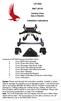 LIFT-505 BMF Lift Kit Yamaha Drive Gas or Electric Installation Instructions Contents of LIFT-505 Yamaha Drive BMF Lift Kit: a (1 ea.) BMF A-Arm Assembly b (1 ea.) Driver Side Shock Tower c (1 ea.) Passenger
HYDRAULIC LIFT TABLE CART 2200-LB.
 HYDRAULIC LIFT TABLE CART 2200-LB. OWNER S MANUAL WARNING: Read carefully and understand all MACHINE ADJUSTMENT AND OPERATION INSTRUCTIONS before operating. Failure to follow the safety rules and other
Cooling system components
 Page 1 / 33 19-1 Cooling system components Caution! When doing any repair work, especially in the engine compartment, pay attention to the following due to clearance issues: Route lines of all types (e.g.
Pallet Jack. OWNER S MANUAL Model MH1230. Important Safety Instructions Assembly Instructions Parts and Hardware Identification
 OWNER S MANUAL Model MH1230 Important Safety Instructions Assembly Instructions Parts and Hardware Identification Pallet Jack CAUTION: Read, understand and follow ALL instructions before using this product
20 GALLON WET DRY VACUUM
 20 Gallon Wet & Dry Vacuum 110" Water Lift Vac Motor 24" Front Mount Squeegee Assembly 50' Cord Special Tip Pour Feature Warranty Contractor Tool Kit Includes: Wet p/u Tool, Dry p/u Tool, Crevice Tool,
Unit: mm(in) Item Standard value Service limit Axle shaft run out - 0.2(0.008)
 Rear Wheel/Brake/Suspension 13. Rear Wheel/Brake/Suspension Service Information 13-1 Troubleshooting 13-2 Rear Wheel 13-3 Rear Cushion 13-4 Rear Swing Arm 13-7 Service Information General Safety If the
Chapter 7 Hydraulic System Troubleshooting
 Chapter 7 Hydraulic System Troubleshooting General The following troubleshooting information is provided as a general guide to identify, locate and correct problems that may be experienced with the hydraulic
Welcome to the safe@work Automotive Module.
 Welcome to the safe@work Automotive Module. Have you read the General Module, completed the test and gained your safe@work General certificate? The Automotive Module should be done AFTER the General Module
OASIS-PLUS 120V READ ALL INSTRUCTIONS BEFORE OPERATING READ ALL INSTRUCTIONS BEFORE OPERATING OZONE IS A POWERFUL OXIDIZER AND MUST BE USED WITH CARE
 OASIS-PLUS 120V INFORMATION & OPERATING INSTRUCTIONS READ ALL INSTRUCTIONS BEFORE OPERATING READ ALL INSTRUCTIONS BEFORE OPERATING OZONE IS A POWERFUL OXIDIZER AND MUST BE USED WITH CARE 56041852 WARNING:
Fremont County School District No. One, Lander, Wyoming Common Core of Knowledge and Skills For Standards and Measures/Assessment
 Level: CV.ATBR.1 Resources CV.ATBR.1.1 Students prepare and analyze CV.ATBR.1.1.1 Students will apply for a personal car personal financial information. loan via a mock-up project. Students effectively
Rail 001 112 2 Canvas, folding top 001 101 3 Rear panel 001 102 4 Stip in window, left 001 106 dto. right 001 107
 U 411 1 Rear view mirror, round, metall 13cm Ø 002 045 2 Raised airintake 002 060 3 Side panelling, front, left 002 030 Side panelling, front, right 002 031 4 Panelling left 002 051 dto. right 002 052
STEERING SYSTEM - POWER
 STEERING SYSTEM - POWER 1990 Nissan 240SX 1990 STEERING Nissan - Power Rack & Pinion Axxess, Maxima, Pulsar NX, Sentra, Stanza, 240SX, 300ZX DESCRIPTION The power steering system consists of a rack and
Volkswagen Jetta, Golf, GTI 1999, 2000 2.8 Liter VR6 2V Engine Mechanical, Engine Code(s): AFP 17 Engine-Lubrication (Page GR-17)
 17 Engine-Lubrication (Page GR-17) Lubrication system components, removing and installing Oil filter housing, disassembling and assembling Oil pan, removing and installing Oil pressure and oil pressure
DO NOT attempt to repair hub and wheel bearing assembly.
 Page 1 of 6 HUB & WHEEL BEARINGS (WITH PULSE VACUUM HUBLOCK) DO NOT attempt to repair hub and wheel bearing assembly. Removal DO NOT remove hub lock assembly by prying on hub lock legs. This can crack
12. REAR WHEEL/BRAKE/SUSPENSION
 12 12 12-0 SERVICE INFORMATION... 12-1 REAR BRAKE... 12-5 TROUBLESHOOTING... 12-2 REAR SHOCK ABSORBER... 12-8 REAR WHEEL... 12-3 REAR FORK... 12-9 SERVICE INFORMATION GENERAL INSTRUCTIONS When installing
Installation Instructions for Alarm Module Kit A043F059
 Instruction Sheet 07-2013 Installation Instructions for Alarm Module Kit A043F059 1 Introduction The information contained within is based on information available at the time of going to print. In line
2005-2007 Ford Focus Front Brake Rotors
 2005-2007 Ford Focus Front Brake Rotors Replacement Replacing the rotors in 2005-2007 Ford Focus models with rear drum brakes. Written By: David Hodson INTRODUCTION The steps in this guide are used to
Sport Ice Elektro 124
 Sport Ice Elektro 124 Operation Manual 2007/4 V2.1 Introduction The Sport Ice Elektro 124 is an ice resurfacing machine designed to be used on small ice surfaces. The machine has been designed to produce
Rear wheel brakes, servicing. Стр. 1 из 45. Note:
 Volkswagen Touareg - Rear wheel brakes, servicing Стр. 1 из 45 46-2 Rear wheel brakes, servicing Rear brakes, FN 44 brake caliper, servicing Note: After replacing brake pads, depress brake pedal firmly
Fuel Injection Pump, Rotary (005-014)
 Fuel Injection Pump, Rotary View Related Topic Page 1 of 30 Fuel Injection Pump, Rotary (005-014) Table of Contents Summary General Information Preparatory Steps Remove Front Gear Train Rear Gear Train
Automotive Technician-Advanced
 Job Ready Assessment Blueprint Automotive Technician-Advanced Test Code: 4008 / Version: 01 Copyright 2006. All Rights Reserved. General Assessment Information Automotive Technician-Advanced Blueprint
New Vehicle Warranty
 New Vehicle Warranty Useful Information: For information about our new cars, latest offers, owning a ŠKODA and to find your nearest retailer, please log onto www.skoda.co.uk ŠKODA Roadside Assistance:
PALLET JACK - 2.5 TON
 PALLET JACK - 2.5 TON 39939 SET UP AND OPERATING INSTRUCTIONS Visit our website at: http://www.harborfreight.com Read this material before using this product. Failure to do so can result in serious injury.
Trouble Shooting. Pump
 Trouble Shooting Pump Trouble Possible Cause Remedy Oil leaking in the area of water pump crankshaft Worn crankshaft seal, bad bearing, grooved shaft, or failure of retainer o-ring. Excessive play on crankshaft
NATIONAL CERTIFICATE (VOCATIONAL)
 NATIONAL CERTIFICATE (VOCATIONAL) SUBJECT GUIDELINES AUTOMOTIVE REPAIR AND MAINTENANCE NQF LEVEL 3 Implementation: January 2014 INTRODUCTION A. What is Automotive Repair and Maintenance Level 3 about?
DR90. Baja Motorsports Inc. P.O. Box 61150 Phoenix, AZ 85082 Toll Free: 888-863-2252 PART NUMBERS AND PRICES ARE SUBJECT TO CHANGE 1 of 51
 DR90 Toll Free: 888-863-2252 PART NUMBERS AND PRICES ARE SUBJECT TO CHANGE 1 of 51 CYLINDER & CYLINDER HEAD 1 DR90-001 842645048166 CYLINDER 1 1 2 DR90-002 842645048173 GASKET, CYLINDER 1 1 3 DR90-003
Flood damaged vehicle repairs
 Flood damaged vehicle repairs This is a guide to the type of repairs a flood affected vehicle is likely to require. It also outlines the possible longer term effects inundation can have on a motor vehicle.
Front axle components, overview
 just a test. Front axle components, overview 40-1 General Information Load bearing components and parts of the suspension must not be welded or straightened. Vehicles without drive axle must not be moved,
PUMP MAINTENANCE SCHEDULE AND CHECKLISTS
 PUMP MAINTENANCE SCHEDULE AND CHECKLISTS Providing a maintenance schedule defined specifically by run hours or yardage pumped serves only as a general guideline given the large amount of variables a unit
Contract hire driver s guide
 Contract hire driver s guide Important information Contract hire is provided by Audi Finance. Audi Finance is a trading name of Volkswagen Financial Services (UK) Limited, Brunswick Court, Yeomans Drive,
UNITED STATES AND U.S. TERRITORIES AND POSSESSIONS EXCEPT PUERTO RICO 2016 / WARRANTY & MAINTENANCE MANUAL
 UNITED STATES AND U.S. TERRITORIES AND POSSESSIONS ECEPT PUERTO RICO 2016 / WARRANTY & MAINTENANCE MANUAL Maintenance Service precautions Vehicle maintenance is an important yet frequently neglected item.
Heavy Duty Equipment Mechanic (Class Code 3743) Task List. Inspection and Diagnosis
 Heavy Duty Equipment Mechanic (Class Code 3743) Task List Inspection and Diagnosis In order to verify complaints and determine malfunctions a Heavy Duty Mechanic: 1. Reads operators written trouble reports,
ENGINE FUEL FUEL FILTER... FUEL HEATER... INJECTOR... SUPPLY PUMP... COMMON RAIL... FUEL PRESSURE LIMITTER...
 FUEL FILTER............................ FUEL HEATER.......................... INJECTOR.............................. SUPPLY PUMP.......................... COMMON RAIL.......................... FUEL PRESSURE
Duramax Maintenance Info
 The following maintenance schedule was arranged using information from GM, OEM manufacturers and personal experience. It does not represent the standard and should only be used as reference, you may choose
MOTOR VEHICLE MECHANIC REPAIR CATEGORIES
 Chapter 8: Motor Vehicle Mechanic Repair Categories Page 1 CHAPTER 8 MOTOR VEHICLE MECHANIC REPAIR CATEGORIES Section 8-1 REQUIREMENT Section 10 of the Motor Vehicle Service and Repair Act (MCL 257.1310)
REMOVAL AND INSTALLATION
 303-01C-1 REMOVAL AND INSTALLATION Engine Body On Special Tool(s) Adapter For 303-D043 303-D043-02 or equivalent Special Tool(s) 303-01C-1 Turbocharger Lifting Bracket 303-1266 Wrench, Fan Clutch Nut 303-214
INSPECTION BEFORE RIDING
 INSPECTION BEFORE RIDING Check the following items before riding. ITEM Engine cum transmission oil Fuel Tyres Battery Speedometer Lighting Steering Throttle Clutch Brakes Wheels WHAT TO CHECK FOR Availability
Front brakes (FN- 3), servicing
 j a t Front brakes (FN- 3), servicing 46-1 Front brakes, servicing Note: Install complete repair kit. After replacing brake pads and before moving vehicle, depress brake pedal several times firmly to properly
Section 6 Brake Drum Failure Analysis. Brake Drum Wear Conditions. What is Normal Wear? What is Deep or Excessive Wear? WARNING. Deep, Uniform Wear
 Section Brake Drum 6 Failure Analysis WARNING To prevent serious eye injury, always wear safe eye protection when you perform vehicle maintenance or service. Figure 6.1 ASBESTOS AND NON-ASBESTOS FIBERS
Drum Brake Owners Manual
 Drum Brake Owners Manual TIE DOWN ENGINEERING, Inc. 5901 Wheaton Drive, Atlanta, GA 30336 www.tiedown.com (404) 344-0000 Fax (404) 349-0401 2007 TIE DOWN ENGINEERING, INC. ALL RIGHTS RESERVED Instruction
The hydraulically damped overrun control device is made up of six main elements that control and operate the braking system.
 THE OVERRUN PRINCIPLE The hydraulically damped overrun control device is made up of six main elements that control and operate the braking system. 1. The Housing 2. The Drawtube 3. The Overrun Lever of
2011-14 F250 6 RADIUS ARM KIT
 92154000 Thank you for choosing Rough Country for your suspension needs. 2011-14 F250 6 RADIUS ARM KIT Rough Country recommends a certified technician installs this system. In addition to these instructions,
FRAME DOOR OPENING, DOOR AND SIDE PANEL OUTER
 NUBIRA/LACETTI FRAME DOOR OPENING, DOOR AND SIDE PANEL OUTER 6 1 SECTION 6 FRAME DOOR OPENING, DOOR AND SIDE PANEL OUTER CONTENTS 1. FRAME DOOR OPENING........................................... 6 2 1.1.GENERAL
HYDRAULIC TABLE CART
 Owner s Manual & Safety Instructions Save This Manual Keep this manual for the safety warnings and precautions, assembly, operating, inspection, maintenance and cleaning procedures. Write the product s
READ AND UNDERSTAND ALL INSTRUCTIONS AND WARNINGS PRIOR TO INSTALLATION OF SYSTEM AND OPERATION OF VEHICLE.
 491 W. Garfield Ave., Coldwater, MI 49036 Phone: 517-279-2135 Web/live chat: www.bds-suspension.com E-mail: [email protected] Product: GM Leaf Spring READ AND UNDERSTAND ALL INSTRUCTIONS AND
Windshield Wiper System
 Windshield Wiper System Page 1 / 17 92-1 Windshield Wiper System General information Caution! When disconnecting and reconnecting battery terminals, observe all applicable Notes and torque specifications,
Porsche Service. Cayenne (from MY 2008 for the following countries:
 Porsche Service Cayenne (from MY 2008 for the following countries: Abu Dhabi, Bahrain, Dubai, Jordan, Qatar, Kuwait, Lebanon, Oman, Saudi Arabia, Syria) Porsche Cayenne Maintaining driving pleasure No
COVERING MILLIONS Preferred Protection Plan, a Service Group Company www.sgifs.com PO Box 26830, Austin, TX 78755-0800.
 COVERING MILLIONS Preferred Protection Plan, a Service Group Company www.sgifs.com PO Box 26830, Austin, TX 78755-0800. 1-877-565-0816 PPP-308 0903 rev 0408 BENEFITS New and Pre-Owned Vehicles Preferred
MODEL T200-F18 MODEL T125-F18 Finish Nailers
 P MODEL T200-F18 MODEL T125-F18 Finish Nailers IMPORTANT! DO NOT DESTROY It is the customer s responsibility to have all operators and service personnel read and understand this manual. OPERATING MANUAL
MKV Golf GTI Rear Brake Service - Replace Pads and Rotors
 Page 1 Installation Procedures MKV Golf GTI Rear Brake Service - This tutorial is provided as a courtesy by ECS Tuning. Proper service and repair procedures are vital to the safe, reliable operation of
Assembly overview - fuel tank
 Assembly overview - fuel tank vw-wi://rl/n.en-gb.k02589829.wi::33090894.xml?xsl=3 Page 1 of 2 Assembly overview - fuel tank 1 - Fuel tank 2 - Sleeve When removing, support using engine and gearbox jack
FJ2. 2 Ton Trolley Floor Jack Assembly & Operating Instructions
 FJ2 2 Ton Trolley Floor Jack Assembly & Operating Instructions READ ALL INSTRUCTIONS AND WARNINGS BEFORE USING THIS PRODUCT. This manual provides important information on proper operation & maintenance.
11. COOLING SYSTEM 11-0 COOLING SYSTEM BET & WIN 50
 11 COOLING SYSTEM SERVICE INFORMATION------------------------------------------------ 11-1 TROUBLESHOOTING----------------------------------------------------- 11-1 RADIATOR ------------------------------------------------------------------
BRAKE DRUM AND ROTOR SERVICE INFORMATION
 SERVICE INFORMATION To achieve maximum drum life and optimum performance, proper brake maintenance and brake balance are essential. Consult your truck or trailer manufacturer s maintenance manual for proper
Working Copy WP 05-WH1401. Revision 4. 6-Ton Electric Forklifts 74-H-010B. Technical Procedure EFFECTIVE DATE: 01/04/06. John Guy APPROVED FOR USE
 WP 05-WH1401 Revision 4 6-Ton Electric Forklifts 74-H-010B Technical Procedure EFFECTIVE DATE: 01/04/06 John Guy APPROVED FOR USE WP 05-WH1401 Rev. 4 Page 2 of 10 TABLE OF CONTENTS INTRODUCTION... 3 REFERENCES...