
Steam System Design and Best Practices Related to Kiln Drying
|
|
|
- Diane Shelton
- 10 years ago
- Views:
Transcription
1 Steam System Design and Best Practices Related to Kiln Drying New England Kiln Drying Association Steam Design and Best Practices HerLine Technologies

2 What is Steam? Like other substances water can exist in the form of a solid, a liquid or a gas. Gaseous form of water is called STEAM HOT It s Powerful It s Easy It s

3 Why use Steam? Made from water, which is relatively inexpensive and plentiful commodity available through out the world Carries relatively large amounts of energy in a small mass Temperature can be adjusted accurately by controlling its pressure using control valves Environmental friendly Relatively inexpensive to generate when firing with wood chips

4 Steam - the best choice Why other systems fail to measure up to steam? 1. Gas fired direct heating Higher operating cost than wood fired boiler More difficult to control Higher Maintenance Requires separate humidification systems 2. Electric heating Very high cost to operate Requires separate humidification systems 3. Hot water systems Carries less than 1/5 th (20%) the heat (Btu s) of Steam Higher system installation cost Higher operating costs

5 Requirements for an Effective, Efficient and Safe Steam System Good initial system design High quality system equipment and components Good knowledge of system operational safeties and periodic testing of safety devices Good system operational knowledge and practices Regular tuning and maintenance Replacement of old or worn components

6 Steam System Sub-Systems Systems Steam Generation Steam Distribution Steam Utilization Condensate Recovery

7 Steam Generation

8 Steam Generation the Boiler House Steam Boiler high or low pressure Boiler Feed Water Tank minimum Condensate Surge Tank & DA Tank ideal Water Softeners for make-up water Chemical Treatment System for boiler water Surface blow down (TDS) control system for boiler recommended Flash steam and blow down heat recovery systems - optional

9 STEAM GENERATION

10 Generating Quality Steam Good quality steam to plant Feed water with impurities Build up of impurities in the boiler surface blow down to drain or heat recovery Impurities - bottom blow down to waste

11 Typical Simple Boiler Feed Water Tanks Vent to Atmosphere Condensate Returns Vent to Atmosphere Condensate Return OR To Boiler SURGE-1 BF-1 To Boiler BF-1 BF-2

12 Typical Deareator Tank Direct condensate returns, pumped returns & make-up water Low pressure steam supply to deareator 0 LB/H To Boiler DEA-1

13 Surge and DA Tank Combination Surge tank is vented to the atmosphere Make-up water is usually added here and pre-heated DA tank is pressurized with steam 0 LB/H 5 PSIG? PSIG PRV-1 Typical Condensate pump 0 LB/H CR-1 SURGE-1 DEA-1

14 Optional Heat Recovery Systems Typical Blow down Heat Recovery System

15 Complex Flash Recovery System

16 The Steam Distribution System

17 Steam Distribution System Proper layout design & pipe sizing of mains Piping always pitched in the direction of flow Use of eccentric reducers to eliminate creation of condensate collection points (low spots) in piping Use of separators to eliminate wet steam Proper drip trap stations in all required locations Use of air vents at all end-of of-main locations Make steam main branch take-offs from top of pipe Use of pressure reducing valves as needed or desired Put strainers before control valves, traps and pumps

18 Steam Distribution Typical Steam Circuit

19

20 Typical Steam Distribution Header

21 Pipe Sizing Greater Heat Loss Greater Cost Greater Volume of Condensate Formed Greater System Pressure Drops Not Enough Volume of Steam Water Hammer and Erosion
22 Steam Volume 1-12 oz Can of Soda cu ft. 2-4 Drawer Filing Cabinets cu 0 psig [1675:1] 1-4 Drawer Filing Cabinets cu 15 psig [867:1] 1 - Drawer of Filing Cabinet 2.97 cu 100 psig [243:1]
23 Sizing Steam Lines
24 Steam Main Relaying to Higher Level Fall 1/250 Steam ft Drain Points Relay to high level Steam Flow
25 Steam Line Reducers Steam Correct Condensate Steam Incorrect Condensate
26 Steam Separators How Separators Work Wet Steam Dry Steam S3 Separator Condensate Outlet
27 Proper Drip Trap Station Steam Flow Condensate Correct Pocket Steam Trap Set Cross Section Steam Flow Incorrect Steam Trap Set Cross Section
28 Typical Steam Main Drip Station D H Size of Main D 1/2 to 6 6 & larger Collection Leg Diameter Same dia. as main D 2 to 3 Pipe Sizes Smaller than Main, But Never Smaller than 6 Length of Collection Leg H Automatic Start up: H to be 28 or More Supervised Start up: Length to be1-1/2 times steam Main Diameter, but never shorter than 18
29 Steam Traps in a Typical Steam Circuit
30 Air Venting Balanced Pressure Air Vent Steam Main Air Thermodynamic Steam Trap Set
31 Branch Connections Steam Steam Condensate Incorrect Correct
32 Supply Leg Main Shut Off Valve Trap Set
33 Strainers Strainers should be installed ahead of pressure reducing valves, control valves, flow meters and steam traps. All these components are susceptible to scale, dirt and debris. Screens of 60/100 mesh for valves and flow meters, 20 mesh for traps. Strainer Control Valve Note: Turn steam pipe line strainers 90 so the Y is parallel with the floor, not pointing down at it. This will eliminate the condensate pocket shown here.
34 Pressure Reduction
35 Why Reduce Pressure? PRO It s s better to run boilers at higher pressure for effective system operation and best system response Steam should be used at lowest pressure to meet process system temperature requirements for highest efficiency and ease of control CON Adds additional system devices such as pressure reducing valves and safety valves to be concerned with Lower pressures increase the size of piping and system components which add cost
36 Pilot Operated PRV Cutaway
37 Pressure Reducing Station
38 Typical Pressure Reducing Stations
39 Typical Pressure Reducing Stations
40 Steam Main Piping Use schedule 40 carbon steel pipe Size for proper velocity at operating pressure Size for current and future needs Pitch in the direction of flow Use eccentric reducers to prevent condensate collection pools Install proper drainable drip legs with allowance for dirt legs and trap stations Locate trap stations at 150 min and 300 max on long linear runs Locate trap stations at all changes in elevation, at the bottom of drop lines and at the end of mains All branch take offs should be from the top of the main where dry steam is available Air vents are also recommended at the ends of the main Insulate all steam piping
41 Steam Utilization
42 Steam Utilization Is the ultimate goal of any steam system and it includes all the heat transfer systems and functions In the case of Kiln Drying, it would provide the heat for drying and the steam for humidification
43 Selection from Steam Tables GAUGE ABSOLUTE TEMP SENSIBLE LATENT TOTAL VOLUME LATENT PRESSURE Pressure o F Heat Heat Heat Steam SENSIBLE psig psia (hf) (hfg) (hg) (vg) Ratio BTU/lb ft3/lb : : : : 1 GAUGE PRESSURE Vacuum ins Hg : : : : 1
44 PRESSURE & FLOW Differential Pressure: Is the difference between the inlet pressure and the outlet pressure acting upon any steam component such as a trap, valve, etc.. Elevation Changes Flow
45 Control Valves Vacuum Breakers Air Vents Kiln Typical Steam & Condensate System Drip Traps Coil Traps Condensate Pump
46 Typical Kiln Air Coil Steam Control Layout CONTROL VALVE MODULATING STEAM TEMPERATURE CONTROL VACUUM BREAKER AIR FLOW VACUUM BREAKER AIR VENT AIR VENT TRAP AIR FLOW GRAVITY DRAIN DOWN -NO LIFT -NO CHECK VALVES TRAP GRAVITY DRAIN DOWN -NO LIFT -NO CHECK VALVES
47 Pre-Dryer Control Layout at AMF Bowling Products
48 Barriers to Heat Transfer When steam comes into contact with a cooler surface, it gives up its latent heat and condenses. Steam Temperature Air Film Condensate Film Metal Heating Surface Water DirtFilm Product Product Temperature
49 Effective Efficient Heat Transfer Good quality dry steam Use separators if necessary Remove air from steam and coils Use air vents on mains and particularly on coils before traps Remove condensate completely Use properly sized F&T traps on coils not too small & don t t go too large Provide for 12 minimum drop to trap Make sure traps are gravity draining without any lift in piping Install vacuum breakers on the inlet of each coil to break vacuum m lock which impedes drainage Trap each coil section independently, don t t group coils on a single trap Keep coil fin and tube area as clean as possible Power wash occasionally as necessary Use only the highest quality control components
50 Use High Quality Industrial Grade Pneumatic Actuated least expensive and most reliable Use Positioners when possible better accuracy and control Use high pressure air when possible keeps cost of actuators down Hardened stainless steel trim-plug & seat Good live loaded packing stem seals Valves
51 Vacuum Breakers Simple ball check types are the best and most reliable type
52 Air Vents Thermostatic Air Vents for Steam Systems
53 Float Trap with Thermostatic Air Vent In Water Level Increases, the Float Rises and the Valve Opens Out
54 Proper System Design Makes a Difference... Accurate reliable control Air Venting Condensate Removal = equals Thermal Efficiency Reliability
55 Steam Traps
56 What is a Steam Trap? Definition: A steam trap is an automatic valve designed to stop the flow of steam so that heat energy can be transferred, and the condensate and air can be discharged as required.
57 Why Steam Traps are required? Steam traps are automatic devices Air Venting Condensate Removal Thermal Efficiency System Reliability for:
58 Types of Steam Traps Mechanical Traps Float & thermostatic traps Inverted bucket traps Kinetic Energy Traps Thermodynamic or disk traps Thermostatic Traps Balanced pressure traps Liquid Expansion Bimetallic traps Ventures & Orifices (these are not traps)
59 Steam Traps Types
60 Float Trap with Thermostatic Air Vent In Out
61 Float Trap with Thermostatic Air Vent In Air Vent Open Out
62 Float Trap with Thermostatic Air Vent In Water Level Increases, the Float Rises and the Valve Opens Out
63 Inverted Bucket Trap Out B C A In
64 Operation of Inverted Bucket Trap Out In
65 Operation of Inverted Bucket Trap Out In
66 Operation of Inverted Bucket Trap Out In
67 Typical Thermodynamic Steam Trap H B E D C G F IN OUT A
68 Operation of a Thermodynamic Steam Trap IN OUT
69 Operation of a Thermodynamic Steam Trap IN OUT
70 Operation of a Thermodynamic Steam Trap IN OUT
71 Modern Balanced Pressure Trap Balanced Pressure Capsule
72 Balanced Pressure Capsule
73 Balanced Pressure Capsule
74 Response of Balanced Pressure Trap Steam Saturation Curve Temp. ( o F) Pressure (psig) Response of Balanced Pressure Trap
75 Liquid Expansion Thermostatic Trap A B C G F E D
76 Liquid Expansion Thermostatic Trap A B C G F E D
77 Bimetallic Type Cold Hot Heat
78 Bimetallic Trap With Valve On Outlet Valve Open
79 Bimetallic Trap With Valve On Outlet Valve Closed
80 Fixed Orifice Device It s Not a Steam Trap and is not an effective controller of condensate flow Orifice Plate
81 Swivel Connector Traps Gasket mating faces in same material to eliminate galvanic corrosion 2 bolts for minimum downtime Welded construction with no gasketed joint to ASM IX Flange rotation to suit pipeline connector Screwed, socket weld, butt weld or flanged connections High integrity, spirally wound gasket
82 Thermodynamic Trap UTD30, UTD30A UTD30H, UTD30HA UTD52L
83 Balanced Pressure Trap UBP30
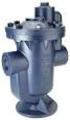
84 Inverted Bucket Trap UIB30, UIB30H
85 User Benefits Minimum maintenance costs and plant downtime Only two bolts involved in replacement or removal Variety of trap types available to suit wide range of applications Common pipeline connector suits all trap types 360 independent trap alignment offers flexible installation Ideal for unattended plant or inaccessible places Stainless Steel construction and gaskets minimises corrosion, maximises product life and eliminates blow-out out Available with the option of one or two integral isolation valves.
86 Steam Traps Selection
87 General Trap Recommendations High and medium pressure main drip applications ½ or ¾ reduced port thermodynamic traps (TD type) Low pressure (15 psig or less) main drip applications ½ or ¾ float & thermostatic (F&T) trap (FTI & FT type) Steam heating coil with modulating control valve F&T trap that is properly sized for condensing load (FTI & FT type)
88 Steam Traps Sizing Considerations 1. Condensate Load 2. Safety Factor 3. Available Differential Pressure: System Pressure Total Backpressure Condensate Lift Return System Pressure
89 Steam Trap Sizing Guidelines
90 Steam Traps Sizing
91 Why do steam traps fail? Normal wear and tear Carryover creates scale which can block the trap Poor strainer maintenance - small trap orifices and parts can block or jam due to scale or rust. Acidic condensate can cause corrosion Waterhammer Freezing Incorrect sizing and selection Incorrect installation Inadequate maintenance
92 Problems Caused by Leaking Traps If a Trap Fails Open: Wasted Steam = Wasted Fuel = Wasted Money High velocity in plant equipment Steam in condensate line Pressurisation of condensate line Excessive back pressures acting on other traps Failure to maintain constant pressure / temperature Reduced pressure differential across good traps Unsightly escaping steam
93 Problems Caused by Waterlogged Traps If a Trap Fails Closed Water logging Irregular Temperature Control Product Spoilage Decrease in Heat Output Damage to Plant Equipment Waterhammer (Carryover in Mains)
94 Troubleshooting Steam Traps What is the problem? Trap Failed Closed, Failed Open, Stalled Potential Stall Situation Is a Vacuum Breaker installed? Is there enough Installation Head available? Is there enough Differential Pressure available? Dirt - Is a strainer installed upstream and is it blown down regularly? Type of the steam trap used Proper Application?
95 Troubleshooting Steam Traps Is the steam trap installed correctly? Direction of flow, Float Movement, etc. Is the steam trap large enough? Air Binding of a steam Trap Use of a separate Air Vent Water logging Number of steam traps at appropriate locations Steam Locking Steam Lock Release
96 Steam Trap Maintenance Frequency of maintenance: Quality of Steam wet steam, carryover Life of the system Initial blowdown, Corrosion Criticality of the Application Steam Distribution Practices General Maintenance Practices e.g. Blowing down strainers regularly
97 Condensate Return Systems
98 FLASH STEAM FLASH STEAM occurs when hot condensate at high pressure is released to a lower pressure. At the lower pressure, the heat content (SENSIBLE HEAT) of the water (hot condensate) cannot exist in that form. A portion of the water boils off and becomes FLASH STEAM Flash Steam contains valuable BTU s / lb. of heat which can be utilized for lower pressure applications.
99 SURPLUS HEAT CAUSES FLASH STEAM FORMATION DUE TO PRESSURE DROP ACROSS A STEAM TRAP TRAP WITH NO LIFT AFTER TRAP 100 psig 338 F 0 psig 212 F FLASH STEAM 90-95% 100 PSIG STEAM CONDENSATE 5-10% TO ATMOSPHERIC RETURN SYSTEM (O PSIG) TRAP WITH 10' LIFT AFTER TRAP 0 psig/212 F 100 psig 338 F 5 psig 227 F TO ATMOSPHERE RETURN SYSTEM (O PSIG) FLASH STEAM 10 FOOT RISE 100 PSIG STEAM 5 psig/227 F CONDENSATE
100 Pressurized Condensate Return Typical of trap discharge lines prior to draining to pump receivers or dedicated pressurized returns prior to surge or DA tank. Flash Steam Mass = 100 lb Spec. Vol. = 2680 cu-ft. 99.5% of Total Volume 60 psig 0 psig 1000 lb. /hr Condensate Mass = 900 lb Spec. Vol. = cu-ft. 0.5 % of Total Volume
101
102 Typical Vertical Flash Tank
103 Simple Flash Steam Recovery System
104 Complex Flash Recovery System
105 Electric Condensate Pump
106 Electric Condensate Pump
107 Electric Condensate Pump Typical Hook-up for Low Pressure Condensate
108 Electric Condensate Pump Typical Hook-up for HP Condensate High Pressure/Temperature Condensate with separate Flash Steam Vent Tank
109 PPP Filling Stroke Exhaust valve open, inlet valve shut. Inlet check valve open 1. If there is sufficient filling head, inlet check valve opens and pump begins to fill and exhaust. 2. Filling action causes float to rise.
110 PPP Discharge Stroke Steam inlet valve open exhaust valve shut. 1. Float rising triggers valve mechanism; opens steam valve and closes exhaust valve. 2. Pump body pressurizes and resistance at outlet check valve (back pressure) is overcome. 3. Pump empties. Outlet check valve open.
111 Pressure Powered Pump Typical Hook-up for an Open Venting System (multiple sources of condensate with possible varying pressures)
112 Summary Best Practices - System Problems & Solutions
113 Best Practices - Common Steam System Problems Improper system design Improper installations Improper operation Improper chemical treatment Inattention to maintenance Worn and/or failed components
114 Best Practices Most Common Problems Wet steam Water hammer Pressure in the return system Failed traps Failed pumps Failed valves Premature component failures Premature coil and piping failures
115 Best Practices Most Common Problems How do They Manifest Themselves Condensate tank or pump receiver vents blowing excessively Constant banging or pounding in steam mains Constant banging or pounding in condensate return lines Slow heat ups Overheating Difficulty with temperature and humidity control Electric condensate pumps cavitating and constantly leaking Premature failure of major components such as valves, traps, pumps, coils and piping
116 Killers of a steam system Dirt Damage the valves and seats Obstruction to tight sealing resulting in leakage Water Reduced heat content Barrier for effective heat transfer Water hammer - dangerous Wire-drawing of valves Water logging of traps and valves Air Barrier for effective heat transfer Air binding of process vessels, traps, valves, pumps etc.
117 What is the solution? Dirty Steam? Strainers and blow downs Wet Steam? Good practices in steam distribution design, layout, pipe sizes Moisture separators Steam traps sufficient number, appropriate type, correct sizes Longer Heating Cycles? Good practices in steam distribution design, layout, pipe sizes Vacuum breakers on heat transfer equipment Air vents on steam mains & heat transfer equipment Proper type & size of steam traps in good operating condition
118 Best Practices - Safety, Energy & Maintenance Water hammer Go slow with boiler start-ups and opening isolation valves into cold systems Make sure all low points in the piping are drained properly by trap t stations Make sure you have proper drip legs and trap stations Pressure relief make sure you have safety valves to protect the system from over pressure Condensate pump overflows- install overflows on pump receivers to prevent system flooding Insulation minimally, insulate steam lines, if outside make sure jackets are a water tight Fix all steam leaks Watch your vents for blowing traps Flash steam recovery if feasible Boiler blowdown heat recovery Boiler surface & bottom blow downs per mfr. recommendation & have e good chemical treatment Blow down strainers and dirt legs periodically Keep your control valves in good repair-inspect inspect heads & seats periodically Traps-track track down problems and repair or replace as needed Fix leaking and non-functional pumps Test condensate return PH periodically acid destroys systems
119 Best Practices - Words to the Wise Quality Counts!!! Not all steam components are created equal You get what you pay for Pay me now or pay me later (Fram) Don t t hesitate to ask questions!!! It may be appropriate to challenge conventional wisdom,, the way we ve always done it may not be best Follow the manufacturer s s recommendations Utilize your resources Some systems and components work better than others!!! it s s not a generic world out there Get the best advice!!! Avoid orifice traps!!! advice!!! from people you can trust
120 Trap Testing Tools Infrared or Contact Thermometer Ultrasonic Leak Detector
121 The End New England Kiln Drying Association Steam Design and Best Practices HerLine Technologies
122 Common Steam Terms Water Hammer Shock caused in piping & equipment due to rapid displacement of water by expanding or flowing steam. Latent Heat or Heat of Vaporization The extra heat that has to be added to each pound of water to turn it into steam. Dry Steam It is steam that is fully evaporated, thereby containing no entrained moisture. Flash Steam It is created when high temperature condensate (water above 212 atmospheric pressure) crosses from an area of high pressure to an area of lower pressure, as through a steam trap. The excess heat that is released, will boiler a percentage of the condensate back k into steam.
123 Steam/Water in Pipe
124 Waterhammer Sagging Main Condensate Slug of water from condensate Vibration and noise caused by waterhammer
125 Waterhammer Result of a drip trap being removed, that was draining a 100 psig line, before a valve
126 SHOCKING FACTS REGARDING THE PHYSICS OF STEAM STEAM IS NOT COMPRESSED AIR IT DOES NOT MAINTAIN PRESSURE WITHOUT TEMPERATURE!! STEAM EXPANDS AS IT COOLS (REDUCES IN PRESSURE)!! STEAM SYSTEMS ARE DYNAMIC DYNAMIC MEANS CONSTANTLY CHANGING NOT STATIC!! PRESSURE FLOWS FROM HIGH TO LOW NOT LOW TO HIGH!! STEAM & WATER DO NOT MIX WELL!! ON EARTH WE HAVE GRAVITY!! WATER DOES NOT FLOW UP HILL!! VACUUMS WILL FORM IN PRESSURIZED STEAM SYSTEMS!! VACUUMS CAN OVERCOME GRAVITY!! NEGATIVE PRESSURE (VACUUM) WILL LOWER THE BOILING POINT OF WATER!! WHEN THINKING OF A STEAM SYSTEM VISUALIZE WIND & WATER!! DRAINAGE IS EVERYTHING!!
127 Don t Stress Your Boilers Keep your boilers in good repair and keep them tuned up for efficient operation Perform safe slow start-ups If you have capacity problems, use back pressure regulators to throttle non-critical loads Use separators to solve wet steam problems Insulate steam mains Fix leaks Repair or replace wet insulation-its worse than no insulation Repair or replace blowing traps Distribute steam at high pressure and reduce at point of use Return condensate Maximize boiler feed water temperatures Control boiler blowndown and consider heat recovery
Specific Volume of Liquid (Column 7). The volume per unit of mass in cubic feet per pound.
 Steam Tables What They Are How to Use Them The heat quantities and temperature/ pressure relationships referred to in this Handbook are taken from the Properties of Saturated Steam table. Definitions of
Float and Thermostatic Traps Series H, C and X
 Hoffman Specialty Installation & Maintenance Instructions HS-(E) and Thermostatic Traps Series H, C and X Series C & NPT Series C NPT Series X NPT Series C NPT Series H Ratings Maximum Max. Operating NPT
Steam System Efficiency. Bill Lumsden Leidos Engineering
 Steam System Efficiency Bill Lumsden Leidos Engineering Steam System Efficiency Steam System Efficiency Key Take-aways: Review of the properties of ice, water, and steam Learn the basics of steam trap
Steam System Best Practices Condensate System Piping
 Steam System Best Practices Condensate System Piping Summary The best method for improving steam system energy efficiency, reducing chemical costs, and reducing make-up water costs is to return the maximum
DARTMOUTH COLLEGE DESIGN January 3, 2012 & CONSTRUCTION GUIDELINES
 SECTION 15062 STEAM AND CONDENSATE PIPING PART 1 DESIGN DIRECTIVES 1.1 QUALITY ASSURANCE A. Comply with the provisions of the following: 1.2 DESIGN CRITERIA 1. ASME B 31.9 Building Services Piping : for
5.23.22 STEAM AND CONDENSATE PIPING AND PUMPS DESIGN AND CONSTRUCTION STANDARD PART 1: GENERAL. 1.01 Purpose:
 PART 1: GENERAL 1.01 Purpose: A. This standard is intended to provide useful information to the Professional Service Provider (PSP) to establish a basis of design. The responsibility of the engineer is
HS-901(A) BASIC STEAM HEATING SYSTEMS
 HS-901(A) BASIC HEATING SYSTEMS One-Pipe Two-Pipe Basic Steam Heating Systems One-pipe steam heating system EQUALIZER SAFETY FACTOR STATIC HEAD PRESSURE DROP 2" HEATING UNIT 15" DRIP CONNECTION In a one-pipe,
STEAM HEATING SYSTEM TROUBLESHOOTING GUIDE
 Page 1 of 9 PURPOSE Steam is the most commonly used heating medium for maintaining process temperatures. Compared to other heating media, steam contains a significant amount of heat energy, and this heat
PBX Series Quick Fit Connector Bimetallic Steam Traps
 6262100/6 IM-P626-01 ST Issue 6 PBX Series Quick Fit Connector Bimetallic Steam Traps Installation and Maintenance Instructions 1. Safety information 2. General product information 3. Installation 4. Commissioning
C. starting positive displacement pumps with the discharge valve closed.
 KNOWLEDGE: K1.04 [3.4/3.6] P78 The possibility of water hammer in a liquid system is minimized by... A. maintaining temperature above the saturation temperature. B. starting centrifugal pumps with the
FLASH TANK ECONOMIZER PRODUCT GUIDE
 FLASH TANK ECONOMIZER PRODUCT GUIDE Overview A flash tank is used to recover blowdown energy in the form of flash steam and blowdown. This can only be used with a deaerator or some other pressurized device.
Constantemp Double Wall Low pressure steam-water Heater F-340LDW,F-640LDW, F-940LDW and F-1240LDW
 Installation, Operating and Maintenance Instructions 90/4.5.5 Rev. 0 Constantemp Double Wall Low pressure steam-water Heater F-340LDW,F-640LDW, F-940LDW and F-1240LDW Table of Contents SECTION I... 2 INSTALLATION...
Equivalents & Conversion Factors 406 Capacity Formulas for Steam Loads 407 Formulas for Control Valve Sizing 408-409
 Engineering Data Table of Contents Page No. I II Formulas, Conversions & Guidelines Equivalents & Conversion Factors 406 Capacity Formulas for Steam Loads 407 Formulas for Control Sizing 408-409 Steam
IGEMA BOILER LEVEL & TDS CONTROLS
 IGEMA BOILER LEVEL & TDS CONTROLS IGEMA offers boiler level and TDS control products of the highest quality standard, being certified to ISO 9001. Made in Germany, IGEMA products are manufactured in compliance
REGULATING VALVE APPLICATIONS
 REGULATING APPLICATIONS GENERAL REGULAR APPLICATION & INSTALLATION NOTES Regulator Application & Installation Notes The following are considerations for all steam regulator installations, as system operation
Steam Coil Installation, Operation and Maintenance
 Steam Coil Installation, Operation and Maintenance Guidelines for the installation, operation and maintenance of the Heatcraft brand of steam heating coils manufactured by Luvata in Grenada, MS have been
A basic introduction to steam
 A basic introduction to steam FOR HOT, COLD, MOIST AND DRY, FOUR CHAMPIONS FIERCE. STRIVE HERE FOR MASTERY Milton 1666 Steam Wonderful Steam Very high heat content Recyclable Clean, non toxic Biodegradable
Oil and Coolant Circulating Heating System. Model - OCSM
 Oil and Coolant Circulating Heating System Model - OCSM Installation & Operation Manual 216280-000 REV 2 Identifying Your System The HOTSTART heating system is designed to heat fluids for use in marine
Chilled Water HVAC Systems
 Chilled Water HVAC Systems By Ron Prager, Brinco Mechanical Services, Inc. Types of water based systems: There are three types of HVAC systems that utilize water as a heat transfer medium. The first system,
How To Understand Evaporator
 SECTION 5 COMMERCIAL REFRIGERATION UNIT 21 EVAPORATORS AND THE REFRIGERATION SYSTEM UNIT OBJECTIVES After studying this unit, the reader should be able to Define high-, medium-, and low-temperature refrigeration.
VAD. Variable Area Desuperheaters
 Desuperheater overview Steam used in process plants can be superheated, that is, heated to a temperature above saturation. The excess of temperature above its saturation is called 'superheat'. Desuperheated
SAMPLE TEST QUESTIONS STEAMFITTER/PIPEFITTER - ITA WEBSITE
 1 Which tool is used to correct internal hi-low when preparing a 4-in. steel pipe for welding? A. 4-in. grinder with cutting disc. B. Mini-grinder with flapper disc. C. Pencil grinder with cone stone.
Hot Water Boilers and Controls Why Condensing Boilers are Different. Presented Oct. 14, 2008 Long Island Chapter, ASHRAE
 Hot Water Boilers and Controls Why Condensing Boilers are Different Presented Oct. 14, 2008 Long Island Chapter, ASHRAE H.W. Boilers and Controls Major types of boilers Advantages and disadvantages Resistance
SECTION 5 COMMERCIAL REFRIGERATION UNIT 22 CONDENSERS
 SECTION 5 COMMERCIAL REFRIGERATION UNIT 22 CONDENSERS UNIT OBJECTIVES After studying this unit, the reader should be able to explain the purpose of the condenser in a refrigeration system. describe differences
DESIGN OF FLUID SYSTEMS STEAM UTILIZATION
 DESIGN OF FLUID SYSTEMS STEAM UTILIZATION Published by $19.95 per copy Copyright 2004 by Spirax Sarco, Inc. All Rights Reserved No part of this publication may be reproduced, stored in a retrieval system
Steam Jet Vacuum Pumps
 By: S.G. Ketterer and C.G. Blatchley The use of steam jet ejectors for entraining air or gases at subatmospheric pressures is increasing rapidly, particularly in the range of pressures below mm absolute.
Table V. Troubleshooting Checklist for Refrigeration Systems. Air or non-condensable gas in system. Inlet water warm.
 Table V Troubleshooting Checklist for Refrigeration Systems TROUBLE POSSIBLE CAUSE CORRECTIVE MEASURE High condensing pressure. Low condensing pressure. Air or non-condensable gas in system. Inlet water
DIRECT STEAM INJECTION HOT WATER SYSTEMS FOR JACKETED HEATING
 By Philip Sutter Pick Heaters, Inc. DIRECT STEAM INJECTION HOT WATER SYSTEMS FOR JACKETED HEATING INTRODUCTION Many process plants currently use steam or hot water to heat jacketed devices such as tanks,
In-Line Air Separators
 Air Elimination & Control In-Line Air Separators The AC models of air separators deliver all the quality and performance you expect from Taco products. They are built to last with shell, heads and ANSI
Geothermal Alliance of Illinois. TXVs Theory and Fundamentals John Haug Senior Application Engineer Emerson Climate Technologies - Flow Controls
 Geothermal Alliance of Illinois TXVs Theory and Fundamentals John Haug Senior Application Engineer Emerson Climate Technologies - Flow Controls Thermal Expansion Valve Topics Anatomy Operation Terms &
Blowdown vessels Meeting the requirements of HSE PM60
 Blowdown vessels Meeting the requirements of HSE PM60 BDV60 blowdown vessels complete range of equipment for the safe disposal of boiler blowdown Boiler blowdown Steam boilers must be blown down to remove
Overview. Introduction Cooling Tower Basics Principles of Operation Types of Cooling Towers Common Applications Design Considerations
 Stephen Lowe ASHRAE Hampton Roads Chapter Past President AECOM Design Mechanical Engineering Discipline Manager, Virginia Beach Division Professional Engineer Commonwealth of Virginia, NCEES BSME University
HOW TO SELECT A LOW VOLUME (L.V ) BOILER
 HOW TO SELECT A LOW VOLUME (L.V ) BOILER FREQUENTLY ASKED QUESTIONS OR COMMENTS ON BOILERS Dear Potential Customer: Low Volume Operator Exempt boilers have been marketed in Ontario to eliminate the requirement
I. STEAM GENERATION, BOILER TYPES
 I. STEAM GENERATION, BOILER TYPES and BOILER PLANT SYSTEMS 1 Steam Generation Water s Unique Properties: High Thermal Capacity (Specific Heat) High Critical Temperature Ideal Medium for Heat Delivery High
Heating Water by Direct Steam Injection
 Heating Water by Direct Steam Injection Producing hot water by direct steam injection provides a solution where large volumes of hot water at precise temperatures are required, and where energy and space
Attachment J-C18.1. HVAC Work Instructions
 . RFP: Attachment J-C18.1 HVAC Work Instructions NNC13ZFD017J SOW Item No. Title Page C18-02 Control Air Systems Annual PM 2 C18-03 Split System AC Indoor Section Annual PM 3 C18-04 Condensing Unit Semi-Annual
ENGINE COOLING SYSTEM
 ENGINE COOLING SYSTEM 1988 Toyota Celica 1987-88 TOYOTA Engine Cooling Systems Celica DESCRIPTION The basic liquid cooling system consists of a radiator, water pump, thermostat, cooling fan, pressure cap,
Characteristics of Evaporators
 Characteristics of Evaporators Roger D. Holder, CM, MSME 10-28-2003 Heat or Energy In this paper, we will discuss the characteristics of an evaporator coil. The variance of the operational condenses of
Element D Services Plumbing
 PART 1 - GENERAL 1.01 OVERVIEW A. This section addresses domestic cold, hot and hot water return distribution systems within and to five feet beyond building perimeter. PART 2 - DESIGN CRITERIA 2.01 GENERAL
CDS TROUBLESHOOTING SECTION I. VACUUM. 1.0. Weak vacuum at wand. Gauge reads normal (10hg to 14hg)
 CDS TROUBLESHOOTING SECTION I. VACUUM 1.0. Weak vacuum at wand. Gauge reads normal (10hg to 14hg) 1.1. Clogged hoses or wand tube. Disconnect hoses and carefully check for an obstruction. 1.2. Excessive
Evaluate, Clean, and Tune Guidance
 Evaluate, Clean, and Tune Guidance The Evaluate, Clean and Tune (ECT) process serves three essential purposes in the Weatherization Assistance Program (WAP). The first is to evaluate the existing system
SERIES ASM NEOPRENE/EPMD FLANGED SINGLE SPHERE CONNECTOR CONNECTORS. Pressures to 225 PSIG (15.51 barg) Temperatures to 230ºF (110ºC)
 APPLICATIONS Process Industry Weak Acids Alkalies Compressed Air Pulp & Paper MODELS ASM - Flanged Connection OPTIONS Control Rods Oil & Gas Water & Waste Pump suction & discharge Sea water Chemical lines
Refrigeration Basics 101. By: Eric Nelson
 Refrigeration Basics 101 By: Eric Nelson Basics Refrigeration is the removal of heat from a material or space, so that it s temperature is lower than that of it s surroundings. When refrigerant absorbs
Indirect-Fired Storage Water Heater Models WH-30 through WH-80 INSTALLATION AND OPERATING INSTRUCTIONS
 Indirect-Fired Storage Water Heater Models WH-30 through WH-80 INSTALLATION AND OPERATING INSTRUCTIONS Contents Page Ratings and Specifications..................... 2 Installation Requirements......................
What is a successful Steam Trap Management Program?
 What is a successful Steam Trap Management Program? With today s energy costs, it is extremely important to have a proactive steam trap-testing program included with the overall Steam System Management
steam centre of excellence Steam Boiler System Optimization
 Steam Boiler System Optimization Introduction Gas Cost Metering Fluids Fuel, Water, Steam Steam Costs Boiler House Stack Losses Boiler Waterside Surfaces Blowdown Current Natural Gas Cost Projected Cost
Rusty Walker, Corporate Trainer Hill PHOENIX
 Refrigeration 101 Rusty Walker, Corporate Trainer Hill PHOENIX Compressor Basic Refrigeration Cycle Evaporator Condenser / Receiver Expansion Device Vapor Compression Cycle Cooling by the removal of heat
Energy Efficient Operations and Maintenance Strategies for Boilers
 Energy Efficient Operations and Maintenance Strategies for Boilers Large, complex and widely used, industrial boilers are major consumers of fuel. Proper operations and maintenance (O&M) procedures must
Overview of Heat Recovery Boiler Systems and Operating Costs Factors Effecting Blowdown Blowdown Heat Recovery The Energy Tank
 Overview of Heat Recovery Boiler Systems and Operating Costs Factors Effecting Blowdown Blowdown Heat Recovery The Energy Tank Unbiased, Third-Party, Water & Energy Management Consulting Firm: - Not affiliated
VAD Variable Area Desuperheaters
 Local regulations may restrict the use of this product to below the conditions quoted. In the interests of development and improvement of the product, we reserve the right to change the specification without
REGULATORS 175/153 Series
 175/153 Series 175 HEATING 153 COOLING Watson McDaniel reserves the right to change the designs and/or materials of its products without notice. 2002 Watson McDaniel Company Revised 7/2002 175 / 153 Screwed
How much do you know about HVAC? Try testing yourself with the following questions and then take a look at the answers on the following page.
 Demystifying HVAC Test Your HVAC Knowledge By Ron Prager How much do you know about HVAC? Try testing yourself with the following questions and then take a look at the answers on the following page. 1)
! WARNING. McDonnell & Miller Installation & Maintenance Instructions MM-217(I) Series 150S and 157S (Snap Switch, All Models except 157S-RB-P)
 Series 150S and 157S (Snap Switch, All Models except 157S-RB-P) Low Water Cut-Off/Pump Controllers For Steam Boilers and Other Level Control Applications McDonnell & Miller Installation & Maintenance Instructions
Subpart 1. Installation. All plumbing systems must be. installed and tested according to this chapter and chapter 4715,
 4658.4500 PLUMBING SYSTEMS; NEW CONSTRUCTION. Subpart 1. Installation. All plumbing systems must be installed and tested according to this chapter and chapter 4715, the Minnesota Plumbing Code. Subp. 2.
STAINLESS STEEL TANK TABLE OF CONTENTS TROUBLESHOOTING... 1 TESTING WATER TEMPERATURE... 3 TANK & JACKET ASSEMBLY... 4.
 TABLE OF CONTENTS STAINLESS TROUBLESHOOTING... 1 TESTING WATER TEMPERATURE... 3 & JACKET ASSEMBLY... 4 SST Section 052506 1 Troubleshooting performed by untrained personnel could result in electrical
VACUUM REFRIGERATION SYSTEMS
 VACUUM REFRIGERATION SYSTEMS CHILL VACTOR The Croll-Reynolds CHILL-VACTOR is a chiller that uses a vapor flashing process. Water has a pressure-temperature relationship which is its boiling point. If its
Guidance Notes For Provision Of Water Expansion For 10 & 15 Litre Unvented Hot Water Heaters
 Guidance Notes For Provision Of Water Expansion For 10 & 15 Litre Unvented Hot Water Heaters When water is heated, it naturally expands and allowance has to be made for this. Vented water heaters usually
NFPA31FuelOilPiping 1 Revised 3-1-11
 NFPA 31 Fuel Oil Piping, Installation and Testing Chapter 8 Fuel Piping Systems and Components 8.1 Scope. This chapter shall apply to piping systems and their components used to transfer fuel oil from
PIPES AND TUBES FOR HVAC PIPING AND EQUIPMENT
 PIPES AND TUBES FOR HVAC PIPING AND EQUIPMENT GENERAL INFORMATION 1.1 This section applies to piping systems for chilled water, hot water, condenser water, steam, condensate return, fuel oil, refrigerant
Boiler & Pressure Vessel Inspection discrepancies and failures
 Boiler & Pressure Vessel Inspection discrepancies and failures Water Heaters / Pressure Vessels Pressure Vessels are inspected once every three years. This requires a test of A: safety relief devices B:
Some Criteria for Choosing a Steam Boiler for a Microbrewery
 Some Criteria for Choosing a Steam Boiler for a Microbrewery Jack Coe Rite Engineering and Manufacturing Corporation Breweries rely on steam heating for a number of functions, primarily to heat the brew
A Guide to Trouble-Free Cooling Towers
 A Guide to Trouble-Free Cooling Towers A basic understanding of cooling tower operation and maintenance will help keep a cooling water system running in top condition, year after year By David M. Suptic
TYPE E Main Valve Sizes 3 /8 through 12
 SD 3001F PRINTED IN U.S.A. SD 3001F/0707 A B TYPE E MAIN VALVE C D E TYPE E Main Valve Sizes 3 /8 through 12 The Spence Type E Main Valve is of normally closed, single seat design featuring packless construction,
WD600 STEAM TRAPS. Thermodynamic Steam Trap
 WD600 Watson McDaniel reserves the right to change the designs and/or materials of its products without notice. 2010 Watson McDaniel Company WD600, WD600L Sizes 3/8, 1/2, 3/4, 1 NPT Material Stainless
INSTRUCTION MANUAL. Boil-Out TABLE OF CONTENTS SAFETY WARNINGS 2-3 RESPONSIBILITY 3 INTRODUCTION 3 PRE-BOIL OUT PROCEDURES 3-5 BOIL OUT PROCESS 5-9
 TABLE OF CONTENTS Description Page Number SAFETY WARNINGS 2-3 RESPONSIBILITY 3 INTRODUCTION 3 PRE-BOIL OUT PROCEDURES 3-5 BOIL OUT PROCESS 5-9 Indeck Keystone Energy, LLC. 5451 Merwin Lane, Suite 100 Erie,
Energy Saving Fact Sheet Boilers
 Energy Saving Fact Sheet Boilers Turn a burning issue into real energy savings You need a boiler to heat your premises and provide hot water or to generate steam for use in industrial processes. Unfortunately,
BPW32 DN15, DN20 and DN25 Balanced Pressure Wafer Steam Trap
 1263050/6 IM-P126-07 ST Issue 6 BPW32 DN15, DN20 and DN25 Balanced Pressure Wafer Steam Trap Installation and Maintenance Instructions 1. Safety information 2. General product information 3. Installation
Troubleshooting an Air Conditioning system. R D Holder Eng. Roger D Holder MSME
 Troubleshooting an Air Conditioning system R D Holder Eng. Roger D Holder MSME Troubleshooting of an air conditioning system is a step by step procedure. I have found that a 4 step procedure is the best
TOPIC: 191004 KNOWLEDGE: K1.01 [3.3/3.5] Which one of the following contains indications of cavitation in an operating centrifugal pump?
![TOPIC: 191004 KNOWLEDGE: K1.01 [3.3/3.5] Which one of the following contains indications of cavitation in an operating centrifugal pump?](/thumbs/17/105210.jpg "TOPIC: 191004 KNOWLEDGE: K1.01 [3.3/3.5] Which one of the following contains indications of cavitation in an operating centrifugal pump?") KNOWLEDGE: K1.01 [3.3/3.5] P21 Which one of the following contains indications of cavitation in an operating centrifugal pump? A. Low flow rate with low discharge pressure. B. Low flow rate with high discharge
KNOWLEDGE: K1.01 [3.3/3.5] P21 Which one of the following contains indications of cavitation in an operating centrifugal pump? A. Low flow rate with low discharge pressure. B. Low flow rate with high discharge
SERVICE GUIDE Armstrong Inverted Bucket Steam Traps
 Bulletin 301-M SERVICE GUIDE Armstrong Inverted Bucket Steam Traps A B T T D C Font C A21755 Table of Contents Trap Priming 2 Installation 3-8 Testing 9-10 Inspection & Repair 10-14 Trouble Shooting 14-18
No. Name Description Main input Data Main Output Data. cooling duty, process in/out temperature, inlet air temperature
 1 AIRCOOLER Air cooler preliminary sizing cooling duty, process in/out temperature, inlet air temperature No of fans, Air cooler Dimension, bare area, no of rows, Fan Diameter, fan power 2 BLOW DOWN FACILITATOR
How To Clean Up A Reactor Water Cleanup
 General Electric Systems Technology Manual Chapter 2.8 Reactor Water Cleanup System TABLE OF CONTENTS 2.8 REACTOR CLEANUP SYSTEM... 1 2.8.1 Introduction... 2 2.8.2 System Description... 2 2.8.3 Component
Boiler Preparation, Start-Up and Shutdown
 Boiler Preparation, Start-Up and Shutdown Learning Outcome When you complete this module you will be able to: Describe the basic preparation of a boiler for start-up, and the start-up and shutdown procedures.
HUMIDIFICATION DESIGN CHECKLIST: GETTING IT RIGHT THE FIRST TIME.
 HUMIDIFICATION DESIGN CHECKLIST: GETTING IT RIGHT THE FIRST TIME. JON BINGAMAN DIRECTOR OF GLOBAL HUMIDIFICATION MARKETS ARMSTRONG INTERNATIONAL It s not enough for a humidification system to simply add
This will also provide you with the knowledge to insure long life for your Investment
 CONDUIT PIPE DRYING This Presentation will guide you to why systems fail! This will also provide you with the knowledge to insure long life for your Investment Drainable and Dryable System Design Trough
Troubleshooting HVAC/R systems using refrigerant superheat and subcooling
 Troubleshooting HVAC/R systems using refrigerant superheat and subcooling Application Note Troubleshooting and servicing refrigeration and air conditioning systems can be a challenging process for both
Why is my air conditioner dripping on my customers?
 De-Mystifying HVAC Why is my air conditioner dripping on my customers? By Ron Prager One of the most frequent emergency service requests is a call for an air conditioner leaking water into the store. These
This section gives you some helpful information and tips on running your home and the equipment in it.
 67 This section gives you some helpful information and tips on running your home and the equipment in it. Electricity Fuse board (electrical consumer unit) Make sure you know where your fuse board is and
Energy Efficiency in Steam Systems
 Energy Efficiency in Steam Systems Fundamentals of Energy Efficiency: An Introductory Workshop April 2008 John S. Raschko, Ph.D. Mass. Office of Technical Assistance www.mass.gov/envir/ota (617) 626-1093
DEFROSTING. Service Engineers Section Technical Bulletin No 3
 Service Engineers Section Technical Bulletin No 3 DEFROSTING 1. INTRODUCTION This bulletin is presented to cover the methods used and problems experienced with defrosting of coils for chill and frozen
BOILER FEED AND CONDENSATE RECOVERY SYSTEMS Extend the life and efficiency of your boiler system
 BOILER FEED AND CONDENSATE RECOVERY SYSTEMS Extend the life and efficiency of your boiler system INTEGRATE BOILER FEED AND RECOVERY TO GET THE MOST FROM YOUR BOILER SYSTEM. Increase the safety, reliability,
STAYFLEX CORROSION CONTROL AND THERMAL INSULATION SYSTEM
 STAYFLEX CORROSION CONTROL AND THERMAL INSULATION SYSTEM Installed in Pre-engineered Steel Buildings Provides Lowest Cost Construction Method for CORROSIVE AND WET Environments PREFERRED SOLUTIONS, INC.
NICHOLSON STEAM TRAP. 845.778.5566 Fax: 845.778.7123 www.nicholsonsteamtrap.com STEAM TRAP
 1 NICHOLSON STEAM TRAP Nicholson Steam Trap was founded in 1883 by W. H. Nicholson, Sr. He, along with his sons William, George and Samuel produced a variety of steam specialty products at their facility
Trouble Shooting. Pump
 Trouble Shooting Pump Trouble Possible Cause Remedy Oil leaking in the area of water pump crankshaft Worn crankshaft seal, bad bearing, grooved shaft, or failure of retainer o-ring. Excessive play on crankshaft
Desuperheater Online Program Sizing Guidance
 Local regulations may restrict the use of this product to below the conditions quoted. In the interests of development and improvement of the product, we reserve the right to change the specification without
5.2. Vaporizers - Types and Usage
 5.2. Vaporizers - Types and Usage 5.2.1. General Vaporizers are constructed in numerous designs and operated in many modes. Depending upon the service application the design, construction, inspection,
Operation & Maintenance Manual
 Manual # OMAV2-SUMP1 High Performance Air & Dirt Separators Manual # 9636-1230 Rev. A Operation & Maintenance Manual 340 West 8 th Street Peru, IN 46970 PH: 765 472 3351 FX: 765 472 3968 www.thrushco.com
Fire Pump Plan Review March 2010
 Fire Pump Plan Review March 2010 Date of Review: / / Permit Number: Business/Building Name: Address of Project: Designer Name: Designer s Phone: Contractor: Contractor s Phone: Occupancy Classification:
OUR PRODUCTS TRH-TRS-TRM-TRV. LIQUID RING VACUUM PUMPS AND COMPRESSORS Capacity up to 2100 ACFM Vacuum to 29 Hg. Our Other Products.
 Our Other Products OUR PRODUCTS Liquid Ring & Rotary Vane Vacuum Pumps and Systems Liquid Ring Vacuum Pumps: 3 CFM to,000 CFM Liquid Ring Compressors up to 1 psig Heat Transfer Pumps for hot thermal oils
Steam Generation Efficiency Module Blowdown Losses Section
 Steam End User Training Steam Generation Efficiency Module Blowdown Losses Section Slide 1 Blowdown Losses Module This section will discuss blowdown loss and its affect on boiler efficiency. [Slide Visual
A.Y. McDonald Mfg. Co. Troubleshooting Submersible and Jet Pumps
 A.Y. McDonald Mfg. Co. Troubleshooting Submersible and Jet Pumps Troubleshooting Submersible Pumps Fuse overload or circuit breaker trips when motor is started 1. Incorrect line voltage. Check the line
HVAC Preventative Maintenance Basics. Presented by Mike Crawley
 HVAC Preventative Maintenance Basics Presented by Mike Crawley Air Handlers/Package Units: Coils have to be clean! The main purpose of any coil is to absorb or reject heat If coils are dirty; air flow
OPERATING and MAINTENANCE MANUAL SERIES 2700A CONTROL VALVE CONTENTS. INTRODUCTION...1 Scope...1 Description...1 Valve Identification...
 OPERATING and MAINTENANCE MANUAL SERIES 2700A CONTROL VALVE CONTENTS INTRODUCTION...1 Scope...1 Description...1 Valve Identification...2 1.0 VALVE INSTALLATION...2 2.0 VALVE MAINTENANCE...3 Actuator Disassembly...3
MOBILE FIRE - RESCUE DEPARTMENT FIRE CODE ADMINISTRATION
 MOBILE FIRE - RESCUE DEPARTMENT FIRE CODE ADMINISTRATION Fire Pump Plan Review 2009 International Fire Code and NFPA 20 Date of Review / / BLD201 - Project Address: Project Name: Contractor s Business
Morrison Bros. Co. General Product Specifications
 Morrison Bros. Co. General Product Specifications Tank Mounted Spillbox The spill containment device is manufactured to contain spills and drips that may occur at the fill point on aboveground storage
SPECIFICATION DIVISION 22 SECTION DESCRIPTION DIVISION 22 PLUMBING SECTION 220519 - THERMOMETERS, PRESSURE GAUGES, AND ACCESSORIES
 ARCHITECTURE, ENGINEERING AND CONSTRUCTION P00000000 0000 DOCUMENTS ARCHITECTURE & ENGINEERING 326 East Hoover, Mail Stop B Ann Arbor, MI 48109-1002 Phone: 734-764-3414 Fax: 734-936-3334 SPECIFICATION
BOWIE PUMPS OPERATION - MAINTENANCE
 BOWIE PUMPS OPERATION - MAINTENANCE PUMPING PRINCIPLE: The meshing owieeof the gears cause a slight depression, with the resulting enmeshing of the gears causing a vacuum drawing the fluid being pumped
Pressure Locking & Thermal Binding In Wedge Gate & Parallel Slide Gate Valves
 Pressure Locking & Thermal Binding In Wedge Gate & Parallel Slide Gate Valves CRANE Energy Flow Solutions TM Donald H. Johnson Crane Energy Flow Solutions 1 Crane Co. Resolution Made By Richard Teller
Mechanical Seal Piping Plans
 Mechanical Seal Piping Plans Single Seals plans 01, 02, 03, 11, 13, 14, 21, 23, 31, 32, 41 Dual Seals plans 52, 53A, 53B, 53C, 54, 55 Quench Seals plans 62, 65A, 65B, 66A, 66B Gas Seals plans 72, 74, 75,
DESIGNER S GUIDE STEAM TRAPS & SPECIALTIES
 Mechanical Steam Traps Thermostatic Steam Traps Thermodynamic Steam Traps Condensate Pumps Compressed Air Products Gasketed Unions Sanitary Steam Products Drain Orifice Steam Traps STEAM TRAPS & SPECIALTIES