
TSA3100-EU LIFT EMERGENCY ALARM
|
|
|
- Gyles Welch
- 10 years ago
- Views:
Transcription
1 TSA3100-EU LIFT EMERGENCY ALARM TECHNICAL MANUAL. The TSA3100-EU is the european version of the TSA3100 adopted to the CTR21 teleapproval (TBR21 specifications) and the EN-81 lift regulation and its interpretation in various European countries. TSA3100 is always provided with a 10 seconds speech modul. This manual includes an installation instruction, programming instruction and a troubleshooting guide, a general functional description. 1 Introduction Page: 2 2 Familiarisation Page: 3 3 Installation Page: 4 4 Power-up Page: 7 5 Programming Page: 9 6 Operation Page: 19 7 Troubleshooting Guide Page: 23 8 Technical Specifications Page: 25 9 Subject Index Page: 28 December 2000, Manual version 1.2

2 1 INTRODUCTION The AutoDial is the unique and effective automatic dial-up system for lift emergency communication. Easy installation High quality speech One unit handles calls from the lift-car, car-top, pit and machine room Vandal resistant Hands free operation Automatic dialling and confirmation process Automatic lift identification (speech message or PC software) Battery back-up Local phone connection Emergency lighting output PC communication Automatic daily background check Technical inputs for checking correct lift running Meets all relevant EU standards Allows lift installations to meet new EN-81 requirements 2

3 2 FAMILIARISATION Front view Reset button 6 2 Control LED indicator 3 External speaker jack 4 Emergency push button (emergency pushbutton 1) 5 Microphone jack (microphone 1) 6 Shaft-pit jack (microphone 2, emergency pushbutton 2) 4 3 Rear View IEC inlet (230VAC input plug) 8 Mains fuse (100mA/slow blow) 9 Battery fuse (2A slow-blow) 10 RJ-11 Telephone socket 11 Terminal block 3

4 3 INSTALLATION 31 Introduction There are basically three aspects to installing the AutoDial unit: wiring up the connections (see Section 3) powering-up the AutoDial unit (see Section 4) programming the AutoDial unit (see Section 5) Note: that these do not have to be done in this order. It is possible to do most of the programing before you arrive on site since the AutoDial will retain these settings in memory without being connected to mains power. 3.2 Wiring Connections Refer to the diagrams in Section 2. Terminal Block (11) Terminals: Function: 1, 2 Telephone network 3, 4 Programming Terminal / Local Phone 5, 6 Emergency push button Technical alarm inputs (optically-isolated): - 7 = Common voltage input (+12 VDC) 8 = Lift in Service (0V DC) 9 = Door Open (0V DC) 10 = Free choice (0V DC) 11, 12 Bell output relay 13, 14 Emergency lighting output (12V, 10W) RJ-11 Modular Jack (10) Pins: Function: 3, 4 Telephone network (terminals 1,2 on terminal block) 2, 5 Programming terminal / Local phone (terminals 3,4 on terminal block) Pin 2 Pin 3 Pin 4 Pin 5 4

5 Main Microphone Jack (5): This is where the microphone supplied with the AutoDial is connected. External Speaker Jack (3): This is where an external speaker may be connected (8 32 disconnected when a plug is inserted in this socket. ). The internal speaker is Shaft Pit Jack (6): This is where the jack to microphone 2 and switch 2 is connected. This is intended for the lift shaft pit where a lift engineer may become stuck. Microphone Switch Fig. Shaft Pit Jack (6) Common Fig. Terminal Block (11)

6 3.3 Cabling Recommendations Signal Wiring: Use 0.25 mm 2 wire or better Avoid running wires close to other cables (especially mains or high-voltage wiring) In noisy environments or when running long distances use shielded cable. Note: when using shielded cable it is essential that: the shield is connected to the chassis of the AutoDial the shield is not connected to anything else. Telephone Cabling: Use proper telephone cable Avoid running wires close to other cables (especially mains or high-voltage wiring) 3.4 Multiple AutoDials On One Telephone Line We recommend that each AutoDial is connected to its own telephone line (or its own extension on the building s internal PABX phone system). This gives maximum safety for trapped people - especially during a mains power outage when many lifts may fail together. It is possible to connect as many as four AutoDial s to the same telephone line, but only if the line is near-perfect, and only if you do not want to phone into one of the AutoDials from outside. If the telephone line is not perfect then problems may arise, and for that reason we do not recommend this practice. Such a system will work on a first-come-first-served basis (i.e. the people who press the emergency push button first will get their call through, while all other AutoDials will remain silent). If only one telephone line is available for the AutoDials then we recommend a small PABX be installed. Note that such a PABX should have the correct telephone approvals, direct-dial capability and a backup battery. 3.5 Local Phone The AutoDial has provision for connecting a Local Phone. This allows easy communication between lift passengers and the lift engineer who has arrived to repair the lift. This is done by: mounting a phone (without keypad) in a convenient place (e.g. control room or machine room). connecting this phone to terminals 3 and 4 of the AutoDial terminal block. enabling the local phone function in the programming. See Section 5.6 (f) Pick-up Delay for Local Phone. When the handle is lifted on the local phone it will quickly establish direct contact to the passengers in the lift. A loud beep from the AutoDial speaker will automatically draw the passengers attention to this. Note: The Local Phone can not be used to contact the alarm receiving station. The Local Phone conversation will be overridden by an emergency call or by a call to the AutoDial unit. 6

7 4 POWER-UP 4.1 General When powered up by the 230VAC main power the AutoDial emits a loud sound from the loudspeaker. Note: If the unit has been programmed for Background Verification calls then it will immediately attempt to make a background call in order to synchronise its internal clock with the PC. Do nothing until all the tones have stopped. See Section 5.8 (c) Background Verification Calls. Do not touch the Reset push button while powering up the AutoDial since this may cause a Master Reset and all programming will be lost. The Emergency pushbutton must not be activated while powering up the AutoDial. 4.2 Installation Testing It is recommended that you always test an installation once it is completed. Two tests are importanta configuration test and a test call. Configuration Test (1 Beep Test): This test checks the microphone and speaker, and what the normal state of the switches is (normally-open or normally-closed). The test is performed as follows: Press the Reset button for one beep (and one beep only). The AutoDial will generate tones from the speaker which it will check with the microphone. Three beeps indicates that the test was successful. If the 3 beeps do not occur then it could be that the microphone is placed too far away from the loudspeaker. Next the AutoDial will examines the emergency buttons to see whether they are "normally open"or "normally closed" type. It will assume they are presently in the normal state and will adjust itself accordingly. Note: it is therefore important that none of these switches are active at the time of the test being performed. Test Call: It is recommended that a test call also be made to check the installation. This can be done in one of three ways: press the emergency button press the Reset button for two beeps (and two beeps only) exit programming mode using the * * # command The first two methods will dial the phone numbers in their normal order of priority. The final method will dial the phone number which was last entered or viewed during programming. This is useful because it allows a test call to be made to a specific phone (e.g. your own mobile phone). 7

8 4.3 Powering Down The AutoDial When mains power is removed from the AutoDial it will automatically switch to battery power. If you wish to switch the battery off so that you remove all power from the AutoDial then you must use one of the following methods: remove the mains supply and then hold the Reset button until the green control LED is no longer lit (usually after 3 beeps) remove the mains lead and then remove and replace the battery fuse. Powering down the AutoDial is recommended if the unit is being installed at a later date since it saves the battery being depleted. All programming will be kept because it is stored in non-volatile memory. Note: the speech message may be lost if you have an early type of speech module installed. 8

9 5 PROGRAMMING 5.1 Master Reset A Master Reset can be used to clear all programming. The procedure is as follows: Remove mains power from the AutoDial Press the reset button for 3 beeps to disconnect the battery (See Section 4.3 Powering Down the AutoDial) Hold down the reset button while reconnecting mains power (230VAC). Note: the reset button must be held until the AutoDial has finished the loud tone. 5.2 Methods of Programming The Auto-Dial may be programmed many different ways: using a touch-tone phone (locally or remotely) using the TeleTerminal (locally or remotely) using a PC and DTMF modem (locally or remotely) It is also possible to program the AutoDial in the office before going on site. All the programming is stored in non-volatile memory meaning it is retained even when disconnected from mains and battery power. Note: the speech message may be lost if you have an early type of speech module installed. Using an Ordinary Phone: This is a simple and convenient method for programming the AutoDial. However it does not allow you to check the AutoDial programming since there is no display to show the results of view commands. Note: even phones which have displays can not show the results of a view command. Local Programming: connect the phone to terminals 3 and 4 on the AutoDial s terminal block, or to the RJ 11 connector (using an adapter available from your supplier) enter programming mode (see Section Entering Programming Mode ). Remote Programming: dial the AutoDial from the phone (see Section Dialling into the AutoDial ) Using a TeleTerminal: This is a preferred way of programming the AutoDial since you can check your programming using the view commands However it can not be used to program the speech message. Local Programming: connect the TeleTerminal to the RJ-11 connector (using the cable provided with the TeleTerminal) enter programming mode (see Section Entering Programming Mode ) Remote Programming: connect the TeleTerminal to a phone socket using a standard modem cable (RJ-11 to local phone plug) dial the AutoDial from the TeleTerminal (see Section Dialling into the AutoDial ) Using a PC and DTMF modem: This information is provided with the PC software and DTMF modem. 9

10 5.3 Entering Programming Mode Once you have a programming terminal connected (TeleTerminal or ordinary phone) you can begin programming. To enter programming mode: Press and hold the RESET button for three beeps. If you are using a TeleTerminal: push the on-line button on the TeleTerminal you will hear a series of beeps from the TeleTerminal and a series of characters displayed. If you are using an Ordinary Phone: pick up the phone you will hear a series of beeps in the ear-piece Confirm the connection by pressing the # key. The beeps will stop. Note: if you do not press the # key within 60 seconds then the AutoDial will exit programming mode. If an access code has been programmed then this must be entered before any programming changes can be made. Enter the access code and press #. A correct code is indicated by 3 beeps. Note: if no key is pressed for 50 seconds then the AutoDial will begin beeping again. If the # key is not then pressed within 10 seconds then the AutoDial will exit programming mode. 5.4 Exiting Programming Mode When you have finished programming there are a number of methods for exiting program mode. Using the Exit Command: You can exit program mode by using one of the exit commands: * # exit program mode * * # exit program mode, and make a test call. If the * * # command is used then a test call is made to the phone number last changed or viewed. This is useful because it allows a test call to be made to a specific phone (e.g. your own mobile phone). Timing Out: If not key is pressed for 60 seconds then the AutoDial will automatically exit from programming mode. The AutoDial will beep for the last 10 seconds of this 60 second period to indicate that it is about to exit programming mode. Using the Reset Button: You can exit program mode by pressing the reset button. Powering Down The AutoDial: You can exit program mode by powering the unit down completely. See Section 4.3 ( Powering down the AutoDial ). 10

11 5.5 Summary of Programming Commands Command * 0 <ID Code> # * 1 <phone number> # * 2 <phone number> # * 3 <phone number> # * 4 <phone number> # * 1 <phone number> * * 0 # * 2 <phone number> * * 0 # * 3 <phone number> * * 0 # * 4 <phone number> * * 0 # * 1 <phone number> * * 1 # * 2 <phone number> * * 1 # * 3 <phone number> * * 1 # * 4 <phone number> * * 1 # * 5 <phone number> * * 1 # * 6 T # * 71 <speak> * 81 * 9 <access code> # * * 1 * T # * * 2 * T # * * 3 * T # * * 4 * T # * * 5 * T # * * 6 * T # * * 7 * T # * * * 0 N # * # * * # Function Program ID code for this unit Program phone number 1 - normal speech Program phone number 2 - normal speech Program phone number 3 - normal speech Program phone number 4 - normal speech Program phone number 1 - normal speech (no confirmation) Program phone number 2 - normal speech (no confirmation) Program phone number 3 - normal speech (no confirmation) Program phone number 4 - normal speech (no confirmation) Program phone number 1 - PC TeleTech+ protocol Program phone number 2 - PC TeleTech+ protocol Program phone number 3 - PC TeleTech+ protocol Program phone number 4 - PC TeleTech+ protocol Program phone number for Background Verification calls to PC (TeleTech+ protocol) Program Pick-up Delay for AutoDial (T = 1-9 rings, 0 = disabled, Default = 1.) Record Speech message Listen to Speech message Program Access code Program Delay Time Emergency Push Button 1 (T = 1-99 seconds, 0 = disabled, Default = 5.) Program Delay Time Technical Alarm 1 ( Lift in Service ) (T = 1-99 minutes, 0 = disabled. Default = 0.) Program Delay Time Technical Alarm 2 ( Door Open ) (T = 1-99 minutes, 0 = disabled, Default = 0.) Program Delay Time Technical Alarm 3 (Free choice) (T = 1-99 seconds, 0 = disabled. Default = 0.) Program Delay Time Emergency Push Button 2 (T = 1-99 seconds, 0 = disabled, Default = 0.) Program Delay Time Emergency Push Button on AutoDial (T = 1-99 seconds, 0 = disabled, Default =1.) Program Pick-up Delay for Local phone (T = 1-99 seconds, 0 = disabled, Default = 0.) Program Audio Output level (N = 1 9, Default = 7.) Exit programming Exit programming followed by a test call Manual Section 5.8 (a) 5.6 (b) 5.6 (b) 5.6 (b) 5.6 (b) 5.6 (b) 5.6 (b) 5.6 (b) 5.6 (b) 5.6 (b) 5.6 (b) 5.6 (b) 5.6 (b) 5.8 (c) 5.6 (e) (a) 5.6 (c) 5.8 (b) 5.8 (b) 5.8 (b) 5.6 (c) 5.6 (c) 5.6 (f) 5.6 (d) View Commands Most of the programming commands have a corresponding view command. These allows the data programmed into the AutoDial to be viewed on a TeleTerminal screen. In general the view commands are simply the first part of the programming command. For example: * 1 # view phone number 1 * * 1 # view delay time for emergency push button 1 For more information see the individual command tables for each programming option. 11

12 5.6 Programming Options - General (a) Access Code: Command * 9 <access code> # * 9 # Function Program Access code View Access code The access code acts as a password to prevent unauthorised access to programming. Once an access code has been programmed it must be used to gain access to programming mode. The access code may only be cancelled through a Master Reset. The access-code can consist of 1 to 4 digits but must only contain numbers. 12

13 (b) Telephone Numbers: Command Function * 1 <phone number> # * 2 <phone number> # * 3 <phone number> # * 4 <phone number> # * 1 <phone number> * * 0 # * 2 <phone number> * * 0 # * 3 <phone number> * * 0 # * 4 <phone number> * * 0 # * 1 <phone number> * * 1 # * 2 <phone number> * * 1 # * 3 <phone number> * * 1 # * 4 <phone number> * * 1 # * 1 # * 2 # * 3 # * 4 # * 1 * # * 2 * # * 3 * # * 4 * # Program phone number 1 normal phone Program phone number 2 normal phone Program phone number 3 normal phone Program phone number 4 normal phone Program phone number 1 normal phone (no confirmation) Program phone number 2 normal phone (no confirmation) Program phone number 3 normal phone (no confirmation) Program phone number 4 normal phone (no confirmation) Program phone number 1 PC - TeleTech+ Protocol Program phone number 2 PC - TeleTech+ Protocol Program phone number 3 PC - TeleTech+ Protocol Program phone number 4 PC - TeleTech+ Protocol View phone number 1 View phone number 2 View phone number 3 View phone number 4 Delete phone number 1 Delete phone number 2 Delete phone number 3 Delete phone number 4 The AutoDial will automatically dial up to 4 different telephone number in order. The later numbers will only be dialled if the first numbers are not answered correctly. Dial Tone Checking Normally the AutoDial checks for a dial-tone before dialling. If desired the AutoDial can dial without checking for a dial-tone by making the first digit of the phone number a *. For example: * 2 * <telephone number> # If the AutoDial is connected to an internal phone system then it may need to dial an outside line prefix (e.g. 0 ) and then wait for a dial tone before dialling the actual telephone number. This can be achieved by putting a * between the prefix and the actual telephone number. For example: * 2 <outside line prefix> * <telephone number> # No Confirmation The AutoDial can be programmed with No Confirmation phone numbers. This is done by adding * * 0 to the end of the phone number. The difference in operation between No Confirmation numbers and standard numbers is described in Section 6.1 Alarm Calls to an Ordinary Phone. Note: we recommend programming all phone numbers as standard numbers rather than as No Confirmation numbers. Be sure you have read and understood Section 6.1 before deciding to use a No Confirmation number. PC Protocols If the AutoDial is being used to communicate with PC software at an alarm receiving station then the appropriate protocol must be selected. If you are using our PC software then you should press * * 1 after the phone number ( TeleTech+ protocol). Other PC protocols are available but these require a special order. Contact your supplier for details of these protocols. 13

14 (c) Emergency Pushbuttons Command * * 1 * T # * * 5 * T # * * 6 * T # * * 1 # * * 5 # * * 6 # Function Program Delay Time Emergency Push Button 1 (T = 1 99 seconds, 0 = disabled, Default = 5.) Program Delay Time Emergency Push Button 2 (T = 1 99 seconds, 0 = disabled, Default = 0.) Program Delay Time Emergency Push Button on unit (T = 1 99 seconds, 0 = disabled, Default = 1.) View Delay Time Emergency Push Button 1 View Delay Time Emergency Push Button 2 View Delay Time Emergency Push Button on AutoDial These options control how long an emergency pushbutton must be held before an alarm is generated. Note: Switches may either be normally-open or normally-closed. This is configured during installation by doing a configuration test. See Section 4.2 ( Installation Testing ). The relay output for the alarm bell will switch on the bell as soon as the emergency push button has been pressed and stop as soon as the button is released. However an alarm will not be generated until the programmed delay is exceeded which is indicated by a loud tone from the AutoDial speaker. (d) Audio Output Level. Command * * * 0 N # * * * 0 # Function Program Audio Output level (N = 1 9, Default = 7.) View Audio Output level This option controls the volume of the speaker. The default level will normally be correct for an AutoDial installed on the roof of most lifts. If an external loudspeaker is used then the volume may need to be adjusted (e.g. in a stainless steel lift where echoing may require a lower speaker volume be used to prevent microphone distortion). (e) Pick-up Delay for AutoDial Command * 6 T # * 6 # Function Program Pick-up Delay (T = 1-9 rings, 0 = will not answer, Default = 1.) View Pick-up Delay The AutoDial may be called from outside. See Section 6.4 ( Dialling into the AutoDial ). This programming option selects the delay before the AutoDial answers such a call. 14

15 (f) Pick-Up Delay for Local Phone These commands are only relevant if a local phone (e.g. in the machine room) is to be installed to allow a lift engineer to communicate with people trapped in the lift. Command * * 7 * T # * * 7 # Function Program Pick-up Delay for Local Phone (T = 1-99 seconds, 0 = disabled, Default = 0.) View Pick-up Delay This local phone should be connected to terminals 3 and 4 of the terminal block. The phone does not need a keypad. When the local phone is picked up there will be a delay before a connection is established (at which time the AutoDial will make a loud beep). This programming option determines how long that delay will be. 15

16 5.7 Programming Options - Speech Module (a) Speech Message Purpose The recorded speech message is important if PC communication is not used because it identifies which lift the emergency call is coming from. This is especially important if the trapped person cannot accurately describe their location (e.g. they are a visitor, are highly distressed or do not speak the same language as the person receiving the alarm call). The stored message will not be lost during main power failures due to the backup battery. For more information see Section 6.1 ( Alarm Calls to an Ordinary Phone ) (b) Recording the Speech Message These commands are only relevant when using a speech module. Command * 71 <speak> * 81 Function Record speech message Listen to speech message The TeleTerminal can not be used to record the speech message. You must connect a phone to terminals 3 and 4 of the terminal block or the outer terminals of the RJ-11 connector. You may also record a message remotely via the phone network, but the speech quality may suffer. The recording sequence starts immediately after the * 71 command has been typed. Speak loud and clear and without interruption. Avoid recording in an environment with background noise or lots of echoing (e.g. the lift shaft). If necessary use an extension lead to take the phone to a quiet environment. A pause in the speech exceeding more than 1 second is interpreted as "end of recording", and will be indicated by a short beep. Note: do not press the # key to terminate the message recording. Simply stop talking. Any tones recorded in the speech message may be misinterpreted by the AutoDial during play back causing unpredictable operation. If this happens then you must record the speech message again. 16

17 5.8 Programming Options - PC Receiving Software These commands are only relevant when using PC software at an alarm receiving station. For more information see the Alarm Receiver software manual. (a) ID code Command * 0 <ID Code> # * 0 # Function Program ID code for this unit Read ID code for this unit The ID code is a unique code which identifies which auto-dial unit is making the call. The ID code may be any number from 1 to 10 digits long. The ID code may be changed at any time, but can only be removed by performing a master reset. (b) Technical Alarm Inputs Command Function * * 2 * T # * * 3 * T # * * 4 * T # * * 2 # * * 3 # * * 4 # Program Delay Time Technical Alarm 1 ( Lift in Service ) (T = 1-99 minutes, 0 = disabled, Default = 0. Program Delay Time Technical Alarm 2 ( Door Open ) (T = 1-99 minutes, 0 = disabled, Default = 0. Program Delay Time Technical Alarm 3 (Free choice) (T = 1-99 seconds, 0 = disabled, Default = 0. View Delay Time Technical Alarm 1 ( Lift in Service ) View Delay Time Technical Alarm 2 ( Door Open ) View Delay Time Technical Alarm 3 (Free choice) They are used to indicate a fault has occurred with the lift. For example : the Lift In Service alarm signals that the lift has been in continual service longer than would be expected (e.g. it is stuck between floors) the Lift Door Open alarm signals that the doors have remained open for too long (e.g. someone has jammed them). Note: If the AutoDial is not programmed to work with PC software then any programmed technical alarms will still make call the programmed number and play the speech message. But: The AutoDial does not enter two-way communication when the receiver presses the # key (since the call was not triggered by someone in the lift) The AutoDial does not generate a warning/test tone when the receiver presses the 0 key There is no way that the receiver can identify which technical alarm is being signalled. When the Door Open input is active the emergency push-button will be disabled since the receiving station is already aware that the lift is faulty. This prevents nuisance alarms caused by someone pressing the emergency button and running away. If the Lift in Use input is used then the AutoDial will use this information to ensure that the Background Verification tests are not carried out while the lift is in use. This ensures that no one is in the lift who might be startled by the noises which these tests make. The Background Verification test will be delayed until one minute after the Lift in Use input has become inactive. 17

18 (c) Background Verification Calls Command * 5 <phone number> * * 1 # * 5 # * 5 * # Function Program phone number for Background Verification calls to PC (TeleTech+ protocol) View phone number for background verification Delete phone number for background verification The Background Verification call ensures that the installation is operating properly. Once a day the AutoDial will check: the battery condition the speaker and microphone (by generating tones from the speaker which it will check with the microphone). the telephone connection (by dialling the receiver software). Note: The time at which the call is made is set using the PC software. If an AutoDial fails to make a Background Verification call at the appropriate time then the PC software will alert the user to this fact (if configured to do so). The tests associated with a Background Verification call are not silent and may startle some one in the lift at the time. This can be avoided by using the In Service technical input See Section 5.8 (b) for more details. Once you have programmed the Background Verification telephone number into the AutoDial unit it is important to realise that no Background Calls will be made until the AutoDial has contacted the PC Alarm Receiver software and synchronised its own internal clock with that of the PC. Normally this would happen 6 hours later. However you can force the AutoDial to make the call immediately by powering the unit down completely (turn off the mains and remove the battery fuse) and then reconnecting the power. For more information see the Alarm Receiver software manual. 18

19 6 OPERATION 6.1 Alarm Calls to an Ordinary Phone (a) Standard Operation Note: this section assumes that no phone numbers are programmed to be no confirmation or PC protocol. When an emergency push-button is pushed for longer than the programmed time then the following happens: The AutoDial makes a loud tone in the loudspeaker (to acknowledge the alarm call). The AutoDial dials the first telephone number. If there is stored speech message then the AutoDial will being playing the stored speech message followed by 2 tones. Otherwise it will simply play the 2 tones at 1 second intervals. If the call is acknowledged by the receiver pressing the # key then the AutoDial will go into two-way speech communication. This ensures that the phone has been answered by an authorised and competent person (e.g. not by an answering machine) If the call is not acknowledged then after 60 seconds the AutoDial will hang up and dial the next phone on the list. During two-way communication the call receiver can speak freely to the person trapped in the lift. In addition certain commands are available to the call receiver by pressing keys on the touch-tone phone. See Section 6.2 ( Two-way Speech Commands ). After 180 seconds the AutoDial will time-out and automatically hang up. The AutoDial will beep for the last 10 seconds to indicate that it is about to do this. The time-out period can be restarted by simply pressing #. If a call times out then the AutoDial will assume there is something wrong at the receiving station and automatically dial the next phone number. When the call receiver has finally finished talking to the person trapped in the lift then they should terminate the connection by pressing *#. (If the call receiver does not do this but simply hangs up then the AutoDial will continue dialling phone numbers until it does get the correct acknowledgement and termination). (b) No Confirmation Operation In almost all circumstances the standard operation described in Section 6.1 (a) is the preferred method of dialling to an ordinary phone. This is because it ensures that the AutoDial will keep trying until authorised and competent help is reached. However there may be situations when the customer just wants a simple speech connection to one phone number (e.g. a hotel reception where training all staff to press # and * # is considered problematic) Such a situation can be covered by programming a phone number to be a No Confirmation number. A No-Confirmation phone number is different in two ways: The AutoDial immediately enters two-way communication when it dials (i.e. the receiver does not need to know to press # to talk to the person trapped in the lift) The AutoDial will not dial that number again if the correct confirmation is not received (i.e. the receiver does not need to know to press * # to stop the AutoDial calling them back again). A No Confirmation phone number is programmed by adding * * 0 to the end of the phone number during programming. See Section 5.6 (b) Telephone Numbers. 19

20 Notes: Since the AutoDial immediately enters two-way speech communication it does not ever play the speech message to the receiver and thereby identify the lift location. The receiver can still hear the speech message if they press 3 on their touch-tone phone (but of course the receiver must know that such an option is available to them) The call will automatically be terminated 3 minutes after dialling commenced unless the receiver presses a touch-tone key on their phone (whereby another 3 minutes is given). The AutoDial will beep for the last 10 seconds to indicate it is about to time-out. During two-way speech certain commands are available to the call receiver by pressing keys on the touch-tone phone. See Section 6.2 ( Two-way Speech Commands ). If a No Confirmation number is programmed then normally it would be the only phone number programmed into the AutoDial A call to a No-confirmation phone number can still be terminated using * # if desired. If such a confirmation is not received by the AutoDial and there are other numbers programmed then the AutoDial will continue to dial those other numbers in sequence until it does receive the proper termination sequence. But during that entire sequence it will never attempt to redial a No Confirmation number for a second time. A trapped person can redial a No Confirmation number (e.g. because there is no reply or the line is engaged) by waiting until the AutoDial has finished all attempts at dialling and by then pushing the emergency button to make a fresh emergency call. 6.2 Two-way Speech Commands During two-way speech the following commands are available to the call receiver by pressing keys on their touch-tone phone. Command # * N * # Function Warning tone. Loudspeaker on and microphone off. Microphone on and loudspeaker off. Play stored speech (if any) Microphone and loudspeaker on. Loudspeaker volume (where N = 1-9, 0 = default, default = see section 5.6 d) Terminate the connection. Pressing the 0 key generates a loud tone from the AutoDial speaker. This can be used as a warning tone. It also allows the operator to check that the speaker and microphone are operating correctly by verifyring that they can hear the tone in the phone ear-piece. (This may be useful if an alarm call is received but no one appears to be in the lift.) 20

21 6.3 Alarm Calls to a PC The operation for alarm calls to a PC is similar to that for an ordinary phone except that more information can be automatically displayed to the receiver. This means that the voice message is unnecessary and does not play. The following messages are possible with the alarm receiver software: Emergency push button pressed. Technical alarm Lift in service too long Technical alarm Doors open too long Technical alarm Free choice Main power failure Battery failure Self-test failure Background Verification (test of correct installation/programming). For further information see the Alarm Receiver Software manual. 6.4 Dialling into the AutoDial (a) Using an Ordinary Phone From an ordinary touch-tone phone: Dial the phone number which the AutoDial is connected to. The AutoDial will answer after a short pause. (This is determined by the programmed Pick-up delay for local phone see Section 5.6 e). If there is a voice message programmed then you will hear this message played. Otherwise you will simply hear regular beeps. You now have two possibilities: Two-way Voice Communication Press the # key once. The AutoDial is now in two-way communication. The two-way speech commands are available (See Section 6.2 Two-way Speech Commands ) Press * # to terminate the call. Programming Mode Enter programming mode by pressing * <access code> # (or just * # if the AutoDial does not have an access code programmed). If the access code is incorrect then the AutoDial will break the connection. If the access code is correct then you are now in programming mode. The normal programming commands are available (See Section 5.5 Summary of Programming Commands ). Press * # to terminate the call. 21
22 (b) Using a TeleTerminal The TeleTerminal can be used to view and change the programming of the AutoDial from a remote location. This is done as follows: Connect the TeleTerminal to the phone network using a standard modem cable (RJ-11 to appropriate phone plug). Press on-line on the TeleTerminal. (This is equivalent to lifting the telephone hand-set) You will hear a continuous tone from the TeleTerminal. (This is the dial-tone). Dial the phone number which the AutoDial is connected to. Wait until the AutoDial answers the call. This will be indicated by some characters appearing on the TeleTerminal screen. Enter programming mode by pressing * <access code> # (or just * # if the AutoDial does not have an access code programmed). If the access code is incorrect then the AutoDial will break the connection. If the access code is correct then you are now in programming mode. The normal programming commands are now available - including the view commands. (See Section 5.5 Summary of Programming Commands ). Press * # to terminate the call. 6.5 Call Blocking Accordingly to the TBR21 EU regulations an Auto-Dialler is allowed to make only 15 unsuccessful calls per encoded phone number. Therefore after 15 unsuccessful calls the AutoDial must block itself from making further calls. For emergency calls the call-blocking is automatically cancelled by another press of the emergency button or by a press of the reset button on the AutoDial unit. Blocked Background Verification Calls: For Background Verification calls the blocking must be cleared manually. This is done the following way: Dial the AutoDial s phone number and enter programming mode. (See Section 6.4 Dialling into the AutoDial ). Request the background telephone number by pressing * 5 # Terminate the call by pressing * * # After 10 seconds the AutoDial will make a test call to the Background Verification phone number. The AutoDial will no longer be blocked from dialling the background phone number. 22
23 7 TROUBLESHOOTING GUIDE. Much can be learnt from the green control LED. When everything is OK the LED is on. When a general malfunction has occurred then the LED will blink (e.g. telephone line is not connected). When communication is in progress then the LED will flashing in sync with the communications. Diagnosis The AutoDial does not react on connection of mains power. The control LED does not light. The AutoDial fails to run on backup power. The AutoDial indicates battery failure during background calls. The AutoDial makes emergency calls even though the emergency push button has not been activated. AutoDial s signalling tone constantly on. The AutoDial does not process an emergency call when pushing the emergency alarm push button. Possible Fault Check the power line is working Check the mains fuse (100 ma slow). Check the battery lines and plugs Check the battery fuse. (2A slow). Check the battery fuse. If fuse and battery cables are all OK then change the battery. Check the ground connection carefully. Check the normal state of the emergency push-buttons (normally-open or normallyclosed). If necessary perform a configuration test by pressing the reset button for one beep. Optionally check the earth resistance. Note: High voltage cables must be separated from all other cables to avoid electrical noise. Check the emergency push-button connection. Check the programmed delay times for the emergency switches. Check the normal state of the emergency push-buttons (normally-open or normallyclosed). If necessary perform a configuration test by pressing the reset button for one beep. Check the phone line (e.g. connect a key phone to the line instead of the AutoDial and listen for dialling tone.) Check the programmed phone number. If the AutoDial is connected through a PABX then check that the prefix phone number (if required) is correct. 23
24 Diagnosis No technical alarms. AutoDial make no Background Verification calls during set up. Background Verification calls are missing. Possible Fault Check the technical input signals are being generated correctly. Check the technical input connections. Check the programmed delay times for the technical inputs. Check the phone line (e.g. connect a key phone to the line instead of the AutoDial and listen for dialling tone.) Check the programmed phone number. If the AutoDial is connected through a PABX then check that the prefix phone number (if required) is correct. Check the telephone connection. (e.g. connect a key phone to the line instead of the AutoDial and listen for dialling tone.) Check that the ID code is programmed. Check the programmed background number. If the AutoDial is connected through a PABX then check that the prefix phone number (if required) is correct. Check if there is more than one AutoDial on the same telephone line. If so then separate each AutoDial onto different lines. This could be achieved by adding a PABX switch board. (Note: Remember to supply backup power for this PABX). 24
25 8 TECHNICAL SPECIFICATIONS. Physical Dimensions: Weight: Material: Environmental Operating temperature: Storage temperature: Humidity: 273mm (L) x 147mm (W) x 72mm (H) overall 3kg (including battery) 1.5mm aluminium 0 to 50 degrees Celsius 20 to 40 degrees Celsius 0% to 80% (non-condensing) Electrical Interfaces Mains power: IEC inlet (EN , BS 44918) Battery power (internal): spade terminals, shrouded I/O connections: terminal block, 14 way, rising clamp, screw RJ-11 telephone jack, 6/4 Microphone: phono jack, 3.5mm, 2 pole External loudspeaker: phono jack, 3.5mm, 2 pole, 8-32 Ω 1W (Note: internal speaker is automatically disconnected) Shaft pit microphone/switch: phono jack, 3.5mm, 3 pole (see drawing page 5) Control / Indicators Indicators: Controls: 'Control' LED green 'Emergency' pushbutton 'Reset' pushbutton Power Source Mains Voltage: V AC, 50Hz Fuse: 100mA, slow-blow Connector: IEC inlet (EN , BS 44918) Battery Type: internal, 12V, 2Ah, rechargeable, sealed lead-acid Fuse: 2A, slow-blow Charging voltage: 13.8 ± 0.2 volts Back-up duration: 8 hours (with no emergency lighting) 2 hours (@ 10W load) Shut-down voltage: 9.5 ± 0.6 volts Recharge time: 10 hours 25
26 I/O Connection Telephone Interface Approval compliance: Type: Terminations: Programming Terminal Compatible programmers: Terminations: Local Phone Compatible equipment: CTR21 Euronorm teleapproval (TBR21 specification) PSTN Direct line or via local PABX screw terminals (1 & 2), or RJ-11 plug (two inner pins) TeleTech TeleTerminal DTI 1500, or any touch-tone telephone screw terminals (3 & 4), or RJ-11 plug (two outer pins) any touch-tone telephone Terminations: Emergency Switch Input Type: screw terminals (3 & 4), or RJ-11 plug (two outer pins) momentary push-button, clean contact (can be normally-open or normally-closed) Maximum wiring distance: 5 metres (short as possible, shielded or unshielded, wire 2 x 0.25 mm 2 wire or better) Technical Inputs Type: opto-isolated logic input, with integral resistors must be normally-off Signal voltage: 5-30V AC/DC (screw terminal 7) 0V (screw terminals 8-10) Input impedance: 5 Kohm (approximately) Assigned labels: Lift in Service (screw terminal 8) Door Open (screw terminal 9) Free choice (screw terminal 10) Bell Output Type: Voltage Rating: Current Rating: Emergency Lighting Output Nominal output voltage Maximum power rating Maximum current rating Maximum wiring distance Relay, clean-contact 110VAC, 24VDC (max) 2A (max), non-inductive load 12V 10W 1A 5 metres (short as possible, shielded or unshielded, wire 2 x 0.25 mm 2 wire or better) 26
27 Approval Standards Allows customer to satisfy the new EN-81 Lift Regulations CE conformity (EN , , CISPR 24, EN60950) EMC compliance (Emissions to EN Part 1 Immunity to EN Part 1, CISPR 24) CTR21 Euronorm (TBR21 specification) The equipment has been approved in accordance with Council Decision 98/482/EC for pan- European single terminal connection to the public switched telephone network (PSTN). However, due to differences between the individual PSTNs provided in different countries, the approval does not, of itself, give an unconditional assurance of successful operation on every PSTN network termination point. In the event of problems, you should contact your equipment supplier in the first instance. Drawings Side View: 31,5 mm 241,5 mm 30,0 mm Bottom View: 147,0 mm Accessories: Standard Optional Microphone External loudspeaker Microphone/emergency switch assembly (shaft pit emergency) Local phone (for control room or motor room) Speech module with dual message 27
28 SUBJECT INDEX Acces Code page: 12 Accessories page: 27 Alarm to an Ordinary Phone page: 19 Alarm to a PC page: 21 Approval Standarts page: 27 Audio Output Level page: 14 Background Verificatinn Calls page: 22 Cabling Recommendations page: 6 Call Blocking page: 22 Dialling into the AutoDial page: 21 Dial Tone Checking page: 13 Emergency Pushbuttons page: 14 Entering Programming Mode page: 10 Exiting Programming Mode page: 10 Familiarisation page: 3 General page: 7 Glossary page: 30 ID code page: 17 Installation page: 4 Installation Testing page: 7 Introduction page: 4 Local Phone page: 6 Master Reset page: 9 Methods of Programming page: 9 Multiple AutoDials On One Telephone Line page: 6 No Confirmation Operation page: 13 Operation page: 19 28
29 PC Protocols page: 13 Pick-up Delay for AutoDial page: 14 Pick-up Delay Lokal Phone page: 15 Power-Up page: 7 Powering Down The AutoDial page: 8 Programming page: 9 Programming Options-General page: 12 Programming Options-PC Receiving Software page: 17 Programming Options-Speech Module page: 16 Recording ihe Speech Message page: 16 Standard Operation page: 19 Speech Message Purpose page: 16 Summary of Programming Commands page: 11 Technical Alarm Input page: 17 Technical Specifications page: 25 Telephone Numbers page: 13 Troubleshooting Guide page: 23 Two-way Speech Commands page: 20 Using an Ordinary Phone page: 21 Using a TeleTerminal page: 22 Wiring Connections page: 4 29
30 NOTES: 30
31 NOTES: 31
32 Ida Design&Reklame
ADA COMPLIANT BOX STYLE TELEPHONE INSTALLATION, PROGRAMMING AND OPERATING INSTRUCTIONS FOR MODEL PBX
 ADA COMPLIANT BOX STYLE TELEPHONE INSTALLATION, PROGRAMMING AND OPERATING INSTRUCTIONS FOR MODEL PBX INSTALLATION INSTRUCTIONS Step 1. Determine the position for the Hands-free phone in the elevator phone
ACE AUTODIALLER MANUAL FOR LIFT COMPANY
 ACE AUTODIALLER MANUAL FOR LIFT COMPANY 1 2 Information to the Building Owner. In June 2003 the harmonised standard BSEN81-28 came into effect. The standard states that it is the building owners responsibility
Memcom Emergency Telephone
 Memcom Emergency Telephone Installation Guide Ref No. 450 900 (GB) Version 2 + + Simple wiring for quick installation + + Integrated LCD display shows you what you have programmed + + All code based programming
AUTODIALLER / QUICKDIALLER - SA132
 AUTODIALLER / QUICKDIALLER - SA132 INSTRUCTION LEAFLET ENGLISH www.thermomax-group.com CONTENTS 1 SETUP AT A GLANCE... 2 2 FOREWORD....... 3 3 INSTALLATION...... 4 4 KEYPAD AND INDICATORS...... 5 SETTING
VOCALISER USER INSTRUCTIONS. Pyronix Ltd OCTOBER 2000. RINS113 Issue 2
 VOCALISER USER INSTRUCTIONS Pyronix Ltd OCTOBER 2000 RINS113 Issue 2 9 RECEIVING A CALL FROM THE VOCALISER A telephone call from the Vocaliser is easily recognised by the distinctive three tones heard
G.A.L. HANDS FREE EMERGENCY TELEPHONE MODEL GAL-6400
 I. GENERAL G.A.L. HANDS FREE EMERGENCY TELEPHONE MODEL GAL-6400 The GAL-6400 Hands Free Emergency Telephone permits a pre-programmed number to be dialed when the "push to call" button is depressed on the
LINE POWERED ADA TELEPHONE USER S MANUAL Use With Part Numbers 11-580, 11-581, 11-582, 11-583, 11-585,11-586 and 11-589
 LINE POWERED ADA TELEPHONE USER S MANUAL Use With Part Numbers 11-580, 11-581, 11-582, 11-583, 11-585,11-586 and 11-589 6200 Brent Drive, Toledo, Ohio 43611 Phone: 800-837-1066 Fax: 419-729-5764 Email:
Automatic Telephone Dialer TD-101(W)
 Automatic Telephone Dialer TD-101(W) The TD-101 is an automatic dialing device which can transmit prerecorded information via the telephone line. The dialer can send two different 10 second voice messages
Using your LED Plus keypad
 Using your LED Plus keypad System 238 System 2316 System 238i System 2316i Part Number 5-051-372-00 Rev B Thank you for purchasing this C&K alarm system Your system is one of the most powerful and advanced
Manufactures of: All. Dallas Delta Corporation Pty.Ltd. Pty.Ltd. 102 Albert St. East Brunswick, 3057 Vic. Tel: 613 93877388 Fax: 613 93873128
 Dallas Delta Corporation Pty.Ltd. 102 Albert St. East Brunswick, 3057 Vic. Tel: 613 93877388 Fax: 613 93873128 Email: [email protected] www.dallasdelta.com.au LP GUARD DOORSTATION MK II G UARD Doorstation
How To Use A 1232 On A 1236 On A Computer Or A Cell Phone
 12-36-1000 Autodialler and Relay Telephone Interface 1.0 INTRODUCTION 12-36-1000 I/O Telephone Interface with AutoDialer The 12-36-1000 is a autodialer and telephone interface that can be used autonomously
FältCom ECII Flex Manual. Version: 0.2.4-C Updated: 2010-12-15. 162187 Manual FältCom ECII Flex Page 1 of 42
 FältCom ECII Flex Manual Version: 0.2.4-C Updated: 2010-12-15 162187 Manual FältCom ECII Flex Page 1 of 42 162187 Manual FältCom ECII Flex Page 2 of 42 Table of contents 1 NOTES... 5 2 COPYRIGHT... 5 3
Speech Dialler Engineering Information
 Speech Dialler Engineering Information Description The Informa is a Speech Dialler for use with intruder alarm systems. When the control panel recognises an alarm it triggers the Informa. The Informa uses
WITURA CORPORATION SDN BHD
 WT 1010SA Stand Alone GSM Alarm System User Manual and Installation Instructions Version: 1.2 Updated: 4 JAN 2012 WITURA CORPORATION SDN BHD Stand Alone GSM Alarm System Instruction Manual 1 Introduction:
Four-Line Intercom Speakerphone 944
 1 USER S MANUAL Part 2 Four-Line Intercom Speakerphone 944 Please also read Part 1 Important Product Information AT&T and the globe symbol are registered trademarks of AT&T Corp. licensed to Advanced American
Installation Manual for D1110 DigiCom2
 Installation Manual for D1110 DigiCom2 Dycon Ltd Tel: +44 (0)1443 471 060 Fax: +44 (0)1443 479 374 Cwm Cynon Business Park Mountain Ash CF45 4ER - UK www.dyconsecurity.com [email protected] TABLE
D200+ Auto-Dialler Installation/Operators Manual
 D200+ Auto-Dialler Installation/Operators Manual Bell System (Telephones) Ltd. Presley Way, Crownhill, Milton Keynes, MK8 0ET D200+ Software Version 1.0 Contents General Description...3 Central Station
GERONIMO ANALOGUE HEAVY DUTY TELEPHONE
 GERONIMO ANALOGUE HEAVY DUTY TELEPHONE Installation and Connection Instructions K a l i k a L t d., I n n o v a t i o n H o u s e, A l e x a n d e r B e l l C e n t r e, H o p k i n s o n Wa y, A n d o
GSM Desktop phone DPH101. User manual v1.00
 GSM Desktop phone DPH101 User manual v1.00 LEGAL NOTICE Copyright 2011 TELTONIKA Ltd. All rights reserved. Reproduction, transfer, distribution or storage of part or all of the contents in this document
Model PBX 308 Plus System Administration Guide
 Model PBX 308 Plus System Administration Guide Introduction 3 Installation Hints 4 System Programming 5 IMPORTANT Exchange Lines 6 Assign Incoming calls to ring Nominated Extensions 7 Cascade Ringing Of
-Helping to make your life betterwww.person-to-person.net
 Household Telephone Management System Built on Interceptor ID Technology Owner/Operation Manual Telephone Management System- Model P2P101 Call Receiver - Model P2P301 (Receiver may be sold separately)
AC-115 Compact Networked Single Door Controller. Installation and User Manual
 AC-115 Compact Networked Single Controller Installation and User Manual December 2007 Table of Contents Table of Contents 1. Introduction...5 1.1 Key Features... 6 1.2 Technical Specifications... 7 2.
Automatic Phone-Out Home Monitoring Systems
 Automatic Phone-Out Home Monitoring Systems Power Outage and Freeze Alarm Model Number: THP202 Power Outage, Freeze and Flood Alarm Product Description Model Number: THP201 These monitoring systems are
Professional answering machine with time control, SMS service and message transfer. Retell 540 office
 Manual (UK) Professional answering machine with time control, SMS service and message transfer Retell 540 office Safety instructions Safety instructions When installing, connecting and operating the Retell
Dialog 4220 Lite/Dialog 4222 Office
 Dialog 4220 Lite/Dialog 4222 Office System telephones for MD110 Communication System User Guide Flinders University Table of Contents Description 2 Incoming Calls... 10 Outgoing Calls... 12 During Calls
Operating Instructions. Telephone System tiptel 1/8 fax clip tiptel 2/8 clip. (Release 2) tiptel
 Operating Instructions (UK) Telephone System tiptel 1/8 fax clip tiptel 2/8 clip (Release 2) tiptel Table of Contents Connection of 8 extensions..........3 Connection of 7 extensions and 1 door intercom................4
Auto Dialer. Manual E-921APQ E-921GPQ
 Troubleshooting: Auto dialer will not arm/disarm Auto dialer will not dial out Unit doesn t respond to a call-back Difficulty in activating room monitor by telephone remote control Make sure that you have
TS510 & TS500. Installation & User Guide. Compatible Equipment
 Installation & User Guide Compatible Equipment TS510 REM - Remote Keypad 9040 - Loudspeaker DC54/58 - Digital Communicator SD1+ - Speech Dialler 496525 Issue A 1 of 10 TS510 and TS500 Overview Introduction
500r+ Installation and User Guide
 500r+ Installation and User Guide Compatible Equipment 502rUK-50 Watch/Pendant PA. 509rUK-50 Smoke Detector 515rUK-00 10 metre passive infra red movement detector. 525rUK-00 Remote Set/Unset (Full and
AT&T MERLIN COMMUNICATIONS SYSTEM ADMINISTRATION MANUAL: MODELS 206 AND 410 WITH FEATURE PACKAGE 1
 AT&T MERLIN COMMUNICATIONS SYSTEM ADMINISTRATION MANUAL: MODELS 206 AND 410 WITH FEATURE PACKAGE 1 Table of Contents Page How to Use This Manual The MERLIN Voice Terminal Setting the Control Unit Model
Firmware version: 1.10 Issue: 7 AUTODIALER GD30.2. Instruction Manual
 Firmware version: 1.10 Issue: 7 AUTODIALER GD30.2 Instruction Manual Firmware version: 2.0.1 Issue: 0.6 Version of the GPRS transmitters configurator: 1.3.6.3 Date of issue: 07.03.2012 TABLE OF CONTENTS
Model No. KX-TGP500. Model No. KX-TGP550
 User Guide SIP Cordless Phone Model No. KX-TGP500 Model No. KX-TGP550 Model shown is KX-TGP500. Model shown is KX-TGP550. Thank you for purchasing a Panasonic product. You can configure some of the features
SafeLine MX2. Installation manual. Small, inexpensive and intelligent. Probably the world s smallest EN81-28 compatible lift telephone!
 SafeLine MX2 Installation manual Small, inexpensive and intelligent. Probably the world s smallest EN81-28 compatible lift telephone! 10.2012 SafeLine MX2 Installation manual Technical data Power: Emergency
GSM AD05 Slave GSM Auto Dialer- Instruction Manual
 GSM AD05 Slave GSM Auto Dialer- Instruction Manual Please read these instructions before you start the installation Features LCD display Programmable 9 x 32 digit phone numbers for each trigger. 10 second
Edition 4 26 March 97. Response 130 telephone and answering machine. User guide
 Edition 4 26 March 97 Response 130 telephone and answering machine User guide At a glance Directory label For making a note of numbers stored in the memories. One-touch dial memory buttons Allows you to
CONTENTS QUICK SETUP & INSTALLATION USER MANUAL. SUPA8 Quick Setup & User Manual
 SUPA8 Quick Setup & User Manual QUICK SETUP & INSTALLATION CONTENTS FACTORY DEFAULTS... 1 INSTALLATION OF THE SECURITY SYSTEM... 2 COMMISSIONING THE DIALLER PANEL... 5 ZONE INPUT CONNECTIONS... 7 PANEL
Converse 320. Userfriendly Guide
 Converse 0 Userfriendly Guide Return Diversion Minder On Off At a glance IMPORTANT Next Inserts a space in a number when storing numbers in the memory. Clear Used to edit numbers when pre-dialling or when
Model PBX 308 Plus System Administration Guide
 Model PBX 308 Plus System Administration Guide Introduction 4 Installation Hints 4 System Programming 5 - System Password 5 - Changing Password 5 Exchange Line Set up 6 - Caller Display 6 - Setting Date
GSM HOME SECURITY SYSTEM
 Cell /Mobile phone home security system GSM HOME SECURITY SYSTEM Model : GSM-120 TABLE OF CONTENTS 1. FEATURES... 1 2. APPLICATION... 2 3. SPECIFICATIONS... 3 4. FRONT PANEL & LAYOUT DESCRIPTION...6 5.
How To Program An Autodialer
 GJD HYL005 GSM Autodialer Instruction Manual Please read these instructions before you start the installation Features: LCD display. Programmable 9 x 32 digit phone numbers for each trigger. 10 second
2.4 GHz Dual Handset Cordless Telephone Answering System 2255 with Caller ID/Call Waiting
 USER S MANUAL Part 2 2.4 GHz Dual Handset Cordless Telephone Answering System 2255 with Caller ID/Call Waiting Please also read Part 1 Important Product Information AT&T and the globe symbol are registered
VPP T1250 Emergency Telephones Installation & Operation Manual
 VPP T1250 Emergency Telephones Installation & Operation Manual T1250B T1250S T1250E Janus is a brand of Avire Avire Inc 415 Oser Avenue, Suite Q, Hauppauge, New York 11788 Phone: 631 864 3699 Toll Free:
SPECIAL CONTROL BUTTON FUNCTIONS
 Operating Guide 1 2 3 CONTENTS Page No. OPERATING YOUR ALARM 5 General Information 5 Arming the Alarm 5 Disarming the Alarm 6 Arming in Stay Mode 7 Disarming Stay Mode 8 Bypassing Zones 8 Manual Panic,
Solution-16 Operators Manual ISSUE 1.60
 Solution-16 Operators Manual ISSUE 1.60 !"#$%&"'()*+ Operators Manual Copyright 2002 by, SYDNEY, AUSTRALIA Document Part Number MA880O DOCUMENT ISSUE 1.60 Printed 22 March 2002 This documentation is provided
BT Big Button 100. User Guide
 BT Big Button 100 User Guide Welcome to your BT Big Button 100 phone Large buttons for easy dialling. Handsfree make and receive calls using the loudspeaker. One-touch 1571 button dials your network answering
TELULAR SX4E PHONECELL WITH THE 8210 SPEECH MODEM APPLICATION NOTE
 TELULAR SX4E PHONECELL WITH THE 8210 SPEECH MODEM APPLICATION NOTE September 2004 Prepared by: Integrated Systems Division The Sutron Corporation 21300 Ridgetop Circle Sterling, VA 20166 Copyright 2004
System Administration Guide. Model KS 832. Expandable up to 1664
 System Administration Guide Model KS 832 Expandable up to 1664 Introduction 4 Installation Hints 4 System Programming 5 - System Password 5 - Changing Password 5 Exchange Line Set up 6 - Caller Display
User guide. MD PBX Light MD MD PBX Light AV MD PBX Light ES MD PBX Light BG
 User guide MD PBX Light MD MD PBX Light AV MD PBX Light ES MD PBX Light BG Doorstation with telephone line interface for the connection to telephone systems Version with 1 bell button Page 1 Contents Description...3
User guide The Konftel 200W conference phone
 User guide The Konftel 200W conference phone English Conference phones for every situation This product is equipped with OmniSound, the crystal clear sound. DECT conforms to the GAP standard DECT Digital
Personal Assistance System Owner's Guide
 Owner's Guide PSC07 READ THIS FIRST This equipment generates and uses radio frequency energy, and if not installed and used properly, that is, in strict accordance with the manufacturers instructions,
Daker DK 1, 2, 3 kva. Manuel d installation Installation manual. Part. LE05334AC-07/13-01 GF
 Daker DK 1, 2, 3 kva Manuel d installation Installation manual Part. LE05334AC-07/13-01 GF Daker DK 1, 2, 3 kva Index 1 Introduction 24 2 Conditions of use 24 3 LCD Panel 25 4 Installation 28 5 UPS communicator
3 Specification. Master Chip Broadcom 1190. Keys Direct-button 1. Microphone 1. Amplifier 0.5W Speaker 0.5W. Voice
 I20-T Door Phone 1 Description I20-T Voice Access control is a digital IP door phone with Fanvil Voip Solutions (Broadcom chip 1190), stable and reliable. FDSP ensure voice loud and clear. Good looking,
Distress alert system. User Manual DAS1100
 DAS1100 Distress alert system Alerts friends and family at the press of a button Allows independence while keeping you in touch Helps you maintain your active lifestyle User Manual Keep this manual safe
Installation Manual for D0700 ISDN Analogue Converter
 Installation Manual for D0700 ISDN Analogue Converter Dycon Ltd Tel: +44 (0)1443 471 060 Fax: +44 (0)1443 479 374 Cwm Cynon Business Park Mountain Ash CF45 4ER - UK www.dyconsecurity.eu [email protected]
GSM ALARM SYSTEM USER MANUAL
 GSM ALARM SYSTEM USER MANUAL 1. Instruction The alarm system is based on GSM network. With a GSM SIM card, it can be used wherever you want and no need to connect any wire, which is convenient and easy
Four-Line Intercom Speakerphone 955
 1 USER S Revised: August 3, 2000 MANUAL Part 2 Four-Line Intercom Speakerphone 955 2000 Advanced American Telephones. All rights reserved. Printed in Indonesia. 850004037 Issue 1AT&T 8/00 Please also read
General notes: To avoid problems, always use:
 Questions and answers If you have any questions about the use of your phone, you can contact us at www.gigaset.com/service at any time. For more information about combining different Gigaset devices, visit:
PROFESSIONAL HOME ALARM SYSTEM. Important! Please read these instructions carefully.
 WIRELESS AUTODIAL HOME ALARM SYSTEM AM2000 Instructions for use Important! Please read these instructions carefully. IMPORTANT 1 IDENTIFICATION PLEASE CONTACT BEFORE RETURNING THIS PRODUCT TO THE RETAILER
Model PBX 416 Plus System Administration Guide
 Model PBX 416 Plus System Administration Guide Introduction 4 Installation Hints 4 System Programming 5 - System Password 5 - Changing Password 5 - Entering password in Direct 5 Dial Mode Exchange Line
Speech Dialler Engineering Information
 Speech Dialler Engineering Information Description The ADE Informa is a Speech Dialler for use with intruder alarm systems. When the control panel recognises an alarm it will trigger the Informa. The Informa
Your First REFLEXES terminal provides simple and quick access to all the services and functions offered by your Alcatel OmniPCX 4400 system.
 Alcatel OmniPCX 4400 User guide First REFLEXES Alcatel OmniPCX 4400 Your First REFLEXES terminal provides simple and quick access to all the services and functions offered by your Alcatel OmniPCX 4400
Model No. KX-TGP500. Model No. KX-TGP550
 Panasonic Telephone Systems KX-TGP500/KX-TGP550 KX-TGP500, KXTGP500, TGP500, KX-TGP550, KXTGP550, TGP550 www.voicesonic.com Phone 877-289-2829 User Guide SIP Cordless Phone Model No. KX-TGP500 Model No.
Adapter GL386. User Manual is available in other languages at
 Adapter GL386 User Manual is available in other languages at www.glipfone.com GL386 User Manual Contents: Chapter 1 Introduction ---------------------------------------------------------------- 1 Chapter
OM2260VW2 USER MANUAL VERIZON WIRELESS HOME PHONE CONNECT
 OM2260VW2 USER MANUAL VERIZON WIRELESS HOME PHONE CONNECT Welcome to Verizon Wireless Thank you for choosing Verizon Wireless Home Phone Connect. You re now connected to the power of America s most reliable
NESS D16. 16 Zone Control Panel and Dialler OWNER S MANUAL
 NESS D16 16 Zone Control Panel and Dialler OWNER S MANUAL REVISION 2, JULY 2001 Ness Security Products Pty Ltd Quality Endorsed Company ISO9001 LIC.No. QEC2074 NSW Head Office only WWW.NESS.COM.AU Australia
Business/Home GSM Alarm System. Installation and User Manual
 Business/Home GSM Alarm System Installation and User Manual Brief Introduction: GSM 900/1800/1900 bands, can be used in most parts of the world Full duplex communication with the host Monitor the scene
User Guide for the Orchid Key Phones KP416 & KP832
 User Guide for the Orchid Key Phones KP416 & KP832 Contents Page Introduction 2 Setting Up 2 Setting Date & Time 2 Making & Answering Calls 2 Call Pick 3 Call Transfer 3 Calls On Hold 3 Caller Display
Wireless Home Security System Product Manual (Model #80355)
 Wireless Home Security System Product Manual (Model #80355) Installation Instructions During set-up, if no key is pressed for 15 seconds it will come out of the setup mode and you will have to start over.
CelluLine CGW-TS GSM Cellular Gateway. Installation and Programming Manual
 CelluLine CGW-TS GSM Cellular Gateway Installation and Programming Manual CelluLine CGW-TS GSM Cellular Gateway Installation and Programming Manual CGWTS-M001A Version 1, Release 1, December 2004 NOTICE
How To Use A Telephone In European Europe
 ISDN-Telephone Integral TS 13 connected to Integral 33 systems Operating Instructions We give you the edge. Familiarise yourself with your telephone Important notes What you should definitely read -- Your
Wireless Alarm system s manual
 MOUNTVIEW TECH AUSTRALIA PTY LTD Wireless Alarm system s manual ADS A180 Series ADS Security 1/11/2011 1. Before You Begin For your safety and the safety of others, and to ensure that you get the most
Model PBX 308 System Administration Guide
 Model PBX 308 System Administration Guide Introduction 4 Installation Hints 4 Wall Mounting System Programming 5 System Password Changing the Password IMPORTANT Exchange Lines 6 1 Exchange Line connected:
AT&T. PARTNER Plus/PARTNER II. Quick Reference for Use with MLS-Series Telephones. Communications System
 AT&T PARTNER Plus/PARTNER II Communications System Quick Reference for Use with MLS-Series Telephones Copyright 1994 AT&T All Rights Reserved Printed in U.S.A. 518-455-327 Issue 1 August 1994 MLS-34D,
Telephone User Guide. 02921 678 544/[email protected]
 Telephone User Guide seethelight.co.uk 02921 678 544/[email protected] Contents and Introduction 1. Your fibre equipment 3 2. Setting up your telephone 6 2.1 A connection through a telephone
Personal Speed Dial Numbers
 Personal Speed Dial Numbers To dial a Personal Speed Dial number: Press [ Feature ] followed by the Dial Code. See panel 4 for programming instructions. Your system may also be programmed with System Speed
GSM Home Alarm System User Manual. http://www.usmartbuy.com
 GSM Home Alarm System User Manual http://www.usmartbuy.com 1 1. Factory default Normally, all sensors in the big box have been coded (learnt) to the control host Operation Password: 0000 Long-Distance
Emergency Dialer DIAL-ALERT MODEL: AD-105. www.skylinkhome.com
 www.skylinkhome.com Emergency Dialer TM DIAL-ALERT MODEL: AD-105 If you would like to order Skylink s products or have difficulty getting them to work or download information and user manual, please :
466-1936 Rev E October 2004 ZZZ*(6HFXULW\FRP. Part No: 60-883-95R. CareGard. User Guide
 ) *(6HFXULW\ 466-1936 Rev E October 2004 ZZZ*(6HFXULW\FRP Part No: 60-883-95R CareGard User Guide FCC Notices FCC Part 15 Information to the User Changes or modifications not expressly approved by GE Security
CSP Combined Series. Telephone Door Entry. with. Proximity Keyfob Access
 CSP Combined Series Telephone Door Entry with Proximity Keyfob Access PD-094 Issue 3 General Description The CSP series systems are combined Door Entry Telephone and Proximity Access Systems. The entrance
OPERATING INSTRUCTIONS
 Gemini Speakerphone OPERATING INSTRUCTIONS This Interquartz telephone has been manufactured to very high standards and is very easy to use. Please read this manual carefully to find out how to use the
BT Freestyle 750. User Guide
 BT Freestyle 750 User Guide Welcome to your BT Freestyle 750 Digital Cordless Telephone Answering Machine Answering machine with up to 15 minutes digital recording time and helpful voice prompts. 50 Name
FIRST ALERT INSTRUCTION MANUAL FOR FA 270 KEYPADS SECURITY SYSTEM
 FIRST ALERT INSTRUCTION MANUAL FOR FA 270 KEYPADS SECURITY SYSTEM Page 0 Table of Contents Introduction 1 System Basics.. 1 Burglary Protection.. 1 Fire Protection.. 1 Security Codes. 1 Zones and Partitions
ICP-CC488 ICP-CC488 EN. Control Panel. User s Guide
 ICP-CC488 EN User s Guide ICP-CC488 Control Panel ICP-CC488 User's Guide Notices EN 2 Copyright Notice Unless otherwise indicated, this publication is the copyright of Bosch Security Systems, Inc. ( Bosch
TX GSM SMS Auto-dial Alarm System. Installation and User Manual
 TX GSM SMS Auto-dial Alarm System Installation and User Manual Product Features: 1. 16 wireless zones, 3 wired zones alarm system, suitable for small to medium size offices and homes. 2. The system uses
UK s best selling phone brand. User Guide. BT Big Button 200 Corded Phone
 UK s best selling phone brand User Guide BT Big Button 200 Corded Phone 2 Welcome. to your BT Big Button 200 telephone Large buttons for easy, accurate and more comfortable dialling Large display to assist
LW-2000-3A. Wireless Auto Dial Alarm System. Sentry Plus User Manual By Global Gadgets
 LW-2000-3A Wireless Auto Dial Alarm System Sentry Plus User Manual By Global Gadgets Main Features Simple to use keypad for operation and control. The system can store up to 9 telephone numbers: positions
DC-8706K Auto Dial Alarm System
 DC-8706K Auto Dial Alarm System User Guide Basic Contents: 1x the host unit; 1x wireless door (window) magnet; 1x wireless infrared detector; 2x remote control; 1x siren; 1x phone core; 1x AC to DC power
WIRELESS ALARM SYSTEM WITH TELEPHONE AUTO DIALER
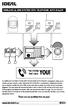 BAT.LOW AC WIRELESS ALARM SYSTEM WITH TELEPHONE AUTO DIALER THE SYSTEM THAT CALLS YOU! Our WIRELESS ALARM SYSTEM WITH TELEPHONE AUTO DIALER is designed to allow you to create your own security system.
Motorola C12A. Digital Cordless Telephone with Digital Answering Machine. For C1211A, C1212A, C1213A and C1214A
 Digital Cordless Telephone with Digital Answering Machine Motorola C12A For C1211A, C1212A, C1213A and C1214A Warning: Charge the handset for 24 hours before use. Welcome... to your new Motorola C12A Digital
Personal USB VoIP Gateway User s Guide
 Personal USB VoIP Gateway User s Guide Contents Contents... 2 Welcome... 3 Package Contents...4 Requirements... 5 USB Gateway Installation... 6 Enabling USB GATEWAY... 18 USB GATEWAY States... 20 USB Gateway
GSM Door Phone System
 GSM Door Phone System System Installation, Setting and Operation Manual User Manual (263-S V1) Please read this user manual completely before operating this system and keep it in a safe place for future
DPH-50U VoIP USB Phone Adapter Quick User Guide
 DPH-50U VoIP USB Phone Adapter Quick User Guide Version 1.0 TABLE OF CONTENTS 1. INTRODUCTION...3 2. PACKAGE CONTENTS...4 3. REQUIREMENTS...5 4. DPH-50U INSTALLATION...6 5. ENABLING DPH-50U...16 6. DPH-50U
1 All safety instructions, warnings and operating instructions must be read first.
 ONYX USER MANUAL 2 Dateq ONYX Manual Safety instructions EN Safety instructions 1 All safety instructions, warnings and operating instructions must be read first. 2 All warnings on the equipment must be
PRODUCT WARRANTY. Page 20
 PRODUCT WARRANTY Manufactured equipment is warranted to be free from defects in material and workmanship for a period of twelve (12) months from date of manufacture as indicated by the date stamp and/or
FORUM 100 PBX 1/8 with CLIP & CNIP USER MANUAL
 FORUM 100 PBX 1/8 with CLIP & CNIP USER MANUAL Dear Customer, Thank you for choosing the FORUM TM 100 PBX, a system designed for both the home and the office. The FORUM TM 100 manages 1 external and 8
STATUS POWER MONITOR ALARM SOS DISARM
 STATUS POWER MONITOR ALARM SOS DISARM I. Features II. Preparation before use III. Host 1.LED status explanation 2. Host panel IV. System Settings 1. Coding of wireless sensors 2. Exit coding 3. Settings
AT&T MERLIN COMMUNICATIONS SYSTEM USER S GUIDE MODELS 206, 410 AND 820 WITH FEATURE PACKAGE 2
 AT&T MERLIN COMMUNICATIONS SYSTEM USER S GUIDE MODELS 206, 410 AND 820 WITH FEATURE PACKAGE 2 Table of Contents Page Page Available Features Key to Symbols Placing and Answering Calls Line Buttons and
Mini-PBX Telephone Switching System User and Installation Guide
 Mini-PBX Telephone Switching System User and Installation Guide Model: TSS308GE-A NZ Imported, Distributed and Serviced by: Atlas Gentech (NZ) Limited 87 Carbine Road Mt Wellington Auckland NZ Ph: (09)