
JOURNAL OF FOREST SCIENCE, 54, 2008 (10):
|
|
|
- Derrick Tate
- 10 years ago
- Views:
Transcription
1 JOURNAL OF FOREST SCIENCE, 54, 2008 (10): Characteristics of 3 rd (Querci-fageta s. lat.) and 4 th (Fageta (abietis) s. lat.) vegetation tiers of north-eastern Moravia and Silesia (Czech Republic) O. Holuša 1,2, J. Holuša 2, Sr. 1 Faculty of Forestry and Wood Technology, Mendel University of Agriculture and Forestry in Brno, Brno, Czech Republic 2 Forest Management Institute Brandýs nad Labem, Branch Office Frýdek-Místek, Czech Republic AbstraCt: Detailed characteristics (tree species composition, tree representation, identification features) are presented by 3 rd (i.e. geobiocenoses of Querci-fageta s. lat.) and 4 th (Fageta (abietis) s. lat.) vegetation tiers in north-eastern Moravia and Silesia. 3 rd VT occupies 45.6% of the study area from 190 m a.s.l. up to 430 m a.s.l. Fagus sylvatica is a dominant tree (with the height of m). Quercus robur and Quercus petraea have their ecological optimums there with the representation of up to 30%. Abies alba occurs in the crown level with the representation of up to 10%. 4 th occupies 35.2% of the study area from 310 m a.s.l. up to 650 m a.s.l. Fagus sylvatica is dominant (the height over 50 m). Abies alba occurs in the co-dominant level (sporadically in the level exceeding the main level) with the representation of ±20% and the height of up to 50 m. Quercus petraea and Quercus robur occur only as an interspersed species with the representation of up to 10%, they do not reach the co-dominant tree level any more. Carpinus betulus is represented regularly only in the overtopped tree level. Keywords: forest-typological classification system; vegetation tiers; Querci-fageta s. lat.; Fageta (abietis) s. lat.; characteristics of forest ecosystems; north-eastern Moravia and Silesia; Czech Republic The vegetation arrangement in tiers (Kolektiv 1995) means a phenomenon of changes of the species composition of natural phytocenoses including their edificators with a change of macroclimate in vertical direction in a certain geographical entity. The height arrangement in tiers is very often expressed according to the orography of the terrain in geographical zones. When taking into account the continuity of vegetation differences with the continuity of differences of height and exposure climate, it is referred to as vegetation tiers (Zlatník 1975, 1976a). Vegetation tiers (futher only the VT) were determined and already used by Professor Alois Zlatník at the end of the 60 th of the 20 th century (Zlatník 1959, 1963) but without the definition of the VT and their characterictics. Zlatník (1976a) published the first definition in his further work: VT is the ecological superstructure unit of geobiocenological units in relation to the climate which has an influence on the landscape sections. VTs are determined according to the ecological manifestation of different species combination of sections of guide series, where the difference of the climate influence on the composition of tree and undergrowth synusia is minimally disrupted by the local absence of water, or on the contrary, other than atmospheric water. A Supported by the Ministry of Education, Youth and Sports of the Czech Republic, Project No. MSM of Mendel University of Agriculture and Forestry in Brno, Faculty of Forestry and Wood Technology. J. FOR. SCI., 54, 2008 (10):

2 more comprehensible formulation was published by Králíček and Povolný (1978): VT is a biocenological (geobiocenological) construction unit which reflects the influence of climate on the composition of chtonophytic synusia of biocenoses (geobiocenoses) and which is determined by this composition. A similar definition was published by Randuška et al. (1986): VT is an overall prevailing climax geobiocenosis which is determined by vegetation including alternate geobiocenoses in certain regions and which is subject to the macroclimate and mesoclimate in conditions with a changing altitude. Zlatník (1976b) states that VTs are determined by differentiation species, that are, in the first place, tree or shrub determinants of the main level synusia of natural forest and shrub geobiocenoses and by vascular plants in general responding to the vegetation period length and negative features of the climate in a significant way. It means that VTs are recognisable mainly on the basis of representation and life manifestation of tree species (s. lat.). Zlatník (1976a) distinguishes 8 vegetation tiers, one VT as alpine and one VT subnival (however, AZ subnival has been identified in the High Tatras only) in the former Czechoslovakia. The terms of VTs were defined according to the names of the main trees in the natural geobiocenoses. The systematics of Plíva (1971) comes from Zlatník s classification of VT, with the difference that the forest VTs are the subject of the main interest. The main difference is in the division of 6 th VT (Abieti-fageta piceae s. lat.) on the basis of the proportional representation of Fagus sylvatica L. and Picea abies (L.) Karsten into two VTs: 6 th VT (Picei-fageta s. lat.) and 7 th VT (Fageti-piceeta s. lat.). The following tree species are the carriers of the vegetation tiers in the Czech Republic: the sessile oak (Quercus petraea (Mattuschka) Liebl.), English oak (Quercus robur L.), European beech (Fagus sylvatica), silver fir (Abies alba Mill.), Norway spruce (Picea abies), and Carpathian pine (Pinus mugo Turra). VTs were named according to these tree species because of their dominance in certain zones. Some other tree species also occur in particular VTs and their occurrence and representation help to determine the relevant VTs: the pubescent oak (Quercus pubescens Willd.), Turkey oak (Quercus cerris L.), European hornbeam (Carpinus betulus L.), Norway maple (Acer platanoides L.), small-leaved linden (Tilia cordata Mill.), large-leaved linden (Tilia platyphyllos Scop.), field maple (Acer campestre L.), European larch (Larix decidua Mill.), wild service tree (Sorbus torminalis (L.) Crantz), cherry tree (Padus avium (L.) L.), sycamore maple (Acer pseudoplatanus L.), and scotch elm (Ulmus glabra Huds.). On the contrary, some eurytopic tree species have no relation to any particular VT and they occur in a large range of VTs f.e. The European birch (Betula pendula Roth), Scotch pine (Pinus sylvestris L.), and European mountain ash (Sorbus aucuparia L.) (Holuša, Holuša 2001). Any detailed characteristics including determination characters have not yet been processed. Plíva (1971) published an approximate climatic characteristics for vegetation forest tiers with brief information about the tree species composition with notes about the vitality of particular species. A very brief characteristics for forest vegetation tiers (including the VT of Pineta mugi i.e. 9 th ) with information about the tree species composition, records of tree species optimums, and climatic characteristics were published by Plíva (1991). Buček and Lacina (1999) published detailed characteristics of the VT which include the biogeographical frame and occurrence, ecotype features, and decription of the biocenoses state. Viewegh et al. (2003) made the survey of forest-typological system public, but without any definitions of frames (e.g. vegetation tiers, ecological series, edaphica categories) and lower units. Some brief information (occurrence, climatic characteristics, verbal decription of tree species participation, information about tree species optimums and brief tree species occurrence) about forest vegetation tiers (including the VT of Pineta mugi) were published by Viewegh (2003). Detailed characteristics with the decription of biogecenosis natural state (occurrence of plant species, occurrence of tree species, and relationship to geobotanical units) were published by Buček et al. (2005). The aim of the article is to bring out detailed characteristics of 3 rd and 4 th vegetation tiers with respect to the occurrence, representation, and life state of trees species as the main edificators. study area The study area lies in the north-eastern Moravia and Silesia (i.e. the very eastern part of the Czech Republic see Fig. 1). The study area is approximately defined by this line: the state border between the Czech Republic and Slovakia and Poland near Hrčava village the state border between the CZ and Slovakia up Makyta Mt. Pulčín village Pozděchov village Liptál village Držková village Humenec Mt. Kelč village Lipník nad Bečvou town Potštát village Staré Oldřůvky village Dvorce village Lichnov village Krnov town Vrbno pod Pradědem town Rejvíz village Heřmanovice 440 J. FOR. SCI., 54, 2008 (10):

3 Fig. 1. Spread of 3 rd vegetation tier (Querci-fageta s. lat.) in the study area (azonal geobiocenoses of flood plains are not marked in the frame of the territory of the VT); lines A A, B B represent positions of profiles (see Figs. 9, 10); on the left side drawing of the study area in the Czech Republic village Petrovice village the state border with Poland to the state border with Slovakia. As far as the division of Natural forest areas (futher only the NFA) (Plíva, Žlábek 1986) is concerned, the following Natural forest areas are these: the whole territory of the NFA 39 the Podbeskydská pahorkatina hills, the NFA 40 the Moravskoslezské Beskydy Mts., and a predominant part of the NFA 32 Slezská nížina lowland (except the region of Vidnava town), further the following parts of these NFAs: the eastern half of the NFA 29 Nízký Jeseník hills and the eastern half of the NFA 41 the Hostýnsko-vsetínské vrchy hills and the Javorníky Mts., the eastern part of the NFA 28 the Předhůří Hrubého Jeseníku Mts. foothills, and then only a small northern part of the NFA 37 Kelečská pahorkatina hills and the very eastern hook of the NFA 34 Hornomoravský úval dale. The very western part of the study area slightly penetrates into the NFA 27 Hrubý Jeseník Mts. The study area represents the region where forest-typological mapping was carried out by the authors. The study area comprises the following subprovincies with respect to the biogeographical division (Culek 1996): Hercynic subprovincy (i.e. NFAs 28, 27, 29), Polonic subprovincy (i.e. NFAs 32, 39), and West-Carpathian subprovincy (i.e. NFAs 39, 40 and 41). The lowest point of the study area lies in the lowland of the Odra River at elevation 193 m a.s.l. i.e. the point where the Odra River leaves the territory of the Czech Republic. The alluvium of the Odra River is followed eastwards by flat hills that change into uplands and later highlands of the Moravskoslezské Beskydy Mts. with the highest point Lysá hora Mt. (1,328.4 m a.s.l.). The alluvium of the Odra River is followed eastwards by flat hills that change into uplands and later highlands of the Hrubý Jeseník Mts. with the highest point of the study area in this part Medvědí vrch Mt. (1,216 m a.s.l.). Material and Methods The forest-typological classification system was used for the classification of ecological conditions Fig. 2. Spread of 4 th vegetation tier (Fageta (abietis) s. lat.) in the study area (azonal communities of flood plains are not marked in the frame of the territory of the VT) J. FOR. SCI., 54, 2008 (10):

4 of geobiocenoses. It is used in the forest practice in the Czech Republic (Plíva 1971, 1991). The author s records were found by our own forest-typological mappings in the study area during the period The forest-typological mappings in the study area including the determination of the vegetation tiers were done by the authors in the frame of the recovery of Forest management plans of individual Management-plan areas, later by the examination of natural conditions within the Regional plans for forest development. The individual Managementplan areas (futher only the MPA) were elaborated in the following years: 1971 the MPA Velké Karlovice, 1972 the MPA Hrozenkov, 1973 the MPA Bečvy, 1974 the MPA Rožnov pod Radhoštěm, the MPA Valašské Meziříčí, 1975 the MPA Opava, 1976 the MPA Hlučín, the MPA Opava, the MPA Vsetín, 1977, 1978 the MPA Albrechtice, the MPA Jablůnka, 1982 the MPA Vítkov, 1983, 1984 the MPA Ostravice, the MPA Velké Karlovice, 1985 the MPA Rožnov pod Radhoštěm, 1986 the MPA Rožnov pod Radhoštěm, 1987 the MPA Jablunkov, the MPA Opava, the MPA Šenov, 1988 the MPA Vsetín, 1989 the MPA Frýdek-Místek, 1990 the MPA Albrechtice, 1991 the MPA Vítkov, 1992 the MPA Frenštát pod Radhoštěm, 1993 the MPA Ostravice, 1994 the MPA Velké Karlovice, 1995 the MPA Rožnov pod Radhoštěm, 1996 the MPA Jablunkov, the MPA Opava, 1998 the former MPA Vsetín, 1999 the MPA Frýdek-Místek, 2001 the MPA Frenštát pod Radhoštěm and 2002 the MPA Ostravice. Total revision of the forest-typological mapping was done over the whole territory of the MPA. 150 to 220 phytosociological releves were surveyed in the geobiocenological research areas in each MPA. The soil was sampled in geobiocenological areas. After the year 1981, ca 20 geobiocenological areas (per ca 20,000 ha) were revised and also ca 40 pedological samples were taken there. This methodology was used within the frame of the field mapping of the Regional plans for forest development. Phytosociological releves were revised at the geobiocenological plots as squares of m. The best-preserved geobiocenoses were in the study focus (i.e. the level of naturalness 1 or 2 according to Ellenberg 1973, 1978). Transects of the size of m were set out for the description of the forest stand structure at the best-preserved plots. Dendrological measurements were made on the plots with regard to the highest trees. Photos were taken at some representative geobiocenoses in the vegetation period. Phytosociological releves were elaborated using the SW Turboweg for Windows and evaluated using the SW Juice version 6.5. The plant species were sorted into vegetation bands according to Zlatník (1959) and added according to Ambros and Štykar (2001) for the evaluation of the vegetation band representatives in the interpretation of Schmid (1939, 1949). The following abbreviations are used for the vegetation bands: QTA Quercus Tilia Acer, QRC Quercus robur Calluna, FA Fagus Abies, P Picea and LPC Larix Pinus cembra. The nomenclature of the plant and tree species is used according to Kubát et al. (2002). The climatic characteristics are defined according to Tolasz (2007). The classification of the soil types and subtypes is used according to Němeček et al. (2001). results and DiscusSion Characteristics of the vegetation tiers 3 rd vegetation tier Querci-fageta s. lat. oak-beech The composition and structure of geobiocenosis Fagus sylvatica is a dominant tree which creates the main level of geobiocenosis. It reaches the height of m (see Figs. 5 and 7). Rambousek (1990) characterises the Fagus sylvatica in the 3 rd vegetation tier as a hillock climatype with above-average characteristic (the height, diameter at breast height, differential position of trees, the size of crowns, dichotomy, branch massive), the representation of straight trunks is up to 20% (as a significant determination character). Of Fagus sylvatica trees ca 30 40% exceed the main level in the constitution of stands. Quercus sp. (Quercus robur, Quercus petraea) have their ecological optimum in 3 rd VT. They occur with the representation of up to 30%. They reach also into the crown level (see Fig. 5). Quercus petraea occurs in the western and southern parts of the study area (i.e. NFAs 28, 29, 32, 37 and 41) and Quercus robur occurs in the north-eastern part (i.e. NFAs 39 and 40). Abies alba occurs in the crown level with the representation in oligotrophic and also eutrophic series up to 10%. Buček and Lacina (1999) admit the representation of Abies alba in 3 rd VT exclusively in limited series only. Carpinus betulus is very common (only in the subordinate tree level with the representation of up to 10%), further in the co-dominant tree level occur individually Tilia cordata, Tilia platyphyllos, Acer platanoides, Fraxinus excelsior, Ulmus glabra, Padus avium, locally also Acer pseudoplatanus, in the subordinate tree level occur individually Acer campestre and Malus sylvestris. Sorbus torminalis occurs in the study area sporadically (only 442 J. FOR. SCI., 54, 2008 (10):

5 in the NFA 41). Buček and Lacina (1999) report that the occurrence of Tilia cordata and Sorbus torminalis ends in 3 rd VT. Quercus dalechampii and Quercus polycarpa occur in 3 rd VT in the region of southern Moravia. The following shrub species occur in 3 rd VT in the shrub level: Sambucus nigra, Hedera helix, Crataegus laevigata, Crataegus praemonticola, Daphe mezereum, locally also Evonymus europaea and in bright places Frangula alnus. The occurrence is possible of Lonicera xylosteum (Buček, Lacina 1999). The occurrence of termophilous shrub species ends there in 3 rd VT (f.e. Ligustrum vulgare). Differential signs The dominance of Fagus sylvatica; Quercus sp. stay in the forest stand structure in the co-dominant tree level; higher representation of Carpinus betulus; coppice forests consist of the following tree species: Quercus petraea, Carpinus betulus, Tilia cordata, Betula pendula, and Populus tremula. The plant species Polygonatum multiflorum is an indication species which does not reach higher VTs. Is it possible to expect the natural representation of Pinus sylvestris in 3 rd VT in the western part of the NFA 32 and the northern part of the NFA 29 (i.e. western part of the Opavský biogeographical region, up to the crossing in the Krnovský biogeographical region Culek 1996). Pinus sylvestris has occurred in natural geobiocenoses of 3 rd VT in the Krnovský biogeographical region (above all in the habitats of Forest type complexes 3H, 3C, 3O) (Holuša, Holuša 2000). Its occurrence is determined there by specific soil and climatic conditions. The plant species typical of Central-European deciduous forests (= broadleaved forest in the concept of Jeník 1995) are dominant in the undergrowth e.g. Senecio ovatus, Oxalis acetosella, Asperula odorata, Viola reichenbachiana, and Asarum europaeum. There are species typical of higher VTs Rubus idaeus and Rubus hirtus. Carex brizoides is a very common and dominant species in the undergrowth in the study area. The plant species of the FA vegetation band are dominant, further the species of the QTA and QRC vegetation bands, possibly also the species belonging to two vegetation bands FA (QTA), P representatives individually descend there from higher VTs. Character of ecotope 3 rd VT occupies places of table-lands and gentle slopes of uplands (see Figs. 1, 9 and 10), along the alluviums of rivers in the lowest parts of the study area. It occupies places in the altitude from 190 to 440 m a.s.l. with the centre of occurrence in the interval of m a.s.l. The upper border of 3 rd VT can stand out sporadically in southern aspects up to 460 m a.s.l. (Fig. 3). 3 rd VT occurs from 300 to 500 m a.s.l. according to Buček and Lacina (1999), exceptionally up to 600 m a.s.l. Great overlapping of loess loams is very common on the tablelands in NFA 32 and NFA 39. Soil types are represented by luvisols (typical, pseudogley, arenic) and cambisols (arenic, typical, pseudogley), sporadically pararendzinas, podzols, and regosols are represented there. 3 rd VT occurs in the W2 climatical regions with the average year temperature of 7.8 C and the average annual precipitation of 750 mm, the average length of the vegetative period being 162 days. Occurrence 3 rd VT dominates in the whole NFA 32. It occupies large areas in the lowest parts of NFA 39 which are Area (ha) 50,000 45,000 40,000 35,000 30,000 25,000 20,000 15,000 10,000 5, Area (ha) Altitude (m a.s.l.) Fig. 3. Graph of the occurrence of 3 rd vegetation tier (Querci-fageta s. lat.) in the intervals of the altitude in the study area J. FOR. SCI., 54, 2008 (10):

6 Area (ha) Area (ha) 30,000 27,500 25,000 22,500 20,000 17,500 15,000 12,500 10,000 7,500 5,000 2, Altitude (m a.s.l.) Fig. 4. Graph of the occurrence of 4 th vegetation tier (Fageta (abietis) s. lat.) in the intervals of the altitude in the study area in contact with broad alluviums of the Opava, Odra, Ostravice and Olše rivers. 3 rd VT is sporadical in the lowest parts on the foothills of NFA 40. It has a relatively extensive occurrence in NFAs 29 and 37 (Fig. 1). The most widespread communities in 3 rd VT in the study area are: forest type complexes (further FTC) 3H (Querceto-Fagetum illimerosum trophicum), FTC 3S (Querceto-Fagetum mesotrophicum), (m) Fagus sylvatica Carpinus betulus Quercus robur Tilia cordata Fig. 5. Transect of the forest stand structure of 3 rd vegetation tier (Querci-fageta s. lat.) (locality Šilheřovice Černý les, 248 m a.s.l.) 444 J. FOR. SCI., 54, 2008 (10):

7 FTC 3D (Querceto-Fagetum acerosum deluvium), FTC 3B (Querceto-Fagetum eutrophicum) and FTC 3O (Abieti-Querceto-Fagetum variohumidum trophicum). 3 rd VT occurs at present on 45.6% of the study area (including also non-forest land) (Fig. 1). It is dominant in the territory of Moravia and Silesia in the Středomoravské Karpaty hills, in the part of the Bílé Karpaty Mts., in the foothills of the Českomoravská vrchovina hills, in the foothills of the Nízký Jeseník hills, in the Zábřežská vrchovina hills, in the Moravská brána, in the lower parts of the Podbeskydská pahorkatina hills and the Opavská pahorkatina hills; in the whole territory of the Czech Republic it occupies 18% of the area (according to Buček, Lacina 1999). It occurs on the 22.91% of the territory of Slovakia Križová (2000). 3 rd VT belongs to the zonobiome of temperate decidious broadleaved forests of the moderate band in the sorting conception by Walter (1979) and Míchal (1988). Present condition of forest geobiocenosis The tree species composition was changed by the elimination of Fagus sylvatica in major parts of forest geobiocenoses. Stands composed of Quercus robur, Q. petraea and Carpinus betulus were created by cultivation of coppice forest. Abies alba is almost completely missing at present. Large areas were changed into monocultures of Picea abies. Geobiocenoses with natural characteristic are preserved only sporadically in the study area in the Natural reserve of the Černý les I. (cadastral territory of the Šilheřovice village) (Fig. 7). 4 th vegetation tier Fageta (abietis) s. lat. beech The composition and structure of geobiocenosis Fagus sylvatica is dominant in 4 th VT, which has its ecological optimum there. It can reach the height (m) Fagus sylvatica Carpinus betulus Quercus robur Tilia cordata Fig. 6. Transect of forest stand structure of 4 th vegetation tier (Fageta (abietis) s. lat.) (locality Rychaltice Palkovické hůrky, 522 m a.s.l.) J. FOR. SCI., 54, 2008 (10):

8 over 50 m (Fig. 6). The highest specimen measured of Fagus sylvatica in the study area has the height of 47.5 m. Rambousek (1990) characterised Fagus sylvatica in 4 th VT as a hillock climatype with the same signs as for 3 rd VT. Abies alba occurs in the co-dominant level, sporadically in the level exceeding the main level. It can reach the representation of ±20% and the height of up to 50 m. Randuška et al. (1986), also Ambros (1991), admit the occurrence of Abies alba only on the contact band with 5 th VT (i.e. Abieti-fageta s. lat.). Quercus sp. Quercus petraea and Quercus robur occur only as interspersed species with the representation to 10%, they do not reach the co-dominant tree level. Quercus petraea is substituted by Quercus robur, as in 3 rd VT, in a part of the study area (in NFAs 39 and 40). Quercus robur occurs also in higher places of uplands in the altitude m a.s.l. Carpinus betulus is represented regularly, but in the forest stand structure only in the overtopped tree level. Buček and Lacina (1999) reported only a sporadical occurrence of Carpinus betulus in 4 th VT. Plíva (1991) does not admit it for natural communities. Tilia cordata, Tilia platyphyllos, and Fraxinus excelsior occur in the co-dominant tree level. Also Acer platanoides, Acer pseudoplatanus, Ulmus glabra, and Padus avium are co-dominant and overtopped tree levels. Tilia cordata, Tilia platyphyllos, and Acer platanoides have their ecological optimum. All the above-mentioned tree species occur also on hydric normal mesotrophic ecological habitats (Holuša, Holuša 2000). Acer campestre and Taxus baccata can occur individually in the overtopped tree level. Sorbus torminalis also occurs in the southern part of the study area (i.e. the NFA 41) in 4 th. The occurrence of Sorbus torminalis, Acer campestre and Carpinus betulus ends towards higher VTs. The participation of some tree species (above all of Quercus petraea and Abies alba) is stated by Buček and Lacina (1999) only for mineral-poor underbed, they do not admit the occurrence of Tilia cordata and Sorbus torminalis in 4 th. Sambucus nigra, Euonymus europaea, Crataegus laevigata, Crataegus premonticola, Daphne mezereum, Grossularia uva-crispa are present in the shrub level, in bright places Frangula alnus, locally Sambucus racemosa, and sporadically Ribes alpinum. Lonicera xylosteum and Rosa pendulina can also occur according to Buček and Lacina (1999). Fagus sylvatica can create clear forest stands in some parts (Plíva 1991; Buček, Lacina 1999). Fig. 7. Demonstration of natural geobiocenosis of 3 rd vegetation tier (Querci-fageta s. lat.) (locality Šilheřovice Černý les, 248 m a.s.l.) Fig. 8. Demonstration of natural geobiocenosis of 4 th vegetation tier (Fageta (abietis) s. lat.) (locality Rychaltice Palkovické hůrky, 518 m a.s.l.) 446 J. FOR. SCI., 54, 2008 (10):

9 1,300 1,200 1,100 1, Bílý Kříž Lysá hora 4 th vegetation tier 3 rd vegetation tier Morávka Frýdek-Místek Ostravice Ostrava Odra Landek Opava Chuchelná (m a.s.l.) km NFA 40 NFA 39 NFA 29 NFA 32 Fig. 9. Profile in the A A profile terrain in the study area with marked 3 rd and 4 th vegetation tiers th vegetation tier 3 rd vegetation tier Bečva Odra Moravice Hvozdnice Hvozdnice Hořina Opava Ježník Město Albrechtice Osoblaha Hořina Čižina (m a.s.l.) km NFA 37 NFA 29 NFA 28 NFA 32 Fig. 10. Profile in the B B profile terrain in the study area with marked 3 rd and 4 th vegetation tiers J. FOR. SCI., 54, 2008 (10):

10 Differential signs The dominance of Fagus sylvatica which reaches the heights of up to 40 m in cutivated forest stands; Quercus sp. are present only in the overtopped tree level; Carpinus betulus is strongly overtopped (Fig. 6); coppice forests compositions contain Quercus robur (Quercus petraea), Betula pendula, Tilia cordata, and Carpinus betulus (only as admixture species); in contrary to 3 rd VT, Polygonatum verticilatum also occurs, individually also some plant species typical of higher VTs f.e. Prenanthes purpurea. Plant species of Central-European broadleaved forest (= deciduous broadleaved forest in the concept of Jeník 1995), are dominant in the undergrowth f.e. Senecio ovatus, Oxalis acetosella, Asperula odorata, Actea spicata, Rubus idaeus, Rubus hirtus, commonly occurring ferns are Athyrium filix-femia, Dryopteris filix-mas. Species, which are typical of higher VTs begin to occur Prenanthes purpurea, Calamagrostis villosa, and Polygonatum verticilatum. Plant species of the FA vegetation band are strongly dominant (the most of all VTs), FA (QTA) vegetation bands species are very common, and also species of QTA, only sporadically there are species of QRC or P vegetation bands. Individually, species occur of three vegetation bands FA (P, LPC) or of two bands LPC, P. Character of ecotope 4 th VT occupies places of the uplands and lowest parts of mountains (Figs. 2, 9 and 10). It occurs in the altitude from m a.s.l. with the centre of occurrence in the interval of m a.s.l., locally up to 680 m a.s.l. (Fig. 4). Buček and Lacina (1999) give the occurrence from 400 to 700 m a.s.l., in the Carpathians Mts. up to 800 m a.s.l. Cambisols (typical, eutrophic, sporadically also dystric and pseudogley), are less frequent then podzols (cambic, typical), rarely do occur the soil types (subtypes) pararendzinas, rankers or regozems. The territory of 4 th VT belongs to climatic regions MW7 and MW2 with the average year temperature of 6.8 C, average annual precipitation of 960 mm, average length of the vegetative period of 144 days. Occurrence 4 th VT occupies large areas in NFA 41, coherent areas in the highest parts of NFA 39, and some proportions of the lowest parts of NFA 40. Large areas of 4 th VT are also in NFA 29 (Fig. 2). The most widespread communities in the study area are the following ones: FTC SoLT 4B (Fagetum eutrophicum), FTC 4S (Fagetum mesotrophicum), and FTC 4D Fagetum acerosum deluvium). 4 th VT occurs on the 35.2% of the study area (including also non-forest land) (Fig. 2). Buček and Lacina (1999) reported a widespread occurrence of 4 th VT in the Českomoravská and Drahanská vrchovina hills, the Nízký Jeseník hills, in the Carpathian Mts., then in the Chřiby Mts., Bílé Karpaty Mts., in the Hostýnsko-vsetínská and Vizovická vrchovina hills. 4 th VT is according to these authors the most widespread VT in the Czech Republic with the area of 36%. 4 th VT covers 19.70% (Križová 2000) in Slovakia. 4 th VT was not marked by the first forest-typological mapping, its area having been involved into 5 th VT, and partially into 3 rd VT. It was mapped additionally and it has not been mapped yet in some areas (Kusbach 2000). Plíva (1991) states that it is similarly strongly underrated at present in the Czech Republic (total area covers only 5.7%!). 4 th VT represents the suborobiome which is analogical to the zonobiome of temperate decidious broadleaved forests of the moderate band in the interpretation of sorting by Walter (1979) and Míchal (1988). The authors state that 4 th VT belongs directly to the zonobiome, because it occurs in the region of this zonobiome and is not extrazonal orobiome which would correspond to other zonobiomes occurring out of the temperate decidious broadleaved forests of the moderate band. Present state of forest geobiocenosis Forest geobicenoses have been influenced in 4 th VT by strong human activities as deforestation, and also by radical changes of the tree species composition. Major areas have been changed to monocultures of Picea abies. A typical lower representation occurs of Abies alba, Quercus robur, Acer platanoides, and Ulmus glabra etc. in the forest stands of Fagus sylvatica. The highest decrease has been recorded with Abies alba which occurs individually at present. Abies alba has a more common representation in the forest stands in NFA 41. Geobiocenoses having natural character with a very rich tree species composition (Fagus sylvatica, Abies alba, Quercus robur, Acer platanoides, Acer pseudoplatanus, Ulmus glabra, Fraxinus excelsior, Tilia cordata, Tilia platyphyllos, and Carpinus betulus) are preserved in the Natural Reserve of the Palkovické hůrky (cadastral territory Rychaltice village, see Fig. 8), partly also in the Natural Monument of the Hradní vrch Hukvaldy (cadastral territory Sklenov). Tichý (1970, 1971) used the name of 4 th VT as beech with fir (i.e. Fageta abietis s. lat.) on the basis of numerous natural representations of Abies alba in this VT. Those areas were incorrectly marked in the first mappings in 5 th VT due to this occurrence of 448 J. FOR. SCI., 54, 2008 (10):

11 Abies alba. The authors of this article propose the use of the term Fageta abietis s. lat. with respect to the representation of Abies alba in the natural and nearnatural forest geobiocenoses in the study area, also with respect to the natural composition published by Plíva (1991) and also to the records by Tichý (1970, 1971). The term will be useful for an easier marking of this VT and also for an easier understanding of the forest-typological classification system. conclusion and summary Vegetation tiers represent the basic superstructure units of the forest-typological (or geobiocenological) classification systems. VTs are marked according to the ecological manifestation of differential species combination of sections of guide series, being determined by different species (in the first place tree or shrub determinants!) of the main level synusia of natural forest and shrub geobiocenoses and by vascular plants in general responding in a significant way to the vegetation period length and negative features of climate. Not only the occurrence of tree or shrub determinants is very significant for the evaluation and characteristics of the vegetation tiers, but also their life manifestations the position in the forest stand structure, growth, regeneration. 3 rd VT represents the geobiocenosis of Quercifageta s. lat., it occupies 45.6% of the study area from 190 m a.s.l. up to 430 m a.s.l. with the centre of occurrence in the interval of m a.s.l. Fagus sylvatica is a dominant tree which creates the main level of geobiocenosis (with the height of m) there. Quercus sp. (Quercus robur, Quercus petraea) have their ecological optimum there with the representation of up to 30%. They also reach into the crown level. Abies alba occurs in the crown level with the representation of up to 10%. In the co-dominant tree level Tilia cordata, Tilia platyphyllos, Acer platanoides, Fraxinus excelsior, Ulmus glabra, and Padus avium occur individually, locally also Acer pseudoplatanus, in the subordinate tree level occur individually Carpinus betulus (with the representation of up to 10%), Acer campestre, and Malus sylvestris. Sorbus torminalis occurs sporadically in the study area. 4 th VT represents the geobiocenosis of Fageta abietis s. lat., it occupies 35.2% of the study area from 310 m a.s.l. up to 650 m a.s.l. with the centre of occurrence in the interval of m a.s.l. Fagus sylvatica is dominant in 4 th VT, which has its ecological optimum there (the height over 50 m). Abies alba occurs in the co-dominant level (sporadically in the level exceeding the main level) with the representation of ±20% and the height of up to 50 m. Quercus petraea and Quercus robur occur only as interspersed species with the representation of up to 10%, they do not reach the co-dominant tree level. Carpinus betulus is represented regularly only in the overtopped tree level. Tilia cordata, Tilia platyphyllos, and Fraxinus excelsior occur in the co-dominant tree level. There are also Acer platanoides, Acer pseudoplatanus, Ulmus glabra and Padus avium as codominant and overtopped tree levels. Tilia cordata, Tilia platyphyllos, and Acer platanoides have their ecological optimum. Acer campestre and Taxus baccata can occur individually in the overtopped tree level. Sorbus torminalis also occurs in the southern part of the study area (i.e. the NFA 41) in 4 th VT. The characteristics have been drawn up on the basis of the records from Hercynic, Polonic, and West Carpathian biogeographical subprovinces, i.e. the study area involves all significant biogeographical regions of the Czech Republic with an extensive representation of forests. It is presumed that the same (or very similar) characteristics can be applied for the whole area of the Czech Republic, or with small corrections for the zone of the Central-European broadleaved forest. R e f e r e n c e s AMBROS Z., Charakteristiky skupin typů geobiocénů ČSFR. Folia Universitatis Agriculturae, Brno, VŠZ: 94. Ambros Z., Štykar J., Geobiocenologie I. [Skripta.] Brno, MZLU, LDF: 63. Buček A., Lacina J., Geobiocenologie II. [Skripta.] Brno, MZLU, LDF: 240. Buček A., Lacina J., Culek M., Grulich V., Vegetační stupně. In: CULEK M. et al., Biogeografické členění České republiky. II. díl. Praha, Agentura ochrany přírody a krajiny ČR: Culek M. (ed.), Biogeografické členění České republiky. Praha, Enigma: 347. Ellenberg H. (ed.), Ökosystemforschung. Berlin, Heidelberg, New York, Springer Verlag: 282. Ellenberg H., Vegetation Mitteleuropas mit dem Alpen in ökologischer Sicht. Stuttgart, Eugen Ulmer: 943. Holuša J. st., HOLUŠA O., Je Heraltická borovice ekotypem borovice lesní? Lesnická práce, 79: HOLUŠA J. st., HOLUŠA O., Vegetační stupňovitost západokarpatské, polonské a východní části hercynské podprovincie. In: Viewegh J. (ed.), Problematika lesnické typologie III. Sborník příspěvků ze semináře v Kostelci nad Černými lesy, Praha, ČZU, LF: JENÍK J., Ekosystémy (Úvod do organizace zonálních a azonálních biomů). Praha, Karolinum: 135. J. FOR. SCI., 54, 2008 (10):

12 KOLEKTIV, Lesnický naučný slovník. II. díl (P Ž). Praha, Ministerstvo zemědělství: 683. Králíček M., Povolný D., Versuch einer Charakteristik der Lepidopterensynusien als primärer Konsumenten in den Vegetationsstufen der Tschechoslowakei. Věstník Československé Společnosti zoologické, 52: Križová E., Lesnícká typológia na Slovensku. In: Viewegh J. (ed.), Seminář Problematika lesnické typologie II. Sborník příspěvků ze semináře v Kostelci nad Černými lesy, Praha, ČZU, LF: Kubát K., Hrouda L., Chrtek J. Jr., Kaplan Z., Kirschner J., Štěpánek J., (eds), Klíč ke květeně České republiky. Praha, Academia: 928. Kusbach A., Určení LVS základ typologického mapování. In: Viewegh J. (ed.), Seminář Problematika lesnické typologie II. [Sborník příspěvků.] Kostelec nad Černými lesy, Praha, ČZU, LF: Míchal I., Nadstavbové jednotky geobiocenologického systému v evropských souvislostech (Srovnání třídění geobiocénů podle Zlatníka a Waltera). In: Význam díla prof. Zlatníka pro současnou geobiocenologii a lesnickou typologii. [Sborník referátů.] Brno, VŠZ, LF: Němeček J., Macků J., Vokoun J., VavřÍček D., Novák P., Taxonomický klasifikační systém půd České republiky. Praha, ČZU: 79. Plíva K., Typologický systém ÚHÚL. Brandýs nad Labem, ÚHÚL: 90. Plíva K., Funkčně integrované lesní hospodářství. 1 Přírodní podmínky v lesním plánování. Brandýs nad Labem, ÚHÚL: 263. Plíva K., Žlábek I., Přírodní lesní oblasti ČSR. Praha, SZN: 313. Rambousek J., Charakteristika ekotypu karpatského buku vegetačního stupně v ČR. Zprávy lesnického výzkumu, 35: 1 4. Randuška D., Vorel J., Plíva K., Fytocenológia a lesnícka typológia. Bratislava, Príroda: 339. Schmid E., Die Vegetationskartierung der Schweiz. Bericht über das Geobotanische Forschungsinstitut Rübel in Zürich für das Jahr 1939: Schmid E., Vegetationsgürtel und Biocoenose. Berichte der Schweizerischen botanischen Gesellschaft, 51: Tichý J., Některé změny způsobené vlivem člověka v lesích v severovýchodní části podhůří Hrubého Jeseníku. Lesnictví, 16: Tichý J., Rekonstrukce některých složek přírodních geobiocenóz jako podklad pro ochranu a tvorbu krajiny. Campanula, 2: Tolasz R. (ed.), Atlas podnebí Česka. Praha, Olomouc, Český hydrometeorologický ústav, Univerzita Palackého v Olomouci: 255. Viewegh J., Klasifikace lesních rostlinných společenstev (se zaměřením na Typologický systém ÚHÚL). [Skripta.] Praha, ČZU, LF: 216. Viewegh J., Kusbach A., Mikeska M., Czech forest ecosystem classification. Journal of Forest Science, 49: Walter H., Vegetation und Klimazonen. Ökologische Gliederung der Geo-Biosphäre. Stuttgart, Gustav Fischer Verlag: 224. Zlatník A., Přehled slovenských lesů podle skupin lesních typů. Spisy Vědecké Laboratoře Biocenologie a typologie lesa Lesnické fakulty VSŽ v Brně, č. 3: Zlatník A., Die Vegetationstufen und deren Indikation durch Pflanzenarten am Beispiel der Wälder der ČSSR. Preslia, 35: Zlatník A., Ekologie krajiny a geobiocenologie. [Skripta.] Brno, VŠZ: 172. Zlatník A., 1976a. Lesnická fytocenologie. Praha, SZN: 495. Zlatník A., 1976b. Přehled skupin typů geobiocénů původně lesních a křovitých v ČSSR. Zprávy Geografického ústavu ČSAV (Brno), 13: Received for publication May 12, 2008 Accepted after corrections July 17, 2008 Charakteristiky 3. dubo-bukového (Querci-fageta s. lat.) a 4. bukového (Fageta (abietis) s. lat.) vegetačního stupně severní Moravy a Slezska (Česká republika) ABSTRAKT: Jsou prezentovány detailní charakteristiky (dřevinné druhové složení, porostní struktura, determinační znaky) pro 3. dubo-bukový (tj. geobiocenózy Querci-fageta s. lat.) a 4. bukový (geobiocenózy Fageta (abietis) s. lat.) vegetační stupeň z oblasti severovýchodní Moravy a Slezska. 3. vegetační stupeň je zastoupen na 45,6 % studované oblasti od nadmořské výšky 190 do 430 m. Dominantní dřevinou je zde Fagus sylvatica, který tvoří hlavní úroveň a dosahuje výšek m. Optimum ve 3. VS mají dále duby (Quercus robur, Quercus petraea) se zastoupením 450 J. FOR. SCI., 54, 2008 (10):

13 do 30 %, které se výškově dostávají i do úrovně. Abies alba dosahuje úrovně se zastoupením v kyselé i živné řadě do 10 %. 4. vegetační stupeň je zastoupen na 35,2 % území studované oblasti od nadmořské výšky 310 do 650 m. Dominantní je zde Fagus sylvatica, který má zde své optimum, a může dosahovat výšky přes 50 m. V úrovni, výjimečně v nadúrovni, se vyskytuje Abies alba, která může dosahovat zastoupení ±20 % a výšky až 50 m. Duby Quercus petraea, Quercus robur se vyskytují jen vtroušeně se zastoupením do 10 % a již úrovně nedosahují. Pravidelně je vtroušeně zastoupen Carpinus betulus, dosahující jen podúrovně. Klíčová slova: lesnicko-typologický systém; vegetační stupně; Querci-fageta s. lat.; Fageta (abietis) s. lat.; charakteristiky lesních ekosystémů; severovýchodní Morava a Slezsko; Česká republika Corresponding author: Ing. Otakar Holuša, Ph.D., Mendelova zemědělská a lesnická univerzita v Brně, Lesnická a dřevařská fakulta, Lesnická 37, Brno, Česká republika tel.: , fax: , holusao@ .cz J. FOR. SCI., 54, 2008 (10):

NATURAL DURABILITY OF DIFFERENT WOOD SPECIES RESULTS AFTER FIVE YEARS TESTING IN GROUND CONTACT
 NATURAL DURABILITY OF DIFFERENT WOOD SPECIES RESULTS AFTER FIVE YEARS TESTING IN GROUND CONTACT Flæte, P.O. 1, Evans, F.G. 2 & Alfredsen, G. 3 ABSTRACT Information given in EN 350-2 on natural durability
Vegetation dynamics in temperate lowland primeval forests
 0 Vegetation dynamics in temperate lowland primeval forests Ecological studies in Bialowieza forest by J.B. FALINSKI (with the assistance of Krystyna Faliriska) 1986 DR W. JUNK PUBLISHERS a member of the
Power Planting. The Right Tree in the Right Place
 Power Planting The Right Tree in the Right Place 2 Power Planting Trees and Power Lines We are committed to providing safe, reliable, low-cost electricity for the benefit of all our customers. However,
Power Planting. The Right Tree in the Right Place
 Power Planting The Right Tree in the Right Place Trees and Power Lines We are committed to providing safe, reliable, low-cost electricity for the benefit of all our customers. However, trees that grow
Certificate No. 169333-2014-AE-FIN-FINAS. This is to certify that STORA ENSO OYJ DIVISION WOOD PRODUCTS. Kanavaranta 1, 00160 Helsinki; Finland
 \ DNV BUSINESS ASSURANCE CHAIN OF CUSTODY CERTIFICATE Certificate No. 169333-2014-AE-FIN-FINAS This is to certify that Kanavaranta 1, 00160 Helsinki; Finland meets the requirements of following international
MONITORING OF DROUGHT ON THE CHMI WEBSITE
 MONITORING OF DROUGHT ON THE CHMI WEBSITE Richterová D. 1, 2, Kohut M. 3 1 Department of Applied and Land scape Ecology, Faculty of Agronomy, Mendel University in Brno, Zemedelska 1, 613 00 Brno, Czech
Coppicing systems: current knowledge from the perspective of vegetation ecology
 Coppicing systems: current knowledge from the perspective of vegetation ecology Radim Hédl, Jakub Houška, Markéta Chudomelová, Martin Kopecký, Péter Szabó, Jan Šipoš, Ondřej Vild Coppice pařezina / chồi
ANALYSIS OF TRAFFIC CAPACITY USING ARCGIS NETWORK ANALYST
 ANALYSIS OF TRAFFIC CAPACITY USING ARCGIS NETWORK ANALYST Lucie Váňová 1, Vít Voženílek 2 Abstract: The article is devoted to the analysis of the road capacity through the town Přerov. The program ArcGIS
Forest Fire Research in Finland
 International Forest Fire News (IFFN) No. 30 (January June 2004, 22-28) Forest Fire Research in Finland Effective wildfire suppression and diminished use of prescribed burning in forestry has clearly eliminated
ACTA UNIVERSITATIS AGRICULTURAE ET SILVICULTURAE MENDELIANAE BRUNENSIS
 ACTA UNIVERSITATIS AGRICULTURAE ET SILVICULTURAE MENDELIANAE BRUNENSIS Volume 63 53 Number 2, 2015 http://dx.doi.org/10.11118/actaun201563020447 DISTRIBUTION OF COMMON KINGFISHER (ALCEDO ATTHIS) IN THE
AN INVESTIGATION OF THE GROWTH TYPES OF VEGETATION IN THE BÜKK MOUNTAINS BY THE COMPARISON OF DIGITAL SURFACE MODELS Z. ZBORAY AND E.
 ACTA CLIMATOLOGICA ET CHOROLOGICA Universitatis Szegediensis, Tom. 38-39, 2005, 163-169. AN INVESTIGATION OF THE GROWTH TYPES OF VEGETATION IN THE BÜKK MOUNTAINS BY THE COMPARISON OF DIGITAL SURFACE MODELS
ORGANISATION INFORMATION FOR THE CARNIVOROUS ARTIFICIAL BAITS SHORE ANGLING TROUT UNION CUP TOUR 1 CZECH REPUBLIC 2015 VALAŠSKÉ MEZIŘĺČĺ CZECH
 ORGANISATION INFORMATION FOR THE CARNIVOROUS ARTIFICIAL BAITS SHORE ANGLING TROUT UNION CUP TOUR 1 CZECH REPUBLIC 2015 VALAŠSKÉ MEZIŘĺČĺ CZECH REPUBLIC CONTACTS In order to obtain specific information
Design for: Het Groeilokaal. By Henk Eshuis. Online PDC 2015 given by Geoff Lawton
 Design for: Het Groeilokaal By Henk Eshuis Online PDC 2015 given by Geoff Lawton Project description Through facebook I got in contact with Astrid Huijbregts (http://www.hetgroeilokaal.nl/) who is starting
INDEX PREFACE PHOTOS OF THE SCHOOLS PLANTS TREES
 INDEX PREFACE PHOTOS OF THE SCHOOLS PLANTS TREES 1 PREFACE This bulletin, The Natural Surroundings At Our Schools is one of the final products of the project activities realized in the Comenius school
Barry Garden Suburb Conservation Area - A Guide to Planning and Design
 Supplementary Planning Guidance BARRY GARDEN SUBURB The Vale of Glamorgan Adopted Unitary Development Plan 1996-2011 The Vale of Glamorgan UDP Supplementary Planning Guidance BARRY GARDEN SUBURB CONSERVATION
FOREST ROAD NETWORK PLANNING WITH STATE OF THE ART TOOLS IN A PRIVATE FOREST DISTRICT FROM LOWER AUSTRIA
 Bulletin of the Transilvania University of Braşov Series II: Forestry Wood Industry Agricultural Food Engineering Vol. 4 (53) No. 2-2011 FOREST ROAD NETWORK PLANNING WITH STATE OF THE ART TOOLS IN A PRIVATE
National Inventory of Landscapes in Sweden
 Key messages Approaching the landscape perspective in monitoring experiences in the Swedish NILS program Johan Svensson, Future Forest Monitoring, 091112 Landscape level approaches are necessary to deal
Relevance of moving window size in landform classification by TPI
 Relevance of moving window size in landform classification by TPI Zbigniew Zwoliński Institute Geoecology and Geoinformation Adam Mickiewicz University in Poznań Dzięgielowa 27, 61-680 Poznań, Poland [email protected]
Urban & Community Forest Master Plan
 Urban & Community Forest Master Plan TOWNWN OF ATWATER, NY Prepared by: Atwater Bureau of Forestry Mr. Paul Linclon, Chair in Cooperation with NY Dept. of Environmental Conservation November, 1998 Introduction
Identifying Pennsylvania Trees. Pennsylvania Forest Stewardship Program
 Identifying Pennsylvania Trees Pennsylvania Forest Stewardship Program Tree Identification In this presentation you will learn to identify trees using the Summer Key to Pennsylvania Trees. Trees can be
Opportunities and problems with introduced tree species in the Danish forests in a historical perspective
 Opportunities and problems with introduced tree species in the Danish forests in a historical perspective Peter Friis Møller Geological Survey of Denmark and Greenland [email protected] What is an exotic / introduced
Appendix A: Affordable Housing Site Inventory
 Appendix A: Affordable Housing Site Inventory Following is a brief summary of the various sites considered for the Affordable Housing Project. Each site is provided with a photo when available and a concise
FLORA AND VEGETATION OF THE CZECH REPUBLIC FLÓRA A VEGETACE ČESKÉ REPUBLIKY
 Preslia 84: 391 862 Special issue dedicated to the centenary of the Czech Botanical Society (1912 2012) FLORA AND VEGETATION OF THE CZECH REPUBLIC FLÓRA A VEGETACE ČESKÉ REPUBLIKY Edited by Petr Pyšek,
Fastigiate trees: fools gold or a winning strategy? Article in essentialarb Issue 13
 Fastigiate trees: fools gold or a winning strategy? Article in essentialarb Issue 13 BTC/17/2004 Under the ever-increasing pressure for economic growth and better living conditions in the UK, the new battleground
Flood Damage Tree and Shrub Assessment Minot Park District, North Dakota
 Flood Damage Tree and Shrub Assessment Minot Park District, North Dakota Executive Summary NDSU-North Dakota Forest Service Compiled by: Joel Nichols and Sharon Bartels, Community Forestry Specialists
How To Develop A School In A Parkland Area Of A Village
 This statement should be read in conjunction with New Leaf Studio drawing SJS342/Drg02 Strategic Landscape Proposals 1. Impacts of the proposed Development 1.1 Existing trees As far as possible the layout
Formalized approaches to Central European phytosociology
 Formalized approaches to Central European phytosociology David Zelený Masaryk University Brno, Czech Republic Formalized approaches to Central European phytosociology Standard methods of field sampling
SWOT ANALYSIS: State of forests in north western part of POLAND
 SWOT ANALYSIS: State of forests in north western part of POLAND Author: Piotr Bieniek Szczecin 2014 The State Forest (Lasy Państwowe), full name: The State Forests National Forest Holding (Państwowe Gospodarstwo
ARTICLE 25 REGULATION OF THE PLANNING, MAINTENANCE, AND REMOVAL OF TREES, SHRUBS, AND OTHER PLANTS
 ARTICLE 25 REGULATION OF THE PLANNING, MAINTENANCE, AND REMOVAL OF TREES, SHRUBS, AND OTHER PLANTS SECTION 1: DEFINITIONS PARK TREES: Park Trees are herein defined as trees, shrubs, bushes, and all other
Norwegian Forests. Policy and Resources
 Norwegian Forests Policy and Resources 21 Forestry in Norway Norway has long traditions in forestry and forest management, and for using wood in construction and as a source of energy. Sawn wood and round
30.3. - 3. 4. 2014. Brno - Czech republic. www.techagro.cz. Trade Fair for Renewable Energy Resources in Agriculture and Forestry
 International Fair of Agricultural Technology International Veterinary Fair International Forestry and Hunting Fair Trade Fair for Renewable Energy Resources in Agriculture and Forestry 30.3. - 3. 4. 2014
Human resources development in rural areas of the Czech Republic
 Human resources development in rural areas of the Czech Republic Vývoj lidských zdrojů ve venkovském prostoru ČR L. Svatošová Czech University of Life Sciences, Prague Czech Republic Abstract: al development
Fire, Forest History, and Ecological Restoration of Ponderosa Pine Forests at Mount Rushmore, South Dakota
 Fire, Forest History, and Ecological Restoration of Ponderosa Pine Forests at Mount Rushmore, South Dakota Restoration uses the past not as a goal but as a reference point for the future...it is not to
Everywhere Where Construction is in Progress
 Everywhere Where Construction is in Progress 4 ALPINE Bau CZ is joint stock company Member of PSJ Group since 2014 - has been operating on the construction market in the Czech Republic since 1992. A
Course Name: Financing and economics management
 Course Name: Financing and economics management Author: mjr. Ing. Blanka Adámková, Ph.D. Topic: T21 Place and task of economic management Course Objectives: The aim of the lecture is to establish a system
Restoration of Fire-adapted Ecosystems in the Central and Southern Appalachians
 Restoration of Fire-adapted Ecosystems in the Central and Southern Appalachians Marek Smith The Nature Conservancy 12181-A Courthouse Hill Road Warm Springs, VA 24484 [email protected] Sam Lindblom The
CITY OF SNOHOMISH Snohomish, Washington ORDINANCE 1917. Dedicated to David Zander
 CITY OF SNOHOMISH Snohomish, Washington ORDINANCE 1917 Dedicated to David Zander AN ORDINANCE OF THE CITY OF SNOHOMISH, WASHINGTON AMENDING SNOHOMISH MUNICIPAL CODE SECTIONS 14.31.020(C), 14.31.120, 14.41.030(C),
POCKWOCK - BOWATER WATERSHED STUDY
 Contents Location of Study & Treatments..... 1 Site Characteristics.............. 2 Forest Composition.............. 3 Roads.... 3 Harvesting Information........... 4 Literature Cited.................
Degree of human transformation of landscapes: a case study from Hungary
 Hungarian Geographical Bulletin 2009. Vol. 58. No 2. pp. 91 99. Degree of human transformation of landscapes: a case study from Hungary Abstract Csorba, Péter Szabó, Szilárd 1 CORINE land use categories
ICP-Forests Level I grid net and its harmonization with the National Forest Inventory in Europe and in Spain
 CONVERGENCES AND COMPLEMENTARITIES OF FOREST INFORMATION SYSTEMS ICP-Forests Level I grid net and its harmonization with the National Forest Inventory in Europe and in Spain European scope Study of scenarios
defined largely by regional variations in climate
 1 Physical Environment: Climate and Biomes EVPP 110 Lecture Instructor: Dr. Largen Fall 2003 2 Climate and Biomes Ecosystem concept physical and biological components of environment are considered as single,
Chapter 3 Communities, Biomes, and Ecosystems
 Communities, Biomes, and Ecosystems Section 1: Community Ecology Section 2: Terrestrial Biomes Section 3: Aquatic Ecosystems Click on a lesson name to select. 3.1 Community Ecology Communities A biological
3D Model of Carbon Relief in the Czech Part of Upper Silesian Coal Basin
 3D Model of Carbon Relief in the Czech Part of Upper Silesian Coal Basin Vladimír Mandrla Green Gas DPB, a.s. tř. Rudé armády 637 739 21, Paskov [email protected] Abstract. Coal mining in the Czech
Forests of the Czech Republic, State Enterprise Hluboká nad Vltavou Forest District
 Forests of the Czech Republic, State Enterprise Hluboká nad Vltavou Forest District Hluboká n.vl. Forest District GPS n 49.06049 e 14.43311 1 Stará Obora Lodge GPS n 49.08437 e 14.45508 3 Stará Obora Hunting
TREE HAZARD RISK ASSESSMENT REPORT
 TREE HAZARD RISK ASSESSMENT REPORT CLIENT: SITE: Mr Carl Denis Aylsham Manor care Home Norwich Road Norwich Norfolk NR11 6BN The grounds and gardens of Aylsham Manor Care Home Nick Coleman MSc (Arb) MArborA
The UK Timber Resource and Future Supply Chain. Ben Ditchburn Forest Research
 The UK Timber Resource and Future Supply Chain Ben Ditchburn Forest Research Timber availability The landscape of timber availability in Great Britain and the United Kingdom is moving through a period
LEROY MERLÍN FUNDACIÓN JUAN XXIII-IBERMAIL. A Study of Forest Biomass Sustainability SHOUF BIOSPHERE RESERVE, LEBANON THERMAL BIOMASS PROJECT 2013
 December 203 SHOUF BIOSPHERE RESERVE, LEBANON THERMAL BIOMASS PROJECT 203 A Study of Forest Biomass Sustainability GRUPO SYLVESTRIS SL CL Asura 34 bis Madrid 28043. SPAIN. Tel.: +34 609 04 42 6 Tel.:+34
FOLIA ENTOMOLOGICA HUNGARICA ROVARTANI KÖZLEMÉNYEK Volume 73 2012 pp. 29 33
 FOLIA ENTOMOLOGICA HUNGARICA ROVARTANI KÖZLEMÉNYEK Volume 73 2012 pp. 29 33 Seven new beetle species in the Hungarian fauna (Coleoptera) O. MERKL 1*, G. HEGYESSY 2, M. MOLNÁR 3, T. NÉMETH 1, D. SZALÓKI
CZECH HYDROMETEOROLOGICAL INSTITUTE Central Forecasting Office. Drought information
 Issued: 8-AUG-2008 CZECH HYDROMETEOROLOGICAL INSTITUTE Central Forecasting Office Drought information July 2008 was normal in the meaning of average temperature (+0,7 C above normal) as well as precipitation
A change of the climate and its impact on biodiversity
 The Czech and Turkish project A change of the climate and its impact on biodiversity Comenius Partnerships COM-BP- 2011-009 Stránka 1 NATURAL SCIENCE ATLAS Student material with exercises Biology and Zoology
Thermo-vacuum Modification of some European Softwood and Hardwood Species Treated at Different Conditions
 Thermo-vacuum Modification of some European Softwood and Hardwood Species Treated at Different Conditions Silvia Ferrari,* Ignazia Cuccui, and Ottaviano Allegretti Three softwood species, spruce (Picea
Table A1. To assess functional connectivity of Pacific marten (Martes caurina) we identified three stand types of interest (open,
 Supplemental Online Appendix Table A1. To assess functional connectivity of Pacific marten (Martes caurina) we identified three stand types of interest (open, simple, complex) but divided these into subclasses
TREES. Relief for the city. Dr. Ir. J.A. Hiemstra Ir. E. Schoenmaker - van der Bijl Drs. A.E.G. Tonneijck
 TREES Relief for the city Dr. Ir. J.A. Hiemstra Ir. E. Schoenmaker - van der Bijl Drs. A.E.G. Tonneijck 2 3 Acknowledgements This brochure has been created for Plant Publicity Holland (PPH). TexT: Dr.
Background research on the topic of urban forestry is intended to
 overview urban forestry Urban Forestry Background research on the topic of urban forestry is intended to help guide the task of integrating trees and urban forestry goals and aspirations into the Portland
Biodiversity and Ecosystem Services: Arguments for our Future Environment
 Biodiversity and Ecosystem Services: Arguments for our Future Environment How have we advanced our understanding of the links between biodiversity, ecosystem functions and ecosystem services? The issue
ENVIRONMENTAL STRUCTURE AND FUNCTION: CLIMATE SYSTEM Vol. I - Methods of Climate Classification - E.I. Khlebnikova
 METHODS OF CLIMATE CLASSIFICATION E.I. Main Geophysical Observatory, St. Petersburg, Russia Keywords: Berg s climate classification, boreal zone, climate types, desert zone, dry steppe zones, forest zones,
Keywords: Post-fire recovery; mortality; tree species; natural regeneration.
 Effects of fire on tree survival and regeneration in a Mediterranean ecosystem Filipe Xavier Catry, Francisco Castro Rego, Miguel Nuno Bugalho, Tito Lopes, Joaquim Sande Silva, Francisco Moreira Instituto
This leaflet gives advice on sensible precautions to help avoid the problem and the first steps to take if damage still occurs.
 PROTECTING YOUR HOME FROM SUBSIDENCE DAMAGE The shortage of rain experienced by much of the country during recent years has caused an increase in the amount of damage to buildings by subsidence. In extreme
A GUIDE TO PLANTING AND MANAGING TREES NEAR POWERLINES
 A GUIDE TO PLANTING AND MANAGING TREES NEAR POWERLINES FOR SAFETY S SAKE Vegetation management near powerlines The right trees in the right place provide shade, privacy, wildlife habitat and help prevent
GIS Asia Link 2 : Course of Rehabilitation and Monitoring Degraded Forest In Southeast Asia
 Application of GIS for seed/planting zones and vegetation mapping Examples from Nepal and Kenya Jens-Peter Barnekow Lillesø Forest and Landscape Denmark Purpose of presentation: Suggest a tool for selection
Geospatial Software Solutions for the Environment and Natural Resources
 Geospatial Software Solutions for the Environment and Natural Resources Manage and Preserve the Environment and its Natural Resources Our environment and the natural resources it provides play a growing
TREE PROTECTION POLICY AND SPECIFICATIONS FOR CONSTRUCTION NEAR TREES
 ` Parks, Forestry & Recreation Urban Forestry Table of Contents TREE PROTECTION POLICY AND SPECIFICATIONS FOR CONSTRUCTION NEAR TREES 1. Introduction 2. Table 1 - Tree Protection Zones 3. Tree Protection
City of Parkersburg, WV Big Tree Database Revised to 4-18 - 2015 Submissions 2003-2015
 City of Parkersburg, WV Big Tree Database Revised to 4-18 - 2015 Submissions 2003-2015 Scientific Name Common Name CBH HT CS BTP Location of Tree Flowering Trees & Ginkgo Acer negundo Boxelder, Ashleaf
Life Cycle Of A Plant Population
 Life Cycle Of A Plant Population Seed Rain n=3 Growth And Mortality n=7 Seedling Cohort n=22 Environmental Sieve Seed Bank n=5 Copyright G. Bonan 22 Suvivorship Of Seedlings In A Northern Hardwood Forest
Forestry Department. Food and Agriculture Organization of the United Nations GLOBAL FOREST RESOURCES ASSESSMENT 2010 COUNTRY REPORT TURKEY
 Forestry Department Food and Agriculture Organization of the United Nations GLOBAL FOREST RESOURCES ASSESSMENT 2010 COUNTRY REPORT TURKEY FRA2010/214 Rome, 2010 The Forest Resources Assessment Programme
INDEX SEMINUM JABLUNKOV 2015
 INDEX SEMINUM 2015 JABLUNKOV 2015 Sanatorium Jablunkov, a.s. Alej míru 442 739 91 Jablunkov Czech Republic Telephone: +420 605 324 720 E-mail: [email protected] Area: 37,5 ha Geographical location:
Determining the Age and Benefits of a Tree
 Grades: 6-8 Illinois State Science Standards: Determining the Age and Benefits of a Tree 11.A.3a Formulate hypotheses that can be tested by collecting data. 11.A.3c Collect and record data accurately using
CARBON BALANCE IN BIOMASS OF MAIN FOREST TREE SPECIES IN POLAND
 CARBON BALANCE IN BIOMASS OF MAIN FOREST TREE SPECIES IN POLAND PAWEŁ STRZELIŃSKI Department of Forest Management Poznan University of Life Science TOMASZ ZAWIŁA-NIEDŹWIECKI Forest Research Institute in
Communities, Biomes, and Ecosystems
 Communities, Biomes, and Ecosystems Before You Read Before you read the chapter, respond to these statements. 1. Write an A if you agree with the statement. 2. Write a D if you disagree with the statement.
United States Standards for Grades of Christmas Trees
 United States Department of Agriculture Agricultural Marketing Service Fruit and Vegetable Programs United States Standards for Grades of Christmas Trees Fresh Products Branch Effective October 30, 1989
Invasive Tree Species
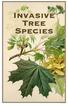 Invasive Tree Species A Contents Invasive Tree Species................. 1 Removal Permit Process.............. 2 Mitigation......................... 3 Identification Guide: Norway maple - Acer platanoides............
LOW LEVEL ROAD RE-ALIGNMENT PACIFIC YEW TREE ASSESSMENT ENKON File No. 1590-001
 April 11, 2012 Port Metro Vancouver 100 The Pointe, 999 Canada Place Vancouver, BC V6C 3T4 Attention: RE: Carolina Eliasson, Environmental Specialist LOW LEVEL ROAD RE-ALIGNMENT PACIFIC YEW TREE ASSESSMENT
SECTION 7 LANDSCAPE RESTORATION
 SECTION 7 LANDSCAPE RESTORATION 27 7. Landscape and Restoration This section should be read in conjunction with Drawing No.CO8194/A010 Rev. B, Regeneration Strategy As Proposed which can be found at Section
Jino KWON Korea Forest Research Institute Korea Forest Service
 * Jino KWON Korea Forest Research Institute Korea Forest Service 1 * Overview Formulating Restoration Plan Restoration Practices Follow-up Management Restoration Cases 2 17 th JULY, JEJU, Capacity-building
SANTA BARBARA COUNTY COMPREHENSIVE PLAN LOMPOC AREA
 SANTA BARBARA COUNTY COMPREHENSIVE PLAN LOMPOC AREA A. LAND USE ELEMENT INTERPRETIVE GUIDELINES B. COMMUNITY BENEFITS C. COUNTY ACTION ITEMS Adopted by the Board of Supervisors November 9, 1999 A. Santa
A GUIDE: DEVELOPING A STREET AND PARK TREE MANAGEMENT PLAN
 A GUIDE: DEVELOPING A STREET AND PARK TREE MANAGEMENT PLAN An introduction to the preparation of a strategic approach to the care and maintenance of your community forest USDA Forest Service Northeastern
MINISTRY OF ENVIRONMENT SECRETARIAT-GENERAL FOR THE ENVIRONMENT DIRECTORATE-GENERAL FOR NATURE CONSERVATION
 MINISTRY OF ENVIRONMENT SECRETARIAT-GENERAL FOR THE ENVIRONMENT DIRECTORATE-GENERAL FOR NATURE CONSERVATION INDEX INDEX... 3 INTRODUCTION... 11 PART ONE: BREAKDOWN OF THE CURRENT SITUATION... 17 1. FOREST
Roczniki Akademii Rolniczej w Poznaniu CCCLXXXVII. Botanika Steciana. www.au.poznan.pl/steciana
 Roczniki Akademii Rolniczej w Poznaniu CCCLXXXVII www.au.poznan.pl/steciana Botanika Steciana,, - ISSN - DENDROFLORA OF THREE COMPLEXES OF AFFORESTATIONS IN SOUTH WESTERN PART OF POZNAŃ MAGDALENA KLUZA-WIELOCH,
Evaluation of Monitoring on Modrava Catchments
 Evaluation of Monitoring on Modrava Catchments Jiří PAVLÁSEK, Jana ŘEDINOVÁ and Petra SKALSKÁ Department of Water Resources and Environmental Modelling, Faculty of Environmental Sciences, Czech University
Welcome to the Moravian-Silesian region
 Welcome to the Moravian-Silesian region Soňa Michálková Regional project manager 19.4.2007 CzechInvest Investment & Business Development Agency Regional and Foreign Offices Regional Overview Area (km 2
Ecological restoration in the Czech Republic
 Ecological restoration in the Czech Republic Editors Ivana Jongepierová, Pavel Pešout, Jan Willem Jongepier & Karel Prach Ecological restoration in the Czech Republic Editors Ivana Jongepierová, Pavel