
Chapter 3 Cooling, heating and air conditioning systems
|
|
|
- Augustus Booth
- 10 years ago
- Views:
Transcription
1 3 1 Chapter 3 Cooling, heating and air conditioning systems Contents Air conditioner receiver-drier - removal and refitting Air conditioning blower motor (E28/ old-shape 5-series models) - removal and refitting Air conditioning compressor - removal and refitting Air conditioning condenser - removal and refitting Air conditioning system - precautions and maintenance Antifreeze - general information Coolant level check See Chapter 1 Coolant temperature sender unit - check and renewal Cooling system check See Chapter 1 Cooling system servicing (draining, flushing and refilling)see Chapter 1 Degrees of difficulty Engine cooling fan(s) and clutch - check, removal and refitting Evaporator matrix - removal and refitting General information Heater and air conditioner control assembly - removal and refitting 10 Heater and air conditioning blower motor - removal,testing and refitting Heater matrix - removal and refitting Radiator - removal and refitting Thermostat - check and renewal Water pump - check Water pump - removal and refitting Easy, suitable for novice with little experience Fairly easy, suitable for beginner with some experience Fairly difficult, suitable for competent DIY mechanic Difficult, suitable for experienced DIY mechanic Very difficult, suitable for expert DIY or professional Specifications General Coolant capacity See Chapter 1 Thermostat rating Opening temperature C (176 F) Fully open at C (212 F) Cooling fan thermo-switch - switching temperatures Low-speed C (196 F) High-speed C (210 F) Torque wrench settings Nm Mechanical cooling fan clutch-to-water pump securing nut (left-hand thread) Mechanical cooling fan-to-clutch bolts Water pump bolts Small bolts (M6) Large bolts (M8) Thermostat housing bolts General information Engine cooling system All vehicles covered by this manual employ a pressurised engine cooling system, with thermostatically-controlled coolant circulation. An impeller-type water pump mounted on the front of the block pumps coolant through the engine. The coolant flows around each cylinder, and towards the rear of the engine. Cast-in coolant passages direct coolant around the intake and exhaust ports, near the spark plug areas, and in close proximity to the exhaust valve guides. A wax-pellet-type thermostat is located inline in the bottom hose on M10 engines, in a housing near the front of the engine on M20 and M30 engines, or behind an elbow under the timing belt upper cover (on the front of the cylinder head) on M40 engines. During warmup, the closed thermostat prevents coolant from circulating through the radiator. As the engine nears normal operating temperature, the thermostat opens and allows hot coolant to travel through the radiator, where it s cooled before returning to the engine. The pressure in the system raises the boiling point of the coolant, and increases the cooling efficiency of the radiator. The cooling system is sealed by a pressure-type cap. If the system pressure exceeds the cap pressure relief value, the excess pressure in the system forces the spring-loaded valve inside the cap off its seat, and allows the coolant to escape through the overflow tube. The pressure cap on four-cylinder models is on the top of the radiator; on six-cylinder models, it s on top of a translucent plastic expansion tank. The cap pressure rating is moulded into the top of the cap. The pressure rating is either 1.0 bar (14 psi) or 1.2 bars (17 psi).

2 3 2 Cooling, heating and air conditioning systems Warning: Do not remove the pressure cap from the radiator or expansion tank until the engine has cooled completely and there s no pressure remaining in the cooling system. Removing the cap from a hot engine risks personal injury by scalding. Heating system The heating system consists of a blower fan and heater matrix located in the heater box, with hoses connecting the heater matrix to the engine cooling system, and the heater/air conditioning control head on the dashboard. Hot engine coolant is circulated through the heater matrix passages all the time the engine is running. Switching the heater on opens a flap door to direct air through the heater matrix, and the warmed air enters the passenger compartment. A fan switch on the control head activates the blower motor, which forces more air through the heater matrix, giving additional heater output for demisting, etc. Air conditioning system The air conditioning system consists of a condenser mounted in front of the radiator, an evaporator mounted adjacent to the heater matrix, a compressor mounted on the engine, a filter-drier (receiver-drier) which contains a high-pressure relief valve, and the plumbing connecting all of the above components. A blower fan forces the warmer air of the passenger compartment through the evaporator matrix (a radiator-in-reverse), transferring the heat from the air to the refrigerant. The liquid refrigerant boils off into low-pressure vapour, taking the heat with it when it leaves the evaporator. Note: Refer to the precautions at the start of Section 12 concerning the potential dangers associated with the air conditioning system. 2 Antifreeze - general information Warning: Do not allow antifreeze to come in contact with your skin or painted surfaces of the vehicle. Rinse off spills immediately with plenty of water. If consumed, antifreeze can be fatal; children and pets are attracted by its sweet taste, so wipe up garage floor and drip pan coolant spills immediately. Keep antifreeze containers covered, and repair leaks in your cooling system as soon as they are noticed. The cooling system should be filled with a 60/40% water/ethylene-glycol-based antifreeze solution, which will prevent freezing down to approximately -27 C (-17 F). The antifreeze also raises the boiling point of the coolant, and (if of good quality) provides protection against corrosion. The cooling system should be drained, flushed and refilled at the specified intervals (see Chapter 1). Old or contaminated antifreeze solutions are likely to cause damage, and encourage the formation of rust and scale in the system. Use distilled water with the antifreeze, if available, or clean rainwater. Tap water will do, but not if the water in your area is at all hard. Before adding antifreeze, check all hose connections, because antifreeze tends to search out and leak through very minute openings. Engines don t normally consume coolant, so if the level goes down, find the cause and correct it. The antifreeze mixture should be maintained at its correct proportions; adding too much antifreeze reduces the efficiency of the cooling system. If necessary, consult the mixture ratio chart on the antifreeze container before adding coolant. Hydrometers are available at most car accessory shops to test the coolant. Use antifreeze which meets the vehicle manufacturer s specifications. 3 Thermostat - check and renewal 1 Warning: Do not remove the radiator cap, drain the coolant, or renew the thermostat until the engine has cooled completely. Check 1 Before assuming the thermostat is to blame for a cooling system problem, check the coolant level, drivebelt tension (see Chapter 1) and temperature gauge (or warning light) operation. 2 If the engine seems to be taking a long time to warm up (based on heater output or temperature gauge operation), the thermostat is probably stuck open. Renew the thermostat. 3 If the engine runs hot, use your hand to check the temperature of the upper radiator hose. If the hose isn t hot, but the engine is, the thermostat is probably stuck closed, 3.8 On the M10 (four-cylinder) engine, the thermostat (arrowed) is connected in-line in the radiator hose preventing the coolant inside the engine from circulating to the radiator. Renew the thermostat. Caution: Don t drive the vehicle without a thermostat. The engine will be very slow to warm-up in cold conditions, resulting in poor fuel economy and driveability. A new thermostat is normally an inexpensive component anyway. 4 If the upper radiator hose is hot, it means that the coolant is flowing and the thermostat is at least partly open. Consult the Fault finding Section at the rear of this manual for cooling system diagnosis. Renewal All models 5 Disconnect the negative cable from the battery. 6 Drain the cooling system (see Chapter 1). If the coolant is relatively new or in good condition, save it and re-use it. M10 engines 7 The thermostat is located in the bottom hose. First remove the cooling fan. 8 Note the fitted position of the thermostat, then unscrew the hose clamps and withdraw the thermostat from the hose connections (see illustration). 9 Refit the thermostat-to-hose connections, and tighten the hose clamps. 10 Refit the cooling fan. M20 and M30 engines 11 Loosen the hose clamp (see illustration), then detach the hose(s) from the thermostat cover On M20 and M30 engine models, loosen the hose clamp (A) and disconnect the hose from the thermostat housing cover - note that the coolant temperature sender unit (barely visible behind the fuel pressure regulator) is located at the top of the thermostat housing (B)

3 Cooling, heating and air conditioning systems On M20 and M30 engine models, after the housing and thermostat have been removed, take the O-ring out of the housing and clean the recess in the housing to be sure of a good seal upon reassembly 12 If the outer surface of the fitting that mates with the hose is deteriorated (corroded, pitted, etc.), it may be damaged further by hose removal. If it is, a new thermostat housing cover will be required. 13 Remove the bolts and detach the housing cover. If the cover is stuck, tap it with a softfaced hammer to jar it loose. Be prepared for some coolant to spill as the gasket seal is broken. 14 Note how it s fitted, then remove the thermostat. 15 Stuff a rag into the engine opening, then remove all traces of old gasket material (if the gasket is paper type). Otherwise, remove the rubber O-ring (see illustration) and sealant from the housing and cover with a gasket scraper. Remove the rag from the opening and clean the gasket mating surfaces. 16 Fit the new thermostat and gasket in the housing. Make sure the correct end faces out - the spring end is normally directed towards the engine. 17 Refit the cover and bolts. Tighten the bolts to the torque listed in this Chapter s Specifications. M40 engines 18 Remove the cooling fan and timing belt upper cover. 19 Unscrew the hose clamp and detach the 3.20a Removing the elbow from the cylinder head (M40 engine) bottom hose from the elbow on the front of the cylinder head. 20 Unbolt the elbow from the cylinder head. Note the fitted position of the thermostat, then remove it (see illustrations). Remove the rubber O-ring; a new one will be needed for reassembly. 21 Locate the thermostat in the cylinder head in the same position as noted during removal (arrow pointing upwards). 22 Press a new O-ring in the groove, and locate the elbow on the cylinder head. Tighten the bolts. 23 Connect the bottom hose to the elbow, and tighten the hose clamp. 24 Refit the upper timing belt cover and cooling fan. All models 25 Refill the cooling system (see Chapter 1). 26 Connect the battery negative cable. 27 Start the engine and allow it to reach normal operating temperature, then check for leaks and proper thermostat operation (as described earlier in this Section). 4 Radiator - removal and refitting 1 Warning: Wait until the engine is completely cool before beginning this procedure. 3.20b Removing the thermostat (M40 engine) Note: If the radiator is being removed because it is leaking, note that minor leaks can often be repaired without removing the radiator, using a radiator sealant. 2 Drain the cooling system (see Chapter 1). If the coolant is relatively new, or in good condition, save it and re-use it. 3 Loosen the hose clamps, then detach the hoses from the radiator (see illustrations). If they re stuck, grasp each hose near the end with a pair of water pump pliers, twist gently to break the seal, then pull off - be careful not to distort or break the radiator outlets! If the hoses are old or deteriorated, cut them off and refit new ones. 4 On M20 and M30 engines, disconnect the reservoir hose from the radiator filler neck. 5 Remove the screws or plastic fasteners that attach the shroud to the radiator, and slide the shroud towards the engine (see illustration). On some engines it is possible to completely remove the shroud. 6 If the vehicle has automatic transmission, 3 4.3a Disconnecting the top hose from the radiator 4.3b Bottom hose connection to the radiator 4.5 Plastic fastener retaining the radiator shroud on some engines

4 3 4 Cooling, heating and air conditioning systems 4.7 Sensors that control the high- and low-speed operation of the auxiliary cooling fan are located in various places in the radiator tanks disconnect the fluid cooler lines from the radiator. Use a drip tray to catch spilled fluid. Plug the fluid cooler lines and fittings. 7 Disconnect the coolant sensors located on the radiator (see illustration). The thermostatically-controlled switches for high- and low-speed operation of the auxiliary fan are located in the radiator tanks, in various locations depending on engine and model. 8 Remove the radiator mounting bolt(s). The mountings are either on the top or sides of the radiator (see illustration). 9 Carefully lift out the radiator from the bottom mountings, taking care not to damage the cooling fins. Don t spill coolant on the vehicle, or scratch the paint. 10 With the radiator removed, it can be inspected for leaks and damage. If it needs repair, have a specialist perform the work, as special techniques are required. 11 Flies and dirt can be removed from the radiator with compressed air and a soft brush. Don t bend the cooling fins as this is done. 12 Check the radiator mountings for deterioration, and renew if necessary (see illustration). 13 is the reverse of the removal procedure. 14 After refitting, fill the cooling system with the proper mixture of antifreeze and water. Refer to Chapter 1 if necessary When the radiator is out, the radiator mountings can be inspected - check for signs of deterioration, and renew them, if needed 4.8 The radiator is bolted to the front panel at either the sides or the top of the radiator 15 Start the engine and check for leaks. Allow the engine to reach normal operating temperature, indicated by the upper radiator hose becoming hot. Recheck the coolant level, and add more if required. 16 If you re working on an automatic transmission model, check and add transmission fluid as needed. 5 Engine cooling fan(s) and clutch - check, removal and 1 refitting Warning: To avoid possible injury or damage, DO NOT operate the engine with a damaged fan. Do not attempt to repair fan blades - fit a new fan. Also, the electric auxiliary fan in front of the radiator or air conditioning condenser can come on without the engine running or ignition being on. It is controlled by the coolant temperature of the thermo-switches located in the radiator. Check Electric auxiliary fan Note : This fan on most models is controlled by two thermo-switches placed in the radiator: one for low-speed/low-temperature operation, and one for high-speed/high-temperature operation. Each switch comes on at a different coolant temperature (refer to the Specifications at the beginning of this Chapter). 1 The thermostatically-controlled switches for high- and low-speed operation of the auxiliary fan are fitted in various locations in the radiator (see illustration 4.7), depending on engine or model. Two single switches, or one dual switch, may be fitted. 2 Insert a small screwdriver into the connector to lift the lock tab, and unplug the fan wire harness. 3 To test the fan motor, unplug the electrical connector at the motor, and use jumper wires to connect the fan directly to the battery. If the fan doesn t work when connected directly to the battery, the motor is proved faulty, and must be renewed. If the fan works, there s a good chance the switch is malfunctioning. To more accurately diagnose the problem, follow the steps that apply to your model. Note: Spin the auxiliary fan motor by hand, to check that the motor or fan isn t binding. Make sure, however, that the engine is sufficiently cool that there is no danger of the fan cutting-in on its own when this is done. 4 To test the low-speed and high-speed circuits, disconnect the electrical connector from one of the fan switches, and bridge the terminals of the switch s electrical connector with a short piece of wire. The fan should run at low or high speed, depending on which switch has been disconnected. On some models the ignition must be on before the fan will run. 5 Repeat the test at the other switch so that both high and low speeds are tested. 6 If the low-speed and high-speed circuits are OK, but there has been a problem with the fan not operating correctly in service, renew the switch (or switches). To remove a switch, drain the coolant below the level of the switch (see Chapter 1), then unscrew the switch and screw in the new one. Refill the system with coolant. 7 If the switches are satisfactory, but the motor still does not operate, the problem lies in the fuse, the relay, the wiring which connects the components (or the fan motor itself). Carefully check the fuse, relay, all wiring and connections. See Chapter 12 for more information on how to carry out these checks. Mechanical fan with viscous clutch 8 Disconnect the battery negative cable, and rock the fan back and forth by hand to check for excessive bearing play. 9 With the engine cold, turn the fan blades by hand. The fan should turn with slight resistance. 10 Visually inspect for substantial fluid leakage from the fan clutch assembly. If problems are noted, renew the fan clutch assembly. 11 With the engine completely warmed up, turn off the ignition switch and disconnect the battery negative cable. Turn the fan by hand. Heavier resistance should be evident. If the fan turns easily, a new fan clutch may be needed. and refitting Electric auxiliary fan 12 Disconnect the battery negative cable. 13 To remove the auxiliary fan follow the procedure that applies to your vehicle.

5 Cooling, heating and air conditioning systems a The cooling fan on the water pump is attached to the shaft by a left-handthreaded nut located directly behind the fan... 3-Series models 14 Remove the radiator grille assembly (see Chapter 11). 15 Unbolt and remove the fan bracket and shroud assembly from the radiator (see Section 5). 16 Remove the radiator (see Section 4). 17 Unbolt the air conditioning condenser mounting bolts, where applicable. Do not remove the condenser or disconnect any refrigerant lines from the condenser. 18 Carefully pull the condenser back towards the engine, slightly, to gain access to lift the auxiliary fan. 19 Disconnect the fan motor electrical connection and remove the auxiliary fan. 20 is the reverse of removal. 5-Series models 21 Remove the screws and trim panel in front of the radiator. 22 Unbolt the fan assembly from the condenser mounting points. 23 Disconnect the fan electrical connector. 24 Remove the fan and housing from the car, being careful not to damage the air conditioning condenser (when applicable) while removing the fan. 25 is the reverse of removal. Mechanical fan with viscous clutch 26 Disconnect the battery negative cable. Remove the fan shroud mounting screws or plastic fasteners, and detach the shroud (see Section 4). 27 Use a 32 mm open-ended spanner to remove the fan/clutch assembly. Place the spanner on the large nut ahead of the pulley (see illustrations), and tap the end of the spanner to loosen the nut. Caution: The nut has left-handed threads, so it loosens by being turned clockwise, as viewed from the front of the vehicle. 28 Lift the fan/clutch assembly (and shroud, if necessary) out of the engine compartment. 29 If necessary, remove the four bolts attaching the pulley to the water pump hub. The pulley can then be removed after removing the drivebelt(s) (see illustration). 5.27b... to loosen the nut, place a 32 mm open-ended spanner on the nut, and sharply strike the spanner (A) with a metal drift (B) and hammer; this will loosen the nut and allow it to be turned easily so the fan can be removed 30 Carefully inspect the fan blades for damage and defects. Renew it if necessary. 31 At this point, the fan may be unbolted from the clutch, if necessary. If the fan clutch is stored, position it with the radiator side facing down. 32 is the reverse of removal. 6 Water pump - check 1 1 A failure in the water pump can cause serious engine damage due to overheating. 2 There are two ways to check the operation of the water pump while it s fitted on the engine. If either of the following checks suggest that the pump is defective, a new one should be fitted. 3 Water pumps are equipped with weep or vent holes. If a failure occurs in the pump seal, coolant will leak from the hole. In most cases, you ll need a torch to find the hole on the water pump from underneath to check for leaks. 4 If the water pump shaft bearings fail, there may be a howling sound at the front of the engine while it s running. Shaft wear can be felt if the water pump pulley is rocked up and down (with the drivebelt removed). Don t mistake drivebelt slippage, which causes a squealing sound, for water pump bearing failure. Alternator bearing failure can also cause a howling sound, but after removing the drivebelt(s) it should be easy enough to tell which component is responsible. 7 Water pump - removal and refitting 2 Warning: Wait until the engine is completely cool before beginning this procedure Removing the water pump pulley (M40 engine) 2 Drain the cooling system (see Chapter 1). If the coolant is relatively new, or in good condition, save it and re-use it. 3 Remove the cooling fan shroud (see Section 5). 4 Remove the drivebelts (see Chapter 1). 5 Where applicable, loosen the clamps and detach the hoses from the water pump. If they re stuck, grasp each hose near the end with a pair of water pump pliers and gently twist it to break the seal, then pull it off. If the hoses are deteriorated, cut them off and refit new ones. 6 Remove the fan and clutch assembly and the pulley at the end of the water pump shaft (see Section 5). 7 To remove the water pump, follow the specific steps that apply to your engine. M10 engine 8 Unscrew the mounting bolts and remove the water pump (see illustration). 7.8 On M10 engines, there are seven bolts (locations arrowed) that hold the water pump to the block 3

6 3 6 Cooling, heating and air conditioning systems 7.12 Water pump bolt locations on the M20 engine M20 engine 9 Remove the distributor cap and HT leads, ignition rotor and dust shield (see Chapter 1). 10 Where applicable, remove the timing sensor (see Chapter 5). 11 Remove the timing belt upper cover (see Chapter 2A). 12 Loosen all three water pump mounting bolts. Remove the top and right-hand side bolts, but DON T remove the lower bolt (see illustration). 13 Rotate the pump downwards, and remove the drivebelt tensioner spring and pin. 14 Remove the final water pump bolt, and remove the pump. Caution: Leave the tensioner bolt tight. Be careful to not move the camshaft gear, as damage can occur if the valves are moved. M30 engine 15 Remove the engine lifting bracket. 16 Remove the bolts that mount the water pump to the engine block. 17 Remove the water pump, and recover the gasket. M40 engine 18 Unscrew the mounting bolts and remove the water pump. If the pump is tight in the cylinder head, insert two bolts in the special lugs at the top and bottom of the pump, and tighten them evenly to press the pump out of the head (see illustrations) Fit a new O-ring on the M40 engine water pump 7.18a With the water pump mounting bolts removed, screw two bolts into the special lugs (one top and one bottom) Clean the bolt threads and the threaded holes in the engine to remove corrosion and sealant. 20 Compare the new pump to the old one, to make sure they re identical. 21 Remove all traces of old gasket material from the engine with a gasket scraper. 22 Clean the water pump mating surfaces. 23 On the M40 engine, locate a new O-ring on the pump (see illustration). 24 Locate the gasket on the pump, and offer the pump up to the engine (see illustration). Slip a couple of bolts through the pump mounting holes to hold the gasket in place. 25 Carefully attach the pump and gasket to the engine, threading the bolts into the holes finger-tight. Note: On the M20 engine, refit the lower bolt finger-tight, then rotate the water pump into position with the drivebelt tensioner spring and pin in position. 26 Refit the remaining bolts (if they also hold an accessory bracket in place, be sure to reposition the bracket at this time). Tighten them to the torque listed in this Chapter s Specifications, in quarter-turn increments. Don t overtighten them, or the pump may be distorted. 27 Refit all parts removed for access to the pump. 28 Refill the cooling system and check the drivebelt tension (see Chapter 1). Run the engine and check for leaks New outer gasket on the M40 engine water pump 7.18b... and remove the water pump (M40 engine) 8 Coolant temperature sender unit - check and renewal 2 Warning: Wait until the engine is completely cool before beginning this procedure. 1 The coolant temperature indicator system is composed of a temperature gauge mounted in the instrument panel, and a coolant temperature sender unit that s normally mounted on the thermostat housing (see illustration 3.11). Some vehicles have more than one sender unit, but only one is used for the temperature gauge. On the M40 engine, the sender unit is mounted on the lefthand side of the cylinder head, towards the rear. 2 If the gauge reading is suspect, first check the coolant level in the system. Make sure the wiring between the gauge and the sending unit is secure, and that all fuses are intact. (If the fuel gauge reading is suspect as well, the problem is almost certainly in the instrument panel or its wiring.) 3 Before testing the circuit, refer to the relevant wiring diagrams (see Chapter 12). Where the sender unit simply earths out the circuit, test by earthing the wire connected to the sending unit while the ignition is on (but without the engine running, for safety). If the gauge now deflects to the end of the scale, renew the sender unit. If the gauge does not respond satisfactorily, the gauge, or the wiring to the gauge, is faulty. Where the sender unit has two terminals, test the circuit by checking the resistance of the unit. No figures were available at the time of writing, but typically readings of several hundred or several thousand ohms (depending on temperature) would be expected. A reading of zero (shortcircuit) or infinity (open-circuit) would indicate a faulty sender unit. Caution: Do not earth the wire for more than a second or two, or damage to the gauge could occur.

7 Cooling, heating and air conditioning systems If a new sender unit is to be fitted, make sure the engine is completely cool. There will be some coolant loss when the unit is unscrewed, so be prepared to catch it, or have the new unit ready to fit immediately the old one is removed. Disconnect the wiring, then unscrew the old unit from the engine, and fit the new one. Use sealant on the threads. Reconnect the wiring, and check the coolant level on completion. 9 Heater and air conditioning blower motor - removal, 1 testing and refitting Note: The 3-Series models covered by this manual have always used a single blower motor for ventilation, heating and air conditioning. Old-shape (E28) 5-Series models use two separate blower motors: one for ventilation and heating, and another for air conditioning. New-shape (E34) 5-Series models have a single blower motor, like the 3- Series. The removal and refitting of the single blower motor, and the old-shape 5-Series vent/heat motor, is described below. The removal and refitting of the old-shape 5-Series air conditioning blower motor is described in Section 14 of this Chapter. have the correct activation code 2 The blower motor is located behind the bulkhead, under an access panel. Remove the panel securing screws (see illustrations). 3 Disconnect or cut the plastic ties holding the wiring harness to the panel, and move the wiring out of the way. 4 Remove the panel. 5 Unclip the blower housing retaining clip, and the clip securing the blower motor (see illustrations). 9.2a To get to the heater blower motor, the access panel must be removed - a fastener from the front and... 6 Disconnect the wiring and remove the blower motor (see illustration). Testing 7 You can test the blower motor by applying battery voltage to the blower motor s terminals with fused jumper wires (be sure the fan blades won t hit anything when they rotate). If the blower motor spins the fan blades rapidly (this test simulates high-speed operation), the blower motor is OK. If the blower motor does not operate, or operates slowly or noisily, renew it. Note: If the fan blade assemblies need to be removed, mark their relationship to the shaft. The assemblies are balanced during production, and excessive noise or shortened bearing life could result if they are not refitted in exactly the same position in relation to the shaft. 8 is the reverse of removal. Note: The blower motor may have to be rotated to allow the retaining clip to line up correctly. 10 Heater and air conditioner control assembly - removal and refitting 1 9.2b... a fastener from the top secure the panel 3-Series models 2 Remove the centre console and side trim pieces. 3 Remove the radio (see Chapter 12), then pull the knobs off the heater/air conditioning control levers. 4 Remove the heater trim panel to gain access to the control cables. 5 Disconnect the cables, marking them for accurate refitting. 6 Disconnect the electrical connector. 7 Remove the lever assembly. 8 Each lever assembly can be removed separately. 5-Series models 9 Remove the centre console (see Chapter 11). 10 Remove the radio (see Chapter 12), then pull the knobs off the heater/air conditioning control levers. 11 Remove the trim bezel, and pull the control unit from the dash. This will allow you to disconnect the control cables from the lever assembly a Unclip the retaining strap to remove the blower housing b... and unclip the centre strap that secures the blower motor assembly 9.6 Lift out the assembly, and disconnect the electrical connection from the blower motor

8 3 8 Cooling, heating and air conditioning systems 12 Disconnect the cables from the clips securing them to the lever assembly, marking them for accurate refitting. 13 Disconnect the electrical connection from the control assembly. 14 Remove the screws attaching the bezel to the control assembly, and remove the control assembly. 15 is the reverse of the removal procedure. 11 Heater matrix - removal and refitting 1 2 Drain the cooling system (see Chapter 1). 3 Remove the centre console (see Chapter 11). Spread an old blanket over the front carpeting; this will prevent stains if any residual coolant spills. 3-Series models 4 Remove the left-hand side heater ducting, and set it aside. 5 Remove the heater valve clamp. 6 Remove the screws and detach the flange where the two coolant lines enter the heater matrix case. Be careful; some coolant may spill. 7 Remove the two screws holding the heater matrix case to the heater main assembly. 8 Slide the heater matrix out of the mounting. Be careful not to spill any of the remaining coolant in the heater matrix when removing it. 5-Series models 9 Disconnect the temperature sensor electrical connectors. 10 Disconnect the straps holding the wiring to the case, and set the wiring out of the way. 11 Unfasten the cover fasteners. 12 Remove the screws holding the cover in place, then remove the cover. 13 Disconnect all heater pipe connections attached to the heater matrix. Be careful; some coolant may spill. 14 Lifting on the right side of the heater matrix first, remove the heater matrix. Note: Always use new O-rings when attaching the coolant lines to the heater matrix. 15 is the reverse of removal. Refill the cooling system (see Chapter 1), then run the engine with the heater on, and check for correct operation and leaks. 12 Air conditioning system - precautions and maintenance 1 Precautions Warning: The air conditioning system is under high pressure. DO NOT loosen any hose or line fittings, or remove any components, until after the system has been discharged. Air conditioning refrigerant should be properly discharged by a qualified refrigeration engineer. The refrigerant used in the system must not be allowed into contact with your skin or eyes, or there is a risk of frostbite. Should the refrigerant come into contact with a naked flame, a poisonous gas will be produced. Smoking in the presence of refrigerant is therefore highly dangerous, particularly if refrigerant vapour is inhaled through a lighted cigarette. The refrigerant is heavier than air, and it may cause suffocation if discharged in an enclosed space such as a domestic garage. Finally, uncontrolled release of the refrigerant causes environmental damage, by contributing to the greenhouse effect. Maintenance 1 The following maintenance checks should be performed on a regular basis to ensure the air conditioner continues to operate at peak efficiency: a) Check the drivebelt. If it s worn or deteriorated, renew it (see Chapter 1). b) Check the system hoses. Look for cracks, bubbles, hard spots and deterioration. Inspect the hoses and all fittings for oil bubbles and seepage. If there s any evidence of wear, damage or leaks, have new hose(s) fitted. c) Inspect the condenser fins for leaves, flies and other debris. Use a fin comb or compressed air to clean the condenser. d) Make sure the system has the correct refrigerant charge, as described below. 2 It s a good idea to operate the system for about 10 minutes at least once a month, particularly during the winter. Long-term nonuse can cause hardening, and subsequent failure, of the seals. 3 Because of the complexity of the air conditioning system and the special equipment necessary to service it, in-depth fault diagnosis and repair procedures are not included in this manual. However, simple checks and component renewal procedures are provided in this Chapter. 4 The most common cause of poor cooling is simply a low system refrigerant charge. If a noticeable loss of cool air output occurs, the following quick check may help you determine if the refrigerant level is low. 5 Warm the engine up to normal operating temperature. 6 Set the air conditioning temperature selector at the coldest setting, and put the blower at the highest setting. Open the doors (to make sure the air conditioning system doesn t switch off as soon as it cools the passenger compartment). 7 With the compressor engaged - the compressor clutch will make an audible click, and the centre of the clutch will rotate - feel the tube located adjacent to the right front frame rail, near the radiator. 8 If a significant temperature drop is noticed, the refrigerant level is probably OK. 9 If the inlet line has frost accumulation, or feels cooler than the receiver-drier surface, the refrigerant charge is low. Recharging the system should be carried out by a qualified refrigeration engineer. 13 Air conditioning compressor - removal and refitting 5 Warning: Due to the potential dangers associated with the system, you are strongly advised to have any work on the air conditioning system carried out by a BMW dealer or air conditioning specialist. At the very least, DO NOT dismantle any part of the system (hoses, compressor, line fittings, etc.) until after the system has been discharged by a qualified engineer. Refer to the precautions given at the start of Section 12. Note: If a new compressor is fitted, the receiver-drier (see Section 16) should also be renewed. 1 Have the air conditioning system discharged (see Warning above). 2 Disconnect the battery negative cable. 3 Disconnect the compressor clutch wiring harness. 4 Remove the drivebelt (see Chapter 1). 5 Disconnect the refrigerant lines from the rear of the compressor. Plug the open fittings to prevent entry of dirt and moisture. 6 Unbolt the compressor from the mounting

9 Cooling, heating and air conditioning systems Air conditioning condenser - removal and refitting From under the vehicle, remove the bolt from the lower air conditioning compressor mounting brackets, and lift it up and out of the vehicle (see illustration). 7 If a new compressor is being fitted, follow any instructions supplied with the compressor regarding the draining of excess oil prior to fitting. 8 The clutch may have to be transferred to the new compressor. 9 is the reverse of removal. All O- rings should be replaced with new ones specifically made for use in air conditioning systems. Lubricate them with refrigerant oil when fitting. 10 Have the system evacuated, recharged and leak-tested by the qualified engineer who discharged it. 14 Air conditioning blower motor (E28/ old-shape 5-series 1 models) - removal and refitting Note: Refer to Section 9 for information on new-shape (E34) 5-Series models. 2 Remove the centre console (see Chapter 11). 3 Disconnect the blower motor electrical connector from the motor. 4 Unbolt the blower motor mountings from the main case. 5 Remove the air conditioning blower motor assembly. You can check the motor by following the procedure described in Section 9. 6 is the reverse of removal. Warning: Due to the potential dangers associated with the system, you are strongly advised to have any work on the air conditioning system carried out by a BMW dealer or air conditioning specialist. At the very least, DO NOT dismantle any part of the system (hoses, compressor, line fittings, etc.) until after the system has been discharged by a qualified engineer. Refer to the precautions given at the start of Section 12. Note: If a new condenser is fitted, the receiver-drier (see Section 16) should also be renewed. 1 Have the air conditioning system discharged (see Warning above). 2 Remove the radiator (see Section 4) except on new-shape (E34) 5-series models. On the latter, remove the front bumper (see Chapter 11). 3 Remove the radiator grille (see Chapter 11). 4 Unbolt the auxiliary fan from the air conditioning condenser mounting brackets. 5 Disconnect the refrigerant lines from the condenser. 6 Remove the mounting bolts from the condenser brackets. 7 Lift the condenser out of the vehicle, and plug the lines to keep dirt and moisture out. 8 If the original condenser is being refitted, store it with the line fittings uppermost, to prevent oil from draining out. 9 Refit the components in the reverse order of removal. Be sure the rubber pads are in place under the condenser. 10 Have the system evacuated, recharged and leak-tested by the qualified engineer who discharged it. 16 Air conditioner receiver-drier - removal and refitting 5 Warning: Due to the potential dangers associated with the system, you are strongly advised to have any work on the air conditioning system carried out by a BMW dealer or air conditioning specialist. At the very least, DO NOT dismantle any part of the system (hoses, compressor, line fittings, etc.) until after the system has been discharged by a qualified engineer. Refer to the precautions given at the start of Section All models have the receiver-drier located behind the right headlight, although the configuration of lines and switches may vary 1 High-pressure switch 2 Refrigerant lines 3 Low-pressure switch 4 Electrical connector 1 Have the system discharged (see Warning above). 2 Disconnect the battery negative cable. 3 Remove the windscreen washer fluid reservoir. 4 Disconnect the electrical connector(s) from the receiver-drier - note that not all models have both the high- and low-pressure switches (see illustration). 5 Disconnect the refrigerant lines from the receiver-drier. 6 Plug the open line fittings, to prevent the entry of dirt and moisture. 7 Remove the mounting screws and remove the receiver-drier. 8 If a new receiver-drier is being fitted, it may be necessary to add a quantity of refrigerant oil - follow the instructions supplied with the new unit. 9 Remove the old refrigerant line O-rings, and fit new ones. This should be done regardless of whether a new receiver-drier is being fitted. 10 If a new receiver-drier is being fitted, unscrew the pressure switches and transfer them to the new unit before fitting (see illustration 16.4). Not all models have both the high- and low-pressure switches. 11 Lubricate the O-rings with refrigerant oil before assembly. 12 is the reverse of removal, but be sure to lubricate the O-rings with refrigerant oil before connecting the fittings. 3

10 3 10 Cooling, heating and air conditioning systems 13 Have the system evacuated, recharged and leak-tested by the qualified engineer who discharged it. 17 Evaporator matrix - removal and refitting 5 Warning: Due to the potential dangers associated with the system, you are strongly advised to have any work on the air conditioning system carried out by a BMW dealer or air conditioning specialist. At the very least, DO NOT dismantle any part of the system (hoses, compressor, line fittings, etc.) until after the system has been discharged by a qualified engineer. Refer to the precautions given at the start of Section Have the air conditioning system discharged (see Warning above). 2 Remove the trim panel on the sides of the centre console (see Chapter 11) 3 Disconnect the electrical lead and remove the evaporator sensor. 4 Remove the evaporator cover, exposing the refrigerant lines. 5 Disconnect the refrigerant lines from the evaporator matrix. 6 Remove the evaporator matrix from the case. 7 is the reverse procedure of the removal. 8 Have the system evacuated, recharged and leak-tested by the qualified engineer who discharged it.

Cooling system components, removing and installing
 Engine BHW Cooling system components, removing and installing Page 1 / 24 19-1 Cooling system components, removing and installing Warning! When doing any repair work, especially in the engine compartment,
Volkswagen Golf 5 2004-> VW Rabbit GTI 2006->
 Стр. 1 из 24 Volkswagen Golf 5 2004-> VW Rabbit GTI 2006-> 19-1 Cooling system components Warning! Hot steam may escape when opening expansion tank. Wear protective goggles and protective clothing to prevent
Cooling system components
 Page 1 / 33 19-1 Cooling system components Caution! When doing any repair work, especially in the engine compartment, pay attention to the following due to clearance issues: Route lines of all types (e.g.
Cooling system components, removing and installing
 Page 1 of 34 19-1 Cooling system components, removing and installing WARNING! The cooling system is pressurized when the engine is warm. When opening the expansion tank, wear gloves and other appropriate
Cooling system components, removing and installing
 Volkswagen Touareg 3.2 - Cooling system components, removing and installing Page 1 / 24 19-1 Cooling system components, removing and installing Warning! Hot steam may escape when opening expansion tank.
Chapter 3 Cooling, heating, and air conditioning systems
 3 1 Chapter 3 Cooling, heating, and air conditioning systems Contents Air conditioning system - general information and precautions........................................ 11 Air conditioning system components
ENGINE COOLING SYSTEM
 ENGINE COOLING SYSTEM 1988 Toyota Celica 1987-88 TOYOTA Engine Cooling Systems Celica DESCRIPTION The basic liquid cooling system consists of a radiator, water pump, thermostat, cooling fan, pressure cap,
Figure 2 The fan and shroud also needs to be removed for access to the four a/c compressor bolts and removal of the compressor from the top.
 Here are some pictures to show what s required when replacing the A/C compressor, expansion valve and receiver/drier on a 2001 Volvo V70. Even if you don t replace these A/C parts these pictures can help
11. COOLING SYSTEM 11-0 COOLING SYSTEM BET & WIN 50
 11 COOLING SYSTEM SERVICE INFORMATION------------------------------------------------ 11-1 TROUBLESHOOTING----------------------------------------------------- 11-1 RADIATOR ------------------------------------------------------------------
Draining and filling cooling system
 Page 1 of 9 Draining and filling cooling system Special tools and workshop equipment required Adapter -V.A.G 1274/8- Pipe -V.A.G 1274/10- Drip tray -V.A.G 1306- or drip tray for workshop hoist -VAS 6208-
Cooling system components, servicing
 19-1 Cooling system components, servicing WARNING! The cooling system is pressurized when the engine is warm. When opening the expansion tank, wear gloves and other appropriate protection, cover the cap
REMOVAL AND INSTALLATION
 303-01C-1 REMOVAL AND INSTALLATION Engine Body On Special Tool(s) Adapter For 303-D043 303-D043-02 or equivalent Special Tool(s) 303-01C-1 Turbocharger Lifting Bracket 303-1266 Wrench, Fan Clutch Nut 303-214
COOLING SYSTEM Section Page
 5 COOLING SYSTEM Section Page 5.1 COOLANT PRE-HEATER... 5-3 5.2 COOLANT PUMP NON-EGR ENGINE... 5-7 5.3 COOLANT PUMP EGR ENGINE... 5-13 5.4 FRONT CONNECTOR HOUSING NON-EGR ENGINE... 5-17 5.5 FRONT CONNECTOR
Chapter 3 Cooling, heating and air conditioning systems
 3 1 Chapter 3 Cooling, heating and air conditioning systems Contents Air conditioning system - component renewal..................21 Coolant pump - removal and..........................9 Coolant pump/alternator
Turbocharger system components, servicing
 21-1 Turbocharger system components, servicing Engine codes: AAZ, 1Z, AHU Observe rules of cleanliness Page 21-10 Turbocharger hoses and lines, connecting Page 21-11 WARNING! Do not re-use any fasteners
Cooling system components, removing and installing
 Page 1 of 30 19-1 Cooling system components, removing and installing Notes: When the engine is warm the cooling system is under pressure. If necessary release pressure before commencing repair work. Secure
Volkswagen B3 Passat General-Engine 4 CYL. 19 Engine - Cooling System (Page GR-19)
 19 Engine - Cooling System (Page GR-19) Cooling system draining and filling general information Body components, layout Engine components, layout Radiator fan run-on checking Recommended mixture ratios
Solstice/Sky Water Pump Replacement
 Solstice/Sky Water Pump Replacement The water pump on the Solstice/Sky is starting to need replacement on some vehicles. This guide will help in replacing the water pump while the engine is still in the
Cylinder head gasket, replacement
 "VCC065612 EN 20110604" 1(7) Cylinder head gasket, replacement Special tools: 999 5098 Disconnect battery earth lead Drain coolant Remove heat shield over exhaust manifold. (Only the two bottom bolts on
Cooling, heating and ventilation systems
 Chapter 3 Cooling, heating and ventilation systems Contents Air conditioning compressor (auxiliary) drivebelt - checking and renewal See Chapter 1 Air conditioning system - general information and precautions...
CDS TROUBLESHOOTING SECTION I. VACUUM. 1.0. Weak vacuum at wand. Gauge reads normal (10hg to 14hg)
 CDS TROUBLESHOOTING SECTION I. VACUUM 1.0. Weak vacuum at wand. Gauge reads normal (10hg to 14hg) 1.1. Clogged hoses or wand tube. Disconnect hoses and carefully check for an obstruction. 1.2. Excessive
Assembly overview - fuel tank
 Assembly overview - fuel tank vw-wi://rl/n.en-gb.k02589829.wi::33090894.xml?xsl=3 Page 1 of 2 Assembly overview - fuel tank 1 - Fuel tank 2 - Sleeve When removing, support using engine and gearbox jack
specializing in AIR CONDITIONING, PARTS AND SYSTEMS for your classic vehicle PERFECT FIT IN-DASH HEAT/ COOL/ DEFROST 1967-72 CHEVROLET PICKUP
 specializing in AIR CONDITIONING, PARTS AND SYSTEMS for your classic vehicle PERFECT FIT IN-DASH HEAT/ COOL/ DEFROST 1967-72 CHEVROLET PICKUP CONTROL & OPERATING INSTRUCTIONS The controls on your new Perfect
01-3 6820-11 6820-11 AIR CONDITIONER GENERAL 1. SPECIFICATIONS AIR CONDITIONER REXTON 2010.01
 682011 013 GENERAL 1. SPECIFICATIONS 682011 014 682011 2. REPAIR INSTRUCTIONS 1) Precautions for Working with R134a R12 refrigerant and R134a refrigerant are not compatible. These refrigerants must never
Volkswagen Jetta, Golf, GTI 1999, 2000 Brake System 47 Brakes - Hydraulic Components (Page GR-47)
 47 Brakes - Hydraulic Components (Page GR-47) FS III front brake calipers, servicing Front brake caliper piston, removing and installing FN 3 front brake calipers, servicing Front caliper piston, removing
INSIDE ENGINE COMPARTMENT TOYOTA AIR CONDITIONING ENGLISH EUROPE,GENERAL,AUSTRALIA
 INSIDE ENGINE COMPARTMENT TOYOTA AIR CONDITIONING ENGLISH EUROPE,GENERAL,AUSTRALIA INTRODUCTION IMPORTANT NOTICE This manual has been designed for technicians who are qualified and educated in the proper
BUT PRECAUTIONS MUST BE TAKEN OR SERIOUS BURNS CAN RESULT.
 Cooling System Operation Below is an explanation of this system's operation Radiator The radiator is a device designed to dissipate the heat which the coolant has absorbed from the engine. It is constructed
PERFECT FIT SERIES IN-DASH HEAT/ COOL/ DEFROST 1967 CHEVROLET IMPALA
 specializing in AIR CONDITIONING, PARTS AND SYSTEMS for your classic vehicle PERFECT FIT SERIES IN-DASH HEAT/ COOL/ DEFROST 1967 CHEVROLET IMPALA CONTROL & OPERATING INSTRUCTIONS The controls on your new
2005 MINI Cooper. 2002-05 MANUAL TRANSMISSIONS On-Vehicle Servicing. Cooper S Getrag 285
 2002-05 MANUAL TRANSMISSIONS On-Vehicle Servicing APPLICATION MANUAL TRANSMISSION APPLICATIONS Application Transmission Model Cooper R65 Cooper S Getrag 285 LUBRICATION SERVICE INTERVALS Inspect fluid
Volkswagen B3 Passat Manual Transmission 02A 34 Manual Transmission - Controls, Assembly (Page GR-34) 02A 5-speed. Gearshift cable/lever installing
 34 Manual Transmission - Controls, Assembly (Page GR-34) 02A 5-speed Gearshift cable/lever installing Gearshift housing repairing Gearshift lever repairing lever/relay lever, installing Gearshift mechanism
Chapter 2 Part A: In-car engine repair procedures
 2A 1 Chapter 2 Part A: In-car engine repair procedures Contents Camshaft - removal, inspection and refitting...... See Chapter 2B Compression check......................... See Chapter 2B Crankshaft rear
Section 7 Adjustment, Repair and Replacement
 Section 7 Adjustment, Repair, and Replacement Page 7-1 Section 7 Adjustment, Repair and Replacement Section Contents Page Overview...7-5 Belts Belt Guard Removal/Installation...7-7 Belt Removal/Installation...7-11
Heater and Air Conditioner, Blend Air System, Troubleshooting 83.06
 A/C Performance Diagnosis Problem Warm Airflow When the Air Conditioner is On, A/C Not Working, or Poor A/C Performance (dash outlet temperature is too high) Problem Warm Airflow When the Air Conditioner
Model No: VS4815 1. SAFETY INSTRUCTIONS VS4800 2. INTRODUCTION & APPLICATIONS VS4815 3. CONTENTS. 2.1 Introduction. 2.
 Instructions for: Petrol Engine Twin Camshaft Setting / Locking Tool Kit - (incorporating Vanos Alignment) - BMW N42 & N46 Engines Model No: VS4800 Associated kit: Camshaft/Carrier Bracket Remover & Installer
How To Fix A Car With A Carbide Engine
 Section 12 Adjustment, Repair, and Replacement Page 12-1 Section 12 Adjustment, Repair and Replacement Section Contents Page Overview...12-5 Belts Belt Guard Removal/Installation...12-7 Belt Removal/Installation...12-11
Windshield Wiper System
 Volkswagen Golf 5 - Windshield Wiper System Volkswagen Technical Site: http://volkswagen.msk.ru http://vwts.info Page 1 / 15 92-1 Windshield Wiper System General information The windshield wiper system
HEATER, AIR CONDITIONER AND VENTILATION <MANUAL A/C>
 HEATER, AIR CONDITIONER AND VENTILATION Click on the applicable bookmark to selected the required model year. 55A-2 HEATER, AIR CONDITIONER AND VENTILATION CONTENTS SERVICE SPECIFICATIONS...
HVAC-02, Air Conditioning Troubleshooting and Repair
 HVAC-02, Air Conditioning Troubleshooting and Introduction Since I'm constantly receiving questions on 944 air conditioning systems, I figured it's time to come up with come helpful troubleshooting tips.
2003 ACCORD - Automatic Transmission Removal
 2003 ACCORD - Automatic Transmission Removal Special Tools Required Engine support hanger, A and Reds AAR-T-12566 Engine hanger balancer bar VSB02C000019 Front subframe adapter VSB02C000016 These special
ENGINE FUEL FUEL FILTER... FUEL HEATER... INJECTOR... SUPPLY PUMP... COMMON RAIL... FUEL PRESSURE LIMITTER...
 FUEL FILTER............................ FUEL HEATER.......................... INJECTOR.............................. SUPPLY PUMP.......................... COMMON RAIL.......................... FUEL PRESSURE
Front brakes (FN- 3), servicing
 j a t Front brakes (FN- 3), servicing 46-1 Front brakes, servicing Note: Install complete repair kit. After replacing brake pads and before moving vehicle, depress brake pedal several times firmly to properly
Table Z. Troubleshooting Chart for Air Conditioners. Cause
 Troubleshooting Chart for Air Conditioners Type of Unit Complaint Cause With open-type compressor Electric motor will not start Power failure Check circuit for power source Compressor stuck Locate cause
EVANS ELECTRONIC TEMPERATURE CONTROL TROUBLESHOOTING GUIDE for systems equipped with electric coolant valve and external PC board.
 EVANS ELECTRONIC TEMPERATURE CONTROL TROUBLESHOOTING GUIDE for systems equipped with electric coolant valve and external PC board. This Troubleshooting Guide covers the electric coolant valve and control
Volkswagen New Beetle 2.0 Liter 4-cyl General, Engine (Engine Code AEG) 17 Engine-Lubrication system (Page GR-17)
 17 Engine-Lubrication system (Page GR-17) Lubrication system components, removing and installing Oil pan, removing and installing Oil pressure and oil pressure switch, checking Dynamic oil pressure warning
Volkswagen Jetta, Golf, GTI 1999, 2000 2.8 Liter VR6 2V Engine Mechanical, Engine Code(s): AFP 17 Engine-Lubrication (Page GR-17)
 17 Engine-Lubrication (Page GR-17) Lubrication system components, removing and installing Oil filter housing, disassembling and assembling Oil pan, removing and installing Oil pressure and oil pressure
2003 Audi A4. AUDI' '3.0L V6 - AVK Engine - A4 & A6
 Installation (A4) CAUTION: Before installation, ensure camshafts are aligned, crankshaft is locked in place and camshaft gear bolts are loose as described in removal procedures. When turning camshaft,
www.servicechamp.com
 1-800-221-0216 Fax: 1-800-472-2281 www.servicechamp.com Service Champ Part 52081 Service Interval every 30,000 miles / Chevrolet 1992-2002 6.5 liter Description and Operation The fuel filter element separates
Oil and Coolant Circulating Heating System. Model - OCSM
 Oil and Coolant Circulating Heating System Model - OCSM Installation & Operation Manual 216280-000 REV 2 Identifying Your System The HOTSTART heating system is designed to heat fluids for use in marine
AUTOMATIC CONTROL HEATING, VENTILATION AND AIR CONDITIONING SYSTEM
 SECTION 7D AUTOMATIC CONTROL HEATING, VENTILATION AND AIR CONDITIONING SYSTEM TABLE OF CONTENTS Description and Operation... 7D- General... 7D- FATC Control... 7D- FATC Input/Output Routing Diagram...
Evaluate, Clean, and Tune Guidance
 Evaluate, Clean, and Tune Guidance The Evaluate, Clean and Tune (ECT) process serves three essential purposes in the Weatherization Assistance Program (WAP). The first is to evaluate the existing system
Cylinder head, removing and replacing
 15-1 Cylinder head, removing and replacing WARNING! Do not re-use any fasteners that are worn or deformed in normal use. Some fasteners are designed to be used only once, and are unreliable and may fail
Overview PARTS LIST. B. Lever mounting base C. Flush handle assembly D. Grey/Blue float stop E. Grey float (Full Flush) F. Flush valve washer
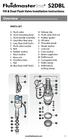 Overview READ ENTIRE INSTRUCTIONS BEFORE STARTING INSTALLATION PARTS LIST A. Flush valve B. Lever mounting base C. Flush handle assembly D. Grey/Blue float stop E. Grey float (Full Flush) F. Flush valve
5 Mechanisms and accessories
 5 Mechanisms and accessories 51A SIDE OPENING ELEMENT MECHANISMS 52A NON-SIDE OPENING ELEMENT MECHANISMS 54A WINDOWS 55A EXTERIOR PROTECTION 56A EXTERIOR EQUIPMENT 57A INTERIOR EQUIPMENT X79 NOVEMBER 2009
Volkswagen Jetta, Golf, GTI 1999, 2000 Brake System 46 Brakes - Mechanical Components (Page GR-46)
 46 Brakes - Mechanical Components (Page GR-46) Front brakes Brake pads, removing and installing Brake pads, removing and installing FN 3 brake caliper, servicing FS III brake caliper, servicing Rear wheel
6-years/75,000 miles Comprehensive coverage Subsequent Owner Warranty $100 Deductible
 LINCOLN PREMIER LIMITED WARRANTY 6-years/75,000 miles Comprehensive coverage Subsequent Owner Warranty $100 Deductible Comprehensive Coverage Because Lincoln has always been a brand you can trust and respect,
PRODUCT: WASHER / WASHER-DRYER COMBO MODEL: AW 120 / AW 122 / AW 125 AWD 120 / AWD 121 / AWD 129
 PRODUCT: WASHER / WASHER-DRYER COMBO MODEL: The information included in this Splendide Repair Manual may change without notice. Please see our web site www.splendide.com/service/docs.html for updates,
HEATER WITH OPERATION
 2002-05 HVAC Air Conditioning & Heating Systems - Repair Instructions - Cooper (1.6L) R50/W10 & Cooper S HEATER WITH OPERATION 64 11... INSTALLING SERVODRIVE Installation: If necessary, align shaft of
01 12 COOLING SYSTEM COOLING SYSTEM. End of Toc. End Of Sie
 LOCATION INDEX. 1 SERVICE WARNINGS...................... 2 ENGINE COOLANT LEVEL INSPECTION..................... 2 ENGINE COOLANT PROTECTION INSPECTION..................... 2 ENGINE COOLANT REPLACEMENT..
Chapter 7 Hydraulic System Troubleshooting
 Chapter 7 Hydraulic System Troubleshooting General The following troubleshooting information is provided as a general guide to identify, locate and correct problems that may be experienced with the hydraulic
A/C-HEATER SYSTEM - AUTOMATIC
 A/C-HEATER SYSTEM - AUTOMATIC 1995 Volvo 850 1995-96 Auto. A/C-Heater Systems Volvo 850 * PLEASE READ THIS FIRST * WARNING: To avoid injury from accidental air bag deployment, read and carefully follow
CHROME FRONT BRAKE MASTER CYLINDER KIT
 -J075 REV. 009-0-0 CHROME FRONT BRAKE MASTER CYLINDER KIT GENERAL Kit Number 5-99D, 5-99D Models These Chrome Master Cylinder Kits are designed to replace the original equipment front brake master cylinder
Service manual. Website: www.andico.com.au CAUTION - BEFORE SERVICING THE UNIT, READ THE SAFETY - PRECAUTIONS IN THIS MANUAL.
 Website: www.andico.com.au Service manual CAUTION - BEFORE SERVICING THE UNIT, READ THE SAFETY - PRECAUTIONS IN THIS MANUAL. - ONLY FOR AUTHORISED SERVICE PERSONNEL. MODELS: MPK1-09CR-QB8 MPK1-12ER-QB6
Trouble Shooting. Pump
 Trouble Shooting Pump Trouble Possible Cause Remedy Oil leaking in the area of water pump crankshaft Worn crankshaft seal, bad bearing, grooved shaft, or failure of retainer o-ring. Excessive play on crankshaft
BUGGY SETUP GUIDE. Volume GOKARTSUSA GY6 150, CN250. Buggy Setup Guide
 BUGGY SETUP GUIDE Volume 1 GOKARTSUSA GY6 150, CN250 Buggy Setup Guide GY6 150, CN250 DUNE BUGGY Buggy Setup Guide GOKARTSUSA.COM 2000 Highway 50 S. Lake Tahoe, CA 96150 Phone 800.603.1437 2 Table of Contents
Training Syllabus to Instruct/Prepare for the ASE Transit Bus HVAC Test
 APTA STANDARDS DEVELOPMENT PROGRAM RECOMMENDED PRACTICE American Public Transportation Association 1666 K Street, NW, Washington, DC, 20006-1215 APTA BTS-BMT-RP-001-10 Approved October, 2010 APTA Bus Maintenance
How to Maintain an Air Conditioner
 How to Maintain an Air Conditioner by Fix-It Club How to Troubleshoot a Central Air Conditioning System Publications International, Ltd. Central air conditioners are made up of two separate components:
EM 58. 19. REMOVE NO. 2 MANIFOLD STAY (a) Remove the bolt, nut and stay.
 57 ROVAL 1. DISCHARGE FUEL SYST PRESSURE (See page FU-9) 2. DISCONNECT CABLE FROM NEGATIVE BATTERY TERMINAL CAUTION: Wait at least 90 seconds after disconnecting the cable from the negative (-) battery
AIR CONDITIONING SYSTEM
 AC-1 AIR CONDITIONING SYSTEM REFER TO FOLLOWING REPAIR MANUALS: Manual Name Land Cruiser (Hardtop and Canvas Top) Chassis and Body Repair Manual Land Cruiser (Station Wagon) Chassis and Body Repair Manual
INSTALLATION MANUAL INSIDE ENGINE COMPARTMENT ZZT22#R (1ZZ-FE / 3ZZ-FE) / AZT220R (1AZ-FE) FOR EUROPEAN SPEC. AIR CONDITIONING ENGLISH.
 HFC 134a Ozone Friendly Refrigerant ZZT22#R (1ZZ-FE / 3ZZ-FE) / AZT220R (1AZ-FE) FOR EUROPEAN SPEC. AIR CONDITIONING ENGLISH AAAMU-63 INSIDE ENGINE COMPARTMENT INSTALLATION MANUAL 2000 (EUROPE) B.V.. All
SALEEN SPEEDLAB SERIES VI STANDARD SC UPGRADE KIT
 SALEEN SPEEDLAB SERIES VI STANDARD SC UPGRADE KIT INSTALLATION MANUAL: 2005 MUSTANG 4.6 3V MANUAL P/N: 10-8002-C14338C SUPERCHARGER KIT P/N: 10-1607-B14083* Saleen Performance, Inc. 1225 East Maple Rd.,
3. SEISCO PARTS & SERVICE REMOVAL AND REPAIR GUIDE
 4 3. SEISCO PARTS & SERVICE REMOVAL AND REPAIR GUIDE A. Changing the Control Board B. Replacing a Heating Element C. Thermistor Replacement D. High Limit Switch Replacement E. Level Detector Replacement
http://waterheatertimer.org/troubleshoot-rheem-tankless-water-heater.html
 http://waterheatertimer.org/troubleshoot-rheem-tankless-water-heater.html TECHNICAL SERVICE DEPARTMENT Removal, Cleaning, & Reinstallation of the Burner Assembly For models 74 & GT199 Required tools -
Flushing and Cleaning the A/C System
 Flushing and Cleaning the A/C System Once an AC system has been contaminated or has suffered a failure, the most important part of the AC service to restore the cooling performance to the system = FLUSHING
Unit: mm(in) Item Standard value Service limit Axle shaft run out - 0.2(0.008)
 Rear Wheel/Brake/Suspension 13. Rear Wheel/Brake/Suspension Service Information 13-1 Troubleshooting 13-2 Rear Wheel 13-3 Rear Cushion 13-4 Rear Swing Arm 13-7 Service Information General Safety If the
INSTALL/REMOVAL INSTRUCTIONS: WINDOW REGULATOR
 REMOVAL/INSTALL OF WINDOW REGULATOR (741-306) Honda Accord 2003 07 General Tech Tips: Use painter s tape rather than duct tape to secure window. It will not damage paint or leave sticky residue. A plastic
VOLVO PENTA DIESEL AND GASOLINE ENGINES LAYING-UP AND LAUNCHING GUIDE
 VOLVO PENTA DIESEL AND GASOLINE ENGINES LAYING-UP AND LAUNCHING GUIDE TIME WELL INVESTED This guide covers most of the items to be checked and seen to on your engine and drive when laying up and launching.
Installation instructions, accessories - Handsfree for cellular phone, system B, entry level
 XC90 Section Group Weight(Kg/Pounds) Year Month 3 39 0.5/1.1 2006 07 XC90 2003, XC90 2004 IMG-249663 Page 1 of 18 Required tools A0000162 A0000163 IMG-239664 M0000232 IMG-253123 IMG-252223 Page 2 of 18
ADDING AN ELECTRIC AUXILIARY FAN TO RADIATOR STACK ON 03 ALPINE COACH
 ADDING AN ELECTRIC AUXILIARY FAN TO RADIATOR STACK ON 03 ALPINE COACH The original design of the 03 Alpine Coaches (and perhaps other years as well) did not include any kind of engine fan engage mechanism
HVAC. (w) HVAC SYSTEM. Blower unit. (See BLOWER UNIT REMOVAL/INSTALLATION.) (See BLOWER UNIT DISASSEMBLY/ASSEMBLY.) Air filter
 HVAC HVAC SYSTEM Blower unit 1 (See BLOWER UNIT REMOVAL/INSTALLATION.) (See BLOWER UNIT DISASSEMBLY/ASSEMBLY.) Air filter 2 3 (See AIR FILTER REMOVAL/INSTALLATION.) (See AIR FILTER INSPECTION.) A/C unit
Tri-Homo Style Operation and Maintenance Instructions
 Tri-Homo Style Operation and Maintenance Instructions One Research Drive Stratford, CT 06615 (203) 375-0063 www.sonicmixing.com 1 Installation and Start-up Do not perform following adjustments without
3620 W 11th Streetб Houston, TX 77008 Telephone: 713-635-6291 Email: [email protected] Website: www.kellogg-american.com
 Unpackaging & Handling Be sure to carefully inspect the unit before accepting the shipment. If any damage has occurred document it with the trucking company immediately. Contact your Kellogg Distributor
HEATER, AIR CONDITIONING AND VENTILATION
 55-1 GROUP 55 HEATER, AIR CONDITIONING AND VENTILATION CONTENTS GENERAL DESCRIPTION 55-2 HEATER AND AIR CONDITIONING SYSTEM 55-4 HEATER CONTROL 55-6 A/C-ECU 55-7 A/C COMPRESSOR 55-9 CONDENSER 55-9 DUCT
CO-10 COOLING SYSTEM. Page DESCRIPTION TROUBLESHOOTING CHECK AND REPLACEMENT OF ENGINE COOLANT
 CO-1 COOLING SYSTEM DESCRIPTION TROUBLESHOOTING CHECK AND REPLACEMENT OF ENGINE COOLANT WATER PUMP THERMOSTAT RADIATOR Page CO-2 CO-4 CO-4 CO-6 CO-10 CO-12 CO-2 COOLING SYSTEM - Description DESCRIPTION
Windshield Wiper System
 Windshield Wiper System Page 1 / 17 92-1 Windshield Wiper System General information Caution! When disconnecting and reconnecting battery terminals, observe all applicable Notes and torque specifications,
Cooling Systems. Table of Contents
 Cooling Systems Table of Contents Sub-Headings Safety 2 s 2 Cautions 2 Notes 2 Introduction 2 General Specifications 2 ISB Engine 2 ISC Engine 2 Caterpillar 3126 Engine 2 Types of Coolant 3 ISB Engine
FRONT BUMPER INSTALLATION INSTRUCTIONS 2007-2011 DODGE / MERCEDES SPRINTER
 Aluminess Products Inc 9402 Wheatlands Ct. #A Santee, CA 92071 619-449-9930 FRONT BUMPER INSTALLATION INSTRUCTIONS 2007-2011 DODGE / MERCEDES SPRINTER Please read before beginning Stainless steel hardware
OWNER S MANUAL FORCE 10 MARINE COMPANY 23080 HAMILTON ROAD RICHMOND, BC CANADA V6V 1C9 TEL: (604) 522-0233 FAX: (604) 522-9608
 Electric Water Heater OWNER S MANUAL FORCE 10 MARINE COMPANY 23080 HAMILTON ROAD RICHMOND, BC CANADA V6V 1C9 TEL: (604) 522-0233 FAX: (604) 522-9608 If your water Heater is Damaged or you have questions
Class 5 to 7 Truck and Bus Hydraulic Brake System
 Class 5 to 7 Truck and Bus Hydraulic Brake System Diagnostic Guide 1st Edition * 5+0 Important Service tes The information in this publication was current at the time of printing. The information presented
ENGINE COOLING FAN. 1987 Lincoln Mark VII COOLING SYSTEM SERVICING DESCRIPTION MAINTENANCE DRAINING CLEANING FLUSHING
 ENGINE COOLING FAN 1987 Lincoln Mark VII 1987 ENGINE COOLING Ford Motor Co. Engine Cooling Fans Ford; Crown Victoria, Escort, Mustang, Taurus, Tempo & Thunderbird Lincoln; Continental, Mark VII & Town
MGB Chrome Bumper Conversion
 MGB Chrome Bumper Conversion Installation Instructions For 1974 1/2-1980 MGB This kit requires cutting, welding, and painting. Professional installation recommended. Note: Every MGB body is slightly different
Technical Guide 08/15/14
 Technical Guide 08/15/14 1 Table of Contents Contact information.3 Identifying your system..4-8 Model Number Serial number location Parts of your fuel system..9-14 Fuel pump diagram Wire harness schematics
System Saver 318 Air Compressor for Mack E-Tech and ASET Engines
 Maintenance Manual 31 System Saver 318 Air Compressor for Mack E-Tech and ASET Engines Revised 08-05 NON-THROUGH DRIVE THROUGH DRIVE Service Notes About This Manual This manual provides service and repair
This is the civilian transfer case with the cooling loop only found in the driven gear half of the front case.
 INTRODUCTION The Transfer case used in the AMG Hummer is a New Venture Gear, model 242. This case has been in use for the H-1/Hummer since the early 1990 s. There have been modifications to the internal
13. REAR WHEEL/BRAKE/SUSPENSION
 13. REAR WHEEL/BRAKE/SUSPENSION 13 3.5~4.5kg-m 8.0~10.0kg-m 0.8~1.2kg-m 3.0~4.0kg-m 2.4~3.0kg-m 3.5~4.5kg-m 6.0~8.0kg-m 13-0 13. REAR WHEEL/BRAKE/SUSPENSION 13 REAR WHEEL/BRAKE/SUSPENSION SERVICE INFORMATION...
Check for deteriorated, shifting or missing tie-down pads. Replace if needed.
 C C 0 5 C H A S S I S F R A M E Chassis Frame Overview The Blue Bird Vision s chassis frame consists of two main C-channel rails which run the entire length of the bus, and several different kinds of cross
Fire Hydrant Troubleshooting
 Fire Hydrant Troubleshooting Pulsation or chatter during opening and flow of water from hydrant. Loose condition in stem at lower valve plate nut. Tighten lower valve plate nut and secure with SS lock
XL PREMIUM OIL COOLER KIT
 -J05 REV. 0-0-0 XL PREMIUM OIL COOLER KIT GENERAL Kit Number 0008 Models For model fitment information, see the P&A Retail Catalog or the Parts and Accessories section of www.harley-davidson.com (English
Installing a new 928 Motorsports All-Aluminum Radiator
 928 Motorsports Supercharger Installation Copyright 2008, 928 Motorsports, LLC All Rights Reserved Installing a new 928 Motorsports All-Aluminum Radiator Copyright 2008 928 Motorsports, LLC. Toll-Free
DiscPlus DX195 and DX225 Air Disc Brakes
 Revised 11-04 Technical Bulletin Revised 1 Technical 11-04 Bulletin DiscPlus DX195 and DX225 Air Disc Brakes Inspection, Installation and Diagnostics Air Disc Brake Inspection Intervals and Procedures
SunMaxx Solar Filling Station Operating Instructions
 SunMaxx Solar Filling Operating Instructions Content 1. Declaration of conformity... 2 2. Introduction... 2 3. Transportation and unpacking... 4 4. Mounting and commissioning... 5 5. End of operation...